
Dark walls can turn an ordinary bathroom into a polished, memorable retreat. These 25 Dark Bathroom Wall Color Ideas explore more than basic black and gray. Rich navy, forest green, chocolate brown, burgundy, teal, and plum can all create depth while supporting very different design directions. The key is to treat the wall color as part of a complete scheme. Flooring, vanity finishes, tile, lighting, mirrors, hardware, and textiles should balance the deeper shade. Pale stone adds contrast, warm wood softens the room, and reflective metal keeps the space feeling lively. Whether you are updating a compact powder room or a spacious primary bath, the following 25 Dark Bathroom Wall Color Ideas offer complete looks you can realistically recreate.
1. Charcoal Gray Bathroom Walls
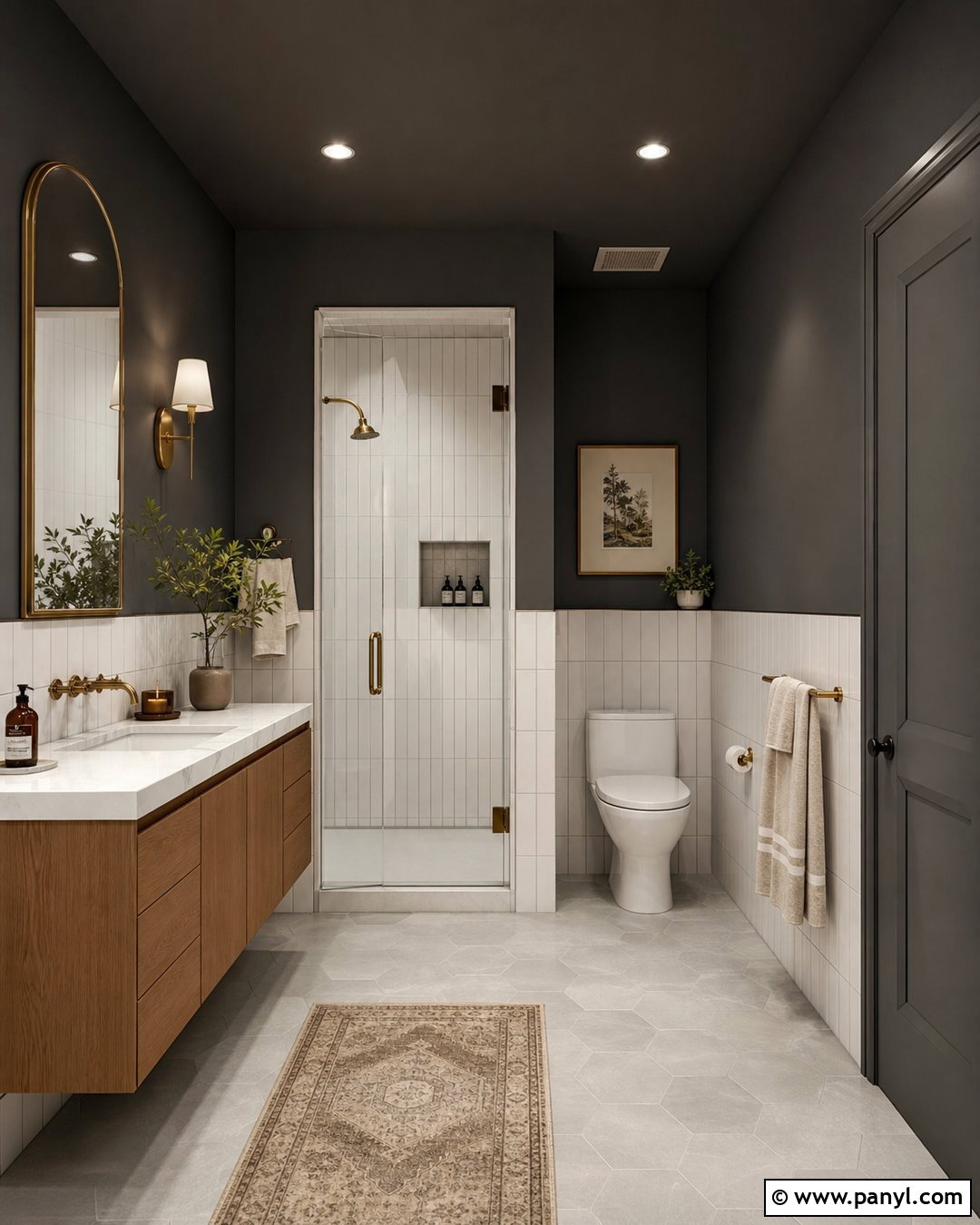
Charcoal gray walls create a sophisticated foundation without looking as severe as solid black. Use the color across the upper walls and ceiling, then install white vertical subway tile around the lower half for clean contrast. A medium oak floating vanity brings natural warmth, while a white quartz counter keeps the sink area bright. Choose brushed brass faucets, slim brass sconces, and a rounded rectangular mirror to add gentle shine. Pale gray porcelain flooring connects the light and dark surfaces without creating an abrupt divide. Finish the room with cream towels, a woven storage basket, and one leafy plant near the vanity. This complete scheme feels modern, balanced, and suitable for bathrooms of almost any size.
2. Matte Black Bathroom Walls
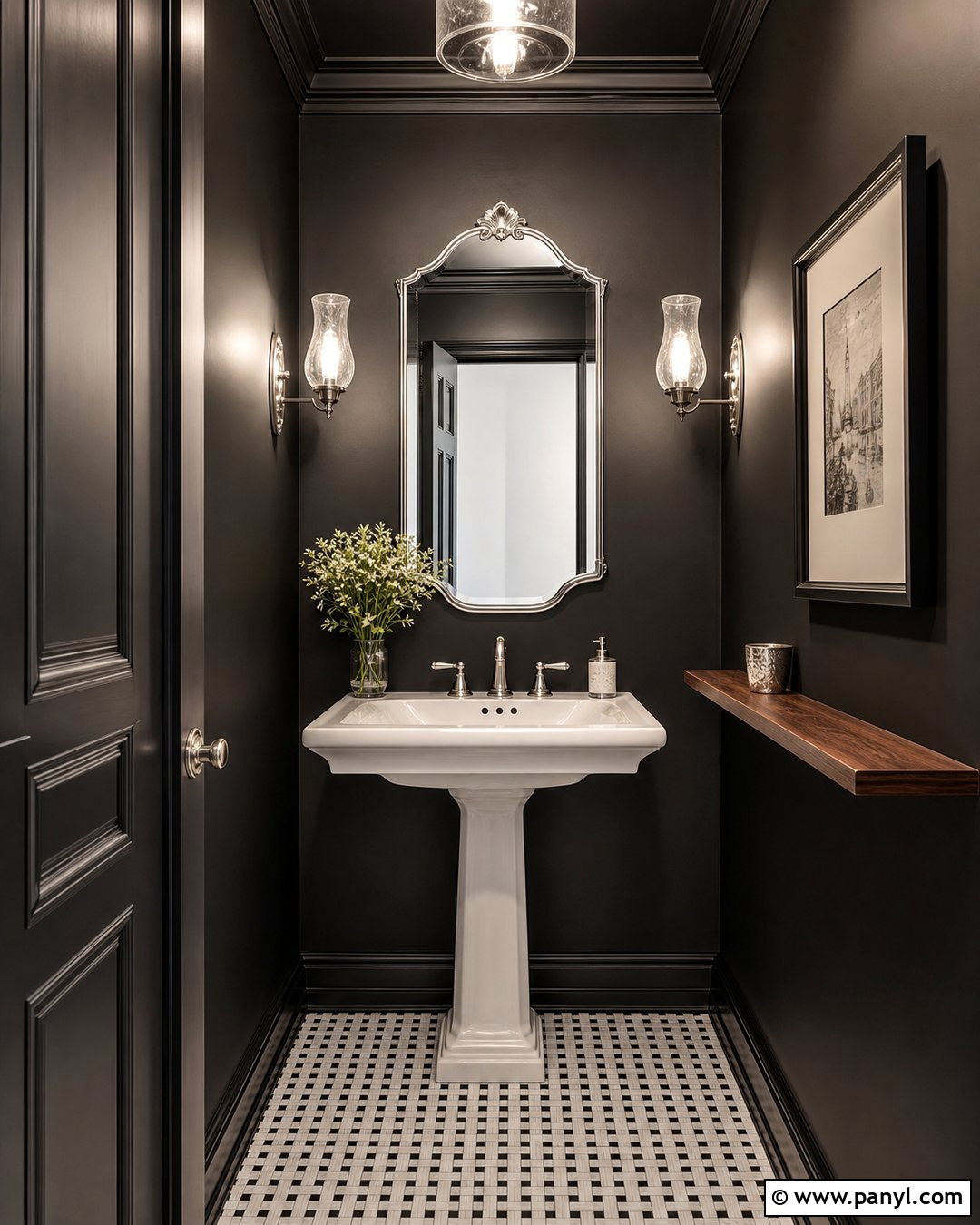
Would you paint an entire bathroom black? In a powder room, full matte black walls can create an especially striking result. Carry the color across the trim and ceiling for a seamless envelope, then introduce a white pedestal sink as the crisp focal point. Black-and-white mosaic floor tile gives the compact space pattern and character. Add a polished nickel faucet, matching sconces, and a generously sized vintage-inspired mirror to reflect light around the room. A narrow walnut shelf above the toilet can hold folded white hand towels and simple ceramic accessories. Keep the styling restrained so the dramatic walls remain intentional rather than overwhelming. Several bright light sources will help the black finish look rich and dimensional.
3. Deep Navy Bathroom Walls
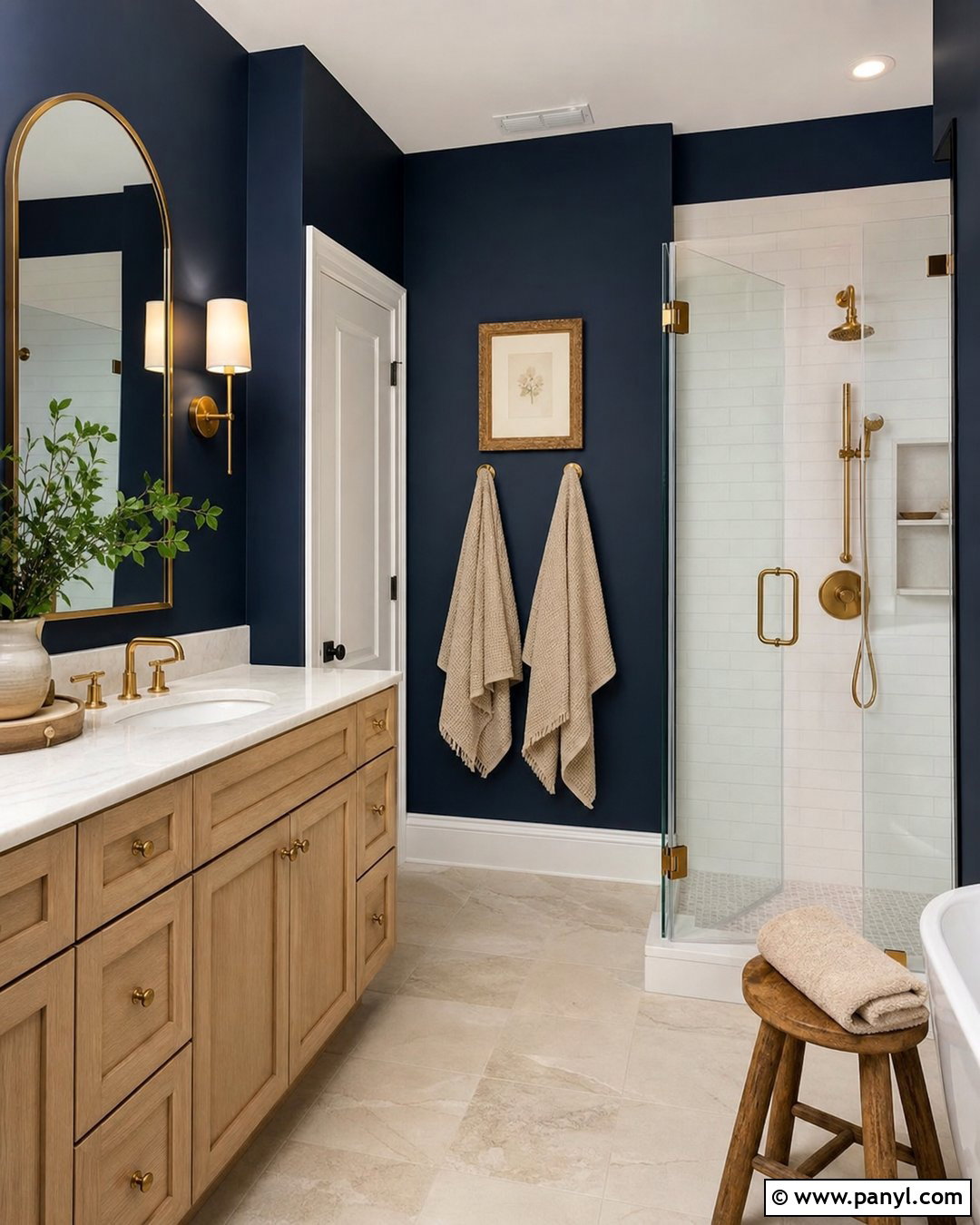
Deep navy walls offer the drama of a dark bathroom while retaining a clear, classic color identity. Pair them with a white oak vanity, a creamy marble countertop, and warm brass hardware for an inviting transitional look. Large ivory floor tiles brighten the lower portion of the room and make the floor feel visually open. Above the vanity, use an arched brass mirror flanked by frosted globe sconces. A frameless glass shower keeps sightlines clear, while white shower tile prevents the palette from becoming too heavy. Complete the space with oatmeal towels, a small wooden stool, and understated coastal artwork without obvious nautical motifs. The finished bathroom feels tailored, comfortable, and timeless rather than themed.
4. Forest Green Bathroom Walls
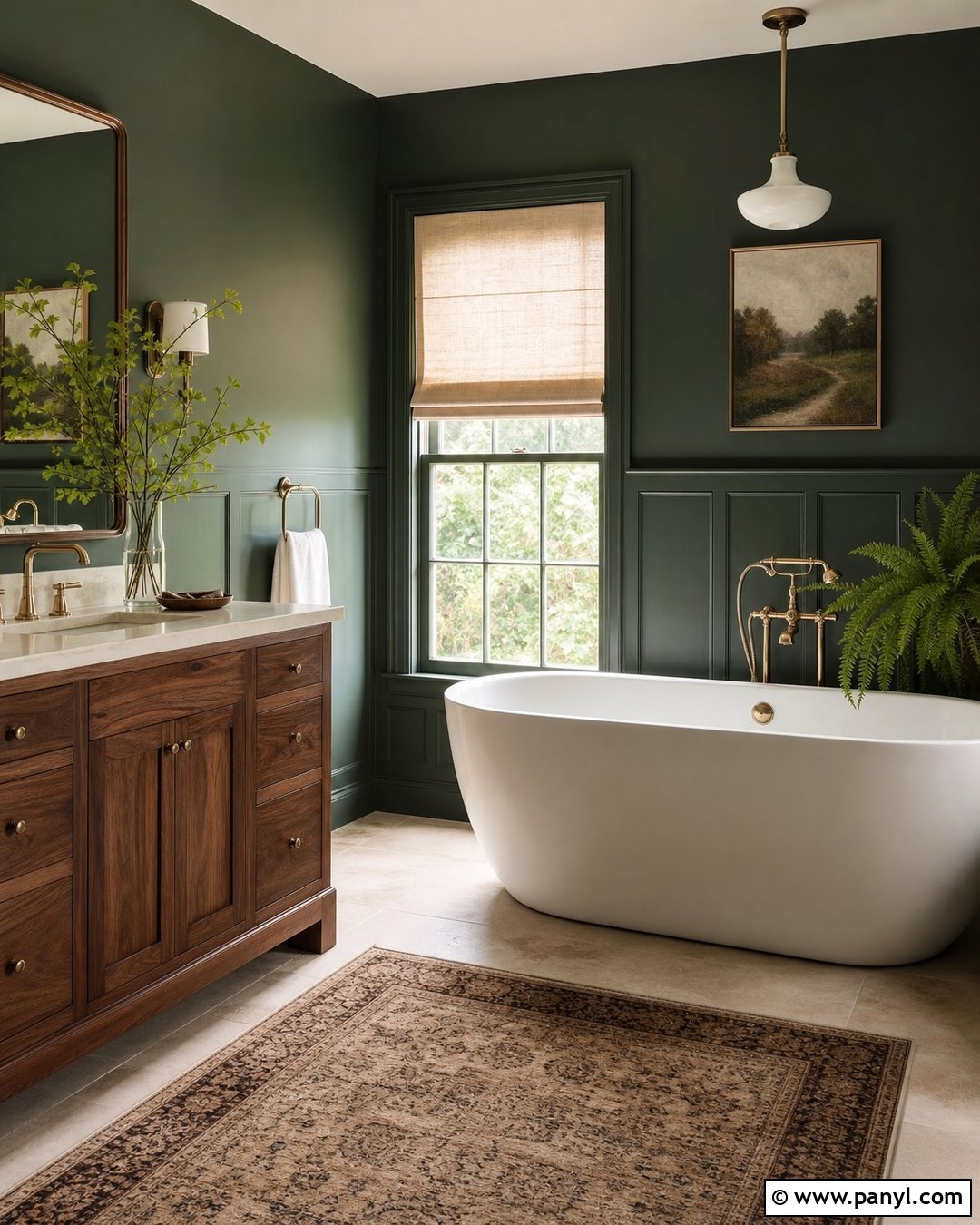
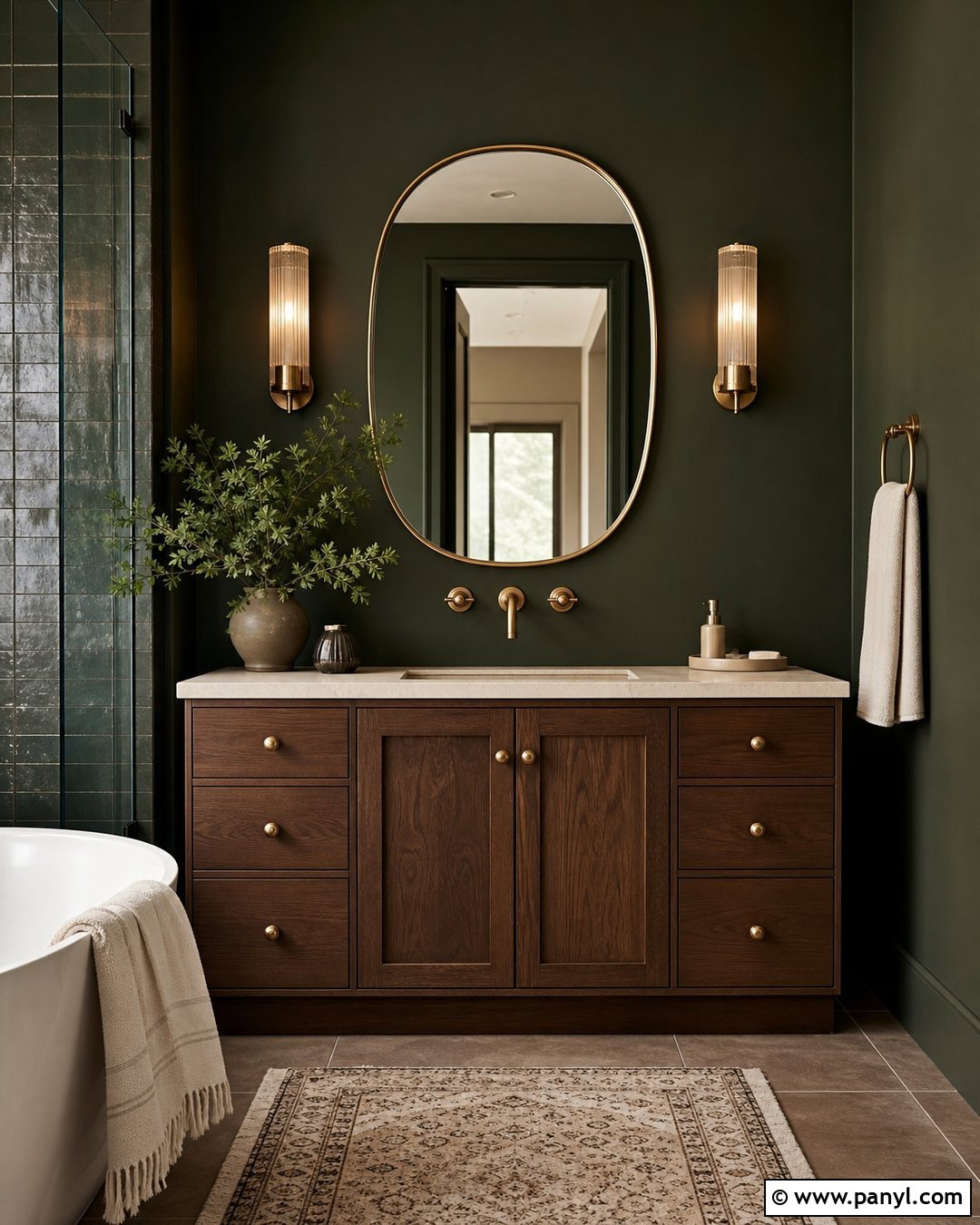
Forest green walls can give a bathroom a calm, nature-focused atmosphere, especially when paired with warm organic materials. Cover the walls in deep green paint and use matching moisture-resistant paneling behind a freestanding white tub. A walnut vanity with a pale limestone counter adds earthy texture and practical storage. Choose aged brass faucets and wall lights to bring out the warmer undertones in the green. Natural stone-look flooring, linen Roman shades, and cream towels prevent the scheme from appearing too dark. Place a wooden bath caddy across the tub and add one large fern near a bright window. This complete bathroom look combines traditional details with the relaxed feeling of a modern home spa.
5. Chocolate Brown Bathroom Walls
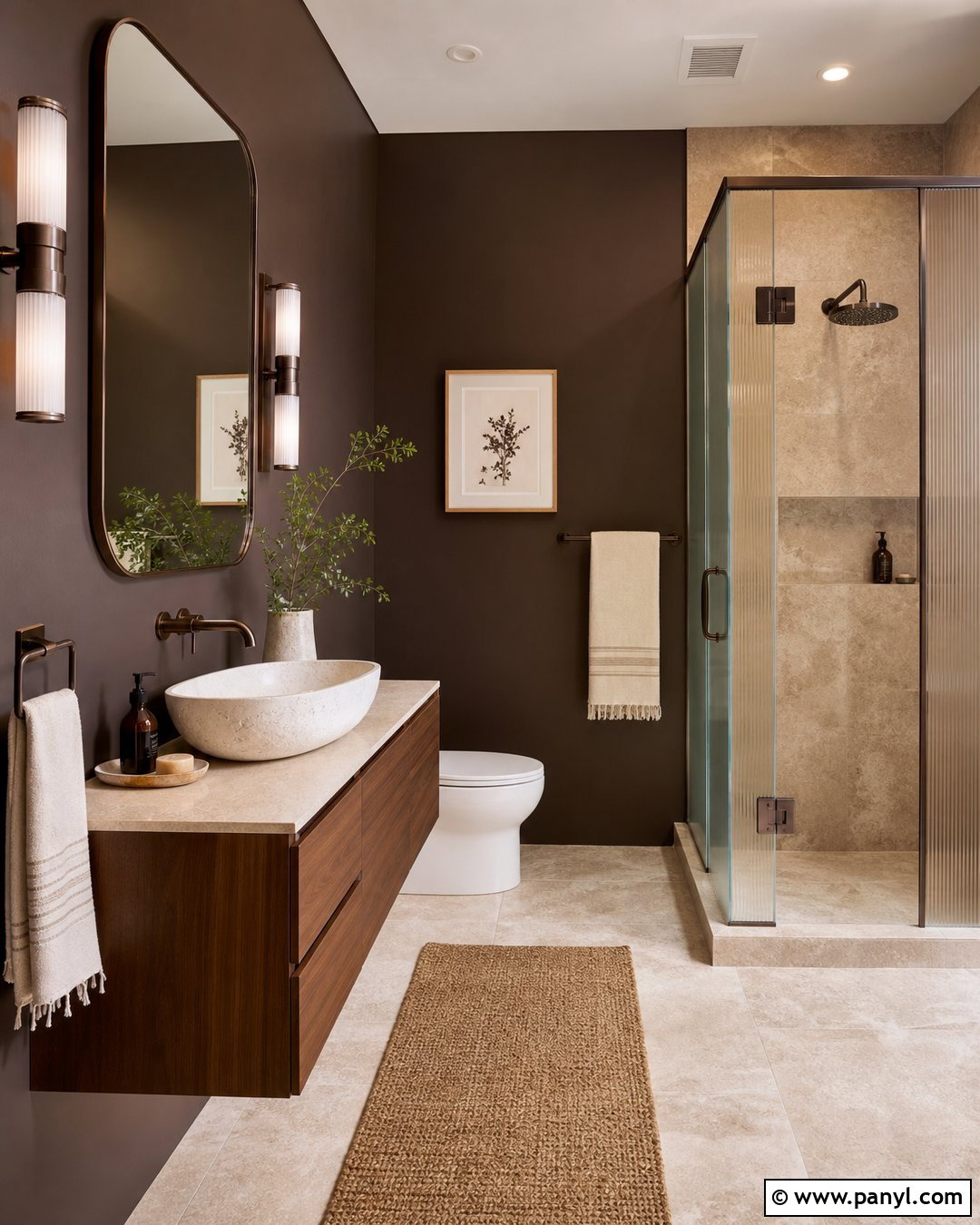
Chocolate brown walls create warmth that cooler charcoal and black shades cannot always provide. Pair the rich wall color with creamy travertine floor tile and a matching walk-in shower for a layered, tonal bathroom. A floating walnut vanity can work beautifully, provided its wood grain is slightly lighter than the walls. Add an off-white stone vessel sink, bronze faucets, and a wide mirror with softly rounded corners. Ribbed glass shower panels provide privacy while still allowing light to travel through the space. Finish with ivory towels, a natural jute runner, and simple pottery in sand and rust tones. The result feels grounded and relaxing, with enough pale surfaces to keep the brown from becoming visually dense.
6. Burgundy Bathroom Walls
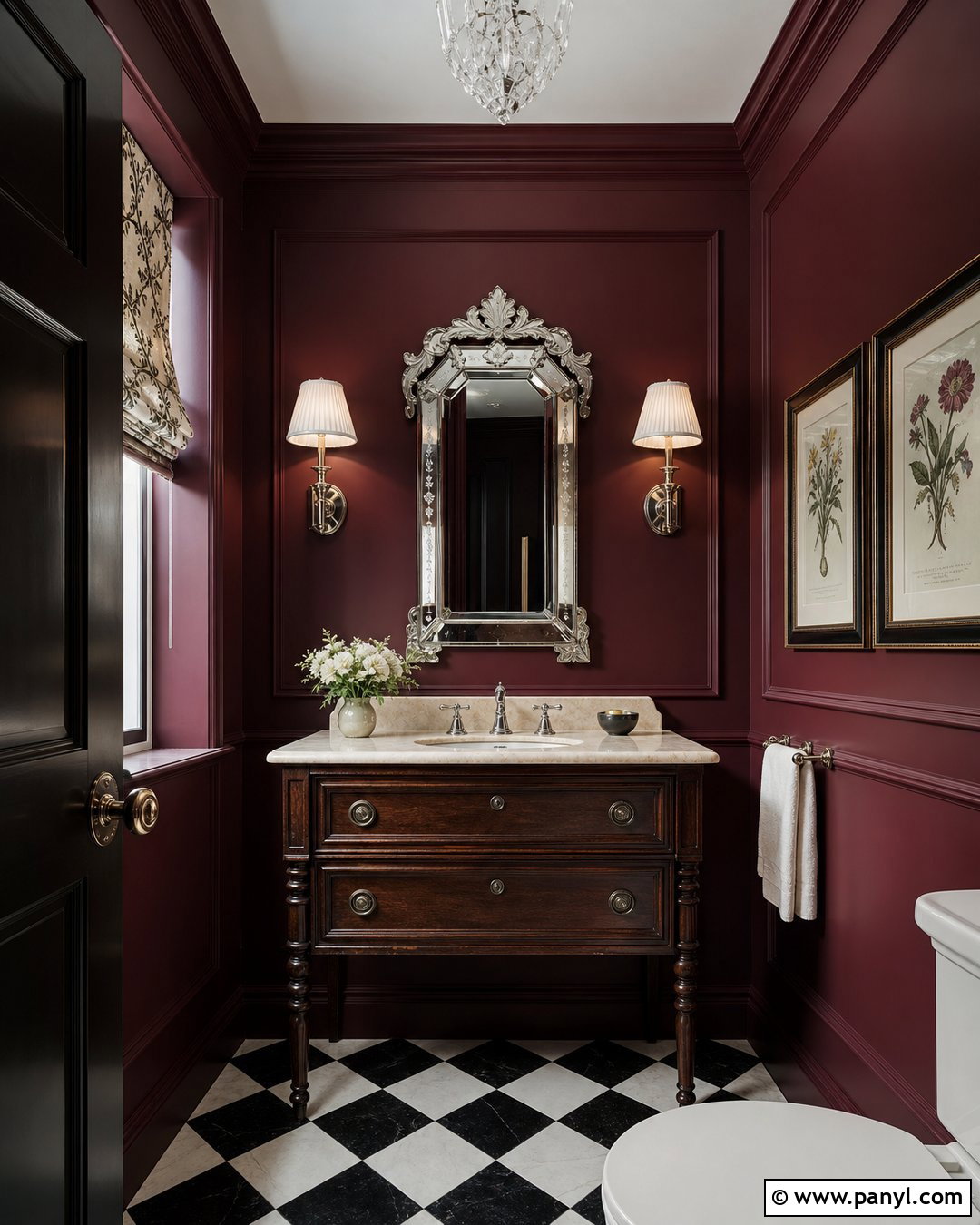
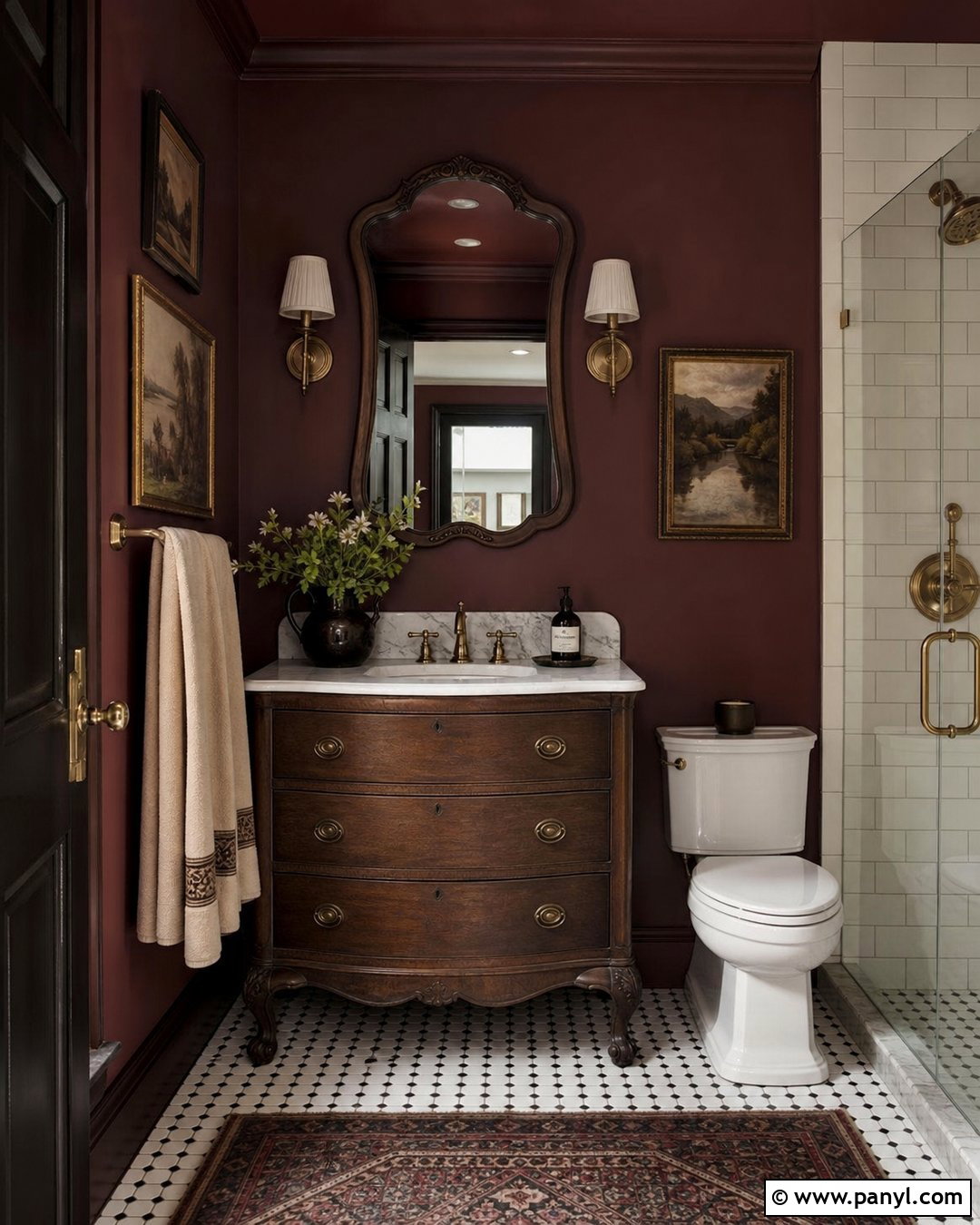
Rich burgundy brings warmth, personality, and a subtle historic quality to bathroom walls. Use it in a traditional powder room with painted wall molding for added dimension. A dark wood furniture-style vanity, creamy marble counter, and polished nickel faucet create a refined mix of old and new. Install a black-and-white checkerboard floor on the diagonal to introduce movement without adding another strong color. A decorative silver mirror and two pleated white sconces brighten the vanity wall. Keep the ceiling soft white so the room maintains a fresh upper edge. Small framed botanical prints, white towels, and a single ceramic vase complete the look. Burgundy feels especially polished when the surrounding finishes remain crisp and carefully edited.
7. Blue-Black Bathroom Walls
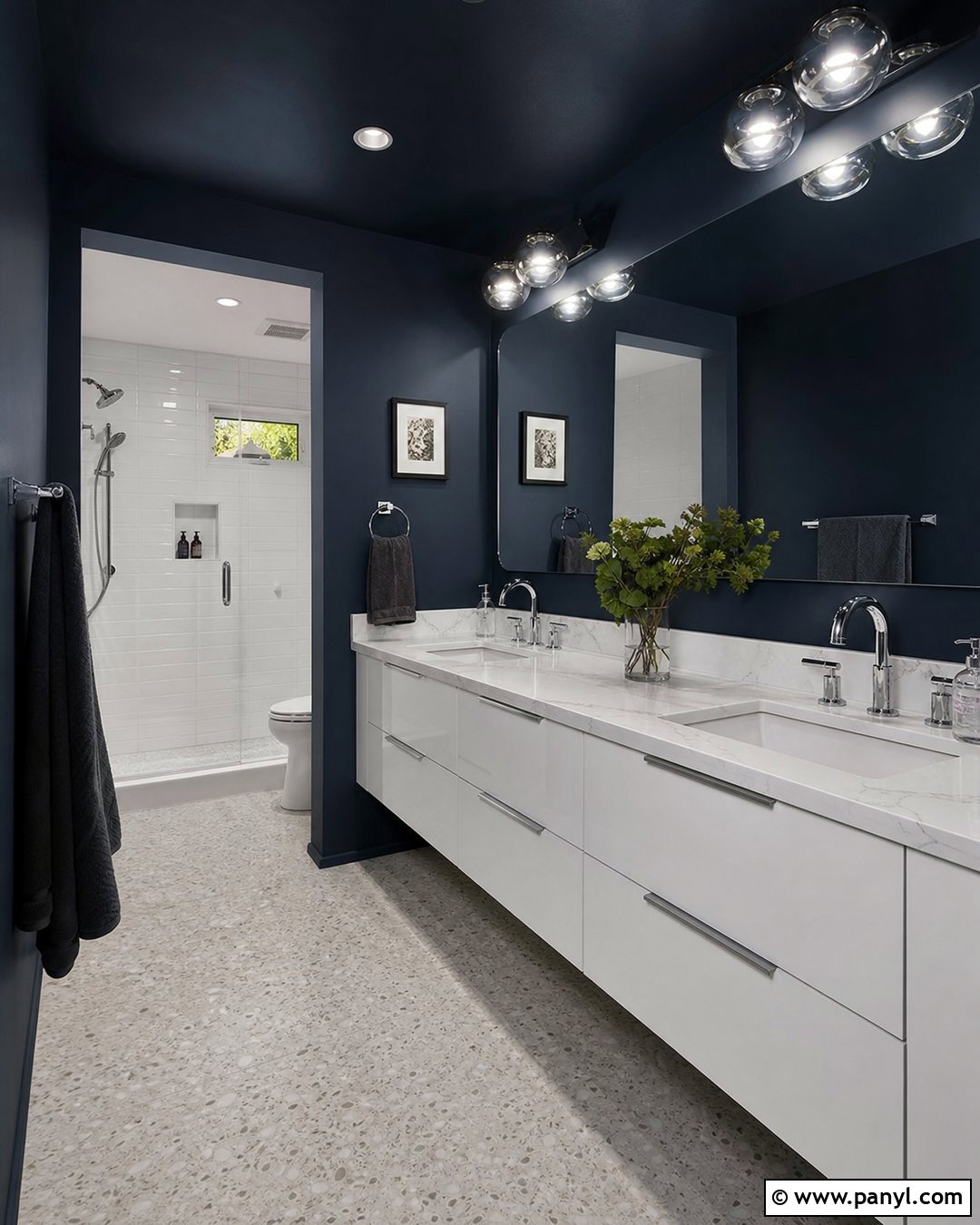
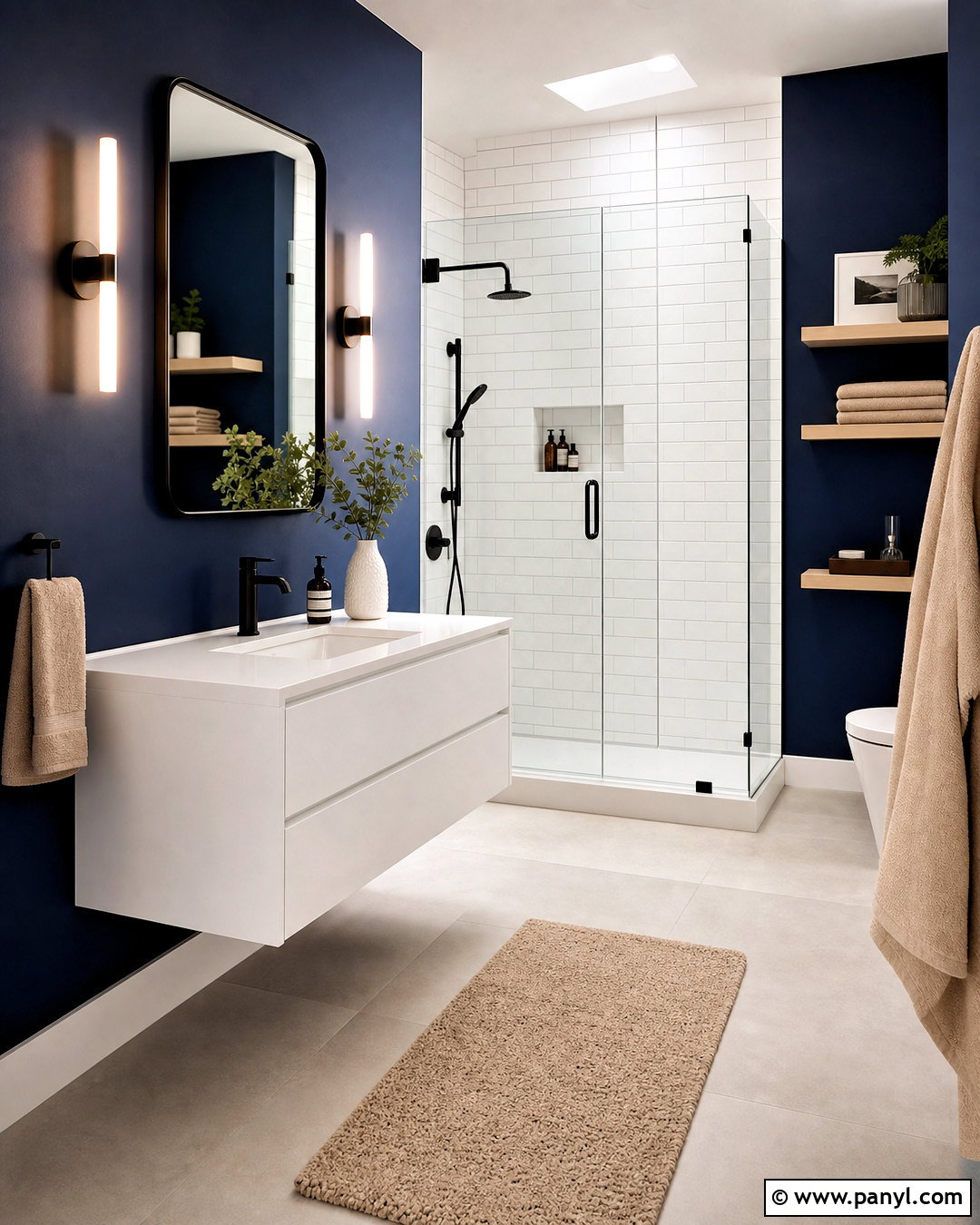
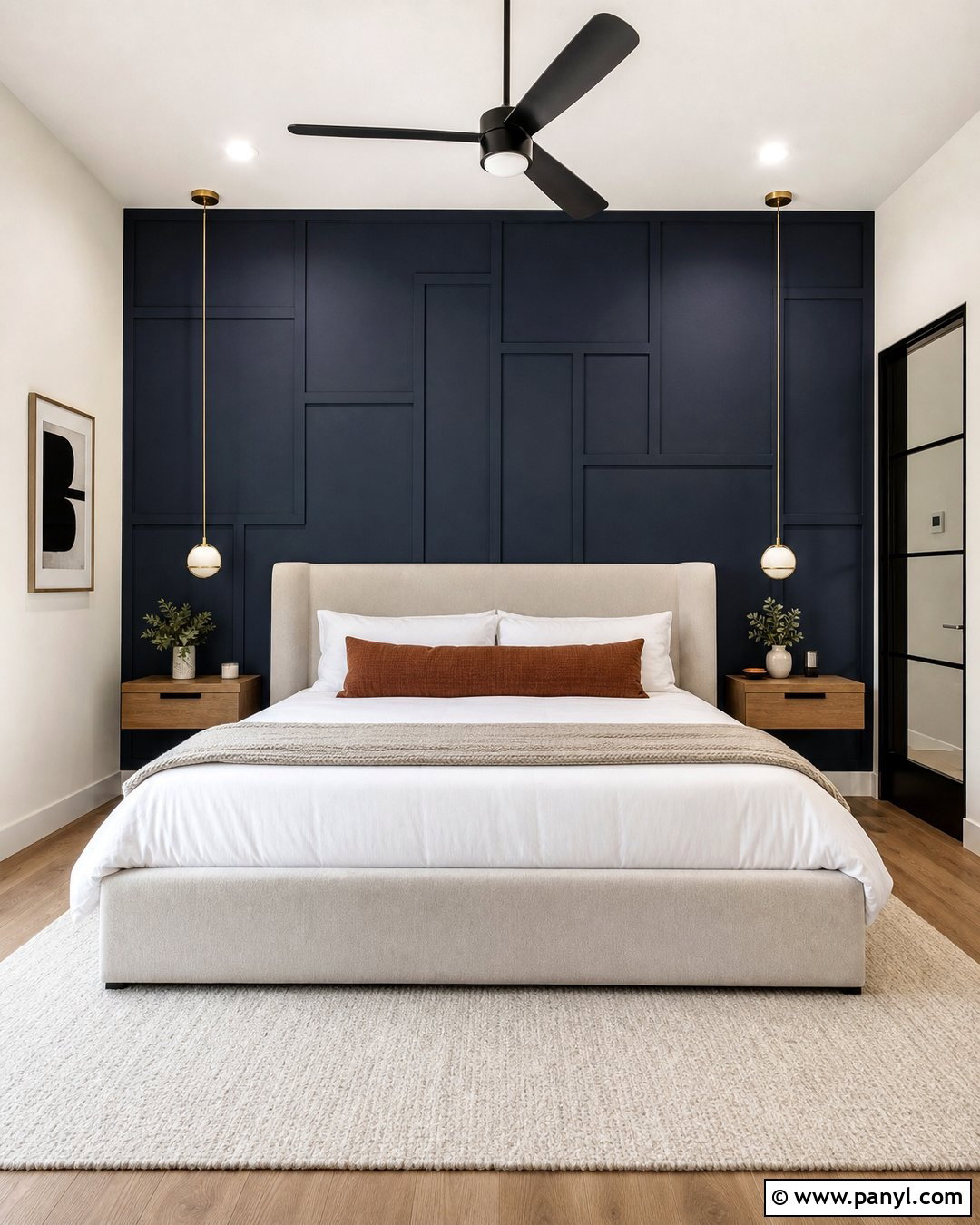
Blue-black walls shift between midnight blue and near-black as the light changes, giving a bathroom unusual depth. Build a sleek contemporary scheme around this color with a white floating vanity and a thin gray-veined quartz countertop. Use chrome faucets, a frameless rectangular mirror, and streamlined LED sconces for a cool, clean finish. Large-format pale terrazzo floor tiles introduce subtle pattern while lifting the dark walls. Continue the blue-black paint onto the ceiling, but keep the shower lined with glossy white tile to reflect light. Add charcoal towels, clear glass containers, and one sculptural branch in a simple vase. The finished room feels dramatic and minimalist without looking cold or unfinished.
8. Dark Teal Bathroom Walls
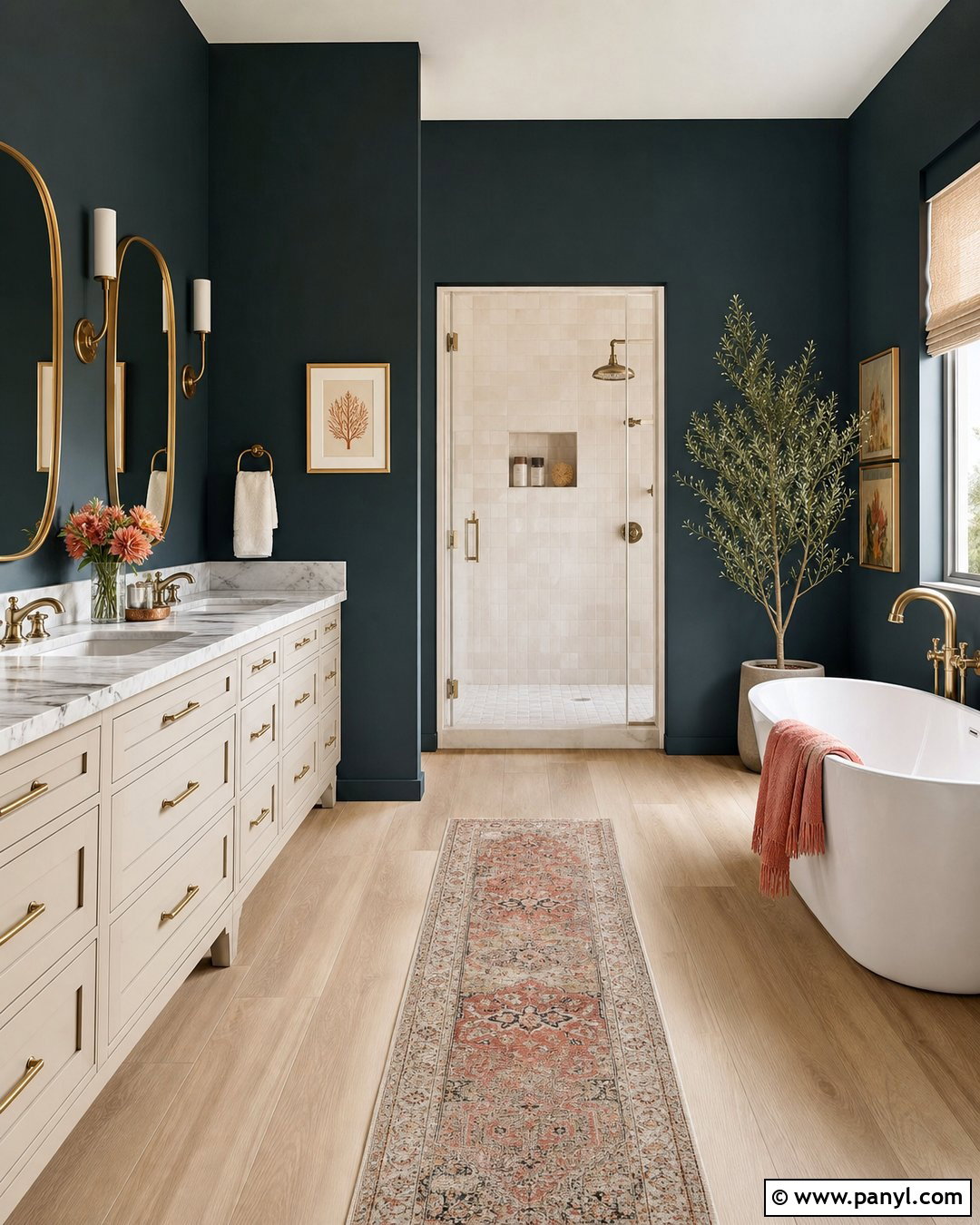
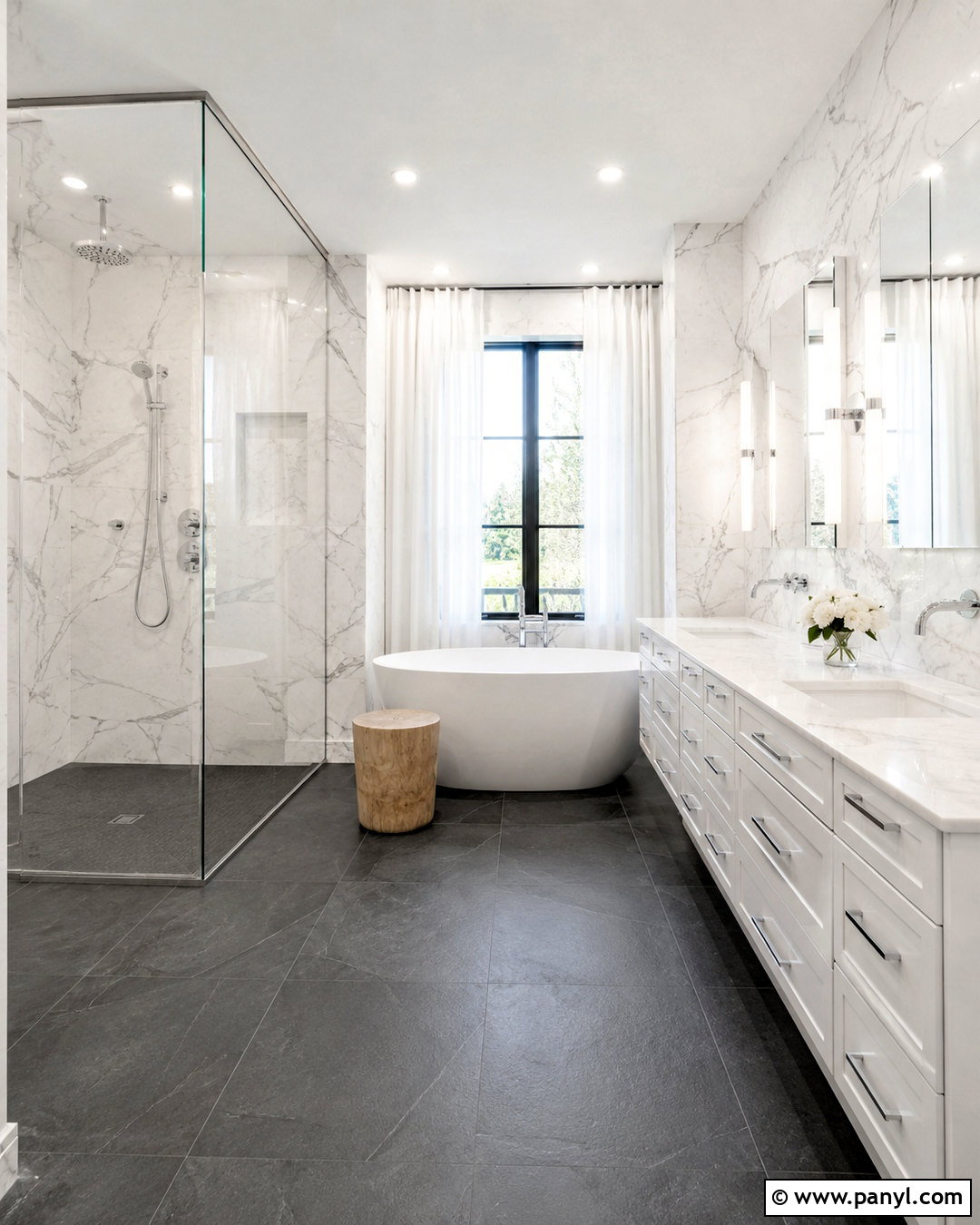
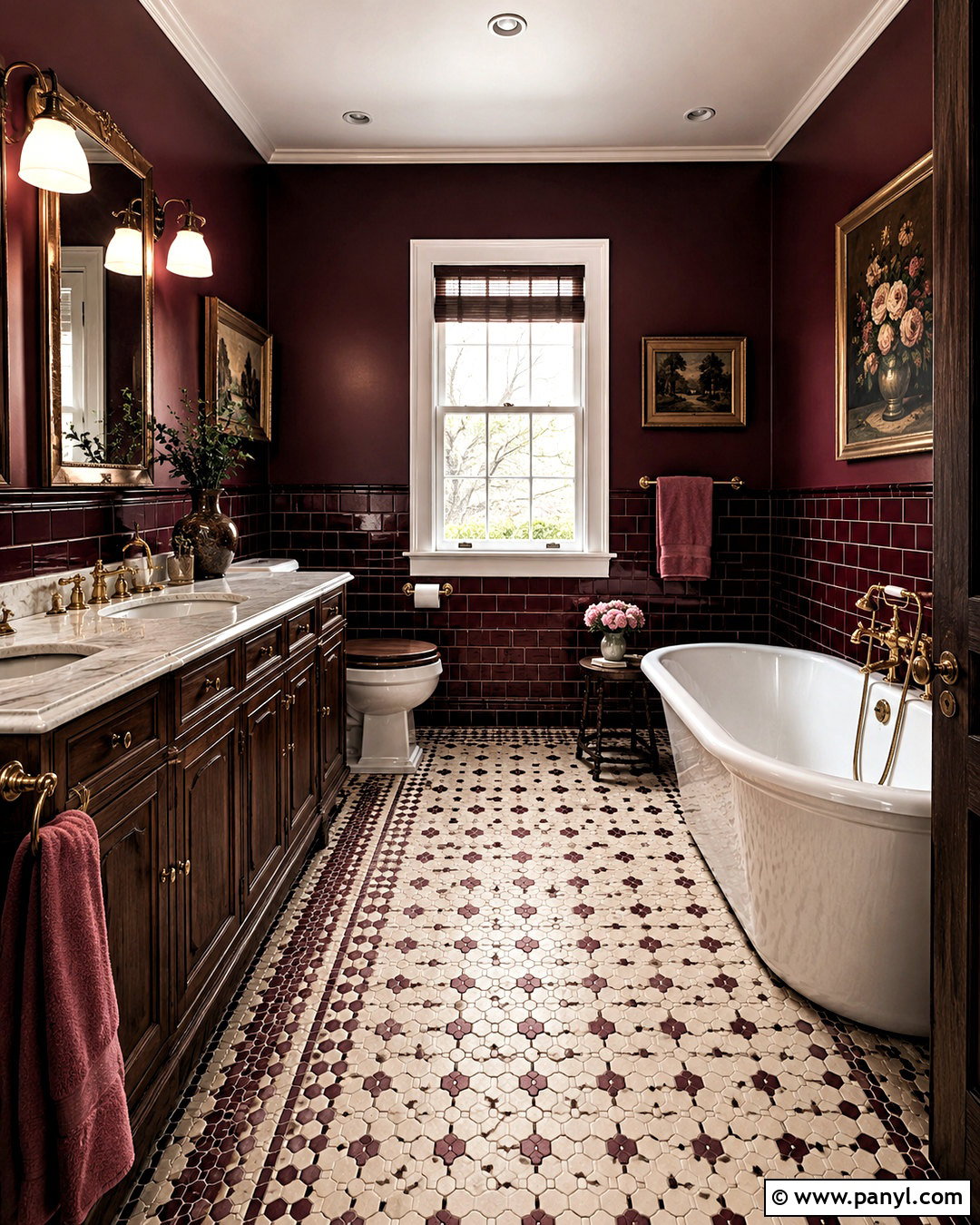
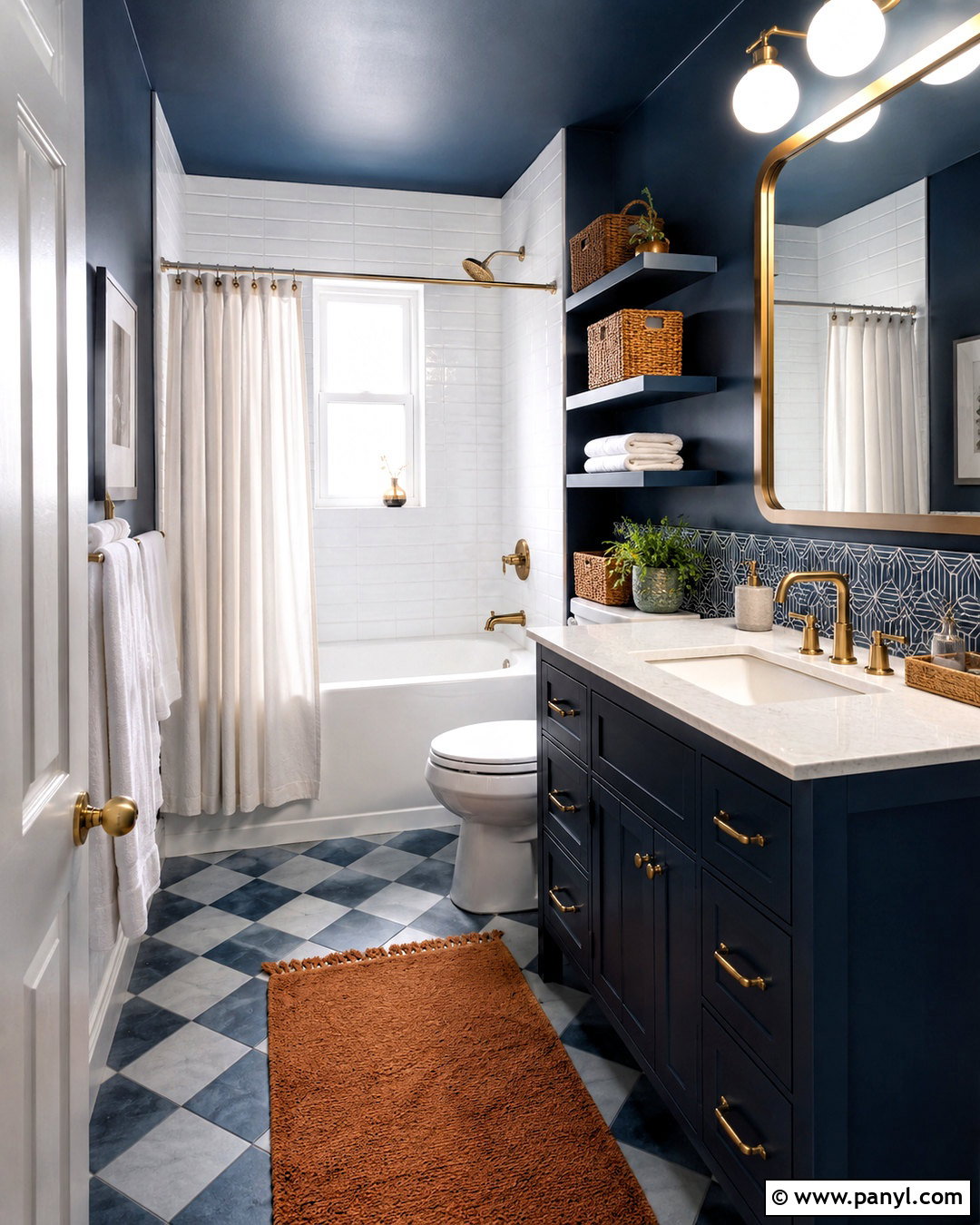
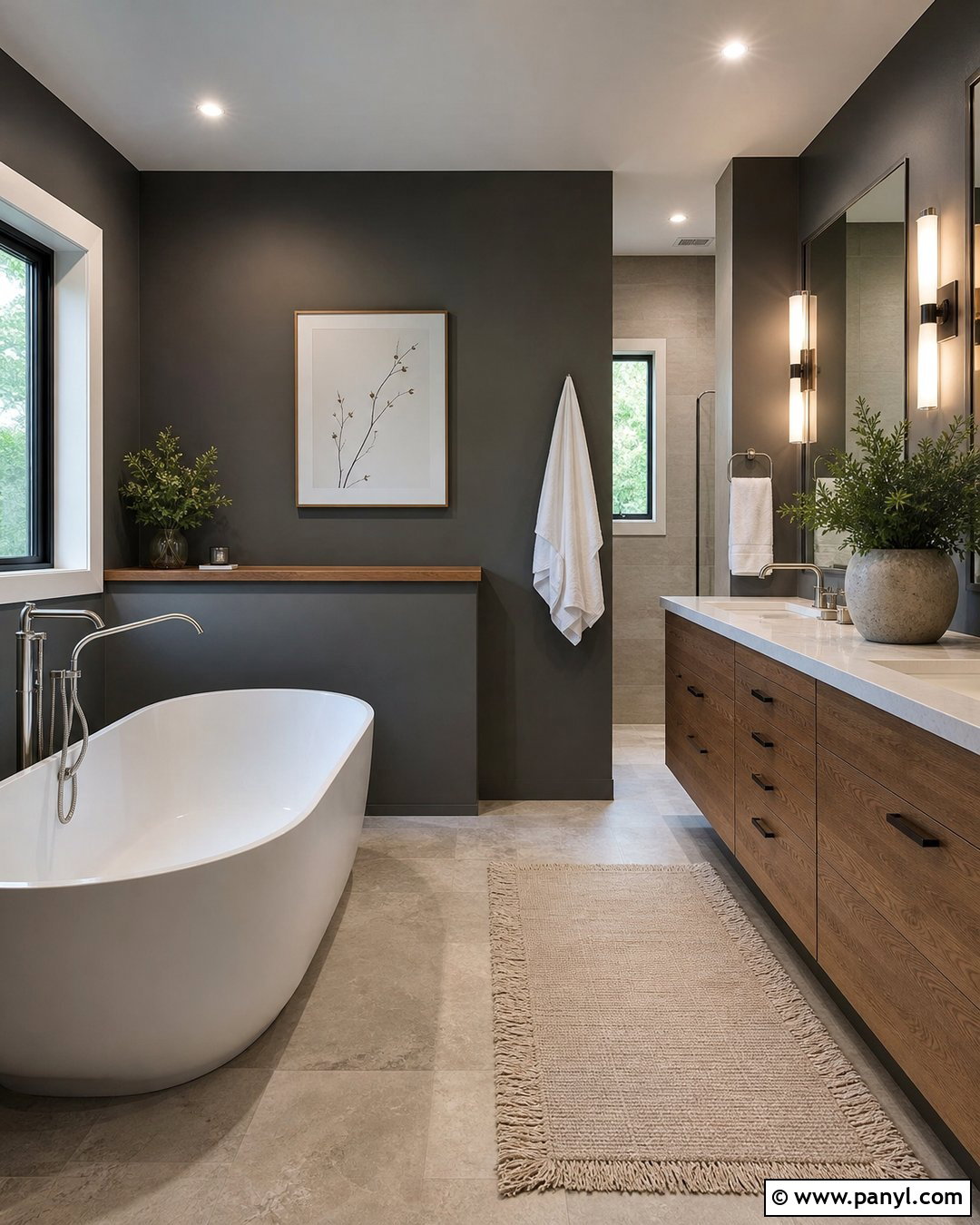
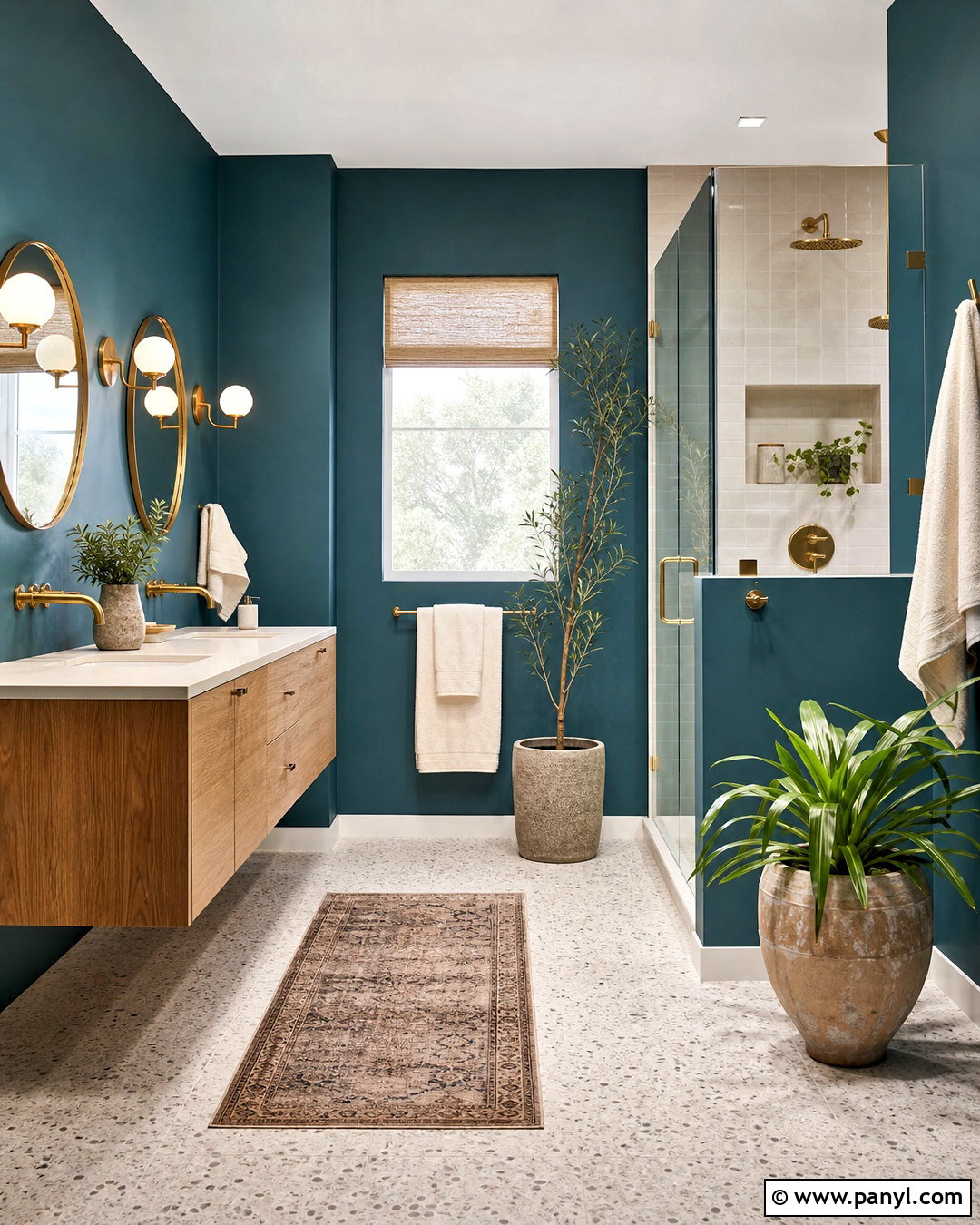
Dark teal walls combine the peaceful quality of blue with the richness of green. Pair them with a warm white double vanity, veined marble counters, and unlacquered brass hardware for a colorful but balanced primary bathroom. Install pale oak flooring made from bathroom-safe wood-look porcelain tile to introduce warmth underfoot. A large frameless shower can feature handmade cream tiles with slightly varied surfaces. Use two oval brass mirrors and milk-glass sconces to soften the vanity wall. Natural linen shades, ivory bath mats, and muted coral accessories add controlled contrast. Rather than spreading coral throughout the room, repeat it only in a small vase and framed print. This keeps the teal walls dominant and the overall design cohesive.
9. Aubergine Bathroom Walls
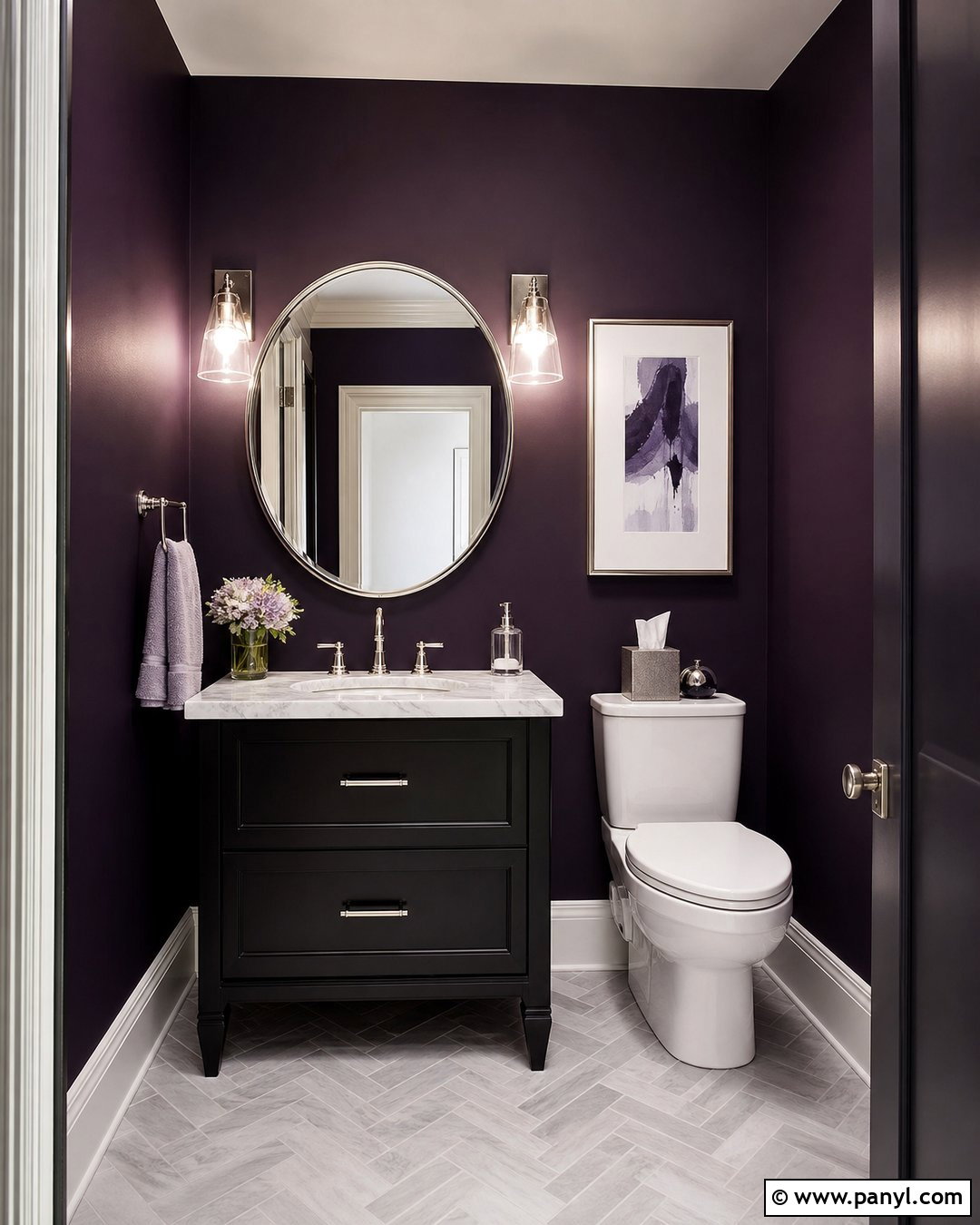
Aubergine walls offer a softer, more complex alternative to black or burgundy. This deep purple works well in an elegant powder room furnished with a black vanity and a white marble top. Bring in polished nickel fixtures for a cooler shine that keeps the purple looking sophisticated. Pale gray herringbone floor tile adds texture without competing with the wall color. An oversized round mirror can visually expand the vanity area, while two clear glass sconces spread bright light across the darker surfaces. Complete the room with lavender-gray towels, a small abstract print, and a white ceramic vessel. Keep decorative pieces limited and modern. The resulting bathroom feels unexpected and luxurious, yet still approachable enough for an average home.
10. Dark Olive Bathroom Walls
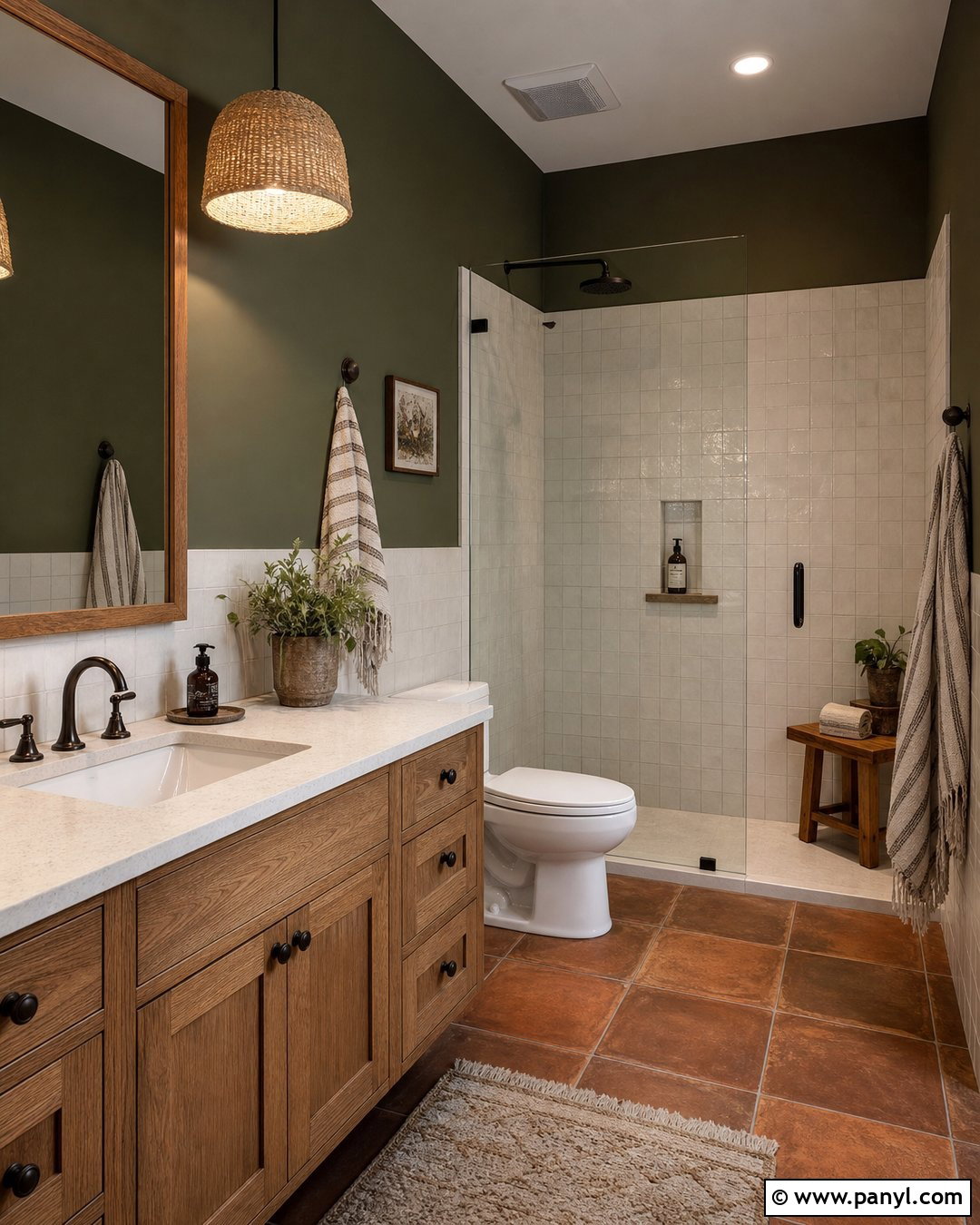
Dark olive walls create an earthy bathroom that feels warmer and more relaxed than one painted forest green. Pair the muted color with a medium-tone oak vanity, creamy quartz counter, and aged bronze fixtures. Use small ivory square tiles inside the shower and continue them halfway around the remaining walls as a practical wainscot. Terracotta-look porcelain flooring adds another natural tone while handling bathroom moisture more easily than traditional clay. A simple wood-framed mirror and woven pendant light support the organic style. Finish the design with striped cream towels, stoneware containers, and a low wooden bench beside the shower. The complete palette feels collected and comfortable, with enough tonal variation to keep the olive walls from appearing flat.
11. Warm Slate Bathroom Walls
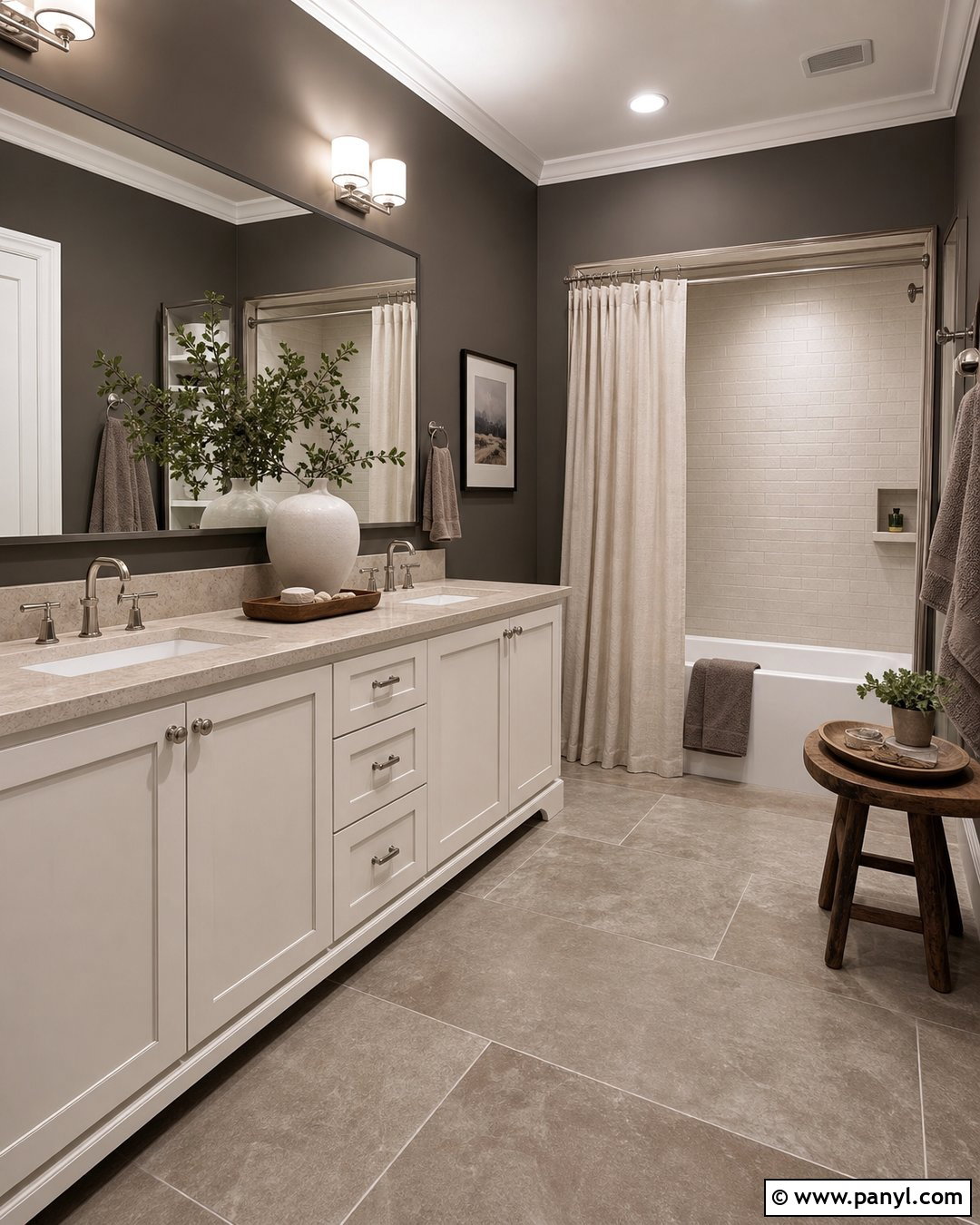
Warm slate walls sit between deep gray and muted brown, making them easy to combine with both cool and warm finishes. Create a streamlined transitional bathroom with slate-painted walls, a creamy white vanity, and honed limestone countertops. Add brushed nickel fixtures for a quiet metallic detail that does not dominate the room. The floor can feature large greige stone-look tiles laid with narrow grout lines for a continuous appearance. Frame the bathtub with light linen curtains and mount simple shaded sconces beside a wide rectangular mirror. Walnut trays, taupe towels, and a small piece of monochrome artwork complete the balanced palette. This look works especially well when you want dark walls that feel substantial without using an obvious statement color.
12. Espresso Brown Bathroom Walls
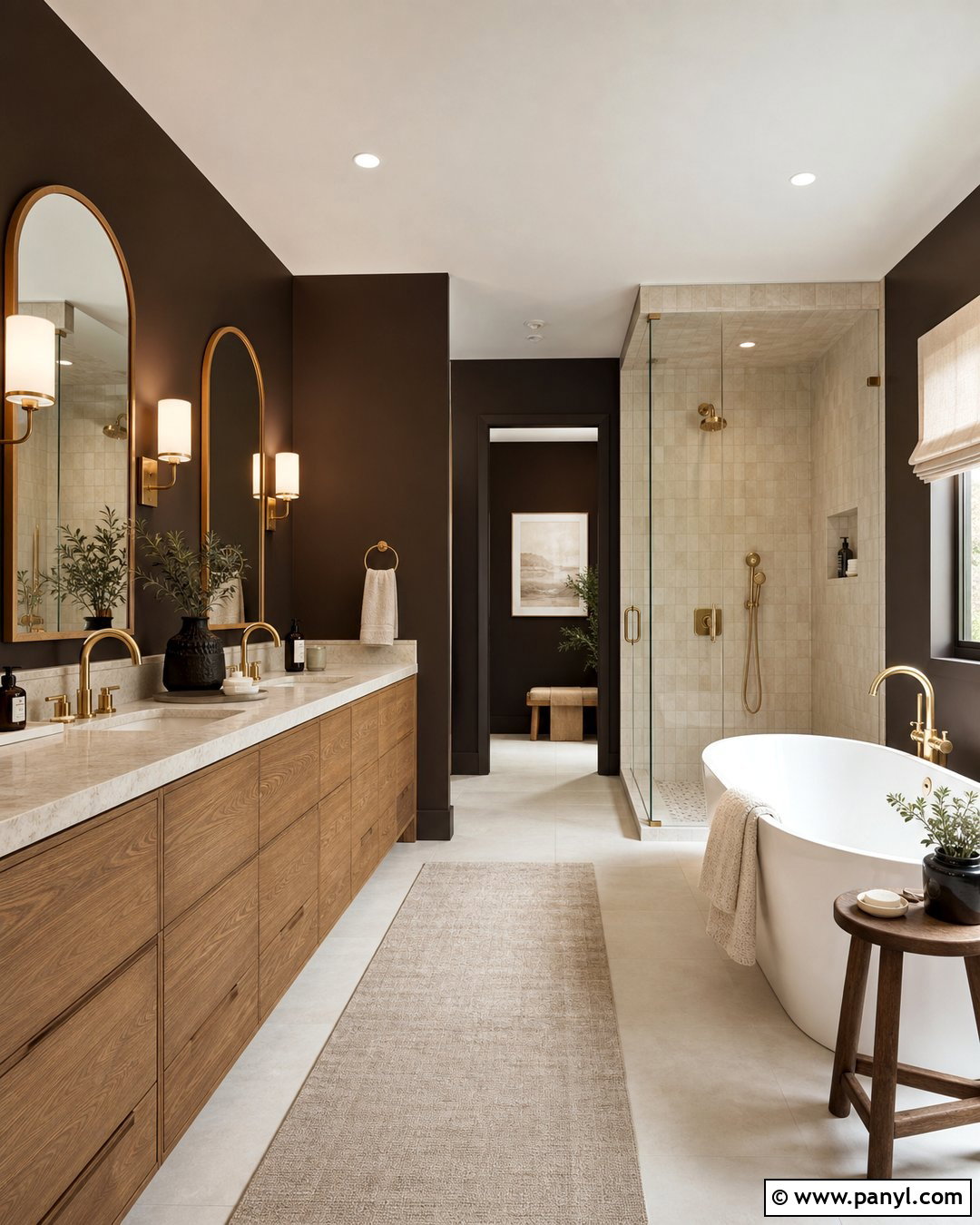
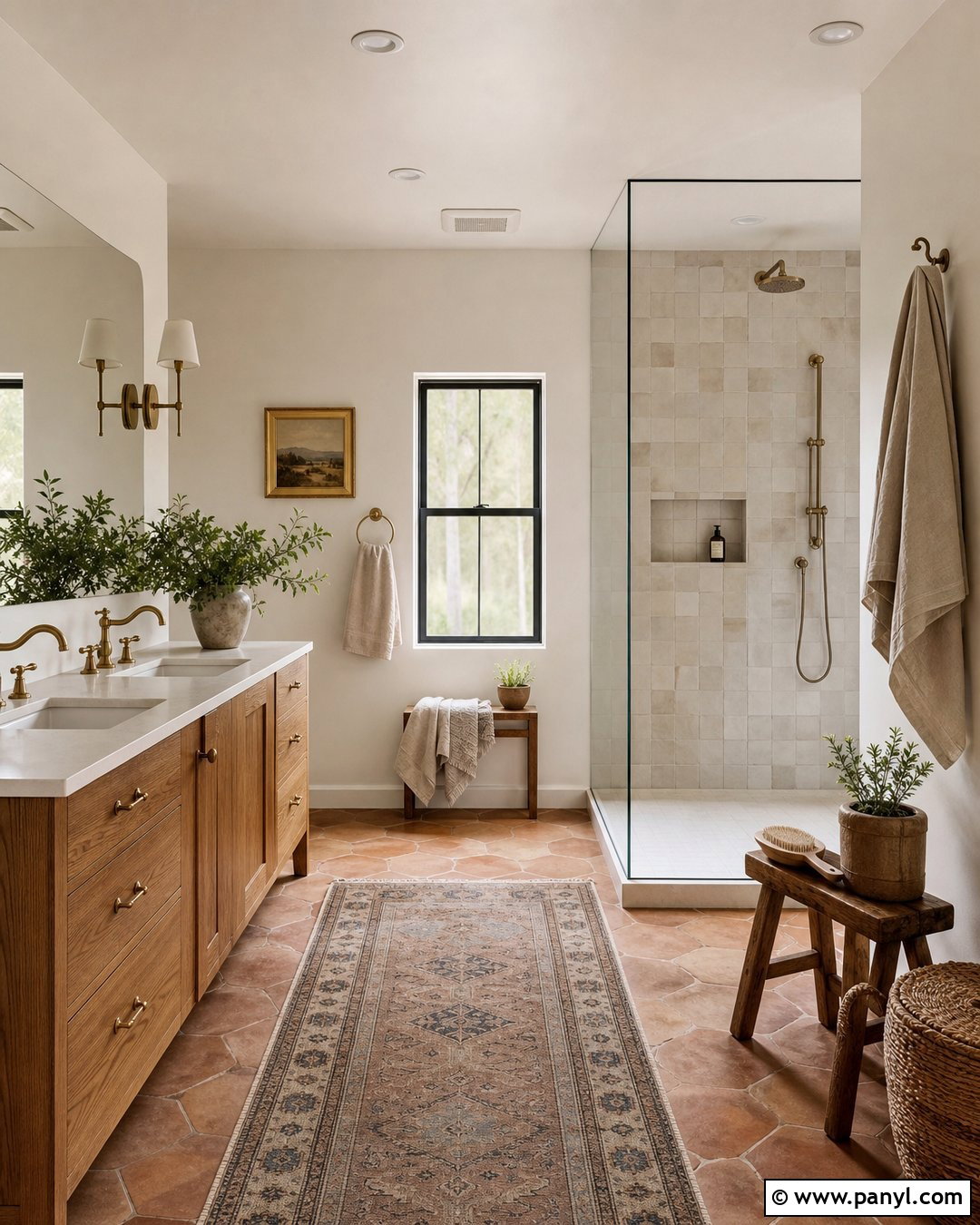
Espresso brown walls can make a spacious bathroom feel more intimate and comfortable. Balance the near-black brown with a long rift-cut oak vanity, an ivory stone countertop, and two white undermount sinks. Install warm brass faucets and tall arched mirrors to add brightness above the vanity. In the shower, use pale beige zellige tile with irregular surfaces that catch the light. Large cream floor tiles maintain a calm foundation and prevent the room from looking enclosed. A freestanding white tub, oatmeal bath linens, and a textured wool-look runner soften the stronger architectural elements. Finish with a small wooden stool and understated branches in a ceramic vase. The complete design has a warm, polished spa character.
13. Oxblood Red Bathroom Walls
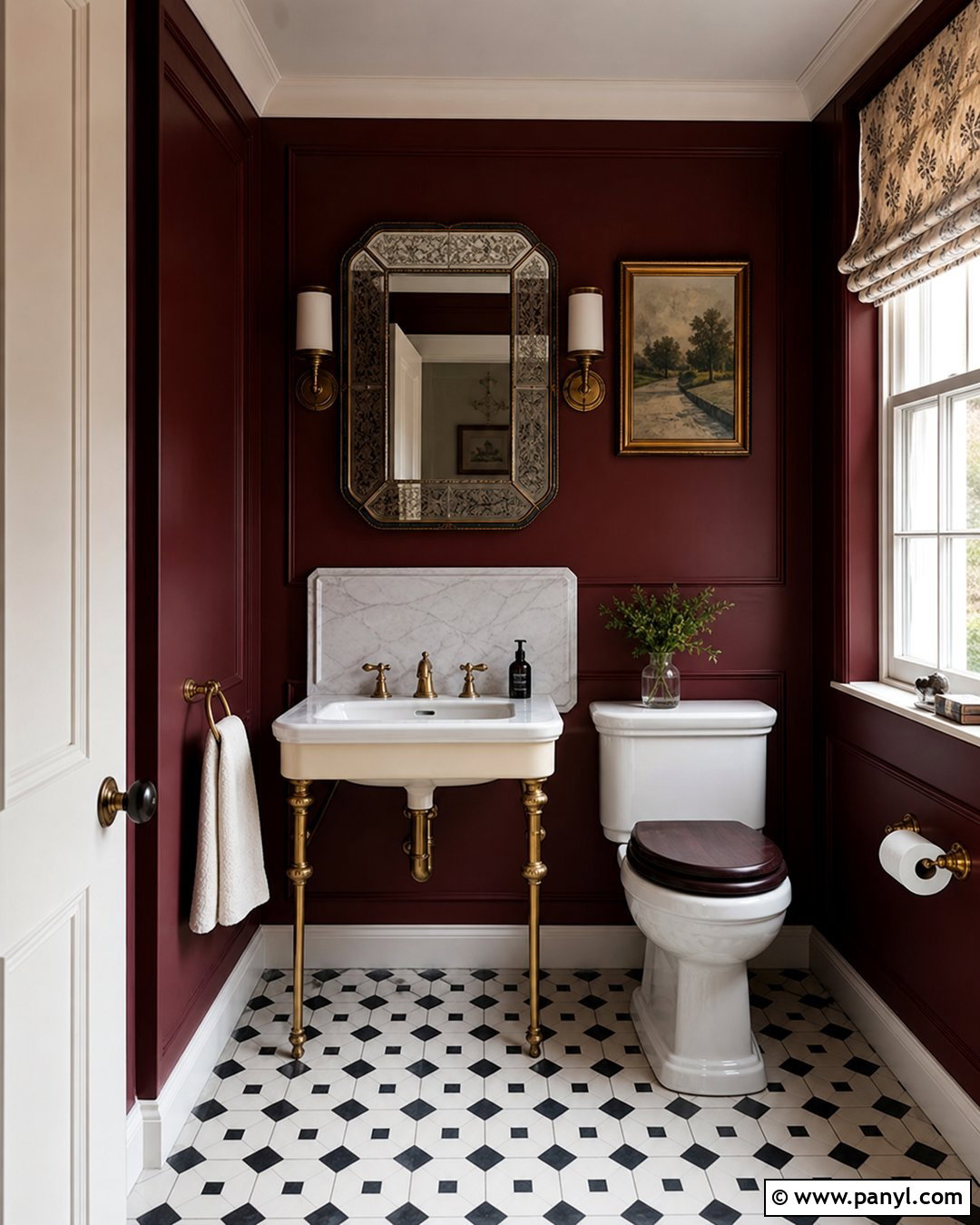
Oxblood red walls bring dramatic color to a bathroom without the brightness associated with primary red. Use the shade across paneled walls in a compact traditional bath, then balance it with a creamy console sink and a lightly veined marble backsplash. Antique brass faucets, framed artwork, and a decorative mirror reinforce the room’s heritage character. For the floor, select black-and-cream geometric tile that connects the dark walls with the pale fixtures. White trim can outline the doorway and window, giving the red a clean boundary. Add ivory towels, a dark wood stool, and one patterned Roman shade containing small touches of red. This complete scheme feels bold and established, rather than playful or overly ornate.
14. Midnight Blue Bathroom Walls
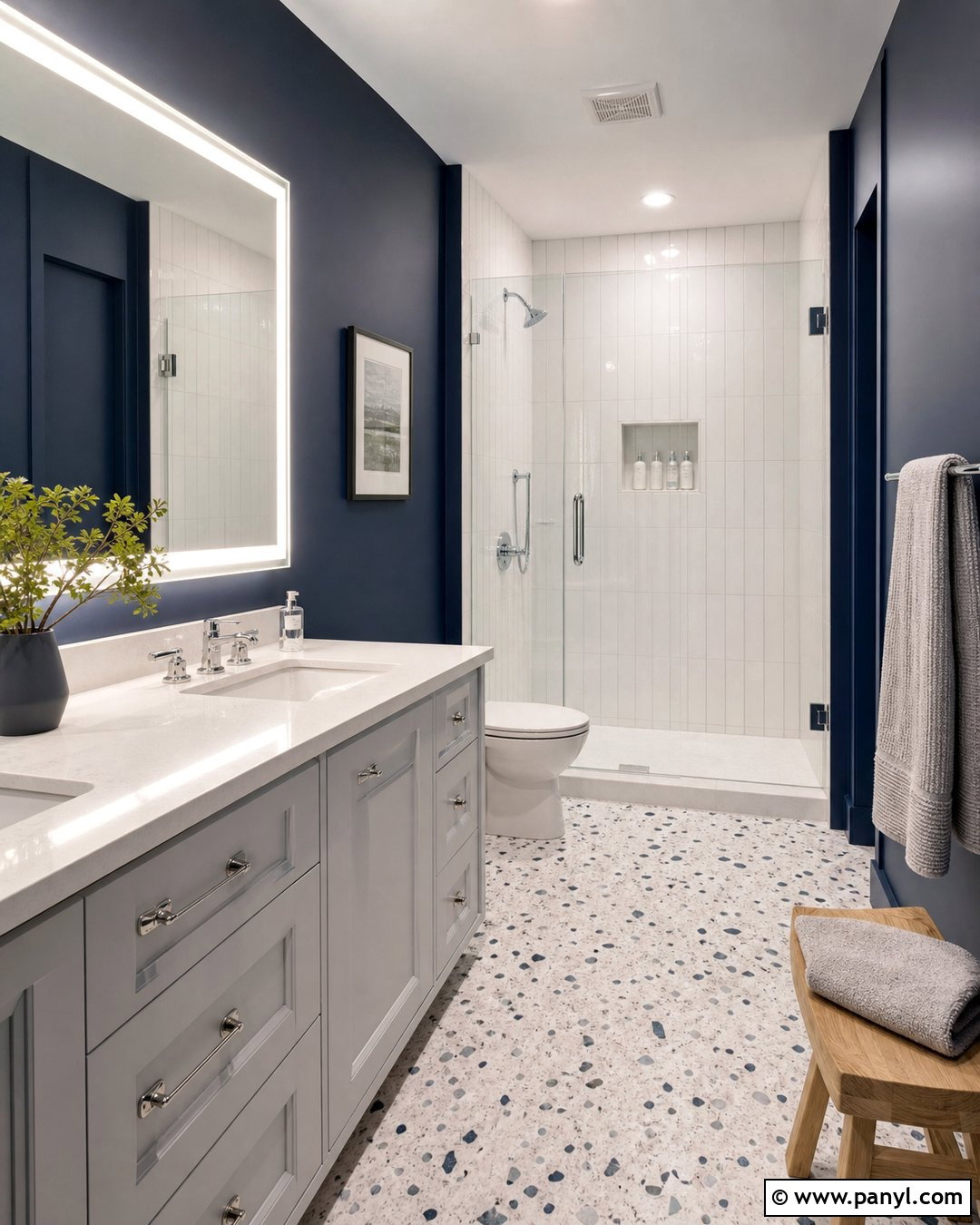
Midnight blue walls can anchor a bright bathroom while feeling softer than true black. Combine them with a pale gray vanity, crisp white quartz countertop, and polished chrome hardware for a clean contemporary palette. A wide backlit mirror provides practical illumination and creates a luminous edge against the dark paint. Use white terrazzo flooring with small blue and gray chips to connect the surfaces subtly. Inside the shower, install glossy white vertical tile and a clear glass enclosure. Light gray towels and a simple navy bath mat maintain the restrained color story. One pale wood stool adds necessary warmth. The room feels fresh, open, and modern because every dark surface is balanced by reflective glass, bright tile, and focused lighting.
15. Blackened Green Bathroom Walls
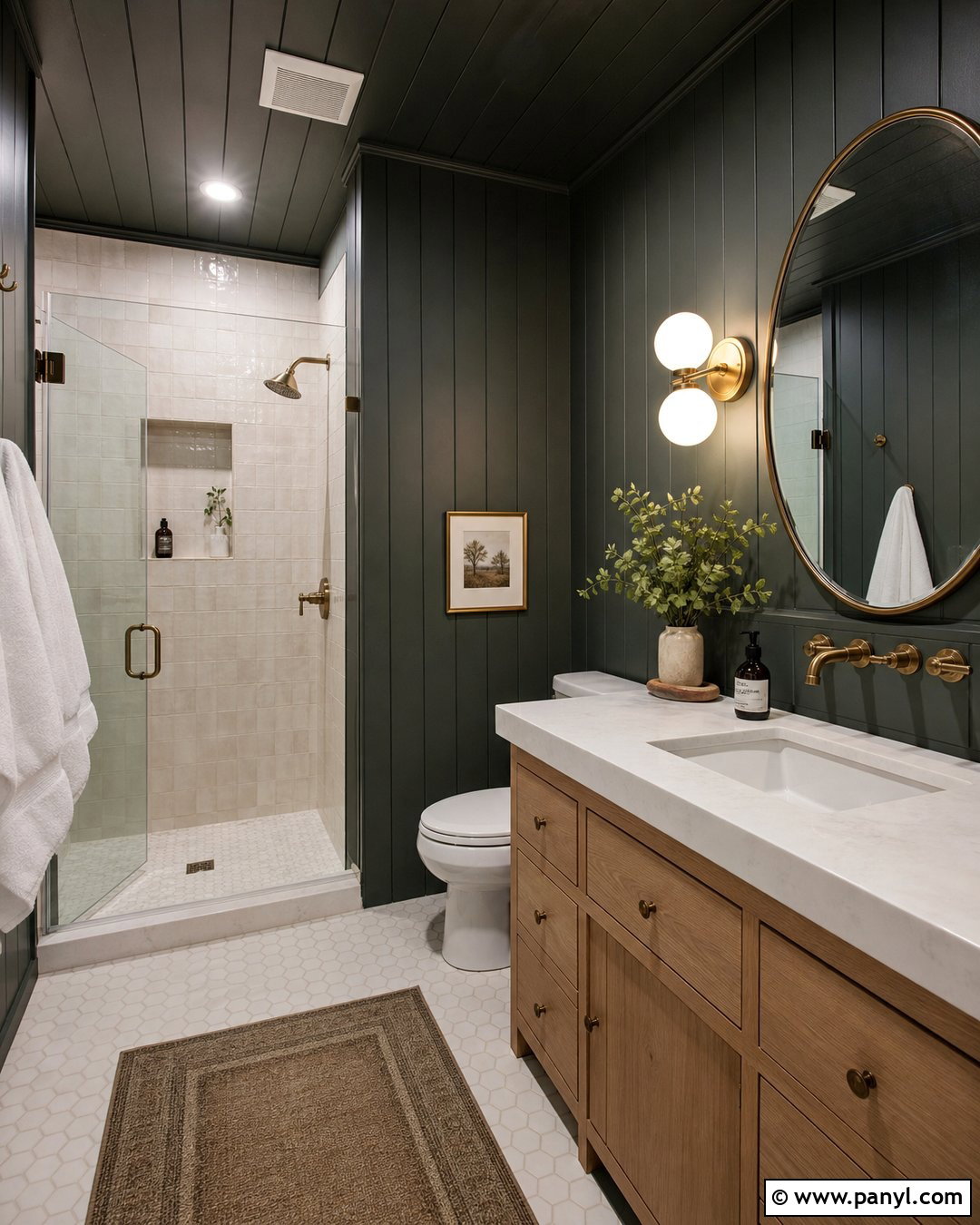
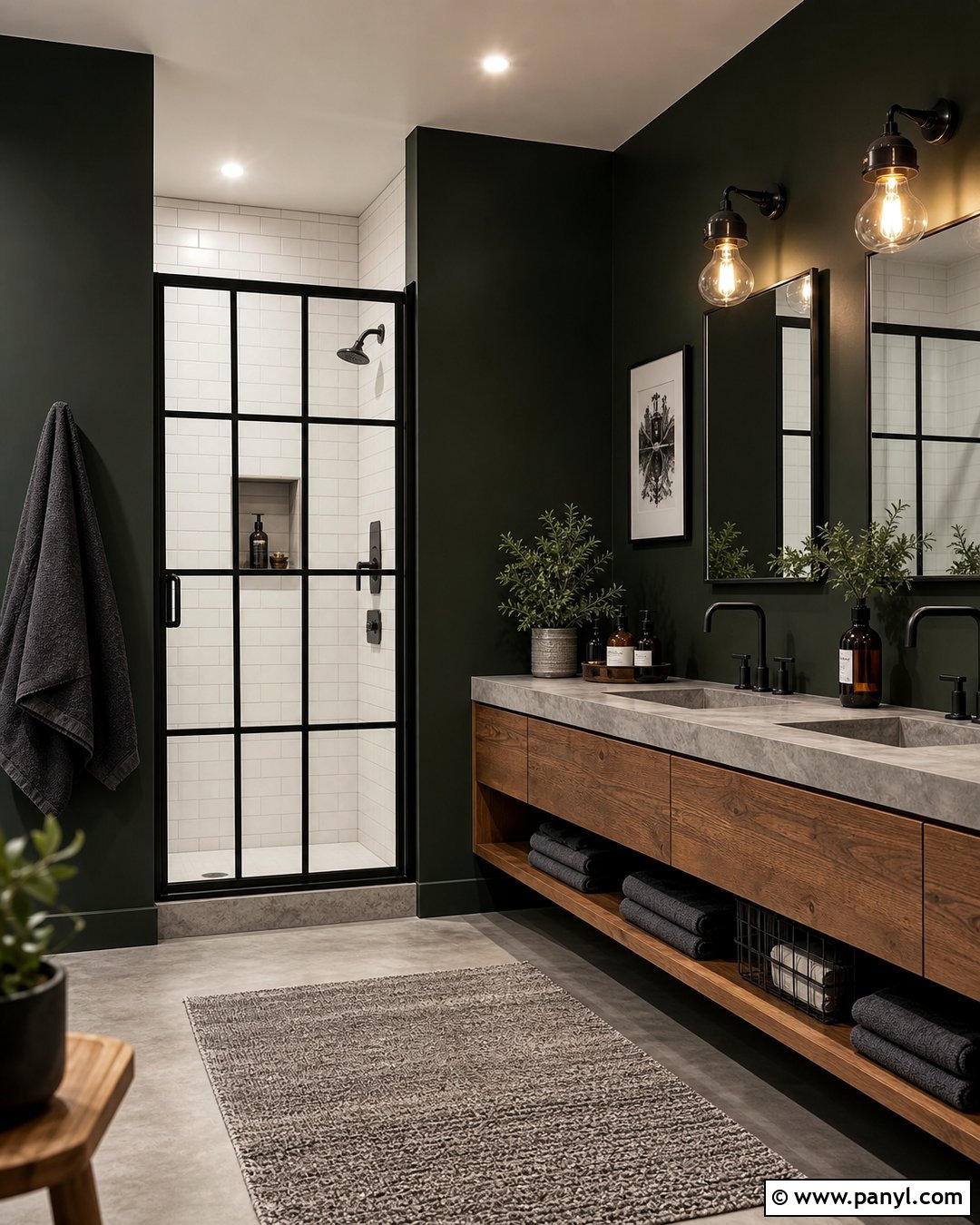
At first glance, blackened green can appear nearly black, but its subtle green undertone becomes visible beside wood and brass. Use it throughout a compact bathroom with traditional wall paneling and a matching painted ceiling. A natural oak vanity provides strong contrast, while a thick white quartz top defines the sink area. Choose antique brass hardware, an oval mirror, and opal globe lights to create a warm glow against the deep color. Small cream hexagon floor tiles keep the room bright underfoot. In the shower, combine matching cream tile with dark green grout for continuity. Add white towels, a woven basket, and one small framed landscape. The result is dramatic, organic, and carefully coordinated.
16. Deep Taupe Bathroom Walls
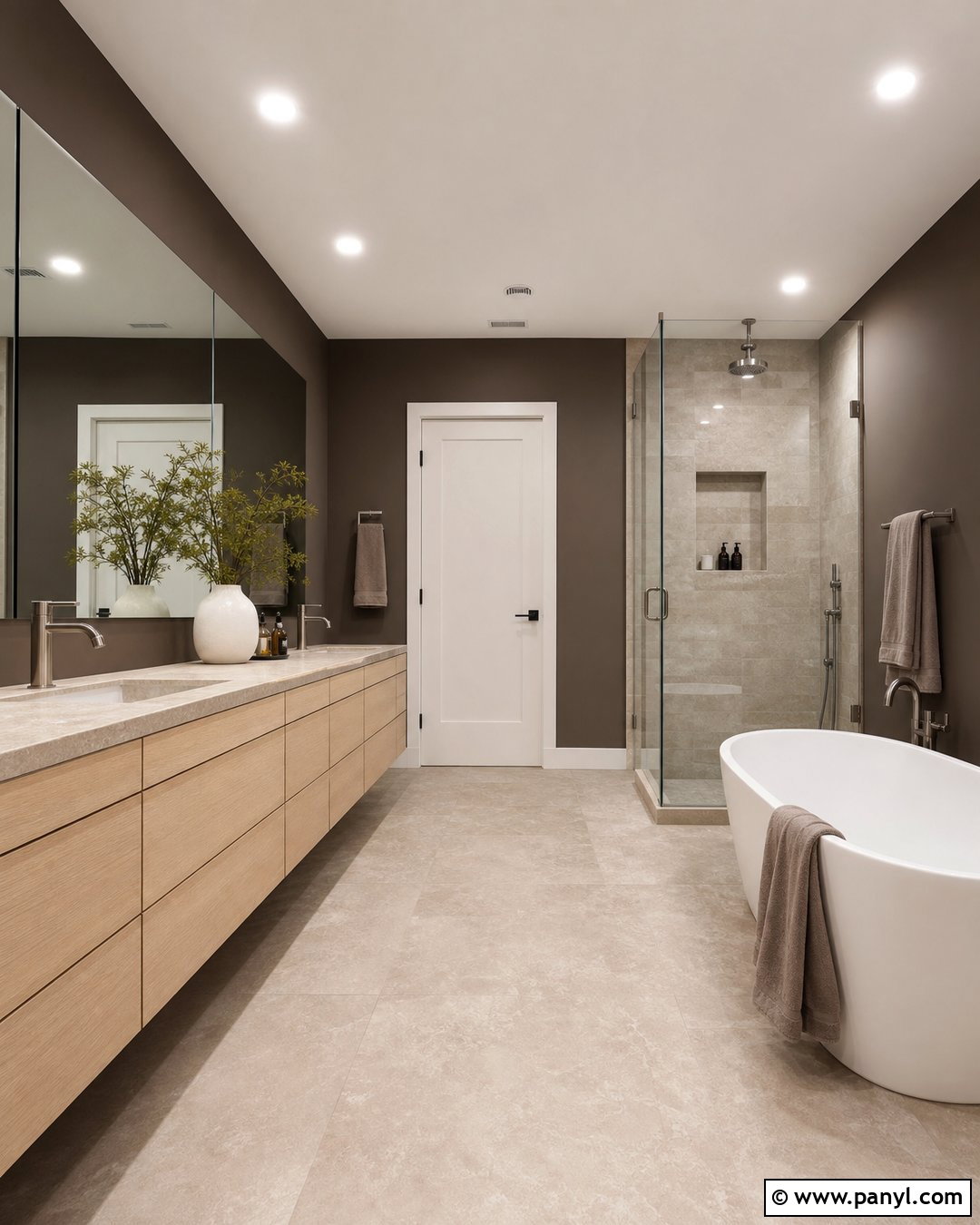
Deep taupe walls provide a dark neutral look with more warmth than conventional gray. Build a soft minimalist bathroom around them using a floating white oak vanity, a beige stone counter, and a frameless wall-to-wall mirror. Brushed nickel faucets keep the design understated, while slim vertical sconces deliver clear task lighting. Continue the neutral palette with large limestone-look floor tiles and a walk-in shower clad in the same material. A freestanding tub in warm white prevents a stark contrast against the taupe. Add mushroom-colored towels, a cream bath mat, and light wood accessories for quiet layering. This coordinated approach creates a restful room where texture, proportion, and natural materials are more noticeable than decorative objects.
17. Graphite Gray Bathroom Walls
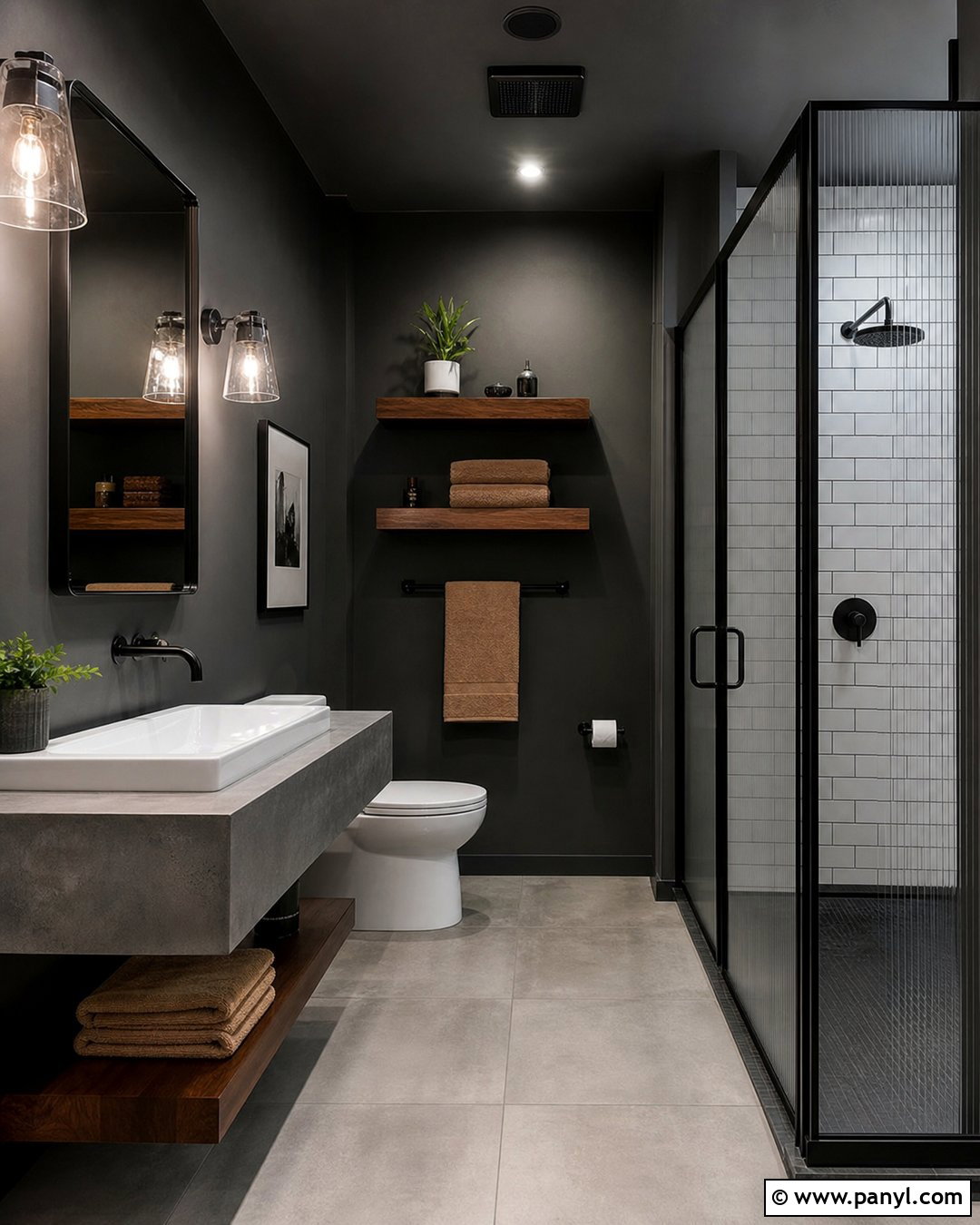
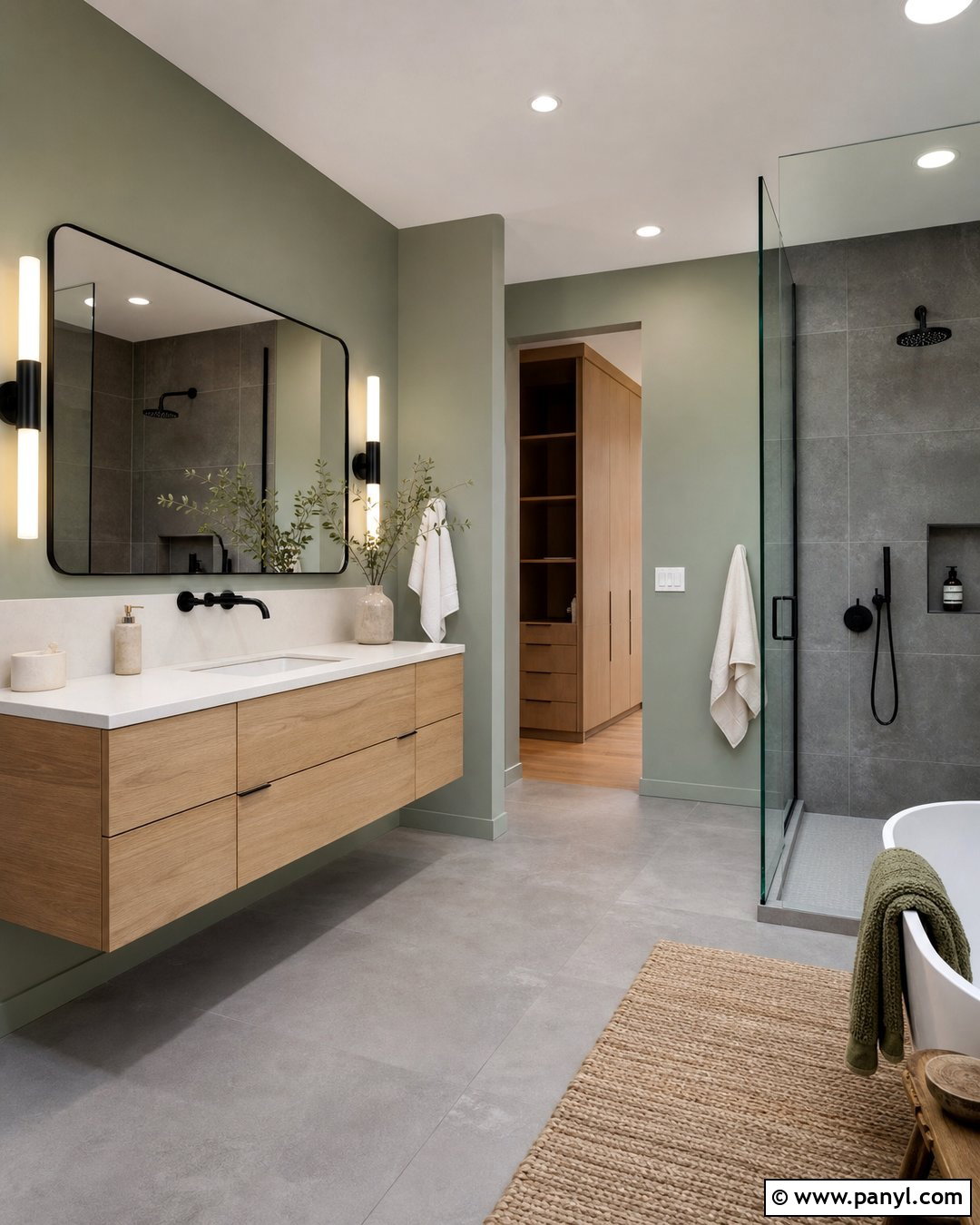
Graphite gray walls give an industrial bathroom a strong architectural backdrop. Pair them with a concrete-look floating vanity, a white rectangular basin, and matte black fixtures. Use ribbed glass for the shower enclosure to soften the hard surfaces and create visual privacy. The floor can feature large light gray porcelain tiles, while the shower walls use glossy white subway tile with dark grout. Install a black metal mirror with rounded corners and two simple cylinder sconces. Warm the scheme with walnut shelves, tan towels, and a small leather-look storage box made from bathroom-safe material. Keeping the ceiling and door trim white introduces clean contrast. The completed space feels urban and modern without becoming harsh or purely monochromatic.
18. Plum Brown Bathroom Walls
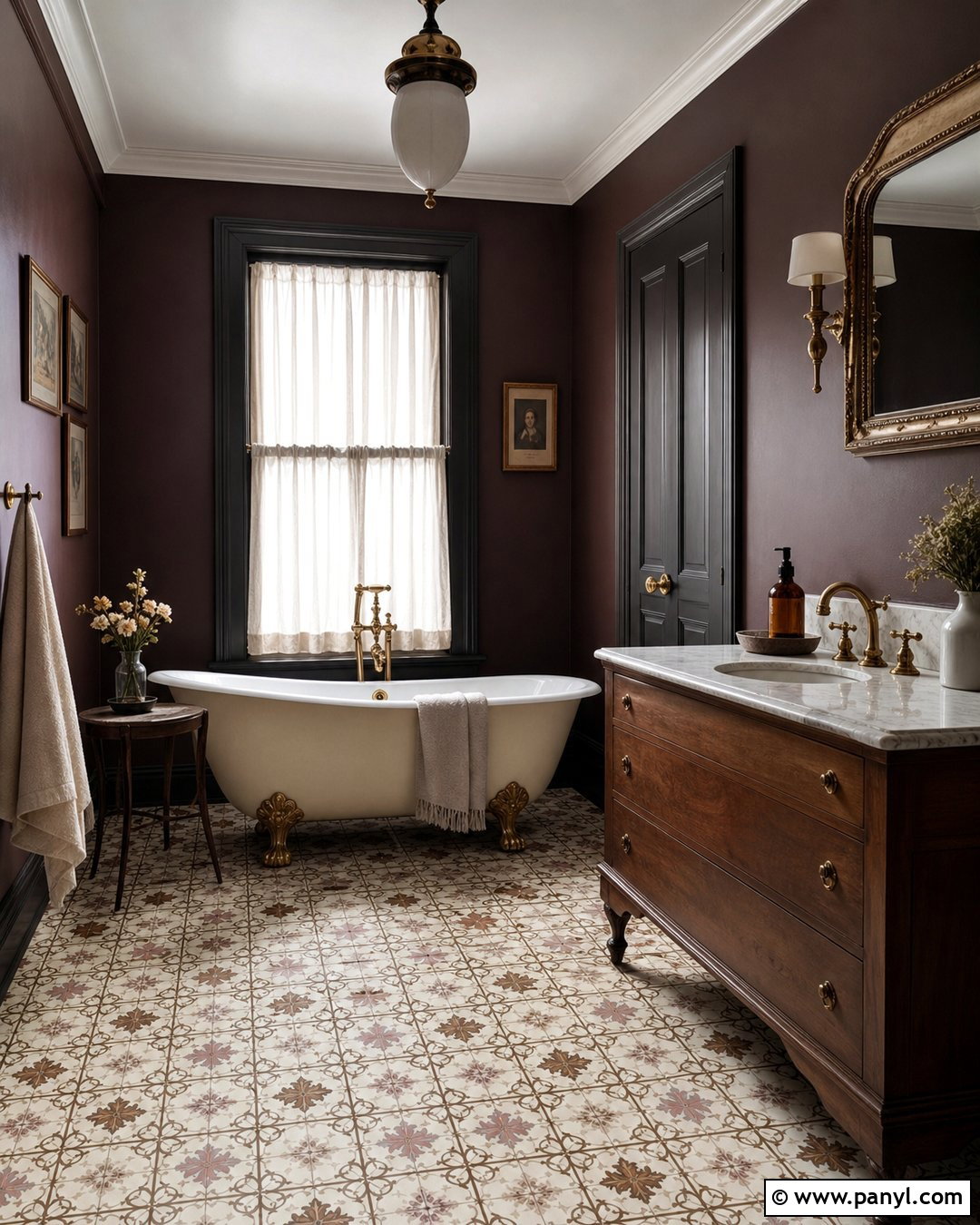
Plum brown walls reveal muted purple, red, and chocolate tones, depending on the surrounding light. Use this complex color in a vintage-inspired bathroom with a cream claw-foot tub and a walnut washstand vanity. A pale marble counter, aged brass faucets, and a softly antiqued mirror enhance the established character. Choose encaustic-look floor tile in cream, brown, and dusty rose to connect the color palette. White café curtains allow privacy while keeping the window bright. Add oatmeal towels, a simple bath tray, and two small framed sketches above the tub. Avoid excessive ornament so the room still feels usable and current. The full design is warm, distinctive, and especially suited to an older home or character-filled renovation.
19. Dark Terracotta Bathroom Walls
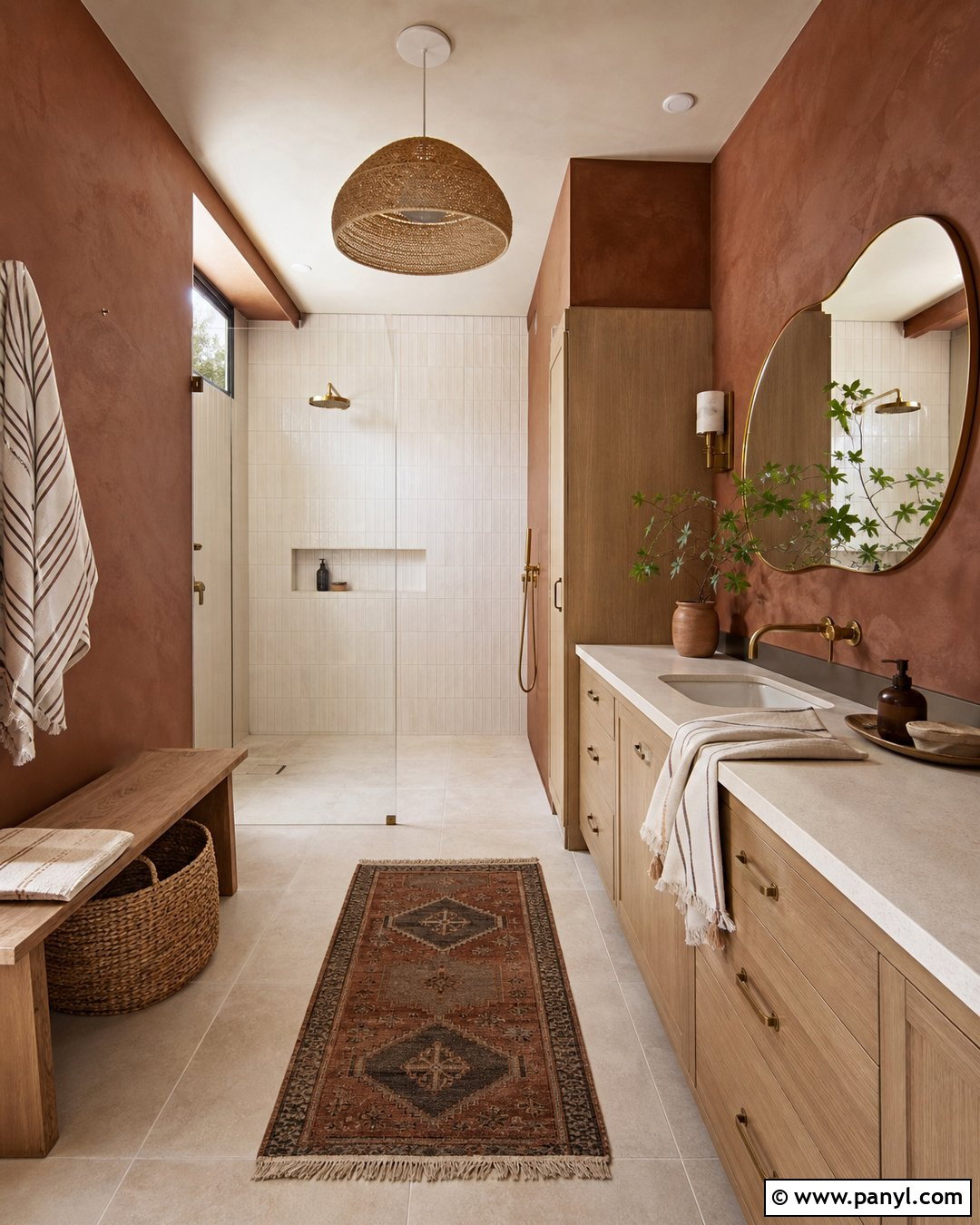
Dark terracotta walls create a sunbaked, earthy effect with more energy than brown and less intensity than red. Pair them with a plaster-look finish for subtle surface variation, then add a pale oak vanity and creamy limestone counter. Brushed brass fixtures complement the warm color, while an irregularly shaped mirror keeps the room relaxed. Use sand-colored porcelain floor tiles and handmade off-white shower tile to establish a lighter base. Woven storage baskets, striped linen towels, and a small wood bench strengthen the natural material palette. Keep the ceiling warm white and choose bright globe sconces to prevent the room from feeling overly enclosed. The result resembles a modern desert retreat while remaining practical for everyday family use.
20. Petrol Blue Bathroom Walls
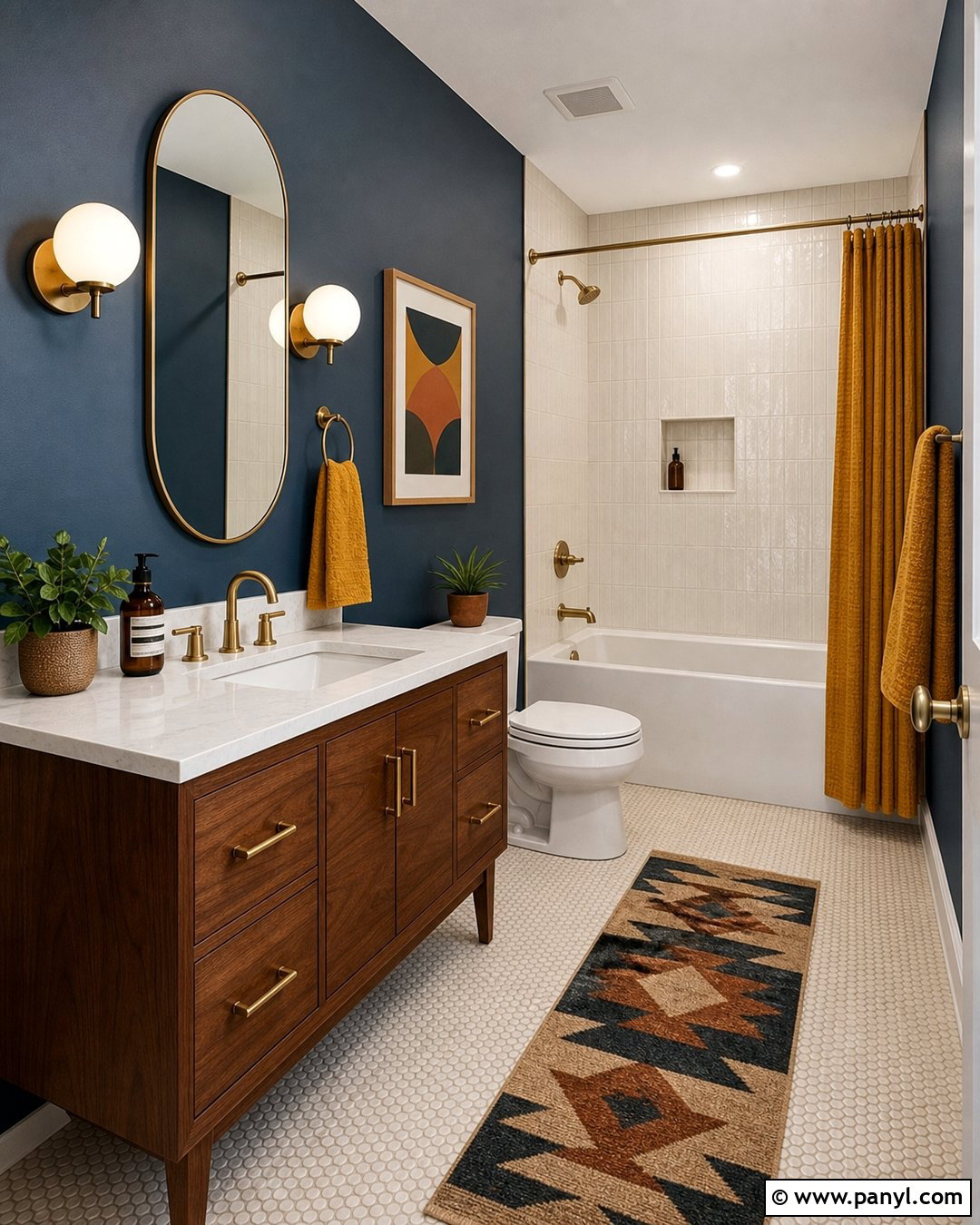
Petrol blue is a deep blue-green color that can shift noticeably beside warm or cool finishes. Create a midcentury-inspired bathroom by combining petrol walls with a walnut vanity, white quartz counter, and brushed brass hardware. Install small cream mosaic floor tiles for a subtle retro reference without making the room feel dated. A pill-shaped mirror and globe sconces add rounded forms above the vanity. Use glossy ivory tile in the tub surround so light bounces across the space. Finish with mustard hand towels, a simple geometric print, and a narrow wooden shelf for daily essentials. Keep the accessories limited and functional. The finished bathroom feels colorful and characterful, with each supporting element reinforcing the deep blue-green walls.
21. Charcoal Blue Bathroom Walls
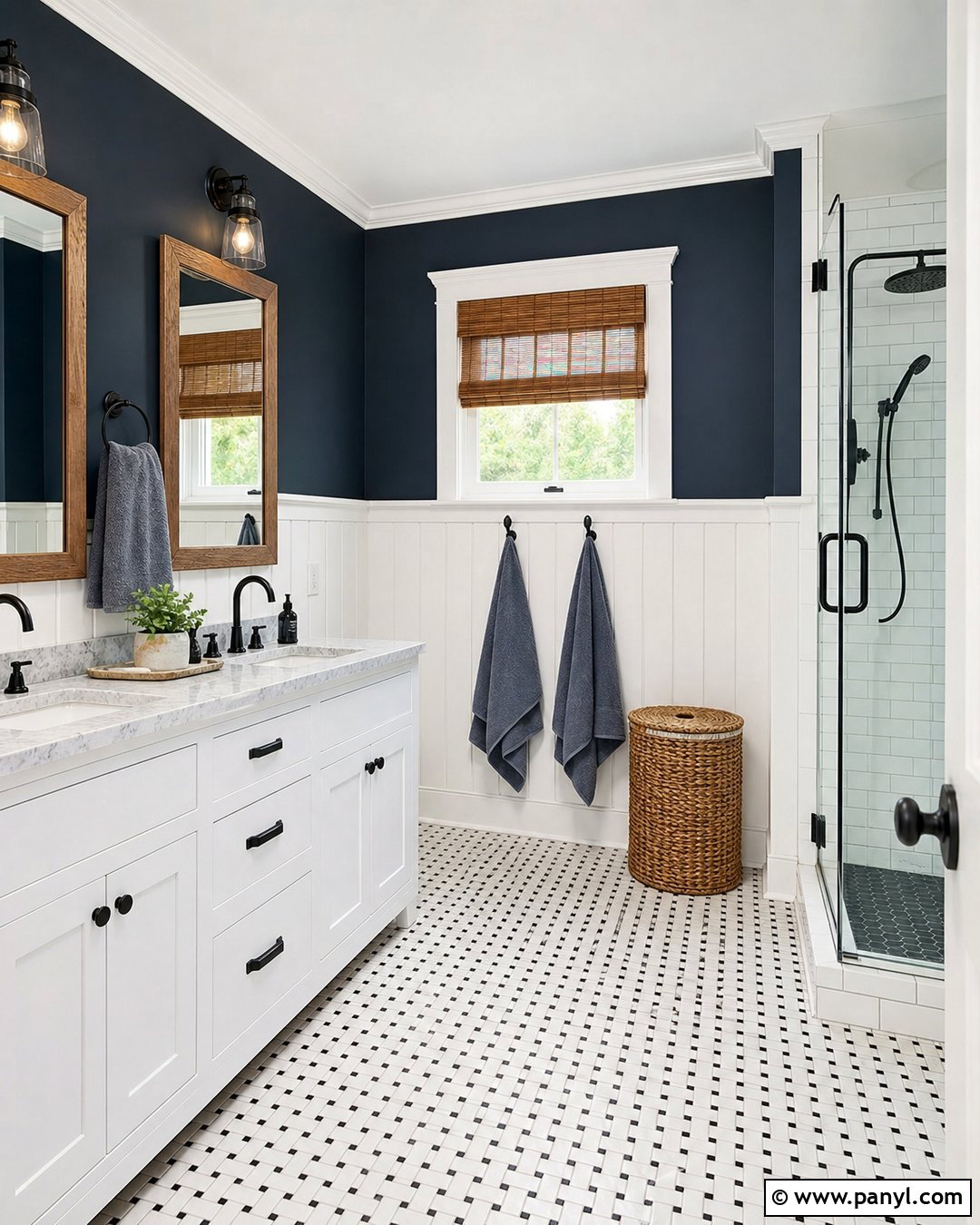
Charcoal blue walls offer a smoky, understated alternative to traditional navy. Pair them with a white shaker vanity and a light marble counter for a relaxed modern farmhouse bathroom. Matte black faucets and cabinet pulls provide definition, while natural wood mirrors prevent the black accents from feeling too sharp. Use white vertical shiplap around the lower third of the room and paint the upper walls charcoal blue. Black-and-white basketweave flooring adds classic pattern in a manageable scale. A frameless glass shower and white tile surround maintain brightness at the back of the room. Complete the look with gray-blue towels, a woven hamper, and one simple botanical arrangement. The space feels familiar, polished, and easy to maintain.
22. Black-Brown Bathroom Walls
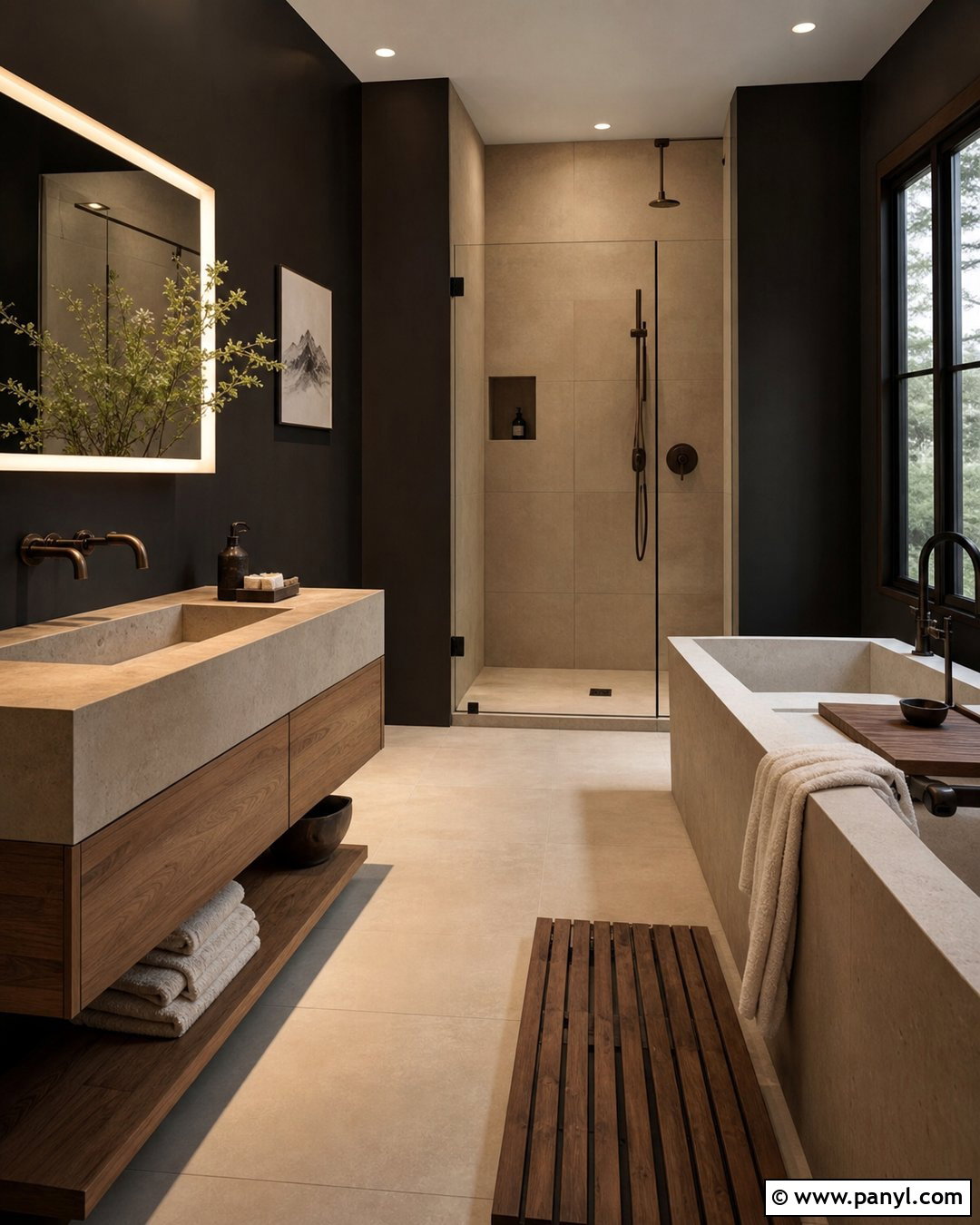
Black-brown walls have the depth of black but feel noticeably warmer beside cream, tan, and wood. Use the color in a Japanese-inspired bathroom with a low oak vanity, an integrated beige stone sink, and minimalist bronze fixtures. Large sand-colored tiles can cover the floor and continue into an open walk-in shower, creating a calm and consistent foundation. Add a deep soaking tub, a slatted wood bath mat, and a simple backlit mirror. Keep storage concealed so the dark walls and natural materials remain visually clear. Folded ivory towels, a stone tray, and one leafy branch provide restrained decoration. This complete design feels peaceful and grounded, with clean lines that allow the warm dark color to take center stage.
23. Deep Pewter Bathroom Walls
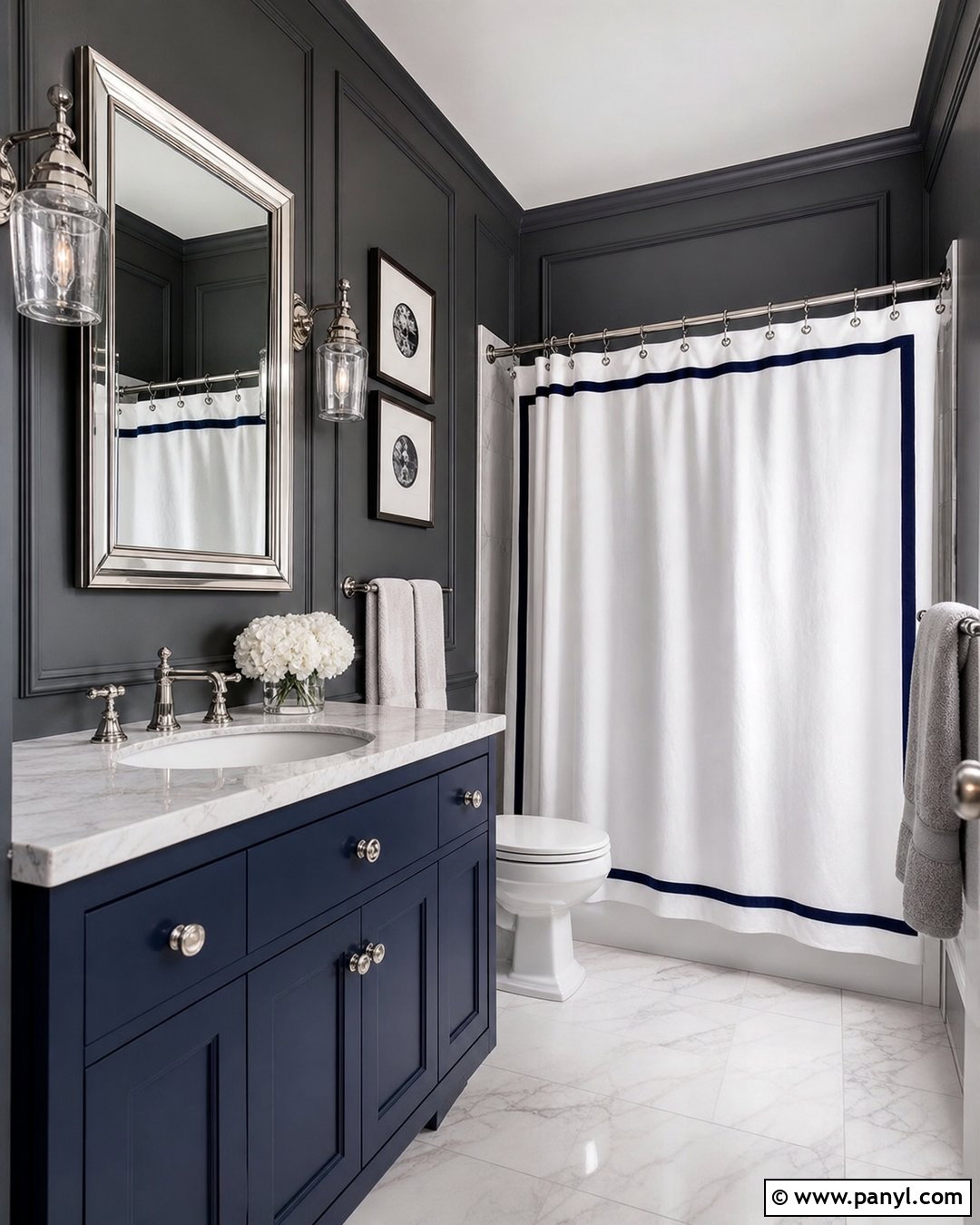
Deep pewter walls create a balanced dark gray backdrop with subtle metallic softness. Design a classic bathroom around them using a navy-painted vanity, a white marble counter, and polished nickel fittings. White wall molding adds traditional structure and can be painted pewter for a color-drenched effect. Select marble-look porcelain flooring with gentle gray veining to brighten the lower half of the room. A large silver-framed mirror and glass shaded sconces bring reflective details to the vanity area. Use a white shower curtain with a narrow navy border for a tailored finish. Pale gray towels, a small upholstered stool, and restrained artwork complete the palette. The result is formal enough for guests but comfortable for everyday routines.
24. Hunter Green Bathroom Walls
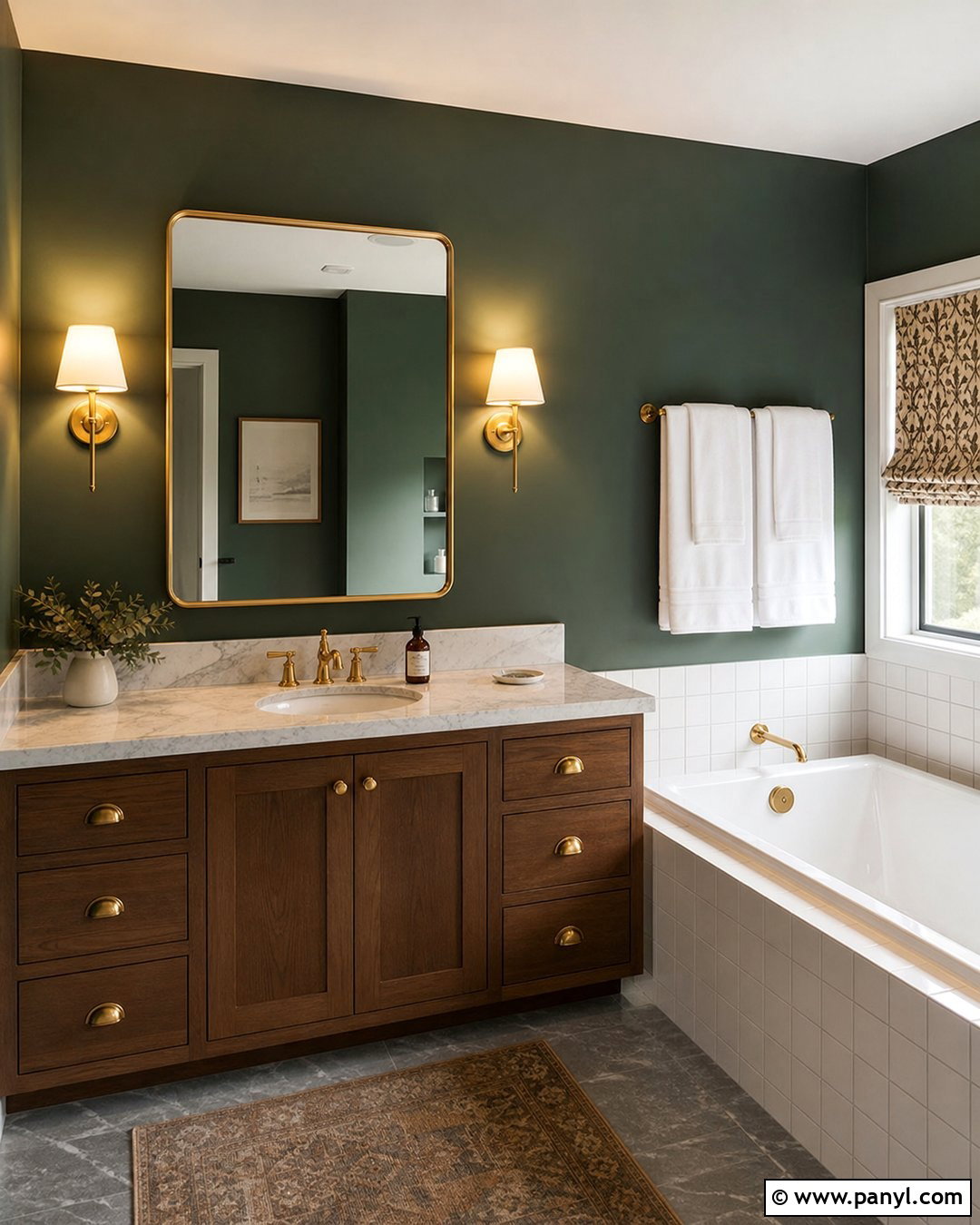
Hunter green walls can support a handsome traditional bathroom with strong natural warmth. Pair the color with a medium walnut vanity, a creamy marble countertop, and brass cup pulls. Add a rectangular brass mirror and shaded wall lights for a polished vanity arrangement. White square wall tile around the bathtub provides a bright, practical contrast, while warm gray stone flooring connects the green and wood tones. A patterned Roman shade containing cream, green, and muted tan introduces detail without overwhelming the walls. Finish with thick white towels, a woven wastebasket, and two small botanical prints. This full scheme feels established and welcoming, making hunter green suitable for both a family bathroom and a well-finished guest space.
25. Deep Ink Purple Bathroom Walls
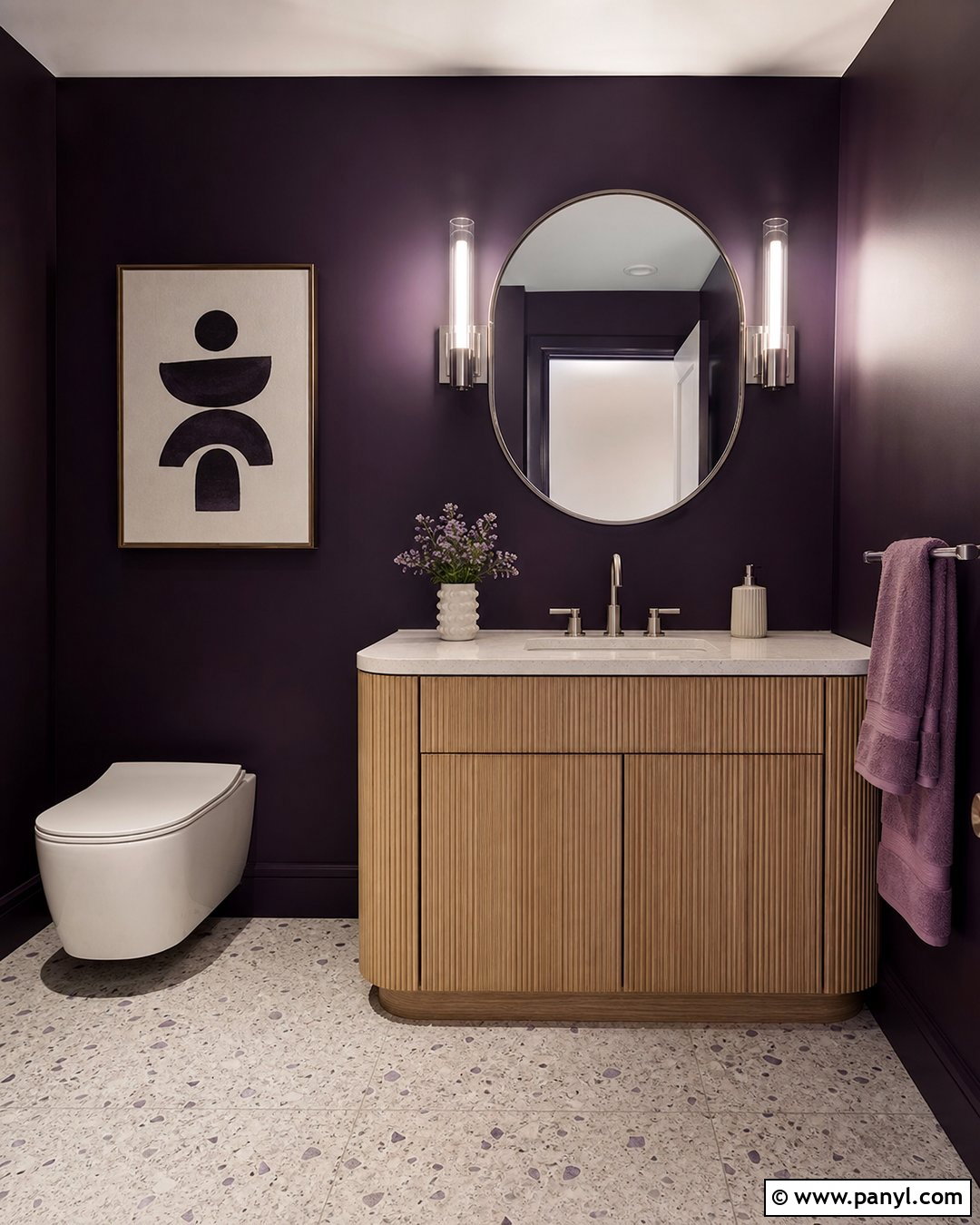
Deep ink purple can create a dramatic bathroom that feels softer and more colorful than black. Use the shade on every wall in a contemporary powder room, but leave the ceiling soft white for contrast. A fluted light oak vanity, white stone counter, and brushed nickel faucet keep the main fixtures fresh. Install pale gray terrazzo flooring with subtle purple and charcoal flecks to connect the palette. A large circular mirror and two vertical glass sconces provide plenty of reflection and brightness. Add mauve hand towels, a white ceramic soap dispenser, and one abstract artwork featuring cream and muted lavender. The completed room feels bold yet controlled, allowing the unusual wall color to look deliberate, modern, and easy to live with.
Conclusion:
The best dark bathroom is not simply a room covered in deep paint. It is a balanced composition of color, texture, lighting, and practical materials. These 25 Dark Bathroom Wall Color Ideas show how charcoal, navy, green, brown, burgundy, teal, and purple can support complete looks ranging from modern minimalism to traditional character. Before committing, sample your preferred shade on several walls and view it under daylight and bathroom lighting. Then repeat its undertones through wood, stone, metal, tile, and textiles. Add bright task lighting and enough pale contrast for comfort. With thoughtful coordination, dark bathroom walls can feel polished, welcoming, and deeply personal instead of heavy or unfinished.

Related Ideas and Inspiration:
Leave a Reply