
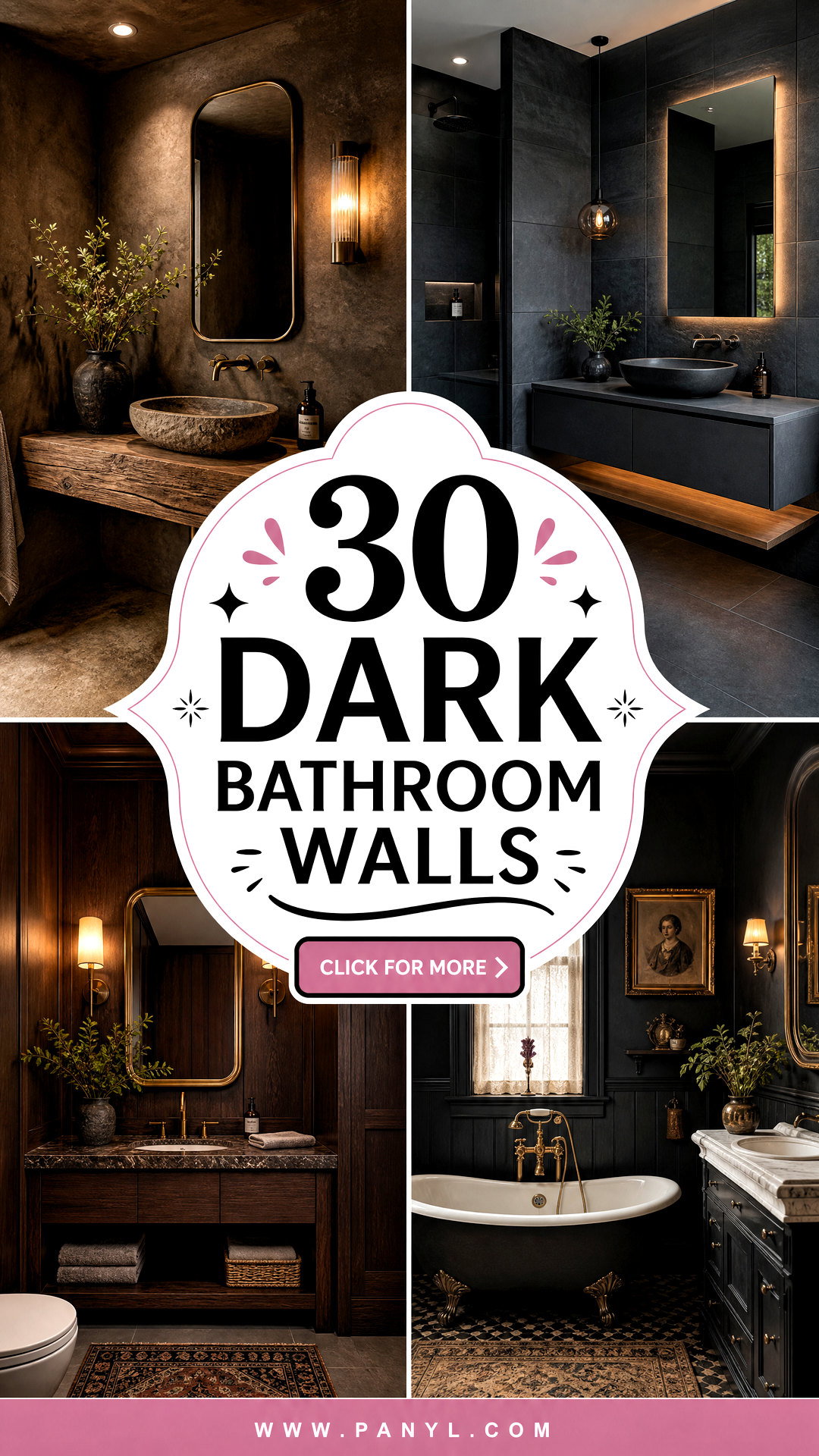
Dark walls can turn an ordinary bathroom into a rich, relaxing space with personality. The secret is creating balance through lighting, reflective surfaces, warm wood, pale stone, and carefully chosen fixtures. This collection of 30 Dark Bathroom Walls explores complete looks using black paint, charcoal tile, navy paneling, forest green wallpaper, deep brown plaster, and other saturated finishes. Each bathroom pairs its wall treatment with complementary flooring, vanities, hardware, mirrors, and lighting. You will find options for compact powder rooms, spacious primary bathrooms, traditional homes, and modern interiors. Whether you want subtle contrast or an immersive color-drenched room, these designs provide practical ways to make darker tones feel welcoming. Explore the following 30 Dark Bathroom Walls for a dramatic bathroom transformation.
1. Black Bathroom Walls With White Oak Vanity
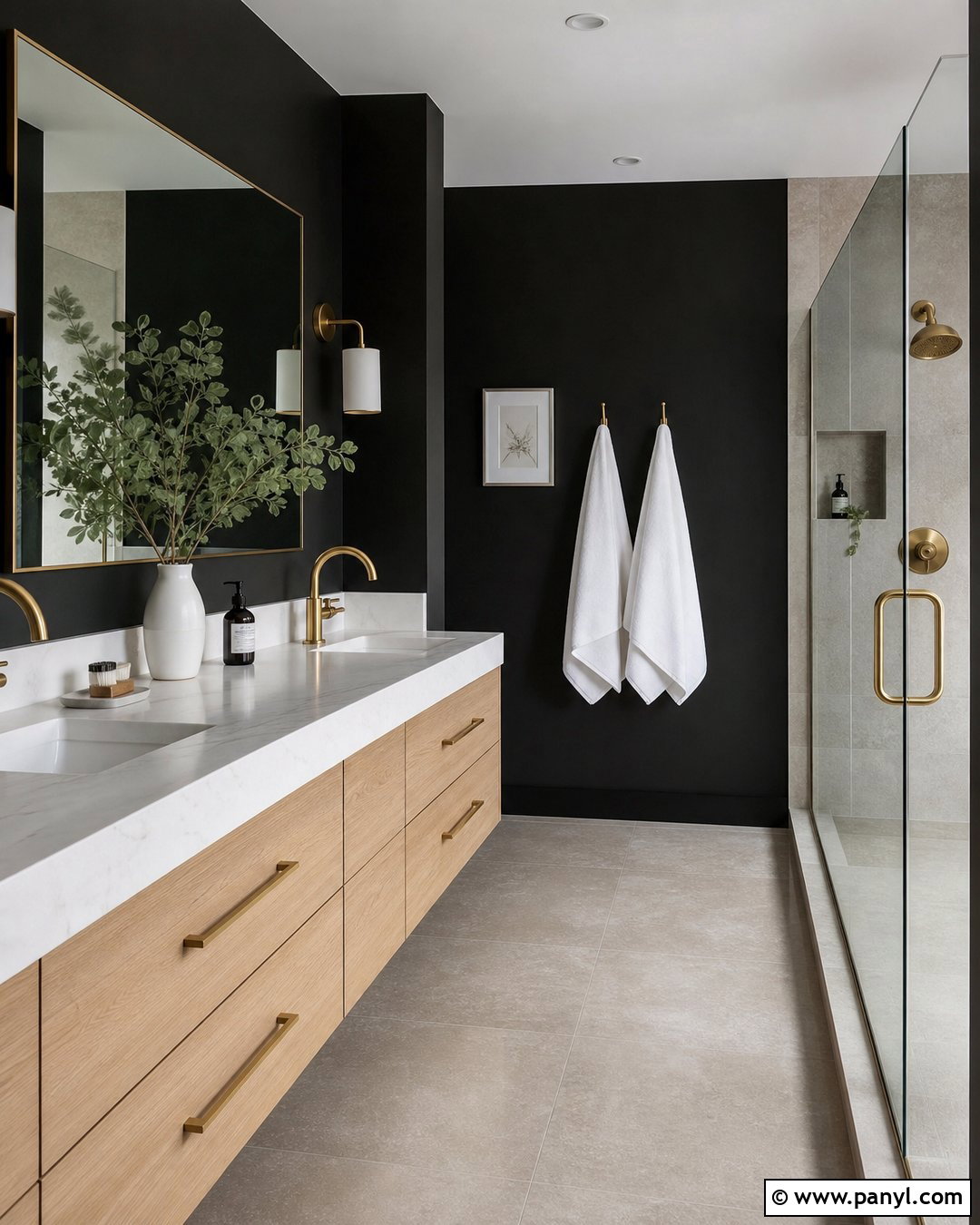
Matte black bathroom walls create a strong background for a streamlined white oak vanity. Choose a floating cabinet with flat-front drawers to keep the room open and show more flooring. A white quartz countertop and rectangular undermount sink provide clean contrast without looking harsh. Continue the natural feeling with warm beige porcelain floor tile and a woven bath mat. Above the vanity, install a wide frameless mirror that reflects light across the dark surfaces. Brushed brass faucets and slim wall sconces introduce warmth, while a clear glass shower enclosure prevents visual barriers. Finish the space with white towels, simple ceramic containers, and one leafy plant. The result feels modern, balanced, and comfortable rather than cold or overly dramatic.
2. Charcoal Bathroom Walls With White Marble
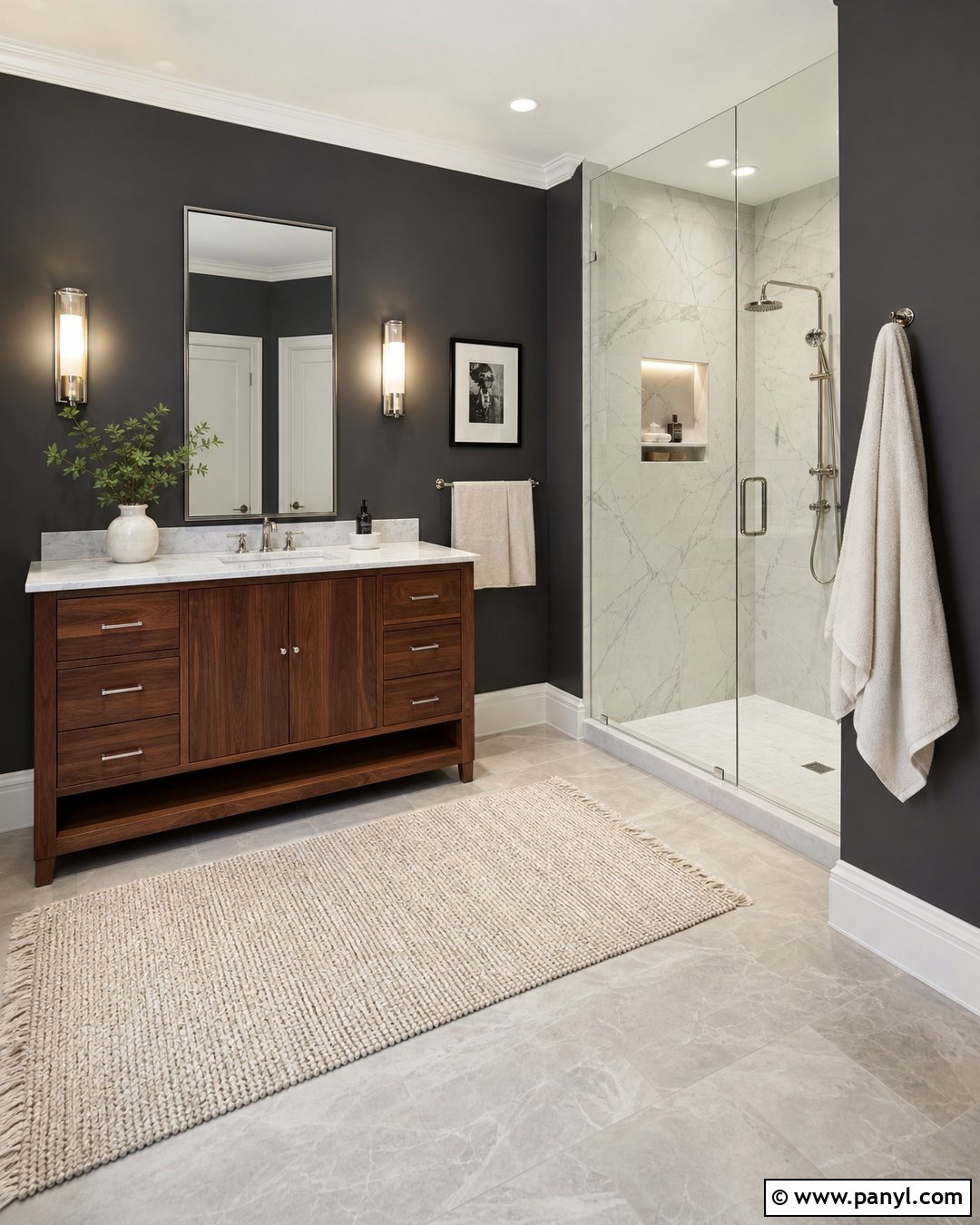
Soft charcoal walls provide depth while allowing white marble to become the main feature. Use large marble-look tiles inside the walk-in shower and repeat the material across the vanity countertop. A medium-tone walnut vanity softens the contrast between the pale stone and dark paint. Select charcoal grout for the shower so maintenance is easier and the pattern remains subtle. A polished nickel faucet, framed mirror, and glass sconces add gentle reflection without overwhelming the room. Pale gray floor tiles create a smooth transition underfoot. Keep towels, containers, and window treatments white or warm ivory. Good overhead lighting is essential, but vanity lights at face level make the space more useful. This complete palette feels polished, calm, and quietly luxurious.
3. Navy Bathroom Walls With Brass Fixtures
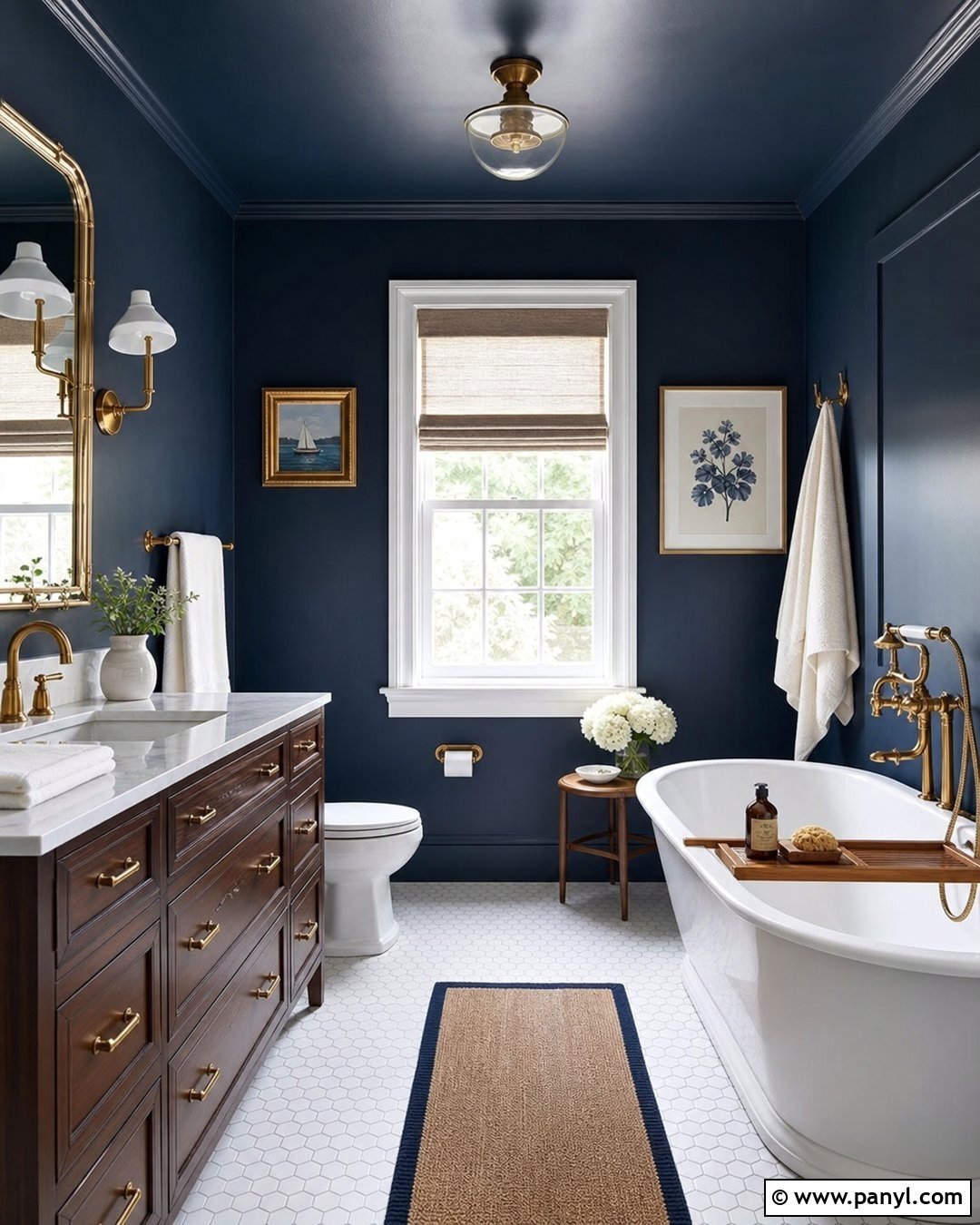
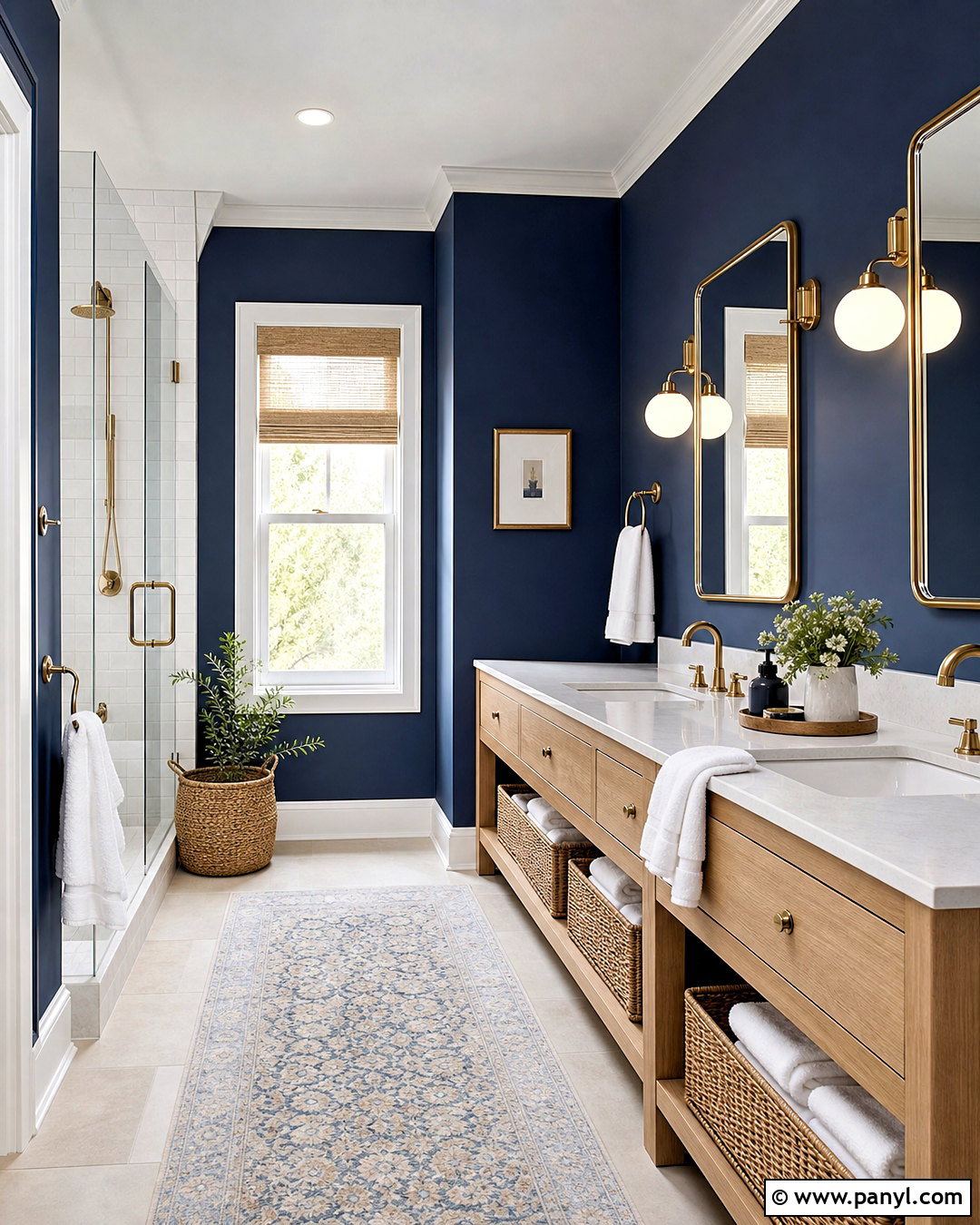
Deep navy bathroom walls feel classic when combined with brass fixtures and crisp white surfaces. Paint the walls and ceiling the same rich blue for an enveloping effect, then use bright white around the tub and vanity to create definition. A freestanding white bathtub becomes an elegant focal point against the navy background. Choose a dark walnut vanity with a white stone counter and warm brass pulls. Matching brass sconces, faucets, and mirror frames tie the room together. White hexagon floor tile with navy grout adds pattern while supporting the color scheme. Include linen Roman shades, soft cream towels, and one small framed print. The finished bathroom has plenty of drama, but its traditional materials keep it approachable and easy to live with.
4. Forest Green Bathroom Walls With Walnut
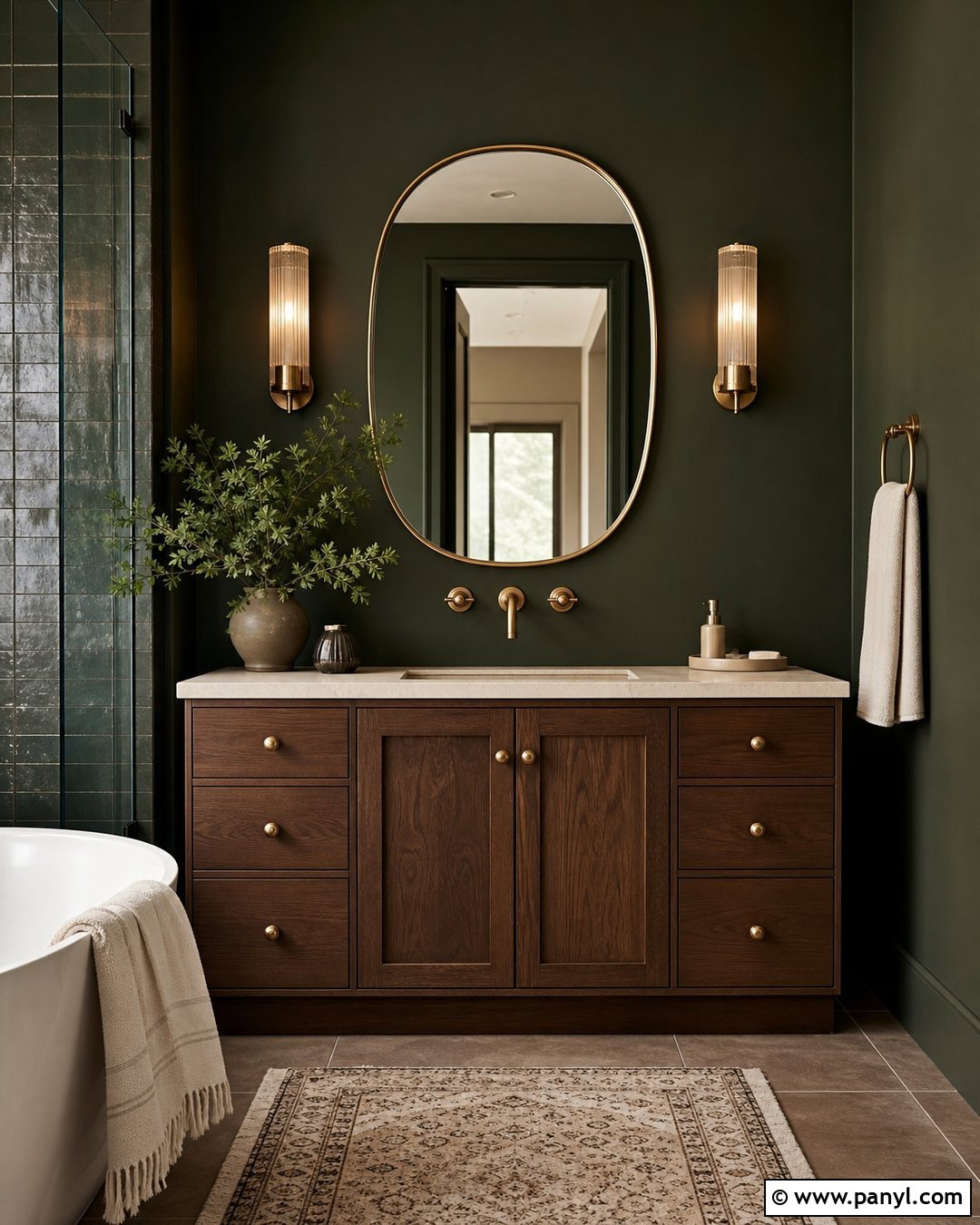
Forest green walls and walnut cabinetry create a grounded bathroom inspired by natural materials. Use a muted green with warm undertones rather than a bright jewel tone. A walnut vanity with visible grain brings movement and prevents the walls from feeling flat. Select a creamy limestone countertop, an off-white vessel sink, and aged brass hardware. On the floor, lay large warm gray tiles with minimal grout lines for a calm foundation. A rounded brass mirror breaks up the straight lines of the vanity and shower. Add fluted glass sconces for soft, even illumination. Inside the shower, use light beige tile to balance the darker painted areas. Cream towels, small wood accessories, and restrained greenery complete this soothing, spa-like bathroom.
5. Dark Brown Bathroom Walls With Limewash
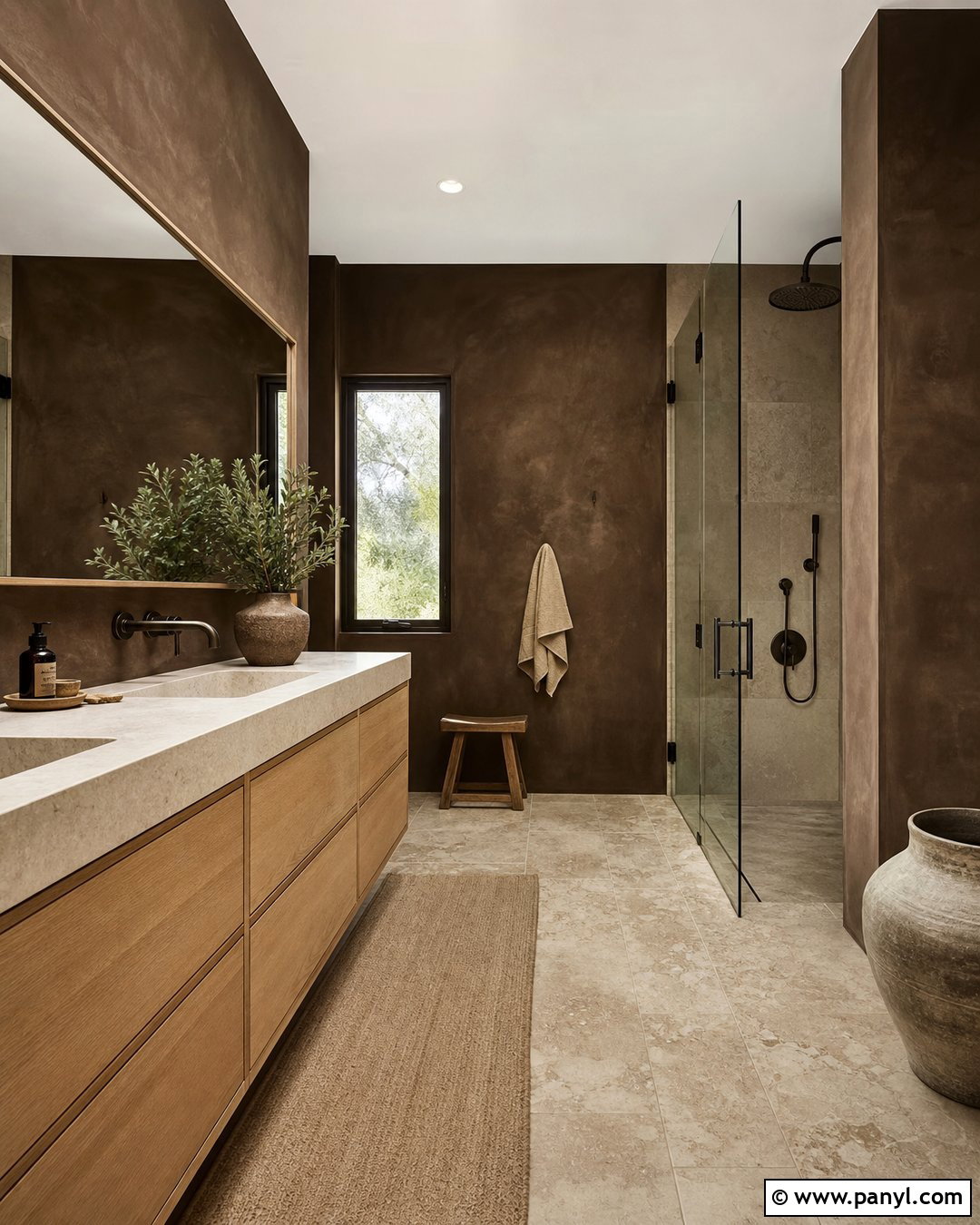
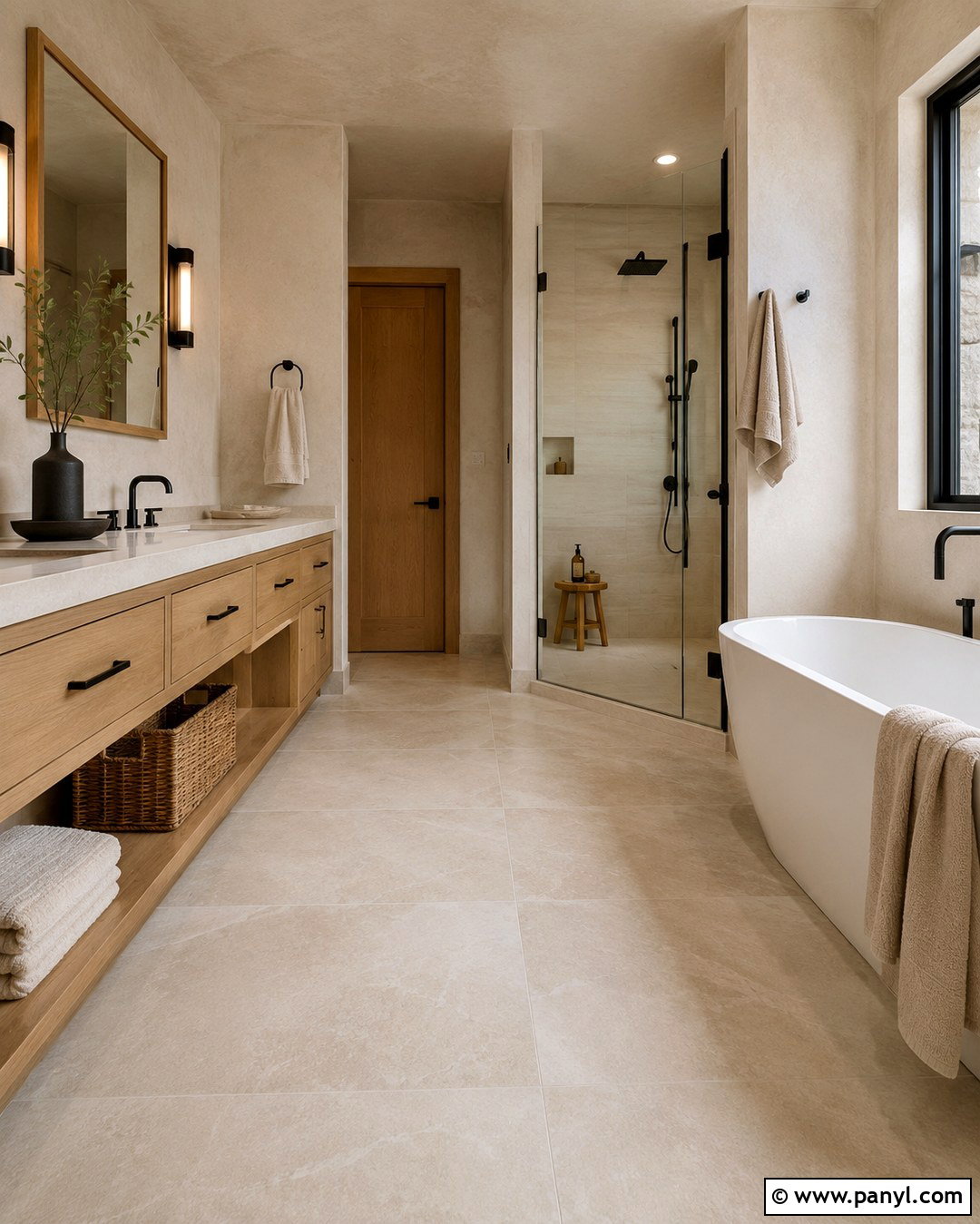
Dark brown limewash gives bathroom walls cloudlike movement and a warm, earthy character. Its varied finish works especially well with a simple oak vanity and an integrated cream stone sink. Use moisture-rated limewash or a suitable protective coating in splash-prone areas, while reserving tile for the shower enclosure. Large-format travertine-look floor tiles reinforce the natural palette. Choose antique bronze faucets, a softly curved mirror, and compact alabaster sconces to create subtle contrast. A frameless glass shower keeps the layout visually connected. Instead of introducing bright white, use warm ivory towels, oatmeal curtains, and sand-colored ceramics. The layered browns and creams make the room feel comfortable and sophisticated. Strong, neutral lighting will also reveal the texture without changing its warmth.
6. Burgundy Bathroom Walls With Pink Stone
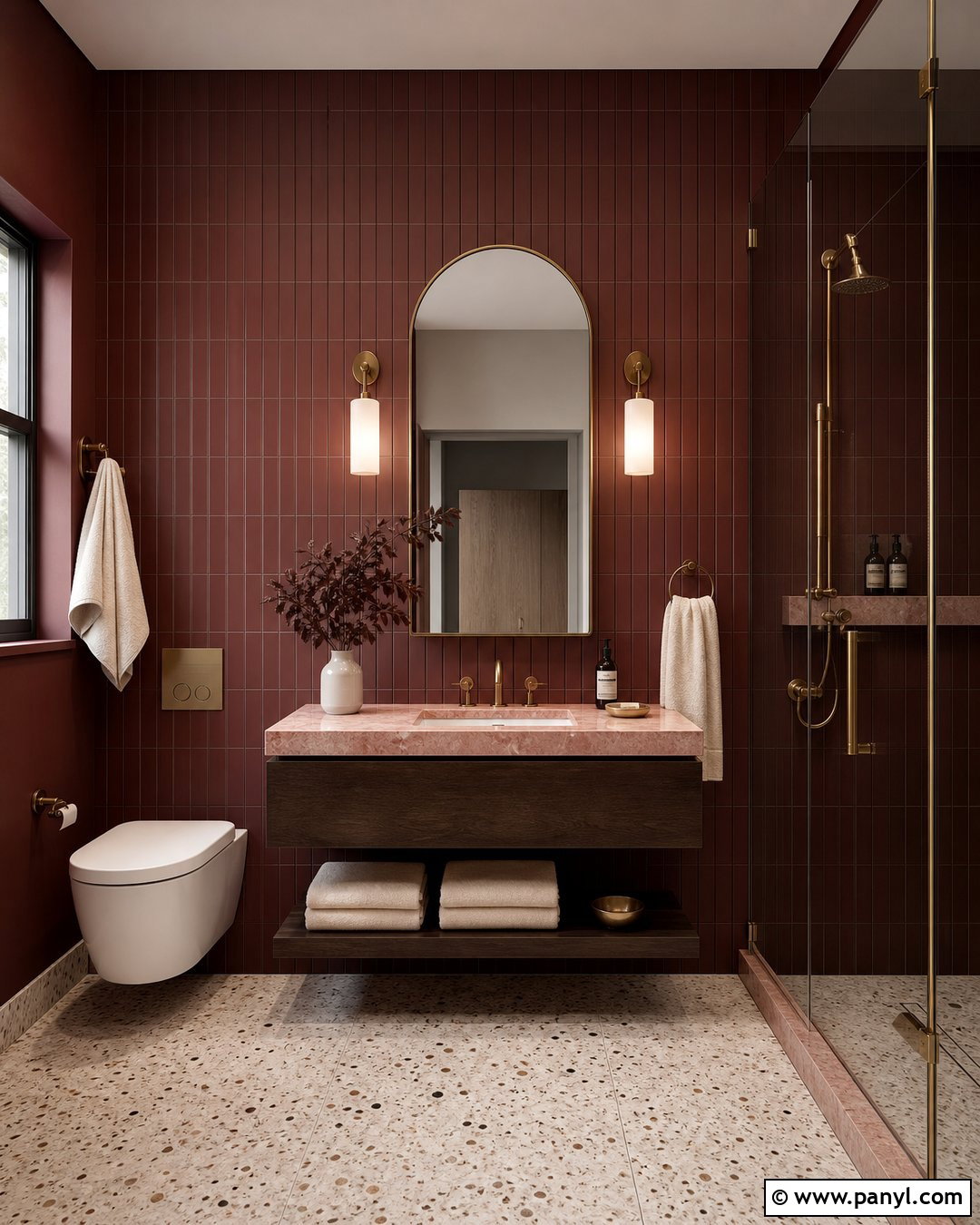
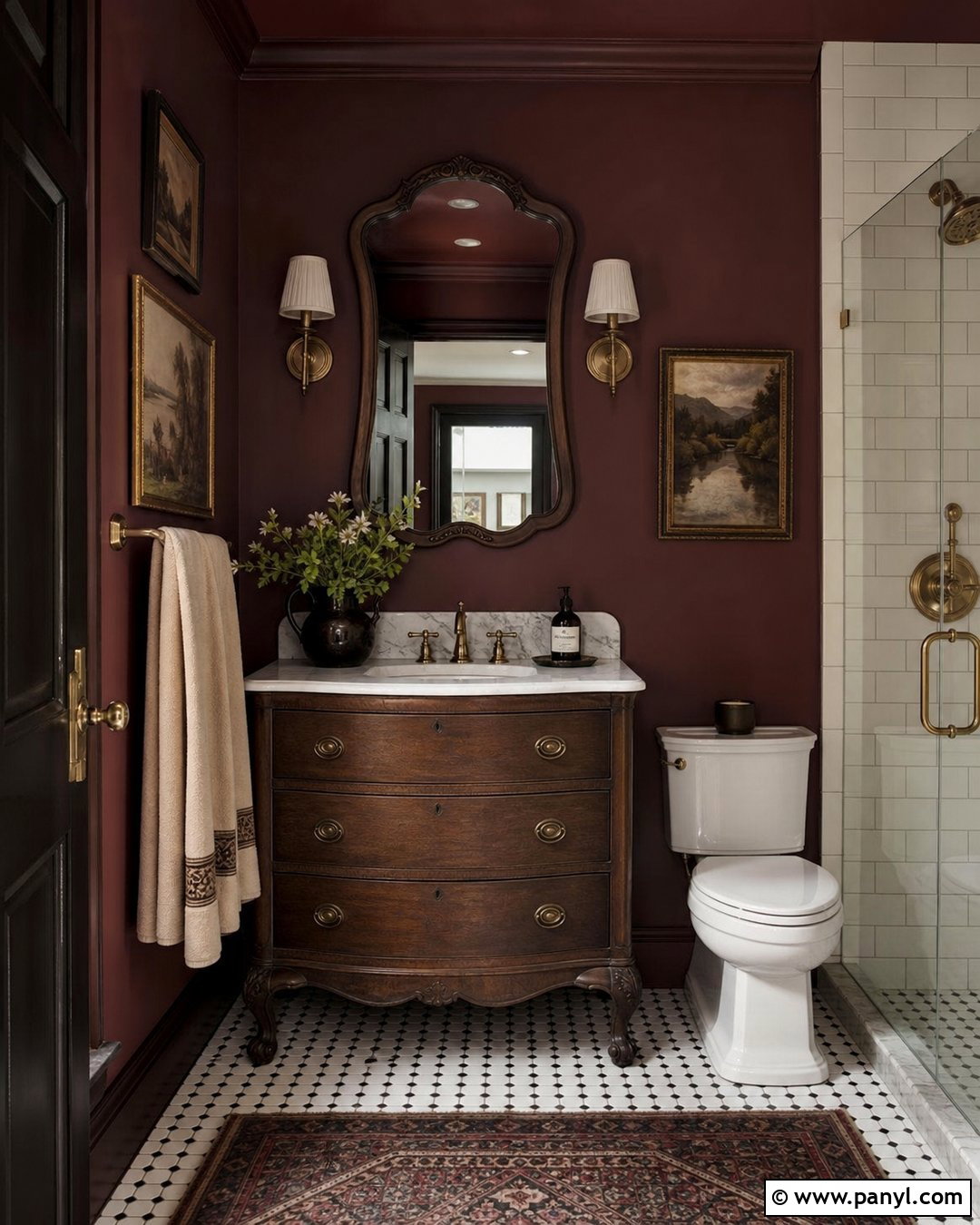
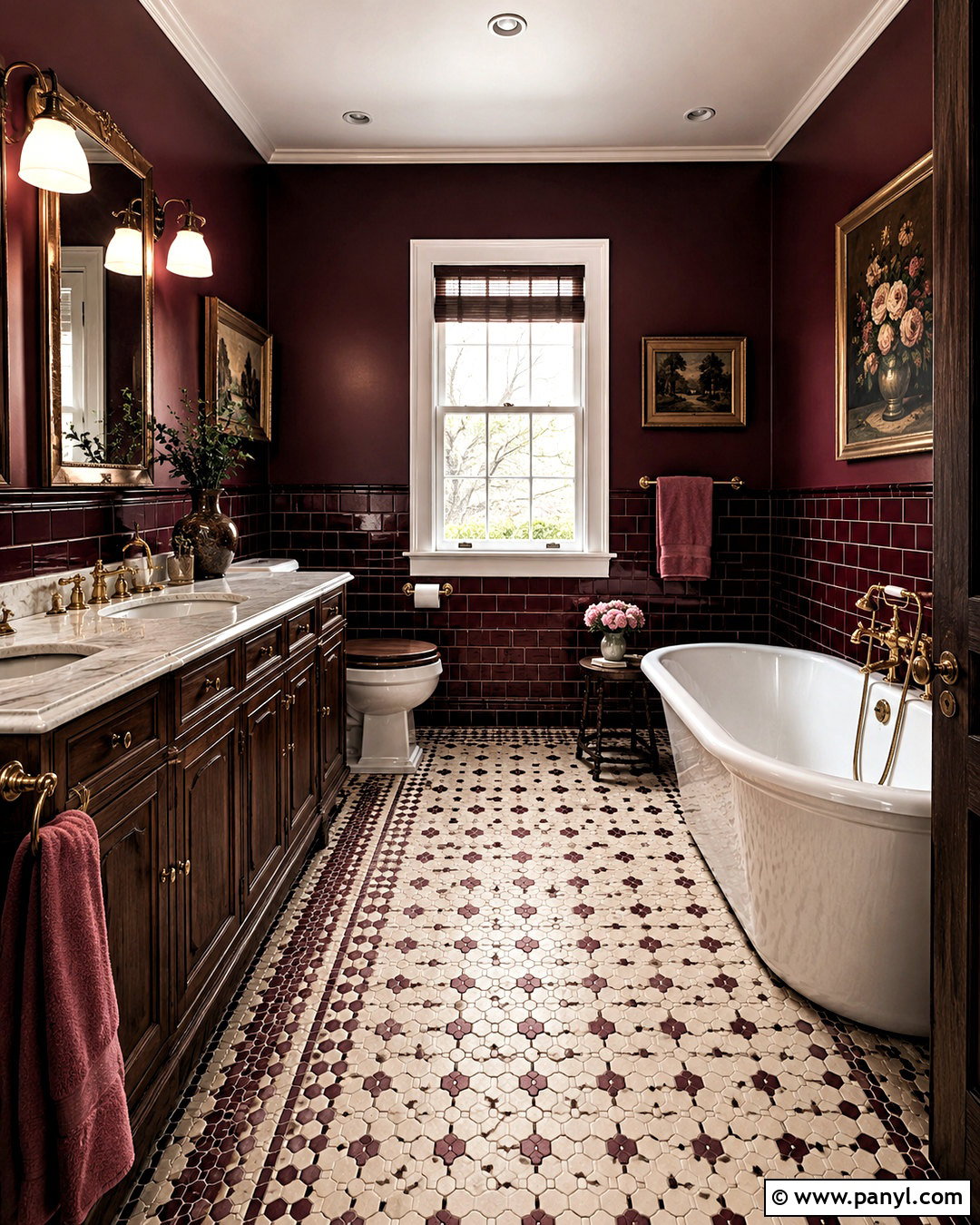
Burgundy bathroom walls can feel refined when paired with pale pink stone and restrained metallic accents. Cover the main vanity wall with deep red-brown tile, then paint the remaining walls in a coordinating matte shade. A blush marble countertop adds variation without creating a sharp contrast. Choose a floating vanity in dark-stained wood and a simple cream sink. Brushed brass faucets and an arched mirror bring warmth to the saturated palette. Use light terrazzo flooring containing burgundy, beige, and dusty pink chips to connect every surface. Clear shower glass and minimal hardware keep the room from becoming busy. Finish with ivory towels and one sculptural wall light on each side of the mirror. This layered scheme feels warm, distinctive, and thoughtfully coordinated.
7. Black Subway Tile Bathroom Walls
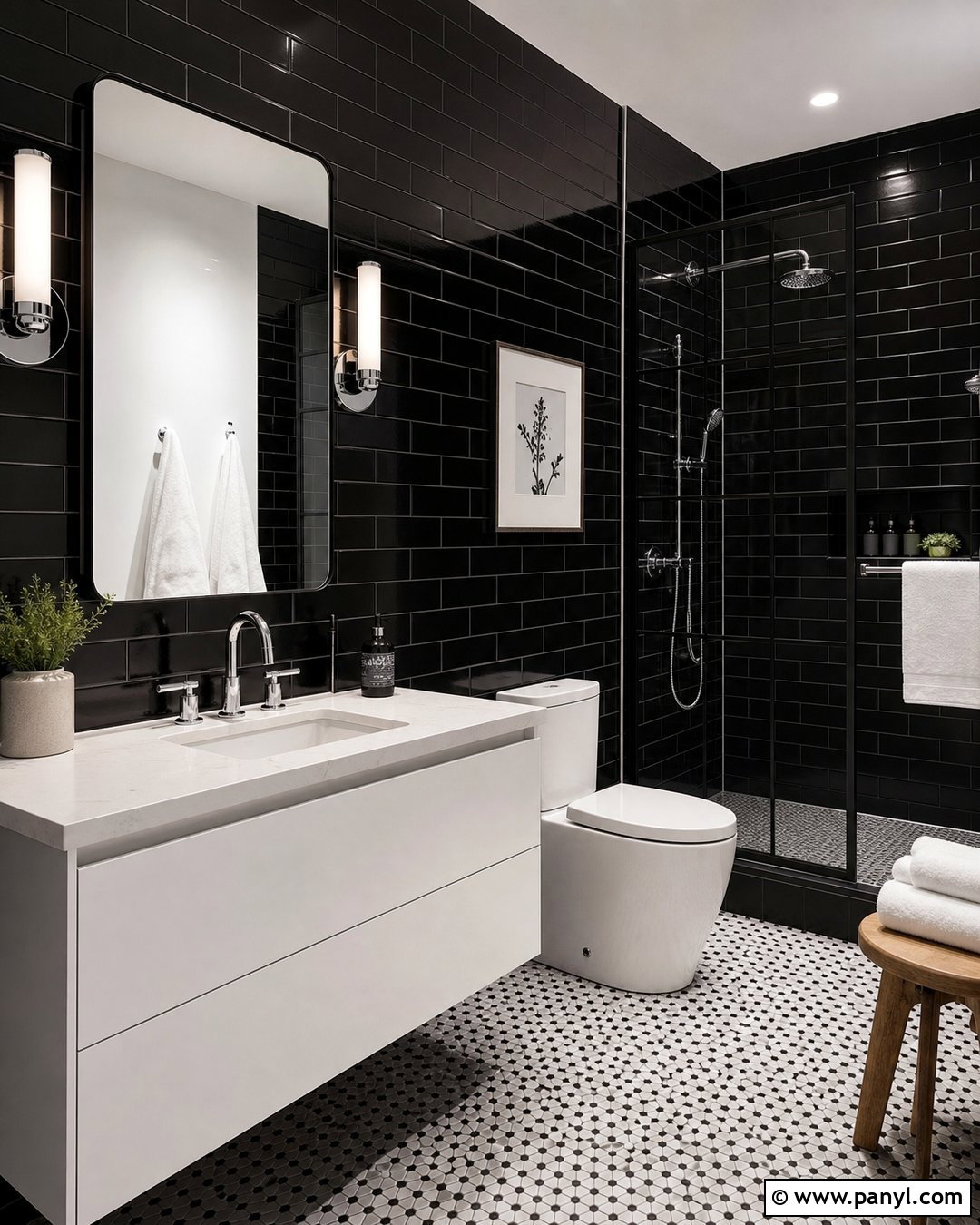
Glossy black subway tile creates a lively dark bathroom because every tile catches and reflects light differently. Run the tile from floor to ceiling on all primary walls, using narrow charcoal grout for a continuous appearance. Balance the glossy surface with a matte white floating vanity and a pale quartz countertop. A black-framed glass shower enclosure connects with the wall color while keeping the room visually open. Choose a large round mirror and chrome fixtures to increase brightness. Black-and-white mosaic floor tile introduces a small-scale pattern beneath the simple wall layout. Add white towels, clear glass containers, and one light wood stool for warmth. Layer recessed ceiling lights with vanity sconces so the reflective walls look dimensional rather than shadowy.
8. Slate Bathroom Walls With Floating Vanity
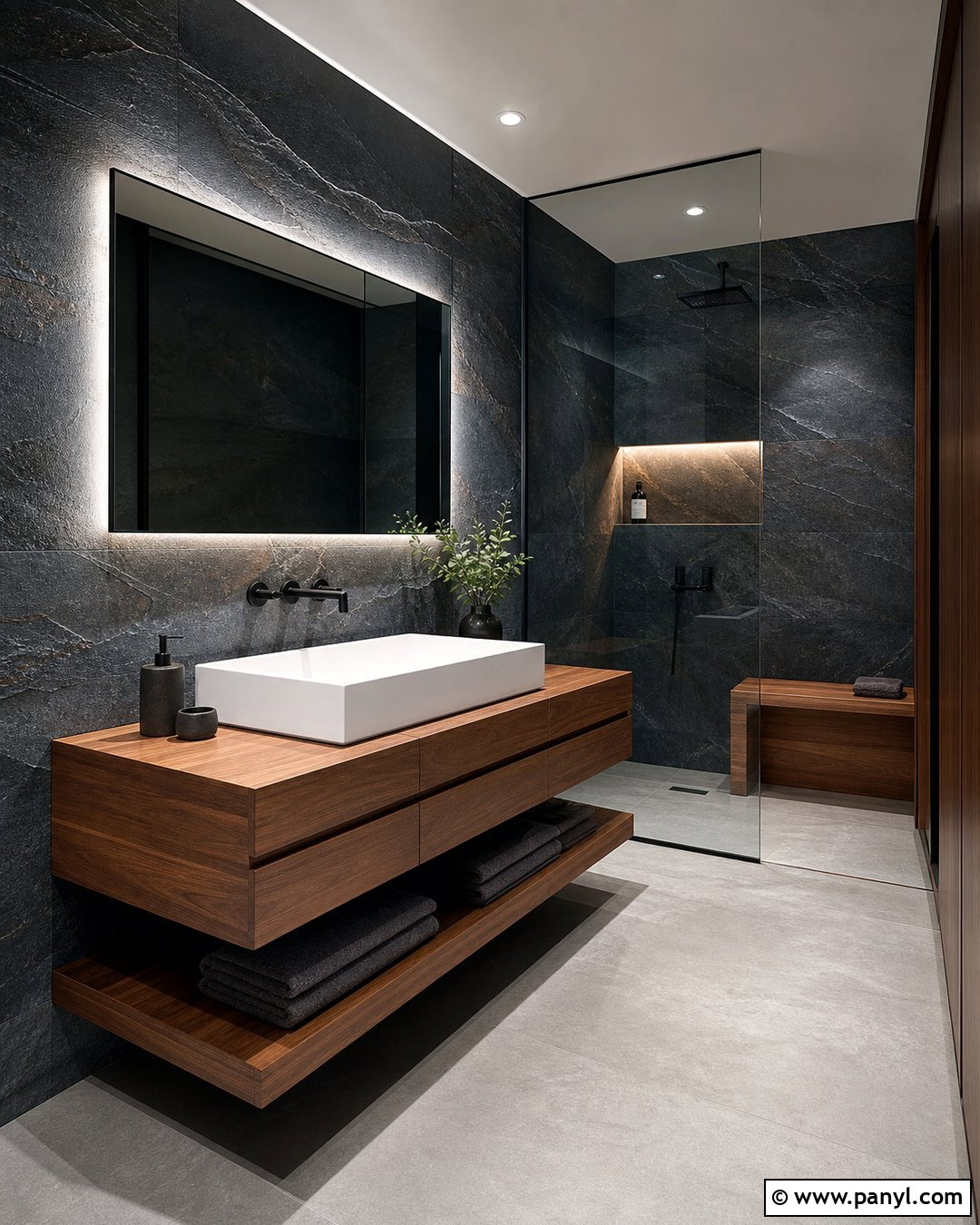
Natural slate bathroom walls bring texture, variation, and a quiet architectural quality to a modern space. Install large slate tiles across the vanity wall and continue them through the walk-in shower for a unified look. Choose pieces with subtle charcoal and blue-gray differences rather than heavy rust markings. A floating teak vanity adds warmth and leaves open flooring visible underneath. Pair it with a rectangular white sink, matte black faucets, and a wide backlit mirror. Use light gray porcelain tile on the floor to prevent the room from feeling enclosed. A clear shower screen maintains long sightlines. Soft white towels and a simple teak bench complete the scheme. Carefully positioned ceiling lights will highlight the slate’s natural surface while keeping daily tasks comfortable.
9. Matte Black Bathroom Walls With Paneling
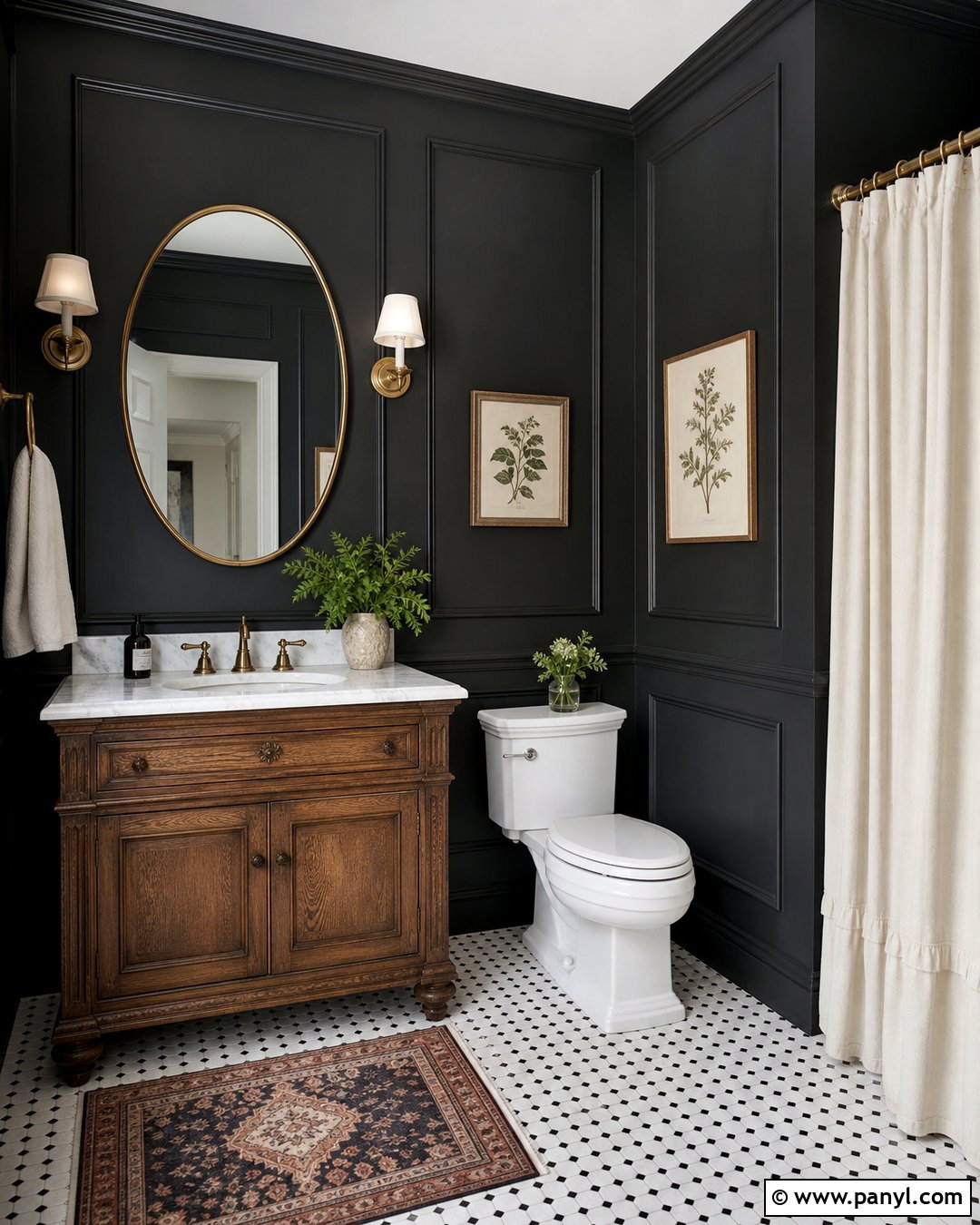
Matte black wall paneling gives a bathroom traditional detail without relying on a busy color palette. Install moisture-resistant vertical panels or classic box molding on the lower and upper walls, then paint everything in the same washable black finish. A vintage-inspired oak vanity with a white marble top creates a striking central feature. Choose an antique brass faucet, framed mirror, and shaded sconces to add warmth. Small white-and-black mosaic floor tiles provide pattern while respecting the room’s historic character. Keep the tub, toilet, and sink bright white for balance. A cream shower curtain introduces softness and makes the black millwork feel more welcoming. Finish with framed botanical artwork and neatly folded ivory towels for a bathroom that looks tailored, layered, and timeless.
10. Dark Floral Wallpaper Bathroom Walls
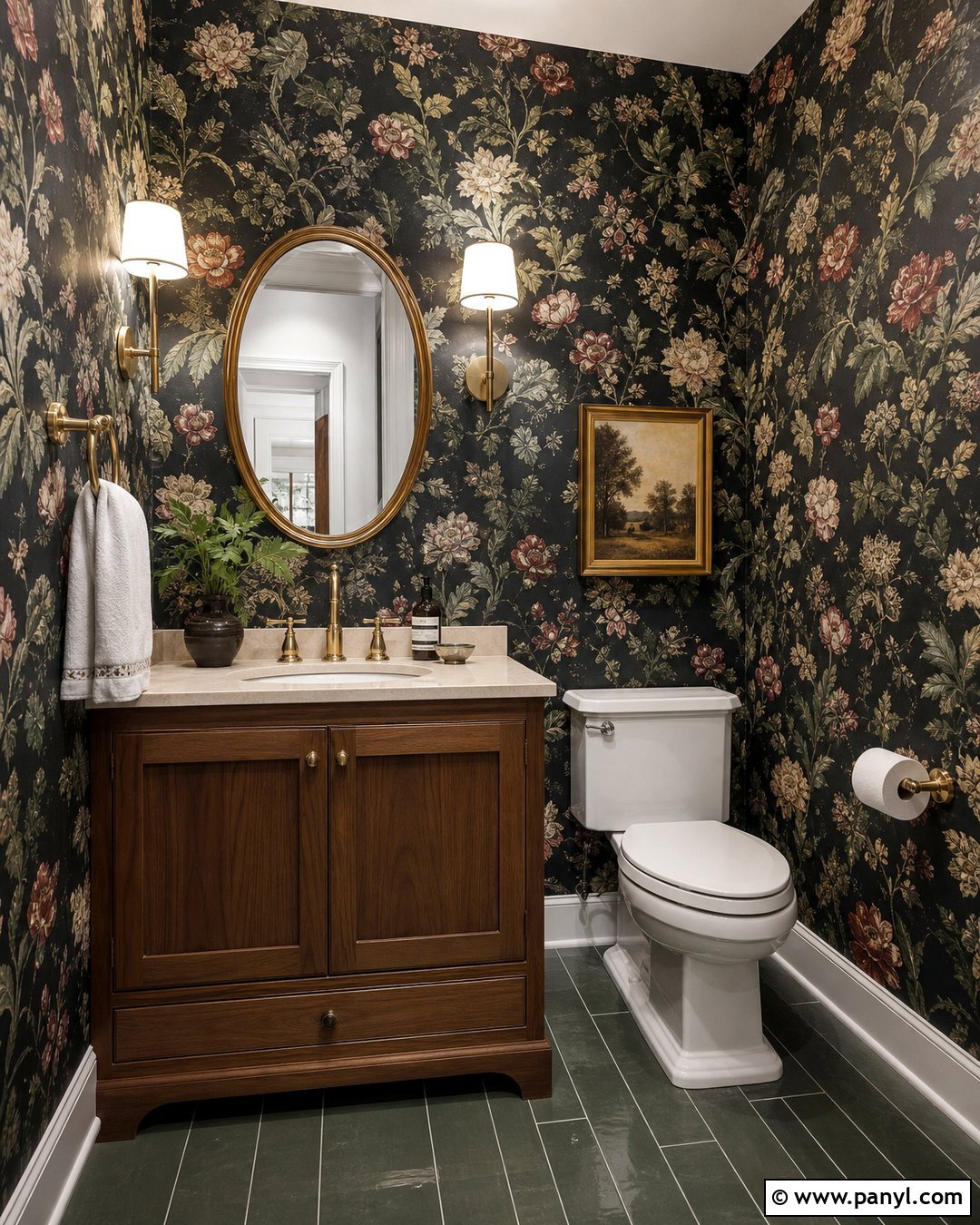
Dark floral wallpaper can transform a powder room into a complete, memorable interior. Select a moisture-resistant paper with a black or deep navy background and oversized flowers in muted green, cream, and dusty red. Cover every wall, but keep the ceiling in a coordinating dark paint so the room feels intentional. A compact walnut vanity and creamy stone counter support the wallpaper’s warm tones. Use an antique brass faucet, oval mirror, and small shaded sconces for a traditional finish. Dark green floor tile grounds the pattern without competing with it. Because the wallpaper provides plenty of detail, keep accessories simple. Add plain ivory hand towels, a clear soap dispenser, and one ceramic vase. Effective ventilation will help protect the finished wallcovering.
11. Dark Geometric Wallpaper Bathroom Walls
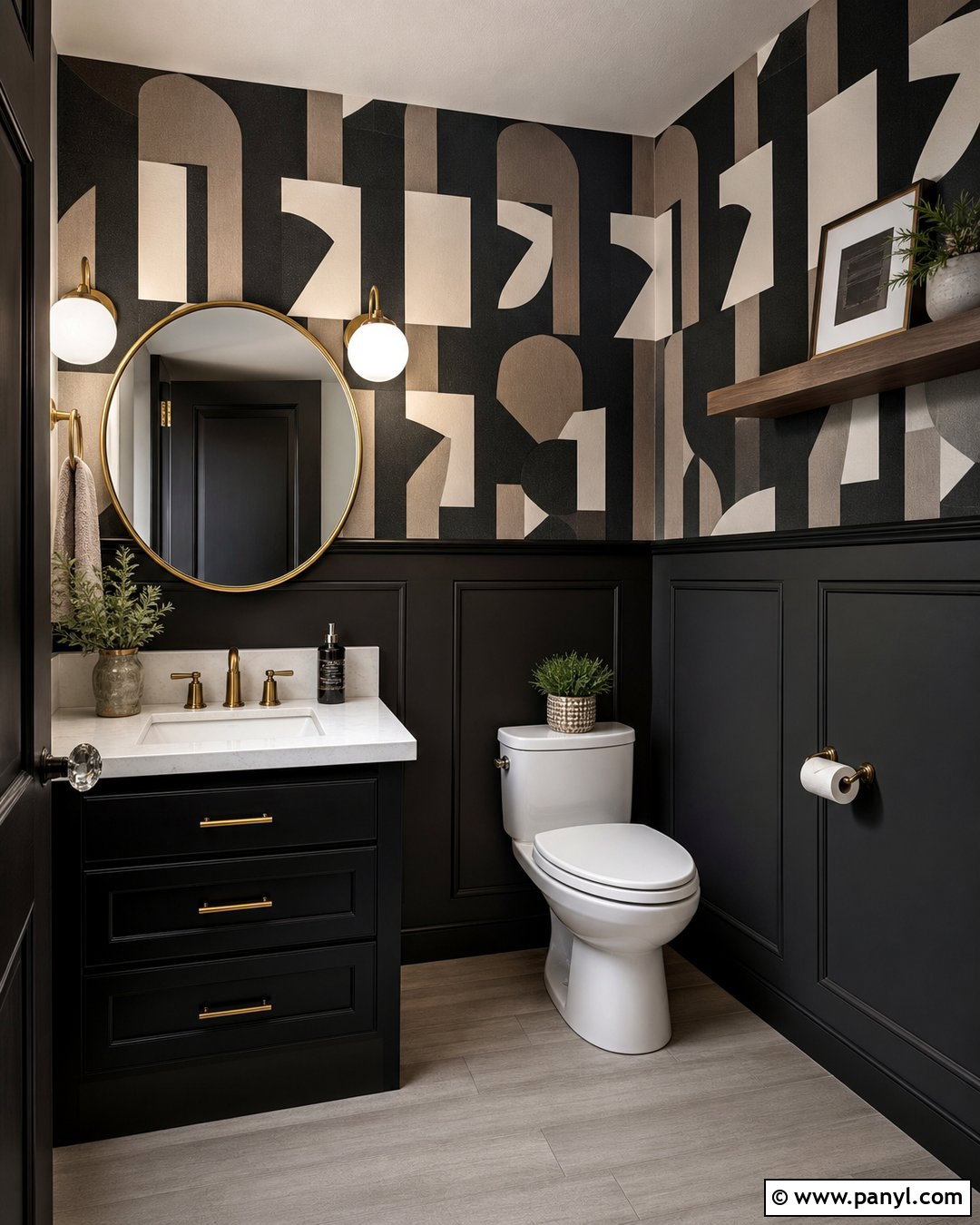
A dark geometric wallpaper gives a small bathroom structure and movement without requiring complicated architectural changes. Choose a repeating black, taupe, and cream pattern with a clear medium-scale design. Install it above charcoal-painted wainscoting to create balance and protect the lower walls. A simple black vanity with a white quartz top keeps the focus on the pattern. Add a round brass mirror and matching wall-mounted faucet to soften the straight geometry. Warm gray porcelain flooring connects with the wallpaper’s quieter tones. Use frosted globe sconces to spread light evenly across the walls. Finish the bathroom with white towels, a slim wood shelf, and minimal countertop decor. The repeated shapes make the compact room feel carefully planned rather than crowded or visually chaotic.
12. Deep Teal Bathroom Walls With Terrazzo
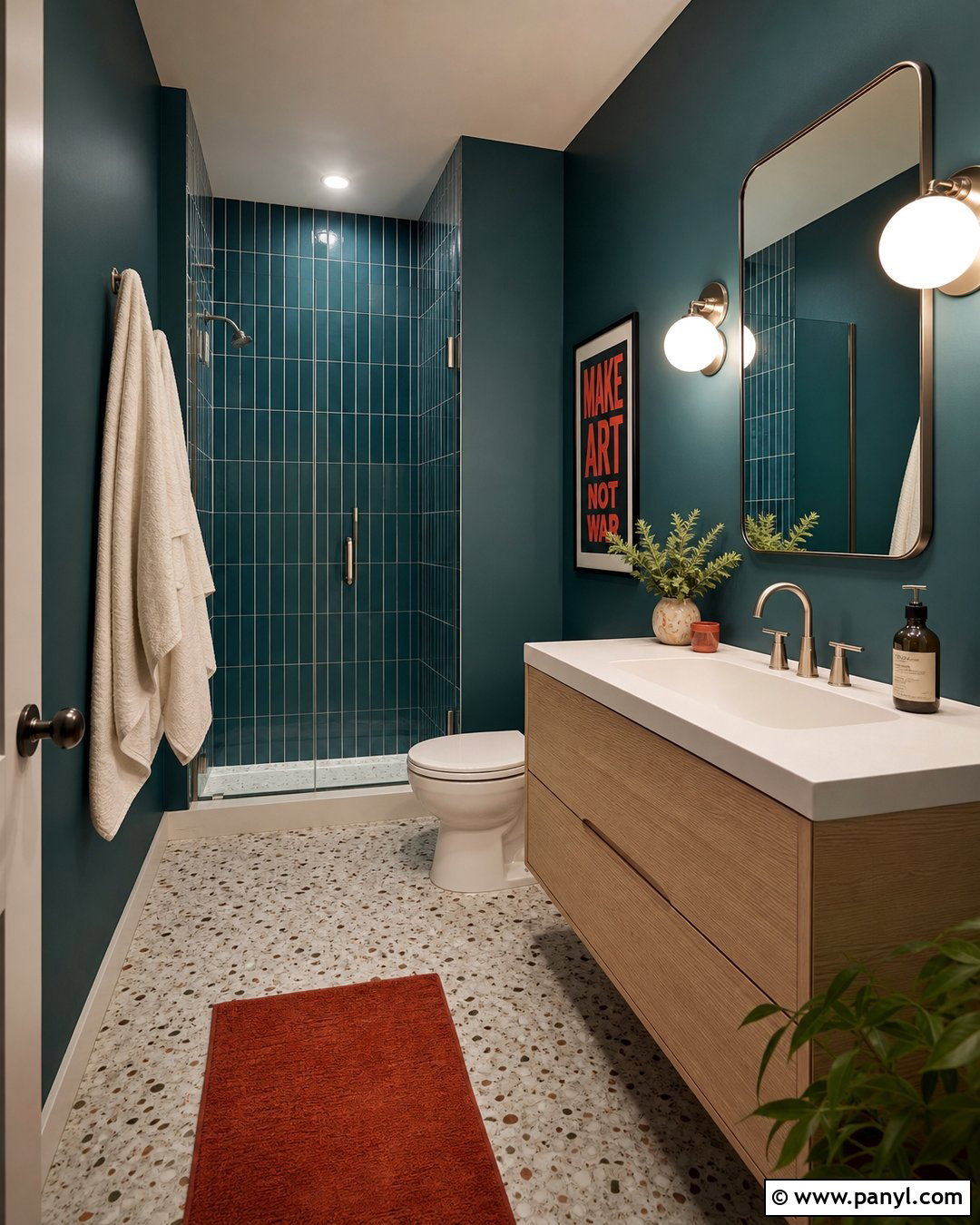
Deep teal walls bring color and depth to a bathroom while still feeling calm and nature-inspired. Pair the saturated paint with light terrazzo flooring containing cream, gray, teal, and rust-colored chips. A pale oak vanity keeps the lower half of the room warm and visually light. Choose a white solid-surface countertop and an integrated sink for a clean transition. Brushed nickel faucets and a large frameless mirror provide subtle reflection without adding another strong color. Inside the shower, use narrow teal tiles in a vertical layout to reinforce the wall palette and make the ceiling appear taller. Add soft cream towels and one rust-colored bath mat. Bright vanity lighting and recessed fixtures prevent the teal from appearing dull, especially in bathrooms with limited windows.
13. Graphite Concrete Bathroom Walls
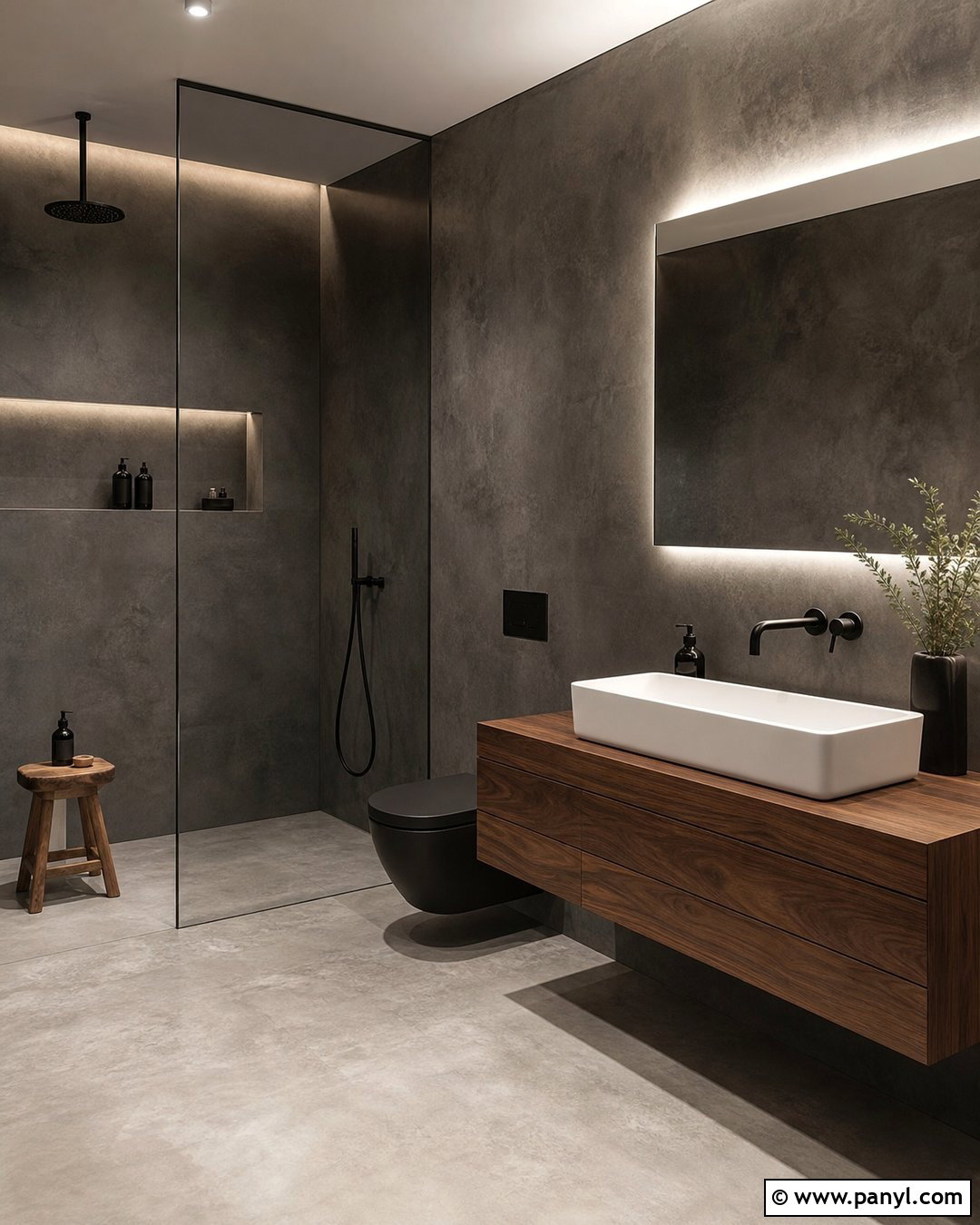
Graphite concrete walls suit a streamlined bathroom with simple forms and a limited material palette. Use smooth waterproof microcement across the vanity wall, shower, and ceiling to create a nearly seamless envelope. A floating walnut vanity introduces essential warmth, while a white rectangular basin provides a clean focal point. Choose matte black faucets and a frameless mirror with concealed backlighting. Large pale gray floor tiles reduce contrast and make the room feel more spacious. Include a built-in shower niche finished in matching graphite microcement for organized storage. A clear glass panel keeps the open shower connected to the rest of the space. Finish with thick white towels and one natural wood stool. Balanced lighting will reveal the concrete texture while preserving the room’s crisp, minimalist character.
14. Black Zellige Tile Bathroom Walls
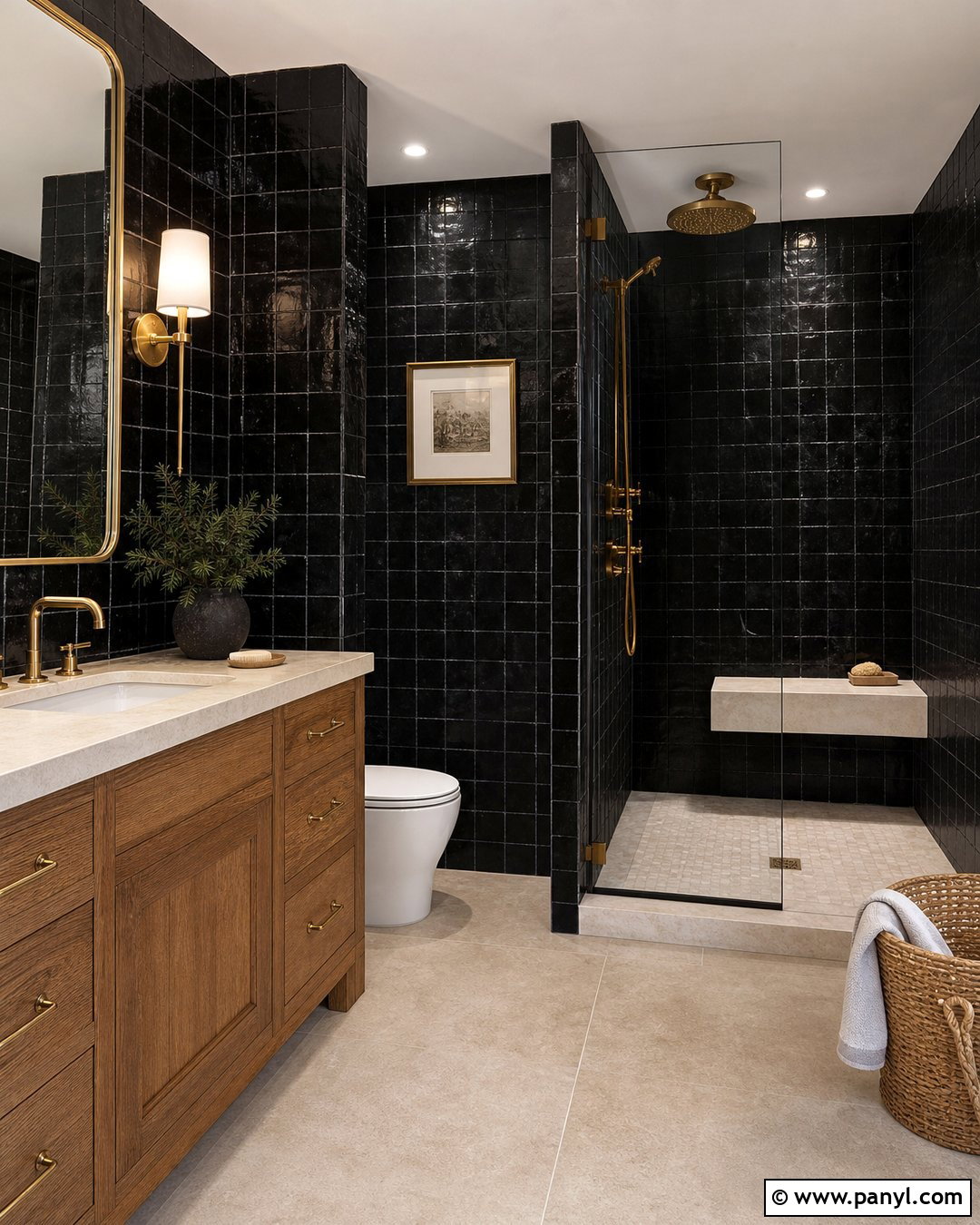
Black zellige tiles give bathroom walls an artisanal finish through their uneven edges, varied tones, and reflective glaze. Install the handmade-style tile across the vanity wall and inside the shower, allowing its irregular surface to become the main decorative feature. Use dark grout to maintain a continuous appearance. A warm oak vanity with a creamy limestone counter balances the glossy black walls. Select aged brass faucets and a softly rounded mirror for additional warmth. Light beige stone flooring keeps the overall space grounded without creating stark black-and-white contrast. Add a built-in shower bench in matching pale stone and use clear glass around the enclosure. Simple linen towels, woven storage baskets, and bright layered lighting complete a bathroom that feels handcrafted, comfortable, and highly dimensional.
15. Dark Blue Bathroom Walls With Beadboard
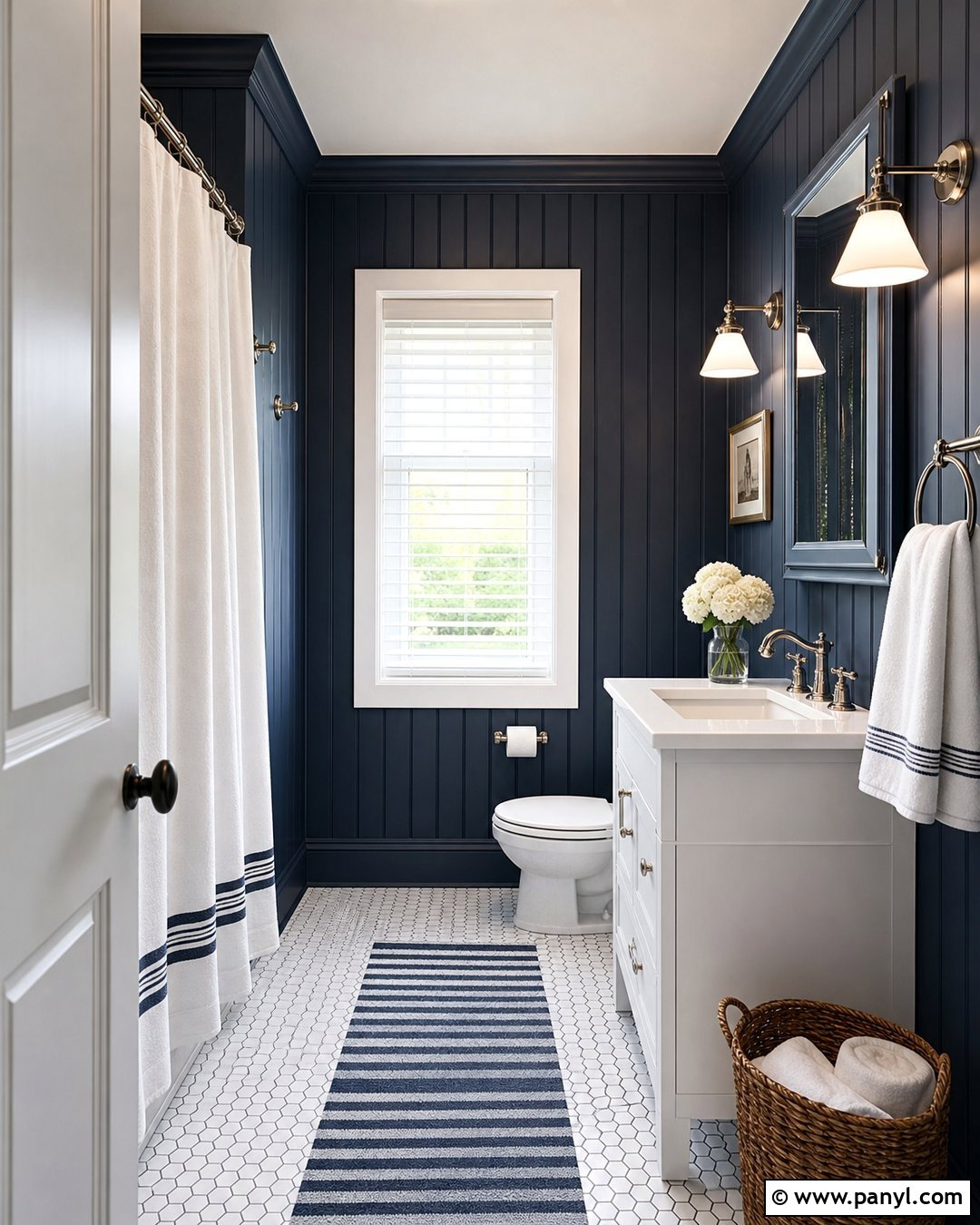
Dark blue beadboard creates a practical, traditional bathroom with strong color and familiar texture. Run moisture-resistant beadboard from the baseboards to the ceiling, then coat it in a durable satin finish. Pair the blue walls with a classic white pedestal sink or a compact white vanity for a crisp contrast. Polished nickel faucets, a medicine cabinet, and schoolhouse-style sconces reinforce the timeless look. Choose small white hexagon floor tiles with scattered navy accents. A white shower curtain and bright towels maintain an airy feeling, while a striped blue runner introduces soft pattern. Add natural wood picture frames and a small wall shelf to warm the palette. This design is especially effective in guest bathrooms where charm, storage, and easy maintenance need to work together.
16. Espresso Wood Bathroom Walls
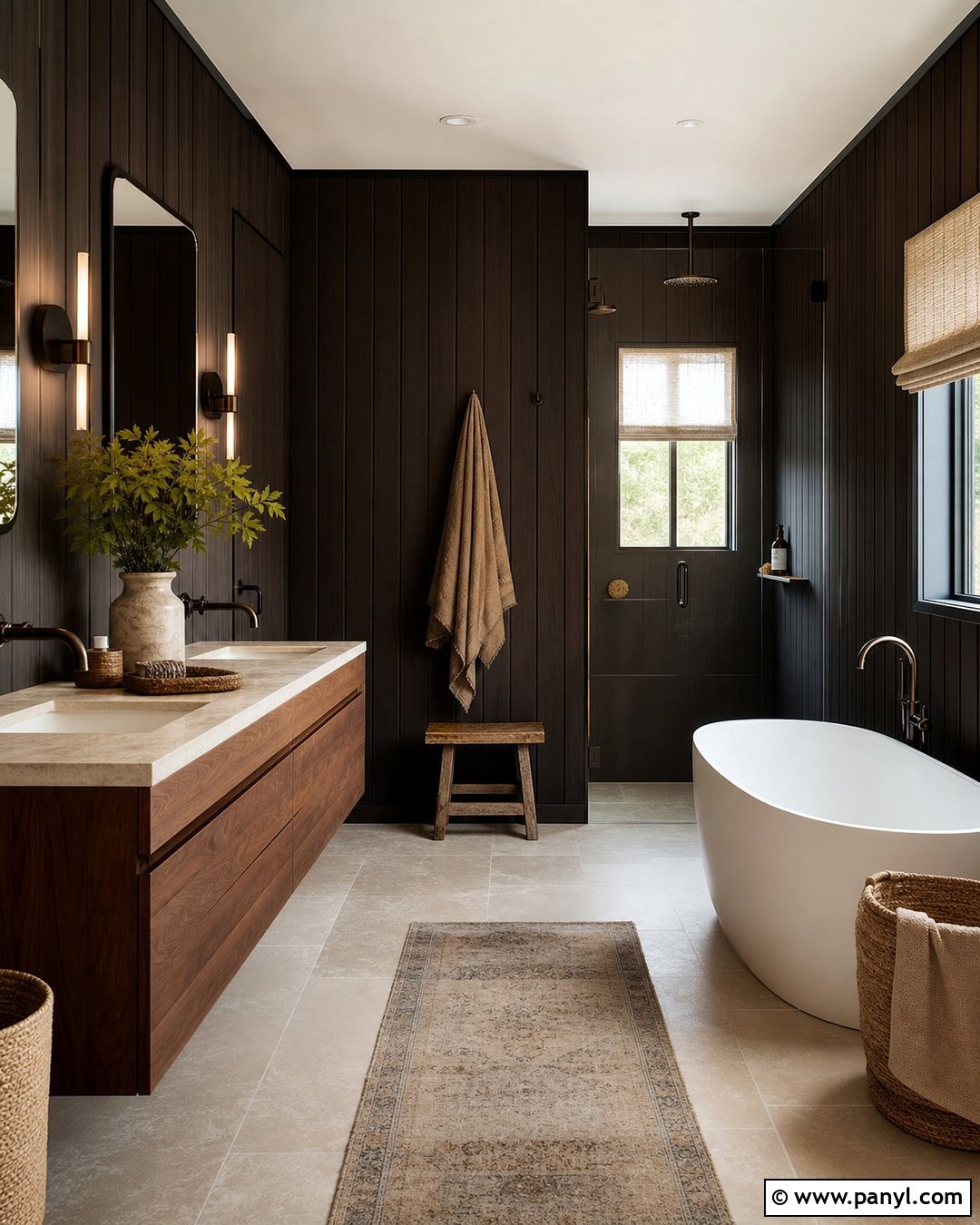
Espresso-stained wood walls create a rich bathroom that feels warm rather than stark. Use vertical moisture-resistant wood paneling on the vanity wall and around dry areas, while protecting the shower with cream stone tile. A floating vanity in a slightly lighter walnut finish prevents the wood surfaces from blending into one solid block. Choose an ivory countertop, an undermount sink, and aged bronze faucets. A wide mirror with integrated lighting reflects the paneling and expands the room visually. Pale limestone flooring brightens the lower portion of the space. Add a freestanding white tub beneath a window with a simple linen shade. Cream towels, woven baskets, and soft neutral textiles finish the design. Proper ventilation is important for preserving the wood and maintaining a comfortable bathroom environment.
17. Dark Green Marble Bathroom Walls
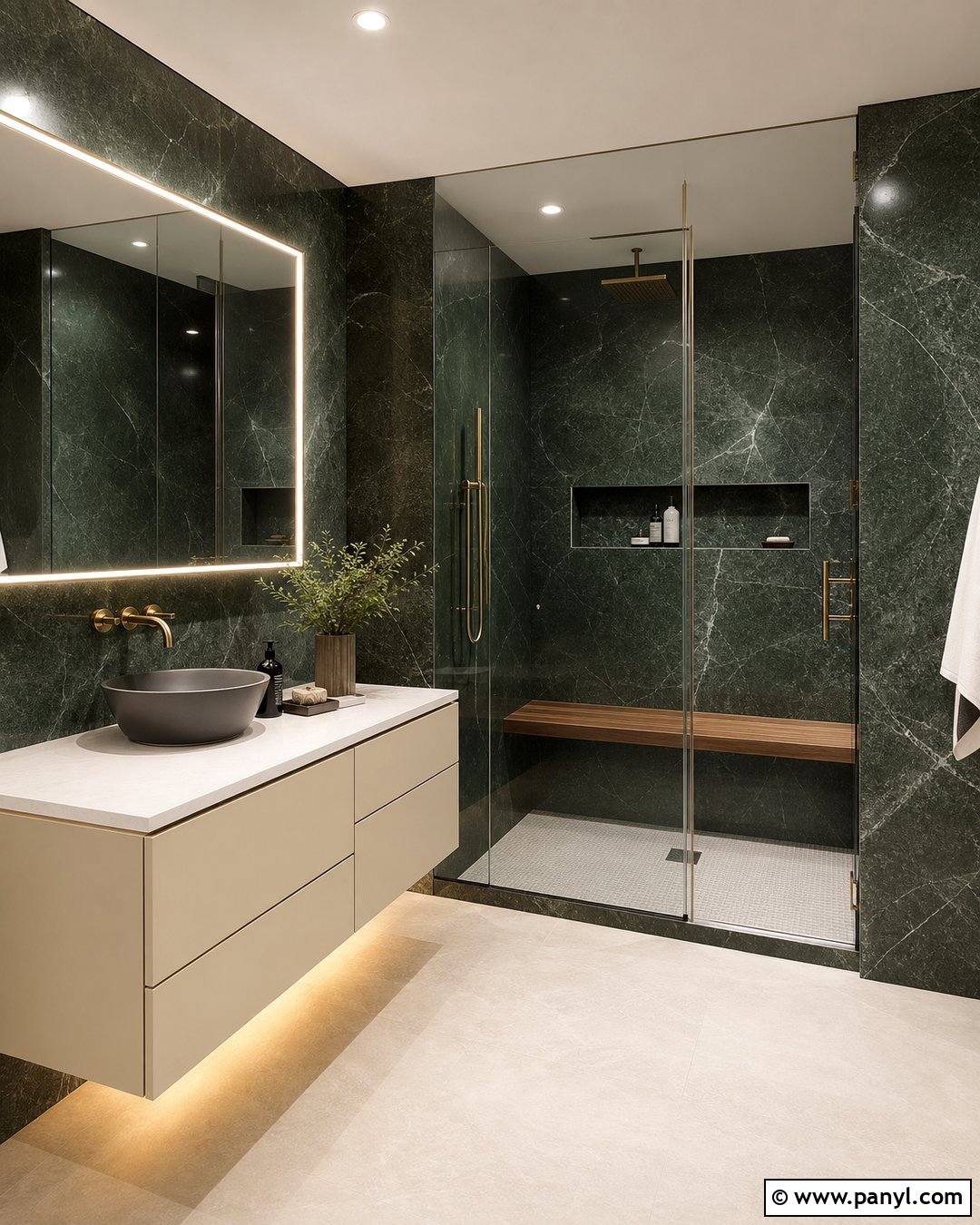
Dark green marble walls make a strong statement when the rest of the bathroom remains simple and carefully edited. Use large-format marble or realistic porcelain slabs with deep green coloring and fine white veining. Continue the material through the shower and behind the floating vanity to minimize transitions. A cream vanity with flat drawer fronts provides contrast without competing with the dramatic stone. Select brushed brass faucets, a frameless mirror, and slim vertical sconces. Warm white floor tile keeps the bathroom bright and lets the wall pattern lead the design. A built-in shower niche lined in matching marble creates useful storage. Add plain ivory towels and a small wood bench. The completed room feels luxurious, but its restrained layout ensures the veining never becomes overwhelming.
18. Aubergine Bathroom Walls With Cream Tile
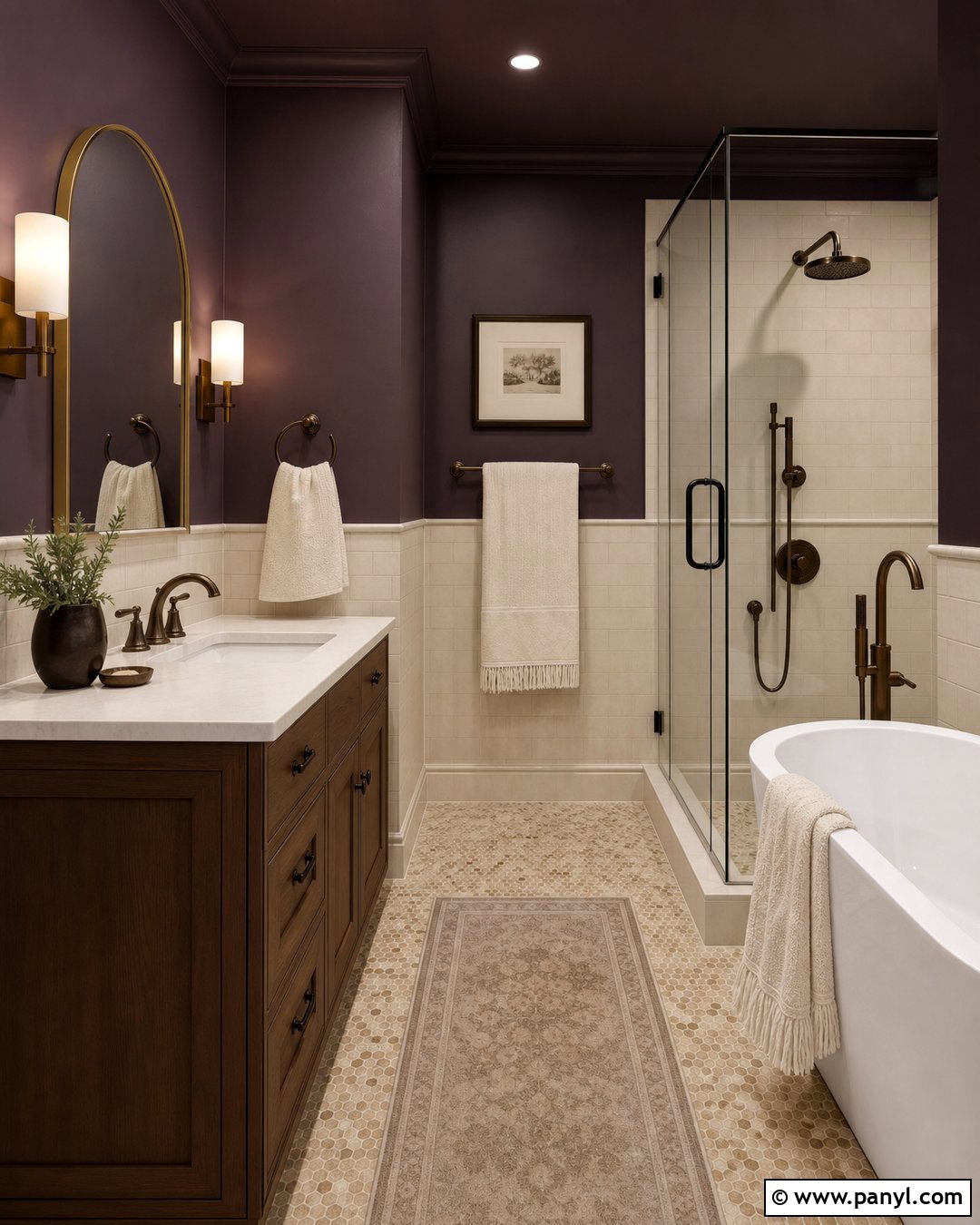
Aubergine walls introduce a deep purple-brown tone that feels warmer and more versatile than a bright violet. Paint the upper walls and ceiling in the same matte aubergine, then use creamy rectangular tile across the lower half and shower. A medium walnut vanity complements the warm undertones and provides useful closed storage. Choose an off-white quartz countertop, a bronze faucet, and a large arched mirror. Brass-and-opal-glass sconces add soft illumination around the vanity. For the floor, use small beige mosaic tiles that create gentle texture without adding another strong color. Cream towels and a muted patterned runner brighten the dark surroundings. The finished palette feels expressive but controlled, making it suitable for a guest bathroom or a compact primary suite with good artificial lighting.
19. Dark Terracotta Bathroom Walls
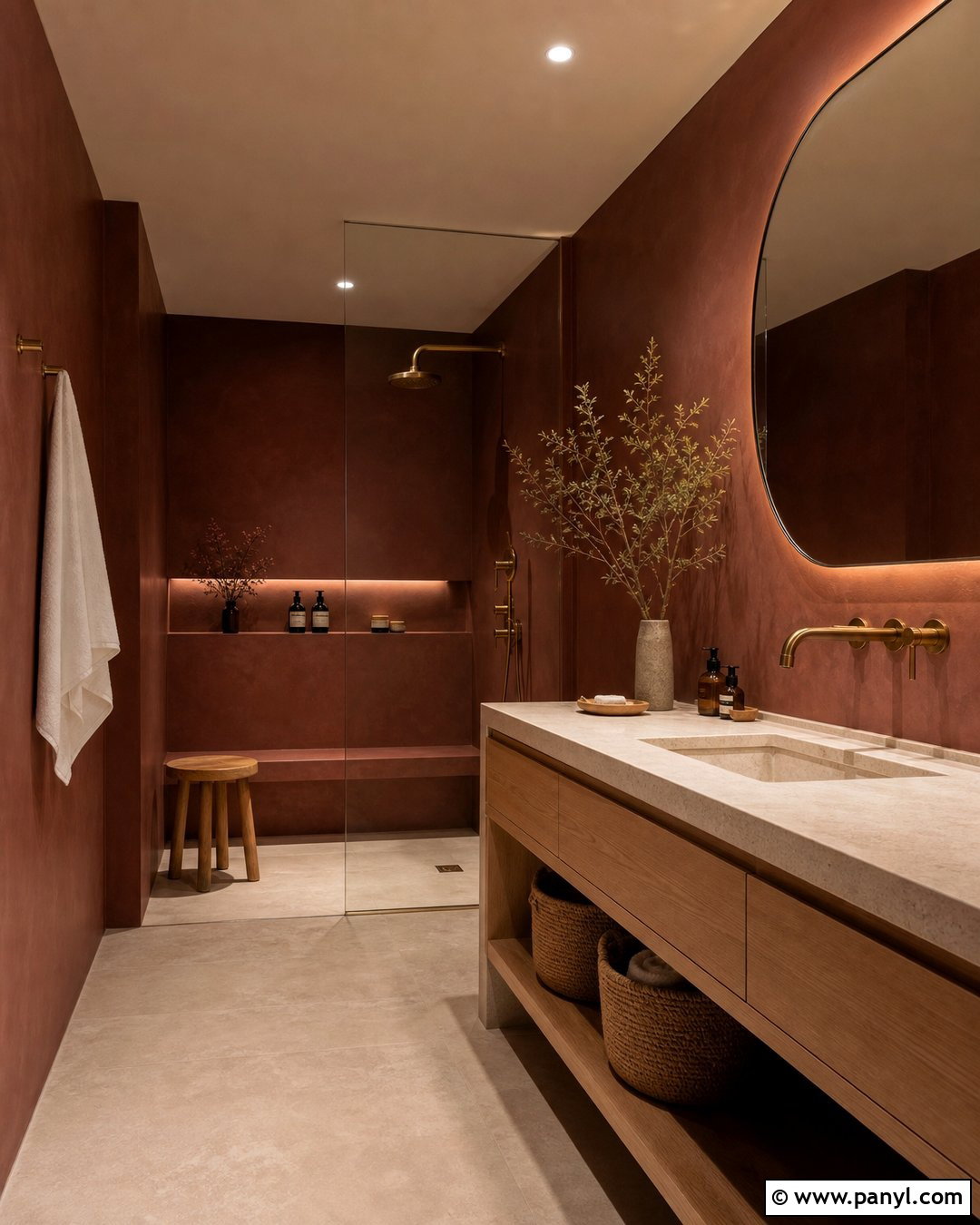
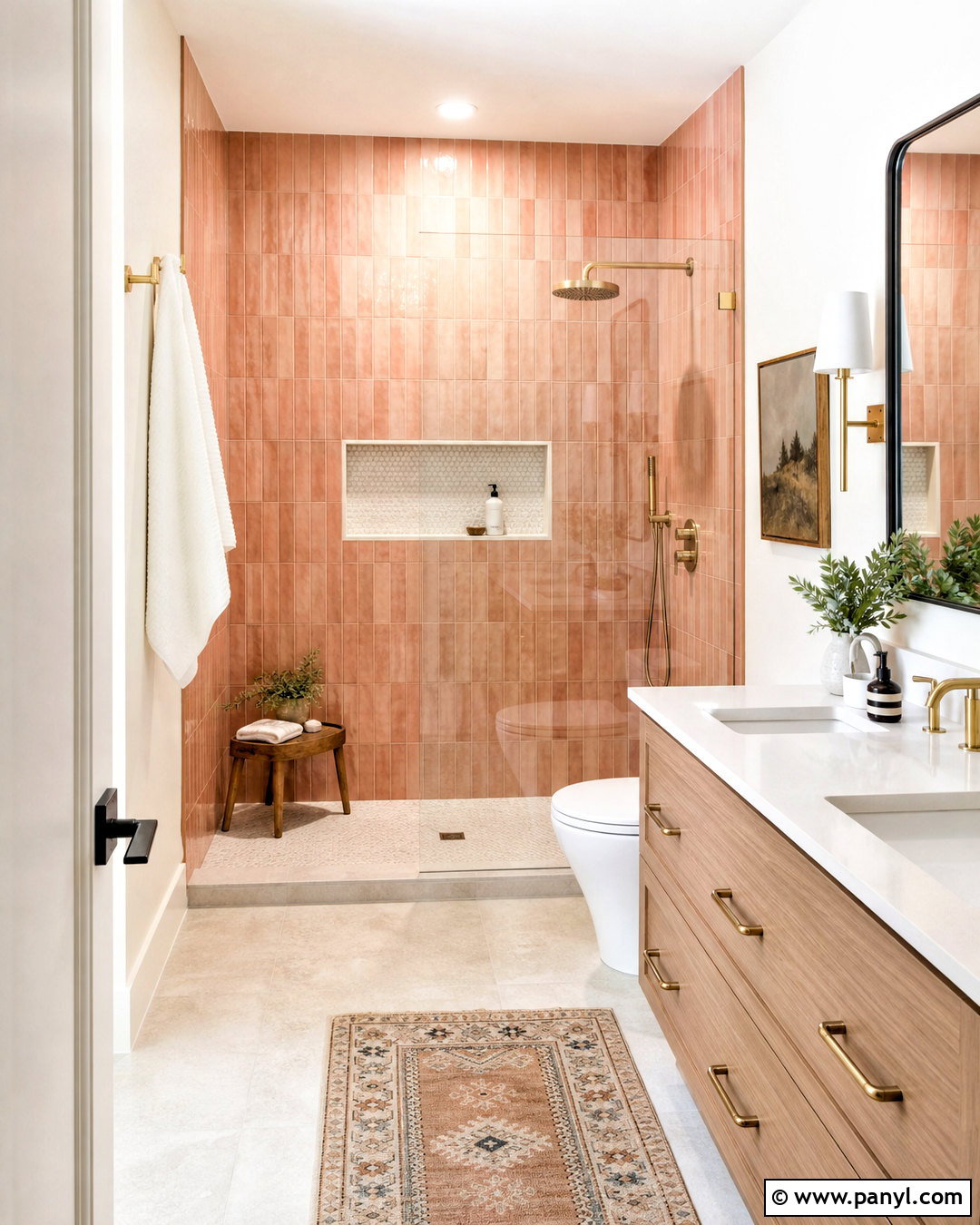
Dark terracotta bathroom walls create a welcoming, earthy room with more warmth than charcoal or black. Use red-brown microcement or matte tile across the shower and main walls for an enveloping finish. Pair it with a pale oak vanity and a cream stone countertop to prevent the saturated color from becoming heavy. A brushed brass wall-mounted faucet and rounded mirror suit the warm palette. Choose sandy beige floor tile and continue it onto a built-in shower bench. A clear glass enclosure allows the terracotta walls to remain visible throughout the room. Add ivory towels, natural woven baskets, and a simple linen window shade. Bright, neutral lighting is important because overly warm bulbs can make the walls look orange. The complete space feels grounded, relaxed, and naturally cohesive.
20. Two Tone Dark Bathroom Walls
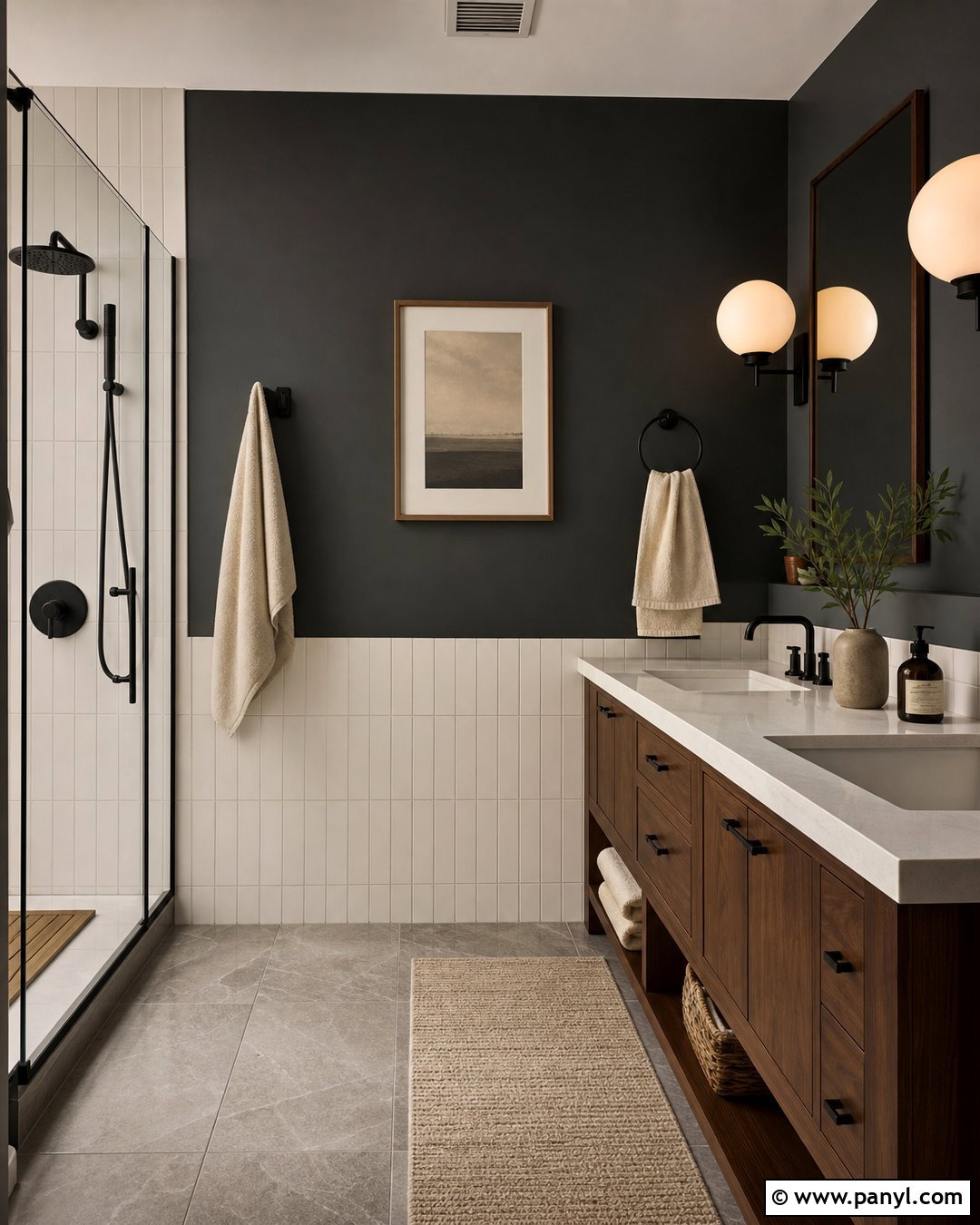
Two-tone walls make dark color easier to use in a bathroom with limited natural light. Paint the upper walls in deep charcoal and cover the lower portion with warm white vertical tile or moisture-resistant paneling. Keep the dividing line consistent around the room for a clean architectural effect. A walnut vanity bridges the light and dark surfaces, while a pale quartz counter maintains brightness. Choose black faucets, a thin black mirror frame, and compact white globe sconces. Medium gray floor tile creates a practical foundation without matching either wall section exactly. Inside the shower, continue the warm white tile to the ceiling. Add charcoal towels, a cream bath mat, and simple wood accessories. This balanced arrangement delivers drama while keeping important surfaces light, reflective, and easy to maintain.
21. Color Drenched Black Bathroom Walls
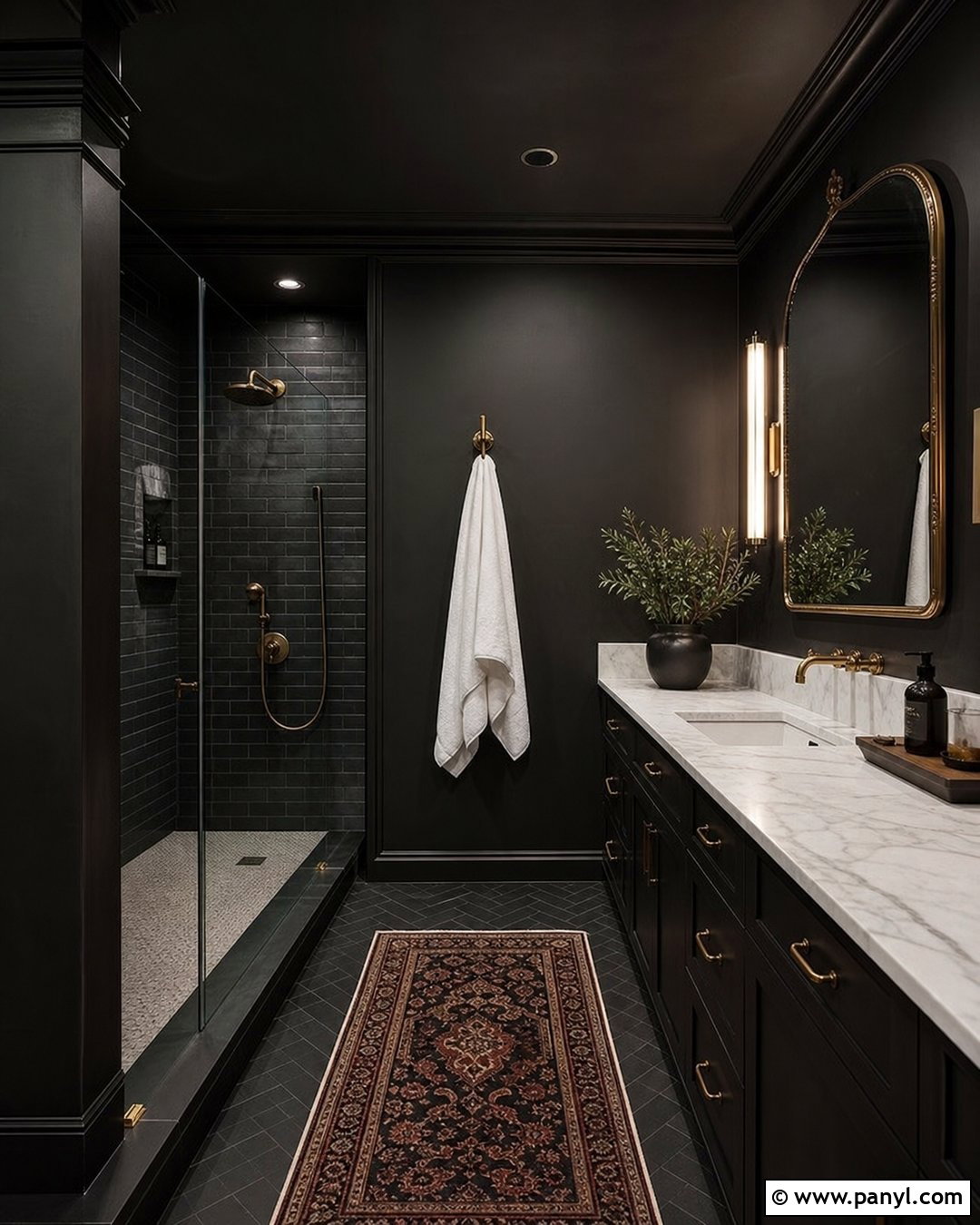
A color-drenched black bathroom carries one deep tone across the walls, ceiling, trim, and built-in storage for a seamless result. Select a soft off-black with warm undertones so the room feels enveloping rather than severe. Use the same color on a fitted vanity, then add a light marble countertop and white sink for contrast. A large antique brass mirror, brass faucets, and matching sconces create bright points against the dark background. Choose black floor tile in a different size or finish to add subtle variation. A frameless shower enclosure keeps every surface visible. White towels and a pale stone shower niche offer necessary visual relief. Layer ceiling, mirror, and shower lighting carefully because an all-dark palette needs illumination from several directions to remain practical.
22. Dark Bathroom Walls For Small Powder Room
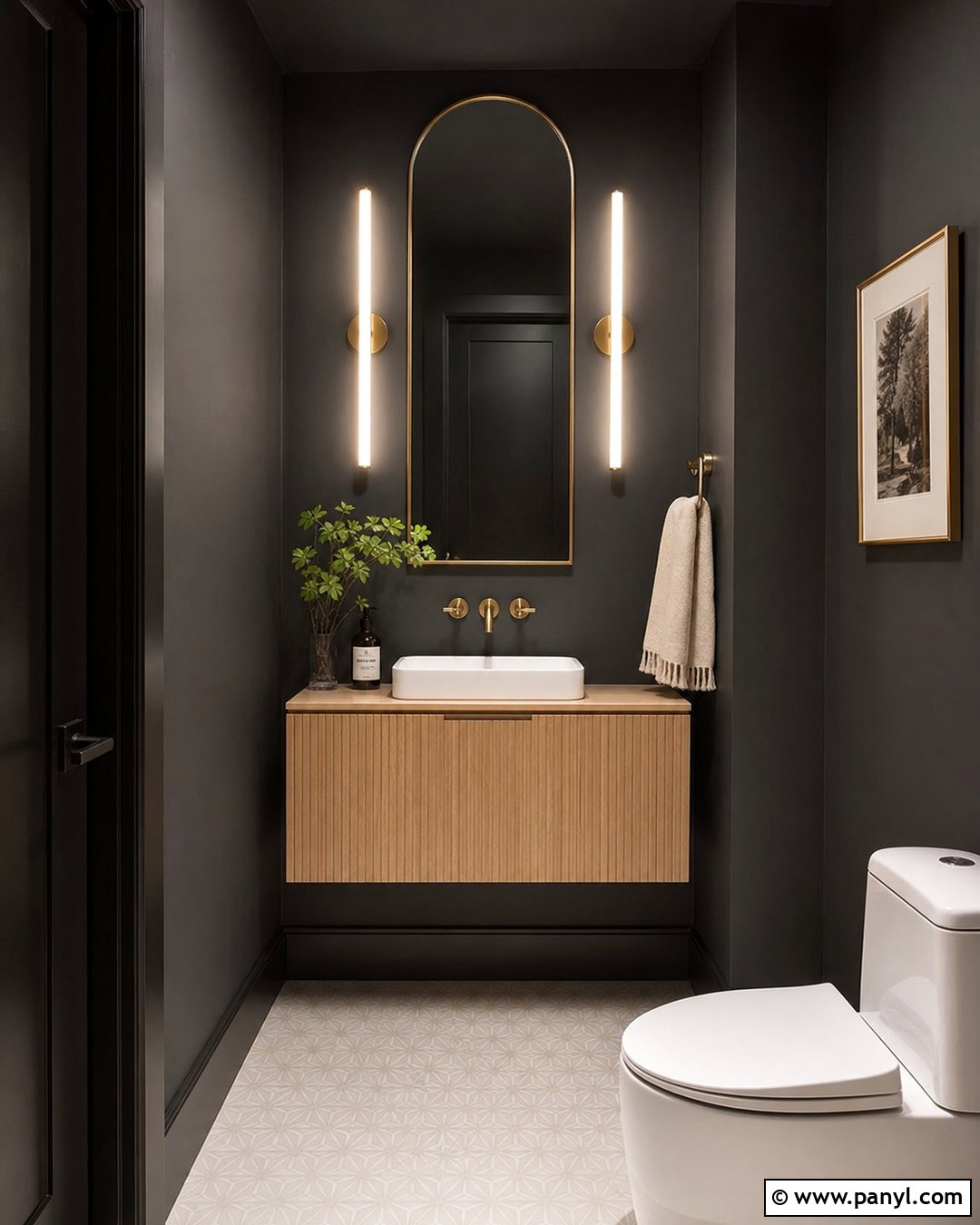
A small powder room is an ideal place to use dark walls because the compact size can make bold decoration feel intentional. Cover the walls in deep charcoal paint and extend the color across the ceiling for a wrapped effect. Install a narrow floating oak vanity to preserve floor space and add a small white sink. A tall arched mirror draws attention upward and reflects the doorway’s light. Use brass wall-mounted faucets and slim sconces to free the counter from clutter. Pale patterned floor tile introduces contrast at the base of the room. Keep storage limited to one built-in shelf with neatly arranged essentials. A cream hand towel and a small ceramic container are enough decoration. The finished powder room feels dramatic, tidy, and larger than its dimensions suggest.
23. Dark Bathroom Walls With Skylight
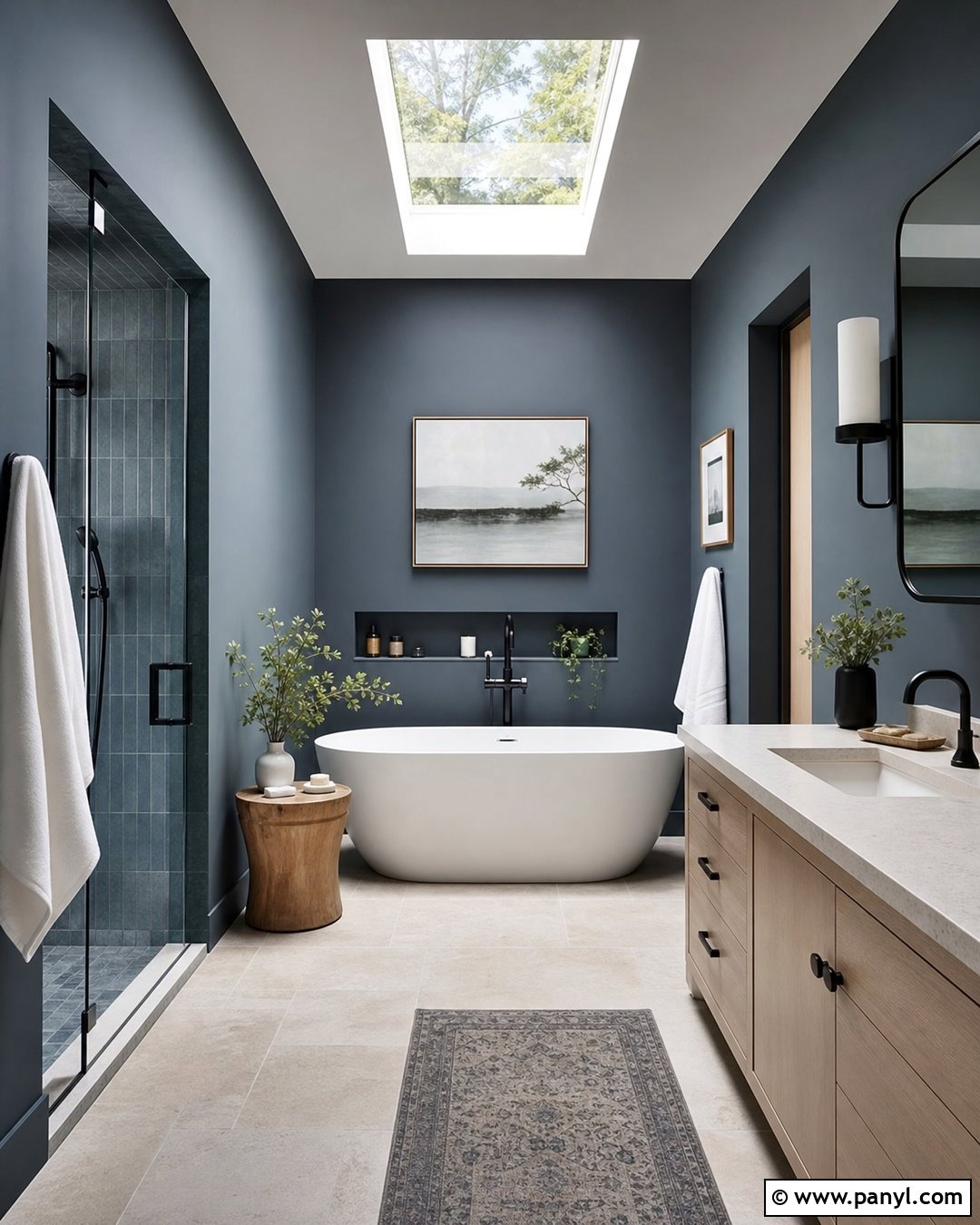
Natural light from a skylight allows dark bathroom walls to show their true depth and texture. Paint the walls in smoky blue-gray and use the same shade on the ceiling around the skylight opening. Position a white freestanding bathtub below the daylight source to create a bright focal point. A white oak vanity, pale stone countertop, and limestone flooring keep the room natural and relaxed. Choose matte black faucets and a frameless mirror for clean definition. In the shower, repeat the blue-gray color through vertically stacked ceramic tile. Include a recessed niche and clear glass enclosure to maintain an uncluttered layout. Soft white towels and a simple wood stool finish the look. After sunset, recessed lights and vanity sconces should replace the skylight’s even illumination.
24. Dark Bathroom Walls With Brass Accents
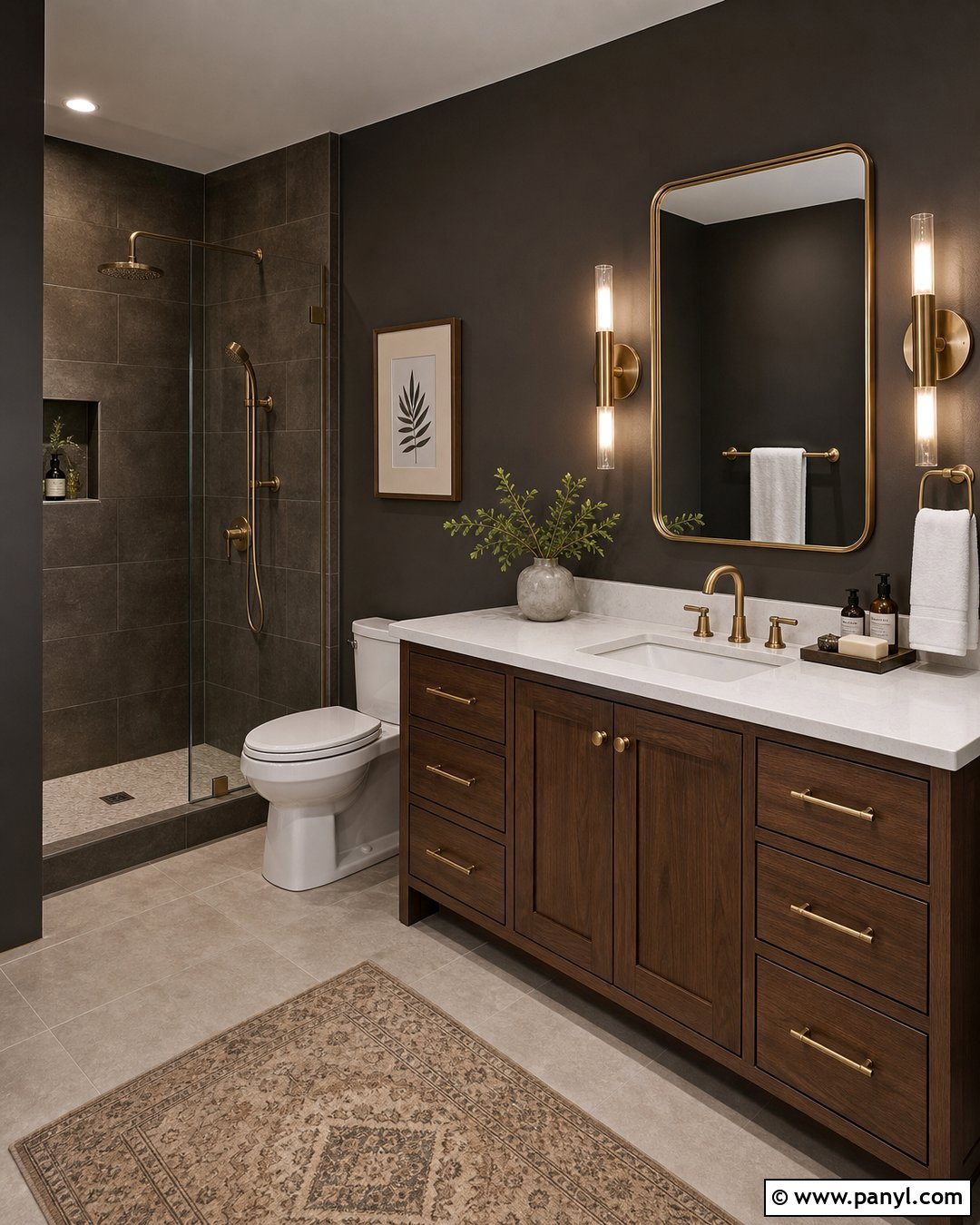
Brass accents stand out beautifully against warm charcoal bathroom walls, but careful repetition keeps the finish from looking scattered. Paint the walls in a deep gray-brown and use matching tile inside the shower. Choose a walnut vanity with a white quartz top and brass drawer pulls. Repeat brushed brass on the faucets, mirror frame, sconces, shower hardware, and towel bar. Keep the shapes simple so the metal supports the design instead of dominating it. Light beige floor tile and a cream shower curtain provide visual relief. Add a clear glass shower panel if the layout allows. White towels, amber-free glass containers, and one small green plant complete the room. The finished bathroom feels coordinated, warm, and polished without depending on excessive decoration.
25. Dark Bathroom Walls With Chrome Fixtures
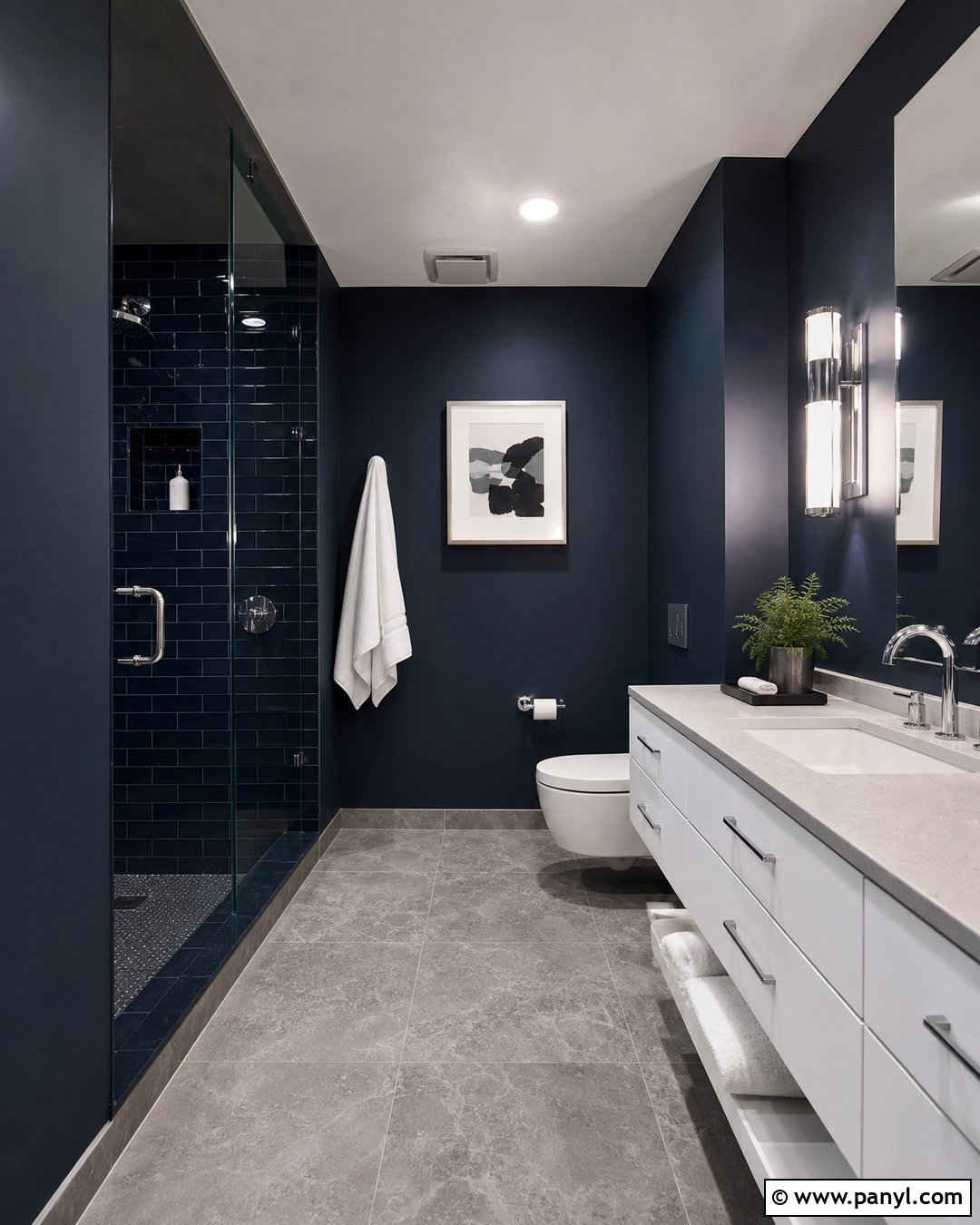
Chrome fixtures can give dark bathroom walls a crisp, clean character that feels fresh and practical. Use deep blue-black paint on the dry walls and glossy matching ceramic tile around the shower. Select a floating white vanity with a pale gray quartz counter to brighten the room. A wide frameless mirror and polished chrome faucets reflect light across the saturated surfaces. Repeat chrome on the shower frame, towel bars, and simple globe sconces. Choose medium gray floor tiles with a subtle stone texture to connect the dark and light elements. White towels and a cool gray bath mat maintain the streamlined palette. Include recessed ceiling lights and bright vanity lighting because chrome looks best when it can reflect clear illumination. The complete room feels sharp without becoming overly industrial.
26. Rustic Dark Bathroom Walls
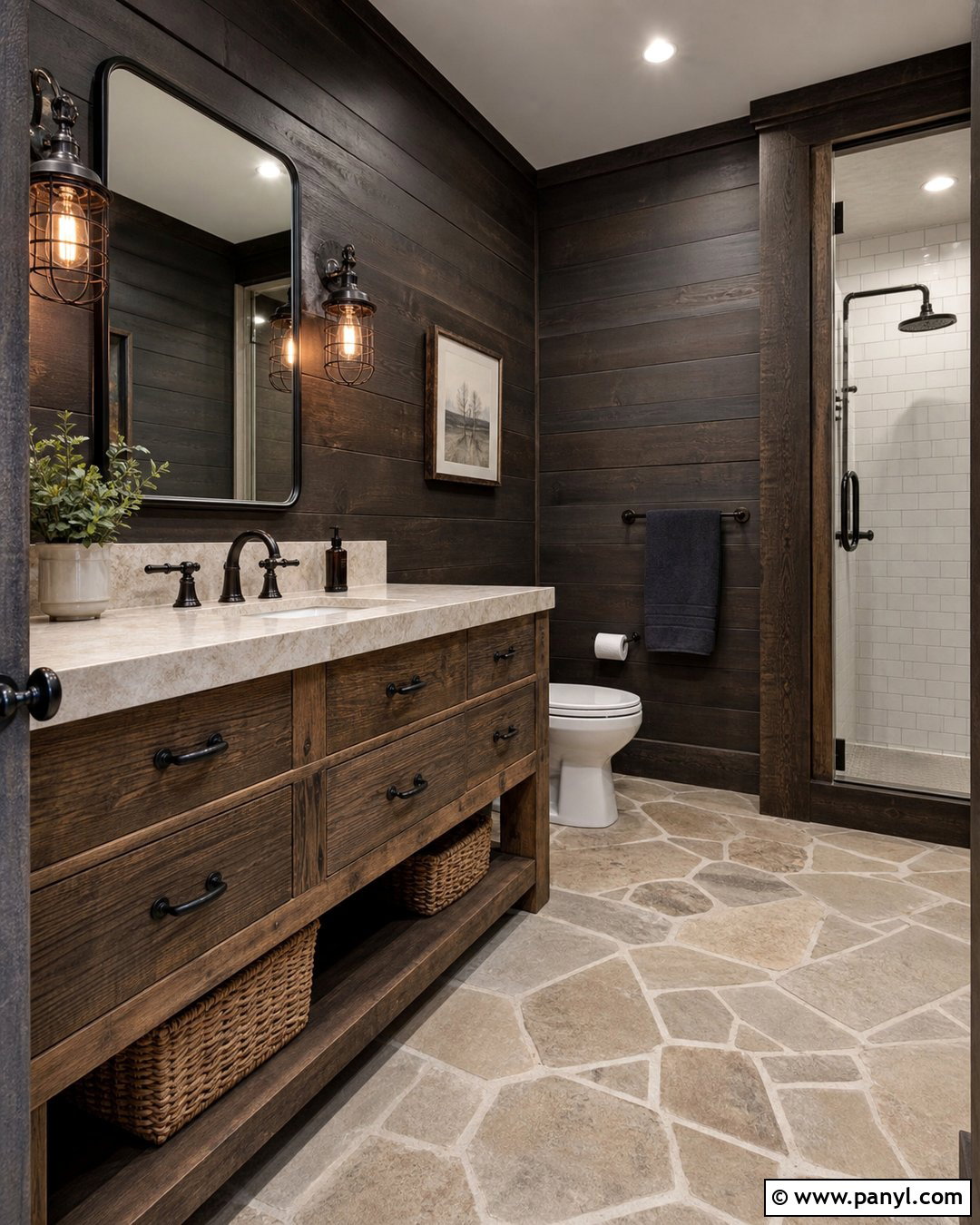
Rustic dark bathroom walls work best when they are balanced with aged wood, textured stone, and simple fixtures. Paint vertical wall paneling in a soft charcoal brown, leaving the grain slightly visible beneath the finish. Repurpose a sturdy wood cabinet as the vanity and top it with a creamy stone slab. Choose oil-rubbed bronze faucets, a framed rectangular mirror, and metal cage sconces with white glass shades. Use irregular beige stone-look flooring and continue it into the walk-in shower. A clear glass panel keeps the natural materials connected visually. Add off-white towels, woven baskets, and one understated landscape print. Avoid excessive themed decor. The combination of dark walls and authentic-looking finishes creates a bathroom that feels comfortable, established, and suited to everyday use.
27. Modern Farmhouse Dark Bathroom Walls
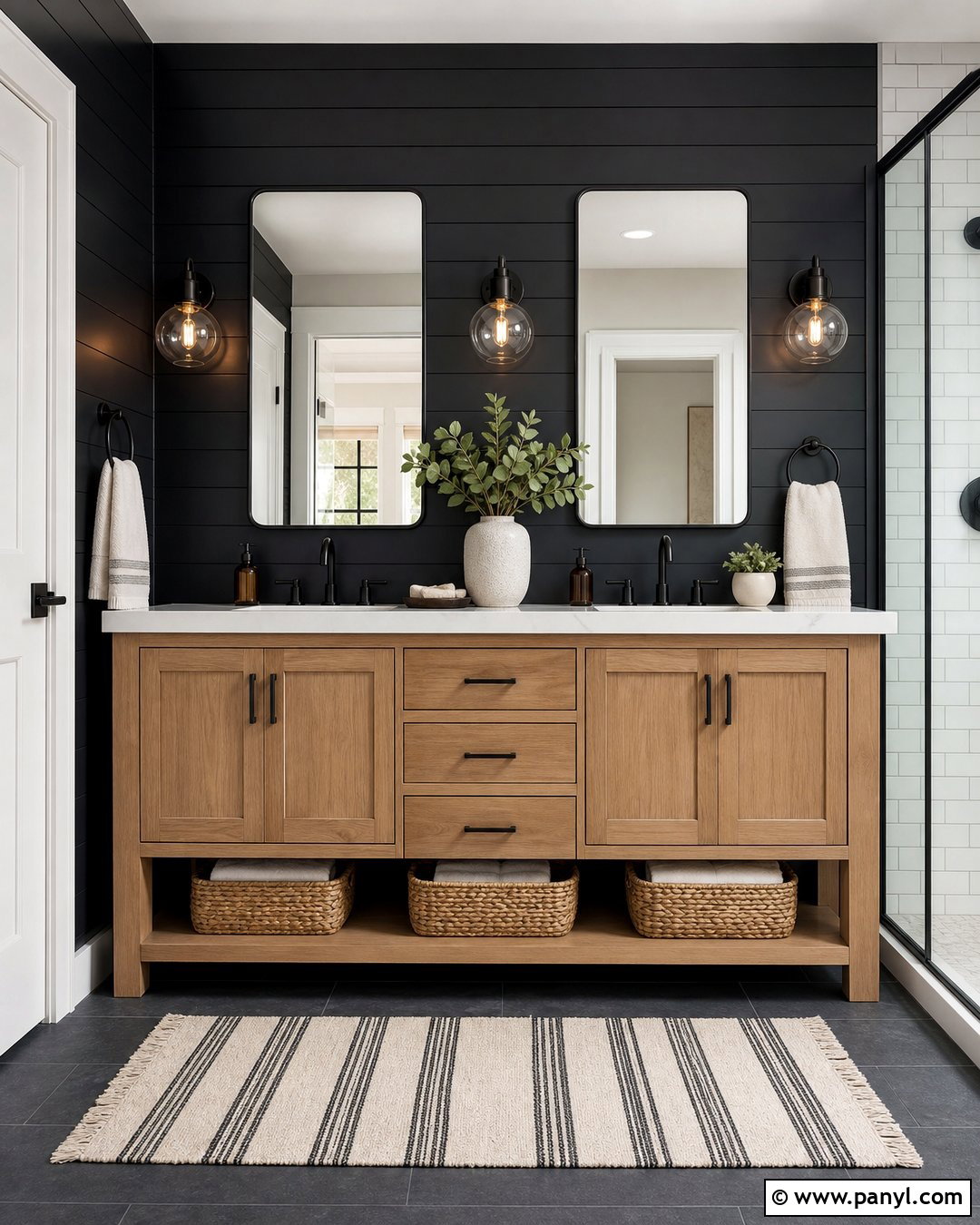
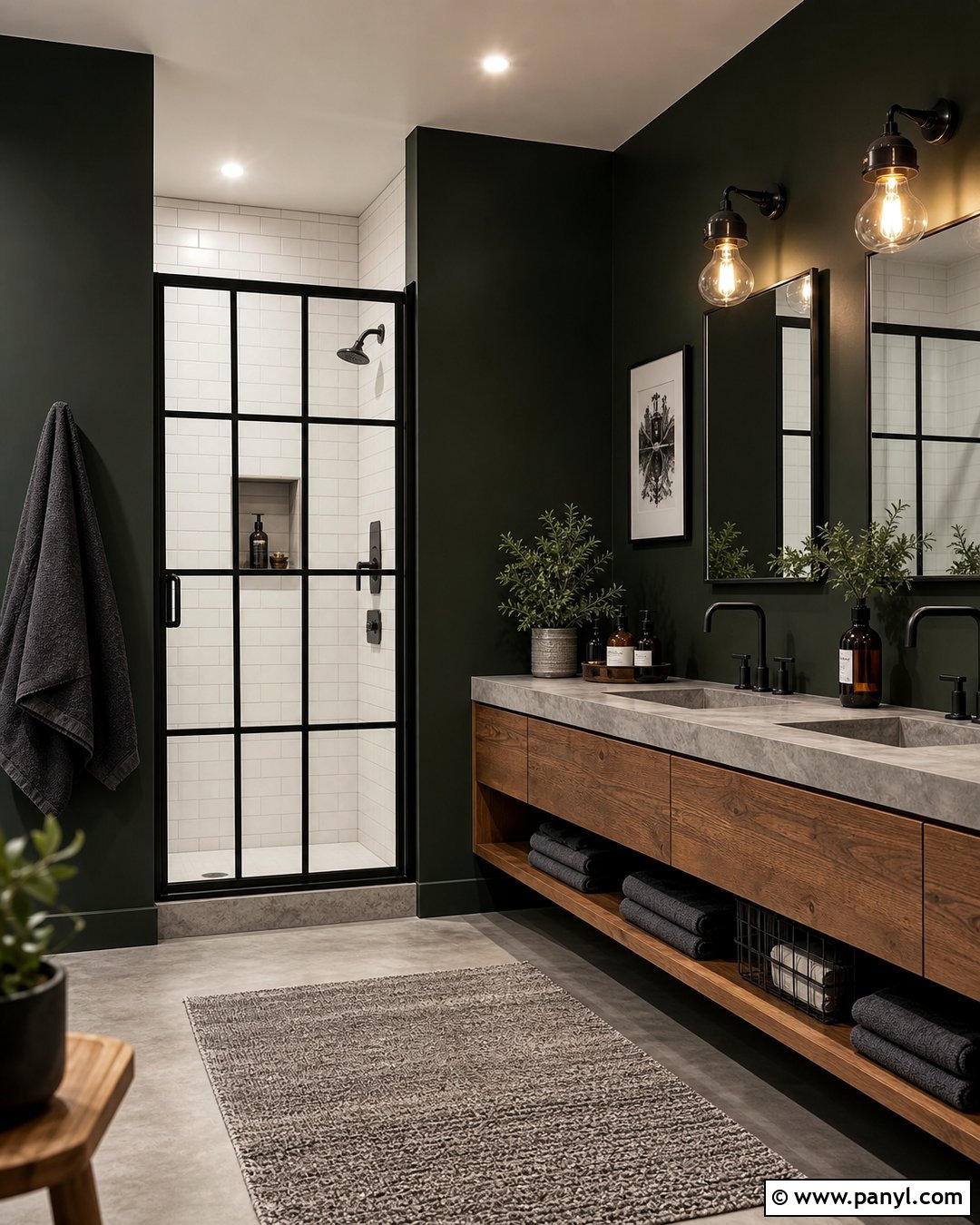
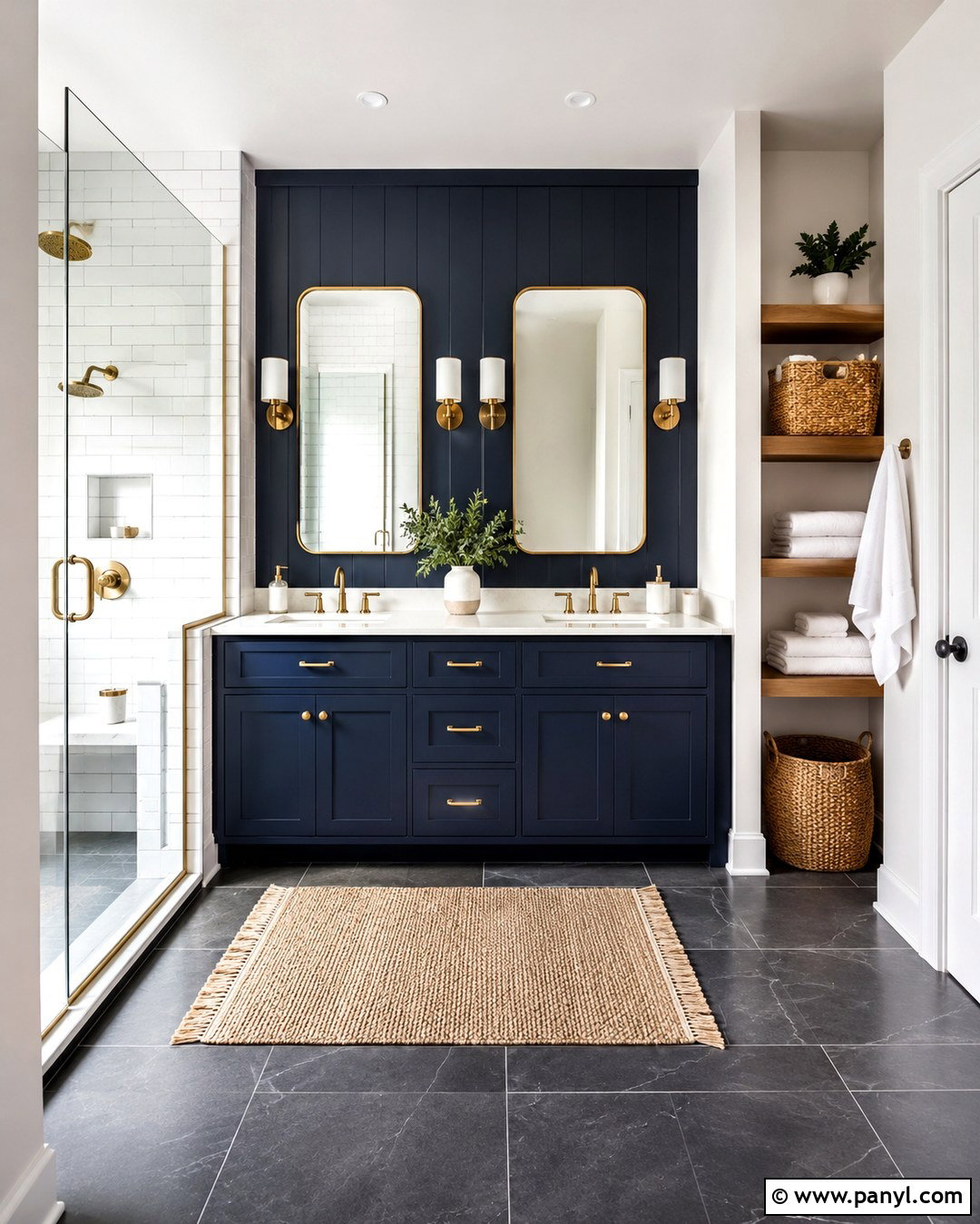
Modern farmhouse bathrooms can support dark walls when familiar white and wood elements provide balance. Use black-painted shiplap across the vanity wall and warm white paint on the remaining surfaces. Choose a natural oak double vanity with a white quartz counter and simple black pulls. Two black-framed mirrors and three white globe sconces create an orderly, symmetrical arrangement. Continue white subway tile through the shower, using dark grout to connect it with the shiplap. Large charcoal floor tiles give the room a practical foundation. Add white towels, woven baskets, and a neutral striped runner for softness. Keep signs and themed accessories out of the room. The finished look feels current and relaxed because its character comes from proportion, contrast, useful storage, and durable materials.
28. Coastal Dark Bathroom Walls
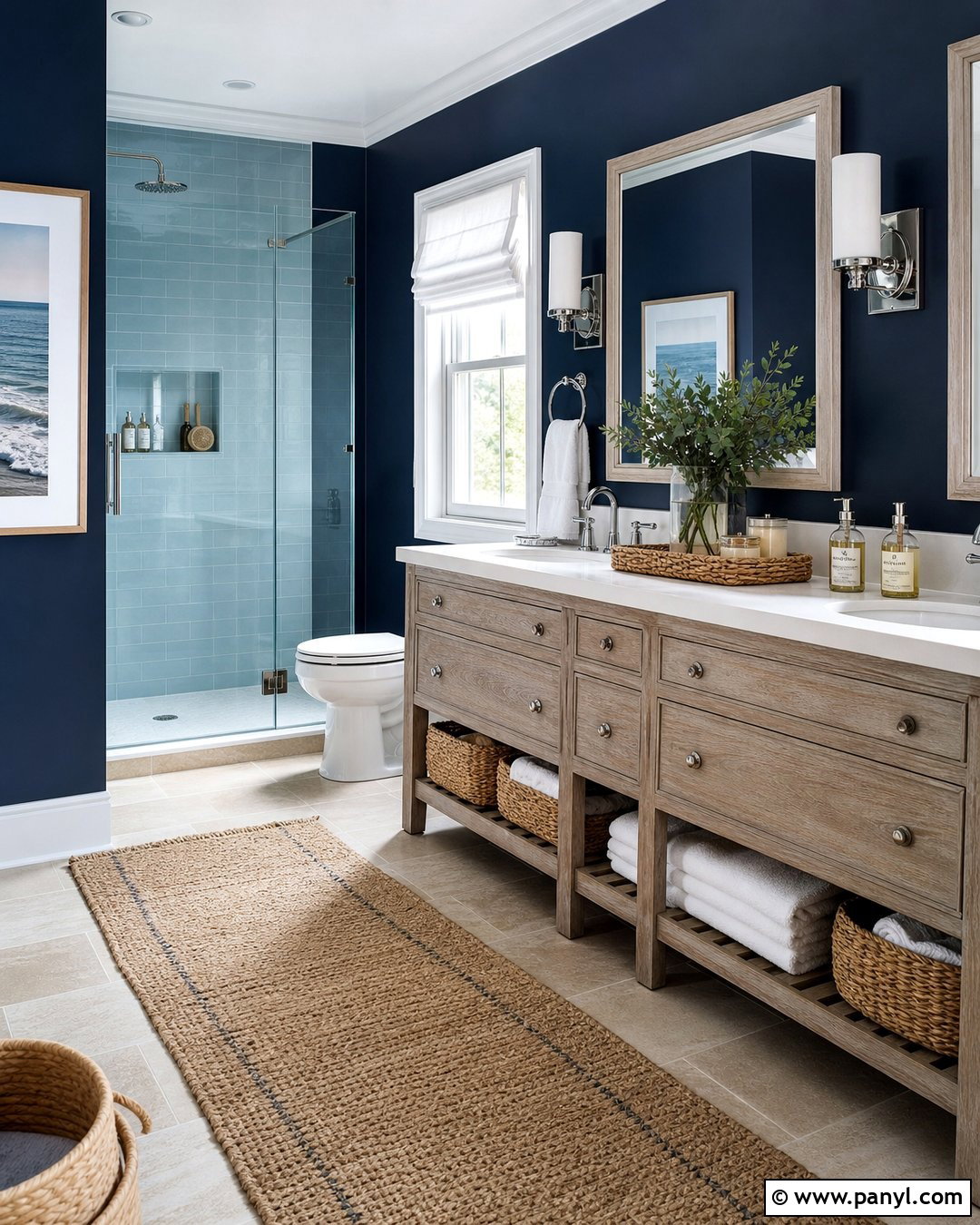
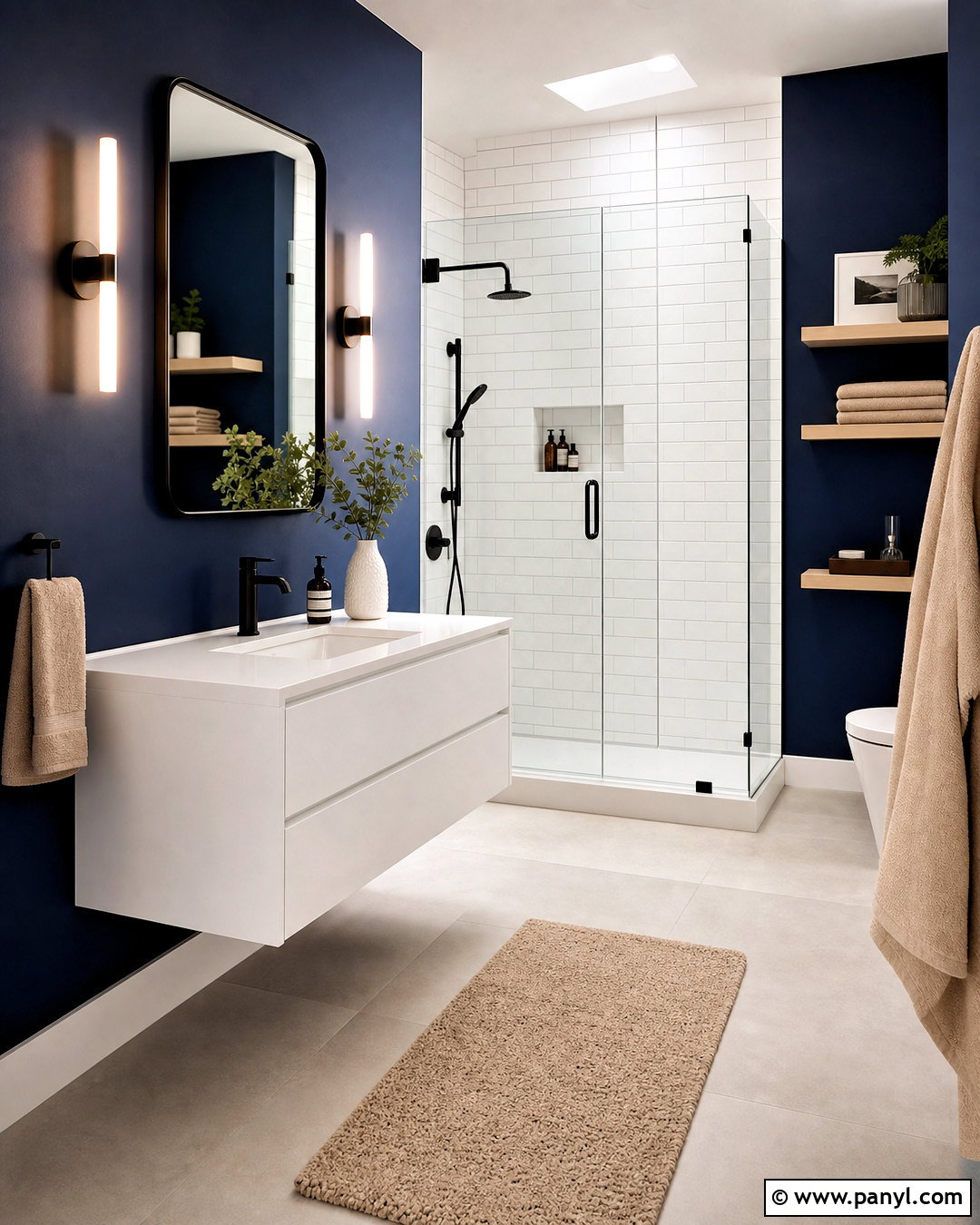
Dark coastal bathroom walls can feel fresh when they reference deep ocean colors rather than relying on obvious seaside decoration. Paint the walls in a rich navy blue and pair them with a white oak vanity in a lightly weathered finish. A white quartz countertop, chrome faucets, and a large round mirror keep the palette bright. Use pale blue glass tile inside the shower and sandy beige porcelain across the floor. White linen shades filter daylight while preserving privacy. Add woven storage baskets, crisp white towels, and a muted blue runner for texture. Avoid decorative shells or nautical signs. Instead, let natural materials and layered blues establish the coastal feeling. The completed bathroom looks relaxed, clean, and sophisticated enough for both beach houses and inland homes.
29. Minimalist Dark Bathroom Walls
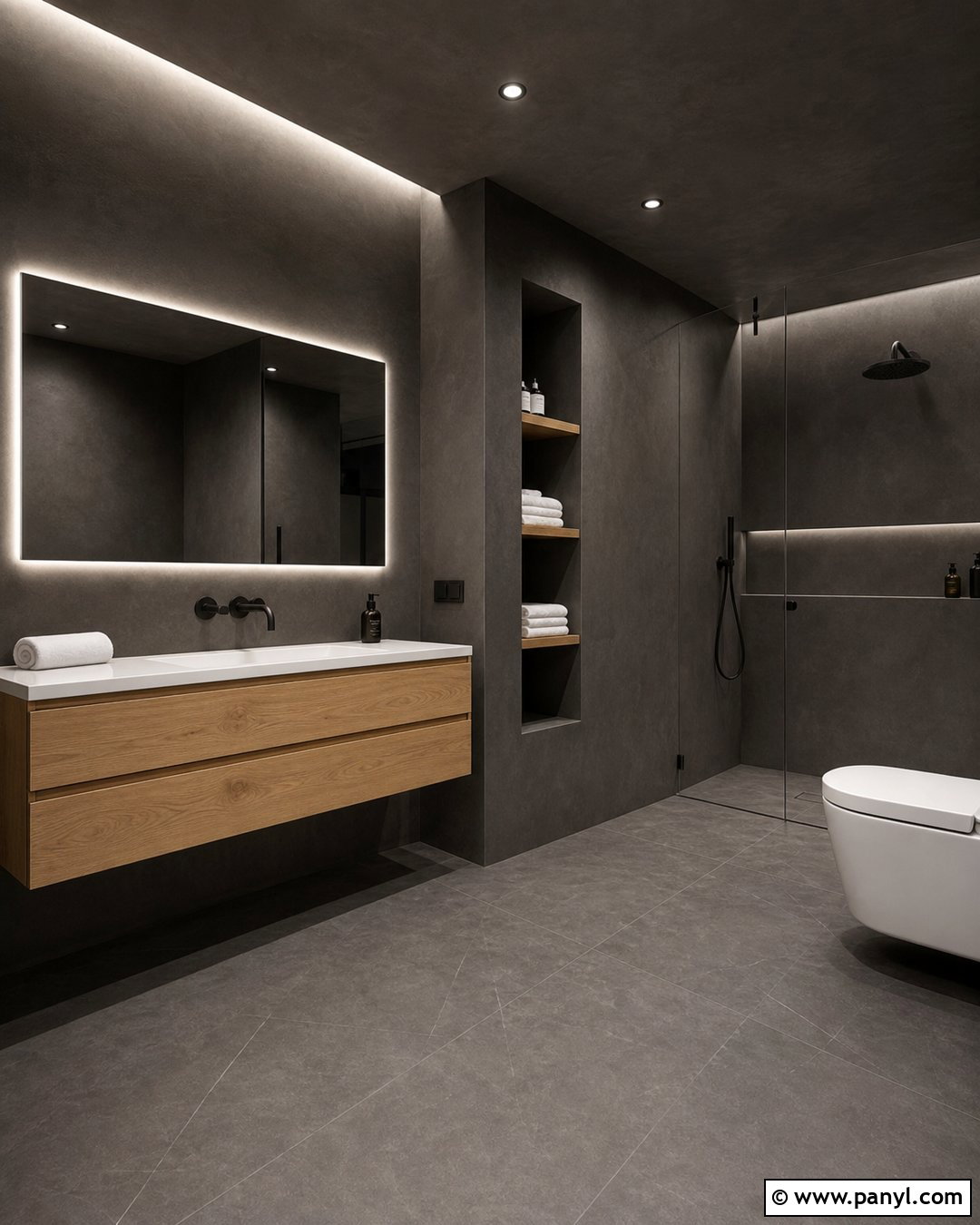
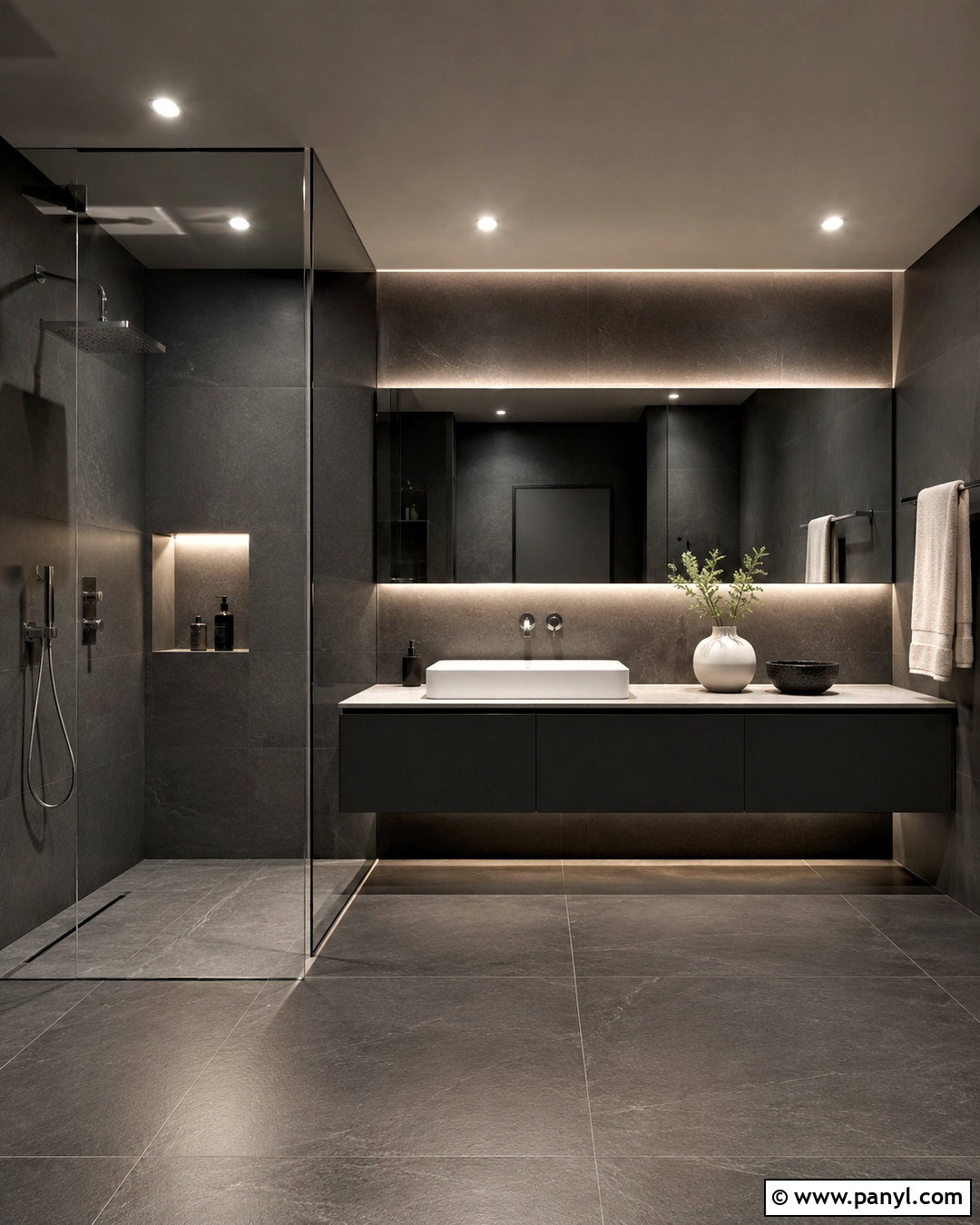
Minimalist dark bathroom walls depend on precise lines, hidden storage, and a small number of well-chosen materials. Apply charcoal microcement across the walls, ceiling, and shower for a seamless envelope. Install a long floating oak vanity with handleless drawers and an integrated white sink. A frameless backlit mirror provides useful illumination without adding visual clutter. Use a wall-mounted black faucet, concealed shower controls, and a clear fixed glass panel. Continue large charcoal tiles across the floor, selecting a slightly lighter shade for subtle separation. Build storage into a recessed wall cabinet and shower niche so everyday products remain organized. Add only white towels and one low wood stool. Bright, evenly distributed lighting makes this restrained dark bathroom feel calm, functional, and carefully proportioned.
30. Vintage Dark Bathroom Walls
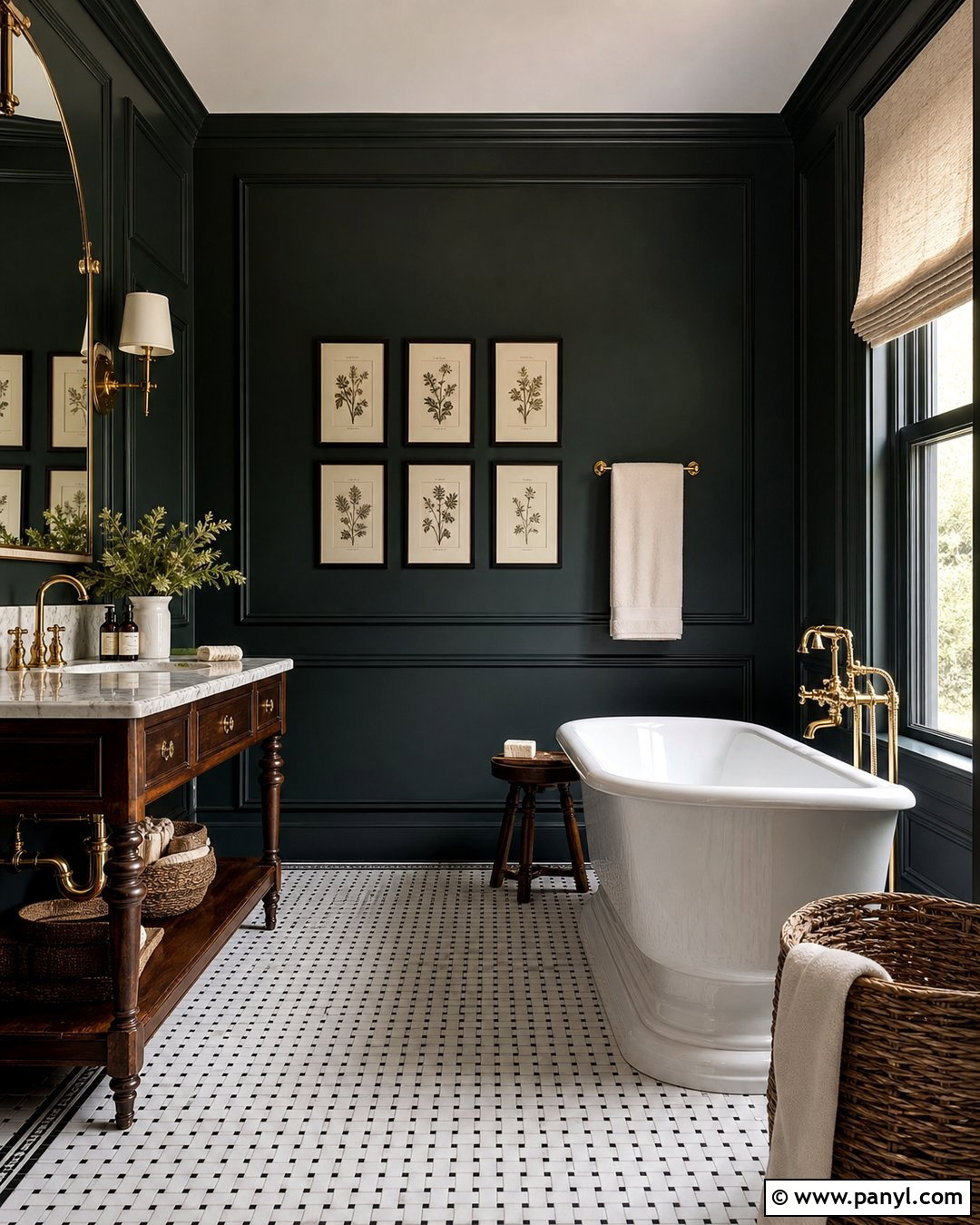
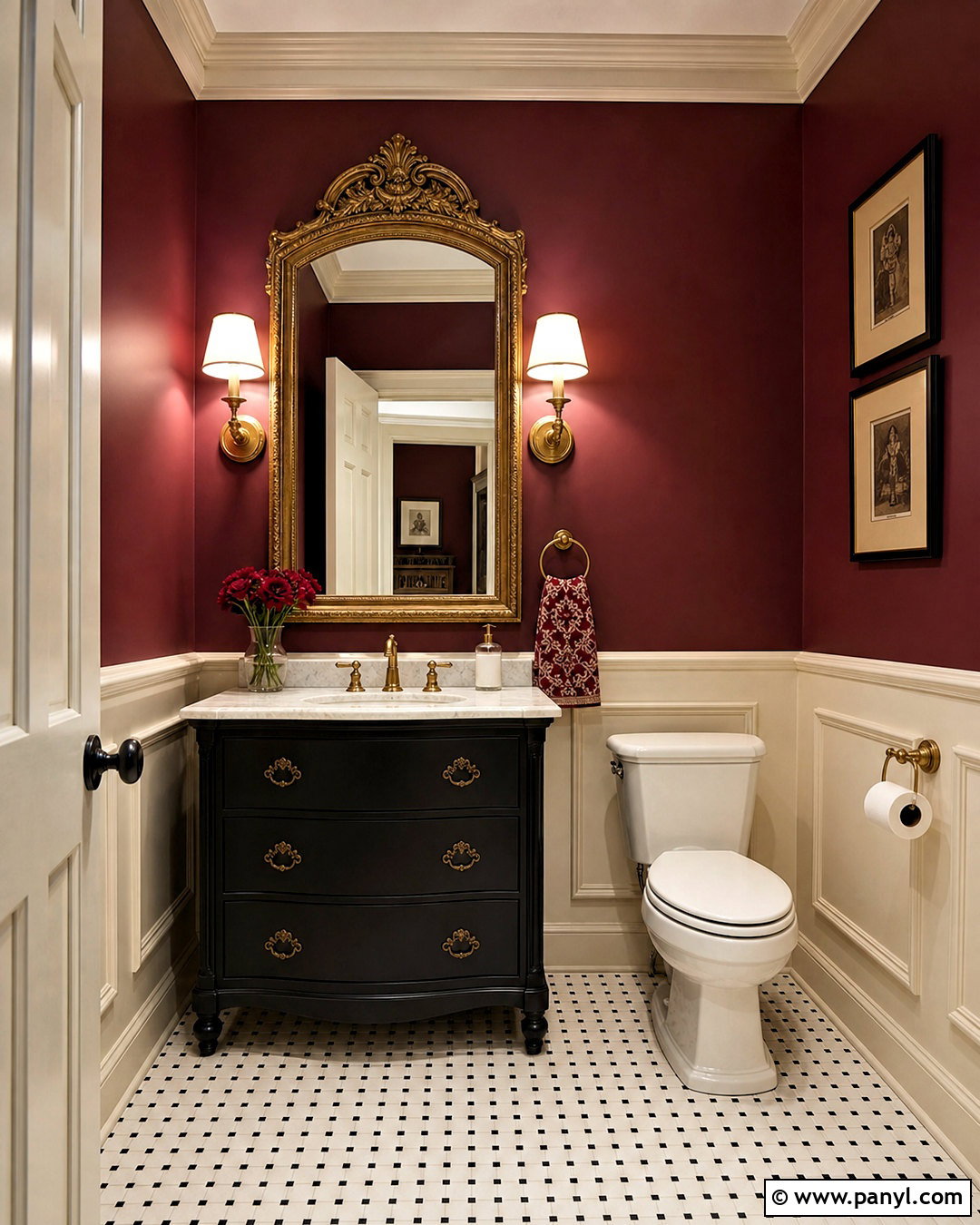
Vintage dark bathroom walls provide a rich backdrop for classic fixtures, patterned flooring, and furniture-style cabinetry. Paint the walls in a deep green-black and add traditional box molding for architectural detail. Choose a dark wood vanity with turned legs, a white marble top, and an undermount sink. An ornate brass mirror and shaded wall sconces reinforce the older character without making the room feel theatrical. Use black-and-white basketweave floor tile and a freestanding white tub with brass fittings. A cream fabric shower curtain softens the hard surfaces. Finish with framed botanical artwork, ivory towels, and a small wooden stool. Modern ventilation and bright neutral lighting keep the bathroom practical, while the layered materials create the collected appearance of a well-preserved historic home.
Conclusion:
These 30 Dark Bathroom Walls show how saturated color can work in bathrooms of every size and design direction. Black paint, slate tile, navy beadboard, forest green marble, dark wallpaper, and warm brown plaster each create a different atmosphere. The most successful rooms balance those surfaces with pale stone, warm wood, reflective mirrors, and layered lighting. Choose moisture-resistant materials, durable finishes, and proper ventilation before completing the decorative details. You can also begin with one dark wall or painted paneling before committing to a fully color-drenched room. Whether your home is modern, rustic, coastal, or traditional, dark bathroom walls can create a practical space that feels distinctive, comfortable, and thoughtfully finished.

Related Ideas and Inspiration:
Leave a Reply