
Moody bathrooms turn an everyday space into a rich, personal retreat. The best **20 moody bathroom paint colors** range from deep navy and forest green to smoky plum, espresso brown, and charcoal gray. Dark, color-drenched bathrooms remain popular because saturated walls can add depth, character, and a cozy sense of enclosure. () The key is creating a complete palette around the paint. Tile, vanity finishes, metal fixtures, mirrors, flooring, and lighting should support the same mood. In moisture-prone rooms, satin or semi-gloss paint is generally easier to clean and more stain-resistant than flat paint. () Whether you are updating a powder room or primary bath, these complete looks make it easier to use **20 moody bathroom paint colors**.
1. Deep Navy Bathroom Paint
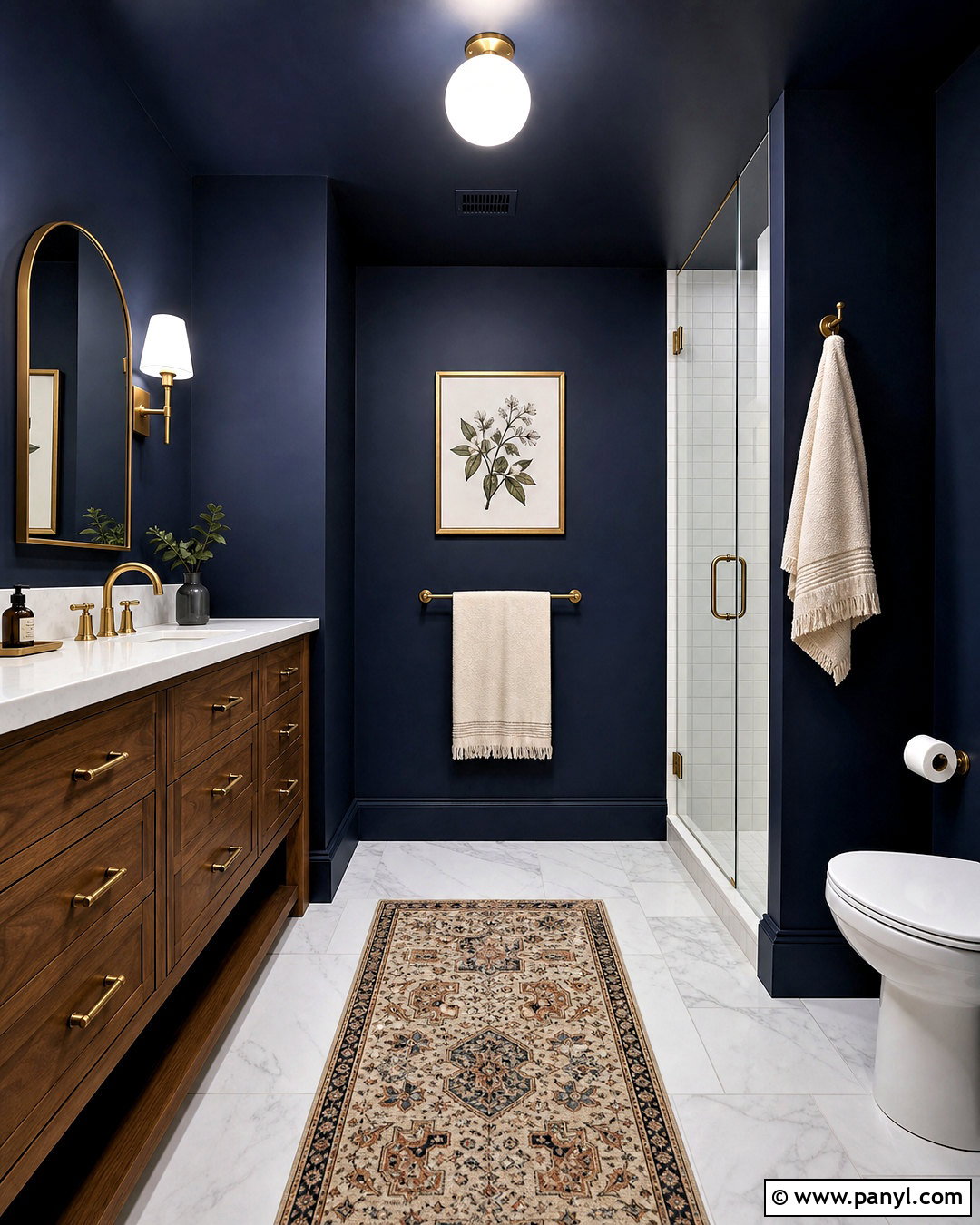
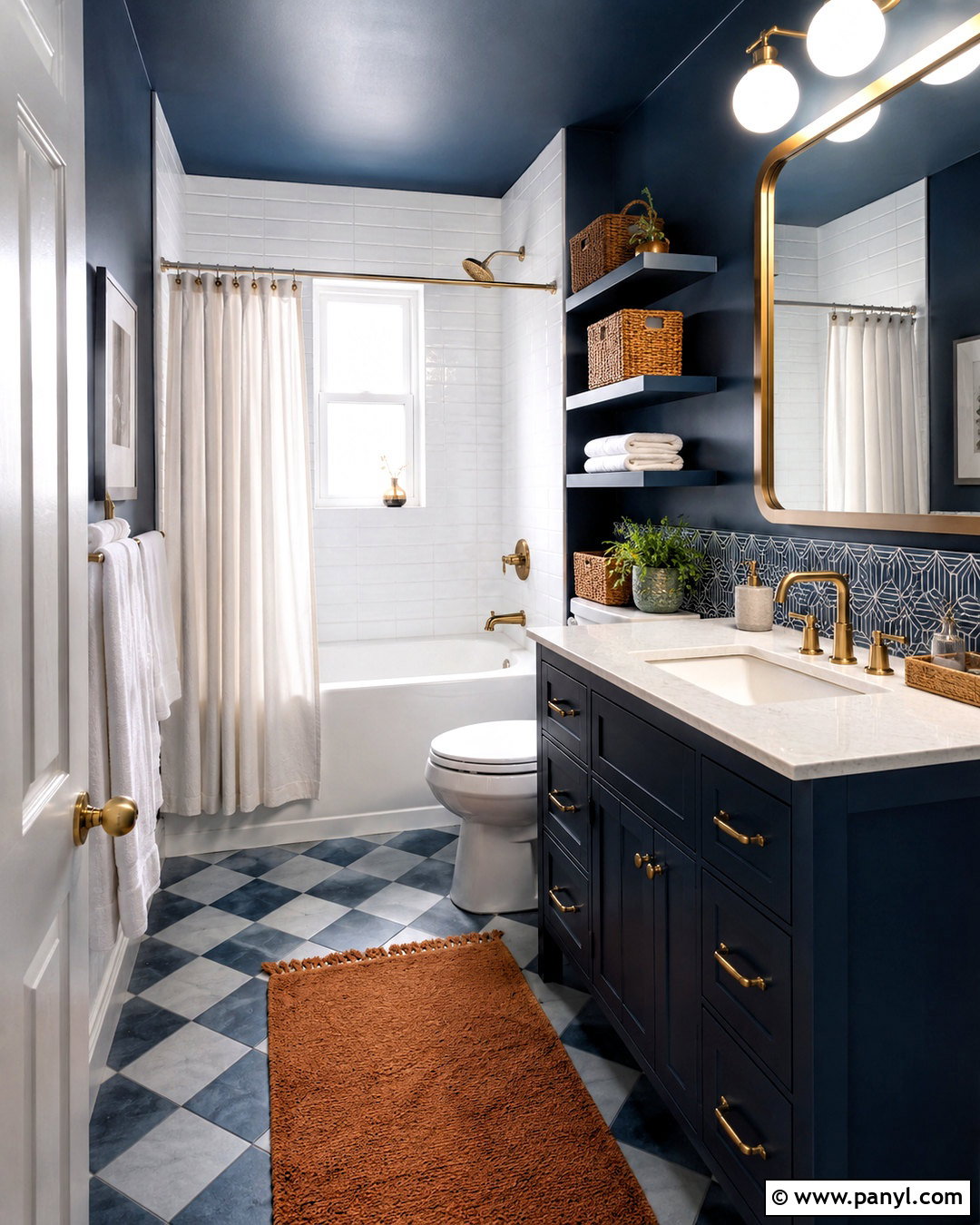
Deep navy creates a classic bathroom that feels dramatic without looking harsh. Paint the walls and ceiling the same blue for a seamless, enveloping finish. Balance the darkness with white marble floor tile and a medium-tone walnut vanity. Brushed brass faucets, cabinet pulls, and sconces add controlled warmth. A large arched mirror keeps the room feeling open, while white towels provide a crisp contrast. Choose a navy with subtle gray undertones if your bathroom receives cool natural light. For a windowless powder room, use two bright wall sconces with soft white bulbs. Finish the look with navy-painted trim, a simple cream shower curtain, and one small piece of framed botanical art.
2. Forest Green Bathroom Paint
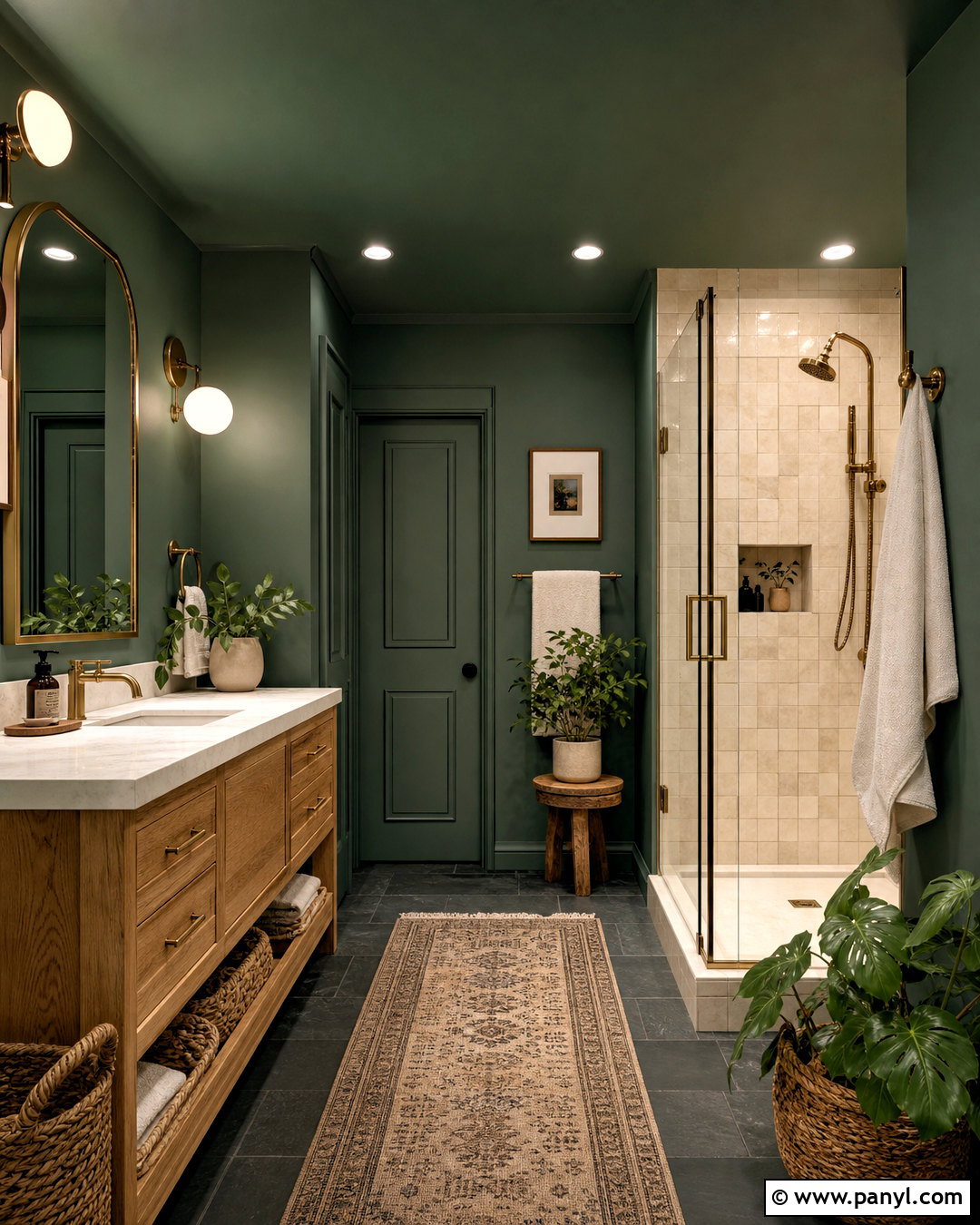
A deep forest green bathroom feels grounded, natural, and quietly luxurious. Use the green across the upper walls, ceiling, trim, and built-in storage for a color-drenched effect. Cream zellige tile around the shower introduces texture and gently reflects light. Add a warm oak vanity with a pale quartz countertop to keep the palette from becoming too heavy. Aged brass hardware works beautifully against the green, while woven baskets and ivory towels soften the room. Choose dark slate flooring for durability and visual depth. Complete the bathroom with a rounded wood-framed mirror, simple glass sconces, and a few moisture-loving plants. The result feels like a modern woodland retreat rather than a themed space.
3. Charcoal Gray Bathroom Paint
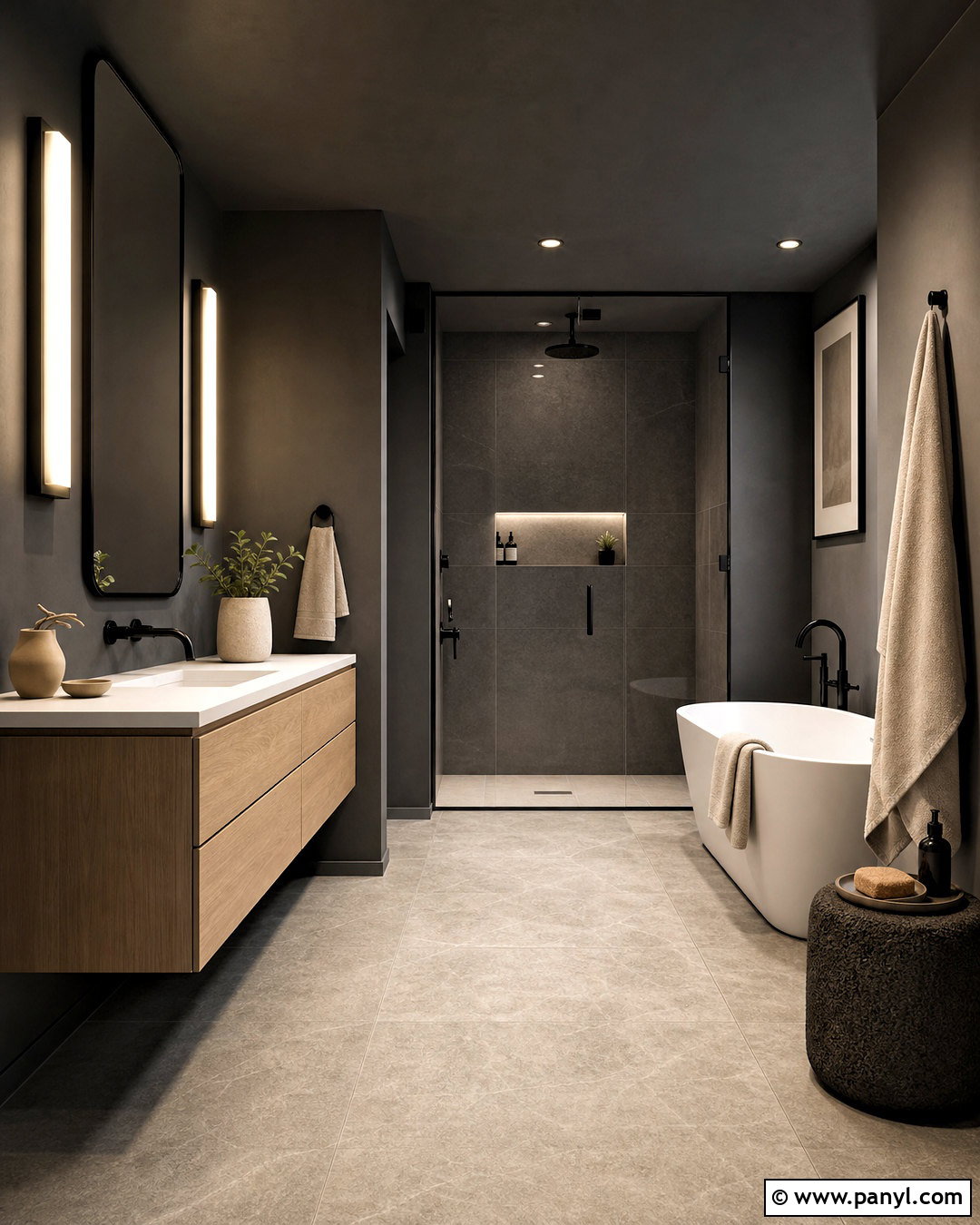
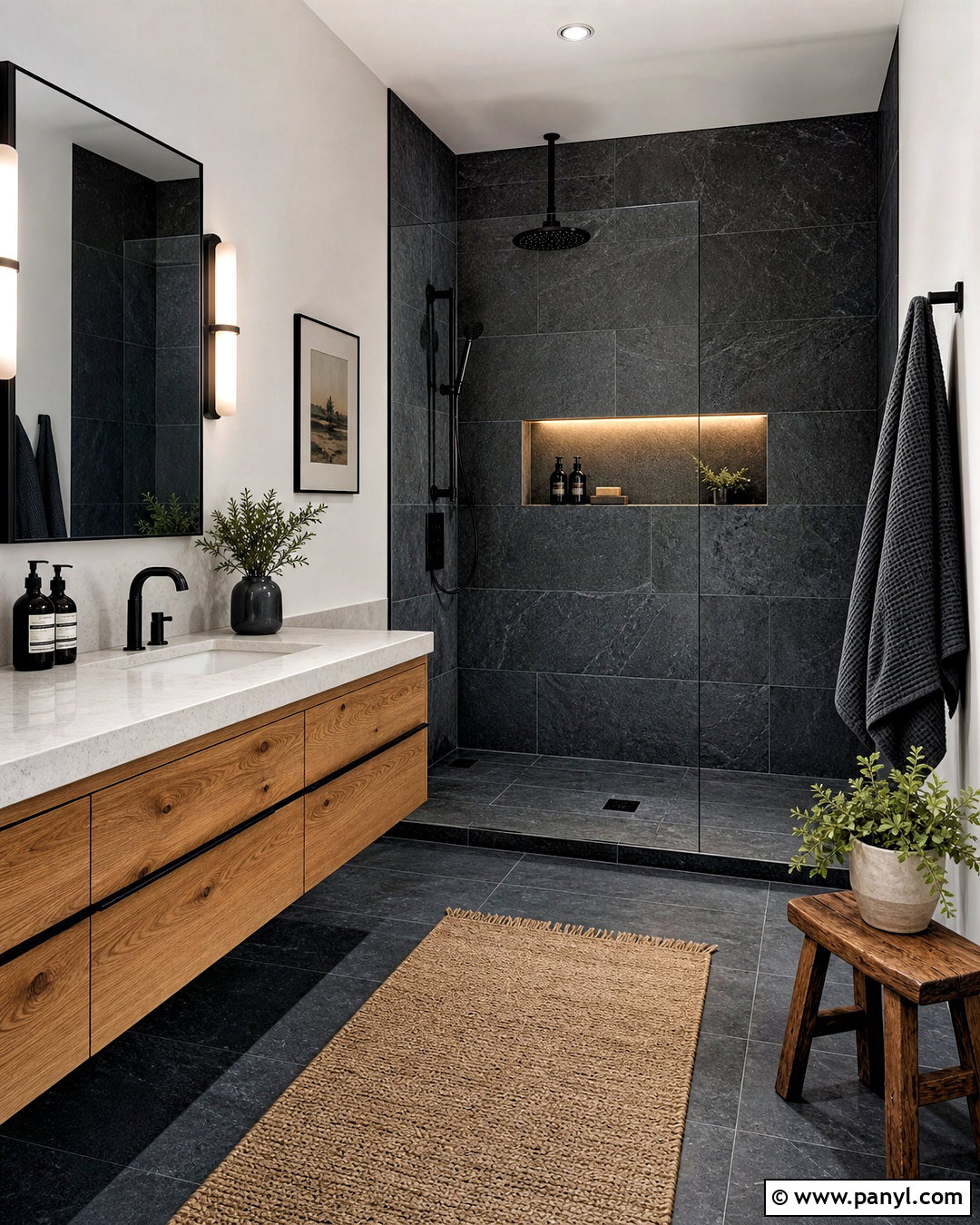
Charcoal gray gives a bathroom architectural depth while remaining more flexible than true black. Paint the walls in a warm charcoal with brown undertones, then continue it over the trim and ceiling. Pair it with a floating white oak vanity to create strong contrast and keep the floor visible. Large limestone-look porcelain tiles introduce a soft, organic texture. Matte black plumbing fixtures blend into the walls, allowing a white sink and sculptural mirror to stand out. Install bright vertical sconces on both sides of the mirror for even illumination. Soft oatmeal towels, a textured bath mat, and minimal ceramic accessories prevent the room from feeling cold. This complete scheme works especially well in a clean, contemporary bathroom.
4. Matte Black Bathroom Paint
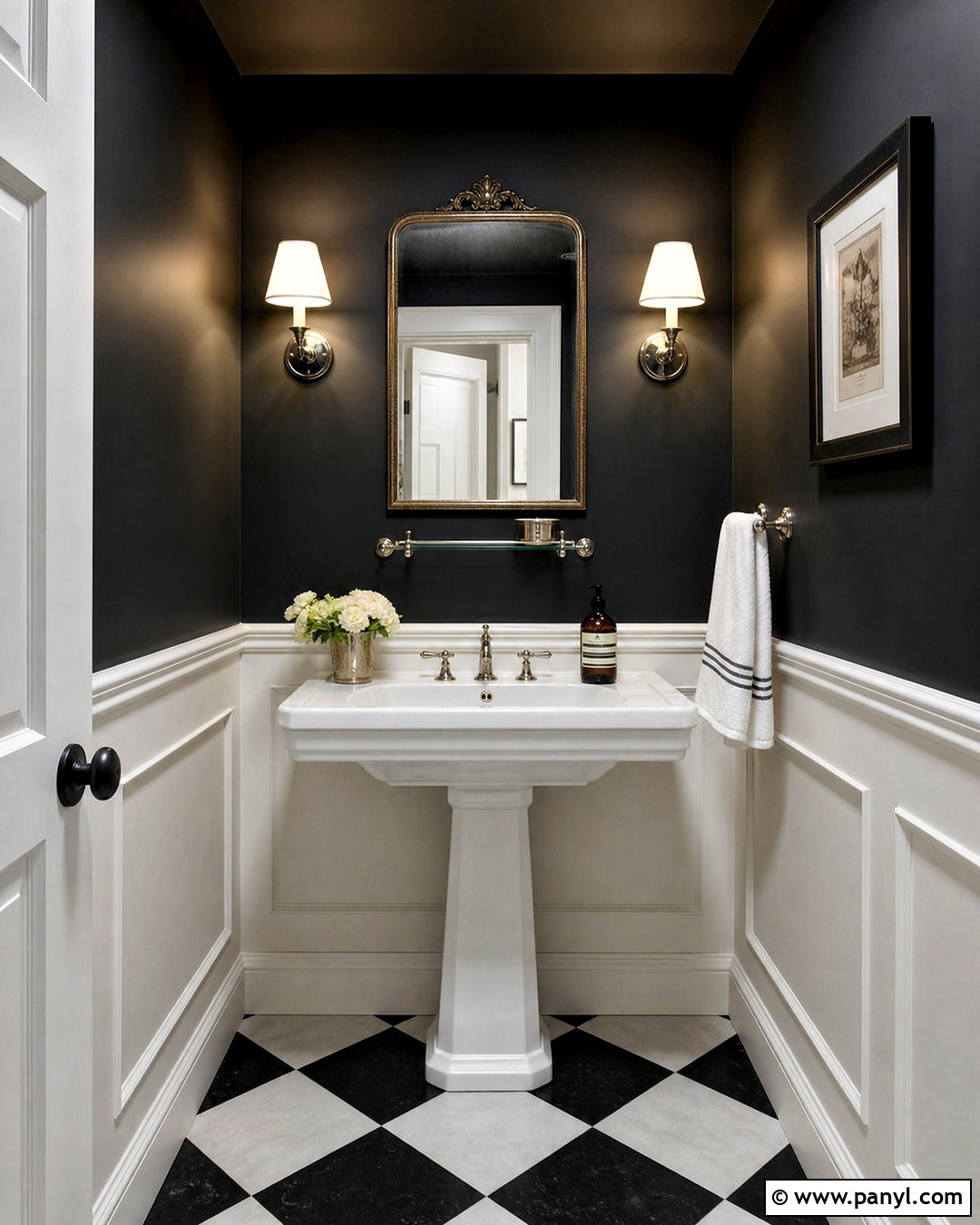
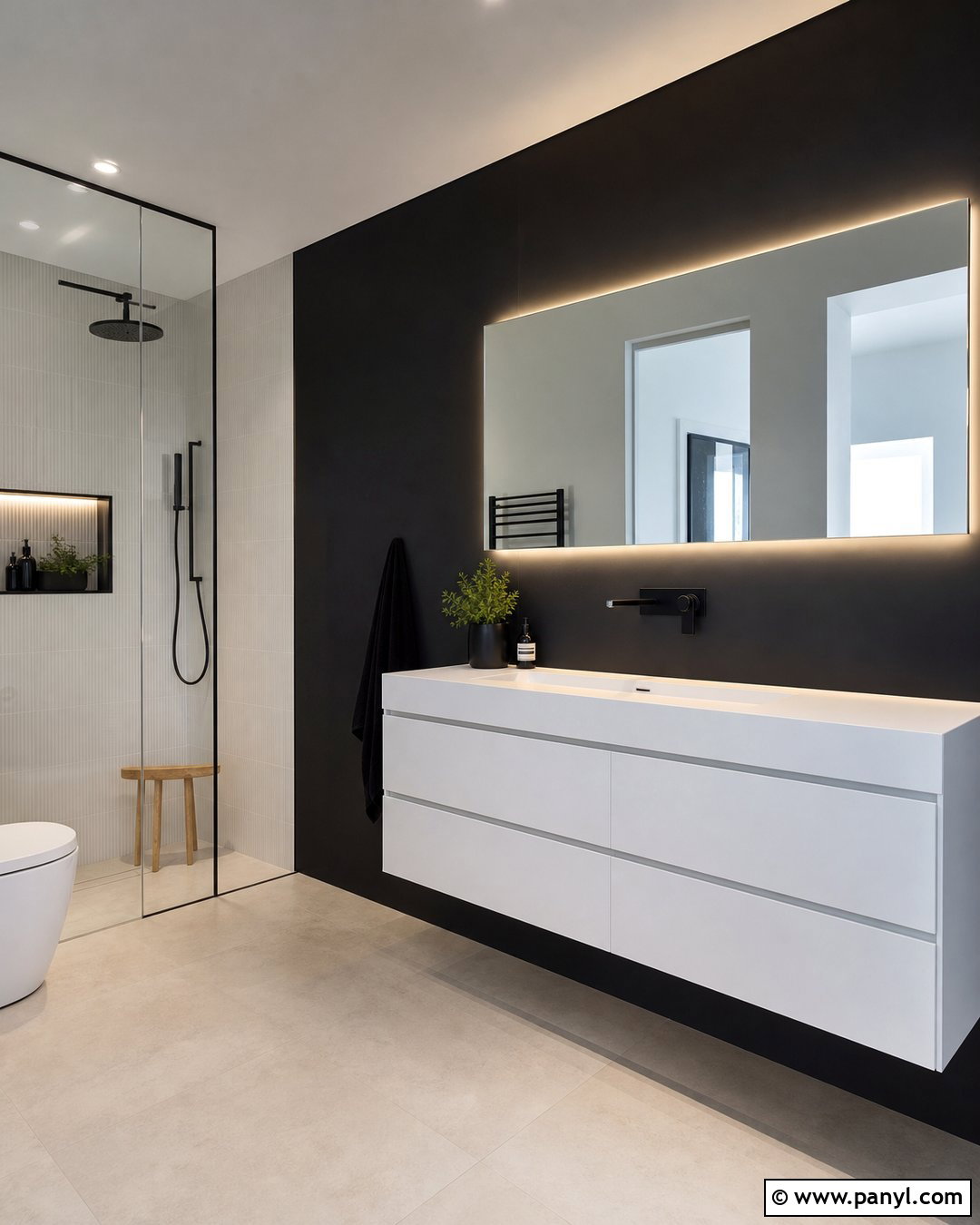
Matte black paint can turn a small powder room into an intentional jewel-box space. Cover the walls and ceiling in a soft black rather than a blue-based pitch black. Add crisp white wainscoting or a white pedestal sink to break up the darkness. A black-and-white checkerboard floor brings pattern without introducing another strong color. Choose polished nickel faucets and sconces for a brighter, more traditional contrast. A large vintage-inspired mirror helps bounce artificial light throughout the room. Keep accessories limited to white hand towels, a glass soap dispenser, and one small framed print. Use moisture-resistant satin paint on walls and a more durable semi-gloss finish on trim, even when you want the overall appearance to feel matte.
5. Oxblood Red Bathroom Paint
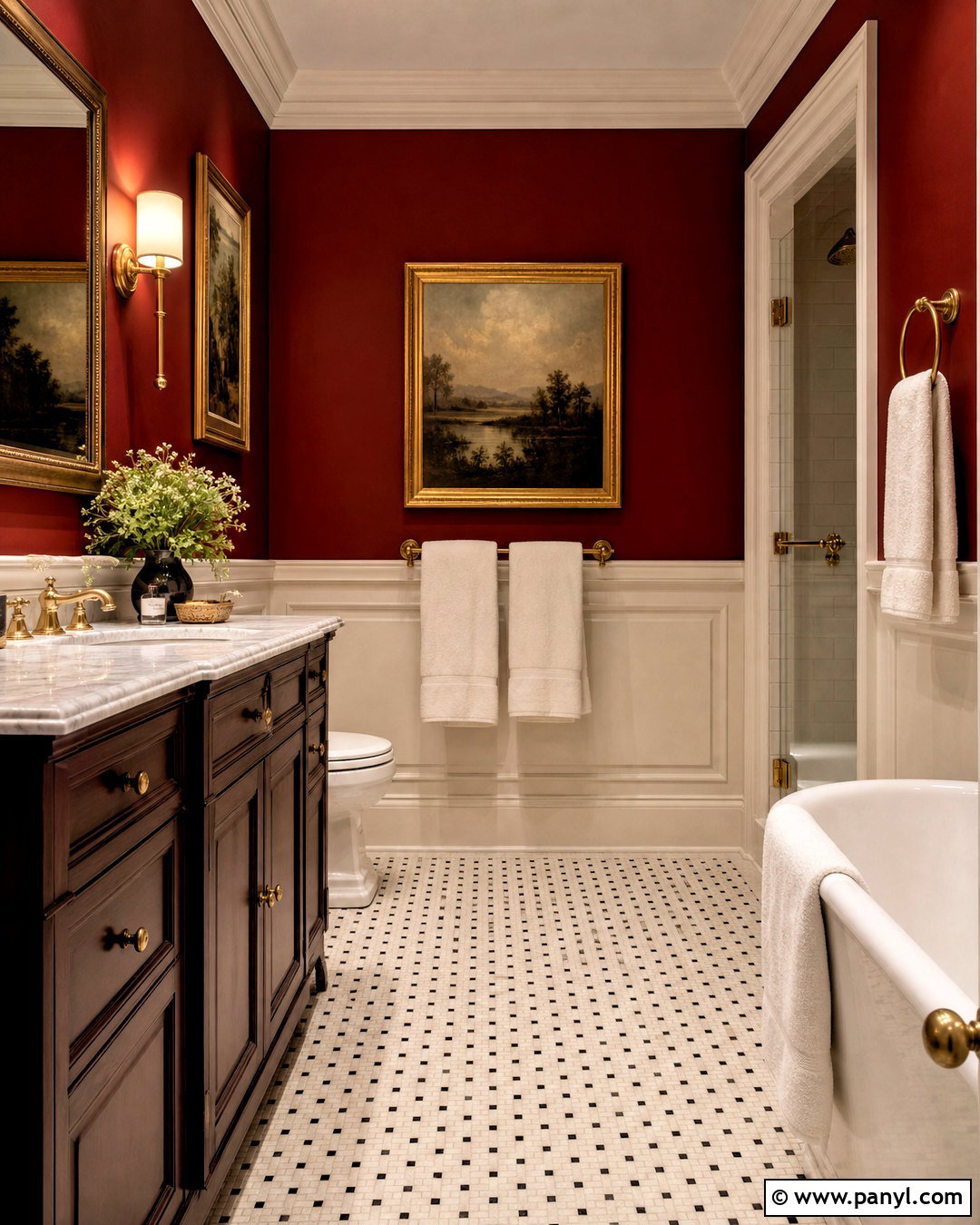
Oxblood red creates a warm, dramatic bathroom with more depth than a bright primary red. This brown-based shade looks especially polished above creamy white wall paneling. Use dark-stained wood for the vanity and add a pale marble countertop with subtle burgundy veining. Antique brass faucets, picture lights, and cabinet hardware reinforce the room’s warm character. Small black-and-cream mosaic floor tile adds traditional detail without competing with the paint. Keep the ceiling soft cream so the red walls remain the main feature. Finish the space with a dark wood mirror, ivory towels, and simple landscape artwork in aged gold frames. The final look feels layered and sophisticated, making it particularly effective in a guest bathroom or powder room.
6. Aubergine Bathroom Paint
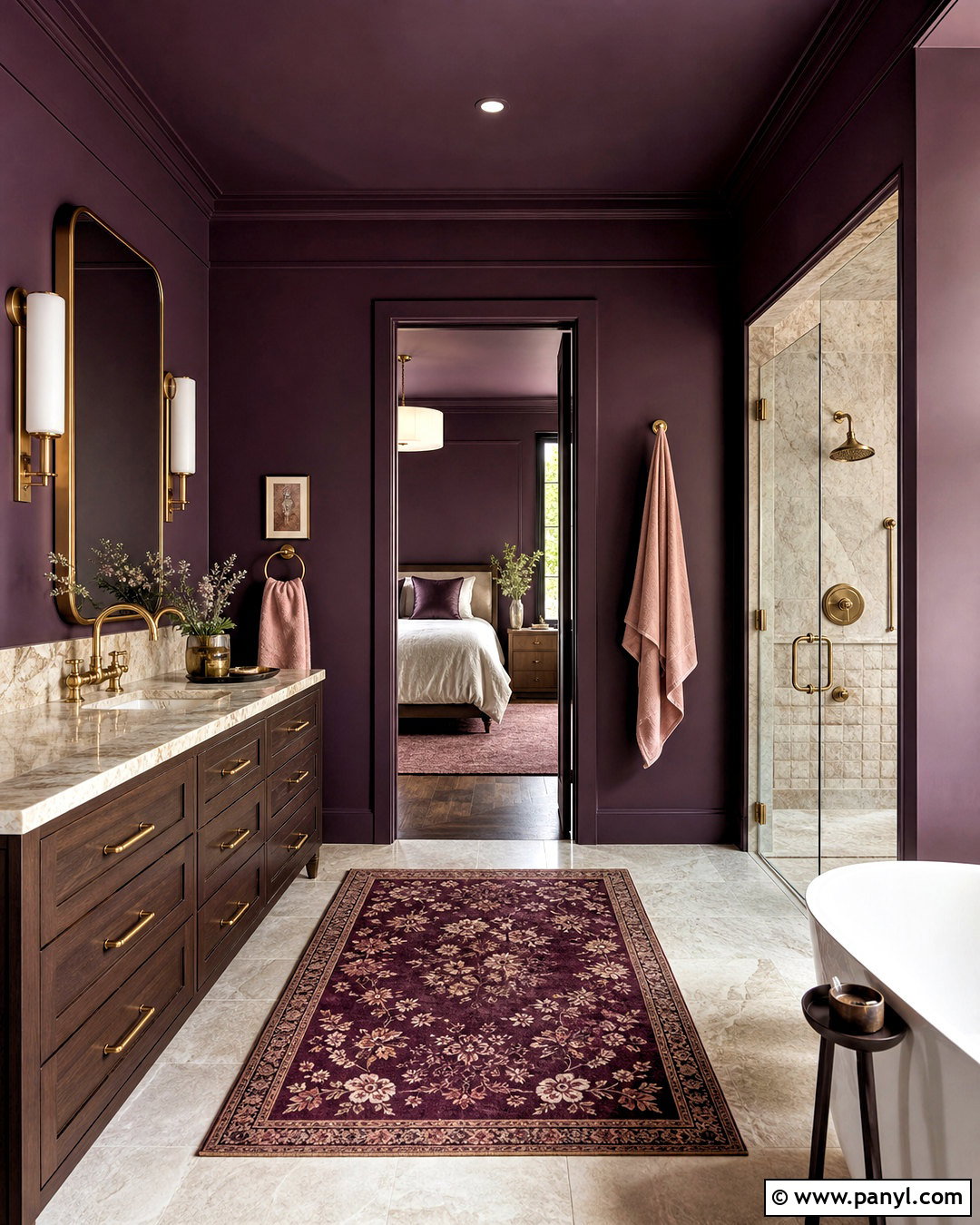
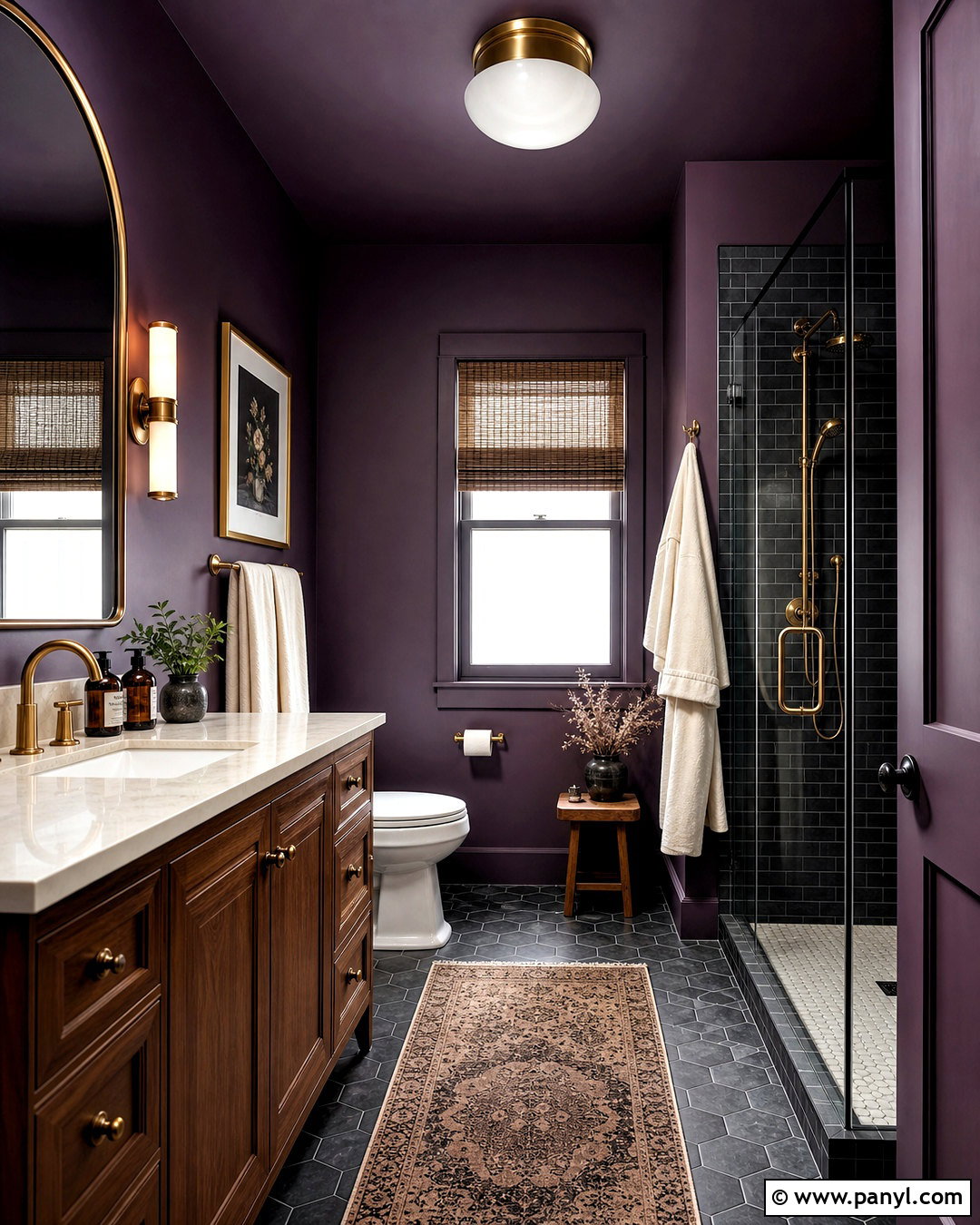
Aubergine paint combines deep purple, brown, and red undertones, producing a bathroom that feels elegant and unexpected. Use it on the walls, ceiling, and trim for a rich color-drenched finish. Pair the shade with a dark walnut vanity and creamy marble countertop to create a warm foundation. Brushed brass fixtures bring out the paint’s subtle red notes, while milky glass sconces provide gentle contrast. Choose pale stone floor tile to keep the room balanced. A frameless shower enclosure will prevent visual clutter in a full bathroom. Add muted blush towels, a plum-patterned bath mat, and one abstract print with cream and rust details. This palette creates drama while remaining softer and more inviting than an all-black scheme.
7. Deep Teal Bathroom Paint
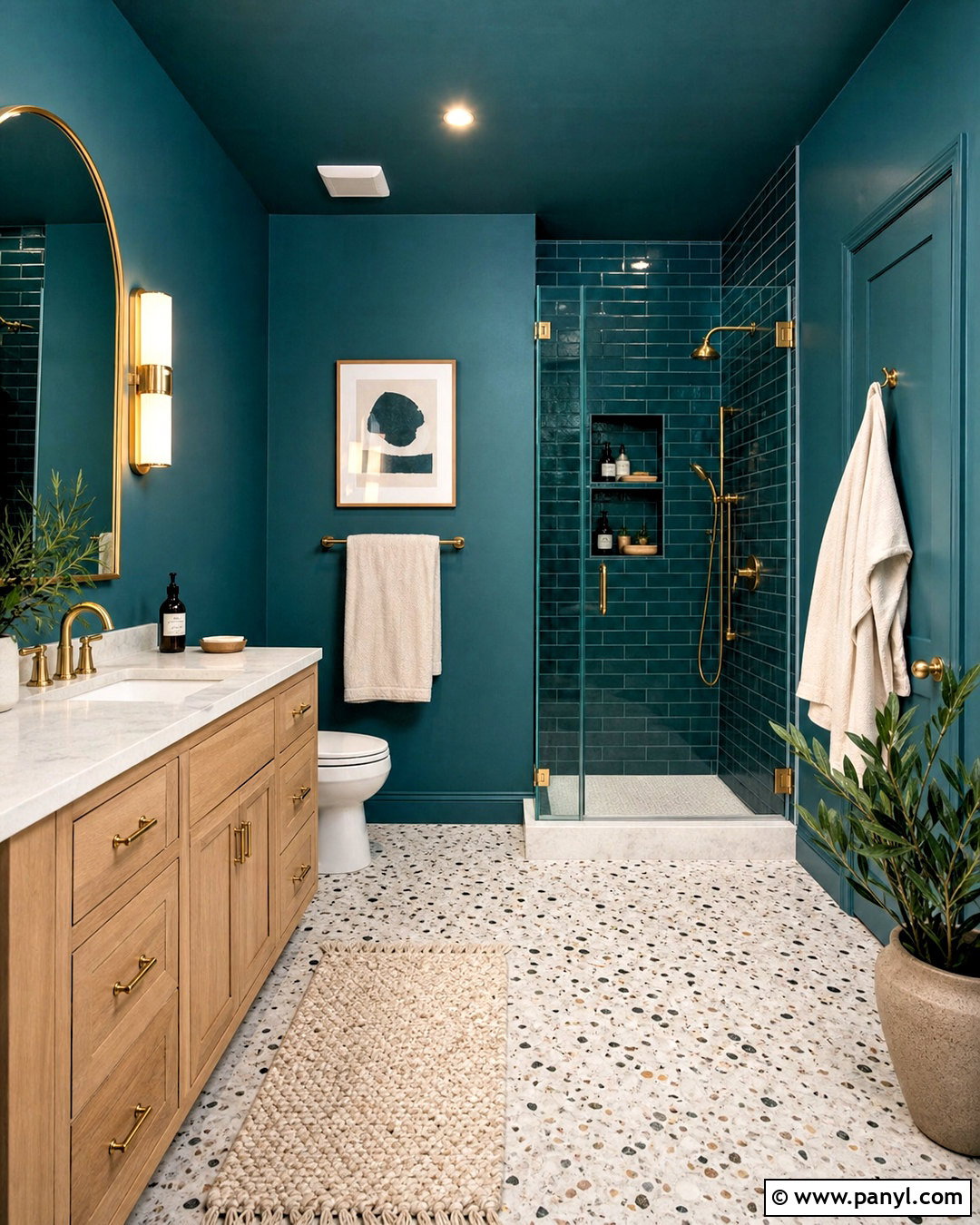
Deep teal brings together the calming quality of blue and the earthy richness of green. Paint the upper walls and ceiling in saturated teal, then use glossy teal subway tile around the tub or shower. The slight difference between painted and tiled surfaces creates depth without breaking the monochromatic palette. A white oak vanity and warm white quartz counter introduce natural contrast. Add brushed brass faucets and streamlined globe sconces for a modern finish. Terrazzo flooring with cream, rust, and green fragments quietly connects every color. Keep towels and the shower curtain warm white rather than bright white. A round brass mirror, ribbed glass storage jars, and one leafy plant complete this polished, spa-like bathroom.
8. Chocolate Brown Bathroom Paint
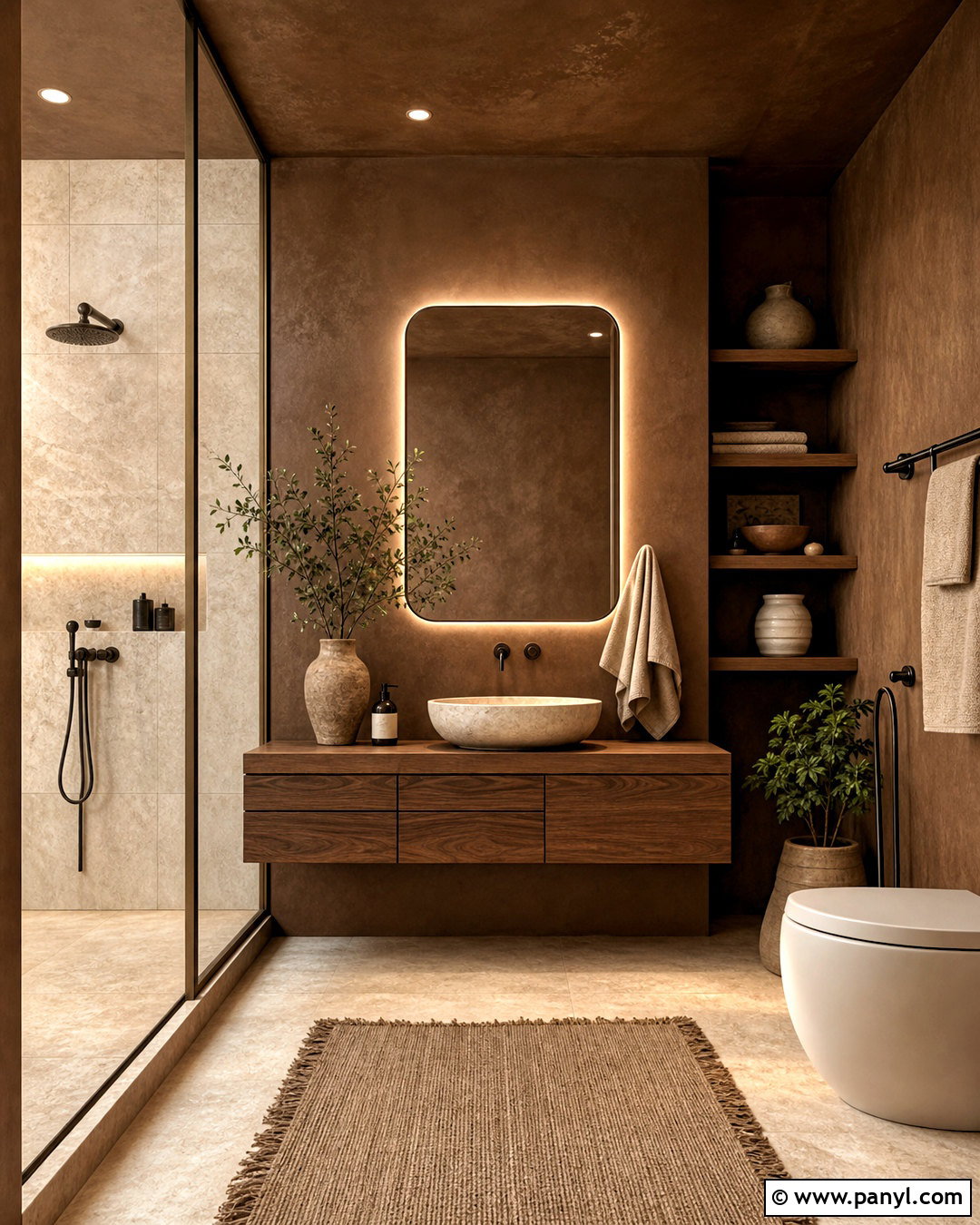
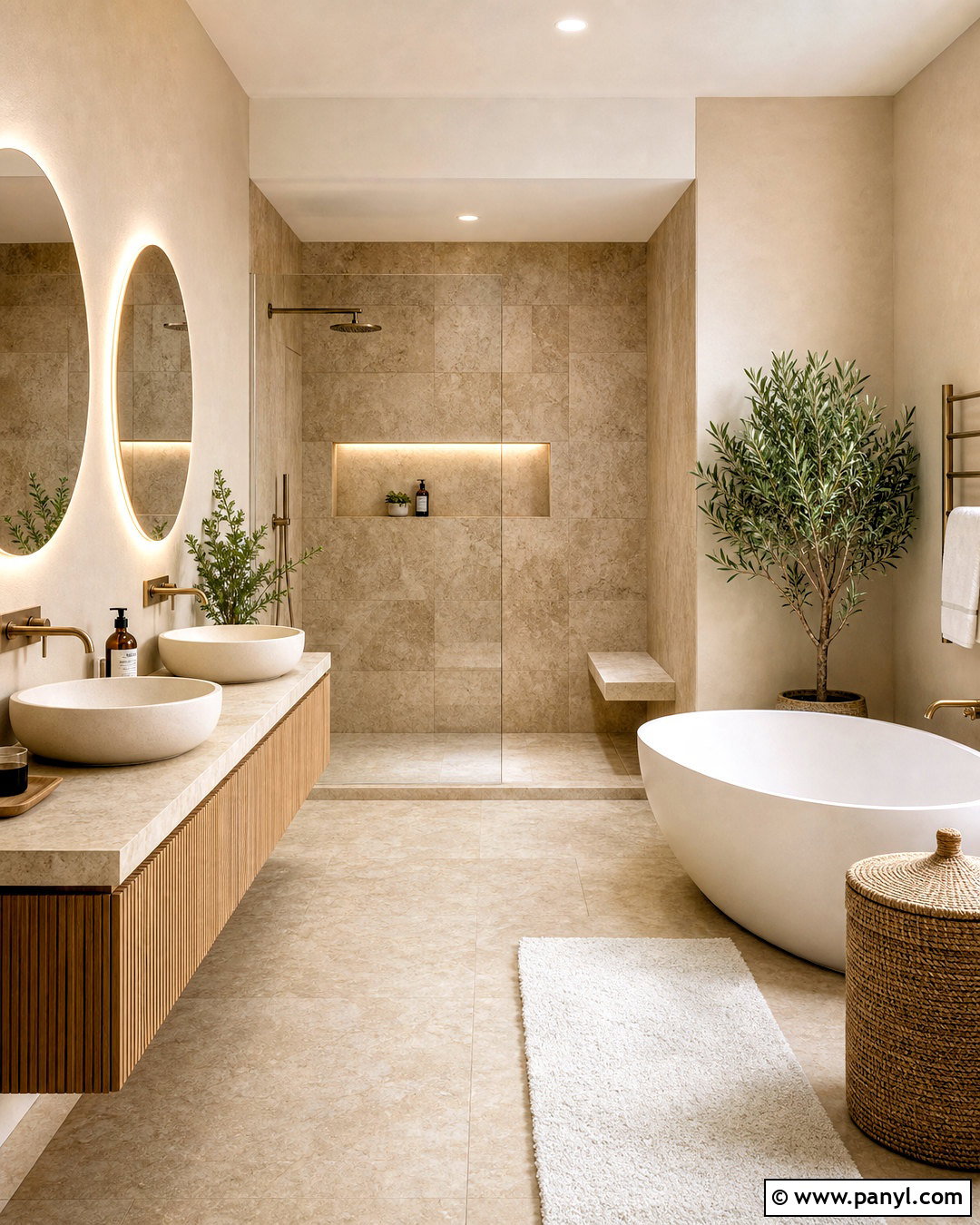
Chocolate brown makes a bathroom feel warm, cocooning, and connected to natural materials. Select a rich brown with subtle red undertones and apply it to the walls, trim, and ceiling. Pair it with travertine floor and shower tile for a tonal, earthy foundation. A floating walnut vanity adds another layer of brown, while a cream stone vessel sink introduces gentle contrast. Use aged bronze or brushed brass plumbing fixtures rather than cool chrome. A softly illuminated rectangular mirror provides practical task lighting without disrupting the calm palette. Add oatmeal towels, a natural linen shower curtain, and handcrafted ceramic accessories. The completed room should feel modern and organic, with several brown tones preventing the scheme from looking flat or overly dark.
9. Smoky Plum Bathroom Paint
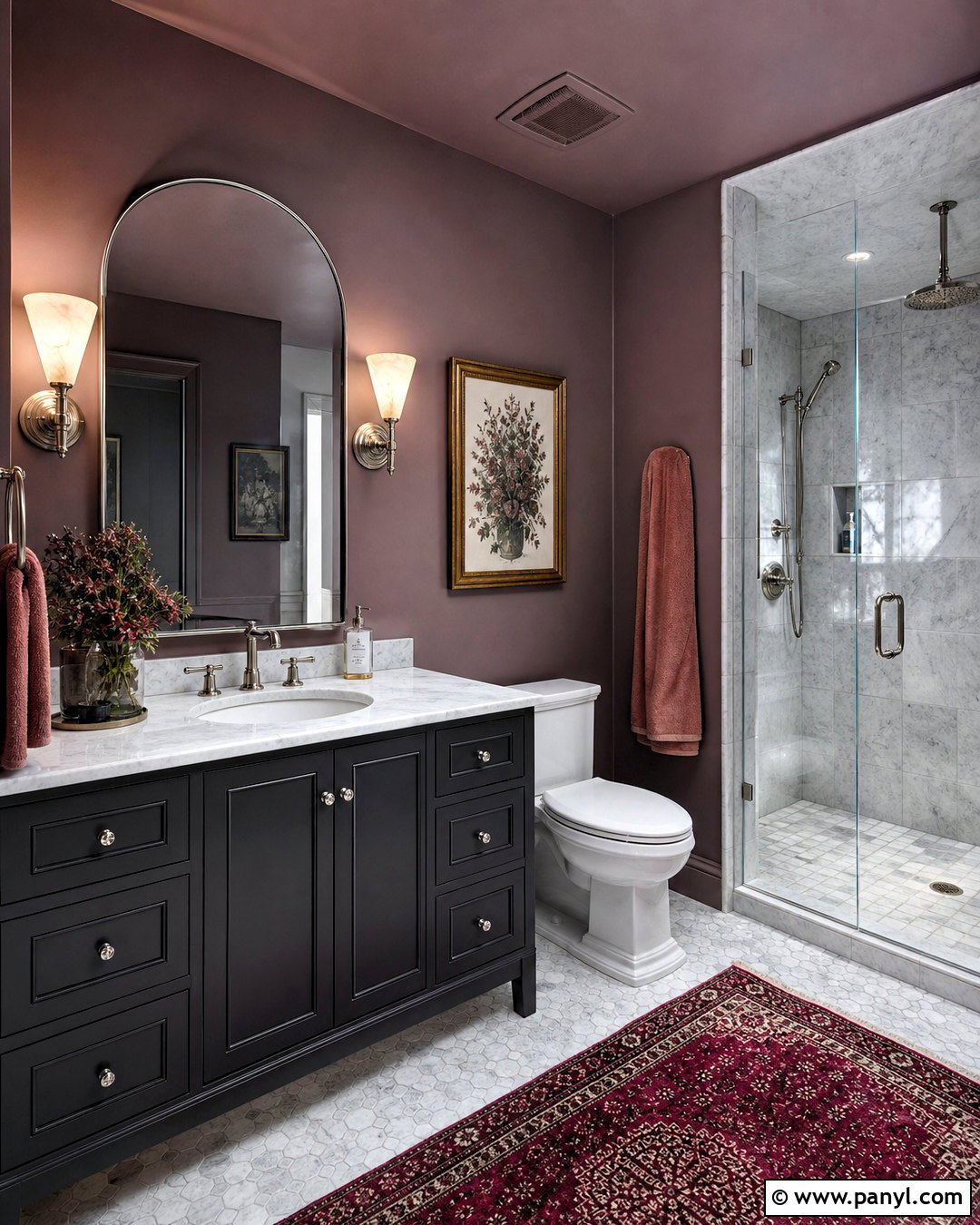
Smoky plum offers a softer route to a moody bathroom because its gray undertone keeps the purple sophisticated. Use it across the walls and ceiling, then pair it with pale gray marble tile inside the shower. A charcoal vanity grounds the room, while a white countertop keeps the sink area bright. Choose polished nickel fixtures if you want a cooler, elegant look, or brushed brass for added warmth. Install a tall arched mirror to emphasize ceiling height. Dusty rose towels and a muted burgundy runner can deepen the layered palette without appearing overly feminine. Finish with simple alabaster sconces and dark-framed artwork. This complete design works well in bathrooms with both traditional details and streamlined contemporary fittings.
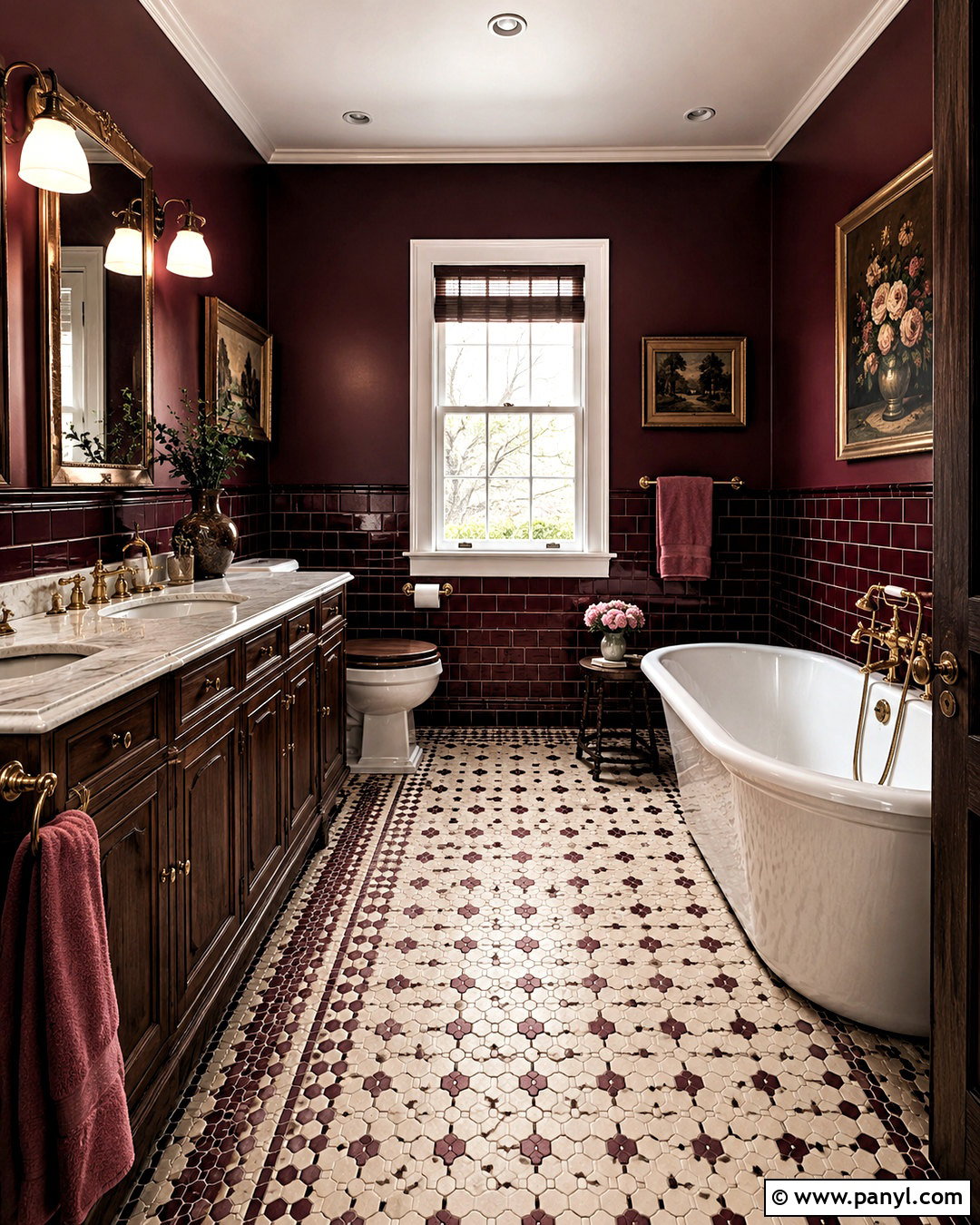
10. Midnight Blue Bathroom Paint
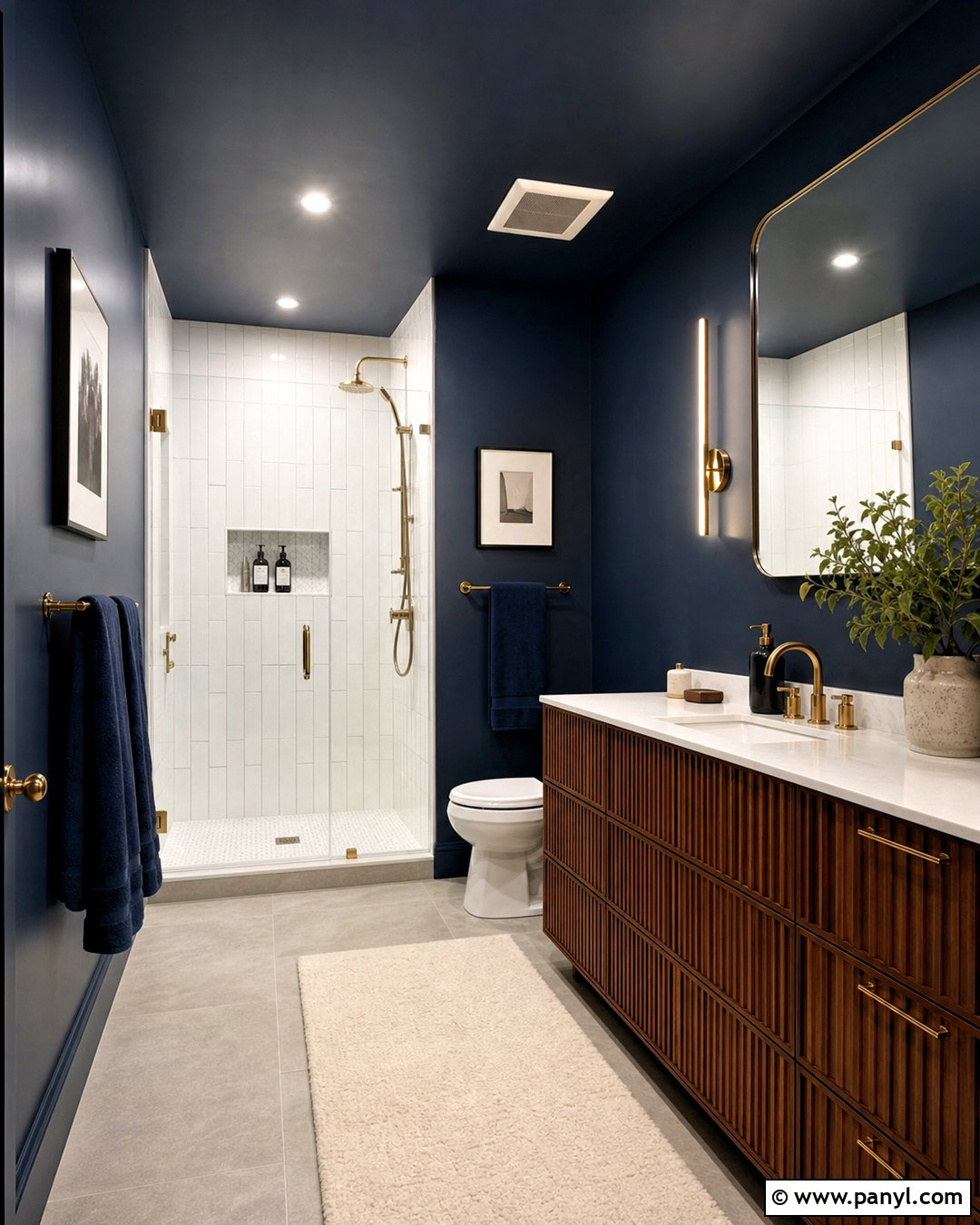
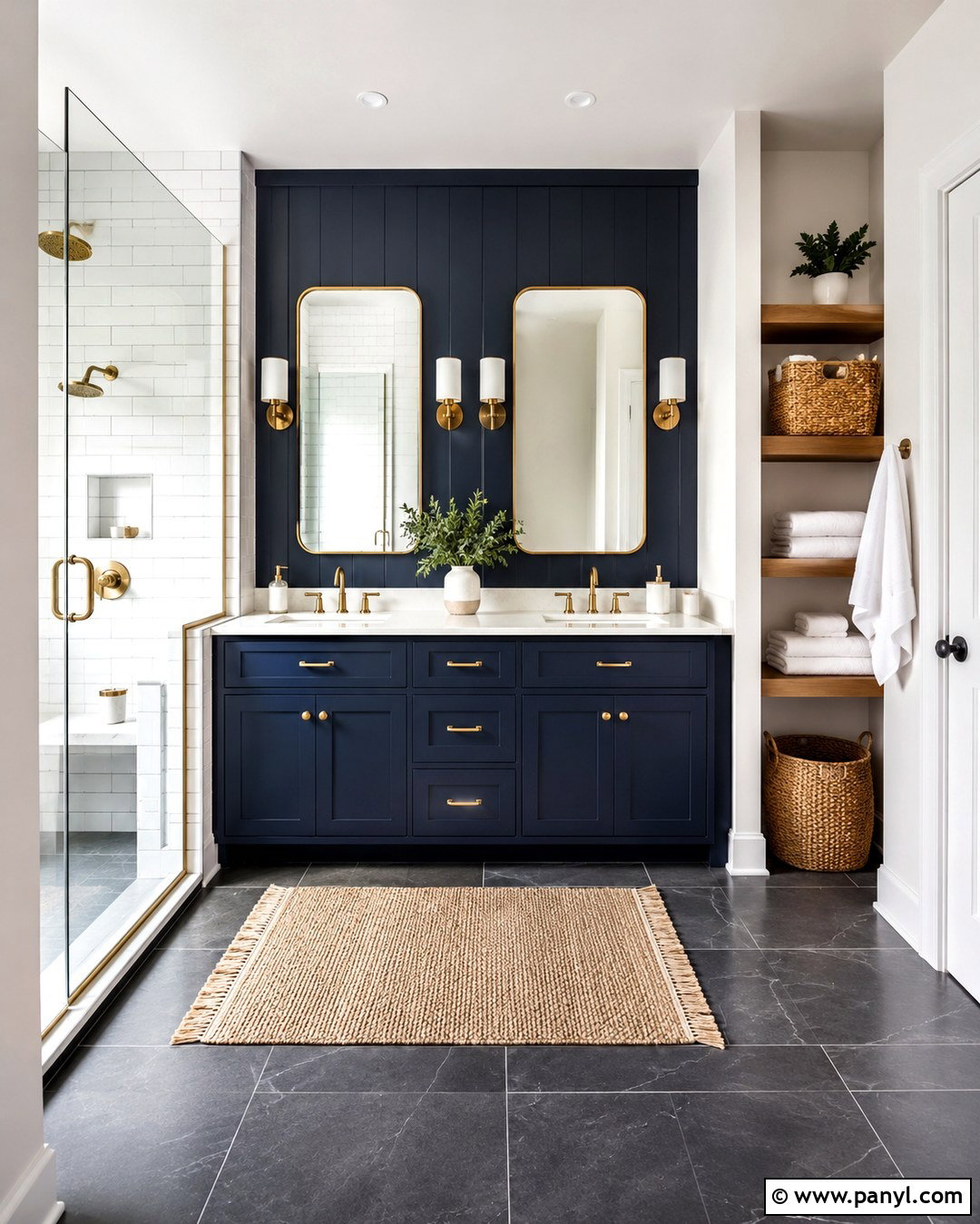
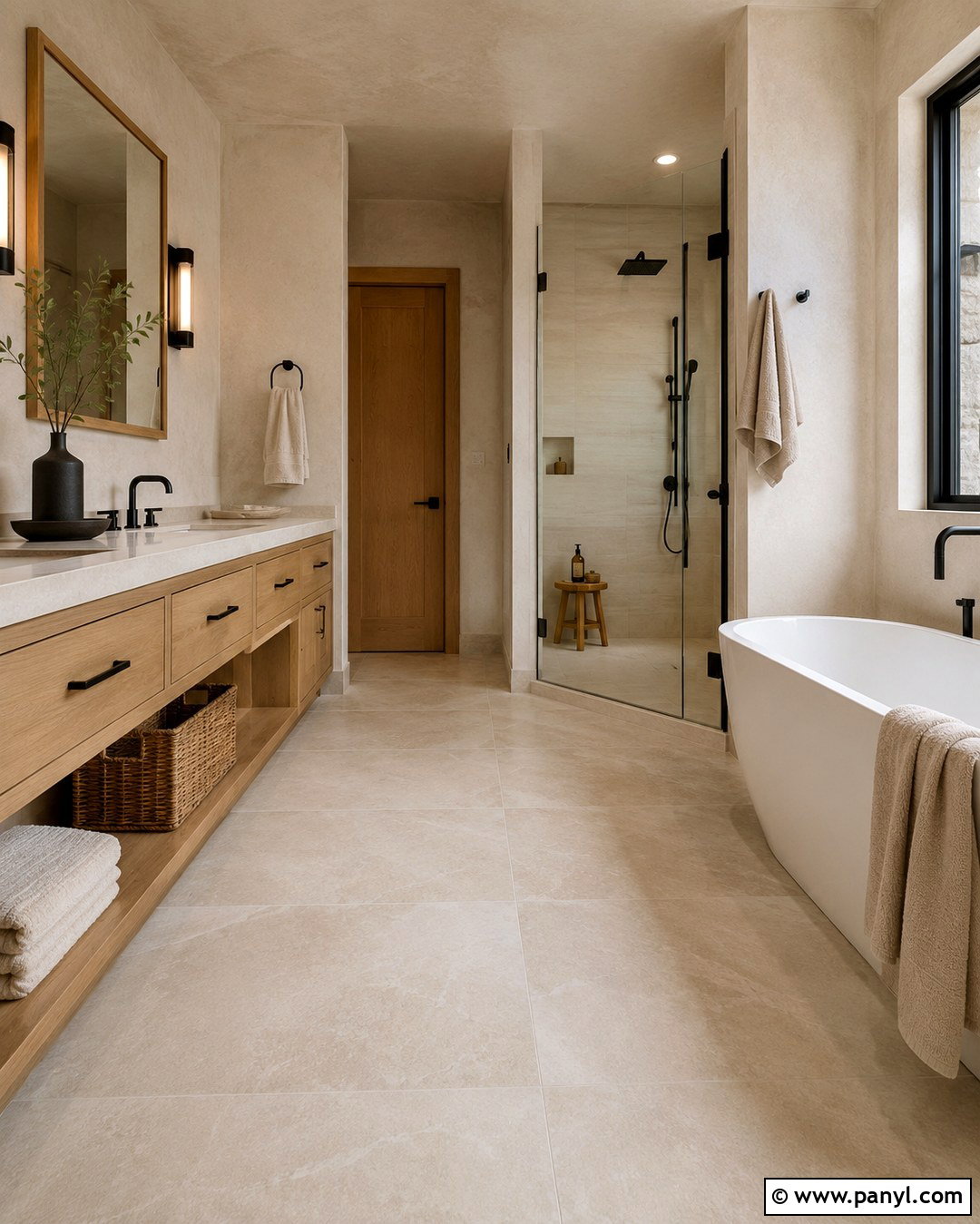
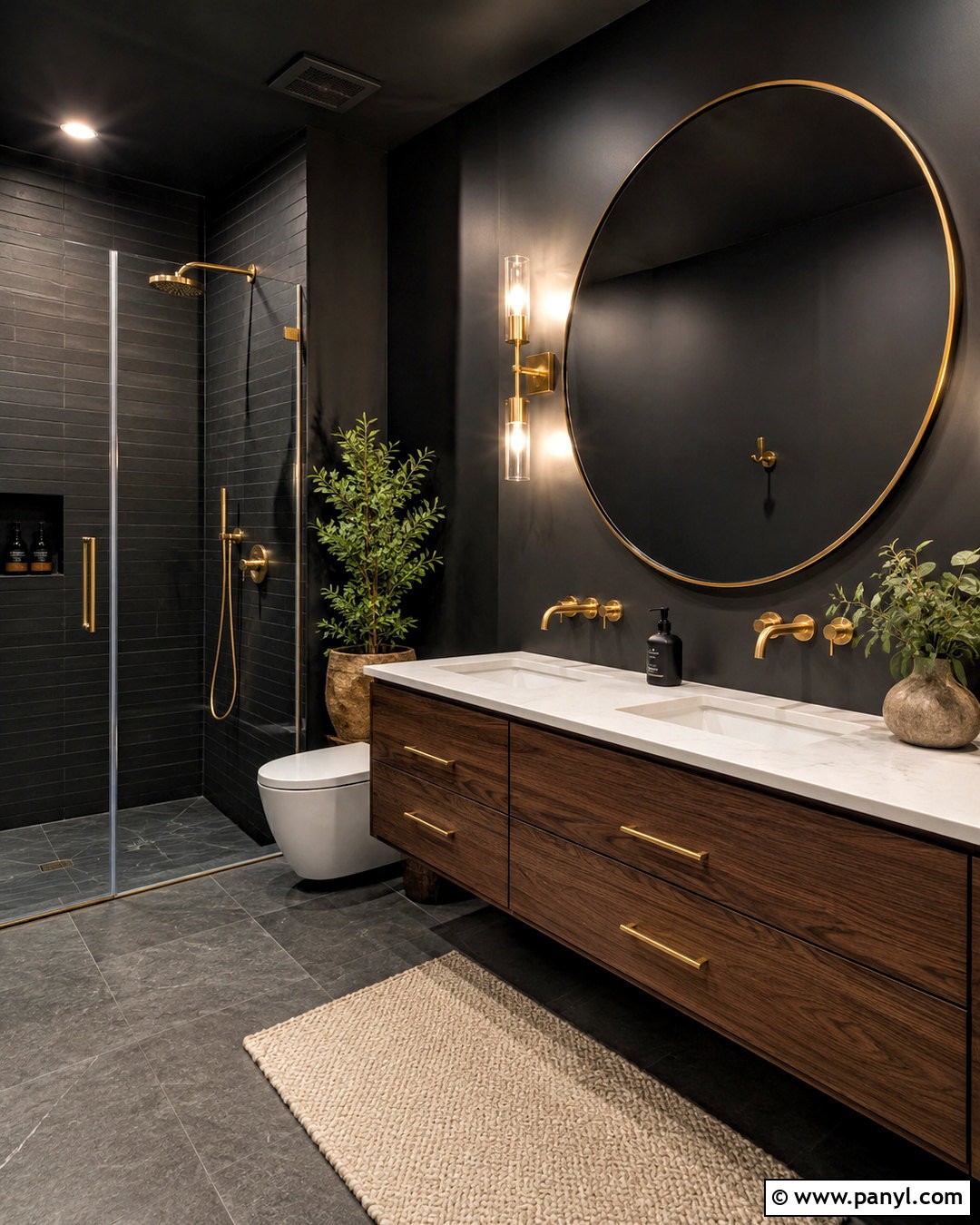
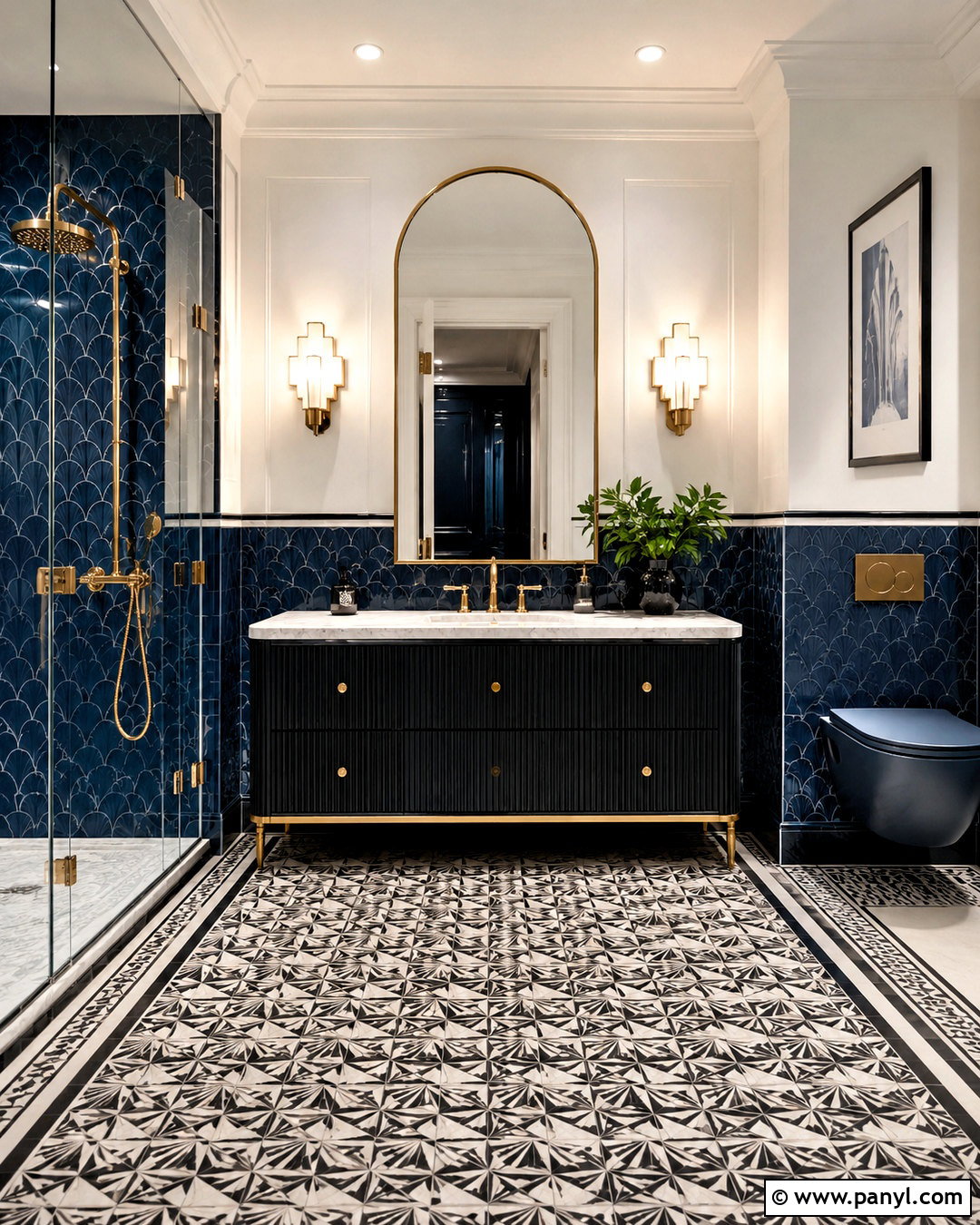
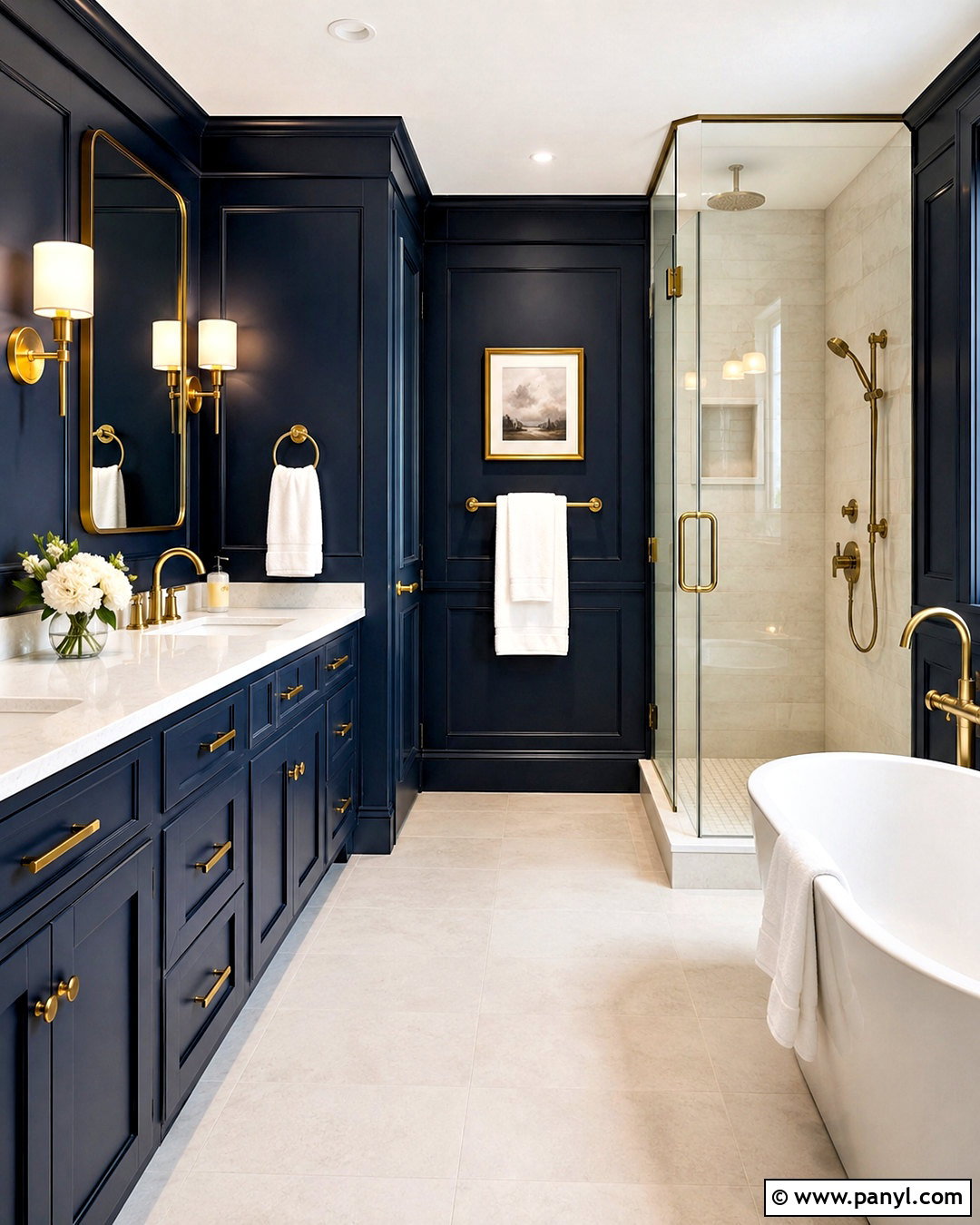
Midnight blue is nearly black at first glance, yet it reveals a subtle blue cast under bright bathroom lighting. Use it on every painted surface, including the ceiling, door, and trim, to remove distracting visual boundaries. Contrast the dark shell with glossy white shower tile and a white quartz countertop. A fluted walnut vanity introduces warmth and texture, while polished brass hardware gives the palette a refined glow. Select a light gray porcelain floor with minimal veining to brighten the lower half of the room. Wide sconces above an oversized mirror provide strong functional lighting. Complete the design with navy towels, a cream bath mat, and clear glass accessories. The result feels dramatic, streamlined, and carefully balanced.
11. Dark Olive Bathroom Paint
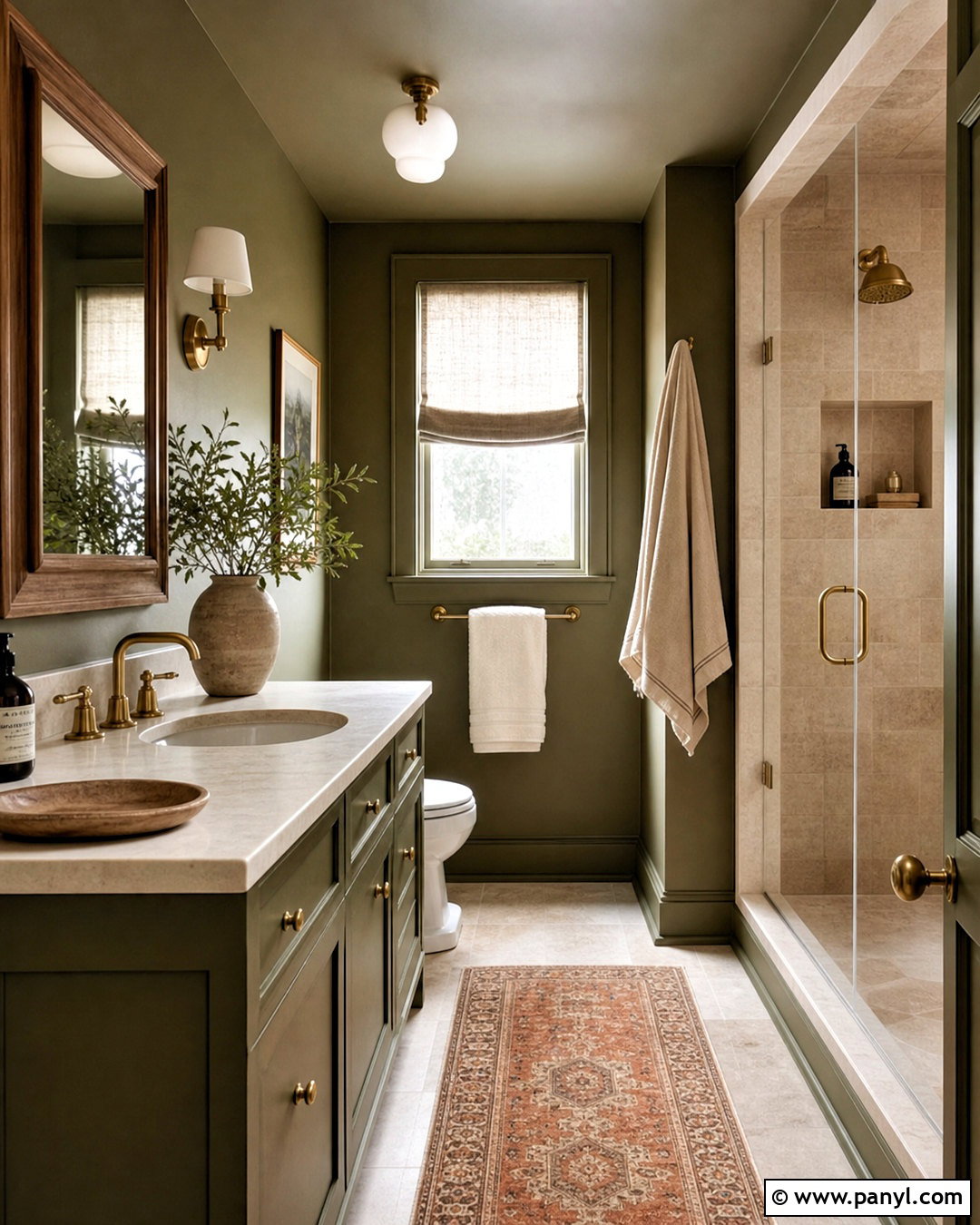
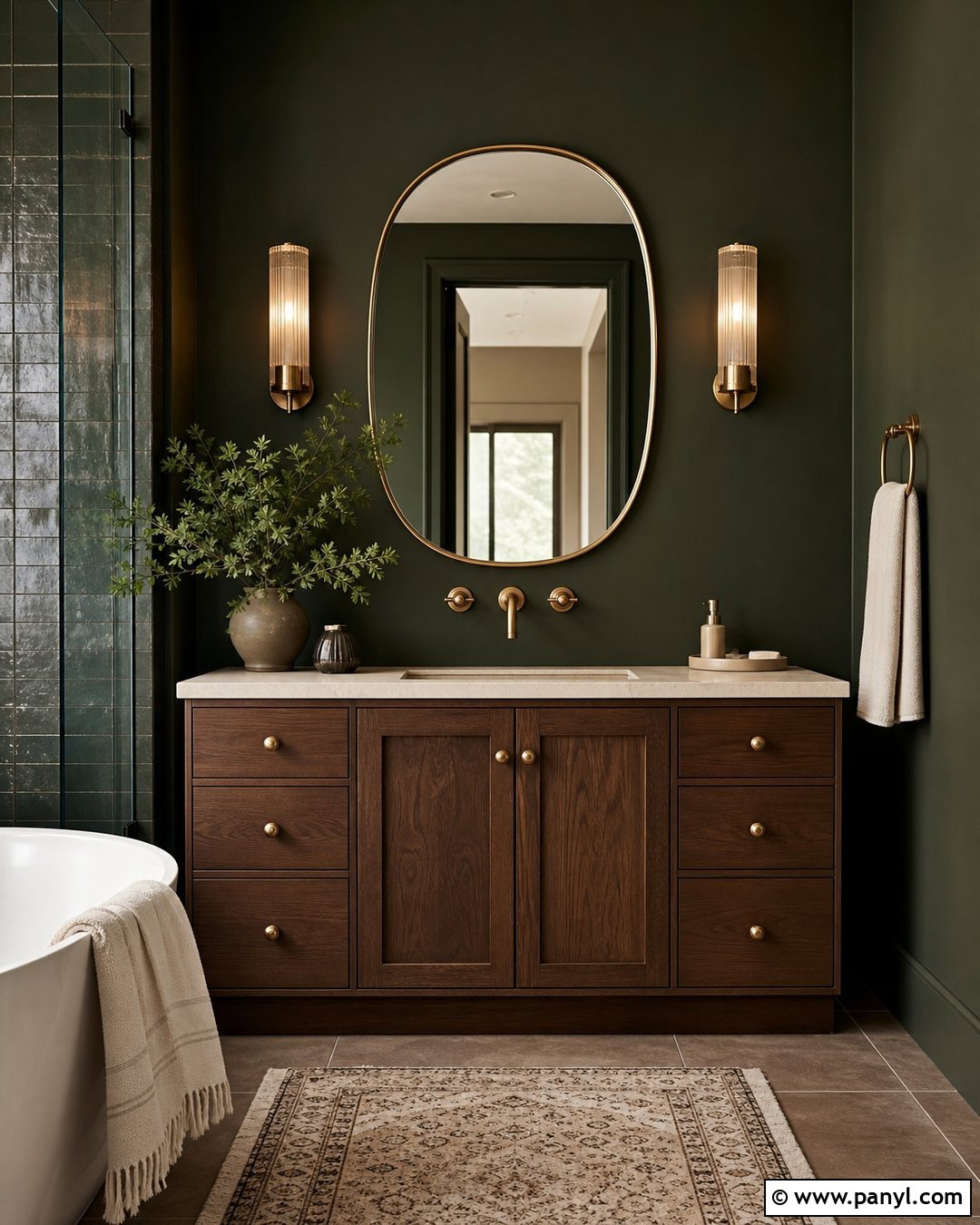
Dark olive paint creates a relaxed, earthy atmosphere that pairs naturally with stone and wood. Choose an olive with noticeable brown undertones so it feels warm rather than military green. Paint the walls, trim, and vanity in the same shade, but use a slightly glossier finish on the cabinetry. Cream limestone tile on the floor and shower walls keeps the bathroom light enough for daily use. Add unlacquered brass faucets, a wood-framed mirror, and linen Roman shades for a collected appearance. Off-white towels and handmade beige ceramics soften the darker surfaces. A narrow vintage runner can introduce rust and muted gold. This complete palette suits cottage, traditional, and organic modern bathrooms without relying on decorative themes.
12. Slate Blue Bathroom Paint
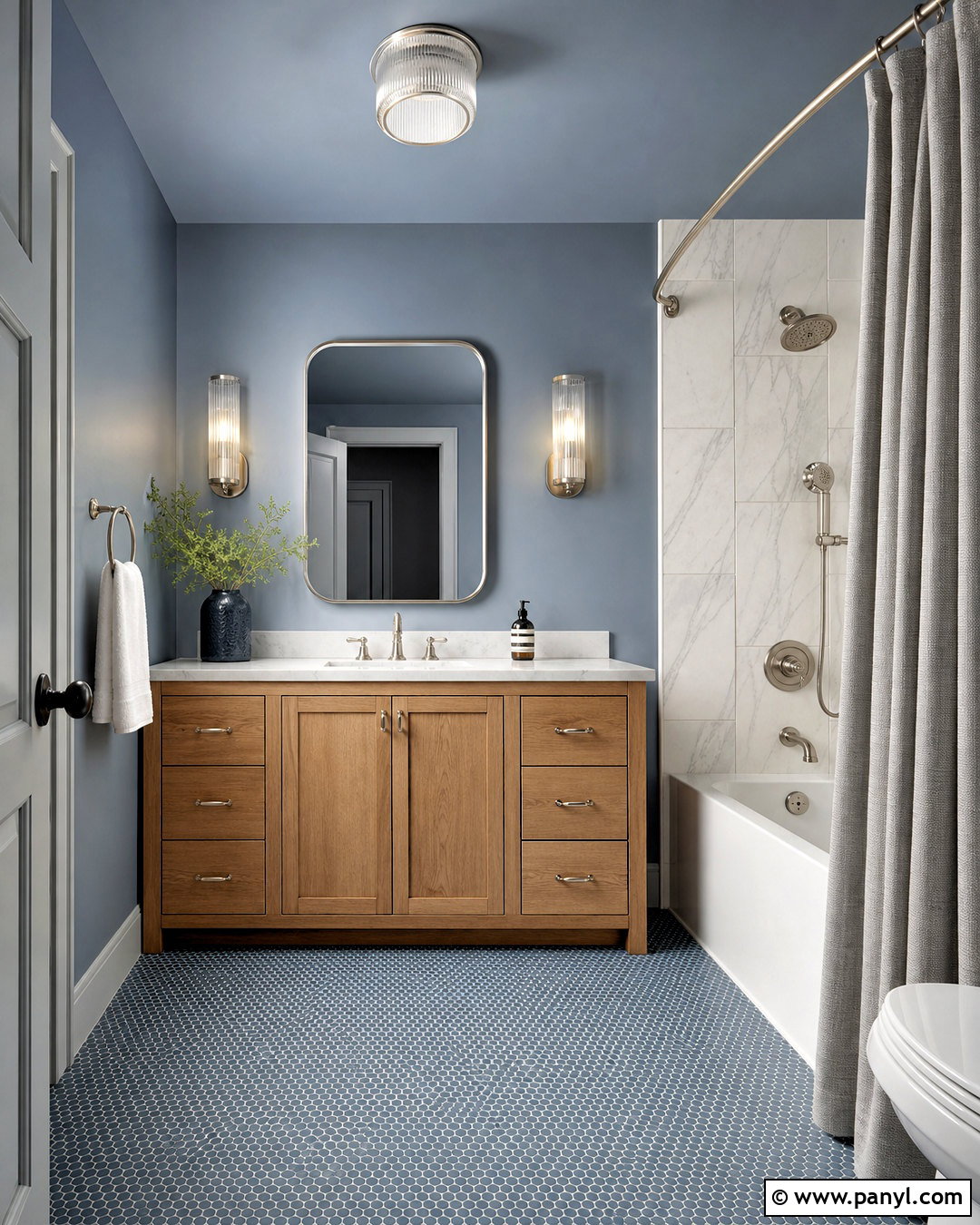
Slate blue gives a moody bathroom a calm, weathered quality. Its gray undertones work especially well with marble, concrete, and cool-toned wood. Paint the upper walls and ceiling slate blue, then install white marble-look tile on the lower walls and shower enclosure. Choose a medium oak vanity to warm the cooler palette. Polished nickel fixtures keep the design crisp, while ribbed glass sconces introduce a subtle vintage touch. Use dark blue-gray penny tile on the floor to anchor the room. A rectangular mirror with rounded corners supports the clean lines without looking severe. Finish with soft white towels, a gray linen shower curtain, and restrained coastal artwork. Avoid obvious nautical accents so the finished bathroom remains sophisticated and versatile.
13. Burgundy Bathroom Paint
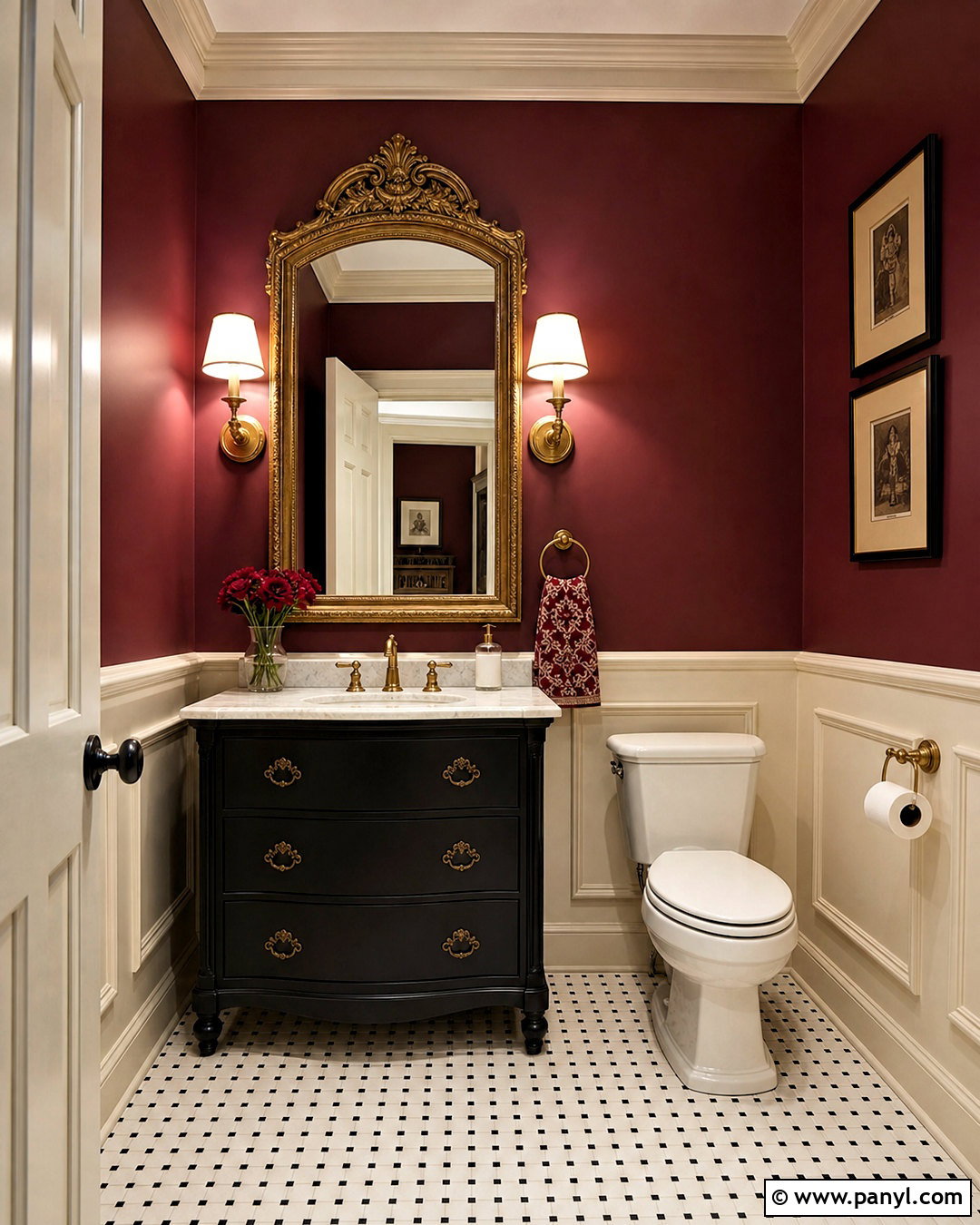
Burgundy walls can make a bathroom feel stately, intimate, and full of character. Choose a muted wine-red shade with brown or purple undertones instead of a bright berry color. Pair it with warm white wall paneling and a traditional black vanity topped with creamy marble. Antique brass fixtures, an ornate gold mirror, and shaded sconces enhance the rich palette. Black-and-white basketweave floor tile adds crisp pattern at ground level. Keep the ceiling warm white to create breathing room above the saturated walls. Burgundy-patterned hand towels and dark wood accessories can repeat the color in small amounts. This balanced scheme gives a powder room historic charm while still feeling clean, practical, and suitable for a modern home.
14. Blackened Green Bathroom Paint
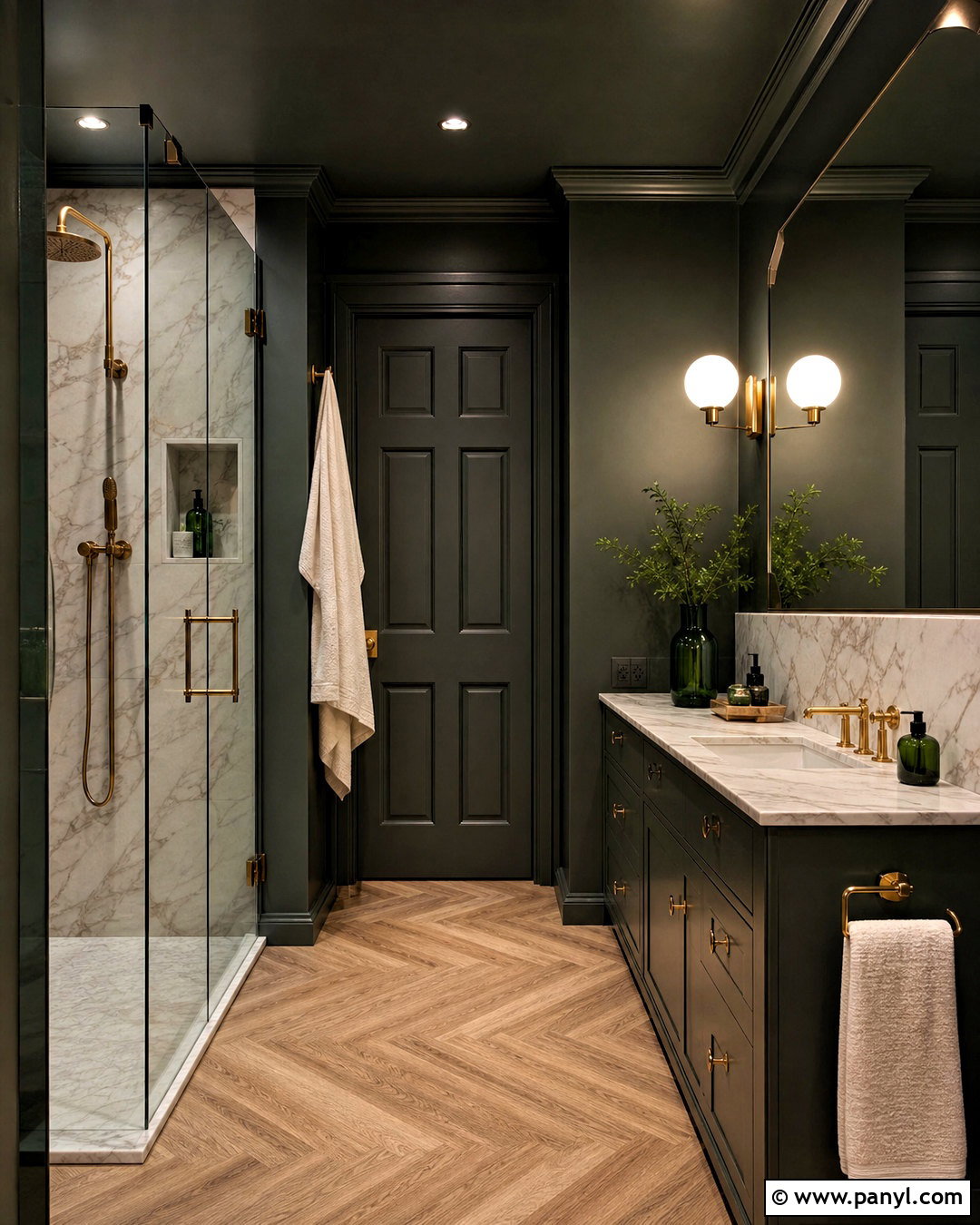
Blackened green reads almost black in shadow but reveals an elegant green tone under direct light. Use it on the walls, ceiling, trim, and vanity for a continuous, immersive finish. Add pale veined marble around the shower and countertop to create a sharp yet natural contrast. Brushed brass plumbing fixtures bring warmth, while a frameless mirror keeps the room visually simple. Choose medium-tone herringbone wood-look porcelain flooring for additional movement and texture. Bright globe sconces should sit on both sides of the mirror to illuminate faces evenly. Finish with ivory towels, dark green glass containers, and a low ceramic planter. The complete bathroom feels modern and dramatic, but the green undertone makes it gentler than a solid black space.
15. Pewter Gray Bathroom Paint
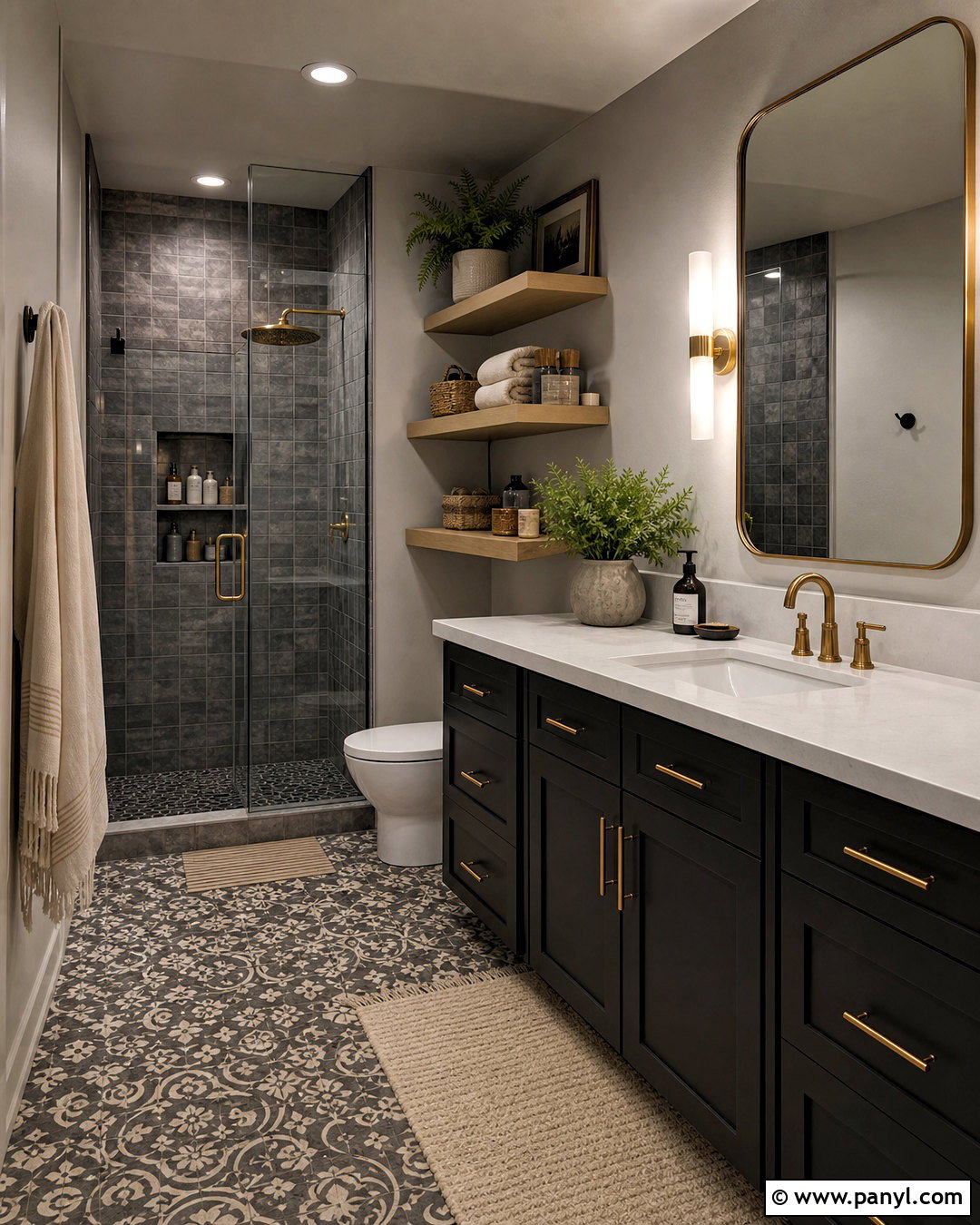
Pewter gray is an excellent choice when you want moodiness without committing to a very dark wall color. Look for a medium-deep gray with warm taupe undertones. Paint the walls and ceiling pewter, then pair them with smoky gray shower tile and a black vanity. A white quartz counter and undermount sink create a clean focal point. Use aged brass hardware to warm the gray surfaces and prevent the bathroom from feeling industrial. Pale oak shelves can hold neatly folded cream towels and a few ceramic containers. Choose a charcoal-and-ivory patterned floor tile for subtle movement. A large rounded mirror and bright shaded sconces finish this layered neutral bathroom, which feels cozy, flexible, and easy to personalize.
16. Espresso Brown Bathroom Paint
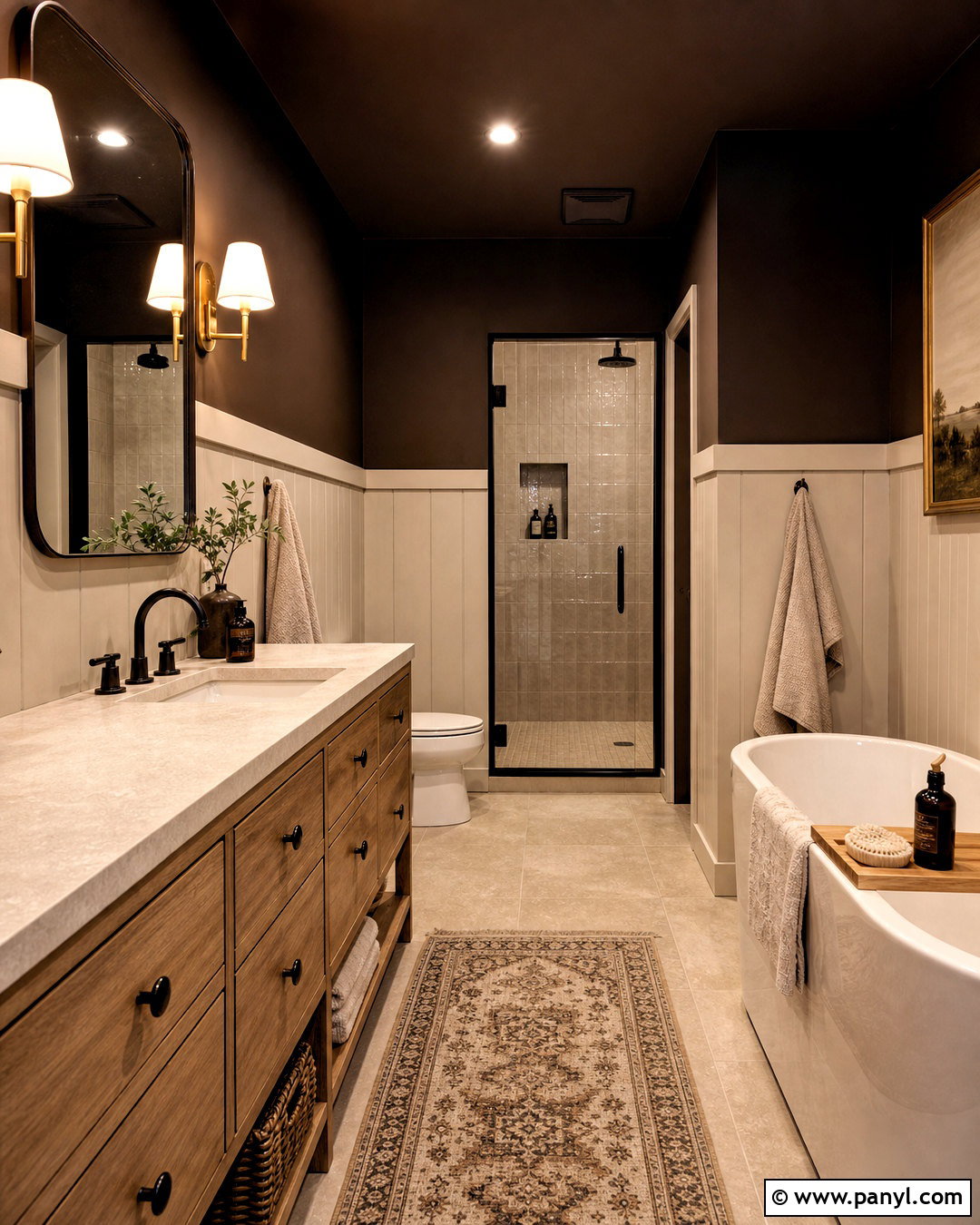
Espresso brown delivers the drama of near-black paint with a warmer, more comfortable undertone. Use it on the upper walls and ceiling above creamy beige vertical paneling. Select a natural oak vanity with a honed limestone countertop to maintain an organic palette. Oil-rubbed bronze faucets blend smoothly into the darker background, while warm brass sconces add a small amount of shine. Large-format beige porcelain tile keeps the floor quiet and visually open. Add a rounded rectangular mirror with a thin bronze frame and a simple linen shower curtain. Cream towels, dark brown storage baskets, and understated pottery complete the room. The mixture of deep paint, pale stone, and natural wood produces a restful bathroom with strong visual depth.
17. Deep Clay Bathroom Paint
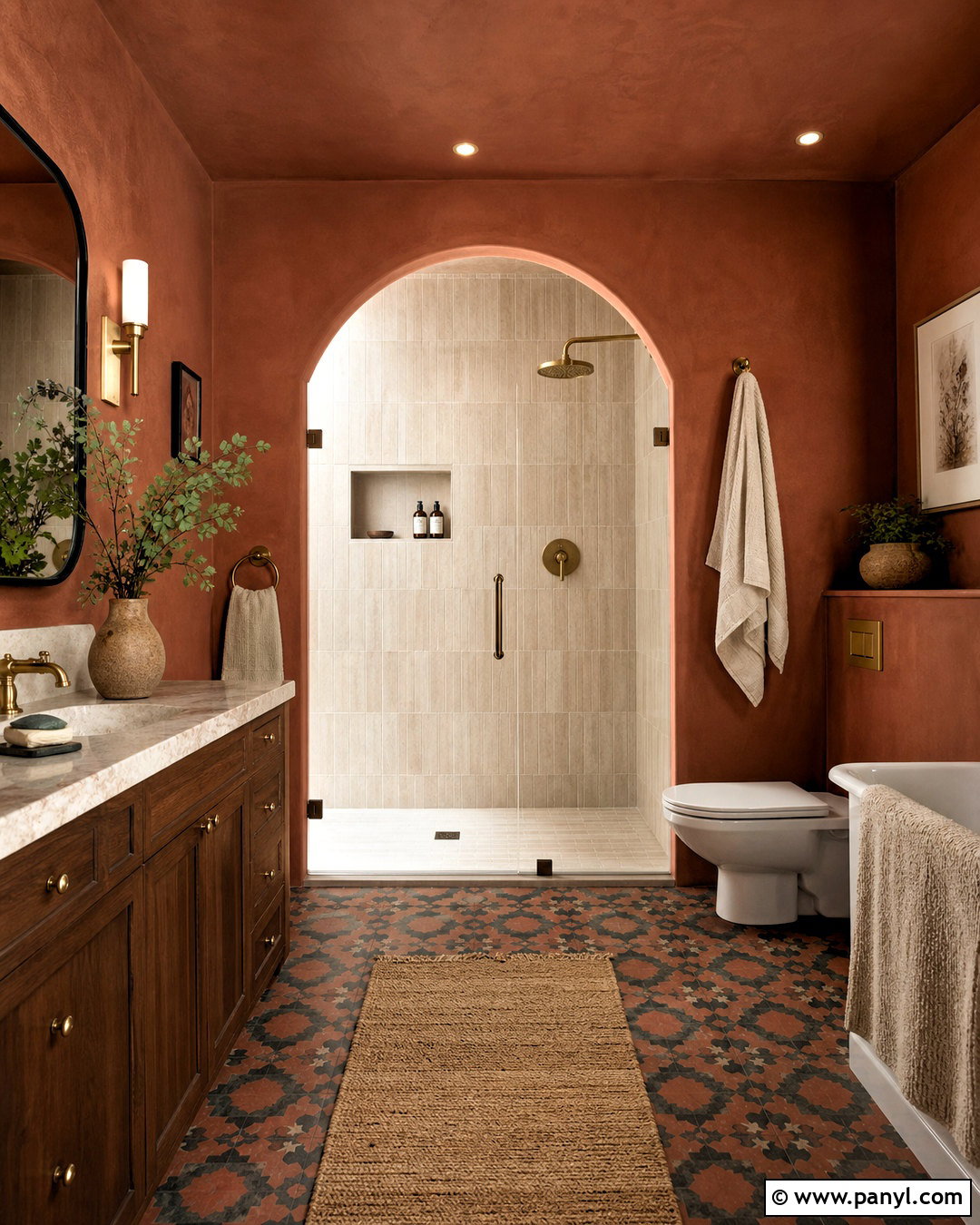
Deep clay paint introduces a warm, earthy mood through burnt terracotta and muted red undertones. Apply it to the walls and ceiling for a complete, enveloping look. Pair the color with sand-colored plaster-look shower tile and a medium walnut vanity. A creamy stone countertop and off-white sink keep the space from becoming overly saturated. Choose aged brass fixtures, a handcrafted wood mirror, and simple globe sconces to support the natural palette. Patterned floor tile in rust, charcoal, and ivory can add character without appearing busy. Finish with oatmeal towels, a woven bath mat, and matte ceramic accessories. This bathroom feels sun-warmed and grounded, making deep clay a welcoming alternative to cooler navy, gray, or black paint.
18. Inky Indigo Bathroom Paint
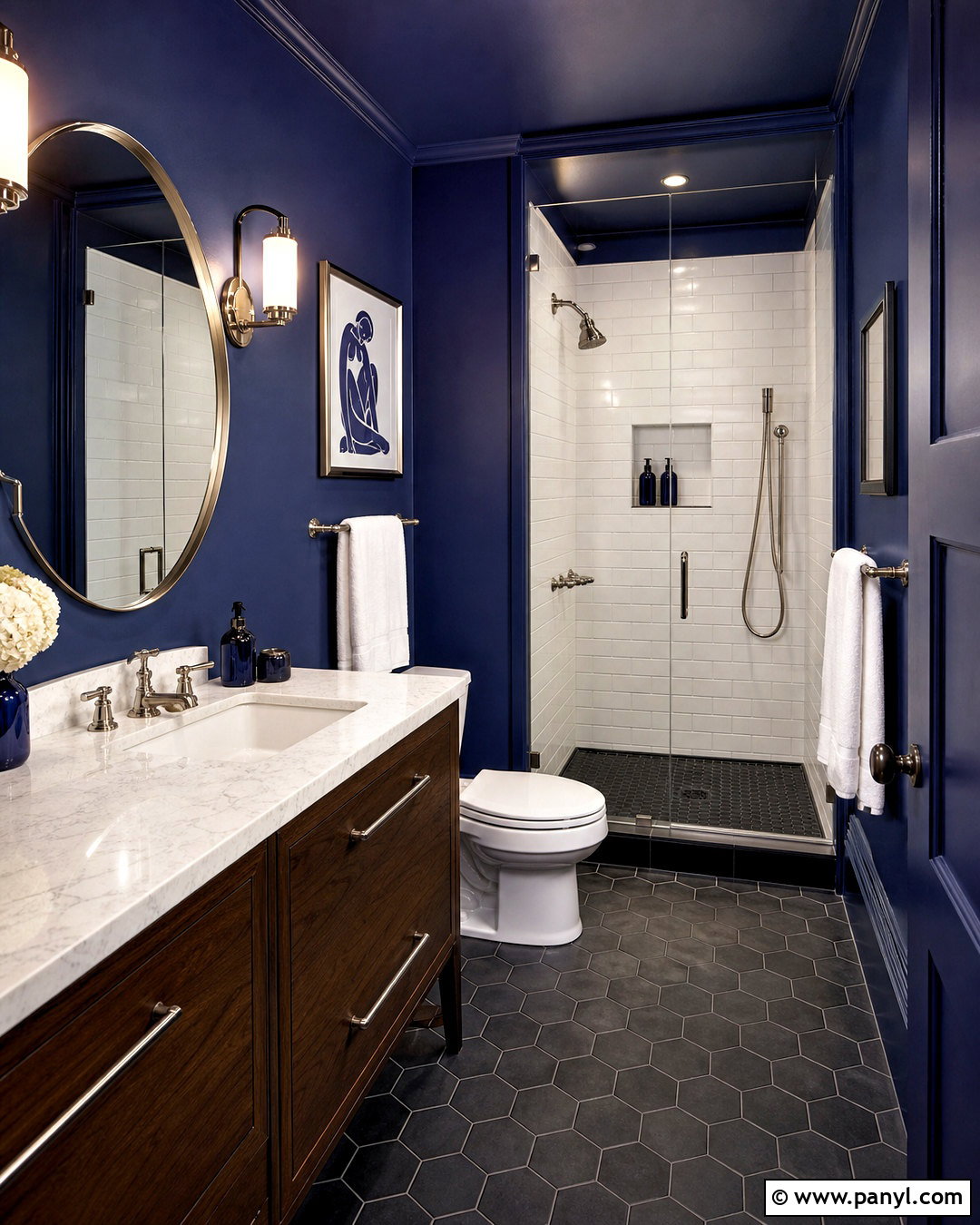
Inky indigo creates a saturated bathroom that sits between deep blue and violet. Color-drench the walls, ceiling, door, and trim to emphasize the shade’s dramatic character. Use glossy white rectangular tile around the shower to reflect light and create a clean contrast. A dark walnut vanity and white marble counter provide a classic foundation. Polished nickel fixtures highlight the cool blue notes, while warm white sconces prevent the space from feeling stark. Select small charcoal hexagon tile for the floor. An oversized round mirror will break up the room’s straight lines and spread light across the dark walls. Complete the design with white towels, indigo glass accessories, and a restrained vintage print in a slim silver frame.
19. Mushroom Taupe Bathroom Paint
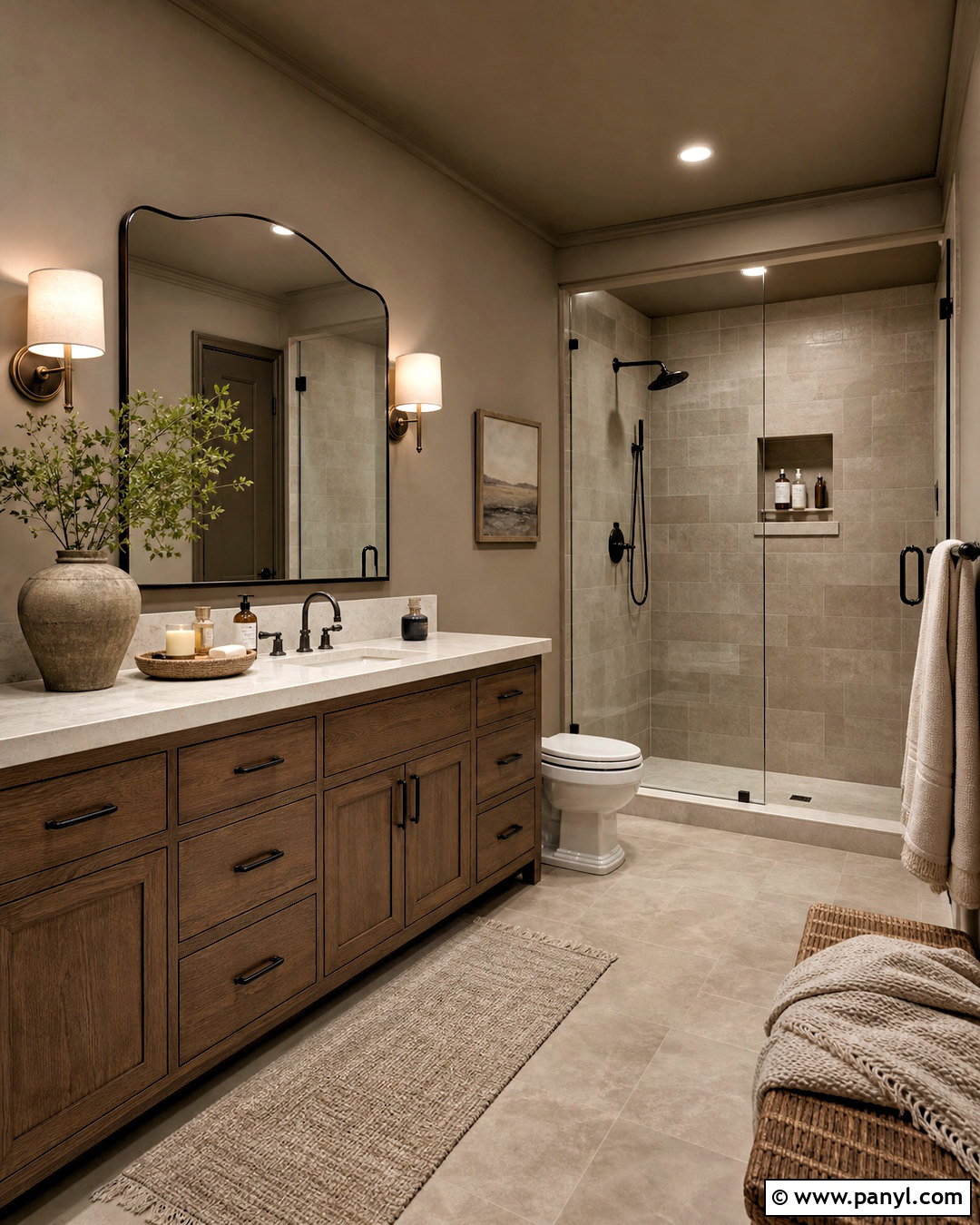
Mushroom taupe creates a subtle moody bathroom through depth and warmth rather than intense color. Choose a medium-dark taupe with balanced gray and brown undertones. Paint the walls, ceiling, and trim for a smooth, cocooning effect. Pair it with a dark oak vanity, beige quartz countertop, and honed limestone shower tile. Brushed bronze fixtures add quiet warmth without creating a sharp contrast. Use large floor tiles in a slightly deeper greige to maintain the tonal look. A softly curved mirror and linen-shaded sconces bring gentle shapes into the space. Layer cream towels, a textured oatmeal rug, and brown ceramic accessories. This complete neutral scheme feels refined, restful, and easy to coordinate with existing bathroom finishes.
20. Stormy Blue-Gray Bathroom Paint
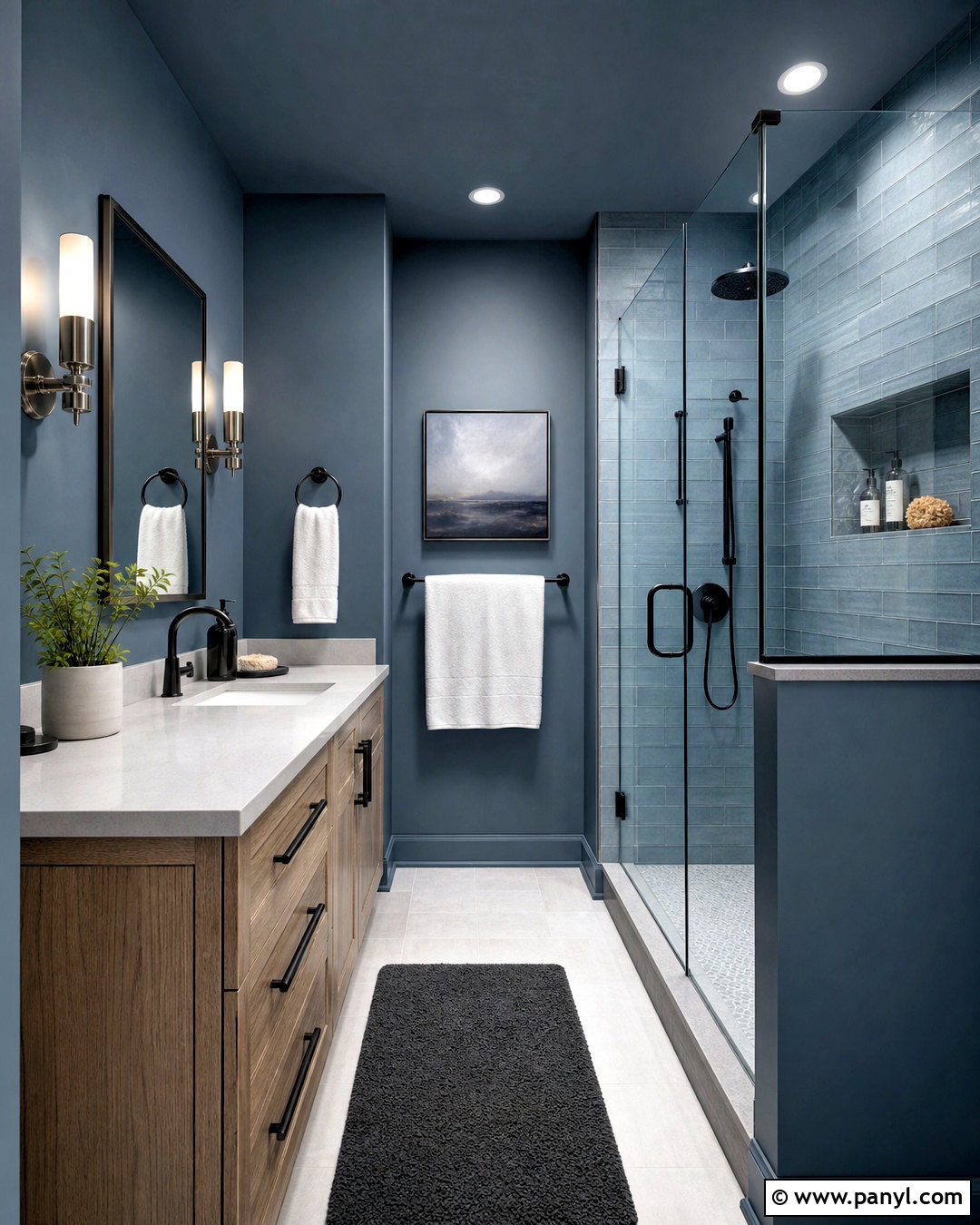
Stormy blue-gray provides a moody finish that changes subtly as the bathroom light shifts. Use the color on walls, trim, and ceiling to create a unified backdrop. Pair it with white oak cabinetry and pale gray quartz for a fresh, balanced contrast. Blue-gray porcelain tile inside the shower can deepen the palette while maintaining a calm appearance. Choose matte black fixtures for definition, then add brushed nickel sconces to keep the metal mix from feeling too heavy. A frameless glass shower enclosure preserves clear sightlines across the room. Finish with soft white towels, a charcoal bath mat, and minimal artwork in black frames. The completed space feels serene and atmospheric without becoming oppressively dark.
Conclusion:
The best **20 moody bathroom paint colors** offer more than dramatic walls. Each shade can shape a complete room through coordinated tile, cabinetry, lighting, fixtures, and textiles. Deep blues feel classic, forest greens connect the space to nature, and rich browns create warmth. Black, charcoal, burgundy, and aubergine deliver stronger contrast for statement bathrooms. Before committing, test large paint samples beside your permanent tile and countertop during different times of day. Choose bright, practical lighting and a moisture-resistant finish that suits bathroom use. Most importantly, repeat the wall color through small accessories or nearby materials. This simple approach makes a dark palette feel intentional, balanced, and comfortable rather than unfinished or gloomy.

Related Ideas and Inspiration:
Leave a Reply