
A dedicated tea room turns an overlooked corner or spare room into a peaceful place for daily rituals, quiet reading, and relaxed conversation. These 20 tea room design ideas explore complete looks rather than isolated decorating details. You will find traditional English rooms, calming Japanese spaces, modern tea lounges, garden retreats, and practical designs for small homes. Each look combines an intentional layout with comfortable seating, useful tea storage, layered lighting, and a coordinated color palette. Some designs feel polished and formal, while others use affordable furniture and collected decor for a casual atmosphere. Whether you have an entire room, a sunny alcove, or one open kitchen corner, you can create a beautiful destination for brewing and serving. Explore these 20 tea room design ideas to find a look that suits your space.
1. English Cottage Tea Room
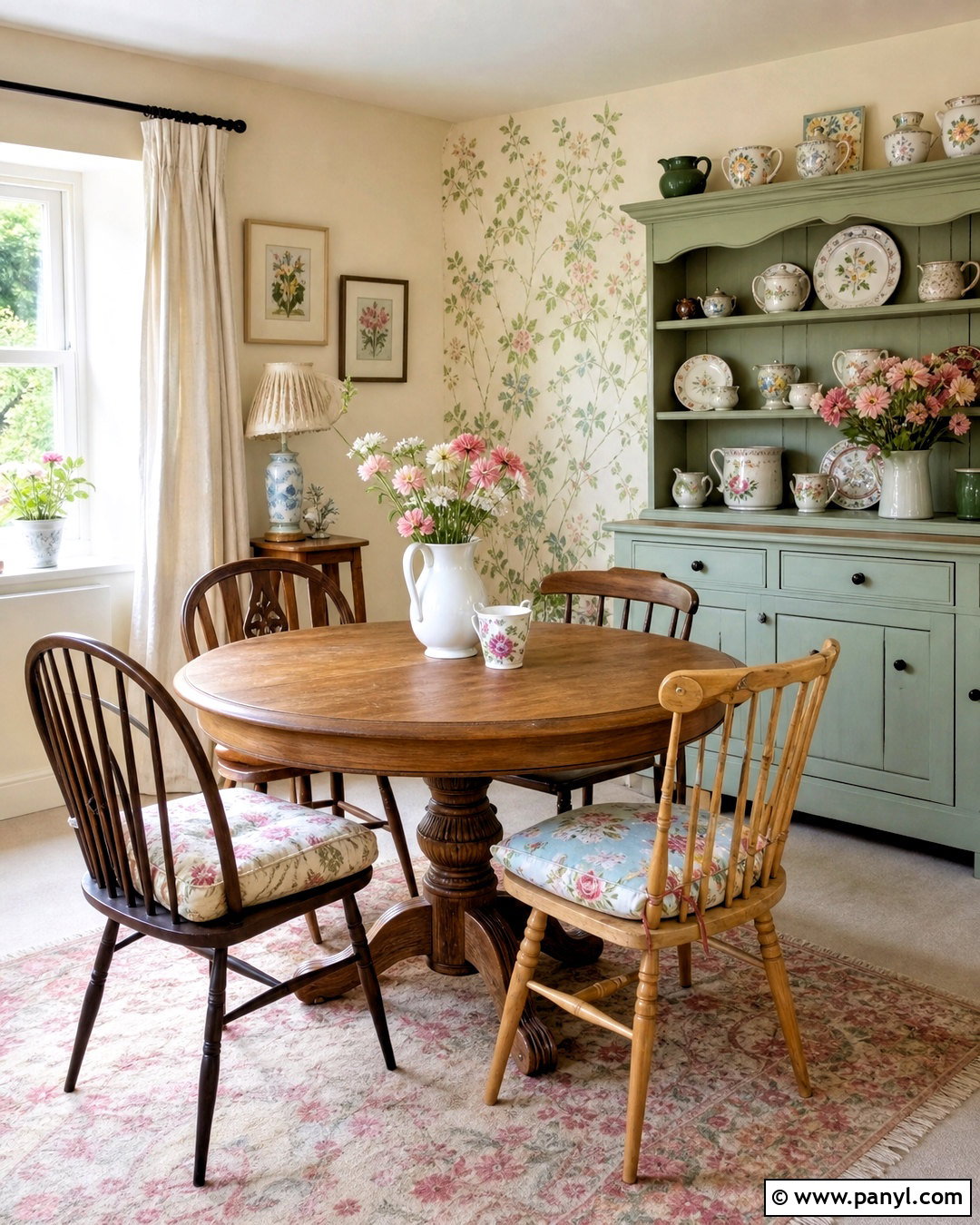
Soft florals and timeworn furniture give an English cottage tea room its welcoming character. Cover one feature wall in a small botanical wallpaper, then paint the remaining walls warm cream or dusty sage green. Center a round oak pedestal table beneath a simple brass chandelier. Surround it with mismatched wooden chairs softened by floral seat cushions. A painted hutch can hold teapots, cups, linens, and serving pieces while keeping the collection visible. Add linen curtains, framed garden prints, and a wool rug in faded green and rose tones. Keep the arrangement comfortable rather than overly formal. Fresh flowers in a ceramic pitcher and a tiered serving stand complete this cozy, collected tea room without making it feel crowded or theatrical.
2. Japanese Tea Room
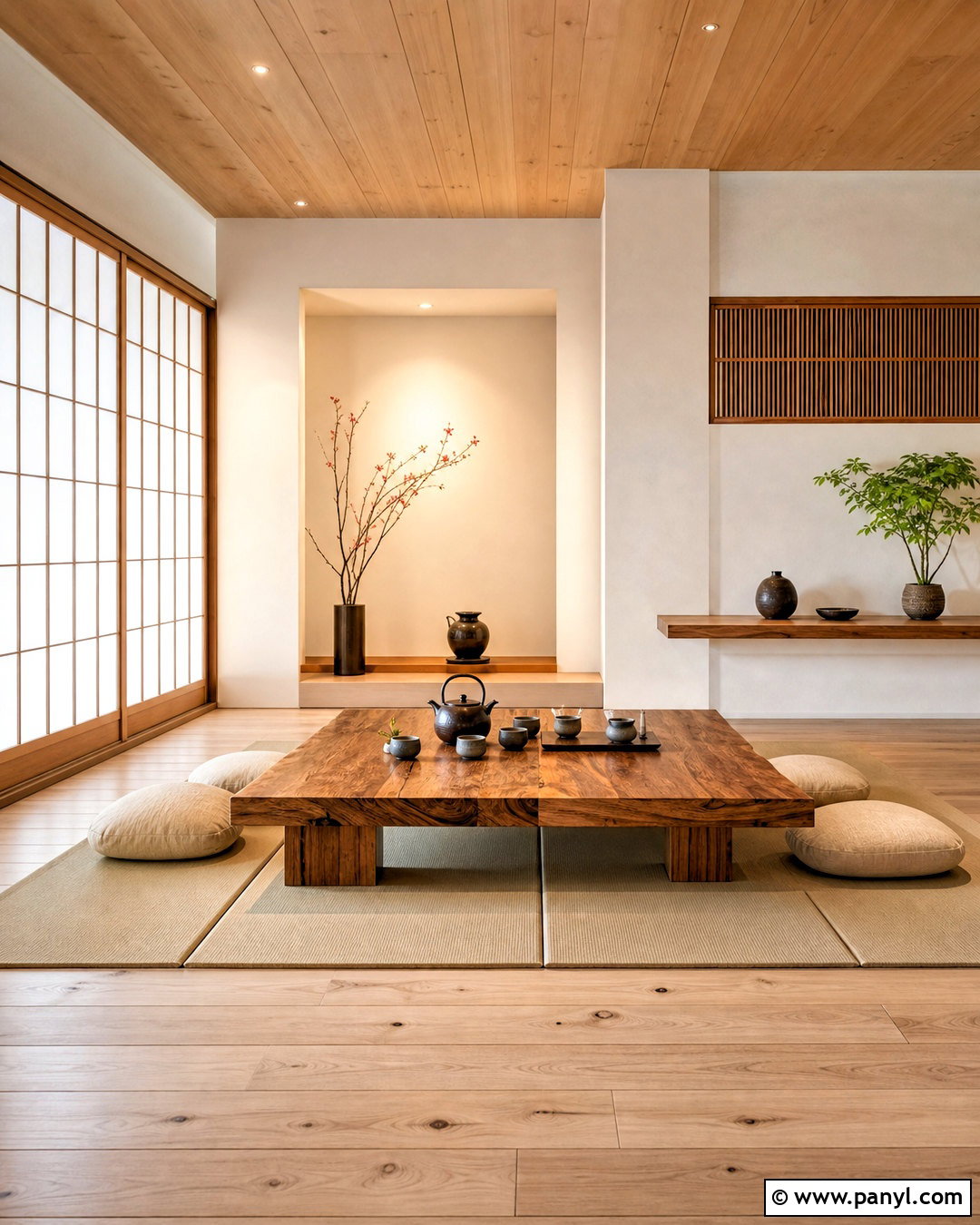
Natural materials and a low arrangement create a quiet Japanese tea room suited to mindful tea preparation. Begin with pale wood flooring or neutral tatami-style mats arranged in a clean grid. Place a low solid-wood table in the center and add simple floor cushions in oatmeal, muted green, or charcoal. Use warm white walls with one recessed display niche for a ceramic vase, seasonal branch, or restrained artwork. Sliding wood-and-paper-inspired panels can soften windows or conceal storage. Keep teaware on one floating shelf instead of filling the room with accessories. A stone water basin or small indoor plant adds a subtle connection to nature. Finish with concealed lighting and an uncluttered path around the table so the entire room feels balanced, purposeful, and restful.
3. Modern Minimalist Tea Room
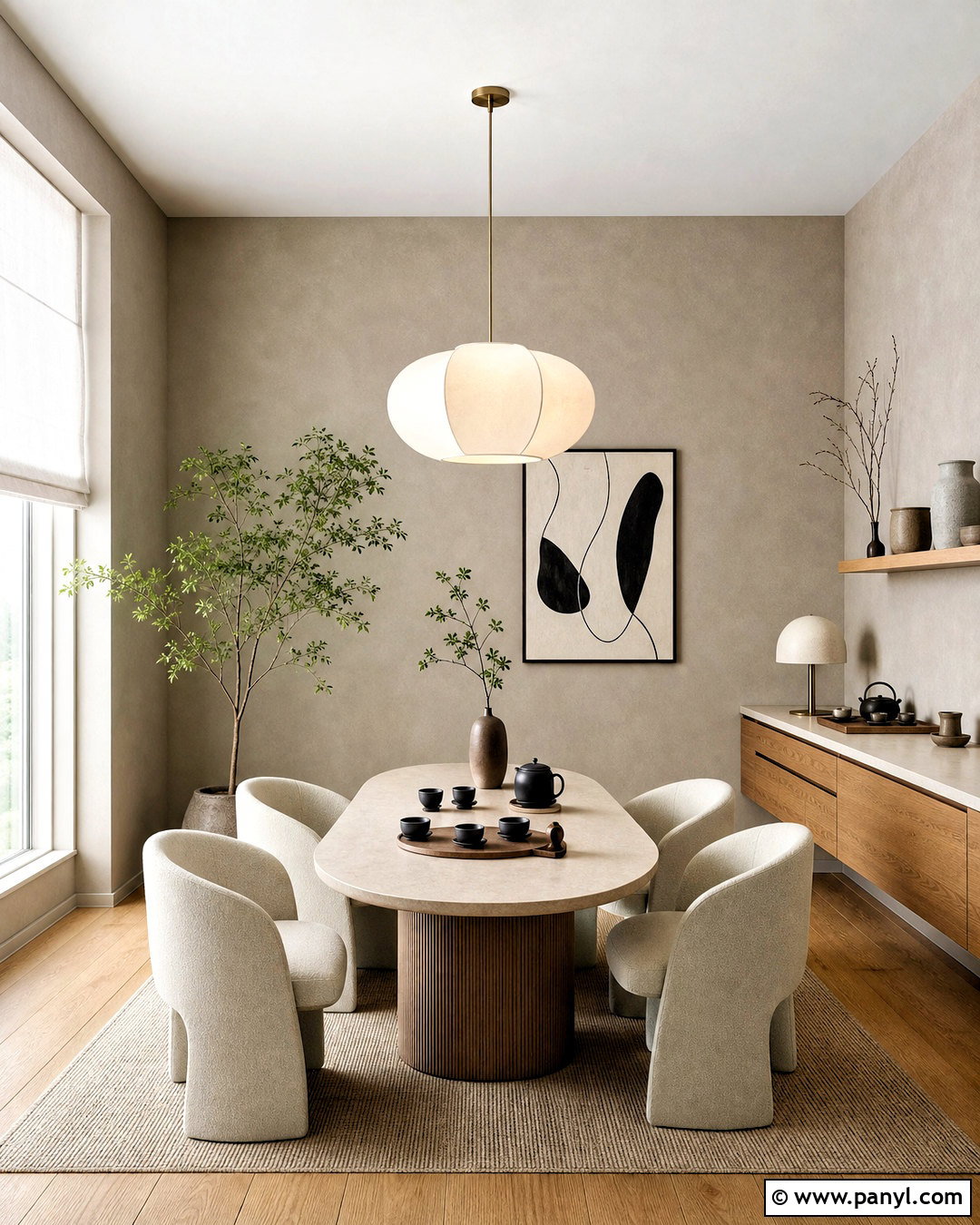
Could a nearly empty room still feel warm and inviting? A modern minimalist tea room achieves that balance through strong shapes, tactile materials, and carefully chosen furniture. Paint the walls soft greige and use light oak flooring to establish a calm foundation. Choose a slim oval table with four curved chairs in cream upholstery. Install a floating oak cabinet along one wall for tea storage, with a pale quartz surface for the kettle and serving tray. One oversized abstract print and a sculptural pendant provide visual interest without adding clutter. Include hidden outlets and closed drawers so cords, packages, and extra dishes stay out of sight. A textured rug, linen window shade, and single leafy plant soften the clean architecture while preserving the room’s quiet, contemporary appearance.
4. Victorian Tea Room
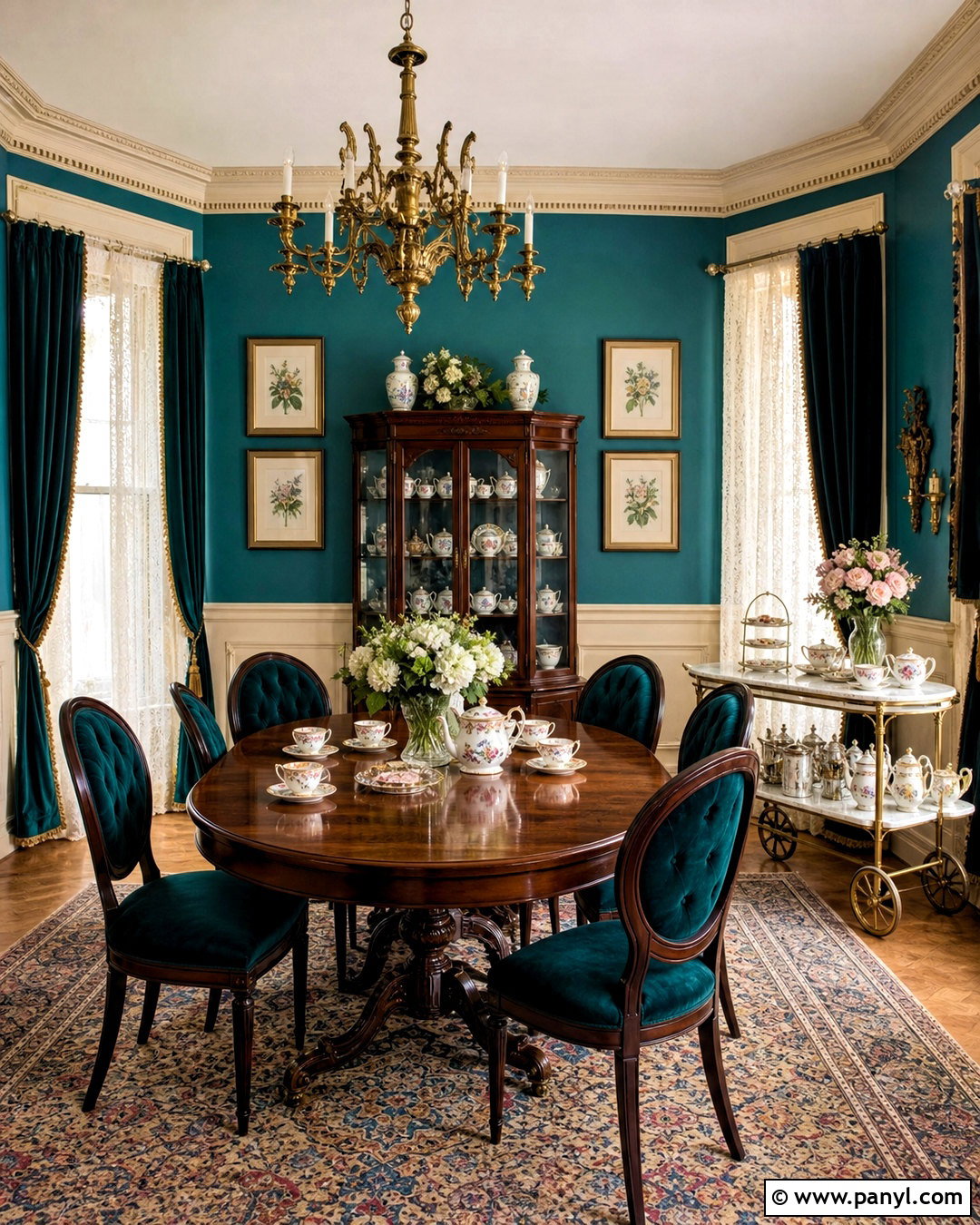
Rich color and decorative detail can make a Victorian tea room feel intimate without becoming heavy. Use deep teal or muted plum walls above painted wood paneling in warm ivory. Position a polished walnut table in the center with upholstered dining chairs in velvet or subtle damask. A traditional crystal or aged-brass chandelier should provide the main focal point, supported by shaded wall sconces. Display coordinated china inside a glass-front cabinet instead of covering every available surface. Layer an Oriental-style rug over dark wood flooring and hang framed botanical illustrations in a symmetrical arrangement. Lace-trimmed curtains may be added sparingly alongside heavier side panels. Finish the setting with silver-toned serving pieces, a floral centerpiece, and a small marble-topped tea cart for graceful, practical service.
5. Small Tea Room
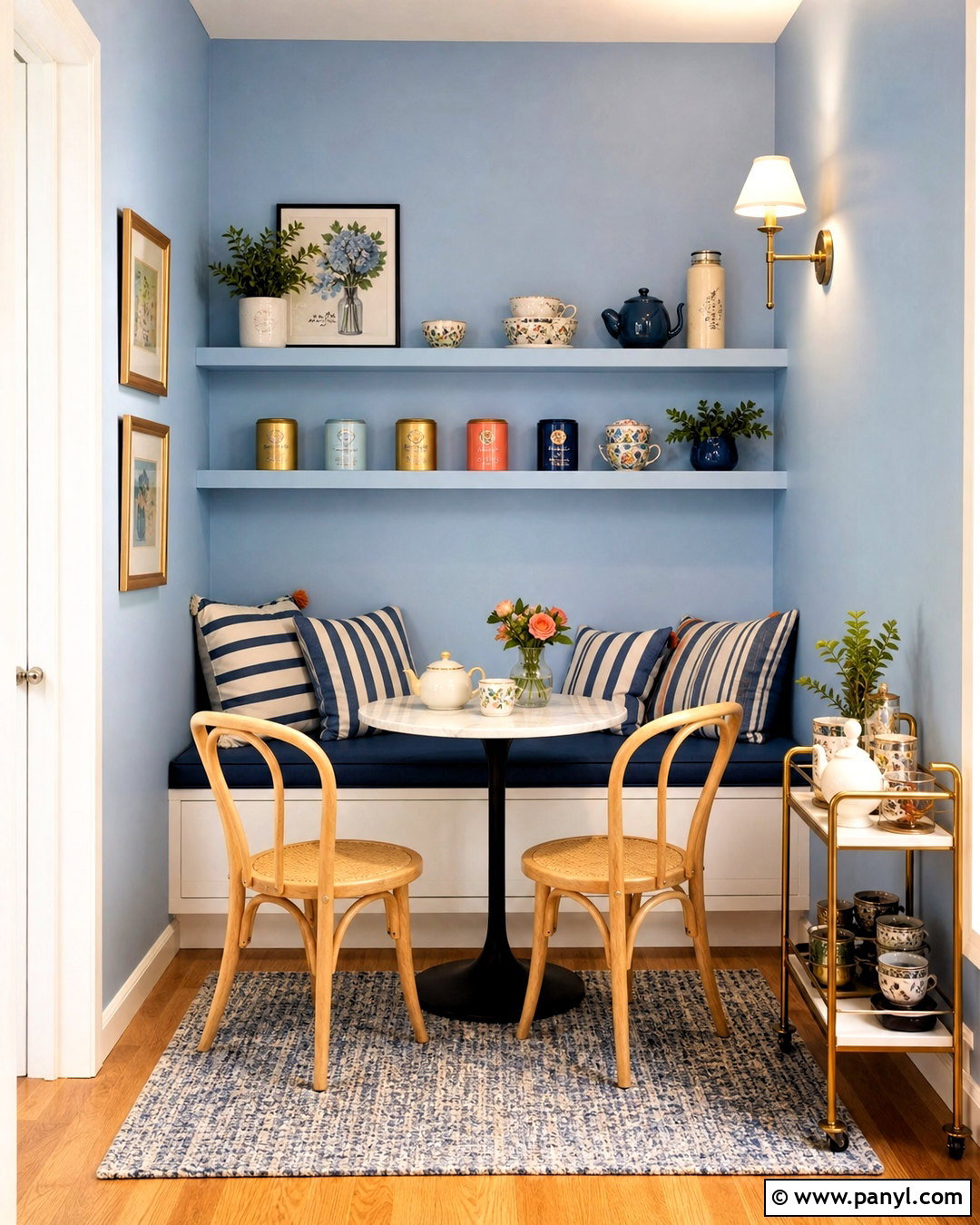
A compact alcove can become a complete small tea room when every piece serves a clear purpose. Place a built-in bench against the longest wall and add storage drawers beneath the seat. Pair it with a narrow round table that leaves enough space for easy movement. Two lightweight café chairs can accommodate guests without overwhelming the footprint. Paint the walls pale blue or warm white to keep the nook open and bright. Above the bench, install shallow shelves for attractive tea tins, cups, and one or two small prints. A plug-in wall sconce saves table space, while a washable striped rug defines the area. Complete the layout with a slim rolling cart that holds the kettle, serving tray, and everyday supplies, then moves away when necessary.
6. Garden Tea Room
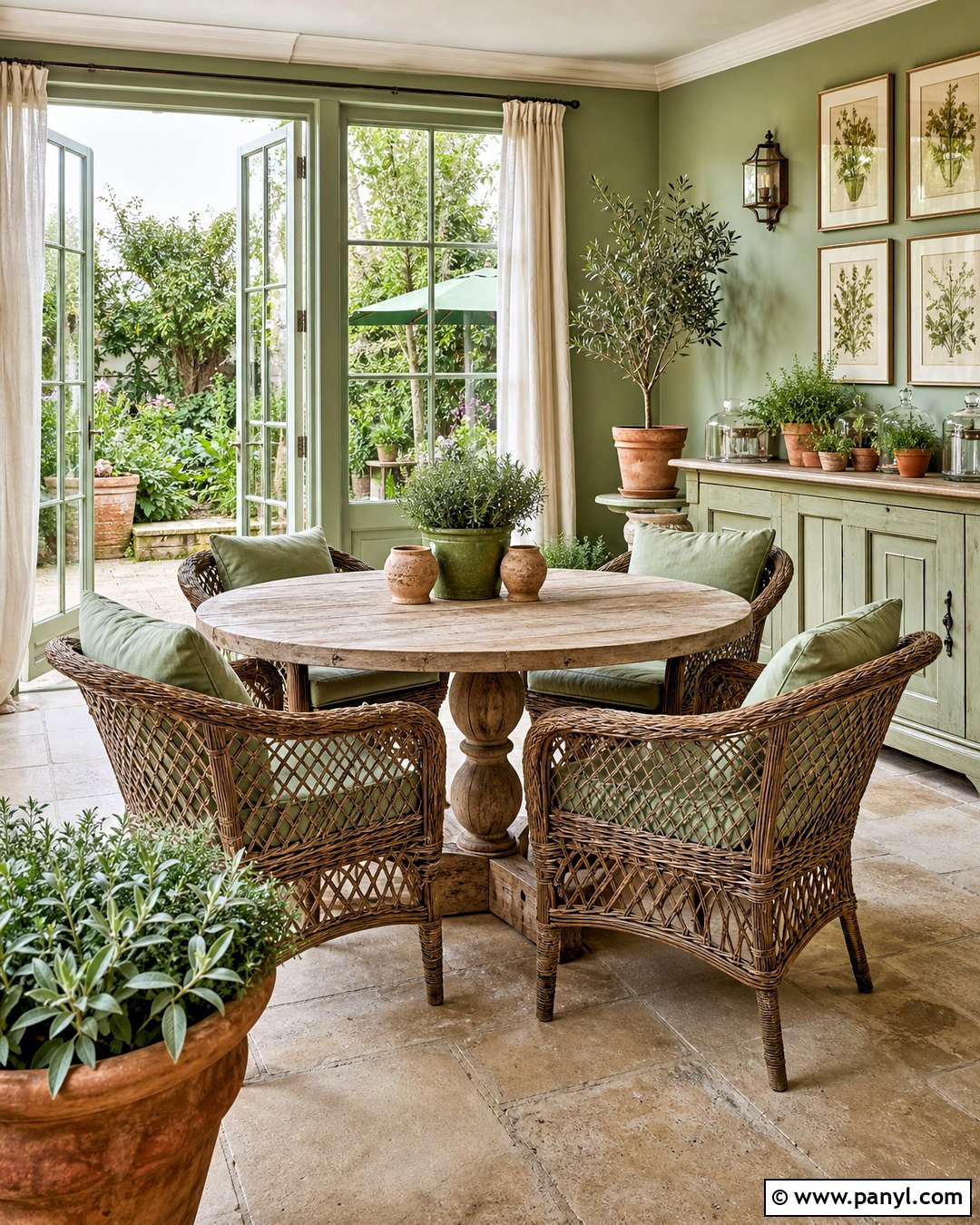
Morning light, leafy views, and durable materials define a garden tea room designed for indoor-outdoor living. Set the space near French doors or large windows overlooking planted beds. Choose a round weathered-teak table and woven rattan chairs with washable sage green cushions. Limestone-look tile or sealed brick flooring creates a practical surface that connects visually with the garden. Paint the walls a soft leafy green and keep the trim crisp white. Botanical prints, terracotta planters, and linen curtains reinforce the natural setting without competing with the view. Include a painted sideboard for tea supplies and gardening books. A glass pendant keeps the room airy, while potted herbs near the windows add fragrance. The finished space should feel like a sheltered extension of the landscape.
7. French Country Tea Room
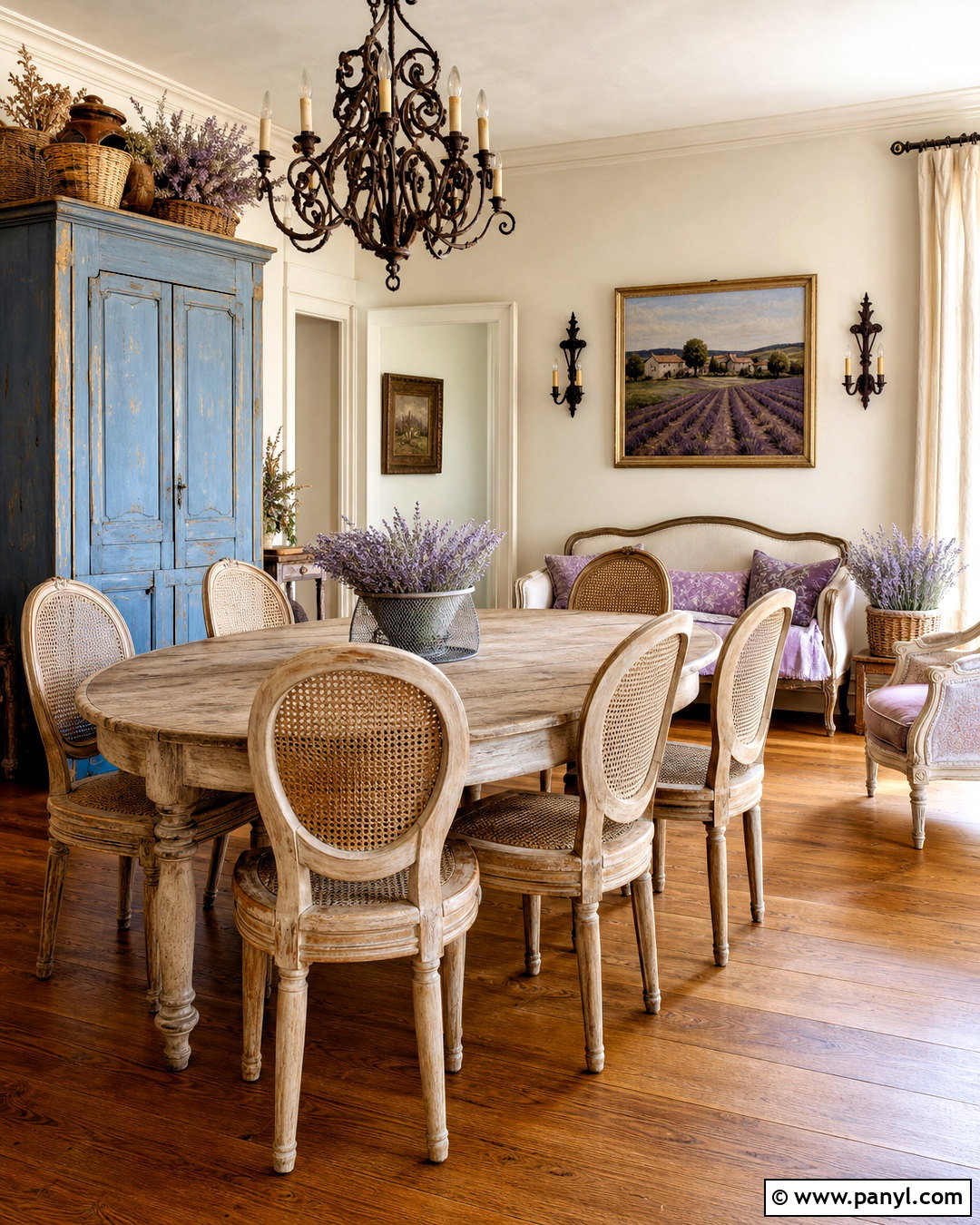
A French country tea room blends rustic surfaces with graceful furniture and a light, relaxed palette. Start with creamy plaster-look walls and a warm oak or limestone floor. Place an oval farmhouse table in the center, then mix cane-back chairs with a small upholstered settee. Soft blue, butter yellow, and faded lavender accents bring gentle color through cushions, curtains, and ceramics. Use a distressed painted armoire to store tea sets and serving linens behind solid lower doors and glass upper panels. An antique-style iron chandelier adds structure overhead without making the room overly formal. Hang one pastoral painting or a grouping of small landscape prints. A linen runner, woven basket, and loose garden flowers complete a tea room that feels elegant, comfortable, and naturally gathered over time.
8. Boho Tea Room
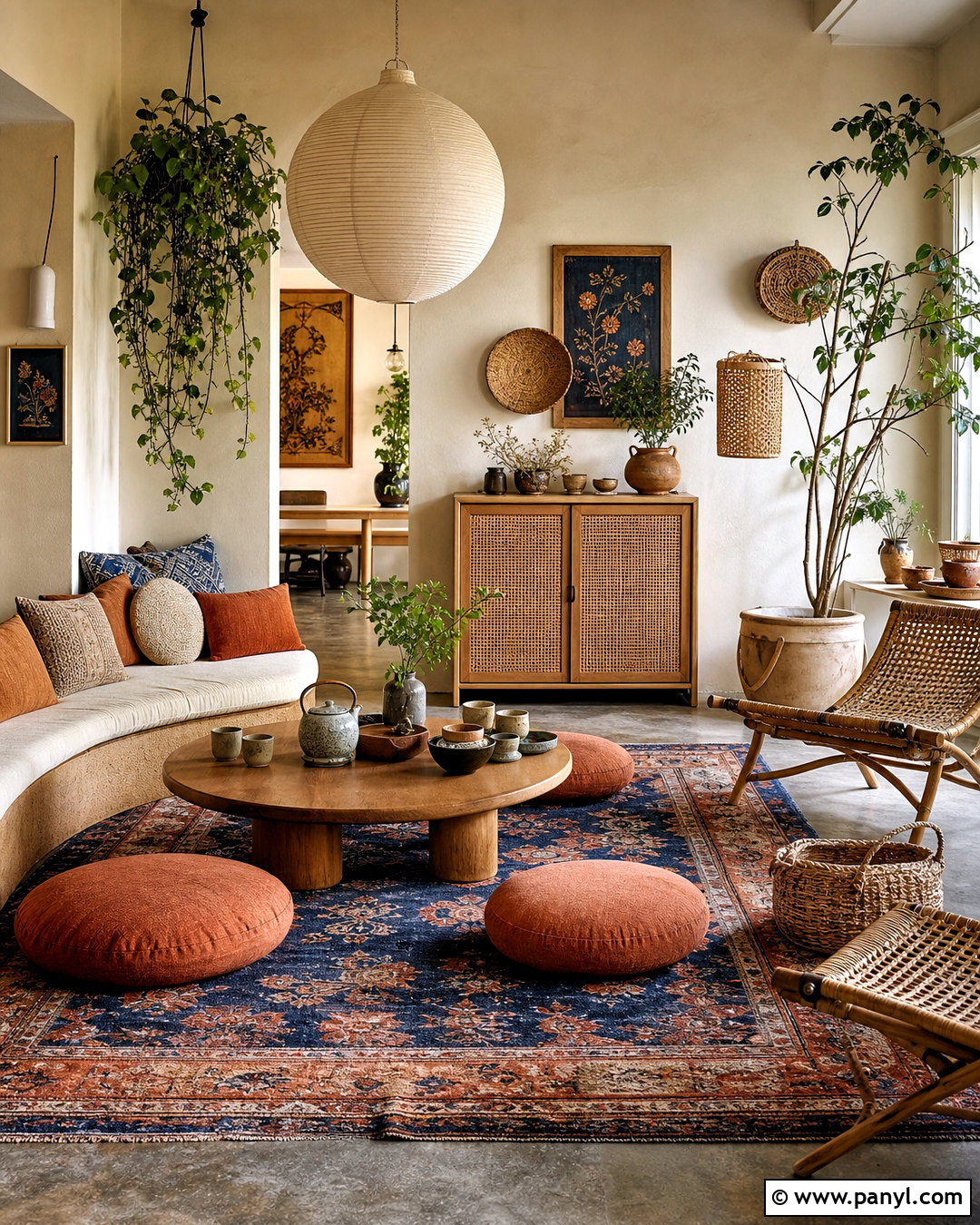
Layered texture makes a boho tea room feel relaxed, personal, and ready for long conversations. Ground the room with a large vintage-inspired rug in rust, navy, and warm beige. Use a low round wood table surrounded by a curved bench, floor cushions, and two woven lounge chairs. Cream walls provide breathing room for patterned fabrics and collected artwork. Add a rattan cabinet with closed storage below and open shelves for pottery above. A large paper lantern can soften the center of the room, while wall sconces create comfortable evening illumination. Include trailing plants, handmade baskets, and linen curtains in warm terracotta. Keep the palette connected across every layer so the room feels expressive rather than chaotic. A wooden tray and mismatched ceramic teaware finish the easygoing setup.
9. Scandinavian Tea Room
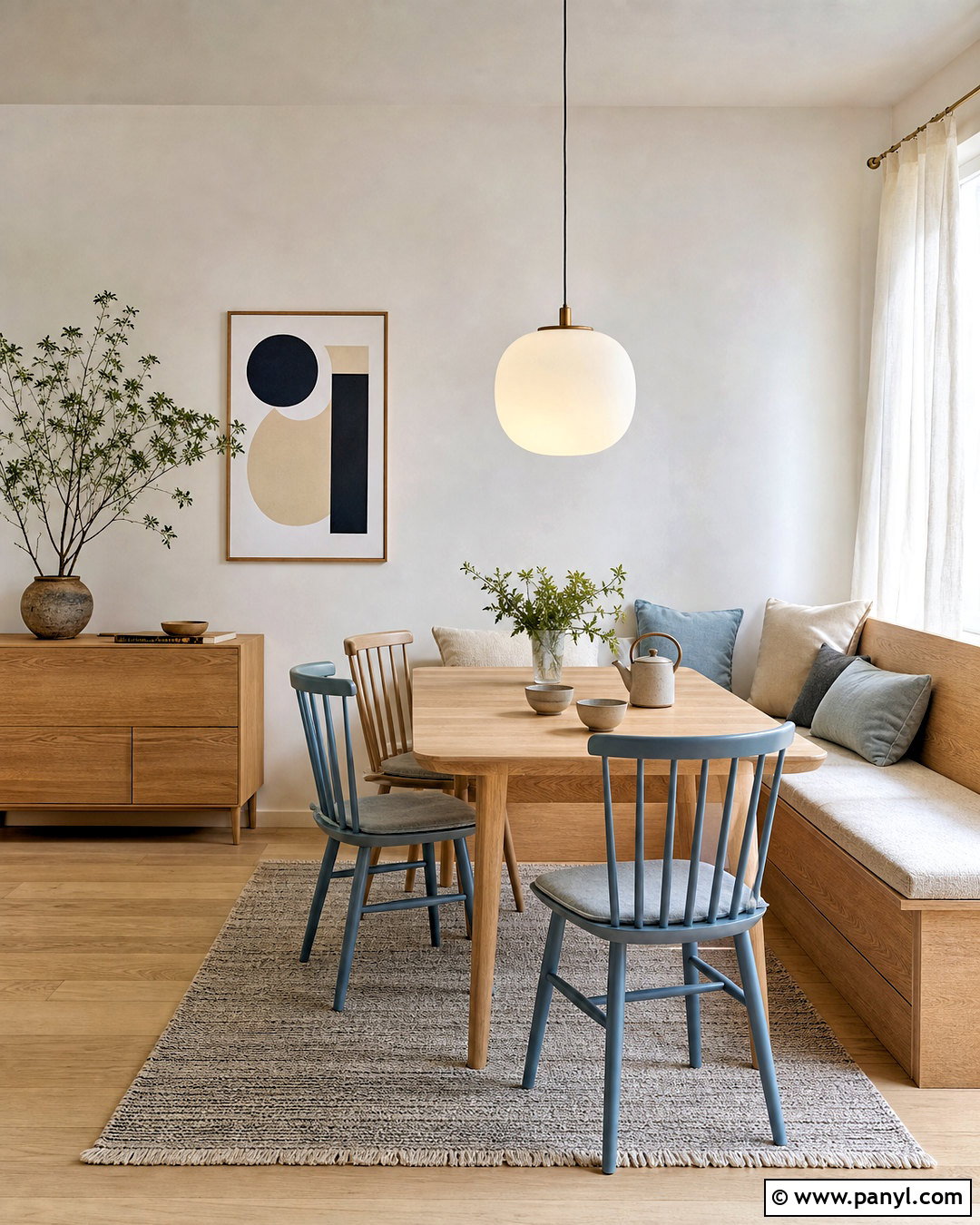
Pale wood, simple furniture, and abundant daylight establish the fresh atmosphere of a Scandinavian tea room. Paint the walls clean warm white and introduce muted blue-gray through a built-in bench or upholstered dining chairs. A rectangular light-oak table provides enough surface for tea service while maintaining a streamlined shape. Add a flat-weave wool rug, sheer white curtains, and a frosted glass pendant for soft texture. Tea supplies can be organized inside a low oak sideboard with smooth doors and minimal hardware. Style its surface with a stoneware teapot, small lamp, and one vase of greenery. Avoid excessive wall decor; a single graphic print or narrow picture ledge is enough. The finished room should feel bright and practical, with comfortable materials preventing the minimal arrangement from appearing cold.
10. Vintage Floral Tea Room
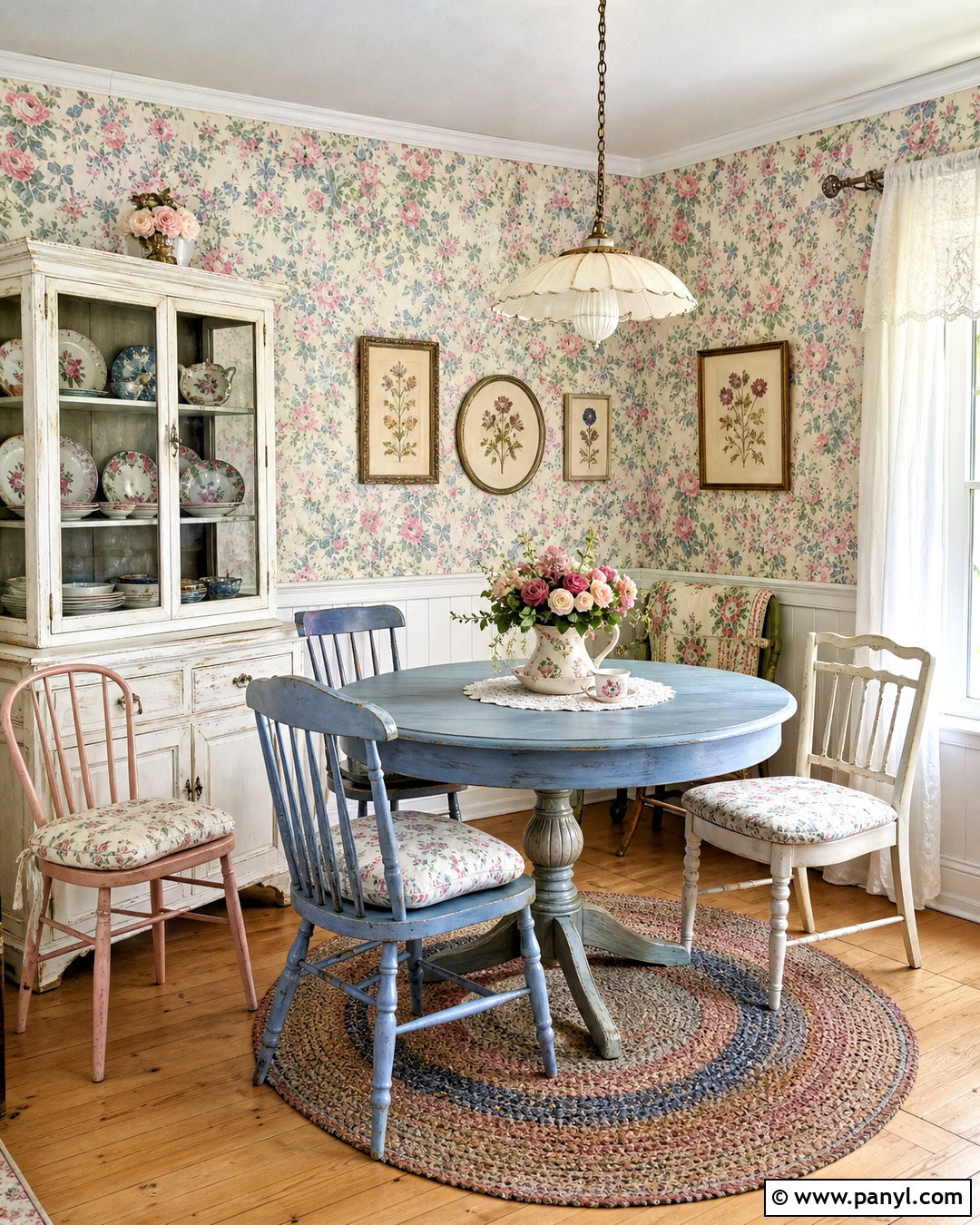
For a cheerful collected look, build a vintage floral tea room around coordinated patterns and softly aged furniture. Choose wallpaper with medium-scale roses in blush pink, blue, and green, then balance it with white-painted trim and pale wood flooring. A round painted table allows guests to face one another, while mismatched chairs add authentic charm. Repeat two wallpaper colors in the seat cushions and window treatments to keep the patterns connected. Display favorite china in a glass-front cabinet, leaving open space between pieces so the collection remains readable. Add a scalloped pendant, framed pressed flowers, and a faded braided rug. Rather than filling every corner, use a few noticeable vintage accessories. This controlled approach creates a nostalgic room that still feels comfortable, fresh, and functional.
11. Coastal Tea Room
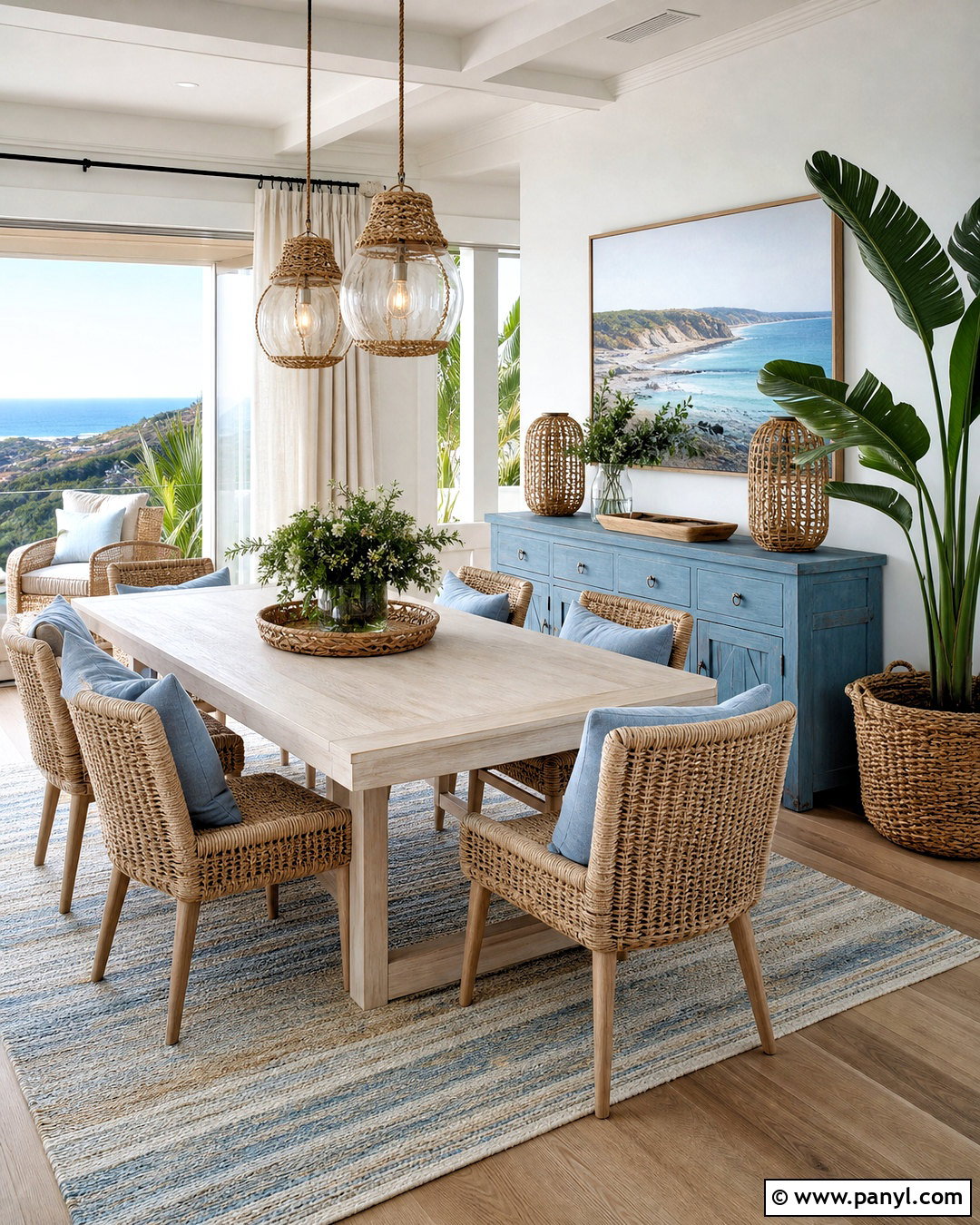
A coastal tea room should feel breezy and relaxed without relying on obvious nautical decorations. Use white shiplap or smooth ivory walls with pale natural oak flooring. Center the room around a bleached-wood table and woven dining chairs with washable blue-gray cushions. A striped flat-weave rug introduces subtle pattern, while airy linen curtains let sunlight move through the space. Store teaware in a pale blue sideboard topped with a white stone serving surface. Add clear glass pendants, simple coastal landscape art, and one large indoor plant. Materials such as rattan, linen, sea grass, and lightly textured ceramics create the seaside connection naturally. Keep the arrangement open and uncluttered, using soft sand, cloud white, and watery blue tones throughout for a calm year-round retreat.
12. Rustic Farmhouse Tea Room
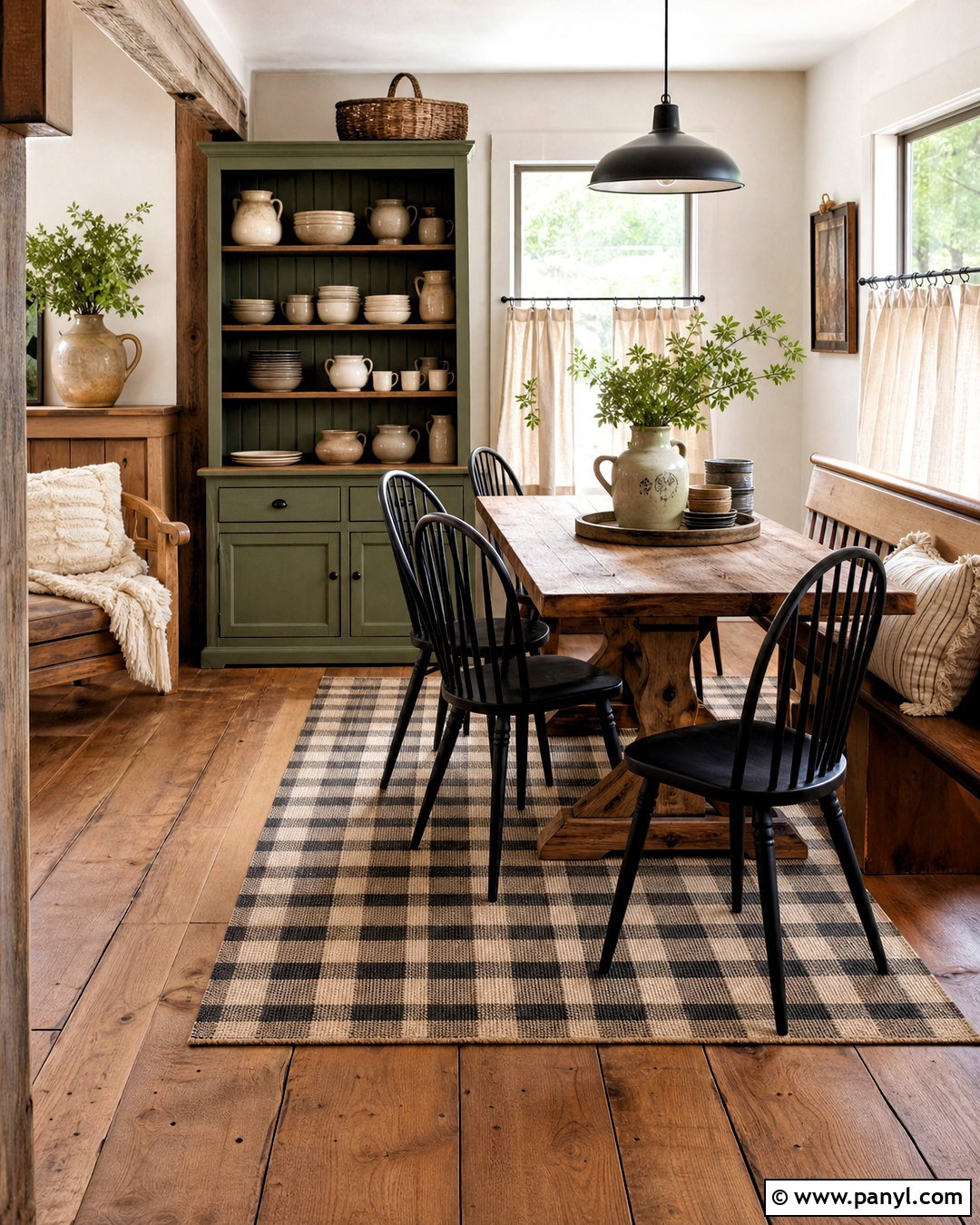
Warm wood and straightforward storage create a rustic farmhouse tea room that works for both daily tea and casual gatherings. Choose a sturdy reclaimed-wood table with a trestle base and surround it with black spindle-back chairs. Paint the walls creamy white and add a muted sage green cabinet for cups, teapots, and pantry supplies. Wide-plank oak flooring and a washable checked rug support the practical character. Above the table, hang a simple black metal pendant with a broad shade. Open shelves can display everyday stoneware, but keep less attractive packages inside labeled baskets or closed drawers. Finish the windows with neutral café curtains and place a wooden bench along one wall for flexible seating. Fresh greenery and a ceramic pitcher provide uncomplicated decoration that suits the room’s hardworking design.
13. Chinese Tea Room
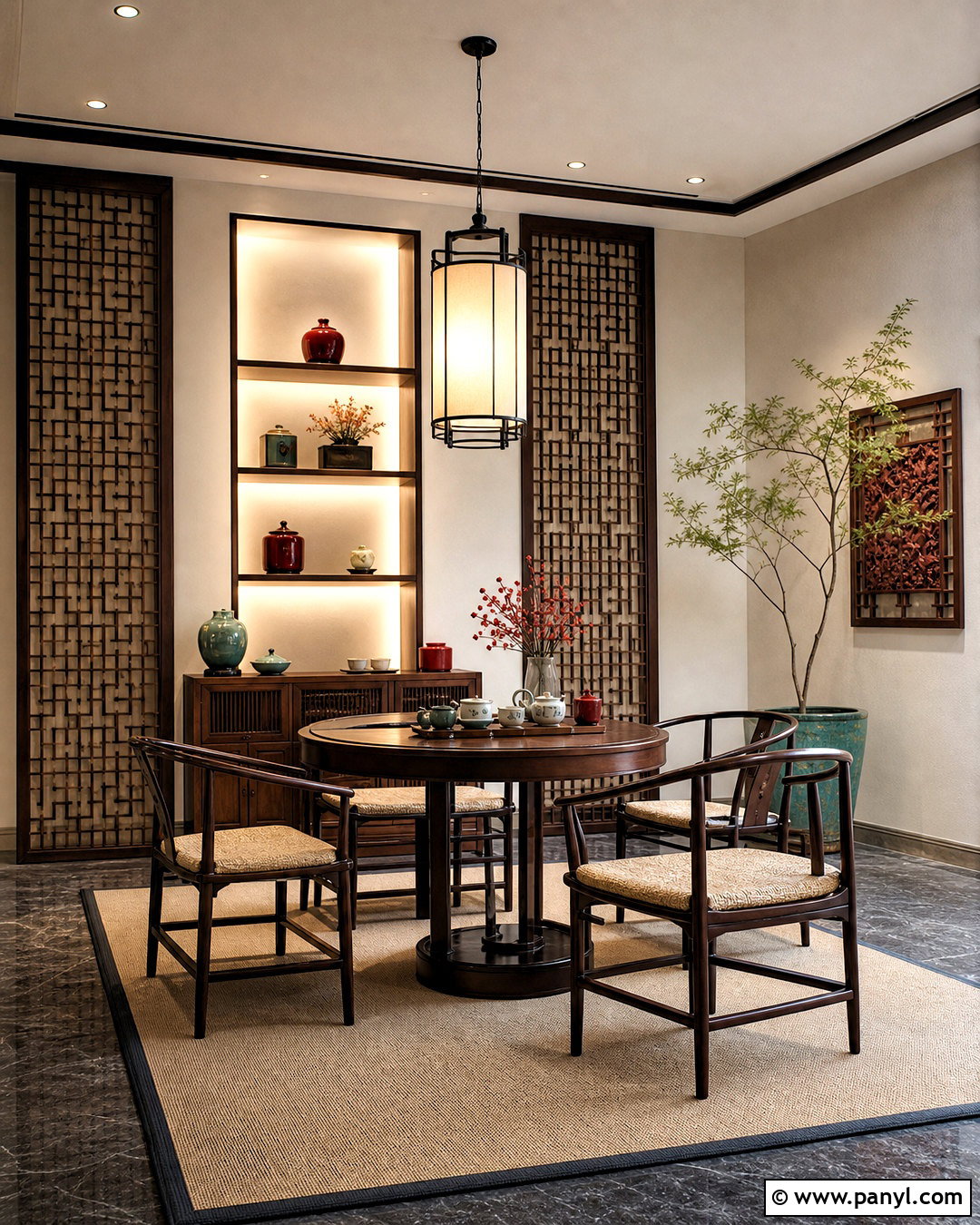
A Chinese-inspired tea room can emphasize craftsmanship, symmetry, and the beauty of tea service. Use warm ivory walls with dark walnut trim to create a rich architectural frame. Place a substantial square or round wood table at the center, paired with four chairs featuring clean silhouettes and woven seats. A low side cabinet can hold a tea tray, kettle, and organized storage for teaware. Add lattice-style screens to filter daylight and define the room without closing it off. Restrained accents in cinnabar red, jade green, and muted gold bring depth to the neutral foundation. Display a small selection of ceramics in an illuminated niche rather than using numerous accessories. Finish with a simple pendant, natural-fiber rug, and one balanced botanical arrangement for a calm, respectful, contemporary interpretation.
14. Art Deco Tea Room
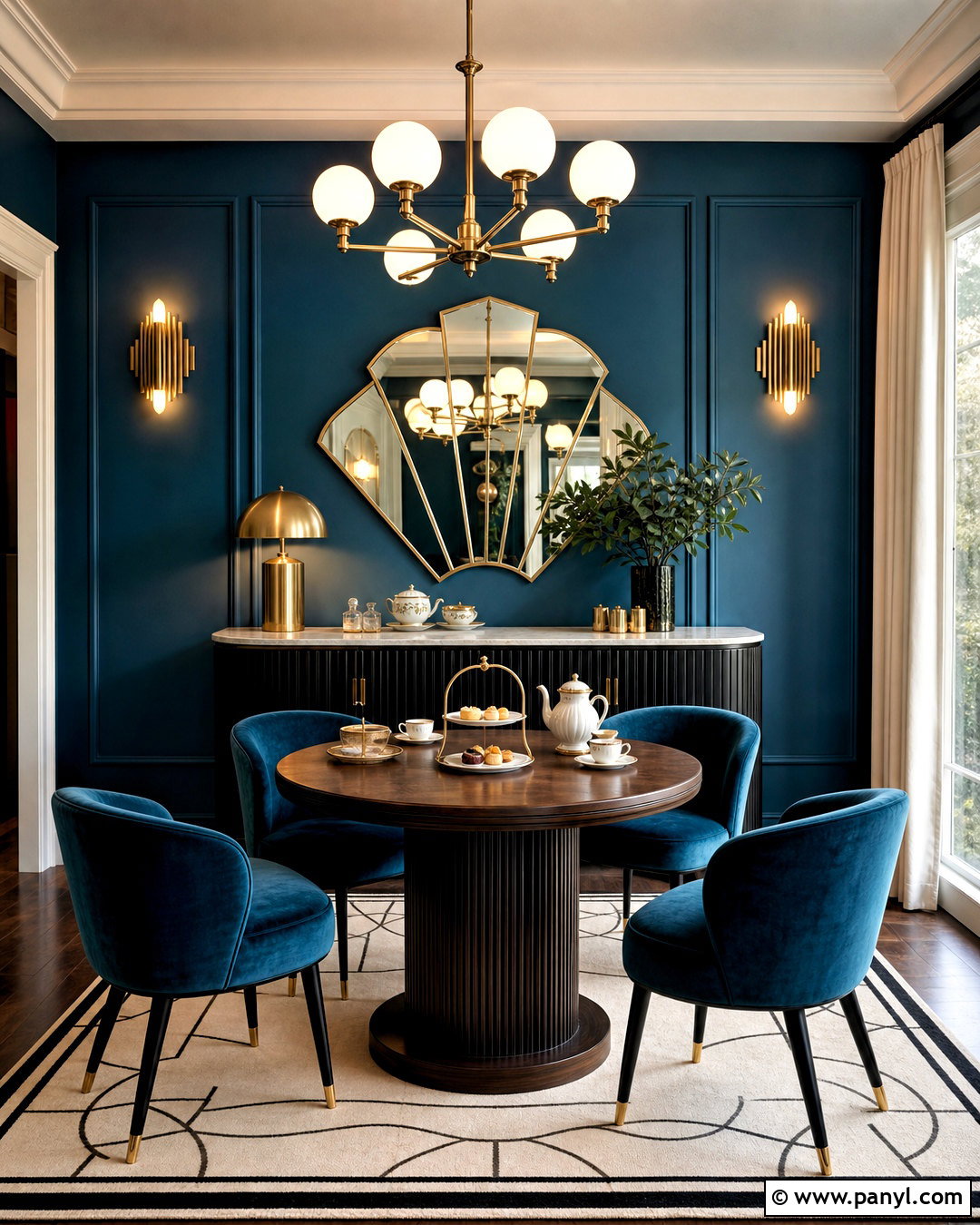
Bold geometry gives an Art Deco tea room a polished identity that is ideal for formal entertaining. Paint the walls deep peacock blue and introduce warm ivory through the ceiling, trim, and upholstered seating. Choose a round table with a dark wood top and fluted pedestal, then surround it with curved velvet chairs. A brass-and-opal-glass chandelier creates a strong focal point above the table. Use a black cabinet with reeded doors to conceal supplies and display selected teaware on its pale marble top. A geometric rug in cream, blue, and muted gold ties the furnishings together. Complete the space with symmetrical sconces, fan-shaped mirrors, and framed abstract prints. Limit decorative objects so the strong lines, saturated color, and reflective finishes remain sophisticated rather than visually overwhelming.
15. Modern Luxury Tea Room
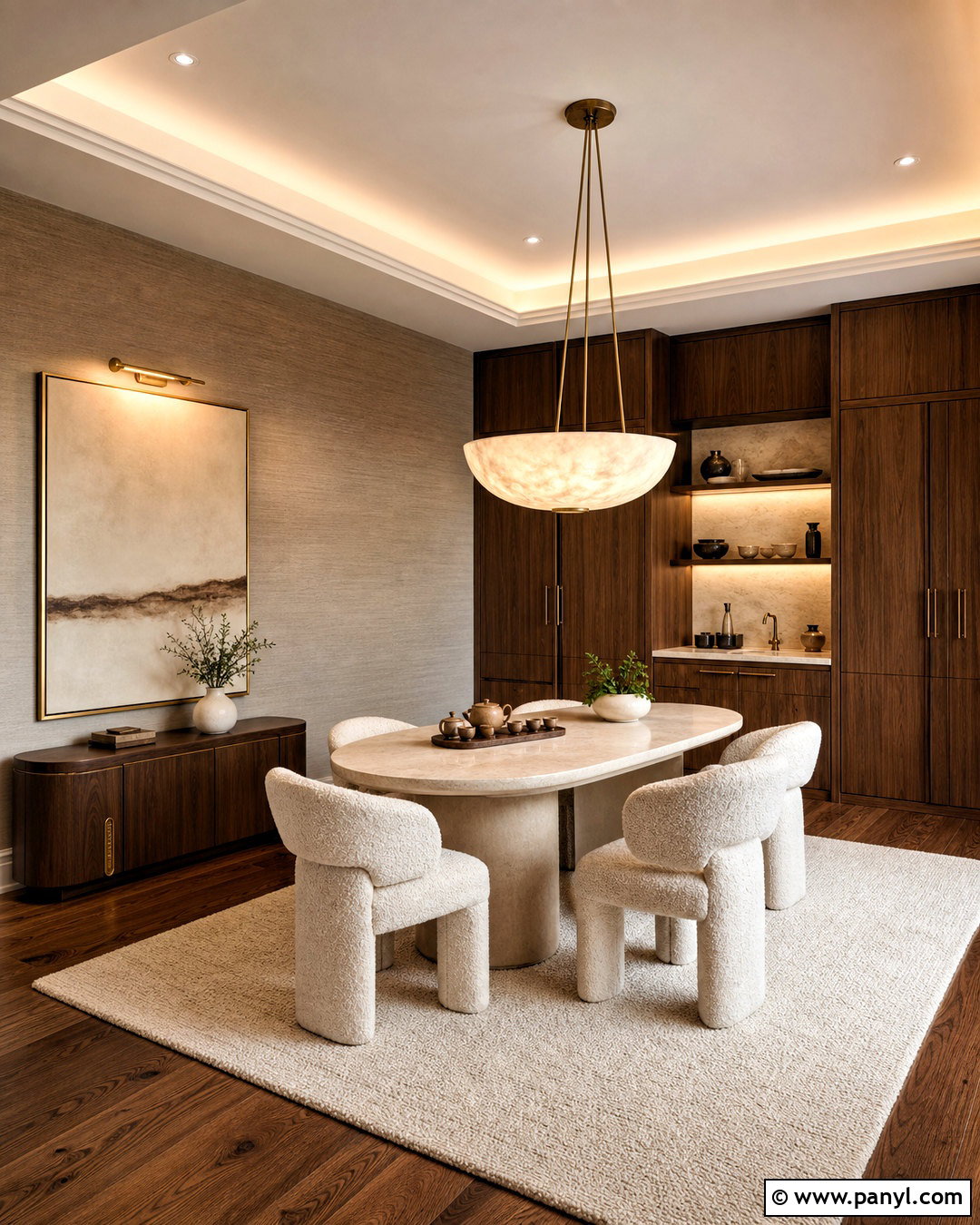
Quiet luxury comes from refined materials and careful spacing rather than an abundance of decoration. Cover the walls in warm taupe paint or subtle grasscloth, then add wide-plank walnut flooring. An oval stone table with softly rounded edges can anchor the room, accompanied by sculptural chairs in textured cream fabric. Install a full-height walnut cabinet with interior lighting for organized tea storage and a concealed preparation counter. Brushed brass hardware and a large alabaster-style pendant introduce a soft glow. Frame the seating area with a thick wool rug in ivory and beige. Keep artwork large, neutral, and limited to one or two pieces. Automated window shades, discreet outlets, and integrated drawers support daily use while preserving the uncluttered appearance of this elegant modern tea room.
16. Library Tea Room
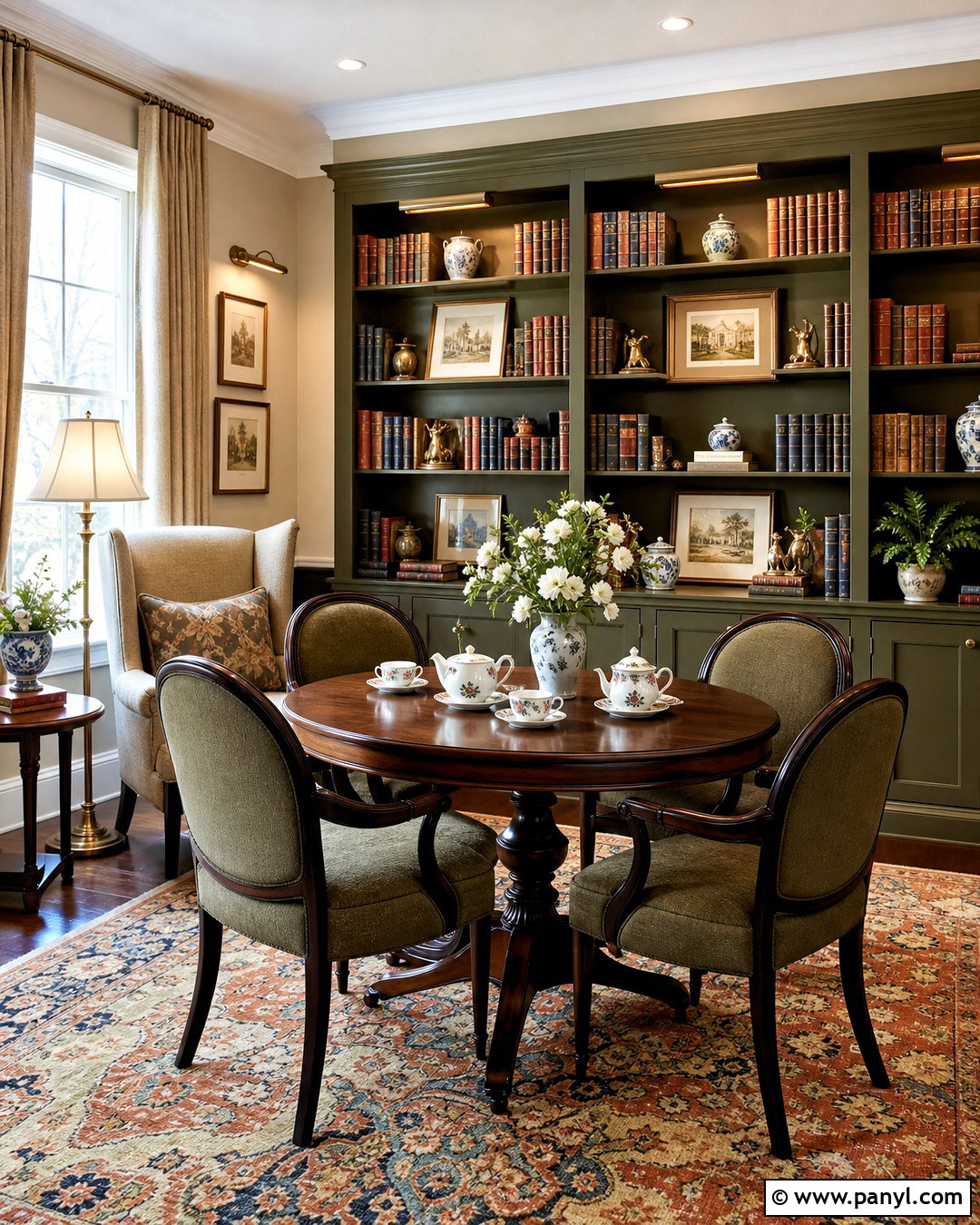
Books and tea naturally belong together, making a library tea room an inviting choice for a spare den or formal sitting room. Line one wall with floor-to-ceiling bookcases painted muted olive green or deep blue. Position a round walnut table near the shelves with four comfortable upholstered chairs. Add a reading chair and small side table beside the window for quiet solo tea breaks. Warm white walls, a patterned wool rug, and linen drapery keep the darker cabinetry from overpowering the room. Install picture lights above the bookcases and a shaded pendant over the table. A lower cabinet section can hide the kettle, tea packages, and extra serving pieces. Finish with framed literary prints, brass bookends, and a simple ceramic tea set for a scholarly but relaxed atmosphere.
17. Sunroom Tea Room
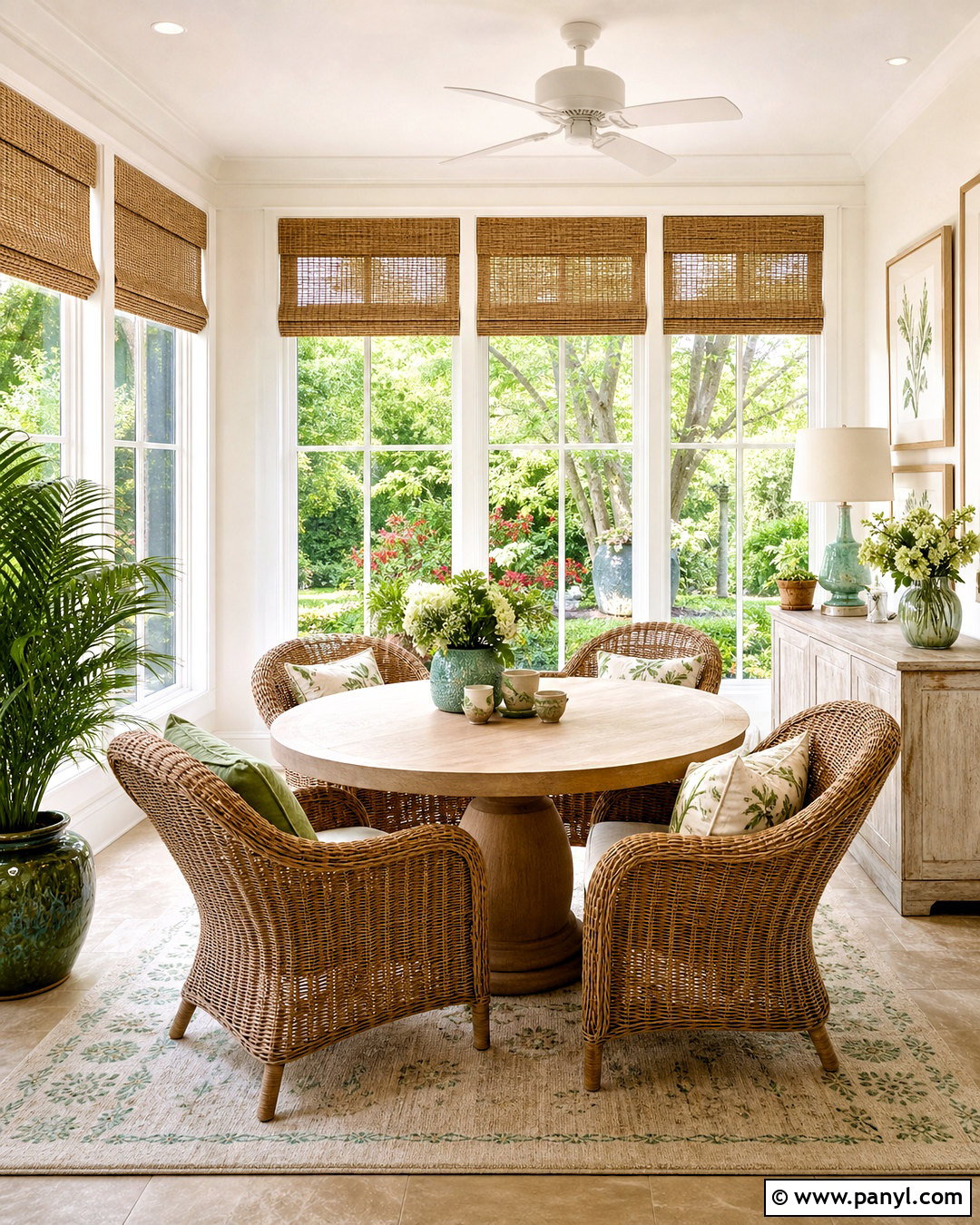
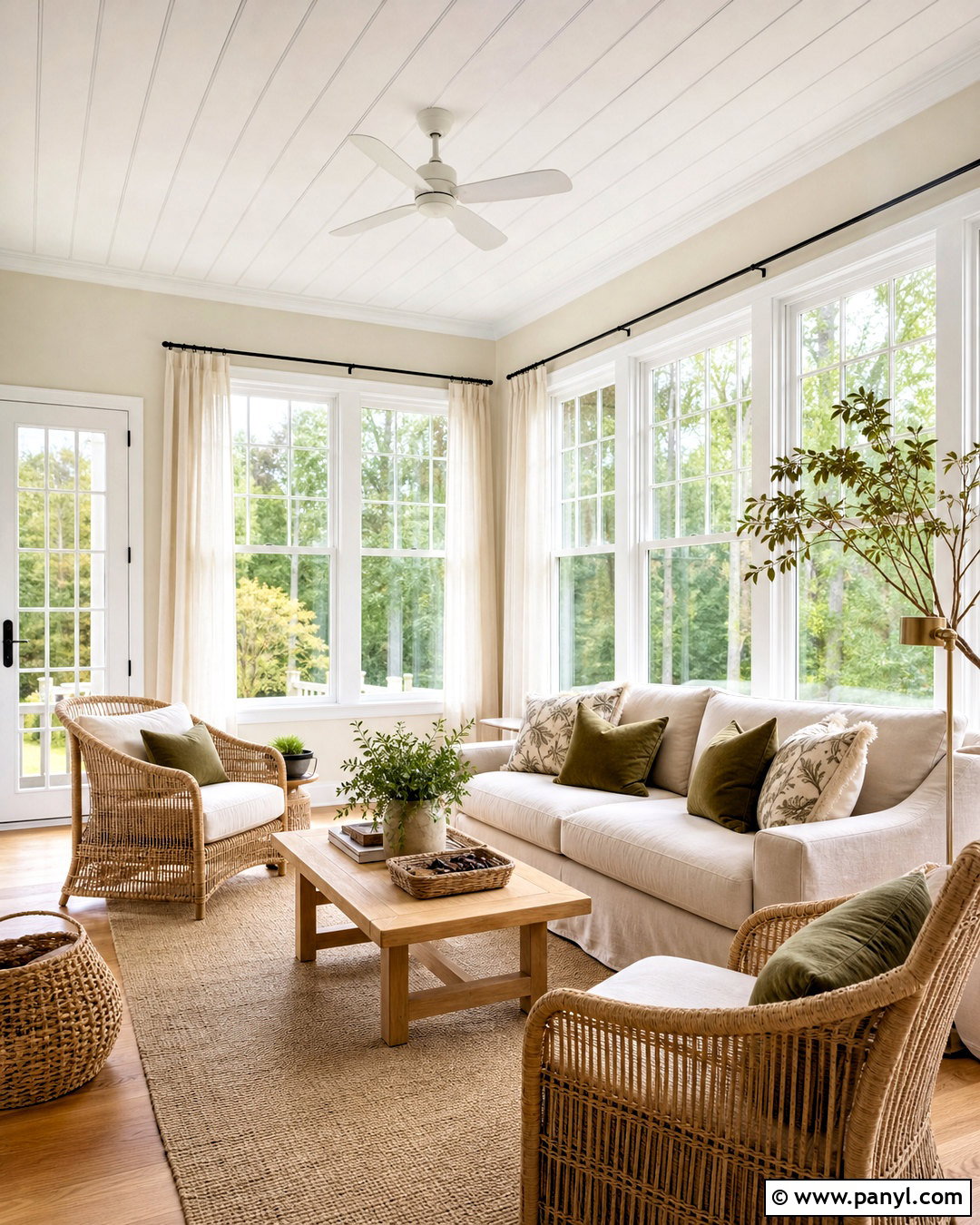
A bright sunroom tea room celebrates natural light while providing protection from glare and heat. Arrange a round wicker or pale oak table in the center, surrounded by cushioned chairs covered in durable cream and green fabric. Use light stone-look tile underfoot and add a washable indoor-outdoor rug for softness. Woven shades allow you to control the sunlight without losing the garden view. Paint solid wall sections warm white, then introduce color through botanical cushions and glazed ceramic planters. A narrow sideboard offers space for preparing tea away from the main table. Include a ceiling fan with a simple light and portable table lamps for comfort throughout the day. The complete room should feel fresh, practical, and connected to the outdoors in every season.
18. Breakfast Nook Tea Room
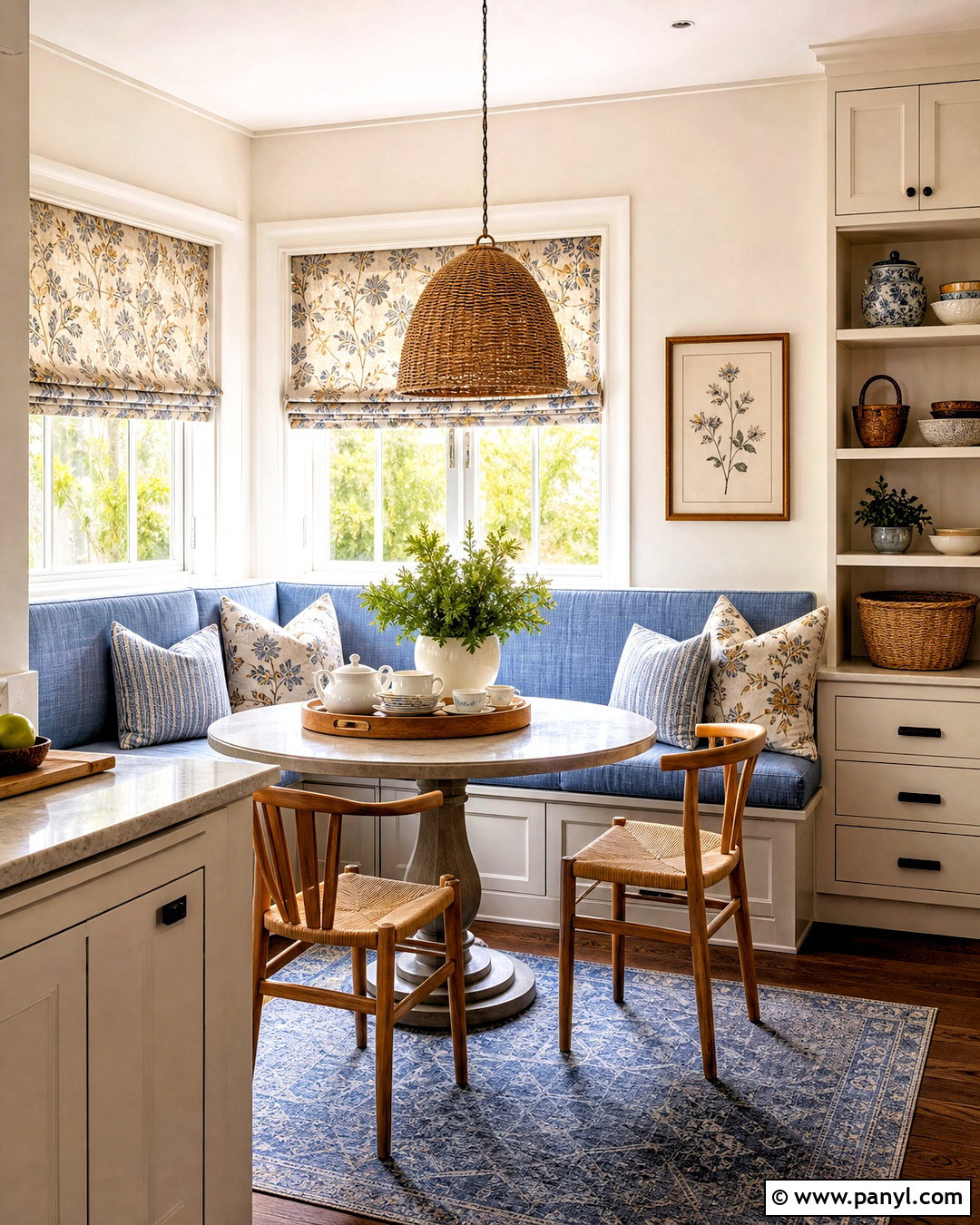
An existing breakfast nook can become a daily tea room without requiring a separate room. Build an L-shaped banquette beneath the windows and upholster it in durable muted blue or sage fabric. Pair the bench with a pedestal table that allows guests to slide in easily. Two compact wood chairs provide extra seating on the open side. Install shallow cabinets at one end for tea, mugs, serving trays, and linens. Warm white walls and natural oak finishes keep the nook light, while a small patterned Roman shade introduces character. Hang a clear glass or woven pendant over the table, making sure it does not block the view. A washable rug, framed botanical print, and neatly arranged tea tray transform this hardworking kitchen corner into an intentional destination.
19. Tea Room With Built-In Storage
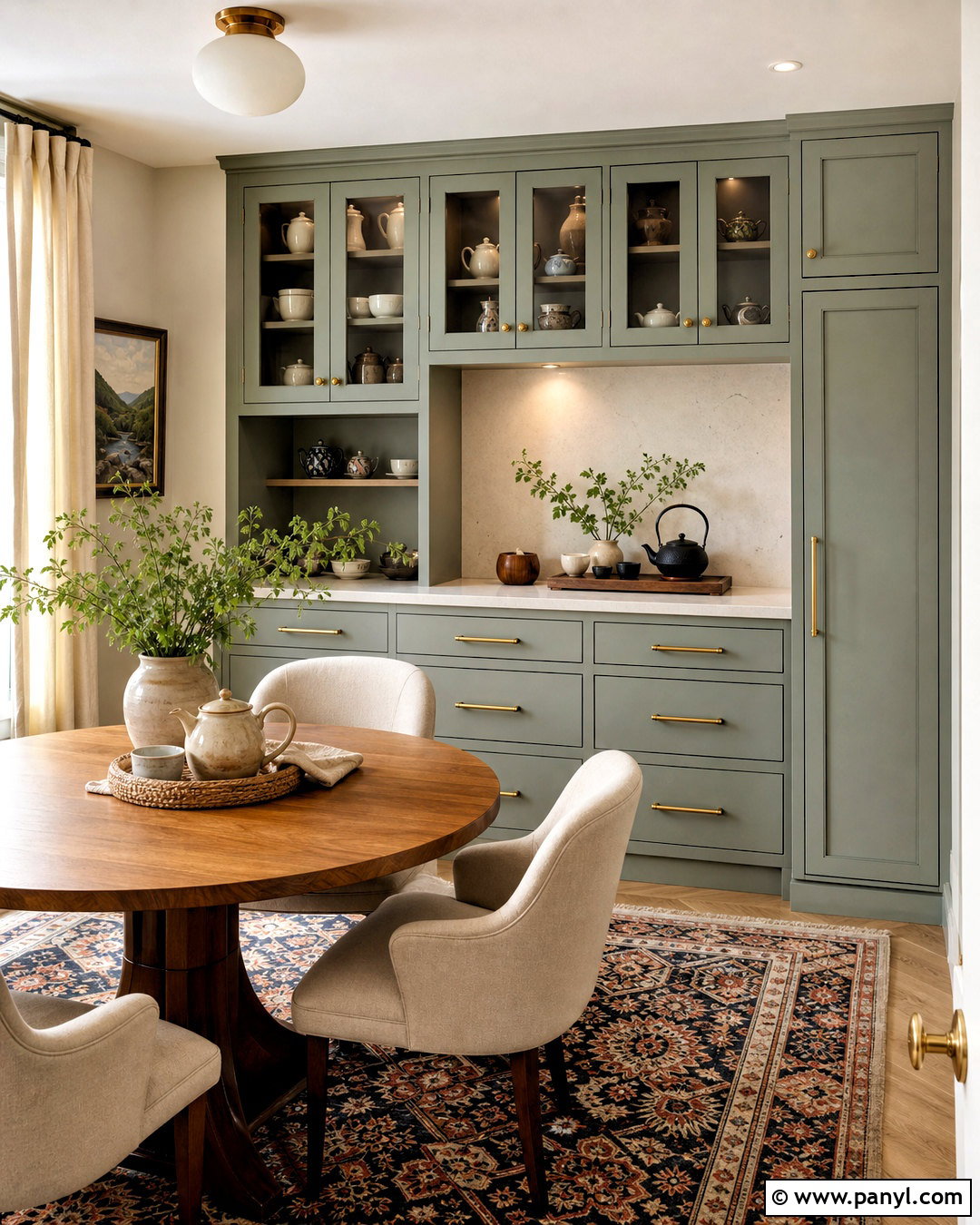
Smart built-ins help a dedicated tea room remain serene even when the collection grows. Cover one wall with cabinetry that combines deep lower drawers, closed upper cupboards, and a central preparation niche. Use soft gray-green paint on the cabinets with warm brass hardware and a white quartz counter. Include electrical outlets, task lighting, and a heat-resistant area for the kettle. Across from the storage wall, place a round oak table with comfortable cream chairs on a subtle patterned rug. Keep the remaining walls warm white and add linen curtains for softness. Glass doors can showcase the most attractive teapots, while solid doors hide packages and backup supplies. A centered pendant, one landscape painting, and fresh branches complete this organized, polished tea room without sacrificing practical function.
20. Budget Tea Room
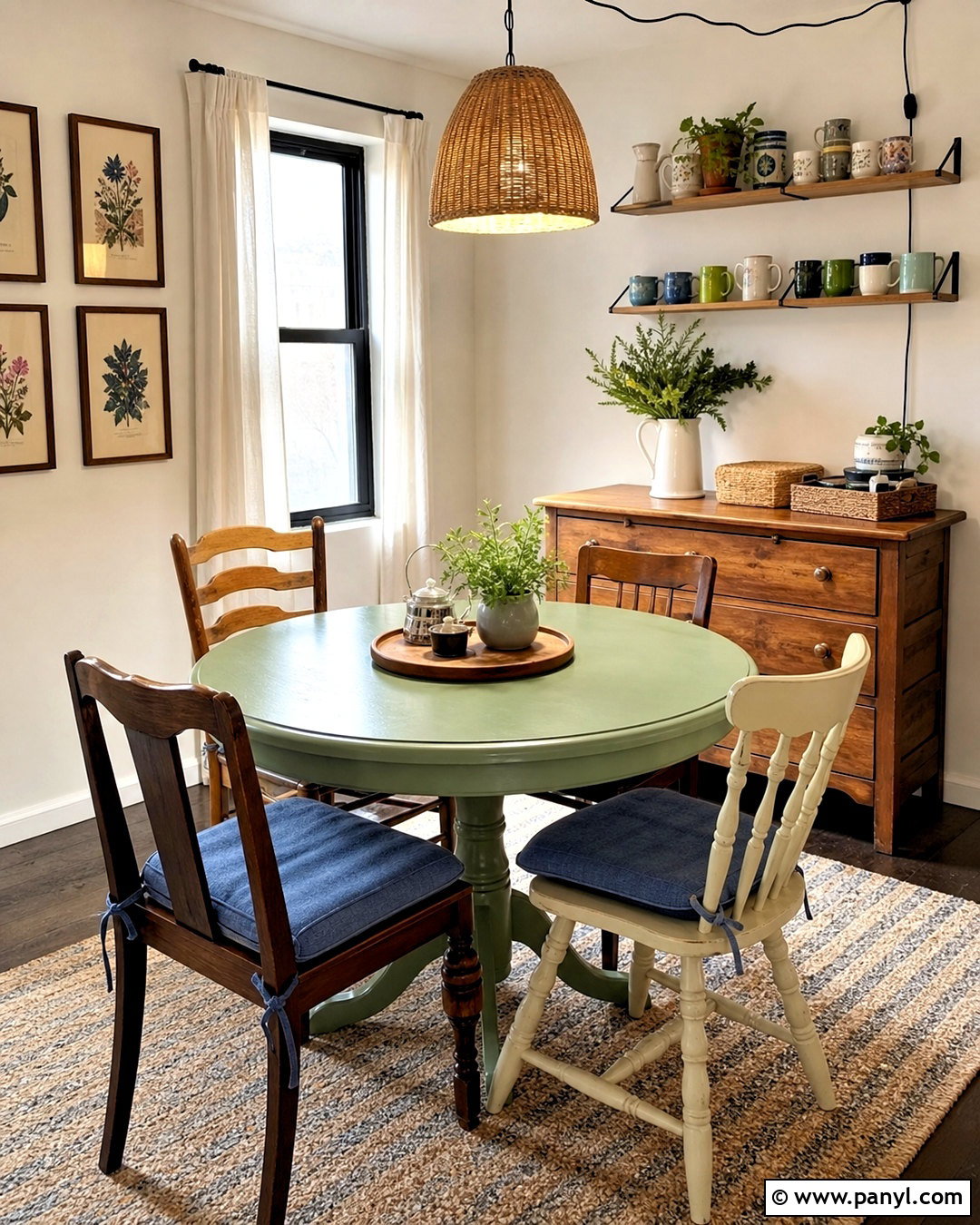
A beautiful budget tea room can come together through paint, secondhand furniture, and thoughtful editing. Start with warm white walls and define the dining area using an affordable flat-weave rug. Refinish a thrifted round table in natural wood or soft sage green, then pair it with mismatched chairs unified by matching seat cushions. Repurpose a small dresser as a tea cabinet, placing the kettle and tray on top while storing supplies in the drawers. Add inexpensive wall shelves for mugs and ceramic containers. Cotton curtains, framed printable artwork, and a plug-in pendant provide softness and personality without major construction. Choose one consistent palette, such as cream, green, and faded blue. The cohesive colors will make simple furnishings look deliberate, comfortable, and far more polished.
Conclusion:
The best tea room is not necessarily the largest or most expensive. It is a thoughtfully arranged space that makes preparing, serving, and enjoying tea feel easier and more meaningful. Begin with a layout that supports movement, then add comfortable seating, accessible storage, and lighting suited to different times of day. A focused color palette will help furniture, textiles, and teaware feel connected. You can create an elaborate traditional room, a modern retreat, or a compact tea nook using pieces you already own. Let your preferred tea ritual guide the practical details and overall atmosphere. With these 20 tea room design ideas, any available corner can become a calm and welcoming part of your home.

Related Ideas and Inspiration:
Leave a Reply