
A tired buffet can become the most memorable piece in a dining room, entryway, or living space. These **20 sideboard makeover ideas** explore complete looks rather than quick decorative fixes. You will find painted finishes, restored wood, textured doors, updated legs, new tops, and smart interior details. Each makeover also considers hardware, surrounding colors, wall decor, lighting, and accessories, so the finished sideboard feels connected to the room. Before starting, clean the piece thoroughly, repair loose joints, remove hardware, and choose preparation products suited to its existing finish. Allow paint, stain, and protective coatings to cure fully before replacing doors or loading shelves. Whether your furniture is vintage, inexpensive, or simply outdated, use these complete 20 sideboard makeover ideas.
1. Painted Black Sideboard
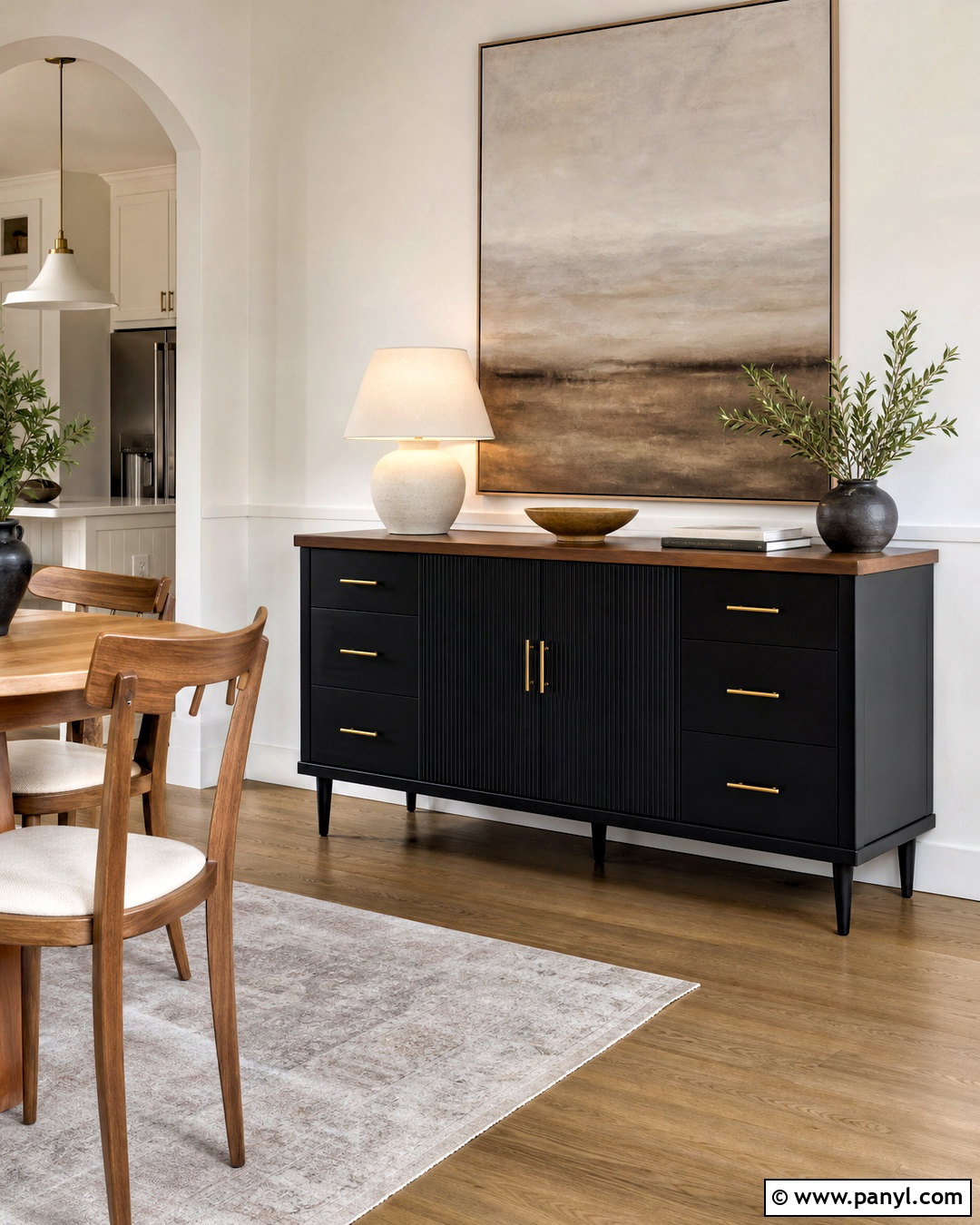
A matte black finish can turn a bulky, dated sideboard into a clean focal point. Paint the body, doors, and drawer fronts the same soft black to simplify carved details or mixed wood tones. Keep the top natural if the grain is attractive, or paint it for a seamless modern look. Slim brushed brass pulls add warmth, while tapered black legs create a lighter profile. Style the finished piece against a warm white wall with a large neutral artwork, a cream ceramic lamp, and one leafy branch. A pale rug and oak dining table will prevent the arrangement from feeling heavy. Use a durable furniture enamel or protective topcoat on the surface, especially if the sideboard will hold serving dishes or everyday items.
2. Two Tone Sideboard
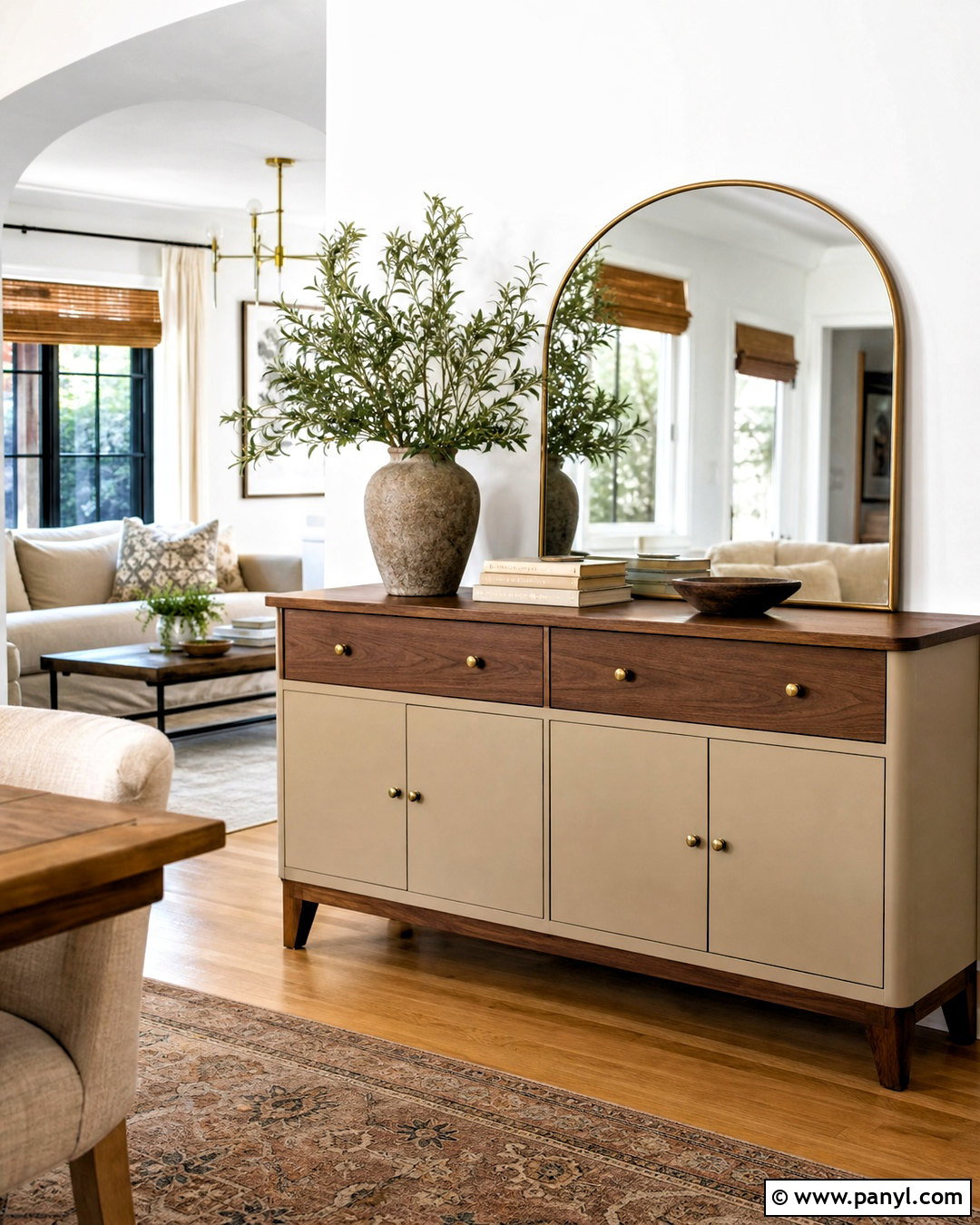
Combining paint with exposed wood gives an old sideboard a balanced, custom appearance. Strip and refinish the top and selected drawer fronts in a medium walnut stain, then paint the cabinet body a warm greige. This approach highlights attractive grain without allowing dark wood to dominate the room. Add simple antique brass knobs and low wooden legs stained to match the top. Inside, line drawers with a small cream-and-tan pattern for a finished touch. Complete the look with a rounded mirror, a stoneware vase, and stacked neutral books. The warm palette works especially well beside beige upholstery, natural oak flooring, and woven shades. Keep the division between painted and stained areas intentional so the design looks planned rather than partially completed.
3. Natural Wood Sideboard Restoration
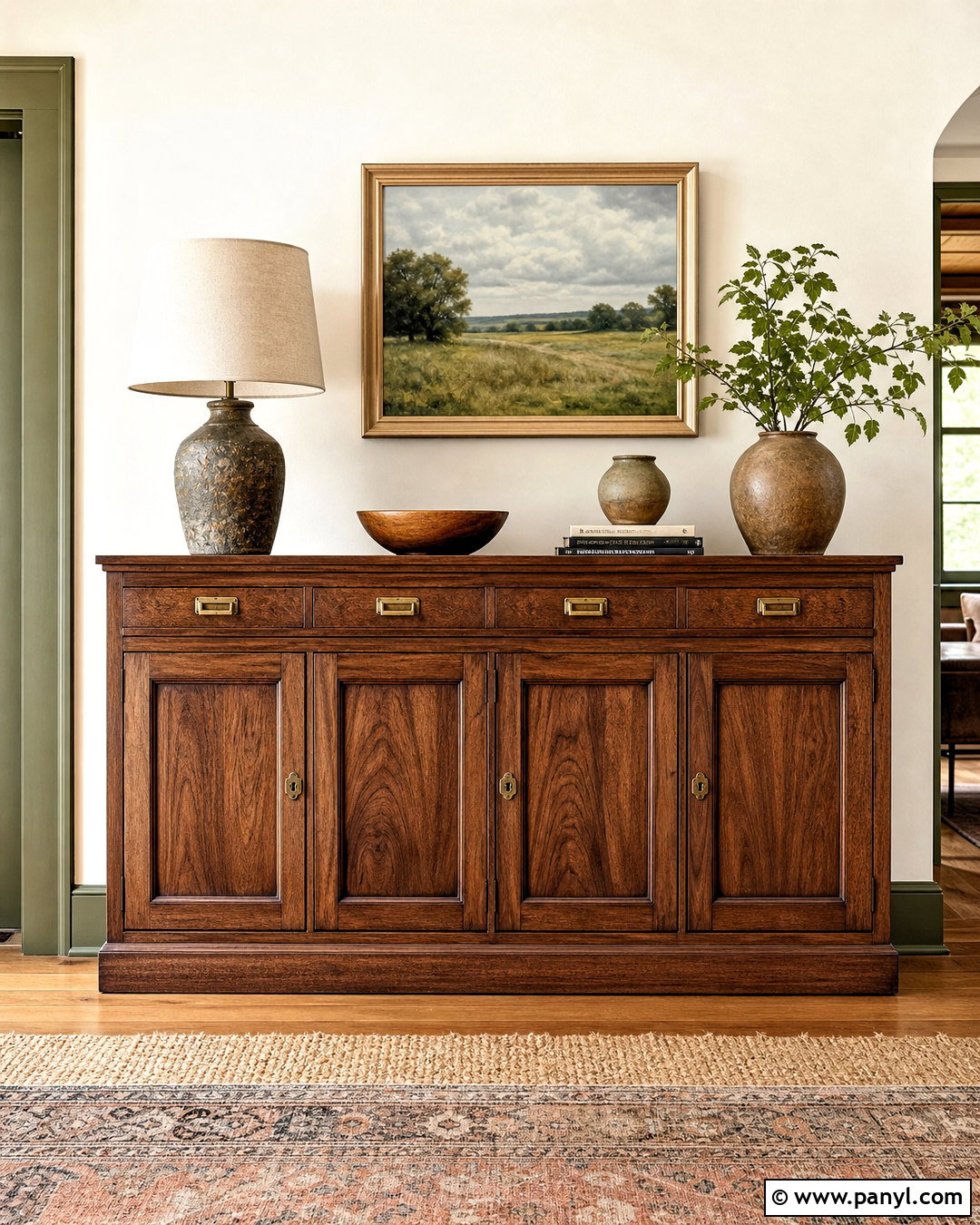
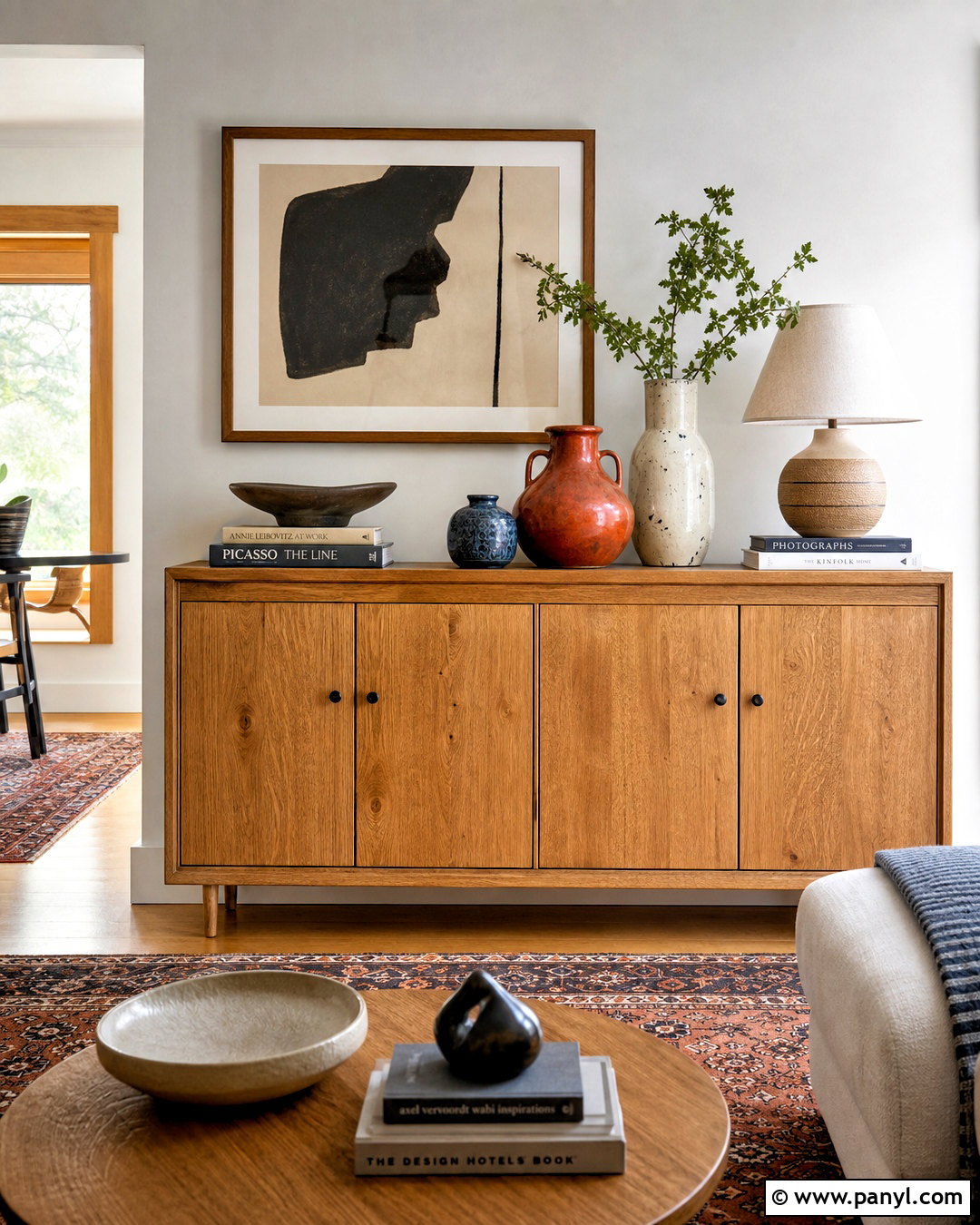
Sometimes the best makeover is a careful return to natural wood. Remove the old finish gradually, repair damaged veneer, and sand only as much as the material allows. A warm clear finish or light walnut stain can revive the grain while preserving the sideboard’s original character. Replace missing hardware with understated aged-brass pulls that suit the furniture’s period. Keep the legs and door fronts simple rather than adding trendy surface details. Place the restored sideboard against a soft ivory or muted olive wall, then add a linen-shaded lamp, framed landscape art, and handmade pottery. Natural textures such as wool, jute, and woven baskets support the relaxed look. This complete scheme feels warm and collected without making a well-built vintage piece look unnecessarily new.
4. Sage Green Sideboard
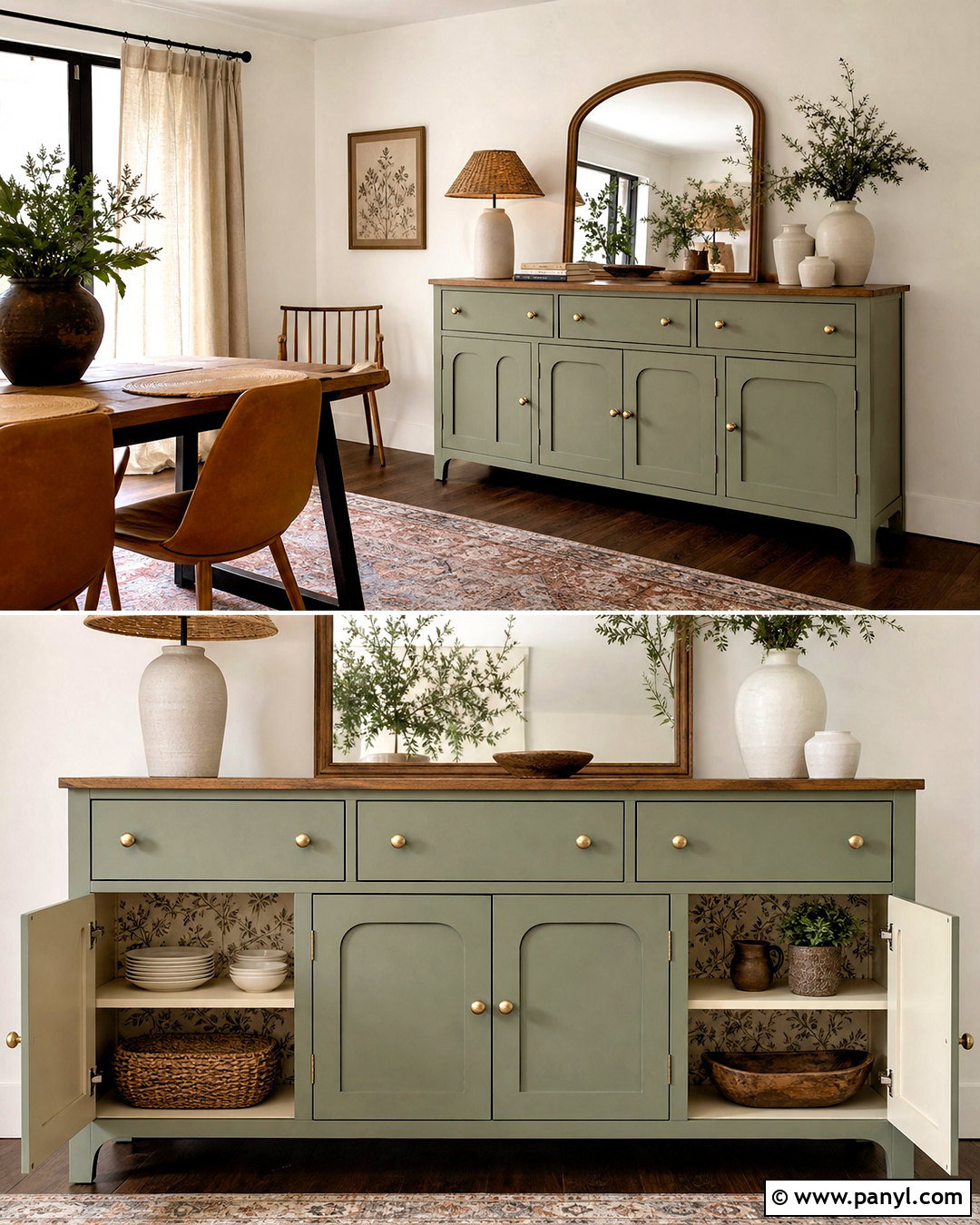
Soft sage green creates a calm sideboard makeover that works beautifully with warm woods and neutral rooms. Cover the cabinet, doors, and base in a muted green furniture paint with a satin or low-luster finish. Leave a solid wood top exposed for contrast, or add a medium oak stain if the existing color looks too orange. Small aged-brass knobs bring warmth without overpowering the gentle palette. For the interior, use cream paint and botanical drawer liner to make storage feel clean and coordinated. Finish the setting with an arched wood mirror, off-white ceramic vessels, and a table lamp with a woven shade. Nearby linen curtains, tan dining chairs, and a faded patterned rug will connect the green sideboard to the entire space.
5. Navy Blue Sideboard
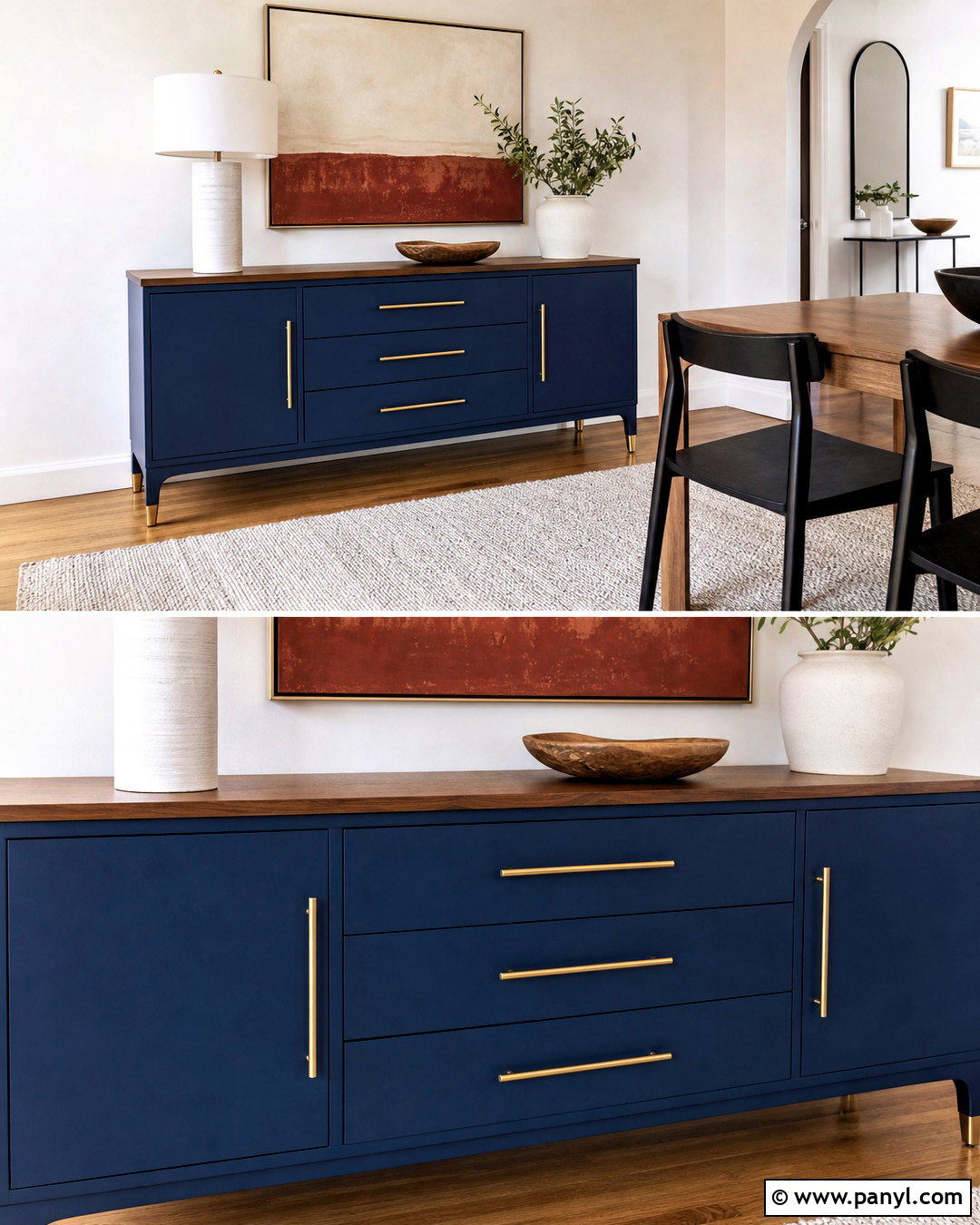
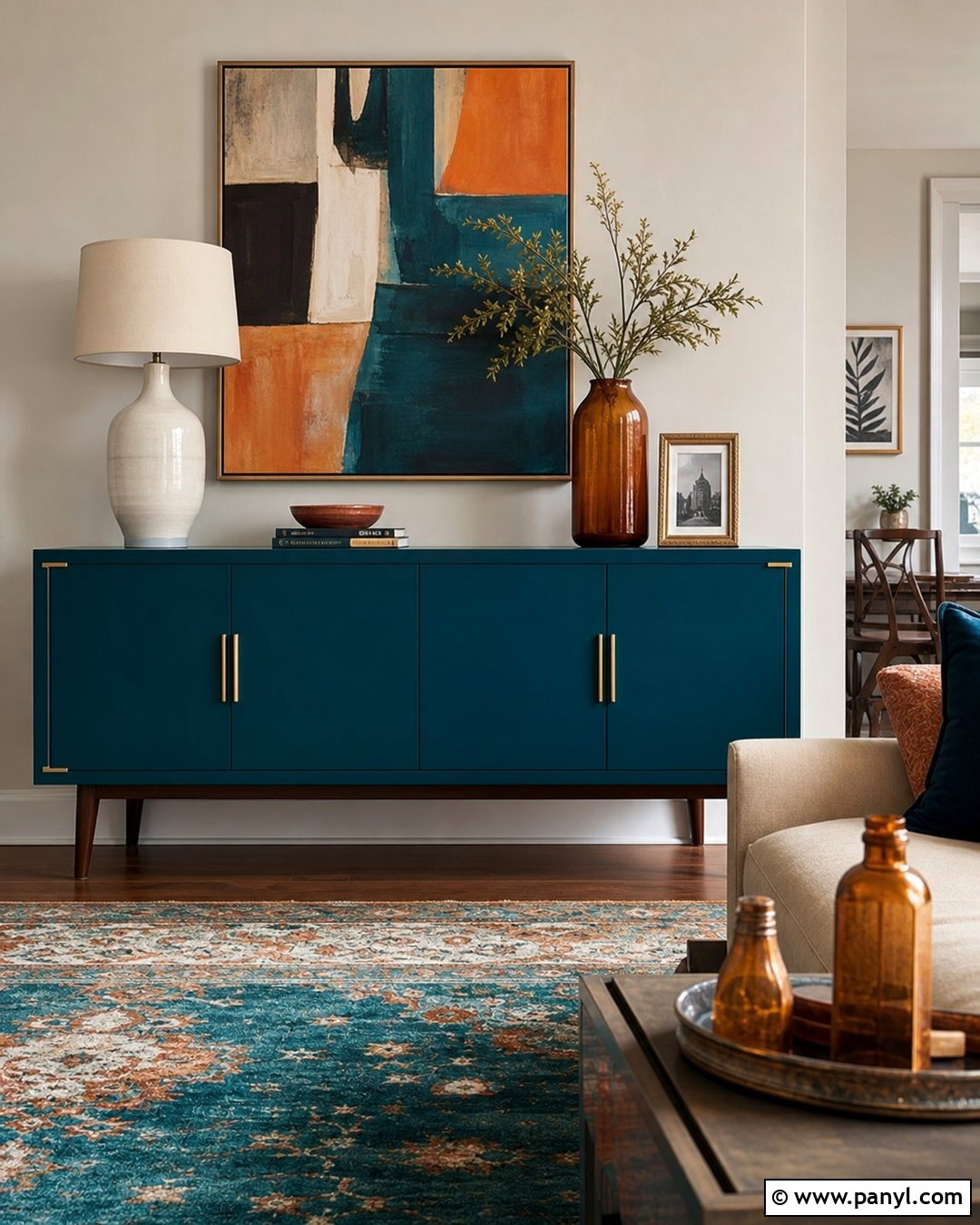
Deep navy paint gives a traditional sideboard a sharper, more polished identity. Use the color across the cabinet and doors, then emphasize the structure with long brushed-brass handles and short brass-capped legs. A natural walnut top adds richness and keeps the blue from reading as flat. Inside the cabinets, a pale blue-gray finish makes stored dishes easier to see. Style the sideboard beneath a large abstract print containing ivory, rust, and touches of blue. Add a white stone lamp and a low wooden bowl rather than filling every inch of the surface. Warm white walls and medium oak flooring provide welcome contrast. This makeover is particularly effective on pieces with simple panel doors, balanced proportions, and enough width to anchor a dining room wall.
6. White Farmhouse Sideboard
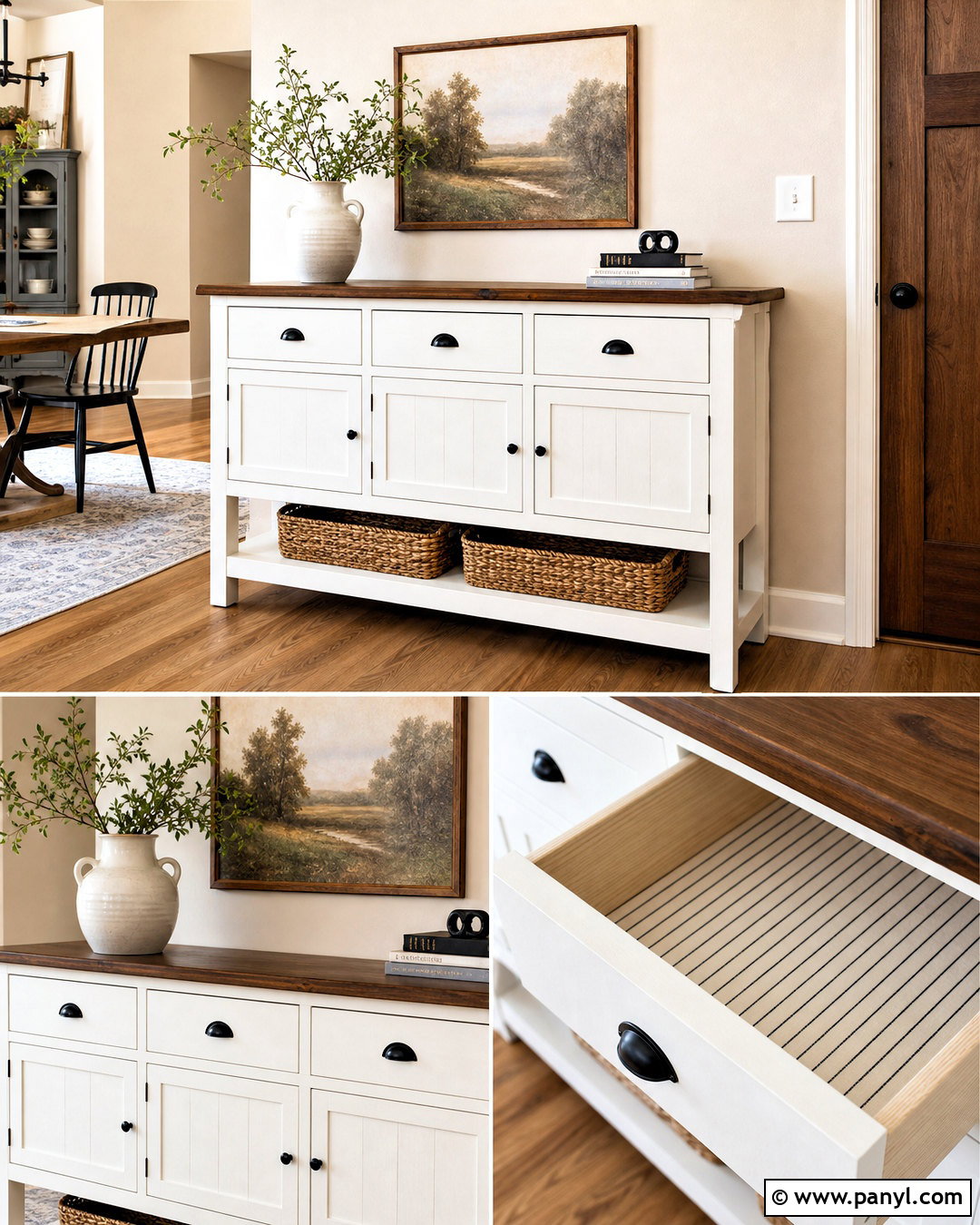
A warm white sideboard can brighten a casual dining room without looking cold or overly polished. Choose a creamy white rather than a blue-toned shade, and apply it evenly across the cabinet while leaving the stained wood top visible. Black iron cup pulls and simple knobs create practical contrast. If the doors have recessed panels, add narrow wood trim to strengthen their farmhouse character. Store serving pieces in woven baskets on a lower open shelf, and use washable striped liner inside the drawers. Above the sideboard, hang a large wood-framed mirror or understated landscape painting. Complete the arrangement with a crock-style vase, olive branches, and a linen table runner. Light oak floors and soft beige walls will keep the overall room relaxed and cohesive.
7. Fluted Wood Sideboard
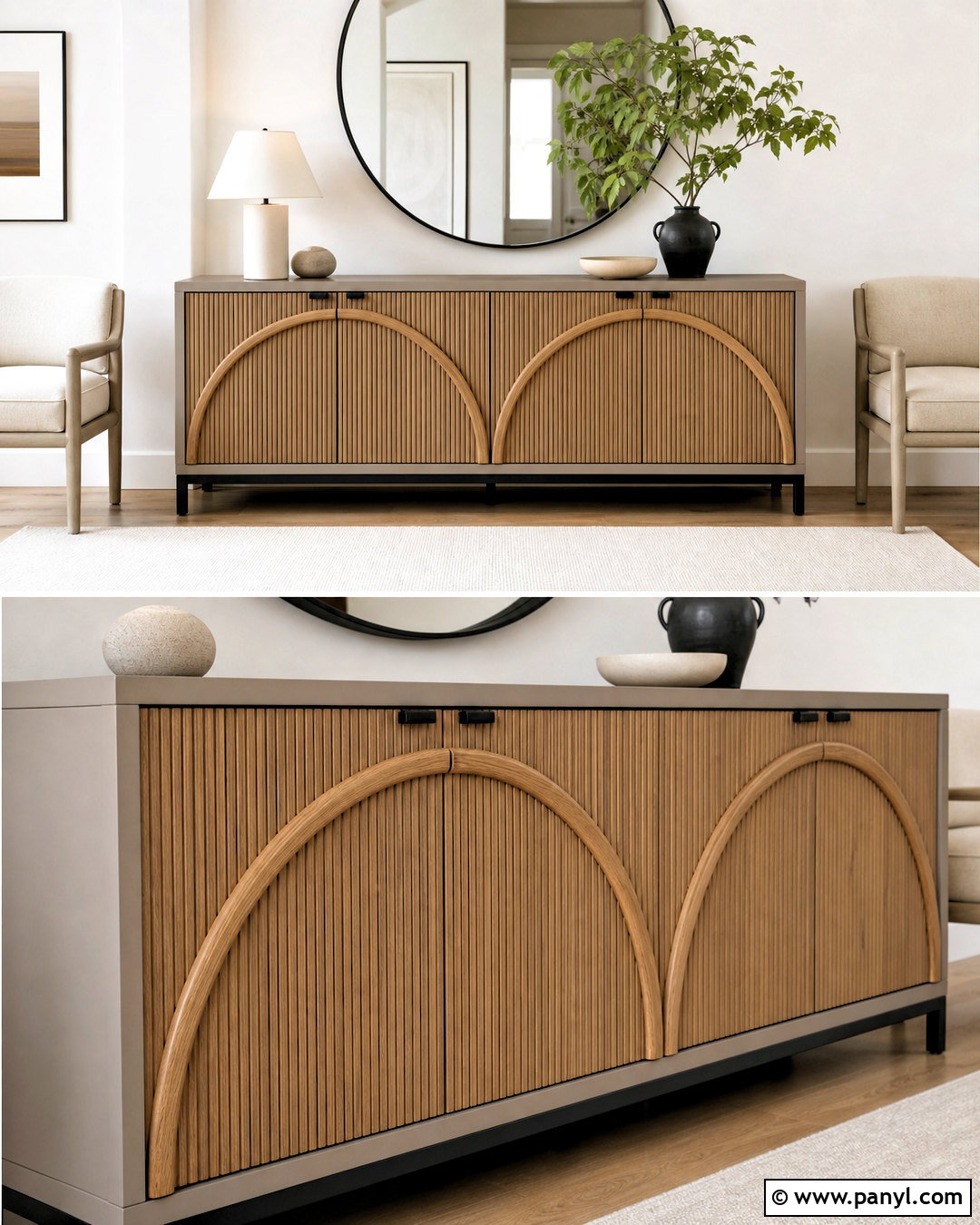
Vertical wood fluting gives plain cabinet doors dimension while maintaining a streamlined appearance. Attach evenly spaced half-round molding or narrow wood strips to each flat door, carefully planning the spacing around hinges and openings. Finish the fluted fronts in a warm oak tone, then paint the surrounding cabinet a soft taupe for subtle contrast. Minimal black pulls and a slim black base keep the makeover contemporary. Pair the sideboard with a large round mirror, an off-white sculptural lamp, and only a few ceramic objects so the texture remains visible. A cream wall, light wood floor, and neutral upholstered chairs create an airy background. Run every strip in the same direction and trim the edges cleanly so the finished doors appear professionally made.
8. Cane Door Sideboard
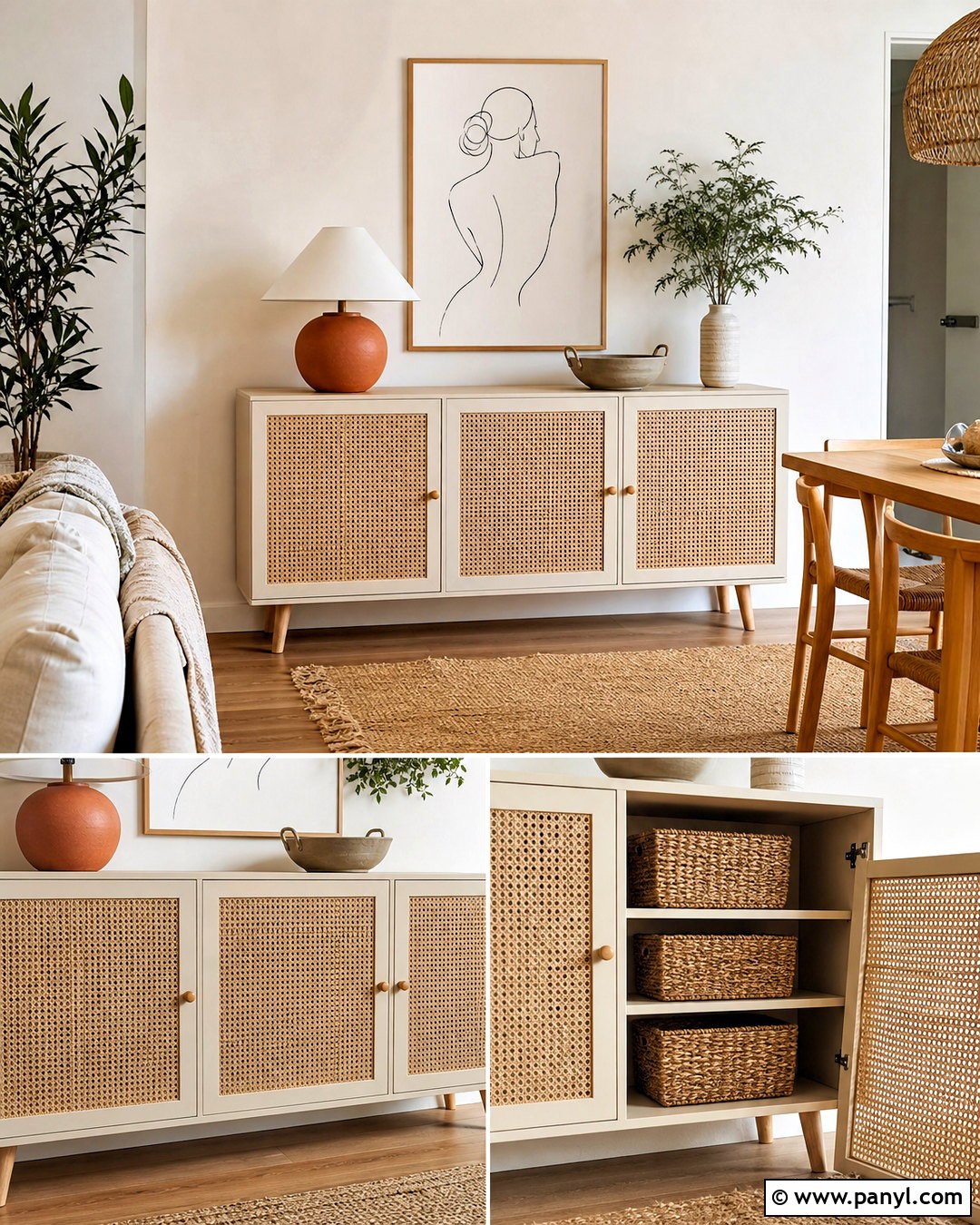
Cane webbing can make a heavy sideboard feel lighter and more relaxed. Remove the center portions of suitable framed doors, then secure natural cane panels neatly from the back. Paint the cabinet surround a warm off-white or sandy beige, leaving the cane in its natural honey color. Rounded oak knobs and tapered wooden legs reinforce the organic palette. Because woven doors reveal partial shadows, use matching baskets or neutral storage boxes inside to reduce visual clutter. Style the top with a terracotta lamp, framed line art, and a broad ceramic bowl. This complete look pairs naturally with jute rugs, linen upholstery, and pale wood furniture. Keep the cane pulled evenly and finish rough door openings carefully for a clean, durable result.
9. Wallpaper Sideboard
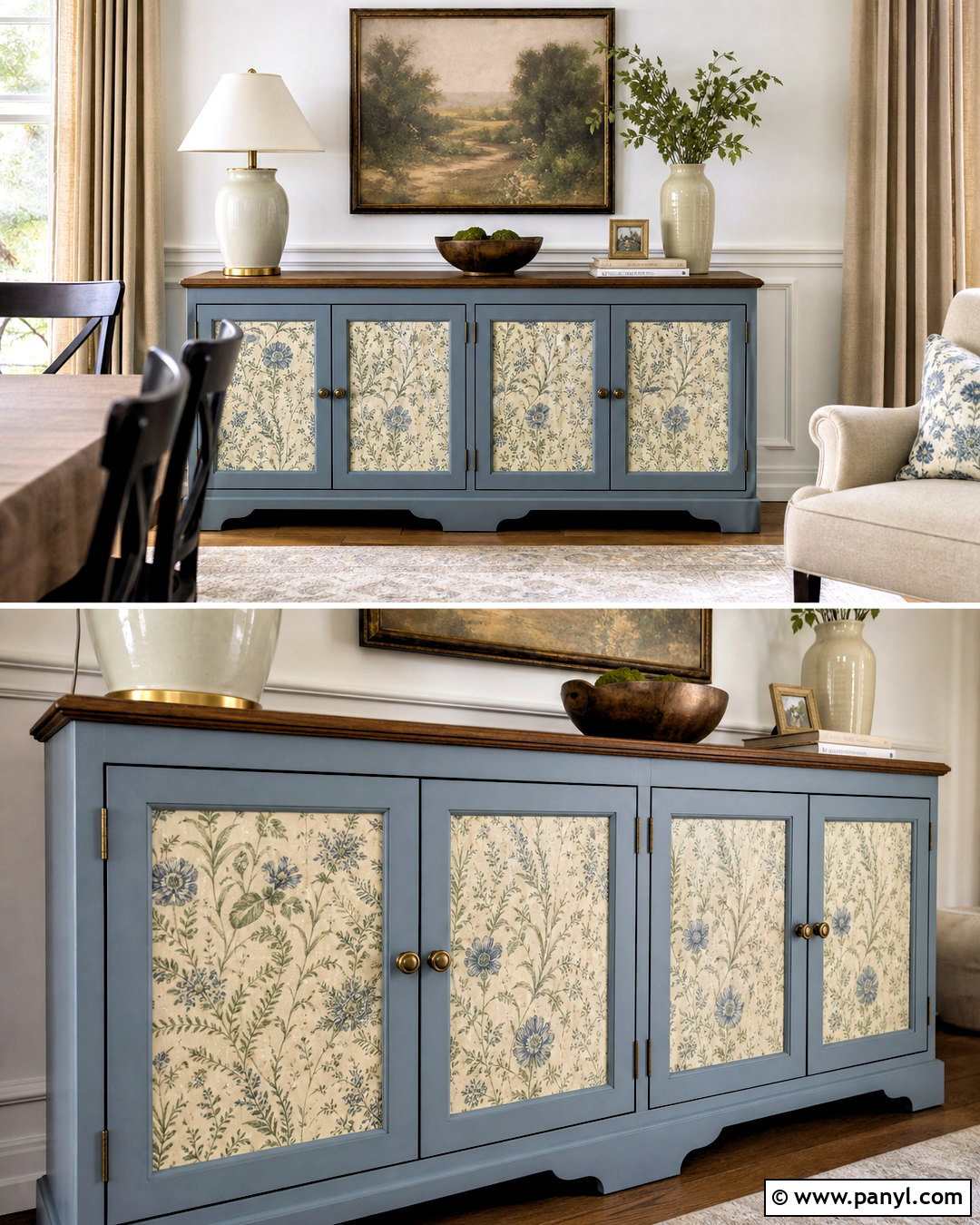
Patterned wallpaper offers a striking way to update recessed doors without covering the entire piece. Paint the sideboard a dusty blue-gray, then apply a small botanical wallpaper to each door panel. Choose a print containing cream, muted green, and touches of blue so the pattern blends with the frame. Add simple antique-brass knobs and retain a medium wood top for warmth. Use leftover paper to line the drawers or the interior back panel, creating a coordinated detail that appears when the doors open. In the room, balance the pattern with plain curtains, solid upholstery, and minimal wall art. A ceramic lamp and one tall vase are enough for the top. Seal vulnerable paper edges and keep the design centered across adjoining doors.
10. Decoupage Sideboard
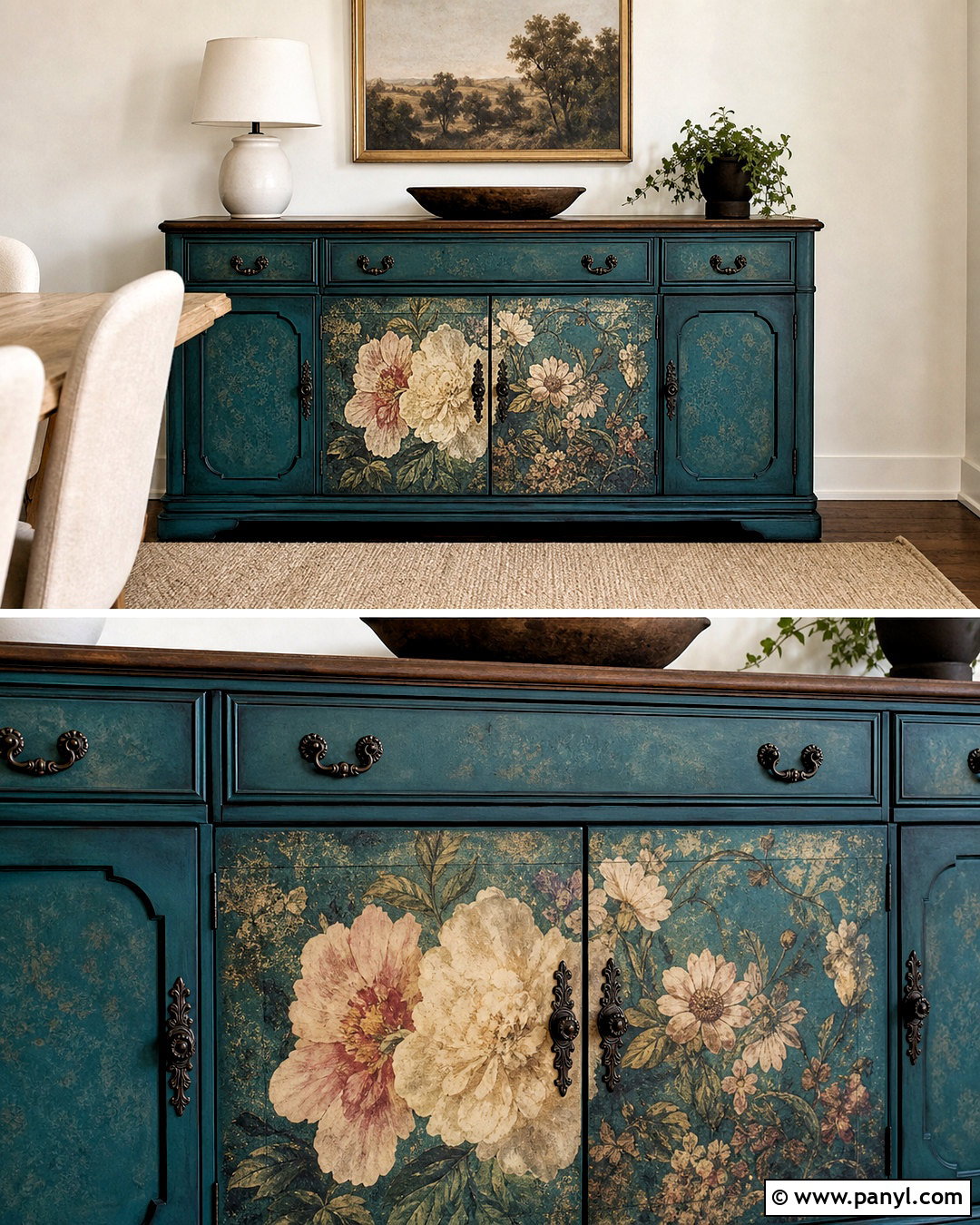
A decoupage makeover can transform a basic sideboard into an artistic statement without making the room feel chaotic. Start with a muted charcoal, deep teal, or warm gray painted base. Apply an oversized floral or landscape paper design across the central doors, positioning the main image before cutting around door gaps. Blend the paper edges into the painted frame with related colors for a softer transition. Dark bronze hardware and a stained wood top will ground the detailed artwork. Keep nearby furniture simple, using solid linen dining chairs, a neutral rug, and warm white walls. Style the surface with one lamp and a low bowl so the decorated doors remain the focus. Protect the finished design with compatible clear coats applied in thin, even layers.
11. Color Block Sideboard
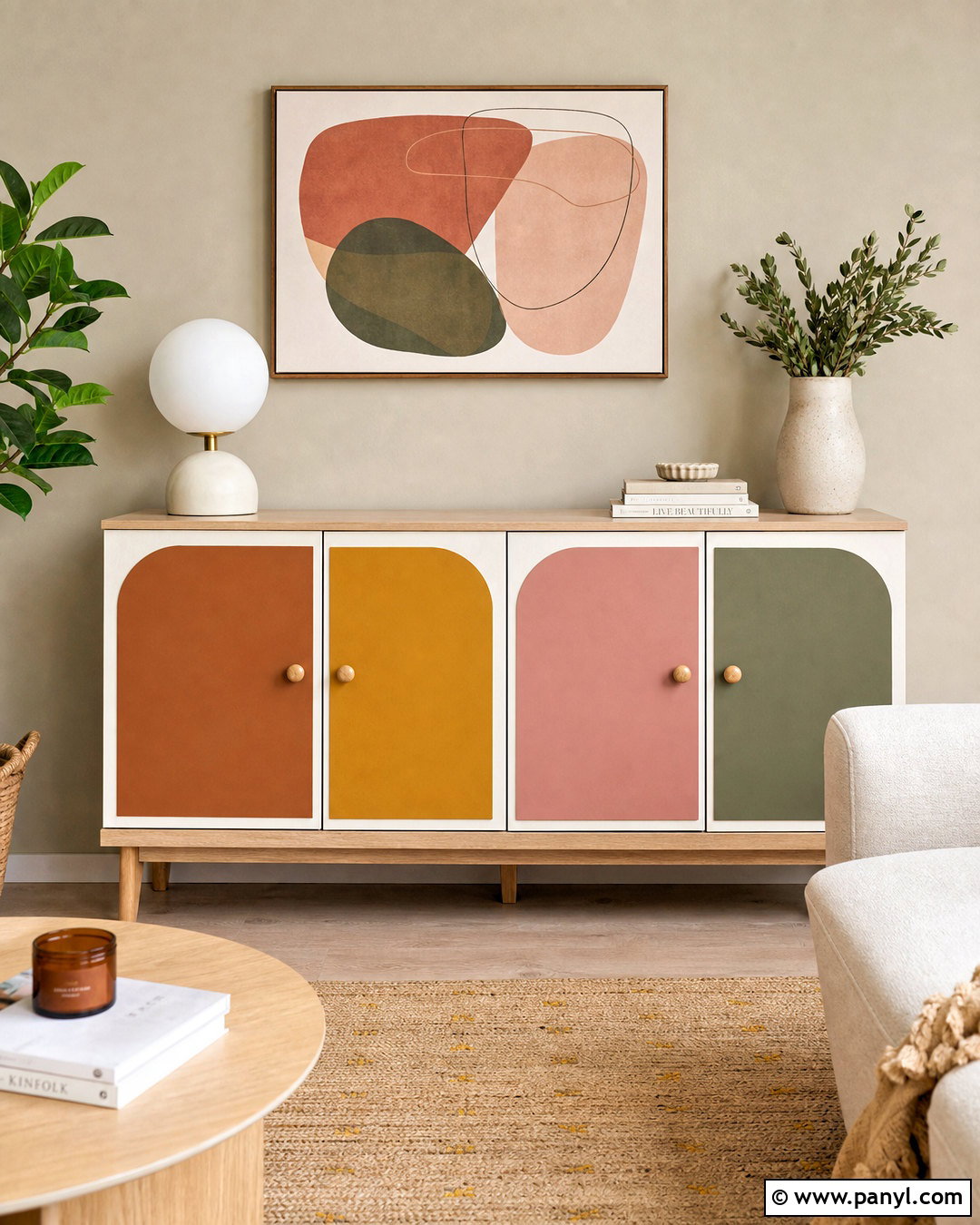
Color blocking gives a flat-front sideboard a playful update with clean, manageable geometry. Paint the cabinet frame warm white, then divide the doors into broad sections of clay, mustard, dusty rose, and muted olive. Limit the palette to three or four coordinated colors and repeat shapes across adjacent doors for a connected composition. Small round wood knobs keep the pattern from becoming too busy. Add natural oak legs and leave the top in a pale wood finish to balance the stronger colors. Place the sideboard against a soft beige wall with simple abstract art, a white globe lamp, and one solid-colored vase. The surrounding room should remain restrained, using neutral upholstery and uncomplicated textiles. Crisp taped edges are essential for making this cheerful makeover look intentional.
12. Geometric Painted Sideboard
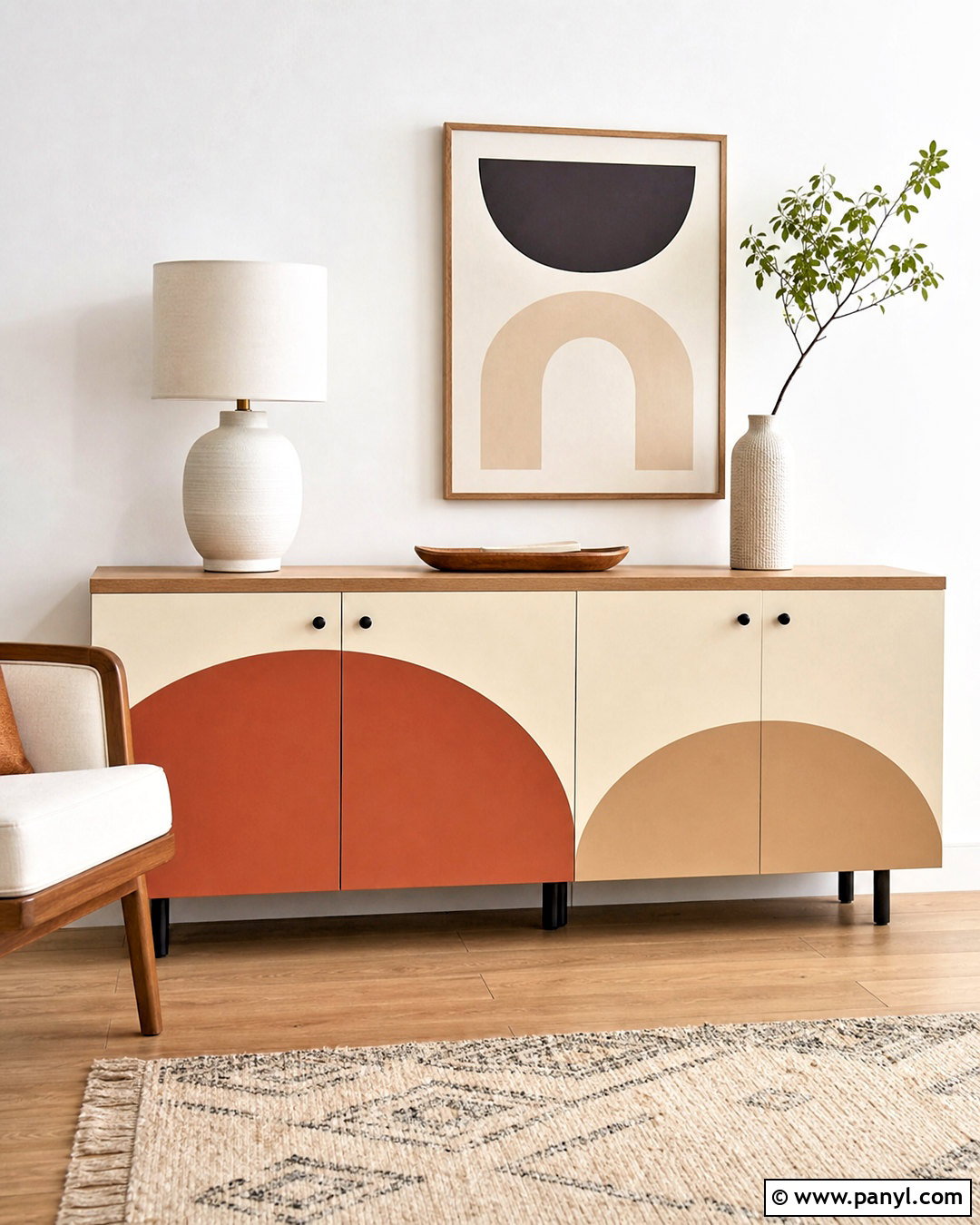
A geometric pattern can give an inexpensive sideboard a more architectural presence. Paint the entire piece a warm ivory, then create oversized arches or diagonal shapes across the doors in terracotta and muted tan. Continue each shape across door seams so the front reads as one complete composition when closed. Choose small matte-black knobs that do not interrupt the pattern. A light oak top and short black metal legs add structure. Above the piece, hang one large minimalist print rather than competing artwork. Finish the surface with a rounded ceramic lamp, a shallow wooden tray, and a single branch. Use the same terracotta color in a nearby rug or cushion to connect the makeover with the room. Measure every line before applying painter’s tape.
13. Mid Century Sideboard
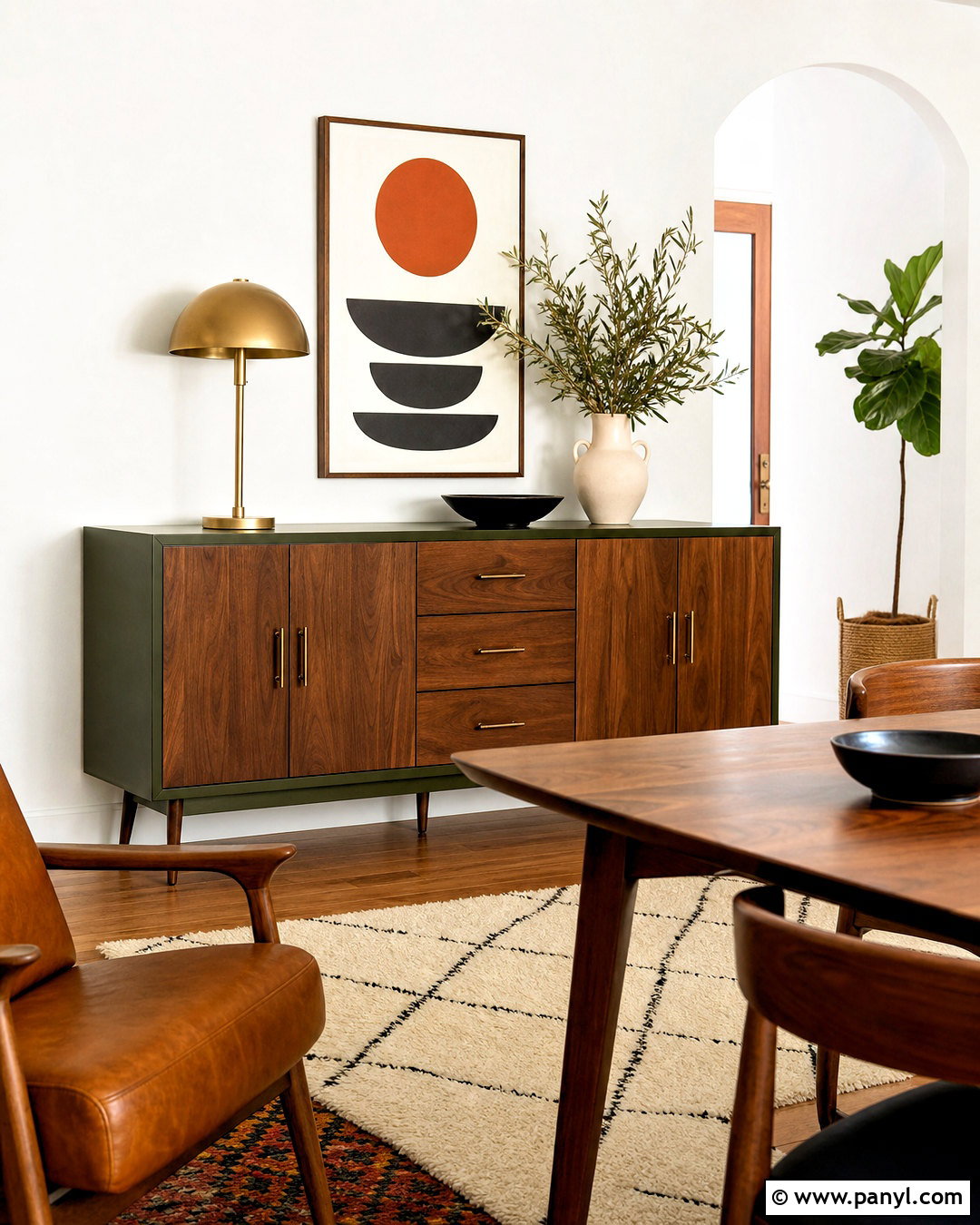
Give a boxy sideboard mid-century character by refining its proportions and emphasizing warm wood. Restore the drawer and door fronts in walnut, then paint the outer case a deep olive or charcoal brown. Replace a heavy plinth with four tapered wooden legs positioned securely beneath the structural corners. Slim brass handles or small round knobs will complement the clean lines. Keep the top mostly open, displaying a dome-shaped lamp, a low ceramic bowl, and one framed graphic print leaning against the wall. A cream rug, cognac leather chair, and walnut dining table can repeat the makeover’s warm tones. Avoid distressing or overly decorative trim. Smooth finishes, balanced spacing, and functional hardware are what make the completed sideboard feel convincingly mid-century.
14. Vintage Distressed Sideboard
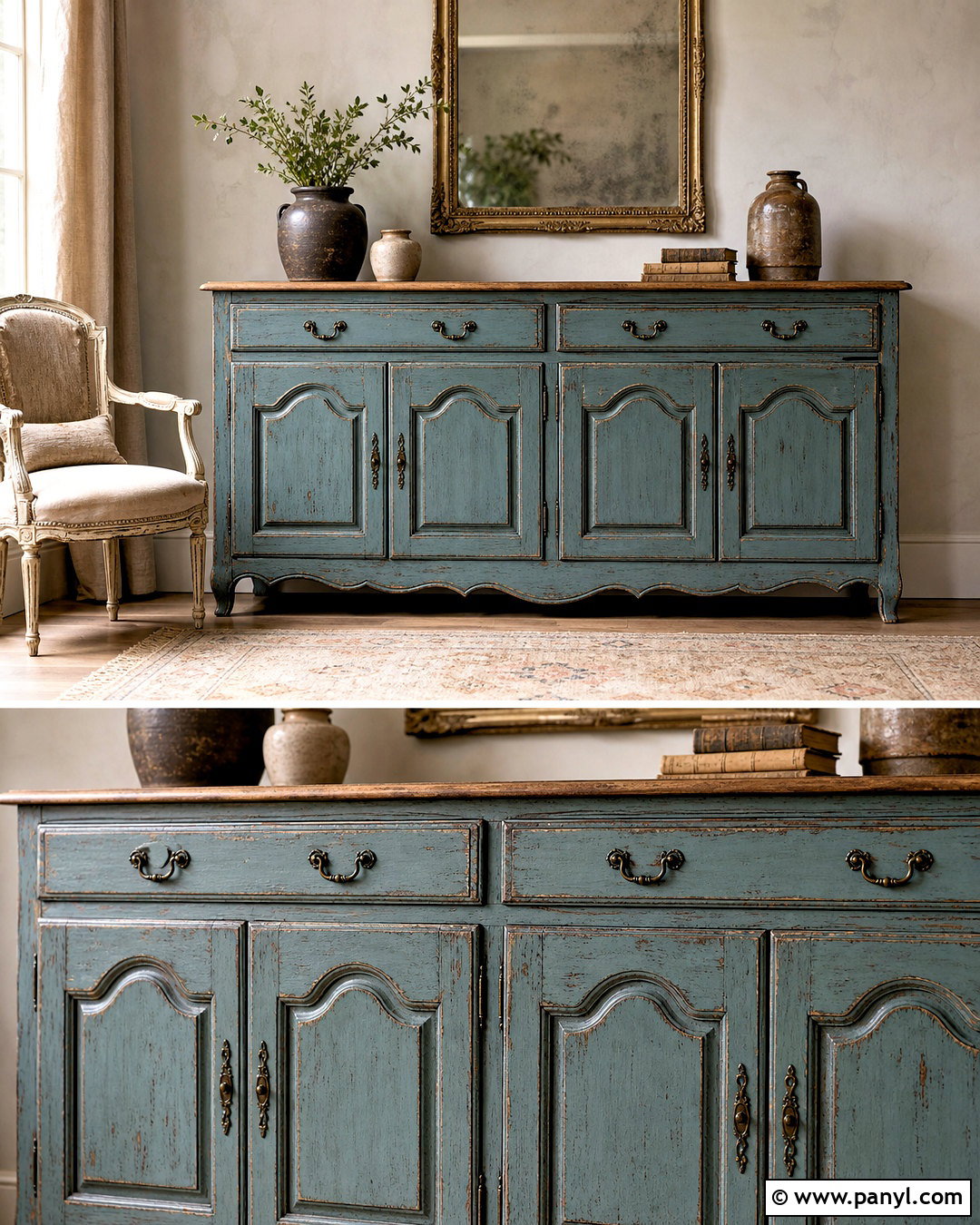
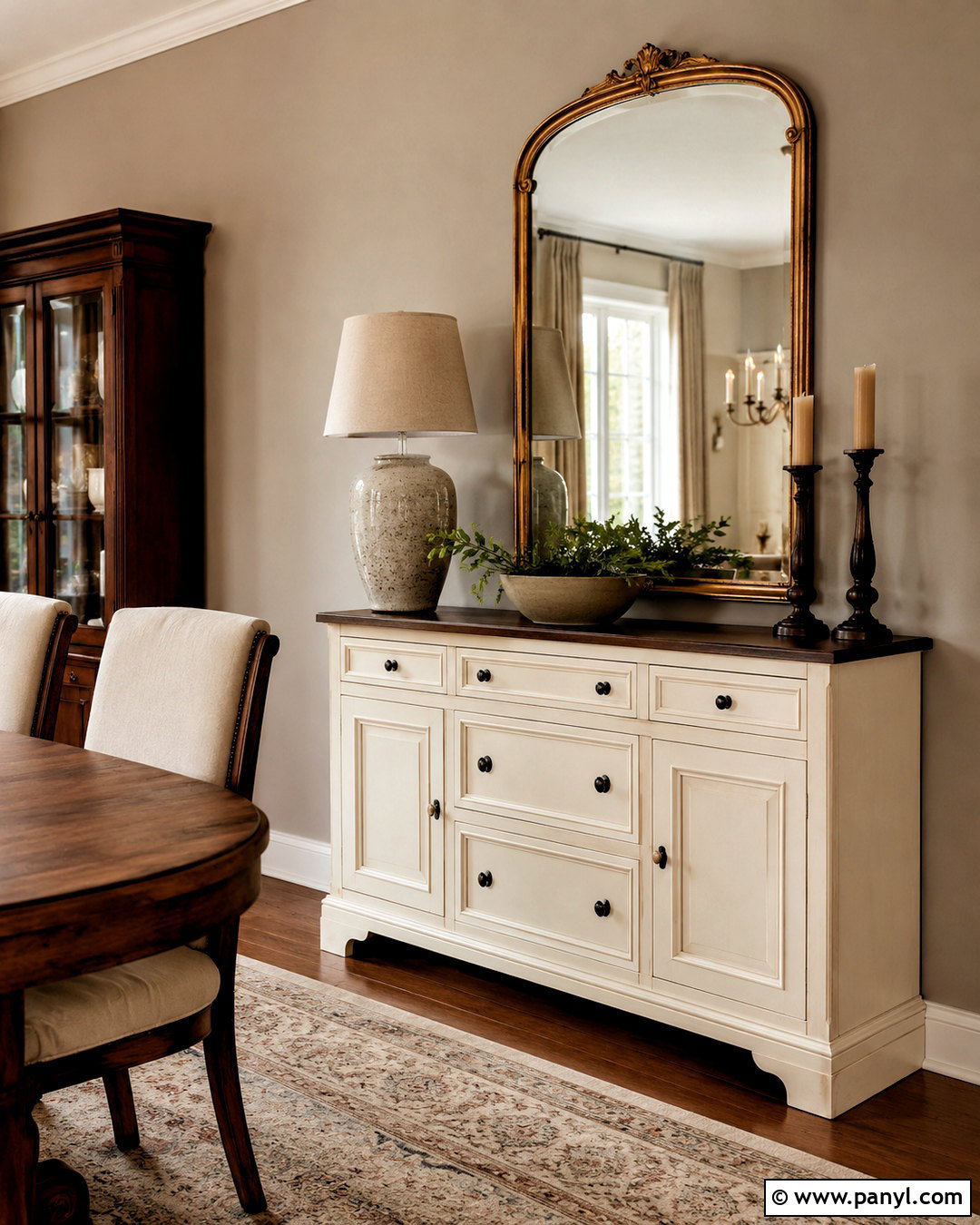
A gently distressed finish suits a sideboard with carved edges, turned feet, or traditional panel doors. Paint the piece a muted blue-green, soft putty, or faded black, then reveal small amounts of underlying wood along corners and natural touch points. Keep the wear restrained so the furniture looks aged rather than damaged. Dark antique-brass pulls and a stained wood top complete the vintage character. Inside, add warm cream paint and a subtle floral shelf liner. Place the sideboard against a light plaster-colored wall with an old-style framed mirror, stacked books, and textured stoneware. A faded rug and linen curtains soften the room around it. Finish with clear wax or a suitable low-sheen protector, paying extra attention to the frequently used top and drawer edges.
15. Reeded Glass Sideboard
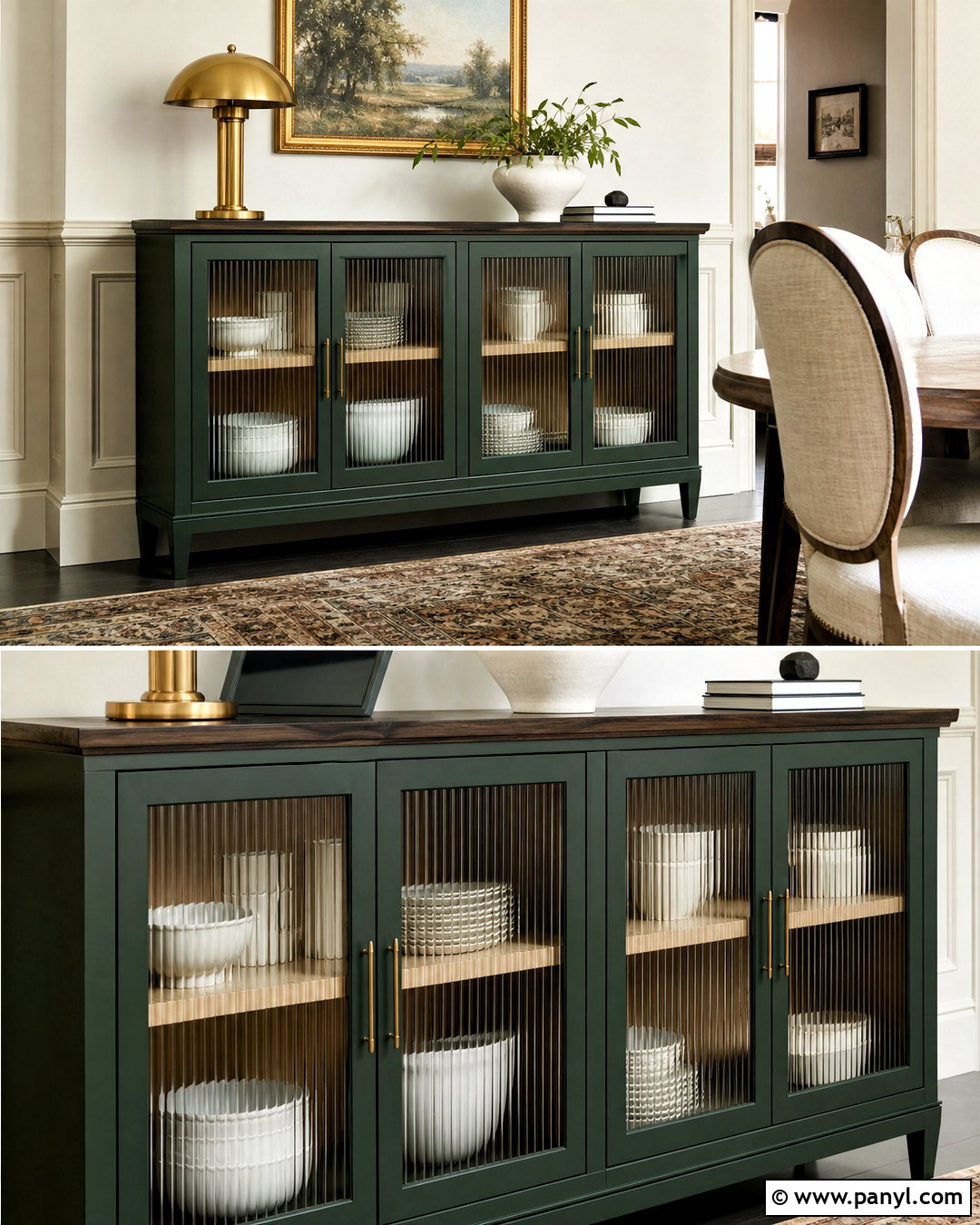
Reeded glass doors create a refined update while softly obscuring stored items. Replace suitable clear glass or thin door inserts with vertically textured glass panels, keeping the original frames if they are sturdy. Paint the cabinet deep forest green and add narrow aged-brass handles for a classic contrast. A dark stained wood top can connect the sideboard to a traditional dining table, while slim legs prevent the piece from feeling too formal. Inside, paint the shelves warm ivory and organize dishes by color for a calm appearance behind the glass. Style the top with a brass lamp, white ceramic bowl, and understated artwork. Soft neutral walls, linen chairs, and a patterned wool rug will create a complete dining space that feels layered but still practical.
16. Floating Sideboard
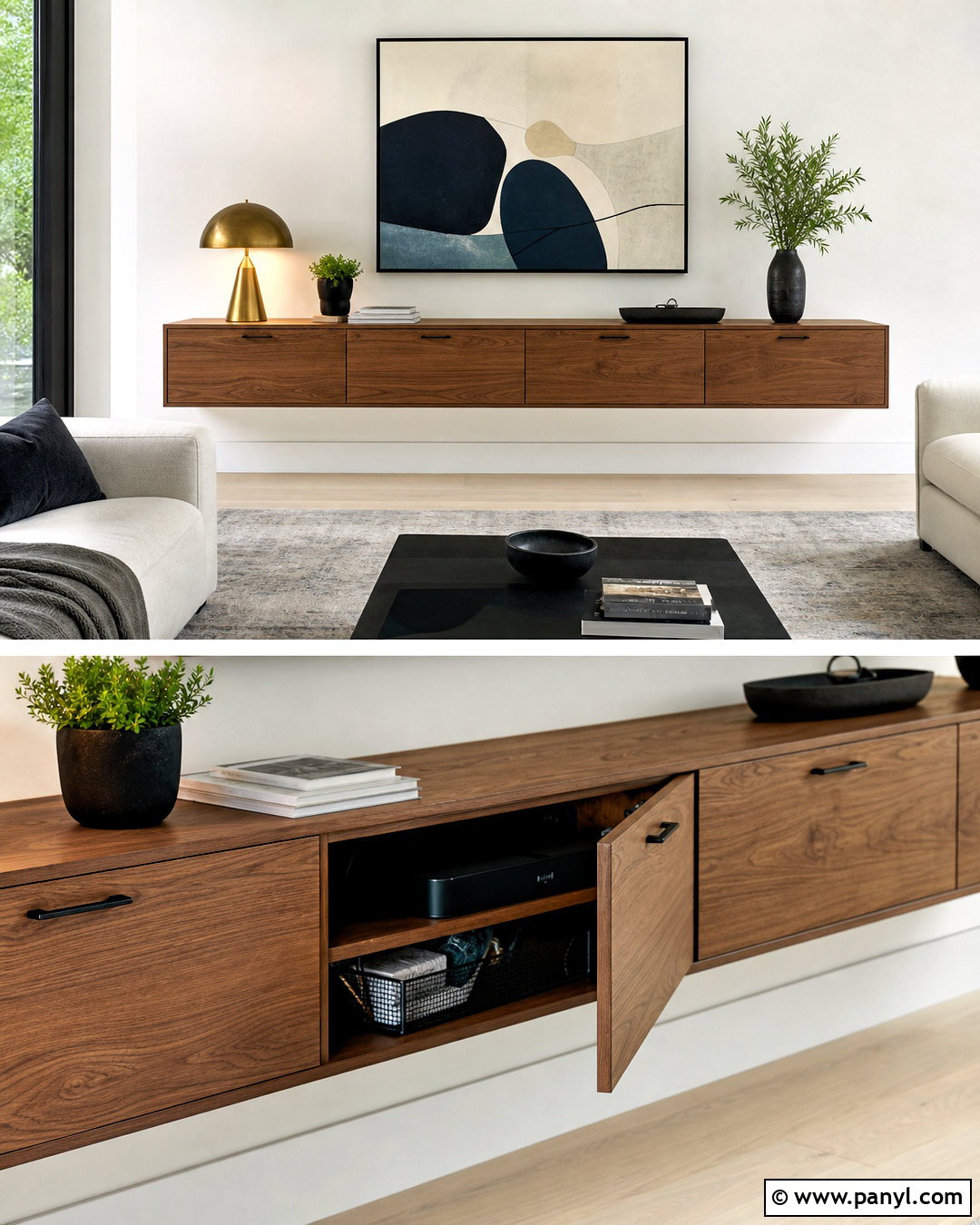
Mounting a low sideboard to the wall gives it a lighter, built-in appearance and frees the floor visually. Choose a structurally suitable cabinet with simple doors, remove the existing legs, and use secure wall-mounted support appropriate for the loaded weight. Finish the exterior in warm oak veneer or a medium walnut tone, then add flat black pulls. Keep the top streamlined with one sculptural lamp, a tray, and a small plant. A large framed artwork centered above the cabinet will balance its long horizontal shape. Paint the wall soft white and use pale flooring to emphasize the floating effect. Hide electronics and cords inside where ventilation allows. The finished arrangement works especially well in a modern living room as practical media and display storage.
17. Sideboard With New Legs
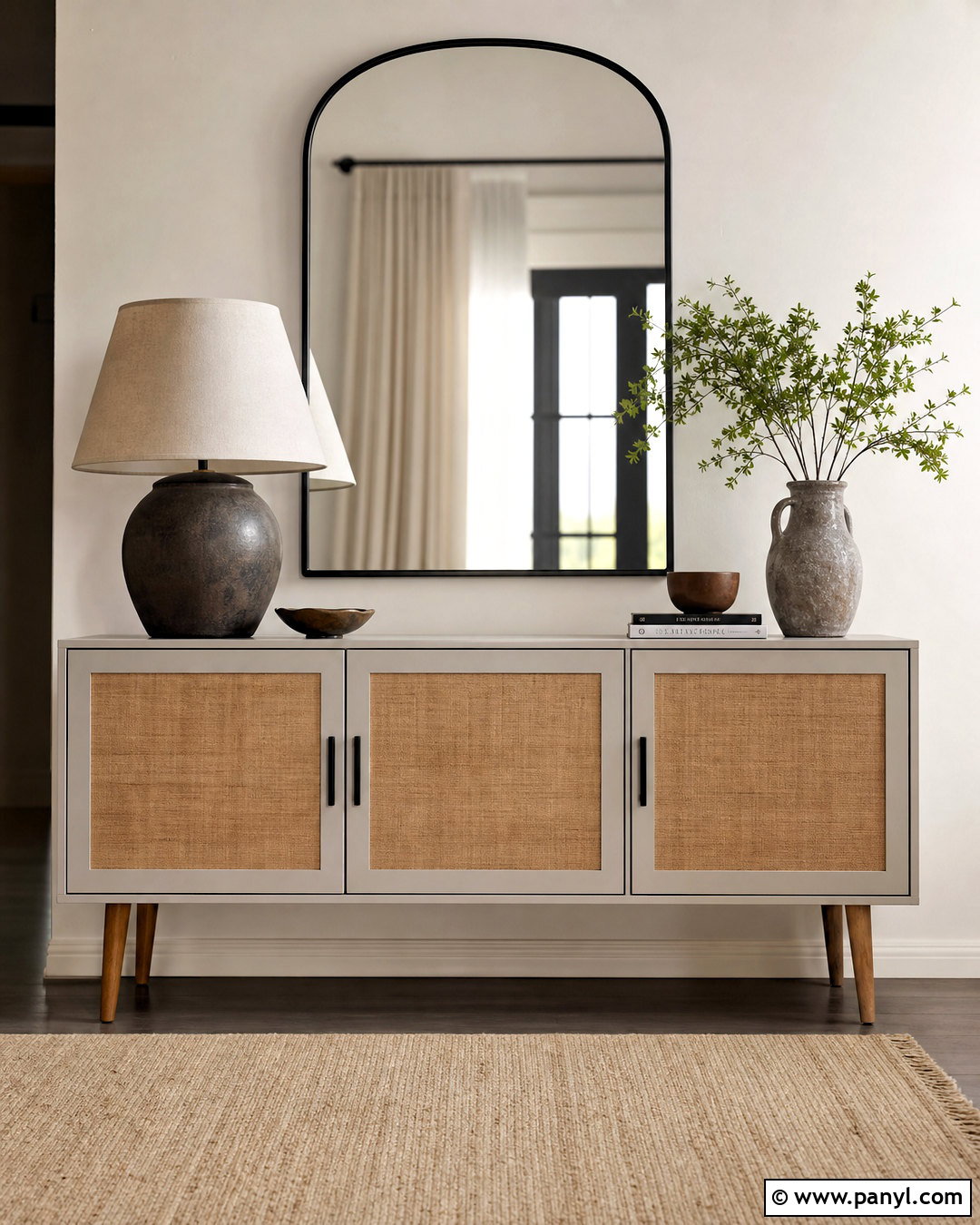
Changing the base can dramatically improve the proportions of a squat or dated sideboard. Remove a bulky plinth and replace it with tapered oak legs, rounded bun feet, or a slim black metal frame, depending on the cabinet’s shape. Reinforce the bottom before attaching the new support, especially when the sideboard will hold heavy dishes. Paint the body a soft greige and keep the doors in natural wood for a balanced transitional look. Match the hardware to the new base with matte-black pulls or warm wood knobs. Complete the setting with a rounded mirror, a linen-shaded lamp, and two pottery pieces. Leaving visible space beneath the cabinet makes the room feel more open and allows the redesigned silhouette to stand out.
18. Sideboard With Marble Top
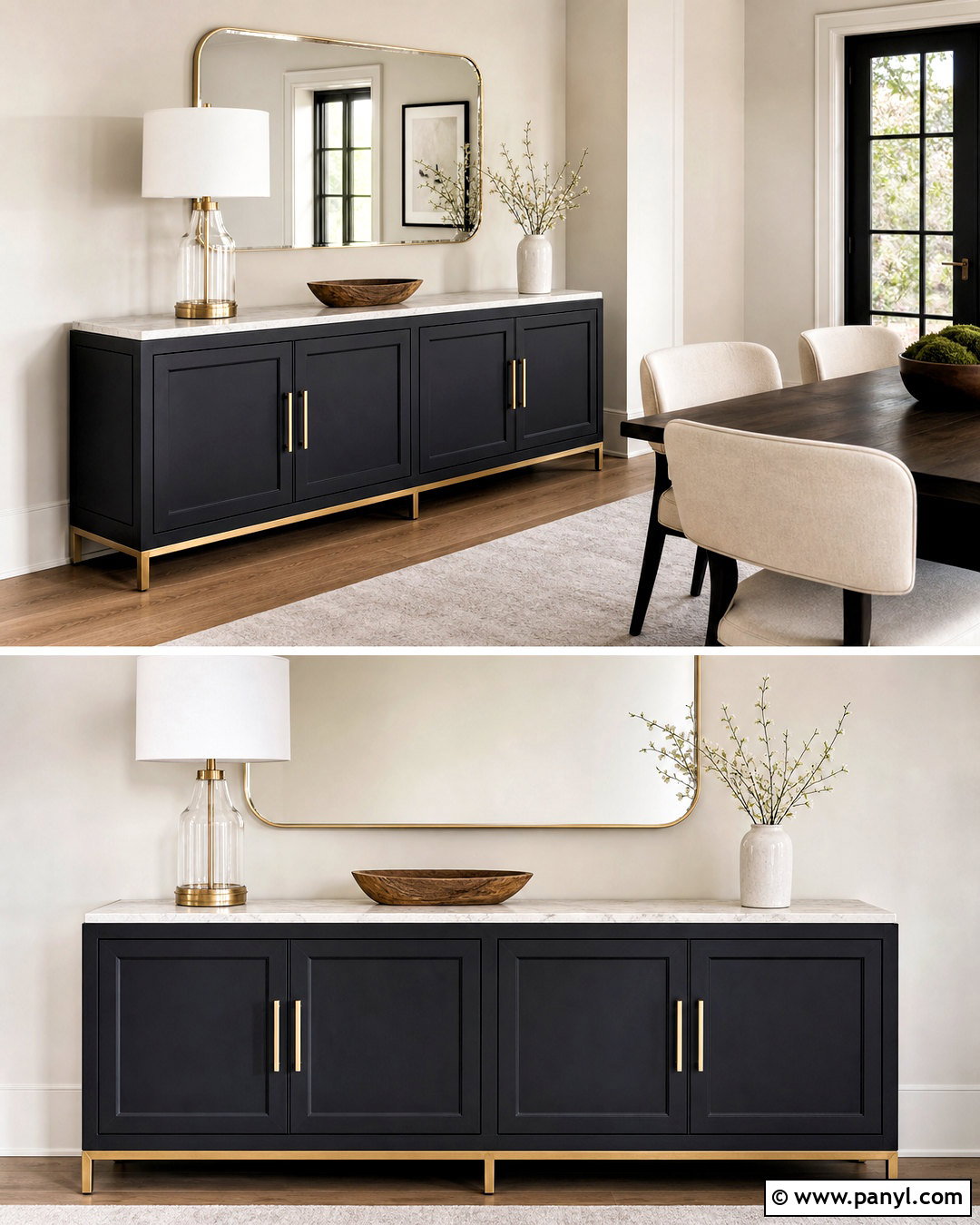
A stone-look top can give a plain sideboard a polished, furniture-quality finish. Use a properly supported marble remnant, durable engineered stone, or a carefully applied faux-marble surface, depending on the cabinet’s strength and project budget. Paint the body deep charcoal or warm white, then add brushed-brass pulls and a matching narrow base. Keep the door fronts simple so the pale veining remains the main detail. Style the top with a glass lamp, a low wooden bowl, and one upright vase. Position the sideboard against a soft greige wall with an oversized mirror above it. Dining chairs in beige fabric and a dark wood table will connect the contrasting finishes. Secure the top correctly and protect it from impacts, moisture, and abrasive objects.
19. Sideboard With Open Shelves
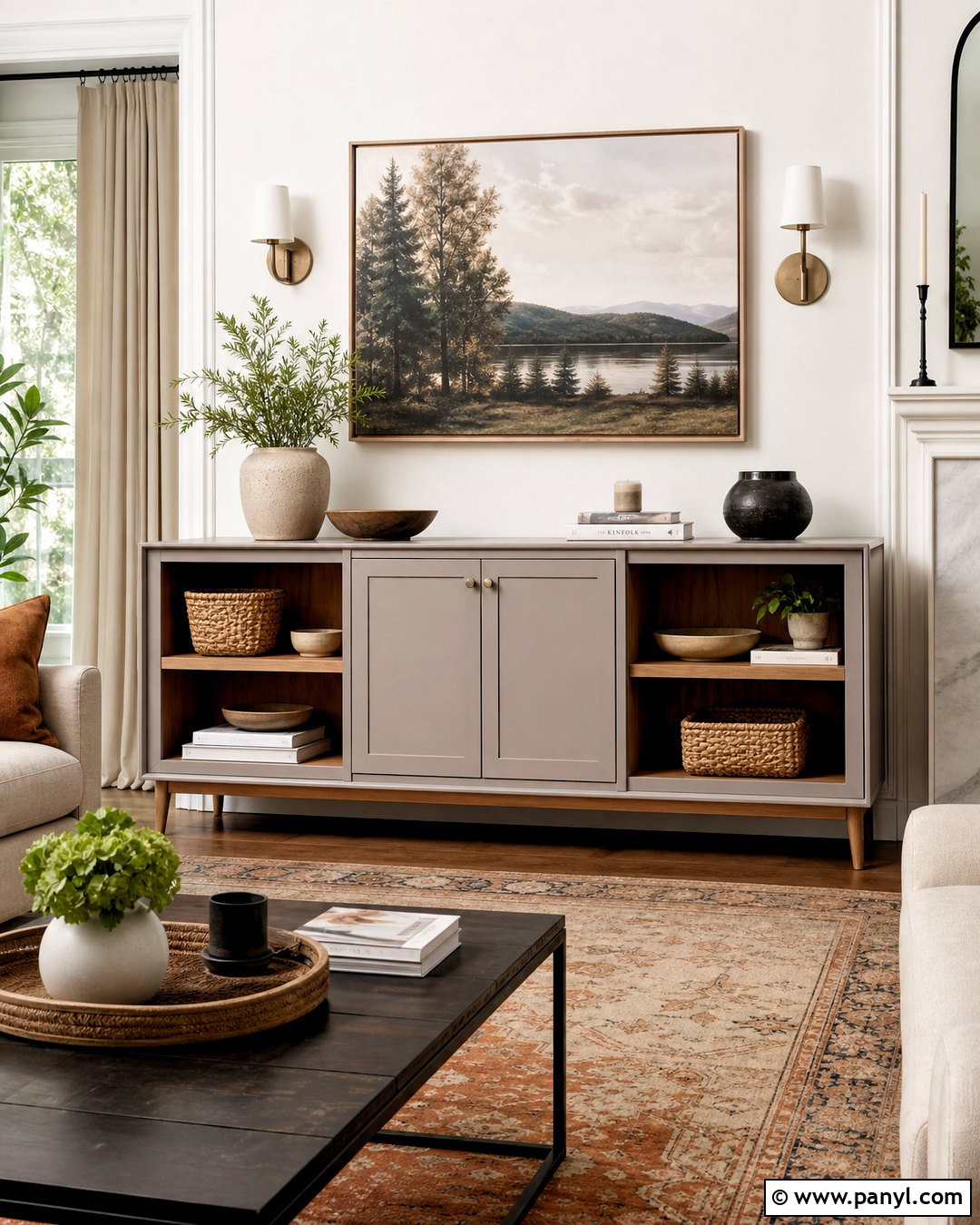
Removing selected doors can turn an overly solid sideboard into a lighter storage and display piece. Keep the center cabinet closed for hidden items, while converting the outer compartments into open shelves. Paint the exterior a muted mushroom color and finish the shelf interiors in natural oak or warm cream. Use small brass knobs on the remaining doors and add short wooden legs. Arrange matching baskets, neutral serving bowls, and a few books across the open areas, leaving enough empty space to avoid clutter. A large woven wall hanging or simple framed print will complement the relaxed design. Repeat the cabinet color in nearby curtains or upholstery. Fill old hinge holes carefully and finish every exposed shelf edge so the conversion looks original to the furniture.
20. Built In Sideboard Look
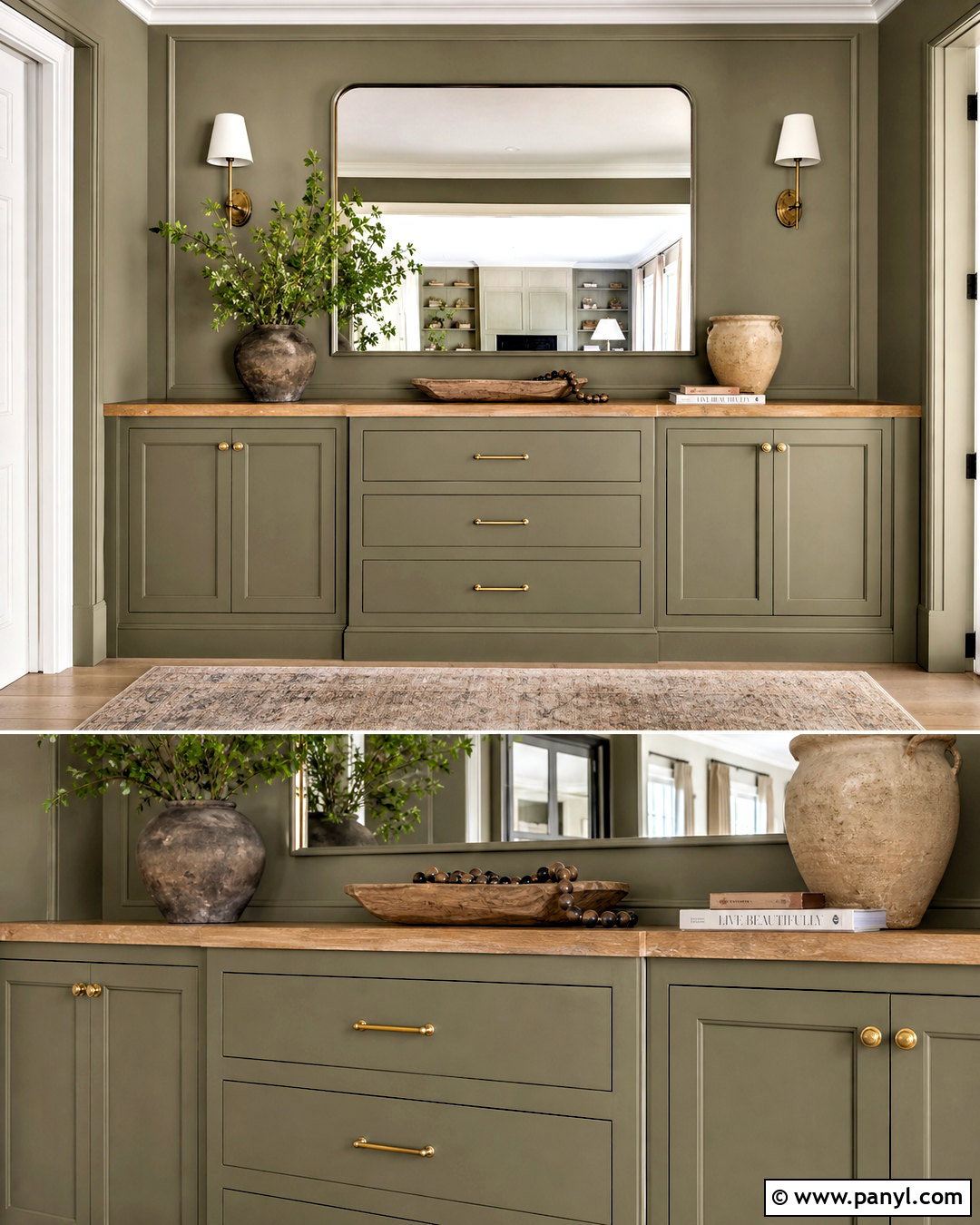
A freestanding sideboard can resemble custom cabinetry when it is visually connected to the wall around it. Choose a long piece that fits the available space, then paint the sideboard and wall behind it the same muted olive, warm gray, or creamy white. Add narrow matching trim panels at the sides if needed to reduce awkward gaps. A wood top provides contrast, while simple brass hardware gives the cabinet definition. Install symmetrical wall sconces or tall lamps at each end and center a large mirror or artwork above it. Keep the surface arrangement balanced with a tray, pottery, and one leafy branch. Matching nearby baseboards or wall molding to the cabinet color strengthens the built-in effect without requiring a complete renovation.
Conclusion:
The most successful **20 sideboard makeover ideas** combine an attractive finish with better function and a clear connection to the surrounding room. Before choosing a dramatic color or textured door treatment, study the sideboard’s construction, proportions, and best original features. Restore valuable wood when possible, but use paint, wallpaper, cane, molding, or updated hardware when the existing finish offers little character. Preparation matters just as much as styling, so clean thoroughly, repair damage, test product adhesion, and allow every coating to cure. Finally, complete the makeover with coordinated lighting, artwork, and restrained accessories. A thoughtful design can make even an ordinary secondhand sideboard look intentional, useful, and completely at home.

Related Ideas and Inspiration:
Leave a Reply