
Finding the right wall treatment can completely change how a living room feels, functions, and flows. These **20 living room wall designs** explore practical ways to combine color, texture, storage, artwork, lighting, and furniture into one cohesive space. Current trends favor expressive color, architectural millwork, immersive wallpaper, natural finishes, and personalized displays rather than bare walls or disconnected accents. () You will find options for large family rooms, compact apartments, traditional homes, and modern open layouts. Each look includes details you can realistically adapt, whether you want an affordable paint update or a custom built-in feature. Use these complete room concepts to choose proportions, materials, and furnishings that suit your home while exploring **20 living room wall designs**.

1. Warm White Living Room Wall Molding
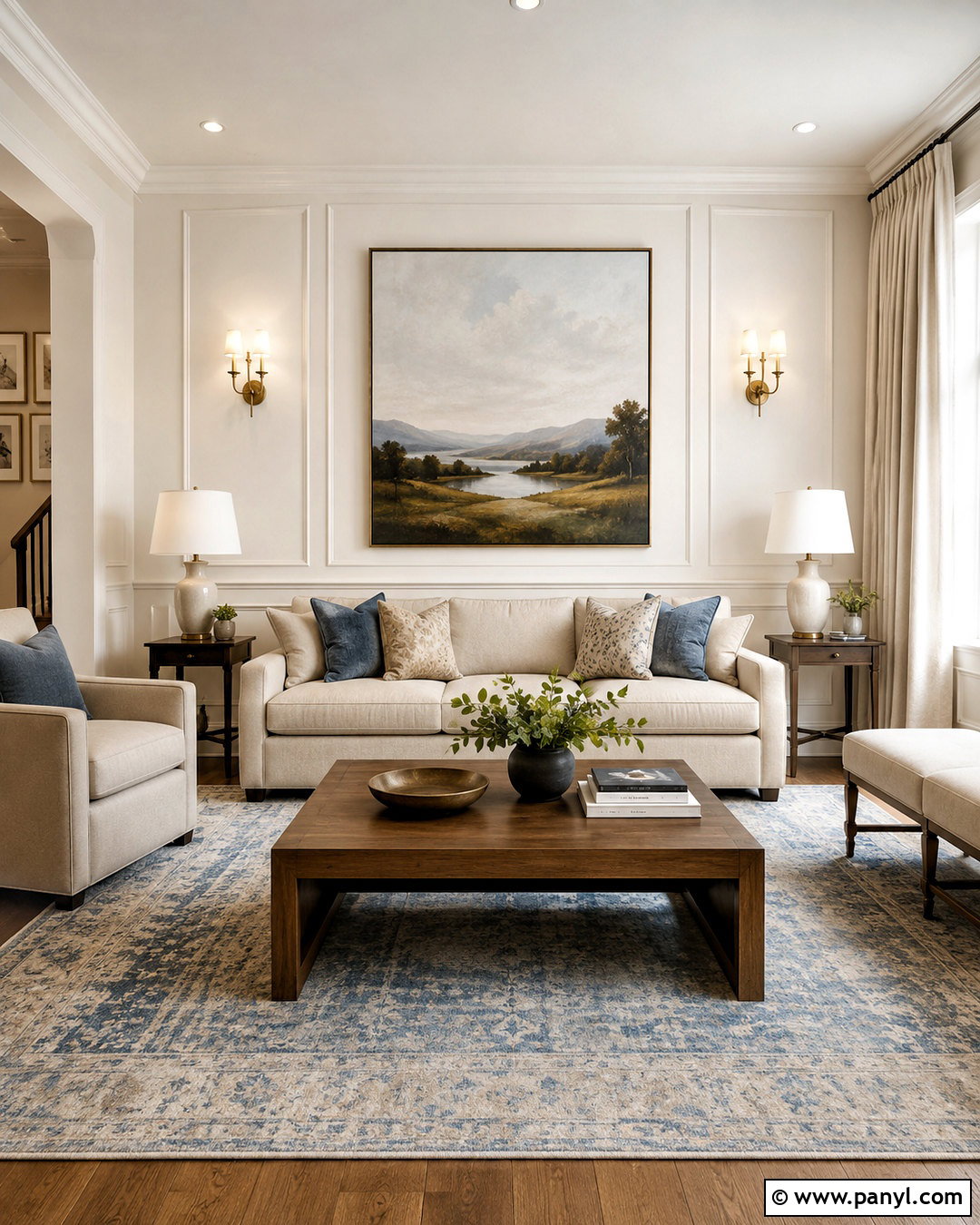
Picture-frame molding gives a plain living room architectural character without requiring a bold color. Paint the molding, walls, baseboards, and trim the same warm white for a calm, continuous finish. Center a large landscape painting within the widest frame, then place a tailored oatmeal sofa directly below it. Two smaller frames can hold brass sconces, creating symmetry without making the arrangement feel rigid. Add medium oak flooring, a faded blue rug, linen curtains, and a round walnut coffee table to warm the pale backdrop. Keep accessories simple with ceramic lamps, stacked books, and one leafy plant. This complete arrangement works especially well in traditional, transitional, and updated colonial homes where elegant detailing should feel relaxed rather than formal.
2. Oak Slat Living Room TV Wall
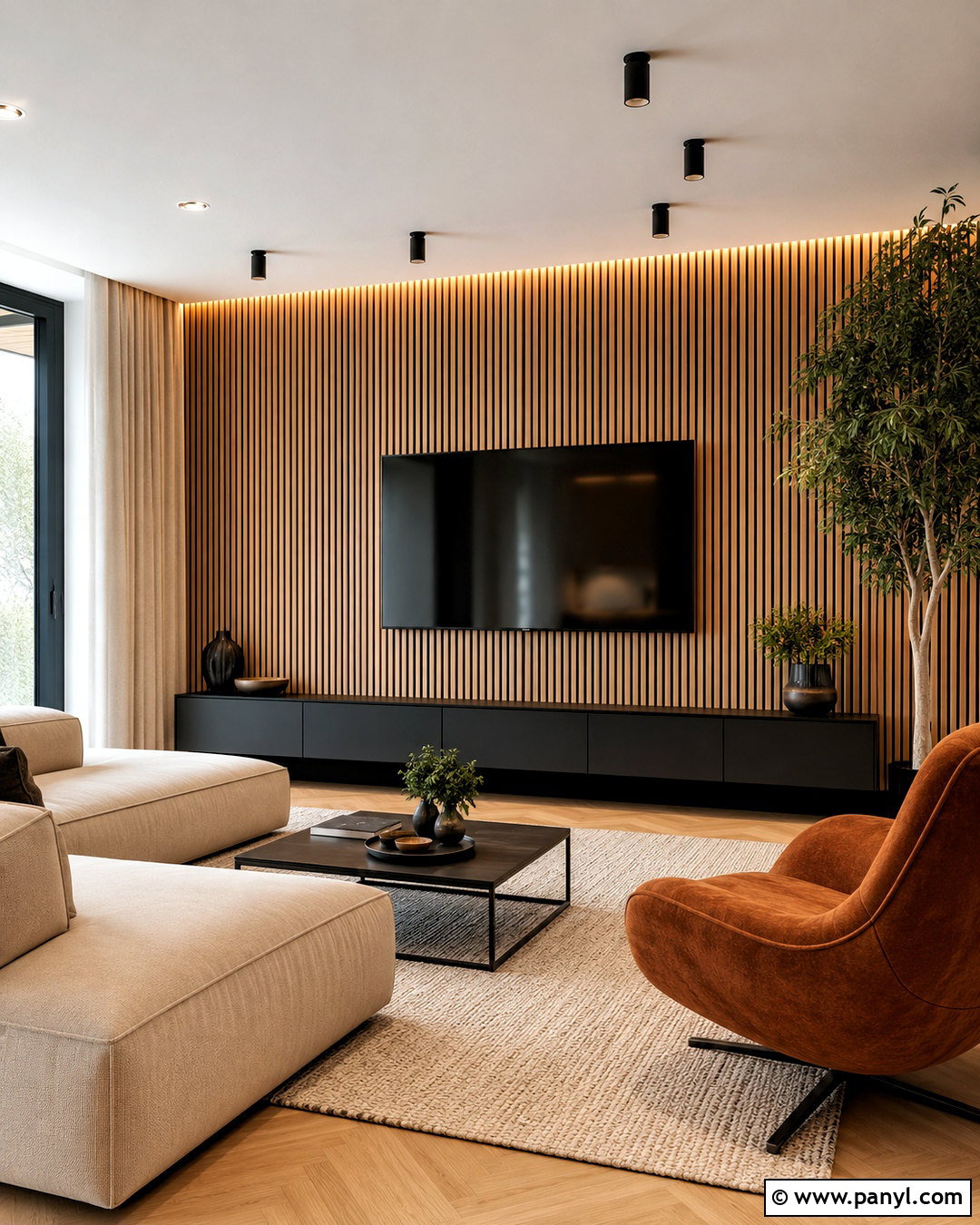
A vertical oak slat wall can make a television feel integrated instead of visually disconnected from the room. Cover the center portion of the main wall with narrow natural oak slats over a charcoal acoustic backing. Mount the TV at comfortable viewing height, then install a low floating cabinet in matte black or matching wood. Keep the remaining walls soft greige so the feature feels warm but not overpowering. A low cream sectional, rust-colored lounge chair, black metal lighting, and textured wool rug complete the modern layout. Hide cables inside the wall and leave breathing room around the screen. Finish with one tall indoor tree and a few simple objects on the cabinet, avoiding excessive decor that competes with the slatted texture.
3. Sage Limewash Living Room Wall
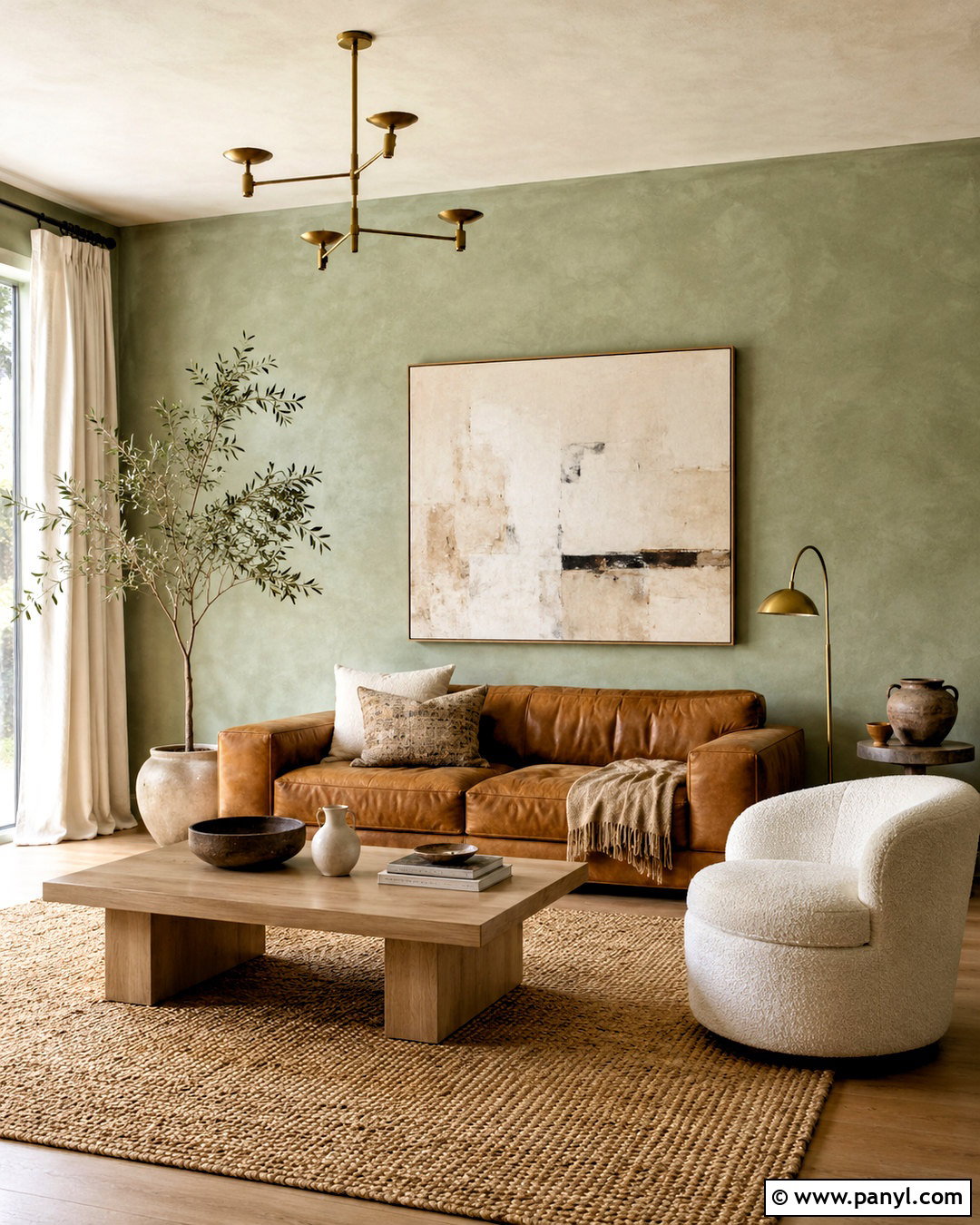
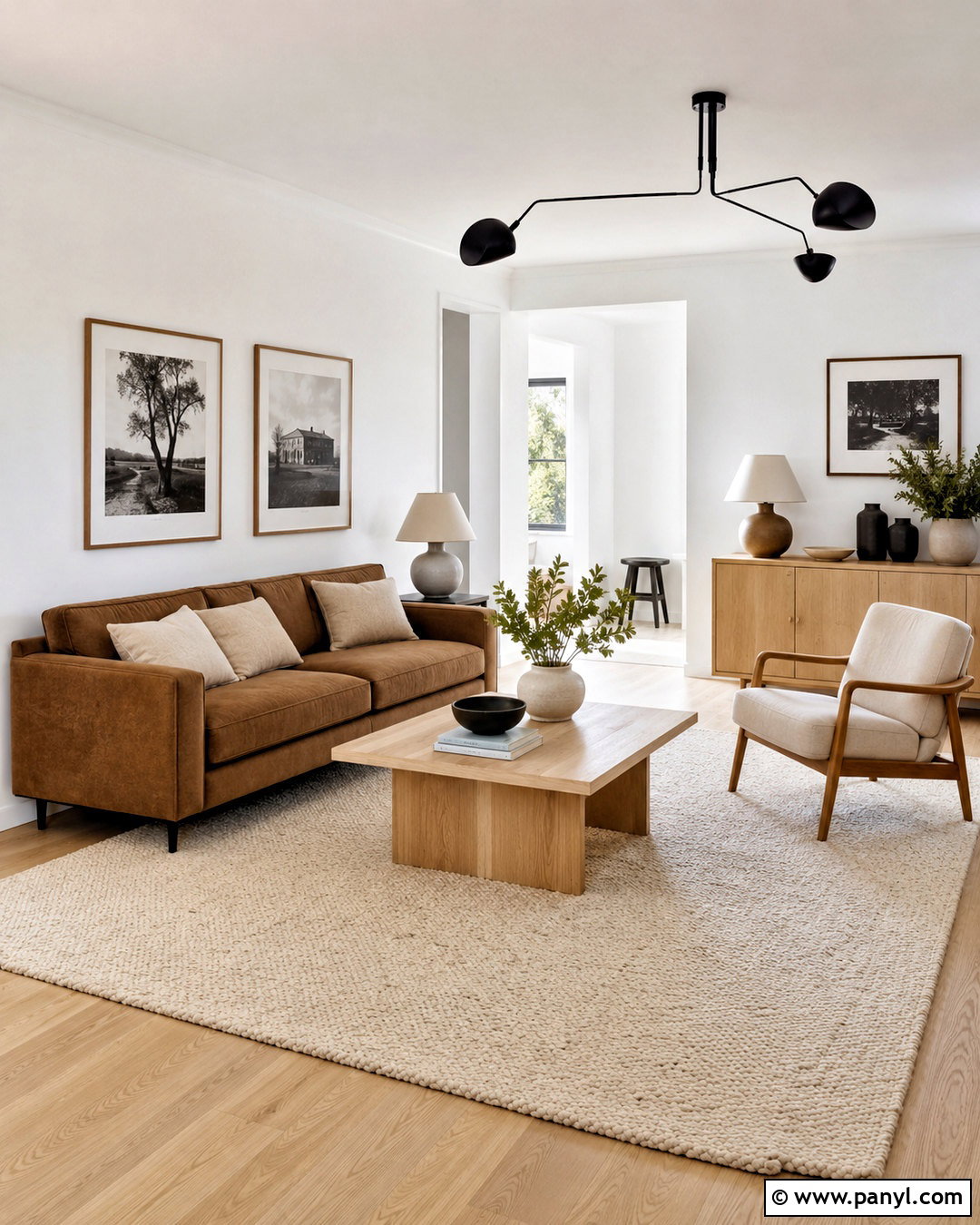
Soft sage limewash creates gentle movement across a living room wall while keeping the overall atmosphere quiet and natural. Apply it to every wall rather than limiting it to one narrow accent area, allowing the handmade tonal variation to surround the room. Pair the finish with a camel leather sofa, light oak coffee table, cream boucle chair, and woven jute rug. A large abstract canvas in ivory and charcoal provides definition above the sofa without hiding the textured surface. Choose off-white linen curtains and aged brass lamps for subtle contrast. Simple pottery and olive branches reinforce the organic palette. Limewash and clay-inspired finishes are increasingly used to give interiors depth, softness, and visible craftsmanship. ()
4. Built-In Living Room Bookcase Wall
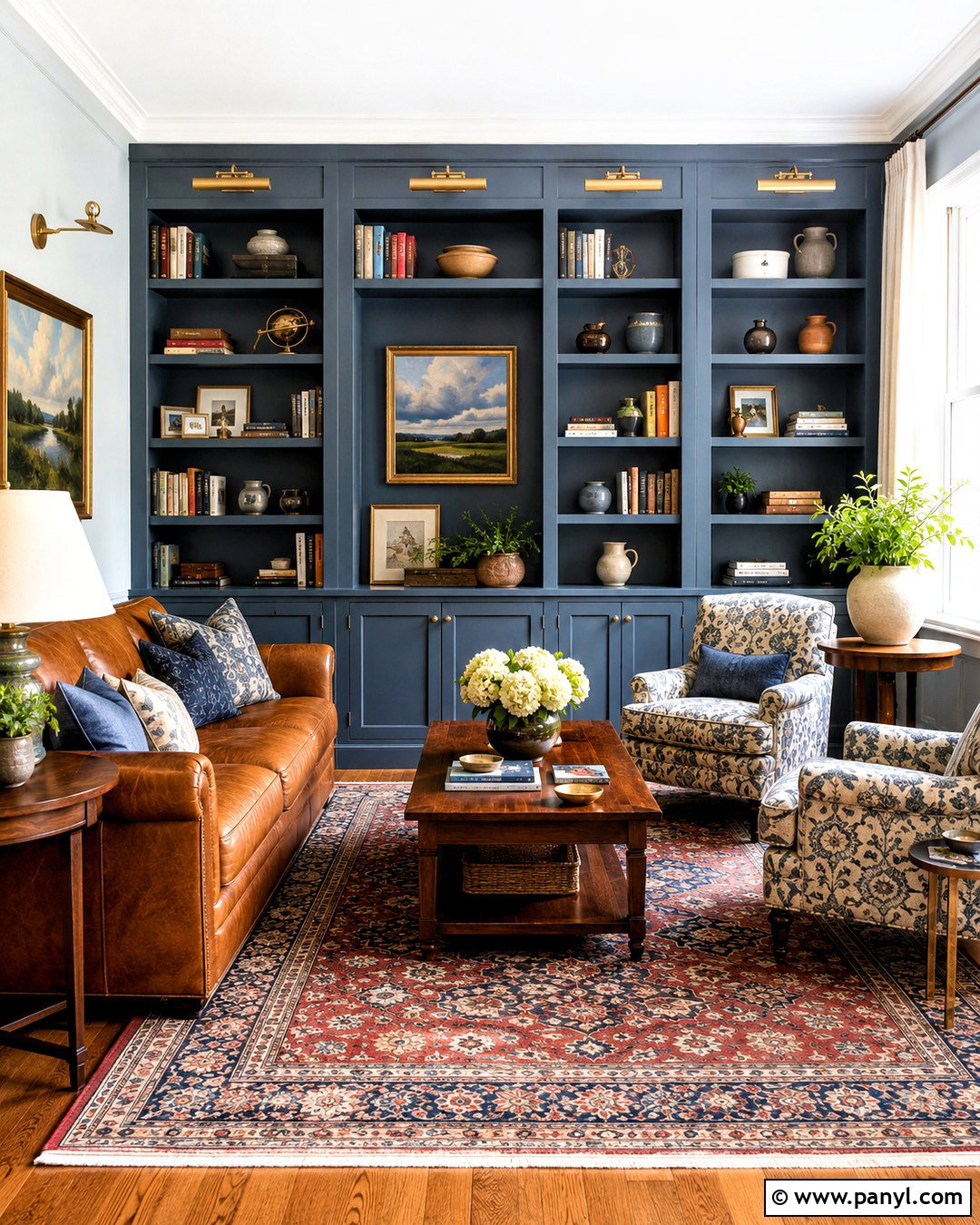
Turn an underused wall into a complete library with floor-to-ceiling built-in bookcases. Paint the shelves, lower cabinets, trim, and connecting wall a muted dusty blue for a unified appearance. Place a deep cognac leather sofa opposite the bookcases and add two patterned armchairs angled toward a central coffee table. Mix books vertically and horizontally, leaving open spaces for framed art, pottery, and small lamps. Closed cabinets along the bottom can conceal games, electronics, and everyday clutter. A sliding library ladder is useful on tall walls, but a simple step stool works in an average room. Complete the setting with a traditional wool rug, warm wood tables, and adjustable picture lights that illuminate the shelves during the evening.
5. Eclectic Living Room Gallery Wall
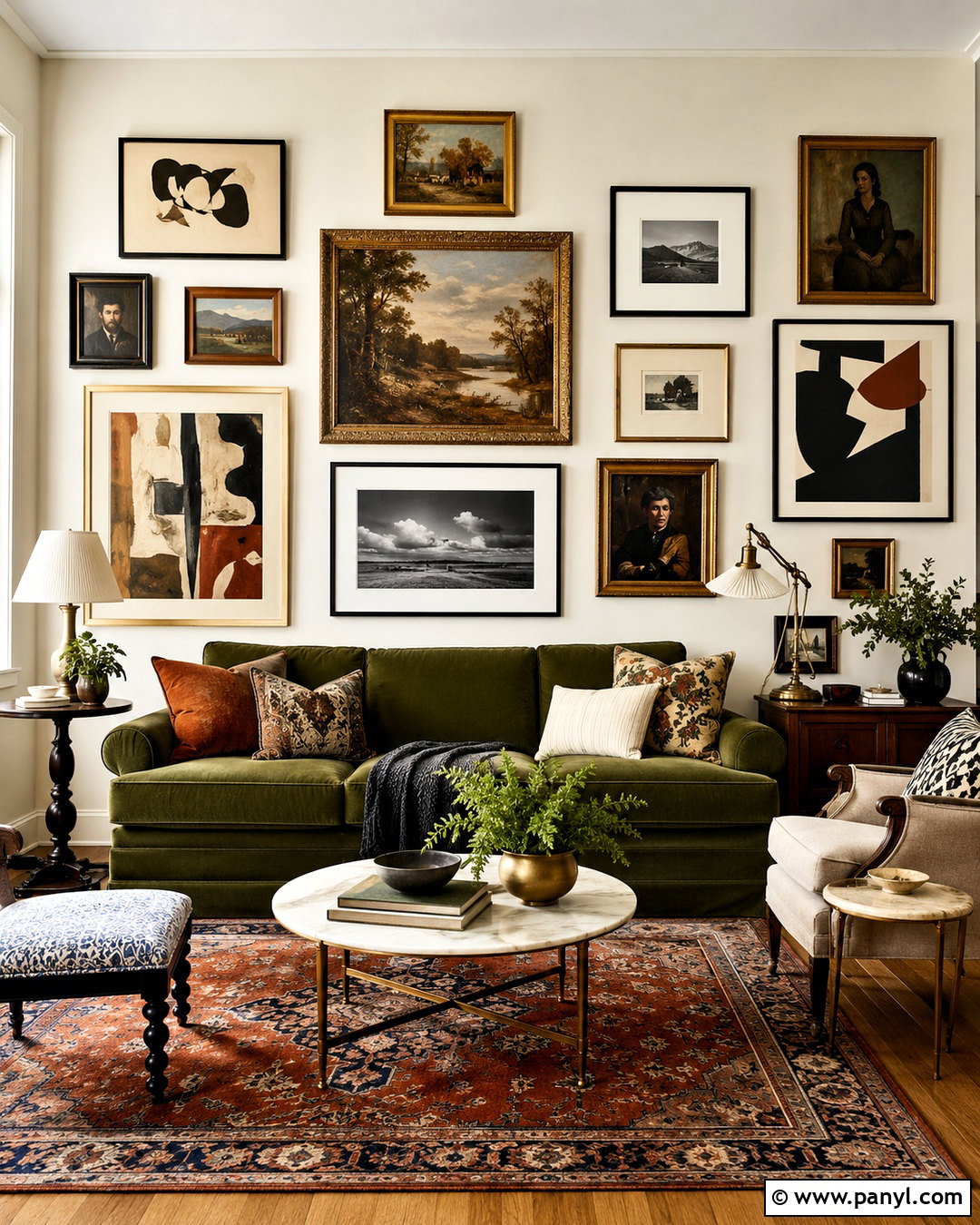
A gallery wall feels intentional when its colors, spacing, and furniture work together. Begin with a warm ivory wall and arrange vintage landscapes, modern abstracts, black-and-white photographs, and small textile pieces above a simple olive green sofa. Use frames in walnut, antique brass, matte black, and painted cream to create variety while repeating each finish at least twice. Start with the largest artwork slightly off-center, then build outward with consistent gaps. A patterned rug can echo the rust, blue, and green tones found in the collection. Add mismatched side tables, a pleated floor lamp, and neutral pillows so the room feels collected rather than chaotic. Keep the opposite walls quieter to give the display a clear visual role.
6. Botanical Wallpaper Living Room Wall
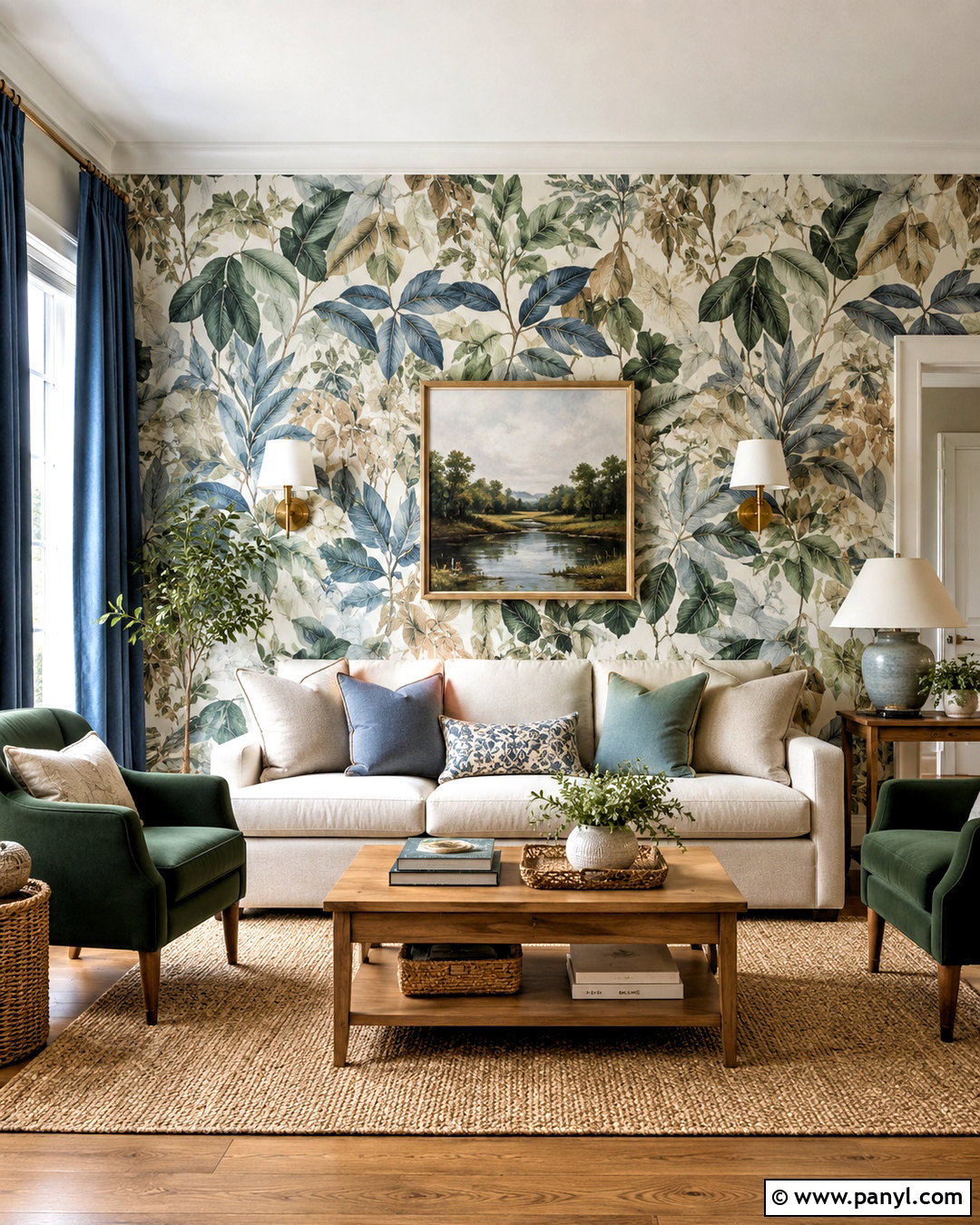
Large-scale botanical wallpaper can establish the color palette for an entire living room. Choose a leafy pattern with muted forest green, dusty blue, cream, and soft brown rather than a high-contrast tropical print. Cover the wall behind the sofa and continue the paper around nearby corners when possible, making the treatment feel more immersive. Pair it with a streamlined beige sofa, dark green velvet chairs, a medium oak coffee table, and a natural fiber rug. Pull one subtle blue tone from the wallpaper for curtains or cushions. Brass sconces add warm light without covering much of the pattern. Current wallpaper applications increasingly focus on creating atmosphere across a room instead of treating the material as a small decorative afterthought. ()
7. Stone Fireplace Living Room Wall
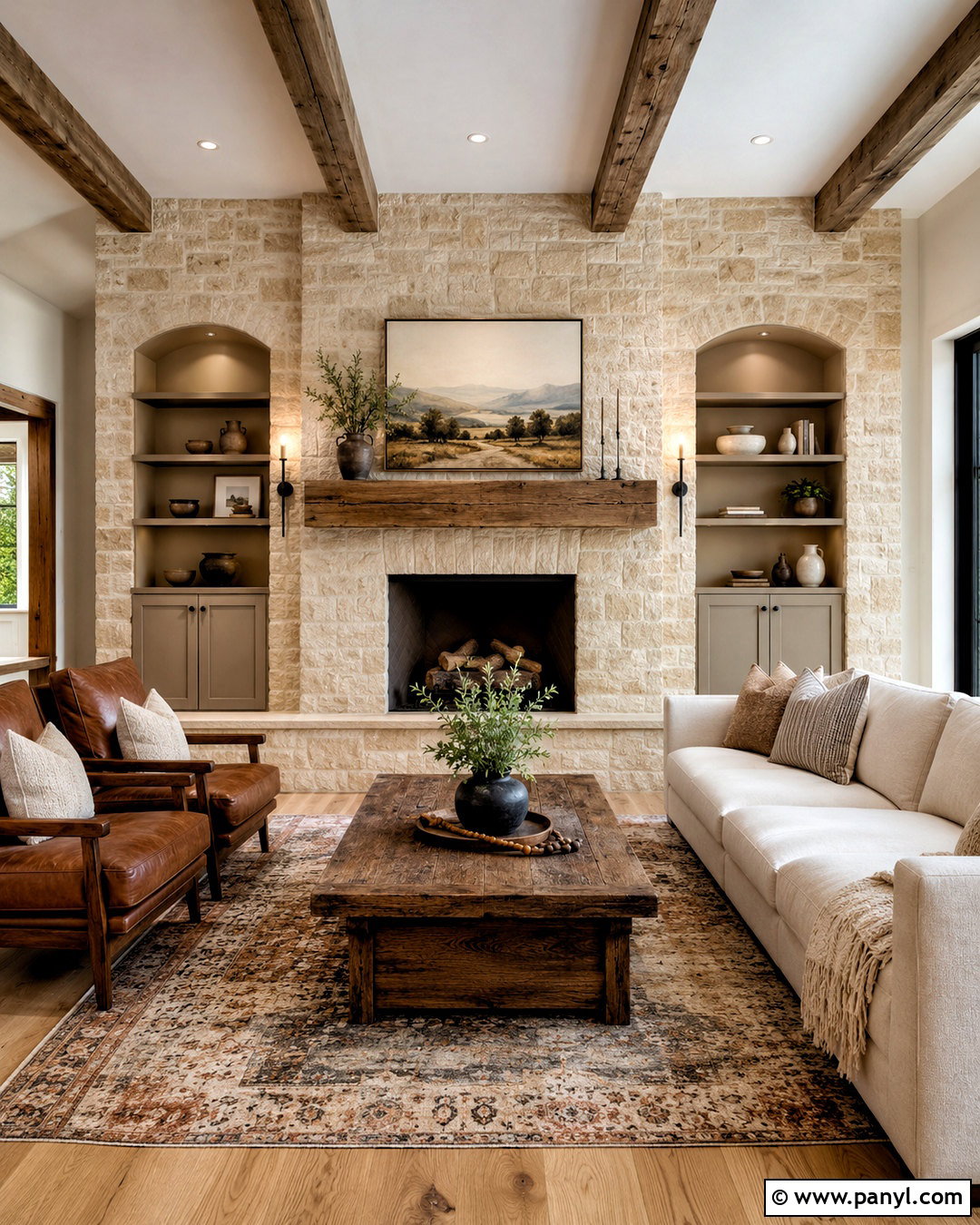
A floor-to-ceiling stone fireplace wall gives the living room a strong focal point while introducing natural color and texture. Use irregular limestone in warm cream, pale gray, and sandy beige, paired with a thick reclaimed oak mantel. Position low built-in cabinets on both sides and paint them a soft mushroom color that blends with the stone. Arrange a comfortable oatmeal sectional and two leather chairs around a large wood coffee table, keeping clear pathways to the fireplace. A faded vintage rug prevents the stone from making the space feel too rustic. Place artwork on nearby walls rather than above the mantel, allowing the masonry to remain visible. Add black iron sconces and a simple fire screen for crisp contrast and practical lighting.
8. Painted Arch Living Room Wall
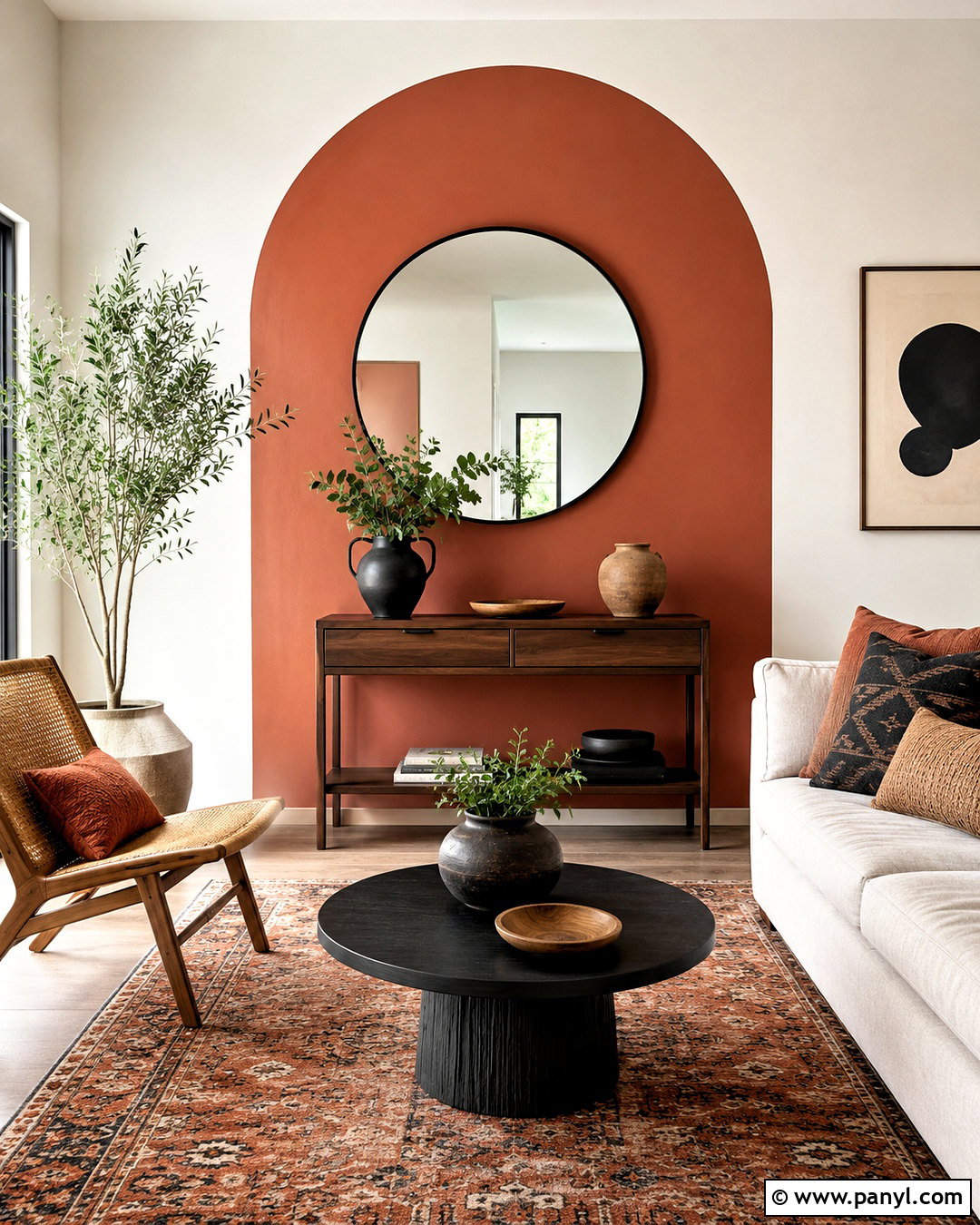
A painted arch can visually frame a console, reading corner, or small seating area without construction. Use a deep terracotta arch on a warm white wall, making it wide enough to surround a slim walnut console and one oversized round mirror. Repeat the terracotta through pillows, pottery, and a patterned rug so the painted shape relates to the whole room. A light beige sofa and woven lounge chair keep the palette bright, while black accents prevent it from becoming overly soft. Measure the arch carefully and use a pencil, string, and level to establish balanced curves. This treatment is especially useful in rentals or modest rooms because it adds architecture with paint. Keep adjacent walls simple so the graphic shape remains clear.
9. Blue Board And Batten Living Room Wall
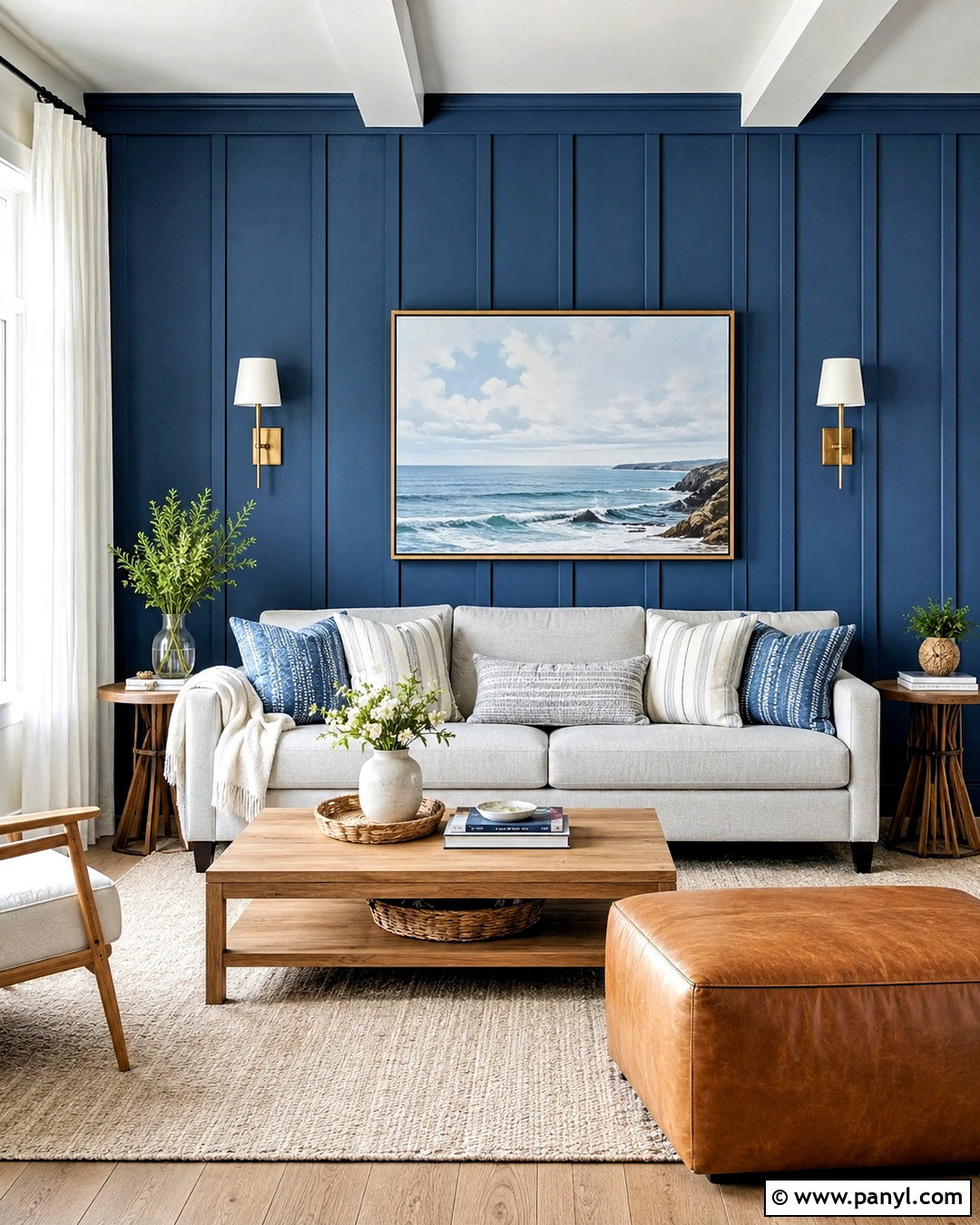
Full-height board and batten brings structure to a living room while making an ordinary wall feel substantial. Install evenly spaced vertical battens with a simple top rail, then paint the entire treatment a medium smoky blue. Continue that blue onto the baseboards for a clean built-in effect. Place a light gray sofa against the wall and center a large framed seascape between two antique brass sconces. Warm the room with a caramel leather ottoman, medium oak side tables, and a cream rug with a subtle blue border. White curtains and a pale ceiling prevent the richer wall color from feeling heavy. Keep the artwork and accessories generously scaled because tiny pieces can become lost within the strong vertical lines of the paneling.
10. Exposed Brick Living Room Wall
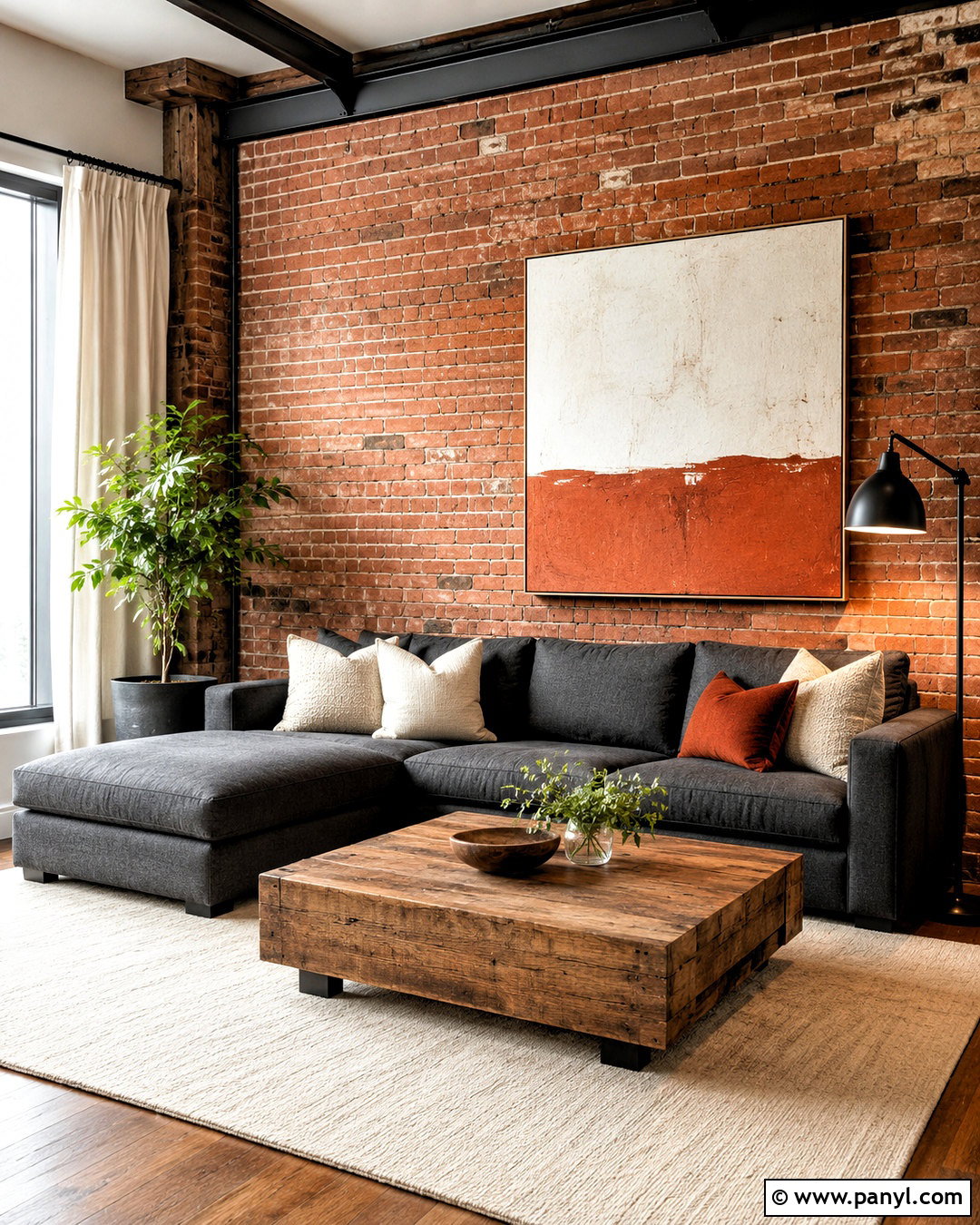
An exposed brick wall adds natural variation that works best when the rest of the living room feels edited and comfortable. Preserve red and brown brick with a matte breathable sealer rather than coating it in a shiny finish. Position a soft charcoal sectional against the brick, then brighten the arrangement with cream pillows, a pale wool rug, and linen curtains. A large abstract painting with ivory, rust, and muted blue helps connect the masonry to the furnishings. Add a reclaimed wood coffee table and black metal floor lamp for an understated industrial influence. If the brick looks visually busy, avoid covering it with numerous small objects. One large artwork, two matching sconces, and a tall plant can provide enough decoration while allowing the original texture to remain prominent.
11. Floor-To-Ceiling Curtain Living Room Wall
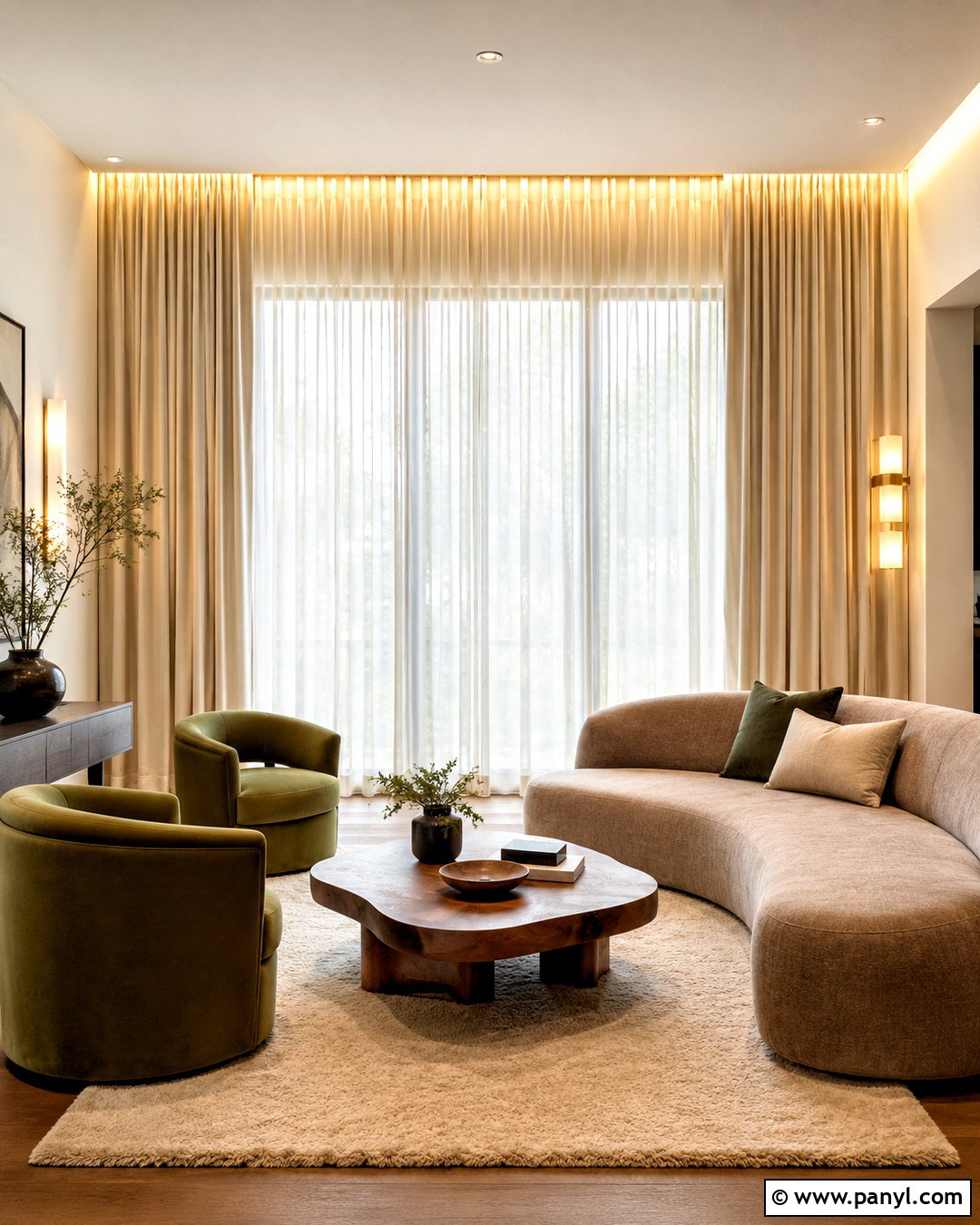
A curtain wall can soften a living room, disguise awkward windows, and make the ceiling appear taller. Install a slim ceiling-mounted track across the entire window wall, extending beyond the glass on both sides. Hang full, lightly pleated curtains in warm ivory linen from ceiling to floor, with sheer panels underneath for daytime privacy. Place a curved taupe sofa several inches in front of the fabric so the curtains can move freely. Add a sculptural wood coffee table, two olive green chairs, and a plush cream rug to create an inviting conversation area. Wall-mounted lights on the adjacent surfaces provide evening illumination without crowding the window. The long fabric backdrop becomes part of the wall design while improving softness, scale, and visual continuity.
12. Antique Mirror Living Room Wall
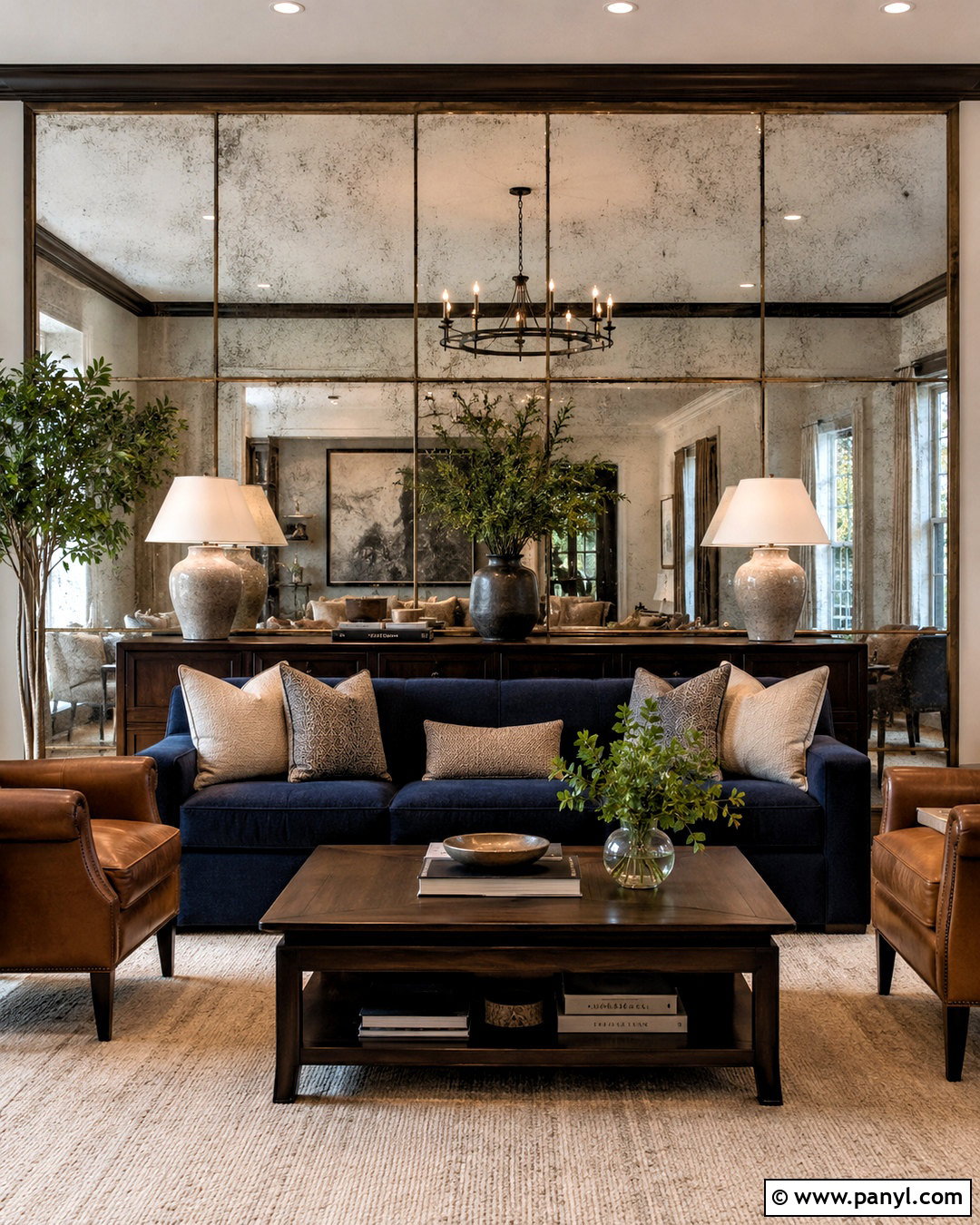
An antique mirror wall can brighten a narrow living room without producing the cold appearance of plain reflective glass. Use lightly distressed mirror panels divided by slim bronze or dark wood trim, creating a balanced grid behind a console table. Keep the panels large enough to reflect windows, furniture, and light rather than forming a busy mosaic. Furnish the room with a deep navy sofa, camel leather chairs, and a warm ivory rug. A dark walnut console, ceramic table lamps, and a low arrangement of greenery soften the reflection. Position the mirror where it will capture an attractive part of the room instead of an entry door or television. Matte fabrics, natural wood, and aged finishes will balance the wall’s sheen and create a comfortable, layered setting.
13. Arched Niche Living Room Wall
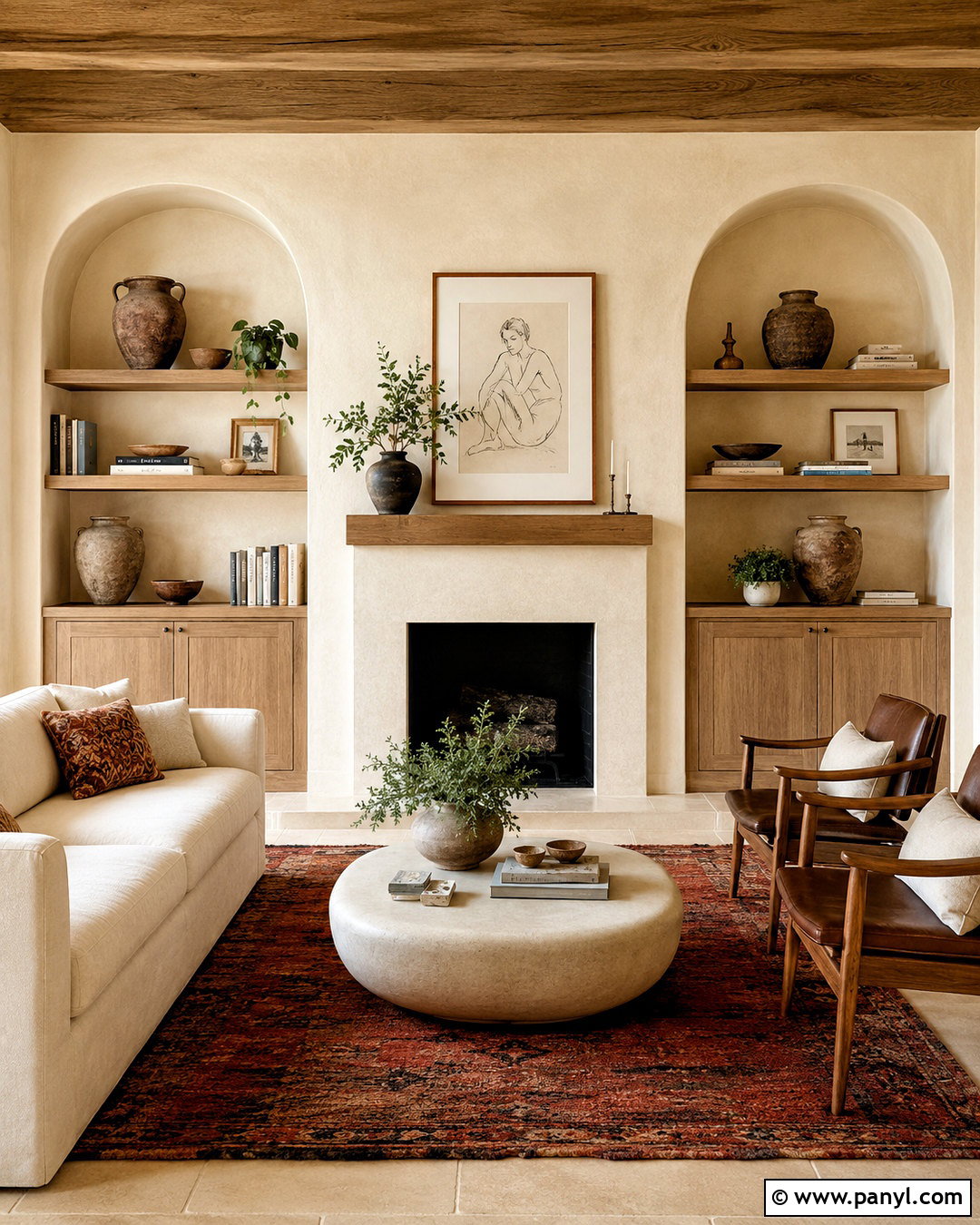
Built-in arched niches create storage and display space while adding gentle curves to a boxy living room. Place two symmetrical niches on either side of a simple plaster fireplace and finish the entire wall in warm sand-colored plaster. Add thick oak shelves inside each arch and closed cabinets beneath them. Style the shelves sparingly with books, pottery, framed sketches, and small directional lights. A cream sofa, walnut lounge chairs, and a rust-colored rug make the room feel warm without competing with the architecture. Keep the mantel low and uncluttered, using one understated artwork above it. Repeating the curved shape in a round coffee table or domed lamp helps the wall connect naturally to the furniture rather than appearing like a separate decorative installation.
14. Navy Color Drenched Living Room Wall
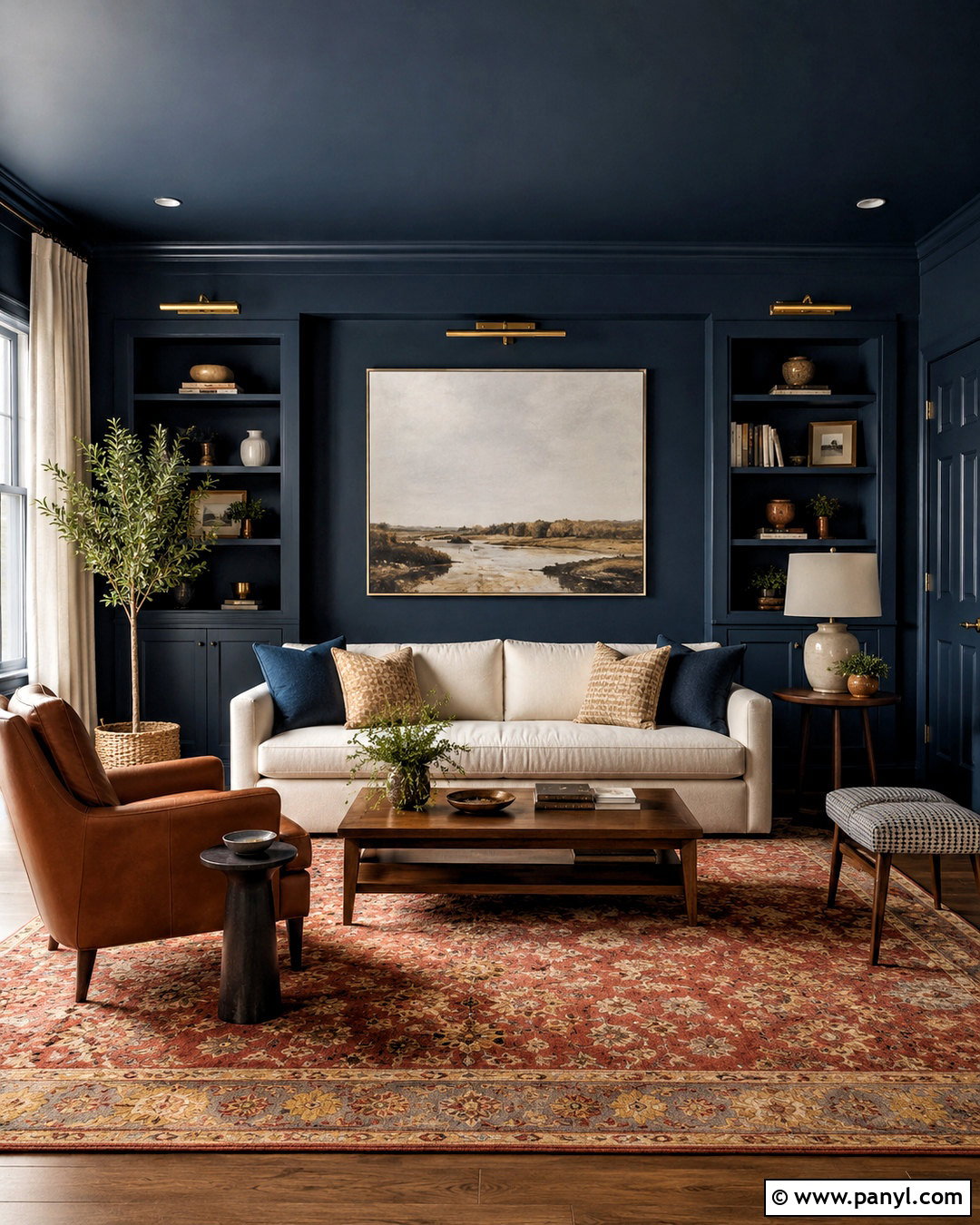
Deep navy walls can feel comfortable and expansive when the color continues across the trim, doors, built-ins, and ceiling. This color-drenched approach removes sharp visual boundaries and creates a unified background for lighter furnishings. Choose a navy with a slightly softened undertone, then layer in a cream sofa, cognac leather chair, and medium-toned walnut tables. A patterned rug containing dusty red, gold, and pale blue adds warmth underfoot. Use large artwork with generous areas of white to break up the darker wall surface. Brass picture lights and table lamps provide a warm metallic contrast, while pale curtains keep the windows visually open. Saturated, immersive color remains a prominent living room direction, especially when paired with character-rich furnishings and millwork. ()
15. Neutral Grasscloth Living Room Wall
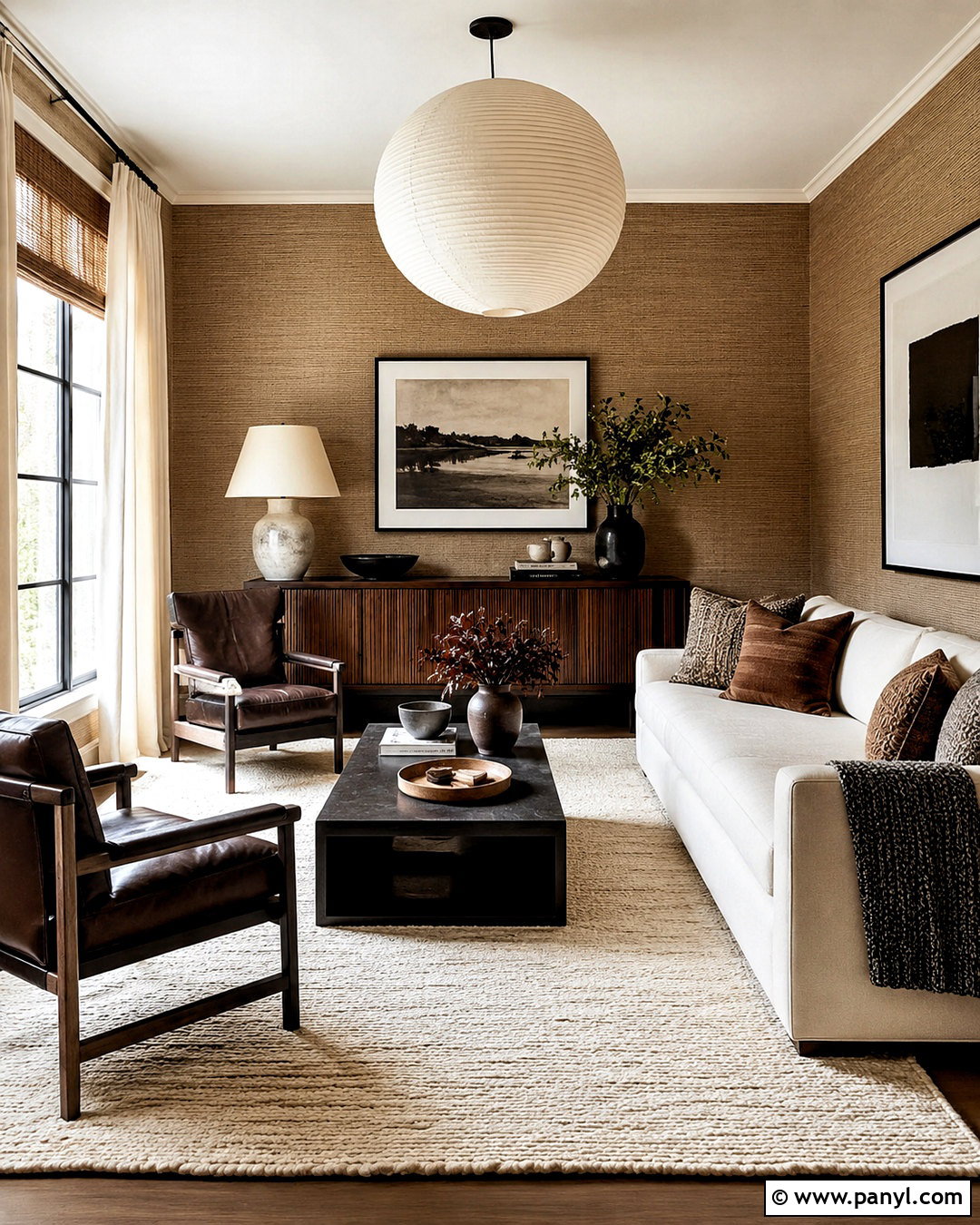
Natural grasscloth gives neutral walls visible depth through fine fibers and subtle color shifts. Cover all four walls in warm taupe grasscloth, carefully aligning the panels while accepting that the seams will remain part of the handcrafted look. Pair the covering with a cream linen sofa, walnut sideboard, black-framed artwork, and soft brown leather chairs. Choose a thick ivory rug and textured cushions rather than adding more strong patterns. A large paper lantern pendant introduces another natural material without making the space feel formal. Keep wall-mounted pieces limited because unnecessary holes can be difficult to repair. Floor lamps, console lamps, and leaning artwork provide flexibility. The resulting room feels calm and layered, with enough texture to remain interesting even within a restrained neutral palette.
16. Fluted Fireplace Living Room Wall
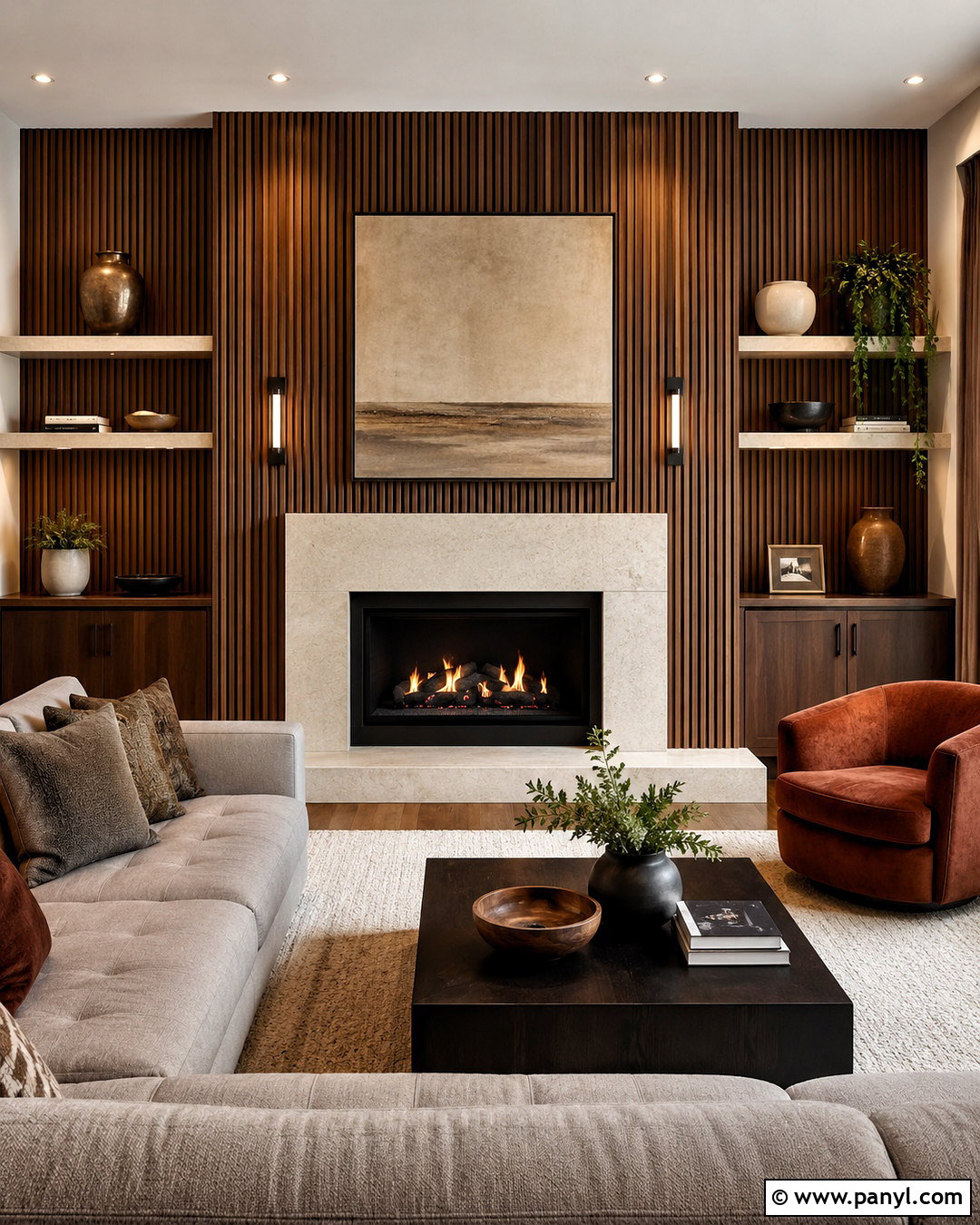
Fluted wood panels can turn a basic fireplace into a tailored centerpiece with strong vertical rhythm. Run narrow walnut-toned panels from floor to ceiling around a simple black firebox, leaving a smooth pale stone surround for heat-safe contrast. Extend the wall treatment slightly beyond the fireplace rather than covering every surface in wood. Install matching low cabinets on both sides and add floating stone shelves for a few carefully chosen objects. A light greige sectional, rust velvet chair, and cream wool rug balance the darker walnut. Keep the television on another wall when space allows, preserving the fireplace as a calm focal point. Recessed ceiling lights and slim sconces will highlight the panel texture without introducing bulky fixtures or distracting reflections.
17. Oversized Art Living Room Wall
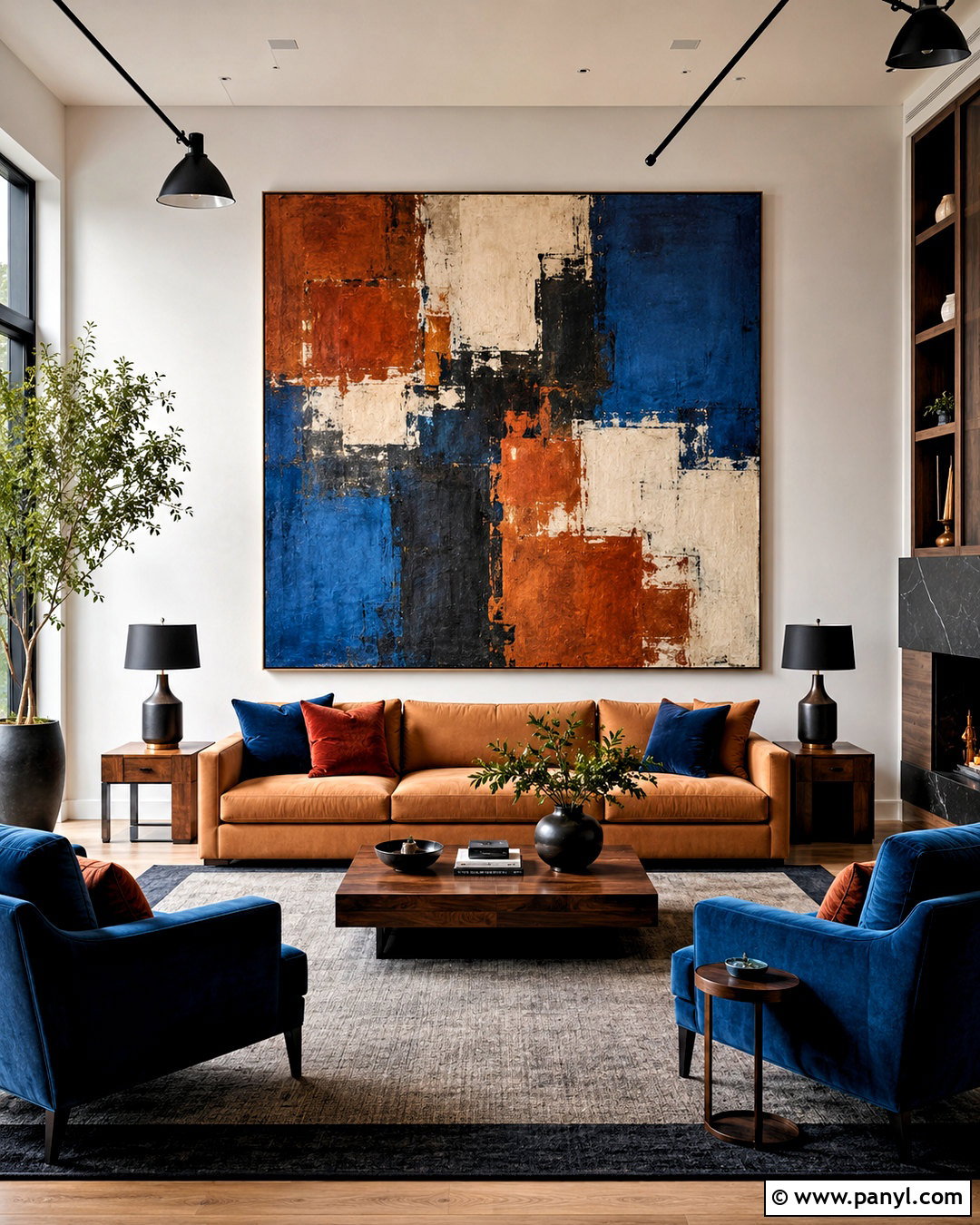
One oversized artwork can make a living room feel more finished than a collection of undersized pieces. Choose a canvas that spans roughly two-thirds of the sofa’s width and hang it with its center near eye level. A bold abstract composition in cobalt blue, rust, cream, and charcoal can energize a soft white wall while directing the room’s full color scheme. Place a low camel-colored sofa below the artwork, then repeat its colors through blue lounge chairs, rust pillows, and a charcoal-bordered rug. Use simple walnut tables and black lighting to keep the composition grounded. Leave open wall space around the canvas so its scale remains effective. This arrangement provides a confident focal point without requiring permanent paneling, shelving, or complicated installation.
18. Hidden Storage Living Room Media Wall
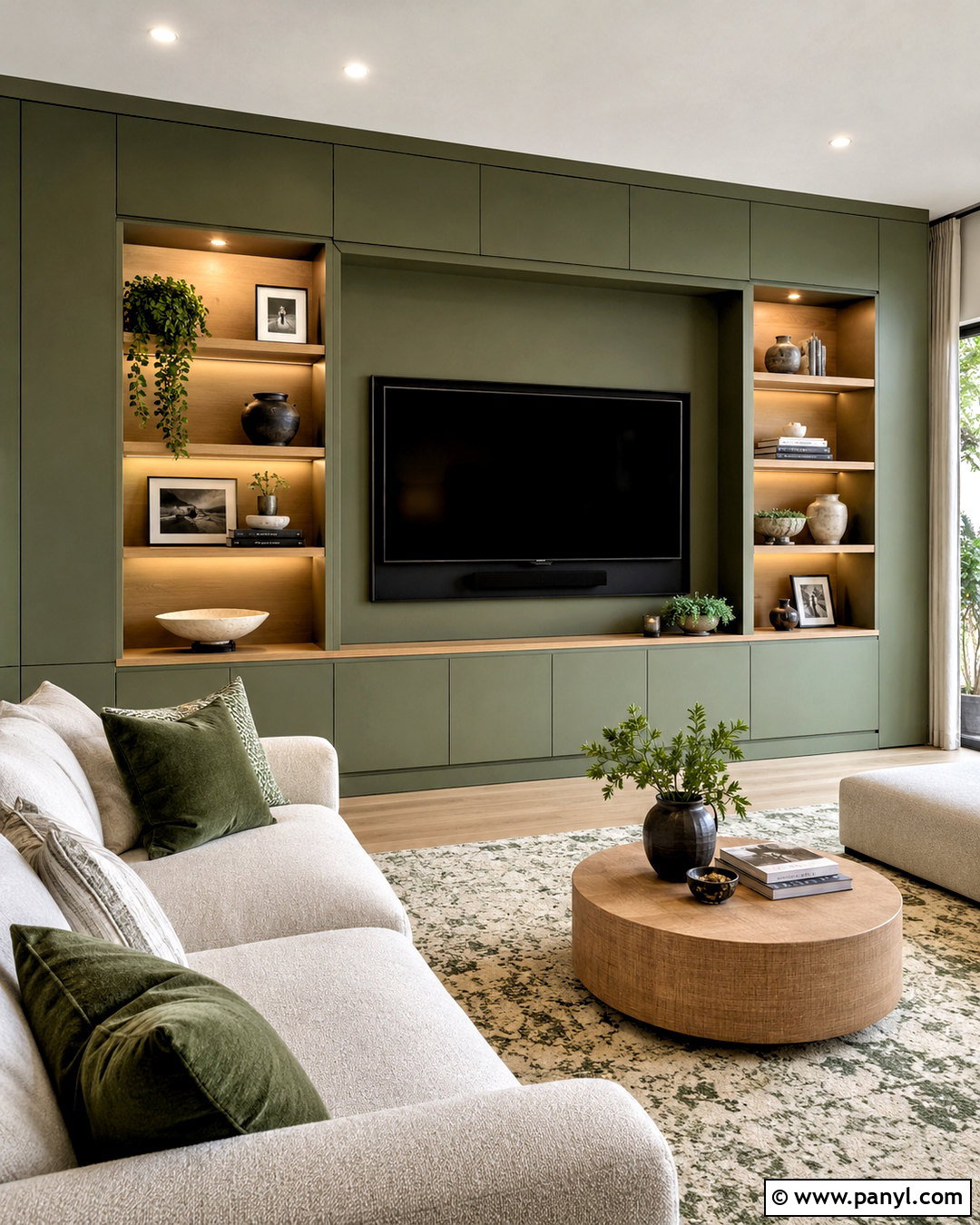
A custom media wall can combine a television, shelving, and closed storage without making the living room resemble an entertainment center. Build full-height cabinetry in a muted olive green and recess the screen within a wide central opening. Add slim oak shelves on each side, integrated lighting, and handle-free lower cabinets for electronics, toys, and extra blankets. Position a warm beige sectional opposite the screen with a rounded wood coffee table and patterned cream-and-green rug. Use decorative doors or a sliding panel if you prefer to conceal the television when it is off. Keep accessories limited to books, pottery, and framed photographs. Matching the cabinetry, trim, and surrounding wall color helps the entire installation read as architecture rather than a collection of separate storage units.
19. Decorative Plate Living Room Wall
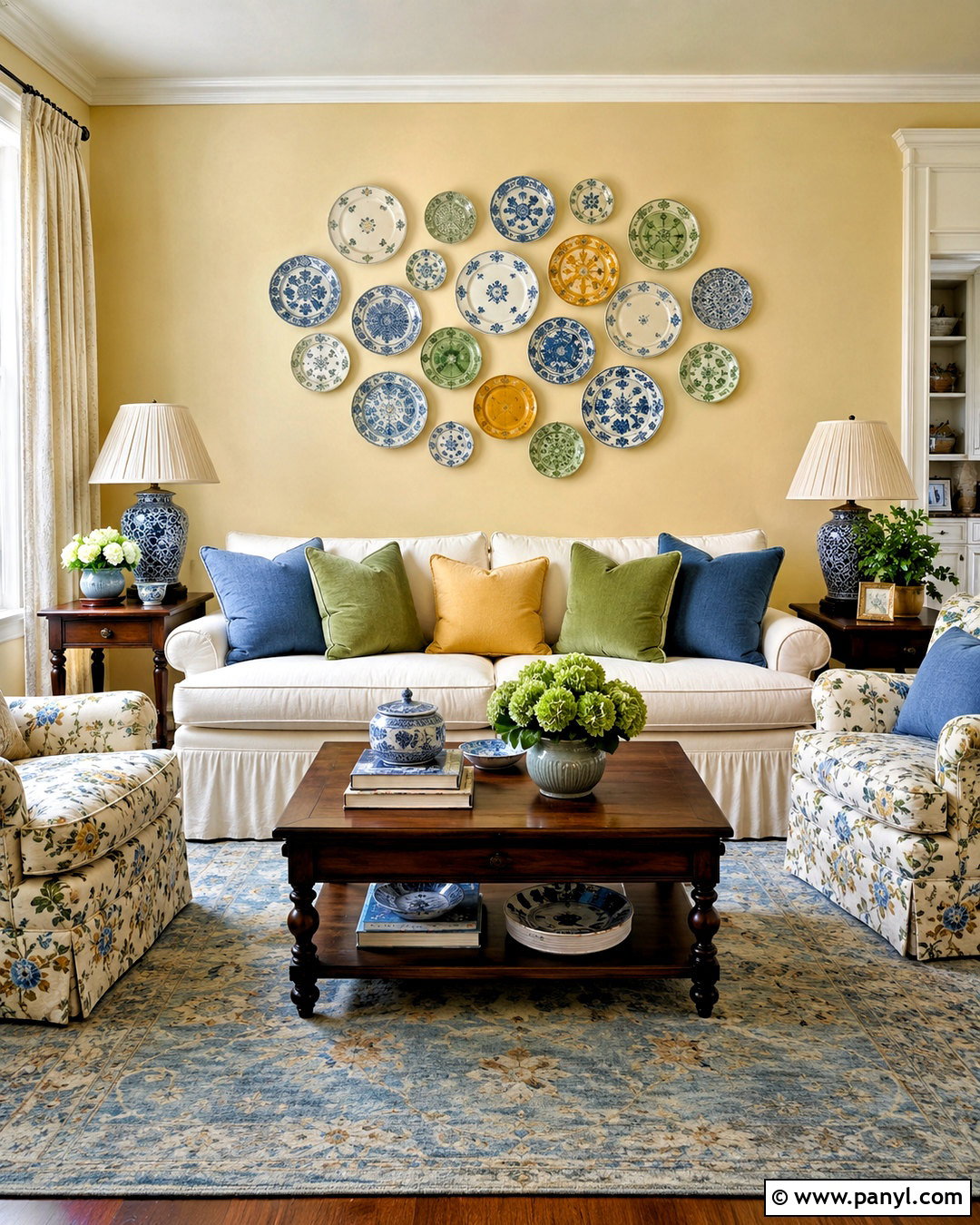
A decorative plate display can bring color and personal character to a traditional or cottage-inspired living room. Start with a muted buttercream wall, then arrange ceramic plates in blue, green, ocher, and white above a skirted linen sofa. Combine several sizes, but maintain balanced spacing and an overall oval or gently flowing shape. Secure every plate with hardware designed for its weight instead of relying on temporary adhesive. Complete the room with floral armchairs, a dark wood coffee table, pleated lampshades, and a faded blue wool rug. Add solid-colored pillows to prevent the textiles from competing with the display. Plate collections have gained renewed attention as homeowners look for personalized alternatives to standard framed artwork and overly polished matching decor. ()
20. Two-Tone Living Room Wall
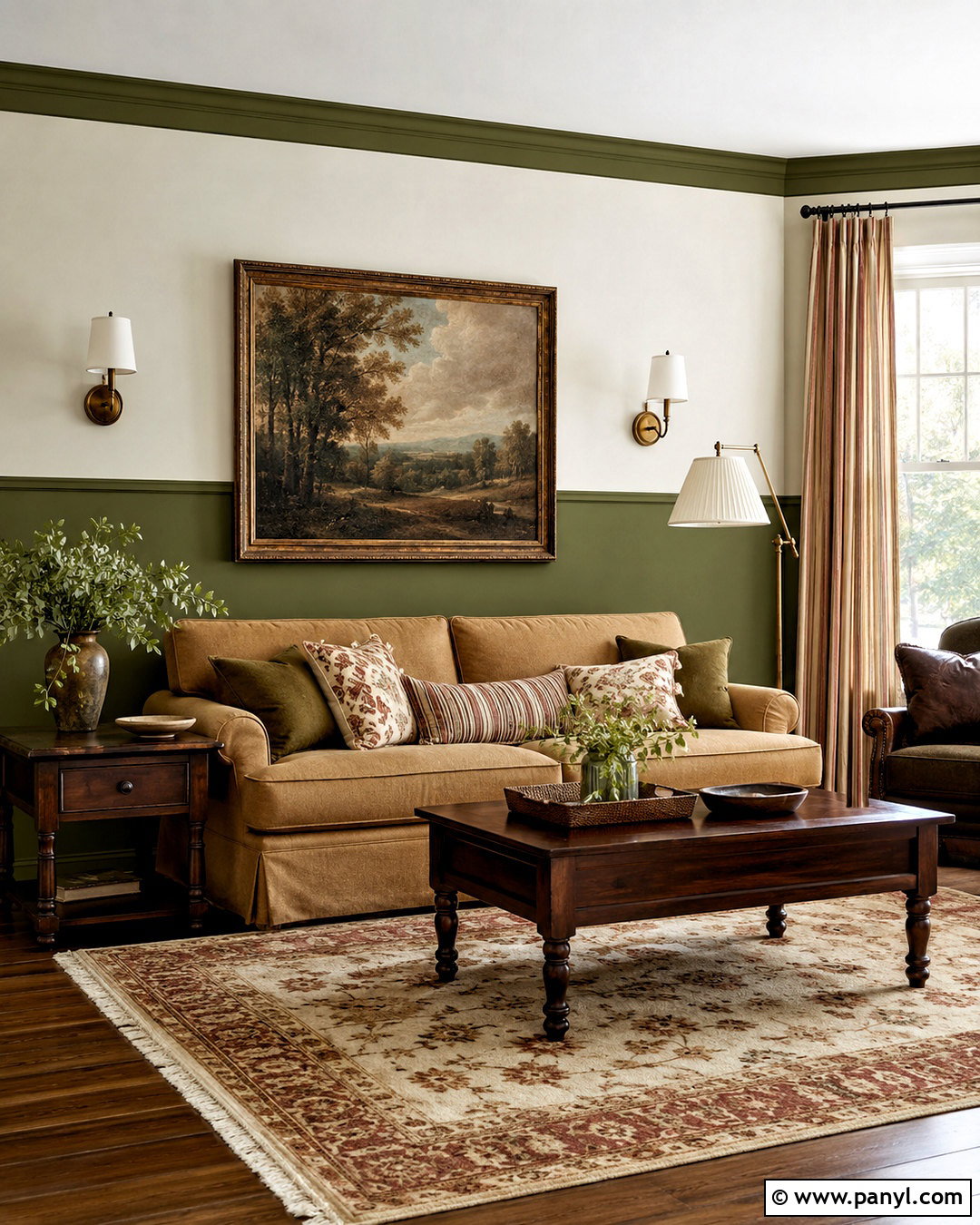
A two-tone wall offers a practical way to add color while preserving a bright, open feeling. Install a simple chair rail about one-third of the way up the wall, then paint the lower section a warm olive green and the upper section a soft creamy white. Continue the green across baseboards and door trim for a deliberate finish. Arrange a tan sofa against the wall with a large vintage landscape above it, allowing the artwork to overlap the visual boundary. Add dark wood side tables, striped curtains, a brass floor lamp, and a cream-and-rust rug. The lower color visually anchors the furniture, while the pale upper wall reflects light. This design works well in small living rooms, family rooms, and older homes with simple architectural details.
Conclusion:
The most successful **20 living room wall designs** do more than decorate an empty surface. They connect the wall treatment with furniture placement, lighting, storage, artwork, and the room’s overall color palette. A soft limewash finish can create quiet texture, while bookcases or media cabinetry add valuable function. Paneling introduces architecture, wallpaper supplies pattern, and oversized art delivers impact with less construction. Before choosing a look, consider the wall’s dimensions, nearby windows, viewing angles, and existing materials. Test colors and samples in morning and evening light whenever possible. Whether your project involves paint, fabric, stone, wood, or collected decor, thoughtful proportions will help the finished living room feel comfortable, balanced, and personal.

Related Ideas and Inspiration:
Leave a Reply