
Paint can do far more than cover a blank surface. The right pattern can reshape a room, define a functional zone, highlight furniture, and create an architectural feature without costly remodeling. Today’s 20 wall paint designs include softly layered limewash, bold color blocking, classic stripes, painted arches, modern murals, and immersive color-drenched rooms. These approaches reflect the growing preference for warmer colors, visible texture, and paint treatments that feel personal rather than purely decorative. () Whether you are updating a living room, bedroom, hallway, bathroom, nursery, or home office, every look below combines color, furniture, lighting, and decor into a complete space. Use these practical, room-ready 20 wall paint designs to find a finish that fits your home.

1. Two Tone Wall Paint
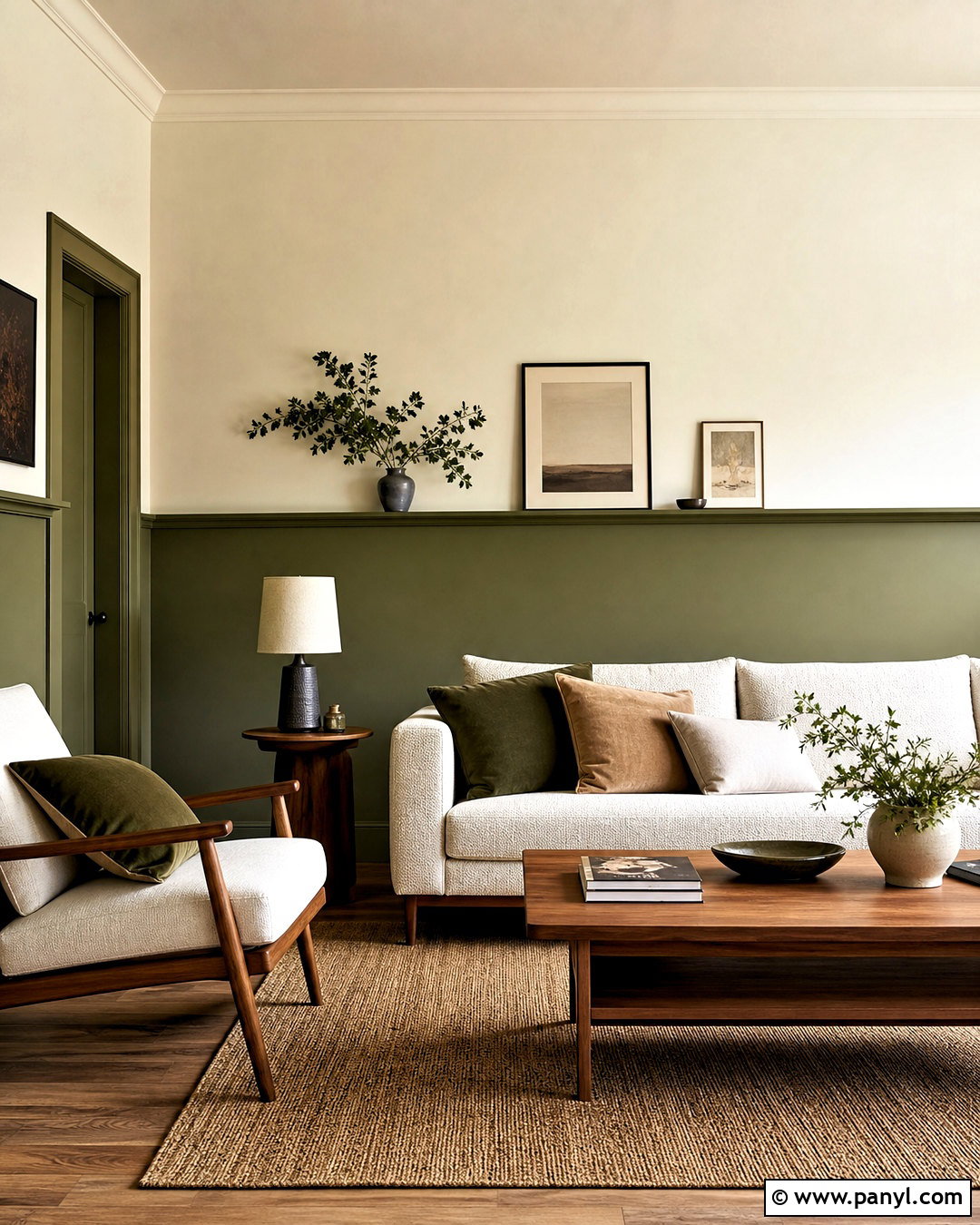
Two-tone wall paint creates a balanced room without making the walls feel overly busy. In a relaxed living room, paint the lower third a warm olive green and the upper section a soft creamy white. Align the dividing line with a windowsill or the top of a low bookcase so it feels connected to the architecture. Add a light oatmeal sofa, walnut coffee table, woven rug, and cushions that repeat both wall colors. A narrow picture ledge placed along the color break can display simple artwork without interrupting the clean layout. Paint the baseboards olive for a grounded finish, while keeping the crown molding white. This complete scheme feels warm, practical, and especially suitable for family rooms with neutral furniture.
2. Color Block Wall Paint
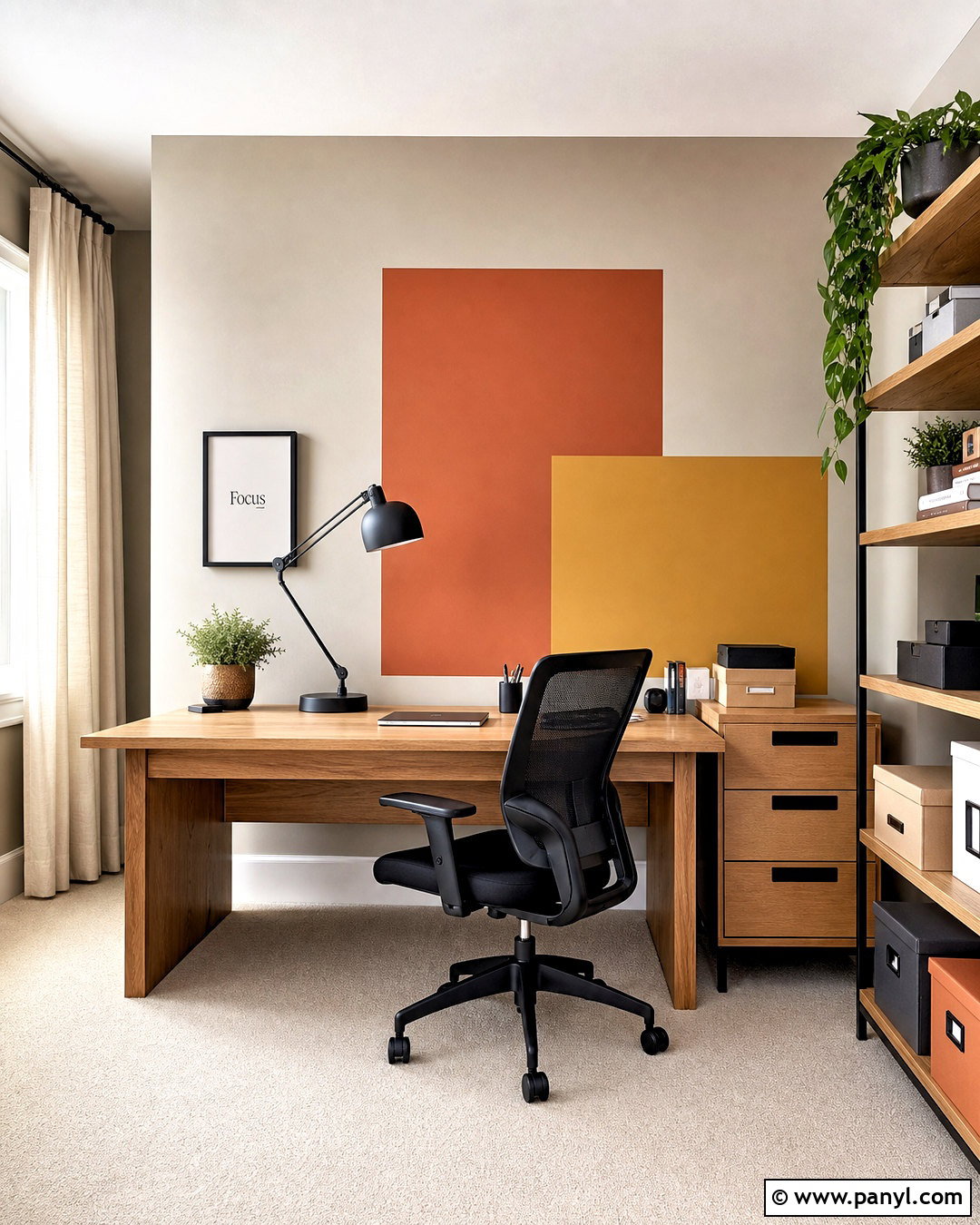
Color blocking turns a plain home office into a clearly defined and energetic workspace. Begin with a soft greige base, then paint one wide terracotta rectangle behind the desk. Add a smaller muted mustard block that overlaps one corner for controlled contrast. The large shape should extend slightly beyond the desk and shelving, visually anchoring the entire work zone. Choose a simple oak desk, black task chair, cream curtains, and matte black lighting to keep the stronger colors balanced. Terracotta storage boxes and a mustard desk accessory can repeat the painted blocks in smaller amounts. Leave the other walls quiet and uncluttered. This wall paint design makes the office feel intentional while providing a strong background for open shelves, framed prints, and practical daily supplies.
3. Limewash Wall Paint
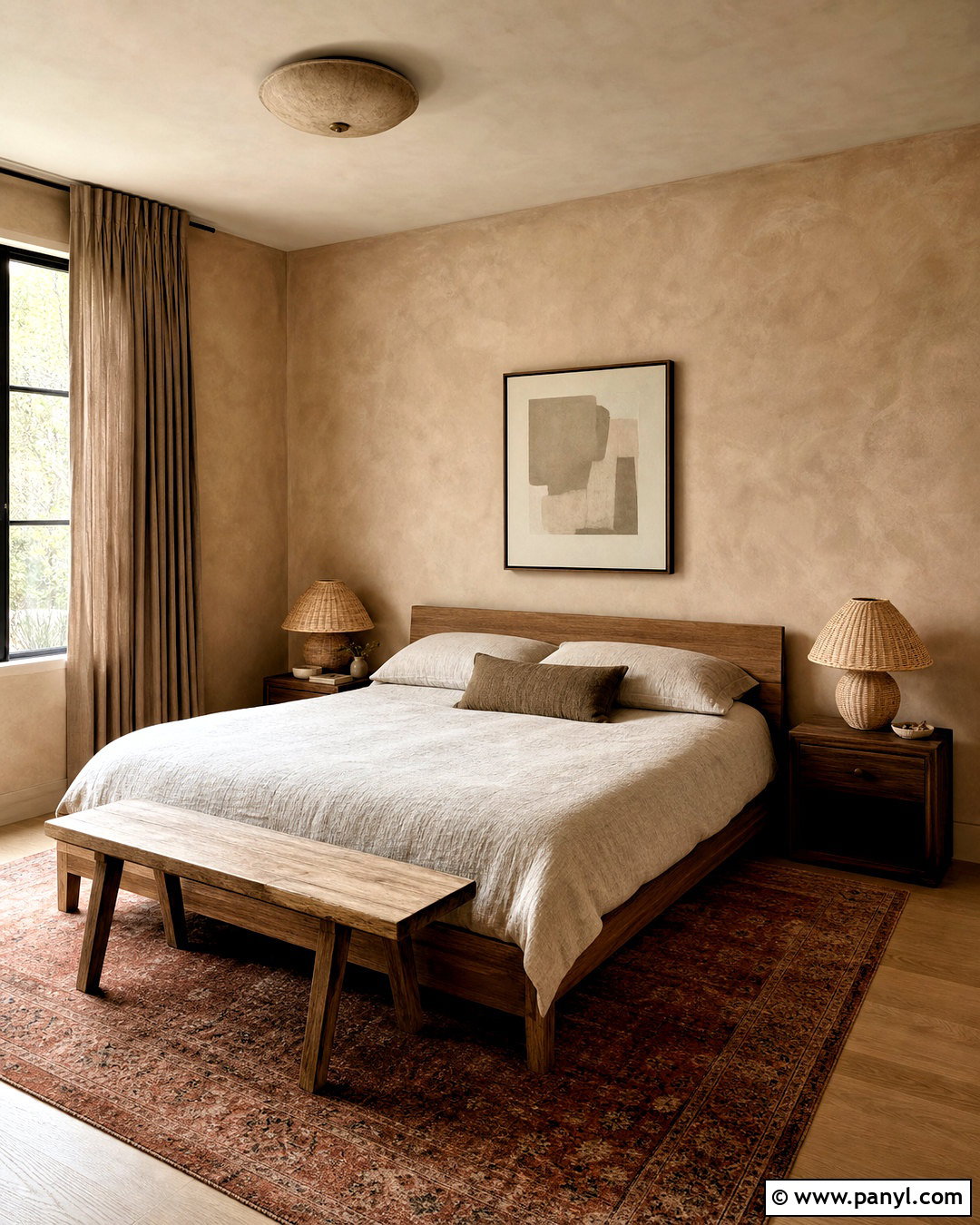
Soft movement and natural-looking variation make limewash wall paint ideal for a restful bedroom. Cover every wall in a muted clay-beige limewash rather than limiting the finish to one accent surface. Apply overlapping strokes so the color develops subtle cloudy layers instead of a perfectly uniform appearance. Pair the textured walls with a low oak bed, off-white linen bedding, mushroom-colored curtains, and woven bedside lamps. A faded rust rug adds warmth without competing with the finish. Keep artwork minimal because the walls already provide visual depth. Paint the trim a coordinating warm beige in a smooth matte finish to create a polished transition. The completed bedroom should feel calm and tactile, with earthy colors and simple materials working together from floor to ceiling.
4. Painted Arch Wall
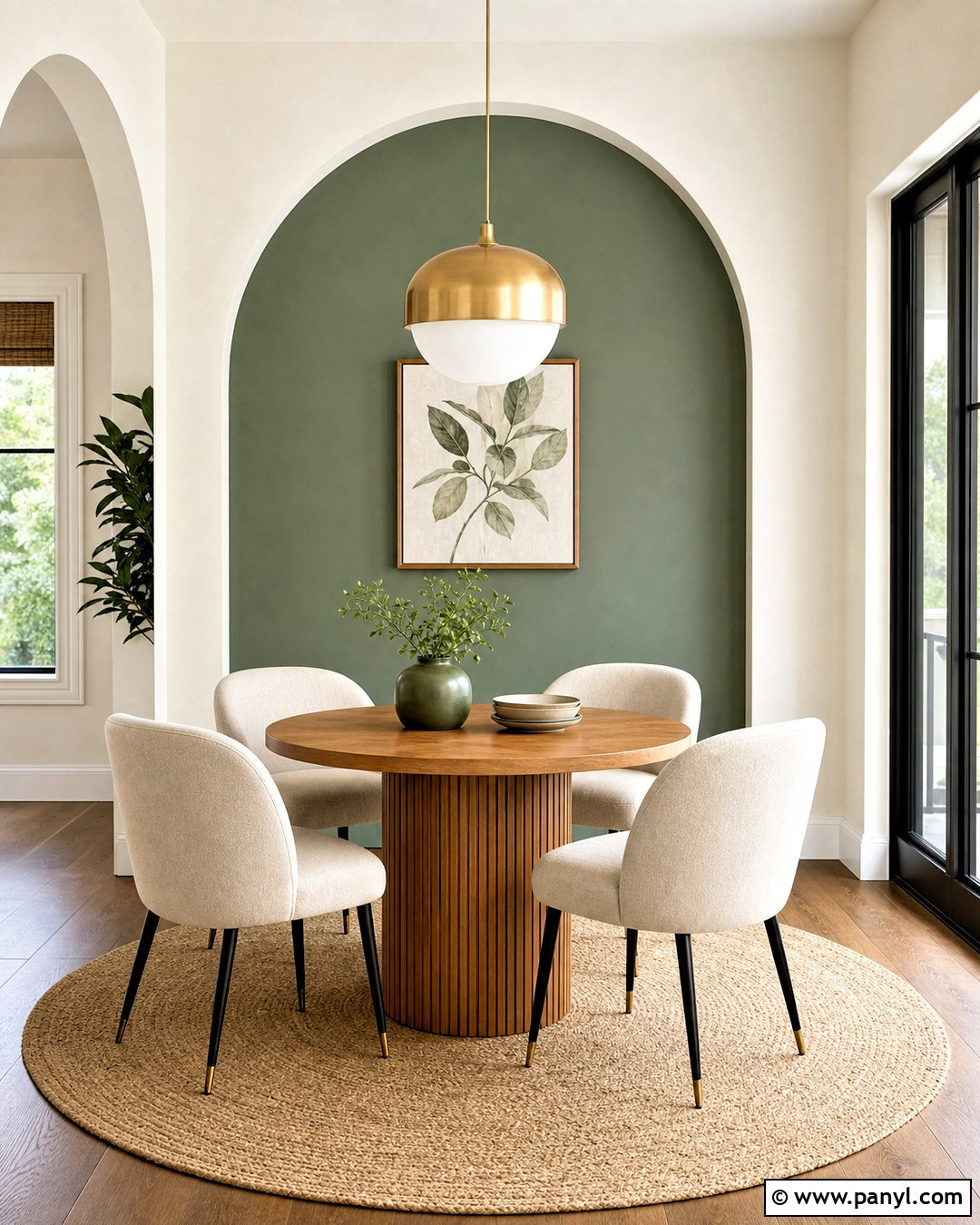
A painted arch can transform an ordinary dining nook into a feature that looks built into the room. Use a deep sage green arch on a warm white wall, making it slightly wider than the dining bench or sideboard placed in front of it. The curved top softens straight furniture lines and naturally frames the seating area. Complete the space with a round oak table, cream upholstered chairs, a small brass pendant, and a flat-woven neutral rug. Hang one simple botanical print inside the arch, leaving enough open wall around it for the shape to remain visible. Repeat sage through seat cushions or pottery. The finished nook feels connected and welcoming, while the painted structure adds definition without requiring woodwork, wallpaper, or major construction.
5. Vertical Stripe Wall Paint
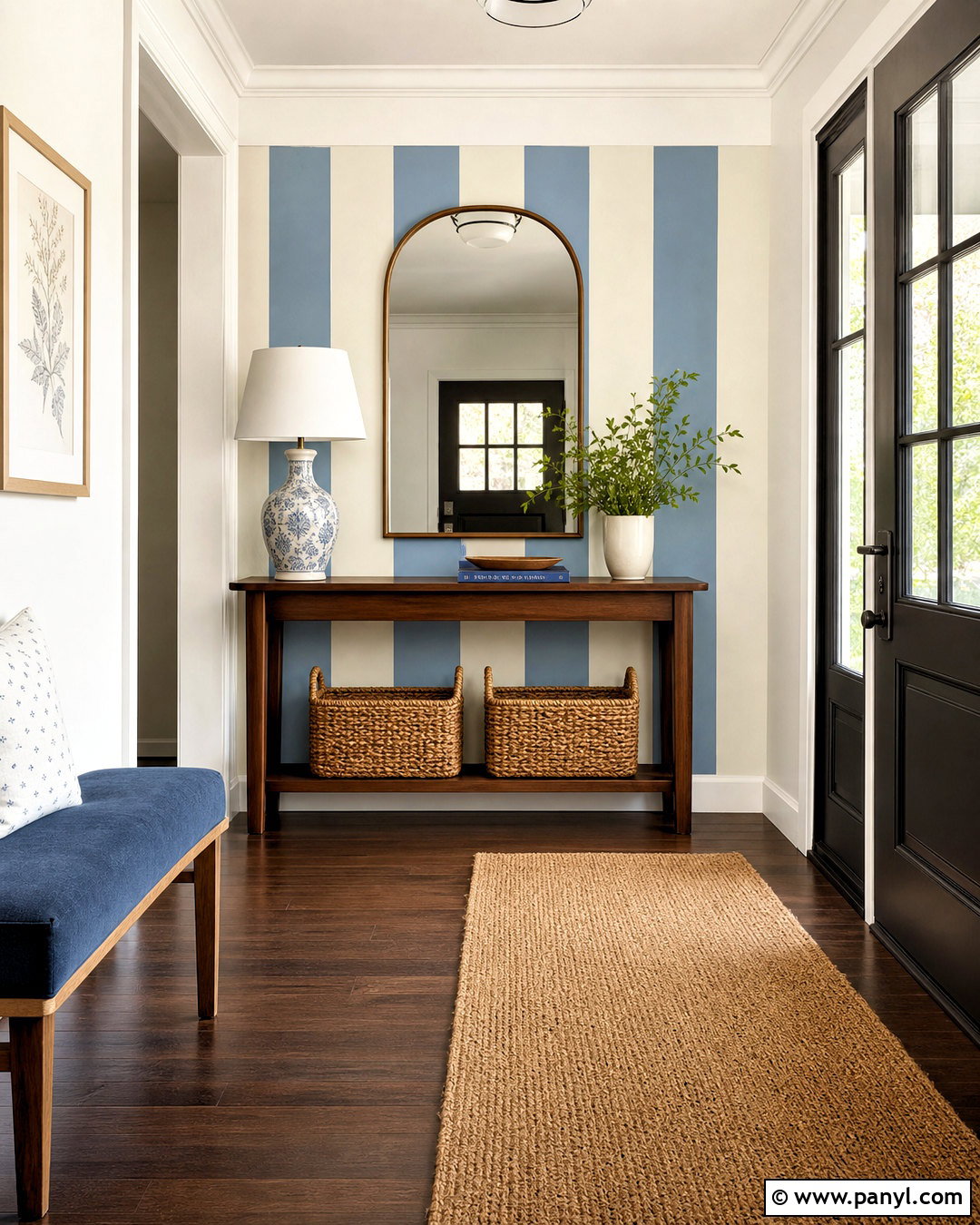
Vertical stripe wall paint can give a compact entryway a taller, more ordered appearance. Use alternating stripes of dusty blue and soft ivory, keeping each stripe wide enough to prevent the pattern from looking too busy. Continue the design from the baseboard to the ceiling on one main wall. Place a slim walnut console against it, then add a rounded mirror, ceramic lamp, and woven storage baskets underneath. A natural runner softens the floor and connects the blue walls with warm wood tones. Paint the remaining walls ivory so the striped surface stays prominent. For a cohesive finish, choose matte paint for both colors and repeat dusty blue on a small bench cushion. The result is a bright, organized entrance with character and practical everyday storage.
6. Horizontal Stripe Wall Paint
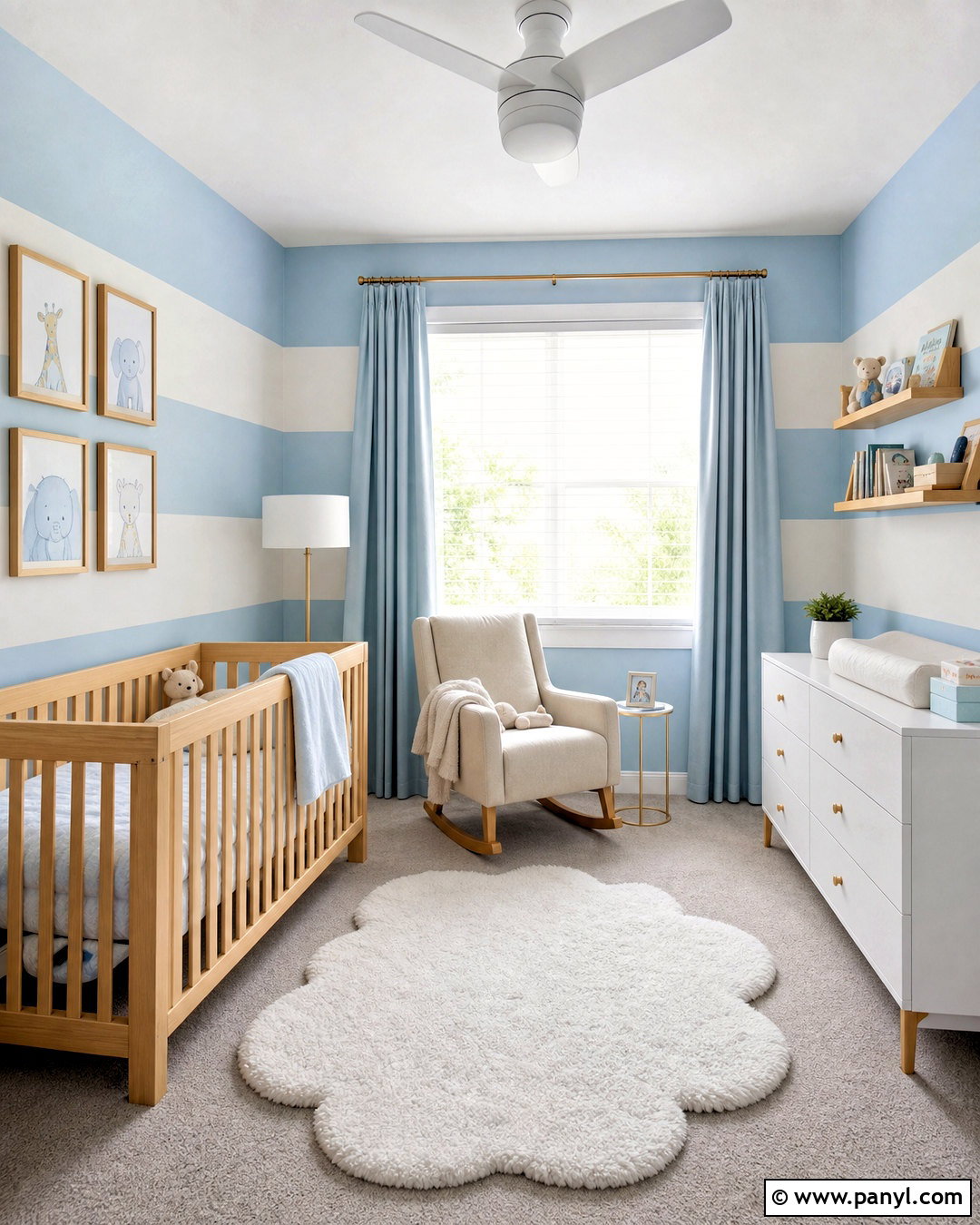
Wide horizontal stripes bring playful structure to a nursery while keeping the room soothing. Paint the walls with broad bands of pale sky blue and warm white, using only three or four stripes from floor to ceiling. Wider bands feel calmer than narrow lines and provide a simple background for furniture. Choose a natural wood crib, white dresser, oatmeal rocking chair, and soft blue curtains. A cloud-shaped rug and light wood shelving can continue the gentle theme without making the room overly themed. Keep the ceiling and trim warm white for a clean frame. Place the darkest blue band behind the crib to create a stable focal point. This complete nursery feels airy, comforting, and visually spacious, with enough pattern to remain interesting as the child grows.
7. Geometric Wall Paint
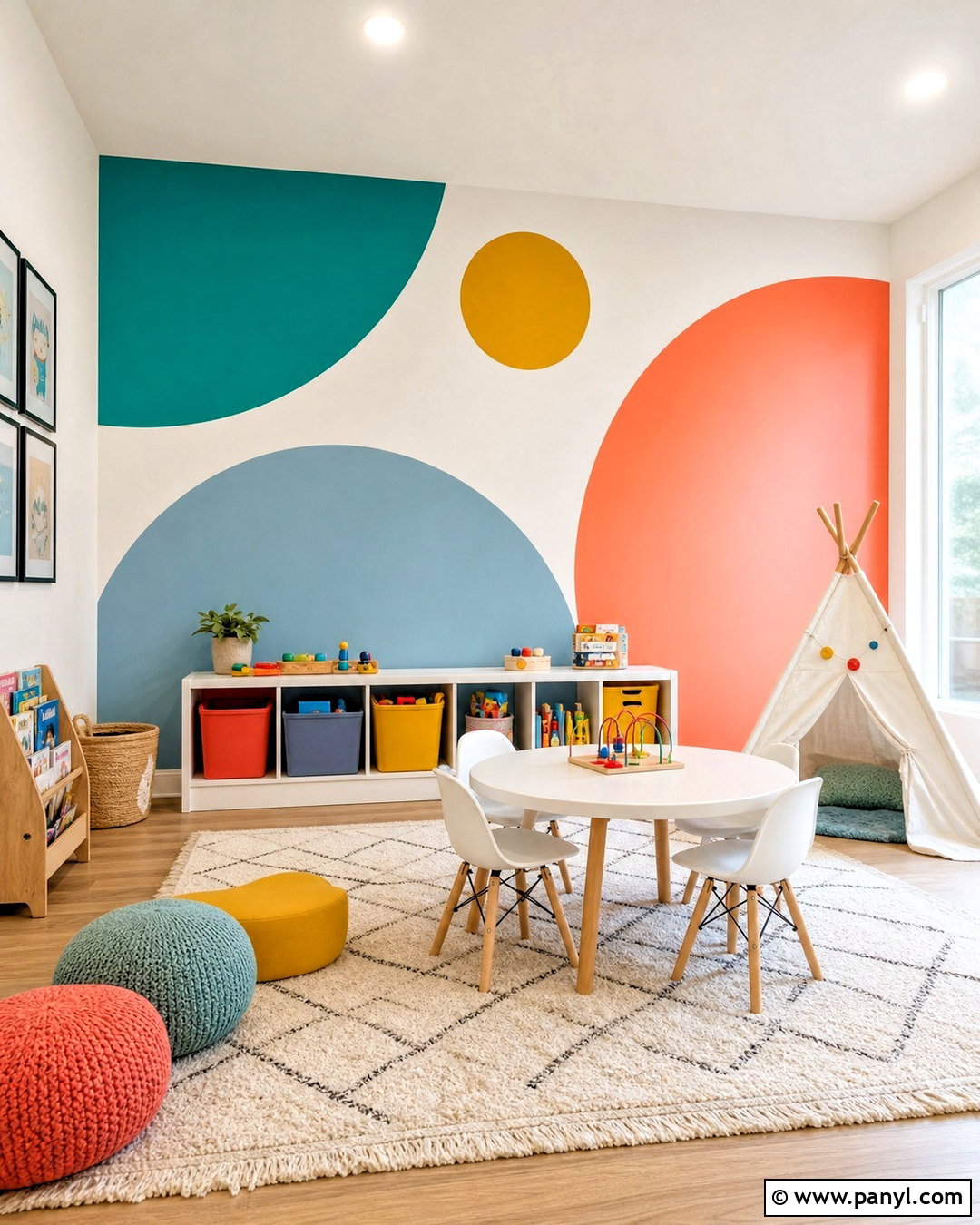
A geometric wall works especially well in a playroom where strong shapes can support a cheerful, creative atmosphere. Start with a warm white background, then add large overlapping triangles and rectangles in teal, coral, mustard, and dusty blue. Keep the shapes concentrated on one wall and use slightly muted colors so the room does not become overstimulating. Arrange a low white storage unit across the base of the design, with labeled-looking solid-color bins that contain no visible text. Add a round activity table, washable neutral rug, and floor cushions that repeat the wall palette. Leave plenty of open floor space for play. The completed room feels colorful but organized, with the painted pattern, practical furniture, and accessible storage functioning as one unified design.
8. Ombre Wall Paint
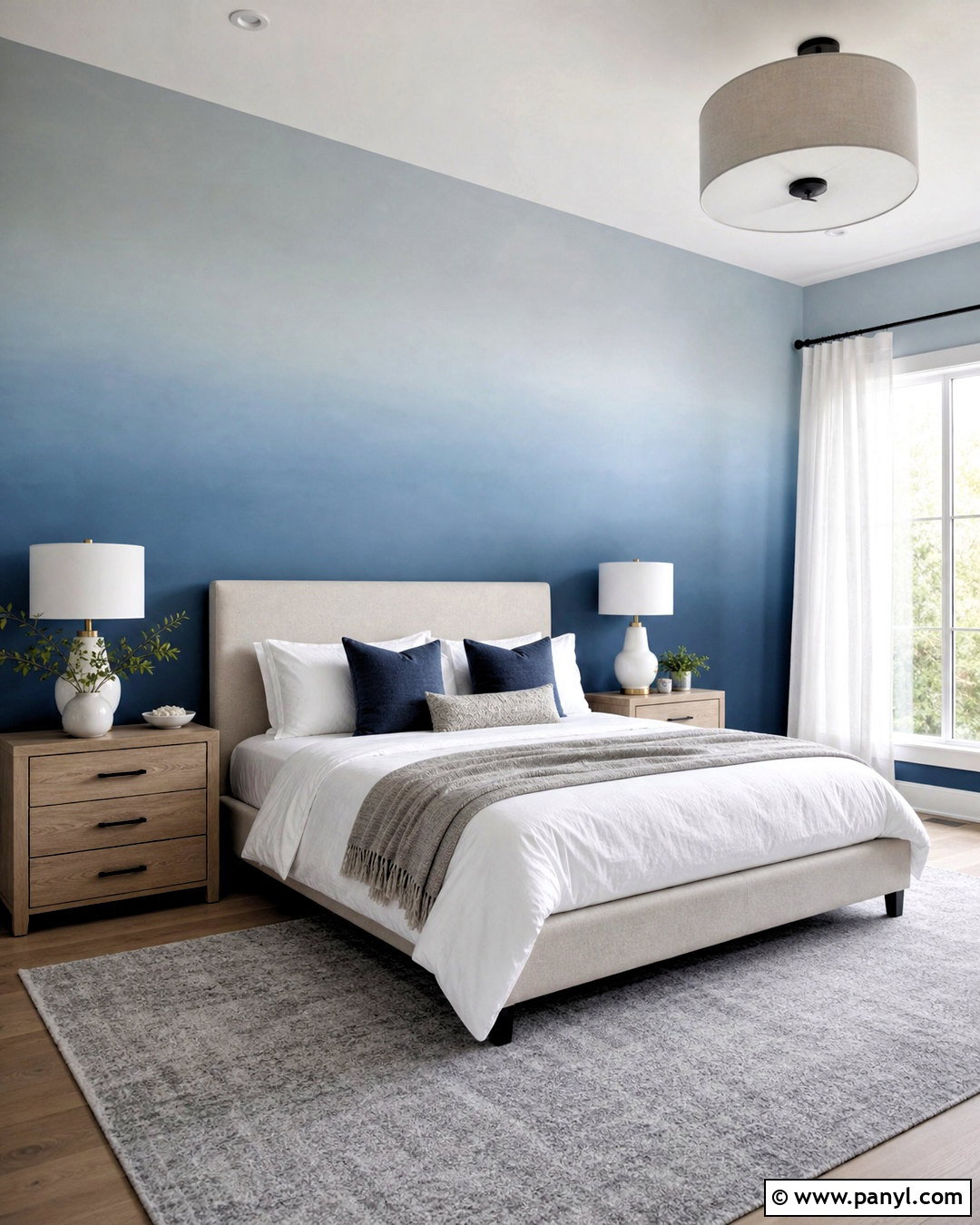
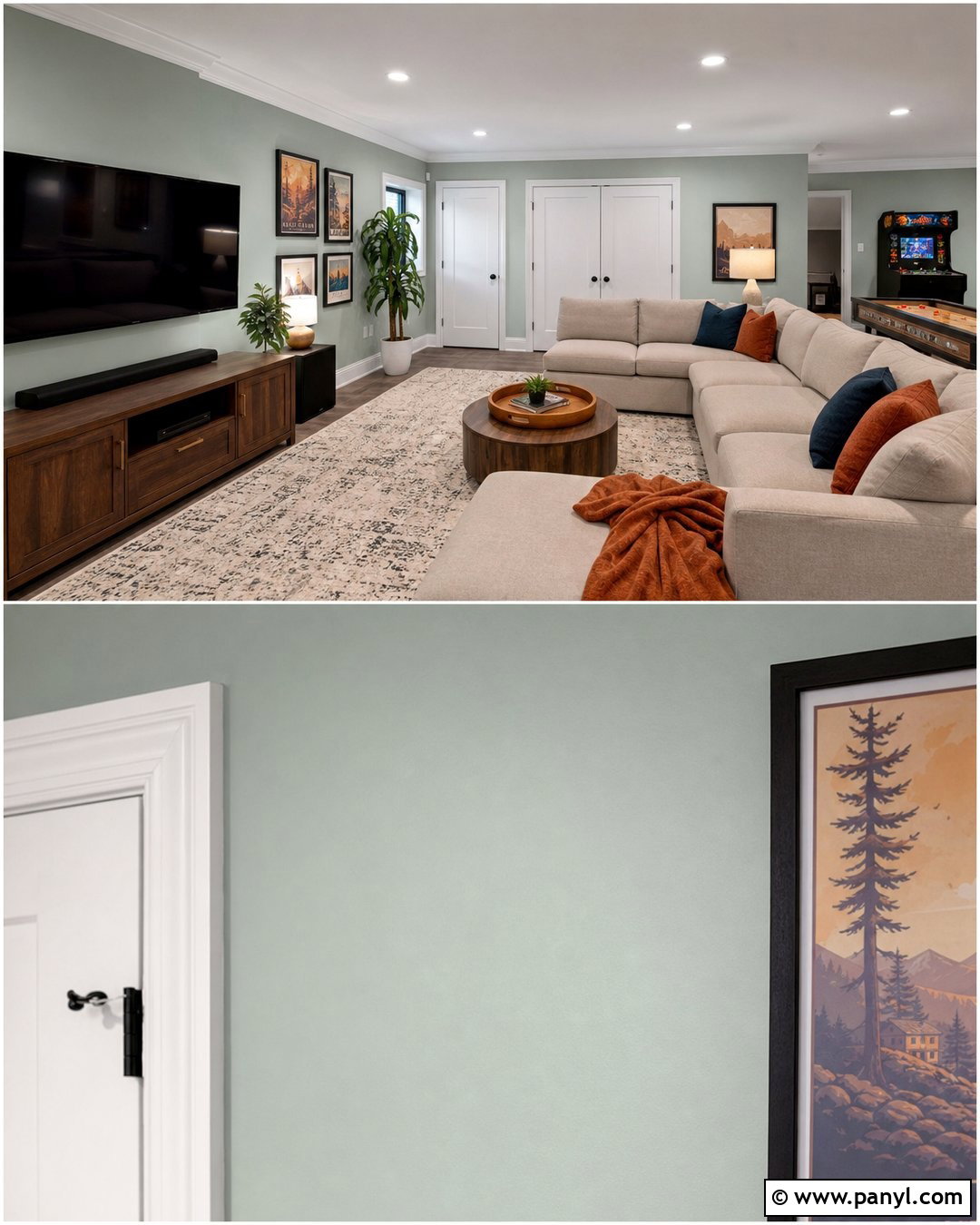
Ombre wall paint creates a gentle transition that can make a bedroom feel soft and spacious. Begin with deep dusty blue near the floor, blend it into misty blue at mid-wall, and finish with pale blue-gray close to the ceiling. The gradual lightening draws the eye upward and gives the room an atmospheric quality. Place a simple upholstered bed against the gradient wall with crisp white bedding, navy cushions, and a light gray throw. Pale oak nightstands and brushed nickel lamps keep the look bright. Use sheer white curtains to bring in natural light, and choose a soft gray rug that does not compete with the blended paint. Keep the remaining decor minimal. The finished room feels peaceful, polished, and more dimensional than a single-color bedroom.
9. Scalloped Wall Paint
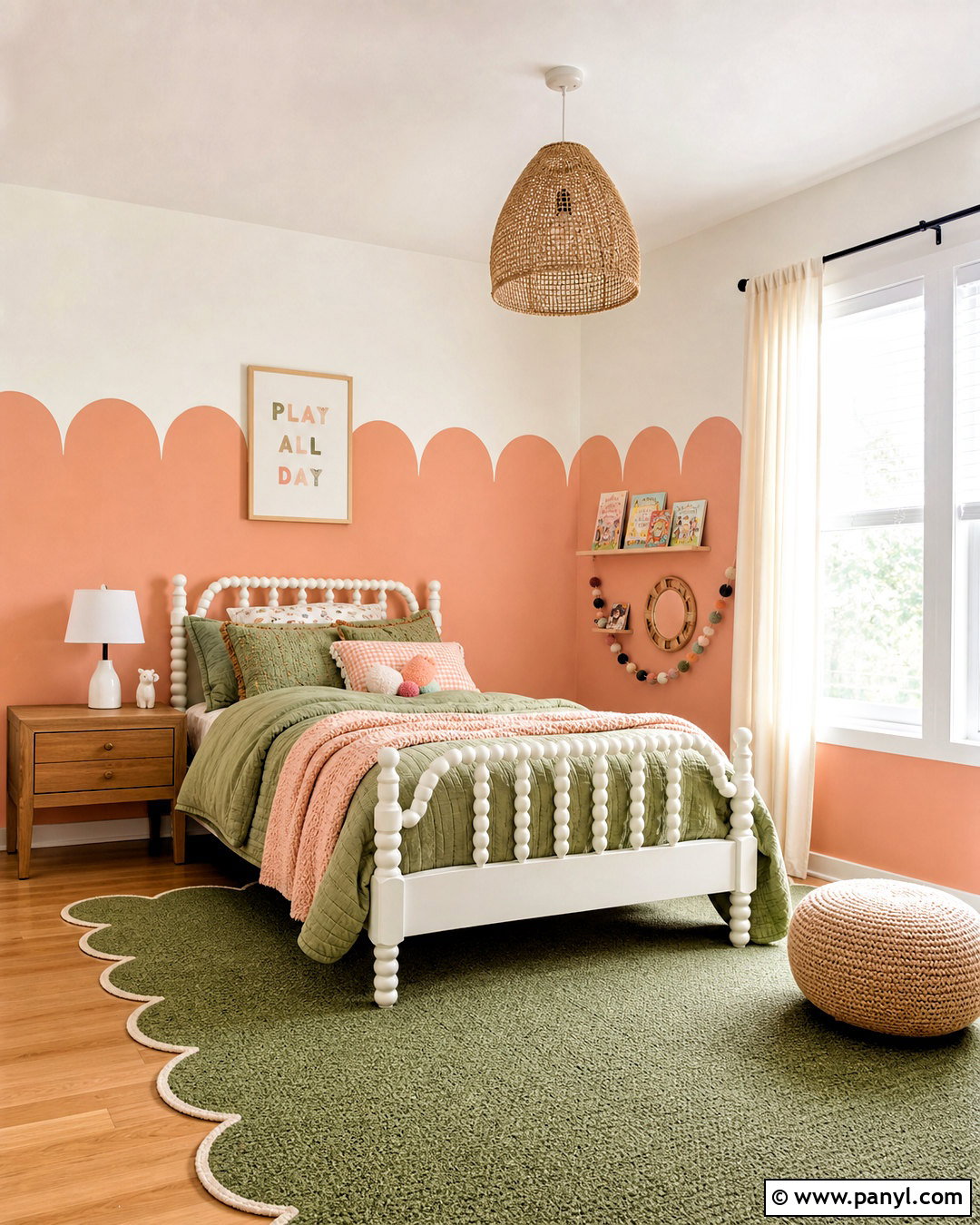
Scalloped wall paint brings a friendly decorative border to a child’s bedroom without covering every surface in pattern. Paint the lower half a warm peach color and create large rounded scallops along the upper edge. Leave the top half creamy white to preserve brightness. Position a white spindle bed against the painted section, then add peach and sage bedding, a light wood nightstand, and a woven pendant. The scallops should be broad and evenly spaced so they read as an intentional border rather than tiny waves. A soft green rug and simple animal artwork can complete the palette. Paint the baseboards peach to visually support the lower section. This room feels playful and polished, and the design can transition easily as furniture and accessories change over time.
10. Checkerboard Wall Paint
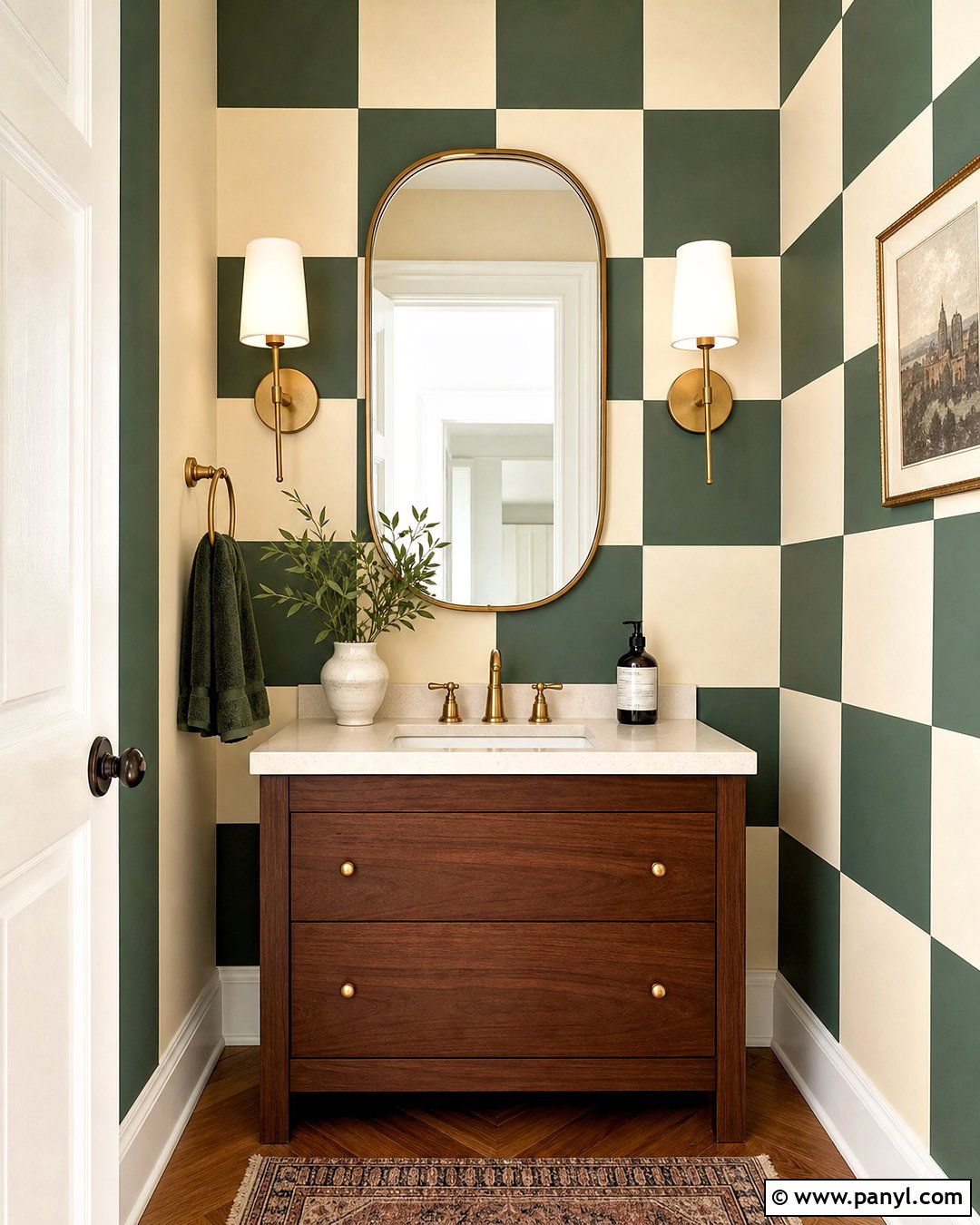
A small powder room offers the perfect setting for checkerboard wall paint because the limited space can handle a bold pattern. Use medium-size squares in warm cream and muted forest green on the wall behind the vanity. Keep the other walls cream so the checkerboard remains the main feature. Install a compact walnut vanity, white stone sink, aged brass faucet, and rounded brass mirror. A globe wall sconce adds a clean shape without competing with the painted grid. Choose deep green hand towels and a small woven basket to connect the room’s details. Crisp edges are essential, so plan the square placement around the vanity and mirror before painting. The complete powder room feels graphic, warm, and memorable without relying on expensive tile or elaborate architectural changes.
11. Color Drenched Wall Paint
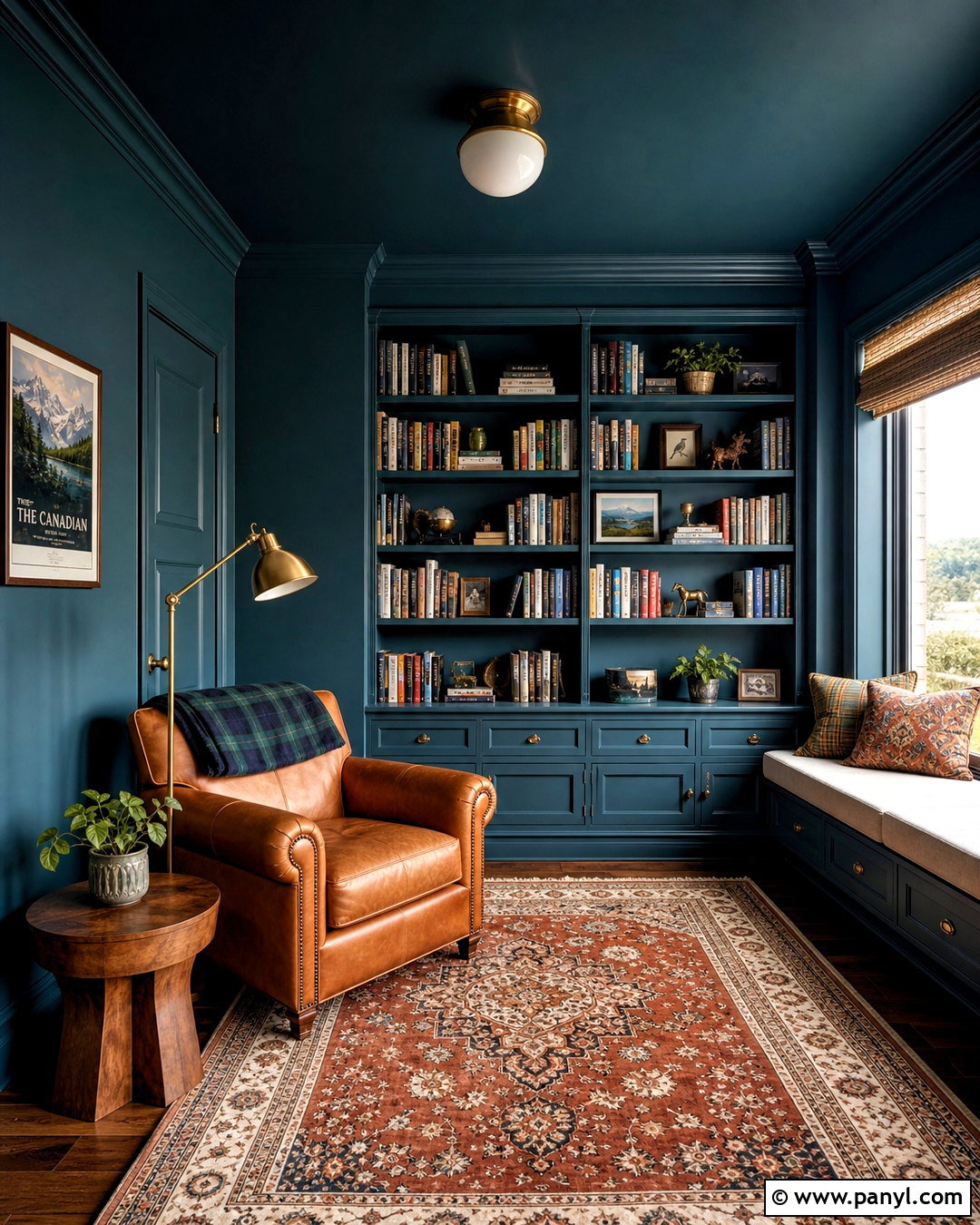
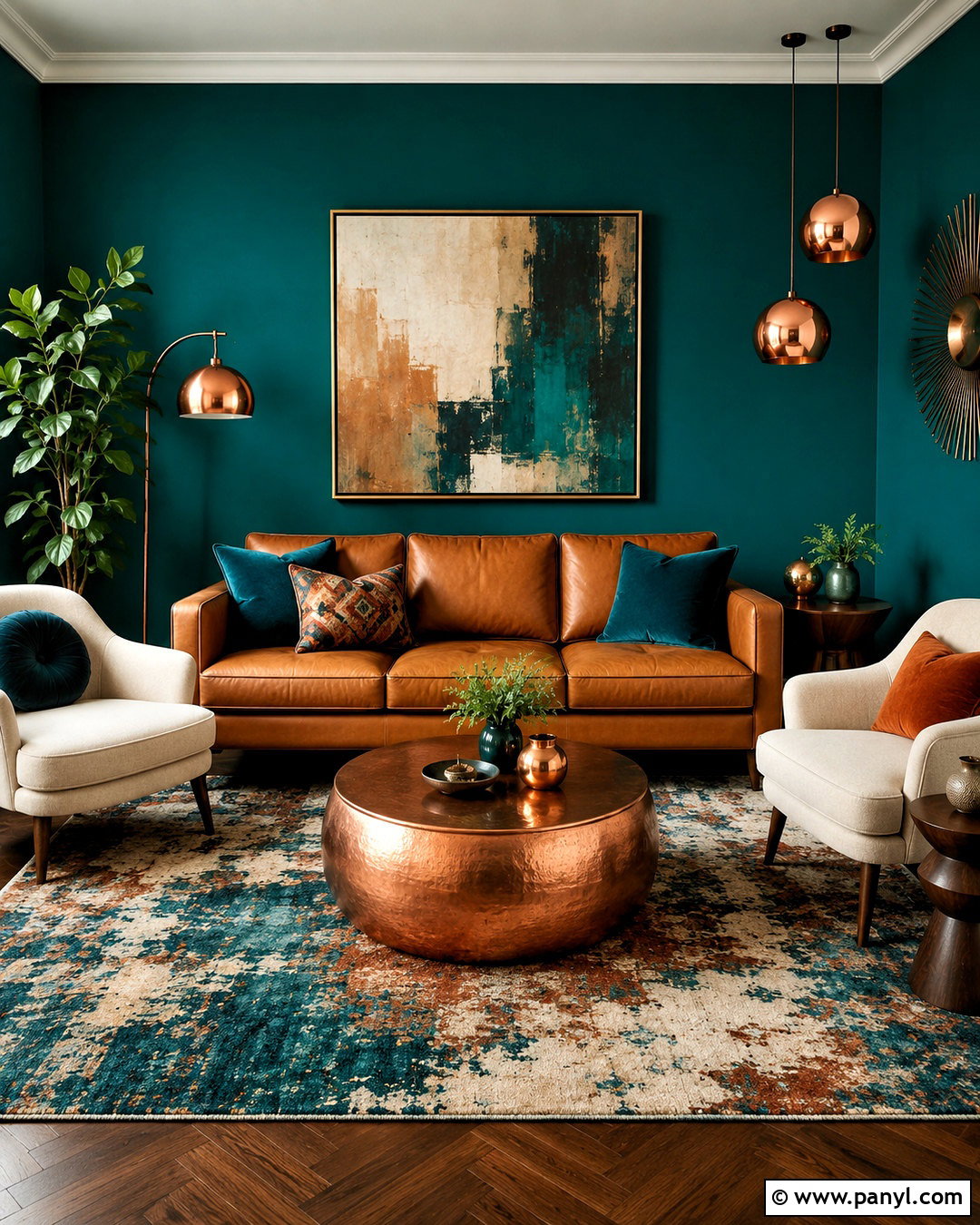
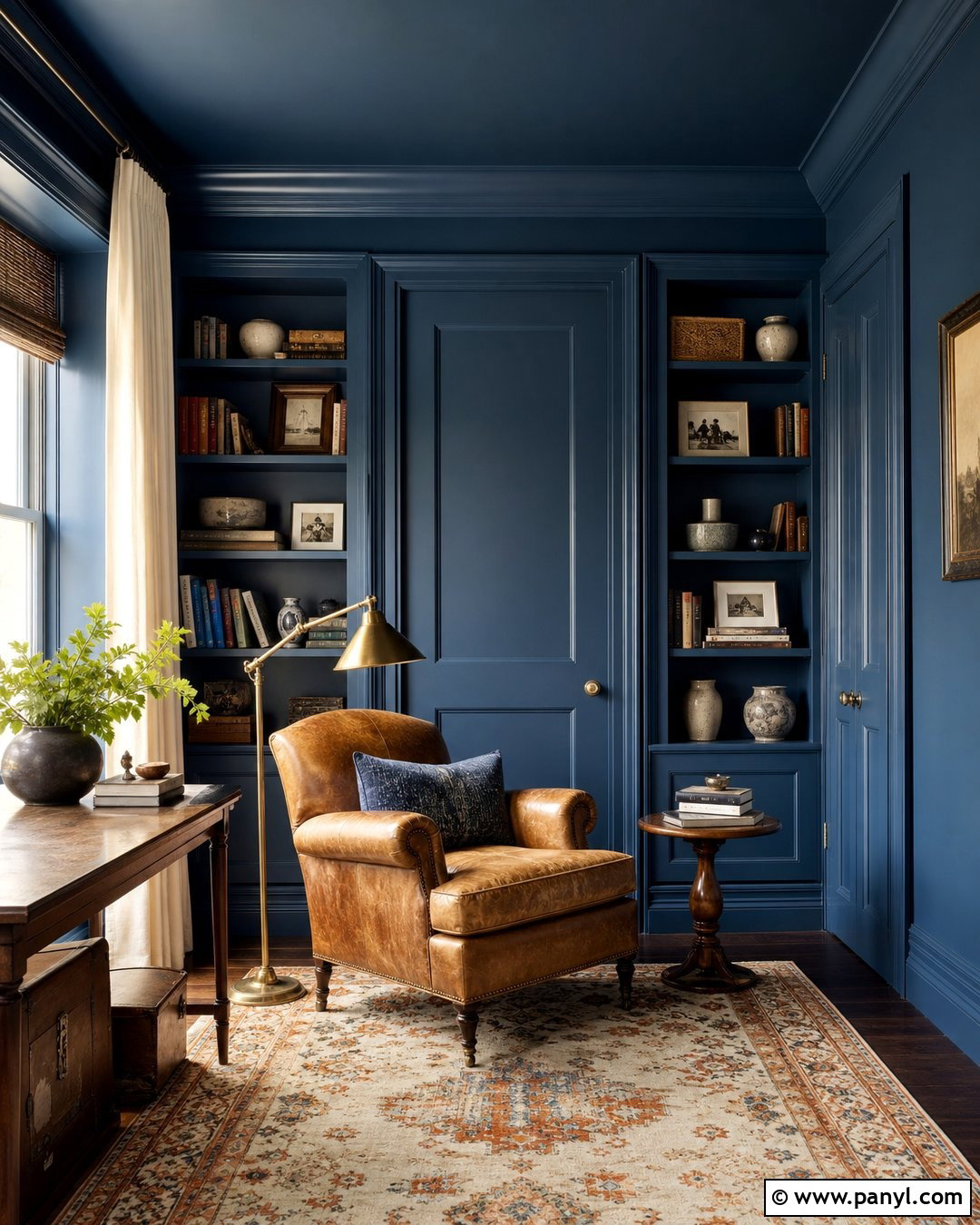
Color drenching creates a cocooning reading room by carrying one shade across the walls, trim, doors, shelving, and ceiling. Choose a deep blue-green with a soft, slightly muted finish rather than a highly saturated jewel tone. Built-in bookcases painted in the same color will blend into the architecture and make displayed books and objects stand out. Add a camel leather chair, walnut side table, antique brass floor lamp, and patterned rug containing blue, rust, and cream. Use warm white upholstery on a small window seat to lighten the arrangement. Different paint sheens can provide subtle definition, with matte walls and satin trim. The completed space feels immersive and sophisticated, while the layered lighting and warm furniture prevent the dark color from appearing flat or heavy.
12. Half Wall Paint
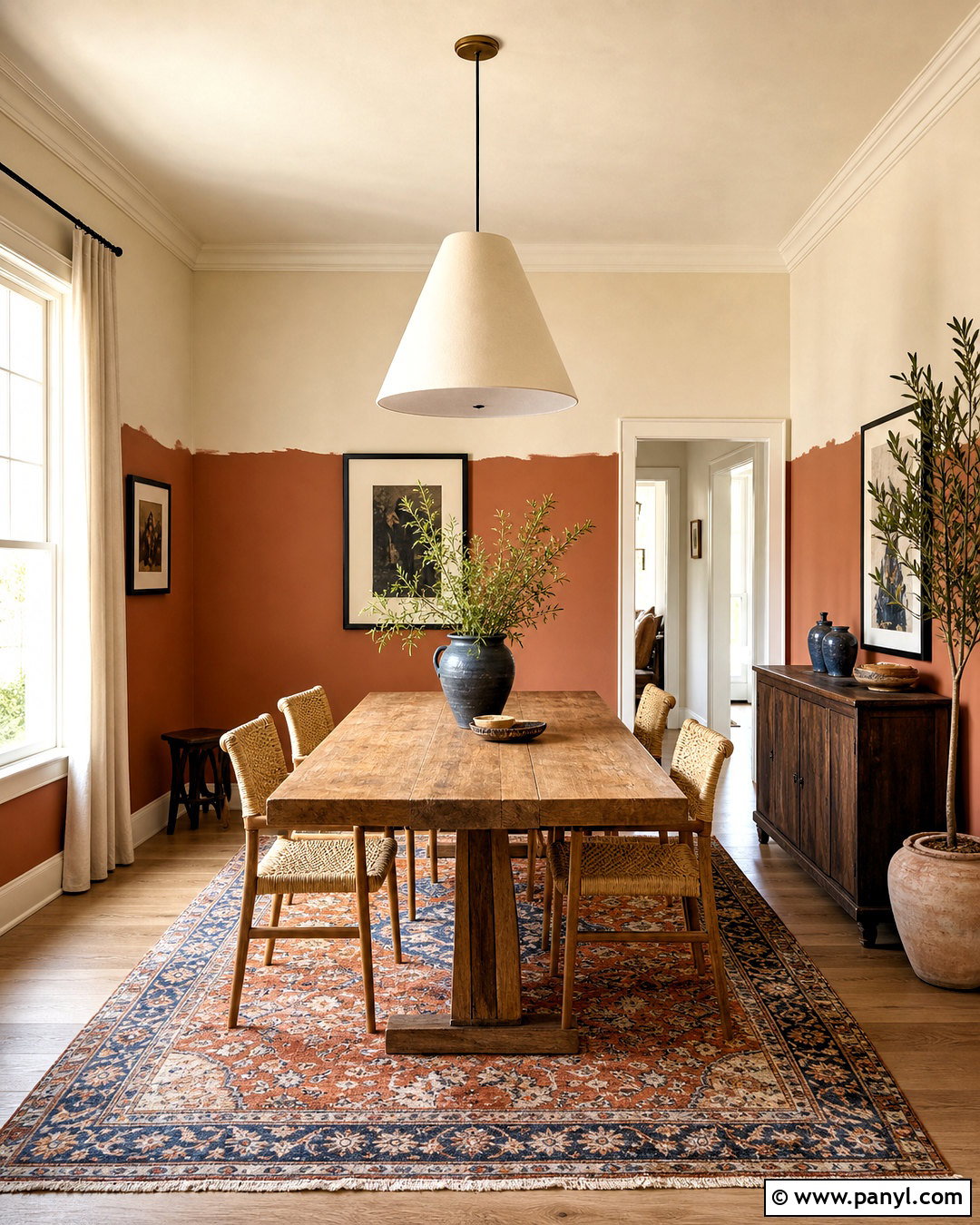
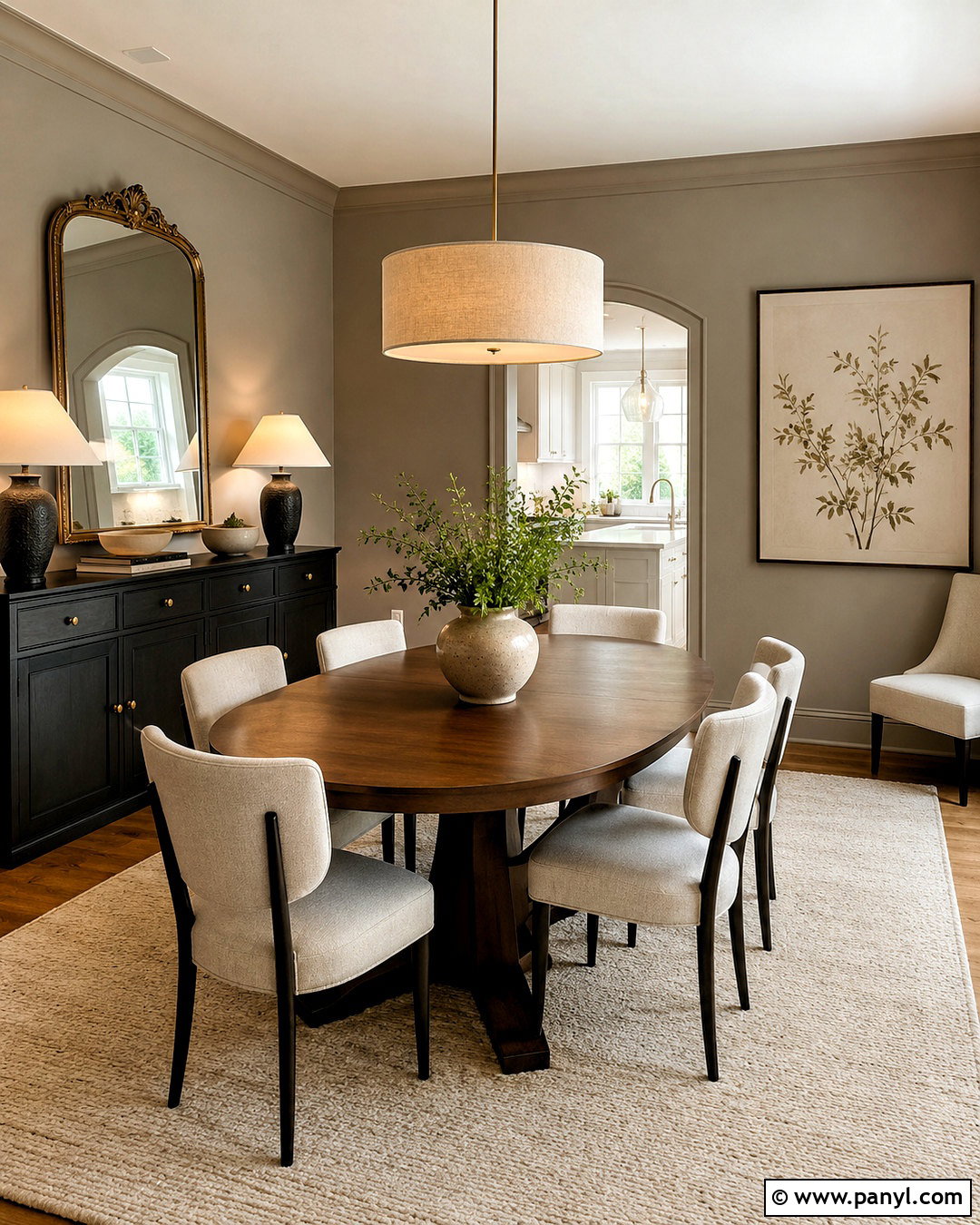
Half wall paint provides a practical way to add color to a dining room while maintaining a bright upper area. Paint the lower section a muted terracotta and the upper section a warm linen white. Place the dividing line slightly above chair-rail height, and continue the terracotta across the baseboards for a grounded look. Complete the room with a rectangular oak dining table, woven chairs, a cream linen pendant, and a vintage-style rug featuring faded rust and blue. Hang a balanced collection of simple framed artwork across the lighter upper wall. Terracotta table linens and blue ceramic pieces can connect the furnishings to the palette. This coordinated dining room feels warm and casual, and the deeper lower color helps disguise everyday scuffs in a busy, frequently used space.
13. Faux Panel Wall Paint
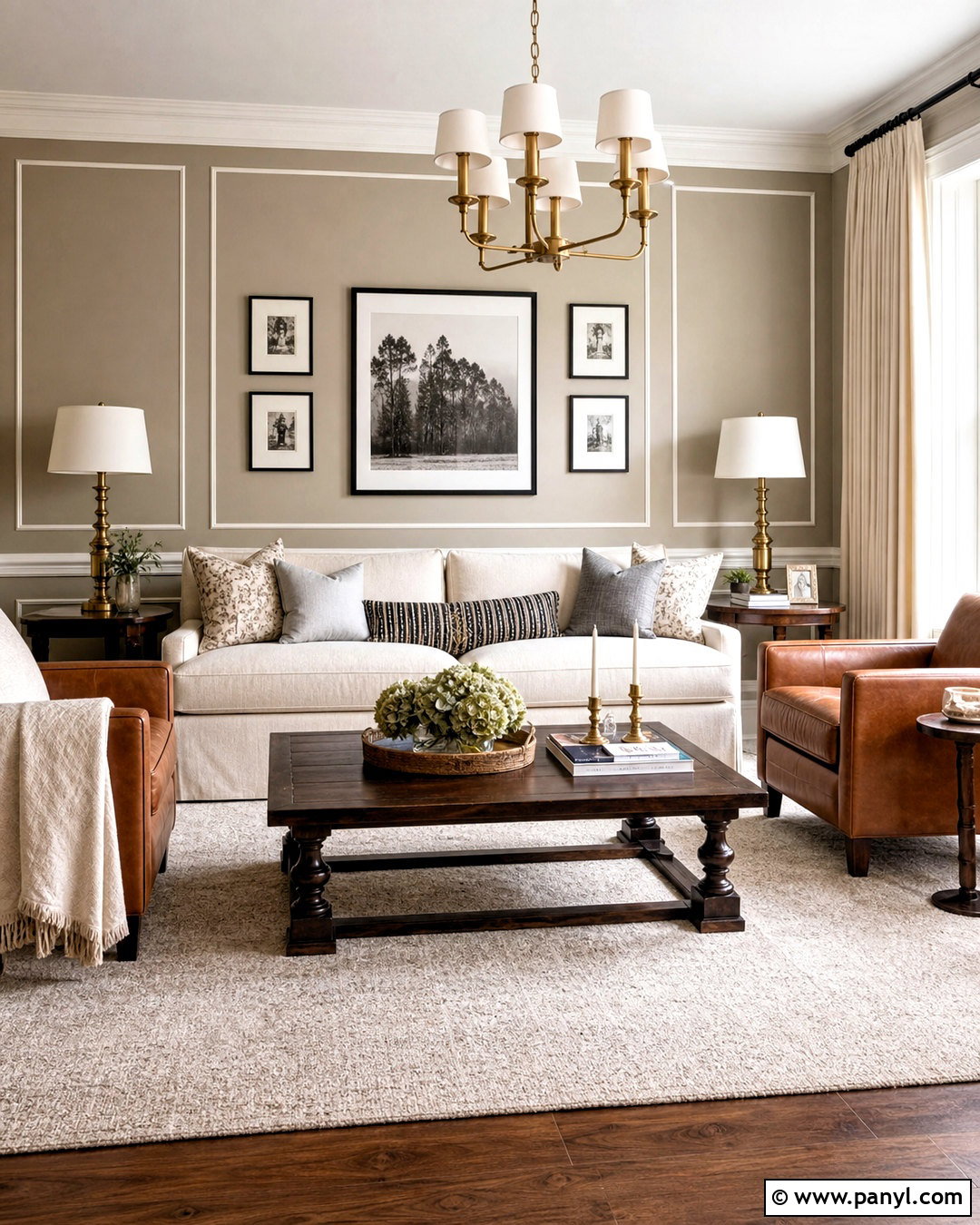
Painted faux panels can give a living room architectural character without installing traditional molding. Begin with warm greige walls, then outline large rectangular panels using thin cream-painted lines. Keep the panel sizes symmetrical around the fireplace, television console, or central sofa. The light outlines should contrast gently rather than creating a harsh graphic effect. Furnish the room with a tailored cream sofa, cognac leather chairs, dark wood coffee table, and textured beige rug. Use black picture frames inside selected painted panels to reinforce the orderly arrangement. A brushed brass floor lamp and neutral curtains add warmth. Continue the greige color across the baseboards for a modern finish. The completed space feels structured and elegant, with the painted framework connecting furniture, artwork, and architectural focal points.
14. Mountain Mural Wall Paint
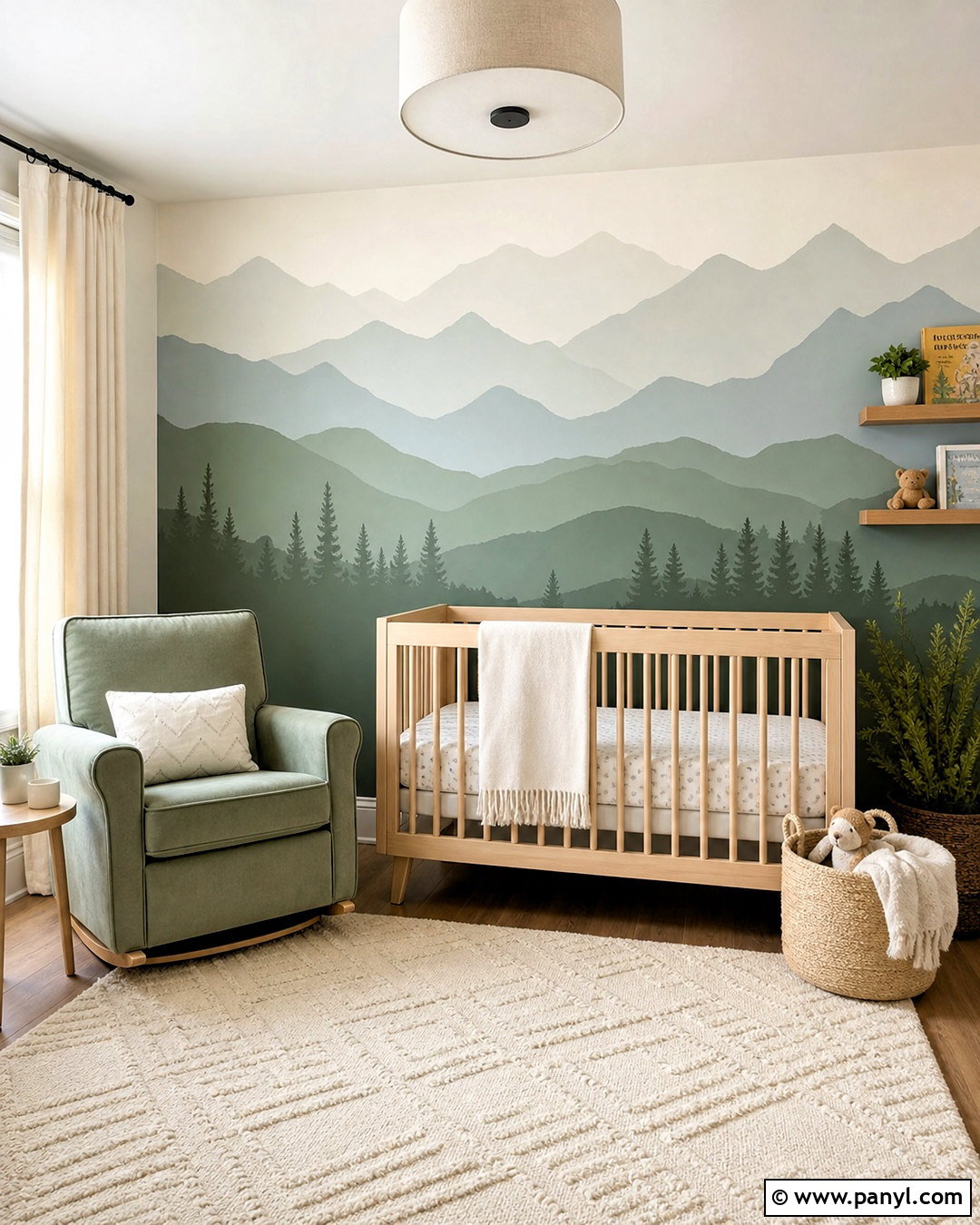
A mountain mural creates an imaginative nursery that still feels calm enough for sleeping. Paint layered mountain silhouettes across the crib wall using muted sage, dusty blue, pale gray, and warm white. Make each distant layer slightly lighter so the landscape develops gentle depth. Avoid tiny details and use broad, simple peaks that can be painted cleanly with tape or careful brushwork. Pair the mural with a natural birch crib, off-white curtains, sage rocker, and cream wool rug. Add light wood shelves with a few simple toys and nature-inspired decor. Keep the remaining walls pale gray to support the scene. The finished nursery feels peaceful and connected to nature, while the restrained palette prevents the mural from overpowering the furniture or making the room look overly themed.
15. Botanical Mural Wall Paint
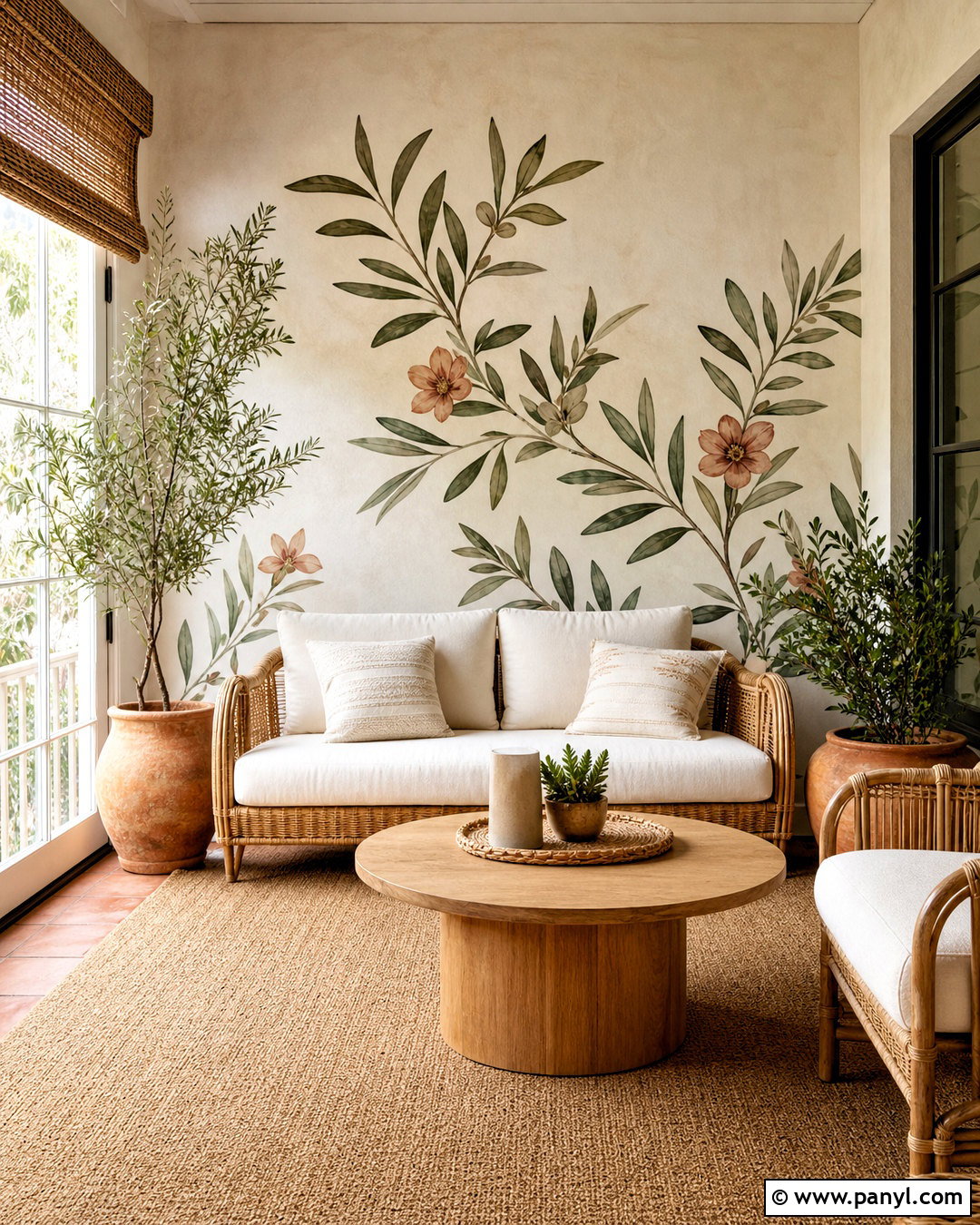
A hand-painted botanical wall can turn a sunroom or reading corner into a lush indoor retreat. Use an ivory base and paint large olive branches, muted green leaves, and soft clay-colored flowers flowing diagonally across one feature wall. Keep the shapes loose and slightly simplified rather than highly detailed. Place a natural rattan loveseat in front of the mural with cream cushions and olive pillows. Add a round oak table, terracotta planters, woven shades, and a light jute rug. Real leafy plants positioned near the painted foliage create a layered transition between art and nature. Keep the other walls warm ivory and the trim soft beige. This complete design feels fresh and organic, with painted greenery, natural furniture, and living plants forming one balanced room.
16. Terrazzo Effect Wall Paint
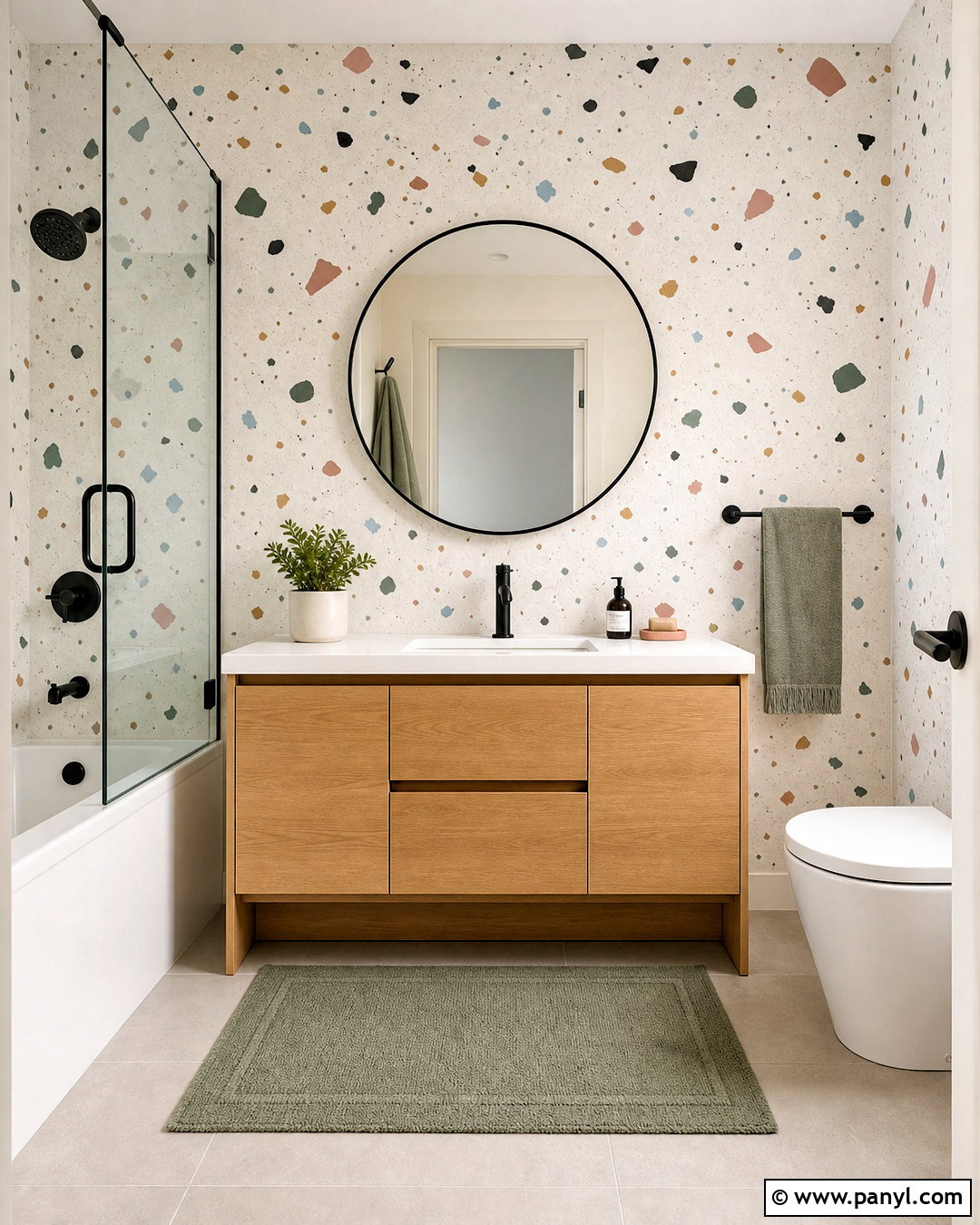
Terrazzo-effect wall paint brings cheerful pattern to a bathroom without the weight or expense of full stone installation. Start with a warm white background, then add scattered irregular shapes in dusty pink, sage green, ocher, charcoal, and pale blue. Keep the pieces varied in size but evenly distributed behind the vanity. Pair the painted feature with a light oak cabinet, white quartz counter, matte black faucet, and frameless round mirror. Use plain warm white paint on the remaining walls to avoid visual overload. A sage bath mat and dusty pink towels can repeat the terrazzo colors. Protect the finished wall with a suitable durable coating for the room. The completed bathroom feels modern and playful while maintaining a clean, functional layout and an easy-to-coordinate color palette.
17. Cloud Texture Wall Paint
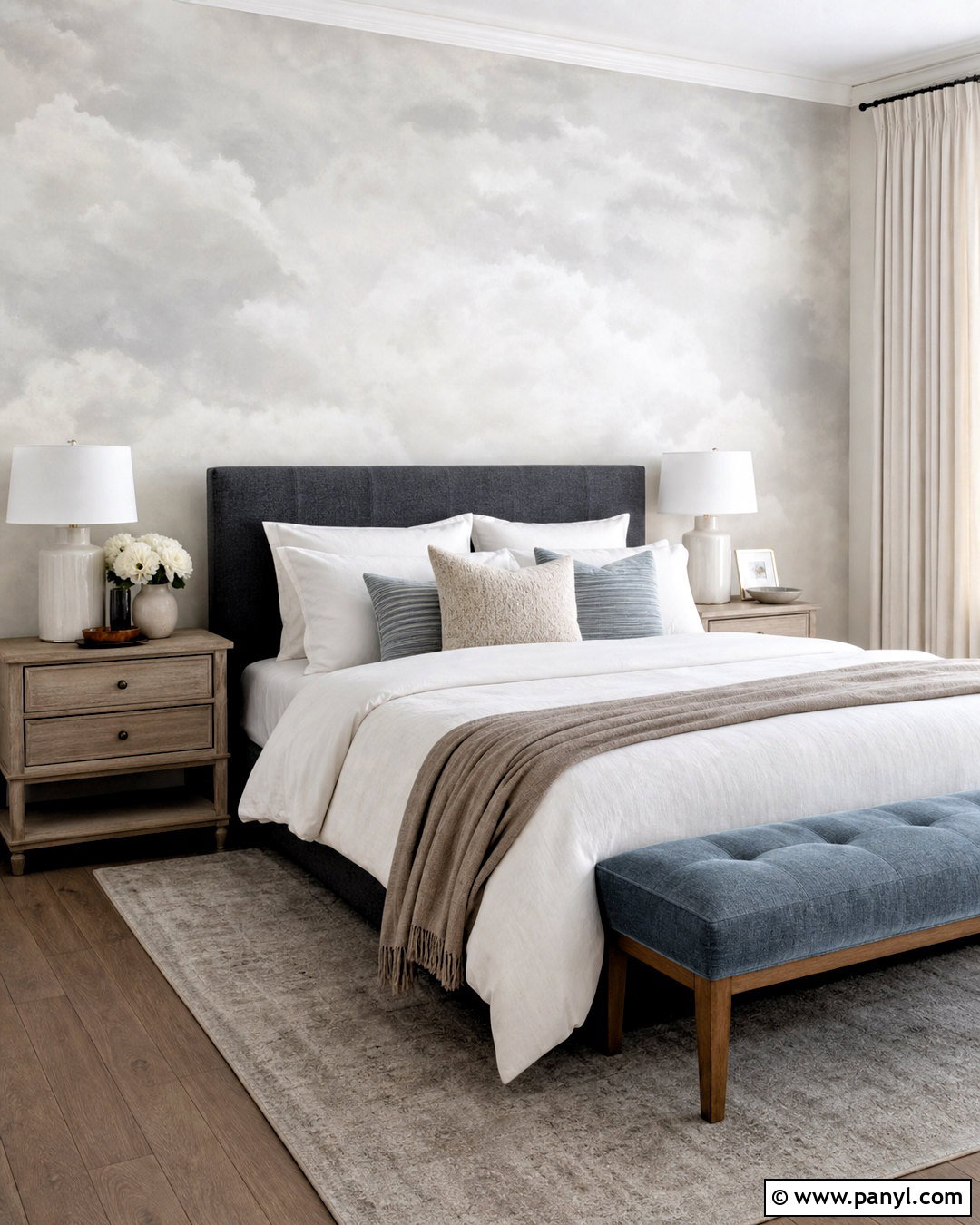
Cloud texture wall paint gives a guest bedroom gentle depth without creating a defined pattern. Begin with a warm light-gray base, then softly layer off-white and pale greige using a large sponge or wide brush. Blend the edges while the paint remains workable so the finish resembles drifting clouds rather than visible circles. Use the texture on every wall for an enveloping effect. Add a charcoal upholstered bed, white bedding, taupe throw, and pale wood nightstands. Simple ceramic lamps and linen curtains support the quiet palette. Introduce one muted blue bench at the foot of the bed for controlled contrast. The complete bedroom feels airy and comfortable, with soft wall movement providing interest while the restrained furniture, textiles, and decor keep the space restful.
18. Painted Headboard Wall
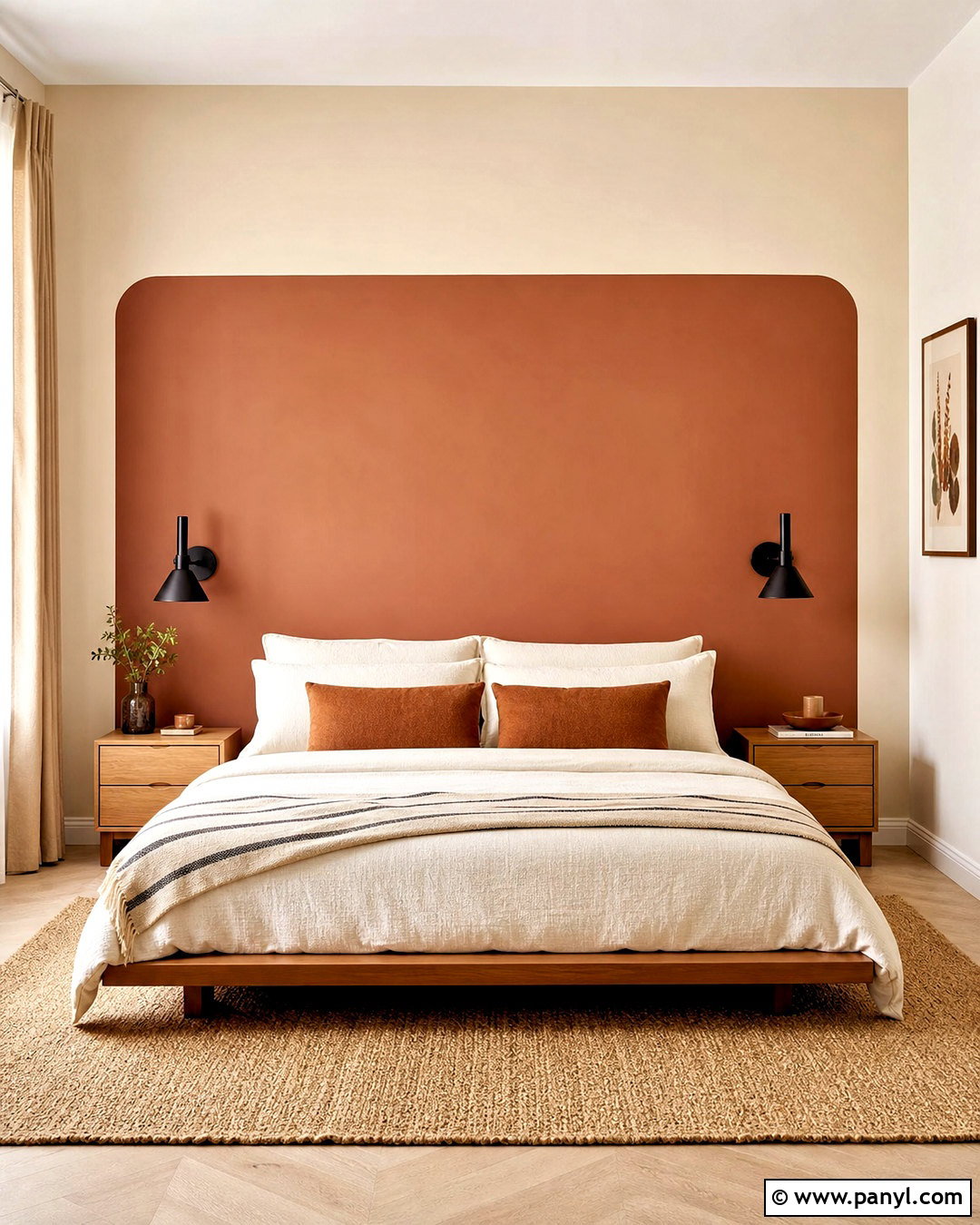
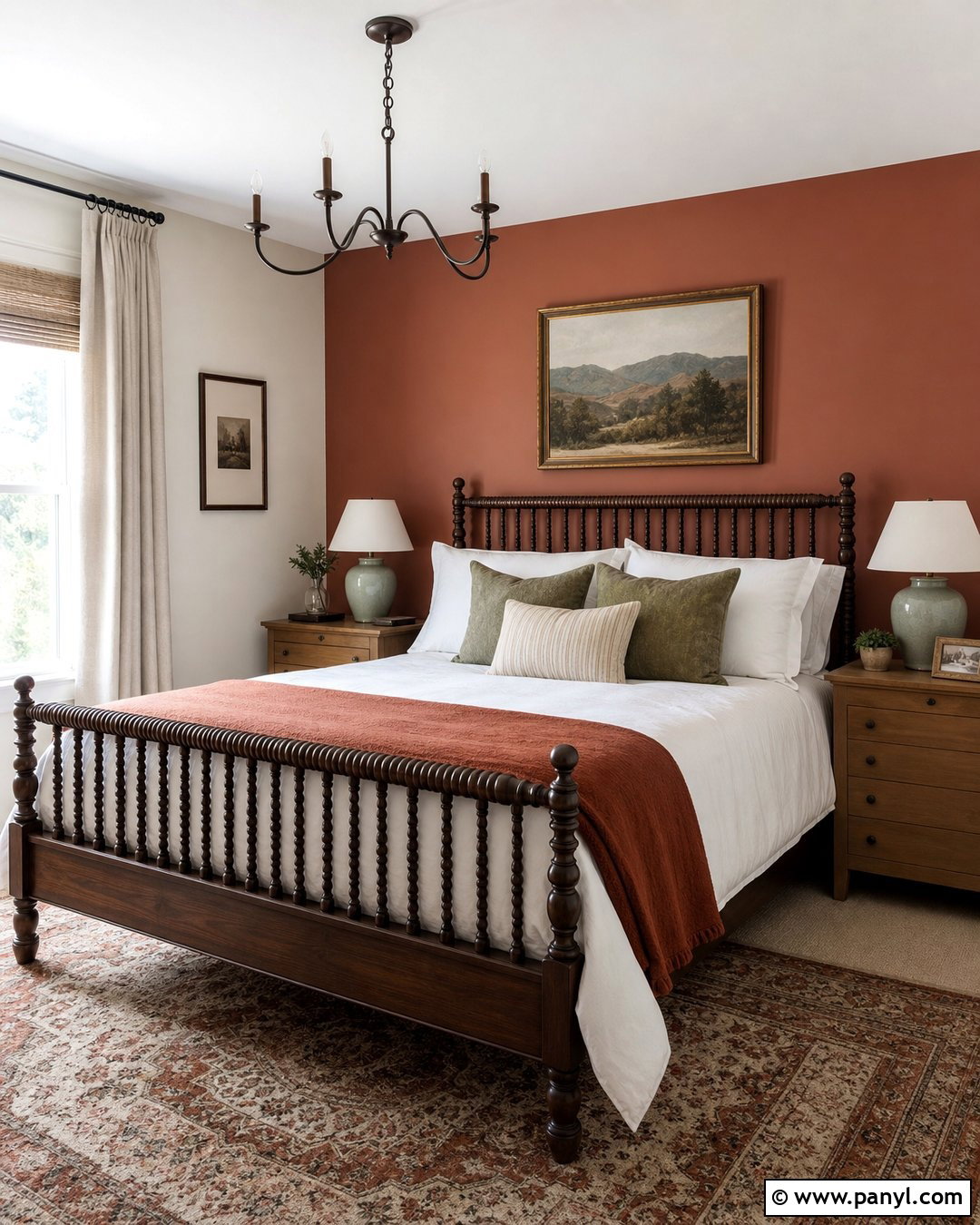
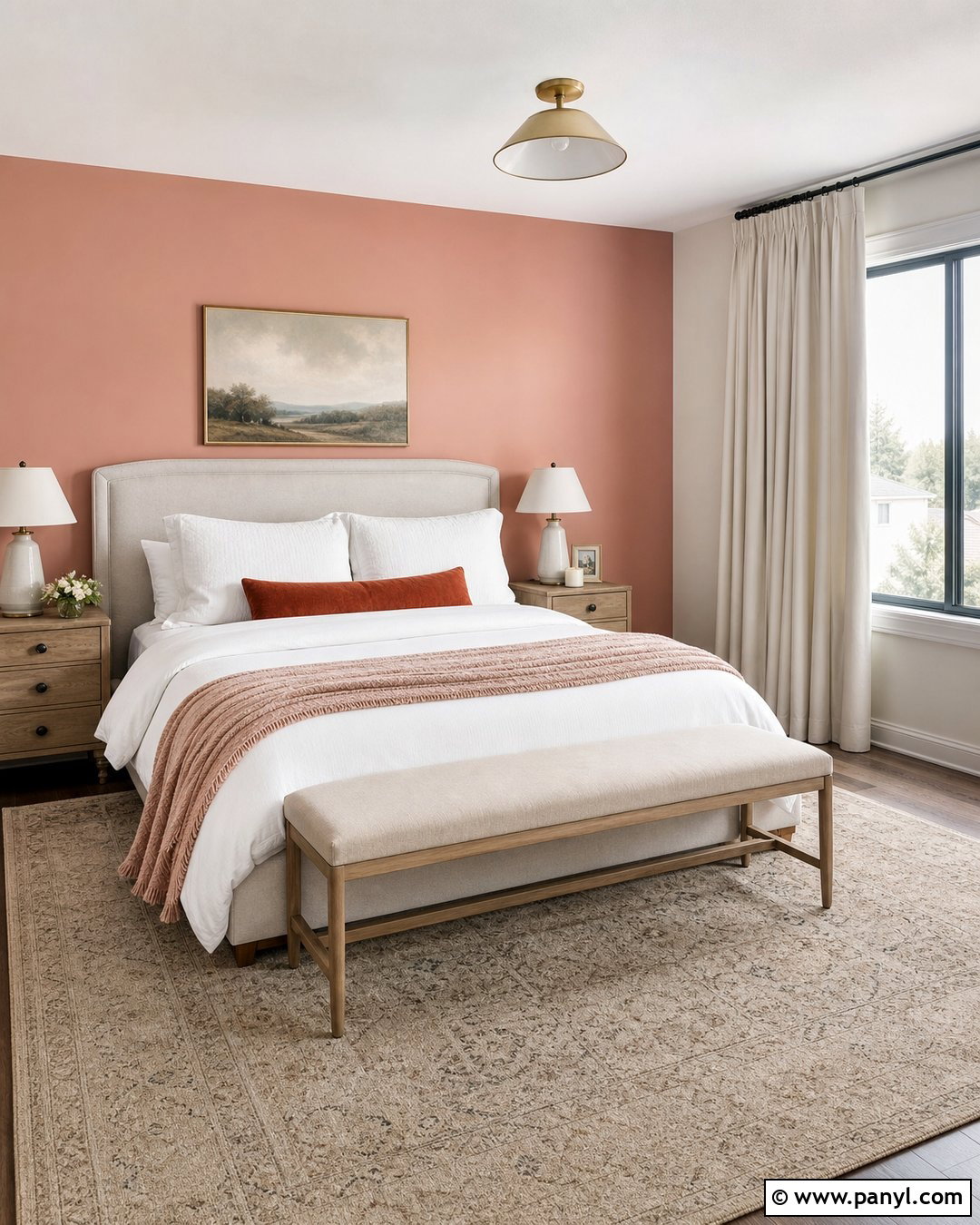
A painted headboard wall can define a sleeping area without taking up valuable floor space. Create a wide, rounded rectangle behind the bed using rich rust paint on a soft beige wall. Extend the shape above the pillows and several inches beyond both nightstands so it frames the full arrangement. Choose a simple low bed with no tall headboard, then layer cream bedding, rust cushions, and a striped beige throw. Add slim oak nightstands, matte black sconces, and a flat-woven rug. The painted shape should remain visible around every piece of furniture. Repeat rust in one small artwork or ceramic object. This coordinated bedroom looks finished and grounded, while the wall design provides the visual weight of a traditional upholstered headboard without adding bulk.
19. Sunburst Wall Paint
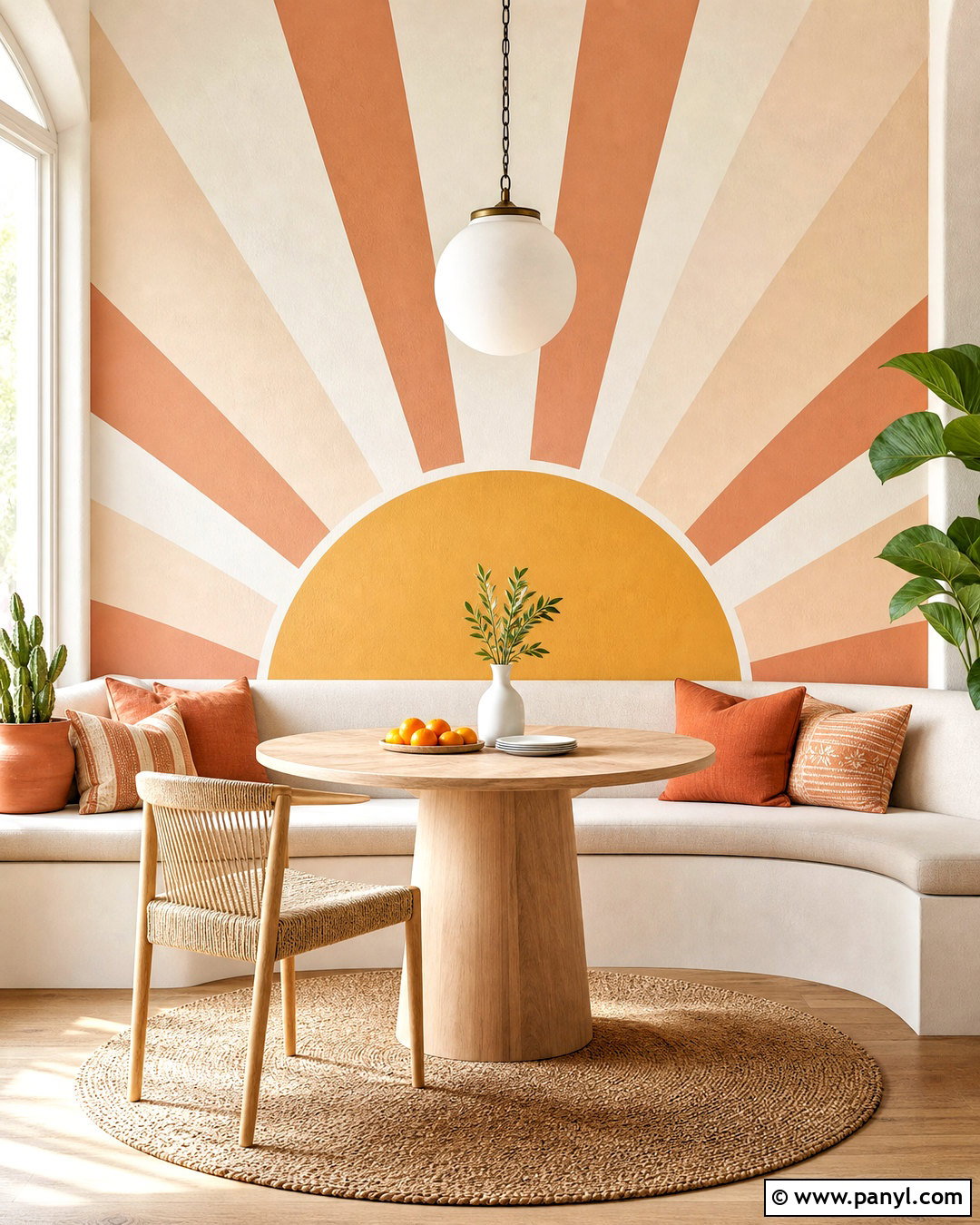
Sunburst wall paint can energize a breakfast nook with a bright but controlled focal point. Paint a large semicircle in warm golden yellow behind a curved dining bench, then extend narrow cream and pale terracotta rays toward the edges of the wall. Use a soft white background so the stronger colors remain fresh. Add a round white oak table, curved cream bench, terracotta seat cushions, and simple globe pendant. A light woven rug and small green plants balance the warm palette. Keep adjacent walls plain and limit artwork so the sunburst remains clearly visible. The completed nook feels cheerful during everyday meals, yet the muted tones prevent it from looking childish. Every element supports the central painted feature while maintaining a comfortable, practical dining arrangement.
20. Wavy Line Wall Paint
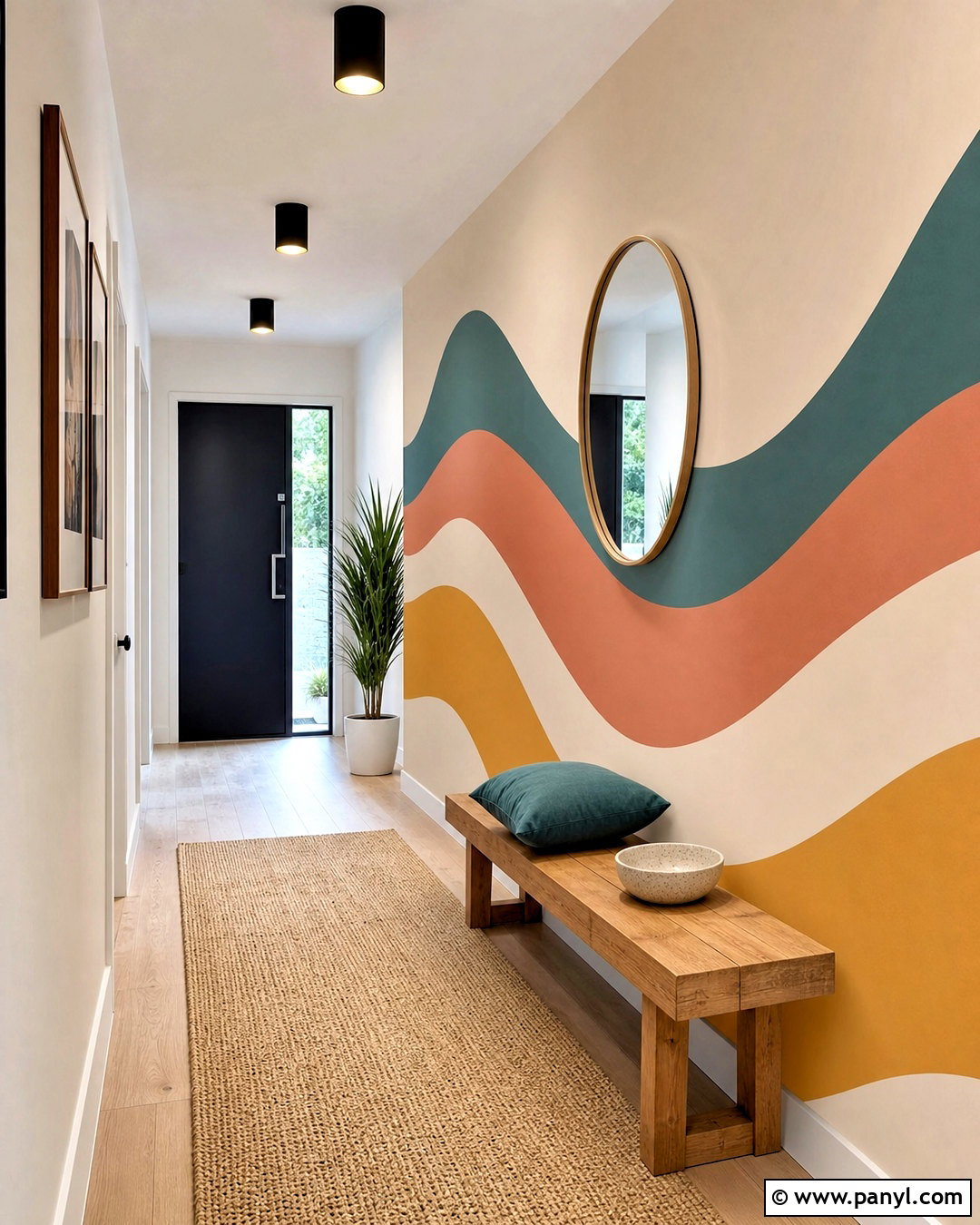
Wavy line wall paint adds movement to a hallway that might otherwise feel narrow and overlooked. Start with a creamy beige base, then paint three broad flowing lines in muted teal, clay, and mustard. Run the curves horizontally along one side of the hallway, varying their height as they move from the entrance toward the next room. Keep the opposite wall simple to preserve visual balance. Add a slim oak bench, round mirror, neutral runner, and matte black ceiling lights. Small framed pieces can sit above the waves without covering their strongest curves. Repeat the painted colors through one cushion and a ceramic bowl. This complete hallway design feels connected and purposeful, with the flowing pattern guiding the eye naturally through the home.
Conclusion:
The most successful 20 wall paint designs do more than introduce a fashionable color. They support the room’s layout, highlight an important feature, and connect naturally with the furniture, flooring, lighting, and decor. Simple treatments such as half-painted walls and broad stripes are approachable for beginners, while limewash, murals, ombre blending, and color drenching create more immersive results. Before starting, test every color in the room throughout the day and carefully map out shapes with light pencil marks or removable tape. Choose a design that suits the wall’s size and the room’s purpose. With thoughtful planning, paint can deliver personality, structure, and visual depth without requiring a major renovation or an oversized decorating budget.

Related Ideas and Inspiration:
Leave a Reply