
Pink can feel soft, grounded, playful, or dramatic, depending on the shade and surrounding materials. That versatility makes pink accent walls useful in nearly every room, from relaxed bedrooms to polished dining spaces. Pale blush pairs naturally with oak, linen, and warm white. Dusty rose adds depth beside brown leather and aged brass. Coral, raspberry, and hot pink create stronger focal points when balanced with simple furniture and quieter finishes. The wall treatment matters too. Paint offers an easy update, while paneling, wallpaper, tile, limewash, and geometric murals introduce extra character. Whether your home leans modern, traditional, coastal, or eclectic, these complete room schemes show practical ways to decorate with **pink accent walls**.

1. Blush Pink Bedroom Accent Wall
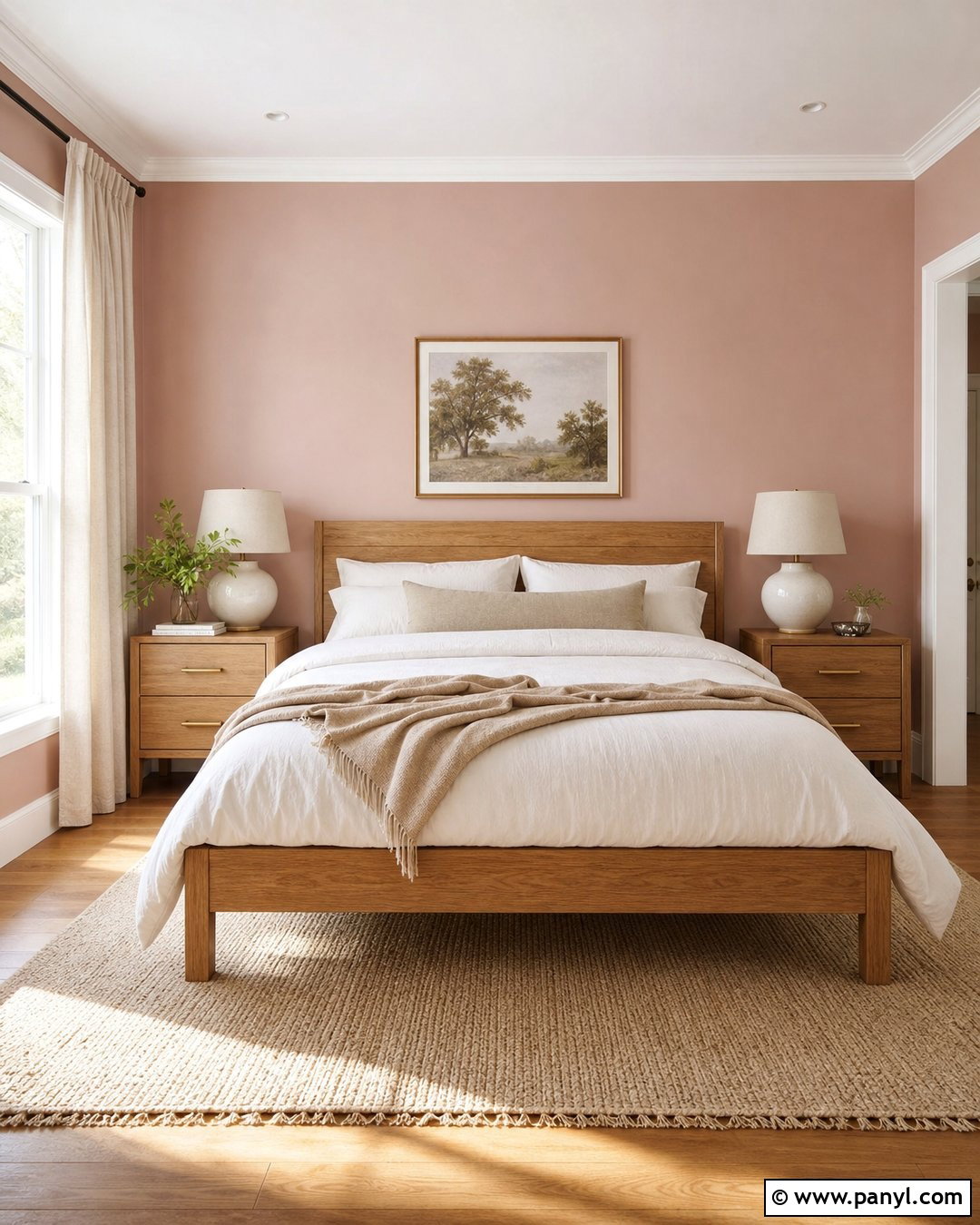
A blush pink wall behind the bed creates a gentle focal point without making the bedroom look overly sweet. Choose a muted pink with beige or gray undertones, then keep the remaining walls warm white. Center a natural oak bed against the color and layer it with white linen, oatmeal blankets, and one deeper rose pillow. Matching oak nightstands establish symmetry, while cream ceramic lamps keep the palette light. Use a woven wool rug beneath the bed and hang one large abstract print instead of several small pieces. Soft brass hardware and off-white curtains add warmth. This complete arrangement feels calm, balanced, and suitable for a primary bedroom or welcoming guest room.
2. Dusty Rose Living Room Accent Wall
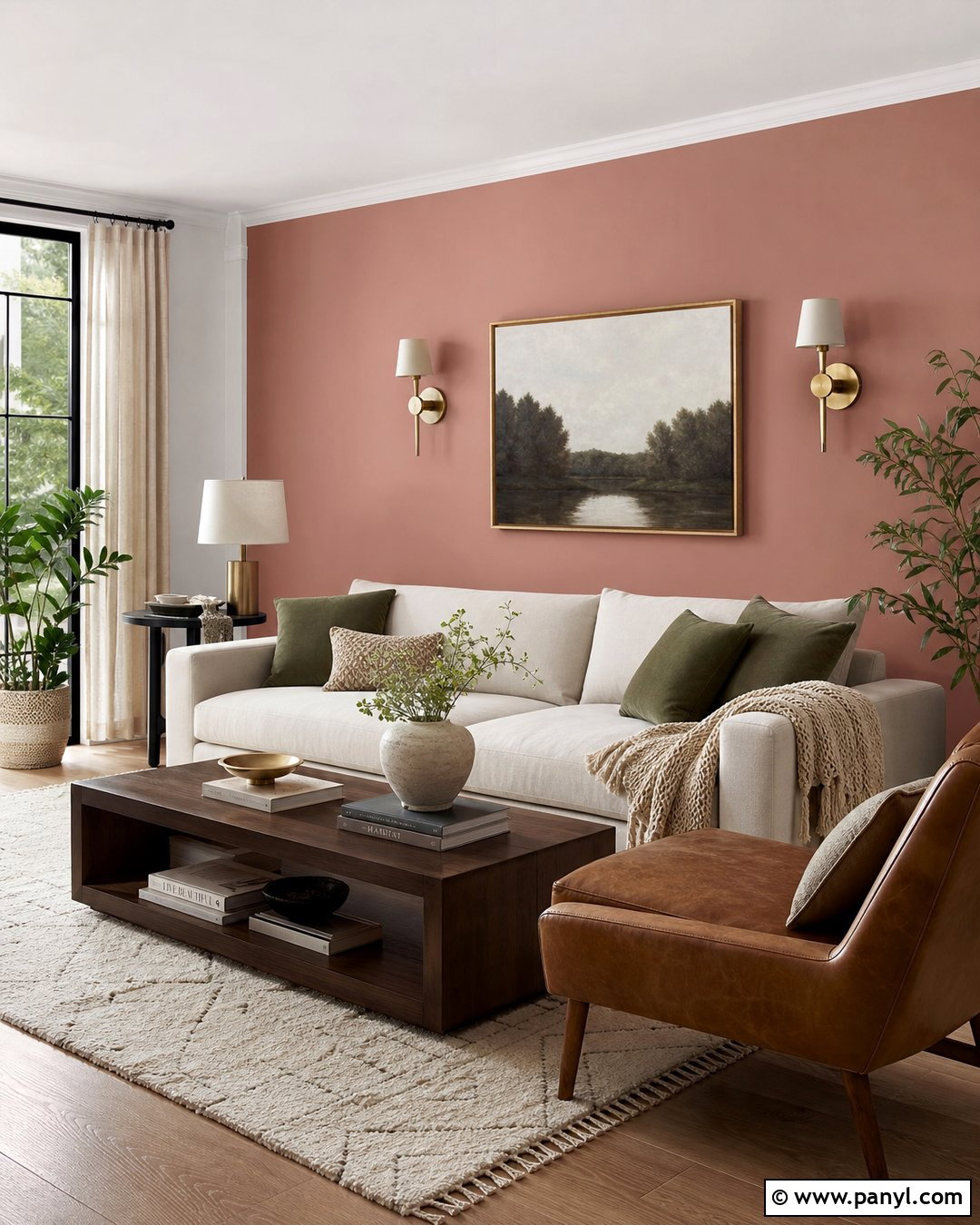
Dusty rose brings richness to a living room while remaining easier to decorate around than brighter pink. Use it on the main wall behind a cream sofa, especially when that wall includes a fireplace or prominent artwork. Add a walnut coffee table, a caramel leather chair, and a textured ivory rug to ground the color. Olive green pillows and a leafy indoor plant provide an earthy contrast. Choose aged brass floor lamps and frames rather than highly polished metallic finishes. The other walls can be soft greige to reduce sharp contrast. Complete the room with linen curtains and simple ceramics in cream, brown, and muted burgundy for a sophisticated, comfortable gathering space.
3. Pink And Green Living Room Accent Wall
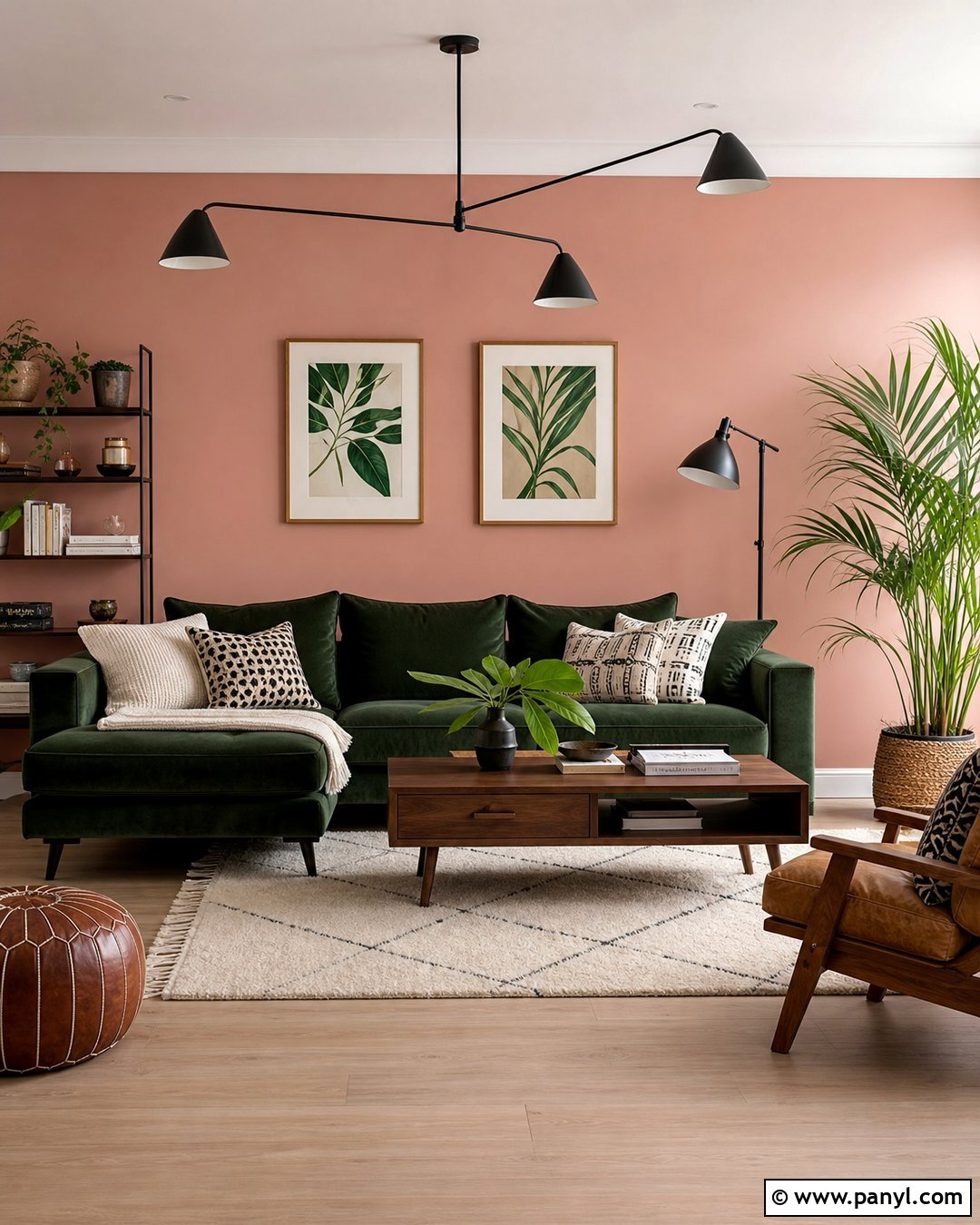
Pink and green create an energetic living room when both colors have warm, slightly muted undertones. Paint the focal wall a soft clay pink and place a deep moss green velvet sofa in front of it. Balance those strong colors with pale oak flooring, a cream area rug, and white walls elsewhere. A round walnut coffee table softens the room’s lines, while botanical artwork connects the two main hues. Bring in patterned pillows containing pink, green, rust, and ivory rather than matching every accessory perfectly. Black curtain rods and a black floor lamp add definition. Keep surfaces lightly styled so the bold color combination remains colorful but not visually crowded.
4. Pink And Navy Bedroom Accent Wall
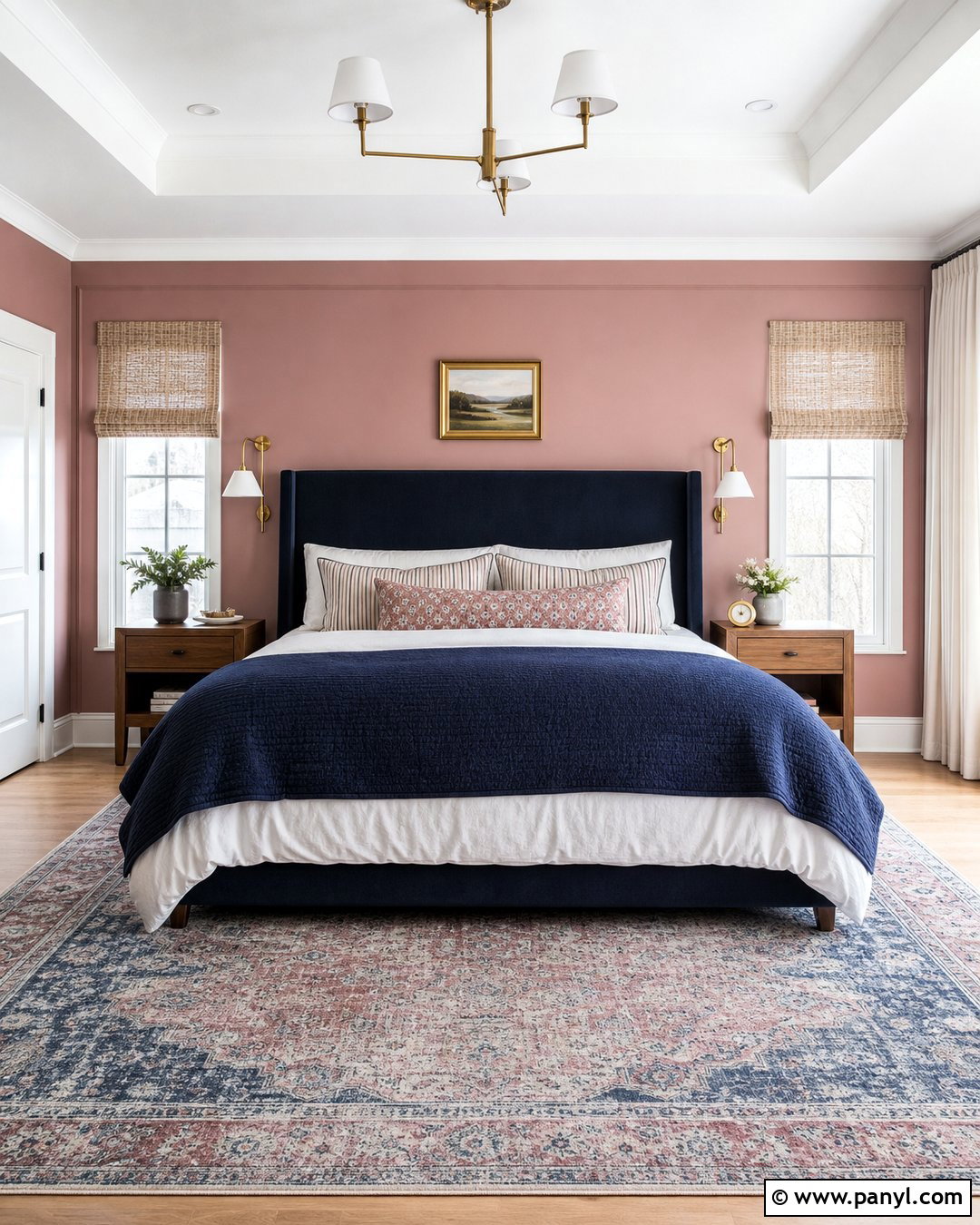
For a bedroom that feels colorful yet grounded, combine a muted rose wall with a navy upholstered bed. The dark headboard creates a crisp silhouette against the pink and helps the scheme feel mature. Dress the bed in white cotton sheets, a navy quilt, and striped or block-printed pillows featuring both colors. Medium-tone wood nightstands warm the palette, while brushed brass sconces introduce a refined detail without taking up tabletop space. Keep the remaining walls creamy white and use natural woven shades at the windows. A vintage-inspired rug with faded blue, rose, and tan ties everything together. Finish with simple framed prints and one leafy plant near the window.
5. Hot Pink Home Office Accent Wall
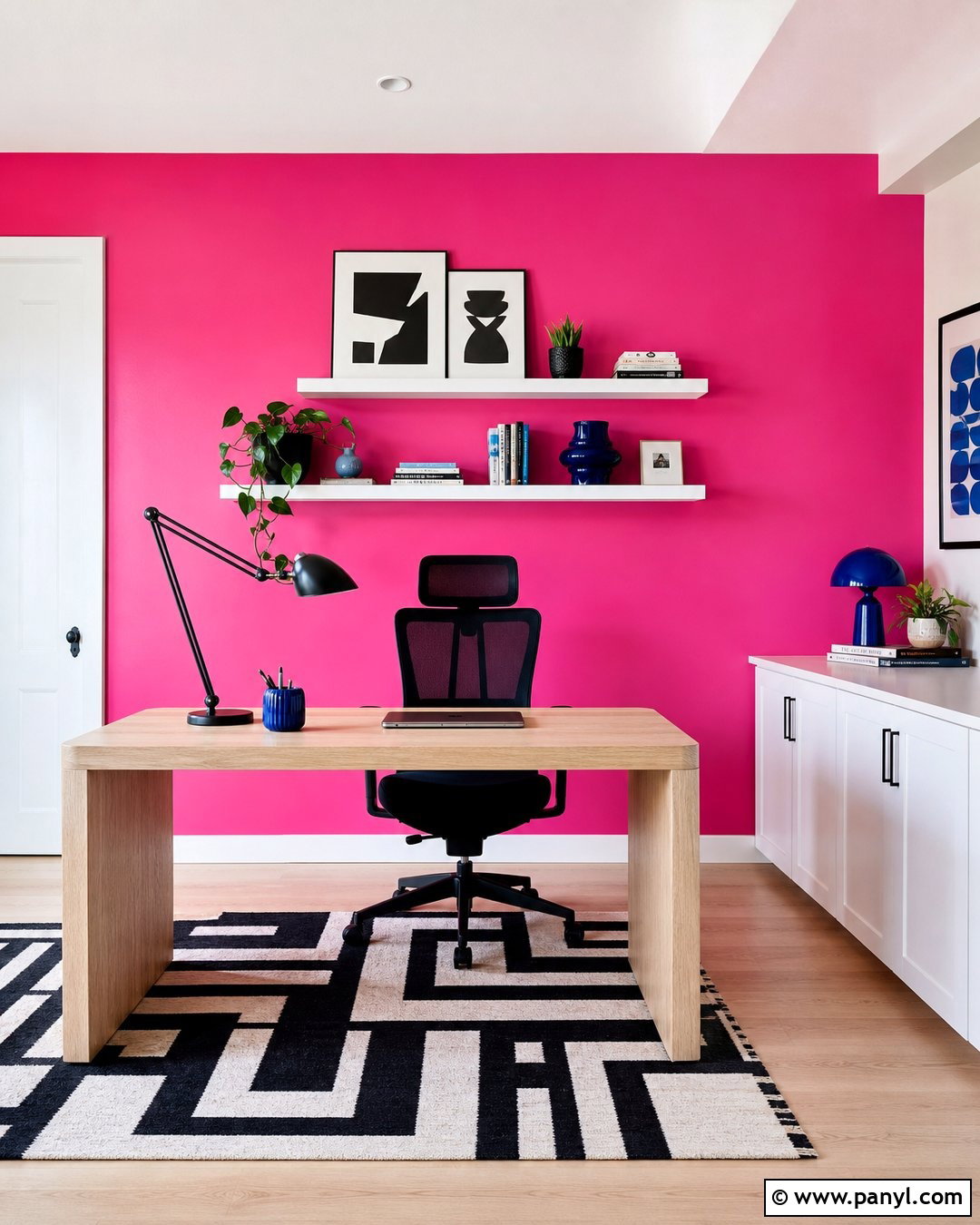
A hot pink wall can make a home office feel lively, focused, and personal when the rest of the room stays controlled. Position a clean white or pale oak desk against the accent wall and pair it with a black ergonomic chair. Install two floating shelves above the desk for books, small storage boxes, and a few colorful objects. Matte black lighting and hardware sharpen the bright pink, while a graphic black-and-white rug creates structure underfoot. Keep adjacent walls white and choose closed storage to prevent visual clutter. One cobalt blue lamp or emerald green desk accessory can add contrast. The finished workspace feels bold and creative without becoming distracting or impractical.
6. Pink Paneled Bedroom Accent Wall
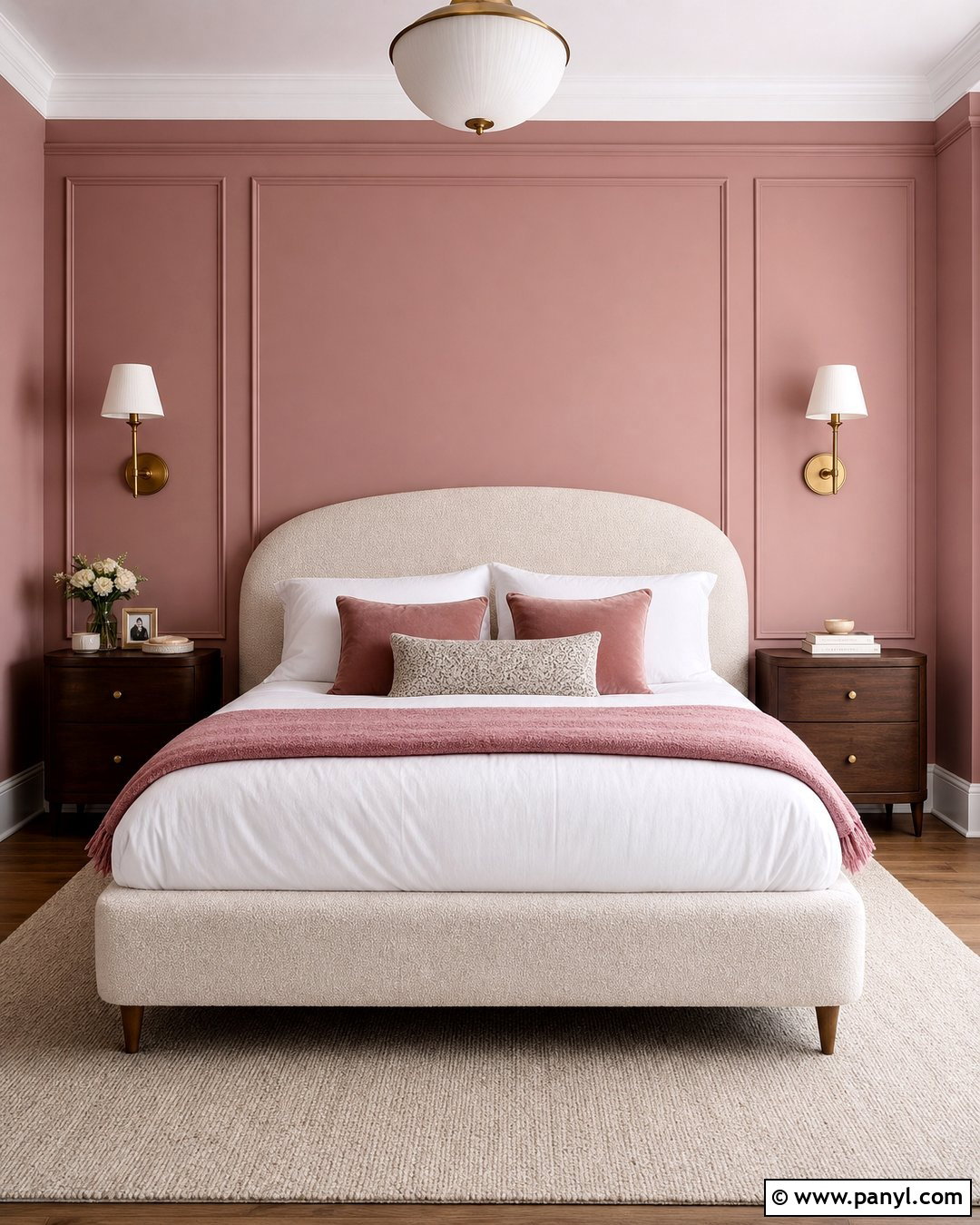
Wall paneling gives a pink bedroom extra dimension while preserving a clean, tailored appearance. Install simple rectangular molding across the wall behind the bed, then paint the trim and wall surface the same warm dusty pink. A curved cream boucle headboard stands out beautifully against the linear pattern. Add walnut nightstands, white bedding, and a textured rose-colored throw to build subtle layers. Small brass sconces mounted within the panels create symmetry and free the nightstands for books and personal items. Keep the flooring medium oak and place a neutral wool rug beneath the bed. The remaining walls should be soft ivory, allowing the paneled feature to look intentional rather than overly decorative.
7. Pink Nursery Accent Wall
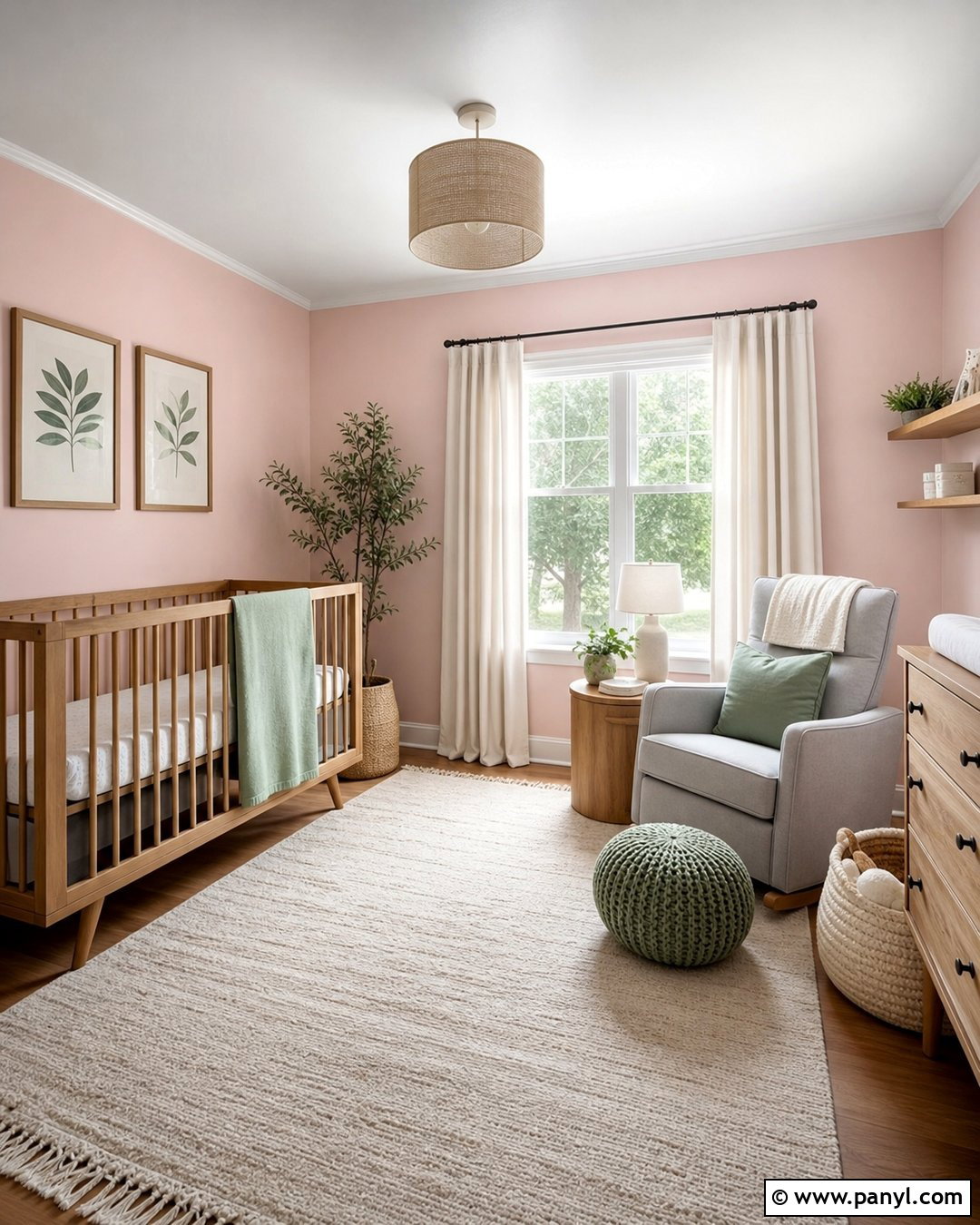
A pale pink nursery wall can feel peaceful and flexible enough to grow with the room. Paint the wall behind the crib a soft petal pink, then keep the other walls warm white. Choose a natural wood or white crib with simple lines and place a washable cream rug beneath it. A light gray upholstered rocker, woven basket, and oak side table introduce practical comfort without overwhelming the space. Hang lightweight framed prints securely above a low dresser rather than directly over the crib. Use blackout curtains in ivory or muted sage green. Small touches of terracotta, brass, and natural rattan give the nursery warmth, making the finished design gentle, organized, and welcoming.
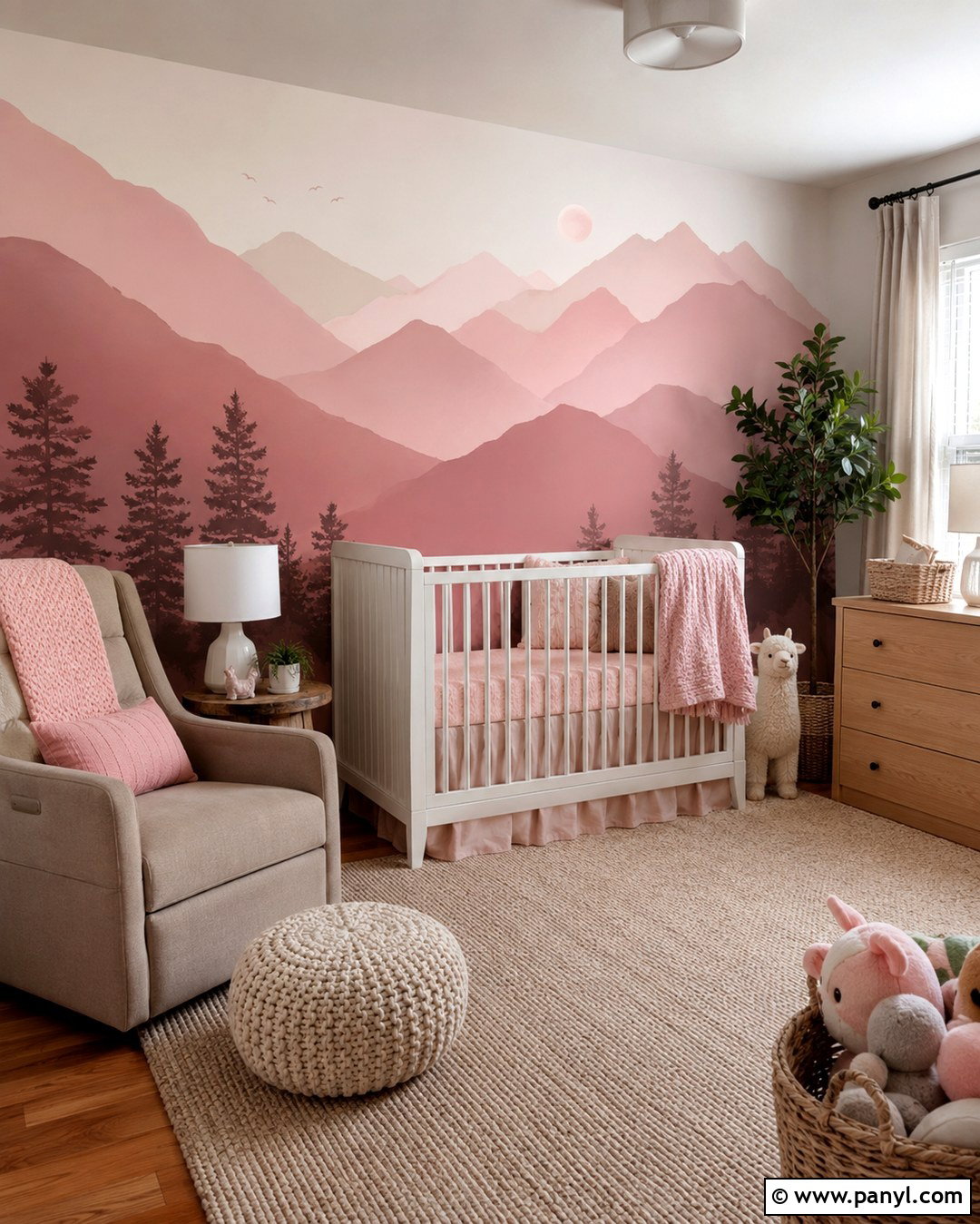
8. Pink Floral Wallpaper Accent Wall
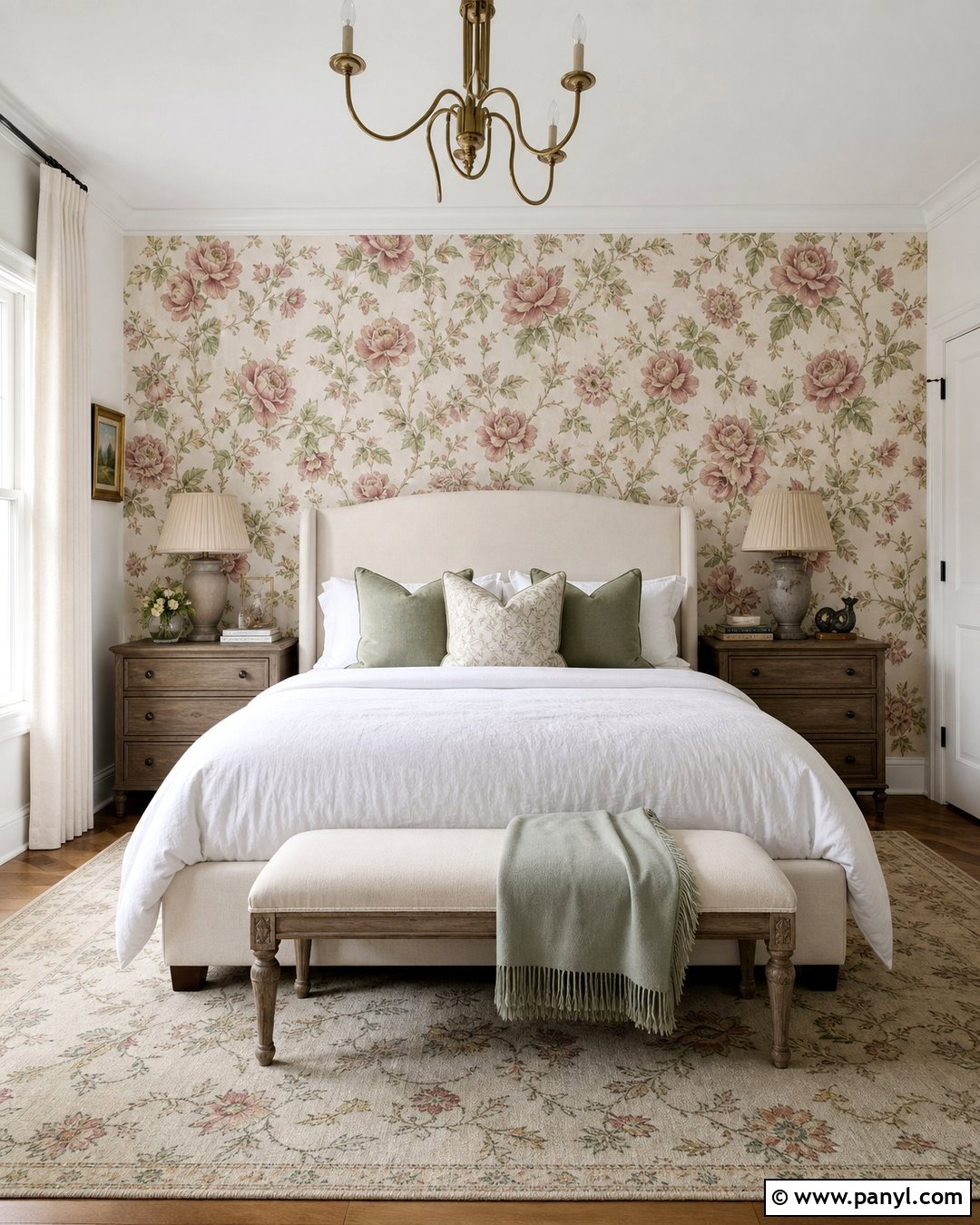
Pink floral wallpaper creates a complete bedroom focal point with more movement than flat paint. Choose a pattern featuring dusty pink flowers, soft green leaves, and a cream background. Install it behind a simple upholstered bed so the furniture does not compete with the print. Use pale blush or warm white on the remaining walls and repeat the wallpaper colors through sage pillows, ivory bedding, and a rose throw. Weathered oak nightstands and pleated cream lamps add a relaxed traditional touch. Keep curtains solid and understated. A faded botanical rug can support the theme, but avoid adding several competing floral patterns. The result feels romantic, layered, and comfortably collected rather than overly themed.
9. Pink Geometric Accent Wall
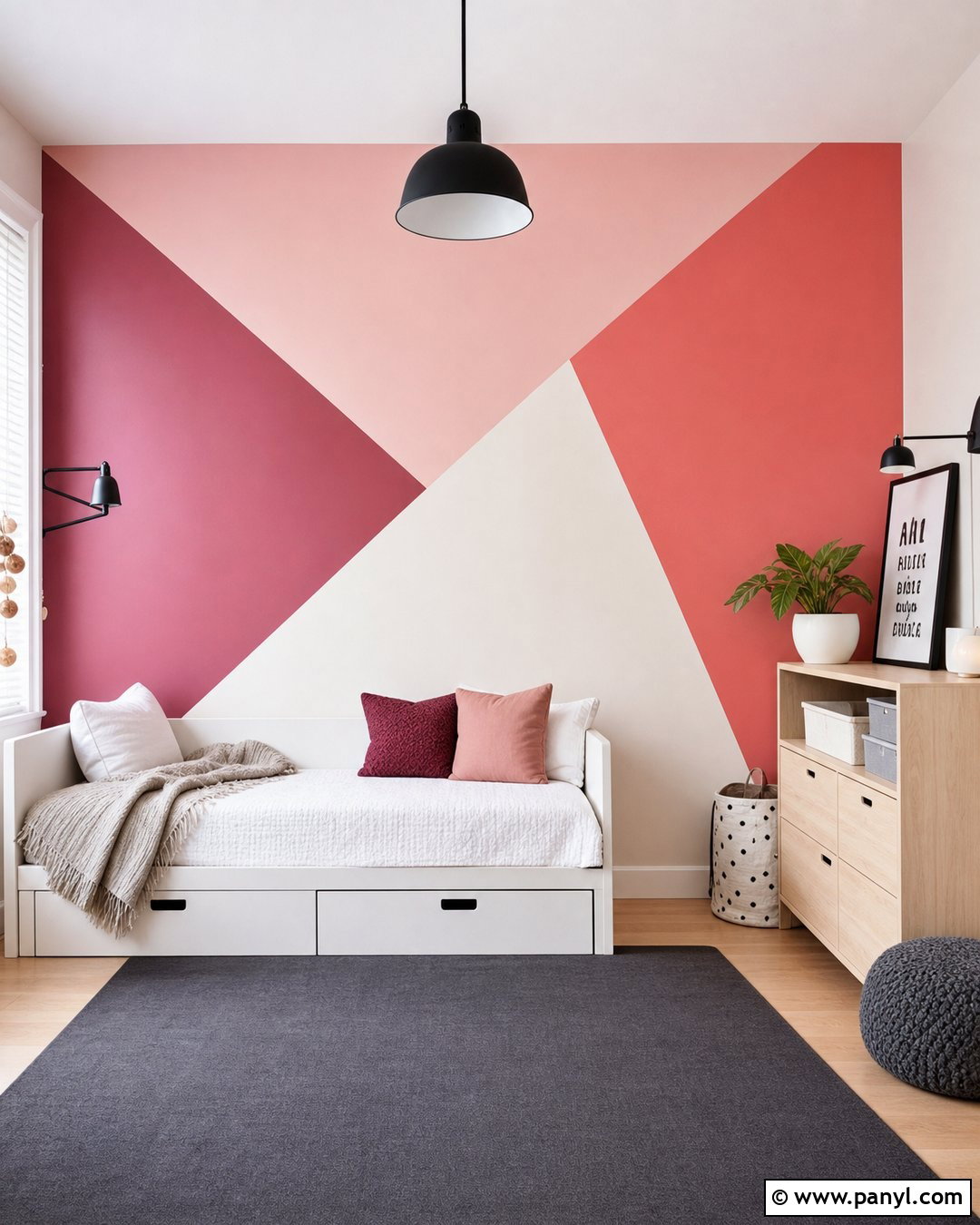
A geometric pink wall works especially well in a teen bedroom, playroom, or creative office. Build the design with large angular blocks in blush, coral, muted raspberry, and warm white. Limit the mural to one unobstructed wall so its shapes remain easy to read. Furnish the room with a white daybed or compact desk, pale wood storage, and simple solid-color textiles. A charcoal rug and matte black lighting provide contrast and keep the palette from appearing too sugary. Repeat one coral tone in a pillow or desk chair for continuity. Avoid covering the mural with many pictures. One narrow shelf or small framed piece is enough to complete the wall.
10. Pink Ombre Bedroom Accent Wall
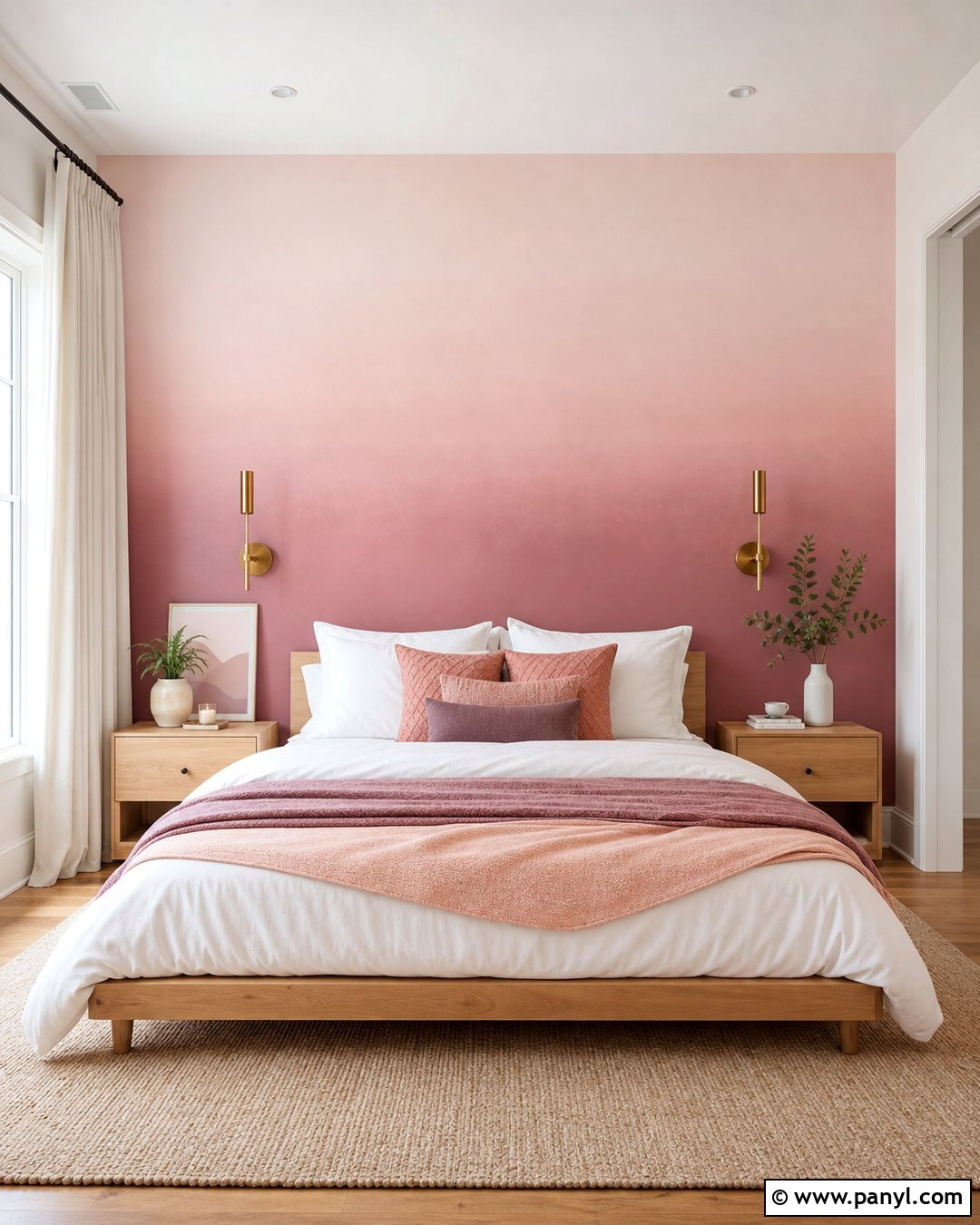
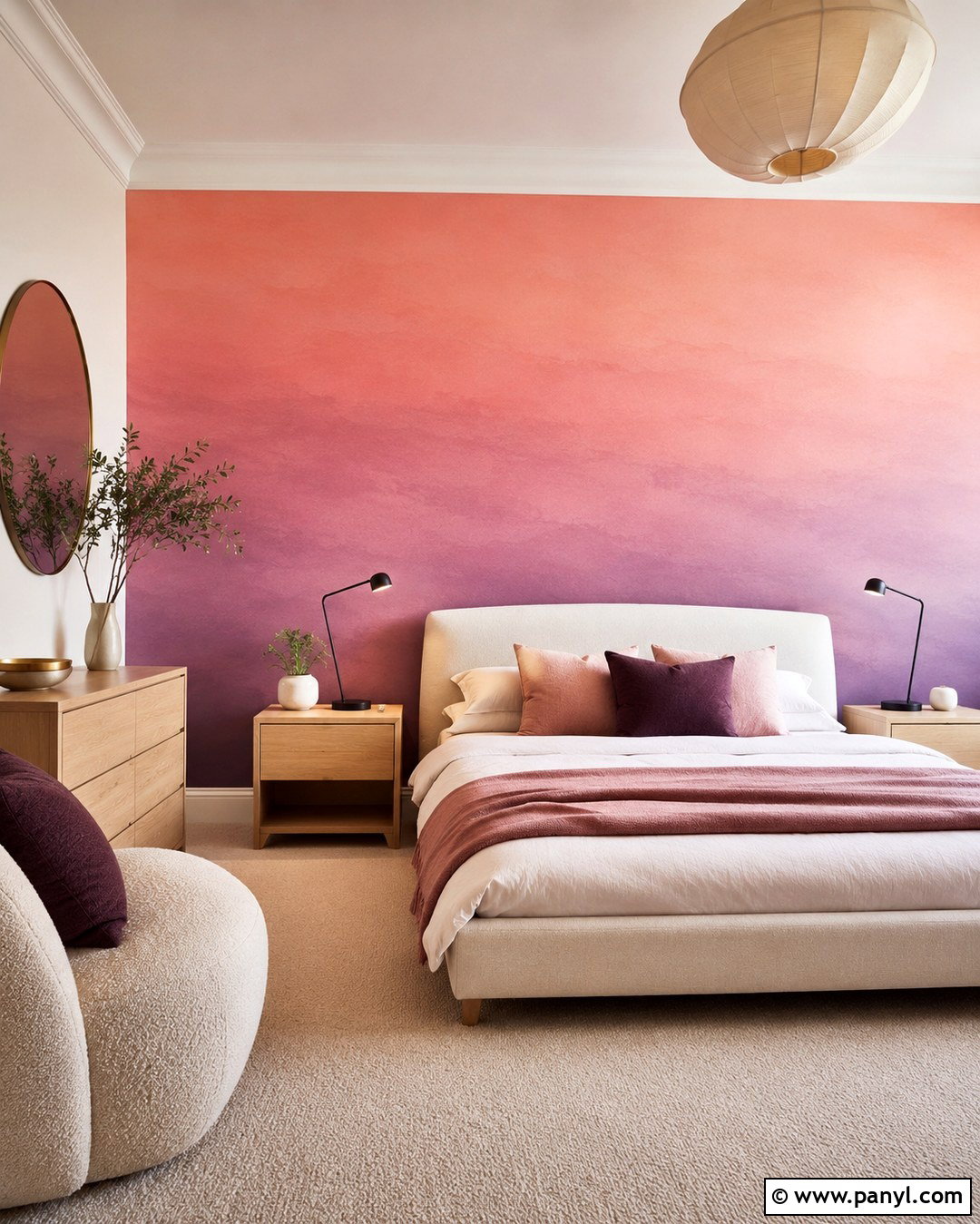
An ombre wall introduces pink gradually, creating softness and visual height behind the bed. Begin with a deeper dusty rose near the floor, blend into mid-tone blush, and finish with a nearly white pink toward the ceiling. Keep the transitions broad and subtle rather than forming obvious stripes. A low natural wood bed allows more of the gradient to remain visible. Layer white bedding with peach, mauve, and oatmeal textiles, then add slim brass sconces on either side. Pale oak nightstands and a cream rug maintain the airy look. Use minimal artwork because the painted effect already functions as decoration. This scheme suits modern bedrooms that need color without a hard-edged focal wall.
11. Coral Pink Dining Room Accent Wall
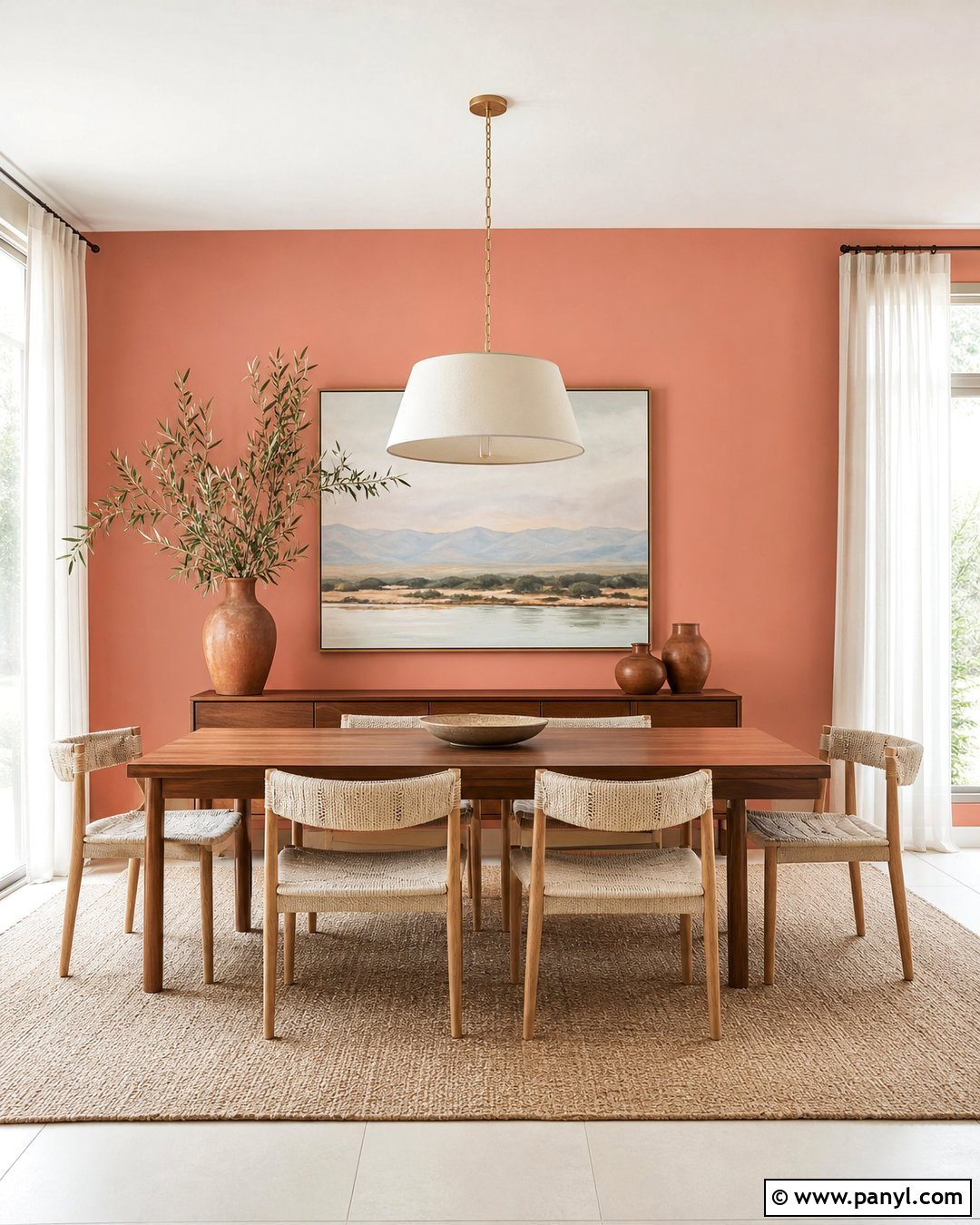
Coral pink brings warmth and sociability to a dining room, especially when paired with natural wood. Paint the wall behind a sideboard or dining table in a softened coral rather than a fluorescent shade. Center a rectangular walnut table in the room and surround it with woven or cream upholstered chairs. A large off-white pendant light creates a calm visual break above the darker furniture. Style the coral wall with one oversized landscape painting containing green, blue, and warm neutral tones. Use ivory on adjacent walls and hang full-length linen curtains. Terracotta pottery, simple table linens, and leafy branches complete a bright dining space that feels welcoming during everyday meals and special gatherings.
12. Mauve Pink Dining Room Accent Wall
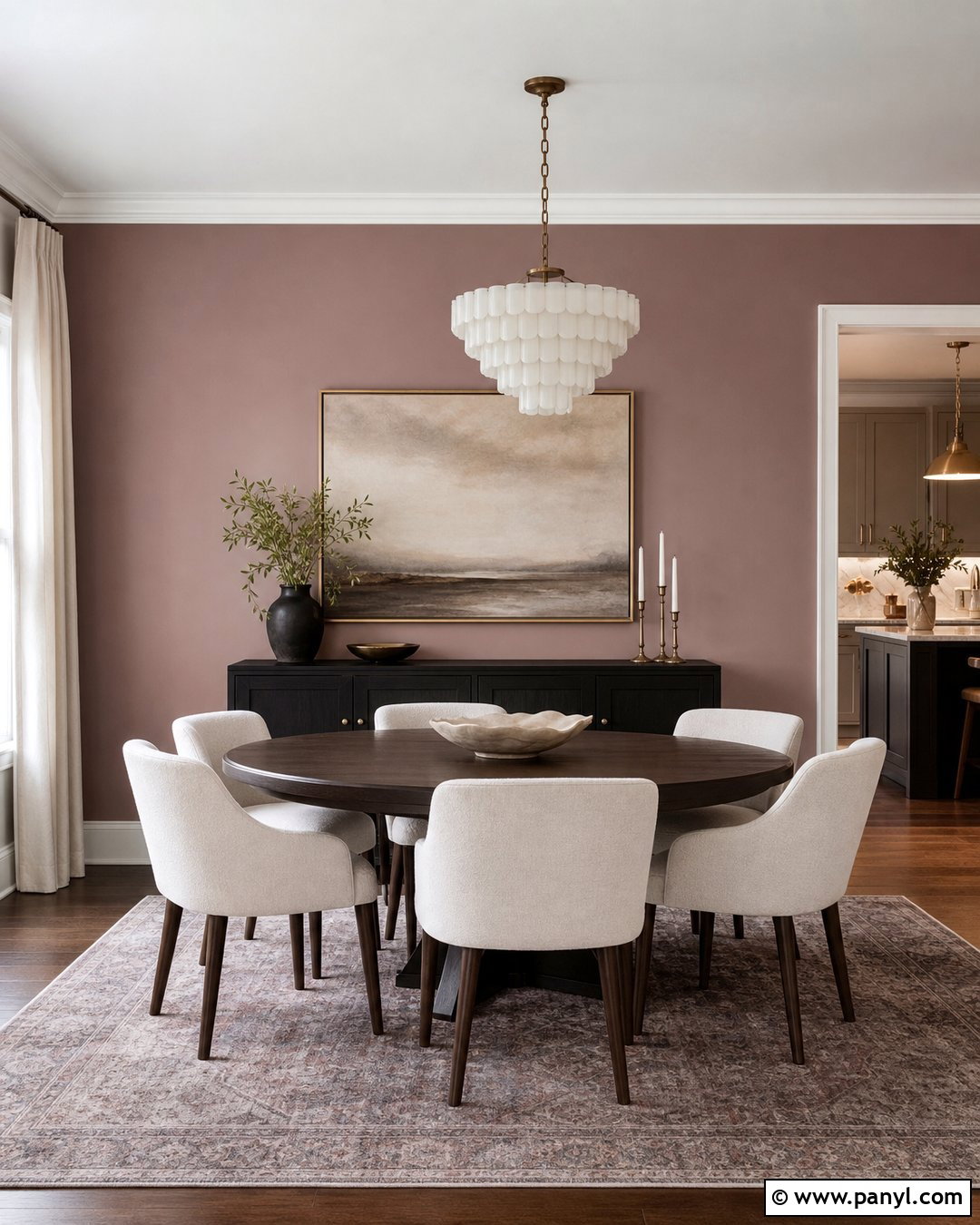
Mauve offers a quieter, slightly cooler approach to a pink dining room. Apply it to the wall behind a black sideboard, then introduce a round dark wood table and oatmeal upholstered chairs. The contrast gives the room depth without requiring highly saturated colors. Hang a sculptural milk-glass pendant over the table and place a large neutral artwork on the feature wall. Brushed nickel, pewter, or aged brass accents all work, but use one main metal finish throughout. A faded rug with mauve, gray, and cream tones softens the floor. Paint the surrounding walls pale gray-white. The completed room feels intimate and polished while still being practical enough for regular family dining.
13. Pink Kitchen Breakfast Nook Accent Wall
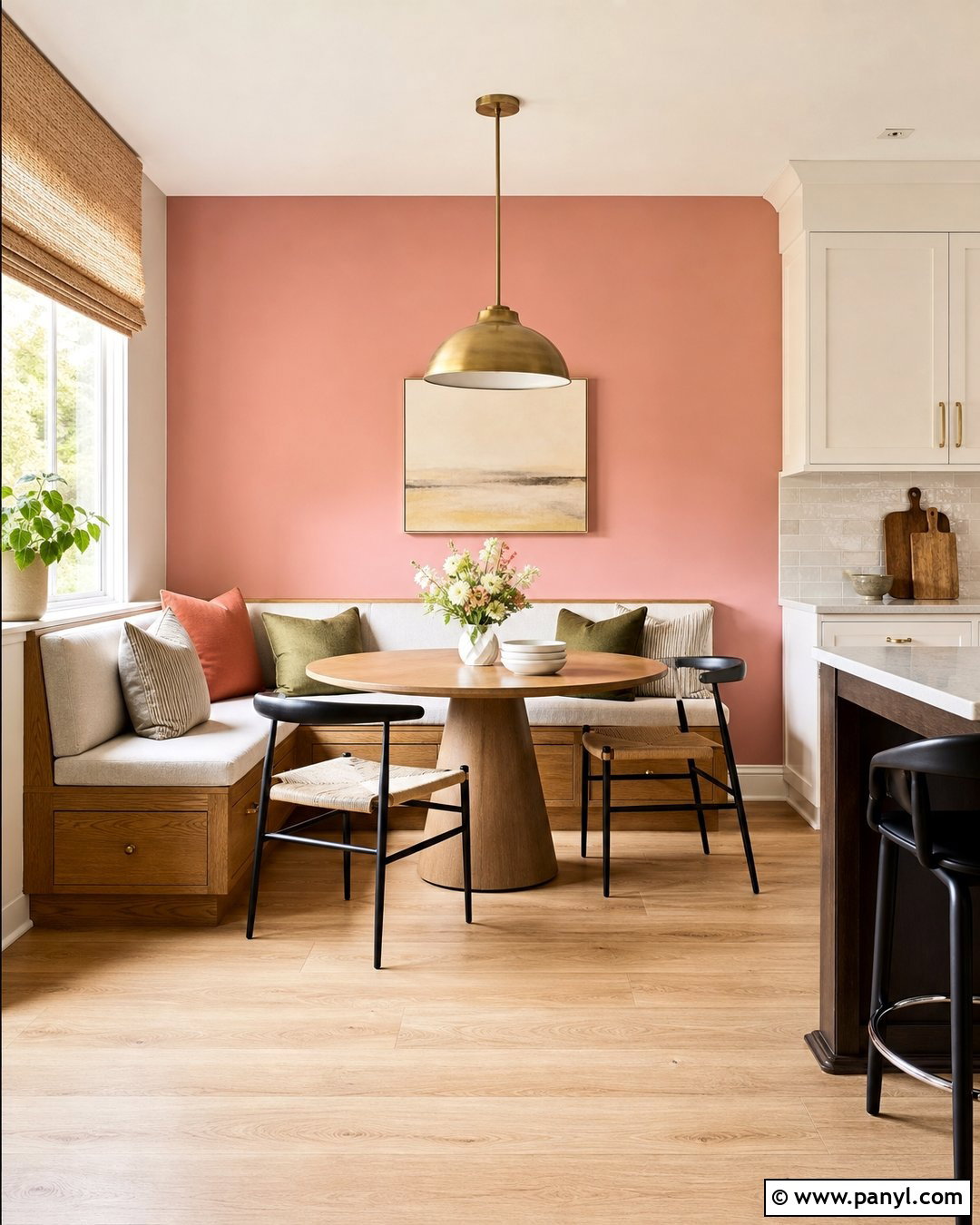
A breakfast nook becomes cheerful and defined when a warm pink wall frames the seating area. Paint the wall a soft salmon pink and install an L-shaped oak bench with hidden storage. Add cream seat cushions and patterned pillows in olive, rust, and blush. A small round pedestal table keeps movement easy in a compact corner, while two lightweight dining chairs provide flexible seating. Hang a simple black or brass pendant above the table and place one framed food-inspired print on the wall. Nearby kitchen finishes should remain restrained, such as white cabinets, light stone counters, and oak accents. The completed nook feels connected to the kitchen while maintaining its own colorful identity.
14. Pink Bathroom Tile Accent Wall
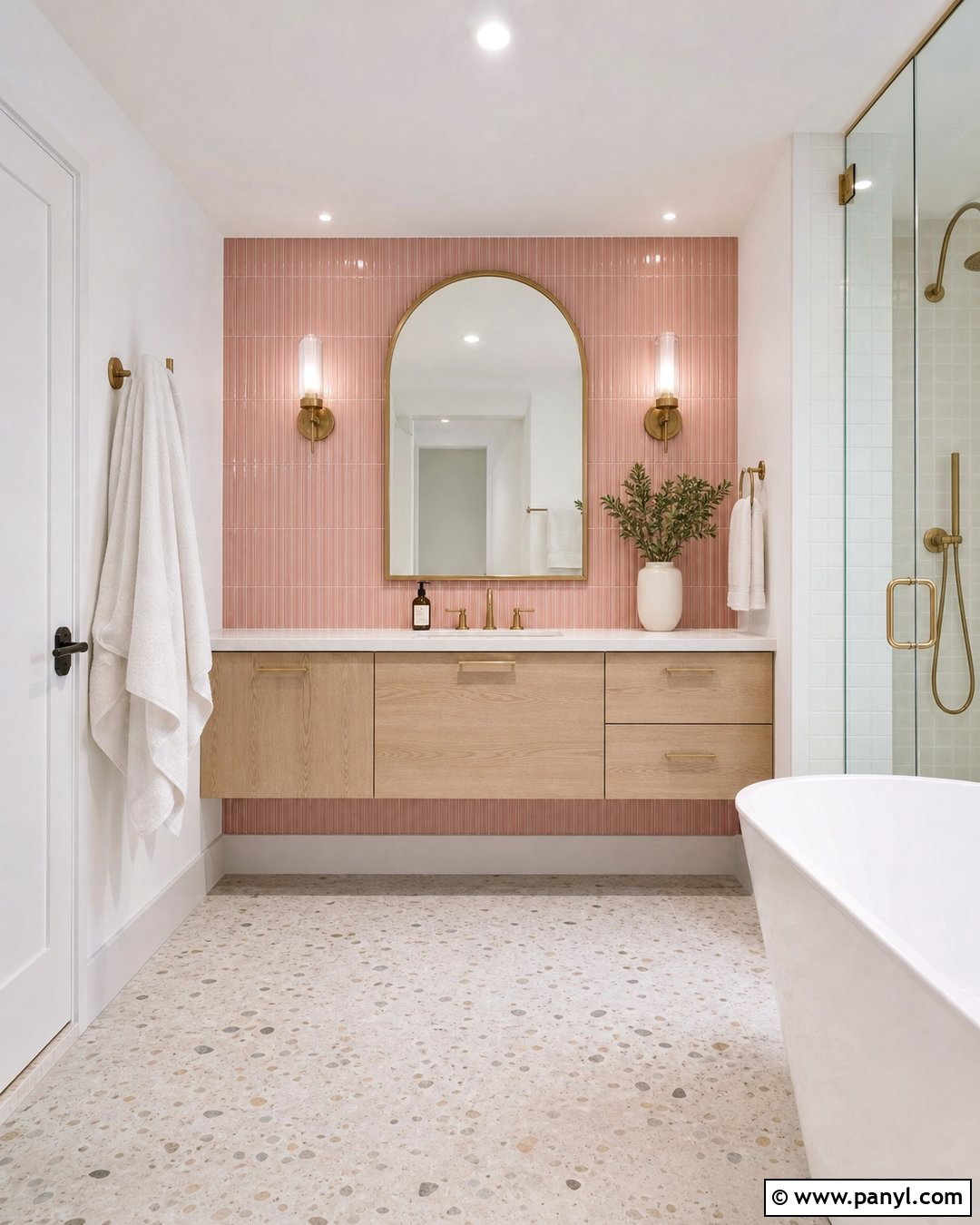
Glazed pink tile can turn the vanity wall into a durable bathroom centerpiece. Choose narrow vertical tiles in a warm blush or rose tone and extend them from the countertop to the ceiling. A floating white oak vanity introduces natural warmth, while a pale quartz counter keeps the composition fresh. Install an arched mirror with a slim brass frame and matching wall sconces. Use off-white paint on the remaining walls and light terrazzo or stone-look tile on the floor. White towels prevent the palette from feeling busy. A clear glass shower enclosure and simple fixtures preserve visual openness. The finished bathroom combines practical surfaces with color, texture, and a polished modern appearance.
15. Pink Powder Room Accent Wall
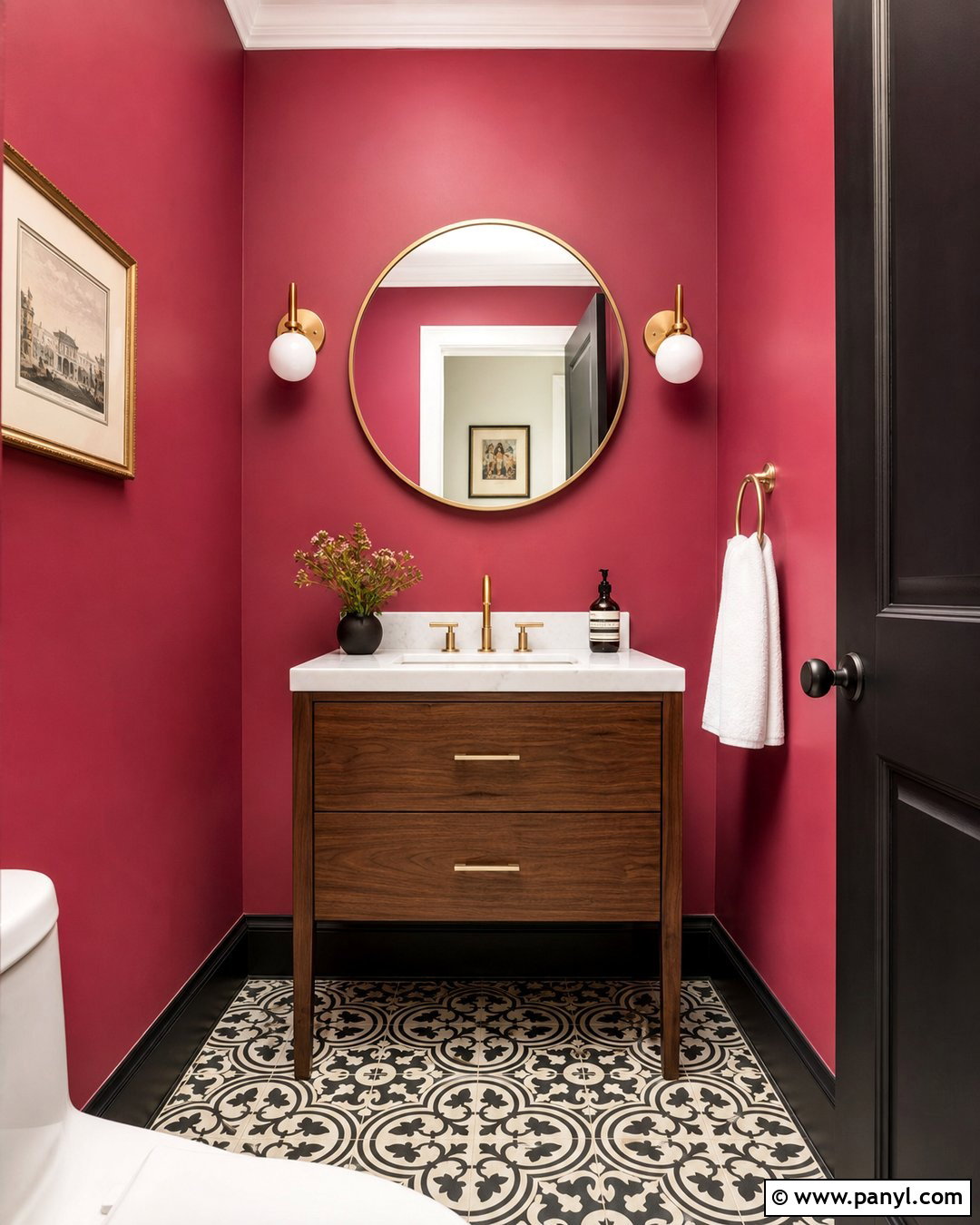
A small powder room can handle a deeper pink because the space is used in short intervals. Paint the vanity wall rich raspberry or dark rose, then balance it with creamy white walls and a compact walnut vanity. A round brass mirror and two small globe sconces add warm reflection without dominating the room. Choose a white stone countertop and a simple undermount sink for a clean foundation. Patterned floor tile in black, cream, and muted pink introduces character at a smaller scale. Add one framed artwork and a neatly folded hand towel rather than filling every surface. This complete scheme turns a basic powder room into a memorable space while keeping fixtures approachable and functional.
16. Pink Entryway Accent Wall
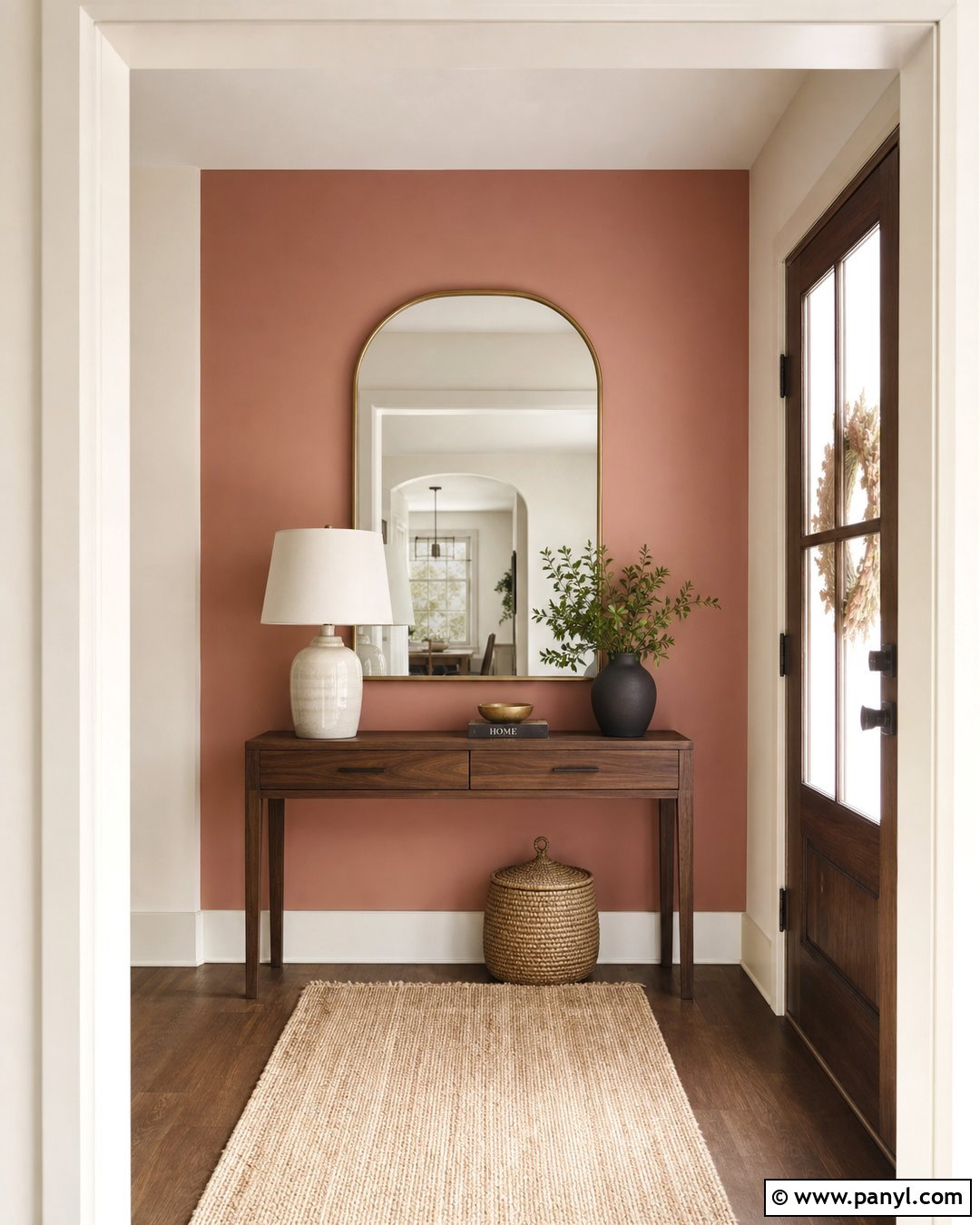
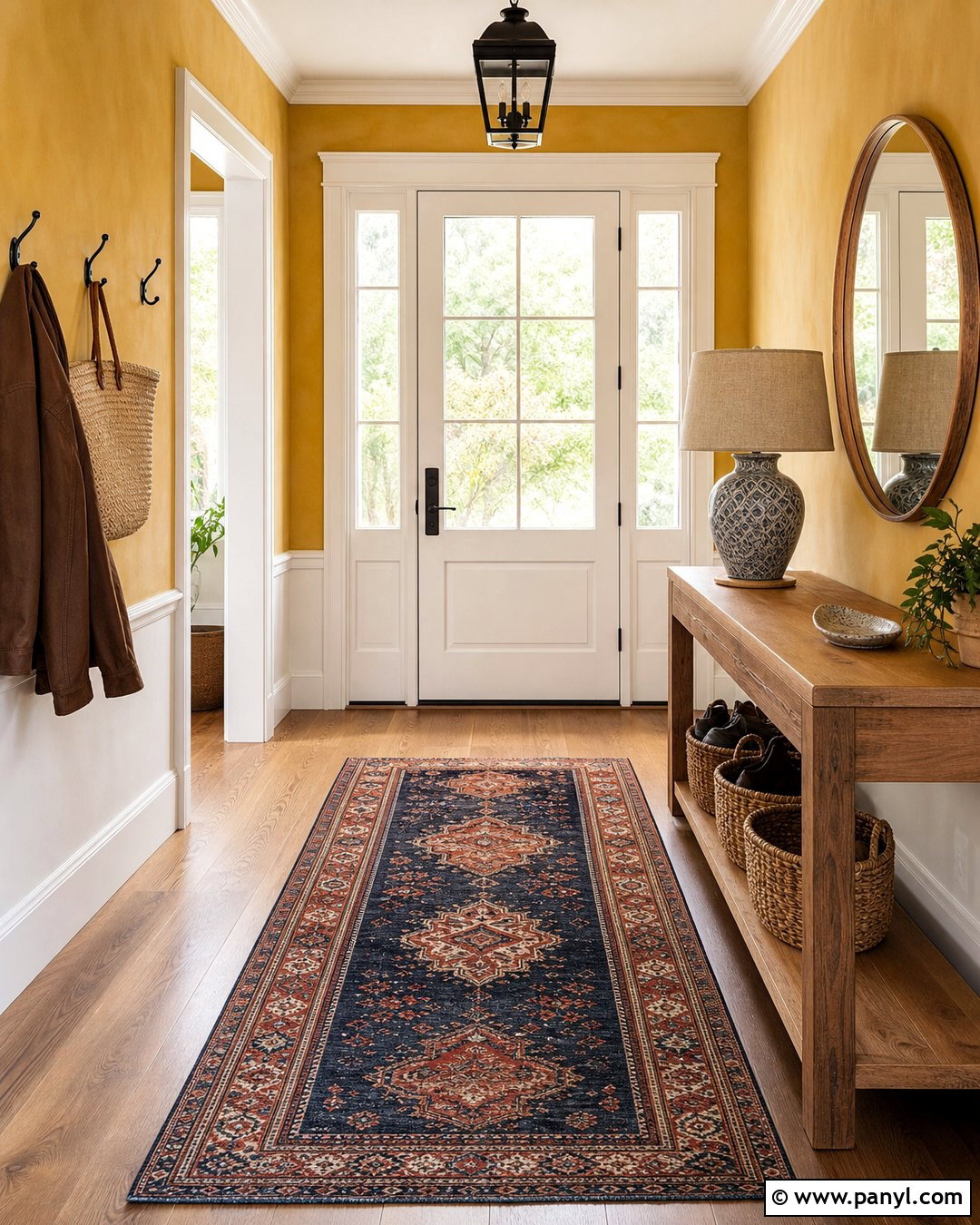
A pink wall can make an entryway feel immediately warm and welcoming. Use a muted terracotta pink behind a slim console table, especially in an entry that opens directly into the living area. Choose a narrow oak or walnut console with drawers for keys and small essentials. Above it, hang a large rounded mirror with a black or aged brass frame. Add a woven runner, a ceramic table lamp, and one lidded basket for concealed storage. Keep adjacent walls cream so the pink visually marks the entrance without interrupting nearby rooms. A small bench or wall hooks can complete the setup when space permits. The finished entry feels organized, colorful, and thoughtfully connected to the home.
17. Pink Hallway Accent Wall
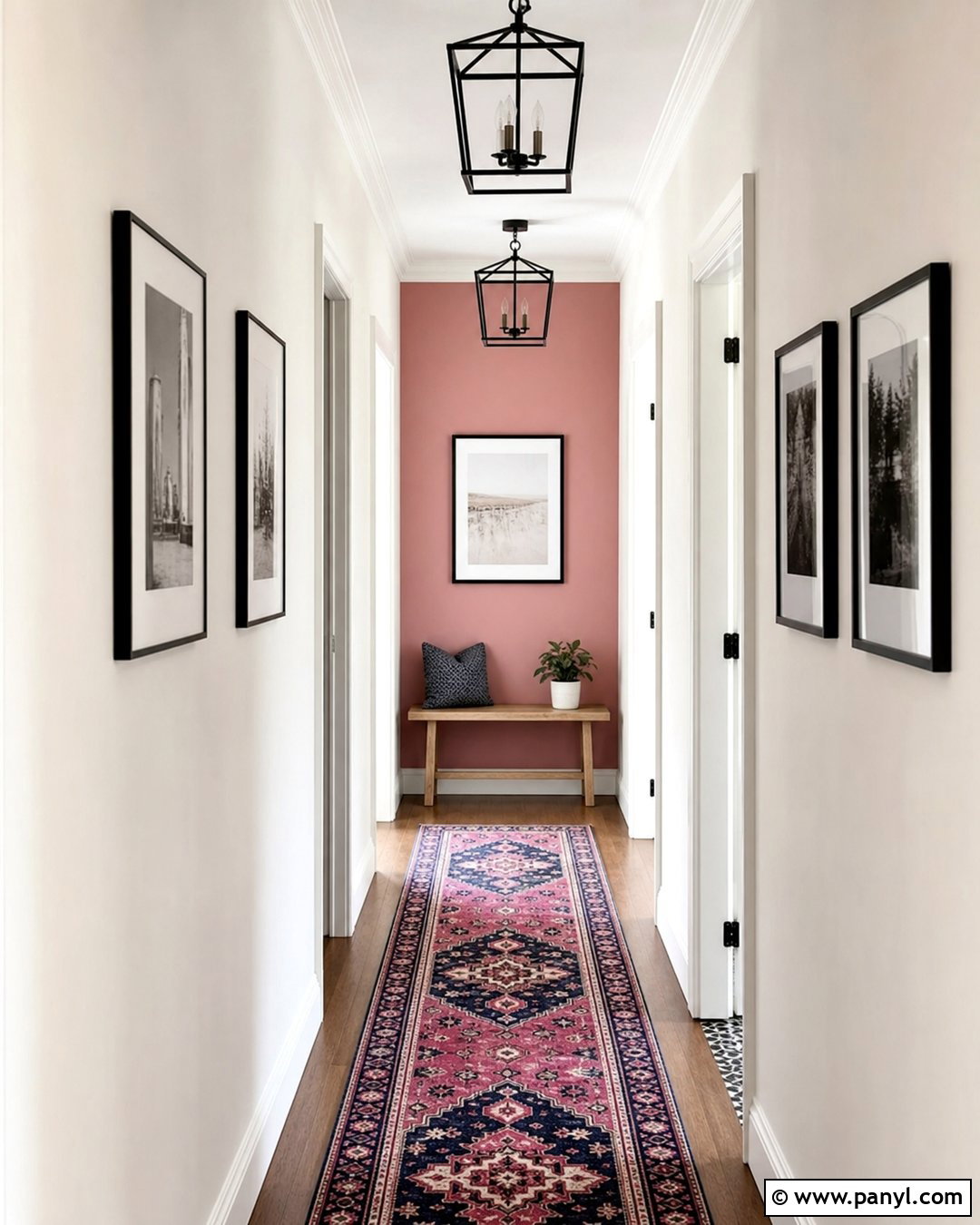
Long hallways often need a visual destination, and a pink end wall provides one without narrowing the passage. Paint the wall at the far end a medium dusty rose and leave the side walls warm white. Place a narrow bench, petite cabinet, or framed artwork against the pink surface to strengthen the focal point. Run a patterned runner down the hallway with touches of rose, navy, and tan. Matching ceiling lights create repetition, while black picture frames along one side wall add structure. If the hallway has limited daylight, choose a pink with enough warmth to avoid a gray cast. The completed design makes the corridor feel intentional rather than simply transitional.
18. Pink Fireplace Accent Wall
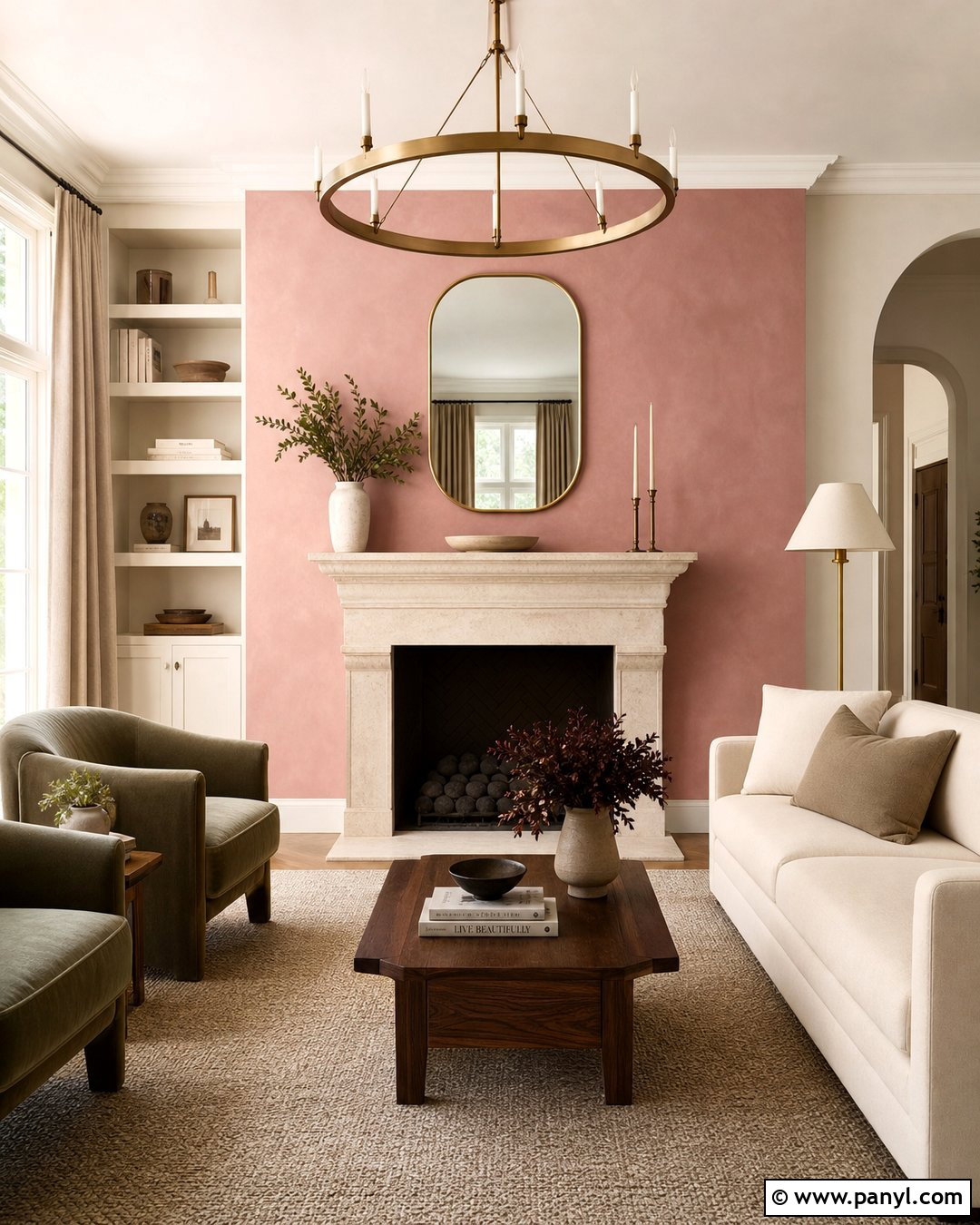
Painting a fireplace wall pink draws attention to the room’s architecture and creates a clear furniture anchor. Use muted plaster pink across the full chimney breast or fireplace wall, while keeping the mantel warm white, natural stone, or light oak. Arrange a cream sofa and two olive or camel chairs around the fireplace to create a balanced conversation area. A large mirror or simple artwork above the mantel should leave visible pink around its edges. Add a textured neutral rug, walnut coffee table, and brass floor lamp. Avoid filling the mantel with many small objects. A few ceramic vessels and greenery are enough to complete a warm, sophisticated living room arrangement.
19. Pink Limewash Living Room Accent Wall
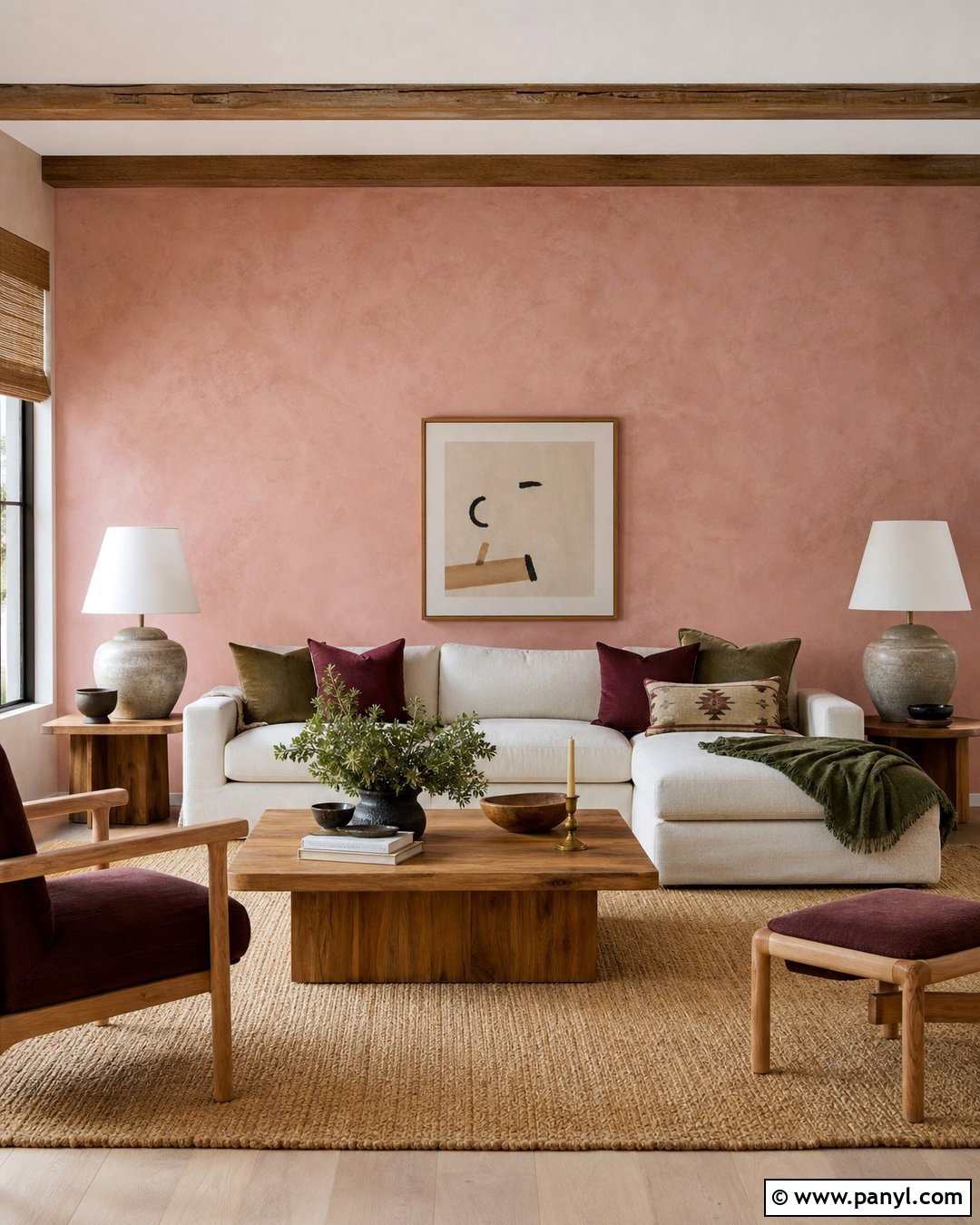
Pink limewash creates a cloudy, dimensional finish that works beautifully in relaxed living rooms. Select a muted clay pink with peach and beige undertones, then apply it across the wall behind a low linen sofa. Pair the textured surface with natural materials, including an oak coffee table, jute rug, woven shades, and ceramic lamps. Off-white upholstery keeps the wall visible, while burgundy and olive pillows introduce depth. Choose simple artwork with plenty of negative space so the limewash texture remains part of the composition. Adjacent walls can be warm white or pale sand. The finished room feels earthy and handmade, with enough softness for daily living and enough texture to hold visual interest.
20. Pink Shiplap Bedroom Accent Wall
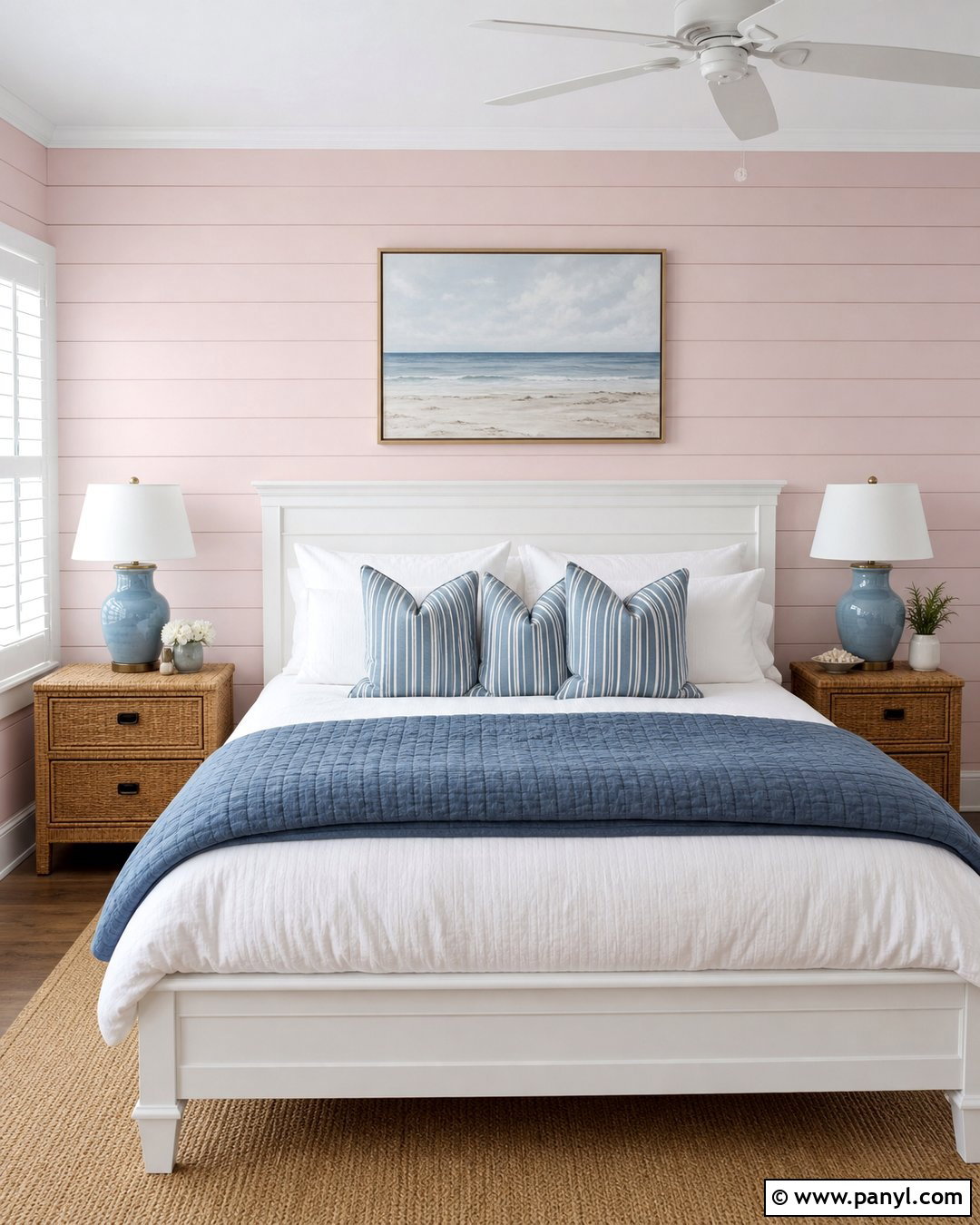
Horizontal shiplap gives a pink bedroom a relaxed architectural feature that feels especially natural in coastal or cottage interiors. Install wide boards behind the bed and paint them a pale shell pink with a matte finish. Choose a white wood bed or light oak headboard, then add crisp white bedding, a blue-gray quilt, and striped accent pillows. Woven nightstands and ceramic lamps contribute casual texture. Keep the remaining walls creamy white and use light wood or painted flooring. A sisal rug and simple seascape artwork reinforce the breezy palette without turning the room into a literal theme. The complete design feels fresh, bright, and comfortable throughout the year.
21. Pink Board And Batten Accent Wall
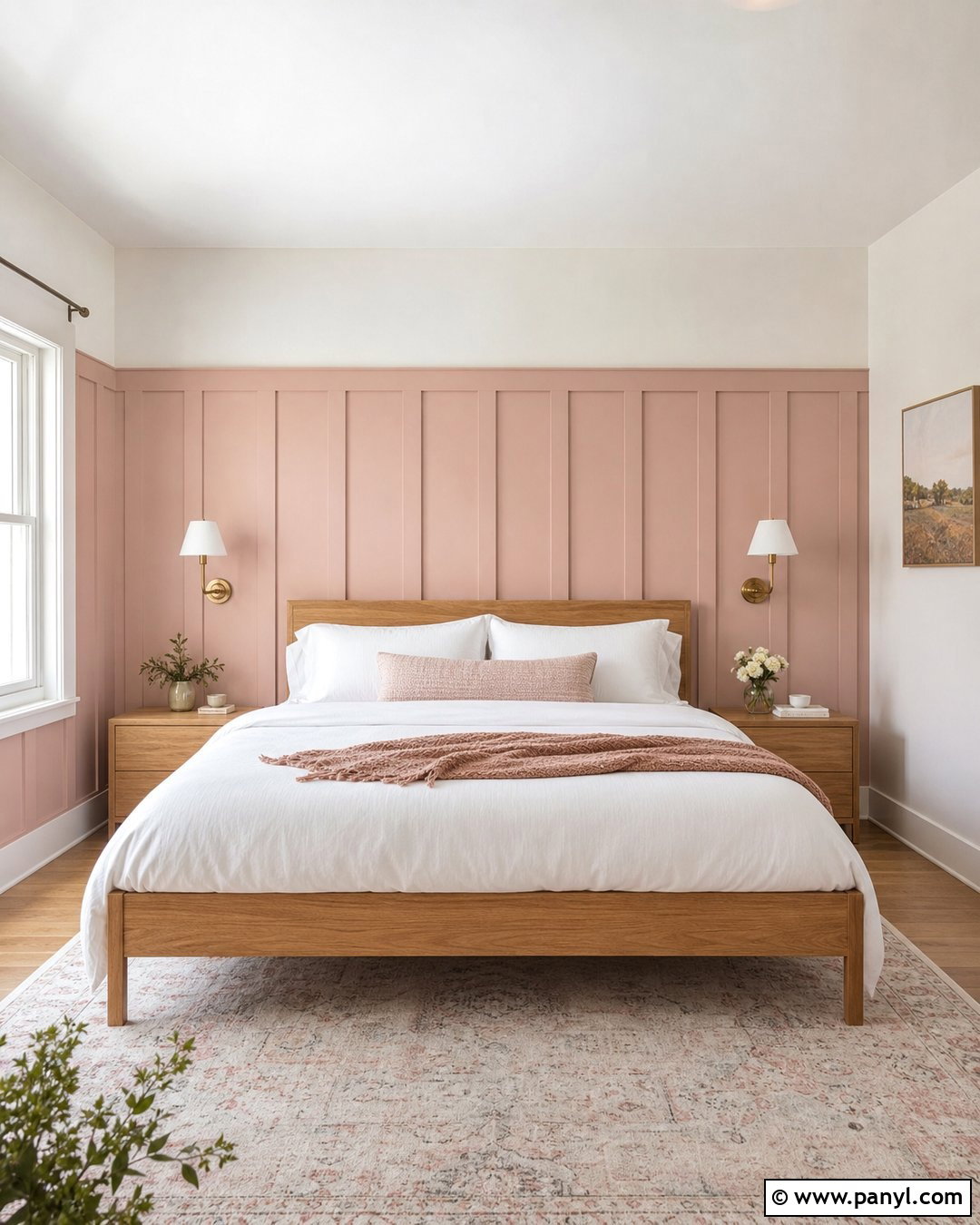
Board and batten adds depth to a pink feature wall while remaining practical for family spaces. Cover the lower two-thirds of the wall with evenly spaced vertical battens and paint everything a medium blush pink. Finish the upper portion in warm white for a clean two-tone effect. In a bedroom, place a simple oak bed against the wall and align bedside sconces with the panel layout. In a playroom, use a low white storage unit and washable rug instead. Natural wood, cream textiles, and small touches of sage green complement the pink without competing with it. The finished wall looks tailored and substantial, turning an ordinary room into a more architectural, organized space.
22. Pink Arch Accent Wall
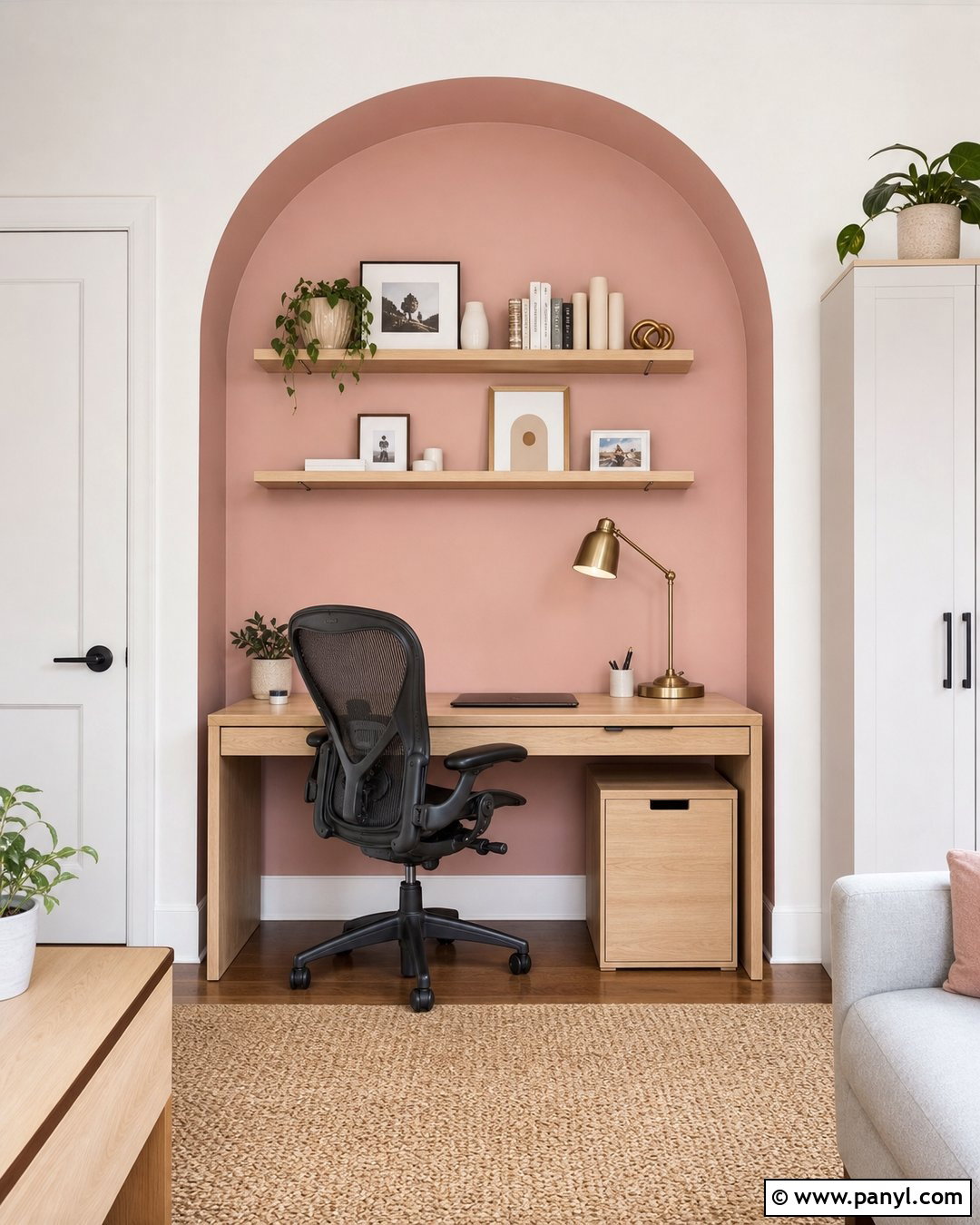
A painted pink arch is a budget-friendly way to frame a specific zone without coloring the entire wall. Create a large dusty blush arch behind a bed, desk, reading chair, or console table. Make the shape wide enough to extend beyond the furniture so it looks intentional rather than cramped. Pair it with pale oak furniture, off-white walls, and simple black or brass lighting. In a bedroom, add linen bedding and a small woven rug. In an office, use floating shelves and closed storage. Keep artwork inside the arch minimal so its curved outline remains visible. This complete setup adds softness and definition, making it useful for studios, rentals, and multipurpose rooms.
23. Pink Color Block Accent Wall
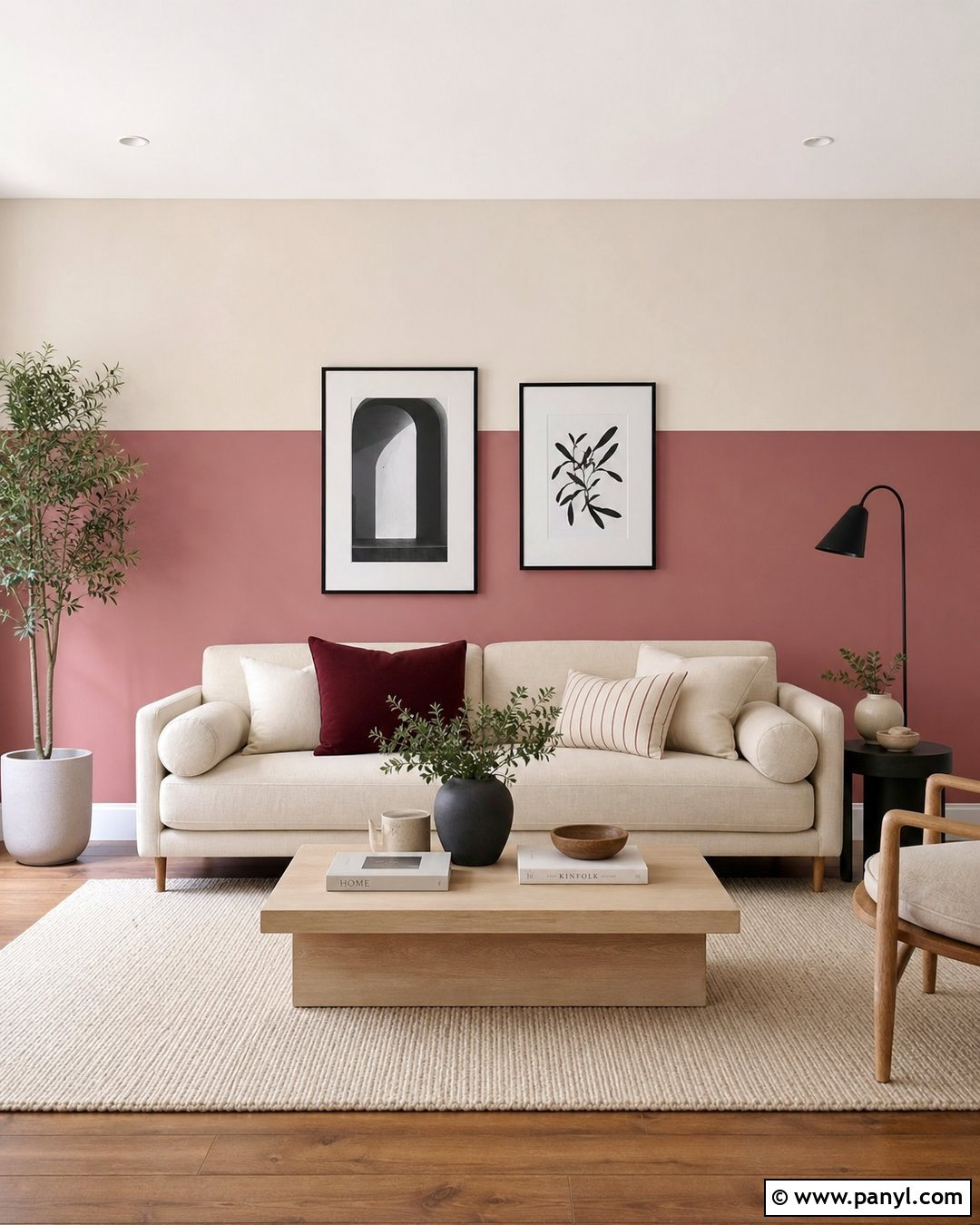
A two-tone color-blocked wall offers a modern alternative to one solid pink surface. Paint the lower half a grounded dusty rose and the upper half a soft cream, placing the dividing line slightly above the furniture. In a living room, position a low-profile oatmeal sofa against the wall and add rust, burgundy, and striped pillows. Use black-framed artwork that crosses neither color boundary, keeping the composition orderly. A pale wood coffee table and cream rug prevent the stronger lower color from feeling heavy. Repeat the rose tone in one small accessory across the room. The finished scheme feels graphic and contemporary but remains easier to live with than a highly patterned mural.
24. Pink Gallery Wall Accent Wall
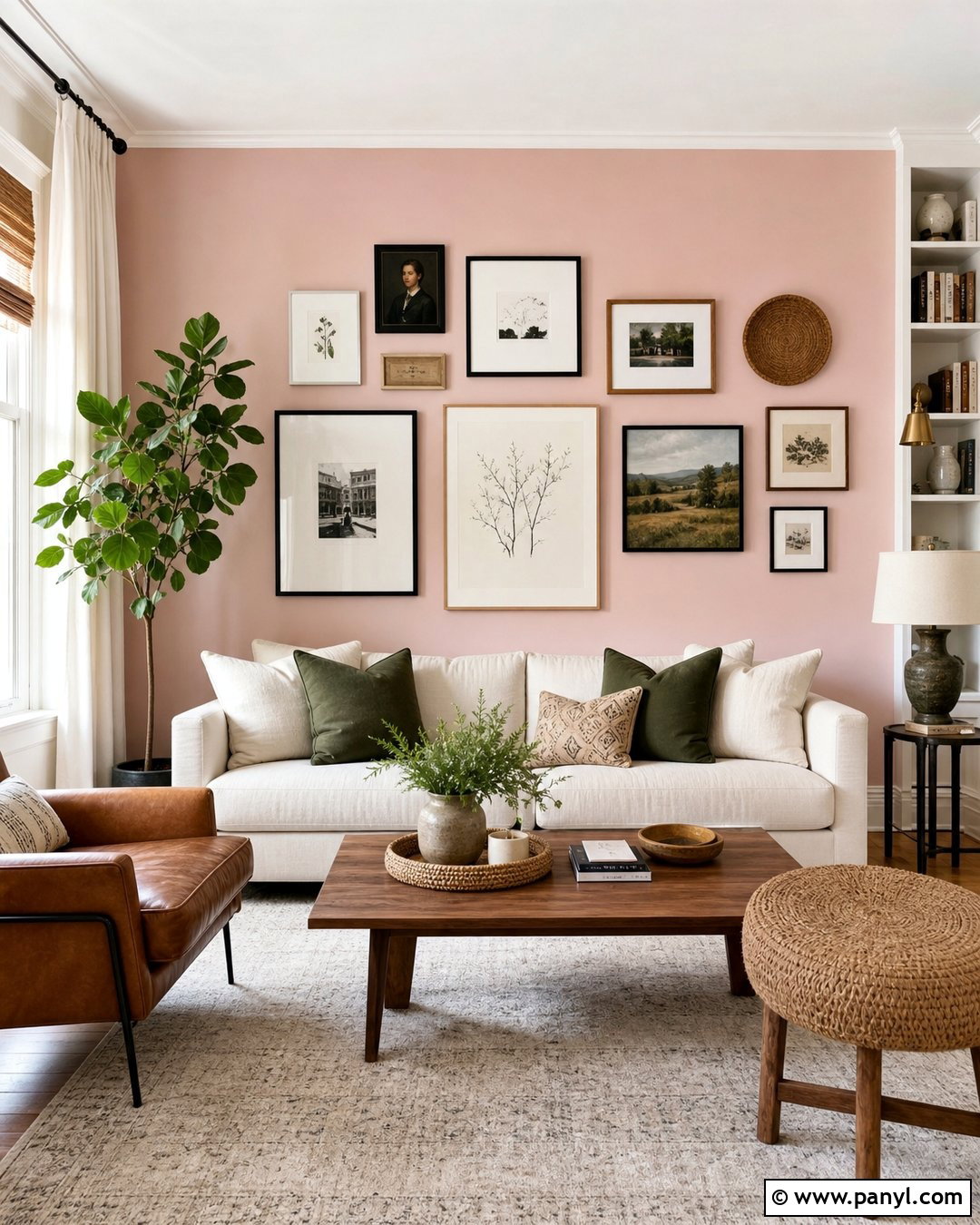
A pink accent wall provides a warm background for a collected gallery display. Choose a muted mid-tone blush that offers enough contrast for white mats, black frames, and natural wood frames. Arrange artwork above a cream sofa or low sideboard, mixing abstract pieces, landscapes, and personal photographs while maintaining even spacing. Include pink only sparingly within the artwork so the collection does not disappear into the wall. A cognac leather chair, walnut table, and olive pillows add richer colors to the room. Use a neutral rug and simple window treatments to balance the busy display. The complete wall becomes personal and layered while the surrounding furniture keeps the space comfortable and cohesive.
25. Pink Built-In Bookshelf Accent Wall
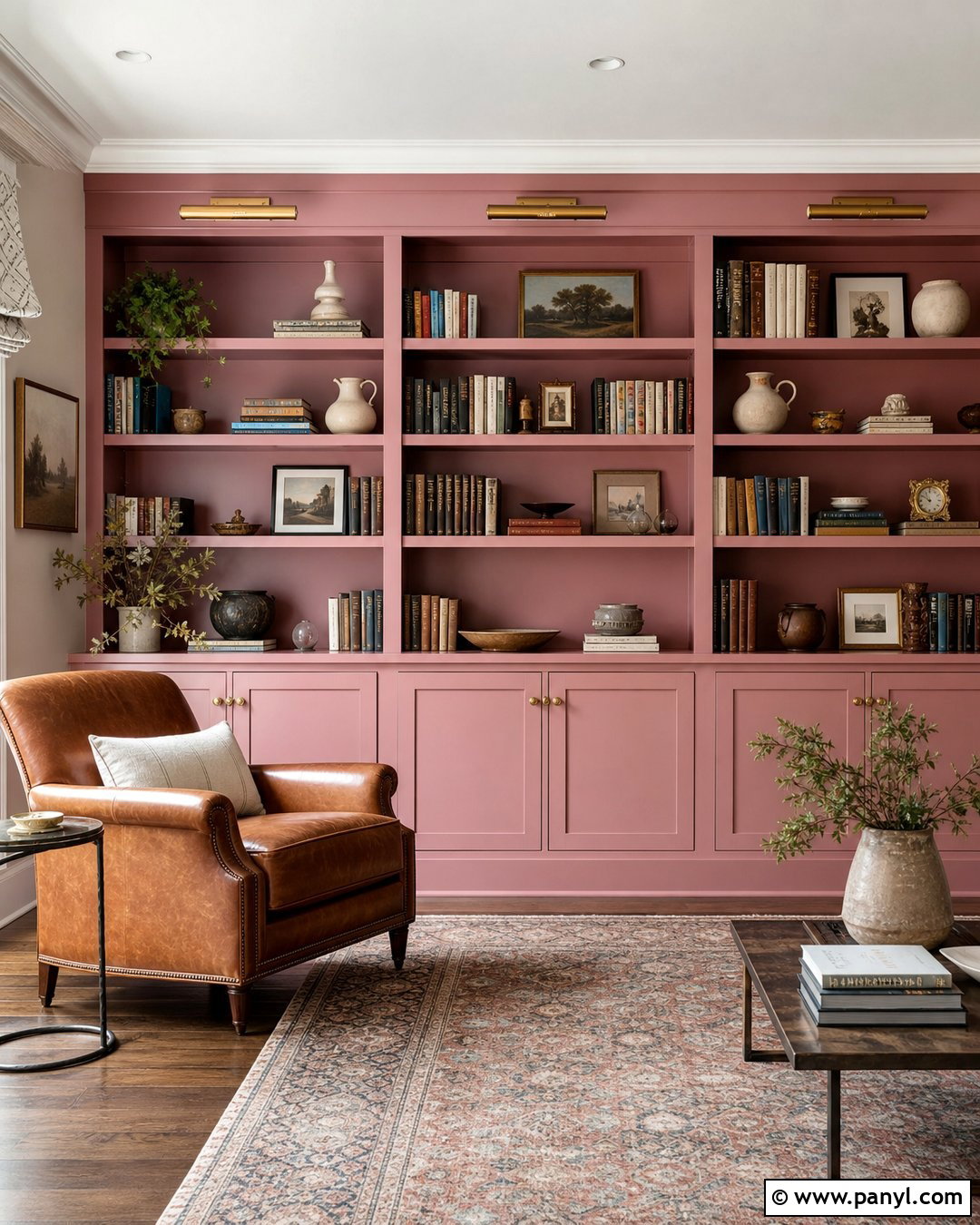
Painting built-in shelves and their surrounding wall pink creates a strong architectural feature in a living room or office. Use a dusty rose or warm mauve in a satin finish on the shelves, cabinet fronts, trim, and wall backing. Style the shelves with books, cream ceramics, framed art, and a few dark objects for contrast. Keep some open space so every shelf does not look crowded. Place a camel leather chair or ivory sofa nearby, then ground the room with a patterned vintage rug. Brass cabinet hardware and picture lights enhance the warm palette. The remaining walls should be light and neutral, allowing the built-in feature to function as the room’s main visual anchor.
26. Pink Home Office With Wood Furniture
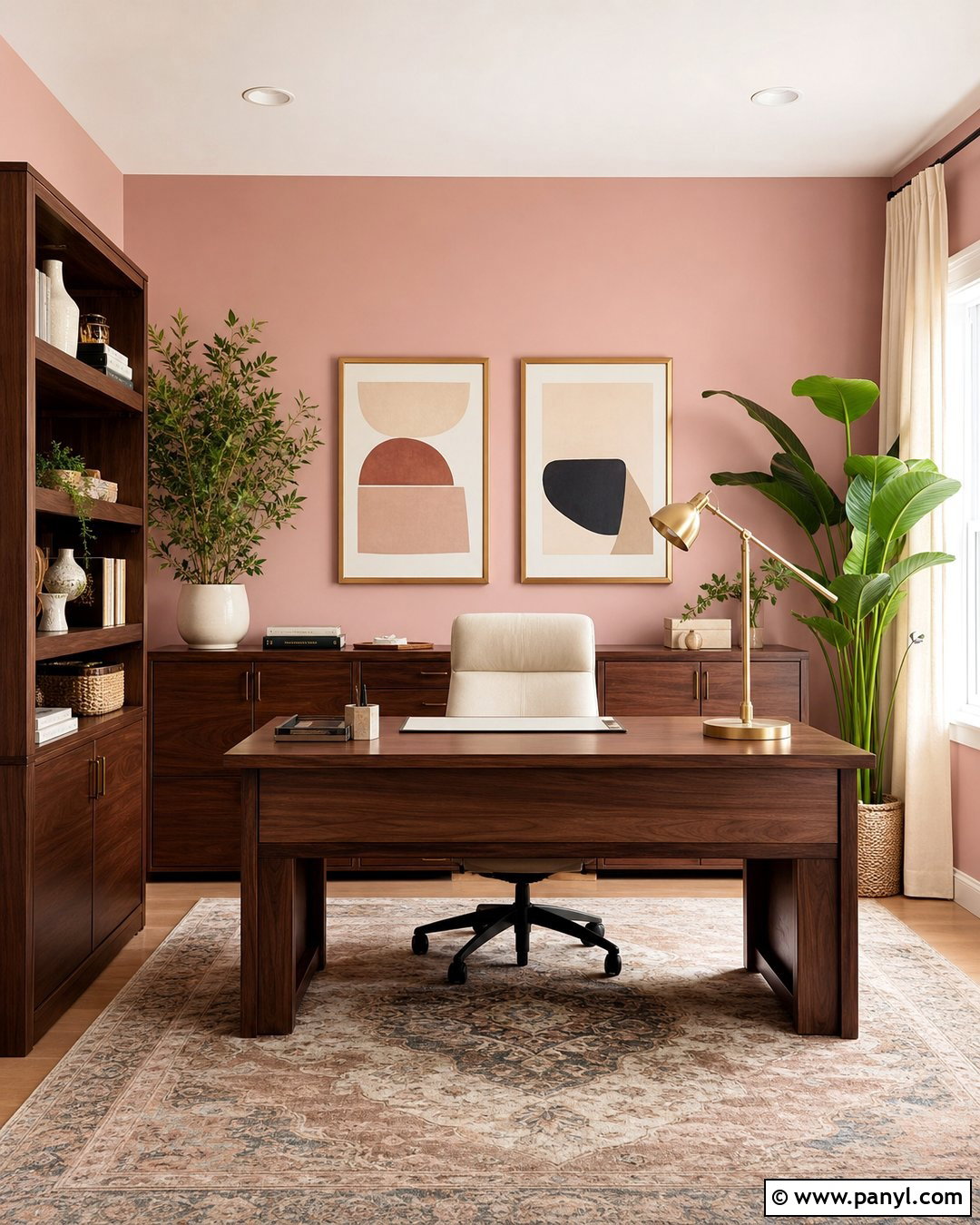
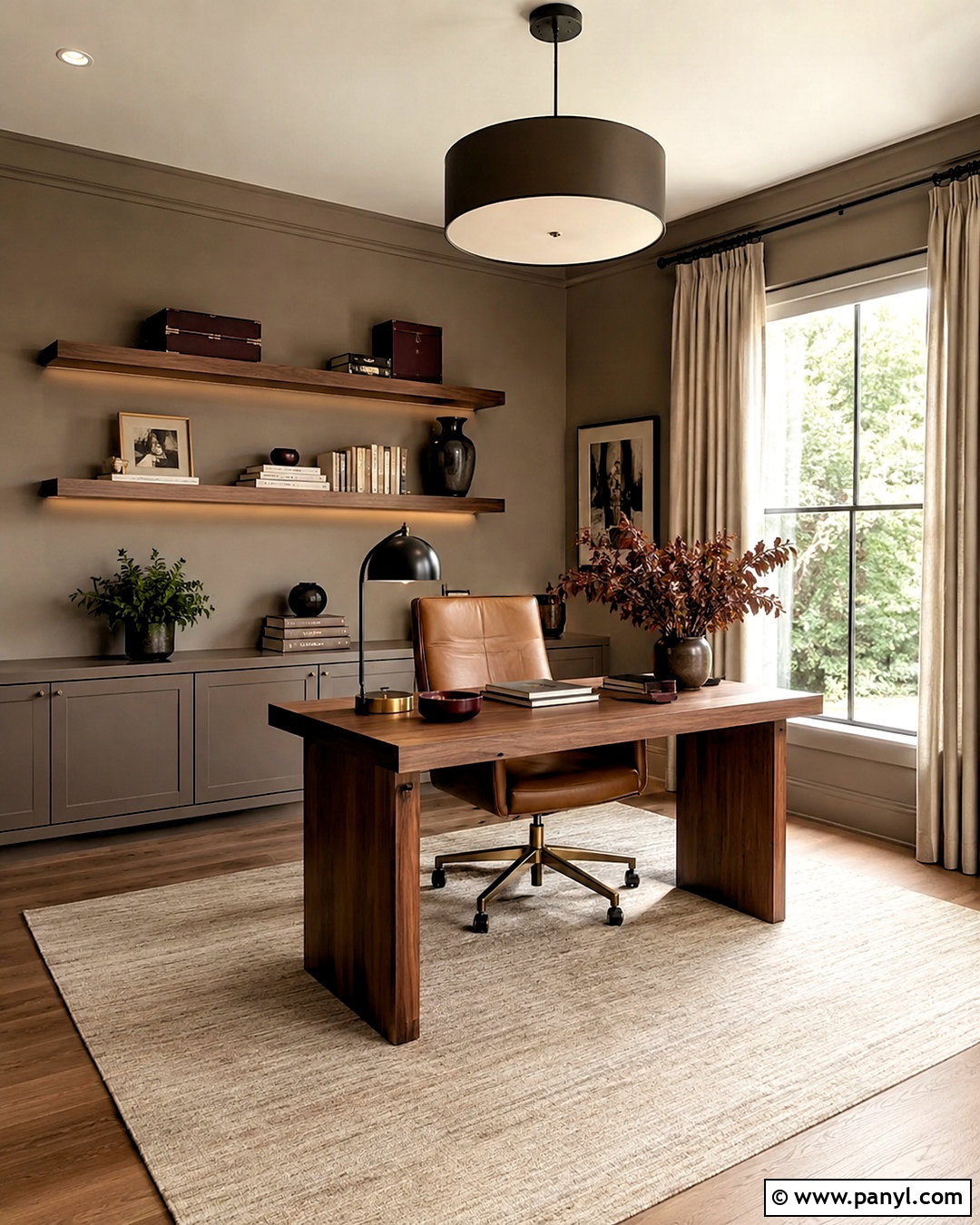
A muted pink backdrop can soften a practical home office filled with wood furniture. Paint the desk wall warm rose-beige and place a substantial walnut desk in front of it. Add an adjustable cream or black office chair, a brass task lamp, and closed walnut storage along one side. Two framed abstract prints above the desk provide decoration without filling the wall. Use off-white curtains and a low-pile rug with muted green and rust accents. A tall plant near the window adds life and balances the wood. Keep cords concealed and desktop accessories limited. This complete office combines professional function with warmth, making it comfortable for long work sessions without feeling corporate or overly decorative.
27. Pink Reading Nook Accent Wall
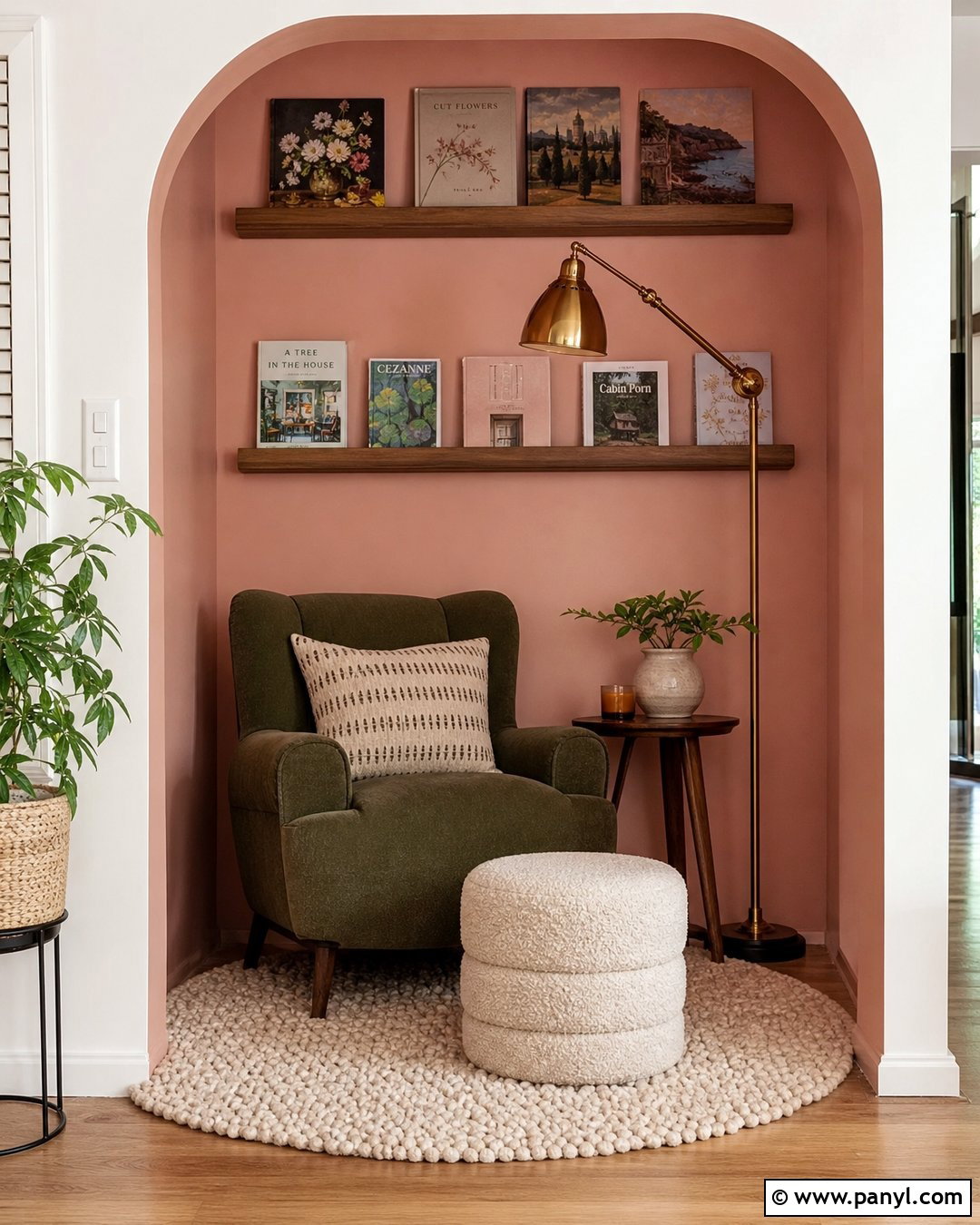
A compact reading nook feels more intentional when a soft pink wall visually encloses it. Choose a warm blush shade and place a deep olive, navy, or cream armchair against the wall at a slight angle. Add a small walnut side table, an adjustable brass floor lamp, and a textured footstool. Install two narrow picture ledges above the chair for rotating artwork and favorite books. A round wool rug defines the nook within a larger bedroom or living room. Keep the nearby wall color warm white and repeat the pink once in a pillow or blanket. The finished corner feels comfortable, layered, and separate from the rest of the room without requiring construction.
28. Pink Playroom Accent Wall
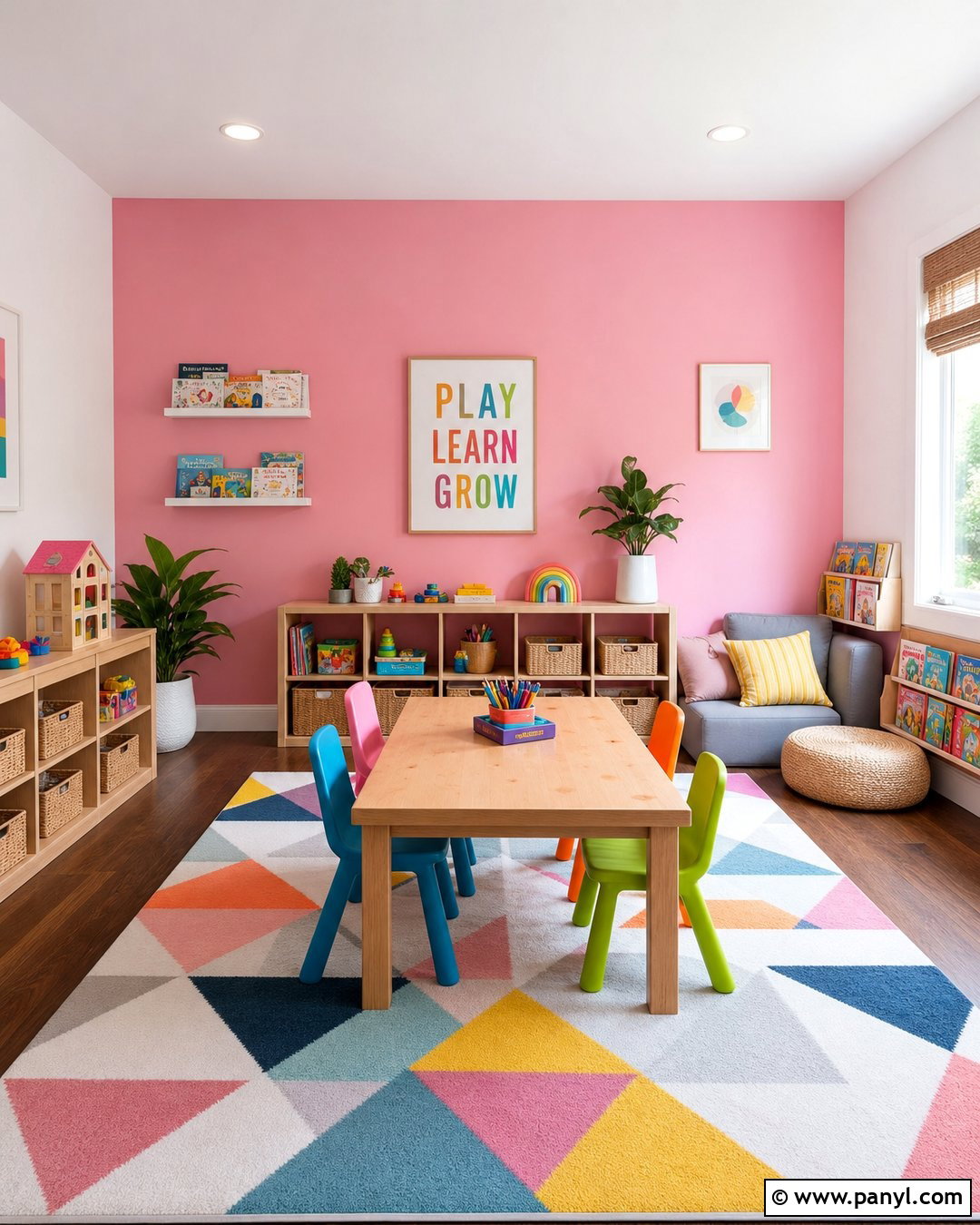
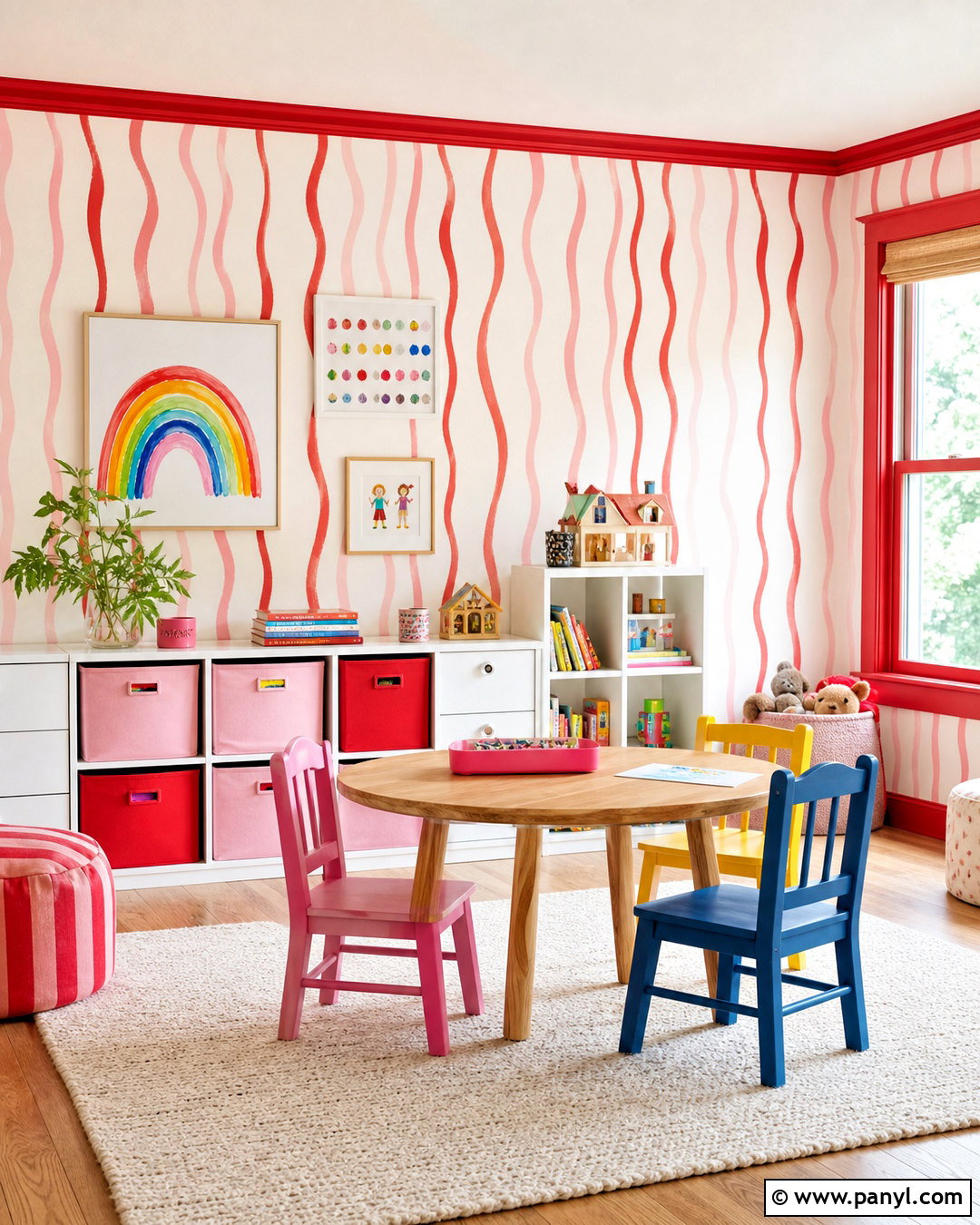
A cheerful playroom can use pink without relying on an overly themed design. Paint one wall a clear bubblegum pink, then place low white or birch storage units across it. Organize toys in matching woven baskets and labeled-looking solid bins without adding visible decorative text. A washable rug with pink, yellow, blue, and green shapes makes the floor inviting. Include a small natural wood table, colorful chairs, and a cushioned reading corner. Keep the remaining walls bright white to maximize light and display children’s artwork in uniform frames. The completed room offers clear zones for creating, reading, and storing toys. Bold color provides energy, while simple furniture keeps the space functional and easy to reset.
29. Pink Teen Bedroom Accent Wall
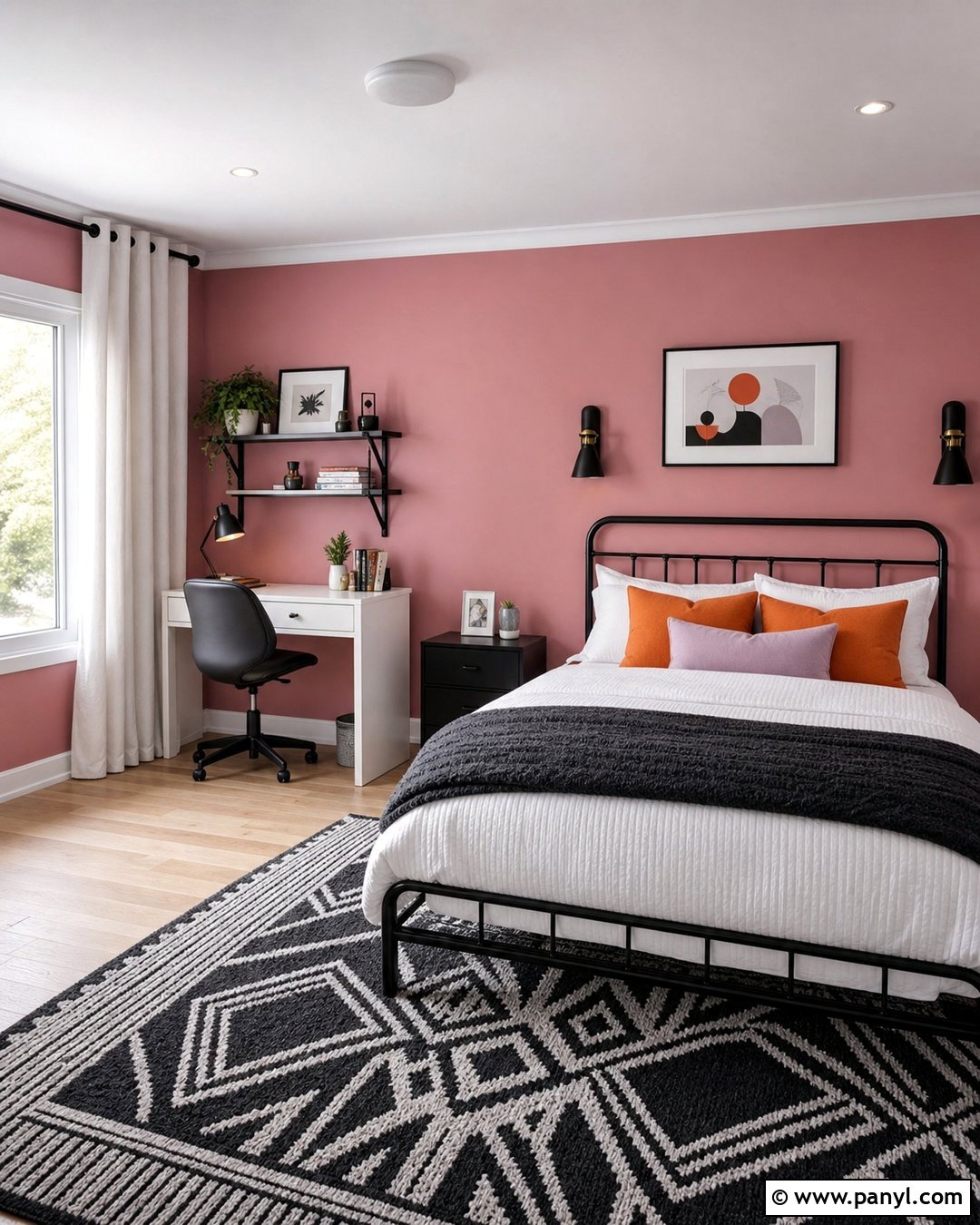
A rose pink feature wall can give a teen bedroom personality without making future updates difficult. Paint the wall behind a simple black metal or light wood bed a medium rose shade. Layer the bed with white bedding, a charcoal throw, and pillows in lavender, orange, or navy. Add a compact desk with practical drawer storage, a pinboard, and a comfortable task chair. Black sconces and picture frames provide contrast against the pink. Use a geometric rug that repeats several room colors and hang solid curtains in cream or gray. Keep accessories editable rather than permanent. The complete room feels expressive and current while allowing artwork, textiles, and favorite colors to change over time.
30. Pink Guest Bedroom Accent Wall
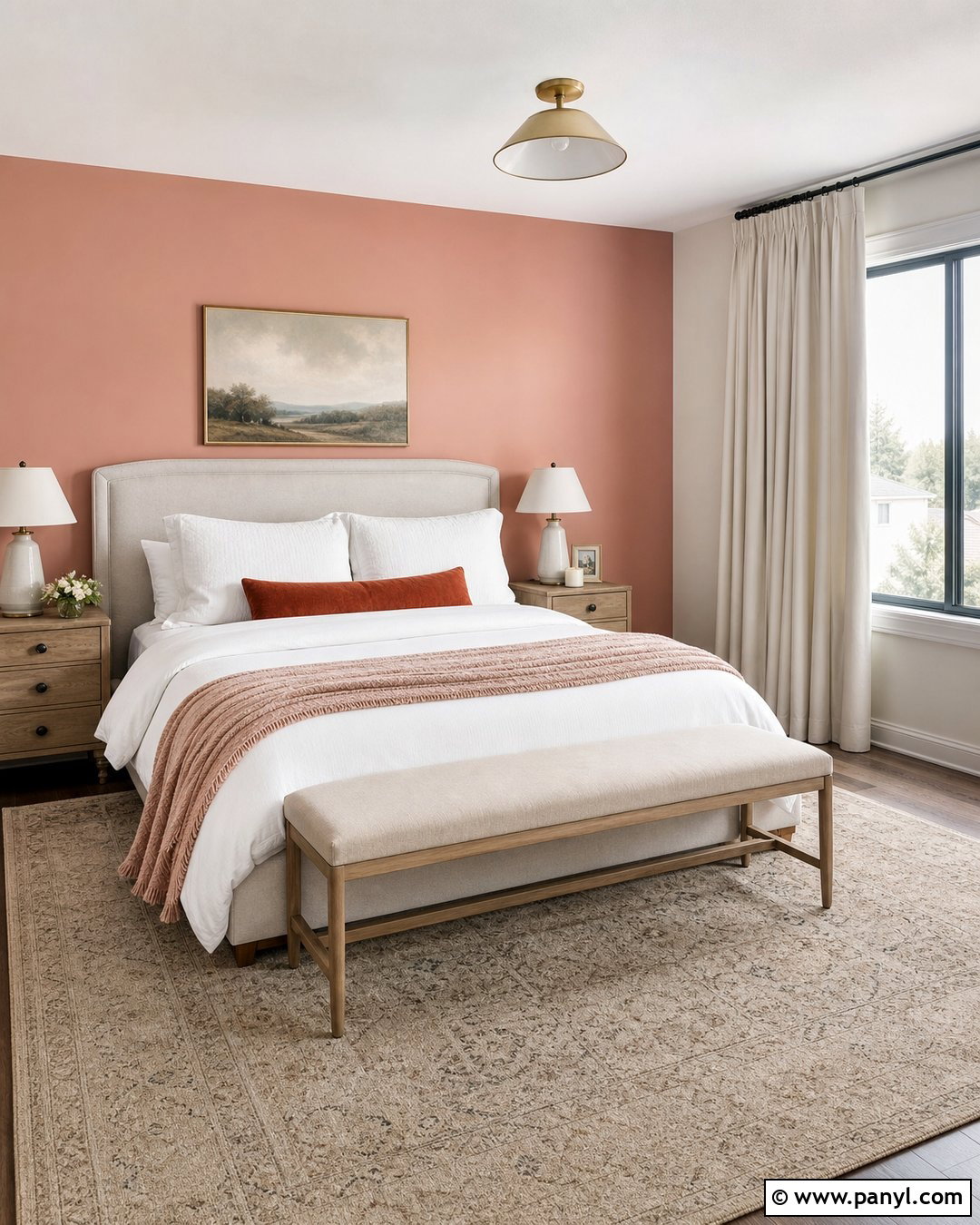
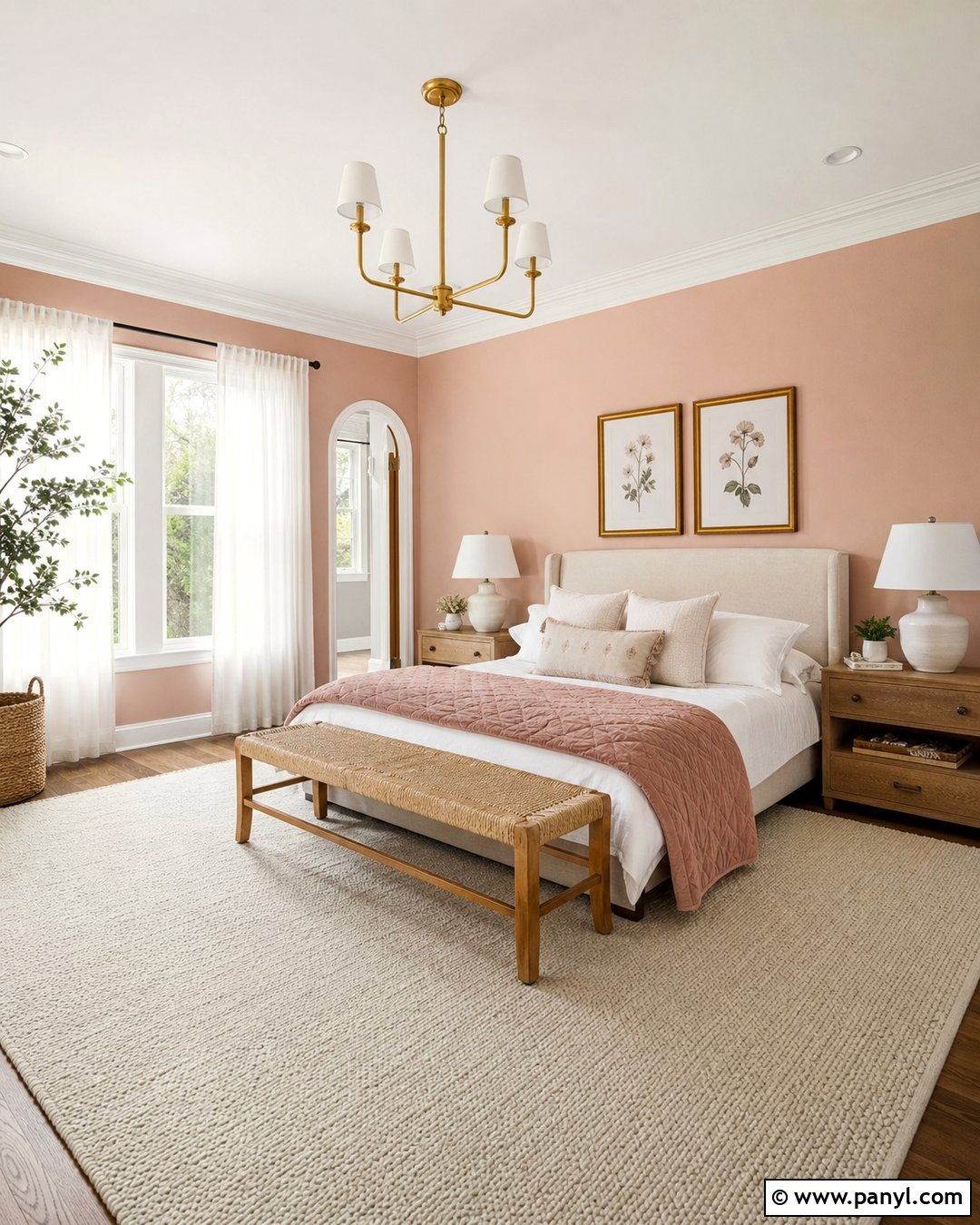
A guest room should feel memorable but easy for different visitors to enjoy. Paint the bed wall a muted peachy pink, then choose a simple upholstered headboard in oatmeal or soft gray. Crisp white bedding creates freshness, while a rust-colored lumbar pillow and lightweight blush blanket add warmth. Place matching wood nightstands on both sides with reading lamps and open surfaces for personal items. A bench at the foot of the bed offers space for a bag. Add blackout linen curtains, a neutral rug, and one calming landscape above the headboard. The remaining walls can be creamy white. This finished scheme feels polished and welcoming without becoming too personal or visually demanding.
31. Pink And Black Bathroom Accent Wall
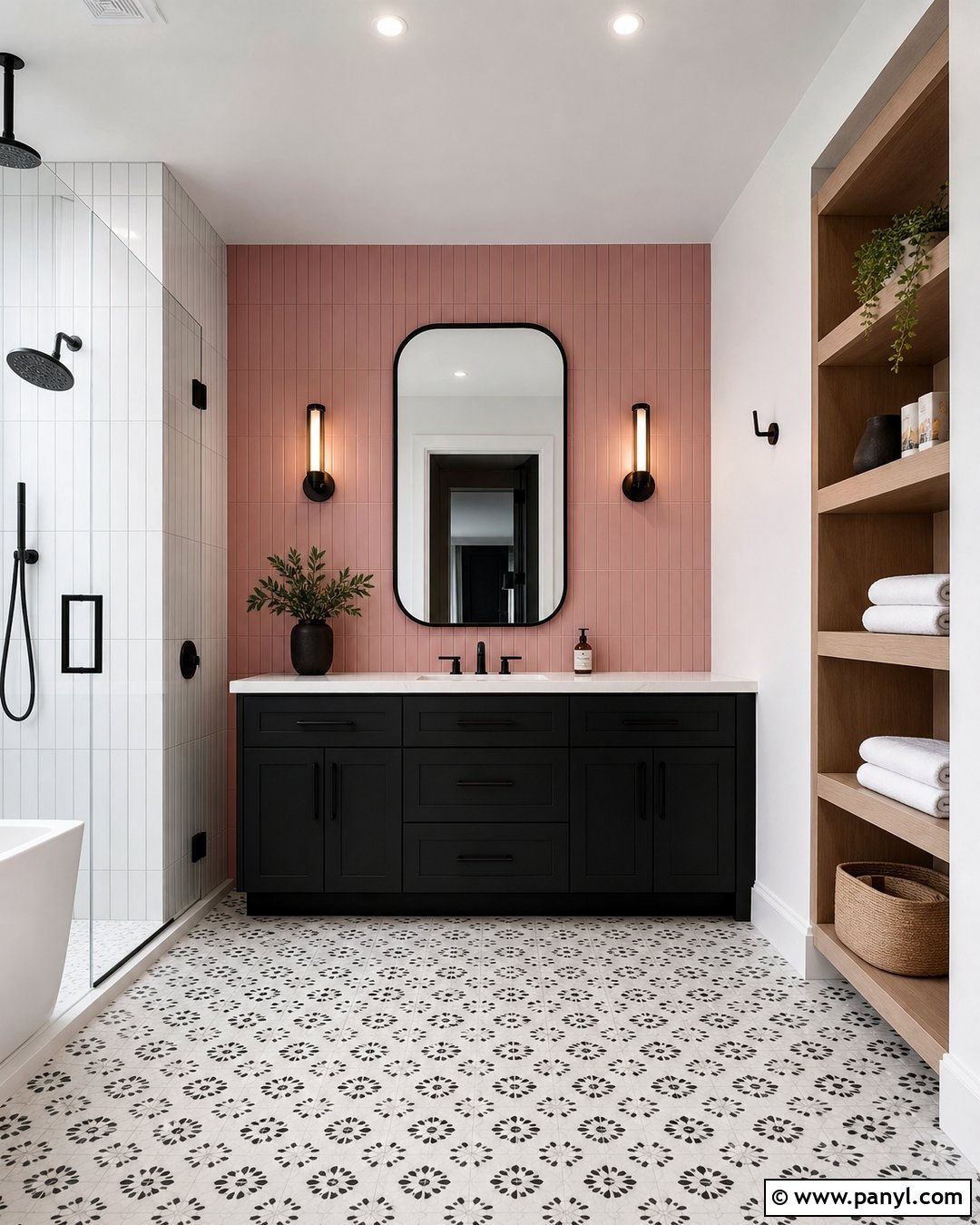
Pink and black create a sharp bathroom palette when used in controlled proportions. Paint the wall behind the vanity a warm medium pink or cover it with matte pink tile. Choose a black vanity with simple slab-front doors, a white stone countertop, and a white sink. A black-framed mirror, black faucet, and matching wall sconces establish consistent contrast. Keep the shower tile and remaining walls warm white so the room does not feel enclosed. Add pale wood shelving and white towels to soften the graphic scheme. A small patterned floor with black, cream, and pink details completes the room. The finished bathroom feels modern, confident, and carefully balanced rather than harsh.
32. Pink And Gold Dining Room Accent Wall
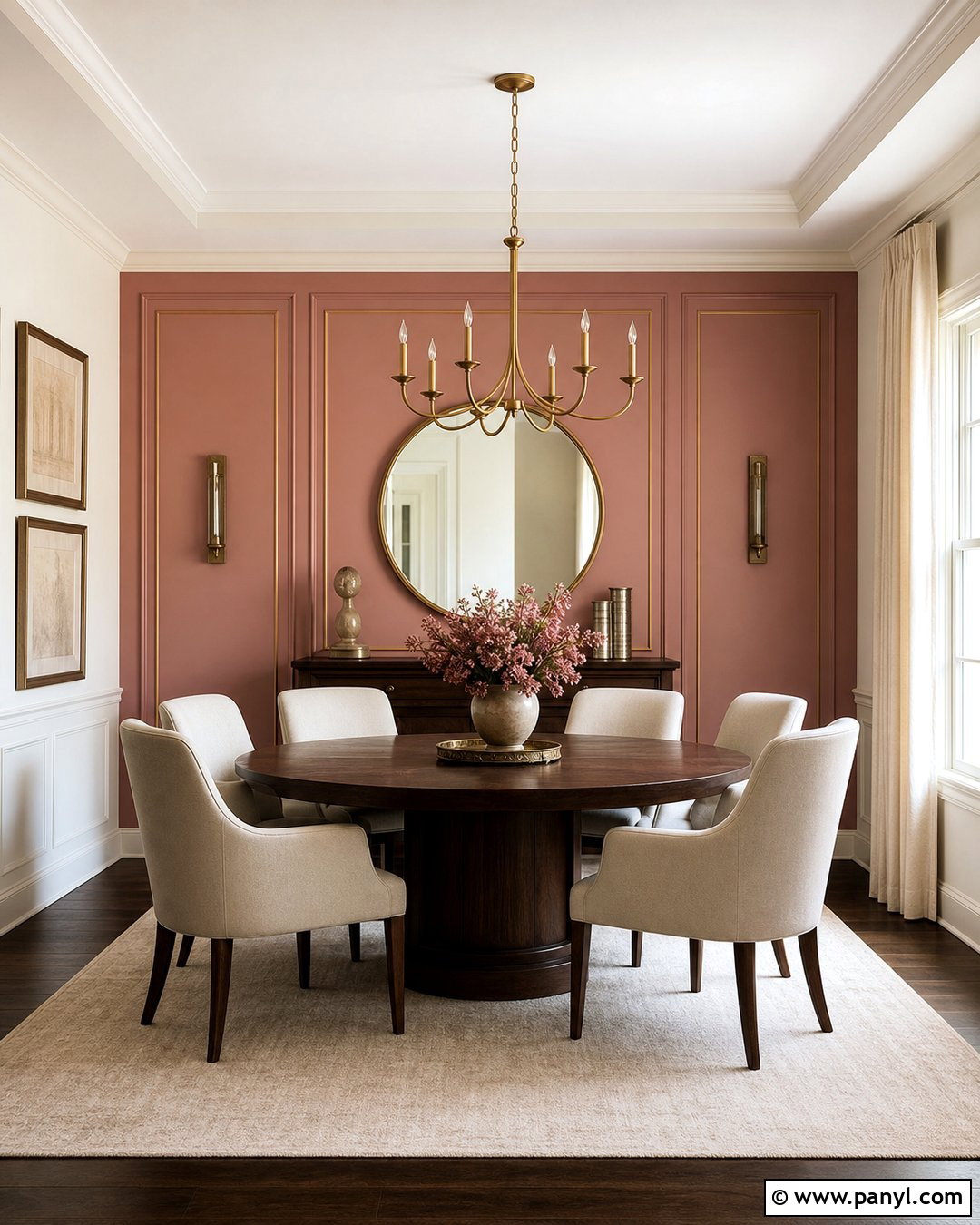
Pink and gold can look refined when the metallic finish is warm and used sparingly. Paint the dining room focal wall a sophisticated dusty rose and place a dark walnut sideboard against it. Hang a large aged brass mirror or abstract artwork with a slim brass frame above the cabinet. Center a round wood dining table beneath a simple brass chandelier and surround it with cream upholstered chairs. Ivory walls, linen curtains, and a neutral wool rug create breathing room around the stronger colors. Style the sideboard with two ceramic vessels and a small lamp. The complete arrangement feels elegant and inviting, with enough natural texture to prevent the gold accents from appearing overly formal.
33. Pink And Gray Bedroom Accent Wall
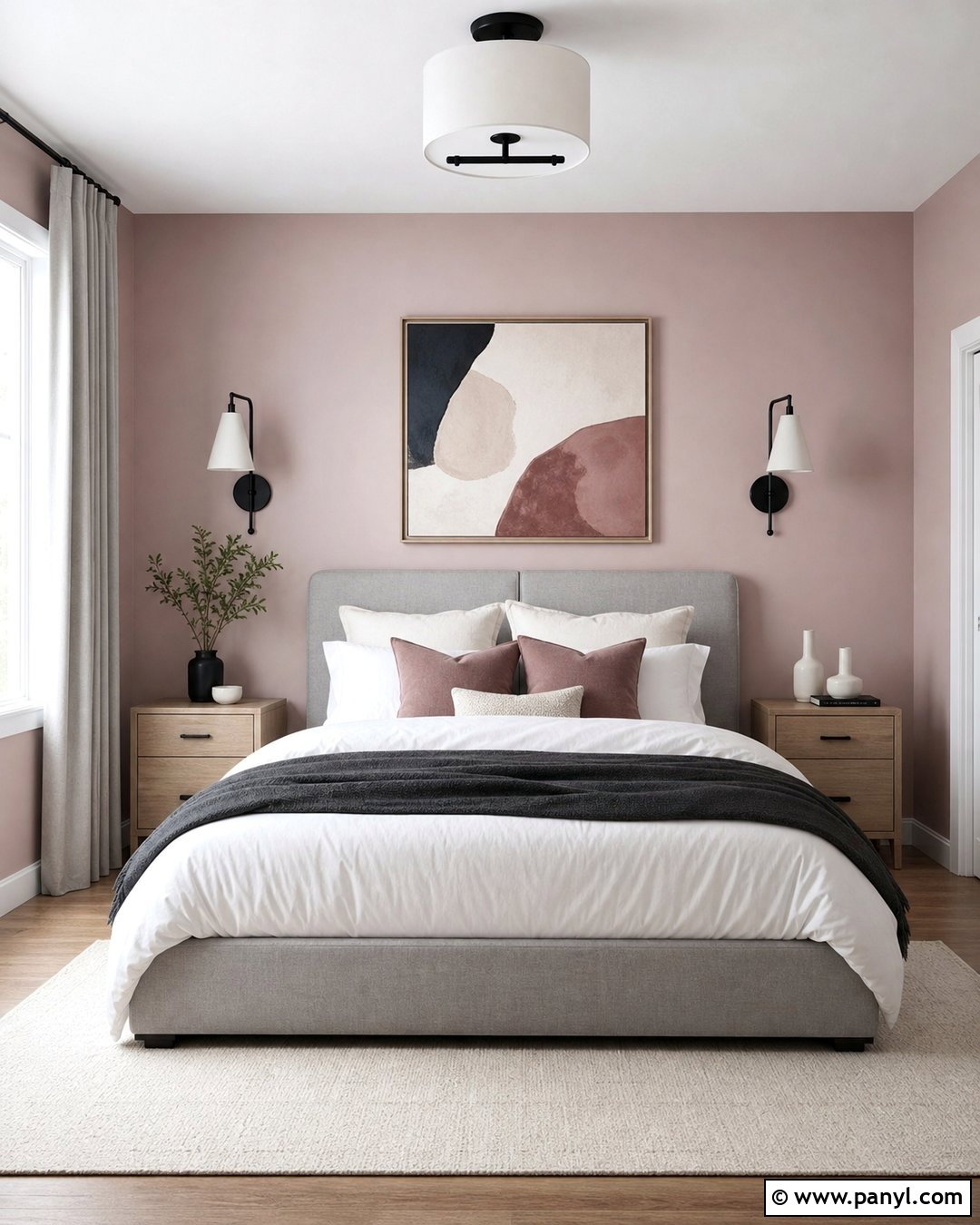
Pink and gray work best when both shades share similar warm or cool undertones. For a restful bedroom, choose a dusty pink accent wall with a subtle gray base. Place a light gray upholstered bed against it and dress the mattress in white, charcoal, and muted rose textiles. Pale oak nightstands prevent the palette from becoming flat, while black sconces add definition. Use warm white on the remaining walls and a cream rug under the bed. One piece of abstract artwork can combine pink, gray, beige, and black. Add natural linen curtains rather than cool silver-gray fabric. The completed bedroom feels soft and contemporary, with wood and cream providing essential warmth.
34. Dark Pink Living Room Accent Wall
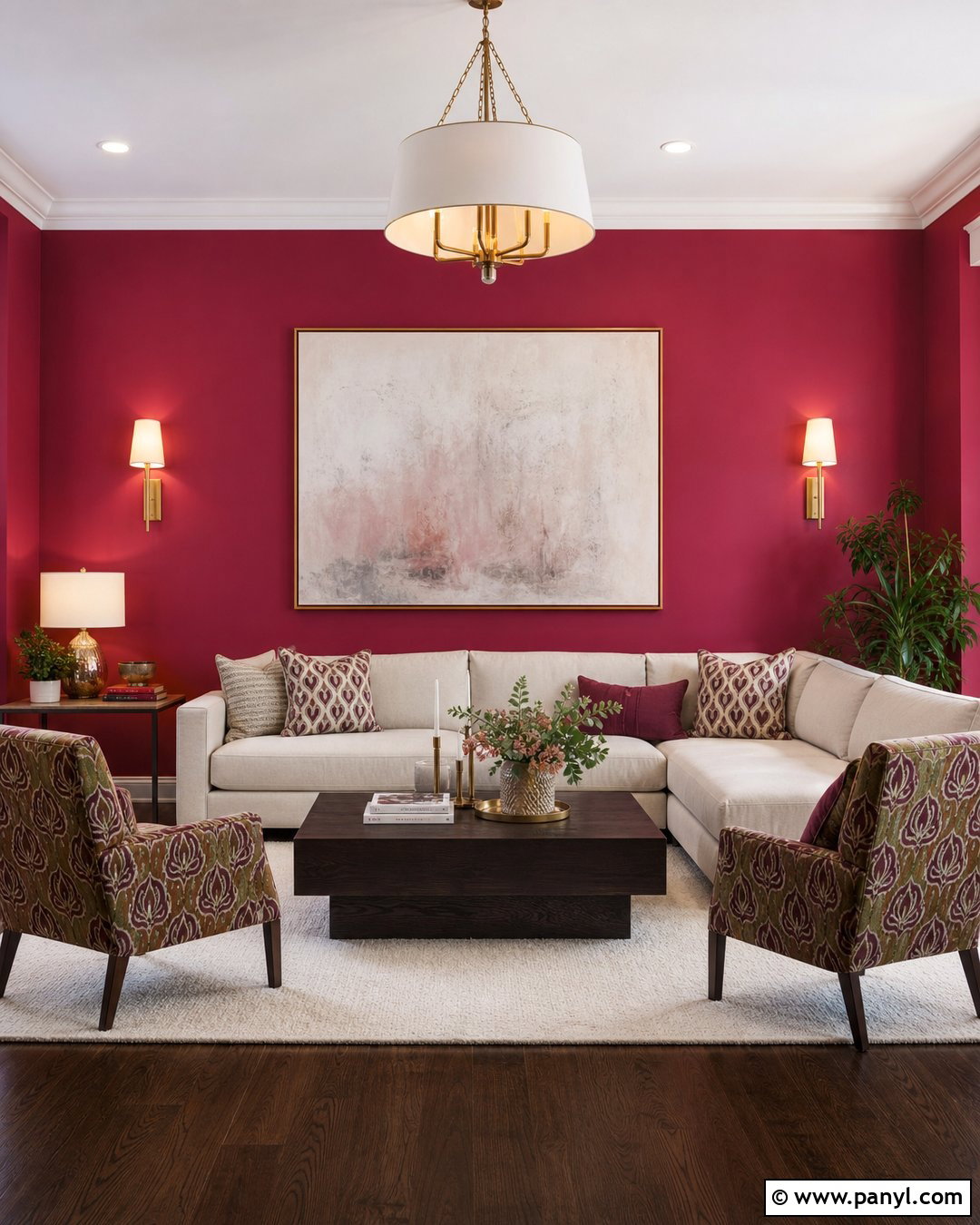
A dark pink wall can make a spacious living room feel intimate and grounded. Choose a deep raspberry, muted magenta, or saturated rose with slightly brown undertones. Place a light beige sectional against the wall so the furniture creates contrast rather than disappearing. Add a dark wood coffee table, cream rug, and two patterned chairs containing olive, rust, and small touches of pink. Large artwork with a pale background prevents the wall from feeling too heavy. Use warm white on adjacent walls and install layered lighting, including a ceiling fixture, floor lamp, and table lamp. The finished room feels bold and enveloping while maintaining enough neutral space for everyday comfort.
35. Pale Pink Minimalist Accent Wall
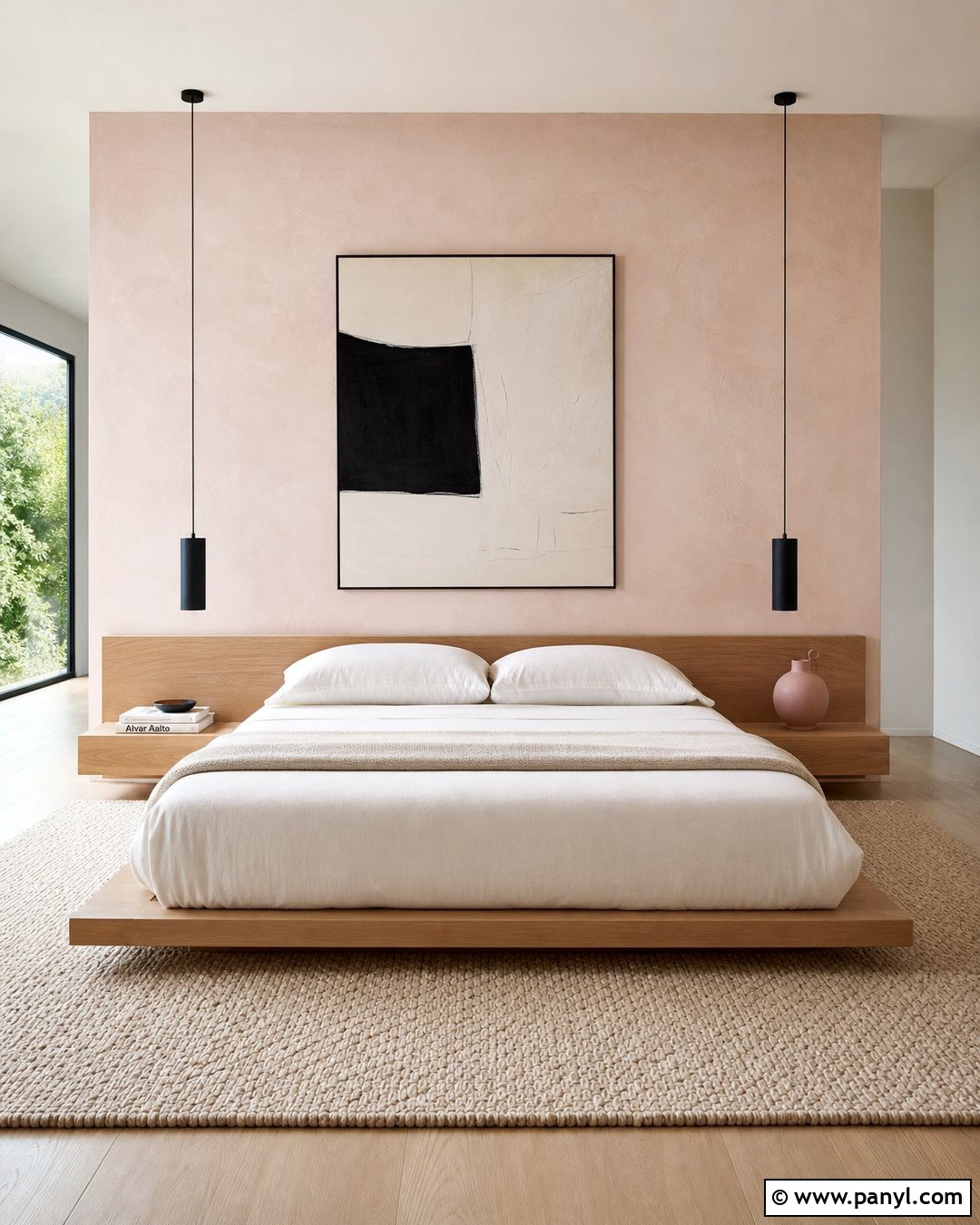
Minimalist interiors can include pink when the shade and furnishings remain restrained. Paint one clean, uninterrupted wall a very pale plaster pink and keep the other walls soft white. Place a low oak platform bed, streamlined cream sofa, or simple floating desk against it, depending on the room. Choose only a few purposeful pieces, such as a sculptural lamp, one large artwork, and a textured neutral rug. Repeat the pink through a single cushion or ceramic object rather than many matching accessories. Use natural linen, pale wood, wool, and matte black in small amounts. The finished space feels warm and uncluttered, allowing the subtle color to replace excessive decoration while still creating a clear focal point.
Conclusion:
The best **pink accent walls** do more than introduce color. They define a focal point and support a complete room palette. Begin by considering the room’s natural light, flooring, furniture, and permanent finishes. Warm blush and clay pink complement oak, cream, olive, and brown, while cooler rose and mauve work well with navy, charcoal, and soft gray. Stronger shades become easier to manage when surrounded by simple furniture and generous neutral space. Paint is the most flexible option, but wallpaper, tile, paneling, shiplap, and limewash can add valuable texture. Test your selected shade in changing light, then repeat it sparingly through textiles or artwork for a balanced, connected result.

Related Ideas and Inspiration:
Leave a Reply