
Pink is no longer limited to nurseries or overly sweet interiors. These **35 Pink Painted Walls** show how blush, dusty rose, coral, mauve, and earthy plaster tones can transform every room in the home. Pink can behave like a warm neutral, create a dramatic backdrop, or brighten an overlooked corner. The key is pairing the right shade with balanced furniture, flooring, lighting, and accents. Warm woods make pink feel natural, while black details add modern contrast. Green, navy, burgundy, and terracotta can give it greater depth. Before painting, test large samples throughout the day because natural and artificial light can change the undertones. Use these complete room looks to find your favorite approach among these **35 Pink Painted Walls**.

1. Blush Pink Living Room Walls
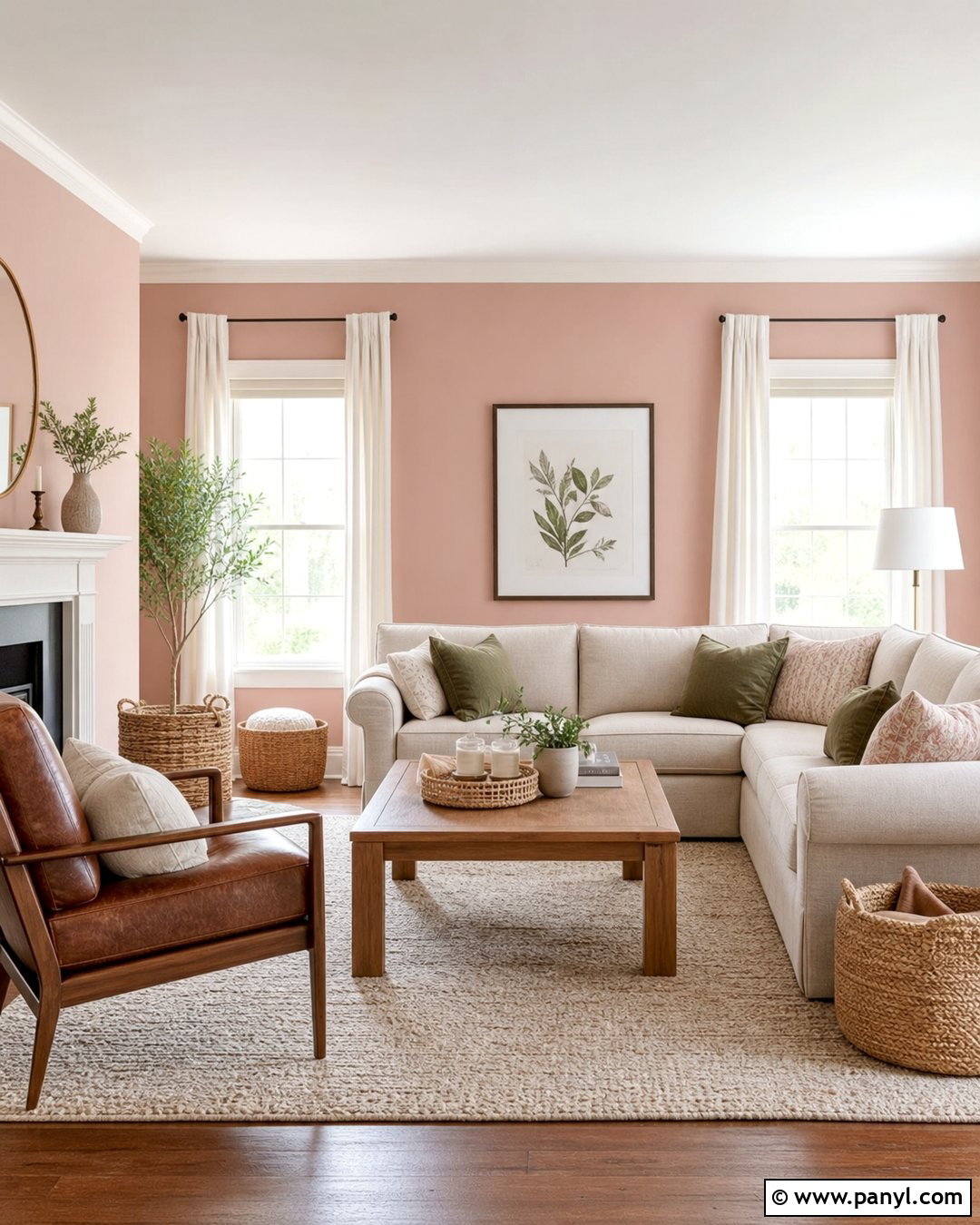
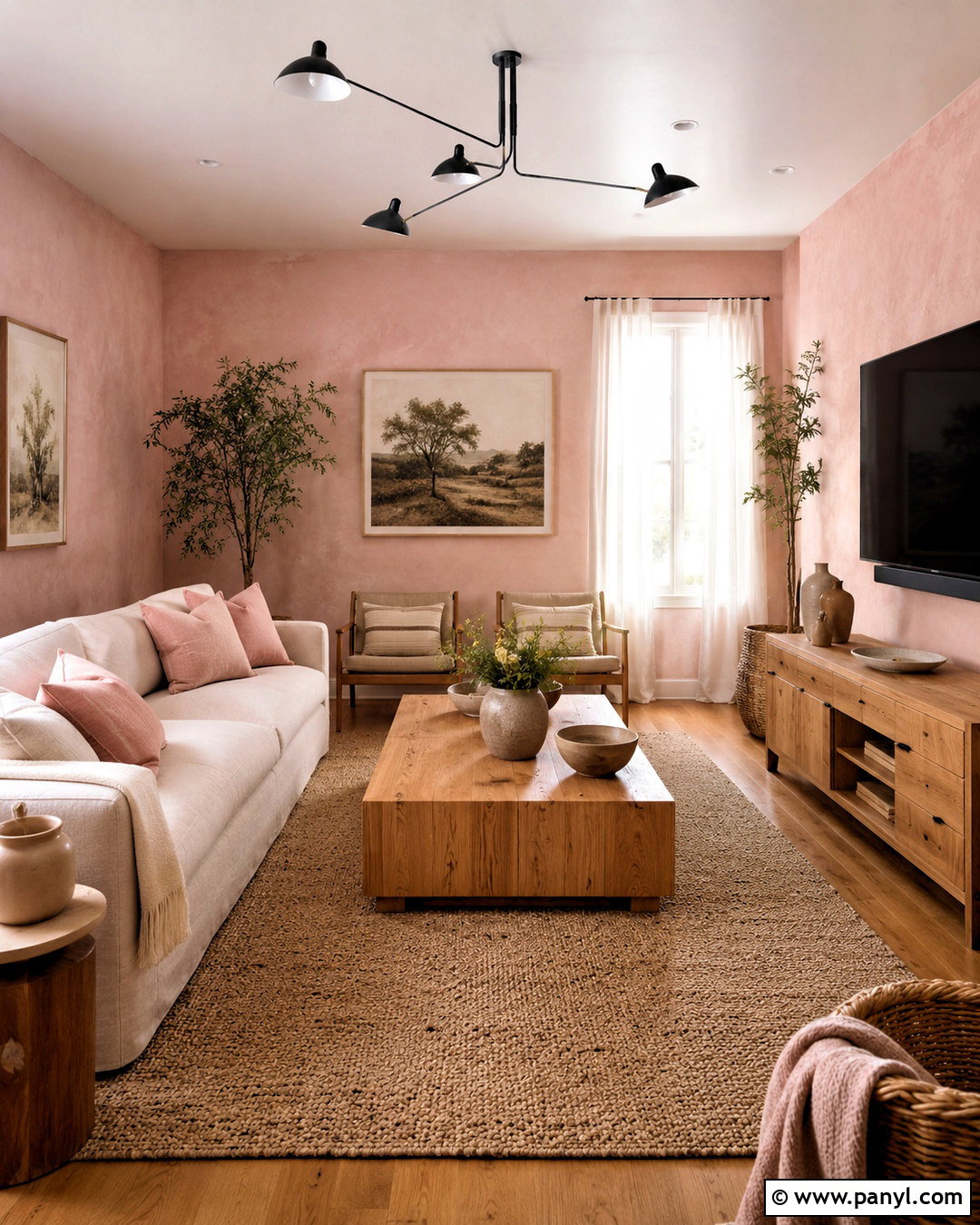
Blush pink walls create a comfortable living room that feels warm without becoming overly colorful. Choose a muted pink with beige or peach undertones, then ground it with a natural linen sofa and a textured cream rug. An oak coffee table, woven baskets, and light wood picture frames reinforce the relaxed palette. Add olive green cushions and one deep brown leather chair for contrast. Simple white curtains keep the windows bright and prevent the room from feeling heavy. A ceramic table lamp and a few large botanical prints provide decoration without clutter. For a polished finish, paint the trim soft white rather than brilliant white. The subtle contrast will make the blush walls look richer and more connected to the room.
2. Dusty Pink Bedroom Walls
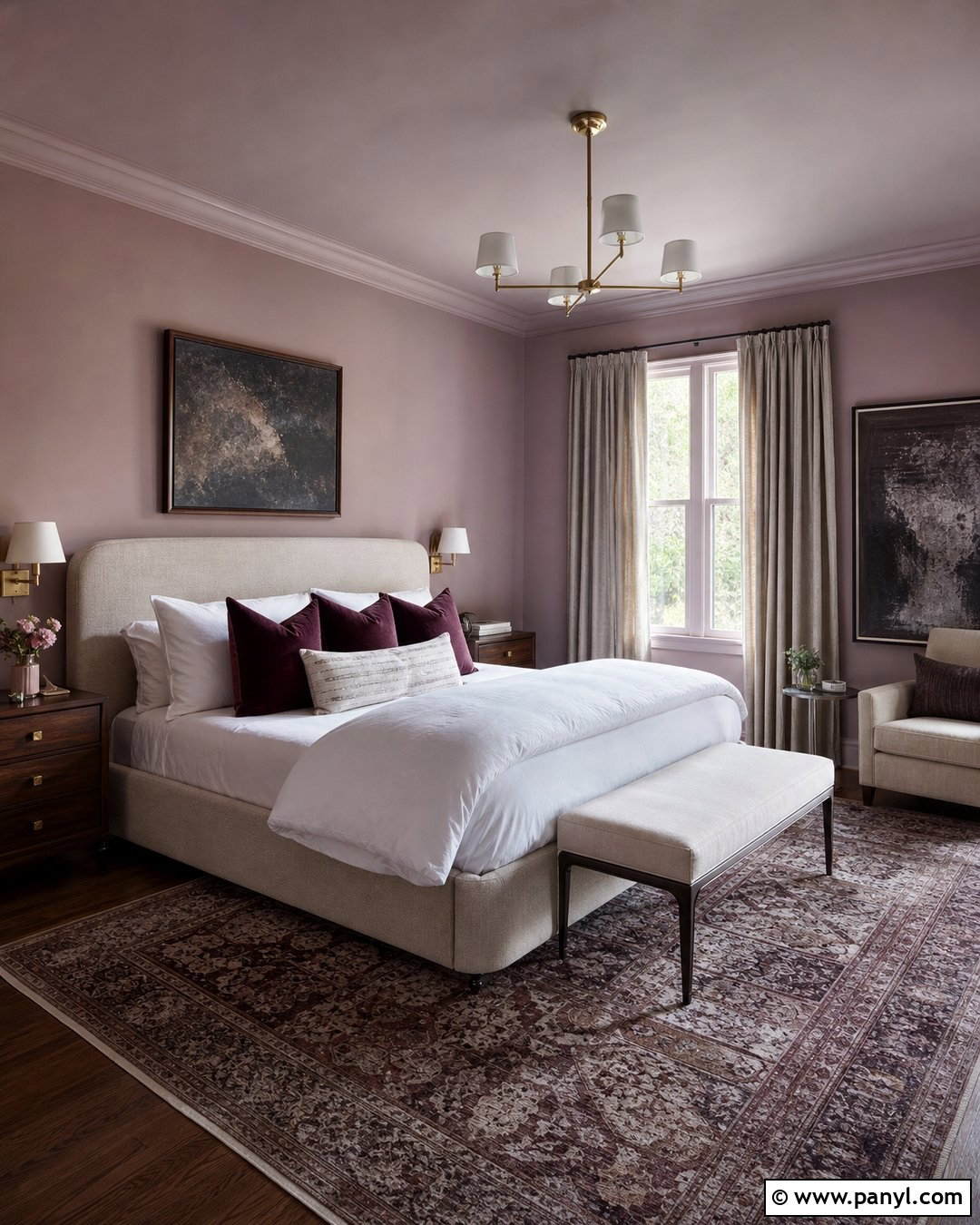
Dusty pink walls are especially effective in a restful adult bedroom because their muted gray undertones soften the color. Build the room around an upholstered oatmeal bed with simple white bedding, a rose-colored quilt, and burgundy accent pillows. Dark walnut nightstands bring depth, while brushed brass sconces add a gentle reflective finish. Use warm beige curtains that extend from ceiling to floor to create height. A vintage-patterned rug can combine faded pink, cream, and brown beneath the bed. Keep wall decor restrained with one wide landscape print or a pair of charcoal sketches. Rather than introducing several additional colors, repeat the dusty pink through one or two textiles. The result feels layered, grown-up, and calm enough for everyday use.
3. Plaster Pink Dining Room Walls
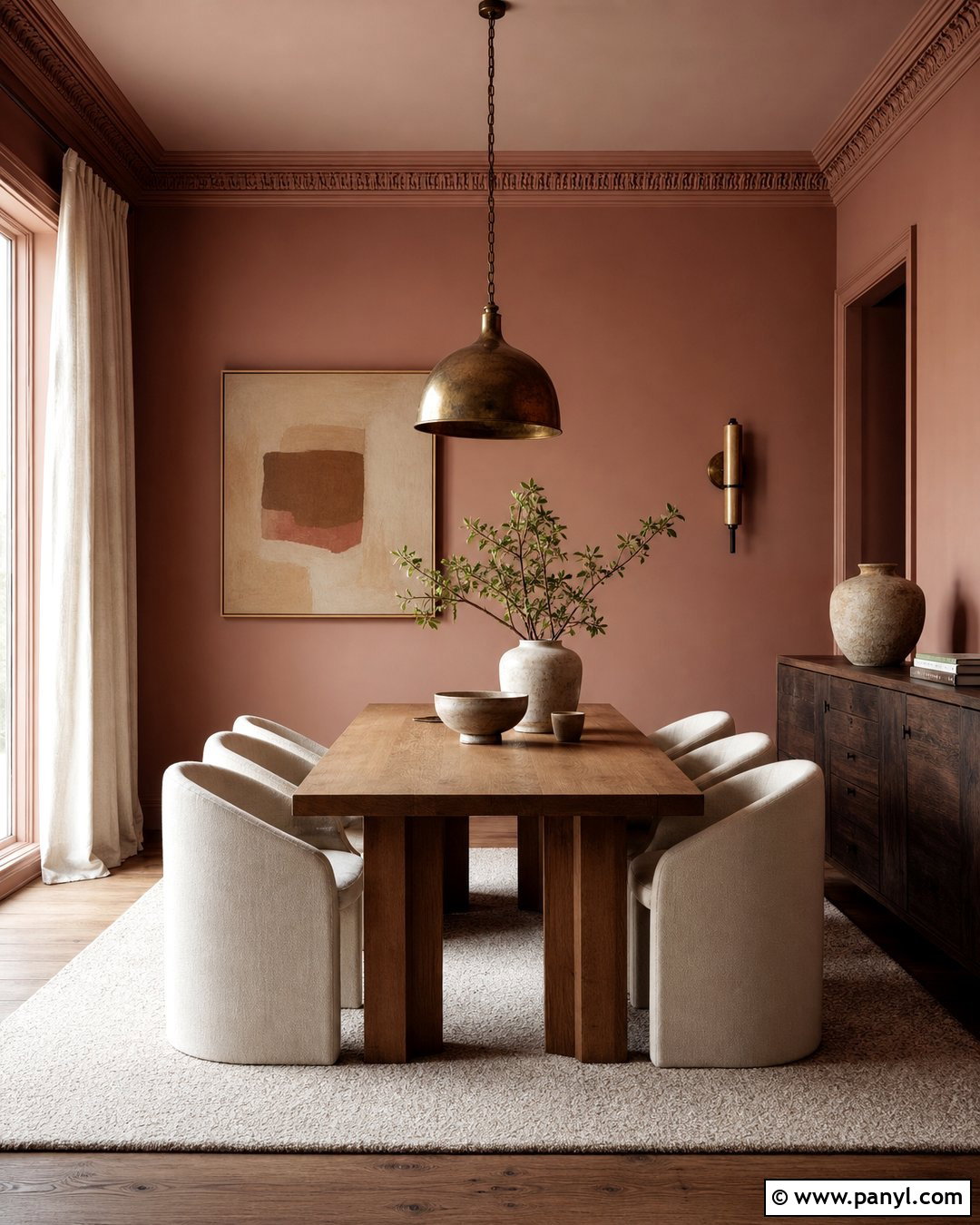
Earthy plaster pink walls give a dining room the welcoming character of sun-warmed clay. Select a chalky shade with brown undertones and combine it with a solid oak dining table. Curved dining chairs in cream upholstery soften the straight lines of the table, while an aged brass pendant adds understated elegance overhead. A dark wood sideboard creates useful visual weight along one wall. Decorate it with stoneware vessels, a table lamp, and a large abstract canvas containing rust, ivory, and muted green. Natural linen curtains and a flat-woven wool rug complete the grounded scheme. If the room has decorative molding, paint it the same pink for a seamless finish. This treatment makes the architectural details noticeable without creating sharp or distracting color changes.
4. Pale Pink Kitchen Walls
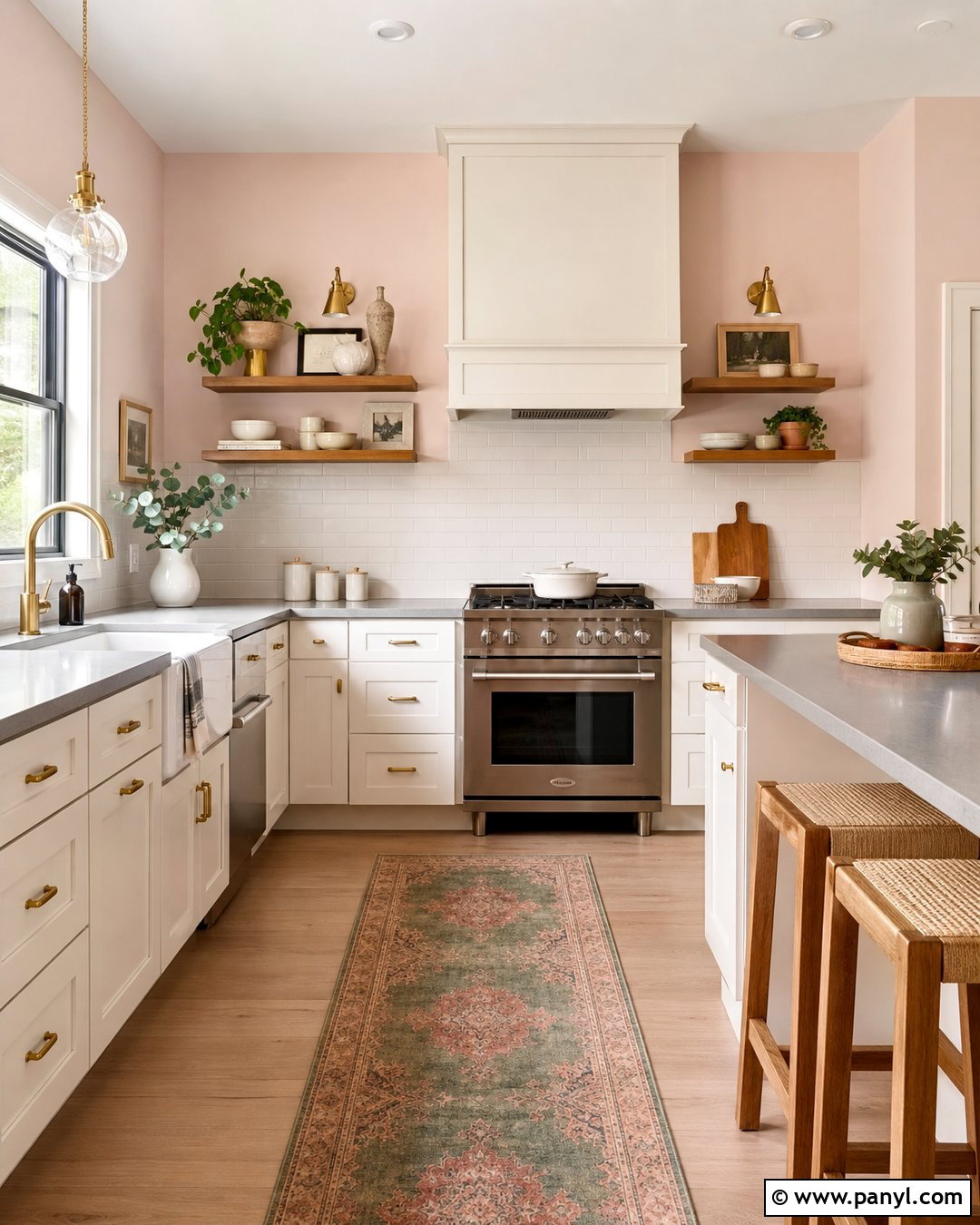
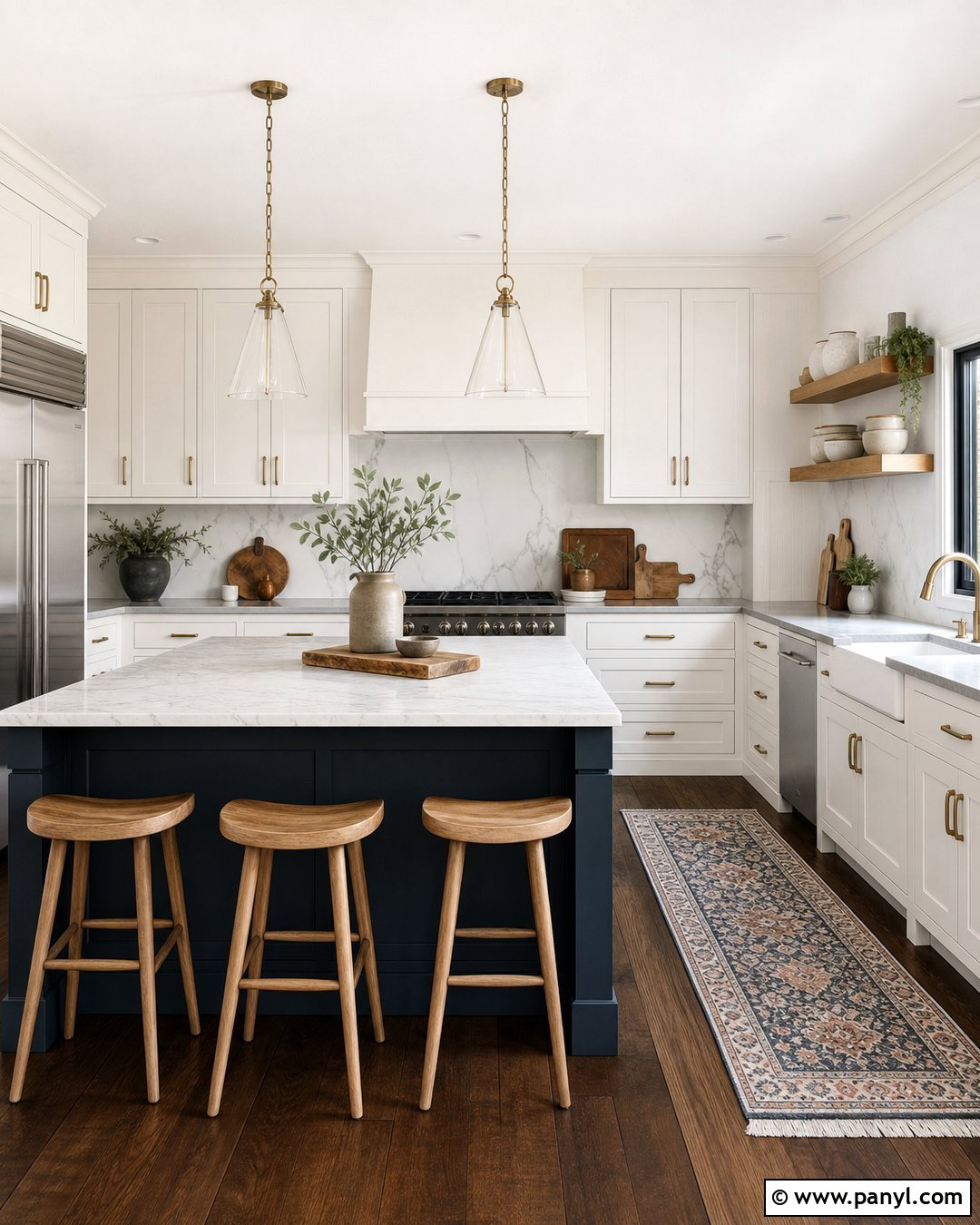
Pale pink walls can warm up a kitchen while still allowing cabinetry and countertops to remain the main features. Pair a barely-there pink with creamy white shaker cabinets, honed light-gray quartz counters, and a simple white tile backsplash. Warm oak stools and open shelving keep the palette from becoming too cool. Use brushed nickel hardware for a clean look or unlacquered brass for traditional character. A small vintage runner containing faded green and rose can connect the work area to the wall color. Keep countertop accessories practical and limited to wood cutting boards, neutral ceramics, and a leafy potted herb. Under bright daylight, the pink should read like a soft neutral rather than candy-colored. Test samples beside every permanent surface before making the final choice.
5. Rose Pink Bathroom Walls
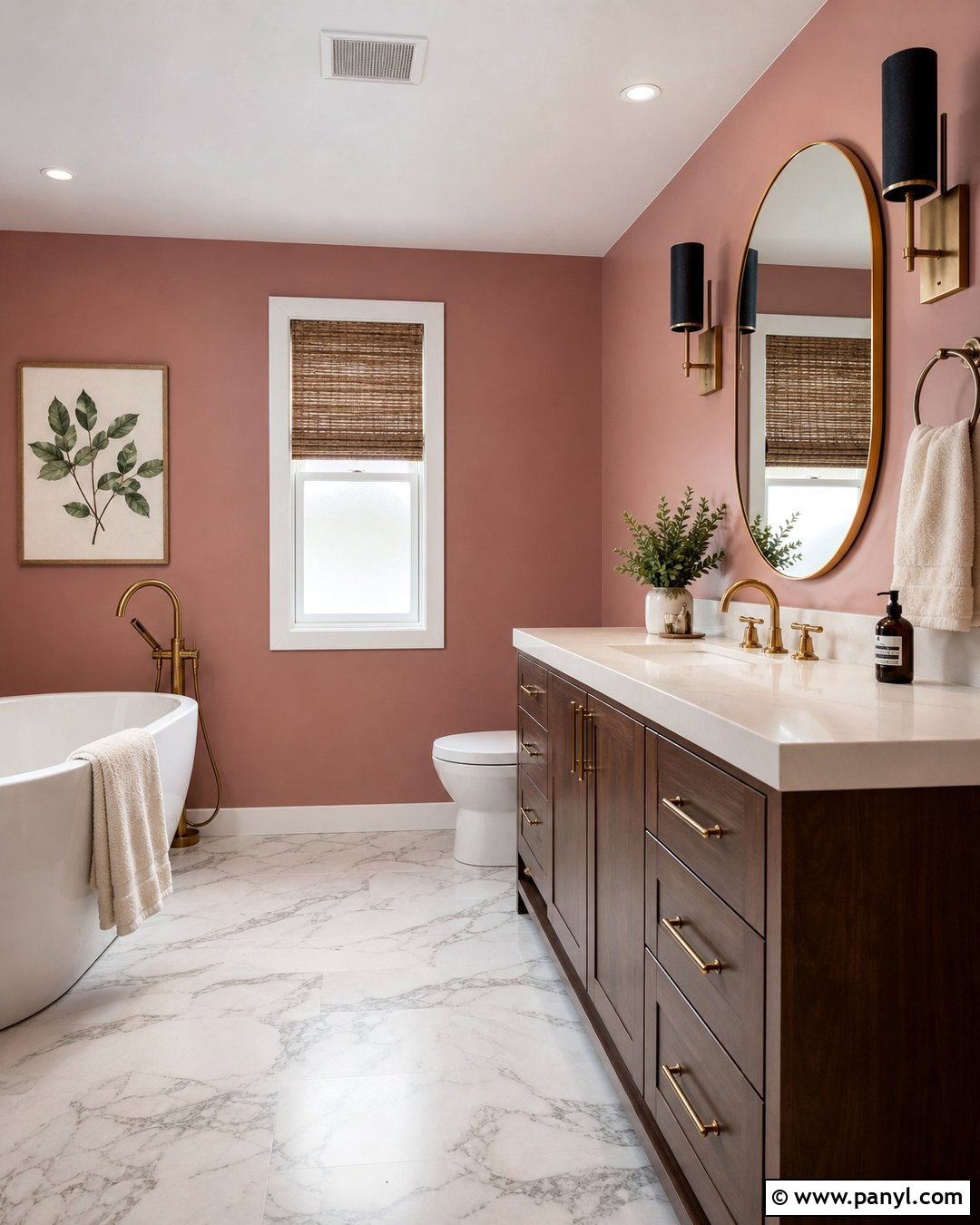
Rose pink bathroom walls look sophisticated when balanced with crisp stone, warm metal, and dark accents. Use a medium muted rose above white marble-look floor tiles or traditional white wainscoting. A walnut vanity adds natural contrast, while a rounded brass mirror and matching faucets introduce a warm glow. Keep the shower curtain, towels, and window treatment in ivory or soft white to give the color breathing room. Matte black sconces can sharpen the scheme and prevent it from feeling overly delicate. For decoration, add one framed botanical print and a small green plant in a stone pot. Choose moisture-resistant bathroom paint with an appropriate washable finish. Repeating the rose shade in only one hand towel or patterned rug will create cohesion without making every surface appear too coordinated.
6. Coral Pink Home Office Walls
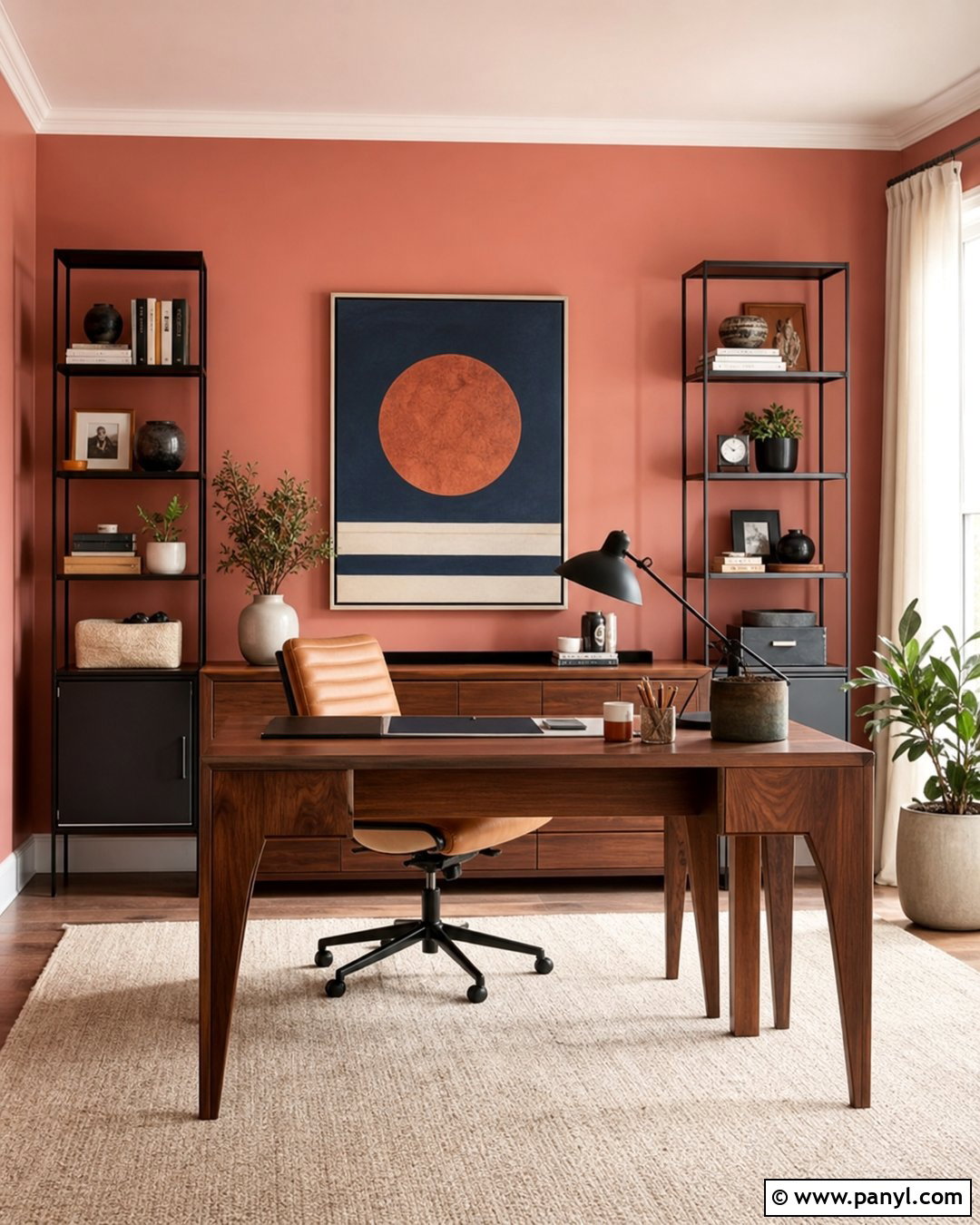
A home office can handle a brighter shade, especially when coral pink walls are balanced with streamlined furniture. Choose a warm coral that has enough orange to feel energetic but remains slightly muted. Position a walnut desk against the main wall and add a supportive chair upholstered in camel-colored fabric. Black metal shelves, picture frames, and a task lamp provide clear contrast. A flat-woven cream rug and off-white curtains lighten the lower and outer edges of the room. Use artwork containing navy, rust, and pink to connect the palette. Closed storage will keep supplies from competing with the strong wall color. If the office is small, paint all four walls for an intentional, enveloping look rather than creating one disconnected accent wall.
7. Mauve Pink Entryway Walls
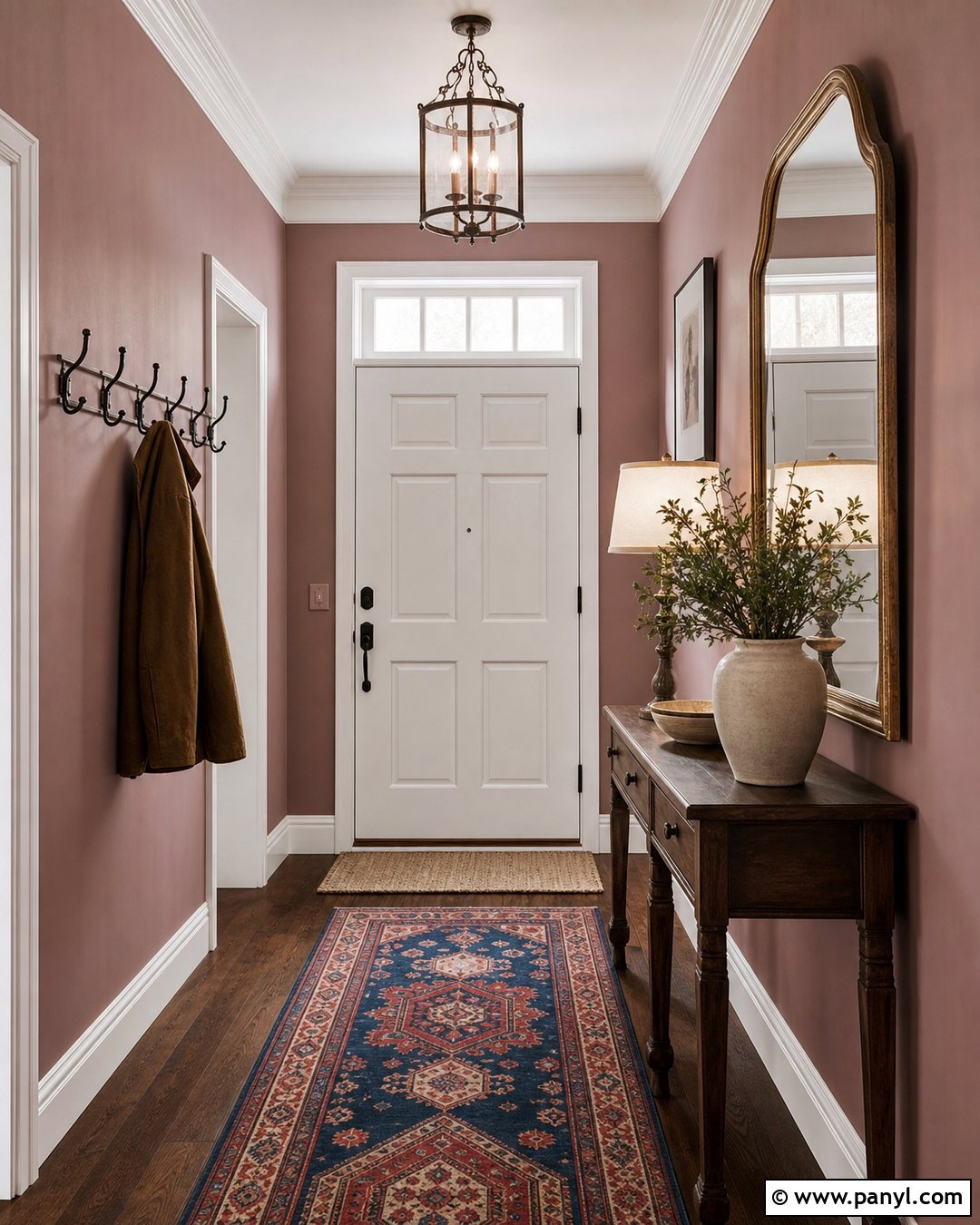
Mauve pink walls can turn a plain entryway into a welcoming transition between rooms. Look for a dusty shade with subtle gray or brown undertones so it works easily with nearby colors. Place a narrow dark wood console against the wall and hang a large antique brass mirror above it. A small shaded lamp provides warm evening light, while a shallow ceramic bowl keeps keys contained. Add a washable runner featuring burgundy, cream, and muted blue to handle traffic and strengthen the palette. Black hooks or a simple coat rack bring practical contrast. Paint the baseboards and door casings in warm white for definition. In a narrow entry, keep furniture shallow and wall decor large but limited. This preserves walking space while making the pink treatment feel deliberate.
8. Bubblegum Pink Laundry Room Walls
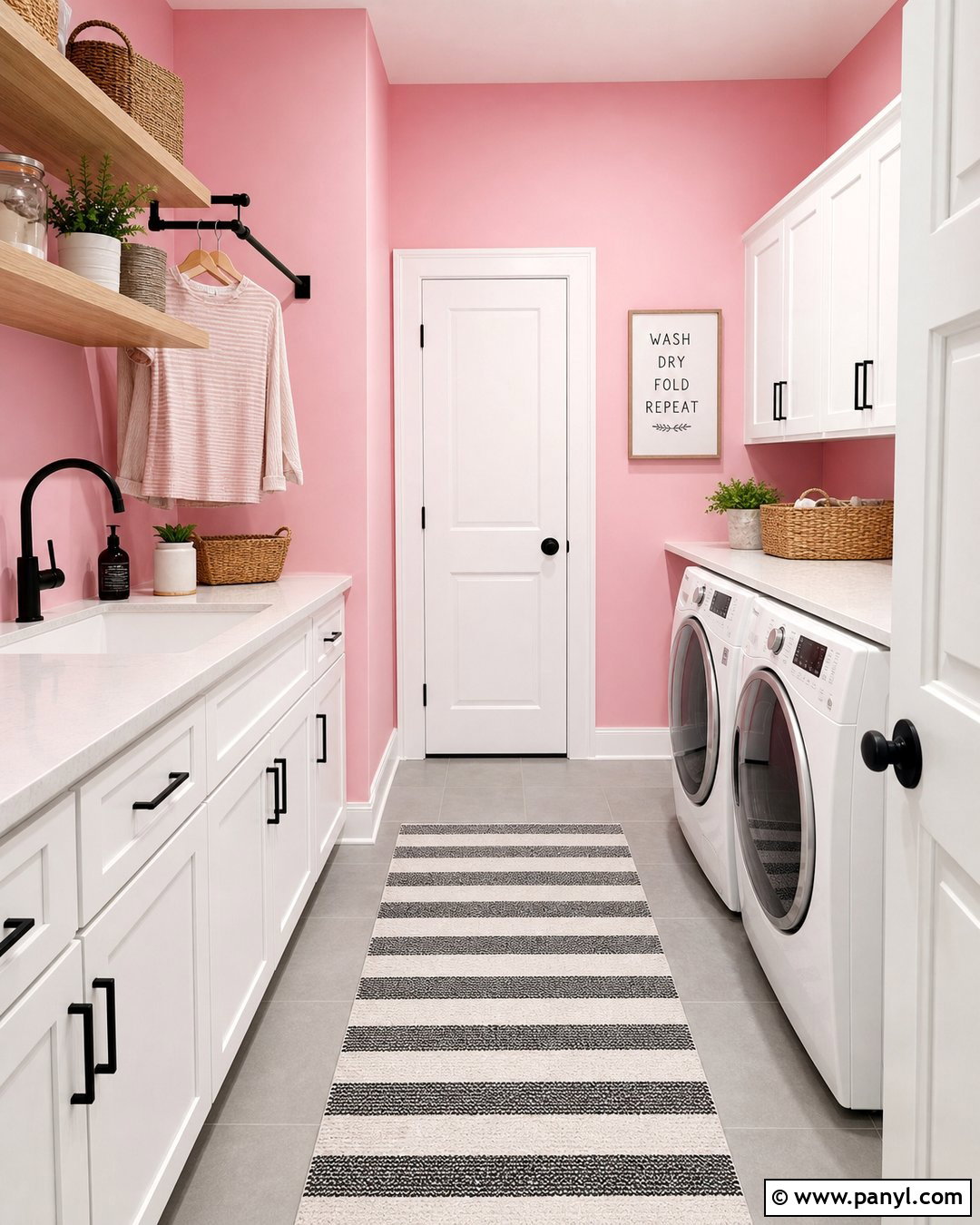
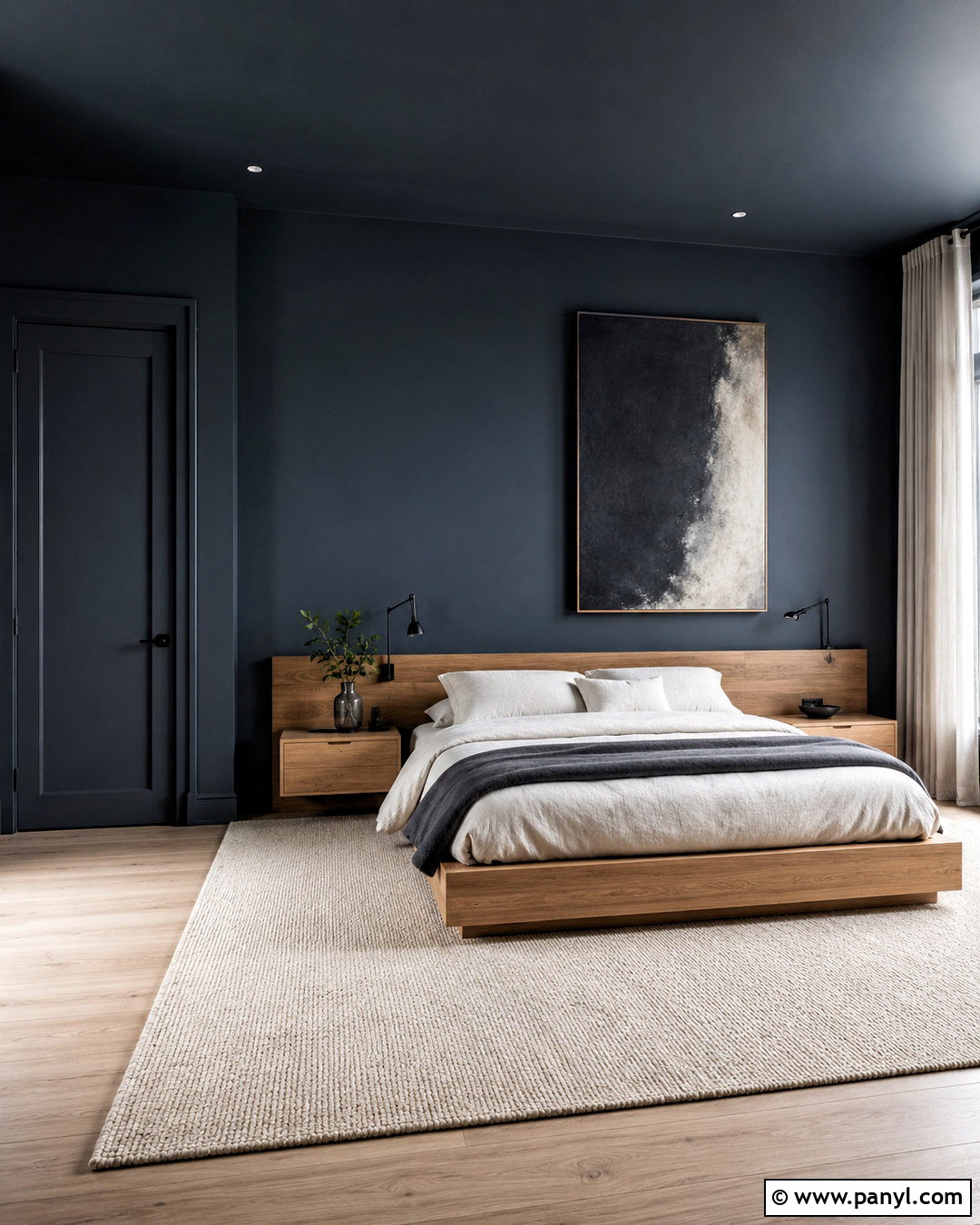
Bubblegum pink walls bring cheerful energy to a laundry room without requiring expensive structural changes. Choose a clean, lively pink and pair it with white appliances, white quartz counters, and simple flat-panel cabinets. Light gray floor tile will ground the stronger color and disguise everyday dust. Install pale wood shelves above the counter for baskets, glass jars, and neatly folded towels. Matte black cabinet pulls and a black hanging rail create crisp contrast. A striped runner in pink, red, and cream can make the room feel finished while remaining easy to replace. Use the same pink behind open shelving so the wall color stays visible. Bright overhead lighting is essential because it keeps the shade fresh and makes sorting, folding, and treating clothing easier.
9. Color-Drenched Pink Living Room
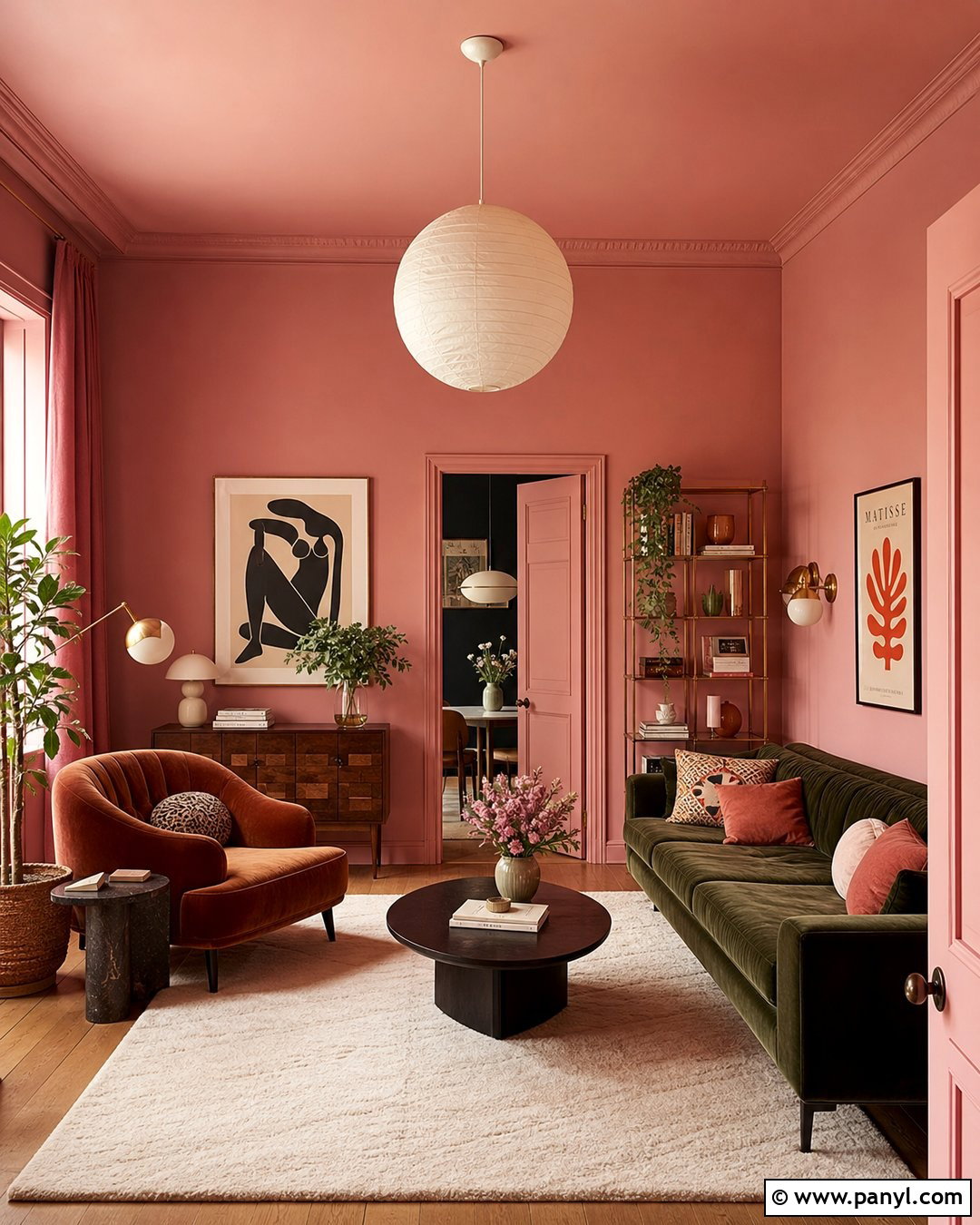
For a more immersive result, carry muted pink across the walls, trim, doors, and ceiling. Choose a dusty rose rather than a sugary pastel so the room feels cozy and architectural. A deep olive velvet sofa provides substantial contrast, while a rust-colored armchair adds another warm layer. Use a large cream wool rug to lighten the floor and a dark wood coffee table to anchor the seating arrangement. Wall-mounted brass lights and an oversized paper lantern will reflect softly against the pink surfaces. Select curtains in the same wall color or one shade darker to preserve the enveloping effect. Keep accessories controlled, using ceramic vessels, books, and graphic artwork. Varying textures will stop the single-color envelope from appearing flat or unfinished.
10. Two-Tone Pink Bedroom Walls
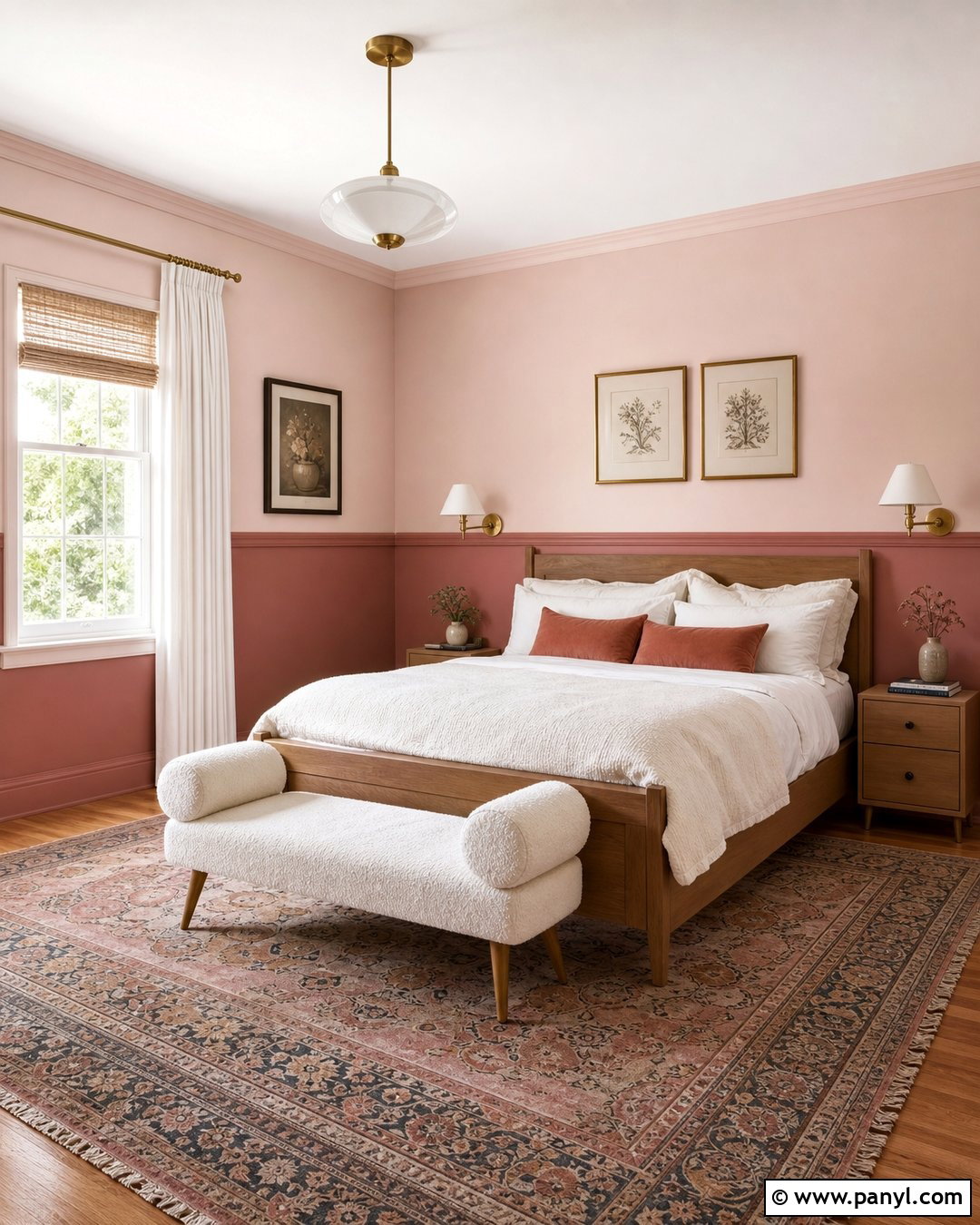
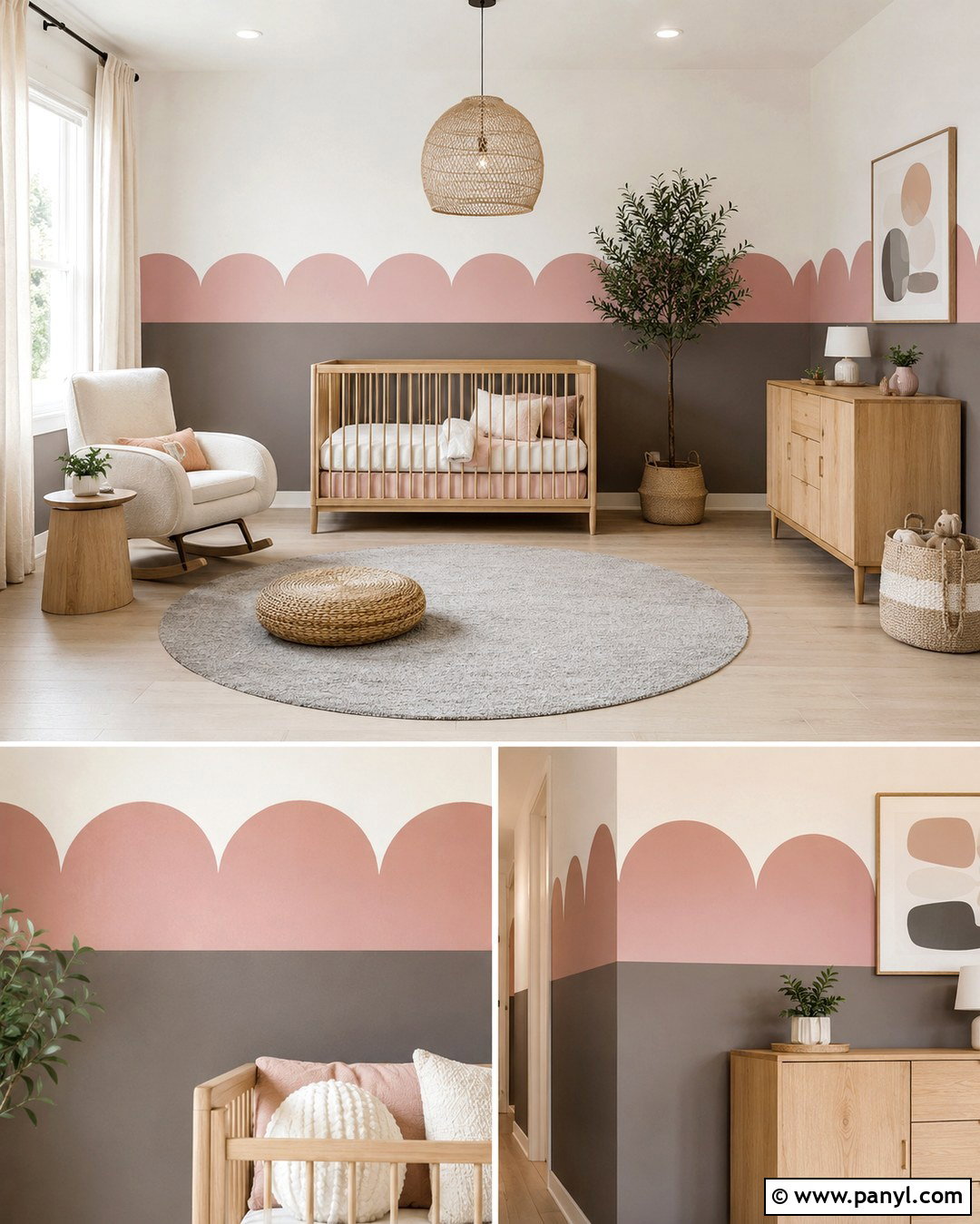
Two-tone pink walls offer a practical way to introduce stronger color without overwhelming a bedroom. Paint the lower half in warm dusty rose and the upper half in a pale shell pink. Separate the shades with a slim chair rail painted in the darker color for a clean transition. Center a simple oak bed against the main wall and use white bedding with terracotta and burgundy accents. Matching wall-mounted lights free space on compact nightstands. Add a cream boucle bench and a vintage rug that repeats both wall colors. Hang artwork entirely within the lighter upper section so it remains easy to see. Keeping the darker shade below eye level gives the room visual grounding, while the paler top reflects light and helps the ceiling feel higher.
11. Pink And Green Living Room Walls
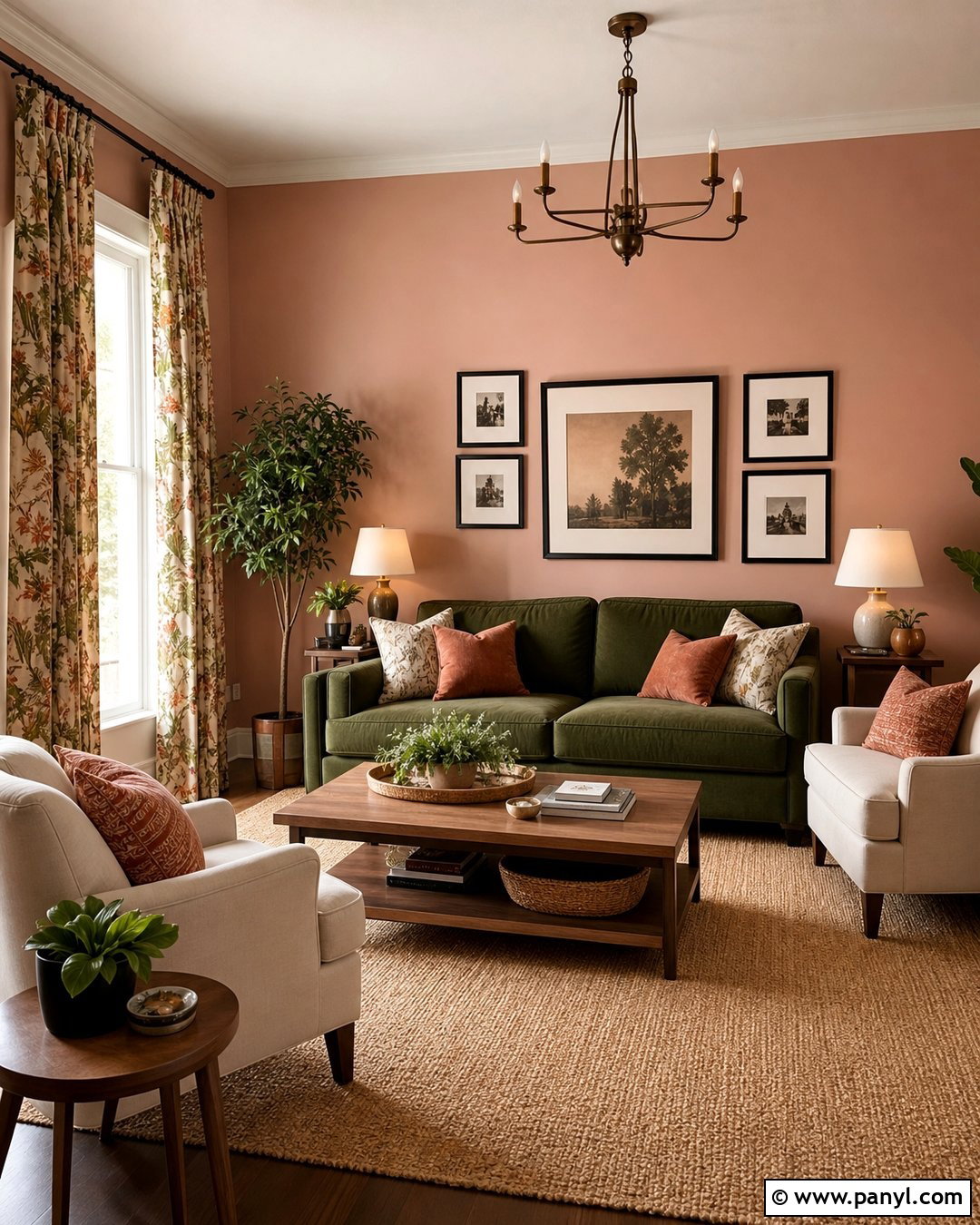
Pink and green form a balanced living room palette because one brings warmth while the other introduces an earthy counterpoint. Cover the walls in pale clay pink and choose a moss green sofa as the room’s central feature. Add cream armchairs, an oak coffee table, and a natural jute or wool rug to create a neutral foundation. Curtains in a small green botanical print can repeat the sofa color without looking identical. Include dark bronze lighting and a few black picture frames for definition. Plants work naturally in this setting, but limit them to two or three substantial specimens rather than filling every surface. Cushions in rust, olive, and pink connect the main colors. The finished room feels colorful, livable, and connected to nature.
12. Pink And Navy Dining Room Walls
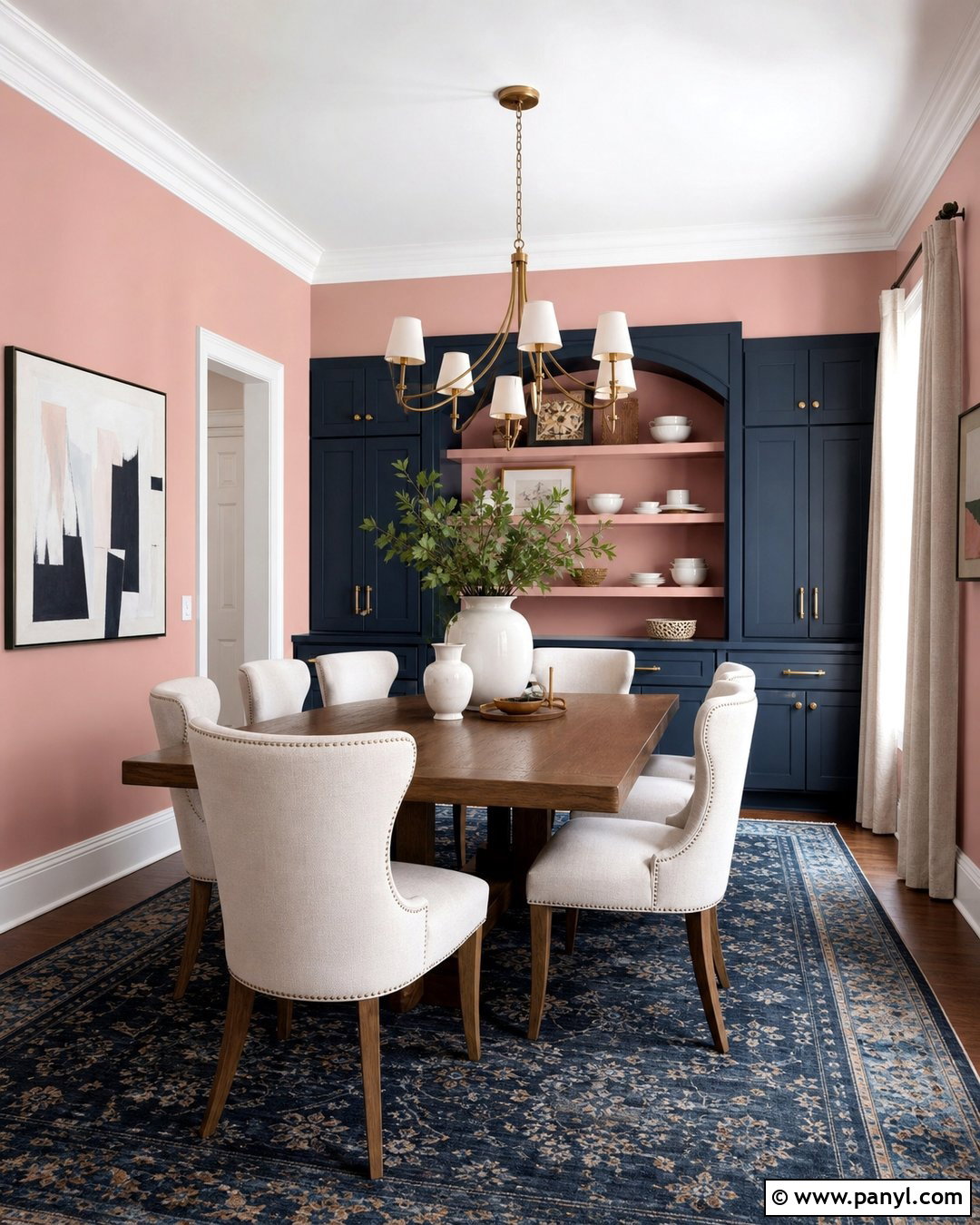
Soft pink walls can lighten the serious character of navy furniture in a formal dining room. Select a warm blush for the walls, then anchor the space with navy-painted built-ins or a navy sideboard. A medium-tone wood dining table prevents the room from feeling too coordinated. Upholstered chairs in cream linen and a navy patterned rug establish a comfortable connection between the contrasting colors. Hang a sculptural brass chandelier above the table to add warmth and focus. White trim will sharpen the edges, while natural linen curtains soften the windows. Display white ceramics and a few blue pieces inside the cabinetry rather than filling every shelf. This complete combination gives pink greater depth and makes navy feel less heavy, producing a refined dining room suitable for everyday meals.
13. Pink And Burgundy Bedroom Walls
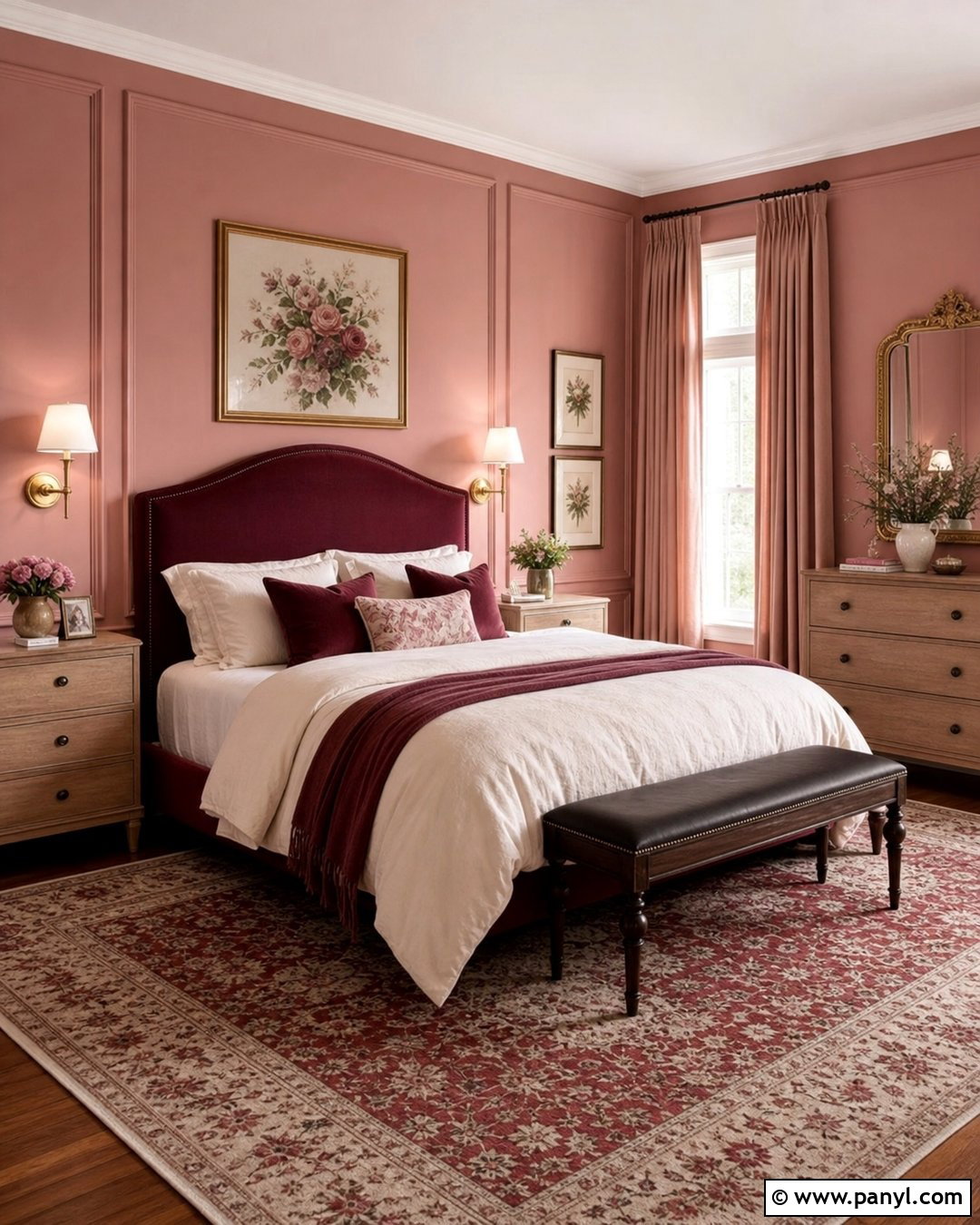
A pink and burgundy bedroom feels rich and restful when both colors have muted undertones. Paint the walls a warm rose pink, then introduce burgundy through an upholstered headboard, velvet pillows, and a patterned area rug. Balance the deeper tones with ivory bedding and light oak nightstands. Brass reading sconces add warmth without taking up tabletop space. Choose curtains in a pink-beige linen close to the wall color so the windows blend into the room. One dark wood bench at the foot of the bed can provide practical storage and visual grounding. Keep artwork simple, perhaps using vintage florals or abstract forms containing cream and deep red. Repeating burgundy in several small areas creates rhythm while ensuring the wall color remains the dominant element.
14. Pink And Terracotta Sunroom Walls
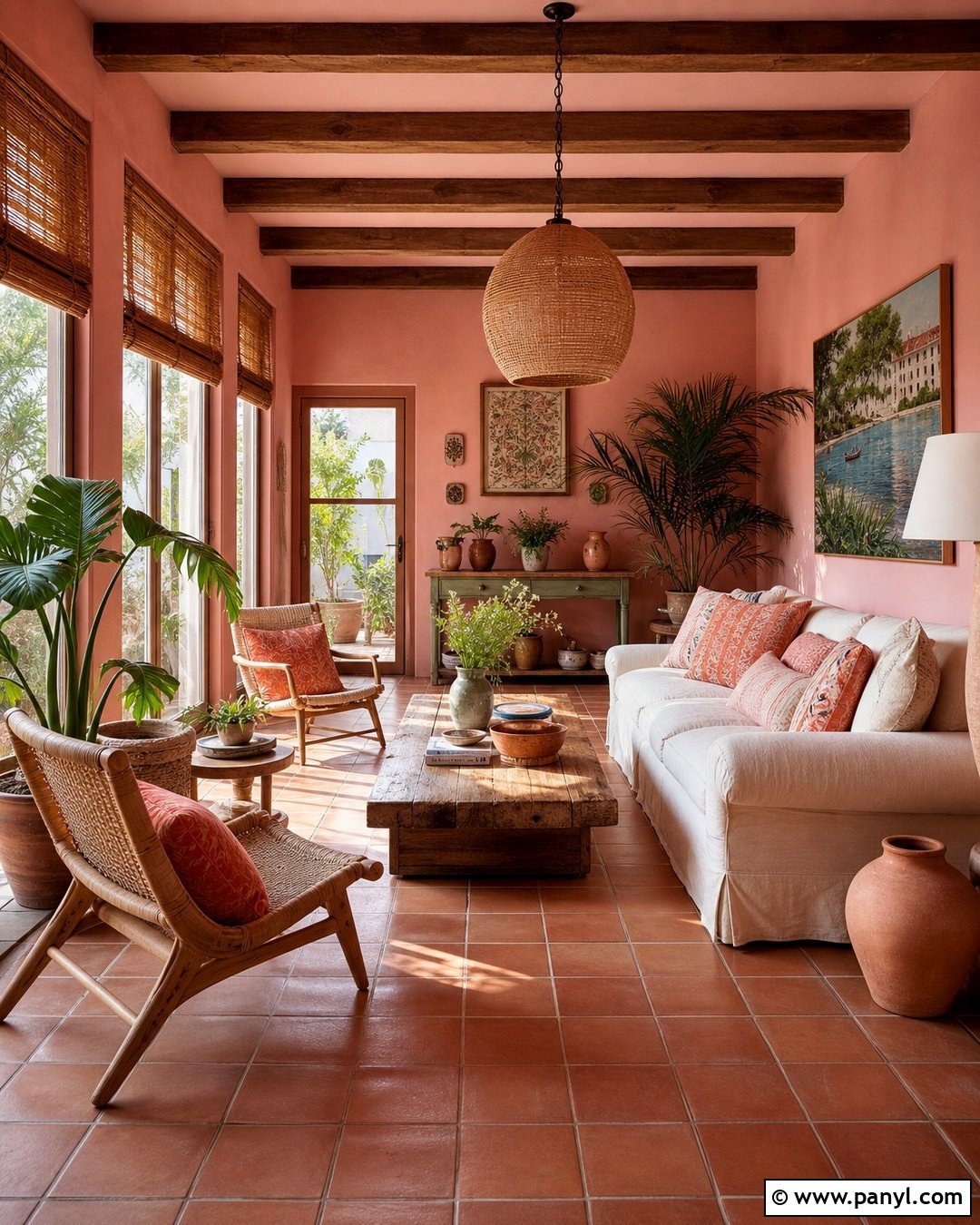
Sunlight brings out the warm undertones in pink, making it an excellent wall color for a casual sunroom. Use pale peachy pink walls with terracotta floor tiles or a rust-colored indoor-outdoor rug. Arrange a cream slipcovered sofa with two woven lounge chairs around a low reclaimed wood table. Add cushions in coral, clay, and faded yellow for a relaxed palette. Bamboo shades filter glare while preserving the natural character of the windows. Large leafy plants in aged terracotta pots visually connect the indoor seating area with the garden beyond. Keep the ceiling bright white to reflect daylight and emphasize the room’s openness. Textured baskets, linen throws, and handcrafted ceramics complete the look without making it feel formal. The result is warm, durable, and easygoing.
15. Pink And Black Powder Room Walls
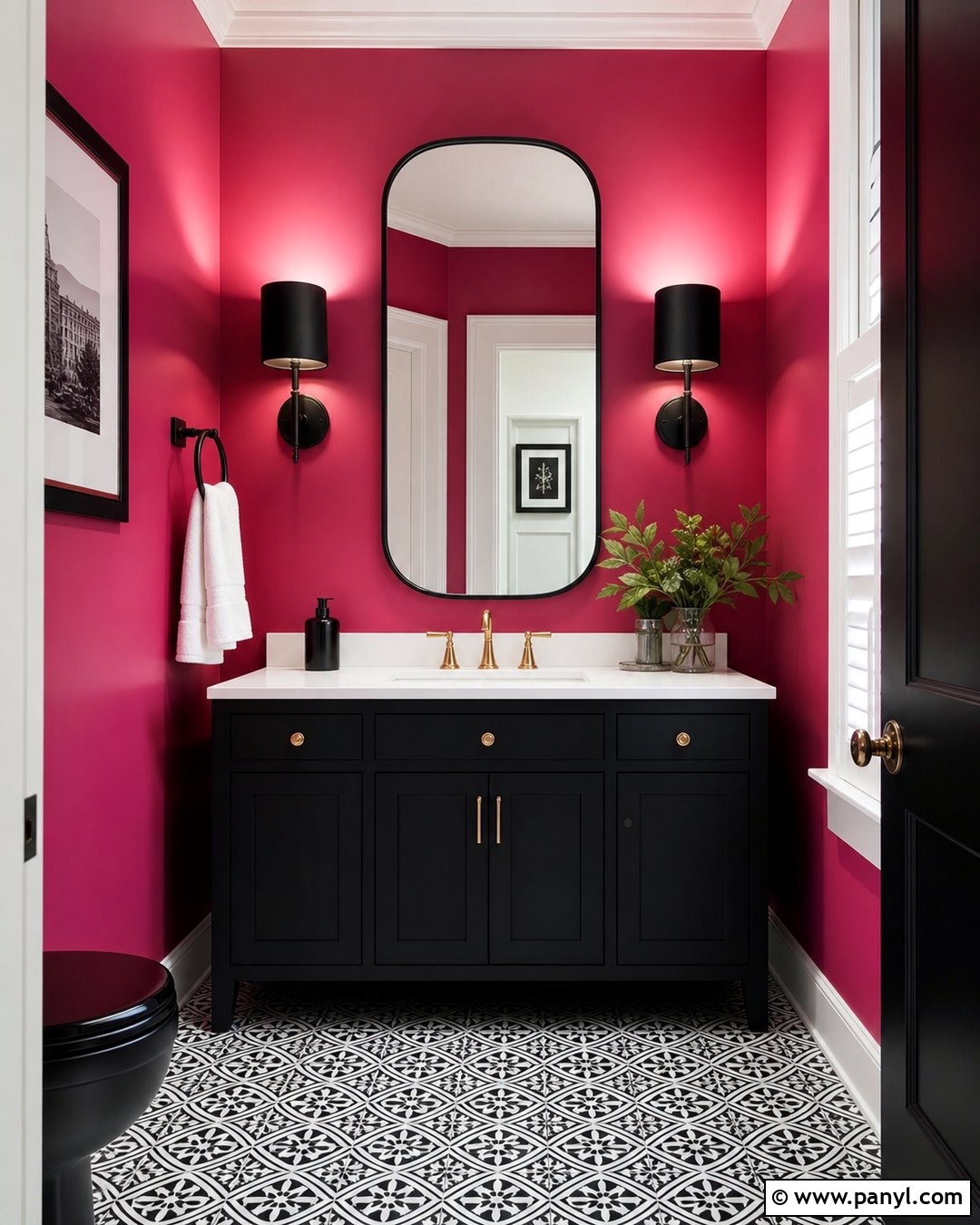
A compact powder room is a good place to combine pink walls with decisive black details. Choose a saturated raspberry or deep rose paint and use it across every wall for a jewel-box effect. Install a black vanity with a white stone top, then add a rounded black-framed mirror and matching wall sconces. Small-scale black-and-white floor tile creates pattern without introducing another major color. Polished brass faucets can warm the contrast and give the room a more layered appearance. Keep towels and accessories white, with one small floral arrangement or leafy plant for freshness. Painting the ceiling pale pink rather than white can soften the transition above. Because guests use the room briefly, the concentrated palette feels memorable and intentional instead of visually overwhelming.
16. Soft Pink Nursery Walls
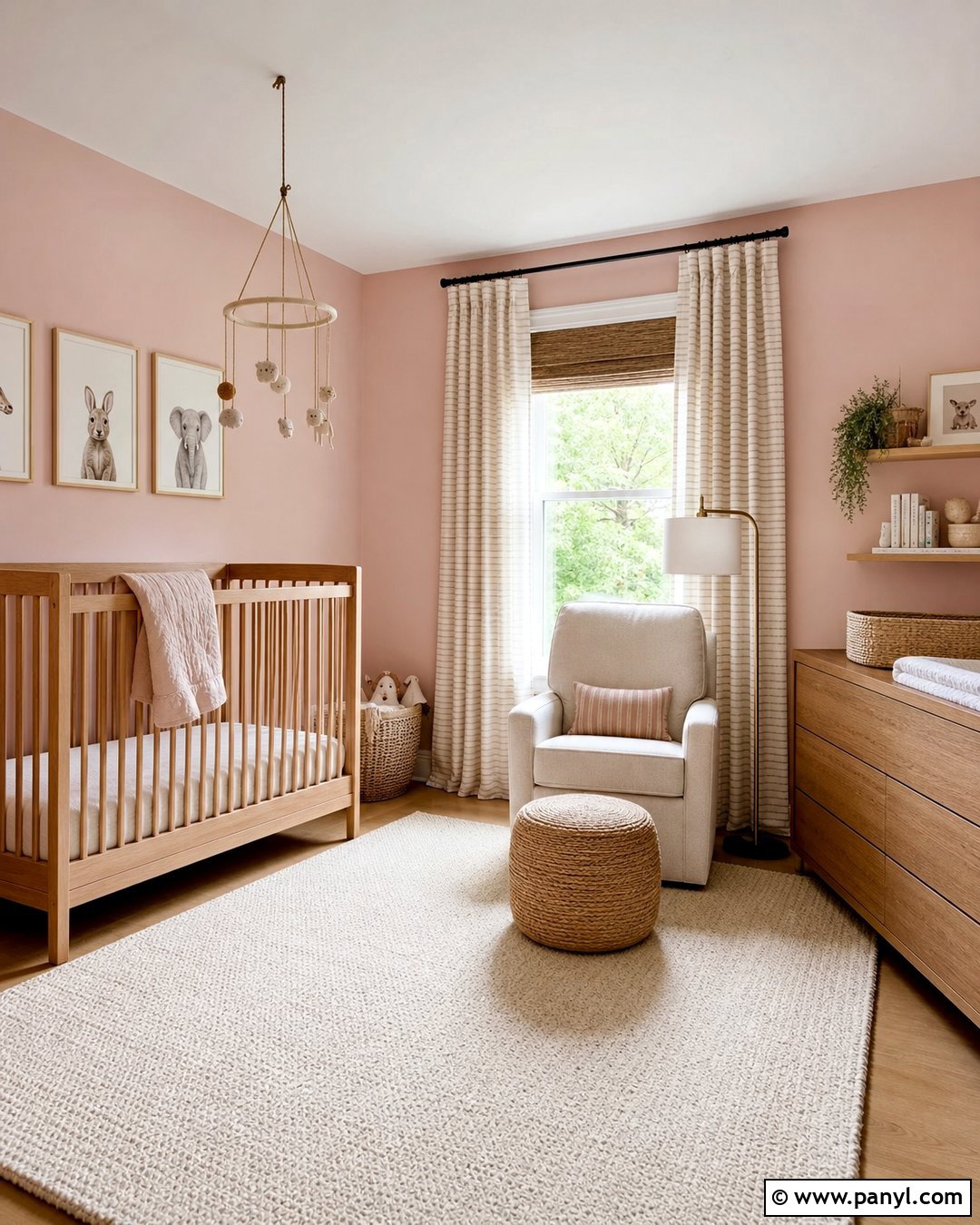
Soft pink nursery walls can create a calm foundation that adapts as the child grows. Choose a muted shell pink and combine it with a natural wood crib, a cream upholstered rocker, and a low oak dresser. An ivory wool rug provides softness underfoot, while blackout curtains in a subtle beige stripe support better light control. Use framed animal illustrations, woven storage baskets, and a simple fabric mobile as gentle decorative details. Avoid filling the room with pink furniture and accessories; let the painted walls establish the color. Sage green, warm white, and light wood will keep the overall look balanced. Secure tall furniture properly and maintain clear walking space between the crib, changing area, and chair. The finished nursery feels peaceful, practical, and age-flexible.
17. Muted Pink Guest Bedroom Walls
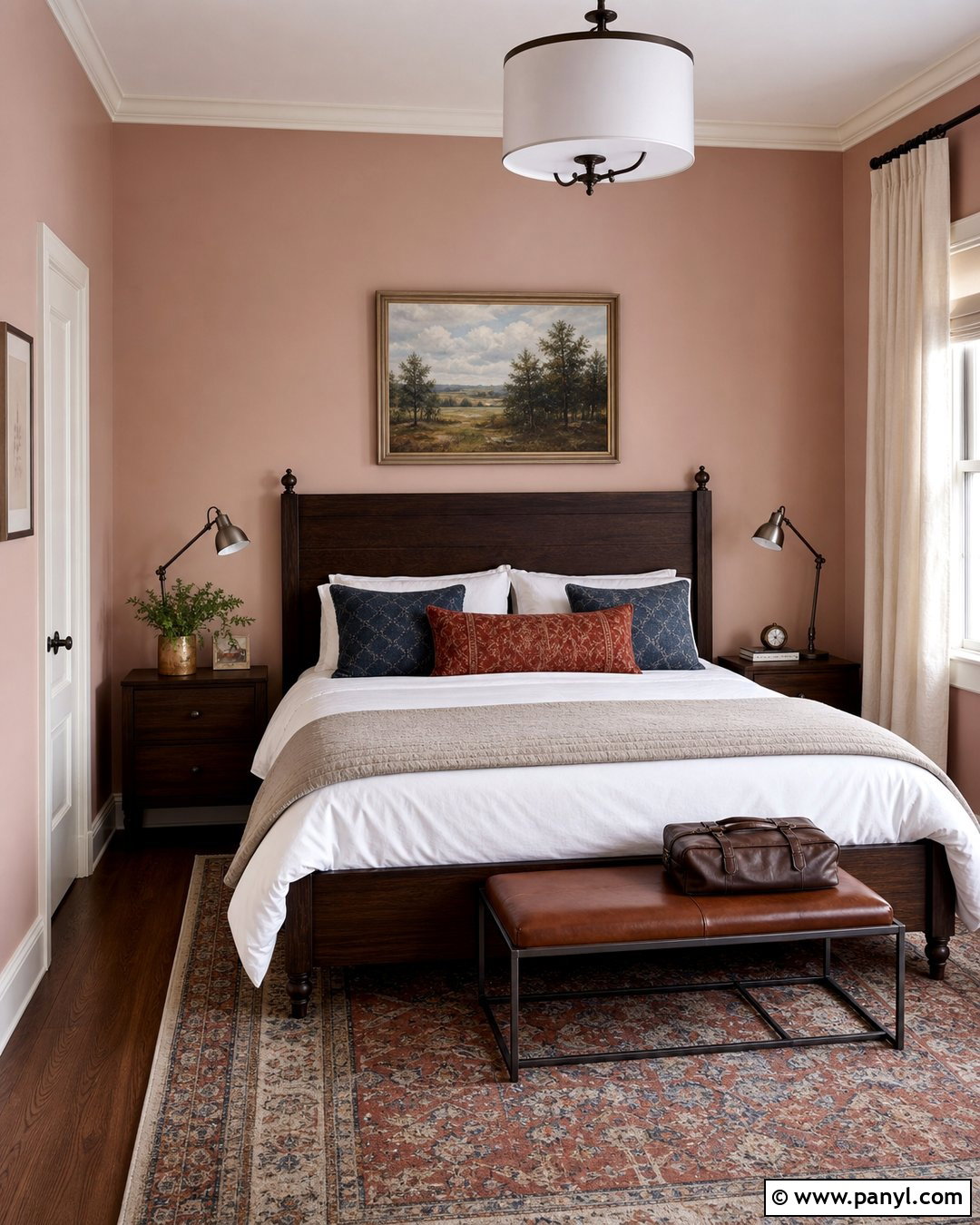
Muted pink walls give a guest bedroom warmth while remaining versatile enough for different visitors. Select a faded rose-beige that changes subtly with daylight. Build the room around a dark wood bed dressed in white cotton sheets, a taupe quilt, and patterned pillows in blue and rust. Place matching compact nightstands on both sides, each with an adjustable reading lamp. A luggage bench at the foot of the bed makes the room more functional. Use full-length cream curtains and a vintage-inspired rug to soften hard surfaces. Keep artwork neutral and broadly appealing, such as landscapes or simple line drawings. A water carafe, spare blanket, and uncluttered dresser complete the arrangement. Pink becomes a welcoming background rather than a theme, giving guests a comfortable and considered place to stay.
18. Pink Mudroom Walls
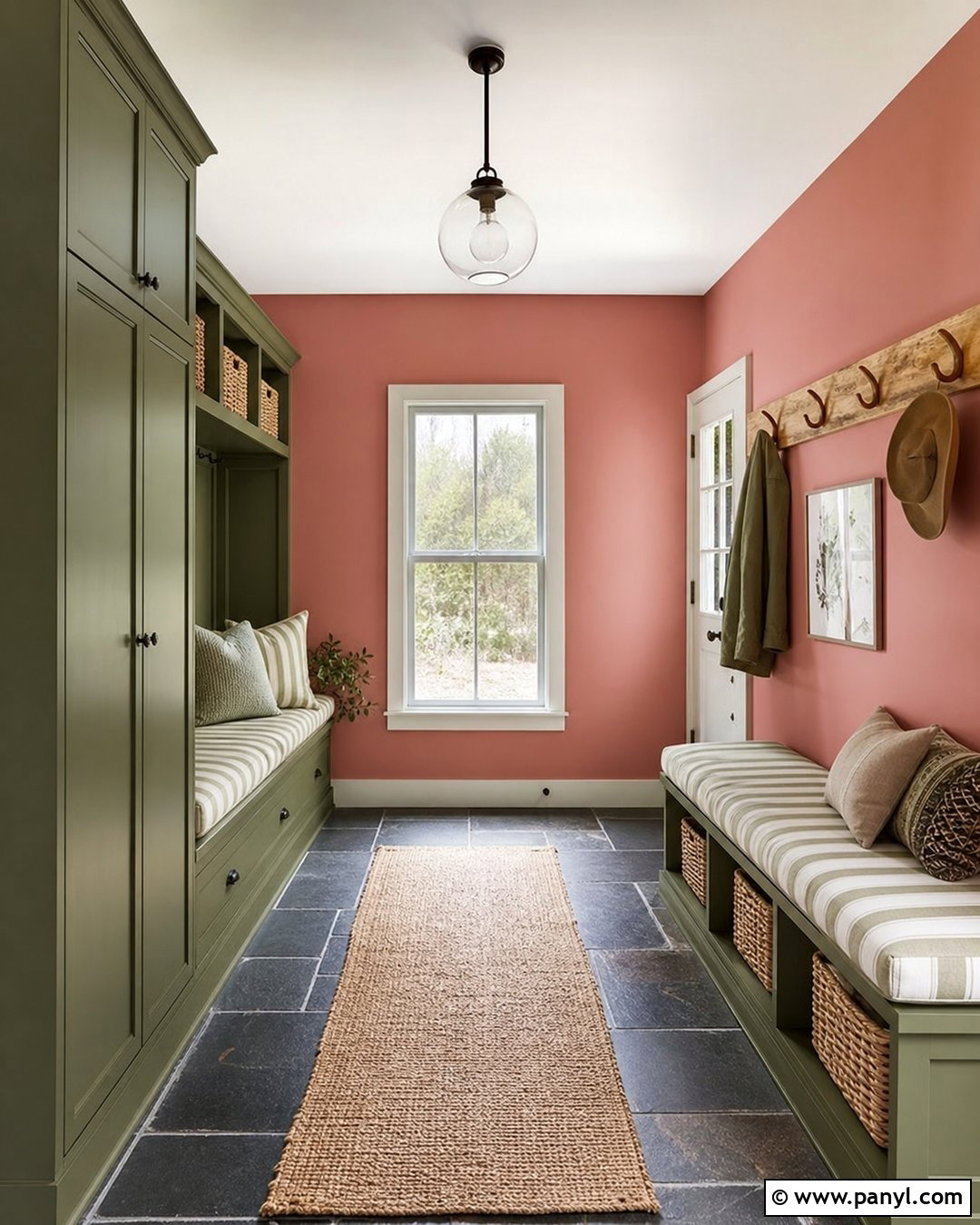
Pink walls can soften the hardworking surfaces of a practical mudroom. Use an earthy salmon pink above durable olive green cabinetry and bench seating. Add natural oak hooks, cubbies, and a shelf to provide organized storage for bags, jackets, and seasonal accessories. A dark slate-look tile floor will handle dirt while grounding the warmer colors. Include striped bench cushions in cream and green, along with labeled woven baskets tucked into the upper compartments. Paint the trim the same pink as the walls for a simple, connected finish. Bright white ceiling paint and a clear glass pendant will keep the narrow room from feeling enclosed. By combining washable paint, closed cabinets, open storage, and a comfortable place to sit, the design remains attractive while supporting everyday household routines.
19. Pink Reading Nook Walls
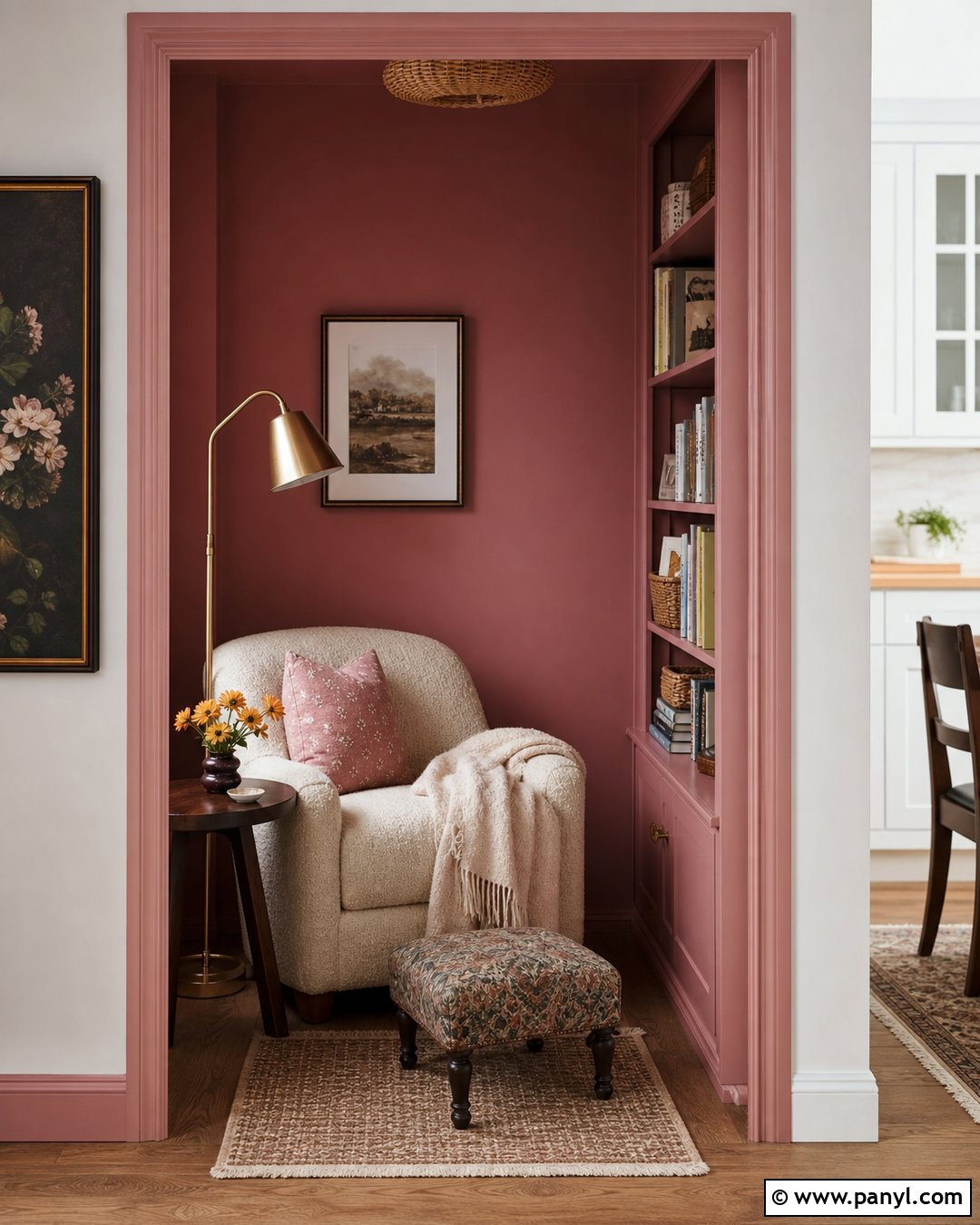
A pink reading nook can make an unused corner feel like a complete destination. Paint the recessed walls in a deep dusty rose to create separation from the surrounding room. Place a wide cream boucle chair beside a small dark wood table and an adjustable brass floor lamp. Add a narrow bookcase painted the same pink so it visually recedes while the books provide color and texture. A patterned footstool and soft wool throw increase comfort without crowding the area. Use one framed print above the chair and a small rug beneath the arrangement to define its boundaries. If the nook has a window, select a simple woven shade that filters glare. Every piece should support reading, allowing the strong wall color to add intimacy rather than serving as decoration alone.
20. Pink Gallery Wall Living Room
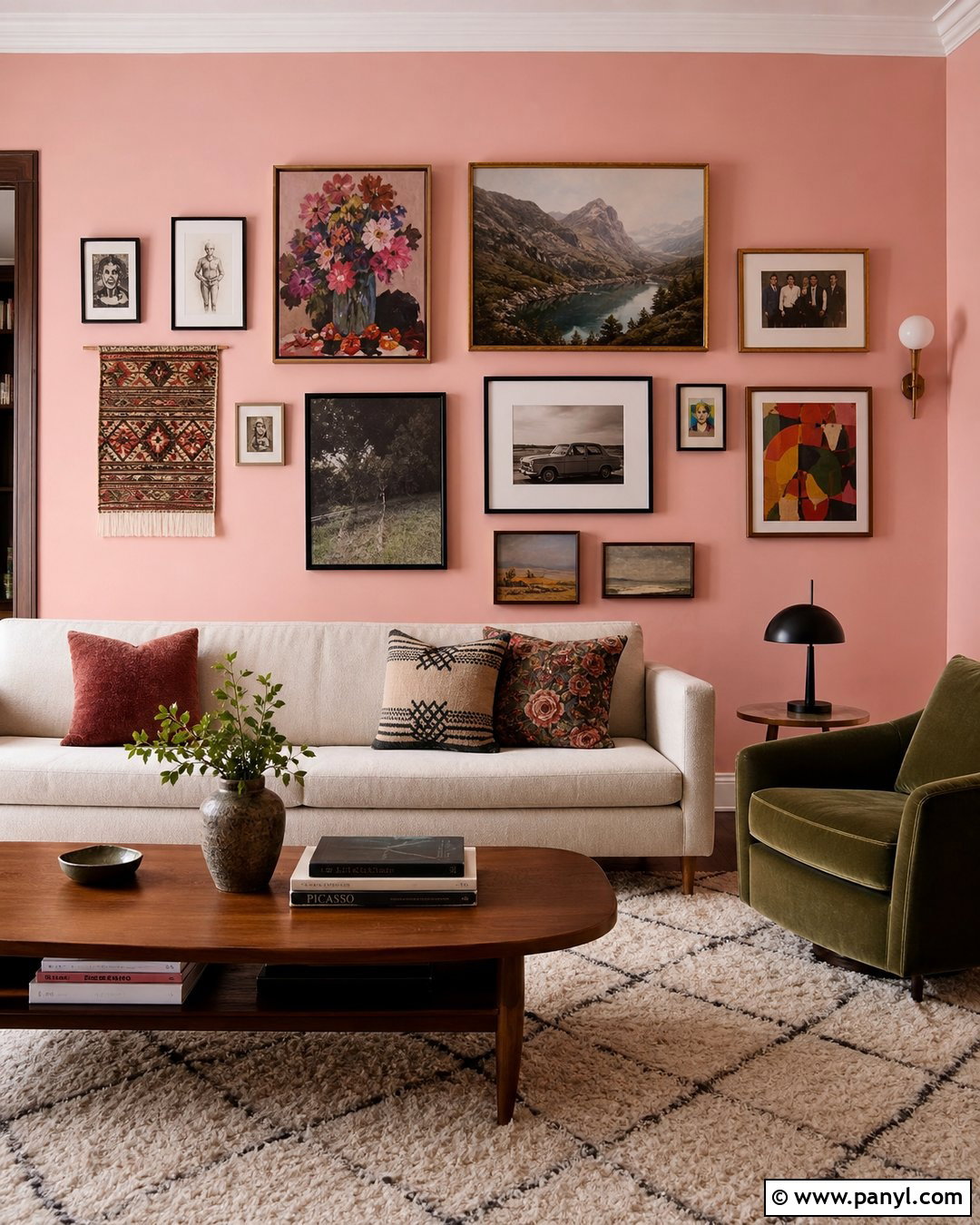
Pale pink painted walls provide a flattering background for a collected gallery wall. Start with a warm, subdued pink, then arrange art in mixed sizes above a neutral sofa. Combine black, oak, and antique brass frames, but repeat each finish several times so the display feels connected. Choose artwork containing landscapes, abstracts, photographs, and small textiles in green, blue, rust, and cream. Place the largest piece slightly off-center and build outward with consistent spacing. A walnut coffee table, olive accent chair, and cream rug will ground the colorful display. Keep other walls quieter to give the gallery a clear focal role. The pink surface softens the transitions between varied frames and images, helping an eclectic collection appear intentional rather than visually scattered.
21. Pink Paneled Bedroom Walls
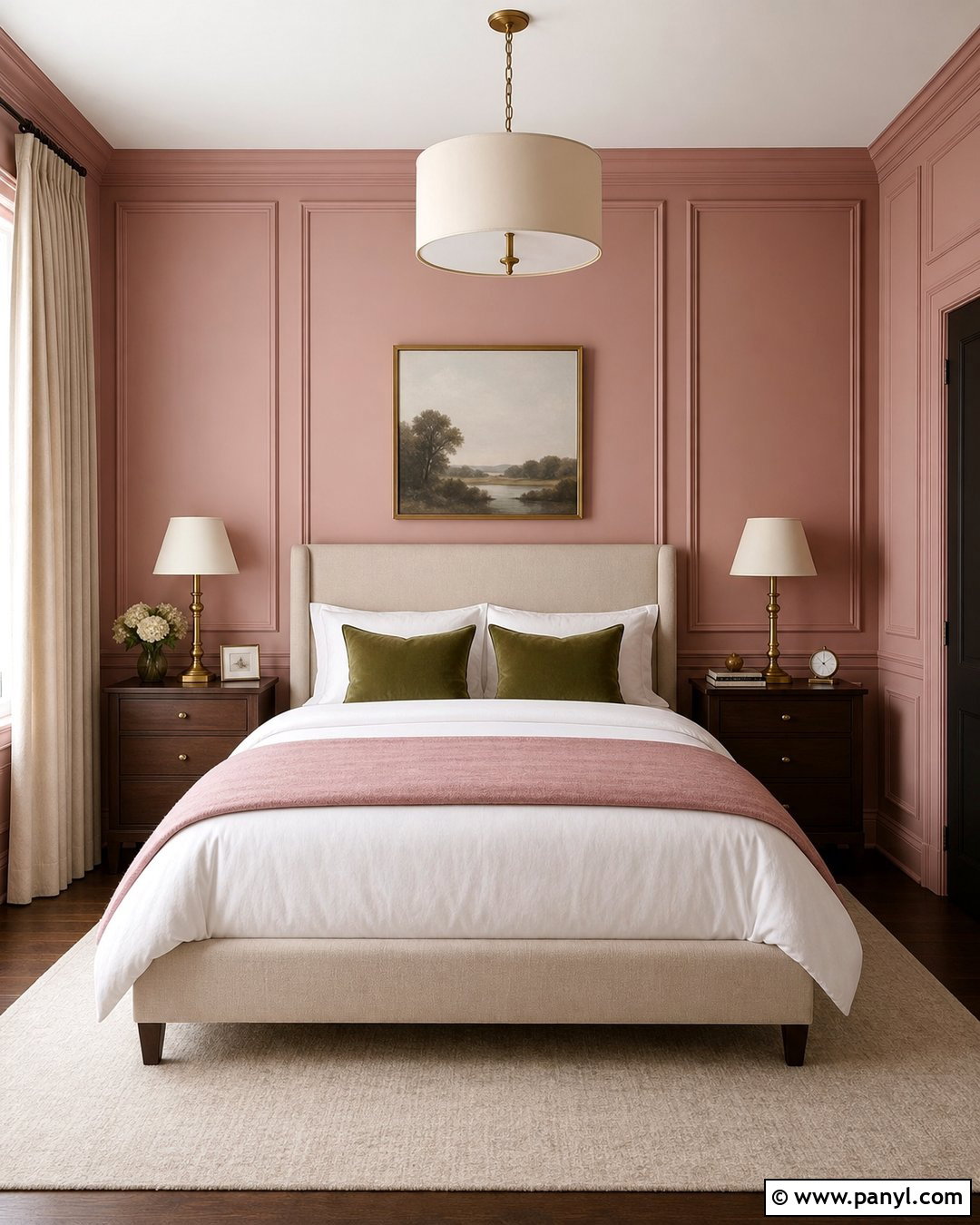
Pink-painted paneling gives a bedroom architectural depth even when the furnishings are simple. Install rectangular wall molding behind the bed, then cover the molding, baseboards, and walls in one muted rose shade. Choose a low upholstered bed in oatmeal linen so its clean shape remains visible against the detailed surface. Add dark wood nightstands and slender brass lamps for contrast. White bedding, a dusty pink coverlet, and olive cushions introduce layers without hiding the paneling. Use a large cream rug to soften the floor and full-length curtains close to the wall color. Keep artwork minimal because the molding already provides visual structure. This approach works especially well in a plain rectangular room, where painted trim can create character without requiring bulky furniture or patterned wallpaper.
22. Pink Limewash Living Room Walls
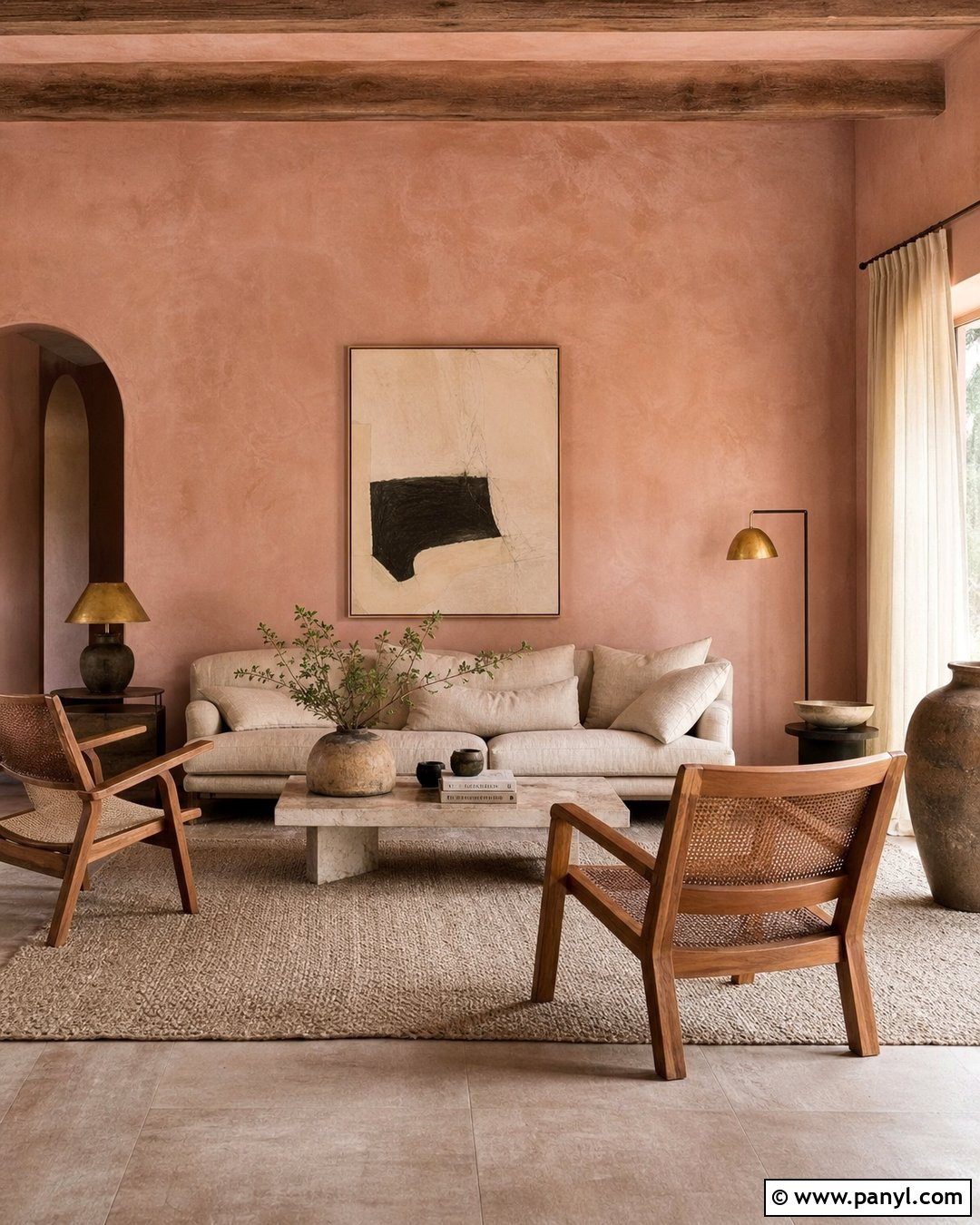
Pink limewash walls bring movement and natural variation to a relaxed living room. Select a mineral finish in pale terracotta pink, allowing visible brush marks and tonal shifts to become part of the design. Pair the textured walls with a low cream linen sofa, sculptural oak chairs, and a substantial stone coffee table. A handwoven neutral rug will soften the floor without competing with the finish. Use off-white curtains, aged brass lamps, and a few oversized ceramic vessels for simple decoration. Avoid a crowded gallery wall because too many small pieces can hide the limewash texture. One large abstract painting or woven hanging is enough. The combination of matte walls, natural wood, stone, and linen creates a warm room that feels layered even with relatively few furnishings.
23. Pink Walls And Ceiling
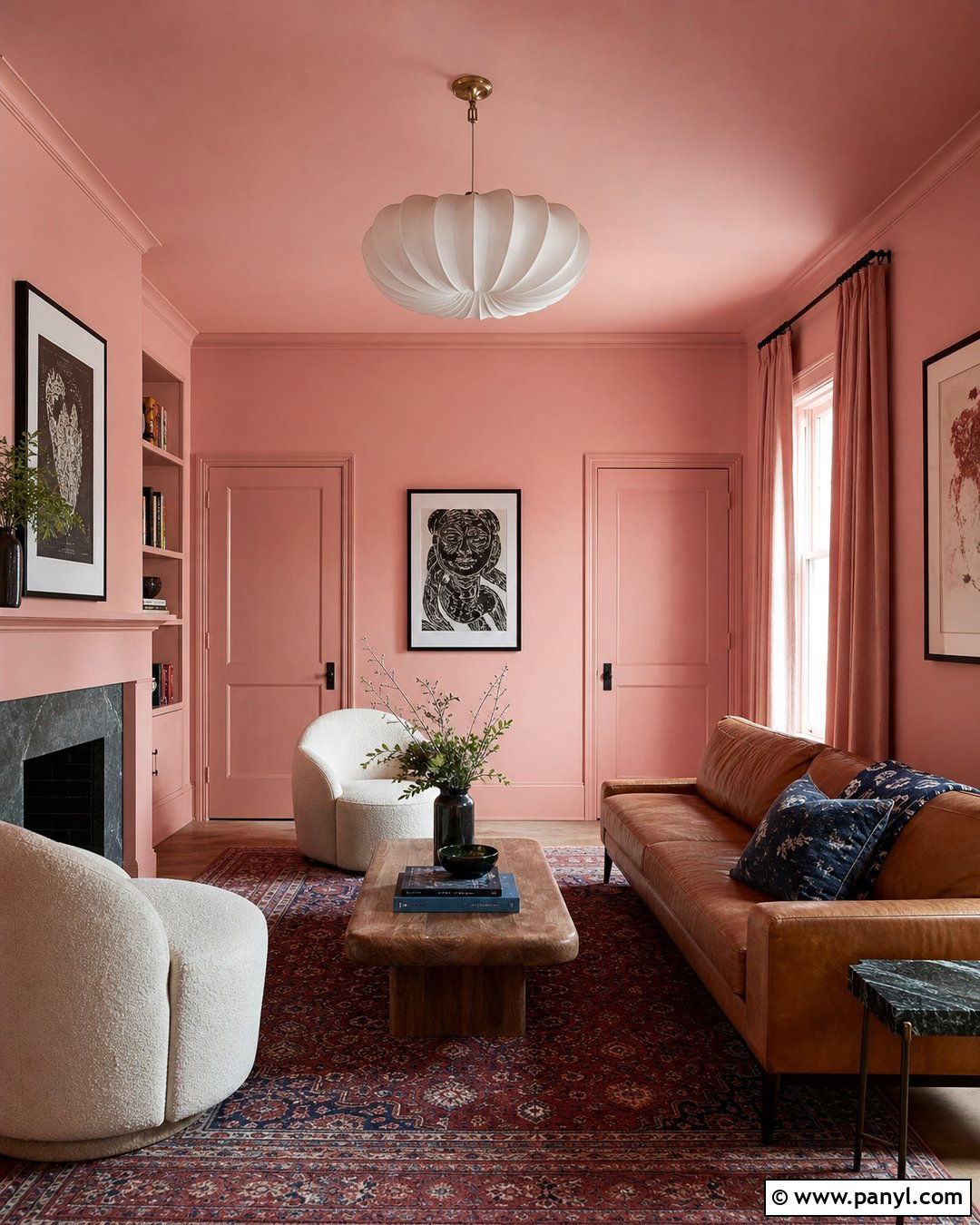
Painting both the walls and ceiling pink creates a cohesive room with fewer visual breaks. Choose a soft peachy blush that remains light enough to reflect daylight, then use the same shade across trim and doors. Ground the room with a caramel leather sofa, cream lounge chairs, and a medium-tone oak coffee table. A large patterned rug containing blue, burgundy, and pink adds contrast below eye level. Hang a white sculptural pendant so it stands out against the colored ceiling. Curtains in a slightly deeper pink can strengthen the enveloping effect without introducing a new hue. Use dark framed artwork and small black accessories to give the pale palette definition. This complete treatment works best when furniture includes strong shapes and varied textures to prevent the room from appearing washed out.
24. Pink Arch Accent Wall
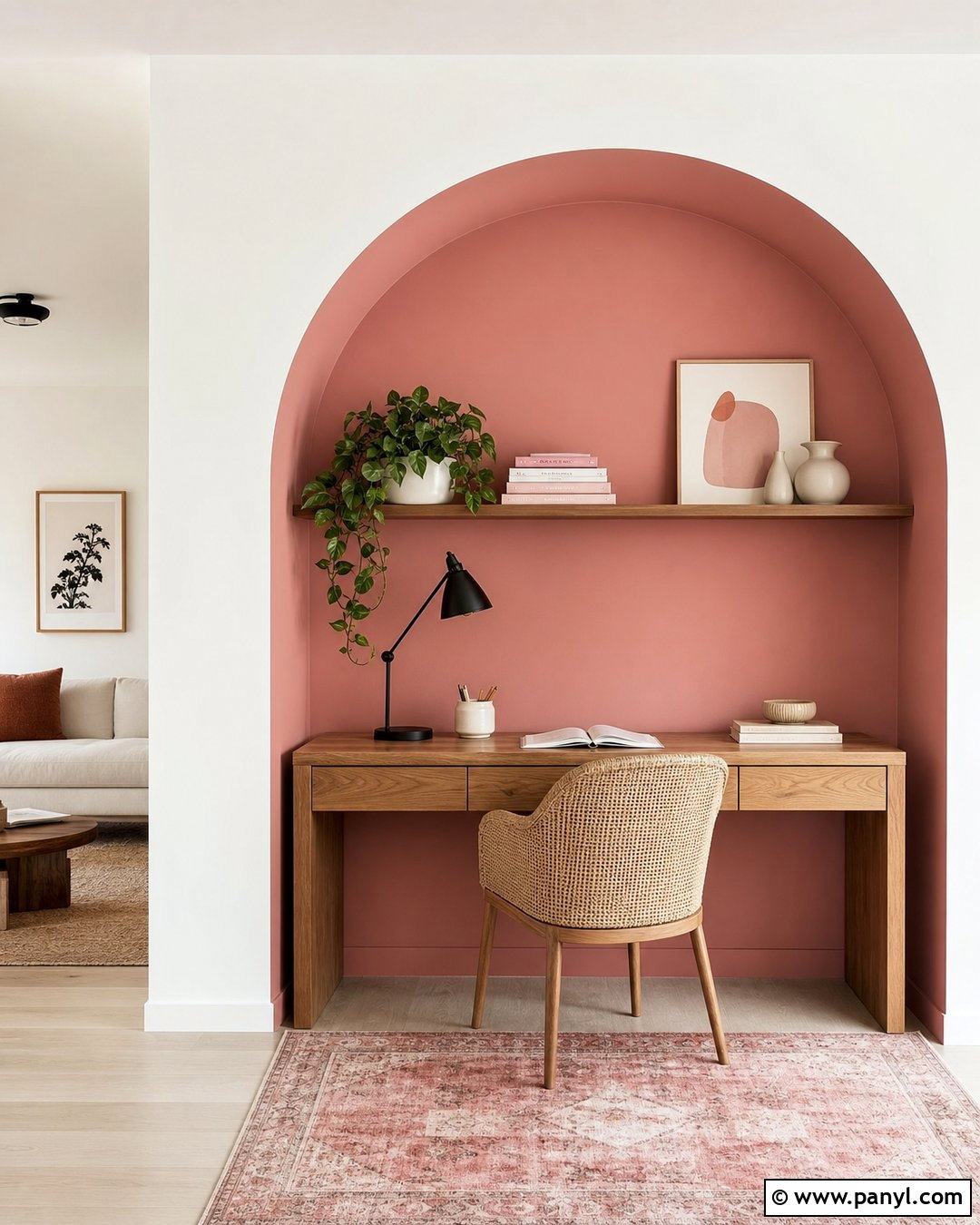
A painted pink arch can define one useful area without covering the entire room. Create a wide dusty rose arch behind a compact console desk or reading bench, ensuring the shape comfortably frames the furniture. Keep the surrounding walls warm white for clear but gentle contrast. Pair the feature with an oak desk, a woven chair, and a slim black task lamp. One floating shelf inside the arch can hold books, a ceramic vase, and a trailing plant. Repeat the pink in a nearby rug or cushion so the shape connects with the larger room. Measure and mark the curve carefully before painting, and keep its edges crisp. The finished feature should feel integrated into the layout, providing both color and a clear visual purpose for an overlooked wall.
25. Geometric Pink Painted Wall
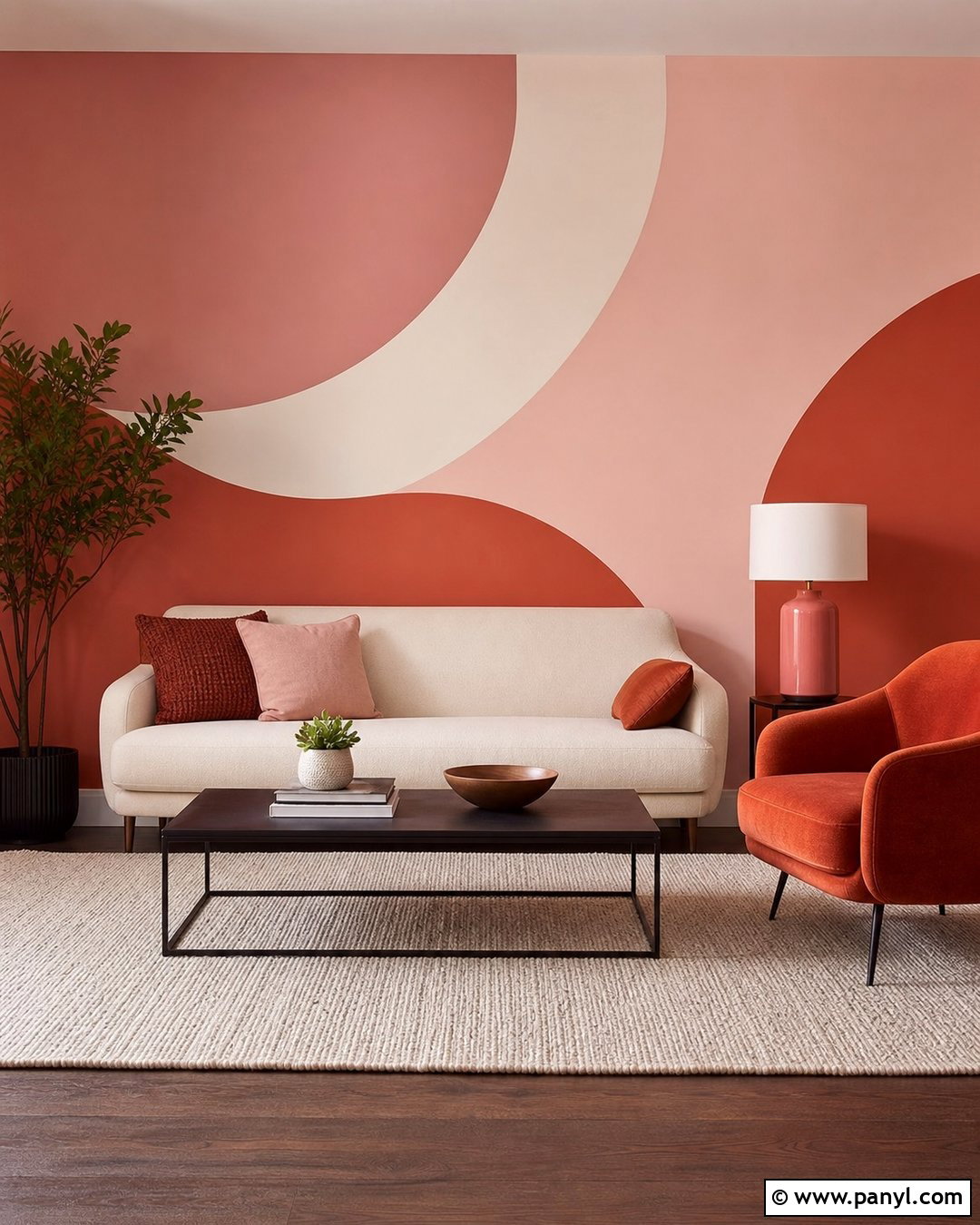
A geometric pink wall can create a bold focal point when the pattern uses a limited, coordinated palette. Paint broad overlapping shapes in blush, coral, terracotta, and warm white behind a simple cream sofa. Keep the design large in scale so it reads as an intentional mural rather than a collection of small fragments. Add a black metal coffee table, a rust armchair, and a neutral flat-weave rug. Solid cushions are preferable because additional busy patterns could compete with the wall. Use minimal artwork or skip it entirely, allowing the painted design to serve as the main decoration. Repeat one coral tone in a lamp or side table for cohesion. Surrounding walls should remain pale pink or warm white to balance the stronger graphic treatment.
26. Pink Fireplace Living Room Walls
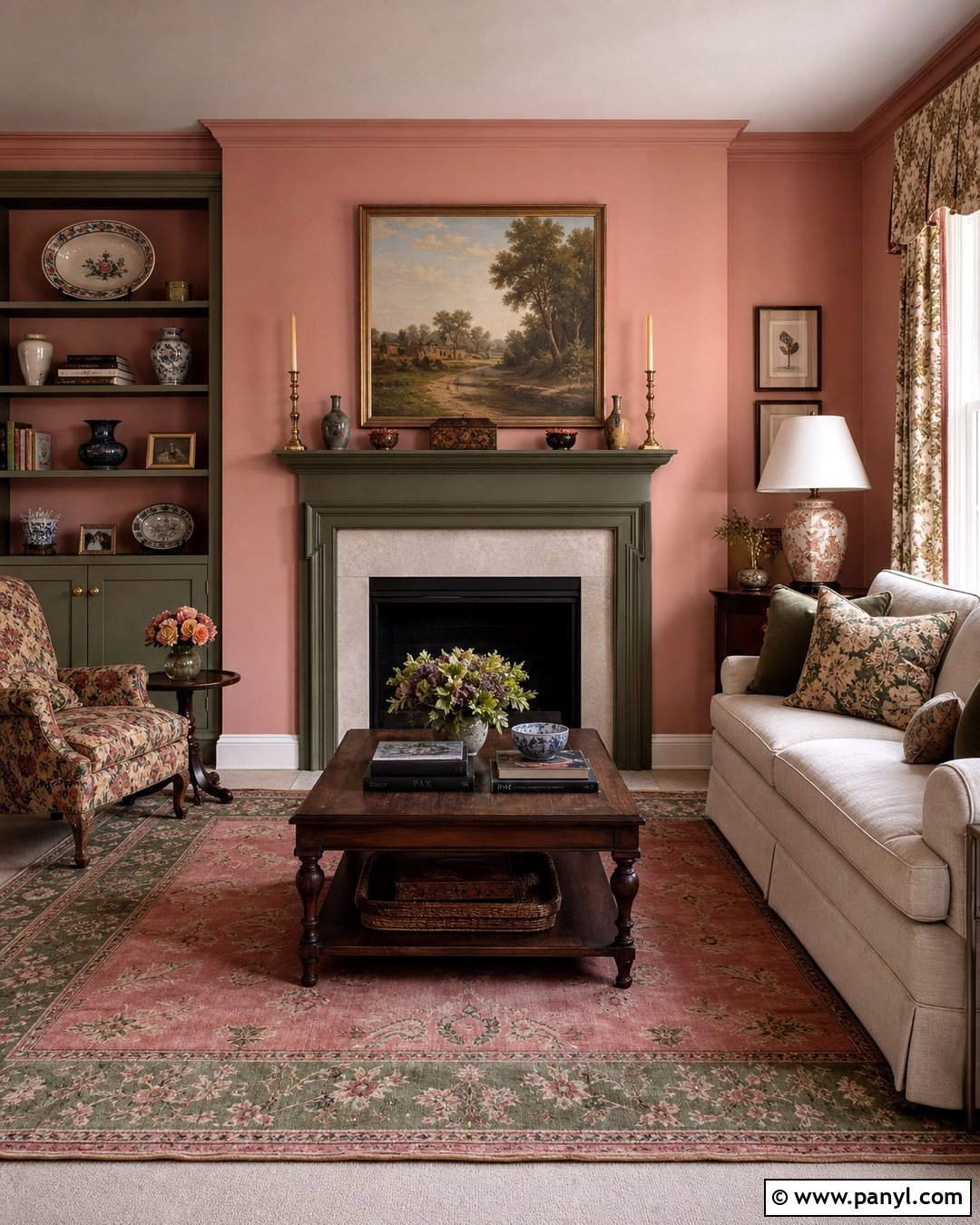
Pink-painted walls can make a traditional fireplace feel warmer and more integrated into the living room. Use a muted plaster pink across the walls and choose a deep burgundy or olive finish for the mantel. A cream stone or tile surround will provide a clean transition between the colors. Arrange a linen sofa and two patterned armchairs around a dark wood coffee table, keeping clear access to the fireplace. Hang one large landscape painting above the mantel rather than several small objects. Brass candleholders, ceramic vessels, and a simple mirror can complete the display. Use a faded traditional rug that combines pink, green, and brown. By coordinating the wall color, mantel, seating, and floor covering, the fireplace becomes part of a unified room instead of an isolated feature.
27. Pink Built-In Office Walls
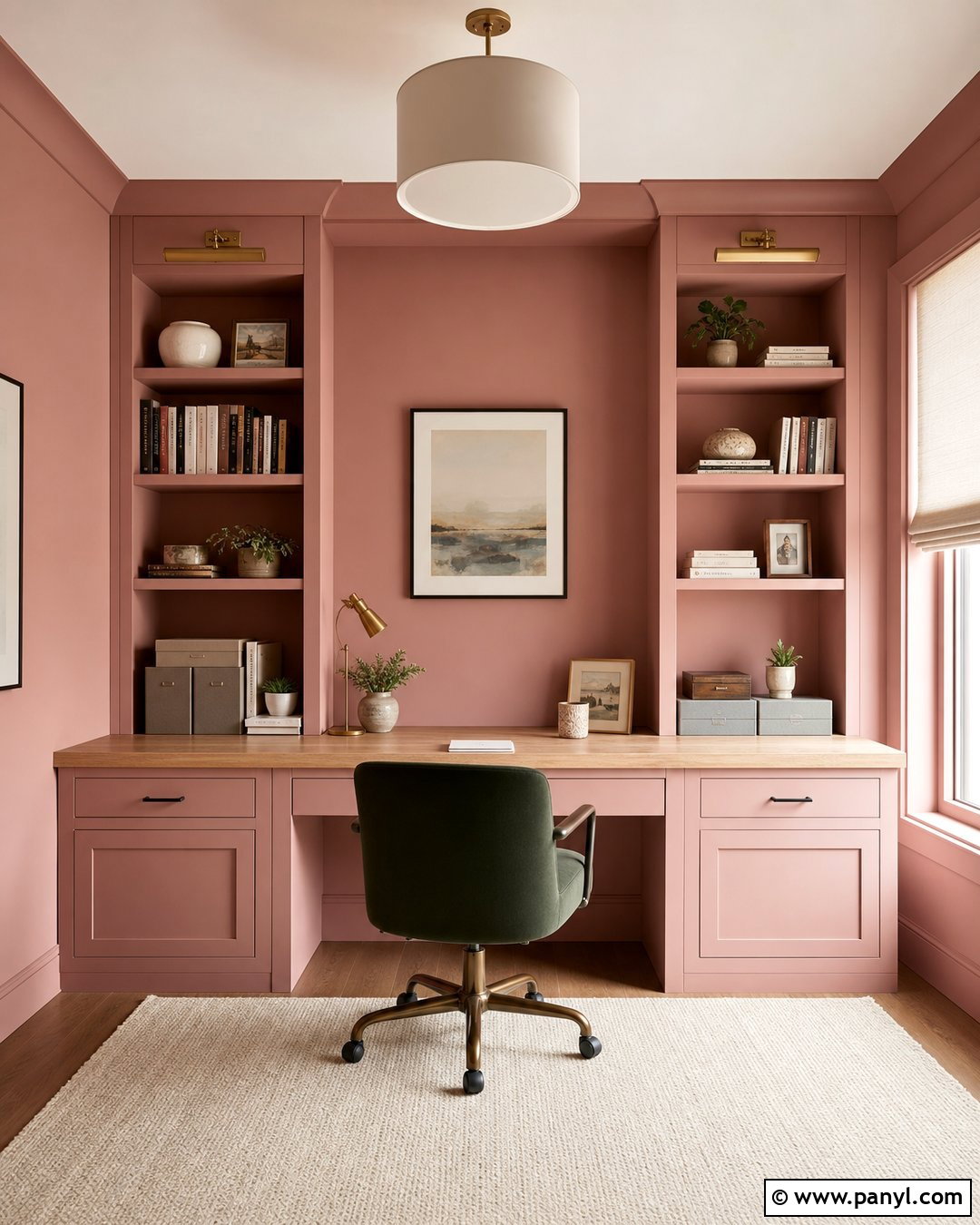
Painting office walls and built-in storage the same pink creates a streamlined background for work. Choose a sophisticated brown-based rose and carry it across cabinets, open shelves, trim, and the wall behind the desk. Use a natural oak desktop to break up the color and add warmth. A dark green desk chair, brass library lights, and black cabinet hardware provide practical contrast. Organize shelves with books, lidded boxes, framed art, and ceramics, leaving some open space around each group. A cream rug and ivory window shade will brighten the lower and outer edges of the room. Include closed storage for equipment and paperwork so the workspace remains calm. The monochromatic paint treatment helps substantial cabinetry look architectural rather than bulky, especially in a compact office.
28. Small Apartment Pink Walls
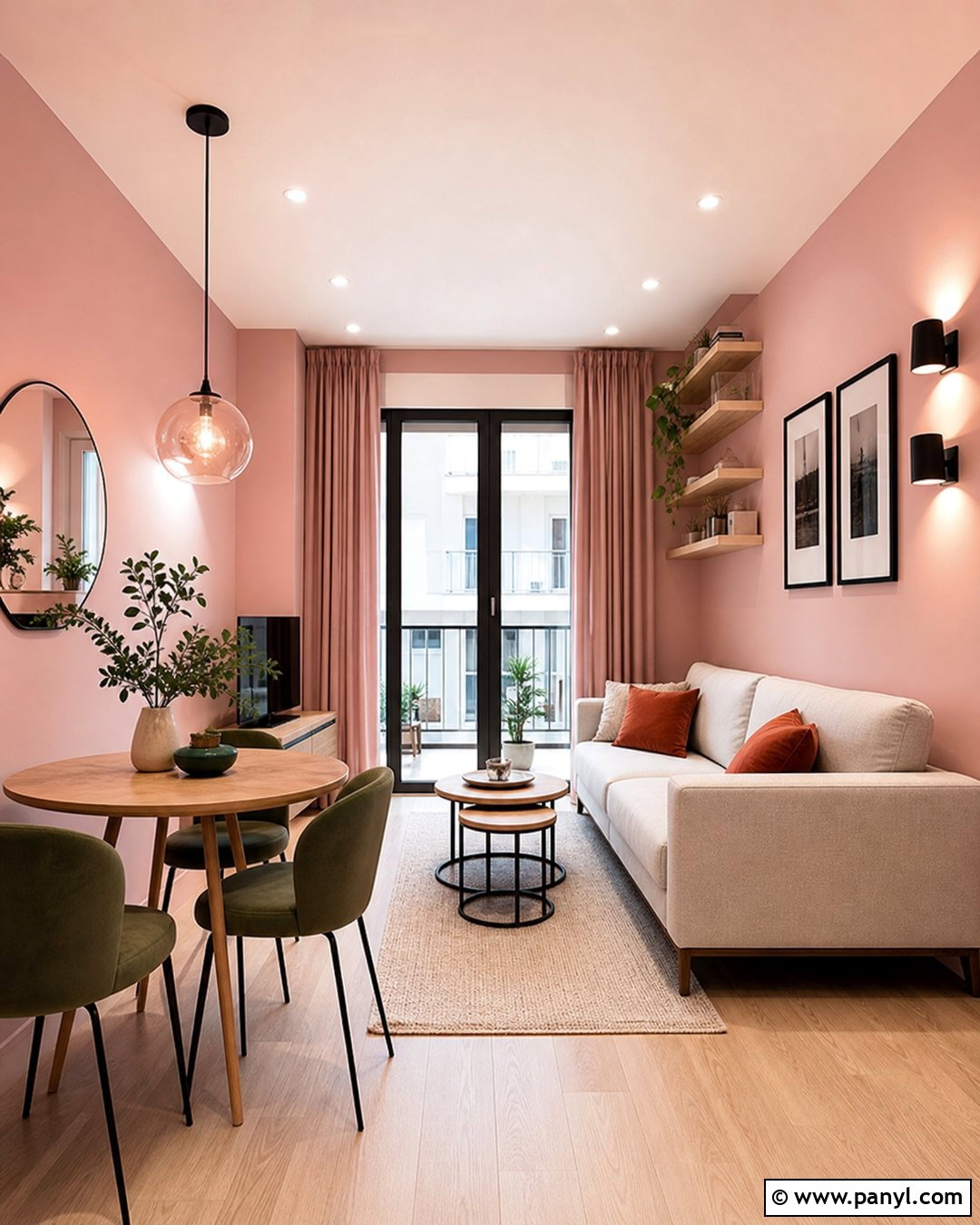
In a small apartment, pale pink walls can connect several functions without making the space feel fragmented. Use one warm blush shade throughout the living area, dining corner, and visible entry. Place a compact cream sofa along the longest wall and use nesting tables instead of a large coffee table. A round oak dining table will improve circulation near the kitchen. Choose wall-mounted lighting and floating shelves to preserve floor space. Curtains that closely match the paint can make the windows look wider and reduce visual interruptions. Add accents in olive, rust, and black through cushions, chairs, frames, and ceramics. Keeping the major furniture neutral allows the continuous pink background to establish identity while maintaining an open, flexible layout suitable for daily living, dining, and entertaining.
29. Farmhouse Pink Painted Walls
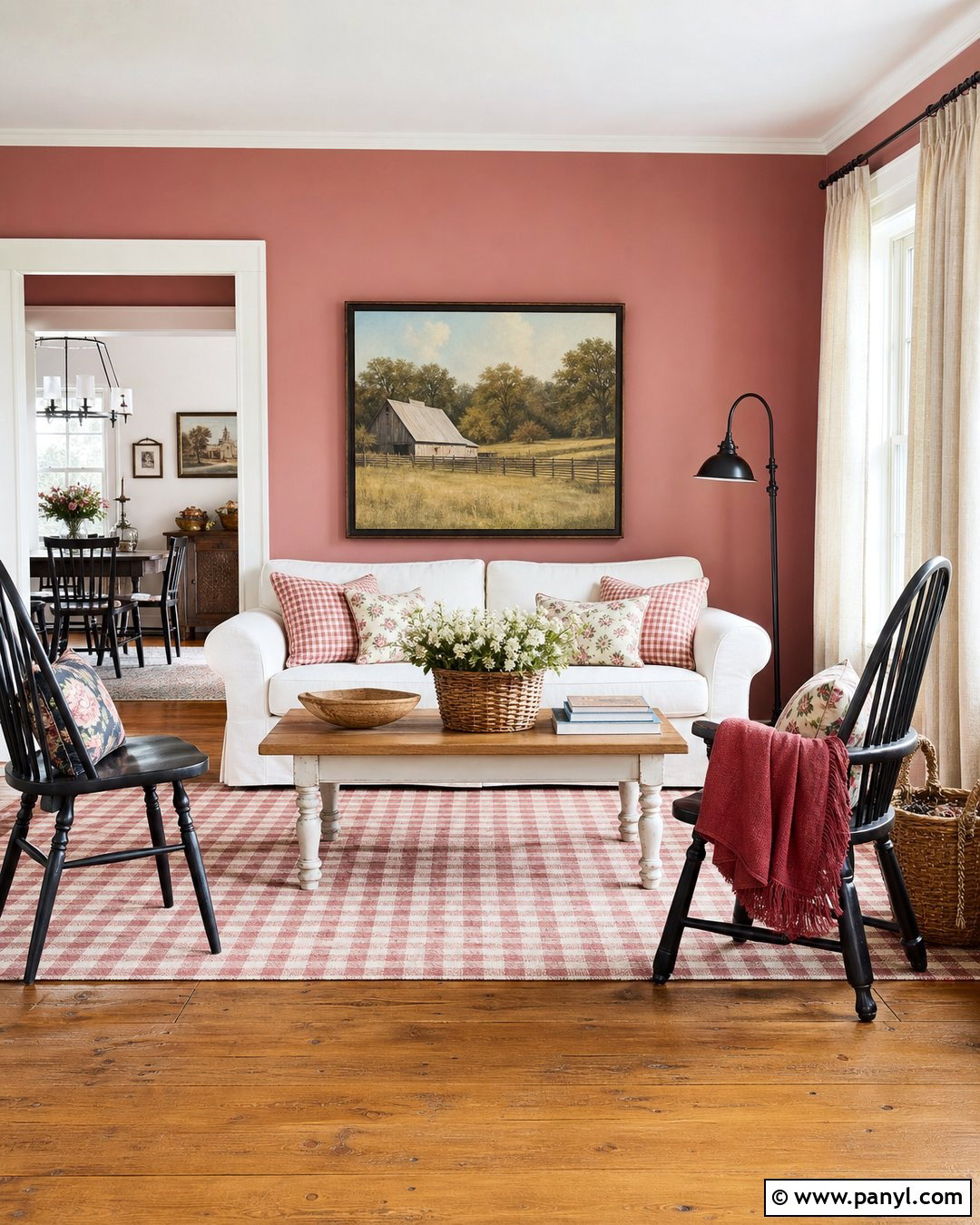
Farmhouse interiors can use pink successfully when the color feels faded and earthy. Select a warm antique rose for the walls, then pair it with creamy white trim and wide natural wood floorboards. A relaxed slipcovered sofa, turned-leg coffee table, and spindle-back chairs create a comfortable living area. Add a checked wool rug and floral cushions in rust, sage, and muted blue. Instead of overly distressed accessories, use practical pieces such as a wood cabinet, woven baskets, iron lamps, and simple pottery. Linen curtains keep the windows soft and informal. If the room includes ceiling beams, leave them natural or stain them medium brown to ground the pale walls. The full scheme feels collected and rural without depending on themed signs or excessive decorative objects.
30. Midcentury Pink Living Room Walls
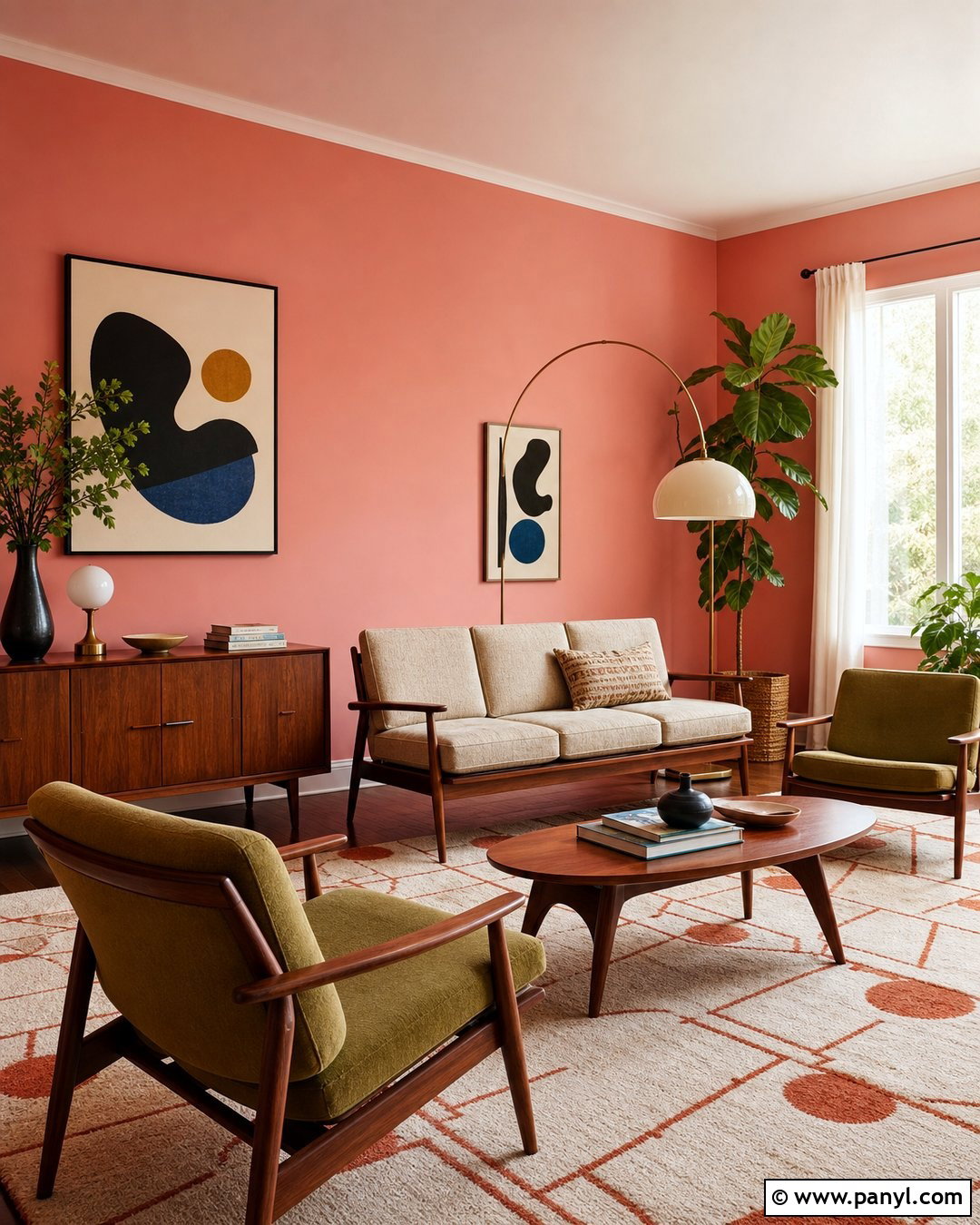
Warm salmon pink walls complement the rich woods and clean shapes associated with midcentury interiors. Position a low walnut sofa frame with oatmeal upholstery against the main wall, then add a pair of olive lounge chairs with tapered legs. A geometric rug in cream, rust, and charcoal can define the seating group. Choose a walnut credenza, an arched floor lamp, and one sculptural pendant rather than numerous small furnishings. Abstract artwork with black, mustard, and blue will stand out clearly against the pink background. Keep the window treatments simple with off-white roller shades or full-length linen panels. A few glazed ceramics and leafy plants add texture. The wall color should connect the wood tones and upholstery, creating a complete vintage-inspired room that still feels practical and uncluttered.
31. Boho Pink Bedroom Walls
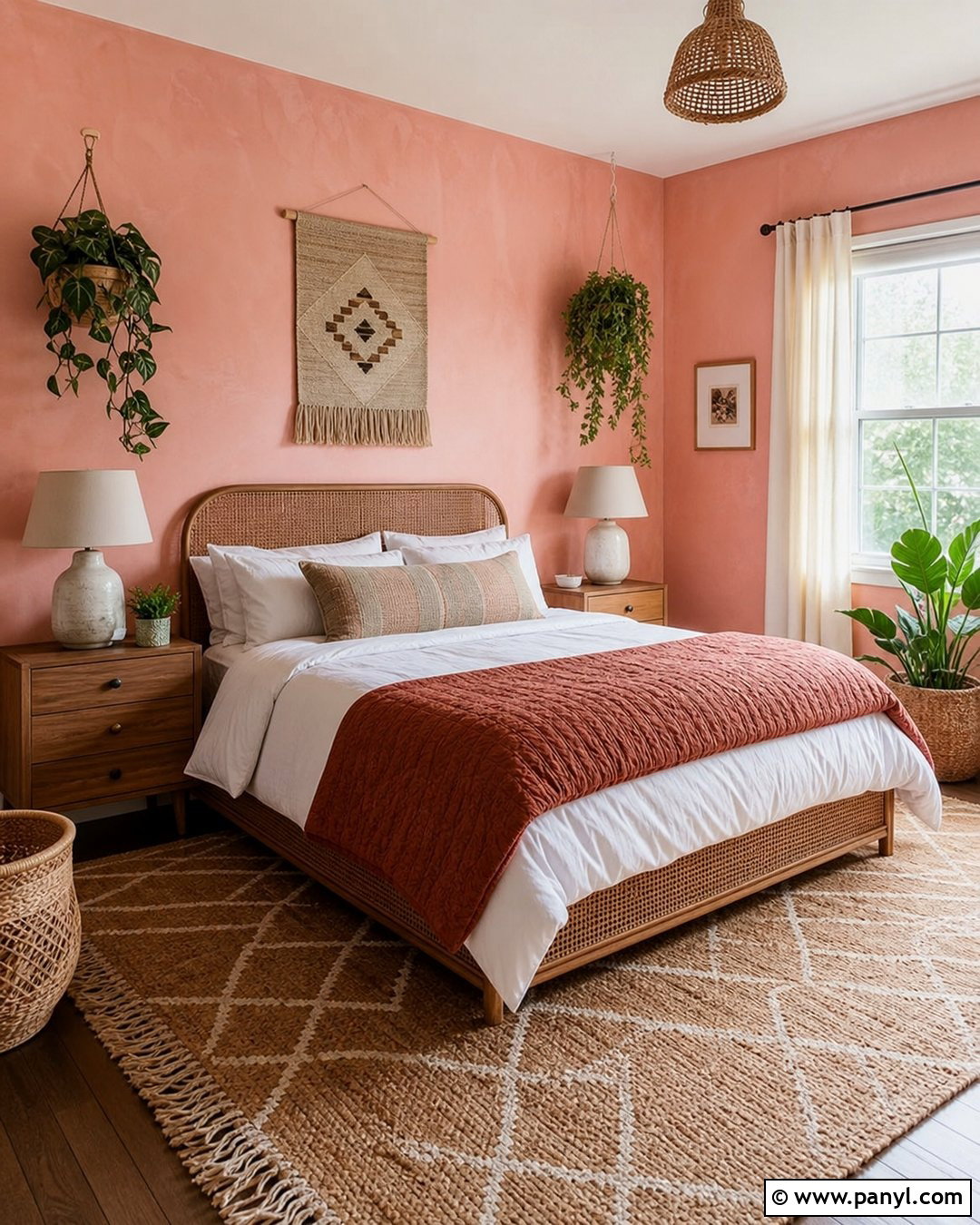
A boho bedroom with pink walls works best when natural texture supports the color. Choose a sun-faded peach pink and place a simple cane or light oak bed against it. Layer white bedding with a rust quilt, patterned lumbar pillow, and soft woven throw. Add mismatched wood nightstands, ceramic lamps, and a large jute-and-wool rug beneath the bed. Full-length cream curtains soften daylight, while hanging plants and one substantial textile artwork provide an organic focal point. Use woven baskets for storage rather than scattering decorative pieces across every surface. Black details in a mirror frame or wall light can sharpen the relaxed palette. By limiting the pattern to a few larger textiles, the finished room remains expressive and comfortable without becoming crowded or difficult to maintain.
32. Coastal Pink Living Room Walls
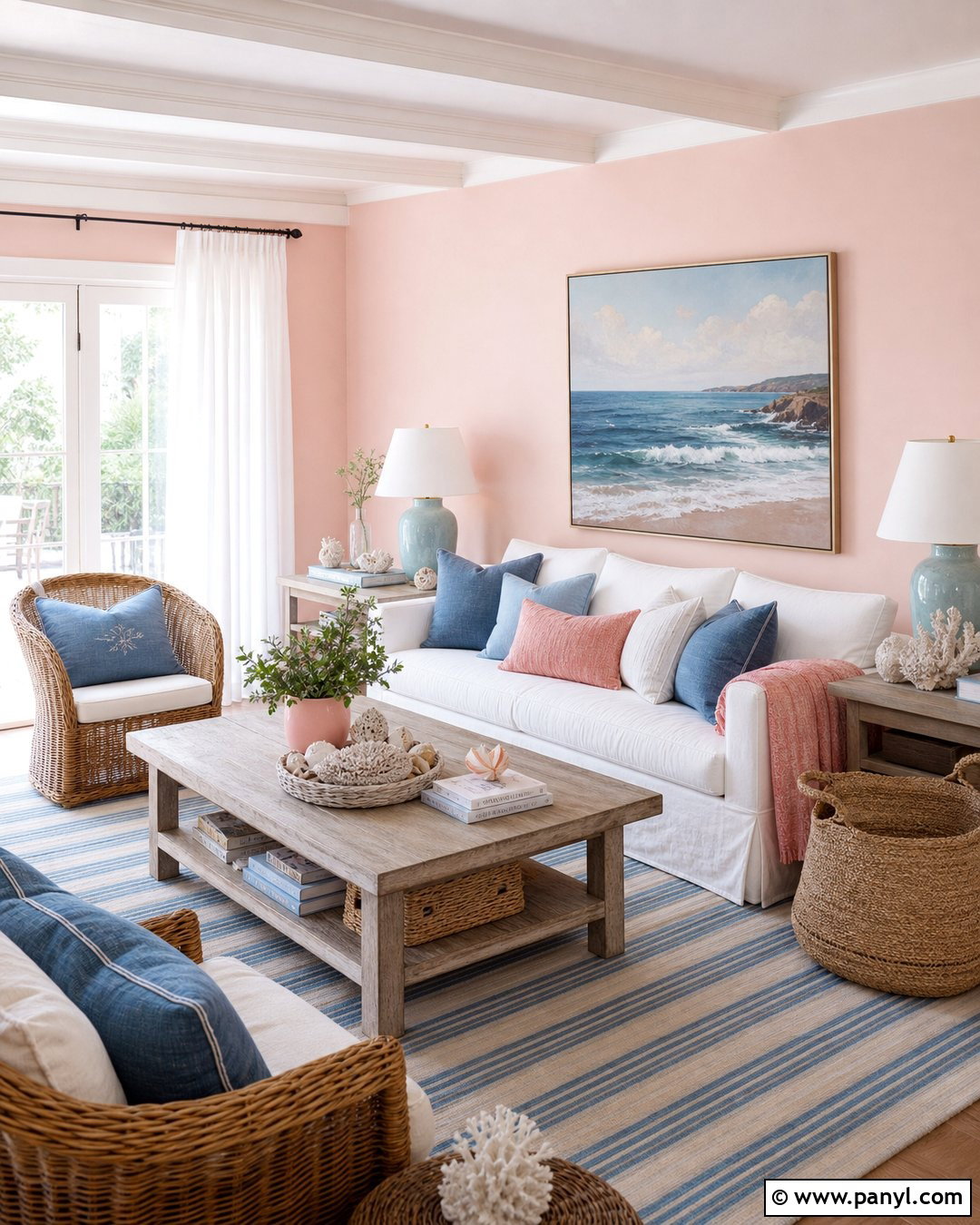
Shell pink walls offer a warmer alternative to blue in a coastal living room. Select a pale pink with a slightly sandy undertone and combine it with a white slipcovered sofa, woven rattan chairs, and a weathered oak coffee table. Use a blue-and-cream striped rug to establish a subtle coastal reference without relying on themed decorations. Airy white curtains, seagrass baskets, and pale ceramic lamps keep the space bright. Add cushions in faded denim, coral, and natural linen for relaxed color. One large seascape or abstract ocean print is enough for the main wall. Avoid filling shelves with shells or novelty objects. The combination of soft pink, washed blue, white, and natural fibers creates an easy, breezy room that feels connected to the coast while remaining suitable for any location.
33. Art Deco Pink Dining Room Walls
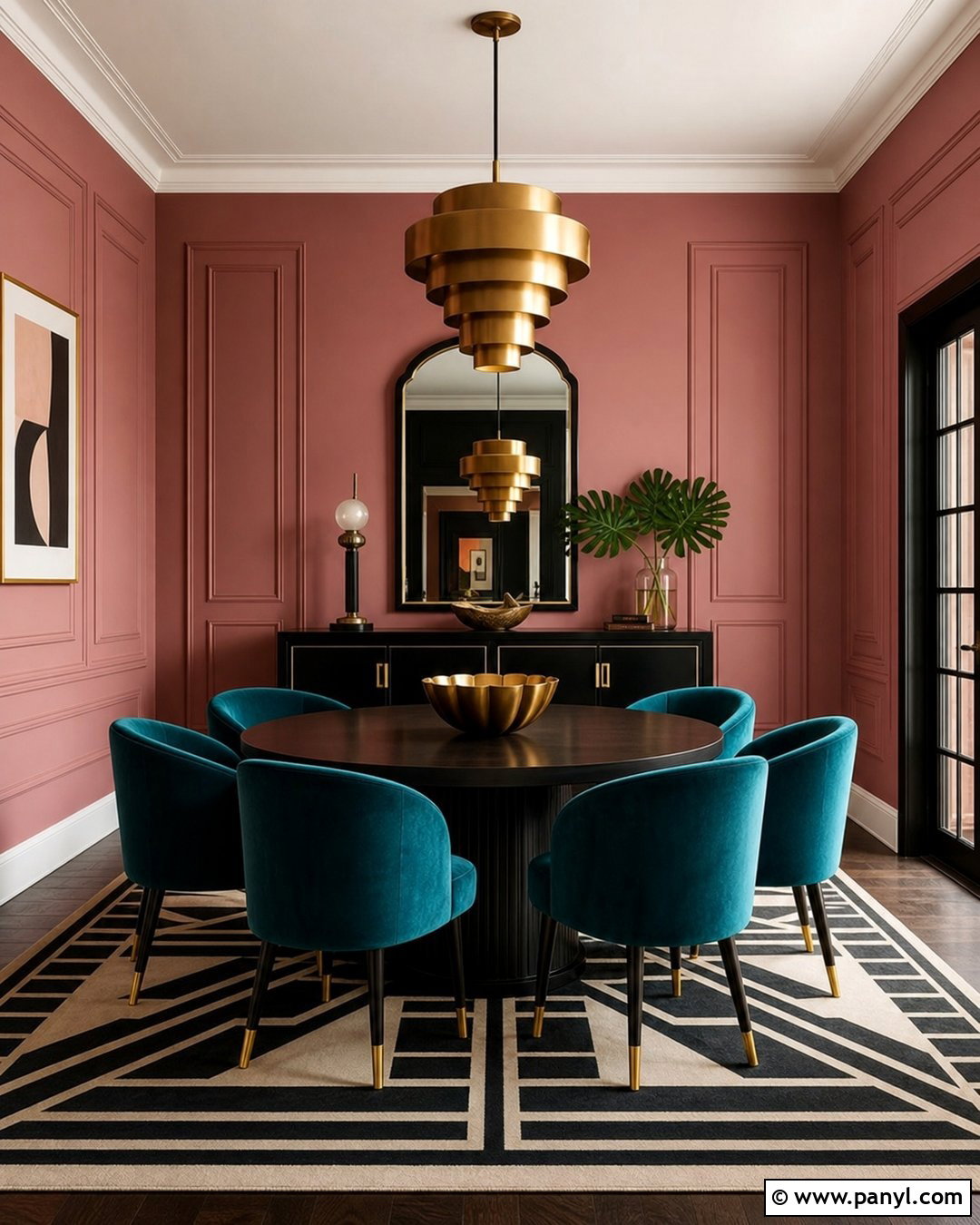
Dusty rose walls can support an Art Deco dining room when paired with geometric forms and polished finishes. Use a medium pink with mauve undertones and add slim rectangular molding painted in the same color. Center a round dark wood dining table beneath a tiered brass pendant. Curved chairs upholstered in teal or deep green velvet will provide rich contrast. Choose a black-and-cream geometric rug and a streamlined black sideboard with brass hardware. An arched mirror can reflect light and reinforce the period-inspired shapes. Keep tabletop accessories minimal, using one sculptural bowl and simple glassware. Rather than adding several metallic finishes, repeat aged brass throughout the lighting, mirror, and cabinet details. The coordinated palette creates glamour while keeping the room comfortable enough for regular dining.
34. Maximalist Pink Living Room Walls
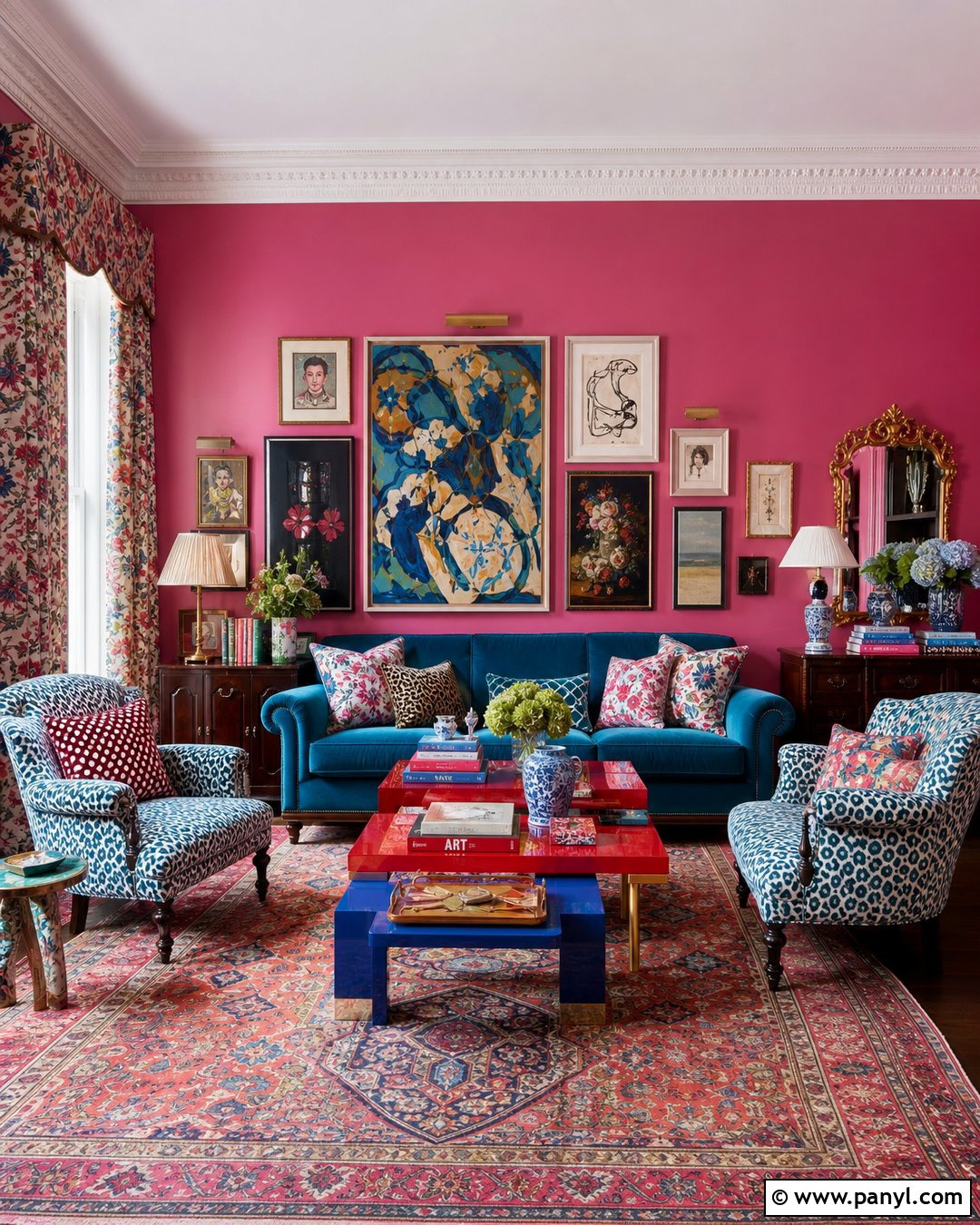
Vibrant pink walls provide an energetic foundation for a maximalist living room, but the layout still needs structure. Paint the walls a confident raspberry pink and center the arrangement around a teal velvet sofa. Add patterned armchairs, a large vintage rug, and lacquered side tables in red or cobalt. Build a gallery wall with colorful art and mixed frames, keeping consistent spacing between pieces. Floral curtains can introduce another pattern if they repeat at least two colors already present in the room. Use one large coffee table to anchor the varied seating instead of several unrelated small tables. Books, ceramics, lamps, and cushions should be grouped rather than scattered. Repetition of pink, teal, red, and cream keeps the layered room visually connected despite its strong colors and patterns.
35. Minimalist Pink Painted Walls
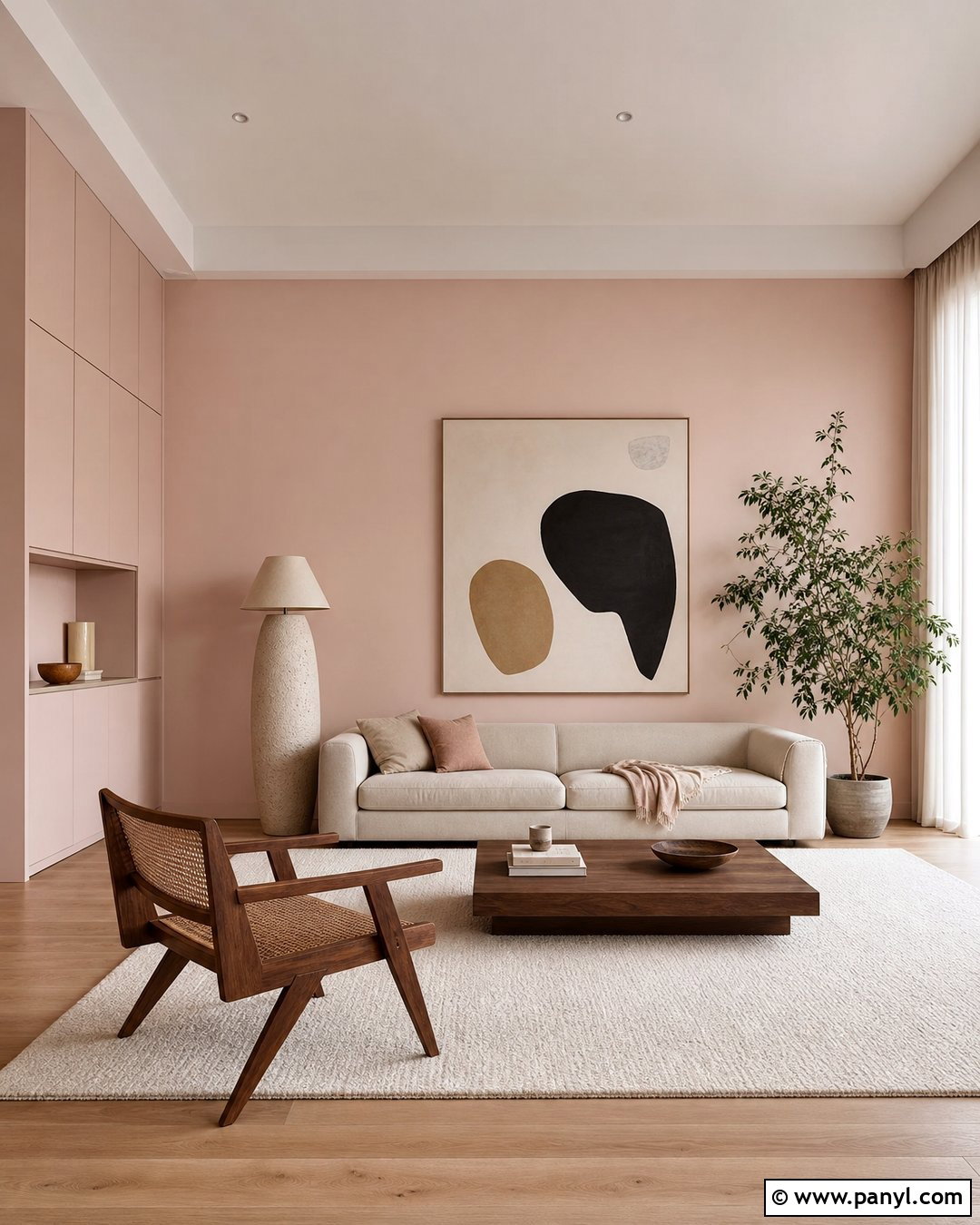
Minimalist rooms do not have to rely on white or gray walls. A quiet pink-beige can add warmth while preserving a clean, restrained look. Paint all walls in a matte pale rose and pair them with light oak flooring. Choose a low cream sofa, one sculptural wood chair, and a simple rectangular coffee table. A large off-white rug will define the seating area without creating strong contrast. Use one oversized abstract artwork, a ceramic floor lamp, and a single leafy plant as the main decorative elements. Concealed storage should hold everyday clutter, allowing the wall color and furniture shapes to remain visible. Soft white curtains filter daylight and maintain privacy. With fewer objects, details such as proportion, texture, and paint finish become especially important to the completed room.
Conclusion:
These **35 Pink Painted Walls** demonstrate how flexible this color can be across living rooms, bedrooms, kitchens, bathrooms, workspaces, and small transitional areas. Pale blush can replace an ordinary neutral, while coral, raspberry, and deep rose create stronger focal points. Pink also works with an impressive range of materials, including walnut, oak, marble, brass, linen, stone, and woven fibers. For the most balanced result, design the entire room rather than choosing the wall color in isolation. Consider the flooring, major furniture, trim, lighting, and connecting spaces before painting. Always test several large samples and observe them throughout the day. With the right undertone and supporting palette, pink walls can feel timeless, comfortable, and distinctly personal.

Related Ideas and Inspiration:
Leave a Reply