
Beach-inspired rooms feel relaxed when the wall color reflects the coast without relying on obvious nautical themes. The best palettes move beyond basic blue and include sun-washed whites, sandy neutrals, sea-glass greens, shell pinks, and grounded nautical shades. Current coastal color collections similarly combine watery blues, glassy greens, warm whites, and deeper accents for a more layered look. () Each wall color should also connect with the flooring, furniture, lighting, and natural textures throughout the room. Before committing, sample your favorites on several walls and observe them during morning, afternoon, and evening light. Whether you prefer a quiet neutral retreat or a cheerful seaside room, these complete looks make it easier to use 20 Beachy Wall Colors.

1. Soft White Walls
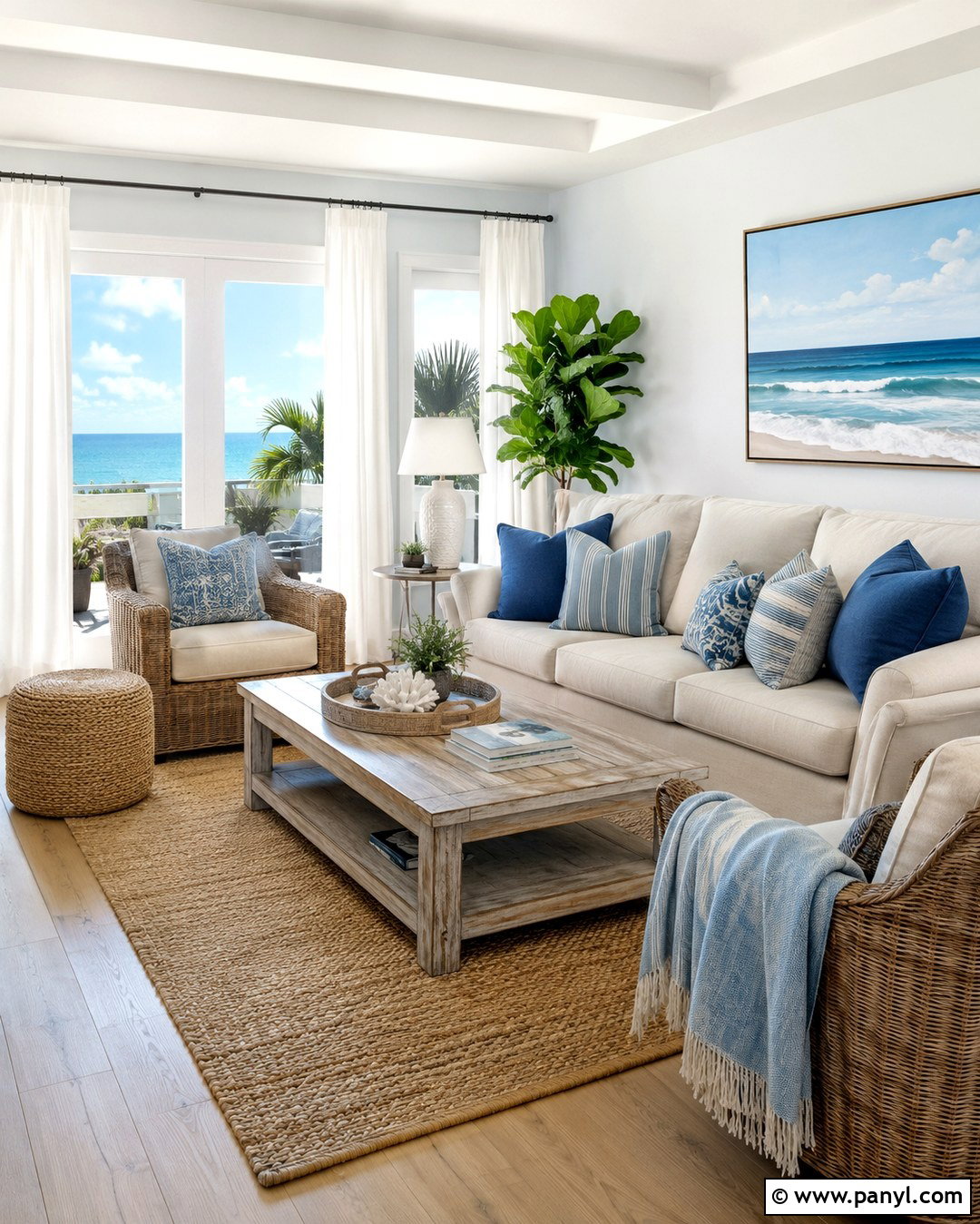
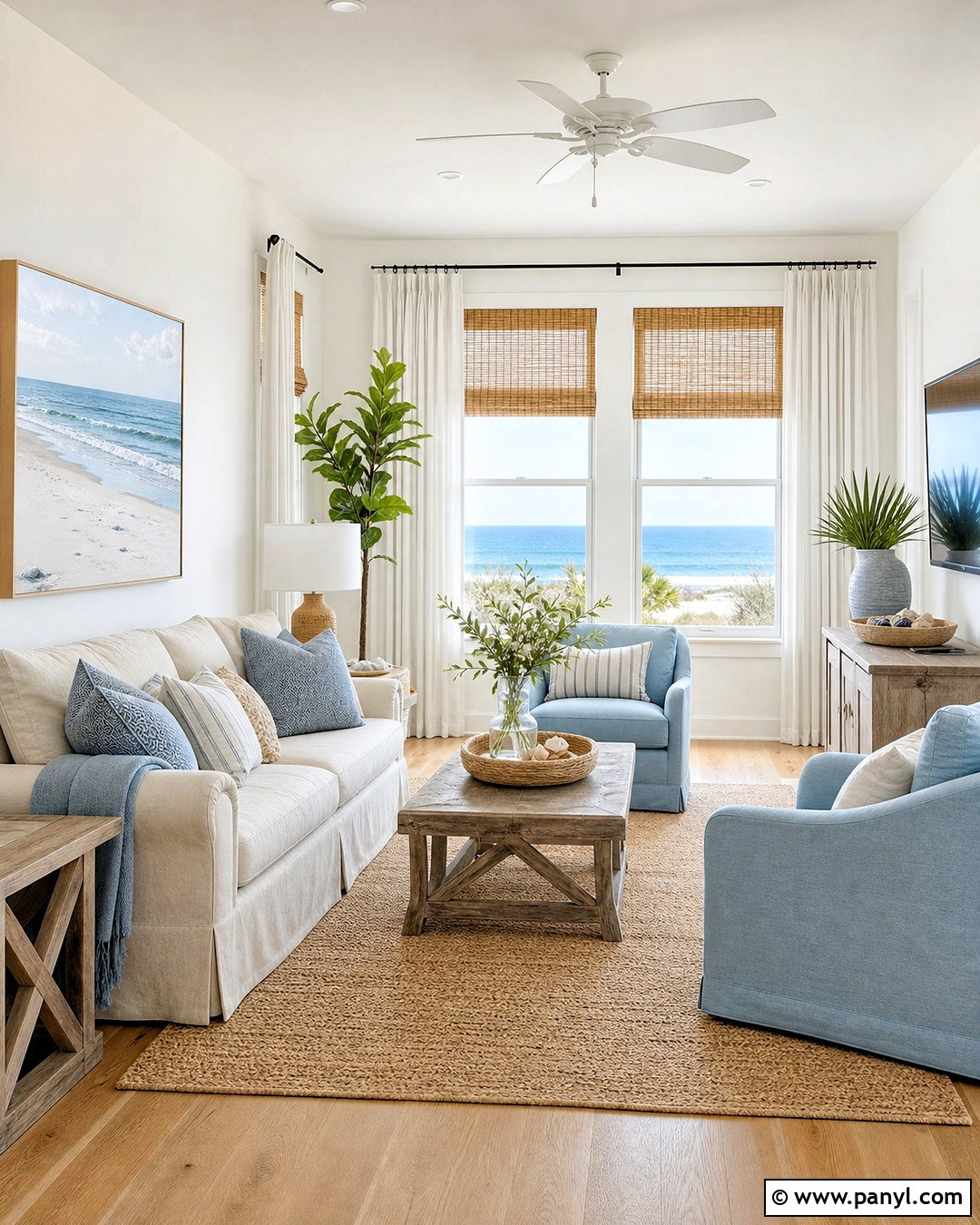
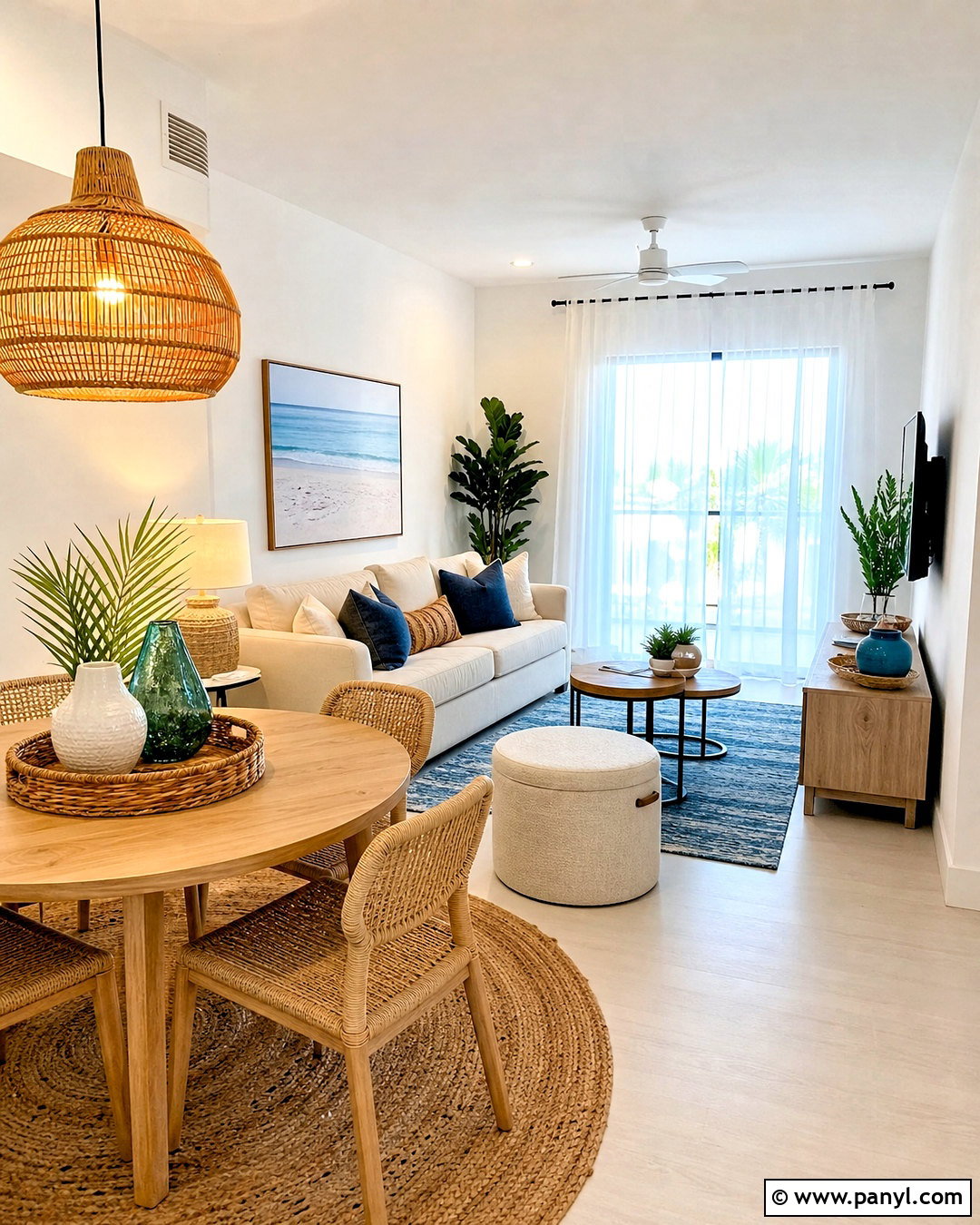
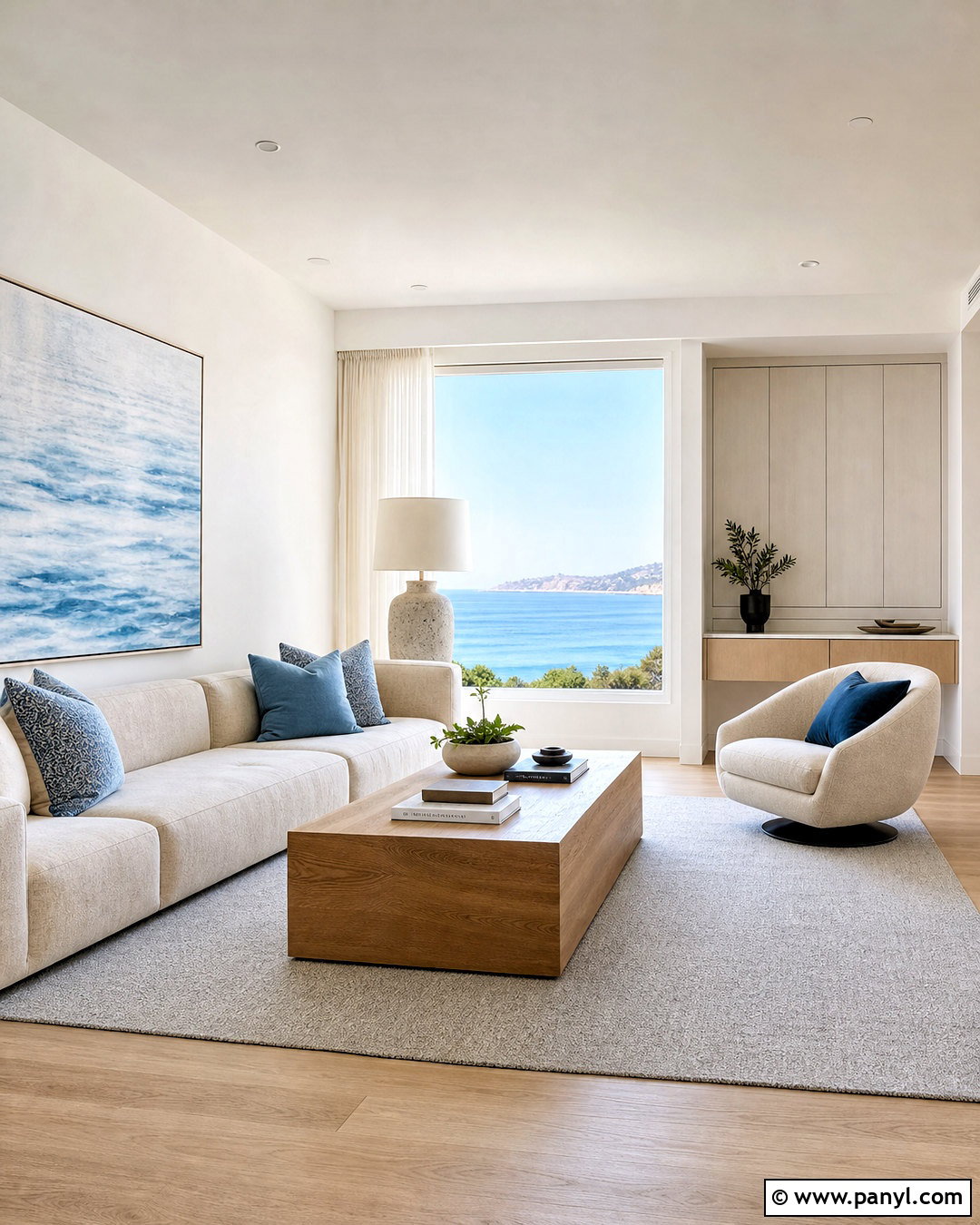
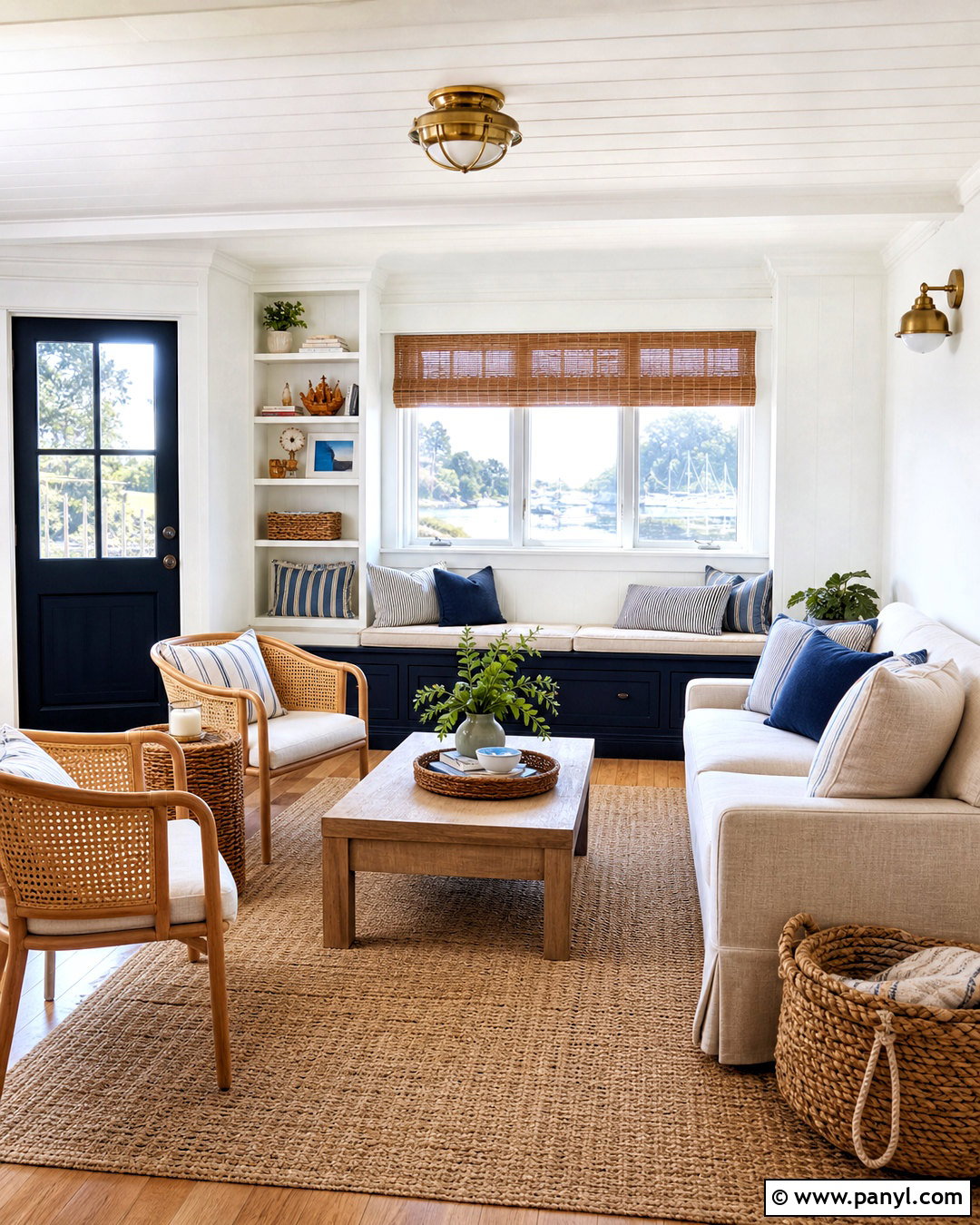
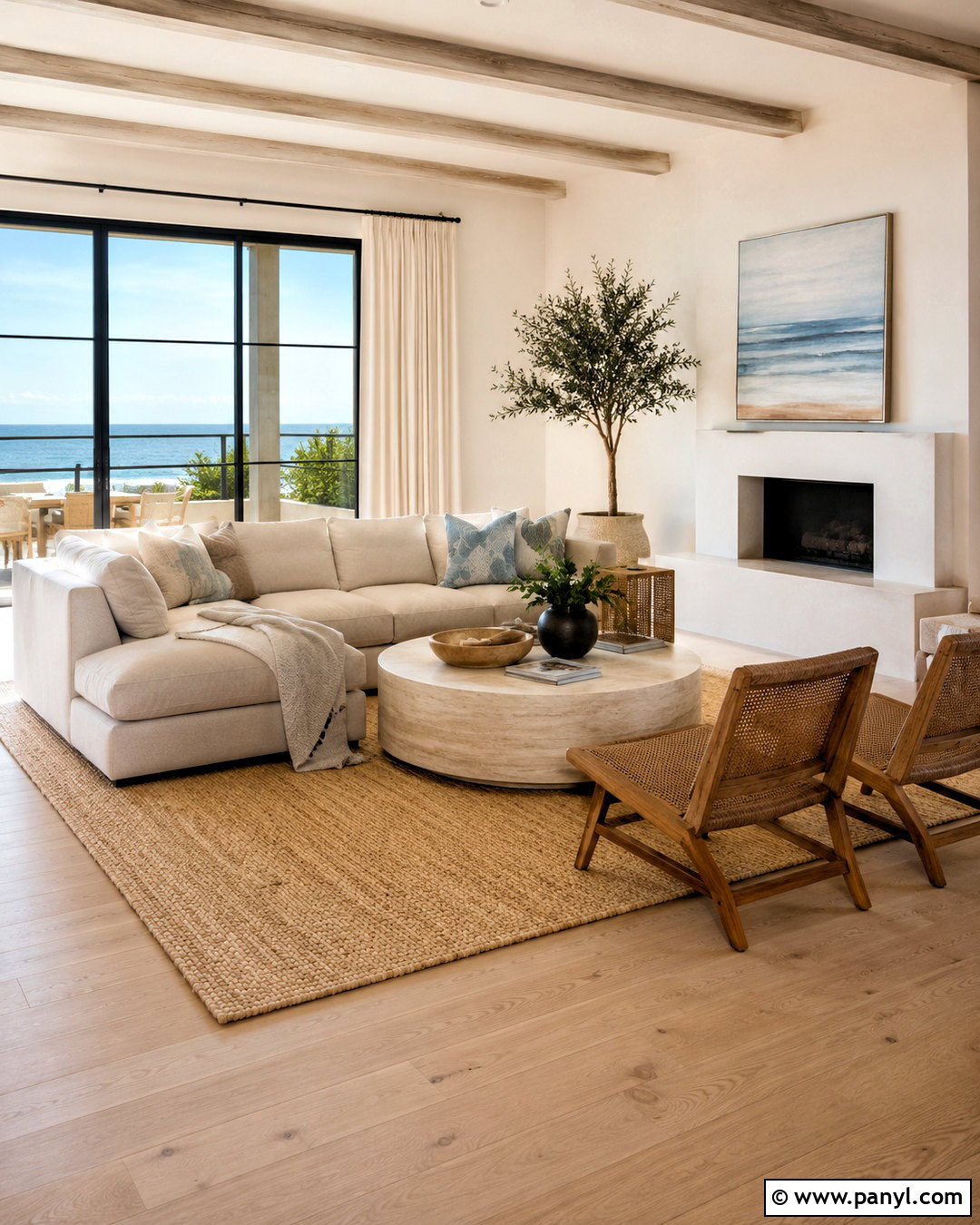
Soft white walls create a bright coastal living room without feeling cold or unfinished. Choose a white with gentle cream or gray undertones, then pair it with pale oak flooring and an oatmeal-colored linen sofa. Add two woven rattan chairs around a weathered wood coffee table to introduce natural texture. White cotton curtains can soften the windows while allowing plenty of daylight to filter through. For contrast, layer in faded blue pillows, a striped wool rug, and simple ceramic lamps with off-white shades. Keep the ceiling and trim a cleaner white so the walls retain subtle depth. A large coastal landscape, leafy branches, and a few handmade pottery pieces complete this relaxed, livable space.
2. Warm Ivory Walls
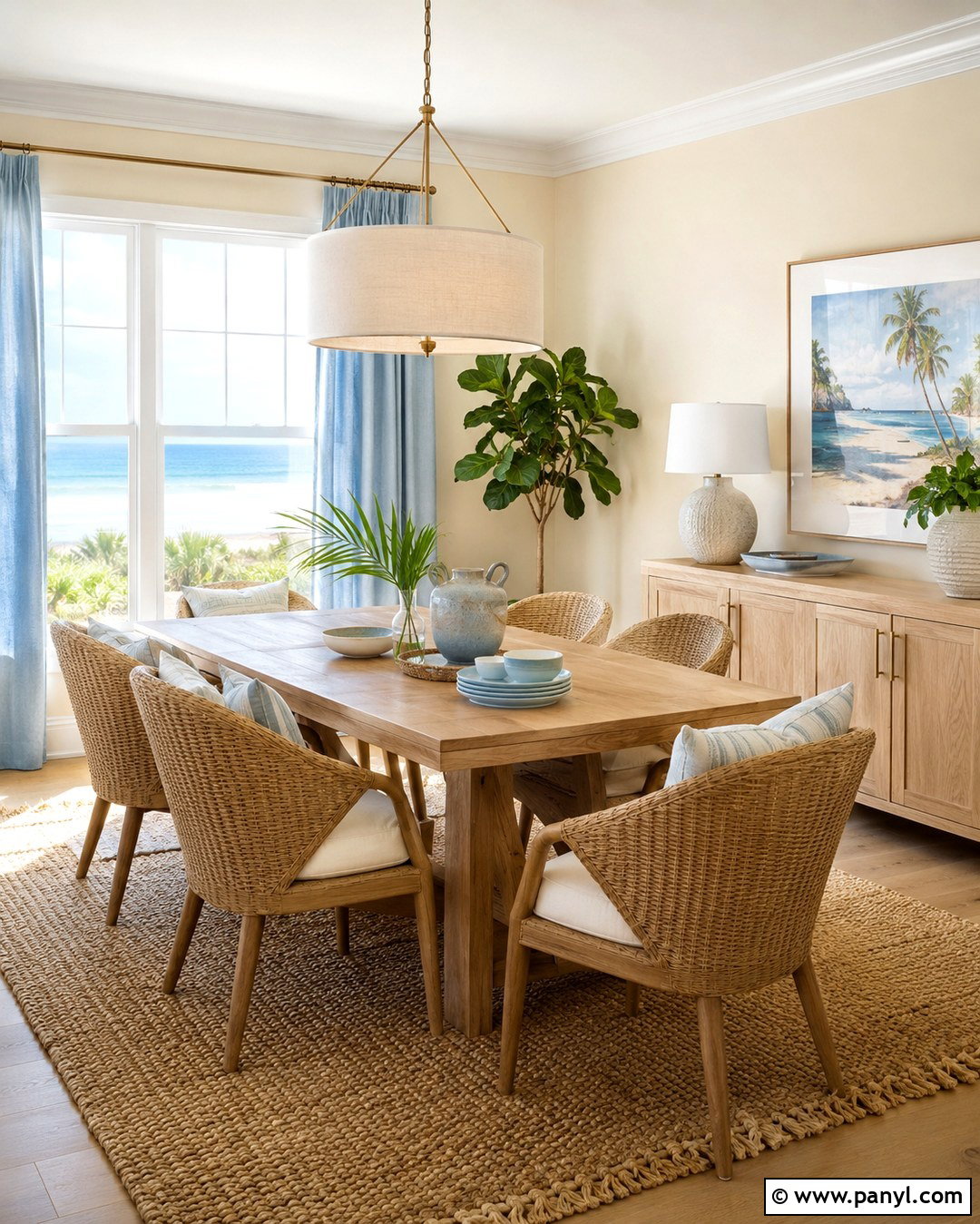
Warm ivory walls give a coastal dining room a sunlit appearance, especially in spaces with limited natural light. Build the room around a light oak dining table with curved woven chairs and washable cream seat cushions. Paint the trim a soft warm white rather than a sharp white, which can make ivory look overly yellow. A natural jute rug grounds the arrangement, while a large linen pendant keeps the room airy. Introduce soft blue through striped curtains, ceramic serving pieces, or framed abstract artwork. A pale wood sideboard can provide practical storage without weighing down the space. Finish with brushed brass hardware and simple greenery for a beachy room that feels warm, polished, and suitable for everyday meals.
3. Sandy Beige Walls
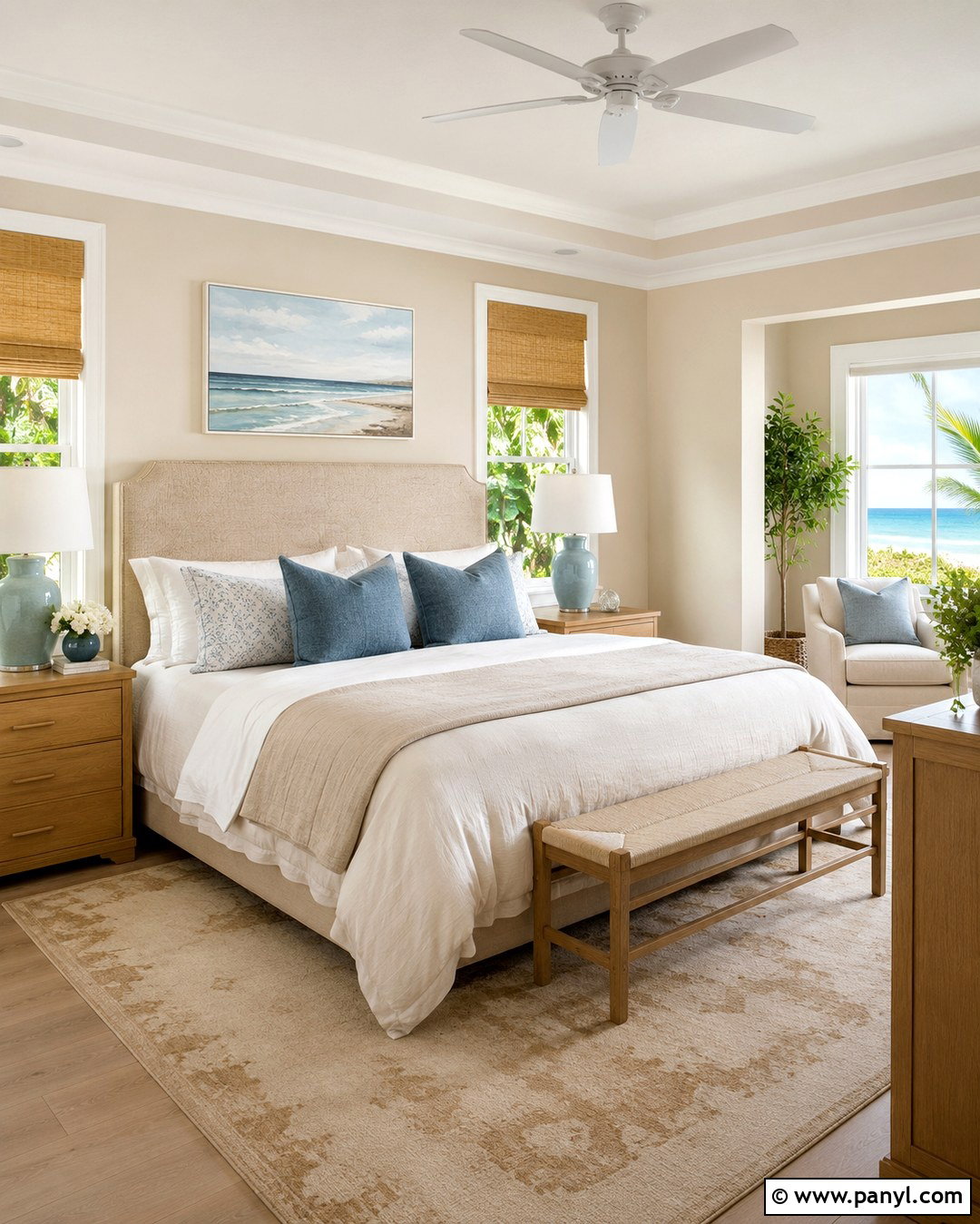
Imagine the soft color of dry sand extending across a calm, comfortable bedroom. Sandy beige walls work best with creamy bedding, white oak furniture, and woven materials that keep the palette light. Choose a low wood bed with a natural linen headboard, then layer white sheets, a beige quilt, and muted ocean-blue pillows. A flat-weave rug in cream and tan can define the sleeping area without creating harsh contrast. Use off-white trim, woven Roman shades, and ceramic bedside lamps for a seamless finish. Small black or aged bronze details will prevent the room from looking washed out. Complete the design with a simple seascape, dried grasses, and uncluttered nightstands for an understated coastal retreat.
4. Light Greige Walls
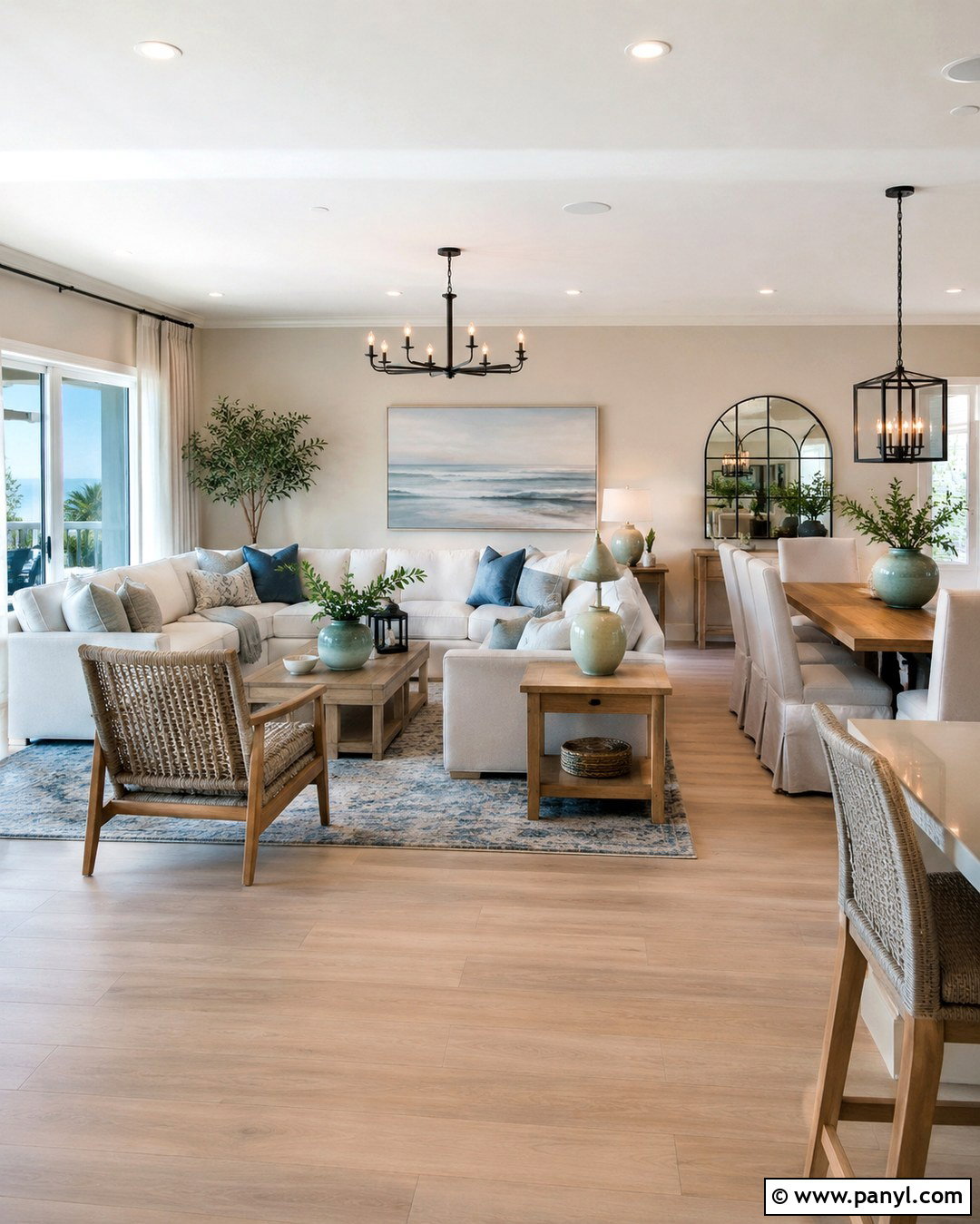
Light greige walls offer a practical coastal backdrop for an open-plan living and dining area. This balanced mix of gray and beige works particularly well with existing stone, warm wood, or neutral upholstery. Use a cream sectional to organize the living zone, then add light oak nesting tables and woven accent chairs. In the dining area, repeat the oak finish with a simple rectangular table and slipcovered end chairs. Bring in ocean color through blue-gray pillows, pale green pottery, and a softly patterned area rug. Crisp off-white trim keeps the greige from appearing muddy. Matte black lighting adds definition, while linen curtains and oversized coastal artwork create softness. The finished room feels beachy, modern, and easy to update.
5. Driftwood Gray Walls
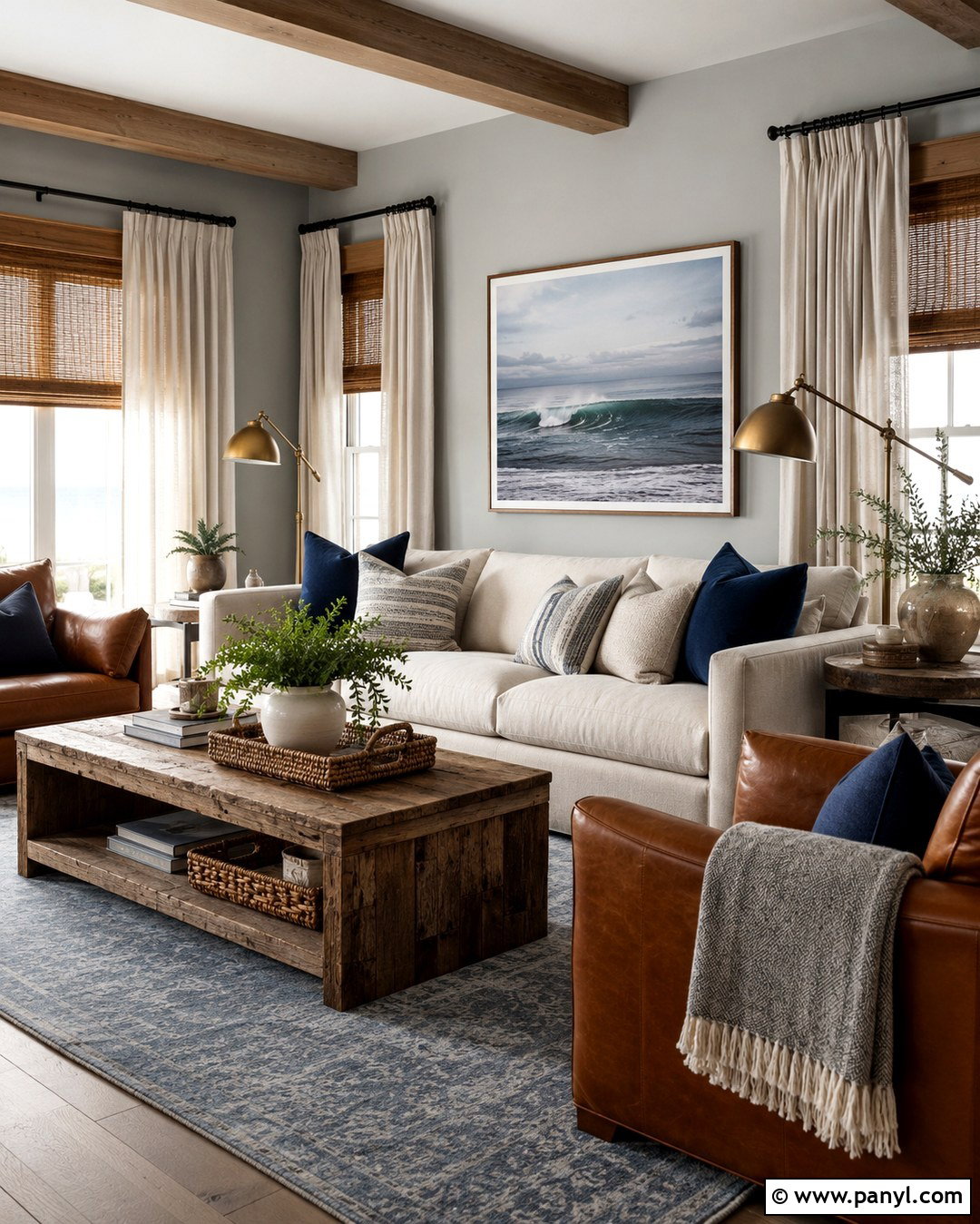
Driftwood gray walls can give a family room coastal character while remaining calm and durable-looking. Select a light gray with warm brown undertones instead of a cool industrial shade. Pair it with a deep cream performance-fabric sofa, two cognac leather chairs, and a reclaimed wood coffee table. A faded blue-and-gray rug connects the walls with the seating area and helps conceal everyday wear. Use warm white on the ceiling, doors, and baseboards to maintain brightness. Woven shades, linen curtain panels, and baskets add the casual texture associated with shoreline homes. Finish the layout with navy pillows, aged brass lamps, and framed ocean photography. The result feels weathered and comfortable rather than overly themed or formal.
6. Misty Blue Walls
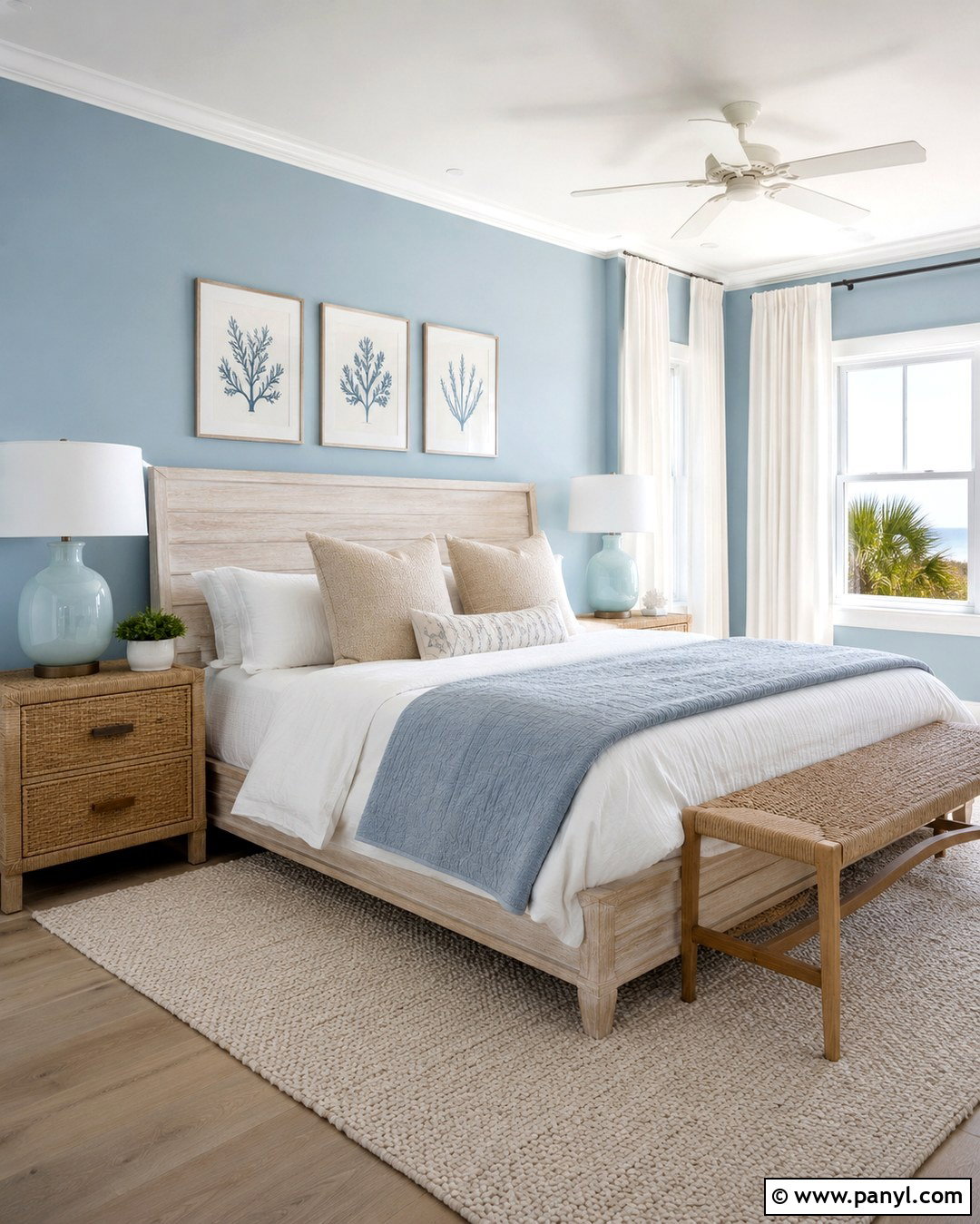
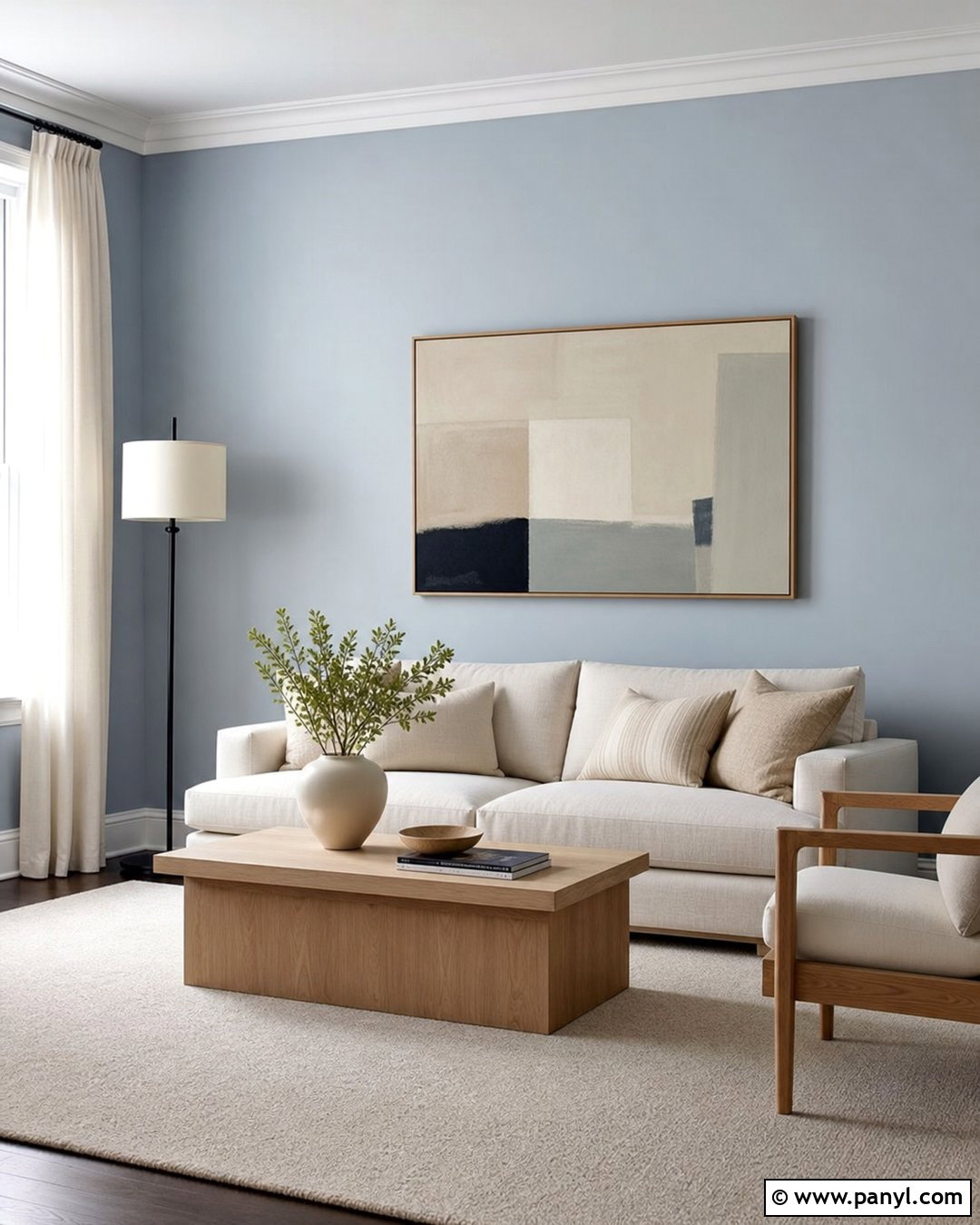
Misty blue walls can transform a primary bedroom into a quiet retreat that recalls a hazy morning by the water. Look for a pale blue with noticeable gray undertones so the color remains soothing in changing light. Place a whitewashed oak bed against the main wall and dress it with white linen, a blue-gray coverlet, and sandy beige pillows. Natural woven nightstands and frosted glass lamps maintain the airy mood. Use crisp white trim to define the gentle wall color, but choose warm white curtains to soften the contrast. A cream wool rug, an upholstered bench, and minimal botanical artwork complete the space. Avoid excessive blue accessories; natural wood and neutral textiles allow the wall color to remain the focus.
7. Sky Blue Walls
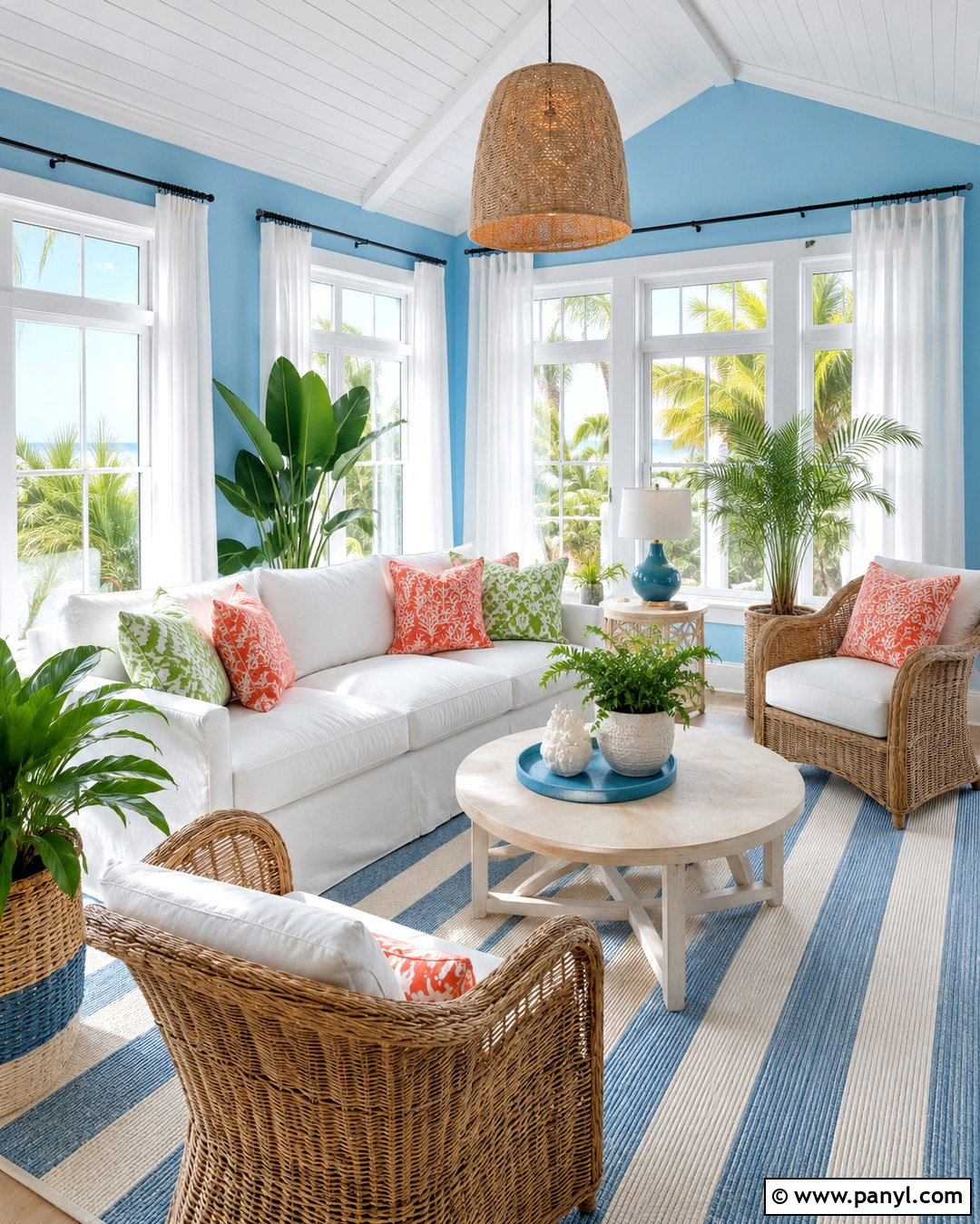
Sky blue walls bring uplifting color to a coastal sunroom where strong daylight can support a clearer, more cheerful shade. Create a comfortable conversation area with a white slipcovered sofa, wicker lounge chairs, and a round pale wood coffee table. White-painted window trim will sharpen the blue while reflecting light around the room. Underfoot, use a natural sisal rug or a washable cream-and-blue stripe. Add coral, sunny yellow, or grassy green in small amounts through pillows and pottery to make the space feel lively rather than monochromatic. Sheer white curtains, leafy plants, and a woven pendant reinforce the relaxed atmosphere. Keep furniture profiles simple so the room remains open, breezy, and connected to the outdoor view.
8. Powder Blue Walls
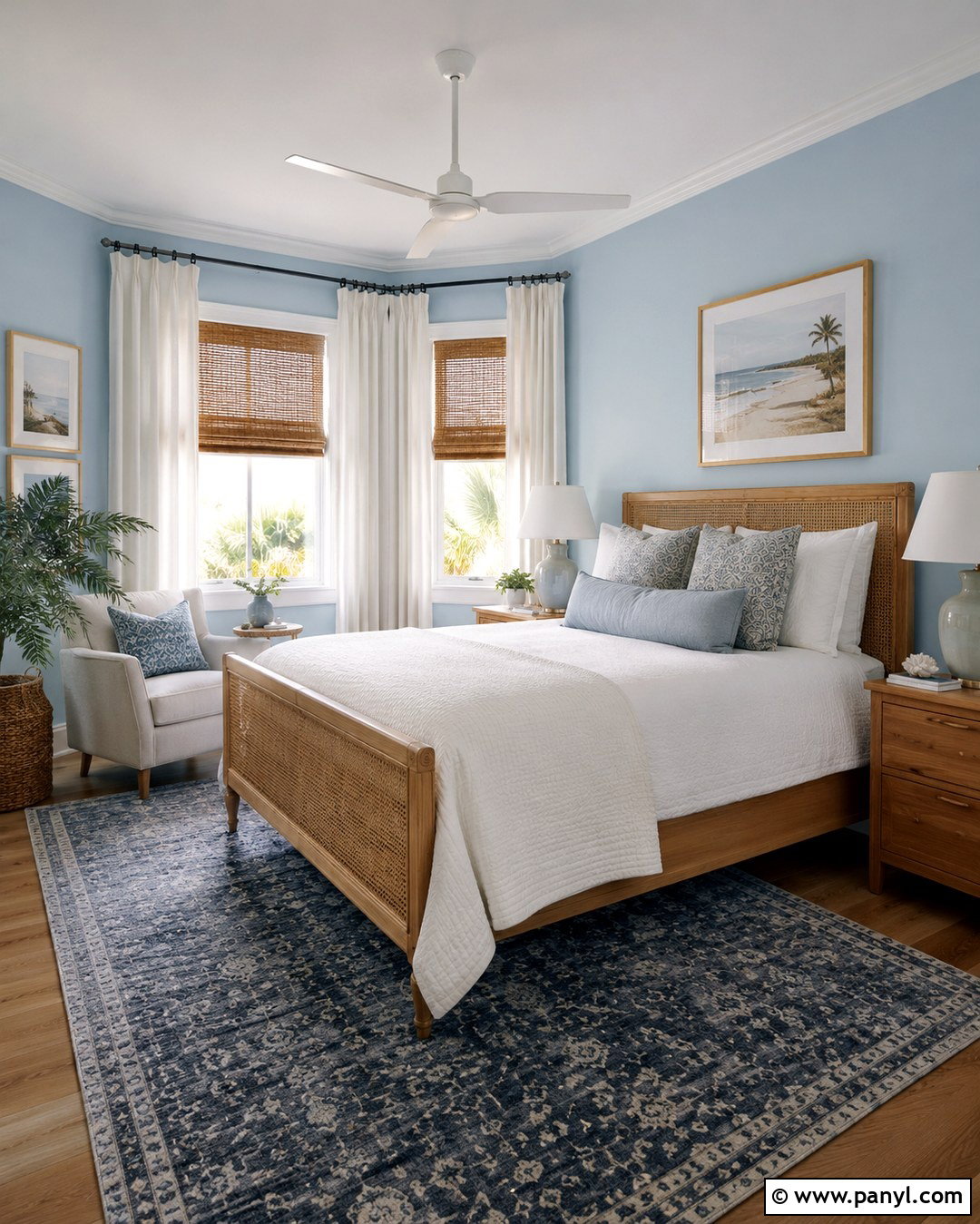
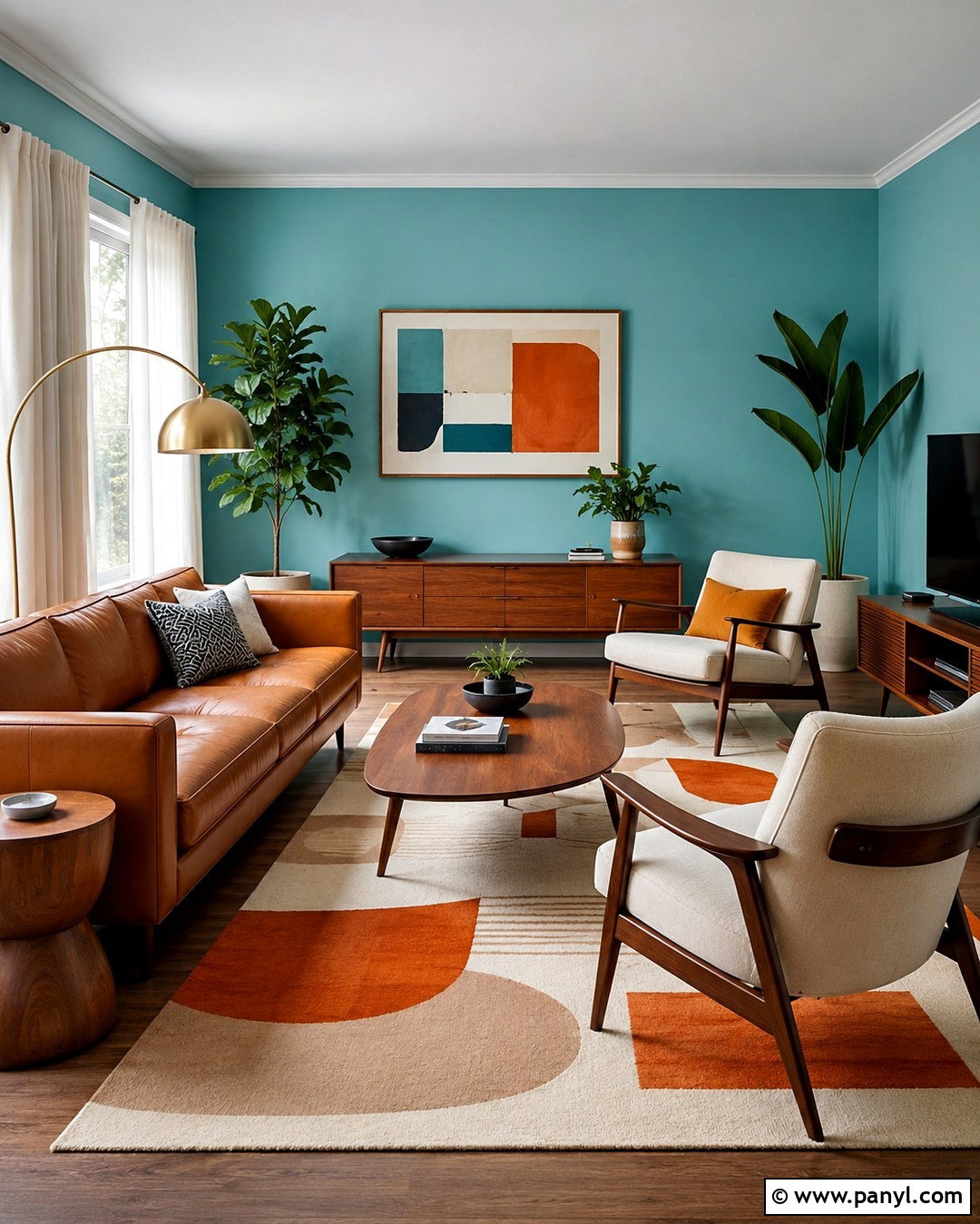
Powder blue walls create a gentle coastal guest room that feels welcoming to visitors of any age. Balance the light color with a natural cane bed, warm white bedding, and a softly patterned quilt in blue, cream, and muted tan. A pair of compact oak nightstands provides contrast and practical storage. Paint the ceiling and trim a creamy white to prevent the palette from becoming too cool. Hang woven shades beneath lightweight linen curtains for privacy and texture. A vintage-style rug with faded navy details can anchor the room, while a small upholstered chair makes an unused corner functional. Finish with ceramic lamps, simple framed prints, and one striped lumbar pillow. The complete look feels fresh without becoming childish or overly sweet.
9. Blue Gray Walls
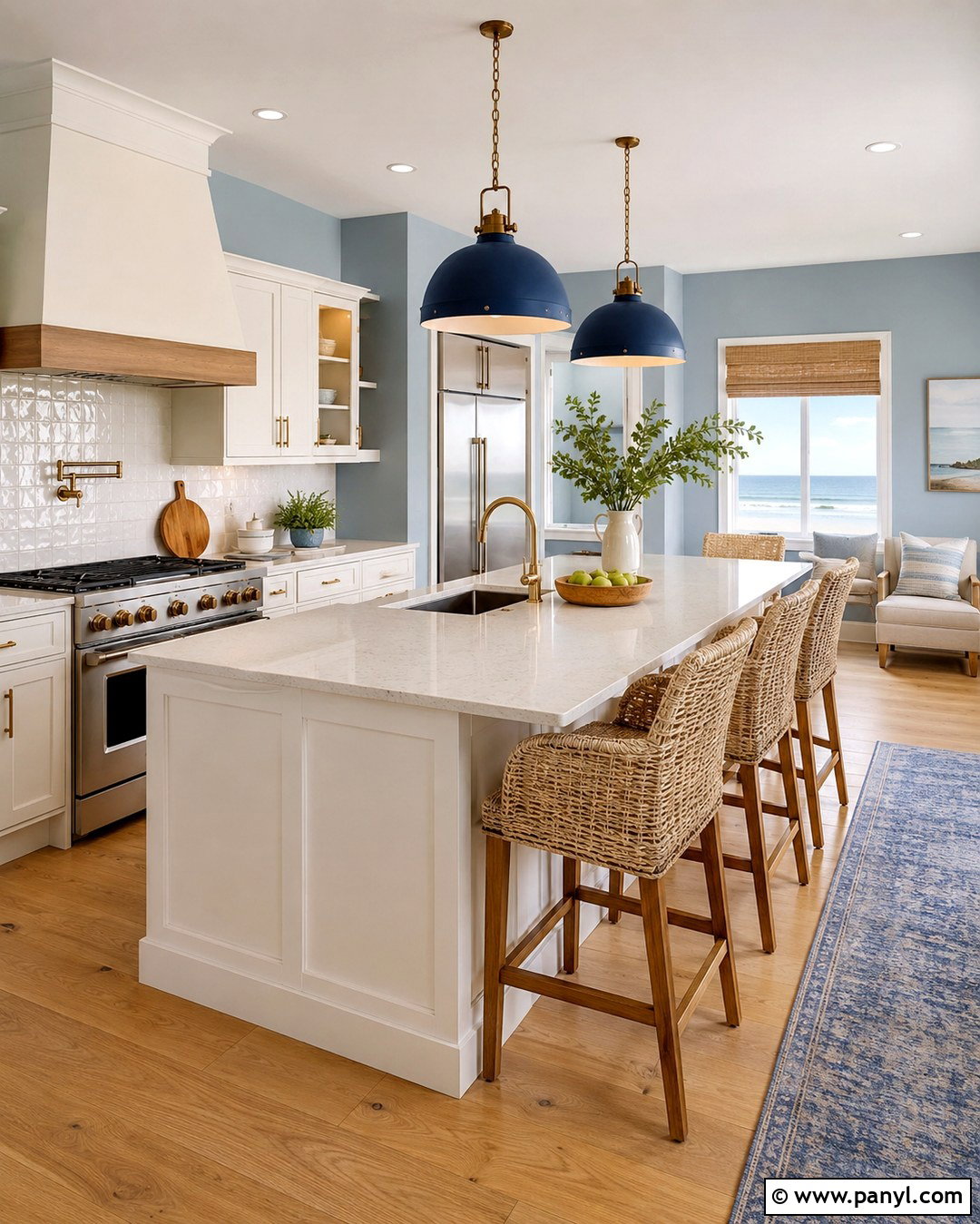
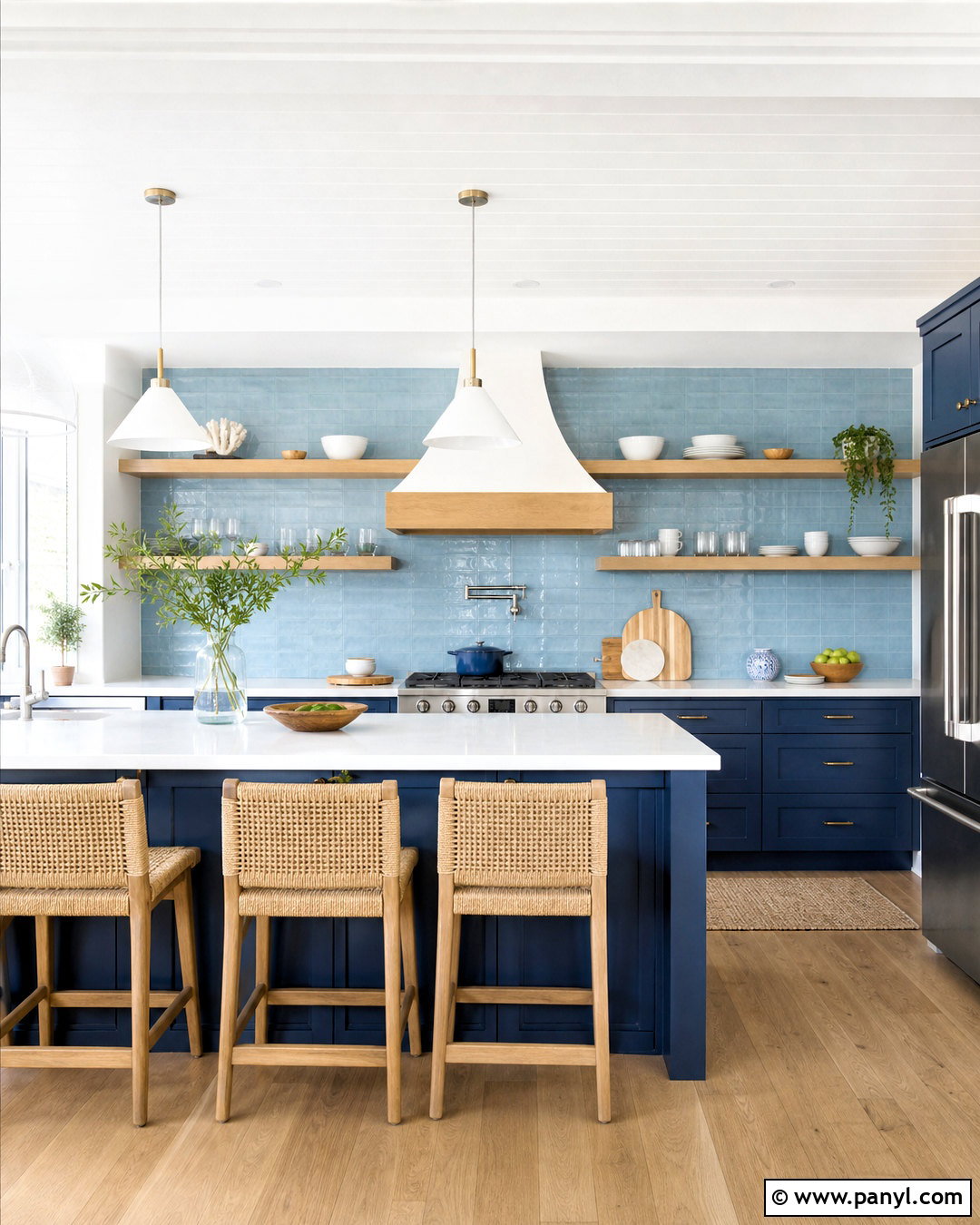
Blue-gray walls make a coastal kitchen feel sophisticated while still suggesting water and open sky. Use the color on the walls around warm white cabinets, then add a pale quartz countertop and a glossy white handmade-tile backsplash. Light oak flooring will warm the cooler wall tone and connect naturally with woven counter stools. For hardware, choose brushed nickel or aged brass, depending on whether you prefer a cooler or warmer finish. Navy pendant lights can provide definition above the island without overwhelming the room. Keep window treatments simple with natural woven shades. A runner featuring muted blue, cream, and sand tones adds softness underfoot. Display white ceramics, wood cutting boards, and greenery for a complete kitchen that feels clean, coastal, and approachable.
10. Sea Glass Green Walls
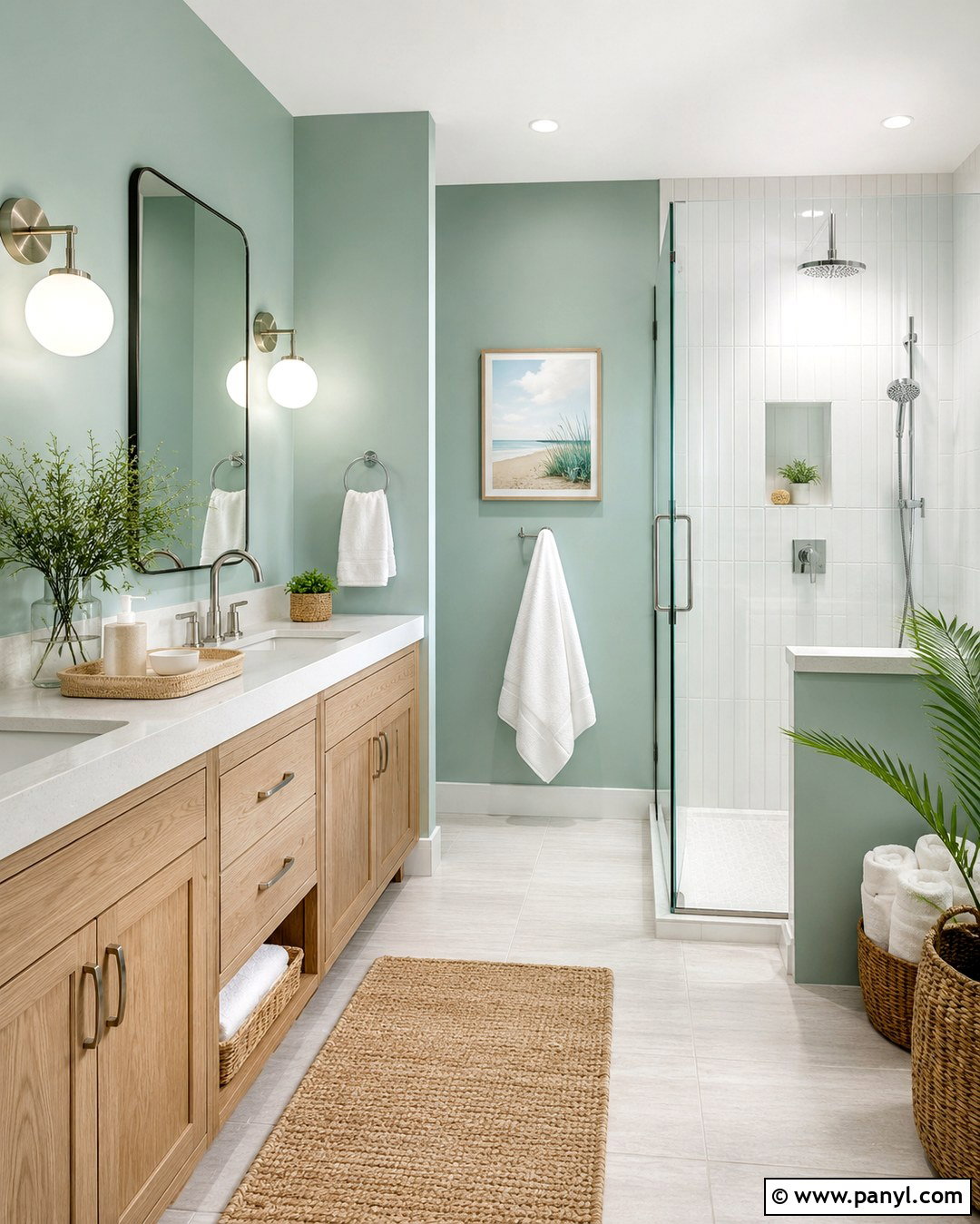
Sea glass green walls are especially effective in a bathroom because they complement white fixtures and reflective surfaces. Choose a muted green with hints of blue and gray, then pair it with a white oak vanity and a creamy quartz countertop. Vertical white tile in the shower adds subtle movement without competing with the wall color. Use polished nickel faucets for a clean look, or brushed brass for a warmer interpretation. A frameless mirror and clear glass shower enclosure help the room feel open. Add a woven bath mat, white towels, and pale wood accessories to continue the natural palette. Finish with a small plant and frosted globe lighting. The completed bathroom feels clean and coastal without relying on shells or decorative signs.
11. Soft Sage Green Walls
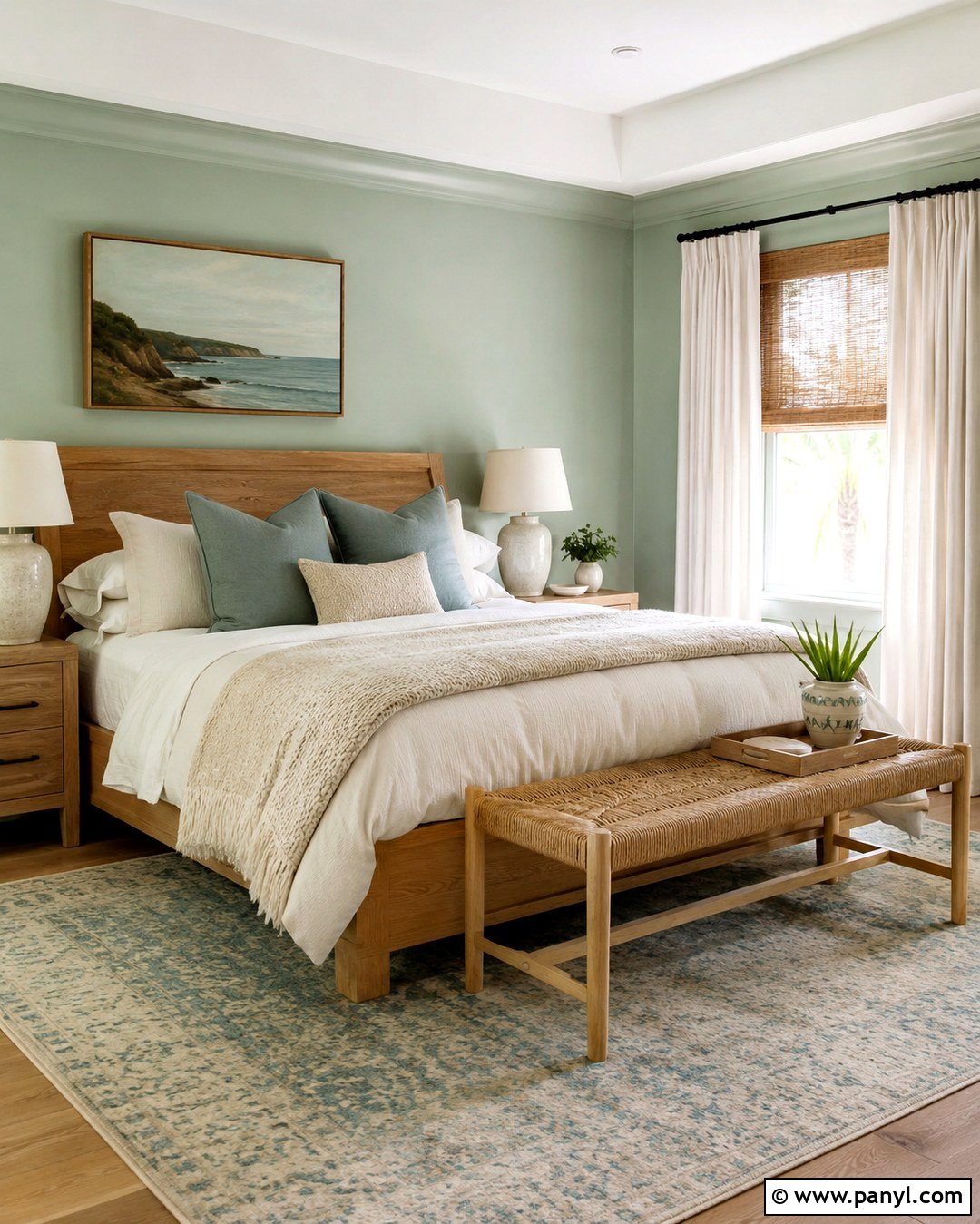
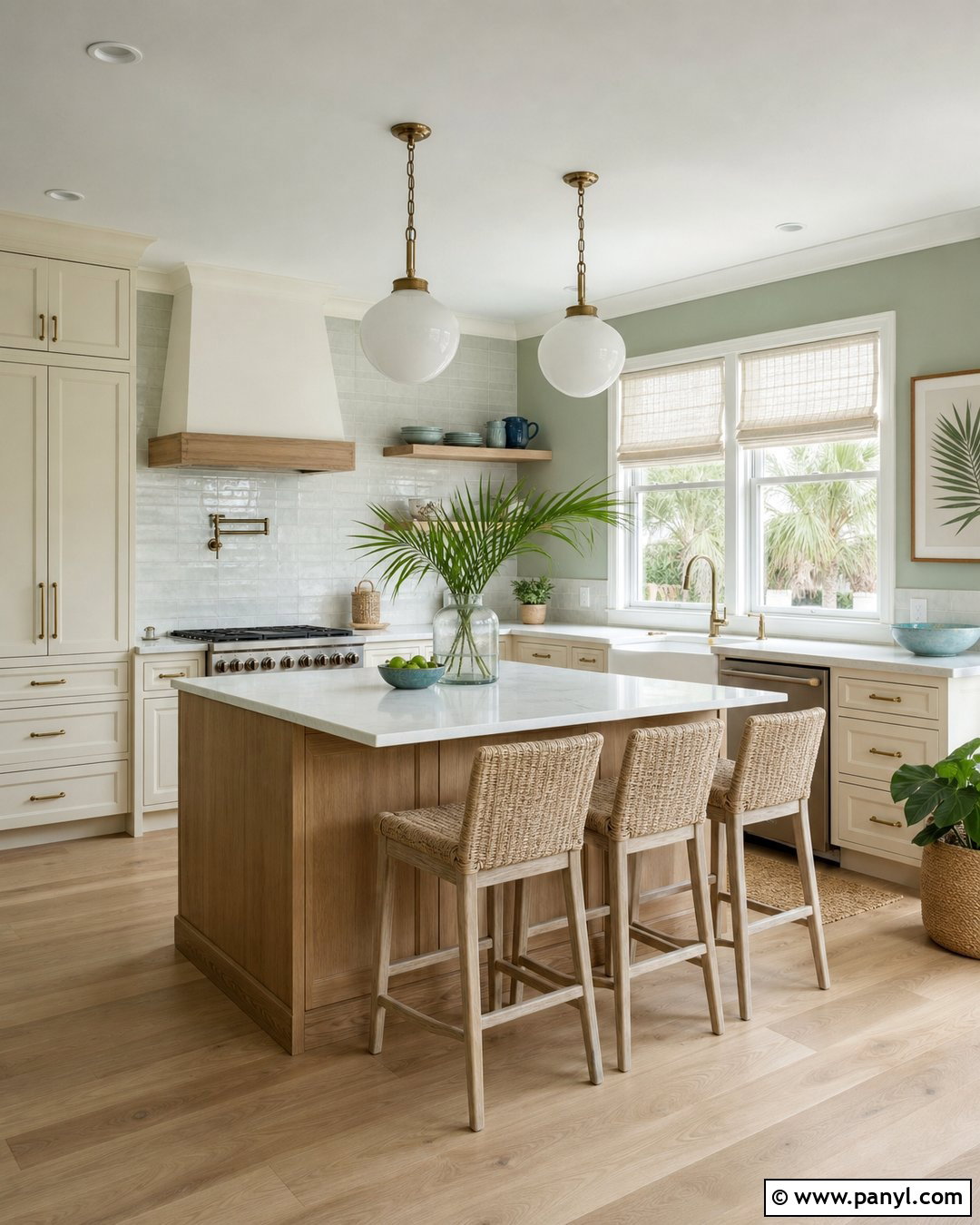
Soft sage green walls can create a restful coastal bedroom with more warmth than traditional ocean blue. Select a light, muted sage rather than an earthy olive, and pair it with warm white trim. A natural oak bed, ivory linen bedding, and a textured beige blanket establish a comfortable neutral foundation. Bring in subtle shoreline color through dusty blue pillows and a faded blue-green rug. Woven shades and off-white curtains will filter sunlight while enhancing the organic look. Choose simple ceramic lamps, aged brass hardware, and botanical artwork that echoes the green walls without matching them exactly. A cane bench or light wood dresser completes the arrangement. This room feels connected to coastal vegetation, dunes, and relaxed outdoor living.
12. Pale Aqua Walls
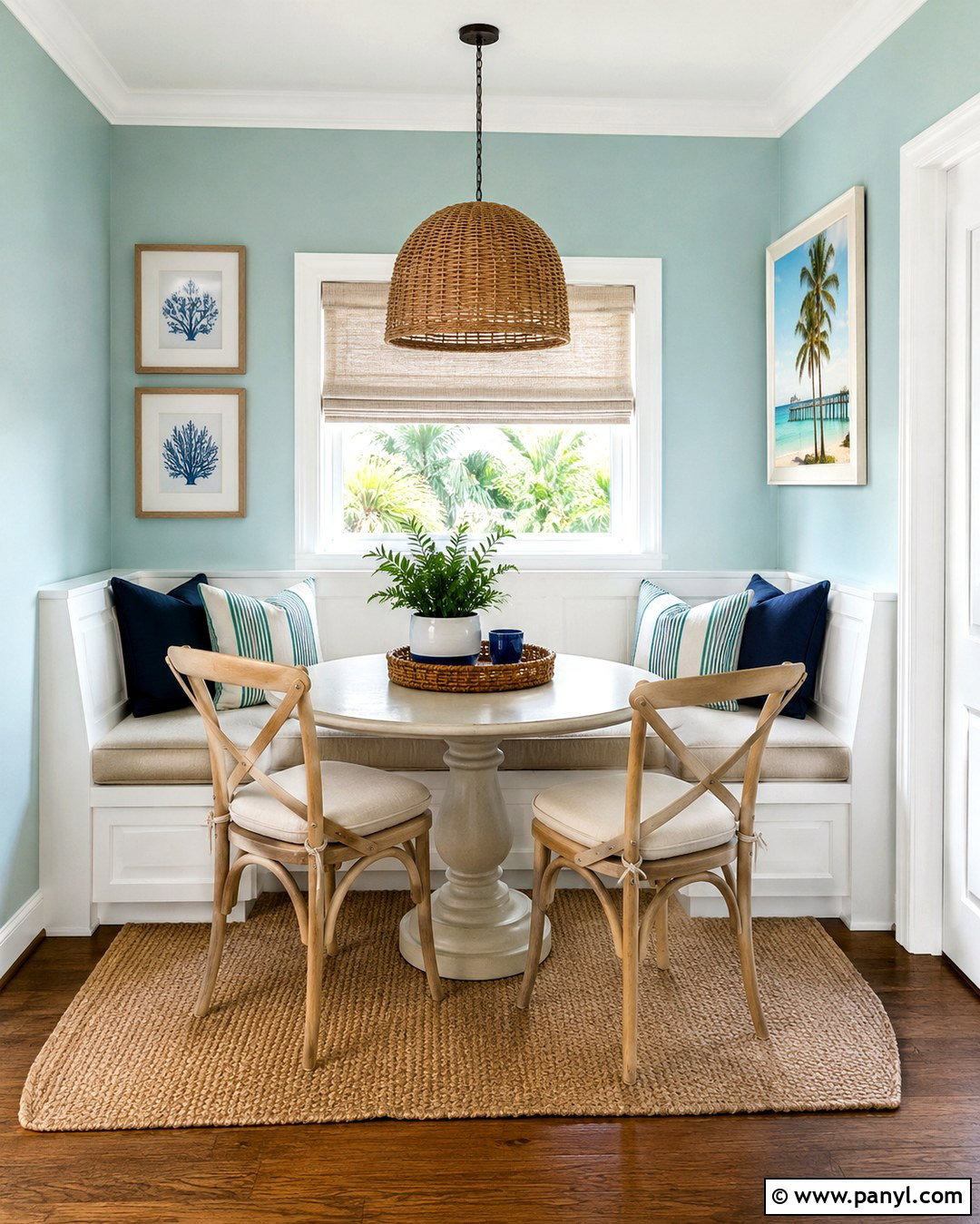
Pale aqua walls can make a small breakfast nook feel refreshing, bright, and separate from the surrounding kitchen. Pair the watery color with a built-in white bench, a round pedestal table, and light oak dining chairs. Upholster the bench in a durable cream fabric, then add striped cushions in aqua, navy, and sandy beige. White trim will give the wall color a clean edge, while a woven pendant introduces warmth overhead. Use a natural fiber rug beneath the table if spills and traffic allow, or leave pale wood flooring visible for easier care. Complete the nook with simple framed prints, a ceramic vase, and a linen Roman shade. The compact space will feel cheerful, cohesive, and ready for casual meals.
13. Muted Turquoise Walls
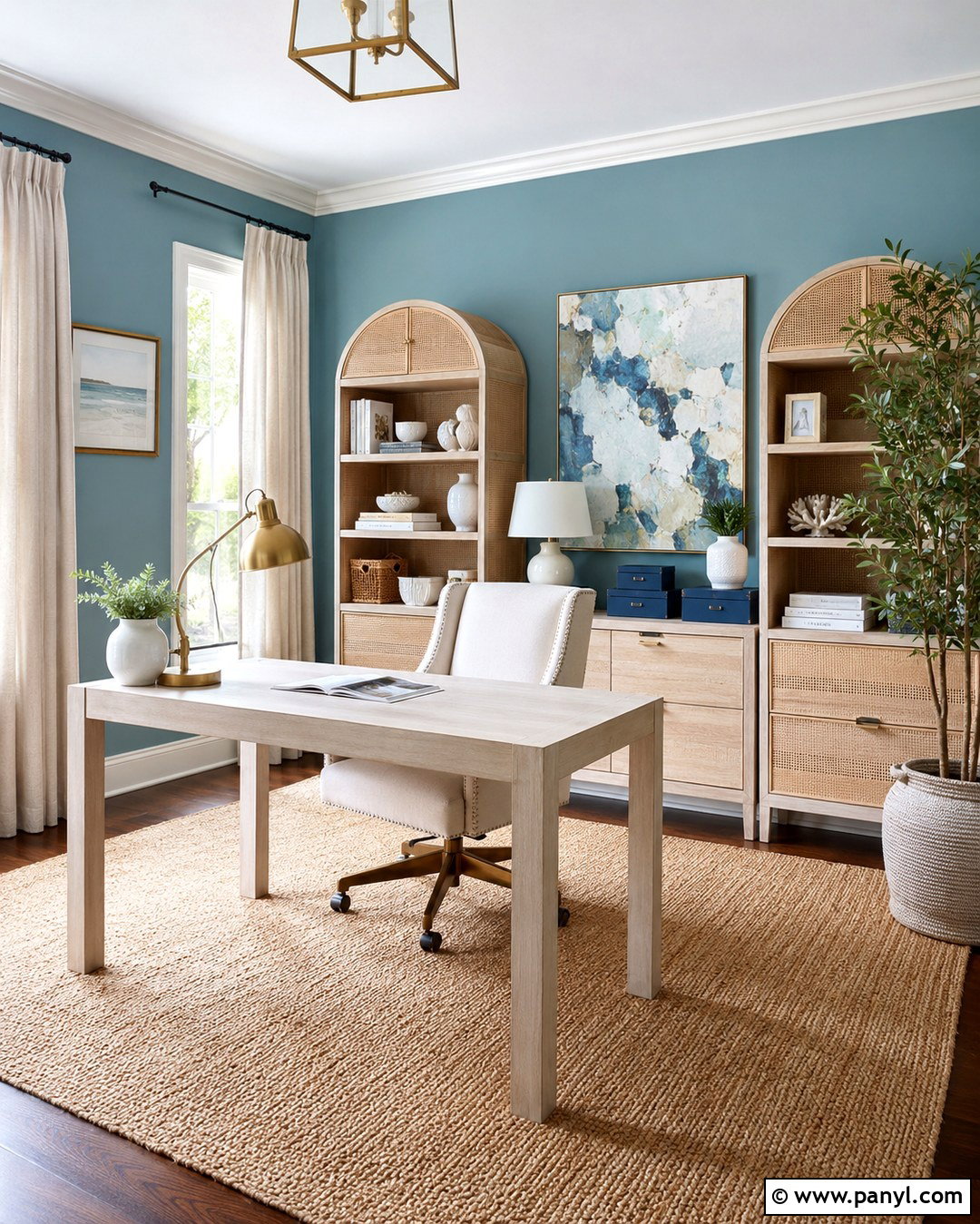
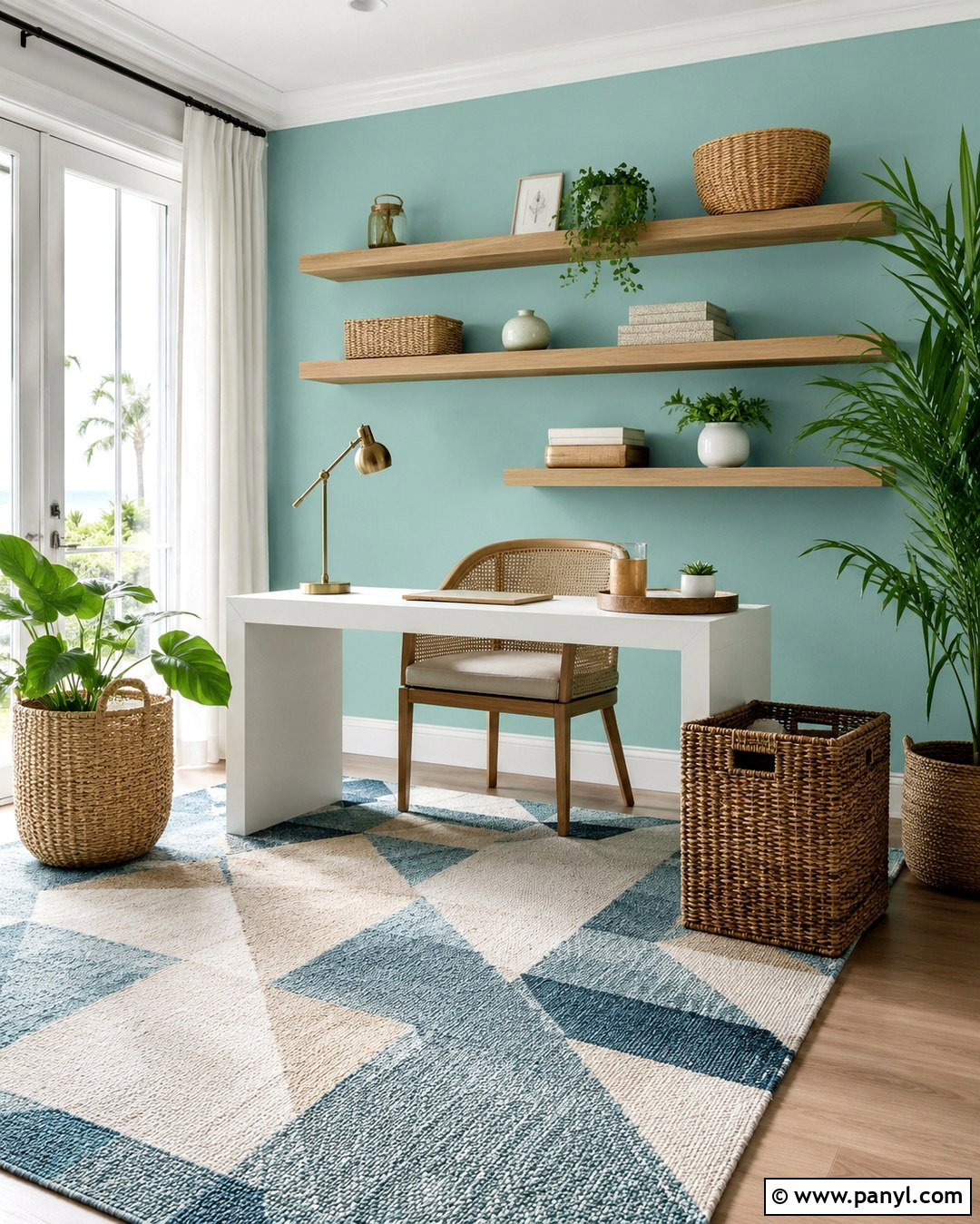
Muted turquoise walls give a home office confident coastal color without the intensity of a tropical resort palette. Use the shade behind a streamlined white oak desk and repeat it across every wall for an immersive, finished look. A cream upholstered desk chair, woven storage cabinets, and a natural jute rug soften the stronger color. Paint the trim warm white to frame the room and prevent the turquoise from feeling heavy. Add matte brass lighting, navy document boxes, and white ceramic accessories for controlled contrast. Linen curtains can diffuse harsh sunlight and help the wall color appear more consistent. Finish with one oversized abstract artwork and a tall plant. The office remains energizing, organized, and practical enough for focused daily work.
14. Soft Teal Walls
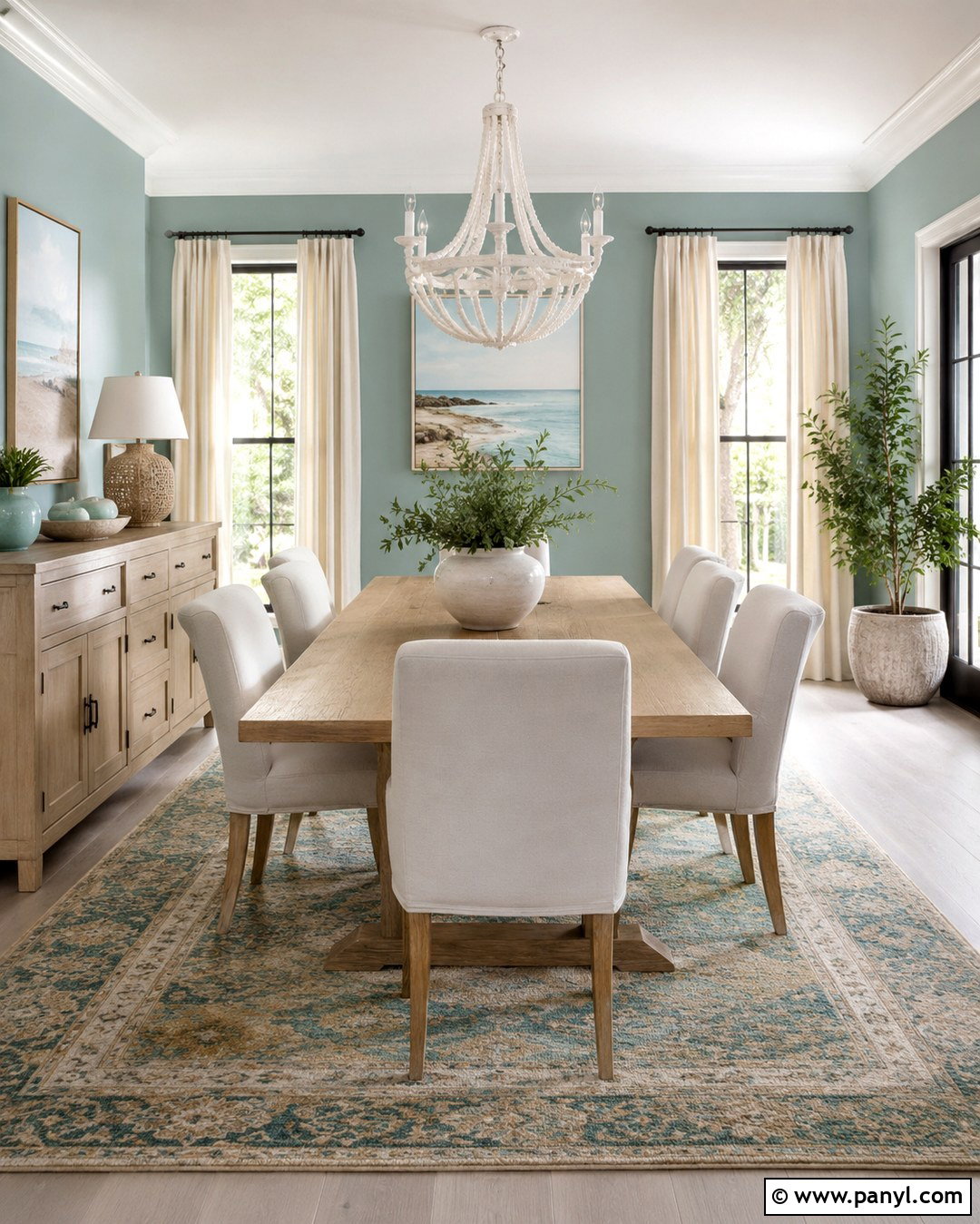
Soft teal walls can turn a dining room into a memorable coastal space while maintaining a refined atmosphere. Choose a medium teal softened with gray, then balance it with a pale oak table and cream upholstered chairs. Warm white crown molding, trim, and ceiling paint will brighten the room and highlight its architecture. Ground the dining set with a patterned rug that combines teal, faded navy, tan, and ivory. A woven or white plaster chandelier introduces texture without adding visual clutter. Use a light wood sideboard for storage and style it with clear glass, neutral pottery, and greenery. Natural linen curtains keep the room casual. The completed design feels colorful and beachy, yet polished enough for dinners and special gatherings.
15. Navy Blue Accent Wall
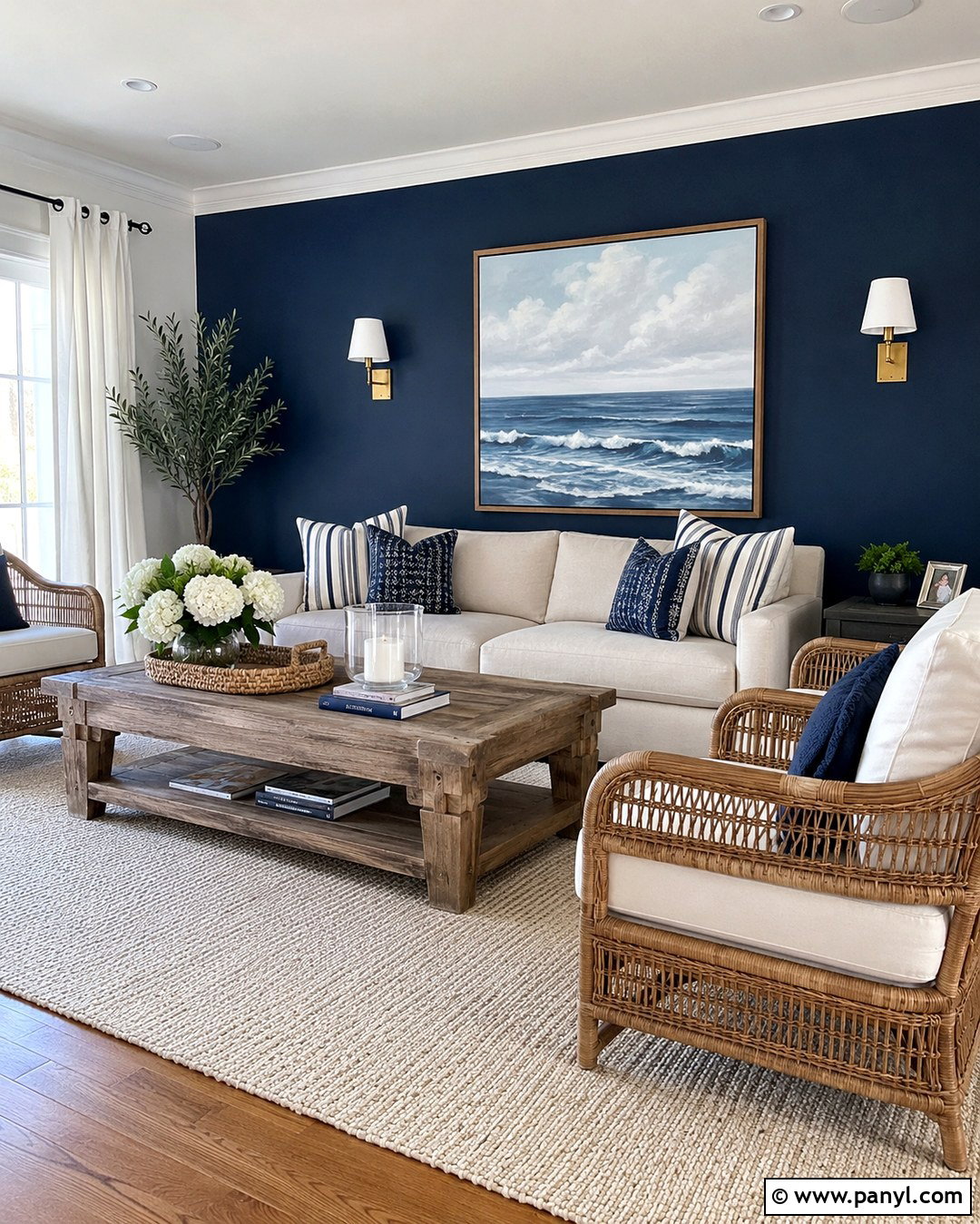
A navy blue accent wall creates a strong focal point in a coastal living room when the surrounding elements remain bright. Place the navy behind a white or oatmeal sofa, then paint the other walls and trim a clean warm white. Add two light rattan chairs, a weathered oak coffee table, and a large cream area rug to keep the arrangement balanced. Repeat navy through only a few accessories, such as striped pillows or patterned ceramics. Brushed brass sconces can stand out beautifully against the dark wall and provide practical lighting. Hang one oversized seascape rather than several small themed decorations. White curtains, pale flooring, and natural baskets finish the room, creating nautical contrast without making the space feel dark or cramped.
16. Denim Blue Walls
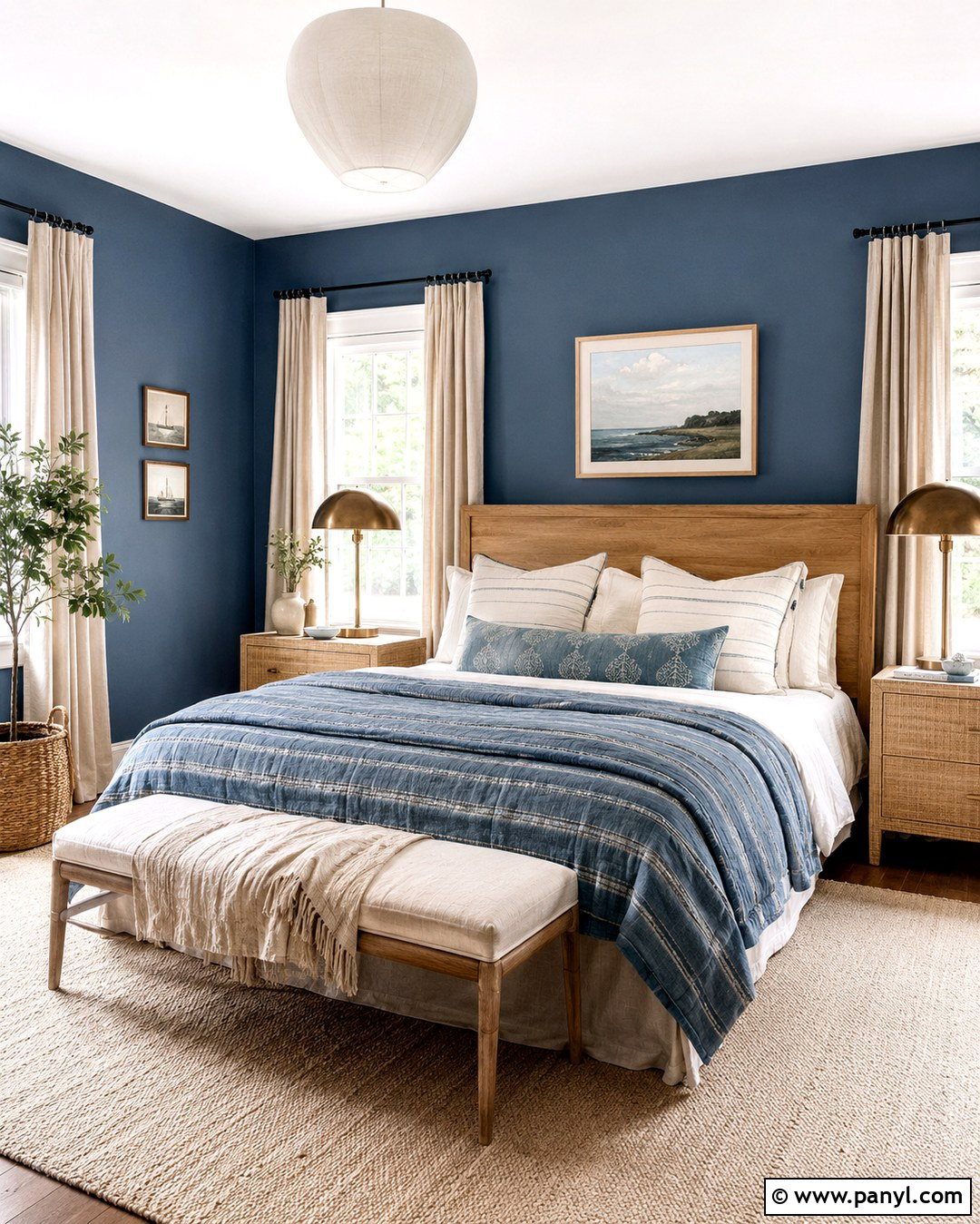
Denim blue walls give a bedroom relaxed depth and work well for a more grounded interpretation of coastal decor. Select a softened medium blue rather than a bright primary shade. Pair it with a natural oak headboard, warm white bedding, and a quilt featuring faded blue and cream stripes. Sandy beige curtains and a large ivory rug will lighten the room, while woven nightstands add casual texture. Use warm white on the ceiling and trim to create clear contrast around the blue. Antique brass lamps and leather drawer pulls introduce warmth without making the room formal. Complete the look with simple landscape artwork, a linen bench, and a few neutral pillows. The result feels comfortable, familiar, and collected over time.
17. Coral Blush Walls
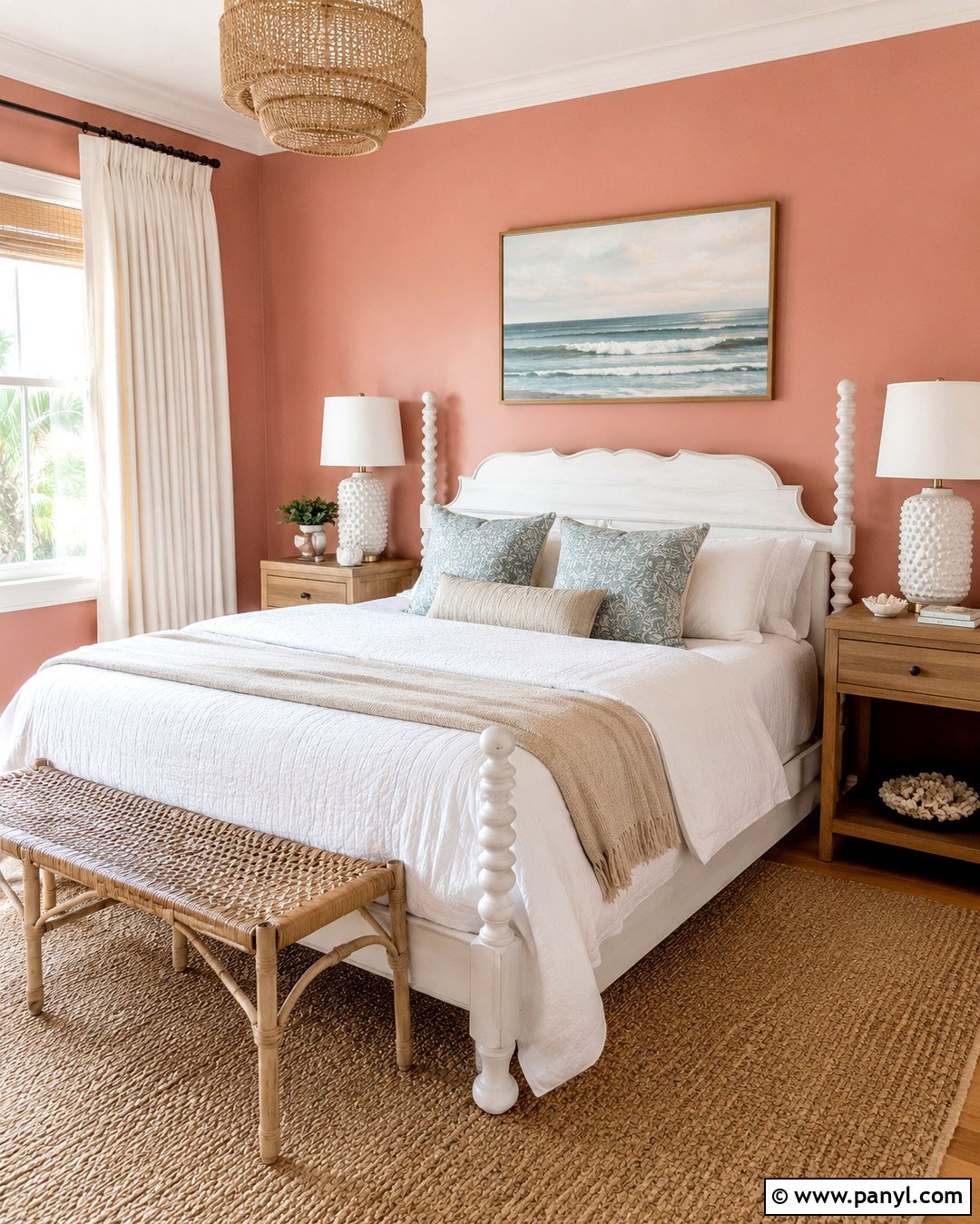
Coral blush walls capture the warmth of seashells and sunsets while giving a coastal guest bedroom a softer personality. Choose a pale, dusty coral with beige undertones instead of a vivid orange-pink. Balance it with a white-painted bed, crisp ivory bedding, and a light tan woven rug. Pale blue pillows create a complementary contrast that immediately connects the palette to the coast. Use warm white trim and natural linen curtains to keep the room calm. Add light oak nightstands, white ceramic lamps, and a cane bench for texture. Artwork should feature muted ocean, sand, or botanical tones rather than repeating bright coral. The finished room feels sunny and welcoming, but still restful enough for comfortable overnight stays.
18. Shell Pink Walls
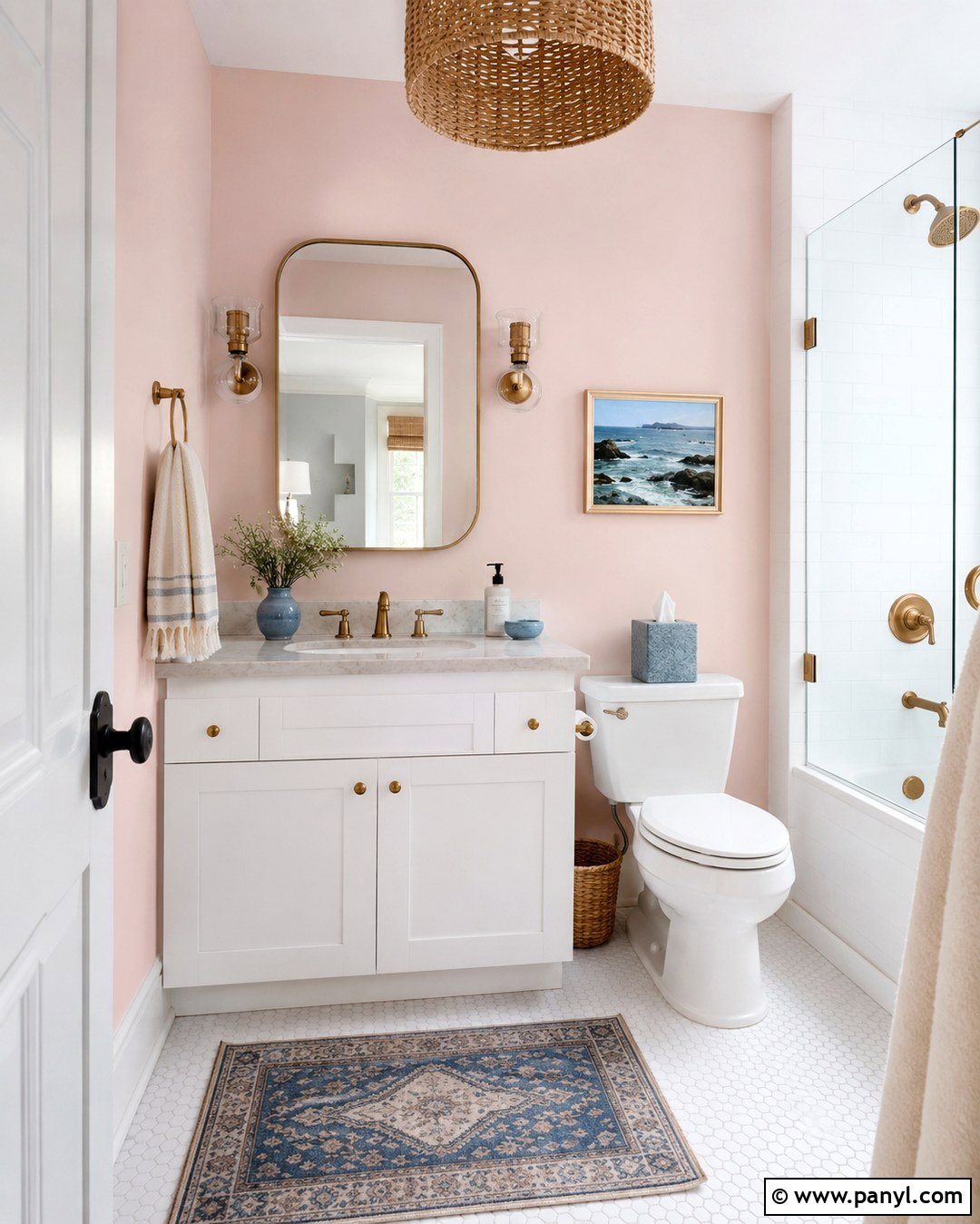
Shell pink walls can bring subtle warmth to a coastal powder room or compact bathroom. Look for a pale pink with sandy or gray undertones so it reads as sophisticated rather than sugary. Combine the walls with a white vanity, a honed marble countertop, and small-scale white floor tile. A rounded brass mirror and matching faucet add gentle warmth, while a woven pendant or rattan-framed light introduces natural texture. Paint the door and trim creamy white for soft contrast. Keep towels and accessories in ivory, beige, and faded blue to support the coastal palette. A small framed seascape and a simple glass vase are enough decoration. This complete bathroom feels fresh, flattering, and quietly inspired by delicate shoreline shells.
19. Sunwashed Yellow Walls
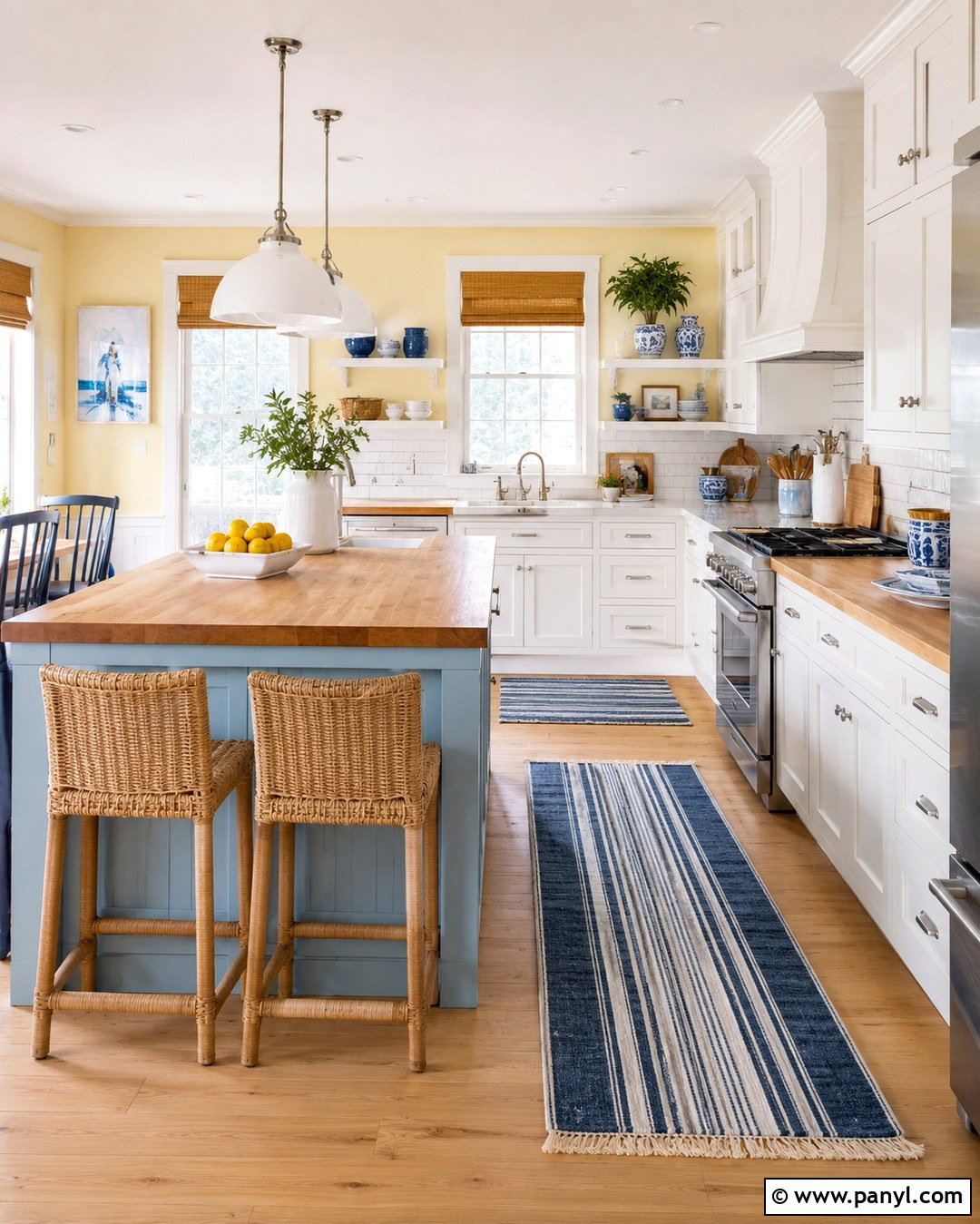
Sunwashed yellow walls make a coastal kitchen feel cheerful, especially when the shade is pale, warm, and slightly muted. Pair the yellow with creamy white cabinets, butcher-block counters, and a simple white tile backsplash. Light wood flooring and woven counter stools reinforce the relaxed beach-house character. Use soft blue on a kitchen island or pantry door to introduce balanced contrast without overpowering the sunny walls. Brushed nickel hardware and white glass pendants keep the finishes clean and uncomplicated. At the windows, choose natural woven shades or lightweight white curtains. Add striped runners, blue-and-white ceramics, and fresh greenery in limited amounts. The finished kitchen feels bright and welcoming rather than loud, dated, or heavily themed.
20. Pale Lavender Walls
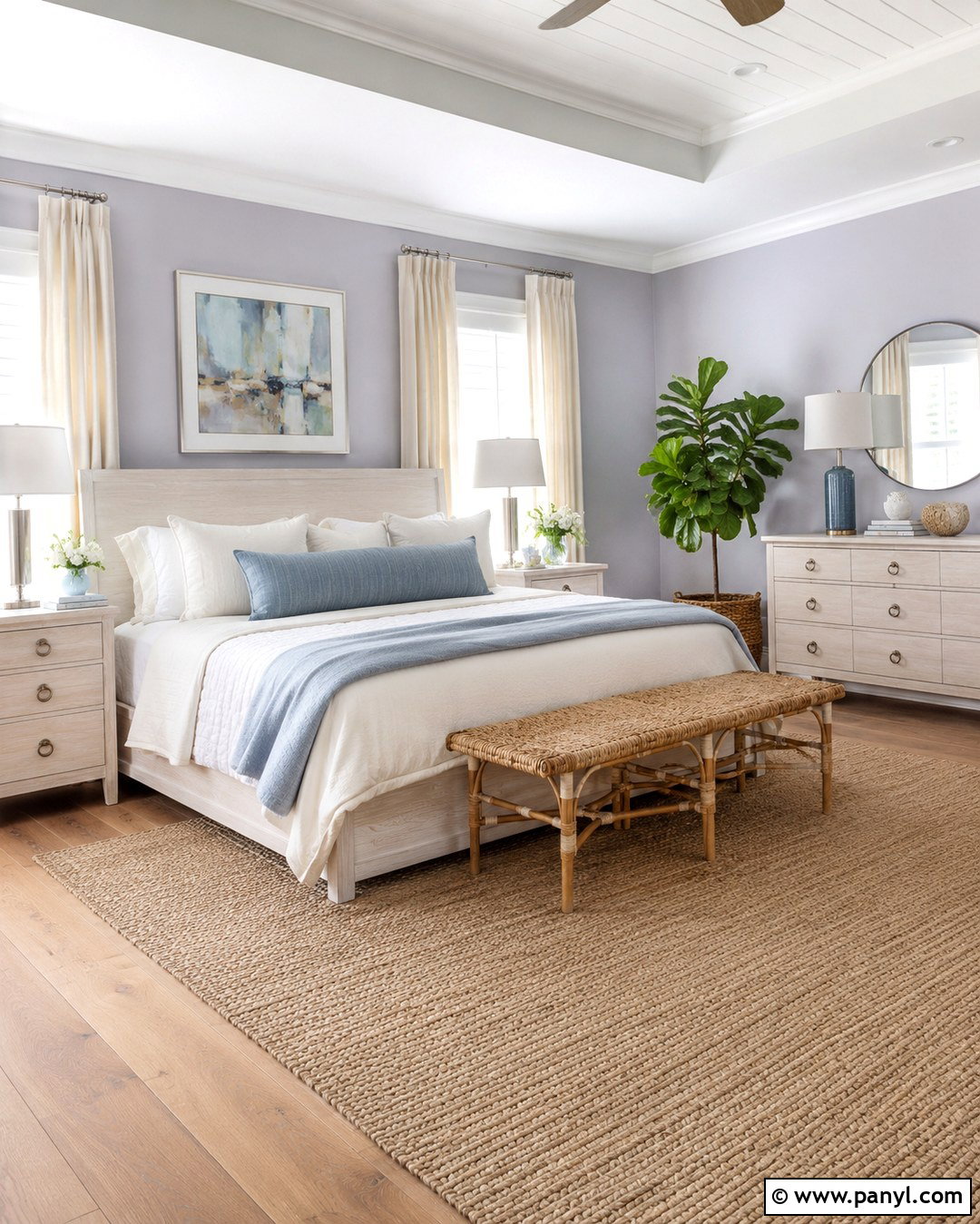
Pale lavender walls offer an unexpected coastal bedroom palette inspired by hazy skies and softly colored shells. Choose a restrained lavender with gray undertones so it behaves almost like a neutral. Pair it with a white oak bed, ivory linen bedding, and a light gray-blue throw. Cream curtains and a textured natural rug will warm the cooler wall tone, while brushed nickel lamps provide a clean reflective finish. Keep the trim soft white and avoid dark purple accessories, which can make the room feel overly dramatic. Instead, add dusty blue pillows, pale wood furniture, and understated abstract artwork. A woven bench and simple greenery complete this soothing bedroom, proving that beachy color can extend beyond familiar blue and green palettes.
Conclusion:
Choosing among these 20 Beachy Wall Colors begins with deciding how you want the room to feel. Soft whites, ivory, and sandy beige create a flexible neutral foundation. Misty blues and sea-glass greens produce a cooler, quieter mood, while coral, yellow, and pale lavender offer a more personal coastal interpretation. Whatever color you choose, connect it with warm wood, woven fibers, breathable fabrics, and a balanced mix of light and dark accents. Always test large samples beside your flooring, trim, and main furniture before painting the entire room. With thoughtful coordination, beachy wall color can make any home feel brighter, calmer, and naturally connected to the shoreline.

Related Ideas and Inspiration:
Leave a Reply