
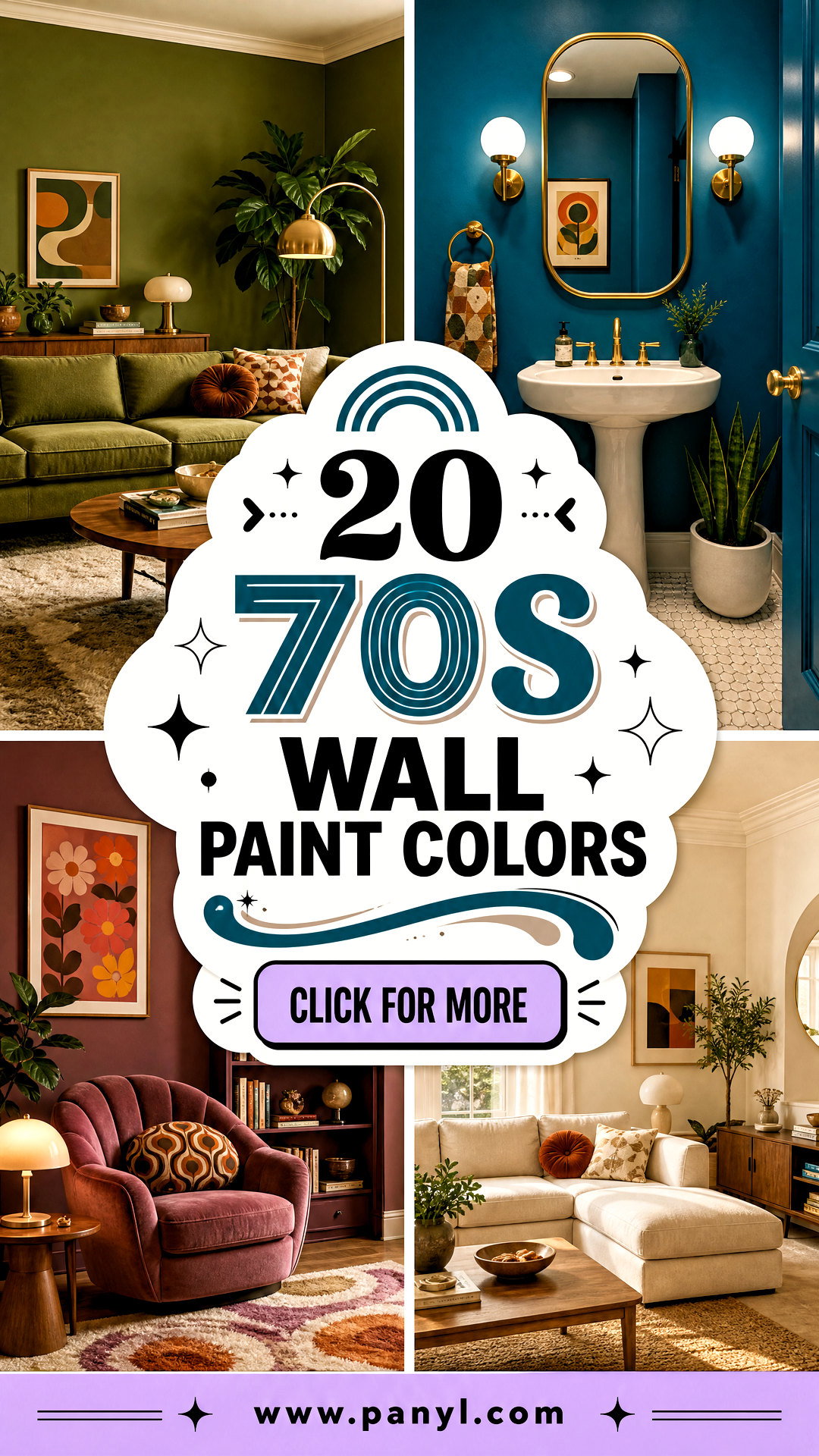
The warm, grounded character of 1970s interiors is finding its way back into modern homes. This guide to **20 70S Wall Paint Colors** explores earthy greens, glowing yellows, rich browns, fiery oranges, and unexpected jewel tones. These shades work best when combined with natural wood, tactile fabrics, curved furniture, patterned rugs, and warm metallic accents. Avocado, harvest gold, rust, mustard, beige, and brown formed the decade’s signature palette, while teal, rose, and purple brought in a more expressive side. () You can recreate the period faithfully or soften the colors with cream trim and contemporary furniture. Use the following complete room schemes to confidently decorate with **20 70S Wall Paint Colors**.
1. Avocado Green Living Room Walls
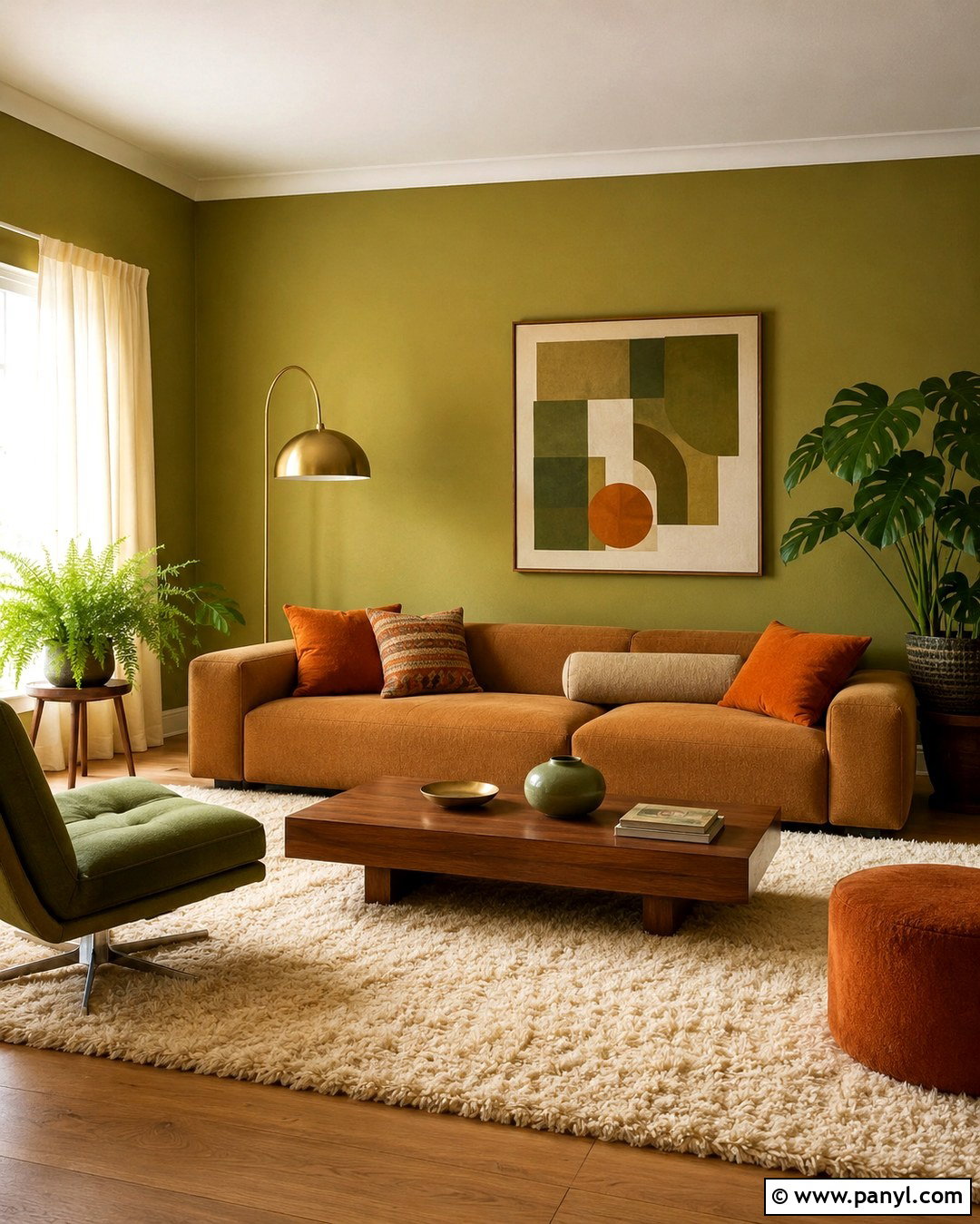
Avocado green walls create an unmistakable 1970s living room without requiring every furnishing to look vintage. Paint all four walls in a muted yellow-green rather than a bright lime shade. Add a low camel-colored sofa, a walnut coffee table, and a cream shag-style rug to balance the strong wall color. Burnt orange cushions introduce warmth, while large houseplants reinforce the natural palette. Choose simple linen curtains in warm ivory so sunlight can soften the green. A brass floor lamp and framed geometric prints provide period character without making the room feel themed. Keep the ceiling creamy white and use medium-tone oak or walnut flooring. This complete scheme feels earthy, comfortable, and surprisingly adaptable to an updated home.
2. Harvest Gold Dining Room Walls
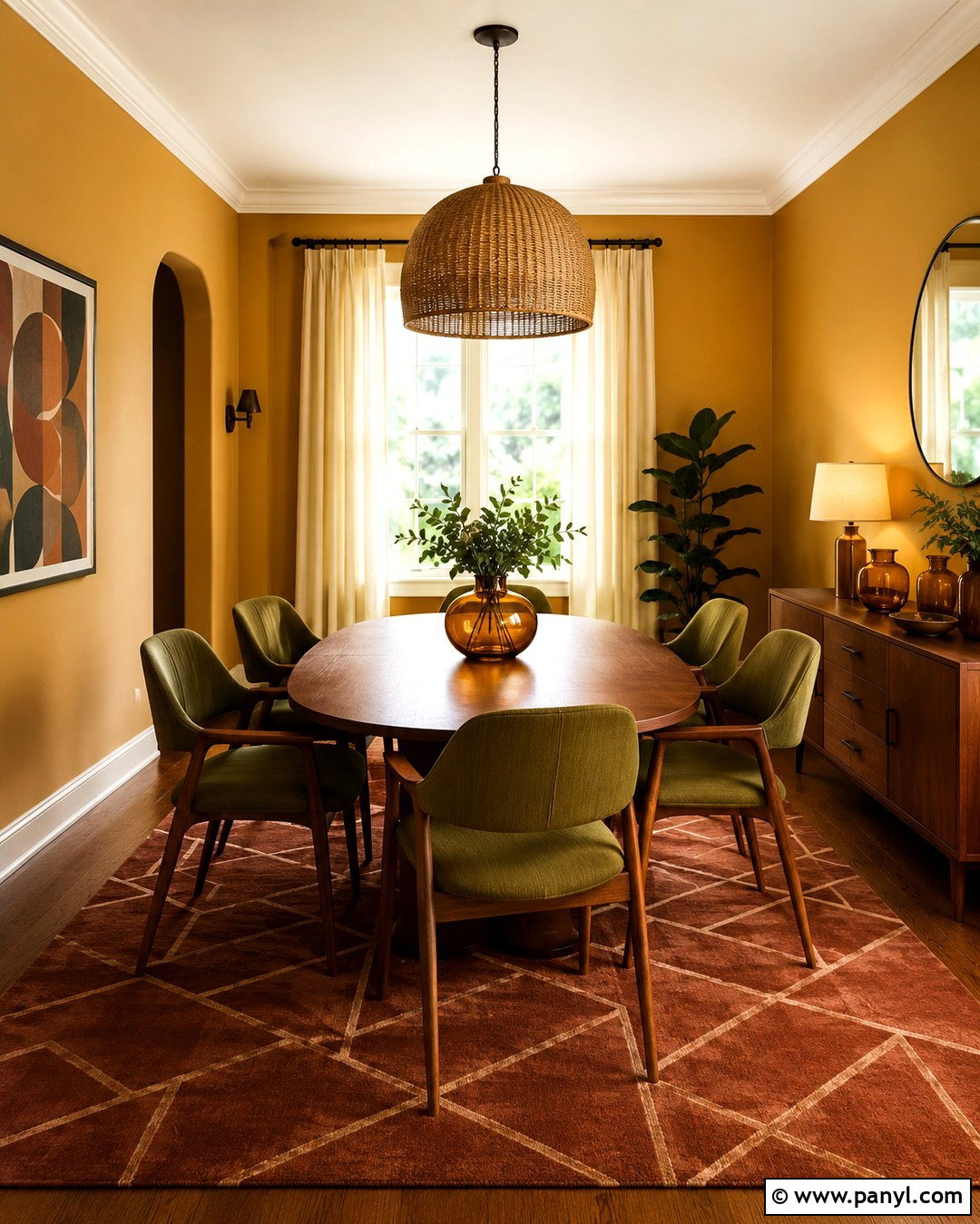
Harvest gold turns a dining room into a warm, welcoming space that looks especially rich beside dark wood. Choose a deep golden yellow with brown undertones and apply it across the walls, leaving the ceiling warm white. Center the room with an oval walnut dining table and upholstered chairs in olive green or caramel. A woven pendant light adds texture and spreads a gentle glow across the table. Ground the arrangement with a geometric rug containing gold, cream, rust, and brown. A teak sideboard can hold simple ceramic pieces and amber glass decor. Keep window treatments light and understated, such as natural flax curtains. The resulting room captures authentic 1970s warmth while remaining practical enough for everyday meals and modern entertaining.
3. Burnt Orange Bedroom Walls
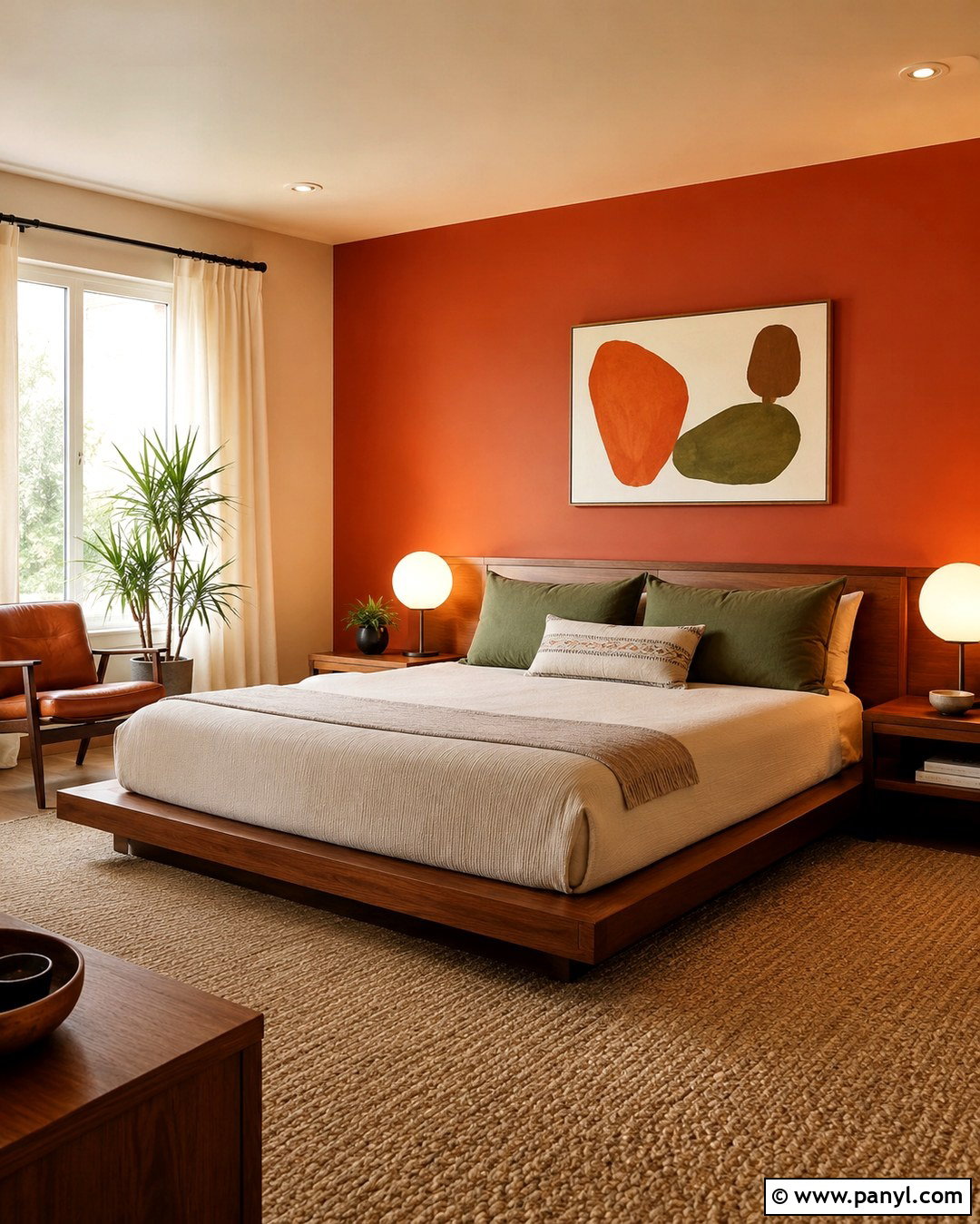
Imagine waking up in a room wrapped in a warm sunset tone. Burnt orange works beautifully in a bedroom when its reddish depth is balanced with quiet neutrals. Use it on the wall behind the bed and paint the remaining walls a soft cream. Choose a low walnut platform bed with oatmeal bedding, a rust-colored throw, and olive patterned pillows. Matching wood nightstands keep the space cohesive, while globe-shaped lamps introduce a subtle retro curve. Add a thick beige rug beneath the bed and use full-length ivory curtains to prevent the palette from becoming heavy. One large abstract print can connect the orange, green, brown, and cream accents. The finished bedroom feels cozy, expressive, and unmistakably influenced by the 1970s.
4. Chocolate Brown Office Walls
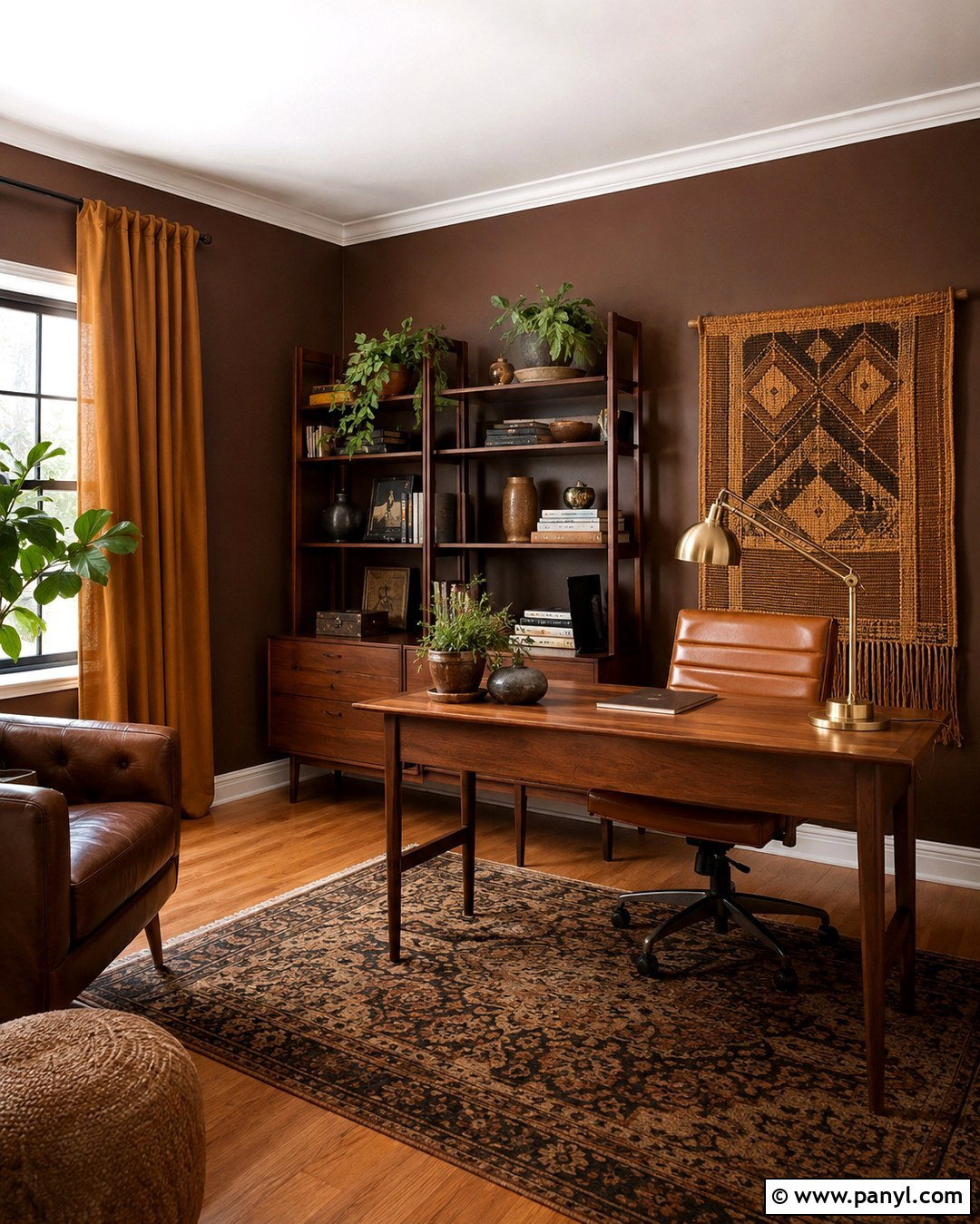
Chocolate brown walls can make a home office feel focused, grounded, and comfortably enclosed. Select a warm cocoa shade rather than a nearly black brown, then offset it with a cream ceiling and pale trim. Position a streamlined teak desk against the main wall and add a tan leather chair with a curved silhouette. Mustard curtains or a small gold rug can brighten the deeper background. Include walnut shelving, a brass desk lamp, and several green plants to prevent the room from appearing flat. A woven wall hanging introduces texture without competing with the color. Use bright task lighting and keep the floor relatively light, preferably natural oak. This complete office balances 1970s richness with the clean organization needed for a functional contemporary workspace.
5. Mustard Yellow Kitchen Walls
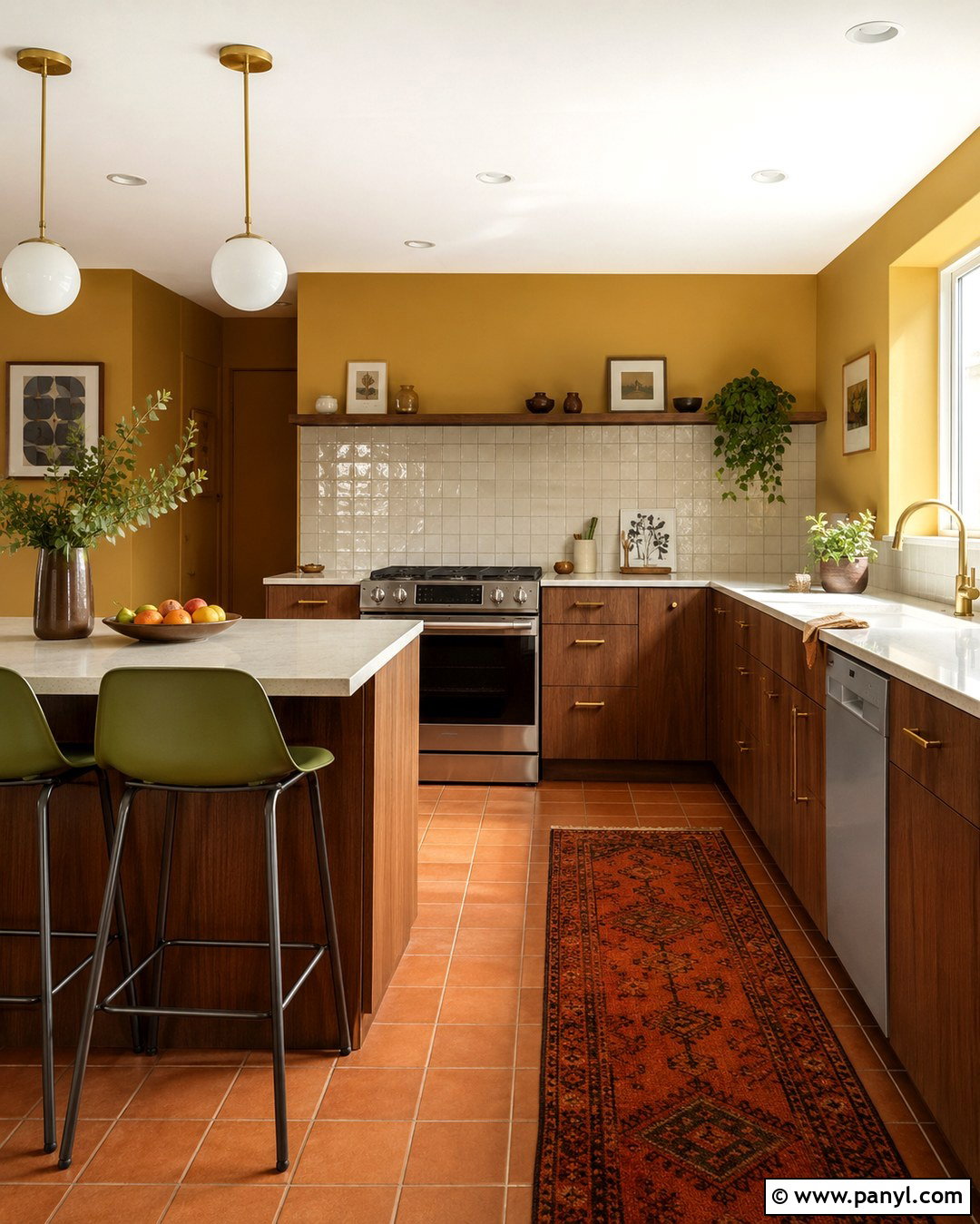
Mustard yellow gives a kitchen cheerful 1970s energy without the commitment of colorful appliances or cabinetry. Paint the open wall areas in an earthy yellow that carries ochre or brown undertones. Pair it with flat-front walnut cabinets, cream quartz counters, and a backsplash of small off-white square tiles. Avocado green barstools or painted lower cabinets can add a second retro color in a controlled way. Choose aged brass cabinet pulls and globe pendants to continue the warm palette. Terracotta flooring or a rust-colored runner will ground the brighter walls. Keep open shelves simple, displaying cream pottery and amber glassware. This kitchen scheme feels nostalgic yet usable because every bold shade is supported by clean surfaces, natural wood, and practical modern finishes.
6. Rust Red Entryway Walls
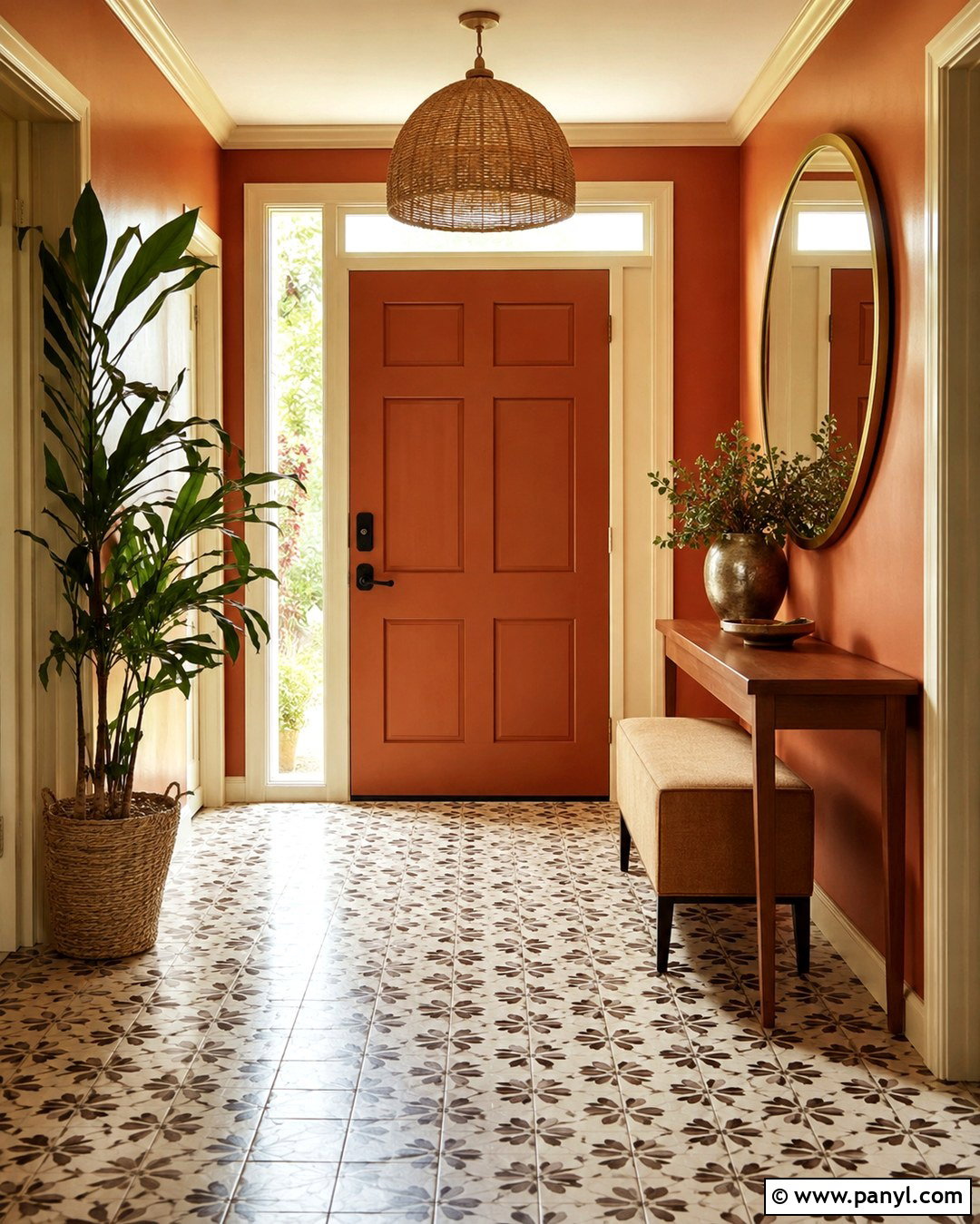
A rust red entryway creates an immediate sense of warmth and personality. Choose a muted red-orange with earthy brown undertones, which feels softer and more livable than primary red. Paint the walls and interior side of the front door in the same color for a cocooning effect. Add a narrow teak console, a round brass-framed mirror, and a small bench upholstered in tan fabric. Patterned floor tiles in cream, brown, and rust can establish a strong retro foundation. Include a woven pendant and one tall plant to add height without crowding the walkway. Cream trim provides a clean border around the saturated walls. The completed entry feels coordinated and inviting, giving visitors a clear introduction to a warm 1970s-inspired home.
7. Olive Green Family Room Walls
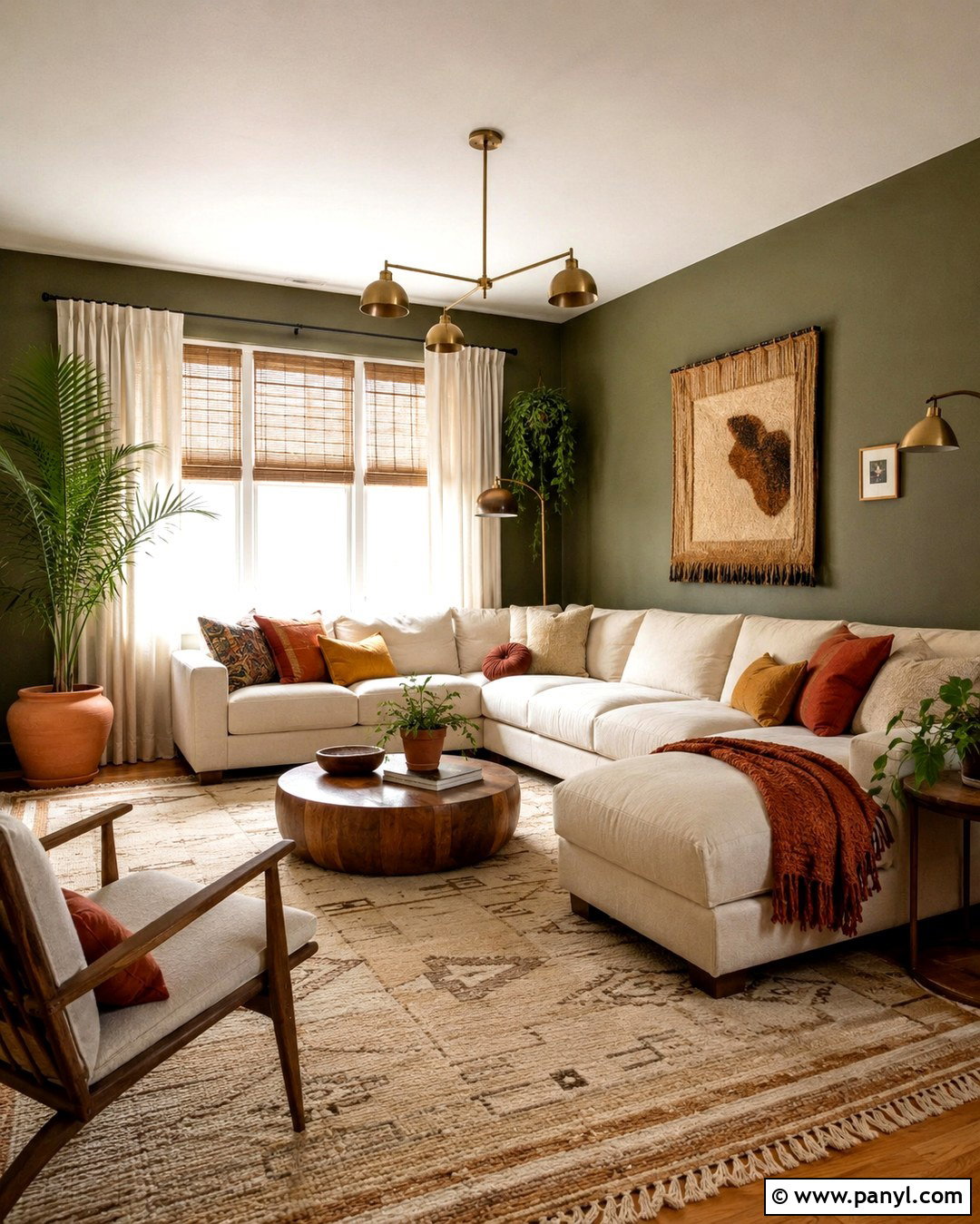
Olive green offers a quieter alternative to classic avocado while preserving the natural character of 1970s design. Cover the family room walls in a medium olive shade and pair them with a generous cream sectional. Add a low walnut media console, a round wooden coffee table, and textured cushions in ochre, rust, and brown. A large geometric rug should repeat these colors against a beige background. Instead of filling every wall, hang one oversized fiber artwork above the sofa. Woven blinds and ivory curtains will filter daylight and lighten the scheme. Complete the room with a brass arc lamp, ceramic table lamps, and leafy plants in terracotta pots. The finished space feels relaxed, layered, and suitable for both family gatherings and quiet evenings.
8. Terracotta Bathroom Walls
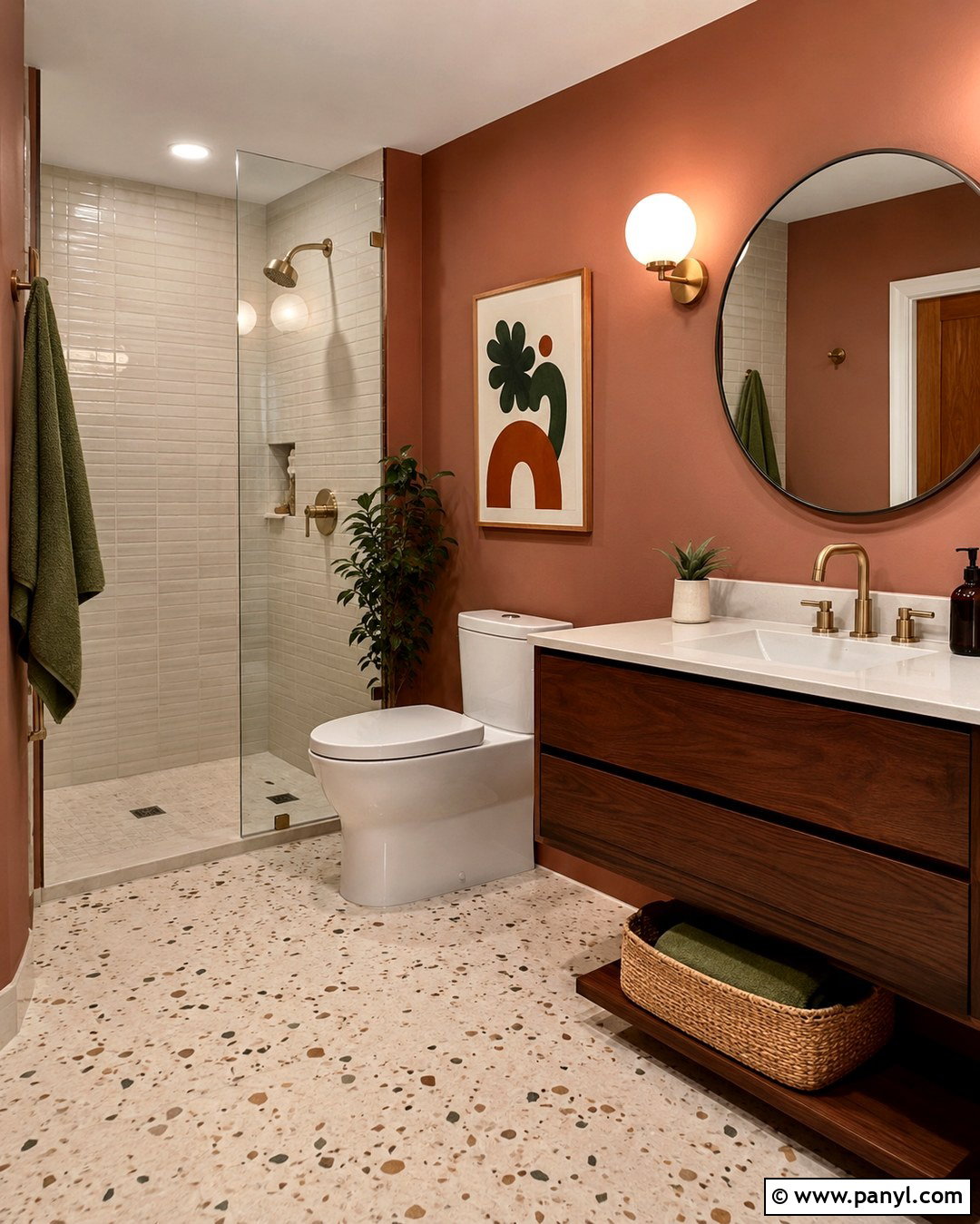
Terracotta walls can transform an ordinary bathroom into a warm, earthy retreat. Use moisture-resistant paint in a muted clay shade above the tile line, then install creamy off-white tile around the tub or shower. A walnut vanity with a rounded rectangular mirror provides strong 1970s character, while brushed brass fixtures introduce a polished detail. Choose a light terrazzo floor containing small tan, rust, and beige fragments. Avocado green towels offer contrast without interrupting the natural palette. Add a globe wall light, a simple woven basket, and one humidity-loving plant. Keep the ceiling and trim soft white to preserve brightness. This combination gives the bathroom a complete retro identity while using durable finishes and an uncluttered layout that still feels current.
9. Warm Beige Open-Plan Walls
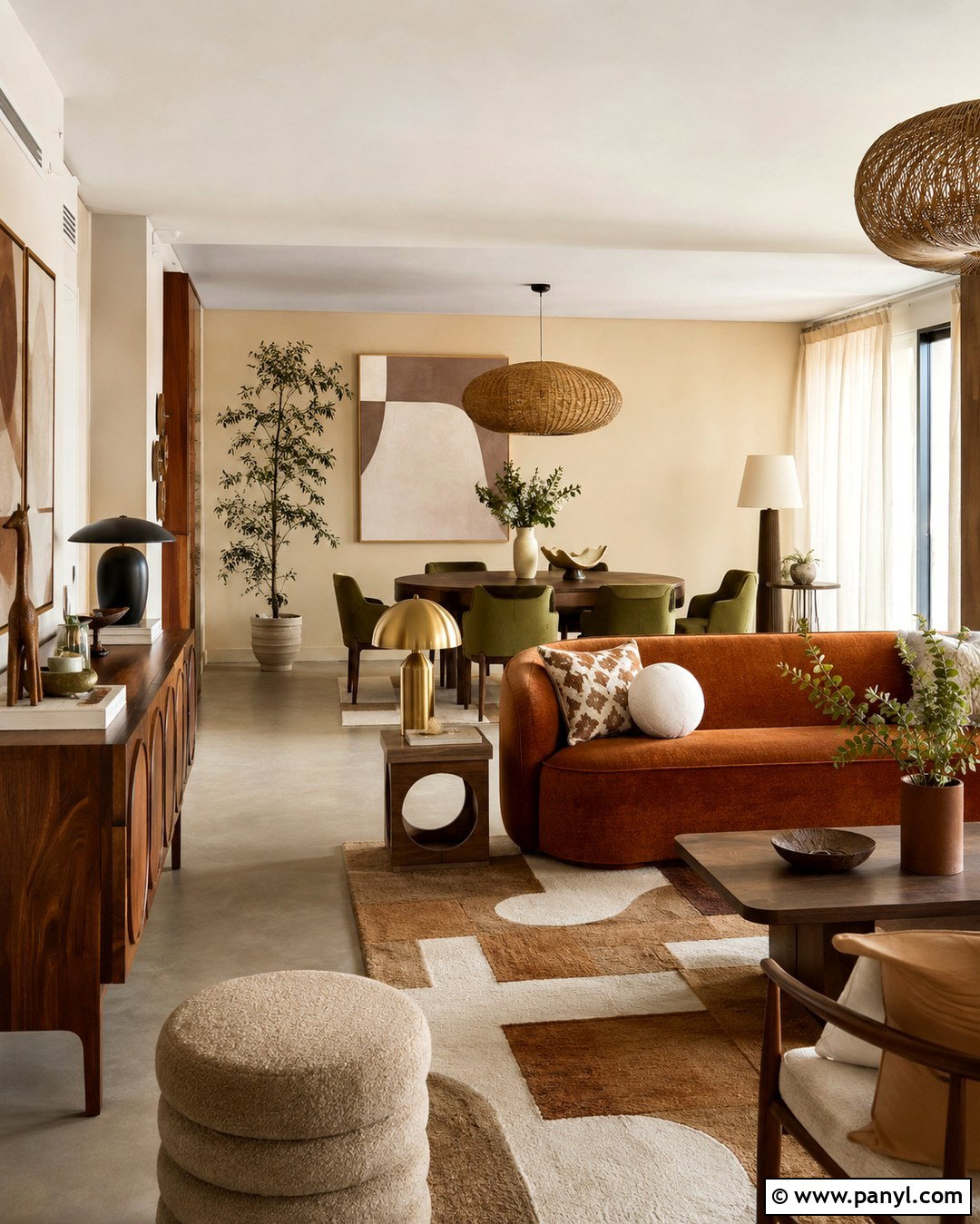
Warm beige was central to many 1970s interiors, but today it works best with plenty of texture and intentional contrast. Paint the open-plan living and dining walls in a sandy beige with subtle golden undertones. Use a rust velvet sofa to define the seating area and a round walnut dining table to establish the eating zone. Repeat olive green through dining chairs, cushions, and ceramics. A large cream-and-brown patterned rug can visually anchor the living room without dividing the floor plan. Choose woven pendant lights, linen curtains, and sculptural wood furniture to add interest. Dark brown frames and brass accents supply definition. This coordinated approach allows beige to act as a warm backdrop while the furnishings deliver the recognizable colors and forms of the decade.
10. Camel Tan Guest Room Walls
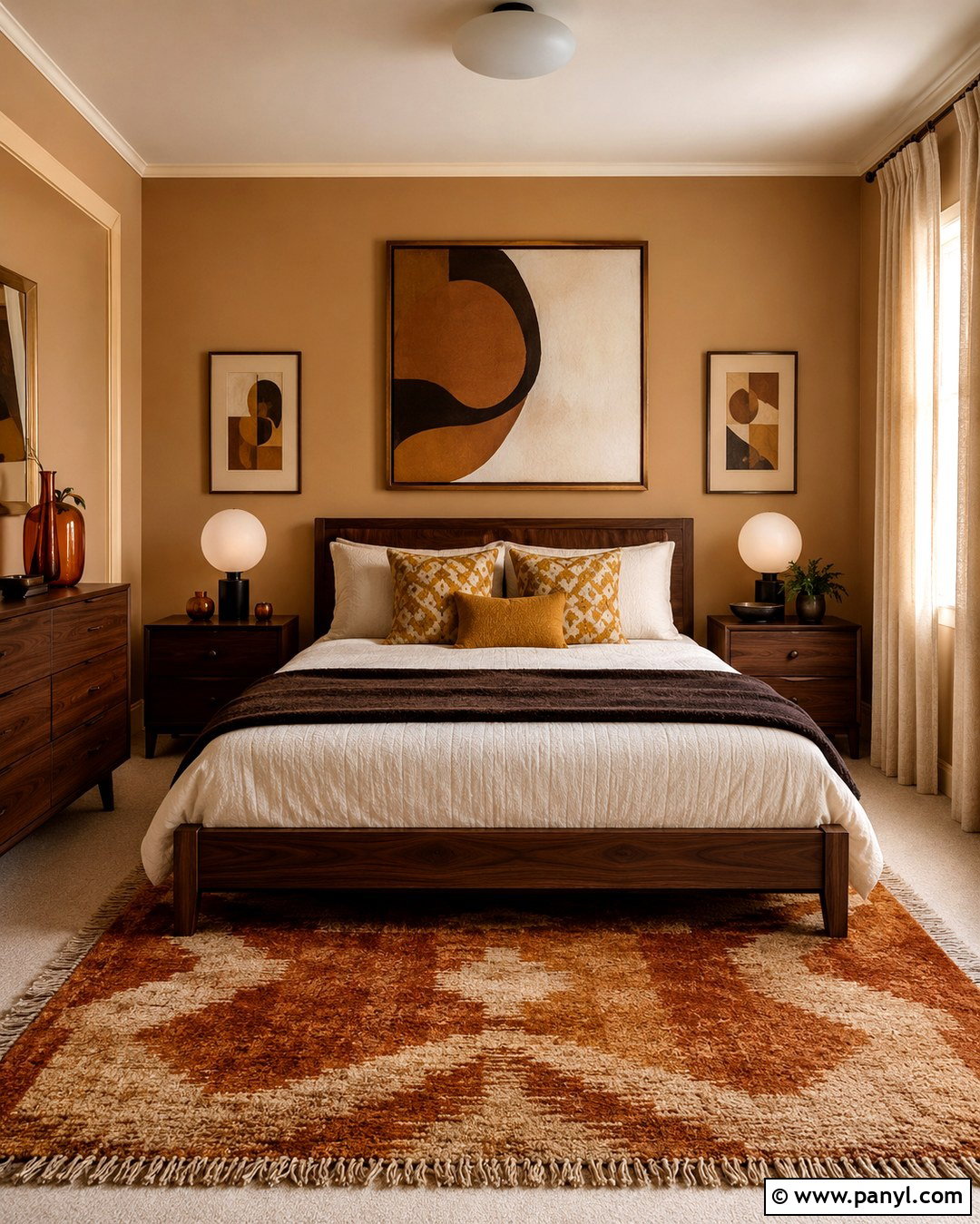
Camel tan walls give a guest room a soft, enveloping quality that feels warmer than standard beige. Paint every wall in a medium caramel-tan shade and use creamy white across the ceiling and baseboards. Center a walnut bed against the longest wall, then dress it with ivory bedding, a chocolate brown blanket, and mustard patterned pillows. Add matching globe lamps on compact wooden nightstands. A rust-and-cream rug beneath the bed introduces a graphic element without overwhelming the room. Hang simple abstract artwork featuring orange, olive, and gold. Natural linen curtains will keep the windows light and relaxed. With its balanced mix of warm color, clean furniture, and tactile fabrics, this scheme gives guests a comfortable version of 1970s design rather than a literal replica.
11. Teal Blue Den Walls
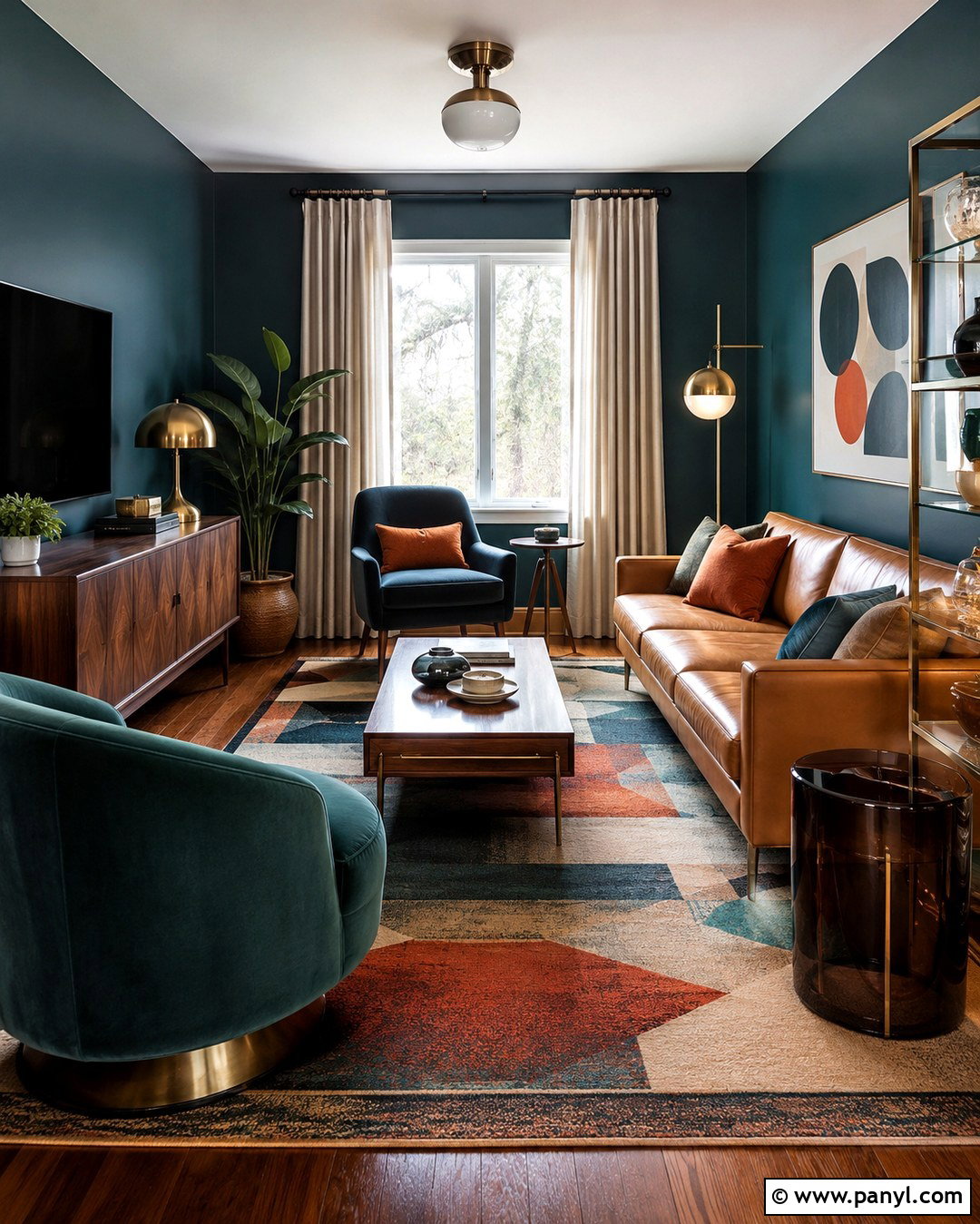
Deep teal walls introduce the cooler side of the 1970s palette while still feeling rich and dramatic. Use teal across the den walls and balance it with a caramel leather sofa or a pair of tan lounge chairs. A walnut media unit and low coffee table will warm the blue-green background. Bring in burnt orange through cushions, a throw, or a patterned area rug for strong complementary contrast. Cream curtains and a pale ceiling help the compact space remain bright. Add a brass floor lamp, smoked glass side table, and framed geometric artwork in teal, orange, and gold. The room should feel layered but not crowded. This complete den works especially well for reading, listening to music, or relaxing away from busier areas of the home.
12. Peacock Blue Powder Room Walls
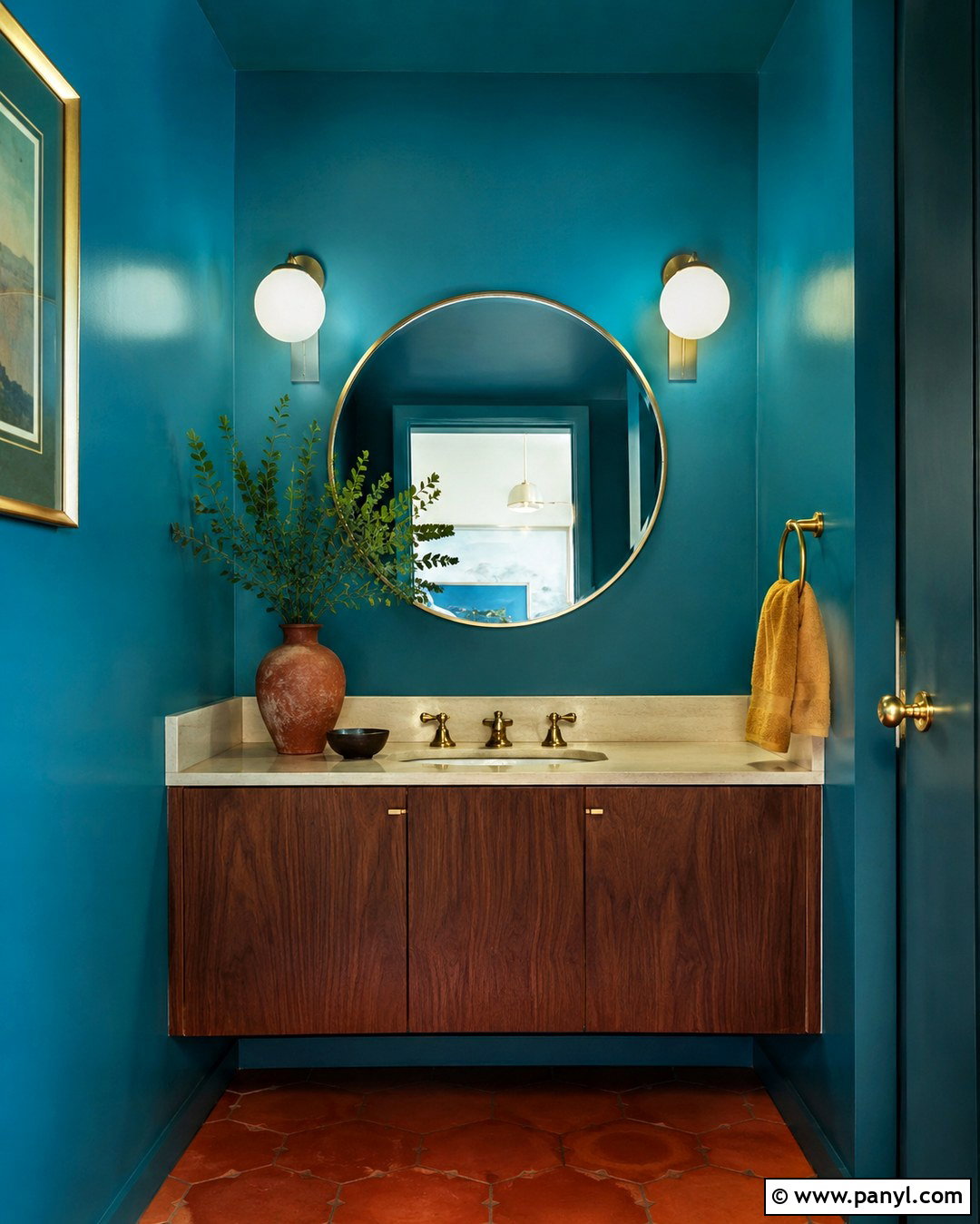
A powder room is an ideal place to experiment with saturated peacock blue. Paint the walls and ceiling in the same blue-green shade to create a striking, unified envelope. Install a compact walnut vanity with a cream stone top and a round mirror framed in brushed brass. Small terracotta floor tiles add warmth beneath the cool wall color. Choose globe sconces with opaque white glass to provide clear, flattering light. A hand towel in harvest gold and a small rust-colored ceramic vase can complete the palette. Avoid filling the room with tiny accessories; a bold paint treatment needs only a few purposeful details. The finished powder room feels glamorous, playful, and distinctly retro while remaining polished enough for a contemporary home.
13. Dusty Rose Bedroom Walls
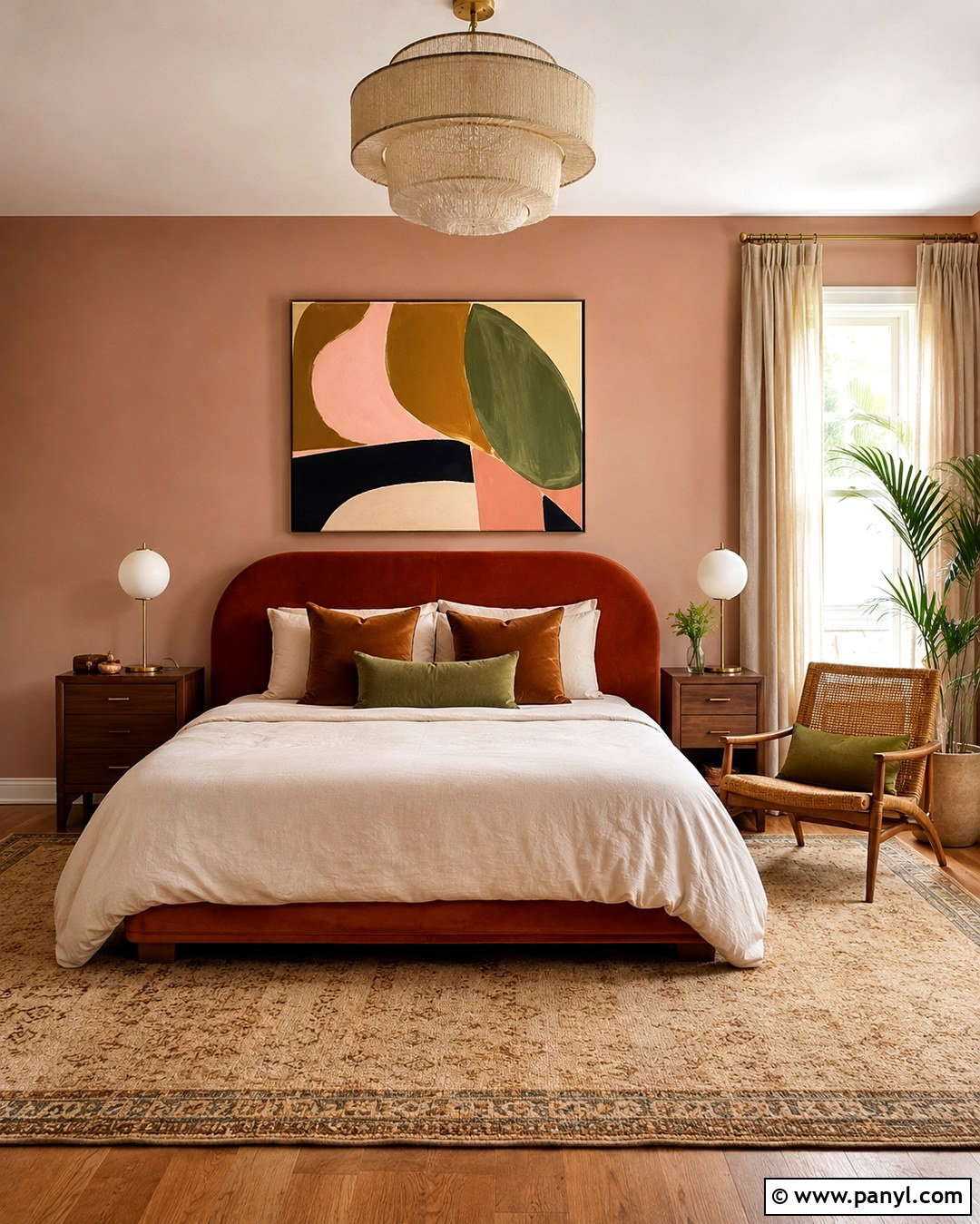
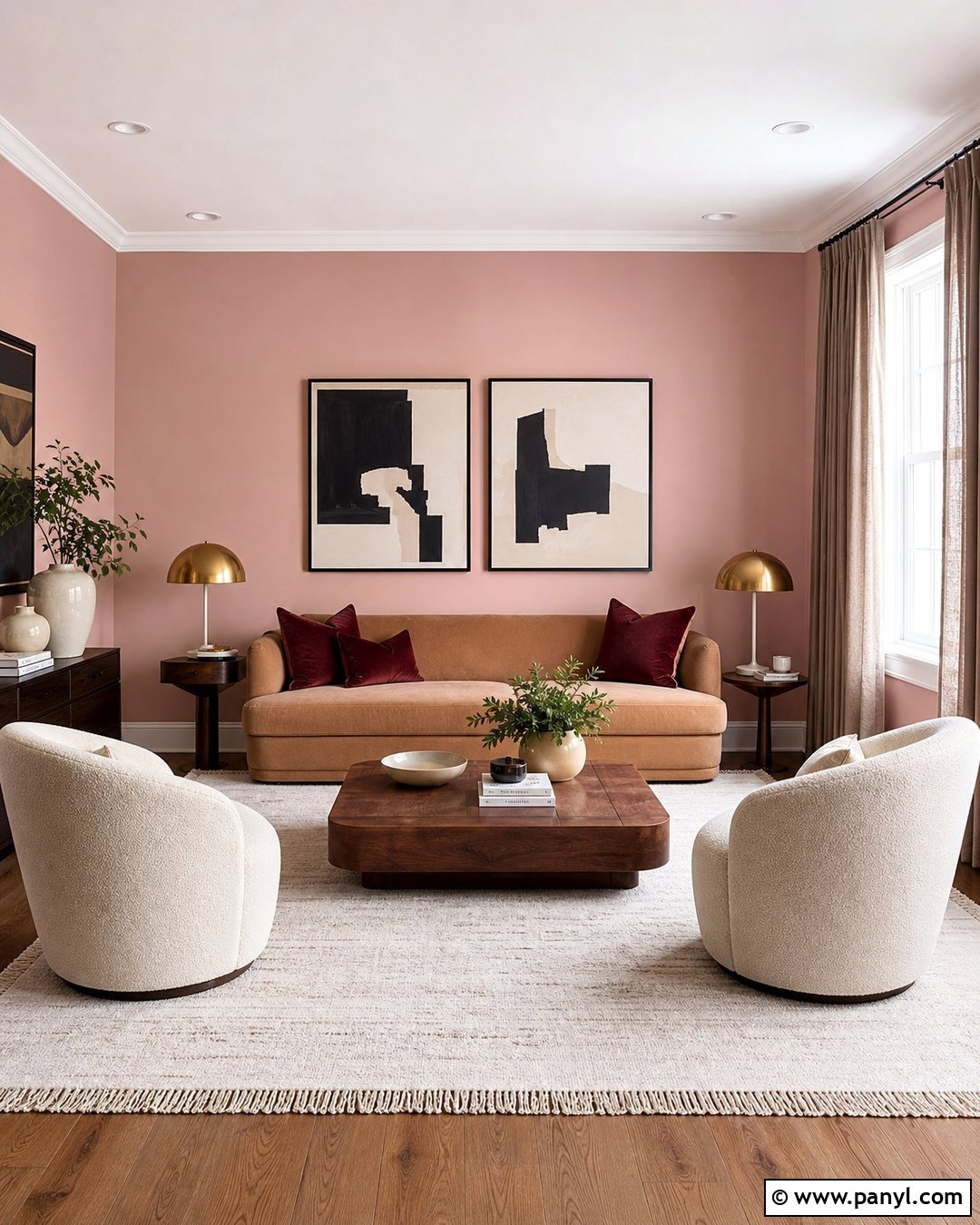
Dusty rose provides a softer interpretation of 1970s color, particularly when mixed with wood and earthy accents. Cover the bedroom walls in a muted pink with beige undertones rather than a sugary pastel. Place a curved rust velvet headboard against the main wall and use cream bedding layered with cocoa brown and olive pillows. Walnut nightstands, brass globe lamps, and a warm beige rug reinforce the period influence. Add full-length flax curtains and one abstract print incorporating rose, orange, plum, and gold. A rattan chair in the corner can provide useful seating and natural texture. This complete palette feels warm and romantic without becoming overly delicate. The restrained furnishings also allow the unusual wall color to remain the room’s defining feature.
14. Mauve Reading Room Walls
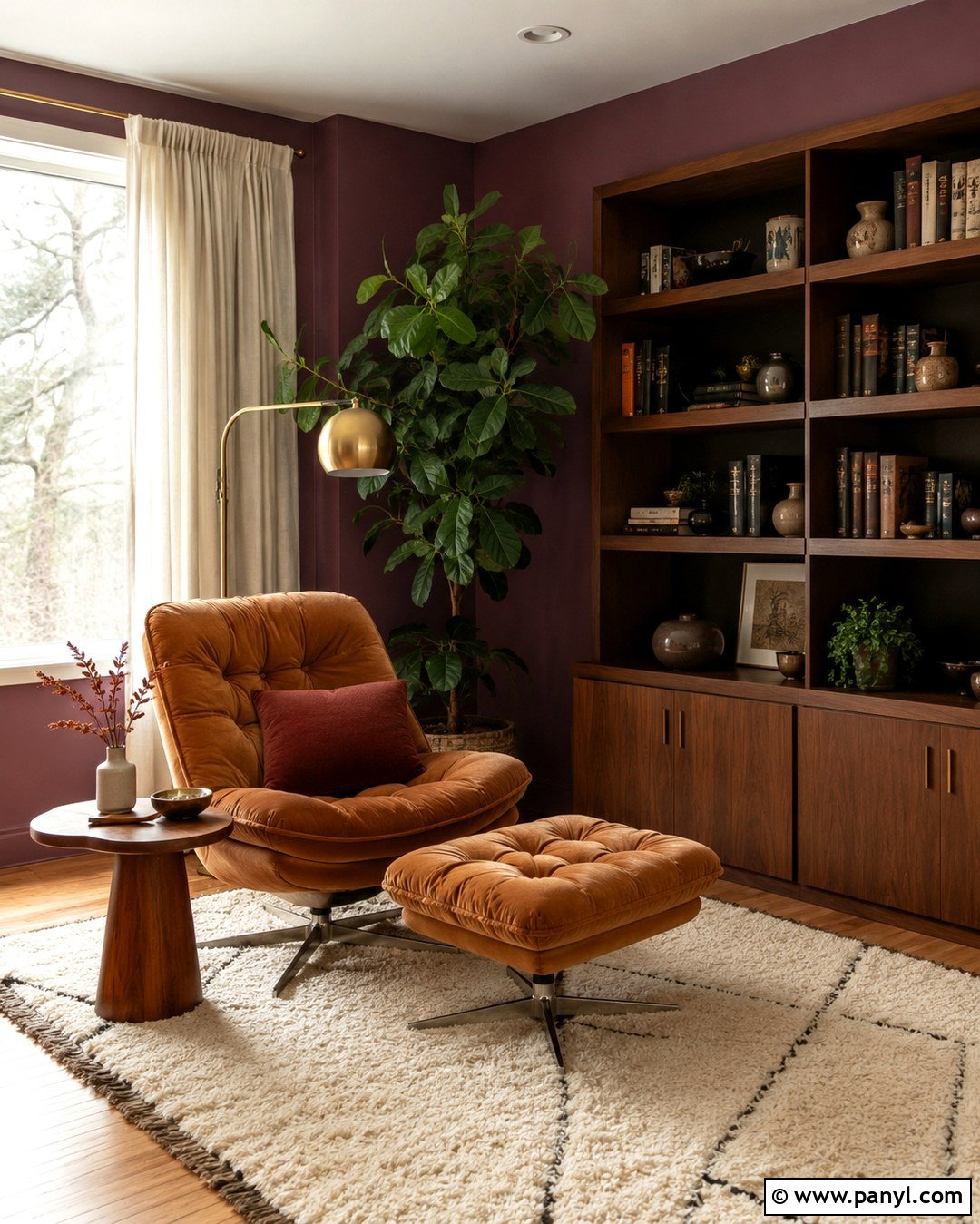
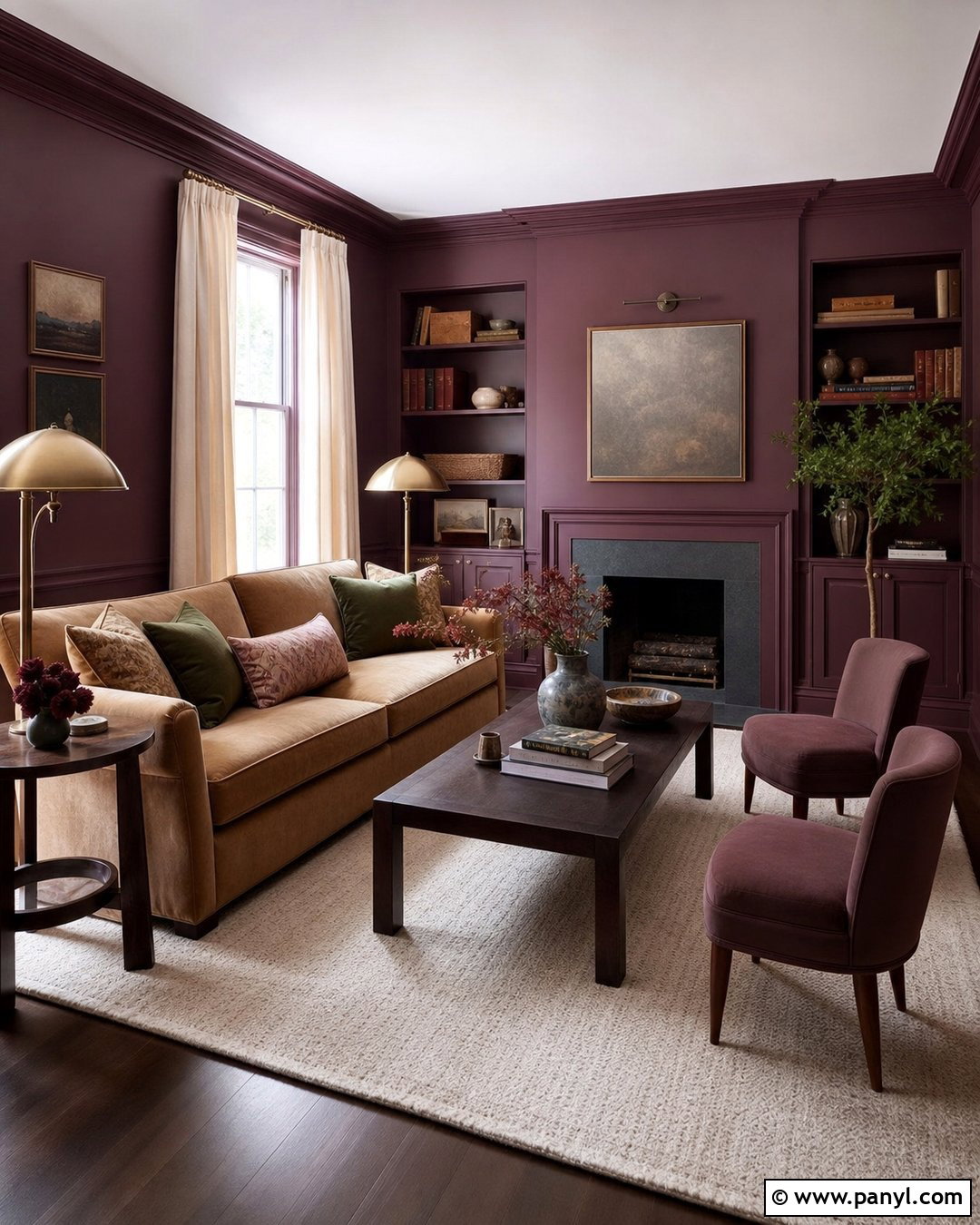
Mauve walls create a calm reading room with a more unexpected 1970s personality. Look for a dusty purple with gray-brown undertones, which will sit comfortably beside warm wood. Arrange a caramel velvet lounge chair and matching footstool near the window, supported by a walnut side table and brass reading lamp. Install low bookcases in dark wood rather than bright white. A cream wool rug can lighten the floor, while rust and plum cushions add subtle tonal depth. Use natural linen curtains to soften daylight and prevent the mauve from looking too cool. A large leafy plant introduces fresh green contrast. The finished room feels quiet, collected, and deeply comfortable, offering a sophisticated alternative to the decade’s more familiar orange and avocado combinations.
15. Brick Red Dining Room Walls
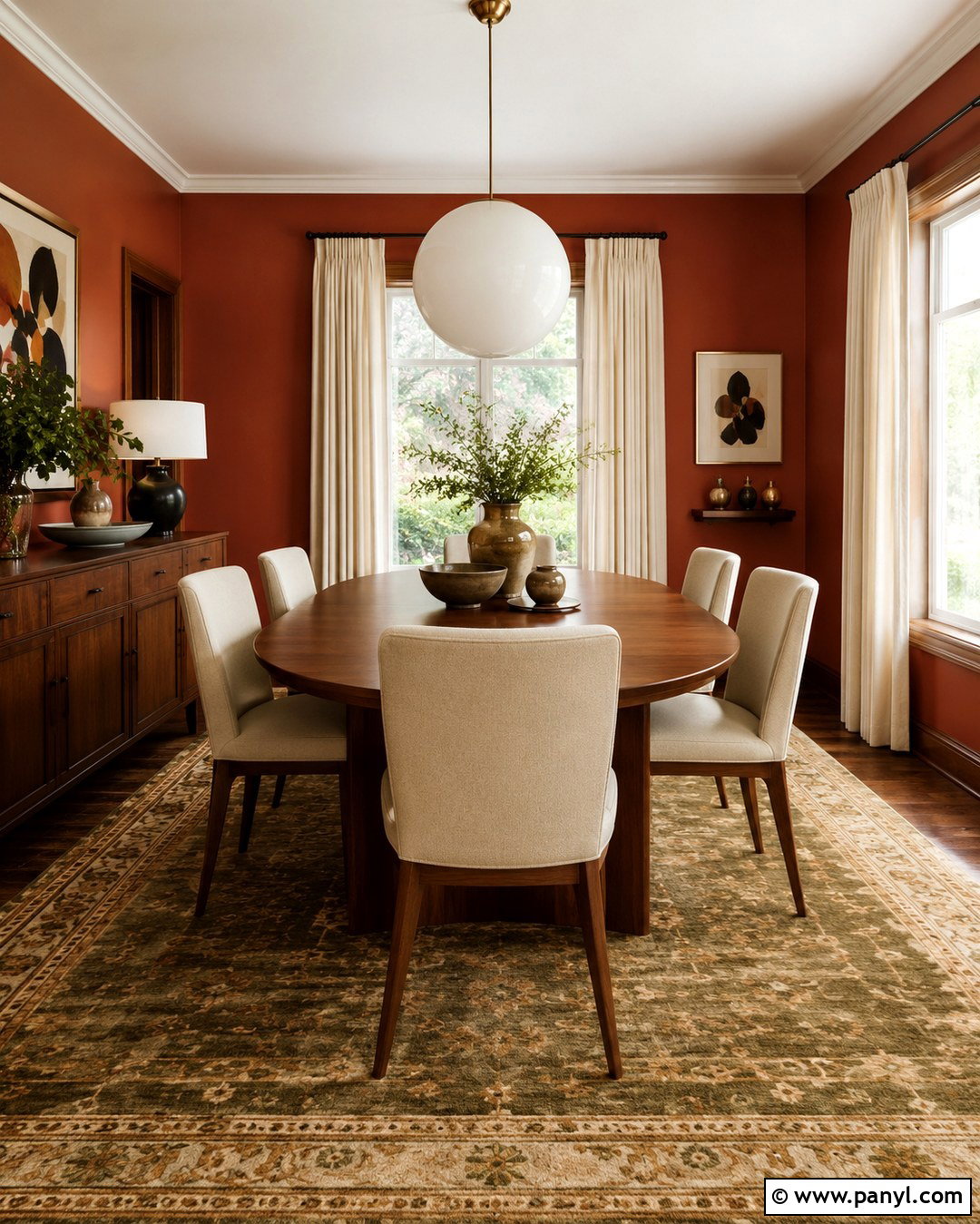
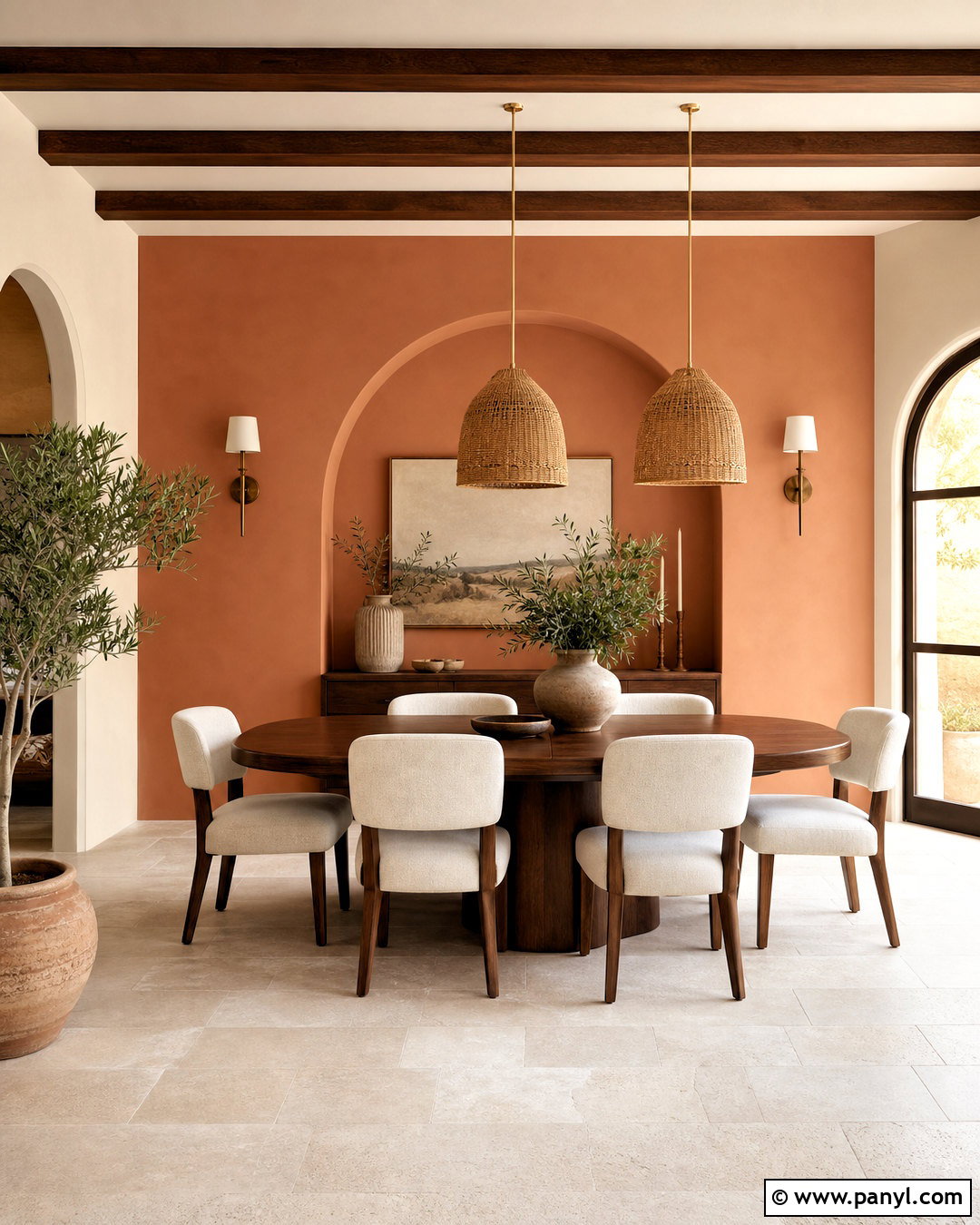
Brick red delivers the impact of red while remaining earthy enough for a relaxed dining space. Paint all walls in a muted clay-red shade and retain a warm white ceiling for visual relief. A substantial oval teak table will stand out against the darker background, especially when surrounded by chairs upholstered in cream or camel fabric. Hang a large globe pendant over the center of the table. Add an olive and beige patterned rug, a low walnut sideboard, and simple ceramic serving pieces. Cream curtains should reach the floor and provide a light vertical element. Brass candlesticks or a sculptural bowl can supply restrained shine. This finished dining room feels warm and social, with enough depth for evening meals and enough brightness for daytime use.
16. Burnt Sienna Hallway Walls
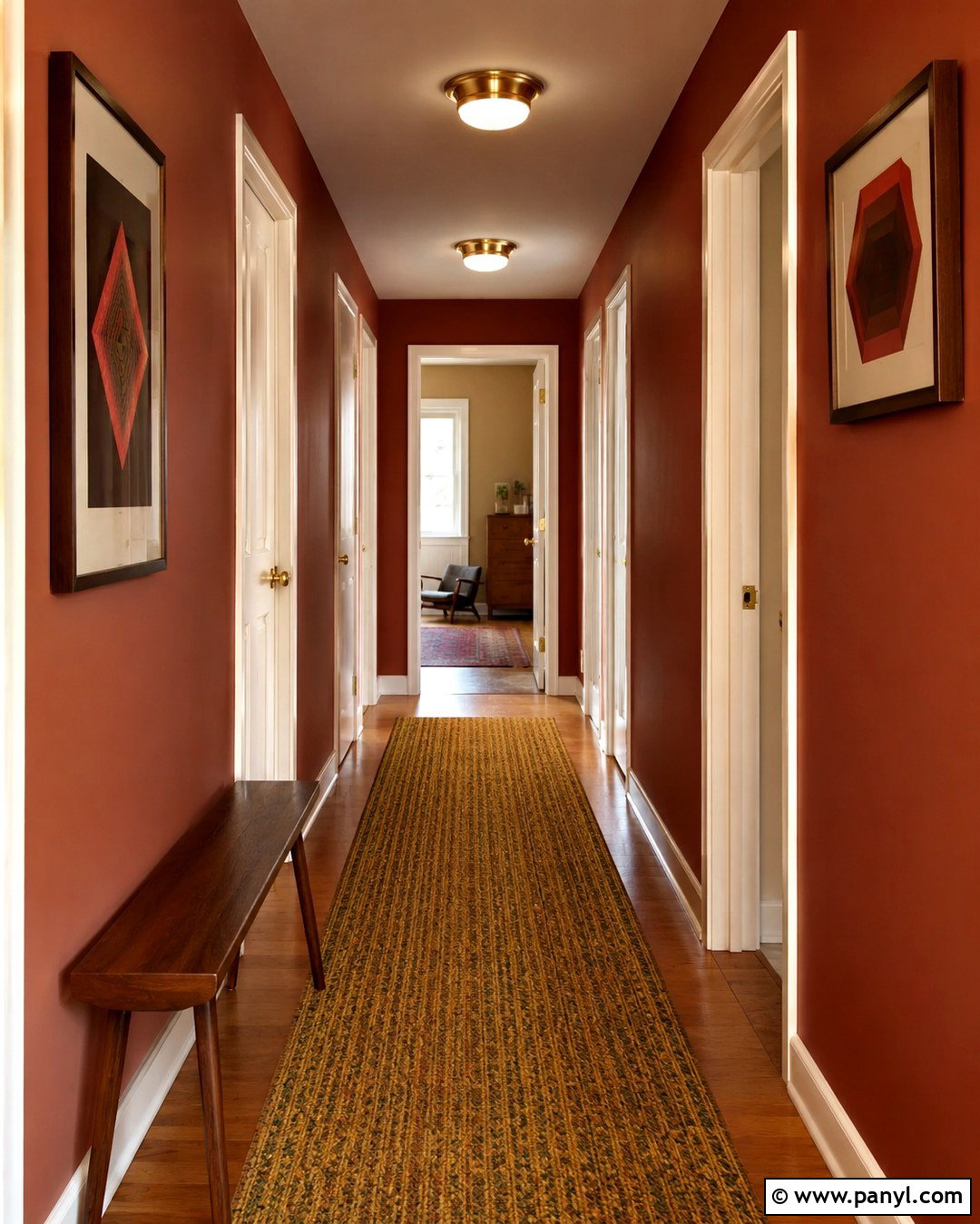
Burnt sienna brings warmth and definition to a hallway that might otherwise feel overlooked. Use the reddish-brown shade on the walls while keeping doorframes, baseboards, and the ceiling creamy white. A long woven runner containing mustard, olive, orange, and brown can guide the eye through the space. Place a narrow teak bench or console along one wall, leaving plenty of room for movement. Above it, arrange a compact collection of framed geometric prints with consistent walnut frames. Brass flush-mount lighting will add a warm metallic accent without lowering the ceiling visually. If the hallway receives little daylight, use several bright bulbs with neutral illumination. The complete treatment makes the passage feel intentional, cohesive, and connected to nearby retro-inspired rooms.
17. Ochre Yellow Breakfast Nook Walls
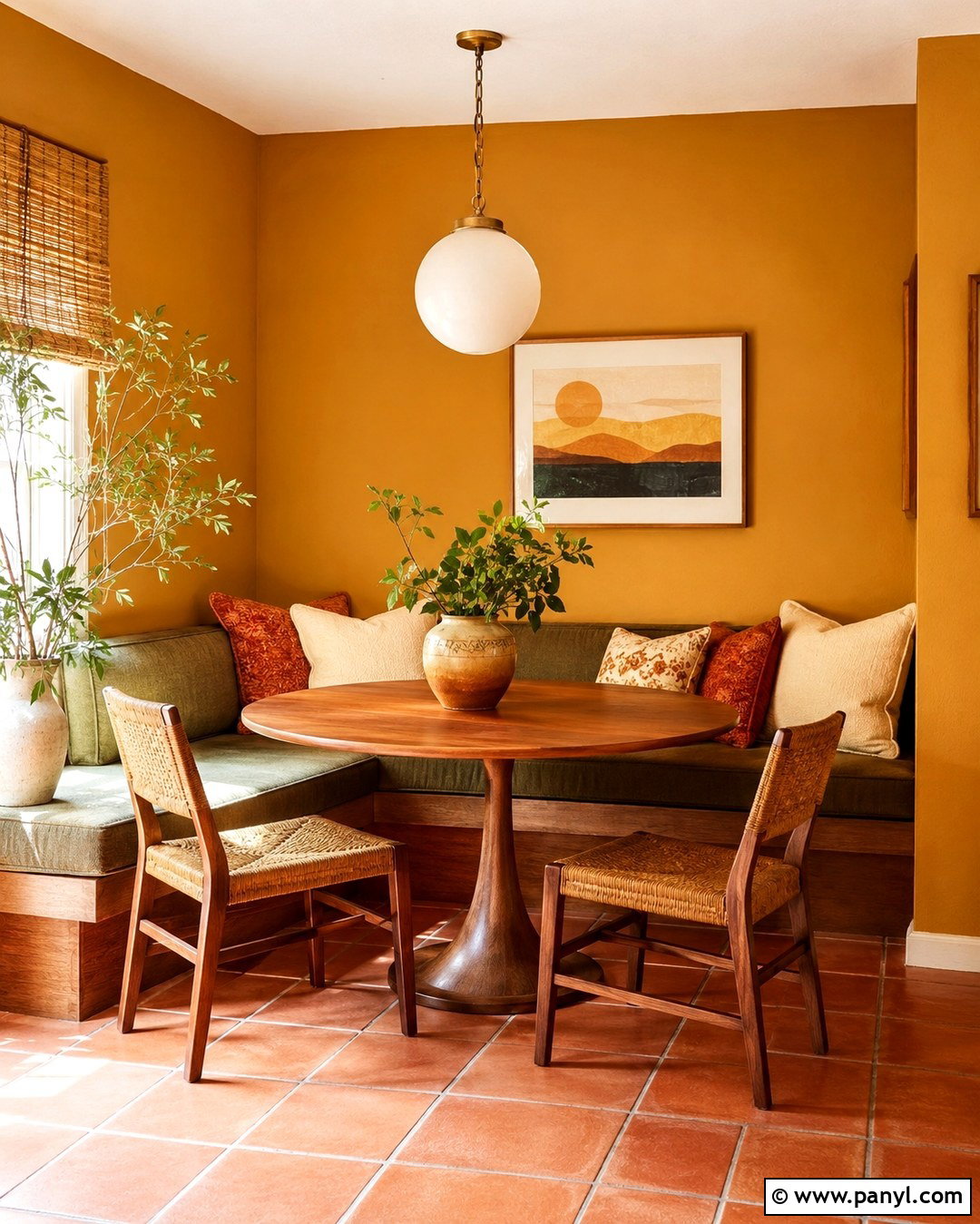
Ochre yellow can make a small breakfast nook feel sunny even when natural light is limited. Paint the walls in a deep, earthy yellow and pair them with a built-in bench upholstered in olive green. Add a round walnut pedestal table and curved dining chairs with woven seats. A compact white globe pendant provides a clean focal point above the table. Use a cream cushion base, then layer in burnt orange and brown patterned pillows. Terracotta flooring or a rust-colored rug will strengthen the warm foundation. Keep window coverings minimal with natural woven shades. A few ceramic planters and simple graphic artwork finish the walls. This coordinated nook offers the comfort and color of 1970s interiors while maintaining an efficient layout for modern daily routines.
18. Cream Living Room Walls
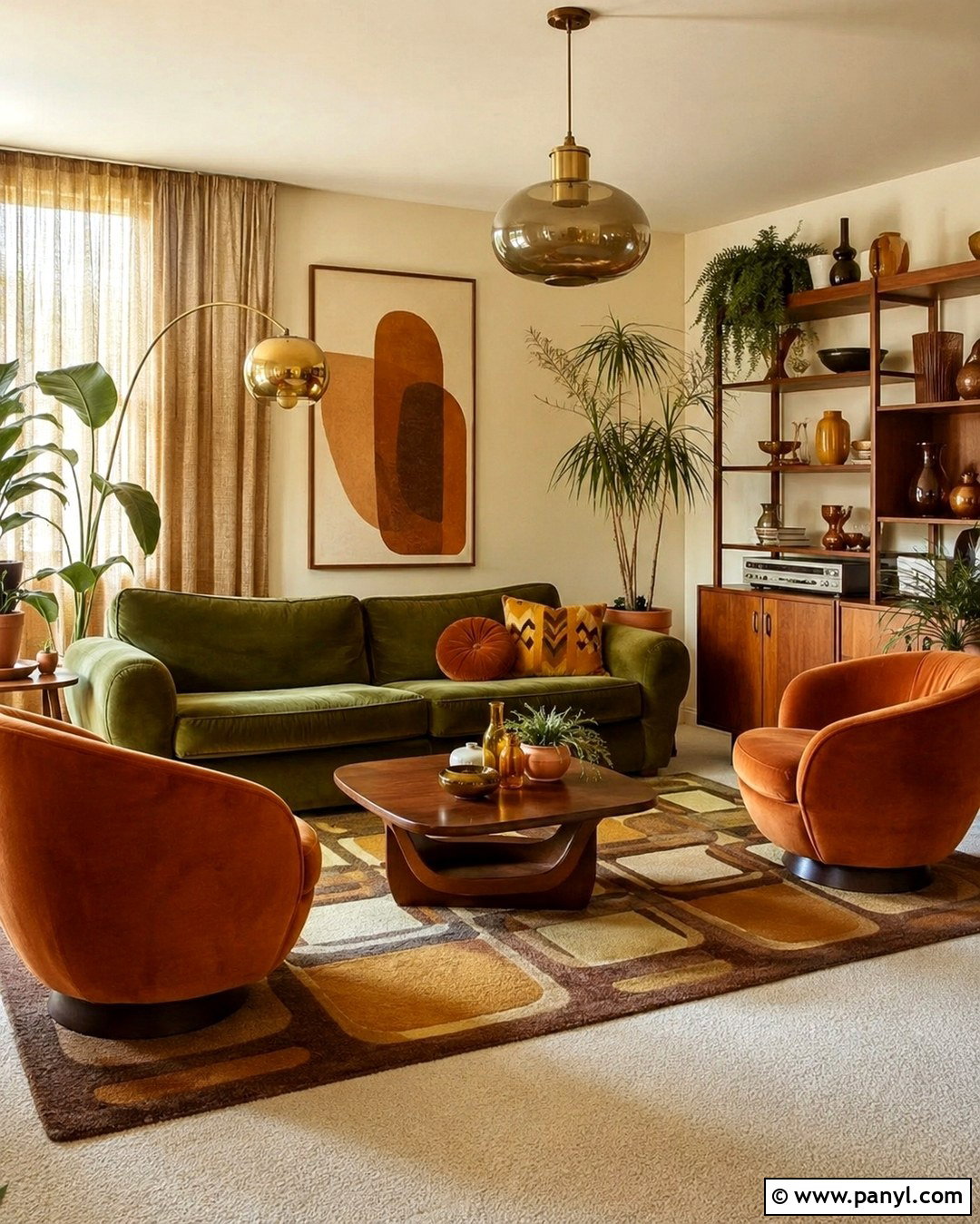
Not every 1970s room needs a bold background. Warm cream walls provide the ideal setting for furniture and accessories in the decade’s stronger shades. Choose a cream with noticeable beige undertones and continue it across the ceiling for a soft, seamless effect. Anchor the room with an avocado green sofa and two curved burnt orange chairs. Add a walnut coffee table, teak shelving, and a large geometric rug in brown, mustard, and ivory. Full-length textured curtains will enhance the relaxed appearance. Use brass and smoked glass lighting for subtle shine. Houseplants in terracotta pots can fill empty corners. This complete scheme suits homeowners who want recognizable retro color and shape without committing to a saturated wall treatment throughout the room.
19. Mushroom Taupe Bedroom Walls
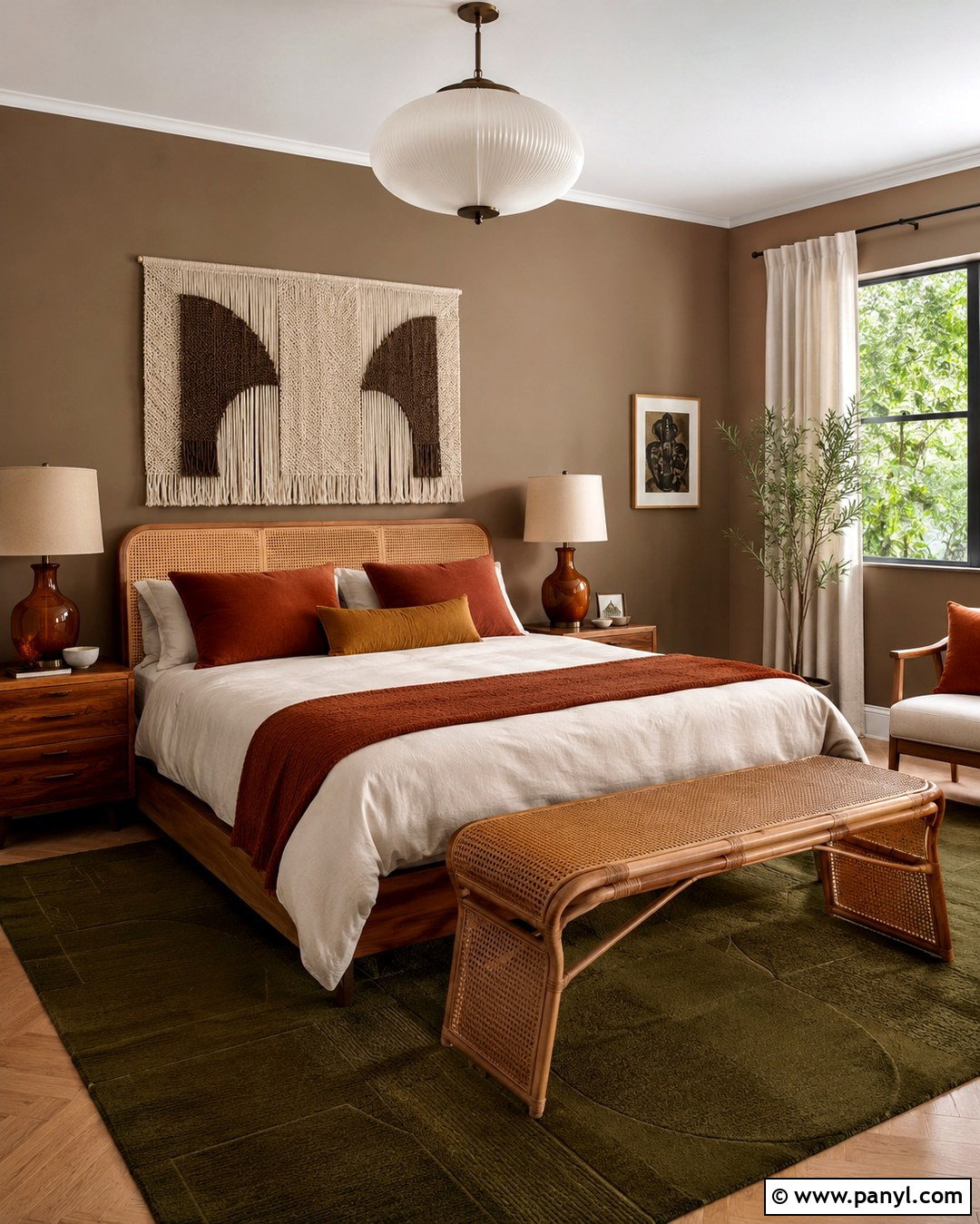
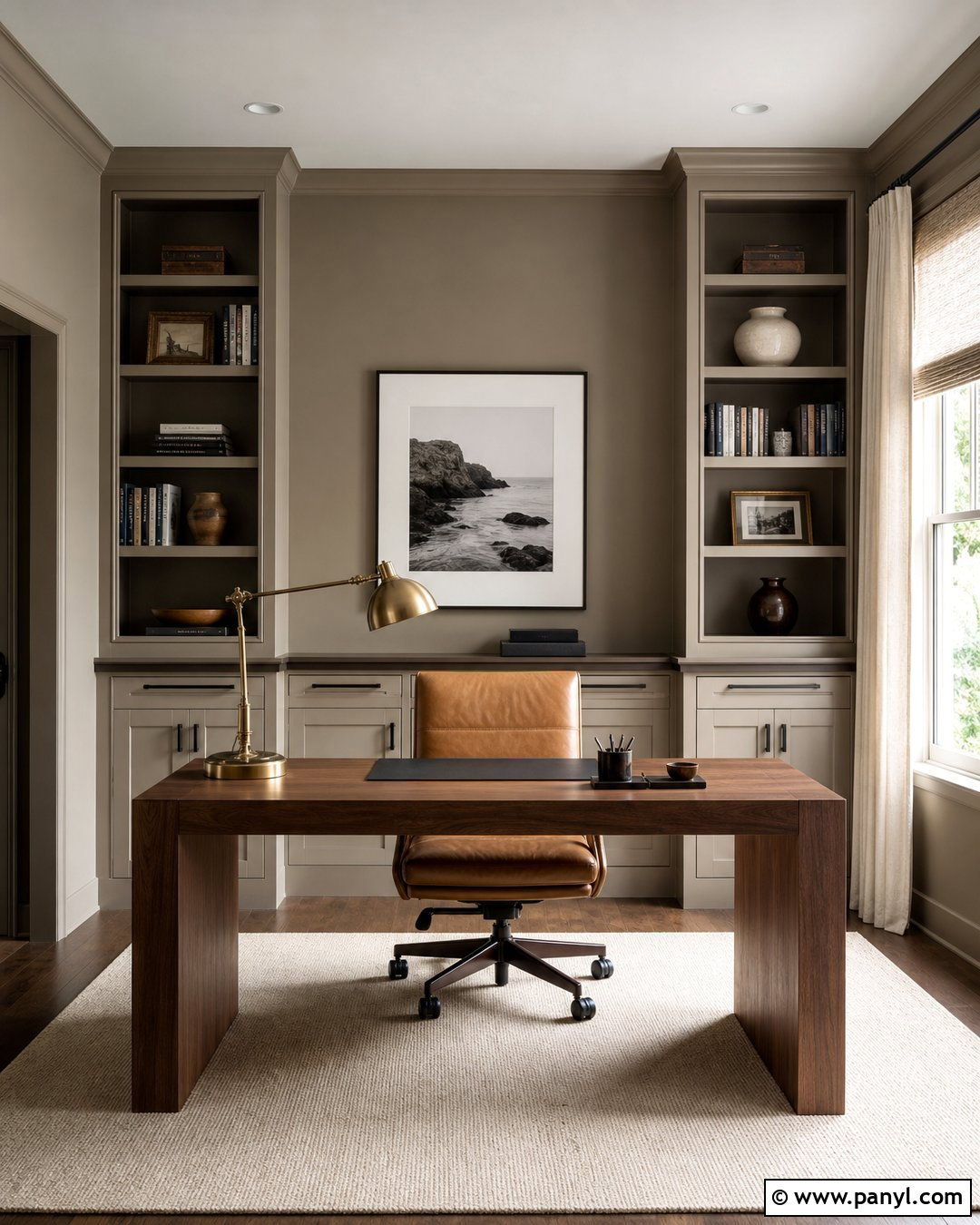
Mushroom taupe creates a grounded bedroom backdrop that supports rich 1970s accents without making the space too colorful. Select a brown-gray shade with warm undertones and paint all four walls for a restful, unified look. Use a low teak bed with a woven cane headboard, then layer cream bedding with rust, mustard, and chocolate textiles. Place a soft olive rug beneath the bed to introduce gentle contrast. Matching walnut nightstands and amber glass lamps will deepen the earthy palette. Hang one large textile artwork rather than several small frames. Finish the windows with oatmeal linen curtains and add a rattan bench at the foot of the bed. The final design feels natural, understated, and comfortably connected to the decade’s love of organic materials.
20. Plum Purple Lounge Walls
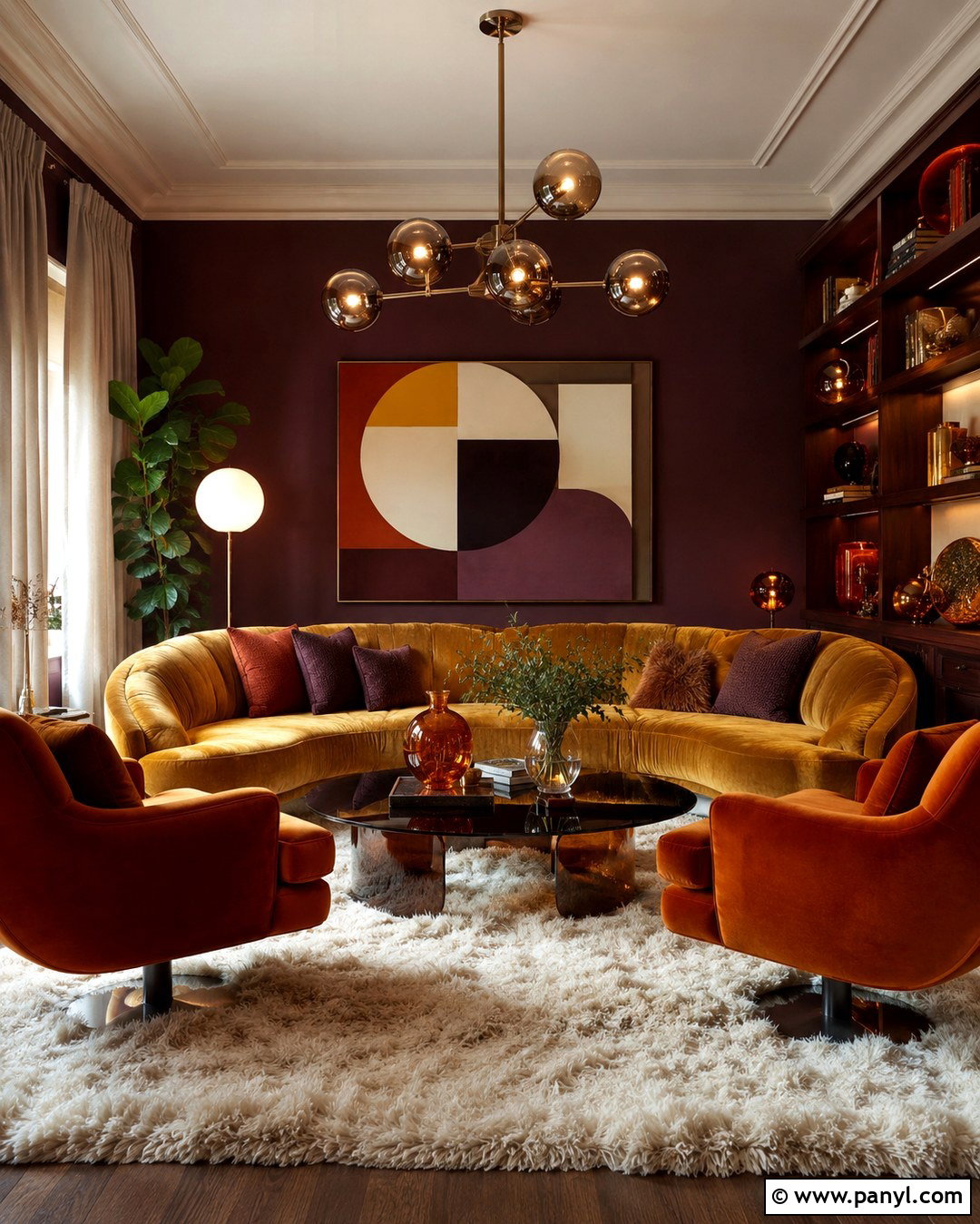
Plum purple captures the expressive, glamorous side of 1970s interiors. Choose a warm aubergine shade with red undertones and use it on every wall of a dedicated lounge or conversation room. Arrange a curved mustard velvet sofa with burnt orange lounge chairs around a low smoked glass coffee table. A cream shag-style rug will brighten the floor and separate the saturated colors. Add dark walnut shelving, brass globe lamps, and a few amber glass accessories. Keep the window treatments light with ivory curtains that reach from ceiling to floor. One oversized geometric artwork can repeat plum, gold, and orange. The completed room feels bold and social, but the controlled palette and simple furniture arrangement prevent it from looking chaotic or overly theatrical.
Conclusion:
The best 1970s-inspired rooms combine expressive color with practical layouts, natural materials, and enough light neutral space to maintain balance. These **20 70S Wall Paint Colors** range from familiar avocado, harvest gold, and burnt orange to softer options such as mushroom taupe, dusty rose, and cream. Before painting an entire room, test large samples in morning and evening light. Then select wood tones, textiles, flooring, and lighting that support the chosen wall color. You can lean fully retro or introduce only a few period details. Either approach works when the room feels coordinated rather than themed. Let one dominant paint color establish the mood, and use two or three supporting shades to complete the design.

Related Ideas and Inspiration:
Leave a Reply