
The best 70s wall art ideas bring warmth, movement, and personality into a room without making it look like a dated theme set. Today’s retro revival blends earthy colors, graphic patterns, handmade textures, and nostalgic imagery with cleaner furniture and more intentional layouts. Geometric prints, macramé, botanical artwork, sunburst mirrors, and playful floral patterns remain especially connected to the decade. Current interiors often balance these expressive features with negative space and simple contemporary pieces, creating a collected look rather than visual clutter. () Whether you prefer bold psychedelic color or understated earth tones, the following complete room concepts show how to decorate confidently with 70s wall art ideas.
1. Abstract Geometric Wall Art
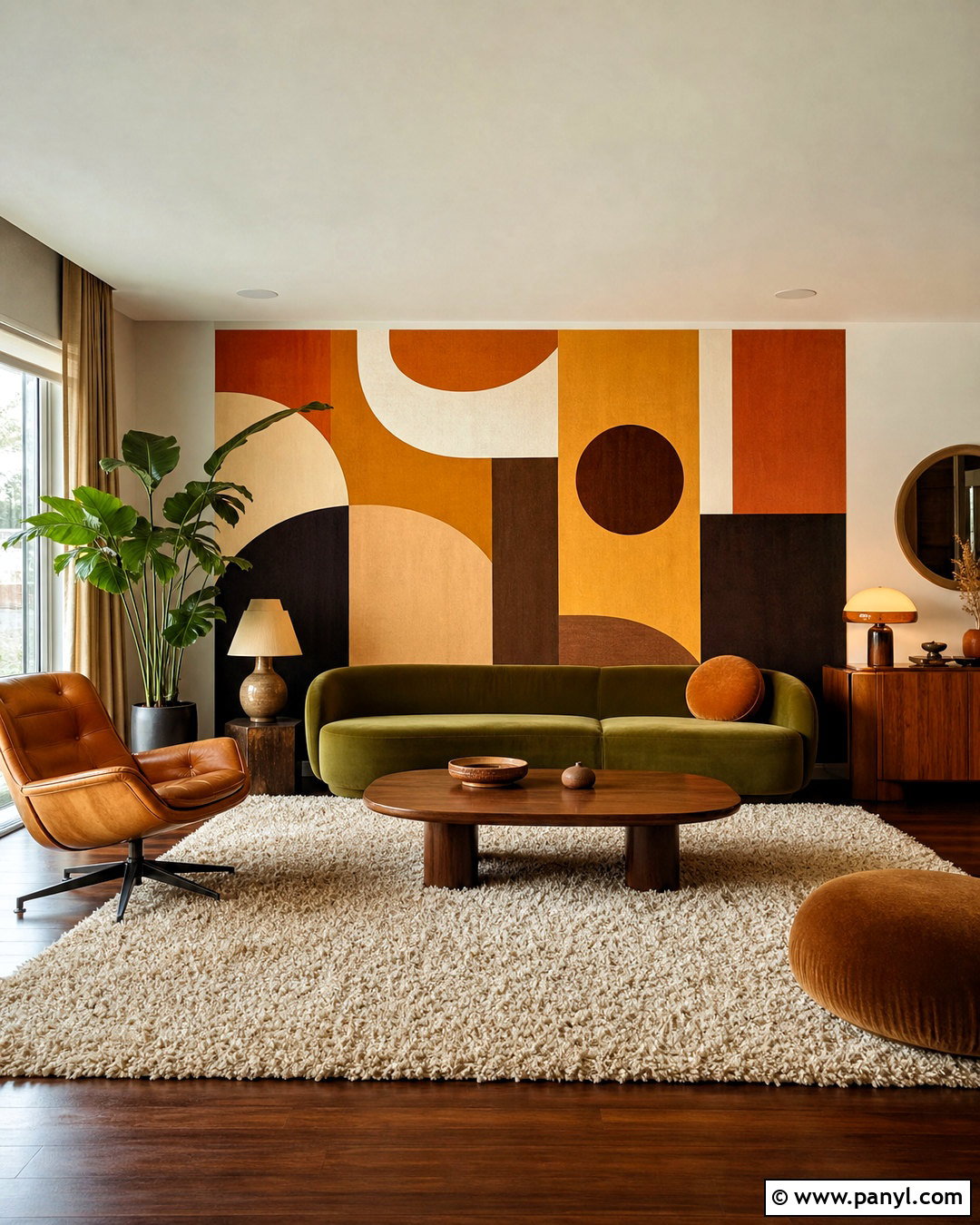
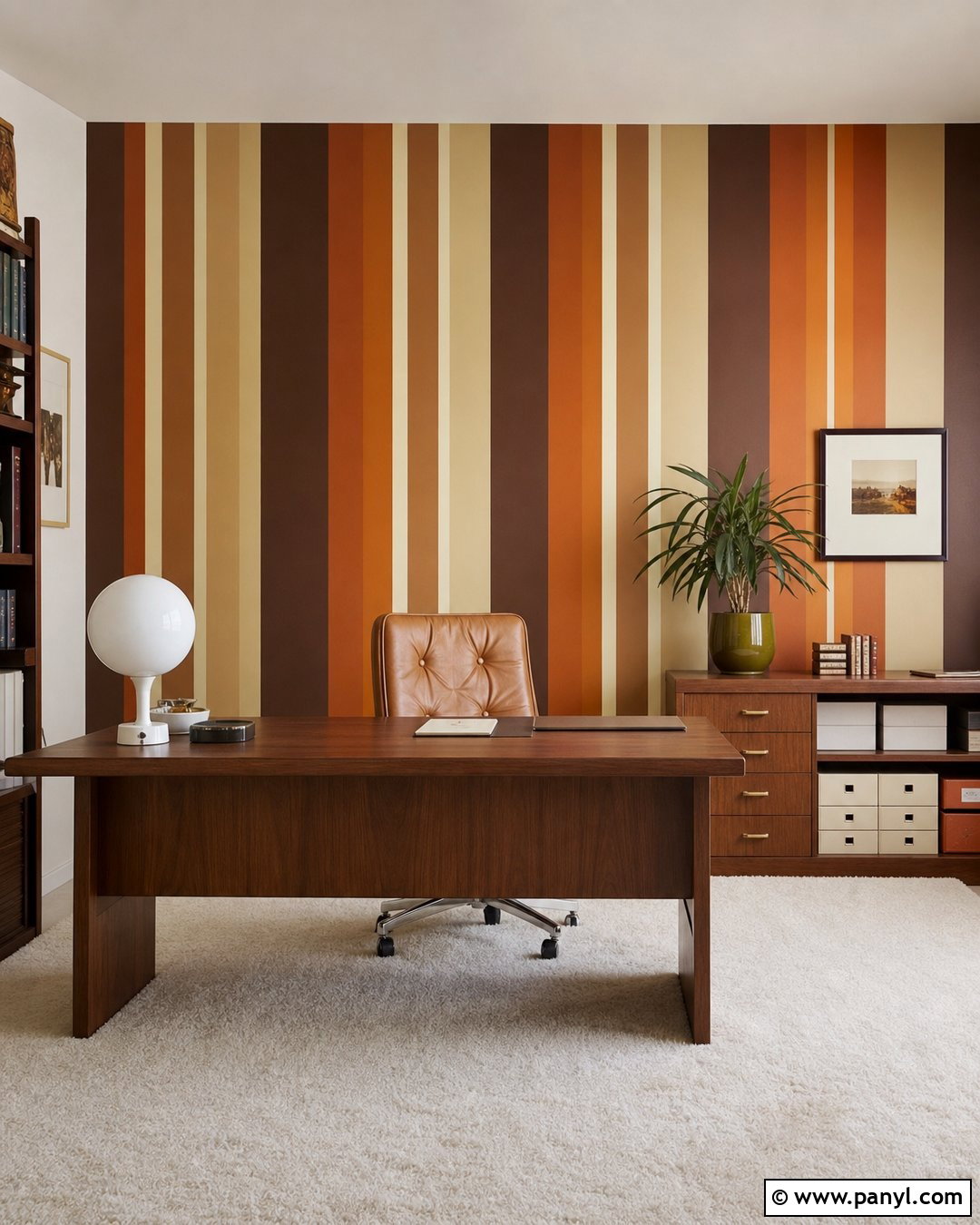
Build a bold living room around one oversized geometric print featuring burnt orange, mustard yellow, chocolate brown, and cream. Hang it above a low-profile camel leather sofa so the artwork becomes the clear focal point. A walnut coffee table, olive green accent chair, and cream shag rug will repeat the warm palette without competing with the print. Choose a slim walnut or matte brown frame instead of bright black, which can feel too harsh beside earthy colors. Add a round ceramic lamp and one tall houseplant to soften the strong angles. Keep the surrounding wall warm white or pale beige. This gives the dramatic shapes enough breathing room while making the entire room feel coordinated, comfortable, and unmistakably retro.
2. Orange And Brown Wall Art
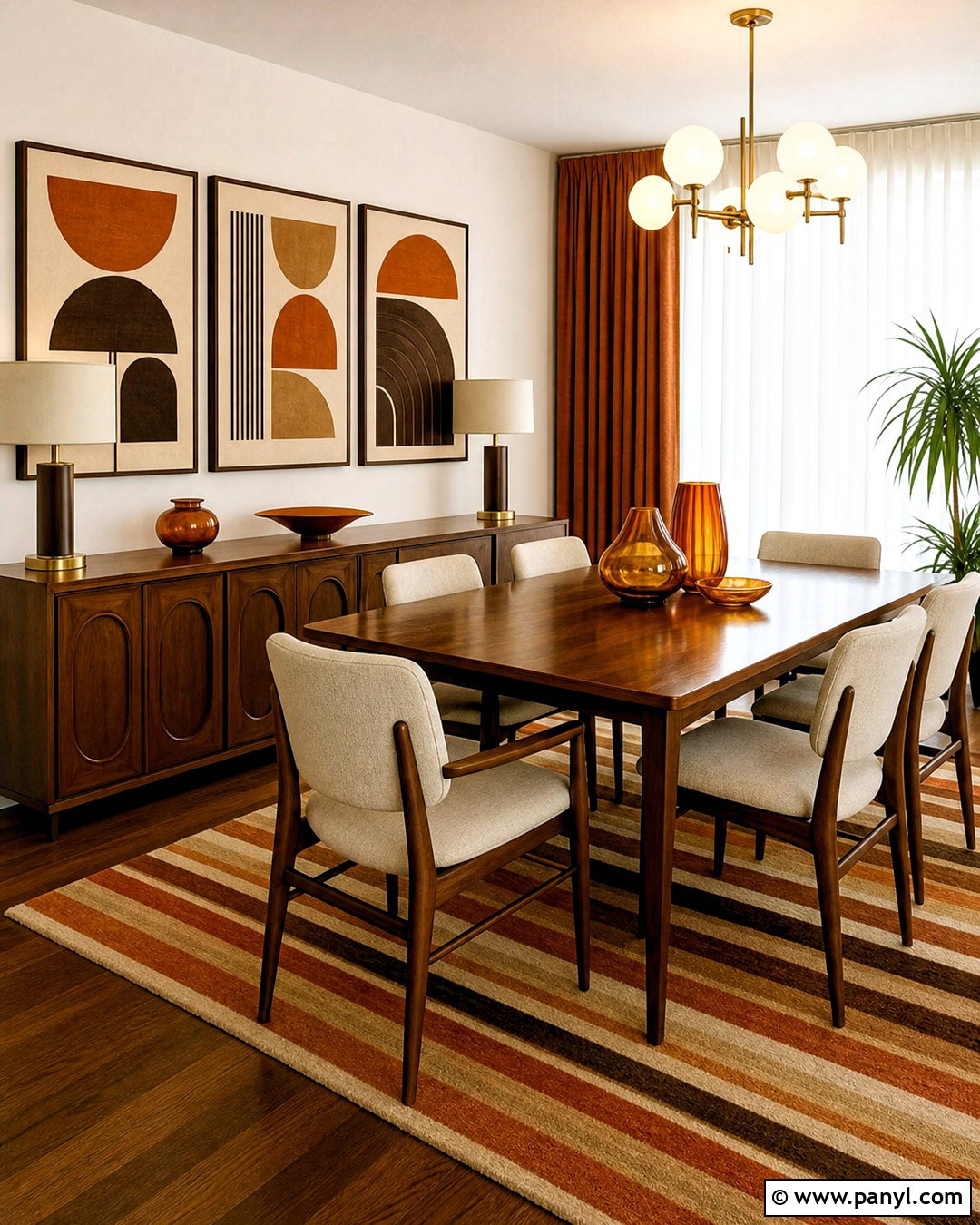
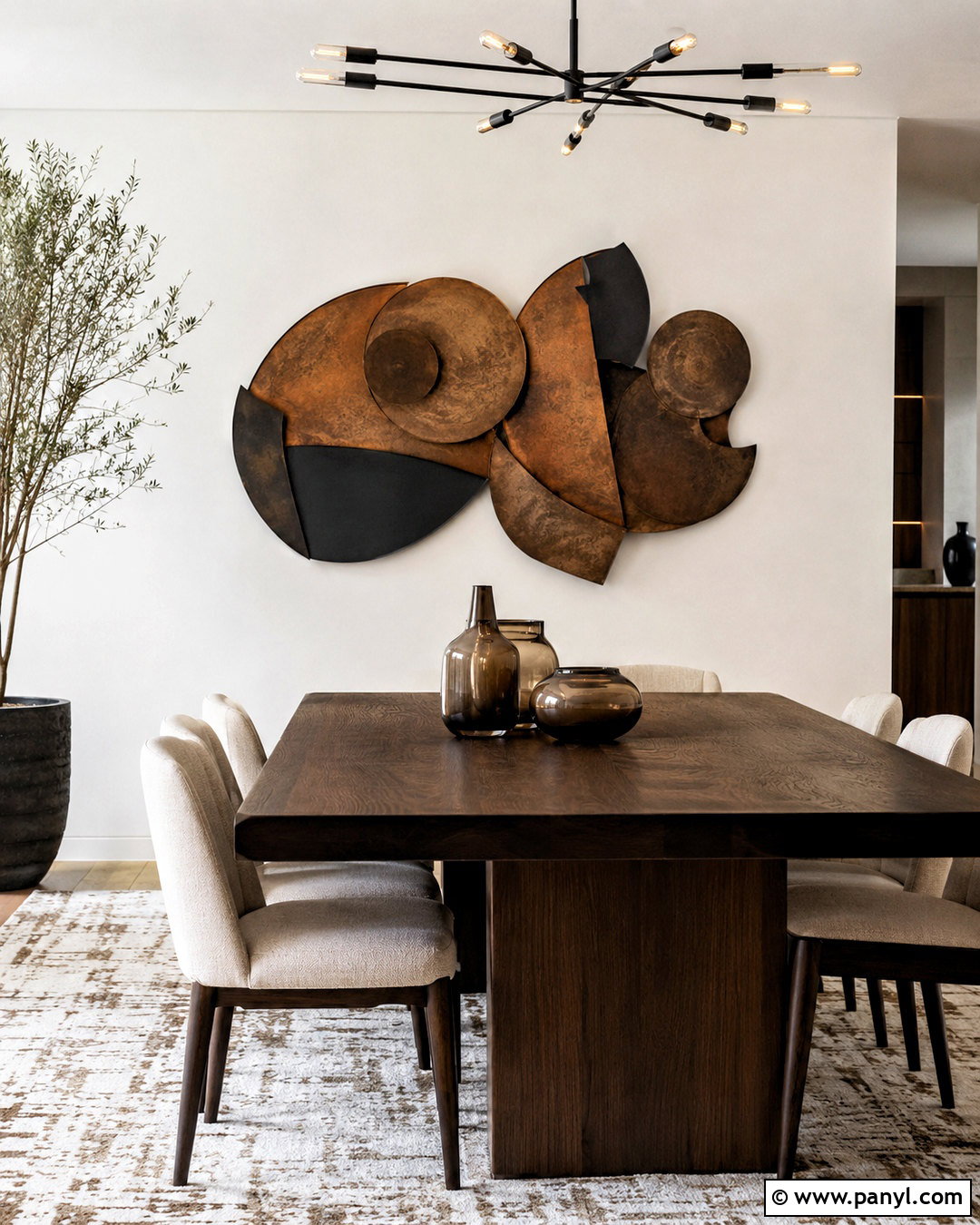
Orange and brown wall art can create a warm dining area that feels nostalgic but still polished. Start with a coordinated set of three prints featuring arches, circles, and wavy lines in rust orange, caramel, tan, and deep espresso. Arrange them evenly above a walnut dining sideboard. Continue the palette with a dark wood table, cream upholstered chairs, and an amber glass pendant. Small brass candlesticks and ribbed ceramic serving pieces add period-inspired shine and texture. Paint the wall a soft oatmeal color rather than pure white to reduce sharp contrast. For a modern finish, use matching thin frames and generous white mats. The repeated colors connect the entire dining room, while the orderly layout prevents the strong retro palette from becoming visually overwhelming.
3. Retro Floral Wall Art
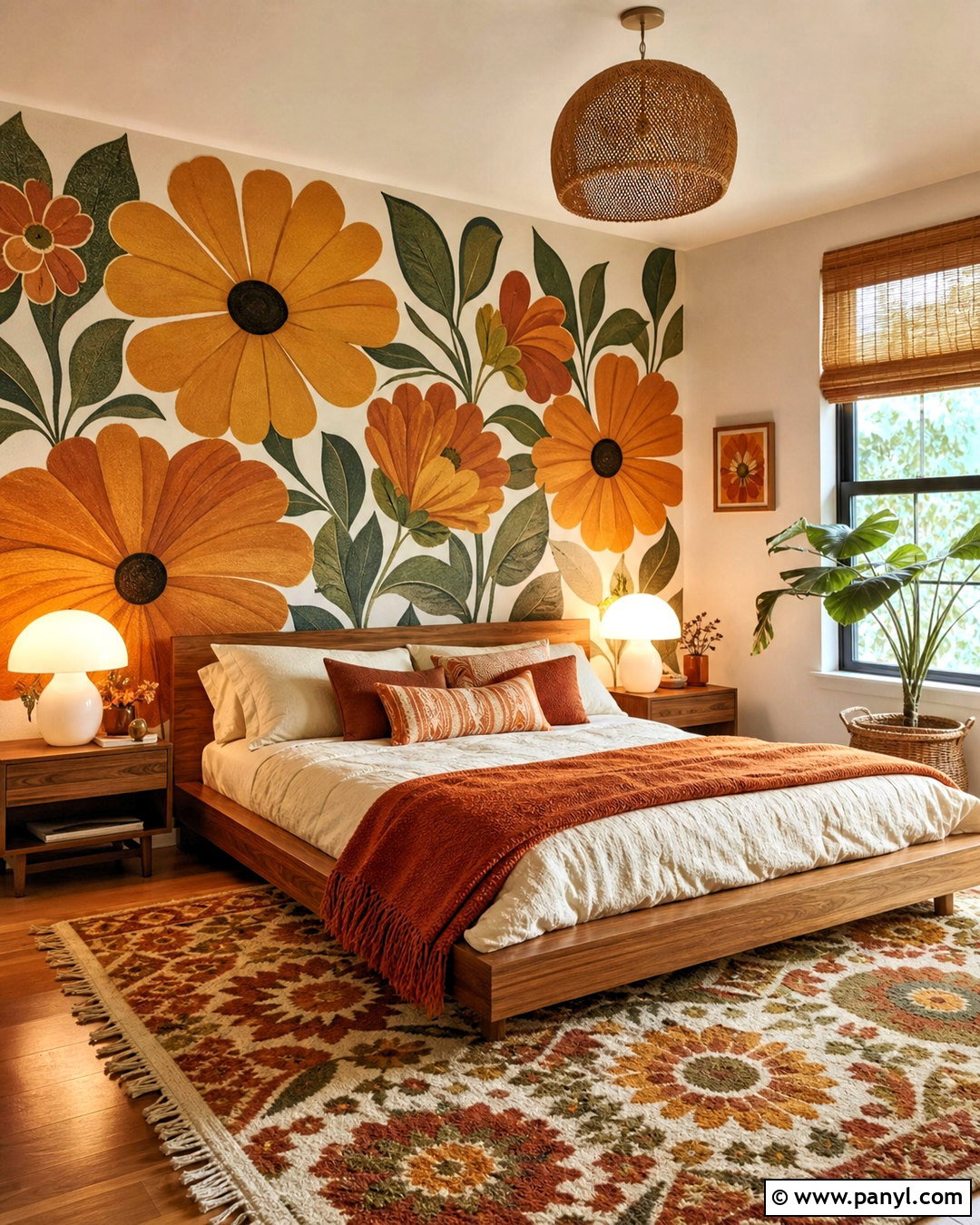
Imagine a cheerful bedroom anchored by large floral wall art with oversized daisies in golden yellow, avocado green, orange, and warm white. Position one wide print above a simple walnut headboard, or arrange two matching panels with a narrow space between them. Dress the bed in cream linen, a rust-colored quilt, and two olive velvet pillows. Mushroom-shaped bedside lamps and small wooden nightstands reinforce the decade without making the room feel theatrical. Keep the remaining walls pale cream and use natural woven shades at the windows. A subtle patterned rug can repeat one color from the flowers. This complete look feels playful and sunny, yet the restrained furniture and limited palette keep the bold floral artwork sophisticated enough for an updated adult bedroom.
4. Psychedelic Wall Art
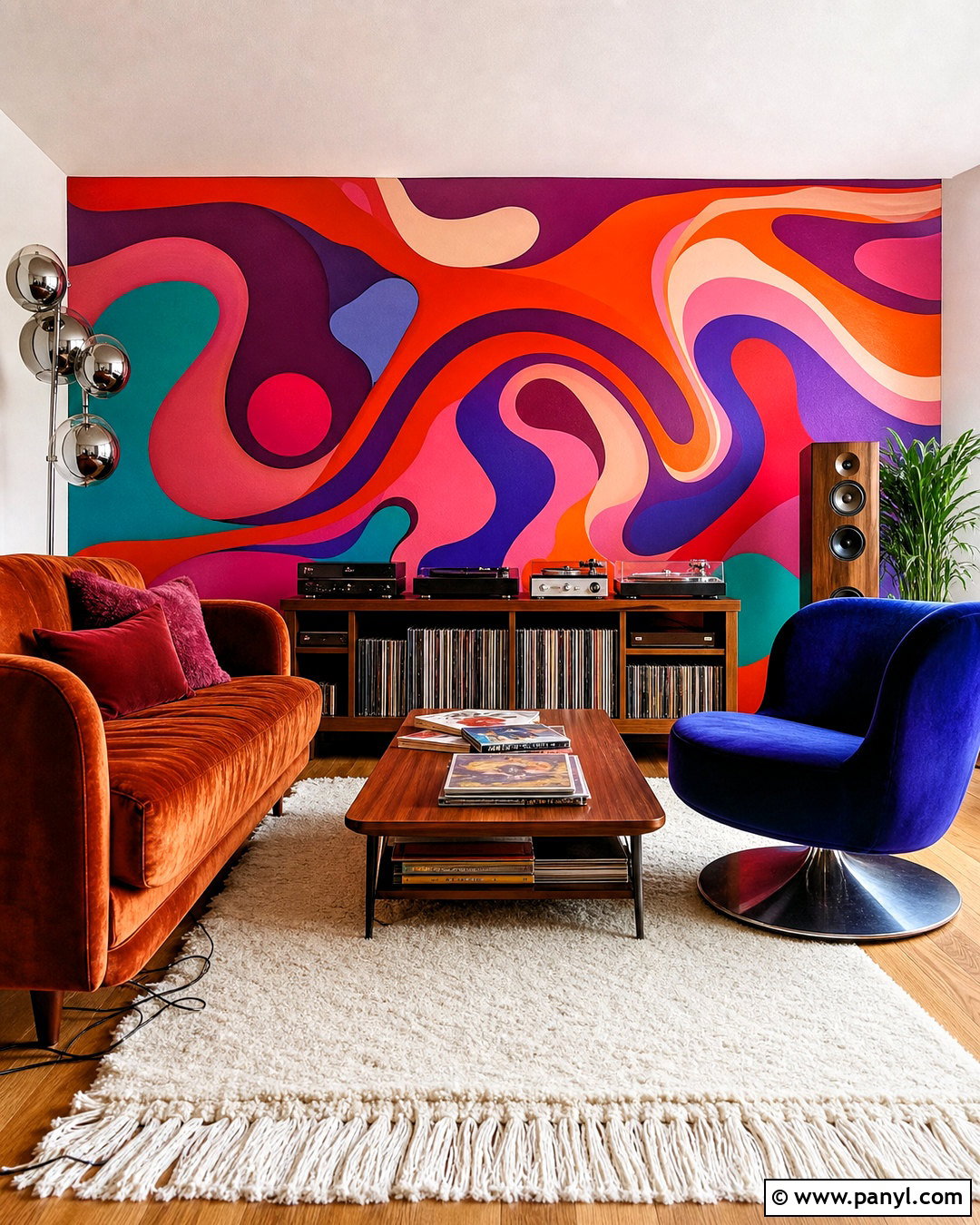
For a high-energy music room or creative studio, choose psychedelic wall art filled with swirling purple, orange, red, pink, and turquoise forms. Let one large framed piece occupy the center of the main wall instead of covering every surface with competing patterns. Place a curved rust velvet loveseat below it, then add a cobalt blue side chair and a simple cream rug. A chrome floor lamp and glossy white side table provide cleaner contemporary contrast. Keep musical equipment, books, and decorative objects organized on one low walnut console. Because the artwork already contains intense movement, use solid-color upholstery and minimal window treatments. The final room will feel expressive and immersive while remaining functional, balanced, and comfortable enough for everyday use.
5. Macrame Wall Art
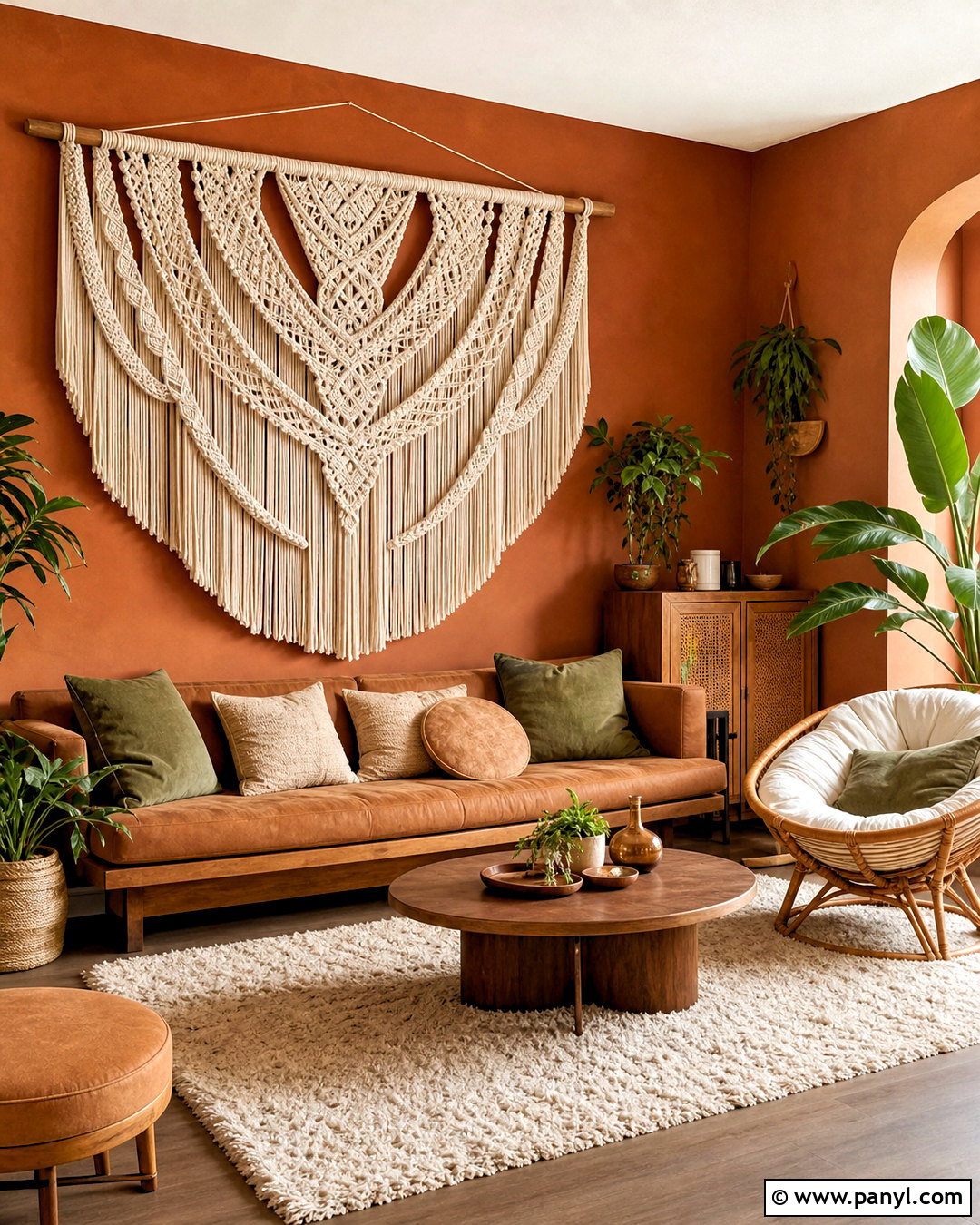
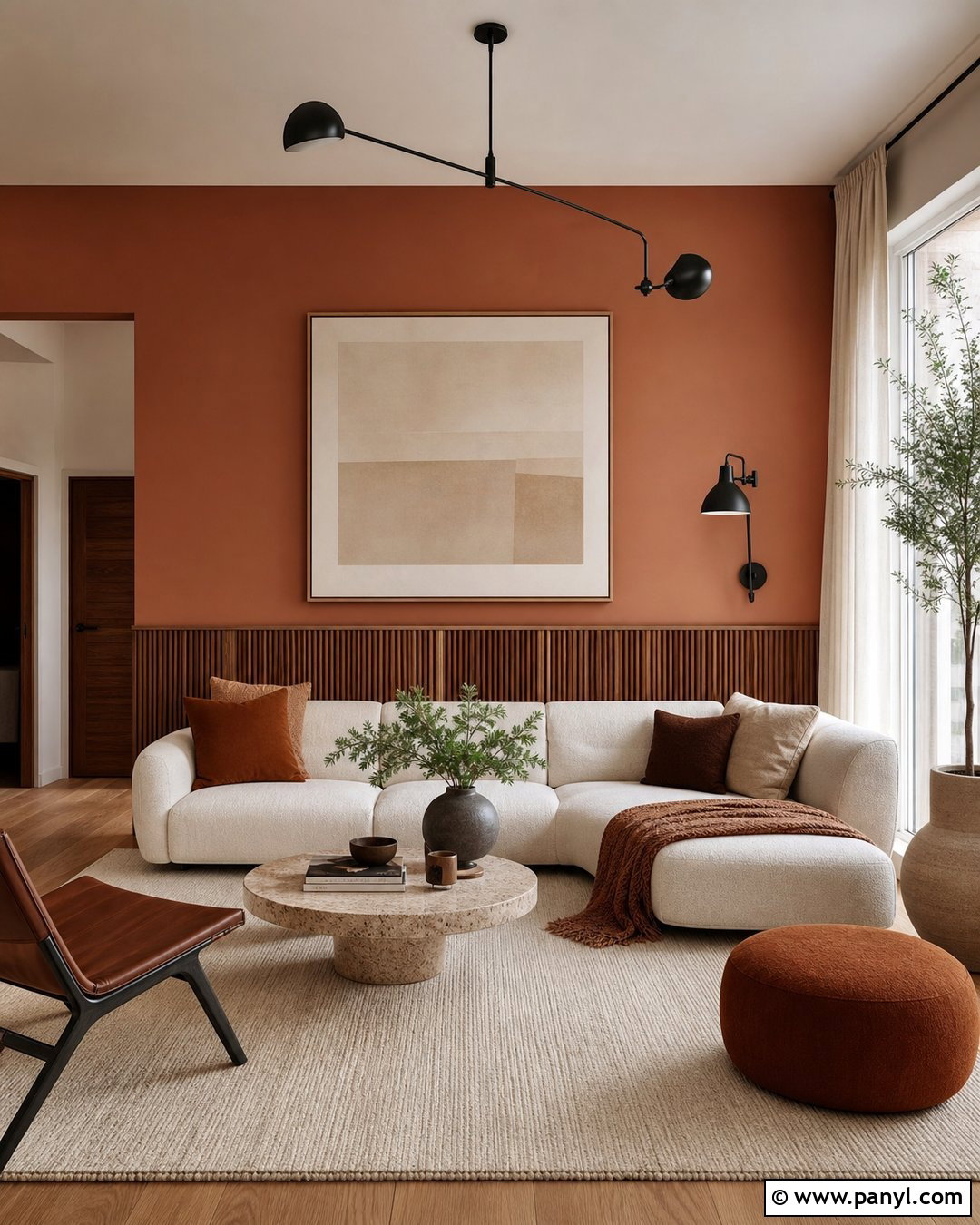
A large cream macramé hanging can bring authentic 70s texture to a calm bohemian living room. Choose a wide design with layered knots, long fringe, and a natural wood dowel. Center it above a low tan sofa against a warm terracotta or muted clay wall. Add a rattan lounge chair, a round oak coffee table, and a textured ivory rug to continue the handmade feeling. Olive and rust pillows introduce period color without overpowering the neutral fiber art. Place trailing plants on one side and a ceramic floor lamp on the other to create visual balance. Avoid surrounding the macramé with many tiny decorations. Giving it open wall space emphasizes its scale, craftsmanship, and softness while making the whole room feel restful and thoughtfully assembled.
6. Sunburst Mirror Wall Art
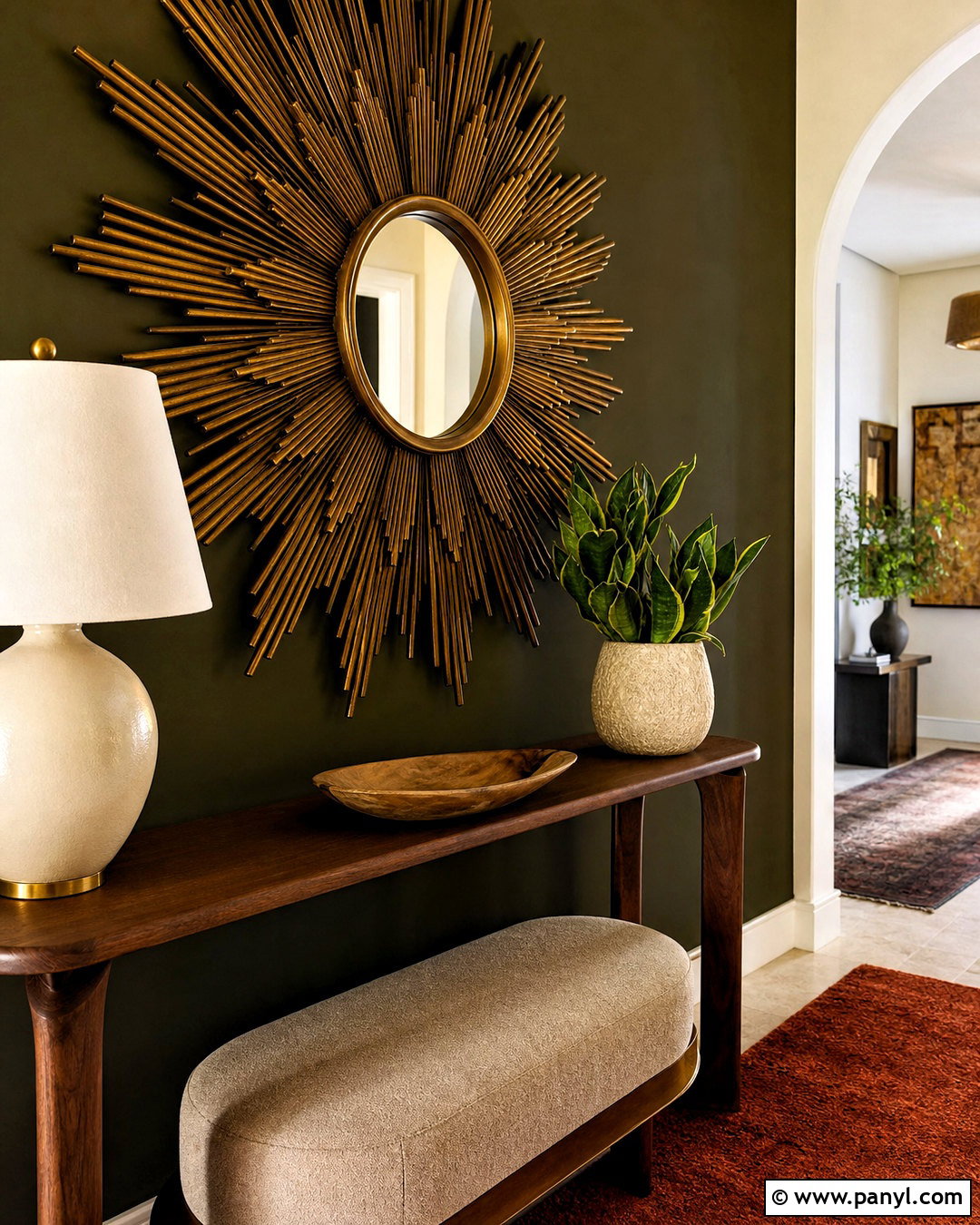
Turn a small entryway into a glamorous retro moment with a large brass sunburst mirror centered above a narrow walnut console. The radiating metal frame should be wide enough to fill the wall while leaving visible space around its edges. Paint the background deep olive green for rich contrast, then style the console with a cream ceramic lamp, a shallow wooden bowl, and one leafy plant. A rust runner and rounded upholstered bench can extend the warm palette through the hallway. Choose a mirror with a slightly aged brass finish rather than highly reflective yellow gold. This softens the effect and works naturally with wood furniture. The complete arrangement adds light, depth, and sculptural character without requiring a complicated gallery wall or an extensive collection of artwork.
7. Vintage Travel Poster Wall Art
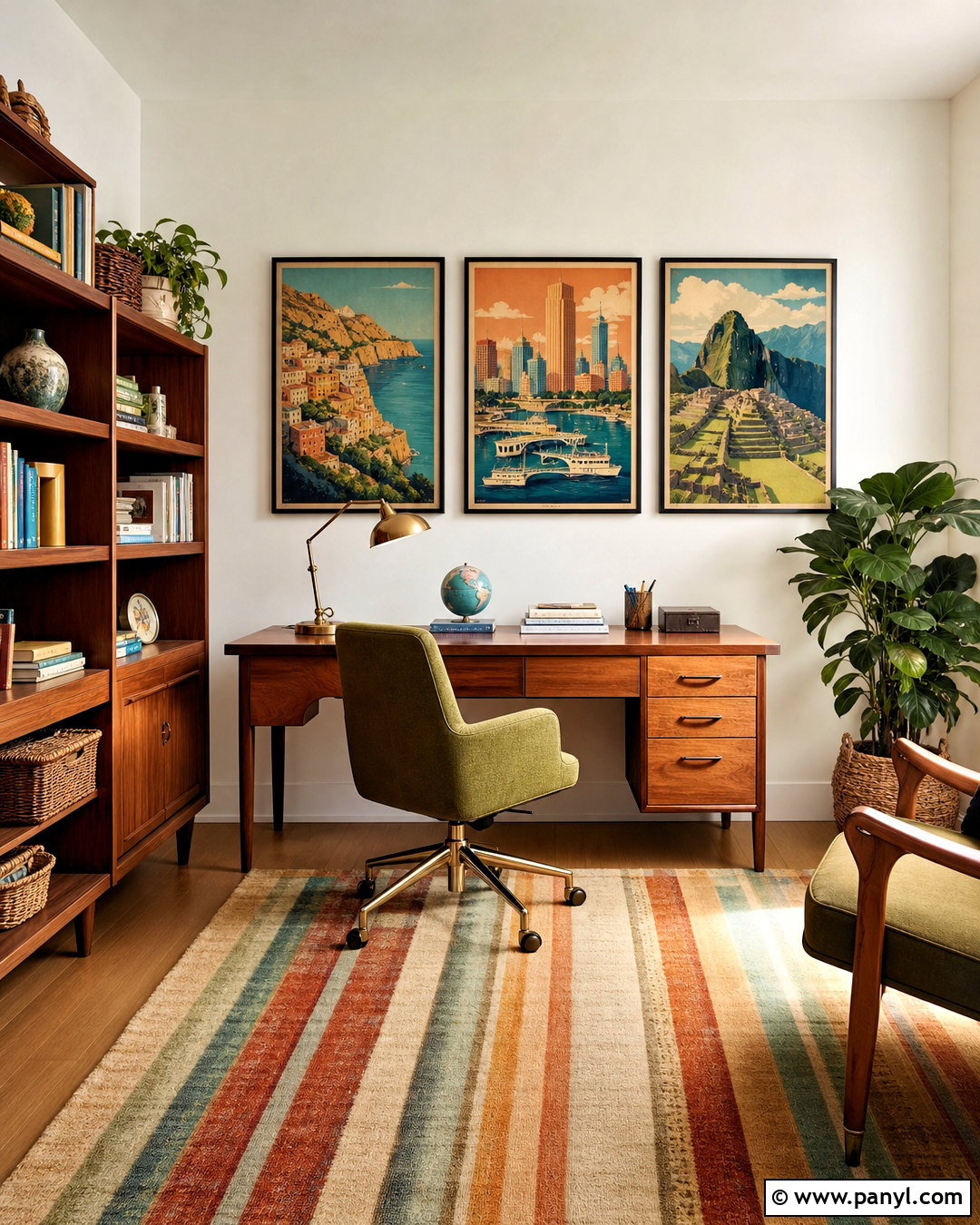
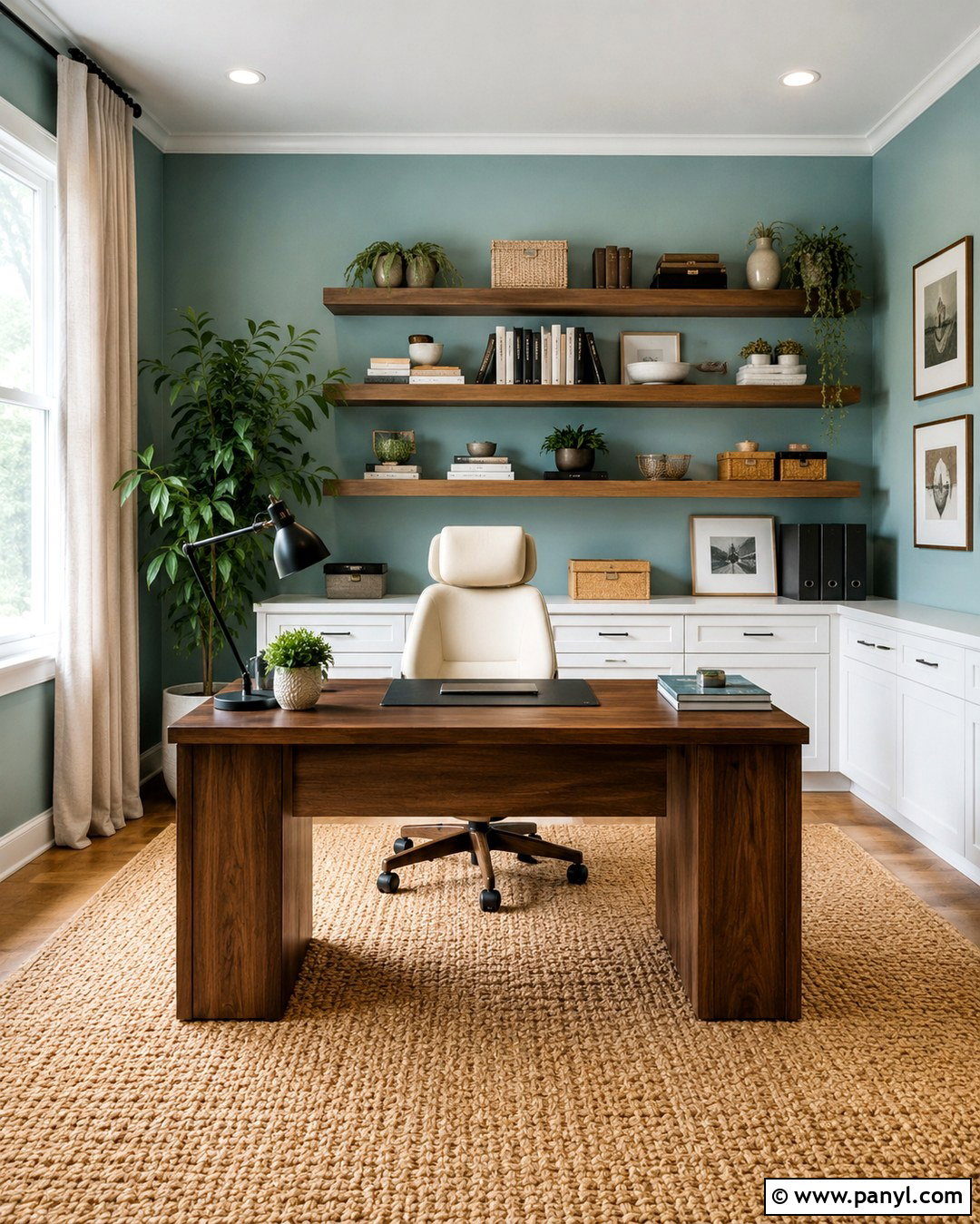
Give a home office a nostalgic vacation mood with framed vintage travel posters in faded coral, turquoise, ochre, and navy. Select three destinations with similar illustration techniques and place them in a straight horizontal row above a walnut desk. Matching natural wood frames will unite the different scenes and complement the room’s furniture. Add an olive desk chair, a brass task lamp, and woven storage baskets for a practical 70s-inspired workspace. Keep the wall warm white so the posters remain colorful and easy to see. A flat-woven rug with a simple stripe can repeat the artwork’s faded tones. Rather than adding unrelated souvenirs, display only one ceramic planter and a few neatly stacked books. The result feels adventurous, personal, and visually organized.
8. Record Cover Wall Art
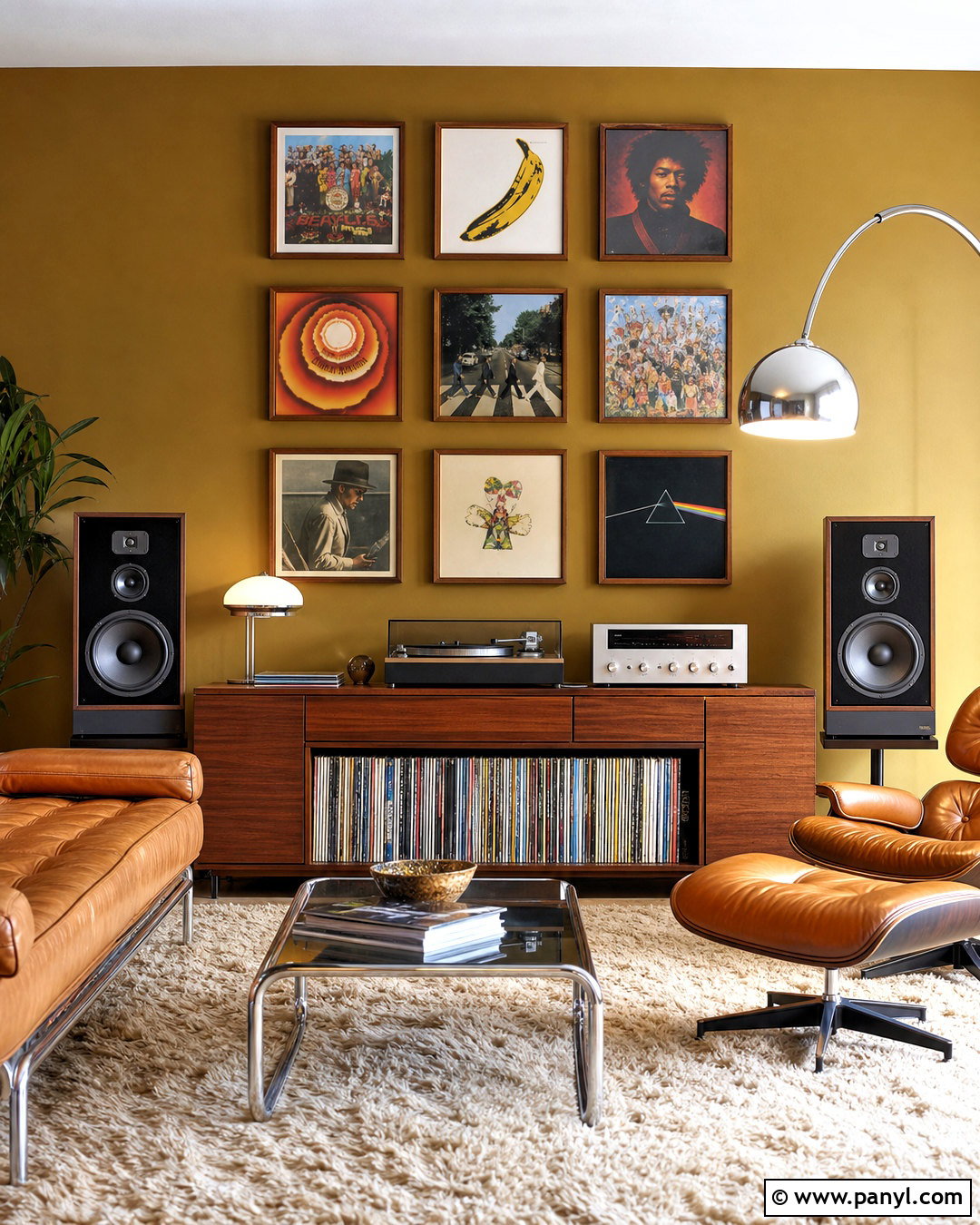
A record-listening corner becomes much more inviting when favorite album covers are treated as a structured wall display. Arrange nine colorful covers in a clean three-by-three grid above a long walnut media console. Use slim frames that allow the covers to be changed without damaging them. Balance the display with a caramel leather lounge chair, a cream shag rug, and a chrome arc lamp. The turntable and speakers should sit symmetrically on the console, with records organized vertically in lower compartments. Paint the wall muted mustard, dusty blue, or warm beige depending on the dominant cover colors. Leaving consistent spacing between every frame keeps the collection from feeling messy. This approach combines personal taste, music history, storage, and 70s character in one functional room feature.
9. Mushroom Wall Art
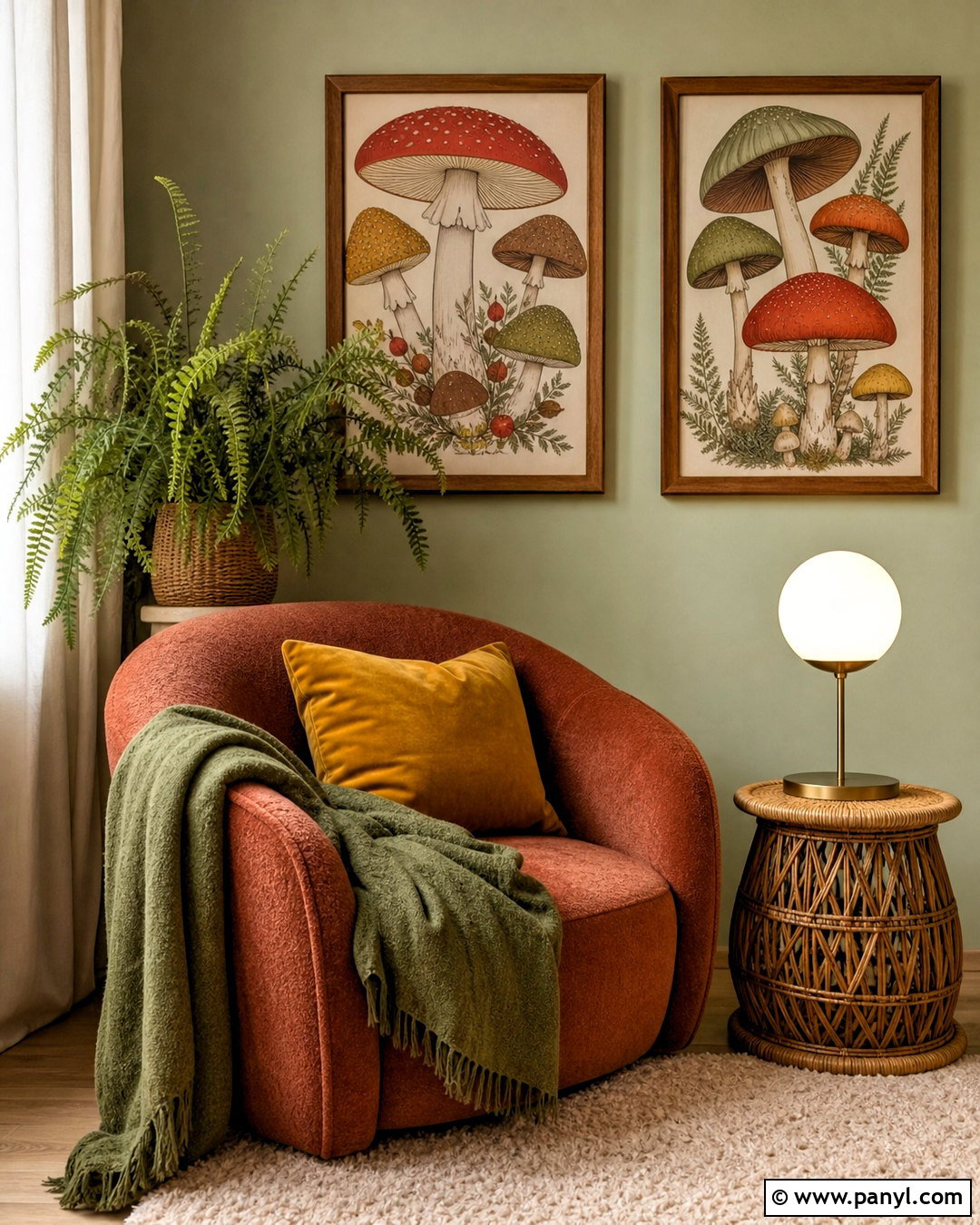
Mushroom wall art creates a whimsical 70s bedroom or reading nook without requiring an overly bright color scheme. Choose an illustrated set featuring red, ochre, brown, cream, and muted green mushrooms. Hang the prints in a balanced group above a curved rust armchair or simple wooden daybed. Use walnut frames and wide cream mats to give the illustrations a collected natural-history appearance. Add a mustard floor cushion, an olive throw, and a small rattan table beside the seating. A globe-shaped lamp provides the rounded form often associated with retro interiors. Keep the wall pale sage or warm beige, and introduce one tall fern for additional organic texture. The finished nook feels earthy, playful, and cozy rather than childish or heavily themed.
10. Botanical Wall Art
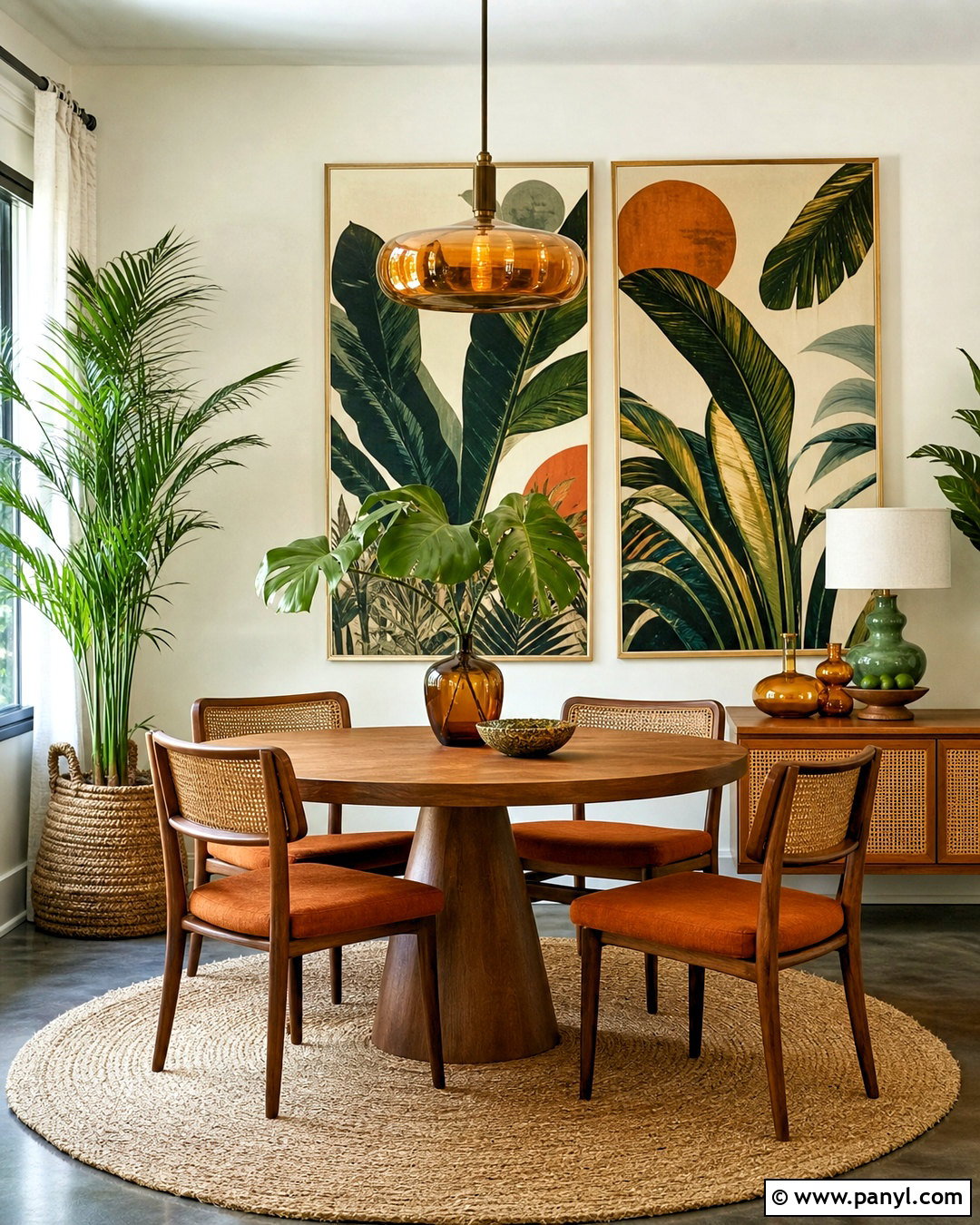
Create an earthy dining room using oversized botanical wall art with palms, ferns, and broad tropical leaves in layered avocado and forest green. Hang a pair of large prints above a teak sideboard, using medium-brown wooden frames that complement the furniture. A round pedestal table and cane-backed chairs will continue the natural materials across the space. Add rust seat cushions, an amber pendant light, and a cream woven rug to warm the green palette. Display a few smoked-glass vases on the sideboard, but keep the arrangement low so it does not block the artwork. Pale tan walls offer softer contrast than bright white. The completed scheme combines the indoor-garden enthusiasm of the decade with an uncluttered modern layout suitable for relaxed meals and entertaining.
11. Woven Fiber Wall Art
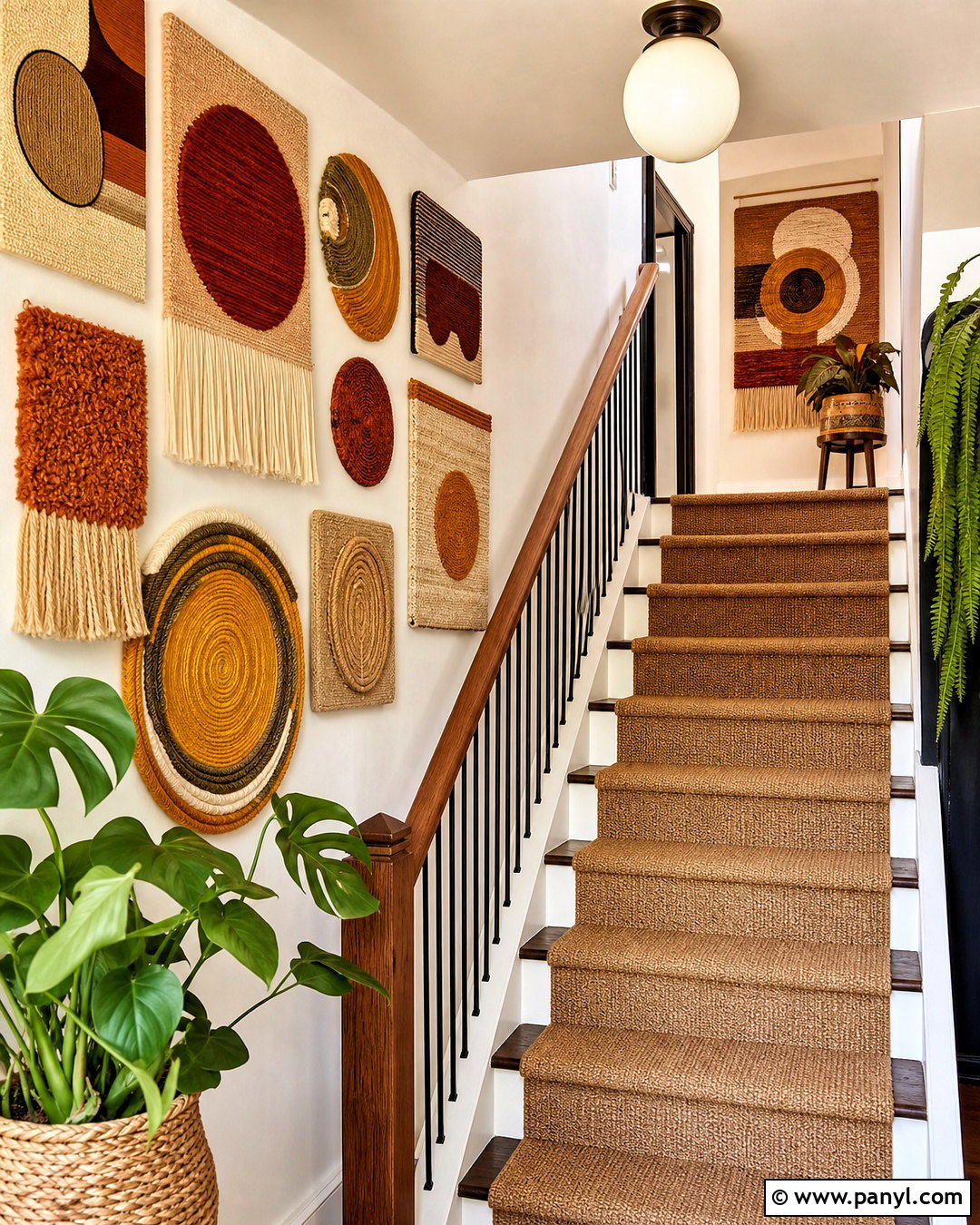
Would a blank staircase feel warmer with texture instead of conventional framed prints? Install a carefully spaced collection of woven fiber pieces made from wool, jute, raffia, and cotton. Select circular and rectangular designs in cream, camel, burnt orange, mustard, and brown. Arrange the pieces so the composition follows the rising angle of the stairs. A natural oak handrail and warm white wall provide a quiet background, while a flat-woven runner introduces subtle pattern underfoot. Add one large floor plant at the bottom landing and a simple globe ceiling light above. Avoid placing fragile accessories on the steps or using overly long fringe near the railing. This complete treatment turns a transitional area into a tactile, gallery-like feature while preserving safe, open circulation.
12. Ceramic Wall Art
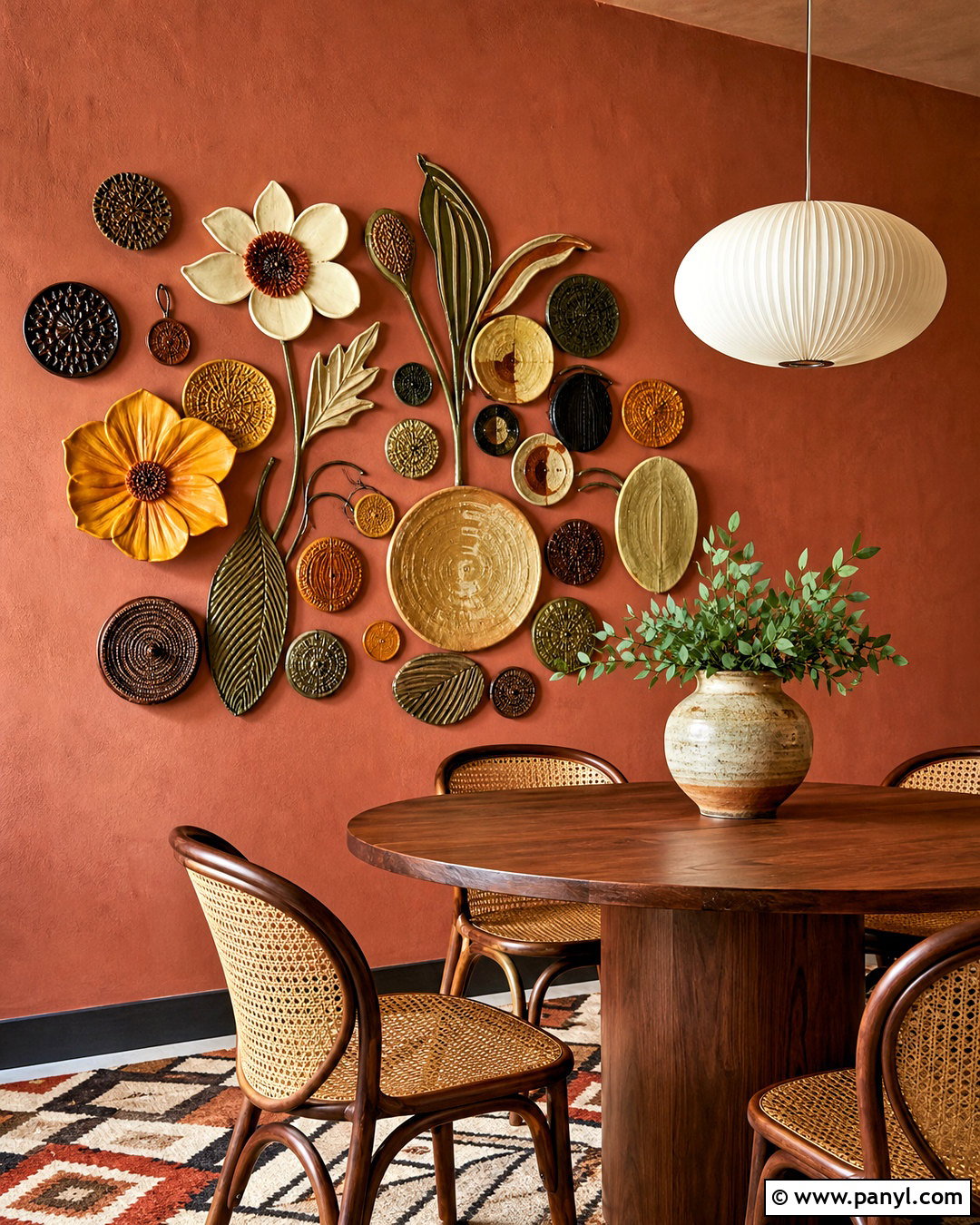
Decorative ceramic wall art offers color, shine, and dimension that flat prints cannot provide. For a dining nook, arrange handmade ceramic flowers, leaves, and abstract discs across a muted terracotta wall. Use pieces in cream, mustard, olive, rust, and dark brown, varying their size while maintaining a loose oval composition. Position a round walnut table below the display with curved cane chairs and an ivory pendant overhead. A low-pile geometric rug can repeat the ceramic colors beneath the table. Keep the tabletop simple with one stoneware vase or fruit bowl. Secure every piece with hardware suited to its weight and the wall material. The finished space feels crafted and original, combining 70s color with sculptural depth and a practical modern dining arrangement.
13. Op Art Wall Art
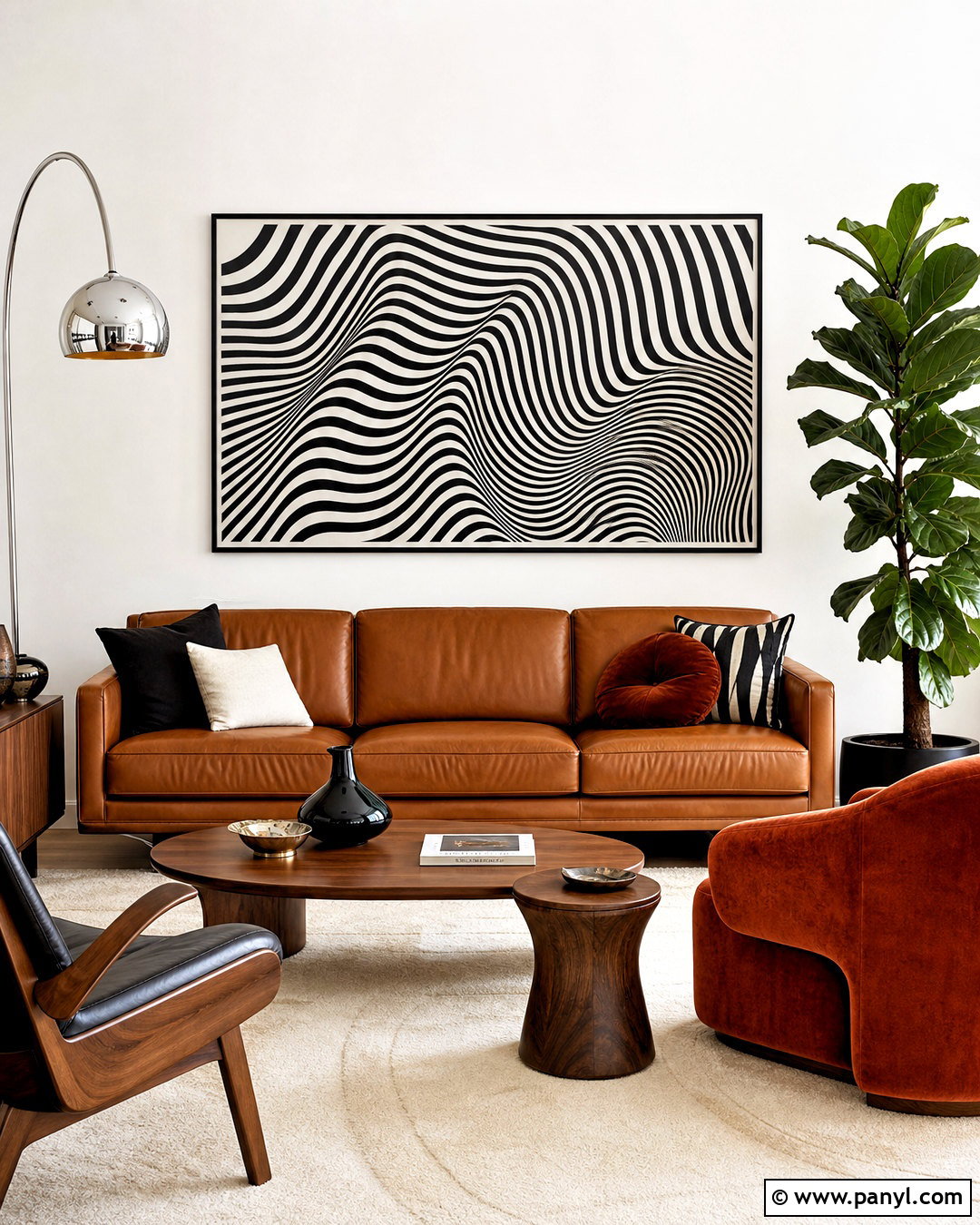
Black-and-white op art delivers the graphic excitement of 70s design without filling a room with competing colors. Hang one oversized print with curved lines, concentric circles, or a rippling checkerboard pattern above a cognac leather sofa. Surround it with warm walnut furniture, a cream rug, and a rust velvet chair to soften the high contrast. Chrome lighting can echo the artwork’s crisp, futuristic quality, while a large plant introduces a natural shape. Use a slim black frame and skip a wide mat so the pattern reads as one strong statement. Keep pillows and curtains mostly solid, perhaps adding one small geometric cushion. This balanced room combines optical movement with comfortable materials, allowing the art to feel dramatic without making the living space restless.
14. Sunset Wall Art
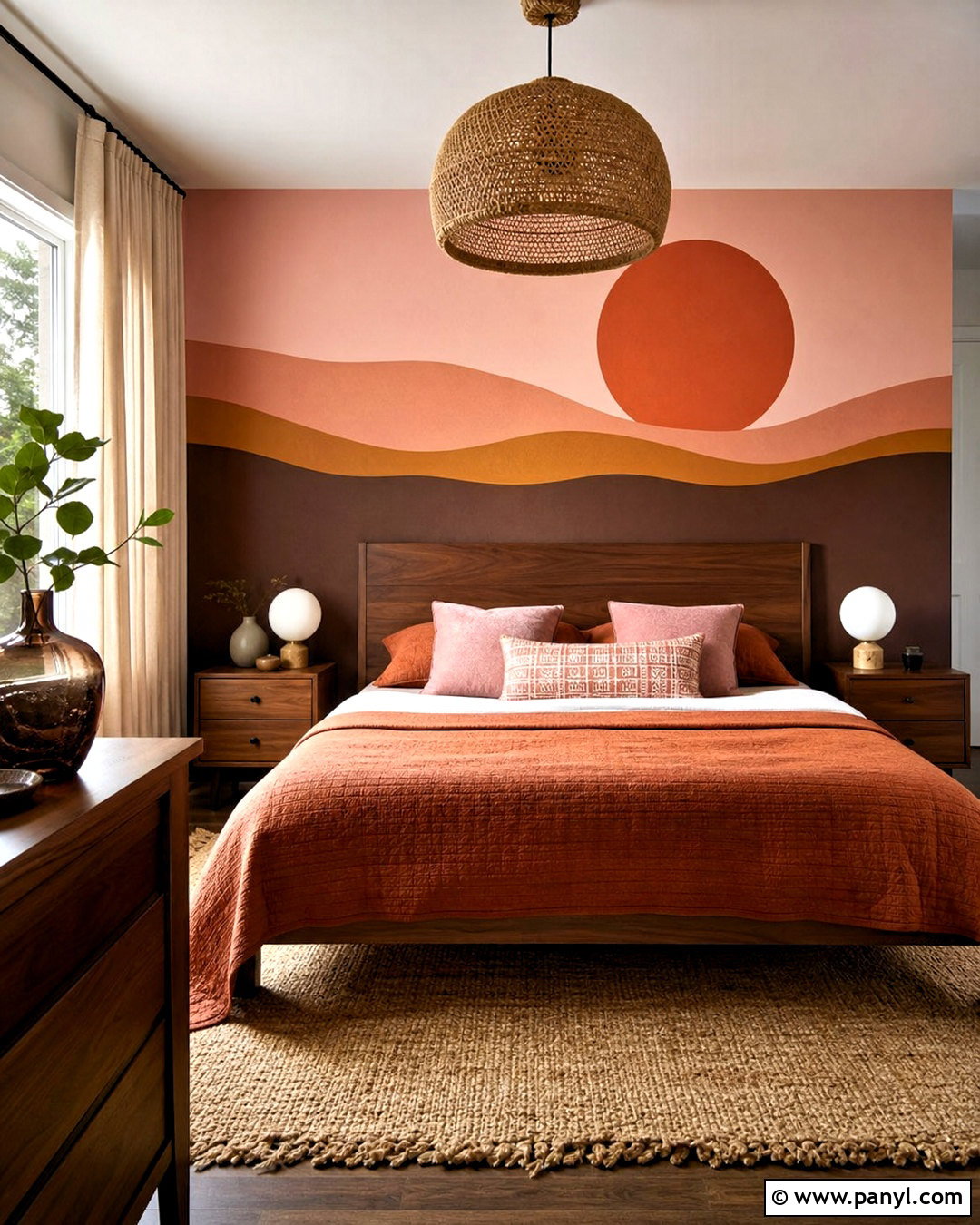
A stylized sunset print can establish a calm retro palette for an entire guest bedroom. Look for a large horizontal design with a burnt orange sun, dusty pink sky, ochre horizon, and deep brown landscape. Hang it above a simple walnut platform bed and repeat its colors through a rust quilt, blush pillows, and a mustard lumbar cushion. Cream walls and curtains will keep the warm tones from becoming heavy. Add globe bedside lamps, woven shades, and a low-pile tan rug for additional softness. The room needs only a few accessories, such as a smoked-glass vase and one small plant. By drawing every major color from the artwork, the finished bedroom feels cohesive and peaceful while still delivering a recognizable 70s-inspired atmosphere.
15. Rainbow Wall Art
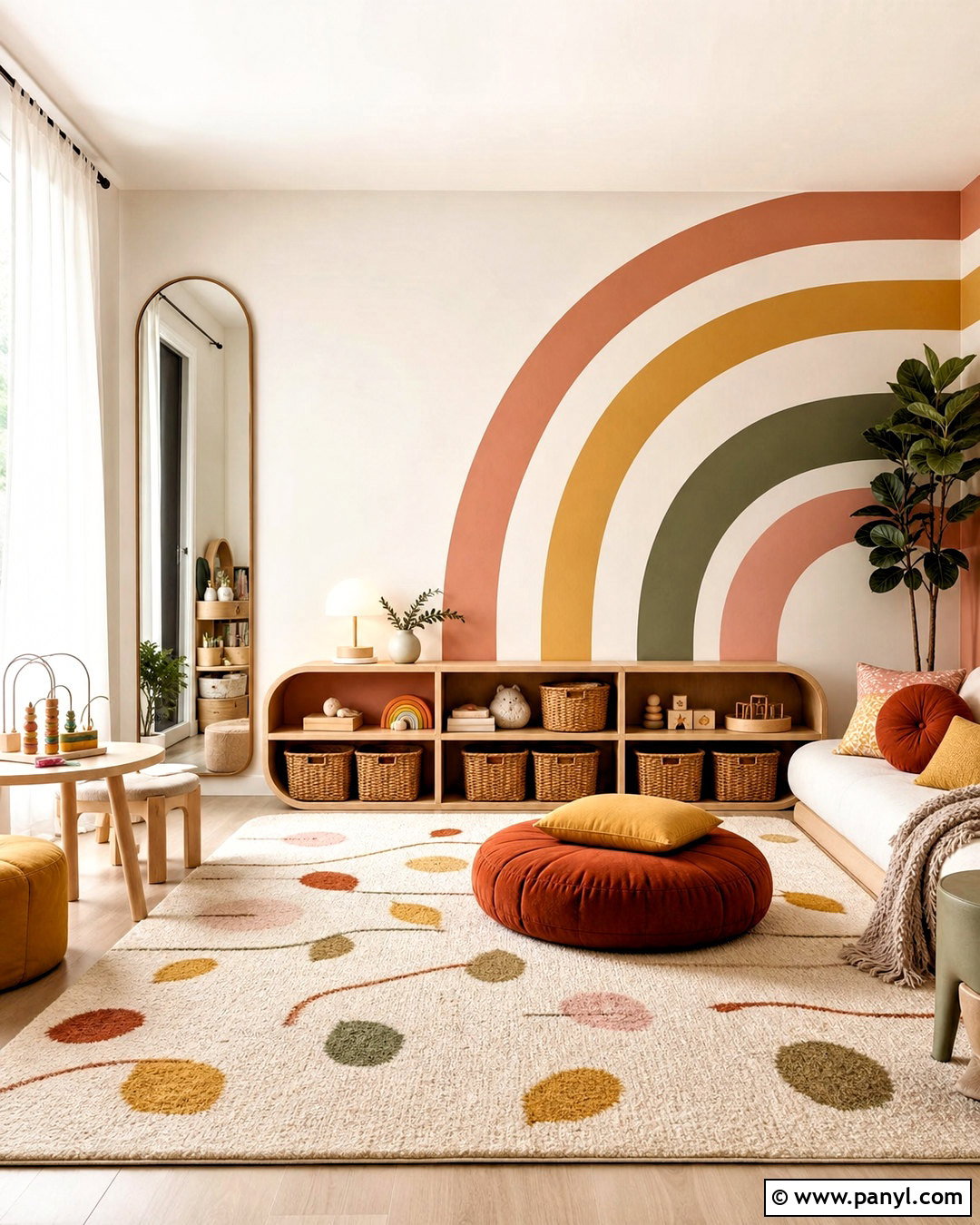
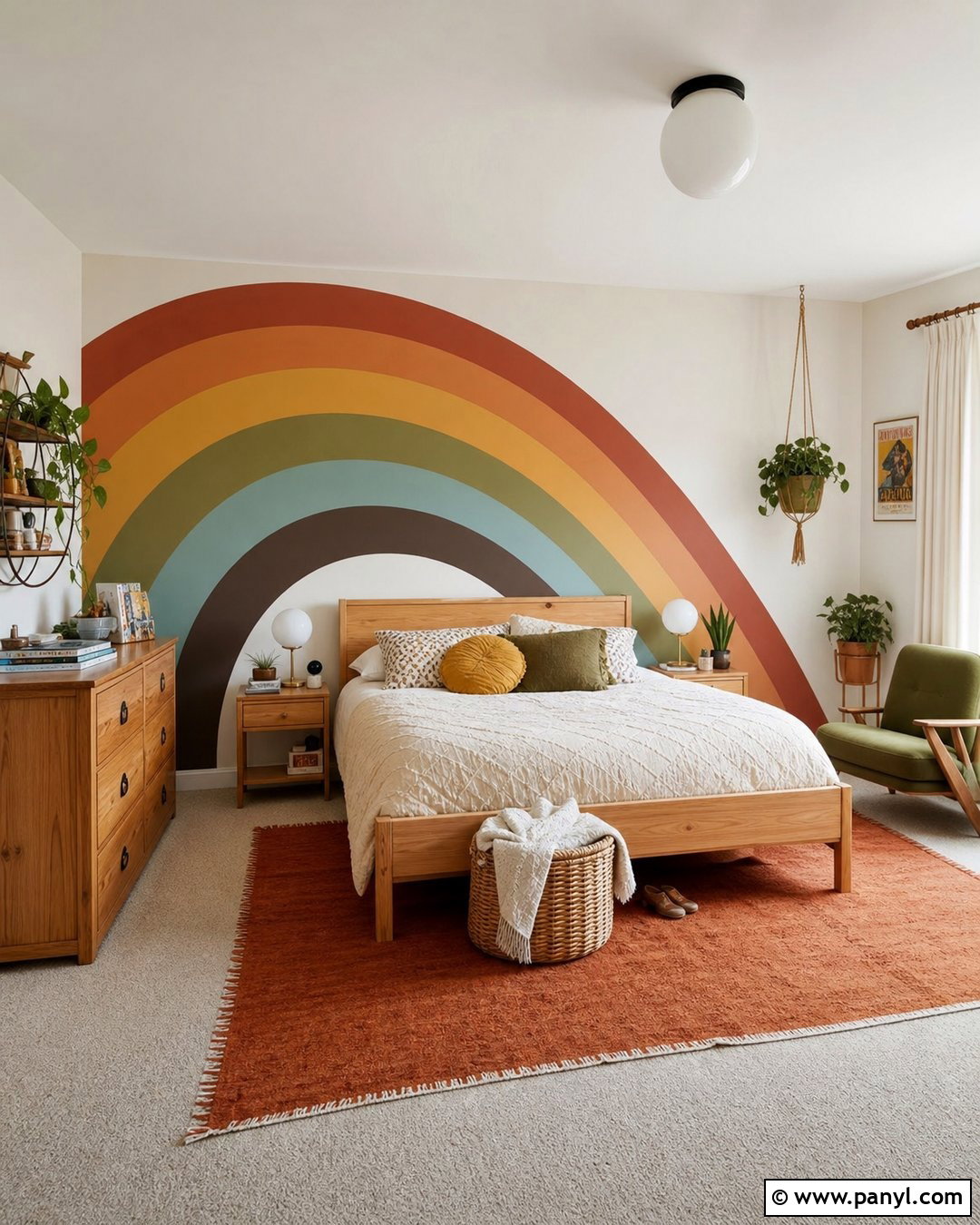
Use rainbow wall art to brighten a child’s room, craft room, or casual family space with an approachable retro spirit. Choose a muted arch design in rust, mustard, dusty rose, olive, and cream rather than a highly saturated primary rainbow. Center the artwork above a light oak storage unit with rounded corners. Add labeled-looking but text-free woven baskets, a rust floor cushion, and a cream rug with a simple curved pattern. A pale peach or warm white wall will support the colors without competing with them. Repeat the arch shape through a rounded mirror, scalloped shelf, or dome lamp, but limit these supporting details to avoid repetition. The complete room feels happy and nostalgic while remaining calm, organized, and easy to update over time.
16. Wood Panel Wall Art
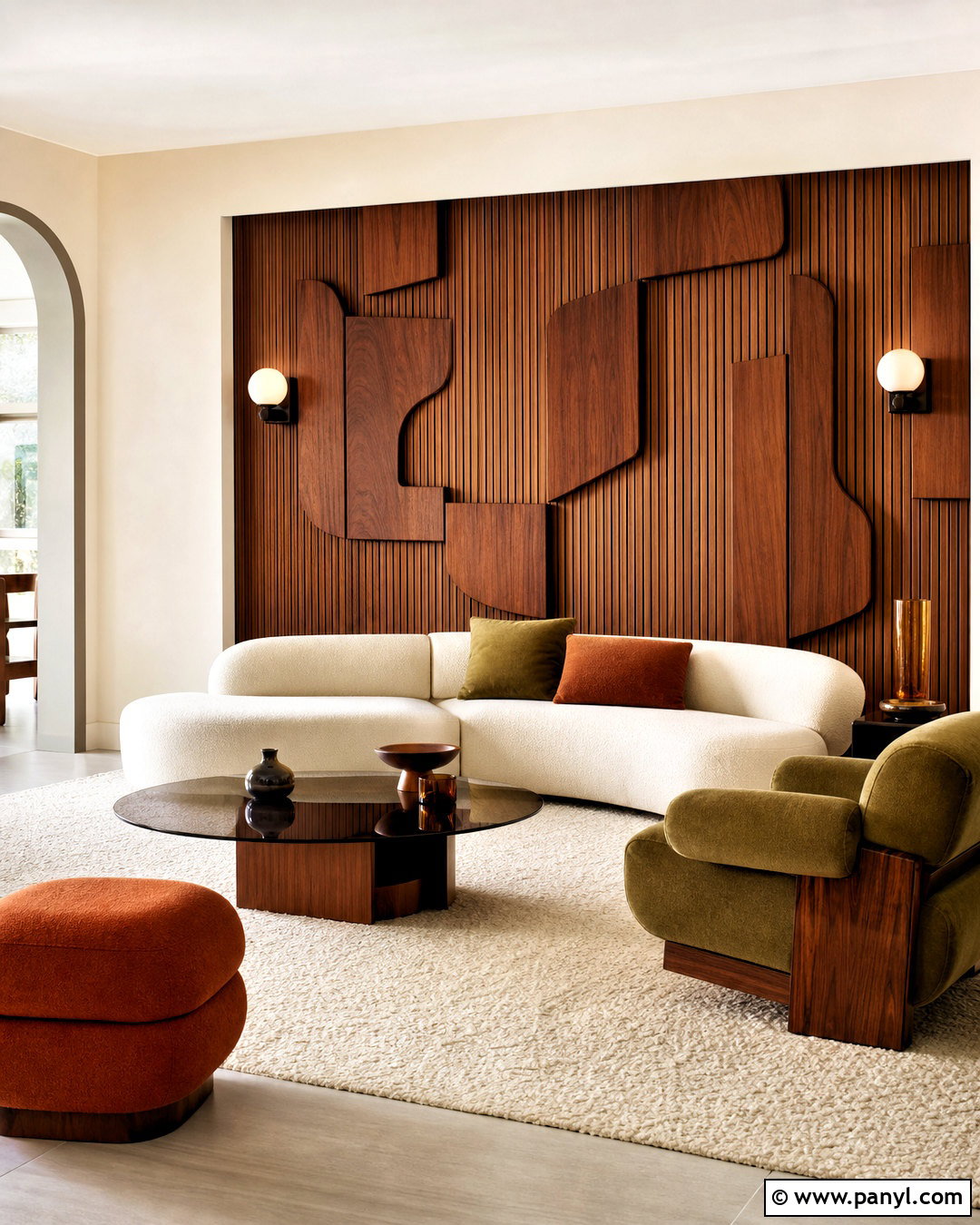
Wood panel wall art can turn a plain living room wall into a sculptural focal point while preserving a warm 70s character. Install a large arrangement of vertical walnut slats with several curved sections or raised geometric blocks. Mount the feature behind a cream boucle sofa so the dark grain creates natural contrast. Add an olive lounge chair, a rust wool rug, and a low smoked-glass coffee table. Soft globe sconces on both sides can highlight the depth of the paneling without adding visual clutter. Keep neighboring walls warm white and use pale flooring to prevent the wood from making the room feel enclosed. The completed design references classic wood-paneled interiors, but its limited application and dimensional pattern give it a cleaner, more architectural finish.
17. Disco Wall Art
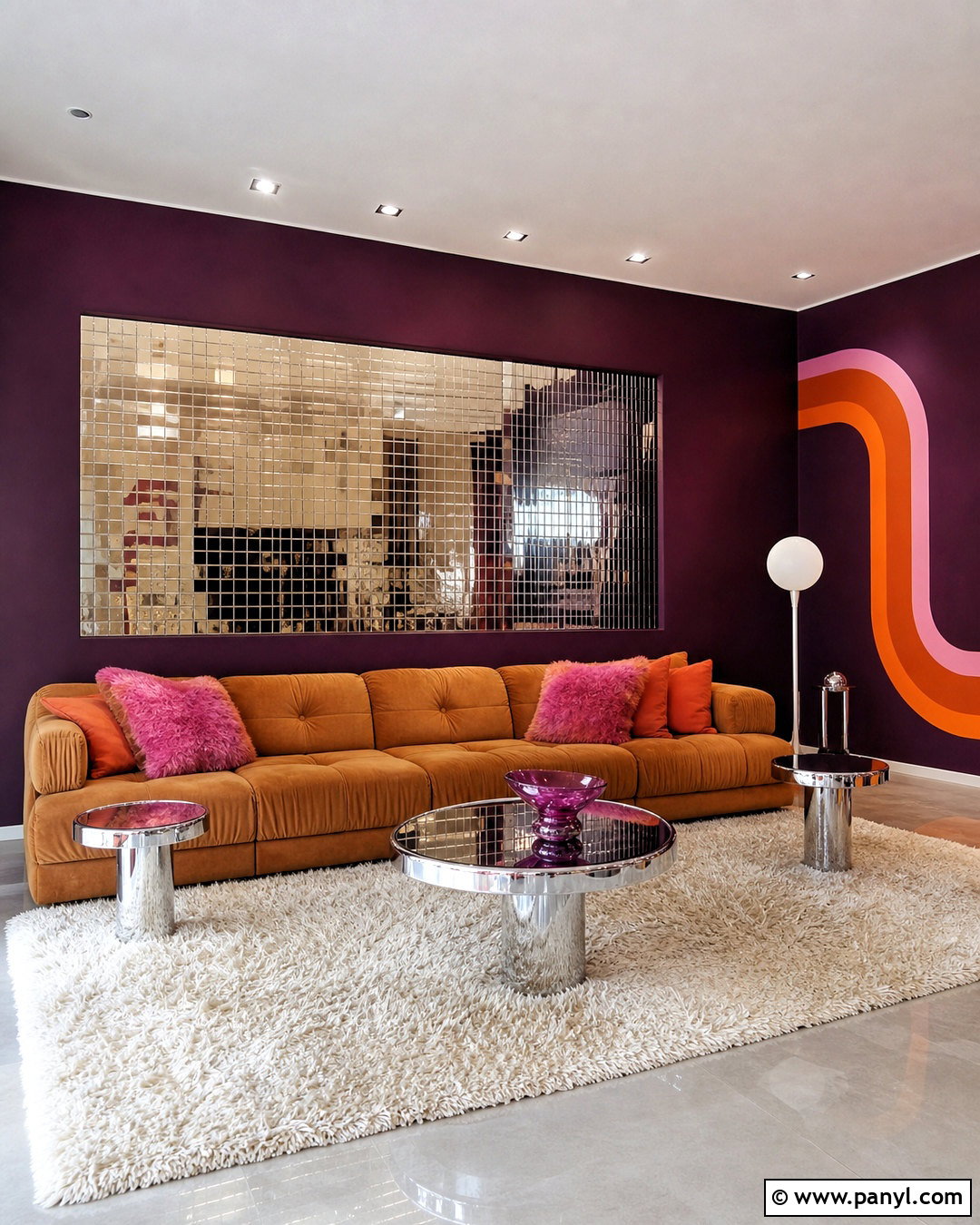
For a playful lounge or entertainment room, make a tiled mirror panel the center of a disco-inspired wall. Use small square mirror tiles to create one defined rectangle above a low caramel sofa rather than covering every wall. Surround the feature with deep plum paint, chrome side tables, and a cream shag rug. Add round orange and pink pillows to introduce bold color, then position a white globe floor lamp nearby. During the day, the mirror tiles will reflect natural light and visually expand the room. Keep the remaining decor simple because the wall already supplies movement and sparkle. This complete setup captures the celebratory side of 70s interiors while remaining polished enough for a modern apartment, den, or music room.
18. Minimalist 70s Wall Art
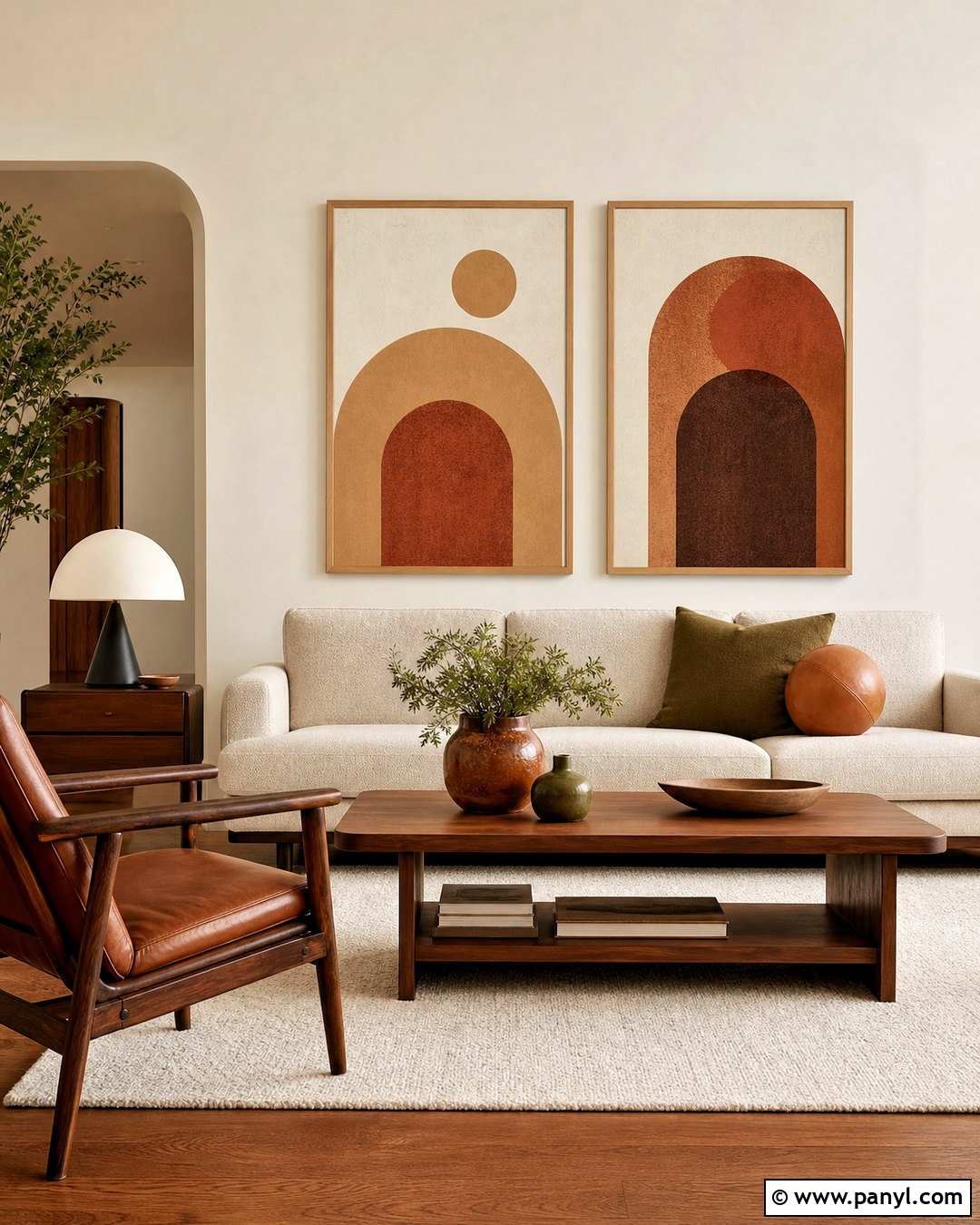
Not every retro room needs intense pattern. A minimalist 70s wall art scheme can use two large abstract prints with simple arches and circles in tan, rust, cream, and dark brown. Hang them side by side above a clean-lined oatmeal sofa. Choose pale oak frames and maintain generous blank space around the pair. Complete the living room with a walnut coffee table, a caramel leather chair, and a flat cream rug. A sculptural white floor lamp provides a modern counterpoint, while one olive pillow introduces subtle color. Avoid crowded shelves, novelty accessories, and multiple small patterns. The pared-back arrangement highlights the decade’s warm palette and rounded geometry while offering the visual calm expected from a contemporary neutral interior.
19. Eclectic Gallery Wall Art
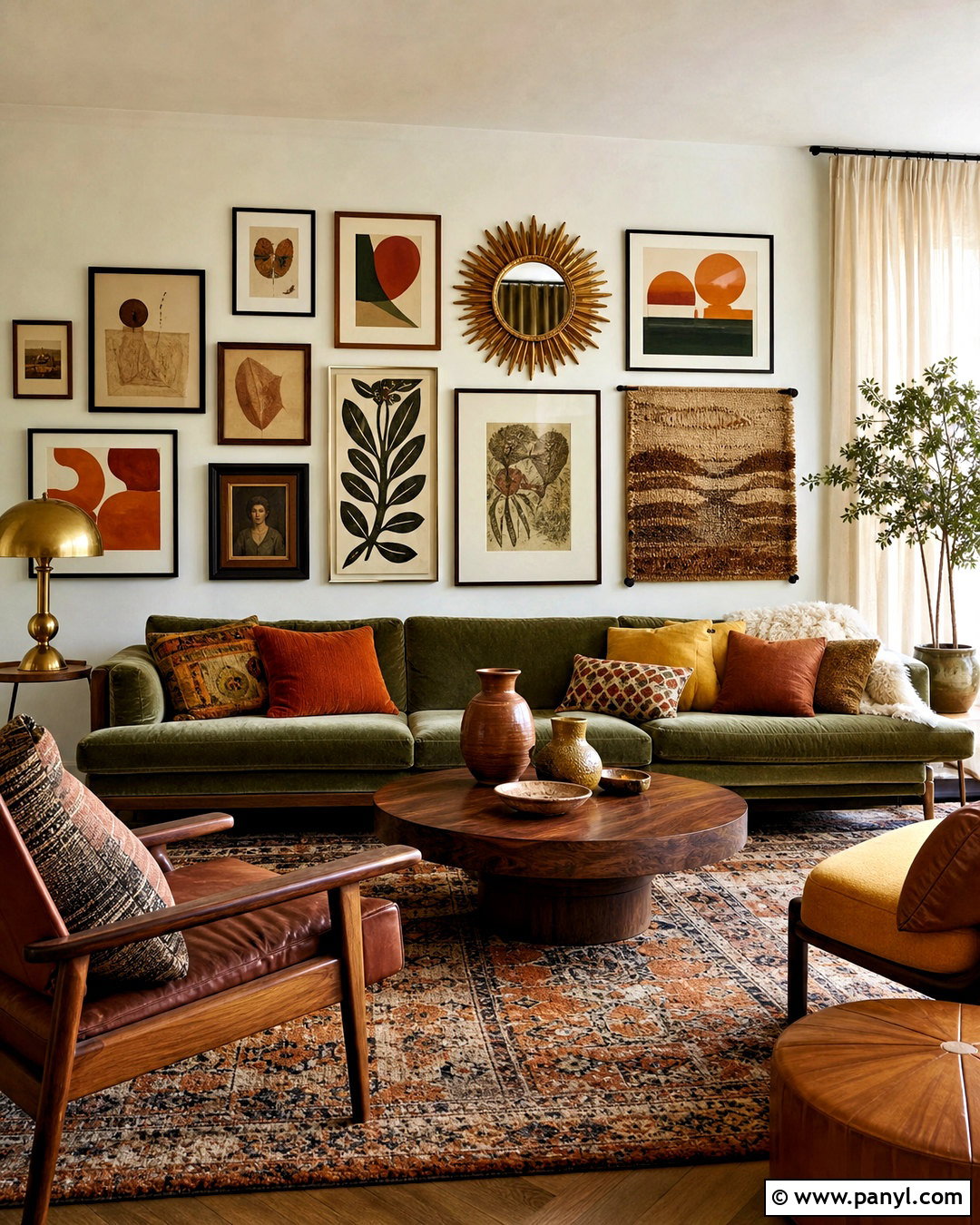
An eclectic gallery wall works best when varied pieces share a deliberate palette. Combine abstract prints, botanical illustrations, a small sunburst mirror, textile art, and one ceramic accent in orange, mustard, olive, brown, and cream. Arrange the collection above a long olive velvet sofa, beginning with the largest piece near the center and building outward. Mix walnut, brass, and painted cream frames, but repeat each finish at least twice for continuity. Ground the room with a rust rug, round wood coffee table, and neutral curtains. Before hanging anything, map the full arrangement on the floor and maintain similar gaps between pieces. The finished wall should feel collected over time, while repeated colors and materials make the complete living room look intentional rather than chaotic.
20. 70s Kitchen Wall Art
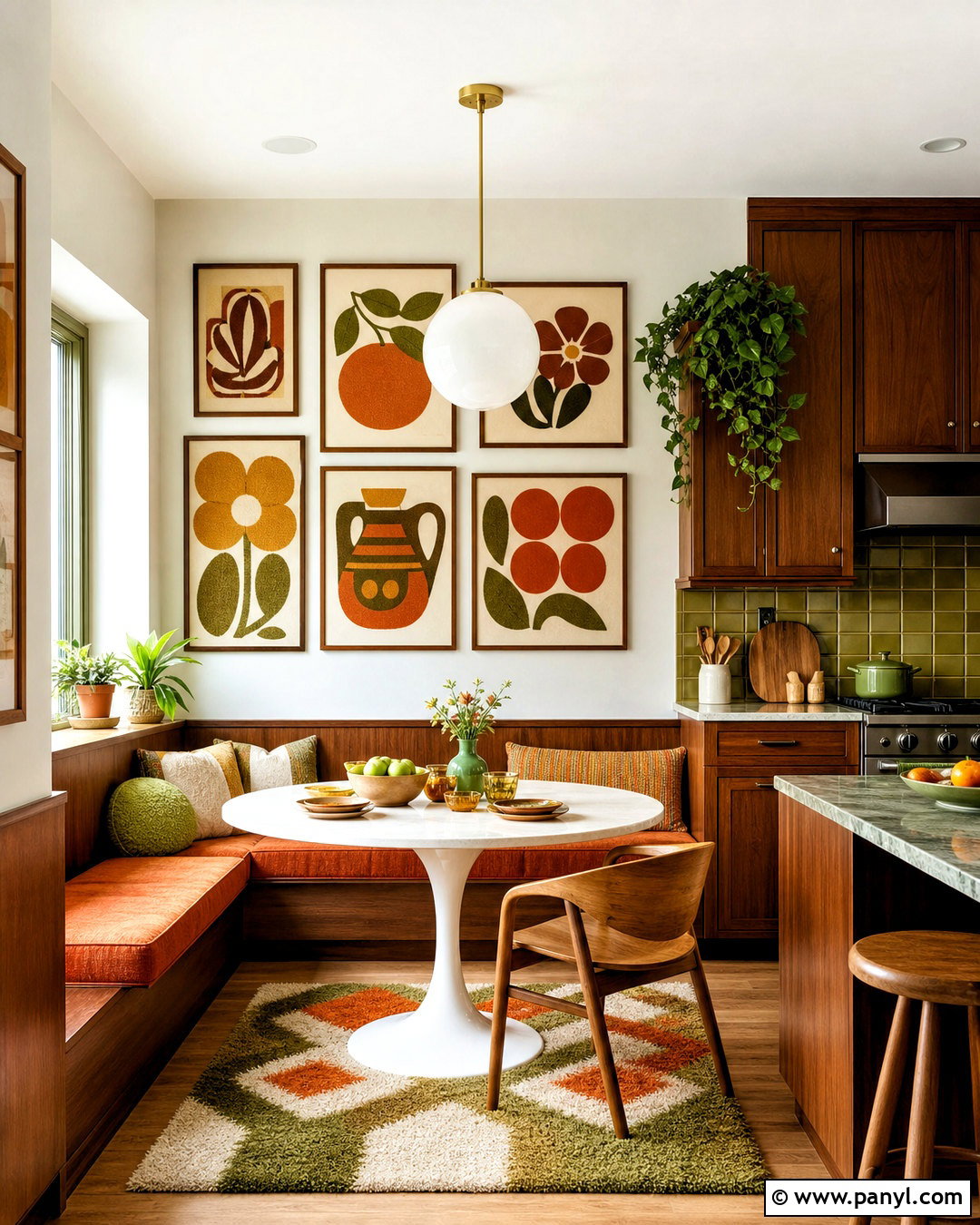
Bring retro personality into a breakfast nook with food-inspired 70s wall art featuring stylized fruit, flowers, coffee pots, or geometric kitchen forms. Select a set of three prints in avocado green, burnt orange, mustard, and cream. Hang them above a compact walnut bench with rust seat cushions and a small round pedestal table. Cream walls, warm wood cabinets, and an olive backsplash will connect the artwork to the surrounding kitchen. Add a white globe pendant and simple ceramic tableware for a clean finishing layer. Protect the framed prints with glazing and avoid placing them directly above the stove or sink. The complete nook feels cheerful and period-inspired while remaining practical, easy to clean, and appropriate for an everyday family kitchen.
Conclusion:
These 70s wall art ideas show how retro decorating can feel warm, personal, and current rather than dated. Begin with a clear color palette, then connect the artwork to furniture, textiles, lighting, and materials already used in the room. Burnt orange, mustard, olive, brown, cream, walnut, brass, and woven fibers provide a reliable foundation. Large statement pieces create a clean focal point, while gallery walls work best when frames, spacing, or colors repeat. You can embrace bold psychedelic graphics or choose quieter botanical and geometric prints. Either way, leaving open space around the display helps every piece stand out. The strongest result is a complete, comfortable room that reflects your personality.

Related Ideas and Inspiration:
Leave a Reply