
Brown and orange create one of the warmest, most grounded palettes for interior walls. The combination can feel rustic, modern, earthy, or dramatic depending on the undertones and materials around it. Terracotta brings a baked-clay softness, while rust, caramel, cinnamon, and chocolate add increasing depth. These shades also pair naturally with cream textiles, dark wood, stone, leather, brass, and muted green. Terracotta generally falls between dusty red and burnt orange, while deeper rust shades lean closer to brown. () The key is building a complete room where paint, furniture, flooring, lighting, and decor balance the warmth. Explore the following complete, practical, and distinctive Brown Orange Wall Color Ideas.

1. Terracotta Living Room Wall
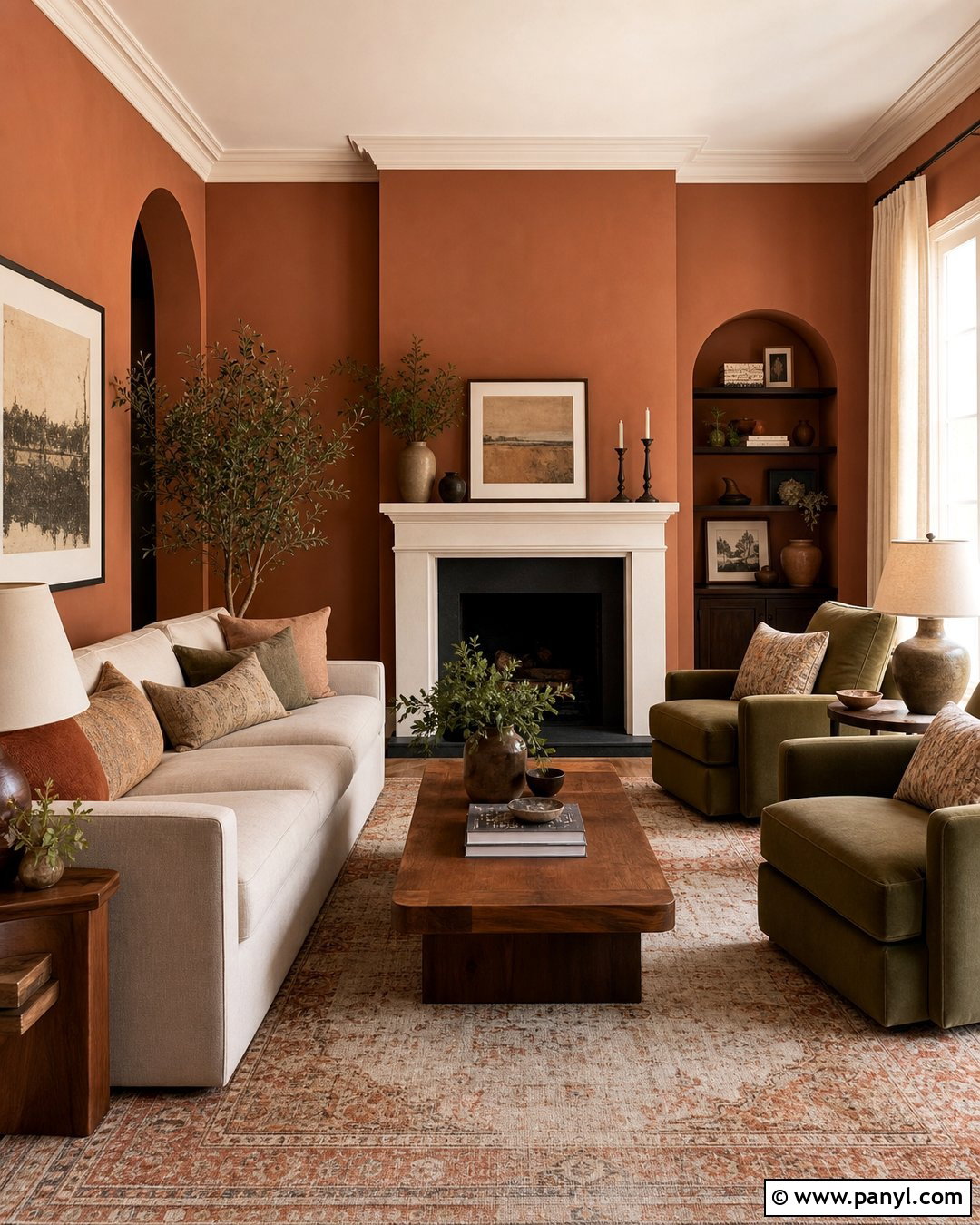
A soft terracotta wall can make a living room feel sunny, relaxed, and welcoming without appearing overly bright. Paint every wall in a muted clay orange, then use warm white on the ceiling and trim for a clean boundary. Ground the room with a cream linen sofa, a walnut coffee table, and a faded rug combining beige, rust, and dusty blue. Add two olive green armchairs to provide gentle contrast. Natural materials keep the palette comfortable, so include woven baskets, linen curtains, ceramic lamps, and terracotta planters. Choose simple black picture frames for definition. This complete look works especially well in rooms with medium or strong natural light, where the wall color can reveal its softer brown undertones.
2. Burnt Orange Bedroom Wall
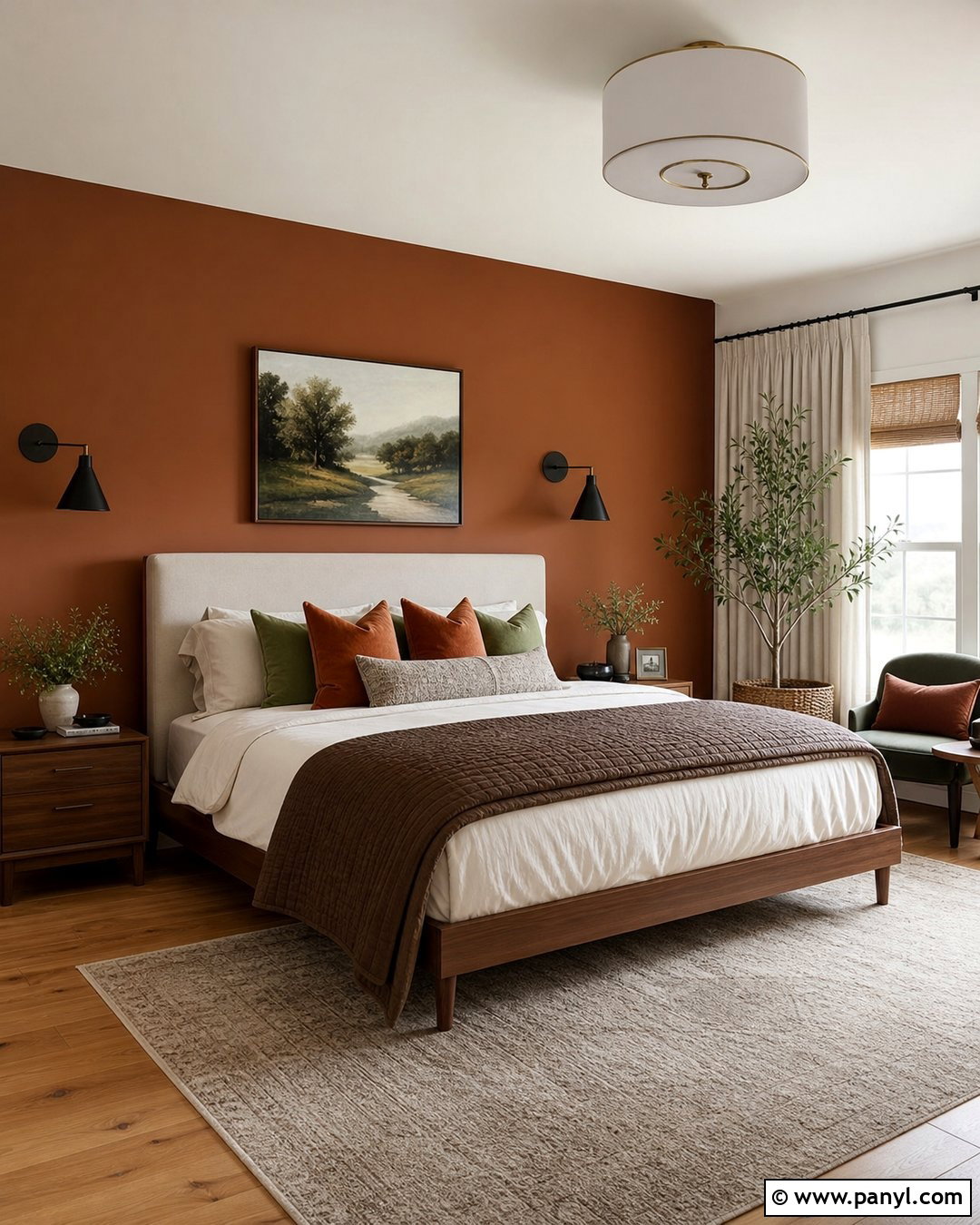
Imagine waking up in a bedroom wrapped in the rich warmth of late afternoon sunlight. A burnt orange wall behind the bed creates a strong focal point, while light beige walls elsewhere prevent the color from feeling overwhelming. Use a low walnut bed with an oatmeal upholstered headboard, crisp ivory bedding, and a chocolate brown quilt folded across the foot. Rust, cream, and muted sage pillows connect the palette. Choose medium-tone oak flooring and a large natural fiber rug to keep the room grounded. Matte black sconces add contrast without distracting from the wall. Finish the space with linen curtains, minimal landscape artwork, and a leafy plant. The result feels cozy, polished, and suitable for every season.
3. Rust Dining Room Wall
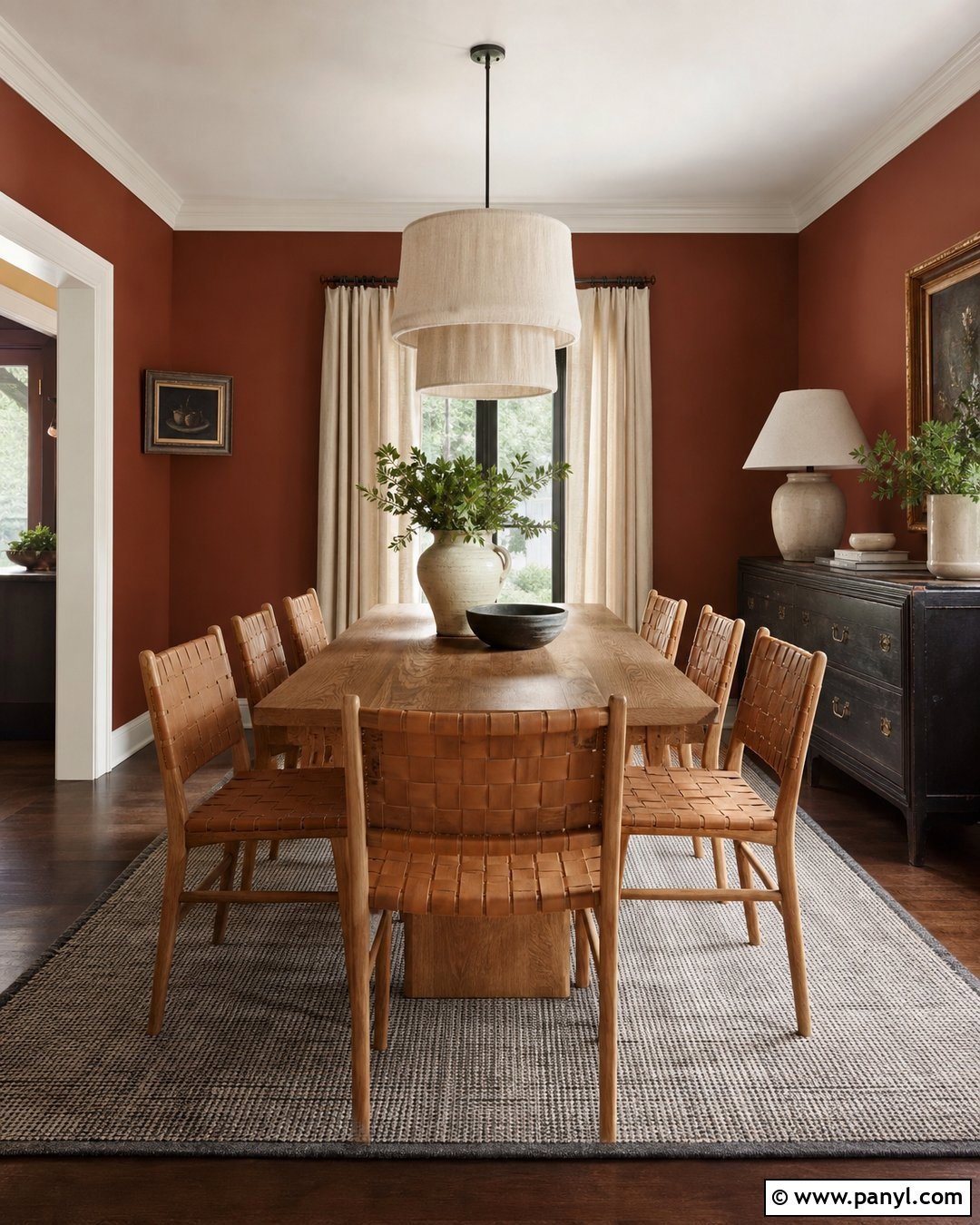
Rust walls can transform an ordinary dining room into a comfortable space that encourages long, relaxed meals. Cover all four walls in a subdued reddish-brown rust, balancing the saturated color with a warm white ceiling and simple cream trim. Place a solid oak dining table in the center with woven leather chairs in tan or cognac. A flat-weave rug featuring beige, charcoal, and faded orange will define the eating area. Hang a large white linen pendant above the table to introduce softness. An aged black sideboard gives the room visual weight, while cream ceramics and clear glassware brighten its surface. Add long natural linen curtains and one oversized abstract print containing off-white, brown, and muted blue for a complete, collected appearance.
4. Caramel Brown Home Office Wall
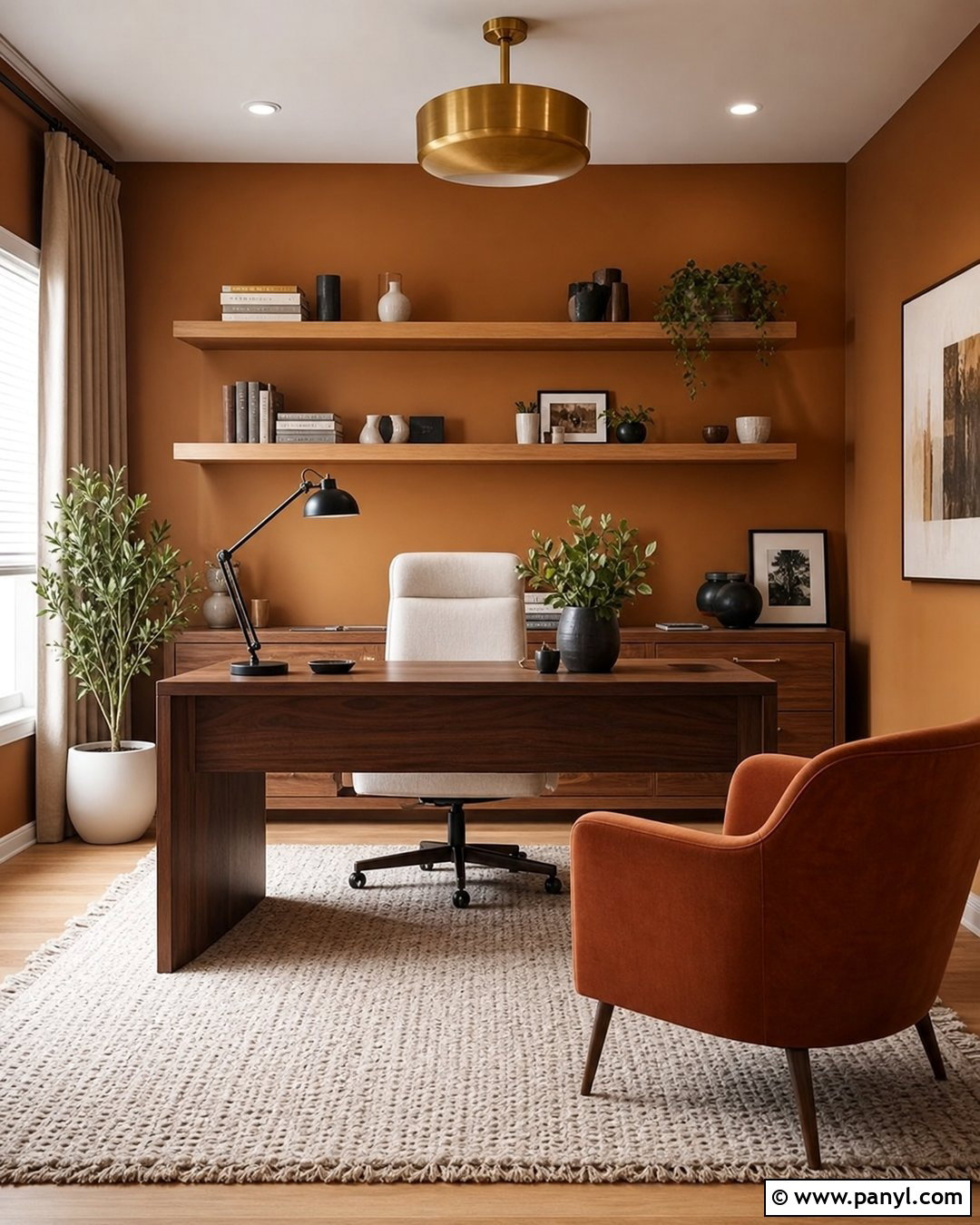
Need a home office that feels focused but not cold? Caramel brown walls provide warmth while remaining calm enough for daily work. Paint the walls in a medium brown with golden-orange undertones, then pair them with a large walnut desk and a supportive cream fabric chair. Install floating oak shelves across one wall and style them sparingly with books, storage boxes, ceramics, and a trailing plant. A light wool rug will brighten dark flooring and soften sound. Use an adjustable black desk lamp and a simple brass ceiling fixture for layered lighting. Cream curtains maintain an open feeling around the window. A rust-colored guest chair and one framed geometric print can repeat the orange undertone without making the room look heavily coordinated.
5. Cinnamon Orange Kitchen Wall
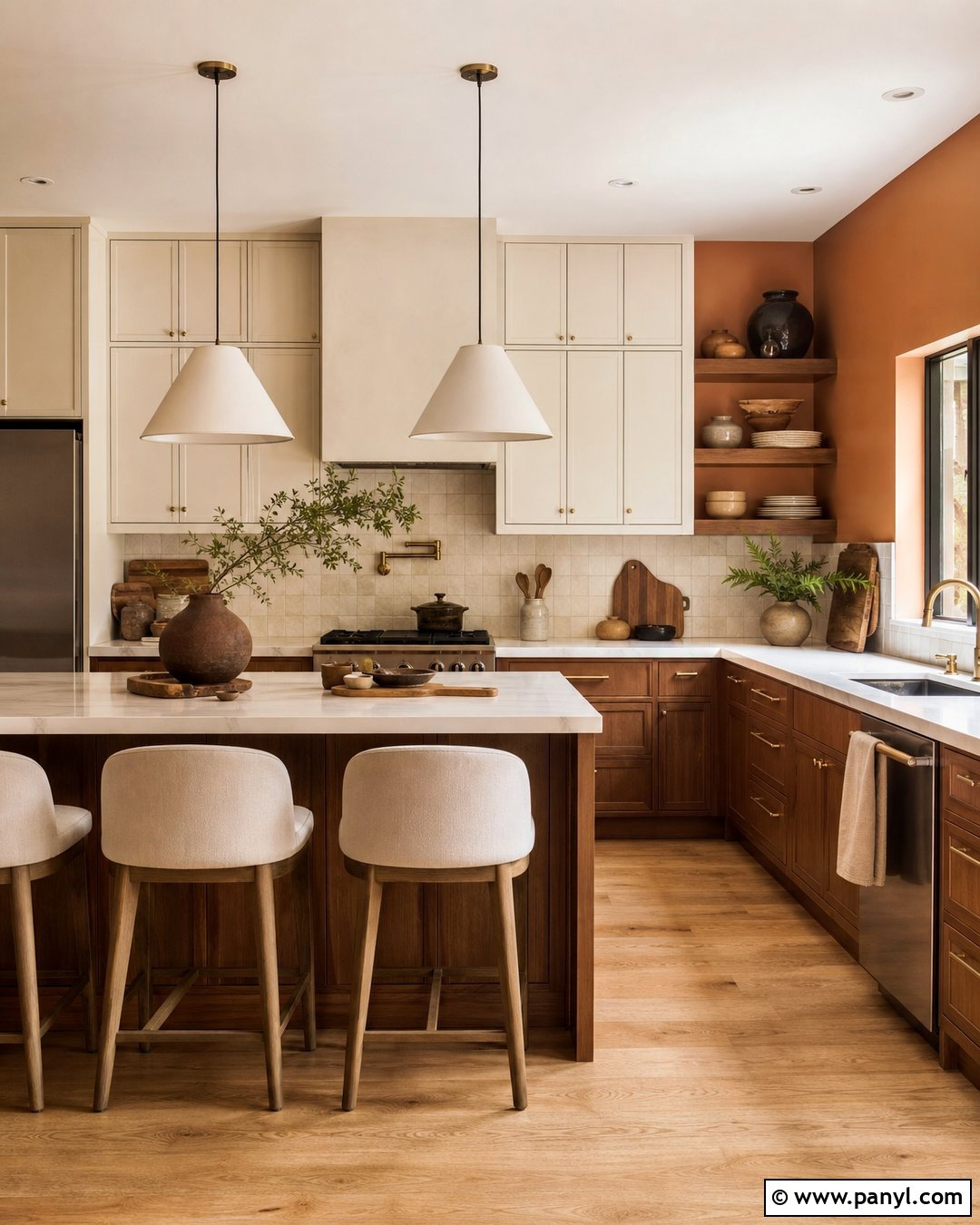
Cinnamon orange gives a kitchen character while feeling softer and more natural than a vivid citrus shade. Use it on the walls surrounding warm white cabinets, leaving the ceiling and window trim crisp but not stark. Walnut lower cabinets or a walnut island will deepen the brown side of the palette. Choose creamy quartz countertops and a handmade off-white tile backsplash to reflect light. Aged brass hardware brings subtle shine, while counter stools upholstered in oatmeal fabric add comfort. Keep flooring simple with medium oak planks or matte beige tile. Display only a few useful items, such as wooden cutting boards, cream canisters, and brown ceramic bowls. The finished kitchen feels warm, practical, and colorful without losing its clean, organized appearance.
6. Clay Brown Bathroom Wall
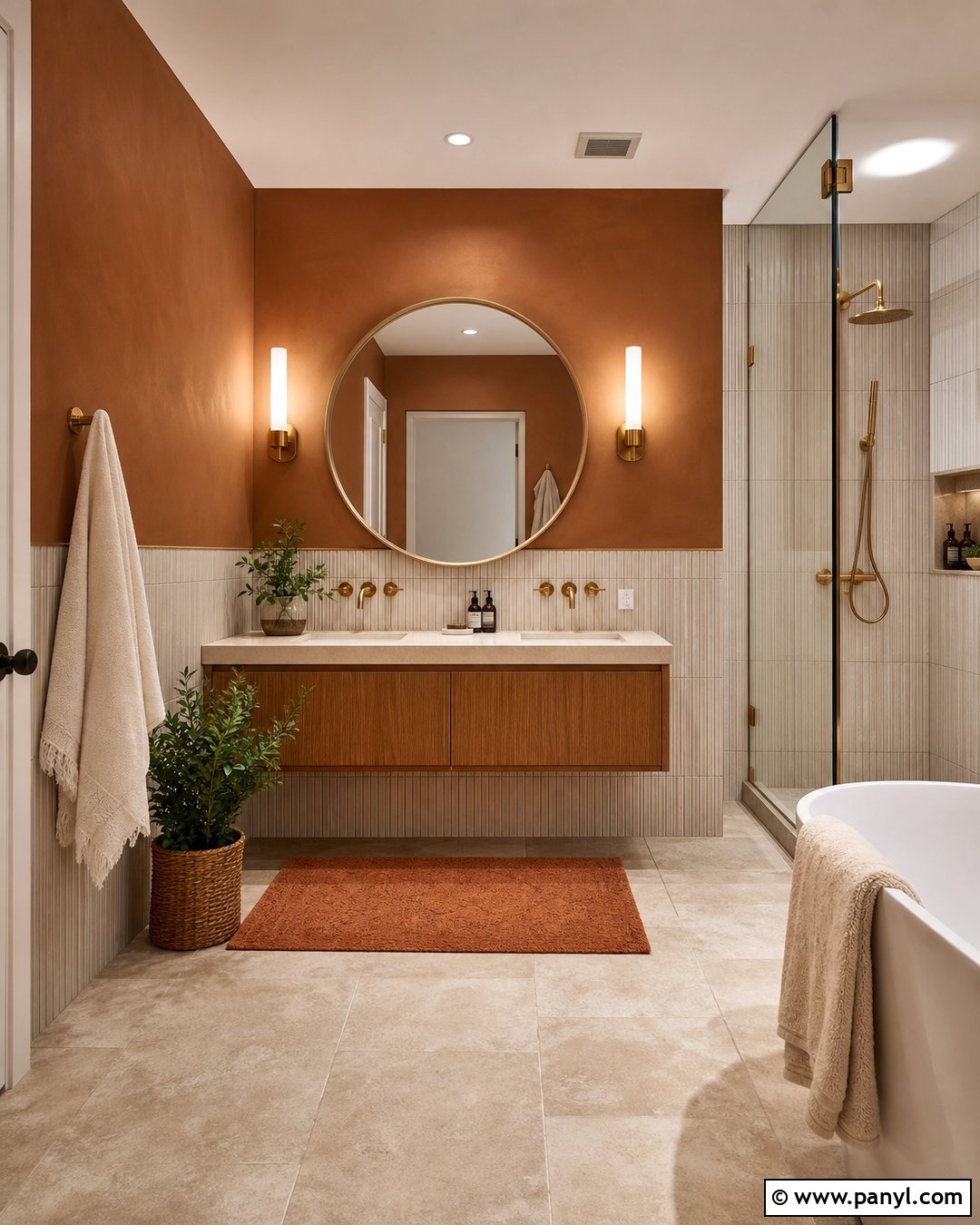
A small bathroom can handle a surprisingly rich wall color when the remaining finishes are light and simple. Choose a clay brown paint with a noticeable orange undertone for the upper walls, then install creamy vertical tile around the lower half of the room. A floating oak vanity will continue the earthy palette without making the space feel heavy. Select an off-white stone counter, a round brass-framed mirror, and brushed brass fixtures for quiet warmth. Pale limestone-look flooring keeps the room bright underfoot. Add waffle-textured ivory towels, a rust bath mat, and one small green plant near the window. Clear glass around the shower preserves sightlines. The combination creates a comfortable, spa-like bathroom that feels colorful, clean, and thoughtfully balanced.
7. Copper Orange Entryway Wall
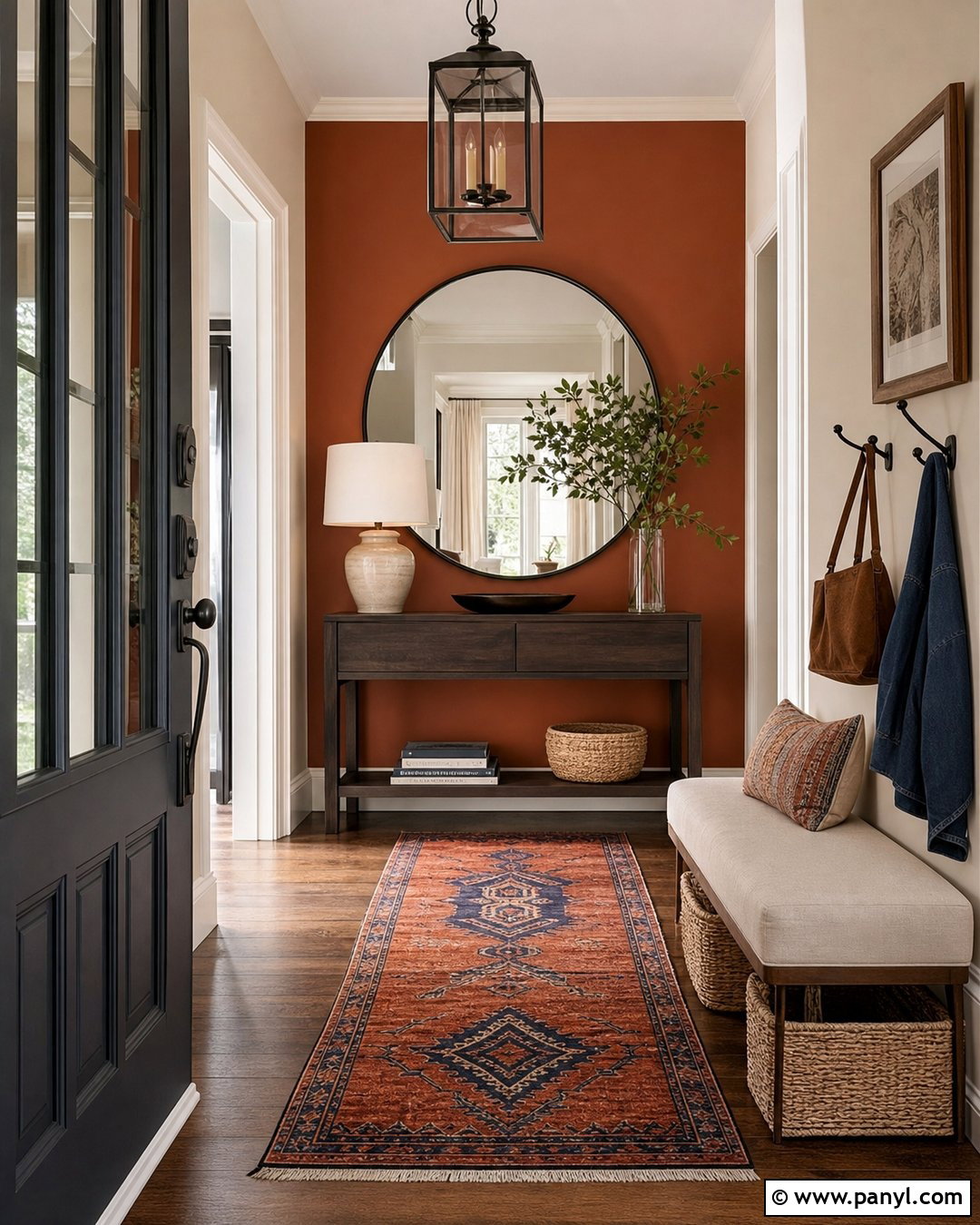
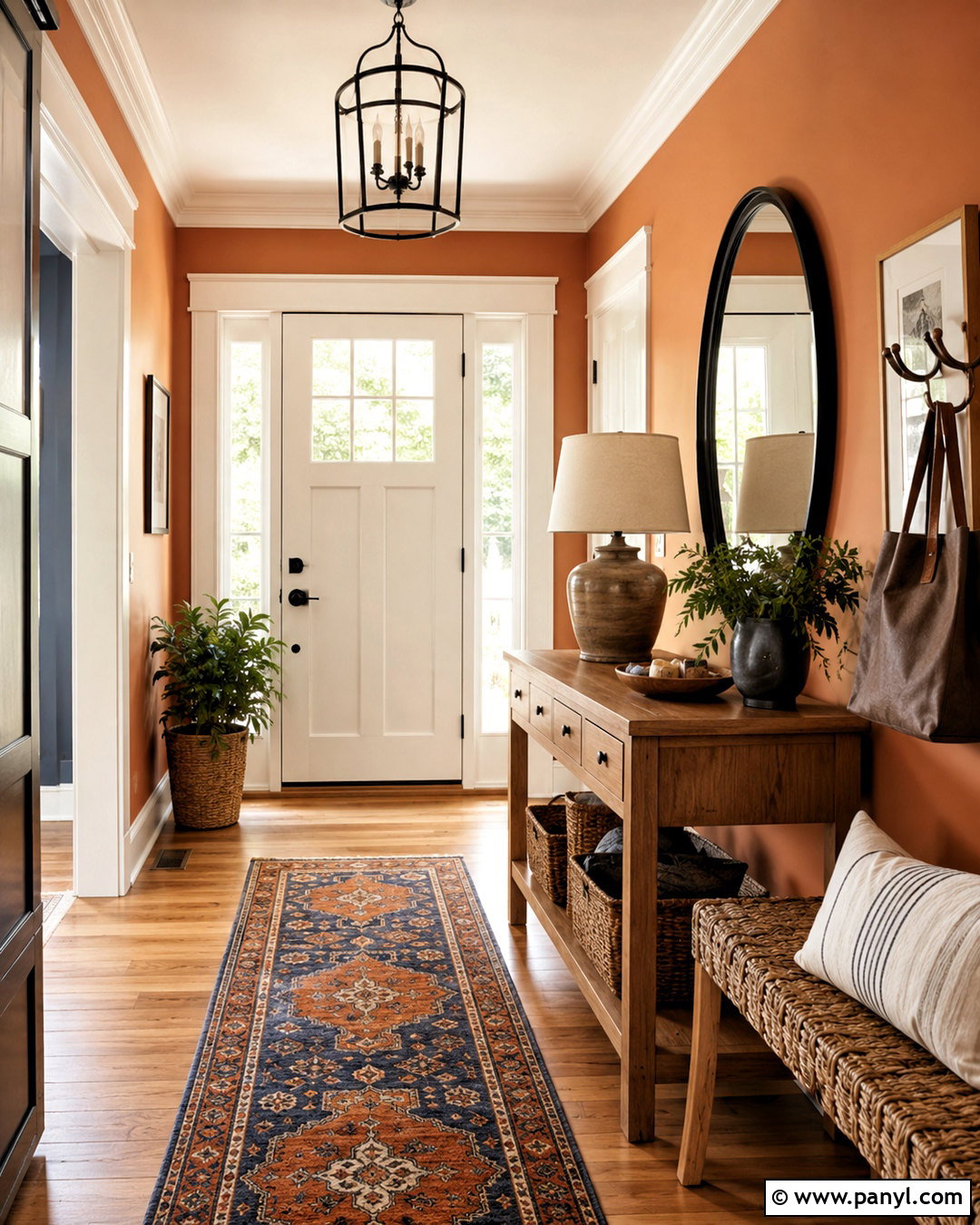
Copper orange brings immediate warmth to an entryway and gives visitors a memorable first impression. Paint the main wall and surrounding doorway in a deep copper shade, while keeping adjacent walls a pale creamy beige. Place a narrow dark walnut console against the colored wall and hang a large round mirror with a thin black frame above it. A vintage-inspired runner containing rust, navy, brown, and ivory will manage foot traffic while reinforcing the palette. Add a small upholstered bench for removing shoes and woven baskets for hidden storage. A ceramic table lamp, simple wooden bowl, and tall leafy branch provide enough decoration. Black hooks and a matching ceiling light sharpen the scheme, keeping the finished entrance practical rather than overly rustic.
8. Chocolate Brown And Orange Living Room Wall
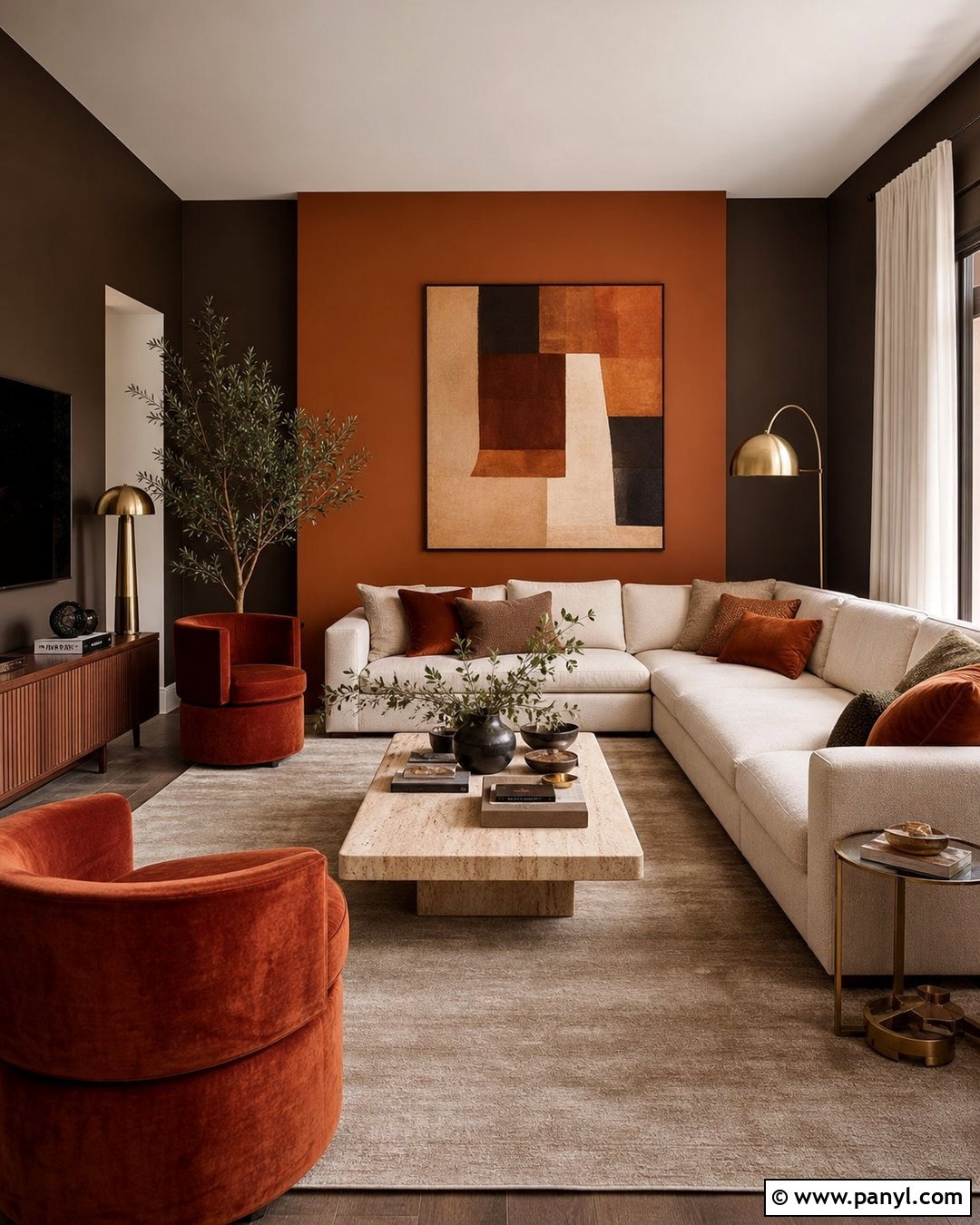
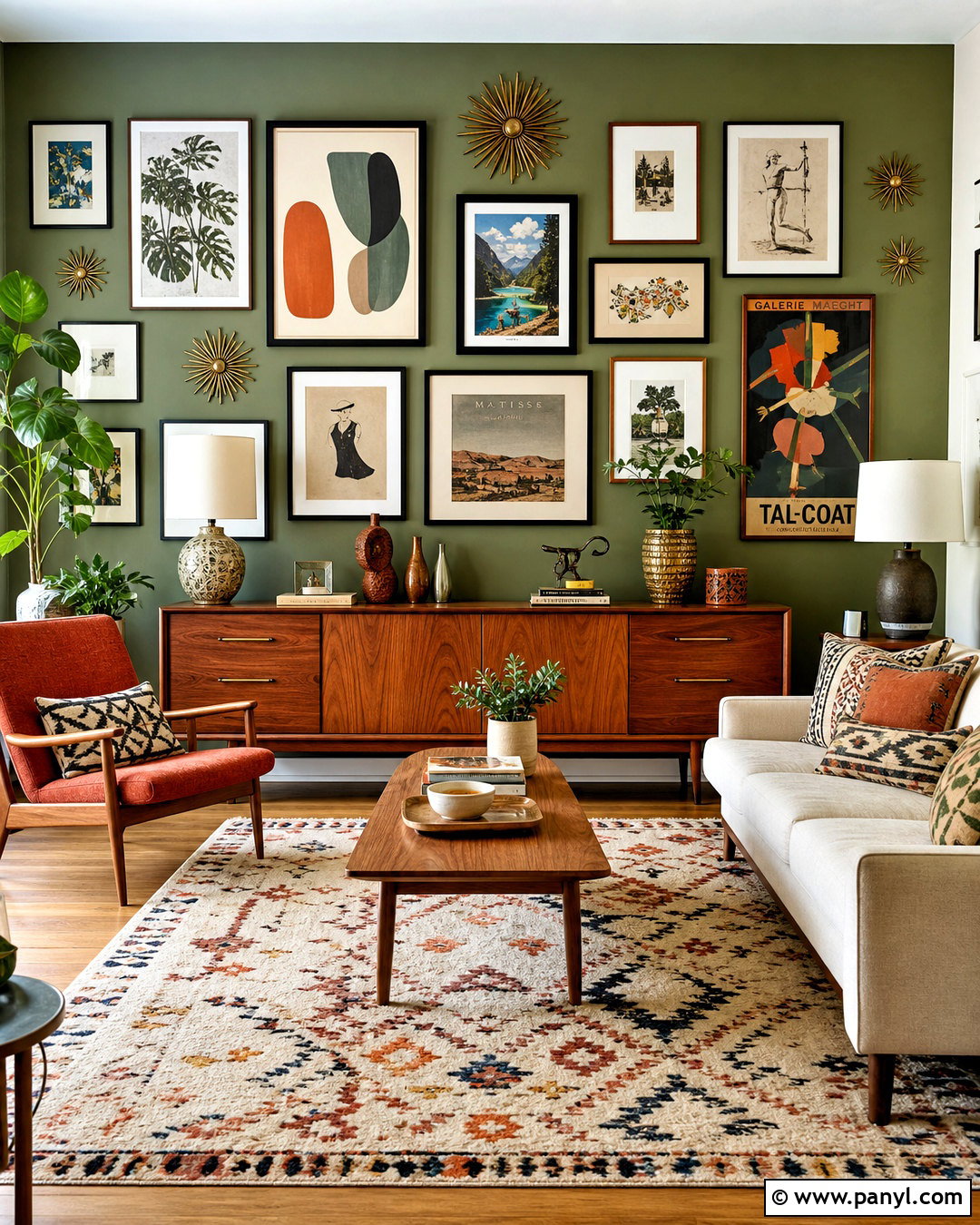
For a dramatic living room, combine chocolate brown walls with a concentrated burnt orange feature wall behind the sofa. The brown creates a cocooning background, while the orange prevents the room from feeling flat or overly dark. Choose a generous cream sectional to provide the strongest contrast. Add a walnut media cabinet, a low travertine coffee table, and rust velvet accent chairs arranged for conversation. A large beige rug will visually expand the seating area and lighten dark wood flooring. Use ivory curtains from ceiling to floor, even if the windows are modest. Sculptural brass lamps introduce reflective details. Complete the room with abstract artwork combining cream, tobacco brown, orange, and a small amount of blue to unite every major color.
9. Muted Pumpkin Bedroom Wall
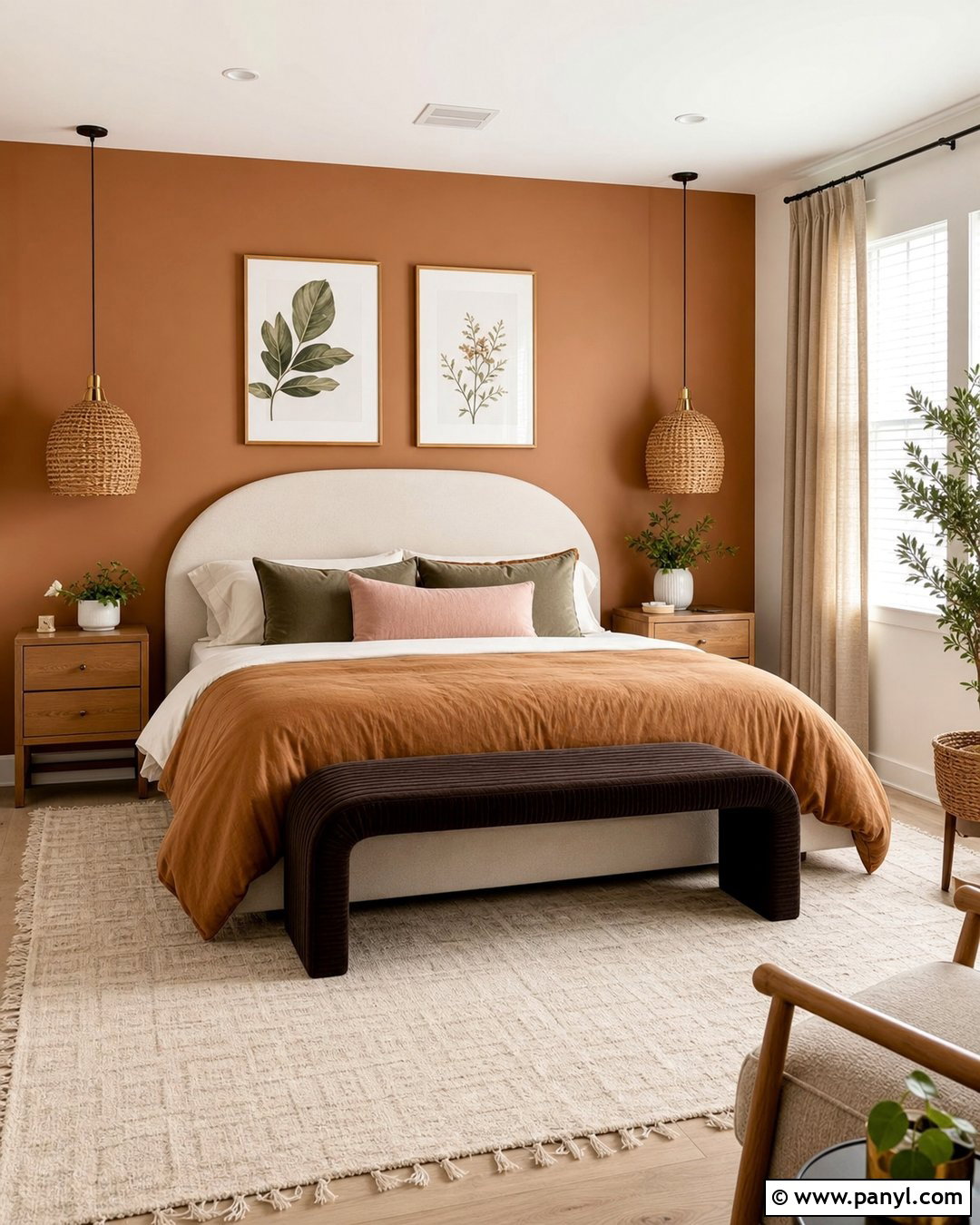
Muted pumpkin walls can create a playful bedroom that still feels mature and restful. Select a dusty orange-brown shade rather than a clear seasonal orange, and apply it to the wall behind a curved cream headboard. Keep the other walls in warm white to support an airy atmosphere. Dress the bed with ivory sheets, a camel duvet, and patterned pillows featuring brown, blush, and olive. Light oak nightstands will prevent the palette from becoming too dark. Use woven pendant lights instead of bulky table lamps to free the nightstands. A pale beige rug and relaxed linen curtains add softness. Finish with simple botanical prints, a terracotta vase, and one upholstered bench in deep chocolate brown for a grounded, cohesive bedroom arrangement.
10. Adobe Orange Sunroom Wall
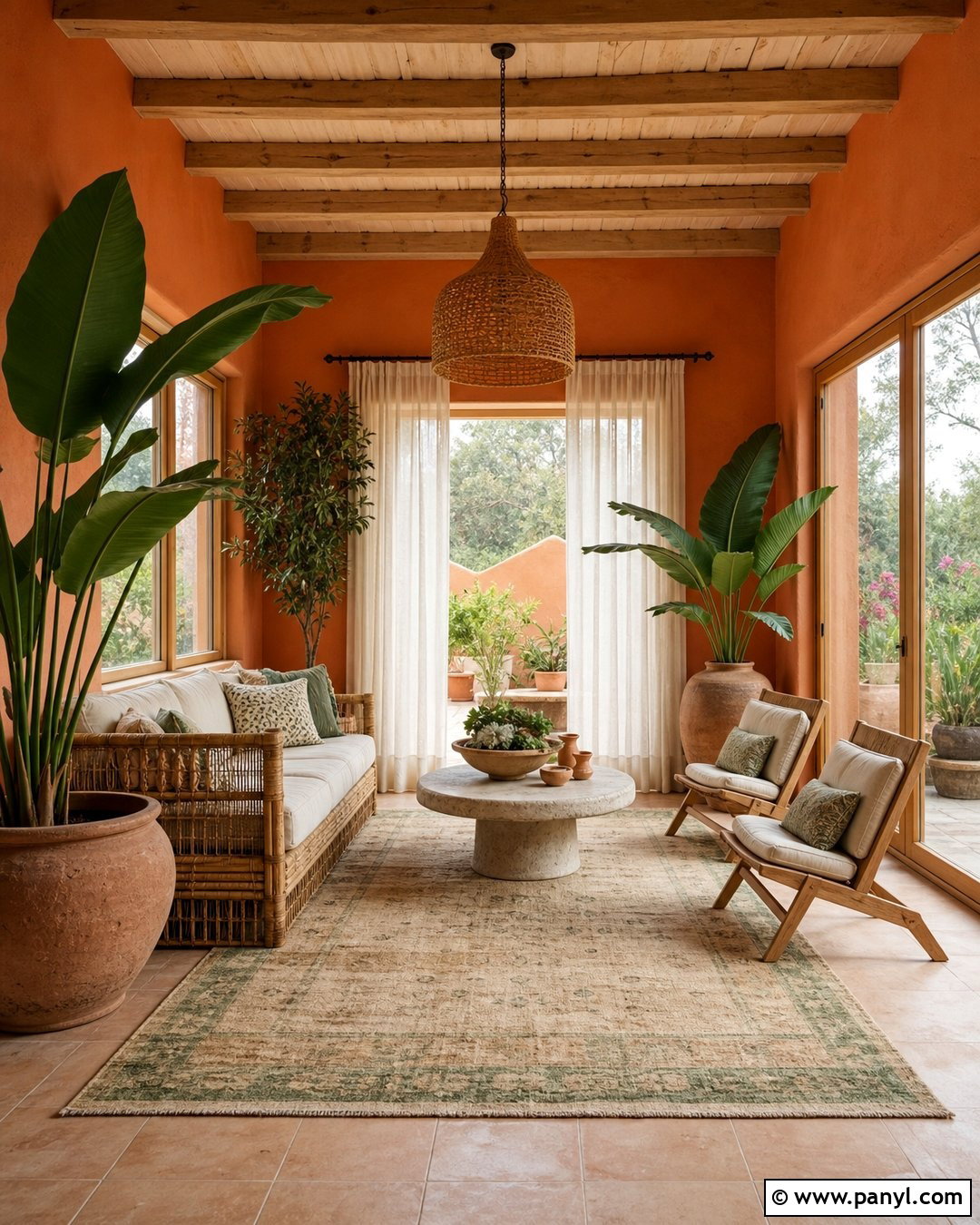
Sun-filled rooms are ideal for adobe orange because natural light reveals the color’s earthy, dusty quality. Cover the walls in a warm adobe shade, then use soft cream on the ceiling, trim, and window frames. Furnish the sunroom with a light rattan sofa, oatmeal cushions, and two compact teak chairs. A washable rug combining sand, faded orange, and sage will anchor the arrangement. Include a round stone-topped table that can handle plants, drinks, and daily use. Layer the windows with sheer white curtains that filter glare without hiding the garden view. Large leafy plants in clay and cream pots strengthen the indoor-outdoor connection. A woven ceiling pendant and a few striped cushions complete this casual, bright, and highly usable retreat.
11. Amber Brown Hallway Wall
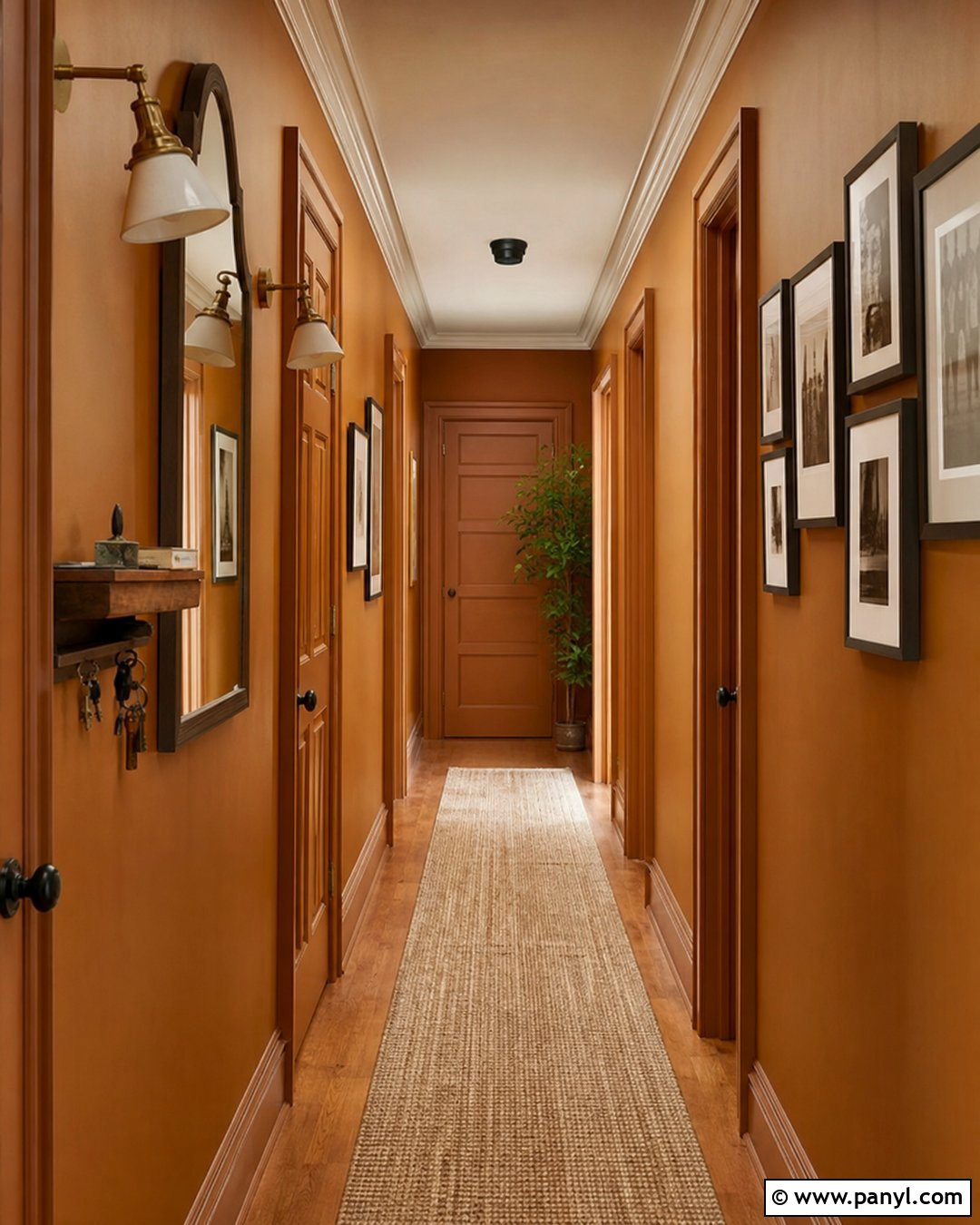
An amber brown hallway can feel warm and intentional instead of narrow and overlooked. Paint the walls and interior doors in the same medium orange-brown shade, but use a slightly shinier finish on doors and trim for subtle dimension. Keep the ceiling pale cream to maintain brightness overhead. Install a long natural jute runner with a narrow black border, then add evenly spaced wall lights in aged brass. A series of cream-matted photographs in dark wood frames creates a neat gallery without visual clutter. If space allows, place a shallow oak ledge near the entrance for keys and small objects. One tall mirror can reflect light from nearby rooms. This coordinated treatment turns a connecting passage into a polished part of the home.
12. Chestnut Orange Nursery Wall
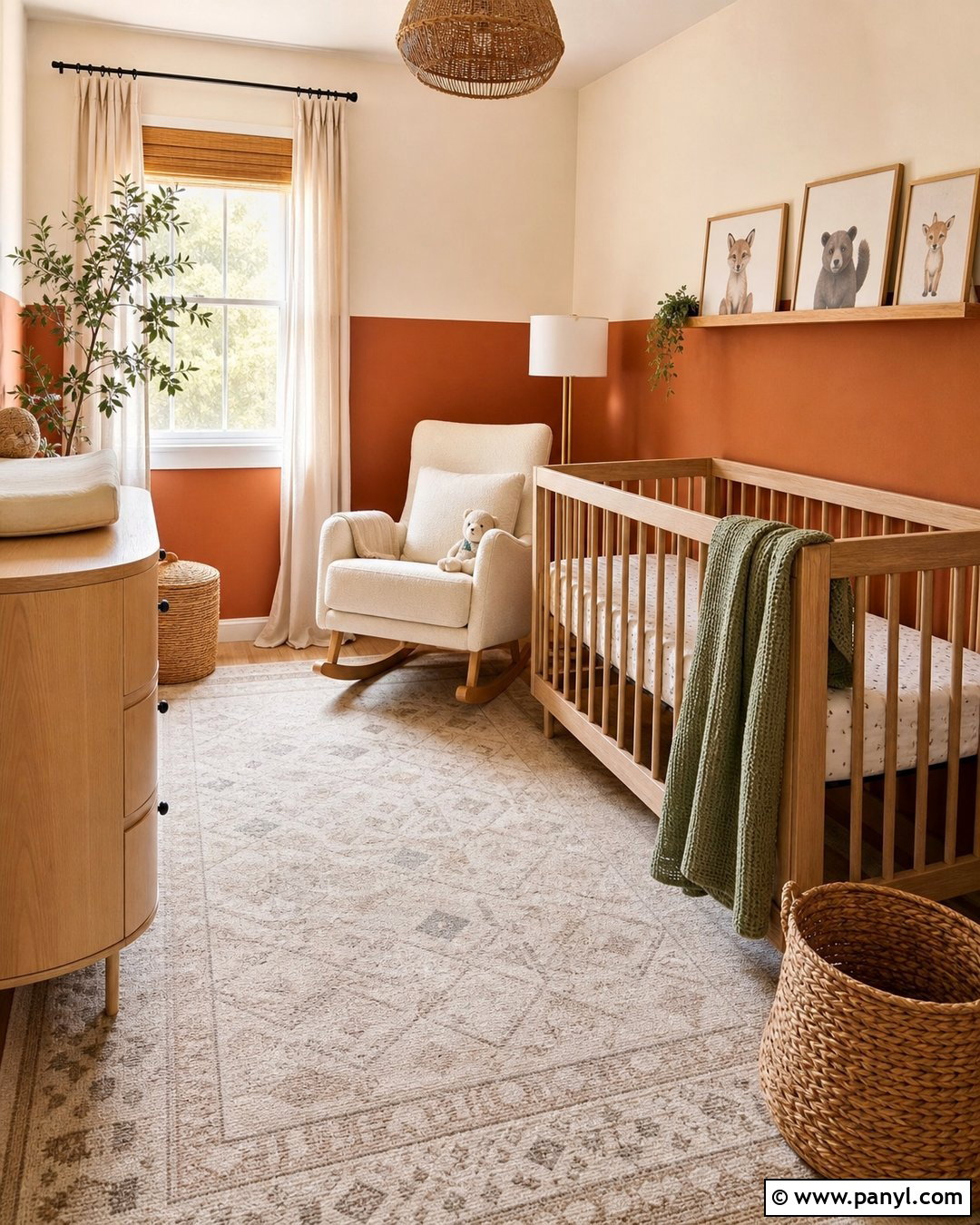
Chestnut orange offers a warm, adaptable background for a nursery without relying on pale pastels. Use the earthy shade on the lower two-thirds of the walls and paint the upper portion creamy white. A simple horizontal trim piece can create a crisp transition between colors. Choose a natural oak crib, an ivory upholstered rocking chair, and a light wood dresser with rounded hardware. Soften the floor with a washable beige rug patterned with small rust and brown shapes. Linen curtains in warm white keep the window treatment calm. Add woven storage baskets, a low picture ledge, and a few simple animal illustrations in wooden frames. A muted sage throw and matching storage bin introduce gentle contrast while preserving the nursery’s peaceful, practical character.
13. Paprika Orange Reading Room Wall
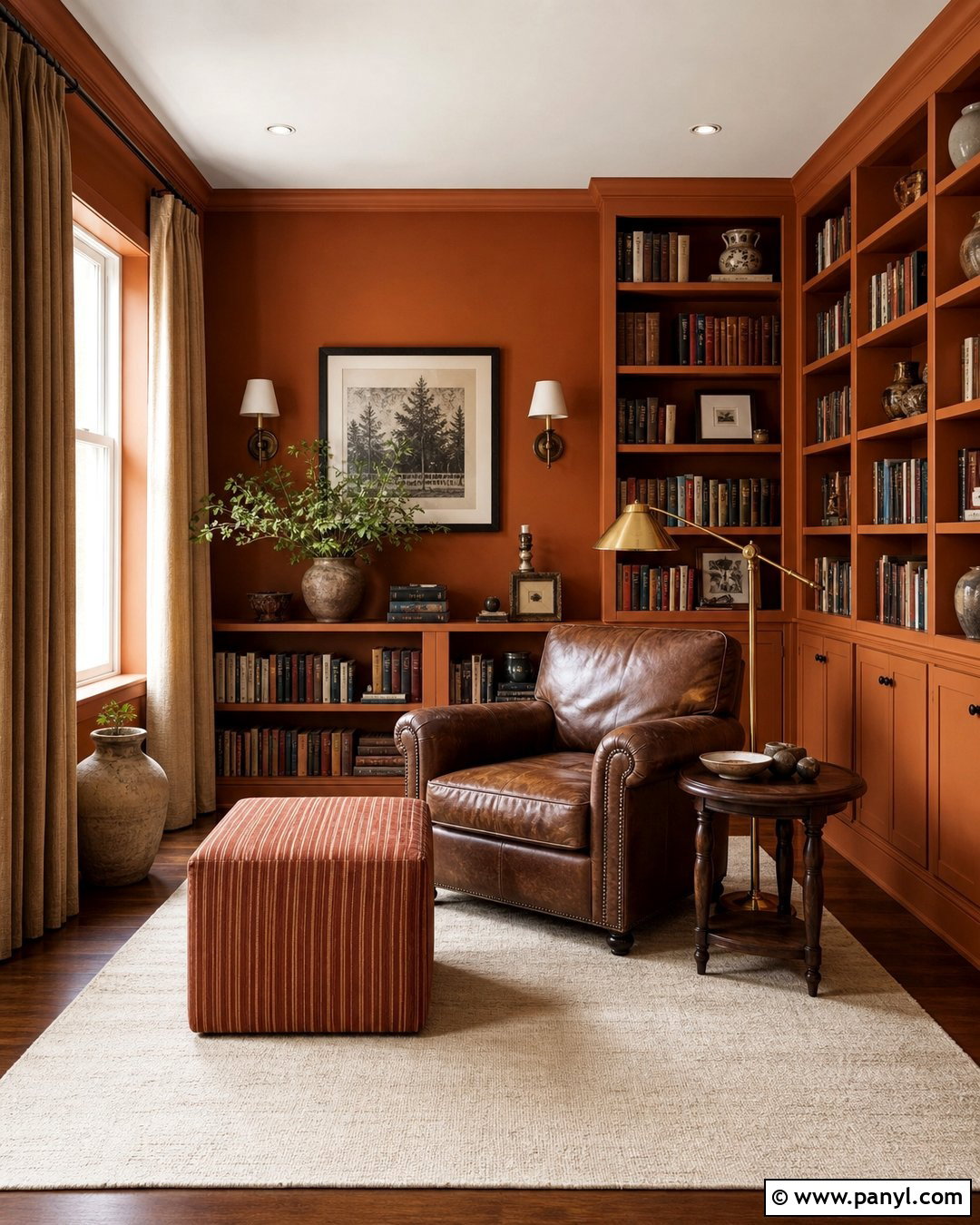
Paprika orange makes a reading room feel intimate, layered, and pleasantly separate from busier household spaces. Color-drench the walls, shelving, and trim in the same deep orange-brown paint for a built-in effect. Leave the ceiling creamy white unless the room receives abundant daylight. Place a comfortable chocolate leather chair near the bookcase with a small walnut table and an adjustable brass floor lamp. A striped ottoman in rust, beige, and dark brown provides additional comfort. Use a thick cream rug to soften the floor and balance the saturated walls. Style the shelves with books, framed photographs, small pottery, and a few empty spaces. Linen curtains and one leafy plant keep the complete room from feeling overly formal or visually dense.
14. Mocha Brown Wall With Orange Trim
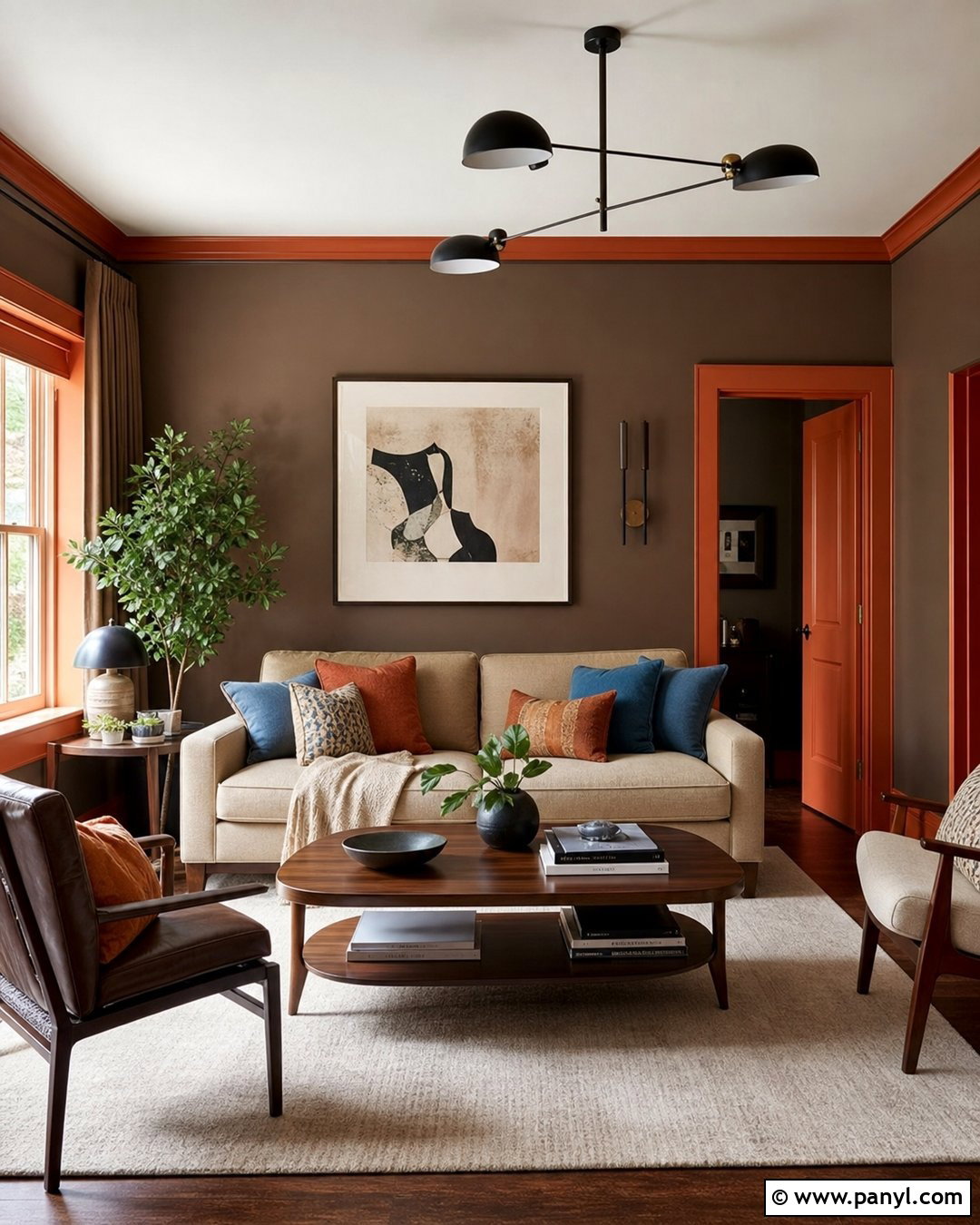
Reverse the expected color placement by using mocha brown on the walls and burnt orange across the trim, doors, and window frames. This treatment gives a bedroom or sitting room a tailored look without requiring complicated architectural changes. Choose an understated beige sofa or upholstered bed so the painted details remain visible. Add walnut furniture, an ivory rug, and curtains that closely match the mocha walls. Cushions in rust, cream, and dusty blue will connect the trim color with the furnishings. Use matte black lighting to introduce a sharper neutral. Keep artwork simple, choosing prints with generous cream backgrounds and thin wooden frames. This full-room palette is especially effective when the space has attractive molding, deep window frames, or several paneled doors worth emphasizing.
15. Two Tone Brown Orange Wall
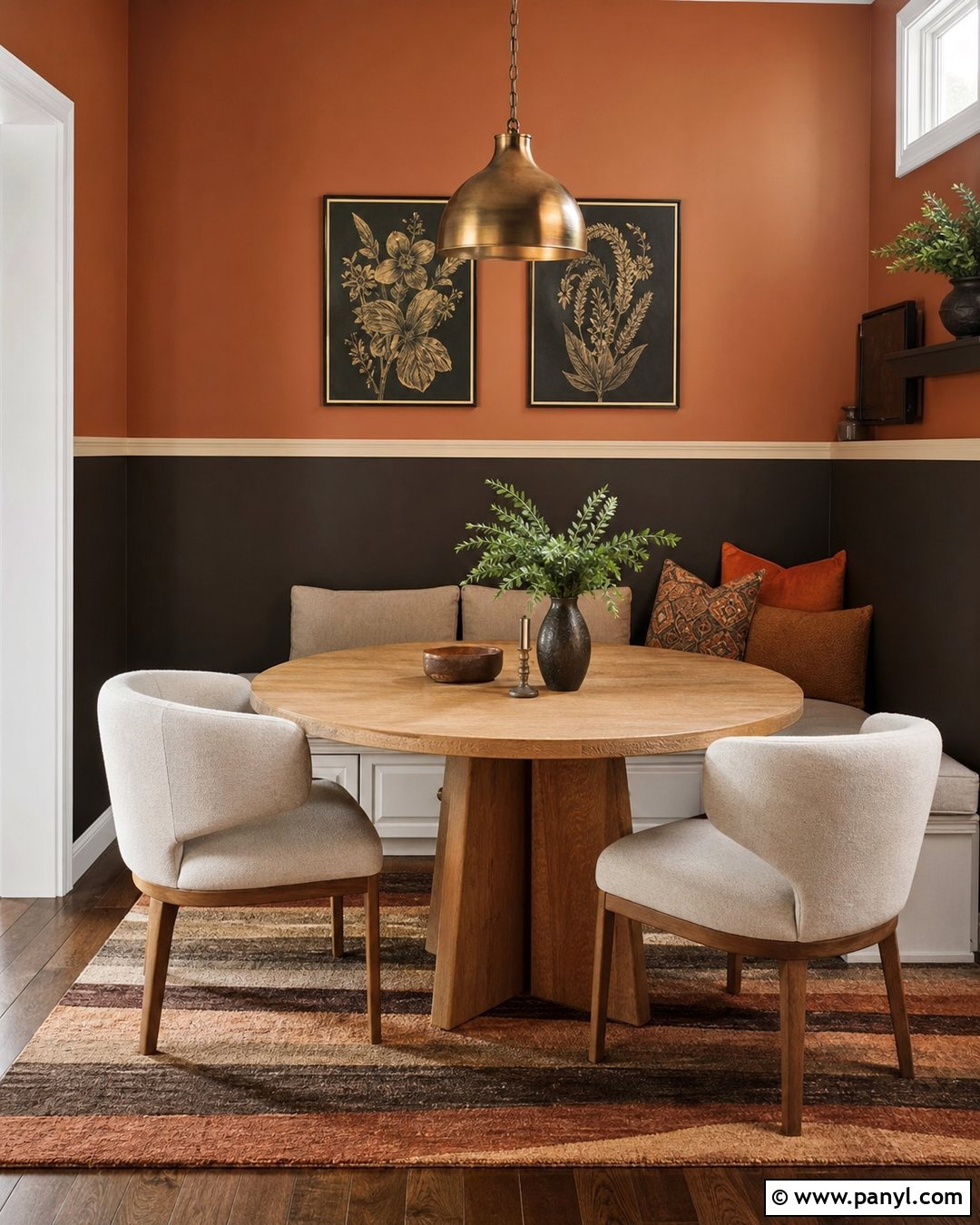
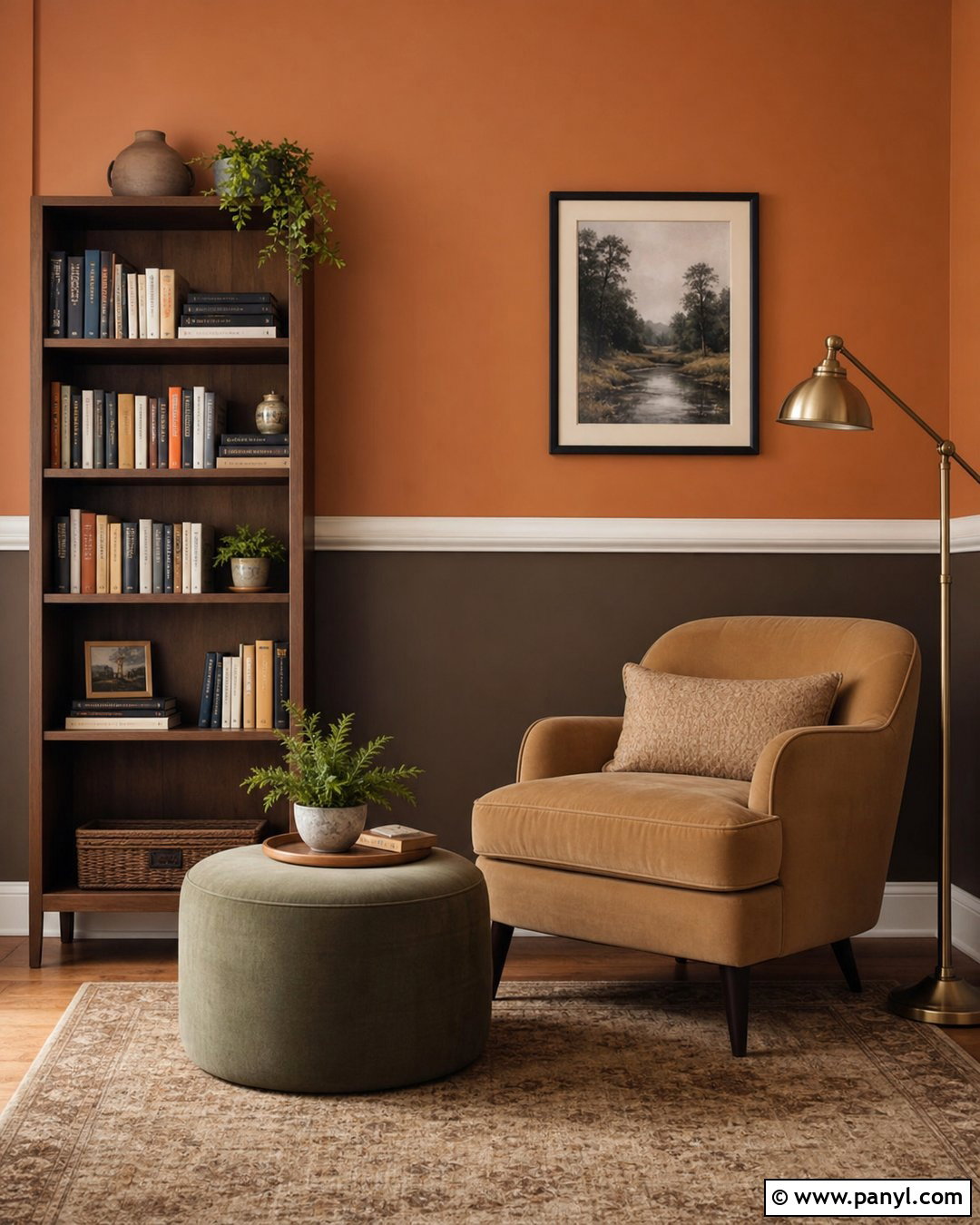
A two-tone treatment creates clear structure while allowing brown and orange to share the walls evenly. Paint the lower half in deep cocoa brown and the upper half in muted terracotta, separating them with a narrow cream chair rail. Use the combination in a dining nook with a round light oak table and curved cream chairs. A built-in bench upholstered in beige fabric can maximize seating along one wall. Choose a small pendant in aged brass and a striped rug containing brown, orange, cream, and olive. Keep curtains light and simple so the wall division remains the main feature. Add framed botanical artwork above the chair rail and place rust-colored cushions along the bench. The completed nook feels graphic, warm, and neatly organized.
16. Brown Orange Color Drenched Room
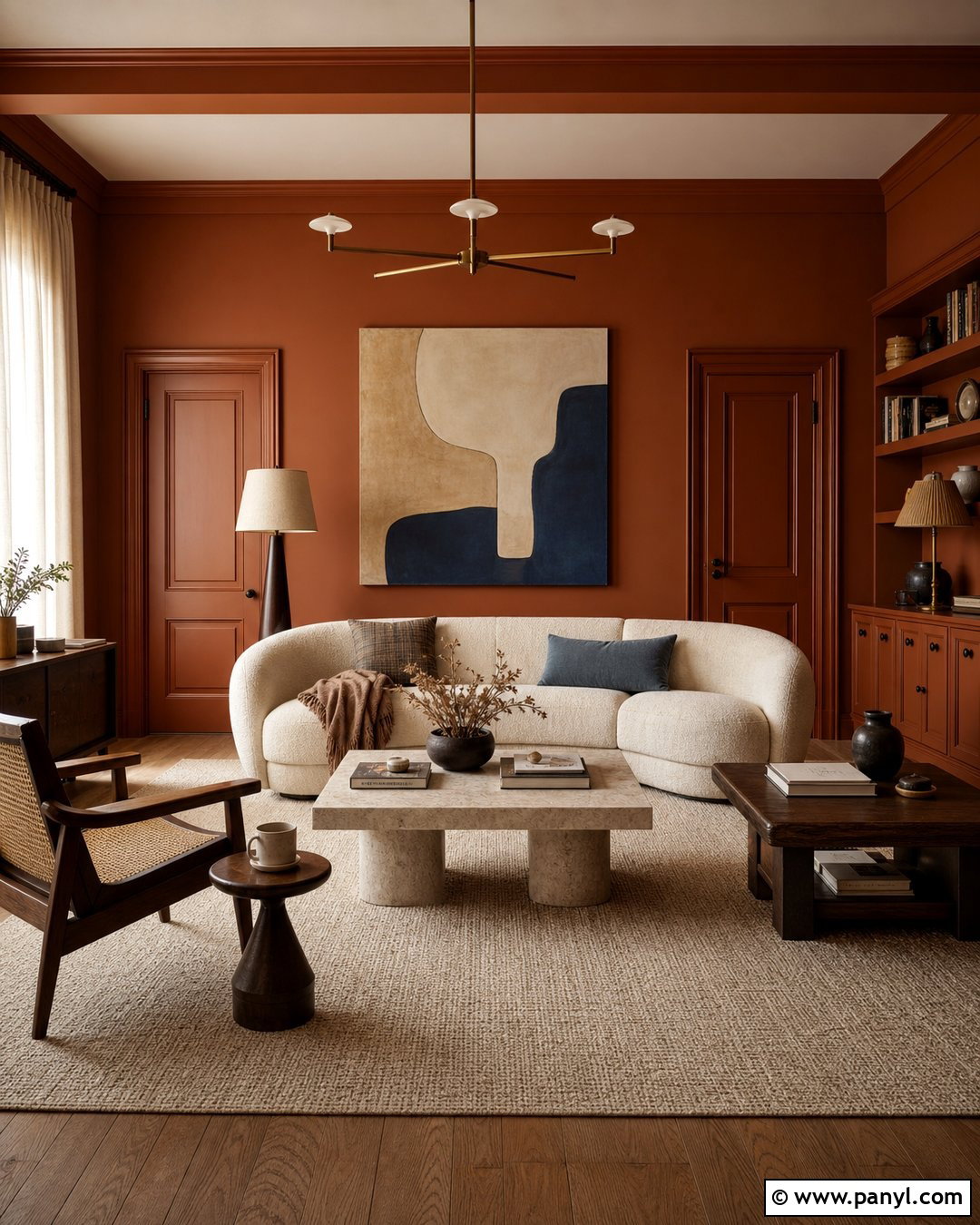
Color drenching works beautifully with brown orange because the single shade creates continuity across walls, trim, doors, and built-in storage. Select a rich sienna paint that lands between rust and medium brown. Apply it in an eggshell finish on the walls and a durable satin finish on the architectural details. Furnish the room with a cream boucle sofa, two dark wood side tables, and a substantial beige wool rug. Pale linen curtains provide relief around the windows. Add a sculptural stone coffee table and antique brass lamps to vary the materials without introducing too many colors. Artwork featuring ivory, charcoal, and faded blue offers controlled contrast. The finished room feels immersive and cohesive while remaining comfortable, bright, and suitable for everyday living.
17. Brown Orange Limewash Wall
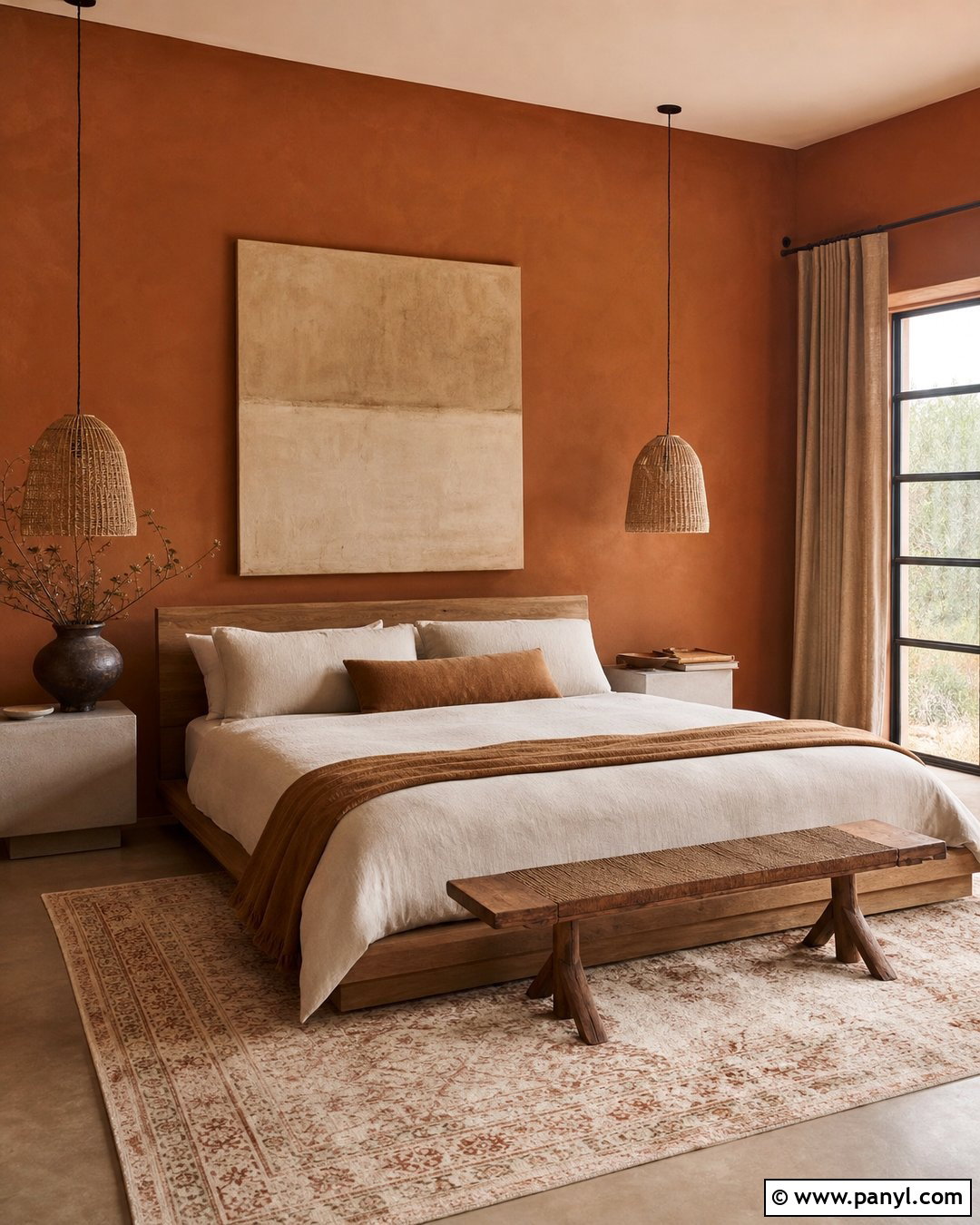
Limewash gives brown orange walls natural variation, making the color feel softer and more dimensional. Use a warm terracotta-brown finish across every wall in a relaxed bedroom, allowing visible tonal movement rather than a perfectly uniform surface. Pair it with a low oak bed, loose ivory bedding, and a textured camel blanket. Choose simple plaster-look nightstands and woven pendant lights for an understated, handmade character. A faded rug in cream, dusty rose, rust, and brown will add pattern without competing with the walls. Keep the windows simple with unlined linen curtains. Finish the room with one large abstract canvas, a dark ceramic vase, and a wooden bench. The result feels earthy and refined rather than unfinished or heavily rustic.
18. Brown Orange Geometric Wall
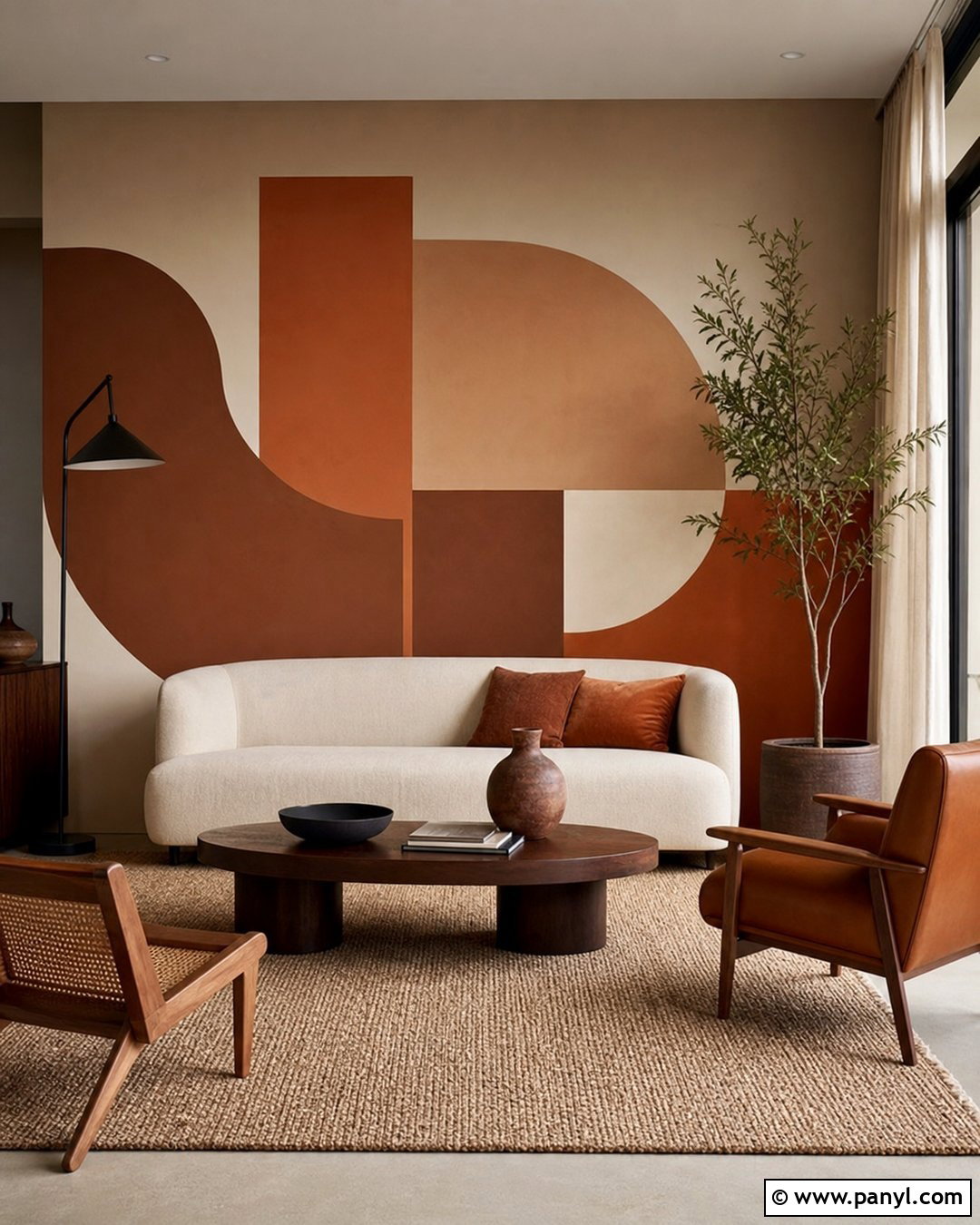
A geometric wall can introduce brown and orange in a controlled, modern way. Create large overlapping arches or rectangular blocks using rust, caramel brown, and light clay paint on a warm beige background. Limit the pattern to one living room wall so it remains an architectural feature rather than visual noise. Place a streamlined cream sofa in front of it, leaving enough open wall visible around the furniture. Add a dark walnut coffee table, black floor lamp, and caramel leather chair. Choose a plain oatmeal rug to balance the painted shapes. Solid rust and chocolate cushions can repeat the wall colors without adding another pattern. Minimal pottery, neutral curtains, and one tall plant complete a clean room with warmth, movement, and personality.
19. Brown Orange Arch Wall
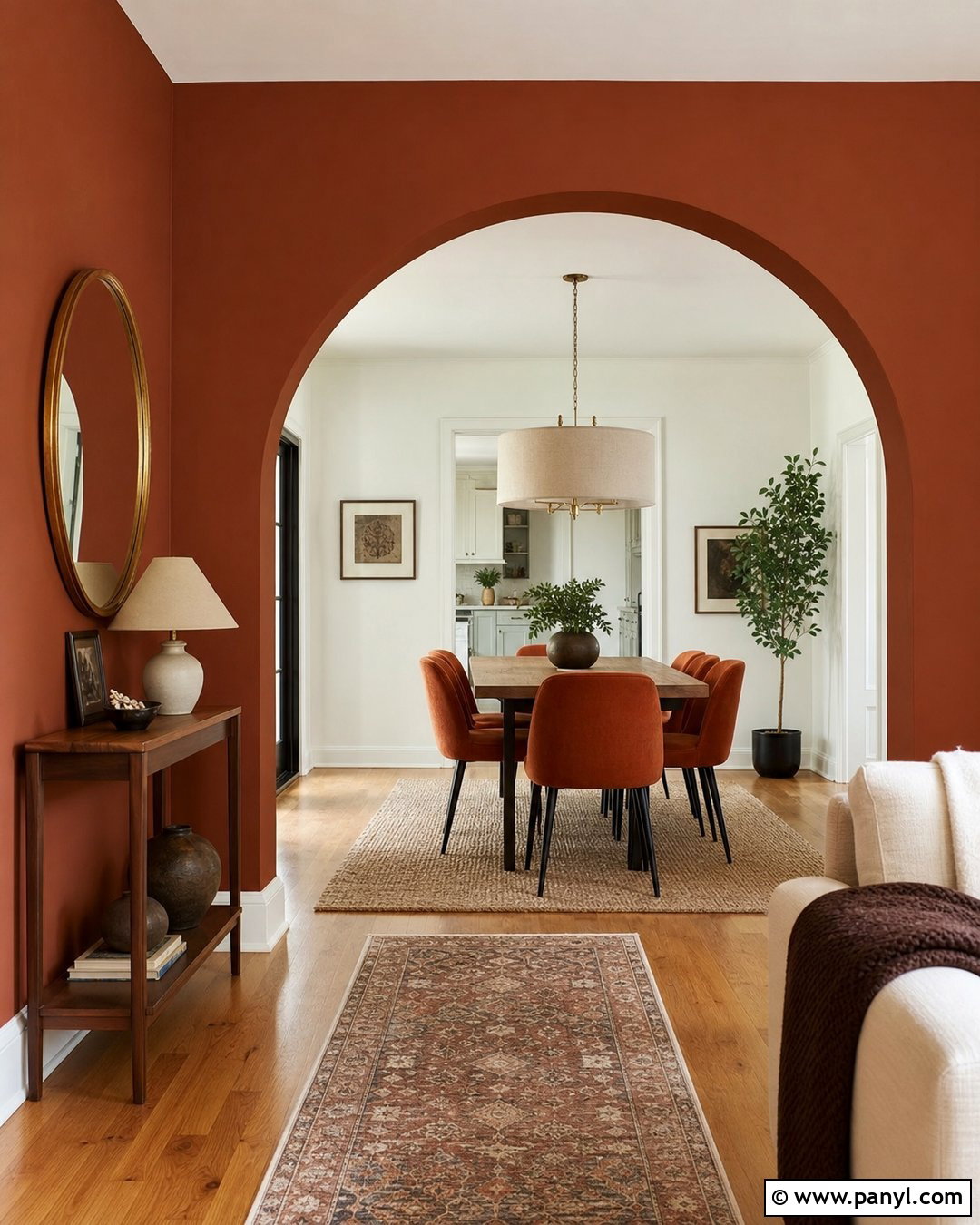
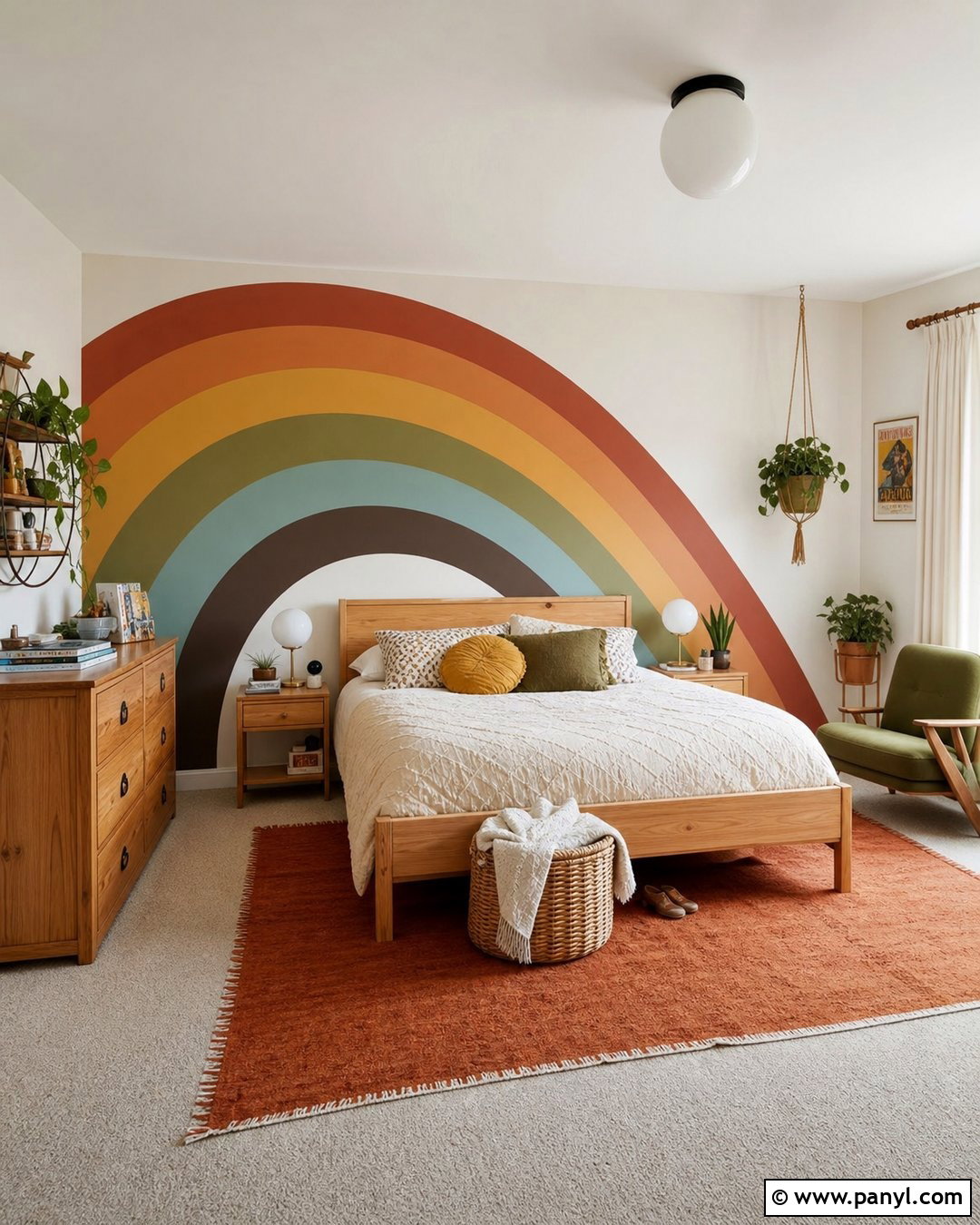
Painting an interior arch brown orange can highlight the home’s architecture while connecting two neighboring spaces. Cover the inside curve and surrounding wall in burnt sienna, then use warm cream in the rooms on either side. Repeat the sienna through small accents, such as dining chair upholstery, a patterned runner, or ceramic tableware. Near the arch, place a slim walnut console with a cream lamp and a round brass mirror. Light oak flooring can continue uninterrupted between spaces, creating visual flow. Keep furniture shapes simple so the painted opening remains prominent. If the arch leads into a dining area, center a linen pendant within the view. This treatment frames the next room naturally and creates a strong focal point without filling every wall with color.
20. Brown Orange Wall With Wood Paneling
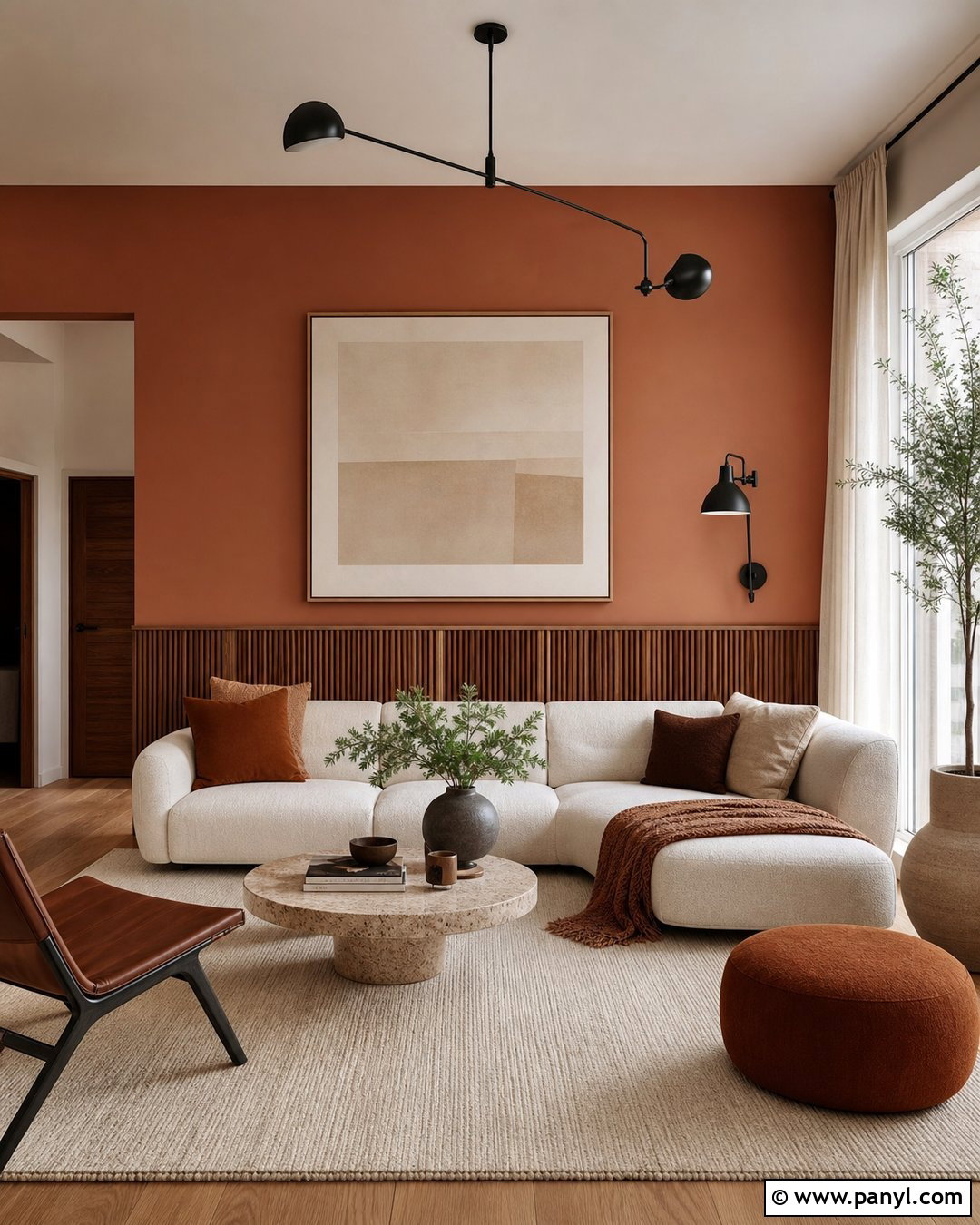
Wood paneling adds texture and depth to a brown orange wall while strengthening its natural warmth. Install vertical walnut slats across the lower third of a living room wall, then paint the upper section in a muted coppery orange. Continue warm cream across the remaining walls and ceiling. Arrange a soft beige sofa against the feature wall with chocolate and rust cushions. A round travertine coffee table and oatmeal wool rug will keep the center of the room light. Use black metal for the floor lamp, curtain rod, and small decorative accents. Add long cream curtains and a large neutral artwork above the sofa. The completed room feels balanced, contemporary, and detailed without depending on excessive accessories or expensive structural work.
Conclusion:
The best Brown Orange Wall Color Ideas combine warm paint with enough contrast, texture, and light to keep the room balanced. Terracotta and adobe feel relaxed, while rust, sienna, chocolate, and copper create greater depth. Cream upholstery, pale rugs, linen curtains, and light stone surfaces can brighten these saturated walls. Walnut, oak, leather, brass, and woven fibers reinforce their natural character. Before painting, test several large samples and observe them throughout the day beside your flooring and furniture. Whether you choose one accent wall, two-tone paint, wood paneling, limewash, or complete color drenching, build the entire room around a clear palette. That approach will make brown orange walls look intentional, comfortable, and enduring.

Related Ideas and Inspiration:
Leave a Reply