
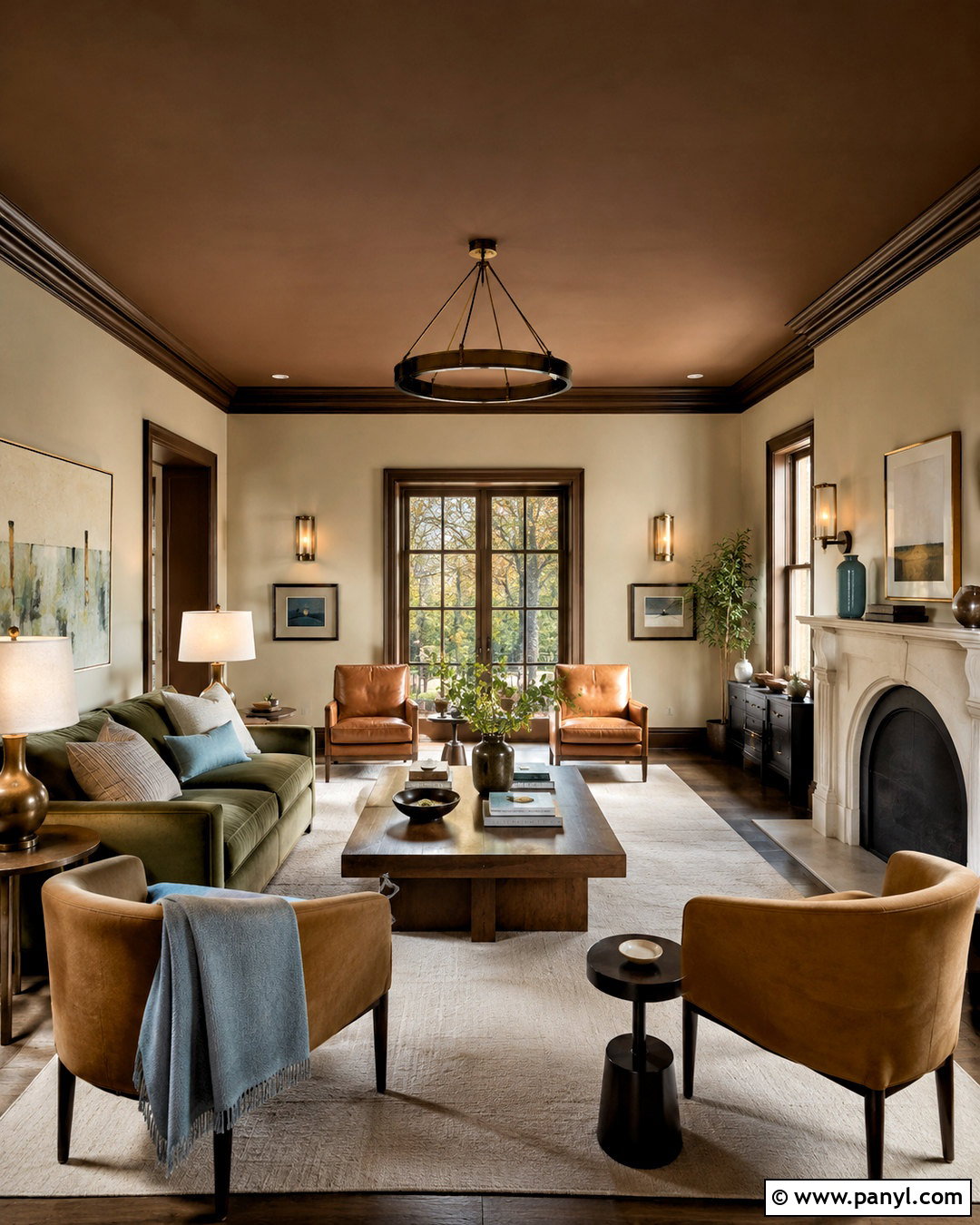
Brown is no longer limited to dark wood cabinets or dated beige walls. Today’s brown kitchen wall colors range from pale mushroom and soft taupe to cinnamon, walnut, cocoa, and deep espresso. These earthy shades can make a kitchen feel warmer, more grounded, and visually connected to natural materials. Brown also works across many aesthetics, including farmhouse, modern, traditional, rustic, and midcentury spaces. Current palettes often balance brown with creamy white, light stone, warm metals, and restrained green accents for contrast. () The key is choosing the right depth and undertone for your cabinets, counters, flooring, and available daylight. Explore the complete room schemes below to find practical, stylish inspiration among these **20 Brown Kitchen Wall Colors**.
1. Light Taupe Brown Kitchen Walls
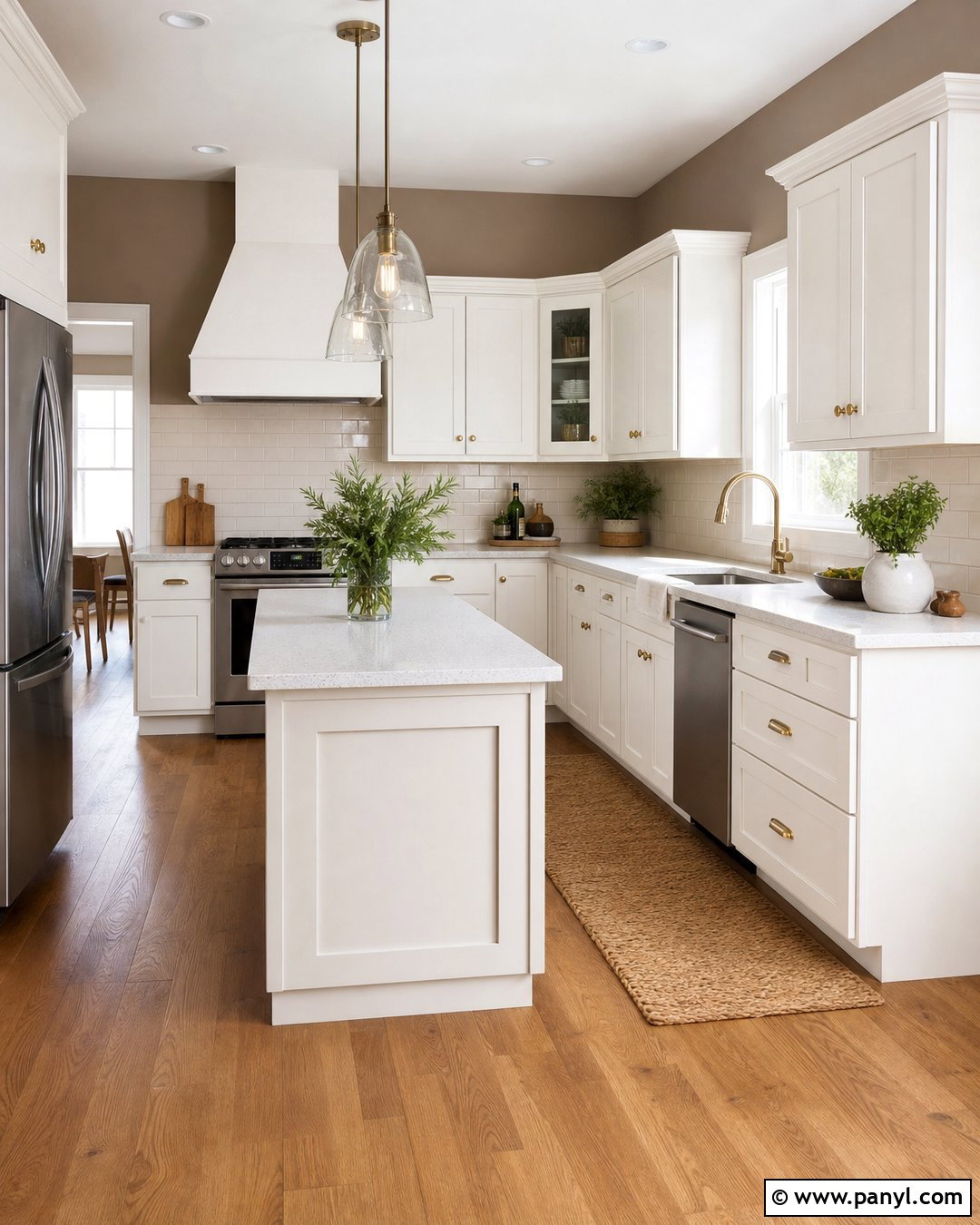
Light taupe-brown walls create a gentle, flexible background that works especially well in small kitchens or rooms with limited natural light. Pair this soft color with creamy white Shaker cabinets, pale quartz countertops, and a simple ivory subway tile backsplash. Natural oak flooring brings warmth without making the room look overly brown. For definition, use aged brass cabinet pulls and two clear glass pendants above a compact island. A woven runner, stoneware bowls, and small green herbs add texture and life. Keep the ceiling and trim warm white rather than stark white. This complete palette feels airy yet grounded, making it an approachable choice for transitional kitchens where gray seems too cool and beige feels too yellow.
2. Mushroom Brown Kitchen Walls
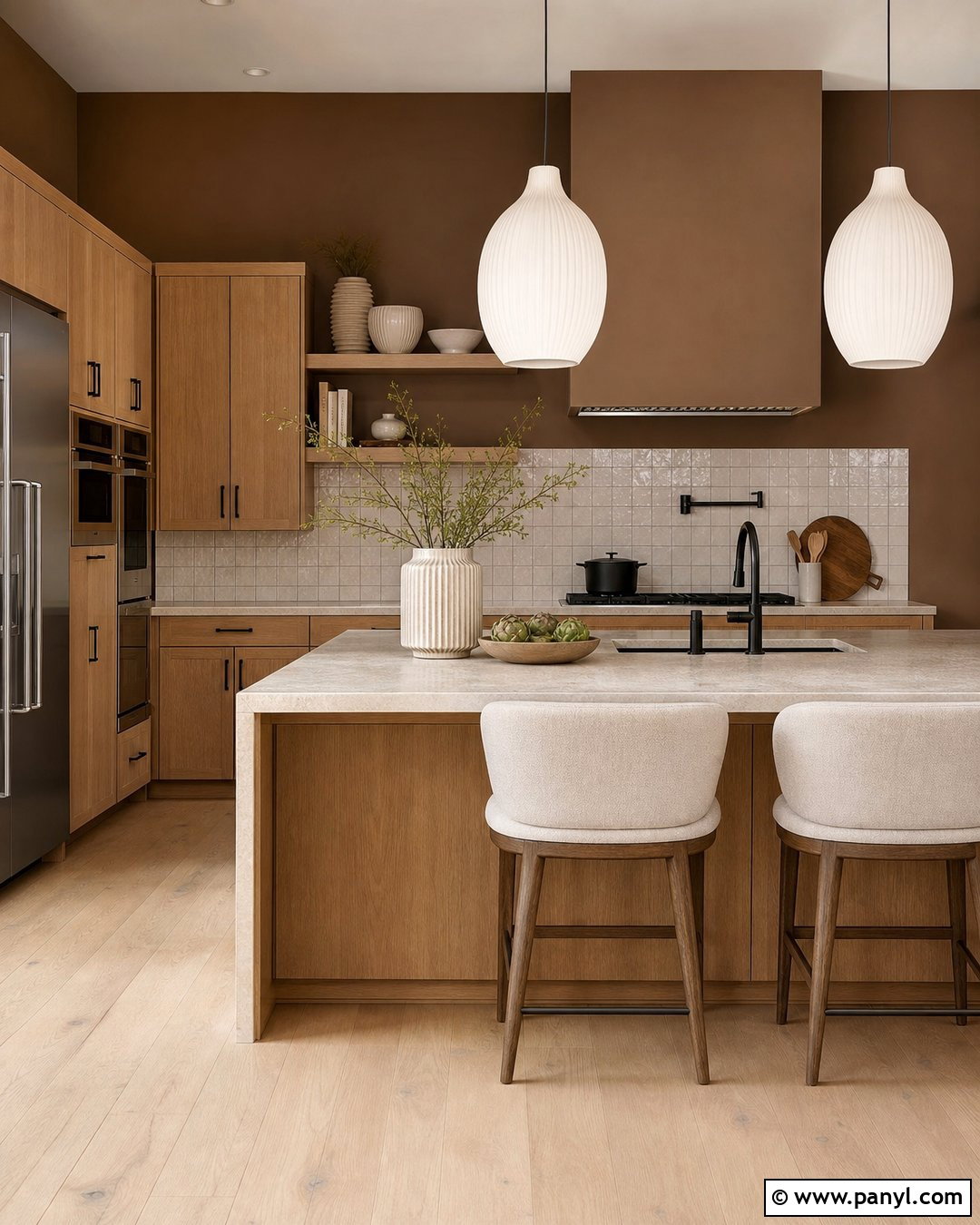
Mushroom brown has subtle gray and beige undertones, giving a kitchen a calm, contemporary appearance. Use it with flat-panel white oak cabinets so the walls and wood feel related without blending together. Honed limestone countertops, an off-white handmade tile backsplash, and pale oak plank flooring continue the natural look. Add matte black hardware sparingly through the faucet, cabinet pulls, and slim pendant lights. A plaster range hood painted to match the mushroom walls creates a seamless focal point. Finish the room with oatmeal-colored counter stools, ribbed ceramic accessories, and a single leafy plant. The resulting kitchen feels soft, modern, and highly livable. It is particularly effective in open layouts where the wall color must connect comfortably with neutral dining and living spaces.
3. Warm Beige Brown Kitchen Walls
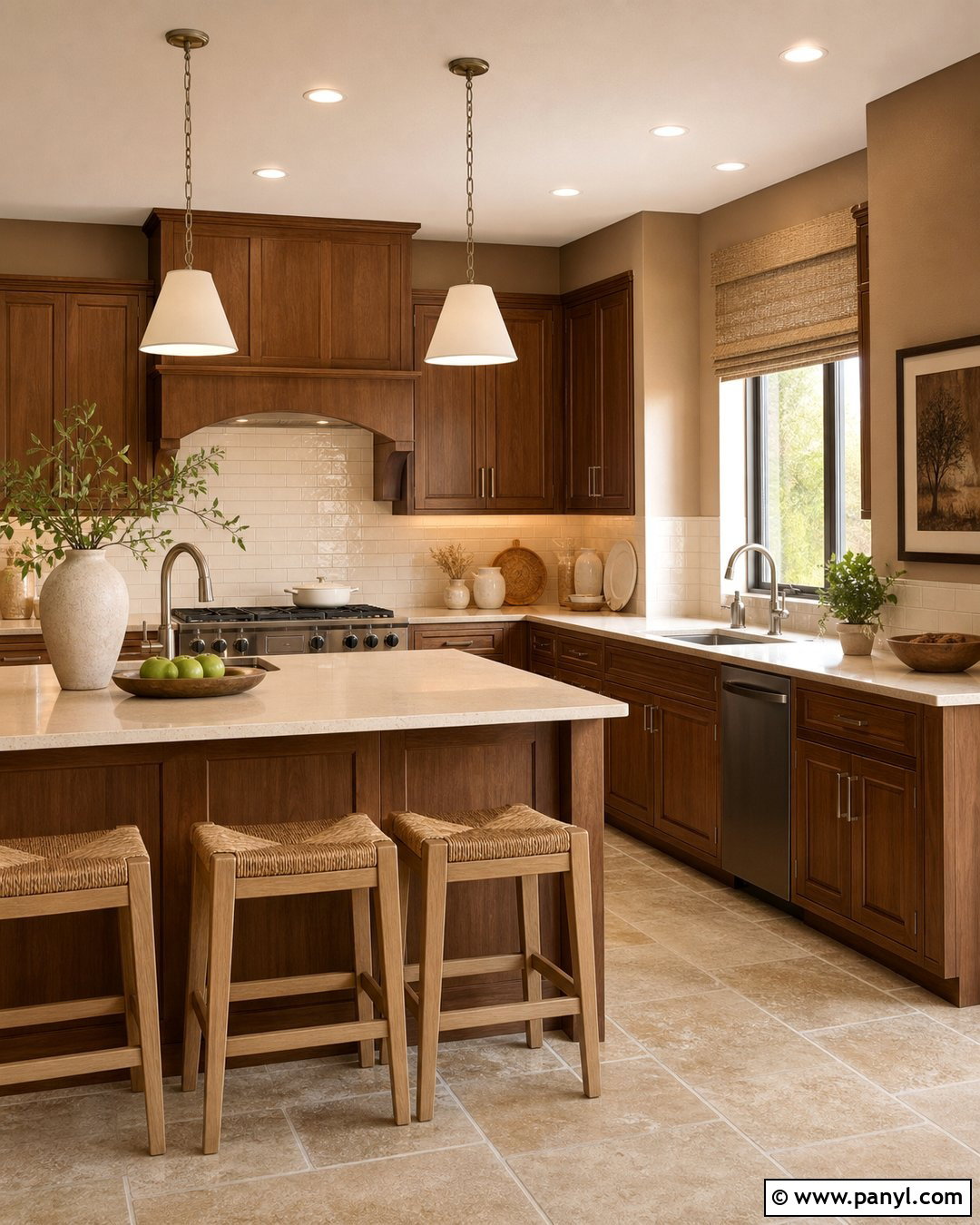
Warm beige-brown walls are ideal when you want more depth than cream without committing to a noticeably dark color. Build the room around medium walnut cabinets with clean, simple doors and light cream quartz counters. A backsplash of glossy ivory rectangular tiles reflects light and keeps the walnut from feeling heavy. Choose travertine-look porcelain flooring to continue the warm palette while providing practical durability. Brushed nickel hardware offers a cooler counterpoint, preventing the room from becoming too golden. Linen Roman shades, woven counter stools, and off-white pottery soften the harder surfaces. Paint the ceiling a warm white and use bright recessed lighting throughout. This balanced kitchen feels welcoming and coordinated, especially when existing finishes include brown granite, tan tile, or warm wood cabinetry.
4. Camel Brown Kitchen Walls
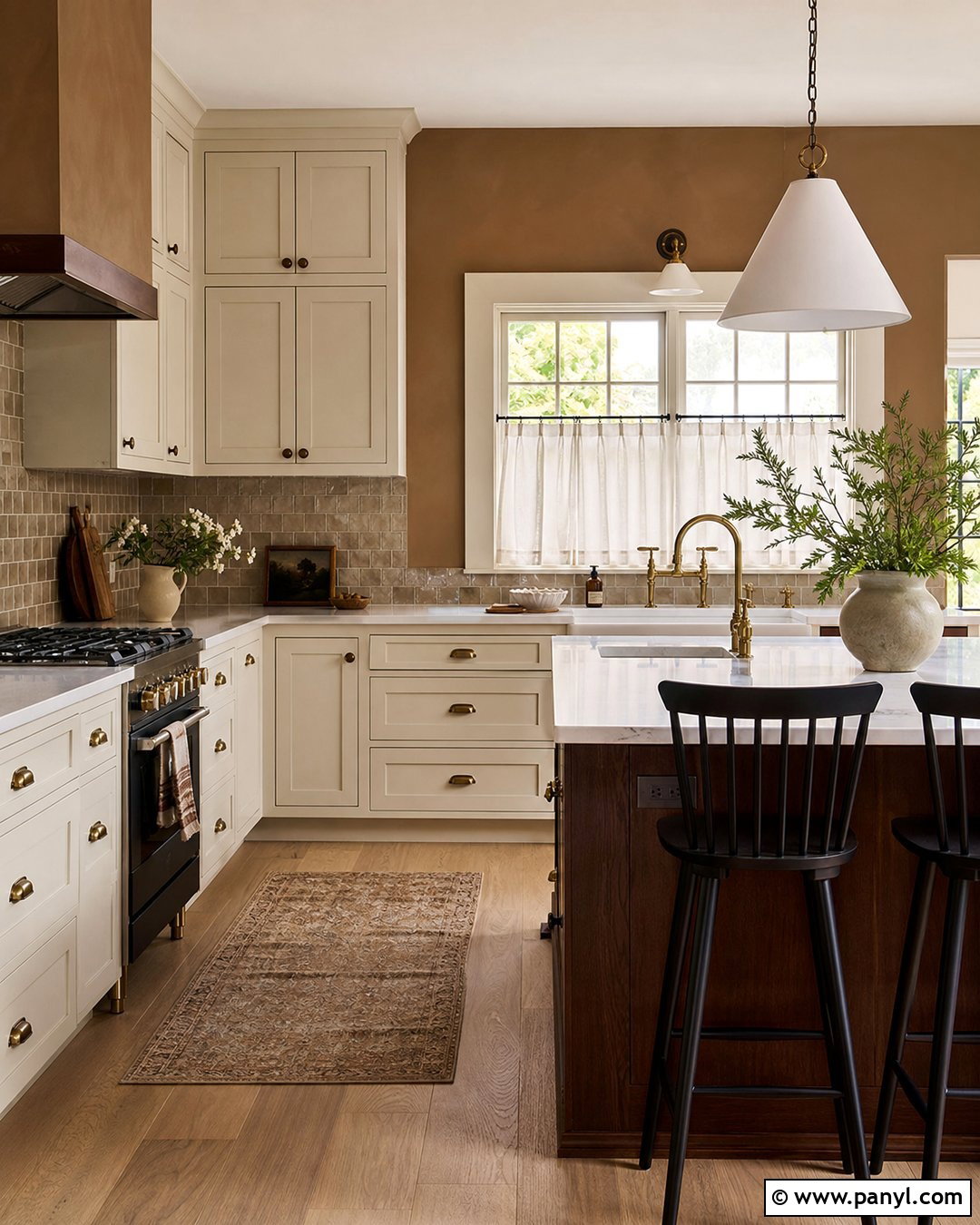
Camel brown brings sun-warmed character to a kitchen while remaining lighter and easier to use than chocolate. Combine it with matte cream cabinets, thick white quartz countertops, and a backsplash made from small sand-colored zellige tiles. Medium-toned oak flooring strengthens the earthy foundation. An island stained dark walnut adds contrast and gives the room a clear center. Use antique brass pendants, a matching bridge faucet, and understated cabinet latches for a traditional touch. Soft black counter stools and a black range provide just enough visual weight. Complete the look with linen café curtains and wood cutting boards displayed neatly against the backsplash. Camel walls are especially attractive in sunny kitchens, where daylight reveals their golden undertones and creates a comfortable, relaxed atmosphere.
5. Caramel Brown Kitchen Walls
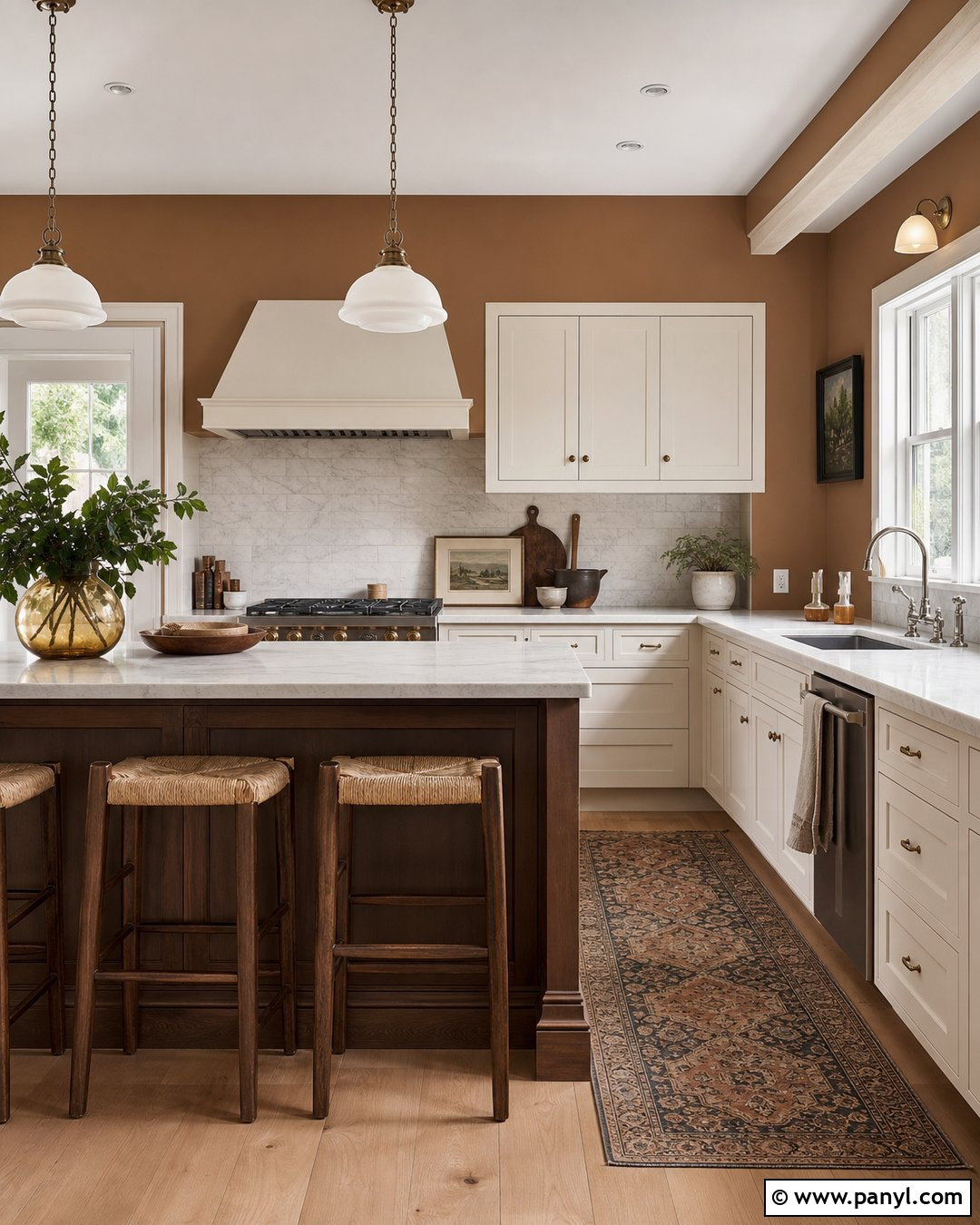
Caramel brown walls can make a kitchen feel warm, cheerful, and comfortably layered. To keep the color fresh, surround it with warm white cabinets and pale marble-look quartz countertops. Install a cream backsplash with subtle brown veining to connect the light work surfaces to the deeper walls. Wide-plank white oak flooring adds natural variation without competing with the caramel tone. Use polished nickel hardware and milk-glass pendants for brighter contrast. A medium walnut island with woven rush stools gives the room an inviting gathering area. Decorate with white ceramic canisters, amber glass accents, and a restrained arrangement of green branches. This palette suits traditional and cottage kitchens, but streamlined cabinet doors can make it work equally well in a casual modern home.
6. Tan Brown Kitchen Walls
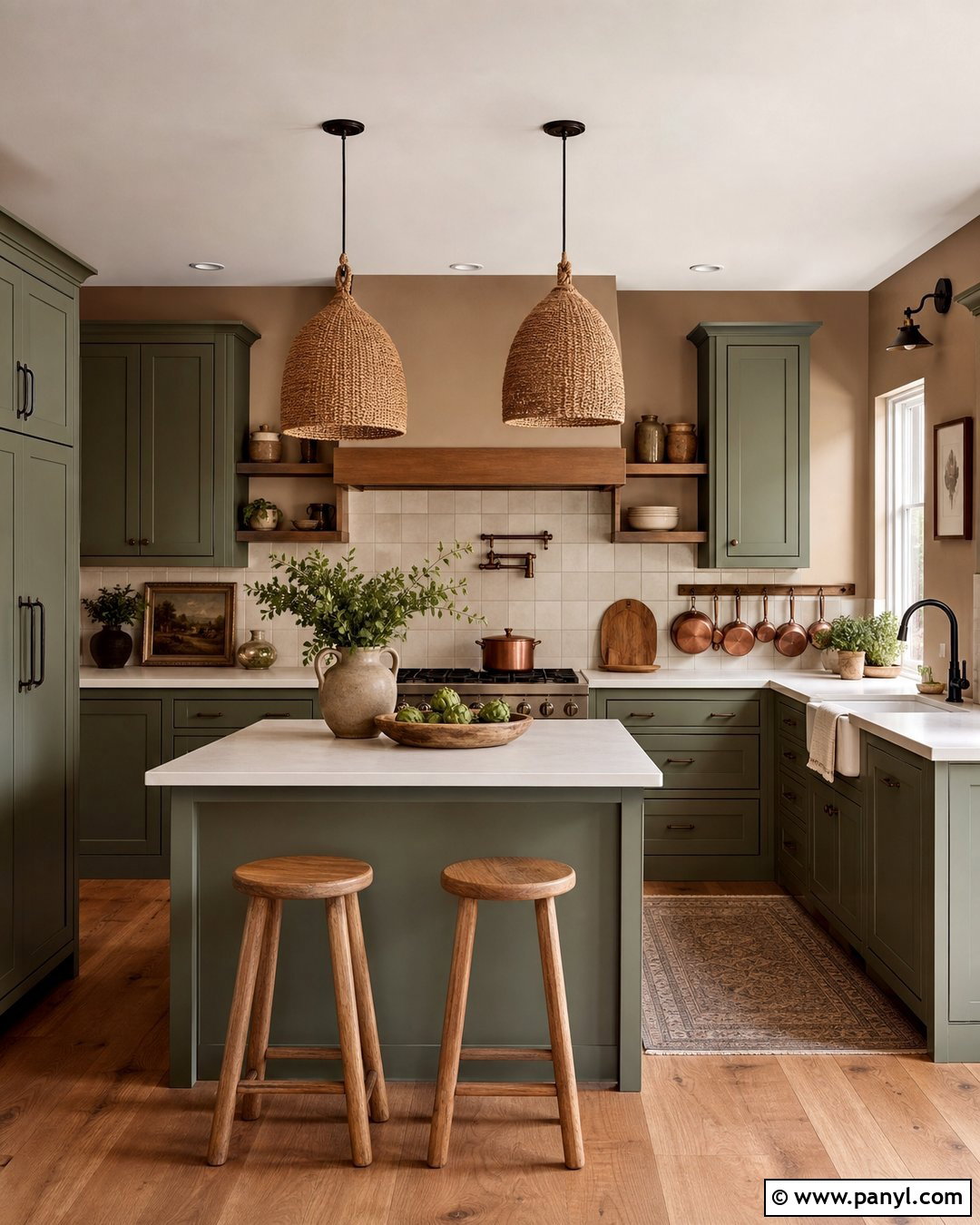
Tan brown is a practical wall color for kitchens with busy finishes because it can visually connect wood, stone, and neutral tile. Pair tan walls with muted sage green cabinets to introduce soft contrast and an organic feeling. Choose creamy quartz counters, a backsplash of ivory square tiles, and medium oak flooring with a natural matte finish. Blackened bronze pulls and a coordinating faucet add crisp outlines without appearing harsh. Above the island, hang woven pendants that repeat the warmth of the floor and walls. Keep seating simple with oak stools and oatmeal cushions. A few copper pans, potted herbs, and handmade ceramics complete the room. The finished kitchen feels earthy and approachable, with enough color variation to avoid a flat, overly beige result.
7. Mocha Brown Kitchen Walls
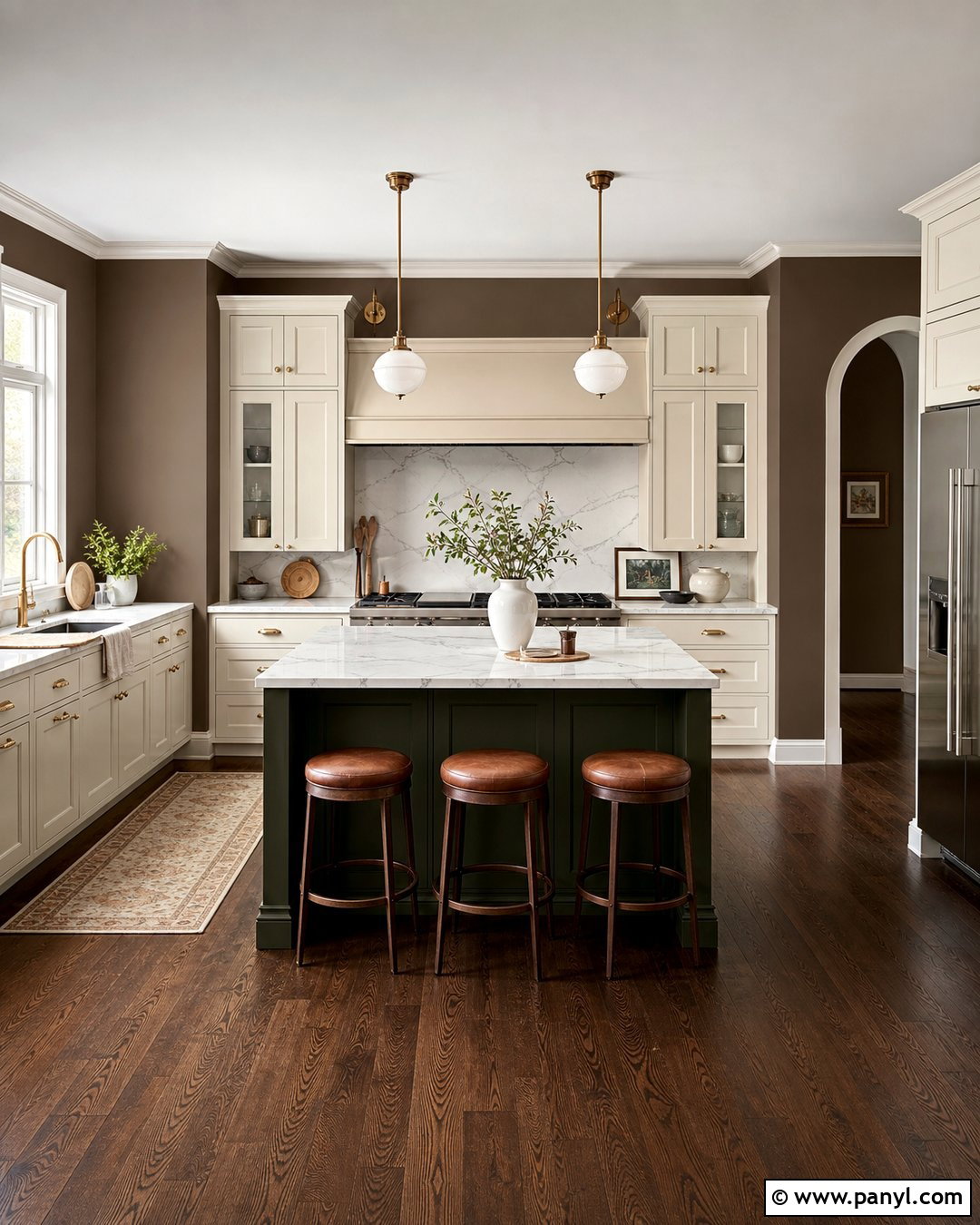
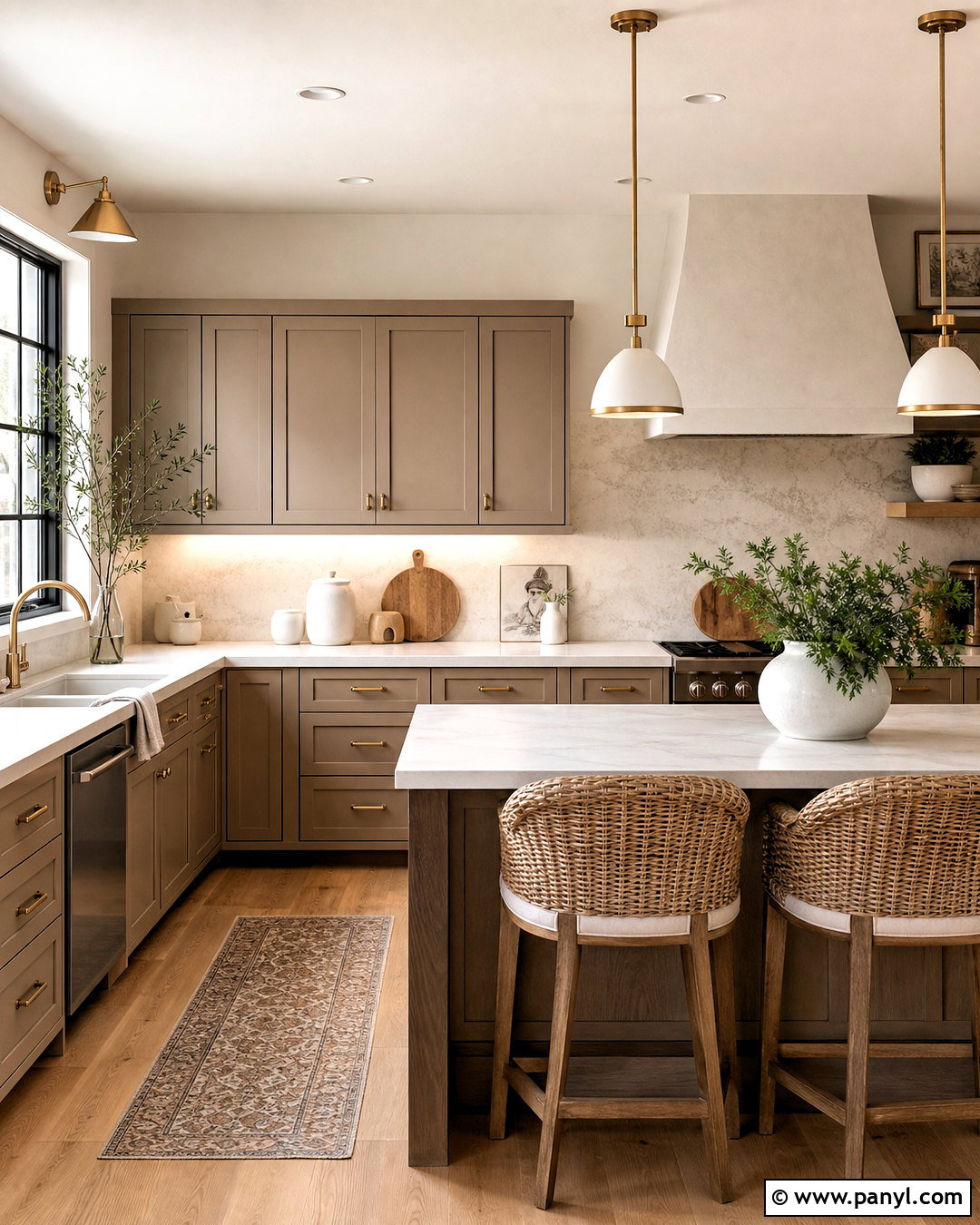
Mocha brown creates a richer atmosphere while remaining softer than espresso or black-brown. Use it in a kitchen with creamy inset cabinets, white marble countertops, and a full-height marble backsplash with warm gray veining. Dark-stained oak flooring anchors the lighter cabinetry and supports the depth of the walls. Add unlacquered brass knobs, a brass faucet, and large opal-glass pendants for a warm glow. A substantial island painted deep olive green introduces an earthy accent that complements mocha beautifully. Choose leather counter stools in a medium cognac shade and keep accessories mostly cream or clear glass. Bright task lighting is important with this medium-dark wall color. The result is an elegant, cozy kitchen that feels collected without becoming visually crowded or excessively formal.
8. Cocoa Brown Kitchen Walls
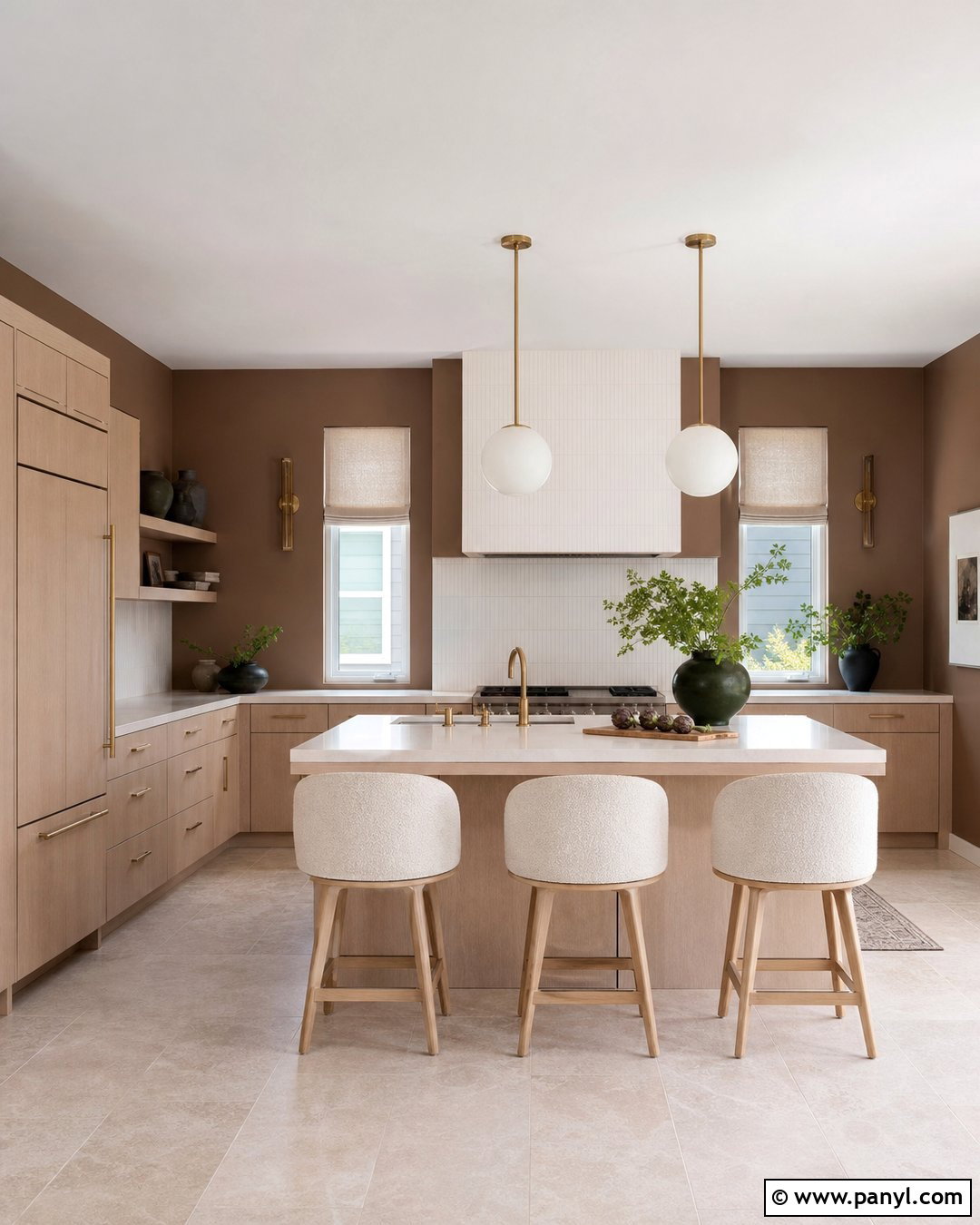
Soft cocoa walls have enough depth to create comfort but still feel inviting when paired with generous light surfaces. Choose pale oak slab cabinets, creamy white quartz countertops, and an elongated white tile backsplash laid vertically. This vertical pattern lifts the room visually and provides clean contrast against the cocoa paint. Use light limestone flooring to brighten the lower half of the kitchen. Brushed brass handles and simple globe pendants add warmth without making the space ornate. A cocoa-painted ceiling can create an enveloping effect in a large, sunny room, while smaller kitchens should retain a warm white ceiling. Finish with cream boucle stools, linen shades, and dark green pottery. This complete scheme feels modern, tactile, and balanced between earthy warmth and understated simplicity.
9. Milk Chocolate Brown Kitchen Walls
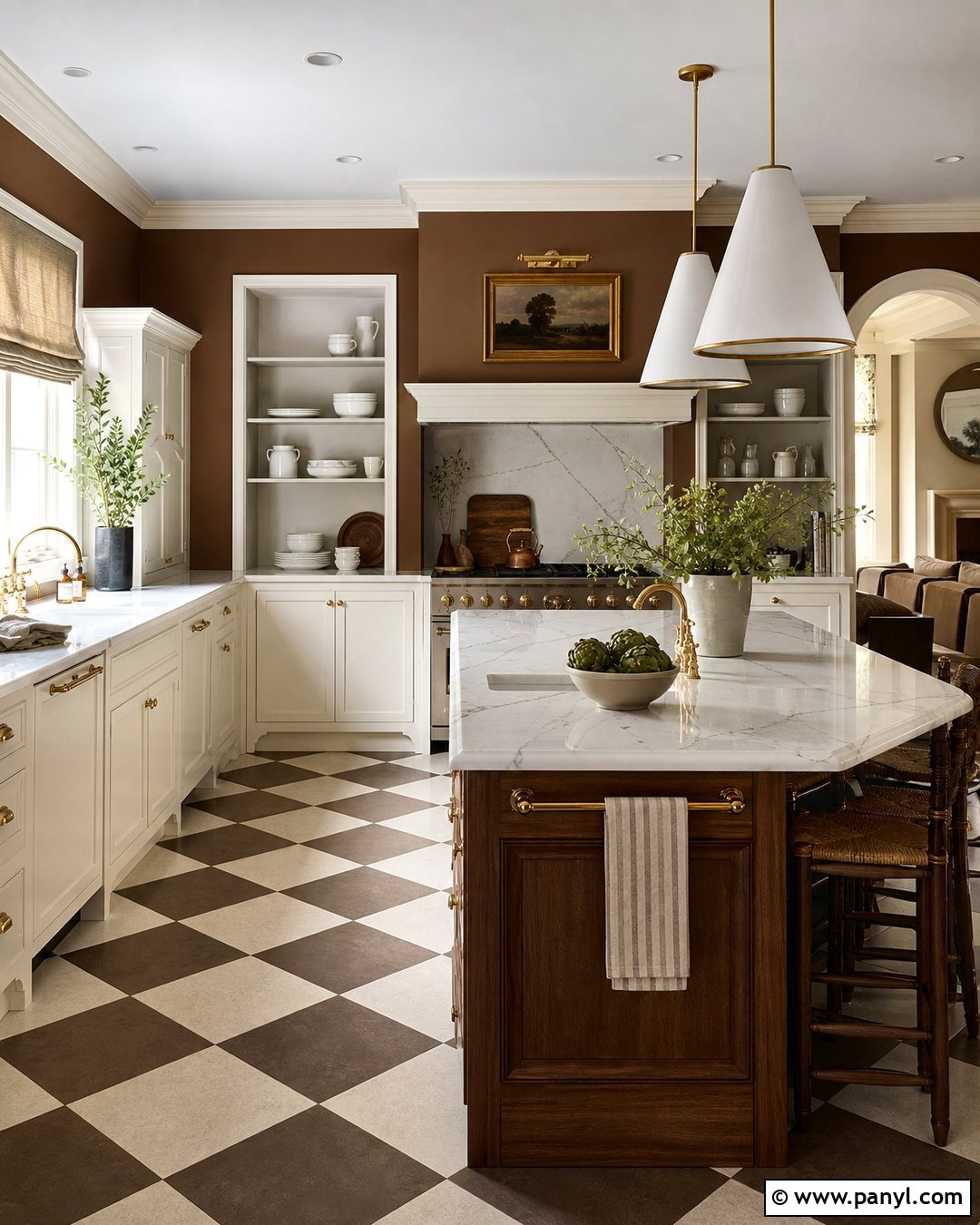
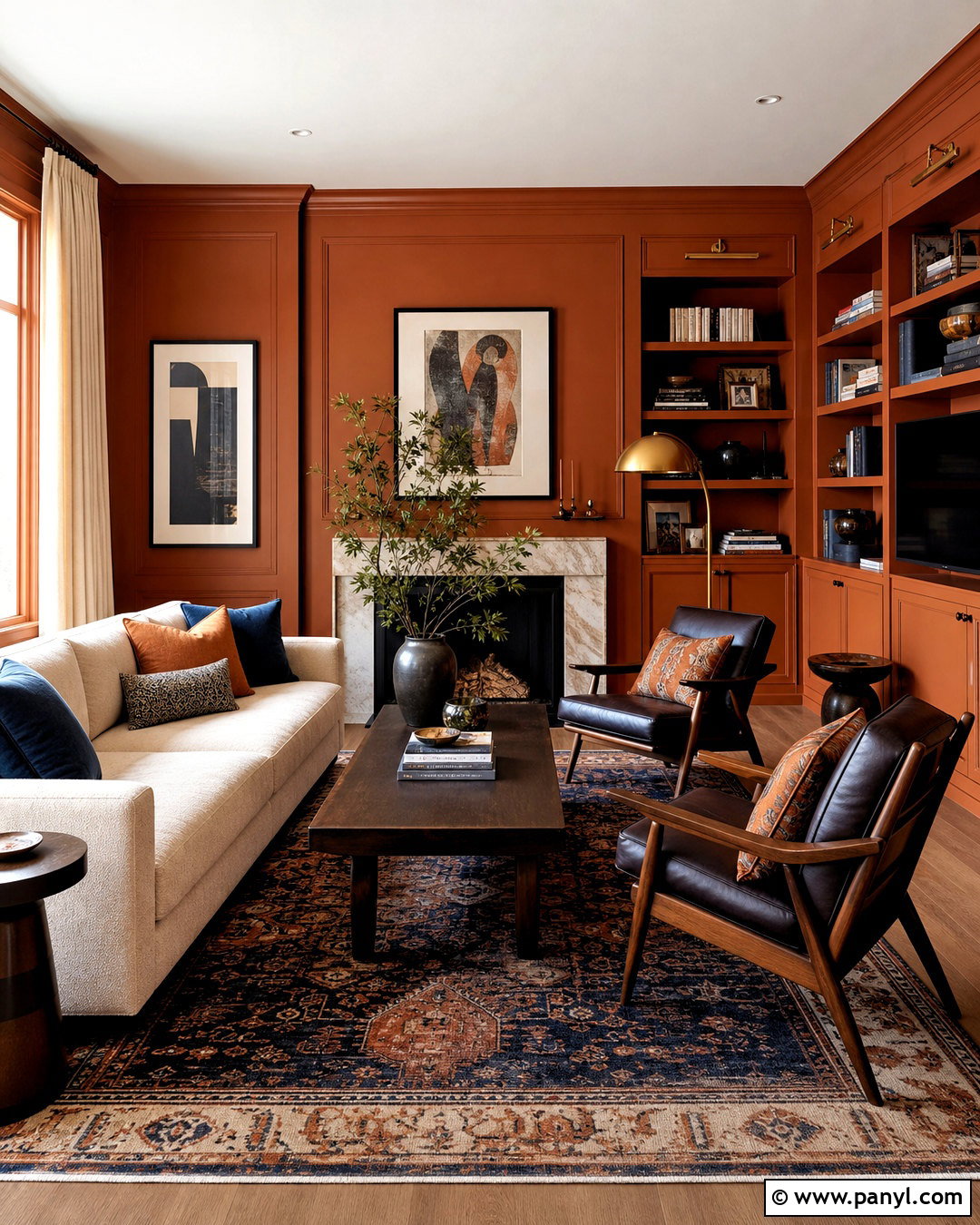
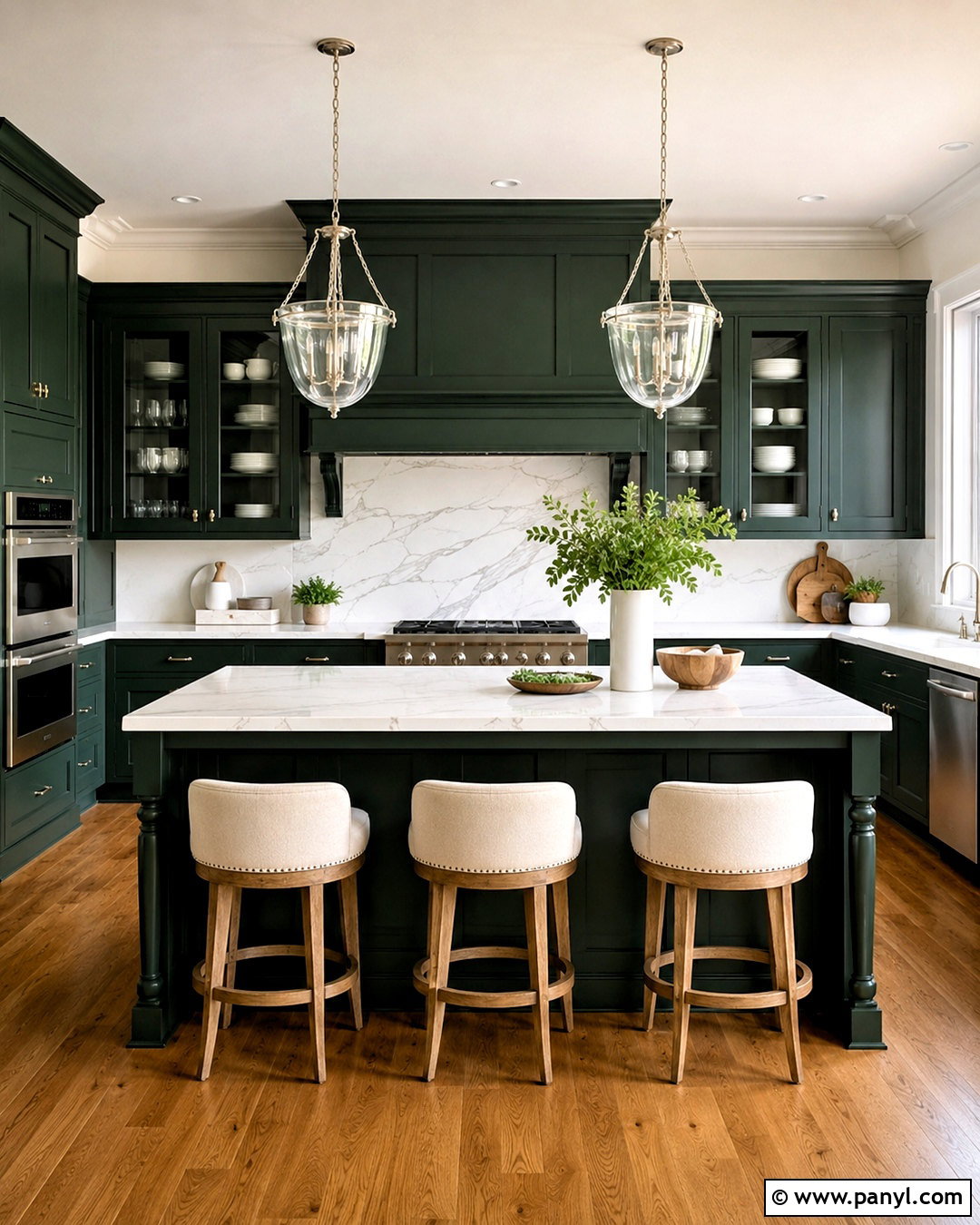
Milk chocolate brown makes a memorable background for a classic kitchen, particularly when the room has large windows and high ceilings. Pair the walls with warm white cabinets, polished marble countertops, and a matching marble backsplash behind the range. Natural walnut accents on the island, open shelves, and range hood create a gradual transition between the dark walls and pale cabinetry. Use aged brass hardware and oversized white pendants to maintain brightness. A checkerboard floor in cream and muted brown brings pattern without introducing unrelated colors. Add tailored linen shades, woven baskets, and white stoneware for a comfortable finishing layer. By repeating the wall color in small flooring and textile details, the kitchen feels deliberate, cohesive, and updated rather than dark or old-fashioned.
10. Dark Chocolate Brown Kitchen Walls
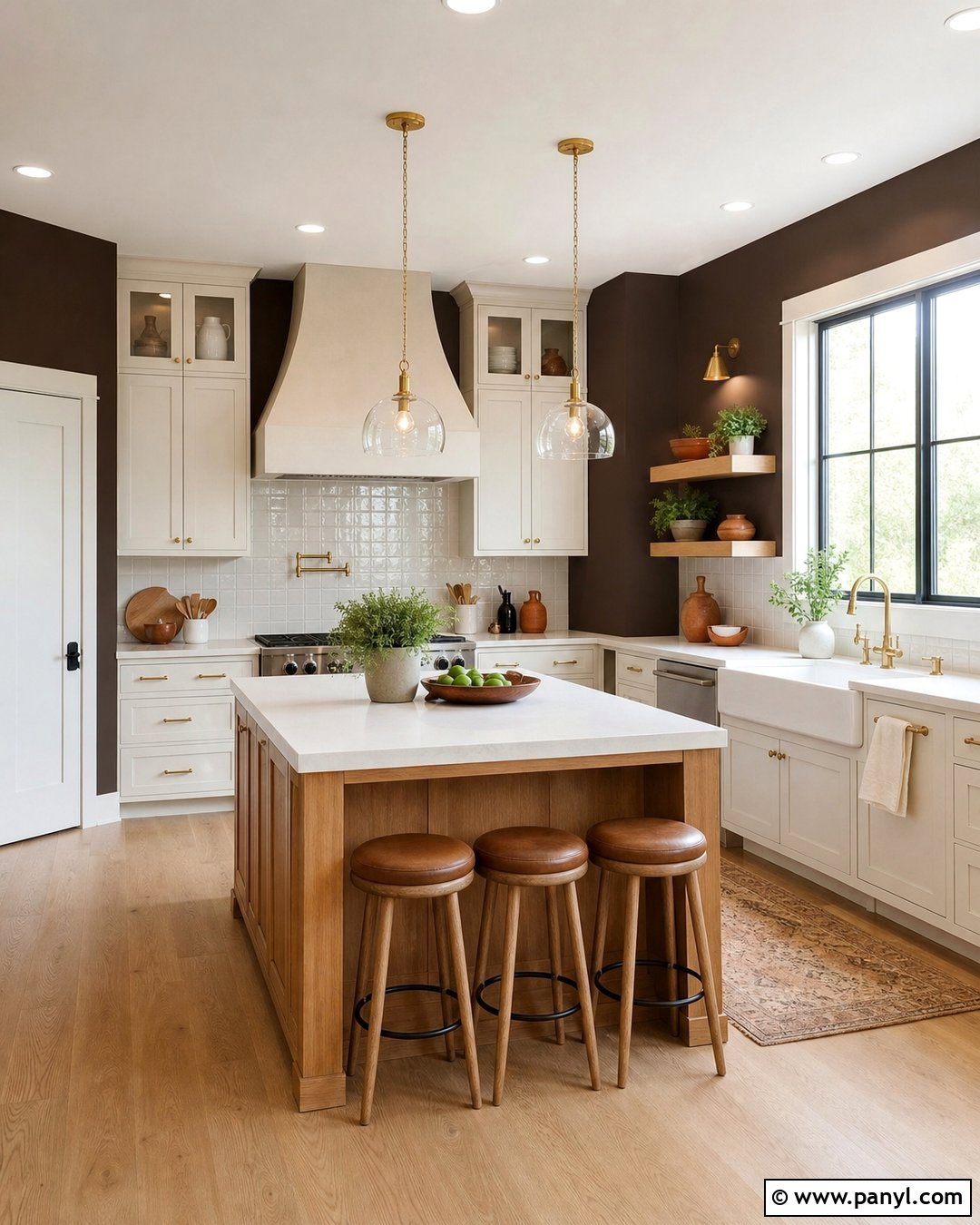
Dark chocolate walls offer dramatic contrast and work best when balanced with bright cabinetry, reflective surfaces, and excellent lighting. Use satin-finished ivory cabinets, thick white quartz counters, and a glossy cream tile backsplash that extends to the ceiling. Pale oak flooring and a matching oak island prevent the room from feeling enclosed. Choose polished brass pulls, a white apron-front sink, and oversized glass pendants to catch and distribute light. Paint the ceiling warm white and keep window treatments minimal. A few terracotta vessels and green herbs add natural color without disrupting the restrained palette. This look is most successful in a spacious kitchen or open-plan room. The dark walls define the cooking zone while lighter materials preserve an open, practical, family-friendly atmosphere.
11. Espresso Brown Kitchen Walls
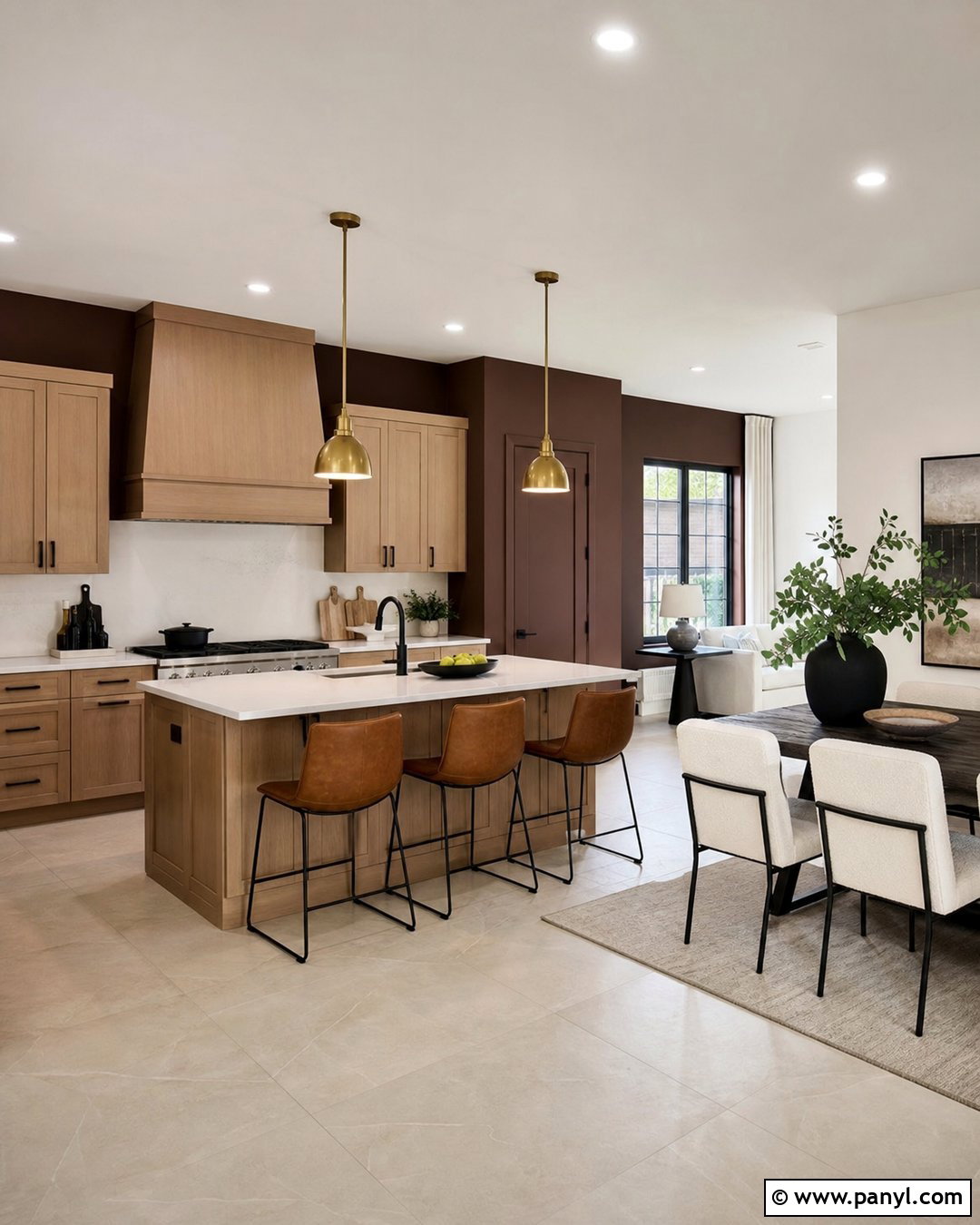
Espresso brown is nearly black, making it an effective choice for a sophisticated range wall, breakfast nook, or kitchen with abundant sunlight. Pair it with rift-cut white oak cabinets and crisp white quartz countertops for clear, modern contrast. Continue the countertop material up the backsplash to minimize visual lines and keep the design clean. Large-format pale stone floor tiles brighten the foundation. Matte black hardware blends quietly into the deeper wall color, while brushed brass pendants add a controlled touch of warmth. Use camel leather stools and simple ivory upholstery around the breakfast table. Instead of covering every wall, allow an adjacent warm white area to provide visual relief. This balanced approach gives the espresso paint impact without making the entire kitchen feel smaller.
12. Walnut Brown Kitchen Walls
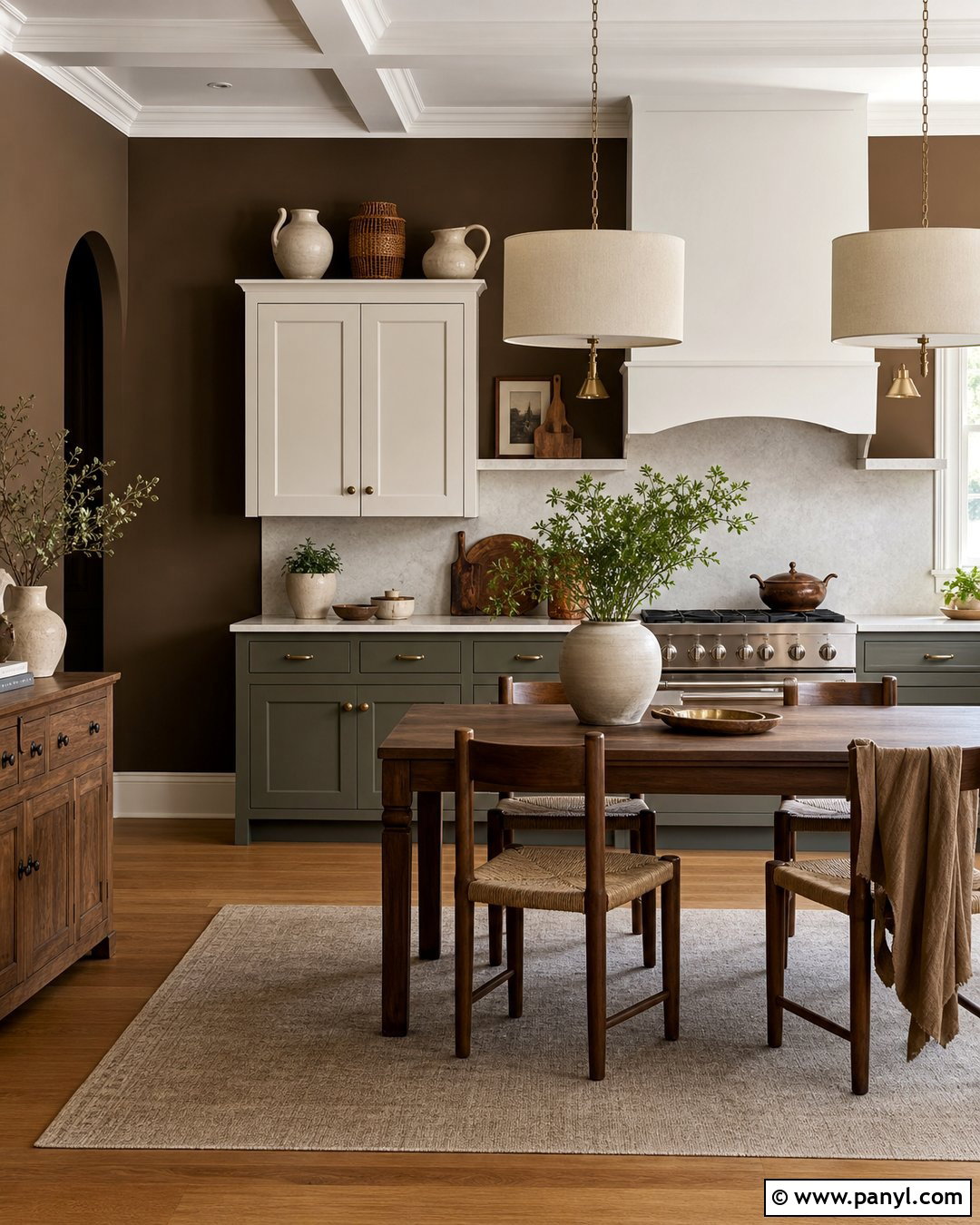
Walnut brown walls bring natural richness to a kitchen and look particularly refined beside soft green cabinetry. Choose muted olive lower cabinets, warm white upper cabinets, and creamy quartz countertops with understated veining. A honed limestone backsplash adds movement while staying within the earthy palette. Use medium oak floors rather than dark walnut flooring so the design maintains visible contrast. Antique brass hardware, linen drum pendants, and a walnut dining table connect the walls to smaller details around the room. Keep decorative pieces simple, using cream pottery, dark green glass, and woven storage baskets. This kitchen feels layered and organic instead of heavily themed. Walnut brown is an excellent bridge color when a room includes several wood species that need a strong, unifying background.
13. Chestnut Brown Kitchen Walls
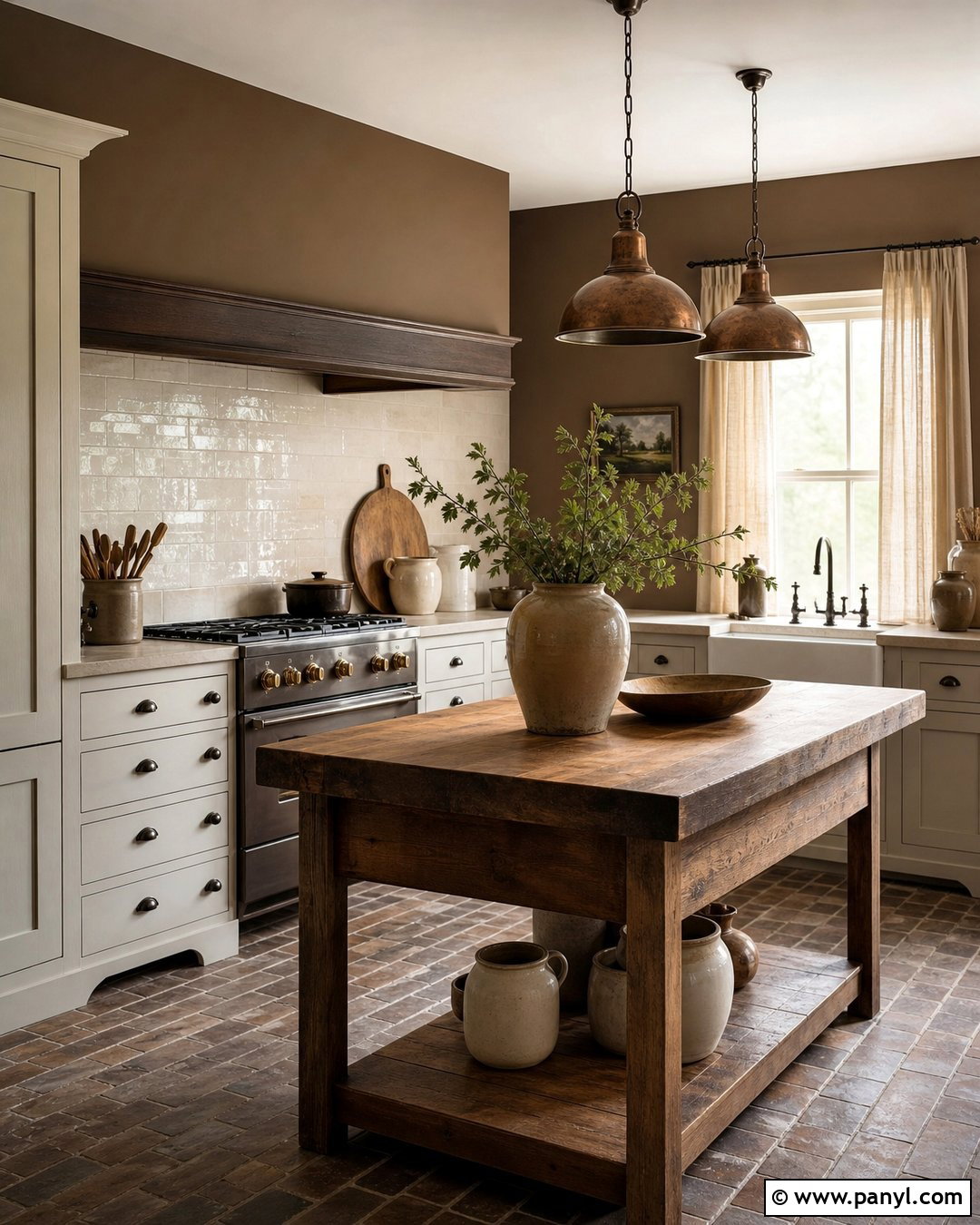
Chestnut brown carries a noticeable reddish undertone that creates warmth and depth in traditional or rustic kitchens. Pair it with putty-colored cabinets, cream granite or quartz counters, and handmade ivory backsplash tiles. A medium brown brick floor or brick-look porcelain tile reinforces the room’s earthy character while providing subtle pattern. Choose dark bronze latches, a farmhouse sink, and aged copper pendant lights to complement the red-brown walls. An oak island with a butcher-block top adds a lighter natural surface at the center. Use simple linen curtains, open shelves, and neutral stoneware to keep the room relaxed. Because chestnut is a strong color, avoid overly orange woods. Muted oak, creamy paint, and soft stone allow its red warmth to appear intentional and sophisticated.
14. Cinnamon Brown Kitchen Walls
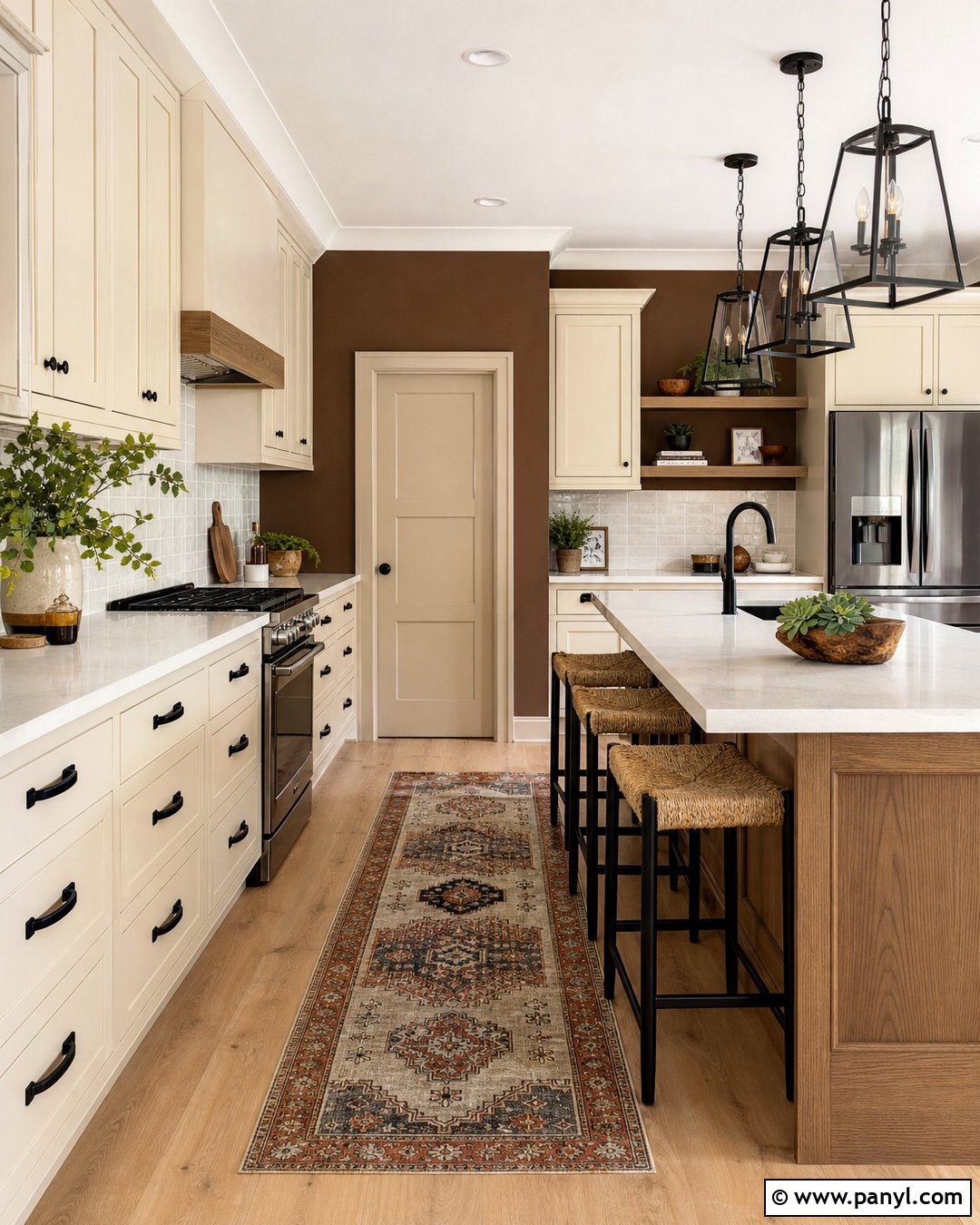
Cinnamon brown gives a kitchen a lively, spicy warmth without becoming as orange as terracotta. Use it with pale cream cabinets, white quartz countertops, and a backsplash of glossy off-white tiles to create breathing room. White oak flooring and a matching island provide a fresh natural contrast. Add matte black hardware, black-framed pendants, and a slim black range hood to sharpen the palette. Woven counter stools, linen café curtains, and several green plants soften those darker details. A patterned runner in cream, rust, and muted blue can connect the cinnamon walls with the rest of the room. This complete look is colorful but manageable. It works particularly well in kitchens that receive cool northern light, where a warmer wall color can make the space feel more welcoming.
15. Terracotta Brown Kitchen Walls
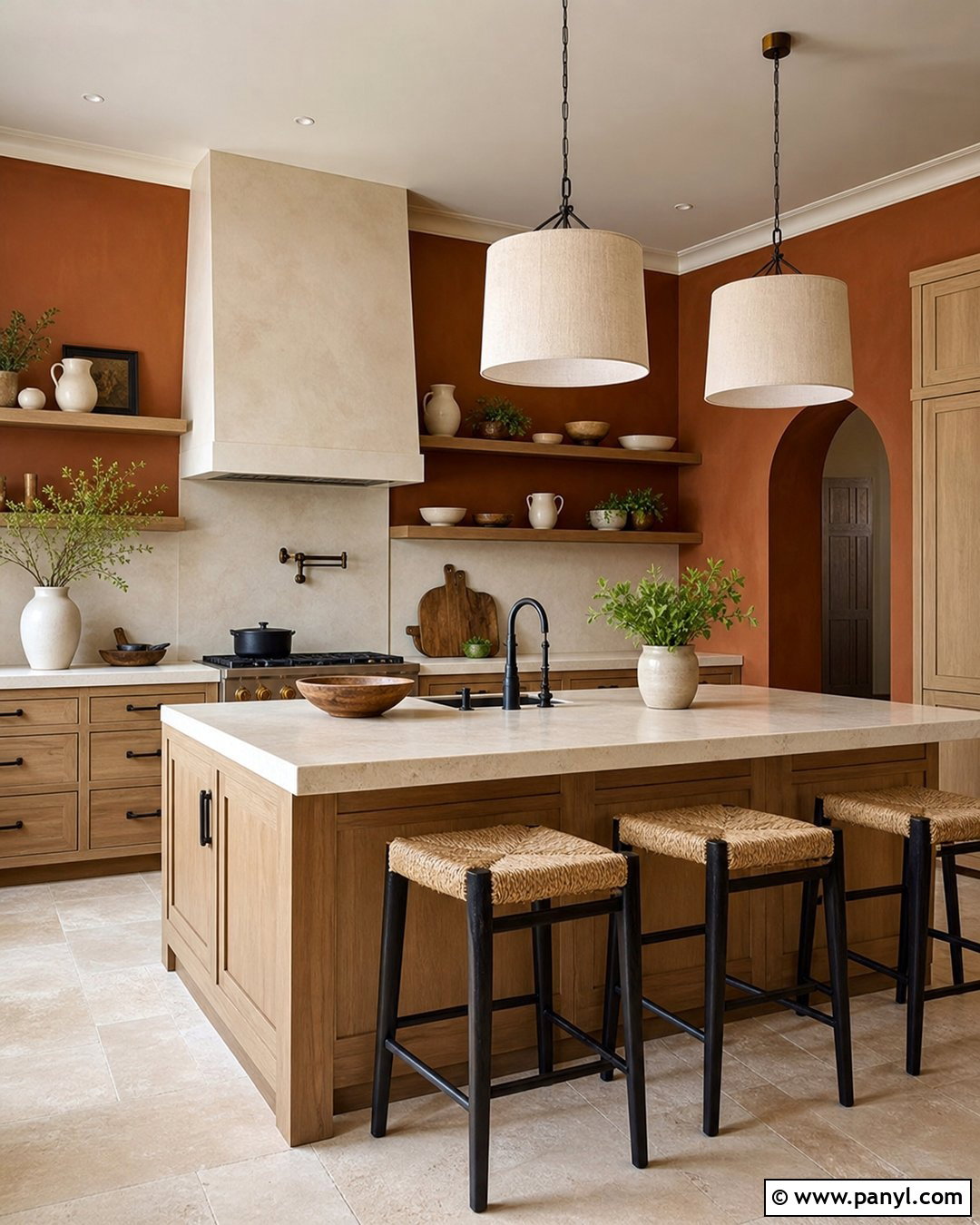
Terracotta brown combines earthy red, orange, and brown tones for a kitchen that feels warm and connected to natural materials. Pair the walls with light oak cabinets, creamy limestone countertops, and a simple off-white plaster backsplash. Use pale travertine flooring to extend the sun-baked palette without repeating the wall color exactly. Dark bronze hardware and a sculptural bronze faucet add definition. Over the island, install large linen pendants that provide soft contrast and visual texture. Choose woven stools with black frames, then finish the room with green herbs, wooden bowls, and cream ceramics. Keep cabinet styling streamlined so the strong walls remain the primary color statement. The resulting kitchen feels Mediterranean-inspired but still appropriate for an average contemporary home, especially when the architecture is simple.
16. Clay Brown Kitchen Walls
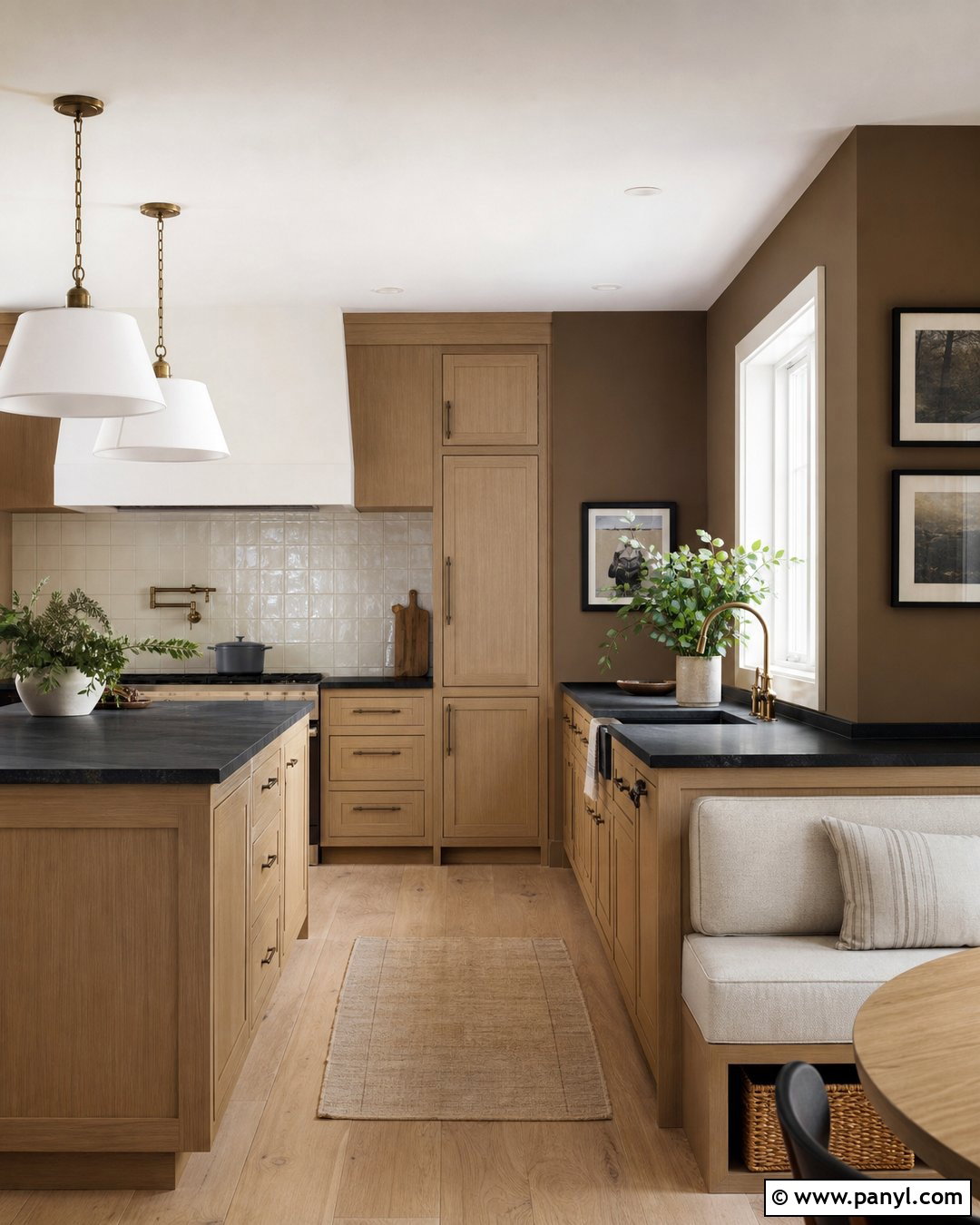
Muted clay brown offers the warmth of terracotta in a quieter, dustier form. It pairs beautifully with natural white oak cabinets, soapstone countertops, and an ivory backsplash made from imperfect square tiles. The dark soapstone creates a strong horizontal contrast, while pale oak flooring keeps the overall room from feeling heavy. Use aged pewter hardware for a cooler metallic note and hang white ceramic pendants over the island. A built-in breakfast bench upholstered in oatmeal linen makes the space feel comfortable and complete. Add black-framed art, woven baskets, and a few muted green accessories. Clay brown works especially well in kitchens that blend rustic and modern features. Its restrained undertone creates character without overpowering wood grain, handcrafted tile, or other textural finishes.
17. Rosy Brown Kitchen Walls
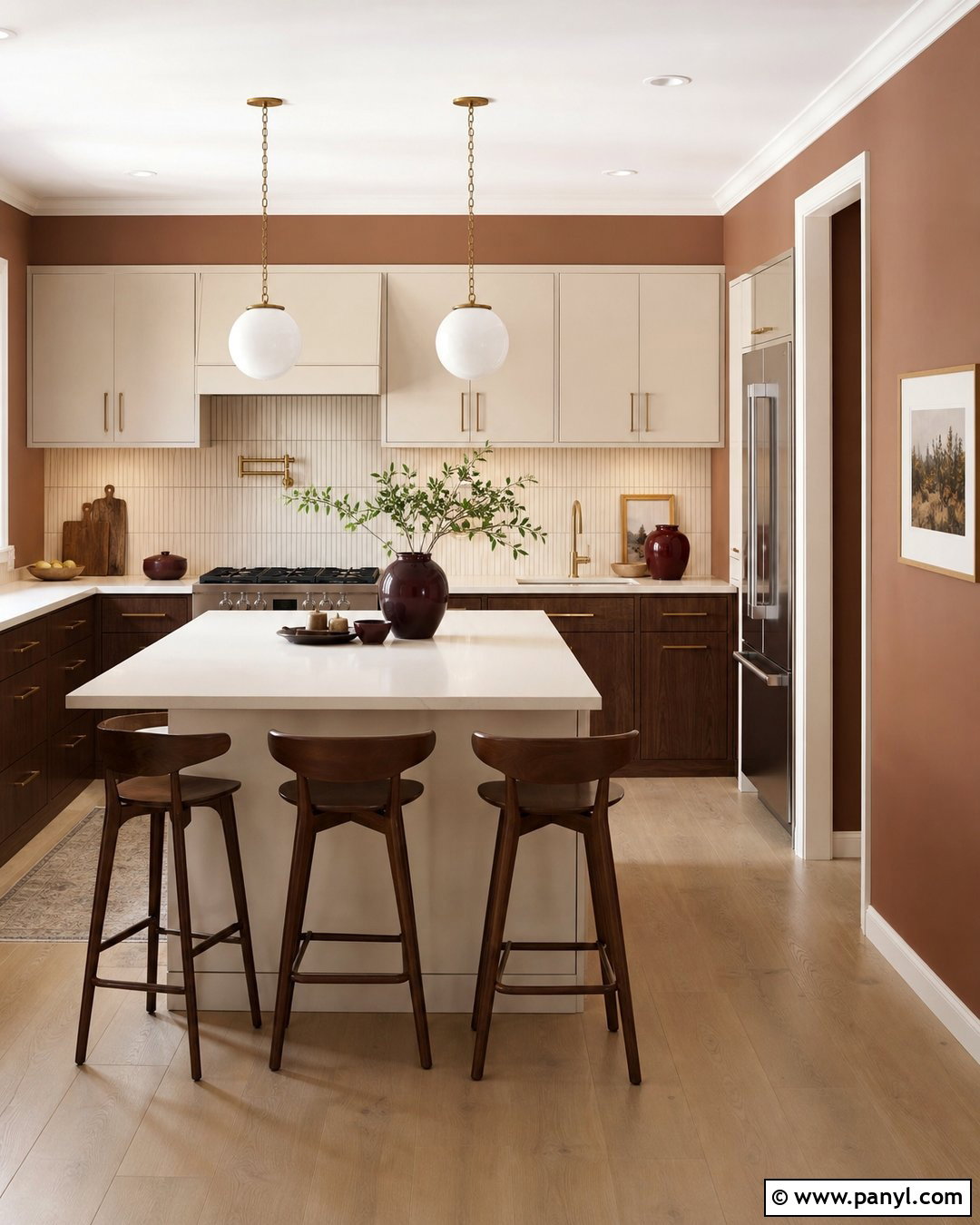
Rosy brown has muted pink or mauve undertones, giving a kitchen a softer alternative to standard beige. Pair this color with deep walnut lower cabinets and creamy white upper cabinets to create a layered yet balanced arrangement. Use pale quartz counters and a warm white backsplash with gentle vertical grooves. Light oak flooring prevents the walnut from dominating the room. Brushed brass pulls and opal globe pendants complement the subtle rosy warmth. For the island, repeat the creamy cabinet color and add walnut stools with oatmeal seats. Finish with burgundy pottery, pale linen curtains, and a restrained arrangement of leafy branches. The finished kitchen feels distinctive without appearing overly feminine. Rosy brown is particularly effective with stone surfaces that contain faint taupe, burgundy, or warm gray veining.
18. Plum Brown Kitchen Walls
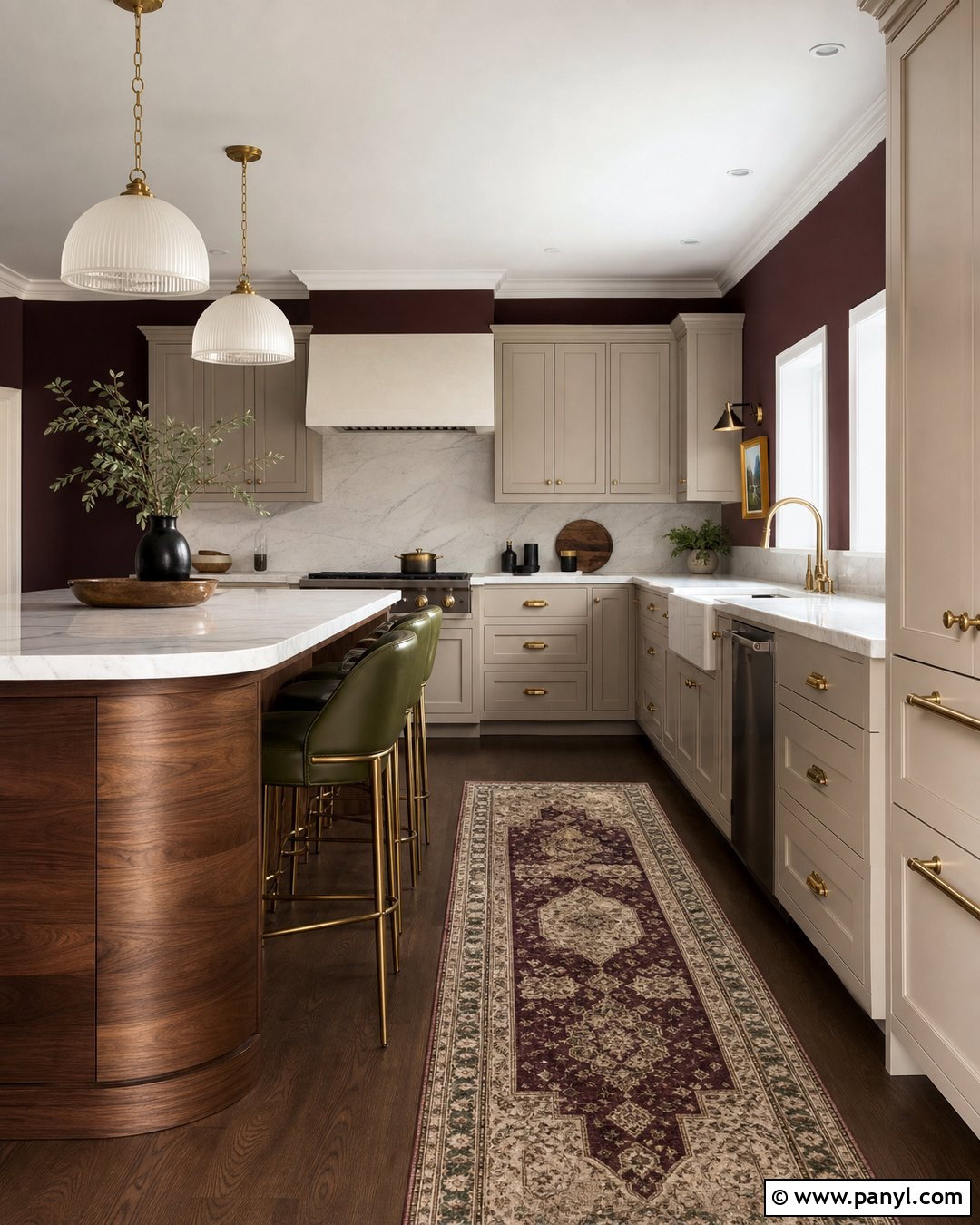
Plum brown brings subtle purple depth to a kitchen while still reading as an earthy neutral. Use it with pale mushroom cabinets, white marble countertops, and a softly veined marble backsplash. Smoked oak flooring supports the darker walls, while the lighter cabinetry keeps the main work area visible and bright. Choose burnished brass hardware, a brass faucet, and cream glass pendants for warmth. A walnut island with rounded corners adds another natural brown without matching the walls exactly. Include muted olive stools and a vintage-style runner containing cream, plum, and green. Bright ceiling lighting and undercabinet lights are essential for maintaining clarity. This complete palette feels sophisticated and slightly dramatic, making it a strong option for homeowners who want brown with more personality and complexity.
19. Olive Brown Kitchen Walls
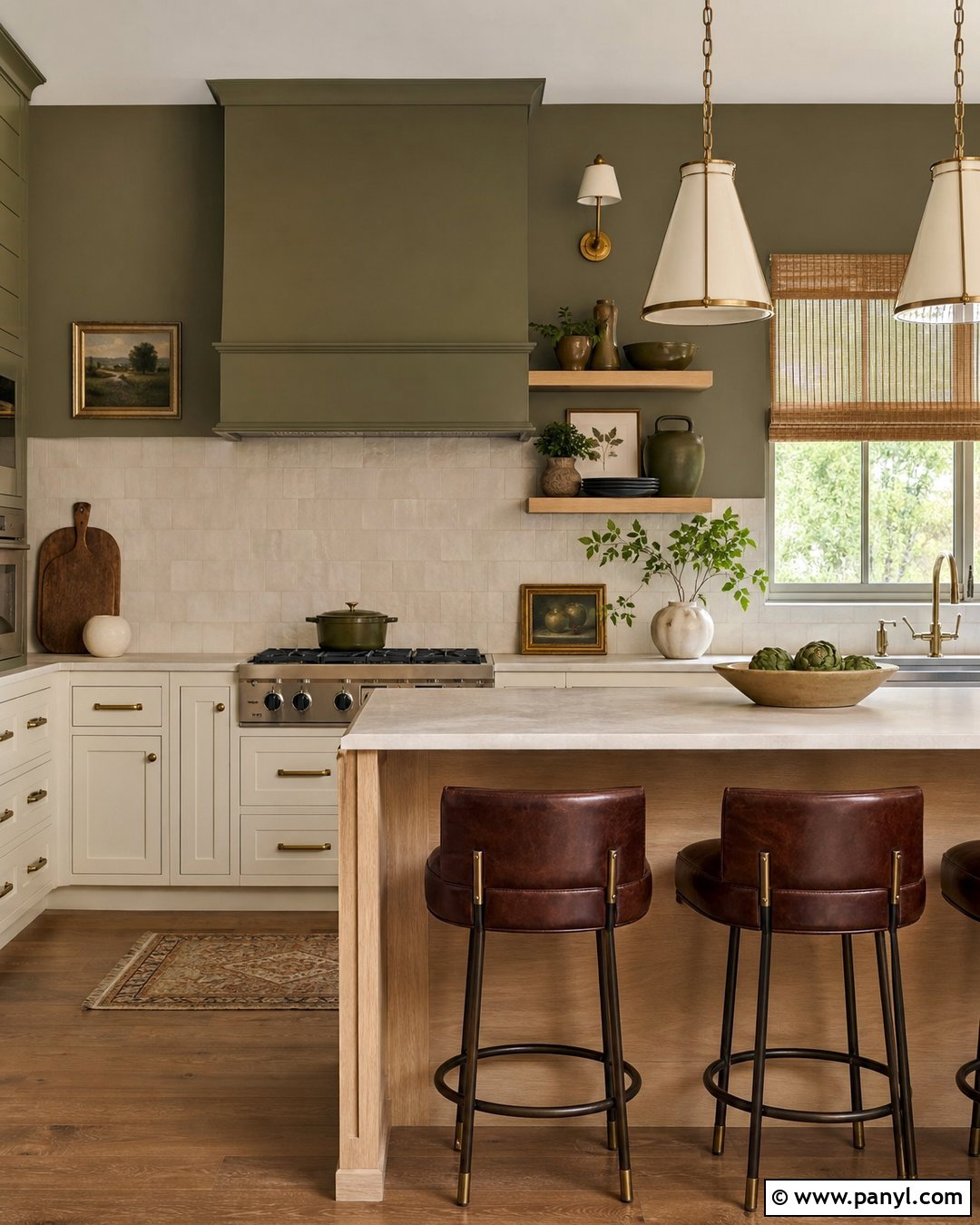
Olive brown has an earthy green undertone that works naturally with wood, stone, and warm metals. Pair it with simple cream cabinets, honed limestone countertops, and an ivory tile backsplash with subtle texture. Choose medium walnut flooring to deepen the organic palette, then use a light oak island to keep the center of the room visually open. Aged brass hardware and cream metal pendants add warmth while remaining understated. Include dark brown leather stools, woven shades, and ceramic accessories in cream and moss green. The wall color should feel muted rather than distinctly green, allowing it to act as a versatile neutral. This finished kitchen suits rustic, transitional, and modern homes, especially where windows overlook trees or garden planting that can visually connect with the interior palette.
20. Charcoal Brown Kitchen Walls
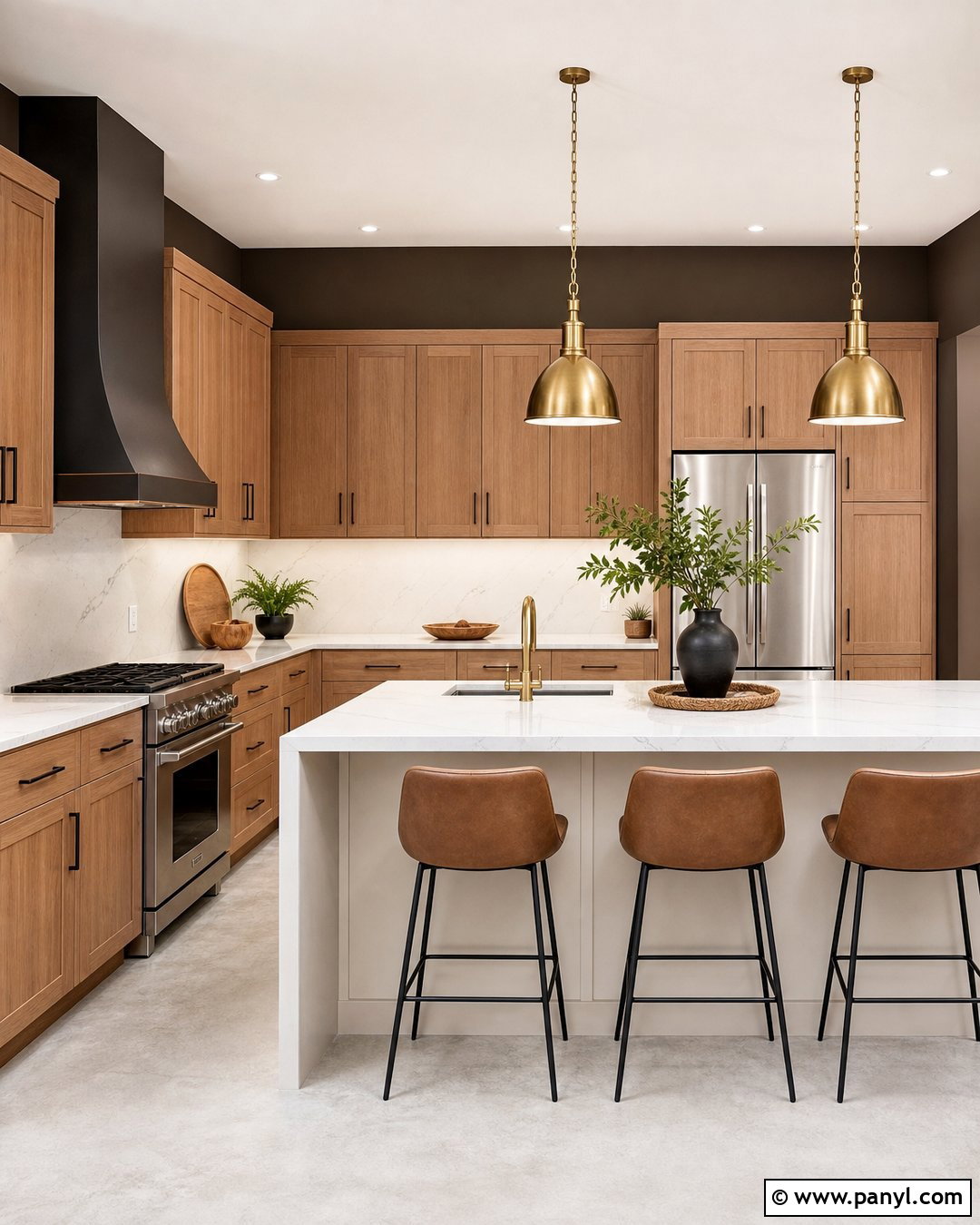
Charcoal brown combines deep brown with smoky gray undertones, producing a dramatic color that feels softer than pure black. Pair it with quarter-sawn oak cabinets, white marble-look quartz counters, and a full-height warm white backsplash. Pale concrete-look flooring gives the room a clean modern foundation and balances the warmth of the oak. Use matte black cabinet pulls so the hardware blends into the darker elements. Brushed brass pendants and a brass faucet introduce controlled brightness. Add an island painted warm ivory, topped with the same quartz, to create a light focal point. Camel leather stools, minimal wood accessories, and one large green plant finish the space. This complete kitchen looks bold and contemporary while retaining enough natural warmth for comfortable everyday living.
Conclusion:
The most successful brown kitchen is built around balance rather than a single paint color. Pale taupe and mushroom can brighten compact rooms, while mocha, walnut, chocolate, and espresso create richer spaces with greater visual depth. Always compare the wall shade with your cabinets, counters, backsplash, flooring, and trim before making a final choice. Cool stone can sharpen a warm brown, while cream, oak, brass, and textured tile create a softer result. Test large painted samples on several walls and view them throughout the day. Whether your goal is light and relaxed or bold and dramatic, these **20 Brown Kitchen Wall Colors** provide complete palettes that can help the entire room feel coordinated, welcoming, and current.

Related Ideas and Inspiration:
Leave a Reply