
Brown can make a home feel warm, grounded, and sophisticated when the right shades are layered together. These 20 brown color palette ideas explore chocolate, walnut, caramel, tan, taupe, espresso, and other earthy tones across complete room designs. Instead of treating brown as one flat color, each look combines light and dark values with complementary accents such as cream, sage green, dusty blue, terracotta, and burgundy. Natural wood, leather, linen, stone, and woven fibers add texture while preventing neutral rooms from appearing plain. Brown also works across modern, rustic, traditional, coastal, and mid-century interiors because it can serve as either the foundation or a supporting accent. ()
Use these practical, coordinated 20 brown color palette ideas.

1. Chocolate Brown And Cream Living Room
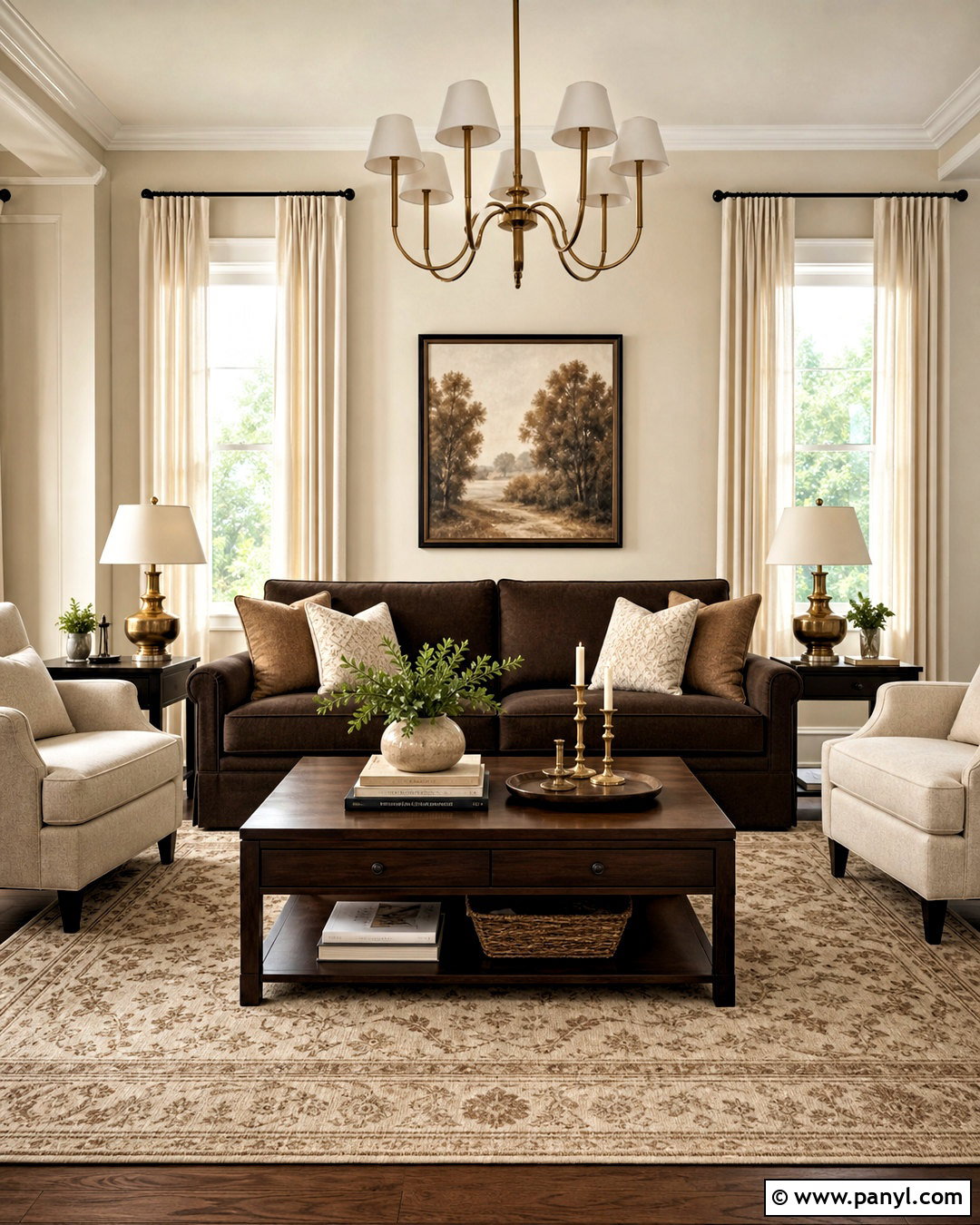
Chocolate brown and cream create a living room that feels rich without becoming too dark. Paint the walls a soft cream, then anchor the seating area with a deep chocolate sofa and two oatmeal armchairs. A medium walnut coffee table connects the darkest and lightest shades. Choose an ivory rug with a subtle brown pattern to brighten the floor and define the layout. Add camel-colored pillows, cream curtains, and a chunky beige throw for soft layers. Brushed brass lamps introduce warmth without competing with the palette. Keep artwork simple, using sepia prints or abstract pieces in cocoa, ivory, and tan. A few leafy plants provide fresh contrast while preserving the room’s calm, natural appearance.
2. Walnut Brown And Sage Green Living Room
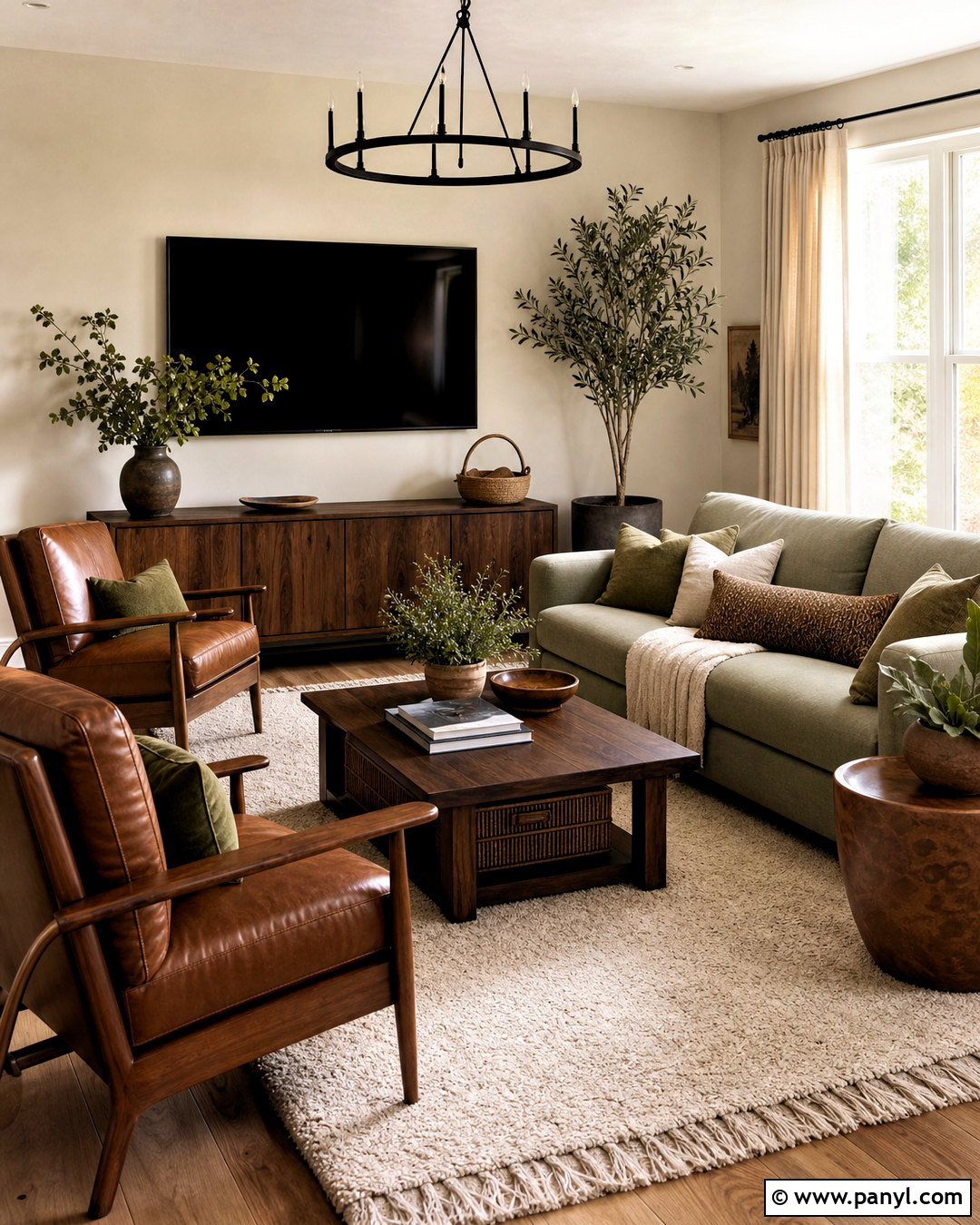
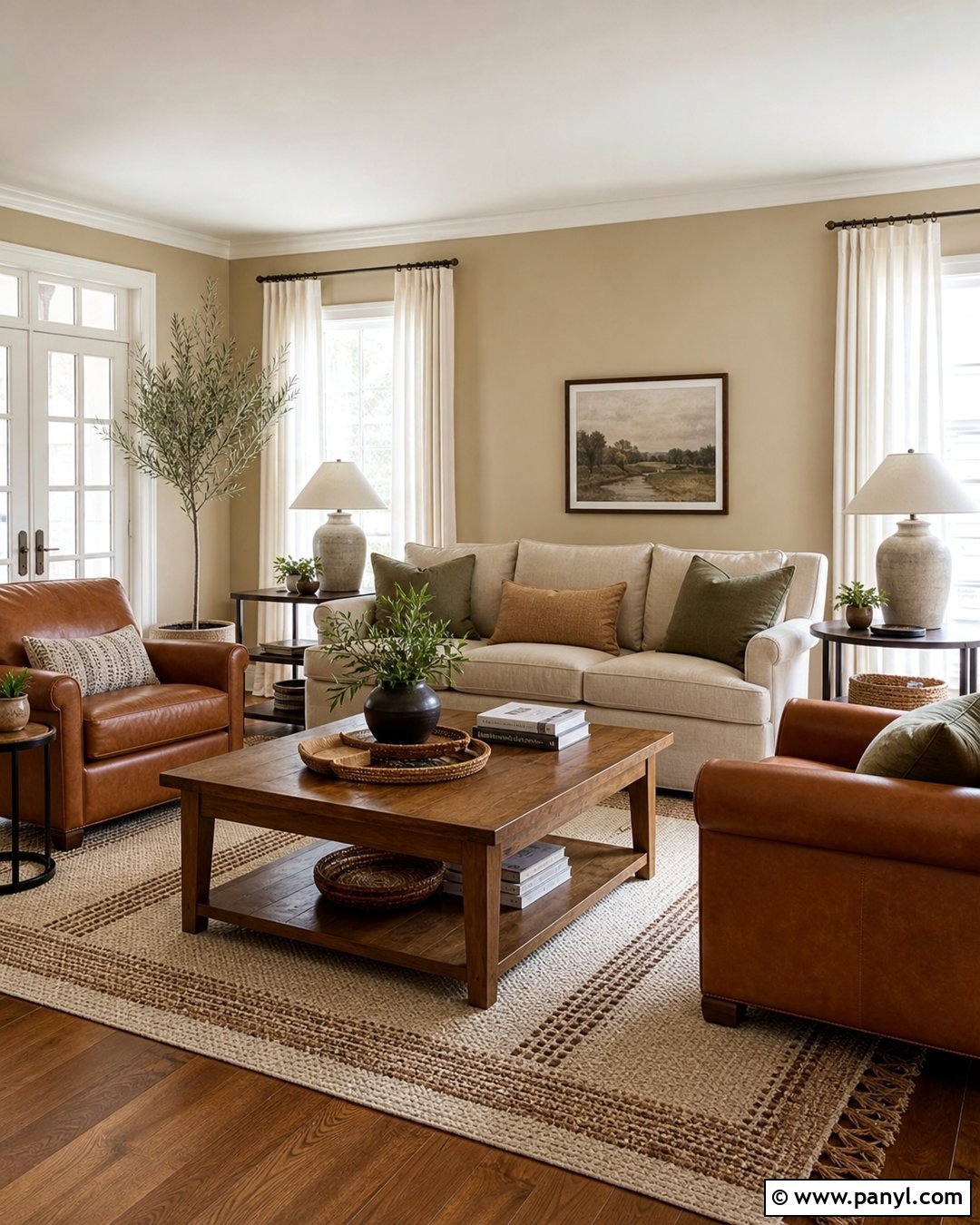
Walnut brown and sage green bring the peaceful colors of nature into a comfortable living room. Start with warm off-white walls and walnut flooring or wood furniture as the foundation. Place a muted sage sofa across from a walnut media cabinet, then add cognac leather chairs for depth. A cream wool rug keeps the arrangement airy, while olive and beige pillows connect the green and brown tones. Use linen curtains in a pale flax color rather than stark white. Matte black lighting can add definition in small amounts. Finish the room with pottery, woven baskets, botanical artwork, and leafy plants. This combination works especially well when brown appears through authentic wood grain instead of matching painted surfaces.
3. Mocha Brown And Ivory Bedroom
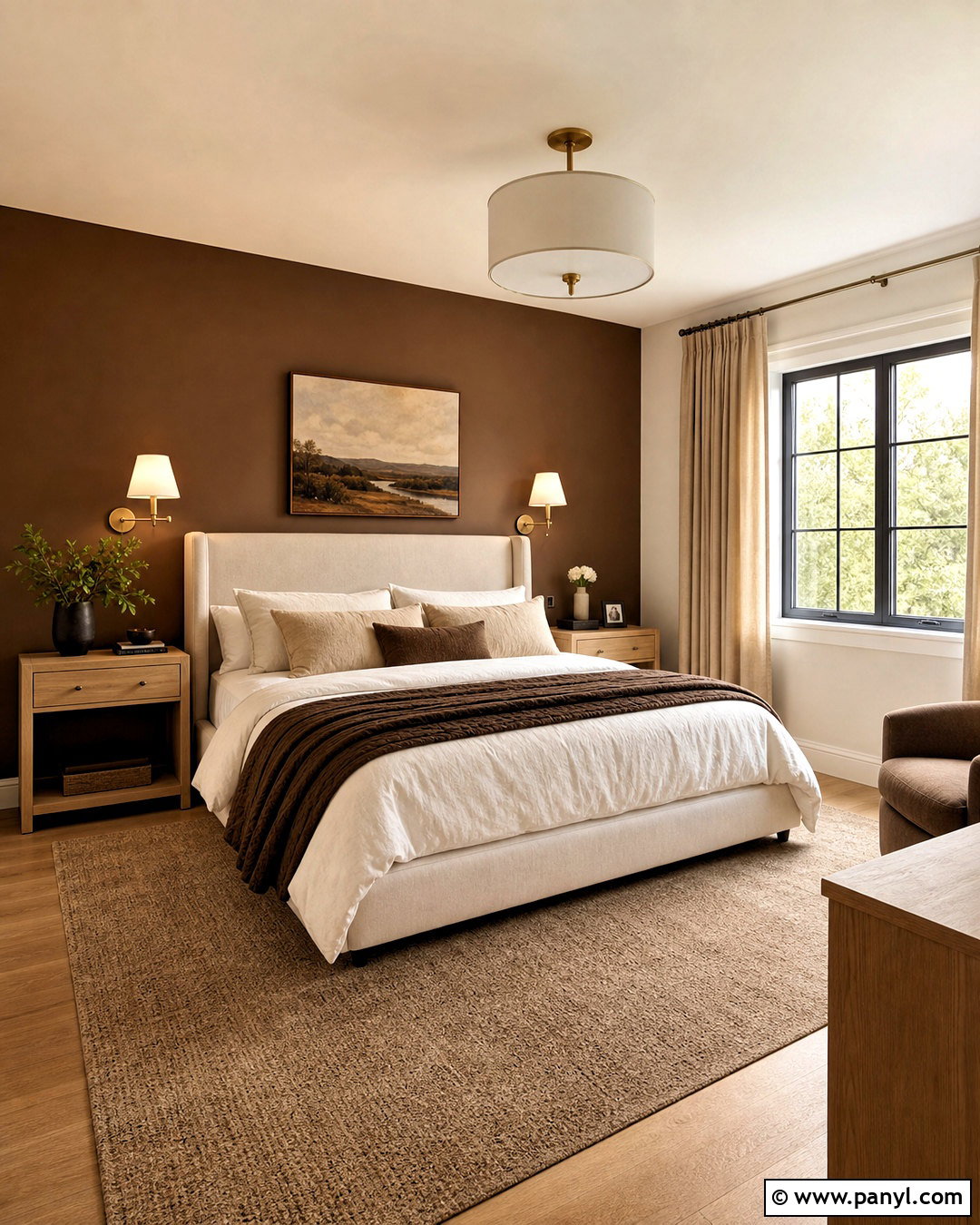
Would you like a bedroom that feels cozy but still looks bright in the morning? Pair mocha brown with ivory, warm beige, and pale oak for a restful design. Use mocha paint behind the bed and creamy ivory on the remaining walls. An upholstered oatmeal bed keeps the focal wall from feeling heavy. Add pale oak nightstands, off-white bedding, and a folded cocoa blanket across the foot of the bed. Small accents of antique brass can appear on sconces, drawer pulls, and picture frames. Choose a low-pile beige rug large enough to extend around the bed. Finish with linen curtains, simple ceramic lamps, and one warm abstract artwork that repeats the room’s balanced brown color palette.
4. Espresso Brown And White Kitchen
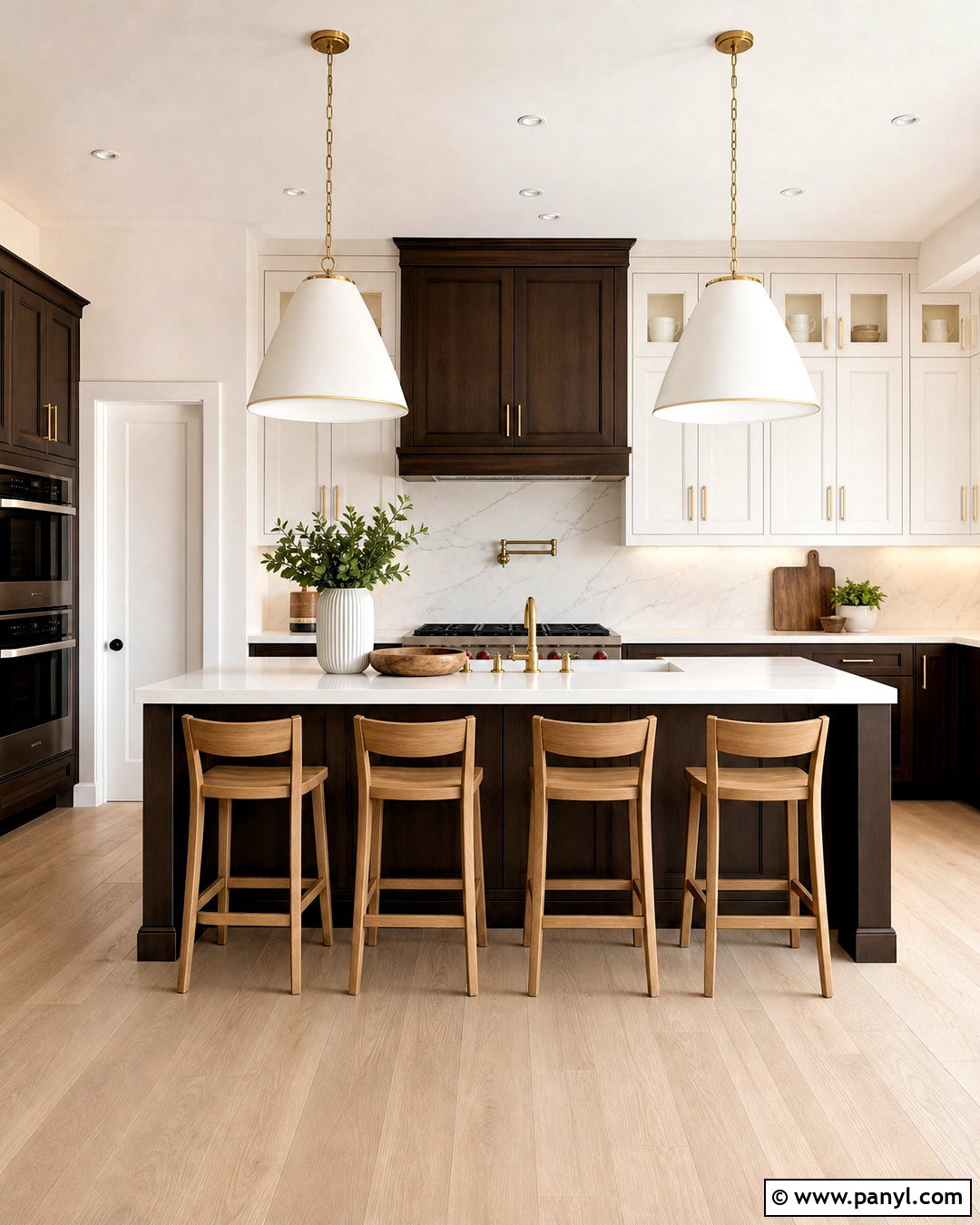
Espresso brown cabinetry can look crisp and contemporary when balanced with enough clean white. Use espresso-stained lower cabinets and tall pantry units, then keep the upper cabinets white to reduce visual weight. White quartz counters and a softly veined marble backsplash reflect light across the room. Introduce warmth with natural oak stools and light wood flooring. Brushed nickel or stainless steel suits a streamlined kitchen, while aged brass creates a more traditional finish. Keep accessories limited to cream stoneware, wooden cutting boards, and one or two green plants. Large white pendants above the island strengthen the contrast. The completed kitchen feels polished because dark brown grounds the design while white surfaces maintain an open, practical atmosphere.
5. Caramel Brown And Terracotta Dining Room
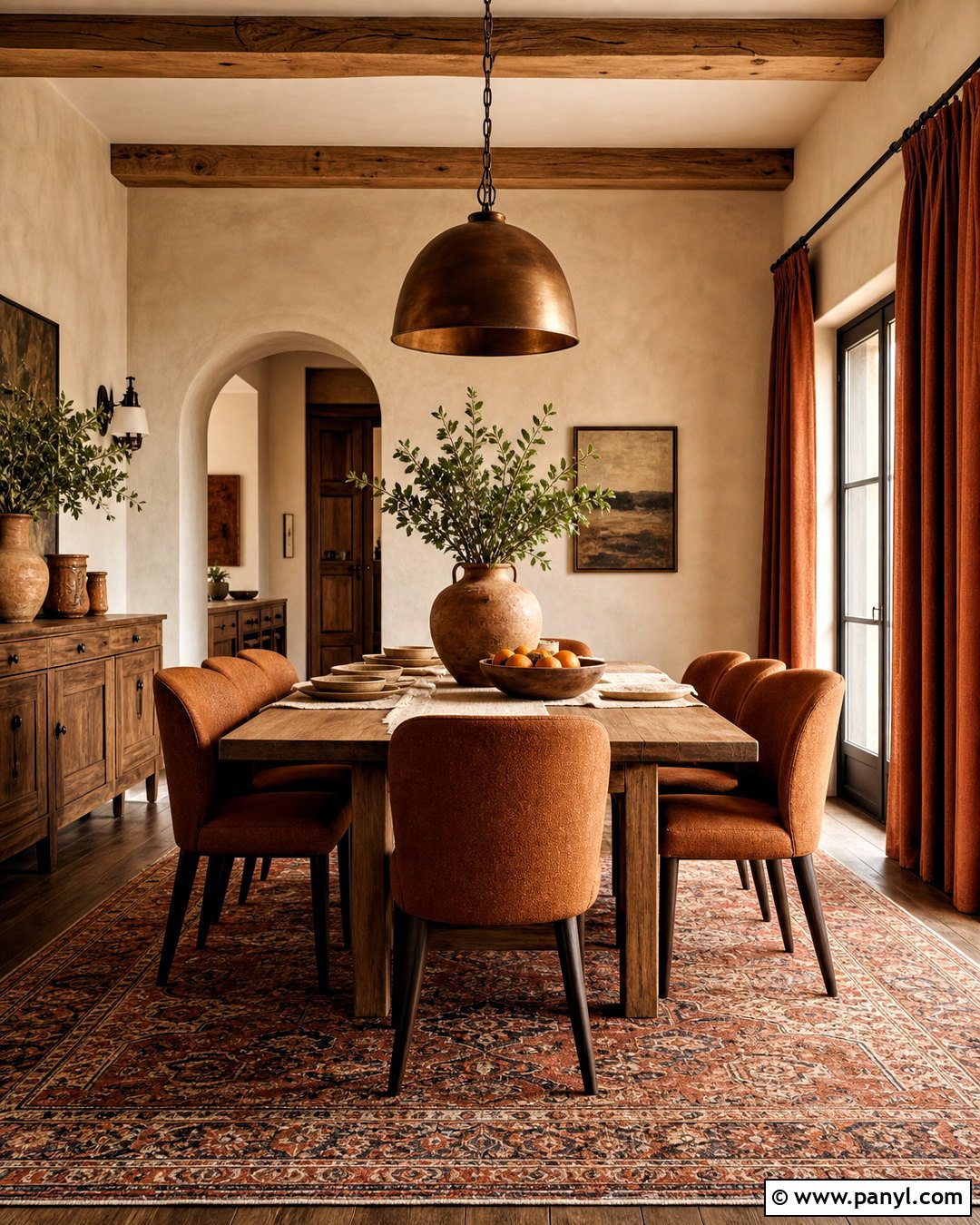
Sun-warmed caramel and terracotta can turn an ordinary dining room into an inviting gathering place. Cover the walls in a soft clay beige, then center the space with a caramel leather or upholstered dining chair set. A substantial medium-brown oak table adds natural character. Introduce terracotta through curtains, pottery, and a patterned rug rather than using it on every surface. Cream table linens and an off-white ceiling prevent the warmer colors from overwhelming the room. Choose a dark bronze pendant with a wide shape to visually anchor the table. A wood sideboard can hold handmade ceramics and simple framed art. The finished palette feels earthy, layered, and relaxed, making it suitable for both everyday meals and casual entertaining.
6. Taupe Brown And Dusty Blue Bedroom
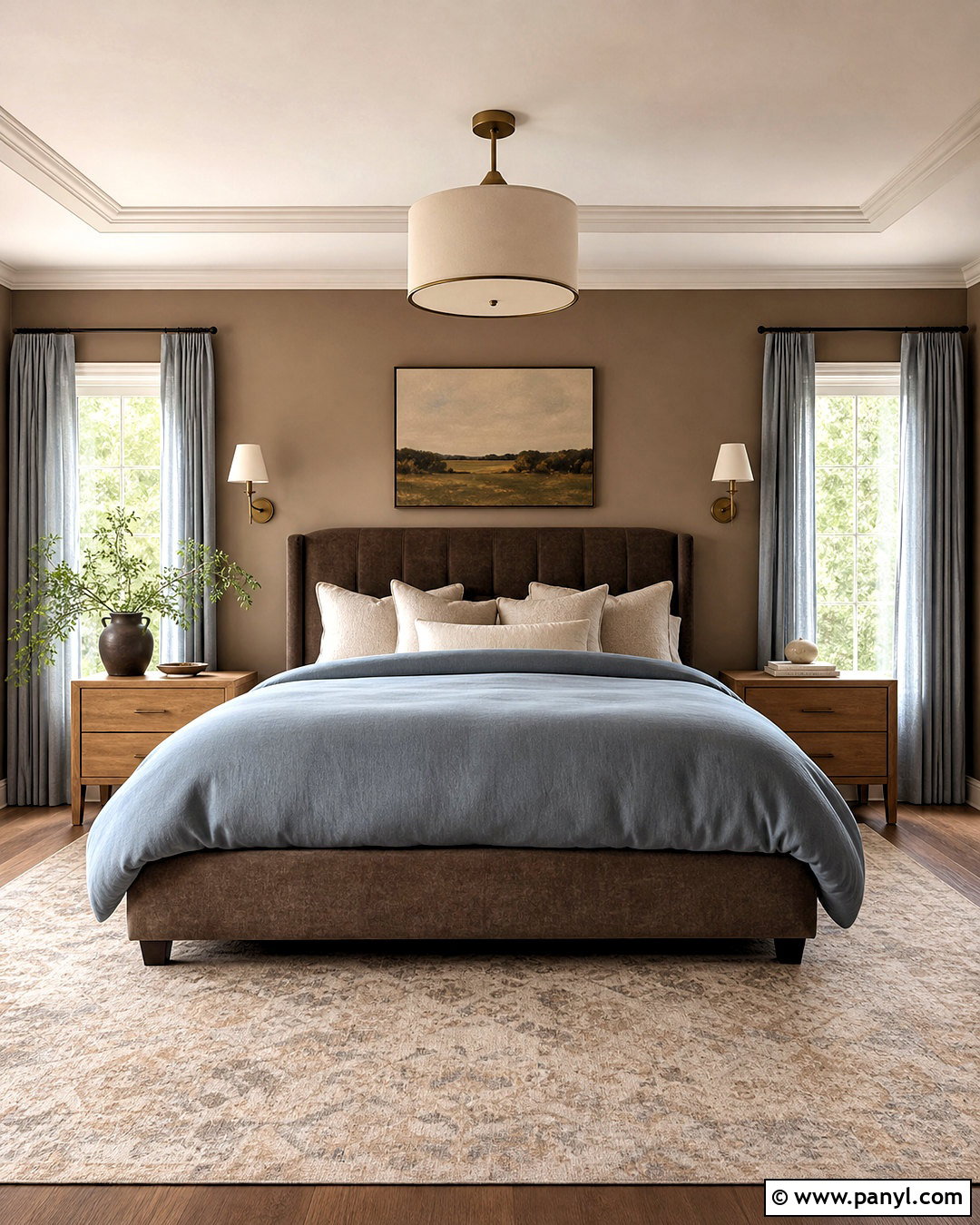
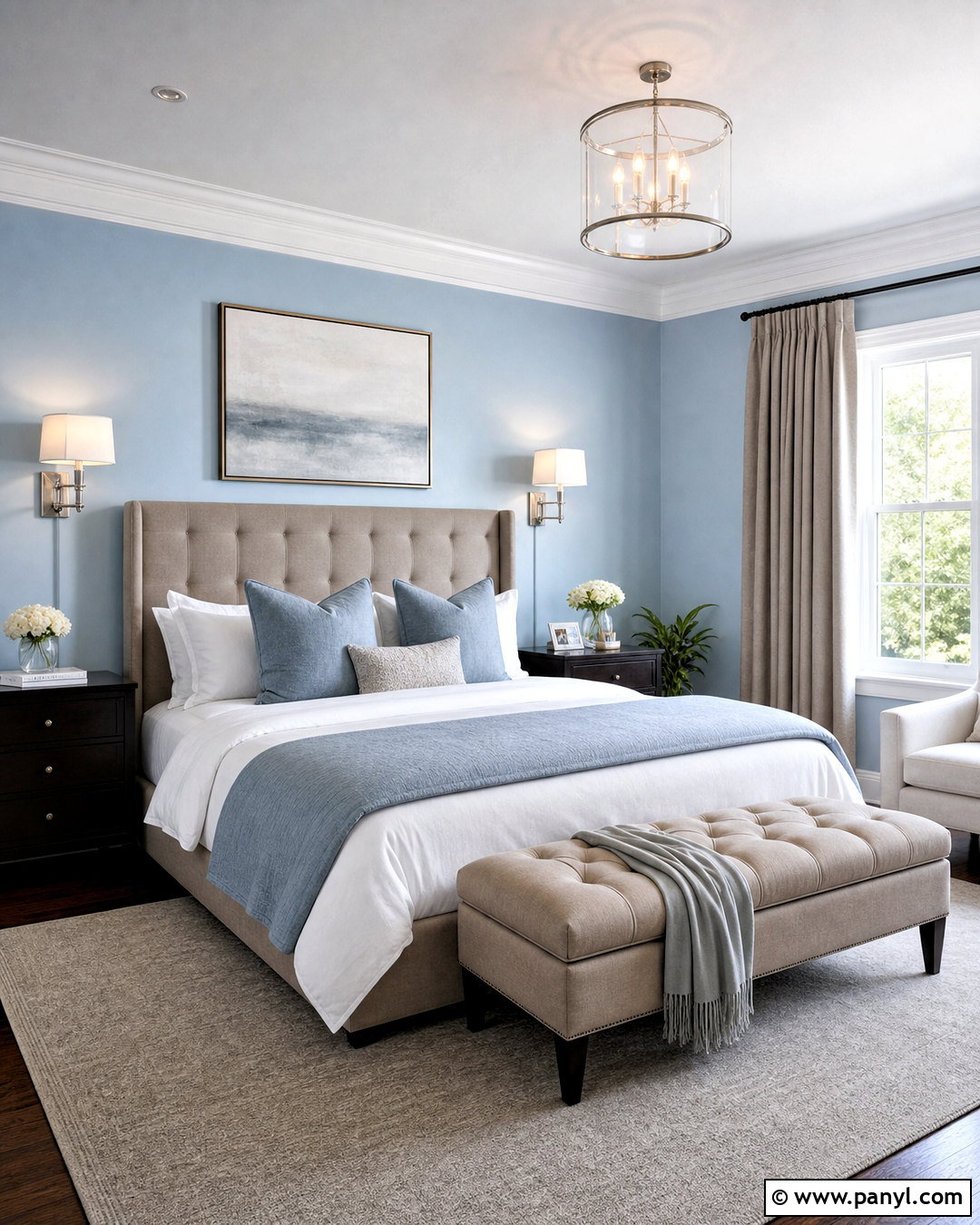
Cool dusty blue gives taupe brown a softer, more refreshing character. Paint the bedroom walls a light mushroom taupe and use a darker brown upholstered bed as the central anchor. Layer white sheets with a dusty blue duvet, oatmeal pillows, and a textured taupe coverlet. Medium oak nightstands help bridge the cool blue and warm brown tones. Hang pale blue-gray curtains from near the ceiling to make the room appear taller. A cream rug with a faded blue pattern adds color without looking busy. Use brushed brass sconces for gentle warmth and black only in thin picture frames. Complete the bedroom with simple landscapes, ceramic accessories, and natural greenery for a balanced retreat that feels comfortable throughout the year.
7. Dark Brown And Black Home Office
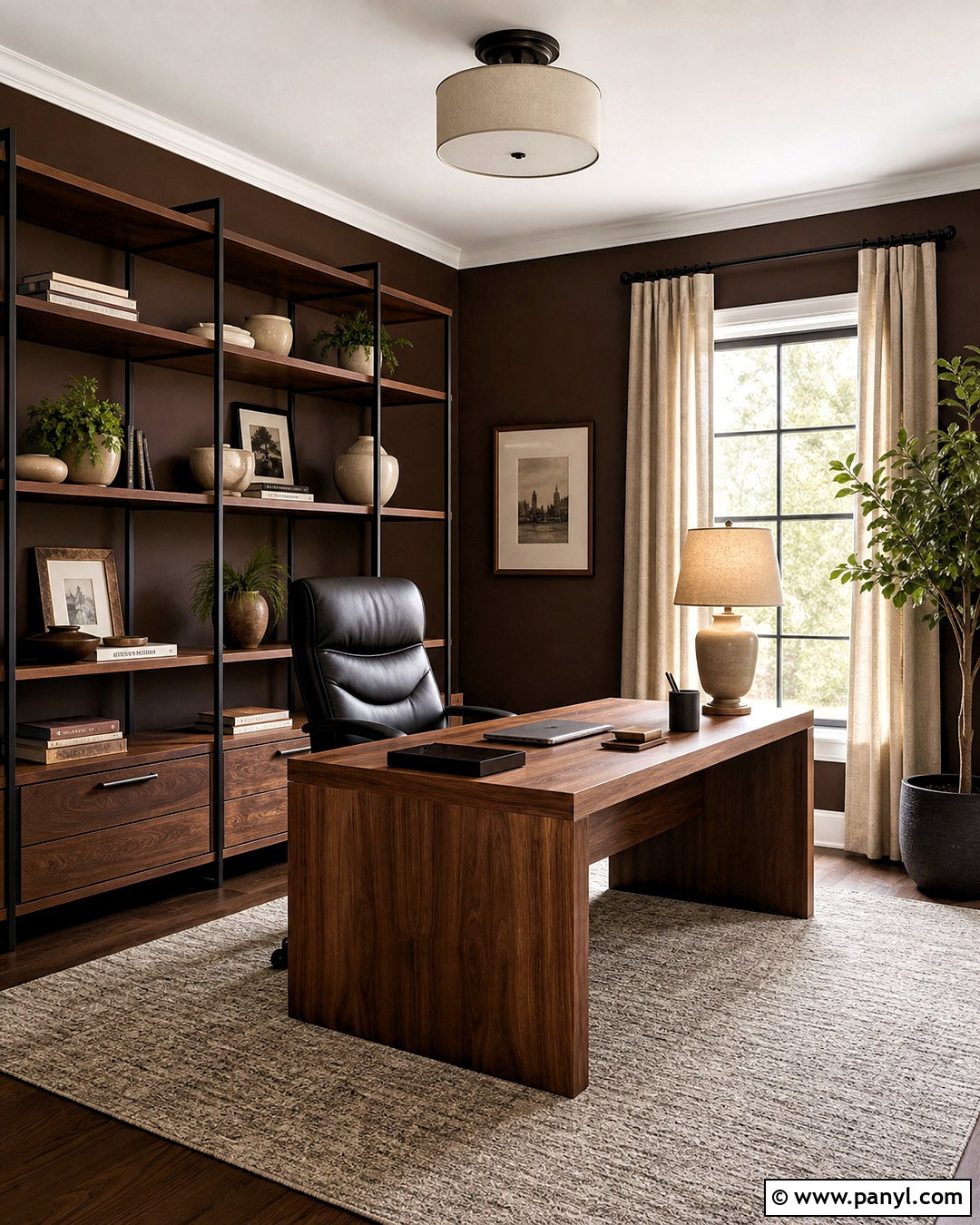
Dark brown and black can produce a focused home office when lighter surfaces are included strategically. Paint one wall a deep coffee brown and use warm white across the other walls and ceiling. Position a walnut desk against the darker backdrop, paired with a supportive black leather chair. Black metal shelving gives the room structure, while walnut shelves keep it from looking industrial or cold. Add a large oatmeal rug beneath the work area and hang natural linen curtains at the window. A cream desk lamp, sculptural pottery, and restrained greenery provide relief from the deepest tones. Good task lighting is essential in this palette. The final workspace feels tailored and organized, with enough contrast to separate each functional zone clearly.
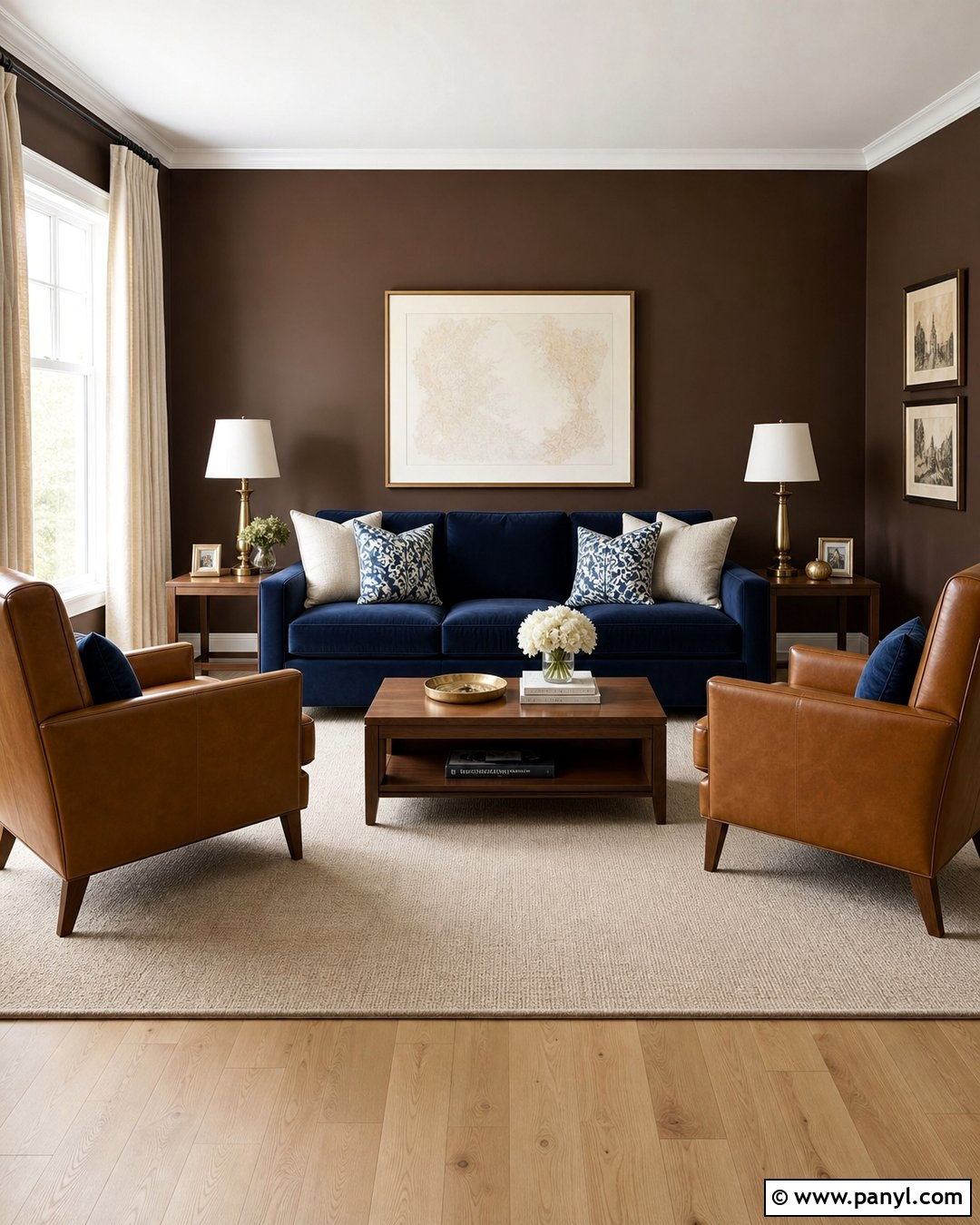
8. Cocoa Brown And Blush Pink Bedroom
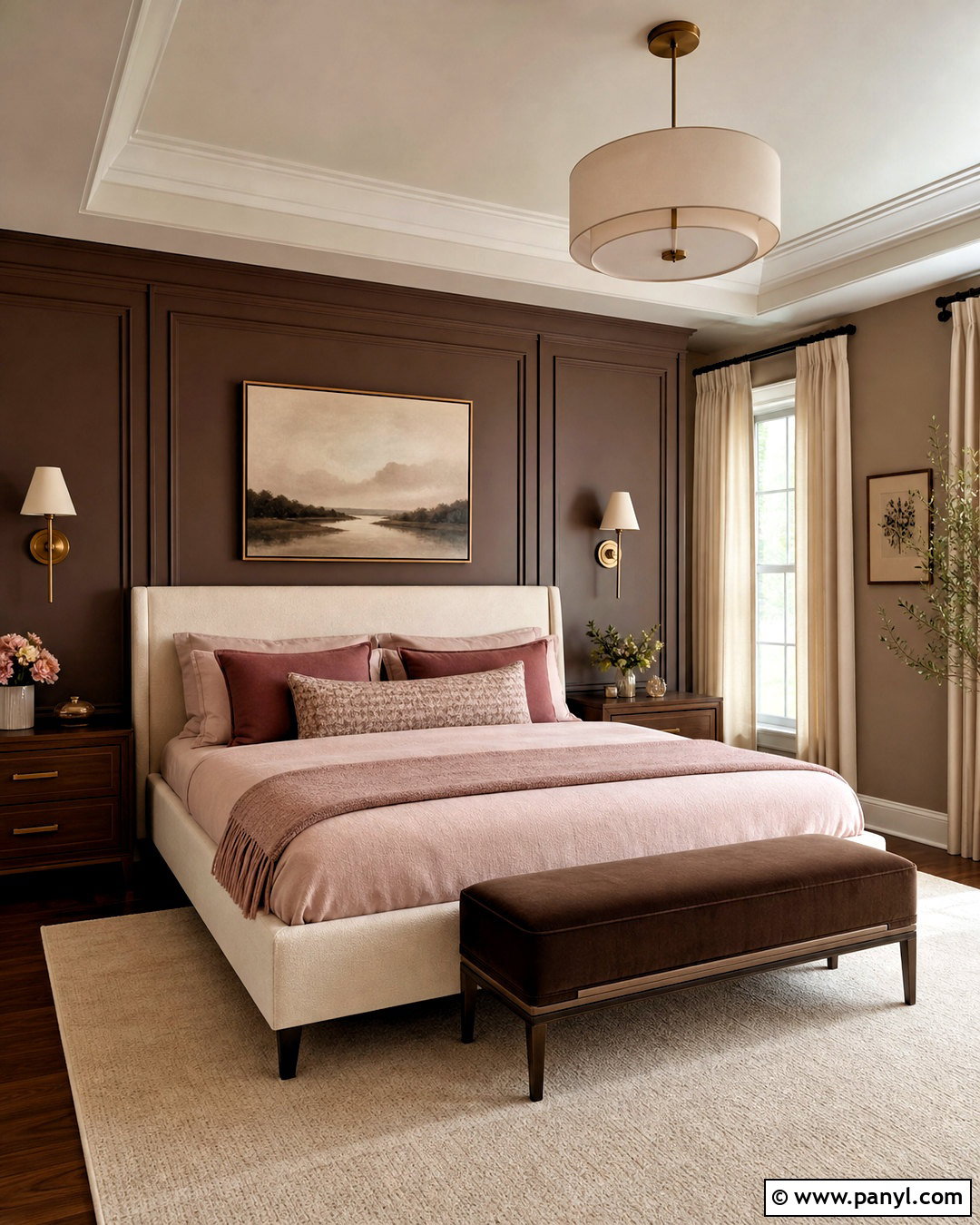
Blush pink softens cocoa brown and gives the combination a warm, welcoming finish. Create the look with a cocoa-painted headboard wall, an ivory upholstered bed, and pale blush bedding. Add walnut nightstands and a medium-brown bench at the foot of the bed to repeat the grounding color. Dusty rose pillows should remain muted rather than overly bright. Use cream curtains, an ivory rug, and warm white paint on the surrounding walls to keep the bedroom light. Antique brass sconces complement both brown and pink beautifully. Finish the space with delicate line art, ribbed ceramic lamps, and one dark wood dresser. This complete palette feels refined and comfortable, offering color without making the bedroom appear overly sweet or themed.
9. Chestnut Brown And Olive Green Family Room
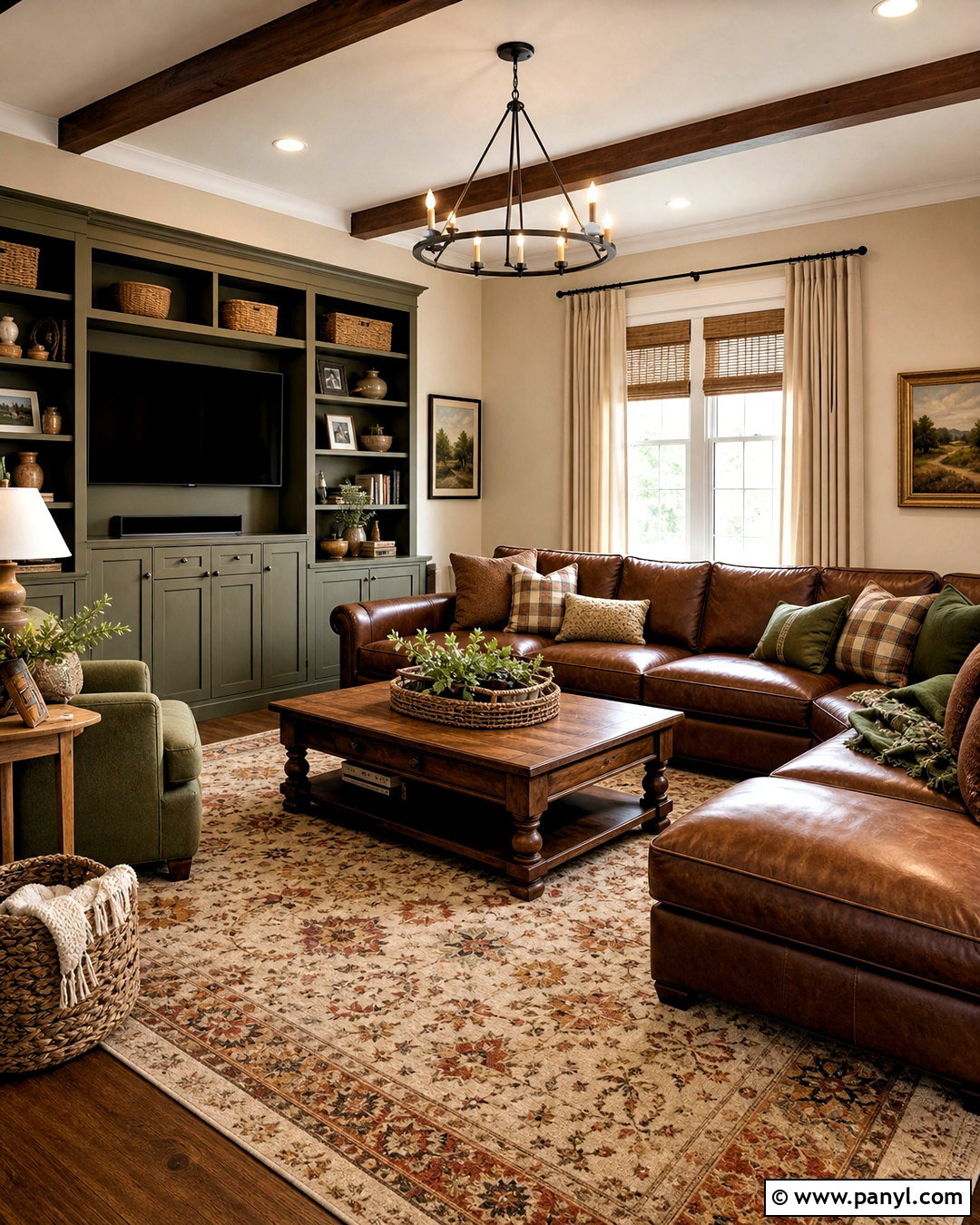
A family room needs durable pieces, visual warmth, and a layout that supports daily activities. Chestnut brown and olive green handle all three goals well. Begin with a chestnut leather sectional positioned around a large wood coffee table. Paint the walls warm cream and introduce olive through an accent chair, washable pillows, and built-in cabinetry. A patterned rug combining beige, rust, olive, and brown will help disguise everyday wear. Use woven shades with full-length linen curtains for flexible light control. Black metal lamps add contrast, while baskets provide practical storage for blankets and games. Complete the room with landscape art and sturdy side tables. The palette looks collected and inviting rather than overly coordinated, making it suitable for active households.
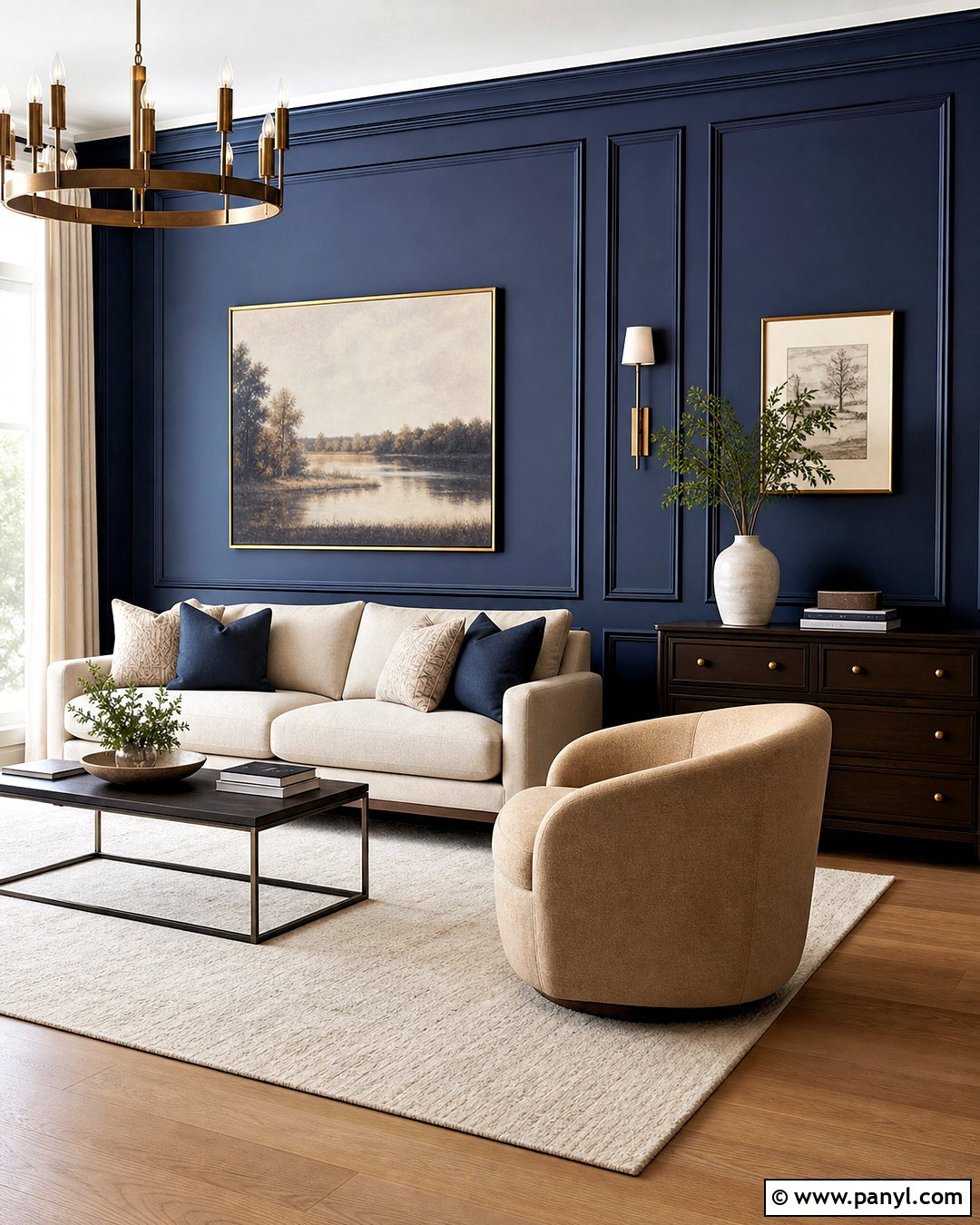
10. Tan Brown And Navy Blue Living Room
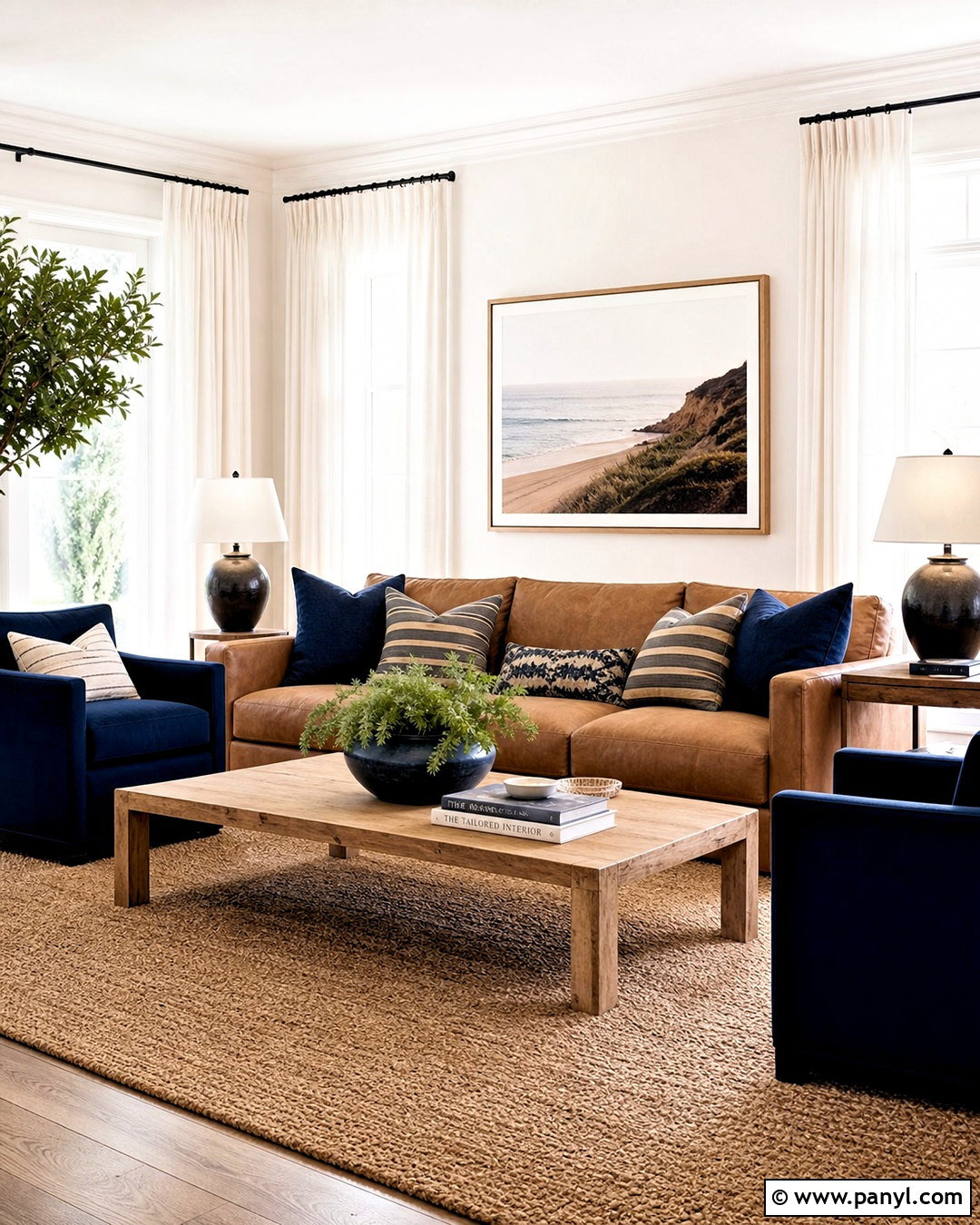
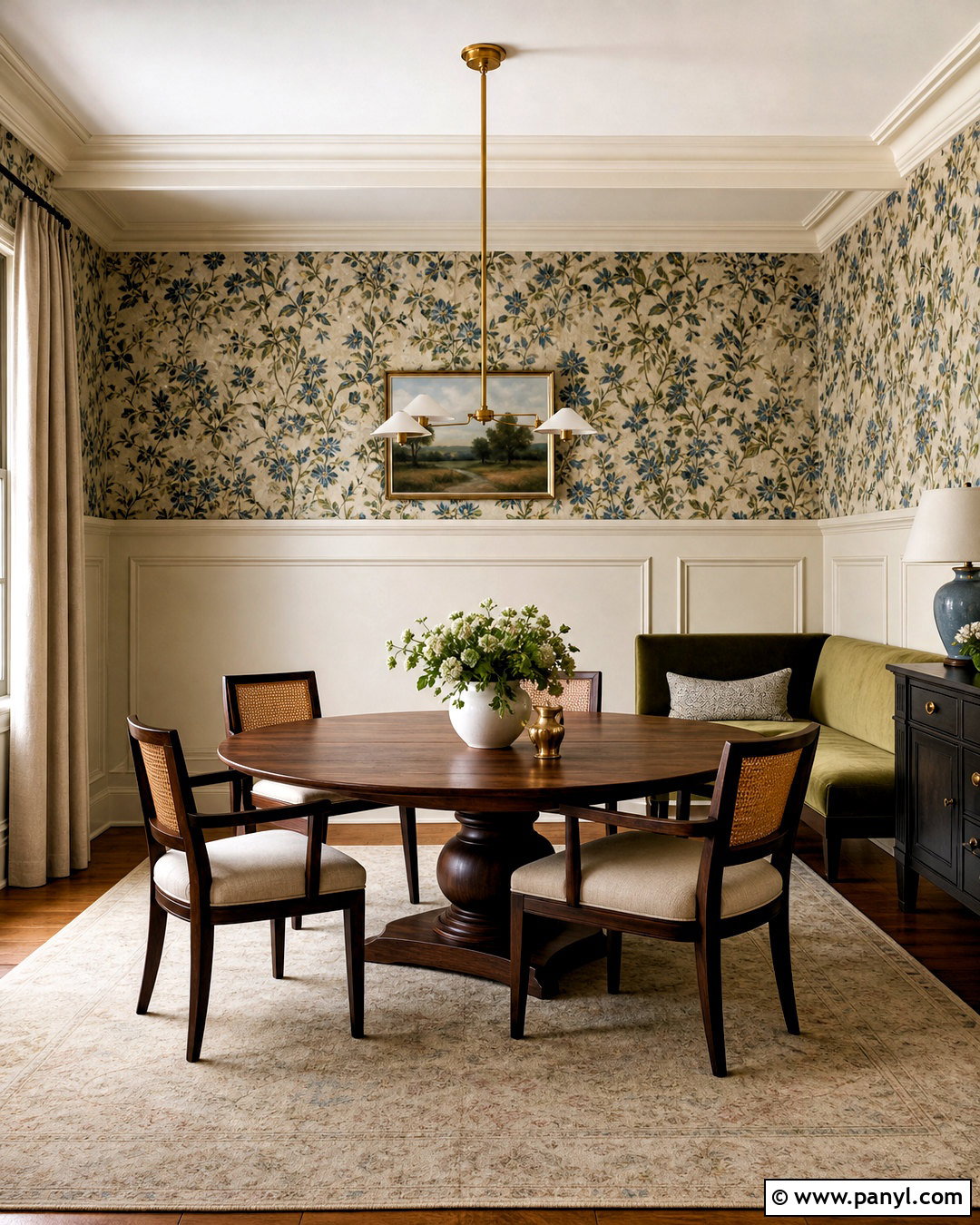
Tan brown and navy blue offer a relaxed alternative to a traditional blue-and-white room. Choose a tan sofa with clean lines and place it against soft ivory walls. Add two navy armchairs or one substantial navy chair to create strong visual balance. A medium oak coffee table and woven jute rug reinforce the warm brown foundation. Use patterned pillows that combine navy, cream, camel, and faded blue. White linen curtains maintain brightness, while dark bronze lamps provide definition. Avoid obvious nautical decorations. Instead, use coastal landscape photography, striped textiles, ceramic vases, and natural baskets. The finished living room feels fresh and grounded, with blue contributing depth and tan preventing the space from looking cold or overly formal.
11. Mushroom Brown And Burgundy Dining Room
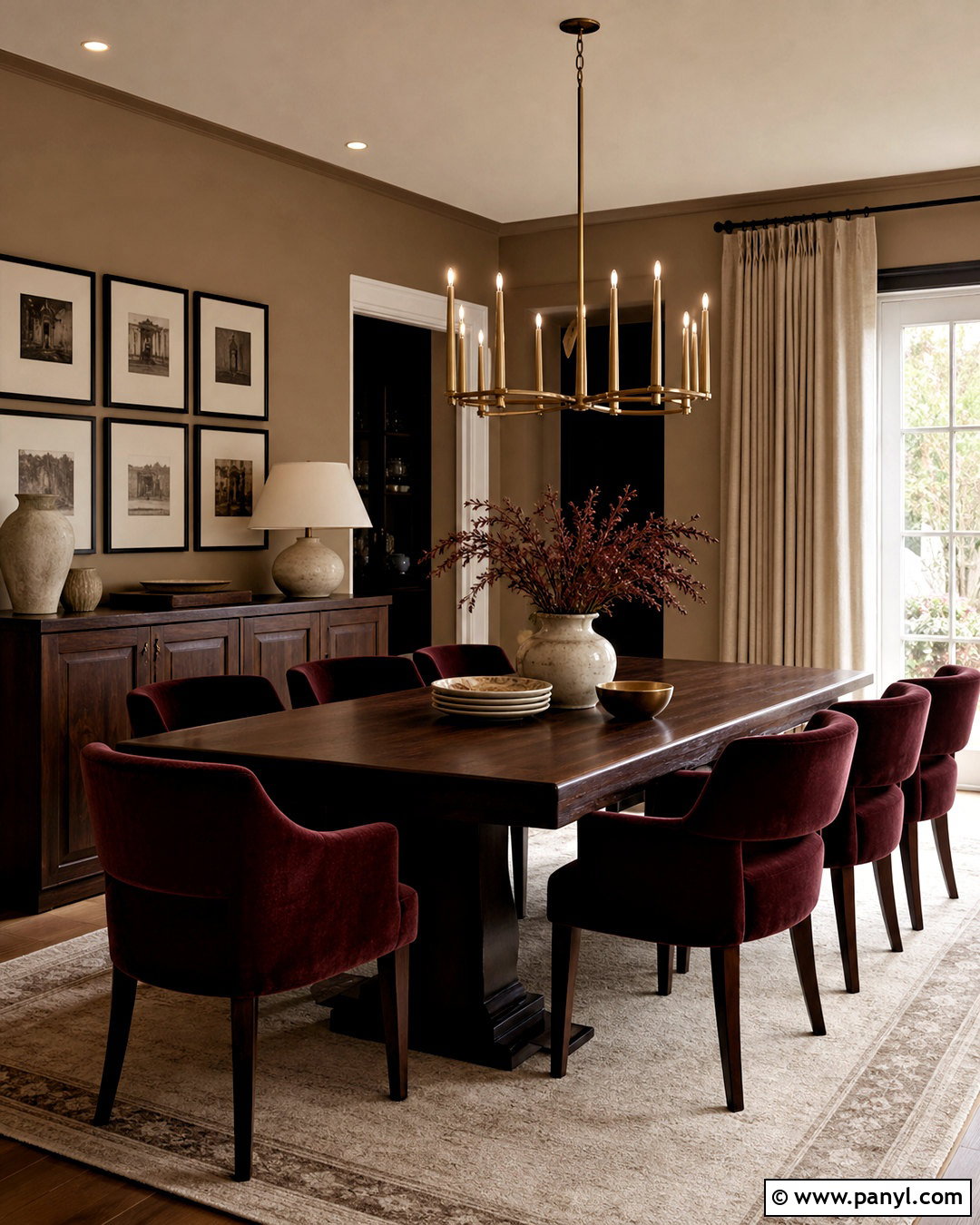
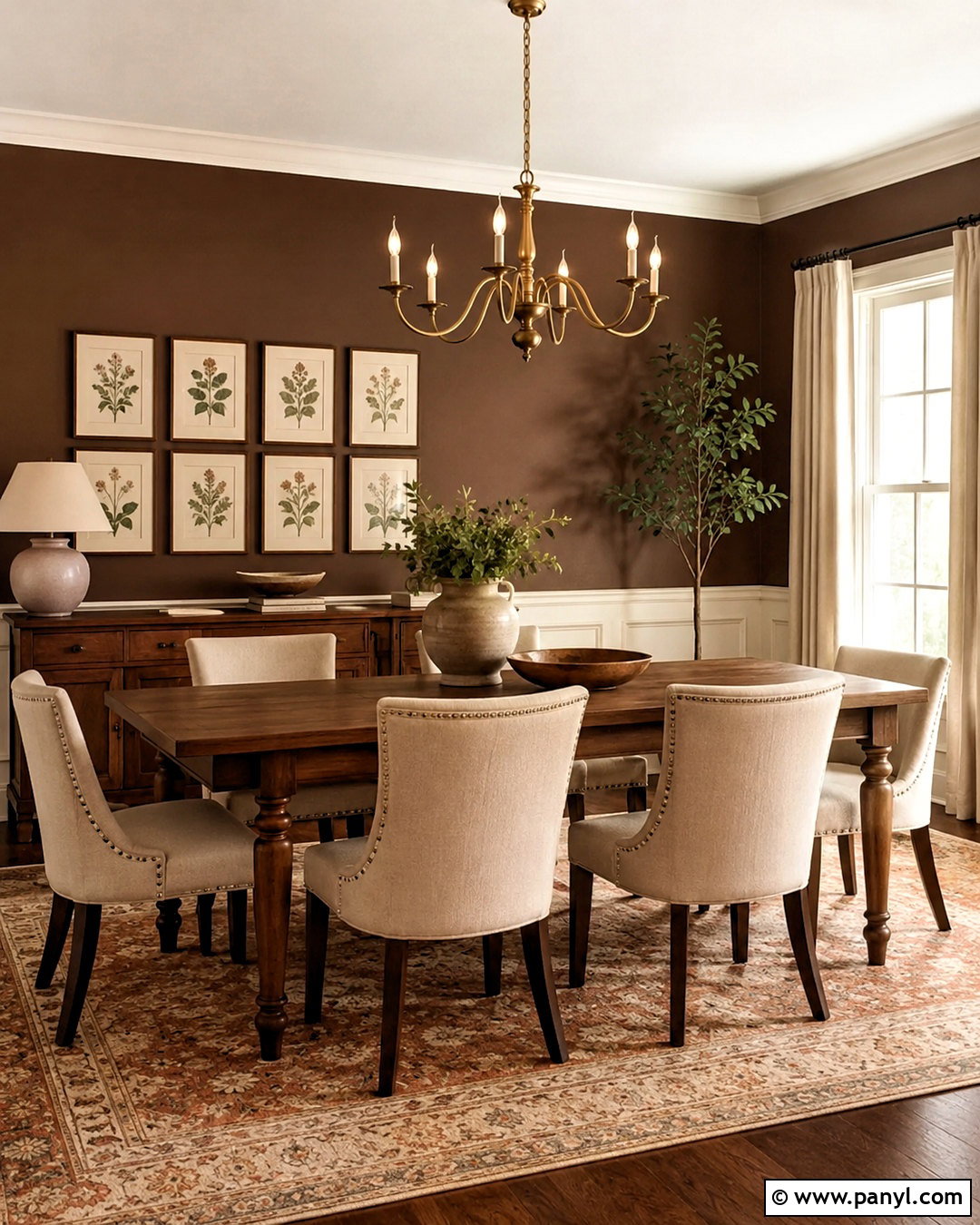
Mushroom brown gives deep burgundy a sophisticated background in a formal yet approachable dining room. Paint the walls a muted mushroom shade with subtle gray undertones, then use burgundy velvet on the dining chairs. A dark walnut table grounds the arrangement and creates a smooth transition between the two colors. Choose an ivory rug with a restrained brown border to brighten the floor. Warm brass lighting and candleholders add a gentle reflective finish. Hang linen curtains in soft beige rather than matching the wall color exactly. A walnut sideboard can display cream ceramics, clear glassware, and one sculptural arrangement. This layered palette feels especially complete when small amounts of black appear through framed artwork or slender metal details.
12. Brown And Mustard Mid-Century Living Room
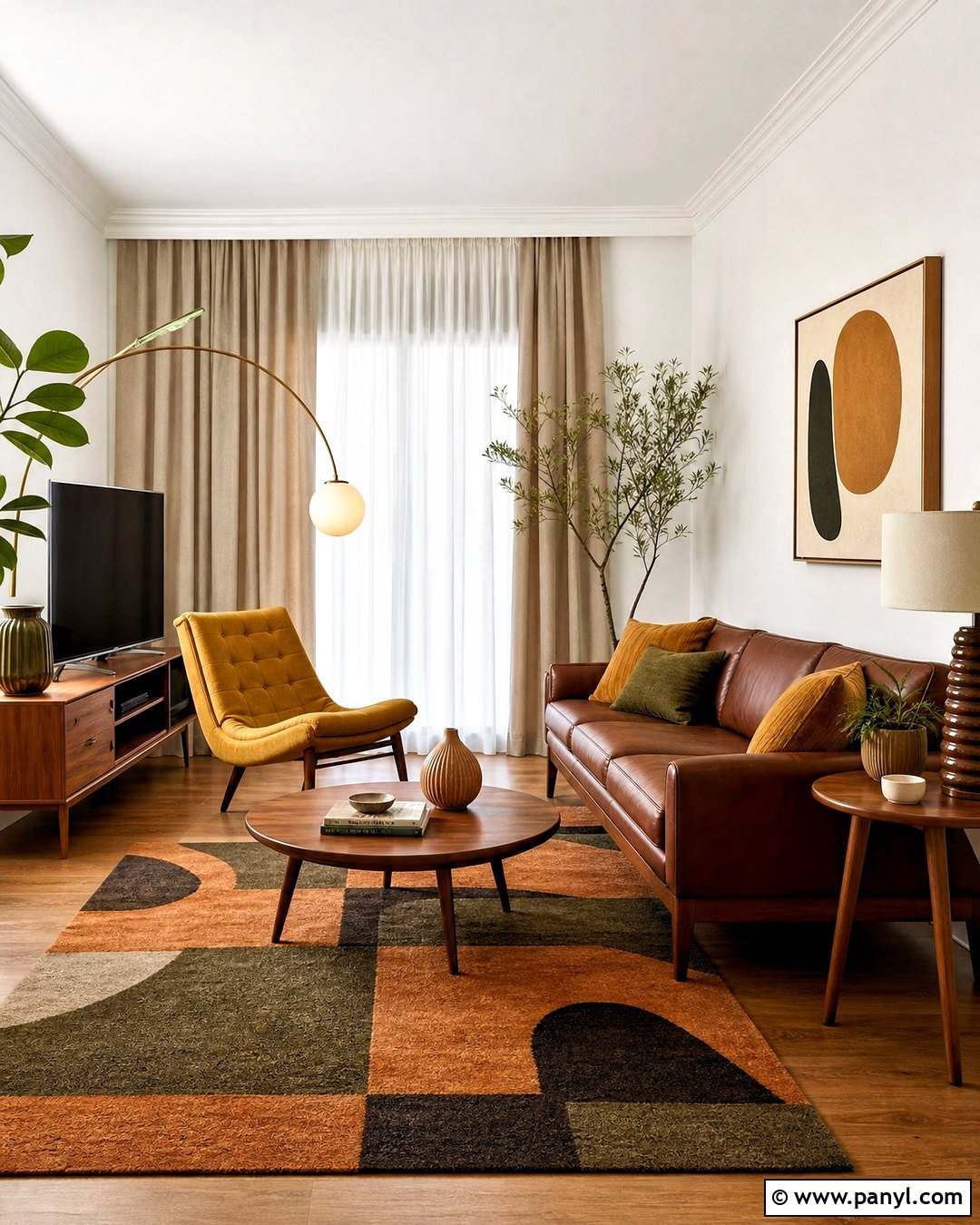
Mid-century interiors naturally suit brown because walnut furniture, leather, and earthy upholstery already share the same warm foundation. Start with creamy white walls and a low-profile walnut media console. Add a streamlined brown leather sofa and one mustard yellow lounge chair as the main color accent. A rust, tan, and olive geometric rug can unite the furniture without dominating the room. Choose tapered wood side tables and globe lighting in aged brass or matte white. Full-length beige curtains soften the clean furniture lines. Keep accessories intentional, including abstract artwork, ribbed ceramics, and a tall plant in a simple planter. The resulting living room feels retro but usable, with mustard adding energy to a cohesive brown color palette.
13. Cinnamon Brown And Teal Living Room
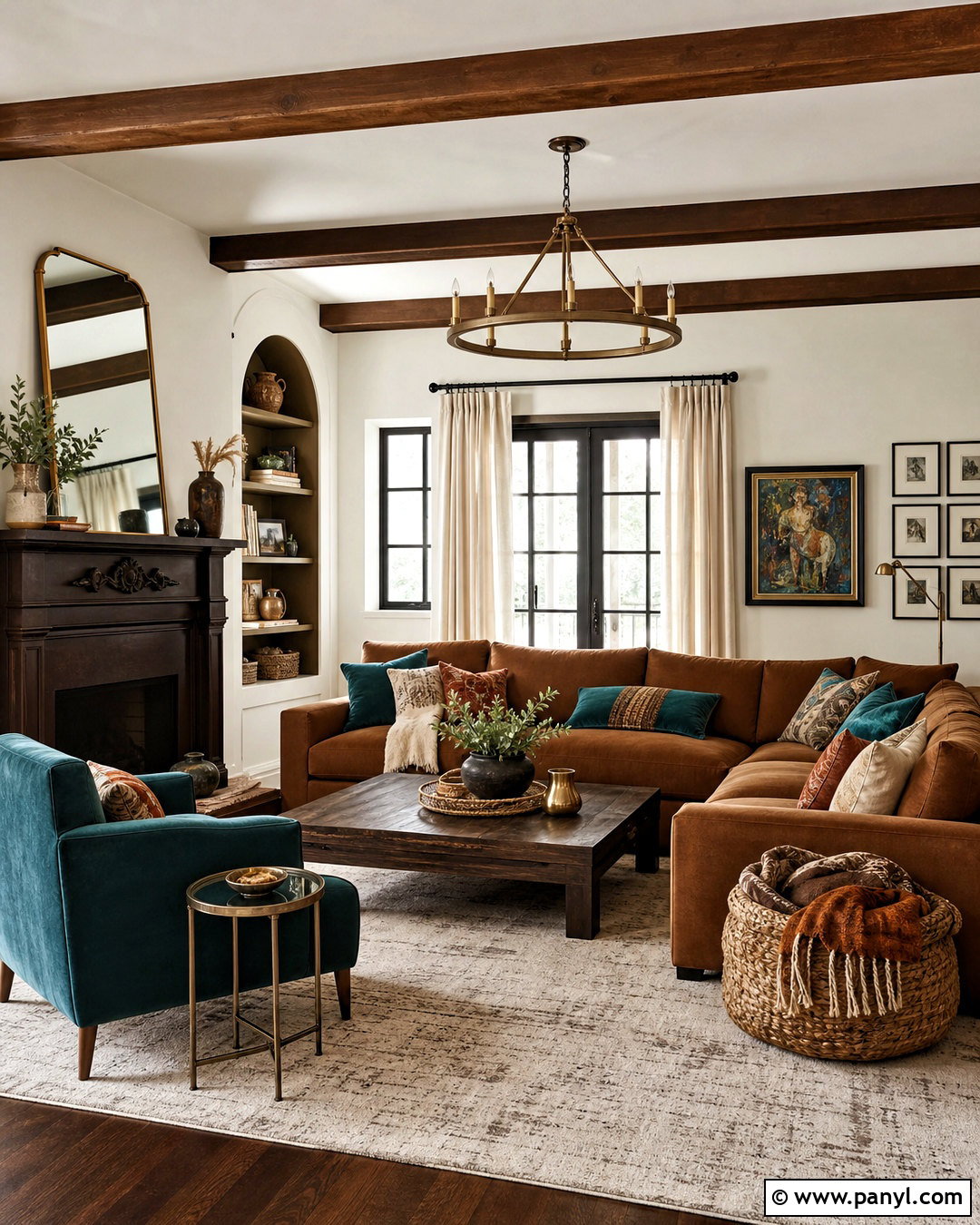
Cinnamon brown and teal create lively contrast while retaining an earthy, comfortable mood. Use cinnamon-colored walls or a large cinnamon sectional as the dominant warm feature. Introduce deep teal through two accent chairs, curtains, or built-in shelving, depending on the room’s size. A cream rug and off-white ceiling give the stronger colors room to breathe. Choose a dark walnut coffee table to deepen the brown family, then add antique brass lighting for subtle shine. Pillows can combine teal, rust, camel, and ivory in small patterns. Include natural materials such as linen, wood, and woven baskets to soften the saturated shades. The complete room should balance each bold color across several locations instead of concentrating teal in one isolated decorative object.
14. Coffee Brown And Clay Kitchen
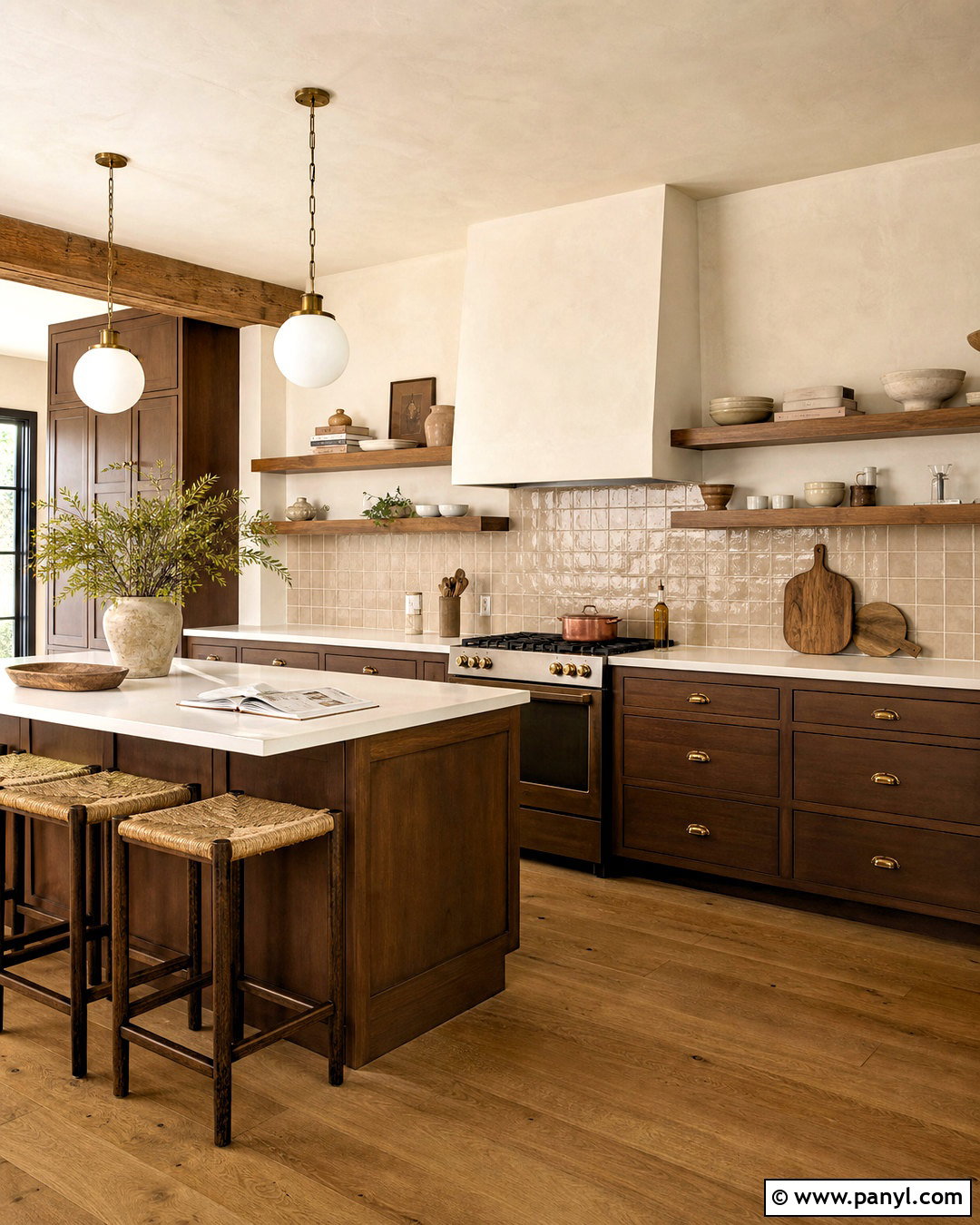
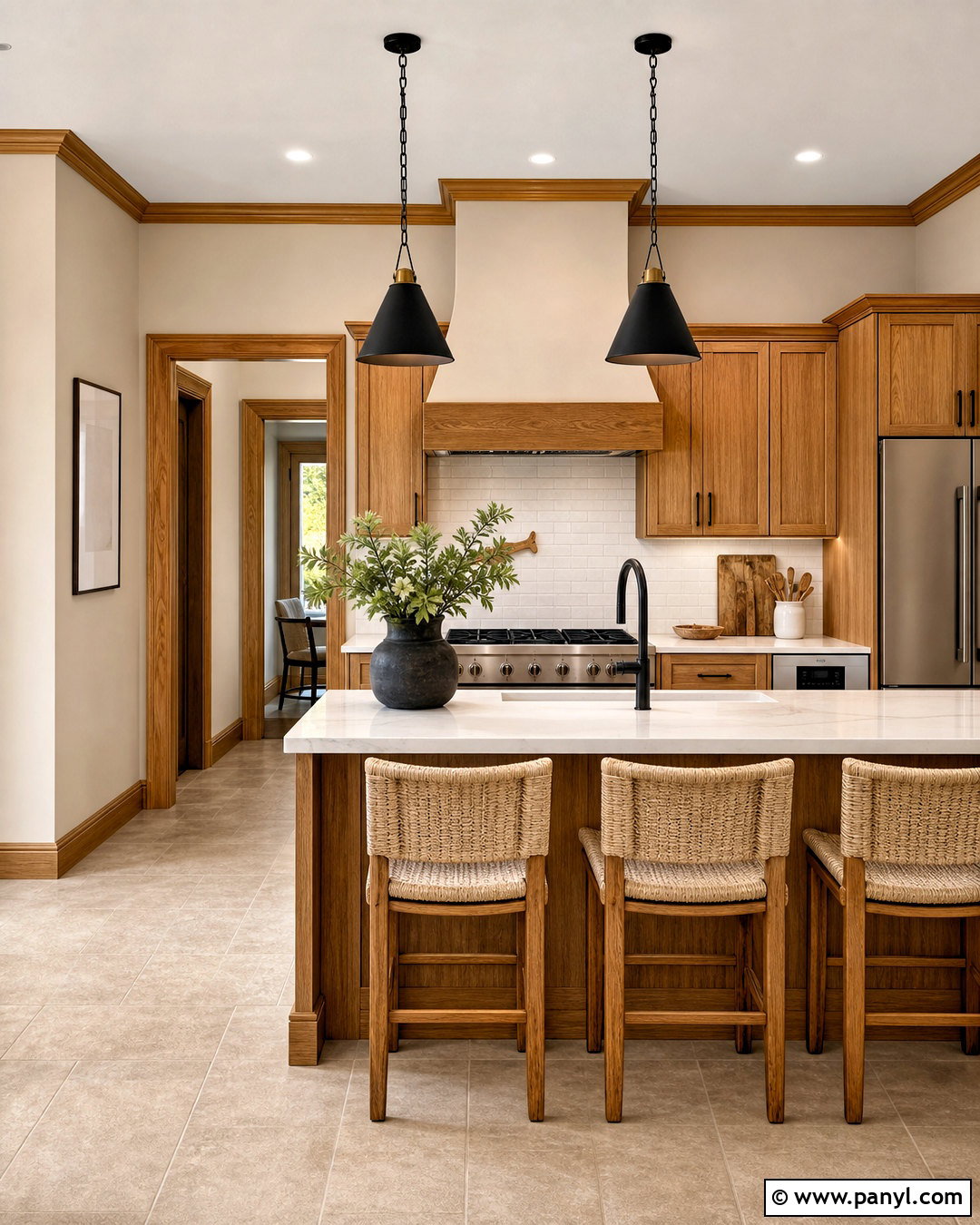
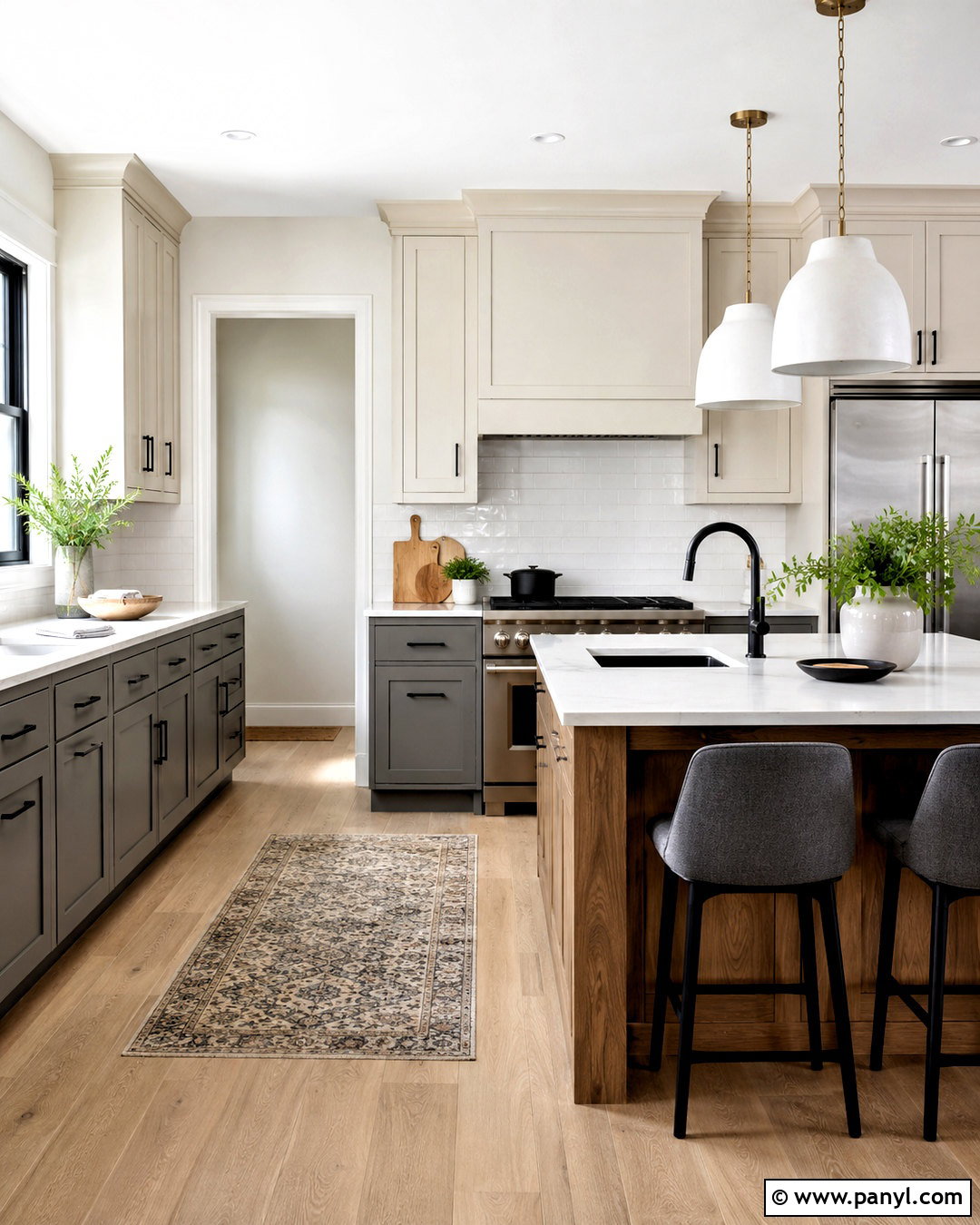
The soft variation found in clay, handmade tile, and stained wood gives a brown kitchen plenty of character. Use coffee-brown cabinets on the lower perimeter and island, paired with warm beige plaster walls. Install a clay-colored backsplash with a slightly uneven surface to add gentle movement. Cream quartz or light limestone counters prevent the cabinetry from becoming visually heavy. Oak flooring, woven counter stools, and aged brass hardware continue the natural warmth. Keep upper storage minimal or choose open oak shelves displaying ivory dishes and terracotta pottery. Add large globe pendants above the island for even illumination. The completed kitchen blends rustic texture with modern organization, making the coffee and clay palette feel intentional, functional, and comfortable rather than dark.
15. Sand Brown And Forest Green Bathroom
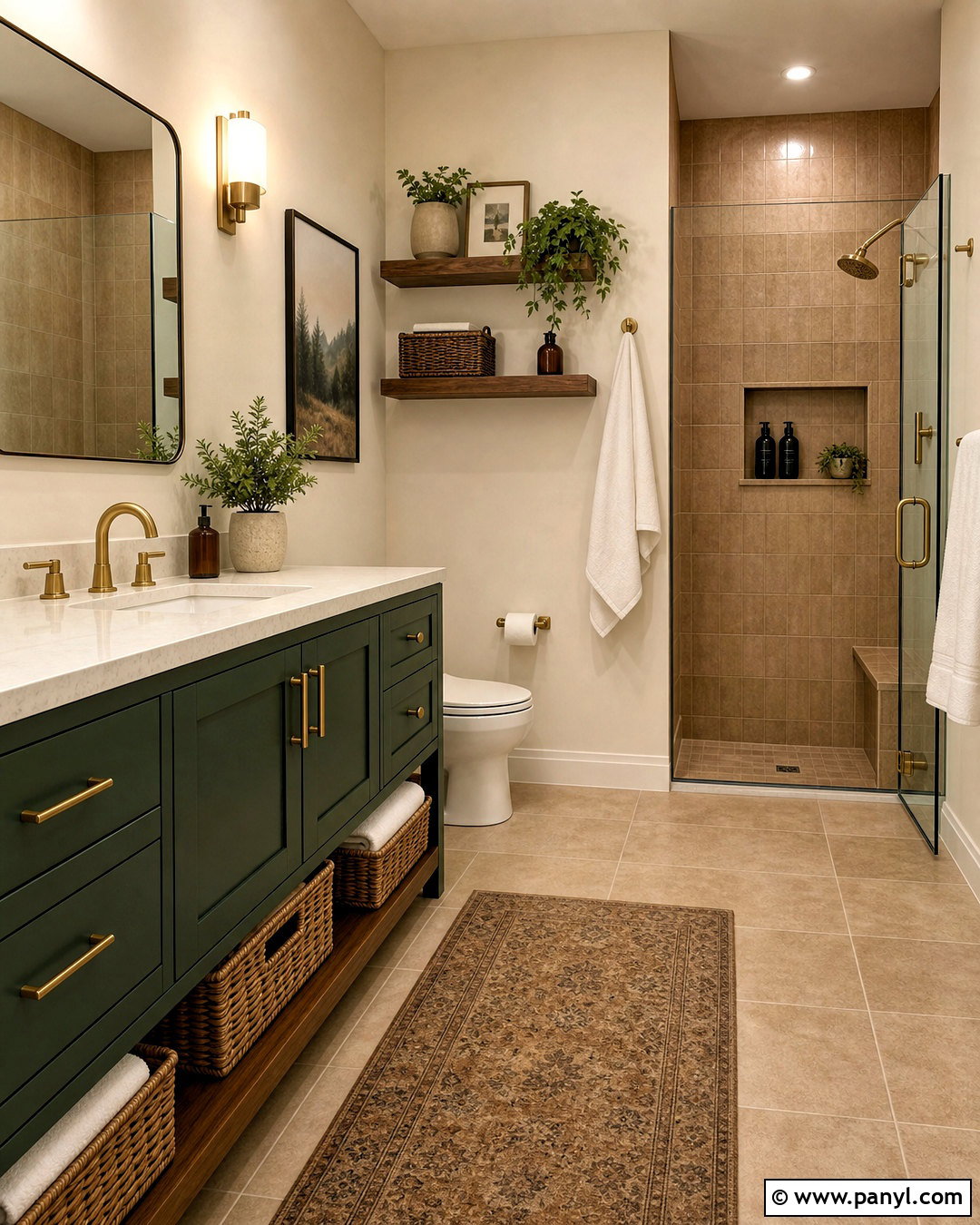
Imagine stepping into a bathroom that feels like a quiet garden retreat. Use sand-brown stone or porcelain tile across the floor and lower walls. Paint the upper walls a warm off-white, then introduce forest green through the vanity. A white quartz counter and simple rectangular mirror brighten the darker cabinet color. Select walnut-framed storage or open wood shelves to reinforce the brown palette. Brushed brass faucets, sconces, and cabinet pulls add warmth, while white towels provide clean contrast. A small patterned runner can combine sage, cream, and tan. Finish with potted greenery and woven baskets, but keep the counter clear. This balanced bathroom feels organic and refreshed because the richer green is surrounded by light, sandy surfaces.
16. Dark Brown And Pale Blue Living Room
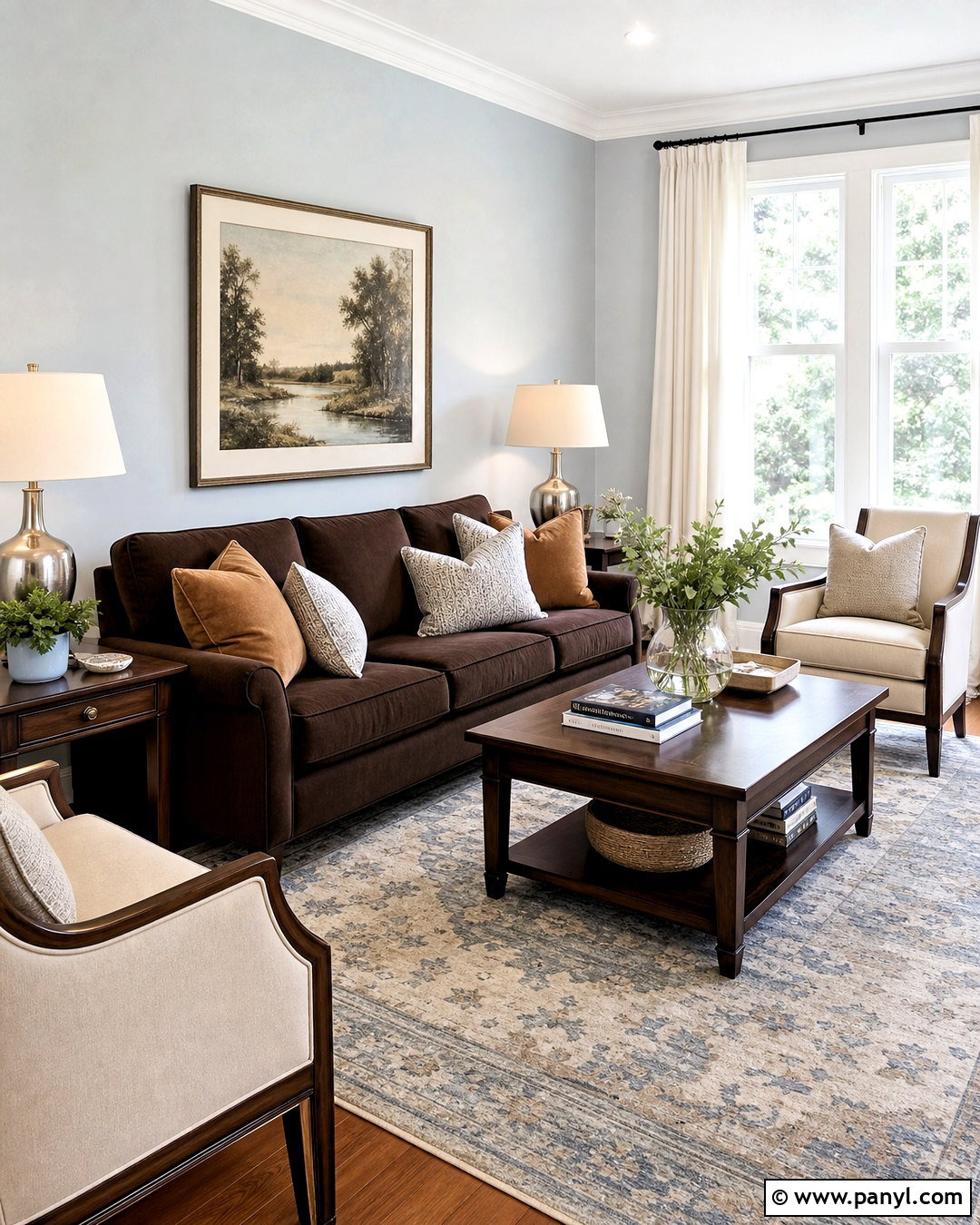
Pale blue can lift a dark brown room without removing its cozy character. Paint the walls a light, misty blue and arrange a dark chocolate sofa as the central seating piece. Add two cream chairs with medium-brown wood frames to distribute the darker tone around the room. A pale blue and ivory rug will connect the walls to the furniture while keeping the floor bright. Use walnut side tables, white linen curtains, and brushed nickel lighting for a slightly cooler finish. Pillows in sky blue, camel, and cream create a smooth transition between the main colors. Complete the look with landscape artwork, clear glass accessories, and restrained greenery. The result feels airy, grounded, and suitable for traditional or transitional homes.
17. Rust Brown And Cream Bedroom
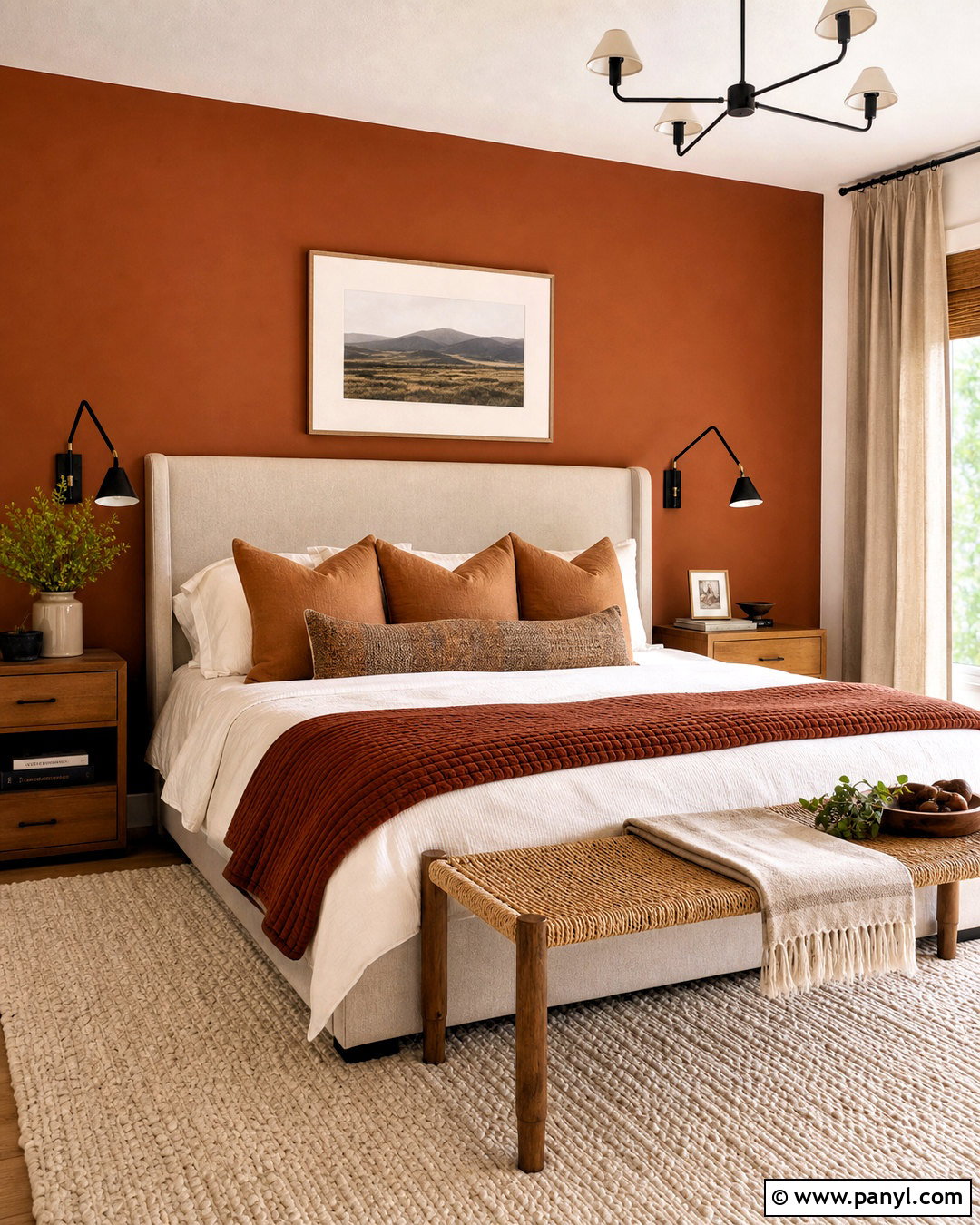
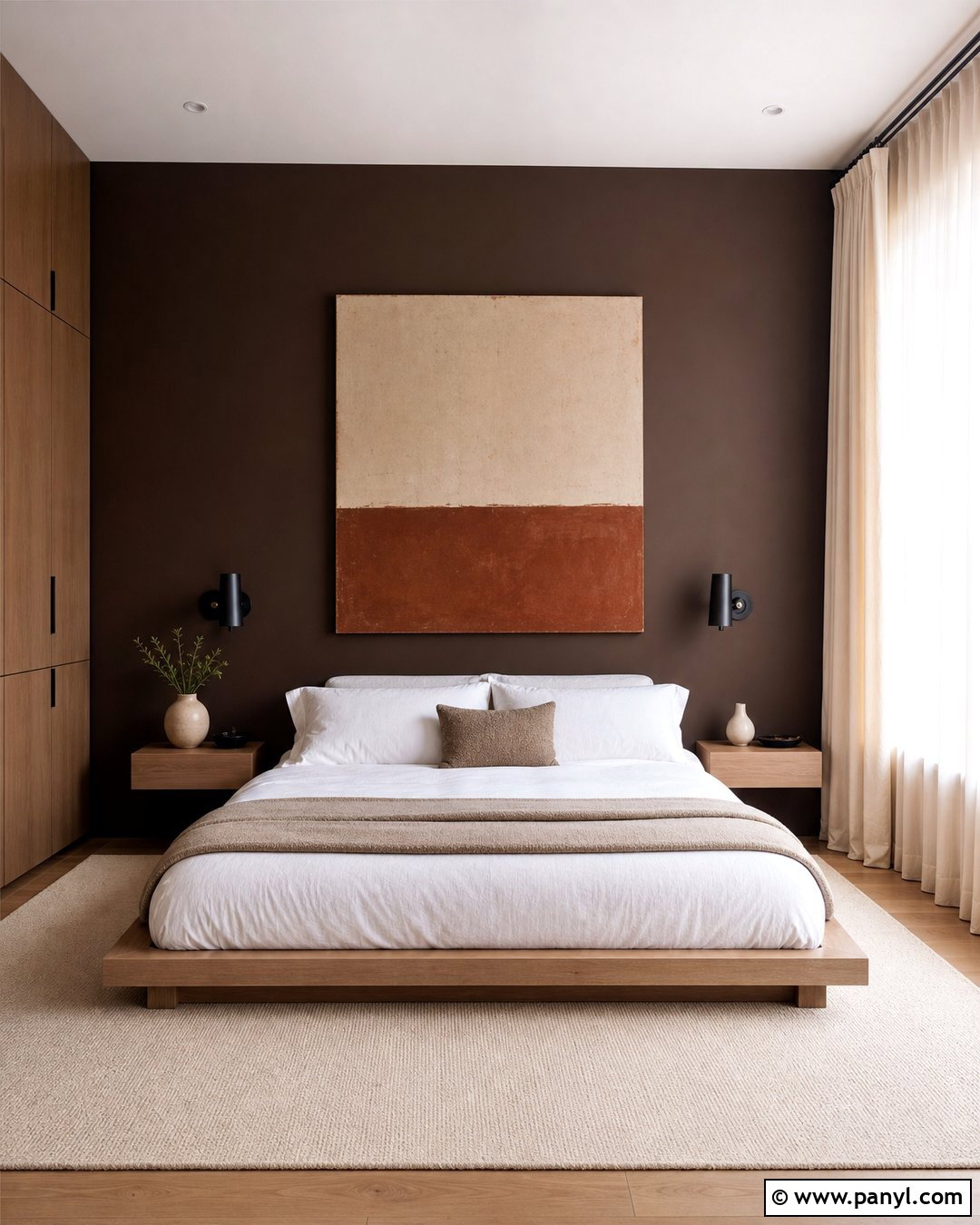
Rust brown creates a cozy bedroom when surrounded by creamy neutrals and natural texture. Paint the wall behind the bed a muted rust brown with noticeable red-orange warmth. Choose an oatmeal linen bed and dress it with ivory bedding, camel pillows, and a rust-colored quilt. Medium oak nightstands and a woven bench add lighter brown notes without matching perfectly. Place a thick cream rug beneath the bed and hang flax linen curtains for softness. Black reading lights can provide crisp contrast, but use them sparingly. Finish with abstract art in clay, beige, and brown, plus simple ceramic vessels. This palette feels warm and enveloping while remaining bright enough for a smaller room because cream covers most of the largest surfaces.
18. Brown And Warm Gray Entryway
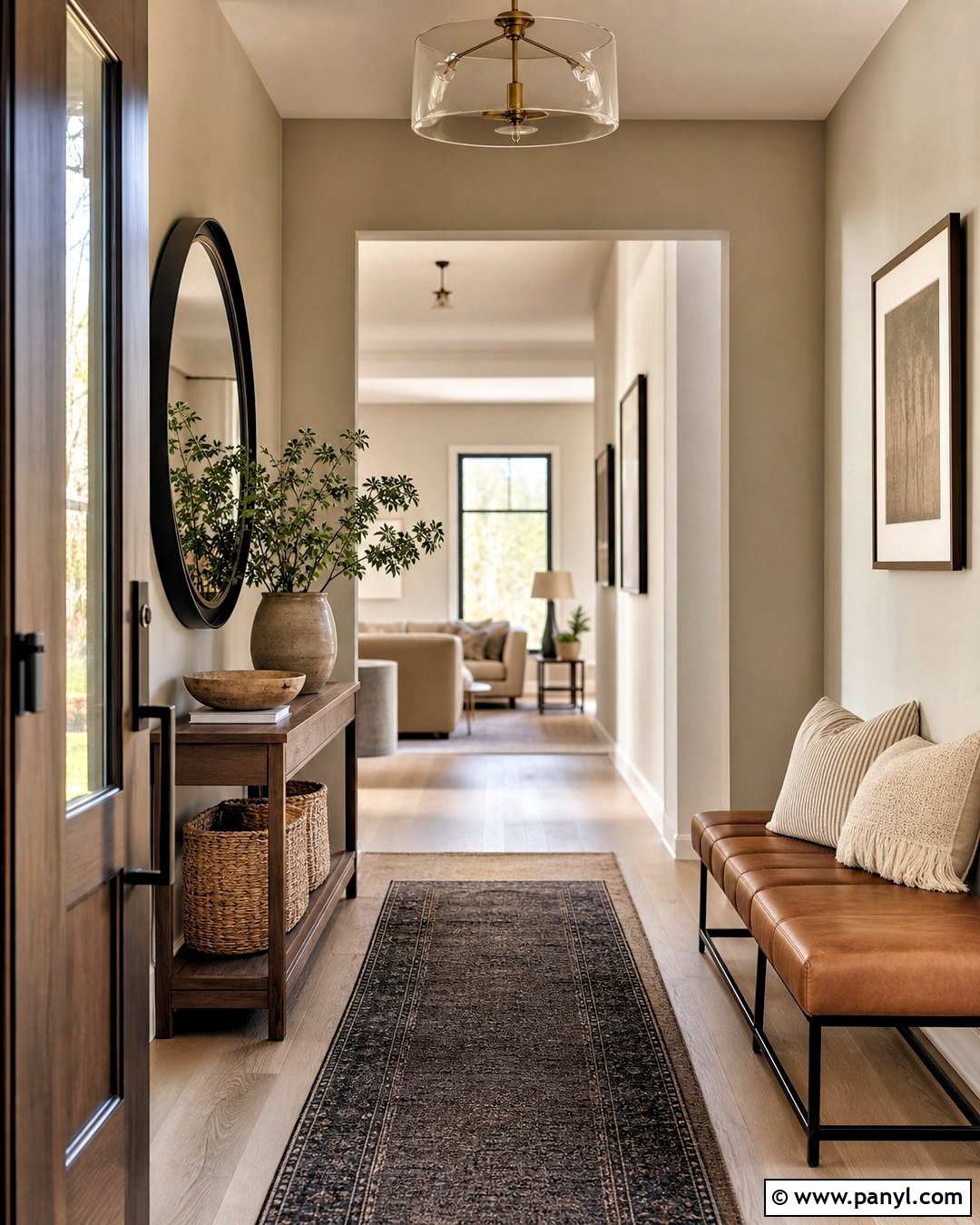
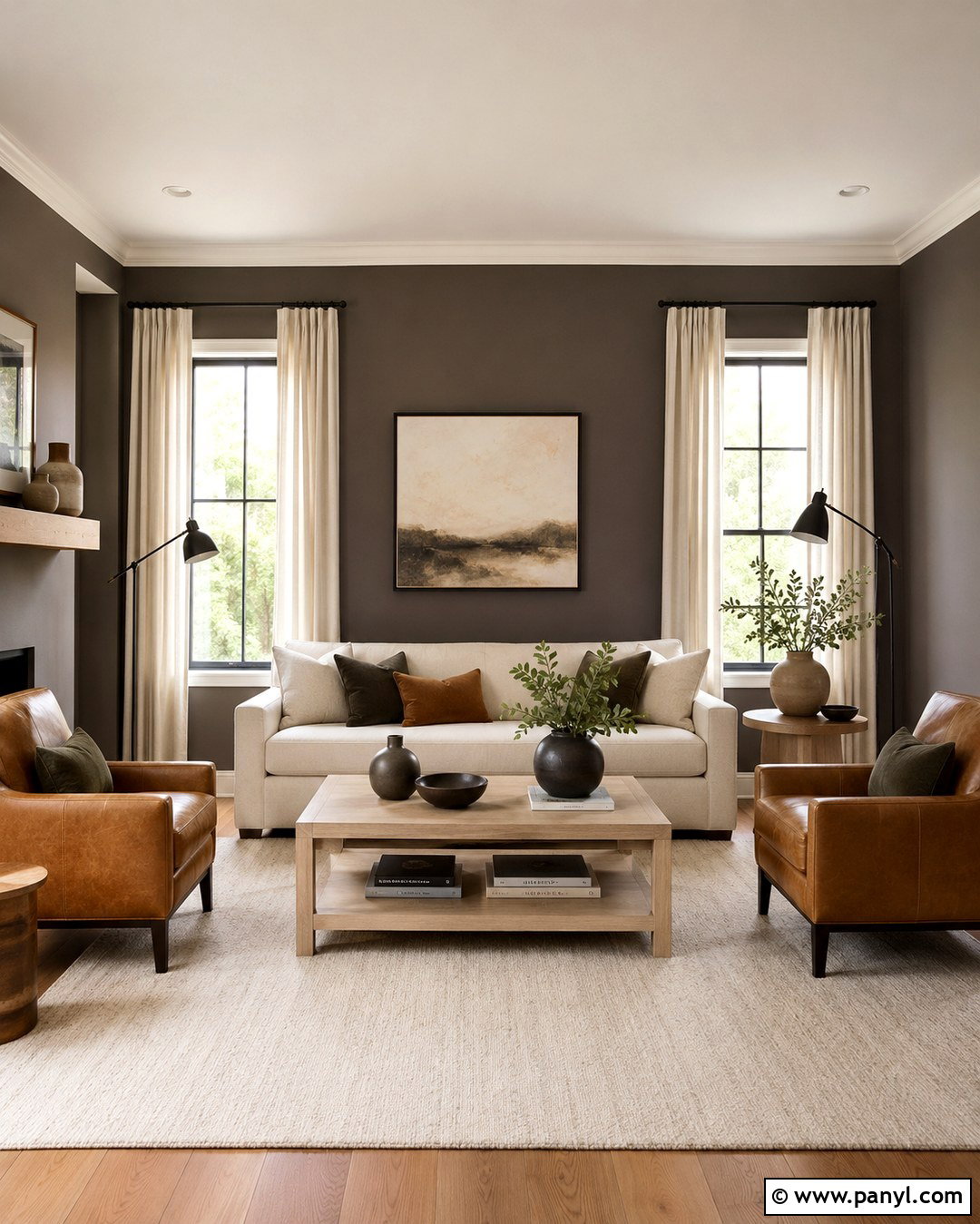
Brown and warm gray work best when their undertones are carefully coordinated. Paint the entryway a light greige with noticeable beige warmth rather than a cool silver gray. Position a narrow walnut console against the wall and place a charcoal-brown runner along the main walkway. A round black-framed mirror adds structure above the console. Use a camel leather bench if space allows, then add cream cushions and a woven storage basket underneath. A brass or black ceiling fixture creates a clear focal point. Keep decorative objects limited to a stoneware bowl, a small lamp, and leafy branches. The finished entryway feels organized and welcoming, while the mixture of brown wood, warm gray paint, and black details creates useful visual definition.
19. Monochromatic Brown Living Room
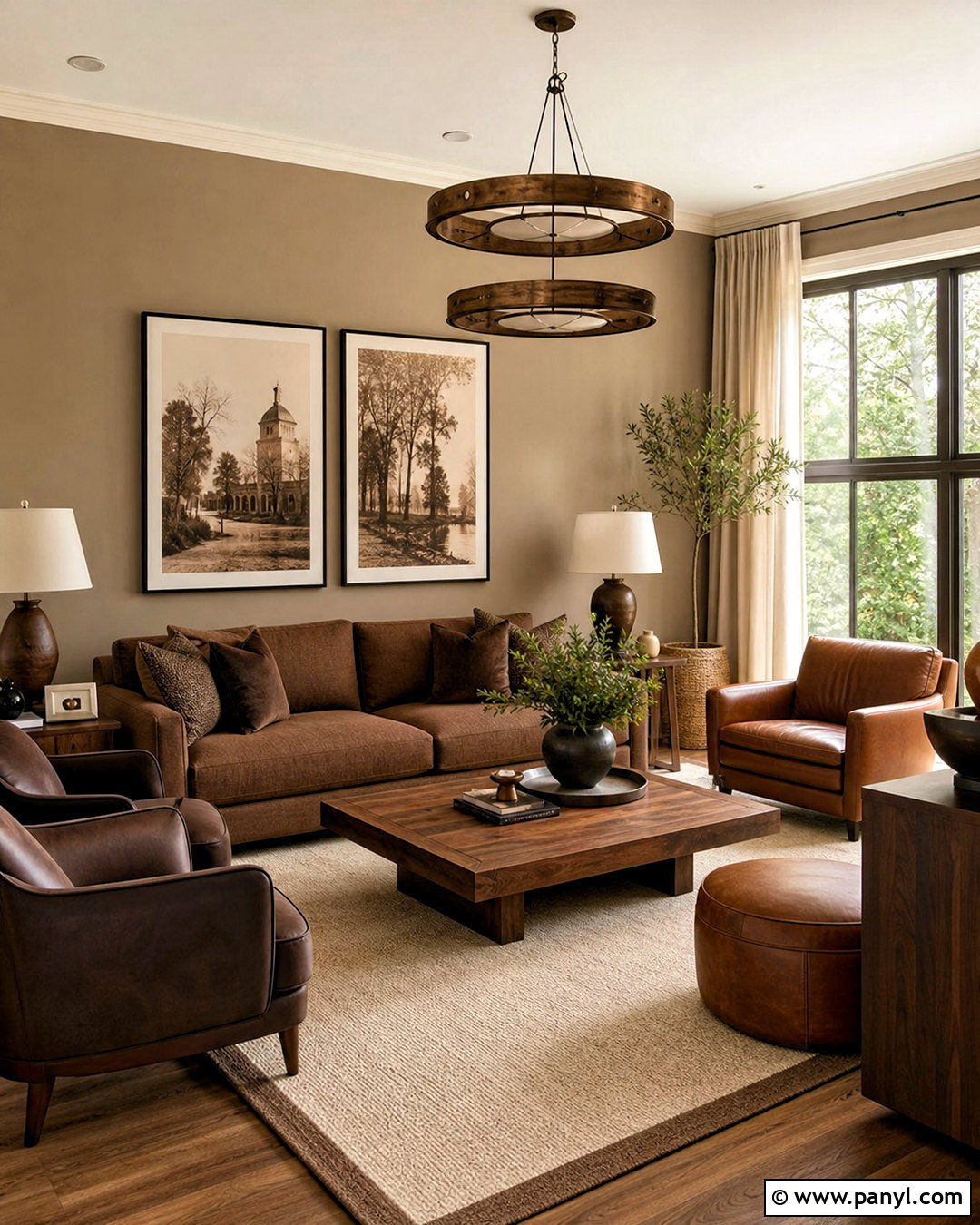
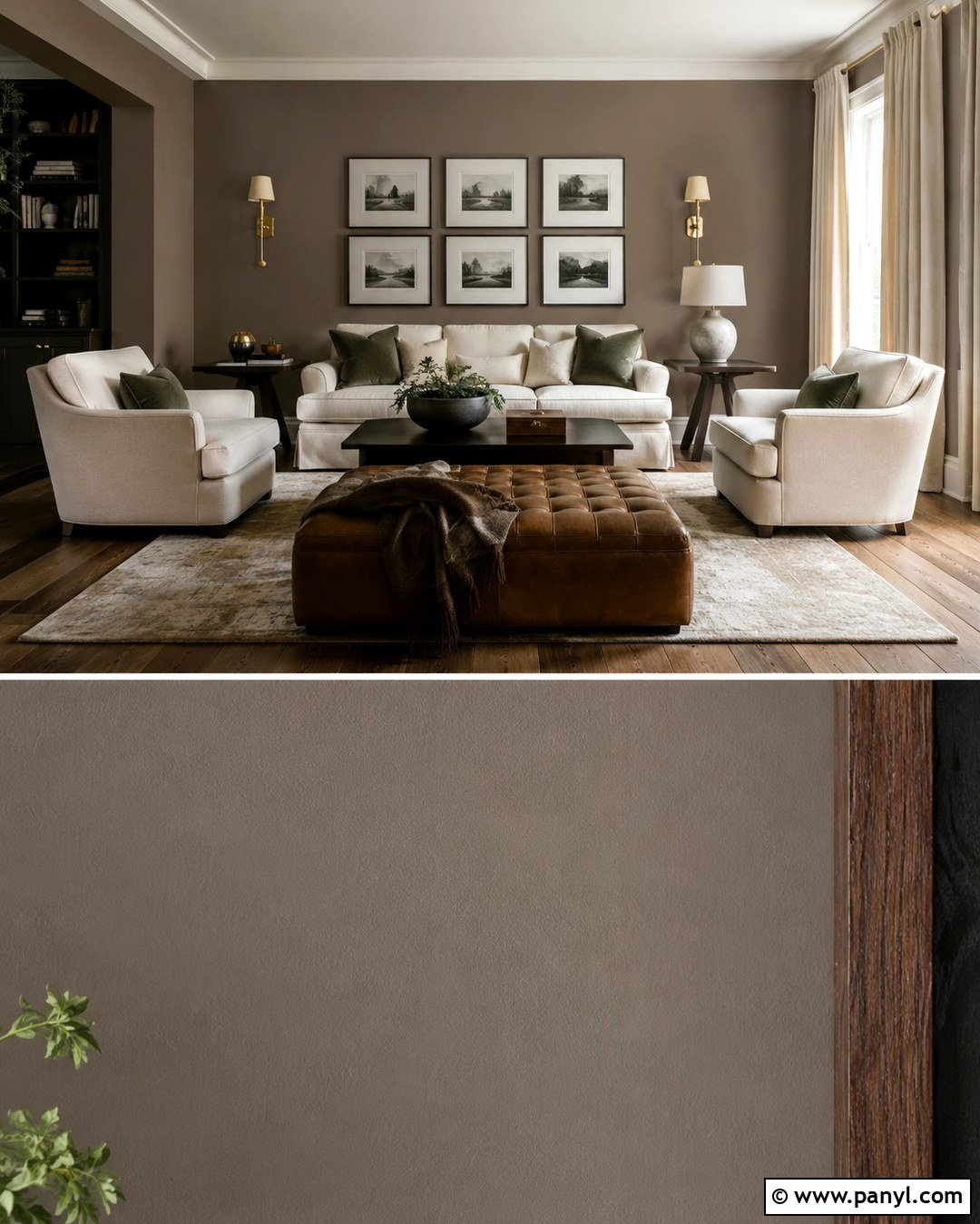
A monochromatic brown living room needs noticeable differences in value and texture to avoid looking flat. Use light taupe-brown paint as the background, then add a medium mocha sofa and dark espresso chairs. Choose a pale beige rug so the furniture remains visually separated from the floor. Walnut tables, caramel leather details, and chocolate pillows can introduce additional brown variations. Mix linen, velvet, wood, stone, and woven fibers rather than relying on color alone. Cream curtains and an off-white ceiling should serve as quiet highlights. Add bronze lighting and sepia-toned artwork to preserve the tonal theme. With every surface occupying a different level from light sand to deep coffee, the finished room feels layered, calm, and intentionally designed.
20. Brown White And Brass Bathroom
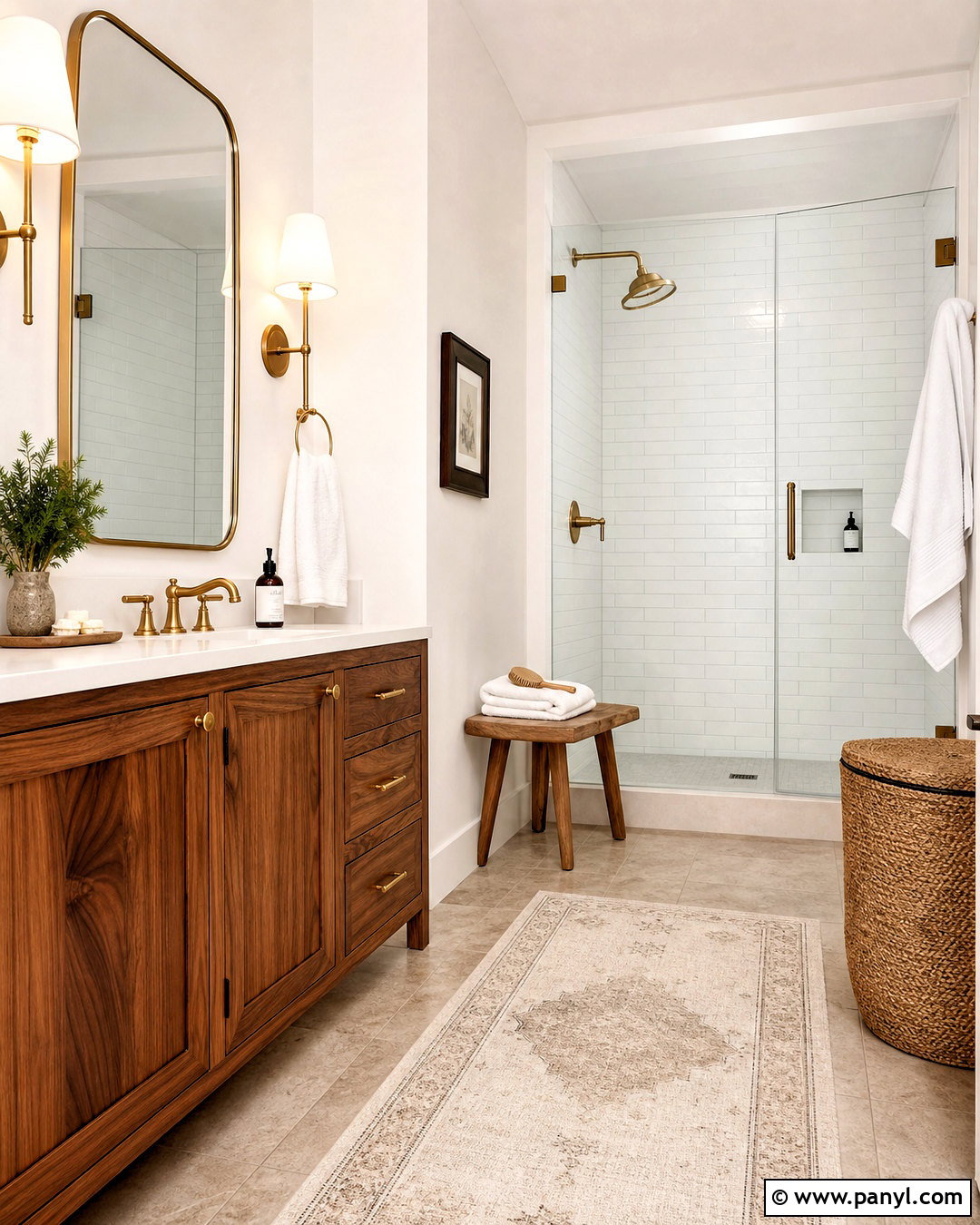
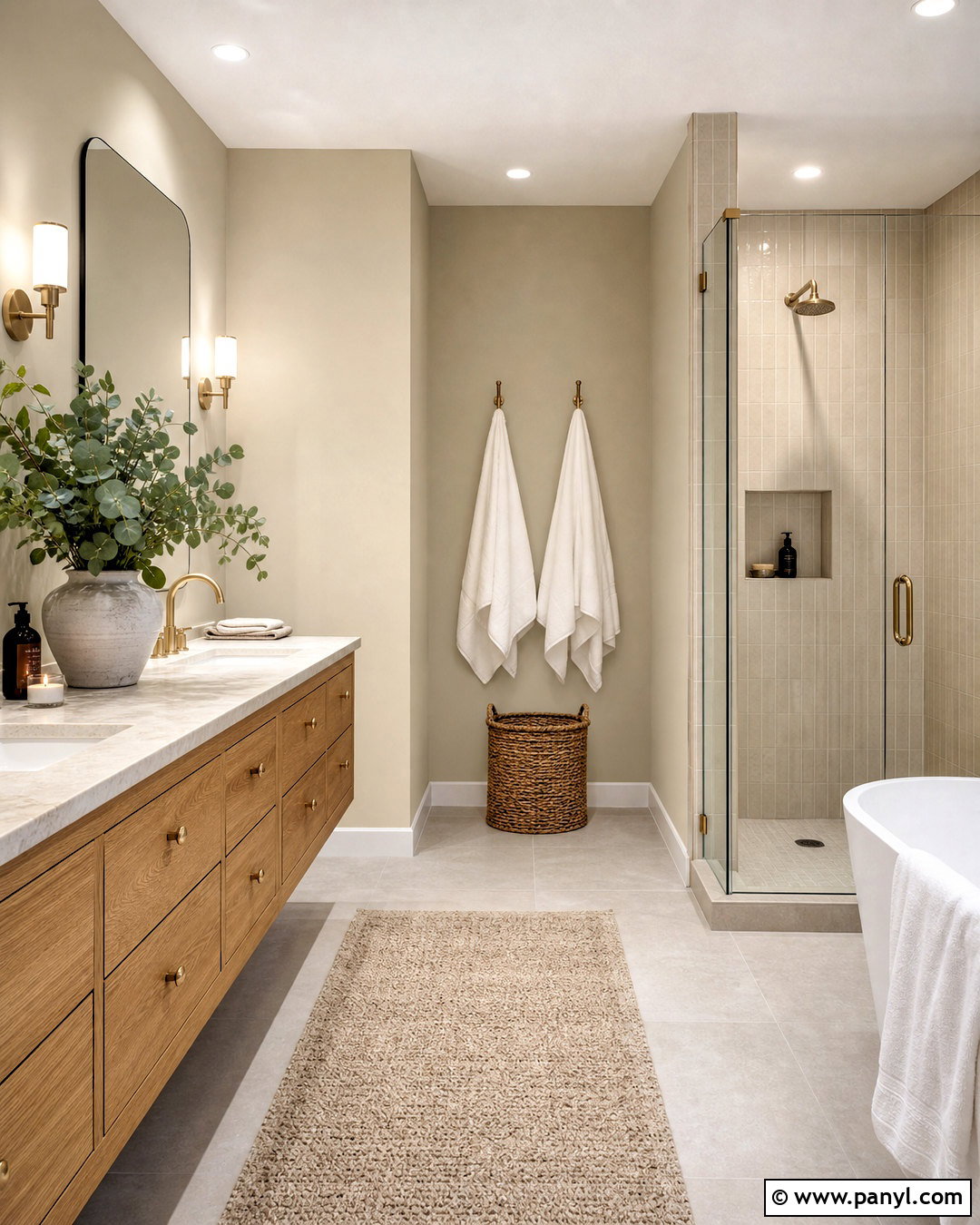
Brown, white, and brass create a polished bathroom palette that can suit both modern and traditional homes. Choose a walnut vanity with visible wood grain and a clean white quartz counter. Continue the white through the walls, towels, bathtub, and shower tile so the brown remains a strong focal point. Install brushed brass faucets, cabinet pulls, sconces, and a slim mirror frame for consistent warmth. Beige stone floor tiles will bridge the white walls and dark vanity. Add a small wood stool, woven hamper, and cream runner for useful texture. Keep bottles and daily products inside drawers or matching containers. The finished bathroom looks bright and organized, while walnut and brass prevent the generous white surfaces from feeling plain or clinical.
Conclusion:
The most successful 20 brown color palette ideas combine thoughtful contrast, varied textures, and a clear balance between warm and cool elements. Chocolate, espresso, walnut, caramel, and tan can each create a different atmosphere, so begin with the brown already present in your flooring, furniture, or cabinetry. Add lighter neutrals to maintain brightness, then choose one supporting color such as sage, navy, teal, blush, or terracotta. Repeat that accent in several small areas for a connected look. Natural wood, linen, leather, stone, and woven materials will make the colors feel richer and more dimensional. Before committing, test finishes together under daytime and evening lighting to ensure every undertone works comfortably in the room.

Related Ideas and Inspiration:
Leave a Reply