
Dark brown paint colors bring warmth, depth, and definition to rooms that might otherwise feel plain. They can look earthy and relaxed, polished and traditional, or sleek and modern depending on the undertone and surrounding materials. Brown is also receiving renewed attention in 2026, especially through chocolate, espresso, charcoal-brown, and other nature-inspired tones. () The secret is creating balance. Creamy ceilings, pale upholstery, warm metals, natural stone, and thoughtful lighting keep deep walls from feeling heavy. Always test samples throughout the day because sunlight and artificial light can reveal unexpected red, gray, green, or purple notes. The complete room schemes below show practical, attractive ways to decorate with 20 dark brown paint colors.

1. Espresso Brown Paint
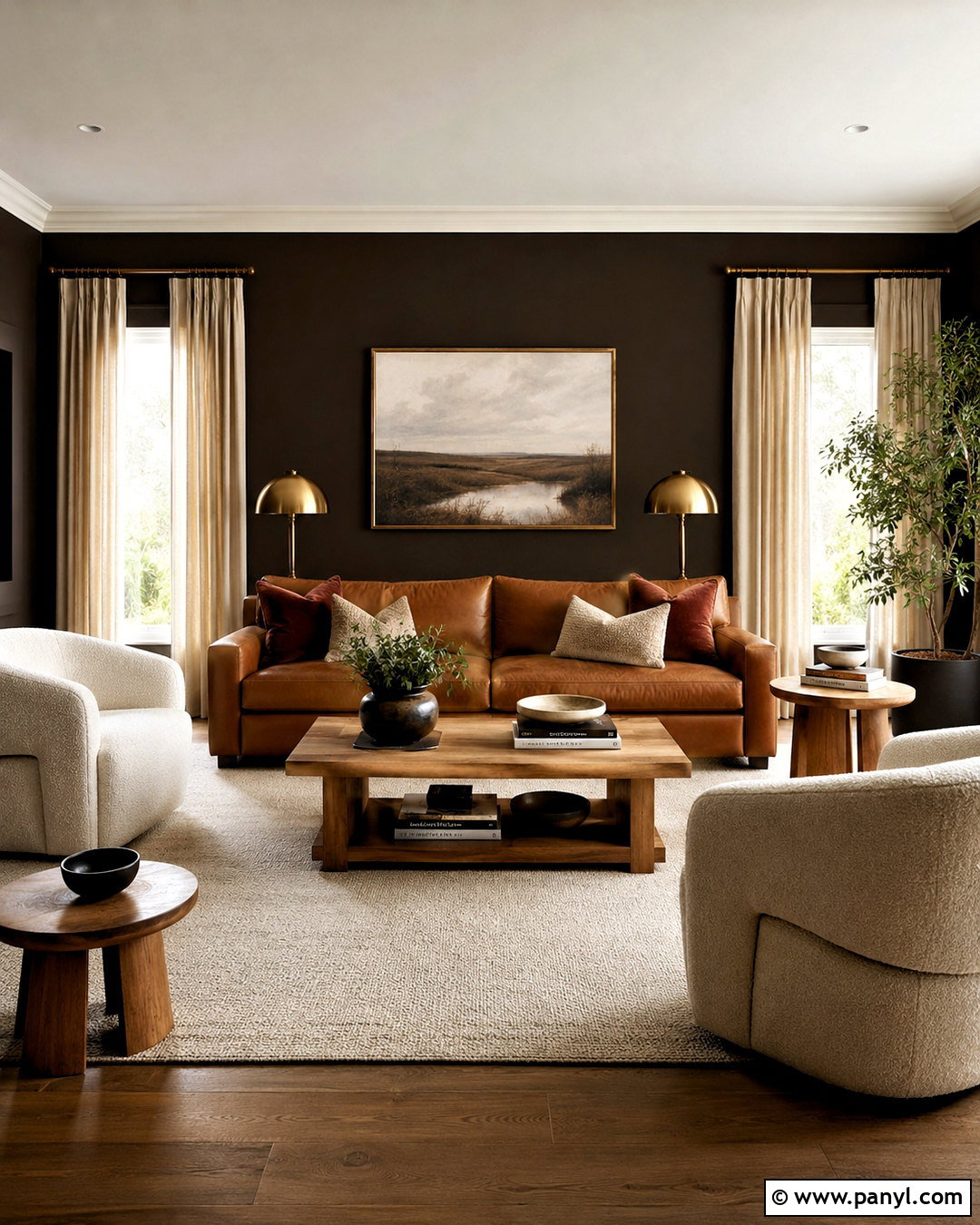
Espresso brown paint creates a sophisticated living room when it is paired with warm white, camel, and natural oak. Cover the walls in this nearly black brown, but keep the ceiling and substantial crown molding creamy white for definition. Place a camel leather sofa opposite two ivory boucle chairs to lighten the seating area. A medium oak coffee table and matching console prevent the room from becoming overly formal. Add an oatmeal wool rug, linen curtains, and a few muted rust pillows for softness. Brushed brass lamps introduce gentle reflection without looking flashy. Choose eggshell paint for the walls and satin for built-in shelves. This combination gives espresso brown enough contrast to feel dramatic, comfortable, and welcoming rather than dark or closed in.
2. Chocolate Brown Paint
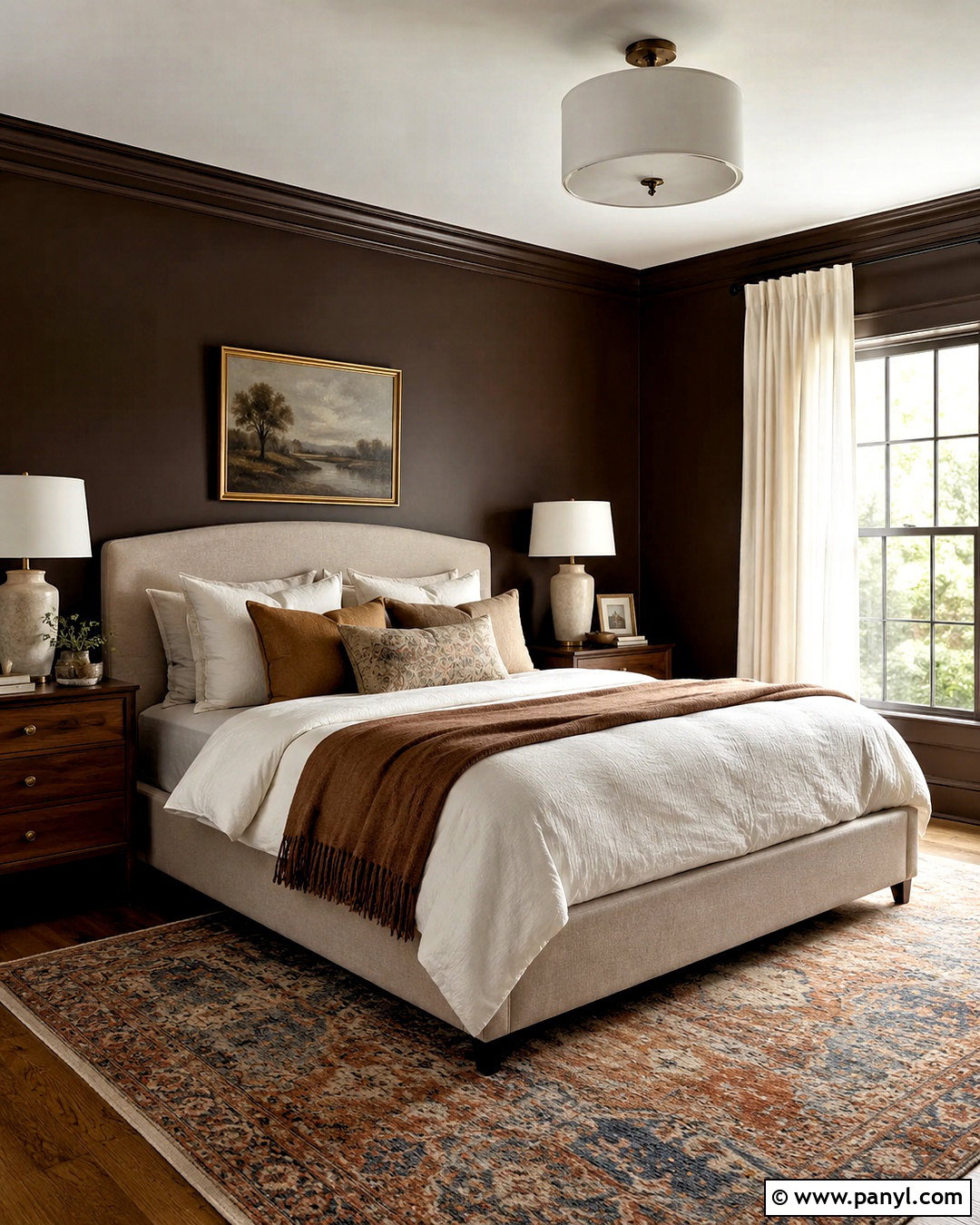
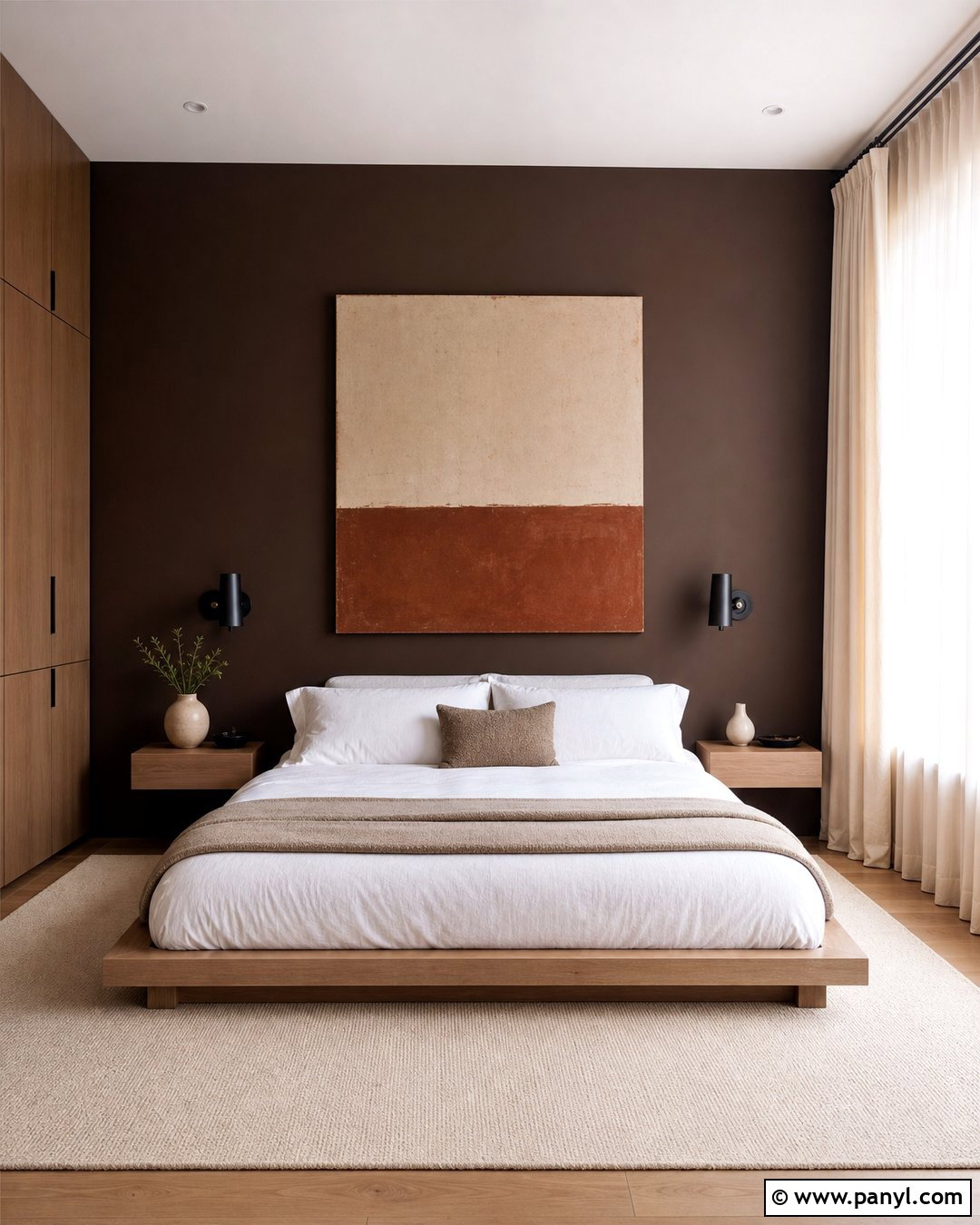
Imagine entering a bedroom wrapped in the comforting richness of dark chocolate. Paint the walls, baseboards, and simple headboard wall molding in chocolate brown for a cohesive, cocooning effect. Keep the ceiling a soft cream to preserve visual height. An upholstered oatmeal bed, crisp ivory bedding, and layered caramel throws create a warm transition between light and dark surfaces. Use walnut nightstands with ceramic lamps and off-white linen shades. A vintage-inspired rug containing rust, beige, and faded blue adds quiet pattern beneath the bed. Hang full-length cream curtains several inches above the windows to emphasize height. Matte or washable flat paint gives this brown a soft appearance. The finished bedroom feels intimate and restful while still looking fresh during daylight hours.
3. Walnut Brown Paint
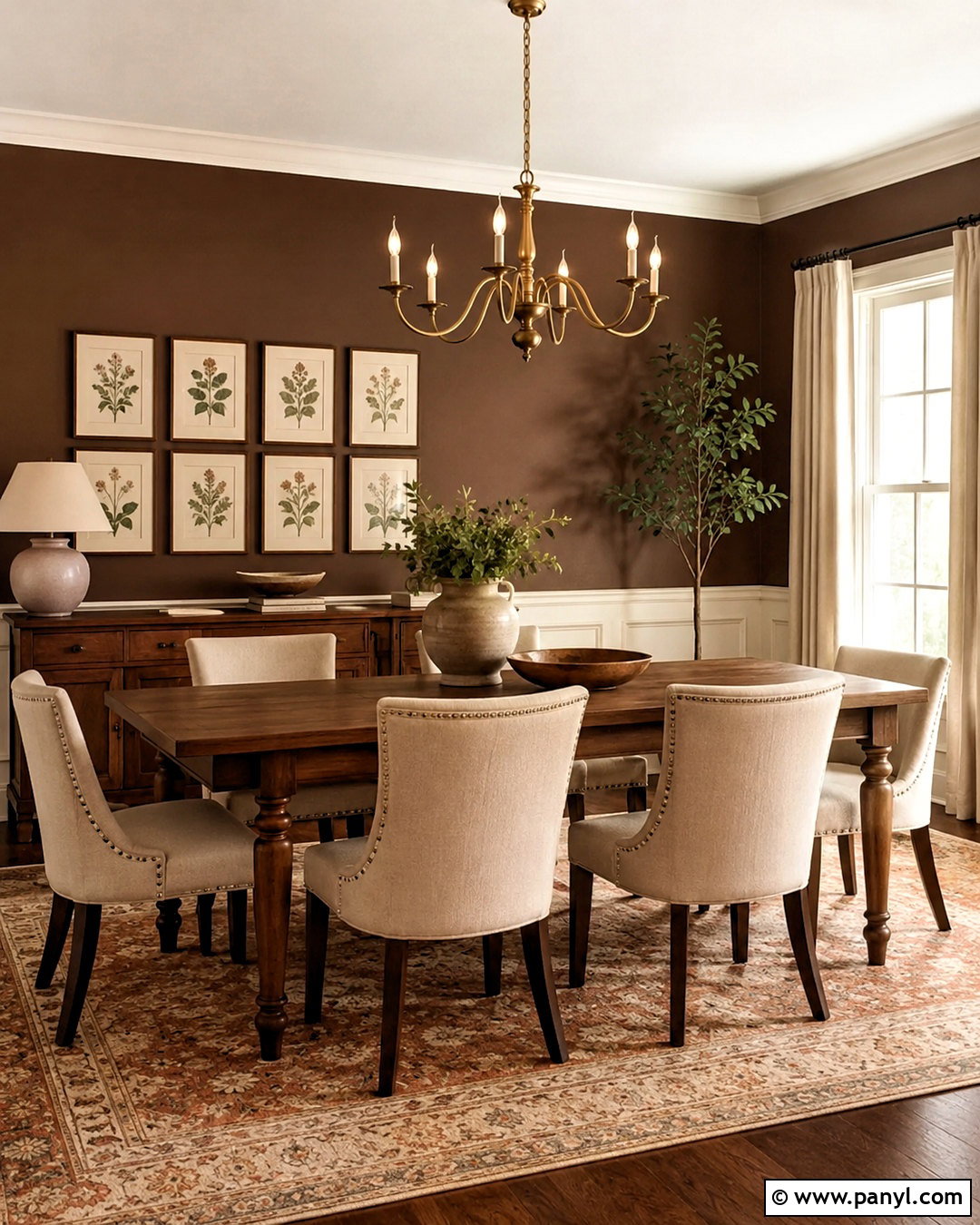
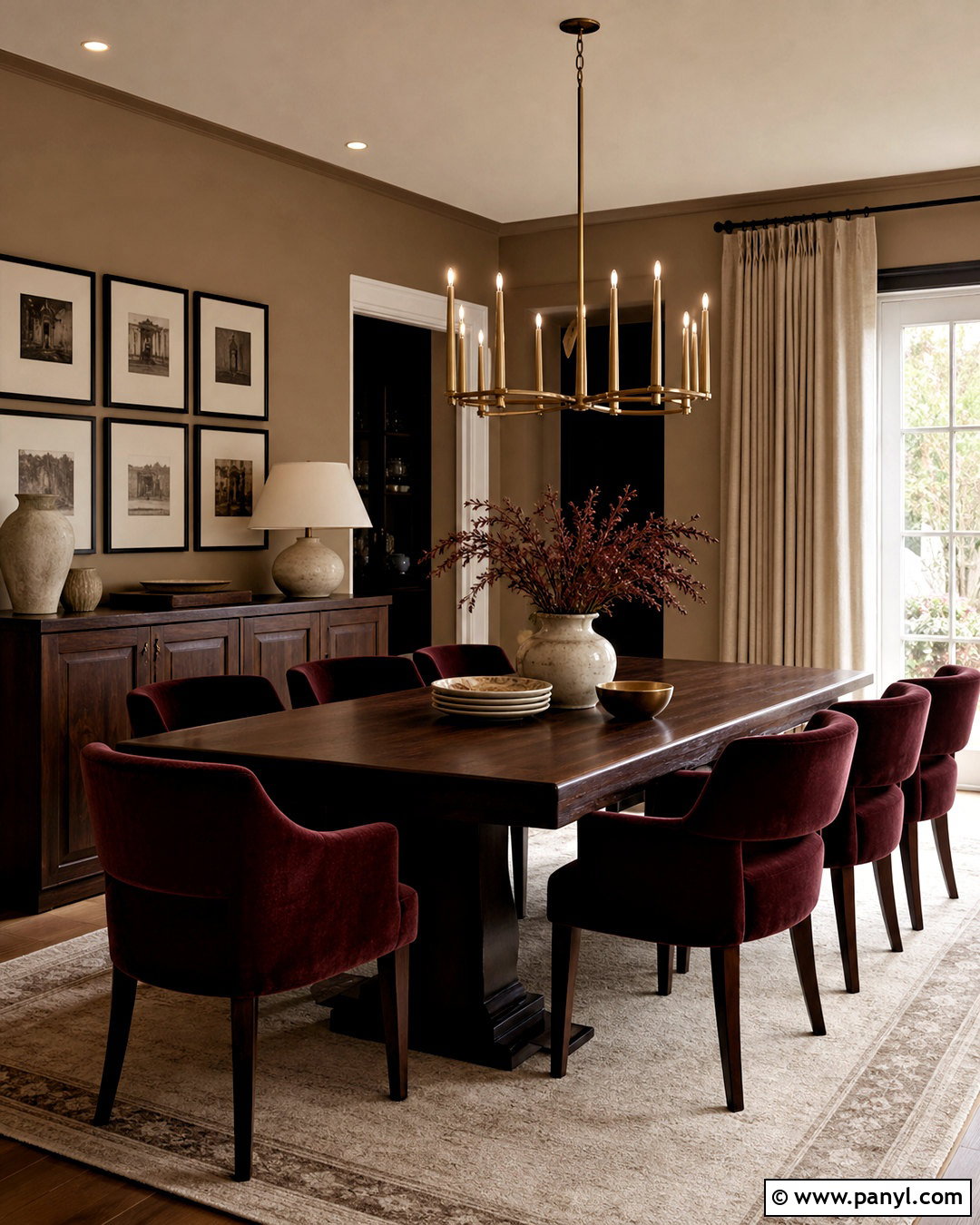
Walnut brown paint works beautifully in a dining room filled with natural textures and traditional details. Use the color above creamy white wainscoting to divide the darkness and highlight the room’s architecture. Center a medium-toned oak dining table beneath a simple aged brass chandelier. Upholstered chairs in warm beige linen soften the wood surfaces, while two darker end chairs add structure. Choose a patterned rug with faded terracotta, brown, and ivory to connect the upper walls with the pale lower section. A walnut sideboard can blend quietly into the background without disappearing completely. Finish the space with botanical artwork, cream draperies, and stoneware accessories. The layered brown palette feels collected and welcoming, making the room suitable for everyday meals as well as more formal gatherings.
4. Coffee Bean Brown Paint
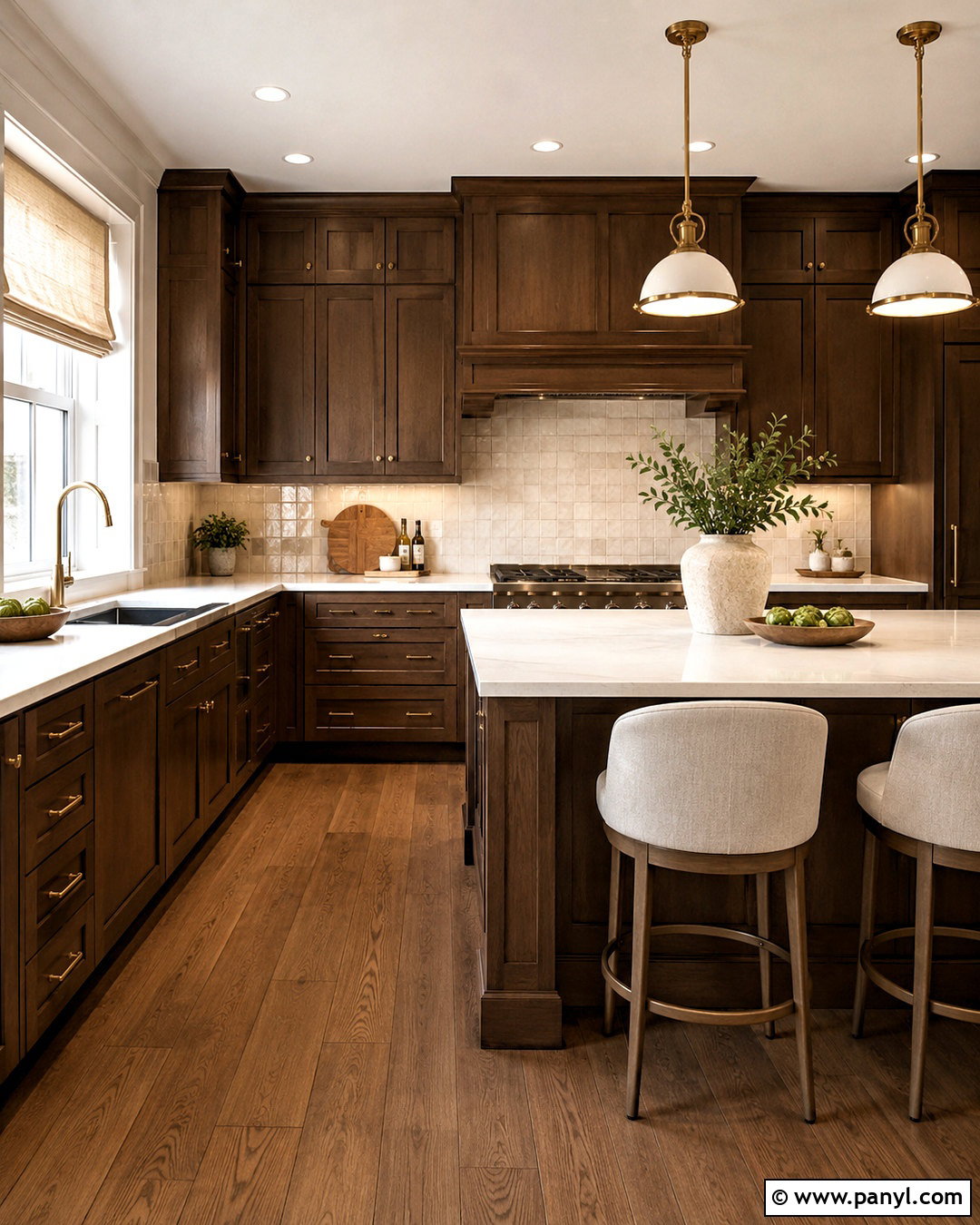
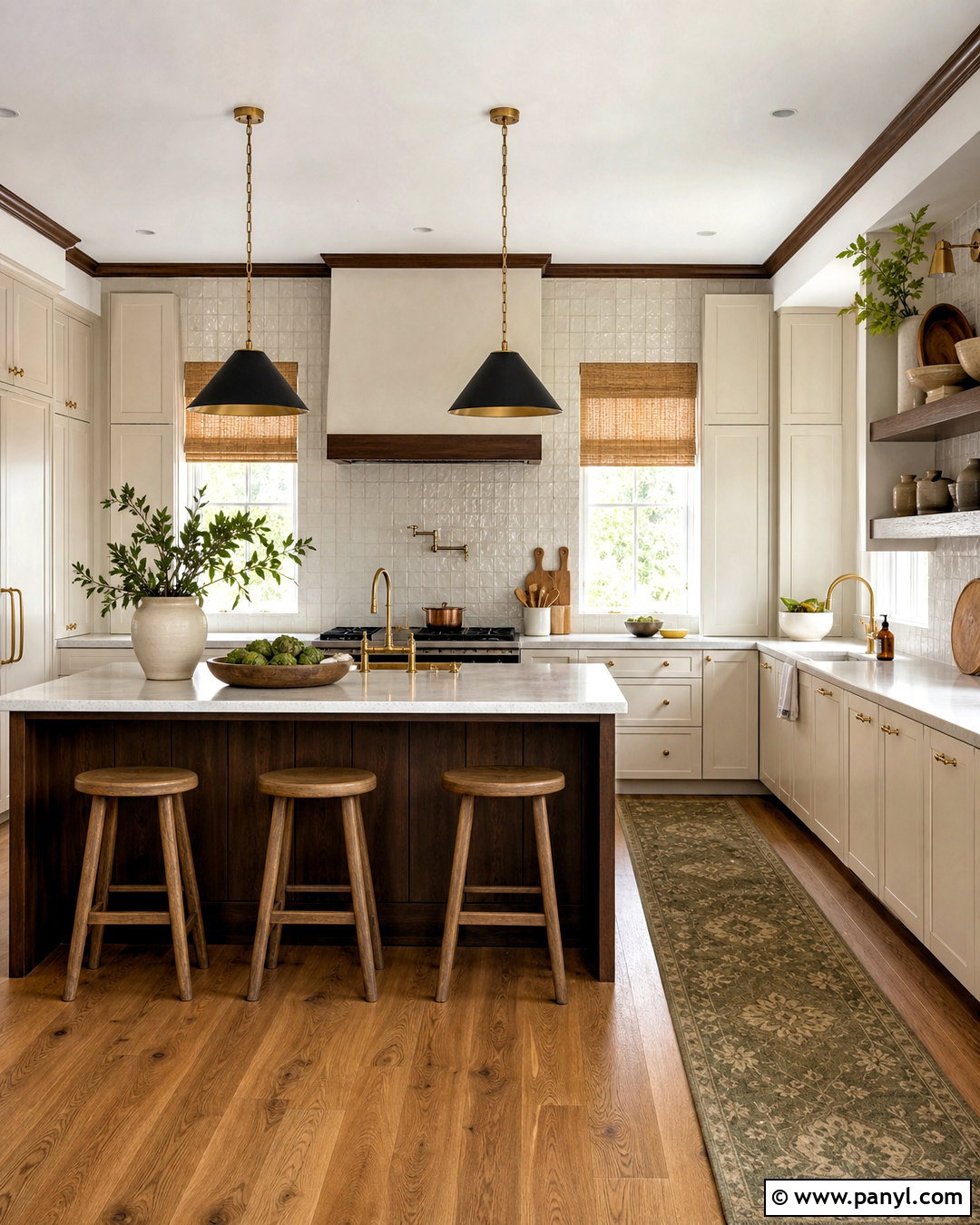
Coffee bean brown cabinets can give a kitchen depth without the sharper effect of pure black cabinetry. Paint the perimeter cabinets and island in the same rich brown, then add warm white quartz countertops with subtle beige veining. A handmade cream tile backsplash reflects light and introduces gentle surface variation. Choose medium oak flooring to bridge the dark cabinets and pale worktops. Aged brass pulls, bridge faucets, and pendant lights add warmth, while off-white counter stools keep the island from looking bulky. Leave the walls a light mushroom neutral so the cabinetry remains the main feature. Glass-front upper doors can break up a long cabinet run. This complete palette produces a refined, functional kitchen that feels warm, substantial, and noticeably softer than a high-contrast black-and-white scheme.
5. Cocoa Brown Paint
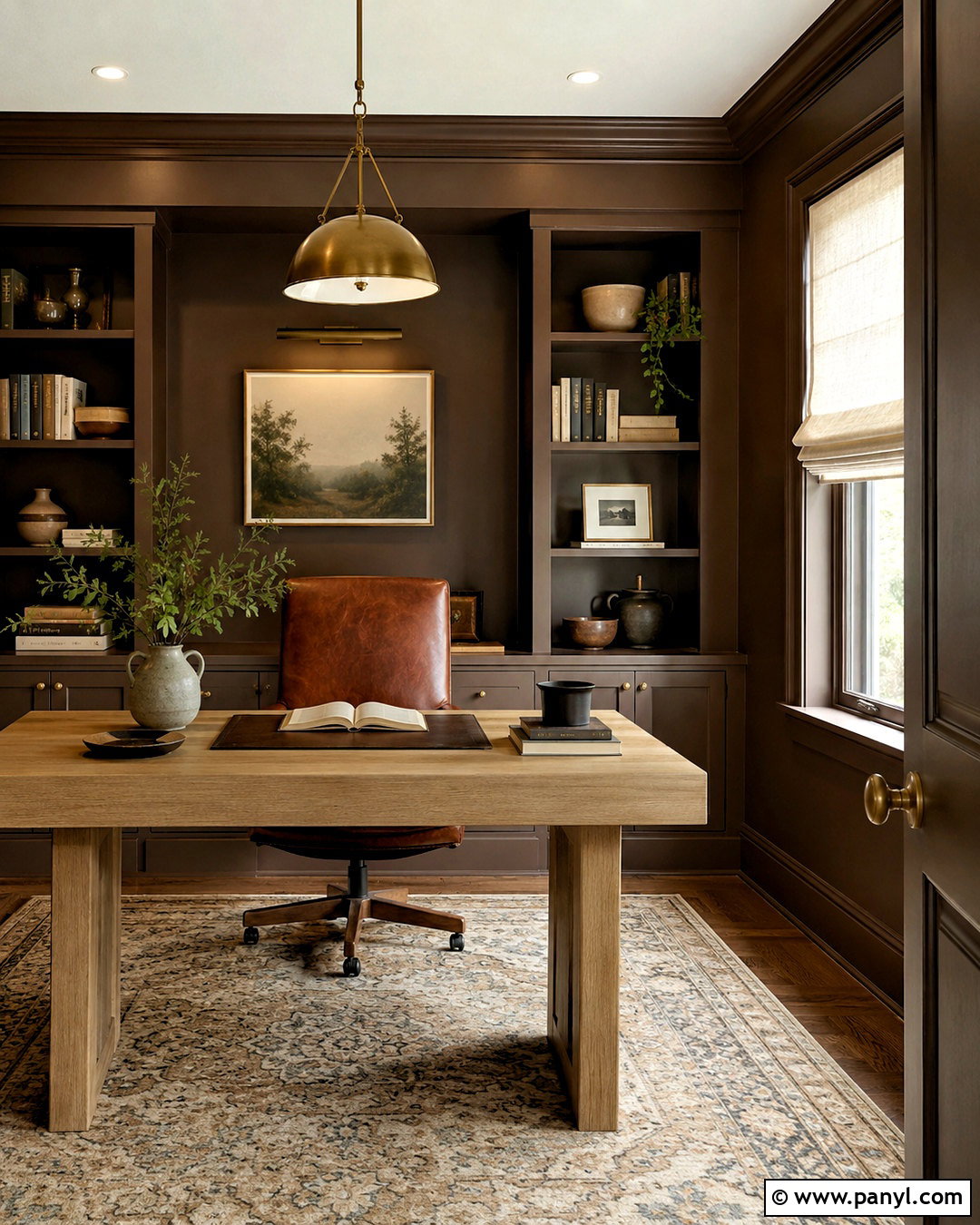
Need a home office that feels focused but not severe? Cocoa brown paint has enough warmth to support long work sessions while providing a strong background for shelves and artwork. Color-drench the walls, trim, and built-in bookcases, using satin paint on the woodwork for subtle contrast. Position a natural oak desk near the window and add a cognac leather chair with supportive proportions. Cream Roman shades filter harsh daylight without removing it. Style the shelves sparingly with books, pottery, and framed art in ivory, rust, and muted green. A patterned wool rug softens sound and defines the work zone. Add a brass desk lamp and shaded ceiling fixture for layered illumination. The final office feels organized, grounded, and professional without resembling a cold commercial workspace.
6. Mahogany Brown Paint
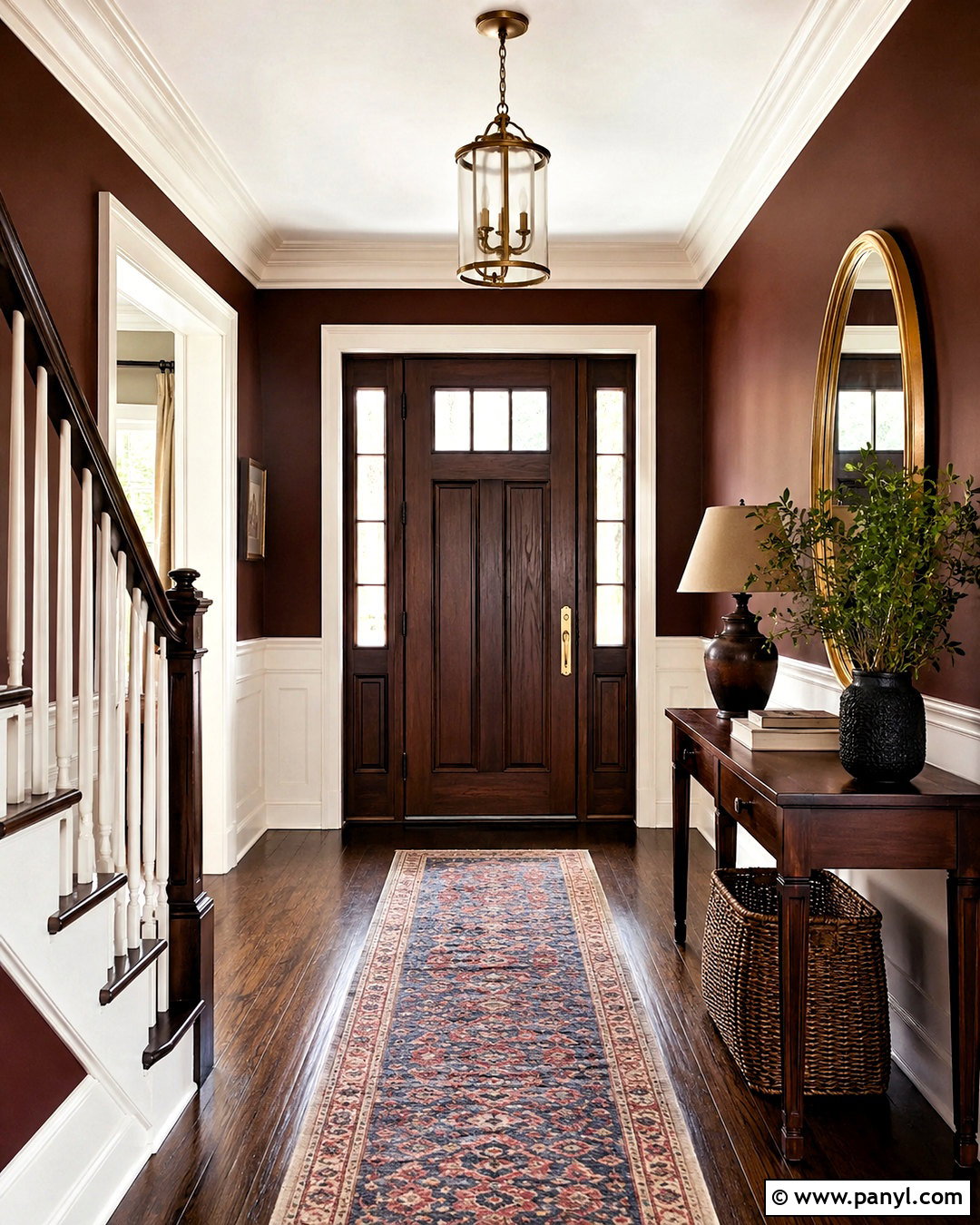
Mahogany brown paint brings red warmth to an entryway and looks especially polished beside classic architectural features. Apply it to the walls and interior side of the front door, then use creamy white on the ceiling, trim, and stair risers. A slim walnut console provides a useful landing spot without crowding the walkway. Above it, hang a rounded brass mirror that reflects light from a clear glass lantern. Choose a runner with muted red, tan, brown, and dusty blue to complement the paint’s warm undertone. A woven basket can hold shoes or seasonal accessories below the console. Complete the arrangement with one ceramic lamp and a leafy branch. This coordinated entry creates an inviting first impression while giving a narrow, frequently overlooked space a strong sense of purpose.
7. Umber Brown Paint
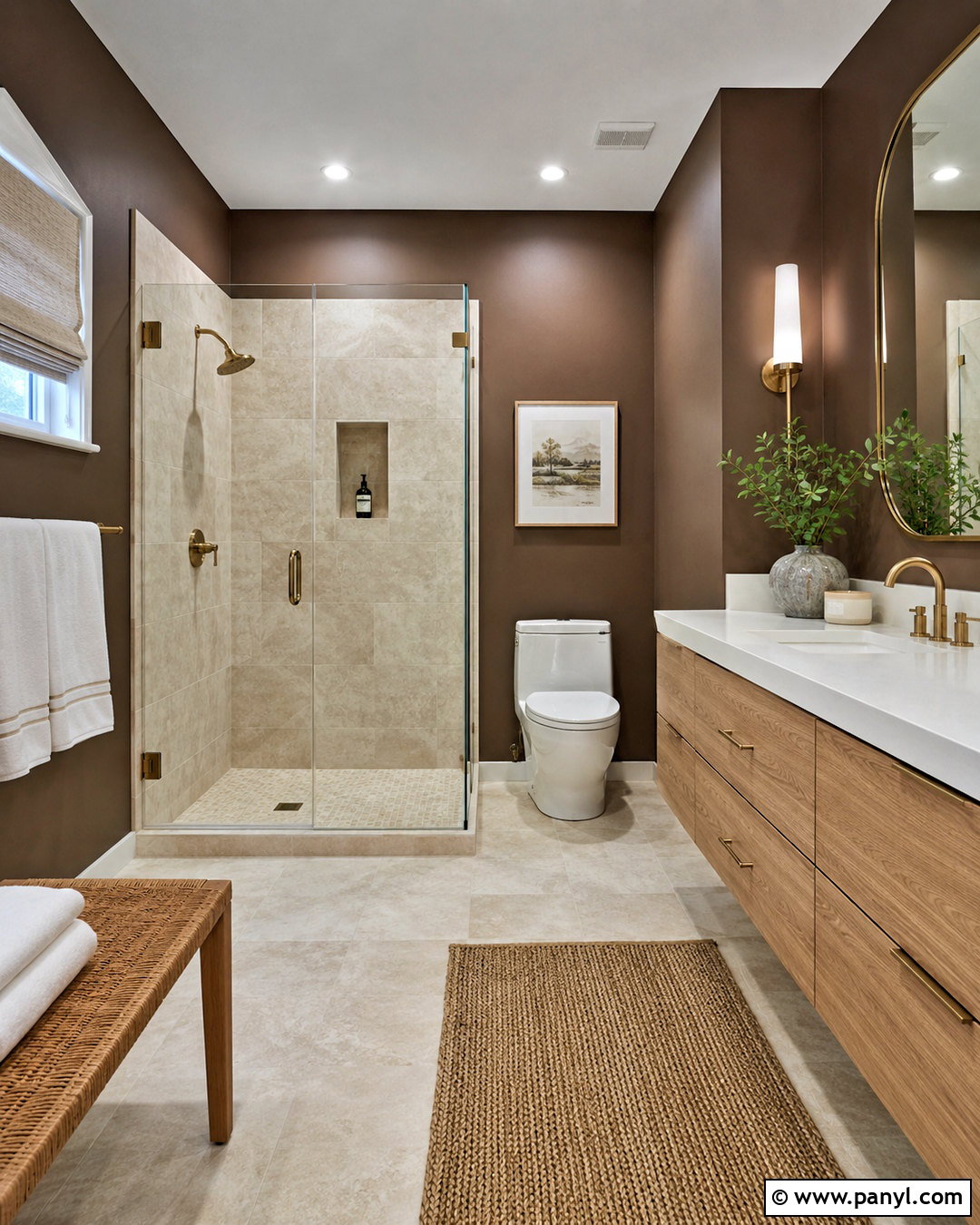
Earthy umber brown can transform an ordinary bathroom into a warm retreat when it is balanced with pale stone. Paint the upper walls dark brown and install creamy limestone-look tile around the shower and across the floor. A floating white oak vanity lightens the lower half of the room while maintaining the natural palette. Add an off-white quartz counter, an undermount sink, and aged brass fixtures. A frameless glass shower enclosure prevents the darker walls from making the layout feel divided. Hang a wide mirror above the vanity and place shaded sconces on both sides for even lighting. White towels, a woven bath mat, and simple ceramic accessories keep the room uncluttered. Use moisture-resistant satin paint so the deep umber surface remains practical, washable, and softly reflective.
8. Tobacco Brown Paint
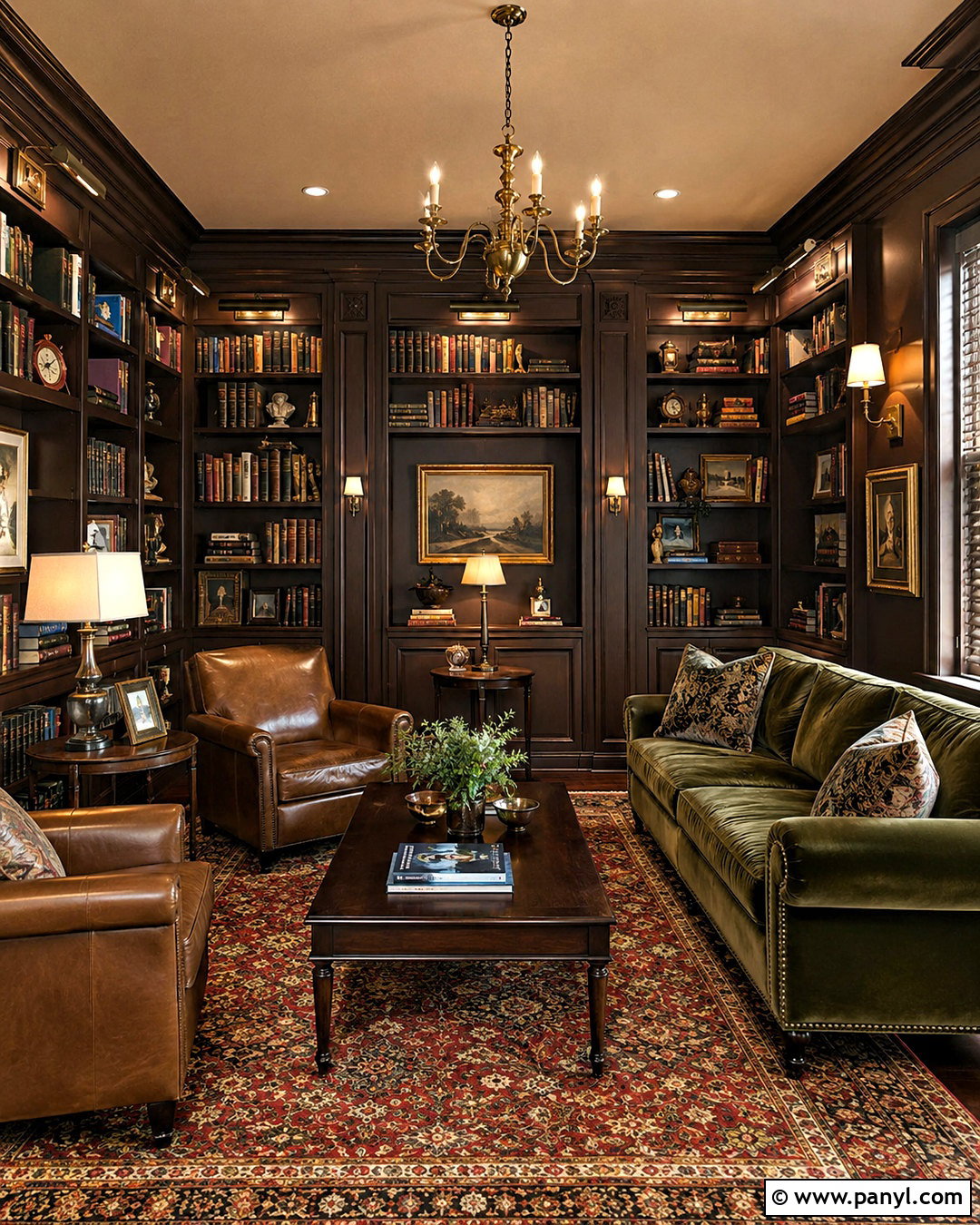
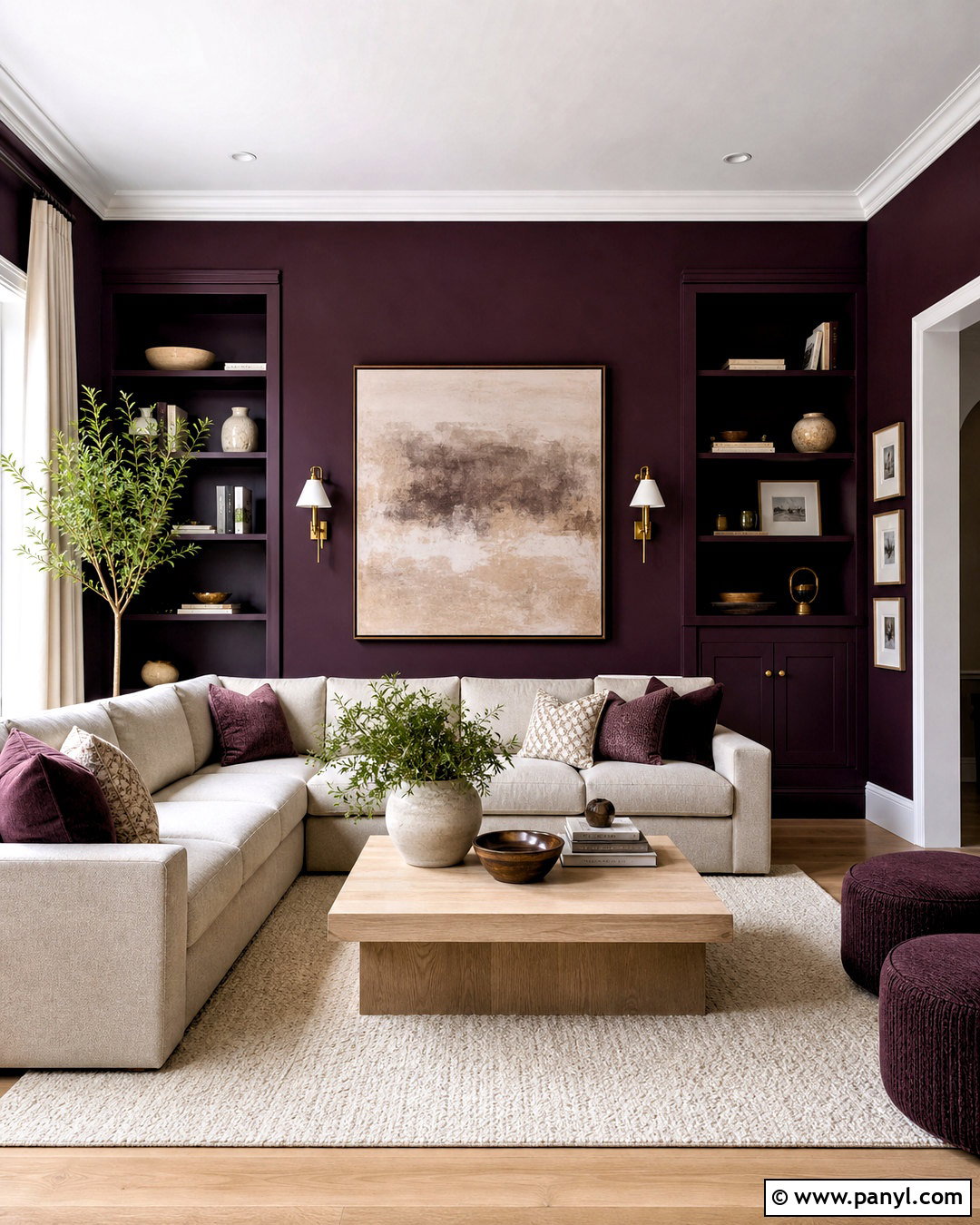
Tobacco brown paint creates a library that feels established without requiring elaborate architecture. Cover the walls and floor-to-ceiling bookcases in the same warm brown, then paint the ceiling a lighter tan to soften the transition overhead. Place a deep olive velvet sofa in the center of the room with two caramel leather reading chairs angled toward it. A large vintage-style rug in faded red, gold, and brown grounds the seating arrangement. Use antique brass picture lights over the shelves and add a substantial floor lamp beside each chair. Dark wood tables can blend into the palette, while cream lampshades provide necessary brightness. Books, framed landscapes, and handmade pottery complete the room. The resulting library looks comfortable, layered, and personal rather than staged or excessively formal.
9. Mocha Brown Paint
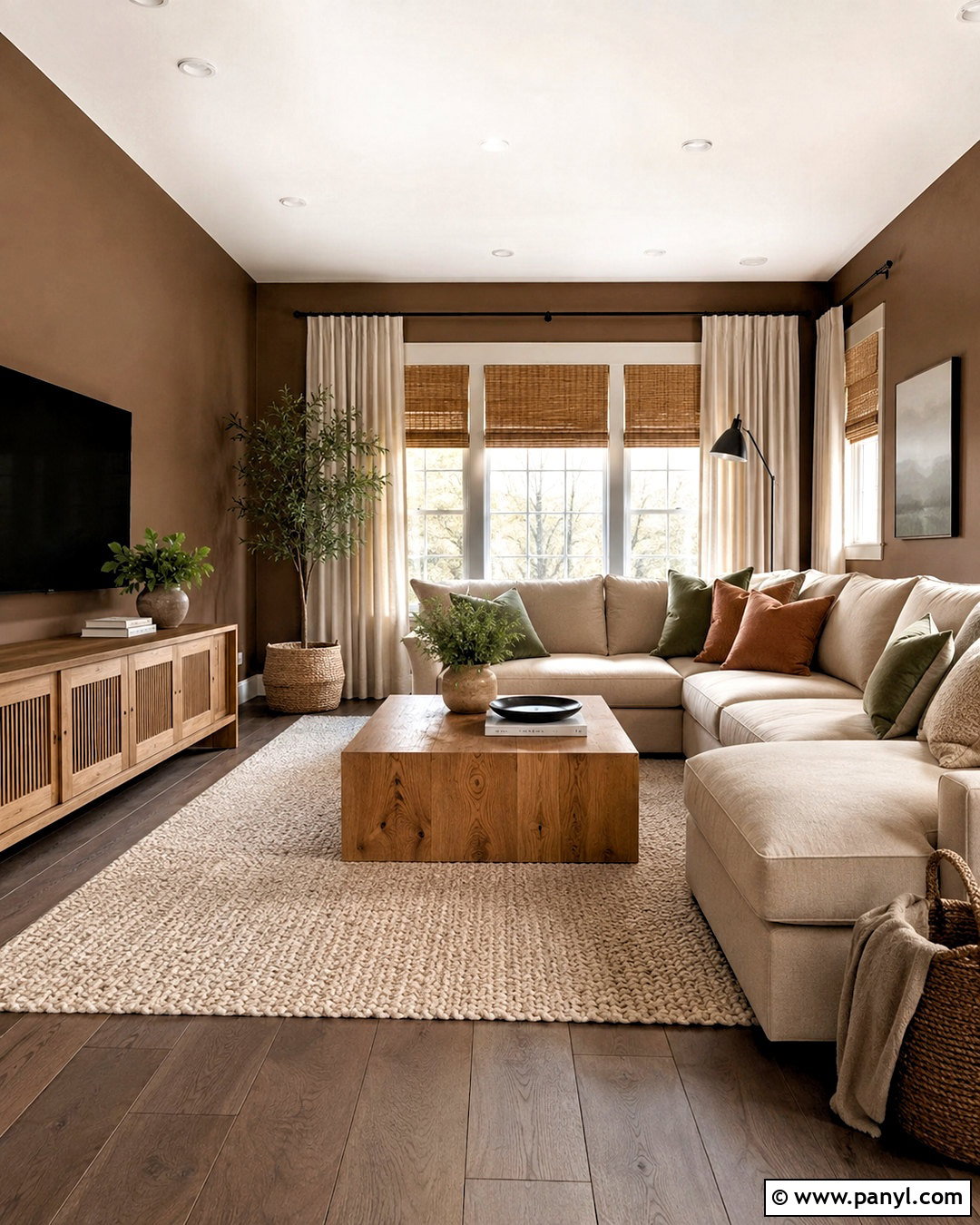
Mocha brown offers a slightly softer approach for a family room where comfort matters more than drama. Paint all four walls in this milk-infused dark brown and keep the ceiling warm white. Arrange a generous oatmeal sectional around a low oak coffee table, leaving clear walkways on both sides. Add a textured cream rug large enough to sit beneath every front furniture leg. Pillows in muted sage, clay, and striped beige introduce color without disrupting the calm palette. Use woven shades under full-length linen curtains for flexible light control. A light oak media console prevents the television wall from becoming too dark. Black accents should be limited to slim lamp bases or picture frames. This balanced scheme feels relaxed, practical, and suitable for everyday family activity.

10. Chestnut Brown Paint
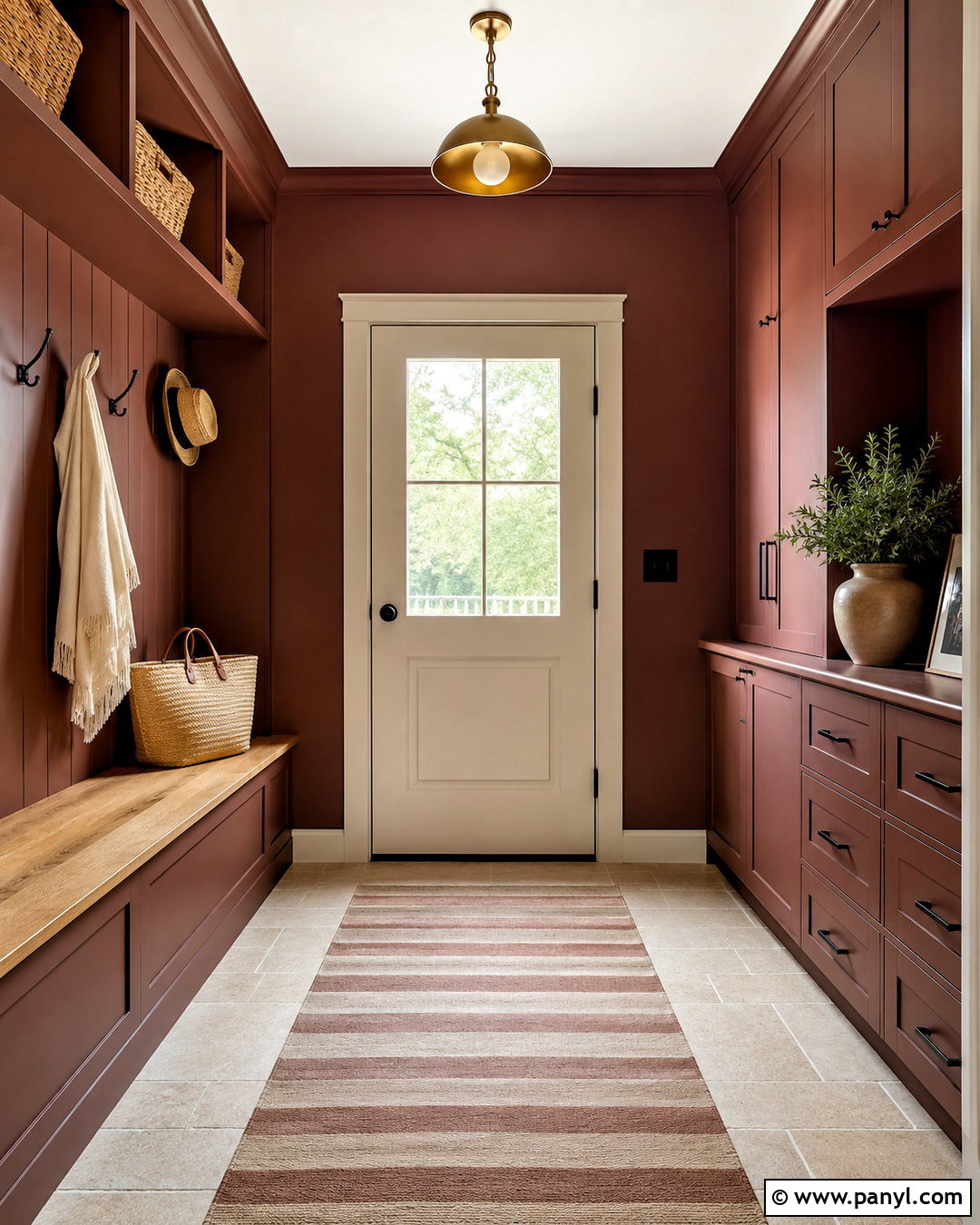
Chestnut brown paint is a practical choice for a hardworking mudroom because its warm reddish base coordinates naturally with wood, brick, and woven storage. Paint the walls and tall storage cabinets chestnut brown, then use durable cream tile with warm gray grout across the floor. Include a built-in oak bench with drawers below and open hooks above for bags and jackets. Natural cane baskets on the upper shelves keep smaller items contained. Add a striped indoor-outdoor runner in beige, rust, and charcoal to disguise everyday dirt. Matte black hooks provide clear contrast, while an aged brass ceiling light softens the utilitarian materials. Cream trim around the doors adds a crisp edge. The finished space looks orderly and welcoming while remaining sturdy enough for shoes, coats, pets, and changing seasons.
11. Truffle Brown Paint
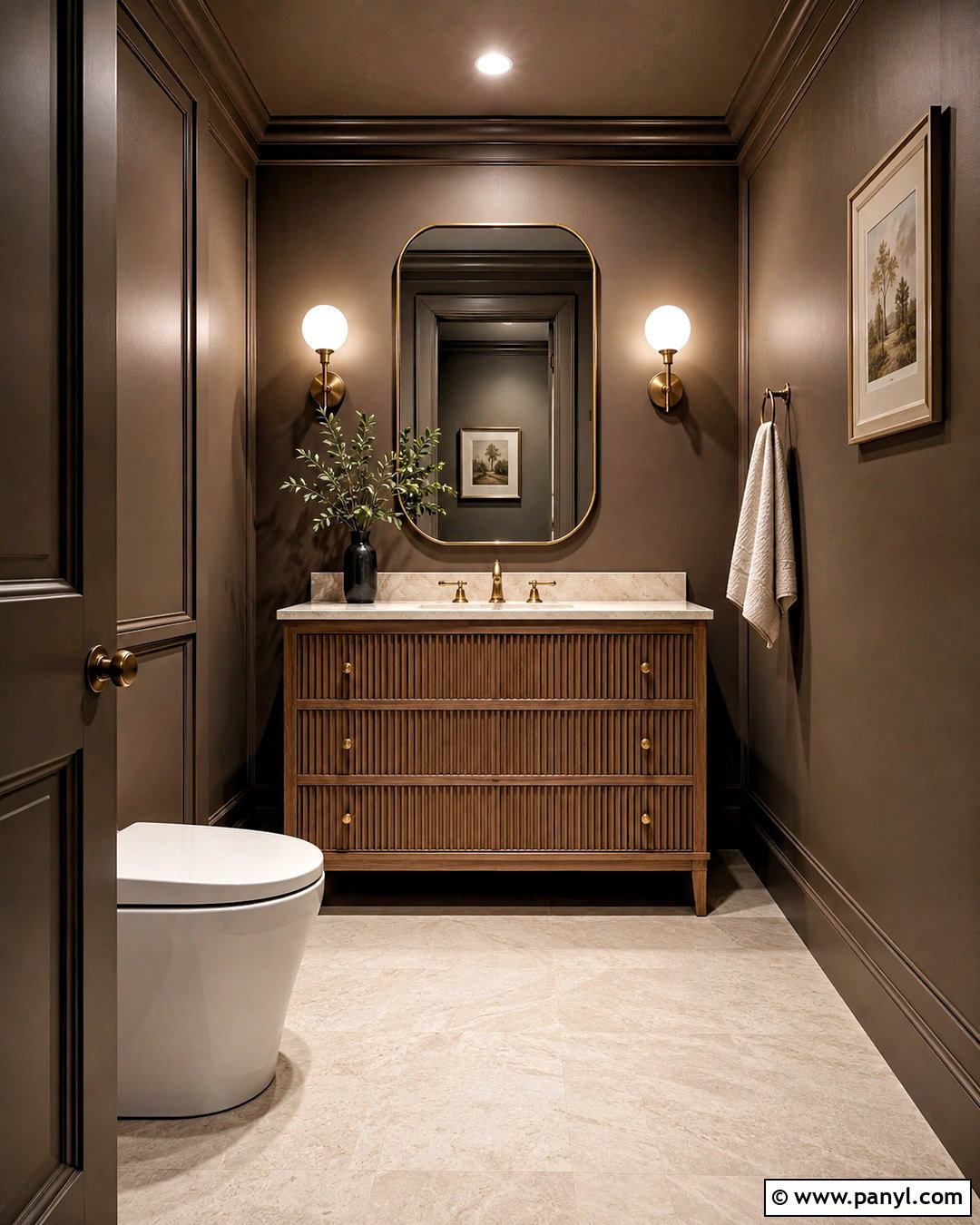
A powder room is an ideal place to use truffle brown paint from floor to ceiling. Its subtle gray undertone creates depth, while the small scale of the room makes the dramatic treatment feel intentional. Paint the walls, ceiling, trim, and door in one continuous color, varying the sheen between matte walls and satin woodwork. Install a compact fluted oak vanity with a pale marble top and an unlacquered brass faucet. A rounded mirror and two opal glass sconces introduce soft curves and flattering light. Choose a warm ivory stone floor rather than dark tile to keep the lower surface visible. Add one framed artwork, a cream hand towel, and a small ceramic vase. This limited palette gives the powder room a polished, custom-designed appearance without unnecessary clutter.
12. Bark Brown Exterior Paint
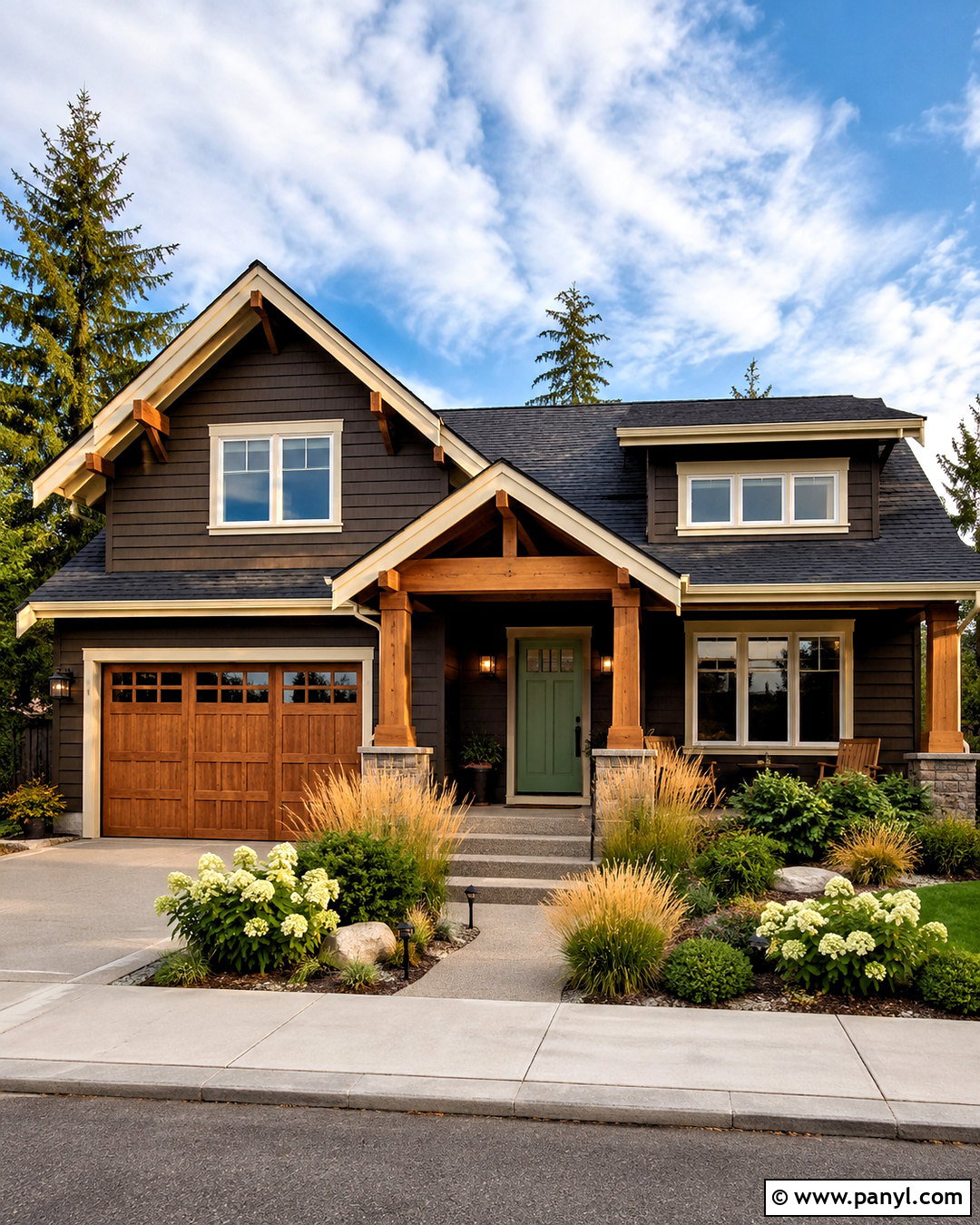
Bark brown exterior paint can make a modest home feel connected to its landscape, especially when the complete scheme includes warm, natural materials. Use deep bark brown on the siding, soft cream on the window trim and fascia, and muted sage green on the front door. A charcoal architectural-shingle roof provides neutral contrast without introducing another warm brown. Add natural cedar porch posts and a coordinating wood garage door to create variation across the facade. Foundation beds filled with ornamental grasses, evergreen shrubs, and white flowering plants brighten the base of the house. Warm bronze exterior lights suit the earthy palette better than shiny metal. This full exterior treatment gives the home a grounded, inviting presence while keeping windows, doors, and architectural lines clearly defined from the street.
13. Burnt Umber Brown Paint
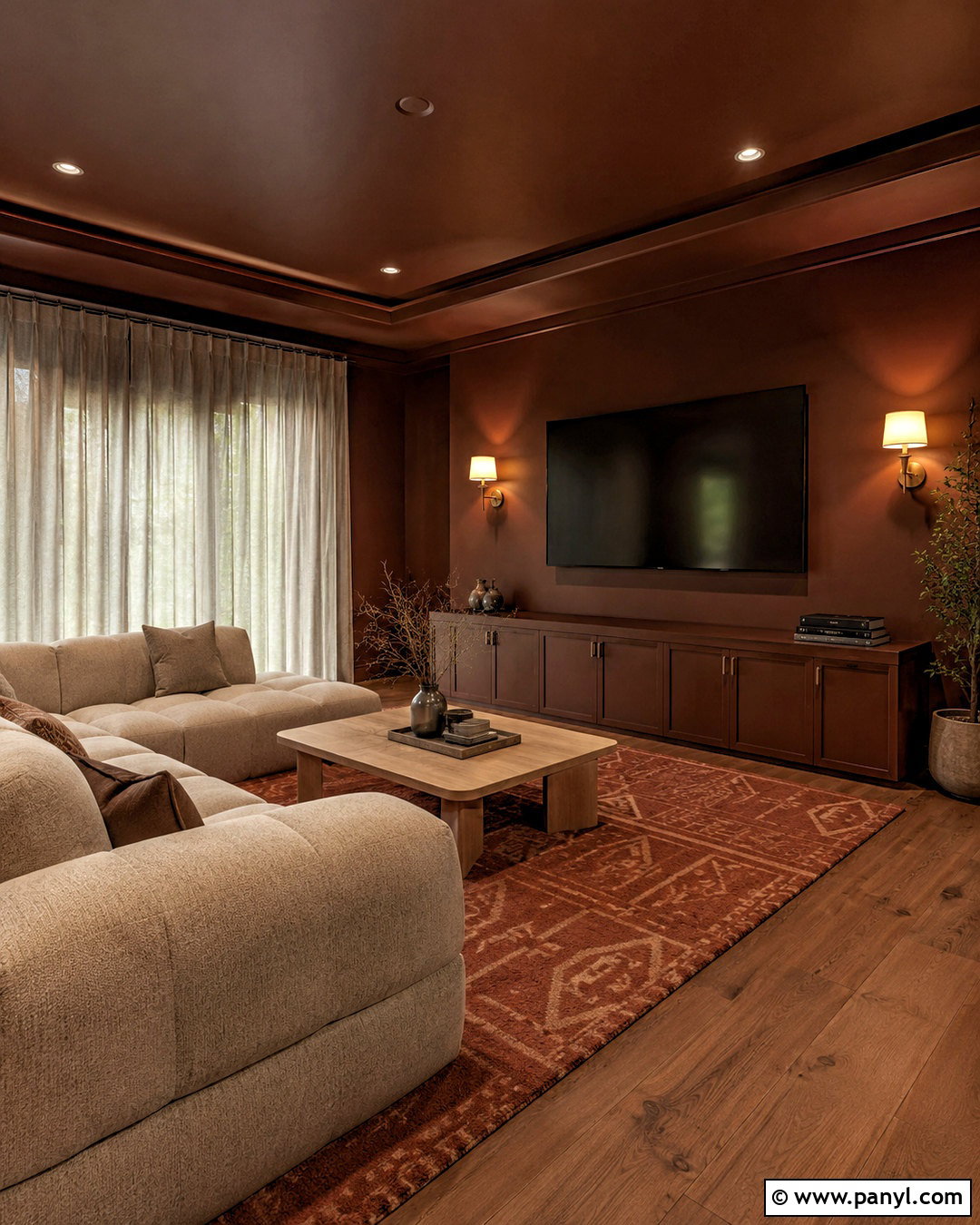
Burnt umber brown gives a media room the necessary darkness for comfortable viewing while retaining more warmth than charcoal or black. Paint the walls, ceiling, trim, and media cabinet in the same red-leaning brown to reduce visual distractions. Add a low sectional upholstered in durable mushroom-colored fabric and position it opposite a streamlined oak media console. A thick geometric rug in rust, tan, and dark brown improves comfort and helps soften sound. Install dimmable recessed lights around the room’s perimeter rather than directly above the screen. Brass wall sconces with opaque shades provide extra illumination when needed. Use simple linen blackout curtains that closely match the paint. The completed media room feels immersive and cozy, yet the warm upholstery and wood prevent it from looking like a commercial theater.
14. Sepia Brown Paint
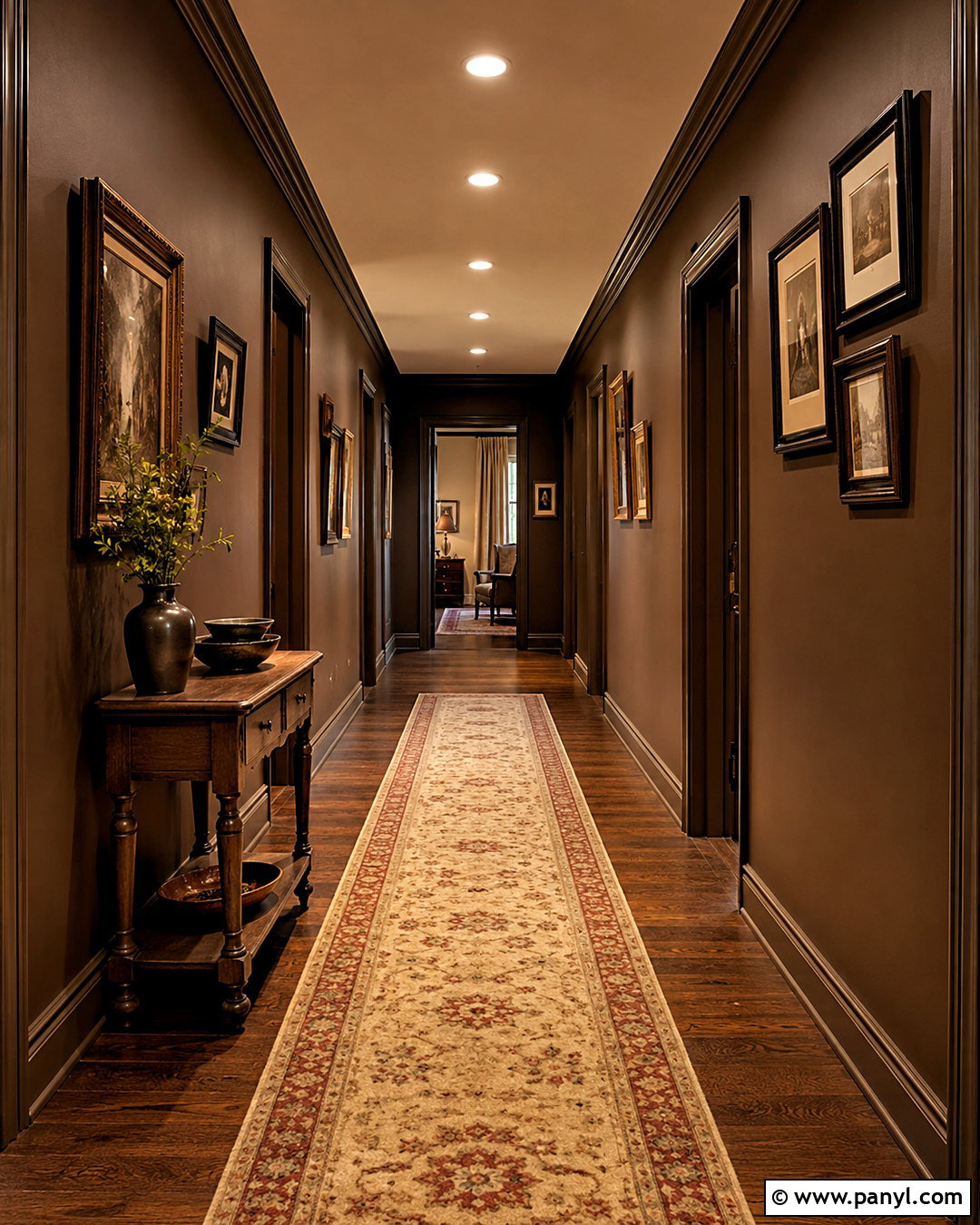
A long hallway becomes more interesting when sepia brown paint is treated as part of a complete gallery-style design. Apply the warm brown to the walls and door casings, but keep the ceiling a clean cream to reflect light along the passage. Arrange framed photographs and small artworks in matching antique brass and dark wood frames at consistent eye level. Install a narrow vintage runner featuring faded beige, brick red, and muted blue. Small semi-flush ceiling lights spaced evenly down the hallway prevent shadowy sections. If space permits, add a shallow oak console near the widest wall with one ceramic lamp and a simple bowl. Satin-painted doors are easier to maintain than flat surfaces. This plan turns a connecting area into a layered, purposeful part of the home.
15. Bronze Brown Paint
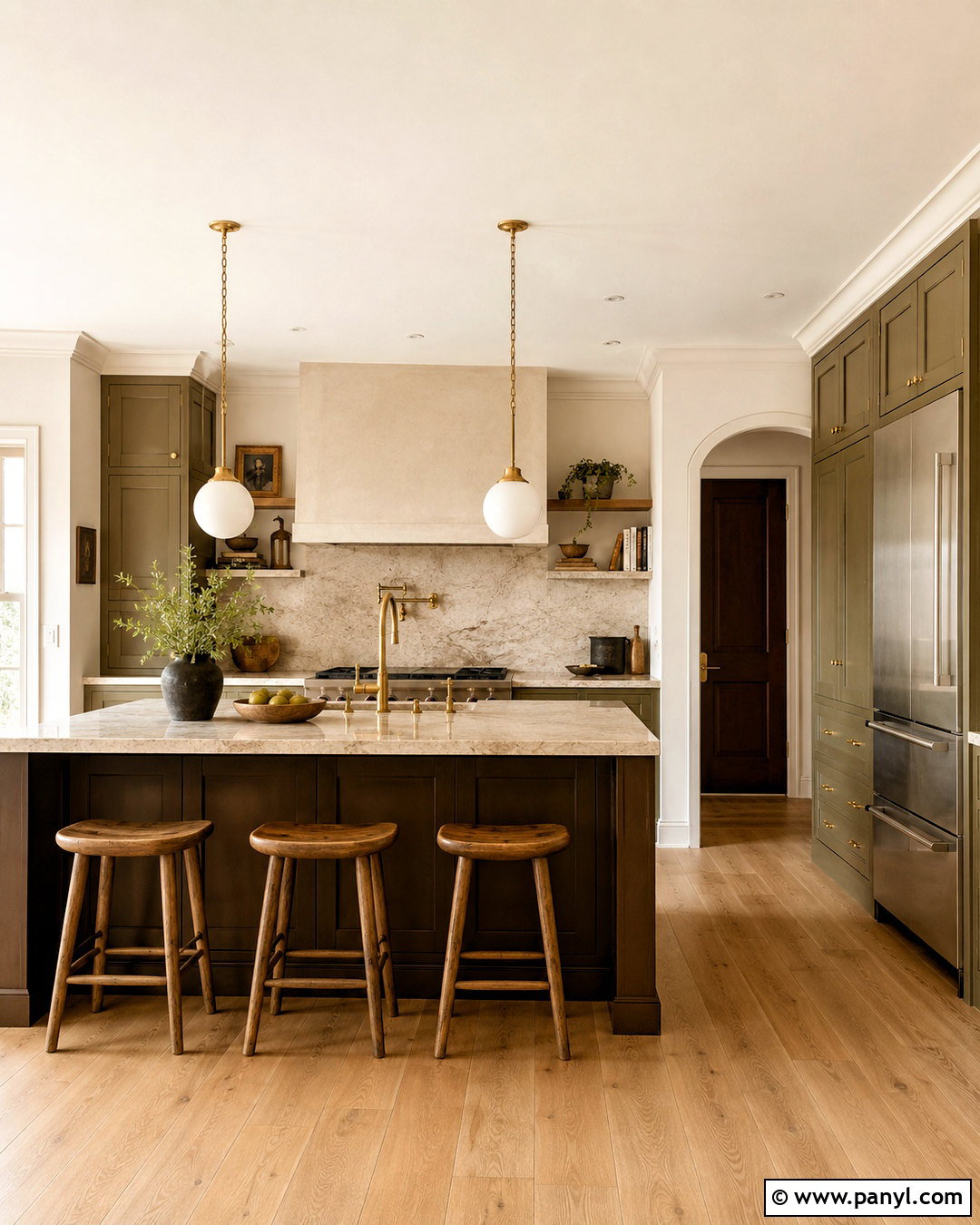
Bronze brown painted cabinets bring an earthy green-gold undertone to a kitchen, making them an excellent partner for warm stone and aged metals. Use the color on full-height cabinetry and a large central island, while keeping the walls creamy off-white. Select honed beige quartzite for the countertops and backsplash to introduce natural movement without excessive contrast. White oak flooring and counter stools lighten the lower half of the space. Choose aged brass cabinet pulls, a plaster range hood, and oversized milk-glass pendants for a softly traditional finish. A few open oak shelves can display pale ceramics and everyday glassware. Because bronze brown shifts with the light, test it beside every fixed surface. The resulting kitchen feels rich and distinctive while remaining calm enough for daily life.
16. Blackened Brown Paint
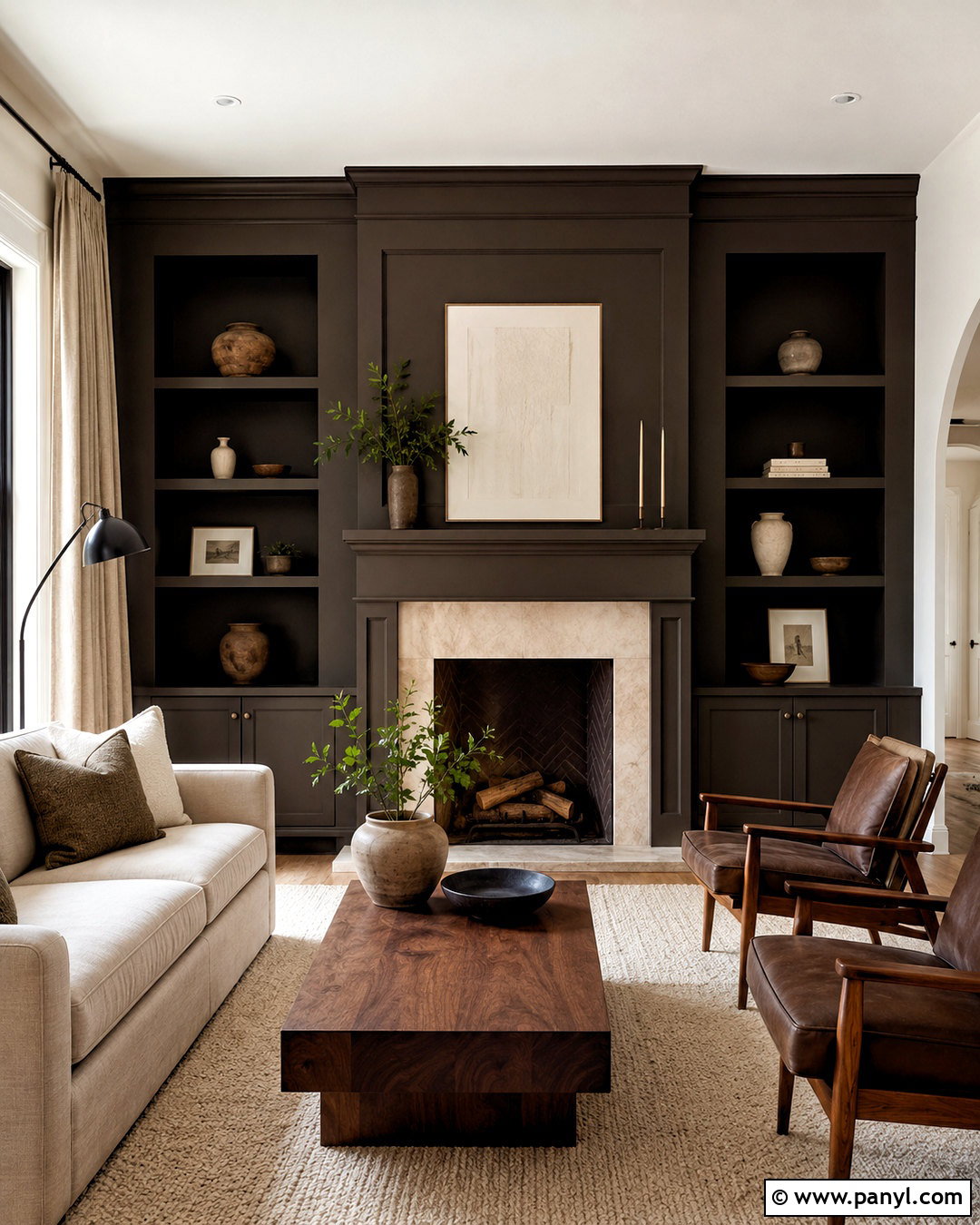
Blackened brown paint provides the depth of black with a softer, warmer character, making it effective around a living room fireplace. Paint the fireplace wall, mantel, and adjacent built-ins in the same deep brown. Keep the remaining walls a balanced warm white so the focal area has room to stand out. Use pale limestone around the firebox and repeat that color in an oatmeal sofa and ivory wool rug. Walnut lounge chairs, a glass coffee table, and slim blackened-bronze lighting maintain the tailored effect. Style the shelves with light pottery, books, and a few framed pieces rather than filling every opening. Full-length taupe curtains add softness at the windows. This complete arrangement makes the fireplace visually important without allowing the dark feature wall to overwhelm the room.
17. Red Brown Paint
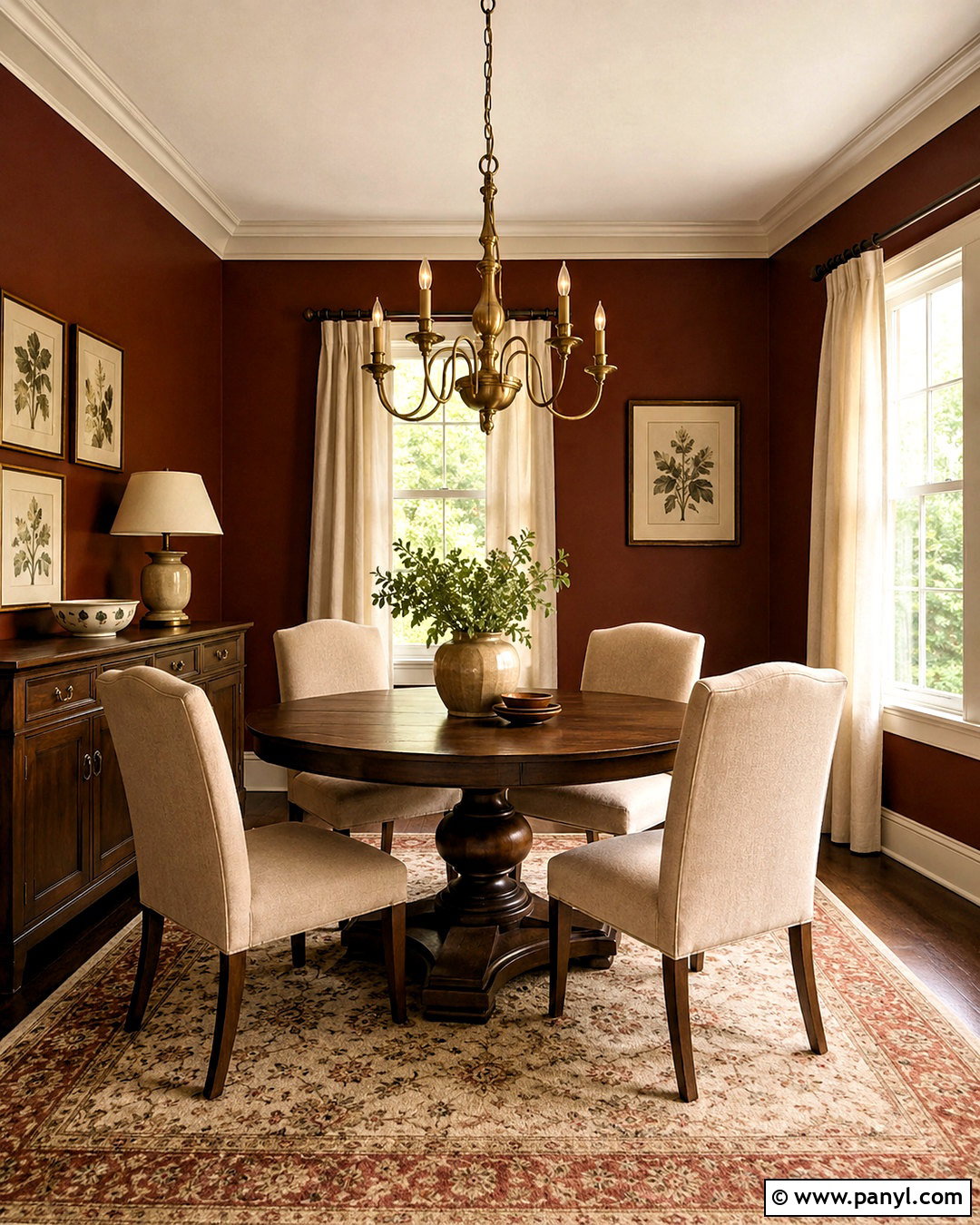
Red brown paint creates an energetic dining room when paired with warm neutrals and restrained traditional details. Cover the walls in the rich color and use muted ivory on the ceiling, baseboards, and window trim. Choose a dark oak pedestal table with dining chairs upholstered in natural flax linen. A cream and rust patterned rug anchors the arrangement while connecting the furniture to the walls. Hang an aged brass chandelier with simple fabric shades above the table for comfortable evening light. A narrow sideboard painted the same red brown can blend into the architecture and reduce visual clutter. Add cream curtains, stoneware serving pieces, and botanical prints containing muted green. This thoughtful palette emphasizes the paint’s warmth without allowing the room to become overly red, dark, or visually busy.
18. Gray Brown Paint
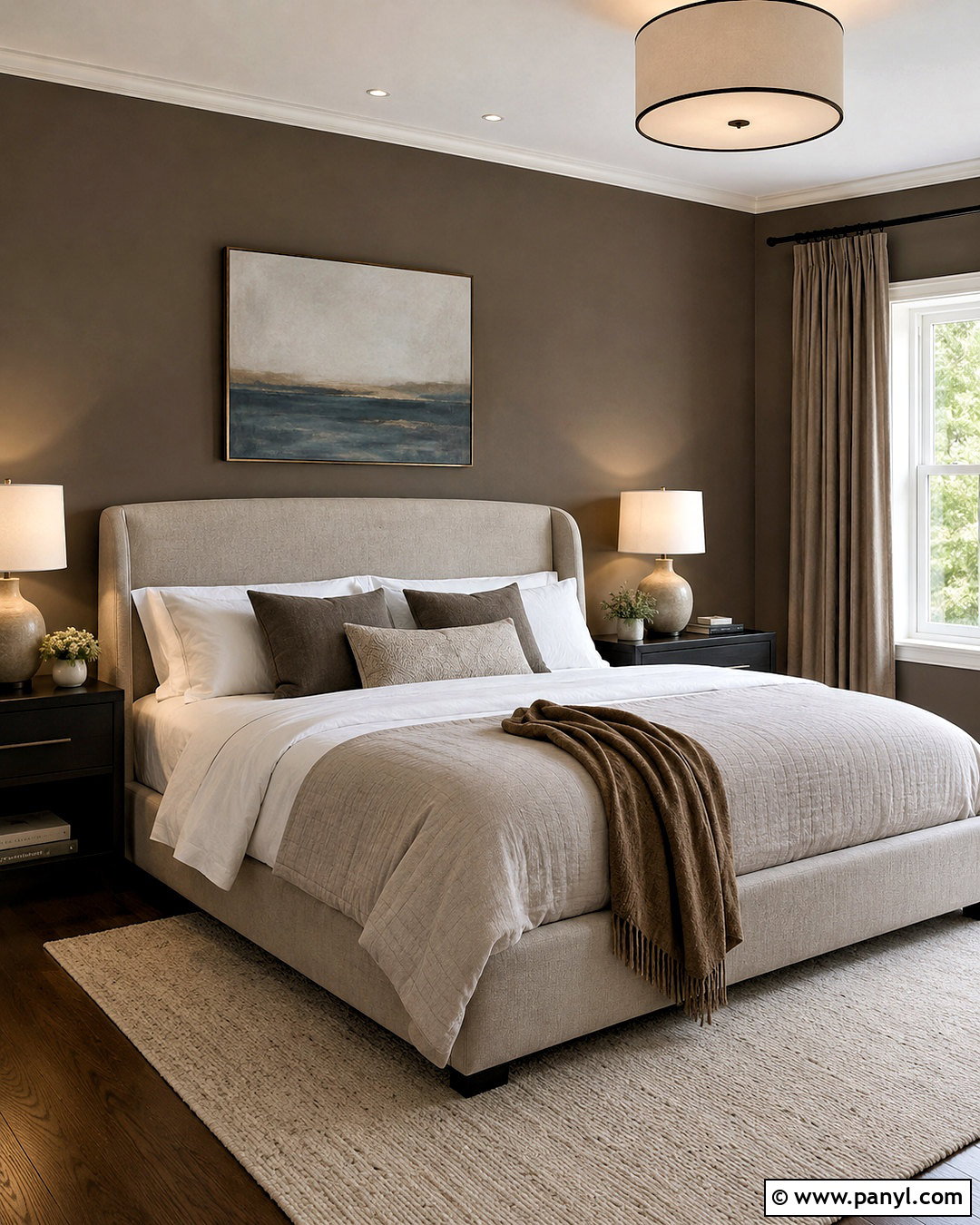
Gray brown paint can create a calm bedroom for homeowners who prefer cooler neutrals but still want more warmth than charcoal. Paint the walls in a deep mushroom-brown with a clear gray undertone, then use soft white on the ceiling and trim. A low upholstered bed in pale taupe keeps the main furniture quiet and contemporary. Layer white sheets, a quilted gray-beige coverlet, and a textured brown throw for subtle tonal variation. Add black oak nightstands, ceramic lamps, and a light wool rug beneath the bed. Muted blue artwork introduces a cool accent without competing with the walls. Use sheer curtains under heavier taupe panels to control daylight. The complete bedroom feels understated, restful, and balanced, with enough contrast to keep every surface visually distinct.
19. Olive Brown Paint
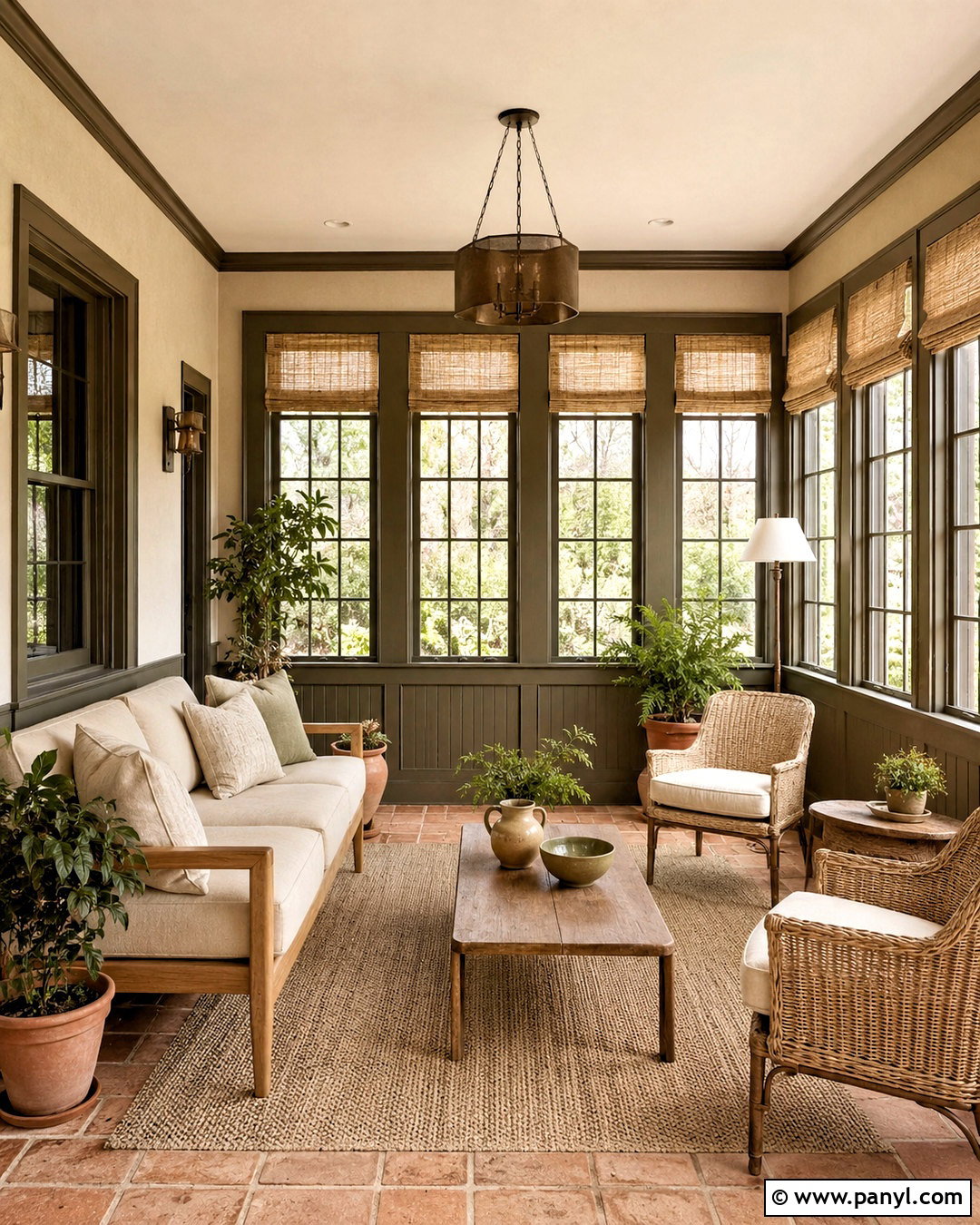
Olive brown paint feels especially natural in a sunroom because its subtle green undertone responds beautifully to outdoor views. Use it on the lower paneled walls and window trim, then paint the upper walls and ceiling a warm cream. Arrange a light oak sofa with oatmeal cushions beside two woven rattan chairs. A flatweave rug in beige, olive, and muted rust helps define the seating area without feeling heavy. Include leafy indoor plants in aged terracotta pots to strengthen the connection with the garden. Linen Roman shades soften bright sunlight while leaving the window architecture visible. Add a round oak coffee table and a simple bronze floor lamp. The finished sunroom feels grounded and fresh, combining deep paint with pale textiles, living greenery, and abundant natural texture.
20. Plum Brown Paint
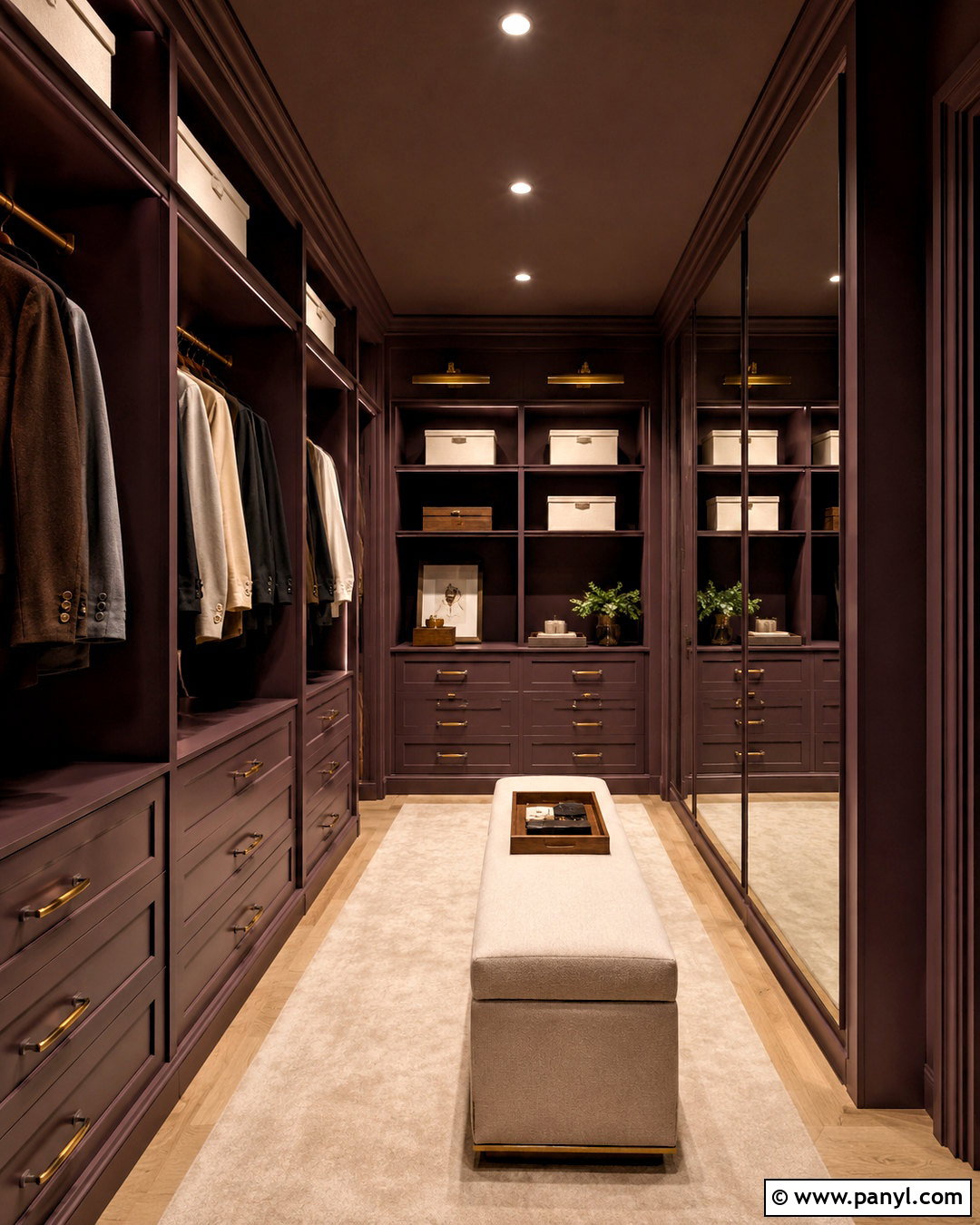
Plum brown paint brings a subtle purple undertone to a dressing room or walk-in closet, creating richness without looking overly sweet. Color-drench the walls, ceiling, shelving, and drawer fronts for a seamless built-in effect. Place a small upholstered bench in pale blush-beige at the center and add a warm ivory runner beneath it. Aged brass handles, hanging rails, and picture lights provide contrast and useful reflection. Use full-height mirrors on one wall to increase brightness and make outfit planning easier. Interior shelf lighting ensures clothing colors remain clear against the dark background. Keep storage boxes and trays in cream, taupe, and walnut for consistency. The finished room feels polished and organized, with plum brown serving as a sophisticated background rather than a loud decorative statement.
Conclusion:
The best dark brown paint colors do more than make a room look dramatic. They establish a warm foundation for furniture, lighting, textiles, and architectural details. Espresso and blackened brown suit structured spaces, while chocolate and mocha feel softer and more relaxed. Red, olive, gray, and plum undertones can also help the paint coordinate with existing floors, stone, and woodwork. Before committing, apply large samples to several walls and observe them during the morning, afternoon, and evening. Then balance the chosen brown with pale materials, reflective finishes, and layered lighting. With careful planning, dark brown can feel inviting and sophisticated in bedrooms, kitchens, workspaces, bathrooms, gathering rooms, and exterior schemes.

Related Ideas and Inspiration:
Leave a Reply