
Patina metal brings depth, character, and a lived-in finish to both indoor and outdoor spaces. Copper can shift toward blue-green, unlacquered brass becomes darker and warmer, and weathering steel develops an earthy rust-colored surface. These changing finishes work especially well beside natural stone, warm wood, handmade tile, and lush planting. They can also soften modern rooms that otherwise feel too new or polished. The key is creating a complete look around the metal rather than treating it as a random accent. Consider color balance, nearby materials, maintenance, moisture, and how the surface may evolve with age. Copper, brass, bronze, zinc, and iron all weather differently, making each application distinctive. () Here are 20 patina metal ideas for creating a cohesive home or garden design.

1. Patina Copper Kitchen Backsplash
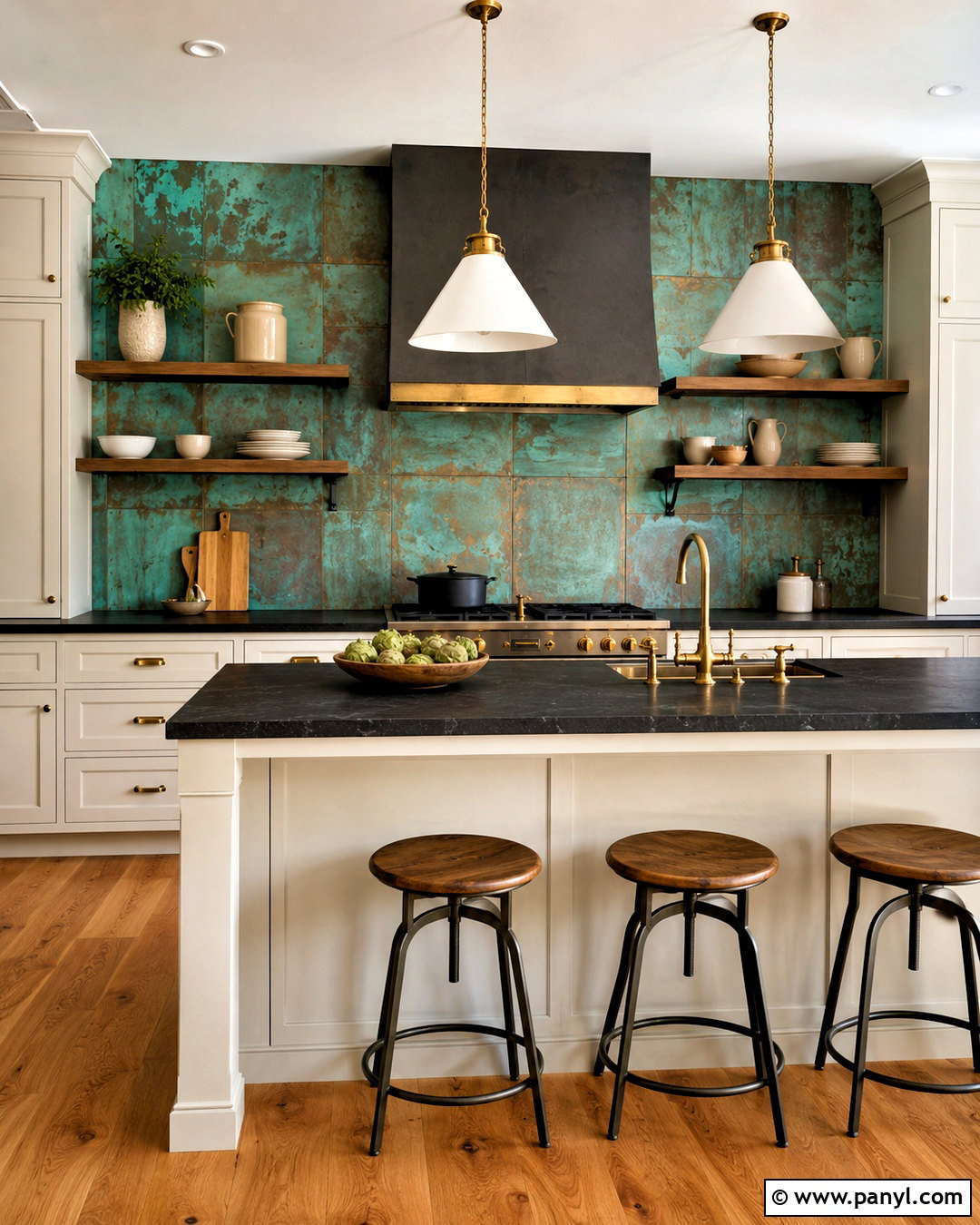
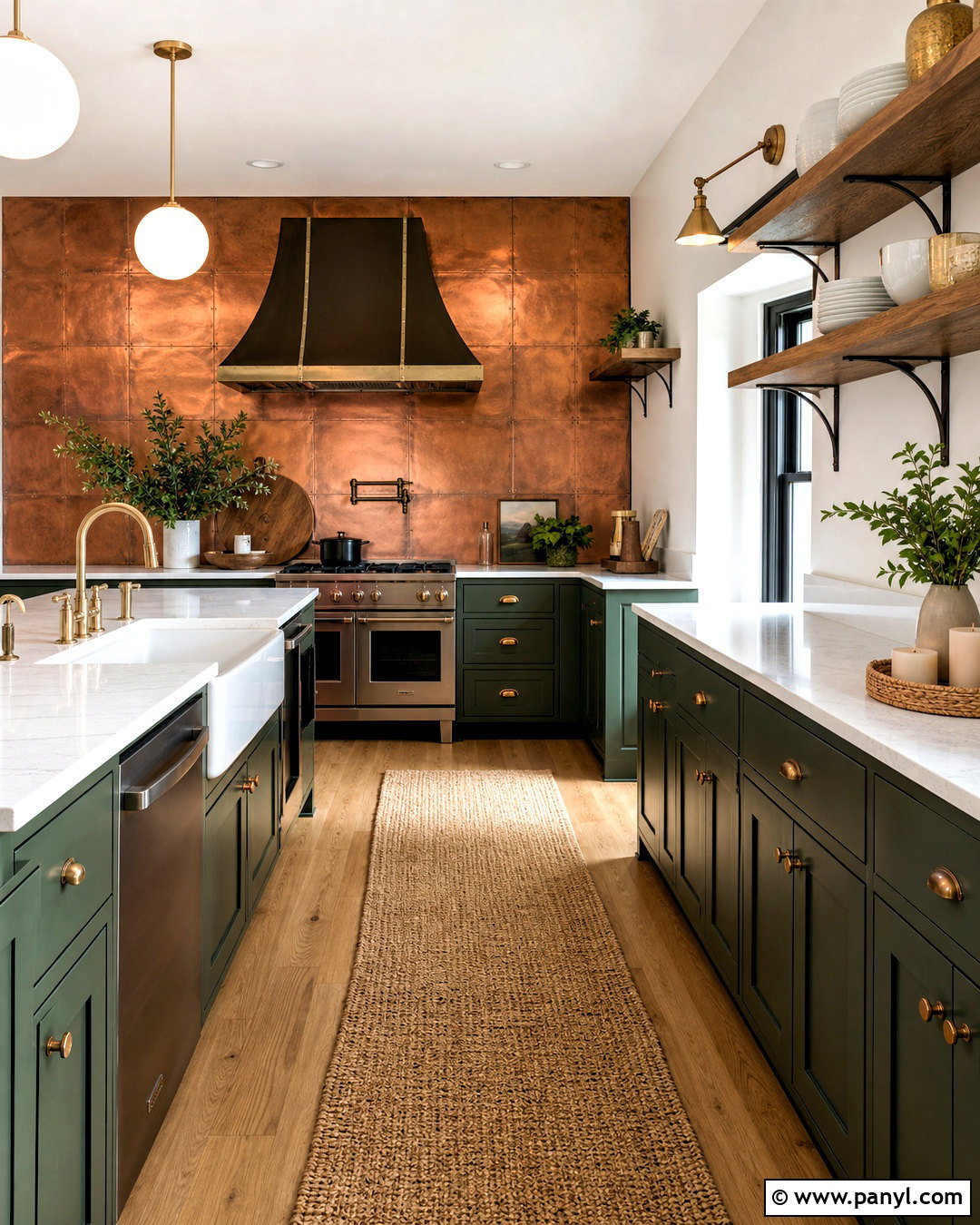
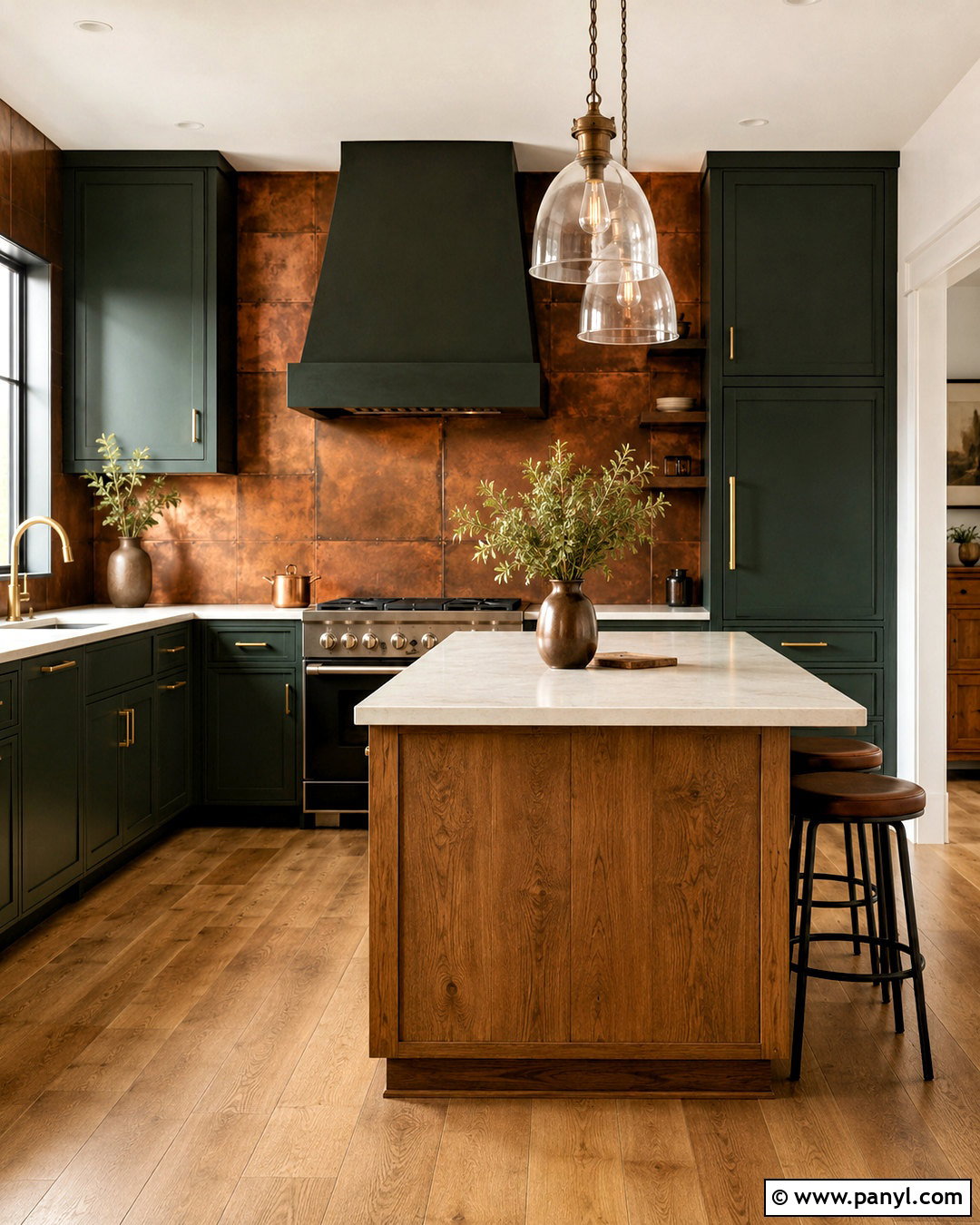
A patina copper backsplash can turn a practical kitchen wall into a rich, textured focal point. Use blue-green copper panels behind the range, then continue them beneath open oak shelves for a connected appearance. Choose warm white cabinets so the changing copper color remains prominent without making the room feel heavy. Honed black granite countertops provide a calm transition between the patina and cabinetry. Add aged brass hardware, cream ceramic dishes, and medium-toned oak flooring to reinforce the natural palette. Keep the rest of the walls simple and bright. A clear protective finish may be useful near cooking areas where grease and frequent cleaning could affect the surface. This complete scheme feels artisanal, inviting, and well suited to modern farmhouse or transitional kitchens.
2. Patina Metal Range Hood
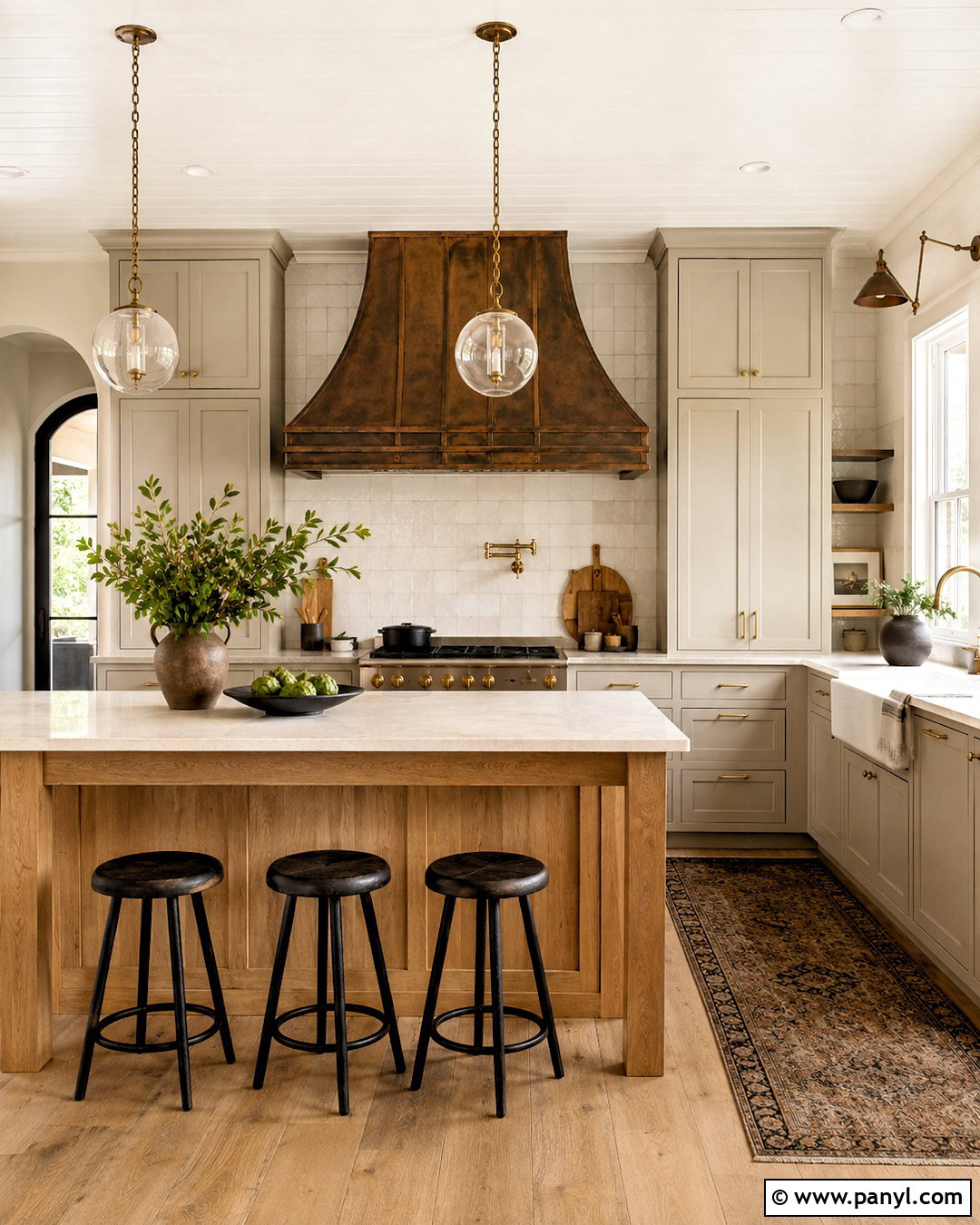
Make the range area the center of the kitchen with a wide patina metal hood in aged copper or darkened brass. A gently curved hood works beautifully above a substantial range, while a straight, box-shaped version suits a more contemporary room. Frame it with soft greige cabinets and a backsplash of creamy handmade tile. Use white oak for the island and repeat the hood’s warm brown tones through antique brass faucets and cabinet pulls. Simple counter stools, pale stone countertops, and linen Roman shades keep the metal from overpowering the space. Because the hood already has a varied surface, avoid adding too many competing patterns. The result is a balanced kitchen where the patina looks intentional, functional, and naturally connected to every surrounding finish.
3. Patina Zinc Kitchen Island
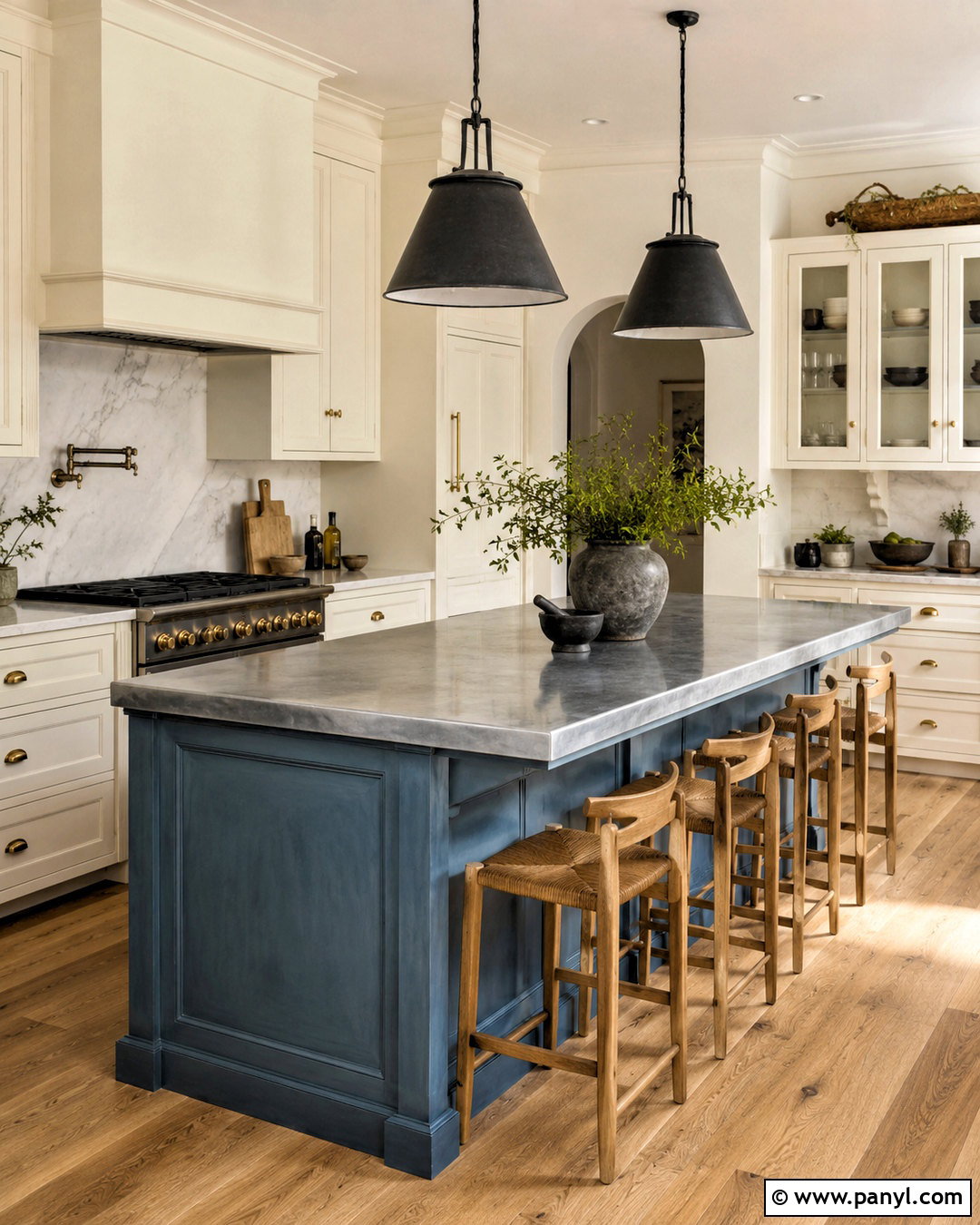
A patina zinc island creates an inviting workspace with the relaxed character of an old café counter. Choose a large rectangular island with a zinc-wrapped top, softly rounded edges, and a deep charcoal or muted blue base. Surround it with warm white perimeter cabinets, lightly veined quartz counters, and wide-plank oak flooring. Black metal pendants add definition overhead without competing with the silvery gray zinc. Complete the island with simple wood stools and a shallow bowl of greenery. Zinc can show marks, color changes, and subtle variations, so it works best for homeowners who appreciate an evolving surface. Keep hot cookware and harsh cleaners away from the top. The finished room feels casual, collected, and practical rather than overly polished.
4. Patina Brass Bathroom Vanity
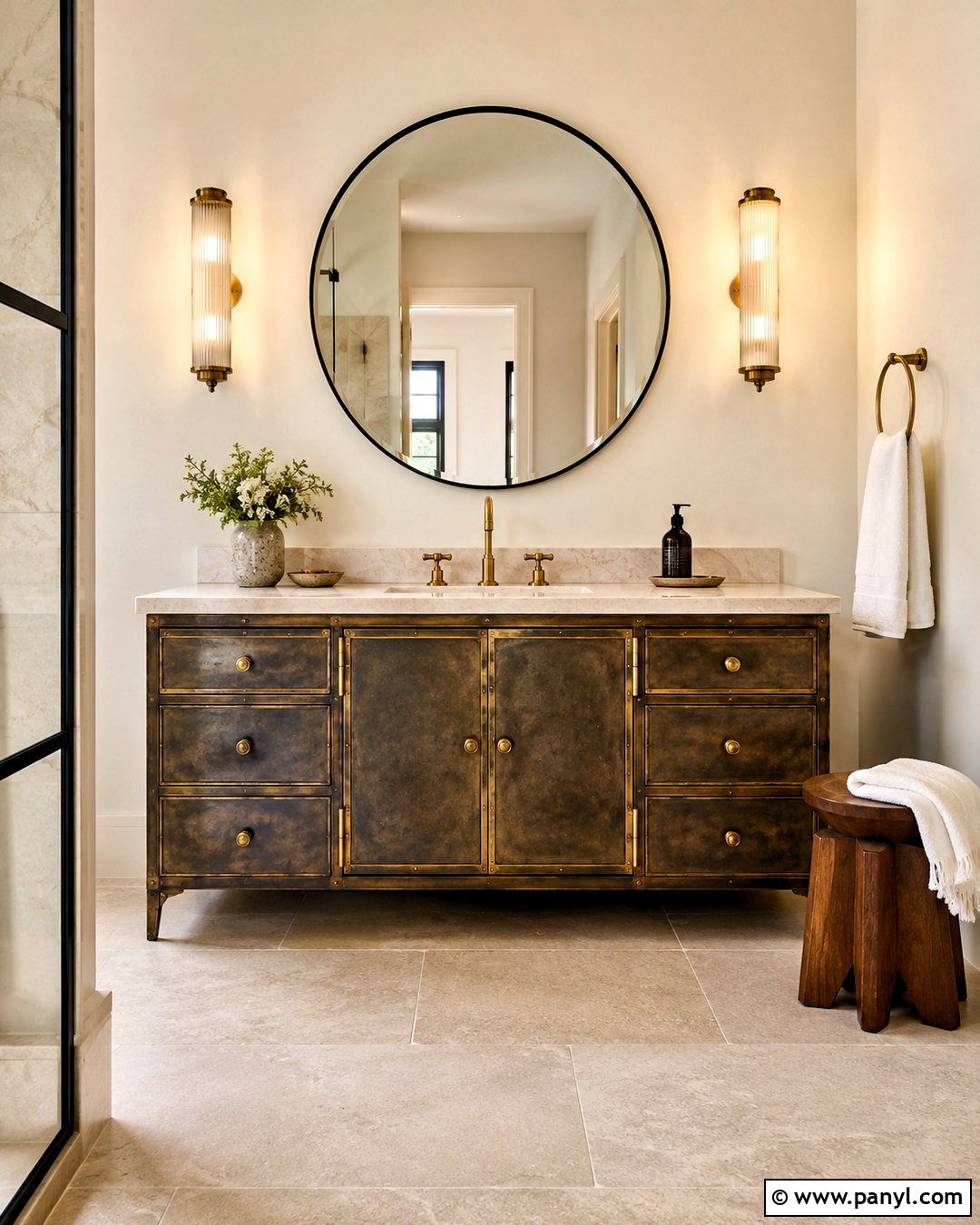
Could a small bathroom feel warmer without relying on bold wall color? A vanity wrapped in darkened patina brass provides that warmth while creating a memorable focal point. Pair the metal base with a creamy marble top, an undermount sink, and an unlacquered brass faucet. Use soft ivory walls and pale limestone floor tiles to brighten the room. A large rounded mirror with a slim black frame introduces contrast, while ribbed glass sconces provide a classic detail. Add folded white towels, a natural wood stool, and one leafy plant to soften the harder surfaces. Keep decorative accessories minimal because the mottled brass already supplies movement. This complete look works especially well in a compact guest bathroom where one carefully chosen material can establish the entire design.
5. Patina Copper Powder Room Sink
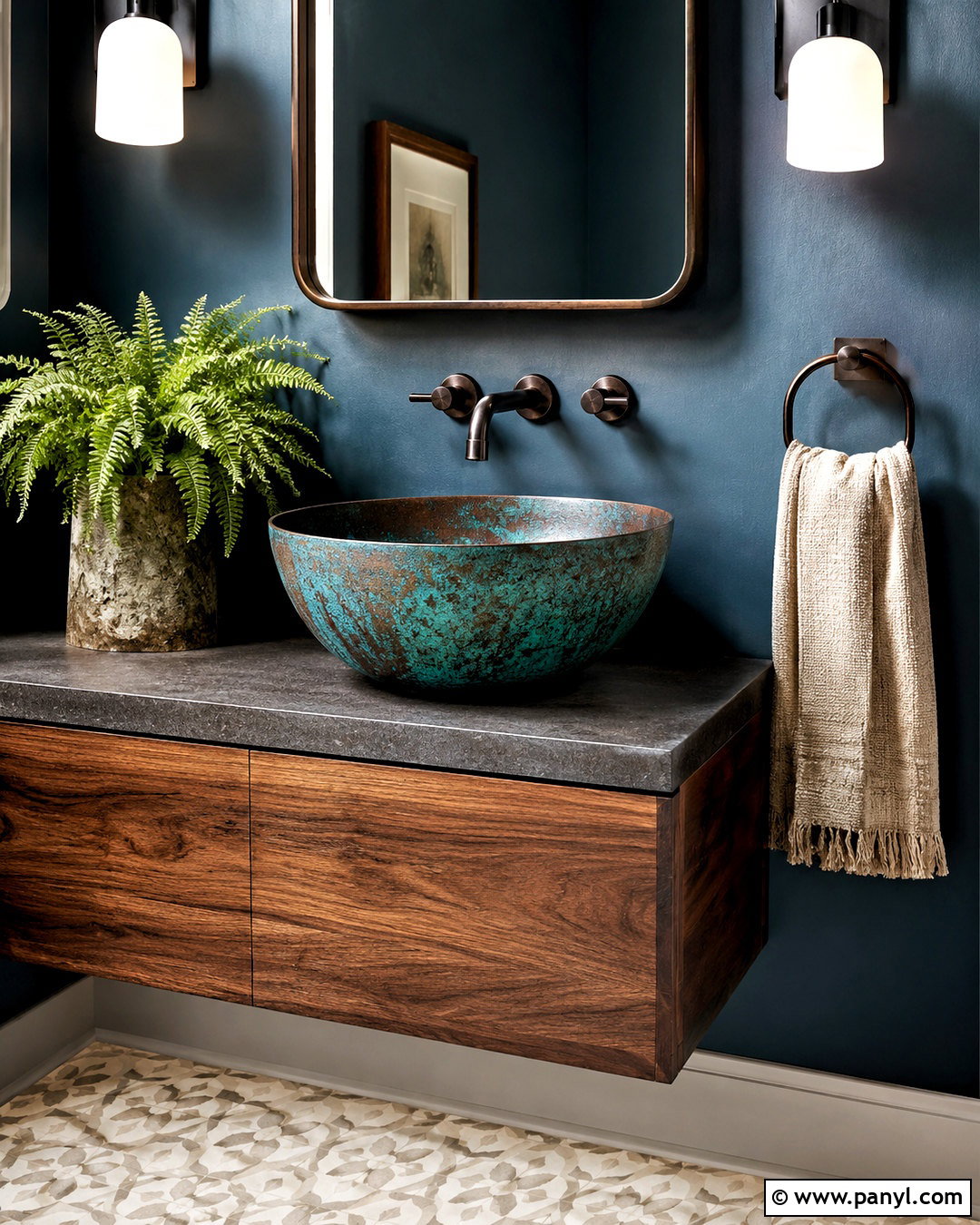
For a small powder room, a hammered copper vessel sink can anchor a dramatic but welcoming design. Place it on a floating walnut vanity with a slim charcoal stone countertop. Choose a warm bronze wall-mounted faucet and repeat that finish in the mirror frame and hand towel ring. Deep teal walls connect with the sink’s blue-green patina, while a pale patterned floor prevents the room from becoming too dark. Install one sculptural white glass sconce above the mirror for clean contrast. A woven basket, cream hand towels, and a small fern complete the space. Since copper surfaces can react to different products, use gentle cleaning methods appropriate for the finish. The room will feel layered and special without requiring excessive furniture or decoration.
6. Patina Metal Fireplace Surround
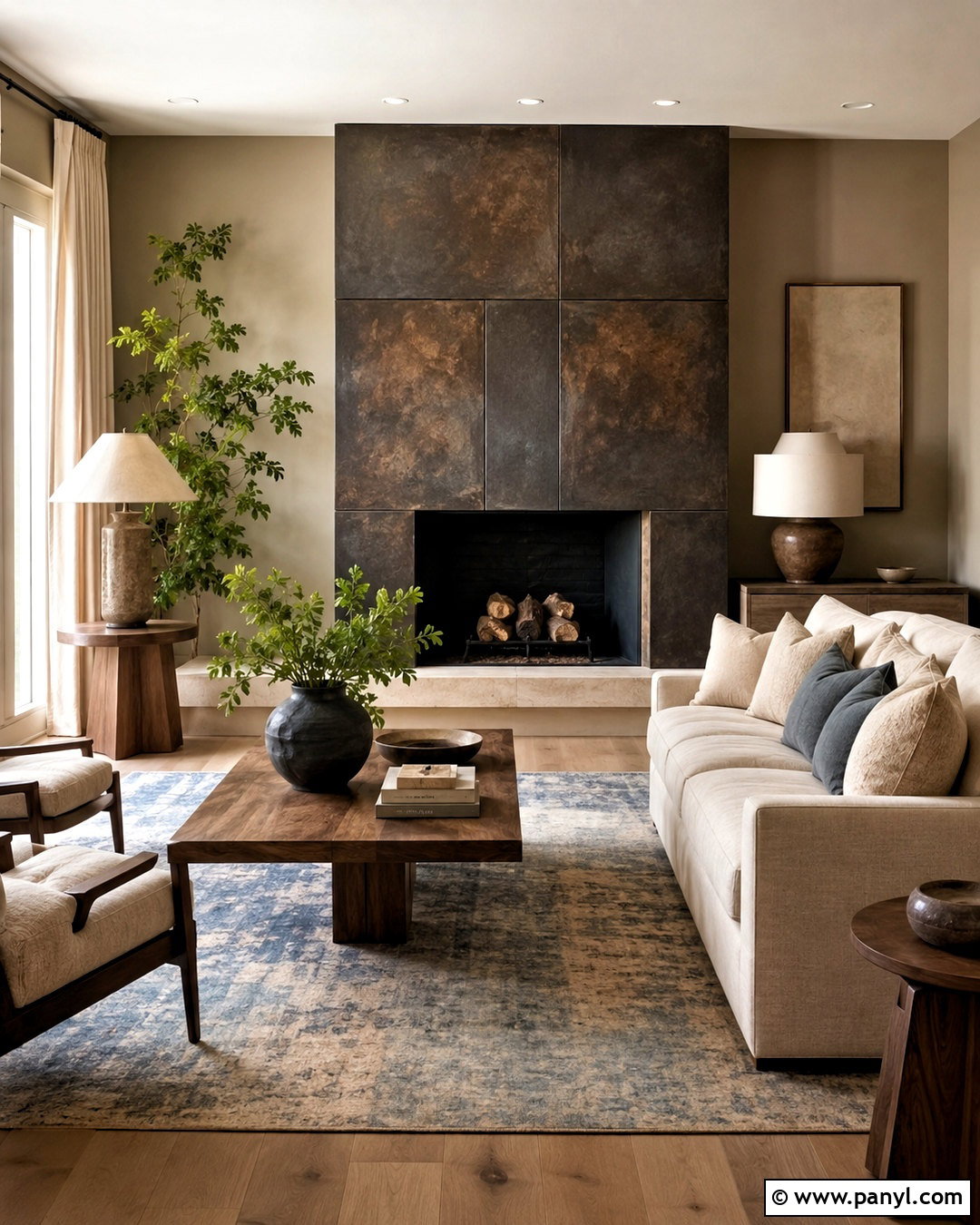
Cool evenings feel more inviting around a fireplace framed with deep bronze and black patina metal. Cover the surround from the firebox to the mantel with broad metal panels, allowing subtle tonal variation to remain visible. Add a simple limestone hearth to lighten the composition and provide contrast. Warm taupe walls, a low oatmeal sofa, walnut side tables, and a faded blue rug establish a comfortable living room around the fireplace. Use linen curtains and ceramic table lamps instead of additional shiny metal accents. A single abstract artwork above the mantel keeps the arrangement modern and uncluttered. Check that the chosen material and installation method are appropriate for fireplace temperatures. This design combines an industrial surface with soft furnishings, making the whole room feel refined rather than cold.
7. Patina Metal Living Room Wall
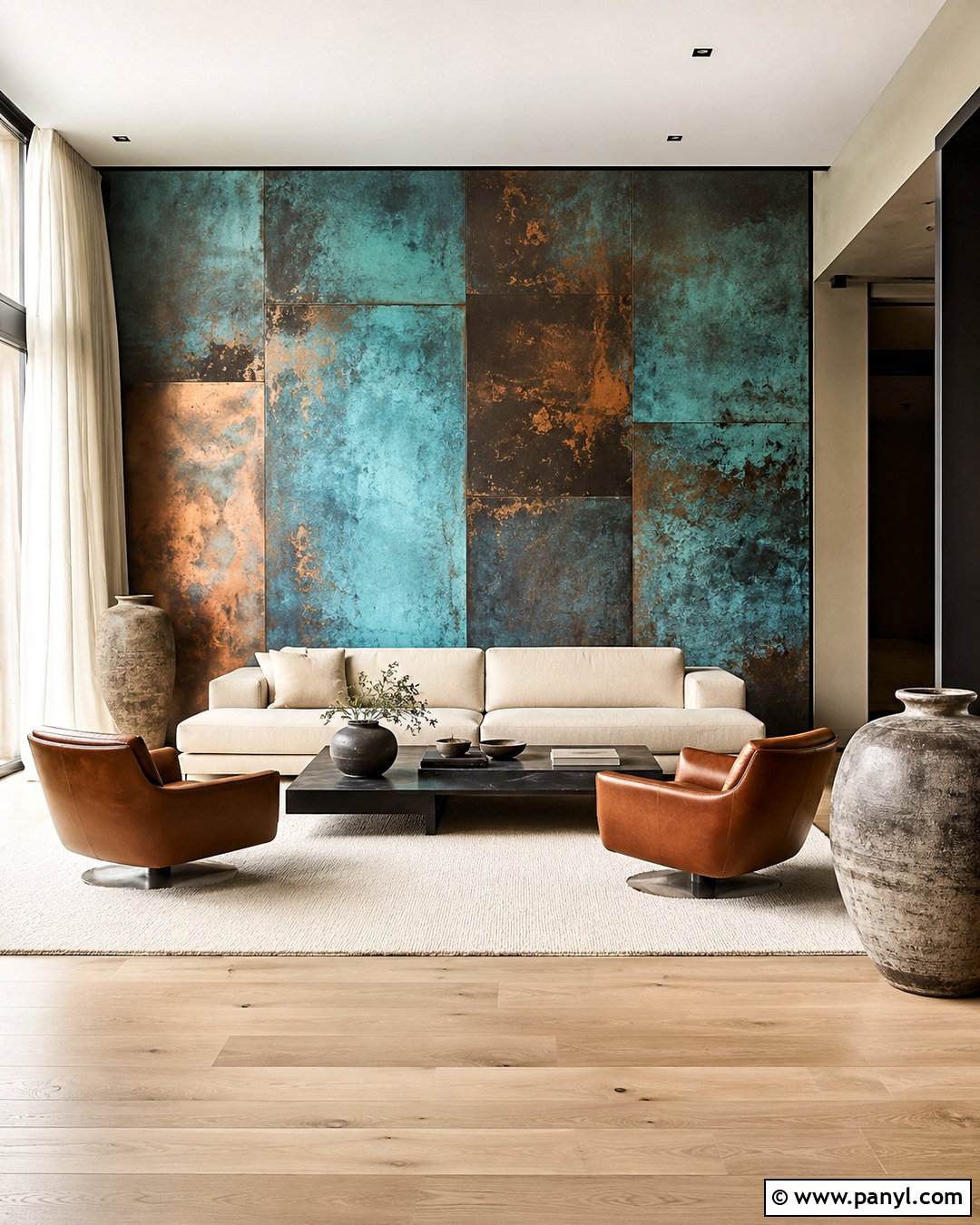
An aged metal feature wall can give a modern living room depth without relying on busy wallpaper. Use large patina copper panels behind a streamlined cream sofa, choosing a finish that blends muted turquoise, brown, and charcoal. Balance the strong wall with pale oak flooring, a textured ivory rug, and two cognac leather chairs. A low black coffee table grounds the seating area, while off-white curtains keep natural light moving through the room. Add a few oversized ceramic vessels and restrained greenery instead of many small accessories. Concealed picture lighting can highlight the surface variation after dark. Limit the metal to one wall so it remains distinctive. The finished design feels artistic and architectural, yet the familiar furniture shapes keep it comfortable for everyday living.
8. Patina Metal Entryway Console
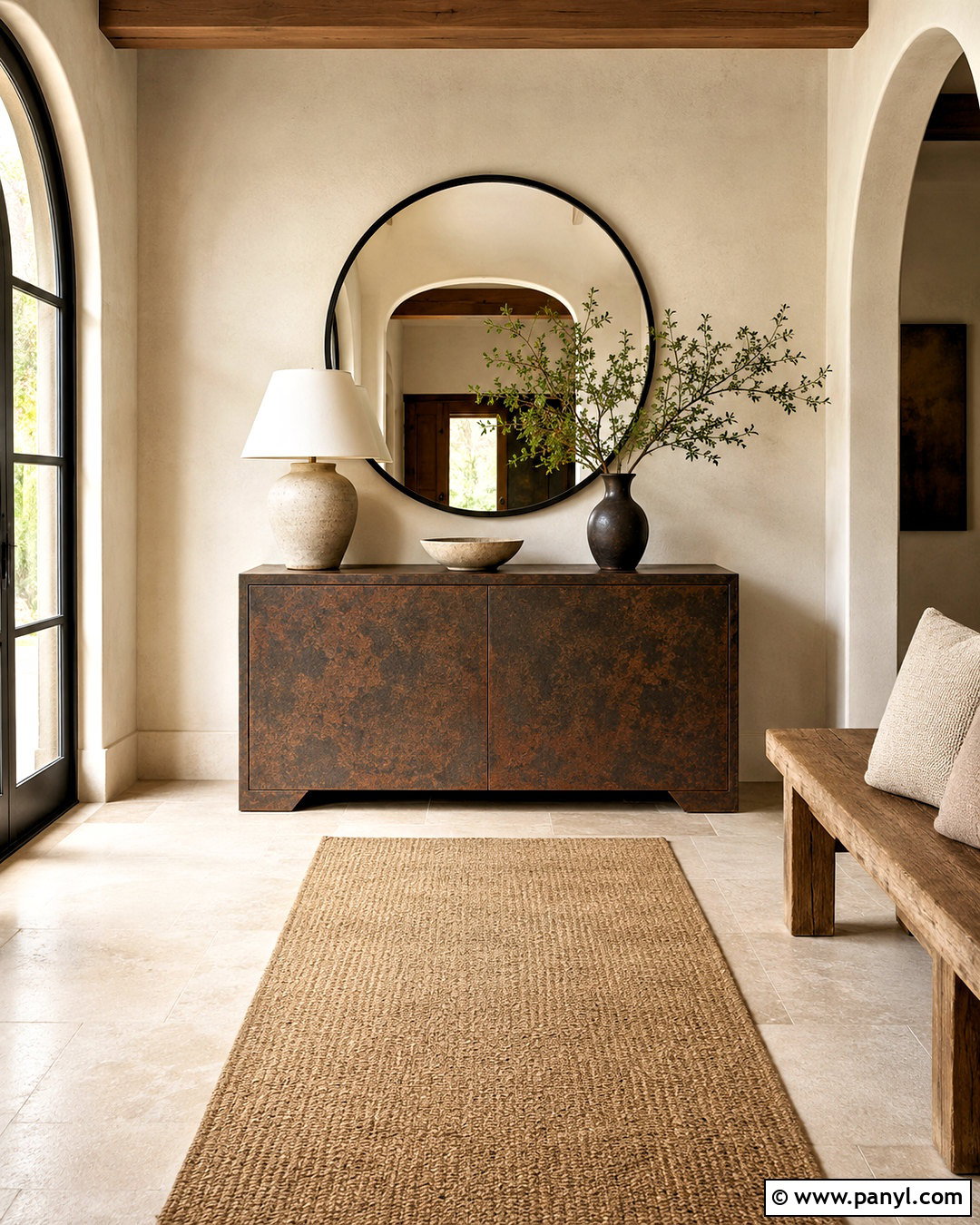
First impressions become more memorable with a patina metal console set against a calm, neutral entryway. Choose a narrow bronze or copper console with a weathered brown finish and clean rectangular lines. Hang an oversized round mirror above it, using a slim frame in matte black to sharpen the composition. Soft plaster-colored walls, pale limestone flooring, and a natural jute runner create a quiet backdrop. Style the console with one ceramic lamp, a shallow stone bowl, and a leafy branch in a simple vase. Add an oak bench on the opposite wall for removing shoes. Hidden baskets underneath can handle everyday clutter. This complete entry feels warm and organized, while the aged metal supplies enough texture to make the simple arrangement look considered and distinctive.
9. Patina Brass Dining Room Lighting
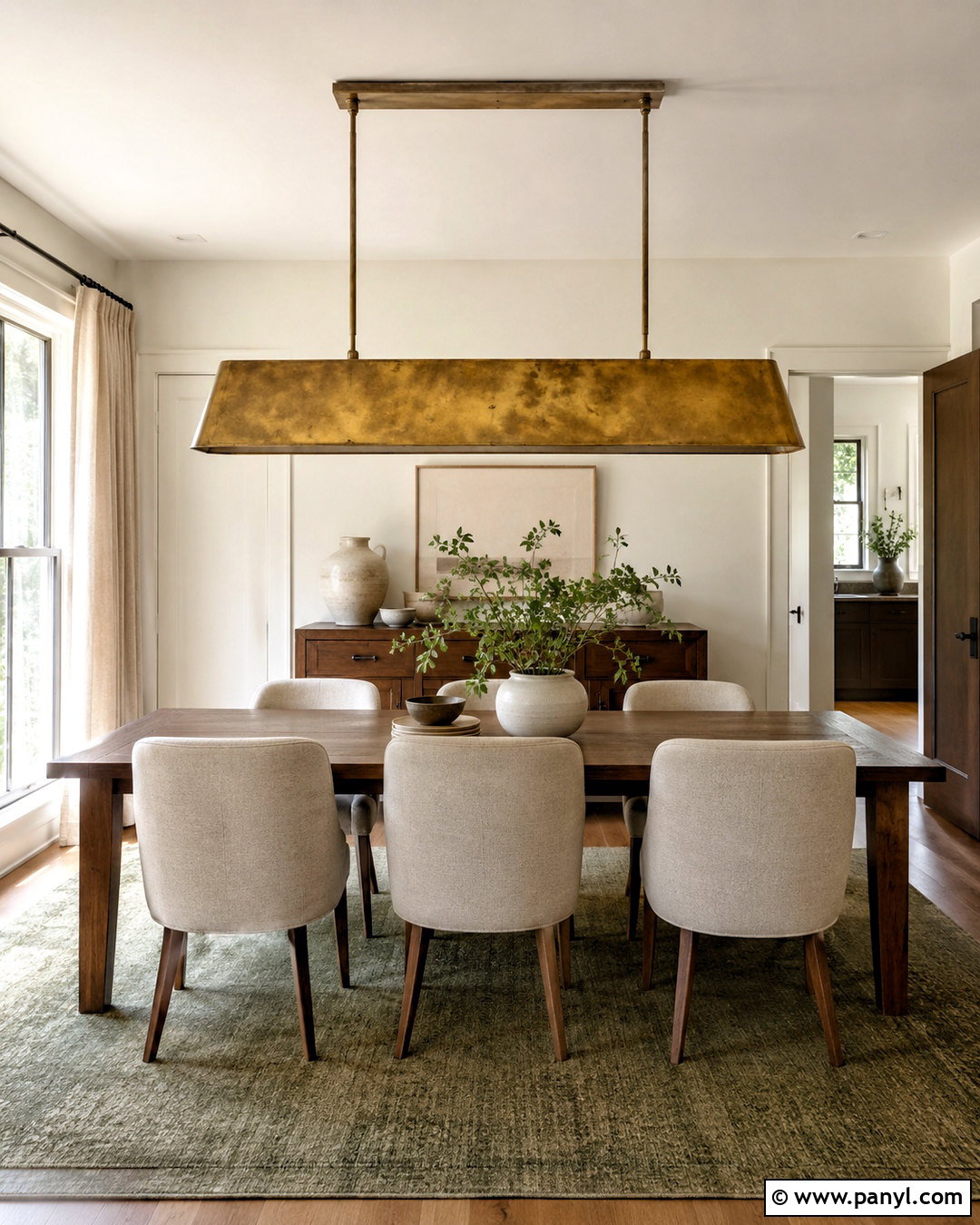
A large patina brass chandelier can set the tone for an entire dining room when its scale and supporting finishes are carefully balanced. Suspend a linear fixture above a substantial walnut table, leaving enough visual space around it so the aged surface remains easy to see. Surround the table with upholstered oatmeal chairs and place a muted olive rug underneath. Warm white walls, linen curtains, and an antique wood sideboard create a comfortable background. Repeat the brass only once through understated sideboard hardware. Use white stoneware, clear glass, and fresh greenery on the table rather than more metallic decor. The chandelier’s brown-gold variation will provide the room’s main decorative detail. This arrangement feels established and elegant without becoming formal or overly coordinated.
10. Patina Metal Bedroom Headboard
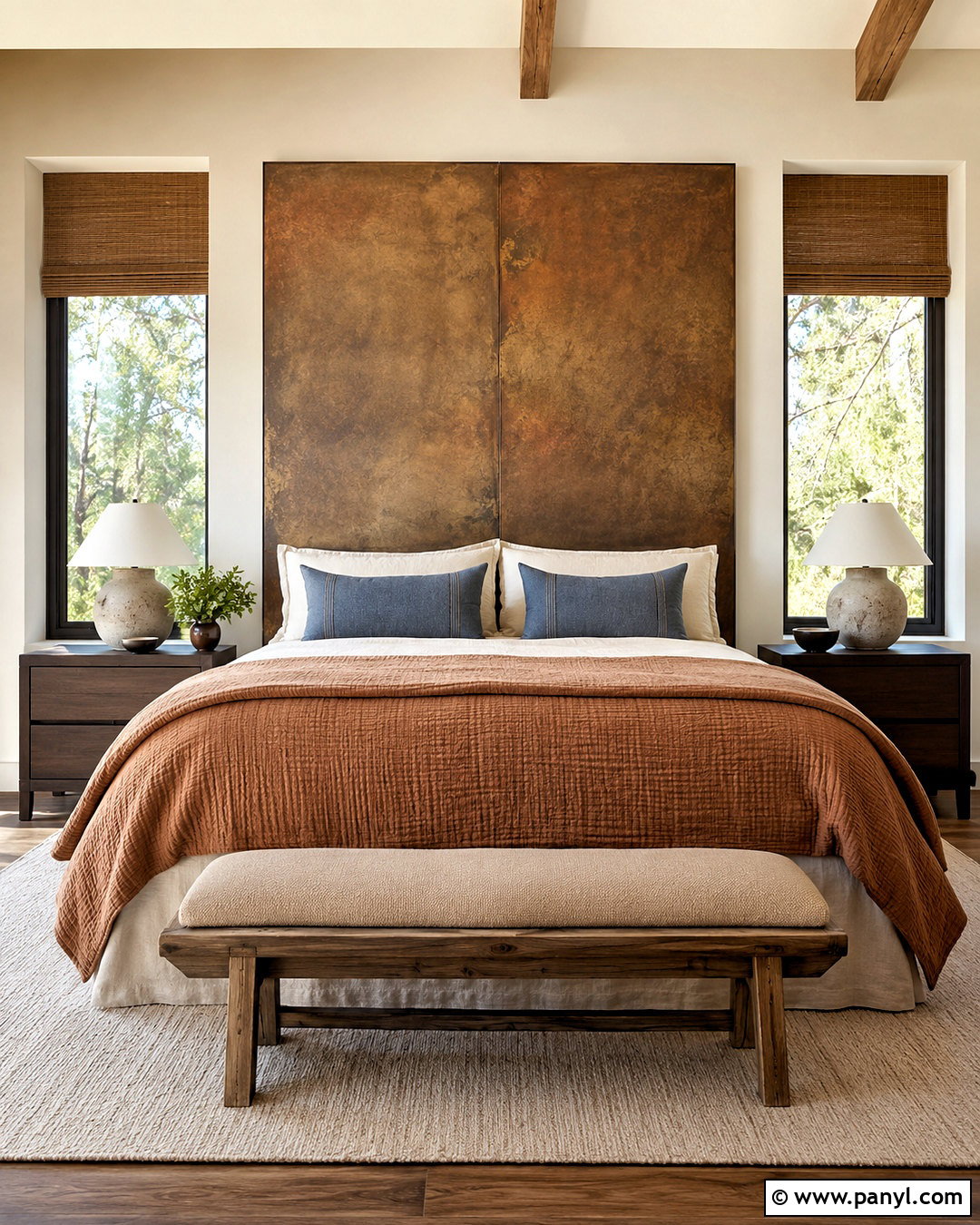
Bring quiet texture into the bedroom with a tall patina metal headboard in softened bronze or aged copper. Select a panel with a smooth shape and subtle cloud-like color variation rather than a heavily distressed surface. Place it against warm off-white walls and dress the bed with ivory linen, a clay-colored quilt, and muted blue pillows. Simple walnut nightstands connect with the brown tones in the metal. Add ceramic lamps, woven shades, and a pale wool rug to keep the room soft underfoot. Avoid mirrored furniture or polished chrome, which may interrupt the calm palette. The headboard should be securely mounted and free from rough edges. With restrained colors and tactile fabrics around it, patina metal becomes soothing and sophisticated instead of industrial.
11. Patina Metal Home Office Shelving
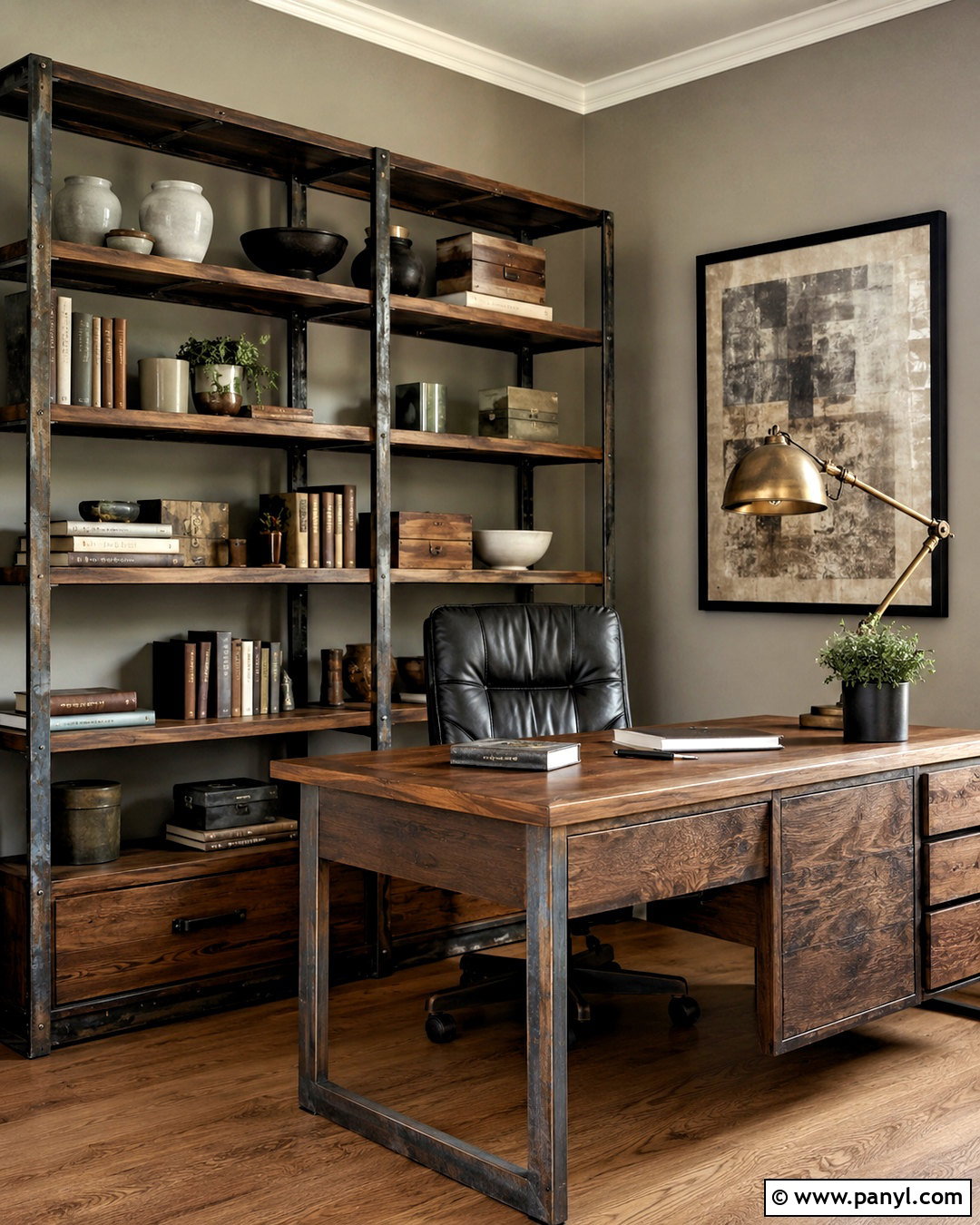
A home office can feel both practical and collected with patina metal shelving built around a sturdy wood desk. Install slim weathered steel uprights with walnut shelves across the main wall, leaving open sections for books, storage boxes, and ceramic objects. Position a simple walnut desk in front, paired with a supportive black leather chair. Choose warm gray walls and medium oak flooring to create a grounded background. A vintage-inspired brass desk lamp adds focused light, while an oatmeal curtain softens the window. Use matching document boxes to reduce visual clutter. The metal should have a sealed, smooth finish where hands and papers frequently touch it. This complete workspace combines industrial structure with warm materials, helping the room feel organized, comfortable, and appropriate for daily use.
12. Patina Metal Stair Railing
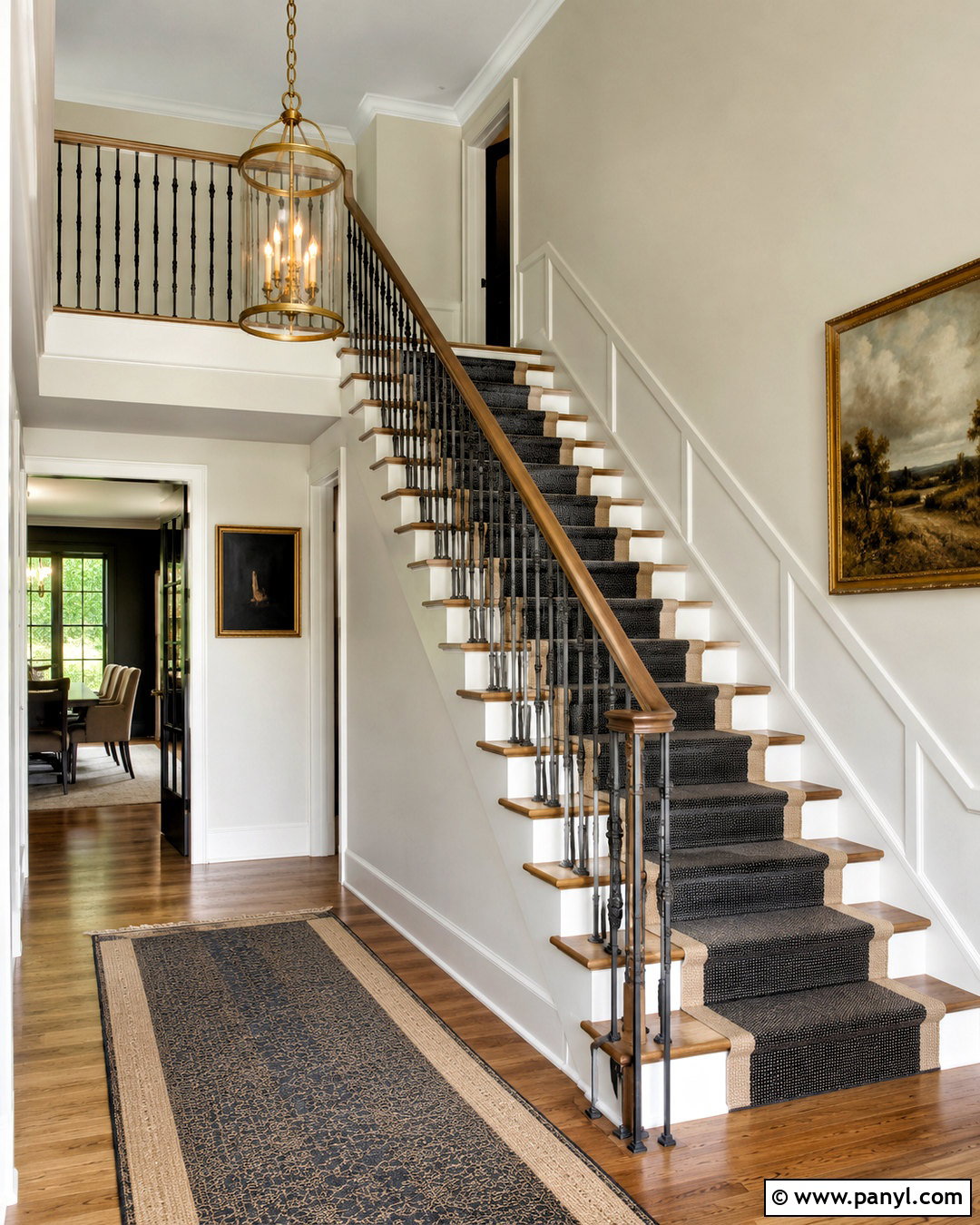
A patina metal stair railing can transform a basic passage into an architectural feature. Use slender bronze-finished balusters with a darkened, uneven surface, then top them with a smooth oak handrail for comfortable everyday contact. Pair the railing with natural oak treads, white risers, and warm ivory walls. A woven runner in muted charcoal and tan adds safety while tying the materials together. Illuminate the stairwell with a simple aged brass pendant and small wall lights placed along the ascent. Keep nearby artwork minimal so the railing remains visually clear. Confirm that spacing, height, and installation meet local safety requirements. The completed stairway feels warm and established, blending the strength of metal with wood and textiles that make the design approachable.
13. Patina Metal Front Door
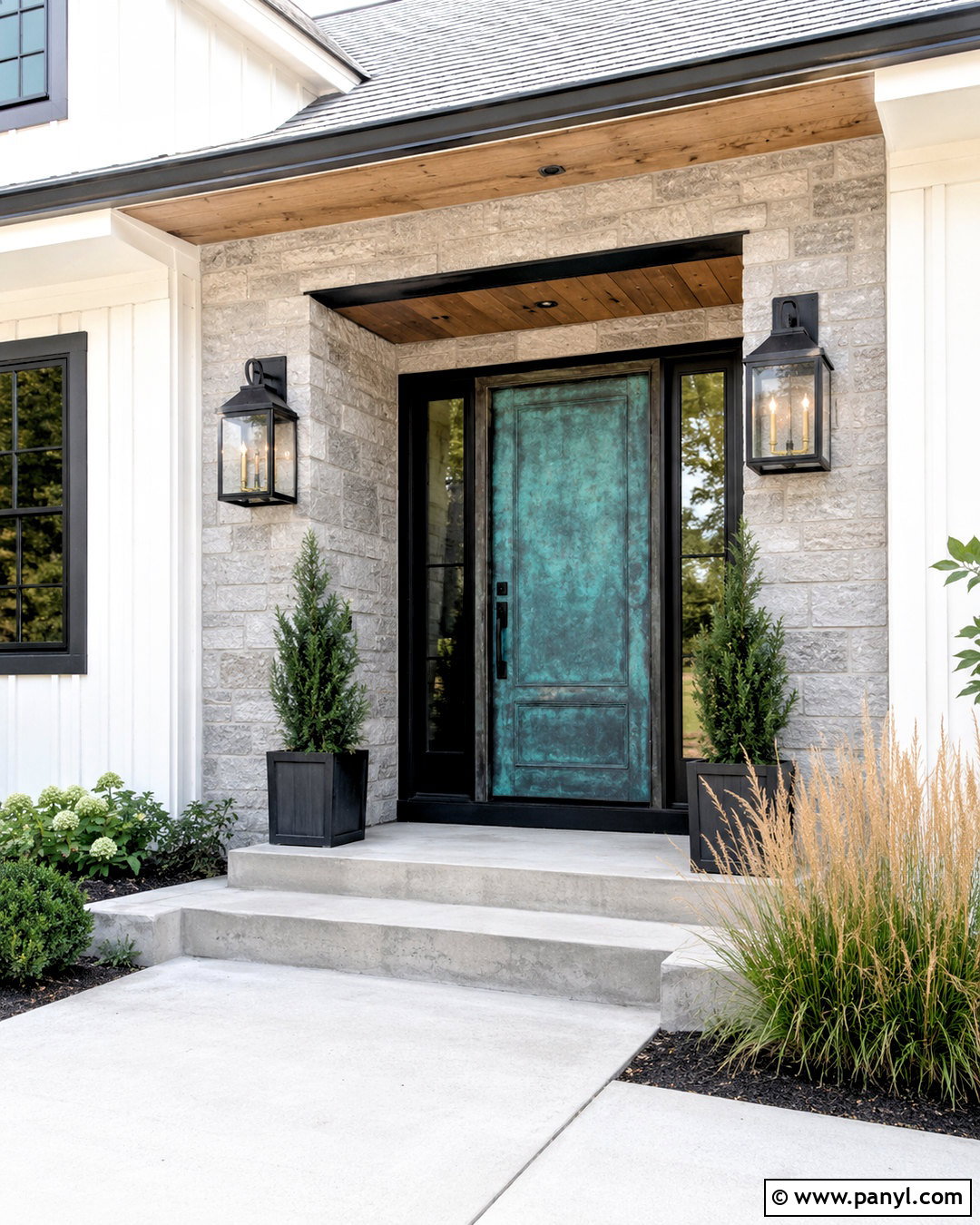
Give a simple home distinctive curb appeal with a patina copper front door framed by understated exterior finishes. Choose a solid door or metal-clad design in a blue-green copper finish, paired with charcoal hardware and clear glass sidelights. Paint the surrounding facade warm white and use medium gray stone around the foundation. A stained oak porch ceiling brings warmth overhead, while black lanterns add crisp definition. Complete the entrance with broad concrete steps, symmetrical evergreen planters, and low ornamental grasses. Keep the walkway and house numbers simple so they do not compete with the colorful door. Make sure the finish is intended for exterior exposure and decide whether it will remain sealed or continue changing. The complete entrance feels artistic, welcoming, and connected to its landscaping.
14. Patina Copper Porch Roof
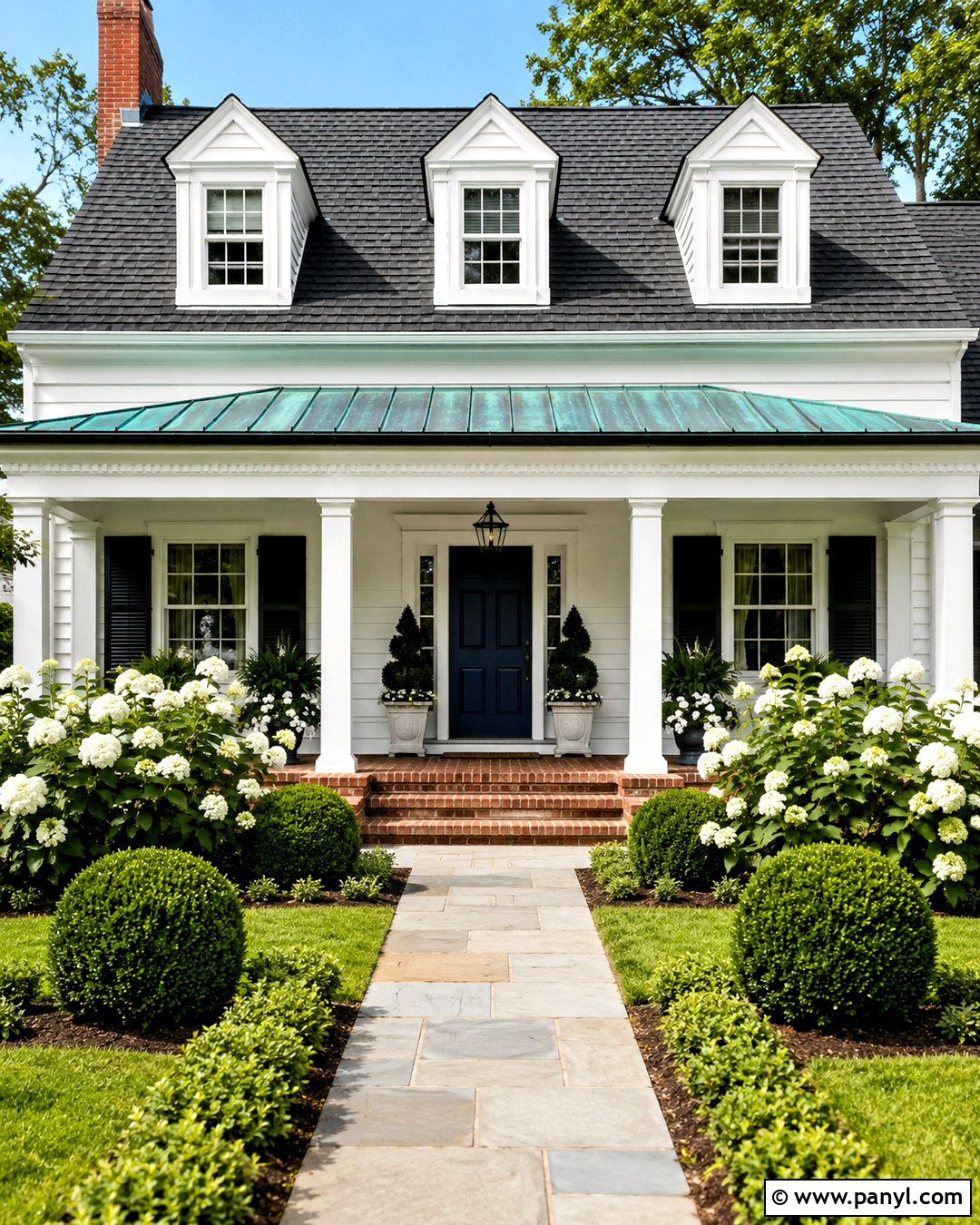
A small patina copper porch roof adds character to a traditional exterior without covering the entire home in metal. Install the blue-green roof above a centered entry, supported by simple white columns and paired with a dark navy front door. Use warm white siding, crisp trim, and a charcoal shingle roof across the main structure. Red brick steps introduce a familiar, earthy tone that complements both aged copper and navy. Finish the curb view with clipped boxwoods, white flowering shrubs, and a straight stone walkway. Copper gutters or small flashing details can connect the roof to the broader facade, but use them sparingly. This complete exterior scheme suits Colonial, cottage, and transitional homes while giving an otherwise straightforward elevation a strong focal point.
15. Patina Metal Exterior Siding
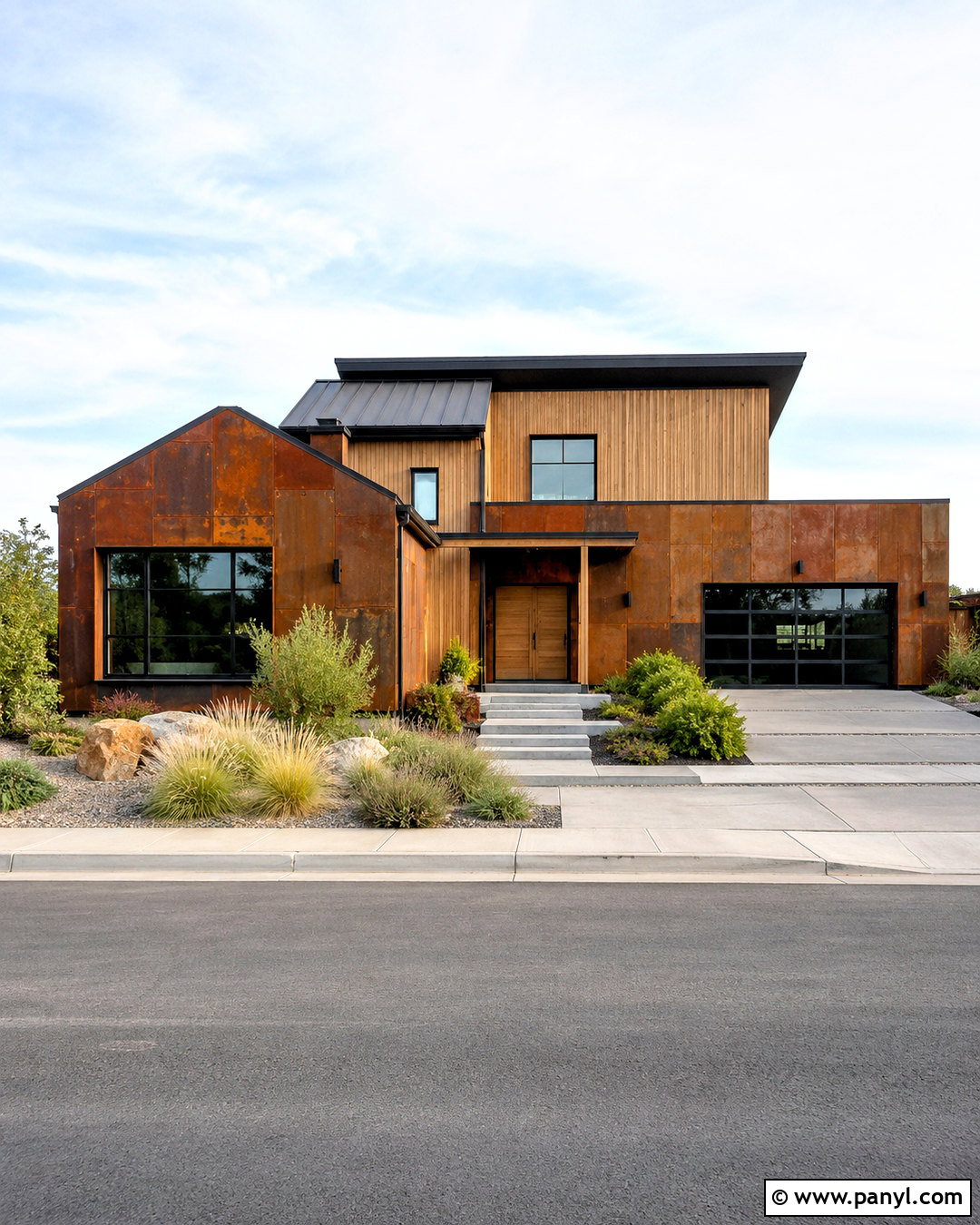
For a modern exterior, weathered metal siding can create a bold facade that still feels connected to the landscape. Cover one main volume with rust-toned weathering steel panels and balance it with sections of vertical cedar siding. Choose matte black window frames, a low charcoal roof, and a recessed entry with a warm wood door. Extend the earthy palette into the yard through gravel beds, large boulders, ornamental grasses, and drought-tolerant shrubs. A concrete walkway with broad rectangular slabs reinforces the clean architecture. Plan drainage carefully because runoff from weathering metal may stain nearby surfaces during its early stages. () Used as part of a complete material palette, the patina feels purposeful and natural rather than unfinished.
16. Patina Metal Garden Planters
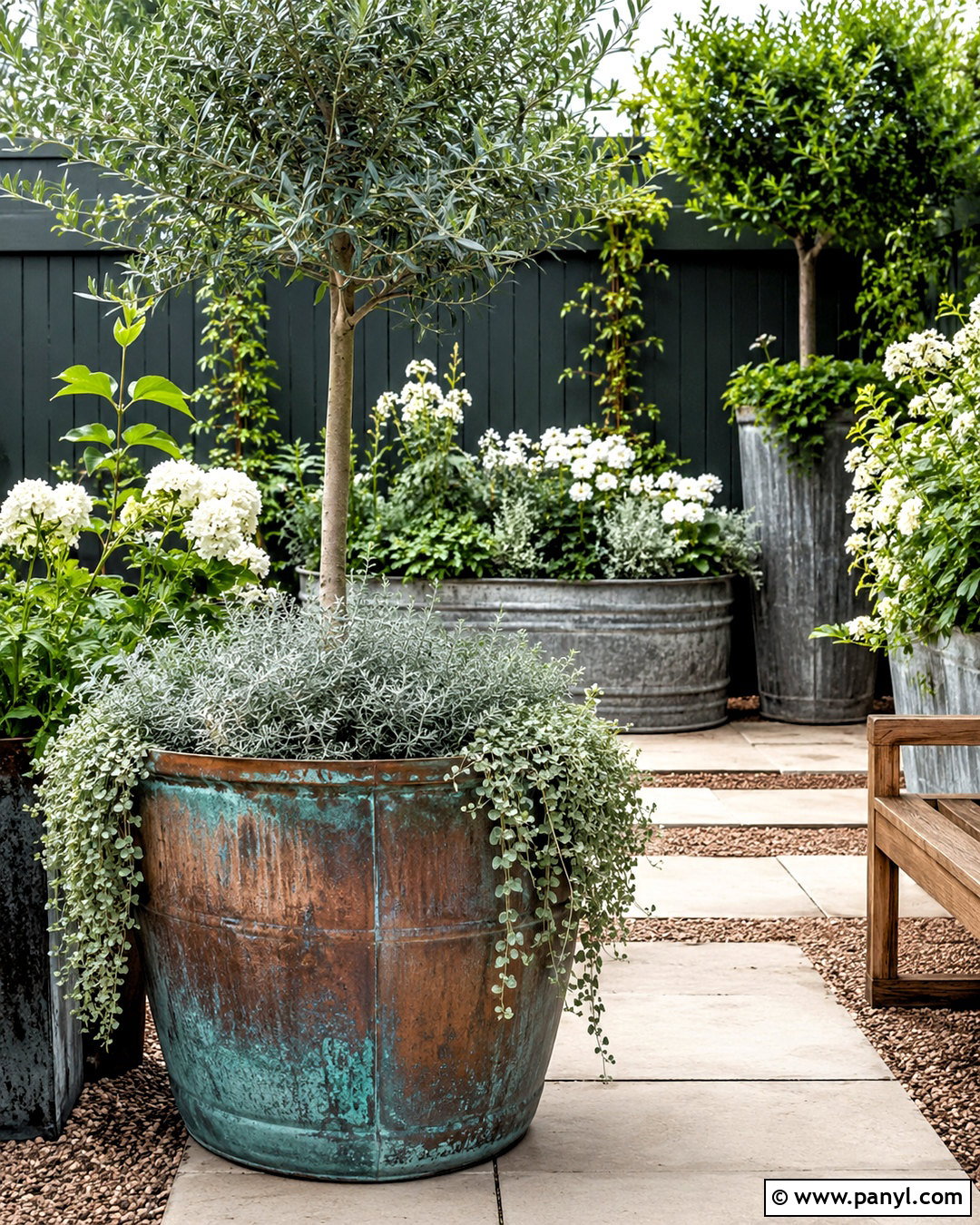
Weathered metal planters can bring structure and color to a lush garden while becoming more attractive as their surfaces change. Arrange three large copper or zinc containers in different heights along a gravel terrace. Fill the tallest planter with a small olive tree, then use silver herbs, trailing greenery, and white flowers in the lower containers. Surround the group with pale stone pavers and a simple teak bench. A dark green fence creates a quiet backdrop and makes the aged metal easier to notice. Repeat only one or two plant varieties nearby for visual continuity. Check drainage holes before planting and use liners when recommended for the chosen metal. The full arrangement combines hard edges with soft foliage, creating a polished garden corner that still feels relaxed.
17. Patina Metal Raised Garden Beds
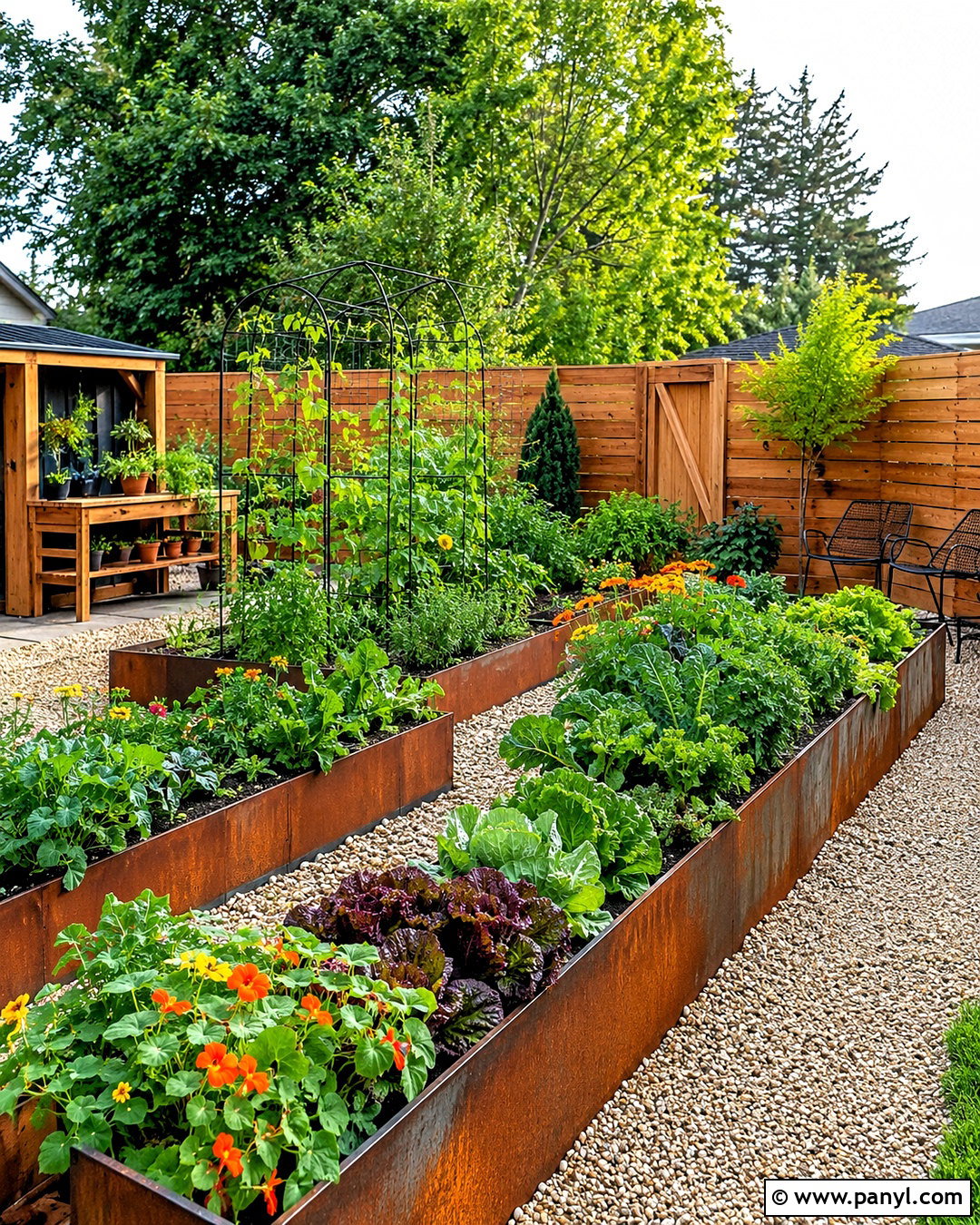
Rust-toned raised beds can organize a productive backyard while adding warm color throughout the year. Build several long weathering steel beds in a simple grid, leaving wide pea-gravel paths between them. Fill the beds with leafy vegetables, herbs, edible flowers, and a few upright supports for climbing plants. Edge the garden with a cedar fence and place a compact potting bench at one end. A small gravel seating area with two black metal chairs provides a place to rest. Use timber or stone caps where comfortable sitting edges are desired. Before installation, understand how the selected metal behaves in soil and moisture, and choose materials intended for garden use. The finished space feels orderly, practical, and visually connected to the surrounding landscape.
18. Patina Copper Water Feature
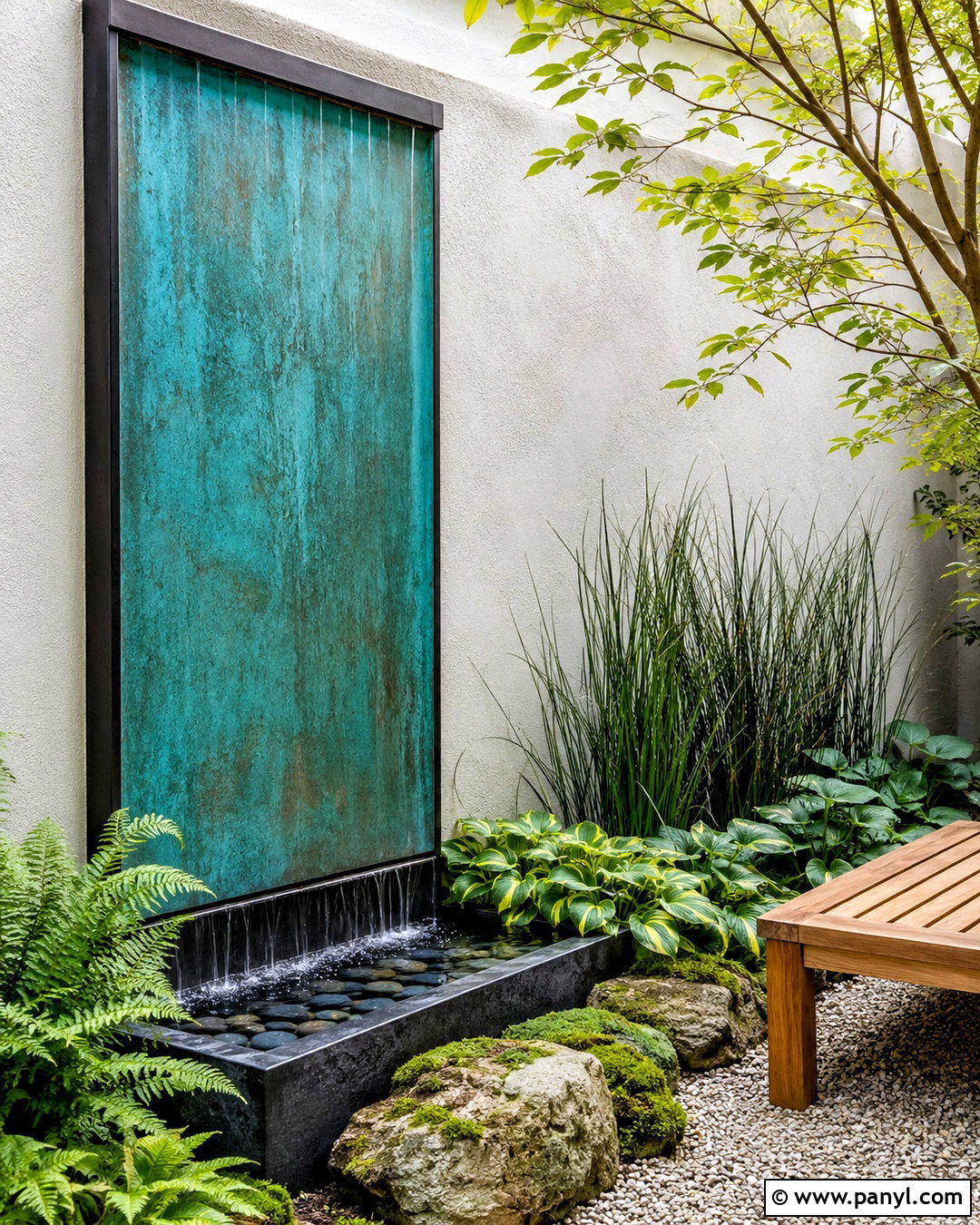
The gentle sound of water pairs naturally with the changing color of patina copper. Create a wall-mounted water feature using a broad blue-green copper panel that sends a thin sheet of water into a dark stone basin. Set it against a light stucco garden wall where the metal can remain the clear focal point. Frame the feature with ferns, hostas, mossy stones, and finely textured ornamental grasses. Add a small gravel terrace with a teak bench positioned several feet away. Conceal the pump and mechanical parts behind planting or within the basin structure. Choose equipment and metal finishes designed for continuous water exposure. The complete garden nook feels cool, peaceful, and private, with layered planting softening the strong rectangular lines of the copper.
19. Patina Metal Privacy Screen
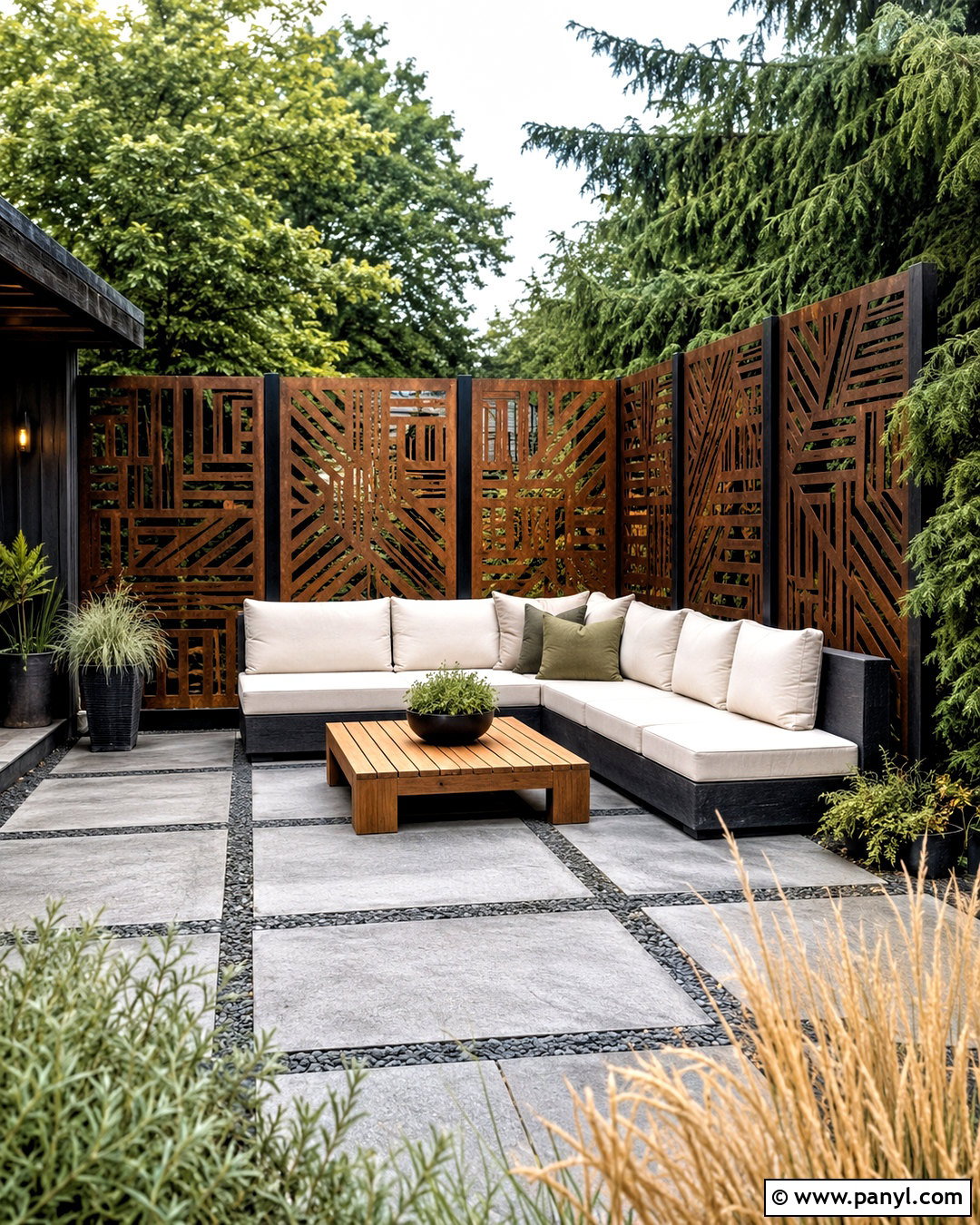
A decorative patina metal screen can provide privacy while functioning as a permanent piece of garden art. Install several weathering steel panels with a restrained geometric cutout pattern along one side of a patio. Mount them in a dark steel frame and leave small gaps between sections for airflow and filtered views. Use large concrete pavers underfoot and furnish the patio with a low charcoal sectional, cream cushions, and a teak coffee table. Plant feather reed grass, sage, and compact evergreens along the screen’s base. Their movement will soften the metal and create changing shadows. Position the panels away from surfaces that could be affected by runoff. The finished patio feels enclosed but not boxed in, with a warm natural palette that suits modern outdoor living.
20. Patina Metal Patio Fire Pit
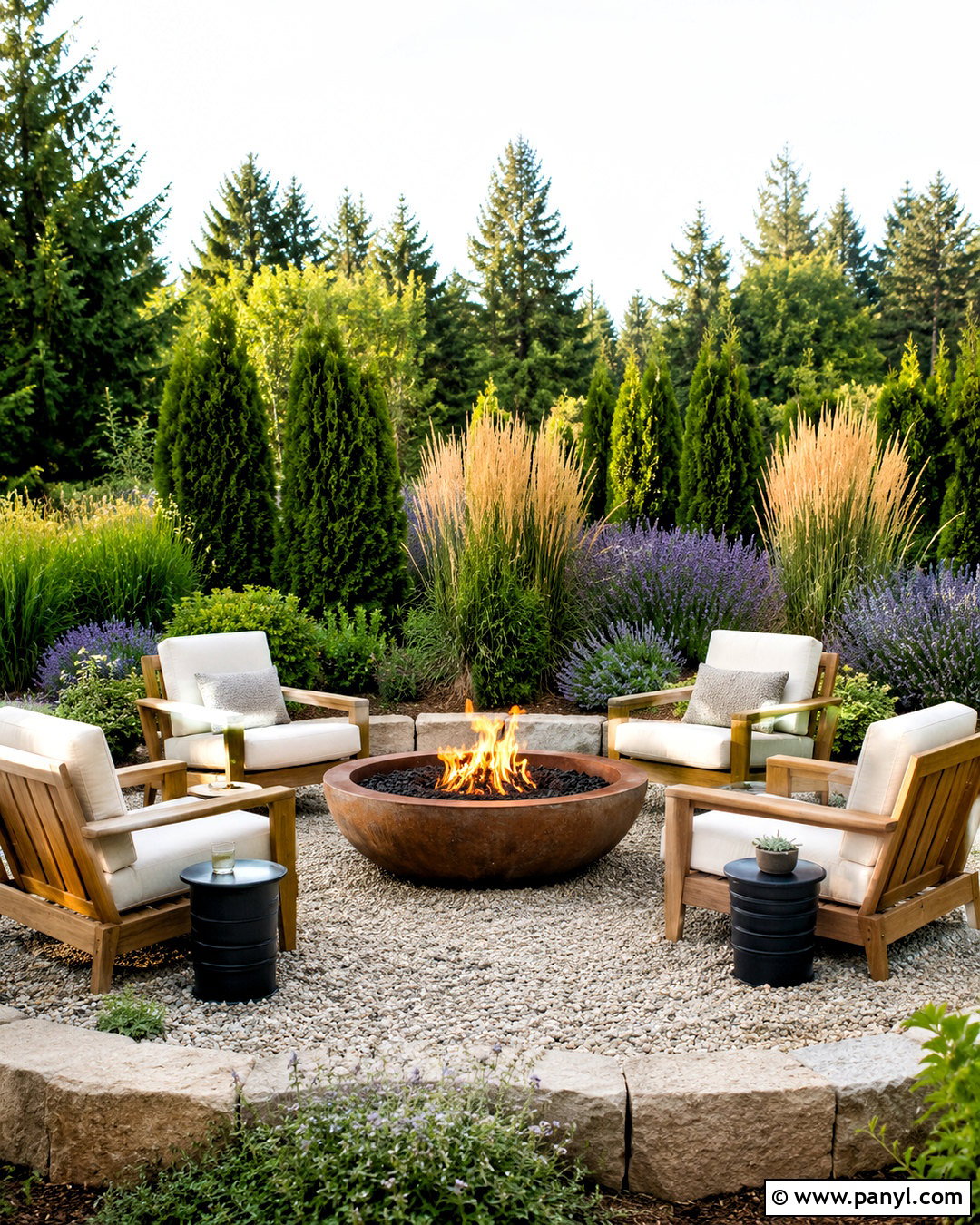
Center a welcoming patio around a broad patina metal fire pit in weathered steel or dark bronze. Place the low circular feature on a generous gravel area with ample open space around it. Arrange four comfortable teak lounge chairs in a balanced ring, adding neutral outdoor cushions and small black side tables. Define the patio with large stone edging and surround it with ornamental grasses, lavender, and evergreen shrubs. Soft path lighting can guide movement without cluttering the seating area. Select a fire feature made for outdoor use and follow local placement, fuel, and clearance requirements. When not in use, a fitted cover can help manage debris. This complete layout feels relaxed and grounded, allowing the textured metal to connect naturally with stone, wood, and planting.
Conclusion:
The best patina metal spaces balance aged surfaces with clean lines, practical materials, and colors drawn from nature. Blue-green copper looks fresh beside warm white, charcoal, and wood. Darkened brass adds depth to neutral interiors, while weathered steel connects modern architecture with earthy landscaping. Before choosing a finish, consider whether you want it sealed at a certain color or allowed to change through regular use and outdoor exposure. Also check suitability for heat, water, food contact, structural applications, and high-touch surfaces. From kitchens and bathrooms to entryways and gardens, these 20 patina metal ideas show how one changing material can shape a complete, cohesive design without making the space feel overly rustic or industrial.

Related Ideas and Inspiration:
Leave a Reply