
These **20 pebble stone ideas** show how small natural stones can turn ordinary outdoor areas into polished, practical spaces. Pebbles work beautifully in pathways, patios, planting beds, water features, and compact courtyards. Their rounded shapes soften hard landscaping, while their varied colors add depth without creating visual clutter. They can also create permeable surfaces that allow rainwater to filter into the ground when the underlying base is designed correctly. () Choose stones that complement your house, existing pavers, and local landscape. Then add secure edging, suitable plants, and a stable foundation to keep the finished design neat. From modern entrances to relaxing garden retreats, you can recreate a complete outdoor look with these **20 pebble stone ideas**.
1. Pebble Stone Garden Path
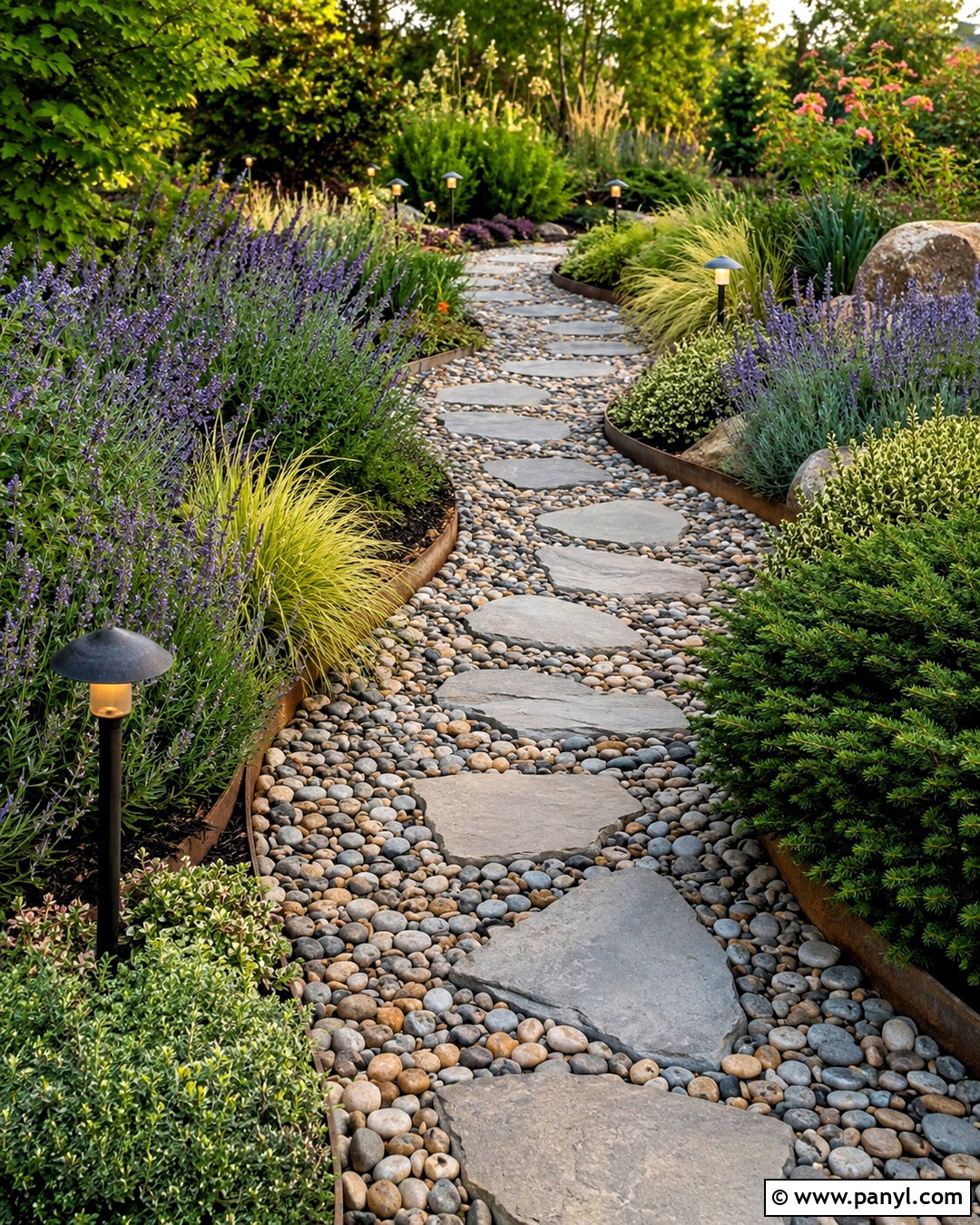
A gently curved garden path creates an inviting route through flower beds without making the landscape feel overly formal. Use smooth gray, tan, and cream river pebbles over a compacted base, then contain them with weathered steel or natural stone edging. Add flat stepping stones through the center for comfortable walking and better stability. On both sides, layer lavender, catmint, ornamental grasses, and low evergreen shrubs for year-round structure. The path should connect useful destinations, such as the patio, shed, or back gate, instead of ending without purpose. Small solar lights can mark the curves after sunset. Keep the route wide enough for easy movement and choose pebble colors that coordinate with nearby walls, decking, and paving. ()
2. White Pebble Stone Front Yard
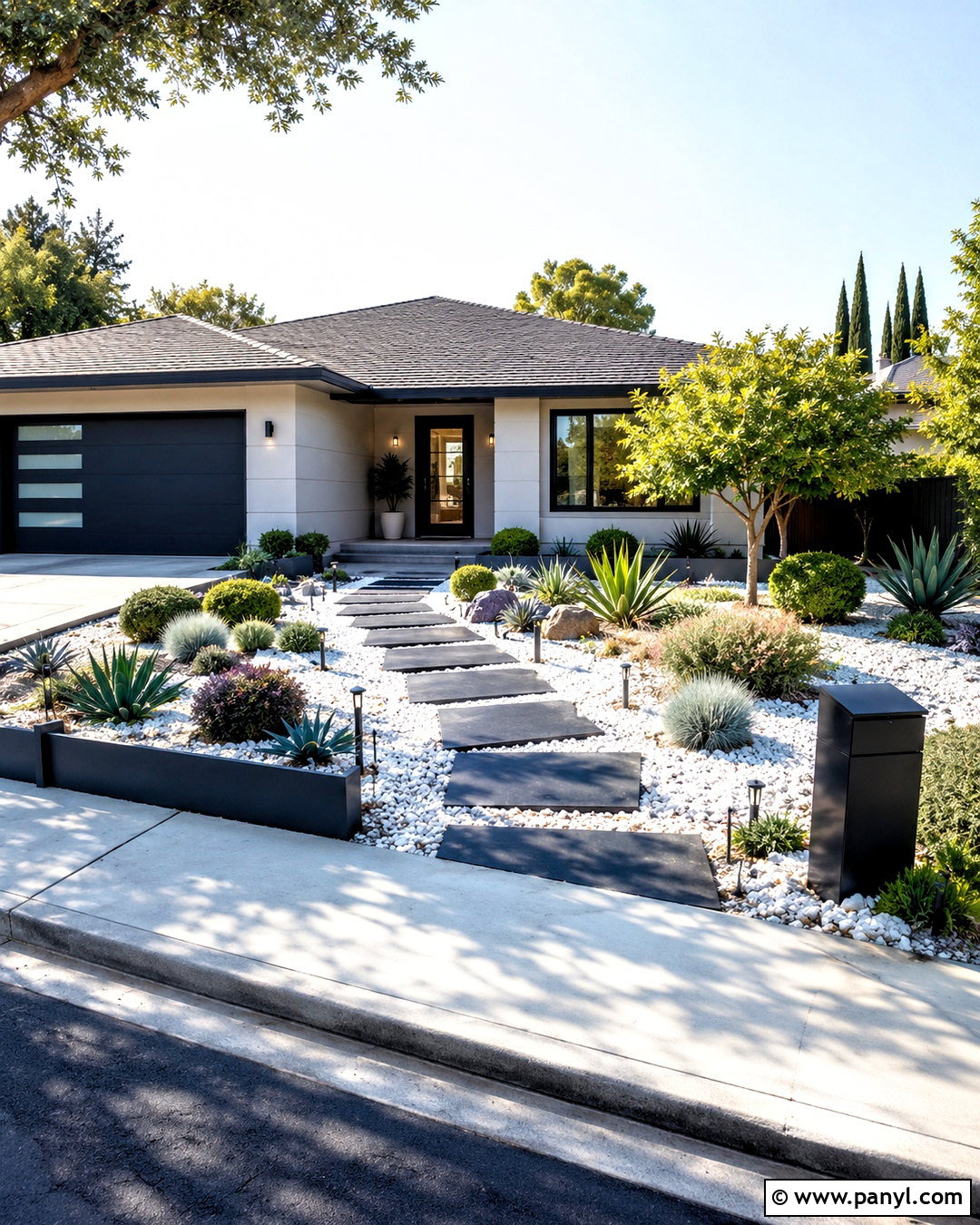
Crisp white pebbles can brighten a small front yard and give an average house a clean, contemporary entrance. Create broad planting beds beside the walkway and fill them with white marble pebbles contained by dark metal edging. Use sculptural plants such as dwarf agave, blue fescue, yucca, and compact evergreen shrubs to introduce shape and color. Large charcoal concrete pavers can form a straight path to the front door, while a matte black mailbox and simple cylinder lights repeat the darker accents. Avoid covering every surface with white stone because the result may appear harsh. Leave space between plant groups and include one small ornamental tree. This balanced layout delivers strong curb appeal while keeping the overall composition simple and organized.
3. Black Pebble Stone Patio
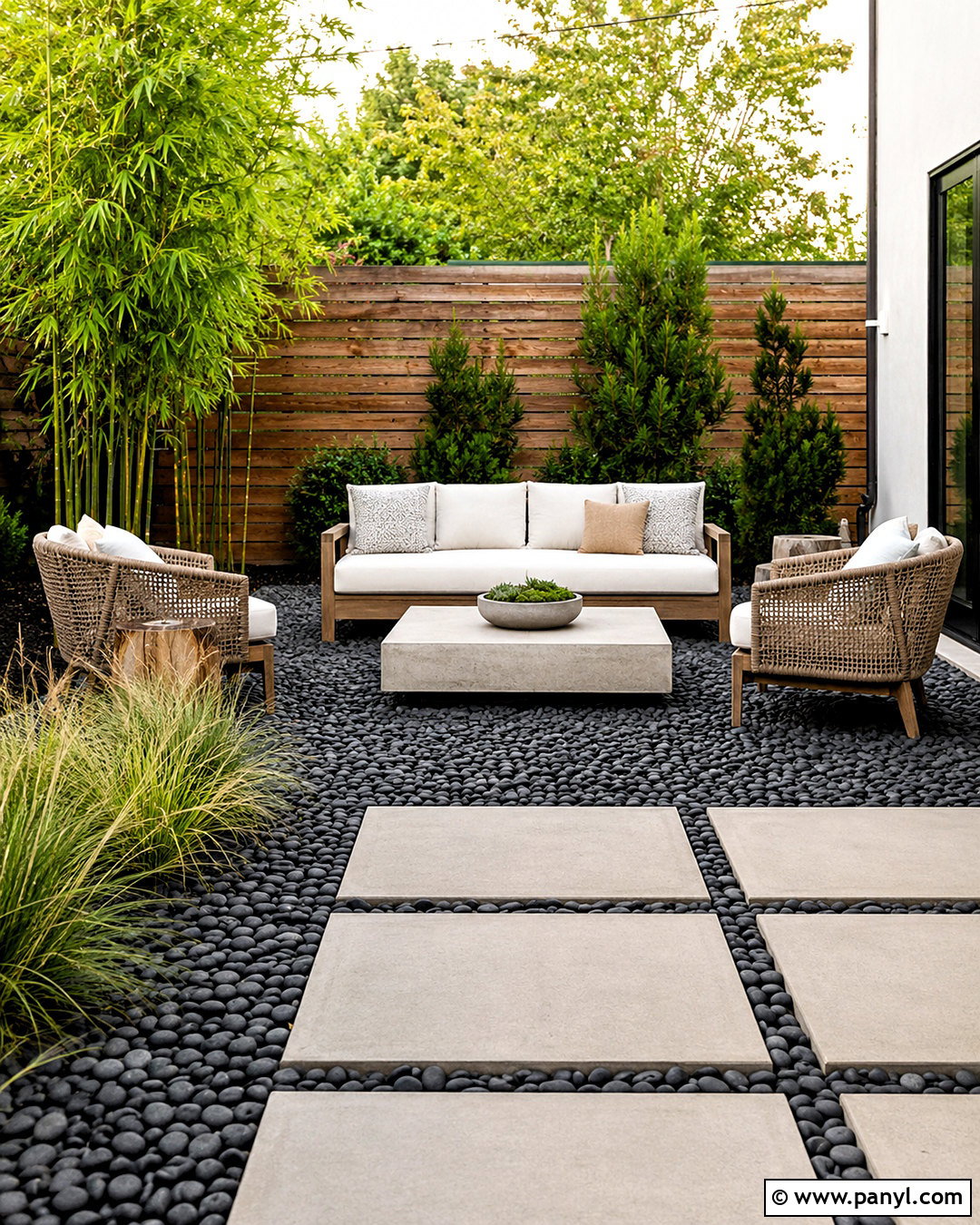
Deep black pebbles create an attractive foundation for a modern patio when they are balanced with warm wood and green planting. Define a rectangular sitting area with steel edging, then install charcoal-black river pebbles around oversized concrete stepping slabs. Furnish the space with a low teak sofa, two woven lounge chairs, and a simple concrete coffee table. Add cream outdoor cushions to lighten the dark flooring. Along the boundary, use bamboo, upright ornamental grasses, and clipped evergreen shrubs for privacy. A slatted cedar screen can provide a warmer backdrop and visually separate the patio from service areas. Keep furniture legs positioned on stable pavers rather than loose stones. The complete space will feel sophisticated, comfortable, and connected to the surrounding garden.
4. Pebble Stone Dry Creek Bed
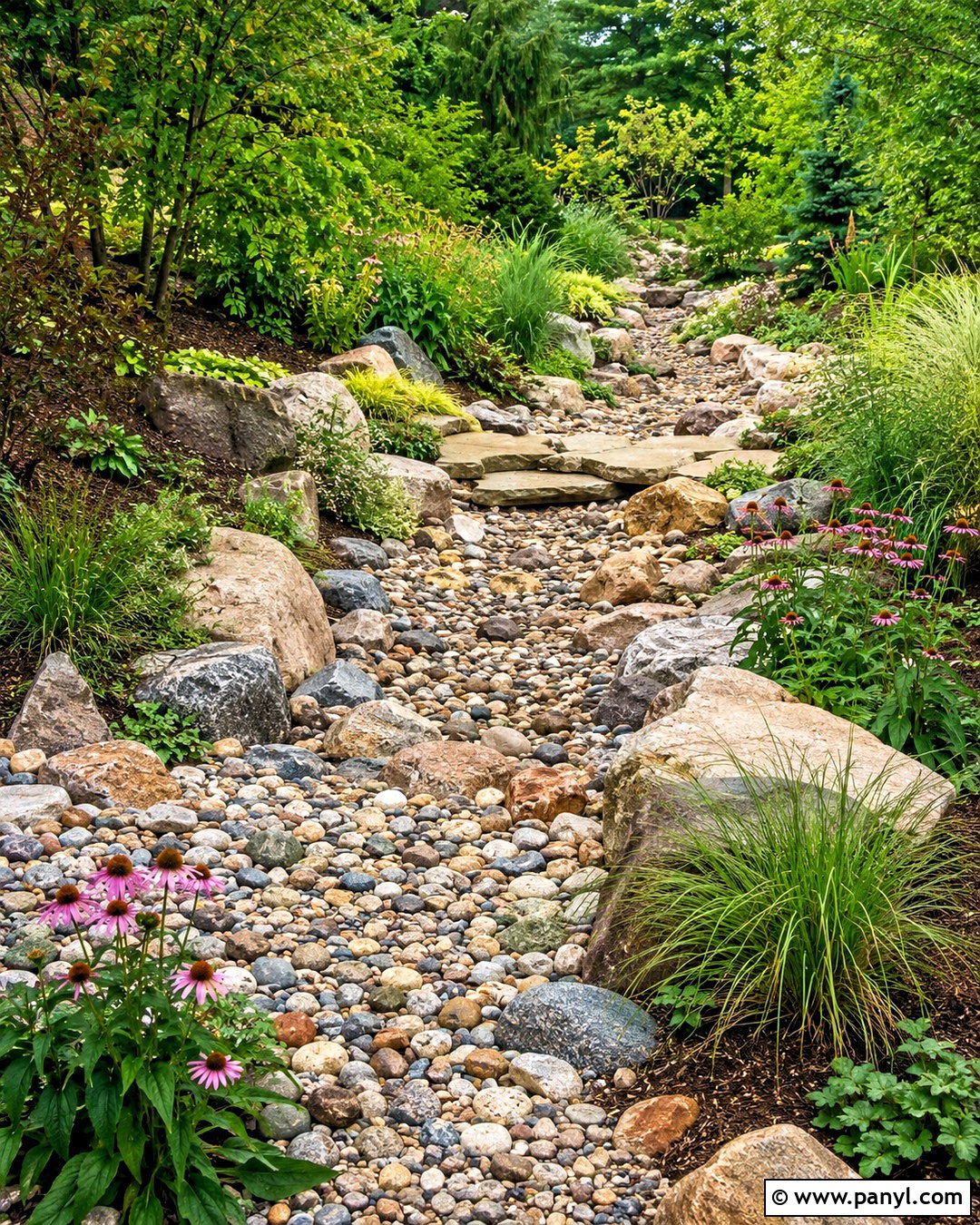
A dry creek bed can transform a low or awkward section of the yard into a natural-looking landscape feature. Shape a shallow, winding channel and fill it with mixed gray, brown, and cream river pebbles. Place larger boulders irregularly along the edges so the arrangement resembles a stream rather than a straight drainage trench. Plant moisture-tolerant sedges near lower areas and add drought-tolerant grasses, coneflowers, and creeping ground covers along the upper banks. A small wooden footbridge or broad stone slab can cross the channel and connect two garden zones. If the creek will manage runoff, have its slope and outlet planned carefully. The finished design should guide water safely while fitting naturally into the wider landscape. ()
5. Pebble Stone Fire Pit Area
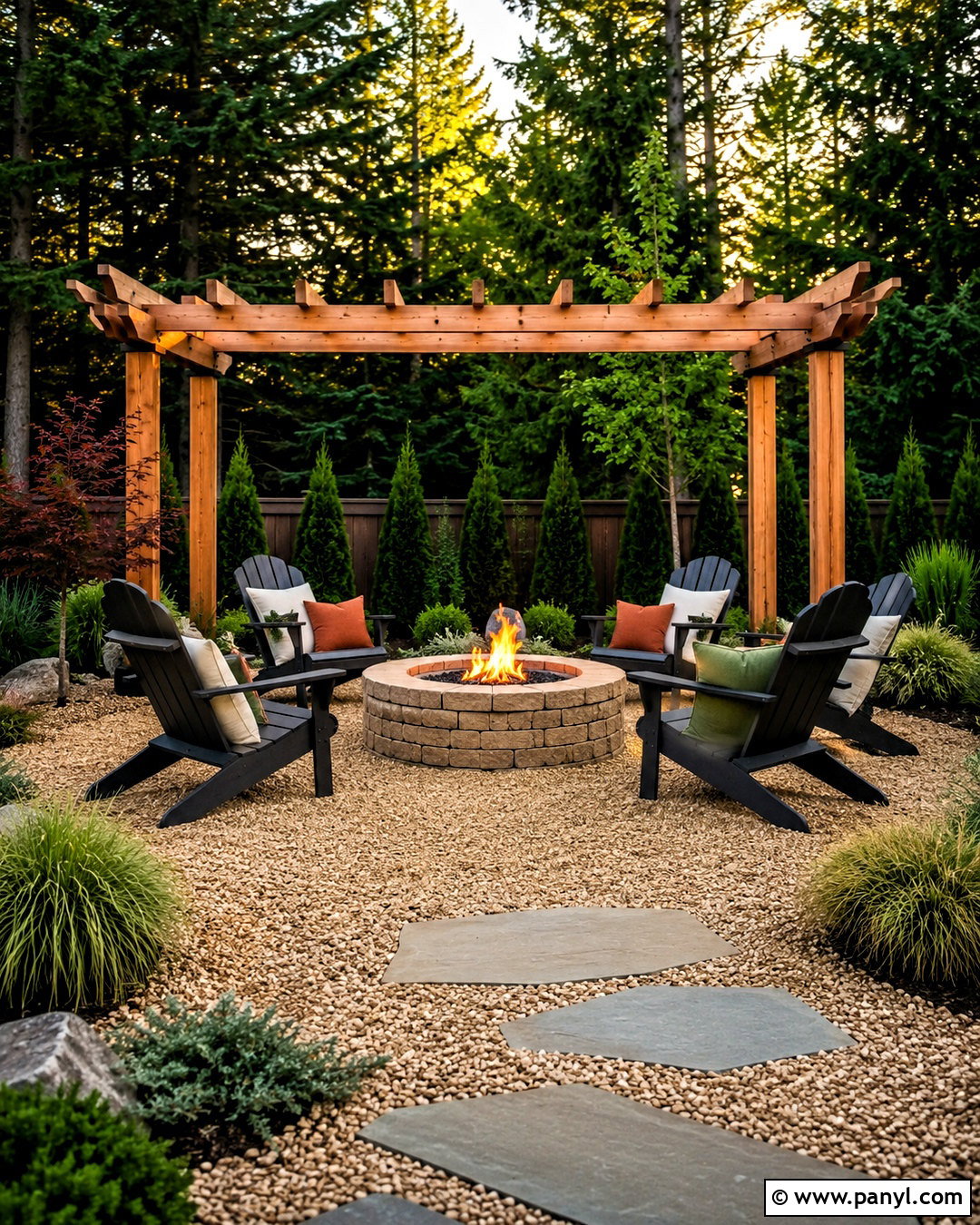
Imagine a welcoming backyard gathering space with a circular fire pit at its center and comfortable seating around the perimeter. Use compacted tan pebbles as the main surface, contained by stone or metal edging. Place the fire feature on a code-compliant, noncombustible base and leave generous clearance around it. Arrange four charcoal Adirondack chairs or curved outdoor lounge seats facing inward. Behind them, plant low ornamental grasses and evergreen shrubs that will not crowd the fire area. A simple cedar pergola can define the setting, provided its location meets local fire-safety requirements. Add outdoor cushions in rust, cream, and muted green for warmth. Broad stepping stones leading from the house will keep the pebble surface accessible and visually connected to the patio.
6. Pebble Stone Zen Garden
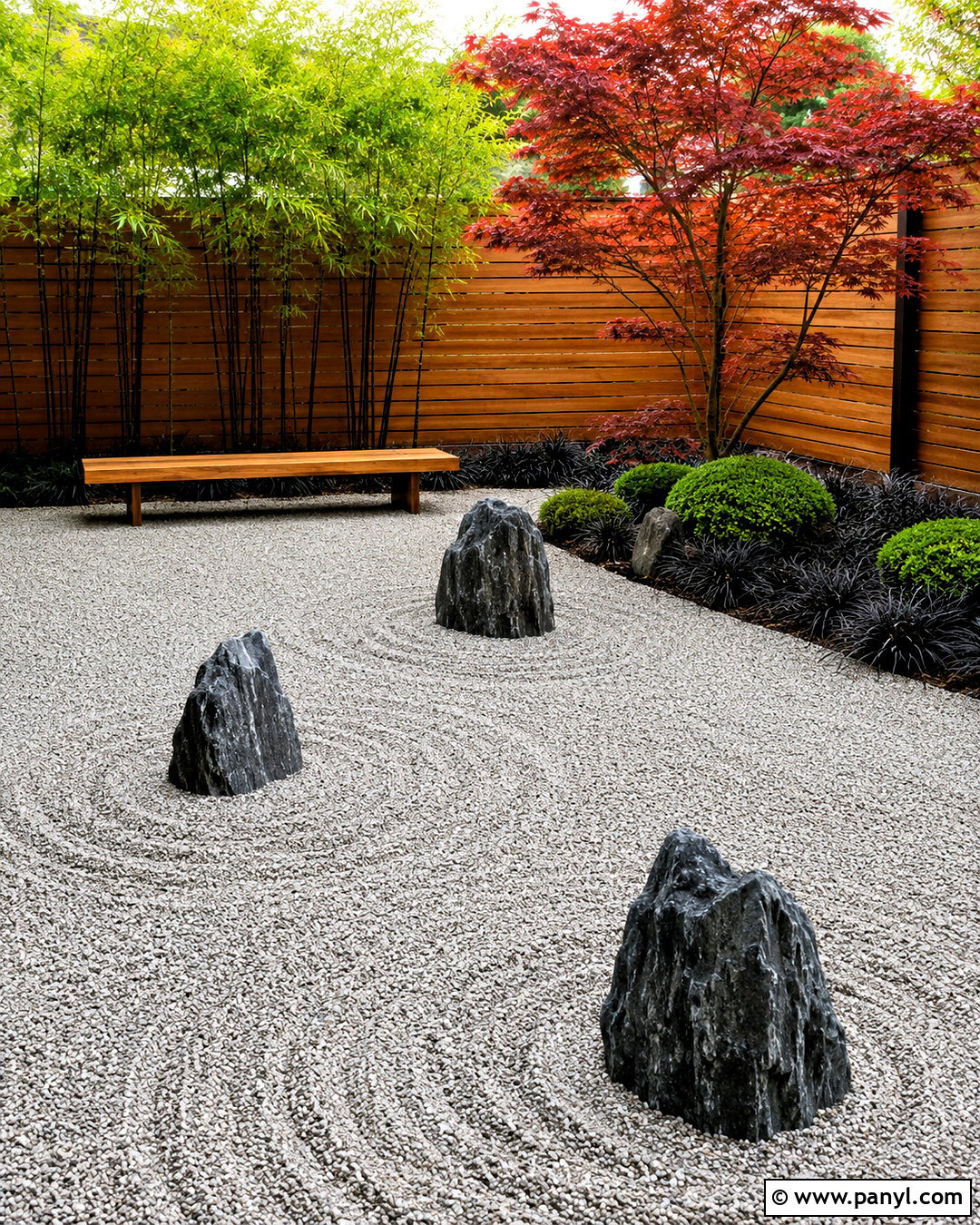
Could an unused corner become the quietest part of your backyard? Begin with a rectangular bed filled with fine pale gray pebbles that can be raked into simple flowing patterns. Position three dark basalt boulders off center, using different heights to create a balanced natural composition. Add a Japanese maple, clipped evergreen mounds, and a small group of black mondo grass around the edges. A narrow timber bench provides a place to pause without overcrowding the garden. Screen the background with horizontal cedar fencing or tall bamboo in contained planters. Keep accessories minimal and conceal practical edging beneath the stones. The completed retreat should feel calm from every viewing angle, with open pebble areas balancing the stronger shapes of rocks, foliage, and wood. ()
7. Pebble Stone Succulent Garden
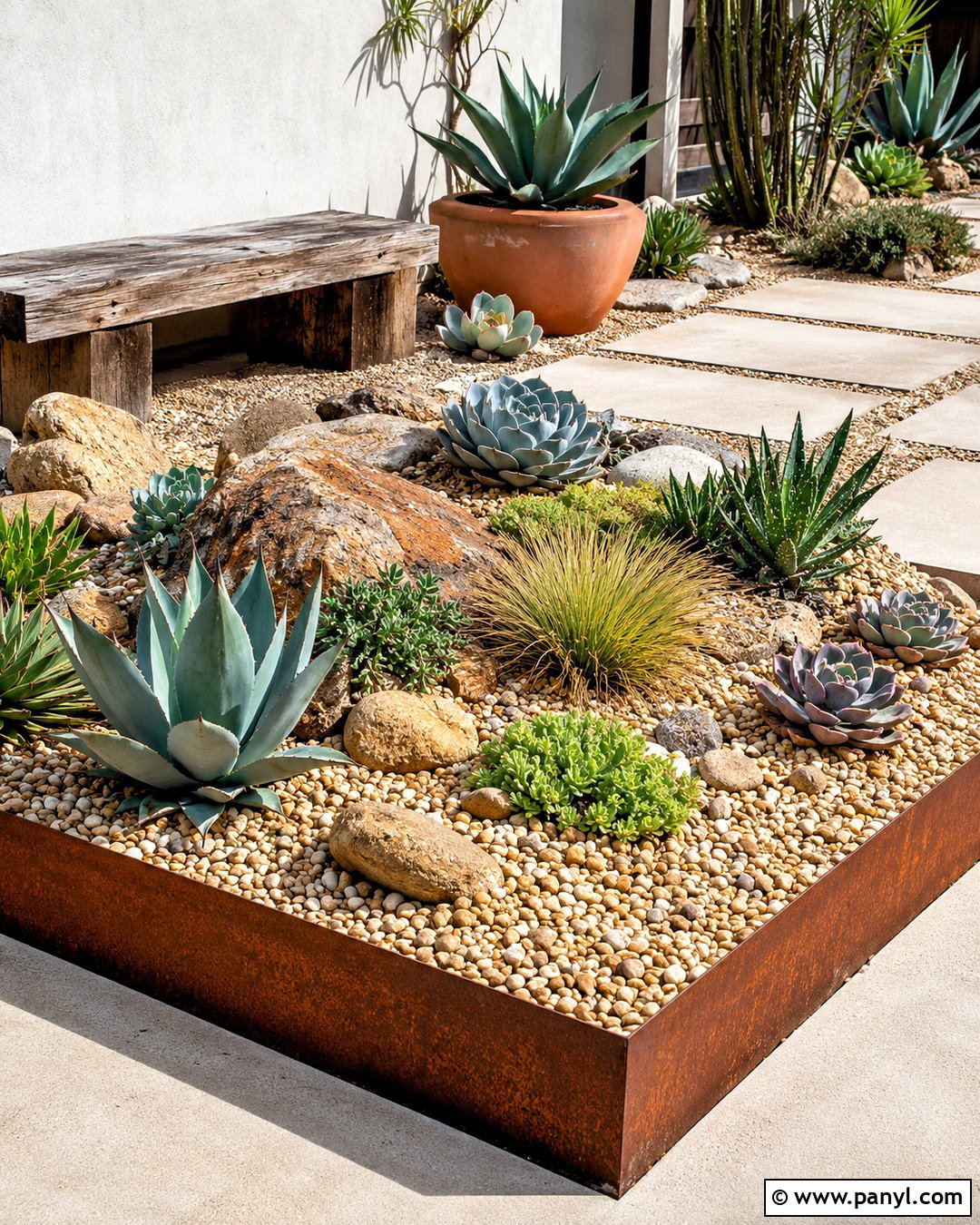
A sun-filled succulent bed becomes more striking when each plant is surrounded by pebbles that highlight its shape. Build a gently raised garden with sandy, fast-draining soil and a border of rusted steel or rough-cut stone. Cover the surface with warm beige and pale gray pebbles, leaving small pockets for echeveria, sedum, aloe, agave, and compact ornamental grasses suited to your climate. Add two or three larger rocks to create height and prevent the planting from looking flat. Arrange plants in uneven groups rather than rigid rows. A narrow stepping-stone route allows maintenance without crushing the succulents. Finish the look with a simple clay pot and a weathered timber bench, keeping decorations limited so the natural forms remain the main attraction.
8. Pebble Stone Water Feature
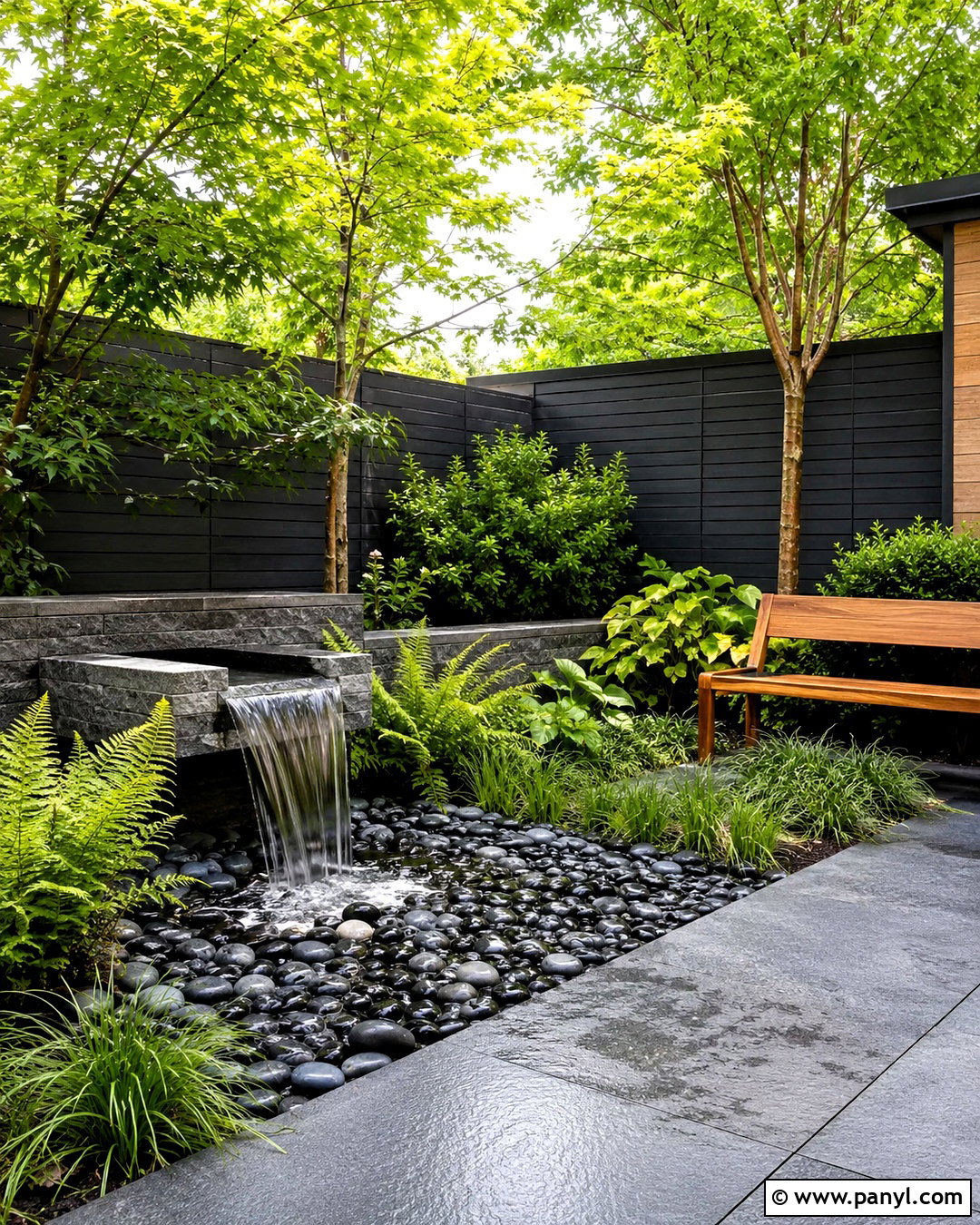
The sound of moving water can give a compact courtyard a relaxing atmosphere without requiring a large pond. Install a simple stone spillway that pours into a shallow basin concealed beneath smooth black and gray pebbles. Surround the feature with large slate pavers, ferns, hostas, Japanese forest grass, and compact evergreen shrubs. A wooden bench placed opposite the water creates a comfortable viewing point. Use a charcoal privacy fence as the backdrop so green foliage and wet stones stand out clearly. Include an accessible pump compartment and make sure the basin is appropriately sized for the system. Soft landscape lighting can illuminate the falling water and nearby leaves. This complete courtyard design combines water, stone, greenery, and seating without overwhelming a smaller residential space. ()
9. Pebble Stone Stepping Stone Walkway
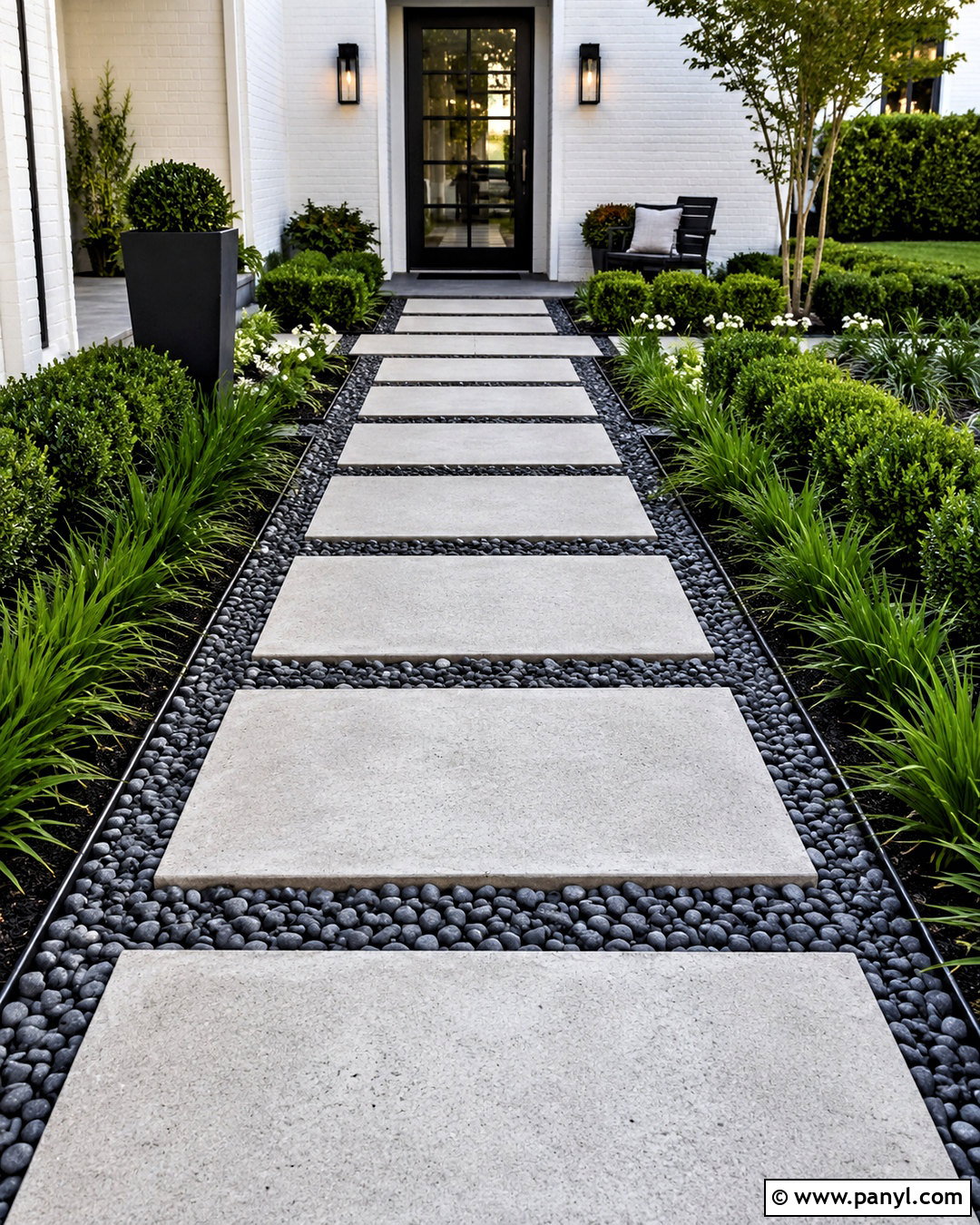
Large square pavers surrounded by pebbles offer a practical walkway with the relaxed appearance of loose stone. Set pale concrete or limestone slabs at an even, comfortable stride, then fill the joints and surrounding surface with smooth charcoal pebbles. Frame the walkway with low boxwood, liriope, and white flowering perennials for a neat but welcoming entrance. Keep each paver level and stable so it does not rock or become a tripping hazard. Metal edging will prevent stones from spreading into the lawn or beds. Near the destination, widen the route into a small landing with a bench or oversized planter. The contrast between straight pavers, rounded stones, and soft planting creates a complete transitional space that suits contemporary and updated traditional homes.
10. Pebble Stone Flower Bed Border
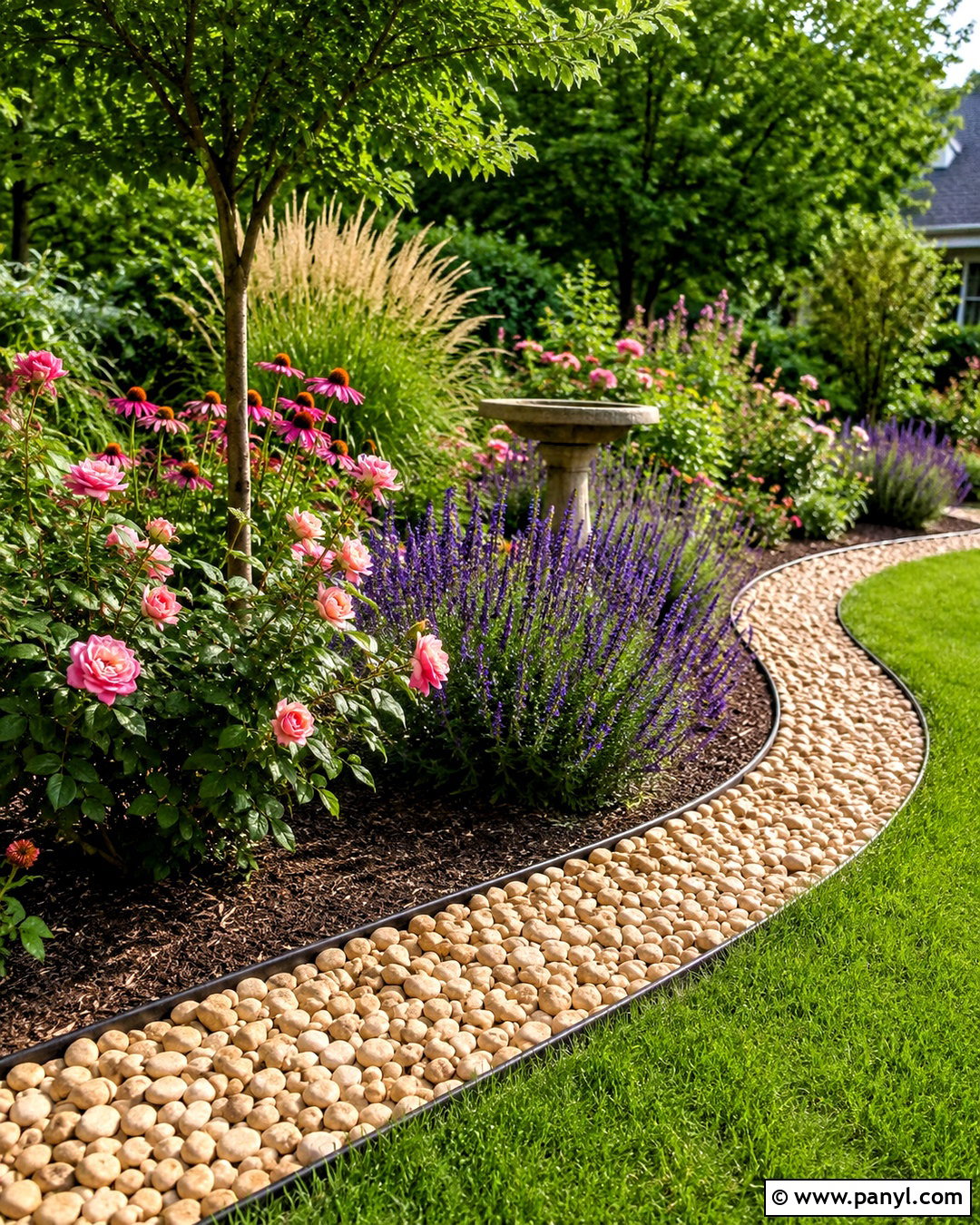
A pebble border can give colorful planting beds a clean edge while connecting them to surrounding paths and patios. Start with a sweeping bed filled with roses, salvia, coneflowers, and airy ornamental grasses. Install a 12- to 18-inch band of smooth cream and tan pebbles along the front, separating it from the lawn with dark metal edging. Repeat the same stones around a birdbath or small ornamental tree to make the scheme feel intentional. Place lower flowers near the pebble edge and taller plants toward the back so every layer remains visible. The stones should serve as a visual frame rather than replacing all organic mulch around moisture-loving plants. This combination provides colorful seasonal interest, structured boundaries, and a polished transition between lawn and garden. ()
11. Pebble Stone Courtyard
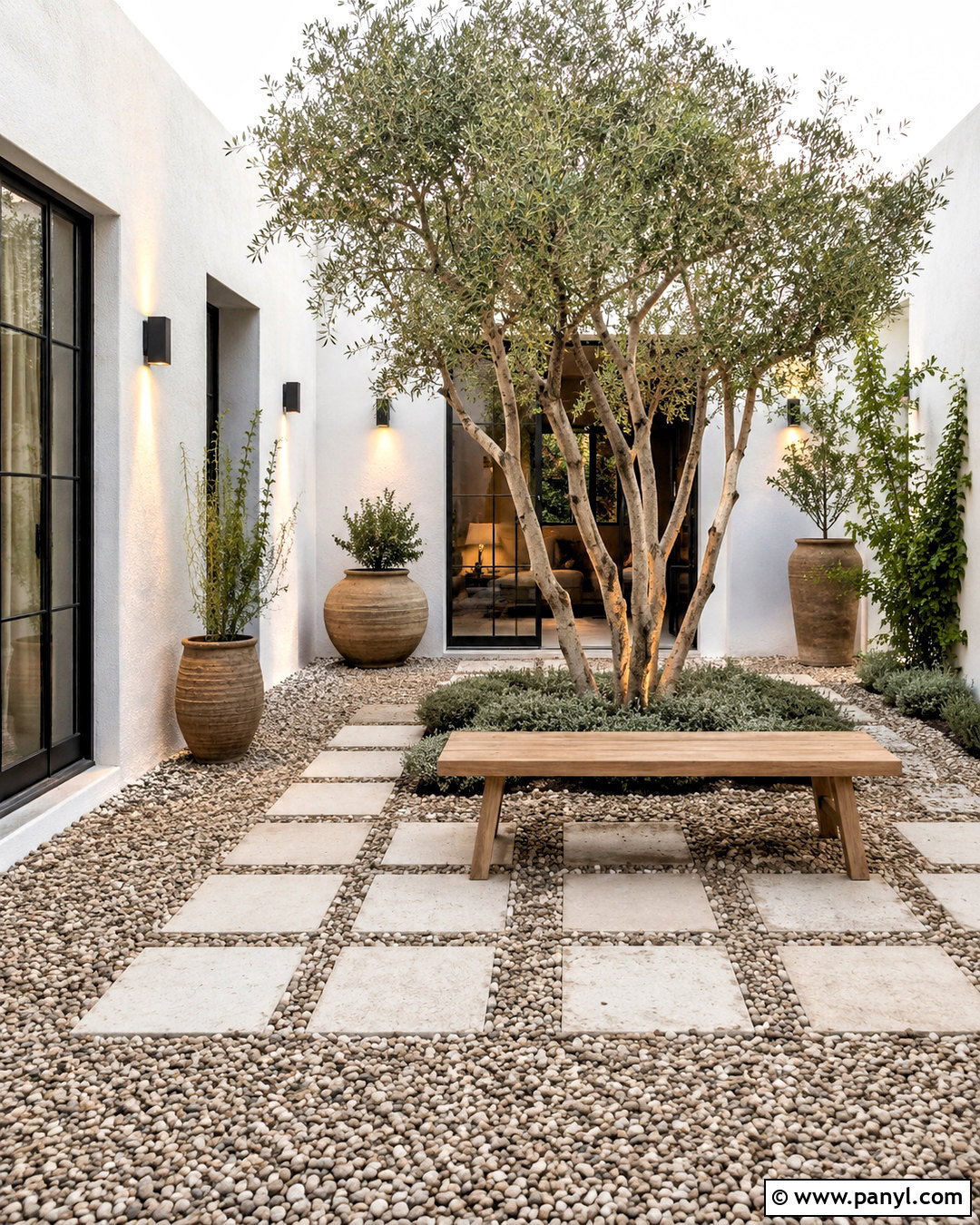
An enclosed courtyard feels larger when its materials are simple and its layout has a clear focal point. Cover the main surface with warm gray pebbles, then add a grid of large limestone pavers leading to a small central tree. Choose a multi-stem olive, serviceberry, or another compact species suitable for the local climate. Place a slim teak bench against one wall and arrange tall planters in two corners for privacy. Soft white walls will reflect daylight, while black-framed doors and wall lights provide definition. Include low ground covers around the tree and one narrow planting bed instead of scattering many small pots. With open circulation, restrained colors, and carefully positioned greenery, the completed courtyard becomes an uncluttered outdoor room for reading, conversation, and quiet meals.
12. Pebble Stone Raised Garden Beds
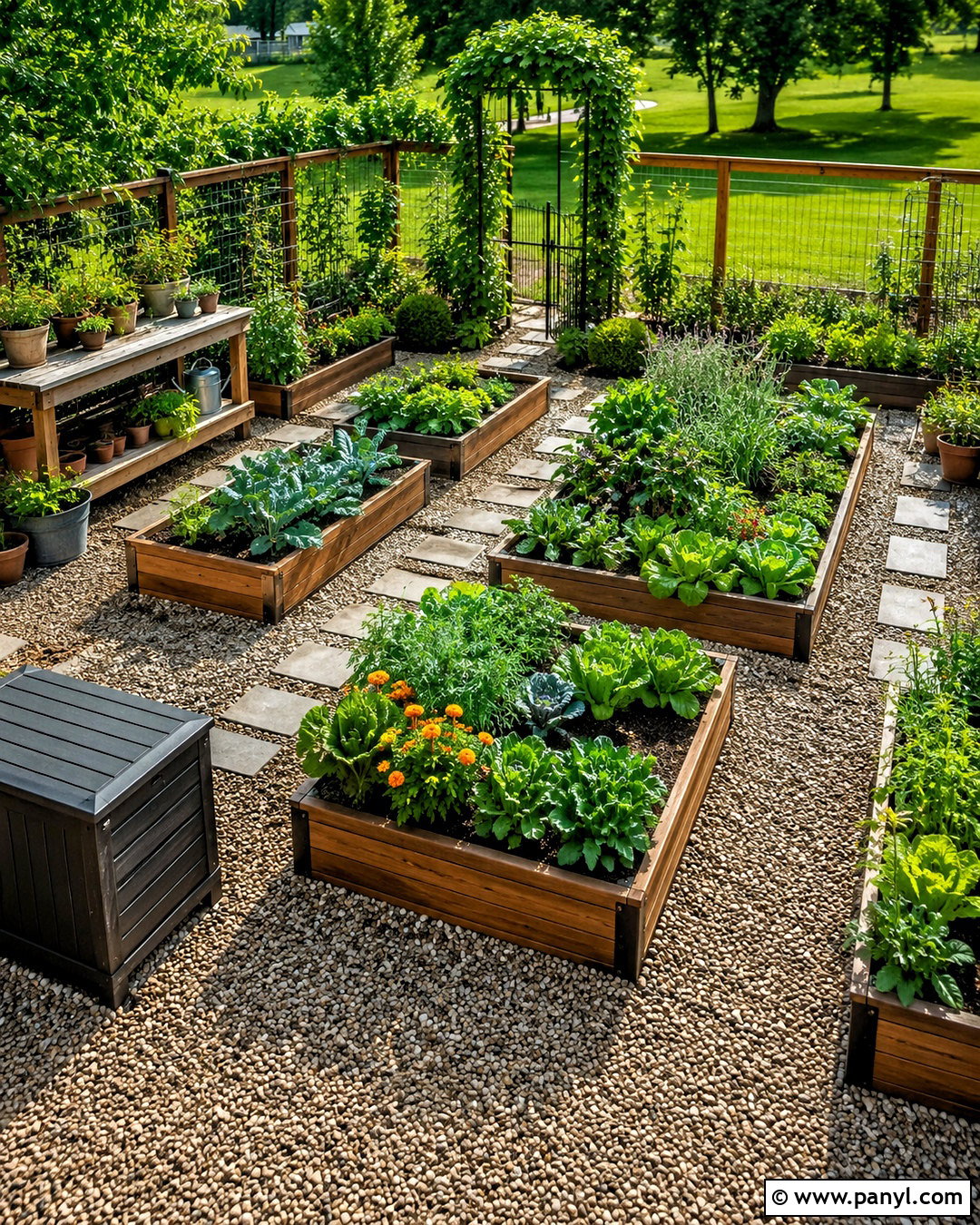
Raised beds become more comfortable to maintain when the paths around them are dry, defined, and wide enough for everyday use. Arrange cedar or galvanized steel beds in an orderly grid, leaving generous walkways between each one. Fill the paths with compacted gray-brown pebbles over a properly prepared base and use strong edging at the outer boundary. Grow herbs, vegetables, and pollinator-friendly flowers together for a productive but attractive display. Add an arbor at the entrance for climbing beans or flowering vines. A small potting bench and covered storage box can occupy the far end without blocking movement. Choose larger, stable stepping slabs along the most frequently used route. The complete design combines efficient circulation, organized planting, convenient storage, and natural texture in one cohesive kitchen garden.
13. Pebble Stone Outdoor Shower
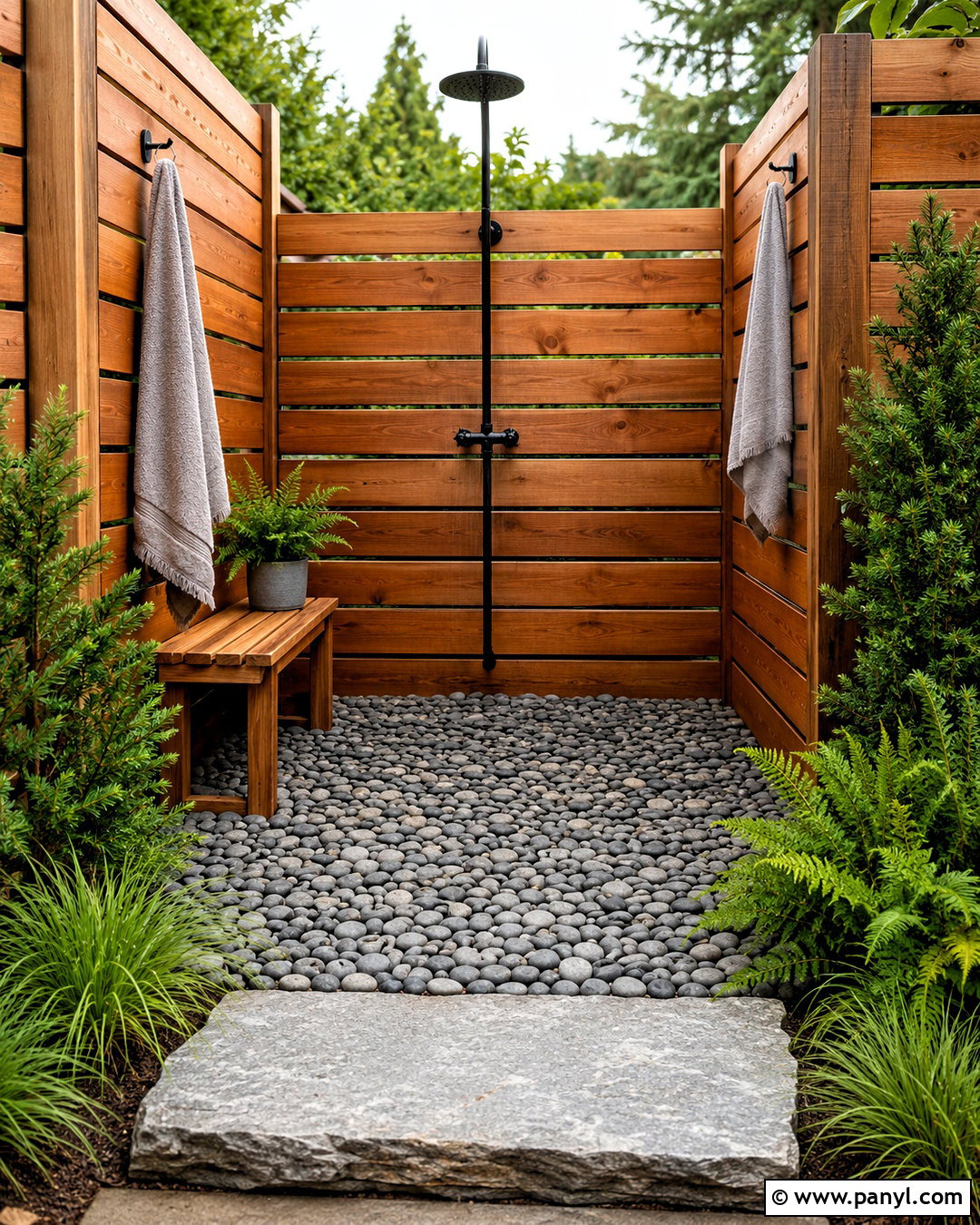
A pebble-covered outdoor shower can feel like a private garden retreat when drainage, screening, and comfort are planned together. Use a sloped, professionally prepared shower floor finished with smooth flat pebble tile or securely installed natural stones. Surround it with vertical cedar screens and dense evergreen planting suited to the site. A matte black rainfall shower, matching hooks, and a narrow teak bench provide a modern contrast. Add one large stone slab outside the wet zone for towels and sandals. Ferns, grasses, and leafy planters soften the enclosure without blocking airflow. Choose surfaces rated for wet locations and keep the floor accessible for cleaning. The finished shower should provide privacy, safe footing, dependable drainage, and a strong visual connection to the garden.
14. Pebble Stone Mosaic Patio
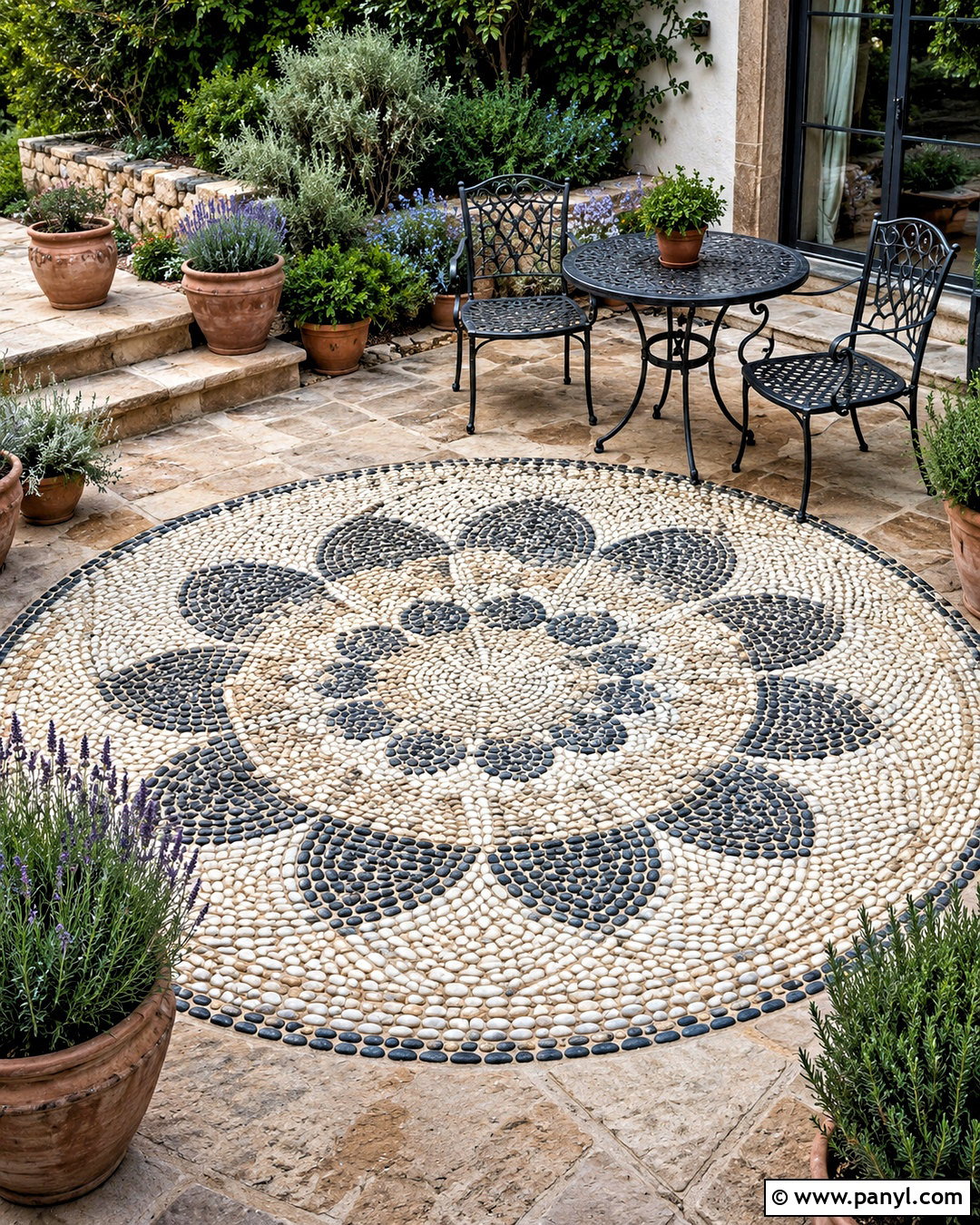
A pebble mosaic turns a small patio into an artistic focal point while still functioning as a usable outdoor space. Select a simple circular, fan, or geometric pattern made from black, white, and warm gray stones set securely into mortar. Frame the detailed center with plain sandstone or brick paving so the design does not become visually overwhelming. Furnish the patio with a compact black metal table and two comfortable chairs. Surround the edges with rosemary, lavender, dwarf grasses, and terracotta planters to soften the hard surfaces. Repeat one mosaic color in the furniture or nearby wall finish. Professional installation may be worthwhile for a durable, level result. The completed patio should combine craftsmanship, planting, and practical seating rather than appearing like a disconnected decorative medallion. ()
15. Pebble Stone Tropical Garden
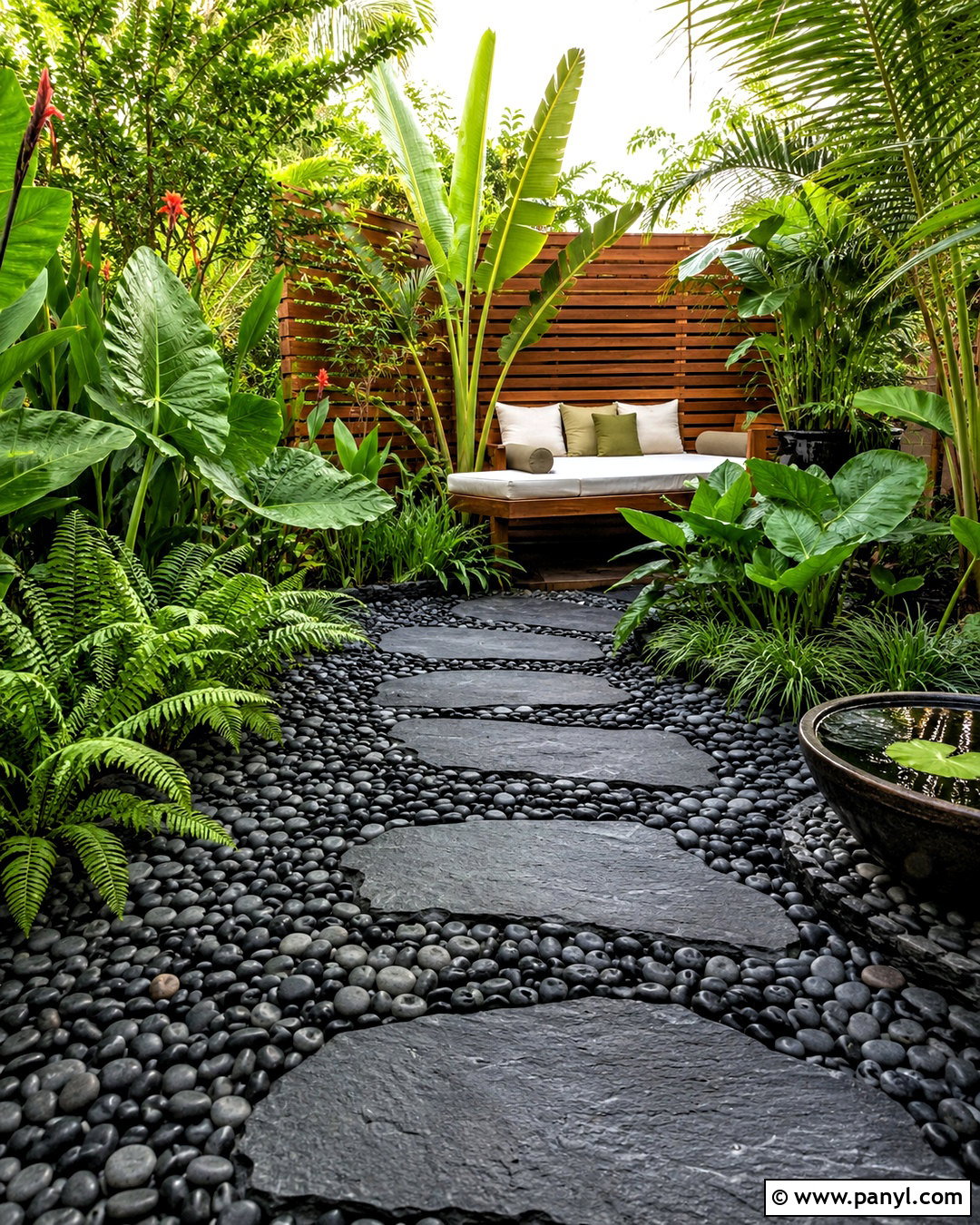
Smooth dark pebbles provide a dramatic ground layer beneath the bold foliage of a tropical garden. Create a curved route with large charcoal stepping slabs, then surround it with black and deep gray river stones. Plant broad groups of elephant ears, hardy bananas, ferns, canna lilies, and palms appropriate for your climate. Use a timber screen or warm stucco wall behind the planting to contrast with the abundant greenery. A low wooden daybed or pair of woven chairs can form a secluded seating area at the end of the path. Add one large ceramic water bowl as a simple focal point. Maintain enough space between plants for mature growth. The complete garden should feel lush and immersive while retaining a clear path, controlled edges, and comfortable outdoor seating.
16. Pebble Stone Mediterranean Garden
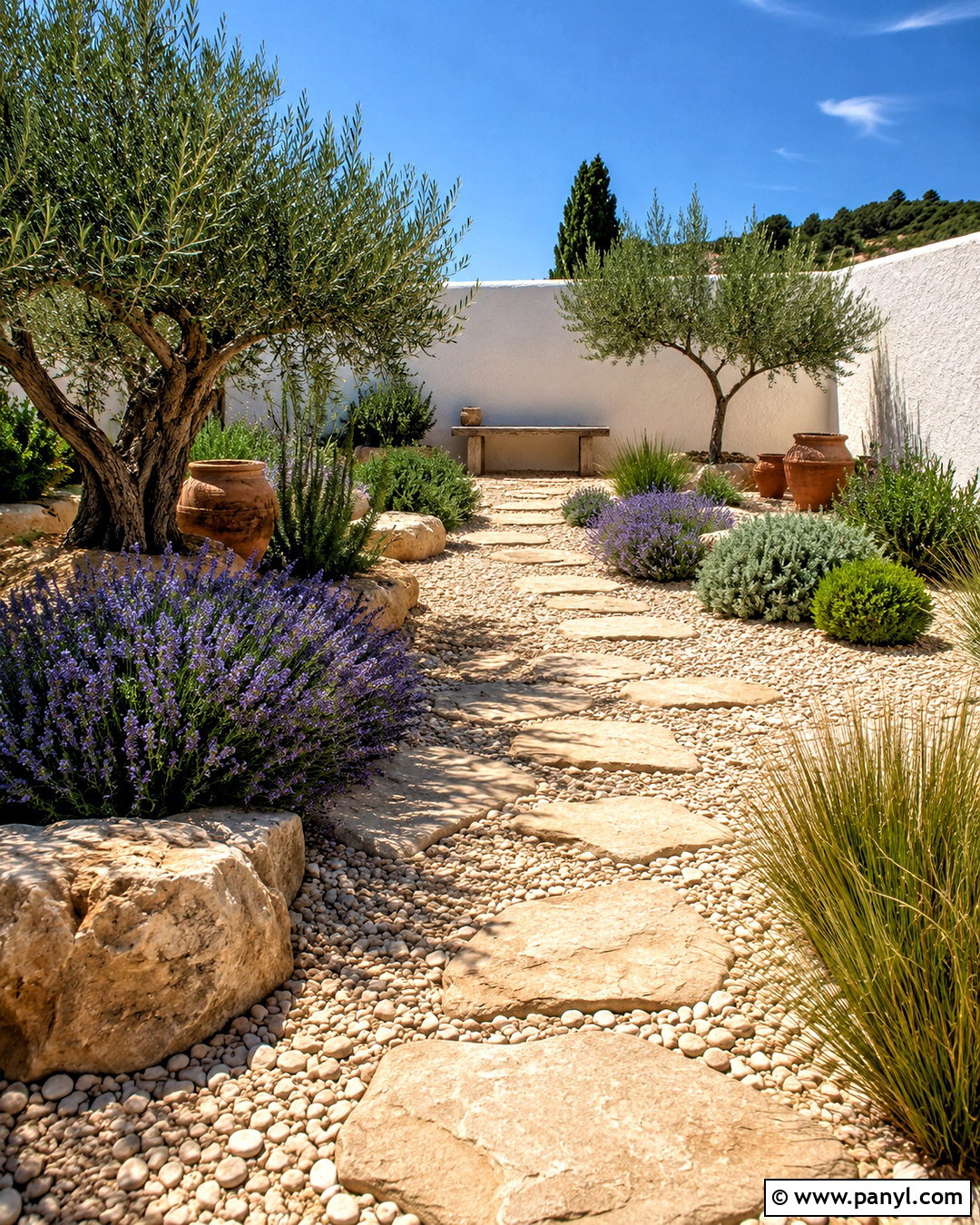
Sun-warmed cream pebbles work naturally with aromatic planting, terracotta, and pale masonry. Begin with broad stone-covered beds separated by an irregular flagstone path. Plant lavender, rosemary, sage, thyme, ornamental grasses, and compact olive trees in loose groups, selecting varieties suited to your growing region. Include several weathered terracotta pots near a simple wood or metal bench. A warm white stucco wall provides a bright backdrop, while blue-gray shutters or a painted garden gate can supply a restrained accent color. Use larger limestone rocks at the corners of planting beds to anchor the composition. Leave open space around each plant so its form remains visible. This complete drought-conscious landscape feels established and welcoming without requiring an overly formal arrangement or excessive decorative accessories.
17. Pebble Stone Side Yard
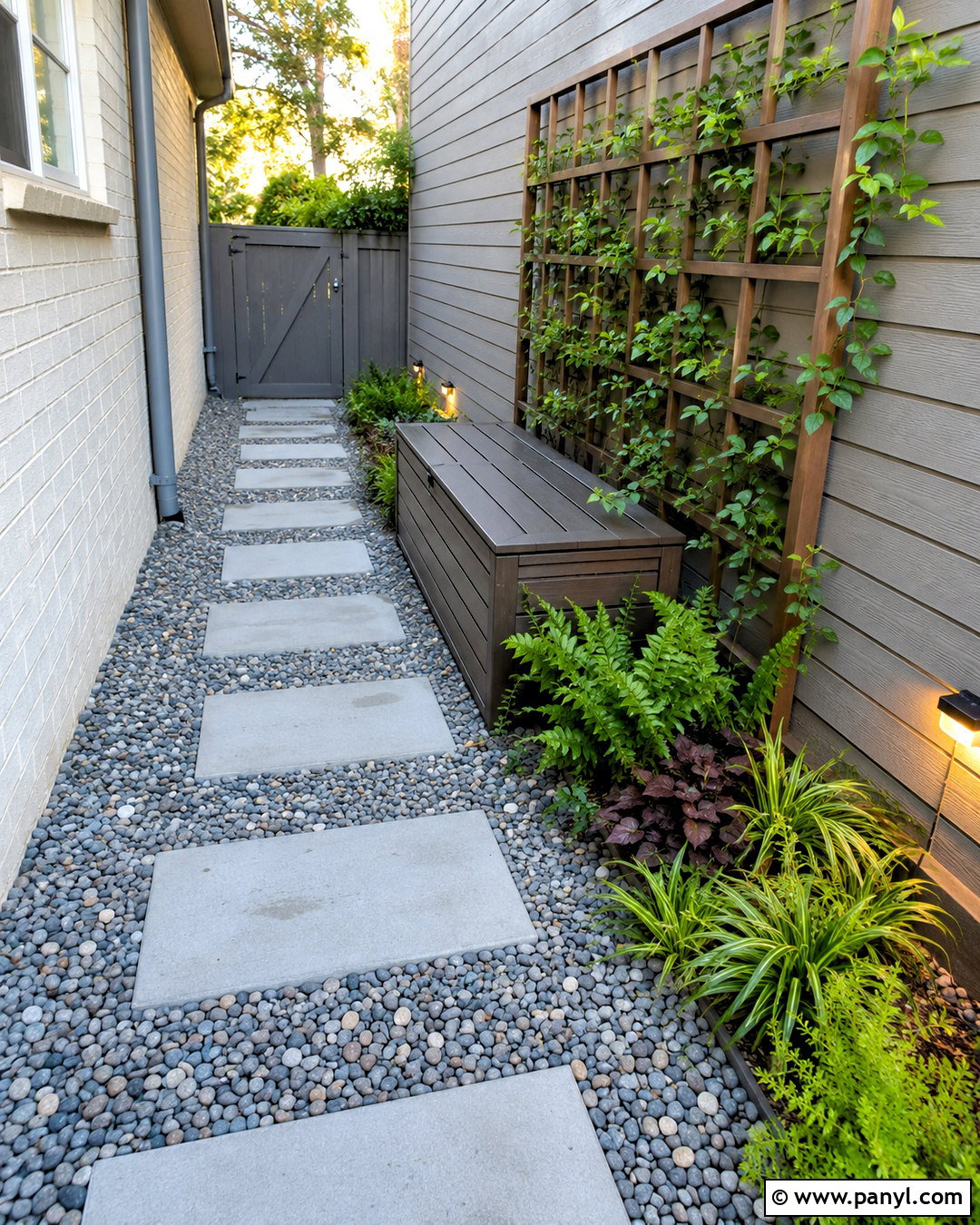
A narrow side yard can become a useful passage instead of an overlooked strip between buildings. Install rectangular concrete stepping stones in a straight or gently staggered line, then surround them with small mixed-gray pebbles. Add a slim planting bed along one side with ferns, coral bells, sedges, or drought-tolerant grasses, depending on available sunlight. On the opposite wall, use a simple timber trellis for a manageable climbing plant. A compact storage bench can hide hoses and small garden tools near the back gate. Include low-voltage wall lights for safe evening access. Keep the path clear and avoid oversized shrubs that will quickly reduce its width. Repeating materials from the front or backyard will make this practical corridor feel like a deliberate part of the entire landscape.
18. Pebble Stone Tree Surround
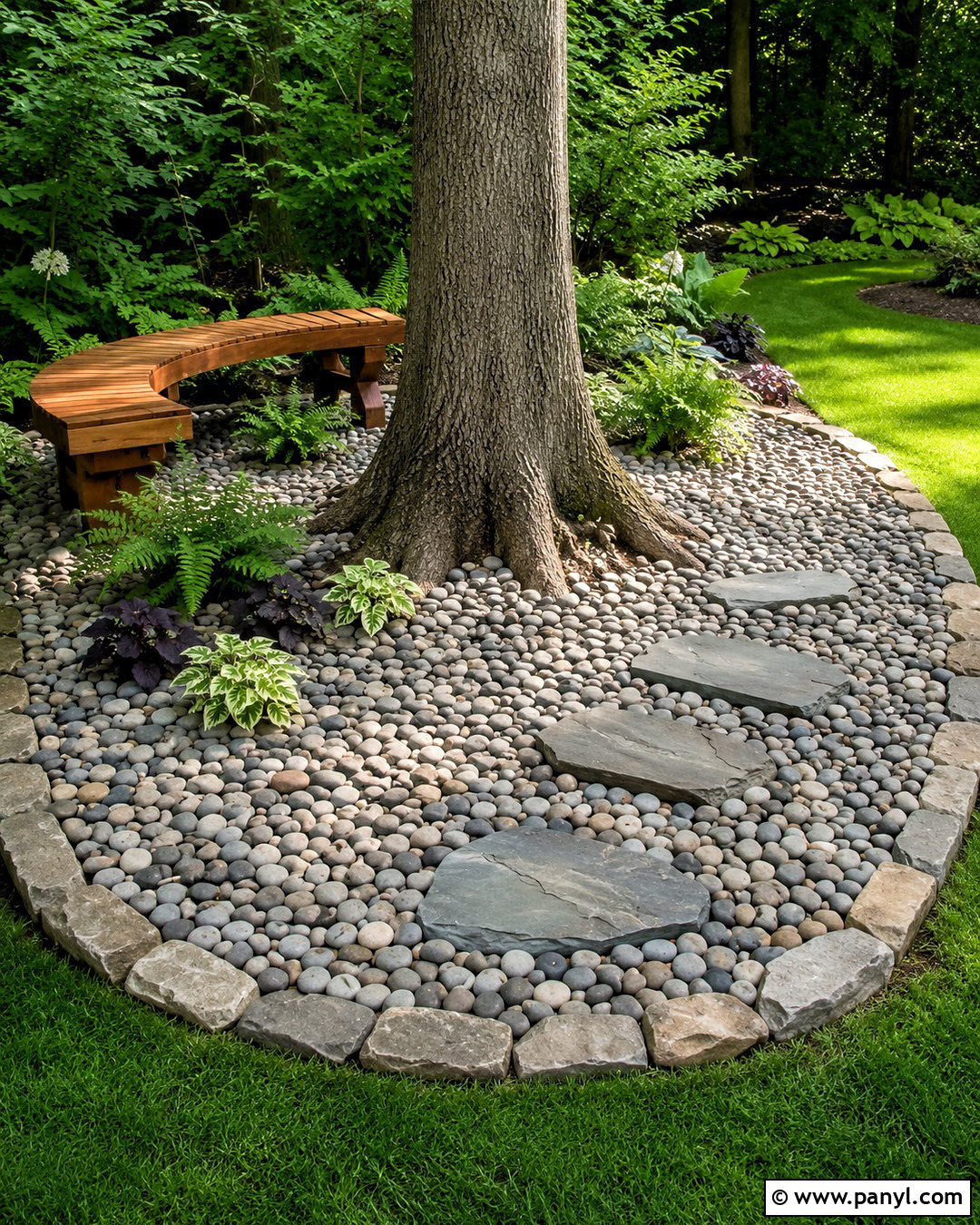
A mature tree can become the center of a restful garden nook without piling soil or stones against its trunk. Create a generous circular or organic bed that respects the tree’s root flare. Use a light layer of warm gray pebbles in selected open areas, while maintaining appropriate organic mulch where needed for tree health. Place a curved wooden bench beyond the critical root zone and add shade-tolerant plants such as ferns, heuchera, sedges, and woodland ground covers around the perimeter. Natural stone edging can separate the bed from the lawn. Add a stepping-stone route rather than compacting the entire root area. The finished composition frames the tree, provides comfortable seating, and blends naturally into the yard while keeping long-term tree care at the center of the design.
19. Pebble Stone Pool Border
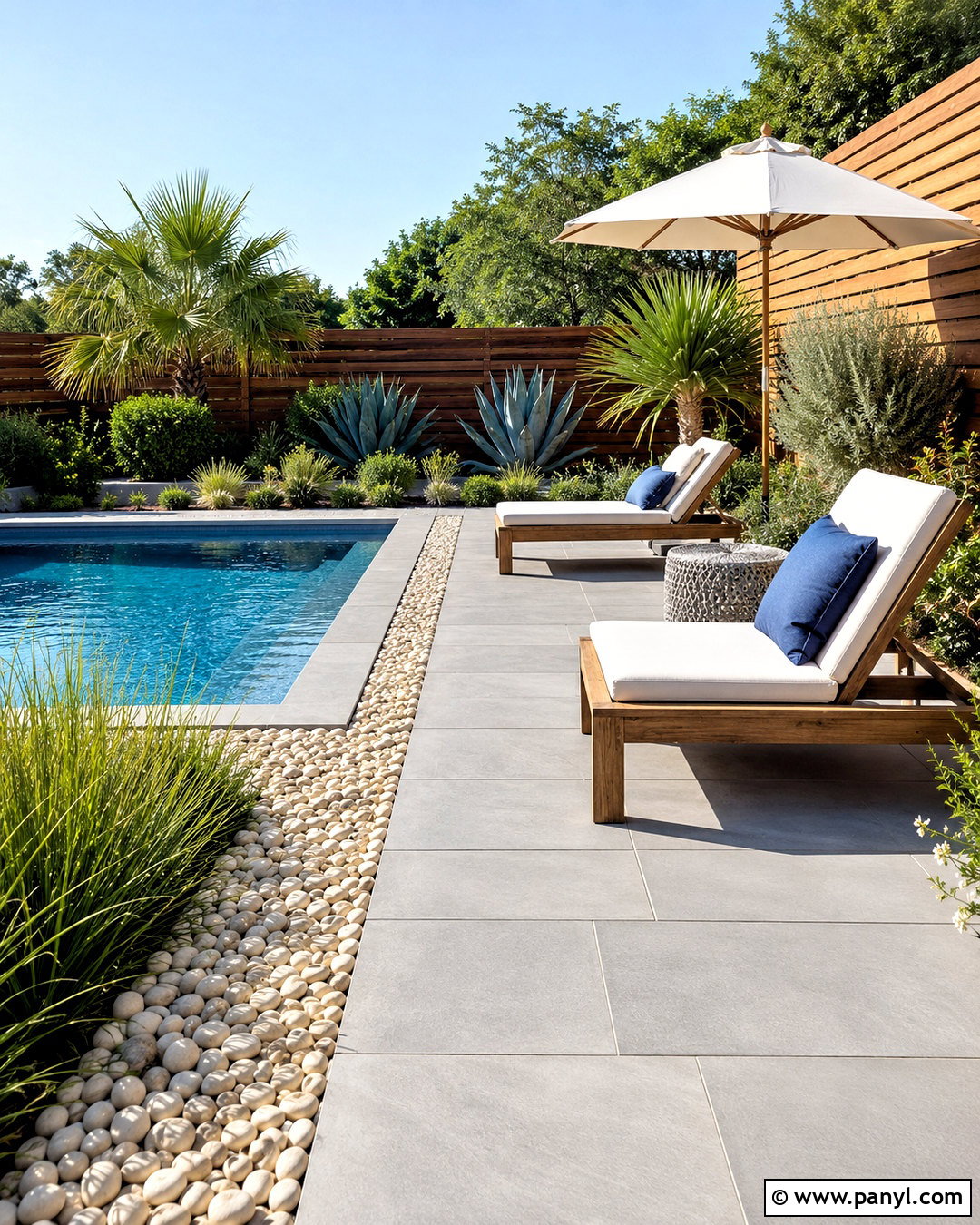
Pale pebbles can soften the hard lines of a swimming pool and create a resort-inspired transition into the garden. Keep the primary walking surface slip-resistant and stable, using large light-gray pavers around the pool edge. Install cream river pebbles in contained decorative bands beyond the main traffic zone. Fill adjacent beds with ornamental grasses, dwarf palms, agave, and neatly clipped shrubs suited to the local climate. Add two teak loungers with washable white and blue cushions beneath a simple shade umbrella. A horizontal wood fence offers privacy and repeats the warm tone of the furniture. Secure edging is essential so loose stones do not migrate onto the pool deck. The complete design balances safe circulation, low planting, comfortable seating, and a clean coastal color palette.
20. Pebble Stone Small Backyard
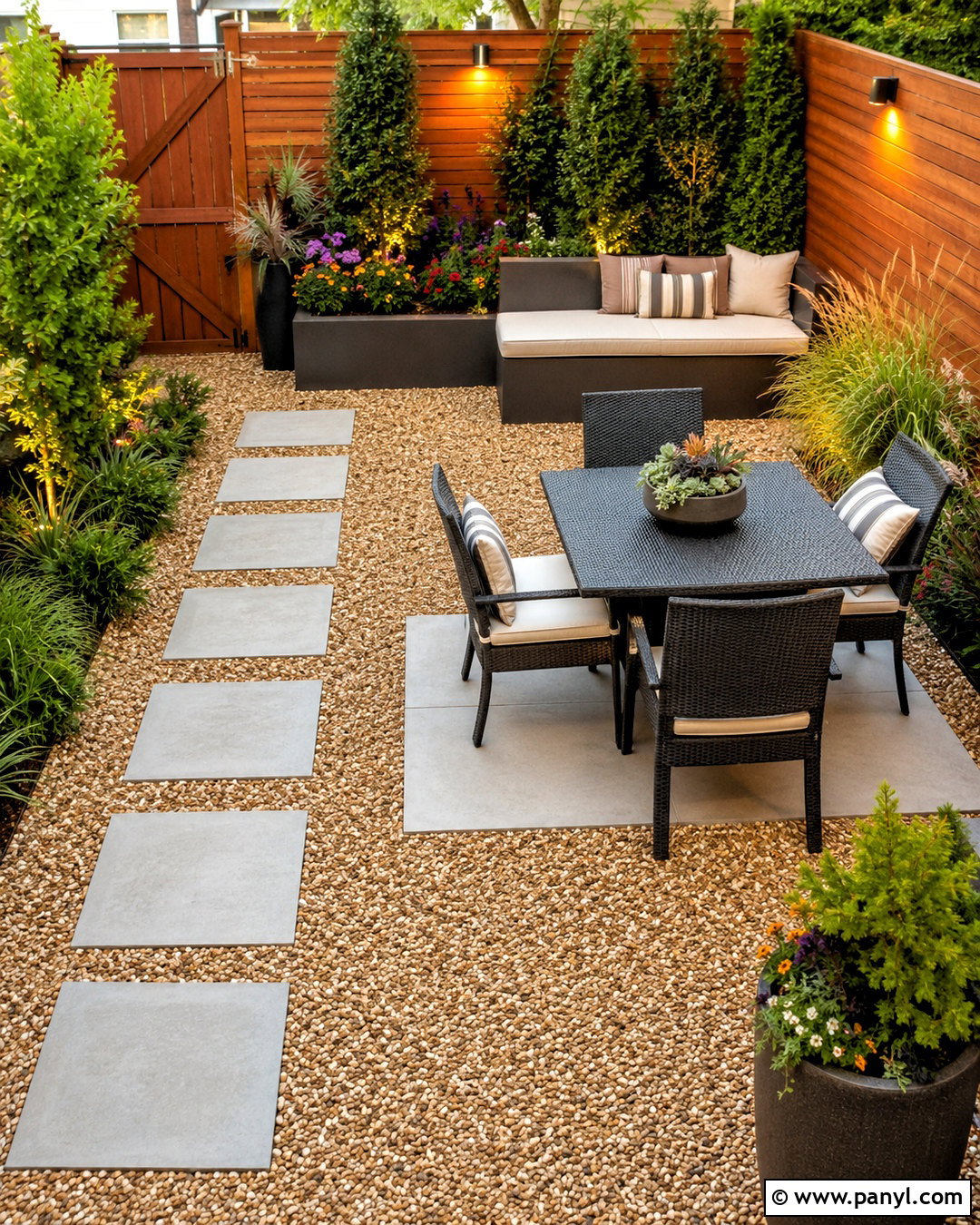
Even a compact backyard can include dining, planting, and relaxation when every surface has a clear purpose. Cover the center with warm beige pebbles and place large square pavers beneath a four-seat outdoor dining set for stability. Build a narrow raised planting bed along the back fence, filling it with layered evergreen shrubs, ornamental grasses, and seasonal flowers. A slim cedar screen can conceal utilities while supporting a climbing vine. Add a cushioned bench along one side to provide extra seating without using valuable floor space. Keep the center open and limit the palette to three or four materials. Soft wall lighting and several large planters complete the setting. This efficient layout makes the yard feel organized, inviting, and visually wider than its actual dimensions.
Conclusion:
The best **20 pebble stone ideas** combine natural texture with a practical layout, stable construction, and planting that suits the local climate. Before ordering stone, measure the area carefully and decide whether the surface will be decorative or used for regular walking. Prepare an appropriate base, install durable edging, and select pebble sizes that match the project. Dark stones create contrast, pale pebbles brighten small areas, and mixed river rocks feel relaxed and natural. Complete the setting with coordinated pavers, comfortable furniture, layered plants, and useful lighting. Whether you update a pathway, courtyard, patio, or entire backyard, a thoughtfully planned pebble design can make the outdoor space feel more polished and enjoyable.

Related Ideas and Inspiration:



Leave a Reply