
Choosing a wall color becomes easier when you picture the entire room rather than focusing on a tiny paint chip. These 20 indoor paint colors living room ideas pair each wall shade with furniture, flooring, textiles, lighting, and decor for a complete look you can recreate. The collection includes warm neutrals, calming blues, earthy greens, soft pastels, and deeper statement colors. Before committing, test large samples beside your sofa, flooring, and trim. View them in morning light, afternoon sun, and evening lamplight because undertones can shift throughout the day. Whether your living room is small and cozy or open and bright, the following palettes offer practical starting points for creating a balanced, comfortable space with these 20 indoor paint colors living room ideas.

1. Warm White Living Room Paint
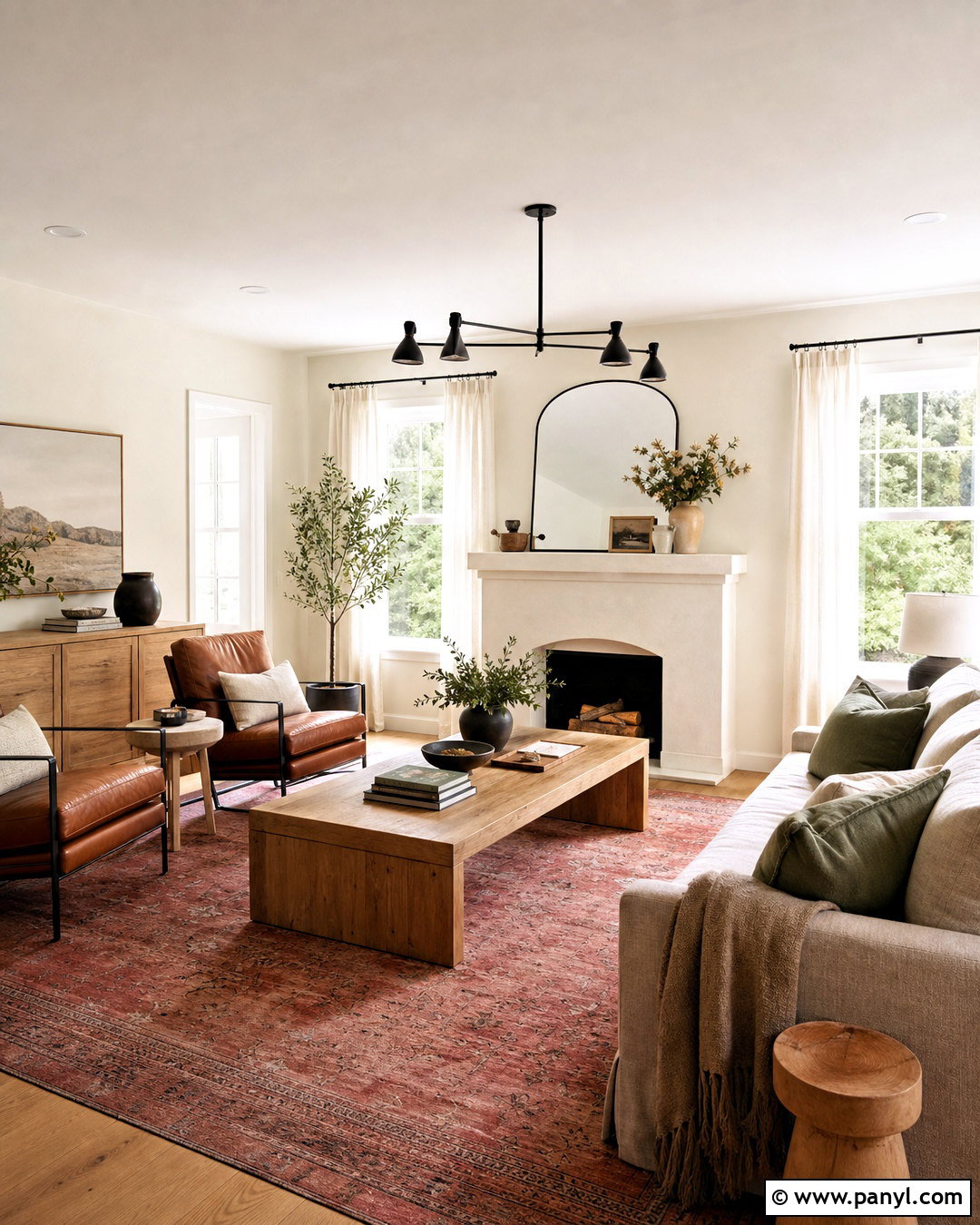
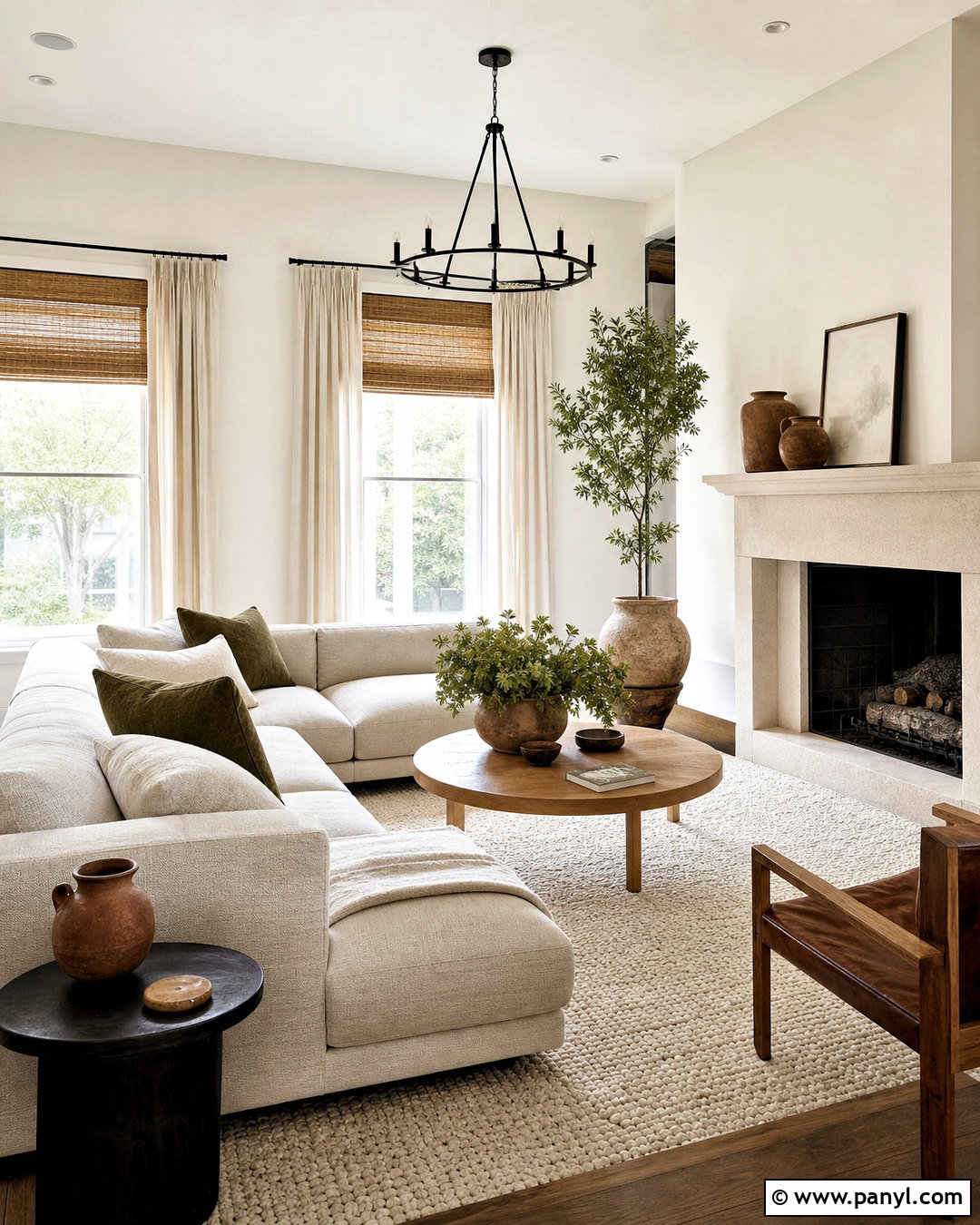
Warm white walls create an airy foundation without making the living room feel cold or clinical. Choose a white with creamy or gentle beige undertones, then repeat that warmth through natural oak furniture and woven textures. A light oatmeal sofa, two cognac leather chairs, and a rounded wood coffee table form a comfortable conversation area. Add a faded terracotta rug to define the seating zone and introduce quiet color. Off-white linen curtains can soften the windows while allowing plenty of daylight inside. Use matte black lighting and slim black picture frames for controlled contrast. Finish with olive green pillows, handmade ceramics, and leafy plants. This complete palette feels fresh, relaxed, and adaptable across modern, transitional, and casual farmhouse interiors.
2. Cream Living Room Paint
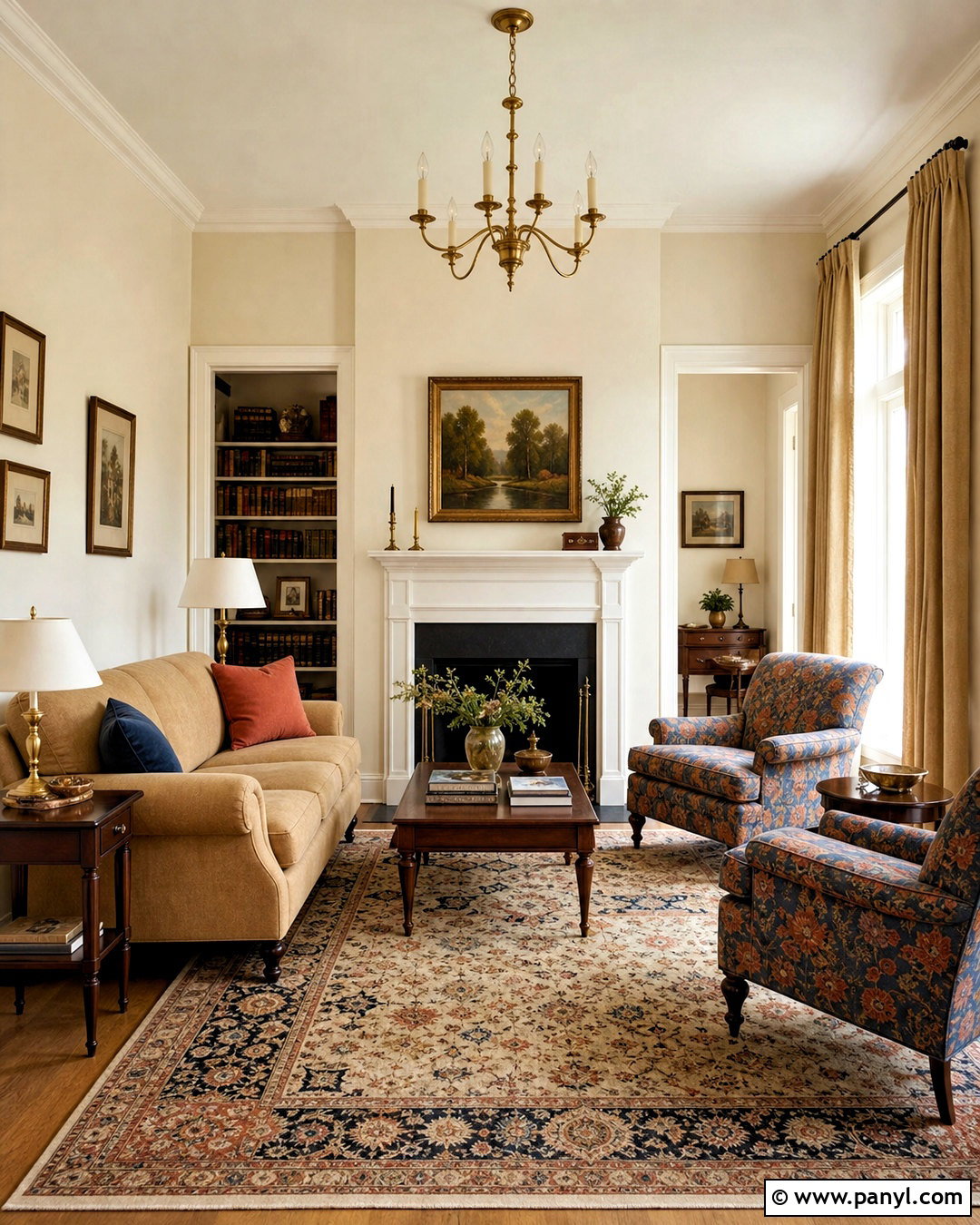
Cream paint gives a living room a softer and more welcoming appearance than crisp white. It works especially well with traditional architectural details, including crown molding, a fireplace mantel, or built-in bookcases. Keep the trim in the same creamy color but use a slightly shinier finish for subtle definition. Place a camel-colored sofa opposite two patterned armchairs featuring muted blue and rust. A walnut coffee table and antique brass floor lamp deepen the warm palette. Ground everything with a vintage-style rug containing ivory, faded red, and dusty navy. Linen curtains in a light wheat shade complete the windows without creating harsh contrast. The resulting living room feels collected and comfortable, with enough color variation to prevent the cream background from looking flat.
3. Soft Beige Living Room Paint
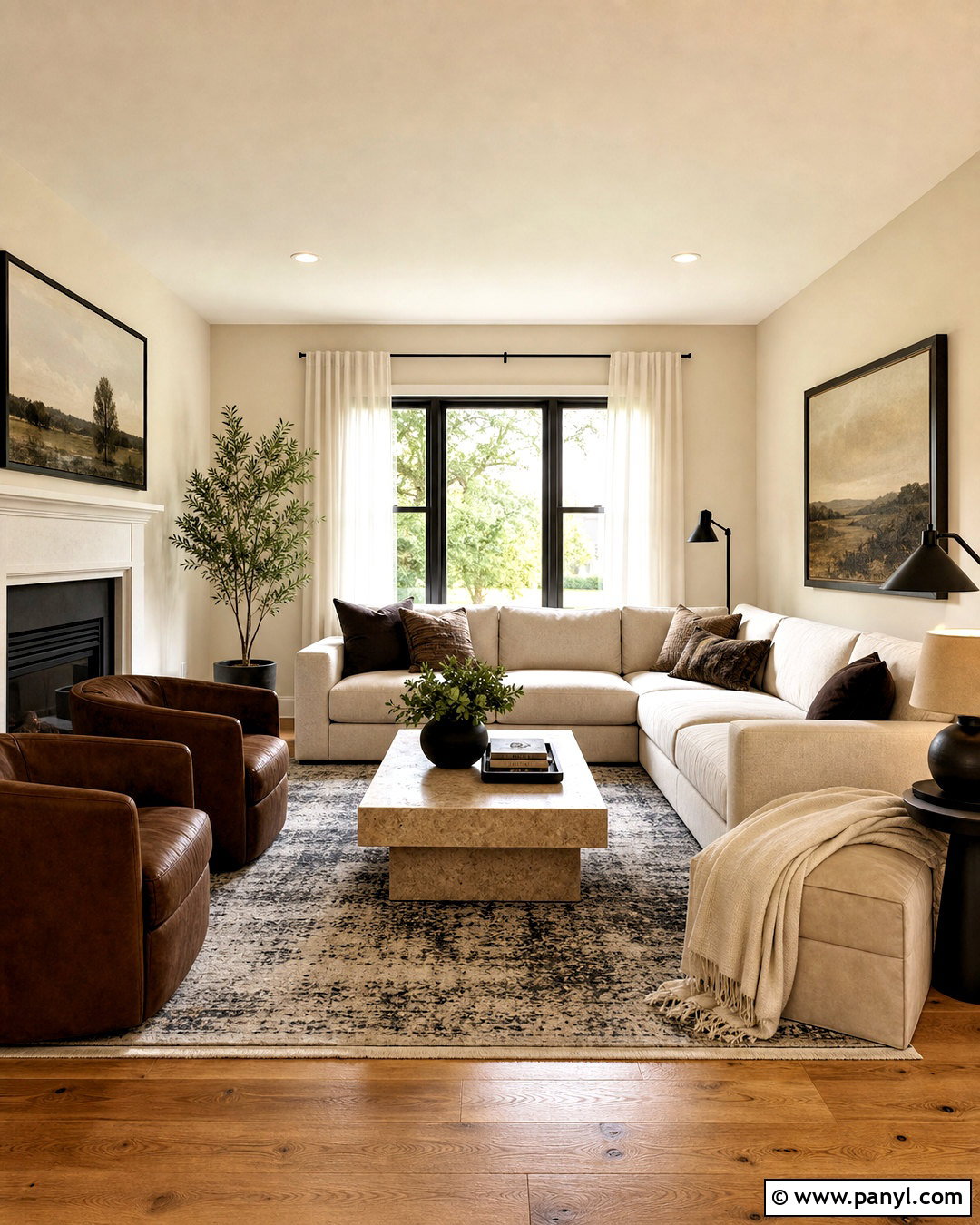
If you want a neutral room with noticeable warmth, soft beige provides an easy starting point. Select a balanced beige that does not lean too yellow, and pair it with medium-toned wood flooring. A generously sized ivory sectional can anchor the room, while a pair of warm brown lounge chairs adds definition. Choose a large wool rug in beige and charcoal with a simple geometric pattern. A travertine coffee table introduces natural movement and keeps the palette from becoming overly matched. Layer black metal lighting, chocolate brown pillows, and textured cream throws for contrast. Minimal landscape artwork with muted green and clay accents can connect the neutral walls to the accessories. This scheme is practical for busy households because it feels polished without appearing formal or delicate.
4. Warm Greige Living Room Paint
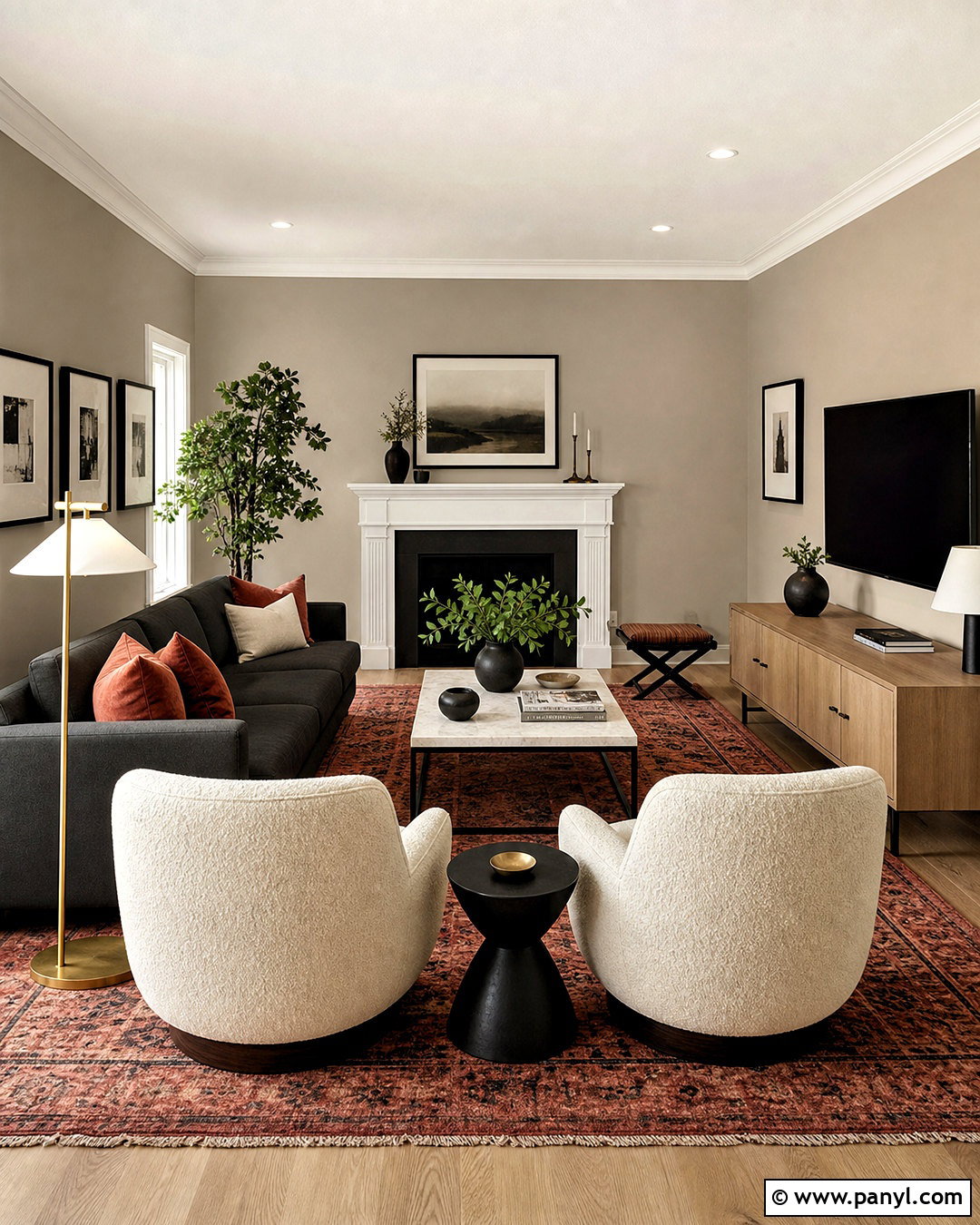
Warm greige combines the flexibility of gray with the comfort of beige, making it useful in living rooms connected to kitchens or hallways. Choose a medium-light shade with a taupe undertone rather than a cool blue cast. Paint the walls warm greige and leave the ceiling a soft warm white to maintain openness. Build the room around a charcoal sofa, natural oak media cabinet, and two cream boucle chairs. Rust-colored pillows and a muted red rug can energize the restrained background. Add brushed brass sconces or a floor lamp to bring warmth near eye level. Simple black-framed art provides structure without overwhelming the walls. This complete living room works particularly well in transitional homes where modern furniture needs to blend with classic trim and familiar materials.
5. Mushroom Taupe Living Room Paint
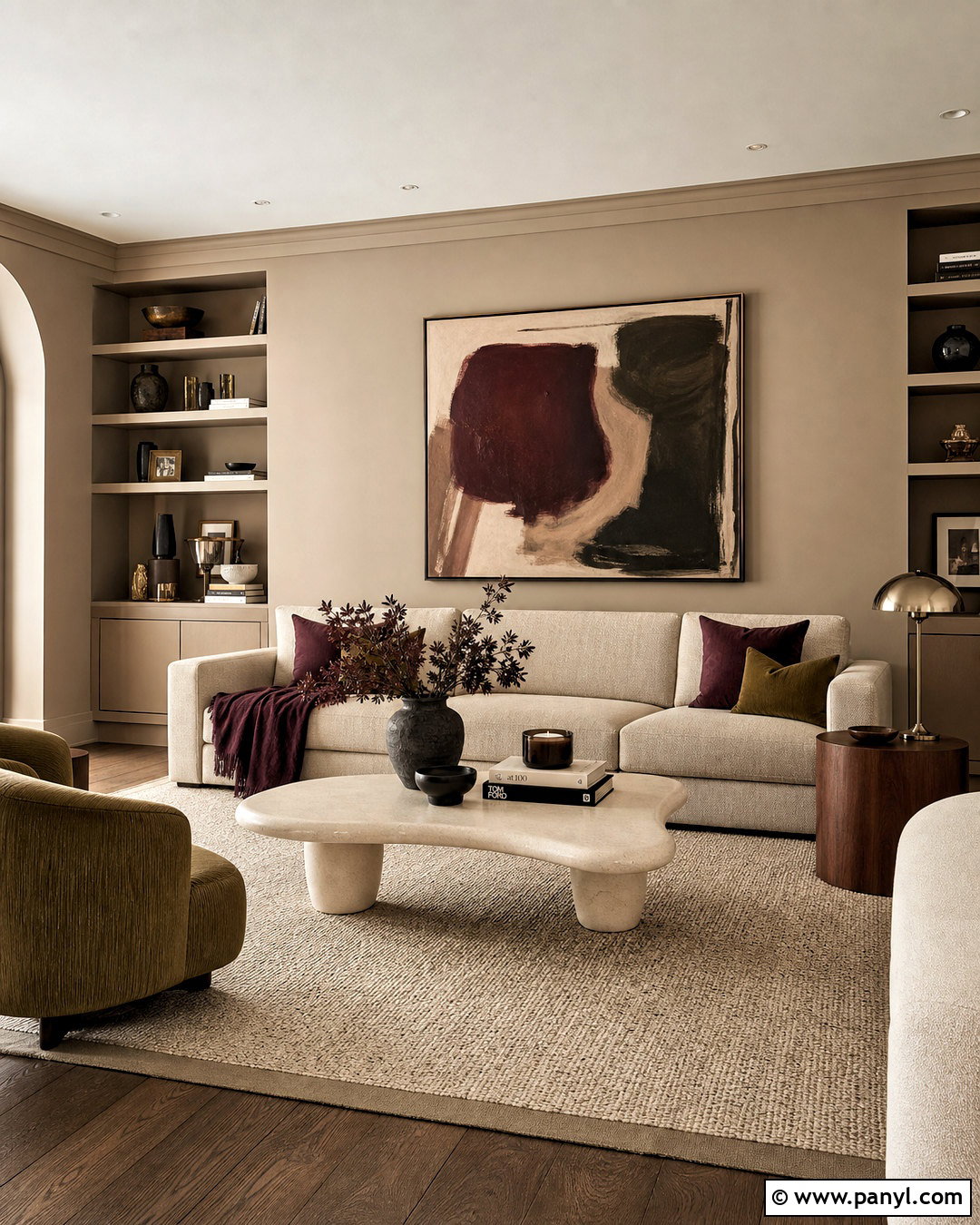
Mushroom taupe has subtle brown and gray undertones that create a grounded, sophisticated living room. Use it across the walls and built-in shelving for a connected color-drenched effect, but keep the ceiling warm white if the room has limited daylight. A low cream sofa will stand out softly against the deeper walls. Pair it with walnut side tables, a sculptural ivory coffee table, and an oatmeal wool rug. Deep plum pillows and muted olive accents introduce color without disrupting the calm atmosphere. Hang oversized abstract artwork containing cream, brown, and dusty pink above the sofa. Bronze lighting and dark wood frames add depth around the room. The finished palette feels intimate and refined, yet every color remains muted enough for comfortable everyday use.
6. Caramel Tan Living Room Paint
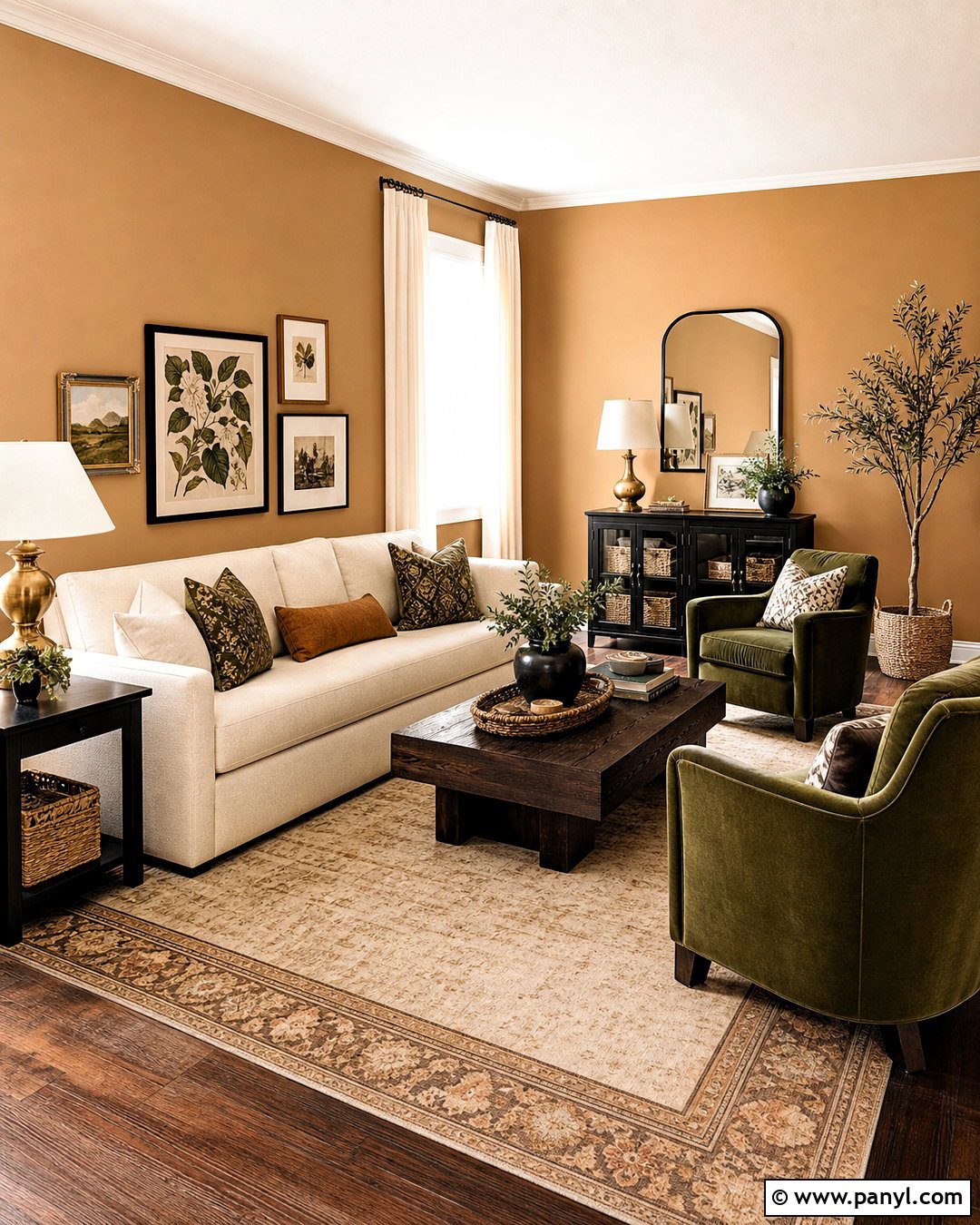
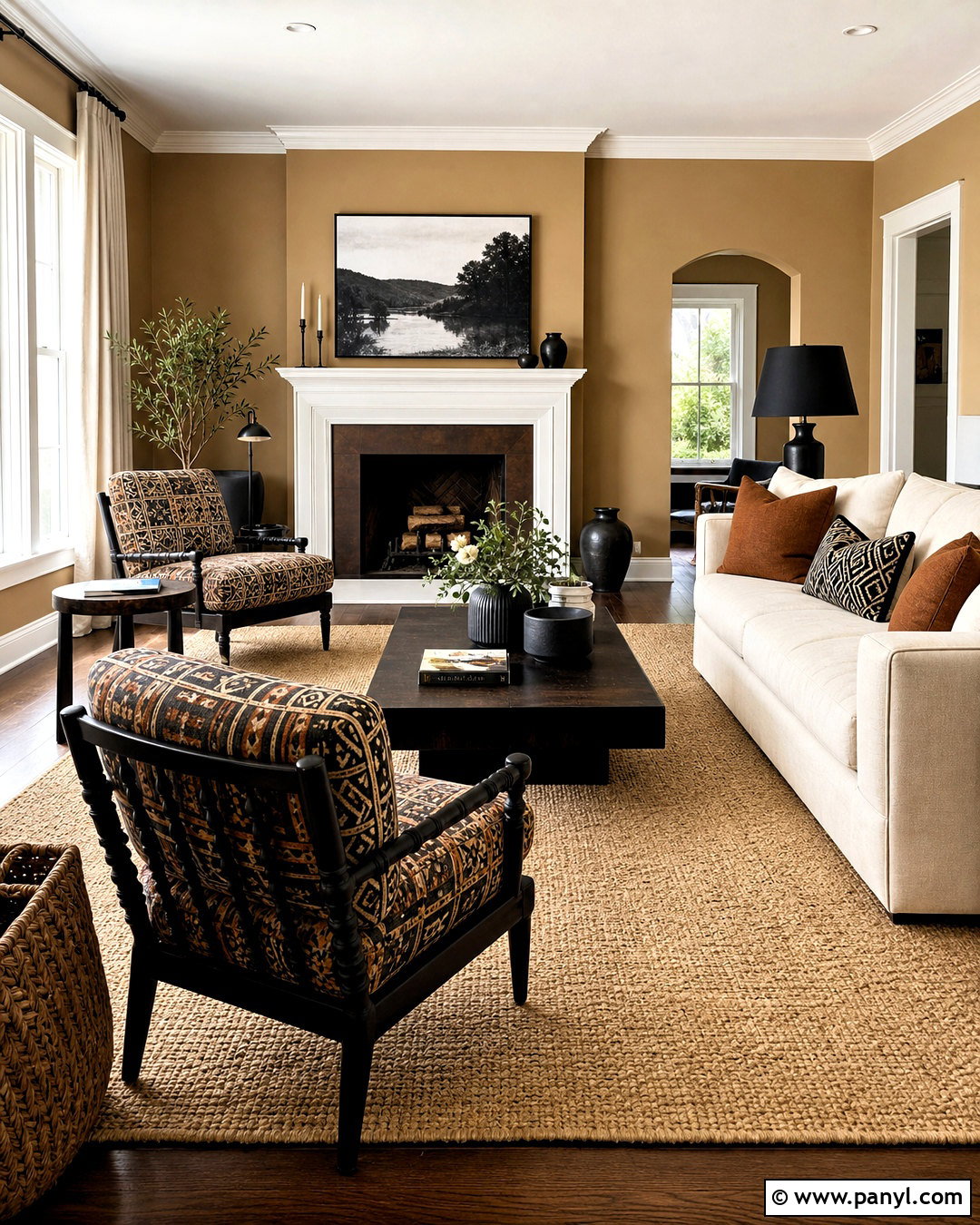
Caramel tan walls can make a sunlit living room feel warm throughout the year. This golden brown shade works beautifully with pale upholstery, dark wood, and touches of green. Start with an off-white sofa and arrange two olive velvet chairs nearby to create a complete seating group. Place a dark walnut coffee table in the center and define the layout with a cream rug featuring a subtle brown border. Long ivory curtains balance the stronger wall color and visually connect with the sofa. Use aged brass lamps for another warm layer, then introduce black accents through a fireplace screen or narrow console. Botanical artwork, woven baskets, and striped pillows keep the scheme casual. The result feels inviting, earthy, and more colorful than a standard neutral room.
7. Mocha Brown Living Room Paint
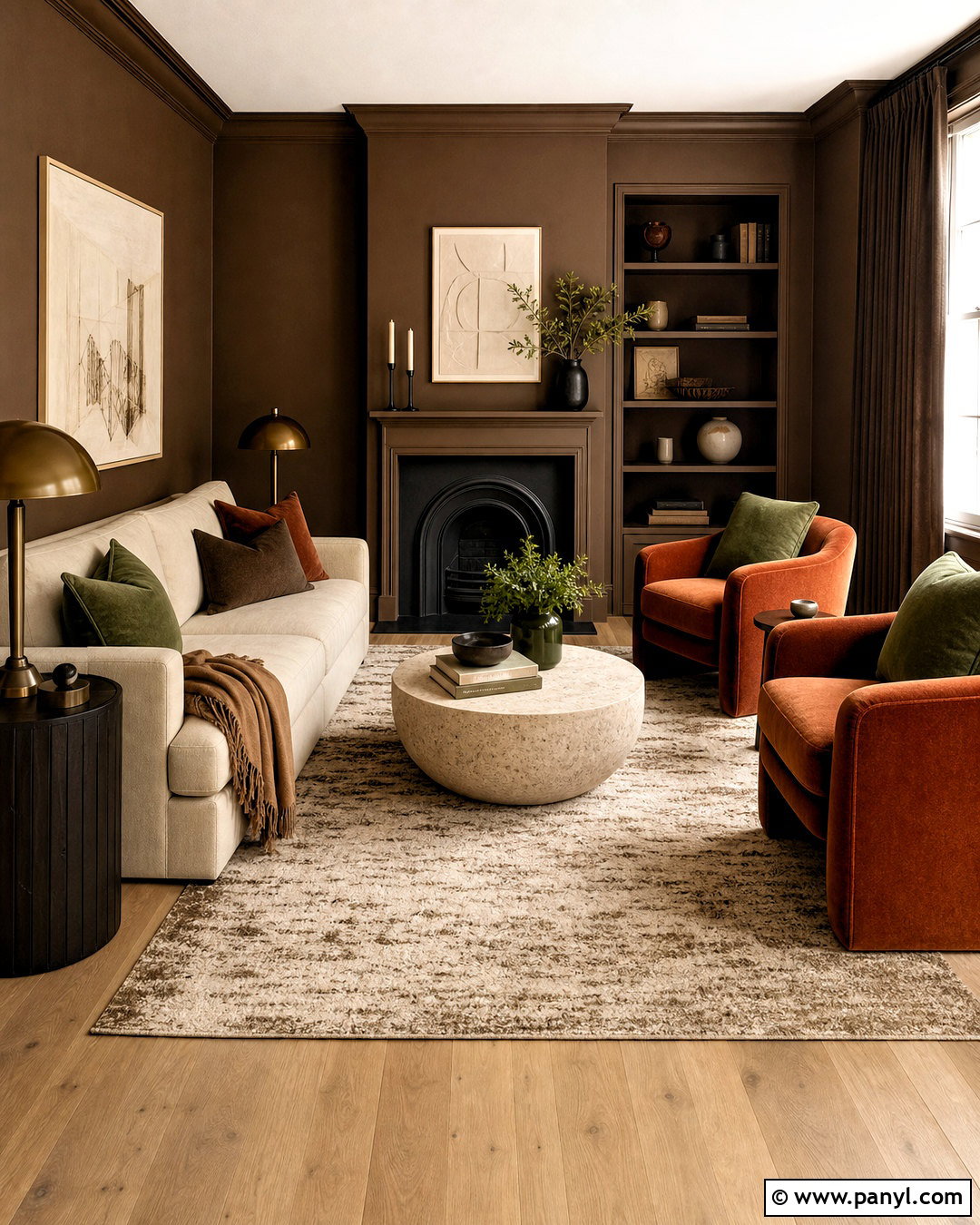
Mocha brown creates a cozy, enveloping backdrop that can still feel modern when paired with lighter furnishings. Paint the walls and trim in the same medium mocha tone for a seamless finish. Balance the depth with a large flax-colored sofa and pale oak flooring. Two rust velvet chairs can face the sofa, while a cream-and-brown patterned rug unites the conversation area. Choose a rounded stone coffee table to introduce a lighter, cooler material among the warm surfaces. Wall art with generous ivory space will prevent the room from appearing heavy. Add bronze lamps, chocolate linen curtains, and a few dark green accessories. This approach gives the living room richness without relying on black, and it works especially well in rooms designed for evening relaxation and conversation.
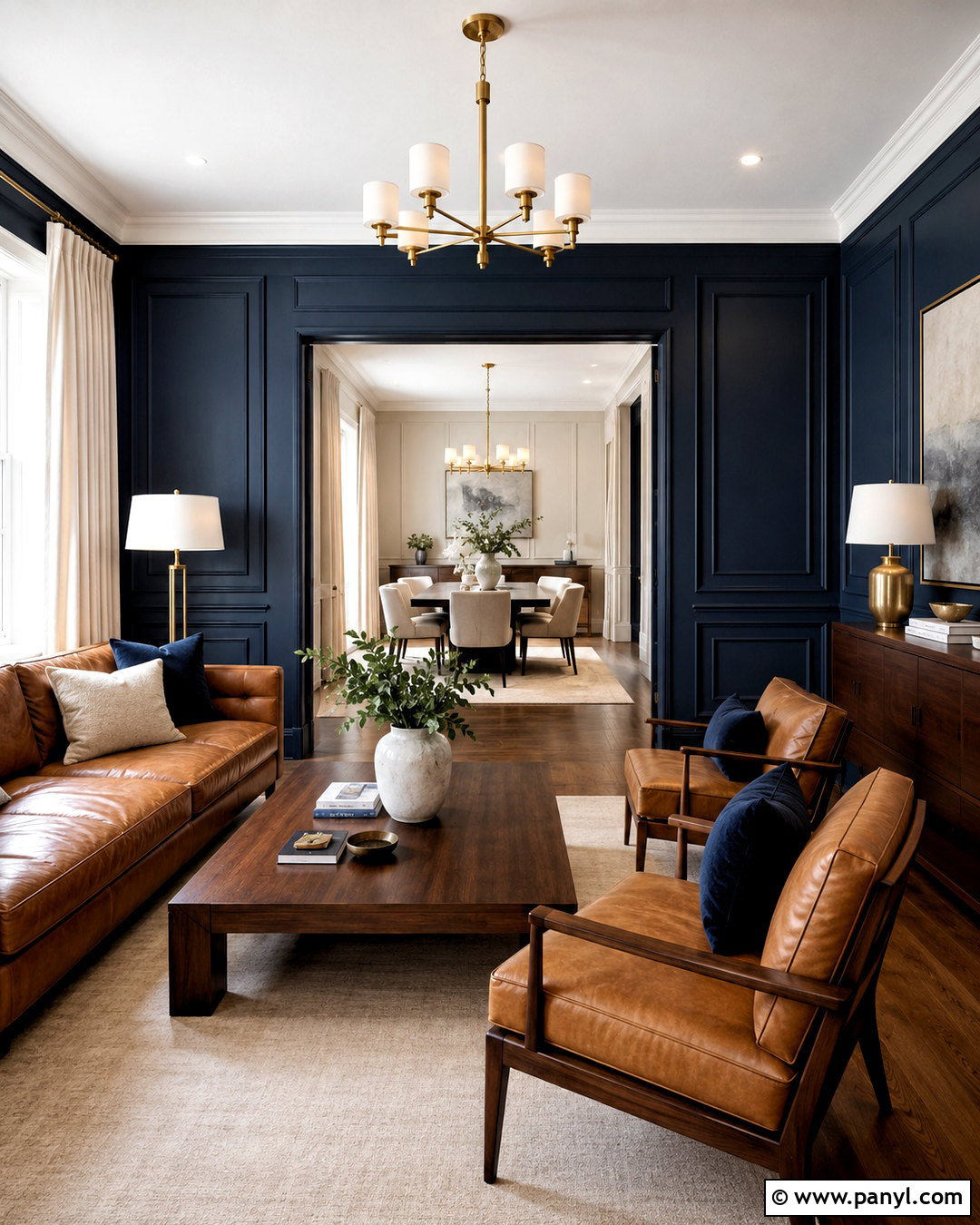
8. Terracotta Living Room Paint
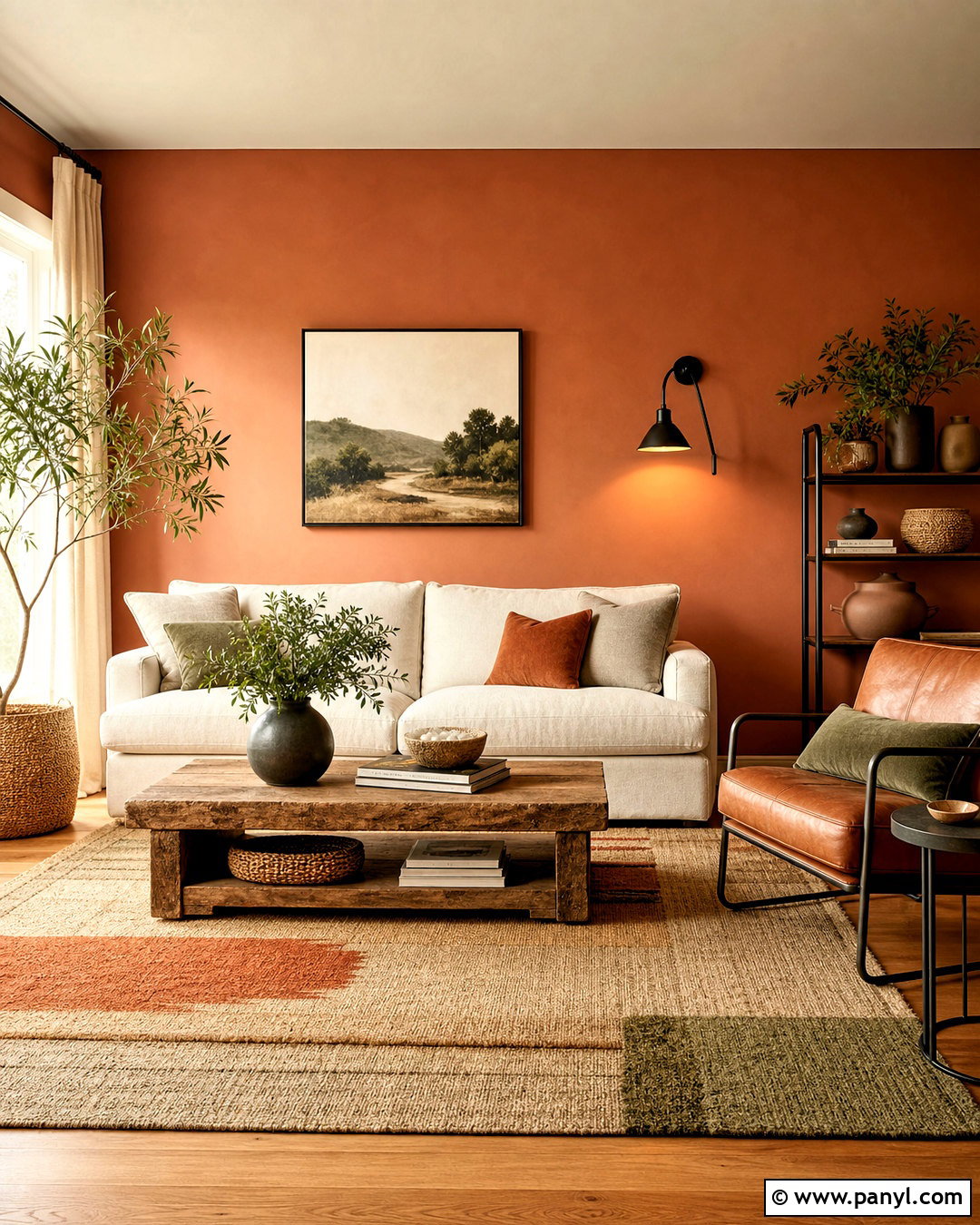
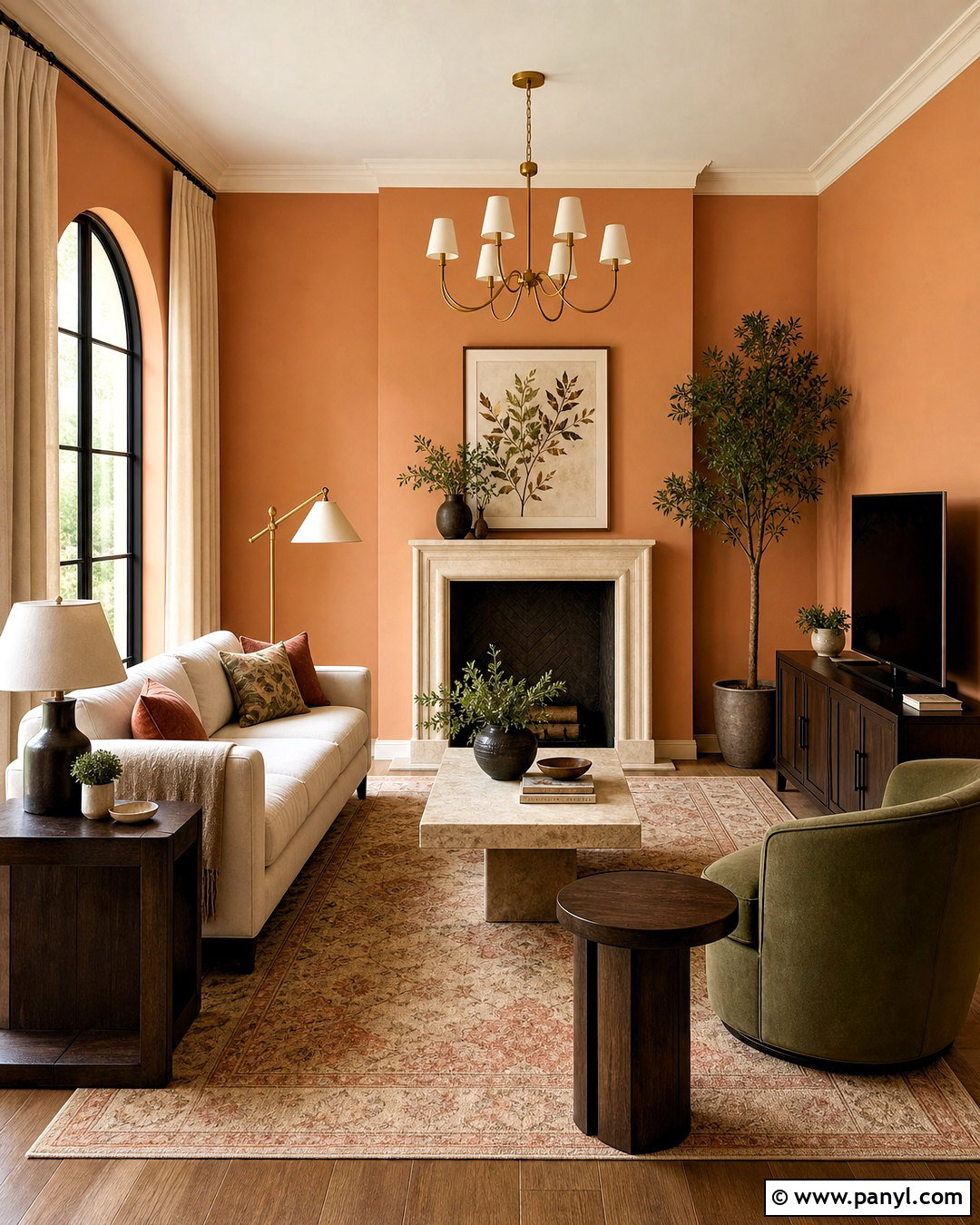
Terracotta paint brings the warmth of sun-baked clay into a living room and works best as part of an earthy, layered scheme. Choose a softened terracotta rather than a bright orange version. Pair the walls with a cream linen sofa, cognac leather chair, and substantial reclaimed wood coffee table. A flatwoven rug containing sand, muted rust, and olive can connect every major color. Use warm white curtains and a matching ceiling to keep the room bright. Natural materials such as jute, rattan, ceramic, and unfinished wood reinforce the grounded character. Add matte black curtain rods and lighting for crisp definition. Olive pillows and several healthy green plants provide cooling contrast, creating a balanced living room that feels welcoming rather than overwhelmingly warm.
9. Clay Pink Living Room Paint
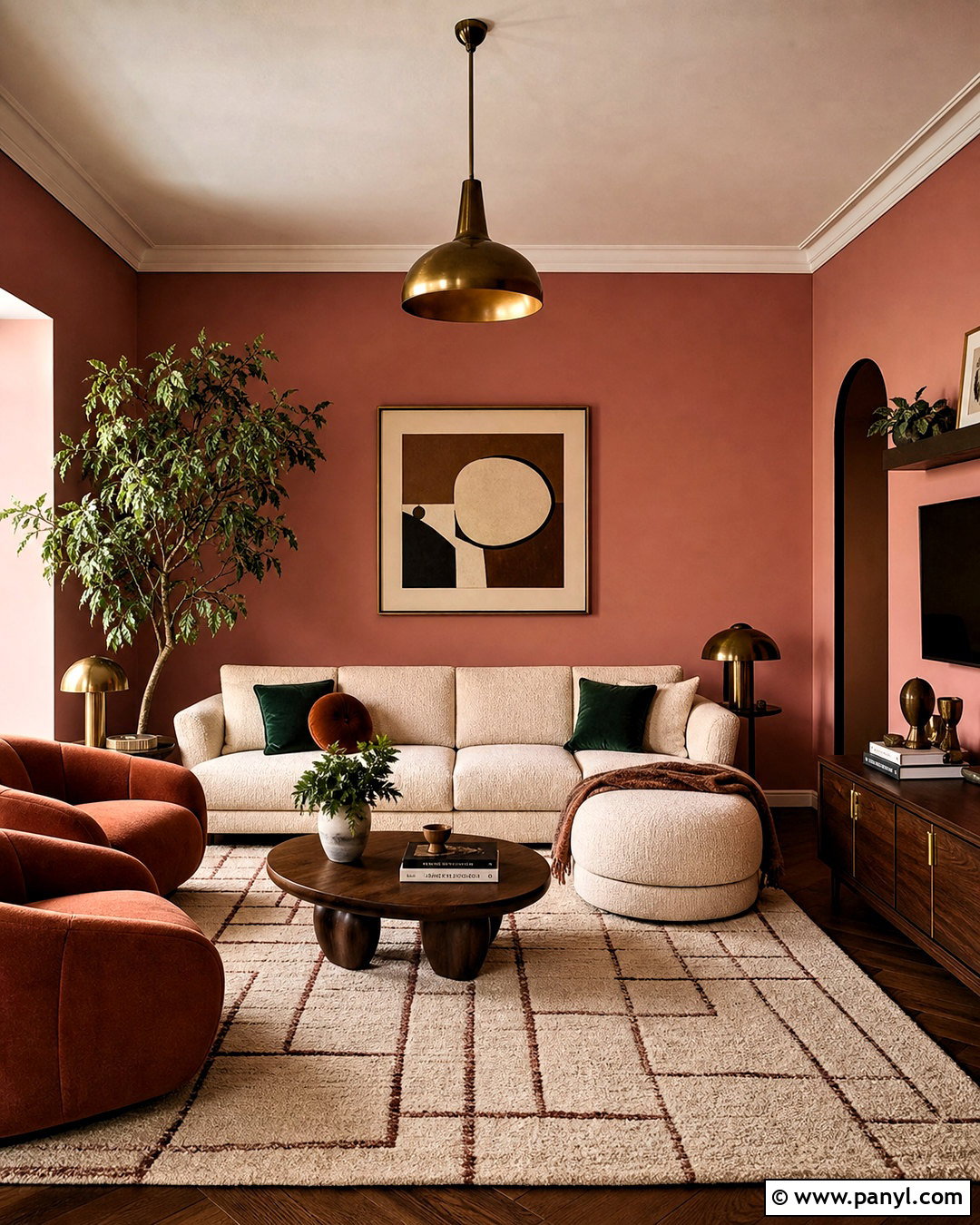
Clay pink offers warmth and personality while remaining quieter than traditional rosy pink. Its earthy undertone pairs naturally with walnut, cream, rust, and burgundy. Paint all four walls clay pink, then introduce a tailored ivory sofa and a dark wood media console. A pair of rust-colored accent chairs will make the room feel coordinated without copying the wall shade. Ground the seating area with a neutral rug featuring thin burgundy lines. Cream curtains, bronze table lamps, and softly curved furniture can emphasize the color’s gentle character. For artwork, select simple abstracts containing dusty red, brown, and off-white. Finish with deep green pillows and a leafy floor plant. This complete scheme feels mature and relaxed, making clay pink suitable for both contemporary and vintage-inspired living rooms.
10. Muted Blush Living Room Paint
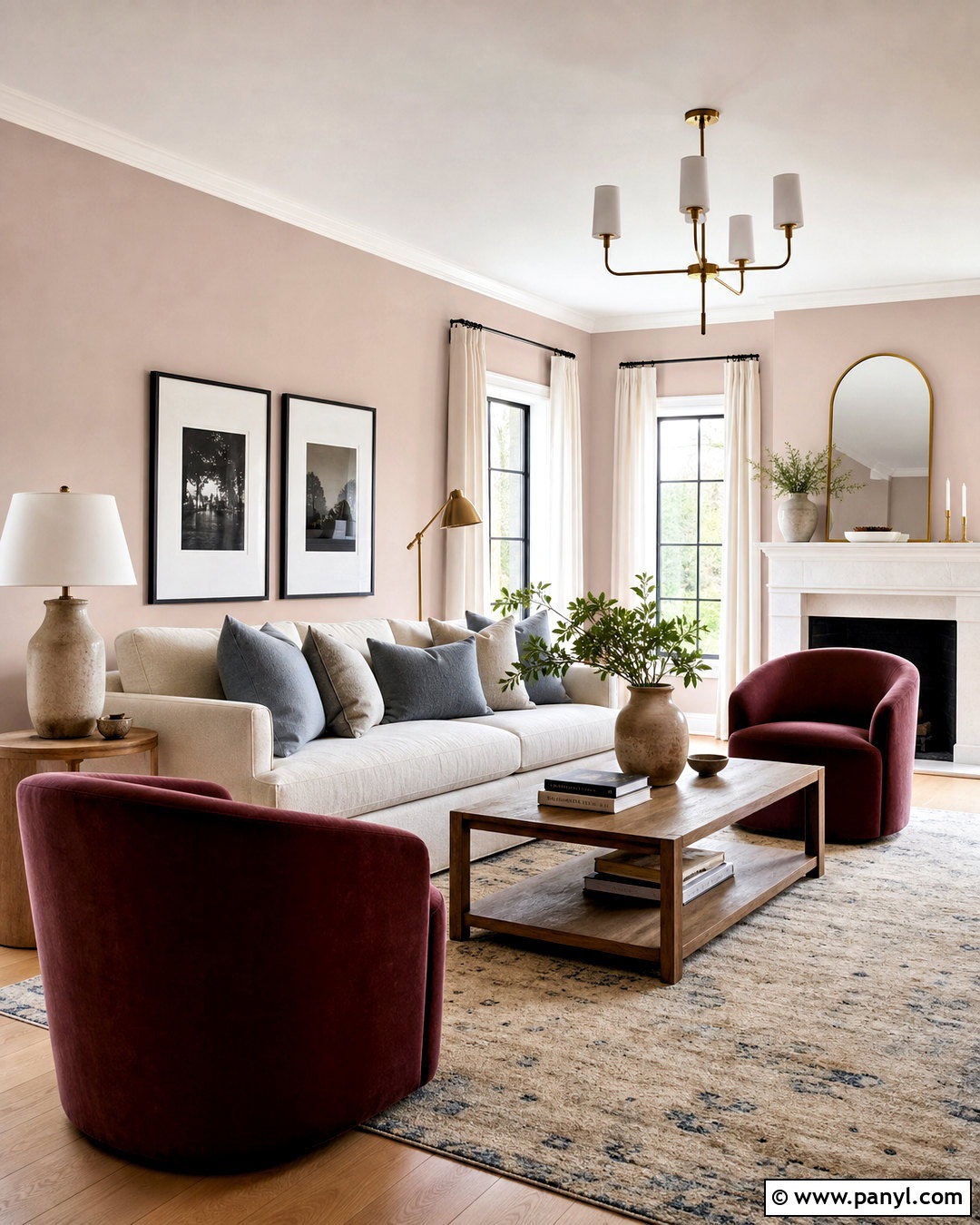
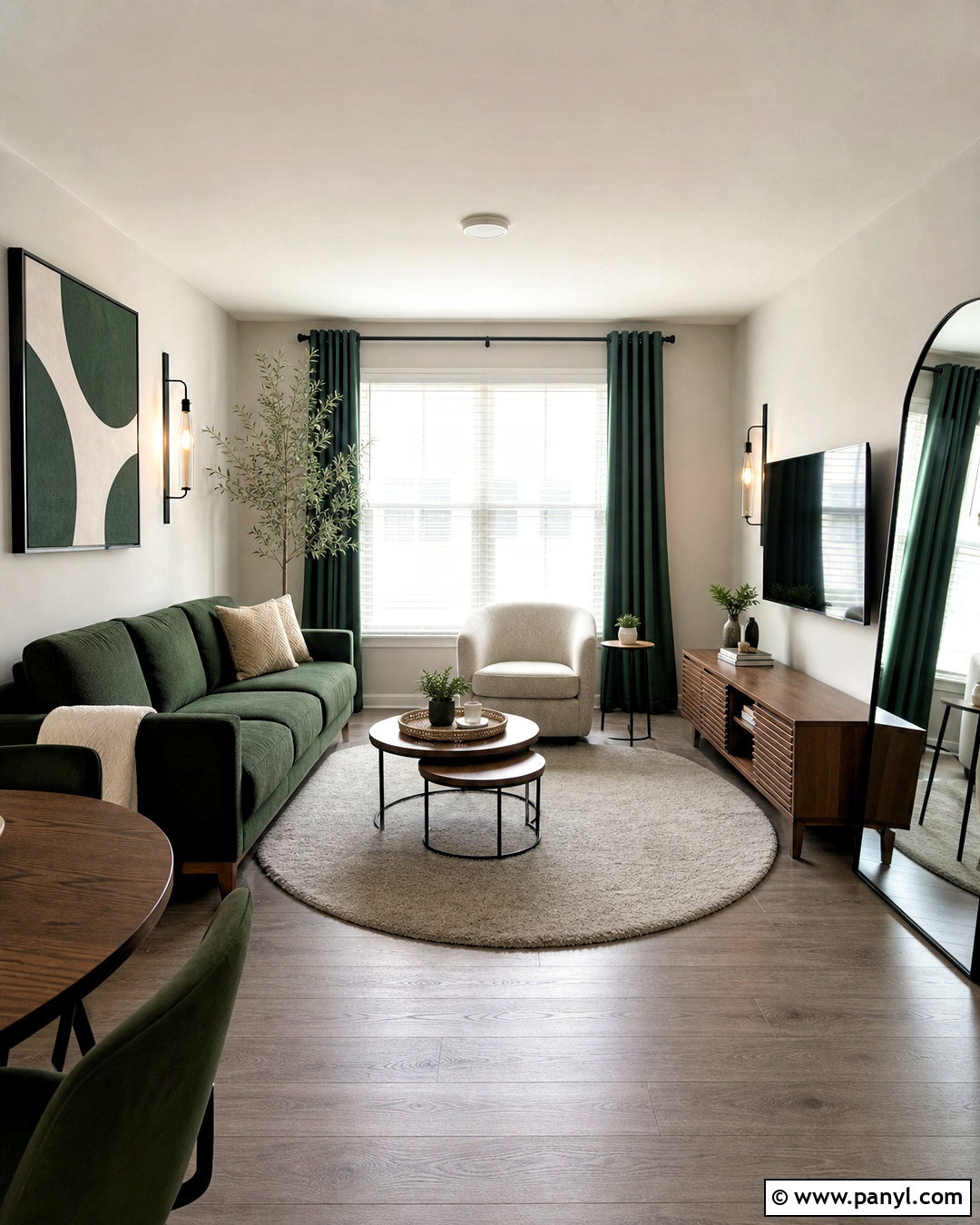
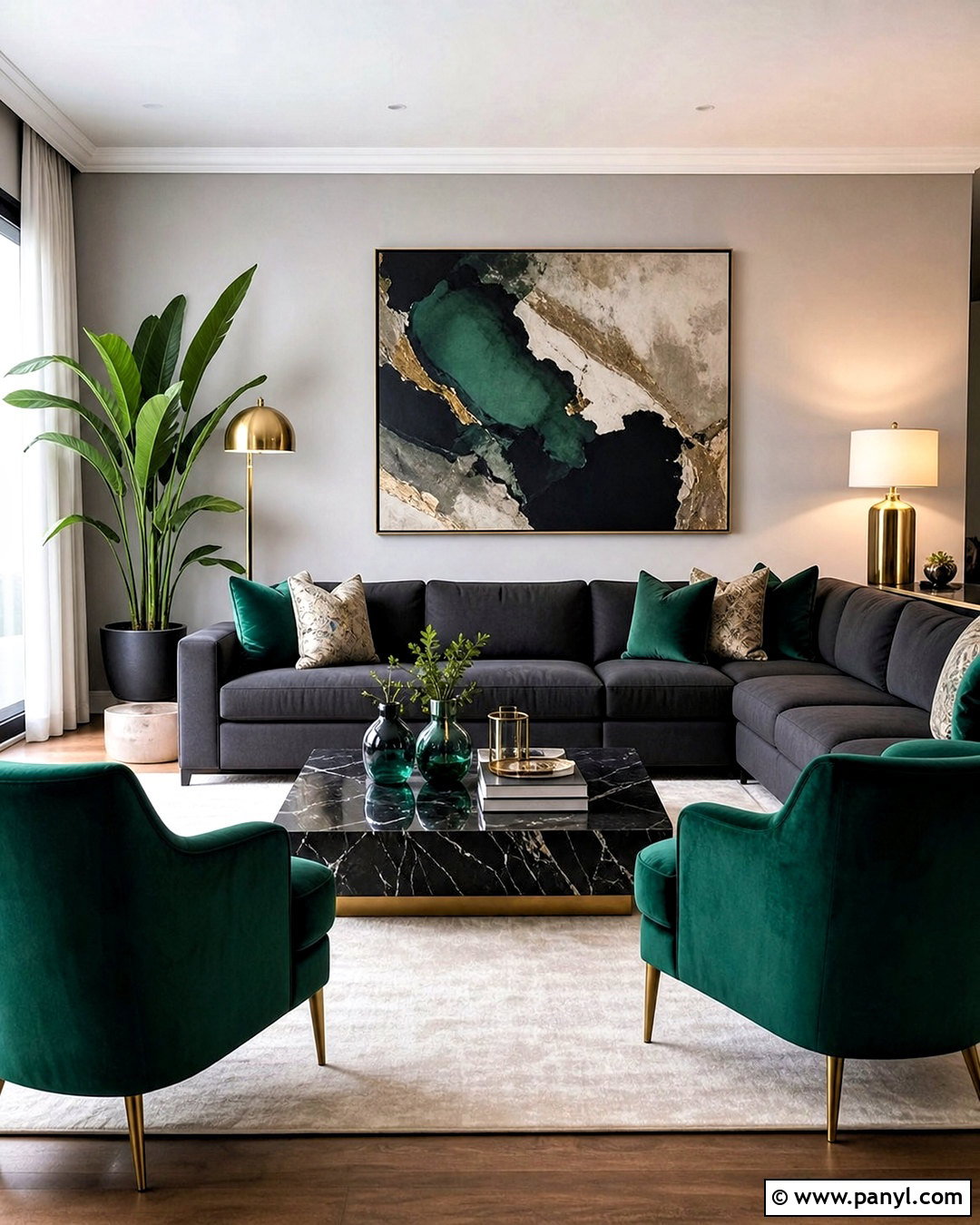
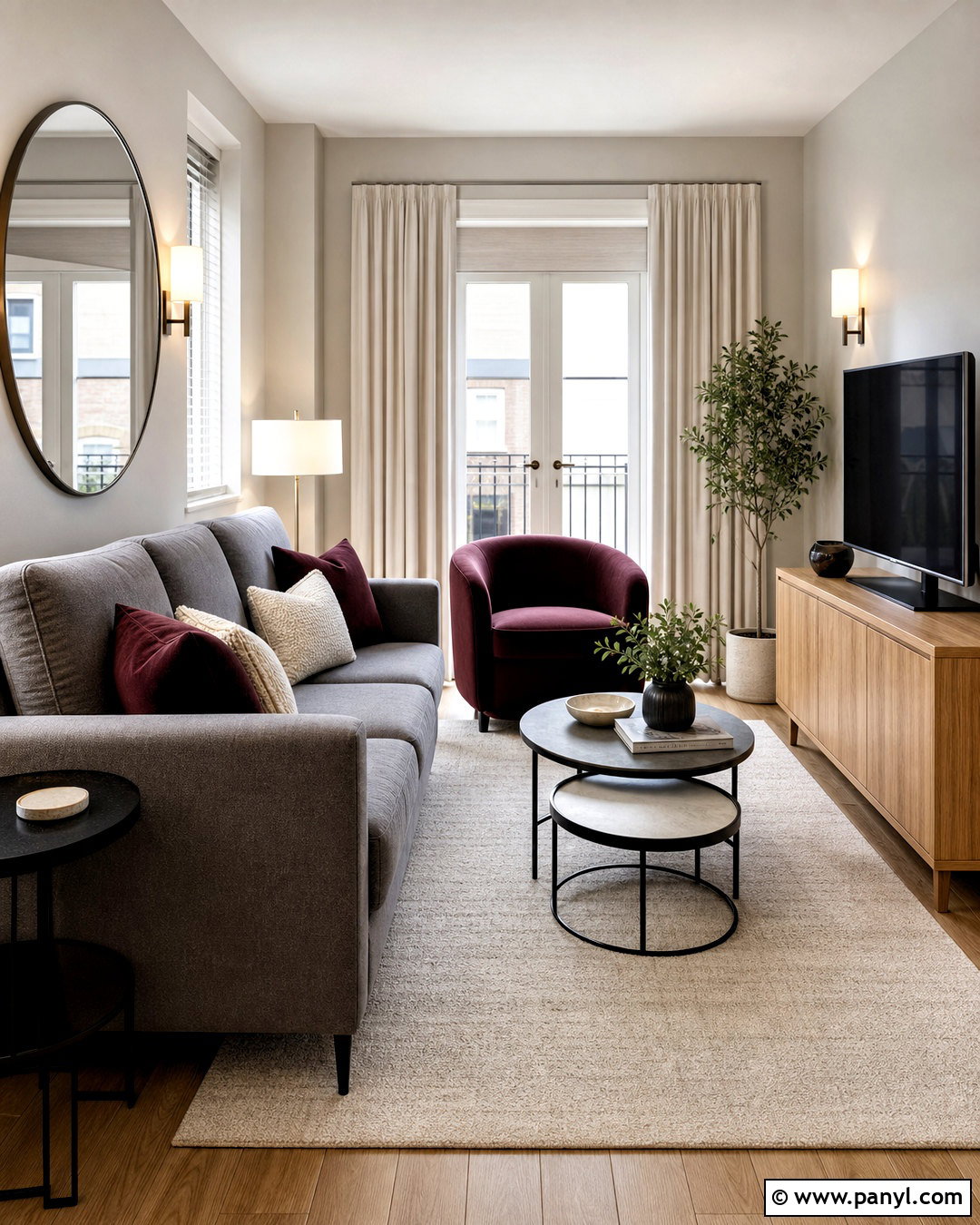
Muted blush can brighten a living room while providing more warmth than white or pale gray. Look for a dusty pink with beige undertones, especially if the space receives strong afternoon sunlight. Combine the walls with an oatmeal sofa, light oak tables, and two compact burgundy chairs. A cream rug with a faded blue pattern adds cool contrast and helps the furniture feel connected. Keep window treatments simple with ivory linen panels mounted close to the ceiling. Brushed brass lighting complements the blush without making the palette overly sweet. Introduce charcoal through picture frames, a fireplace surround, or a slim shelving unit. Soft blue pillows and natural pottery complete the arrangement, producing a light, welcoming living room that feels colorful but still easy to decorate.
11. Butter Yellow Living Room Paint
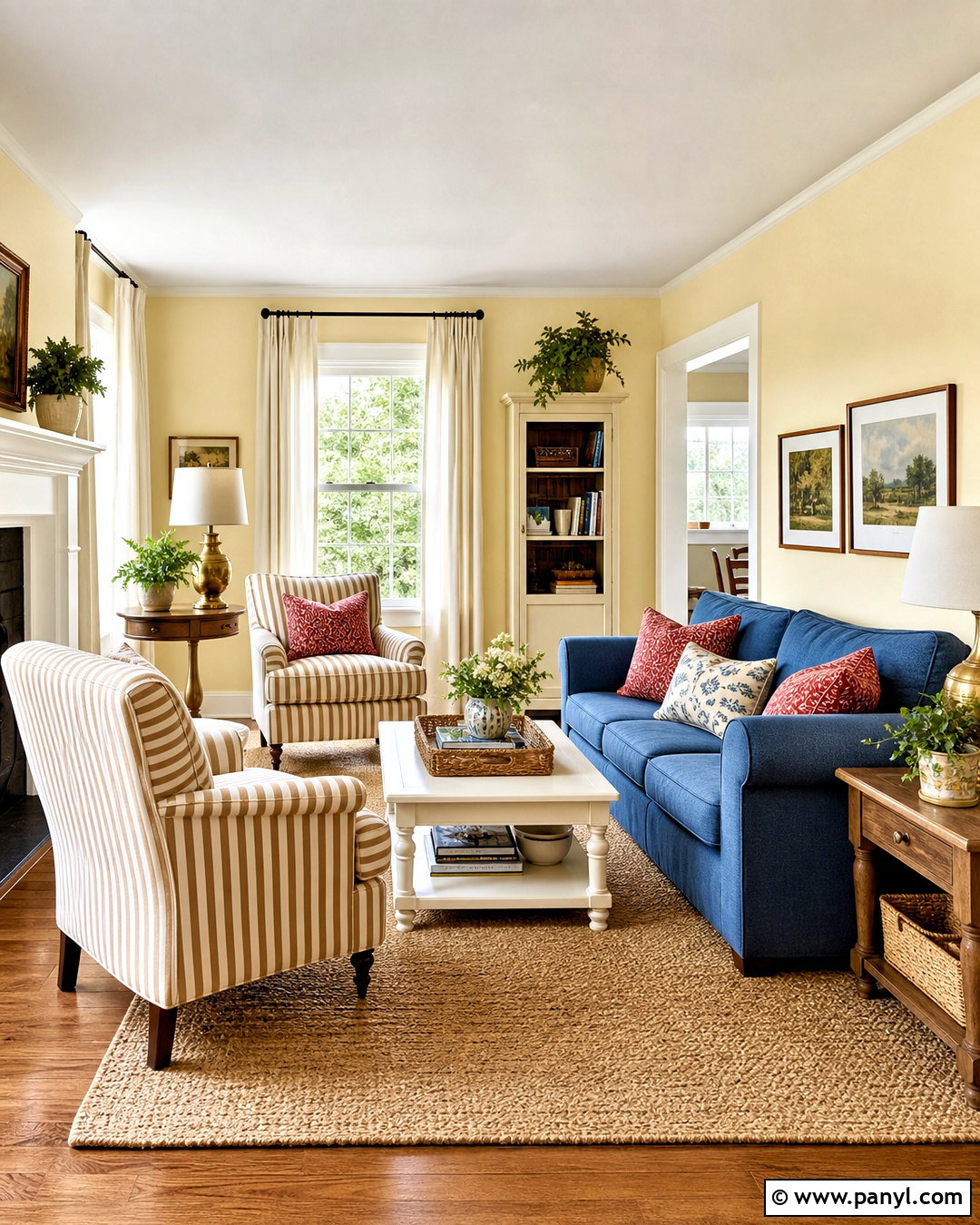
Butter yellow walls can give a living room a cheerful glow without the intensity of lemon or primary yellow. Select a pale shade with creamy undertones, and pair it with classic white trim for gentle definition. A medium-blue sofa creates a pleasing focal point, while two striped cream-and-caramel chairs introduce relaxed pattern. Use a natural sisal rug beneath the seating and add a painted white coffee table for an airy finish. Light oak flooring, woven baskets, and linen curtains support the sunny palette. Small accents in brick red and leafy green prevent the room from feeling overly pastel. Complete the look with traditional brass lamps and simple landscape prints. This comfortable combination suits cottage, coastal, and casual traditional living rooms, particularly those needing additional visual warmth.
12. Muted Ochre Living Room Paint
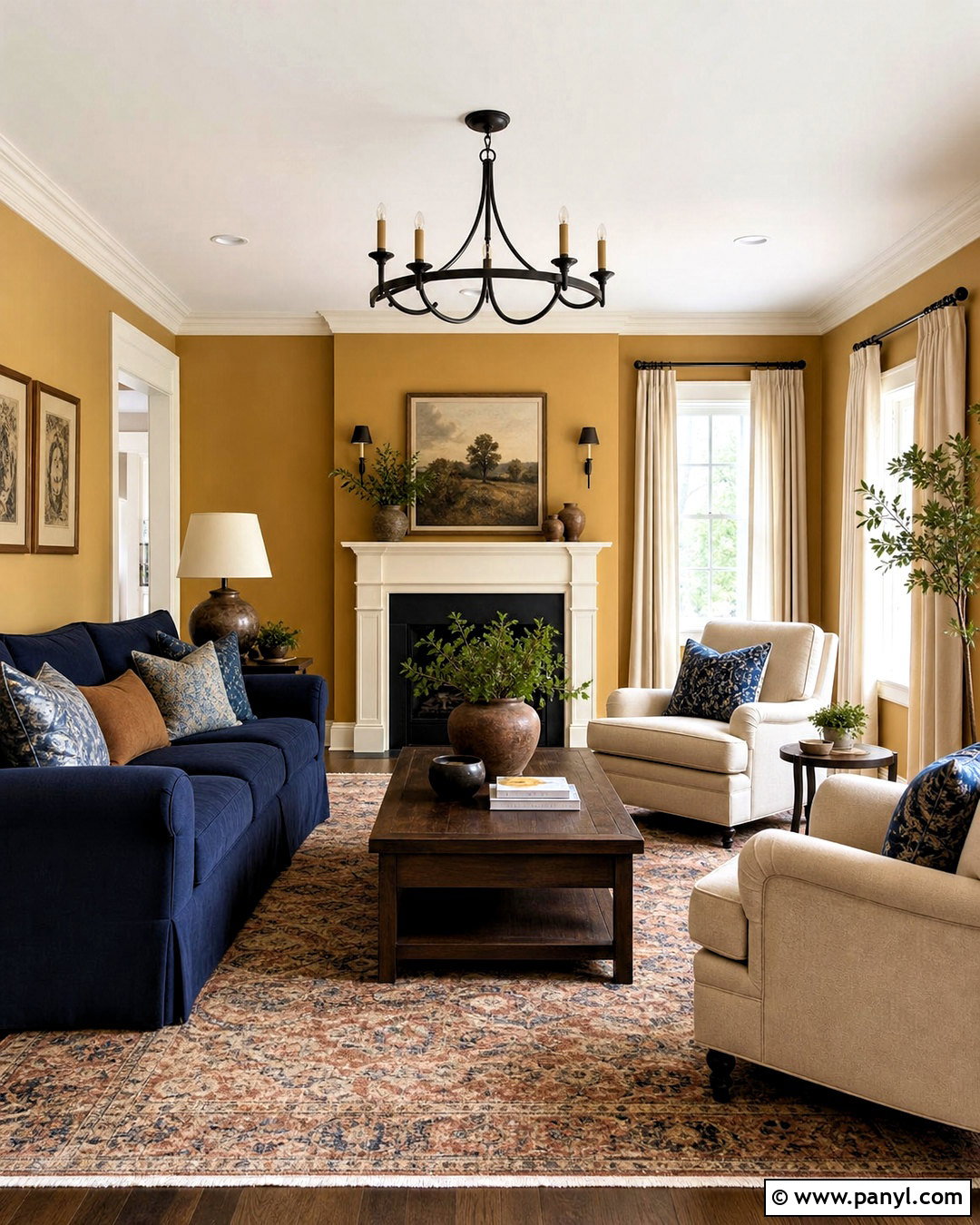
Muted ochre delivers golden warmth with more depth than butter yellow. It can transform a plain living room into a rich, welcoming gathering space when balanced with calm neutrals. Paint the walls ochre and keep the ceiling, window trim, and fireplace surround creamy white. Choose a deep navy sofa as the visual anchor, then add two light beige armchairs and a dark walnut coffee table. A patterned rug with ochre, blue, cream, and faded red will connect the furniture to the walls. Use natural linen curtains to filter strong daylight. Black metal lighting and frames create sharper lines within the warm scheme. Add brown pottery, blue cushions, and a few green plants for a finished room that feels colorful, established, and comfortable rather than overly bright.
13. Sage Green Living Room Paint
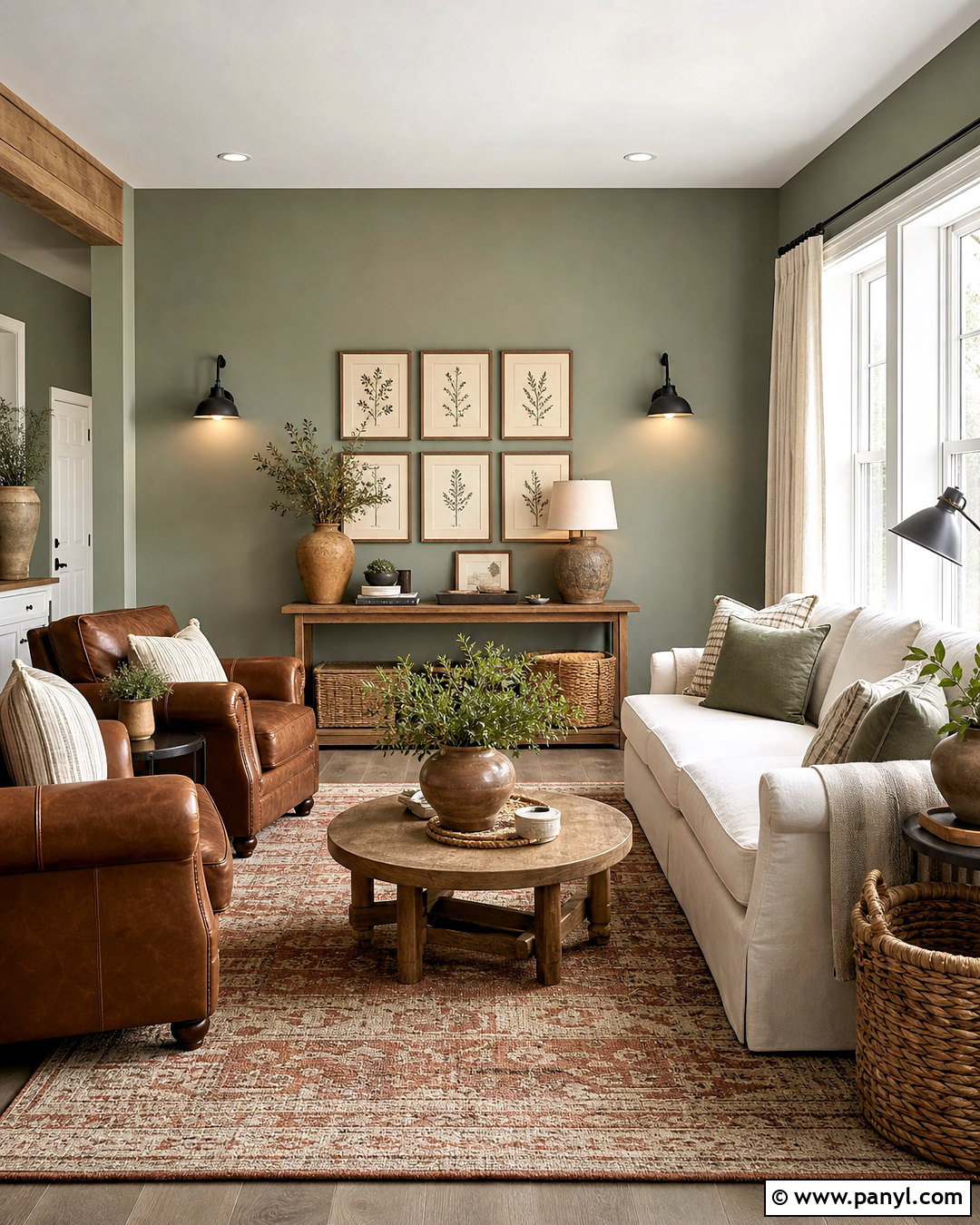
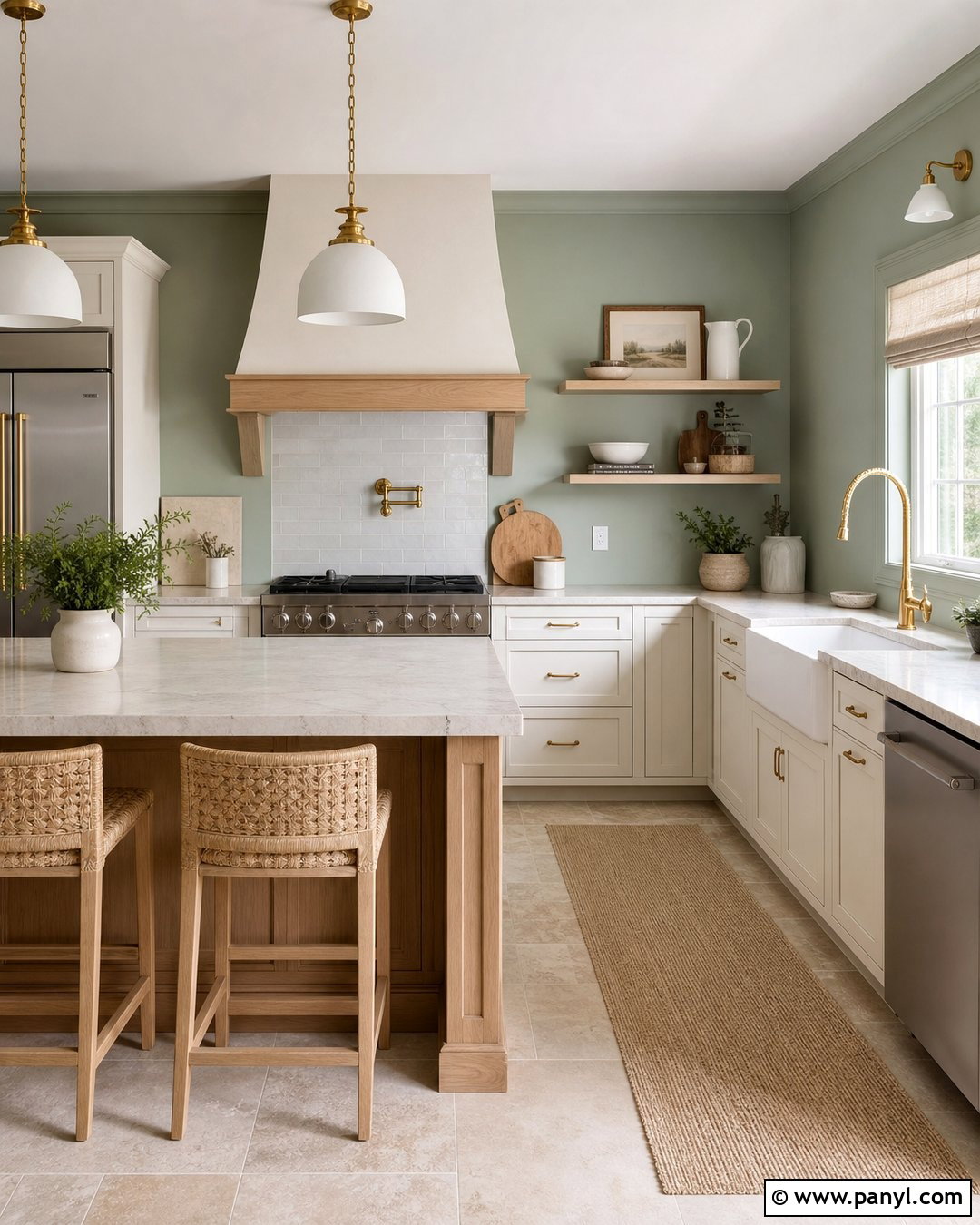
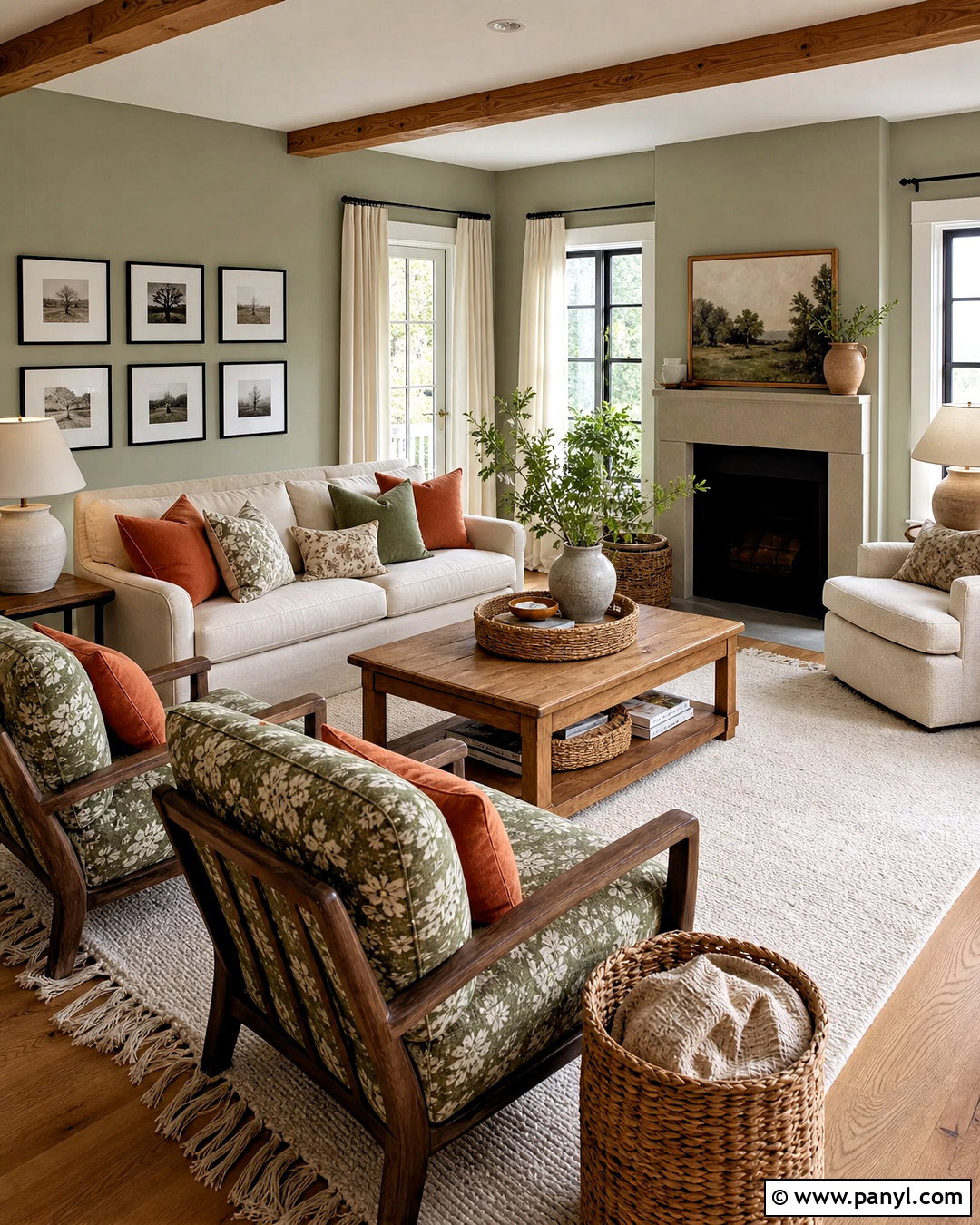
Sage green is gentle enough to function like a neutral while adding a clear connection to nature. Choose a warm, gray-green sage and combine it with creamy white trim and natural oak flooring. An ivory slipcovered sofa keeps the room light, while two cognac leather chairs add warmth and durability. Center the furniture around a round oak coffee table placed on a faded rust-and-cream rug. Use flax linen curtains for soft texture without blocking natural light. Matte black sconces or a simple black chandelier can sharpen the otherwise organic palette. Decorate with botanical prints, woven baskets, and pottery in tan and muted brown. The complete living room feels calm and familiar, making this paint color suitable for farmhouse, transitional, Scandinavian, and relaxed modern interiors.
14. Eucalyptus Green Living Room Paint
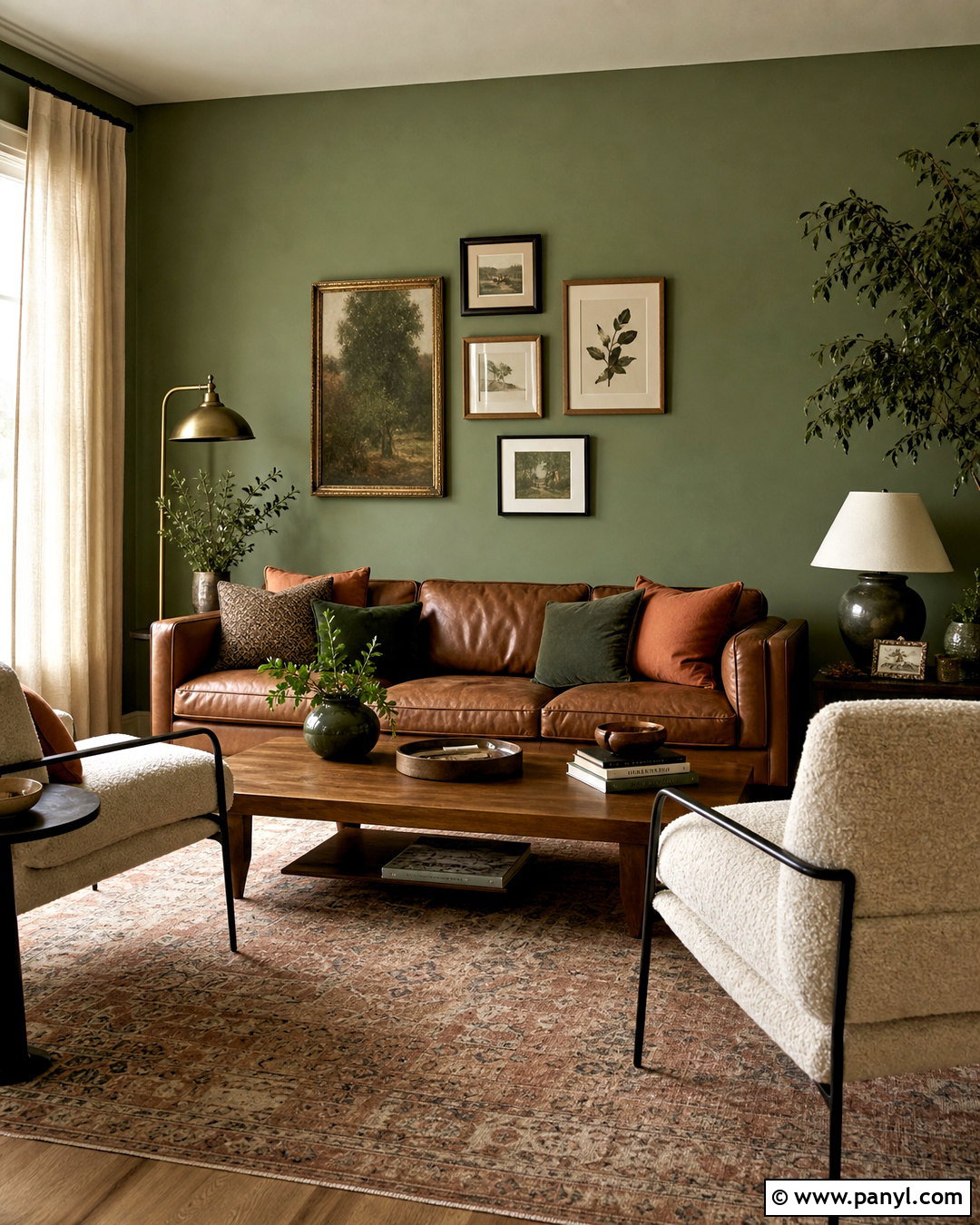
Eucalyptus green has more body than pale sage but remains soft enough for a full living room. Its warm botanical character works especially well with vintage furniture and natural materials. Paint the walls eucalyptus green, then use warm white on the ceiling and trim. Place a caramel leather sofa along the longest wall and balance it with two cream boucle chairs. A medium walnut coffee table and faded Persian-style rug can add depth and history. Choose off-white curtains and aged brass lighting to maintain warmth around the windows and seating. Terracotta pillows, dark green ceramics, and small black accents complete the palette. This arrangement creates a grounded, inviting room where the green walls feel distinctive without dominating the furniture, artwork, and architectural features.
15. Olive Green Living Room Paint
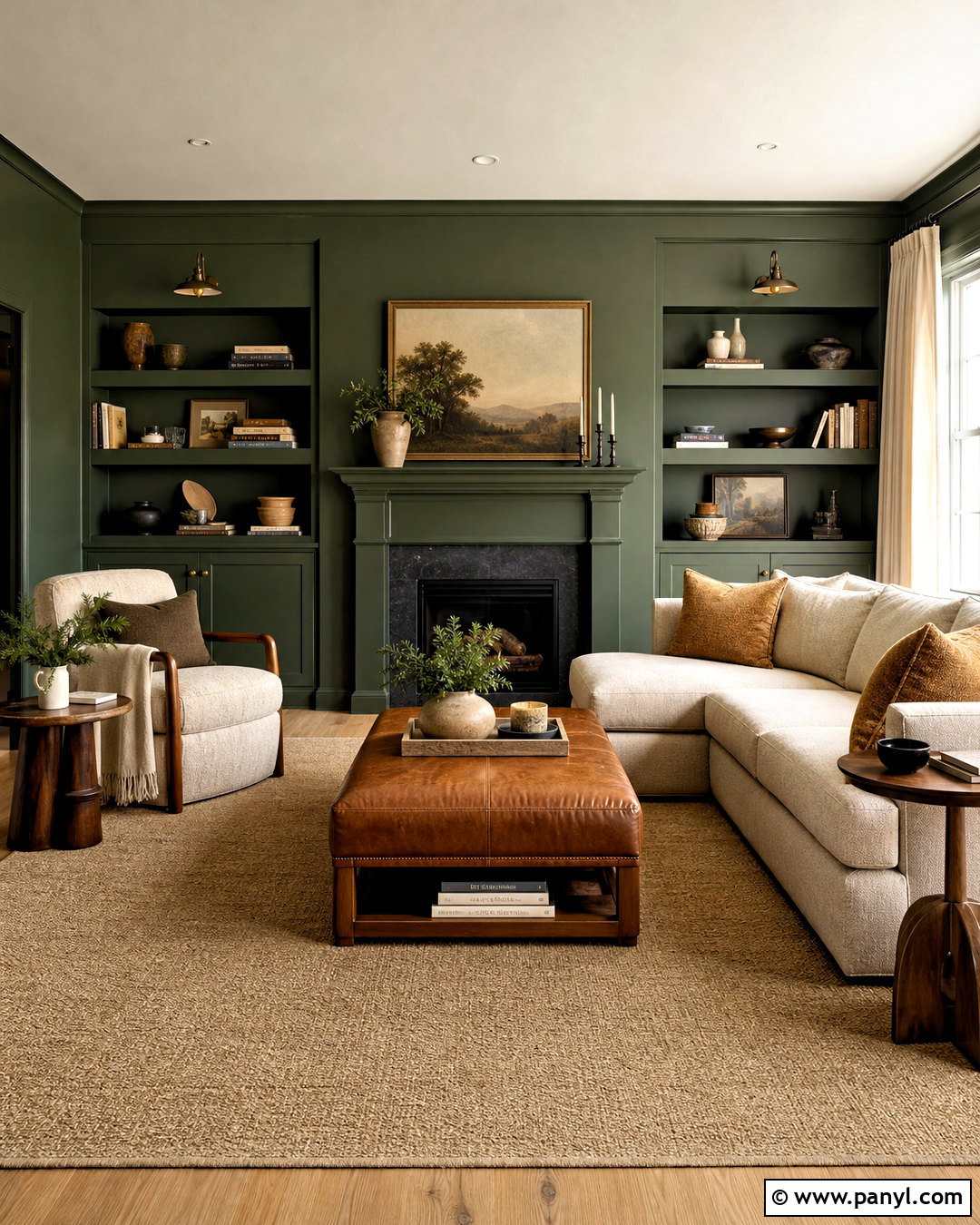
Olive green gives a living room a deeper, earthier appearance that pairs particularly well with warm woods and creamy textiles. Use a medium olive on the walls and built-in shelves for a cohesive background. A substantial oatmeal sectional can lighten the room, while a cognac leather ottoman serves as both a coffee table and flexible seating. Place a large tan wool rug underneath the arrangement and add walnut end tables on each side. Cream curtains and a warm white ceiling will keep the darker wall color from closing in the space. Accent the room with mustard pillows, aged brass lamps, and framed vintage landscapes. The completed design feels layered and timeless, with enough contrast to highlight every furniture shape while preserving the olive paint as the main feature.
16. Forest Green Living Room Paint
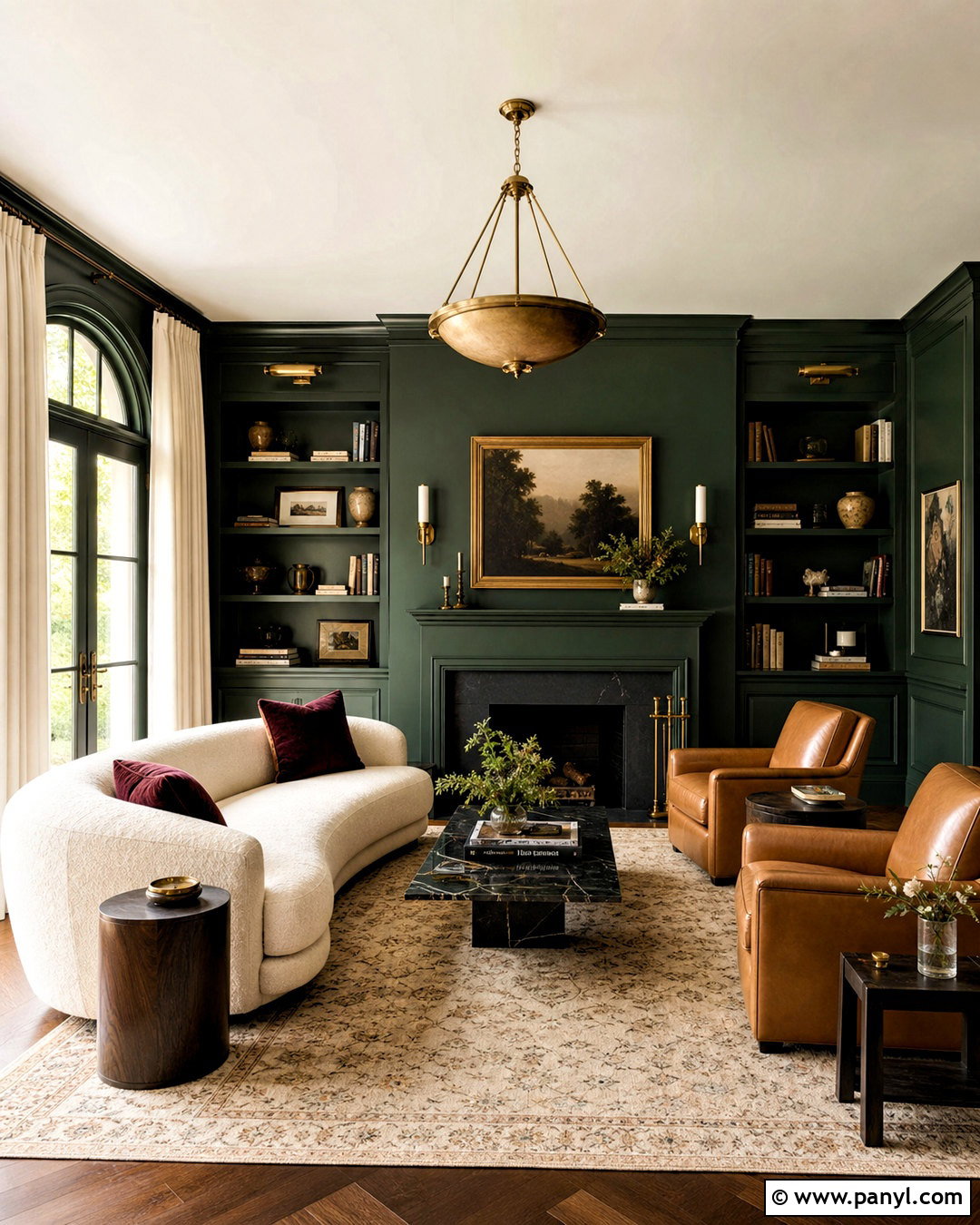
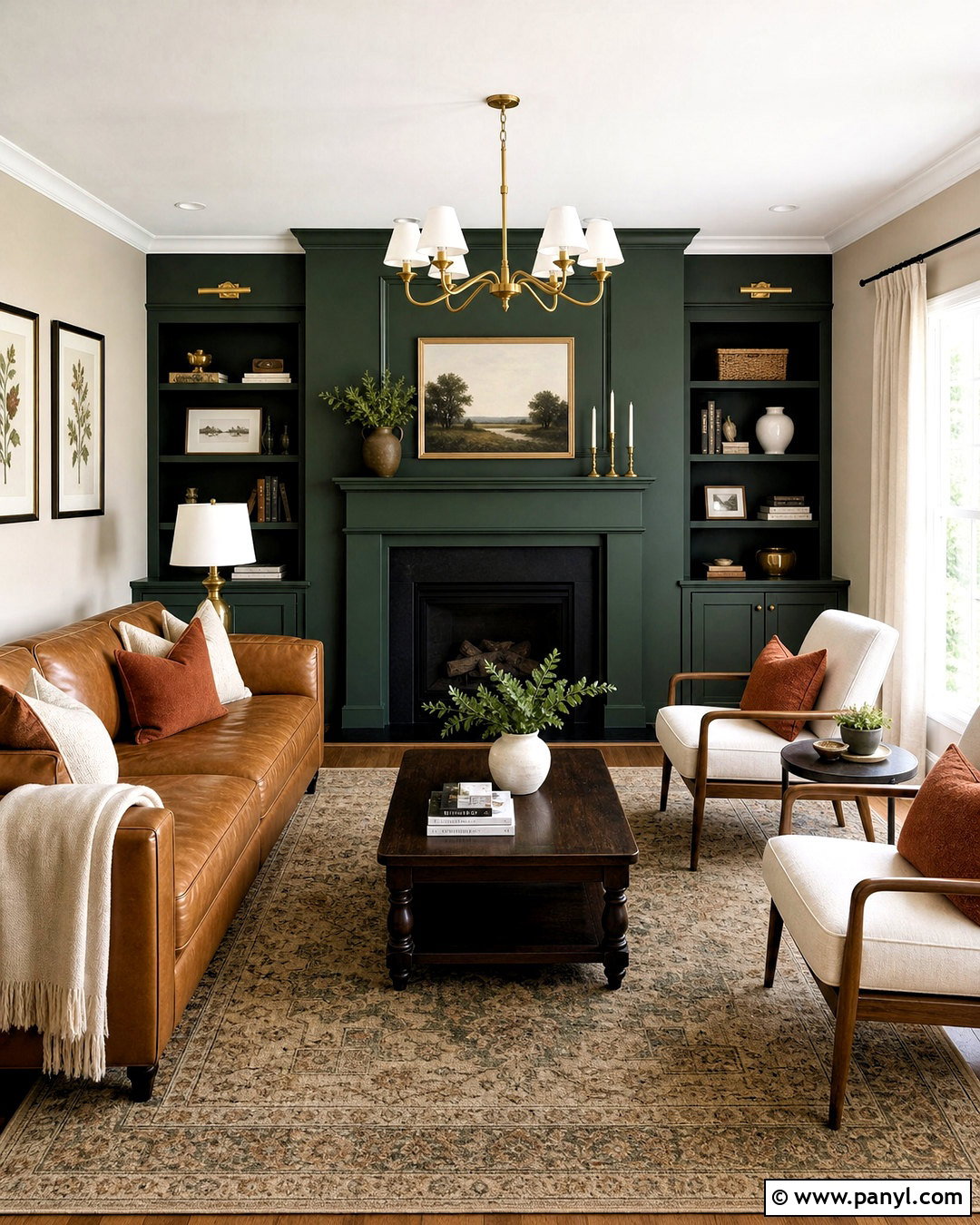
Deep forest green can make a living room feel intimate, polished, and surprisingly restful. It works particularly well in rooms with generous windows, a fireplace, or decorative molding. Paint the walls, trim, and built-ins forest green for a dramatic color-drenched finish. Introduce a curved cream sofa and two camel leather chairs to create strong contrast against the dark background. A pale patterned rug will brighten the floor, while a dark marble coffee table adds a sophisticated central feature. Use unlacquered brass lighting and hardware to bring warmth to the green. Hang artwork with broad cream mats, and choose ivory curtains that reach the floor. Burgundy pillows, dark wood tables, and sculptural ceramics complete this rich living room without making it feel crowded.
17. Pale Blue Living Room Paint
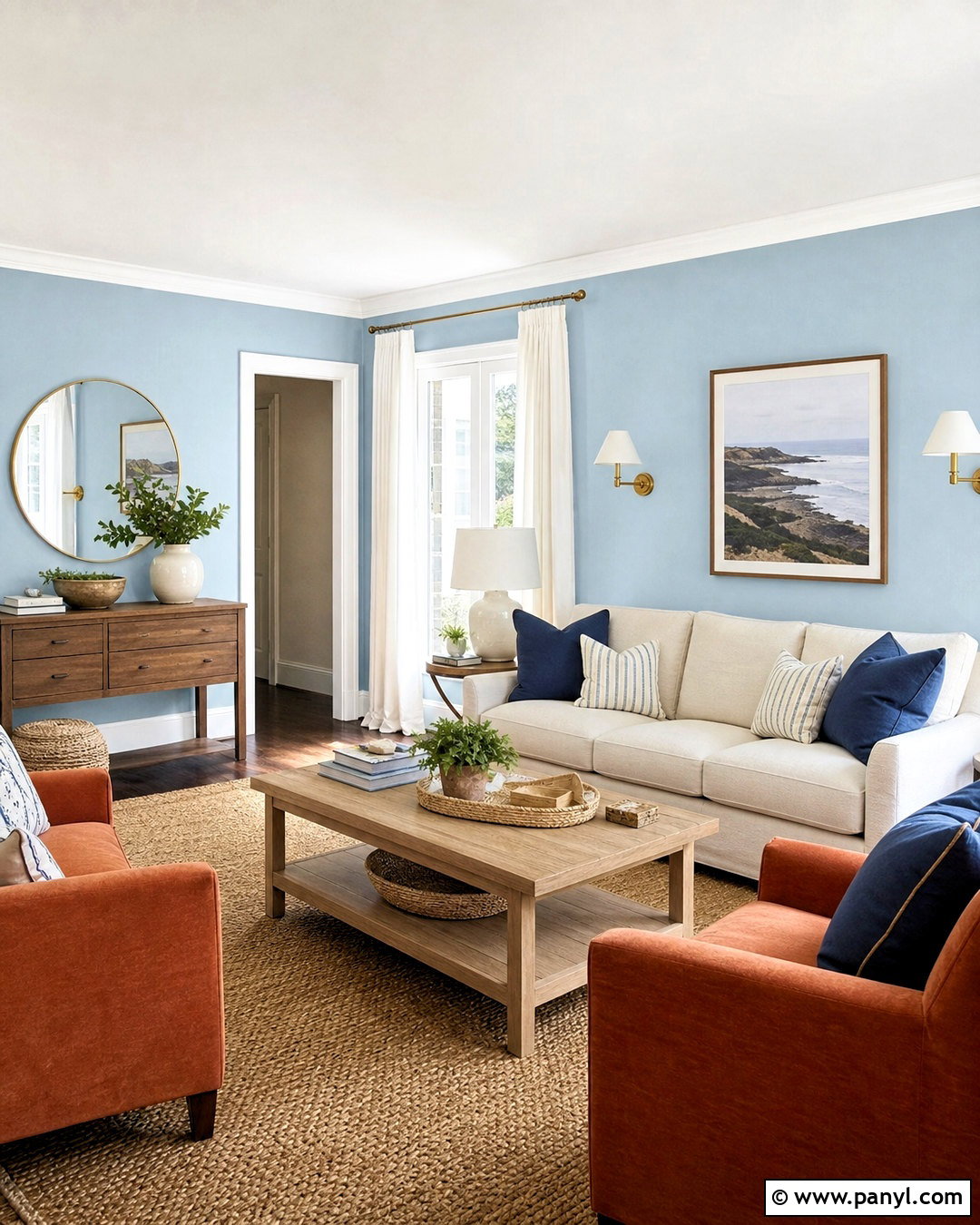
Pale blue walls can visually refresh a living room while maintaining the flexibility of a light neutral. Choose a softened blue with a slight gray or green undertone so it does not look overly cool. Pair the walls with warm white trim, a beige linen sofa, and two rust-colored armchairs. A light oak coffee table and natural woven rug will introduce warmth at floor level. Hang cream curtains rather than stark white panels to create a smoother transition around the windows. Add dark blue pillows, warm brass lighting, and framed coastal or landscape artwork with restrained colors. A medium-brown wood console can anchor the far wall. This complete palette feels open and relaxed, making pale blue useful for smaller rooms and spaces that receive abundant natural light.
18. Dusty Blue Living Room Paint
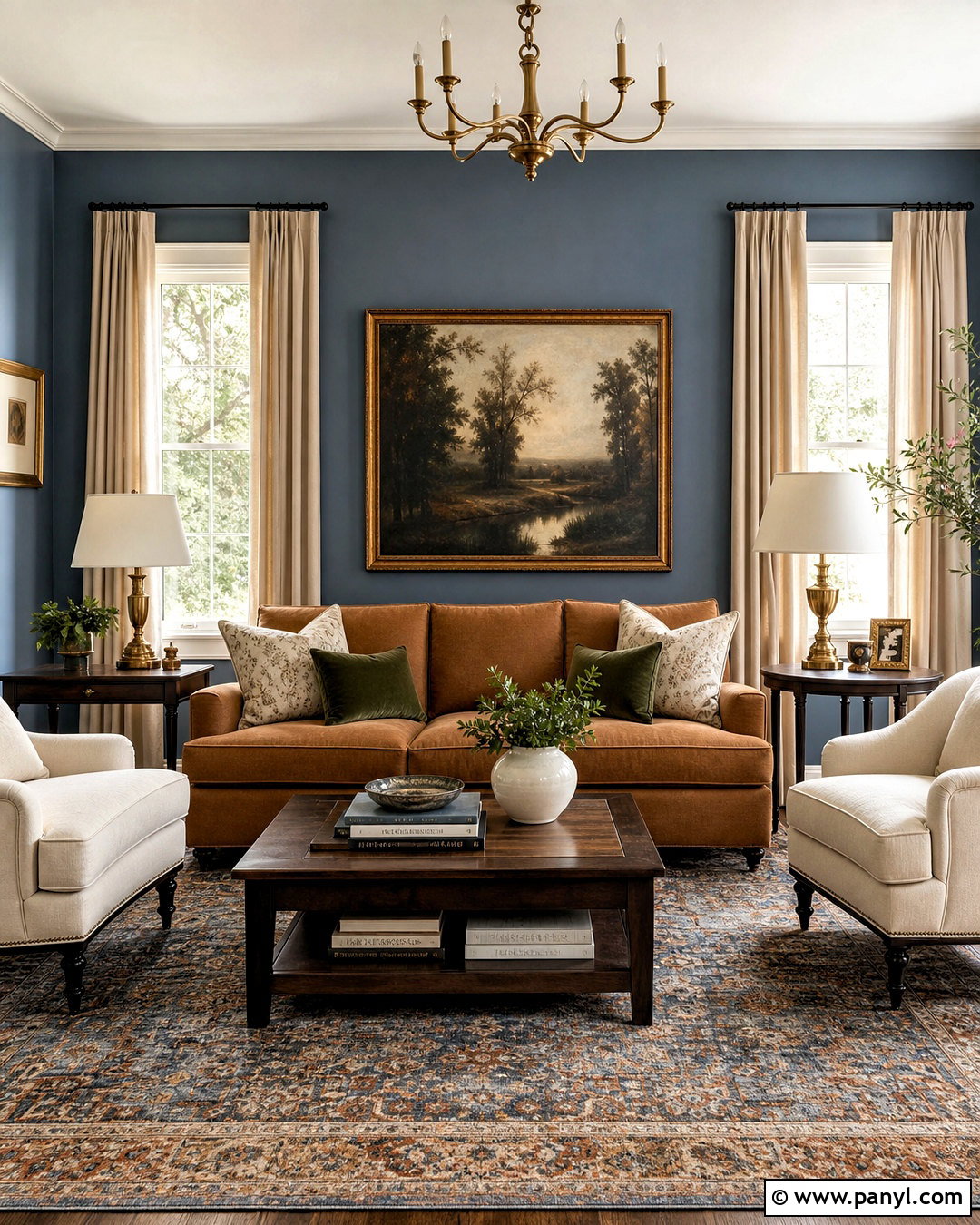
Dusty blue provides greater depth than pale blue but still creates a calm, livable background. Paint the walls this muted midtone and use creamy white on the ceiling and trim. A warm camel sofa will stand out beautifully against the blue, especially when paired with two ivory upholstered chairs. Choose a walnut coffee table and a vintage-style rug featuring dusty blue, rust, and beige. Long oatmeal curtains can soften the windows and repeat the lighter furniture tones. Add antique brass lamps, dark wood frames, and ceramic accessories in cream and muted green. Keep the layout symmetrical around a fireplace or media cabinet to give the colorful room a sense of order. This balanced design feels sophisticated, comfortable, and suitable for both traditional and updated interiors.
19. Muted Teal Living Room Paint
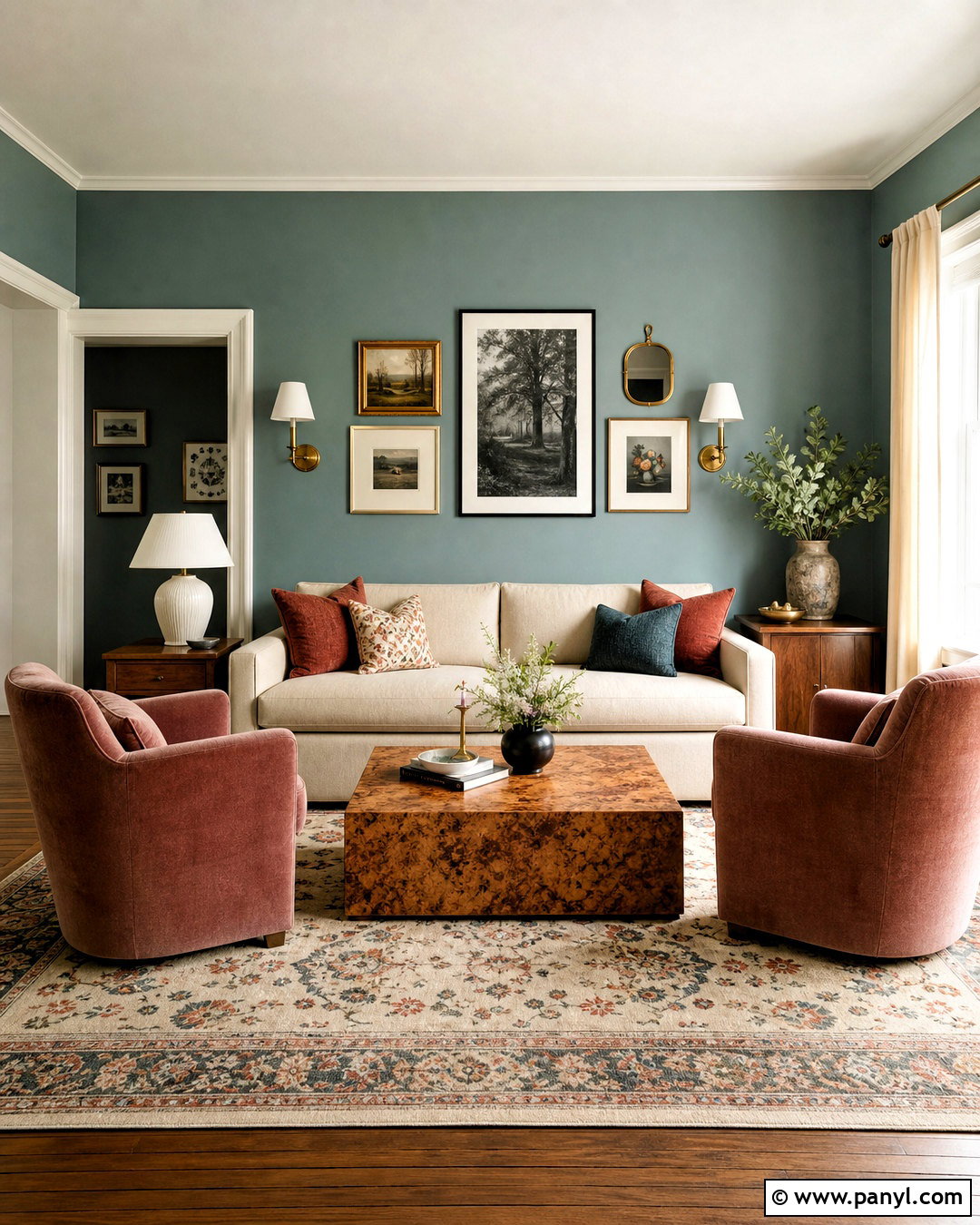
Muted teal combines blue and green in a way that feels colorful yet grounded. Select a teal softened with gray, and use it across the walls for a confident background. A light beige sofa provides necessary contrast, while dusty rose armchairs introduce an unexpected warm note. Place a burl wood coffee table at the center and use a patterned rug containing cream, faded pink, teal, and brown beneath the entire seating group. Warm white curtains will prevent the room from becoming too saturated. Brass sconces, walnut side tables, and black picture frames create a mix of warm and structured details. Finish with abstract art and pillows in rust and olive. The resulting living room feels distinctive and layered without relying on extremely bright or difficult-to-coordinate colors.
20. Deep Navy Living Room Paint
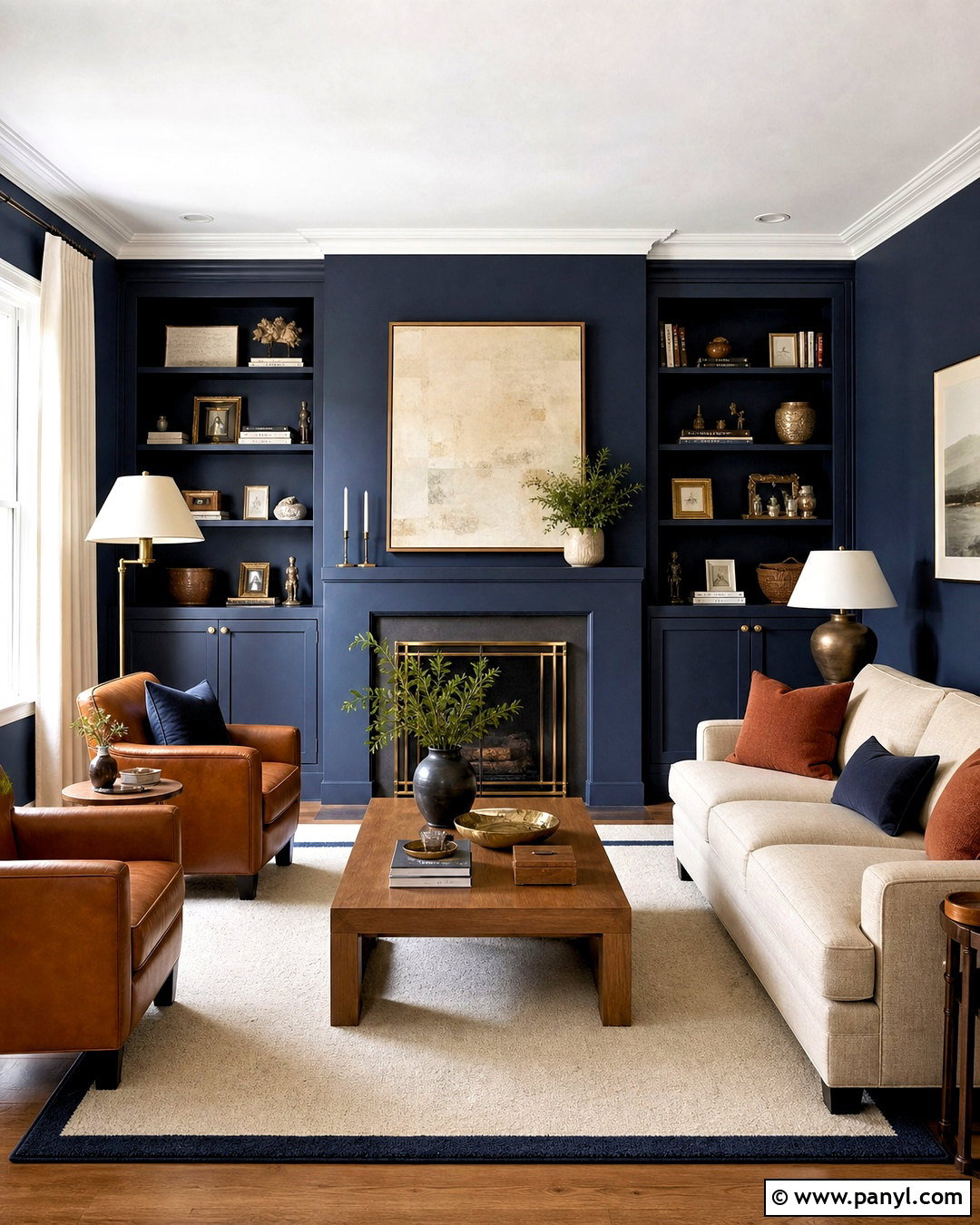
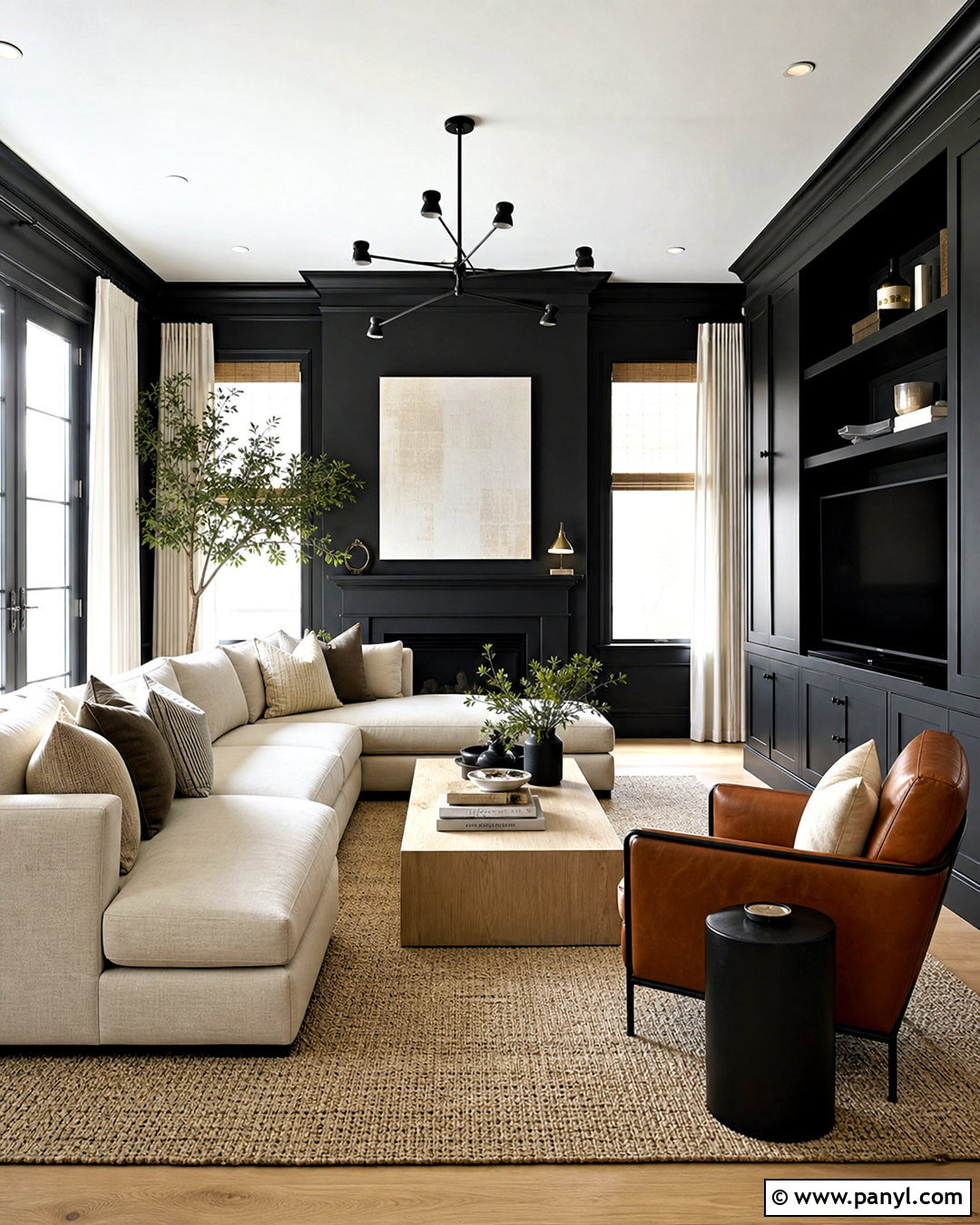
Deep navy paint can create a dramatic living room that remains classic and easy to furnish. Choose a navy with a slightly softened or warm undertone, then paint the walls and built-in cabinetry for a unified appearance. Keep the ceiling warm white to reflect light downward. A large oatmeal sofa and two caramel leather chairs will stand out against the dark walls. Center them around a medium oak coffee table on a cream rug with a subtle navy border. Use ivory curtains, brass lamps, and pale artwork to distribute lighter tones around the room. Rust pillows and warm wood accessories prevent the blue from feeling cold. This complete scheme works especially well for evening-focused living rooms, television spaces, and rooms with fireplaces or substantial architectural details.
Conclusion:
The right wall color should support the way your living room looks, feels, and functions every day. These 20 indoor paint colors living room ideas show how a shade becomes more successful when it is coordinated with flooring, furniture, curtains, lighting, rugs, and accessories. Warm neutrals offer flexibility, earthy colors create comfort, and deeper blues or greens provide dramatic character. Regardless of your favorite palette, sample the paint on several walls before making a final decision. Check each sample beside fixed finishes and view it under both natural and artificial light. With thoughtful testing and a complete decorating plan, you can create a living room that feels balanced, personal, cohesive, and comfortable for years.

Related Ideas and Inspiration:
Leave a Reply