
Neutral living rooms are becoming warmer, softer, and more layered, with creamy whites, greiges, taupes, mushroom tones, and earthy browns replacing colder all-gray palettes. () The right wall color should complement your flooring, furniture, natural light, and fixed finishes while creating a comfortable backdrop for everyday life. It should also feel intentional rather than plain. Texture is important, so pair neutral walls with wood, woven fabrics, stone, metal, and contrasting upholstery. Always test large paint samples on several walls because undertones can shift from morning to evening. Whether your room is bright, compact, traditional, or modern, these 20 neutral living room paint color ideas offer complete, practical looks you can recreate.

1. Warm White Living Room
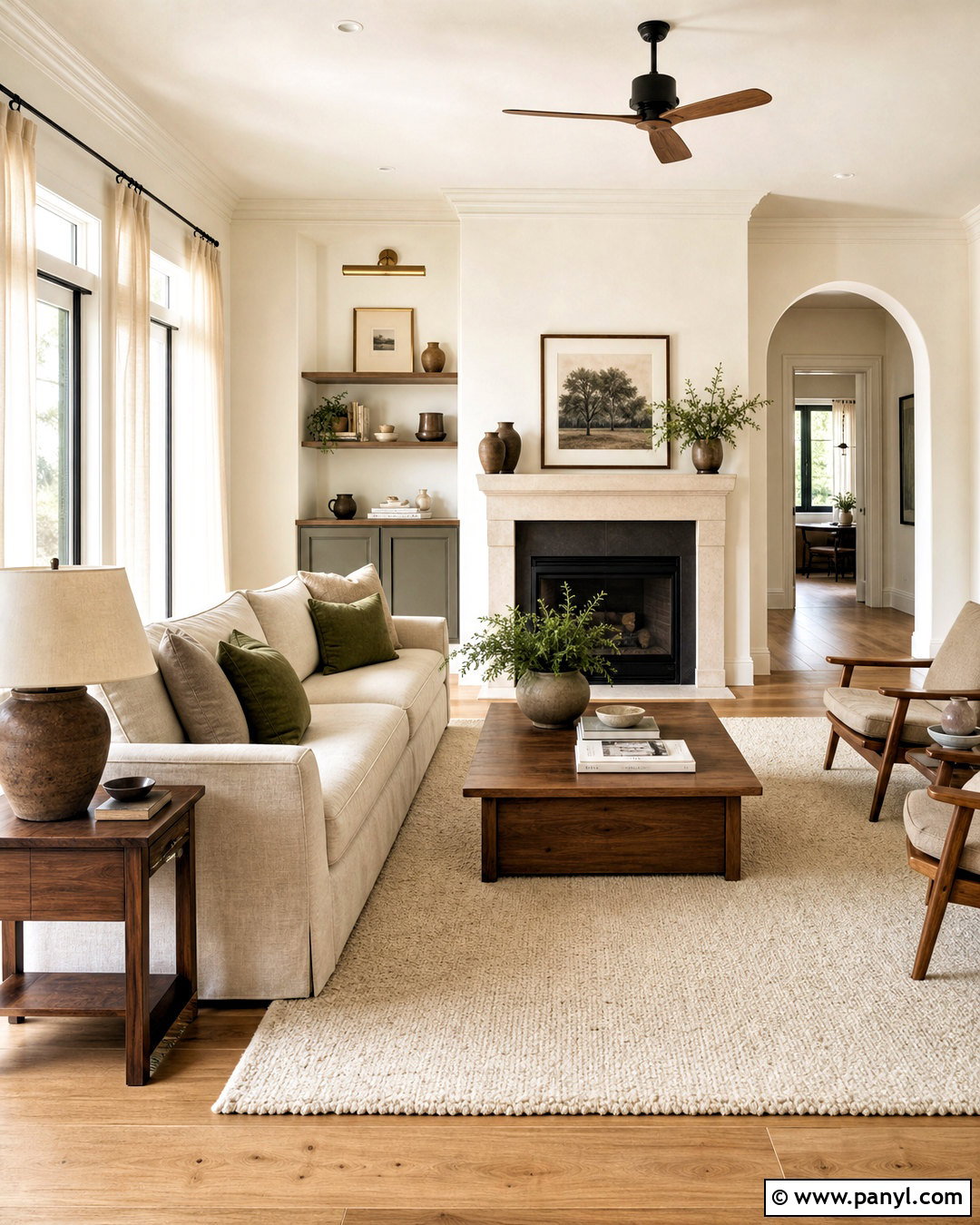
Warm white walls create a fresh living room without the cold feeling that can come from stark white paint. Choose a soft white with subtle cream or beige undertones, then repeat that warmth through natural oak flooring, linen curtains, and a light oatmeal sofa. A textured wool rug keeps the pale scheme from looking flat, while walnut side tables add necessary depth. Use soft white on the trim and ceiling for a seamless effect, but select a slightly crisper finish for easy cleaning. Black picture frames and a slim black floor lamp provide controlled contrast. Finish the room with olive green pillows, handmade pottery, and a large landscape print for a relaxed, welcoming look.
2. Creamy White Living Room
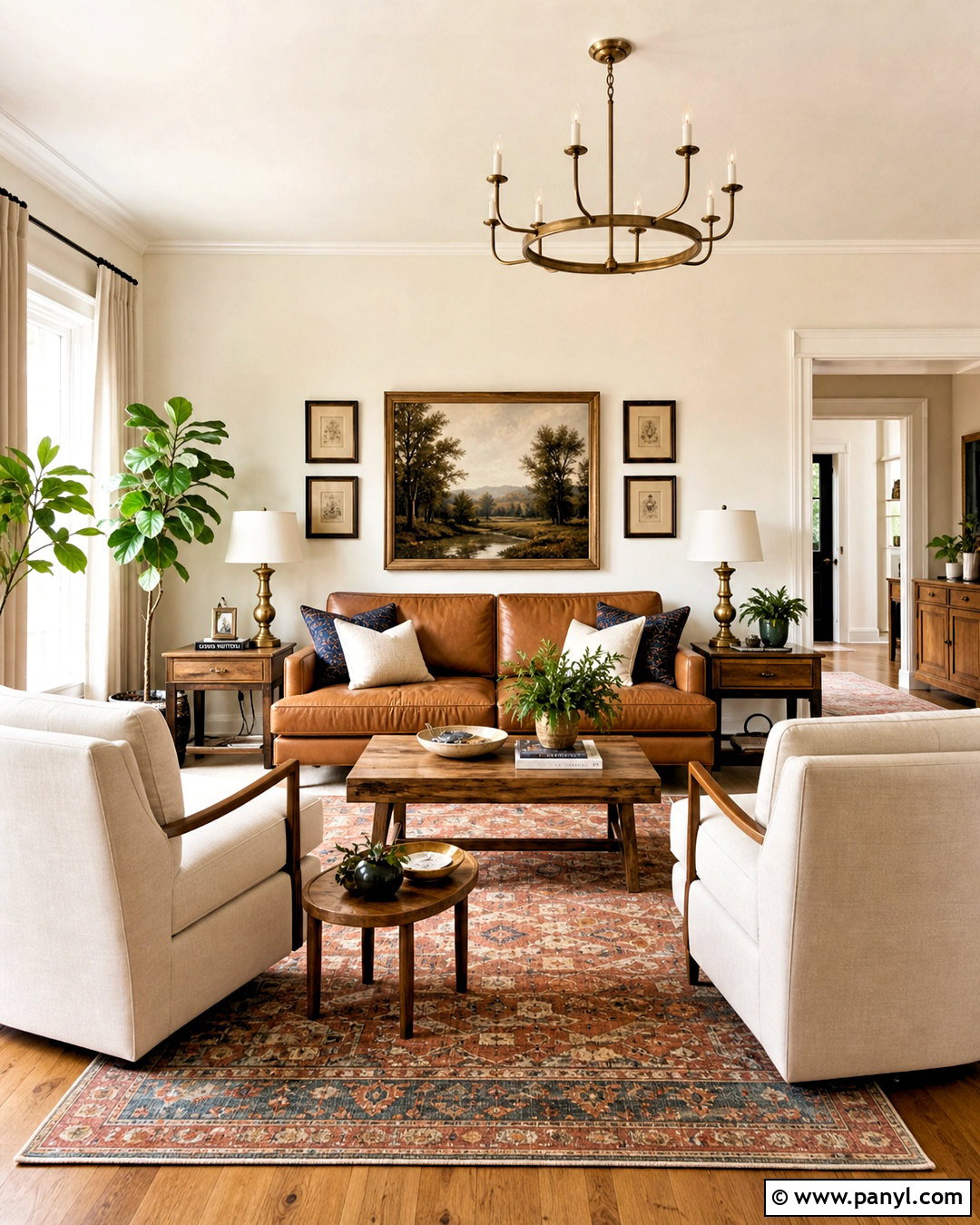
Creamy white paint works beautifully in a living room that needs softness, warmth, and plenty of reflected light. Build the room around ivory walls, an off-white ceiling, and warm white trim for a gently layered background. Add a caramel leather sofa or cognac accent chair to keep the palette grounded. Medium-tone oak furniture, woven baskets, and beige linen drapes support the creamy color without making everything look identical. A faded rust and blue rug can introduce quiet pattern beneath the seating area. Use aged brass lamps for a warm metallic accent, then display dark wood frames and leafy plants around the room. The result feels bright and collected rather than overly formal or colorless.
3. Soft Ivory Living Room
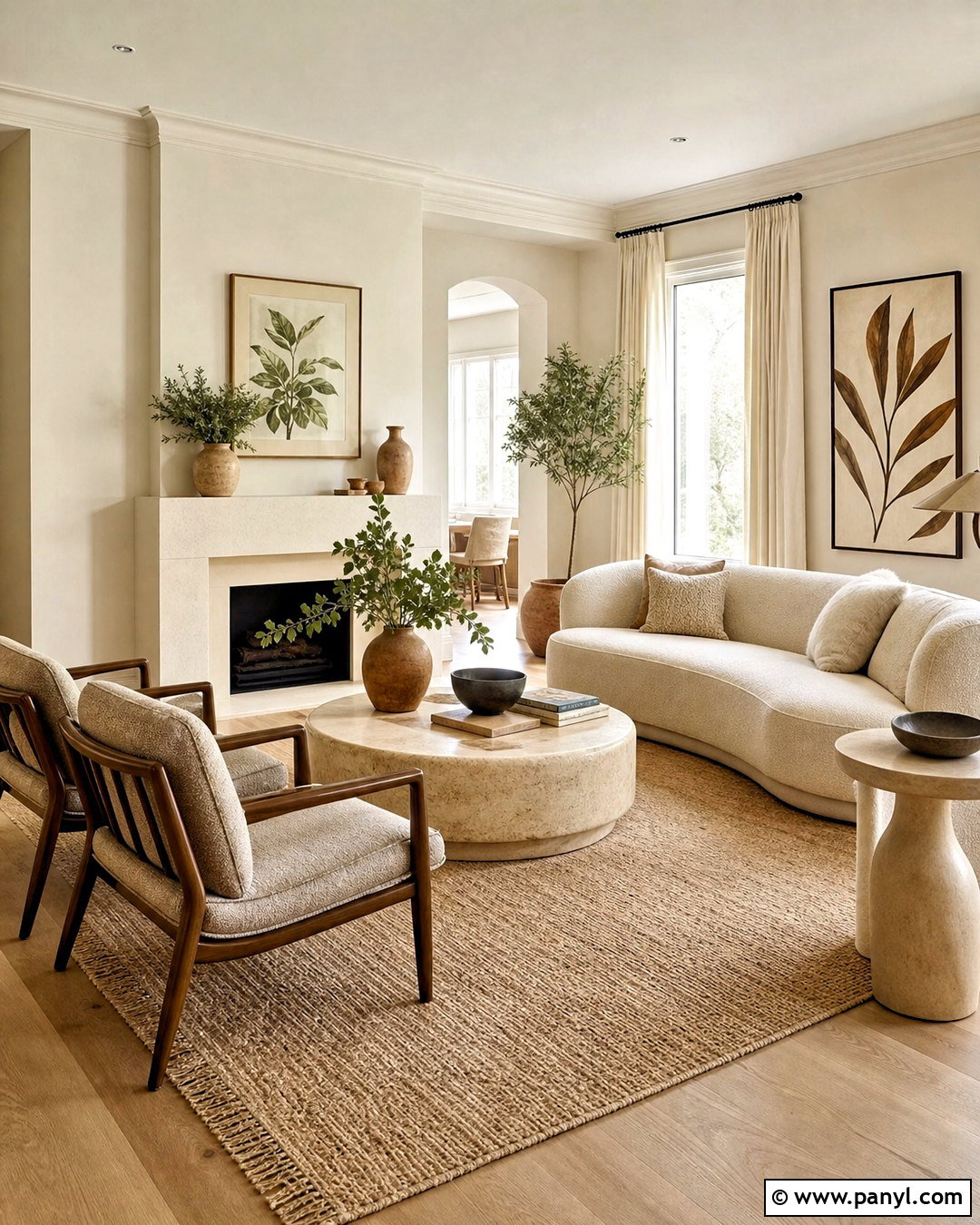
Soft ivory offers more visible warmth than white while remaining light enough for a small or moderately lit living room. Pair ivory-painted walls with creamy trim and pale natural wood flooring to create a calm foundation. A curved beige sofa, two light brown armchairs, and a round travertine coffee table form a comfortable conversation area. Bring in texture through bouclé upholstery, slubby linen curtains, and a handwoven jute rug. Terracotta pottery and muted blue-gray pillows add restrained color that balances the yellow undertone of the walls. Instead of filling every surface, use one oversized botanical artwork above the sofa. This complete scheme feels airy, warm, and sophisticated without depending on bright white finishes.
4. Light Greige Living Room
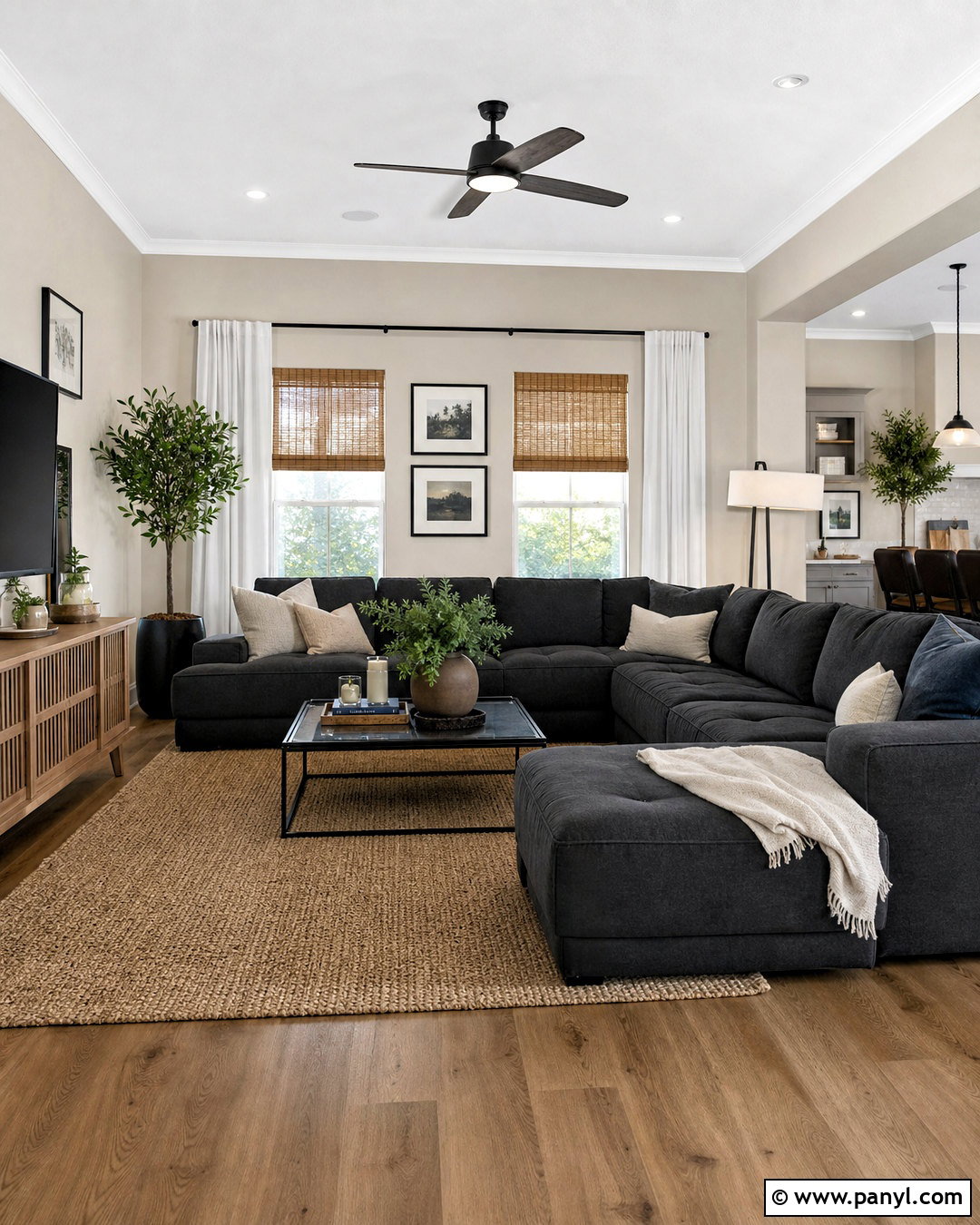
Can’t choose between gray and beige? Light greige provides a balanced backdrop that works especially well in an open living room with mixed materials. Paint the walls a pale greige with warm undertones, then use clean white on the ceiling, baseboards, and window trim. A charcoal sectional gives the room definition, while cream pillows and a soft beige rug prevent the dark furniture from feeling heavy. Add an oak media console, a black metal coffee table, and woven window shades for natural contrast. Small accents in muted navy or forest green can make the neutral foundation feel more personal. Keep the layout open and uncluttered so the adaptable wall color connects the furniture, flooring, and adjoining spaces.
5. Warm Greige Living Room
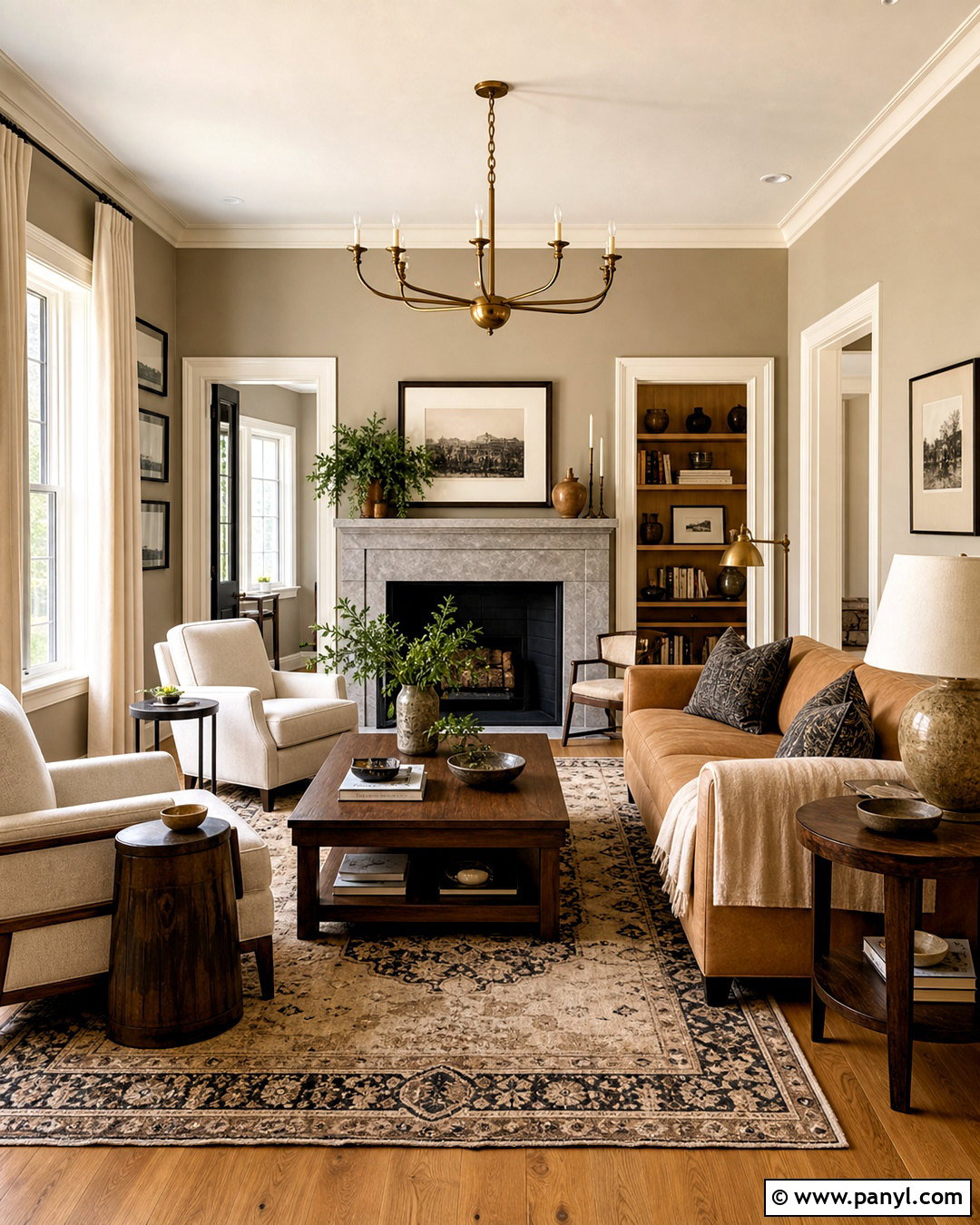
Warm greige gives a living room the structure of gray with the comfortable character of beige. It is particularly useful when the space includes both cool and warm finishes, such as a gray stone fireplace and honey-toned wood floors. Use the paint across the main walls, then choose soft cream for the ceiling and trim. Arrange a camel sofa opposite two oatmeal lounge chairs to create an inviting seating zone. A large patterned rug combining beige, charcoal, and faded brown will tie the mixed tones together. Add antique brass lighting, walnut tables, and simple black-framed artwork. Linen curtains close to the wall color complete the design, making the room feel cohesive, grounded, and pleasantly understated.
6. Warm Beige Living Room
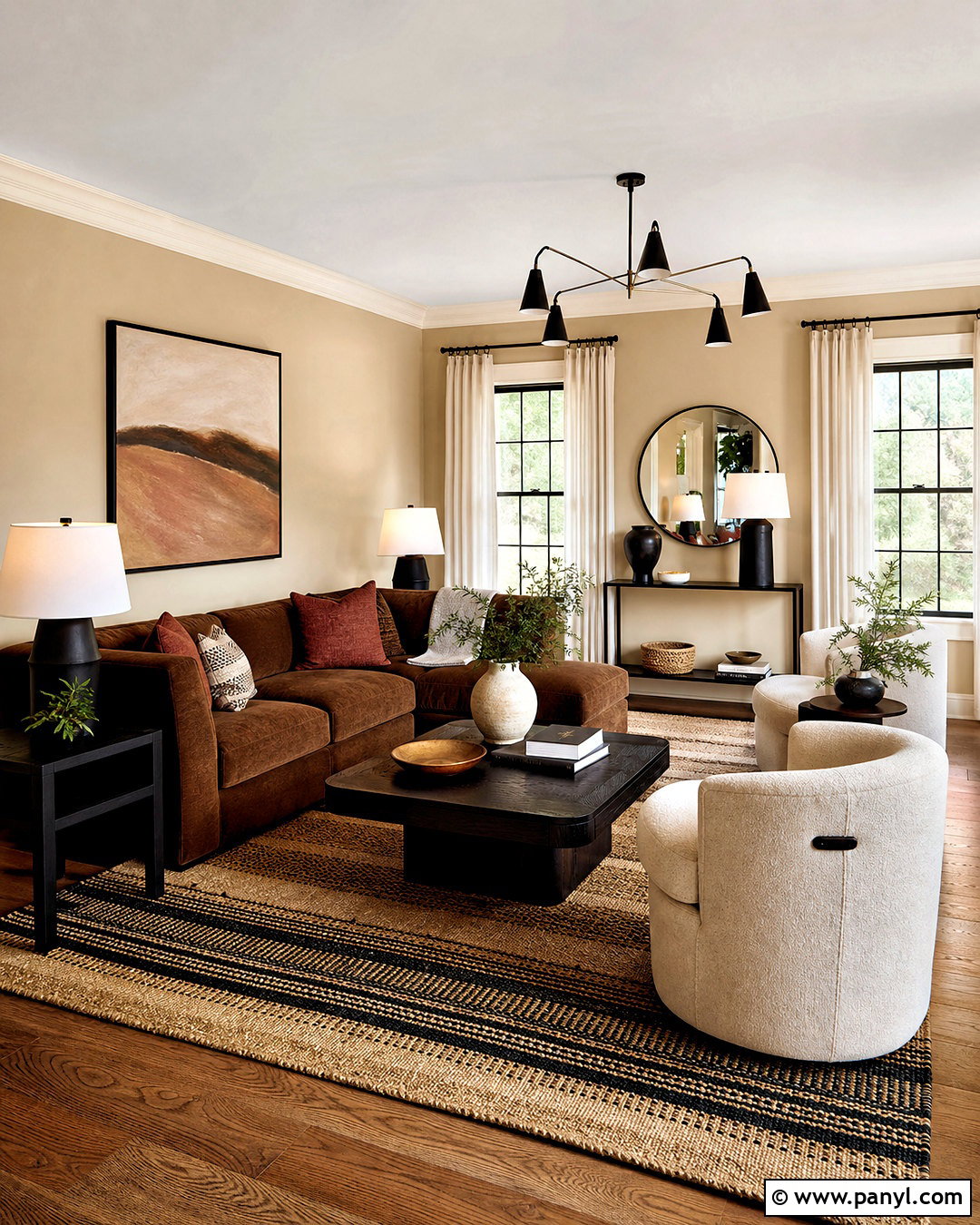
Warm beige can feel polished and current when it is combined with contrast, texture, and streamlined furniture. Start with beige walls that have a subtle sandy undertone rather than strong yellow notes. Pair them with creamy white trim, medium oak floors, and a deep brown sofa for a rich but approachable foundation. Two ivory swivel chairs can lighten the arrangement and make conversation easier. Introduce a flatweave rug in tan and black, then repeat black through the curtain rods, lamps, and narrow picture frames. Rust-colored pillows and ceramic accessories provide earthy variation. Avoid matching every furnishing to the walls. Several lighter and darker neutral values will give this comfortable living room greater depth and definition.
7. Sand Living Room
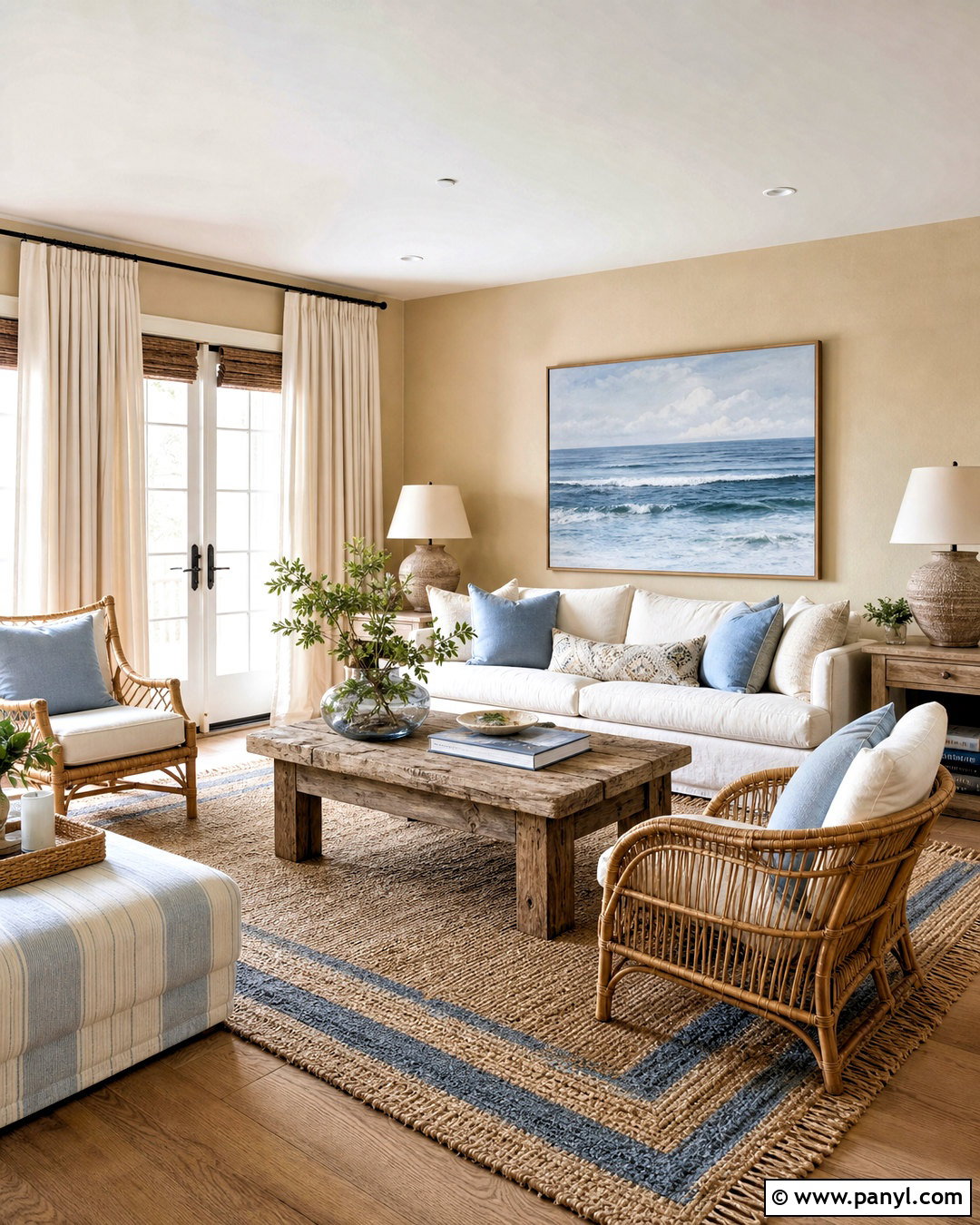
Sand-colored paint brings the easy warmth of natural landscapes into a relaxed living room. Cover the walls in a light sandy beige and use a soft white ceiling to keep the space feeling open. A slipcovered cream sofa, rattan lounge chairs, and a reclaimed wood coffee table create an informal foundation. Ground the arrangement with a woven rug that includes tan, ivory, and faded charcoal stripes. Breezy linen curtains should reach the floor and sit slightly outside the window frames. Add coastal references sparingly through pale blue pillows, weathered ceramics, and one large seascape rather than themed accessories. The finished room feels casual and sun-washed, yet the darker wood and charcoal details keep it from appearing washed out.
8. Oatmeal Living Room
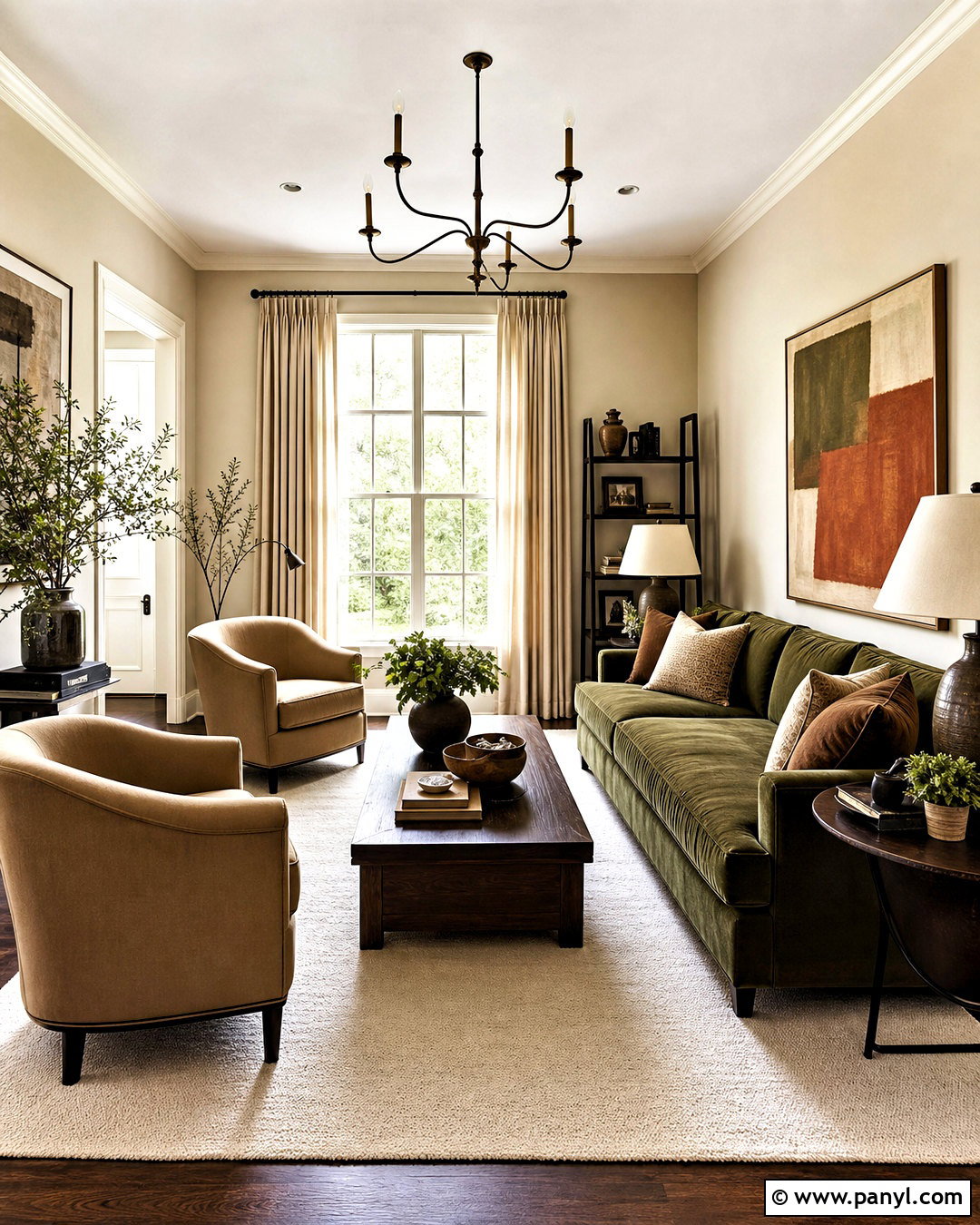
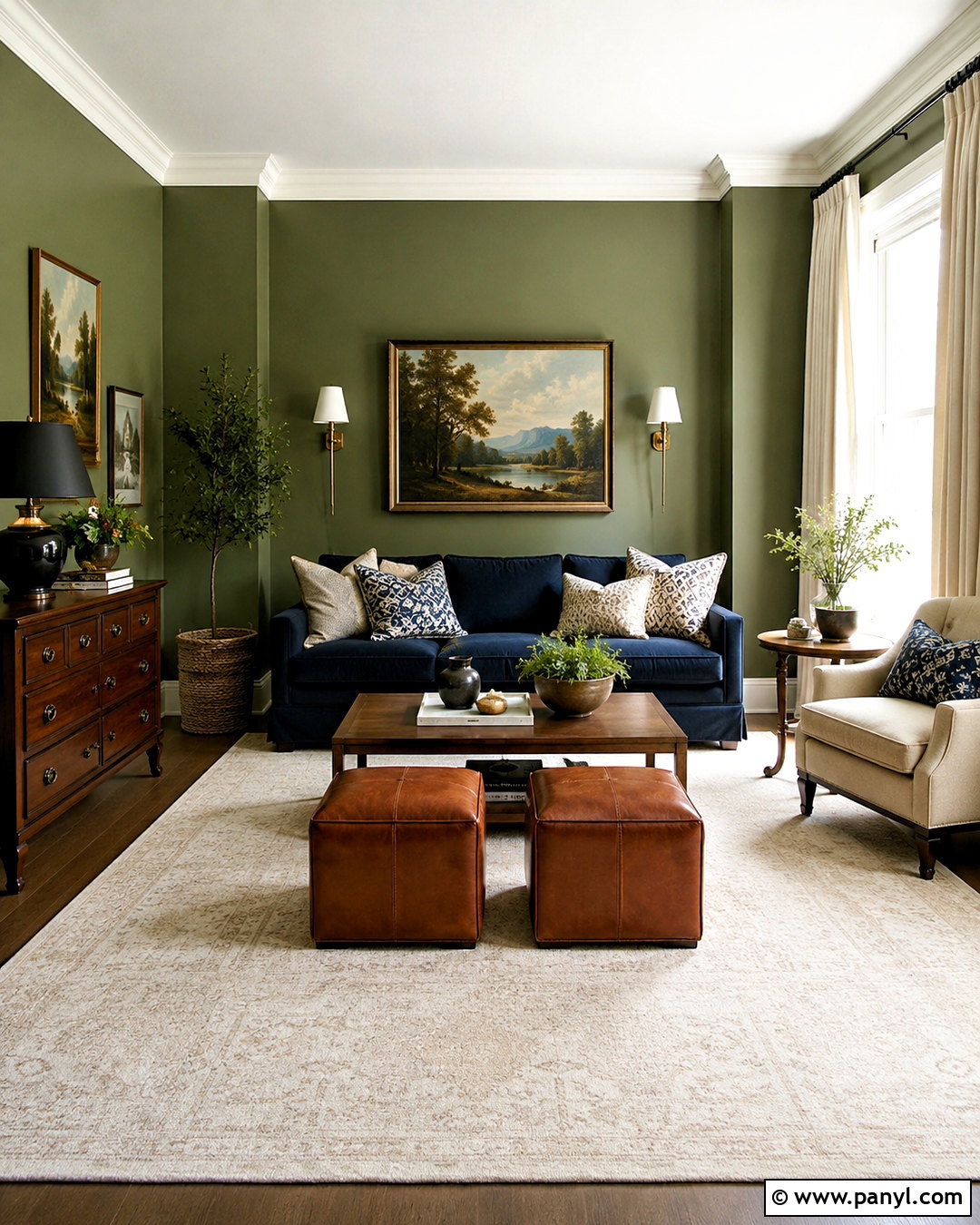
Oatmeal paint sits between cream and beige, giving a living room quiet color without creating a strong yellow cast. Use it on every wall and pair it with slightly lighter trim for gentle architectural contrast. A deep olive sofa makes an attractive focal point against the warm neutral background. Balance it with two flax-colored chairs, a walnut coffee table, and an ivory wool rug. Long oatmeal curtains can closely match the walls, visually simplifying windows and making the room feel taller. Include aged bronze lighting and a few dark brown accessories to sharpen the pale palette. Abstract artwork in cream, olive, rust, and black pulls the full design together while preserving the room’s calm, natural atmosphere.
9. Mushroom Living Room
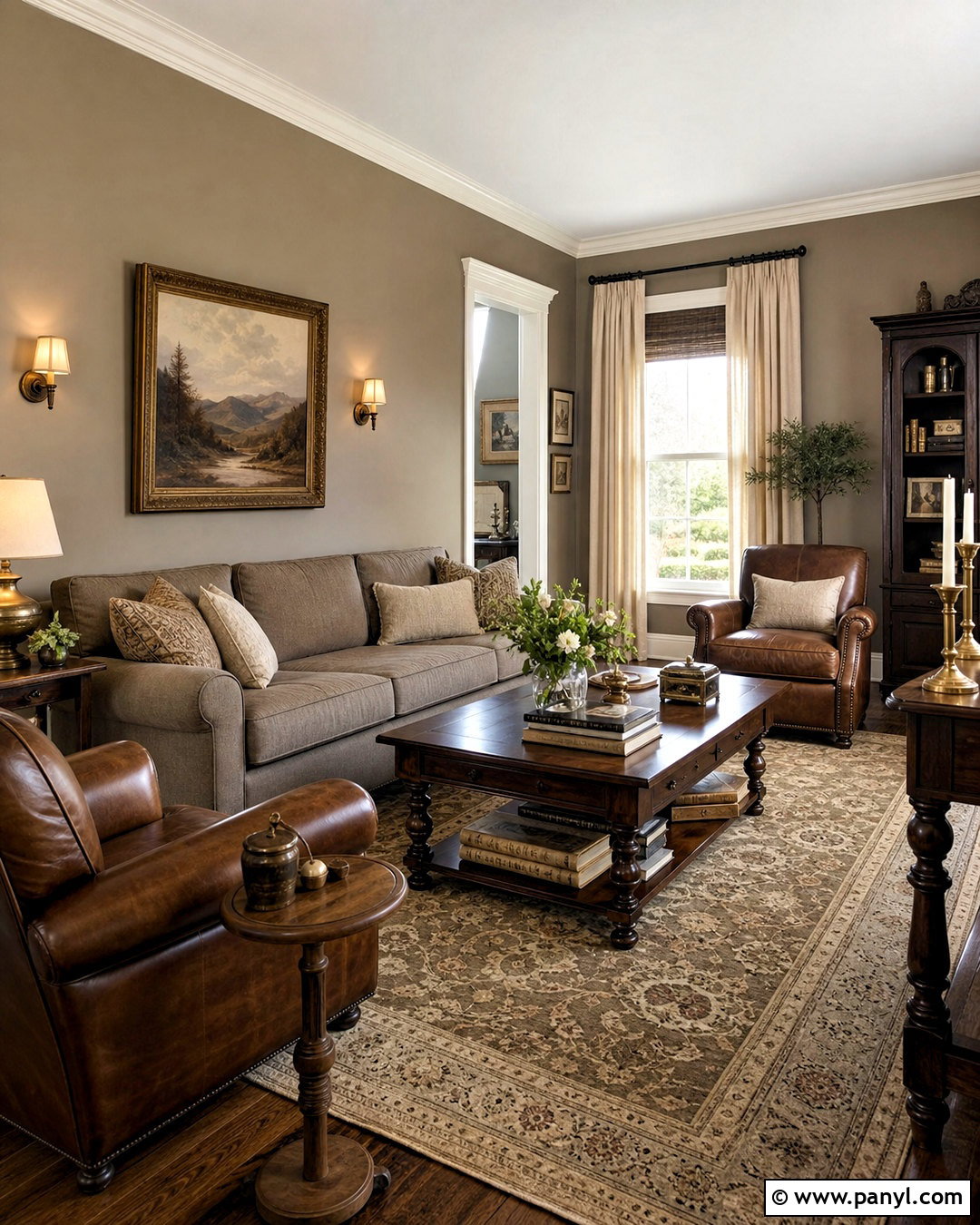
Mushroom paint has a soft brown-gray character that gives living rooms more depth than pale beige. It pairs especially well with traditional architecture, natural textiles, and furniture that has visible wood grain. Paint the walls mushroom and keep the crown molding, ceiling, and fireplace surround a muted cream. Place a warm gray sofa in front of the main wall, then add leather armchairs and a dark oak coffee table. An antique-inspired rug containing brown, muted red, and taupe introduces subtle pattern. Use bronze sconces, framed vintage landscapes, and full-length linen curtains to complete the space. The finished room feels established and comfortable, but simple furniture shapes prevent the darker neutral palette from looking dated or overly formal.
10. Taupe Living Room
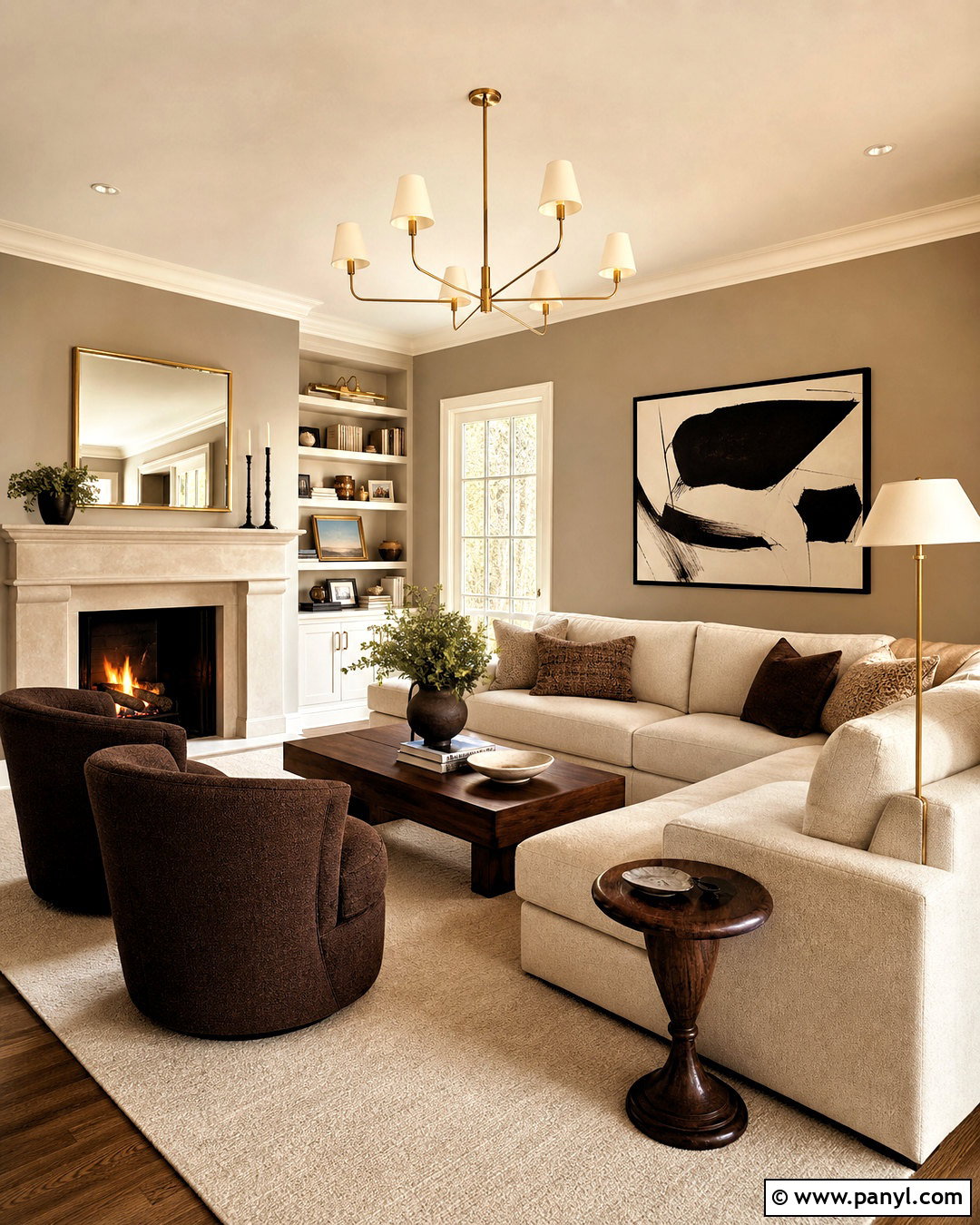
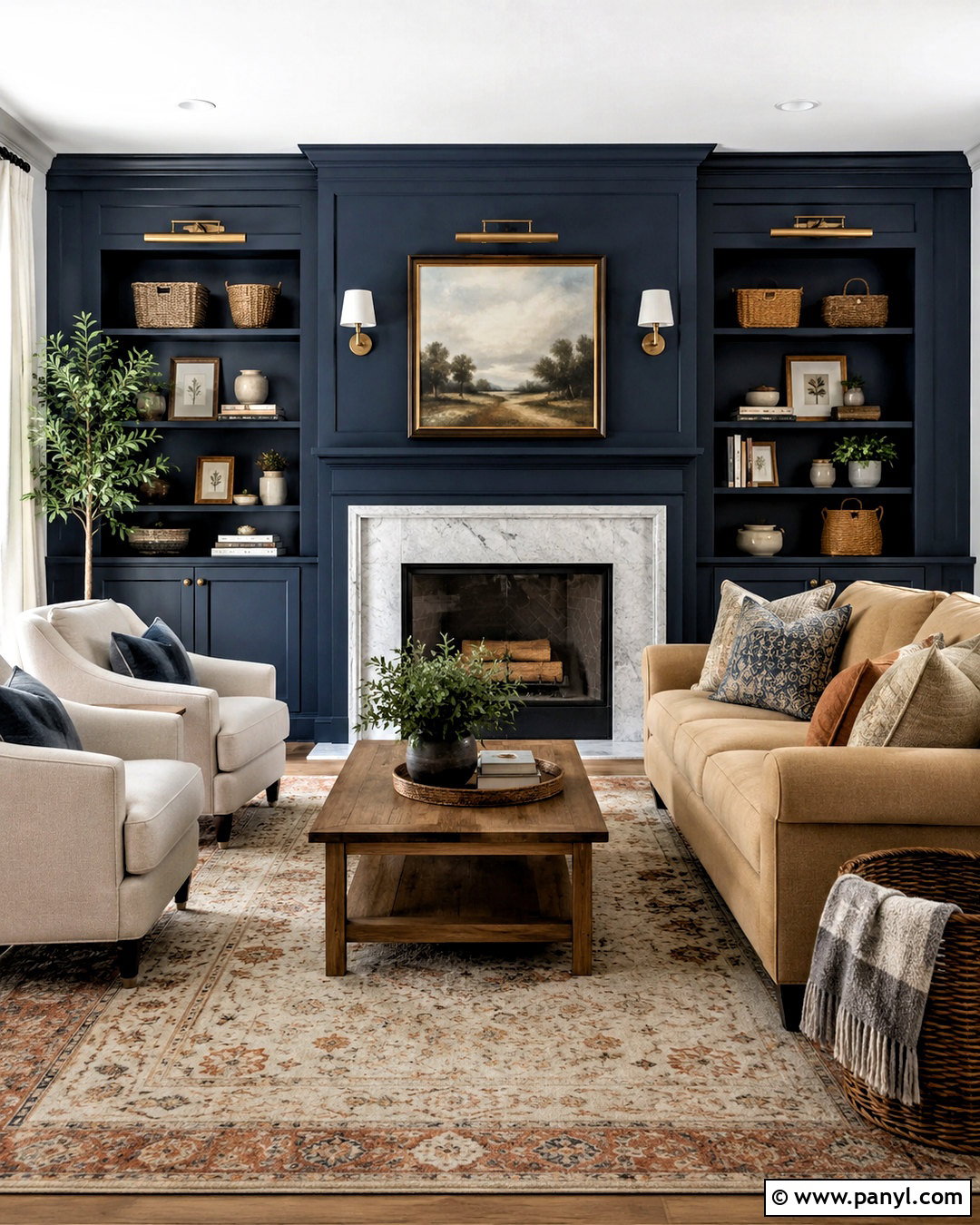
For a neutral room with noticeable depth, taupe walls can create a refined foundation without becoming as dramatic as dark brown. Select a balanced taupe that connects with the room’s flooring and test it carefully for pink or violet undertones. Pair the walls with warm white trim and a pale stone fireplace. A cream sectional becomes the main light element, while walnut tables and chocolate brown chairs echo the richness of the paint. Use a broad ivory rug to define the seating area and brighten the lower half of the room. Brushed brass lighting, abstract black artwork, and textured brown pillows add dimension. This palette suits both contemporary and transitional living rooms while remaining calm and highly livable.
11. Putty Living Room
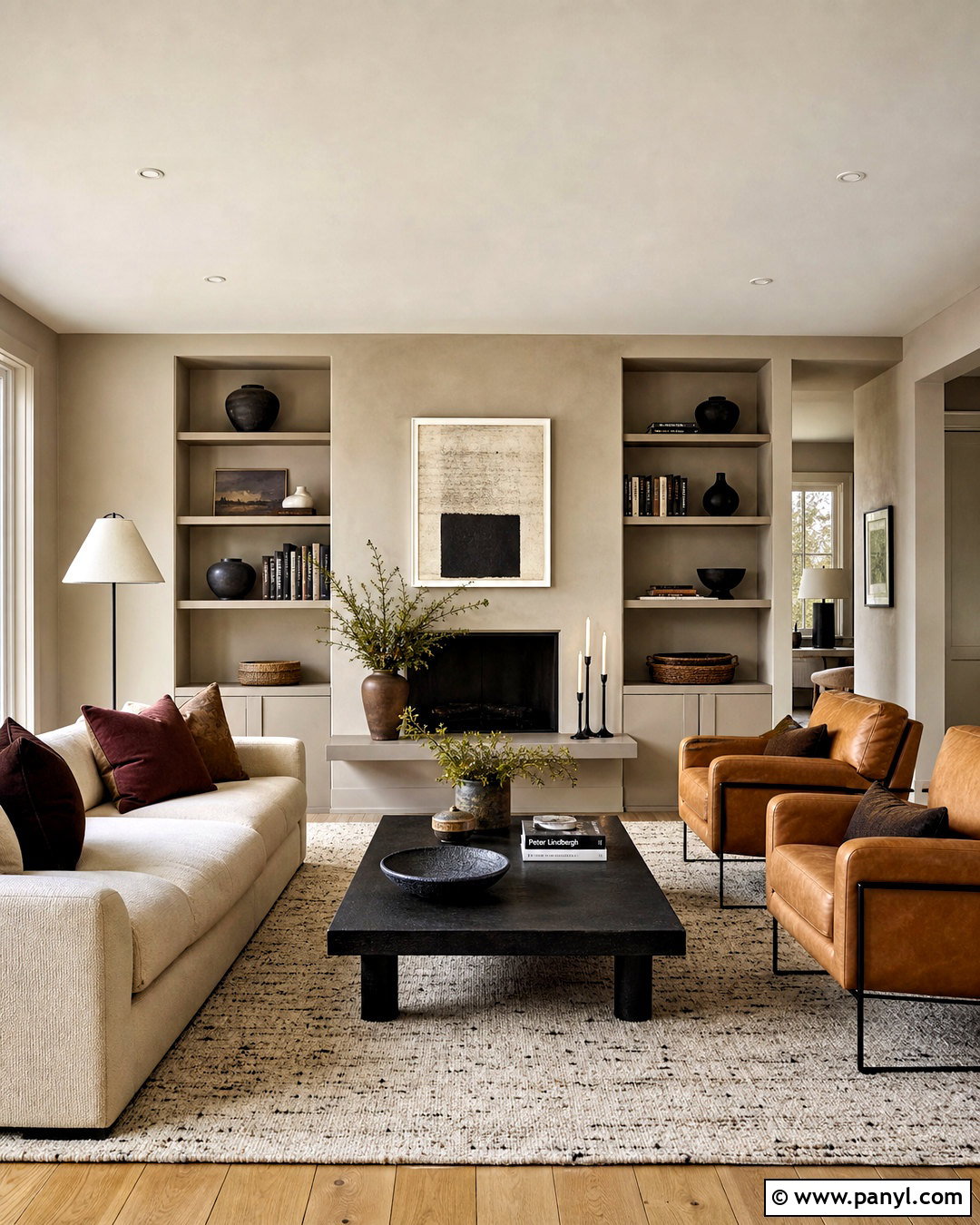
Putty is a muted beige-gray neutral that works well when bright white feels too sharp and standard beige feels too warm. Apply it to the walls and built-in shelving for a softly enveloping effect, then paint the ceiling a lighter off-white. Furnish the room with a low cream sofa, cognac leather chairs, and a simple black coffee table. Pale oak flooring and a thick wool rug bring warmth underfoot. Style the built-ins with books, stoneware, baskets, and dark decorative objects, leaving open space between groupings. Muted burgundy or dusty blue pillows provide controlled color. The complete living room feels tailored and functional, with enough contrast to highlight its architecture without interrupting the calm neutral palette.
12. Stone Living Room
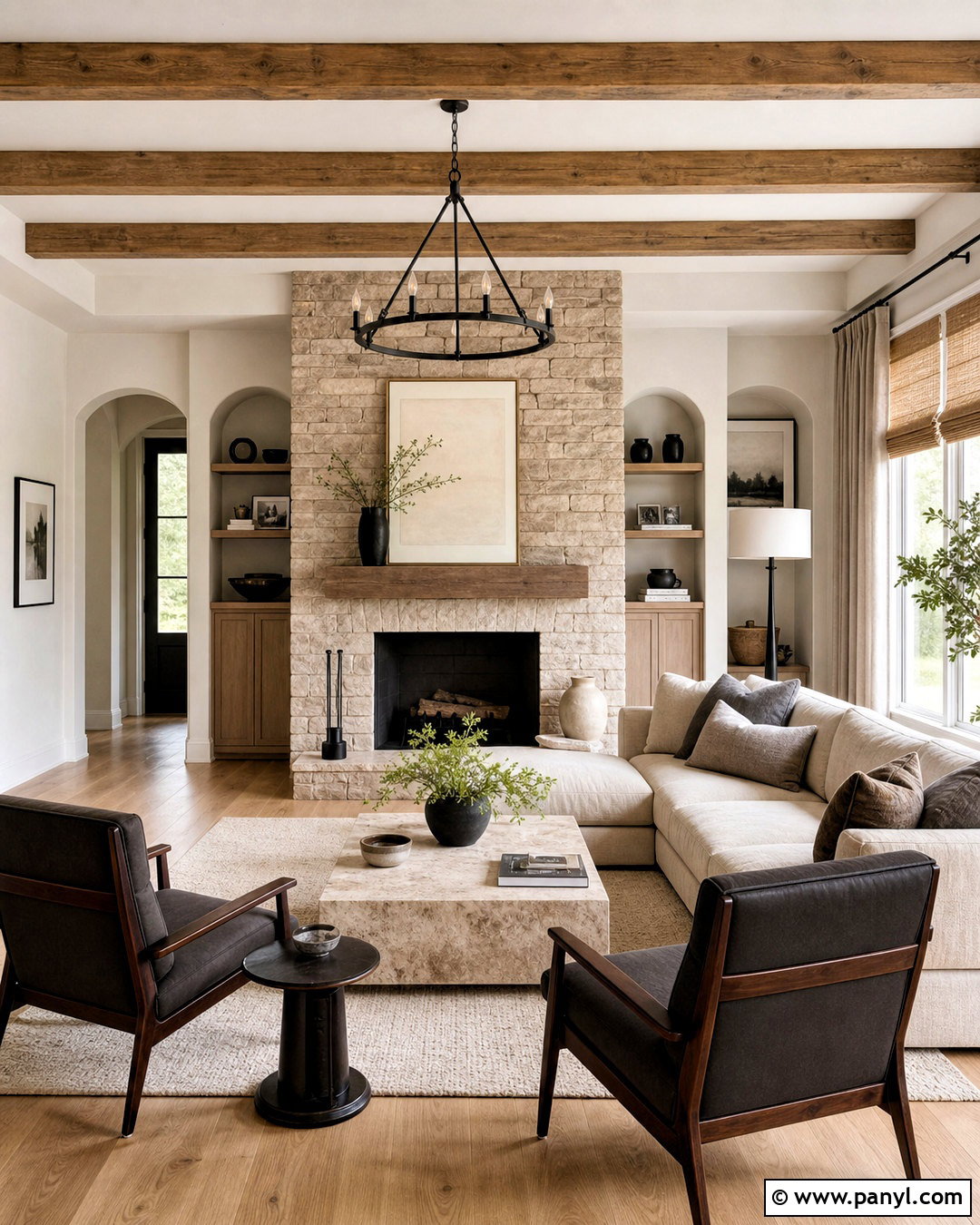
Stone-colored paint creates an earthy living room that feels connected to natural materials. Choose a mid-light neutral with balanced gray, beige, and brown undertones, then pair it with warm white trim. Use a linen sectional in pale beige, two dark wood armchairs, and a substantial limestone or travertine coffee table. A fireplace finished in natural stacked stone can become the central feature without competing with the walls. Layer a soft cream rug over medium oak flooring to brighten the seating area. Woven shades and taupe curtains soften the windows, while black iron lighting introduces structure. Minimal artwork, sculptural pottery, and green branches complete this grounded room without turning the organic design into a rustic theme.
13. Pale Gray Living Room
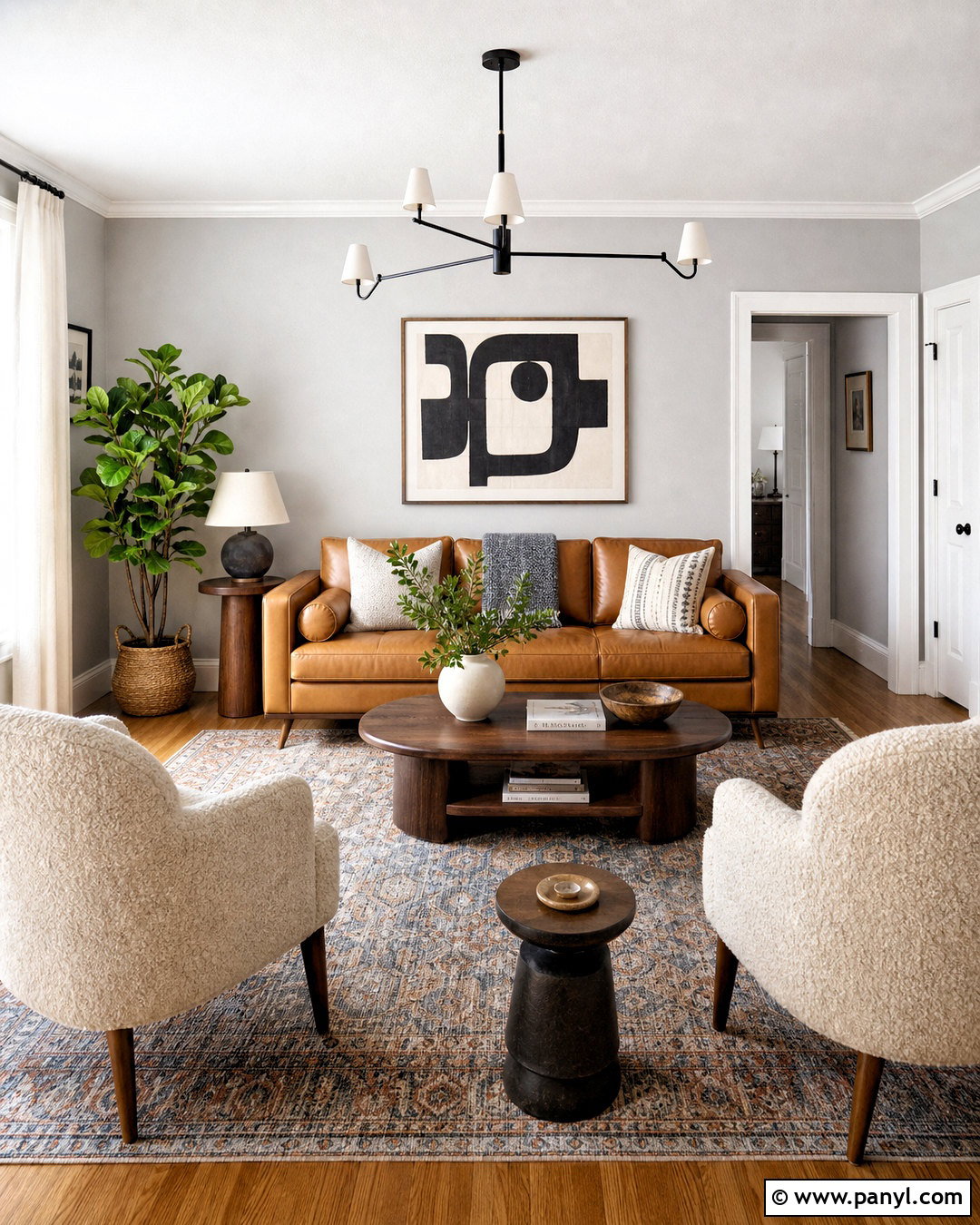
Pale gray still works as a neutral living room color when it has a soft undertone and is balanced with warmer furnishings. Paint the walls a light gray rather than a blue-toned silver, and use crisp white for the trim and ceiling. Bring warmth into the room with honey oak floors, a camel leather sofa, and cream boucle chairs. A faded Persian-style rug can combine gray, tan, blue, and rust, connecting the cool walls with the warmer furniture. Choose walnut tables instead of more gray finishes, and soften the windows with natural linen drapes. Black metal lighting and simple graphic art sharpen the scheme. These choices create a clean, contemporary room that feels comfortable instead of chilly.
14. Dove Gray Living Room
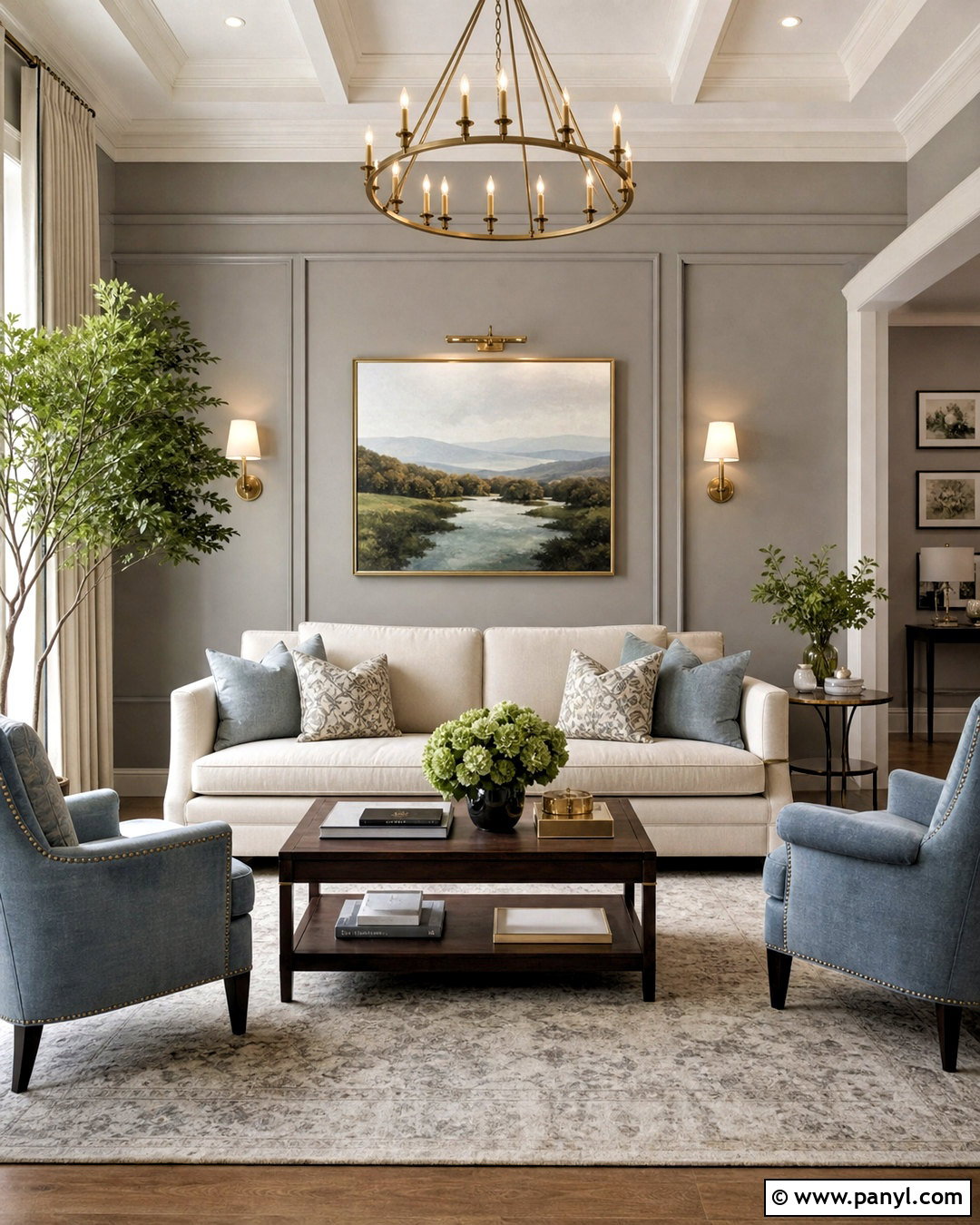
Dove gray offers a gentle, slightly warmer version of classic gray and gives a formal living room a softer appearance. Use it on walls with detailed molding, then paint the trim a refined off-white to emphasize the architecture. An ivory sofa and dusty blue armchairs create an elegant seating group around a dark wood coffee table. Add a plush rug featuring dove gray, cream, and muted blue for continuity. Full-length curtains in a pale silver-beige fabric should frame the windows without blending completely into the wall paint. Polished nickel or brushed brass lighting can add a restrained reflective finish. Complete the room with landscape artwork, fresh greenery, and a few black accents for balanced contrast.
15. Charcoal Living Room
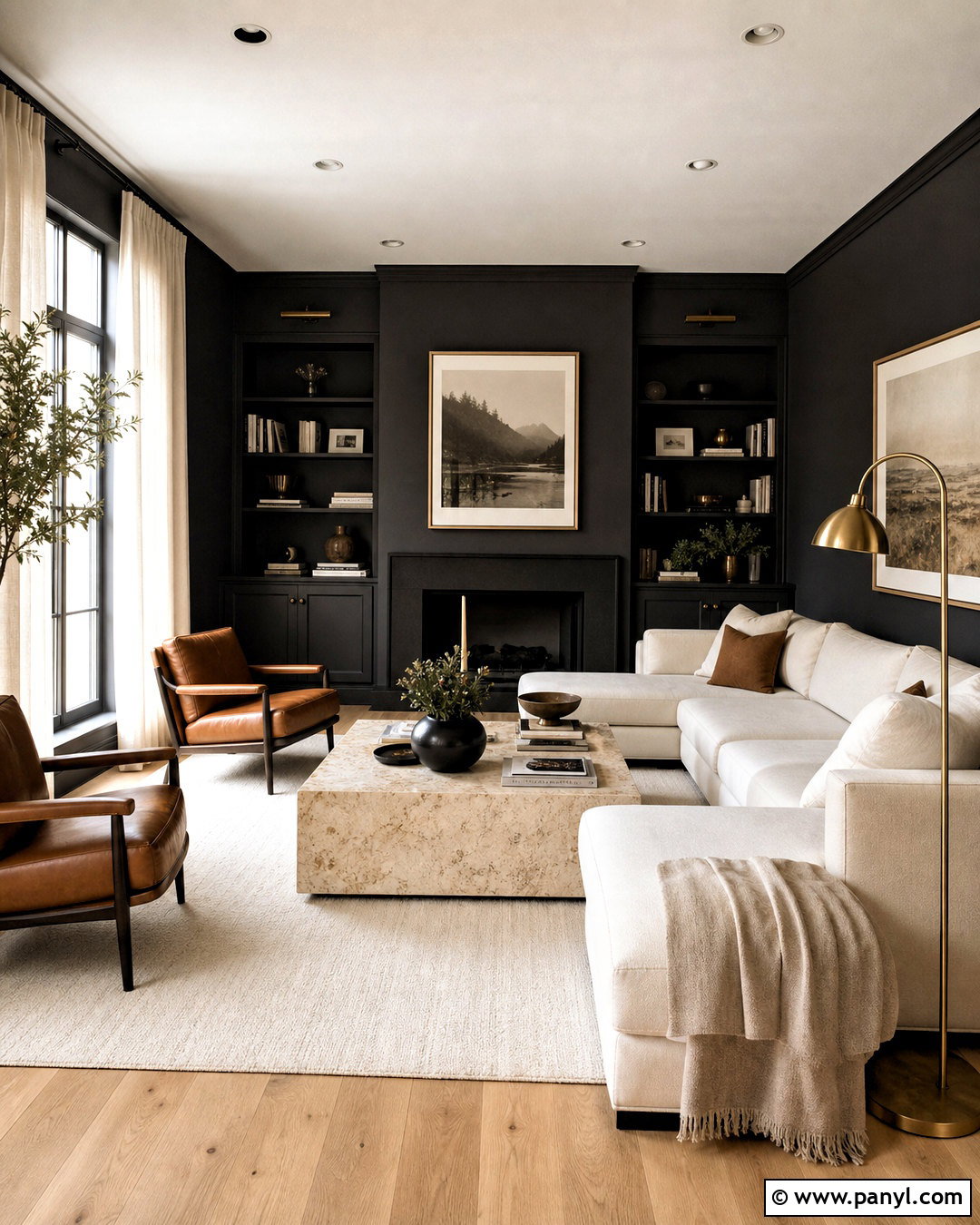
A charcoal living room can remain neutral while delivering a bold, cocooning atmosphere. Use charcoal paint on all walls, built-ins, and interior doors, but keep the ceiling a warm white to preserve brightness. Position a large cream sofa against the darkest wall and add tan leather chairs to establish strong contrast. Pale oak flooring and an oversized ivory rug will prevent the room from feeling visually heavy. Choose a light stone coffee table, brass floor lamp, and natural linen curtains to soften the deeper paint. Artwork with broad cream borders stands out beautifully against charcoal walls. Keep accessories limited and use layered white lighting so the completed space feels dramatic, polished, and welcoming rather than dark or crowded.
16. Chocolate Brown Living Room
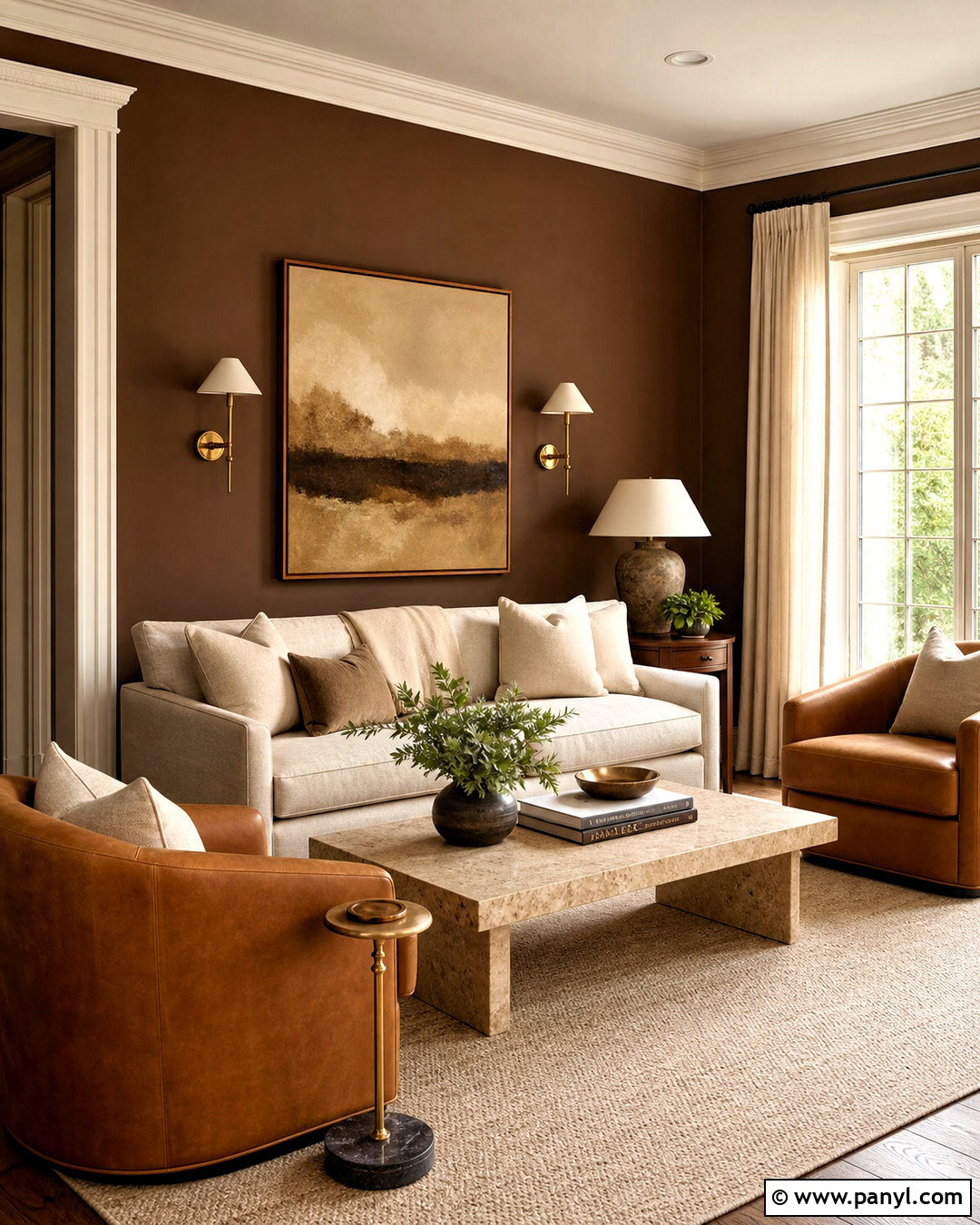
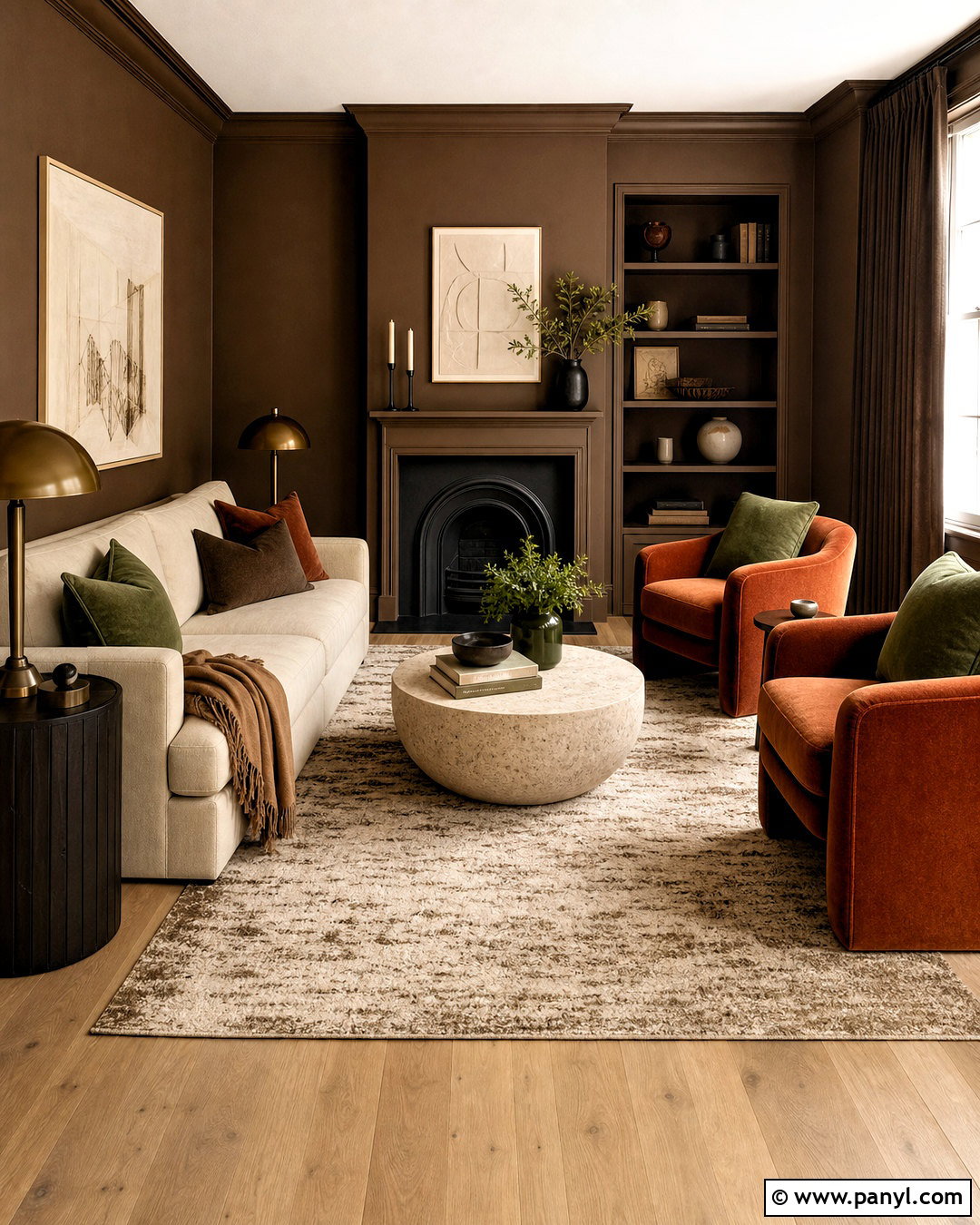
Rich chocolate brown paint can transform a living room into a warm retreat when it is paired with lighter furniture and reflective details. Cover the walls in deep cocoa brown, then use creamy white on the ceiling, window trim, and fireplace mantel. A generously sized oatmeal sofa should anchor the room, complemented by camel chairs and a pale beige rug. Walnut furniture will blend naturally with the walls, while a travertine coffee table introduces a lighter mineral texture. Use antique brass lamps and sconces to add subtle shine. Linen curtains, cream pillows, and warm abstract artwork break up the darkness. This complete palette feels sophisticated and earthy, offering a softer alternative to black or cool charcoal walls.
17. Camel Living Room
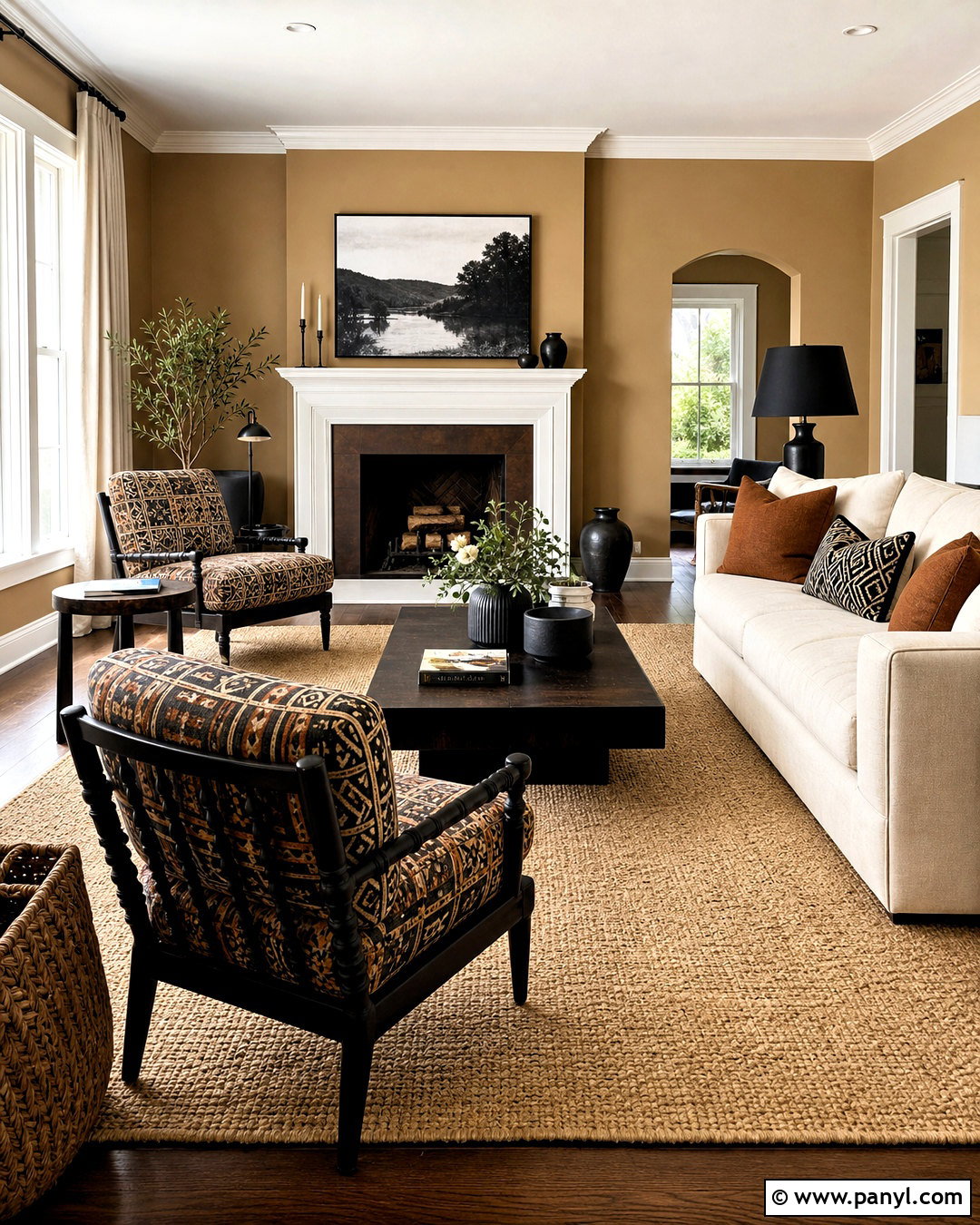
Camel paint creates a warm, sunbaked background that sits comfortably between beige and light brown. It works especially well in a living room with strong natural light and simple architectural details. Pair camel walls with warm white trim, a cream sofa, and dark espresso-colored wood furniture. Two patterned chairs featuring black, ivory, and muted rust can add movement without disturbing the neutral character. Ground everything with a large natural fiber rug layered beneath the full seating group. Matte black lamps and curtain rods provide crisp definition, while off-white linen drapes balance the wall color. Decorate with sculptural ceramics, woven baskets, and oversized monochrome artwork for a finished room that feels modern, warm, and intentionally edited.
18. Khaki Living Room
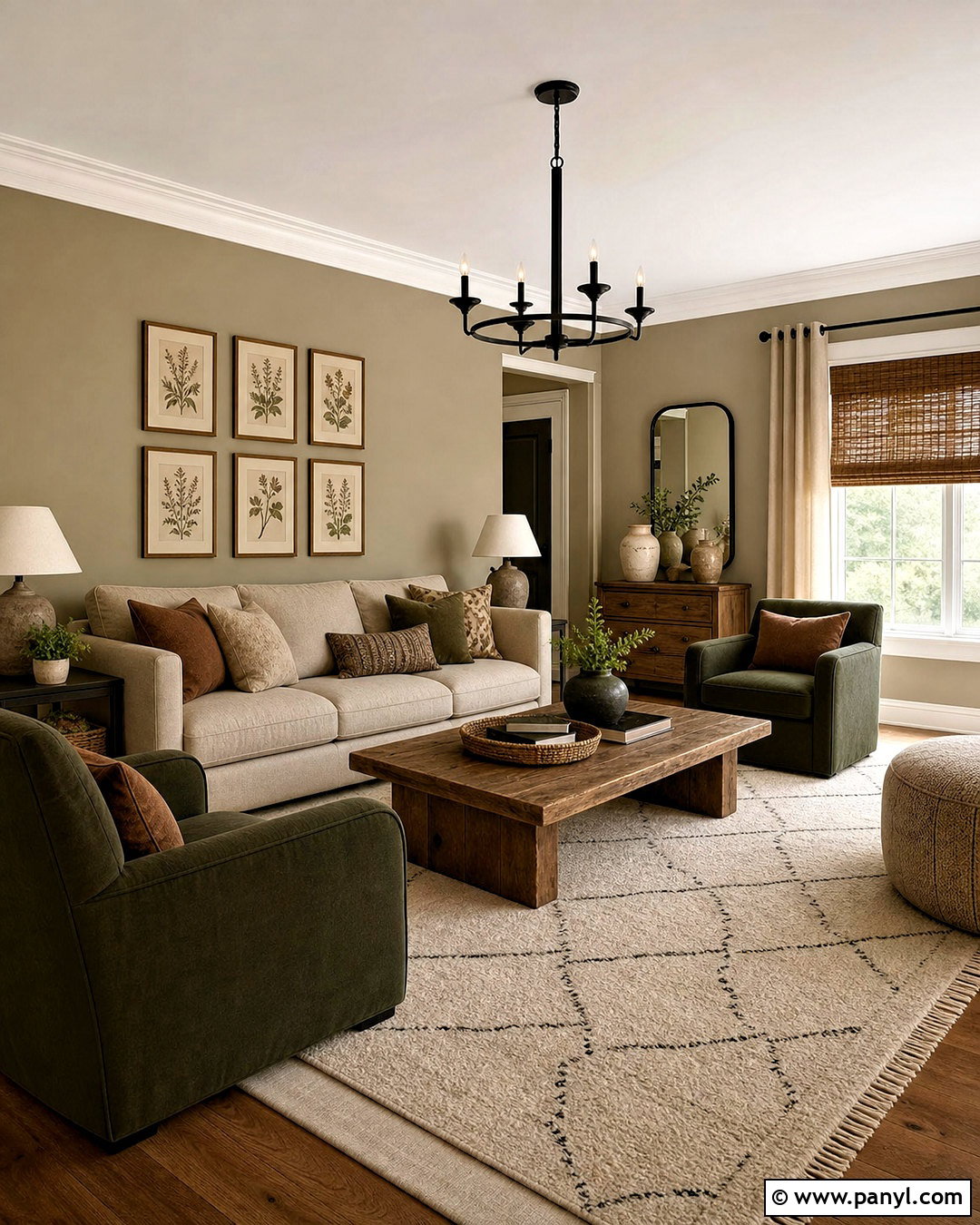
Khaki is an earthy neutral with subtle green undertones, making it an excellent bridge between beige furniture and natural outdoor views. Paint the living room walls a muted khaki and pair them with soft ivory trim. Choose a flax linen sofa, dark olive chairs, and a reclaimed oak coffee table to build a grounded palette. A cream rug with a thin black pattern will brighten the floor while adding structure. At the windows, use woven shades beneath simple ivory curtains. Black metal lighting and a dark fireplace screen repeat the rug’s contrast. Finish with botanical prints, clay pottery, and deep brown pillows. The result is nature-inspired and restful without looking like an overtly green room.
19. Muted Sage Living Room
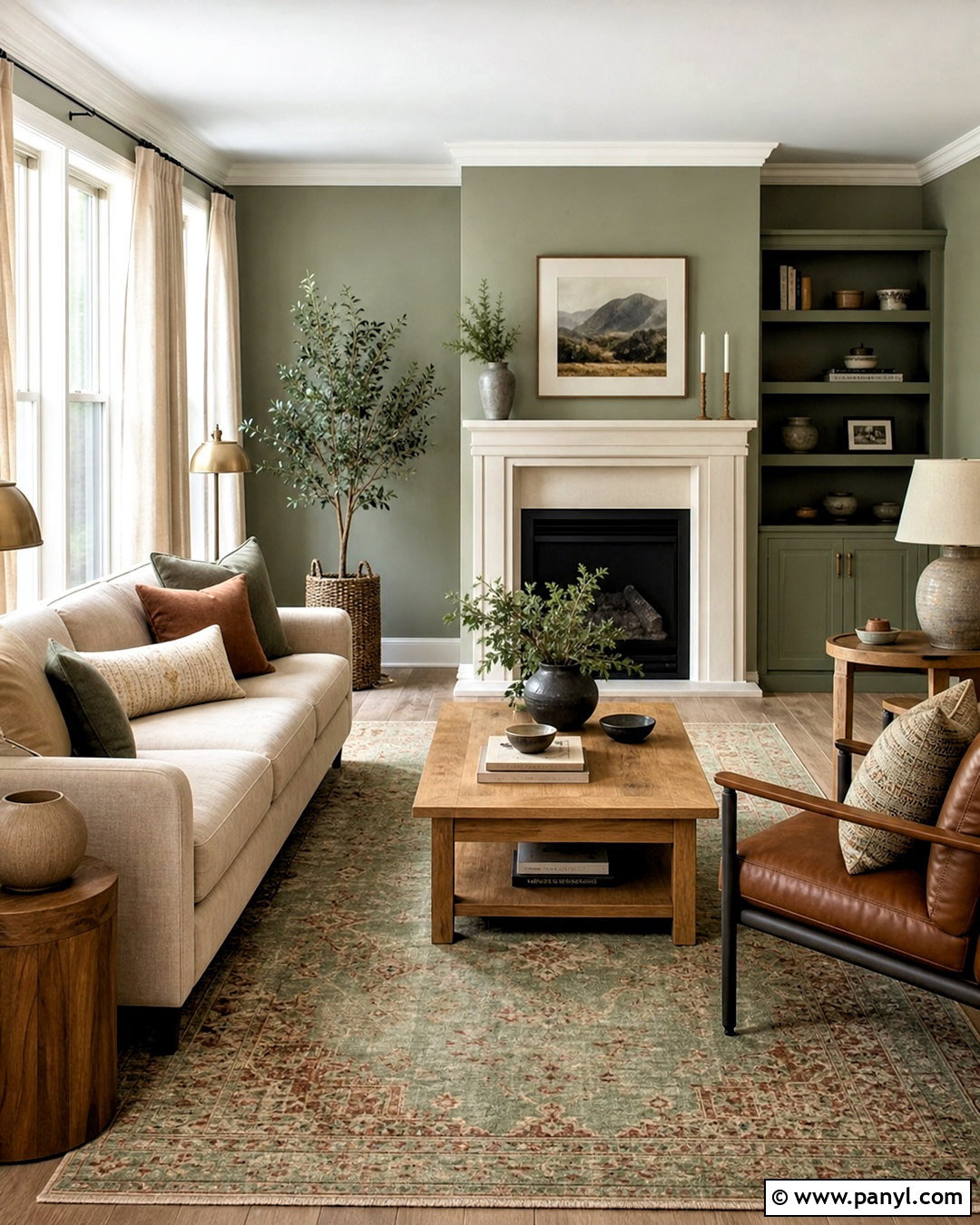
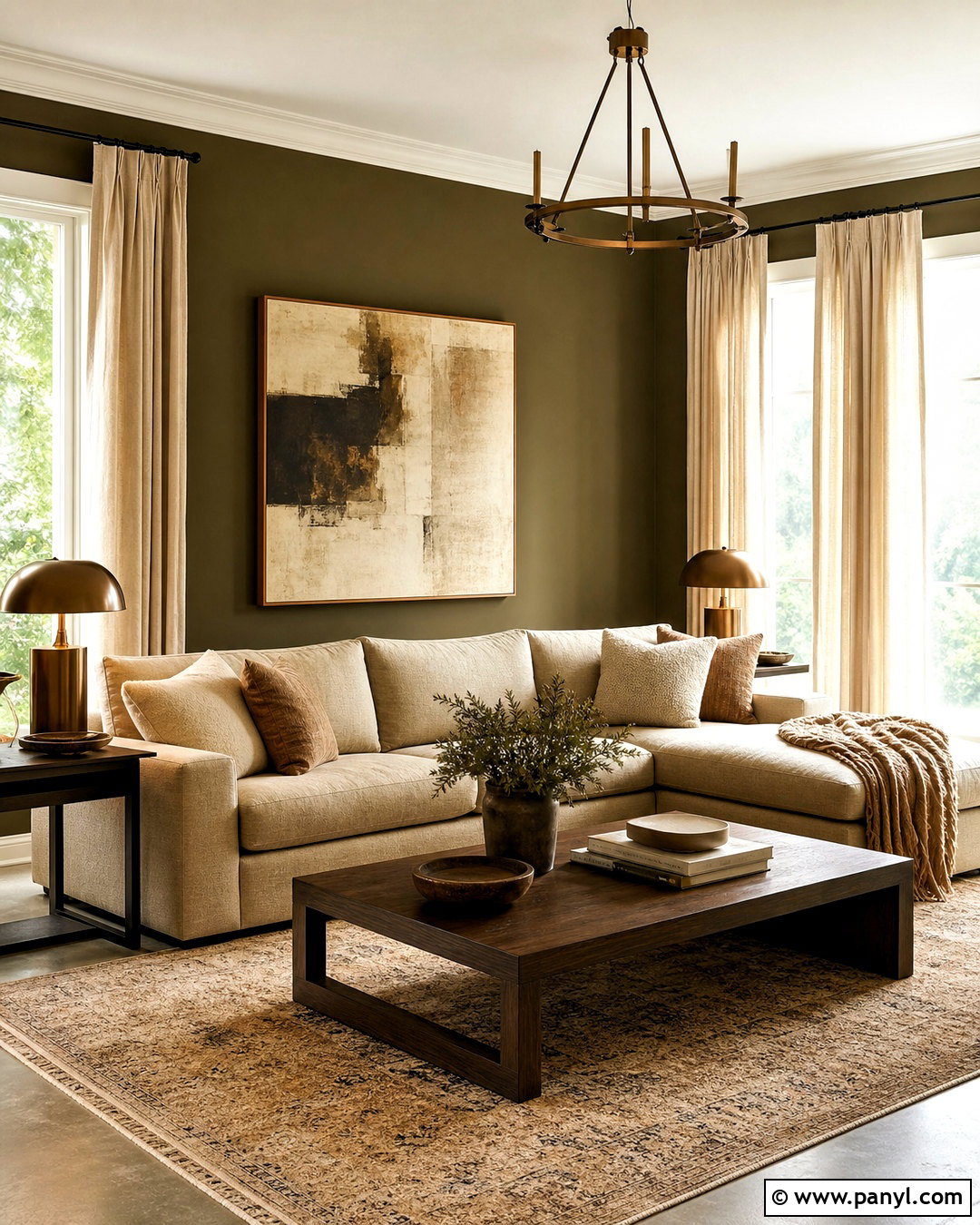
Muted sage can function as a neutral when it is softened with gray and paired with restrained, natural finishes. Use this gentle green on all living room walls, then add creamy white trim and a matching ceiling. A warm beige sofa, cognac leather chair, and medium oak coffee table establish an inviting seating area. Choose a vintage-style rug combining sage, tan, and faded rust to connect every major color. Linen curtains in a warm off-white keep the windows light and uncomplicated. Add aged brass lamps, charcoal picture frames, and handmade ceramic pieces for subtle variety. This cohesive living room feels fresh and grounded, while the desaturated paint remains flexible enough to support seasonal textiles and changing accessories.
20. Dusty Blush Living Room
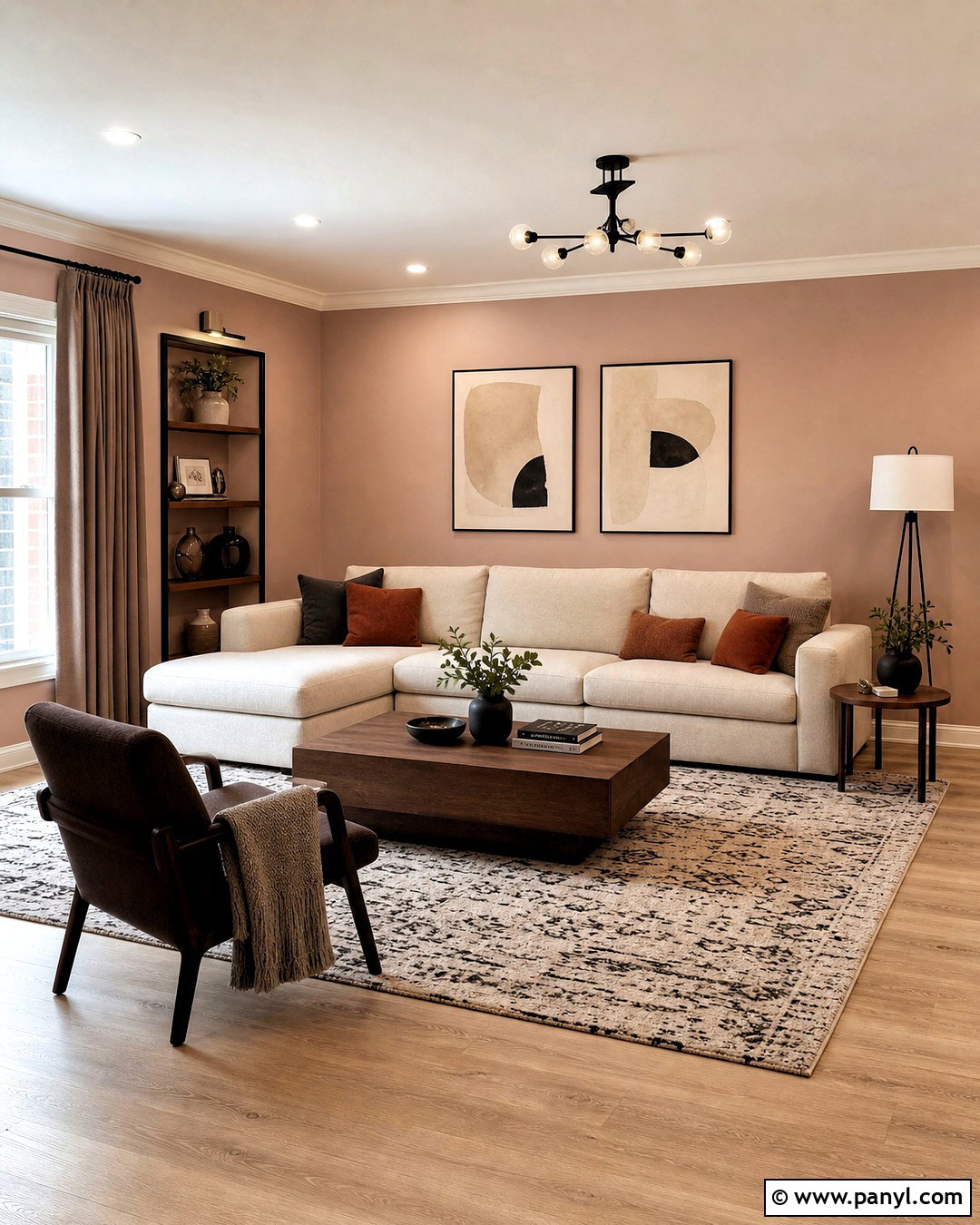
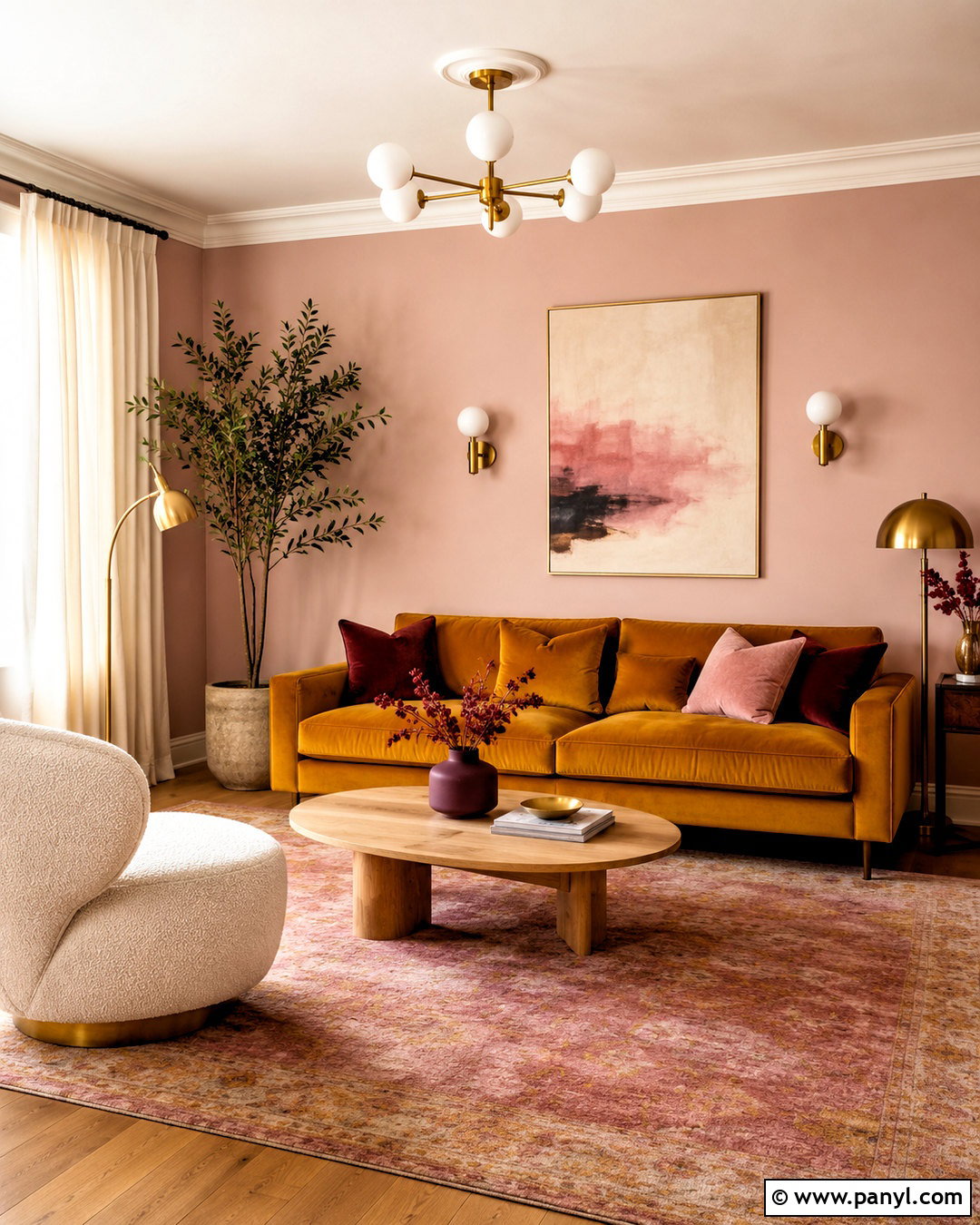
Dusty blush offers a warm neutral alternative for anyone who wants more personality than beige without committing to bright pink. Select a muted clay-blush paint with beige or brown undertones, then pair it with warm white trim and pale oak flooring. An oatmeal sectional keeps the main furniture calm, while a deep brown lounge chair and walnut tables add visual weight. Use a cream and charcoal rug to sharpen the soft wall color. Full-length taupe curtains create another quiet layer without appearing overly matched. Black metal lighting, abstract neutral artwork, and rust-colored pillows complete the scheme. The finished living room feels warm and modern, with a subtle rosy character that changes gently throughout the day.
Conclusion:
The best neutral living room paint color ideas go beyond choosing a safe shade of white, beige, or gray. A successful palette considers natural light, undertones, flooring, trim, furniture, and the mood you want to create. Warm whites and pale greiges keep rooms airy, while mushroom, taupe, charcoal, and chocolate provide richer depth. Earthy options such as khaki, muted sage, and dusty blush bring gentle color while still behaving like neutrals. Test several large samples beside your permanent finishes before making a final choice. Then layer the selected paint with varied woods, fabrics, metals, and contrasting accents to create a complete living room that feels comfortable, balanced, and personal.

Related Ideas and Inspiration:
Leave a Reply