
Camel wall color ideas bring warmth, depth, and quiet sophistication to almost any room. This golden tan sits between beige and light brown, creating a grounded neutral that feels richer than cream but softer than chocolate. It works beautifully with natural wood, crisp white, deep blue, muted green, black, and earthy red. The key is choosing a camel shade that fits the room’s light. Pale sandy camel keeps small spaces open, while deeper caramel-camel tones create a cozy, enveloping effect. Texture also matters. Linen, wool, leather, stone, and woven fibers prevent warm neutral rooms from appearing flat. Whether you prefer modern, traditional, rustic, or relaxed interiors, these complete **25 Camel Wall Color Ideas** offer practical inspiration for every space.
1. Camel Living Room With Cream Furniture
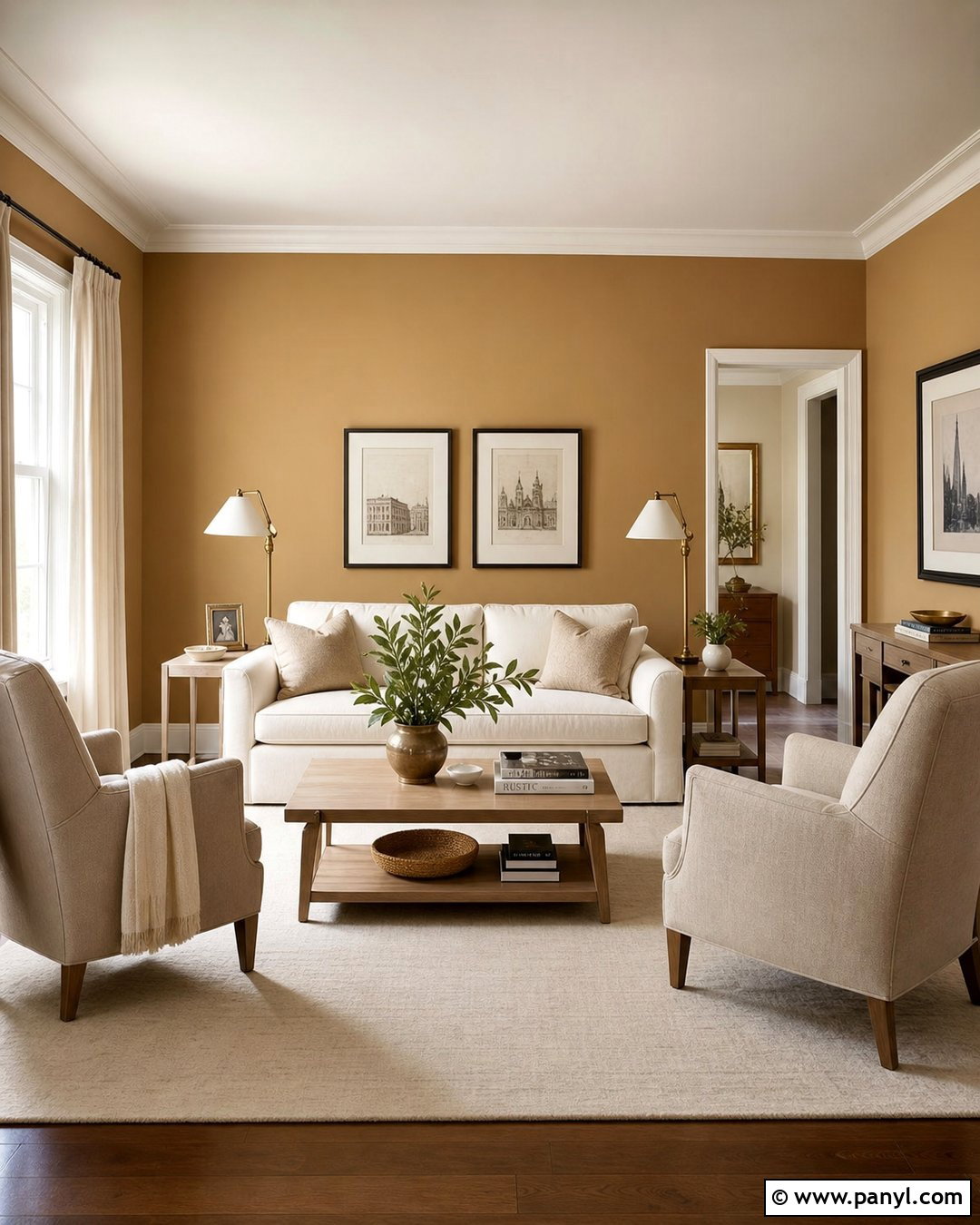
A creamy neutral palette makes camel walls feel light, calm, and welcoming. Choose a medium camel paint with a soft golden undertone, then introduce an ivory sofa and two oatmeal linen chairs. An off-white wool rug keeps the floor bright while connecting the lighter furniture. Add a pale oak coffee table, cream curtains, and ceramic lamps with natural linen shades. To create definition, use small touches of espresso brown through picture frames, side tables, or patterned pillows. Brass accents can highlight the warmth without making the room overly yellow. This complete living room works especially well with generous natural light. Keep the ceiling and trim clean white so the camel wall color remains warm, polished, and clearly separated from the architectural details.
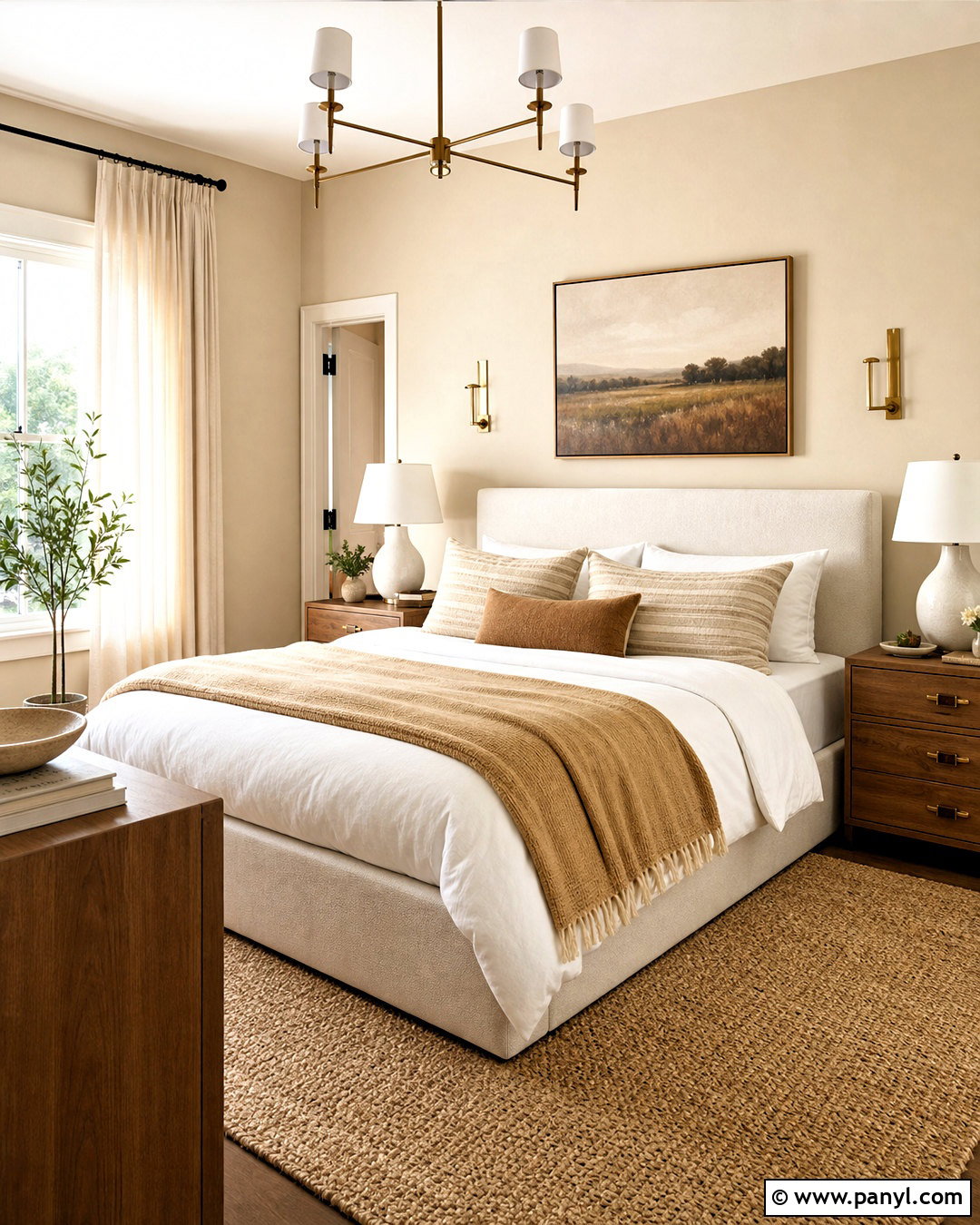
2. Camel Bedroom With White Bedding
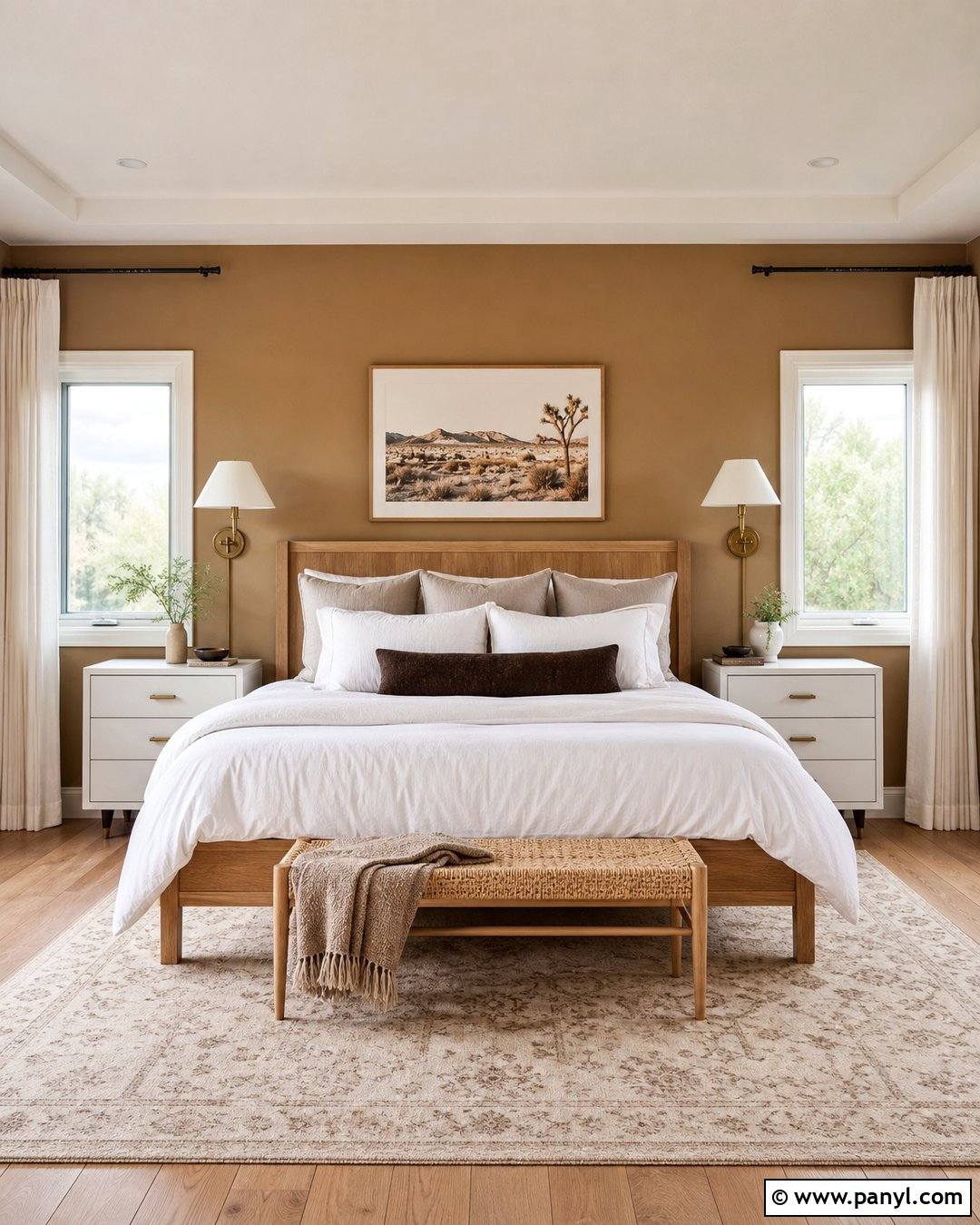
Soft camel walls can make a bedroom feel comforting without becoming dark or heavy. Build the room around a simple oak bed dressed in crisp white cotton bedding. Layer a camel-striped blanket, light taupe pillows, and one chocolate brown lumbar cushion for depth. White-painted nightstands keep the arrangement fresh, while aged brass sconces introduce subtle shine. Choose natural linen curtains that are slightly lighter than the walls. A cream-and-tan patterned rug will soften wood flooring and connect the bed to the surrounding palette. Minimal black-framed artwork can provide controlled contrast above the headboard. Finish with a woven bench or small cane chair. The result is an airy, restful bedroom where the camel walls provide warmth and the white textiles maintain a clean appearance.
3. Camel Dining Room With Dark Wood
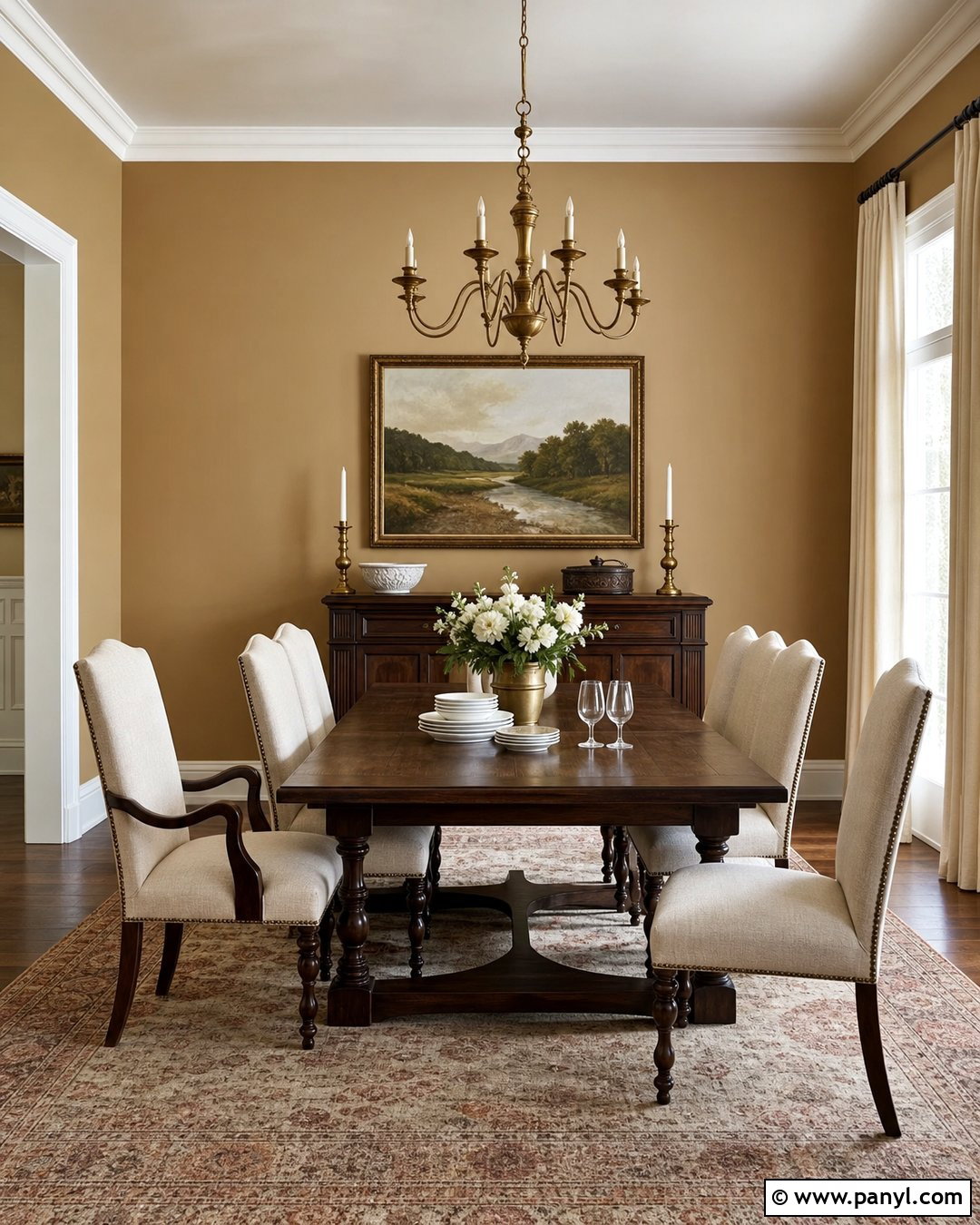
Imagine a softly glowing dining room where camel walls surround rich walnut furniture. A medium-to-deep camel shade creates the right amount of contrast against a dark wood table and matching chairs. Upholster the seats in cream linen to keep the setting from feeling too brown. Above the table, use a wide black or aged brass chandelier with simple lines. Hang one oversized landscape painting containing muted green, tan, and ivory tones. Floor-length cream curtains brighten the windows, while a faded traditional rug introduces subtle red or blue accents underfoot. White baseboards and crown molding give the darker palette a structured finish. This combination feels established and comfortable, making it a strong choice for both formal dinners and relaxed everyday meals.
4. Camel Home Office With Navy Accents
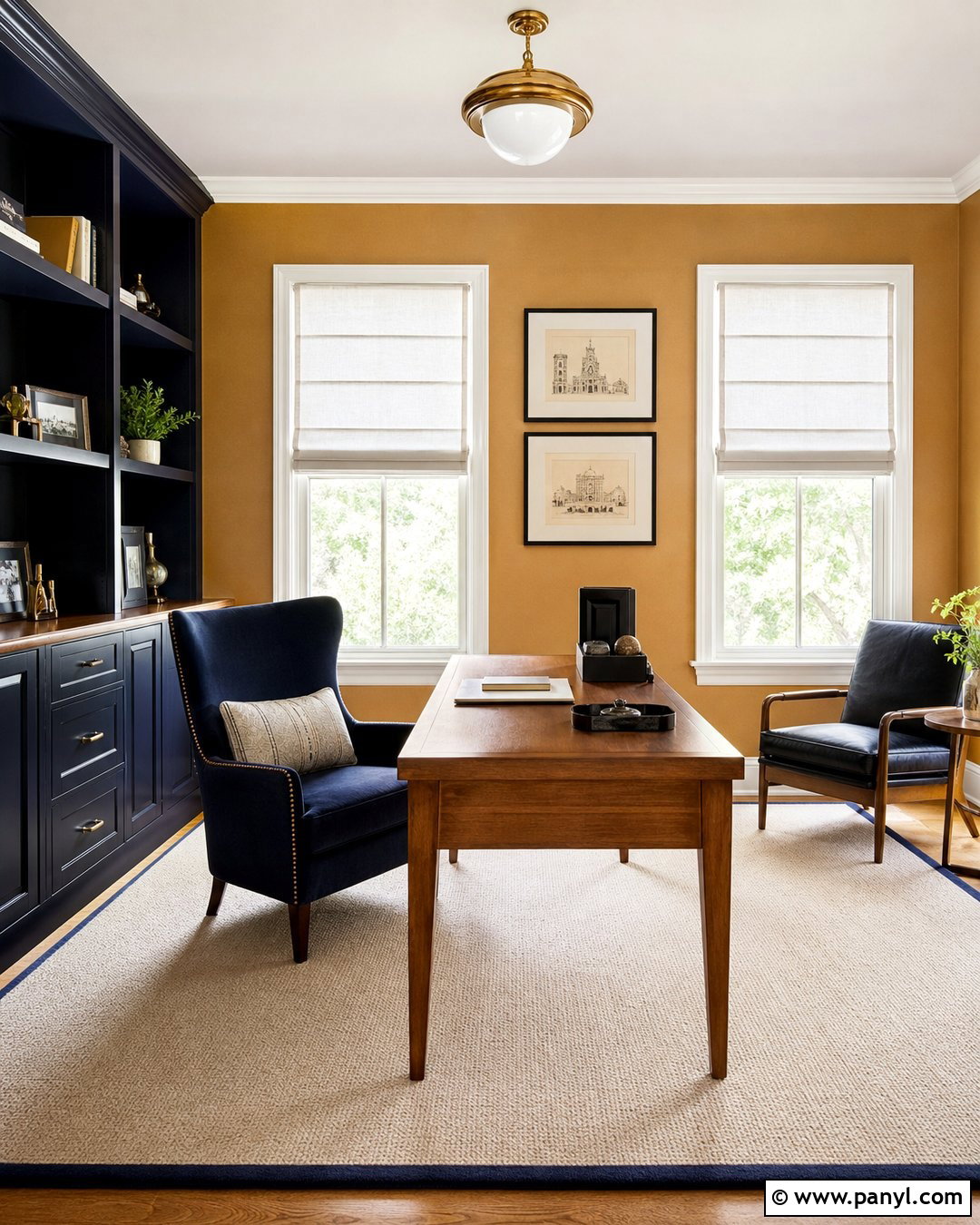
Camel and navy create a balanced office palette that feels warm, focused, and professional. Paint all four walls a clear golden camel, then place a navy upholstered desk chair behind a medium-toned wood desk. Add dark blue built-in cabinets or a freestanding bookcase along one wall for a strong focal point. A cream rug with a subtle navy border will connect the contrasting colors. Use white linen window shades to manage light without hiding the wall color. Black desk accessories and antique brass lighting add crisp details. Keep artwork simple, such as architectural prints in dark wood frames. This office design feels polished but not overly formal. Camel provides an inviting background, while navy gives the room enough visual structure for a productive workspace.
5. Camel Walls With Sage Green Furniture
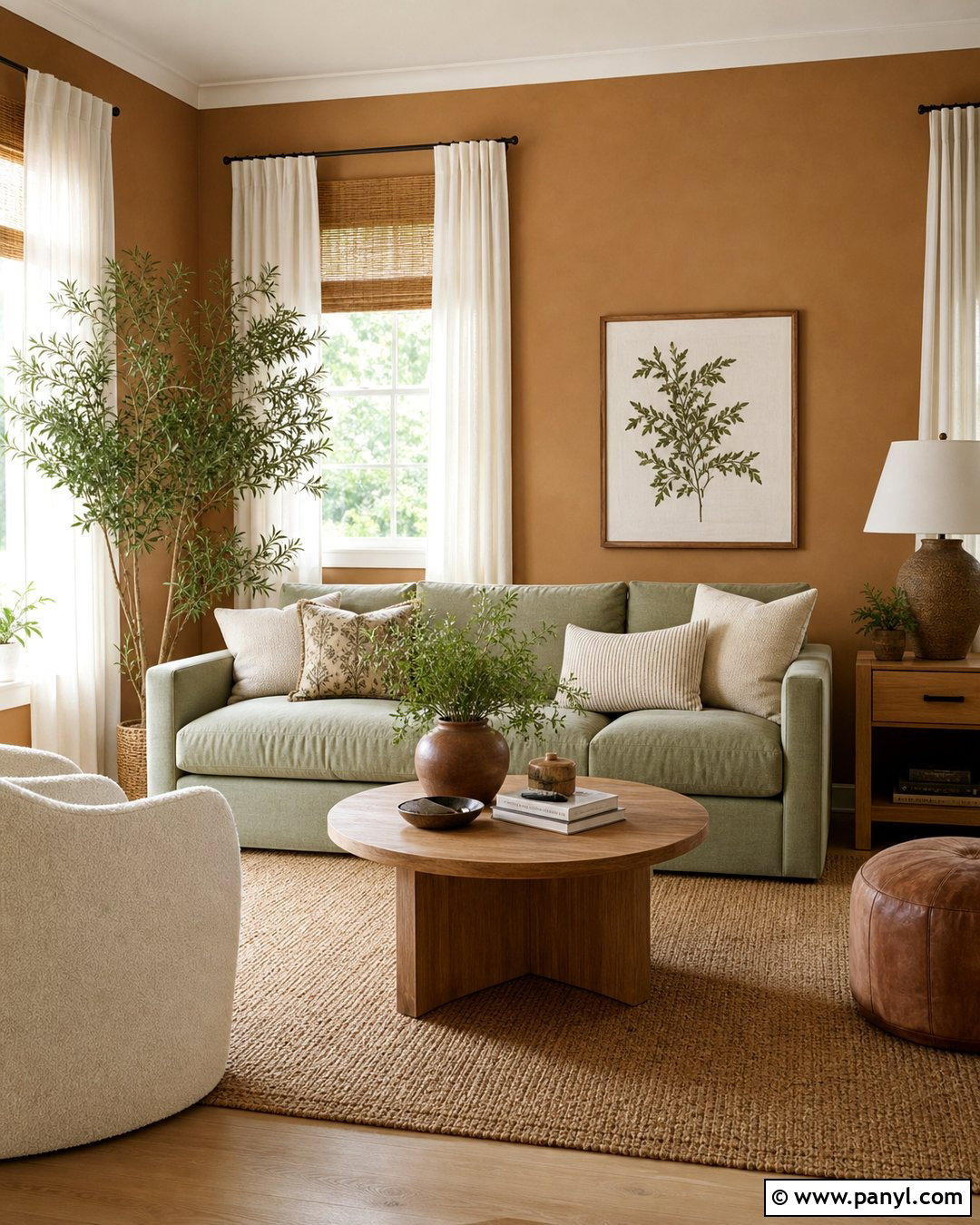
For an earthy room that still feels fresh, combine camel walls with muted sage green furniture. Start with a soft golden camel paint and place a sage linen sofa or pair of lounge chairs against it. Add a cream boucle chair, light oak tables, and a natural jute rug to maintain a relaxed foundation. Use pillows that mix sage, ivory, camel, and small amounts of charcoal. Woven bamboo shades reinforce the organic palette, while lightweight white curtain panels soften the windows. Decorate with simple pottery, leafy plants, and botanical artwork in oak frames. Avoid bright yellow-green accents, which may compete with the wall’s warmth. The finished space should feel layered and natural, with camel acting as the warm backdrop and sage introducing a gentle botanical contrast.
6. Camel Walls With Black Trim
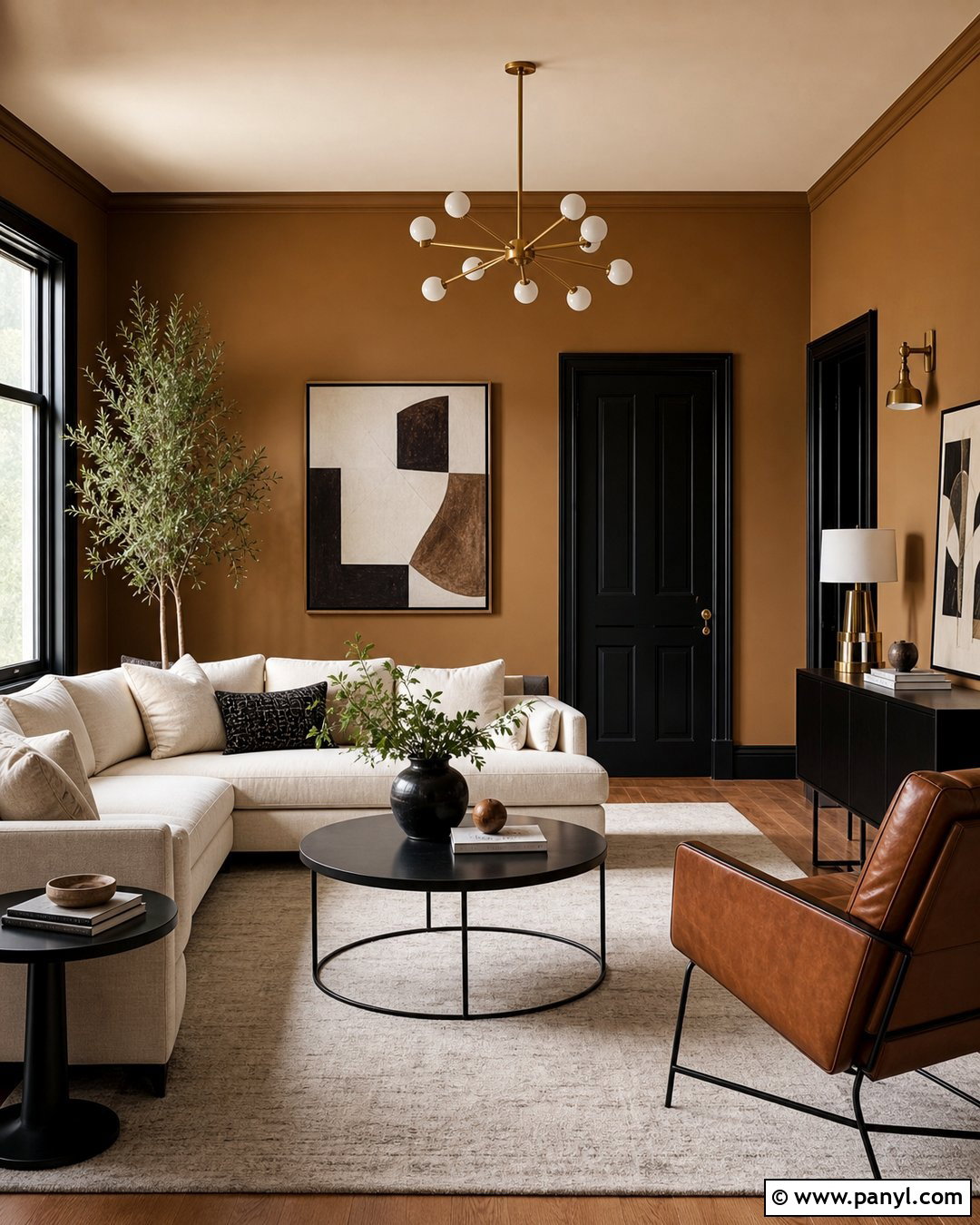
Would you like camel walls to feel sharper and more contemporary? Matte black trim can completely change their character. Use a medium camel shade across the walls, then paint interior doors, window frames, and baseboards a soft matte black. Keep the ceiling warm white to prevent the darker outlines from closing in the room. Choose a cream sofa, black metal coffee table, and cognac leather accent chair. A large ivory rug will balance the strong trim while making the furniture arrangement feel cohesive. Add oversized abstract artwork with black, tan, and off-white shapes. Brushed brass lighting provides a warmer counterpoint to the black details. This complete scheme works best when black is repeated thoughtfully rather than scattered across every decorative object.
7. Light Camel Walls With Pale Oak
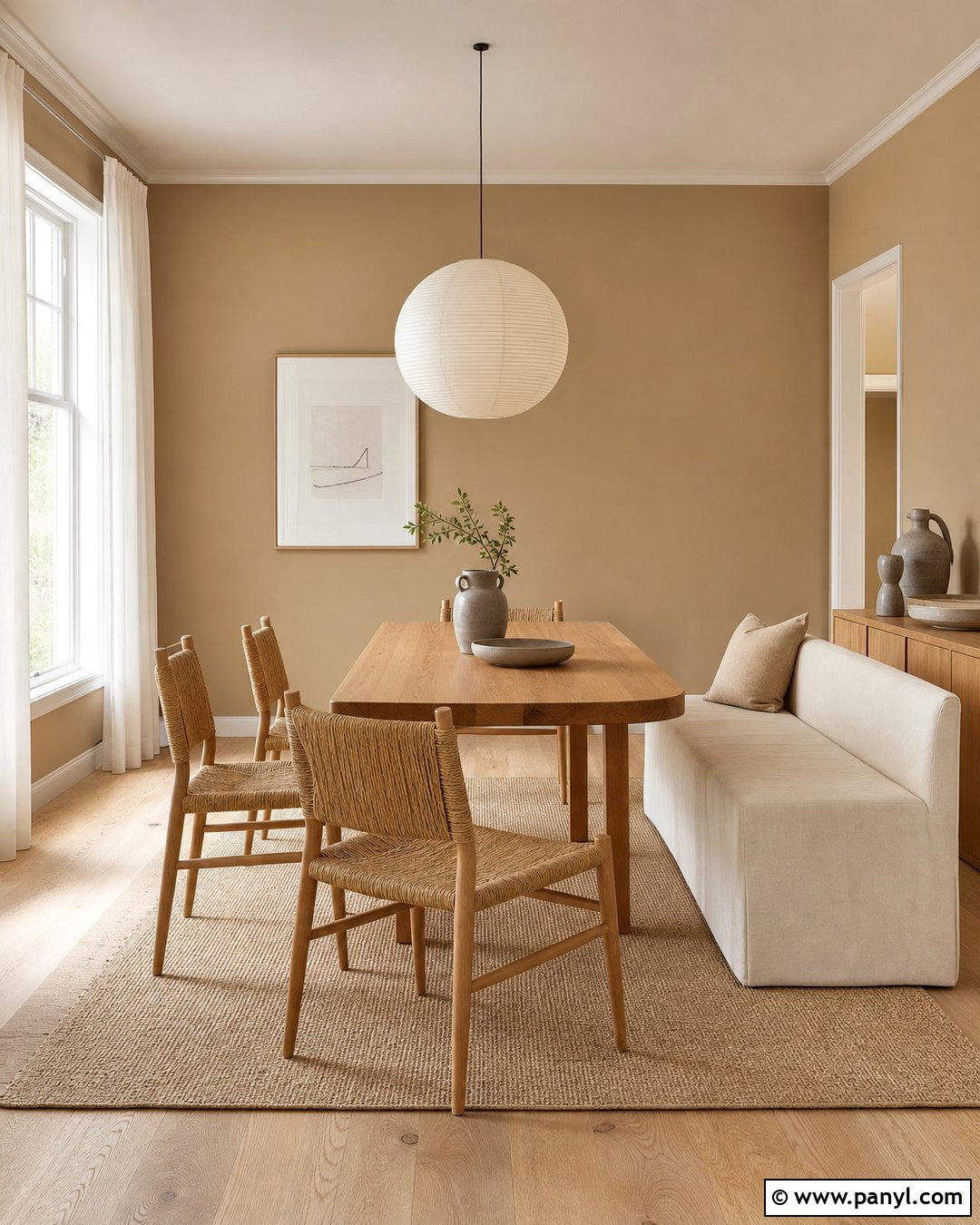
Pale camel paint and light oak create a gentle, Scandinavian-inspired interior with more warmth than a standard white room. Select a sandy camel shade that appears soft rather than orange. Pair it with pale oak flooring, a streamlined oak dining table, and simple woven chairs. Add an ivory bench or compact cream sofa depending on the room’s purpose. Off-white curtains and a natural wool rug maintain the quiet palette. For contrast, introduce small touches of warm gray through cushions, pottery, or artwork. Paper or frosted glass lighting fits the clean, relaxed look. Keep surfaces mostly clear and focus on a few useful decorative objects. The camel walls and pale wood should blend softly while remaining different enough to create visible layers.
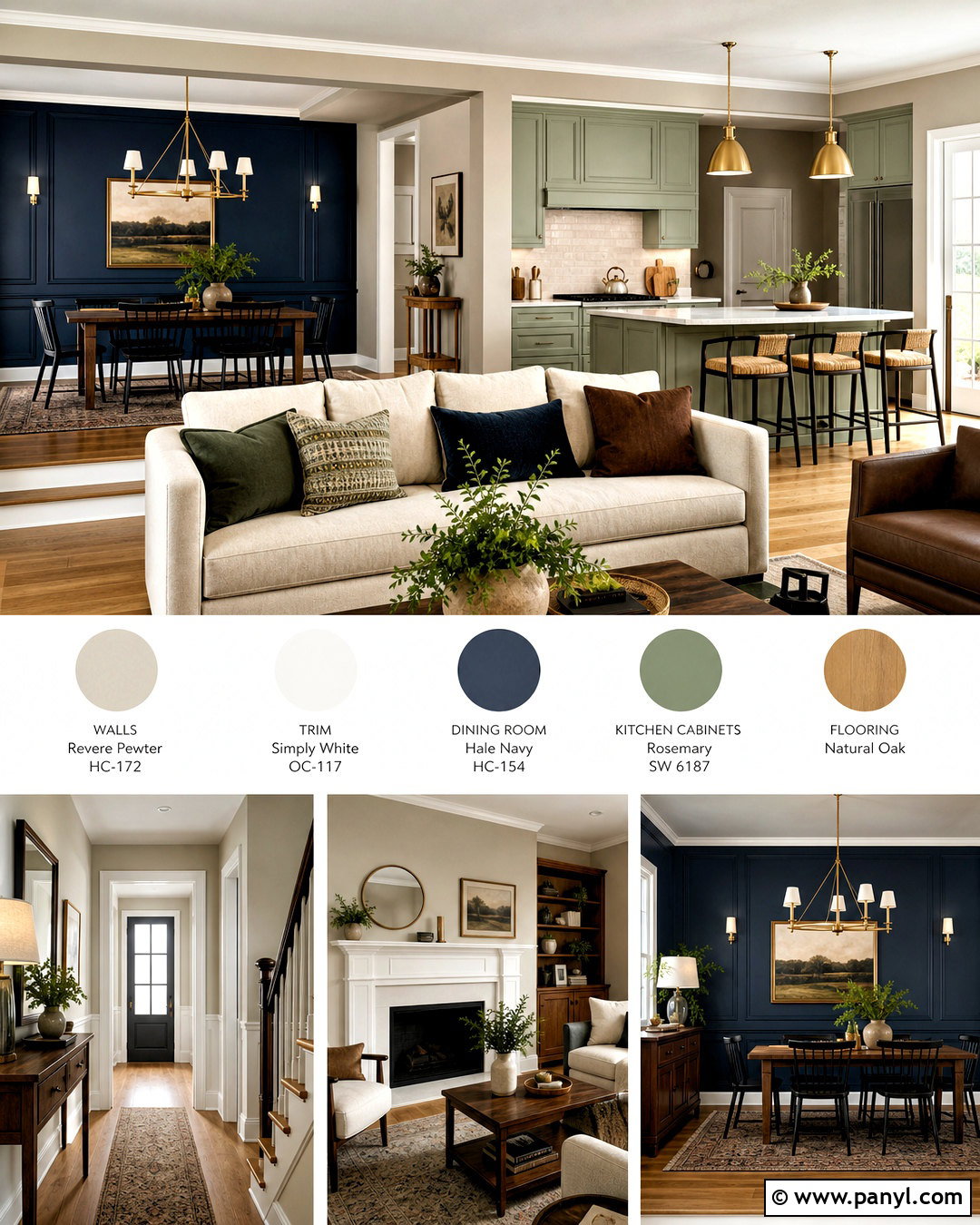
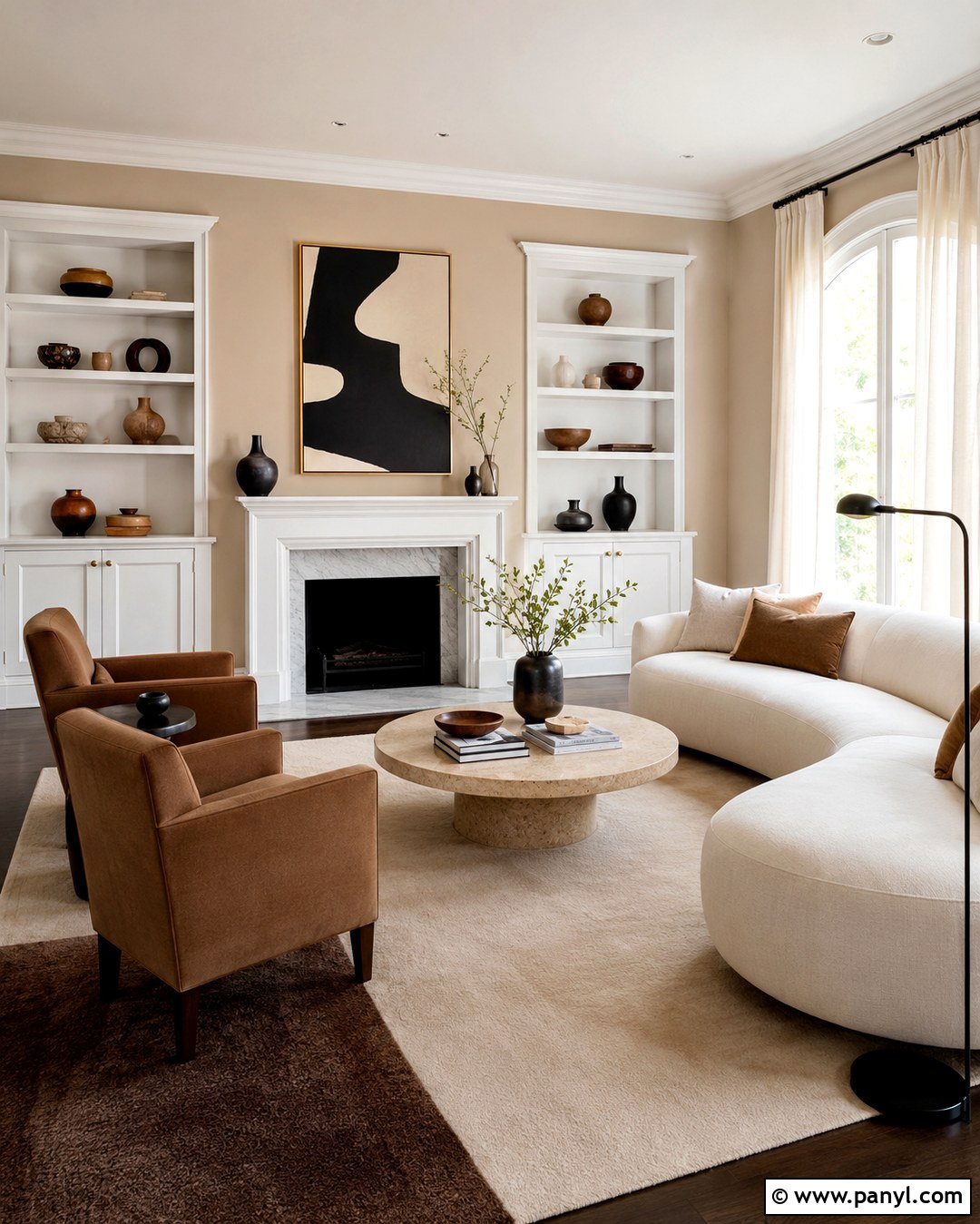
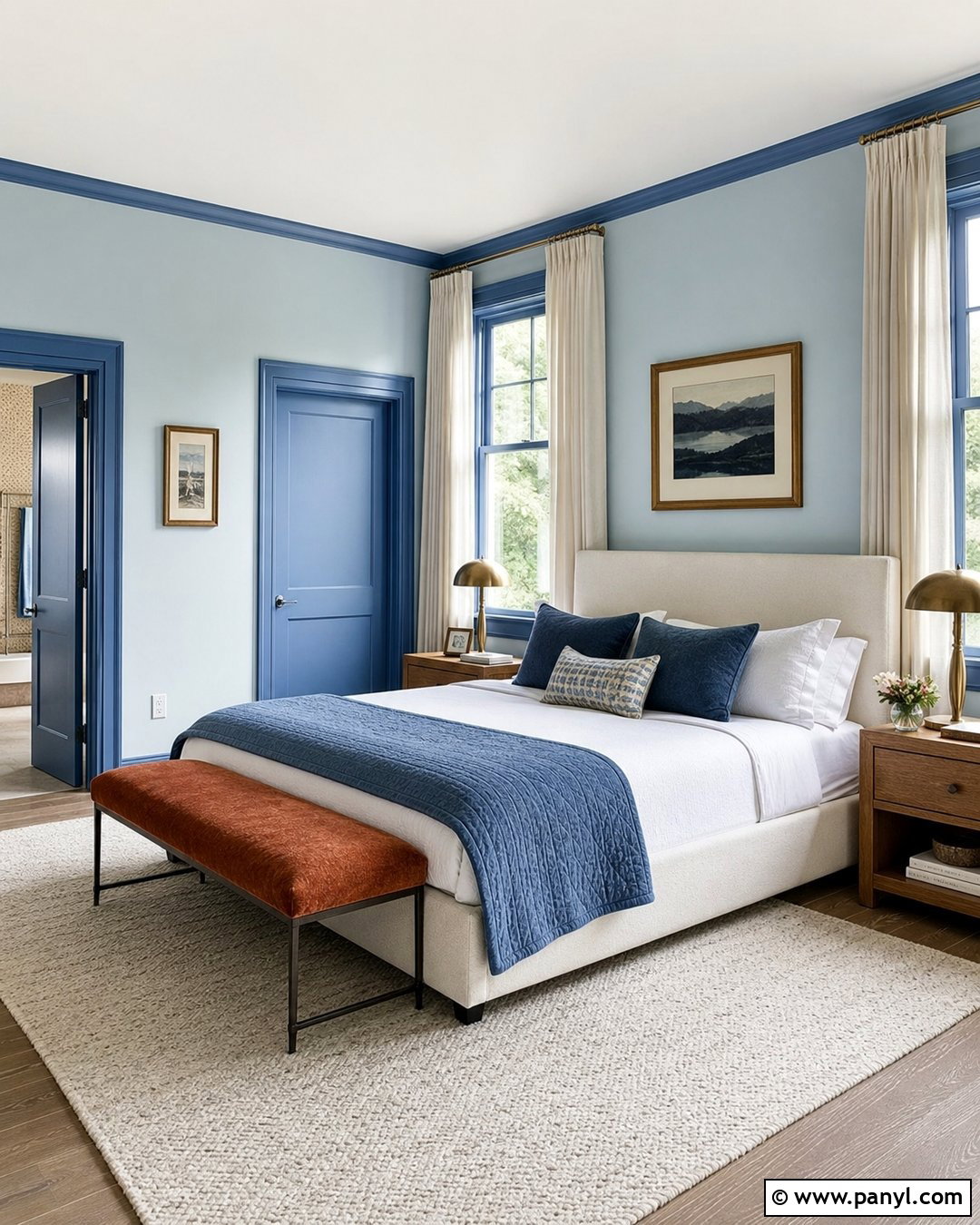
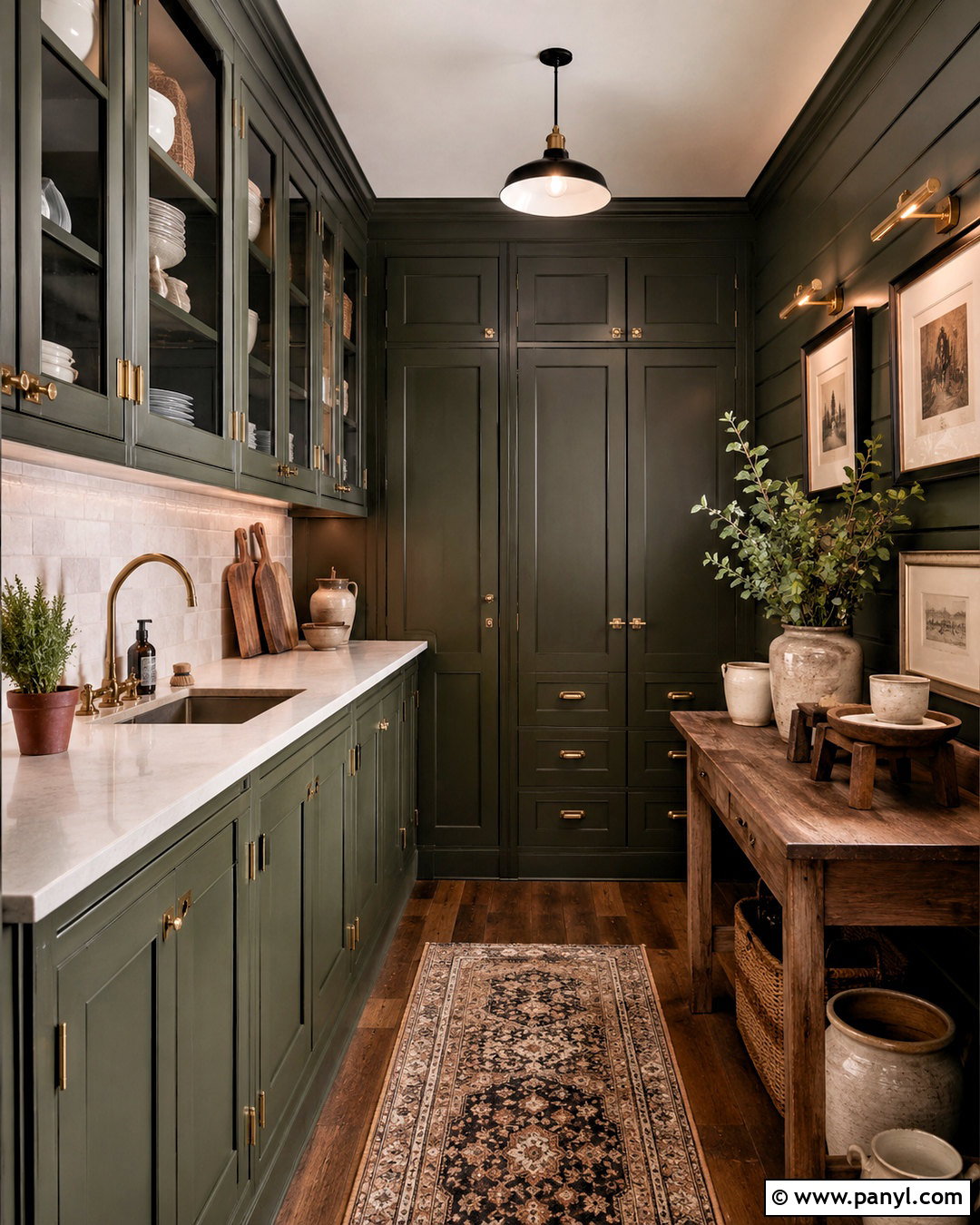
8. Dark Camel Walls With Ivory Decor
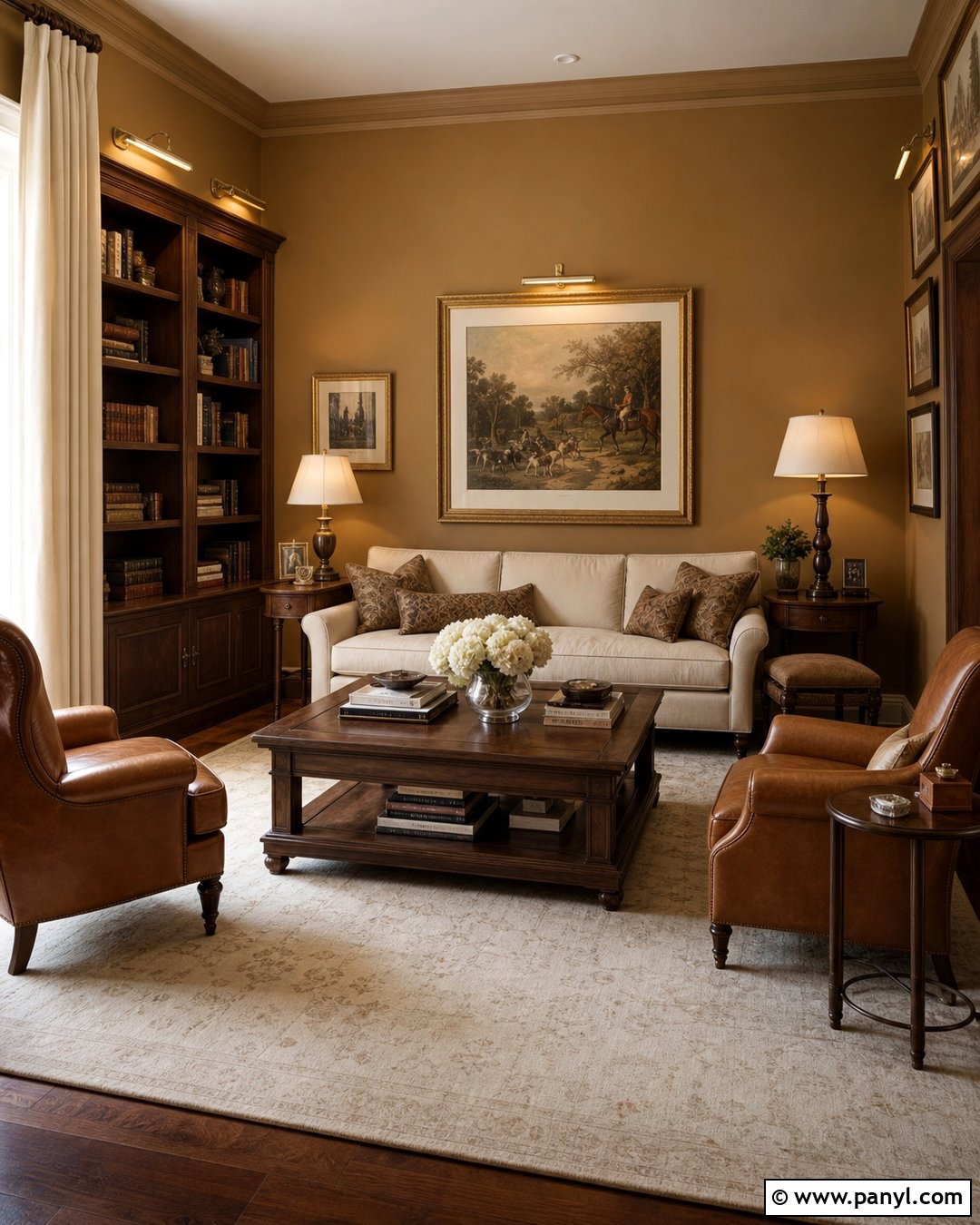
Deep camel walls can surround a room with warmth, making them especially effective in a den, library, or cozy sitting area. Choose a saturated shade with brown and golden undertones. Balance it with an ivory sofa, cream curtains, and a large off-white rug. Dark walnut shelves can blend into the rich background while providing useful storage. Add a pair of tan leather chairs and a substantial wood coffee table to complete the conversation area. Brass picture lights will illuminate artwork and bring controlled brightness to the walls. Use ivory lampshades and warm white ceiling paint rather than matching the ceiling to the darker camel. The finished space feels intimate and refined, yet the generous use of pale fabric keeps it comfortable instead of visually heavy.
9. Camel Accent Wall Behind The Bed
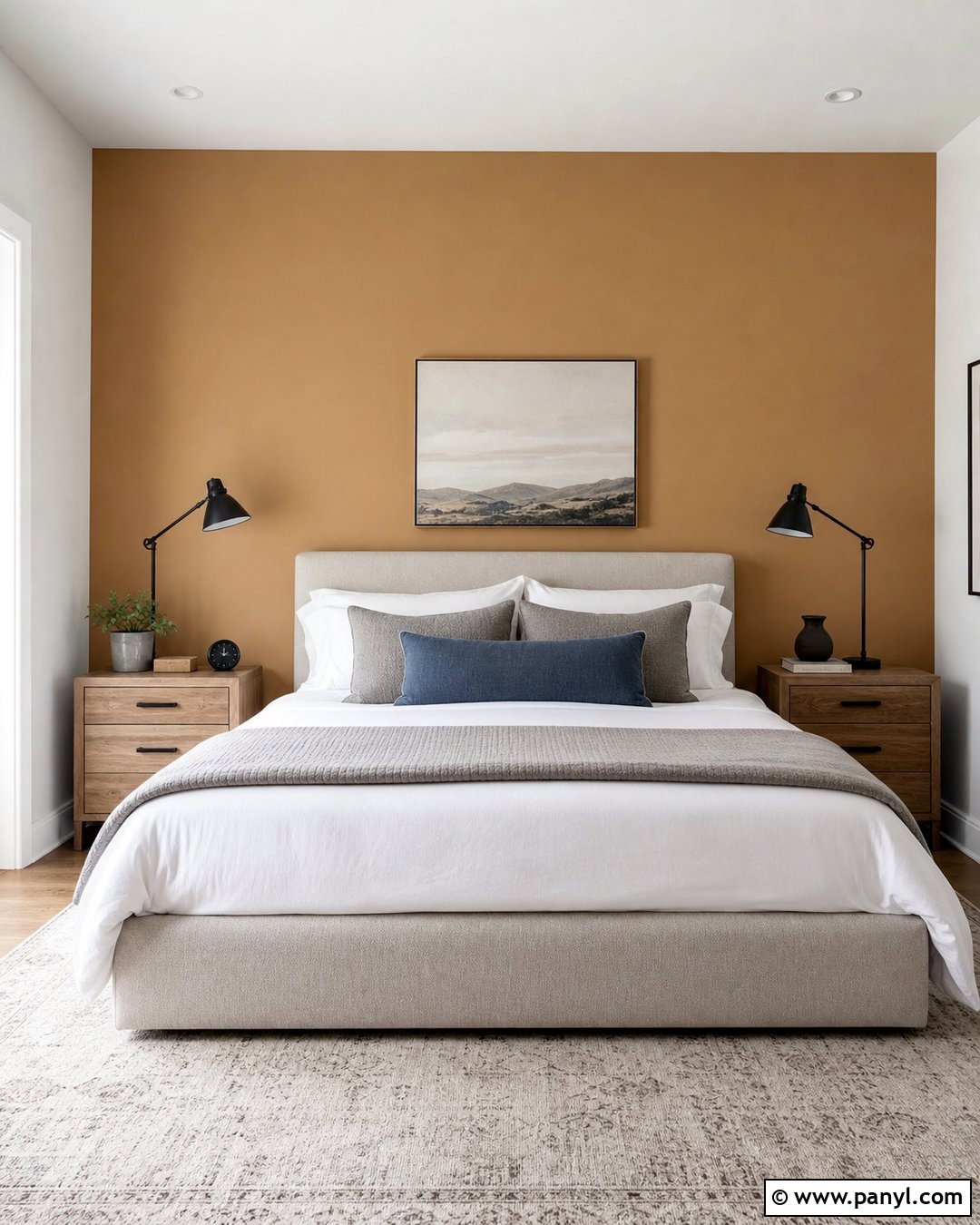
A camel accent wall gives a neutral bedroom a clear focal point without requiring a dramatic color. Paint the wall behind the bed a medium camel shade and keep the other walls creamy white. Center a tall upholstered headboard in oatmeal or ivory against the colored surface. Dress the bed with white sheets, a taupe quilt, and pillows that repeat camel, brown, and muted blue. Choose oak nightstands and matte black reading lamps for contrast. A light neutral rug will anchor the bed, while simple artwork can be placed on the adjacent white walls. Avoid covering the camel wall with too many decorations. Let the headboard and balanced bedside arrangement create the composition. This approach adds warmth while preserving an open, bright feeling.
10. Camel Living Room With Burgundy Accents
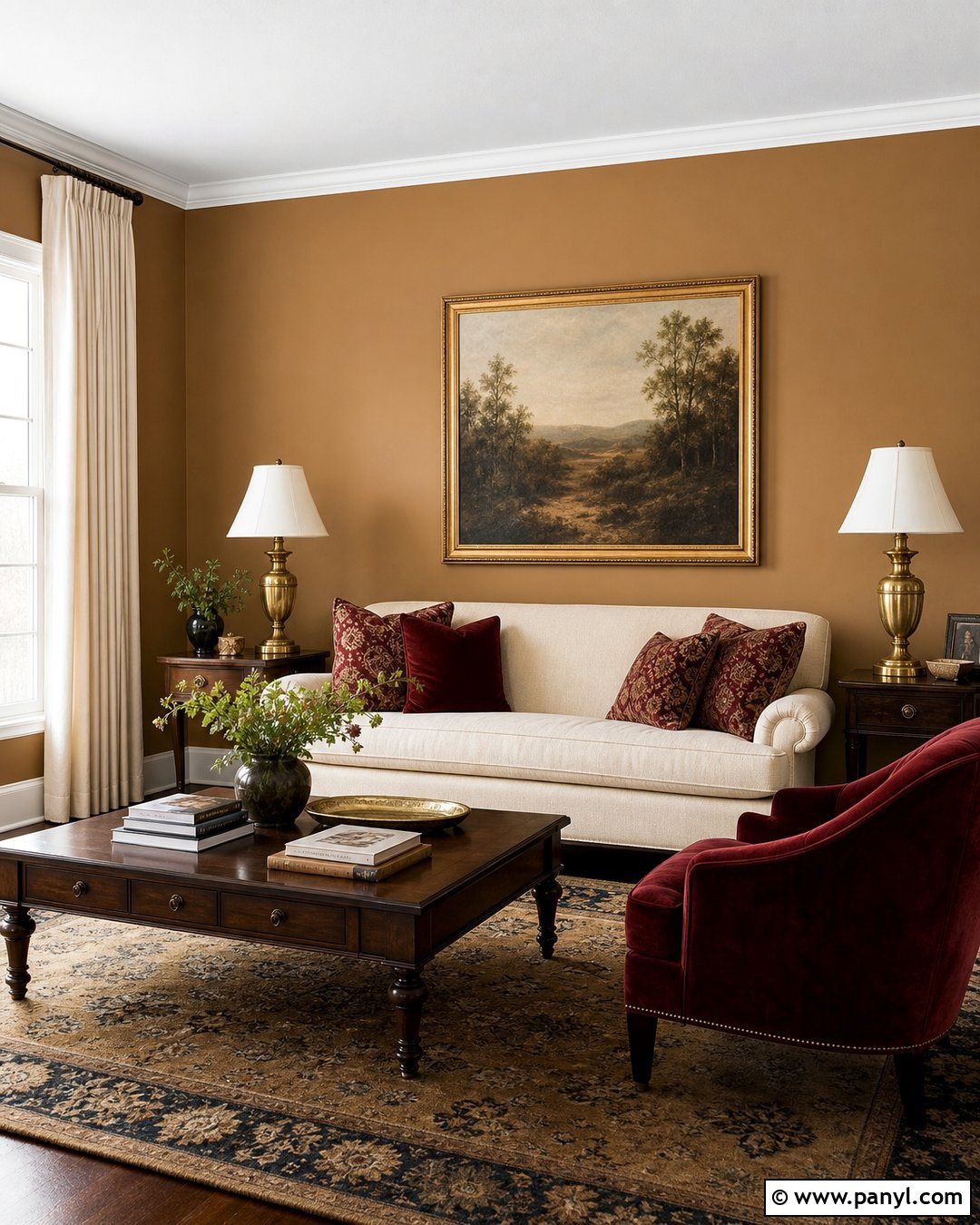
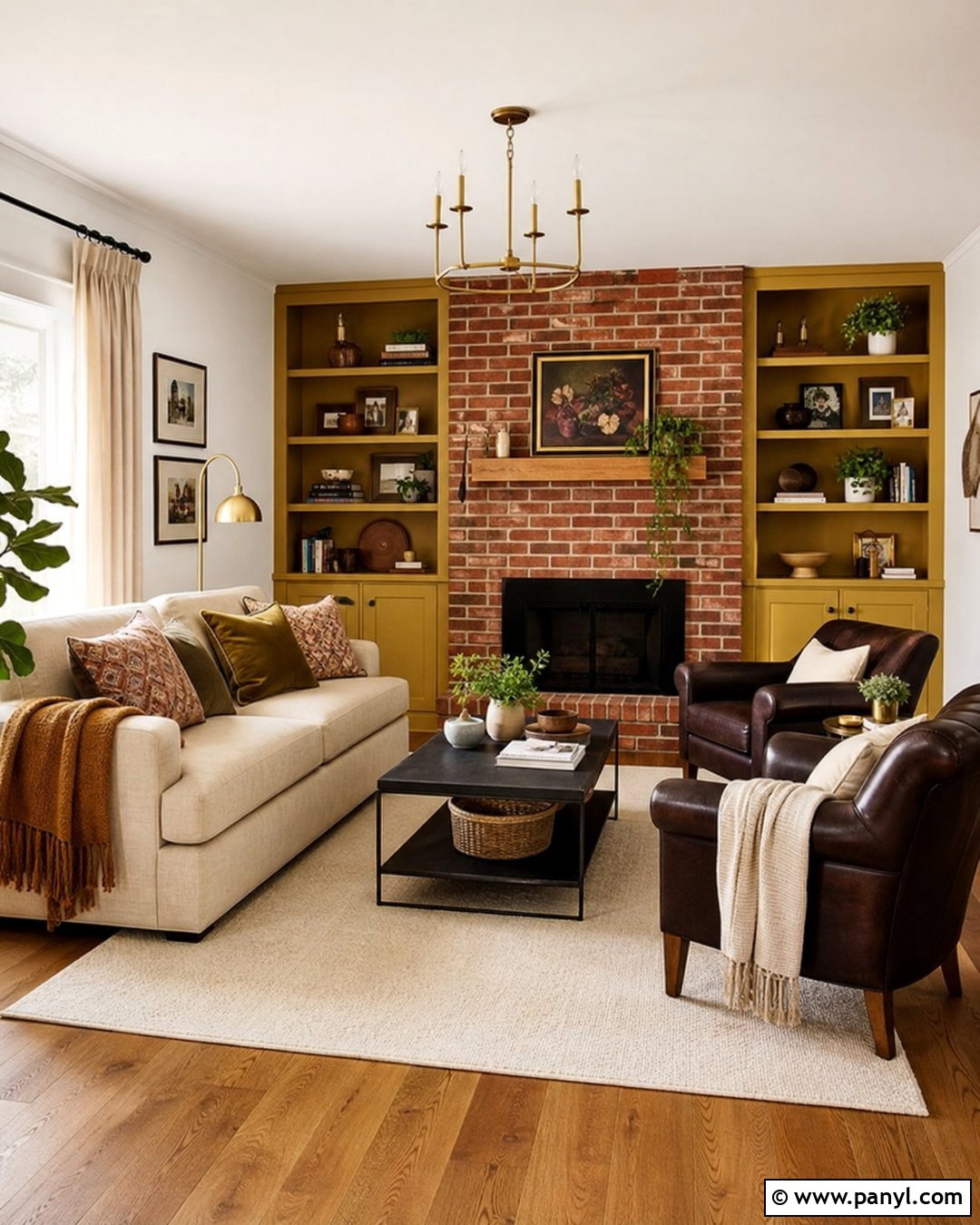
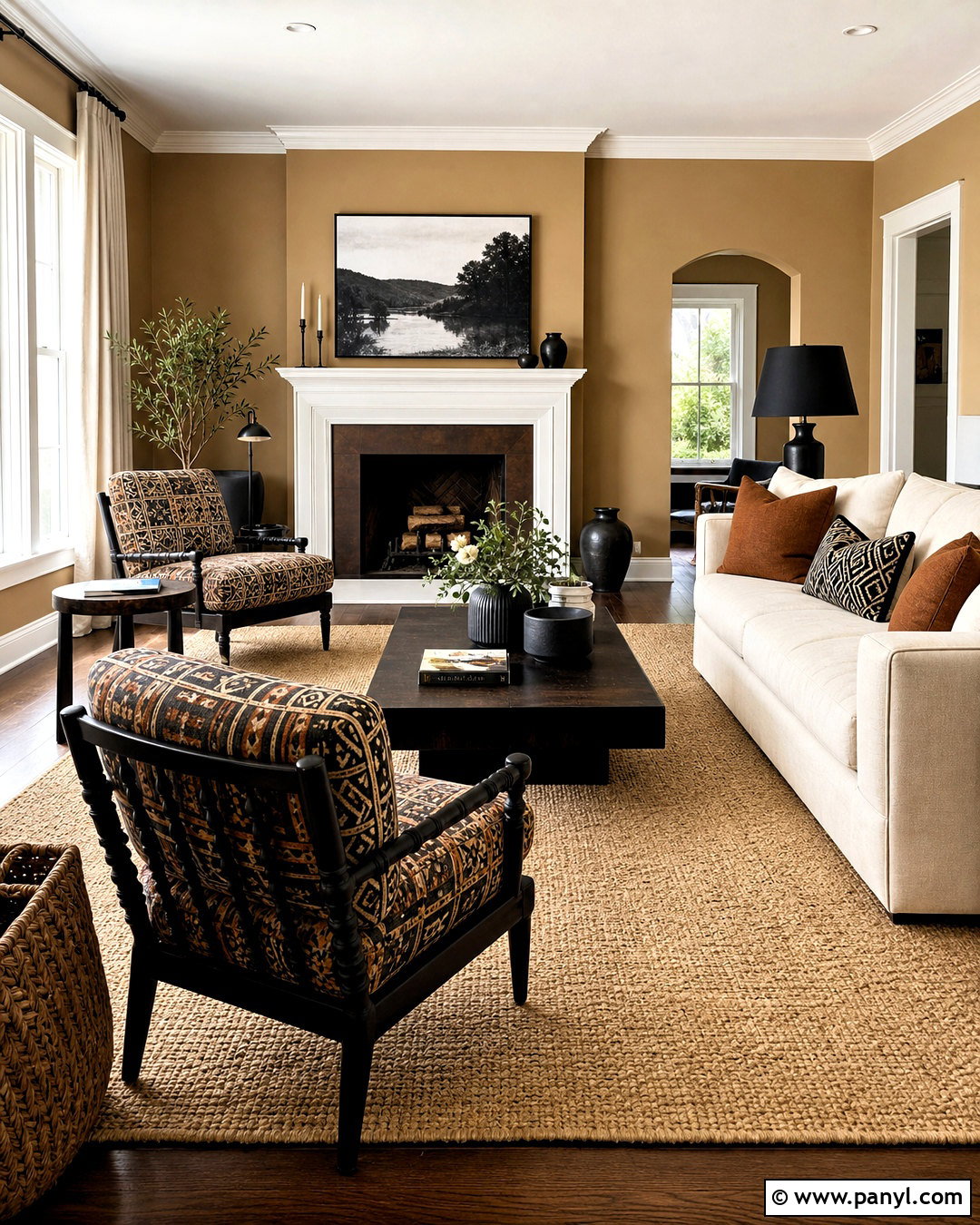
Rich burgundy makes camel walls look deeper and more established. Begin with a medium golden camel wall color, then arrange a cream sofa with burgundy velvet pillows and a patterned lumbar cushion. Add one burgundy armchair as the strongest color statement rather than using red on every furnishing. A dark walnut coffee table and traditional rug containing camel, faded red, navy, and ivory will bring the scheme together. Choose aged brass floor lamps and warm white curtains for a softer finish. Artwork with earthy landscapes or abstract blocks of brown and red can reinforce the palette. Keep the ceiling, trim, and larger textiles light. The completed living room feels warm and collected, with burgundy adding richness while camel remains the dominant background color.
11. Camel Kitchen With Cream Cabinets
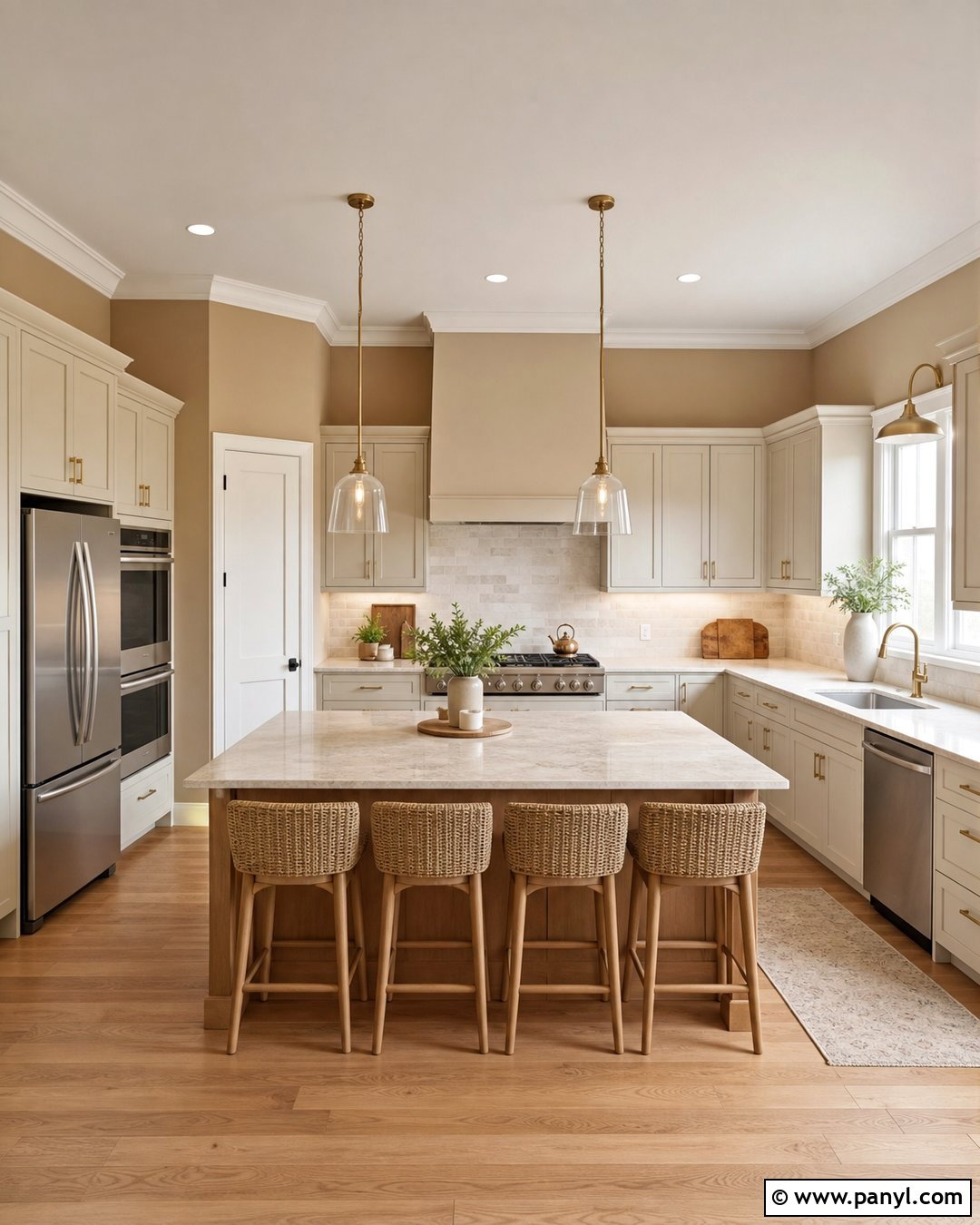
Camel walls can warm up a kitchen filled with cream cabinets and natural finishes. Select a light-to-medium camel shade for the open wall areas, keeping the ceiling and cabinet trim soft white. Choose creamy shaker cabinets, a pale stone backsplash, and light quartz countertops with subtle beige veining. A medium oak island will add definition at the center of the space. Use brushed brass hardware and simple pendant lights to echo the wall’s golden undertone. Counter stools in woven cane or oatmeal fabric bring additional texture. For flooring, consider warm oak or matte limestone-look tile. Keep appliances and accessories streamlined so the palette remains clear. This coordinated kitchen feels brighter than a brown scheme but more inviting than an entirely white interior.
12. Camel Bathroom With White Tile
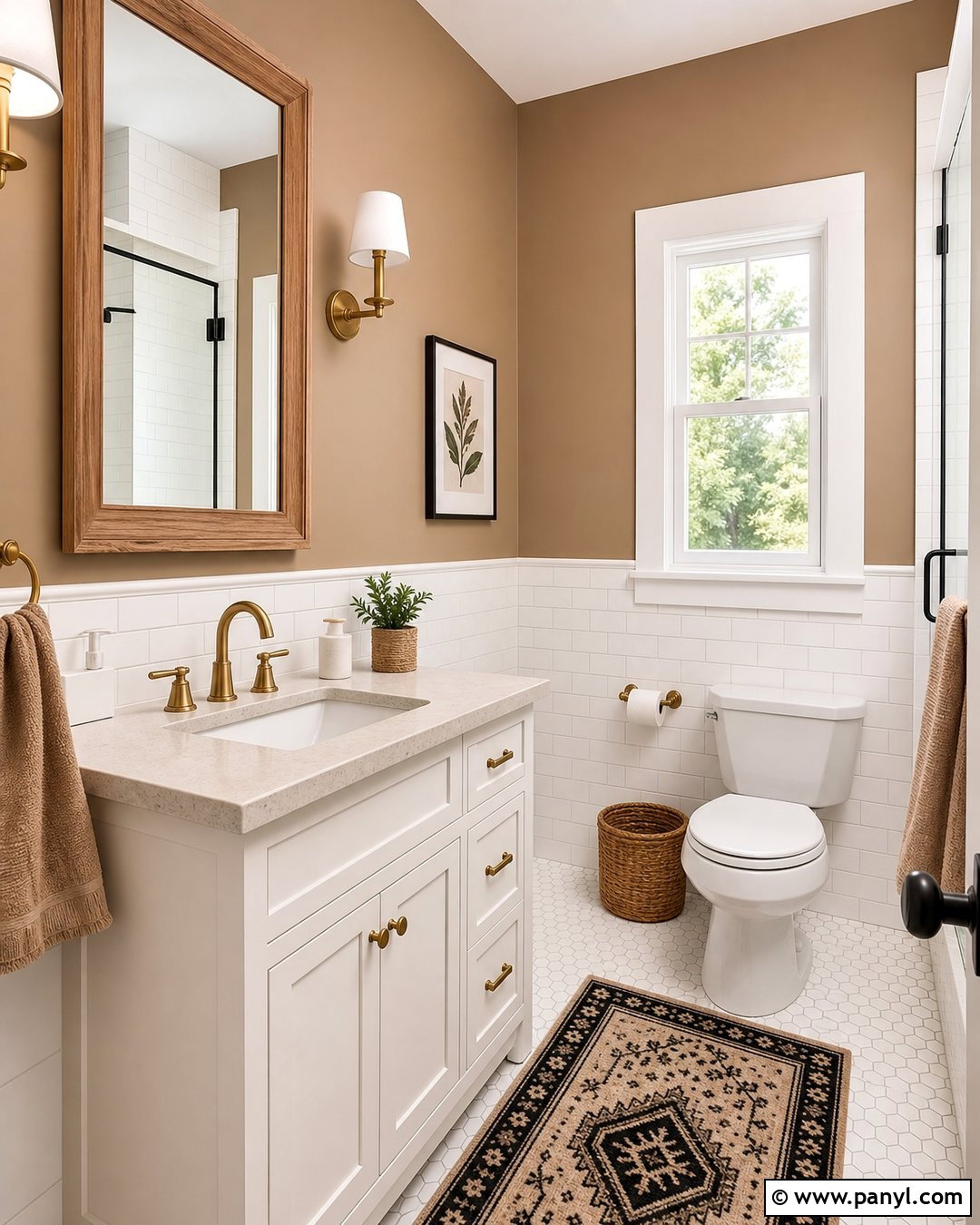
A compact bathroom becomes warmer and more characterful when camel paint is placed above bright white tile. Install white subway tile or vertical tongue-and-groove paneling across the lower half of the walls, then use a soft camel shade above it. A white vanity with a pale stone countertop maintains the clean foundation. Add an oak-framed mirror, brushed brass fixtures, and warm white wall sconces. Choose a simple white shower curtain or glass enclosure so the space does not feel crowded. Small black details, such as a towel ring or framed print, can sharpen the lighter palette. Complete the room with tan towels and a small woven basket. The combination gives the bathroom warmth while keeping the functional surfaces crisp, durable-looking, and visually bright.
13. Camel Entryway With Olive Green
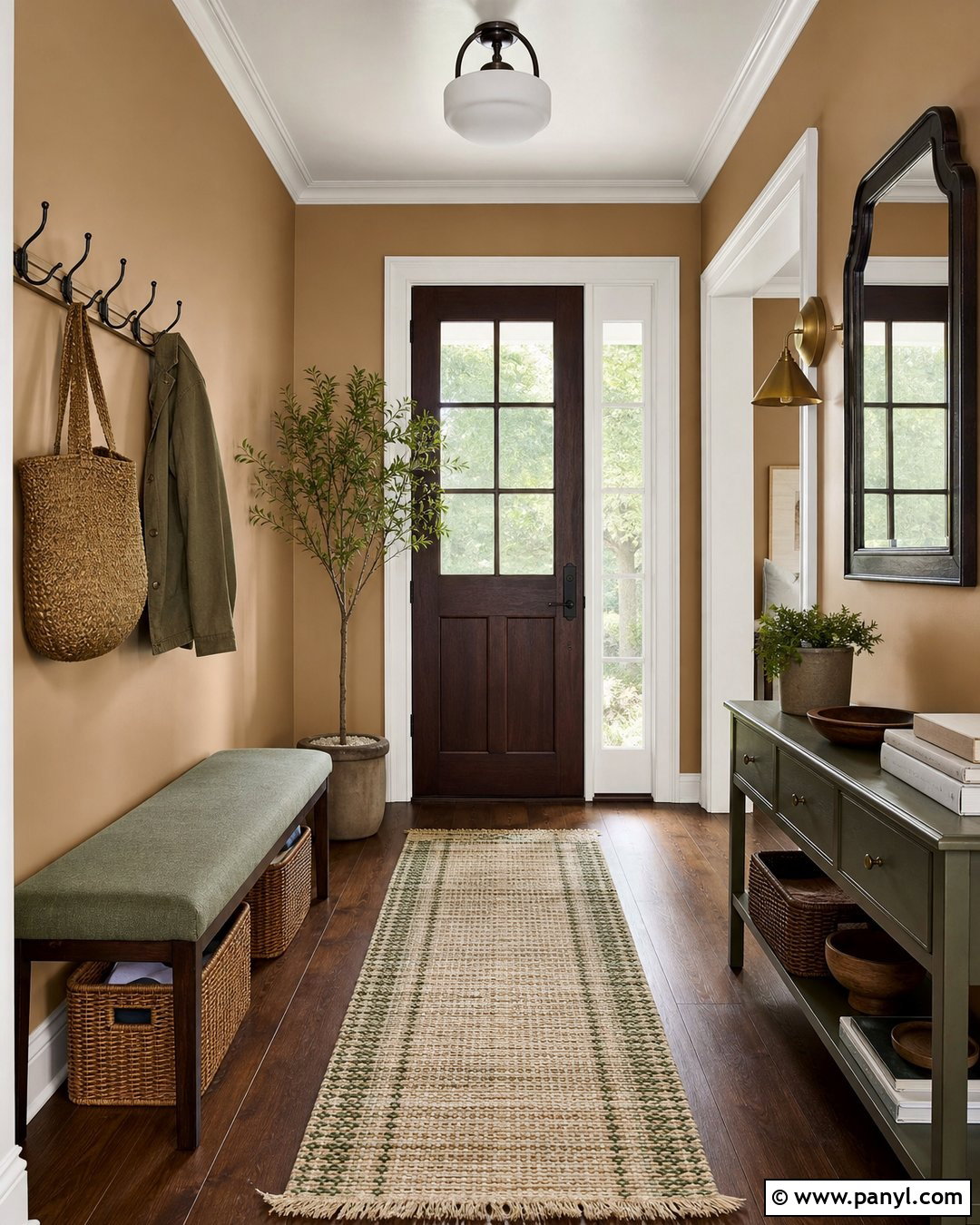
Camel walls and olive green accents create an inviting entryway inspired by natural landscapes. Paint the walls a medium camel hue, then place an olive green bench or narrow painted console near the door. Add a dark wood mirror above it and a woven runner in cream, tan, and muted green. Black hooks or a black metal umbrella stand provide definition without dominating the narrow area. Use a large ceramic lamp if the console has an outlet, or install a simple aged brass wall sconce. A leafy plant in a stone pot can soften one corner. Keep the door and trim creamy white unless you want a bolder olive door. This complete entrance feels organized, grounded, and coordinated from the moment someone steps inside.
14. Camel Hallway With White Wainscoting
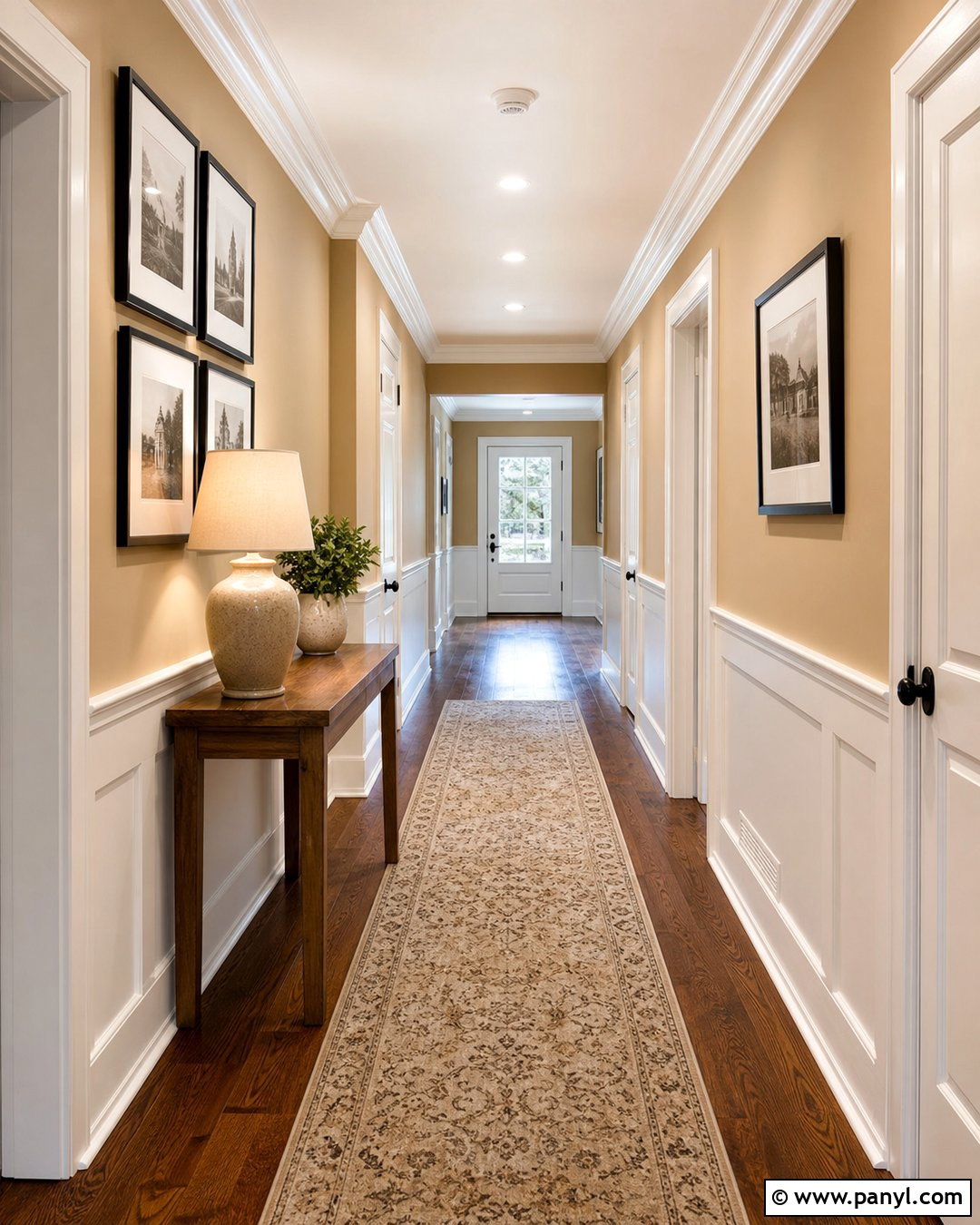
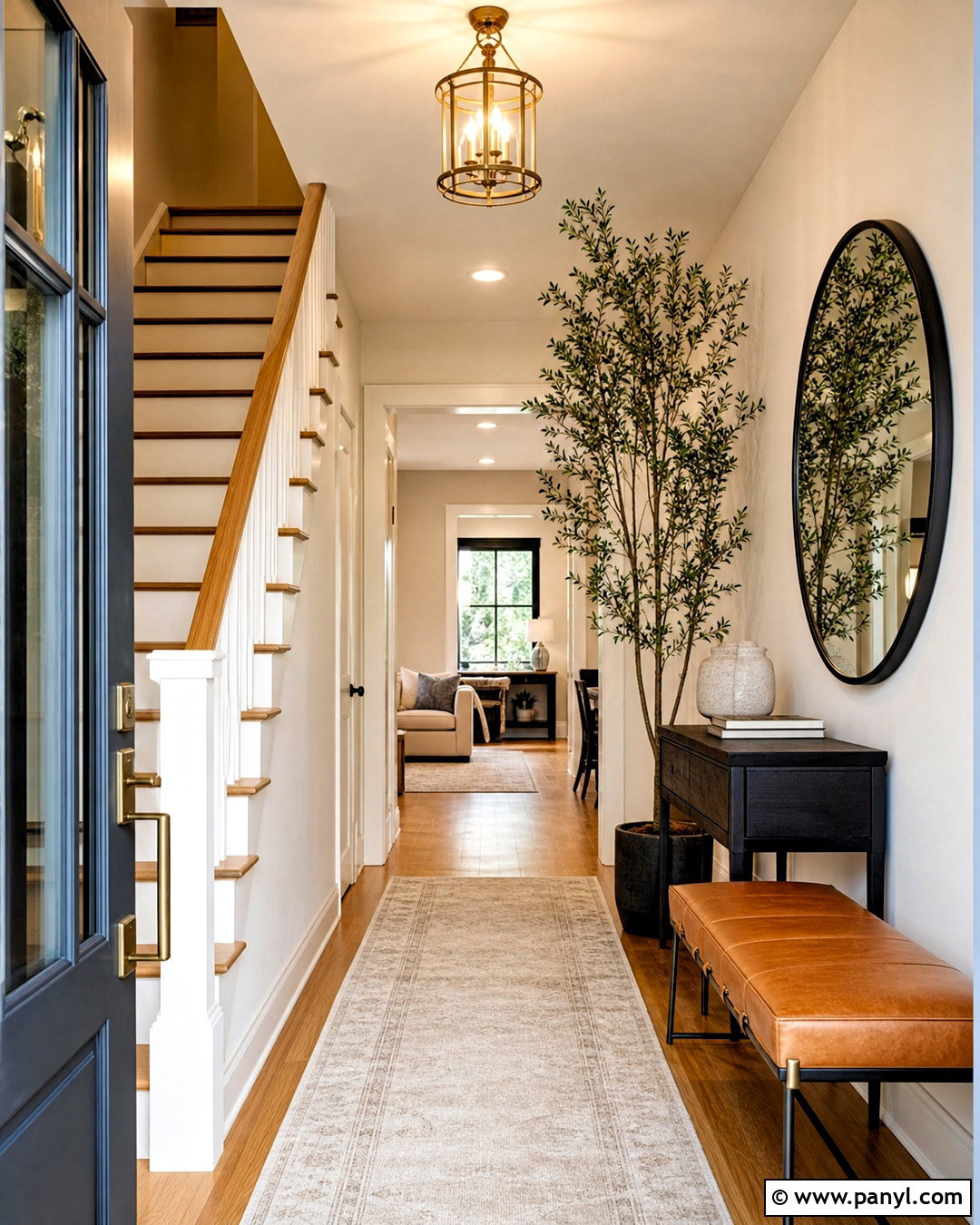
Long hallways benefit from color, but they still need enough brightness to feel open. Paint the upper walls a light camel and install white wainscoting or simple rectangular wall molding below. The contrast gives the narrow space structure while reducing the amount of darker color at eye level. Run a neutral patterned runner along warm wood flooring. Add black-framed family photographs or simple botanical prints in an evenly spaced arrangement. A small wood console can sit at the widest point, paired with a ceramic lamp and shallow bowl for keys. Use a bright white ceiling and matching white door casings to reflect available light. The final hallway looks finished and intentional, with camel providing warmth and the white millwork keeping the passage clear and fresh.
15. Camel Nursery With Soft Blue
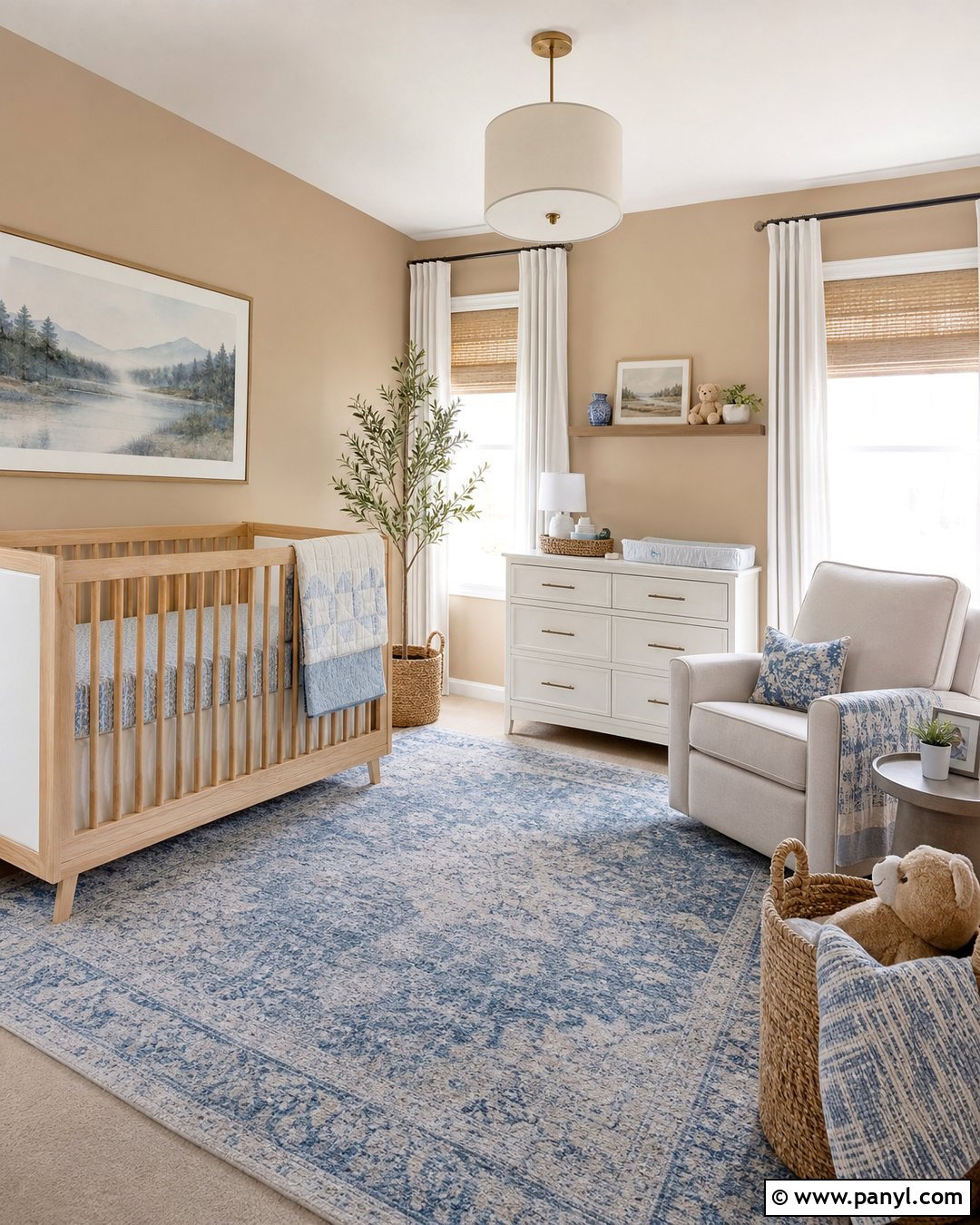
A pale camel wall color offers a gentle alternative to gray or beige in a nursery. Pair it with dusty blue textiles for a calm, adaptable room. Choose a natural wood crib, white dresser, and comfortable cream glider to create a practical furniture layout. Add a soft blue rug or washable blue-and-ivory patterned rug beneath the center of the room. White curtains layered over woven shades allow flexible light control. Use a few camel, blue, and cream accessories, such as storage baskets, crib sheets, and a small blanket. Simple cloud, landscape, or animal artwork can bring personality without overwhelming the walls. Keep cords and small objects safely managed. The complete nursery feels soothing, warm, and suitable for updates as the child grows.
16. Camel Laundry Room With Green Cabinets
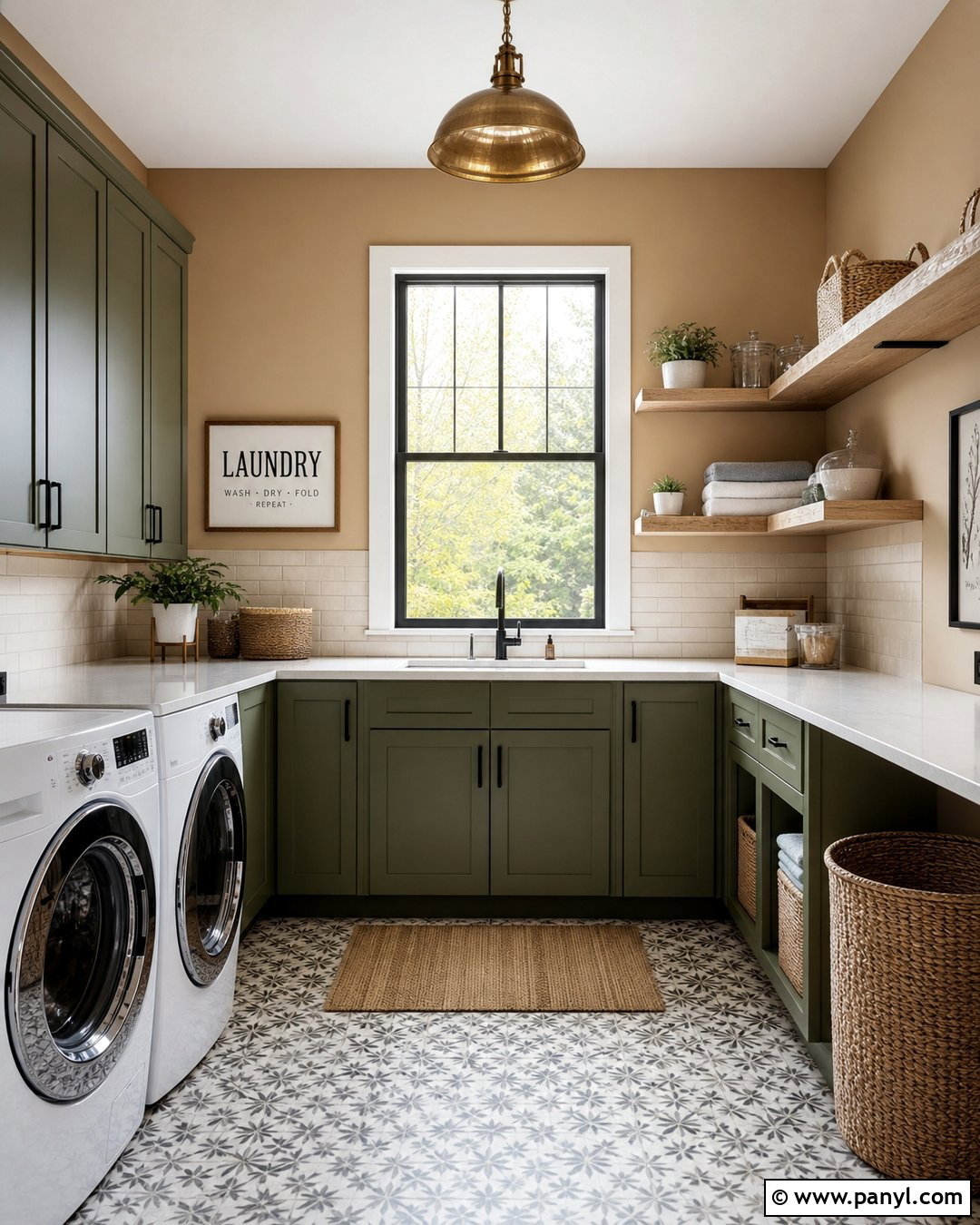
Even a hardworking laundry room can feel thoughtfully designed. Use light camel walls to warm up deep green base cabinets and tall storage units. Choose a muted forest or olive green rather than a bright emerald. White quartz counters and a simple cream tile backsplash will brighten the work surface around the washer and dryer. Add open oak shelves for woven baskets, folded towels, and neatly contained supplies. Matte black cabinet hardware provides contrast, while a small brass ceiling fixture adds warmth. For the floor, consider durable patterned tile in cream, camel, black, and green. The finished laundry room combines useful storage with a coordinated palette. Camel softens the green cabinetry and makes this practical space feel connected to the rest of the home.
17. Camel Walls With Terracotta Accents
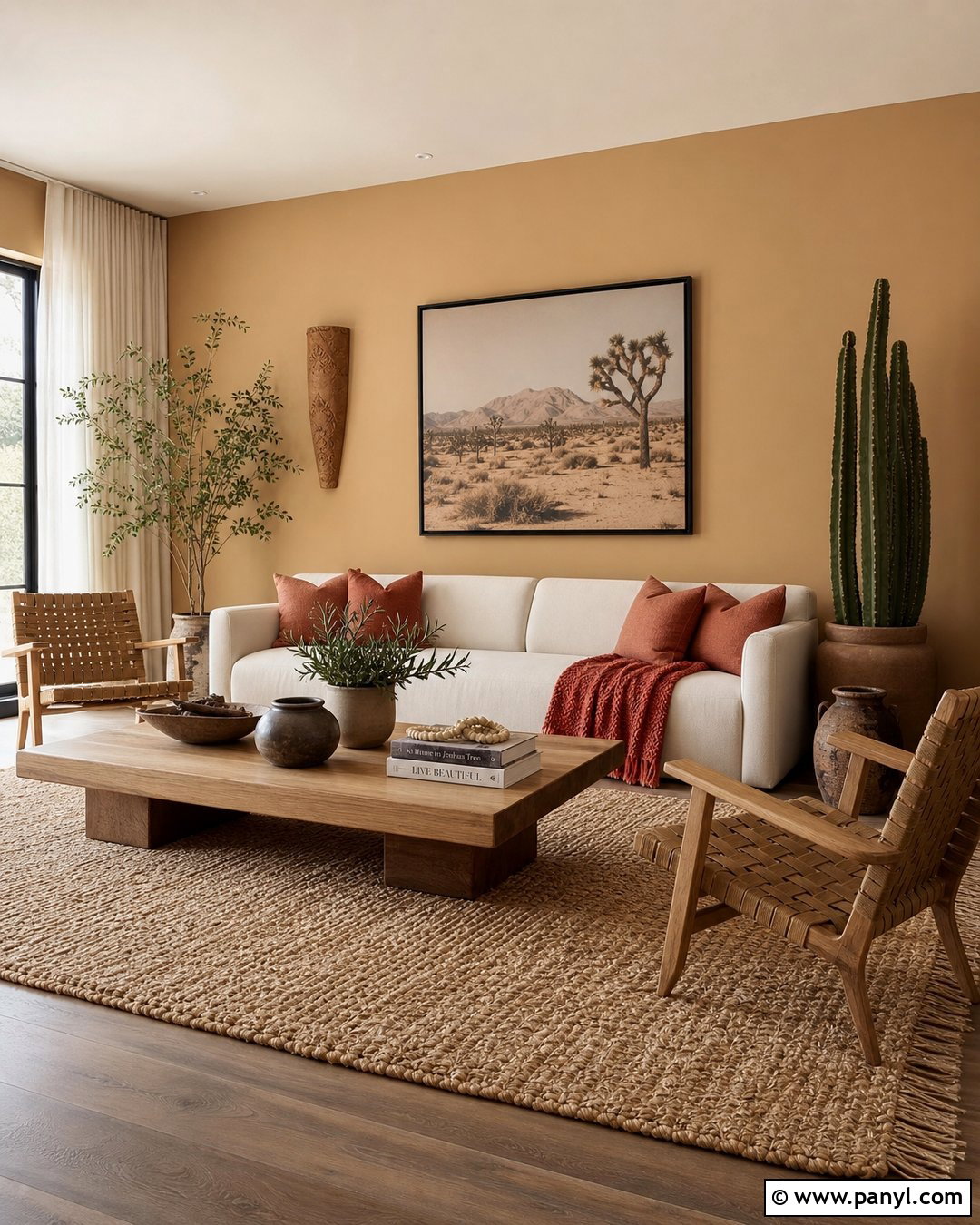
Camel and terracotta form a warm, desert-inspired palette that feels grounded rather than overly themed. Paint the walls a light golden camel and choose a cream sofa with terracotta pillows and a rust-colored throw. Add a low oak coffee table, woven side chairs, and a large natural fiber rug. Use off-white curtains to balance the many warm surfaces. Handmade-looking pottery, abstract desert artwork, and a few sculptural plants can complete the organic atmosphere. Introduce dark brown or matte black through one lamp and several picture frames to give the room definition. Keep terracotta limited to selected textiles and decorative pieces. This allows the camel walls to remain the main color while the deeper clay accents create warmth, movement, and visual interest.
18. Camel Walls With Charcoal Gray
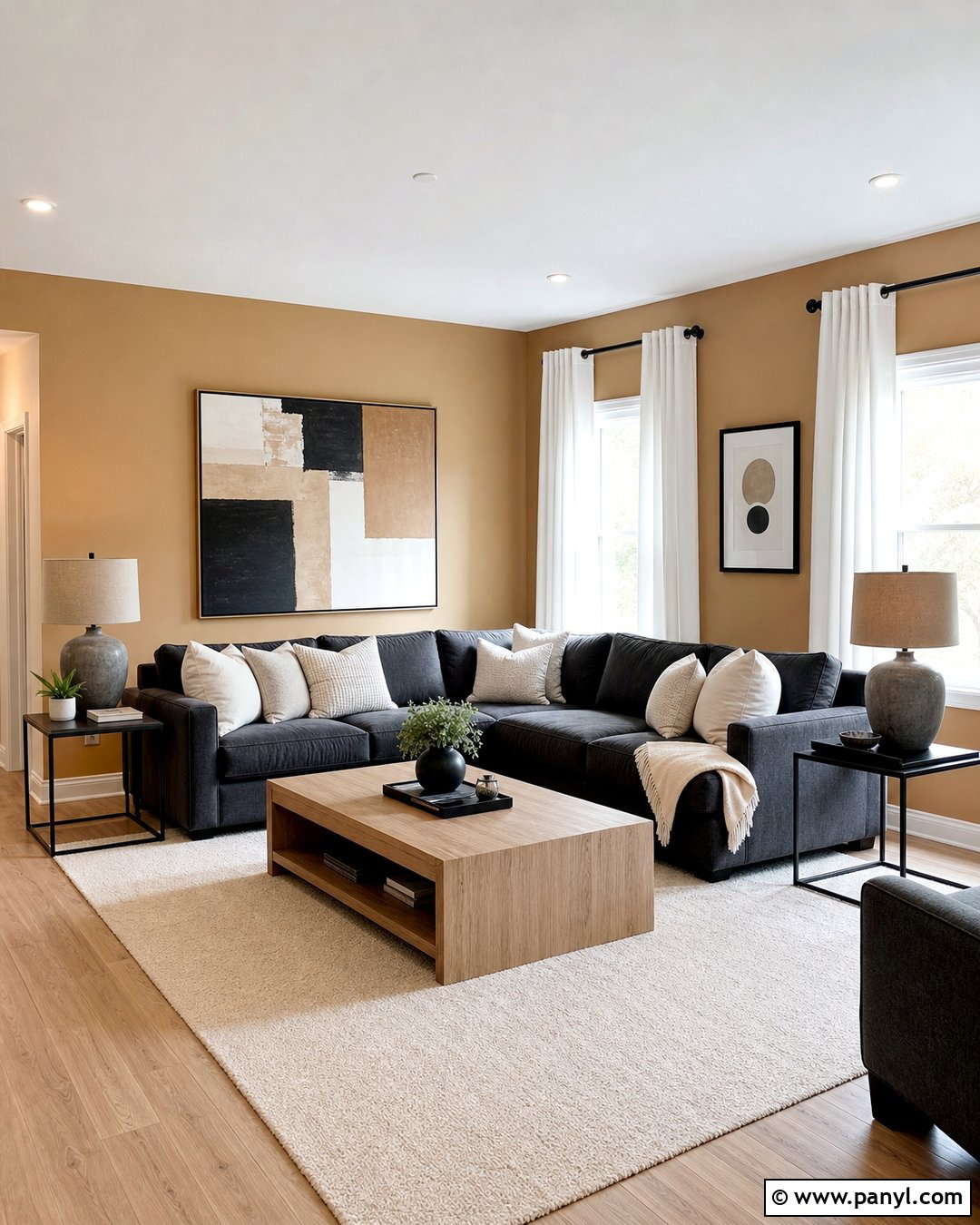
Cool charcoal gray can modernize camel walls and control their golden warmth. Choose a balanced camel paint that leans tan rather than yellow. Place a charcoal sectional or upholstered bed against the wall, then add ivory cushions and a light cream rug to prevent the palette from becoming too dark. Black metal tables and a gray stone lamp can continue the contemporary look. Introduce pale oak through flooring, shelves, or a coffee table for a natural transition between the warm and cool colors. Artwork containing camel, charcoal, white, and muted green will connect the room. Keep window treatments soft white and use layered lighting. This complete design creates clear contrast, making camel feel current while charcoal provides stability and a clean visual edge.
19. Camel Reading Room With Built-In Shelves
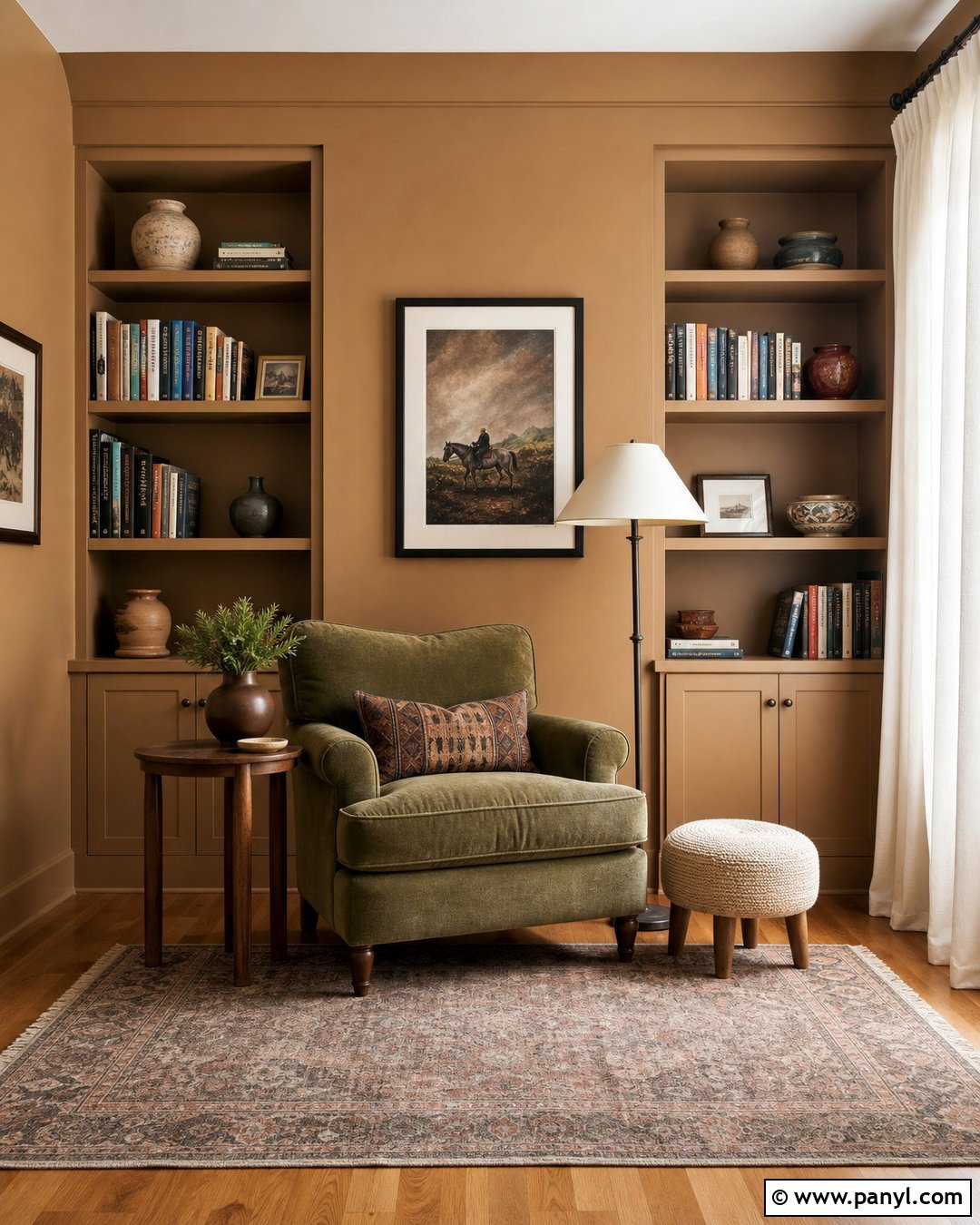
A camel-painted reading room can feel cozy without relying on extremely dark colors. Cover the walls and built-in shelves in the same medium camel shade for a seamless, enveloping effect. Arrange books with framed artwork and a few ceramic objects, leaving some open space on each shelf. Place a comfortable olive or deep blue armchair beside a small walnut table. Add a cream floor lamp, a wool footstool, and a faded patterned rug underfoot. Linen curtains in warm white will filter daylight and soften the painted cabinetry. If the room has crown molding, paint it camel as well while keeping the ceiling ivory. The finished reading space feels quiet and cohesive, with layered storage, comfortable seating, and practical task lighting.
20. Camel Dining Room With Blue Chairs
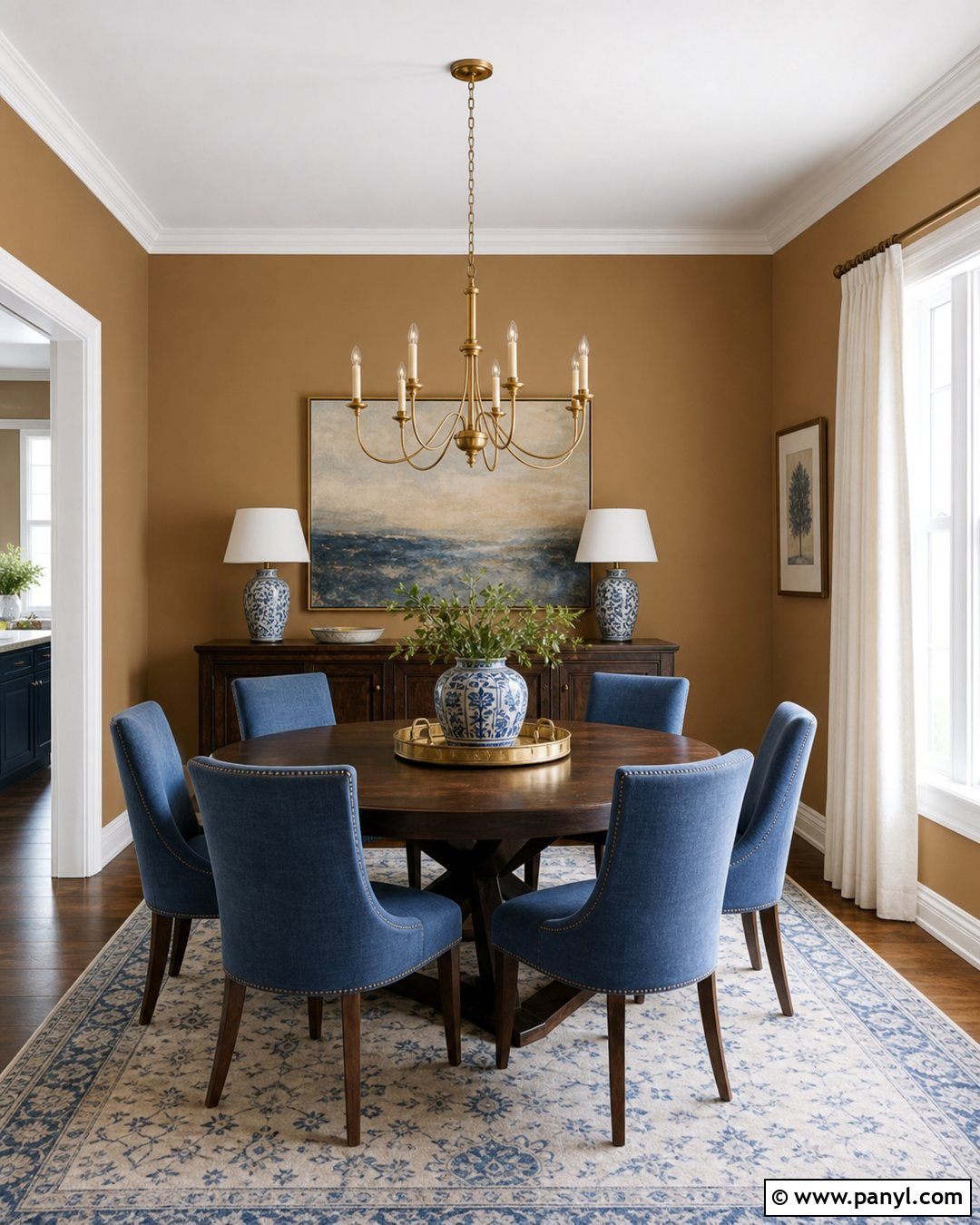
Blue dining chairs provide a lively contrast against warm camel walls. Select a muted medium blue, such as denim, slate blue, or dusty navy, rather than a highly saturated electric shade. Arrange the chairs around a round oak or dark walnut table. Add an ivory-and-blue patterned rug underneath to connect the seating with the rest of the room. A large cream pendant or aged brass chandelier should hang centrally over the table. Keep curtains off-white and use a simple wood sideboard for storage. Artwork can combine blue, camel, and pale gray in an abstract or coastal landscape composition. The complete dining room feels colorful but controlled. Camel keeps the atmosphere warm, while blue seating gives the arrangement a strong identity and memorable contrast.
21. Camel Guest Room With Blush Pink
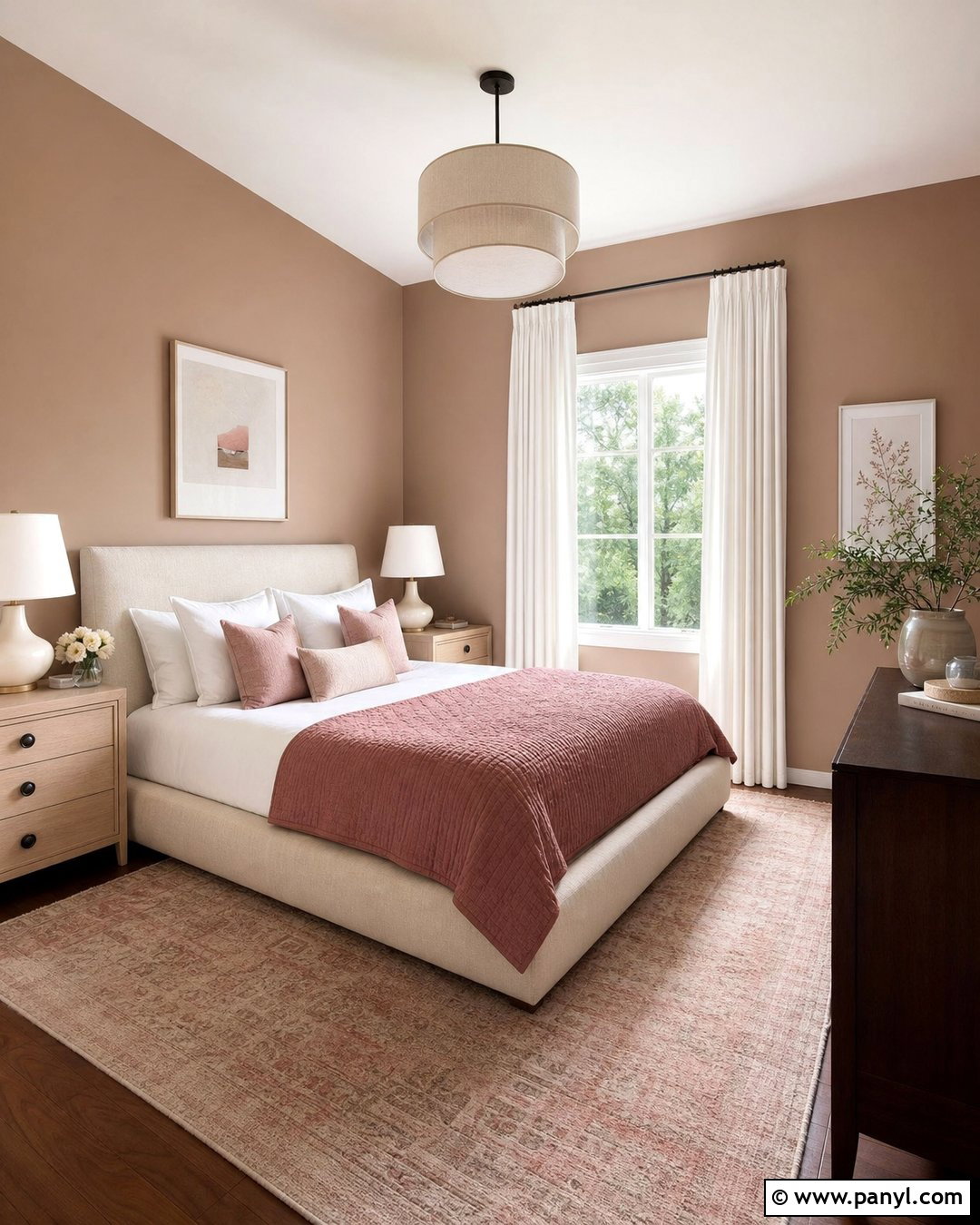
Camel walls and muted blush pink create a soft guest room that feels comfortable rather than overly sweet. Choose a light camel paint with a subtle rosy undertone. Place an oatmeal upholstered bed against the main wall and layer it with white bedding, blush pillows, and a dusty rose quilt. Pale wood nightstands and cream ceramic lamps maintain an airy foundation. Add a faded rug containing camel, blush, ivory, and taupe. Warm white curtains should reach the floor to soften the windows. For contrast, use antique bronze frames or one small dark wood dresser. Keep decorative objects simple and useful, such as a water carafe, reading lamp, and luggage bench. This complete palette feels warm, restful, and welcoming for visitors of all ages.
22. Camel Mudroom With Natural Wood
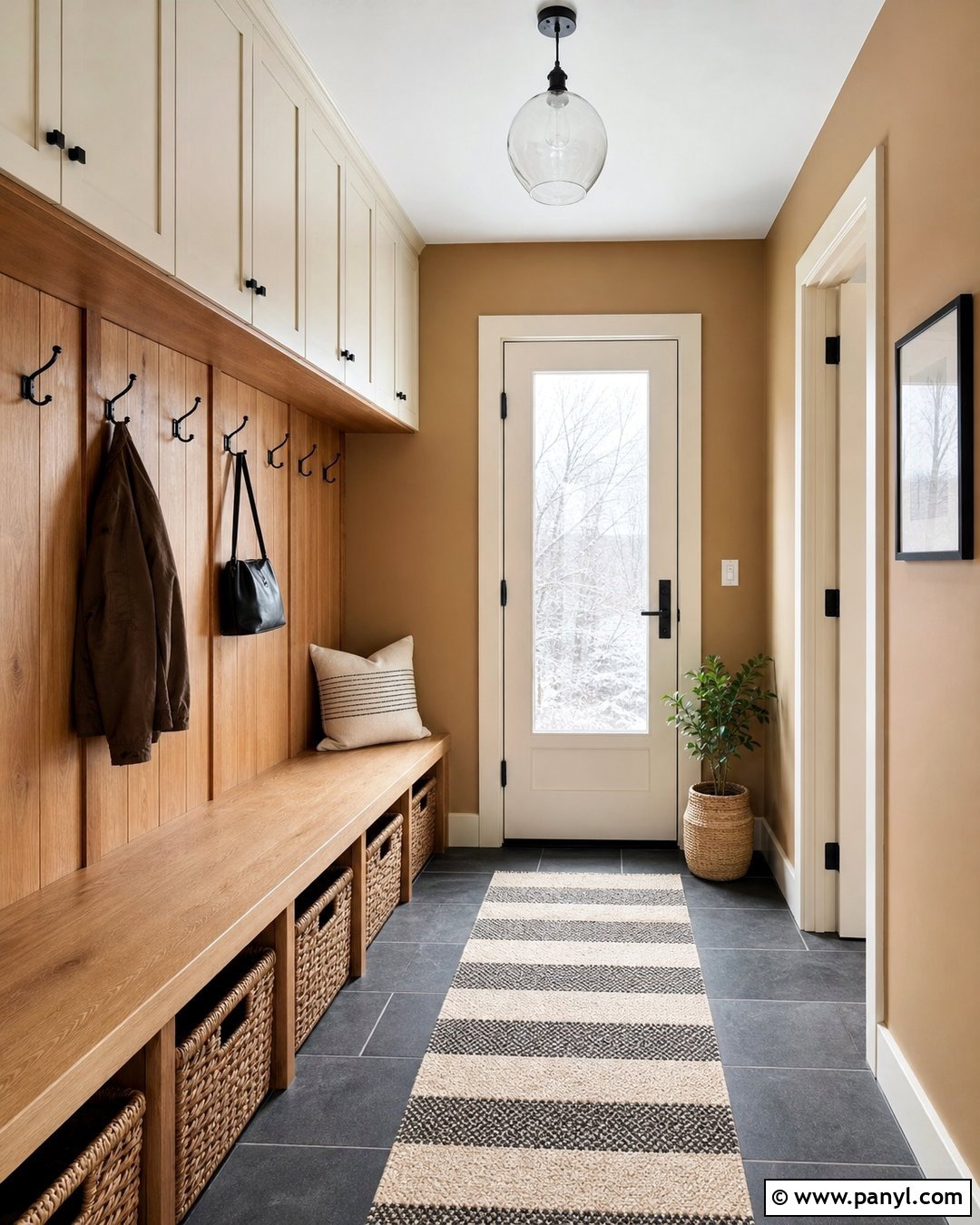
A camel-painted mudroom works naturally with oak benches, woven baskets, and durable flooring. Use a medium camel shade on the upper walls while installing natural oak lockers or a long built-in bench below. Add closed cream cabinets overhead to prevent the room from looking crowded. Black hooks and pulls create clear contrast and make frequently used areas easy to identify. Choose slate-look porcelain tile for the floor and place a washable striped runner down the center. Woven baskets can hold shoes, outdoor accessories, and everyday items. A bright white ceiling and simple glass light fixture will keep the practical space illuminated. The finished mudroom feels warm and organized, with camel walls bridging the rustic wood, dark hardware, and lighter storage cabinetry.
23. Camel Walls With Emerald Green
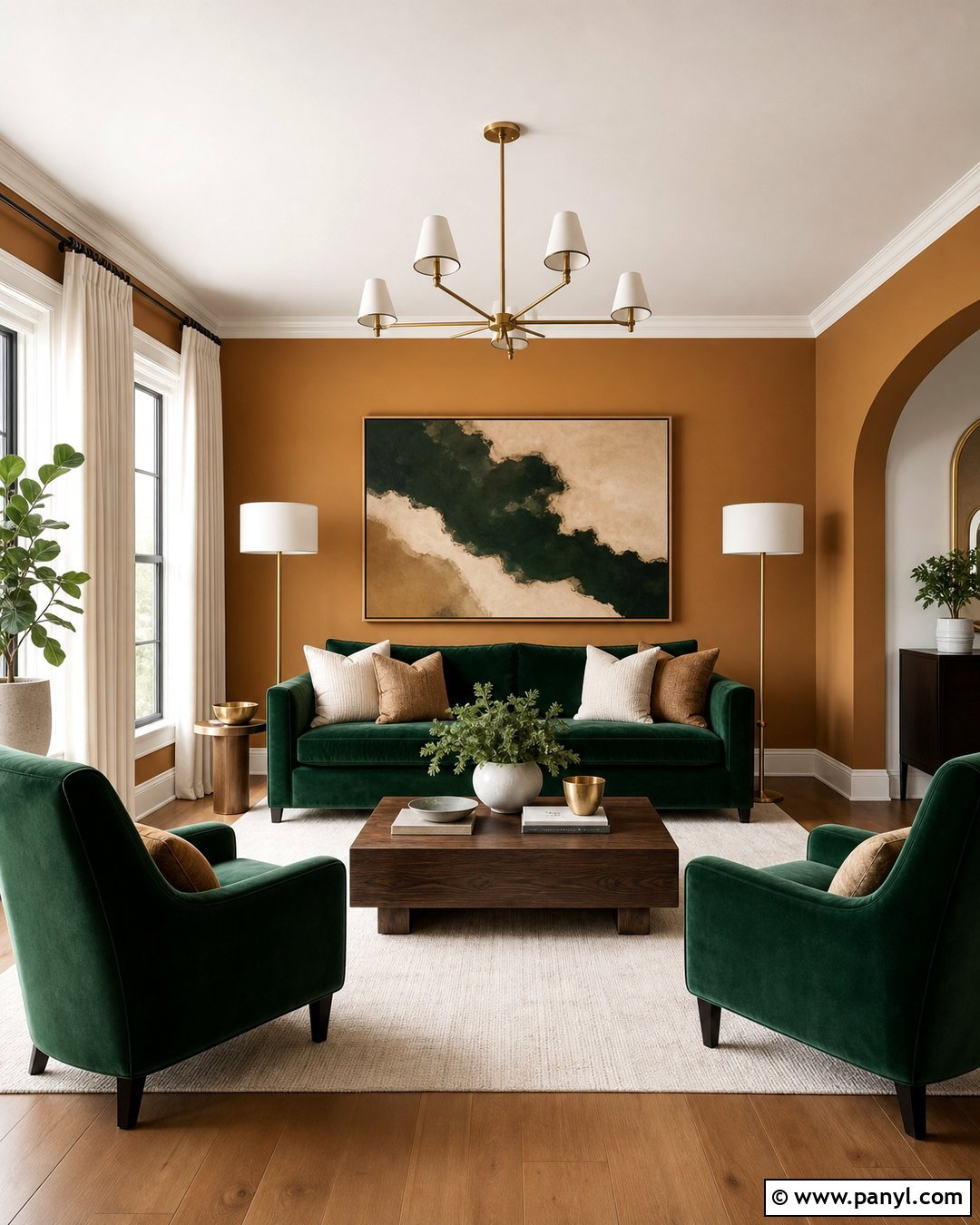
For a more dramatic interior, pair camel walls with concentrated emerald green. Begin with a deep camel wall color that has a rich brown undertone. Add an emerald velvet sofa or two matching armchairs as the main statement. Balance these saturated colors with an ivory rug, cream curtains, and pale neutral pillows. A dark wood coffee table will ground the seating area, while brushed brass lighting adds a refined golden detail. Choose large-scale artwork with green, tan, cream, and black to connect the palette. Avoid adding several other strong colors, since camel and emerald already provide enough visual impact. The finished living room feels bold and elegant, yet the natural warmth of camel prevents the jewel-toned furniture from looking cold or disconnected.
24. Camel Walls With Coastal Blue Decor
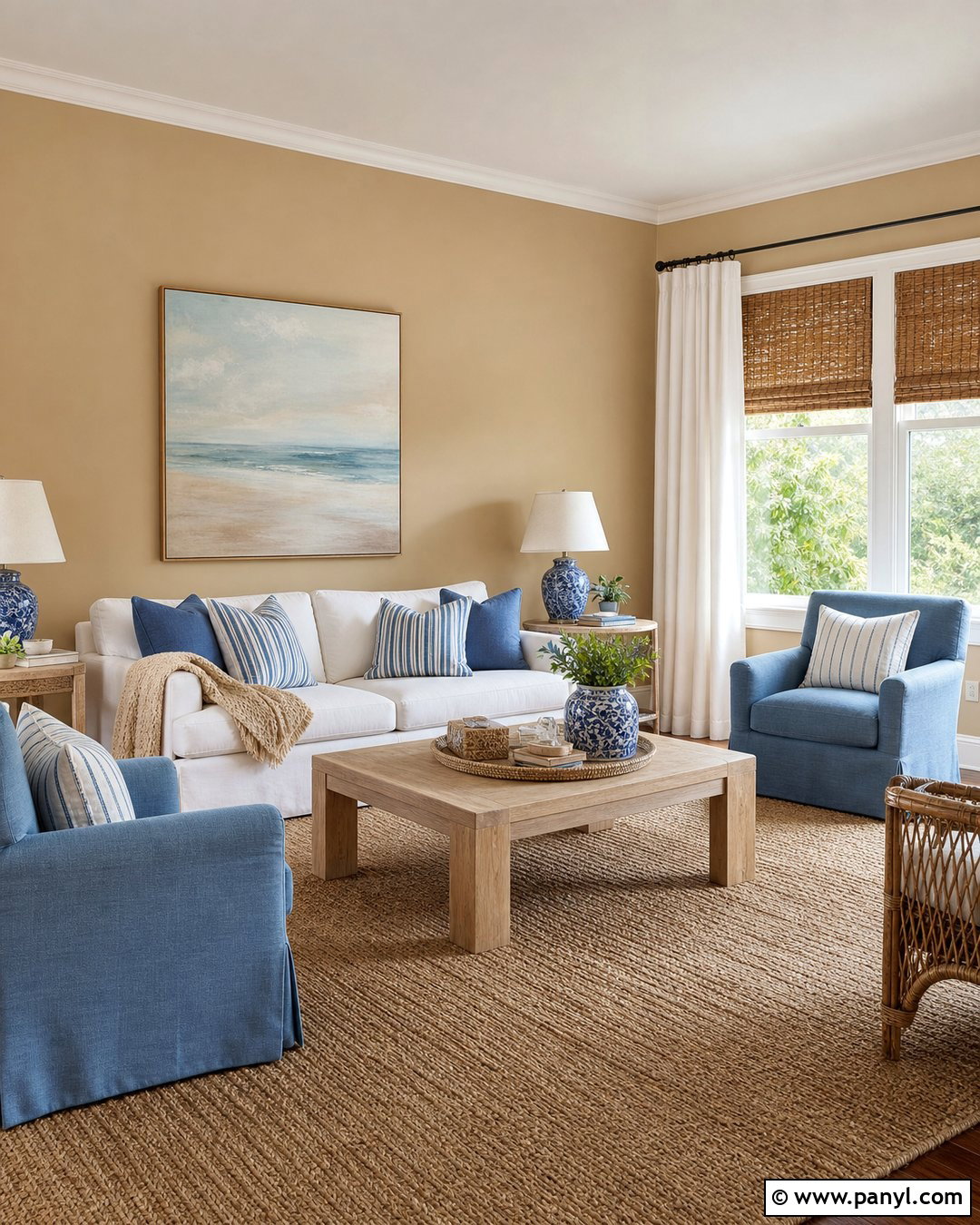
Camel can support a relaxed coastal room when it is kept sandy and combined with weathered blue. Use light camel paint across the walls, then furnish the space with a white slipcovered sofa, faded blue armchairs, and a pale oak coffee table. Layer the seating with blue-and-white striped pillows and a soft tan throw. A woven jute rug and natural bamboo shades introduce casual texture. Add white curtain panels for softness and better light control. Select artwork featuring abstract water, sky, or shoreline colors without filling the room with literal nautical accessories. Ceramic lamps in dusty blue can repeat the accent color. This completed look feels breezy and natural, with camel suggesting warm sand while the faded blues provide a cooler, refreshing balance.
25. Monochromatic Camel Living Room
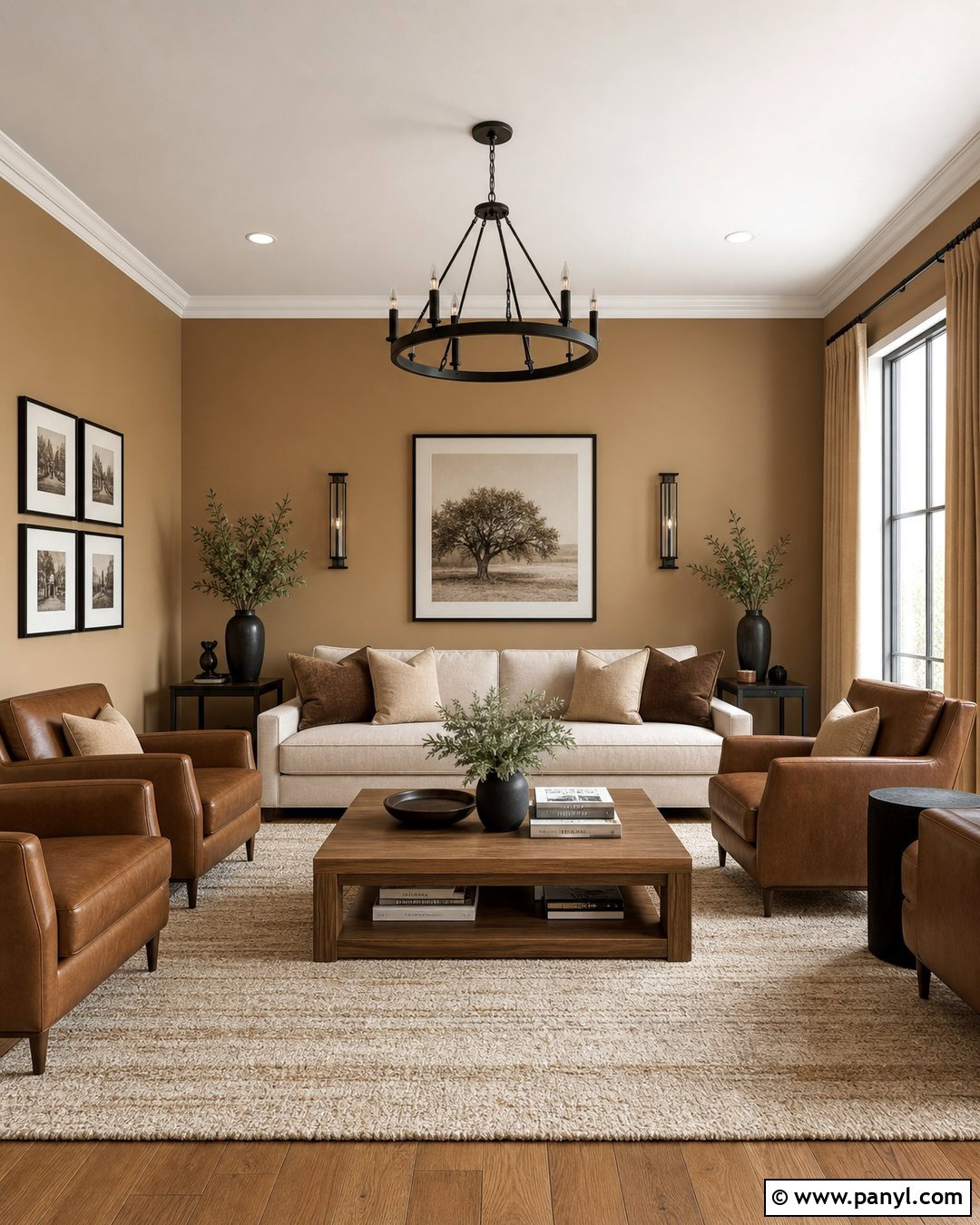
A monochromatic camel room feels layered when each surface uses a slightly different tone and texture. Paint the walls a medium golden camel, then choose a lighter oatmeal sofa and deeper caramel leather chairs. Ground the arrangement with a cream-and-tan wool rug and a medium oak coffee table. Add pillows in sand, camel, cognac, and chocolate, mixing linen, velvet, and woven fabrics. Floor-length curtains should be one shade lighter than the walls so the windows remain visible. Use dark bronze lighting and a few black frames for subtle definition. White or ivory ceilings will keep the room from feeling enclosed. This complete tonal design proves that a limited palette can still have depth when color variation, natural materials, and contrasting finishes are carefully balanced.
Conclusion:
The best camel interiors balance warmth with contrast, texture, and enough lighter space. Cream and white create a fresh finish, while navy, green, burgundy, charcoal, and blue give camel walls more definition. Natural oak, walnut, linen, wool, leather, and woven fibers complement the color’s earthy character. Before committing, test a large painted sample on more than one wall and observe it throughout the day. A shade that appears softly golden in daylight may look deeper under artificial lighting. Whether you want an airy bedroom, a dramatic living room, or a practical kitchen, these **25 Camel Wall Color Ideas** can help you build a complete, comfortable, and visually balanced room.

Related Ideas and Inspiration:
Leave a Reply