
Caramel walls bring the comfort of brown, the glow of gold, and the versatility of a warm neutral into one inviting color. Depending on the light and furnishings, caramel can feel earthy, elegant, rustic, modern, or softly traditional. It also pairs naturally with wood, stone, linen, greenery, creamy whites, deep blues, and muted reds, making it remarkably flexible across different rooms. () The key is creating enough contrast so the room feels layered rather than overly brown. Test large paint samples during the morning and evening before committing, since warm tones can deepen as daylight changes. This collection of 25 caramel walls explores complete, practical room designs for every taste. Use these 25 caramel walls to find a balanced look you can confidently recreate.

1. Caramel Walls Living Room With Cream Sofa
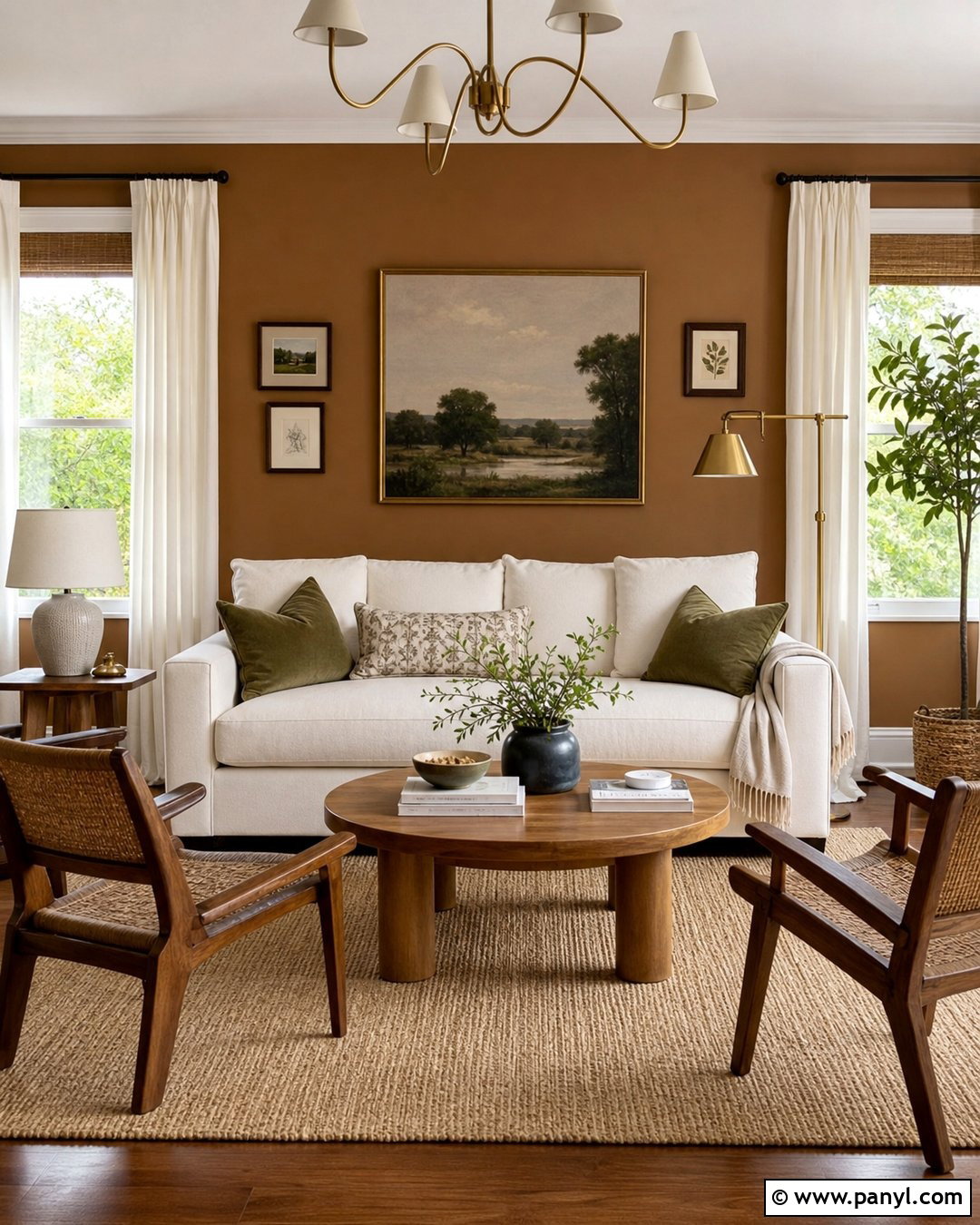
A cream sofa gives caramel walls a light, polished contrast without removing their warmth. Choose an oatmeal or ivory performance fabric so the seating feels practical as well as inviting. Anchor the arrangement with a large natural wool rug featuring subtle tan lines, then add two medium-brown wood chairs beside a rounded oak coffee table. Off-white linen curtains should hang close to the ceiling to make the room look taller. Introduce brushed brass through a floor lamp and small decorative objects rather than using it everywhere. Olive green pillows, leafy branches, and one landscape painting add freshness. Keep the ceiling, baseboards, and window trim soft white, creating crisp boundaries around the caramel color and preventing the palette from becoming heavy.
2. Caramel Walls Living Room With Navy Accents
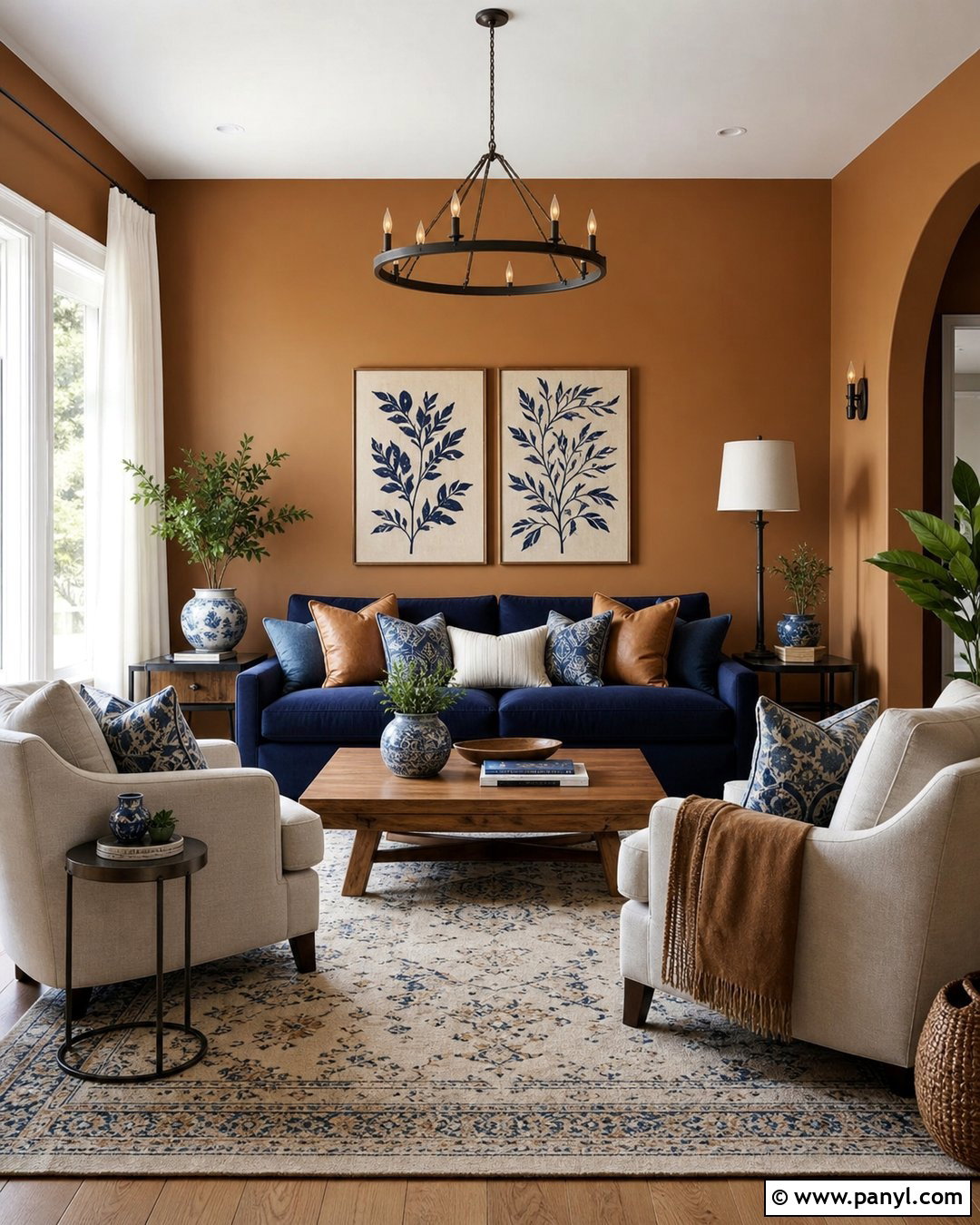
Deep navy blue creates confident contrast against golden caramel walls. Begin with a streamlined navy sofa, then balance its visual weight with two light beige armchairs arranged around a medium oak coffee table. A cream rug with a faded blue pattern connects the warm and cool colors without looking overly coordinated. Use white curtains, white trim, and a pale ceiling to keep the room bright. Blackened bronze curtain rods and lighting add definition, while caramel leather pillows quietly repeat the wall color. Complete the space with blue-and-white pottery, warm wood frames, and simple botanical artwork. The overall layout should remain open and symmetrical. This combination works especially well in a family room where you want color, comfort, and an easy sense of structure.
3. Caramel Walls Bedroom With White Bedding
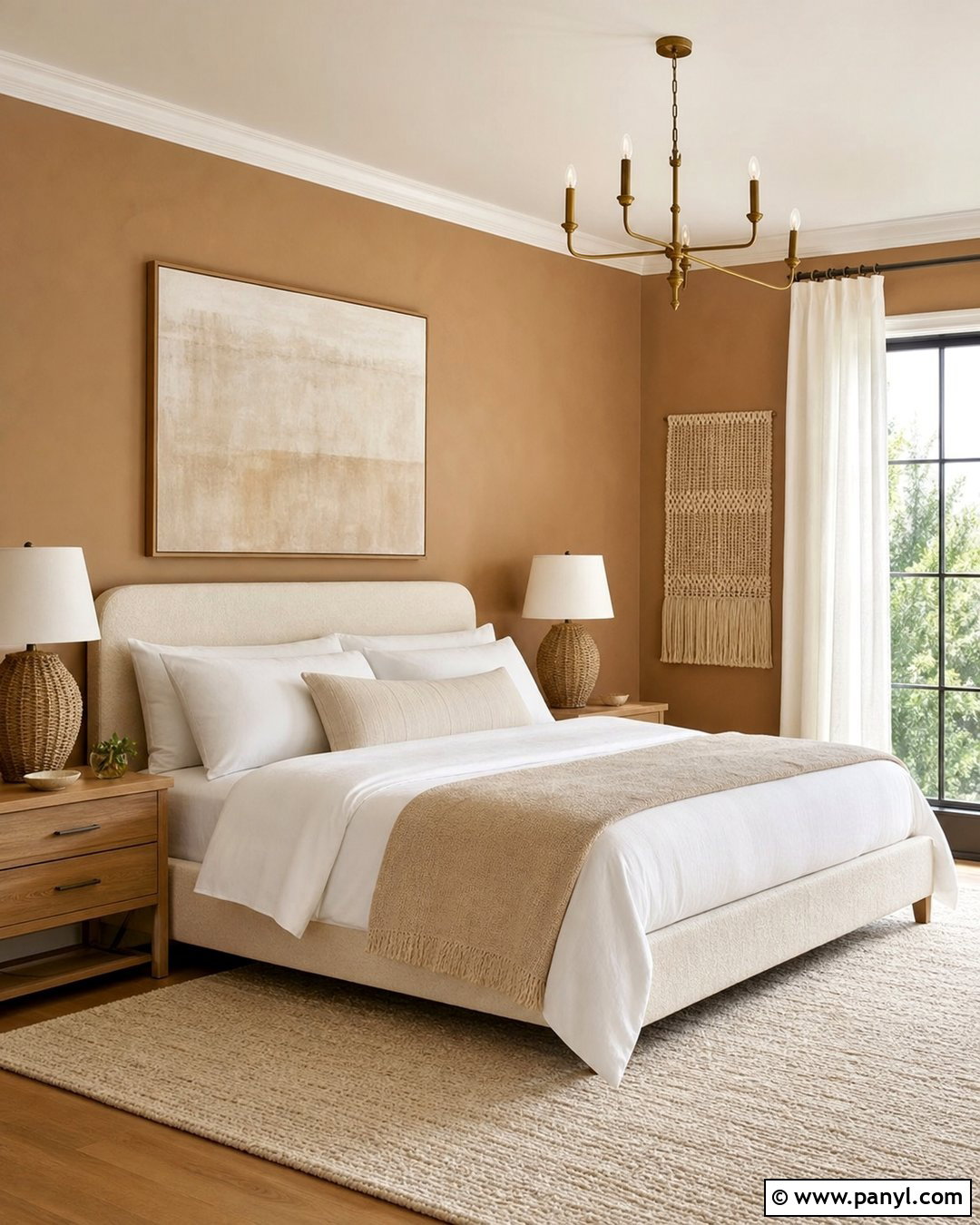
Imagine waking up in a bedroom that feels warm but still clean and restful. Paint every wall a soft, muted caramel while leaving the ceiling and architectural trim creamy white. Place an upholstered oatmeal bed against the longest wall and dress it in crisp white cotton bedding. Add a caramel-and-cream lumbar pillow for gentle continuity. Light oak nightstands and woven table lamps bring in natural texture without competing with the paint. Underfoot, use a large ivory rug over medium-toned wood flooring. Full-length white linen curtains soften the windows and reflect daylight. Limit the artwork to one oversized abstract piece containing beige, ivory, and faded charcoal. The finished bedroom feels calm, comfortable, and thoughtfully layered rather than dark or overly monochromatic.
4. Caramel Walls Bedroom With Sage Green
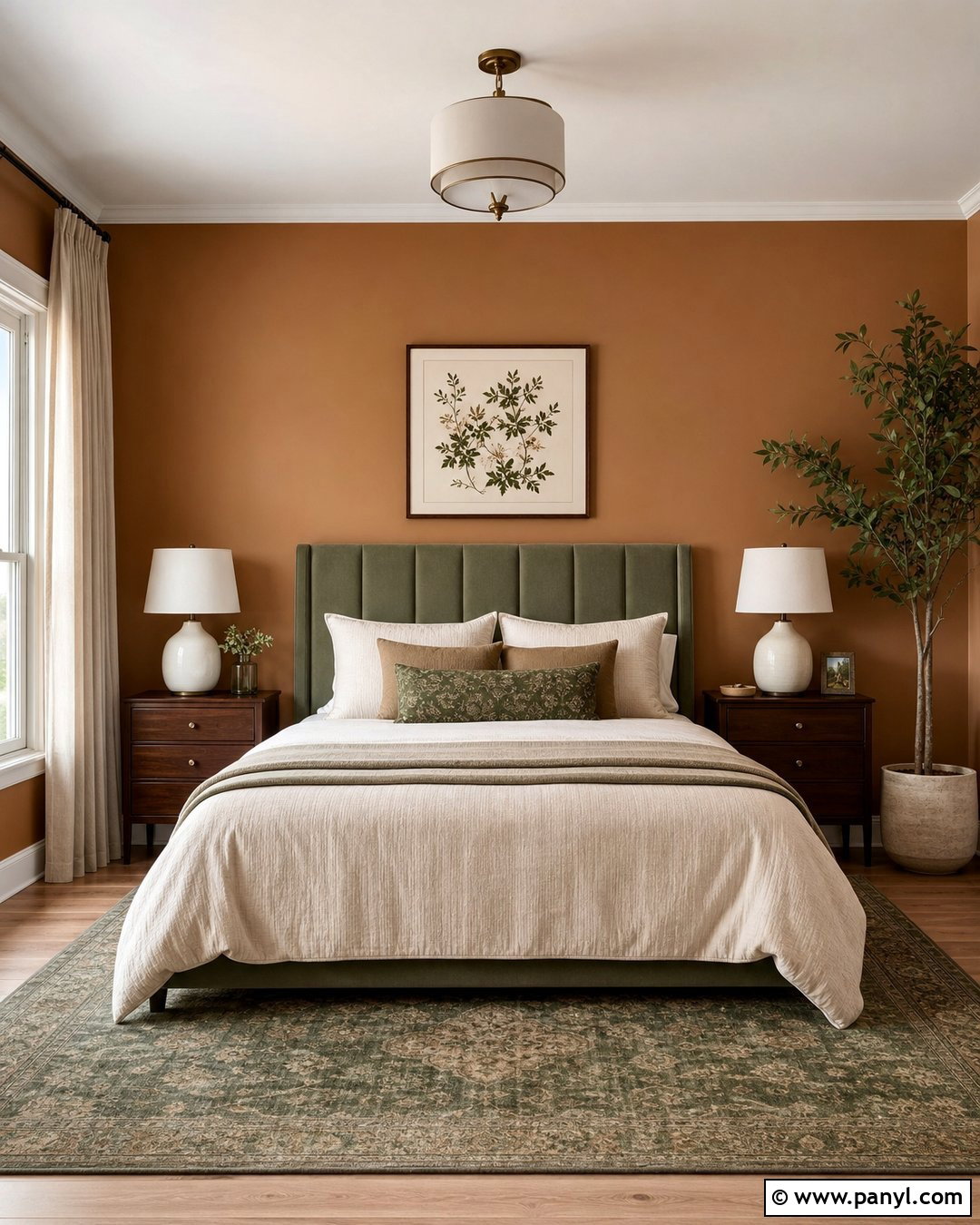
Caramel walls and sage green create an earthy bedroom palette that feels grounded throughout the year. Use a medium caramel paint with a slightly muted undertone, then bring in a sage upholstered headboard or quilt. Cream sheets and an ivory coverlet provide breathing room between the two colors. Choose walnut nightstands for depth, but keep their shapes simple so the bedroom does not feel visually crowded. Add ceramic lamps in a warm off-white glaze and hang long natural linen curtains. A vintage-inspired rug containing olive, beige, rust, and faded green will unite the entire scheme. Finish with botanical prints in dark wood frames and one leafy indoor plant. Soft black hardware can add definition, although it should remain a minor accent rather than a dominant finish.
5. Caramel Walls Dining Room With Dark Wood
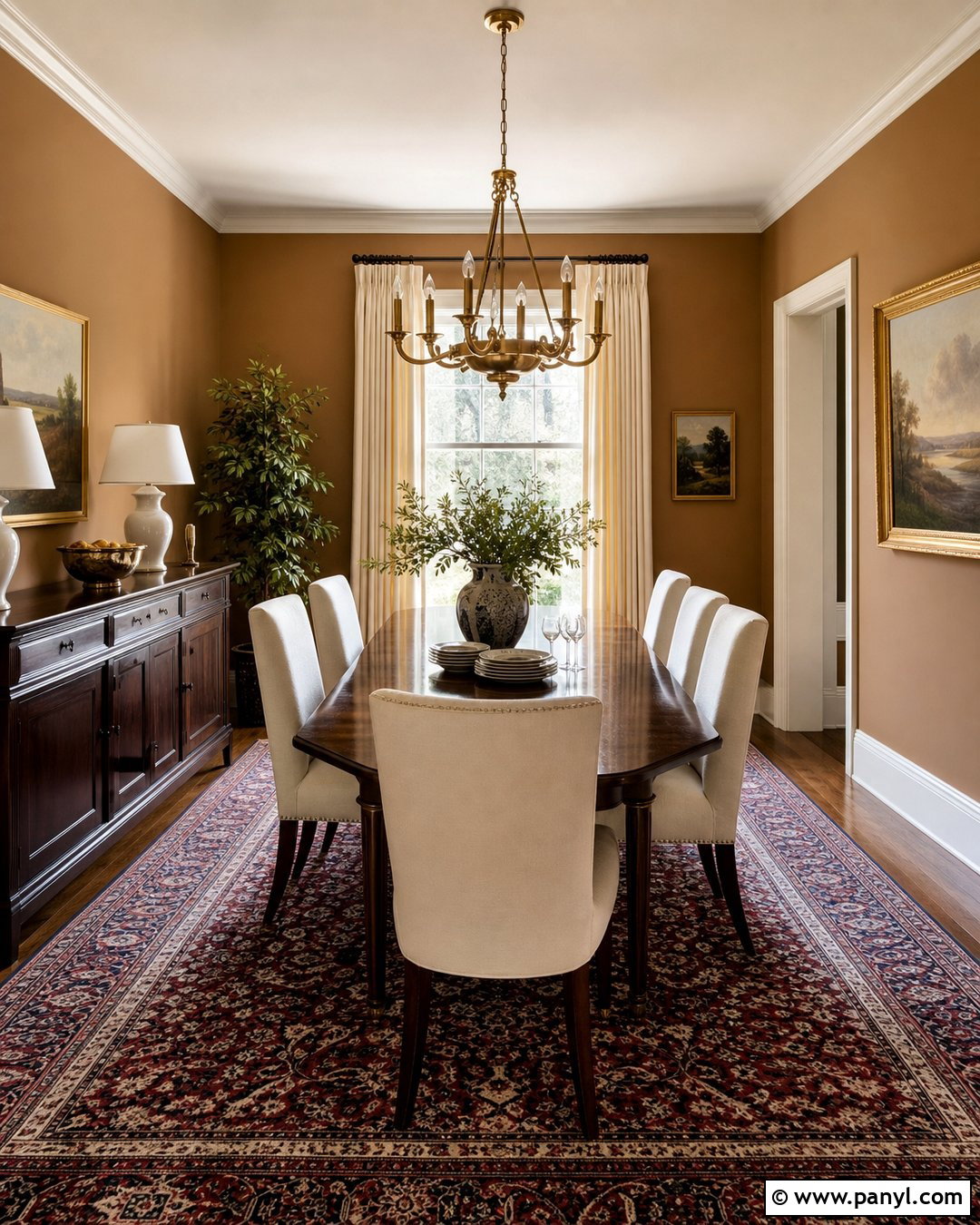
A formal dining room can handle the rich combination of caramel walls and dark wood beautifully. Center a walnut or espresso-stained dining table beneath a wide linen drum pendant or sculptural brass chandelier. Upholstered chairs in warm ivory prevent the furniture from feeling too dense. Use floor-length cream drapes and paint the trim a gentle white with warm undertones. A large patterned rug containing caramel, burgundy, navy, and beige adds traditional character while helping define the dining zone. Introduce a black or dark walnut sideboard along one wall, topped with a ceramic lamp and simple greenery. Antique-inspired landscape artwork complements the warm palette. Keep the table decor minimal so the room remains functional, with a low bowl or single vase that does not interrupt conversation.
6. Caramel Walls Dining Room With Black Accents
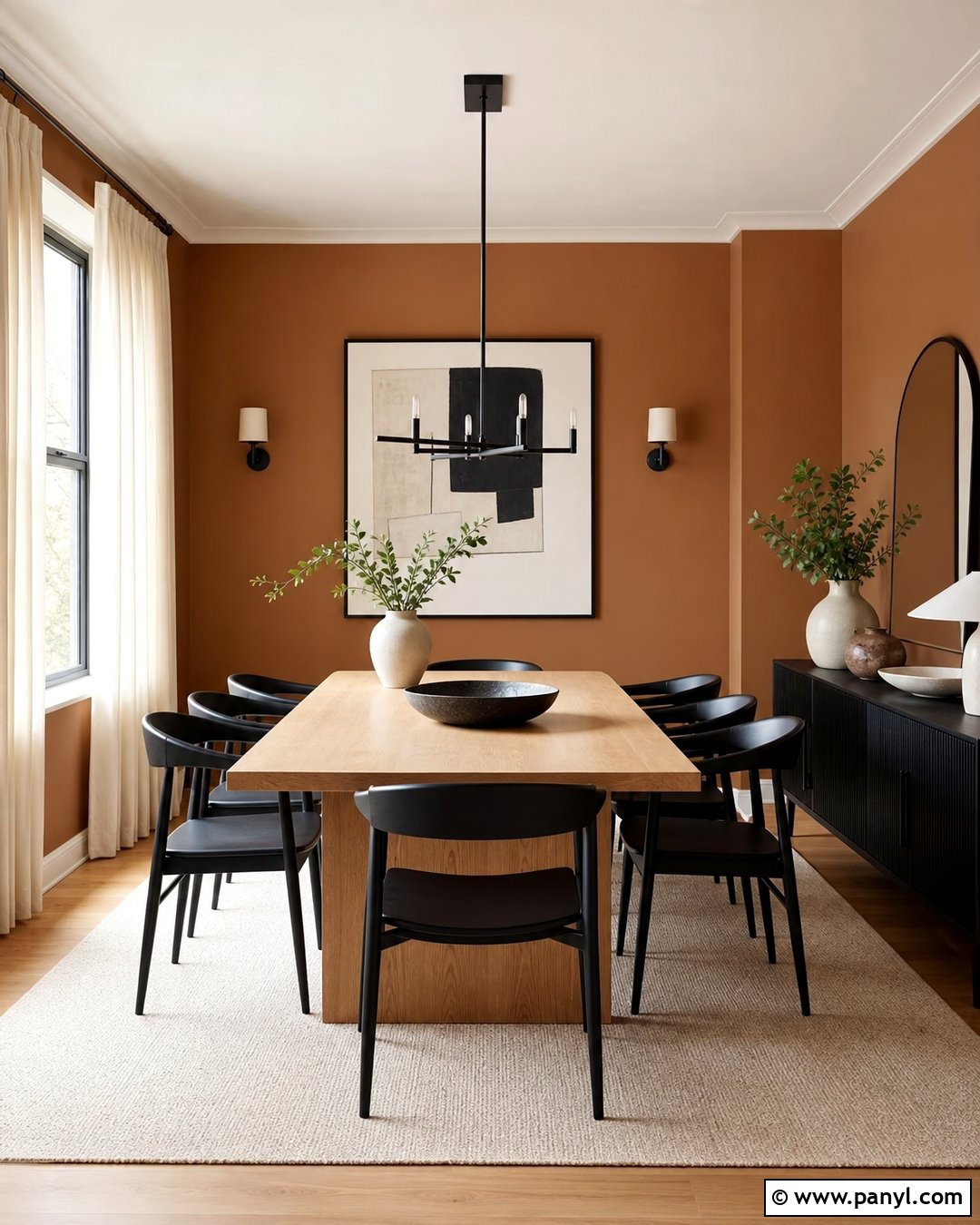
For a sharper, more contemporary result, frame caramel walls with clean black accents. Start with a rectangular dining table in light oak and surround it with black spindle-back or upholstered chairs. A matte black linear chandelier creates a strong focal point without overwhelming the warm background. Choose a cream-and-tan flat-weave rug large enough to remain beneath the chairs when they are pulled out. Black-framed abstract artwork can repeat the darker details while ivory curtains soften the overall contrast. Add a slim black sideboard or console, but style it lightly with stoneware and a leafy branch. The room should contain plenty of open space around the furniture. This controlled combination makes the caramel paint feel intentional, current, and structured instead of rustic or overly traditional.
7. Caramel Walls Kitchen With Cream Cabinets
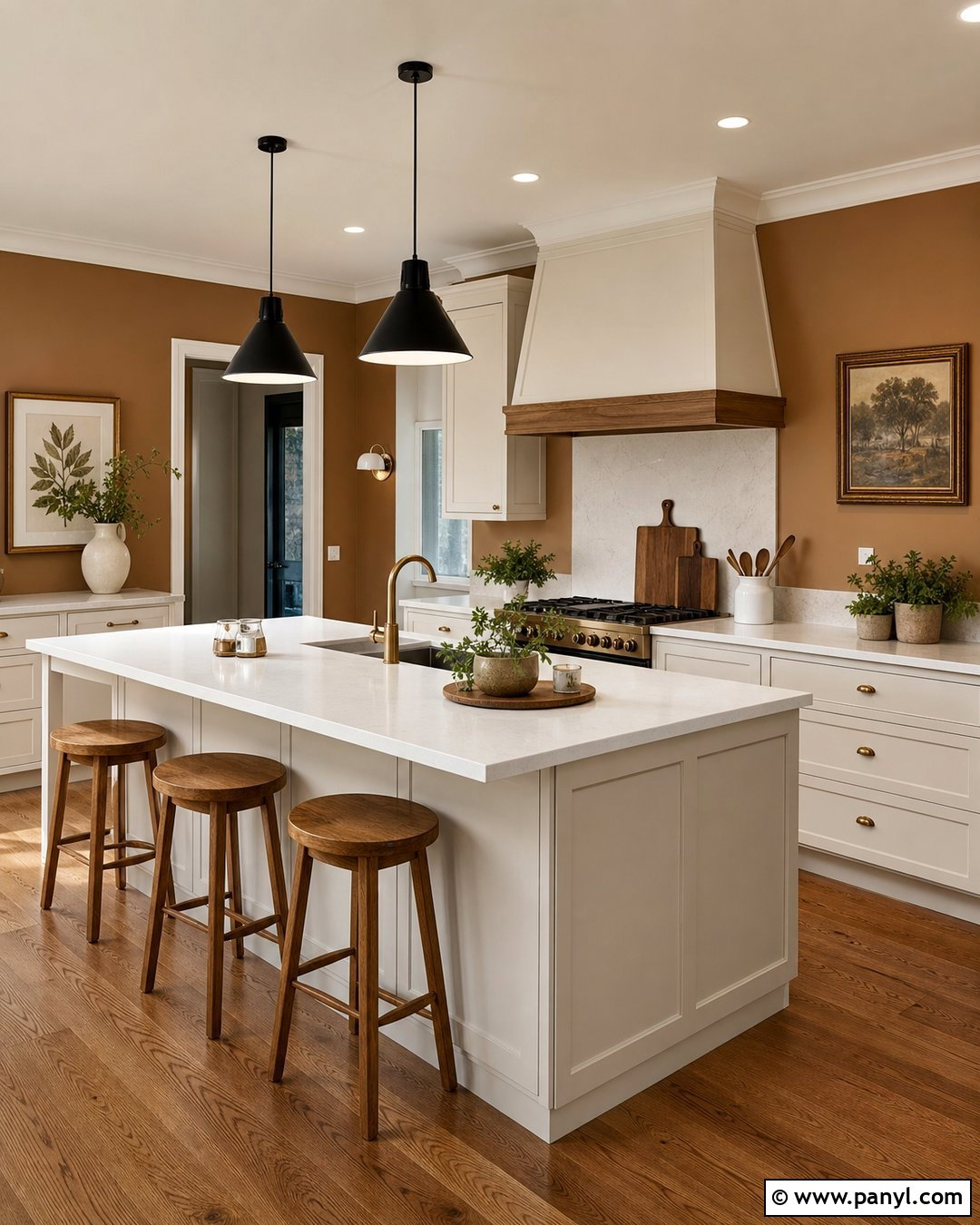
Caramel walls can make a cream kitchen feel warmer and more established. Use the color on the open wall areas while keeping shaker cabinets a soft ivory rather than a stark refrigerator white. Choose lightly veined quartz counters and a matching backsplash to create a calm background for everyday activity. Medium oak flooring and three natural wood counter stools reinforce the warmth, while aged brass knobs add restrained shine. Black pendant lights above the island provide necessary definition. Display white stoneware, wooden boards, and a few green herbs on open shelving, leaving plenty of empty space between objects. If the kitchen receives limited daylight, select a lighter caramel shade. The finished scheme should feel bright and layered, with the wall color connecting the cream cabinetry to the wood features.
8. Caramel Walls Kitchen With Green Cabinets
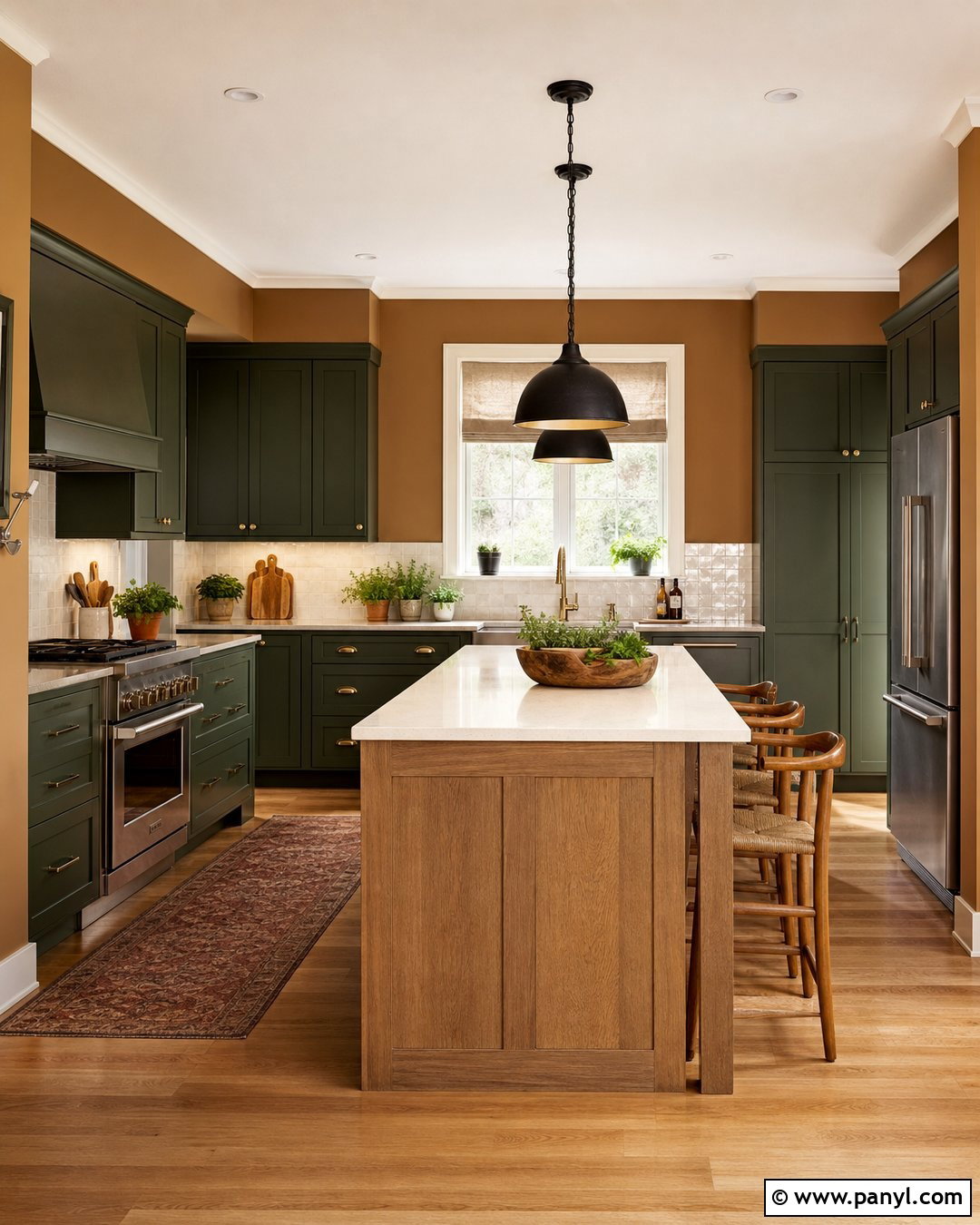
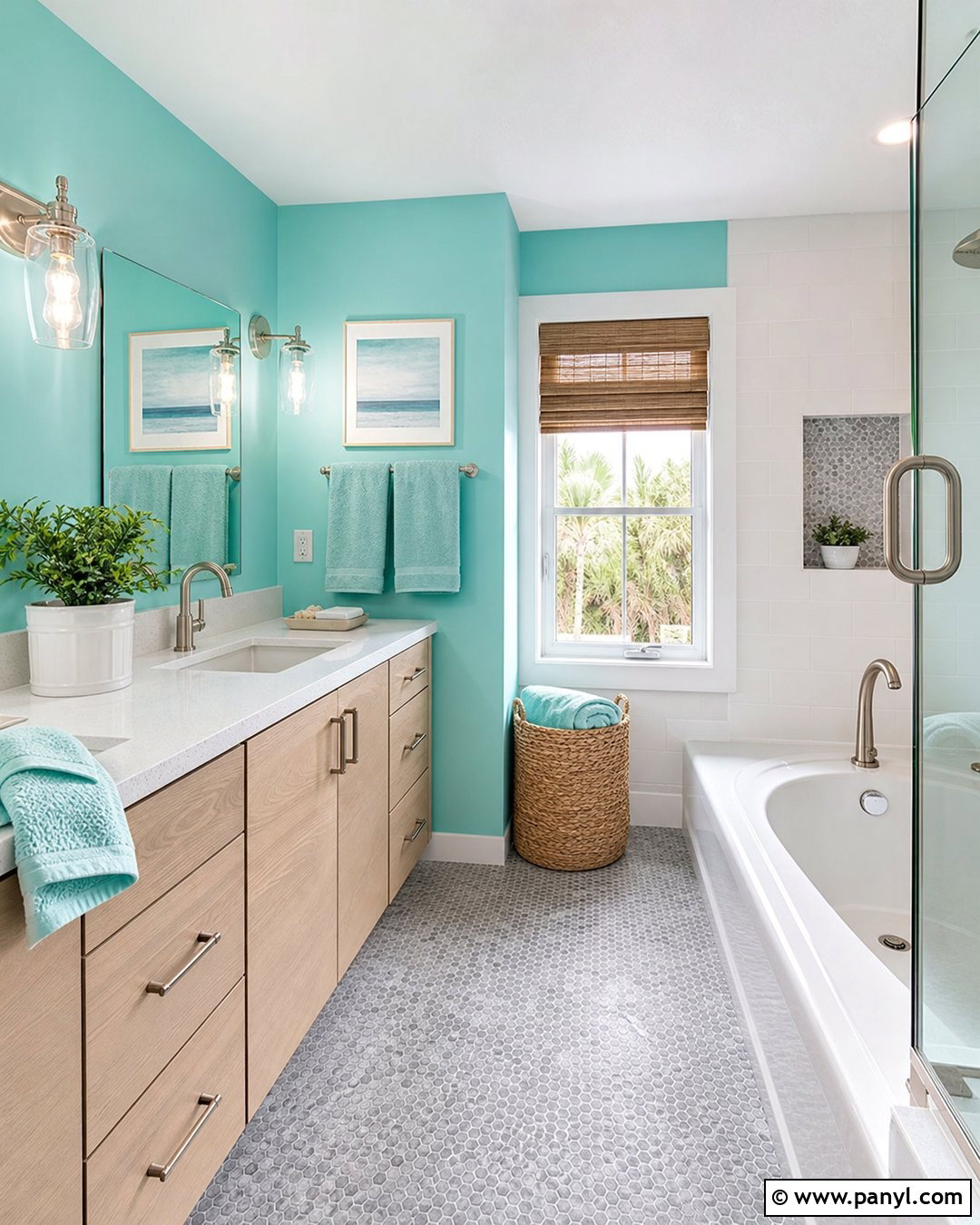
What if the kitchen needs more personality than an all-neutral palette provides? Pair caramel walls with muted forest or olive green cabinetry for a rich, nature-inspired scheme. Use creamy quartz counters and a warm white tile backsplash to separate the two deeper colors. A white oak island or dining table prevents the kitchen from becoming too dark. Choose aged brass hardware, simple globe pendants, and medium oak flooring to support the warm undertones. Keep window treatments light with relaxed linen Roman shades. Small black details, such as a faucet or range hood trim, can sharpen the arrangement. Limit countertop accessories to useful pieces in wood, ceramic, and glass. Together, the caramel and green create a distinctive kitchen that feels welcoming, durable, and connected to natural materials.
9. Caramel Walls Bathroom With White Tile
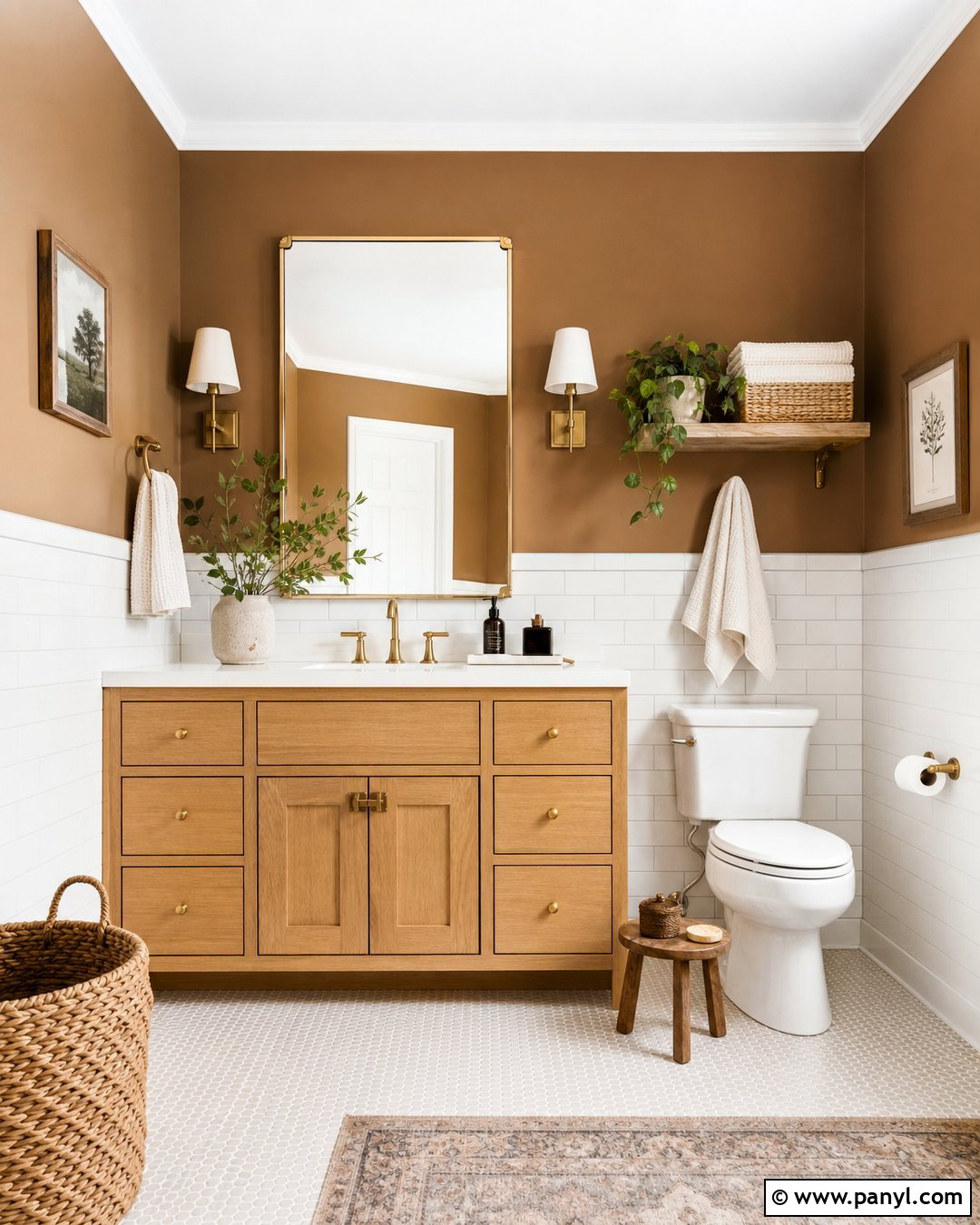
In a bathroom, caramel walls can soften the crisp appearance of white tile and porcelain. Use the paint above white subway tile or simple square wainscoting, allowing the lower half of the room to remain clean and reflective. Select a light oak vanity with a white quartz top, then add brushed brass faucets and sconces for subtle warmth. A frameless mirror keeps the design open, while a woven basket and wooden stool introduce practical storage. Use ivory towels rather than bright white ones to create a gentler transition between the finishes. The floor could feature small cream and tan mosaic tiles or pale limestone-look porcelain. Complete the room with one leafy plant. Use moisture-resistant bathroom paint so the caramel color remains attractive in a frequently humid space.
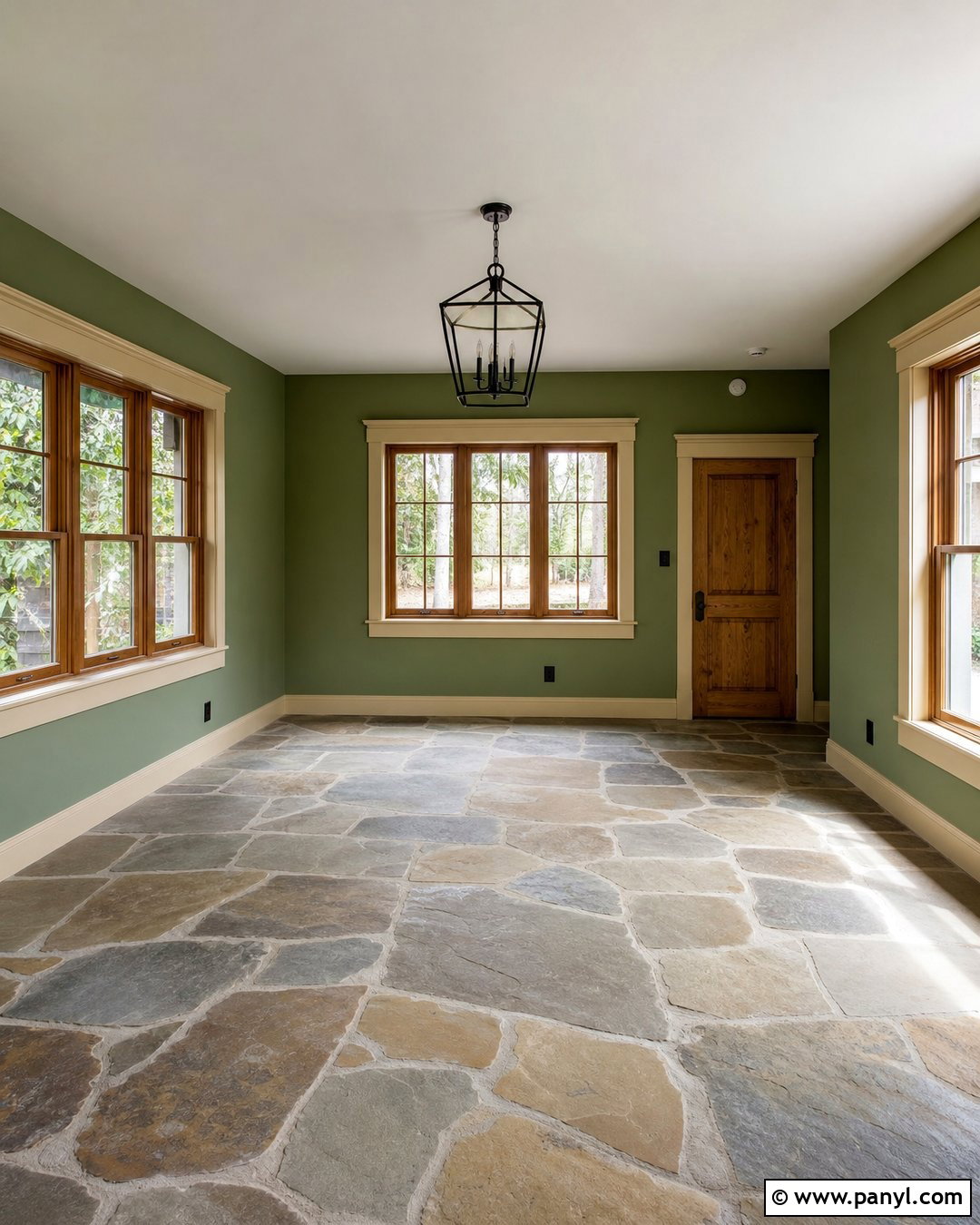
10. Caramel Walls Bathroom With Walnut Vanity
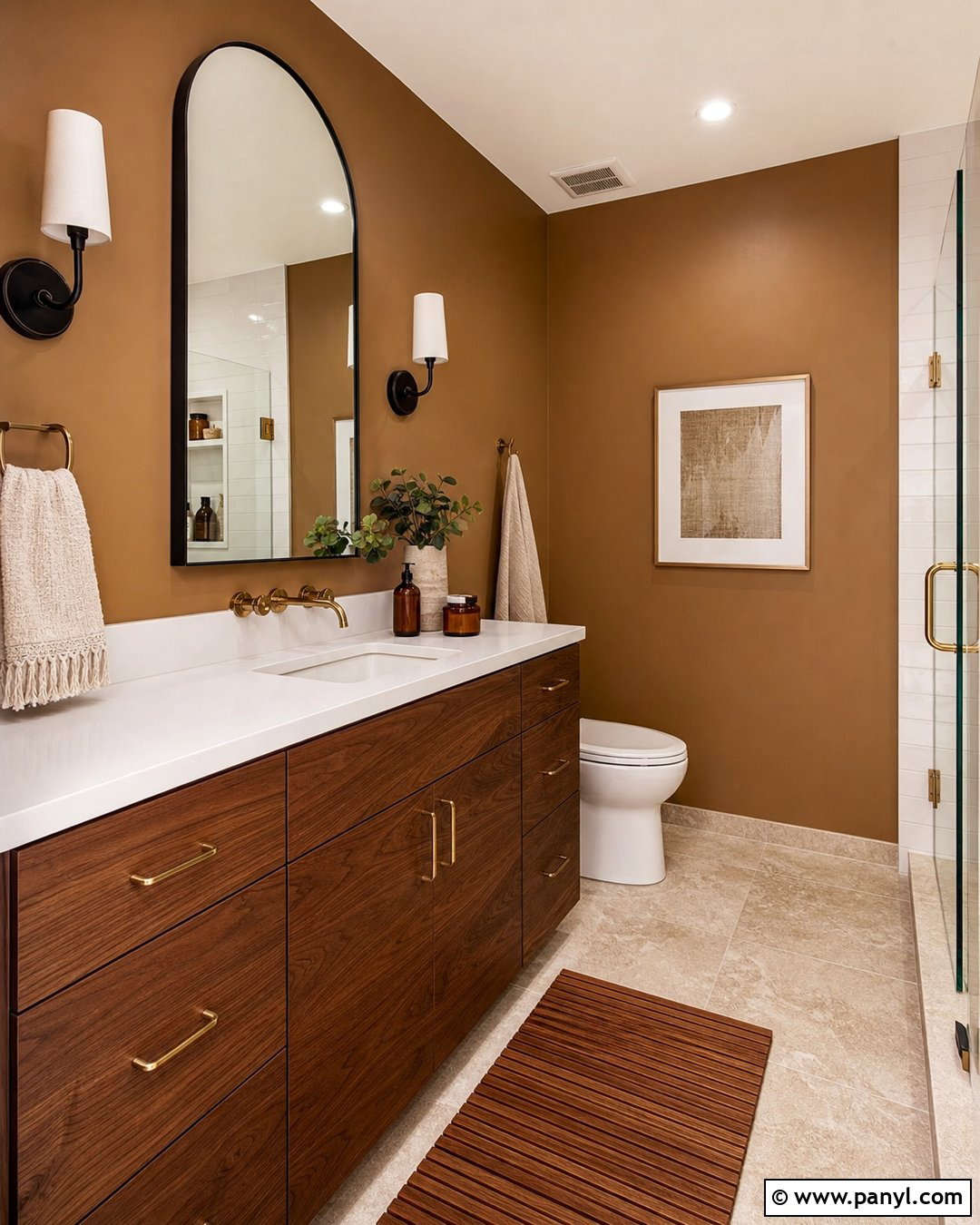
A walnut vanity brings out the deeper brown undertones in caramel walls, producing a bathroom that feels sophisticated rather than sugary. Keep the floor light with warm beige stone or matte porcelain tile. A white countertop and rectangular white sink create a clean break between the wall and cabinetry colors. Above the vanity, install an arched mirror with a thin black frame and matching black sconces. Use aged brass for the faucet and cabinet pulls, giving the room a carefully mixed-metal appearance. An ivory shower curtain, cream towels, and a natural teak bath mat soften the darker finishes. Keep decorative items limited to amber glass containers and a small plant. Good overhead lighting is important because the rich wall and vanity combination can absorb more light than a pale neutral bathroom.
11. Caramel Walls Home Office With Built-In Shelves
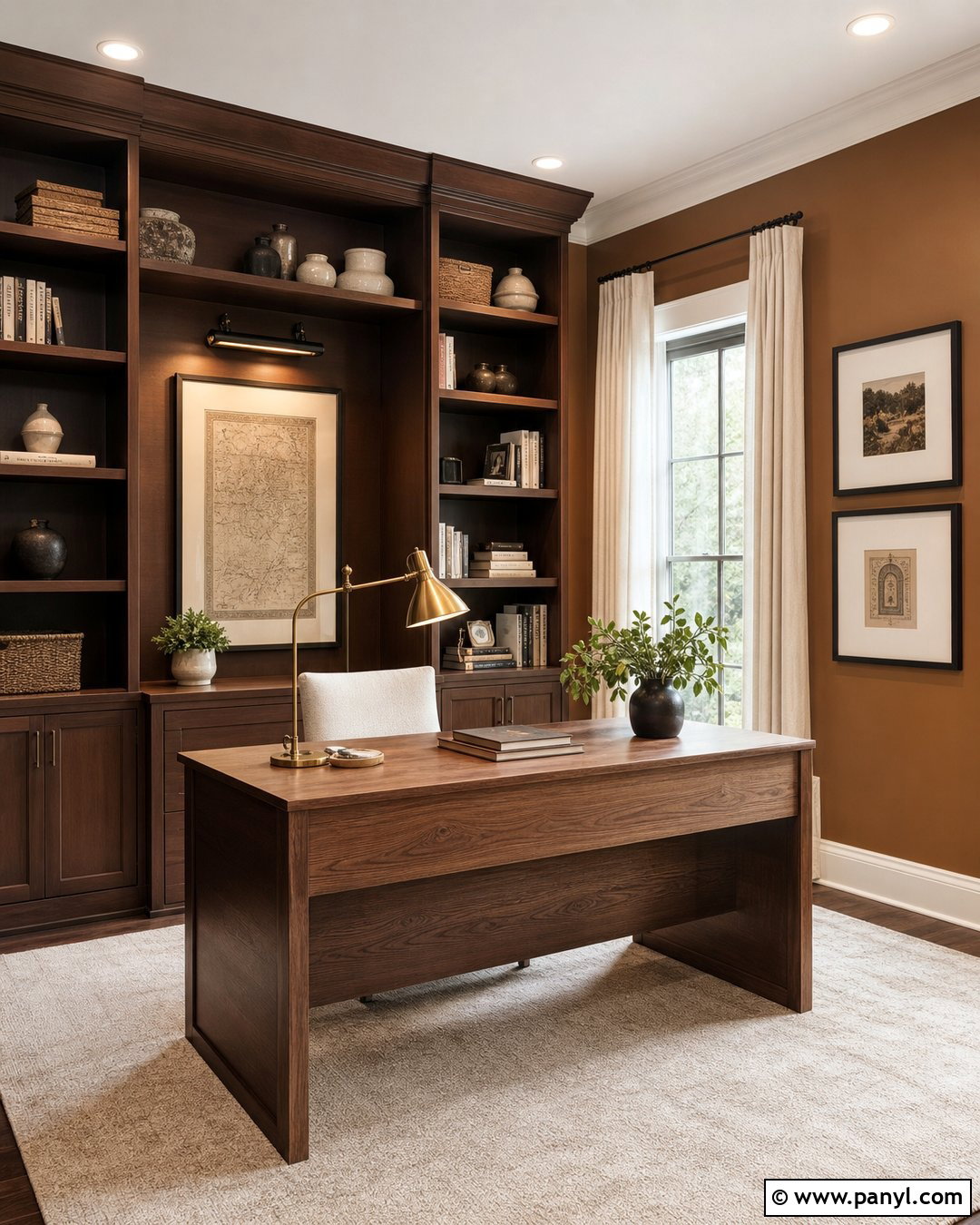
A home office becomes more focused and welcoming when caramel walls are combined with practical built-in storage. Paint the open walls caramel and finish the bookcases in a darker chocolate brown or warm walnut stain. Position a substantial wood desk in the center or facing a window, then add a comfortable black leather or oatmeal upholstered chair. Use a large cream rug to brighten the floor and reduce visual weight. Fill the shelves with books, woven boxes, framed artwork, and ceramics, leaving some sections open to avoid clutter. A brass desk lamp and black picture lights offer useful task lighting. Add full-length ivory curtains for softness. This complete arrangement gives the office a polished library character while providing enough organization for daily work, reading, and video meetings.
12. Caramel Walls Home Office With Blue Furniture
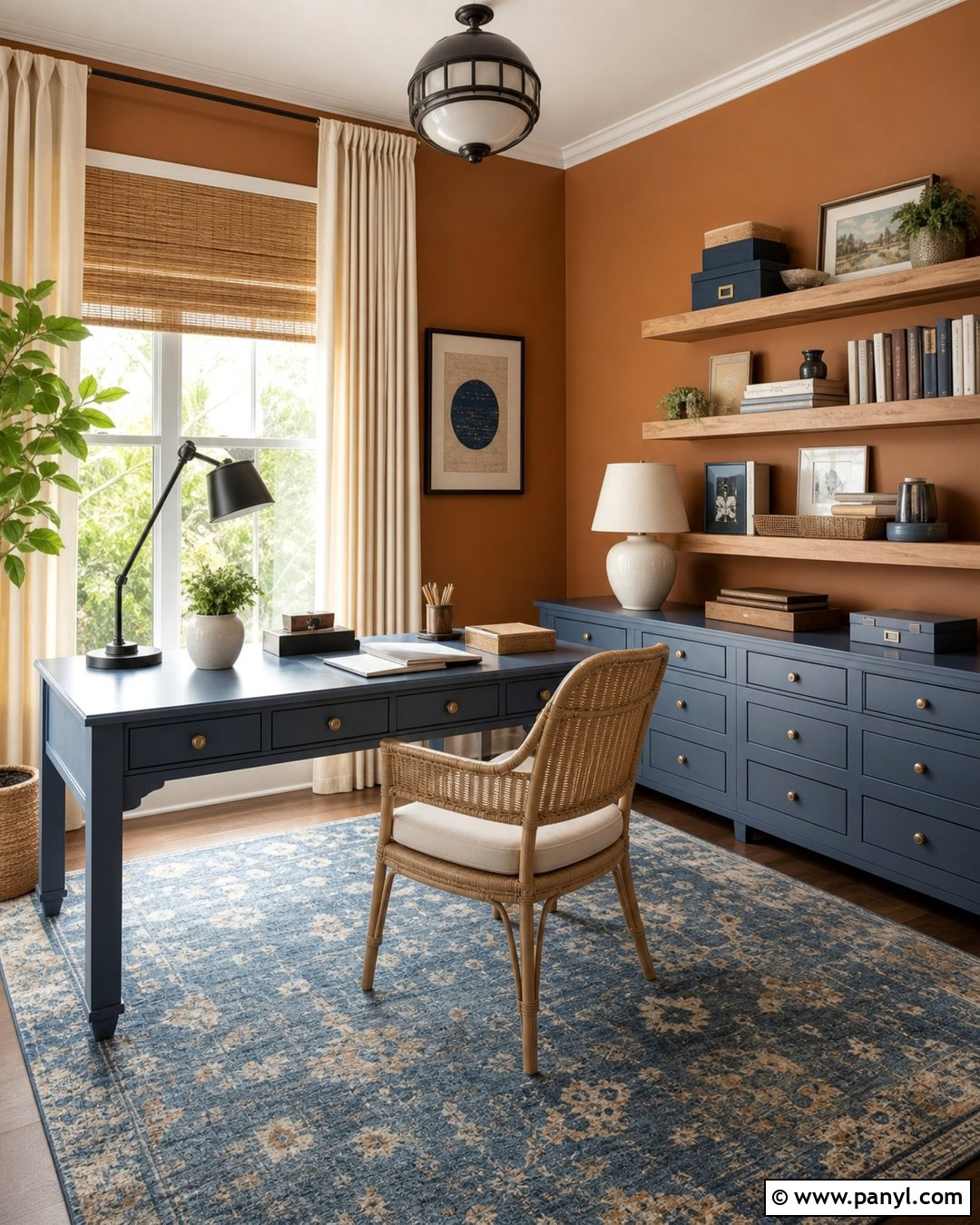
Cool blue furniture can make caramel walls look richer and more dimensional. Choose a dusty blue desk or painted storage cabinet as the room’s central feature, then repeat that color in a small patterned rug and one piece of artwork. A natural cane desk chair with a cream cushion keeps the arrangement relaxed. Install floating oak shelves above the work surface for books and everyday supplies, using matching boxes to control clutter. White trim and a warm white ceiling maintain brightness. Finish the window with a woven shade layered beneath simple ivory curtains. A matte black desk lamp and hardware add crisp definition. The result is a cheerful yet professional office where the blue provides contrast, the caramel supplies warmth, and the natural textures prevent either color from feeling too strong.
13. Caramel Walls Entryway With Wood Console
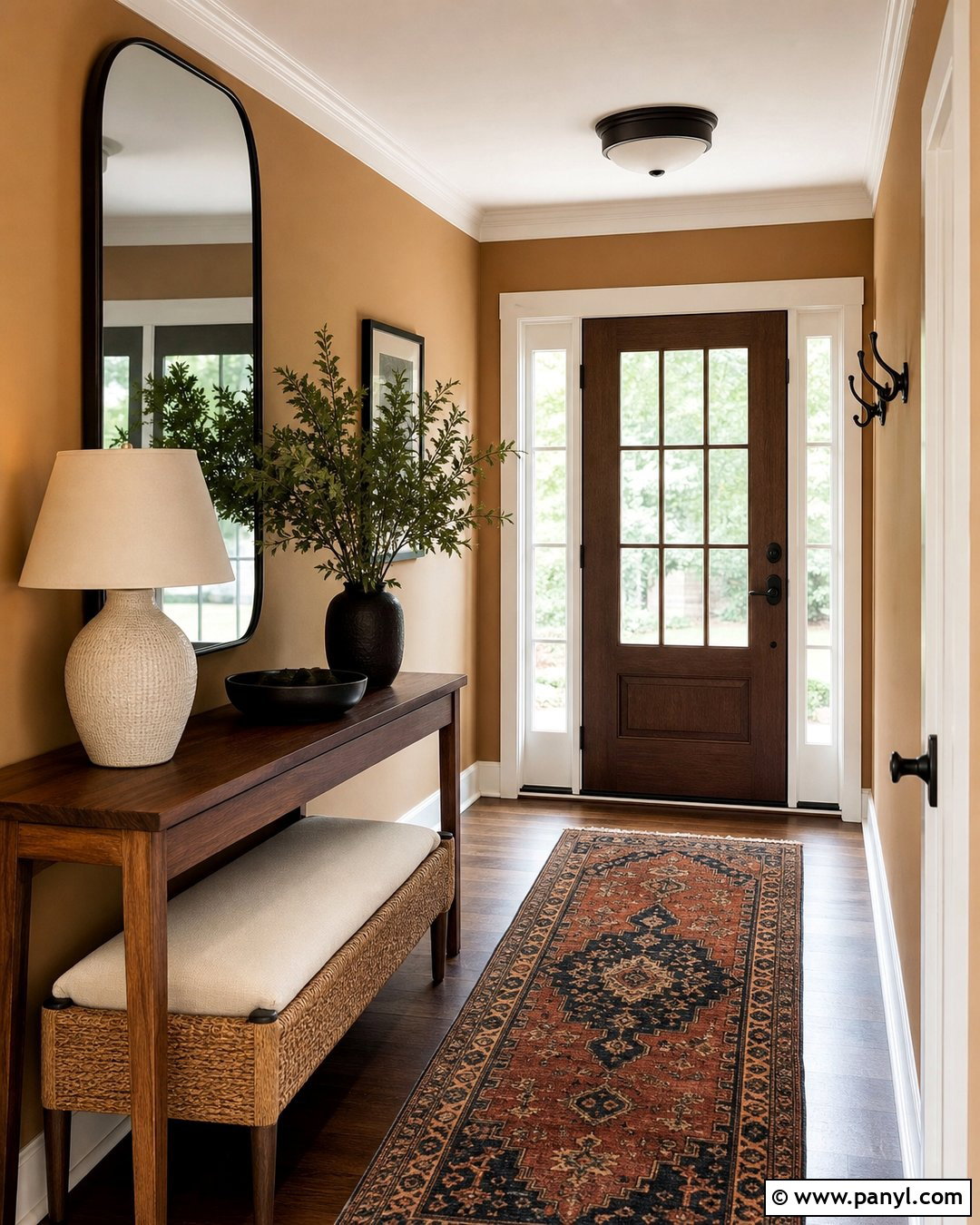
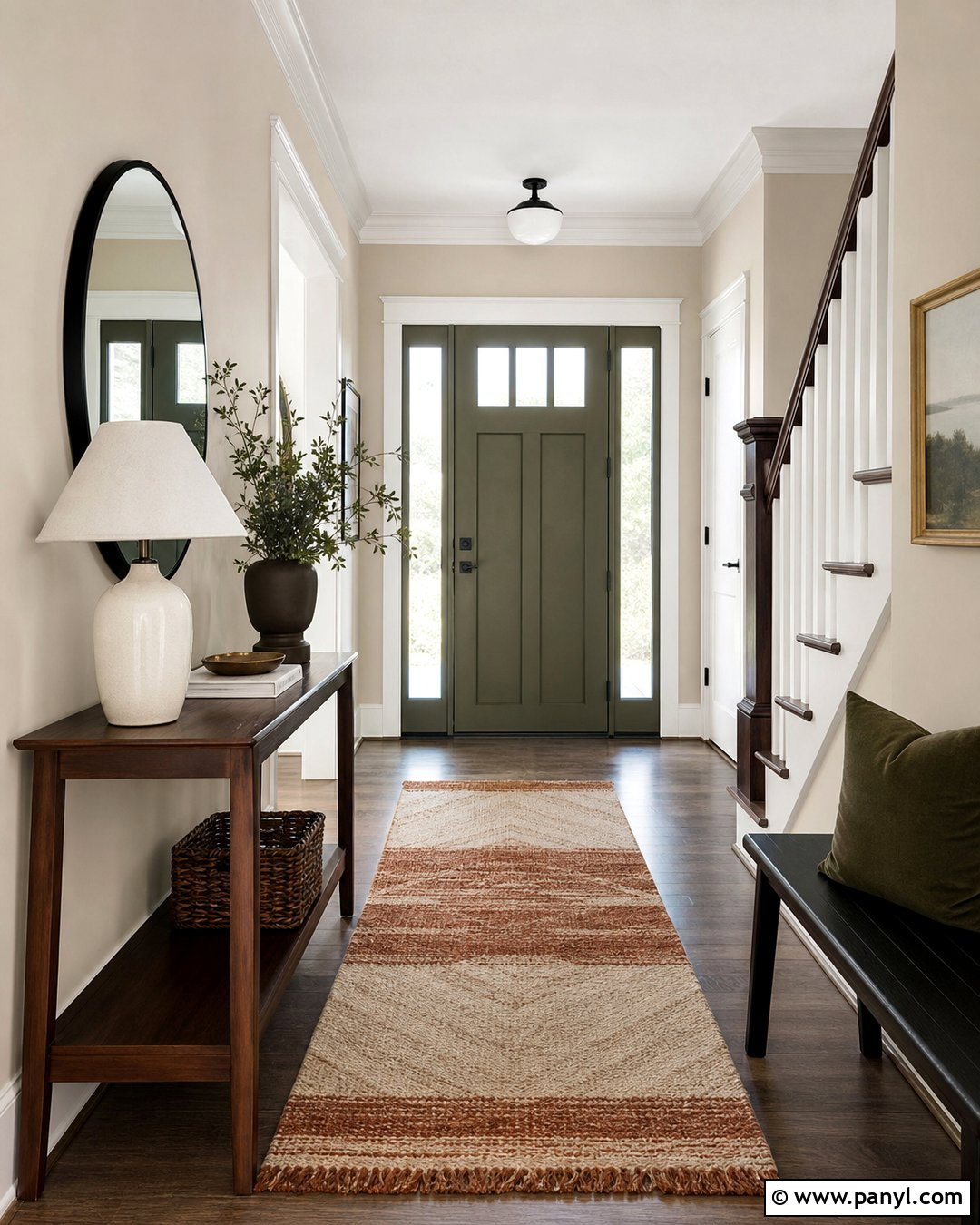
First impressions improve when an entryway feels warm, organized, and easy to navigate. Against caramel walls, place a narrow oak or walnut console with drawers for keys and small essentials. Hang a large rounded mirror above it to reflect daylight and visually expand the space. A cream table lamp, shallow decorative bowl, and vase of green branches complete the surface without cluttering it. Use a washable runner featuring muted navy, rust, and beige along the main walkway. A black wall-mounted coat rack or simple wood pegs can provide storage near the door. Keep the baseboards and door trim soft white for definition. If space permits, add a woven bench with an ivory cushion. The finished entry balances useful storage, welcoming color, and open circulation for a practical everyday layout.
14. Caramel Walls Hallway With Gallery Frames
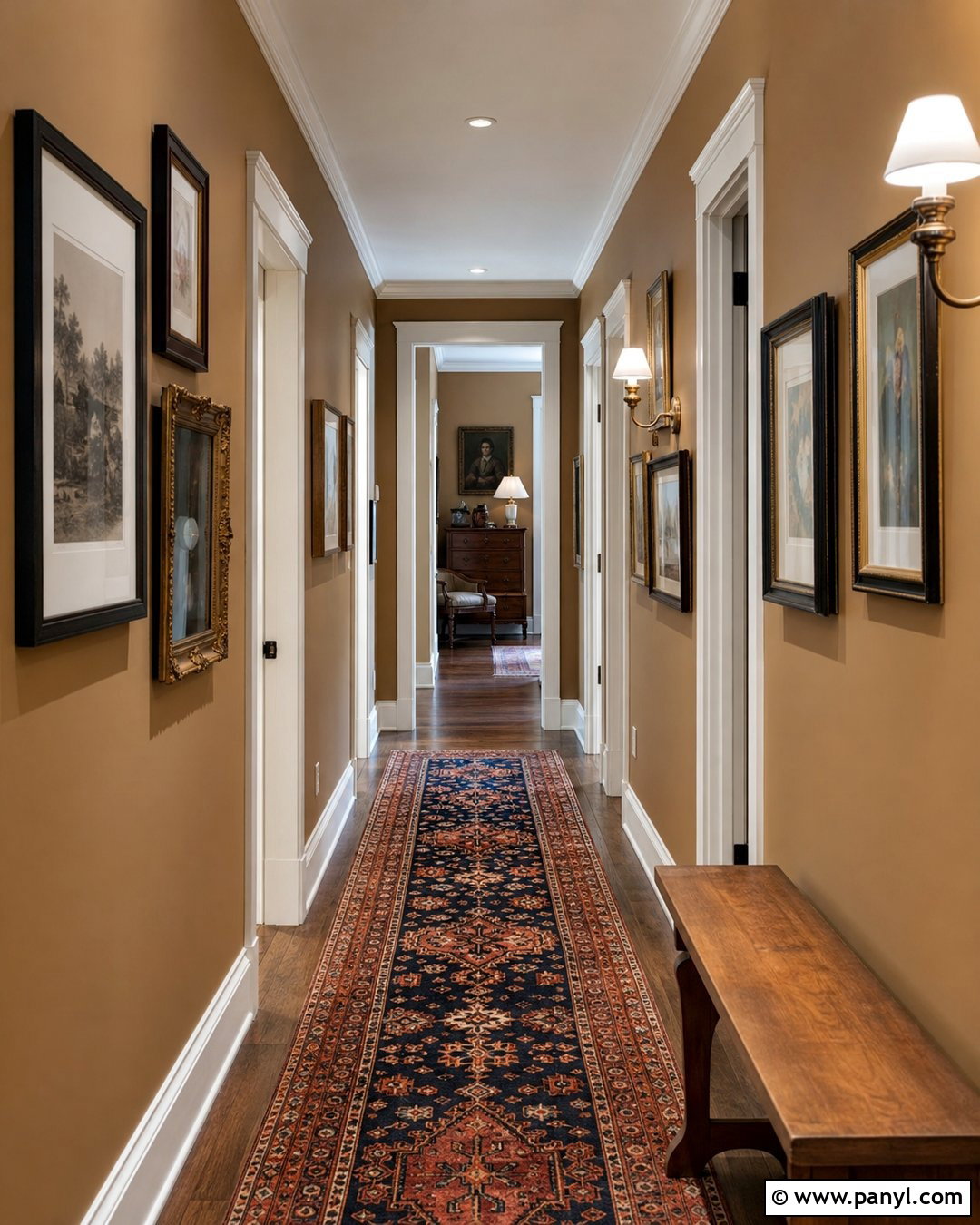
Long hallways often feel neglected, but caramel walls can turn one into a warm connecting space. Arrange a carefully measured gallery of black, walnut, and antique brass frames along one side, using cream mats to keep the display cohesive. Select family photographs, landscapes, and understated abstract prints with related neutral colors. Paint all door casings and baseboards warm white so the passage retains clear architectural edges. A narrow vintage-style runner containing navy, tan, and muted rust gives the floor pattern without reducing walking space. Use a flush-mount ceiling light or evenly spaced sconces for bright illumination. If the hallway is wide enough, place a slim bench or shallow console at the end. The complete design adds personality while keeping the walkway functional, orderly, and visually open.
15. Caramel Walls Nursery With Soft Neutrals
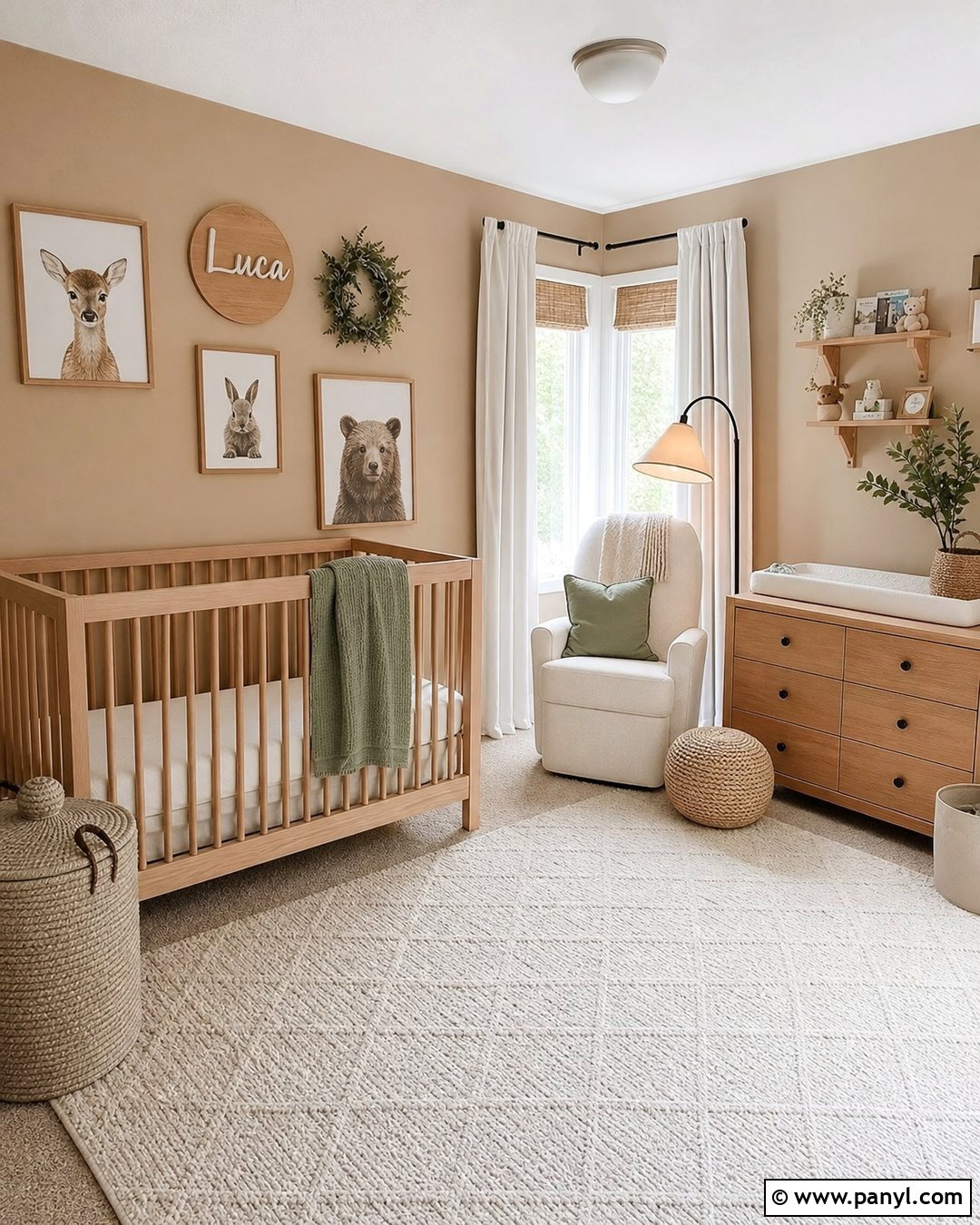
A caramel nursery can feel soothing when the wall color is gentle and the furnishings remain light. Choose a pale caramel shade rather than a highly saturated brown, then add a natural wood crib with simple lines. Dress the crib safely with a fitted cream sheet and no loose accessories. Position an ivory upholstered glider beside a small oak table and soft floor lamp. A washable wool-look rug in cream and beige will brighten the room and create a comfortable play area. Use blackout-lined white curtains to support daytime rest. Storage baskets, a low light-wood dresser, and a few muted animal prints provide practical character. Add small touches of sage or dusty blue through organized decor. The finished nursery feels warm, peaceful, and adaptable as the child grows.
16. Caramel Walls Kids Room With Blue Accents
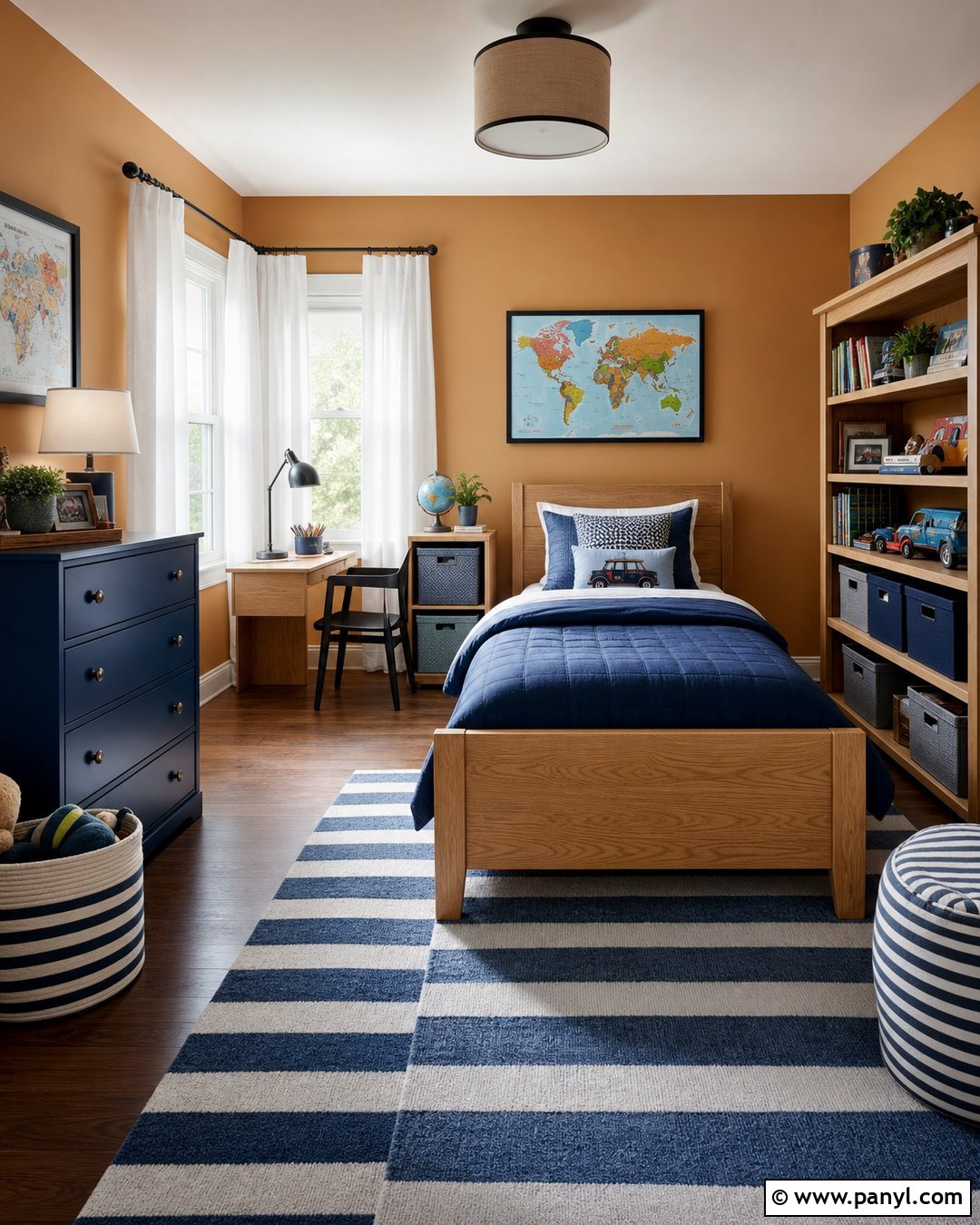
Caramel walls offer a warm backdrop that can grow with a child, especially when paired with energetic blue accents. Place a simple white or natural oak bed against the main wall and use navy, denim blue, and cream bedding. A striped washable rug can define the play area while disguising everyday wear. Add a blue painted dresser, oak bookshelves, and matching storage bins for toys and school supplies. White curtains and trim help balance the deeper colors. Instead of a highly themed room, hang colorful maps, abstract prints, or removable wall decor in blue and rust. Include a small desk with a supportive chair and focused task lamp. This flexible design feels playful without appearing childish, making future updates easier as interests and storage needs change.
17. Caramel Walls Guest Room With Rust Bedding
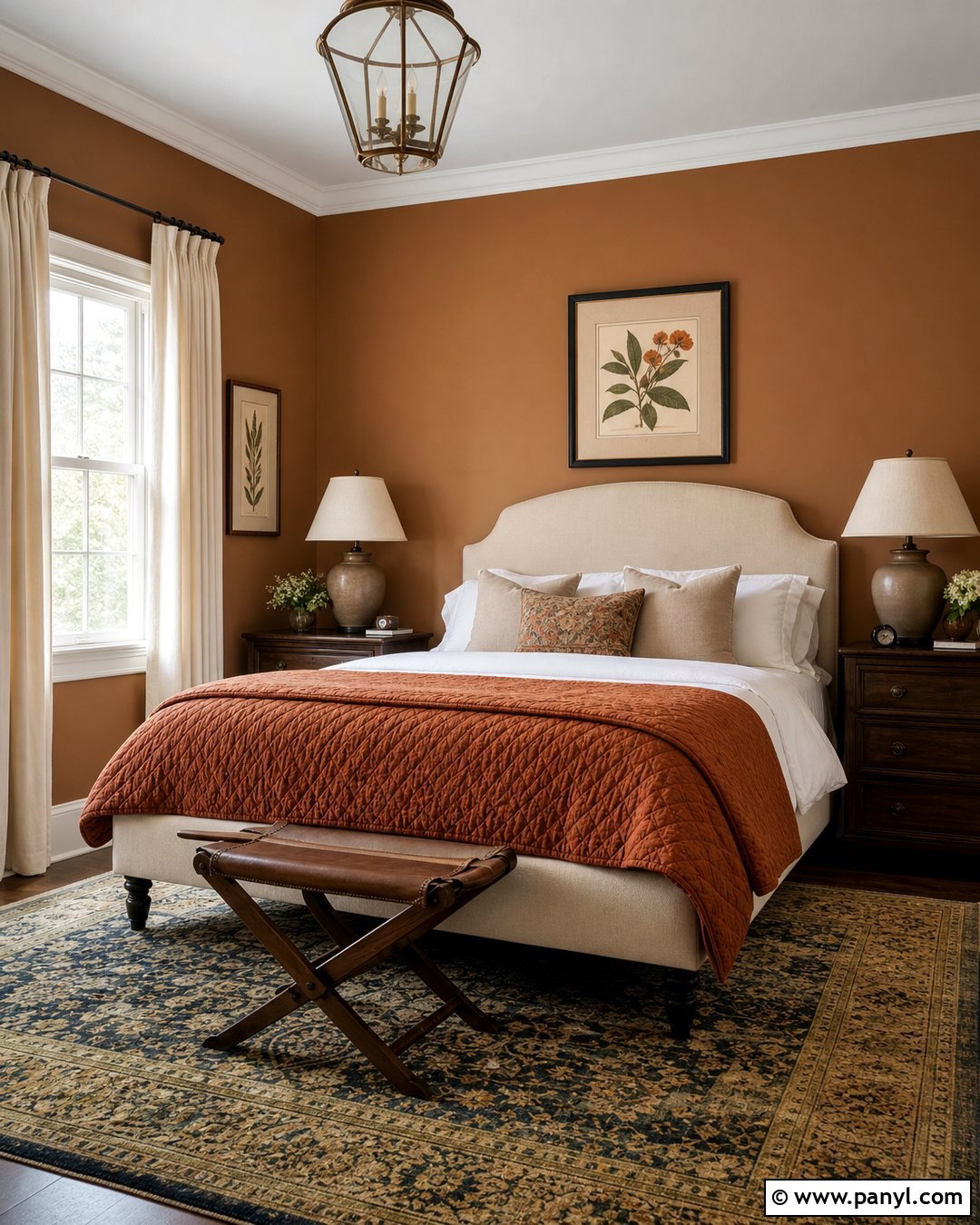
Rust bedding intensifies the warm character of caramel walls, creating a guest room that feels comfortably layered. Choose a cream upholstered bed to separate the two closely related colors. Dress it with white sheets, a textured rust quilt, and beige pillows in several fabrics. Dark wood nightstands ground the palette, while ceramic lamps with linen shades provide soft symmetry. Use a faded traditional rug containing rust, caramel, olive, and navy across most of the floor. Ivory curtains keep the room from feeling enclosed. Above the bed, hang one wide landscape or a pair of understated botanical prints. Add a bench for luggage and leave some dresser space empty for visitors. The final room should feel welcoming and finished without being overly decorated or difficult for guests to use.
18. Caramel Walls Reading Nook With Green Chair
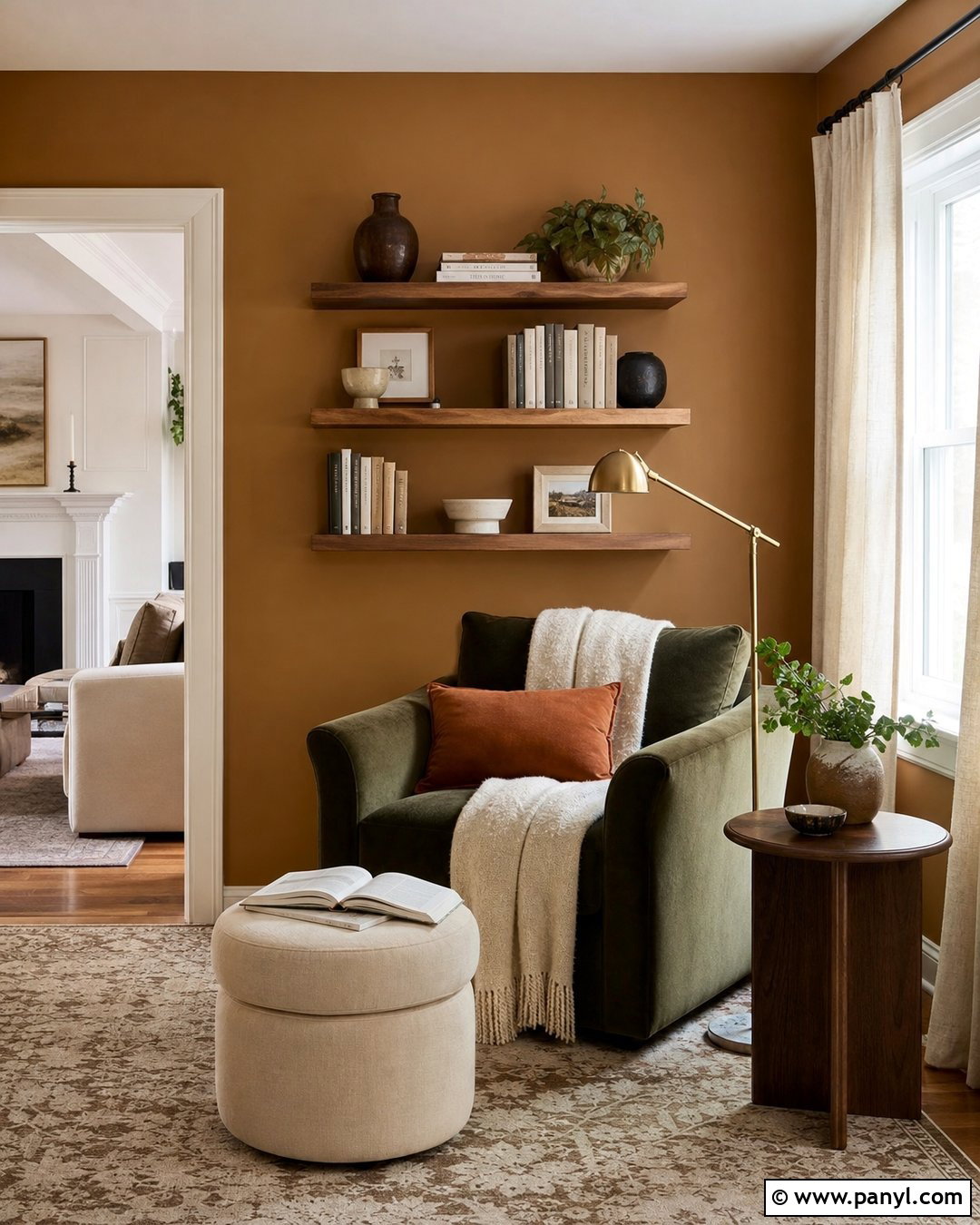
A dedicated reading nook needs more than a chair placed in an unused corner. Start with caramel walls and position a deep olive green armchair where it receives natural daylight without blocking the window. Add a compact walnut side table, a brass adjustable floor lamp, and a soft cream footstool. A small patterned rug in olive, beige, and faded red will visually define the nook. Install two or three floating wood shelves nearby for current books and a few ceramics. Linen curtains should soften the light while keeping the corner bright. Include a textured ivory throw and one rust-colored pillow for comfort. The completed nook feels separate from the surrounding room, yet every material and color remains connected to the warm caramel background.
19. Caramel Walls Fireplace With Stone Surround
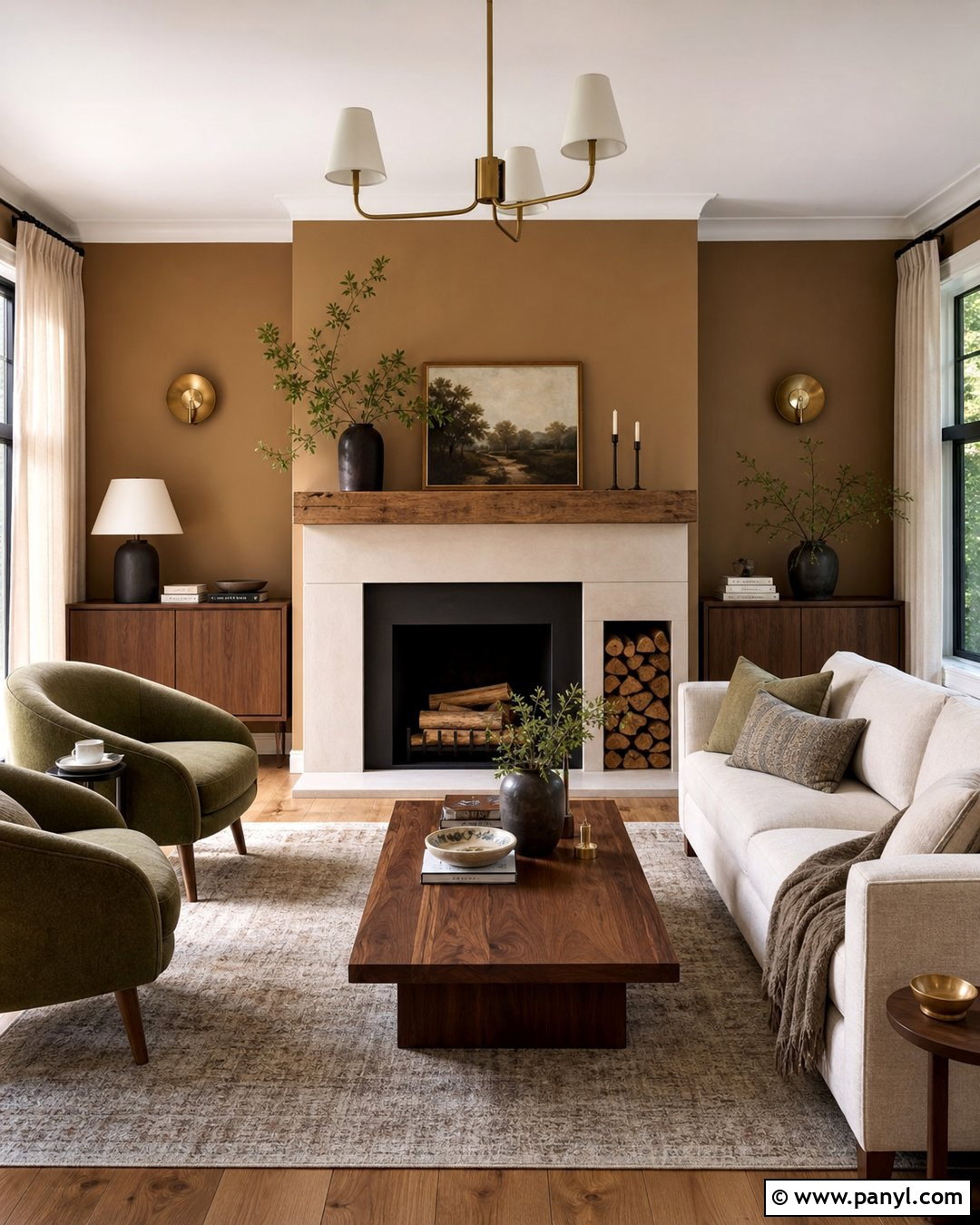
Caramel walls complement a fireplace best when the surround provides noticeable textural contrast. Choose pale limestone, warm white brick, or cream plaster around the firebox, then install a thick reclaimed oak mantel. Position a cream sofa and two olive or tan chairs in a conversational arrangement facing the fireplace. A large neutral rug grounds the seating, while black firebox trim and simple metal tools add sharper definition. Decorate the mantel with one substantial mirror or landscape rather than many small accessories. On either side, consider low walnut cabinets or neatly stacked wood in built-in niches. Finish with linen curtains and soft brass lighting. This complete living space makes the fireplace a natural focal point while allowing the caramel walls to create warmth around the entire arrangement.
20. Caramel Walls With White Wainscoting
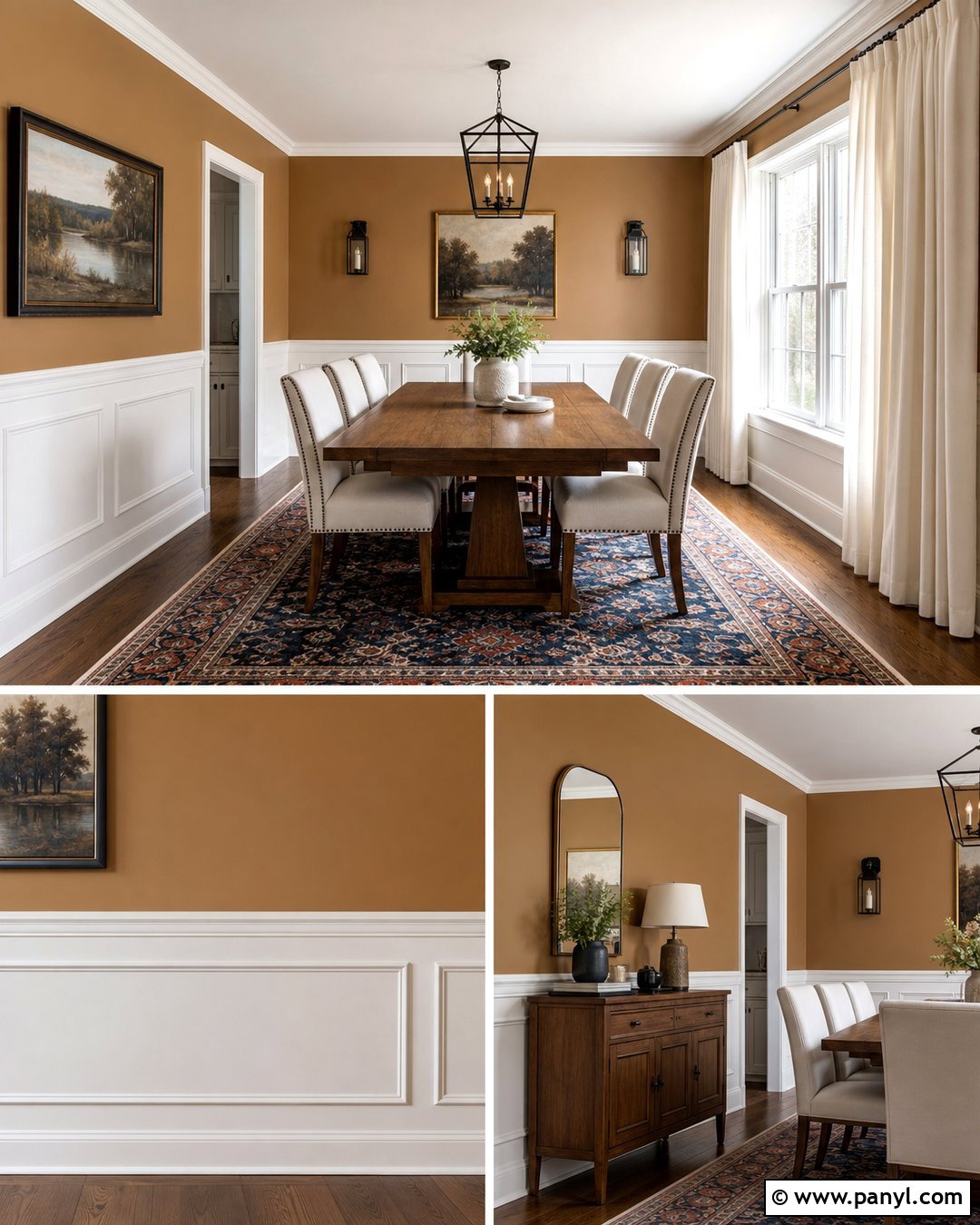
White wainscoting introduces architectural detail and makes caramel walls feel lighter. Install simple picture-frame molding, board and batten, or raised panels across the lower third of the room, painting the panels, trim, and baseboards a warm white. Use caramel paint above the molding to draw the eye upward. In a dining room, pair this wall treatment with an oak table, cream upholstered chairs, and a black lantern pendant. In a sitting room, choose pale seating and medium wood furniture. A large traditional rug containing blue, tan, and rust adds pattern and connects the contrasting wall colors. Keep window coverings ivory and uncomplicated. This balanced treatment works especially well when full caramel walls would feel too strong, providing warmth while preserving a crisp, structured appearance.
21. Caramel Walls With Color-Drenched Trim
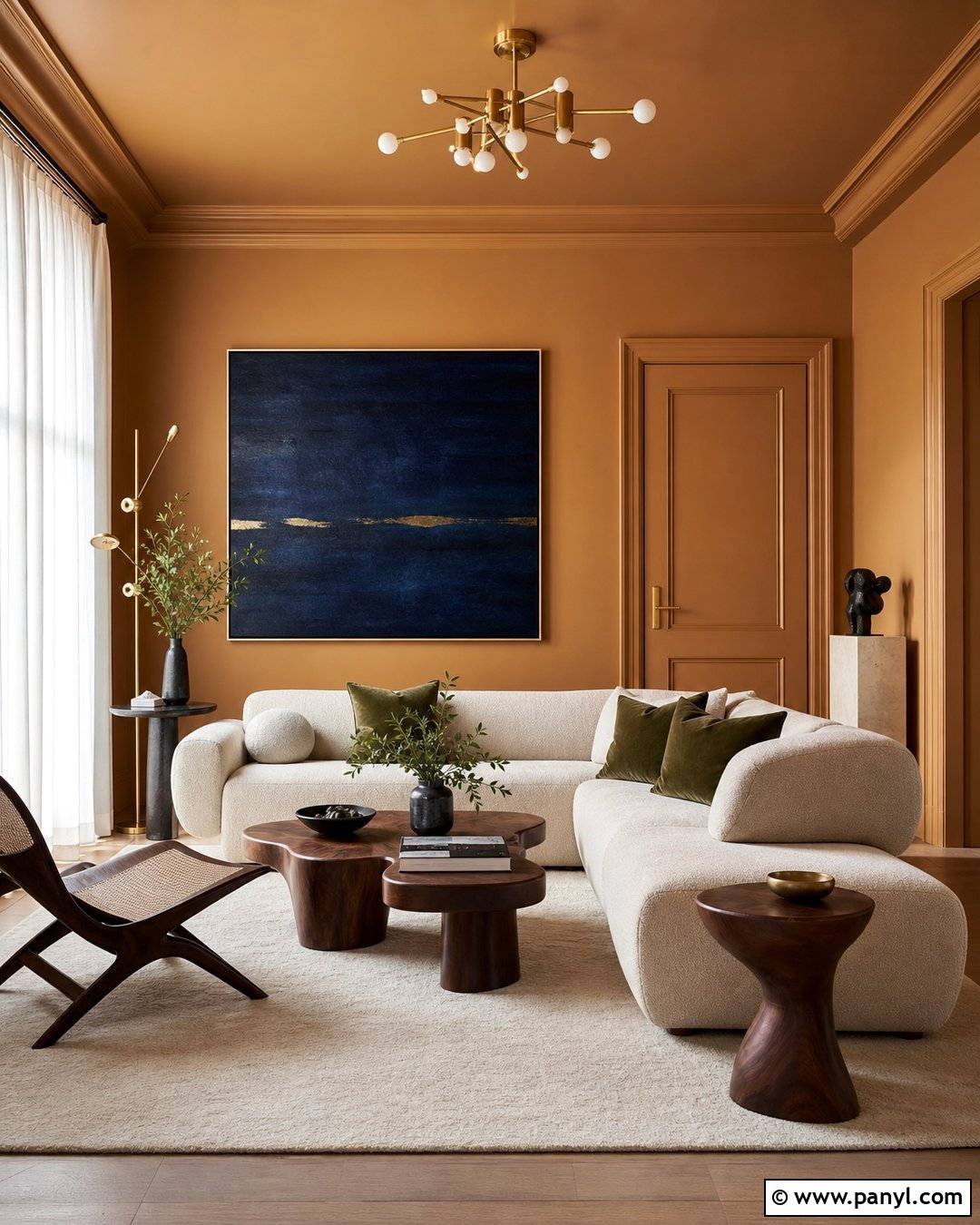
For a more immersive look, carry caramel paint across the walls, doors, baseboards, crown molding, and window trim. Use one consistent finish on the walls and a slightly more durable satin finish on the woodwork. Keep the ceiling a lighter caramel tint if the room is compact, or use the full color in a large, naturally bright space. Furnish the room with a low cream sofa, sculptural walnut tables, and an ivory wool rug to prevent the scheme from becoming visually flat. Add deep blue artwork and olive pillows for controlled contrast. Brass lighting brings reflective warmth, while white linen curtains provide softness around the windows. The result feels cohesive and enveloping, with fewer visual interruptions than a room finished with contrasting bright white trim.
22. Caramel Walls With Natural Wood Furniture
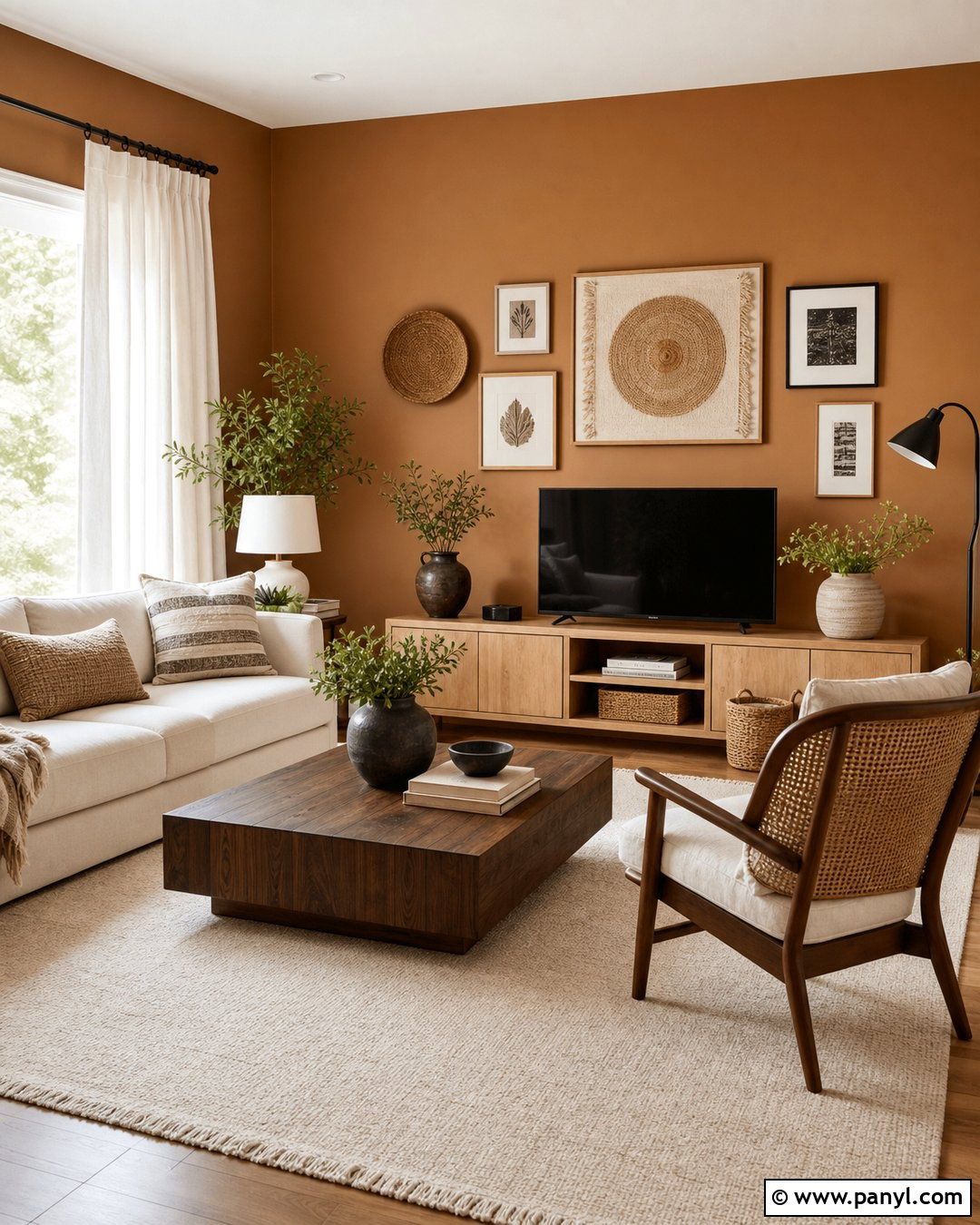
Layering caramel walls with natural wood requires variation so every surface remains distinct. Use light oak for the largest pieces, such as a dining table, bed, or media cabinet. Then add smaller walnut accents for depth. A cream rug, ivory upholstery, and white curtains should separate the wood tones from the walls. Include woven cane, linen, jute, and handmade ceramic pieces to enrich the room through texture rather than additional color. Black metal lighting can provide a clean outline, while green plants introduce freshness. Avoid matching every wood finish exactly because a slightly collected mix appears more natural. The completed space should include light, medium, and dark values. This hierarchy ensures the caramel paint supports the furniture instead of causing the entire room to blend together.
23. Caramel Walls With Terracotta Decor
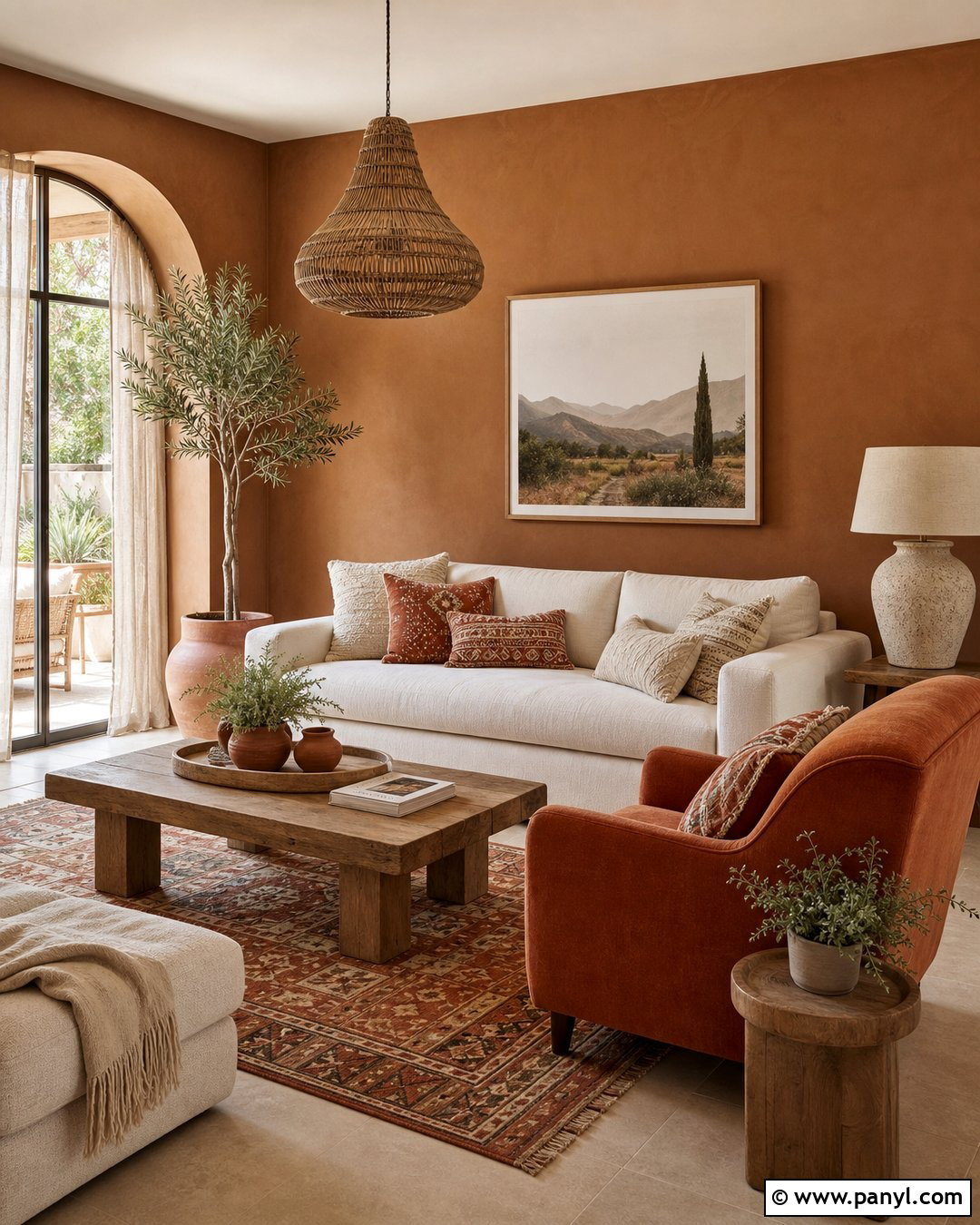
Terracotta decor brings an earthy red-orange note to caramel walls, resulting in a warm room with Mediterranean influence. Begin with an ivory sofa or bed so the related colors have a pale visual anchor. Introduce terracotta through patterned pillows, a large clay-colored rug, pottery, and one upholstered accent chair. Use rustic oak furniture, woven pendant lighting, and natural linen curtains to continue the relaxed material palette. Olive green plants provide cooling contrast and prevent the space from feeling too orange. Add cream plaster lamps or pale stone accessories between the stronger hues. Keep the ceiling and trim soft white. When carefully balanced, caramel and terracotta create a welcoming, sun-warmed effect that feels layered and organic rather than overly themed or dominated by one color family.
24. Caramel Walls Small Room With Light Furniture
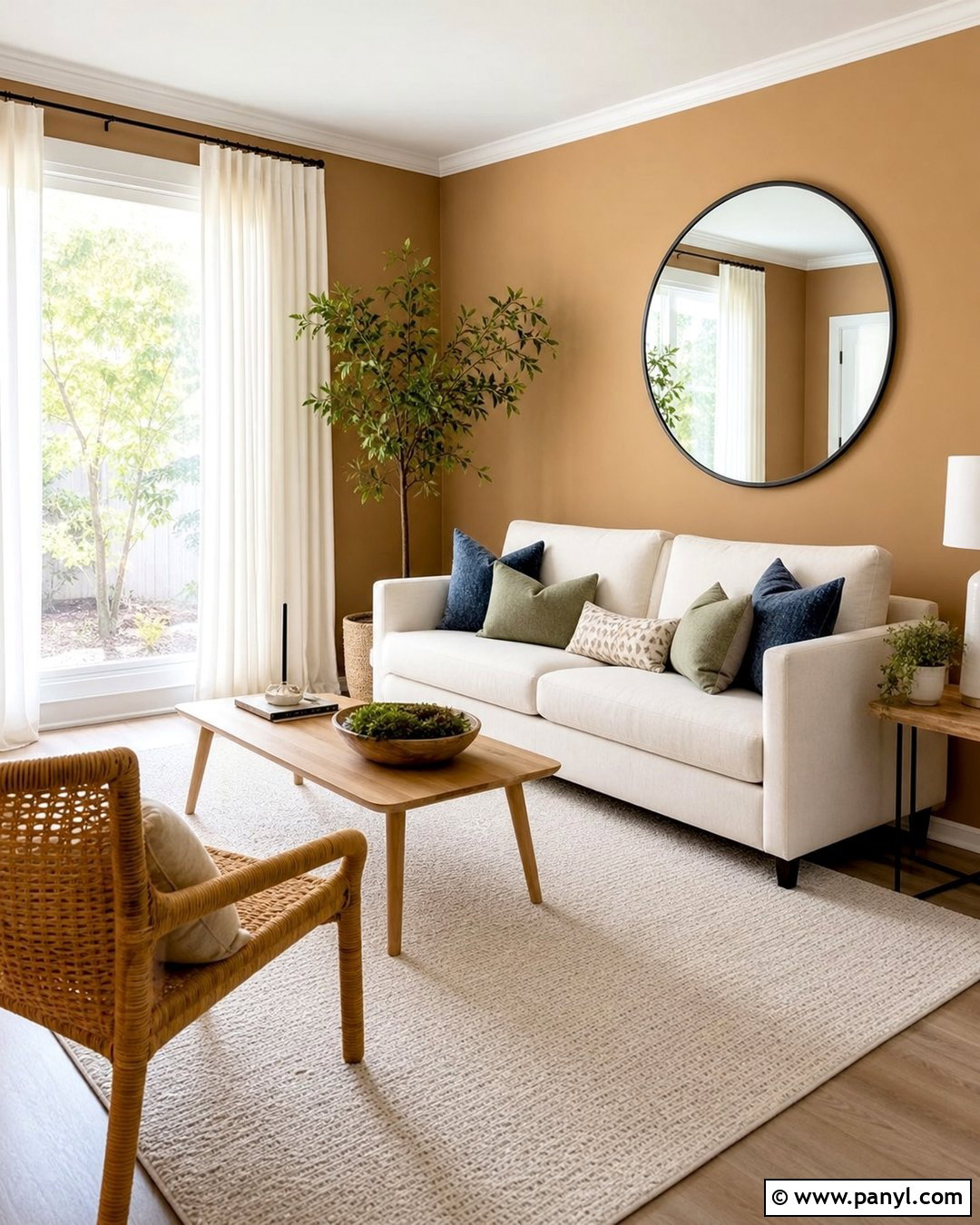
A small room can support caramel walls when the furnishings and upper surfaces provide enough brightness. Select a lighter caramel tone and keep the ceiling, trim, and interior doors creamy white. Choose furniture with narrow legs and pale finishes, such as a compact ivory sofa, light oak table, and woven accent chair. A large cream rug reduces the amount of dark flooring visible and makes the layout feel more open. Hang curtains at ceiling height and extend the rod beyond the window to maximize daylight. Use one large mirror instead of several small wall decorations. Limit accessories to a few pieces in blue, green, or white. Good circulation matters, so avoid placing furniture in every corner. The finished room will feel intentionally cozy rather than cramped or visually crowded.
25. Caramel Walls Open Concept Space
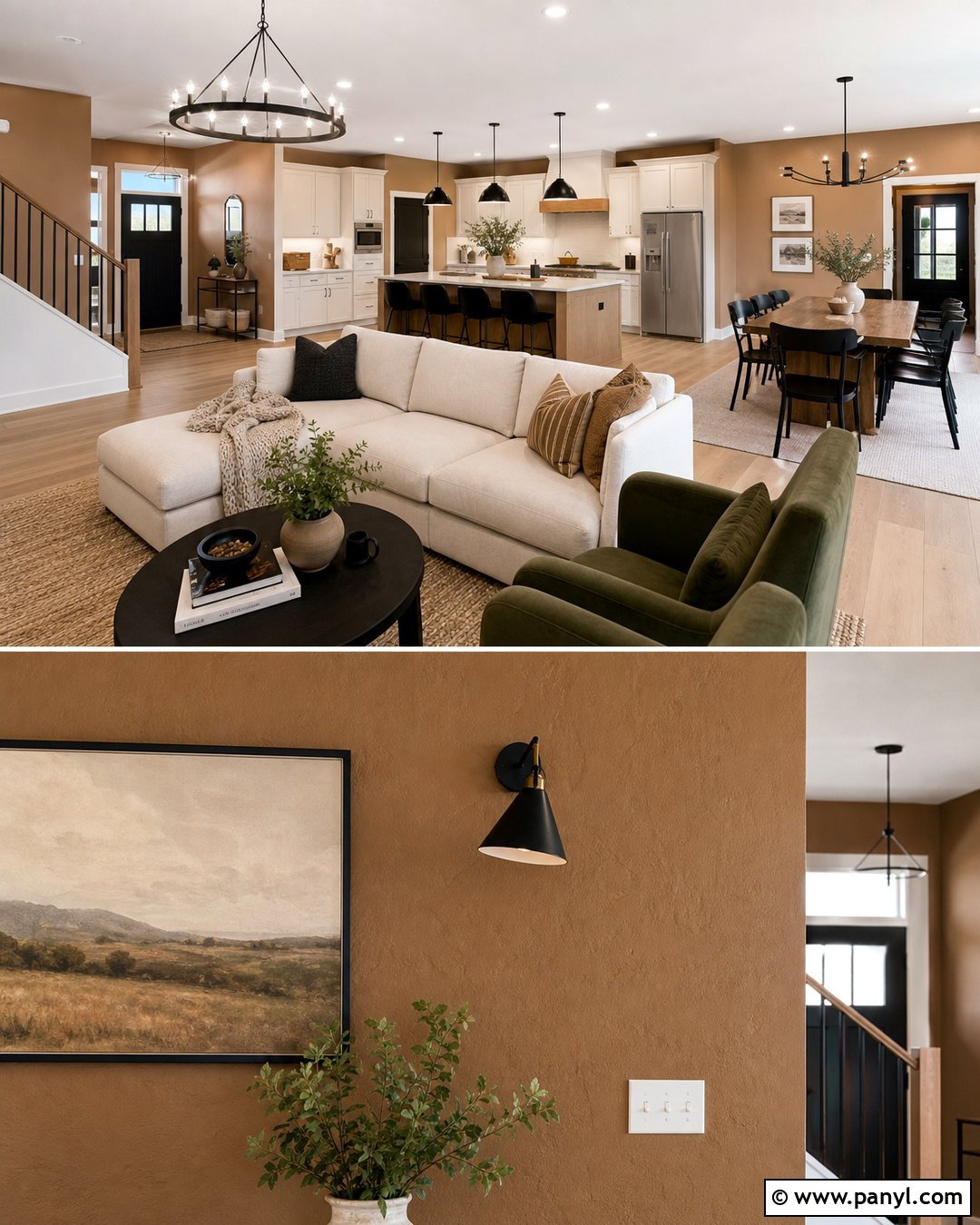
An open concept space needs a repeated palette that connects each functional zone. Use the same caramel wall color throughout the living, dining, and kitchen areas, then vary the furnishings to give each section its own identity. A cream sectional and olive chairs can define the living room, while a walnut table with black chairs anchors the dining zone. In the kitchen, use warm white cabinetry, pale quartz counters, and aged brass hardware. Repeat oak or walnut details in all three areas for continuity. Large rugs should coordinate without matching exactly, and lighting fixtures can share a black or brass finish. Keep trim and ceilings warm white. This approach allows the caramel walls to create a unified background while furniture placement, rugs, and lighting organize the larger floor plan.
Conclusion:
These 25 caramel walls show how one warm color can create many distinct interiors. Caramel works with creamy neutrals, natural wood, navy blue, sage green, terracotta, black, and brushed metals, but each room still needs clear contrast. Begin by testing several paint samples beside your flooring, trim, and largest furnishings. Then build the room with a balanced mix of light, medium, and dark tones. Natural textures can add depth without making the color scheme feel busy. Whether you want a calming bedroom, welcoming entryway, practical kitchen, or polished living room, caramel provides a comfortable foundation. Use these 25 caramel walls as inspiration, but adjust the exact tone and supporting palette to suit your home’s light and architecture.

Related Ideas and Inspiration:
Leave a Reply