
Mixing wood finishes can make a home feel warmer, richer, and more naturally collected. These 20 wood color combination ideas show how light, medium, and dark tones can work together without making a room look mismatched. The easiest approach is to choose one dominant wood for floors, cabinetry, or large furniture. Then add a contrasting finish through smaller pieces and repeat it at least once. Pay close attention to undertones as well. Golden woods feel best with warm colors, while gray-brown woods suit cooler palettes. Rugs, upholstery, stone, and metal can create useful visual space between different finishes. From airy white oak rooms to dramatic ebony accents, the complete looks below offer practical inspiration through 20 wood color combination ideas.

1. White Oak And Walnut Wood Combination
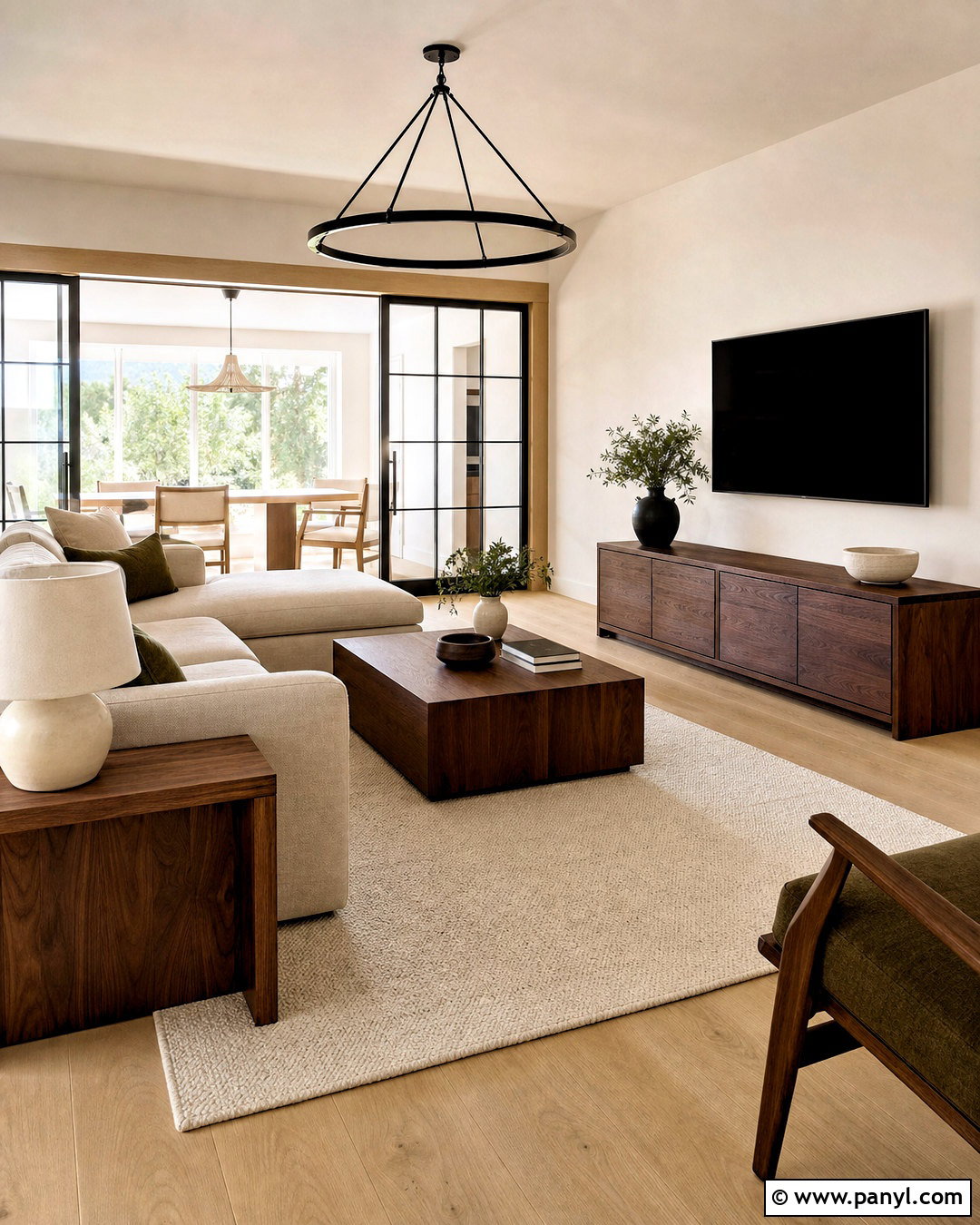
White oak and walnut create a balanced contrast that feels modern without becoming cold. Begin with matte white oak flooring as the dominant surface. Add a streamlined walnut media cabinet, coffee table, and slim picture frames to distribute the darker tone around the living room. An oatmeal sofa and cream wool rug provide separation between the woods, preventing the furniture from blending into the floor. Use warm white walls, black metal lighting, and muted olive pillows for definition. A white oak side chair with woven upholstery can repeat the floor color at eye level. This complete scheme works especially well in open rooms because walnut creates clear focal points while white oak keeps the overall design bright and relaxed.
2. Honey Oak And Dark Brown Wood Combination
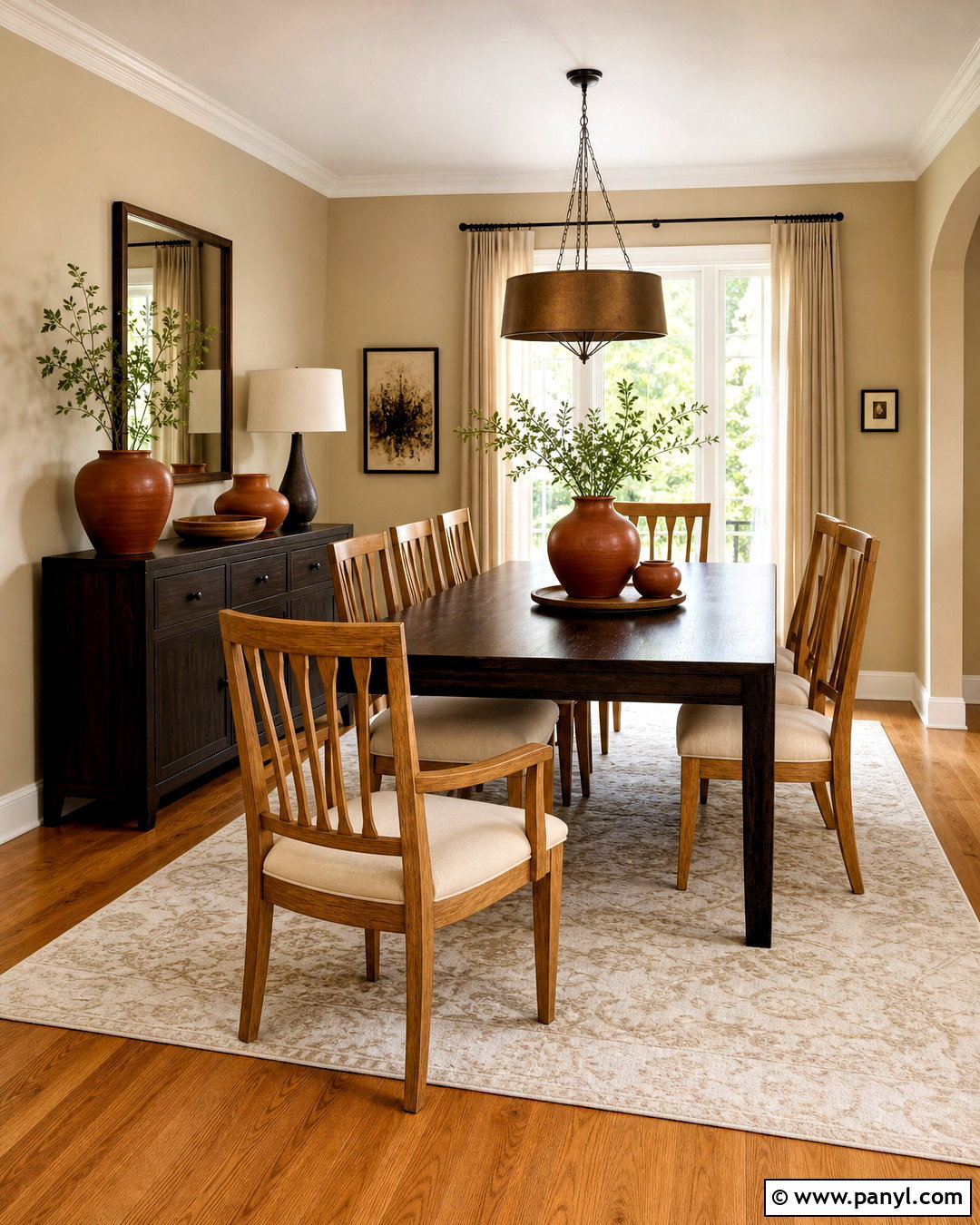
A honey oak and dark brown wood combination brings familiar warmth to a comfortable dining room. Let honey oak flooring establish the golden base, then anchor the room with a deep espresso dining table. Choose honey oak chairs with cream upholstered seats so the lighter finish appears beyond the floor. A dark brown sideboard can repeat the table without making every furniture piece match. Soft beige walls, an ivory patterned rug, and linen curtains keep the palette calm. Add aged bronze lighting and rust-colored ceramics to complement the wood’s warm undertones. The strong value difference is important here. A dark table looks intentional against golden flooring, while two almost-matching medium browns might appear uneven or accidentally coordinated.
3. Natural Maple And Cherry Wood Combination
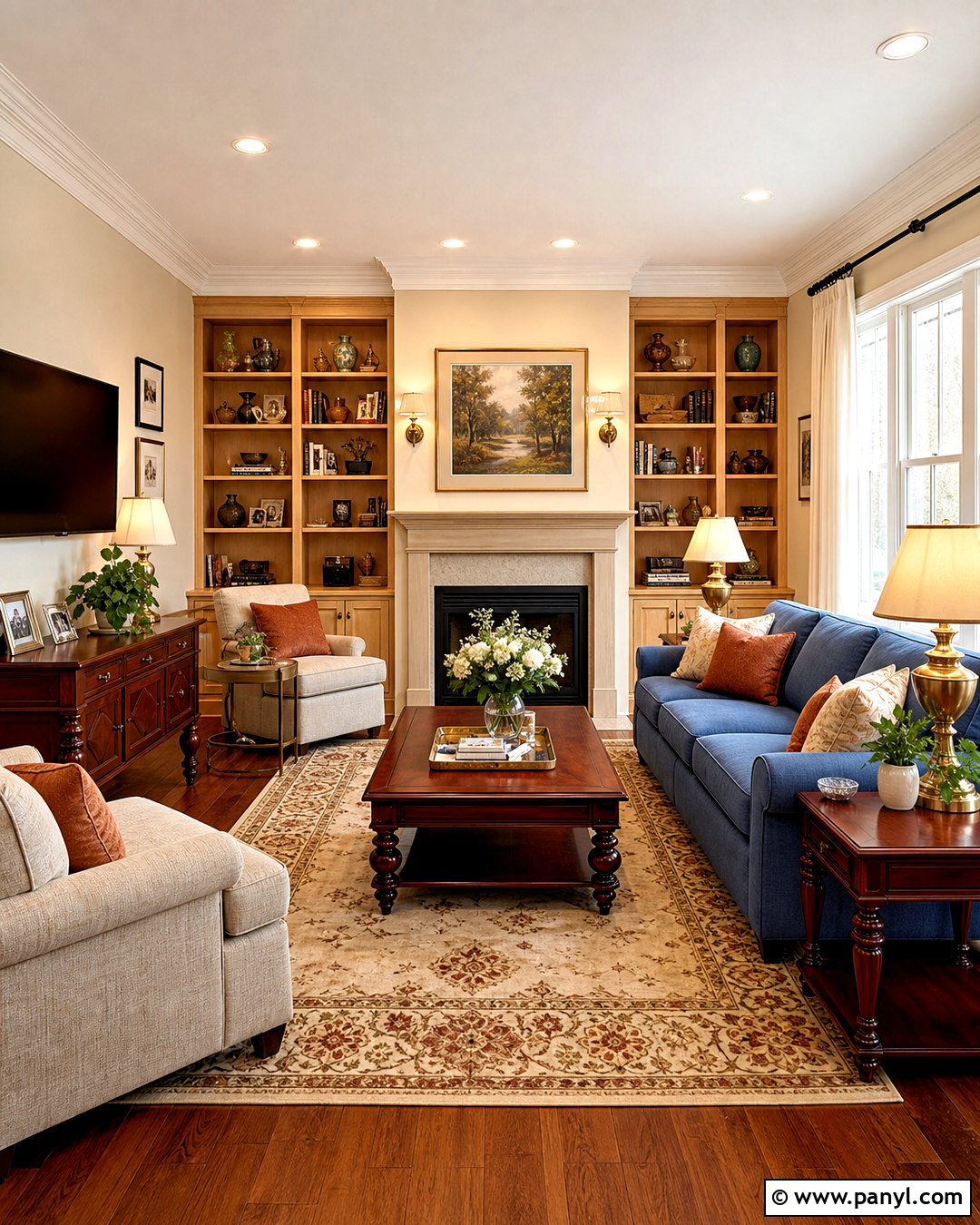
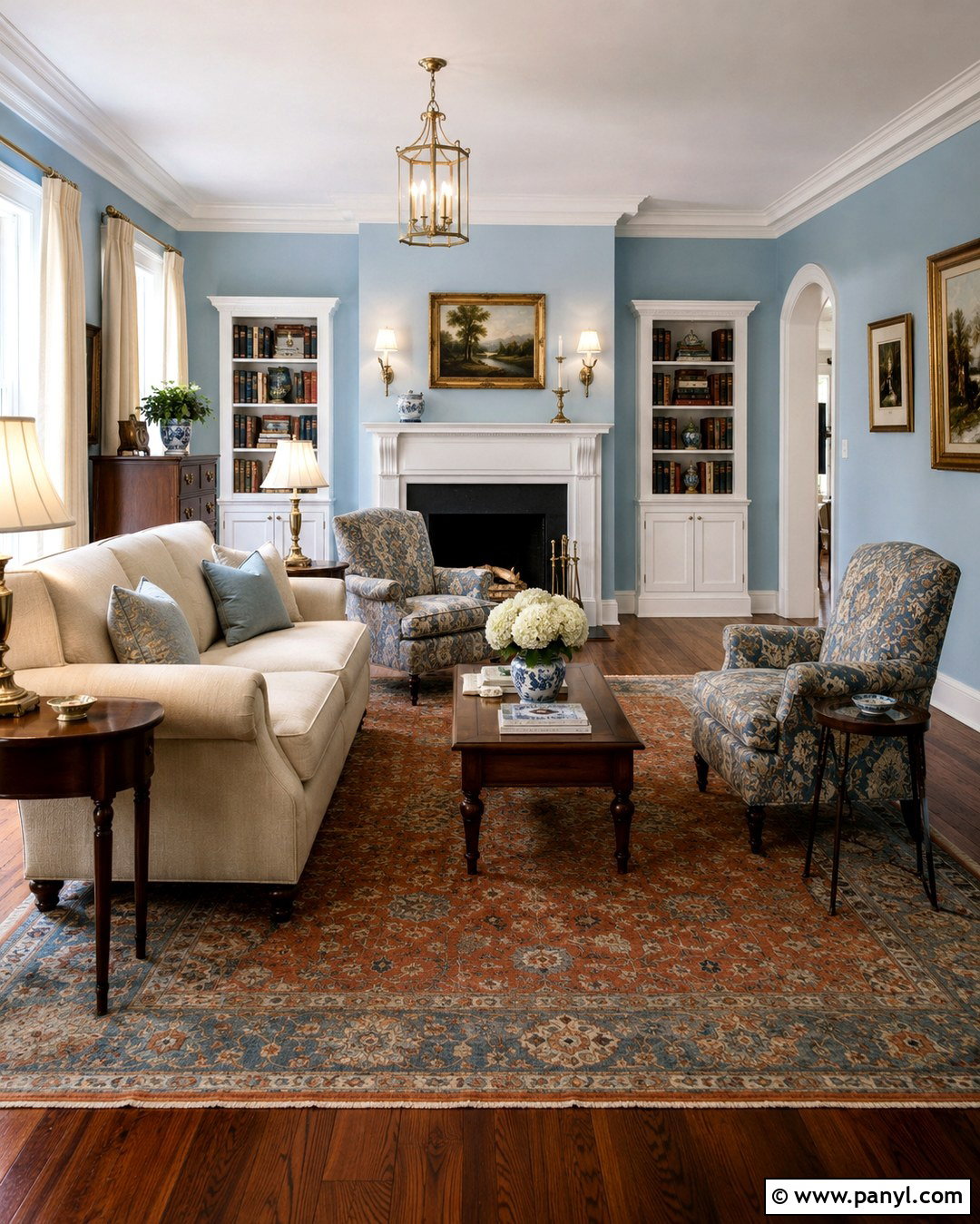
Soft maple and reddish cherry create a warm, traditional pairing with enough contrast for a layered family room. Use natural maple built-in shelves or flooring as the lighter foundation. Introduce cherry through a substantial coffee table, console, and small decorative frames. Warm ivory walls soften the red undertones, while a muted blue sofa adds gentle balance without making the room feel cool. Choose a rug containing cream, dusty blue, and touches of cinnamon to connect the furniture and wood finishes. Brushed brass lamps and classic linen curtains complete the room. Keep the cherry pieces spaced apart rather than grouped together. Repeating that rich reddish tone across different areas makes the contrast with maple feel deliberate, coordinated, and visually comfortable.
4. Ash Wood And Charcoal Wood Combination
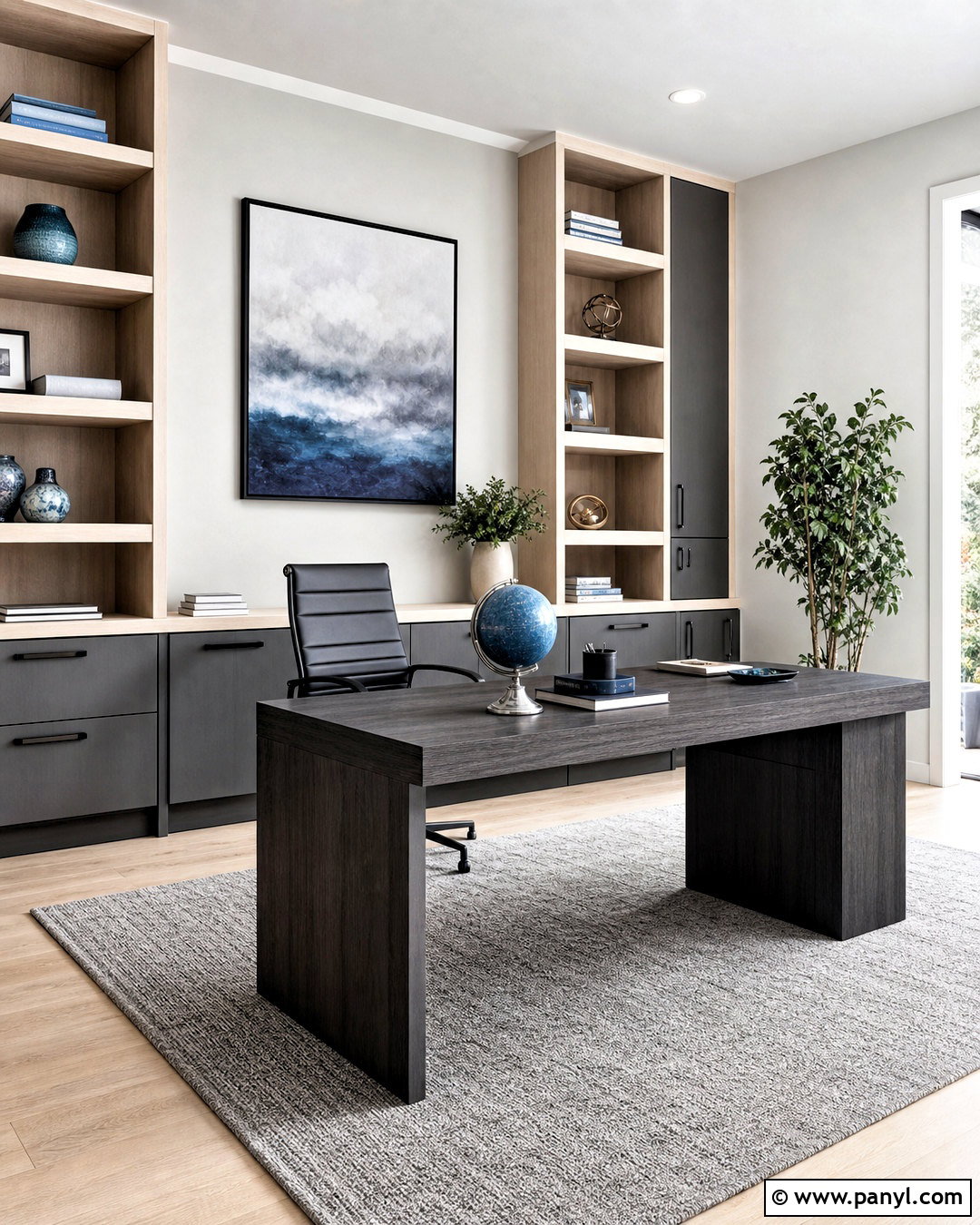
Cool ash and charcoal-stained wood form a clean combination for a contemporary home office. Start with pale ash flooring and a simple ash shelving wall to keep the workspace open. Add a charcoal wood desk with matching drawer fronts as the main focal point. A black-framed chair, graphite task lamp, and dark cabinet handles strengthen the deeper finish without overwhelming the room. Use soft gray-white walls and a textured greige rug to bridge the contrast. Muted blue accessories and one leafy plant provide controlled color. This palette works because both wood finishes have restrained, cooler undertones. Avoid orange or strongly red wood accents, which could interrupt the quiet effect. The completed office should feel crisp, practical, and comfortable rather than stark.
5. Light Oak And Black Wood Combination
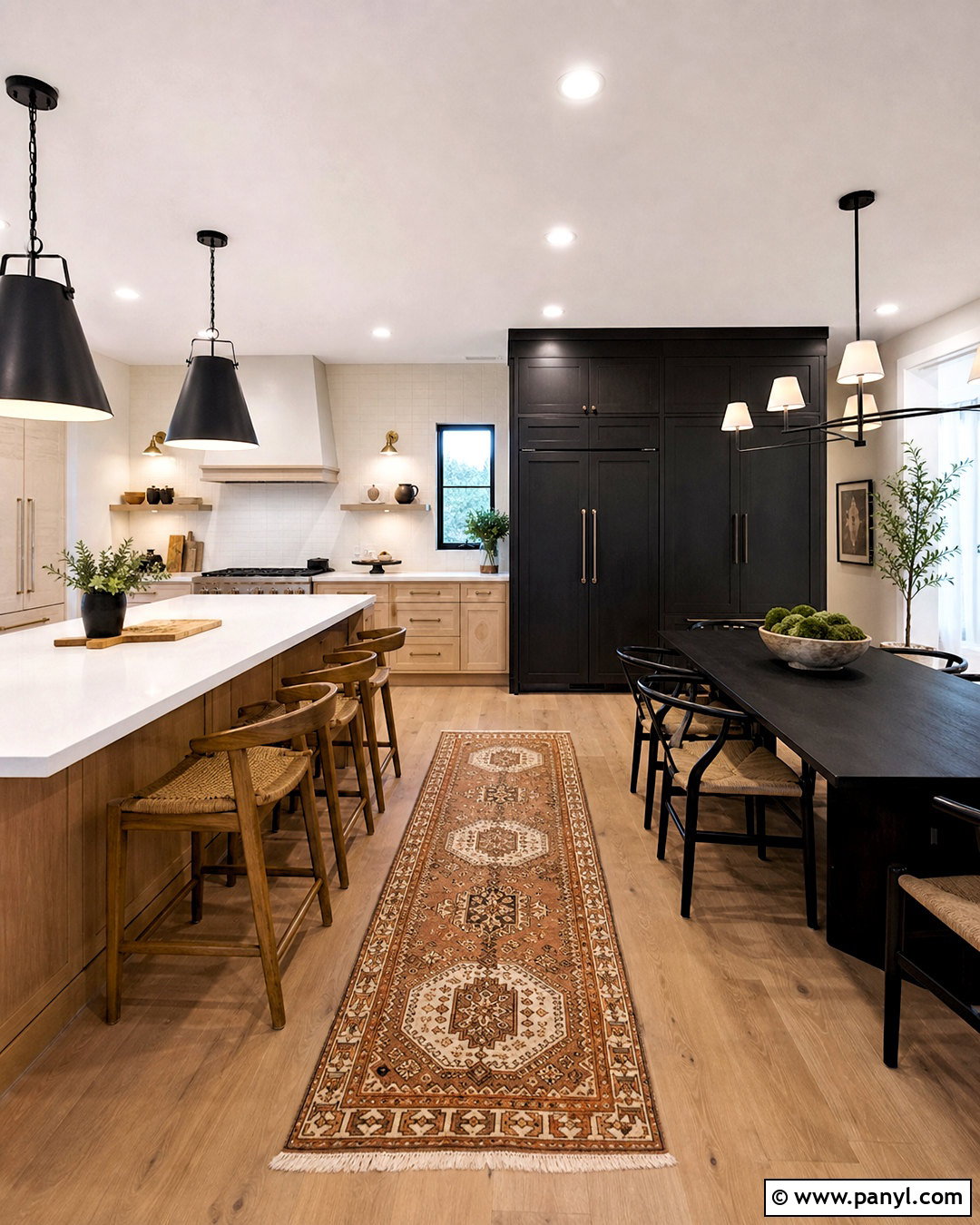
Light oak paired with black wood creates a bold, graphic kitchen that still feels welcoming. Use light oak for lower cabinets or a large island, allowing its natural grain to provide warmth. Choose matte black wood for tall pantry cabinets and a slim dining table. White quartz countertops, a warm white backsplash, and pale walls keep the dark sections from closing in the room. Repeat black through window frames, pendant lights, and chair legs. Oak barstools and open shelves carry the lighter finish across the kitchen. A runner with beige, black, and faded terracotta adds softness underfoot. Keep the cabinetry simple and minimize small decorative objects so the contrast remains the main feature of this complete, streamlined design.
6. Pine And Medium Walnut Wood Combination
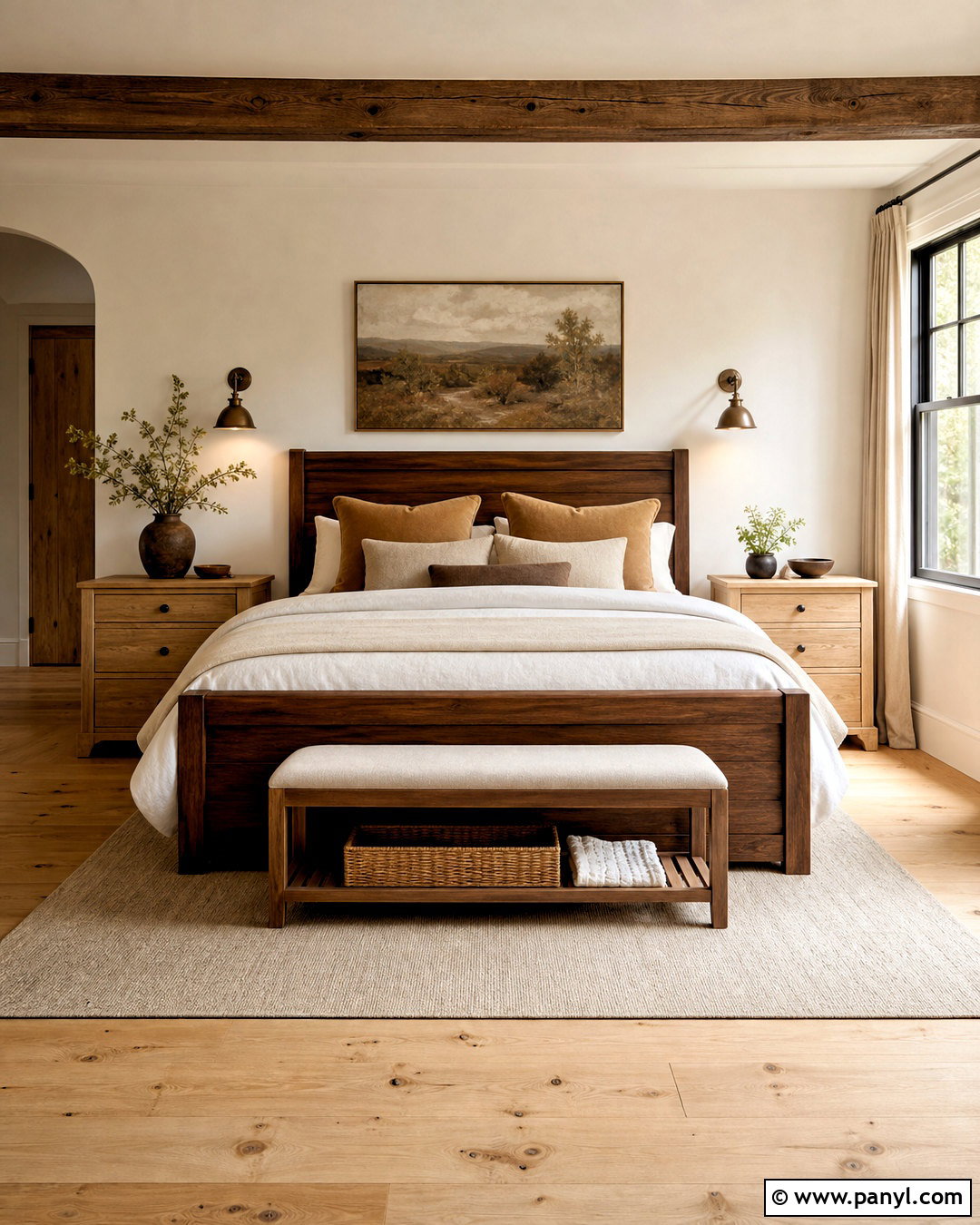
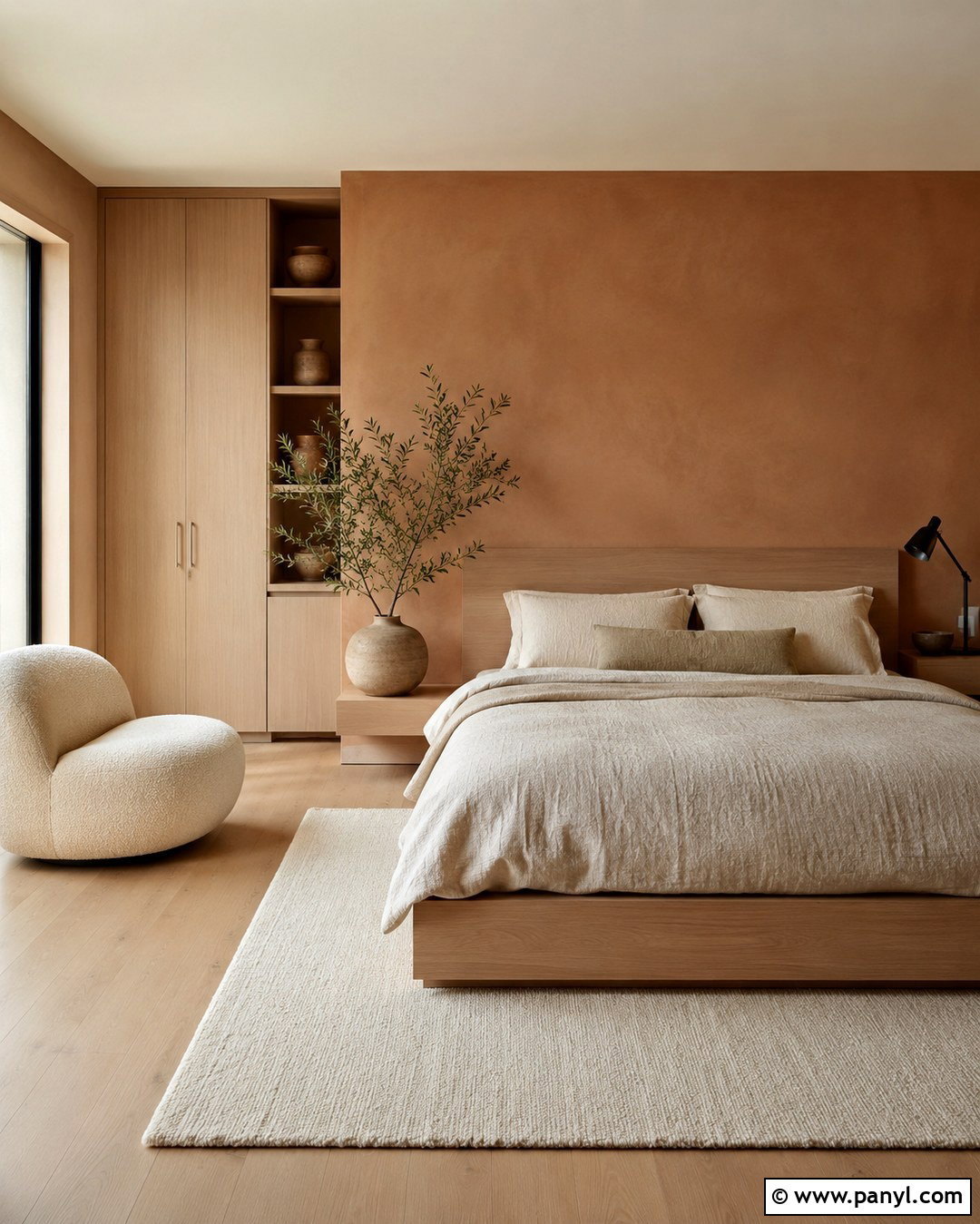
Pale pine and medium walnut can give a bedroom an easy, inviting character. Use wide-plank pine flooring or a pine paneled accent wall as the lightest wood element. Center the space with a medium walnut bed featuring a simple, visible grain. Matching walnut is not required for every piece; pine nightstands can repeat the architectural finish instead. Bring the palette together with creamy bedding, camel-colored pillows, and a soft taupe rug. Antique brass sconces complement the woods without appearing too polished. Add one walnut bench at the foot of the bed to balance the dark headboard. The surrounding walls should remain warm white or light beige, allowing the natural contrast to feel cozy while keeping the room fresh and uncluttered.
7. Red Oak And Mahogany Wood Combination
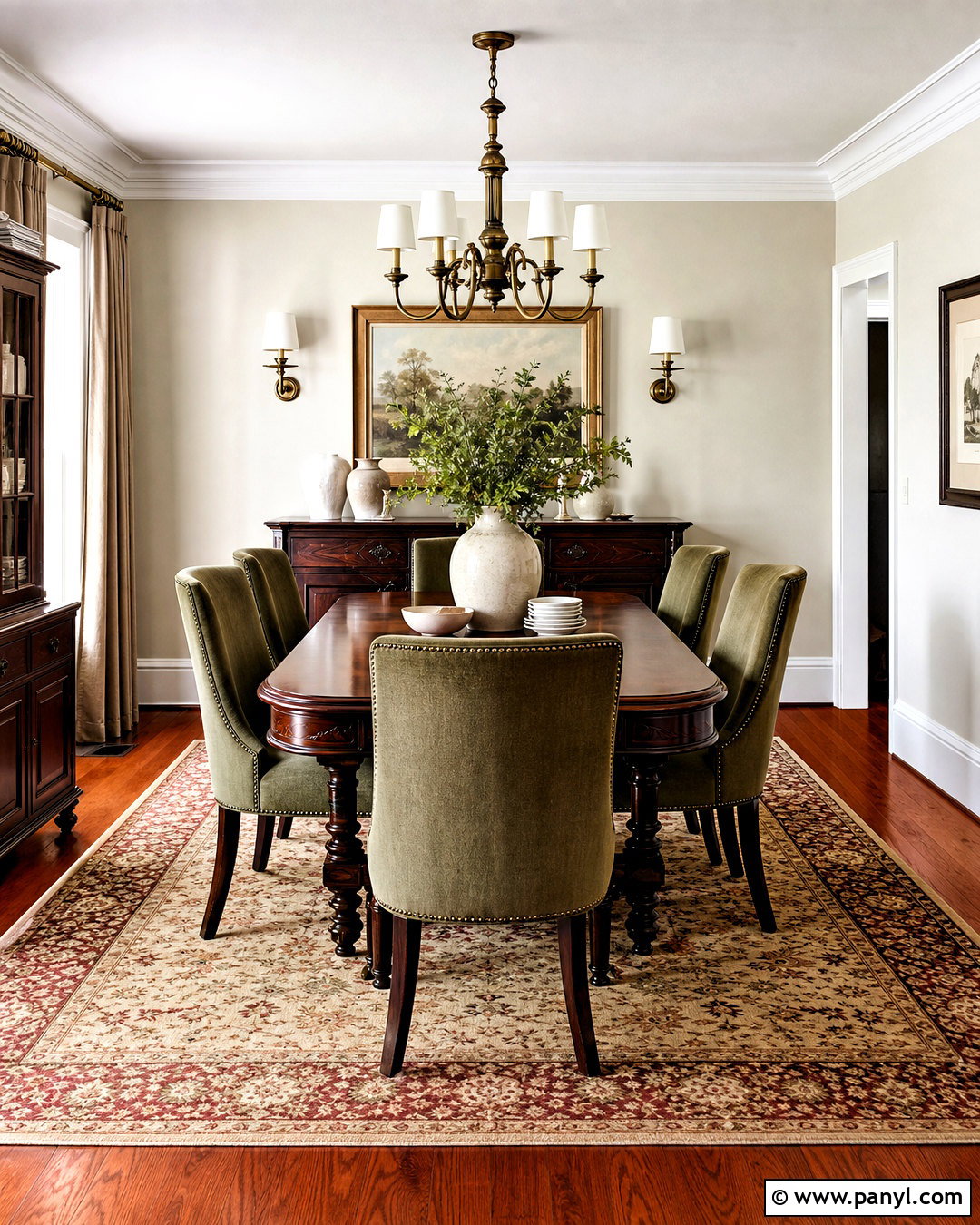
Red oak and mahogany deliver a deep, warm look suited to a formal dining space or traditional library. Make medium red oak flooring the dominant finish, then add a mahogany table, bookcase, or buffet with visible reddish-brown depth. Cream walls and off-white trim lighten the heavier woods. Upholstered dining chairs in moss green or muted navy introduce color while separating the table from the floor. A classic rug containing burgundy, beige, and green can unite the entire palette. Use aged brass lighting and simple ceramic accessories rather than adding more wood species. Mahogany should act as the richer accent, not cover every surface. This controlled arrangement creates an elegant room that feels established and comfortable rather than overly dark or dated.
8. Birch And Espresso Wood Combination
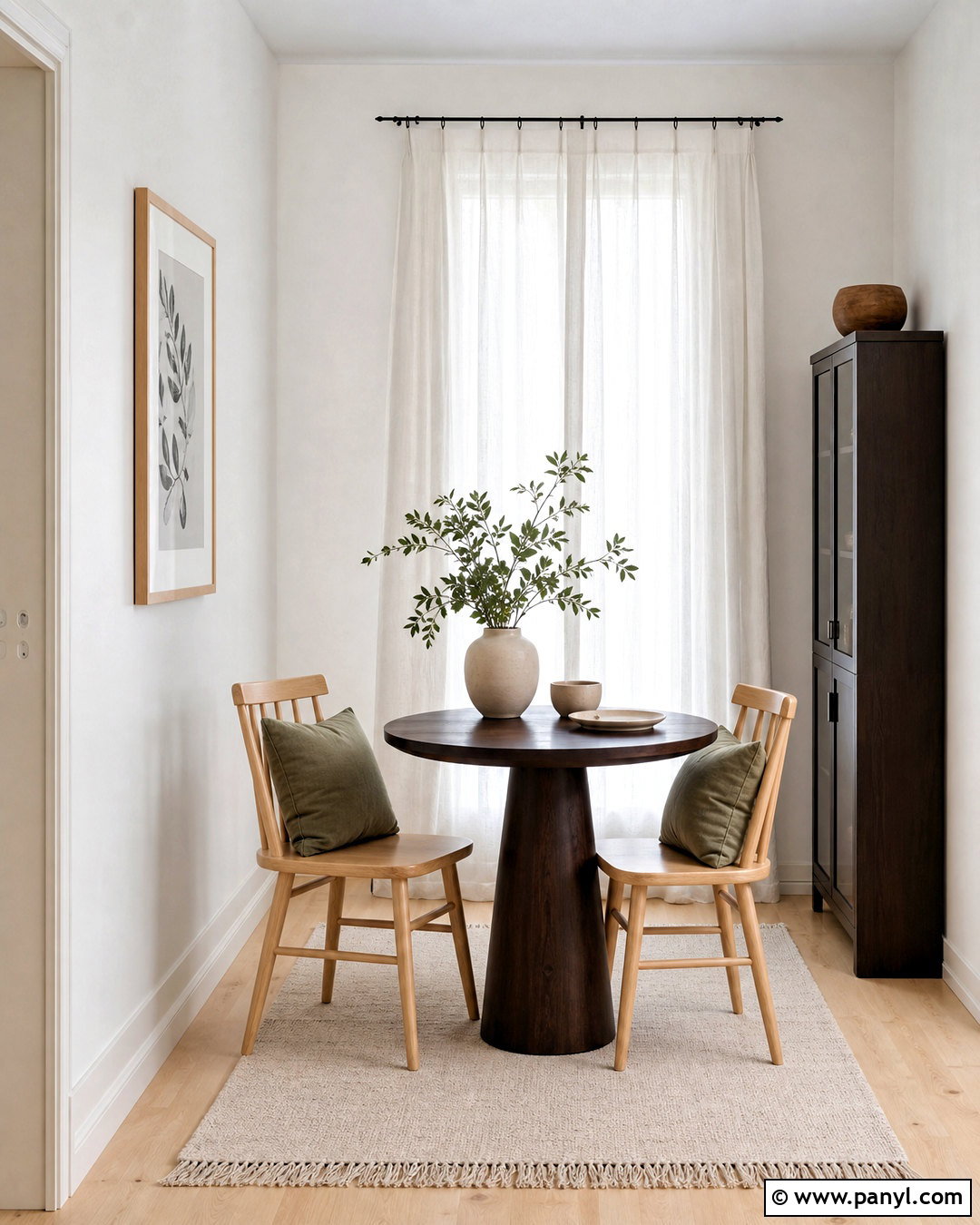
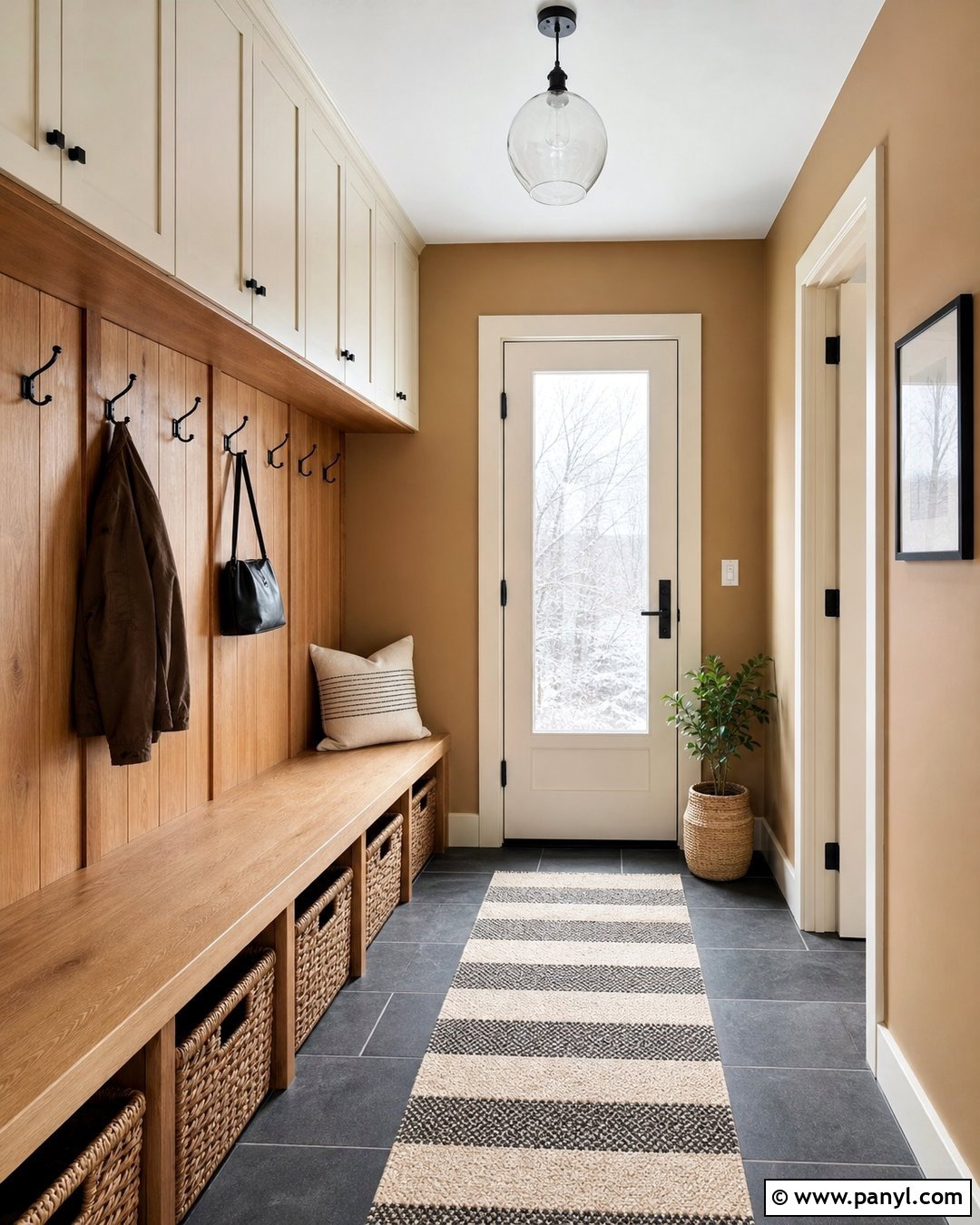
Birch and espresso wood offer striking contrast for a small dining nook. Pale birch flooring, chairs, or wall shelving keeps the limited area visually open. Introduce espresso through a compact pedestal table and a narrow storage cabinet, giving the room a strong center. Warm white walls, sheer curtains, and an ivory flat-weave rug prevent the dark pieces from feeling oversized. Repeat espresso in a picture frame and pendant light detail. Birch serving boards or decorative bowls can echo the chairs on the cabinet surface. Add sage green seat cushions and a few neutral ceramics for softness. Because the woods sit at opposite ends of the light-to-dark range, they appear intentionally mixed. This clear contrast is often easier to coordinate than similar medium-brown finishes.
9. Whitewashed Wood And Driftwood Gray Combination
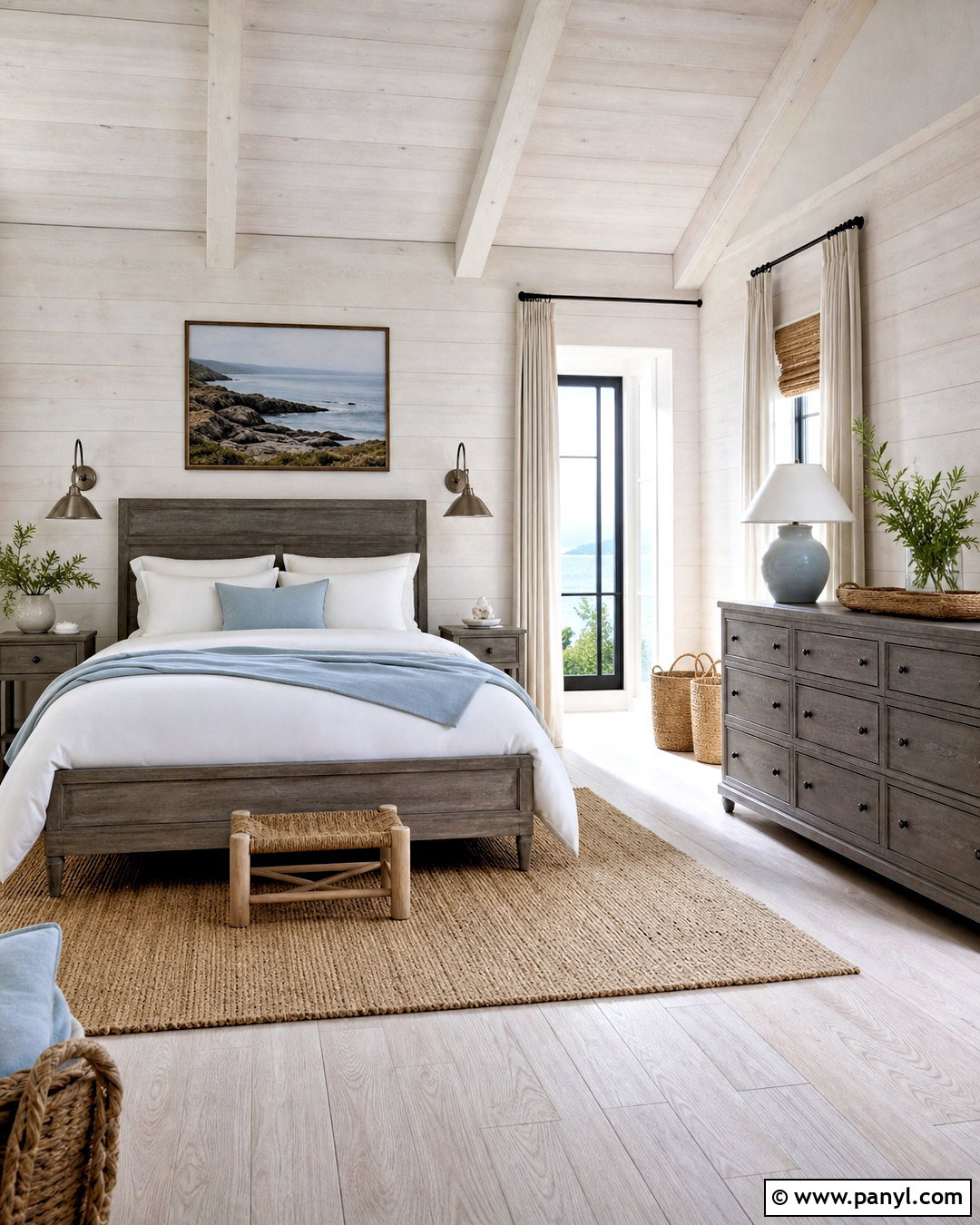
Whitewashed wood and driftwood gray create a breezy, relaxed bedroom without relying on identical furniture. Use whitewashed oak flooring or wall paneling as the brightest surface. Choose a driftwood gray bed, dresser, and mirror frame with a natural, low-sheen texture. Crisp white bedding, a pale blue throw, and a sandy beige rug introduce a soft coastal palette without becoming themed. Woven baskets and linen curtains add warmth that offsets the cooler gray finish. Include one whitewashed bench or small side table to repeat the floor color above ground level. Avoid glossy hardware or strongly orange woods. Matte nickel sconces and simple ceramic lamps suit the restrained materials. The completed room should look sunlit, comfortable, and naturally layered rather than heavily decorated.
10. Golden Oak And Ebony Wood Combination
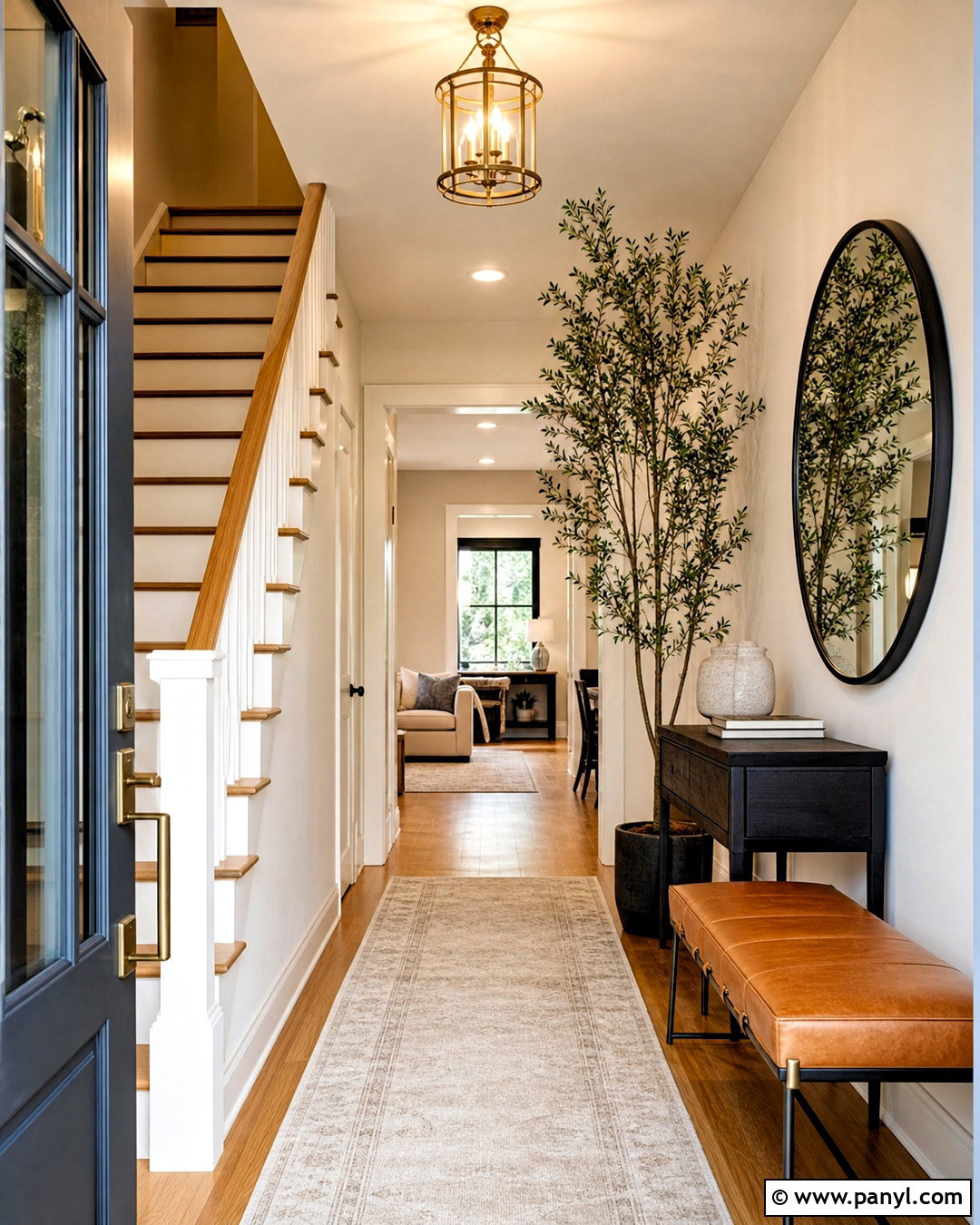
Golden oak and ebony wood can transform an entryway into a warm but dramatic first impression. Let golden oak flooring, stair treads, or wall slats provide the dominant natural tone. Add an ebony console, round mirror frame, and narrow bench legs for sharp definition. Warm white walls and a cream runner keep the dark accents from feeling severe. Use cognac leather on the bench to bridge the golden and black-brown finishes. Matte black hooks and an aged brass ceiling light add depth without competing with the wood grain. A tall plant in a textured ivory planter introduces freshness. Keep the ebony pieces slim and spaced around the entry. This allows them to outline the room while the oak remains bright, welcoming, and visually prominent.
11. Natural Oak And Gray-Brown Wood Combination
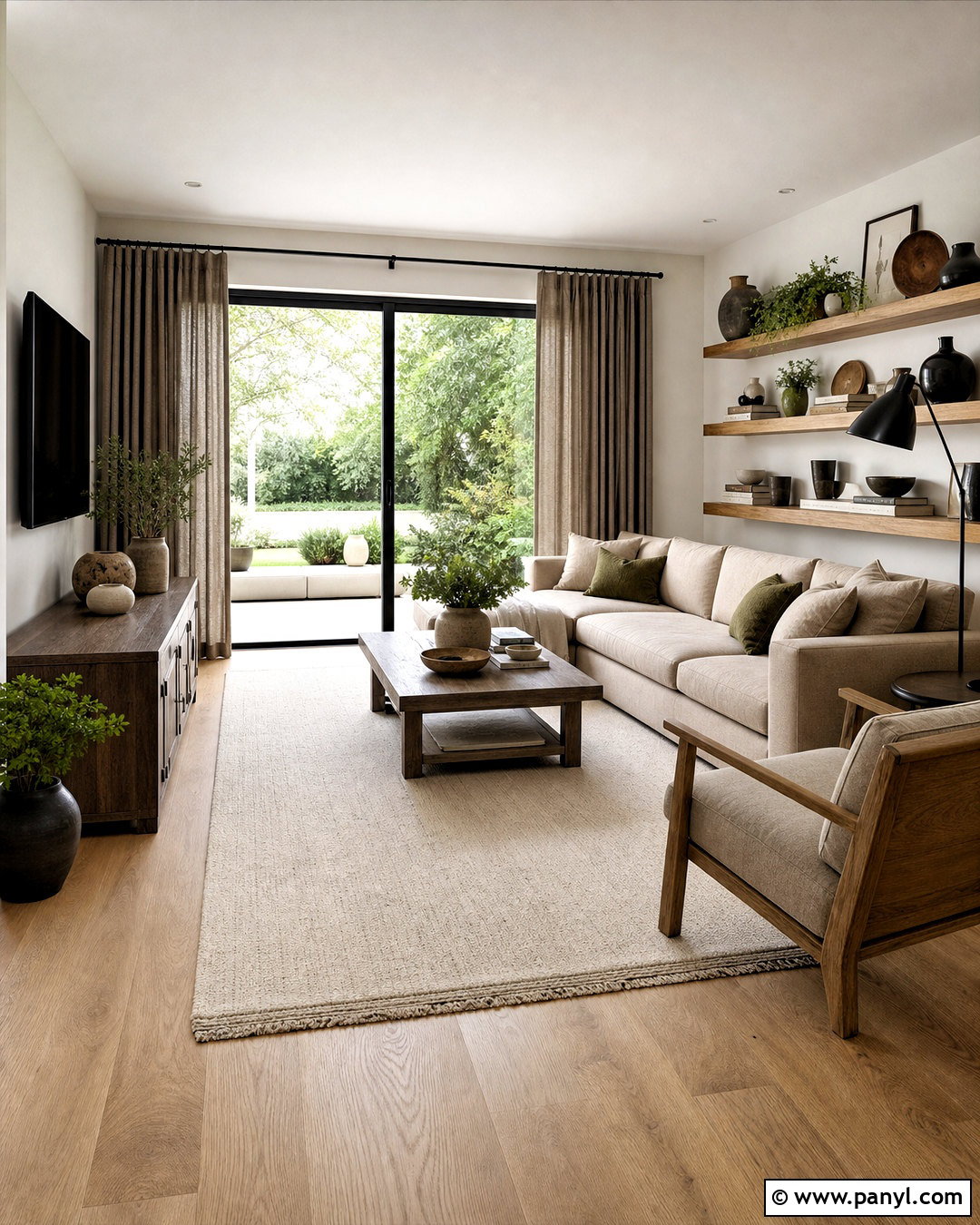
Natural oak and gray-brown wood produce a grounded neutral living room with both warm and cool qualities. Begin with natural oak flooring and a matching open bookshelf as the warm foundation. Choose a gray-brown coffee table and media console with a matte, slightly weathered finish. A warm greige sofa, ivory rug, and mushroom-colored curtains connect the two undertones. Add olive green pillows and black metal lighting for contrast. Use small oak accessories on the darker console, then repeat gray-brown through a side table across the room. This distribution prevents either finish from looking isolated. The palette works best with plenty of texture, including bouclé upholstery, linen, wool, and handmade ceramics. The finished space feels calm, contemporary, and easy to update seasonally.
12. Cedar And Dark Walnut Wood Combination
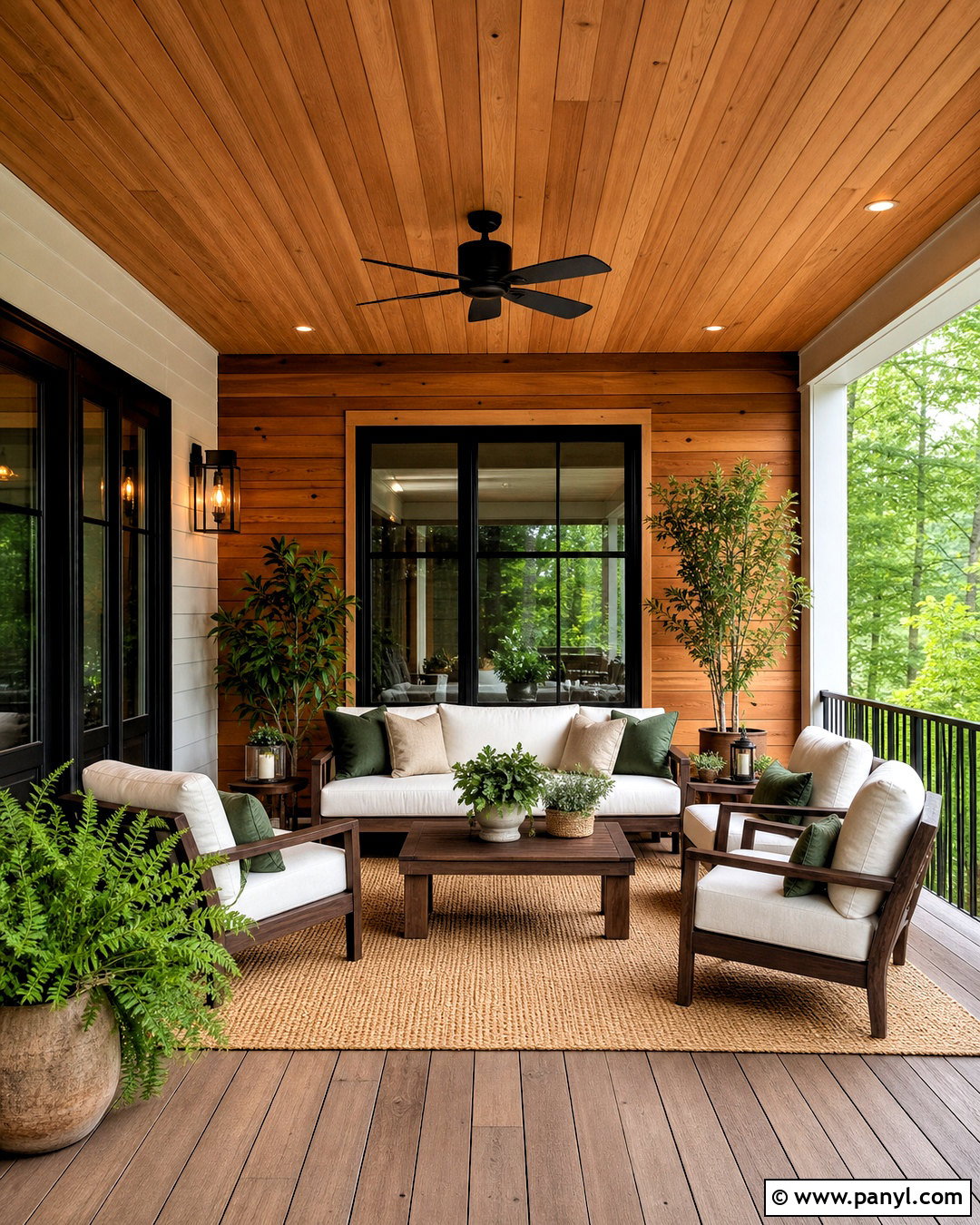
A cedar and dark walnut wood combination creates a rich, nature-inspired sunroom or covered porch. Use warm cedar planks on the ceiling or one feature wall, allowing their reddish-golden variation to lead the design. Add dark walnut lounge chairs, side tables, and a low storage cabinet for contrast. Cream cushions and a large natural fiber rug keep the darker furniture from becoming visually heavy. Forest green pillows, clay-colored planters, and leafy plants echo the outdoor setting. Choose black metal window frames and bronze light fixtures to define the architecture. Cedar should remain the most visible wood, while walnut anchors the seating arrangement. Together, the finishes produce a comfortable space that feels polished enough for entertaining but relaxed enough for daily reading and conversation.
13. Bamboo And Teak Wood Combination
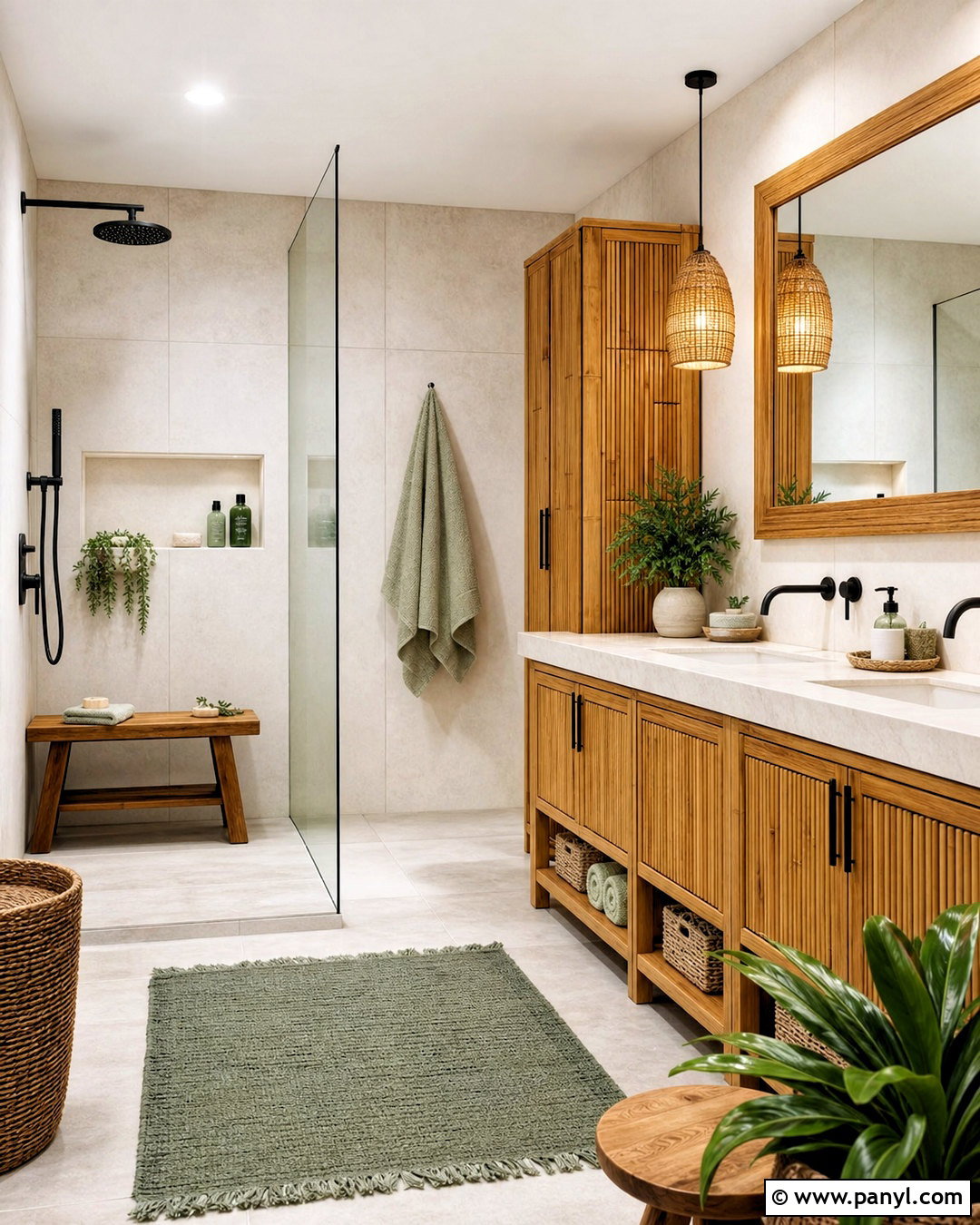
Golden bamboo and medium teak give a bathroom a warm, spa-like appearance while maintaining a clean modern layout. Use bamboo-front cabinetry for the vanity and a matching tall storage unit. Introduce teak through a slatted shower bench, framed mirror, and small bath accessories. Large warm white tiles and a pale stone countertop create breathing room between the two golden-brown woods. Brushed nickel or matte black fixtures add crisp contrast. Choose ivory towels, woven baskets, and one muted green bath mat to complete the palette. Because bamboo and teak are similar in warmth, their different grain patterns and depths provide the necessary variation. Keep surfaces organized and finishes matte. The final bathroom should feel natural and soothing without looking rustic or overloaded with wooden details.
14. Beech And Smoked Oak Wood Combination
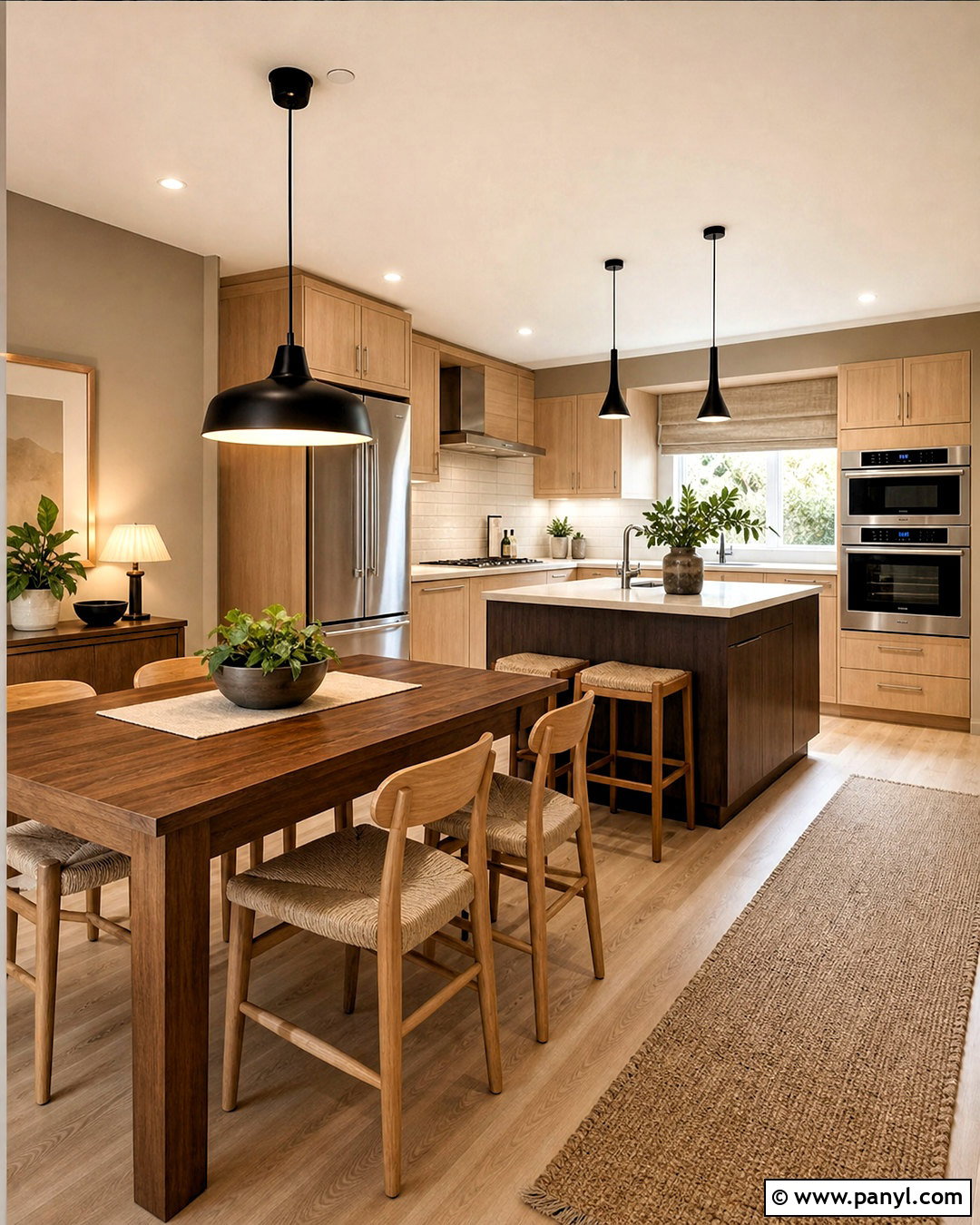
Light beech and smoked oak make a practical, contemporary choice for a compact kitchen and dining area. Use beech cabinetry to brighten the main work zone, then bring in smoked oak through a dining table, open shelves, or an island base. Warm white countertops and a creamy tile backsplash stop the deeper brown from dominating. Choose beech dining chairs with black upholstered seats, allowing both the light finish and dark accents to repeat. Soft taupe walls and a simple beige runner bridge the two woods. Add matte black pendants and brushed steel appliances for a balanced modern edge. The contrast should remain clearly visible, so avoid placing nearly identical medium stains nearby. This complete arrangement feels intentional, durable, and welcoming in everyday family spaces.
15. Pecan And Cream Painted Wood Combination
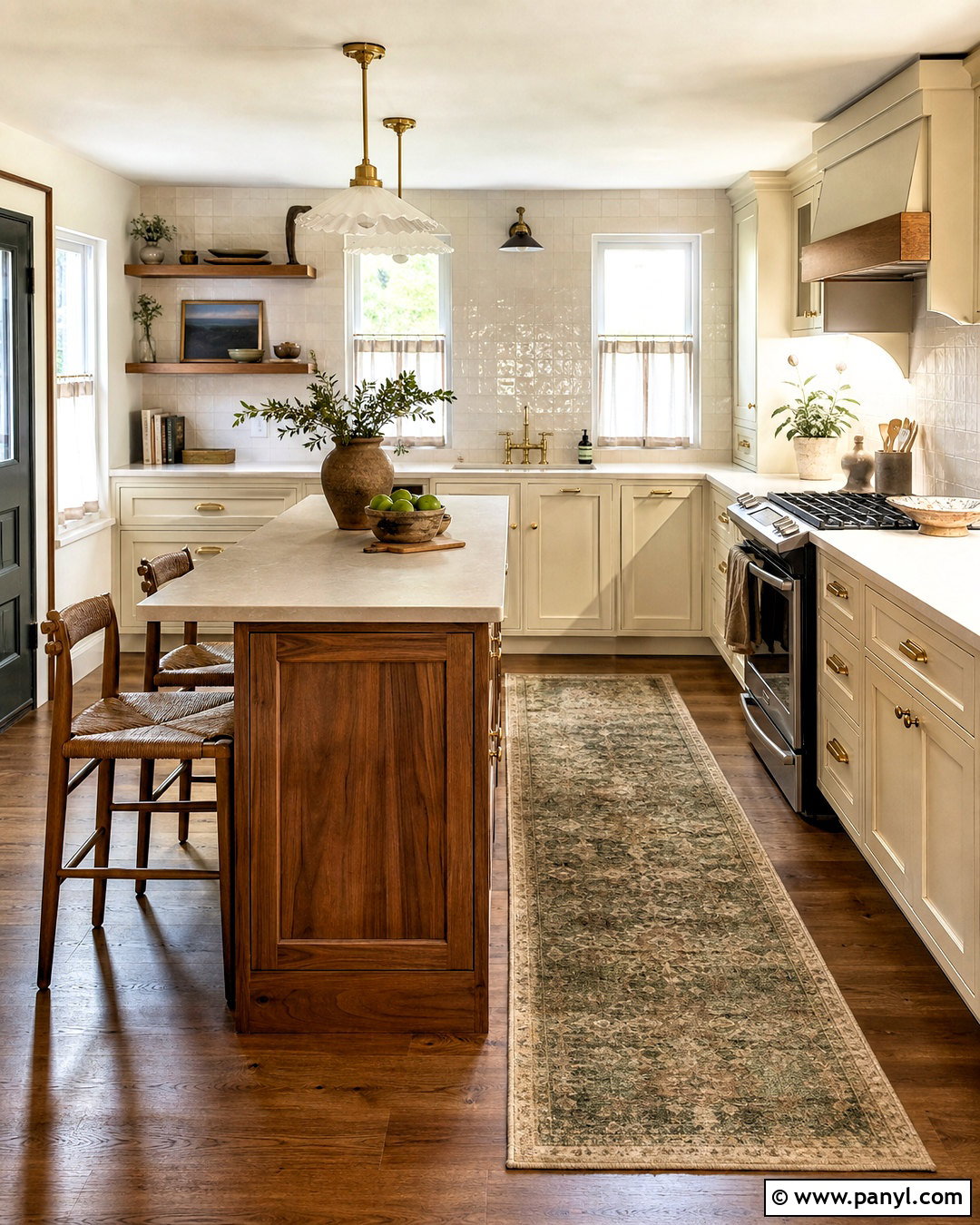
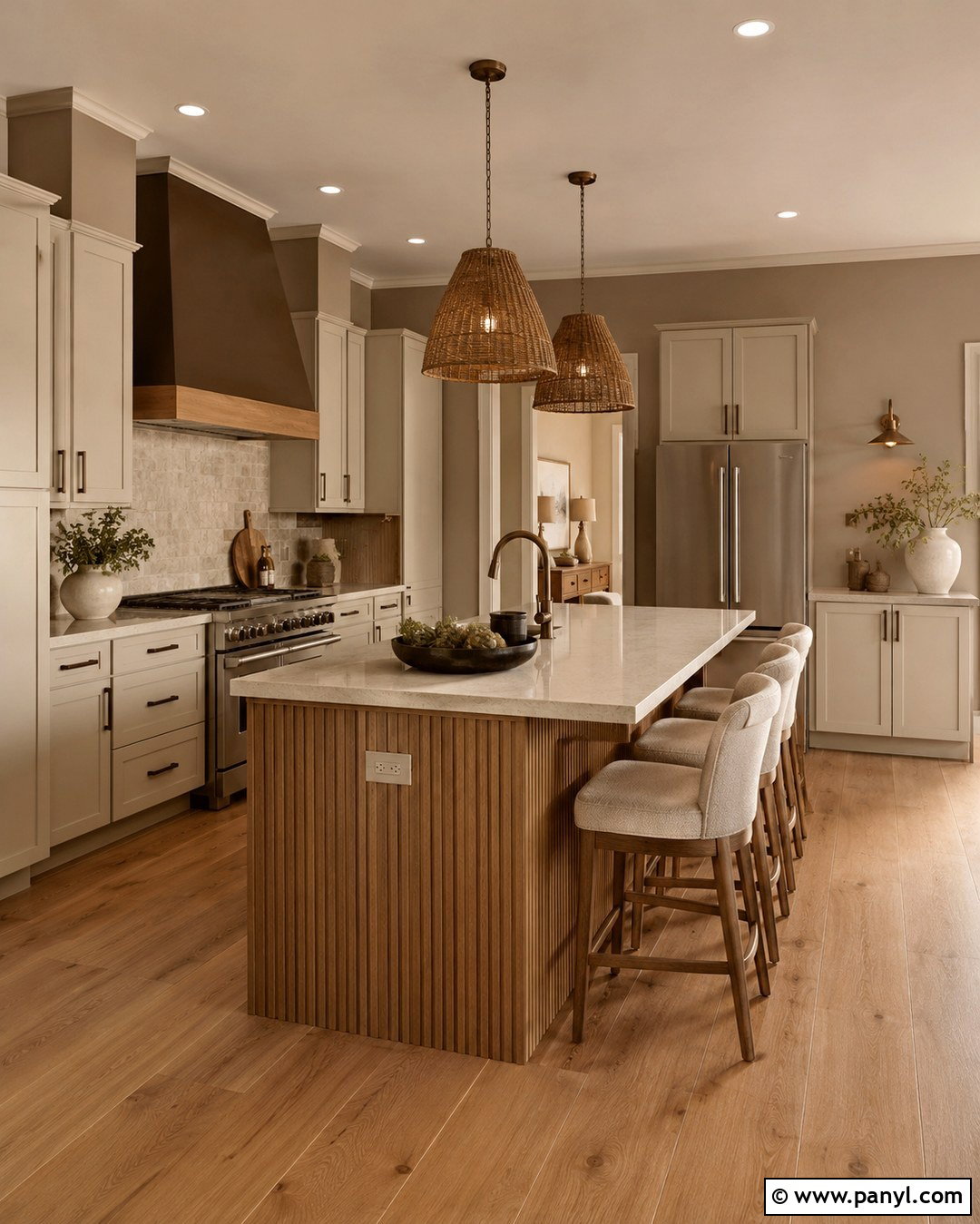
Pecan wood and cream painted wood create a friendly cottage kitchen with warmth and visual lightness. Use creamy painted cabinets around the perimeter, paired with a pecan wood island featuring natural amber and brown variation. Repeat pecan through open shelves, counter stools, and a simple range hood detail. Warm white quartz countertops and handmade ivory backsplash tile keep the scheme bright. Add unlacquered brass hardware, linen café curtains, and a muted green runner for gentle color. A medium oak floor can work if it shares the island’s golden undertone, but avoid a strong gray finish. The cream cabinetry gives the natural wood room to stand out. Together, these elements form a comfortable kitchen that feels collected, functional, and softly traditional without appearing old-fashioned.
16. Walnut And Sage Green Painted Wood Combination
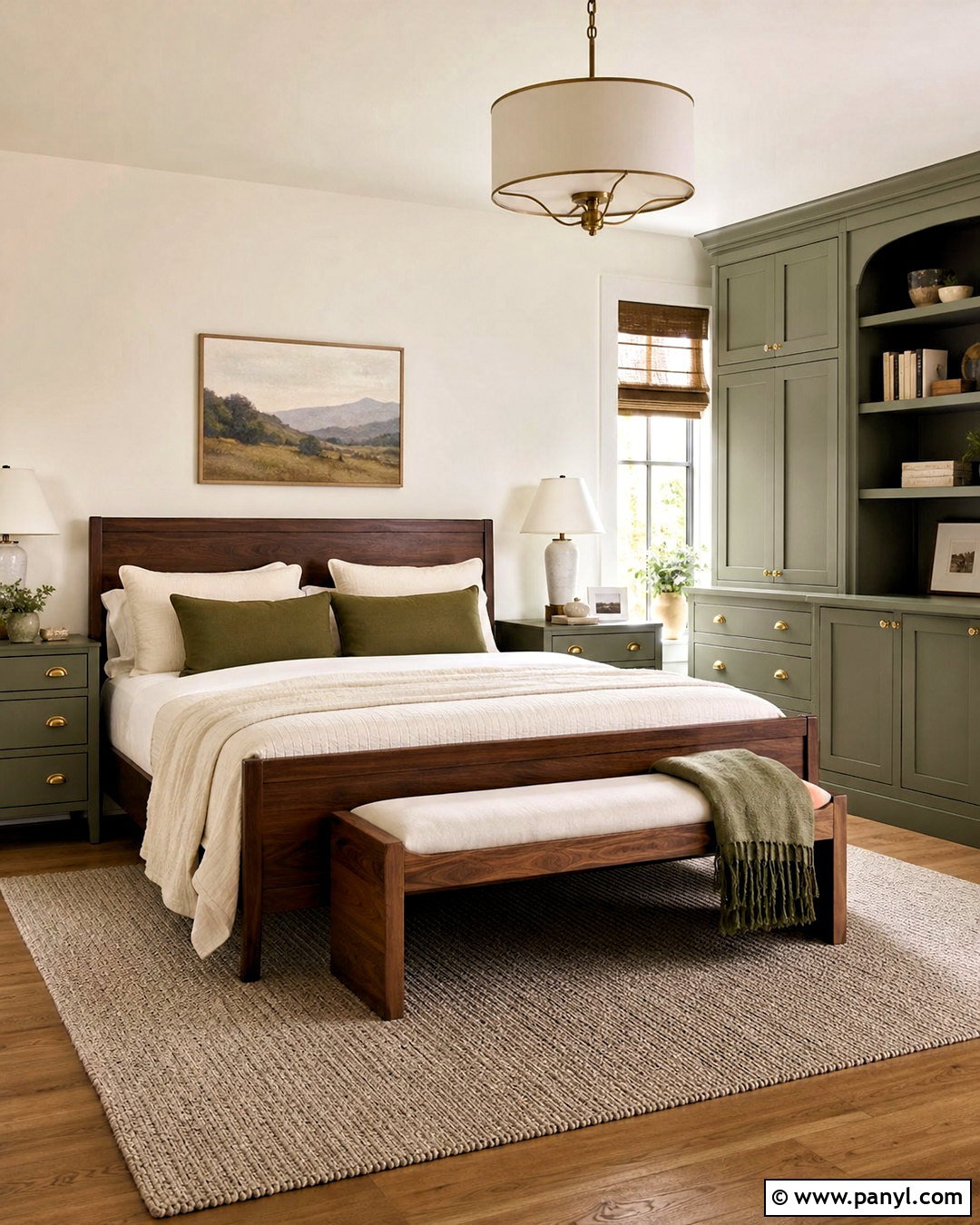
Walnut and sage green painted wood offer a calm, sophisticated look for a bedroom or home office. Choose a walnut bed, desk, or built-in shelving unit as the main natural finish. Paint secondary cabinetry or nightstands a soft, earthy sage green, allowing the color to highlight walnut’s rich brown grain. Warm white walls and an oatmeal rug provide a quiet background. Add cream bedding, olive accents, and aged brass hardware to strengthen the natural palette. A small walnut bench or chair placed opposite the largest wood piece helps balance the room. Keep the sage muted rather than bright or minty. The finished design feels grounded and restful, with enough color to appear distinctive while maintaining the versatility of a warm neutral interior.
17. White Oak And Navy Painted Wood Combination
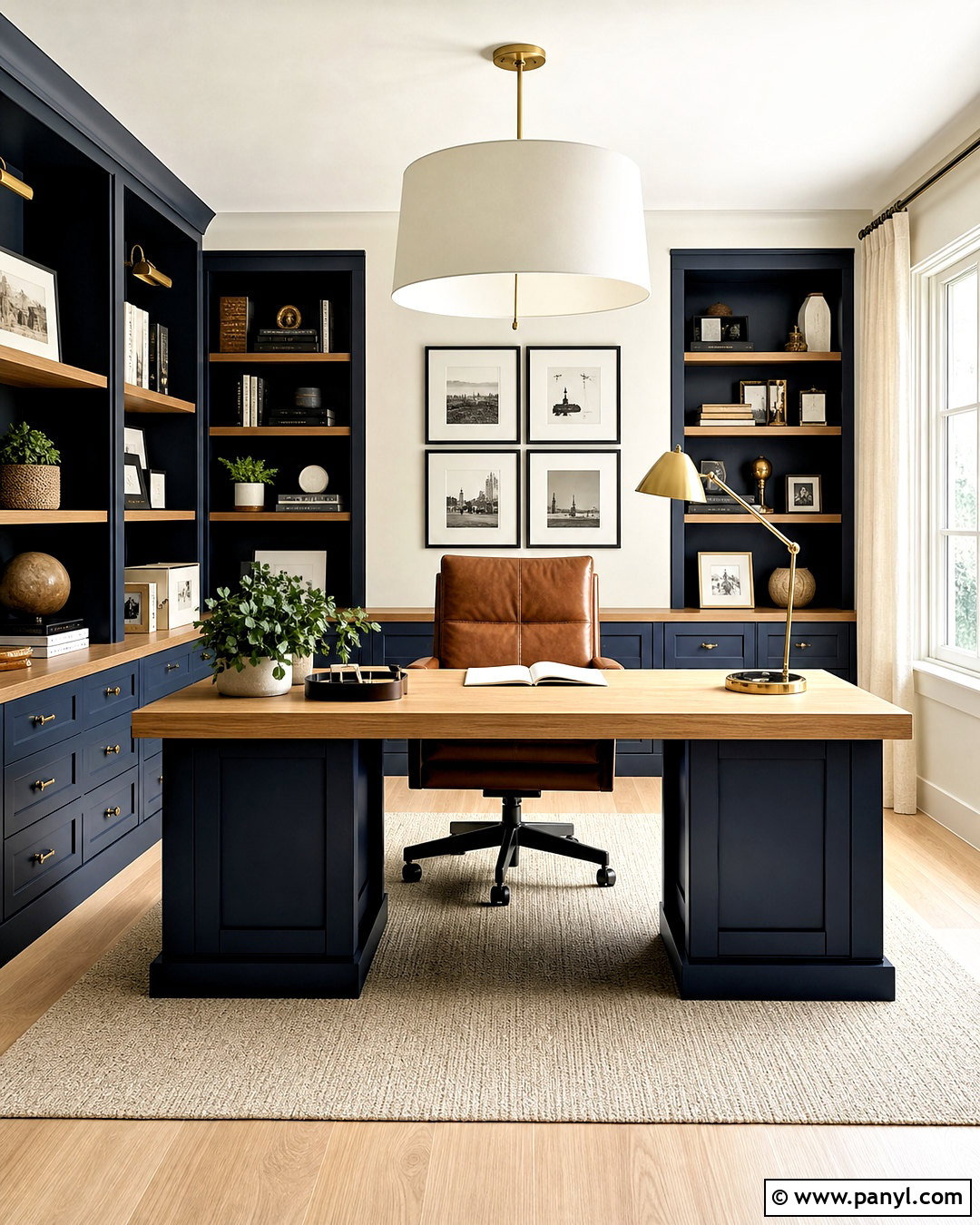
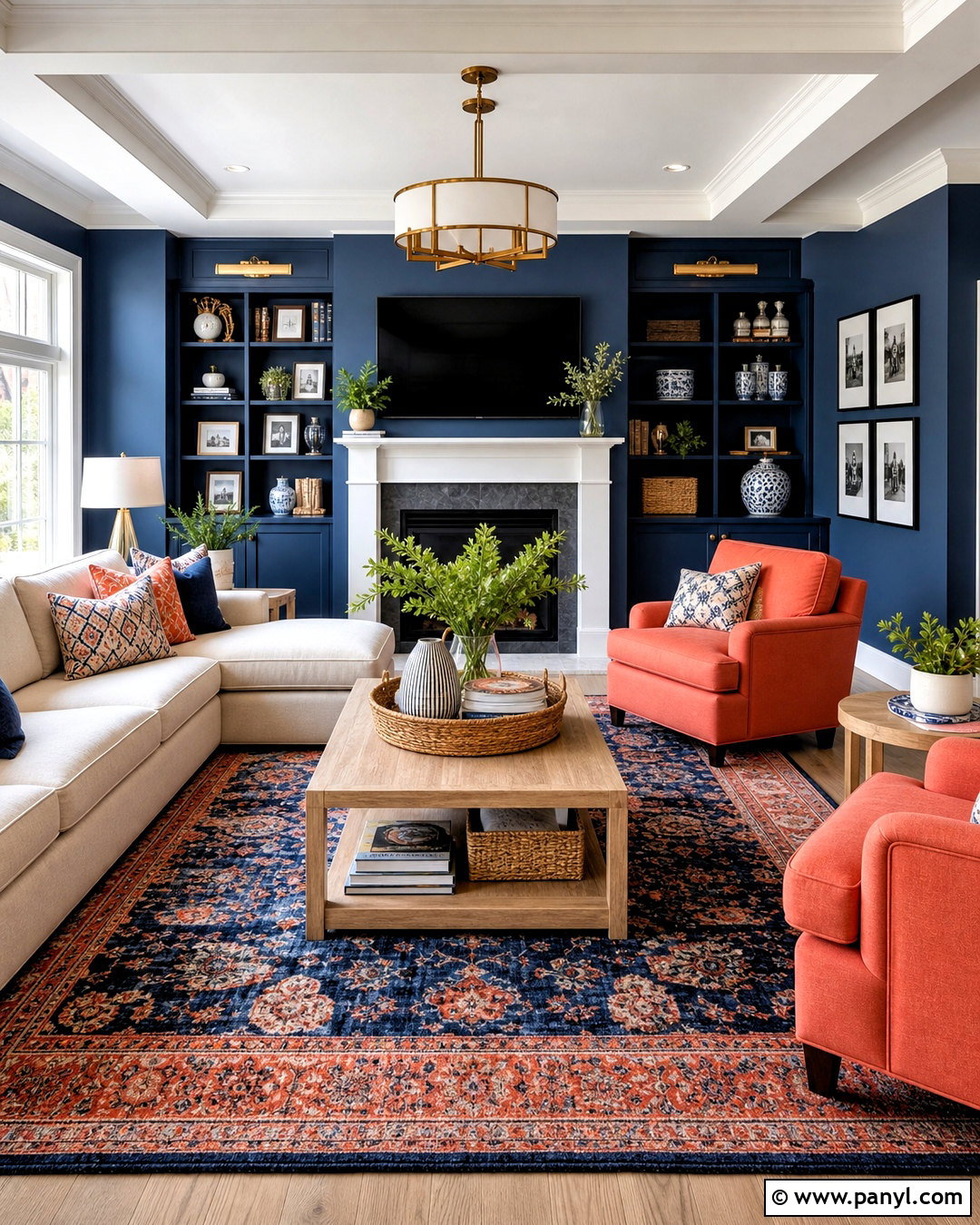
White oak and navy painted wood create a crisp, polished scheme for a home office or study. Use white oak flooring, a desktop, and floating shelves to establish warmth. Add navy painted base cabinets or a large bookcase as the room’s visual anchor. Soft white walls keep the deep blue from closing in the space, while a beige wool rug provides separation from the floor. Choose a cognac leather desk chair, brass cabinet pulls, and a white linen shade for classic contrast. Repeat navy through a small storage box or patterned cushion, and echo oak with simple frames. The complete workspace feels organized and substantial without becoming formal. Navy adds depth, while white oak ensures the overall room remains approachable, natural, and bright.
18. Medium Oak And Warm White Painted Wood Combination
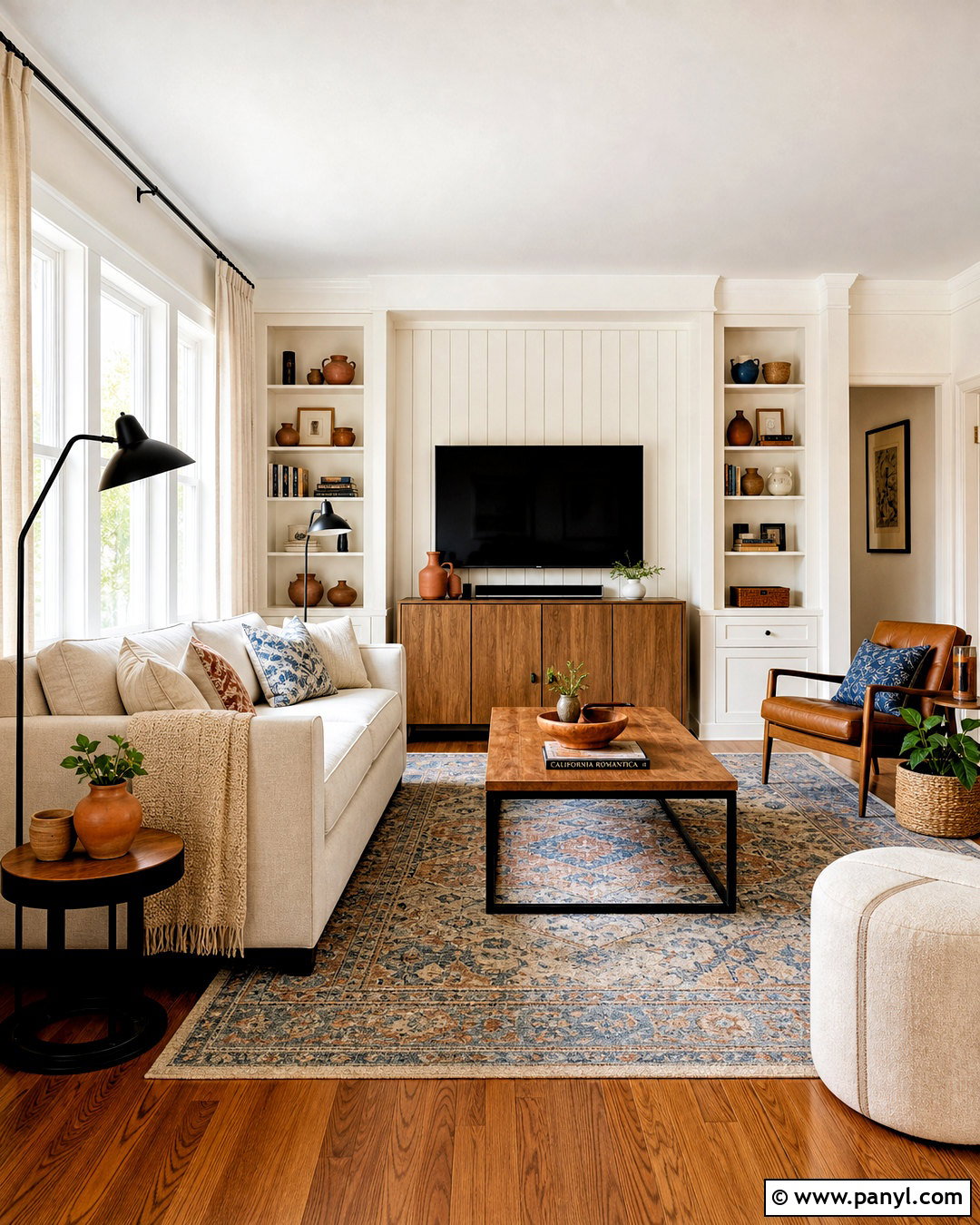
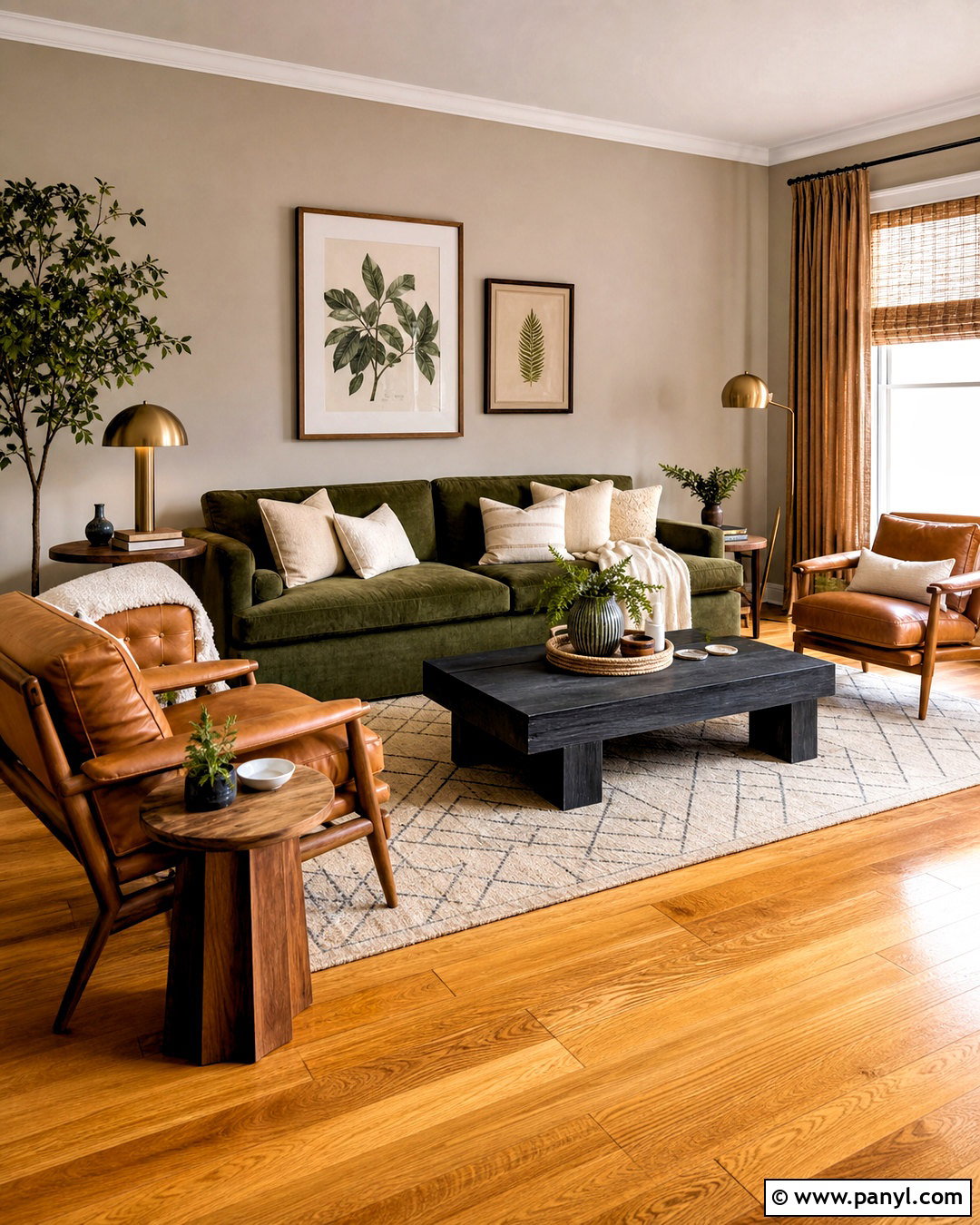
Medium oak and warm white painted wood make a small living room feel comfortable, bright, and cohesive. Use medium oak for the flooring, coffee table, and a narrow media cabinet. Introduce warm white through built-in shelves, wall paneling, or a painted sideboard so the room includes wood texture without becoming too brown. Choose a light beige sofa, cream curtains, and a patterned rug containing tan, ivory, and muted blue. Black metal floor lamps offer clear definition, while terracotta ceramics reinforce the oak’s golden undertone. Leave enough open space around the furniture to maintain an airy layout. The painted elements provide a visual break between natural wood pieces, making this combination especially useful in apartments or rooms with limited daylight and compact proportions.
19. Chestnut And Olive Painted Wood Combination
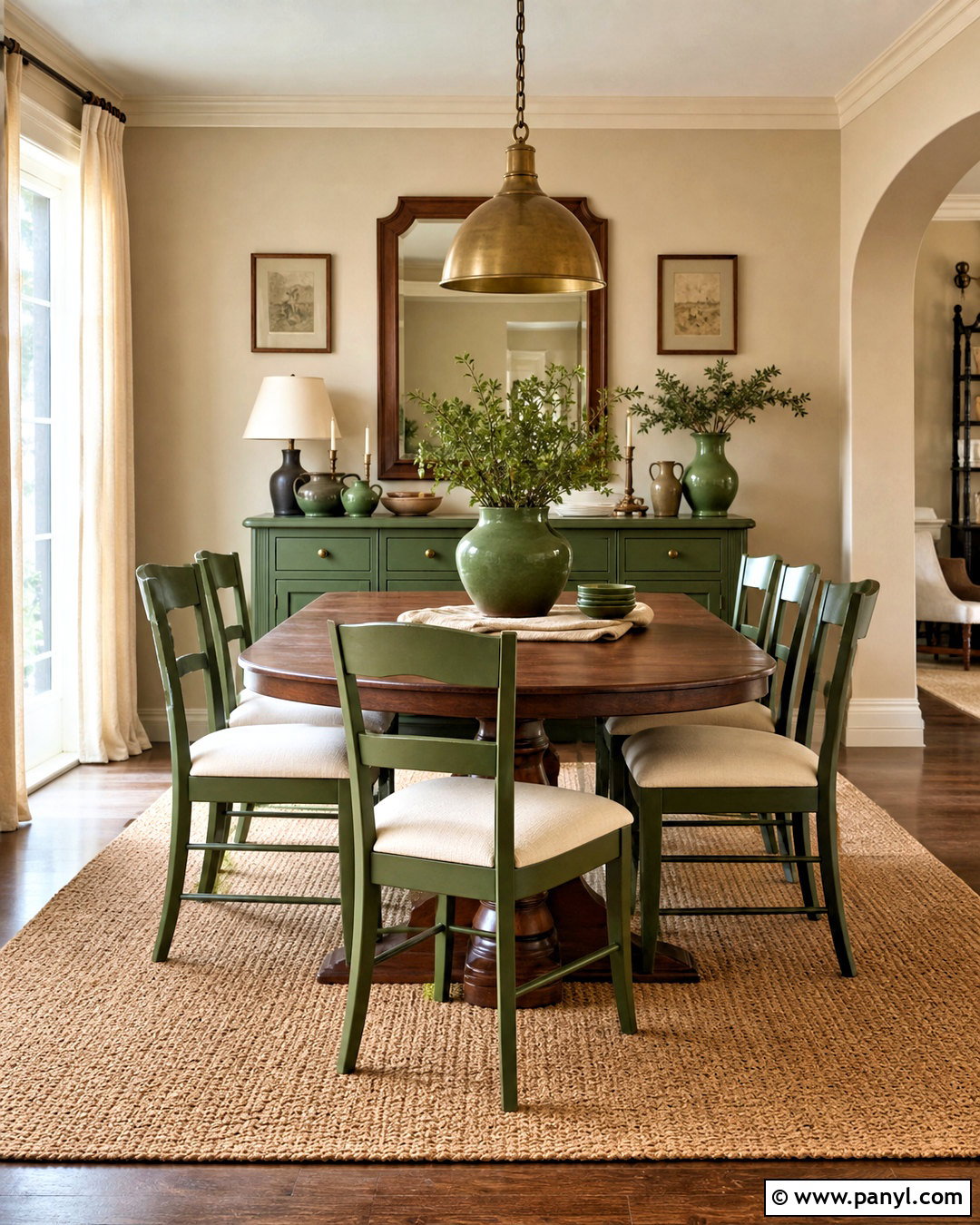
Chestnut and olive painted wood build a cozy, earthy dining room with a traditional foundation and updated color. Center the room around a chestnut dining table with a rich medium-brown finish. Use olive green painted wood for a sideboard, built-in cabinet, or chair frames. Cream upholstered seats and warm beige walls prevent the palette from feeling too dark. Add a natural jute rug, antique brass pendant, and linen curtains in soft ivory. Repeat chestnut through a mirror frame or small serving trolley, while olive appears again in ceramics or window trim. The wood’s reddish warmth pairs naturally with subdued green, creating a balanced look inspired by outdoor colors. Keep decorative pieces simple so the table, cabinetry, and seating remain the room’s strongest features.
20. Reclaimed Wood And Matte Black Wood Combination
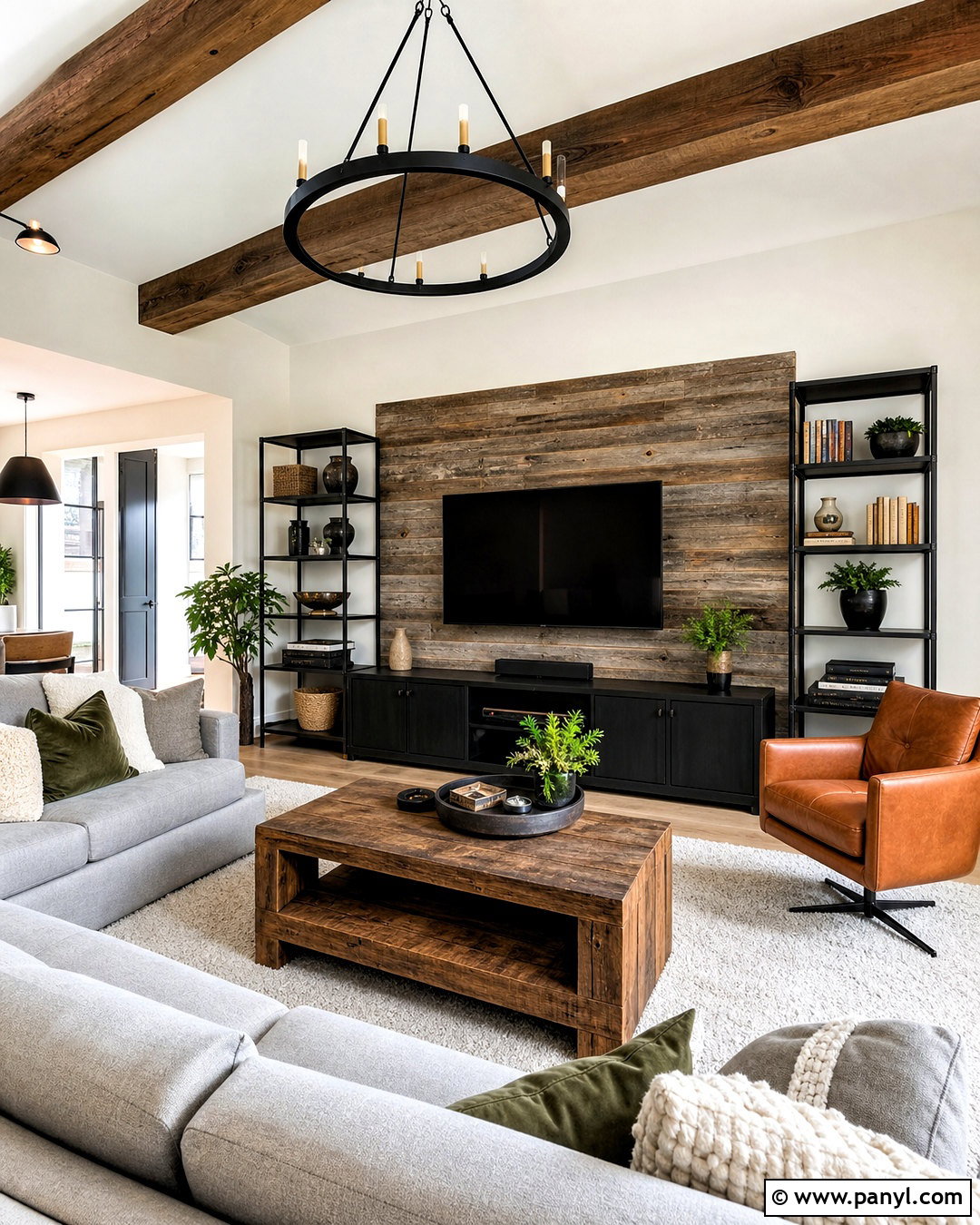
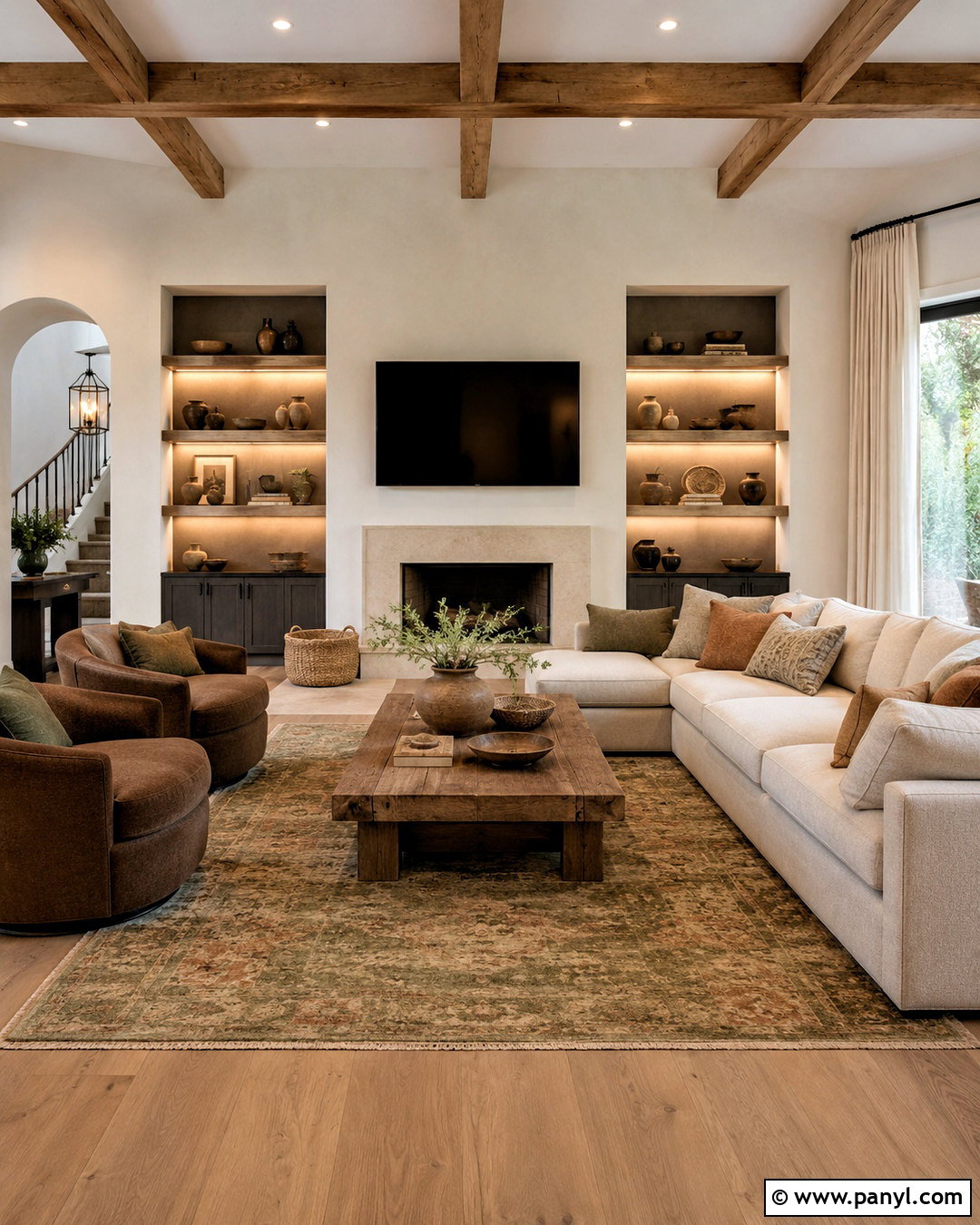
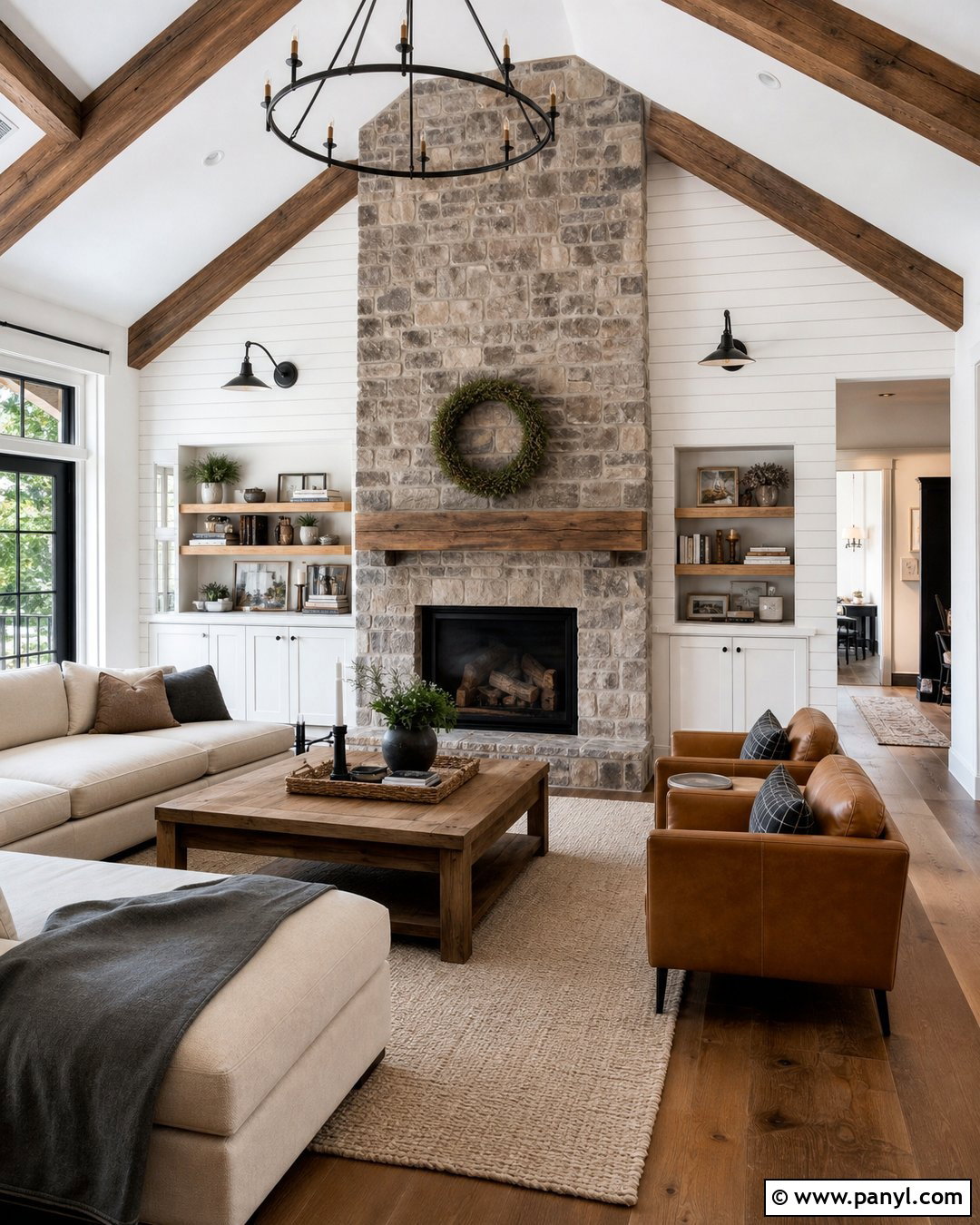
Reclaimed wood and matte black wood bring structure and character to an industrial-modern living room. Use reclaimed wood on a media wall, ceiling beams, or a substantial coffee table, allowing its mixed brown tones and visible texture to lead the design. Add matte black wood through a low console, side tables, and slim shelving. A warm gray sofa, large ivory rug, and off-white walls soften the harder finishes. Include cognac leather seating and black metal lighting to reinforce the palette. Limit additional rustic objects so the reclaimed grain does not become overwhelming. Repeating black throughout the room gives the varied wood colors a consistent frame. The final space feels relaxed and lived-in while maintaining a clean, organized, and contemporary layout.
Conclusion:
The strongest 20 wood color combination ideas balance contrast, repetition, and undertone rather than trying to match every finish exactly. Start with the largest wood surface in the room and let it establish the dominant color. Add one secondary finish that is noticeably lighter, darker, or painted. Then repeat both tones through furniture, frames, shelves, or accessories. Rugs, upholstery, stone, and metal provide useful separation when different woods sit close together. Warm woods usually feel cohesive with cream, green, rust, and brass, while cooler finishes suit gray, blue, black, and nickel. Most importantly, view samples in your room’s actual lighting before making a final decision. A thoughtful mix will feel collected, comfortable, and personal.

Related Ideas and Inspiration:
Leave a Reply