
Choosing wall paint becomes much easier when you treat the floor as a permanent part of the color palette. The best wood floor wall color ideas consider the flooring’s undertone, depth, grain, room lighting, and surrounding furniture. Warm woods often pair beautifully with creamy neutrals, softened greens, and grounded blues. Cooler or gray-washed floors benefit from warmer walls that keep the room inviting. Contrast matters too. Light walls can open a room with dark flooring, while deep paint colors create striking definition above pale wood. Always compare large paint samples directly beside the floor throughout the day before committing. The complete room combinations below provide practical, coordinated wood floor wall color ideas for a wide range of homes. ()

1. Warm White Walls With Light Oak Floors
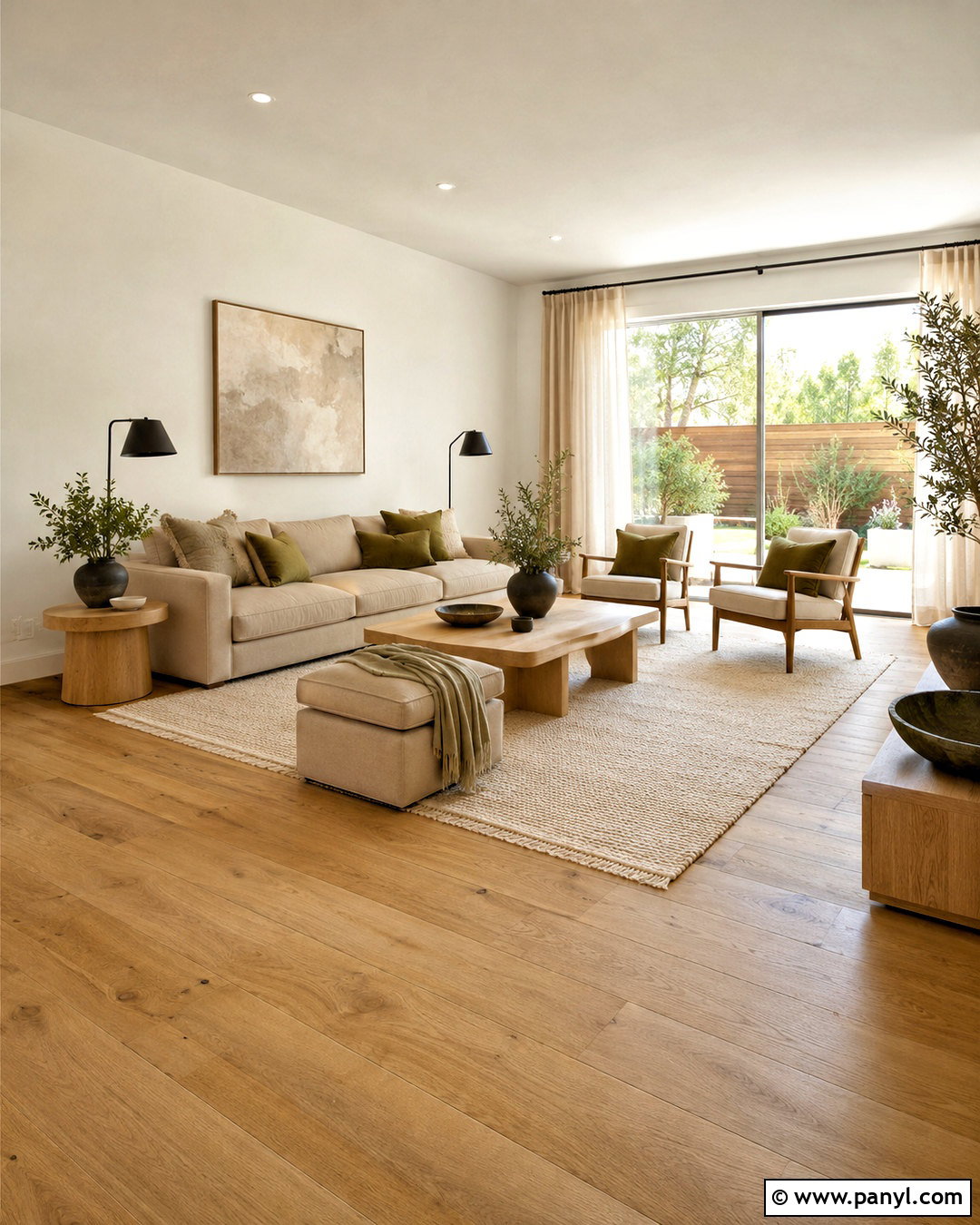
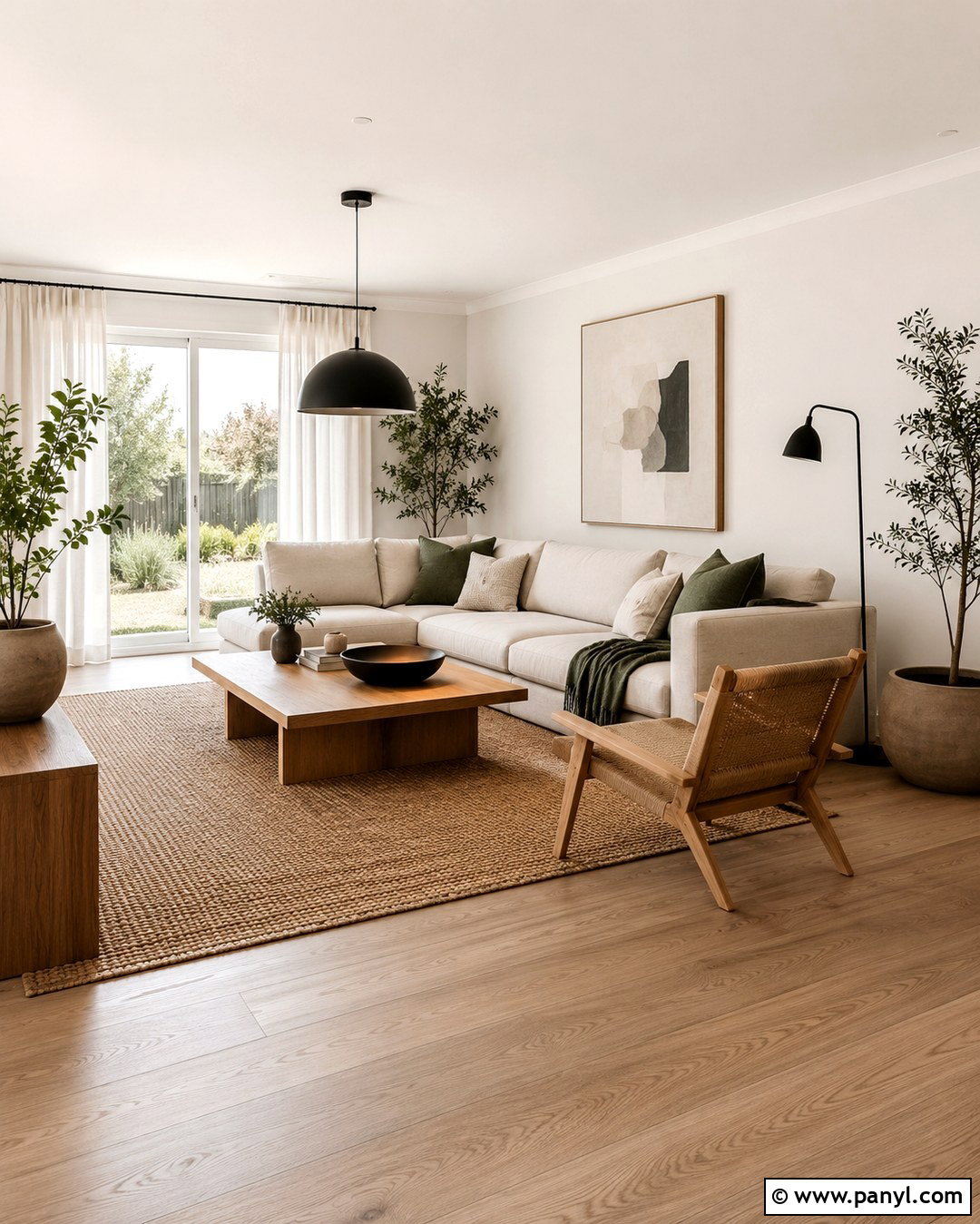
Warm white walls and light oak floors create a bright, relaxed room without looking cold or unfinished. Choose a white with subtle cream or beige undertones rather than a sharp blue-white. Bring in a sand-colored sofa, an ivory wool rug, and pale oak tables to maintain the airy foundation. Matte black lighting and thin black frames add definition, while olive green pillows prevent the neutral palette from feeling flat. Use natural linen curtains that reach the floor and allow daylight to filter through. White trim can match the walls for a seamless finish. This combination works especially well in smaller living rooms because the surfaces reflect light, while layered textures give the space warmth and visual depth.
2. Soft Greige Walls With Honey Oak Floors
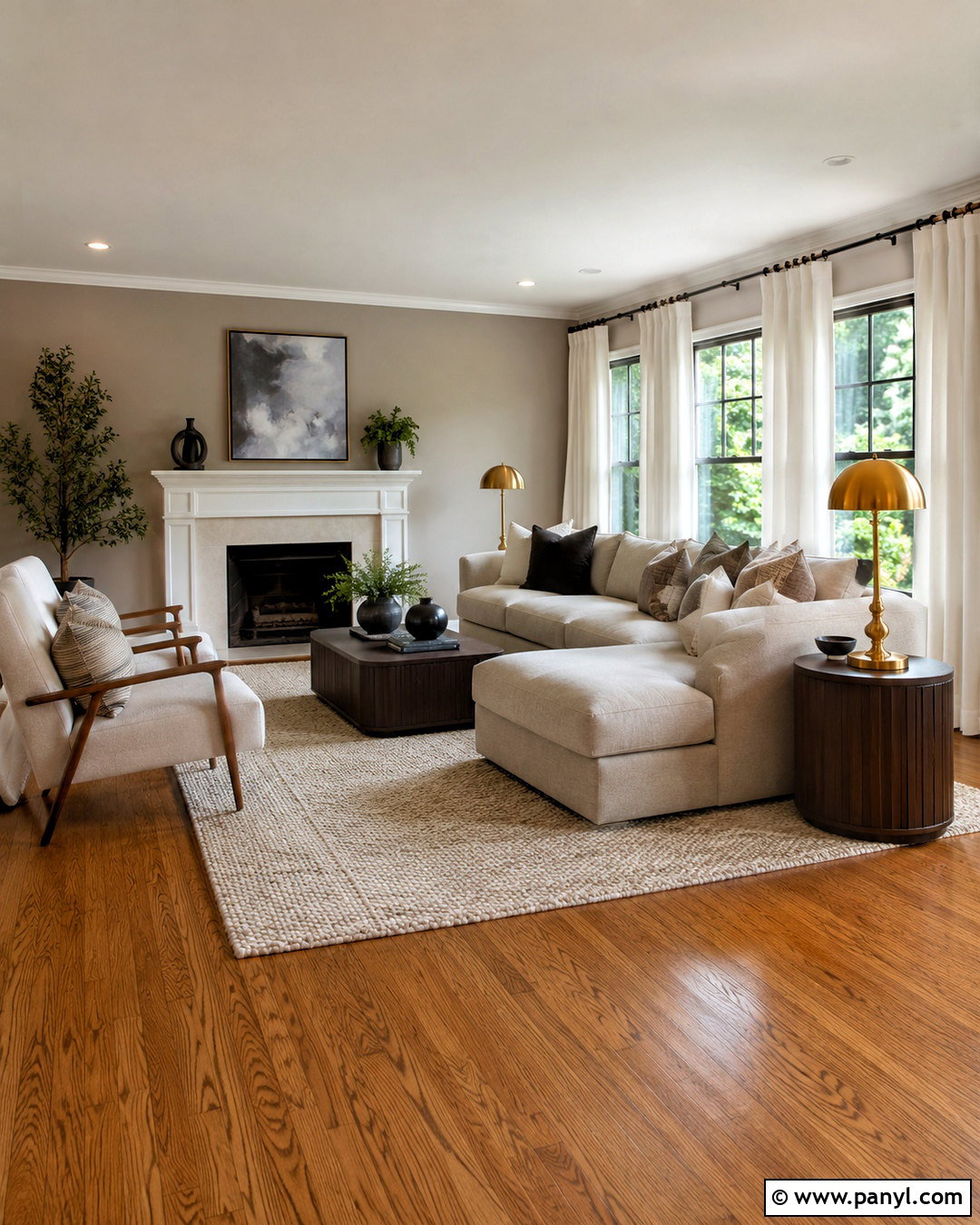
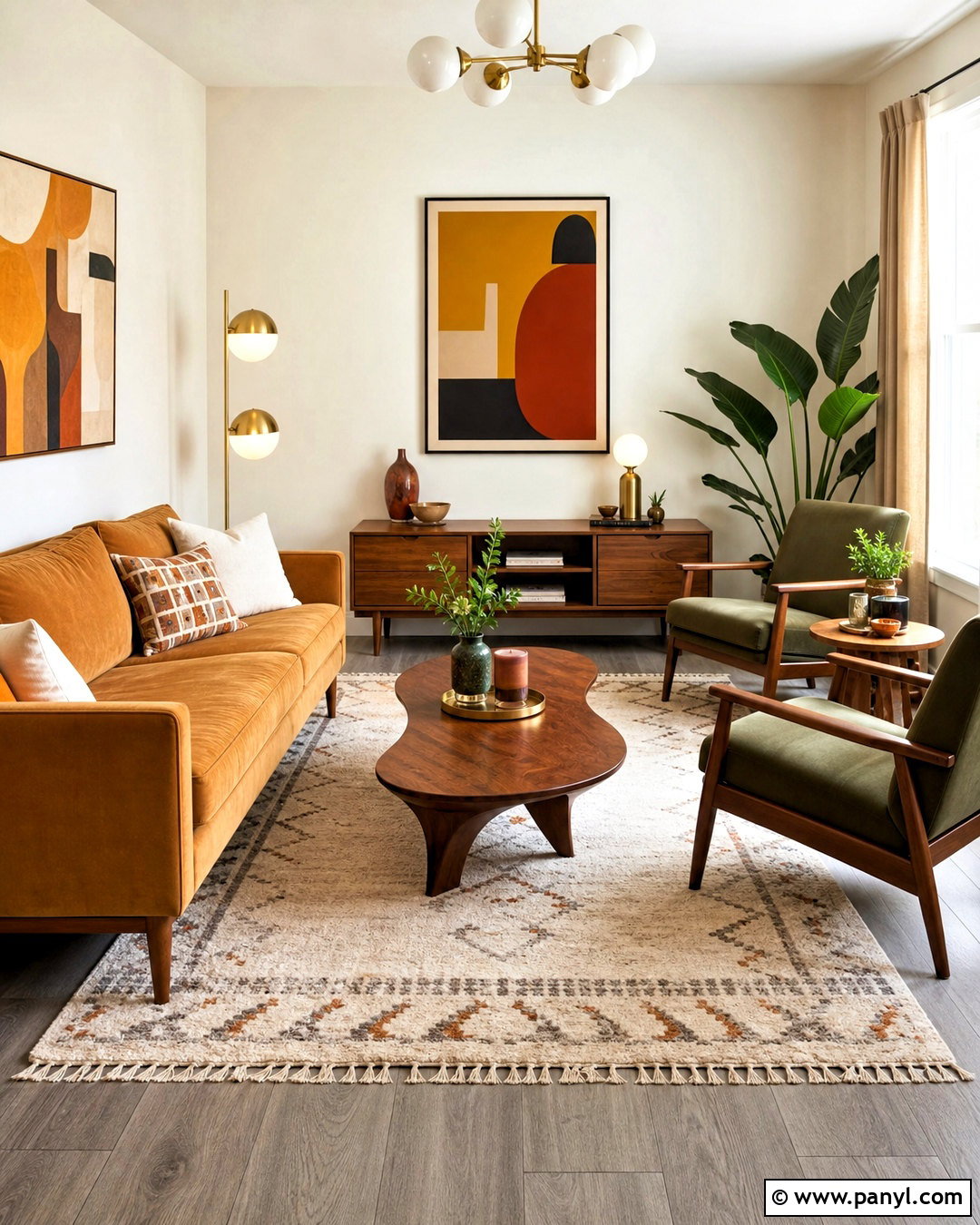
Does your honey oak floor look more orange after you paint the walls? A balanced greige can soften that warmth without covering the floor’s natural character. Select a light greige that leans beige rather than violet or icy gray. Complete the room with an oatmeal sectional, a textured cream rug, walnut side tables, and warm brass lighting. Charcoal accents on pillows, pottery, and framed artwork provide contrast. Keep window treatments simple with off-white cotton panels. Repeating honey oak in one or two furniture pieces creates continuity, but avoid filling the entire room with matching wood. This layered neutral scheme makes traditional flooring feel fresher while remaining comfortable, practical, and easy to update with seasonal accent colors.
3. Sage Green Walls With Natural Oak Floors
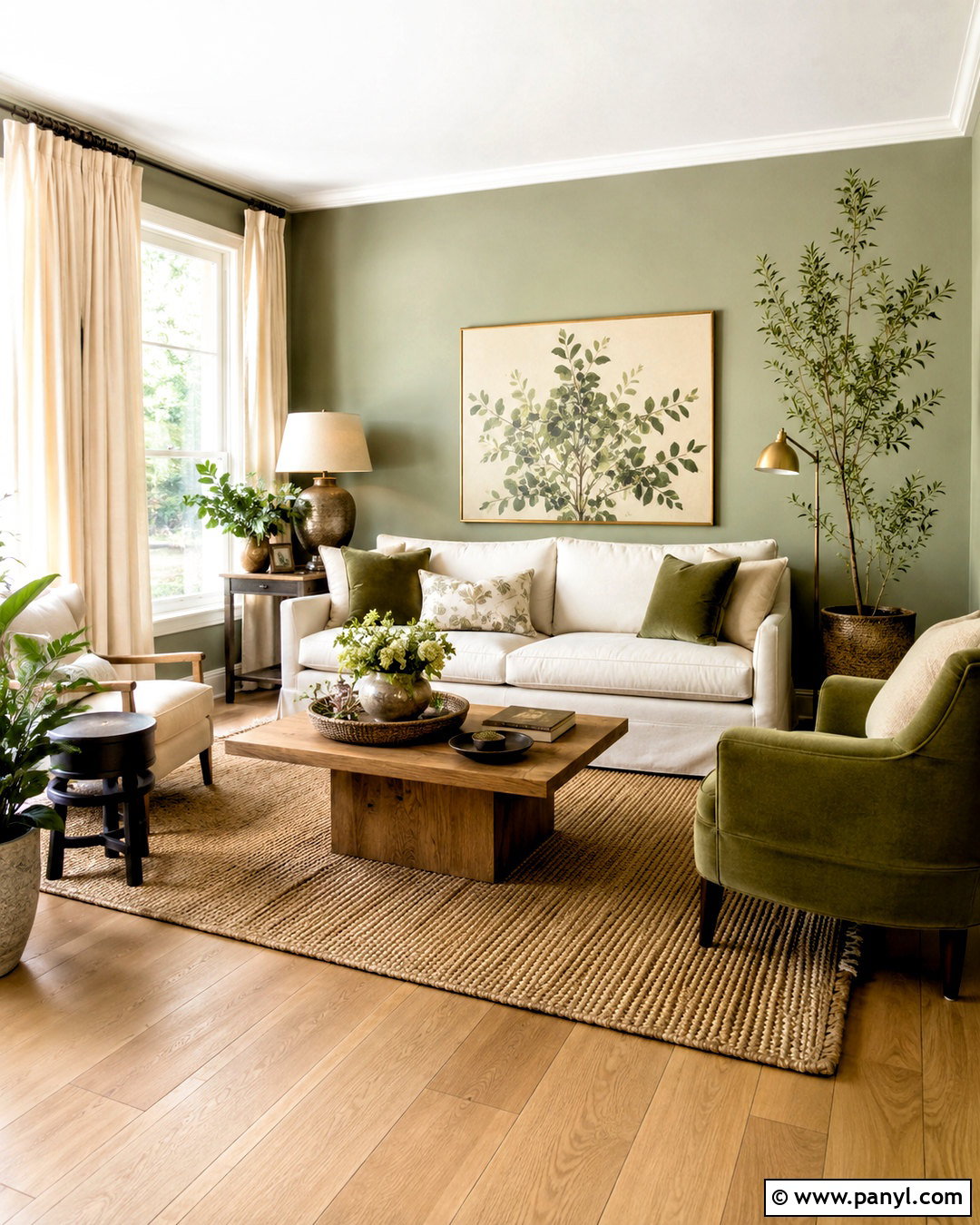
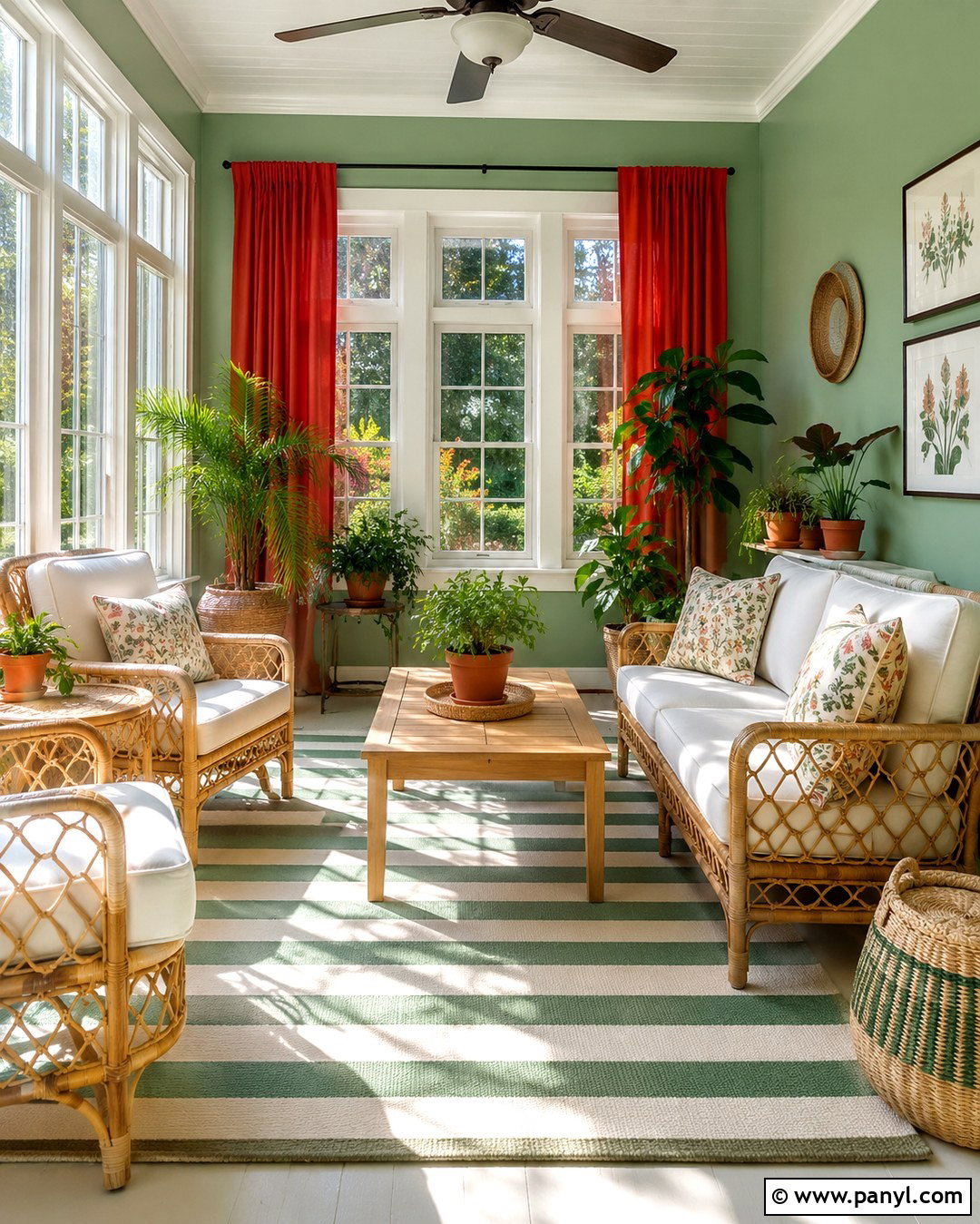
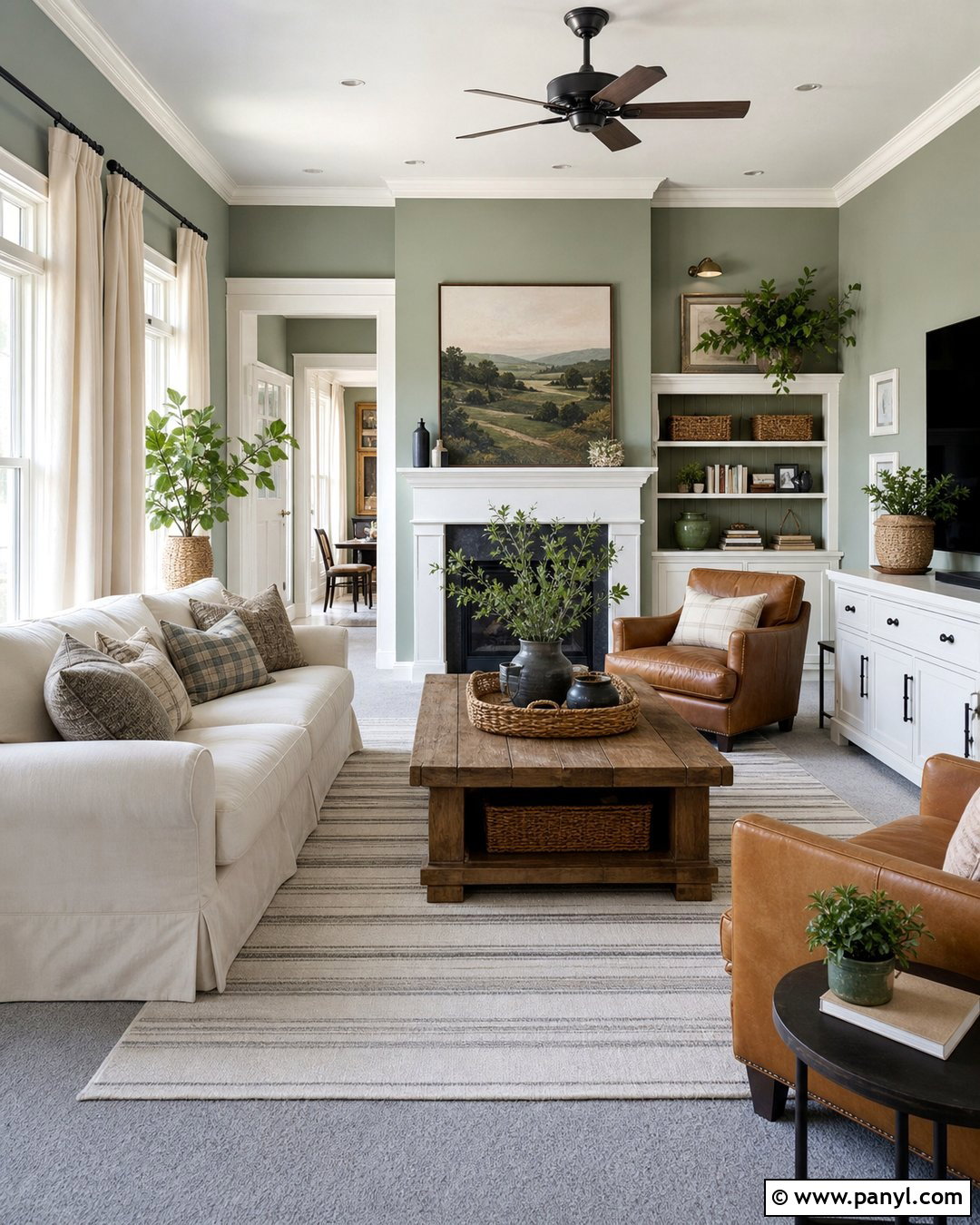
Soft sage green walls bring an earthy sense of calm to natural oak flooring. Look for a muted sage with gray undertones so the room feels sophisticated rather than overly colorful. A cream sofa, woven jute rug, and medium oak coffee table establish a warm, organic base. Add aged brass lamps, moss green pillows, and simple botanical prints for subtle variety. White or light cream trim keeps the edges crisp without creating harsh contrast. Natural linen curtains work especially well because their texture complements visible wood grain. This complete palette suits living rooms, bedrooms, and dining areas with abundant daylight. The green and oak connection feels natural, while black accents on hardware or furniture legs give the finished space a clean structure.
4. Dusty Blue Walls With Golden Oak Floors
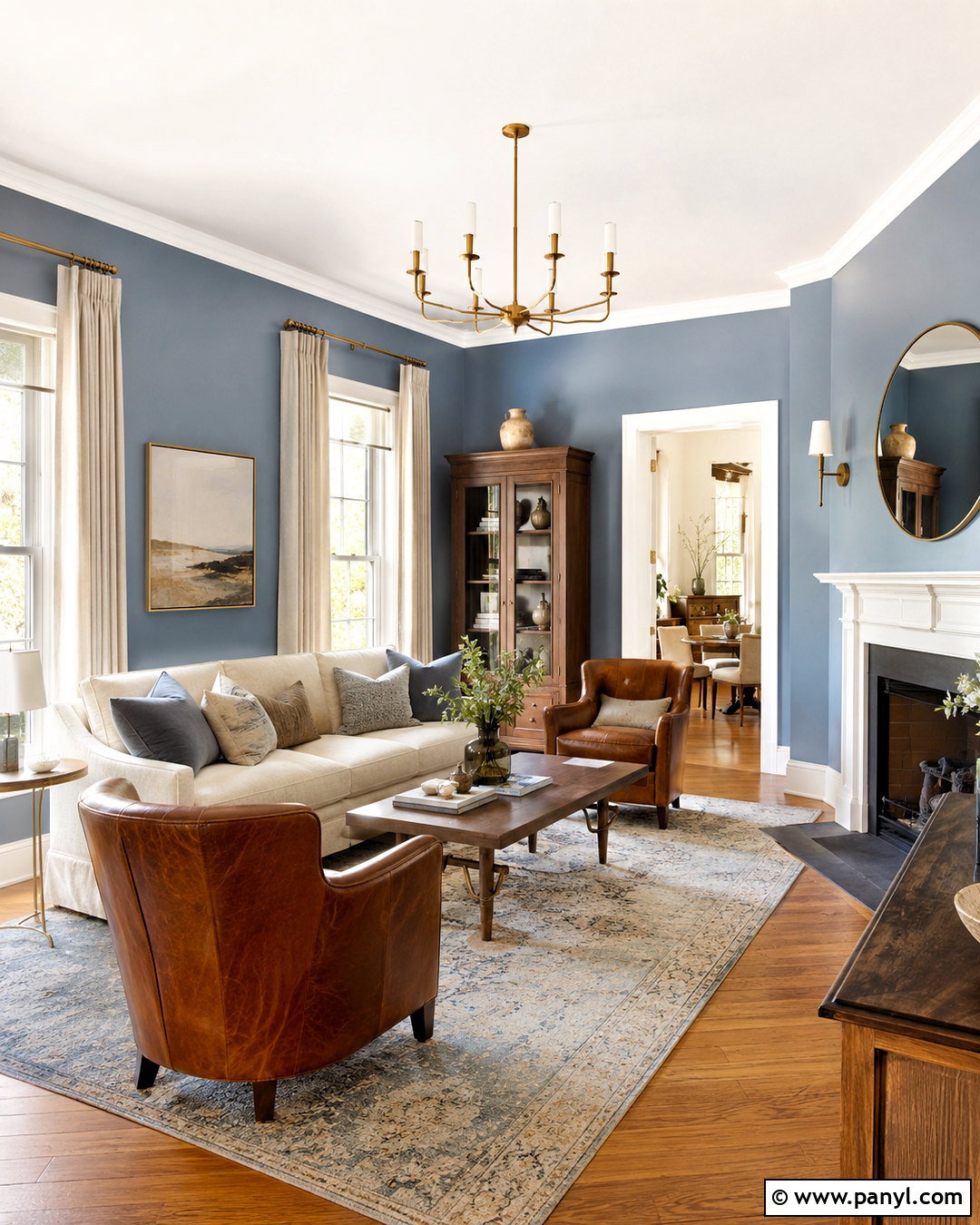
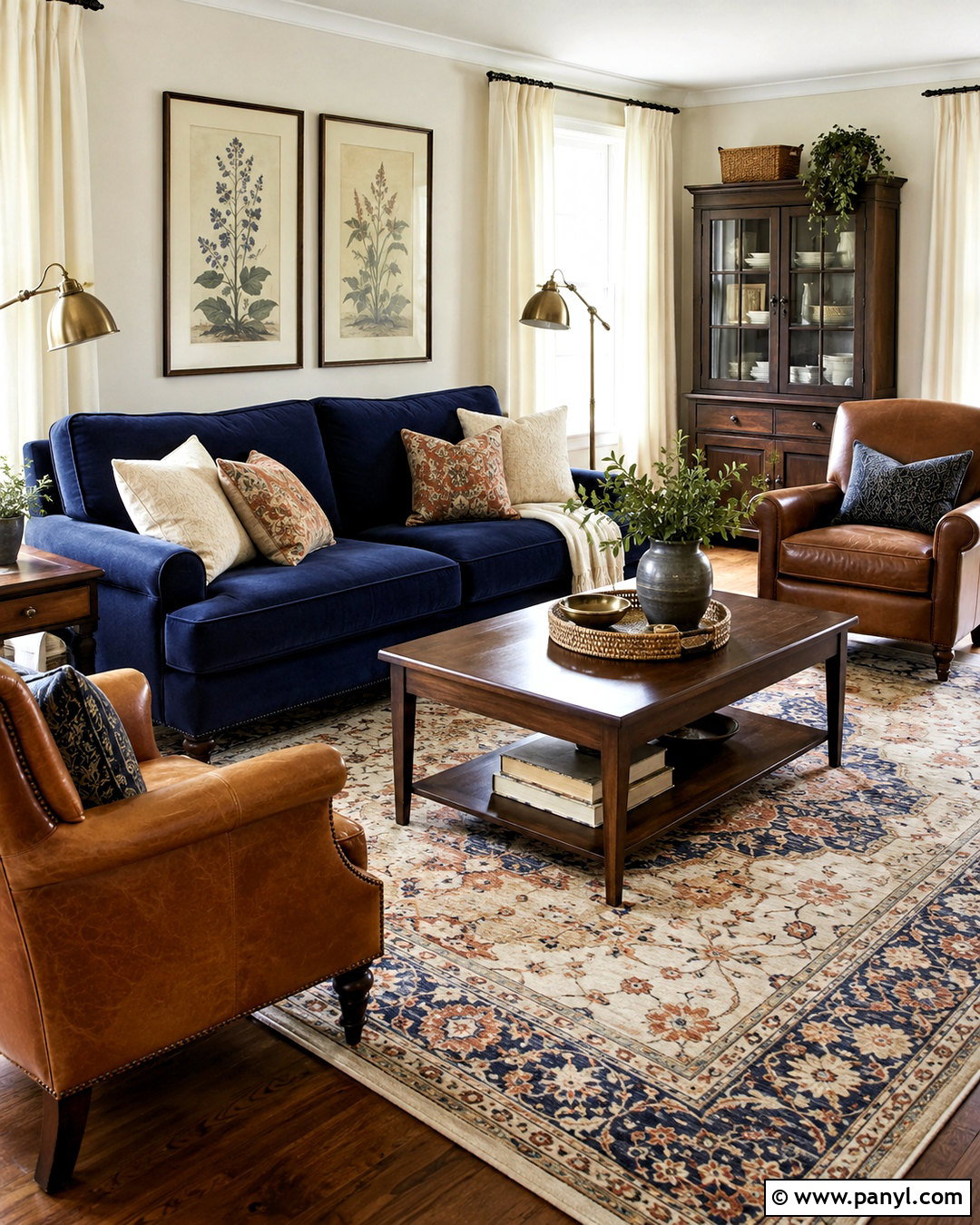
Dusty blue walls can balance golden oak floors by adding a gentle cool note to the room. Avoid bright sky blue, which may make warm flooring appear more orange. Instead, choose a softened blue with gray undertones. Pair it with an ivory sofa, a faded blue-and-cream rug, and medium brown leather chairs. Antique brass fixtures echo the gold in the wood without becoming too shiny. Crisp white trim defines the walls, while oatmeal curtains soften the windows. Include a dark walnut table or cabinet to ground the lighter surfaces. This combination feels classic but not dated, making it suitable for traditional and transitional interiors. Blue ceramics, neutral artwork, and small touches of rust can tie the entire palette together.
5. Cream Walls With Dark Walnut Floors
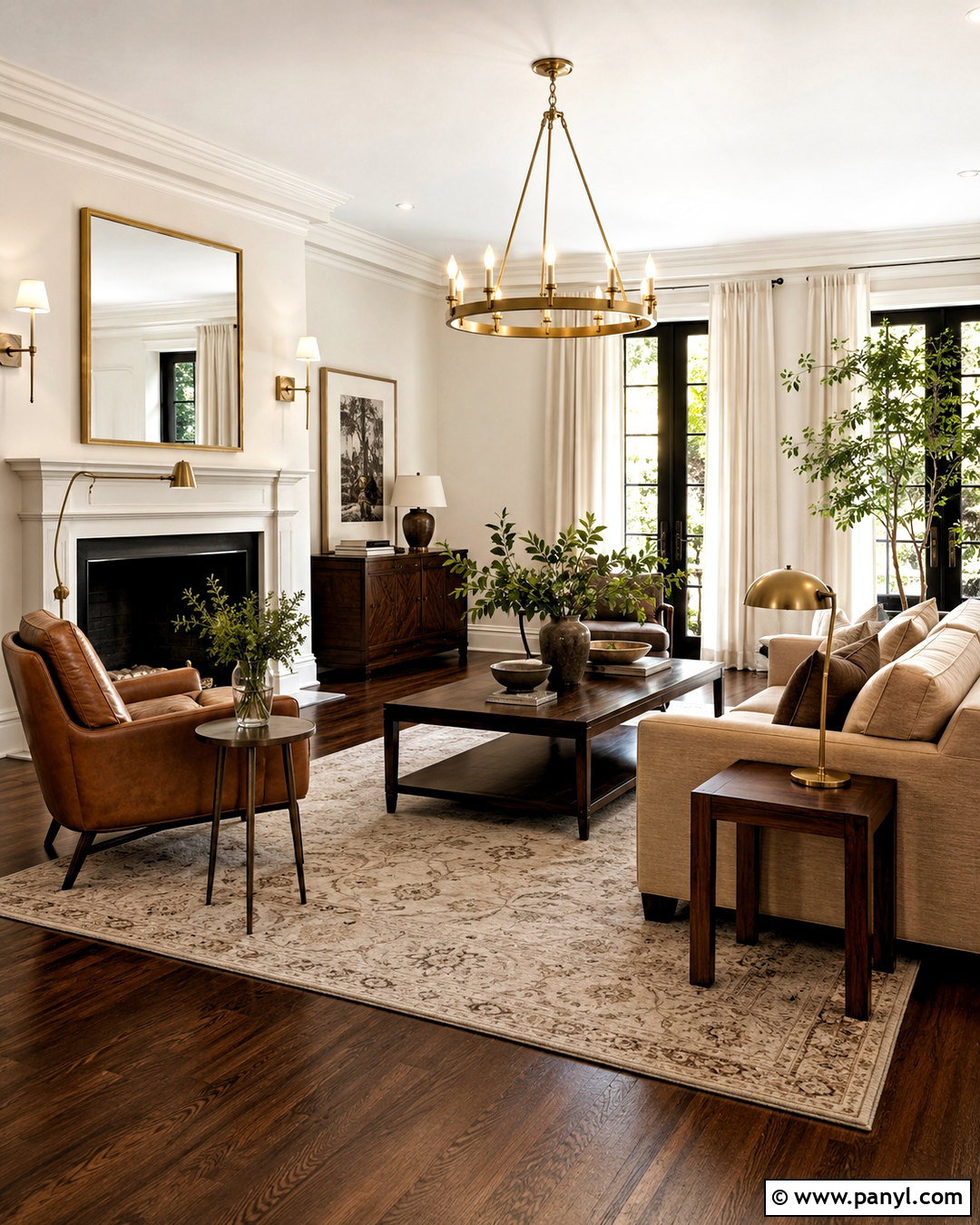
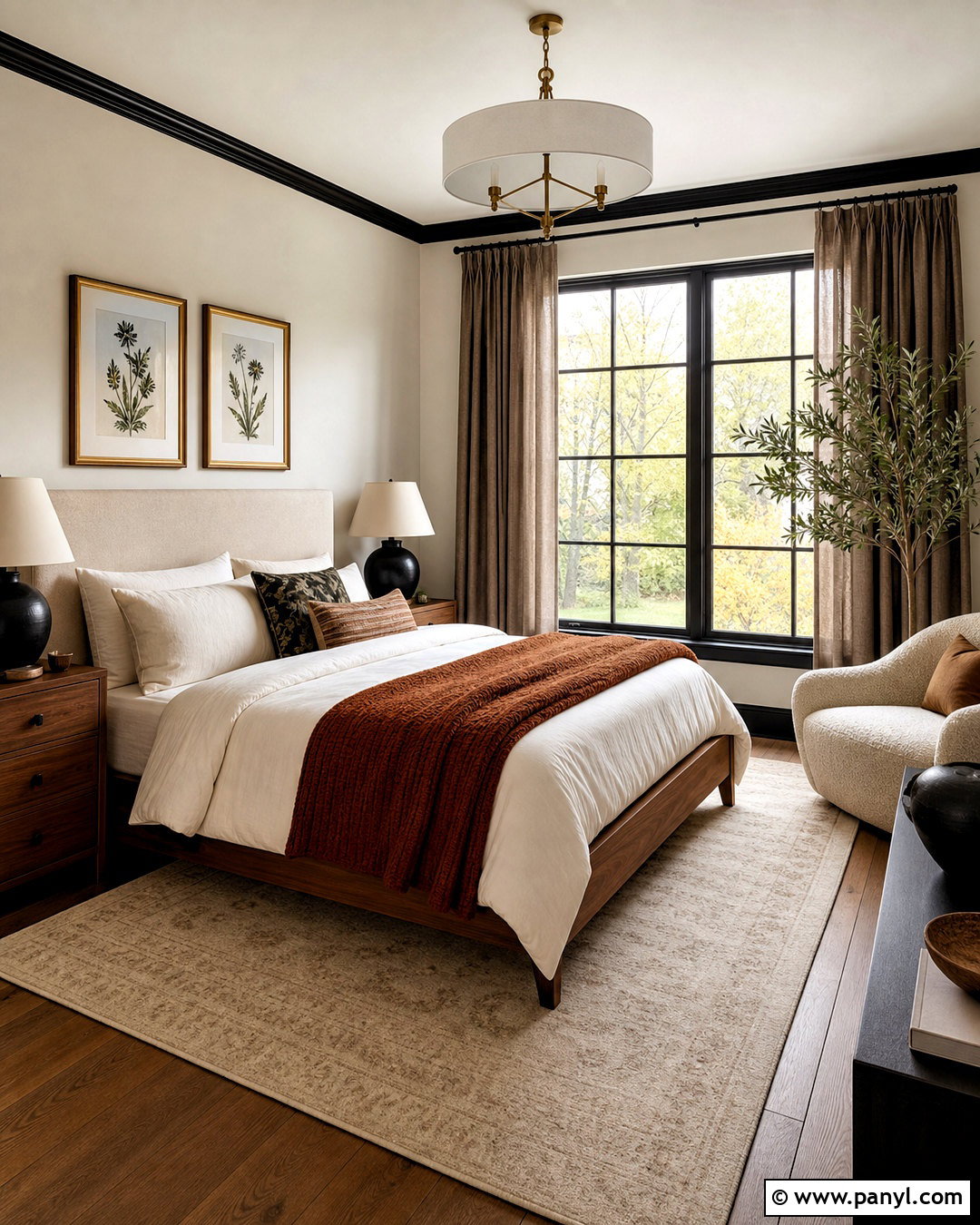
Dark walnut flooring already provides a strong visual anchor, so creamy walls can brighten the room while respecting its warmth. Choose a soft cream that looks clean in daylight and gently golden under evening lamps. Furnish the space with a warm beige sofa, an ivory patterned rug, and walnut tables that relate to the flooring. Pale upholstery creates contrast, while cognac leather and brushed brass accents add richness. Use full-length off-white curtains to increase the sense of height. A large mirror can help distribute natural light across the dark floor. Keep heavy brown furniture to a minimum so the room does not become visually dense. The finished look should feel open, polished, and comfortably layered rather than formal or overly dark.
6. Pale Gray Walls With Espresso Floors
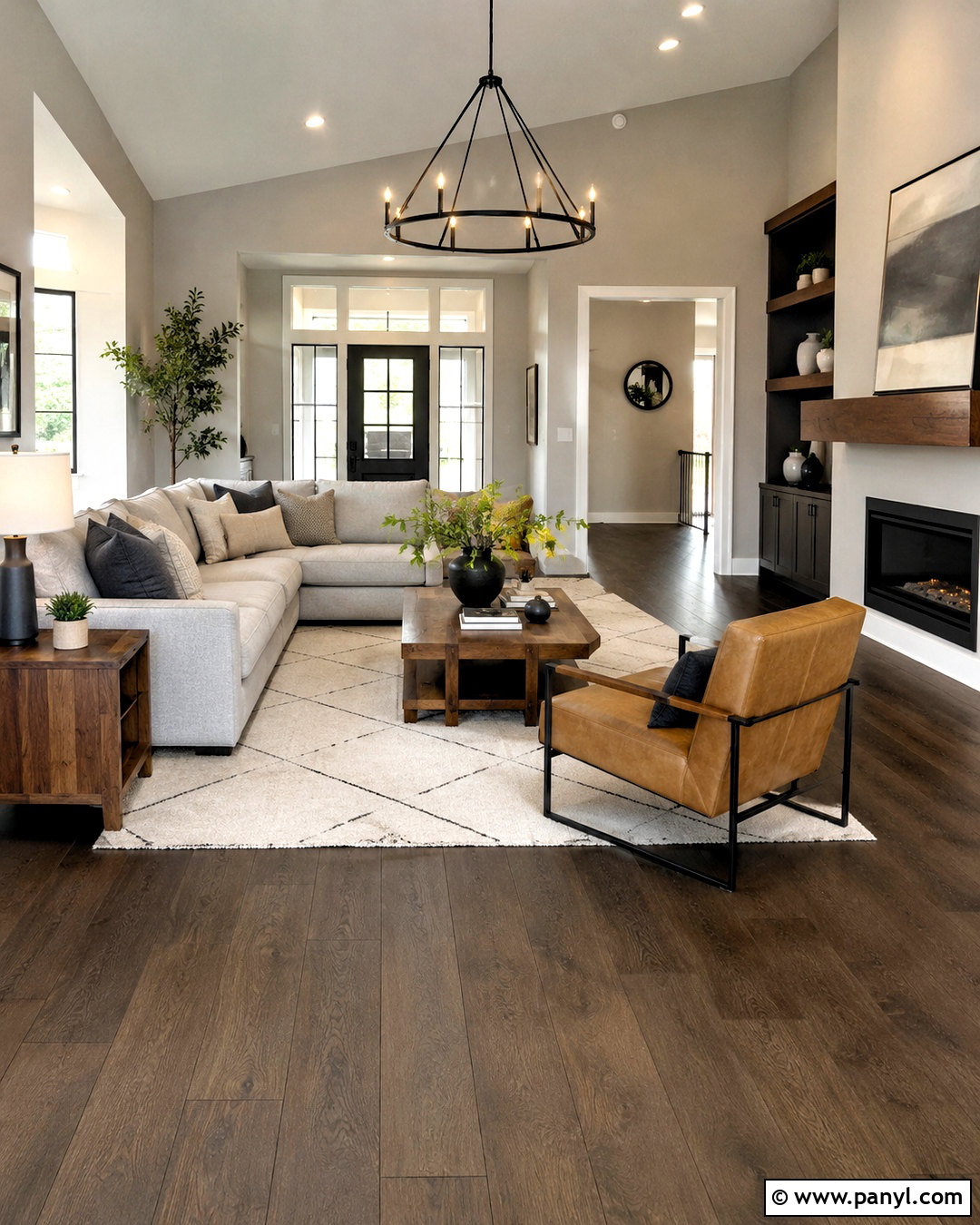
Pale gray walls give espresso wood floors a crisp, contemporary backdrop, but the gray should contain enough warmth to avoid a stark result. Choose a soft stone gray rather than a blue or metallic shade. Add a light gray sectional, a cream rug with subtle charcoal lines, and warm walnut accent tables. Black metal lighting connects naturally with the dark floor, while tan leather chairs introduce necessary warmth. Use white trim and simple woven shades for a clean architectural frame. A few green plants can soften the high contrast and make the room feel more lived-in. This palette works best when natural light is available, although layered table and floor lamps can keep the space welcoming during darker hours.
7. Navy Blue Walls With White Oak Floors
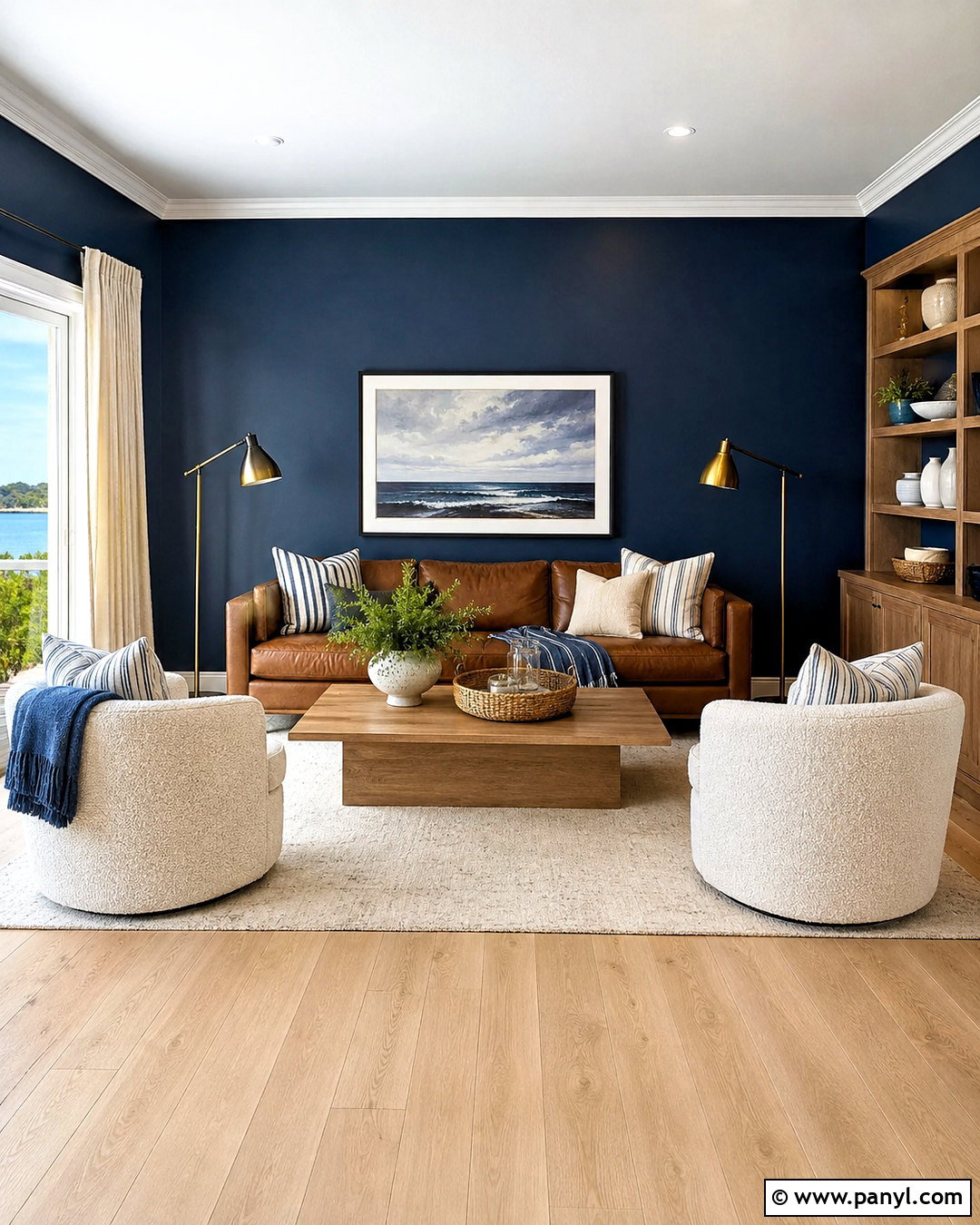
Navy blue walls look dramatic against pale white oak flooring, which reflects enough light to keep the room balanced. Use navy on every wall for an enveloping effect, then paint the ceiling and trim a clean warm white. A camel leather sofa, cream boucle chairs, and a large ivory rug prevent the dark color from dominating. Bring in light oak shelving or a matching coffee table so the flooring feels connected to the furnishings. Brushed brass lamps add warmth, while striped blue-and-cream textiles create a relaxed coastal note without becoming themed. This high-contrast combination works beautifully in living rooms, offices, and libraries. Keep artwork large and simple so the navy remains a strong, uncluttered background.
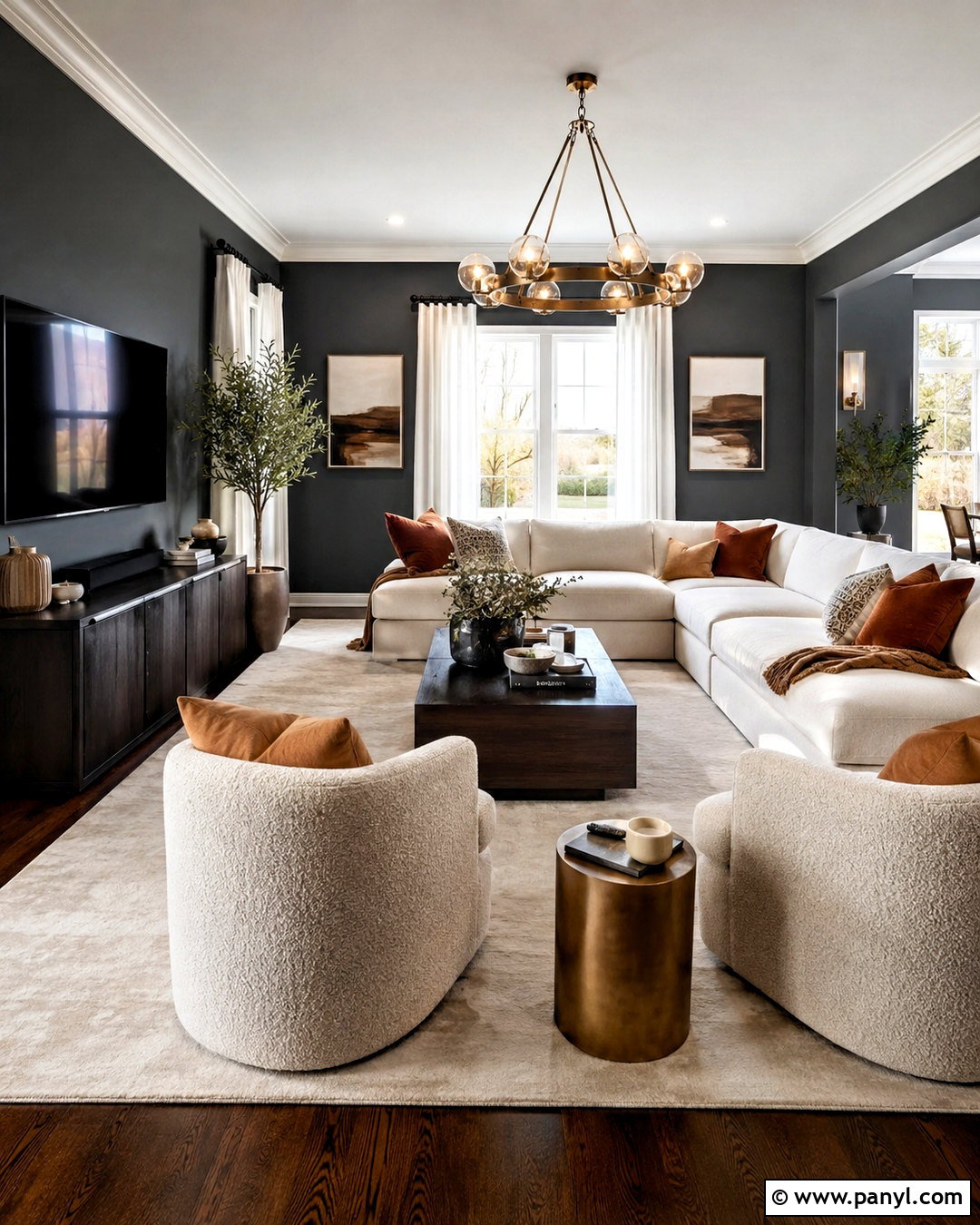
8. Charcoal Walls With Blonde Wood Floors
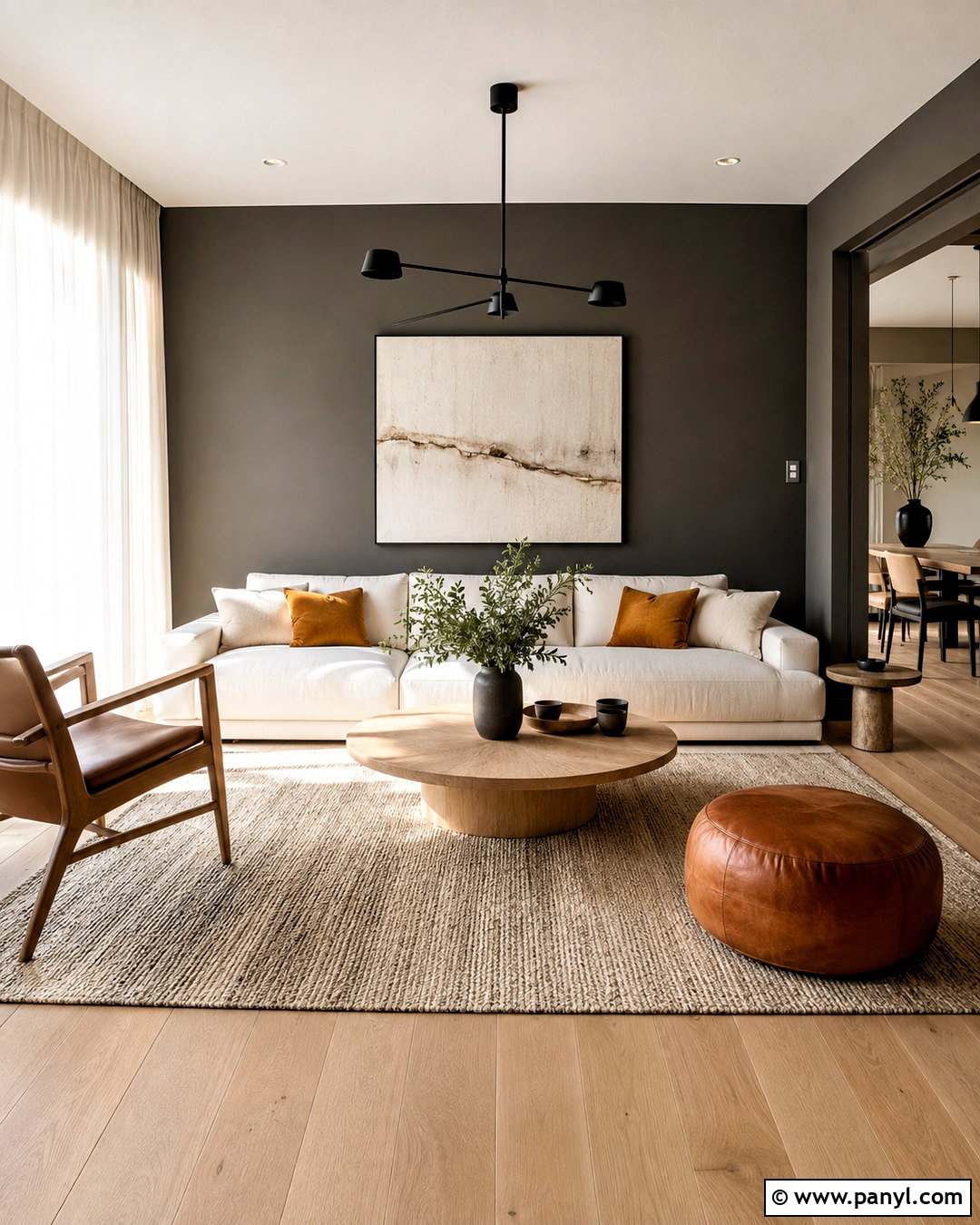
Charcoal walls and blonde wood floors create a bold modern room with clear contrast between vertical and horizontal surfaces. Choose a softened charcoal rather than a flat black-gray, especially in rooms with limited windows. Complete the look with a low cream sofa, a textured beige rug, and pale wood tables that repeat the floor color. Matte black fixtures blend quietly into the walls, while rust, ochre, or cognac accents add warmth. Use minimal white trim, or paint the trim charcoal for a more seamless result. Sheer ivory curtains can filter daylight without interrupting the dark wall treatment. Keep decorative objects limited and sculptural. The finished space should feel cozy and graphic, with enough pale upholstery and natural texture to remain approachable.
9. Forest Green Walls With Light Maple Floors
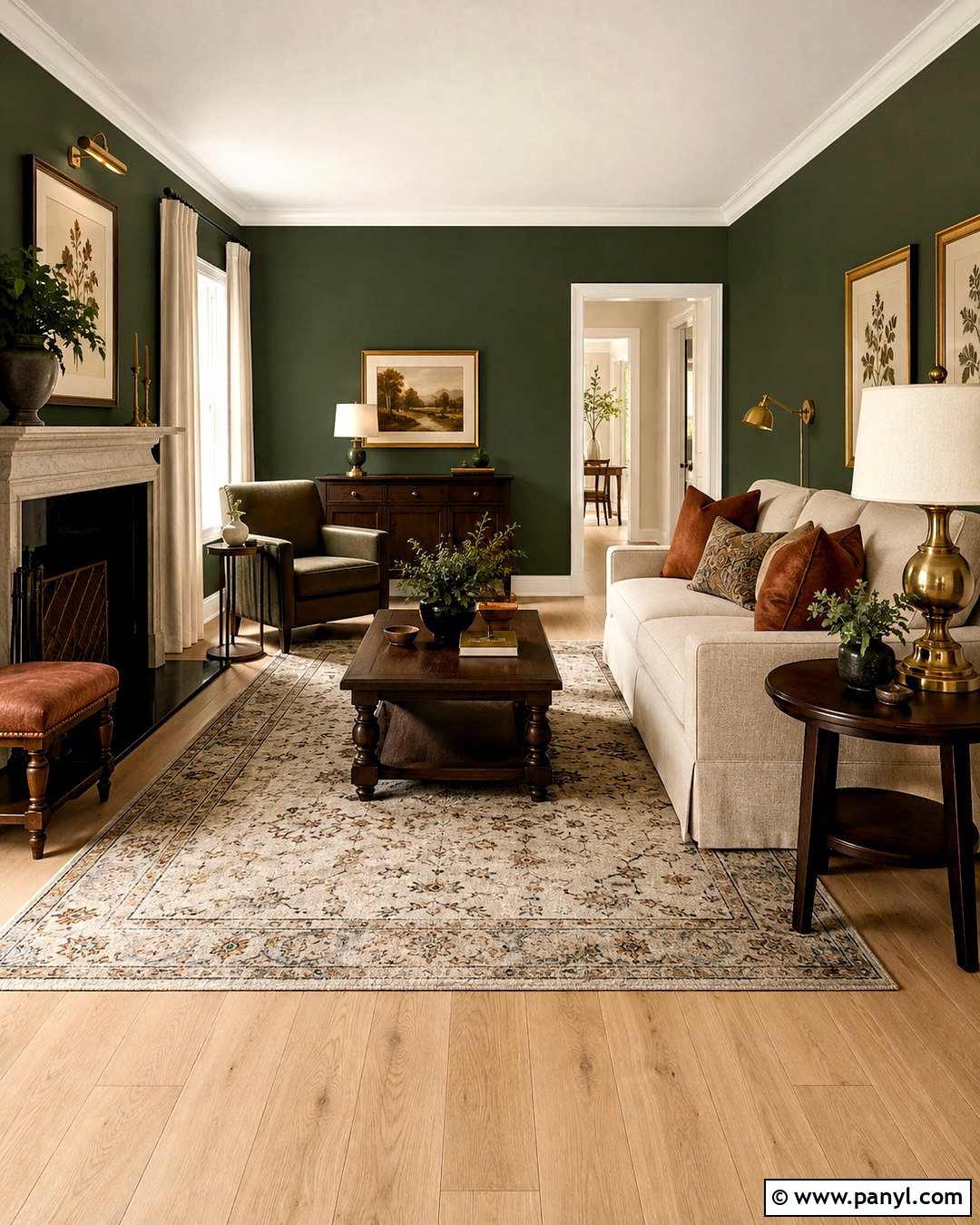
Forest green walls can give light maple flooring a rich, grounded character. Because maple often carries a yellow undertone, select a deep green that is muted rather than jewel-toned. Furnish the room with a light beige sofa, a vintage-inspired cream rug, and dark walnut tables for added depth. Aged brass lighting complements both the green walls and warm wood floor. Introduce rust-colored pillows, natural baskets, and landscape artwork to create a cohesive earthy palette. Warm white trim provides a clean border and prevents the green from feeling too heavy. This combination is especially effective in a dining room, study, or living area with good daylight. Balanced lighting and pale fabrics keep the complete room welcoming throughout the day.
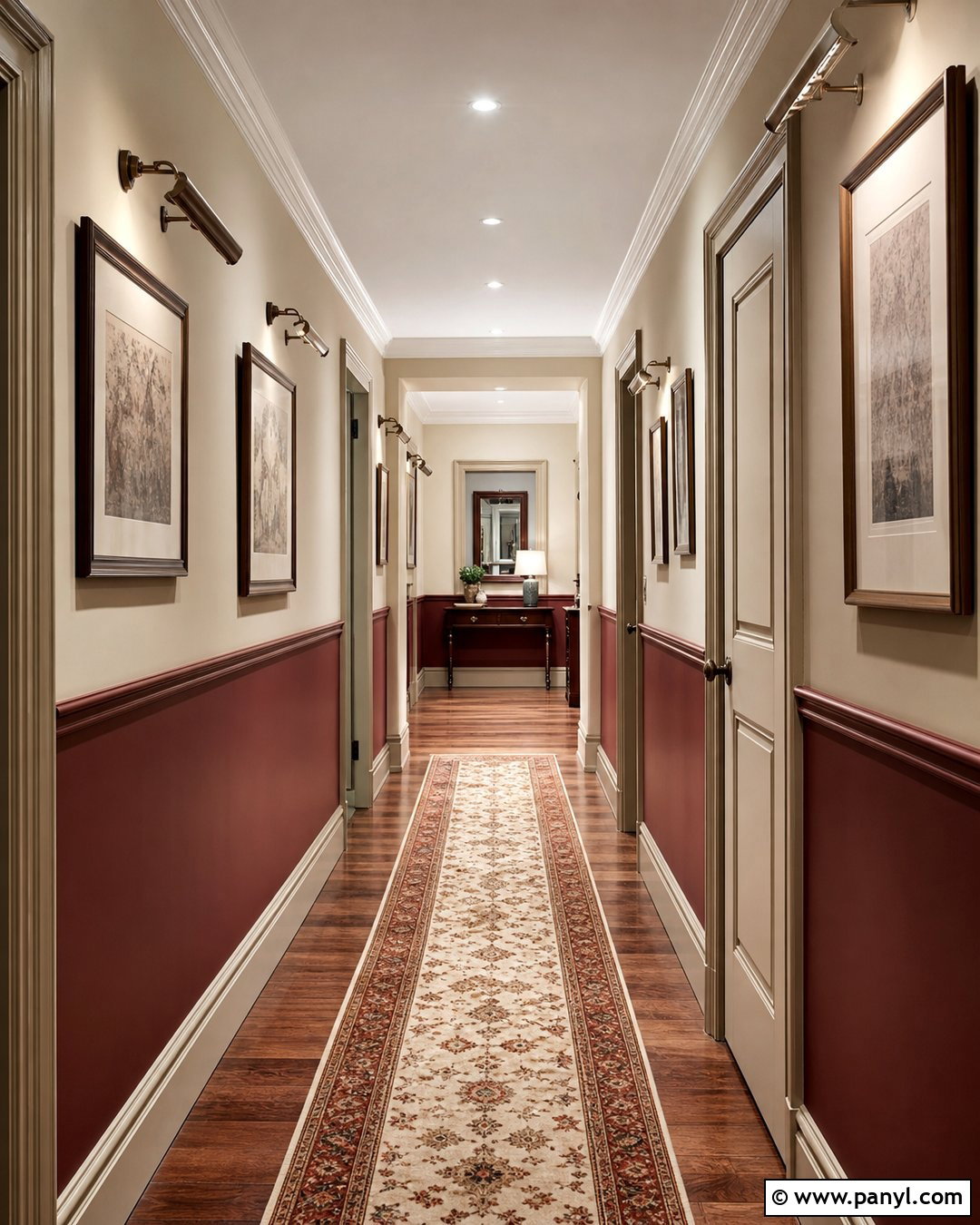
10. Terracotta Walls With Medium Oak Floors
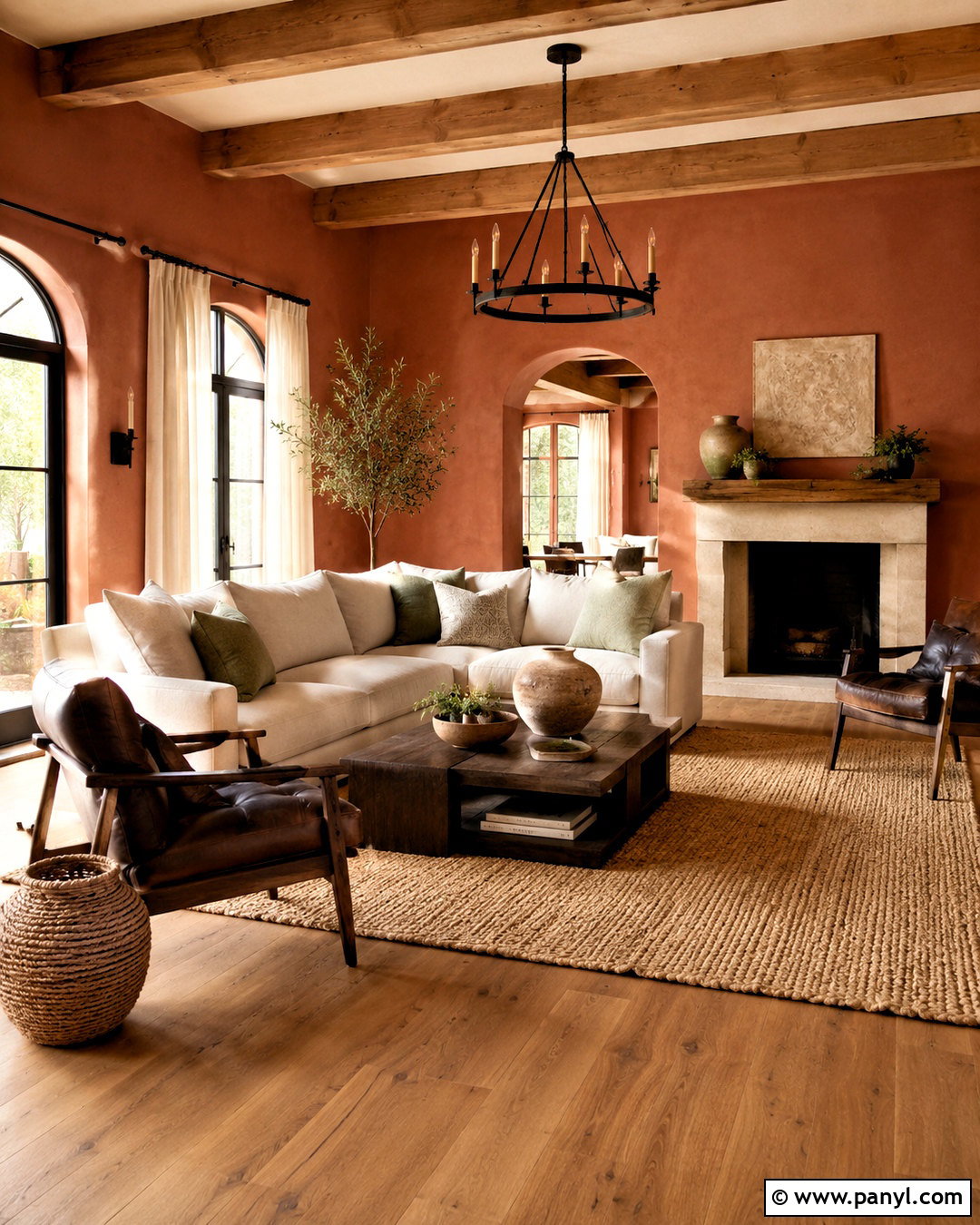
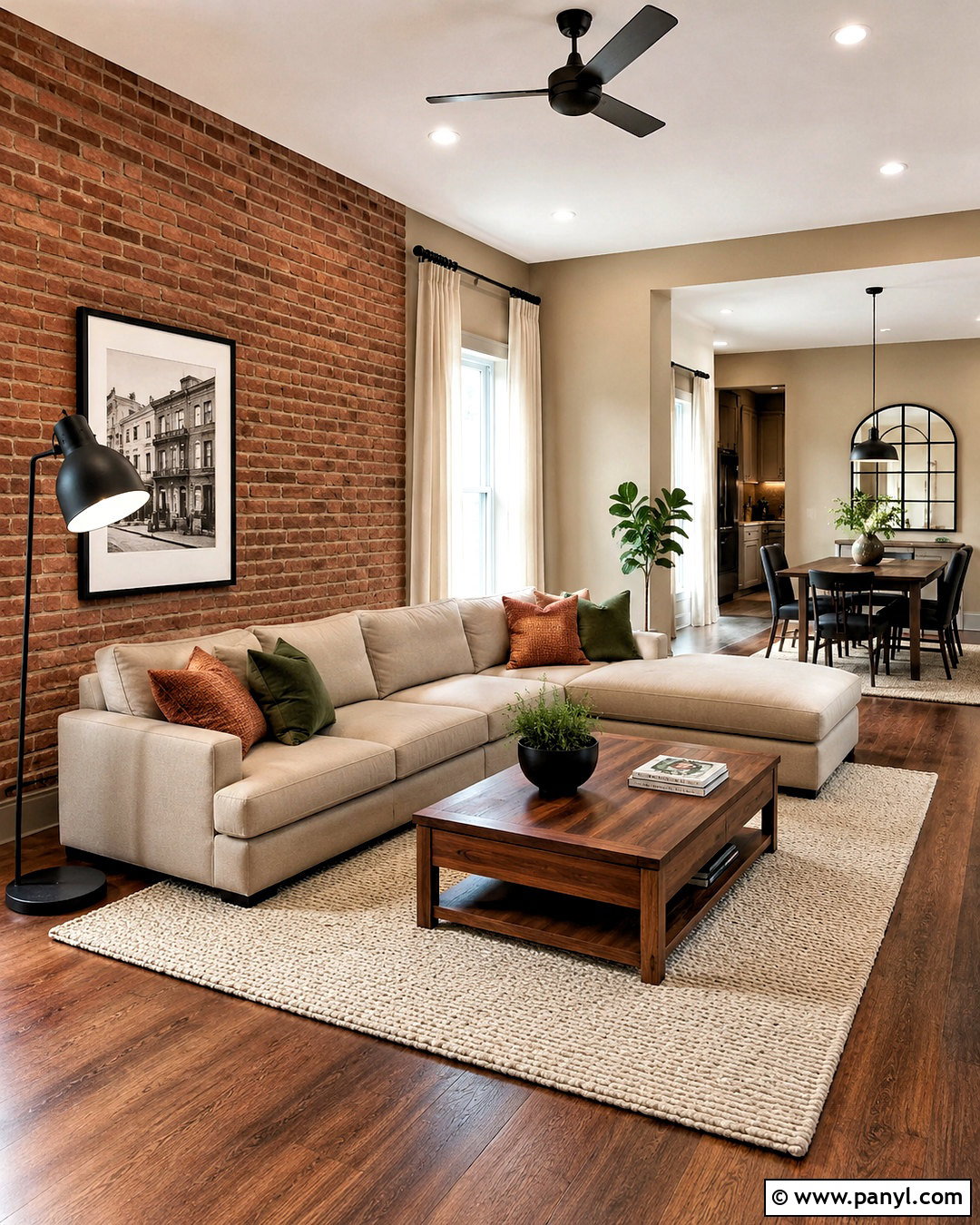
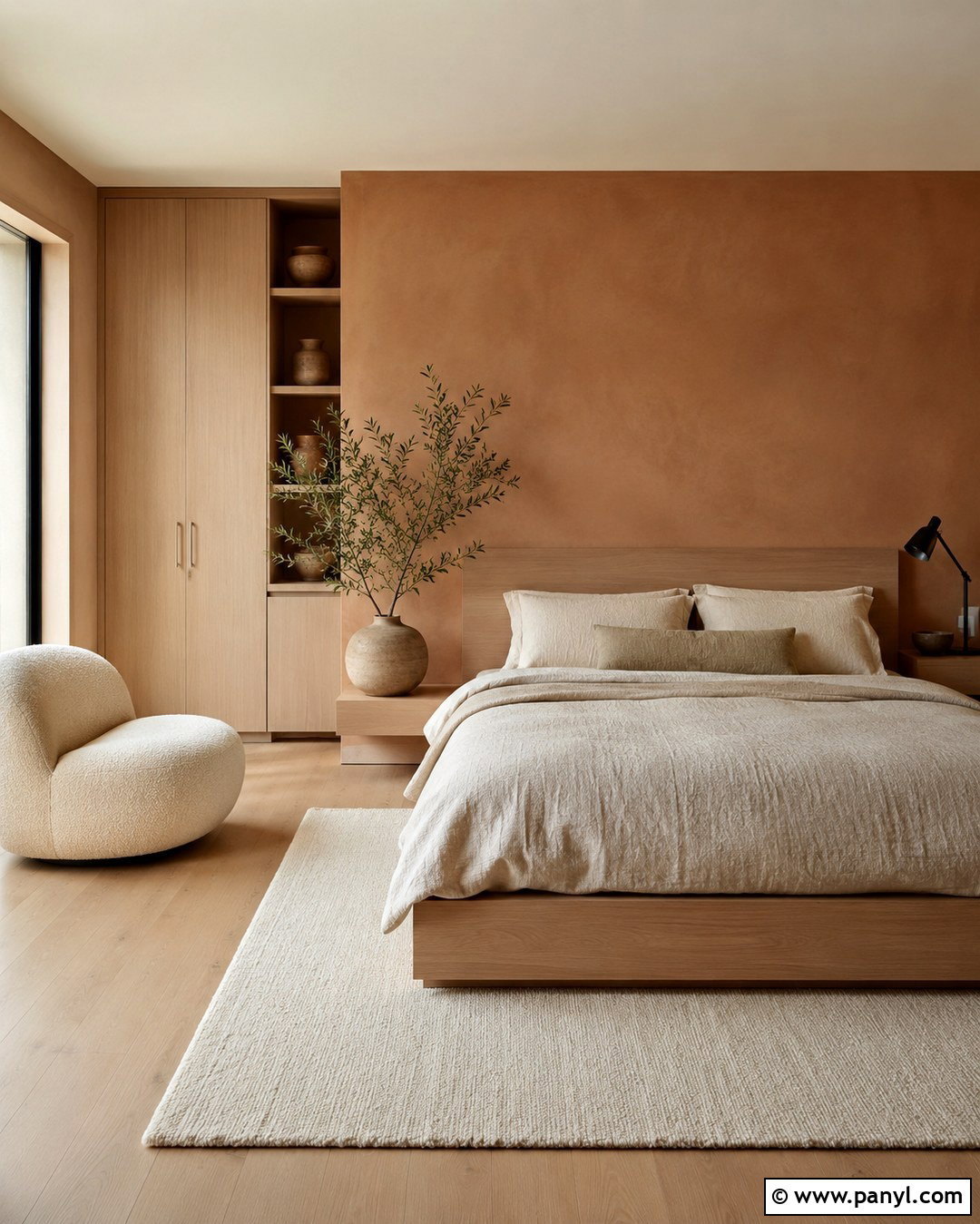
Terracotta walls and medium oak floors produce a warm, sunbaked palette that feels relaxed and inviting. Choose a dusty clay color with brown or pink undertones instead of a vivid orange. Balance the warmth with a cream sofa, an oatmeal rug, and dark brown accent chairs. Black metal lighting and hardware add needed structure. Use medium oak furniture sparingly so the flooring remains distinct, then introduce woven baskets, linen curtains, and handmade-looking ceramic decor. Muted sage green pillows or plants offer a natural contrasting color. Soft white trim keeps the room from becoming overly earthy. This coordinated look works particularly well in dining rooms and casual living spaces where layered texture, comfortable seating, and warm materials support an easy everyday atmosphere.
11. Mushroom Walls With Red Oak Floors
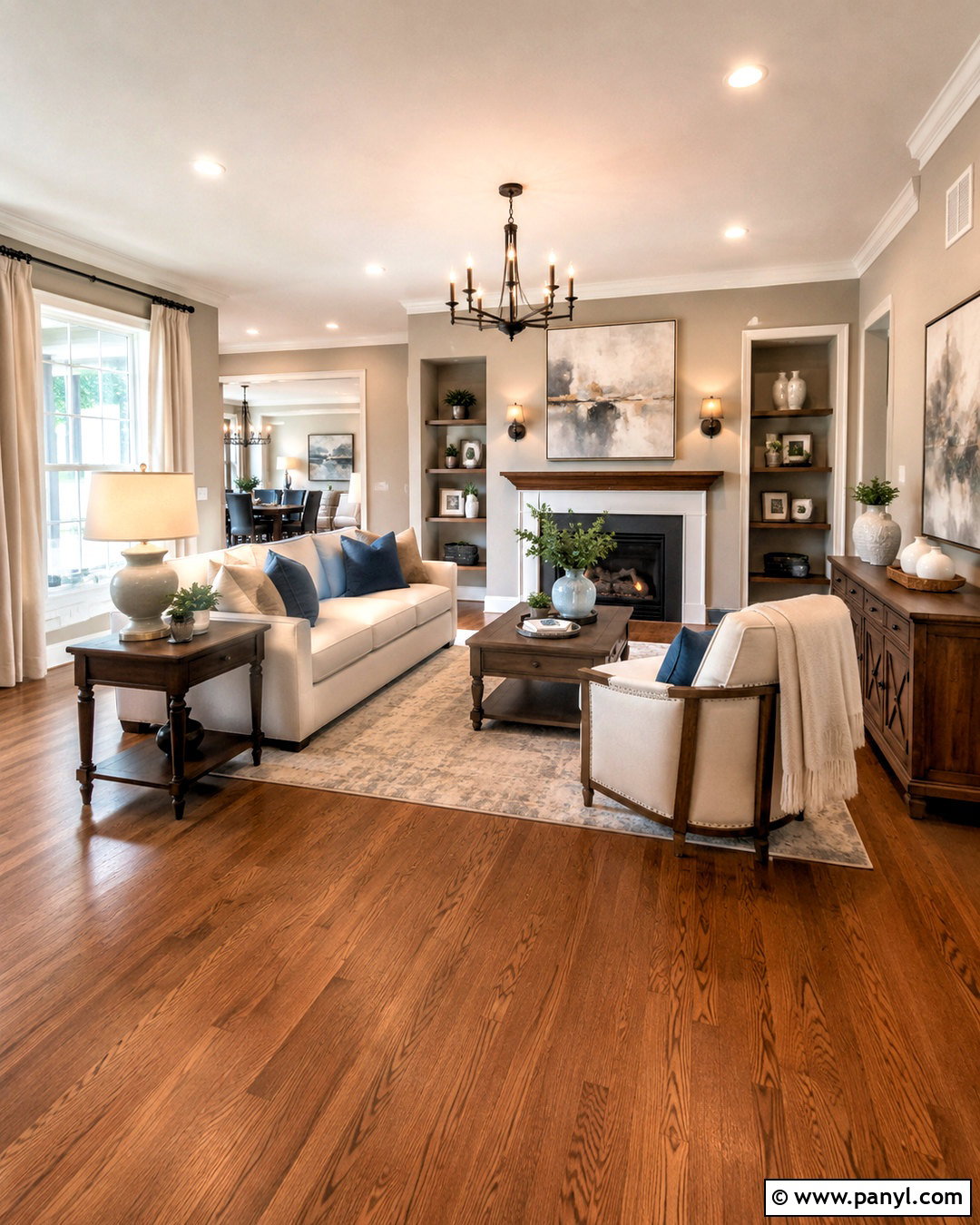
Mushroom-colored walls can quiet the pink and orange notes commonly visible in red oak flooring. The ideal shade sits between taupe, beige, and soft brown without a strong purple undertone. Build the room around a cream upholstered sofa, a faded taupe rug, and dark bronze lighting. Walnut furniture introduces a deeper wood tone, keeping the red oak from looking overly matched. Add dusty blue pillows, off-white curtains, and abstract artwork containing beige, brown, and muted blue. Paint the trim a warm white for gentle definition. This sophisticated neutral combination feels more layered than plain beige and warmer than standard gray. It is particularly useful in open living and dining areas where one flexible wall color needs to coordinate with several furnishings.
12. Warm Beige Walls With Cherry Floors
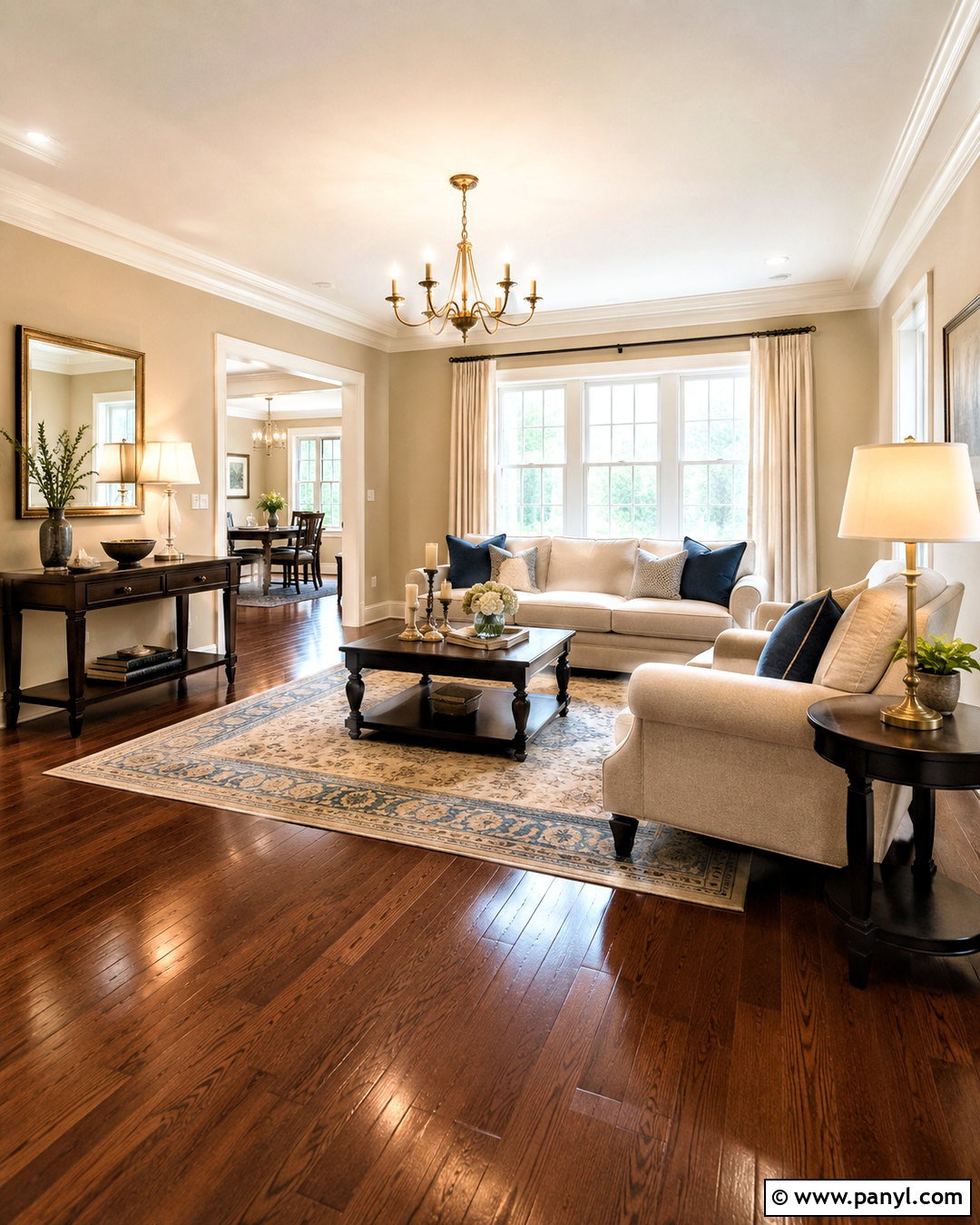
Cherry floors have a distinctive red warmth that needs a calm, balanced wall color. Warm beige provides a natural transition without intensifying the red tones. Choose a beige with soft tan undertones and little visible yellow. Add an ivory sofa, a beige-and-blue rug, and dark espresso furniture to create separation from the floor. Muted navy pillows and artwork can cool the palette, while antique brass lighting maintains its traditional warmth. Use creamy white trim and light linen curtains to brighten the room. Avoid too many red or mahogany furnishings, which can make the color scheme feel heavy. The finished design should mix light upholstery, restrained pattern, and contrasting dark accents, allowing the cherry flooring to remain the room’s richest visual feature.
13. Soft Taupe Walls With Hickory Floors
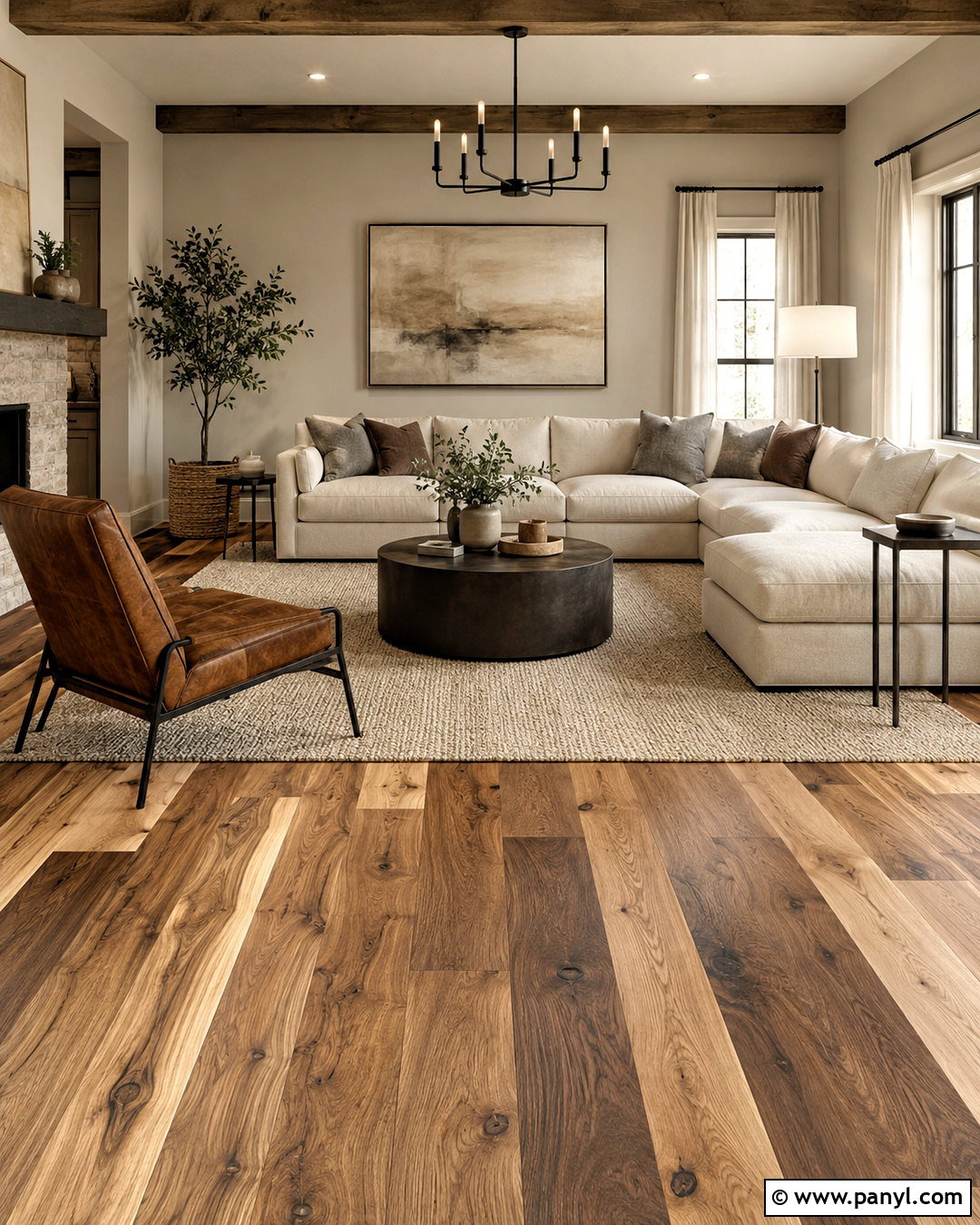
Hickory flooring often contains dramatic variation, including cream, gold, and dark brown boards. Soft taupe walls give that movement a quiet background. Choose a taupe that relates to the floor’s medium brown tones but remains noticeably lighter. Furnish the room with a warm white sectional, a large oatmeal rug, and simple black or dark bronze tables. Leather accents in camel or chocolate brown can connect the floor’s changing shades. Keep curtains light and unpatterned so they do not compete with the wood grain. Use oversized artwork with broad neutral areas rather than busy gallery arrangements. This complete palette is ideal for rustic-modern homes because it respects the floor’s natural character while introducing cleaner furniture lines, restrained decor, and an organized visual rhythm.
14. Pale Blue Walls With Dark Brown Floors
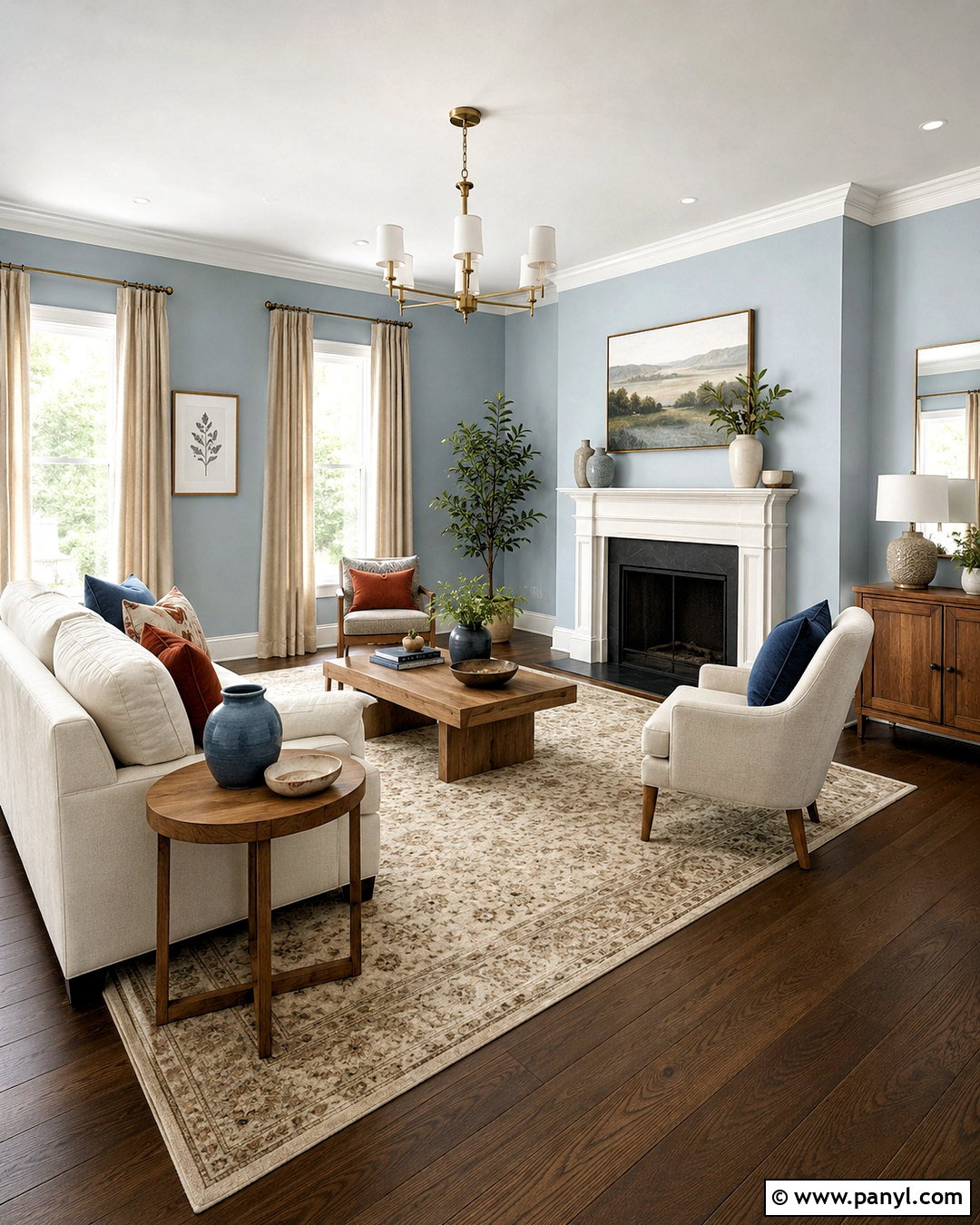
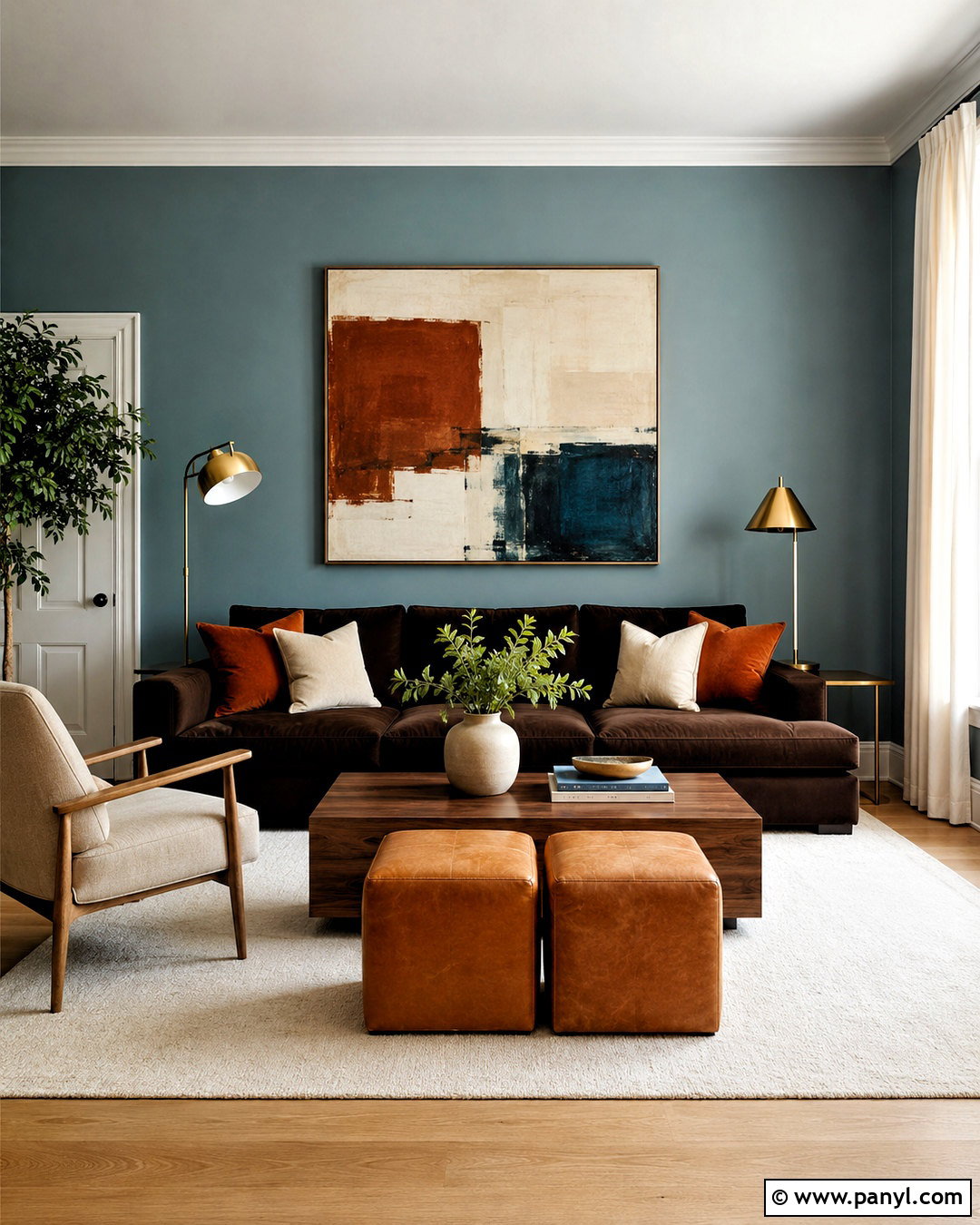
Pale blue walls create a fresh contrast above dark brown wood flooring. Select a quiet blue with a slightly gray or green undertone rather than a sweet pastel. A warm white sofa, a cream patterned rug, and natural oak tables help lift the room visually. Repeat the flooring color in small details such as picture frames, curtain rods, or chair legs. Sand-colored linen curtains warm the blue, while brushed nickel or aged brass lighting gives the room a polished finish. Add pillows in denim, beige, and muted rust for a balanced mix. This palette works well in sunny living rooms and bedrooms because the blue feels airy during the day, while the dark flooring provides enough depth to keep the room grounded.
15. Muted Olive Walls With Pine Floors
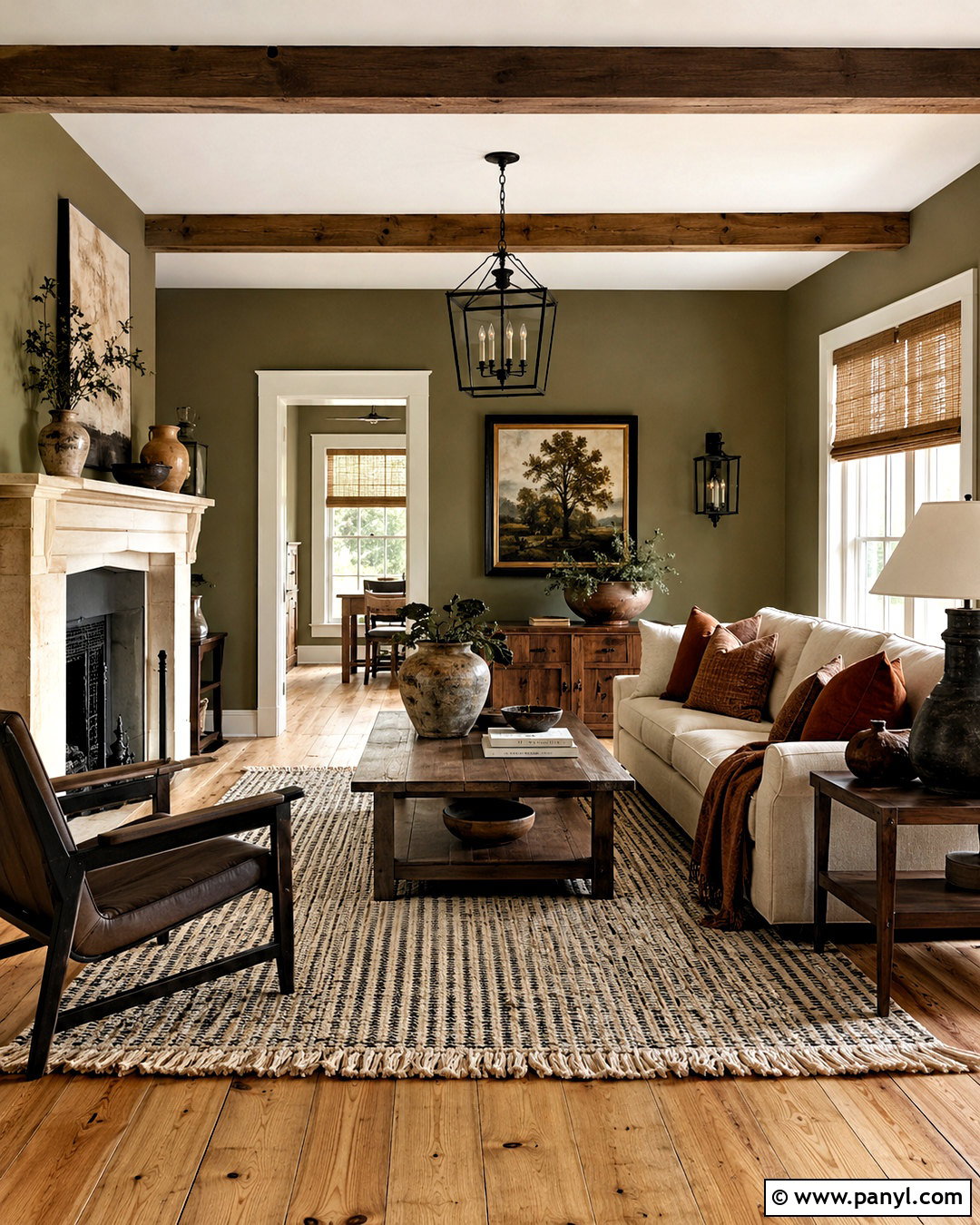
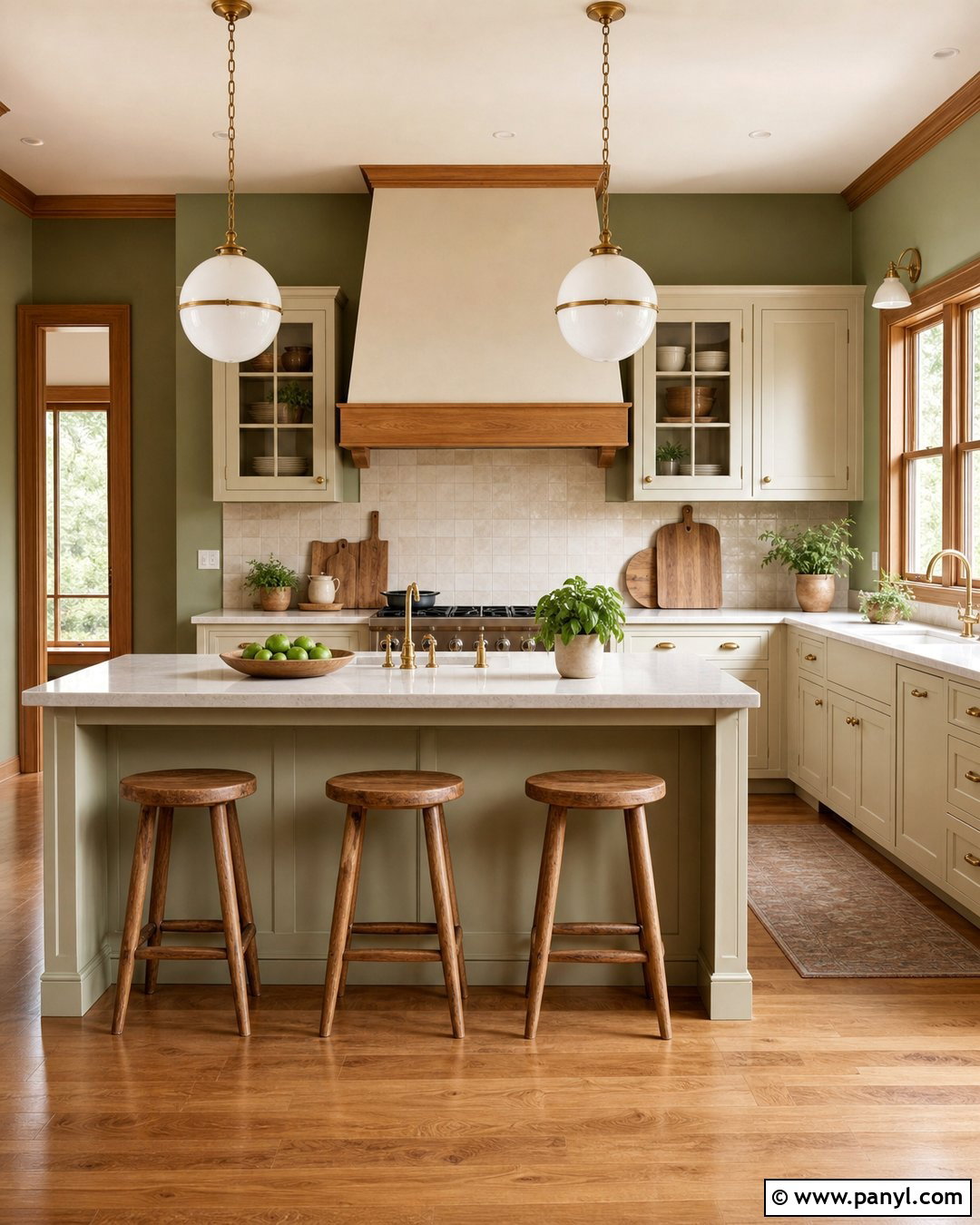
Golden pine flooring gains a more mature look when paired with muted olive walls. Choose an earthy olive containing gray or brown, which will soften the floor’s yellow-orange character. Complete the room with a natural linen sofa, a cream and black woven rug, and dark walnut furniture. Black iron lighting creates definition, while rust-colored textiles add another warm note without competing with the pine. Use off-white trim rather than bright white to maintain a gentle transition between surfaces. Woven blinds and simple pottery reinforce the organic palette. Because both olive and pine are warm, introduce enough cream fabric and pale artwork to keep the room bright. The result feels cozy, natural, and well suited to casual farmhouse or rustic-modern interiors.
16. Blush Beige Walls With White Oak Floors
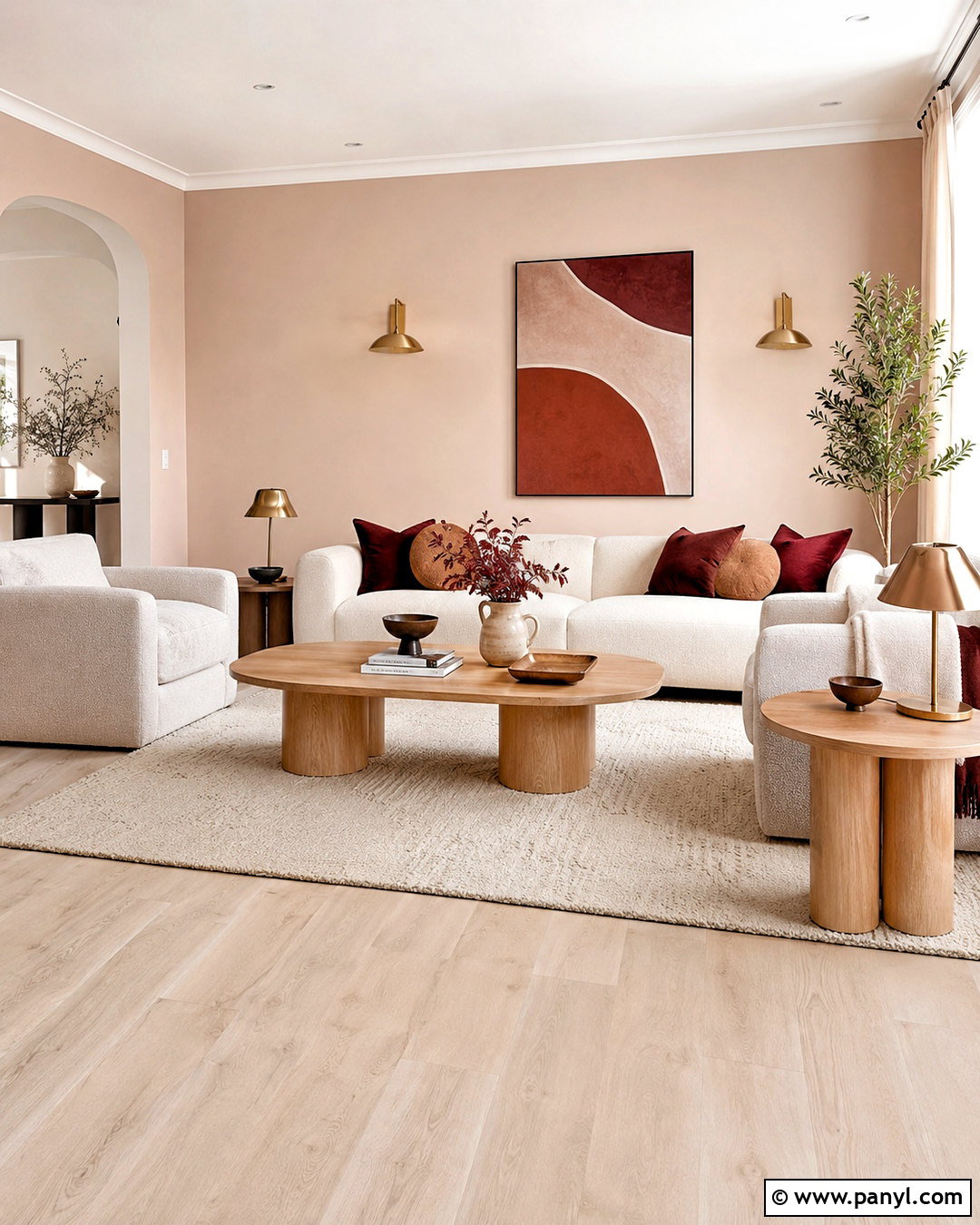
Blush beige walls add quiet color to white oak floors while preserving a soft, neutral atmosphere. Look for a dusty pink-beige that appears warm and earthy rather than sugary. Pair it with an ivory boucle sofa, a pale oatmeal rug, and light oak tables for a calm tonal foundation. Add burgundy, terracotta, or deep brown accents in small amounts to create definition. Brushed brass lamps bring out the warmth, while charcoal frames prevent the room from feeling overly delicate. Natural linen curtains and handmade ceramic pieces complete the layered look. This color scheme works beautifully in bedrooms, sitting rooms, and feminine-but-grown-up living spaces. Keeping furniture shapes clean and modern allows the subtle wall color to feel intentional, current, and easy to live with.
17. Deep Teal Walls With Light Oak Floors
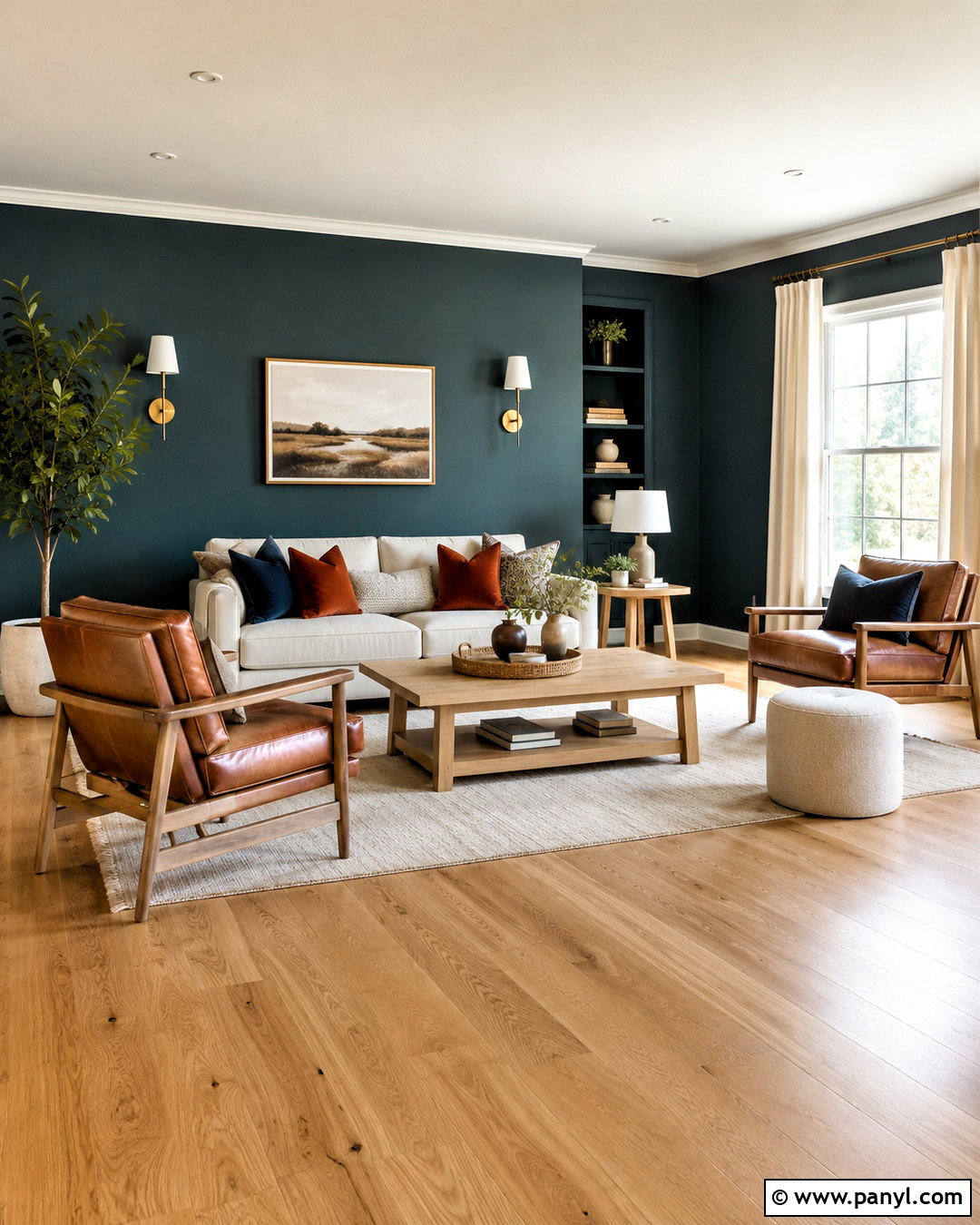
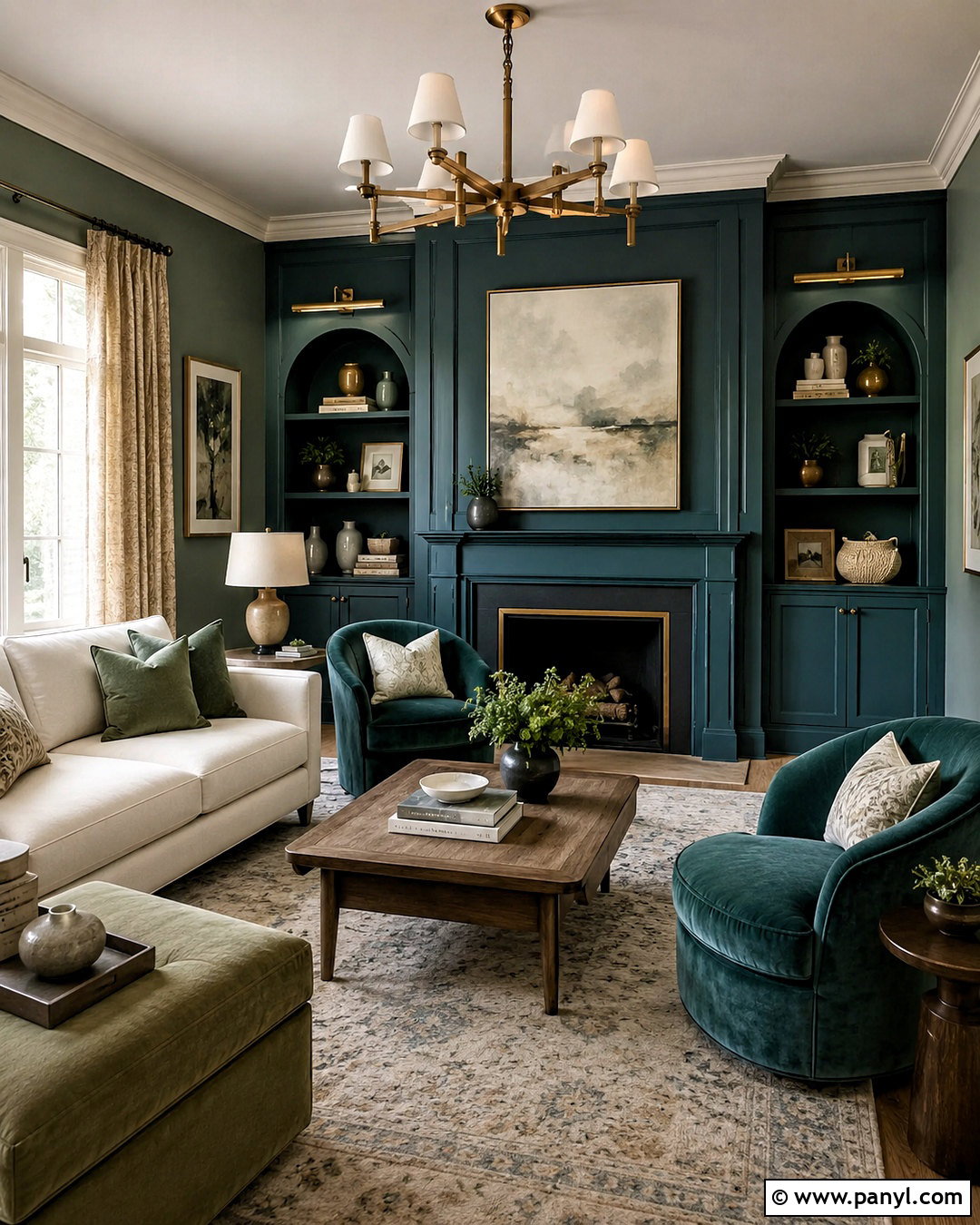
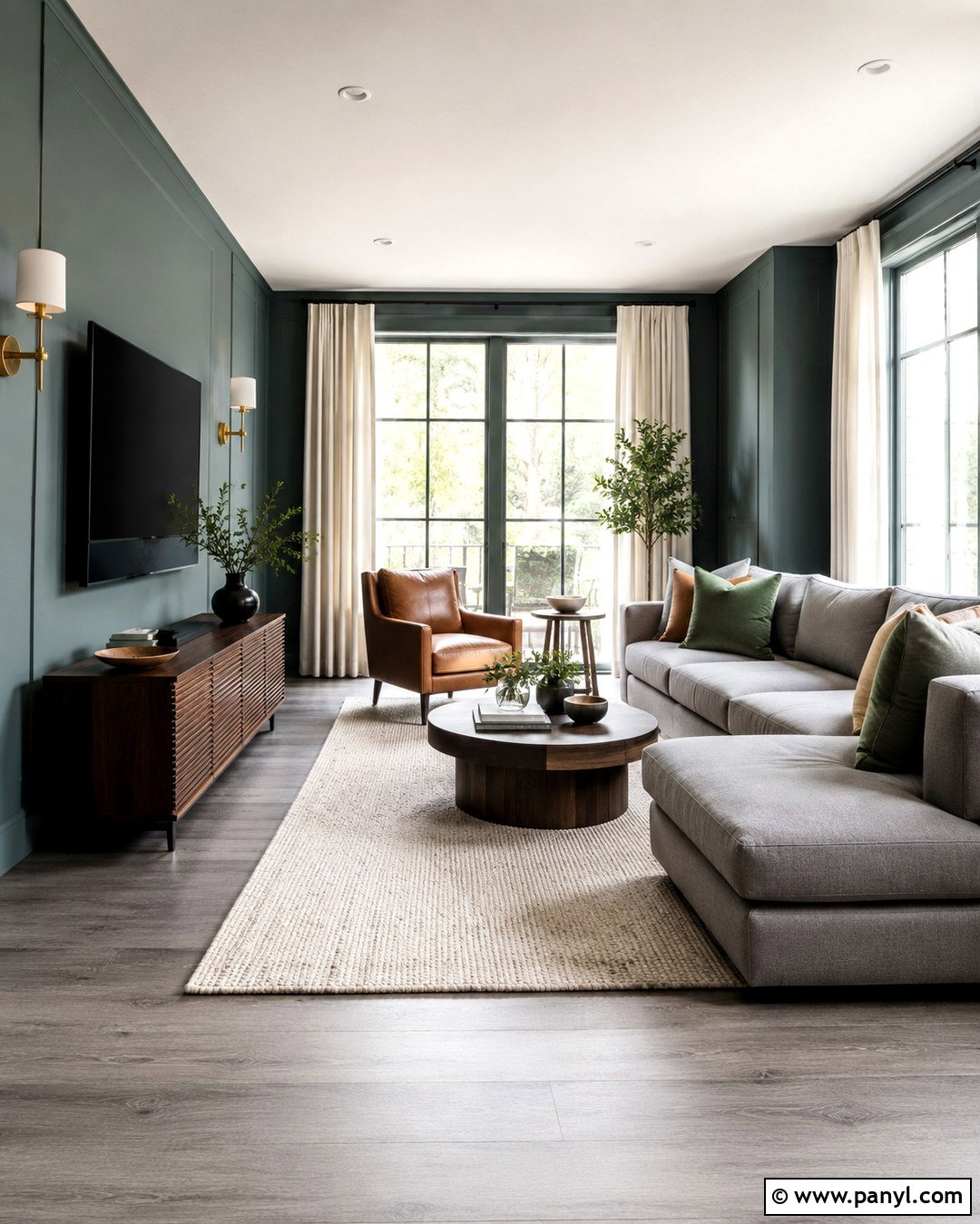
Deep teal walls bring color and personality to light oak flooring without losing the room’s natural warmth. Select a dark blue-green with muted undertones so it reads as sophisticated in different lighting. Add a cream sofa, cognac leather chairs, and a large ivory rug to balance the saturated walls. Light oak tables repeat the floor, while aged brass sconces and lamps create a warm glow. Use warm white on the ceiling and trim for a crisp boundary. Pillows in rust, navy, and beige can connect the entire palette. This combination suits dining rooms, offices, and living rooms where a more dramatic atmosphere is welcome. Keep window treatments pale and decorative accessories restrained so the strong wall color remains the main feature.
18. Soft Black Walls With Pale Wood Floors
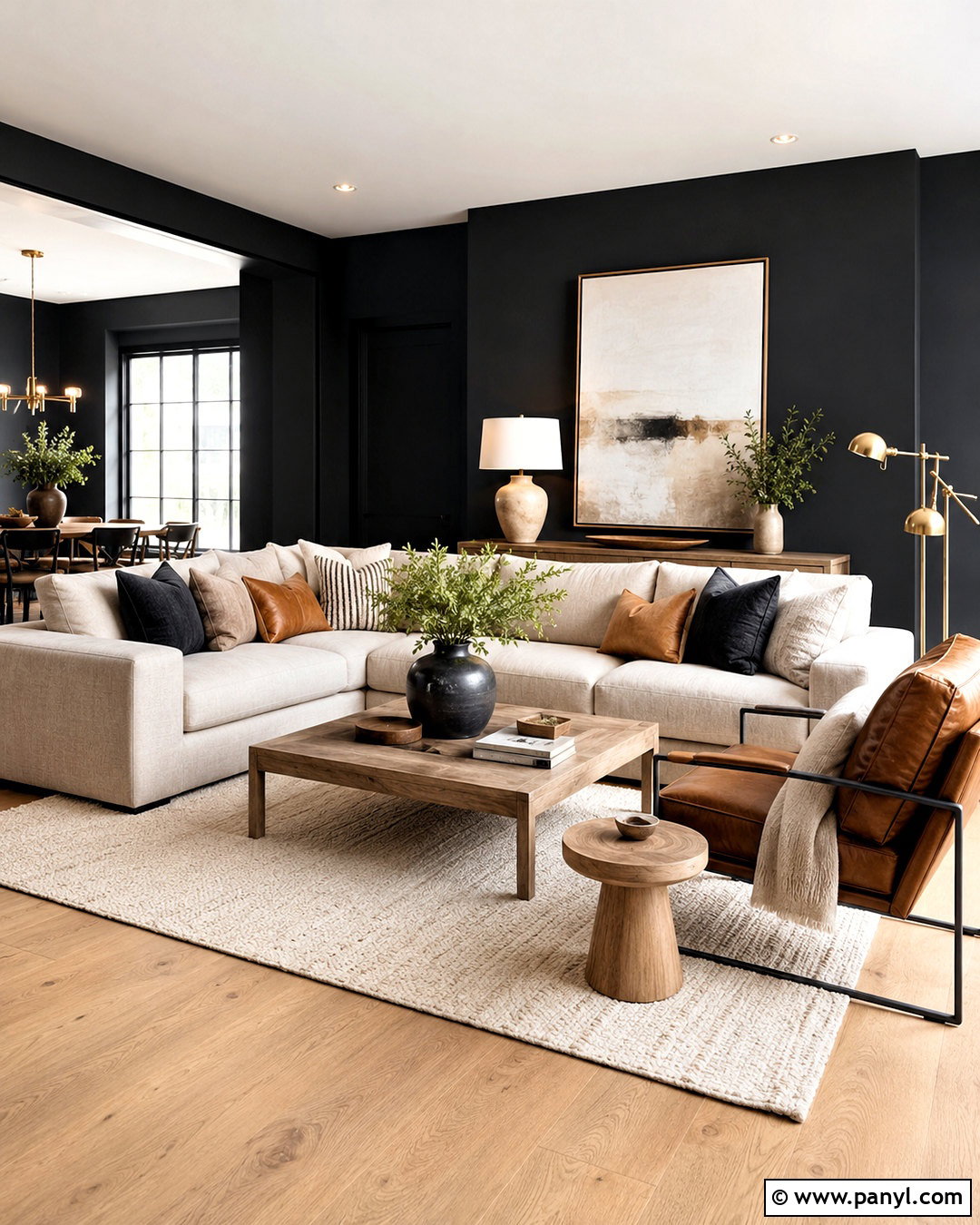
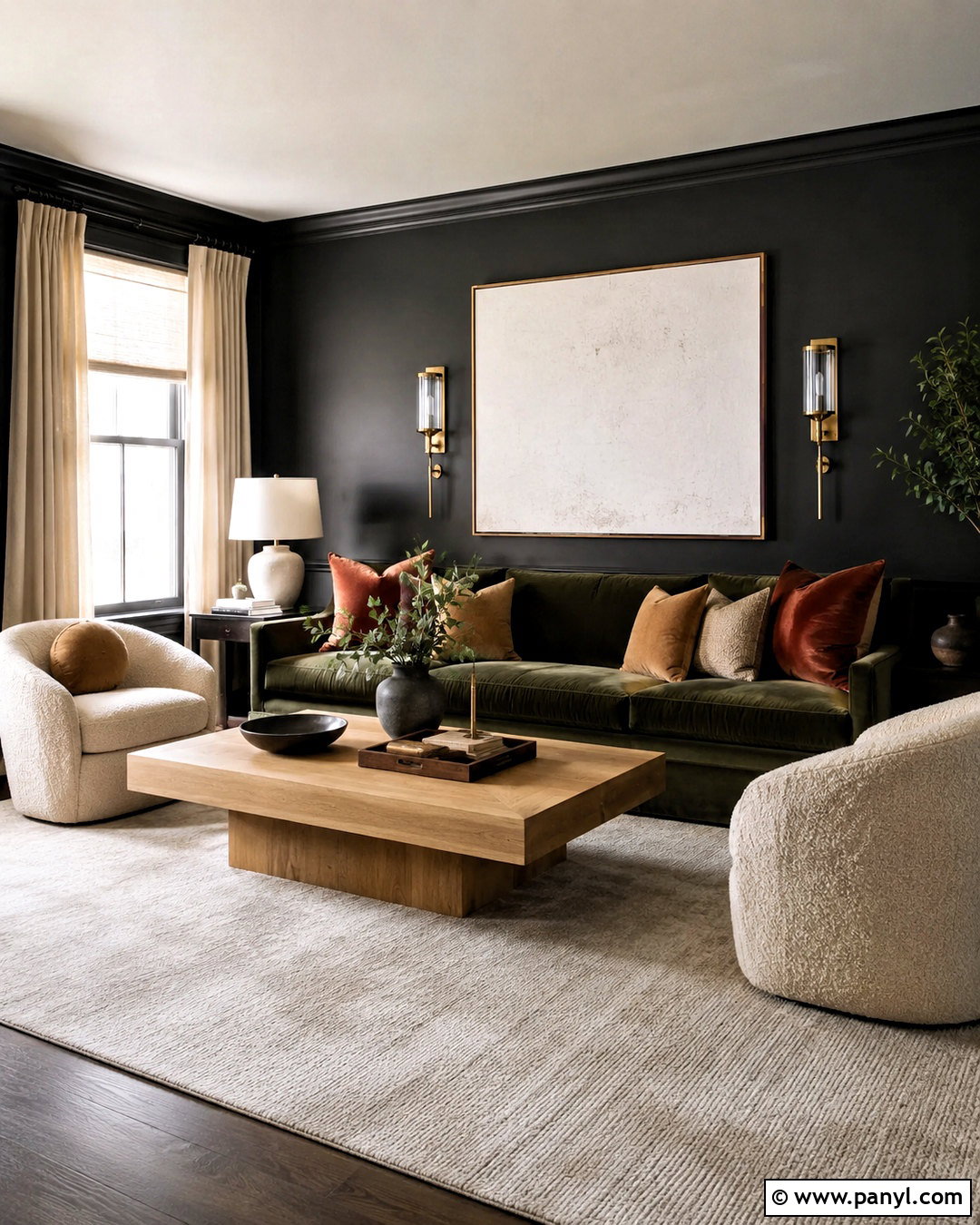
Soft black walls create striking contrast with pale wood flooring while feeling warmer and more livable than true black. Choose a black paint with charcoal or brown undertones, then use it consistently across walls and trim for a streamlined effect. A large cream sectional, a thick ivory rug, and blonde wood tables introduce enough brightness. Add camel leather, warm brass, and natural linen to prevent the design from appearing cold. The ceiling can remain warm white to reflect light downward. Select simple oversized artwork rather than many small pieces, which may look busy against dark walls. This modern combination works best when the room has generous windows and thoughtful lighting, including floor lamps, table lamps, and softly diffused overhead fixtures.
19. Buttercream Walls With Medium Walnut Floors
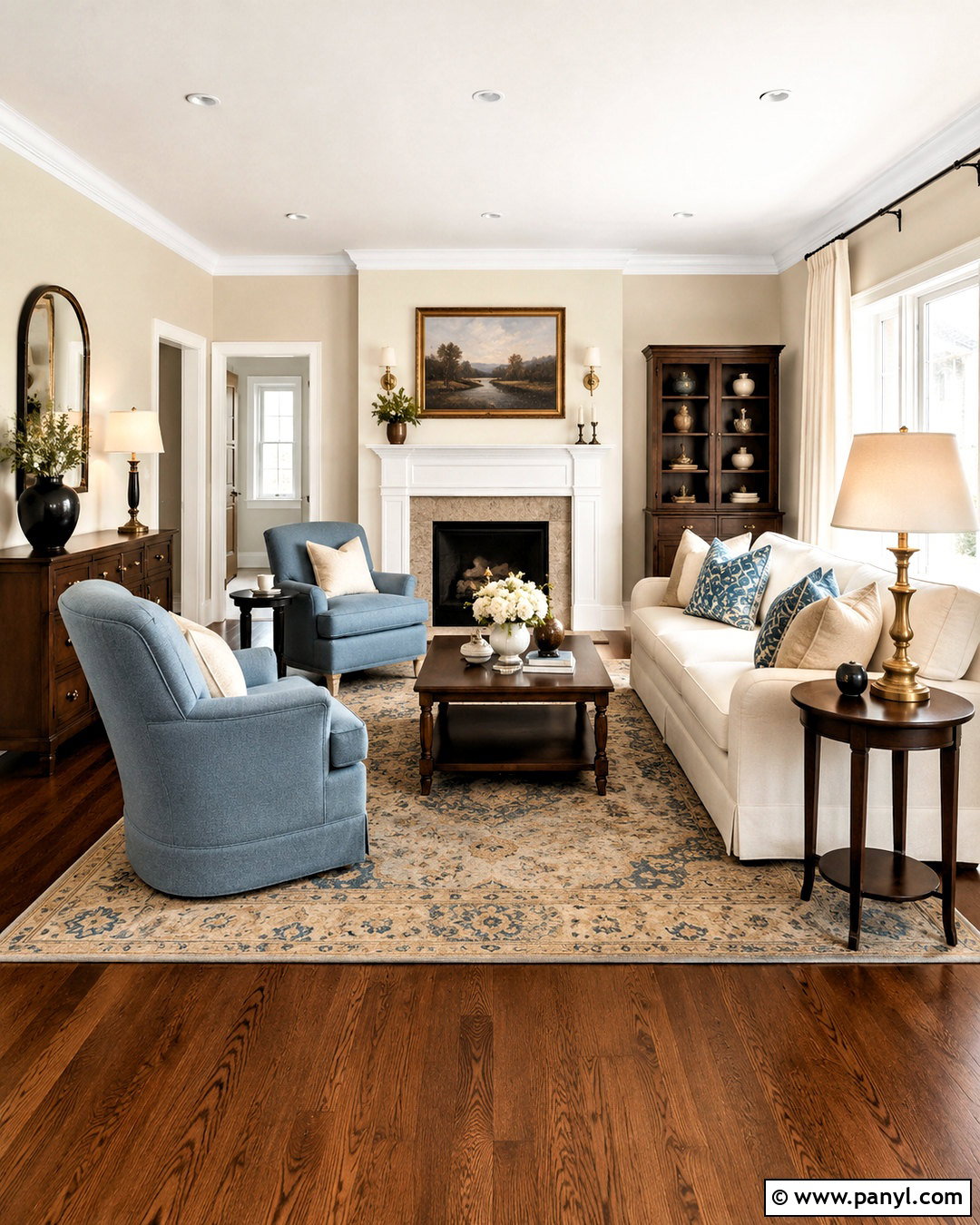
Buttercream walls make medium walnut floors feel warm, welcoming, and slightly traditional. The wall color should be creamy and subdued, not bright yellow. Complete the room with a warm white sofa, a patterned rug containing tan and faded blue, and walnut tables that relate to the flooring. Soft blue armchairs offer gentle contrast, while antique brass lamps reinforce the golden undertone. Use ivory curtains and creamy trim for a smooth, low-contrast envelope. Small black details, such as frames and cabinet hardware, can sharpen the finished look. This palette works especially well in north-facing rooms because the warm wall color compensates for cooler natural light. The complete design feels comfortable and familiar without appearing dated or overly formal.
20. Crisp White Walls With Gray Wood Floors
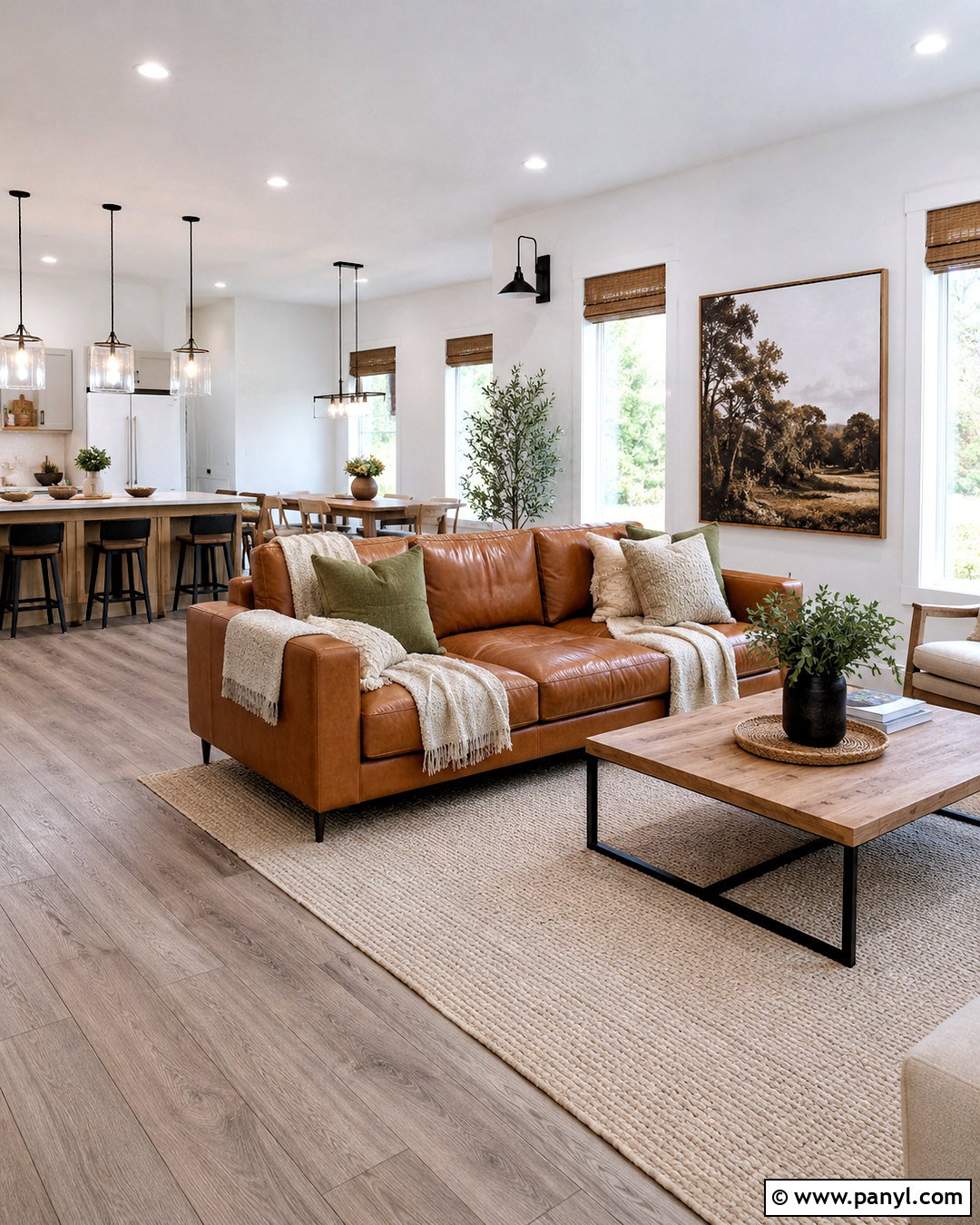
Crisp white walls can refresh gray wood flooring, but the room needs warmth to avoid looking sterile. Choose a clean white that is neutral rather than strongly blue. Build the design with a camel leather sofa, a beige wool rug, and natural oak tables. These warmer materials bridge the cool floor and bright walls. Add black metal lighting for contrast, then layer olive green pillows, textured cream throws, and large-scale nature artwork. Simple white trim maintains the streamlined appearance. Linen or woven window treatments soften the hard surfaces and improve visual comfort. This combination suits modern open-plan homes where a flexible background is useful. The balance of white, gray, tan, and natural wood creates a fresh room with enough texture and color to feel welcoming.
Conclusion:
Successful wood floor wall color ideas begin with undertones, contrast, and the amount of light entering the room. Cream, greige, taupe, and warm white provide flexible foundations, while sage, blue, olive, teal, and charcoal create stronger personality. The floor should remain part of the complete design rather than becoming an afterthought. Coordinate paint with upholstery, rugs, window treatments, lighting, and smaller accents for a room that feels connected. Most importantly, test large wall samples beside the flooring at different times of day, since natural and artificial light can shift both colors. With a balanced palette and repeated materials, nearly any wood floor can support a comfortable, polished room. ()

Related Ideas and Inspiration:
Leave a Reply