
Choosing tile colors becomes easier when you treat the walls and floor as one complete design rather than two separate surfaces. The best **wall and floor tiles color combination ideas** balance tone, pattern, finish, and scale while supporting the room’s furniture, fixtures, and natural light. A quiet wall tile can soften a patterned floor, while a deeper floor color can ground pale walls and cabinetry. You can also build depth with tonal shades, contrasting materials, or warm and cool colors used in careful proportions. The combinations below cover bathrooms, kitchens, entryways, laundry rooms, and other practical spaces, with options ranging from timeless neutrals to richer statement colors. Use these complete wall and floor tiles color combination ideas to create a polished look that feels cohesive and personal.

1. White Wall Tiles With Gray Floor Tiles
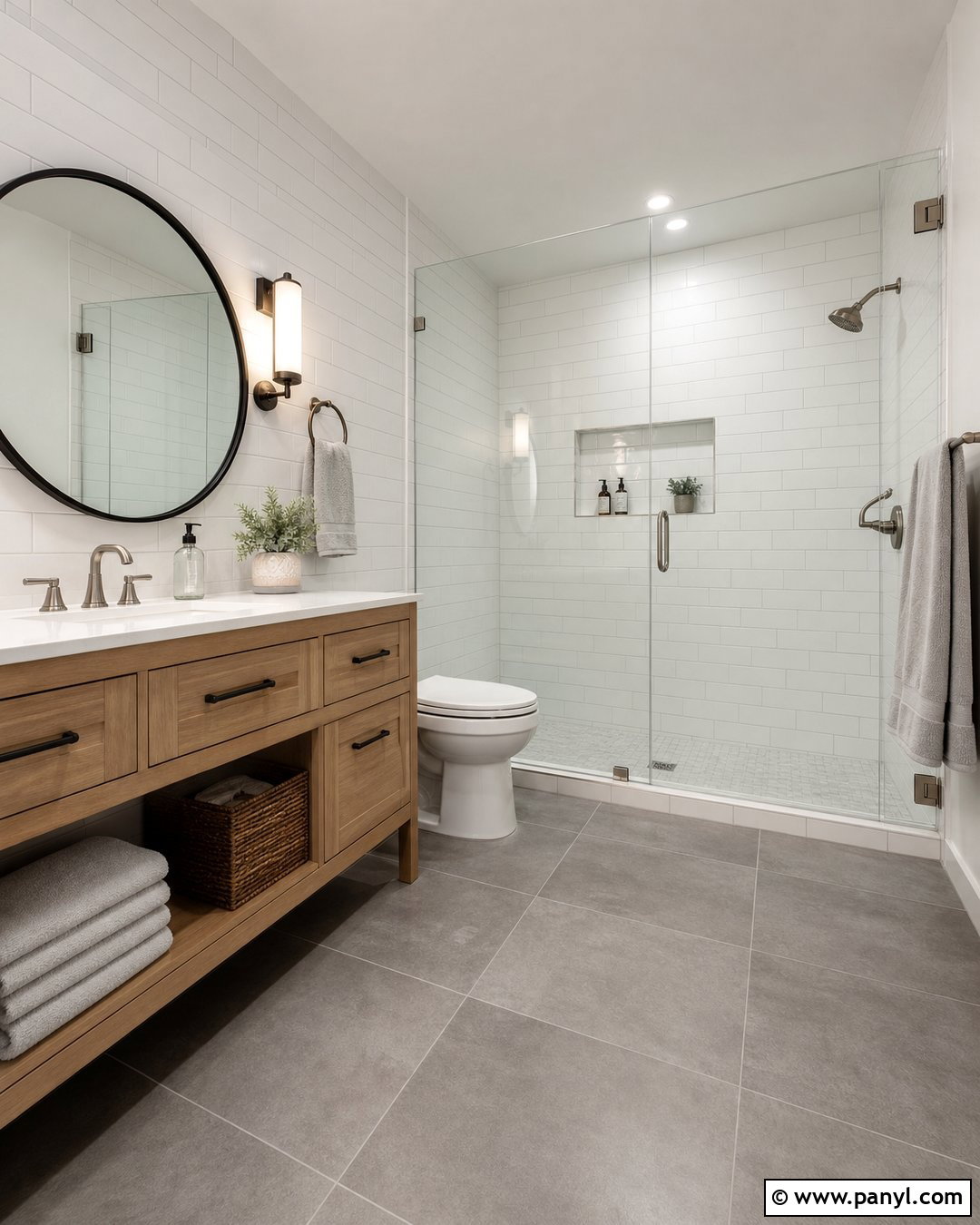
White wall tiles paired with gray floor tiles create a clean foundation that works especially well in a compact bathroom. Choose glossy white subway tiles for the shower and vanity wall, then ground the space with medium-gray porcelain floor tiles in a matte finish. Light gray grout creates a softer transition than harsh black grout. A white oak vanity, brushed nickel faucets, and a frameless glass shower keep the room bright without making it feel cold. Add pale gray towels and a simple round mirror for continuity. Large floor tiles reduce visual clutter, while the smaller wall tile adds gentle texture. This combination suits modern, transitional, and Scandinavian interiors and remains flexible if you want to change accessories later.
2. Cream Wall Tiles With Beige Floor Tiles
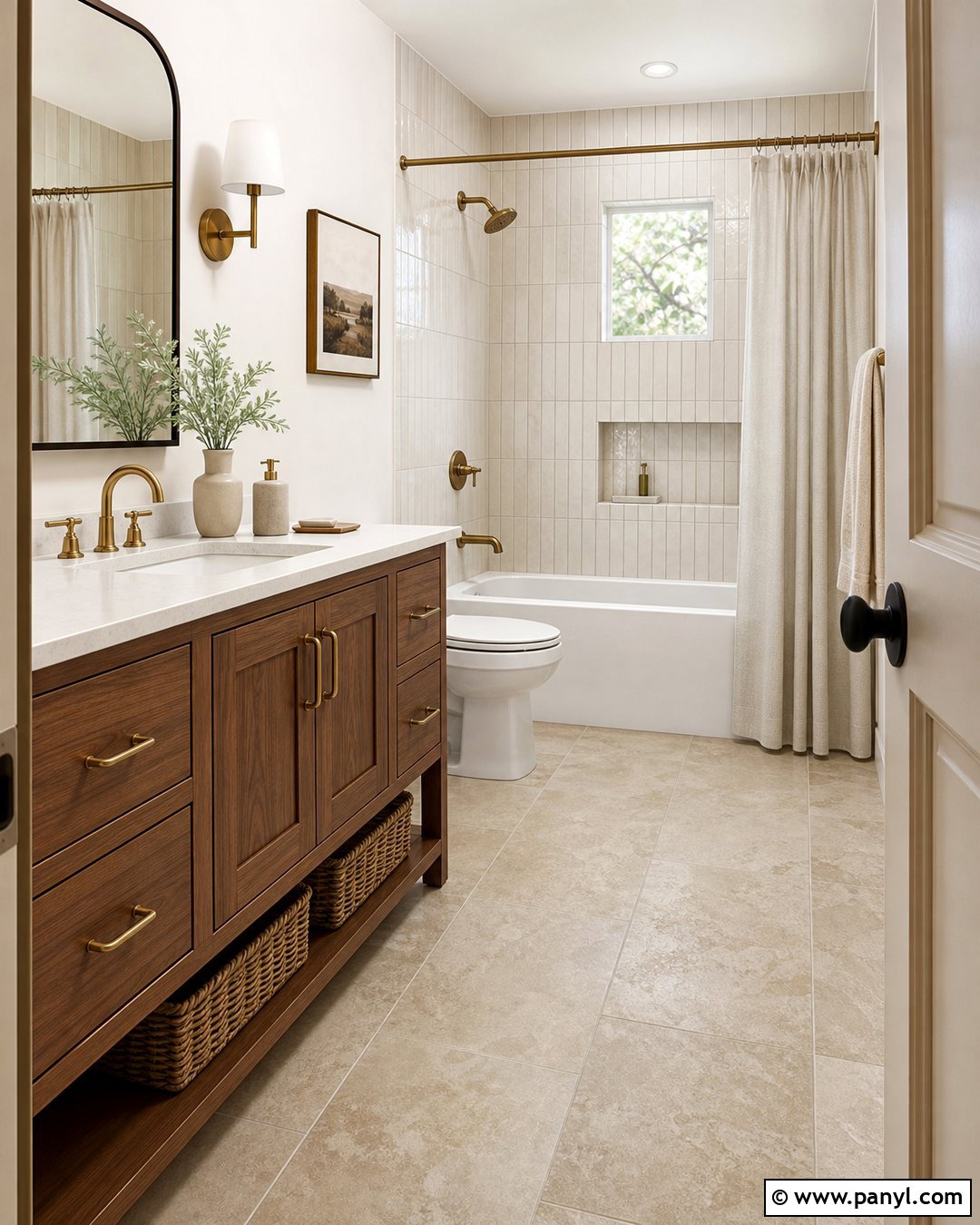
A cream and beige tile palette brings warmth to bathrooms that receive limited natural light. Cover the walls with softly textured cream tiles, preferably in a vertical stacked layout that makes the ceiling appear taller. Use sandy beige limestone-look porcelain across the floor for a natural but easy-care finish. A walnut vanity introduces depth, while warm white countertops prevent the design from becoming too brown. Complete the room with brushed brass fixtures, an ivory shower curtain, and woven storage baskets. The wall and floor tiles should share warm undertones, but they do not need to match exactly. Slight variation creates dimension. This calm combination also works beautifully in a laundry room with cream cabinetry, light wood shelving, and simple ceramic accessories.
3. Sage Green Wall Tiles With Terracotta Floor Tiles
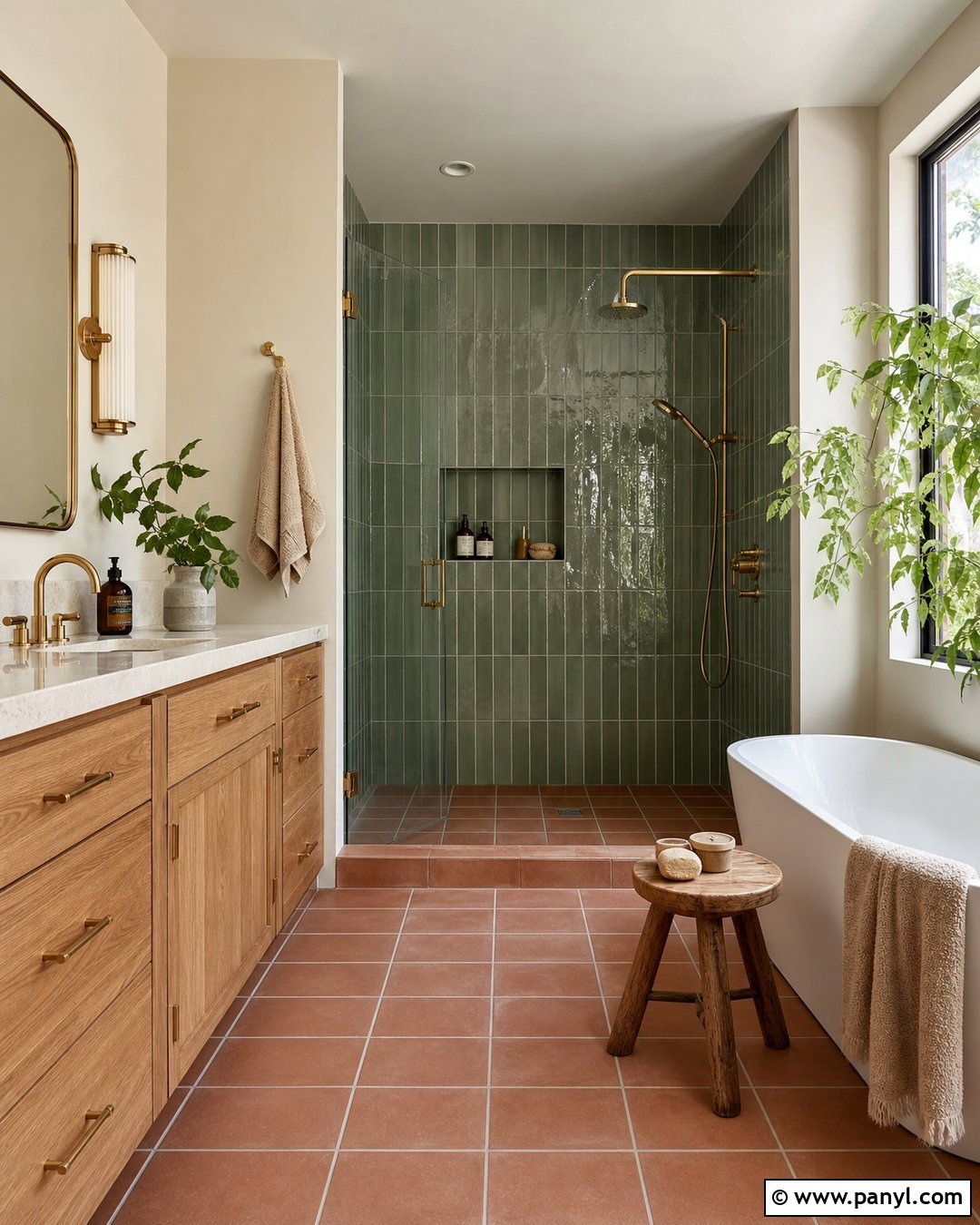
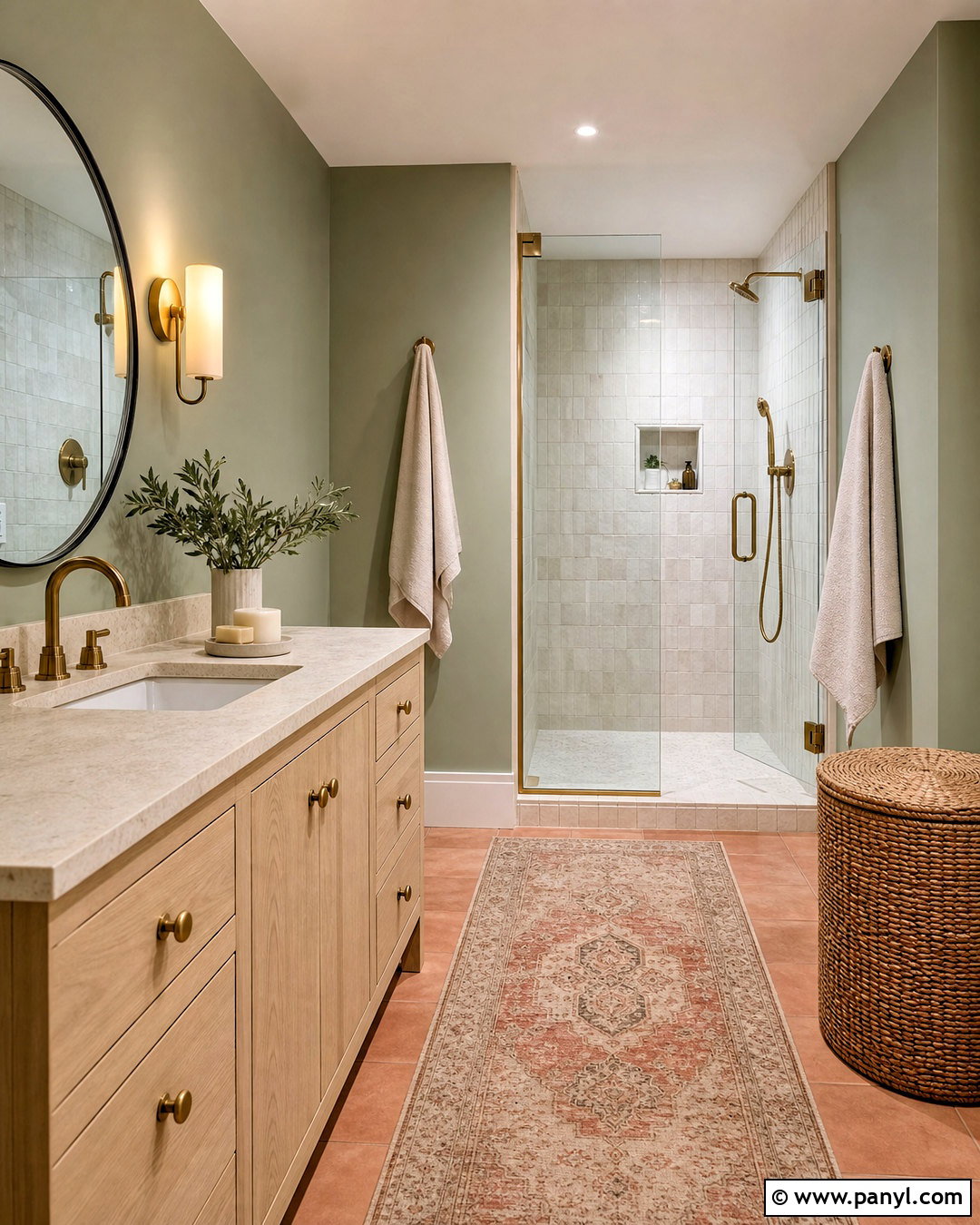
Earthy sage green wall tiles and terracotta floor tiles produce a welcoming bathroom with natural character. Use glazed sage subway or square tiles around the shower, tub, and vanity backsplash. Their reflective surface balances the soft, chalky appearance of matte terracotta-look porcelain underfoot. Keep the remaining walls warm white so the colors have room to breathe. A natural oak vanity, cream countertop, aged brass hardware, and linen textiles complete the relaxed palette. Terracotta floors contain noticeable red and orange notes, so select a muted sage rather than a bright yellow-green. Pale beige grout helps connect both surfaces. Add one or two leafy plants near a window, but avoid excessive accessories that could make the layered colors feel visually crowded.
4. Navy Blue Wall Tiles With White Floor Tiles
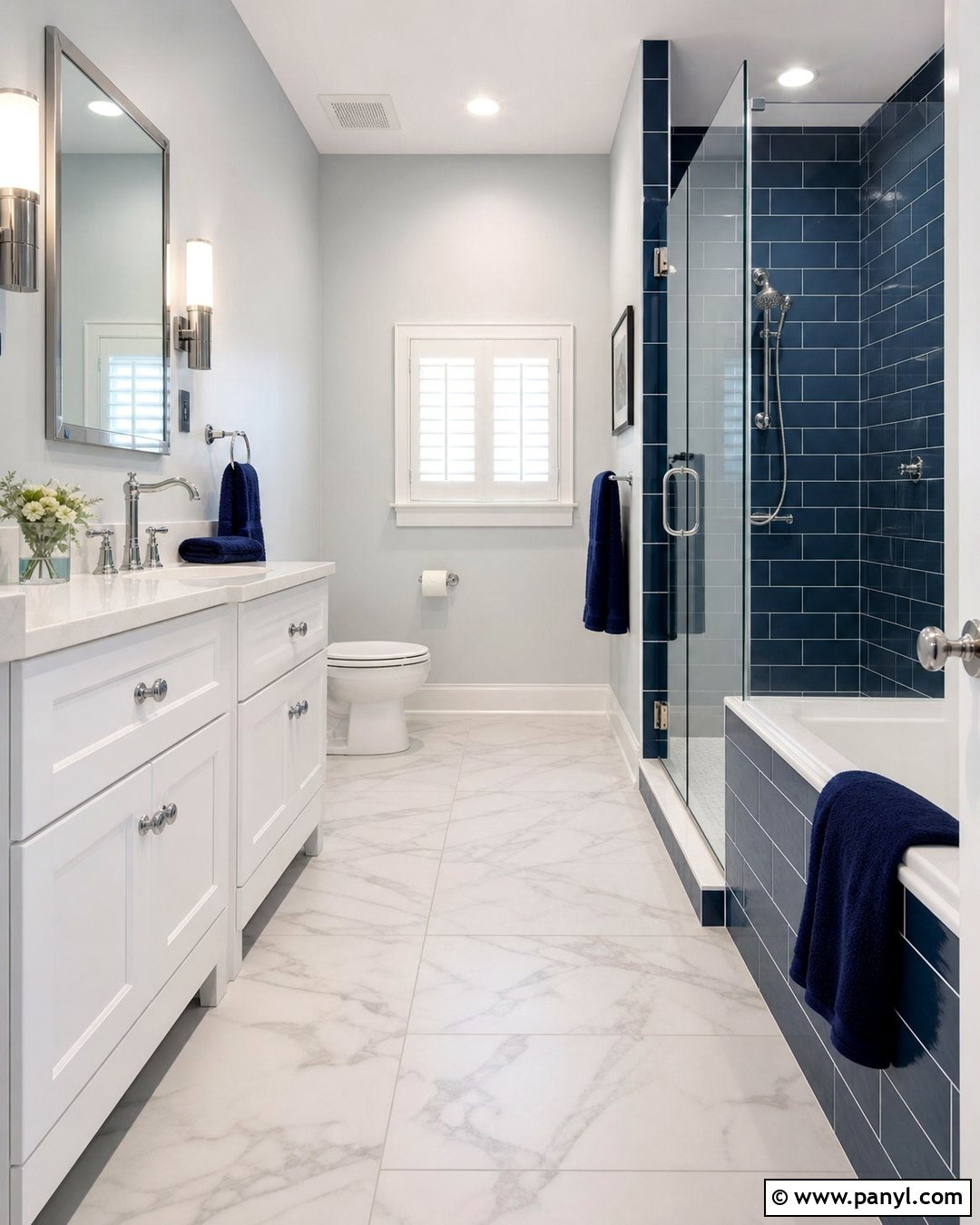
Deep navy wall tiles can make a bathroom feel sophisticated when balanced by a crisp white floor. Place glossy navy rectangular tiles inside the shower and behind the vanity, using vertical or stacked installation for a streamlined finish. Choose white marble-look porcelain floor tiles with subtle gray veining to reflect light throughout the room. A white vanity keeps the lower half airy, while polished chrome fixtures add brightness against the blue. Repeat navy in towels or a narrow mirror frame, but keep other accessories restrained. If the room is small, tile only one or two connected walls in navy rather than every surface. Soft white grout outlines the wall tile pattern and visually connects it to the lighter flooring.
5. Pale Blue Wall Tiles With Sand Floor Tiles
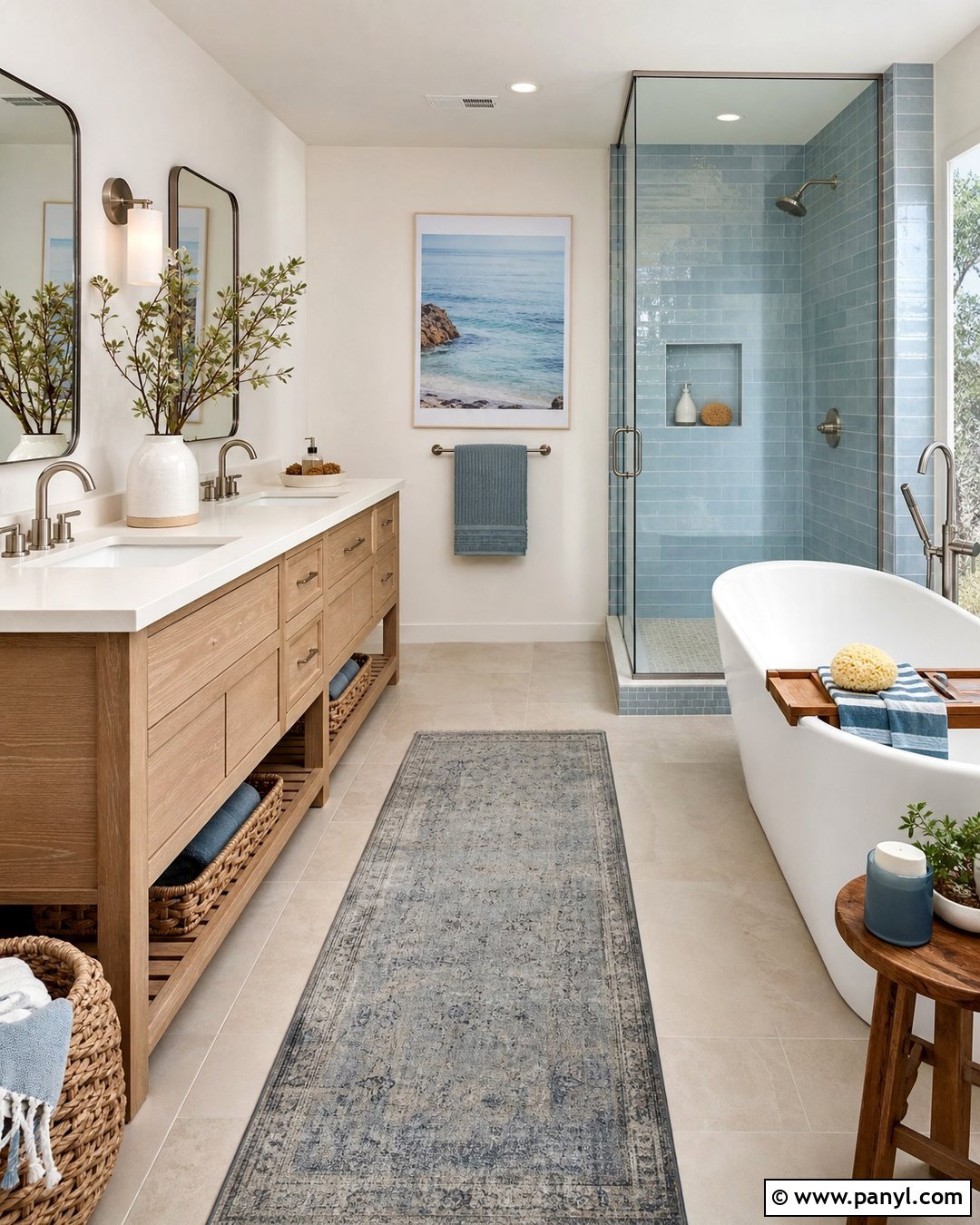
Imagine a bright bathroom with the relaxed colors of water and shore. Pale blue ceramic wall tiles provide a fresh backdrop, while sand-colored porcelain floor tiles introduce grounding warmth. Select handmade-look blue tiles with gentle shade variation for the shower, then use large-format sandy tiles across the floor to keep the layout calm. A light oak vanity, off-white countertop, brushed nickel fixtures, and woven baskets support the coastal influence without becoming themed. Warm white paint works better than stark white beside the beige flooring. Use pale taupe grout on the floor and light blue-gray grout on the walls. The result feels open and comfortable, making this combination particularly useful for guest bathrooms, powder rooms, and sunny laundry spaces.
6. Black Wall Tiles With White Hexagon Floor Tiles
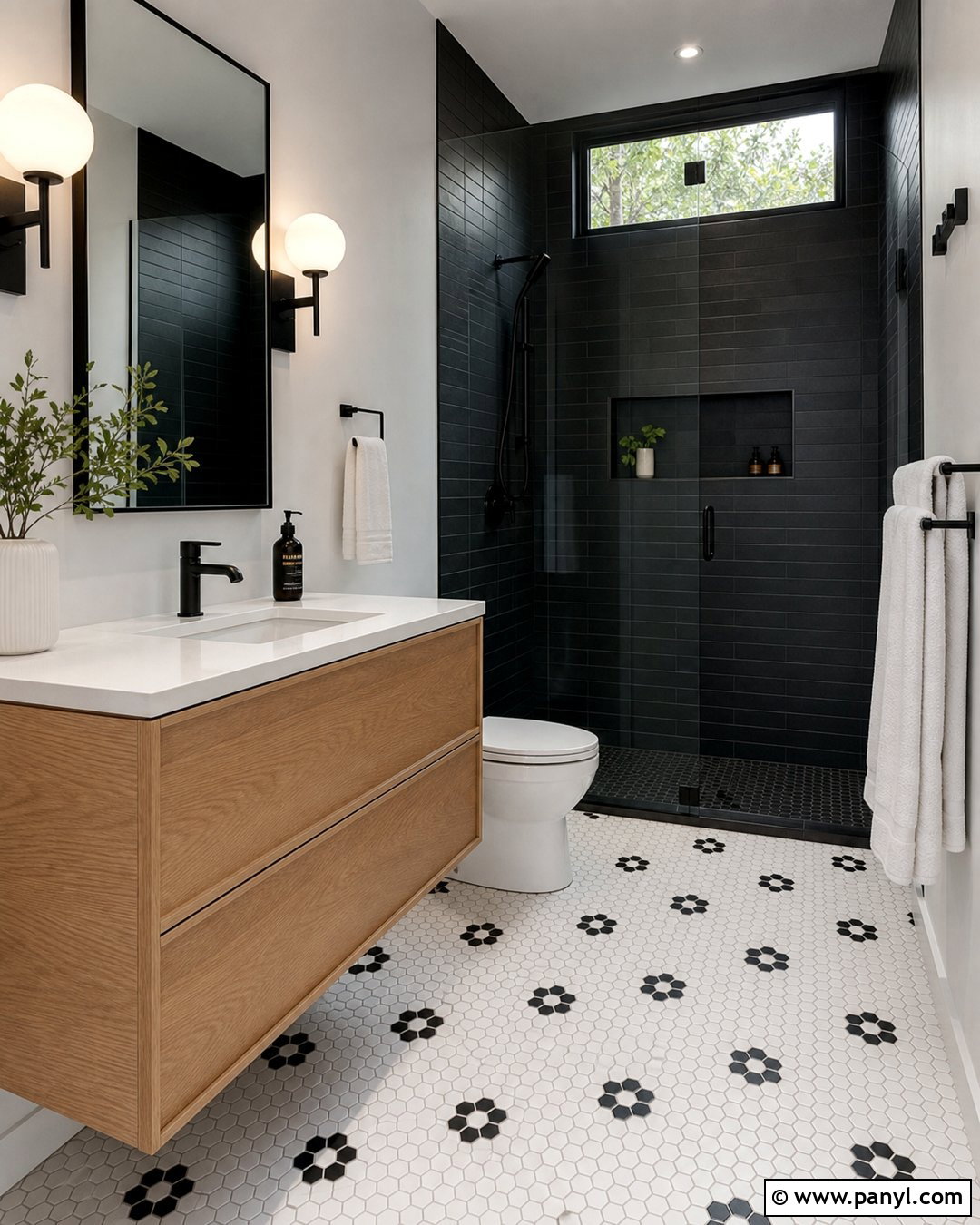
For a bold bathroom, combine matte black wall tiles with a white hexagon mosaic floor. Limit the black tile to the shower enclosure and vanity backsplash so the room still feels approachable. White grout can emphasize the wall pattern, while darker gray grout makes the small floor mosaics easier to maintain visually. Install a floating white oak vanity to warm the contrast and preserve visible floor space. A white countertop, matte black faucet, frameless shower screen, and simple globe sconces complete the graphic design. Small black accent tiles scattered through the white floor can connect the two surfaces without creating a strict checkerboard. Keep towels, storage, and window treatments mostly white or natural to prevent the high-contrast palette from feeling overly busy.
7. Blush Pink Wall Tiles With Charcoal Floor Tiles
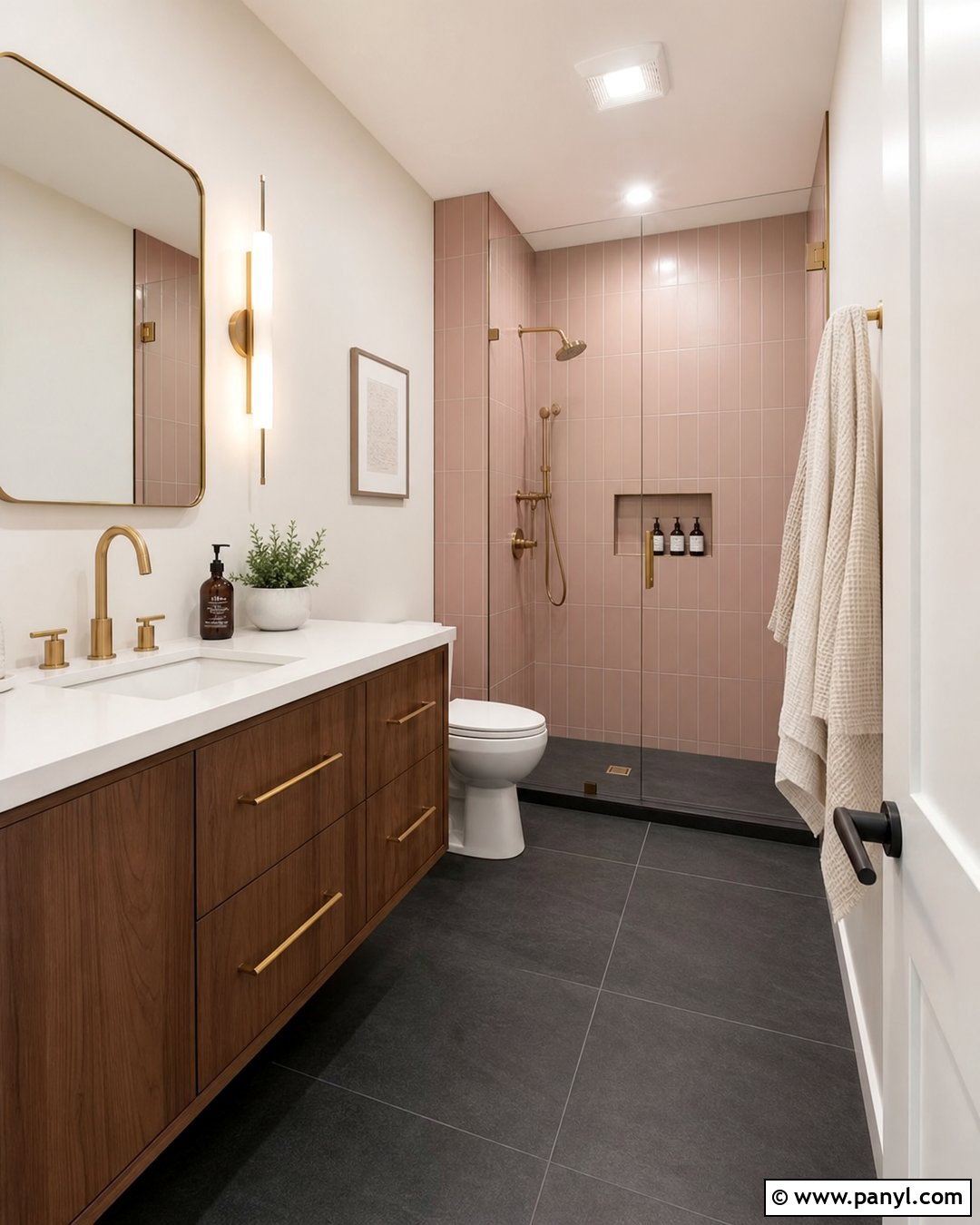
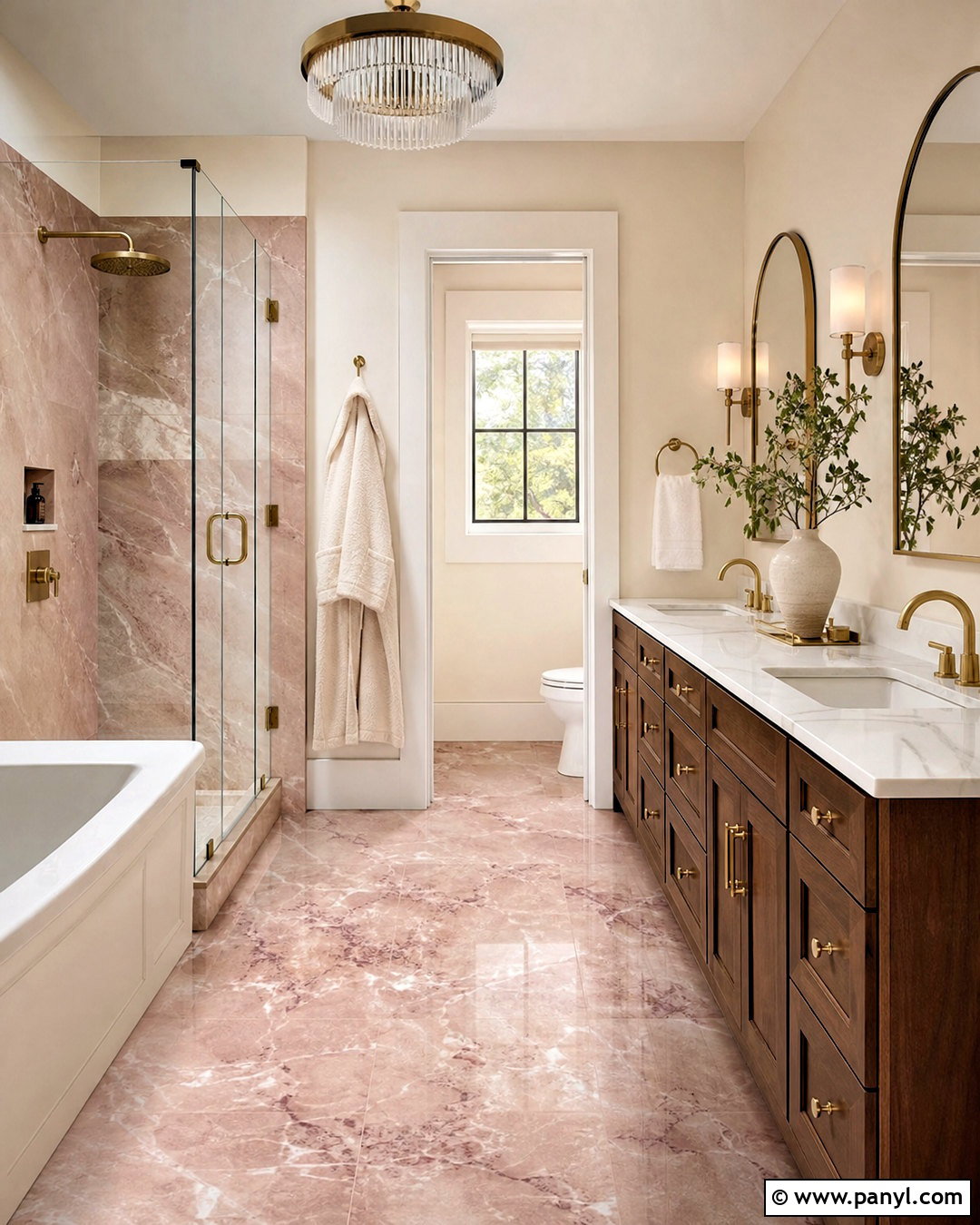
Blush pink tiles gain a grown-up appearance when paired with charcoal flooring. Choose dusty pink rectangular wall tiles with an uneven glazed finish, then install them vertically behind the vanity and throughout the shower. Matte charcoal porcelain floor tiles provide a strong base and hide everyday marks more effectively than very pale flooring. A medium-tone walnut vanity bridges the warm pink and cool charcoal, while a white countertop keeps the center of the room bright. Add brushed brass faucets, warm white walls, and cream towels for a balanced finish. Avoid bubblegum pink or blue-toned gray, which can create an overly sharp contrast. Muted colors and simple tile layouts give this combination a polished, contemporary character suitable for a main or guest bathroom.
8. Emerald Green Wall Tiles With Black Floor Tiles
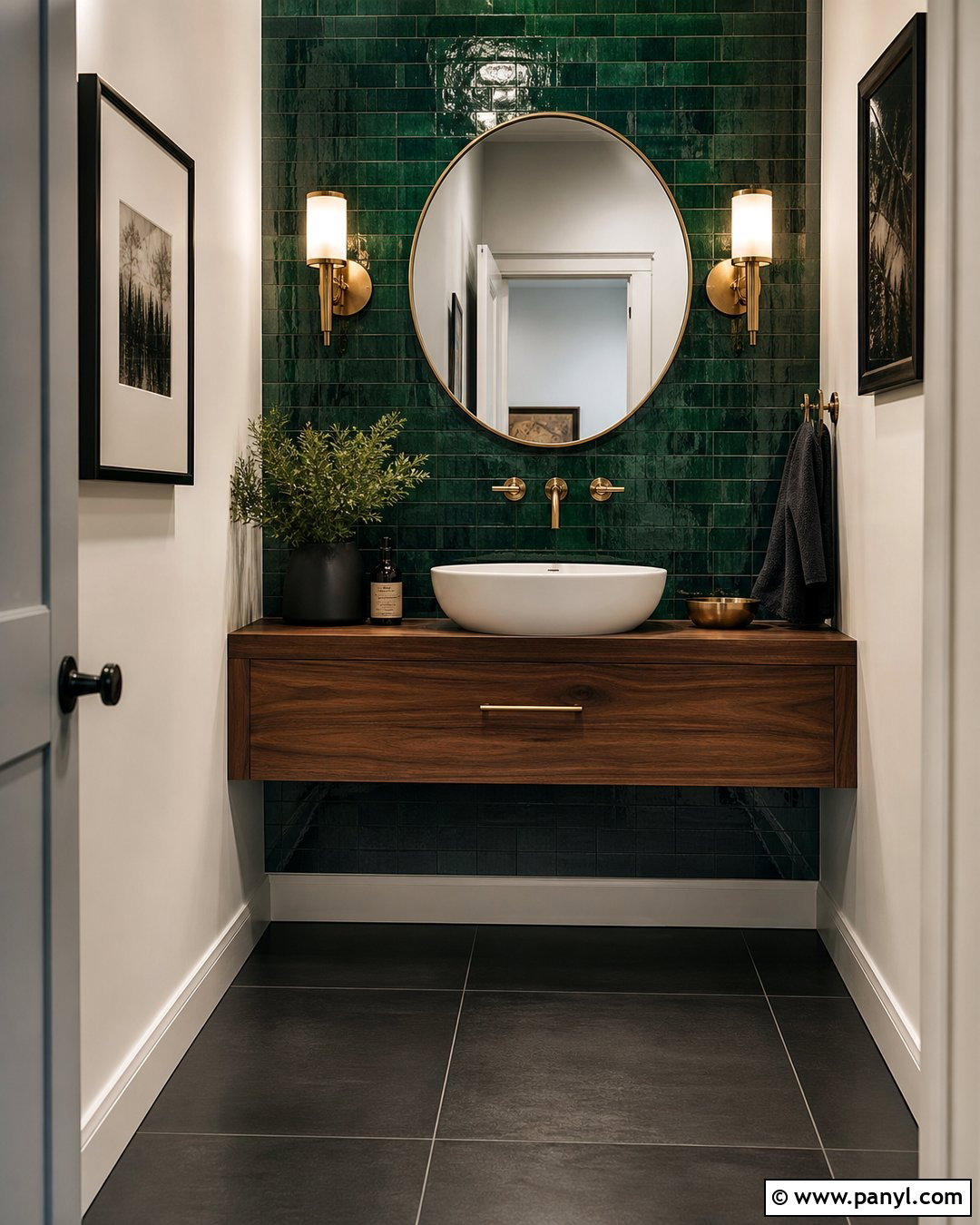
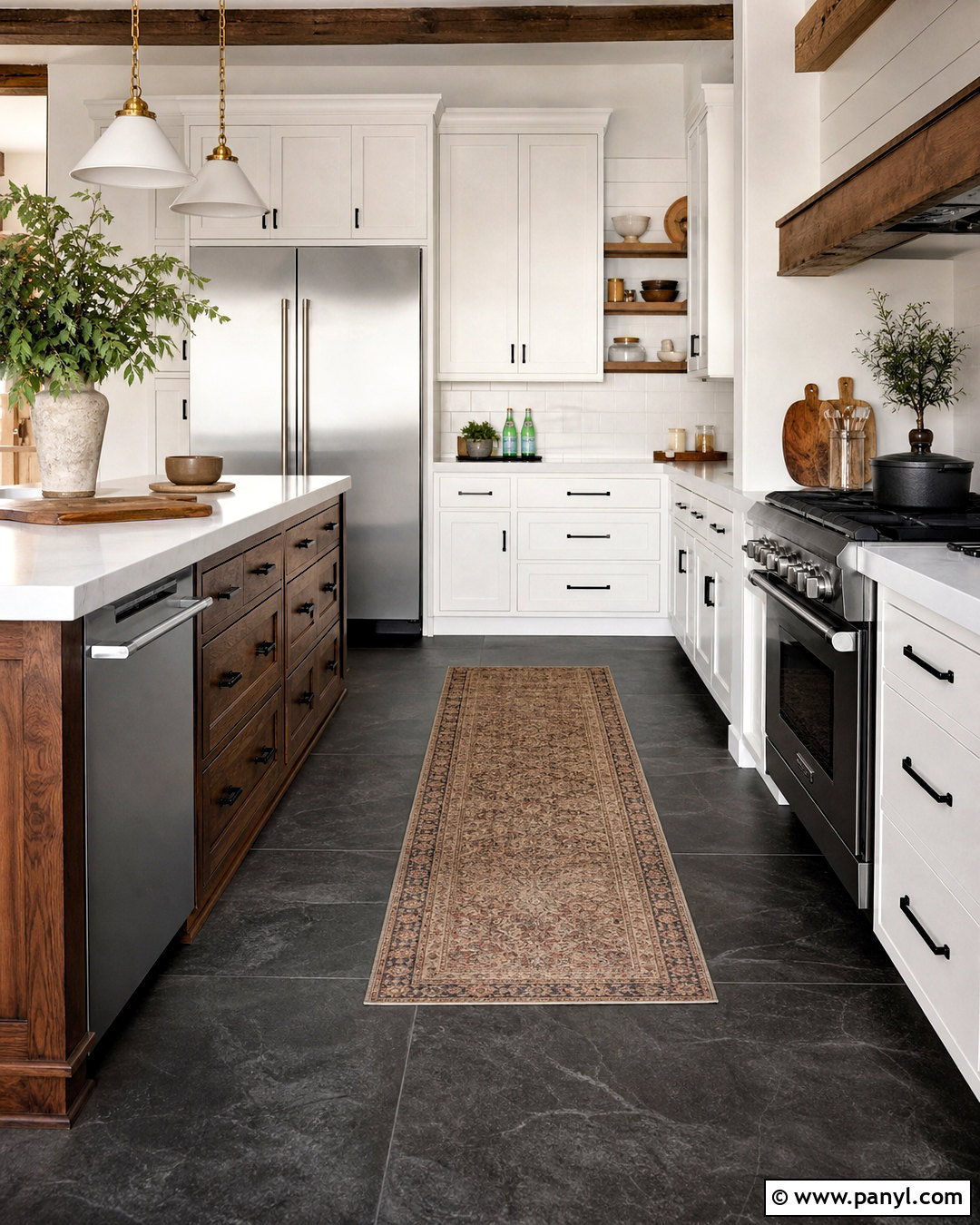
Rich emerald wall tiles and black floor tiles can create a dramatic powder room without requiring a large renovation footprint. Cover the vanity wall with glossy emerald green tiles in a stacked grid, allowing their reflected light to soften the depth of the color. Use matte black porcelain on the floor, preferably in a larger format with minimal veining. A floating walnut vanity and white vessel sink add warmth and brightness. Choose antique brass lighting, faucets, and mirror details to complement the green. Paint the untiled walls a soft off-white rather than another dark shade. Because both tile colors are strong, keep patterns simple and grout lines quiet. The completed room feels luxurious, focused, and visually balanced instead of dark or overwhelming.
9. Greige Wall Tiles With Brown Floor Tiles
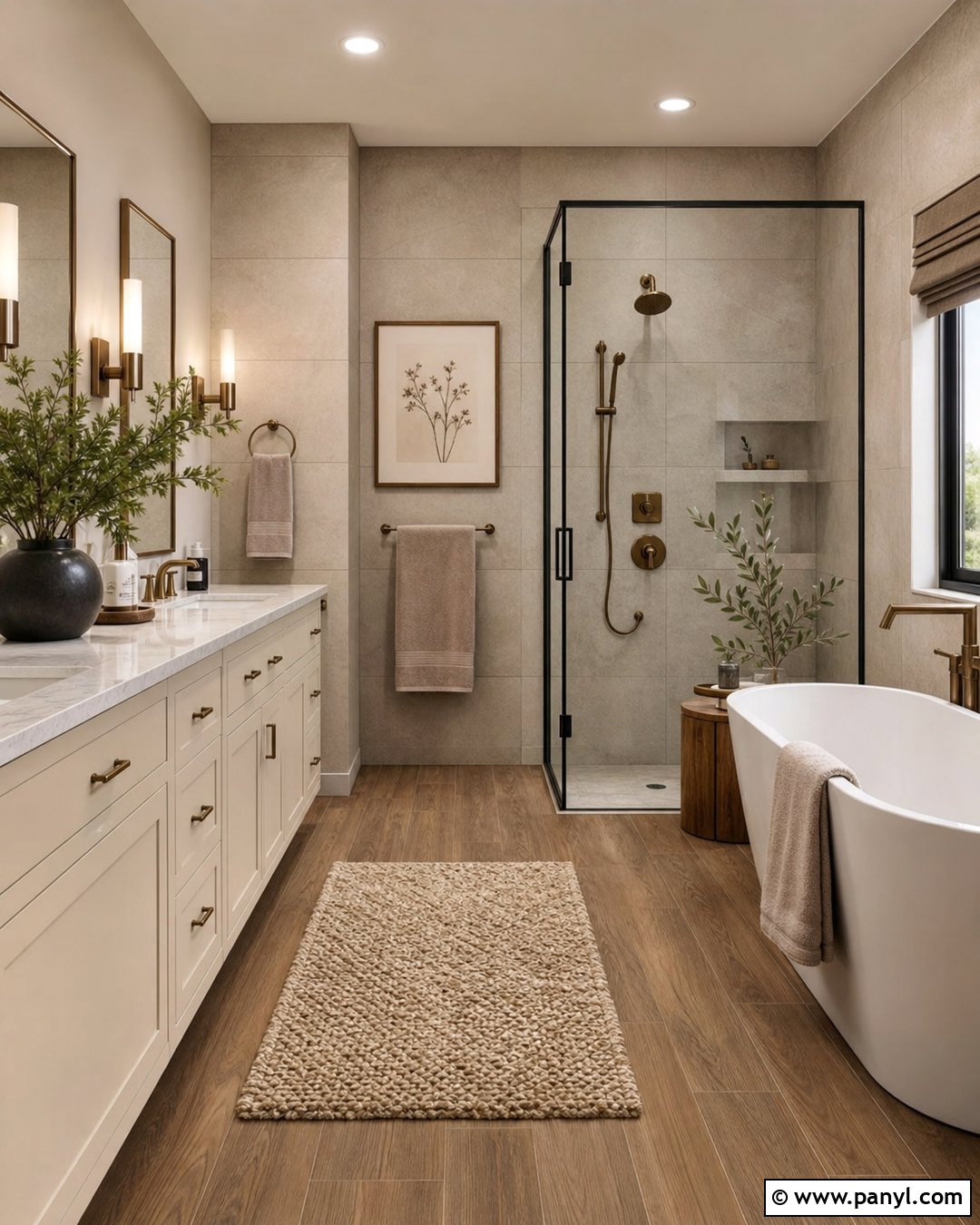
Greige wall tiles paired with warm brown flooring offer a comfortable alternative to cool gray interiors. Use large-format greige stone-look tiles across the shower and main bathroom walls, then install medium-brown wood-look porcelain planks on the floor. The plank pattern introduces movement while the quiet wall surface prevents visual competition. Select tiles with compatible beige undertones so the room feels intentionally layered. A cream vanity, quartz countertop, black-framed shower screen, and brushed bronze fixtures give the palette definition. Place the floor planks lengthwise toward the shower or window to visually extend the room. Soft white towels and a textured neutral rug lighten the brown floor. This practical combination also works in mudrooms, laundry rooms, and open kitchen areas.
10. White Wall Tiles With Terracotta Floor Tiles
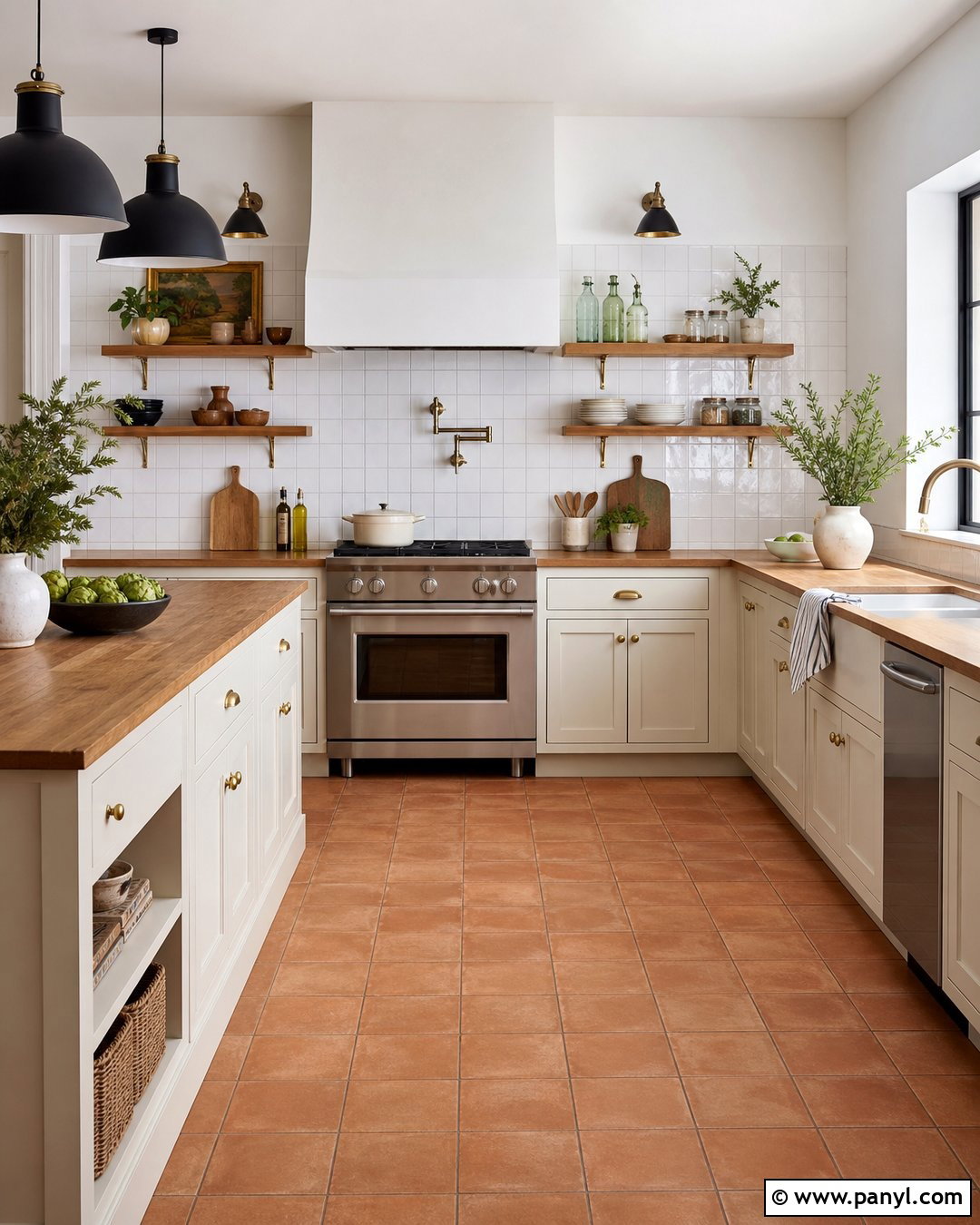
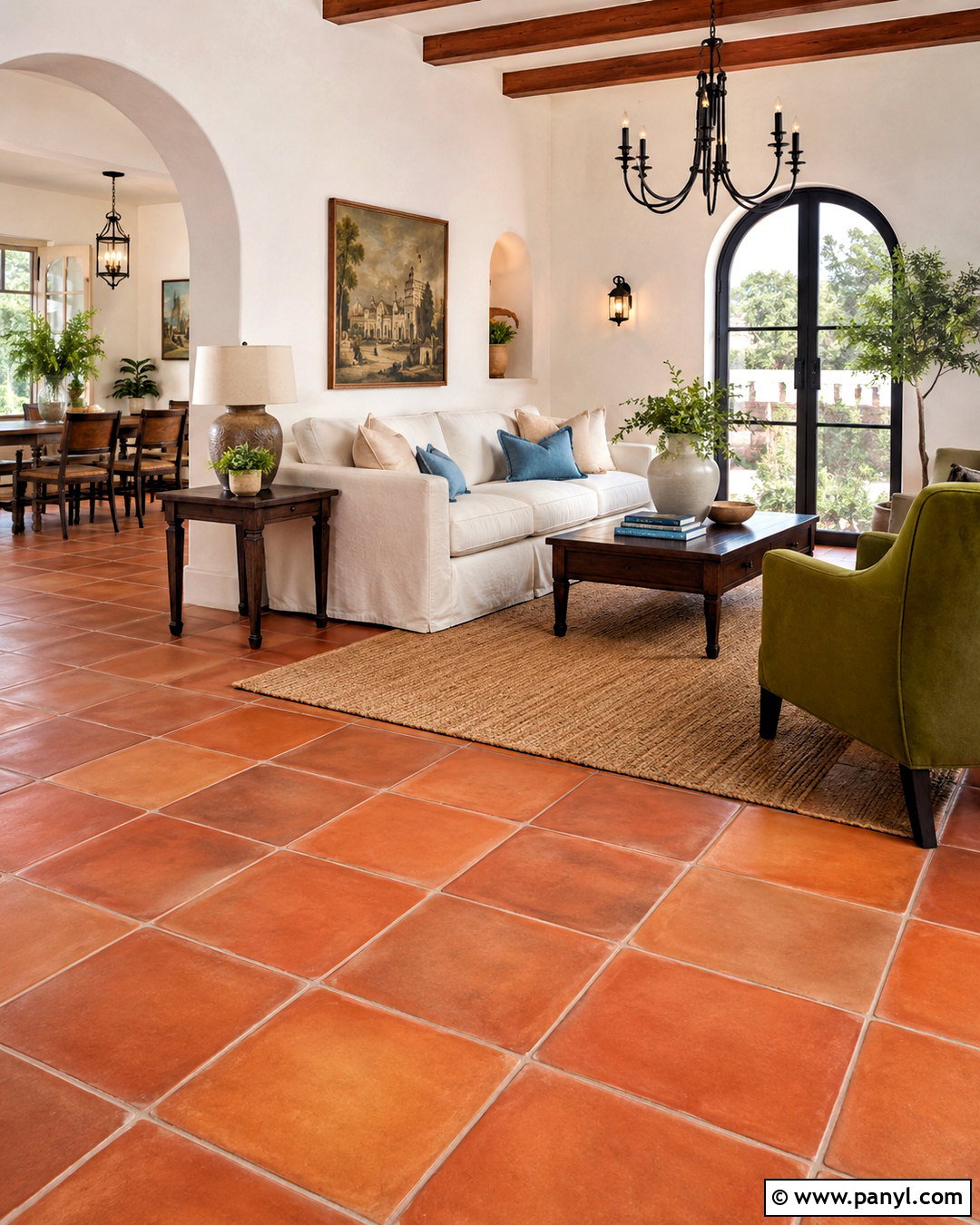
Crisp white wall tiles let a terracotta floor become the main source of color and character. In a kitchen, use white square tiles or classic subway tiles across the backsplash, extending them to the upper cabinets for a complete finish. Choose terracotta-look porcelain floor tiles in a warm clay red with subtle variation. Cream cabinets, butcher-block countertops, and aged brass hardware reinforce the welcoming palette. If you prefer a cleaner look, pair the floor with flat-panel white cabinets and matte black lighting. Warm gray or beige grout is more forgiving than bright white on the floor and blends naturally with clay tones. Repeat terracotta through a few ceramic accessories, but leave counters mostly clear so the tiled surfaces remain the focus.
11. Olive Green Wall Tiles With Cream Floor Tiles
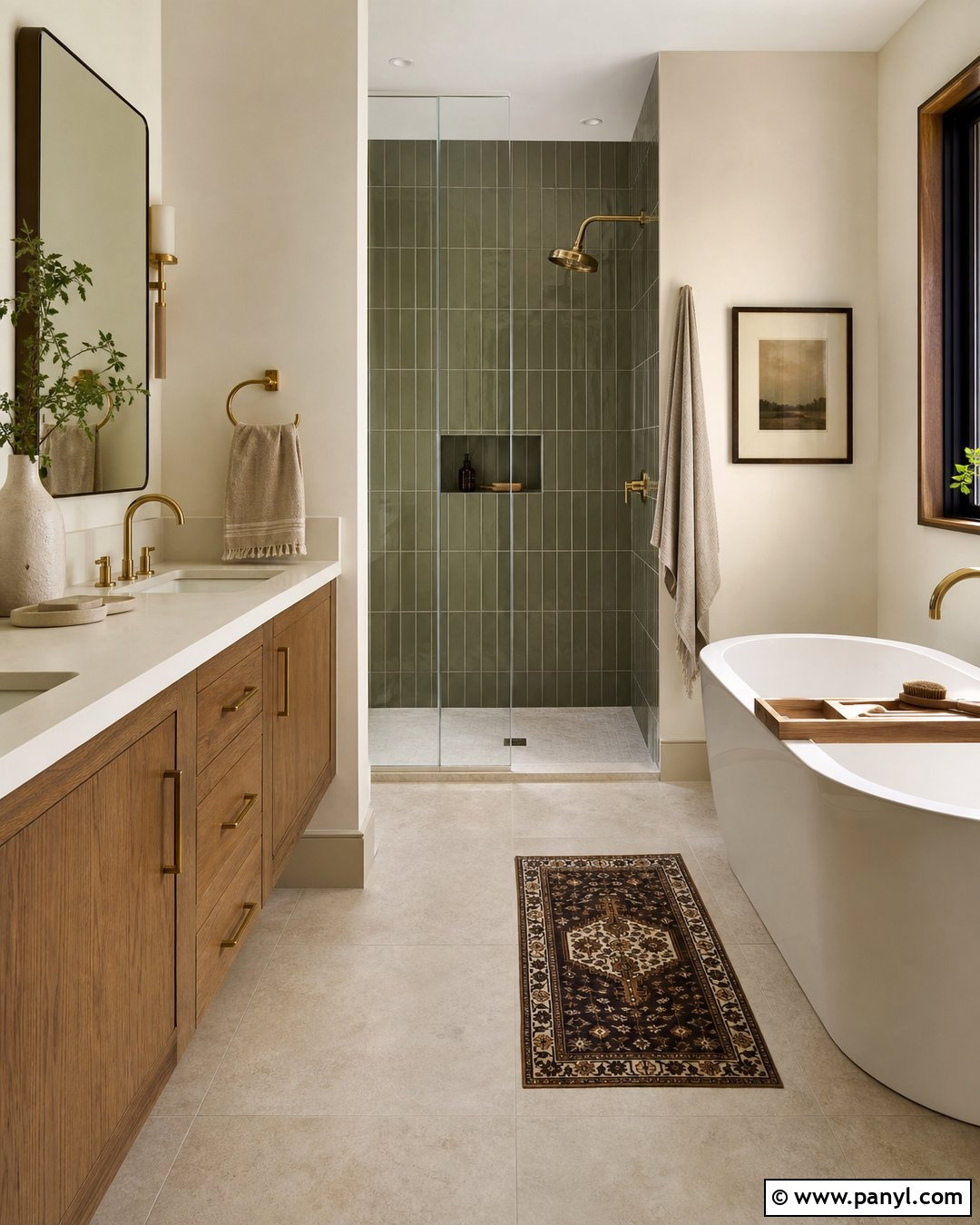
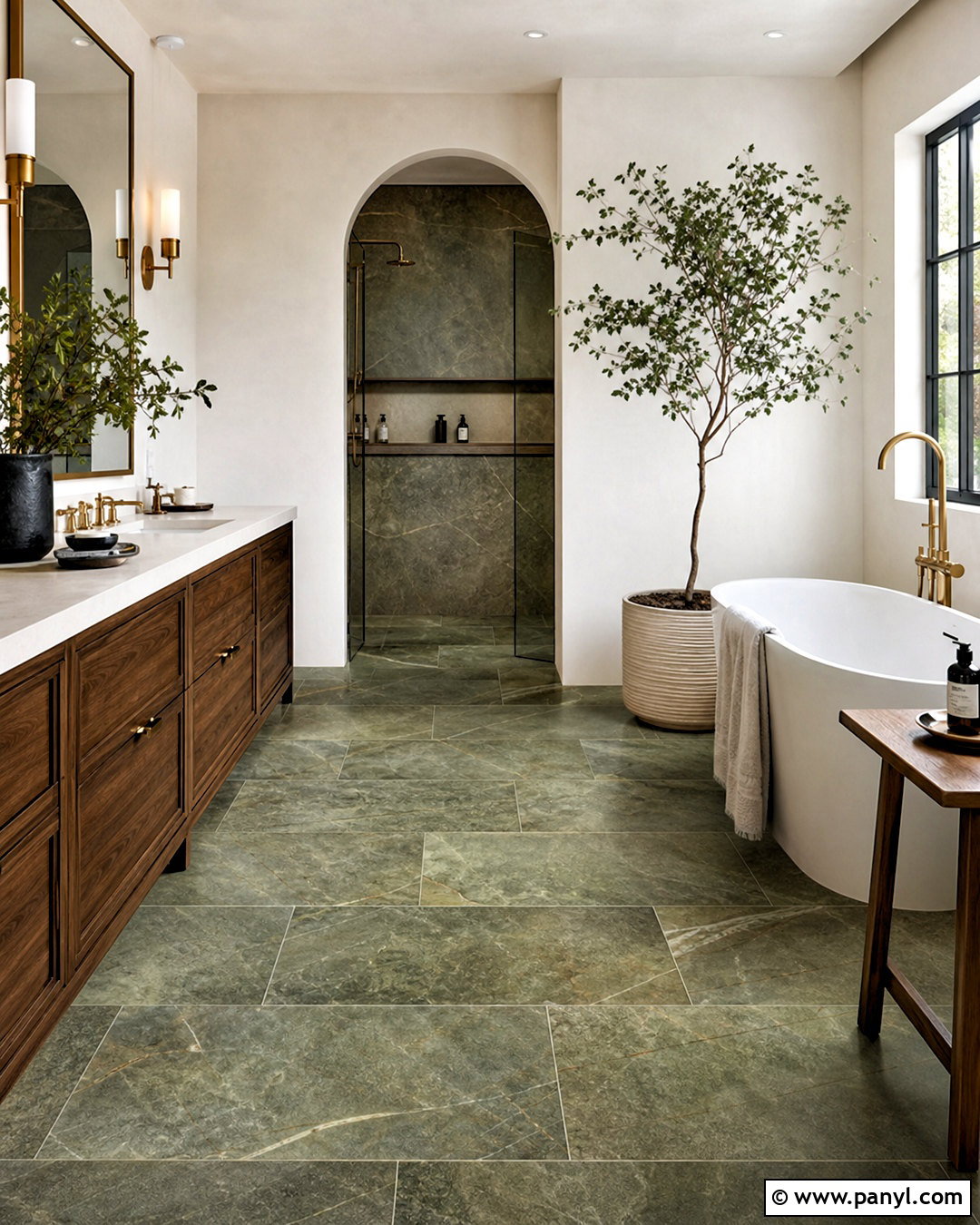
Olive green wall tiles and cream floor tiles produce a grounded space that still feels light. Use muted olive rectangular tiles on the shower walls or kitchen backsplash, choosing a satin glaze that reveals gentle color variation. Pair them with creamy limestone-look porcelain floor tiles in a large format. The light flooring reflects daylight and stops the deeper wall color from dominating. Natural walnut cabinetry, off-white countertops, and aged brass hardware complete the warm, organic scheme. Match the floor grout closely to the cream tile, while selecting olive or taupe grout for quieter wall joints. Keep painted surfaces in a warm ivory tone. This combination works across bathrooms and kitchens because it provides noticeable color while remaining easy to coordinate with wood, stone, and neutral textiles.
12. Teal Wall Tiles With Light Gray Floor Tiles
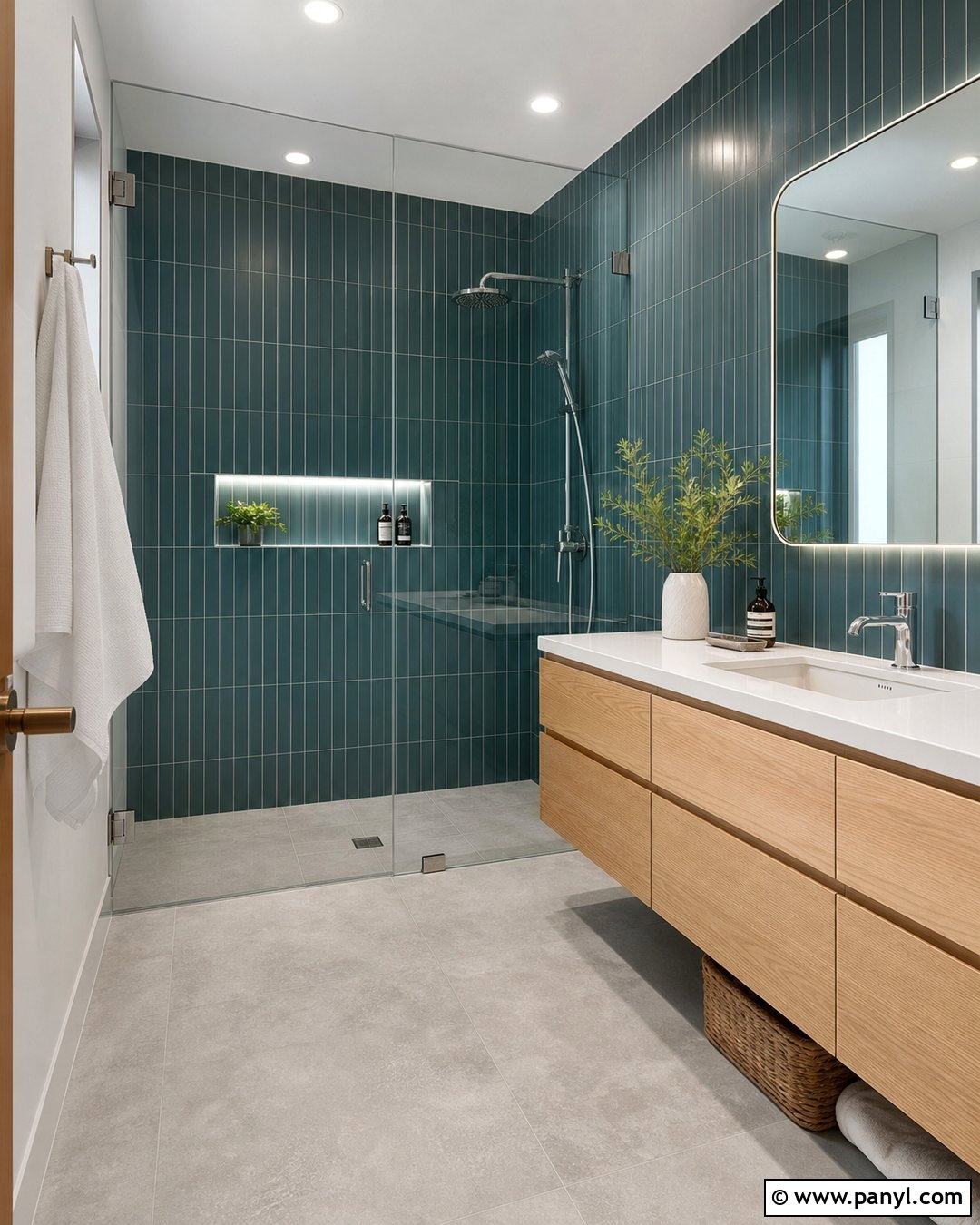
Teal tiles bring energy to a bathroom, but a light gray floor keeps the overall look controlled. Choose deep blue-green tiles for the shower walls and vanity backsplash, using a vertical stacked pattern for a modern appearance. Install pale gray concrete-look porcelain on the floor in broad rectangular tiles. A white oak vanity softens the cool palette, while a white countertop and chrome fixtures reflect light. Carry the teal into one small detail, such as a framed niche or hand towel, rather than filling every surface with the color. Cool gray grout suits the floor, while a slightly darker teal-gray grout can define the wall pattern. Clear glass, simple lighting, and uncluttered storage allow the saturated wall tiles to remain the room’s natural focal point.
13. Burgundy Wall Tiles With Beige Floor Tiles
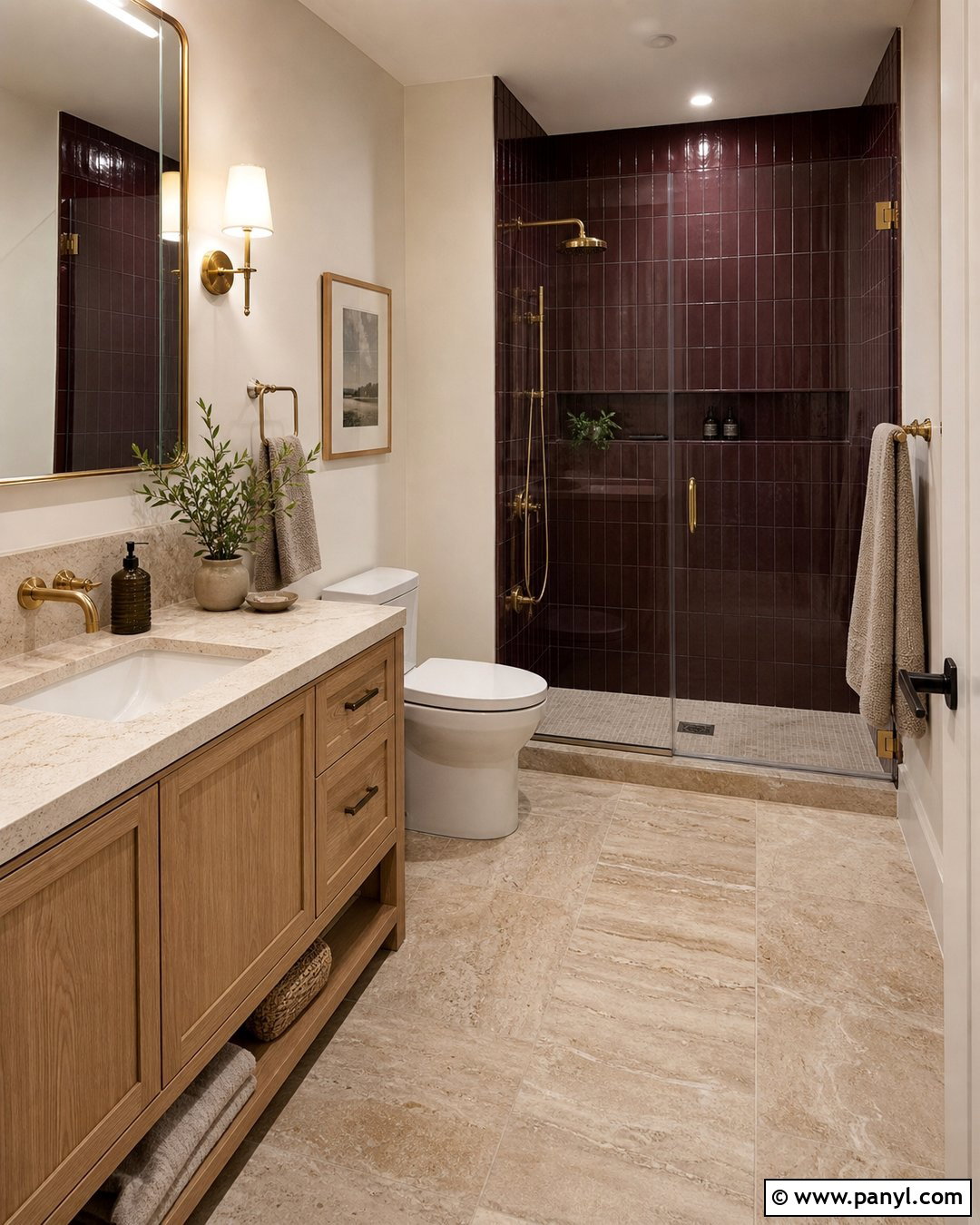
Burgundy wall tiles can feel warm and refined when surrounded by soft beige surfaces. Use glossy wine-red or deep berry tiles behind a bathroom vanity and within the shower, keeping the layout simple with stacked rectangles or squares. Balance the saturated color with matte beige travertine-look porcelain flooring. A light oak vanity, creamy stone countertop, and brushed brass fixtures connect the warm shades without competing for attention. Paint the ceiling and untiled walls a gentle ivory. Beige grout helps the floor read as one continuous plane, while burgundy grout creates a smoother wall surface. Good mirror lighting is important because the darker tile absorbs more light. The completed palette feels rich and welcoming while remaining suitable for an average-sized residential bathroom.
14. Yellow Wall Tiles With White Floor Tiles
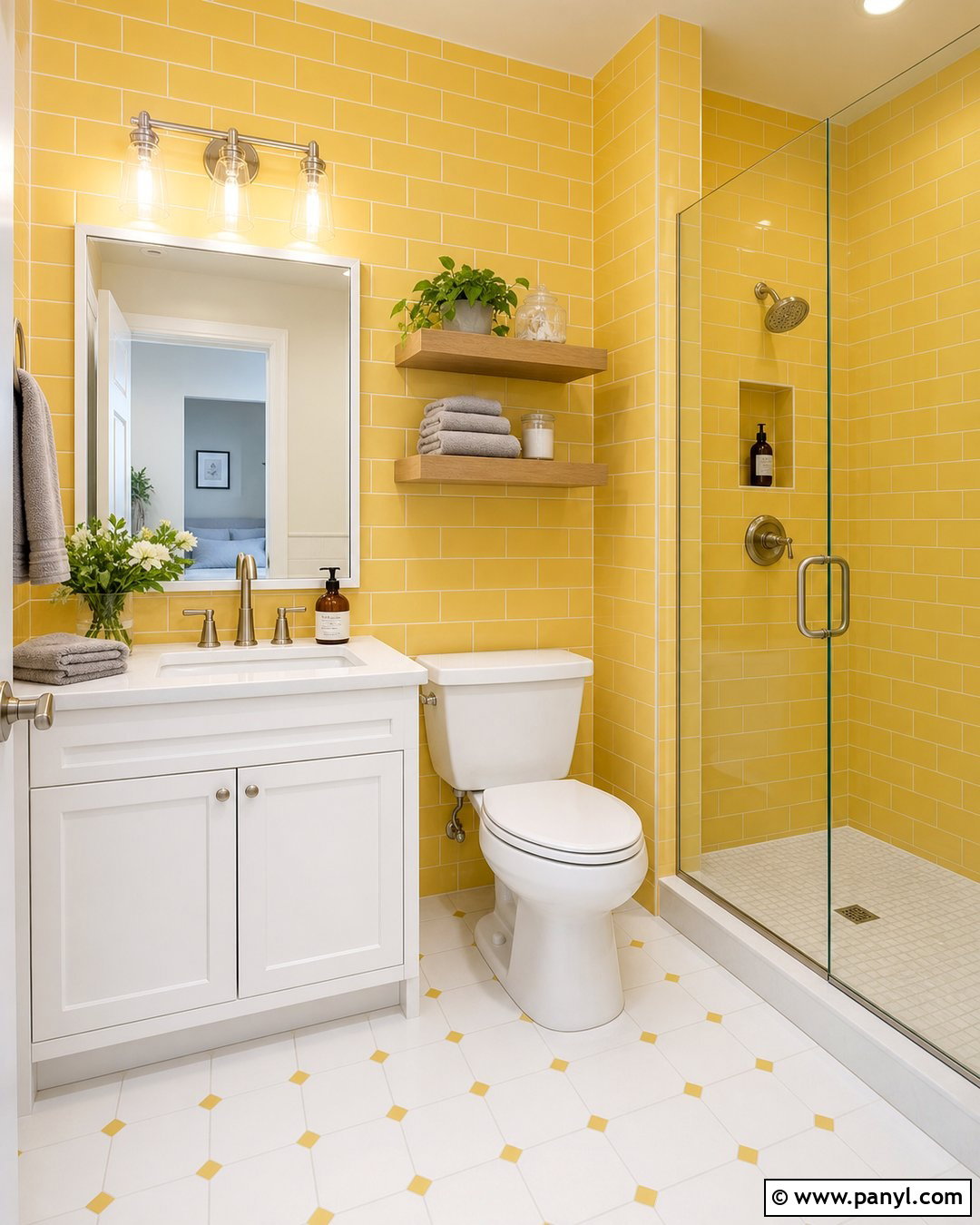
Soft yellow wall tiles can make a small kitchen or bathroom feel cheerful without becoming overly bright. Select butter yellow ceramic tiles with a glossy finish and install them as a backsplash or half-height wall treatment. Use plain white porcelain floor tiles or a white mosaic with occasional yellow accents. White cabinetry, pale oak shelving, and brushed nickel hardware keep the palette fresh and practical. Choose warm white grout instead of cool blue-white, which may make the yellow appear harsher. For a bathroom, add a simple white vanity, clear shower screen, and light gray towels. For a kitchen, introduce butcher-block counters and woven shades. Limiting the yellow to one connected wall zone creates a complete focal point while preserving a clean, open feeling.
15. Cobalt Blue Wall Tiles With Gray Floor Tiles
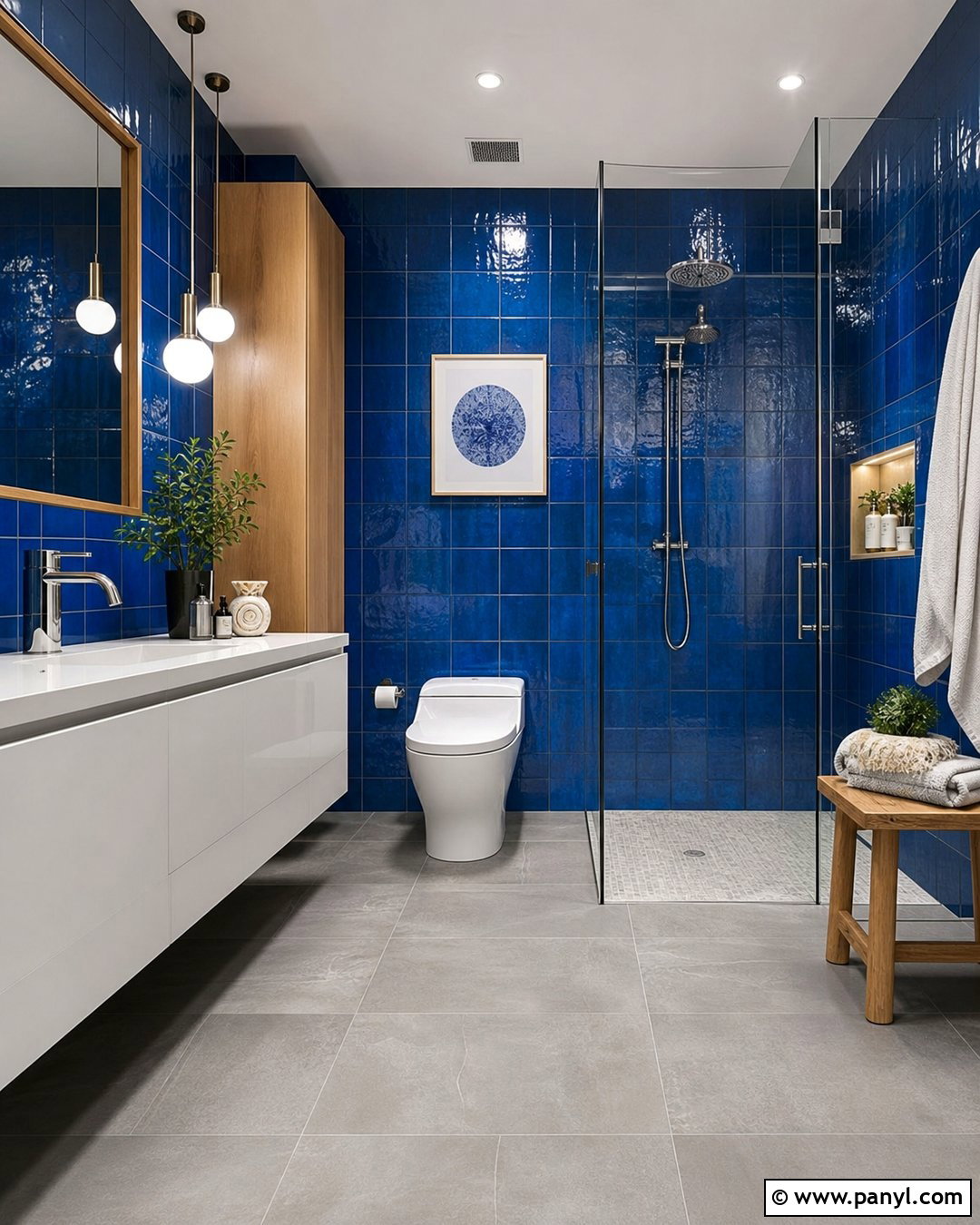
Cobalt blue creates a confident statement when paired with a balanced medium-gray floor. Use vivid blue glazed tiles across a kitchen backsplash, shower wall, or vanity wall, arranging them in a straightforward stacked pattern. Select matte gray porcelain flooring with minimal markings so it supports rather than competes with the blue. White flat-panel cabinetry or a white floating vanity keeps the composition crisp. Add light oak accents and polished chrome fixtures to prevent the cool colors from feeling severe. A pale gray grout works across both tiled surfaces and creates a visual connection. Keep fabrics and decorative objects in white, gray, and natural wood tones. This finished palette works best in spaces with strong daylight or generous artificial lighting that reveals the blue clearly.
16. Taupe Wall Tiles With Ivory Floor Tiles
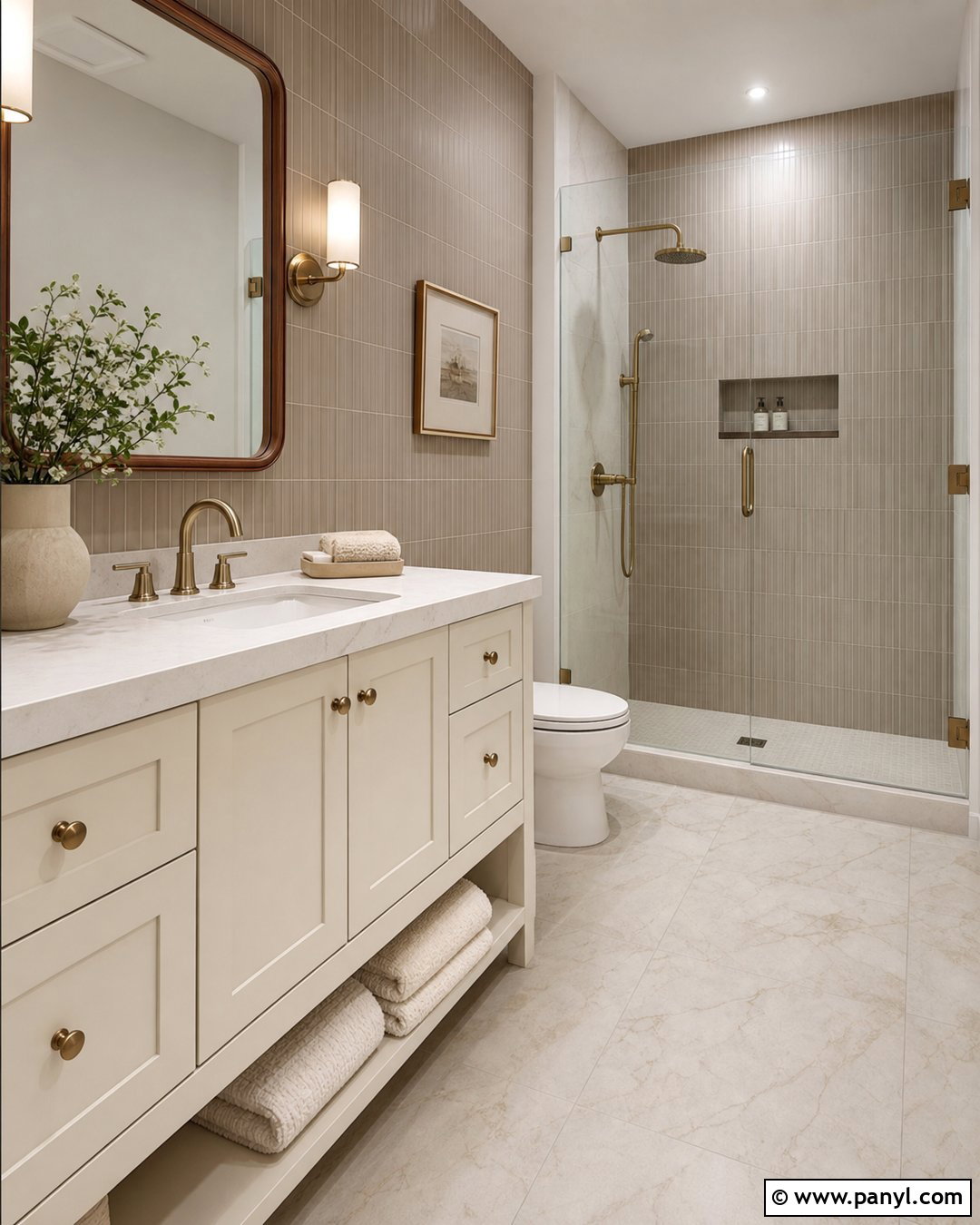
Taupe and ivory form a subtle combination that makes a bathroom feel calm, spacious, and thoughtfully finished. Cover the shower walls with satin taupe tiles, using a narrow vertical format to add height without introducing bold pattern. Choose ivory marble-look porcelain flooring with very light beige veining. A warm white vanity, quartz countertop, frameless glass enclosure, and brushed champagne hardware support the quiet palette. Add a walnut mirror frame for contrast and place folded cream towels on open shelving. Because both colors are pale, texture becomes important. Combine smooth countertops, softly varied wall tiles, and matte flooring for depth. Match grout closely to each tile color. The finished room feels warmer than a gray-and-white bathroom but remains equally versatile and easy to personalize.
17. Forest Green Wall Tiles With Checkerboard Floor Tiles
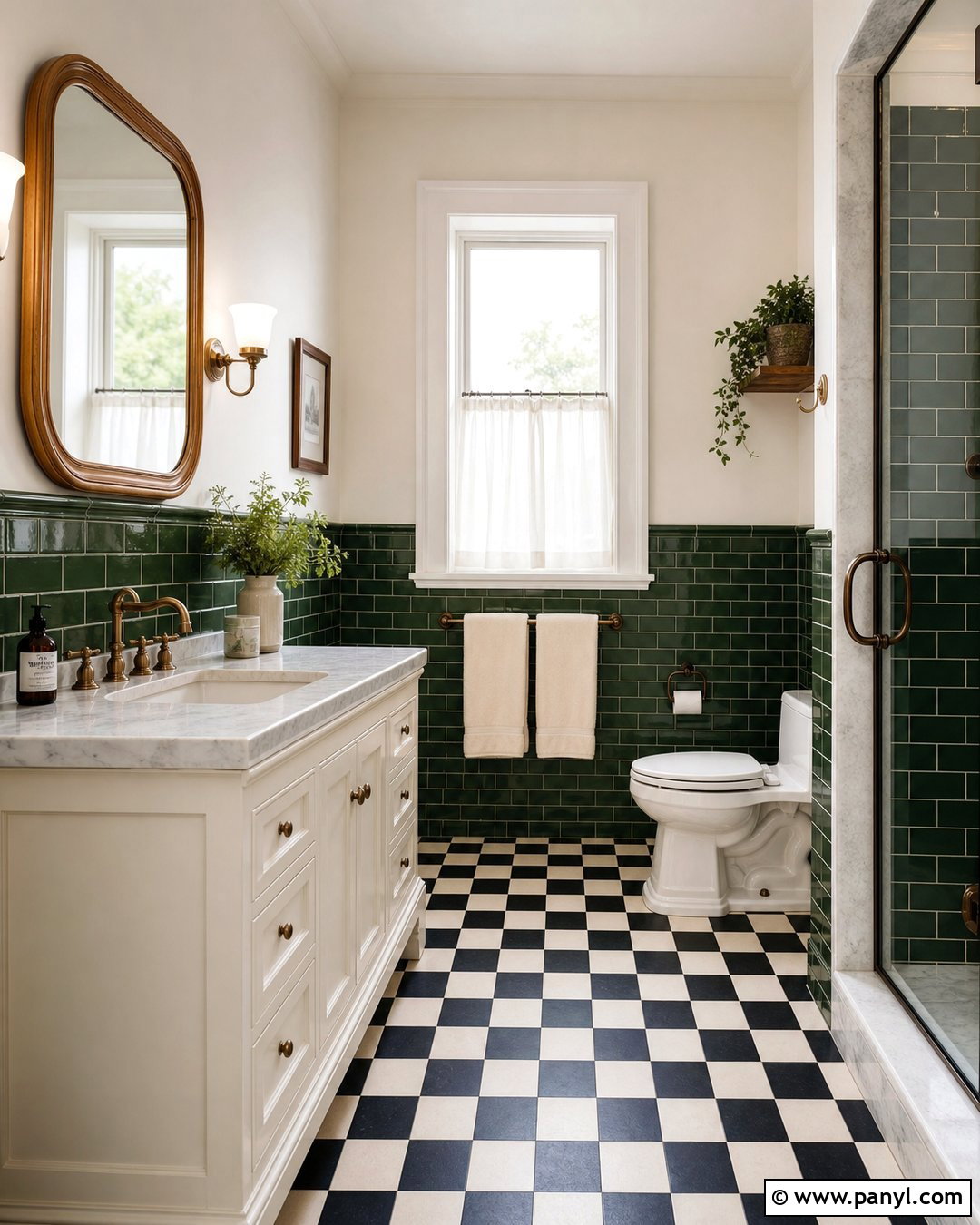
Forest green wall tiles gain a classic personality when paired with an ivory and black checkerboard floor. Tile the lower half of the bathroom walls in deep green subway tiles, then paint the upper walls warm white. Use medium-size checkerboard floor tiles laid straight or diagonally, depending on the room’s proportions. A vintage-inspired white vanity, marble countertop, brass taps, and a rounded wood-framed mirror complete the layered look. Keep the shower curtain and towels in solid ivory so they do not compete with the floor. Dark green grout creates a more continuous wall surface, while gray grout softens the black-and-white flooring. This full design combines strong color and pattern, yet the limited palette keeps the bathroom organized rather than visually chaotic.
18. Light Gray Wall Tiles With Navy Floor Tiles
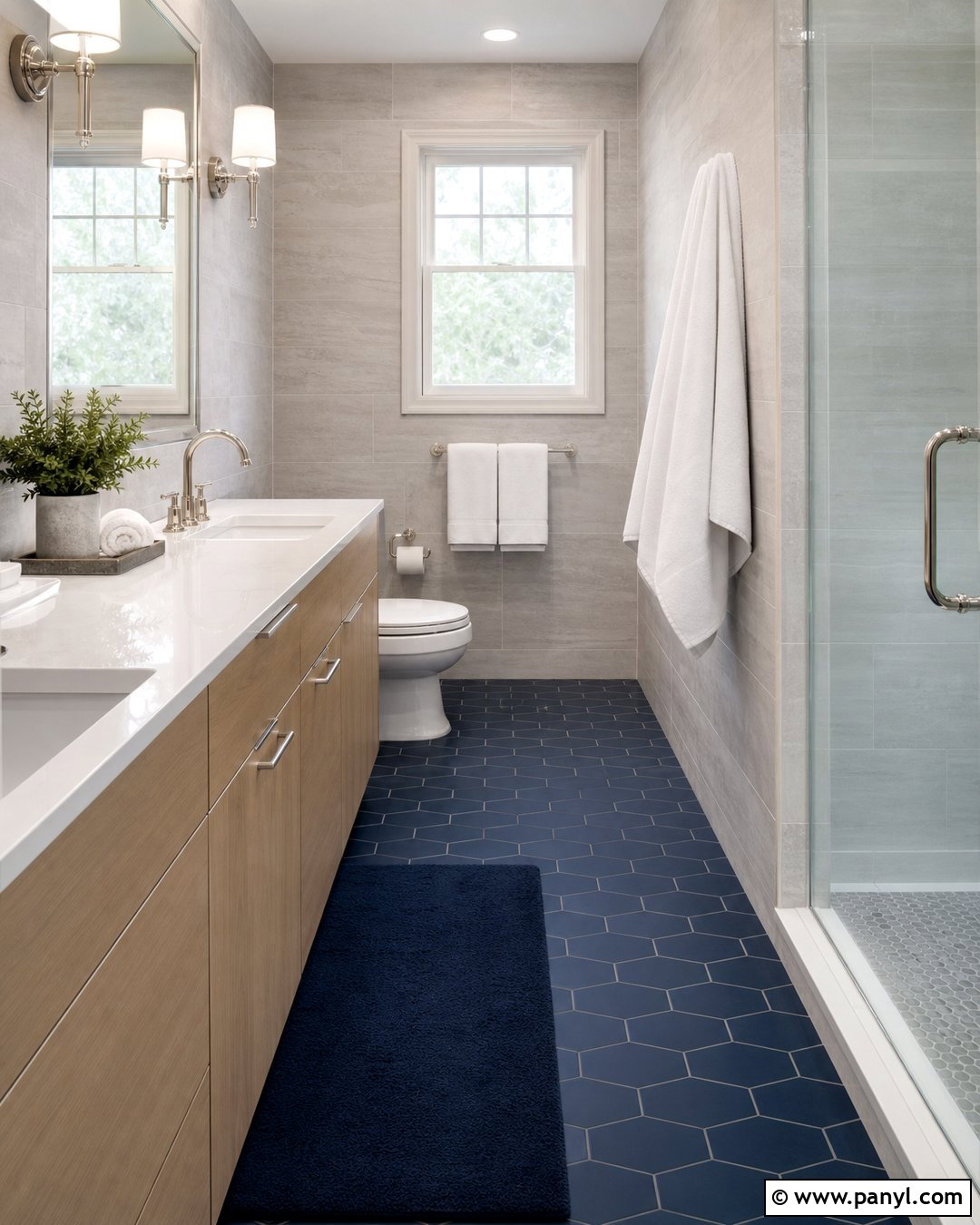
Reversing the usual light-floor arrangement can give a bathroom greater depth. Install light gray wall tiles throughout the shower and behind the vanity, selecting a soft stone texture rather than a flat industrial finish. Use matte navy hexagon or square tiles on the floor to create a strong visual base. A pale wood vanity, white countertop, and polished nickel hardware brighten the center of the space. Match the floor grout to the navy tile for a quieter surface, especially when using small mosaics. Add white towels, a navy bath mat, and a simple frameless mirror to repeat the palette. The darker floor visually anchors white fixtures and can make a narrow room feel more deliberate, provided the walls, ceiling, and lighting remain bright.
19. Peach Wall Tiles With Cream Floor Tiles
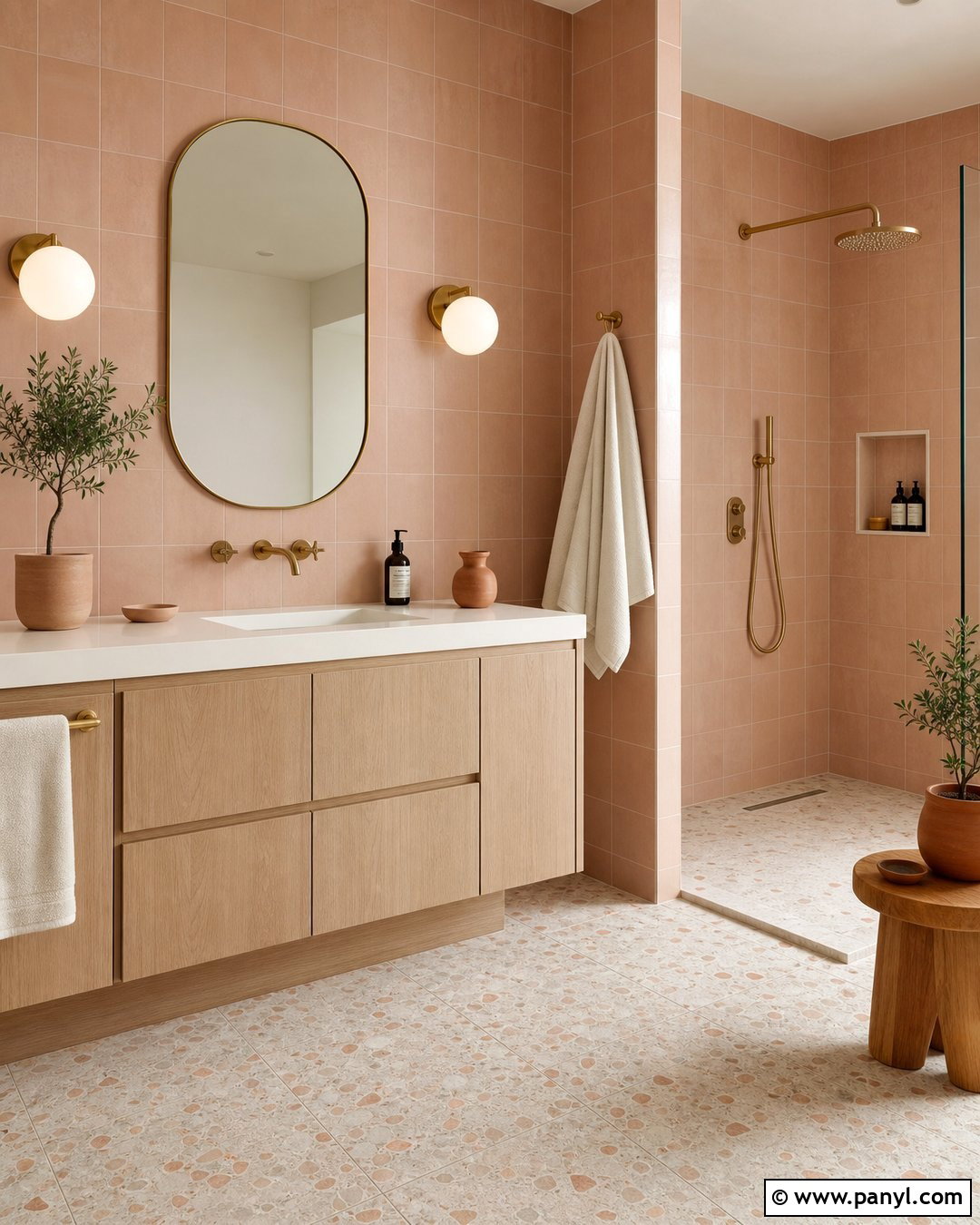
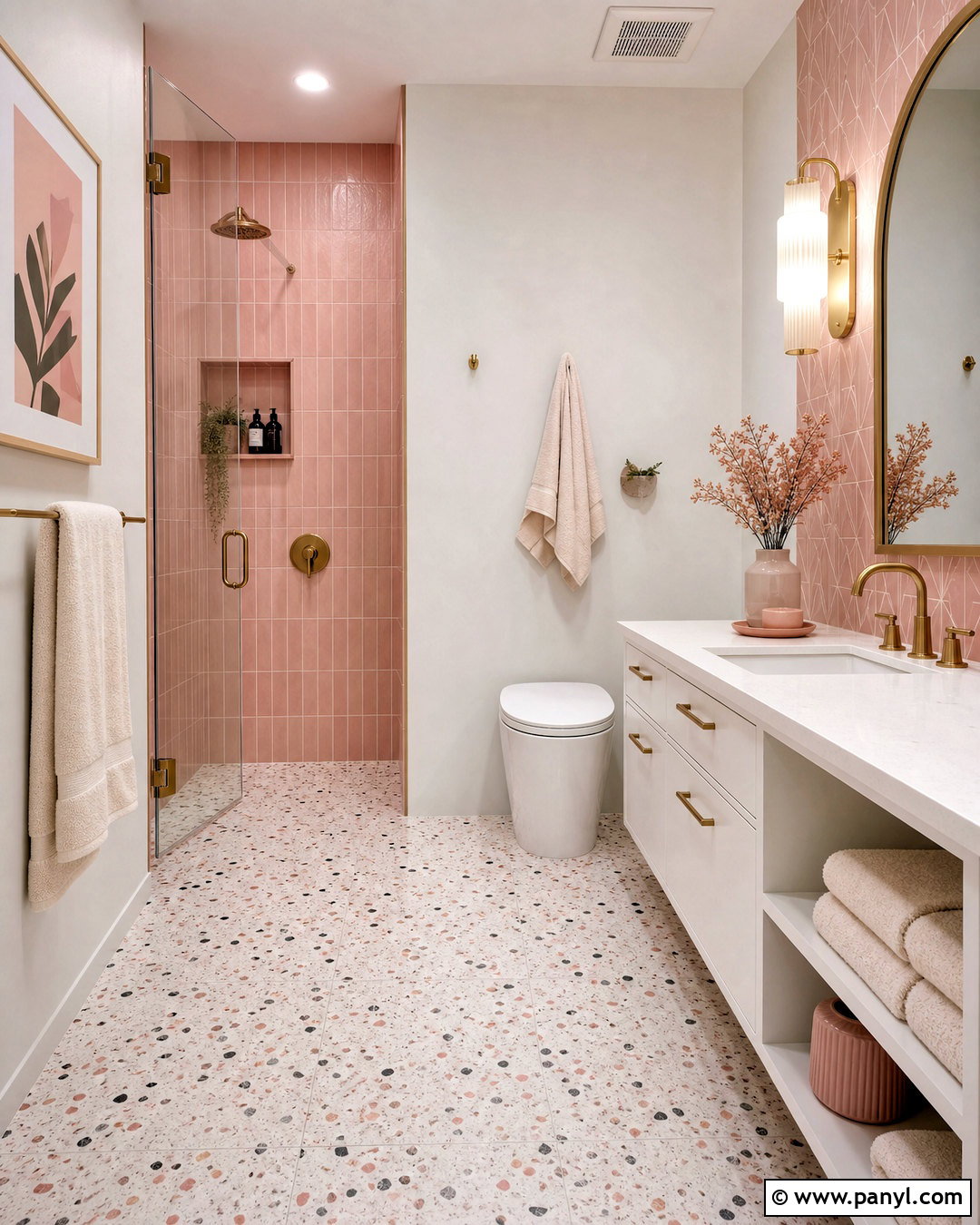
Warm peach wall tiles create a soft, uplifting bathroom when combined with creamy flooring. Choose a muted peach with pink and clay undertones rather than a highly saturated orange. Use the tiles around the shower or tub and continue them behind the vanity for continuity. Pair them with cream terrazzo-look floor tiles containing small beige, peach, and brown chips. A white oak vanity, warm white countertop, and brushed brass hardware strengthen the gentle palette. Keep towels and window treatments ivory, adding only small clay-colored accessories. A pale beige grout blends naturally across both surfaces. Rounded mirrors and globe lighting complement the softness of the colors. This design feels warm and distinctive while still being light enough for a smaller bathroom or powder room.
20. Chocolate Brown Wall Tiles With Beige Floor Tiles
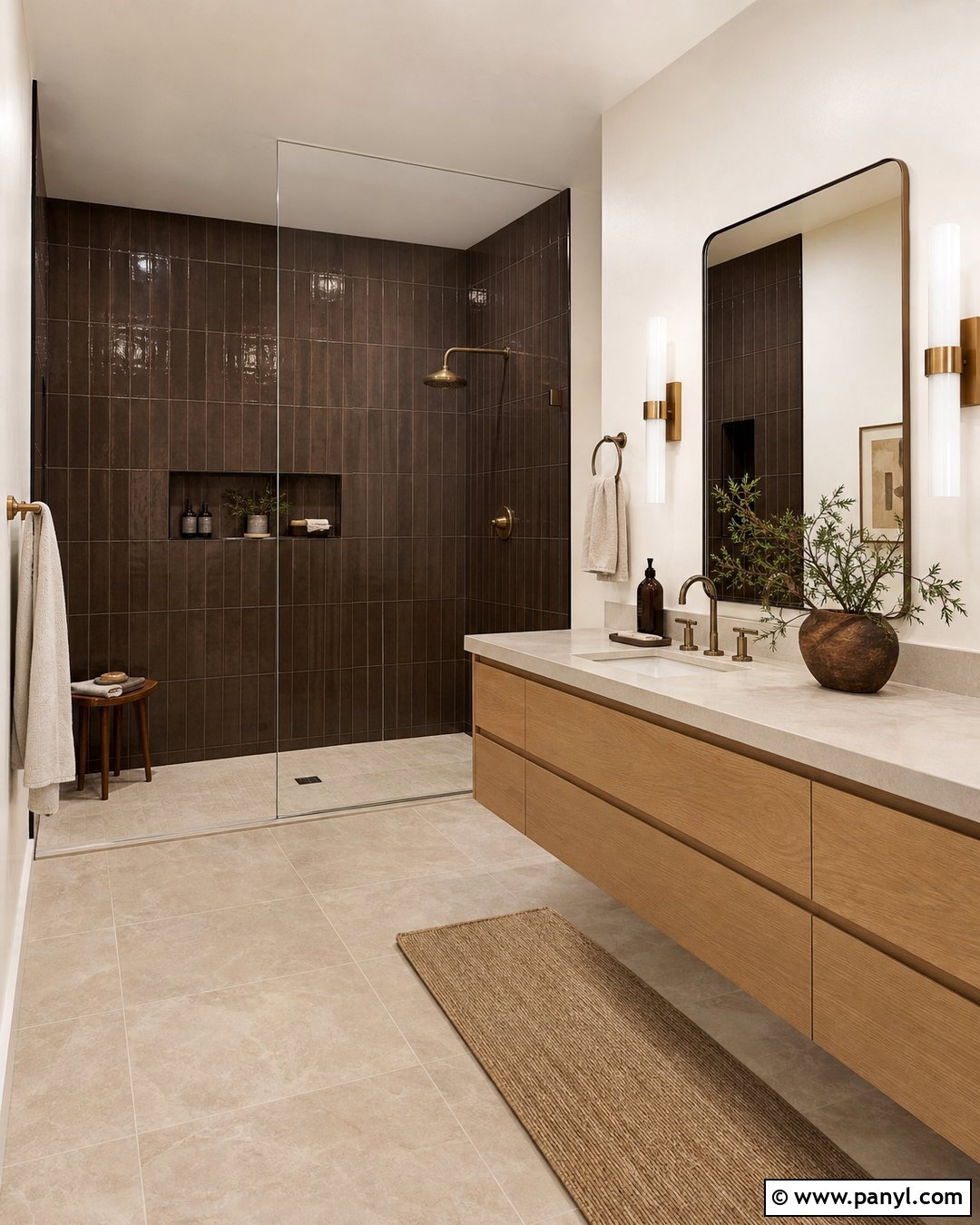
Chocolate brown wall tiles can create an enveloping bathroom without making every surface dark. Use glossy brown tiles on the shower walls and behind a floating vanity, allowing the reflective glaze to capture light. Install warm beige stone-look porcelain across the floor and any remaining wet-area walls. A light oak vanity, creamy countertop, linen towels, and brushed bronze fixtures continue the natural color story. Keep the ceiling and upper walls soft white to provide visual relief. Large brown tiles make the space feel calmer than a busy mosaic, while narrow beige grout lines maintain a smooth appearance. Add a clear glass shower screen and generous mirror to increase brightness. The result is a warm, modern room inspired by wood, earth, and natural stone.
21. Aqua Wall Tiles With White Terrazzo Floor Tiles
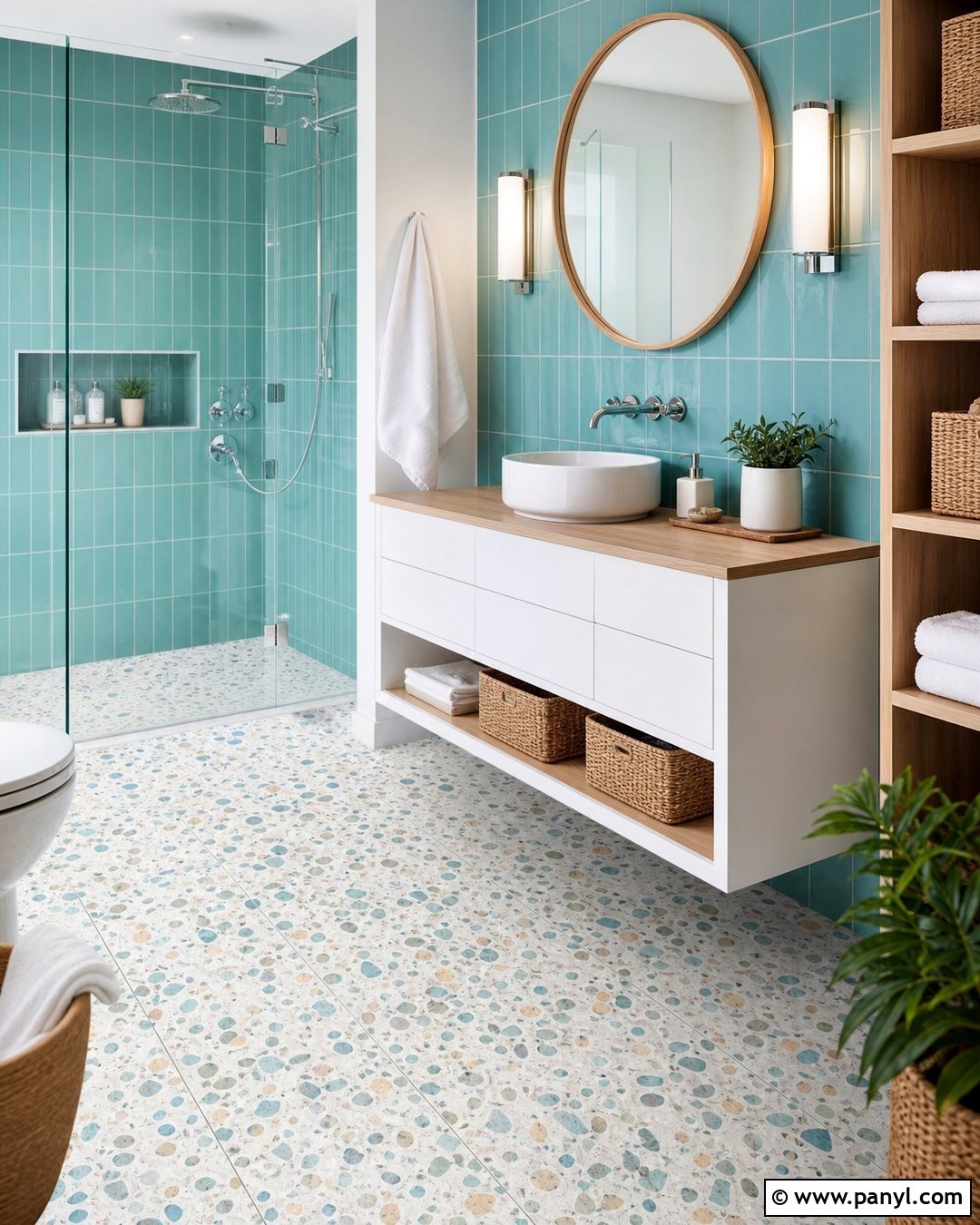
Aqua wall tiles and white terrazzo flooring make a bathroom feel lively, clean, and relaxed. Choose watery blue-green rectangular tiles with a glossy handmade surface for the shower and vanity wall. Pair them with white terrazzo-look porcelain floor tiles containing small aqua, gray, and sand-colored chips. A floating white vanity keeps the room light, while natural rattan storage and pale oak accents add warmth. Use polished chrome fixtures for a fresh finish, or brushed brass for stronger contrast. Pale gray grout connects the cool tones without sharply outlining every tile. Keep the remaining walls white and use simple solid-colored towels. Because the floor contains several small colors, avoid additional patterns. The completed design feels playful but still organized and suitable for daily use.
22. Lavender Wall Tiles With Gray Floor Tiles
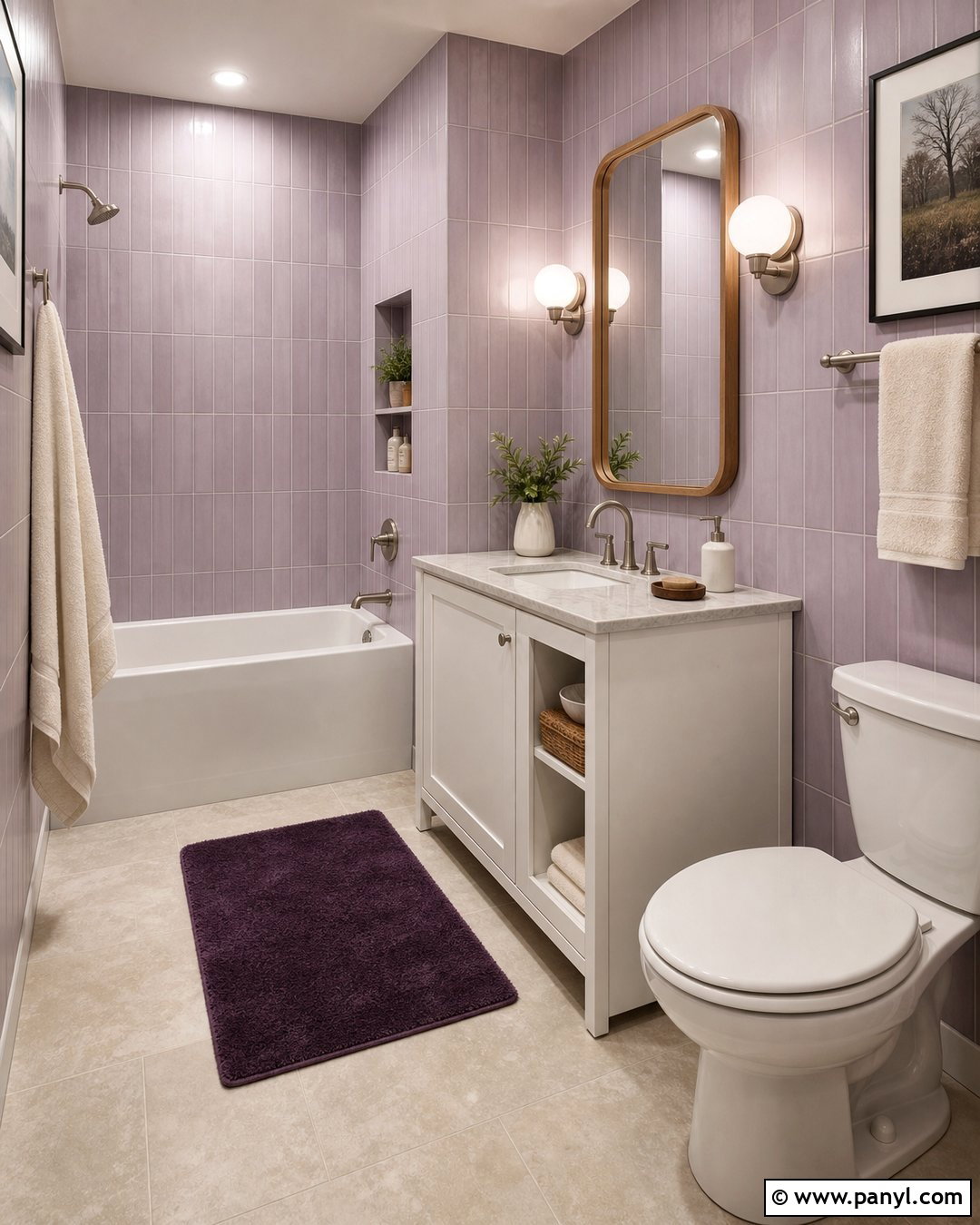
Lavender wall tiles offer an unexpected alternative to pink or blue in a calm bathroom scheme. Select a dusty, gray-toned lavender rather than a vivid purple, and use it across the shower walls in a vertical stacked layout. Pair the color with pale warm-gray porcelain flooring that resembles smooth limestone. A white vanity, light oak mirror, brushed nickel fixtures, and ivory towels keep the room balanced. Include one darker plum accessory, such as a small tray or bath mat, to give the lavender greater depth. Use gray grout on both wall and floor tiles for continuity. Softly rounded lighting and minimal open storage complete the gentle look. This combination works especially well in guest bathrooms where a distinctive color can create personality without requiring elaborate decoration.
23. Rust Wall Tiles With Charcoal Floor Tiles
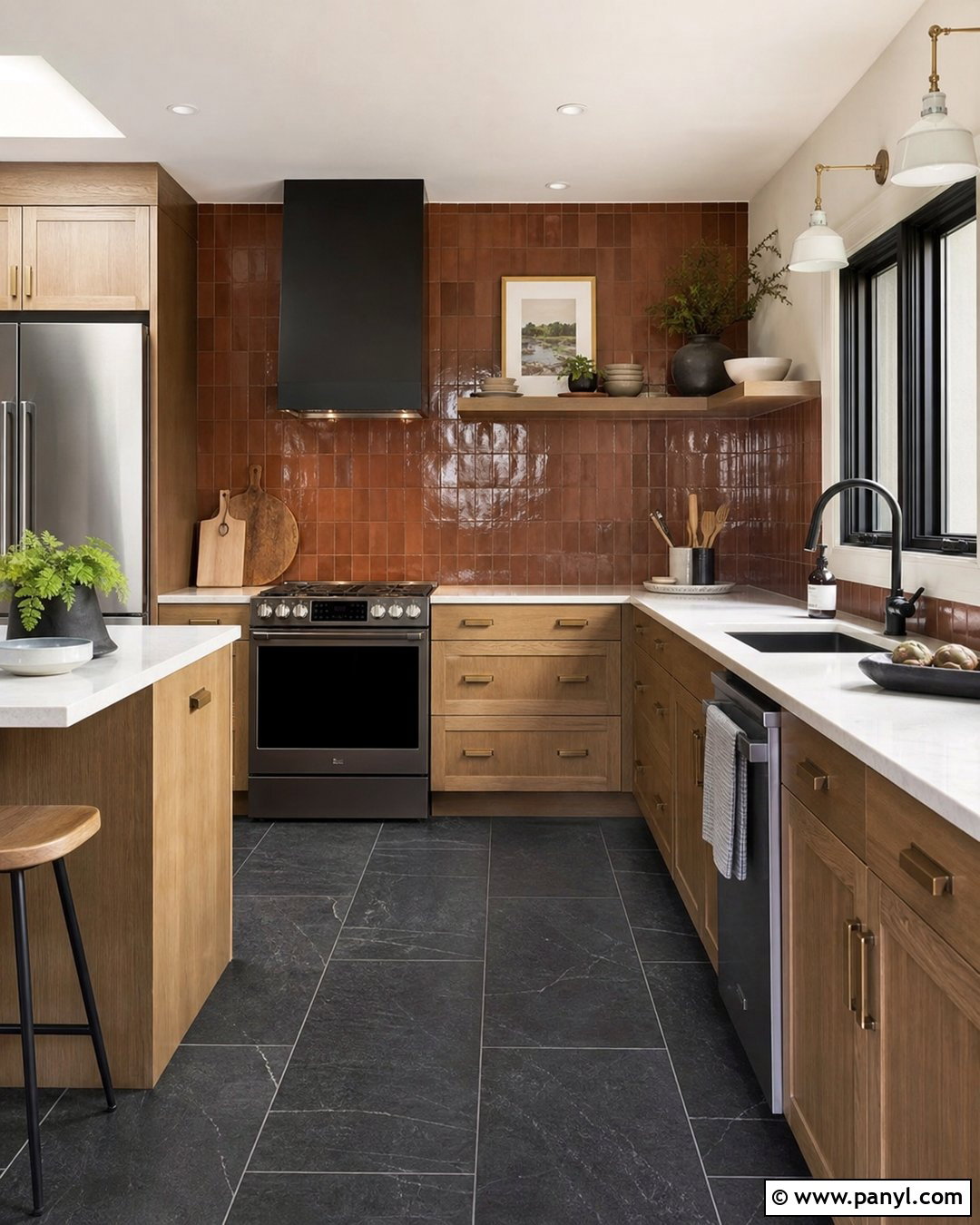
Rust-colored wall tiles and charcoal flooring form a bold, earthy scheme for a kitchen, bathroom, or entryway. Use burnt orange ceramic tiles with a satin glaze on one primary wall or backsplash. Ground them with dark charcoal slate-look porcelain tiles in a matte finish. Black cabinetry can make the combination feel dramatic, while light oak cabinetry creates a softer and more residential look. Choose cream countertops, black fixtures, and a few brushed brass details to connect the warm and cool elements. Medium-gray grout keeps the floor practical, while rust-colored grout creates a smoother wall treatment. Strong overhead and task lighting are essential. With simple furniture and limited decoration, the two saturated tile colors produce a complete room that feels warm, durable, and intentional.
24. Mint Green Wall Tiles With Black And White Floor Tiles
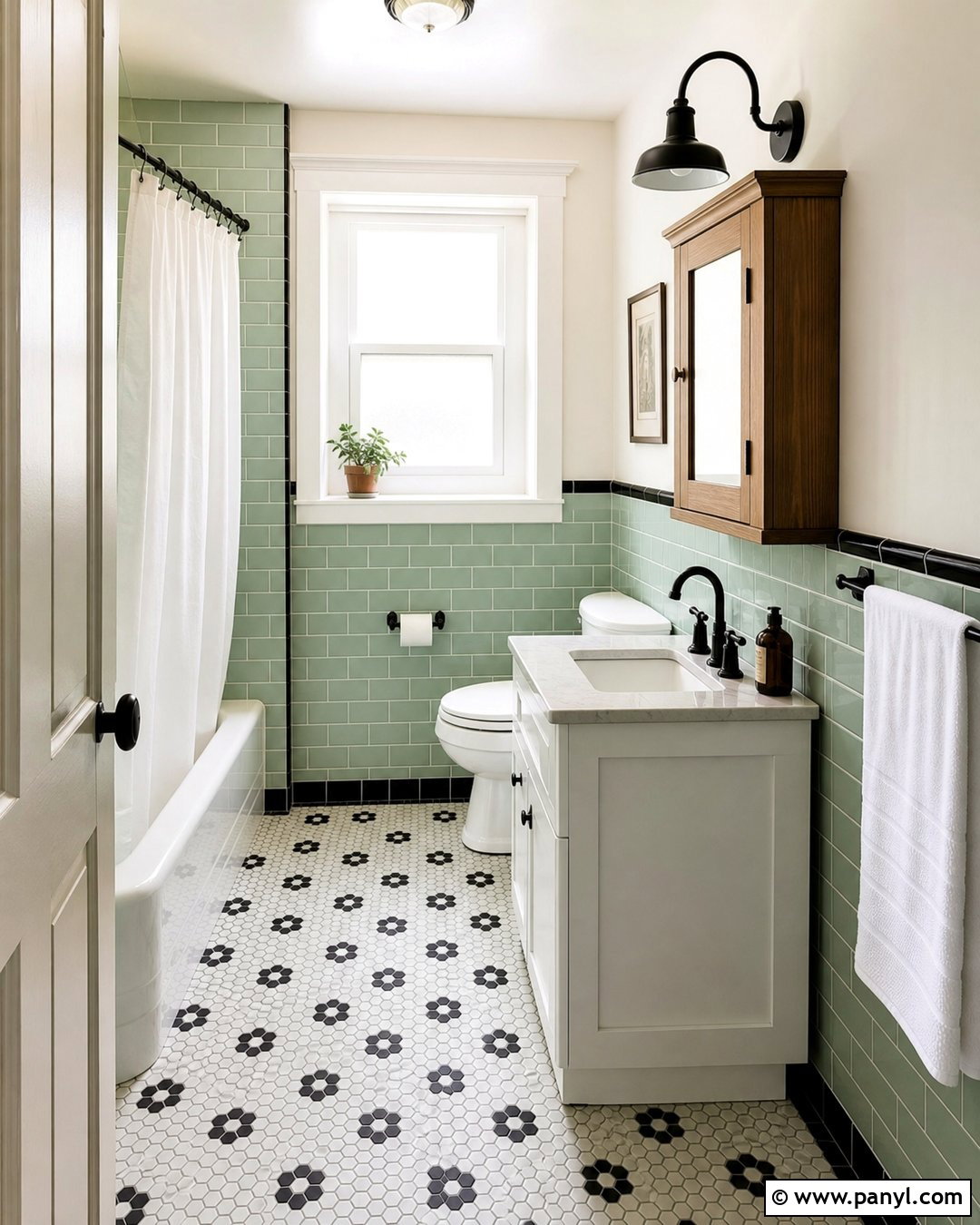
Mint green wall tiles give a black-and-white floor a lighter, more playful character. Install pale mint subway tiles on the lower walls of a bathroom, continuing them through the shower for a unified appearance. Use small black-and-white hexagon mosaics or a simple checkerboard across the floor. A white pedestal sink or compact vanity maintains the vintage influence, while matte black faucets and lighting connect to the dark floor accents. Paint the upper walls warm white and add a natural wood medicine cabinet for warmth. White grout brightens the mint tiles, but medium-gray floor grout offers easier upkeep. Keep towels solid white or pale green. The overall design feels cheerful and familiar, making it especially effective in a family bathroom or compact powder room.
25. Beige Wall Tiles With Multicolor Terrazzo Floor Tiles
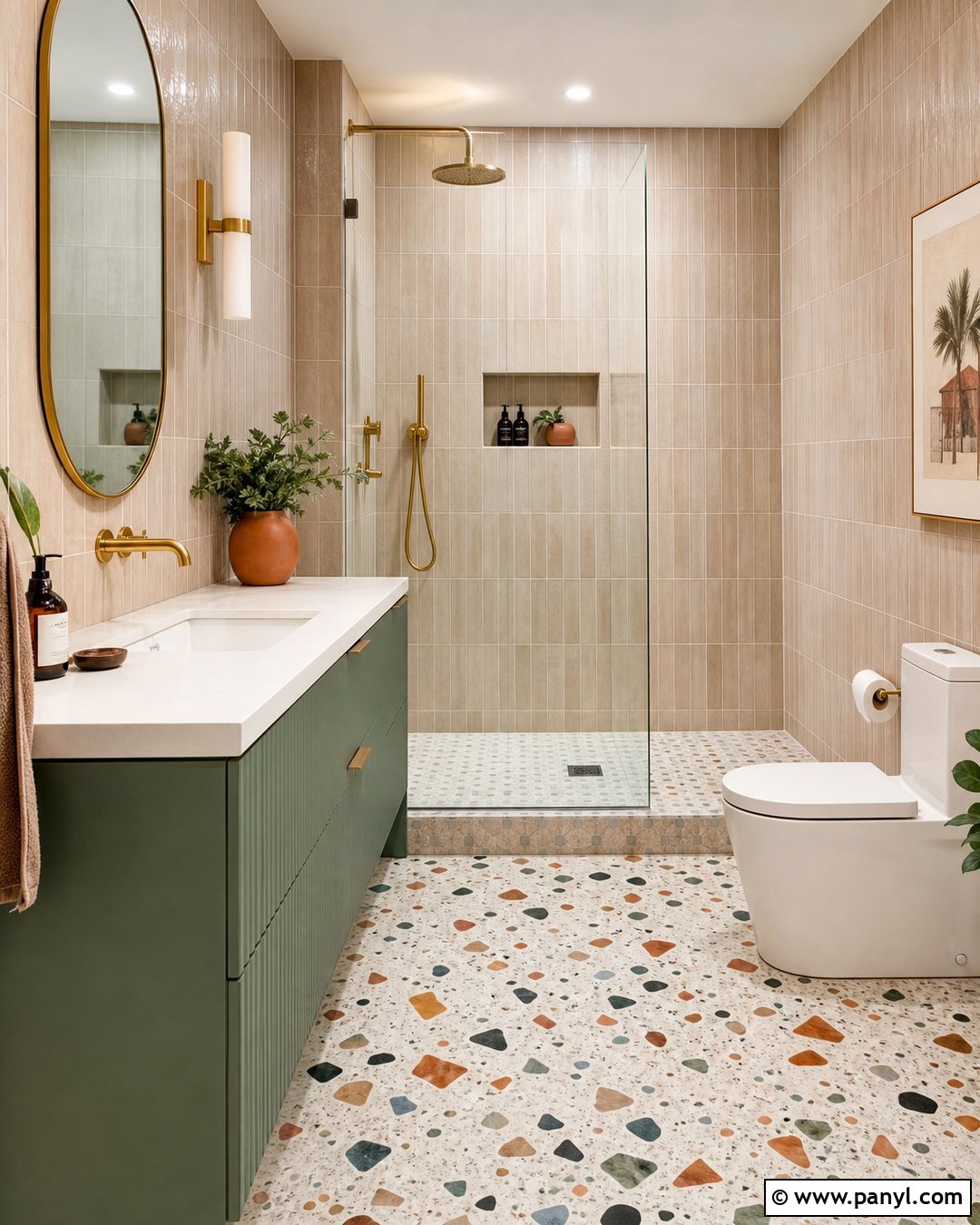
A multicolor terrazzo floor works best when the wall tiles provide a calm background. Choose simple beige ceramic or porcelain wall tiles with minimal pattern, installing them in a stacked layout across the shower and vanity wall. For the floor, select terrazzo-look tiles with a warm ivory base and scattered chips in terracotta, sage, charcoal, and muted blue. Repeat two of those colors through a sage vanity and small clay accessories. A white countertop, brushed brass hardware, and clear shower enclosure keep the room feeling polished. Use grout that closely matches the terrazzo base so the floor reads as a continuous surface. Avoid patterned textiles and elaborate wall decor. This allows the colorful floor to lead while every surrounding element supports a complete, coordinated bathroom design.
Conclusion:
Successful **wall and floor tiles color combination ideas** begin with a clear balance between dominant and supporting surfaces. Pale walls can open a room, while deeper flooring adds weight and practicality. Bold wall colors work best with quieter floors, and patterned flooring benefits from simple wall tile. Always compare samples together under the room’s actual daylight and artificial lighting before making a final choice. Check undertones carefully, especially when combining white, gray, beige, wood, or natural stone effects. Tile size, grout color, surface texture, cabinetry, and fixtures also shape the finished result. By planning every element as part of one palette, you can create a kitchen, bathroom, entryway, or laundry space that feels coordinated, functional, and comfortably personal.

Related Ideas and Inspiration:
Leave a Reply