
Pink no longer belongs only in playful bedrooms. The right 30 pink wall color combination ideas can make living rooms, kitchens, bathrooms, and workspaces feel warm, polished, and surprisingly versatile. Muted plaster pinks now work much like warm neutrals, while deeper rose, coral, and fuchsia create confident focal points. Current interiors often ground pink with earthy materials, rich greens, dark blues, warm wood, or crisp architectural contrast. () The key is building a complete palette instead of choosing a second color in isolation. Flooring, furniture, trim, metals, lighting, and textiles should all support the wall shade. The complete room schemes below show practical ways to recreate 30 pink wall color combination ideas.

1. Blush Pink Walls With Warm White
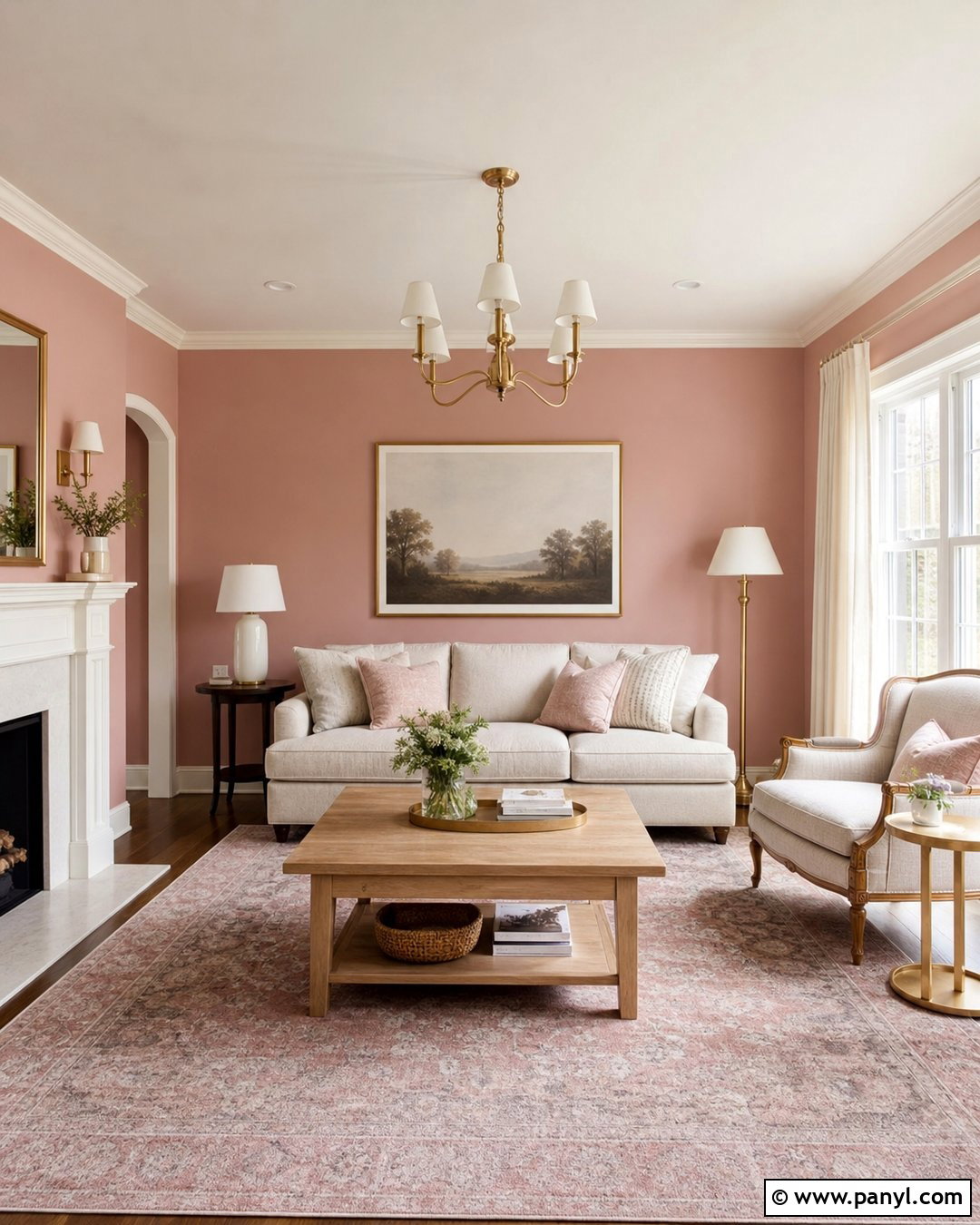
Blush pink walls and warm white create a light, welcoming combination that works especially well in a living room. Paint the walls a gentle pink with peach or beige undertones, then use creamy white on the ceiling, baseboards, doors, and fireplace. Choose an oatmeal sofa with rounded lines, a light oak coffee table, and ivory curtains that soften incoming daylight. A faded rose-and-cream rug connects the walls to the seating area without looking overly coordinated. Add small amounts of brushed brass through a floor lamp and picture frames. Natural linen pillows, ceramic lamps, and one leafy plant keep the room relaxed. Medium oak flooring provides enough warmth and contrast to stop this airy palette from feeling washed out.
2. Dusty Pink Walls With Sage Green
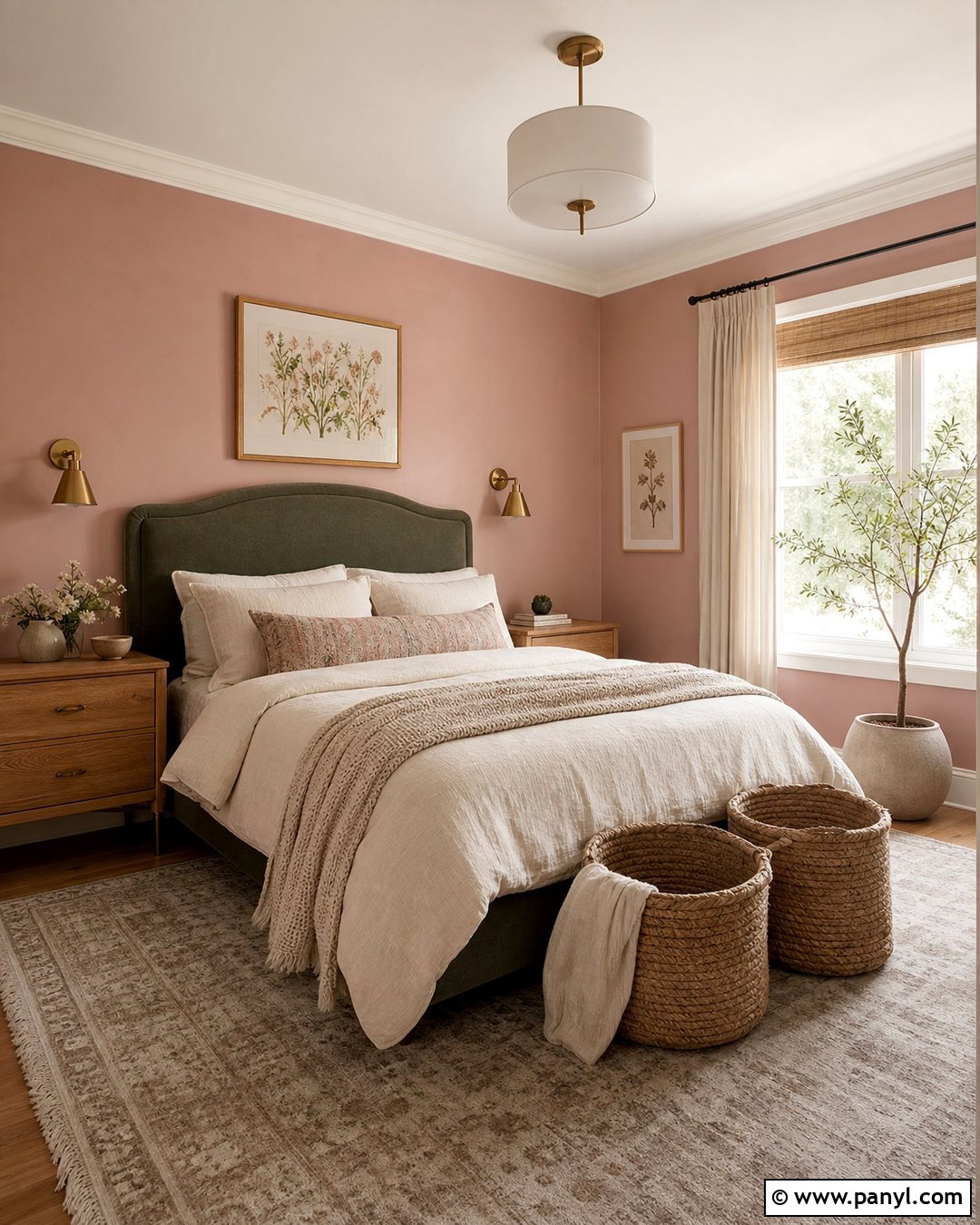
A dusty pink and sage green bedroom feels peaceful, grounded, and connected to nature. Cover the walls in muted rose pink, then introduce sage through an upholstered headboard, curtains, or a painted dresser. Keep the ceiling and trim soft ivory rather than stark white. Natural oak nightstands, woven baskets, and a jute-blend rug add texture while supporting the earthy colors. Dress the bed in cream linen with sage, pink, and muted botanical pillows. Antique brass sconces provide a warmer finish than chrome. For balance, use green on two or three substantial features instead of scattering tiny accents everywhere. A few framed landscape prints and an olive tree complete a calm bedroom that feels grown-up, comfortable, and thoughtfully layered.
3. Pale Pink Walls With Charcoal Gray
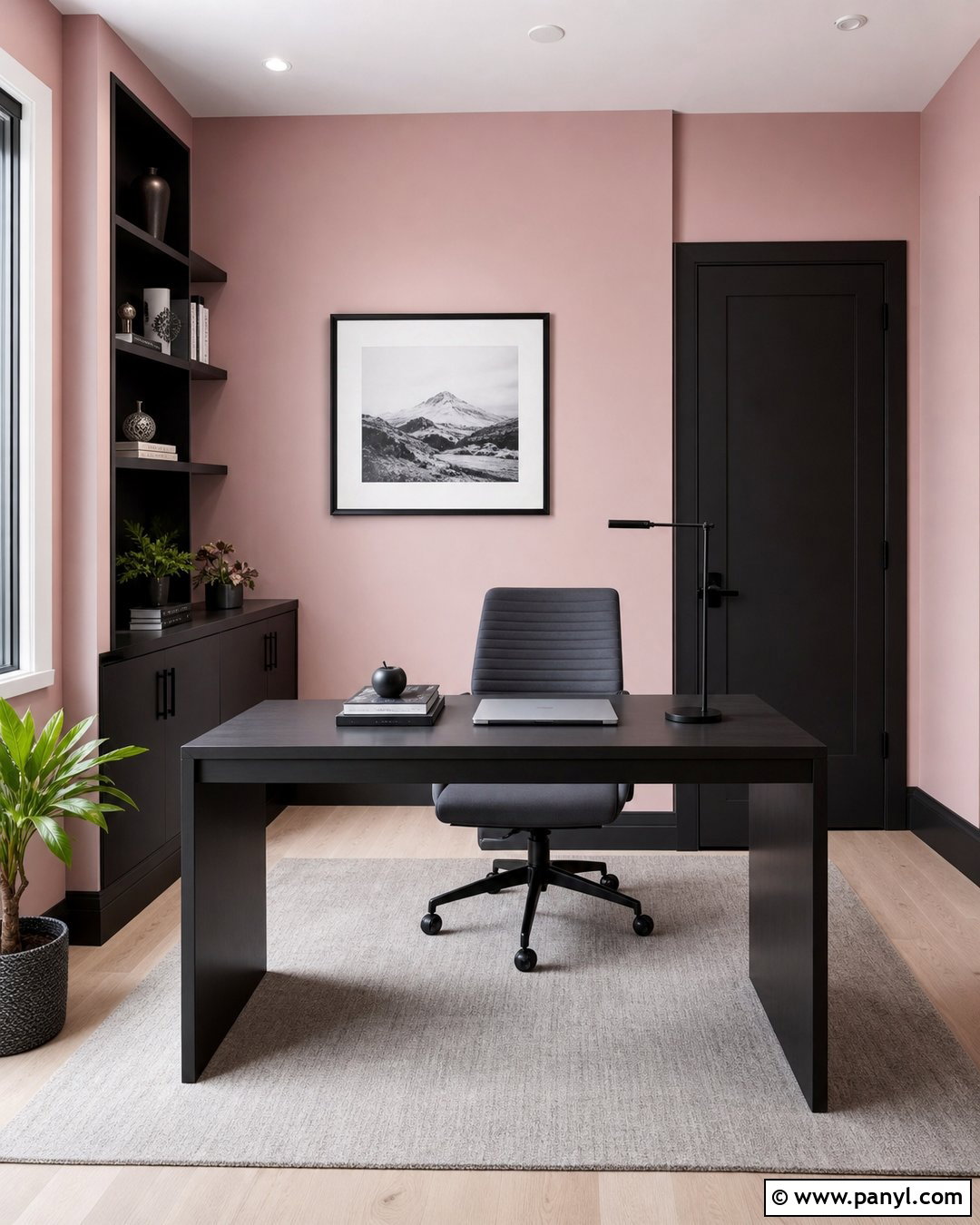
Wondering how to give pale pink walls a sharper, more contemporary edge? Pair them with charcoal gray furniture and crisp black details. In a modern home office, use soft shell-pink walls as the bright background for a charcoal desk, dark gray storage cabinet, and graphite upholstered chair. Paint the window frames or interior door matte black if the architecture allows. A pale gray wool rug and white oak flooring prevent the darker pieces from making the room feel heavy. Add simple black-and-white artwork, a frosted glass desk lamp, and one small burgundy accessory for depth. Keep the ceiling clean white. This balanced scheme turns pink into a subtle neutral while charcoal defines the workspace and gives it an organized, professional appearance.
4. Rose Pink Walls With Navy Blue
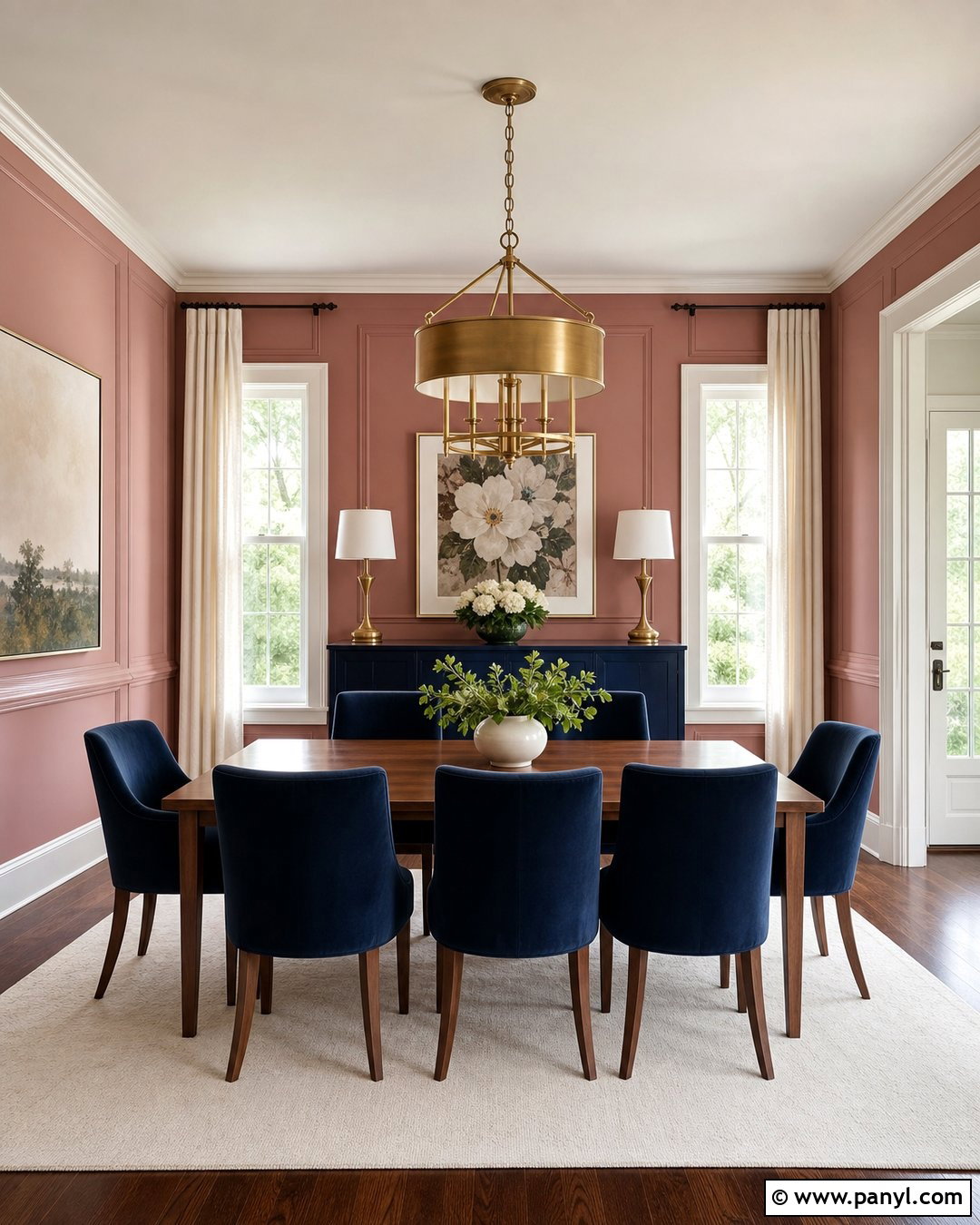
Rose pink and navy blue bring warmth and structure to a dining room. Choose a slightly muted rose for the walls so the color remains comfortable across a large surface. Anchor the room with a navy-painted sideboard and navy velvet dining chairs around a medium walnut table. Warm white trim keeps the architectural edges clear, while an ivory rug brightens the floor. Repeat pink in a patterned table runner or artwork, but avoid matching every accessory to the walls. A large aged-brass pendant gives the palette a polished finish. White ceramic dishes and clear glassware introduce visual breathing room. The deep blue balances pink’s softness, producing a dining space that feels colorful and sophisticated rather than overly delicate or themed.
5. Plaster Pink Walls With Terracotta
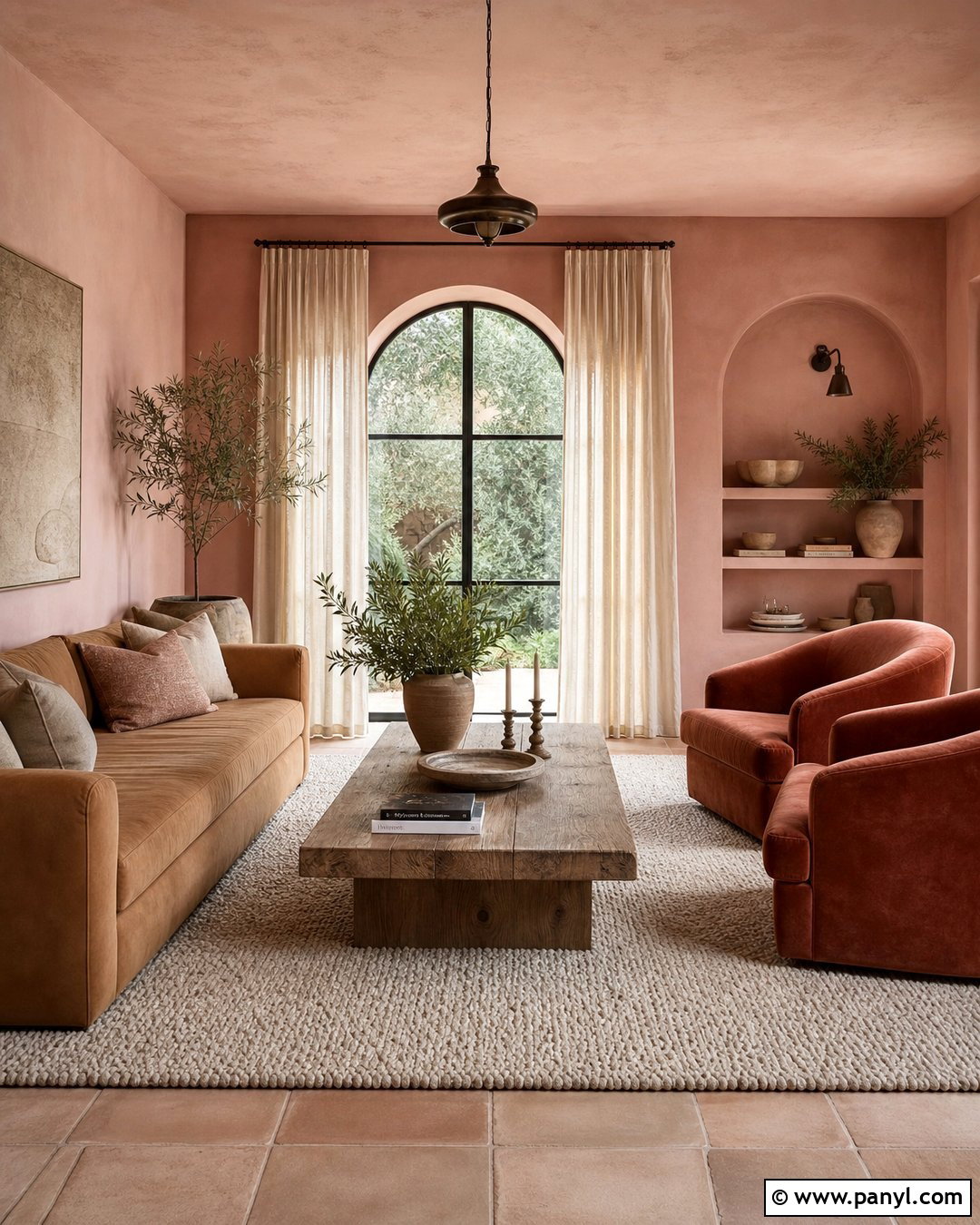
Sun-warmed plaster pink walls pair naturally with terracotta, clay, and sandy beige. Use this palette in a relaxed living room with matte pink walls, a camel-colored sofa, and two rust or terracotta lounge chairs. Select a chunky cream rug to define the seating arrangement, then add a low oak coffee table and a textured ceramic lamp. Linen curtains in warm beige gently filter the light without competing with the walls. Handmade pottery, woven baskets, and abstract artwork in clay, brown, and faded coral complete the scheme. Keep metal finishes minimal, choosing aged bronze when needed. The finished room should include several natural textures and slightly varied earth tones, allowing the pink walls to feel organic, comfortable, and integrated rather than sugary.
6. Soft Pink Walls With Cream And Oak
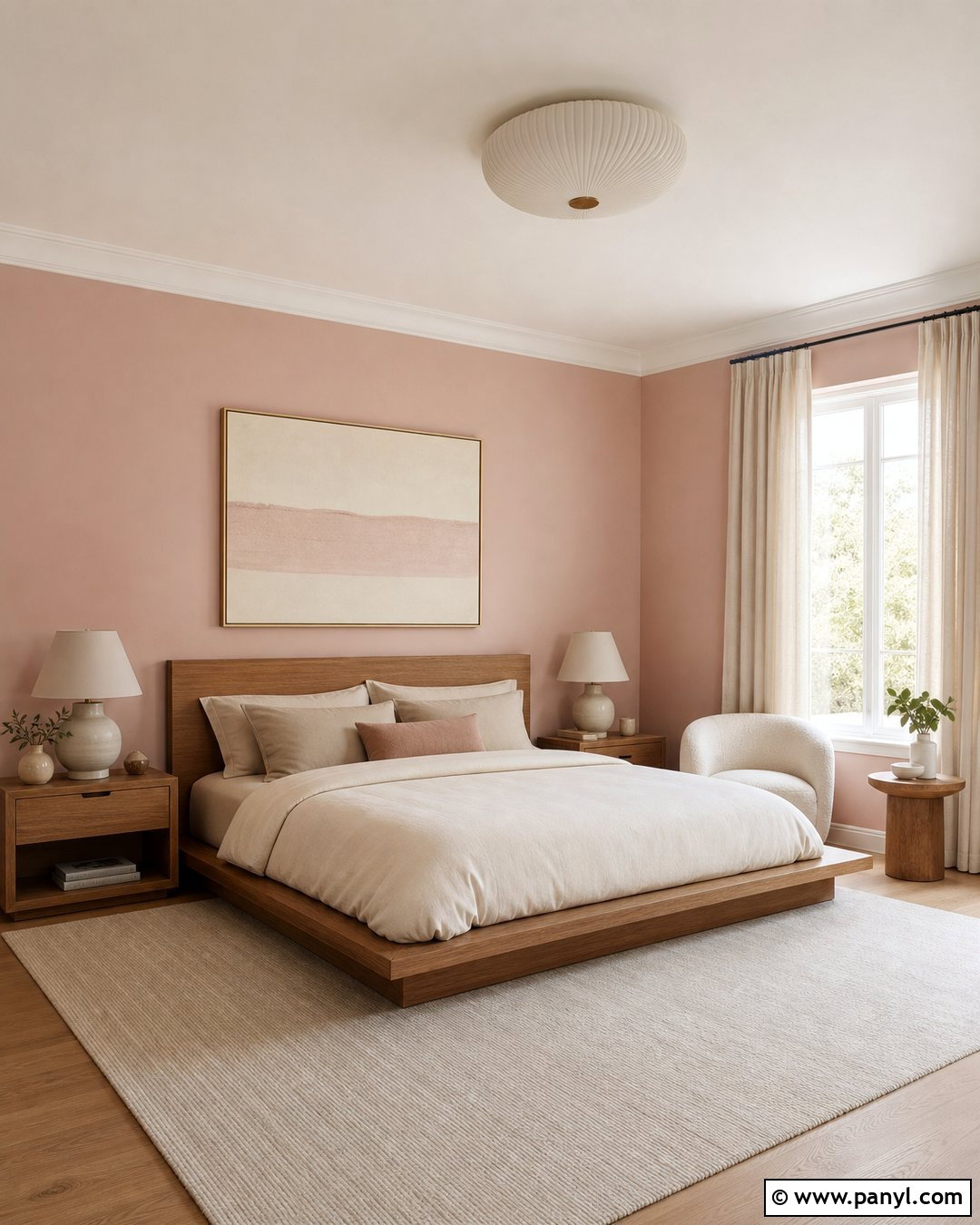
Soft pink, cream, and oak make a small bedroom feel warmer without adding visual clutter. Paint every wall a quiet pink-beige and use cream for the ceiling, trim, and bedding. A simple oak platform bed becomes the room’s grounding feature, supported by matching nightstands and a narrow wooden bench. Choose a cream boucle chair for an unused corner and an ivory rug with a subtle woven pattern. Pale oatmeal curtains create a gentle transition between the pink walls and natural daylight. Add two ceramic table lamps, minimal line artwork, and dusty rose pillows for cohesion. Avoid bright white furnishings, which may appear harsh beside a warm pink. The resulting room feels restful, uncluttered, and suitable for both modern and transitional homes.
7. Coral Pink Walls With Teal
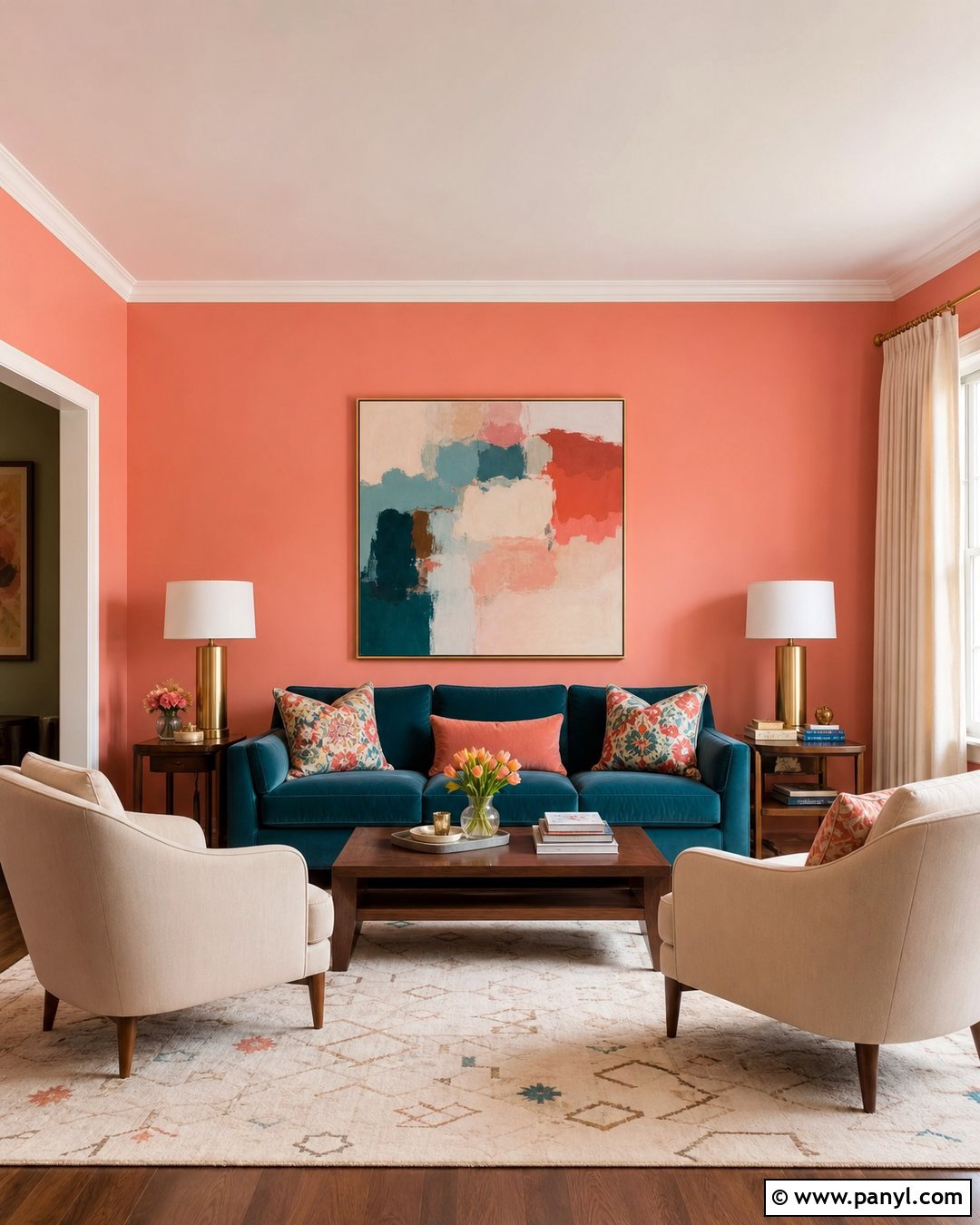
Coral pink walls and deep teal can transform a basic living room into a confident, energetic space. Use coral on the main walls, then select a teal sofa as the strongest contrasting feature. Add two light neutral chairs so the room does not become saturated with competing colors. A cream rug with small teal and coral details ties everything together, while a walnut coffee table provides natural warmth. Choose off-white curtains, medium-toned wood flooring, and a white ceiling to keep the palette balanced. Brass lamps and colorful abstract art enhance the lively character. Repeat teal in only a few places, such as a vase and two pillows. This creates a clear hierarchy where coral remains the background and teal provides bold, controlled contrast.
8. Mauve Pink Walls With Burgundy
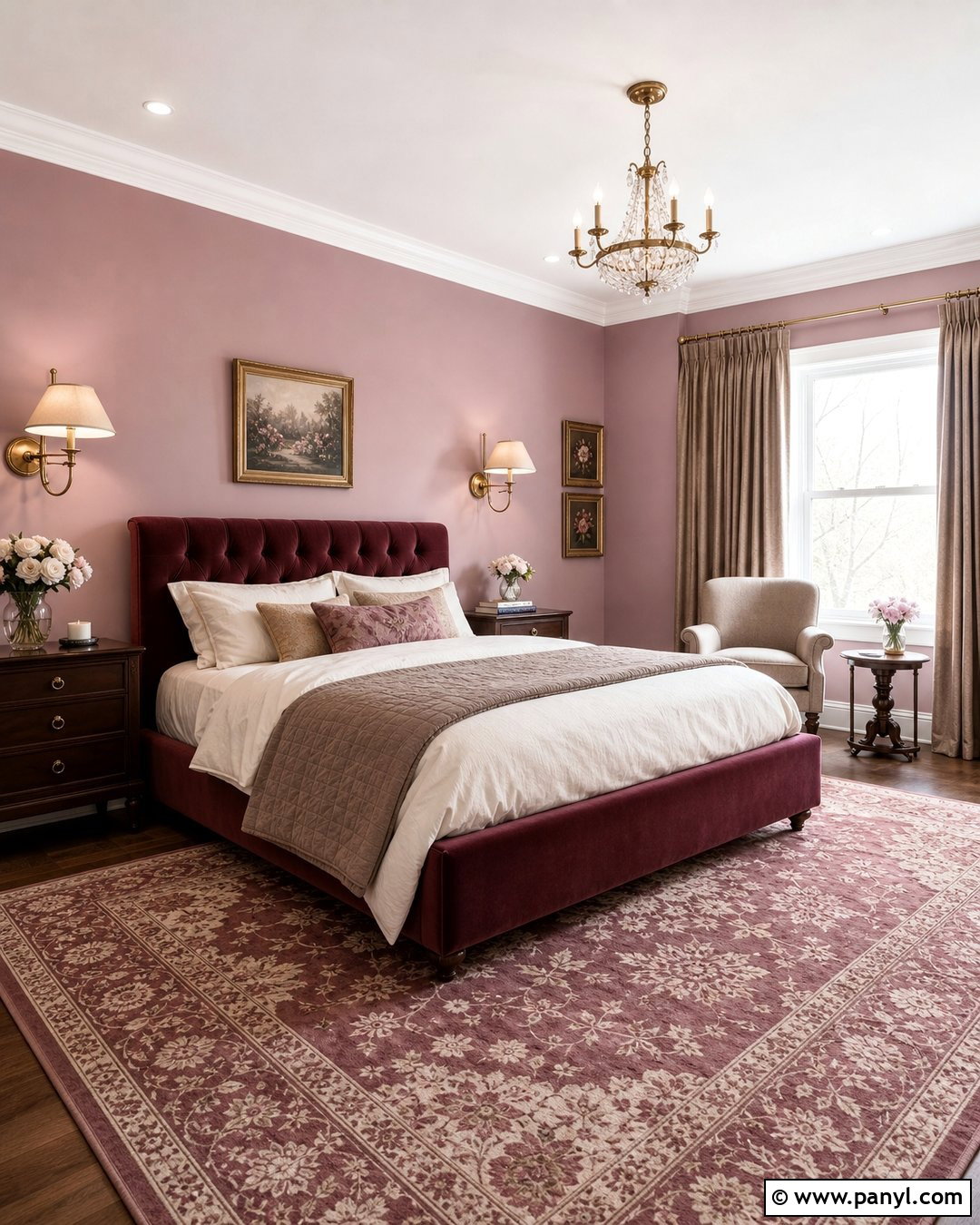
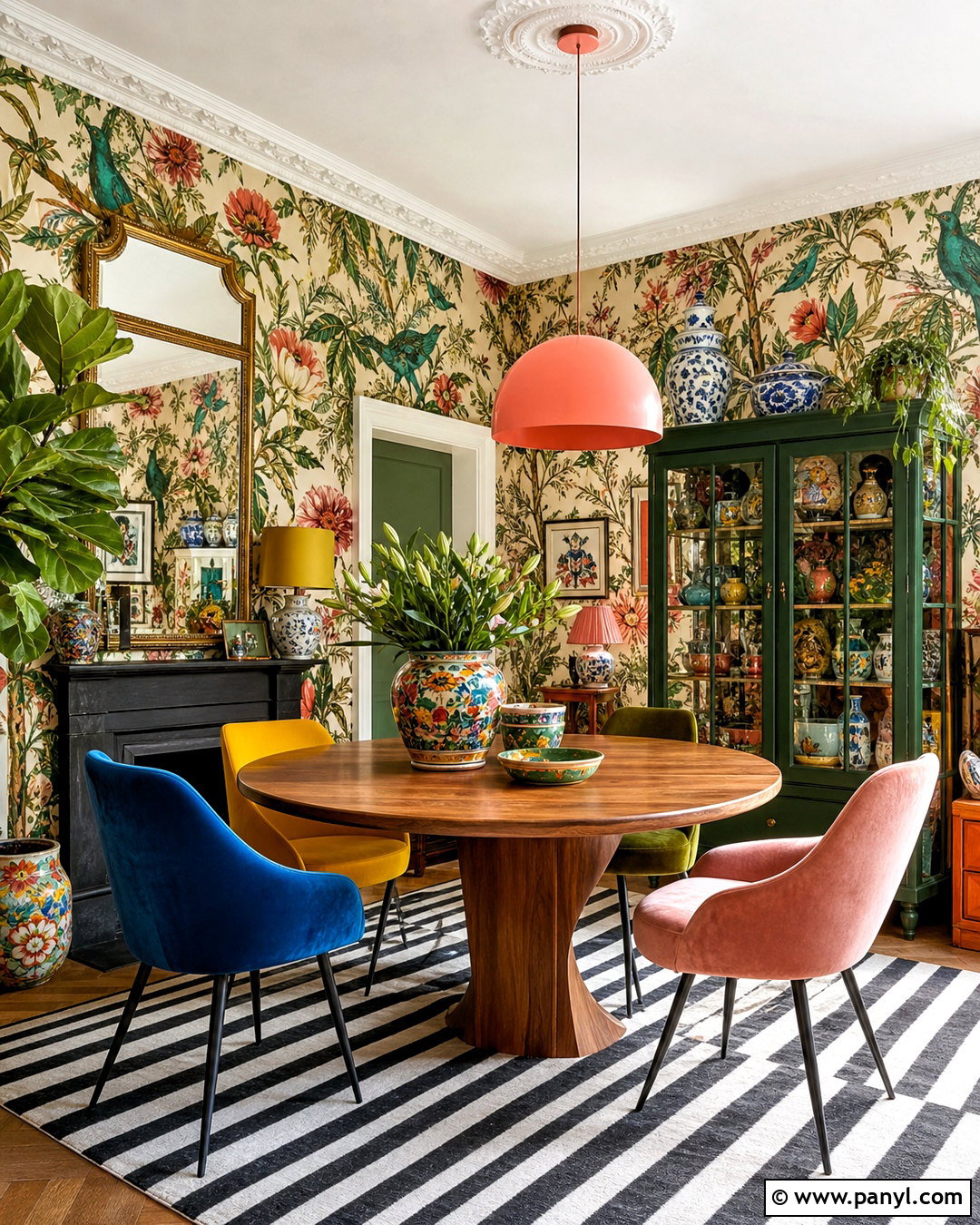
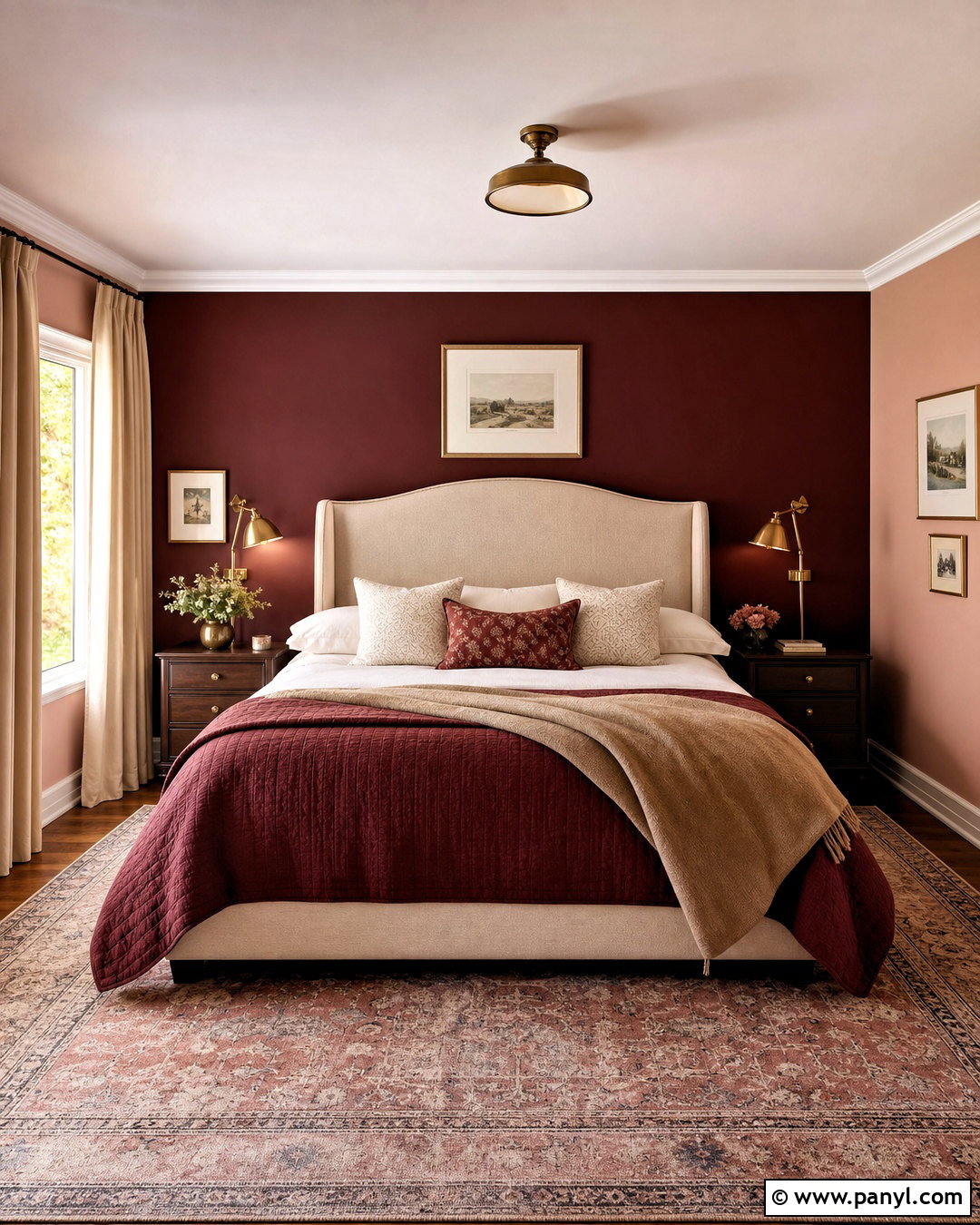
Mauve pink walls and burgundy accents create an intimate bedroom without requiring dark lighting. Paint the walls a subdued mauve with gray undertones, then add a burgundy upholstered bed or substantial headboard. Layer the bedding with warm ivory sheets, a taupe coverlet, and a small number of wine-free deep red pillows. Use dark walnut nightstands to strengthen the mature palette. A patterned rug containing faded pink, beige, and burgundy can visually connect the furniture and walls. Hang full-length taupe curtains and install antique brass sconces for a soft metallic detail. Keep the ceiling warm white to maintain brightness. Restrained artwork and a bench in camel upholstery finish this rich, tailored room while allowing the mauve walls to remain calm.
9. Pink Walls With Olive Green
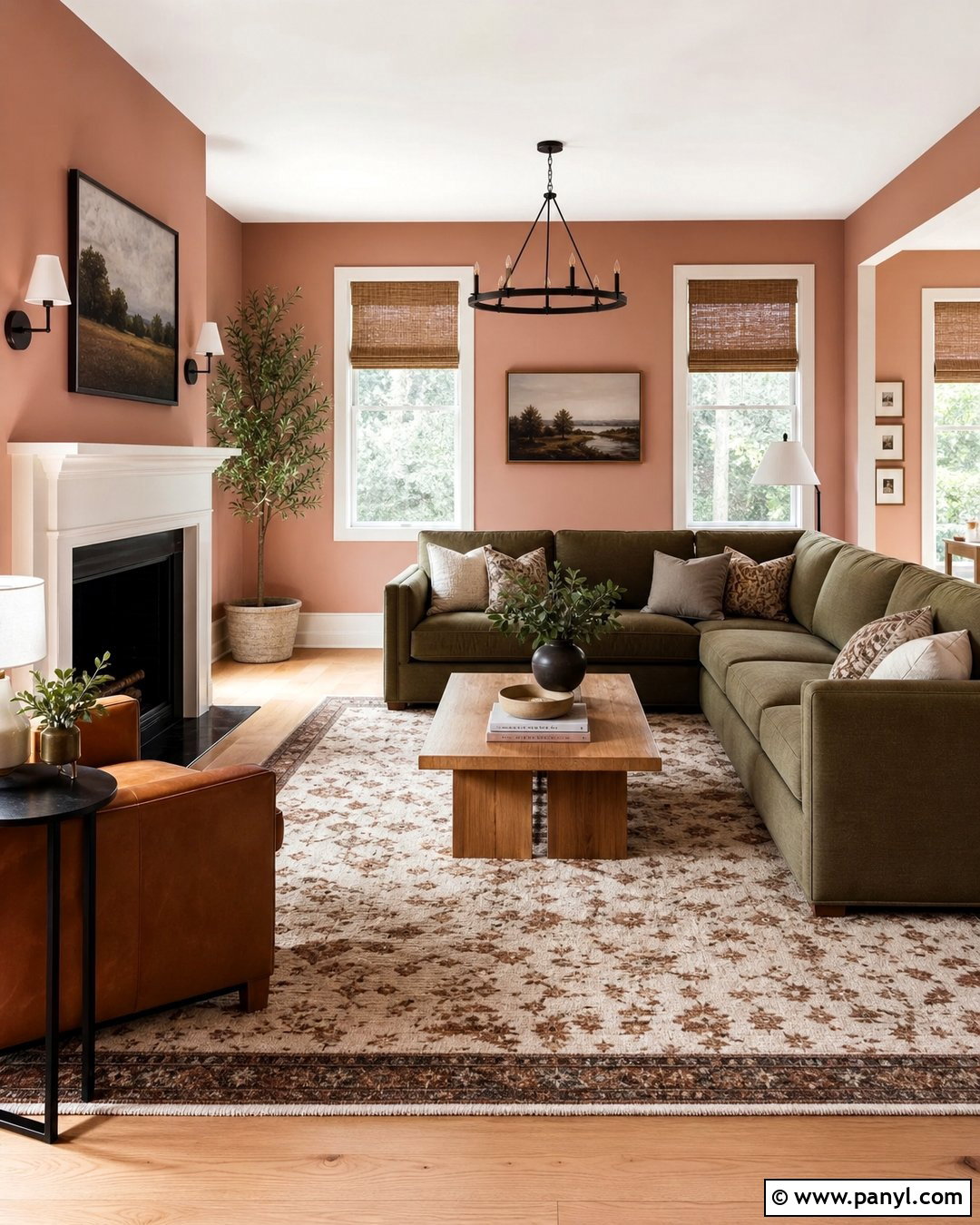
Pink walls become earthy and inviting when paired with olive green furniture. In a family room, select a warm midtone pink that contains a touch of brown rather than a cool pastel. Place an olive green sectional along the longest wall and balance it with a tan leather chair or natural linen armchair. Use a large cream-and-brown patterned rug, a solid oak coffee table, and woven window shades. Black metal lighting provides clean definition, while landscape art reinforces the green tones. Add rust, cream, and muted pink pillows instead of introducing unrelated bright colors. Houseplants should be grouped intentionally near a window. Together, olive, wood, leather, and textured neutrals make the pink wall color feel grounded enough for an everyday gathering space.
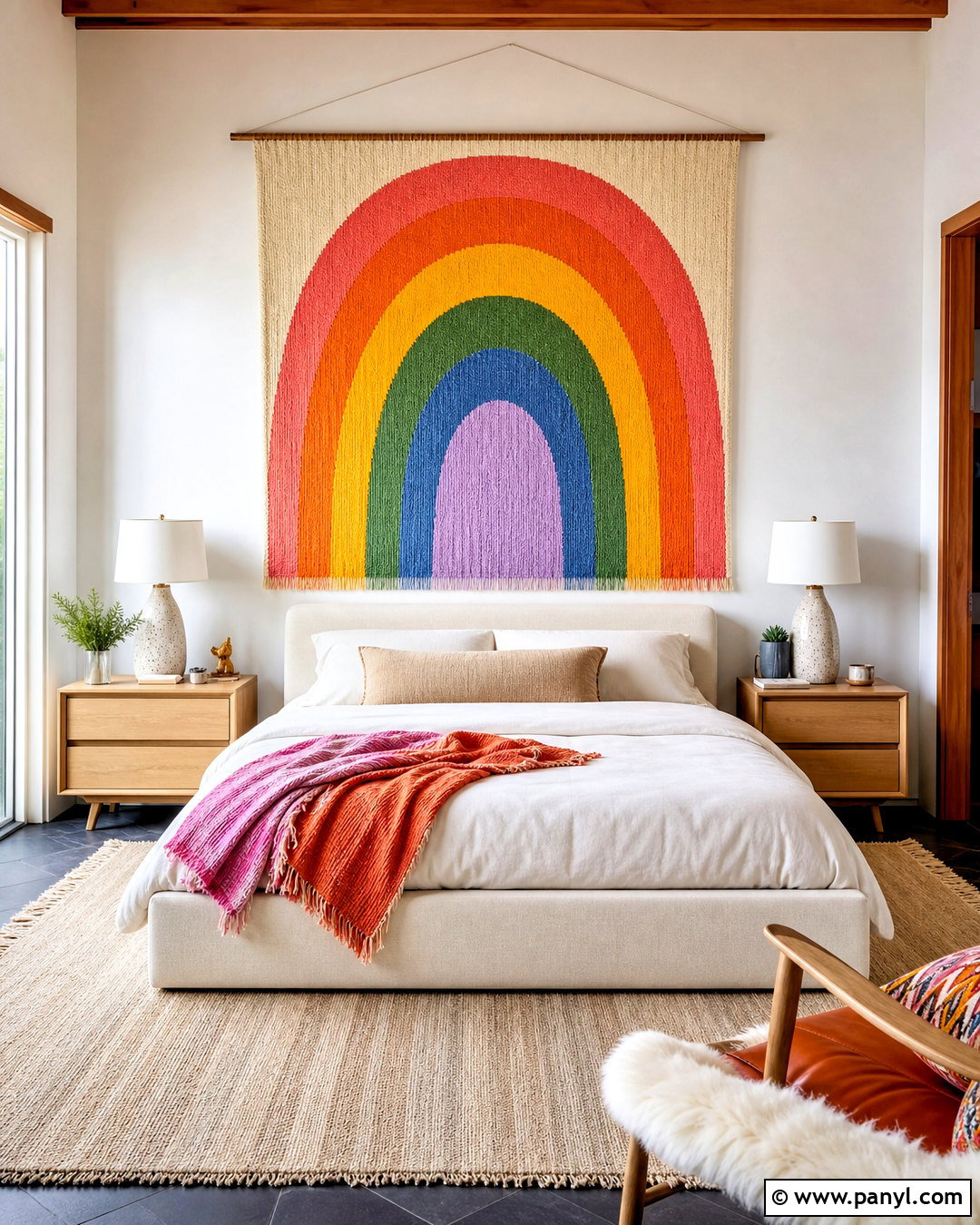
10. Salmon Pink Walls With Sky Blue
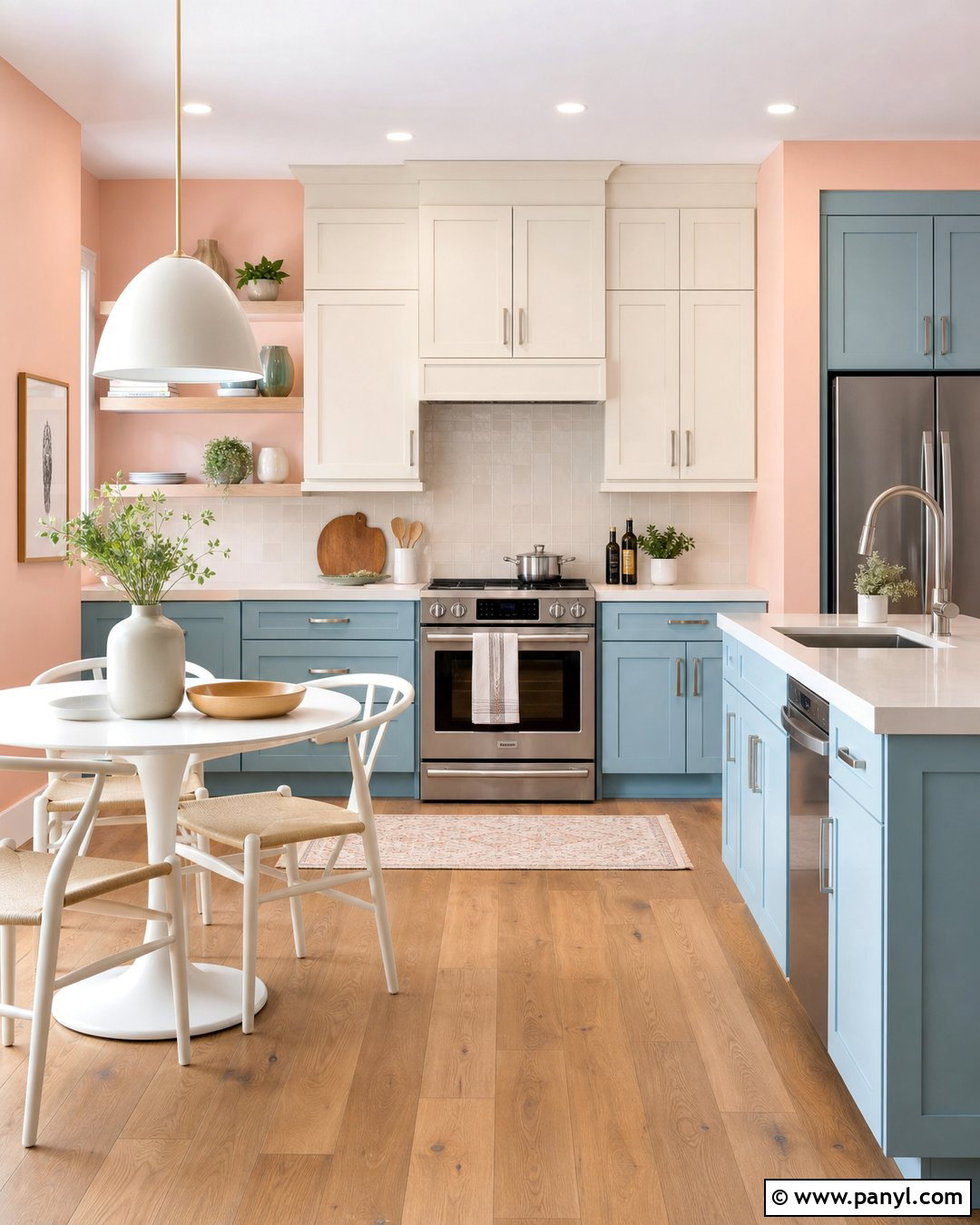
Salmon pink and sky blue create a fresh, cheerful kitchen when both shades are used with restraint. Paint the walls a light salmon pink, then choose soft sky-blue lower cabinets and warm white upper cabinets. A white quartz countertop and simple cream backsplash keep the working surfaces bright. Use brushed nickel or polished chrome hardware for a clean finish that suits the airy palette. Light oak flooring adds warmth without introducing another strong color. At a breakfast nook, place a round white table with natural wood chairs and blue seat cushions. Woven shades, white pendant lights, and striped blue-and-cream textiles provide finishing detail. The result feels colorful but practical, with each larger surface assigned a clear role in the overall scheme.
11. Blush Pink Walls With Matte Black
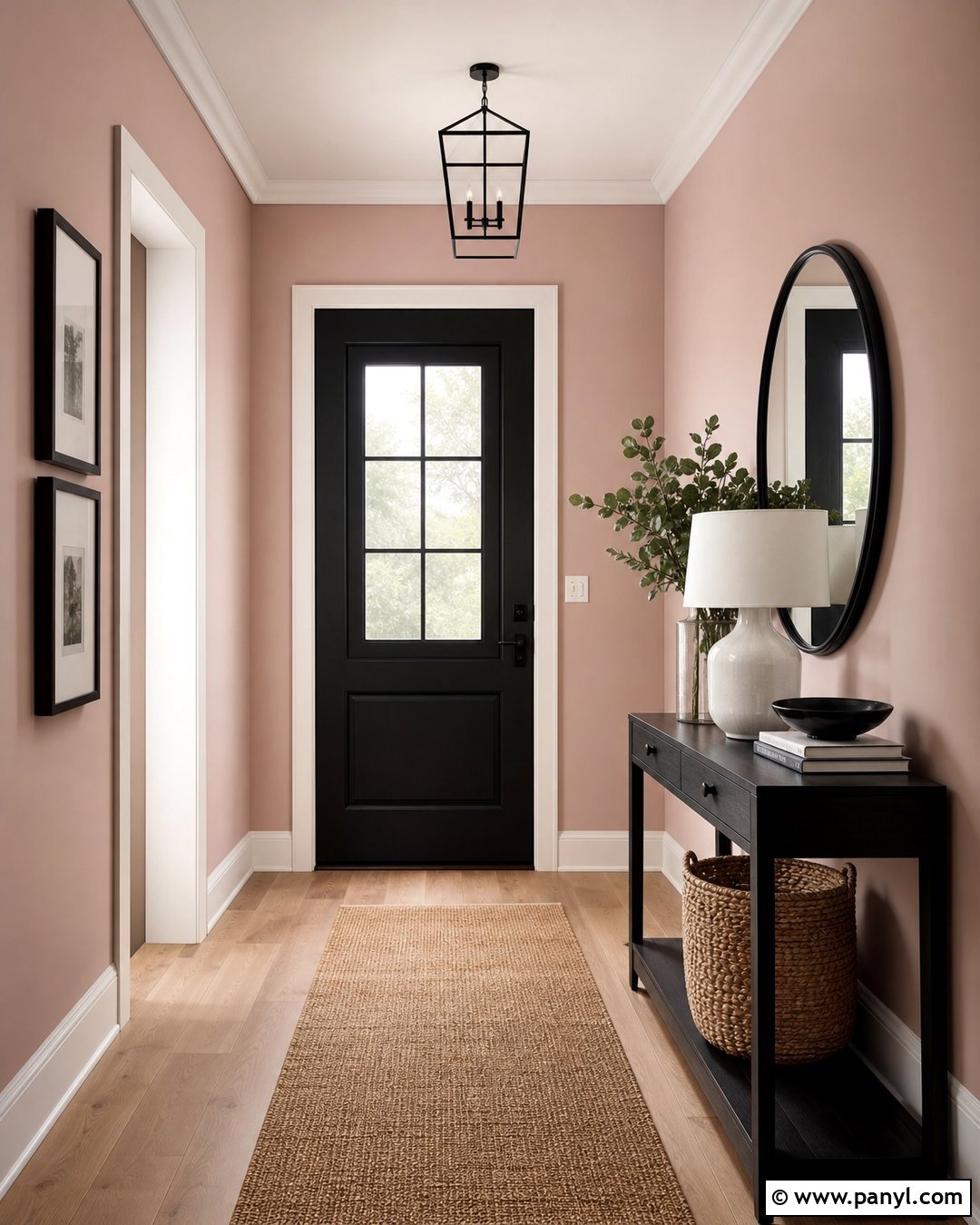
For a graphic look, combine blush pink walls with controlled matte black accents. This pairing works particularly well in an entryway where architectural details can create immediate impact. Use muted blush on the walls, crisp warm white on the ceiling, and matte black on the interior door, console table, and stair railing. Ground the space with a natural jute runner or a cream geometric rug. Add a round black-framed mirror above the console and a white ceramic lamp to break up the dark finish. Medium oak flooring and a woven storage basket soften the contrast. Keep decorative objects limited and substantial. Pink provides warmth, while black outlines the room’s functional elements and gives an otherwise simple entrance a clean, memorable identity.
12. Dusty Rose Walls With Chocolate Brown
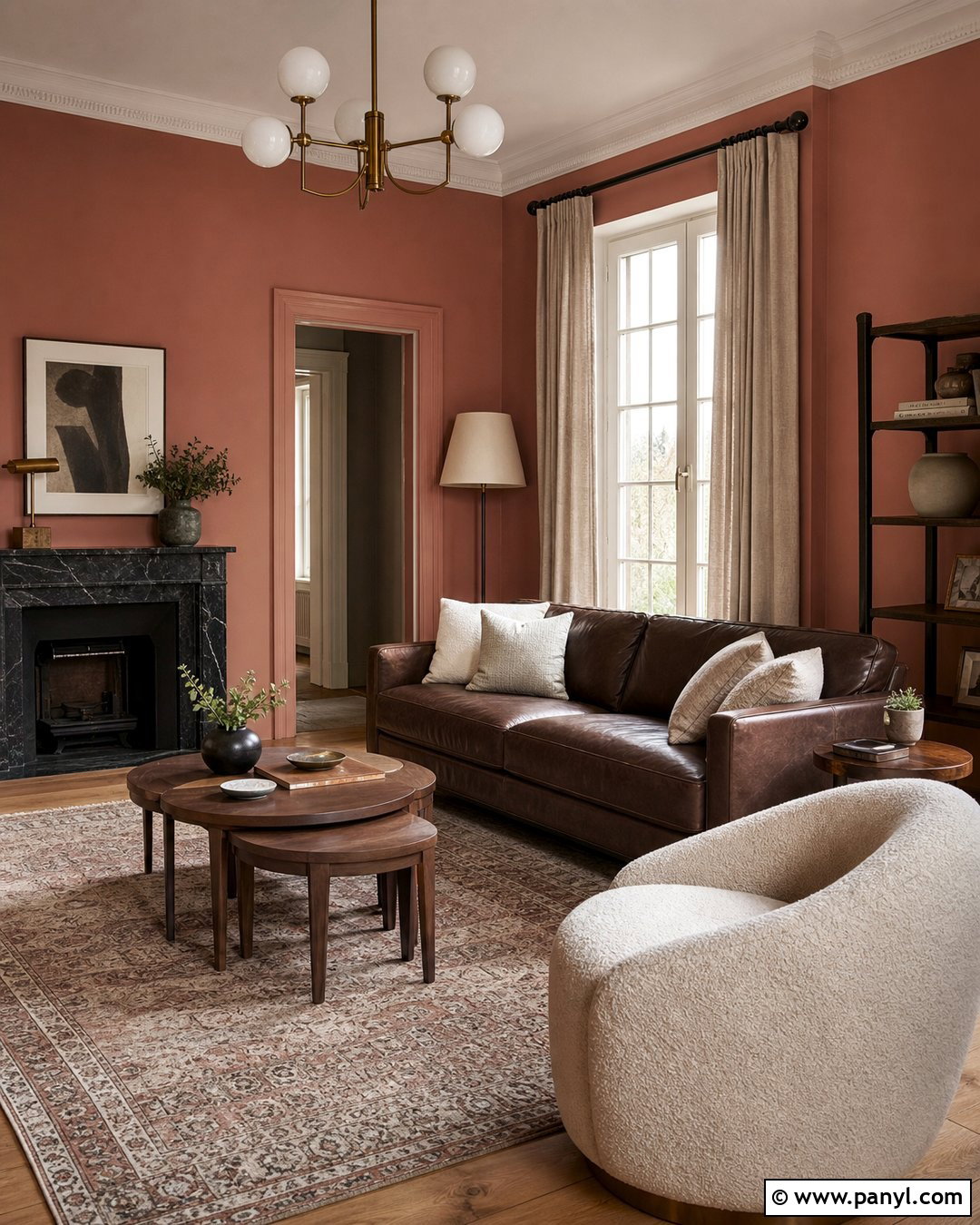
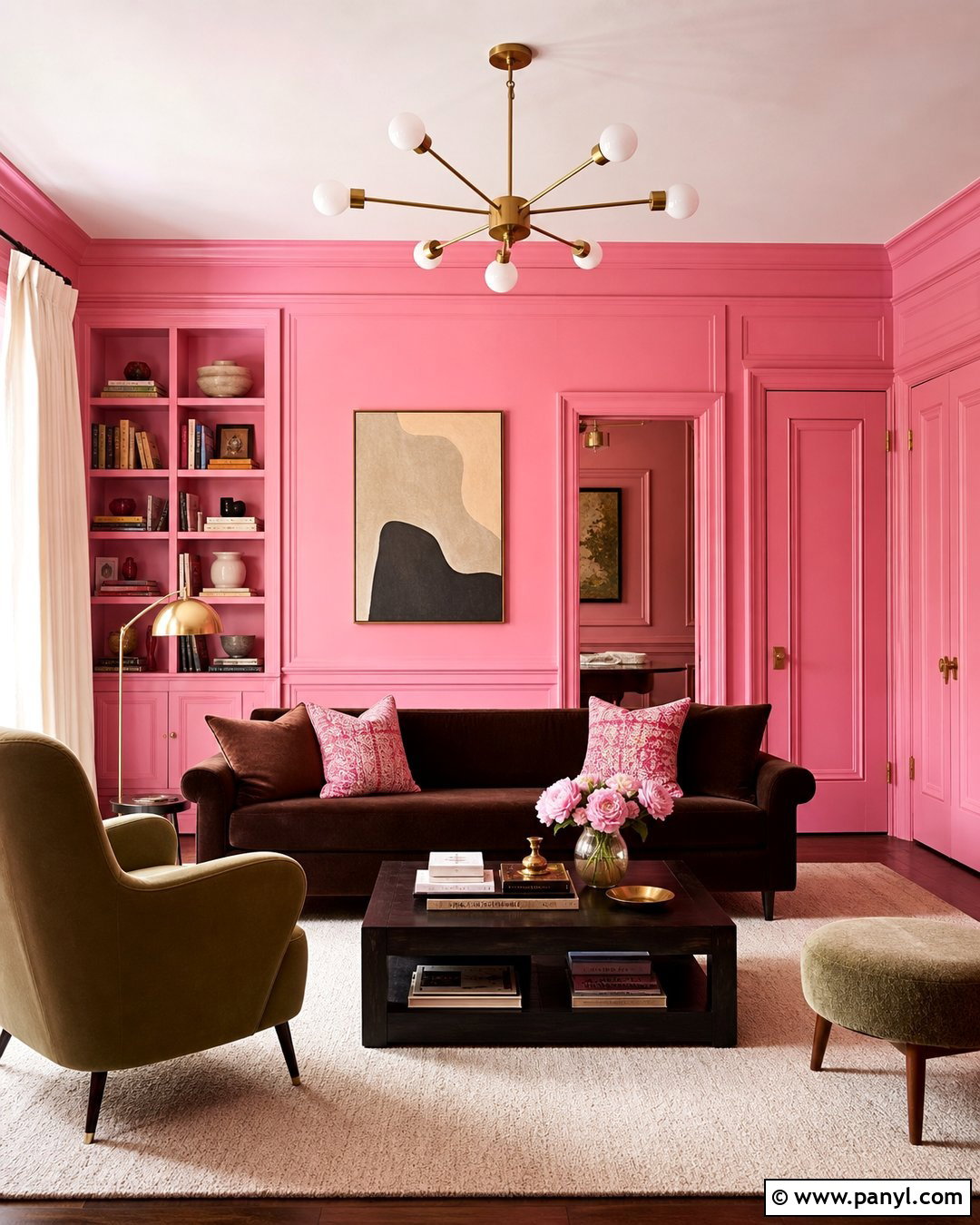
Dusty rose and chocolate brown create a warm, cocooning living room with a subtle vintage influence. Paint the walls in an earthy rose and use a chocolate brown leather sofa as the central piece. Add a cream boucle chair, walnut nesting tables, and a large rug containing muted tan, rose, and dark brown. Full-length oatmeal curtains soften the windows and prevent the scheme from becoming too dark. Choose bronze lighting, amber-free clear glass accessories, and framed artwork with generous cream matting. A few burgundy or rust pillows can deepen the palette, while white cushions provide contrast. This combination succeeds when brown appears through several substantial materials, including leather and wood, creating a solid foundation for the softer pink walls.
13. Pale Pink Walls With Lavender
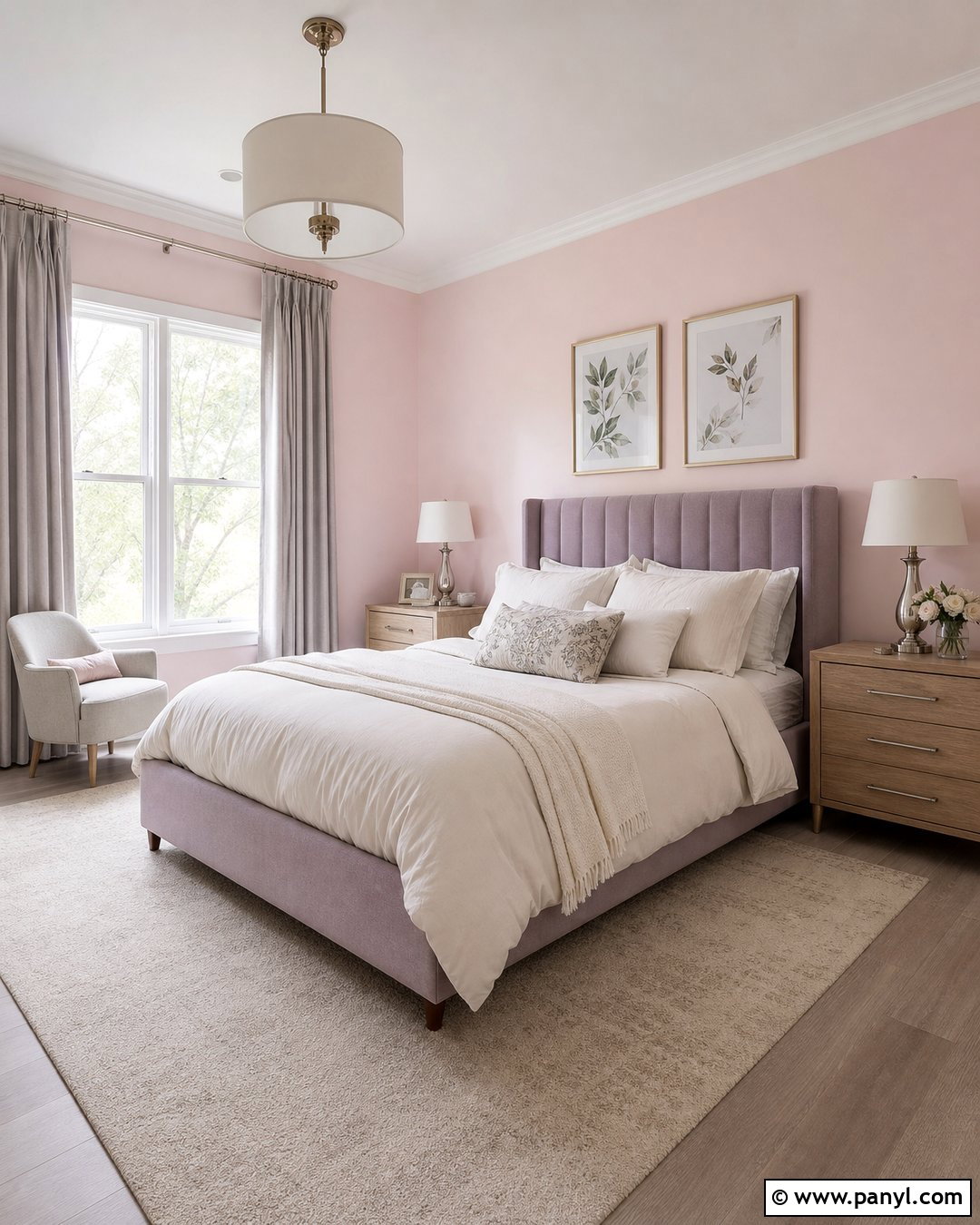
Pale pink and lavender can feel refined when supported by plenty of warm neutral space. For a guest bedroom, paint the walls a barely-there ballet pink and choose a lavender upholstered headboard with clean, simple lines. Dress the bed in white and ivory linens, adding one lavender throw and a small dusty pink pillow. Light oak nightstands and a cream rug introduce warmth. Use soft gray curtains if the room receives strong natural light, or ivory curtains in a darker room. Brushed silver lamps complement the cooler purple notes without adding excessive shine. Botanical artwork with green, lavender, and pink details gives the palette context. Keep the furniture modern and uncluttered so the finished room feels calm, welcoming, and adult.
14. Pink Walls With Mustard Yellow
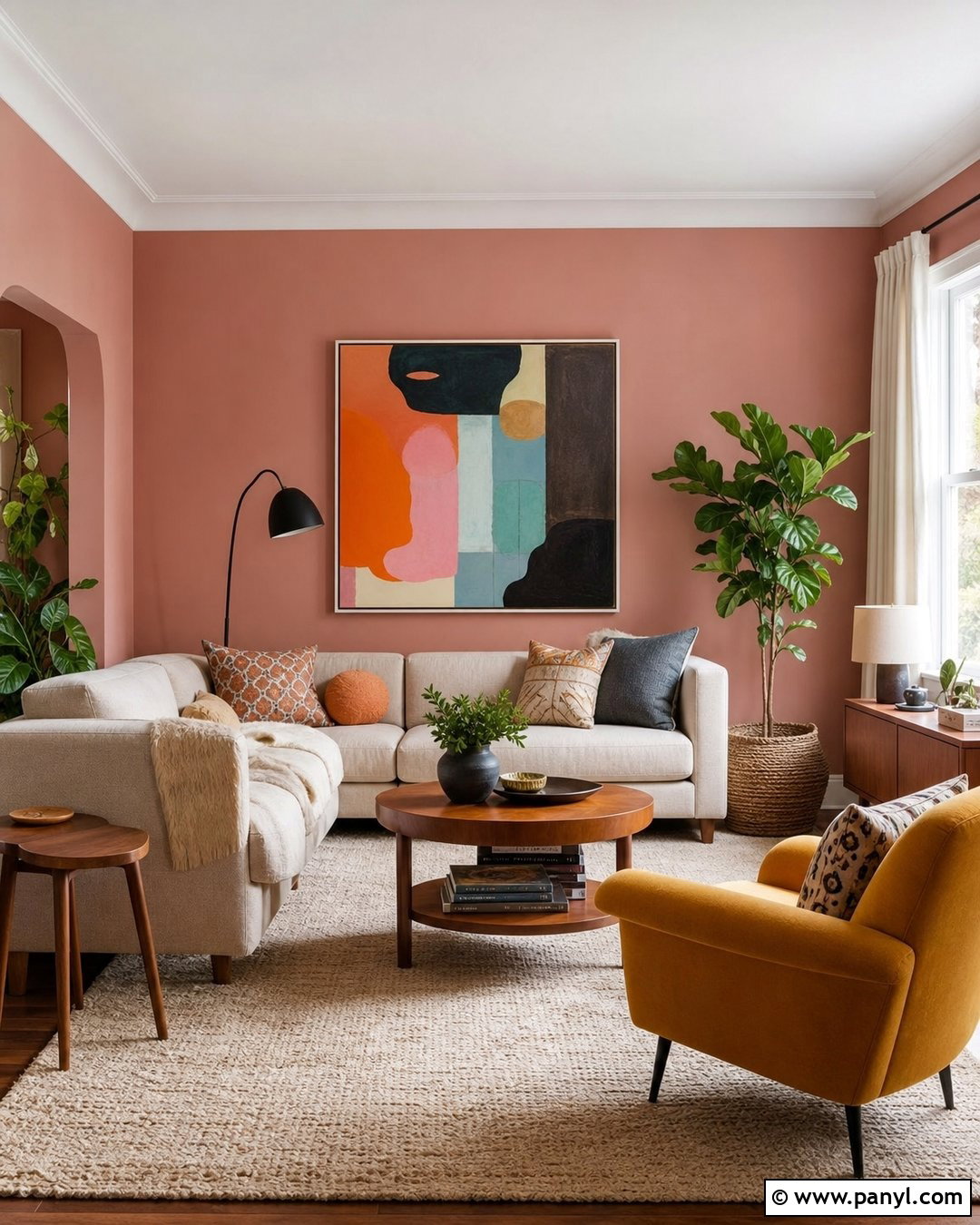
Pink and mustard yellow make a playful living room feel warm rather than overly sweet. Start with muted salmon-pink walls and an oatmeal or light beige sofa. Introduce mustard through one upholstered armchair, a large abstract artwork, and two patterned cushions. Choose walnut tables, a cream wool rug, and simple off-white curtains to calm the stronger colors. Small black accents, such as a floor lamp and picture frames, add useful definition. Avoid filling the room with many equally bright objects. Instead, let mustard occupy one clear section of the seating arrangement. A rust-colored vase and natural greenery can bridge the yellow and pink. This complete scheme offers personality while remaining practical enough for an everyday family living area.
15. Clay Pink Walls With Forest Green
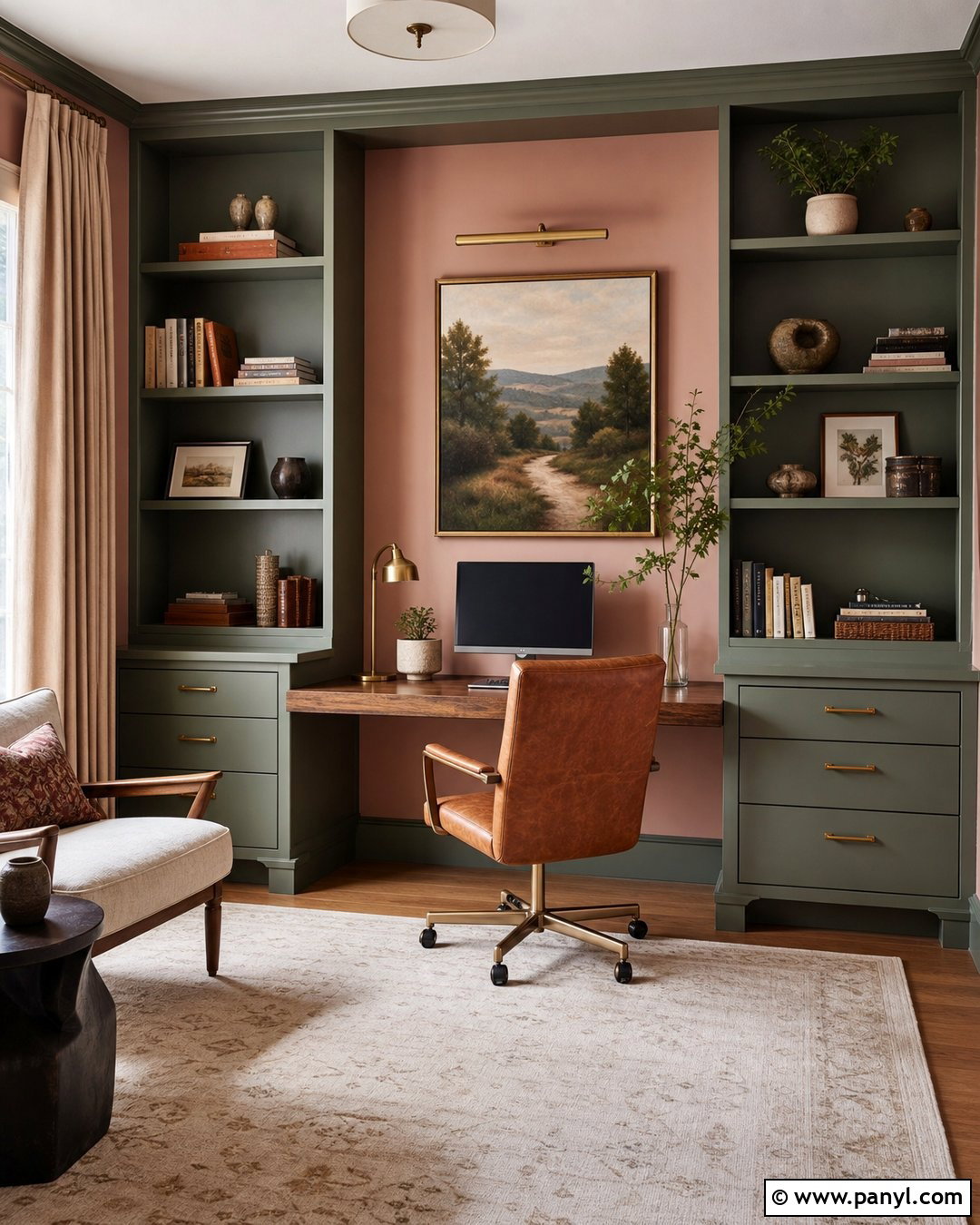
Clay pink walls and forest green cabinetry create a bold yet grounded home office. Paint the walls a muted earthen pink, then use deep forest green on built-in shelves, lower cabinets, and the desk. Leave the ceiling warm white so the room remains open and bright. A cognac leather chair and walnut desktop add rich natural color between the pink and green surfaces. Choose a cream flat-weave rug and oatmeal curtains to soften the darker millwork. Brass picture lights can illuminate books and framed art without becoming too decorative. Keep shelves edited with cream ceramics, storage boxes, and a few plants. The finished office feels focused and substantial because the deep green gives the warm pink walls a strong architectural framework.
16. Powder Pink Walls With Greige
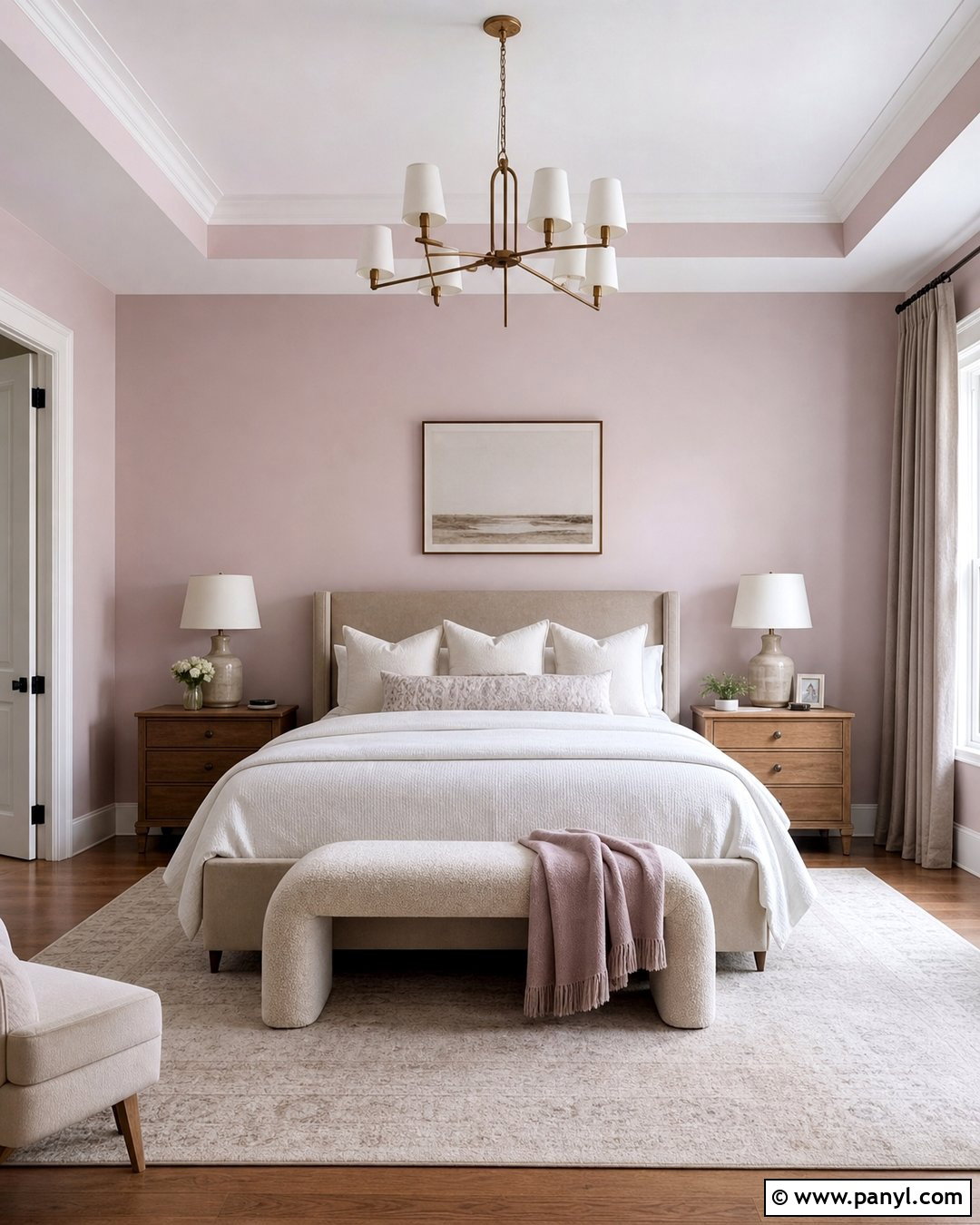
Powder pink and greige offer an understated solution for a calm primary bedroom. Select a powder pink wall color with a slight gray undertone, then use warm greige for the upholstered bed, curtains, and a storage bench. Layer white sheets with taupe blankets and pale rose cushions, keeping the bedding simple and comfortable. Medium oak nightstands prevent the gray-beige elements from looking flat. An ivory rug, ceramic lamps, and minimal abstract prints complete the neutral foundation. Use black only in small details, such as slim picture frames or curtain rods. Because both main colors are softened, texture becomes important. Linen, wool, boucle, and natural wood give the room enough variation while preserving its quiet, restful atmosphere.
17. Hot Pink Walls With Cobalt Blue
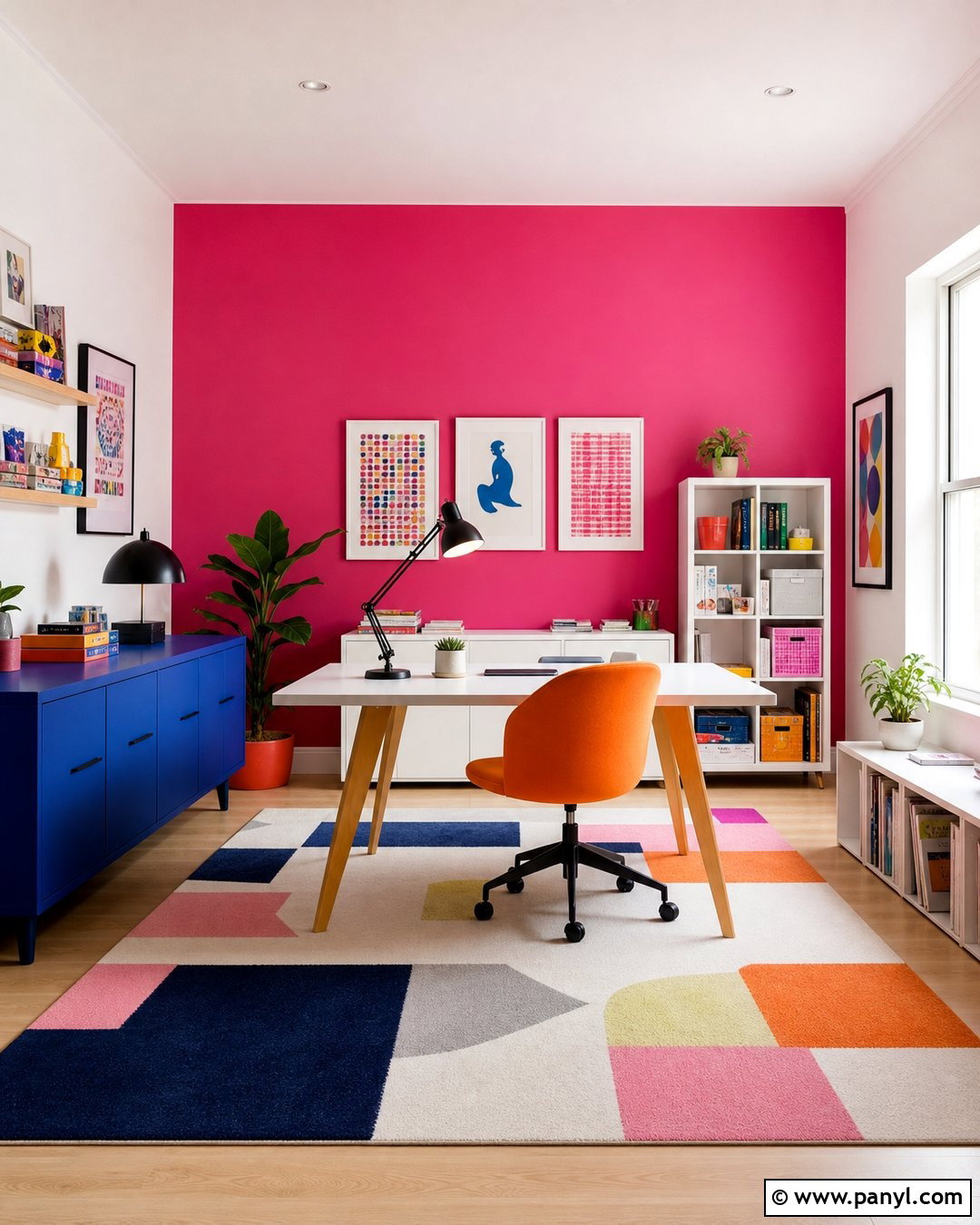
A creative studio can handle the vivid contrast of hot pink and cobalt blue. Use hot pink on one complete feature wall and a clean warm white on the remaining walls to control the intensity. Place a cobalt-blue cabinet or storage unit against the pink wall, then add a white worktable with light wood legs. A graphic rug containing pink, blue, orange, and cream can connect the bold surfaces. Choose simple white shelving, matte black task lighting, and clear storage containers to keep the room functional. One orange chair offers a small third accent without taking over. Strong colors look more intentional when the layout stays organized, so leave generous open floor space and limit decorative objects to a few large, purposeful pieces.
18. Peach Pink Walls With Rust
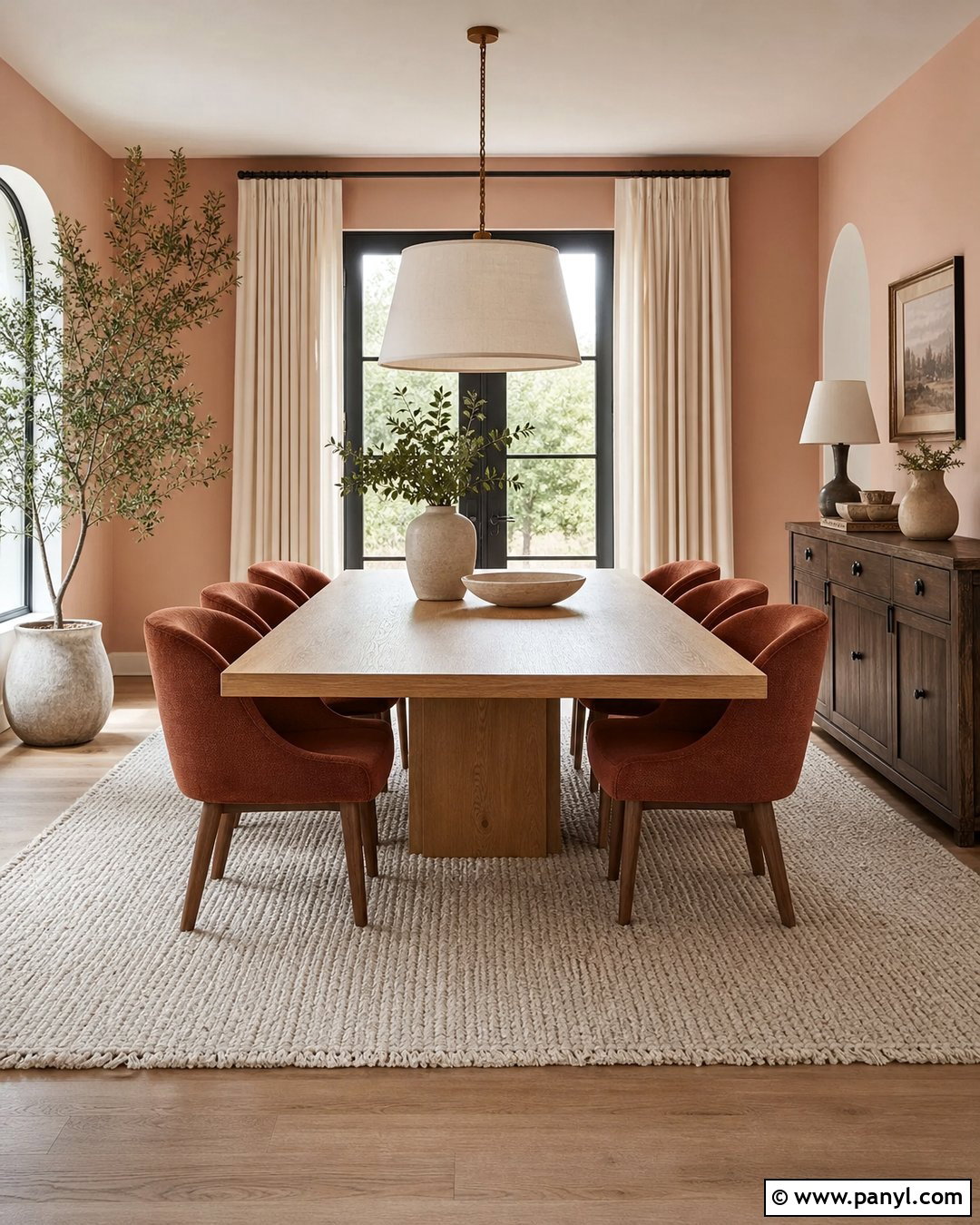
Peach-pink walls and rust upholstery produce a warm dining room inspired by desert colors. Cover the walls in a pale peach pink, then surround a natural oak table with rust-colored upholstered chairs. Add a cream textured rug underneath and hang a large linen pendant over the center of the table. Warm white trim, simple off-white curtains, and pale stoneware provide relief from the earthy palette. A walnut sideboard can introduce a slightly deeper wood tone, while artwork in sand, terracotta, and faded brown connects the wall and seating colors. Use aged bronze hardware instead of cool chrome. The combination feels cohesive because every surface shares a warm undertone, yet the range from pale peach to deep rust still creates clear visual depth.
19. Rose Pink Walls With Ivory And Brass
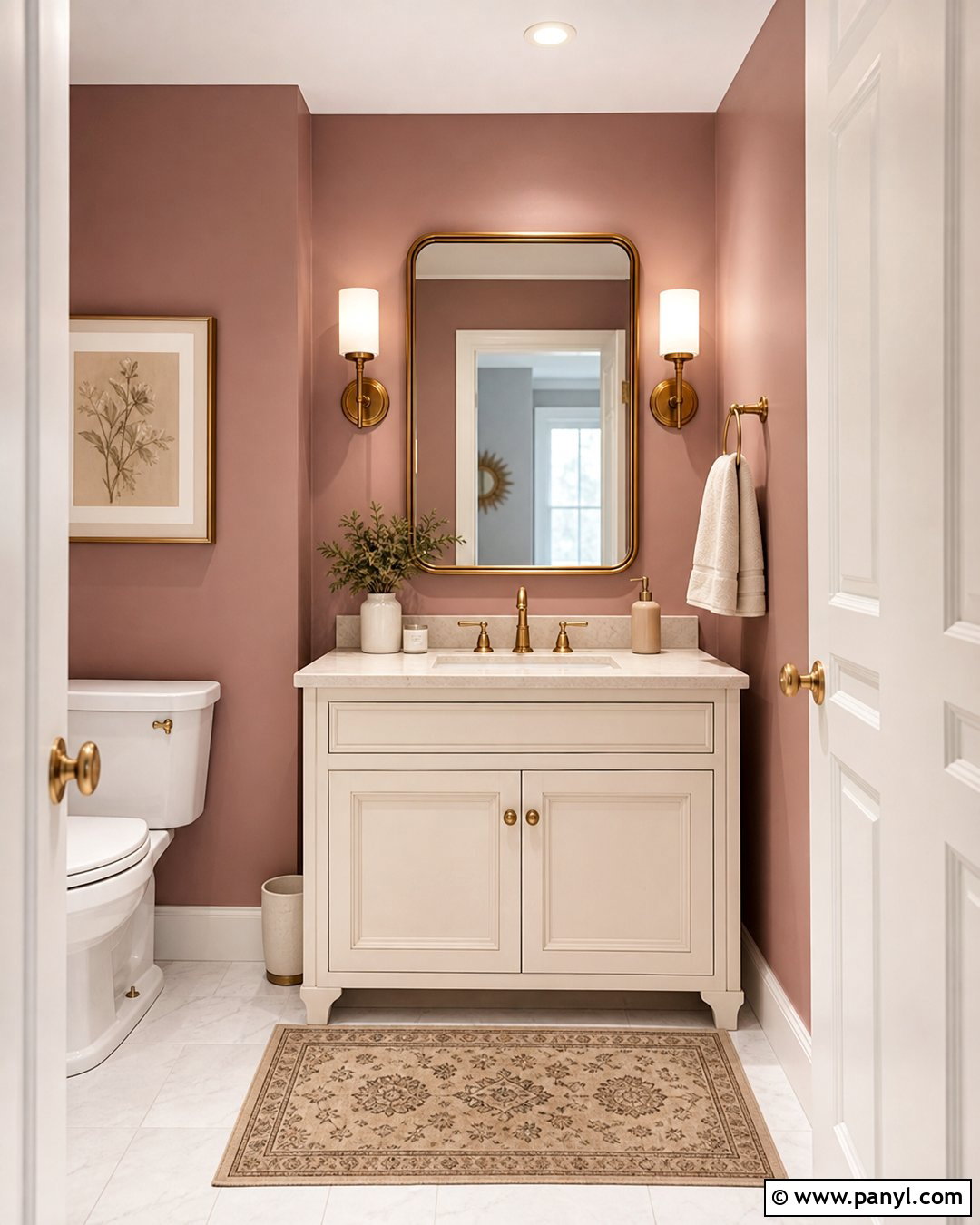
Rose pink, ivory, and brass create a polished powder room that feels special without becoming impractical. Paint the walls a medium dusty rose and install an ivory vanity with a pale stone countertop. Use a large brass-framed mirror and two streamlined brass sconces as the main decorative accents. White or ivory floor tile keeps the compact room bright, while a small patterned rug can add beige and pink detail. Choose warm white for the ceiling and trim. A white ceramic sink, simple neutral towels, and one framed print prevent the metallic finish from overwhelming the room. Brass should appear in a consistent finish across the faucet, lighting, and hardware. The completed space feels coordinated, luminous, and more layered than a basic pink-and-white bathroom.
20. Pink Walls With Deep Red
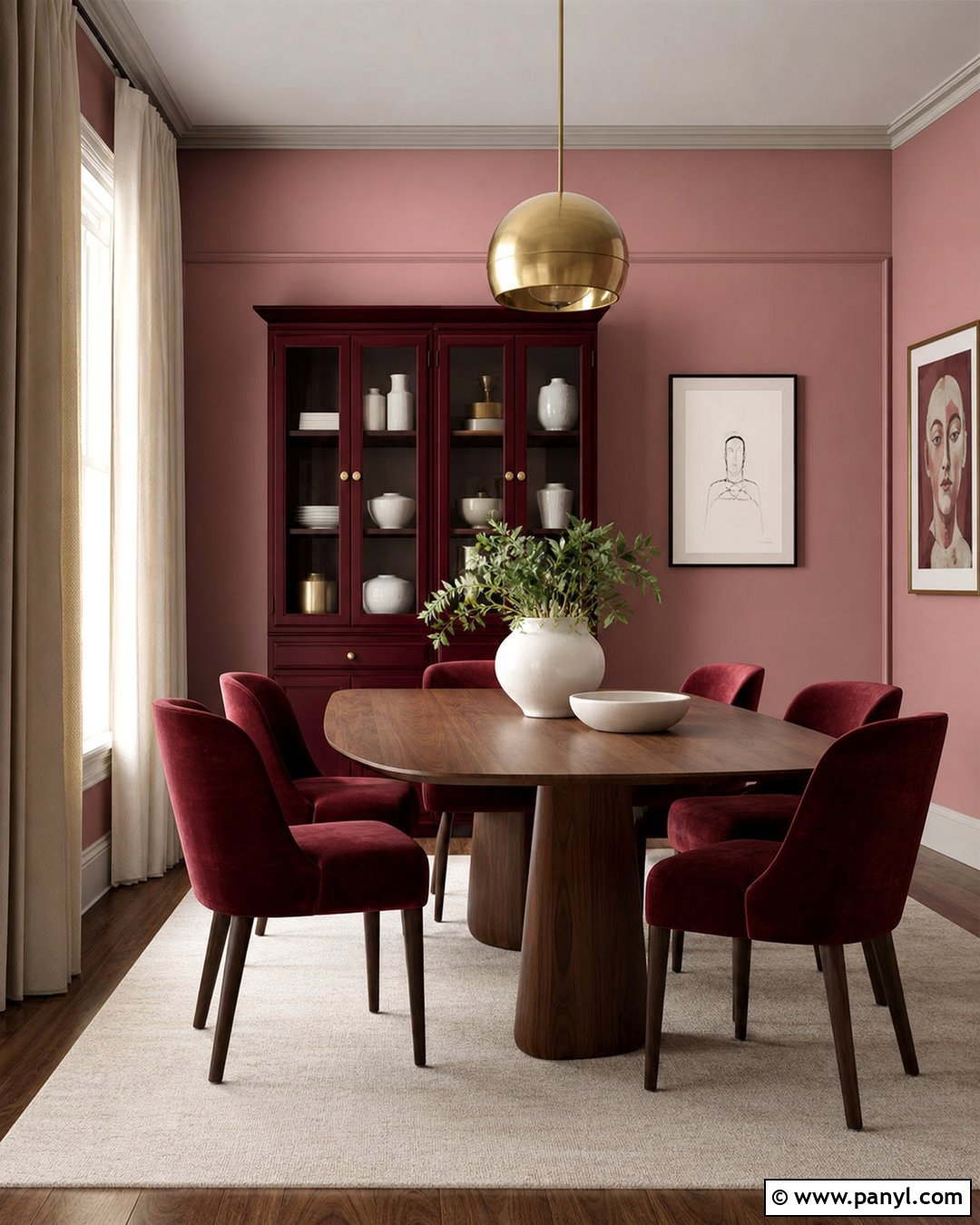
Pink and deep red create a tonal dining room with dramatic color and surprising warmth. Choose a muted pink for the walls, then bring in deep red through dining chairs, artwork, and a painted display cabinet. A dark walnut table provides essential separation between the related colors. Use a cream rug and off-white curtains to lighten the lower and outer edges of the room. A simple brass pendant adds warmth, while clear glass and white ceramics keep the tabletop from appearing heavy. Avoid bright primary red, which can look disconnected from softer pink. Oxblood, garnet, or brick red will create a smoother transition. The resulting dining area feels deliberate because the colors share a family while varying noticeably in depth and intensity.
21. Pink Walls With Mint Green
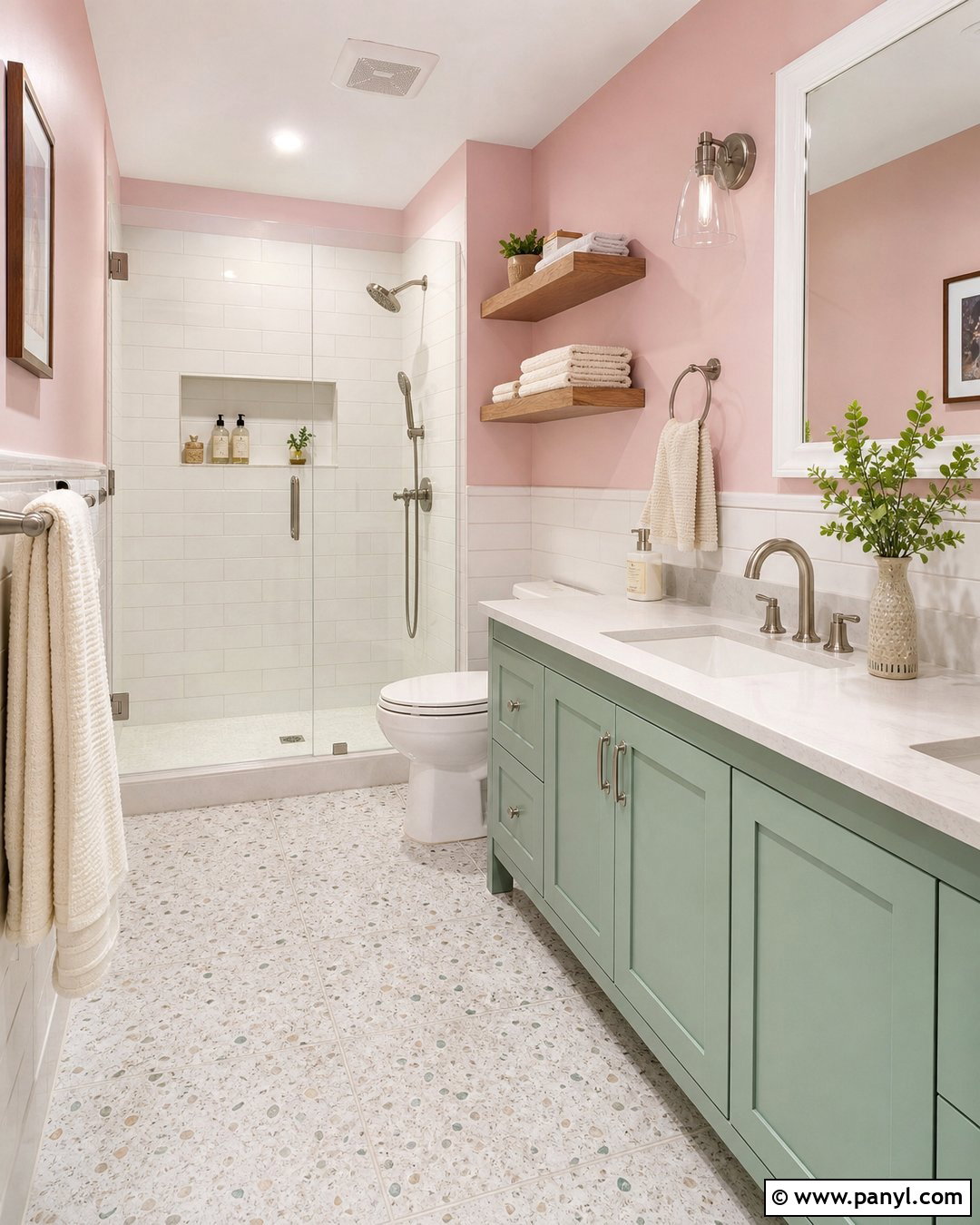
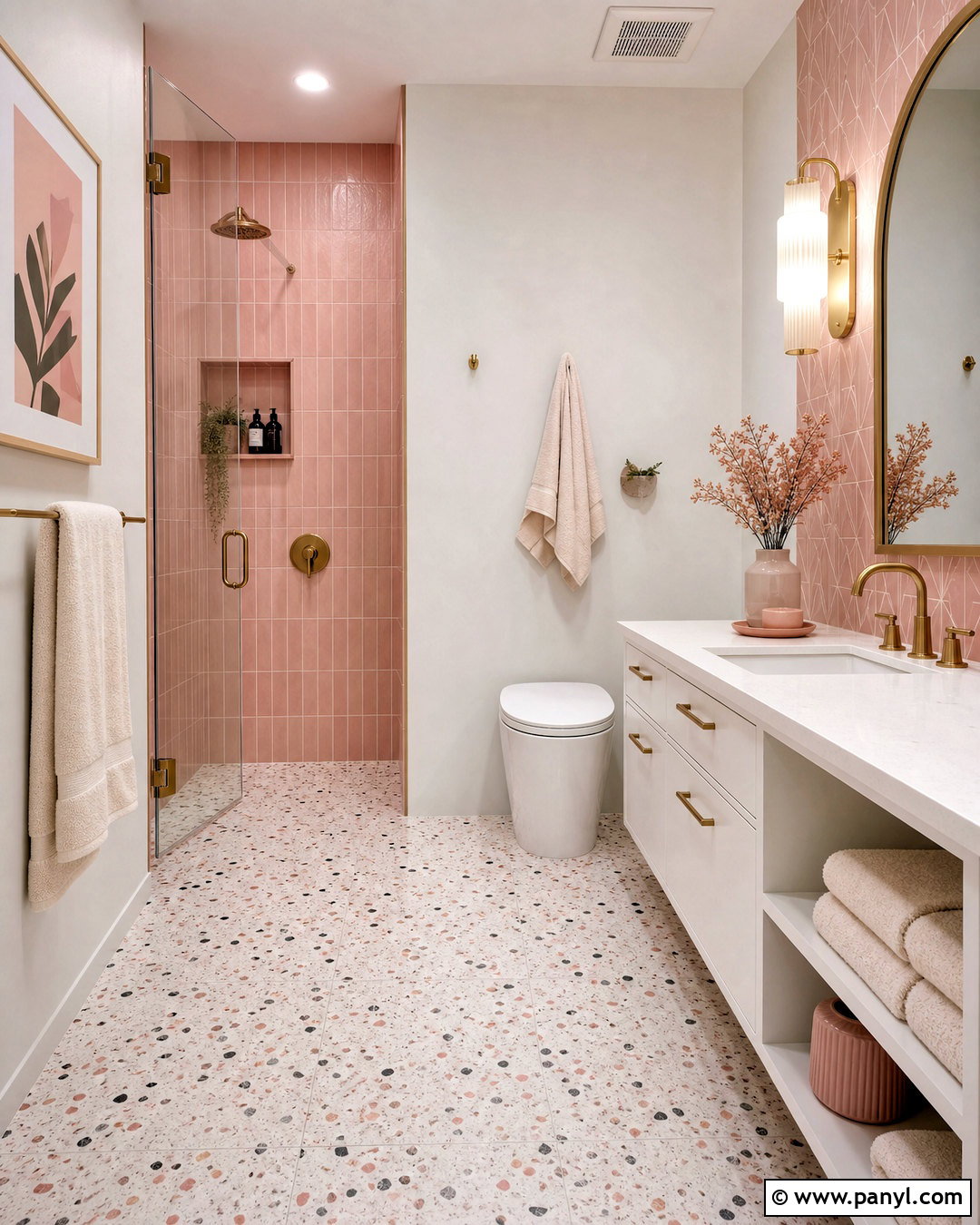
Pink and mint green are most successful when both colors are slightly muted. In a light bathroom, paint the upper walls a soft shell pink and use mint-green vanity cabinetry below. Install white rectangular tile around the wet areas and choose a pale terrazzo floor containing subtle pink, green, and beige chips. Brushed nickel fixtures provide a clean finish, while a white-framed mirror keeps the palette bright. Add natural oak shelves, cream towels, and a simple woven basket for warmth. Keep the ceiling and doors soft white. Instead of using themed accessories, repeat each color through functional surfaces. This produces a fresh bathroom that feels crisp and cheerful, with enough neutral material to prevent the pastel combination from becoming overly decorative.
22. Blush Pink Walls With Denim Blue
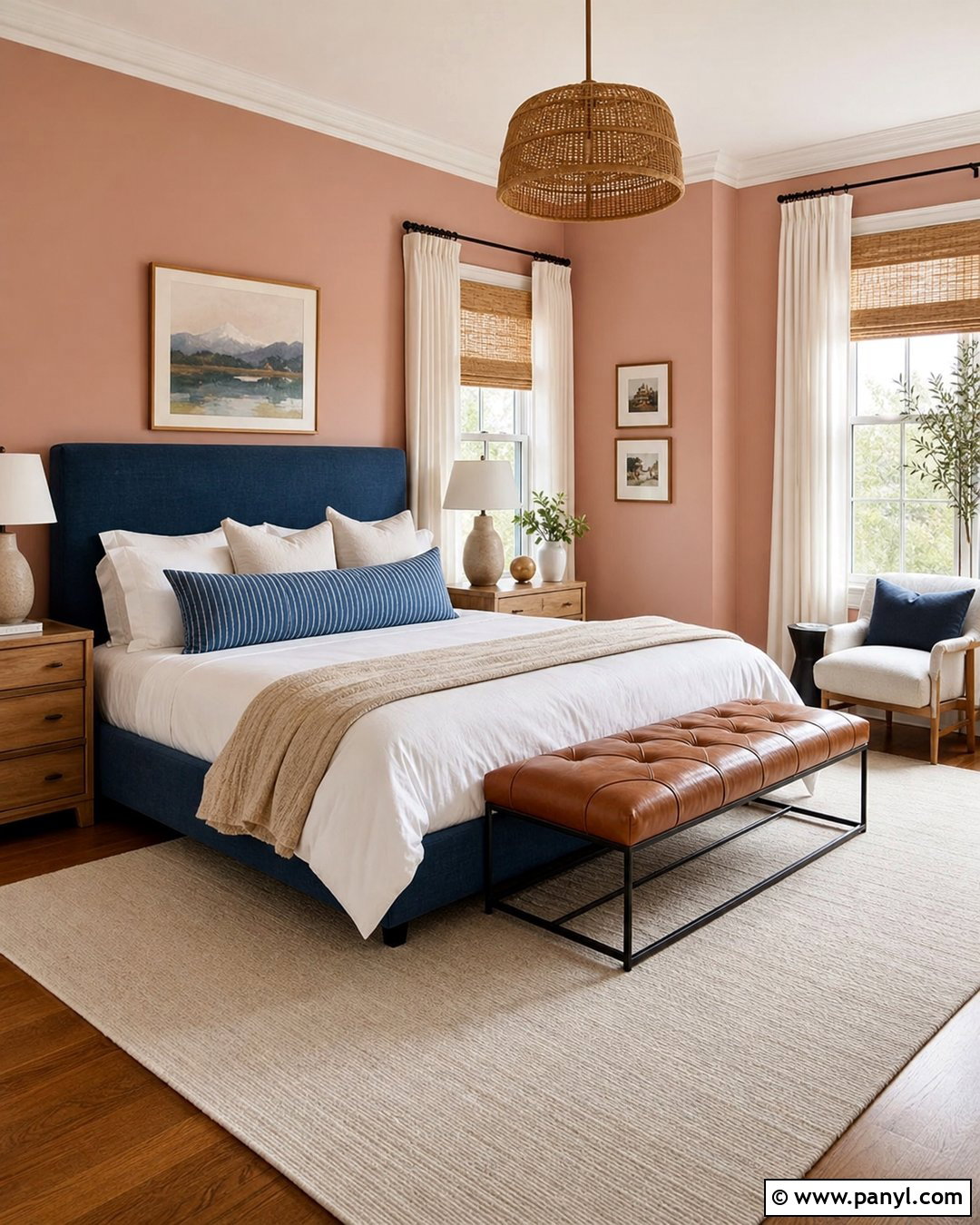
Blush pink walls and denim blue furnishings create a relaxed bedroom with familiar, wearable colors. Paint the room in a warm blush, then choose a denim-blue upholstered headboard or quilt as the main contrast. Layer the bed with white cotton sheets, a beige blanket, and striped blue-and-cream pillows. Light oak nightstands, an ivory rug, and woven shades add casual texture. Use dark blue sparingly in artwork or lamp bases to give the softer denim greater depth. White trim and ceiling paint keep the room feeling fresh. A small tan leather bench can introduce another practical, grounding material. This palette works best with unfussy furniture and washable natural fabrics, creating a comfortable bedroom that feels colorful without appearing formal or overly coordinated.
23. Dusty Pink Walls With Walnut Wood
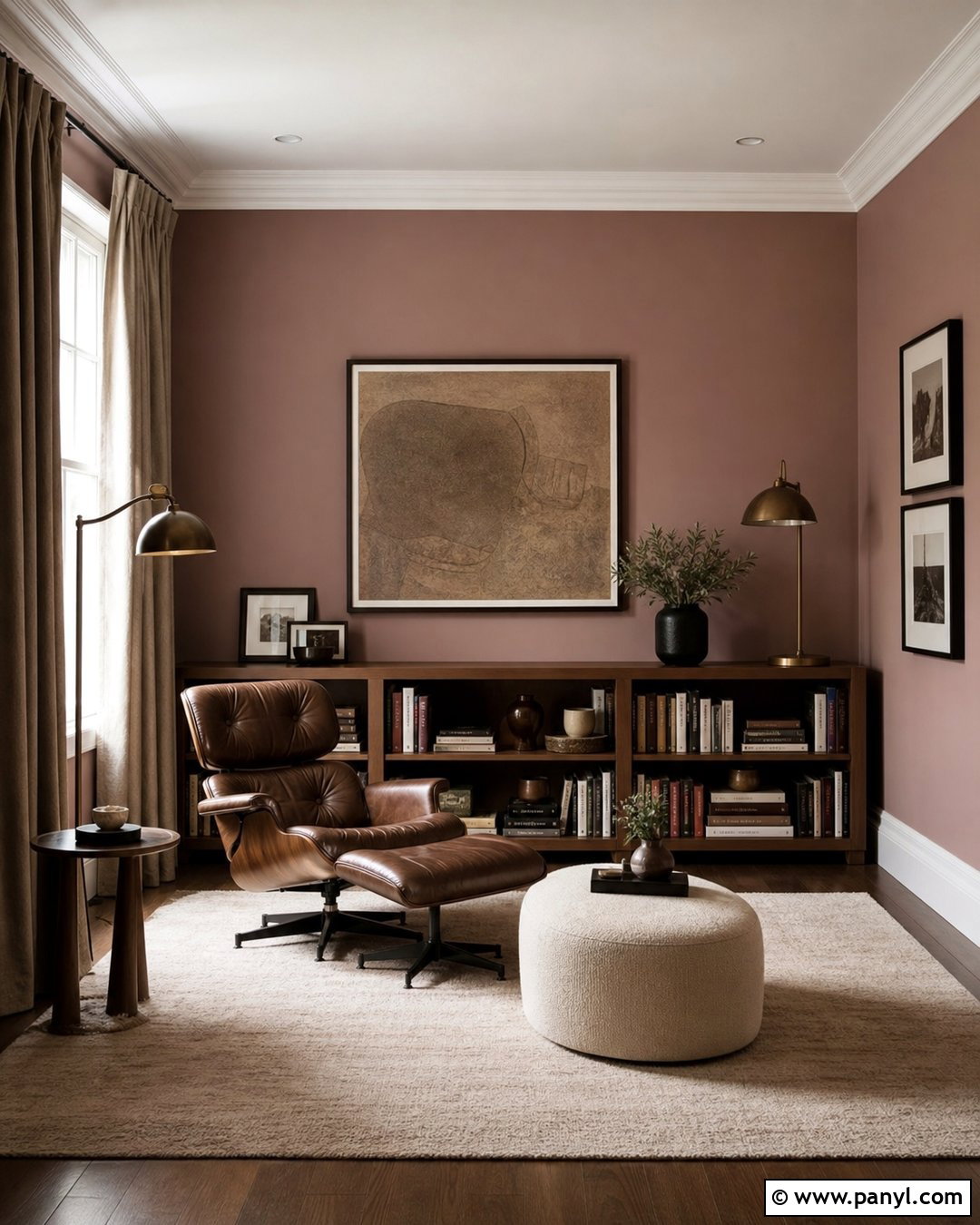
The rich grain of walnut can make dusty pink walls look instantly more substantial. Build a sophisticated reading room around muted pink walls, a low walnut bookcase, and a brown upholstered lounge chair. Add a cream ottoman and a large beige wool rug to keep the floor area light. Full-length taupe curtains create a smooth transition from the pink walls to the window. Choose bronze reading lamps, black picture frames, and artwork with rust, cream, and olive details. Walnut should appear in several connected pieces, such as shelves, a side table, and narrow wall frames, but it does not need to match perfectly. The completed room feels collected and comfortable, with dark wood grounding the soft wall color and creating a quiet place to relax.
24. Pink Walls With Turquoise
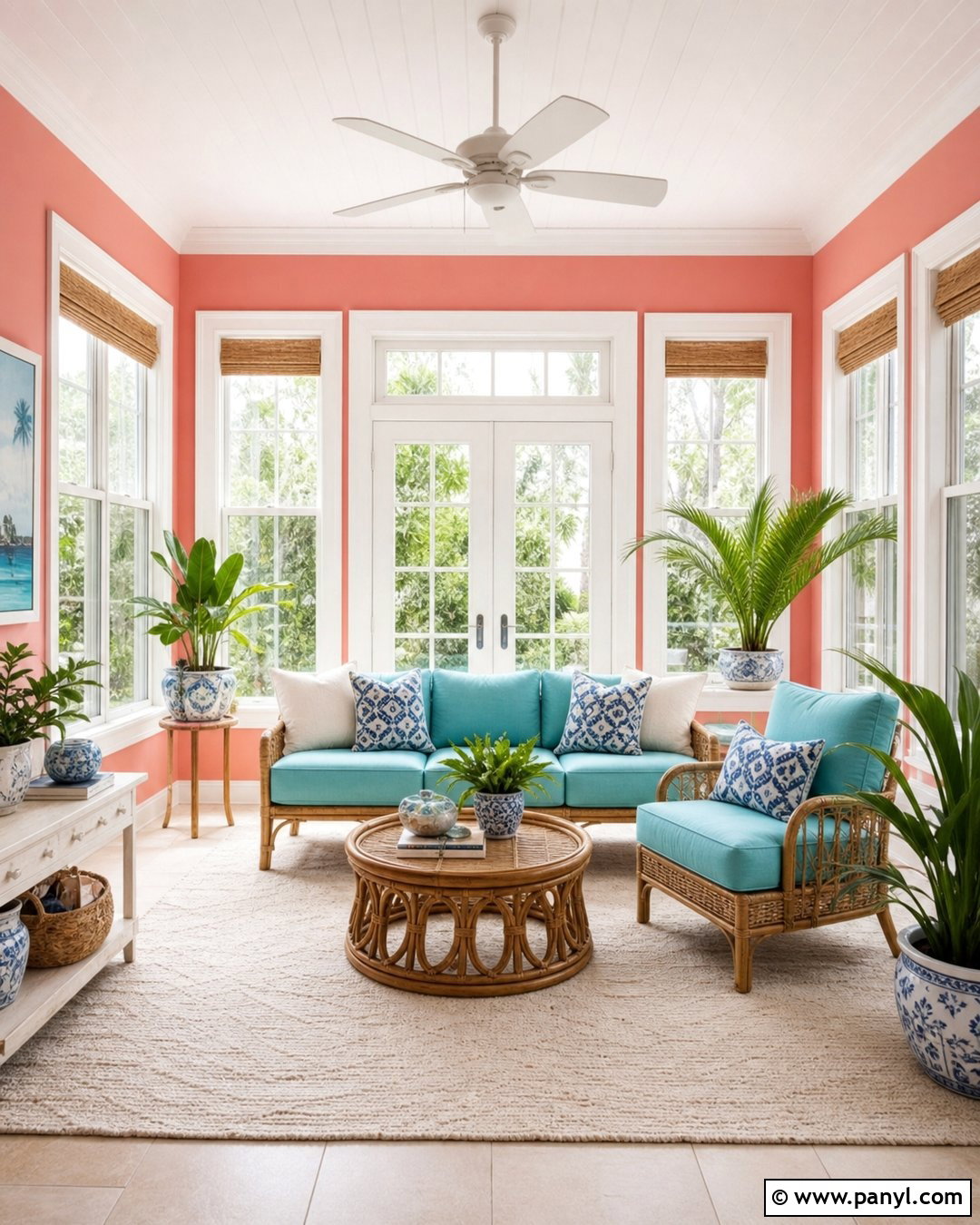
Turquoise gives pink walls a bright, coastal-inspired contrast without relying on predictable navy. In a sunroom, use soft coral-pink walls and a turquoise settee or pair of lounge chairs. Balance the color with a natural rattan coffee table, ivory cushions, and a cream indoor-outdoor rug. White-painted window trim and breezy off-white curtains help daylight move through the room. Introduce medium blue and leafy green through patterned pillows, ceramic planters, and artwork. Pale oak or light stone flooring keeps the space casual. Avoid using turquoise on every small accessory; one or two larger furniture pieces will look more intentional. The completed sunroom should feel lively, open, and connected to the outdoors while remaining suitable for an average home.
25. Pink Walls With Plum Purple
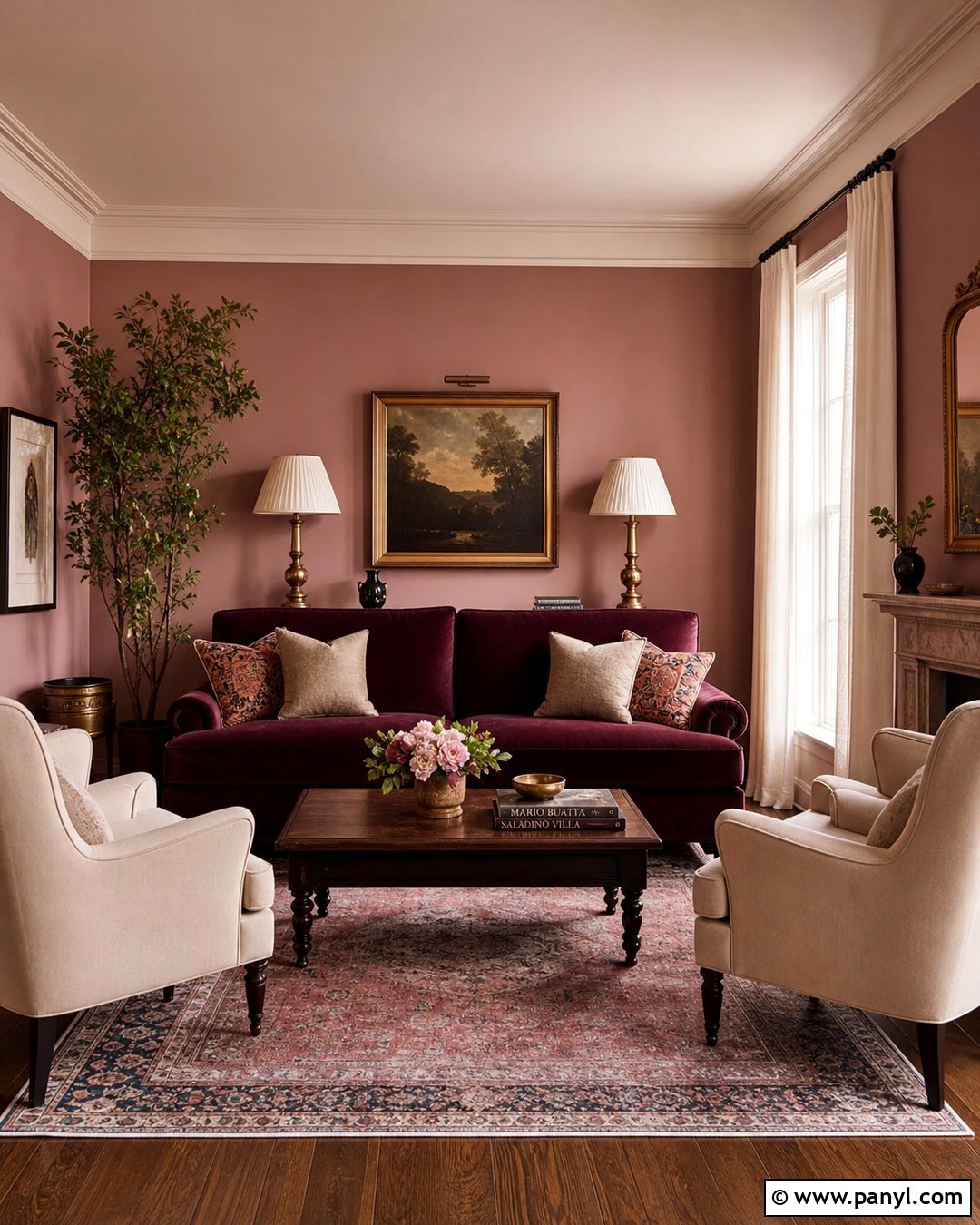
Muted pink walls and plum purple can give a sitting room a rich, elegant identity. Choose dusty pink paint with brown undertones, then add a deep plum velvet sofa as the room’s focal point. Pair it with two cream chairs, a dark wood coffee table, and a faded traditional rug containing rose, purple, and beige. Warm white curtains soften the windows, while aged-brass lamps add understated shine. Use plum again in only one or two small details, such as a cushion or ceramic vase. Greenery introduces a natural contrast and keeps the palette from feeling too enclosed. This scheme works because pale pink provides warmth around the room while the concentrated purple sofa contributes weight, depth, and a clear center.
26. Pink Walls With Butter Yellow
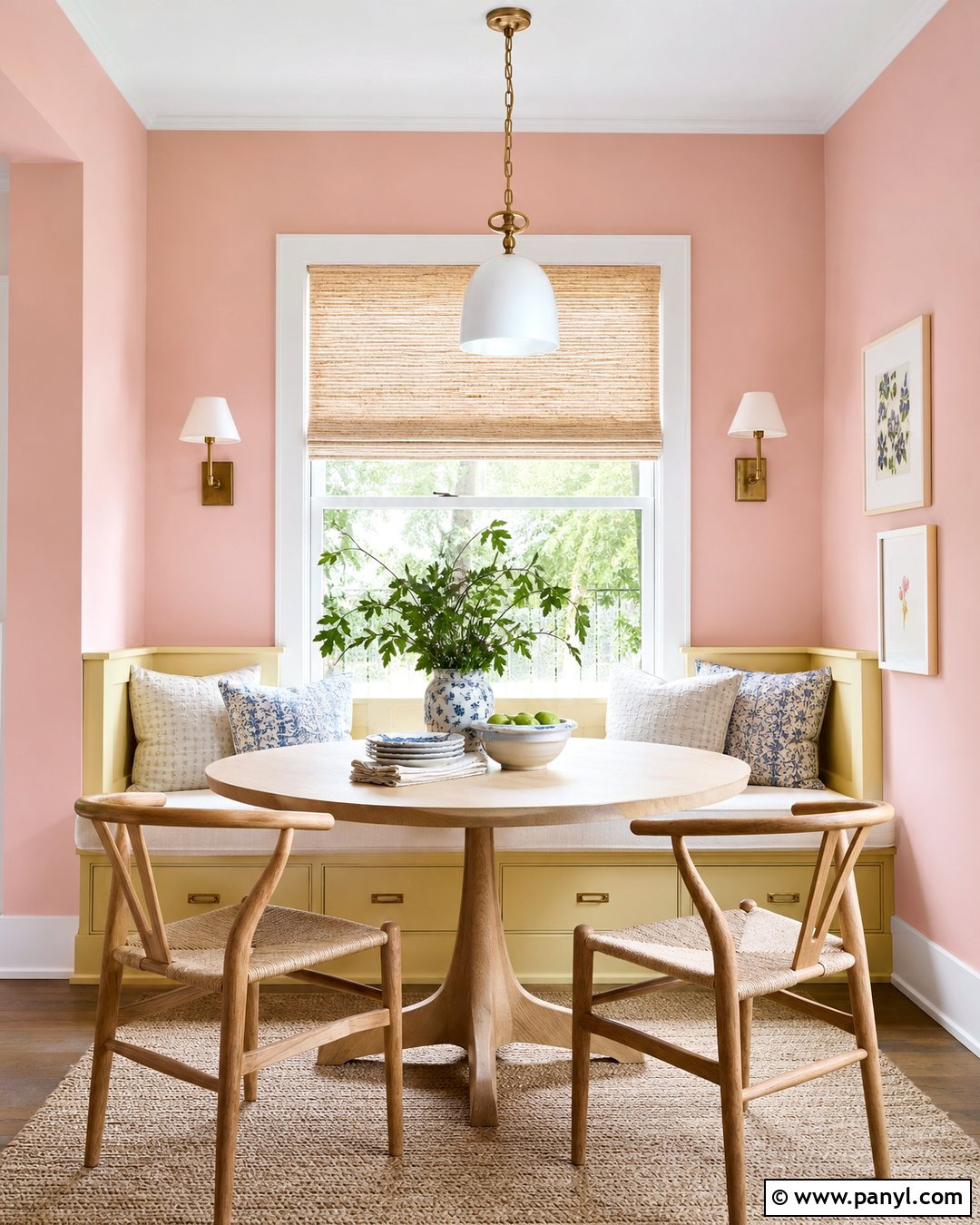
Butter yellow and pink make a breakfast nook feel sunny even when the color palette remains soft. Paint the walls a warm, pale pink and use butter yellow on a built-in bench or set of dining chairs. Add a round white oak table, cream seat cushions, and a washable beige rug. White trim and simple woven shades maintain a fresh appearance. A pendant with a white glass shade offers clean overhead lighting, while blue-and-white pottery creates one small cooling accent. Keep both pink and yellow slightly muted so they share a gentle, creamy quality. Natural wood and woven textures will stop the room from feeling overly pastel. The result is a bright, friendly eating area designed for relaxed everyday breakfasts and casual family meals.
27. Pink Walls With White And Rattan
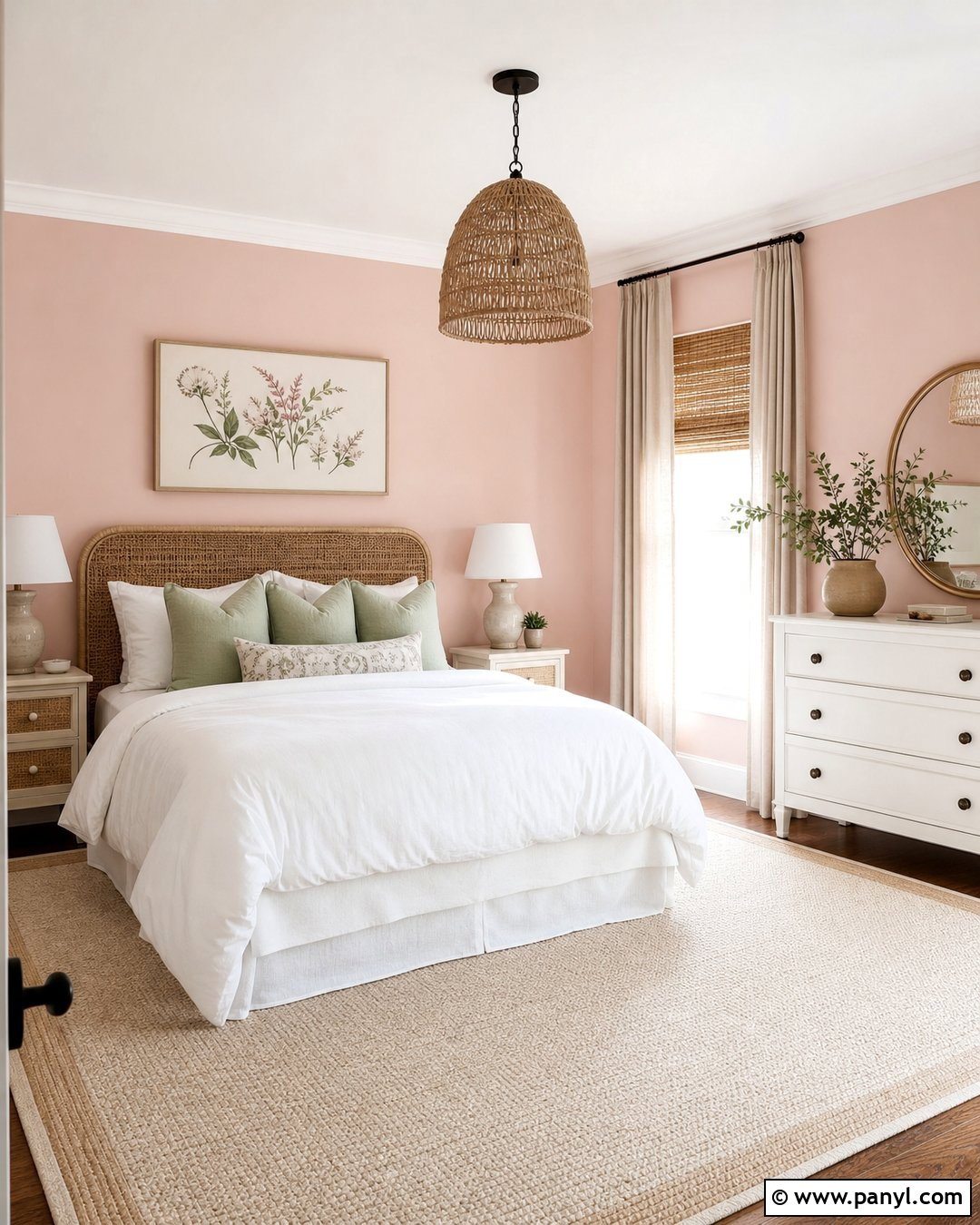
Soft pink, clean white, and natural rattan form an easy foundation for a breezy guest room. Cover the walls in a pale warm pink, then use white for the ceiling, trim, bedding, and a simple dresser. Choose a rattan headboard, woven pendant, and cane-front nightstands to give the room visible texture. A large ivory rug softens wood flooring, while beige linen curtains filter the light. Add two sage green cushions and a small botanical print for natural contrast. Avoid filling the room with beach-themed decorations; the materials already create a relaxed character. By balancing painted surfaces with woven fibers and comfortable white textiles, the completed bedroom feels fresh, welcoming, and stylish without requiring expensive or highly specialized furniture.
28. Pink Walls With Concrete Gray
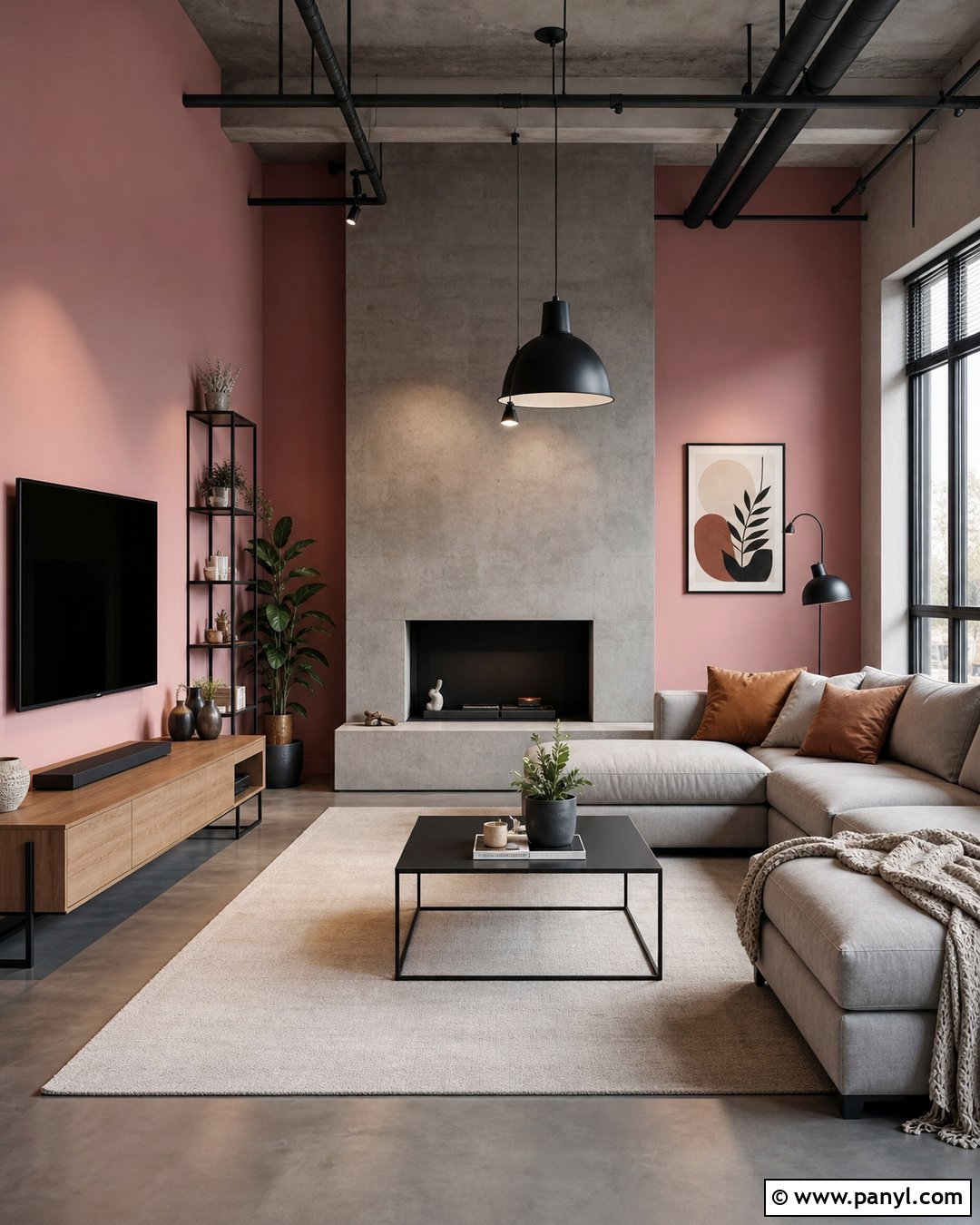
Pink walls can soften the industrial character of concrete gray without hiding it. In a modern loft-style living room, paint the main walls a muted plaster pink and retain one concrete-gray feature wall or fireplace surround. Select a light gray modular sofa, a black metal coffee table, and a large ivory rug. Cognac leather cushions and an oak media console bring warmth to the harder materials. Use black track lighting or streamlined floor lamps to reinforce the architecture. Off-white curtains prevent the room from becoming severe, while bold abstract artwork connects pink, gray, and tan. Keep decorative accessories limited and sculptural. The completed room combines gentle color with structured finishes, producing an industrial look that still feels comfortable and suitable for daily living.
29. Pink Walls With Emerald Green
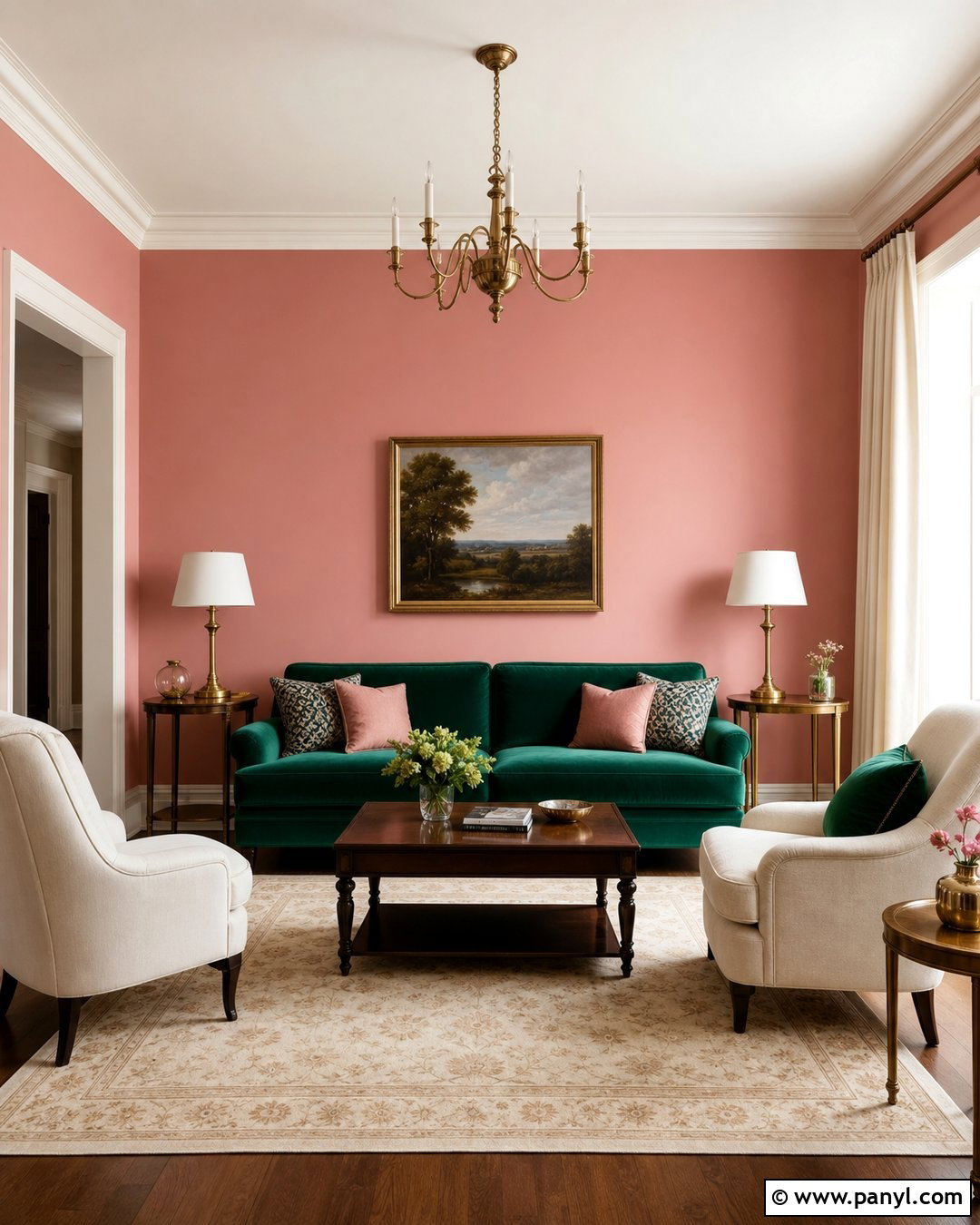
Emerald green creates a jewel-toned contrast against pink walls, making it ideal for a formal living room. Paint the walls in a medium rose pink and choose an emerald velvet sofa with a simple silhouette. Add ivory armchairs, a dark walnut coffee table, and a cream rug with a subtle border. Brass side tables and lamps reinforce the richness of the palette without competing with the sofa. Hang off-white curtains and use warm white on the ceiling and molding. Artwork may include green, burgundy, and pale pink, but should have generous neutral space. A few patterned cushions can connect the seating pieces. This arrangement gives both strong colors room to stand out while ivory, wood, and warm metal create a balanced, finished setting.
30. Pink Walls With Soft Beige
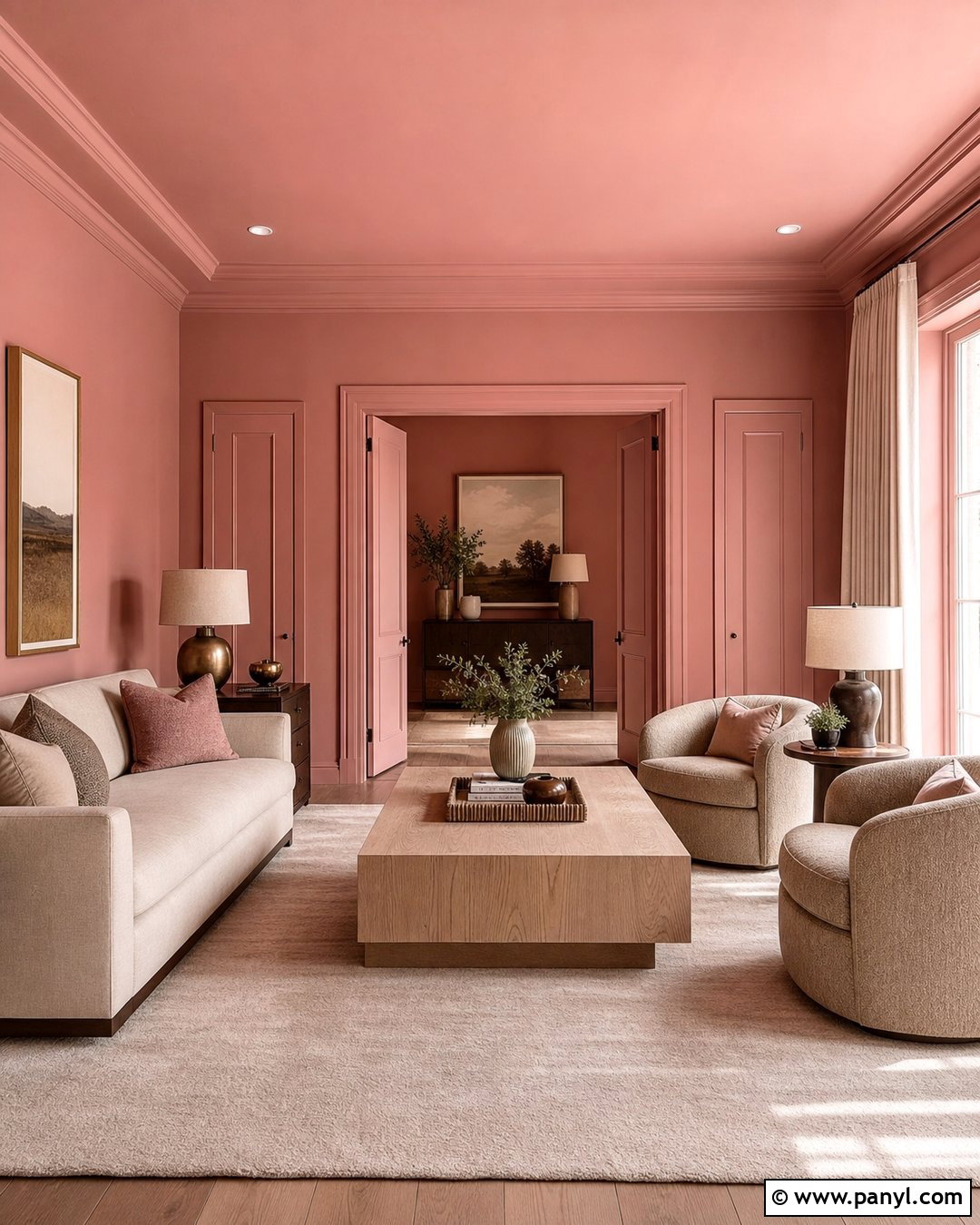
Color-drenched pink walls can feel calm when the furniture and flooring remain soft beige. Use an earthy pink on the walls, trim, doors, and ceiling, selecting a slightly lighter version overhead if the room has limited daylight. Furnish the living room with a beige linen sofa, two oatmeal chairs, and a pale oak coffee table. Add an ivory wool rug and taupe curtains for subtle tonal variation. Dark brown side tables and bronze lamps provide just enough definition. Artwork should include cream, rust, olive, and muted pink rather than stark black or bright primary colors. Because the painted architecture creates a strong envelope, keep the furniture shapes simple and the accessories limited. The finished space feels immersive, warm, and surprisingly restful.
Conclusion:
These 30 pink wall color combination ideas show how easily pink can shift from airy and neutral to earthy, bold, or dramatic. Warm white and oak make blush pink feel relaxed, while navy, forest green, charcoal, and chocolate brown provide stronger contrast. Brighter companions such as teal, cobalt, mustard, and turquoise create energetic rooms when they are limited to a few substantial features. Before painting, test the chosen pink beside the room’s flooring, fabrics, trim, and natural light. Then repeat the supporting colors through furniture, textiles, and finishes instead of disconnected accessories. A clear color hierarchy and a balanced mix of materials will make pink walls feel intentional, cohesive, and comfortable throughout the home.

Related Ideas and Inspiration:
Leave a Reply