
Purple walls can feel soft and romantic, deep and dramatic, or fresh and playful, depending on the colors around them. The best pairings account for the purple’s undertone, saturation, and the room’s natural light. Warm plum works beautifully with creamy neutrals and earthy accents, while cool violet pairs naturally with blue, gray, and crisp white. Yellow and green create stronger contrast, while nearby shades such as pink and navy produce a smoother visual flow. Neutrals also give bold purple room to breathe. () The complete schemes below coordinate furniture, flooring, textiles, lighting, and decor, making it easier to confidently choose from these **20 colors that go with purple walls**.

1. White With Purple Walls
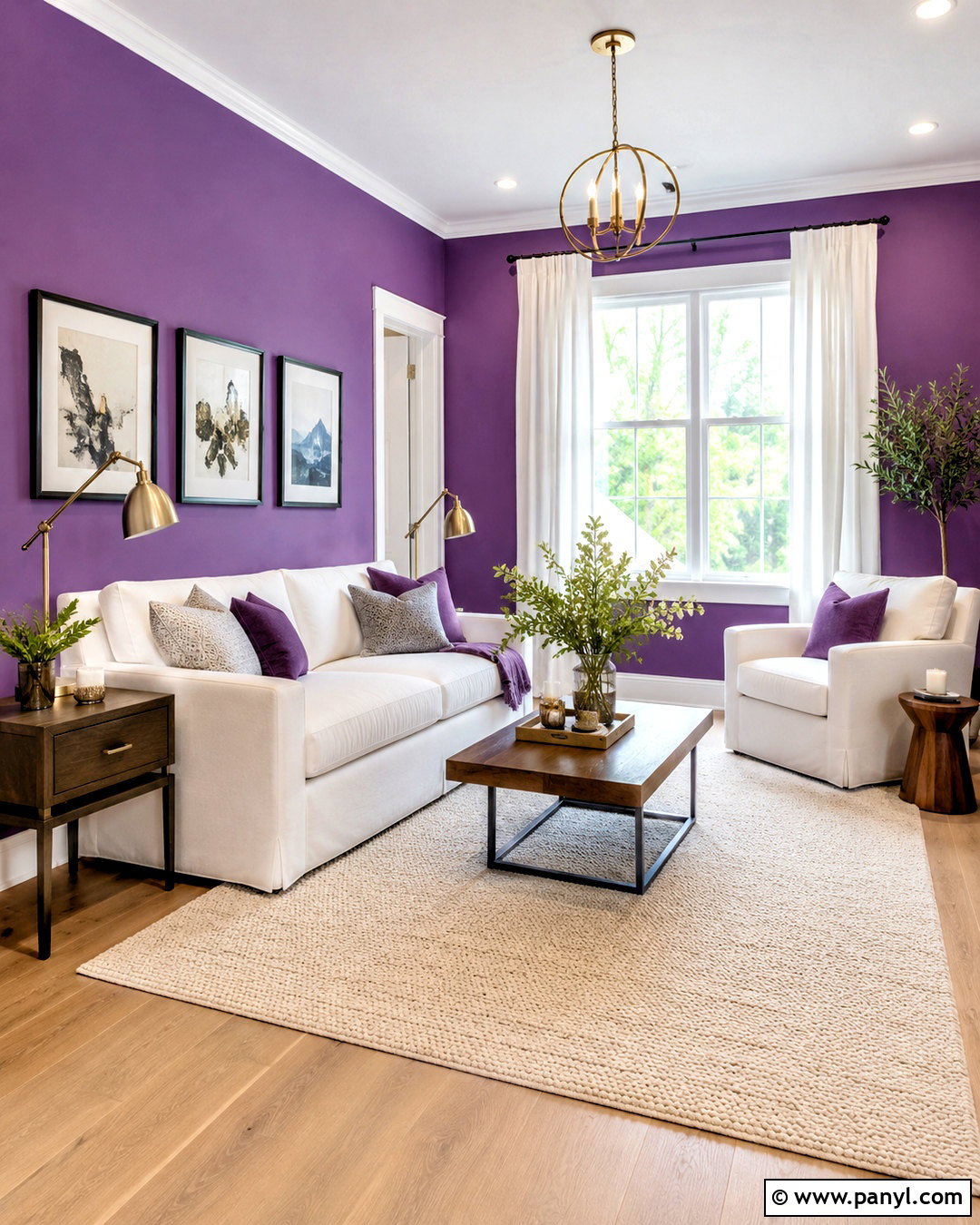
White gives purple walls a clean, balanced appearance without taking away their personality. Use crisp white with cool violet or lavender, especially in rooms receiving plenty of daylight. Softer purple shades look fresh beside white linen curtains, a white upholstered sofa, and pale oak flooring. In a bedroom, combine purple walls with white bedding, painted nightstands, and a textured ivory rug. Deep plum walls need a slightly warmer white to prevent the contrast from appearing too sharp. Complete that look with an off-white boucle chair, walnut furniture, and brushed brass lighting. Repeat purple in only two or three small details, such as pillows or artwork, so the white elements provide enough visual breathing room. ()
2. Cream With Purple Walls
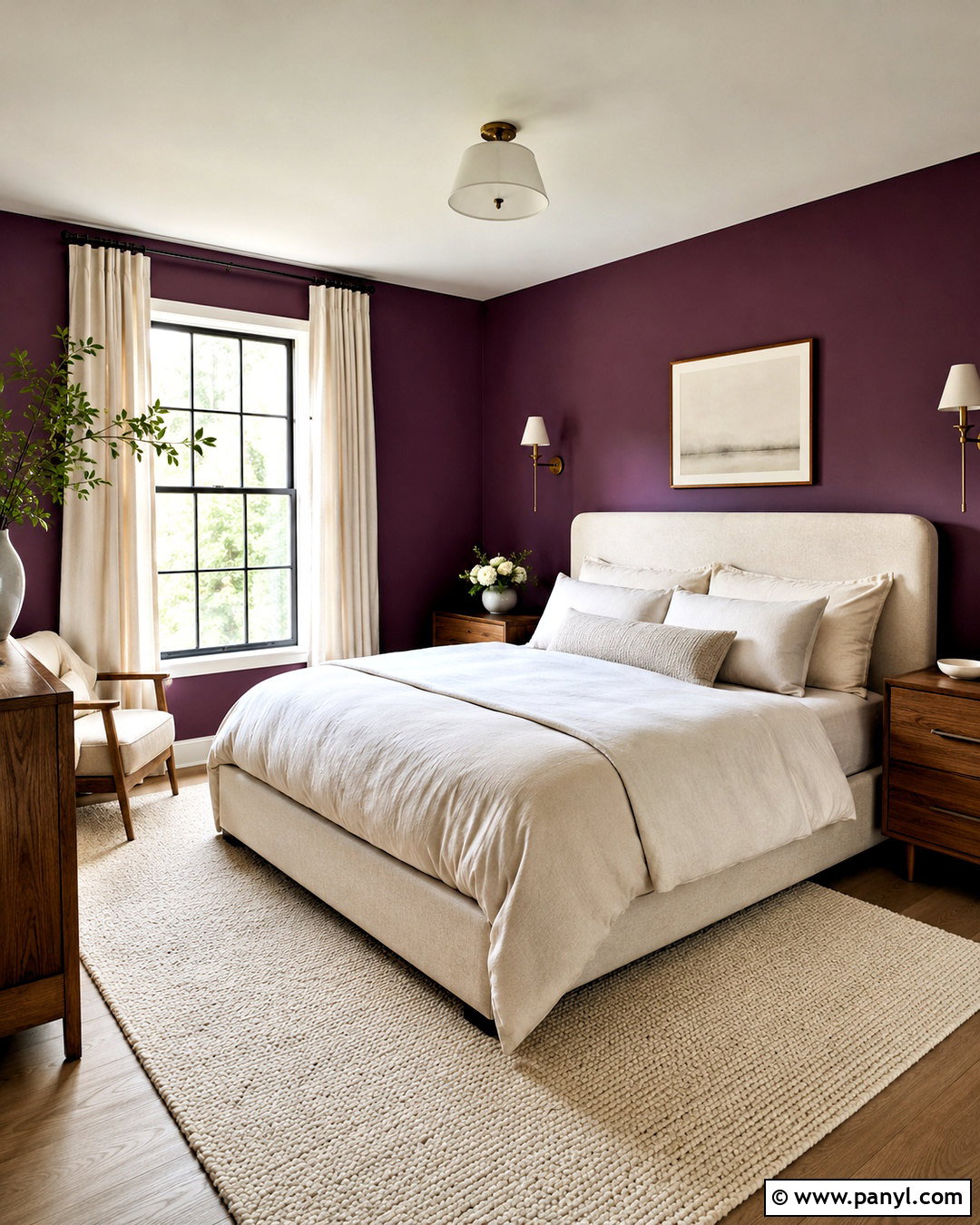
Cream softens purple walls and creates a warmer, more welcoming room than bright white. This pairing is particularly effective when the purple has red, plum, mauve, or dusty undertones. Build a comfortable living room with cream linen seating, a warm ivory rug, and oatmeal curtains. Add medium walnut tables to give the scheme natural depth. Brass lamps and aged gold frames will reinforce the warmth without making the space overly formal. If the walls are light lavender, choose creamy textiles with visible texture, including boucle, wool, and woven cotton. Avoid cream shades that look strongly yellow under artificial lighting. A balanced cream should feel gently warm during both daytime and evening, allowing the purple walls to remain rich rather than muddy. ()
3. Beige With Purple Walls
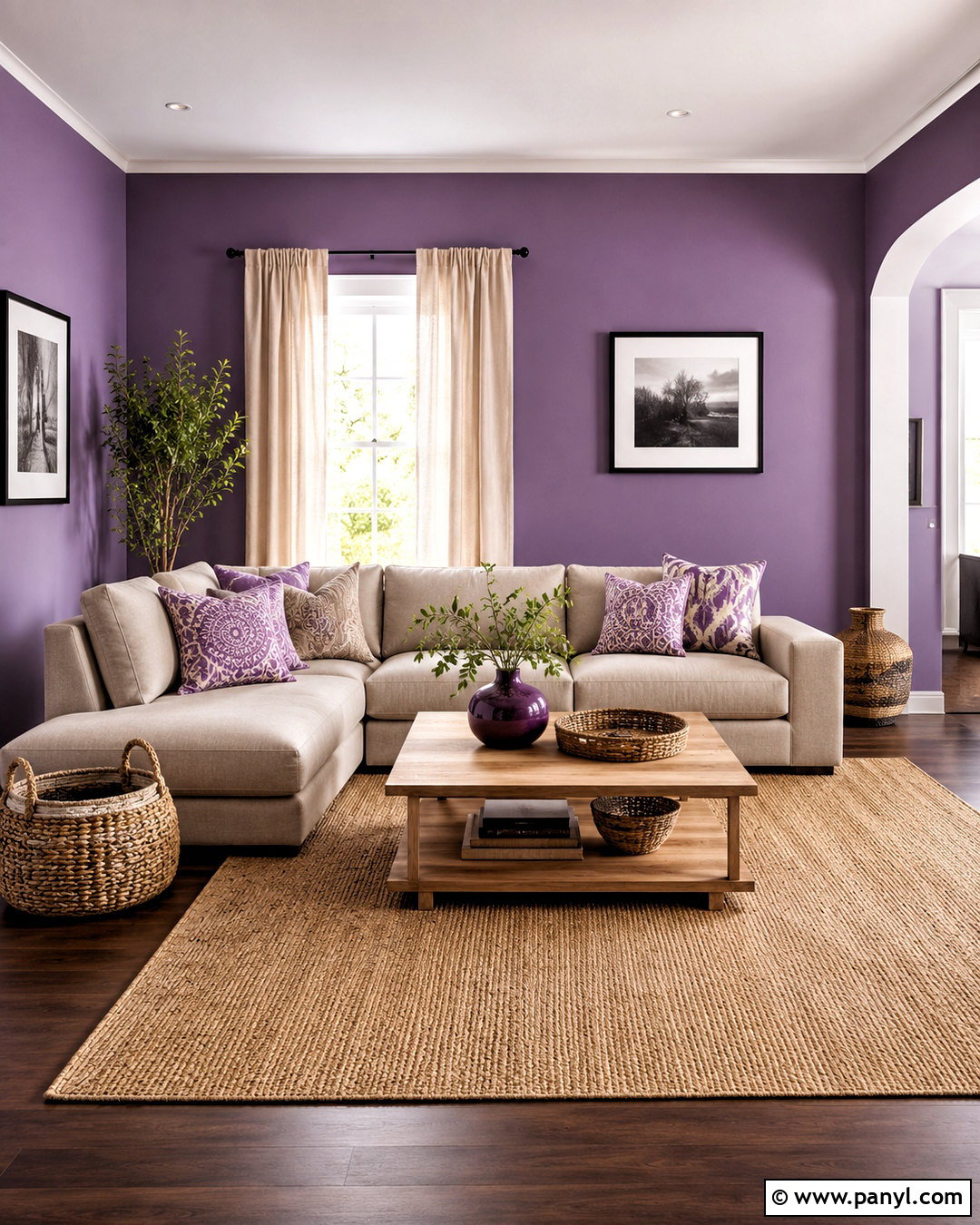
Beige creates an understated background for purple walls while making the room feel relaxed and livable. The pairing works best when the beige has warm brown or sandy undertones rather than a strong yellow cast. For a complete living room, place a beige sectional against medium purple walls and anchor it with a natural jute or wool rug. Choose oak furniture, linen curtains, and pottery in soft tan shades. Black picture frames can add definition without competing with the wall color. In a bedroom, use beige bedding, a woven bench, and light wood nightstands to tone down saturated violet. Include one patterned textile combining beige, purple, and cream. That single piece will connect the palette and make every color look intentional.
4. Greige With Purple Walls
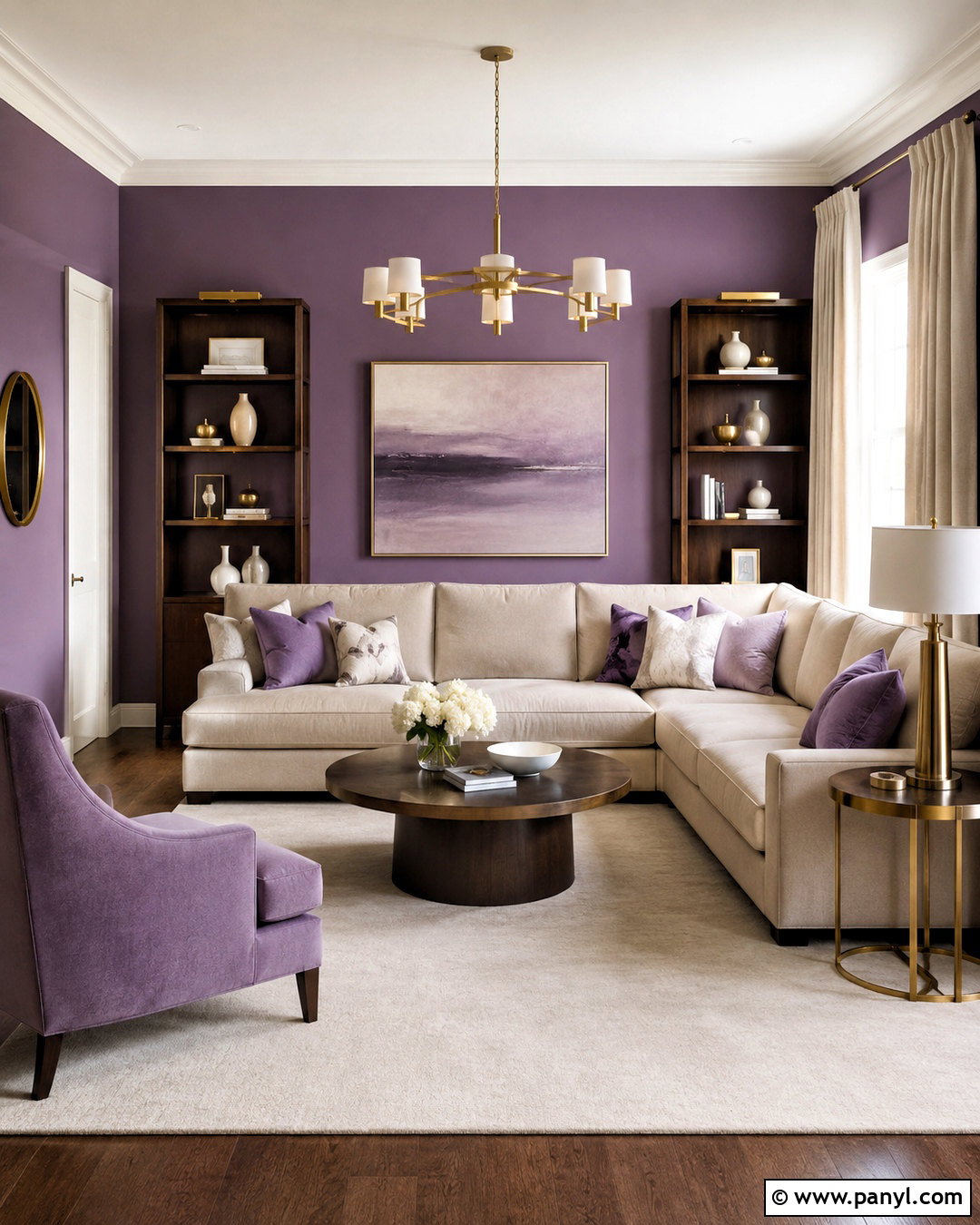
Can’t decide between warm beige and modern gray? Greige offers the benefits of both and brings quiet sophistication to purple walls. Choose a warm greige with taupe undertones for reddish plum walls or a cooler greige beside blue-violet paint. A greige sofa, textured curtains, and a low-pile rug can form the neutral foundation of a polished living room. Introduce dark walnut through a coffee table and shelving, then use brushed brass or matte black lighting for contrast. Keep upholstery shapes simple so the purple remains the focal point. In a bedroom, greige bedding and an upholstered headboard create a restful transition from colorful walls. Add cream pillows and natural wood to prevent the gray component from feeling flat or overly cool.
5. Light Gray With Purple Walls
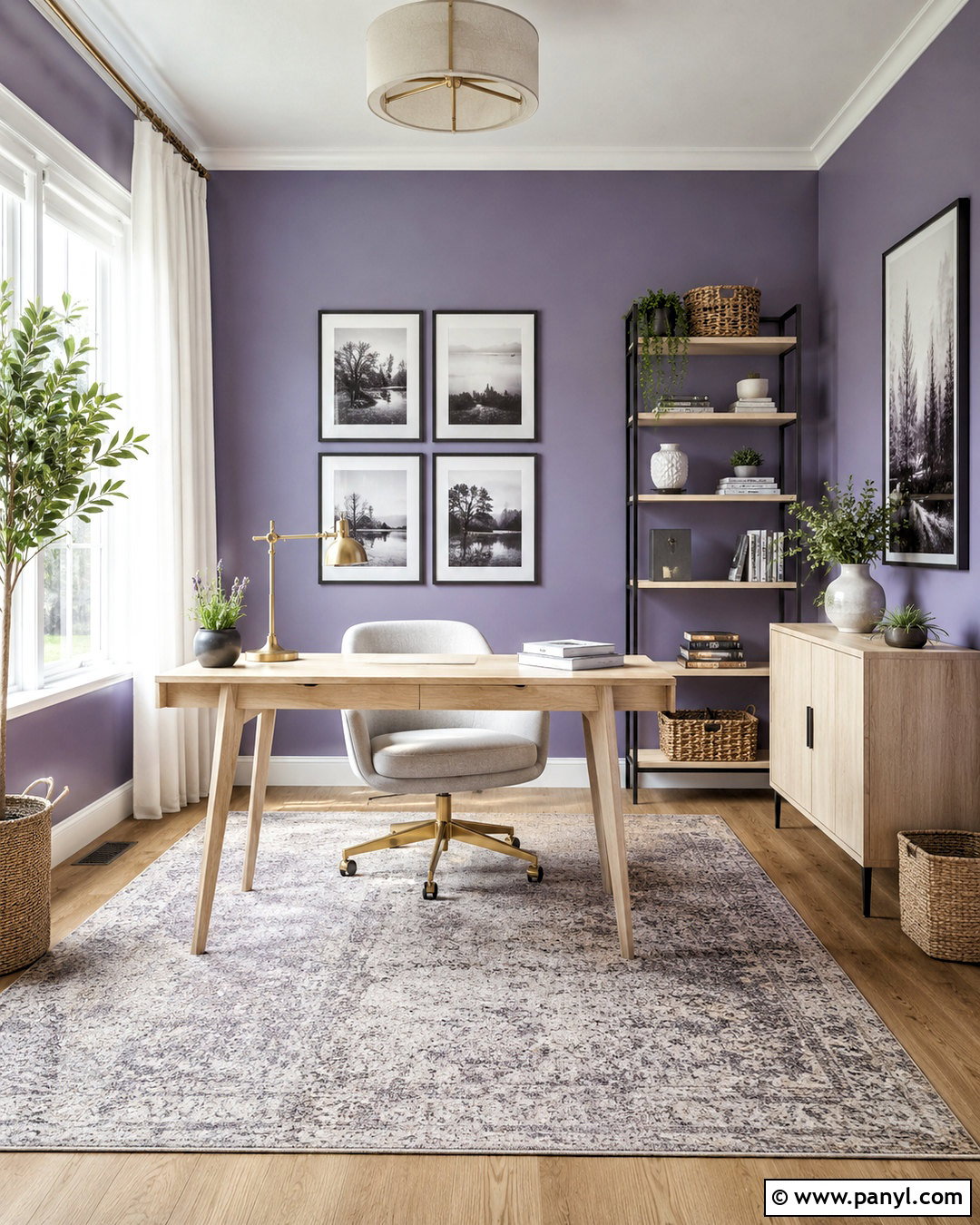
Light gray creates a smooth, contemporary transition around cool purple walls. It is especially useful in a home office, bedroom, or modern living room where you want color without excessive visual energy. Pair soft violet walls with a light gray sofa, silver-toned floor lamp, and pale ash wood furniture. A gray-and-cream rug can ground the space while preserving an airy feeling. Add white curtains to brighten the windows and charcoal frames to provide a little definition. Because both gray and purple can have cool undertones, bring in warmth through natural wood, woven baskets, or a small amount of muted gold. Avoid covering every furnishing in gray. Several different textures and one warm material will keep the finished room dimensional and comfortable. ()
6. Charcoal With Purple Walls
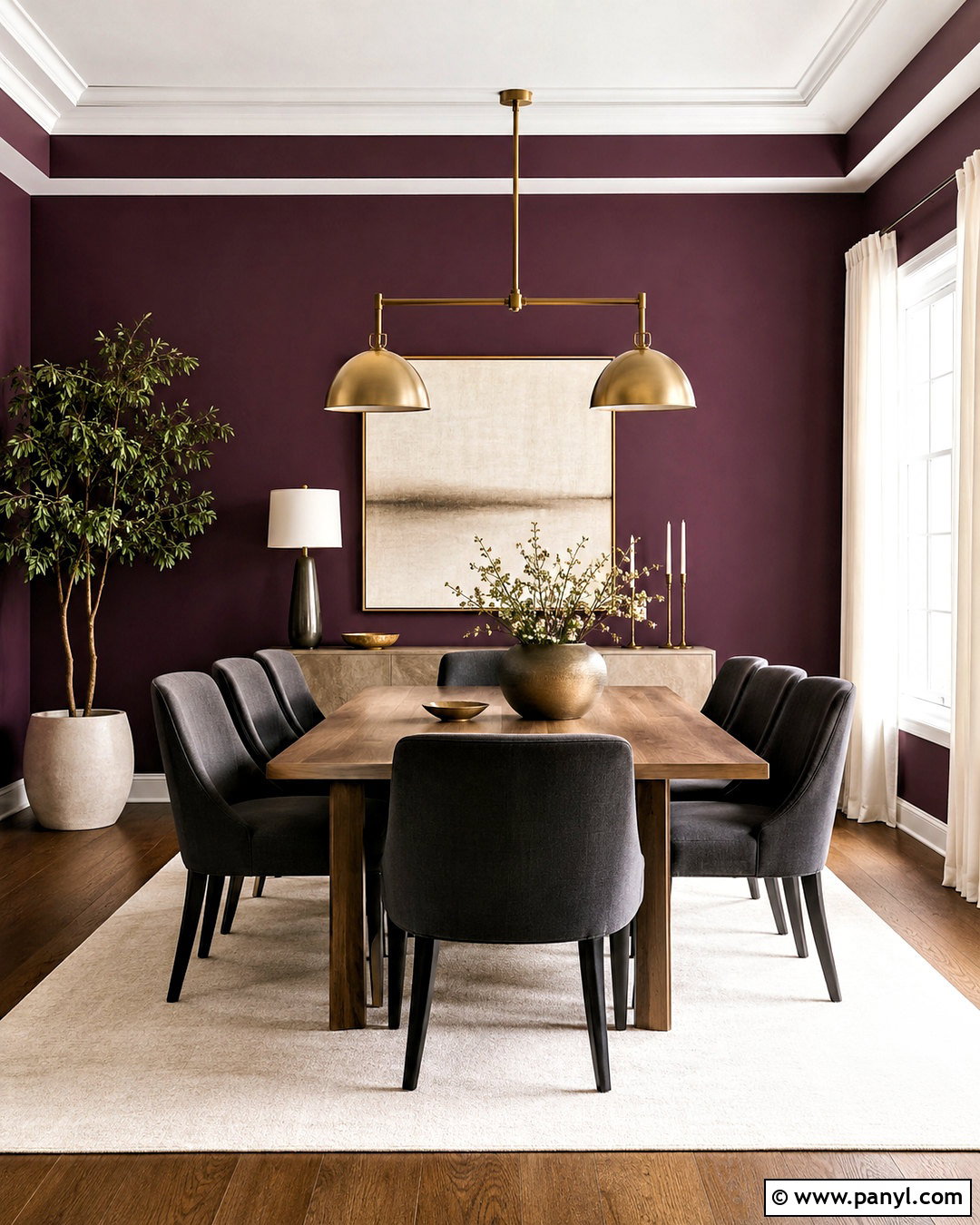
Charcoal makes purple walls feel mature, dramatic, and carefully tailored. This combination is best in a room with generous daylight or layered artificial lighting because both colors carry significant visual weight. Create a sophisticated dining room with aubergine walls, charcoal upholstered chairs, and a medium-tone oak table. Add an ivory rug beneath the furniture to prevent the floor area from becoming too dark. Brushed brass pendants and framed artwork with cream backgrounds will introduce brightness at eye level. For a bedroom, use charcoal bedding sparingly and balance it with white sheets and a light upholstered headboard. Velvet, wool, and matte-painted finishes suit the richness of this palette. Keep decorative accessories limited, allowing the deep colors and contrasting materials to shape the room.
7. Black With Purple Walls
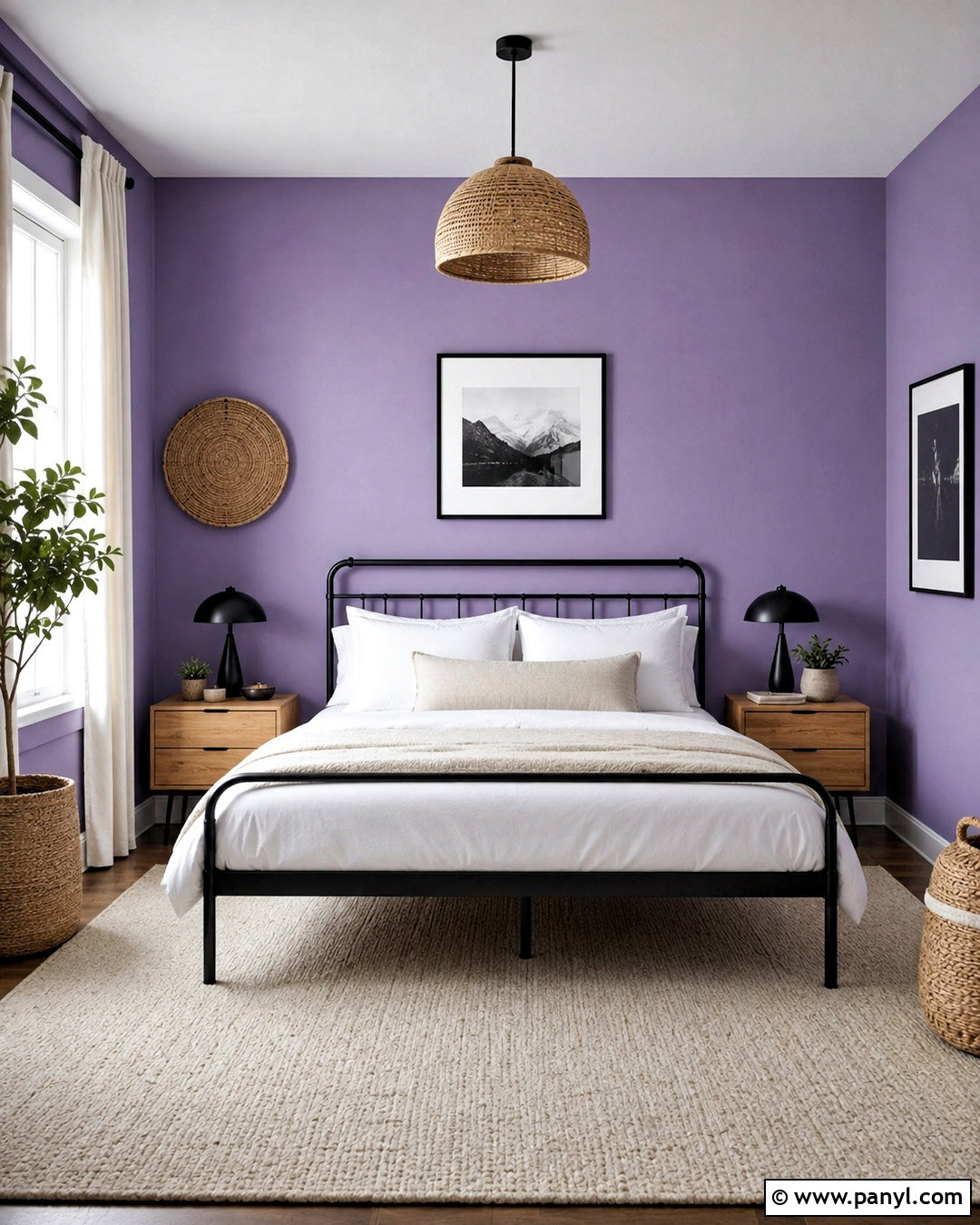
Black gives purple walls sharp definition and can make even a simple room look more structured. The key is using black as a repeating accent rather than allowing it to dominate every surface. Against lavender or medium violet walls, choose a slim black bed frame, black-framed artwork, and matching table lamps. Add white bedding, a pale rug, and light oak nightstands to keep the bedroom open and approachable. Deep plum walls can support larger black pieces, such as a cabinet or dining table, provided the ceiling, trim, and curtains remain light. Matte black tends to look softer than glossy black and is easier to repeat through hardware and lighting. Finish with one natural element, such as leather, cane, or wood, to warm the high-contrast palette. ()
8. Taupe With Purple Walls
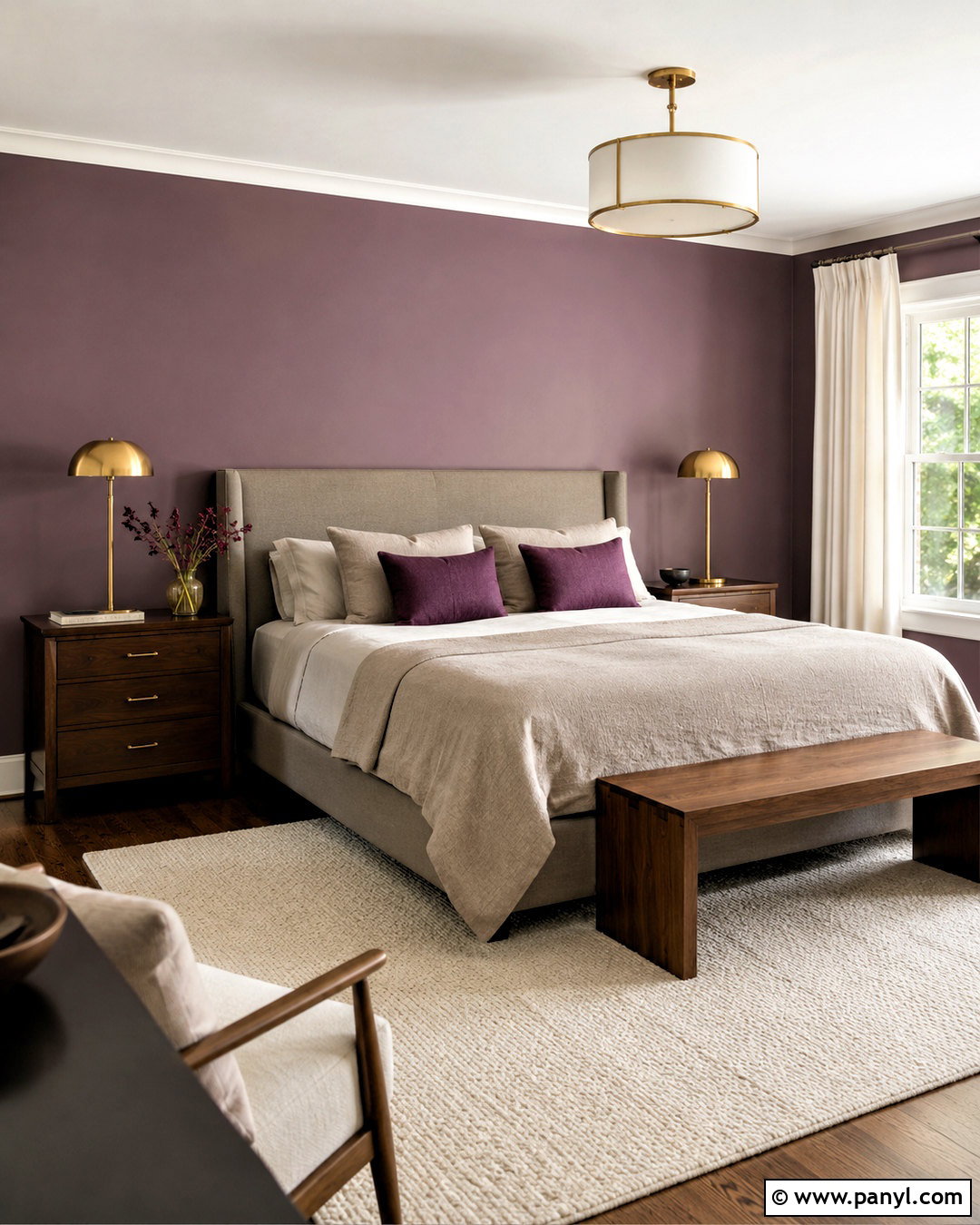
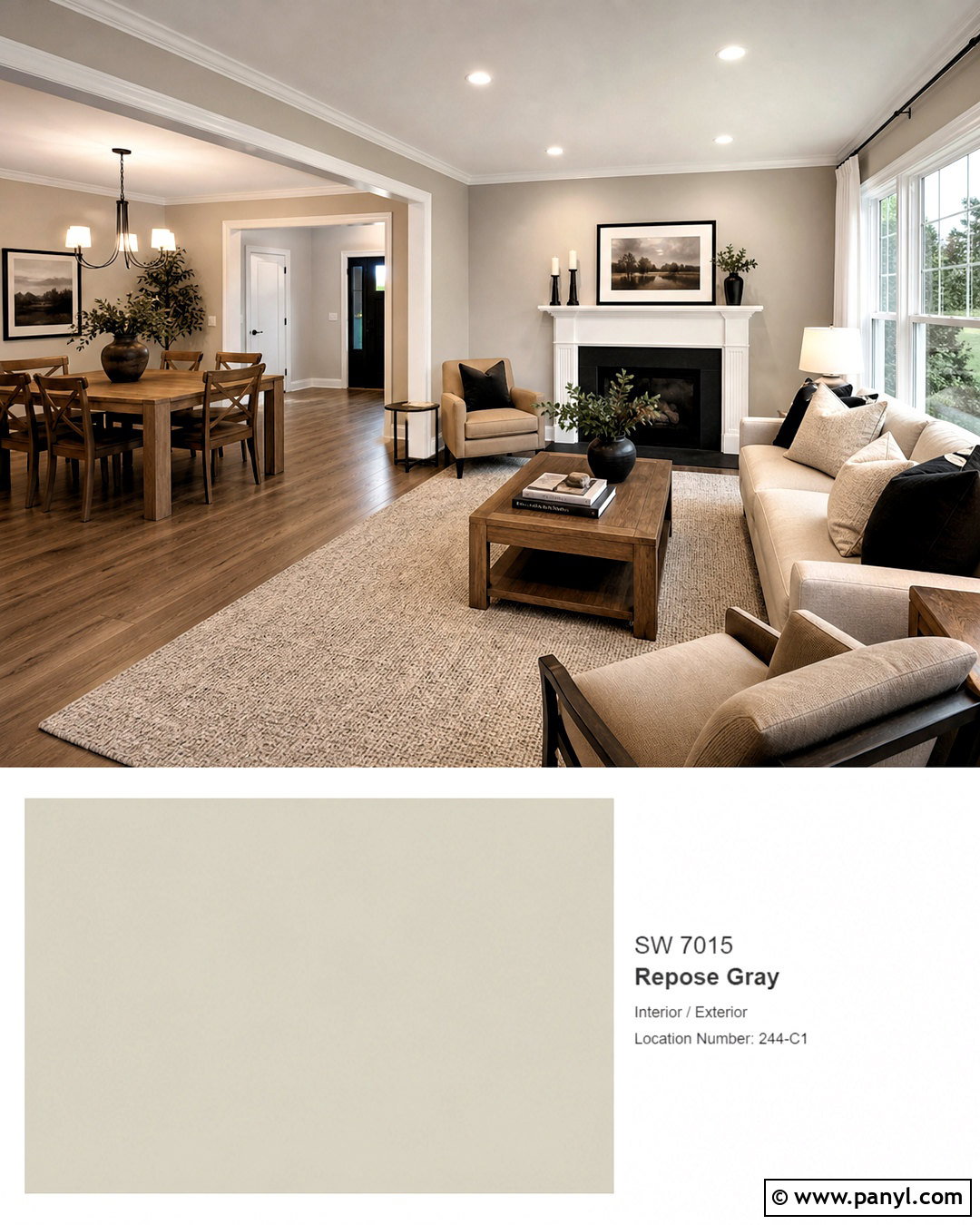
Taupe is a grounded neutral that connects particularly well with muted lavender, mauve, and smoky purple walls. Its blend of gray and brown prevents the room from leaning too cool or too sweet. Design a calm bedroom with taupe linen bedding, a softly upholstered headboard, and warm walnut nightstands. Use ivory curtains and a cream rug to lighten the lower half of the room. A few bronze or antique brass accents will complement both colors without producing a flashy finish. In a living room, a taupe sofa can anchor purple walls while patterned pillows introduce plum, beige, and dusty rose. Select fabrics with tactile surfaces, such as linen, velvet, and woven wool. These materials give the subtle palette depth and help the room feel comfortable rather than overly coordinated.
9. Chocolate Brown With Purple Walls
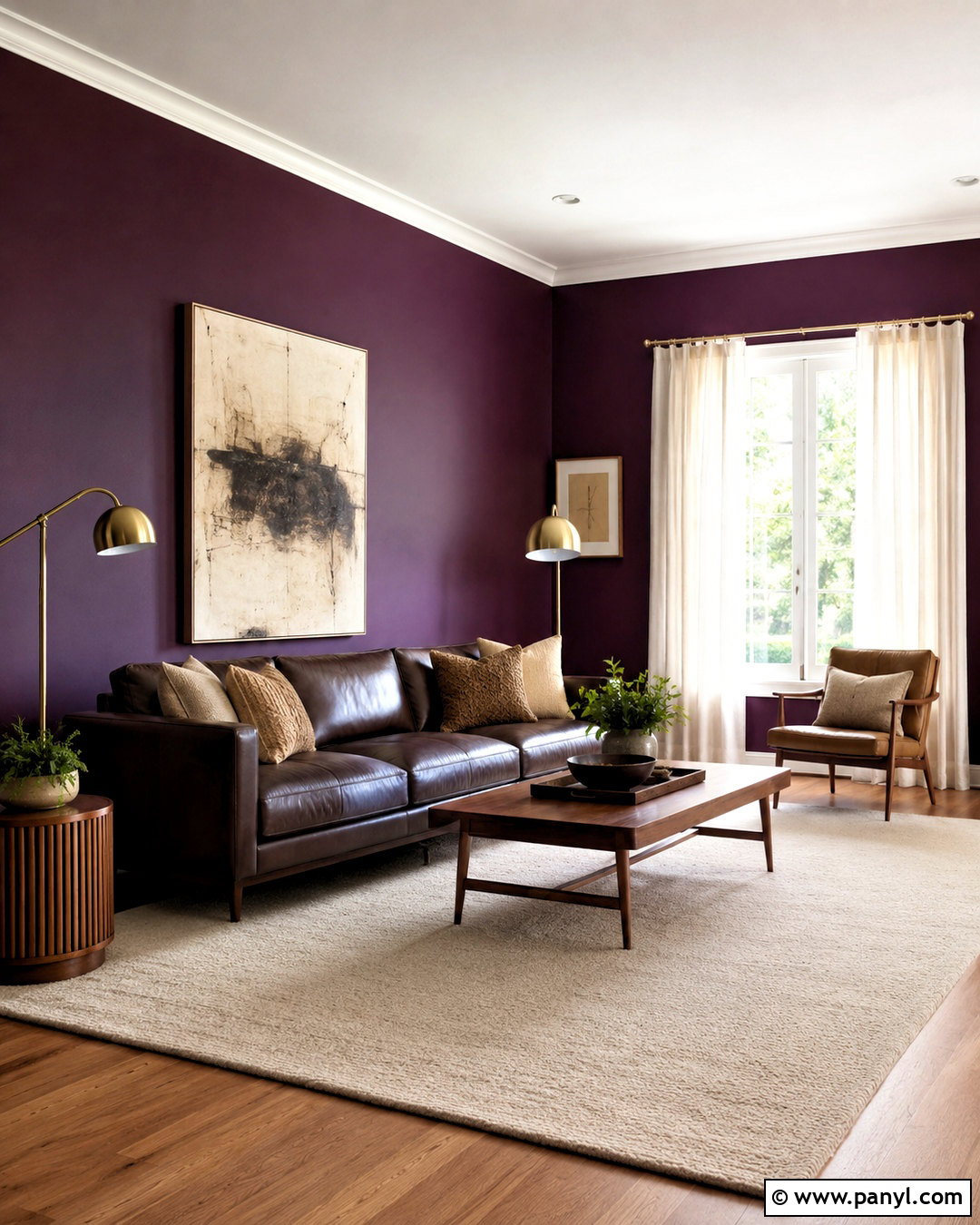
Chocolate brown brings warmth and substance to purple walls, creating a rich palette that feels grounded rather than overly colorful. Natural wood is an especially dependable way to introduce this shade. Pair plum walls with a chocolate leather sofa, walnut coffee table, and cream wool rug for a comfortable living room. Linen curtains in warm ivory will brighten the windows, while brass lamps can echo the brown’s golden undertones. If the wall color is pale lavender, choose medium brown furniture instead of nearly black espresso finishes. This reduces harsh contrast and keeps the room light. Add small accents in rust, tan, or muted gold, but avoid filling the space with too many deep shades. Plenty of cream upholstery and pale flooring will maintain balance. ()
10. Blush Pink With Purple Walls
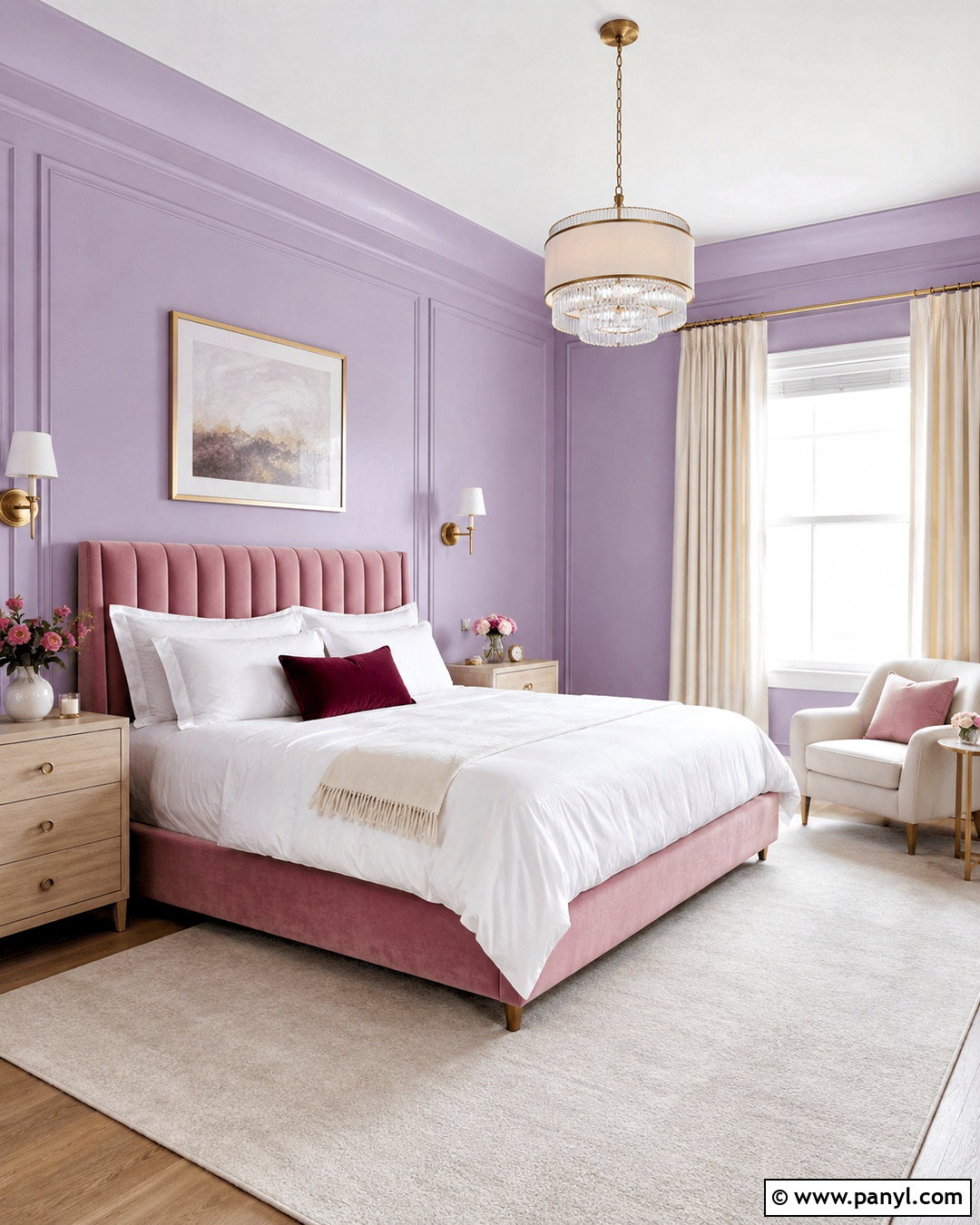
Blush pink and purple walls create a gentle, layered palette when both colors have similarly soft undertones. This combination can look polished rather than juvenile when supported by simple furniture and warm neutrals. In a lavender bedroom, use a blush upholstered bed, white bedding, and pale oak nightstands. Add a cream rug and linen curtains to give the colors breathing room. A small amount of brushed brass will introduce warmth and prevent the scheme from feeling washed out. For deeper mauve walls, select dusty blush instead of pale pastel pink. Include one darker anchor, such as a walnut dresser or burgundy pillow, to provide visual depth. Clean lines, restrained patterns, and substantial natural materials will make the pink-and-purple room feel grown-up and cohesive. ()
11. Dusty Rose With Purple Walls
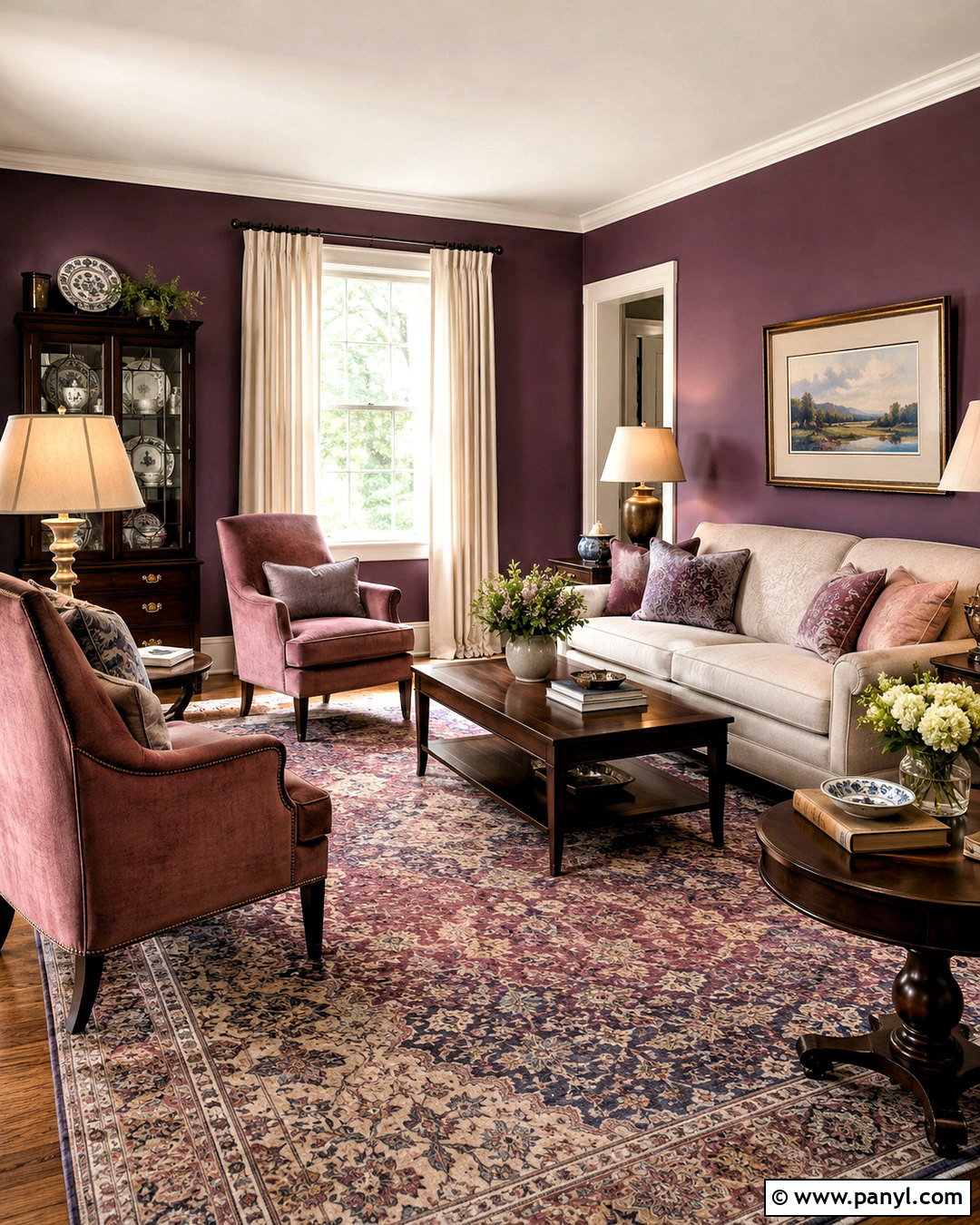
Dusty rose carries enough gray and brown to sit comfortably beside muted purple walls. Together, the colors create warmth and softness while maintaining a sophisticated finish. Build a welcoming sitting room with smoky plum walls, dusty rose armchairs, and a cream sofa. Ground the seating with a vintage-style rug containing faded purple, rose, beige, and blue. Dark wood side tables will give the lighter upholstery greater definition. Choose warm white curtains and bronze lighting rather than introducing another dominant color. In a bedroom, dusty rose works well on a quilt, bench, or upholstered headboard, supported by neutral sheets and walnut furniture. Keep the ceiling and trim light. This allows the layered wall and textile colors to feel enveloping without making the room visually heavy.
12. Coral With Purple Walls
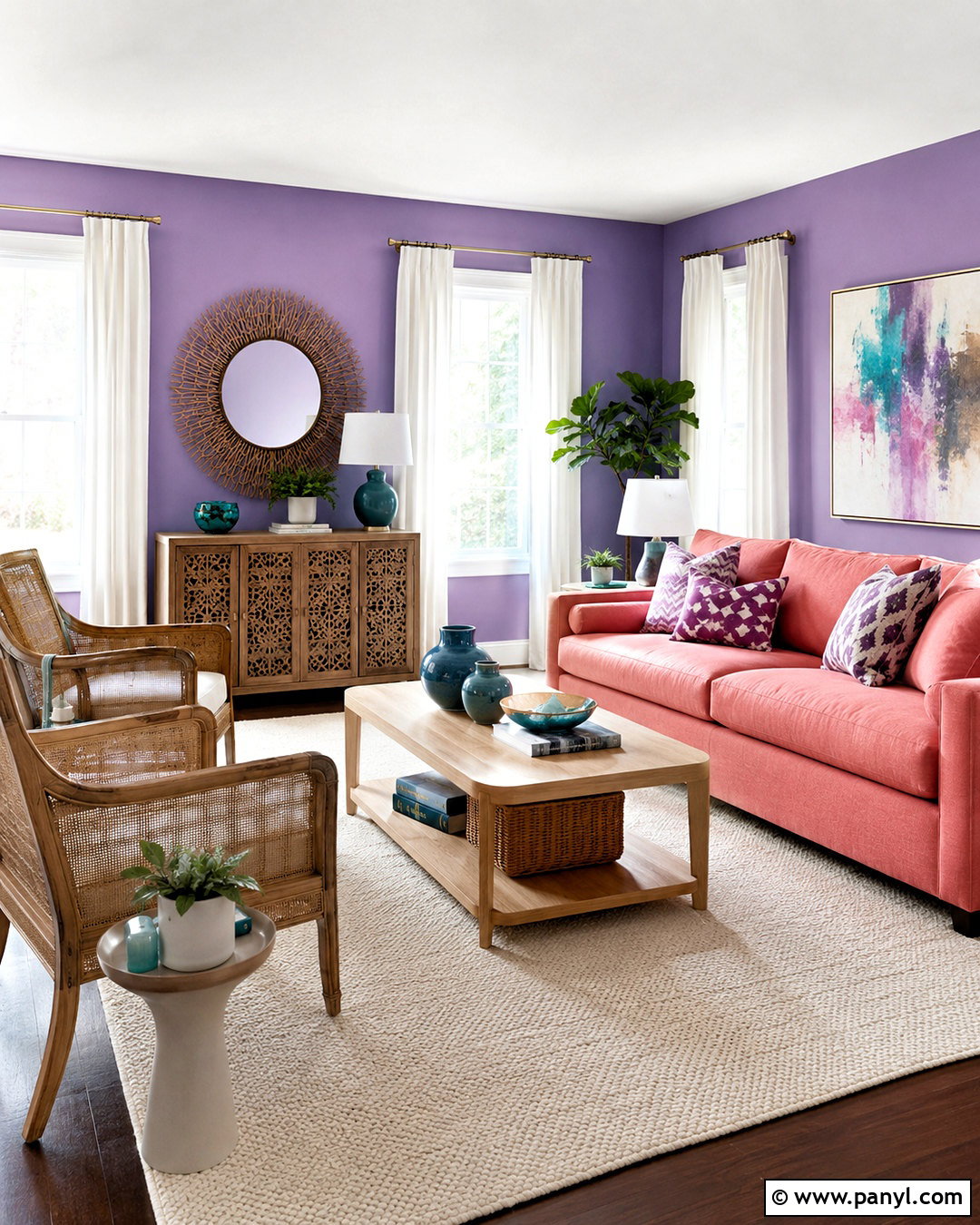
Coral introduces warmth and lively contrast to purple walls, making it useful in social spaces that need more energy. Because both colors can become intense, let one lead and use the other in controlled amounts. Medium lavender walls can support a coral sofa, especially when balanced with an ivory rug, white curtains, and pale wood furniture. With dark plum walls, limit coral to two armchairs, patterned pillows, or a large piece of artwork. Add warm oak and woven cane to make the palette feel casual and approachable. Small teal or leafy green accents can provide extra dimension, but they should remain secondary. Choose softened coral rather than fluorescent orange-pink. A slightly muted version is easier to live with and creates a more cohesive finished room. ()
13. Terracotta With Purple Walls
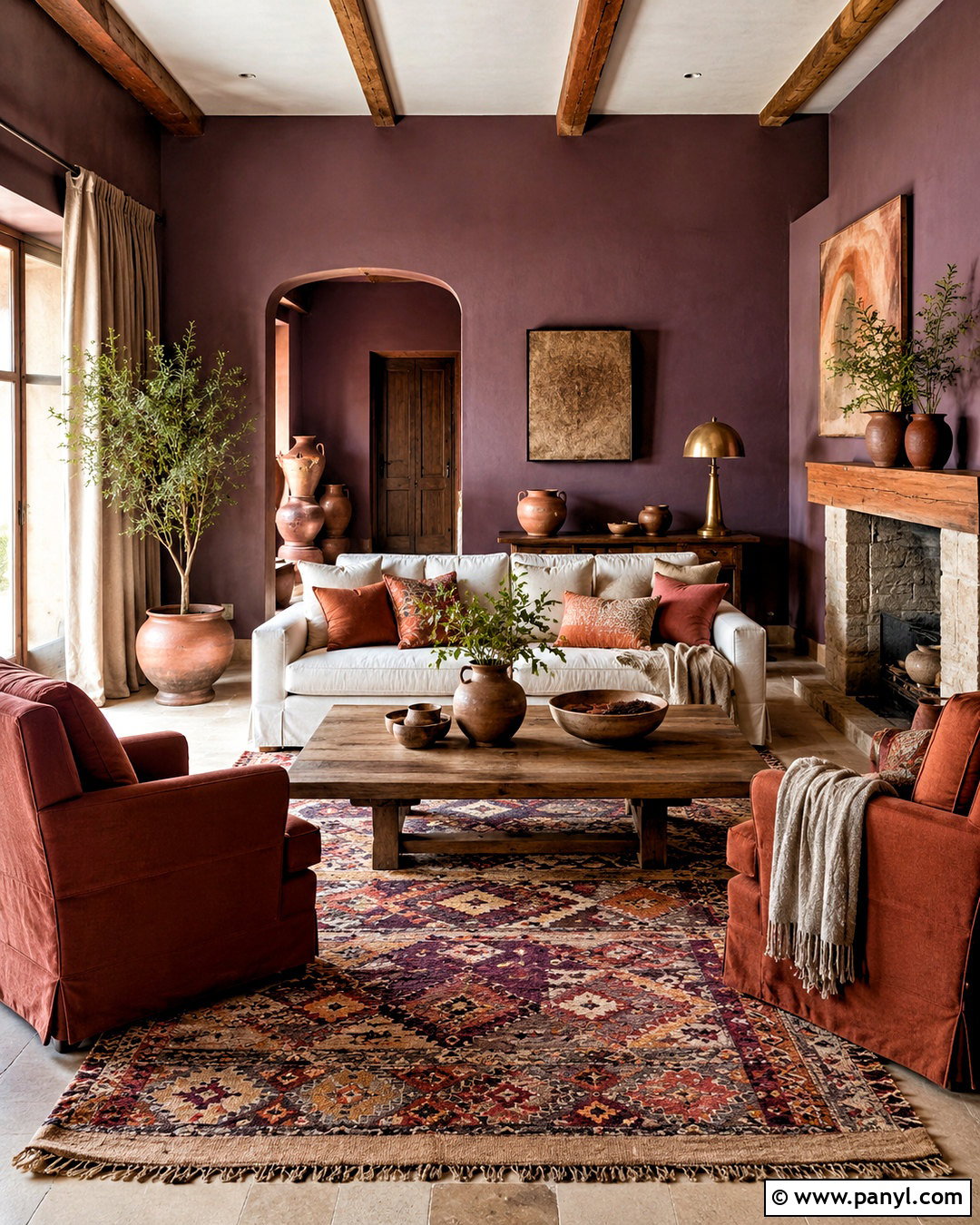
Terracotta gives purple walls an earthy warmth that works beautifully with handmade materials and natural textures. A dusty aubergine or muted mauve wall is the most flexible partner because it shares some of terracotta’s red undertones. Create a grounded living room with terracotta linen chairs, a cream sofa, and a warm wood coffee table. Use a woven rug featuring rust, purple, tan, and ivory to unite the entire palette. Clay pottery, aged brass, and cane details will reinforce the organic character. Keep curtains light and simple so the walls remain visible without closing in the room. In a bedroom, introduce terracotta through bedding and a bench rather than large painted surfaces. Soft cream sheets and oak furniture will prevent the warm colors from becoming overwhelming.
14. Mustard Yellow With Purple Walls
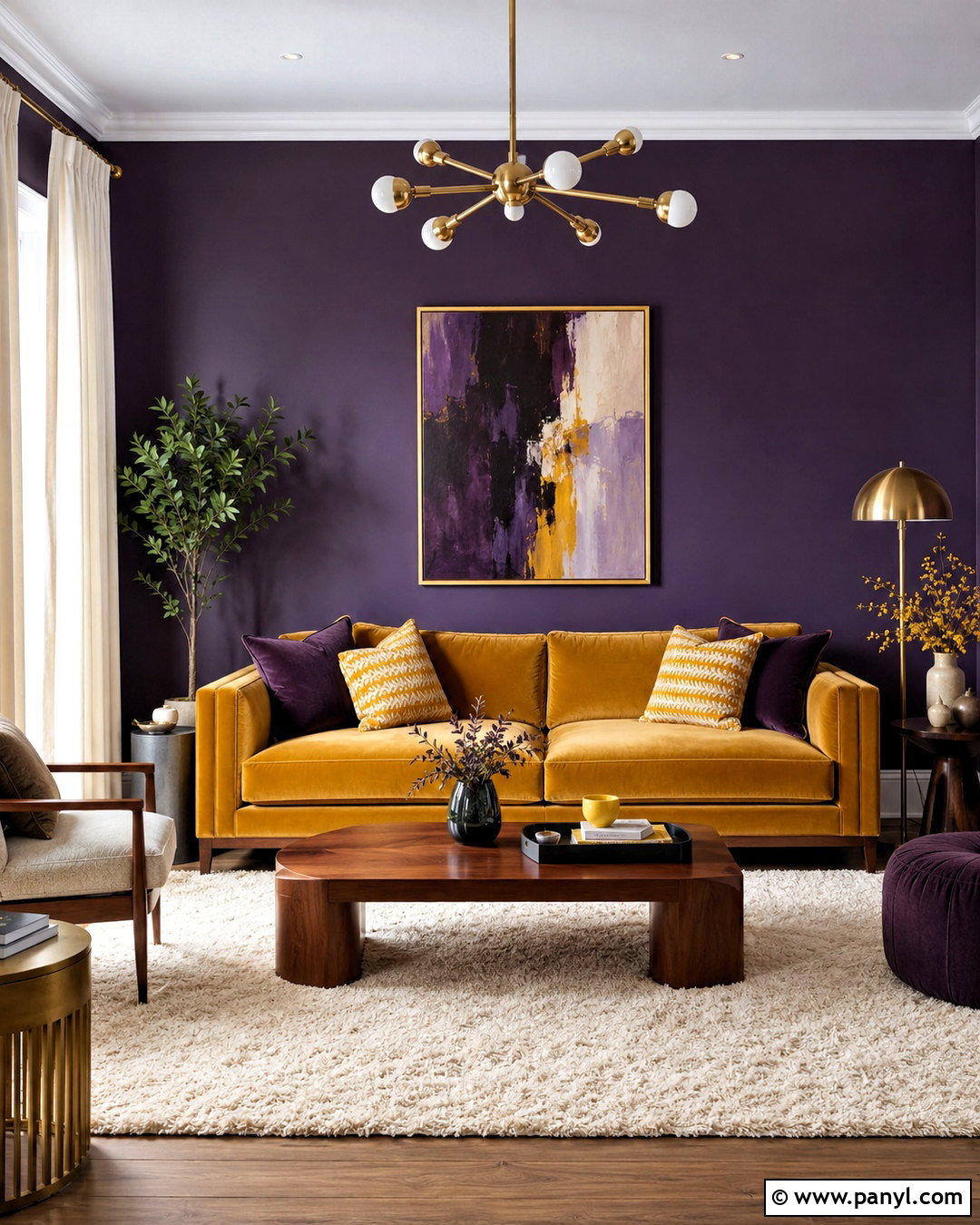
Mustard yellow creates confident contrast with purple walls without looking as sharp as a bright primary yellow. The pairing works particularly well when one color is deep and the other is slightly muted. Against smoky violet walls, place a mustard velvet sofa or upholstered bed and balance it with cream textiles. Walnut tables, an ivory rug, and brass lighting will make the colors feel connected. If the room has rich aubergine walls, mustard can appear through dining chairs, curtains, or a patterned rug rather than a single oversized piece. Repeat yellow in two smaller places to establish rhythm. Since yellow and purple naturally produce strong contrast, limit unrelated accent colors. White, tan, and natural wood are enough to complete the scheme. ()
15. Gold With Purple Walls
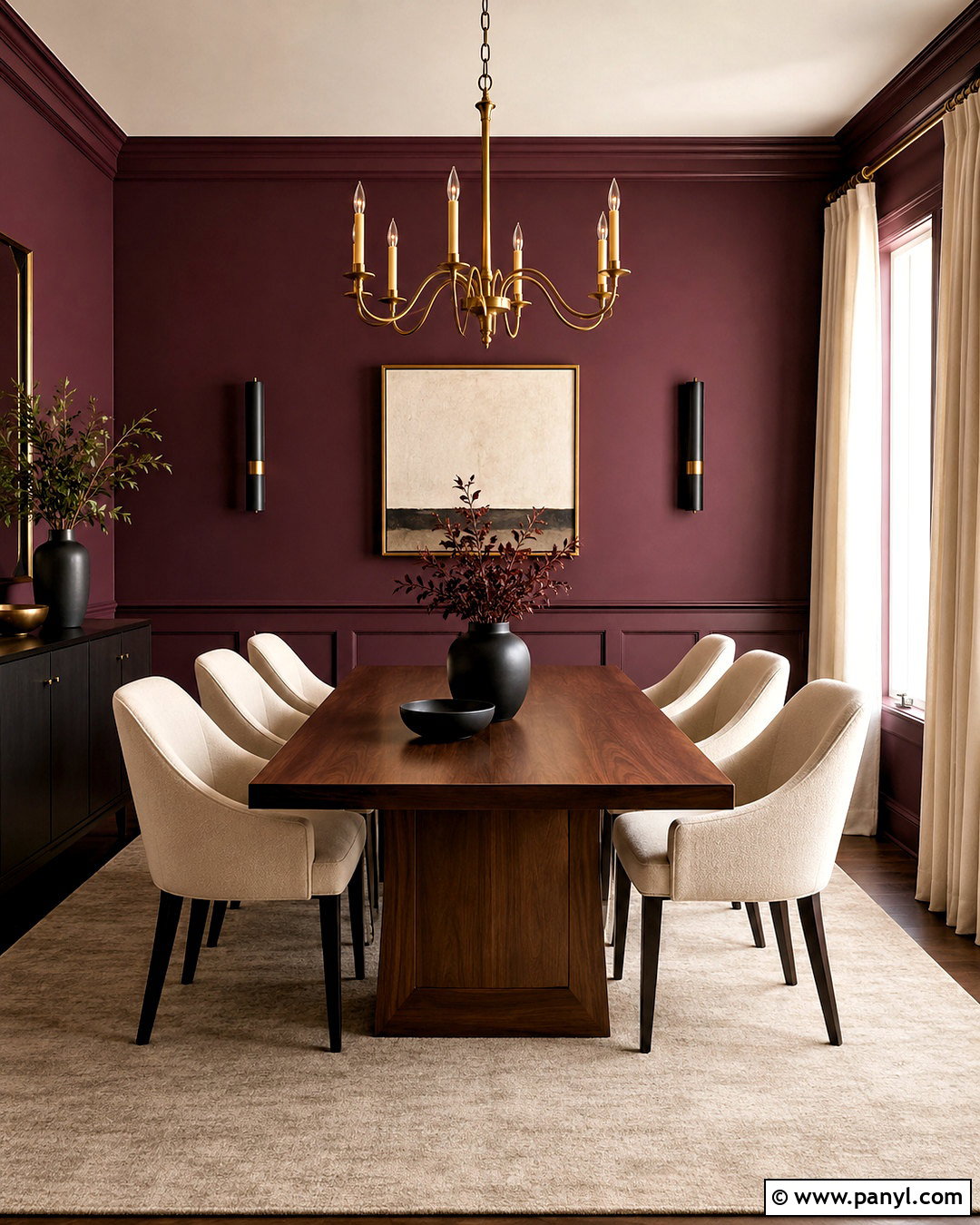
Gold enhances the luxurious character of purple walls while adding reflected warmth around the room. Use it through finishes and textiles rather than covering every decorative item in metallic shine. Plum walls look refined with an aged gold chandelier, slim brass picture frames, and warm gold cabinet hardware. Ground the room with cream upholstery, walnut furniture, and a neutral wool rug. Lavender walls can take a softer version of the combination through champagne-gold lamps and muted ochre pillows. Mix polished and brushed finishes carefully; brushed or antique gold generally feels calmer across larger rooms. Black accents can add crisp definition, while white trim keeps the palette bright. Leave some surfaces simple so the metallic details appear purposeful instead of competing with the expressive wall color. ()
16. Sage Green With Purple Walls
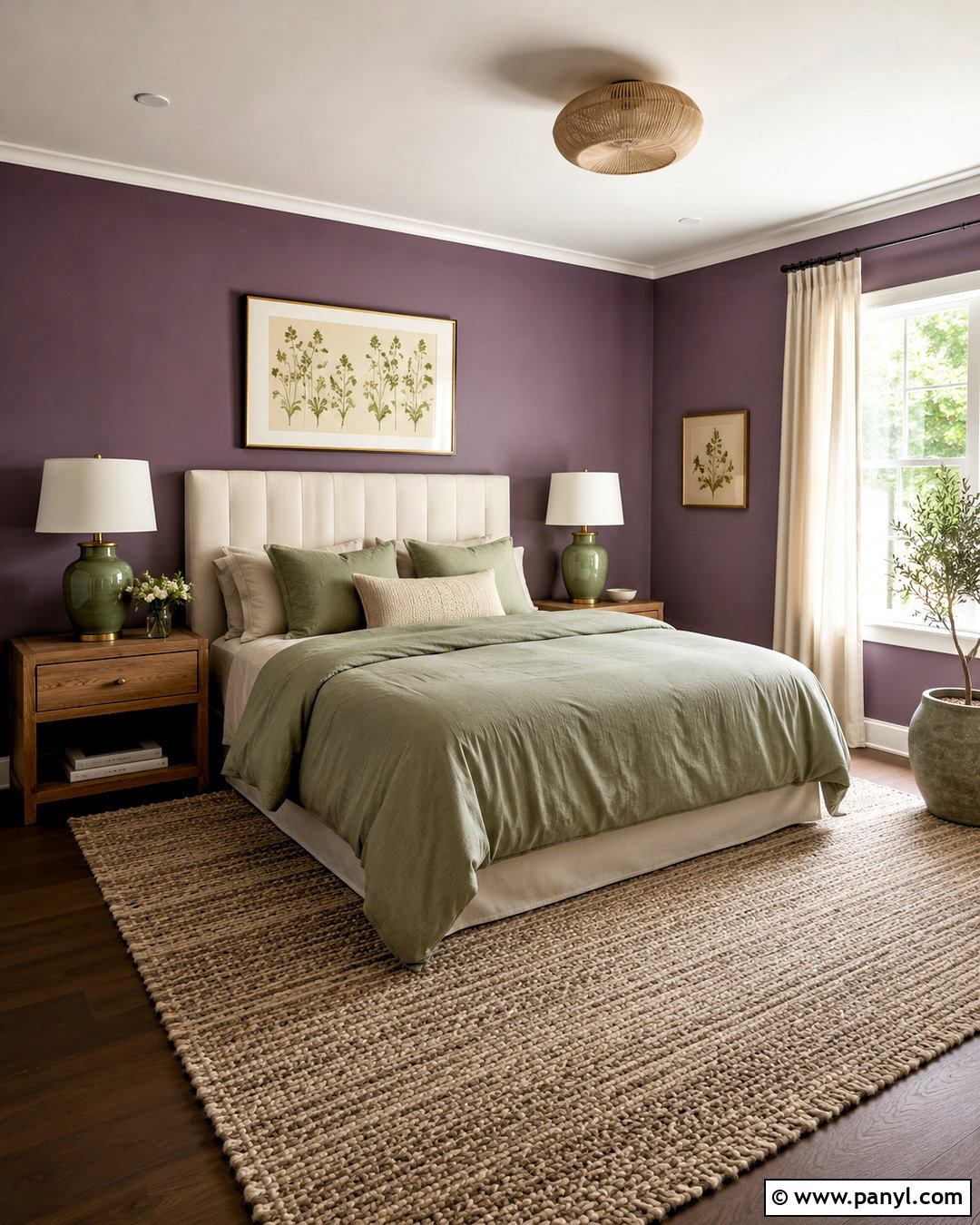
Sage green brings a natural, restful quality to purple walls and works especially well with lavender, mauve, and dusty plum. Create a comfortable bedroom with muted purple walls, sage linen bedding, and an ivory upholstered headboard. Add oak nightstands, cream curtains, and a woven wool rug for warmth. Botanical artwork can connect the two colors without making the room feel overly themed. In a living room, choose a sage sofa with simple lines and repeat green through one ceramic lamp or leafy plant. Avoid using equally saturated purple and green across every large item. One color should remain softer so the room feels balanced. Warm white, tan, and light wood make excellent supporting tones and give this colorful pairing an approachable, everyday character. ()
17. Emerald Green With Purple Walls
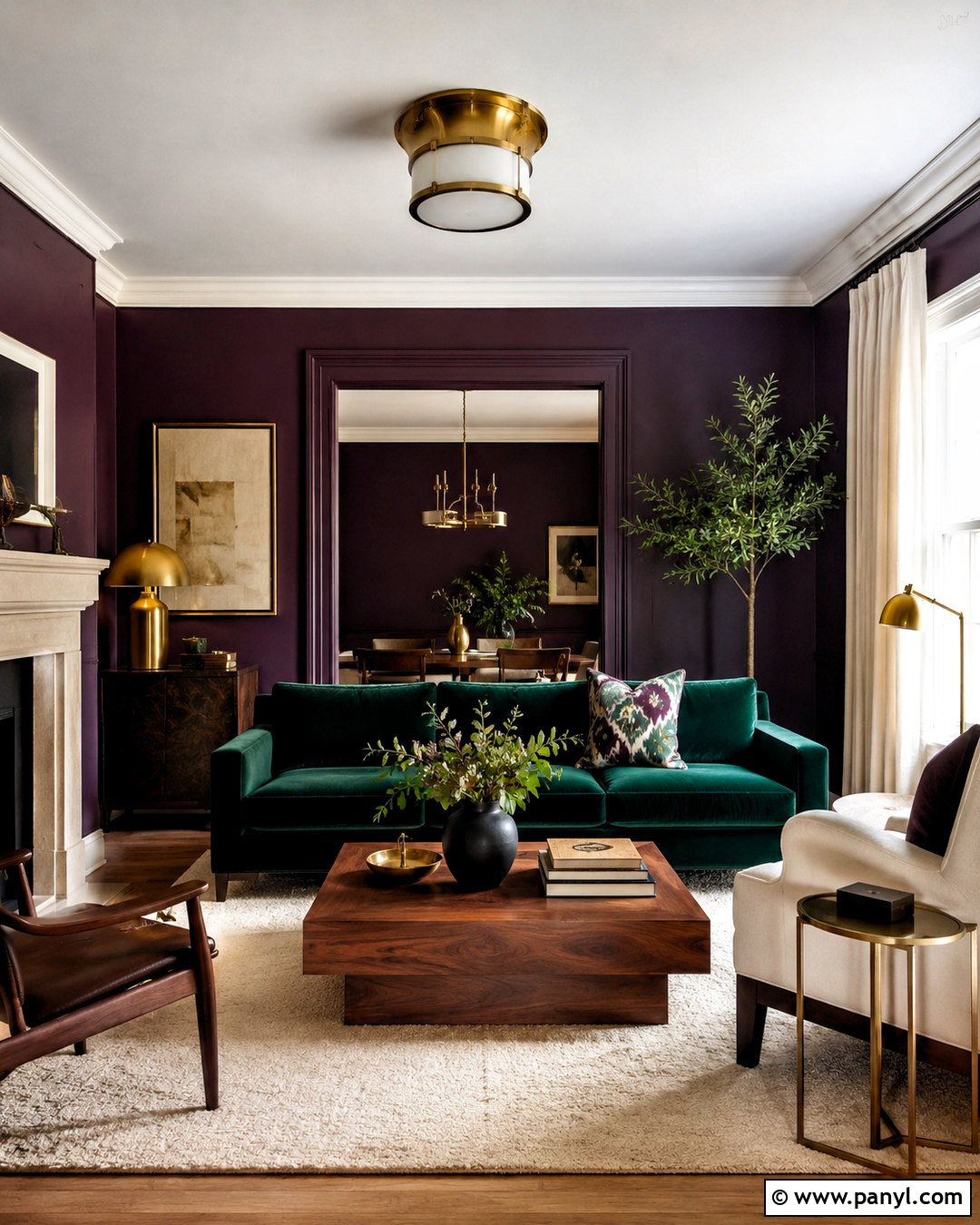
Emerald green and purple walls produce a bold jewel-toned room with depth and elegance. This is an expressive palette, so generous neutral areas are essential. Pair deep plum walls with an emerald velvet sofa, then introduce a large cream rug and warm white curtains. A dark walnut coffee table will ground the seating, while aged brass lighting adds warmth between the saturated colors. In a dining room, emerald chairs can surround a simple wood table beneath a sculptural gold pendant. Keep patterns limited to one rug or pair of pillows containing both green and purple. Avoid adding several other bright hues unless you intentionally want a maximalist interior. Clear furniture placement and uncluttered surfaces will make the dramatic colors feel controlled and sophisticated. ()
18. Teal With Purple Walls
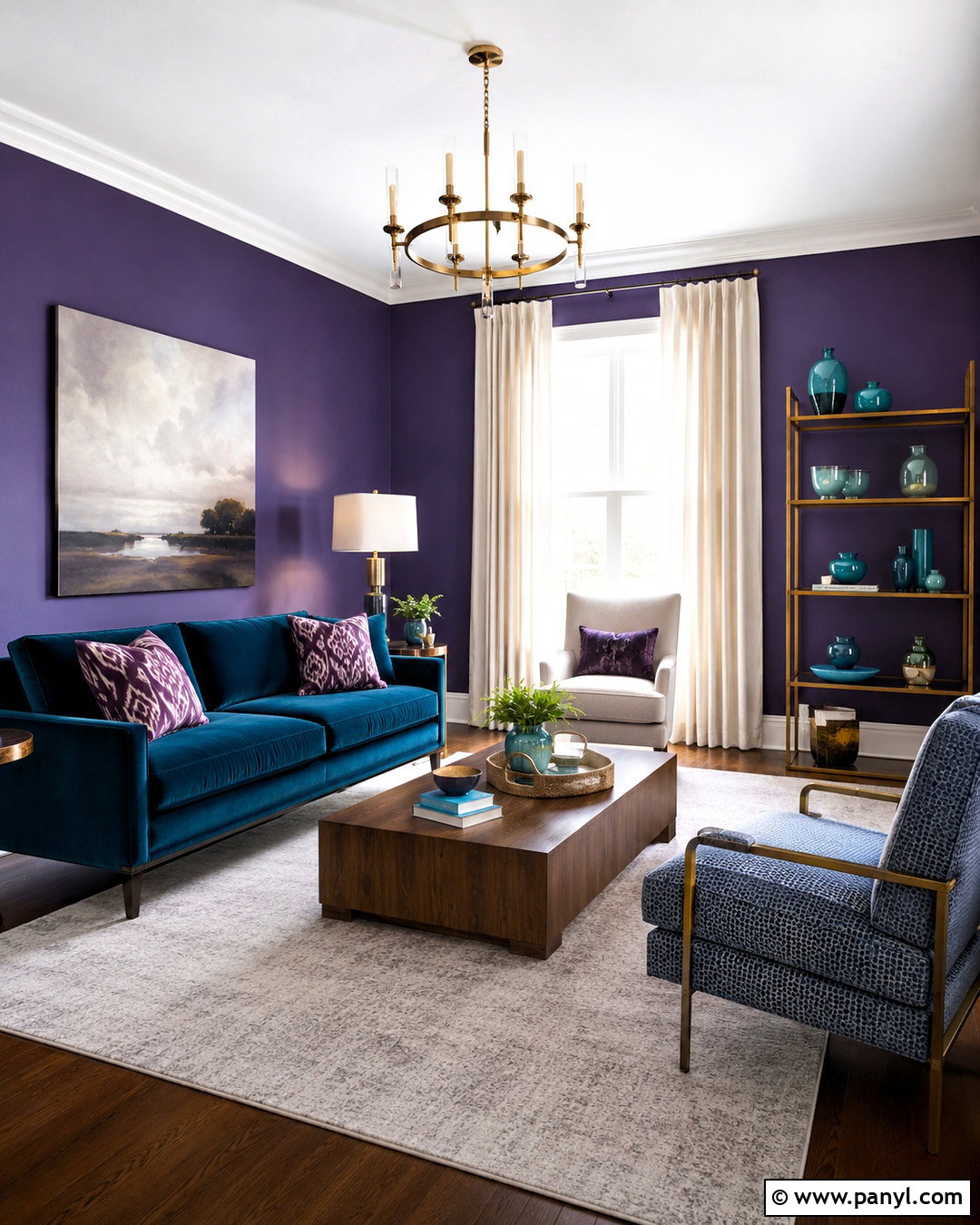
Teal shares blue qualities with cool purple while its green component creates noticeable contrast. The result is colorful but still connected. For a modern living room, combine violet walls with a deep teal sofa, pale gray rug, and streamlined walnut furniture. Cream curtains and a white ceiling will stop the stronger colors from darkening the entire space. Add brushed brass lighting for warmth and repeat teal through one small vase or patterned pillow. In a home office, use teal cabinetry against muted purple walls with a natural wood desk and black hardware. Choose restrained patterns because the main colors already carry plenty of visual interest. For a calmer appearance, select dusty teal. Brighter turquoise-based teal creates a more playful and energetic finished room. ()
19. Navy Blue With Purple Walls
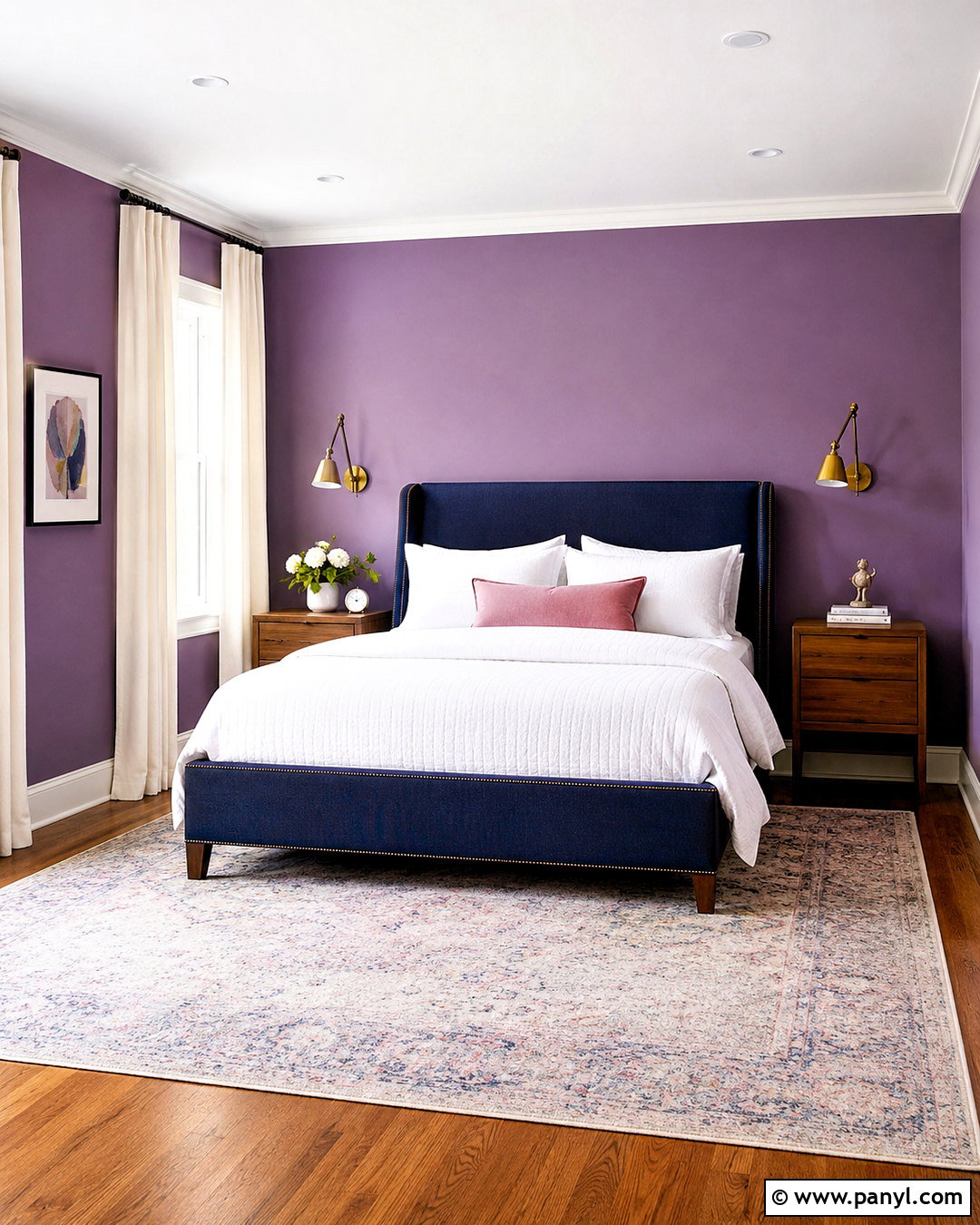
Navy blue creates a smooth, sophisticated partnership with purple walls because the colors share cool blue undertones. This pairing is particularly effective in bedrooms, libraries, and dining rooms where a cocooning effect feels appropriate. Place a navy upholstered bed against medium violet walls and lighten the design with white bedding, cream curtains, and a pale patterned rug. Walnut nightstands and brass sconces will provide warmth. In a living room with plum walls, use a navy sofa and ivory armchairs to distribute the visual weight. Avoid making every large surface dark blue or purple. Light flooring, pale textiles, and reflective artwork are important for balance. A small amount of dusty pink or muted gold can soften the finished palette without disrupting its calm character. ()
20. Sky Blue With Purple Walls
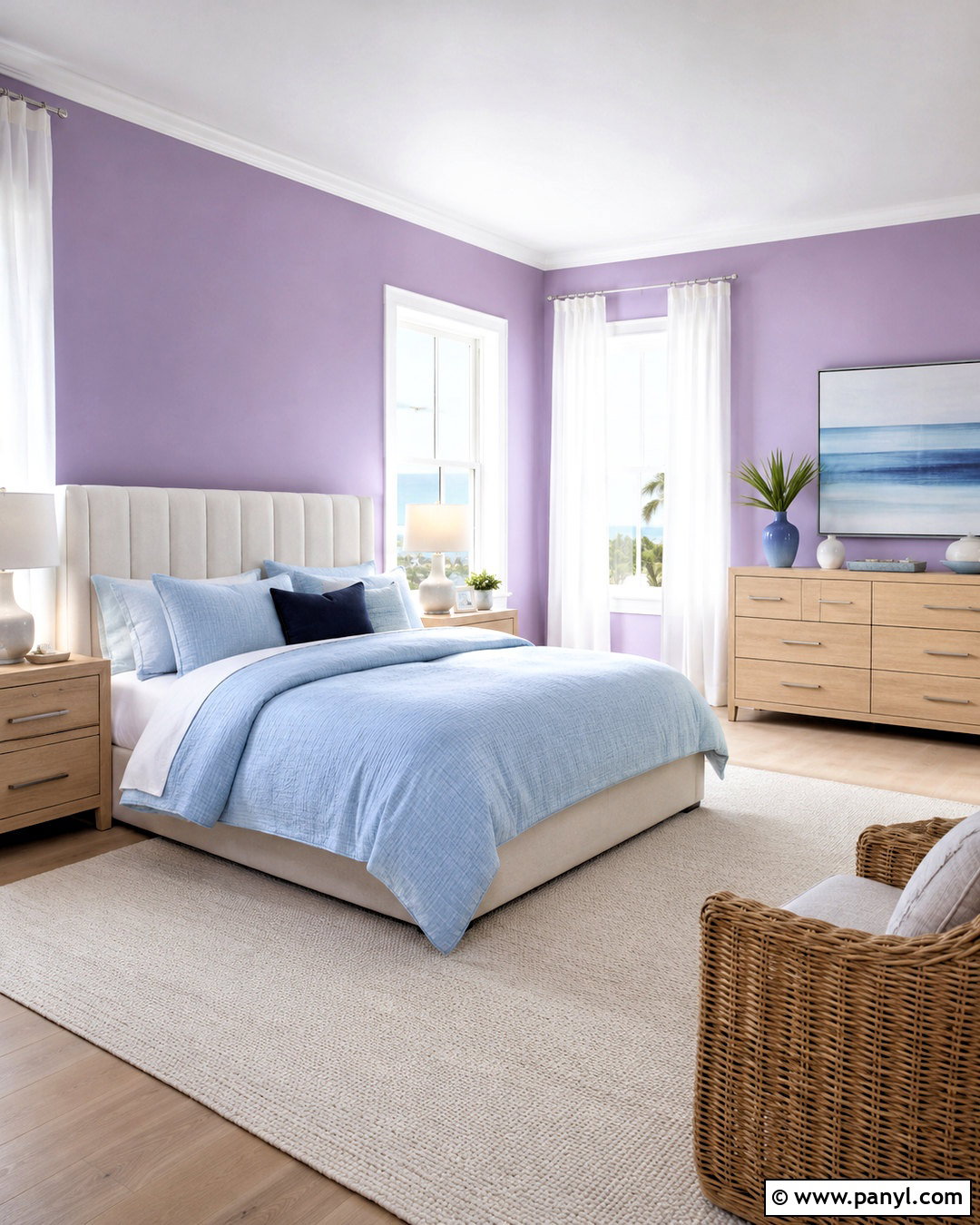
Sky blue makes purple walls feel lighter, fresher, and more relaxed. It works best beside lavender or medium violet rather than extremely dark aubergine. Design an airy bedroom with soft purple walls, sky-blue bedding, and a white upholstered headboard. Pale oak furniture, sheer curtains, and an ivory rug will support the delicate palette without adding another strong color. Introduce deeper navy through one pillow or framed artwork to create definition. In a living room, sky-blue armchairs can sit opposite a cream sofa, with purple walls providing the colorful background. Select slightly muted blue instead of a highly saturated children’s-room shade. Natural linen, woven wool, and light wood will give the pastel combination texture, maturity, and enough warmth for a comfortable year-round interior.
Conclusion:
Choosing among these **20 colors that go with purple walls** becomes easier when you begin with the purple’s undertone and intensity. Crisp neutrals can brighten violet, while cream, taupe, and natural brown soften warmer plum shades. Pink and blue create smooth, layered palettes. Yellow, green, coral, and terracotta offer stronger contrast and more personality. Before purchasing large pieces, compare fabric and finish samples directly against the wall during morning, afternoon, and evening light. Then establish a simple hierarchy: let purple lead, choose one clear partner, and use neutrals to connect them. Repeating the companion color two or three times will make the completed room feel balanced, thoughtful, and easy to live with.

Related Ideas and Inspiration:
Leave a Reply