
Red brick brings warmth, texture, and lasting character to a home, but choosing coordinating paint can feel surprisingly difficult. The most successful 20 colors that go with red brick ideas balance the brick’s red, orange, brown, gray, or burgundy undertones instead of fighting them. Warm neutrals create a soft, traditional exterior, while deep blues, greens, and charcoals add stronger contrast. Your roof, mortar, windows, and surrounding landscape should also guide the palette. Always view large paint samples beside the brick during different times of day because natural light can change how undertones appear. () From timeless cream siding to dramatic black accents, the complete schemes below offer practical inspiration through 20 colors that go with red brick ideas.
1. Warm White With Red Brick
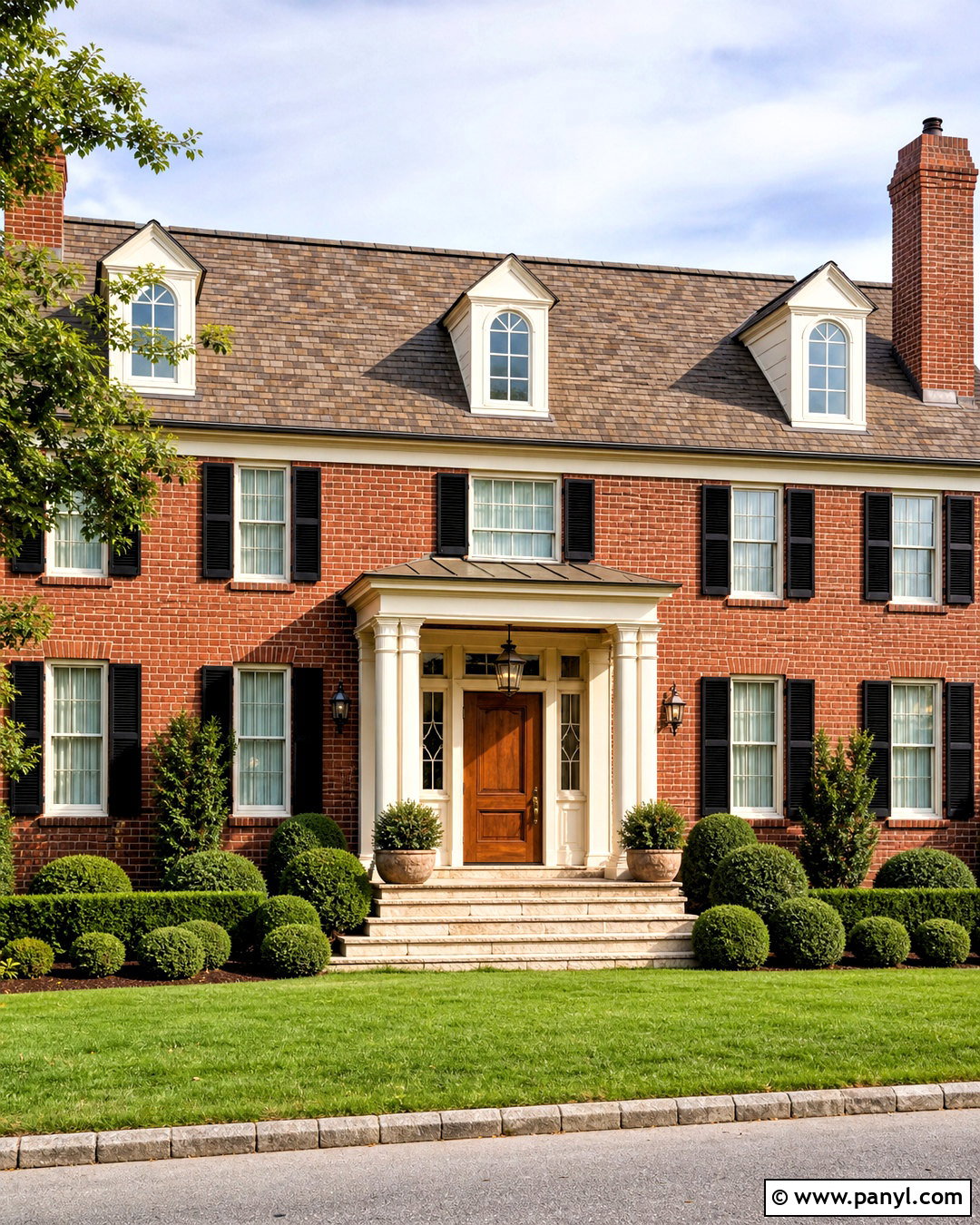
Warm white gives red brick a cleaner appearance without creating the sharp contrast of a cool, brilliant white. Use it across siding, porch columns, soffits, and substantial window trim so the exterior feels connected. Choose a creamy white with beige or soft yellow undertones that echo the warmth within the masonry. A medium brown architectural-shingle roof grounds the light palette, while black shutters and aged-brass lights provide definition. Complete the entrance with a stained oak door, simple foundation shrubs, and pale limestone steps. This combination works especially well on Colonial, Cape Cod, and traditional two-story homes. Avoid blue-white paint, which can make orange-red brick look overly bright or mismatched.
2. Cream With Red Brick
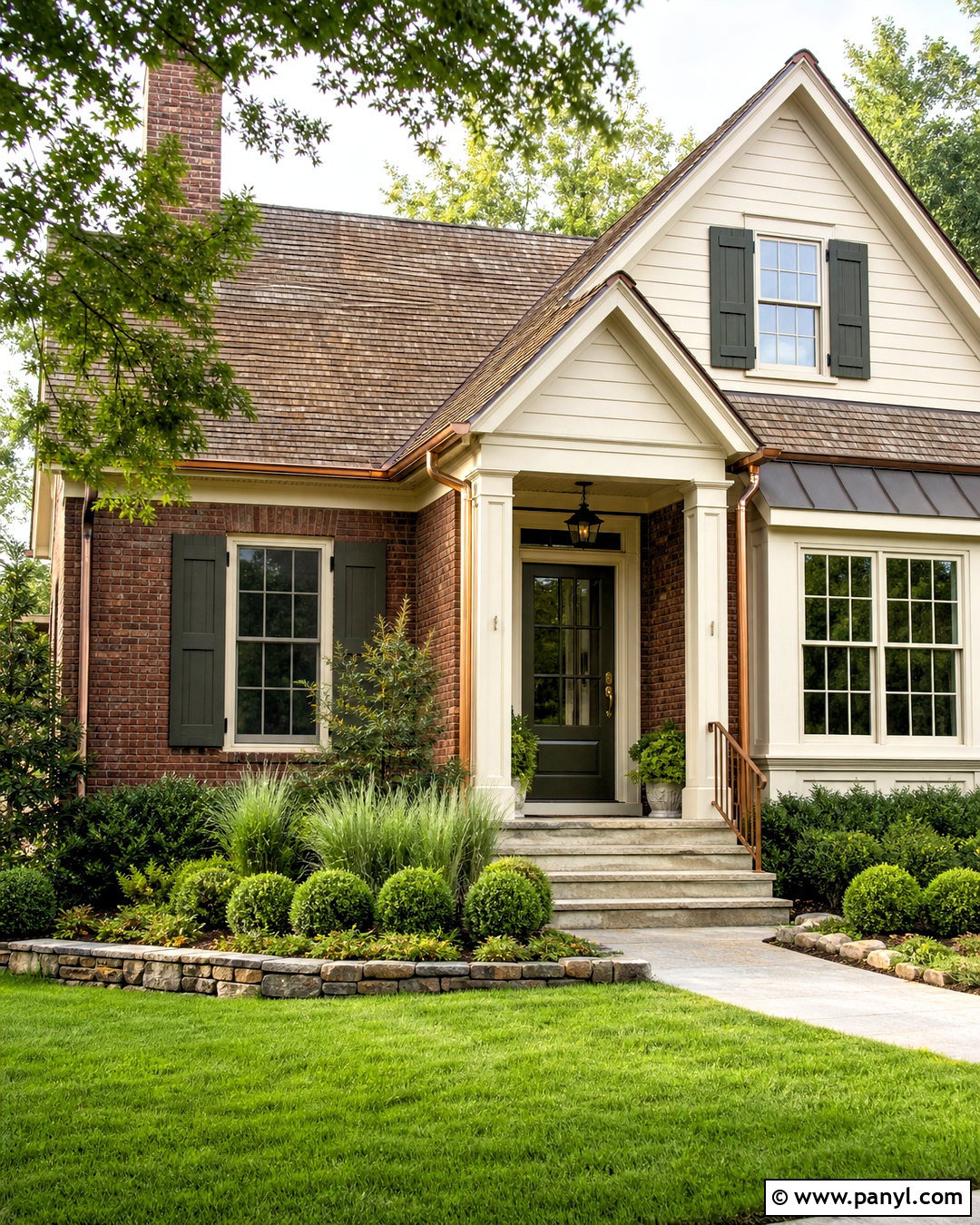
Cream creates an inviting exterior that feels softer and richer than plain white. Cover upper-level siding or stucco with a light buttery cream, then repeat the color on the fascia, porch ceiling, and window surrounds. Keep the front door dark brown or deep olive to add visual weight near the entrance. A weathered brown roof, copper gutters, and warm bronze hardware support the earthy undertones in the brick. For landscaping, use clipped boxwoods, ornamental grasses, and natural stone edging. This complete palette works beautifully on cottages, ranch houses, and Craftsman homes. Select a muted cream rather than a strong yellow shade, ensuring the siding complements the brick instead of making the exterior appear dated.
3. Soft Beige With Red Brick
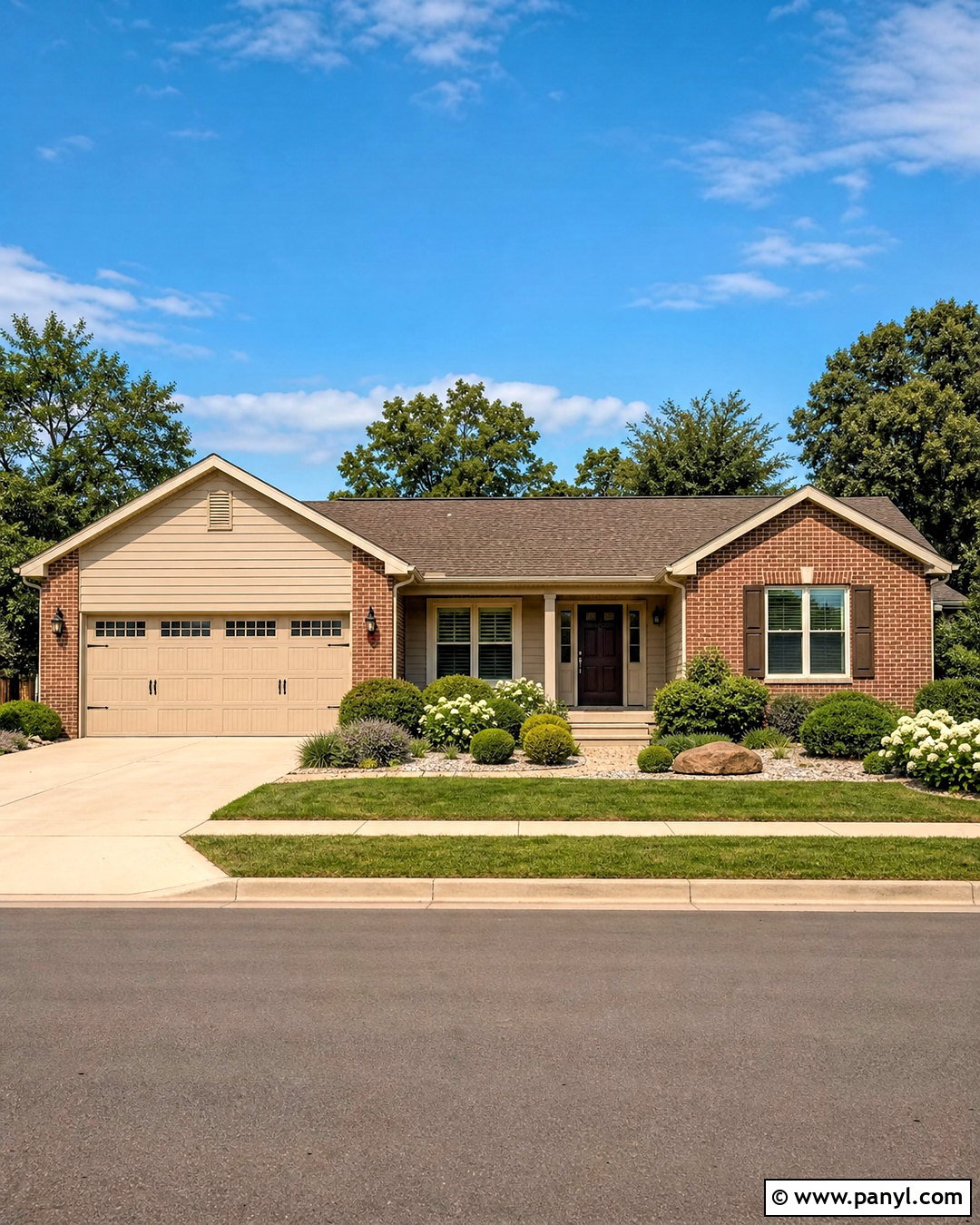
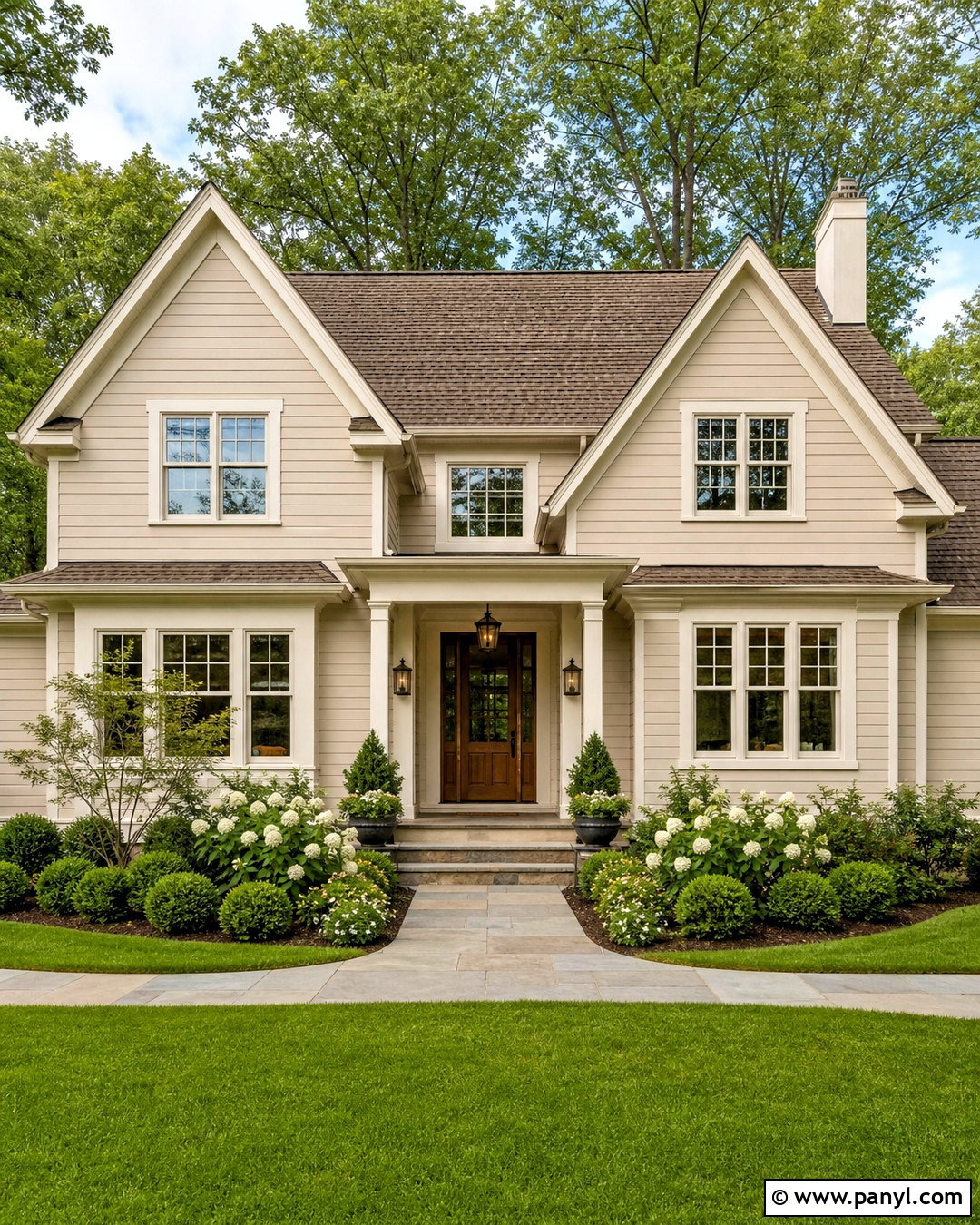
Soft beige provides a calm transition between warm red brick and lighter exterior details. Apply a sandy beige to horizontal siding, gables, or painted garage doors. Add warm white trim around the windows and roofline to keep the house bright. A walnut-stained front door and oil-rubbed bronze lights bring depth without looking harsh. Choose a roof containing brown, gray, and muted red granules so it connects naturally with both materials. The landscaping can include pale gravel, rounded evergreen shrubs, and flowering plants in soft white. This scheme is particularly useful when the brick has orange, tan, or brown variation. Keep the beige noticeably lighter than the brick so the architectural sections remain easy to distinguish.
4. Warm Greige With Red Brick
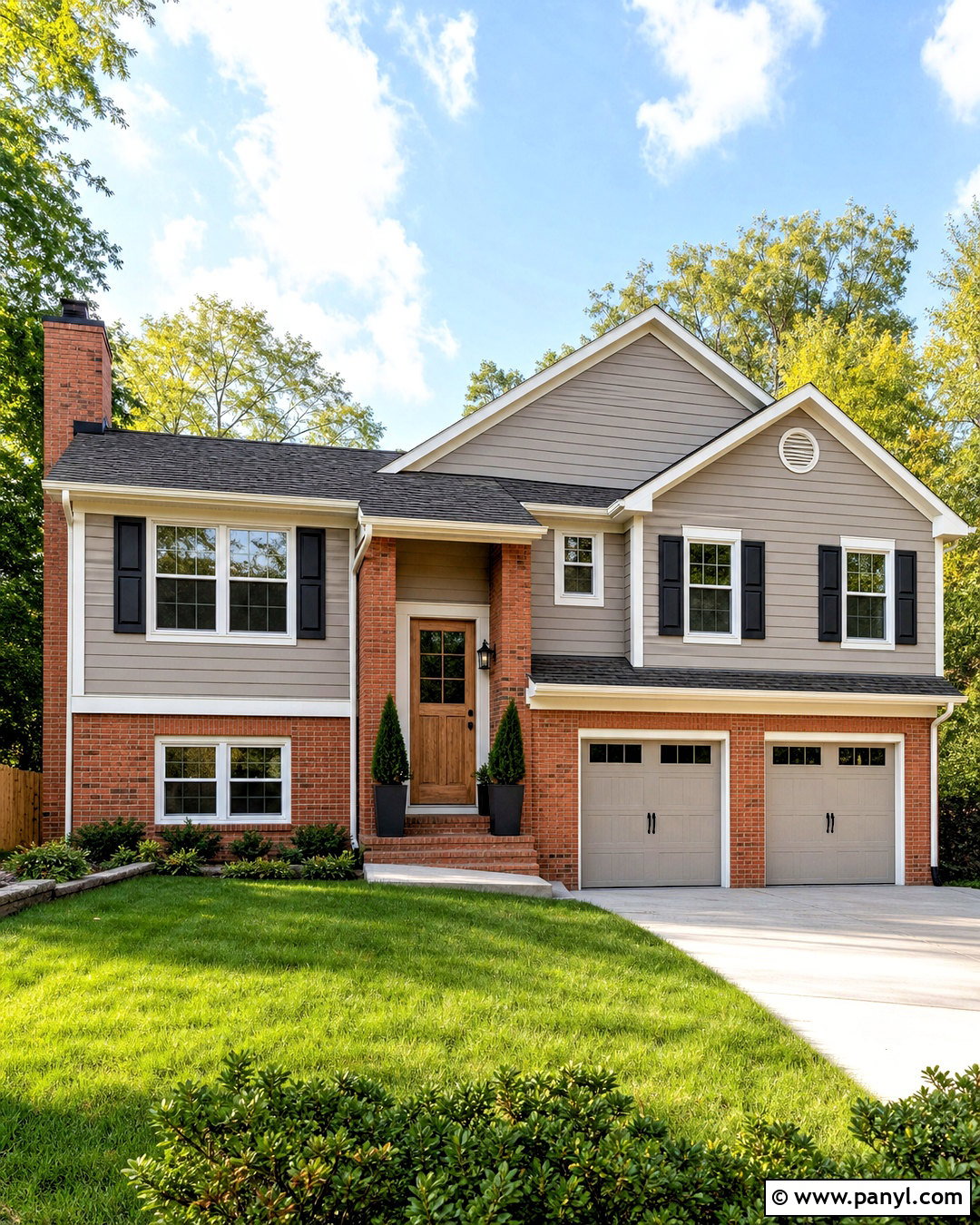
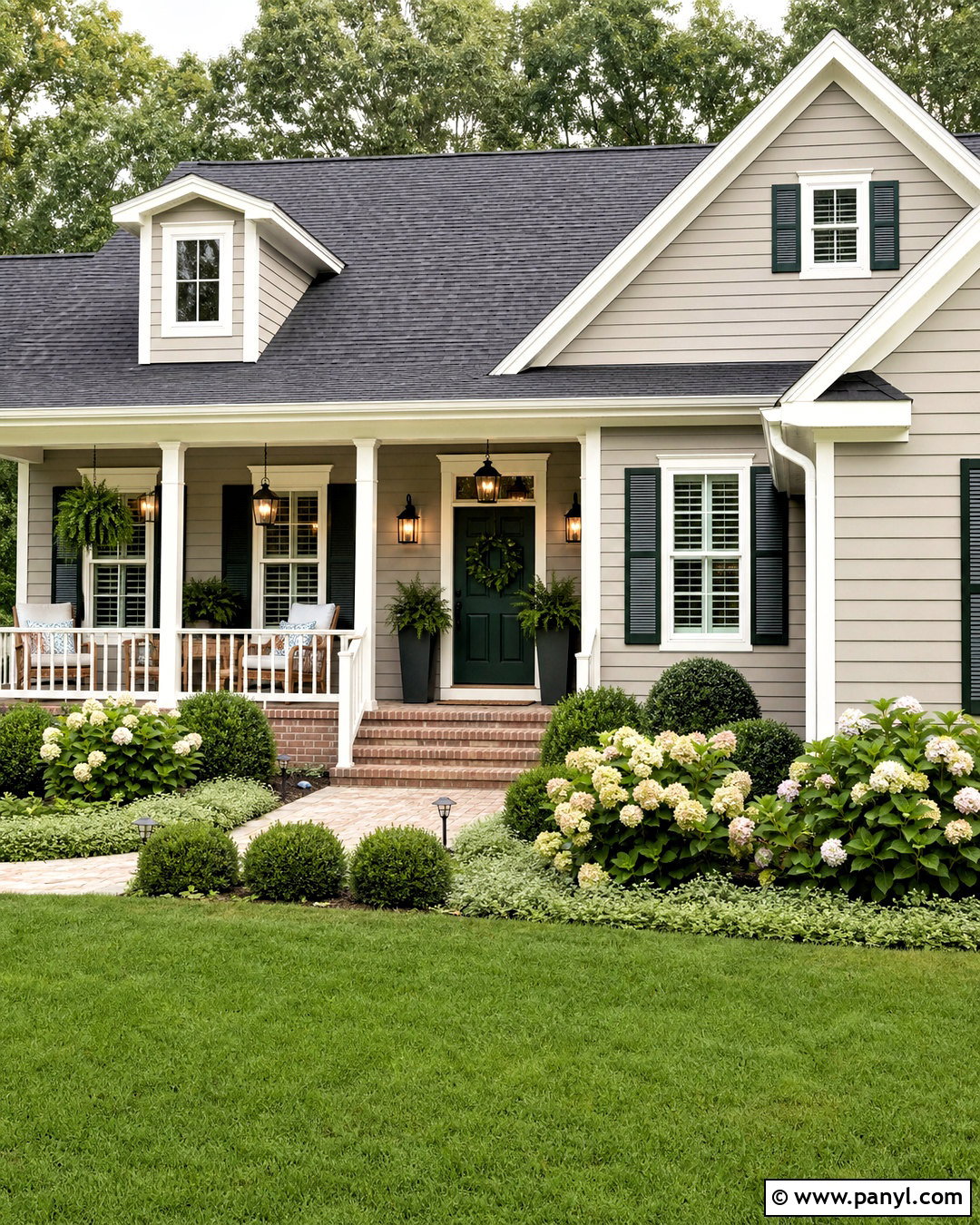
Warm greige updates red brick while preserving its comfortable, earthy character. Look for a gray-beige paint with subtle brown undertones rather than a cool silver gray. Use it on siding, wide gables, garage doors, and porch walls. Creamy white trim adds gentle separation, while charcoal shutters introduce a stronger modern accent. Finish the entrance with a medium-tone wood door, matte black hardware, and streamlined planters. A brown-gray roof connects the greige siding to the darker markings commonly found in traditional brick. This balanced exterior works on ranch, transitional, and split-level houses. Test several greiges carefully because a color that appears neutral indoors may reveal unwanted purple or green undertones beside the masonry.
5. Mushroom Taupe With Red Brick
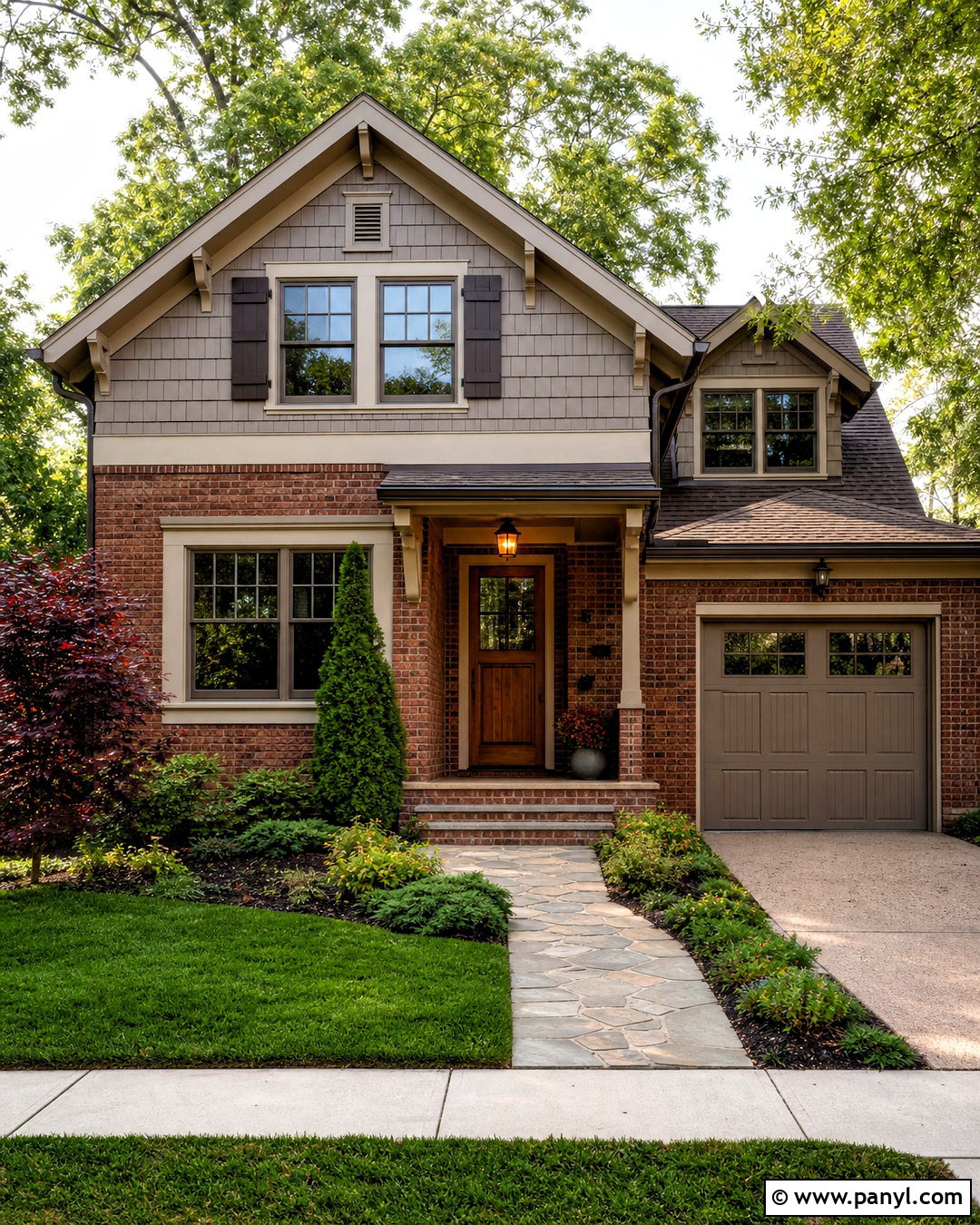
Mushroom taupe has enough brown to relate to brick and enough gray to make an exterior feel current. Paint the siding and garage doors in this grounded neutral, then use soft ivory for window trim, columns, and eaves. Deep bronze shutters and gutters reinforce the natural palette without producing the intensity of black. A stained cedar front door adds warmth and becomes the focal point. Carry the taupe into the hardscape through flagstone paths or concrete pavers with warm gray variation. Evergreen foundation plants and burgundy foliage finish the cohesive look. This scheme is especially effective with weathered red brick containing tan mortar. Keep exterior finishes matte or low-sheen to complement the brick’s textured surface.
6. Light Gray With Red Brick
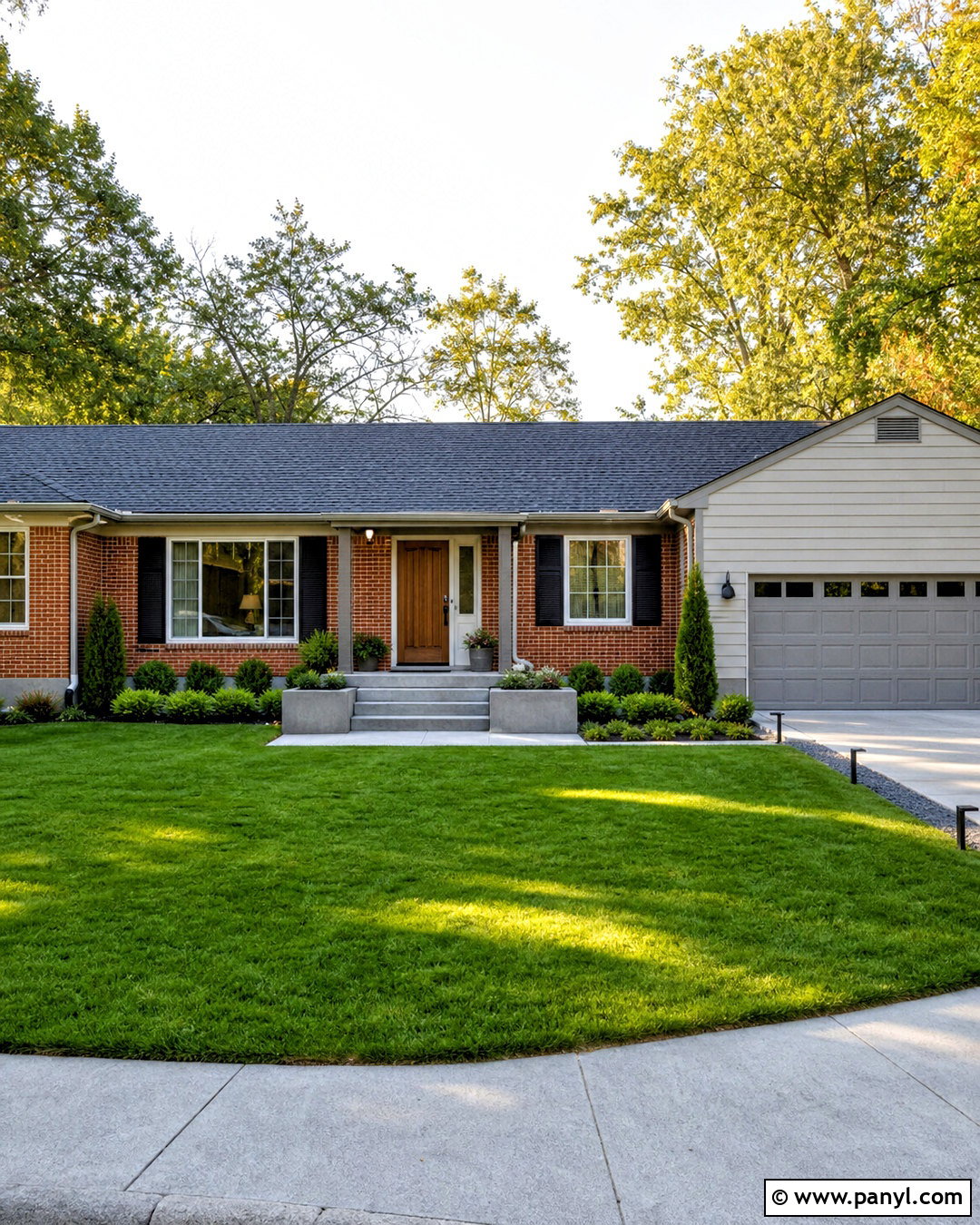
Light gray can freshen a red brick exterior when it has warm or balanced undertones. Use a pale stone gray on siding and garage doors, avoiding icy blue-gray shades that may disconnect from orange masonry. Crisp warm white trim defines the windows, while a slate-colored roof and charcoal shutters give the home structure. Introduce a natural oak front door to bring warmth back into the composition. Concrete planters, gray stone steps, and orderly green landscaping continue the refined palette. This combination suits midcentury ranches and simple transitional homes where a cleaner appearance is desired. Before committing, compare the gray to both the brick and mortar because the mortar color often determines whether the combination feels coordinated.
7. Charcoal Gray With Red Brick
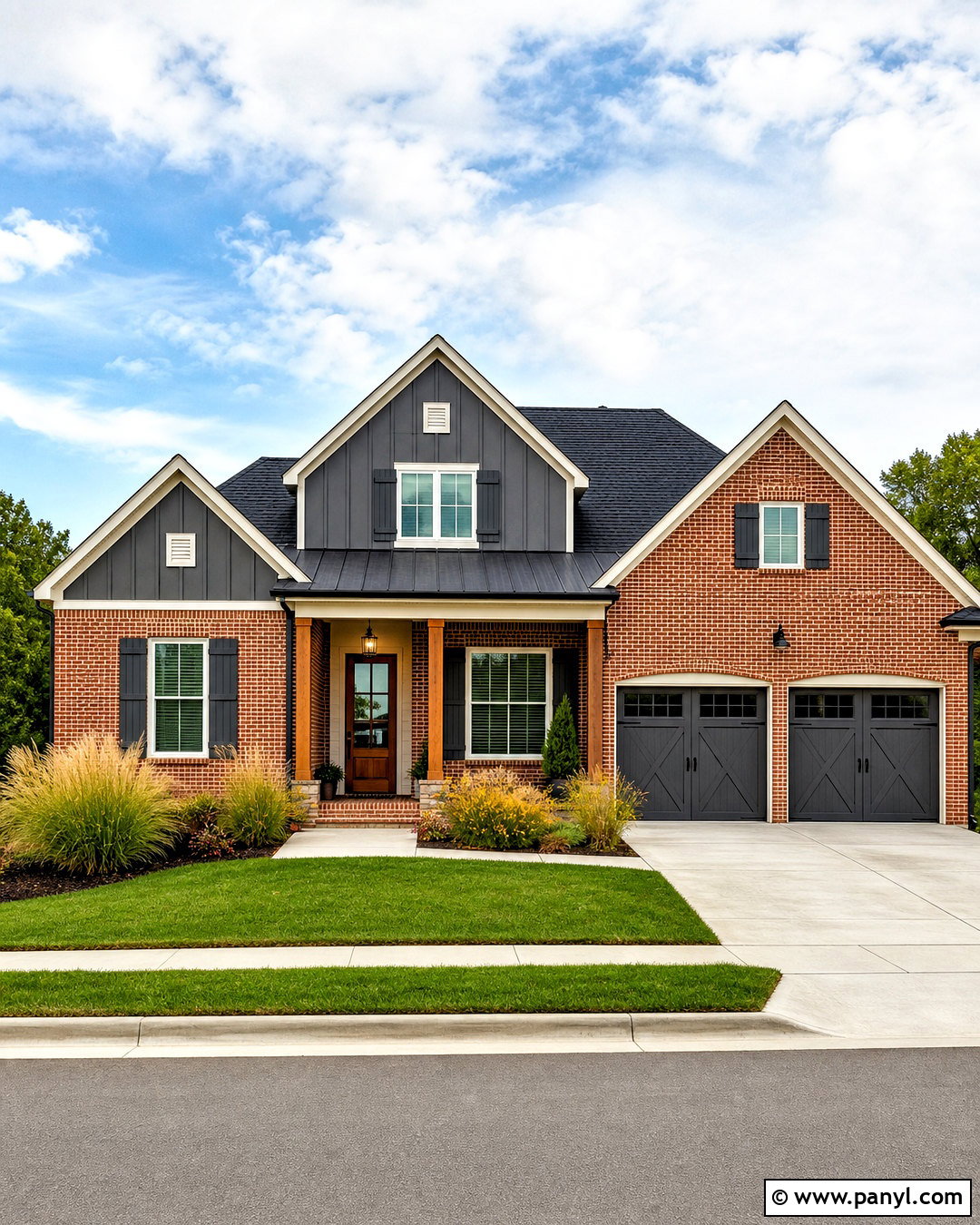
Charcoal gray creates dramatic contrast while pulling attention toward the rich variation in red brick. Use it across upper siding, board-and-batten gables, garage doors, or shutters rather than covering every surface. Warm white trim prevents the facade from becoming visually heavy. Choose a near-black roof, matte black gutters, and simple modern lighting to support the deeper color. A warm cedar door and wood porch posts soften the scheme and keep it welcoming. Finish with ornamental grasses, compact evergreens, and light concrete walkways for balance. Charcoal works particularly well with brick containing dark brown or gray markings. Select a softened charcoal with warm undertones instead of a stark graphite color for a more natural transition.
8. Matte Black With Red Brick
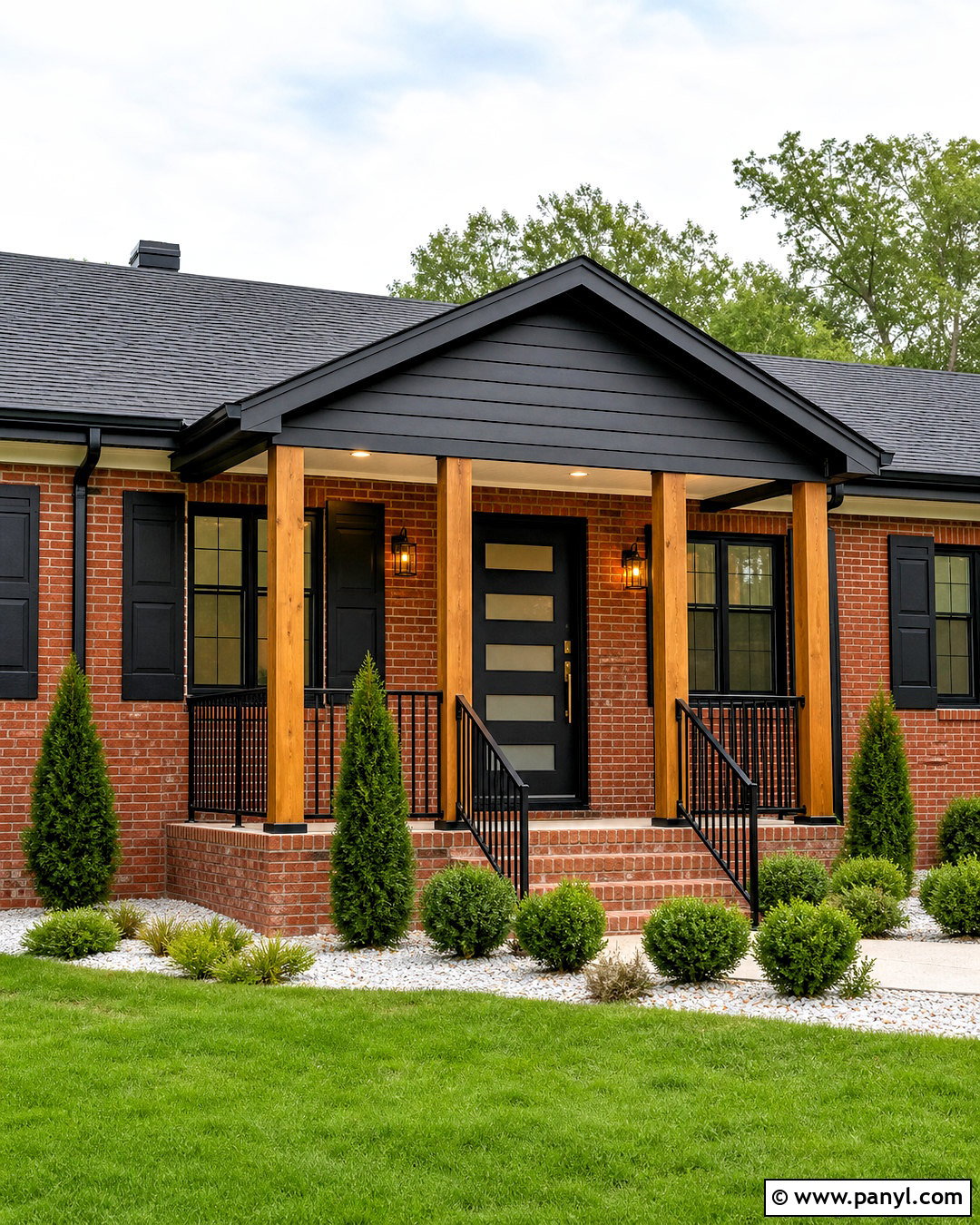
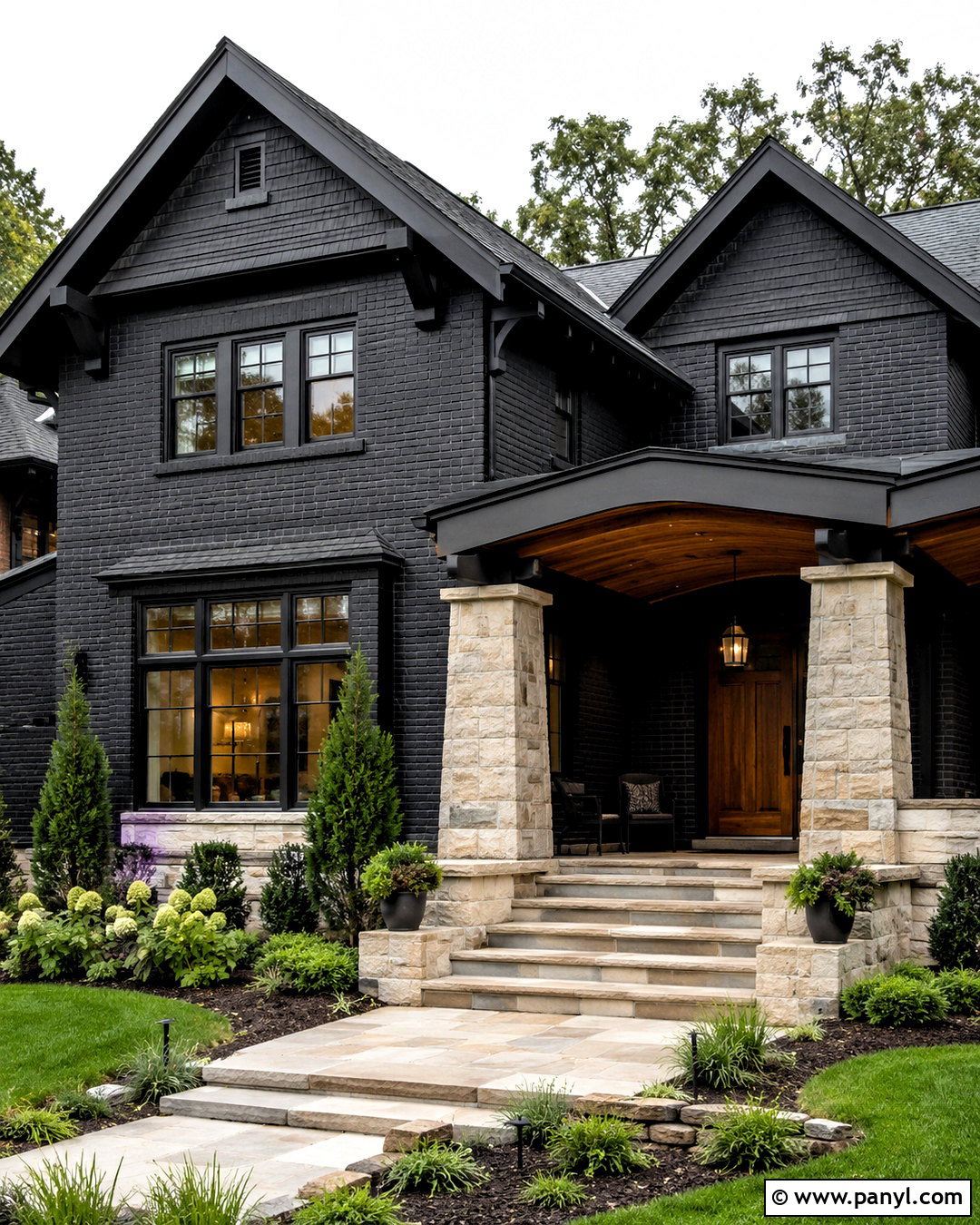
Matte black makes traditional red brick feel sharper and more architectural. Use black on window frames, shutters, gutters, railings, and a streamlined front door. If the home has siding, reserve the black for one prominent gable or addition so the brick remains the primary material. Introduce warm white on soffits and porch ceilings to prevent the exterior from looking overly dark. A charcoal roof, natural wood porch columns, and brushed brass or bronze lighting add dimension. Keep landscaping structured with clipped hedges, upright grasses, and pale gravel beds. This high-contrast scheme suits modernized ranch houses, urban townhomes, and transitional exteriors. Repeating black in several balanced locations makes the bold color look intentional rather than random.
9. Deep Navy With Red Brick
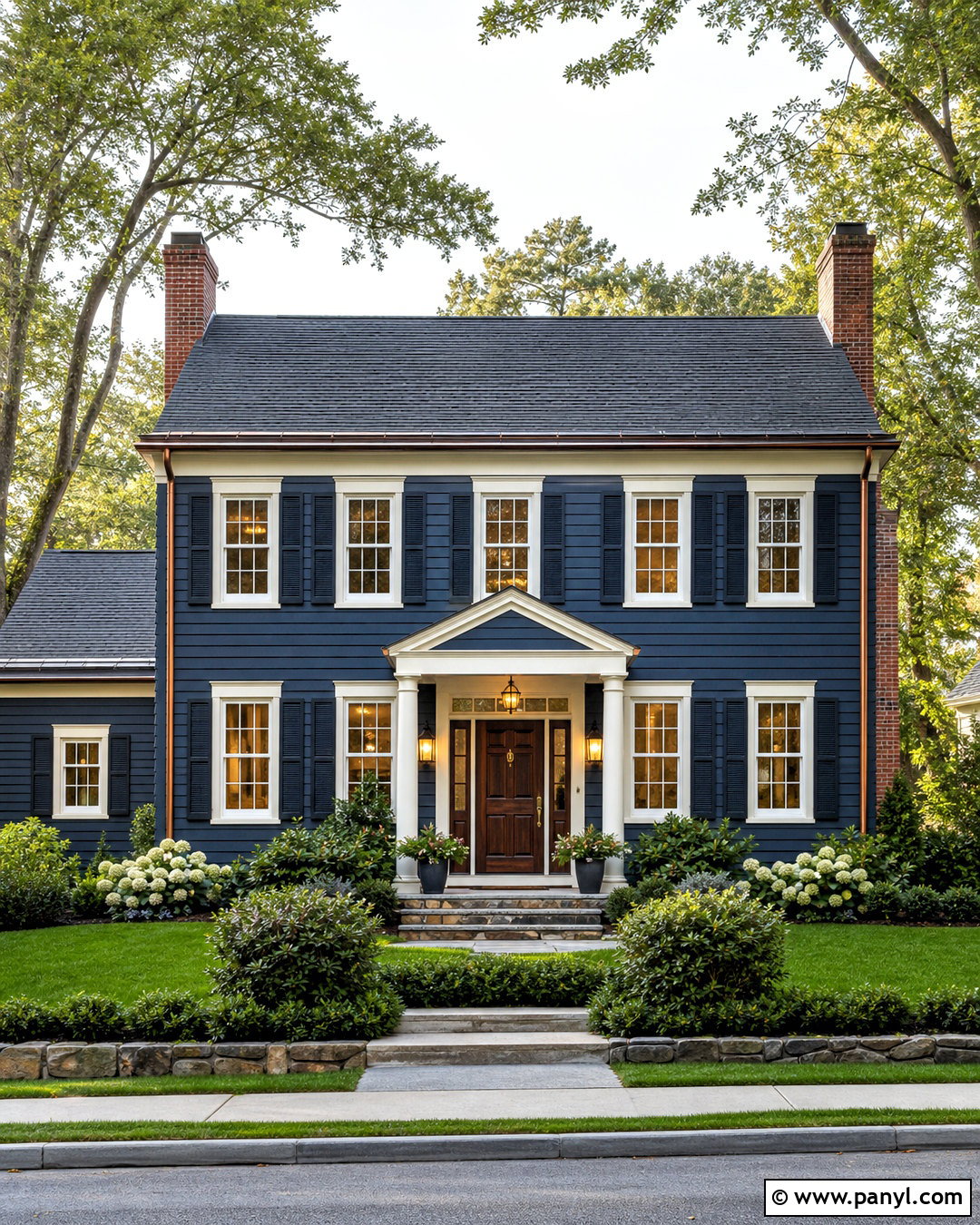
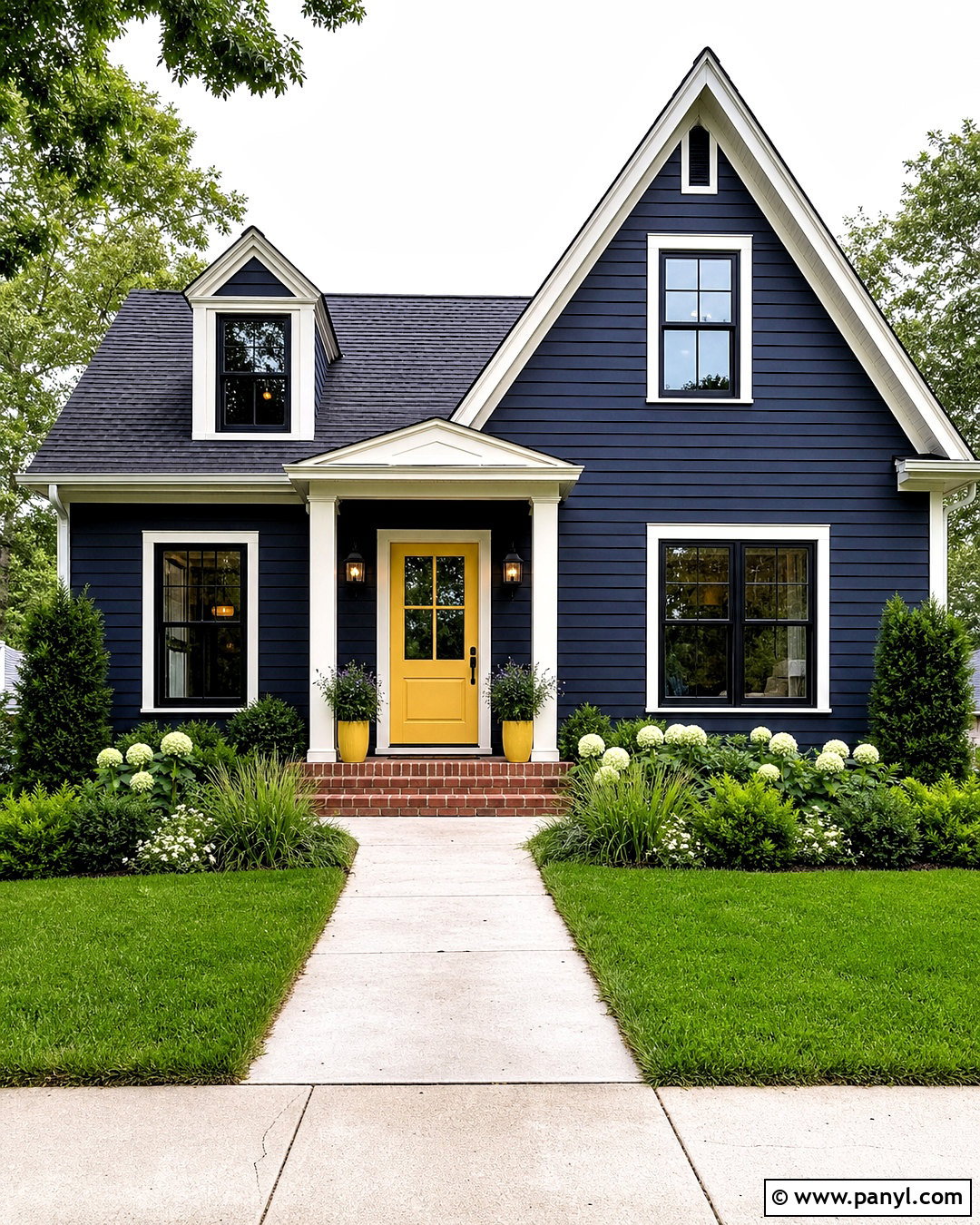
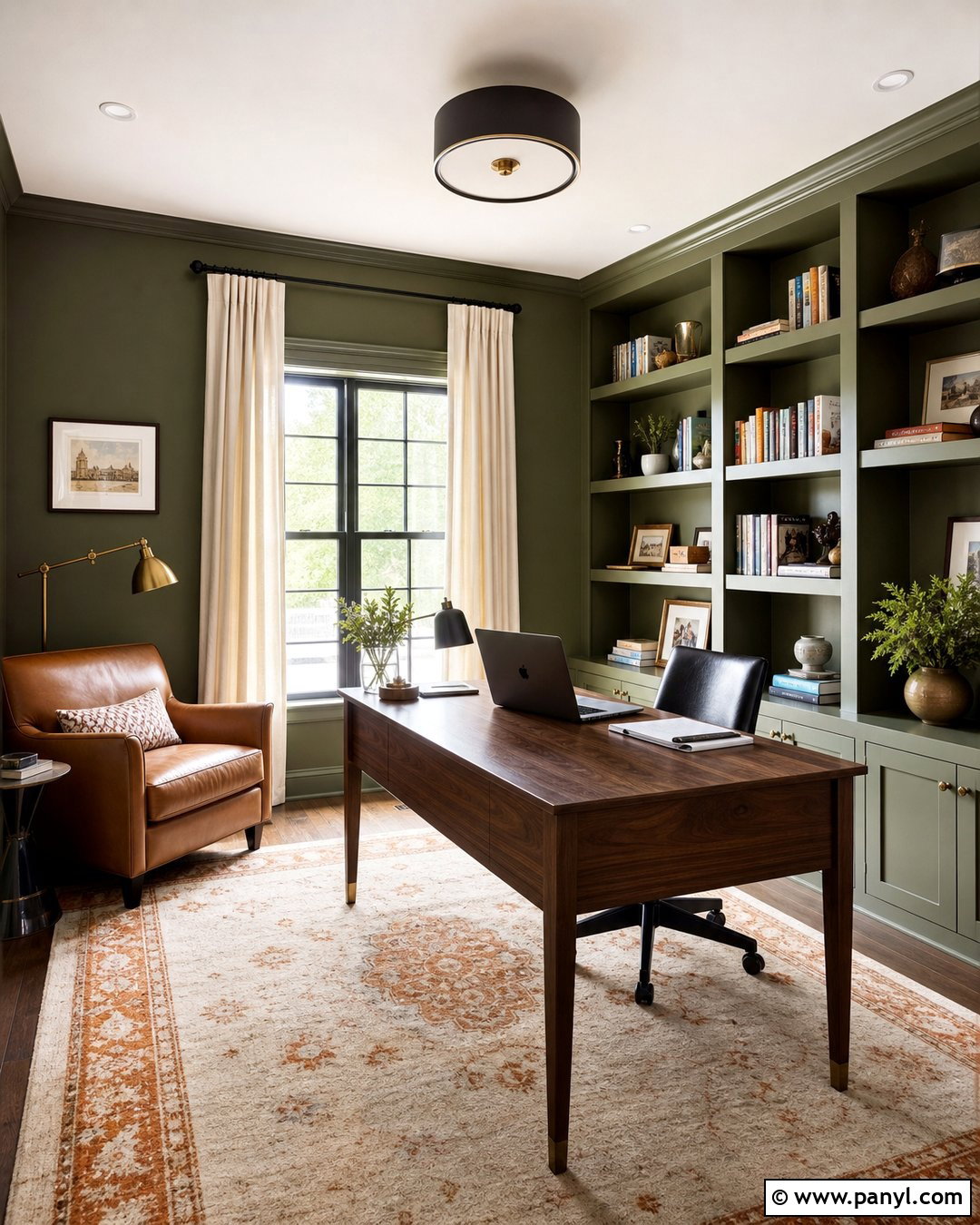
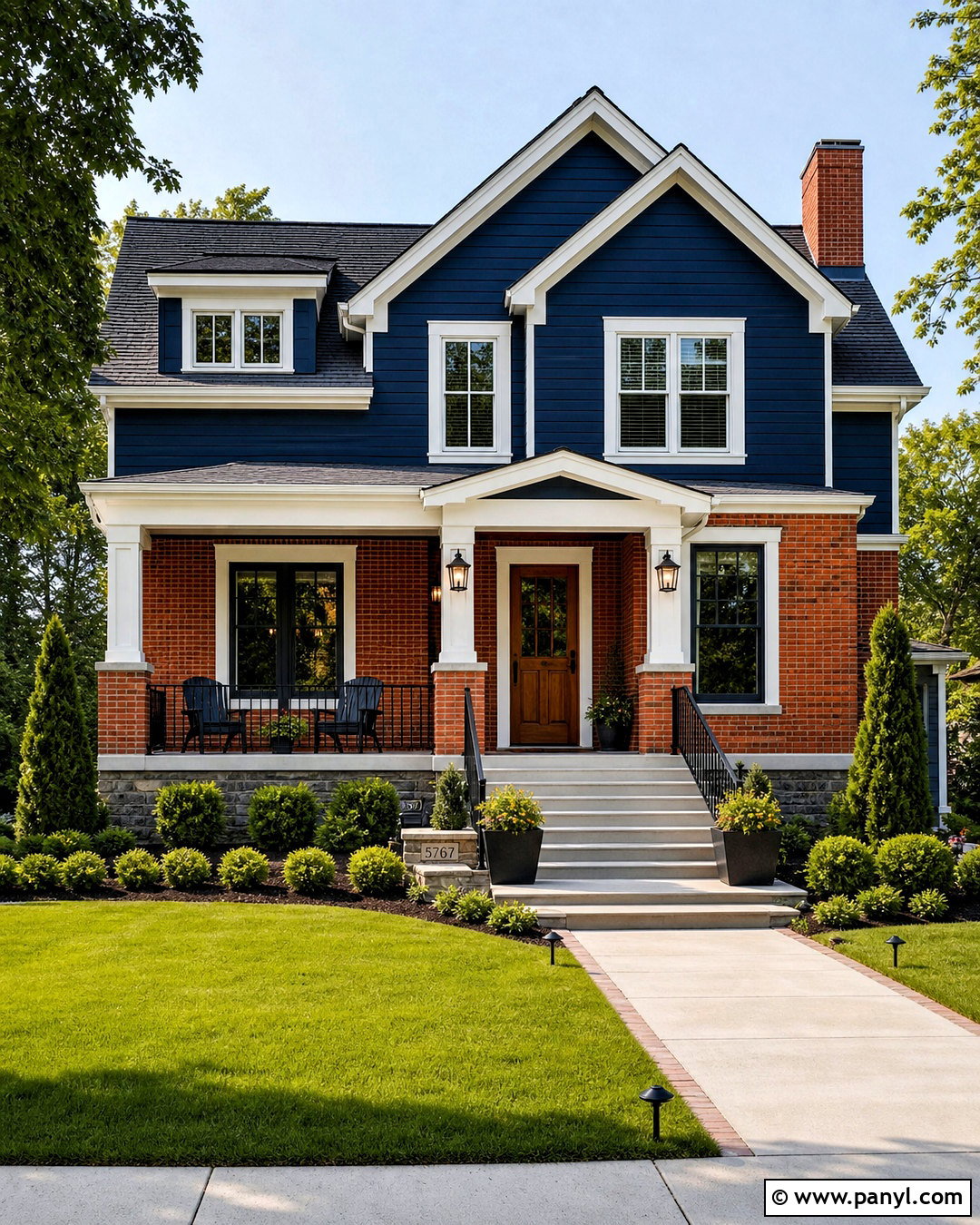
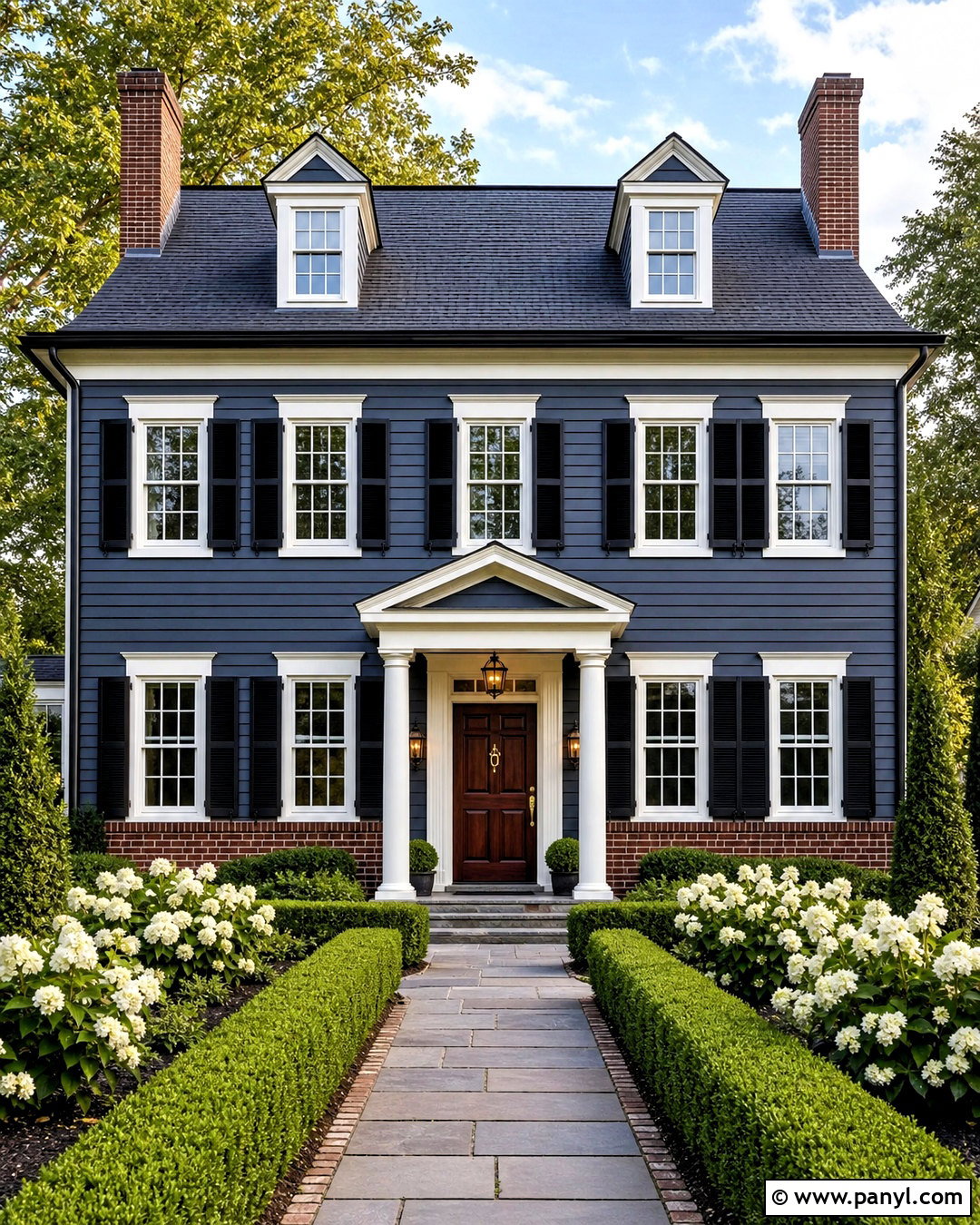
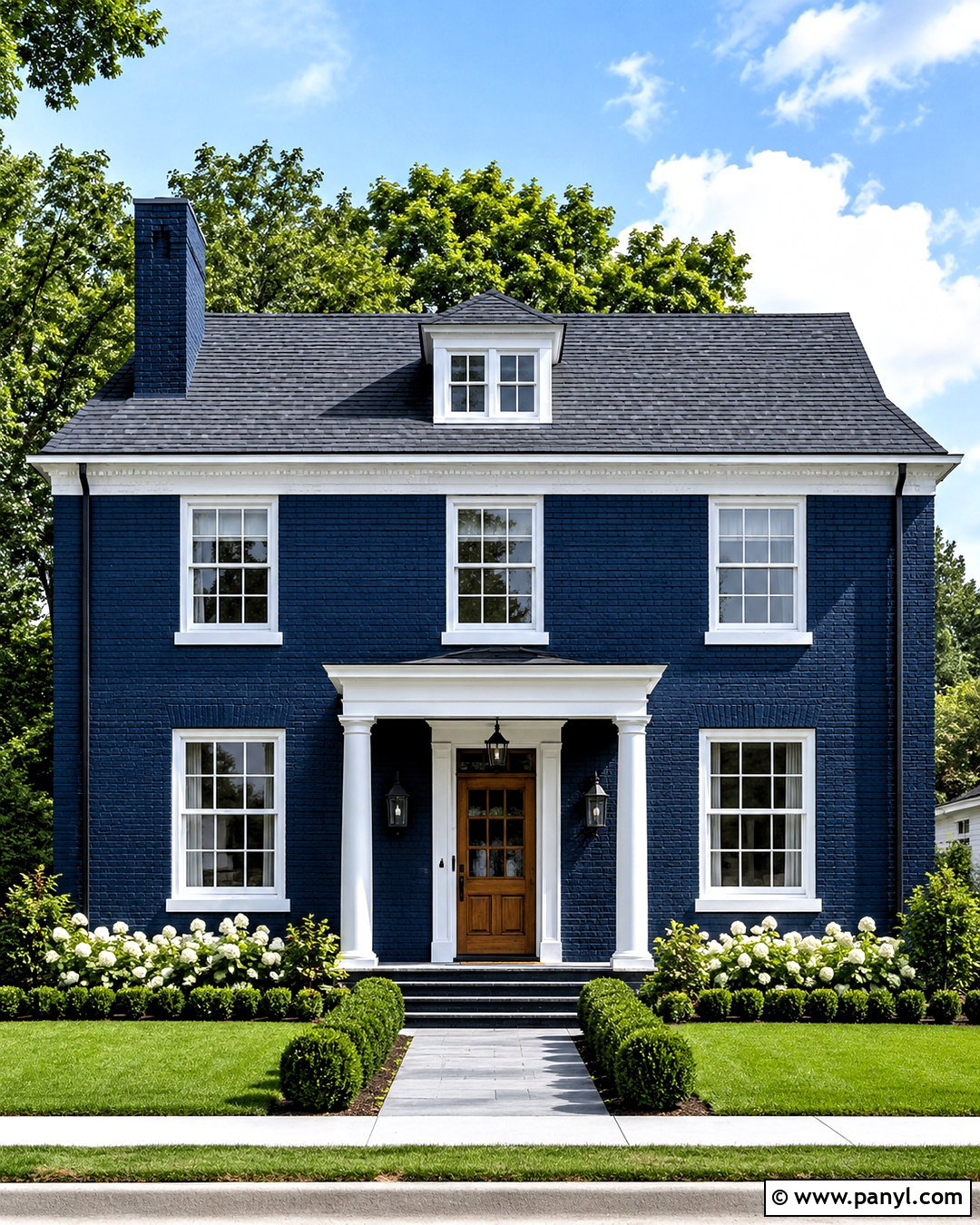
Deep navy offers bold contrast without feeling as severe as black. Apply a muted, gray-based navy to upper siding, shutters, or a front door, allowing the brick to remain visually dominant. Use creamy white trim around windows and porch columns for a polished traditional finish. A charcoal roof connects naturally with the navy, while copper gutters and warm brass lanterns bring out the brick’s orange tones. Natural stone steps and neatly layered shrubs complete the exterior. This combination is especially attractive on Colonial, Georgian, and coastal-influenced homes. Avoid highly saturated royal blue, which can compete with the masonry. A restrained navy with gray or green undertones feels more sophisticated and works across changing daylight conditions.
10. Slate Blue With Red Brick
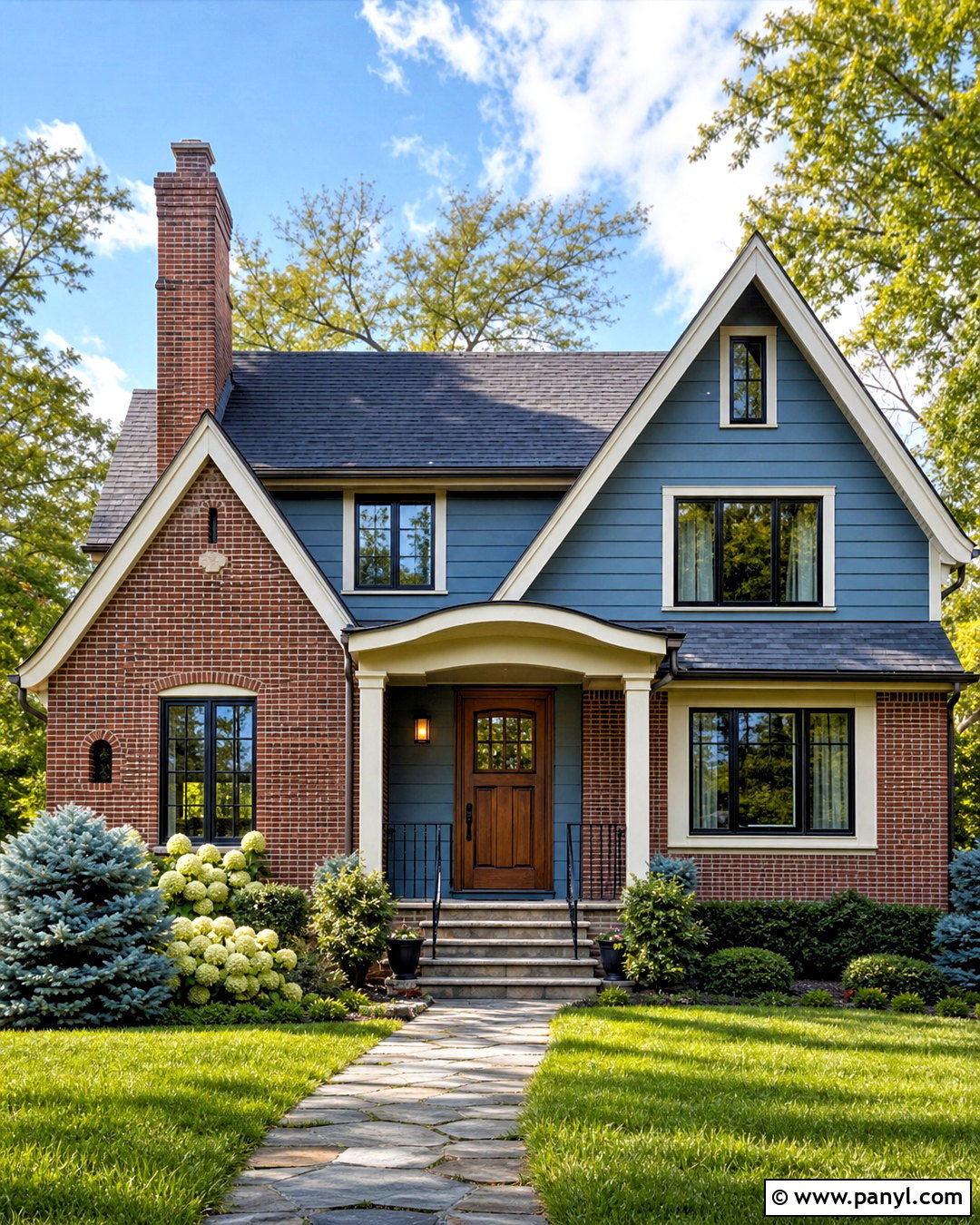
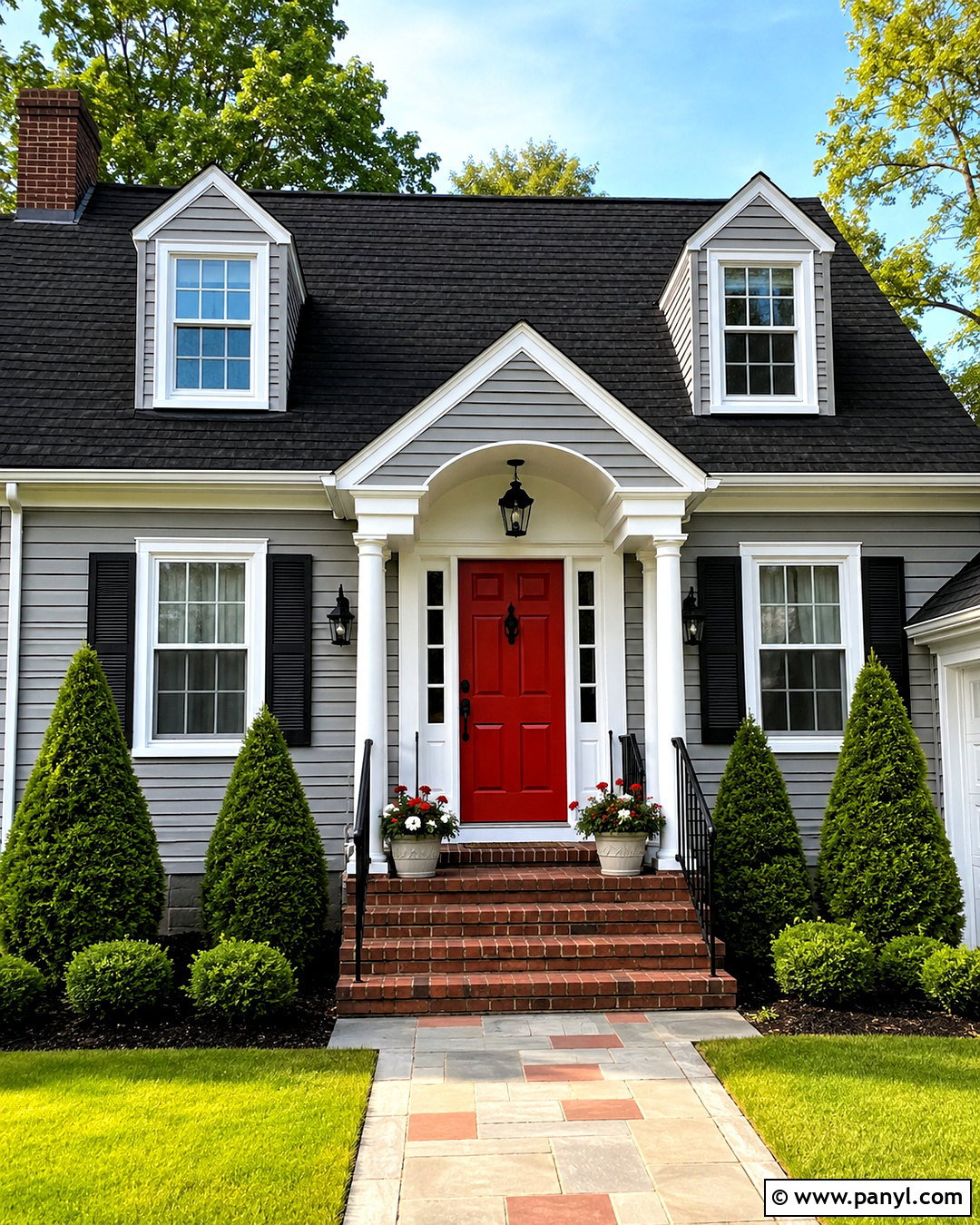
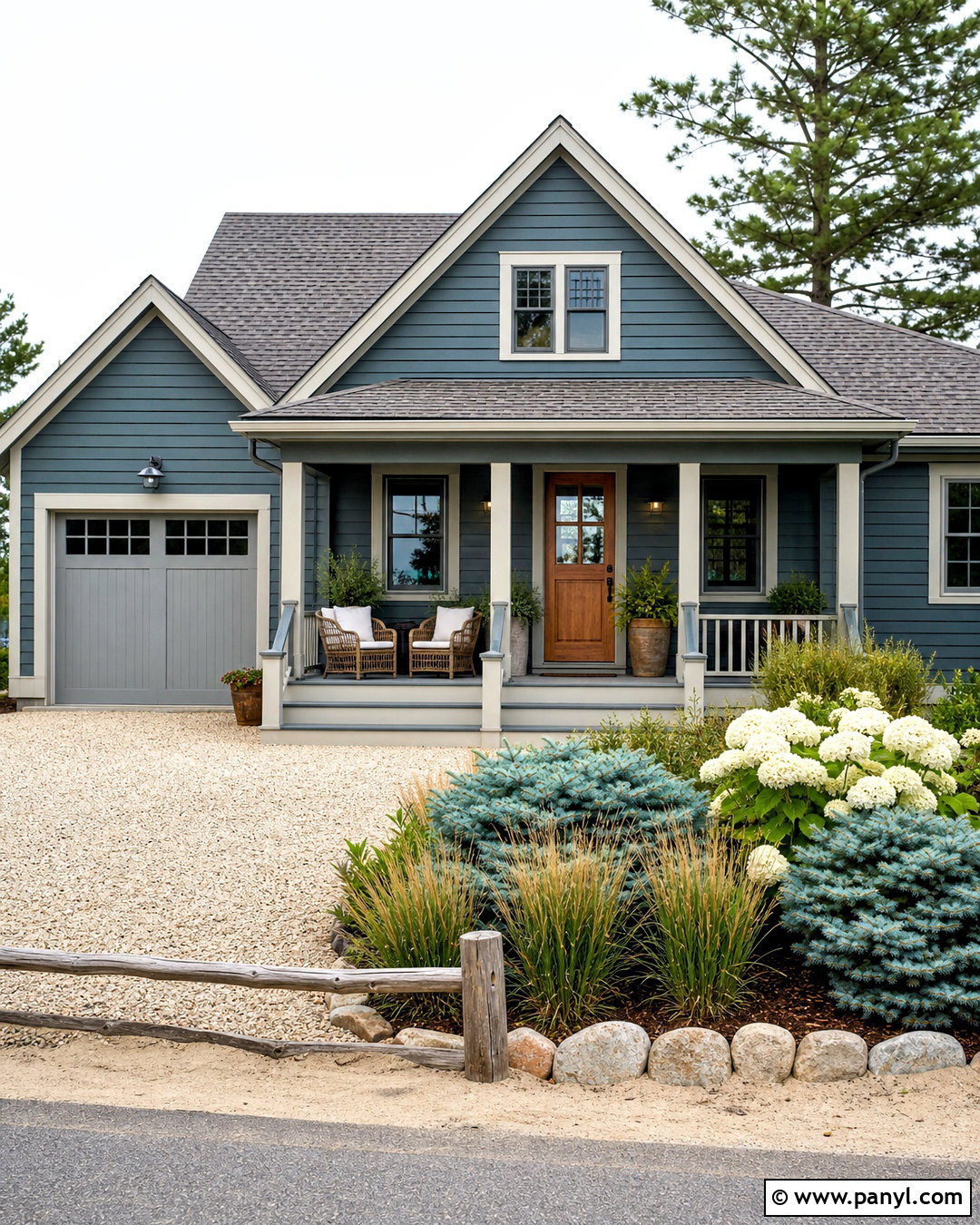
Slate blue introduces a quieter, relaxed contrast that complements weathered red brick. Use the color on horizontal siding, porch walls, or broad gables, then surround it with warm white fascia and trim. Choose a medium charcoal roof and dark bronze gutters to anchor the cooler blue. A walnut front door adds natural warmth, while black iron railings create crisp definition. Landscaping with blue-green evergreens, pale hydrangeas, and stone pathways helps connect the house to its surroundings. This complete scheme works well on cottages, farmhouses, and traditional suburban homes. Select a slate blue containing enough gray to appear muted. Bright or overly cool blue can make the brick and siding feel like unrelated surfaces.
11. Dusty Blue With Red Brick
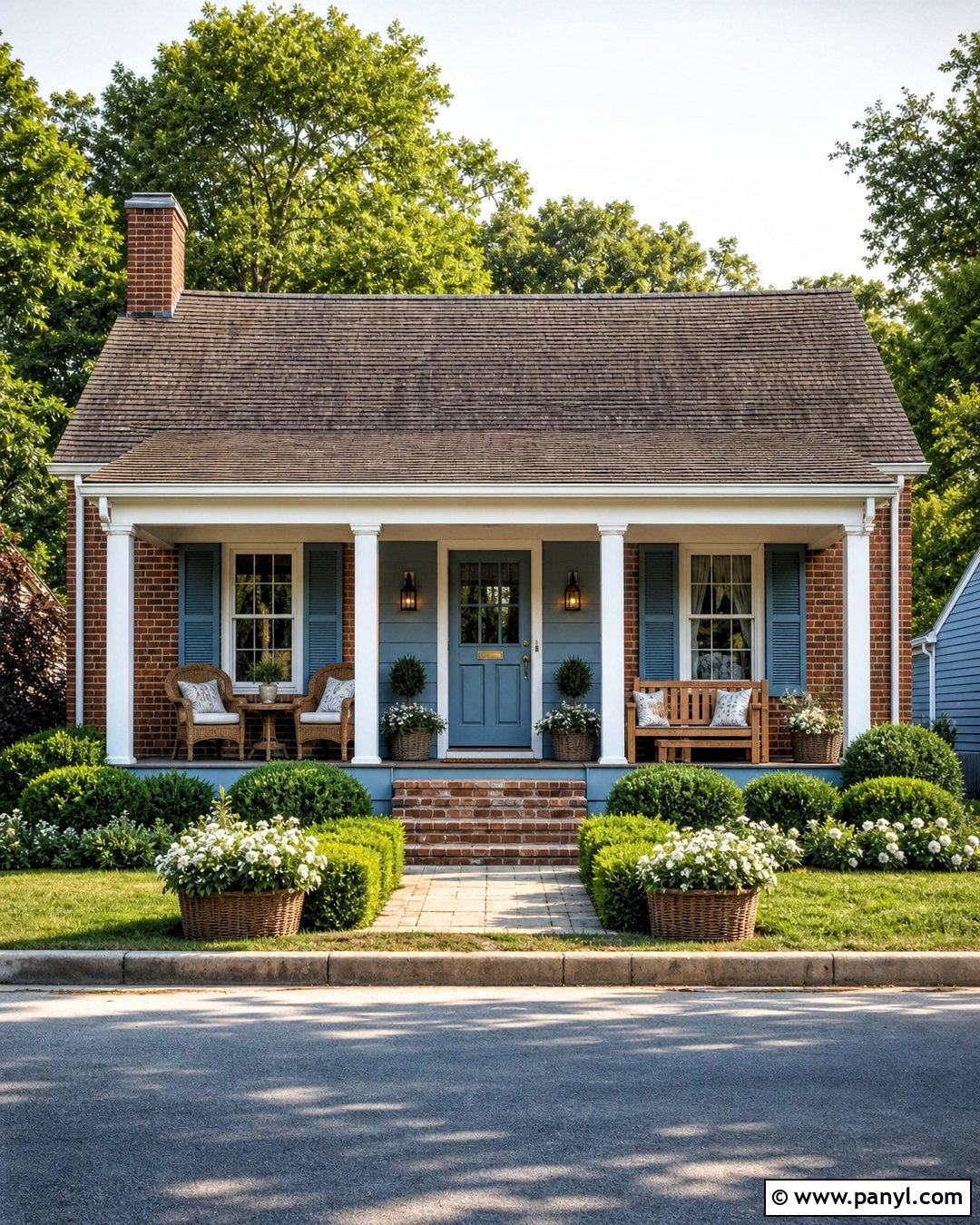
Dusty blue gives red brick a cheerful but understated companion. Paint smaller areas such as porch siding, shutters, a garden gate, or the front door in a soft blue with noticeable gray undertones. Keep the main trim creamy white and select a medium brown-gray roof to preserve warmth. Natural wood porch furniture, aged brass lighting, and woven planters make the entrance feel comfortable and collected. Repeat the dusty blue through ceramic pots or subtle flowering plants rather than adding several unrelated accent colors. This palette suits cottage exteriors and modest brick ranch homes that need gentle personality. Because pale blue changes significantly in sunlight, choose a slightly grayer sample than you initially think you need.
12. Sage Green With Red Brick
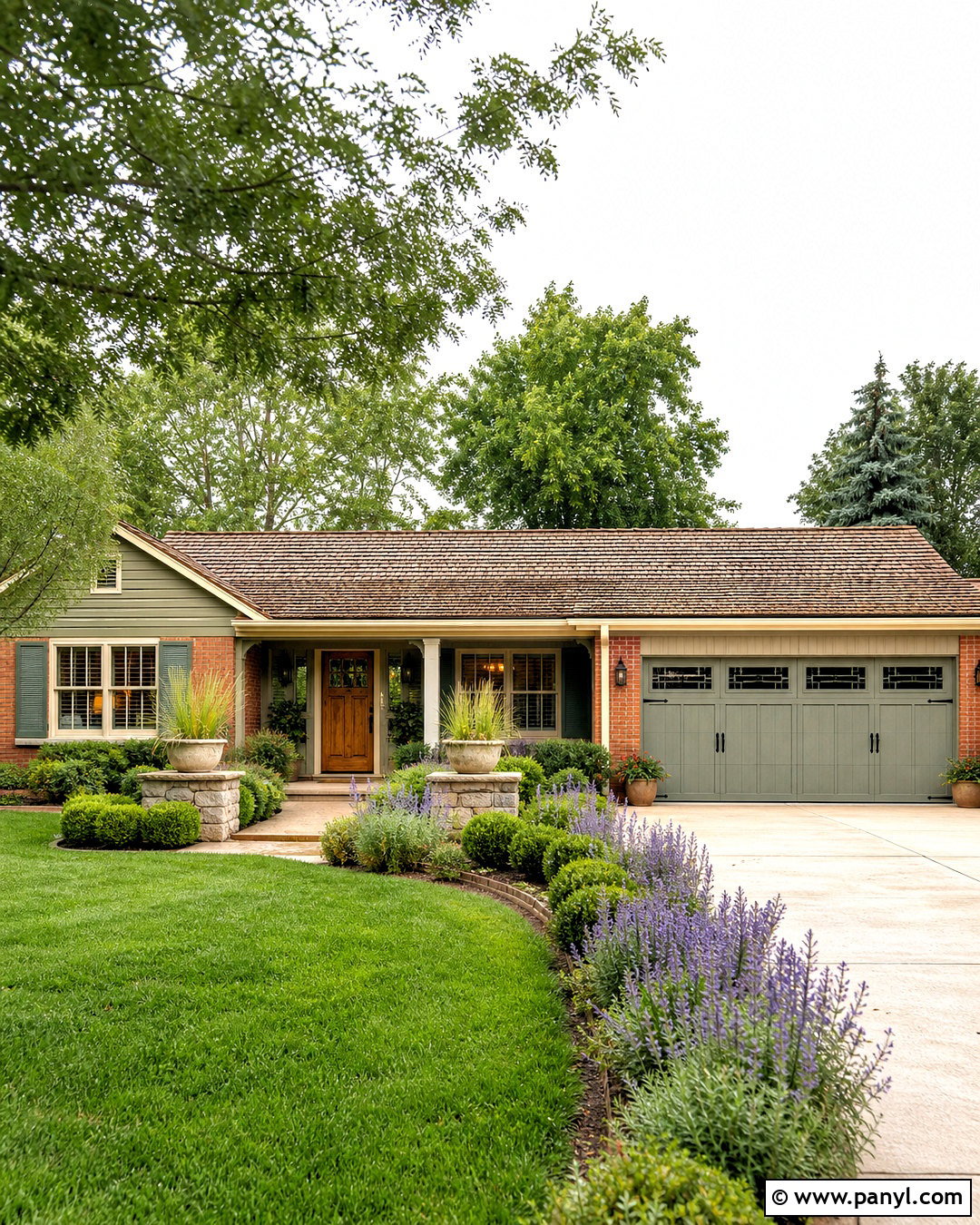
Sage green softens the strength of red brick with an earthy, garden-inspired contrast. Apply warm sage to siding, garage doors, shutters, or porch walls. Pair it with creamy off-white trim so the overall exterior stays light and approachable. A brown or weathered charcoal roof supports both colors, while a stained oak front door enhances the natural look. Use bronze hardware, copper-toned lights, and stone planters for additional warmth. Layer the landscaping with boxwoods, lavender, ornamental grasses, and low flowering shrubs. Sage is especially attractive beside orange-red brick and tan mortar. Avoid pale mint shades, which may look too cool or playful. A dusty sage with gray undertones creates a more lasting, versatile exterior scheme.
13. Olive Green With Red Brick
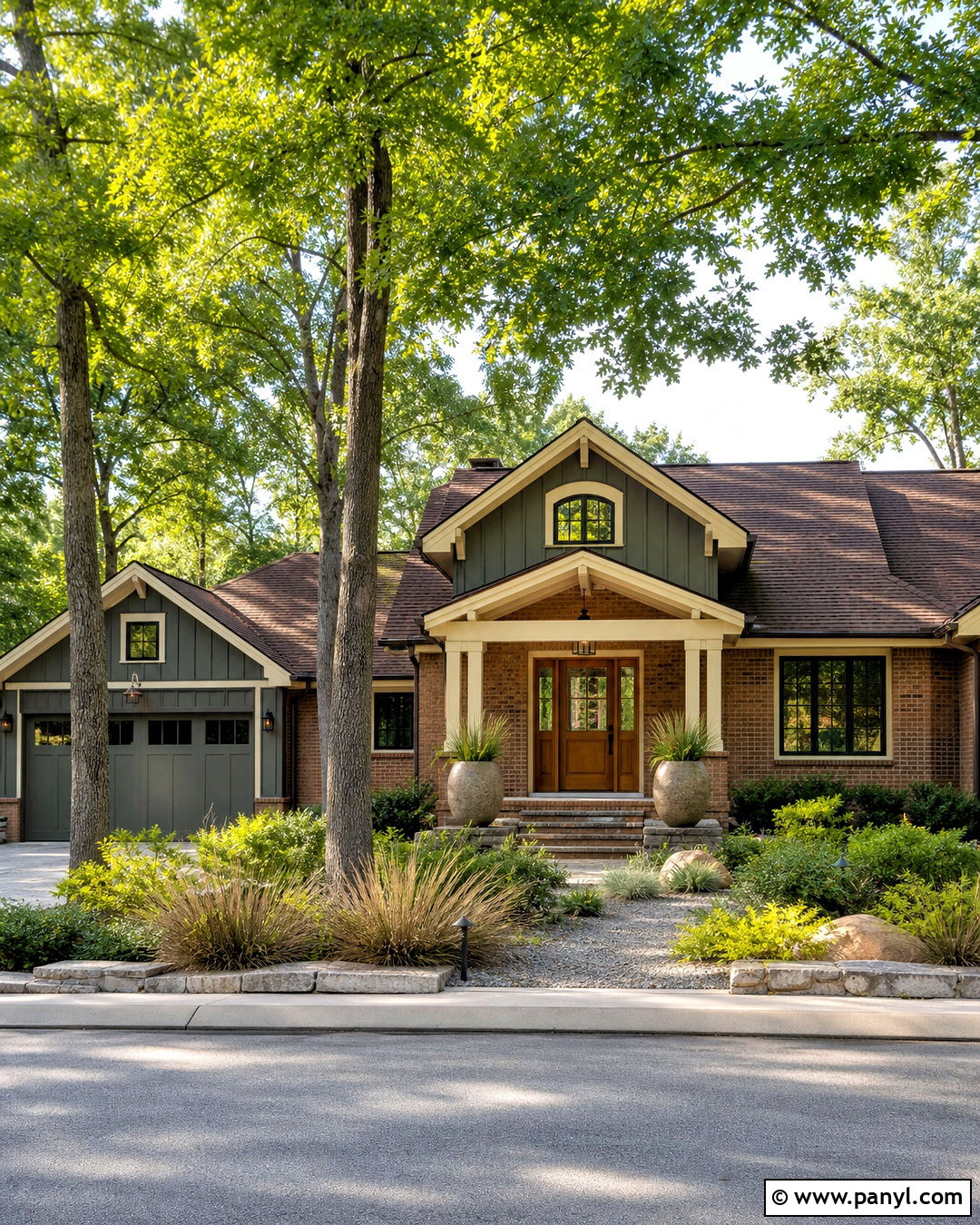
Olive green produces a grounded exterior that feels connected to mature landscaping. Use it on board-and-batten siding, shutters, or garage doors, then add warm ivory around the windows and roofline. A dark brown roof and bronze gutters strengthen the earthy color story. Make the entrance welcoming with a medium cedar door, black hardware, and oversized stone planters. Deep green shrubs, native grasses, and gravel paths allow the home to settle naturally into the yard. This palette works especially well on Craftsman houses, wooded properties, and red brick ranches. Choose a muted olive with brown or gray undertones. Strong yellow-green paint can exaggerate orange tones in the brick and create an unnecessarily busy facade.
14. Forest Green With Red Brick
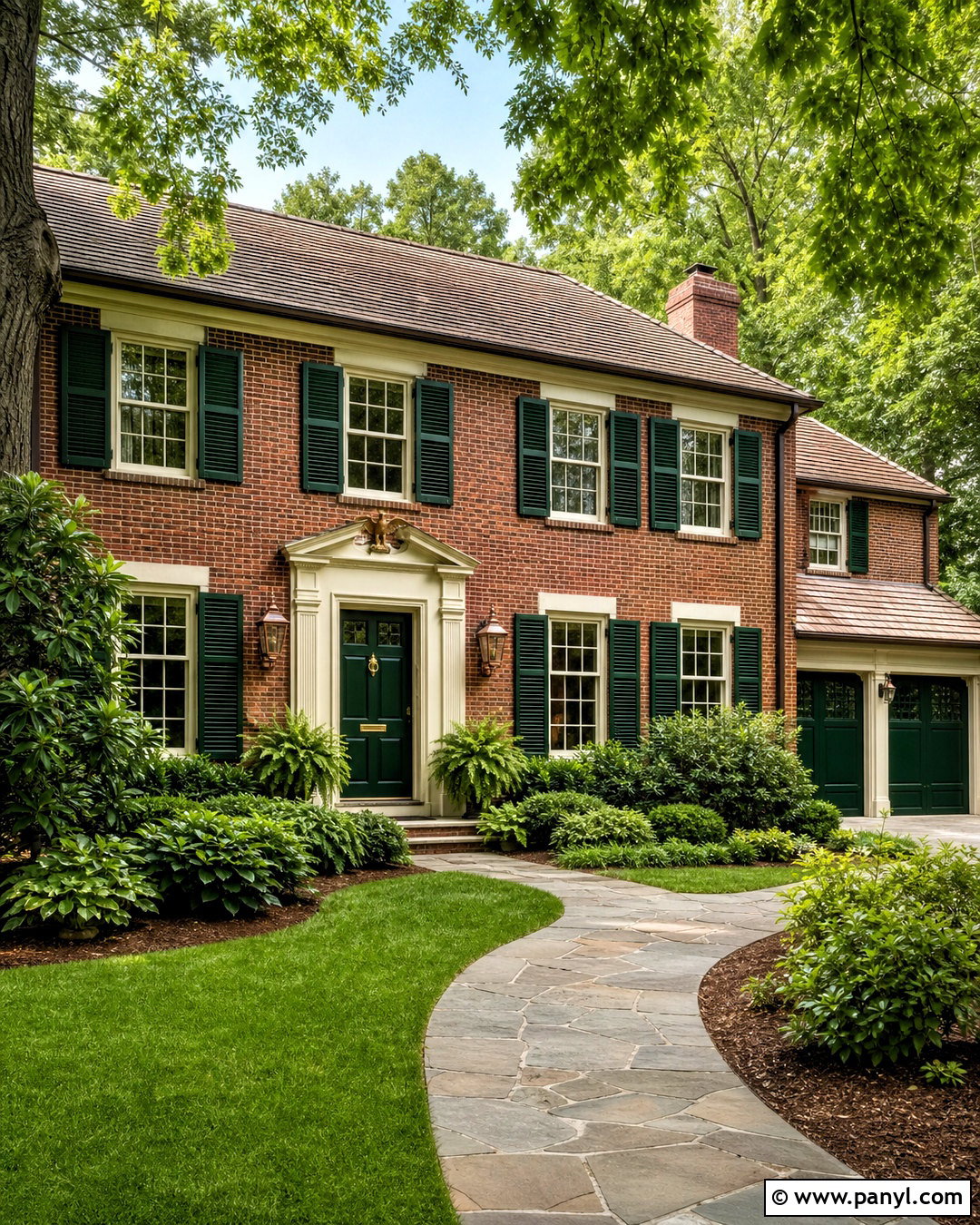
Forest green gives red brick a rich, traditional appearance with strong natural contrast. Use this deep color on shutters, a paneled front door, garage doors, or limited siding sections. Balance it with soft cream trim and a warm brown roof so the palette does not become too dark. Antique brass door hardware, copper lanterns, and stained wood porch details enhance the heritage-inspired look. Surround the home with ferns, broadleaf evergreens, white flowers, and a curved stone walkway. This complete scheme suits Tudor, Colonial, and historic brick homes. Pick a forest green that is dark and slightly muted rather than bright emerald. The deeper tone feels established and allows the varied brickwork to remain the main attraction.
15. Muted Teal With Red Brick
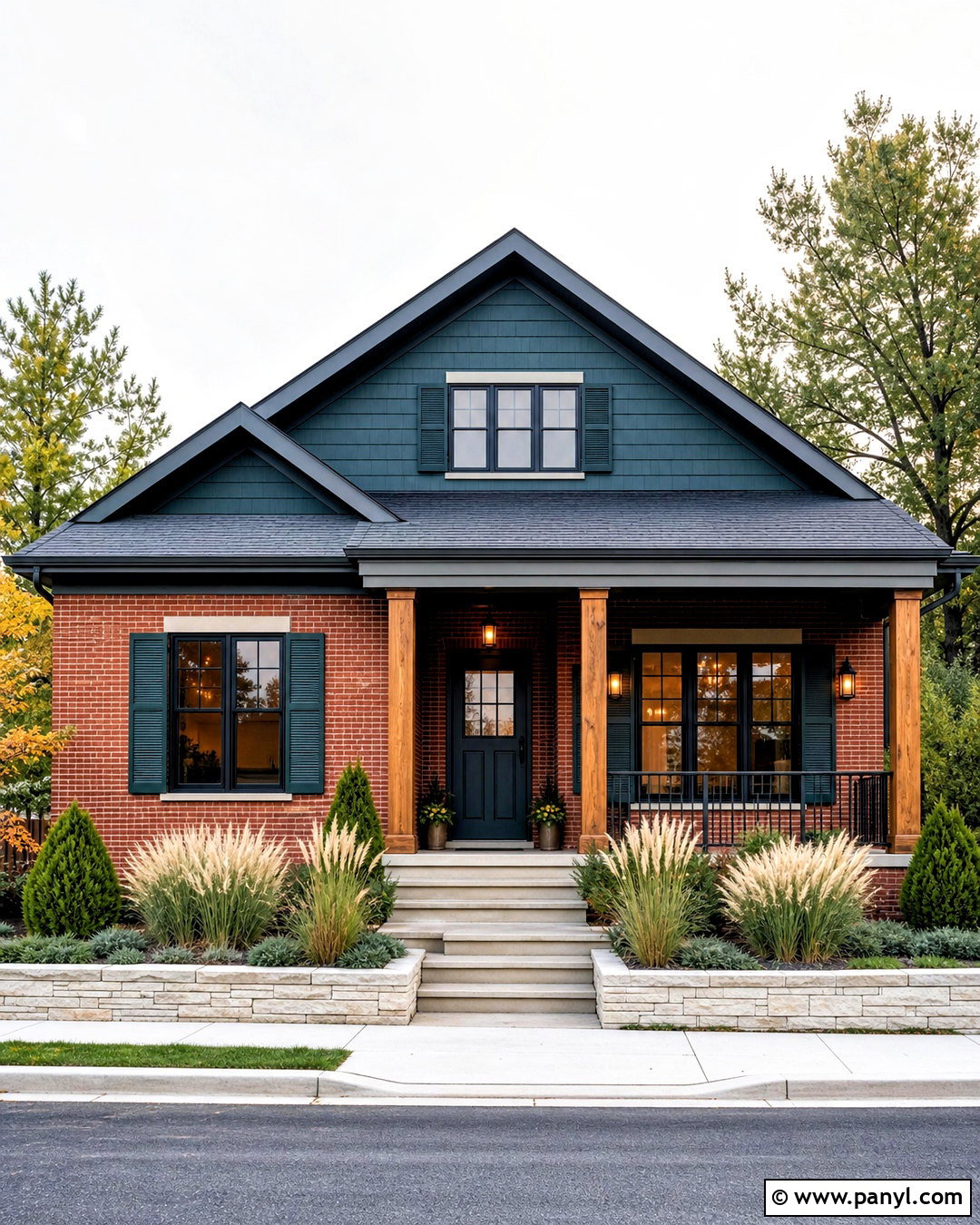
Muted teal creates distinctive contrast while remaining sophisticated enough for a permanent exterior. Use a dark blue-green shade on the front door, shutters, or upper siding. Keep window trim warm white and introduce charcoal on the roof and gutters to ground the colorful pairing. Natural cedar porch posts and bronze lighting bridge the cool teal and warm masonry. Use simple landscaping with evergreen shrubs, silvery grasses, and pale stone edging to avoid adding competing colors. This scheme suits eclectic cottages, updated Craftsman houses, and brick homes with architectural details worth highlighting. Choose a grayed teal instead of a bright tropical version. Repeating the color in two or three controlled areas makes the exterior look cohesive.
16. Chocolate Brown With Red Brick
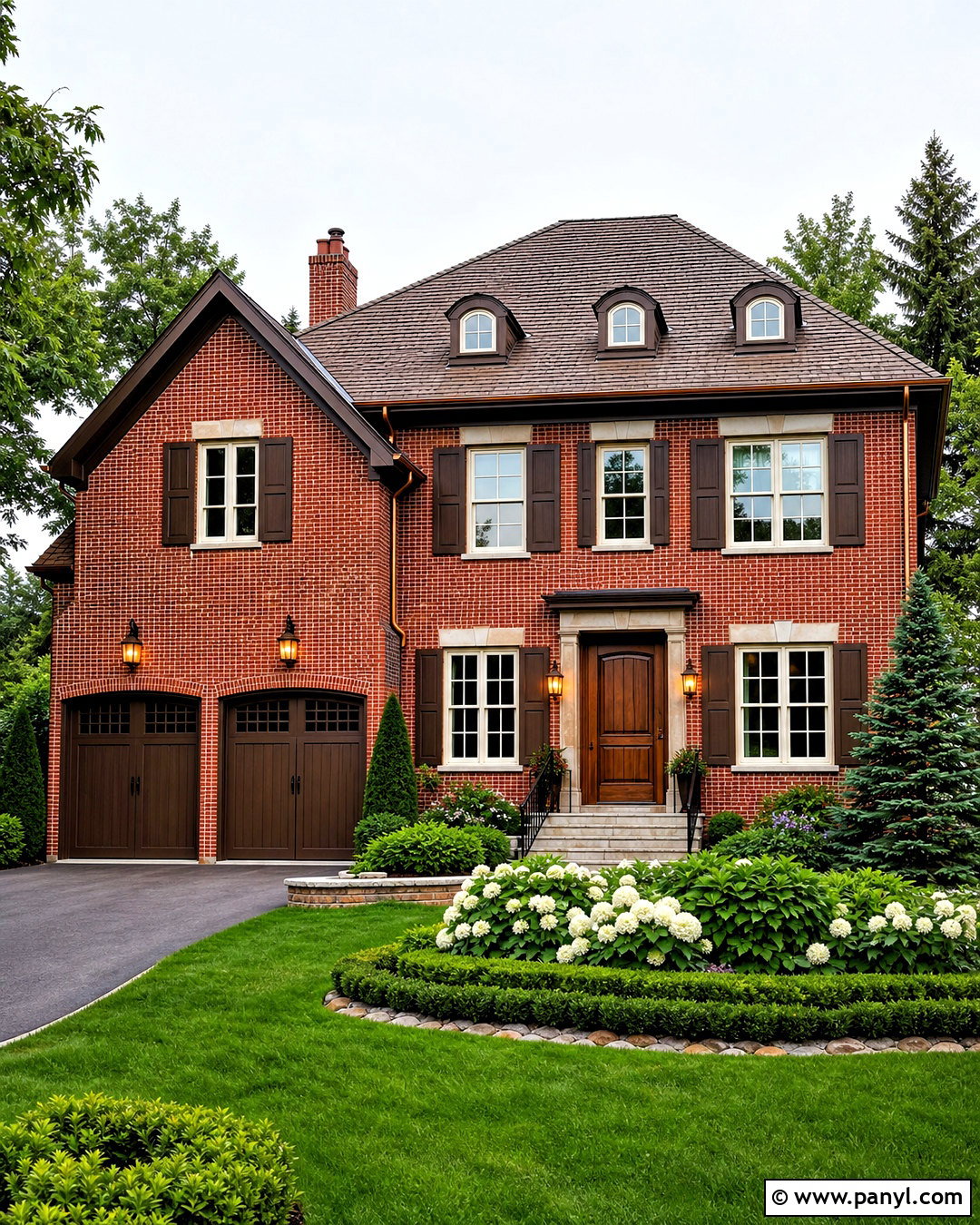
Chocolate brown reinforces the deepest earthy notes in red brick and creates a substantial, traditional exterior. Use the color on shutters, garage doors, fascia, and a solid wood-look front door. Add soft cream around windows and porch columns to provide necessary brightness. A dimensional brown roof containing charcoal flecks connects the entire palette. Bronze lanterns, copper gutters, and natural stone steps contribute subtle material variation. Keep the landscaping fresh with layered evergreens, white blooms, and light mulch rather than adding more reddish foliage. Chocolate brown is particularly effective with brick that contains dark burnt edges or brown mortar. Choose a deep neutral brown without strong red undertones so each exterior material remains visually distinct.
17. Bronze With Red Brick
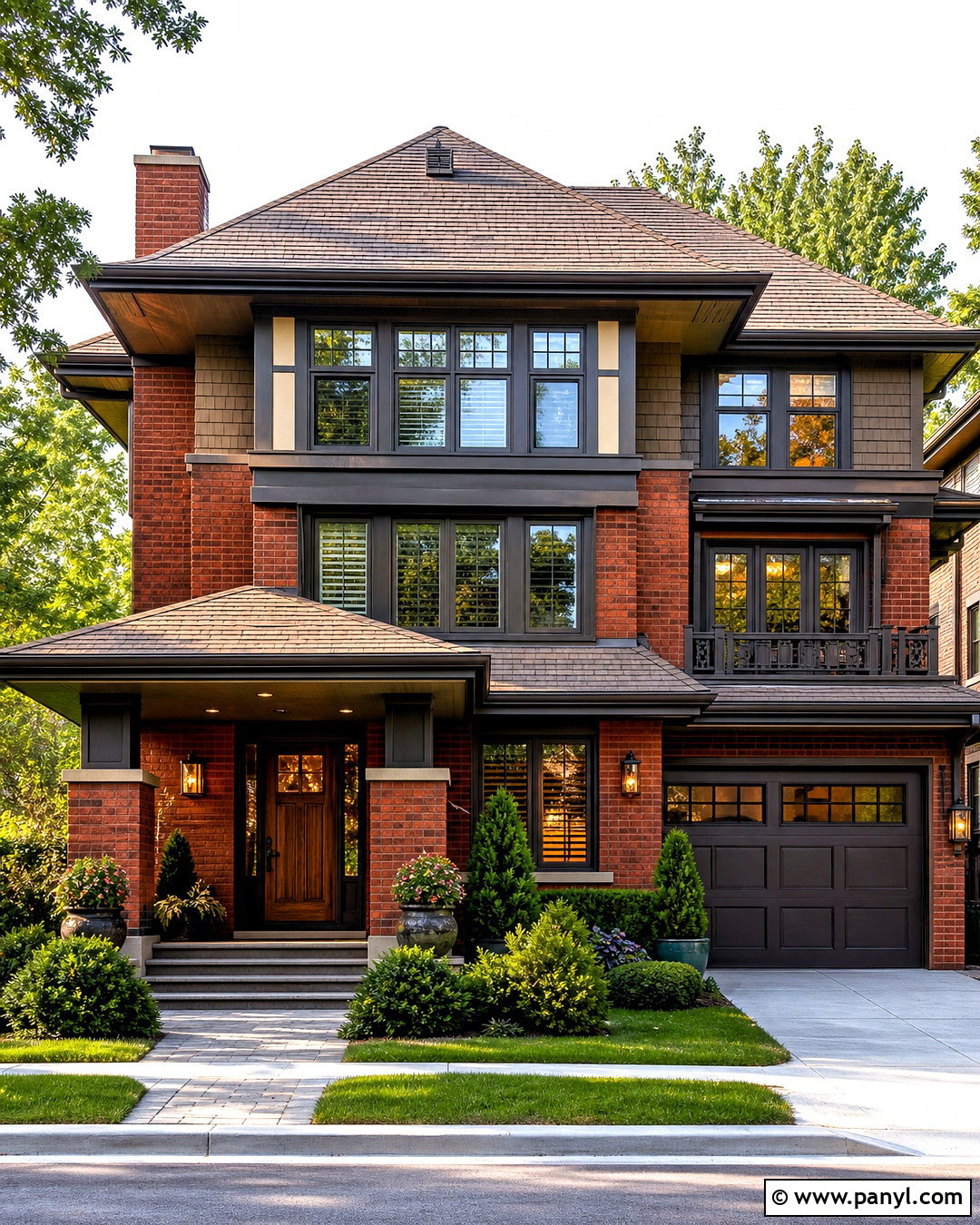
Bronze brings depth to red brick while offering a softer alternative to pure black. Use deep bronze paint on window frames, shutters, gutters, railings, and garage doors. Pair these details with mushroom-colored siding or warm cream trim for a balanced facade. A brown-gray roof supports the metallic-inspired shade, while an oak front door keeps the entrance welcoming. Add actual aged-bronze lights and hardware to create subtle tonal variation. Pale stone paving, clipped greenery, and large ceramic pots complete the sophisticated exterior. This scheme works well on Craftsman, Prairie, and transitional brick houses. Select a dark bronze with brown and black undertones rather than a shiny metallic finish, maintaining a quiet and architectural appearance.
18. Natural Tan With Red Brick
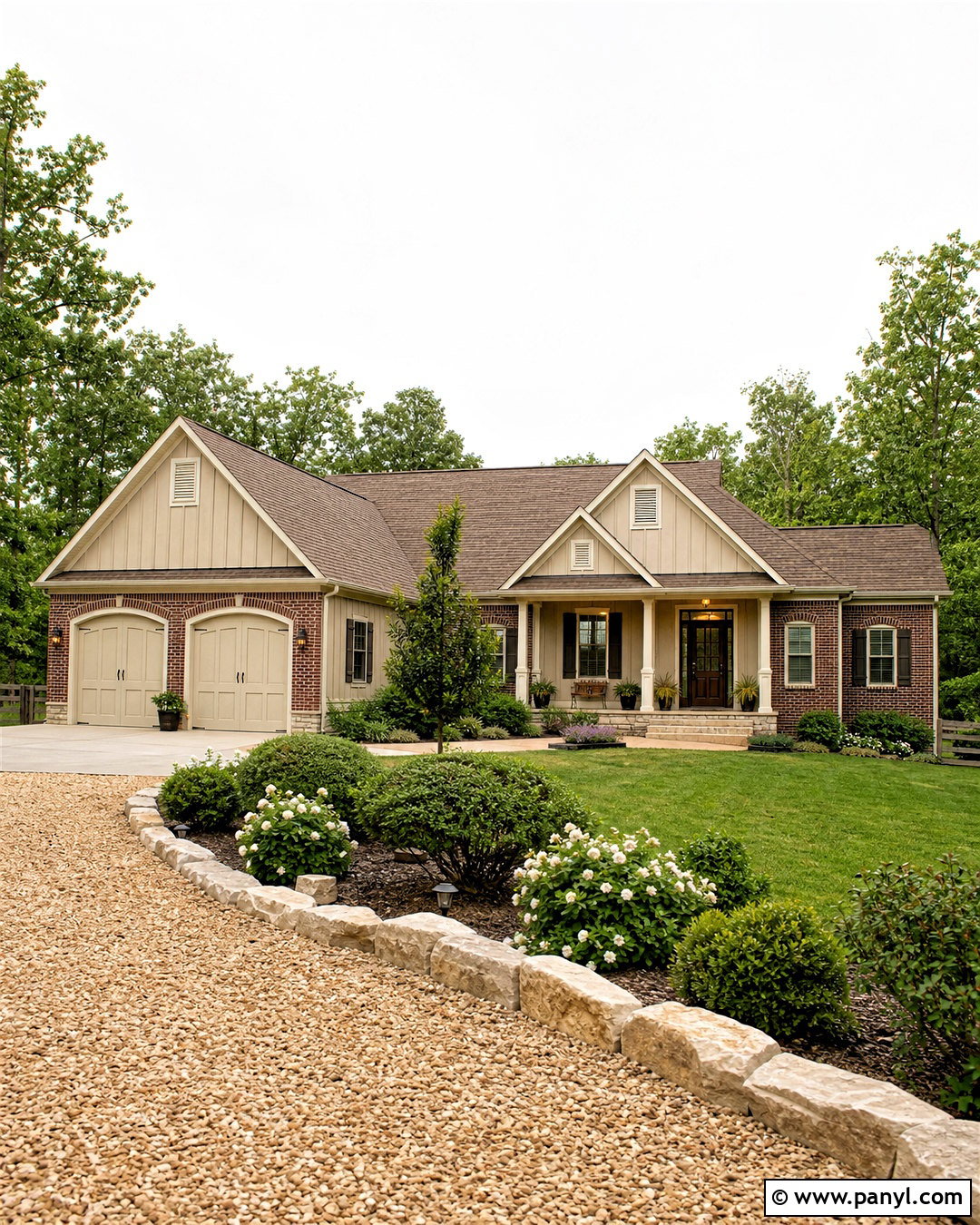
Natural tan creates a warm, low-contrast exterior that highlights the texture of red brick. Use it on stucco, siding, garage doors, and broad porch walls. Define the architecture with creamy white trim, then add dark brown shutters and a walnut-stained front door. A weathered brown roof keeps the palette consistent without adding another dominant color. Carry the tan into limestone steps, sandy gravel, or warm concrete pavers. Green shrubs and white flowering plants provide fresh contrast around the foundation. This combination is especially suitable for ranch, Mediterranean, and Southwestern-influenced homes. Choose a subdued tan that relates to the brick’s mortar. Avoid orange-heavy tan, which can make the entire exterior appear overly red or monotonous.
19. Muted Mustard With Red Brick
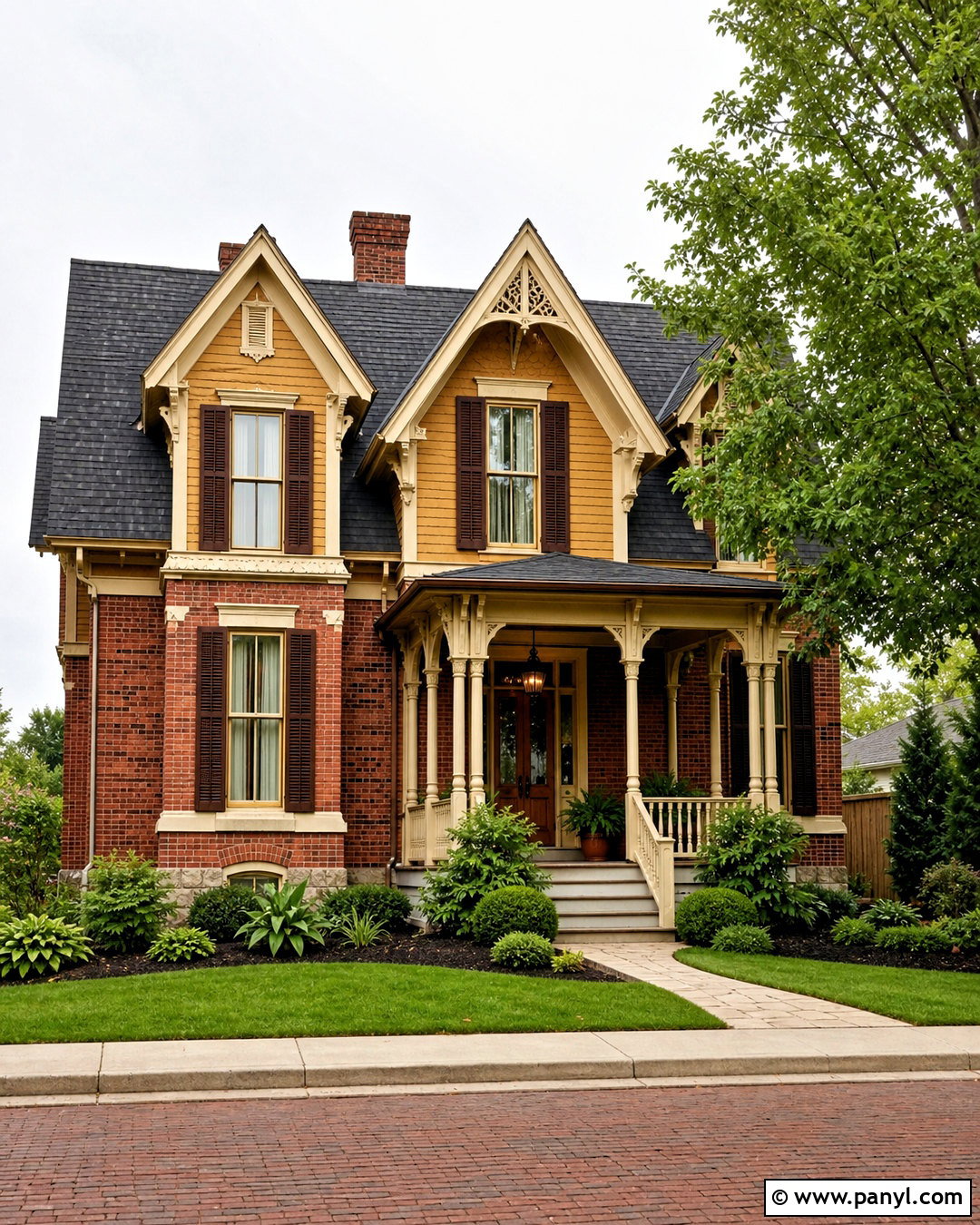
Muted mustard can give red brick a warm, historic personality when used carefully. Select an ochre-based yellow softened with brown or gray, then apply it to limited siding, a front door, or decorative gable details. Use cream trim to lighten the exterior and deep brown shutters to control the stronger color. A weathered charcoal roof provides neutral balance, while antique bronze lighting and natural wood accents reinforce the traditional mood. Simple green landscaping and pale stone paths keep the overall scene calm. This combination works well on cottages, Victorian homes, and older brick properties. Avoid bright lemon yellow, which may compete with the masonry. The best mustard should appear earthy and slightly aged rather than clear and vivid.
20. Soft Blush With Red Brick
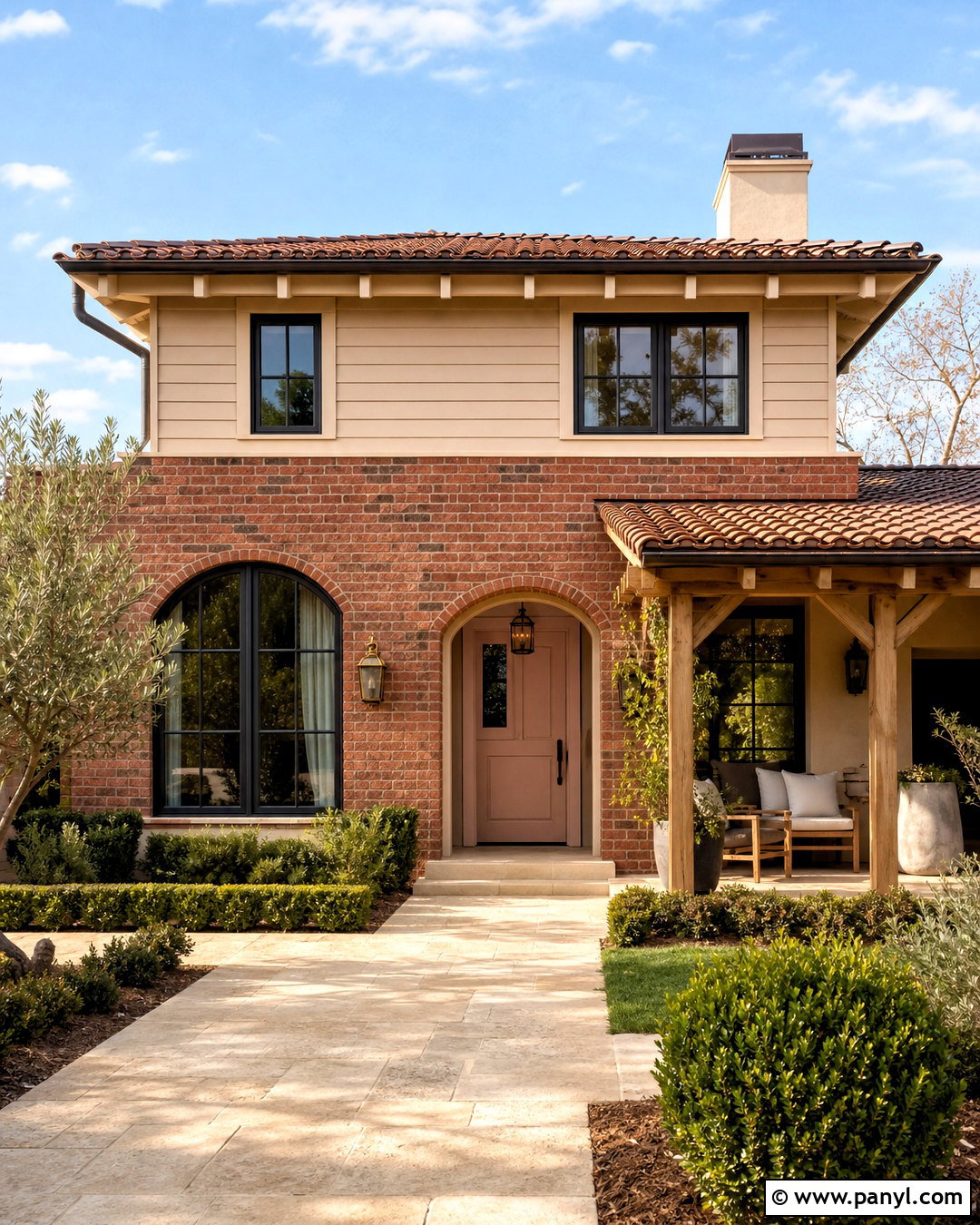
Soft blush creates a gentle tonal palette that feels warm without matching the red brick too closely. Choose a dusty pink-beige with gray or brown undertones and use it on stucco, upper siding, or a recessed front door. Add creamy white trim and charcoal window frames to give the light color definition. A medium brown roof and aged-brass fixtures continue the warm scheme. Incorporate pale limestone, natural oak, and structured evergreen landscaping to prevent the exterior from feeling overly delicate. This combination works particularly well on Mediterranean cottages and historic urban homes. Avoid bubblegum pink or highly saturated coral. A restrained blush should read almost like a warm neutral when viewed from the street.
Conclusion:
The best exterior palette should enhance red brick rather than hide its natural variation. Warm white, cream, beige, taupe, and greige provide subtle coordination, while charcoal, navy, forest green, and black create stronger contrast. Softer choices such as sage, dusty blue, and blush add personality without overwhelming the architecture. Before painting, examine the brick’s undertones, mortar, roof, windows, and permanent hardscaping. Sample promising colors on large boards and view them beside the house in morning, afternoon, and shaded light. Whether you prefer a timeless facade or a bolder update, these 20 colors that go with red brick ideas can help you build a balanced, practical, and welcoming home exterior.

Related Ideas and Inspiration:
Leave a Reply