
Choosing the right exterior palette means looking beyond one paint color. The siding, trim, front door, roof, masonry, and landscaping should feel connected. Most successful palettes use a dominant body color, a supporting trim color, and a smaller accent, while coordinating with permanent features such as brick, stone, and roofing. () Warm neutrals remain versatile, but nature-inspired greens, rich blues, earthy browns, and confident dark shades can also create lasting curb appeal. Before painting, view large samples on different sides of your home throughout the day. This reveals undertones that small color chips can hide. Whether your house is modern, traditional, coastal, or rustic, you can find a complete and practical look among these 20 house exterior colors schemes.
1. Warm White House Exterior Color Scheme
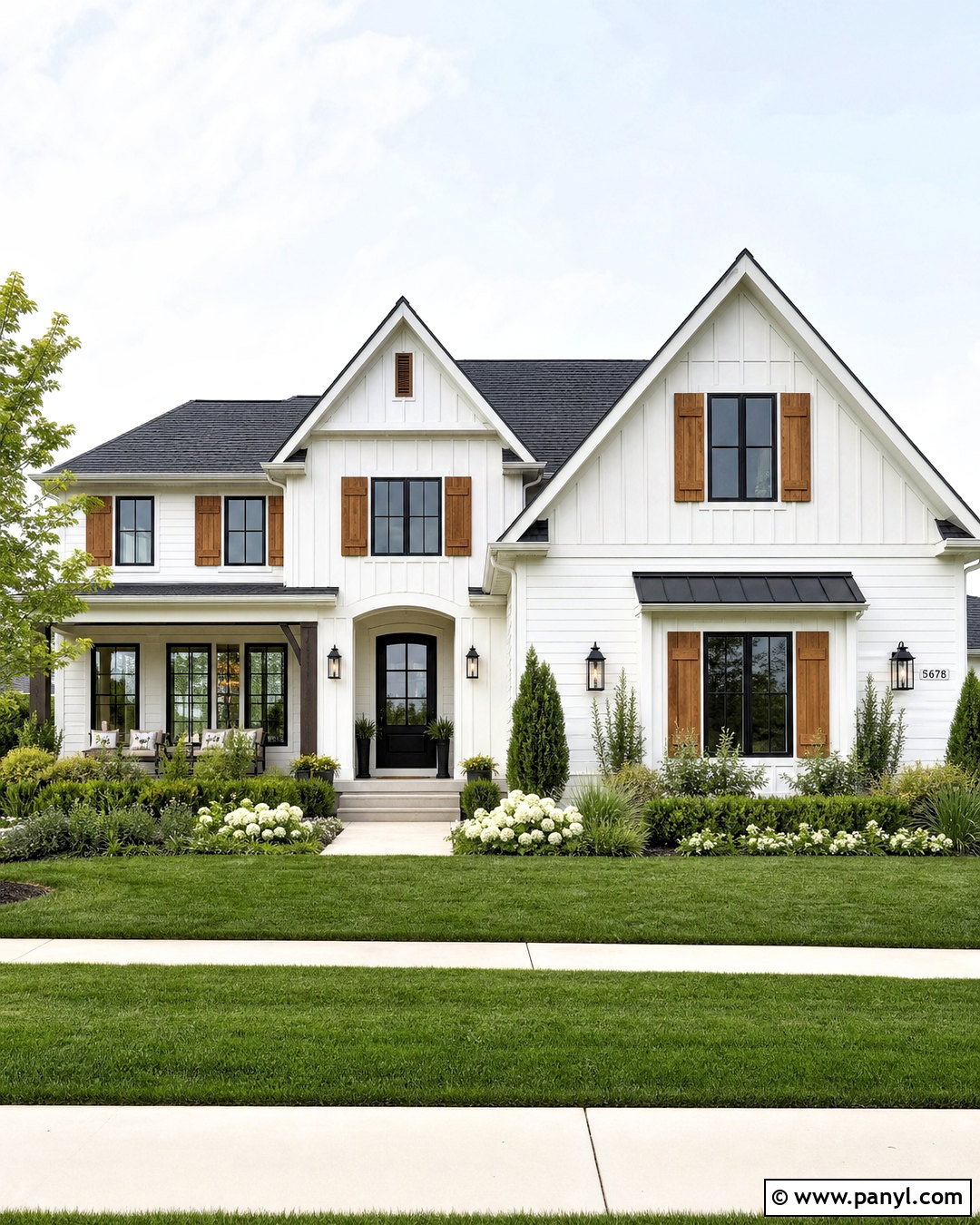
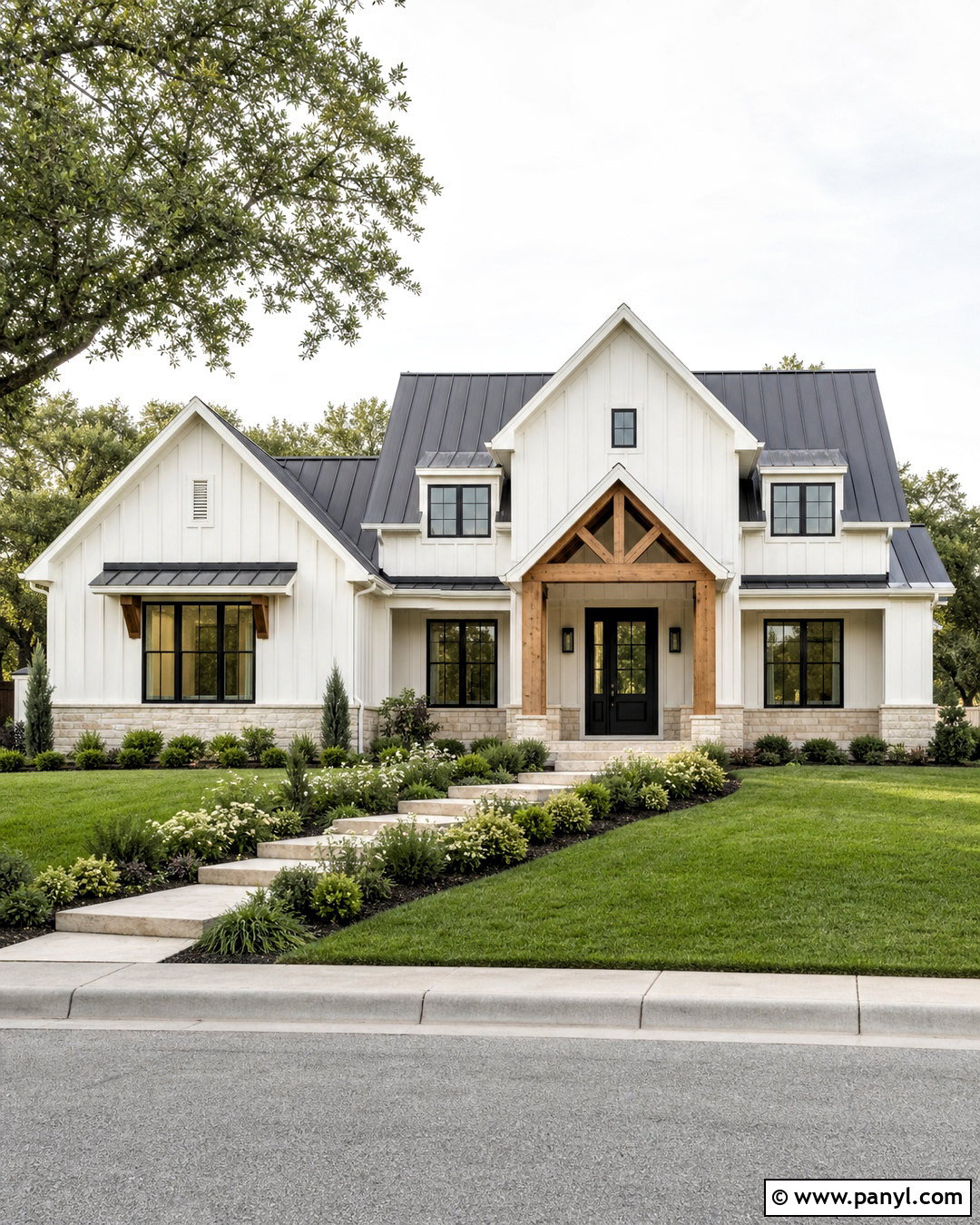
A warm white exterior gives an average home a brighter appearance without looking cold or overly stark. Choose creamy white siding with clean white trim around the windows, fascia, and porch columns. Introduce contrast through a matte black front door, black lanterns, and slim black house numbers. Natural cedar shutters or a stained wood porch ceiling keep the palette welcoming. This combination works especially well with charcoal roof shingles because the dark roof anchors the pale facade. Add layered foundation planting with rounded evergreen shrubs, ornamental grasses, and white flowering perennials. For balance, keep the garage door close to the siding color rather than making it another dark focal point. The finished exterior feels fresh, timeless, and easy to personalize.
2. Cream And Dark Bronze Exterior Color Scheme
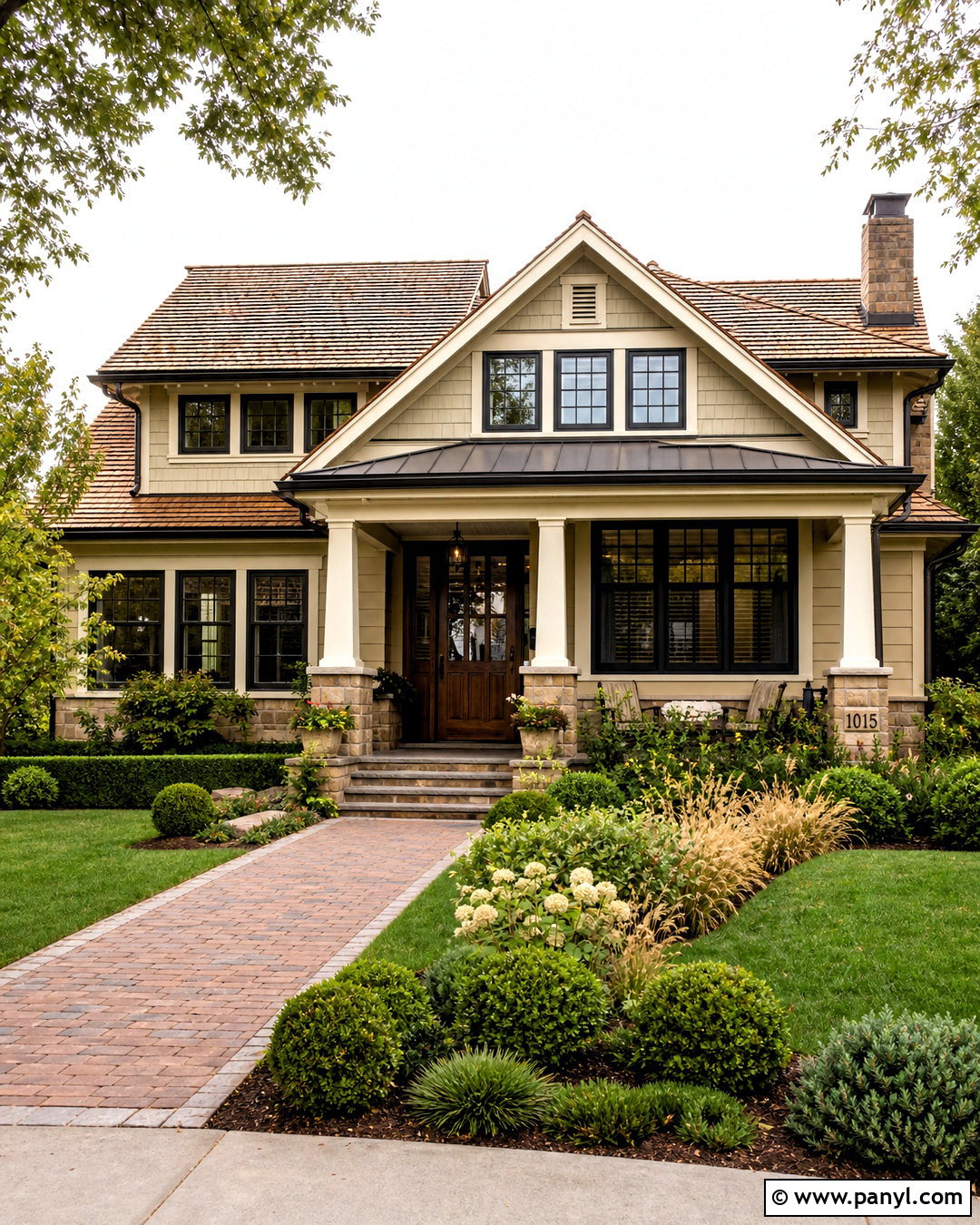
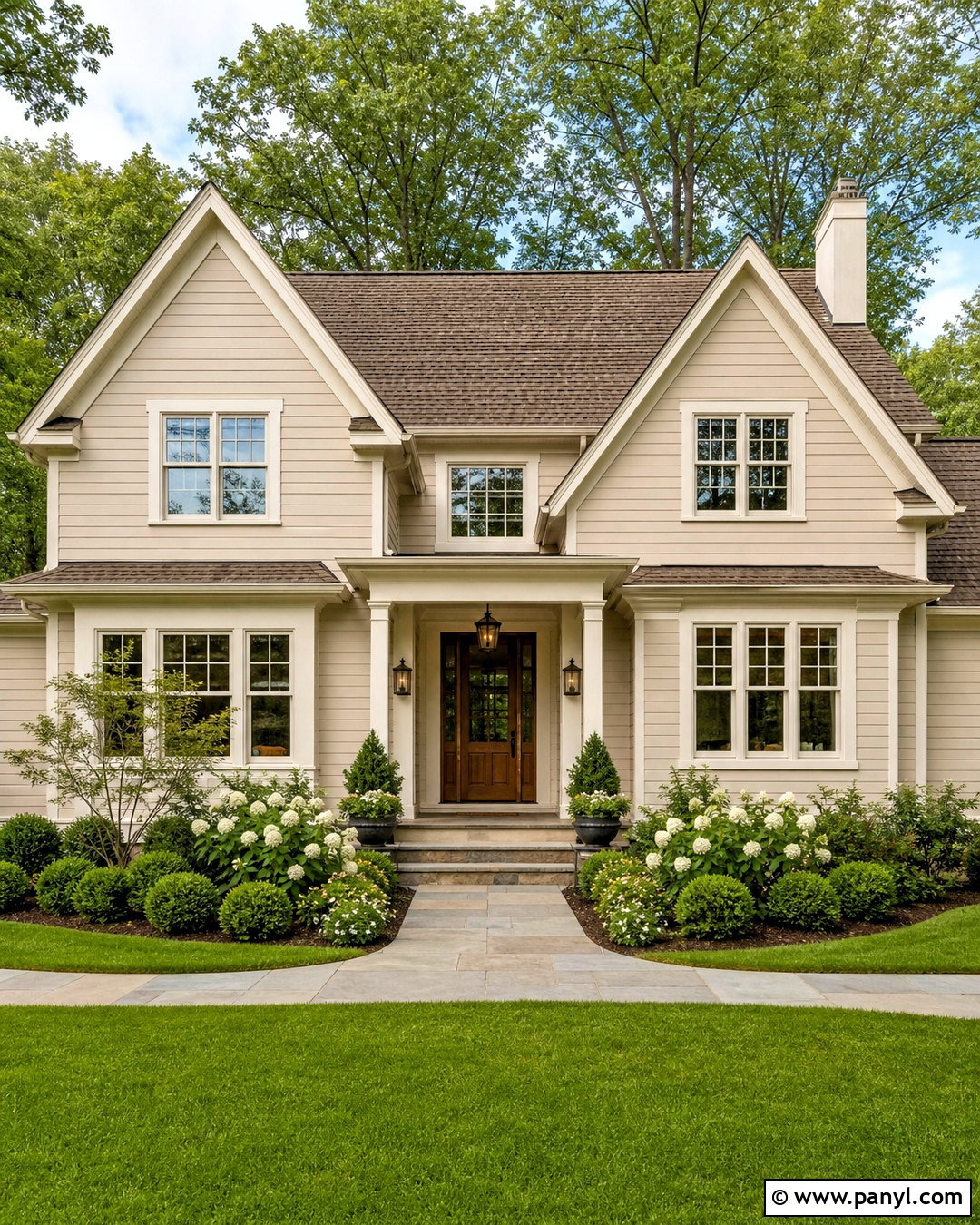
Cream siding and dark bronze details create a softer alternative to a high-contrast black-and-white exterior. Start with a rich cream body color that has a subtle beige undertone. Use a slightly lighter cream for the trim so the windows and roofline remain visible without creating sharp outlines. Dark bronze window frames, gutters, porch lights, and railings add definition. Complete the scheme with a medium walnut front door and a brown architectural-shingle roof. This palette is particularly attractive on traditional suburban homes, Craftsman houses, and properties with tan stonework. Repeat the bronze finish in the mailbox and house numbers. Warm brick pavers, clipped boxwoods, and soft green grasses connect the architecture to the yard and make the entire exterior feel thoughtfully coordinated.
3. Greige House Exterior Color Scheme
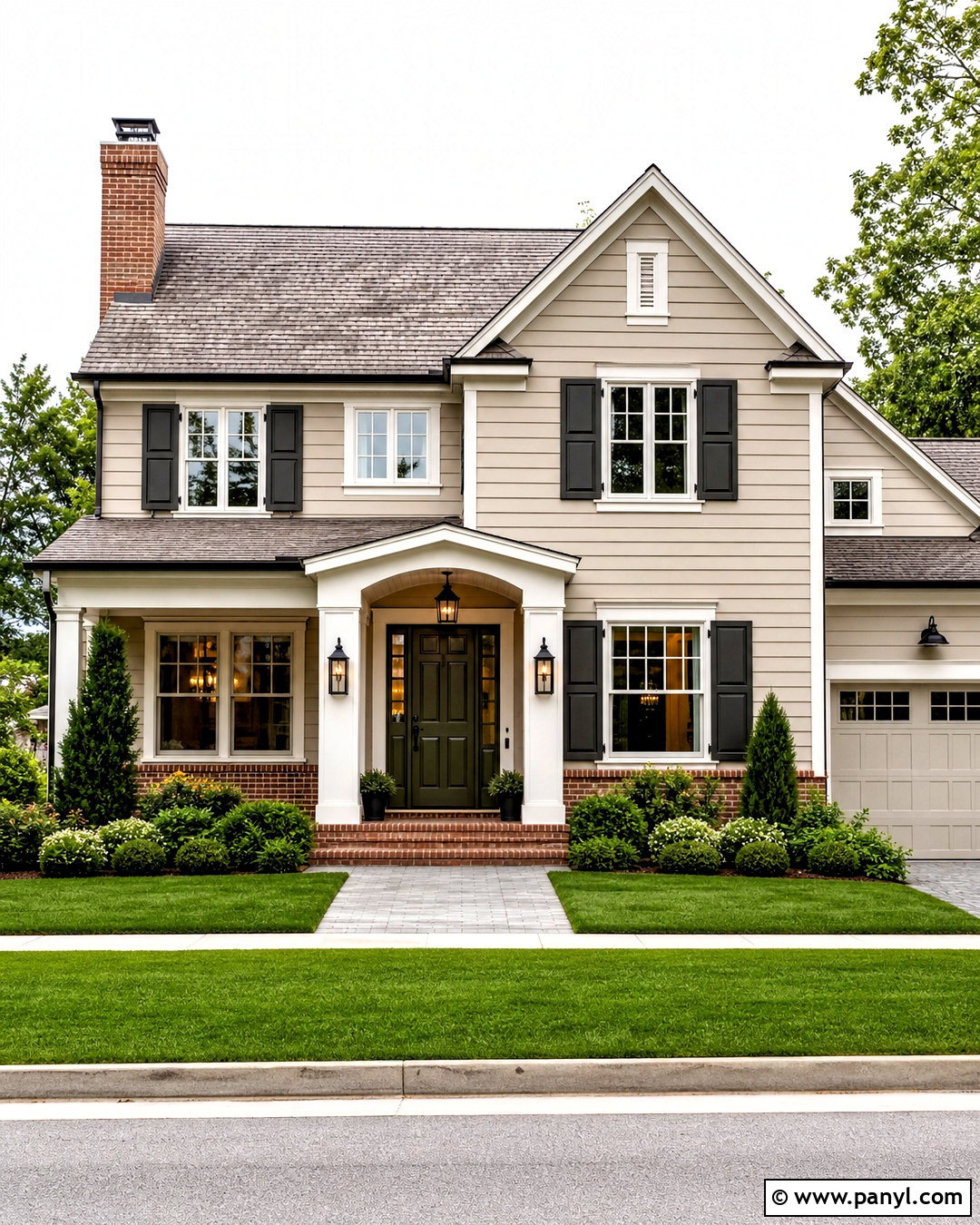
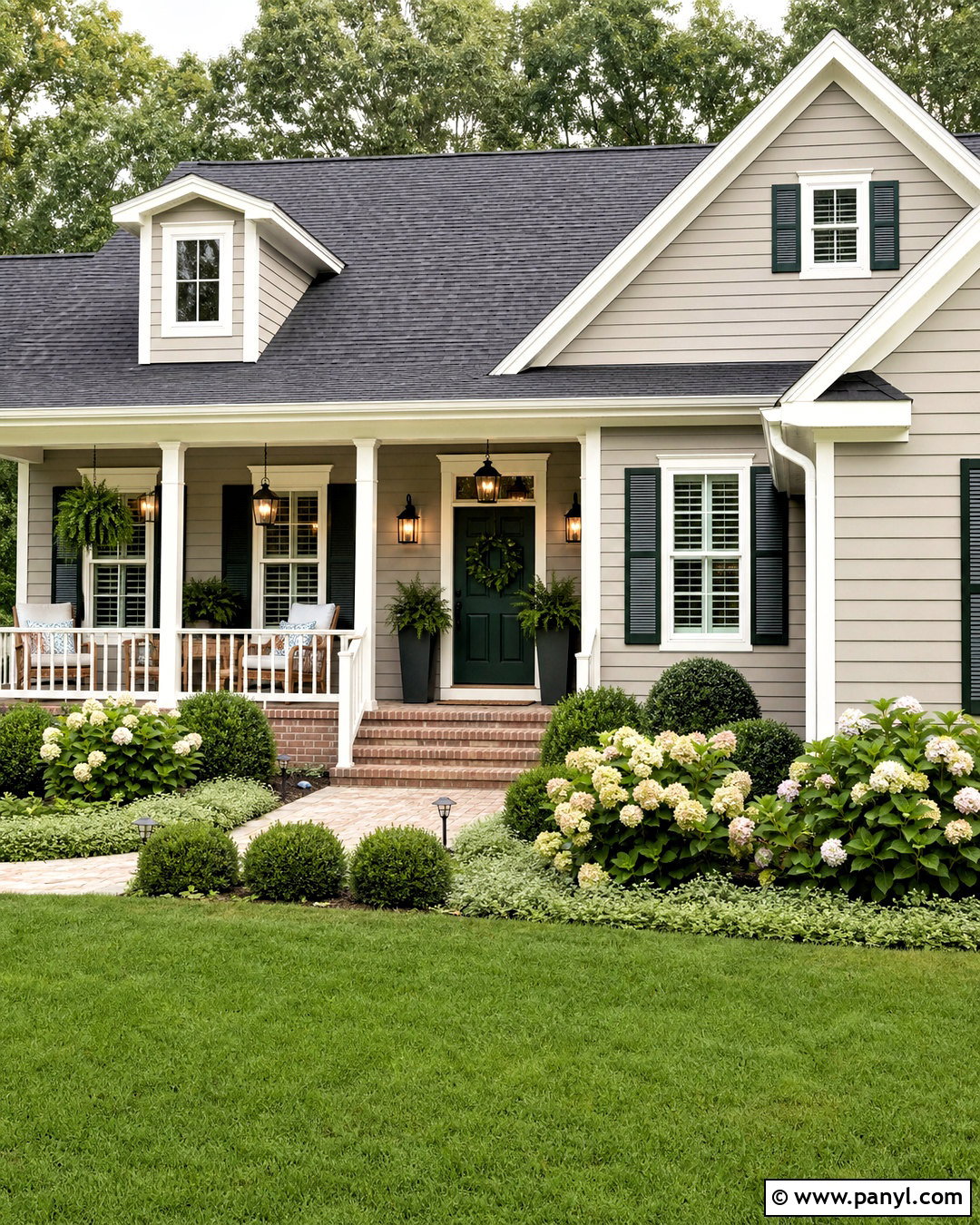
Can’t decide between gray and beige? A warm greige exterior combines the clean appearance of gray with the comfort of an earthy neutral. Use medium-light greige across the primary siding, then add soft white trim to brighten the eaves, windows, and porch. Paint the shutters charcoal gray and choose a deep olive green front door for a subtle connection to the landscaping. A weathered gray roof works well when it contains both warm and cool granules. If the home includes brick, select a greige that relates to the mortar rather than competing with the brick itself. Black metal lighting and simple planters provide crisp finishing touches. This complete scheme suits ranch homes, two-story suburban houses, and updated traditional facades without making the architecture feel overly trendy.
4. Taupe And Olive Exterior Color Scheme
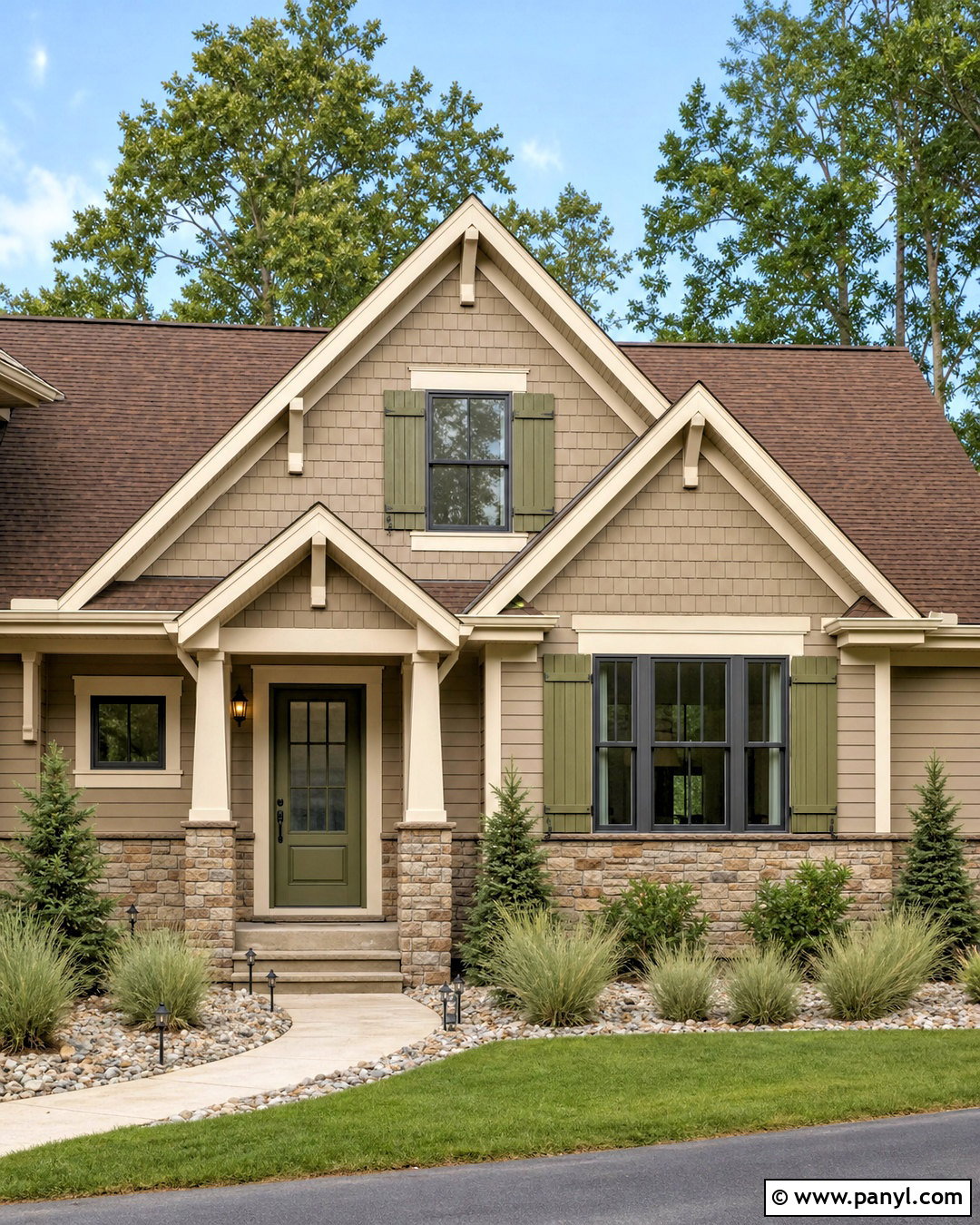
Soft taupe siding becomes more distinctive when paired with earthy olive green. Select a medium taupe body color with warm brown undertones, then use creamy off-white on the trim and porch columns. Olive green shutters and a matching front door add natural color without overpowering the facade. Choose dark bronze hardware and lighting instead of bright black, which may appear too severe beside taupe. A brown or mixed-weathered roof completes the warm foundation. If the house includes stone veneer, repeat shades found in the stone through the siding and trim. Finish the curb appeal with sage grasses, dwarf evergreens, and a gravel-edged walkway. The result feels grounded and relaxed, making this exterior palette especially suitable for Craftsman, cottage, and traditional homes surrounded by mature landscaping.
5. Sage Green House Exterior Color Scheme
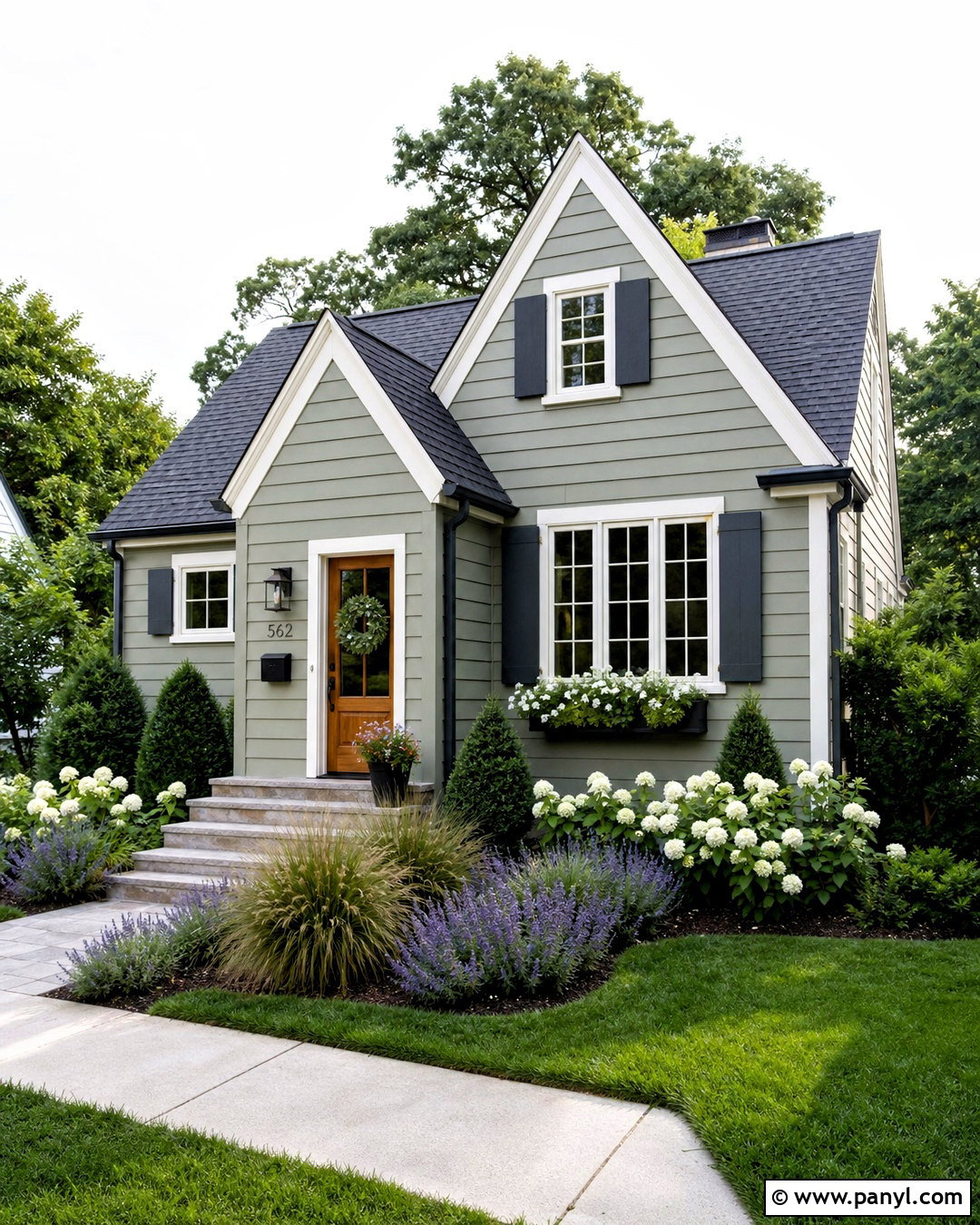
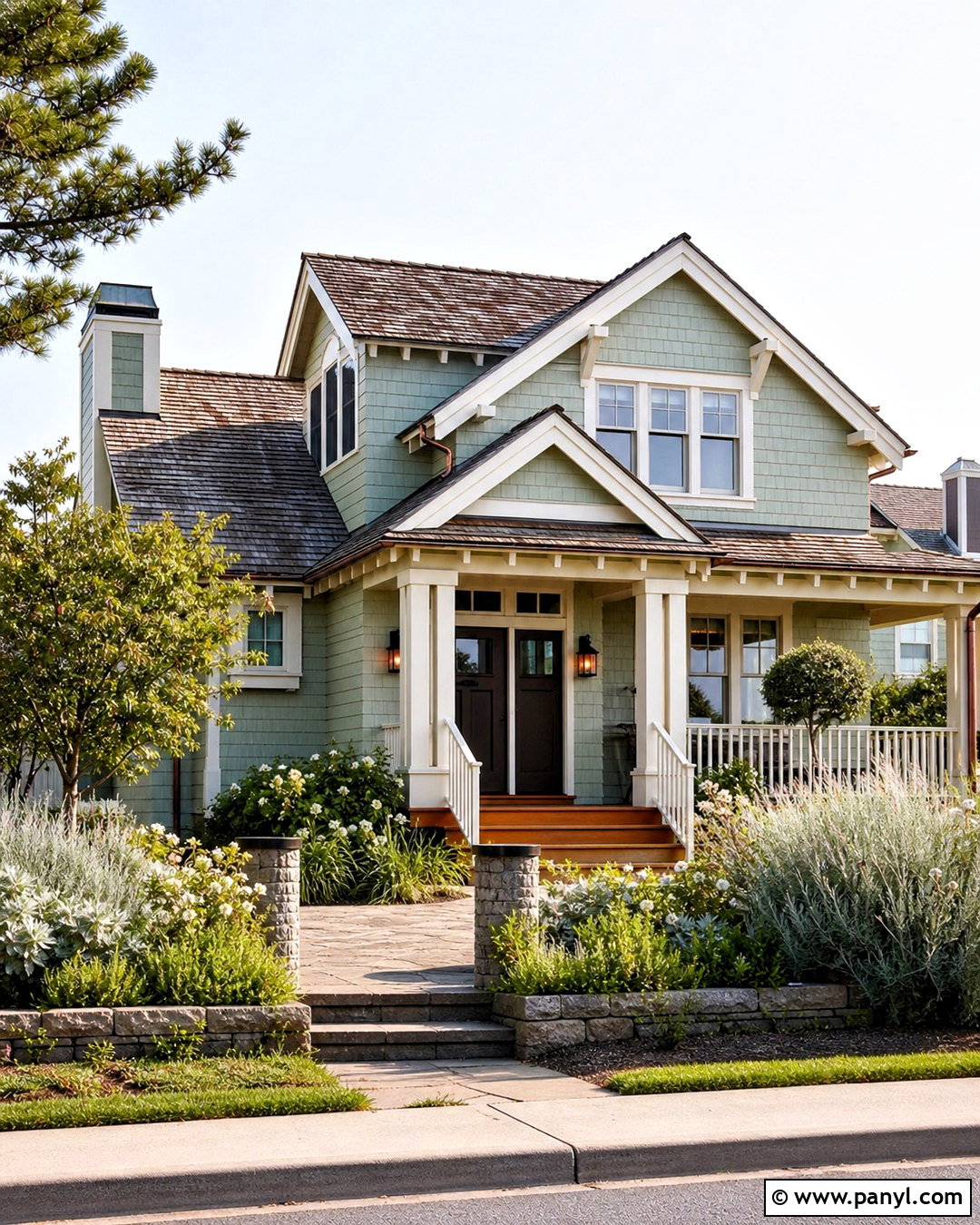
Soft sage green gives a house character while remaining calm and approachable. Cover the siding in a muted gray-green, then frame the architecture with warm white trim. A natural oak or medium cedar front door brings warmth to the cooler green body color. Use charcoal for the roof, gutters, and small metal accents so the scheme has a strong visual anchor. If shutters are needed, paint them a deeper sage instead of black for a layered, low-contrast appearance. Stone steps or a light gray walkway can bridge the green siding and dark roof. Complete the design with lavender, white hydrangeas, feathery grasses, and evergreen foundation shrubs. This full exterior look works beautifully on cottages, farmhouses, bungalows, and homes in leafy suburban or rural settings.
6. Olive Green And Beige Exterior Color Scheme
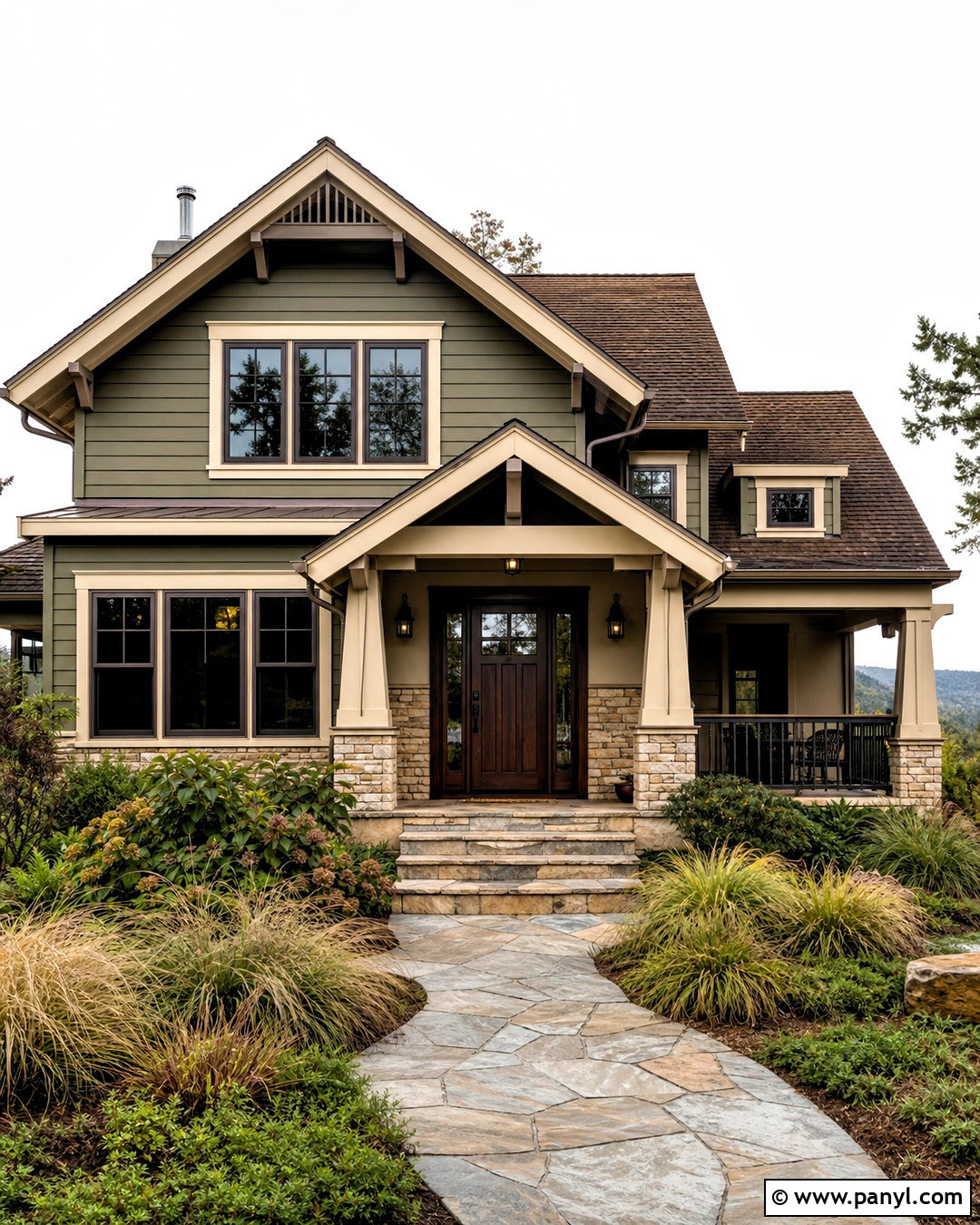
Deep olive siding can make a simple house feel more connected to its landscape. Use olive green as the primary body color, balancing its depth with light beige trim around the windows, doors, roofline, and porch. A dark walnut front door introduces another natural finish without adding an unrelated accent color. Select bronze gutters, sconces, and hardware to reinforce the warm undertones. This palette pairs especially well with tan stone, brown brick, and weathered wood features. A medium brown roof keeps the finished look warm and cohesive. Avoid excessive decorative colors; the beauty comes from the relationship between green, beige, wood, and masonry. Broad-leaf shrubs, native grasses, and a simple stone path complete this understated exterior for Craftsman, cabin, and ranch-style homes.
7. Forest Green House Exterior Color Scheme
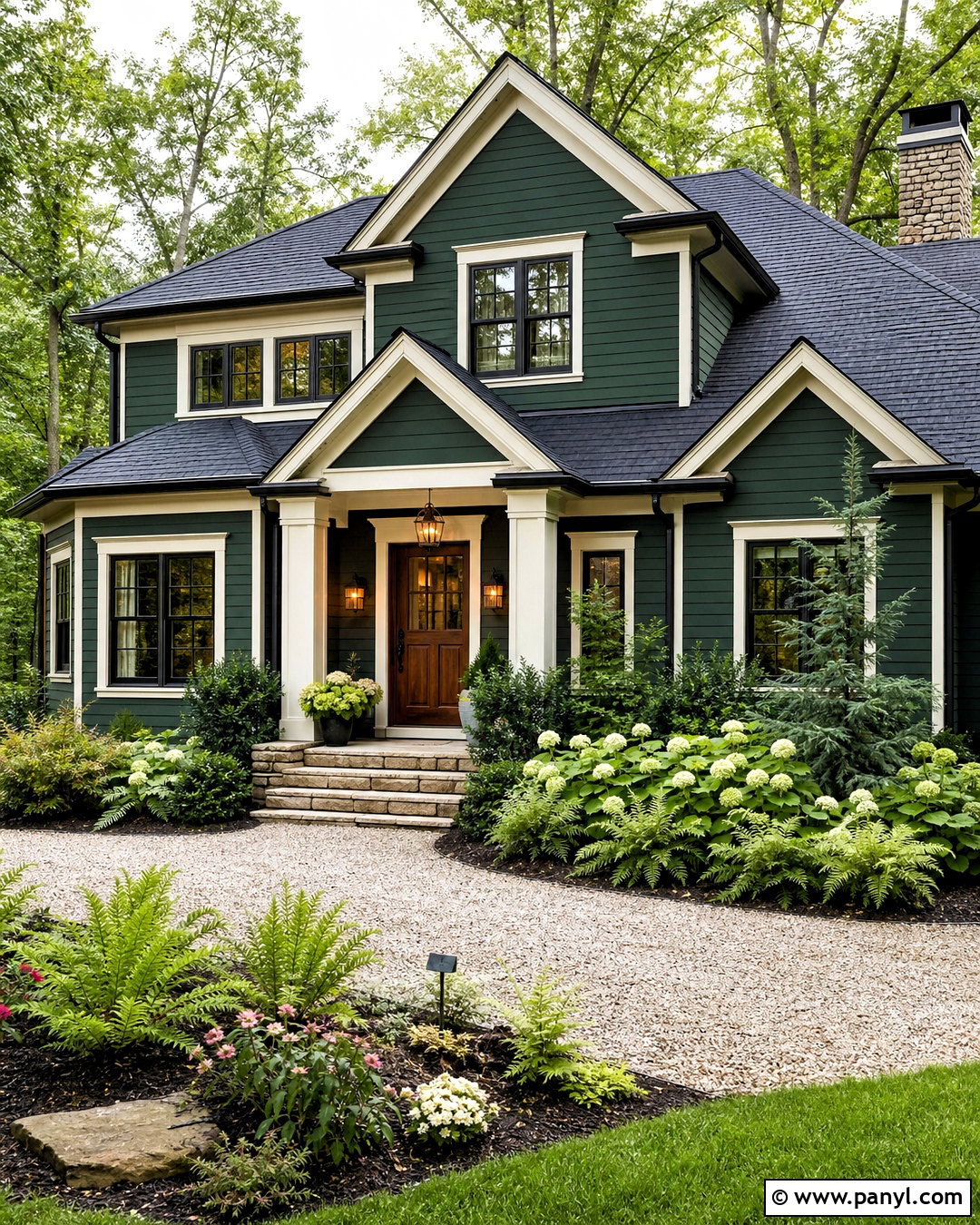
A forest green exterior creates a rich, dramatic facade that still feels rooted in nature. Apply the deep green to the siding and use creamy white trim to highlight windows, corner boards, and porch details. Paint the front door nearly black or choose a dark stained wood door with visible grain. A charcoal roof and black gutters maintain the strong, sophisticated contrast. Copper porch lights or a copper mailbox add a warm metallic note that will develop character over time. Keep the garage door forest green so it blends into the main wall rather than dominating the view. Pale stone steps and light gravel prevent the palette from becoming too heavy. Ferns, hydrangeas, and layered evergreens create a lush finishing frame for this woodland-inspired exterior.
8. Navy Blue And White Exterior Color Scheme
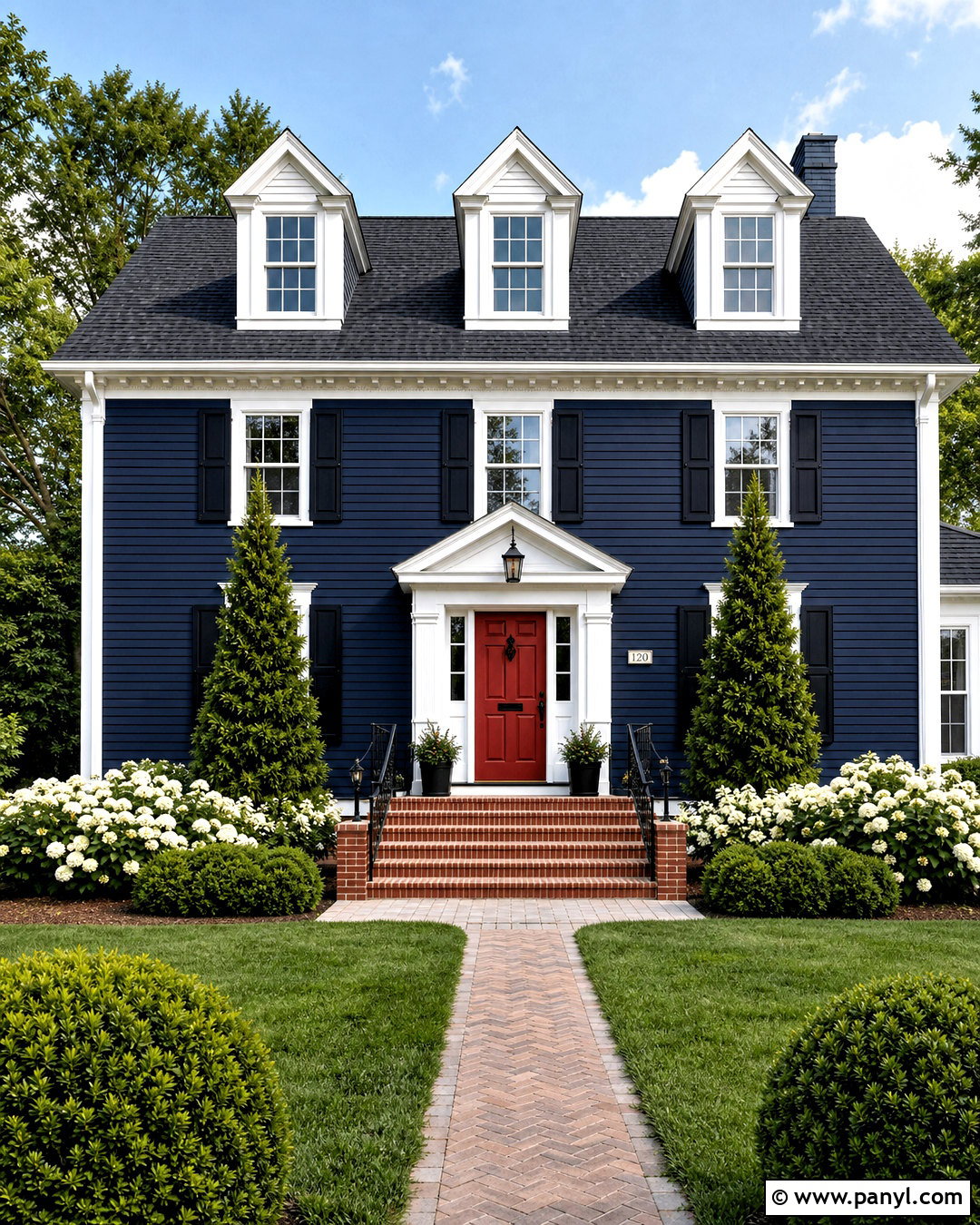
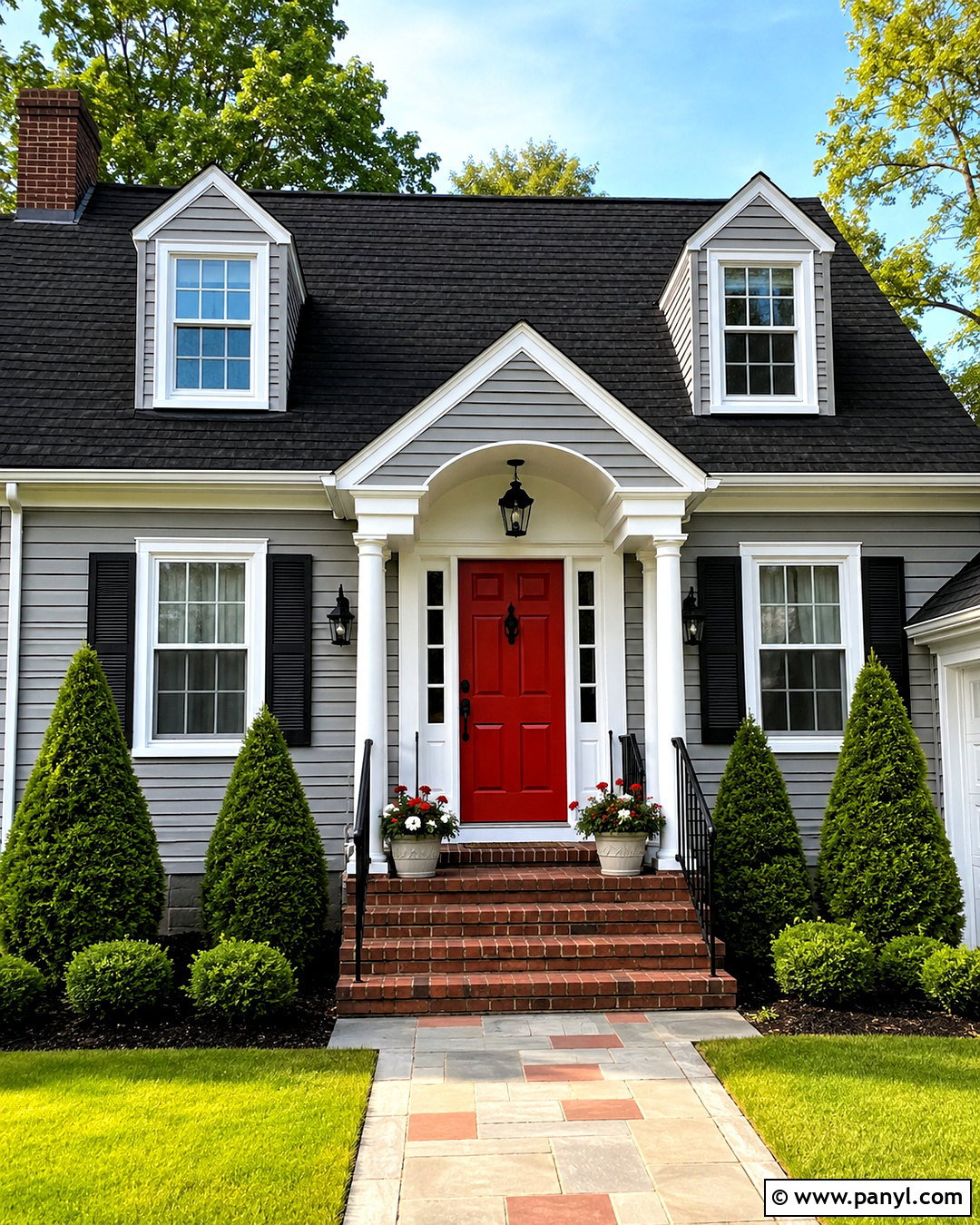
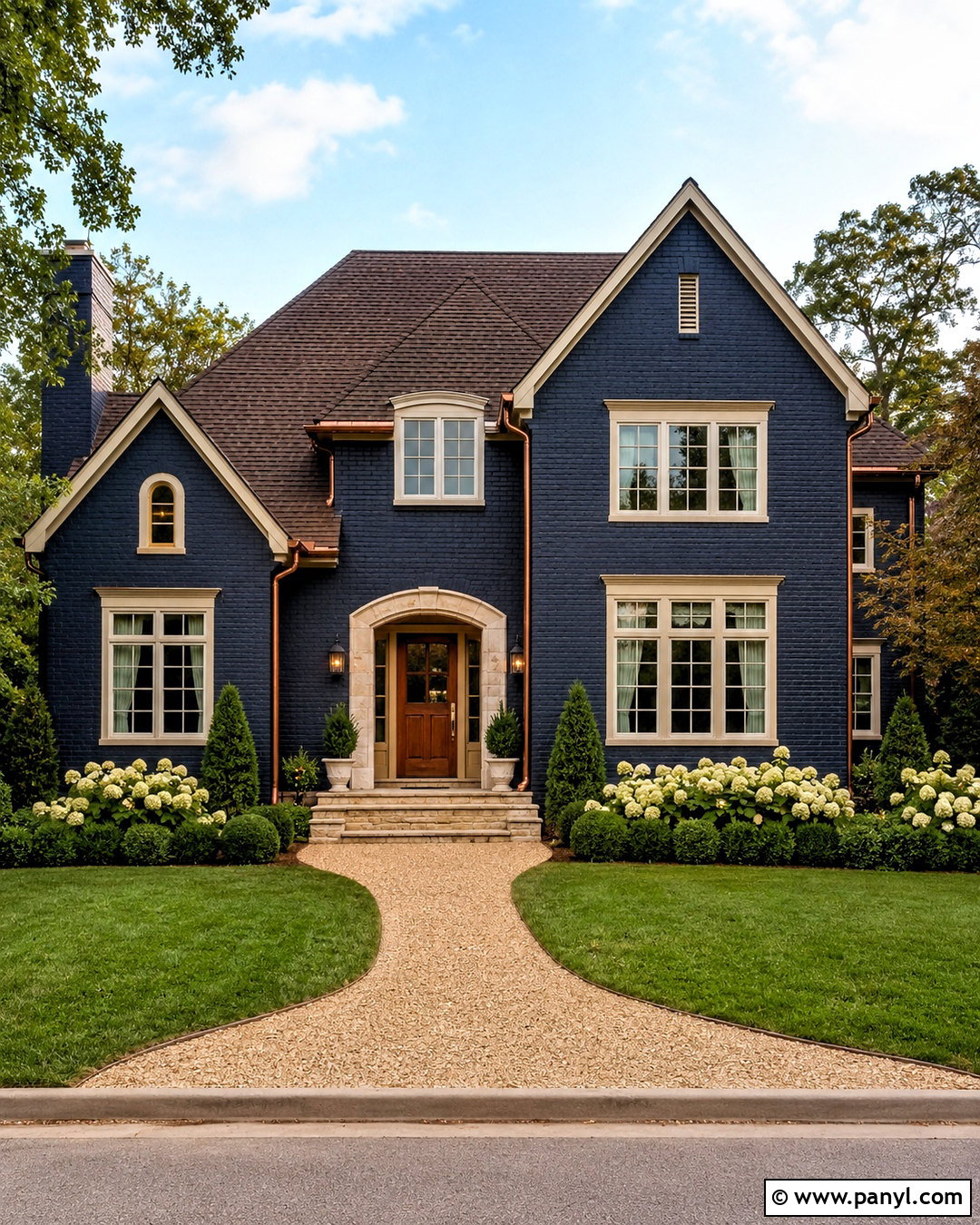
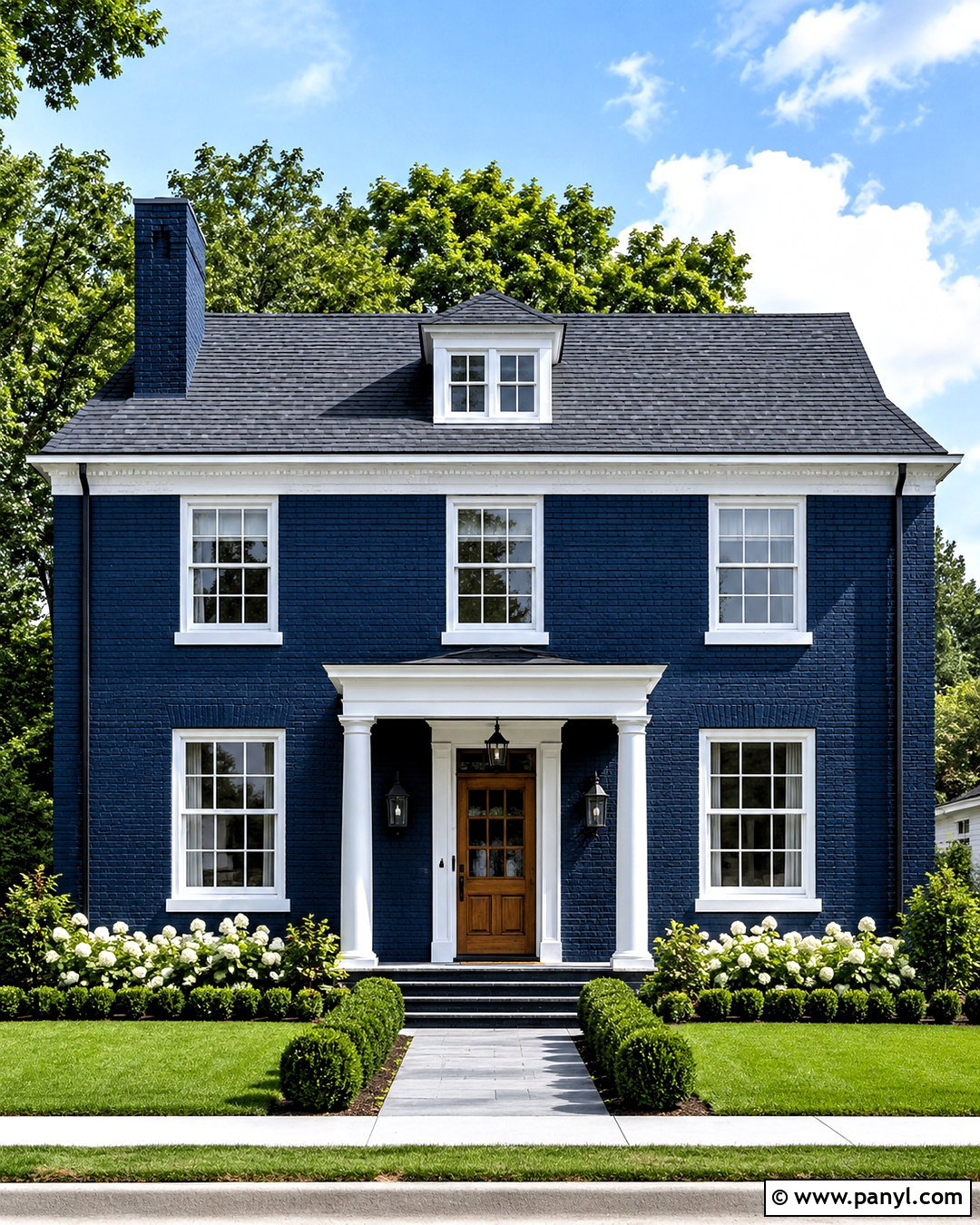
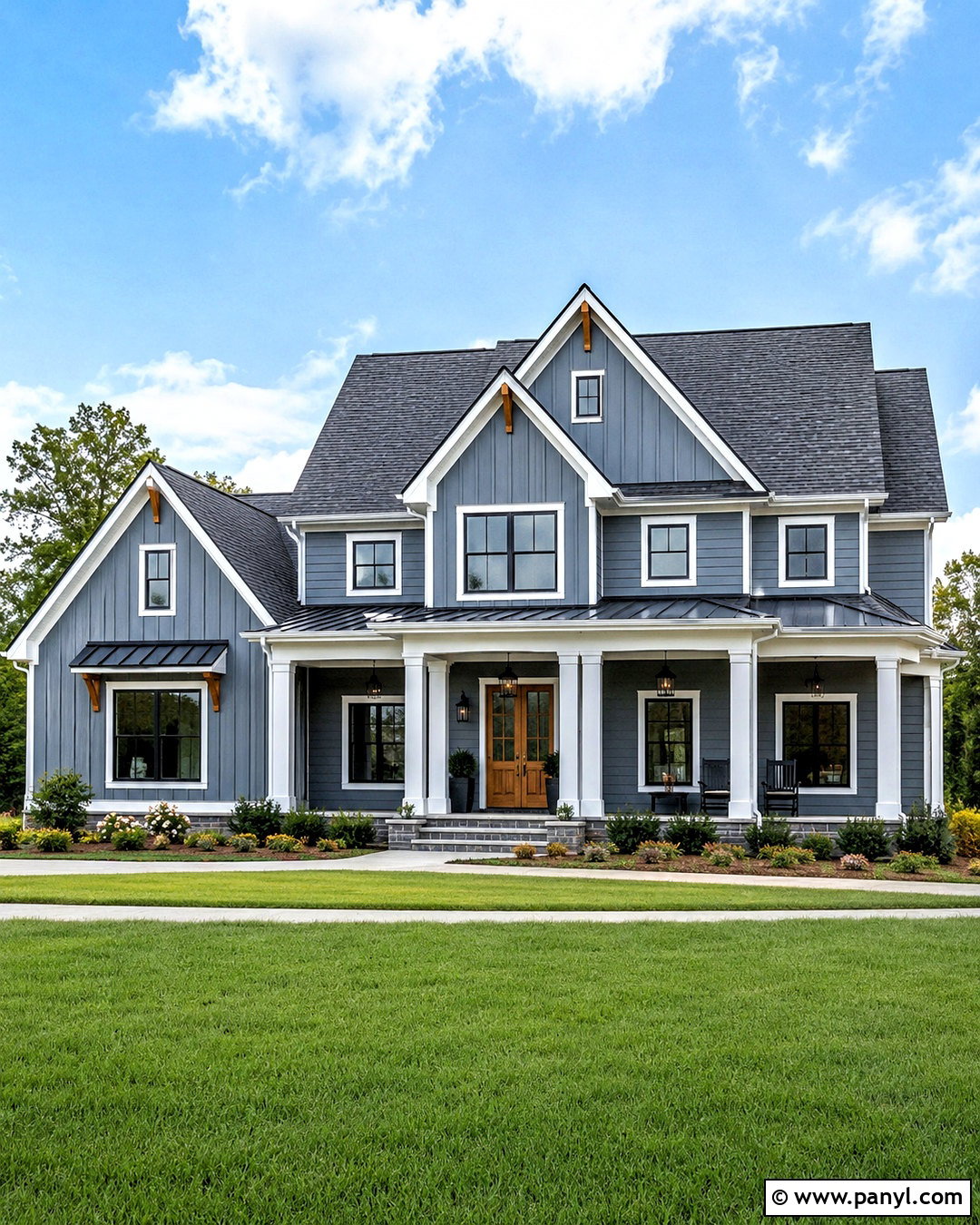
Navy siding and crisp white trim form a classic combination with enough contrast to define almost any home. Use a balanced navy that remains visibly blue in shade rather than turning black. Bright white trim can outline the windows, eaves, porch railings, and columns. For a memorable accent, paint the front door a deep brick red or muted cranberry. A medium charcoal roof supports the darker siding, while brushed nickel or black hardware keeps the details simple. If the facade includes a garage, paint its door navy or white depending on whether you want it to recede or connect with the trim. Red brick steps, white flowering shrubs, and structured evergreen planting reinforce the traditional character. This scheme suits Colonial, Cape Cod, farmhouse, and coastal homes.
9. Slate Blue House Exterior Color Scheme
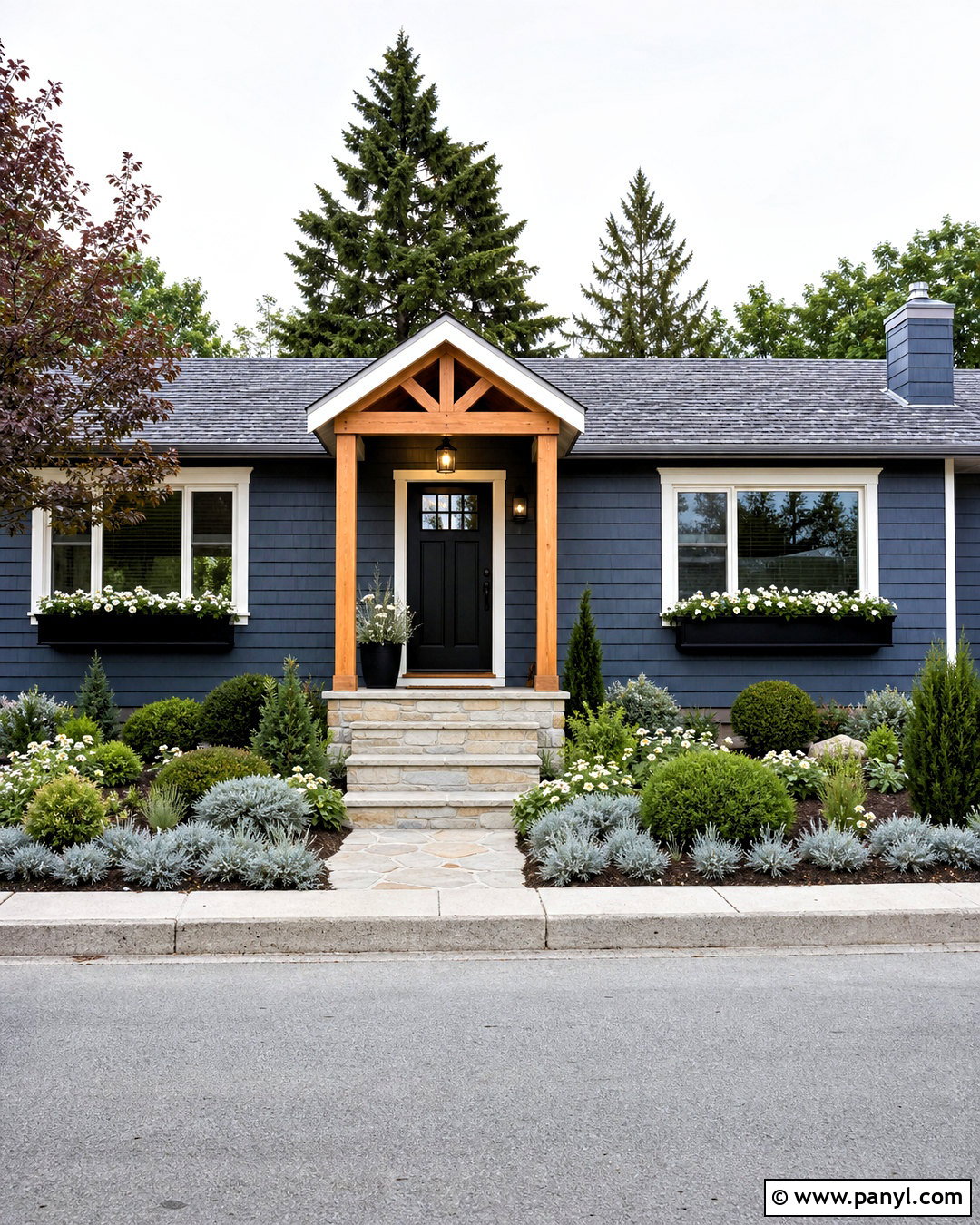
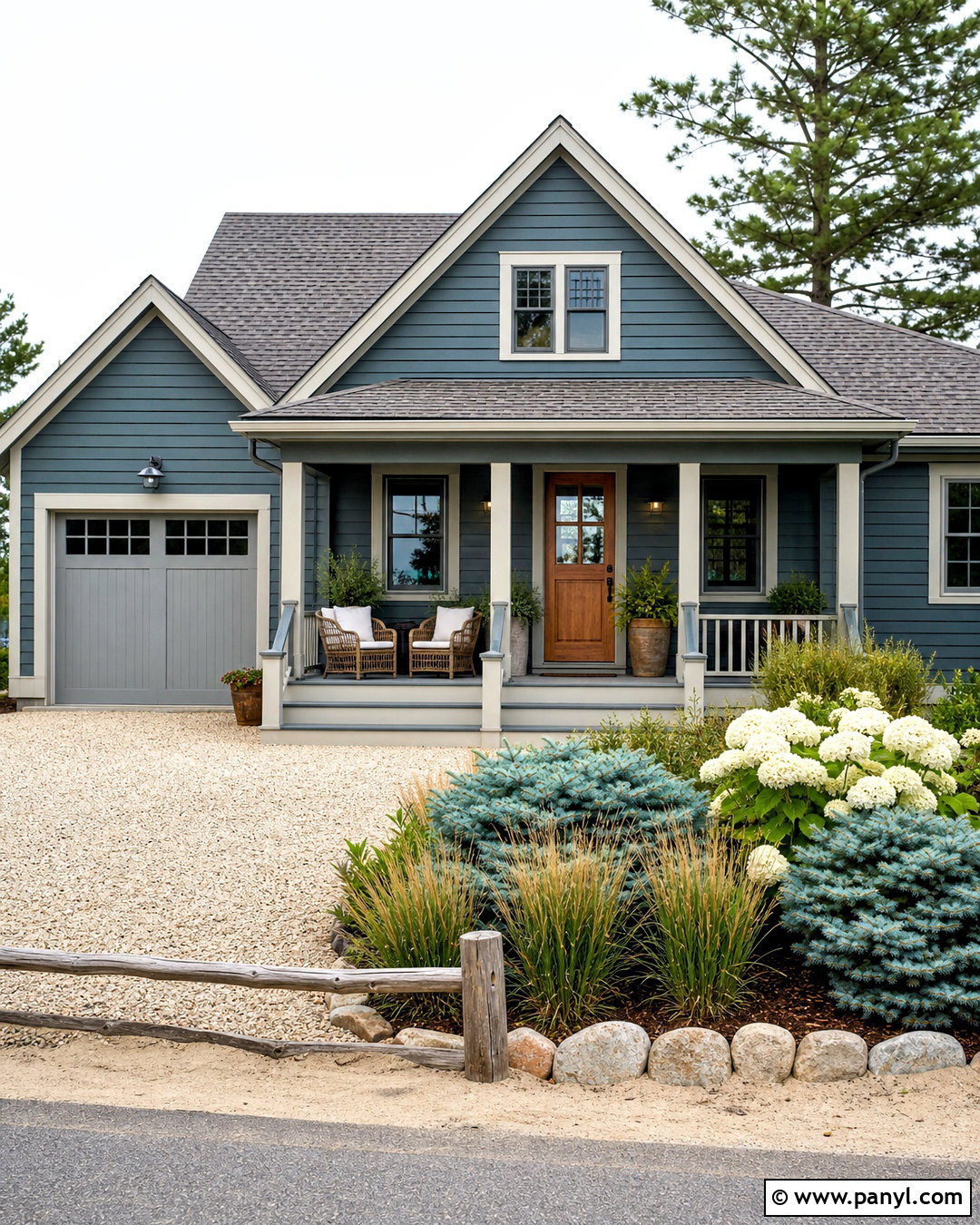
Slate blue offers visible color with a quieter personality than traditional navy. Choose a medium blue-gray for the siding and pair it with warm white trim to prevent the exterior from feeling icy. Use matte black on the front door, porch railing, window boxes, and exterior lights for definition. Natural cedar accents under the porch roof or around the entry introduce warmth and texture. A weathered gray shingle roof supports the blue undertones without looking overly matched. Keep masonry light, using pale gray stone or simple concrete steps. For landscaping, combine silvery foliage, white flowers, evergreen shrubs, and dark mulch. This complete palette gives cottages, ranch homes, and updated suburban houses a polished appearance while remaining flexible enough to suit both traditional and contemporary architecture.
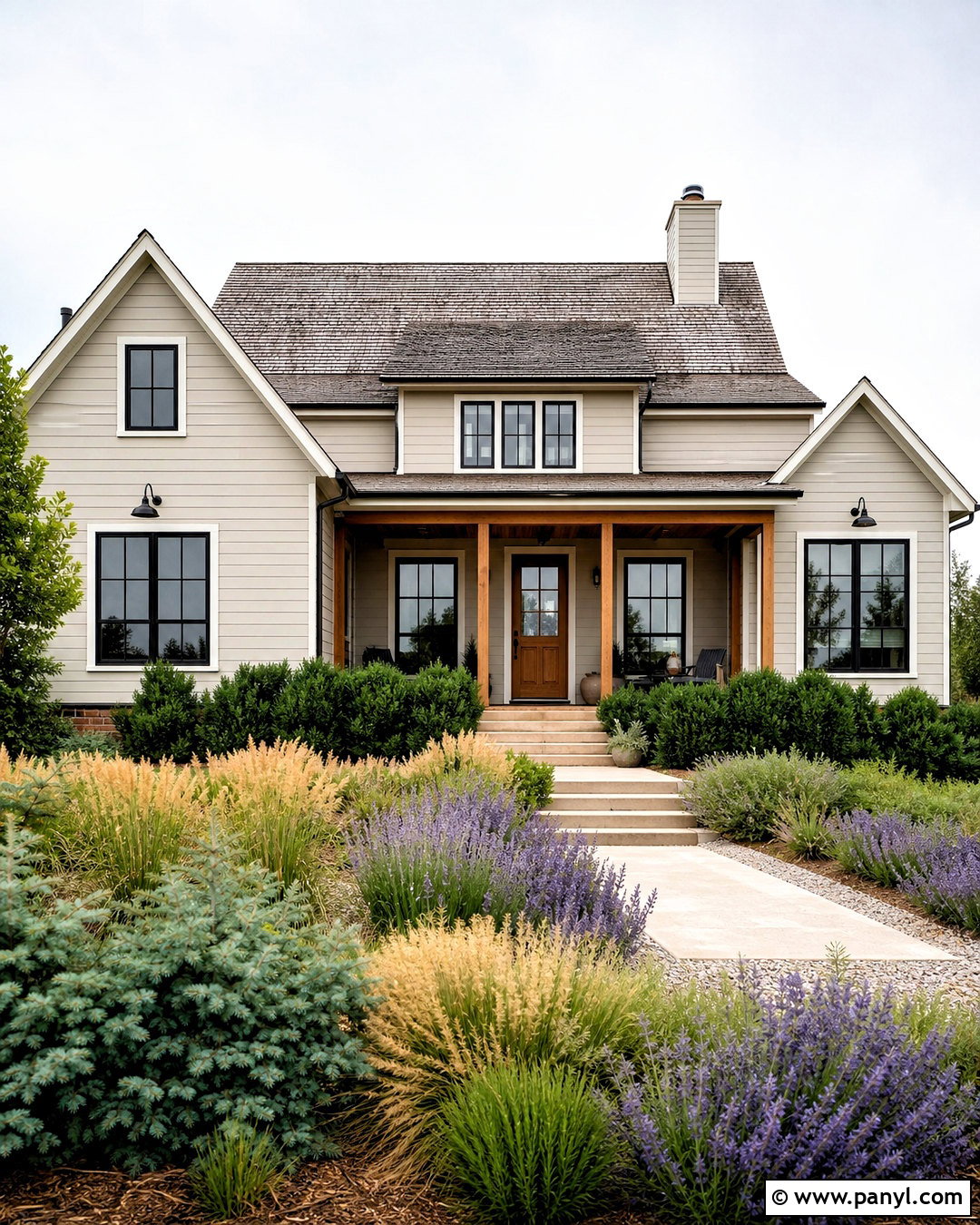
10. Dusty Blue And Cream Exterior Color Scheme
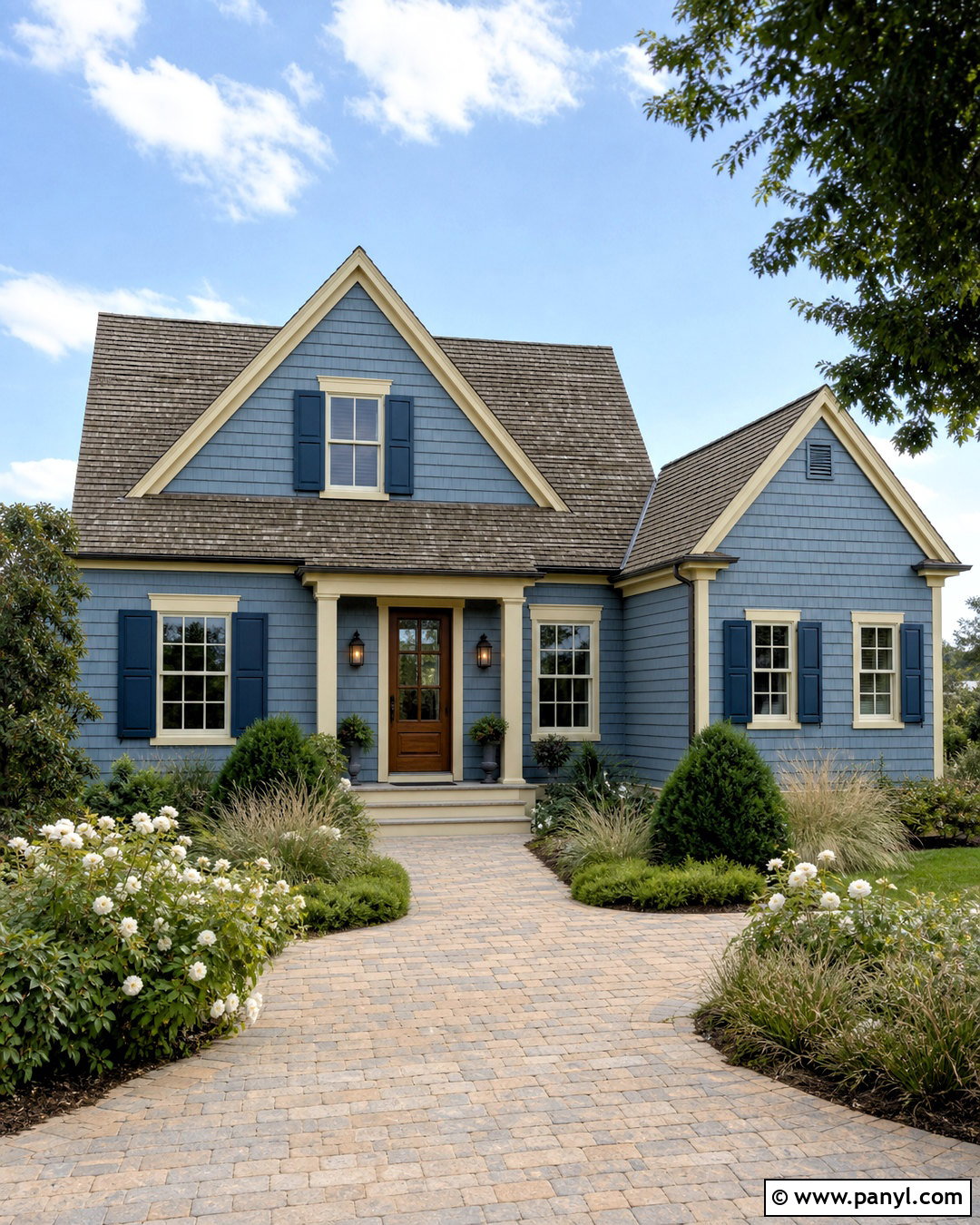
Imagine a soft blue house framed by warm cream details and a welcoming wood entry. Dusty blue siding creates this relaxed look without appearing overly bright or coastal. Use cream on the trim, fascia, porch posts, and garage door to complement the muted warmth in the blue. A medium walnut front door becomes the focal point, supported by bronze lighting and hardware. Choose a gray-brown roof that contains varied tones rather than a flat blue-gray shingle. If shutters fit the architecture, paint them a deeper blue from the same family. Add buff-colored pavers, loose ornamental grasses, white roses, and compact evergreens near the foundation. The finished scheme works particularly well on traditional cottages, Cape Cod homes, and modest houses with covered porches.
11. Charcoal House Exterior Color Scheme
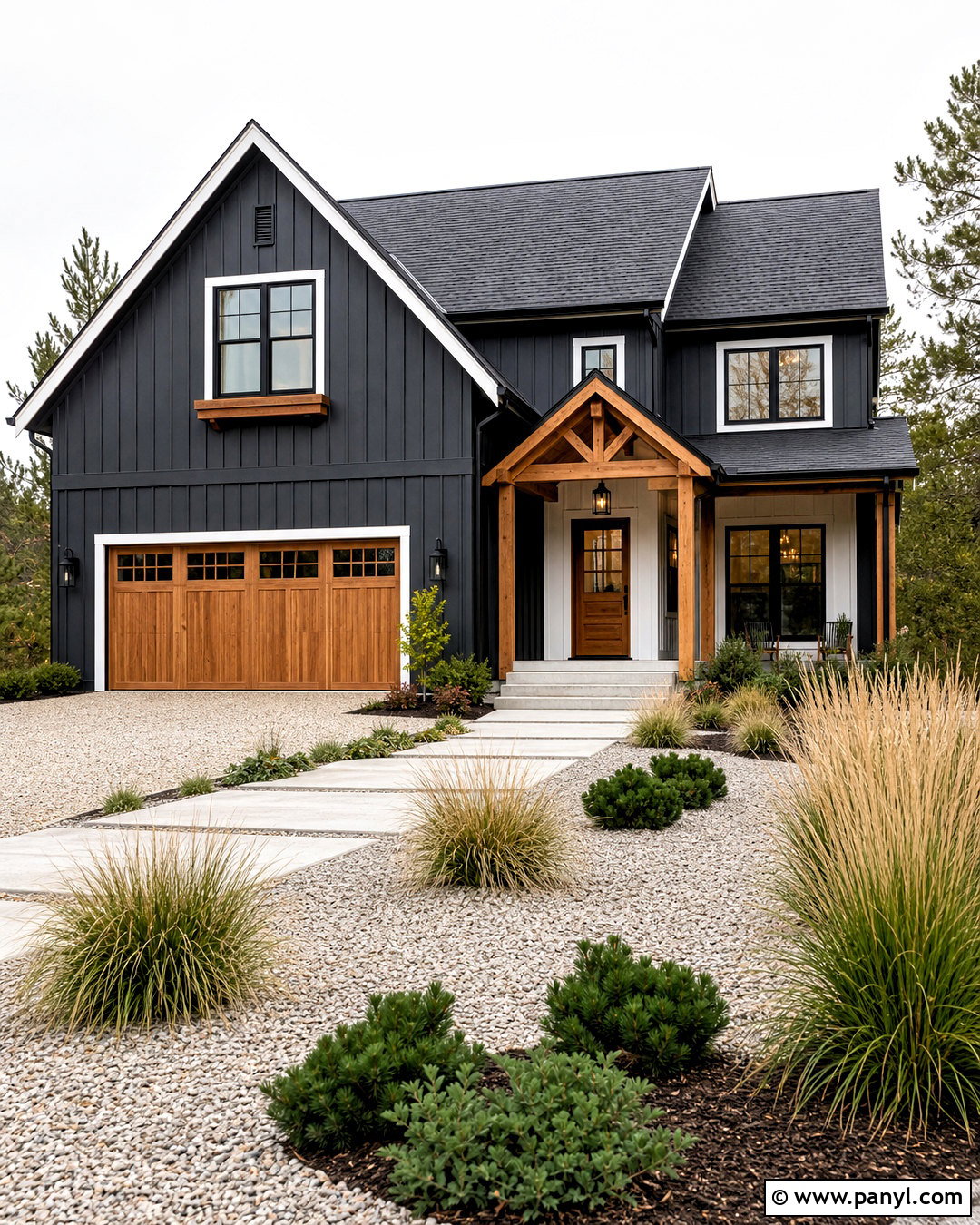
Charcoal siding can look bold and modern when lighter materials prevent the facade from becoming visually heavy. Paint the main exterior a deep charcoal gray, then use soft white around windows and along the roofline. Add natural cedar at the front door, porch ceiling, garage door, or a small section of vertical siding. Black window frames and gutters create a seamless connection with the dark body color. Select a black or charcoal roof so the upper portion remains quiet and streamlined. Light concrete steps, pale gravel, and warm gray stone provide contrast at ground level. Use structured grasses, low evergreens, and restrained planting rather than crowded flower beds. This complete palette suits modern farmhouses, contemporary ranch homes, and simple two-story properties with clean architectural lines.
12. Light Gray And Navy Exterior Color Scheme
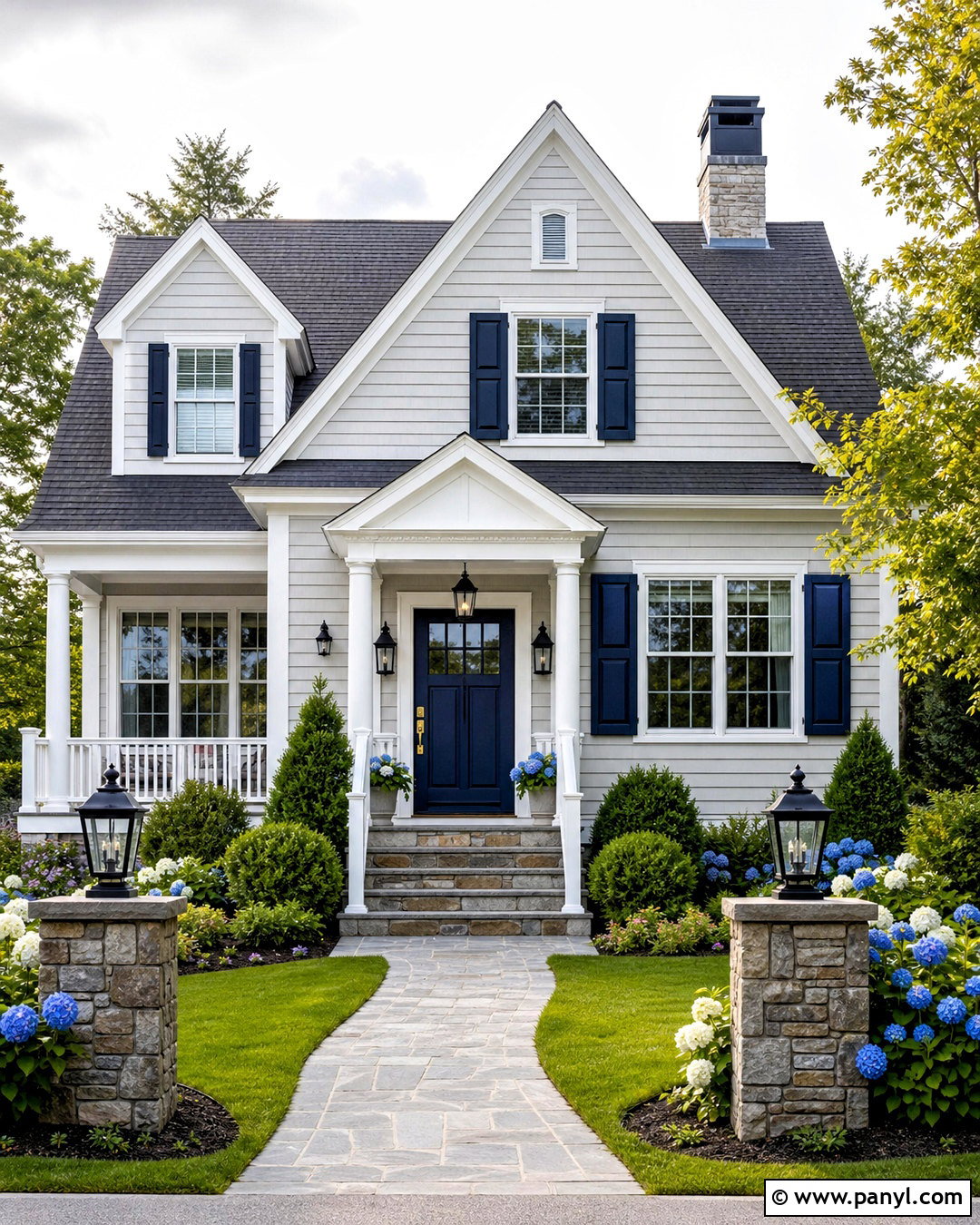
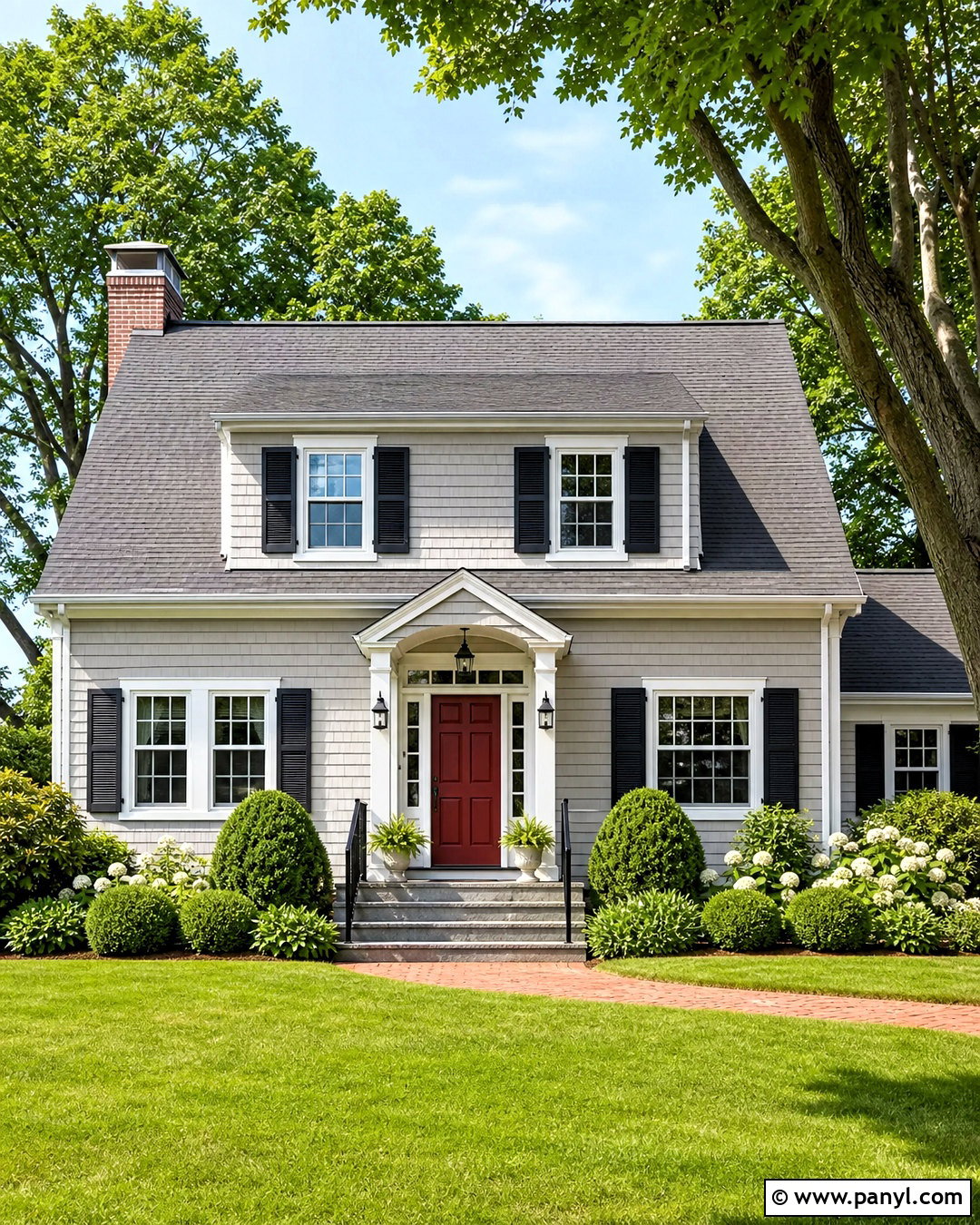
Light gray siding creates a versatile foundation, while navy accents give it more personality and depth. Choose a gentle gray with a slightly warm undertone, especially if the home has tan stone, beige concrete, or brown roof elements. Use clean white trim to separate the gray walls from the windows and eaves. Paint the front door and properly sized shutters a saturated navy blue. Black lanterns, house numbers, and railings can provide a third neutral without complicating the palette. A charcoal roof creates a balanced transition between the light siding and dark accents. Complete the exterior with a straight stone walkway, neatly clipped shrubs, and blue or white flowering plants. This approachable combination can refresh Colonial, ranch, Cape Cod, and standard suburban home exteriors.
13. Dark Gray And Cedar Exterior Color Scheme
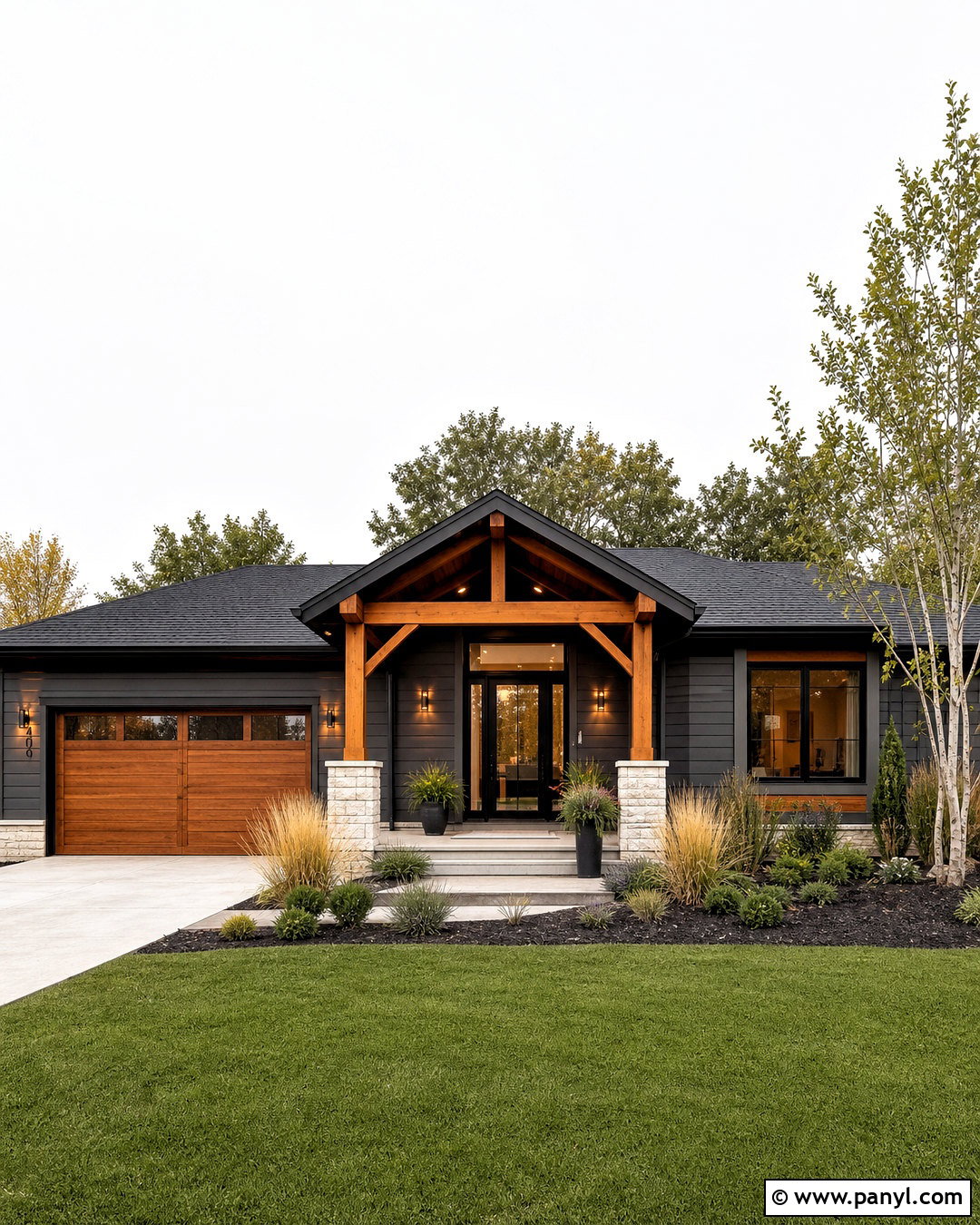
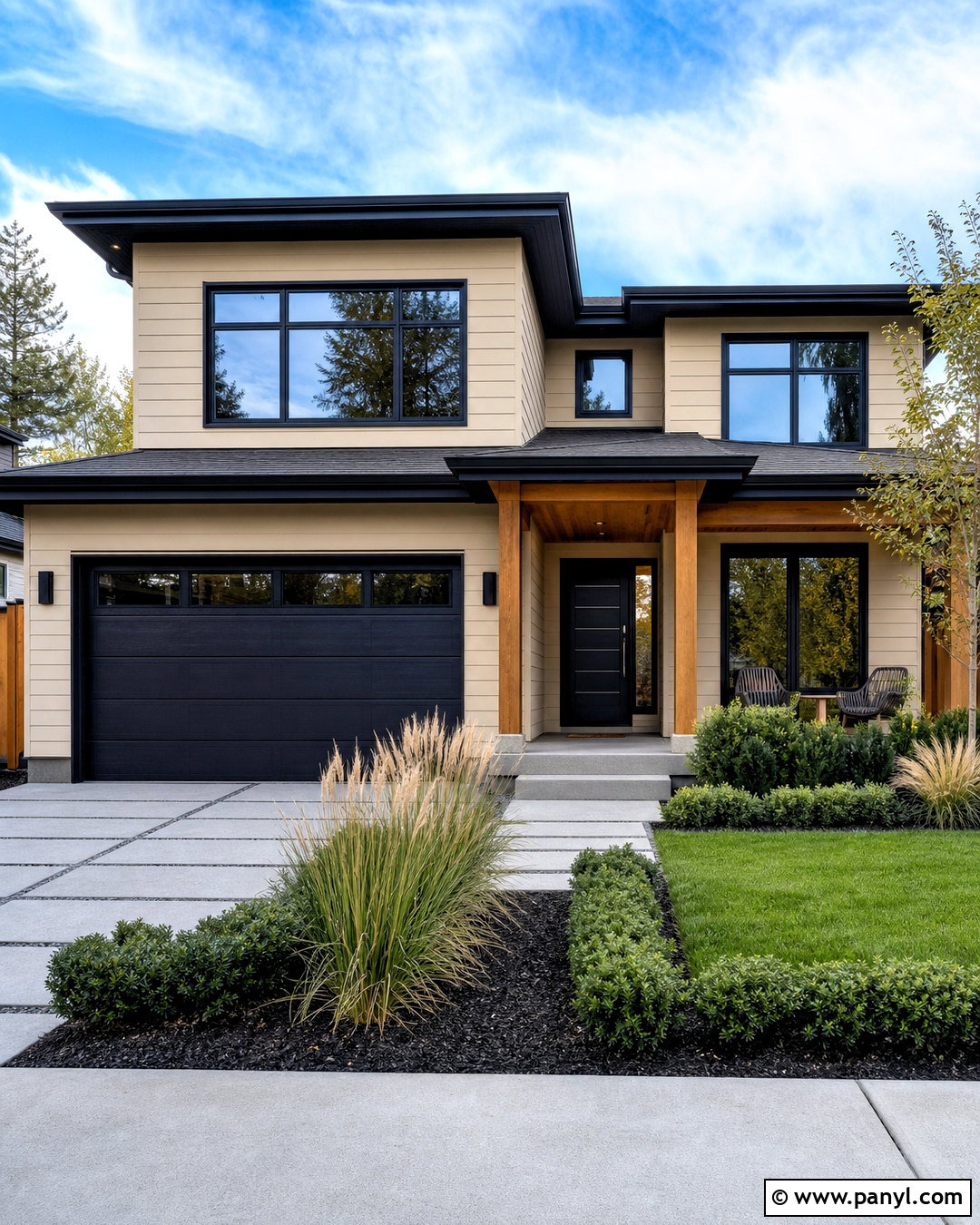
For a contemporary exterior that still feels welcoming, combine dark gray siding with substantial cedar details. Use deep graphite gray on horizontal siding or stucco, then add warm cedar to the front door, porch beams, garage door, or a vertical entry section. Keep the window frames, gutters, and railings matte black for a clean finish. Instead of bright white trim, select a medium warm gray that creates a subtle transition. A black roof strengthens the modern shape of the house. Light limestone, concrete, or pale gray pavers are useful near the foundation because they provide visual relief. Finish the property with architectural grasses, compact evergreens, and a few multi-stem trees. The complete scheme feels current, natural, and realistic for modern ranch or split-level homes.
14. Soft Yellow House Exterior Color Scheme
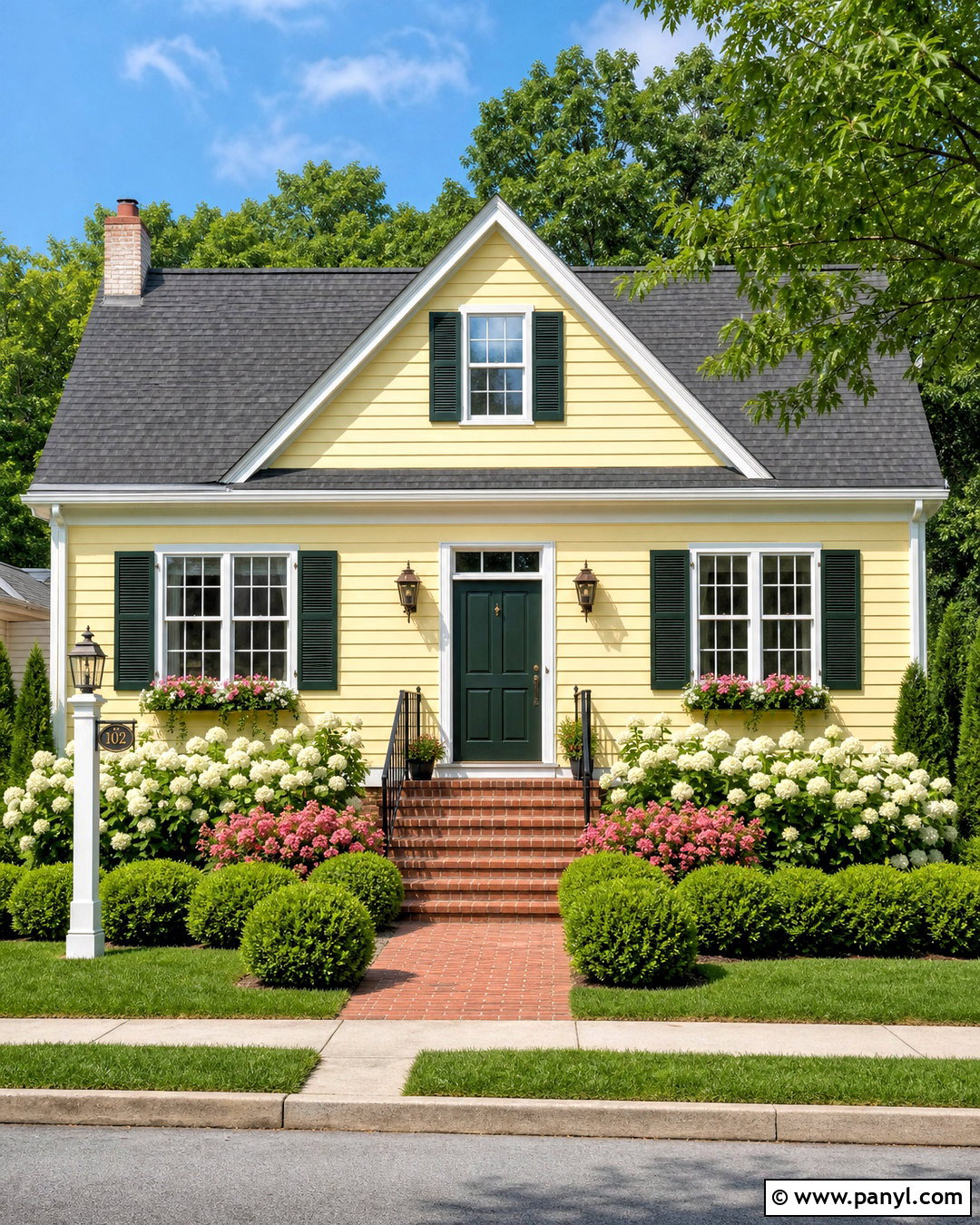
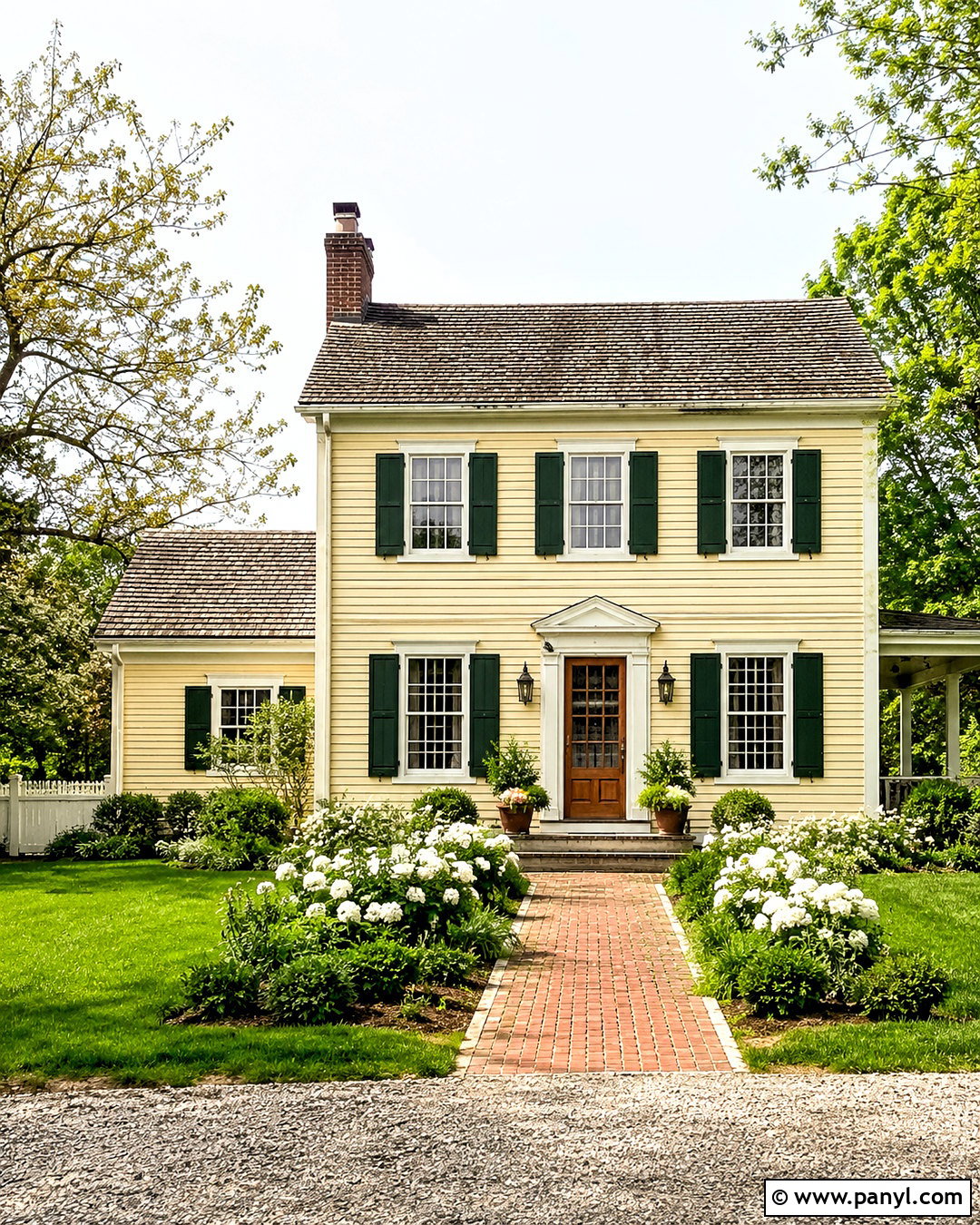
A restrained yellow exterior can make a home look cheerful without becoming overly bright. Choose a soft buttery yellow with warm cream undertones for the main siding. Apply clean white to the trim, porch railings, and window frames for a fresh outline. Deep green shutters and a matching front door create a garden-inspired accent that complements the yellow body color. Use a medium brown or weathered charcoal roof, depending on the home’s permanent masonry. Antique bronze porch lights and hardware add warmth without attracting too much attention. Red brick steps can remain unpainted because their earthy color supports the palette. Complete the scene with white hydrangeas, pink flowering shrubs, and neat evergreen borders. This scheme naturally suits farmhouse, cottage, Colonial, and Cape Cod architecture.
15. Terracotta And Sand Exterior Color Scheme
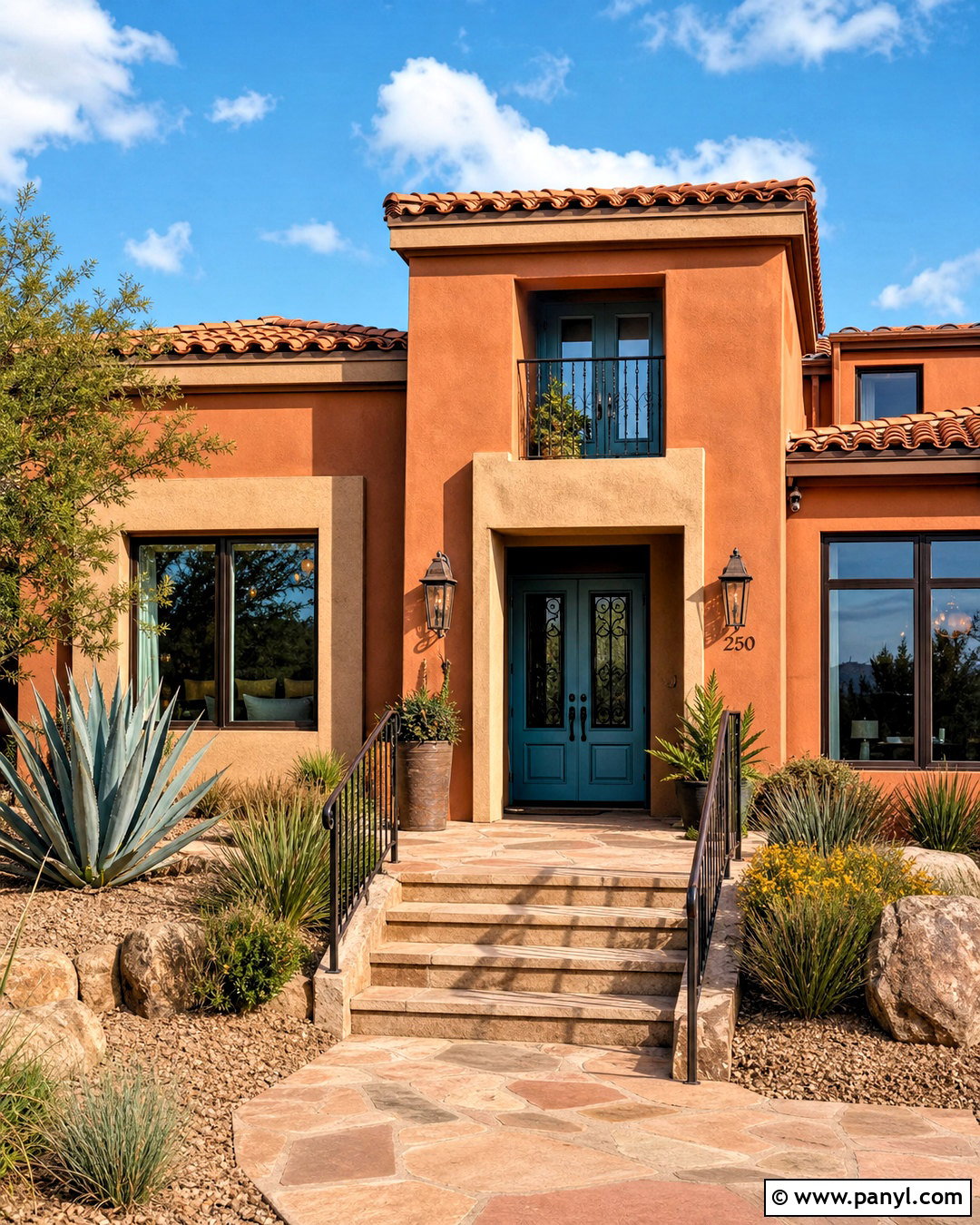
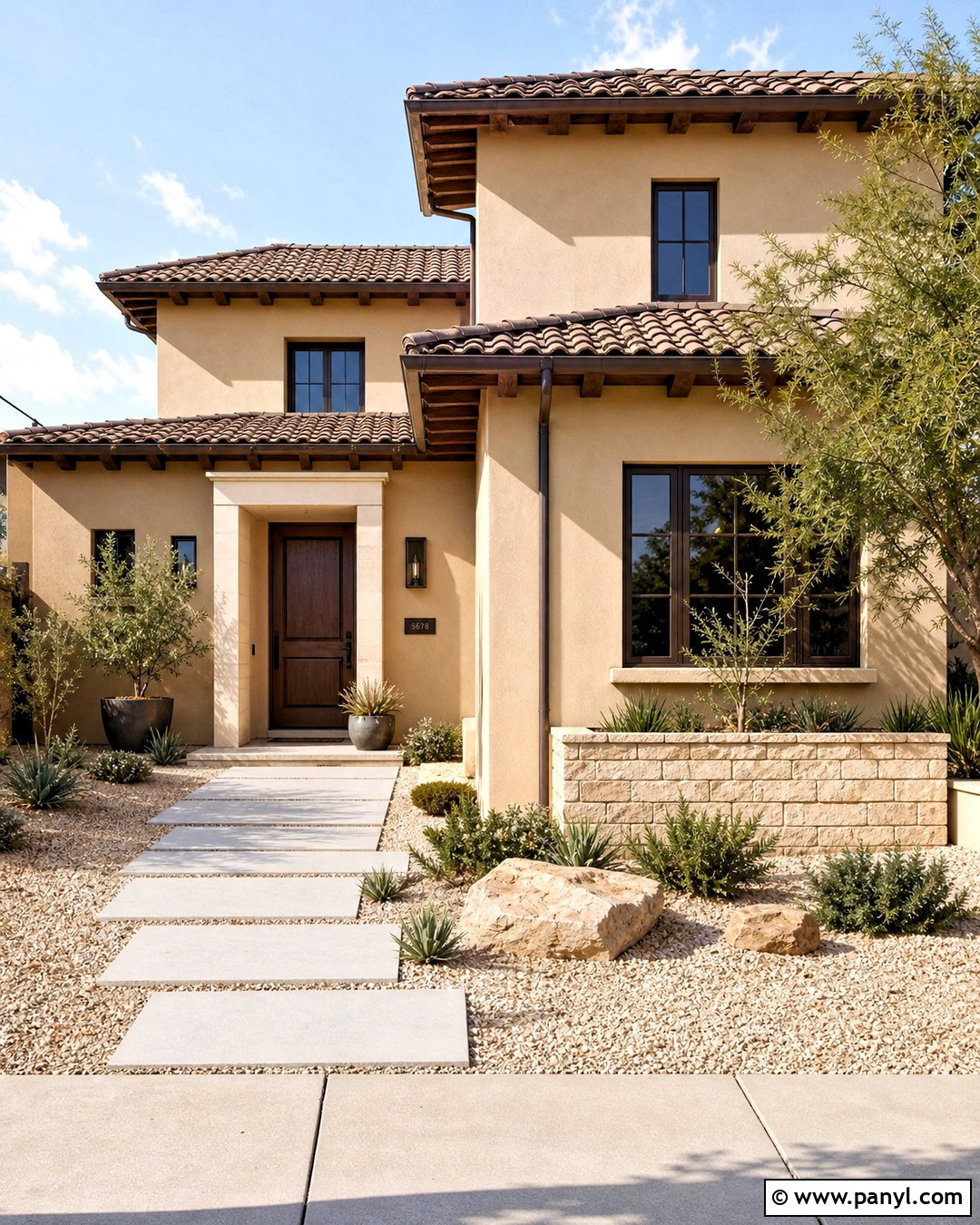
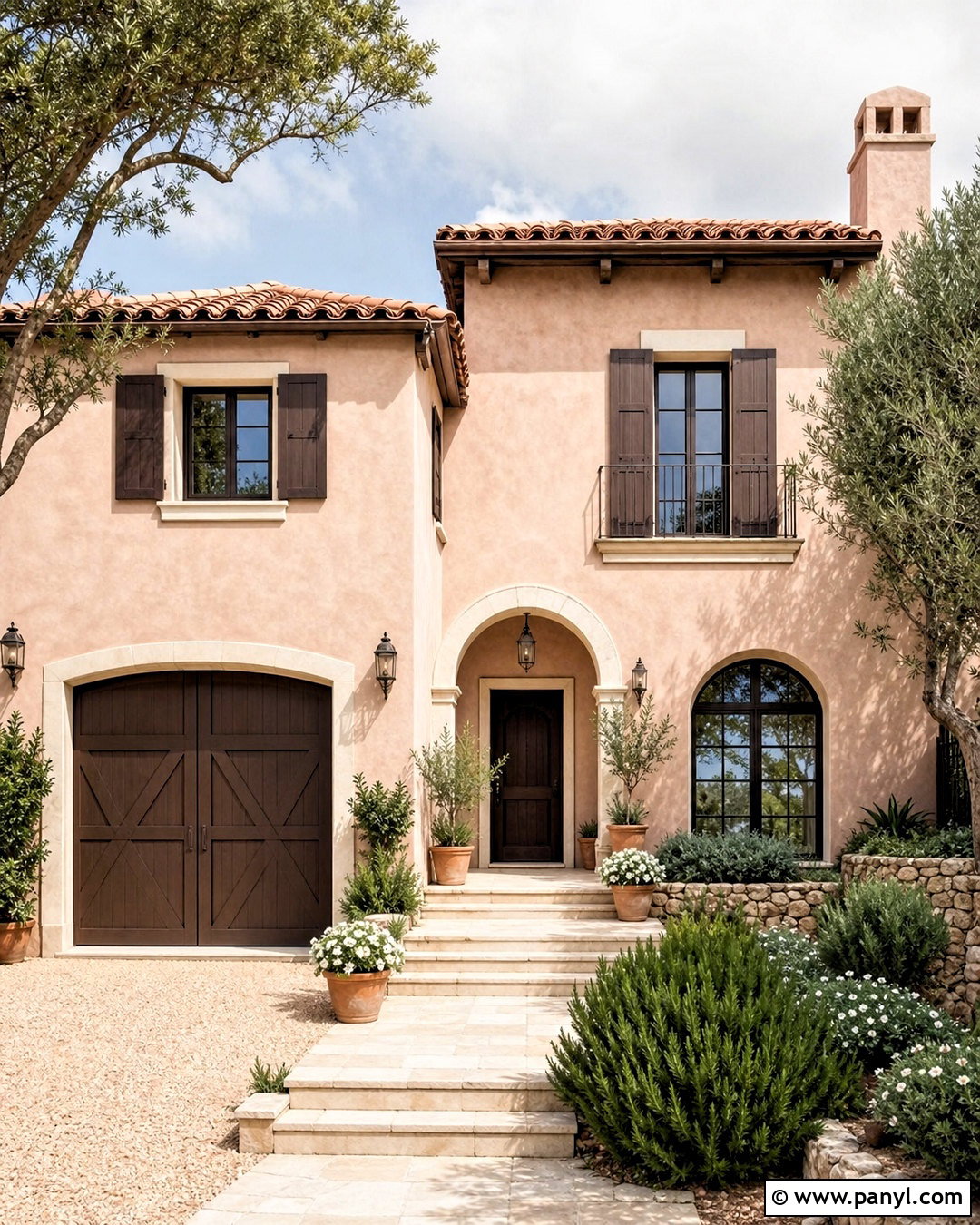
Sun-warmed terracotta brings depth to stucco homes and blends naturally with dry or desert-inspired landscapes. Use a muted clay-orange body color rather than a vivid red-orange. Paint the trim, garage door, and porch details a sandy beige that relates to natural stone and gravel. A turquoise or dusty teal front door introduces a confident accent while remaining connected to traditional Southwestern palettes. Choose dark bronze window frames, lights, and metal railings. A terracotta tile roof is ideal, but a warm brown roof can also support the scheme. Create a cohesive landscape using gravel beds, sculptural grasses, agave, yucca, and drought-tolerant shrubs. The finished exterior feels colorful yet grounded, making it suitable for Spanish Revival, adobe, Mediterranean, and Southwestern-style houses.
16. Brick Red And Cream Exterior Color Scheme
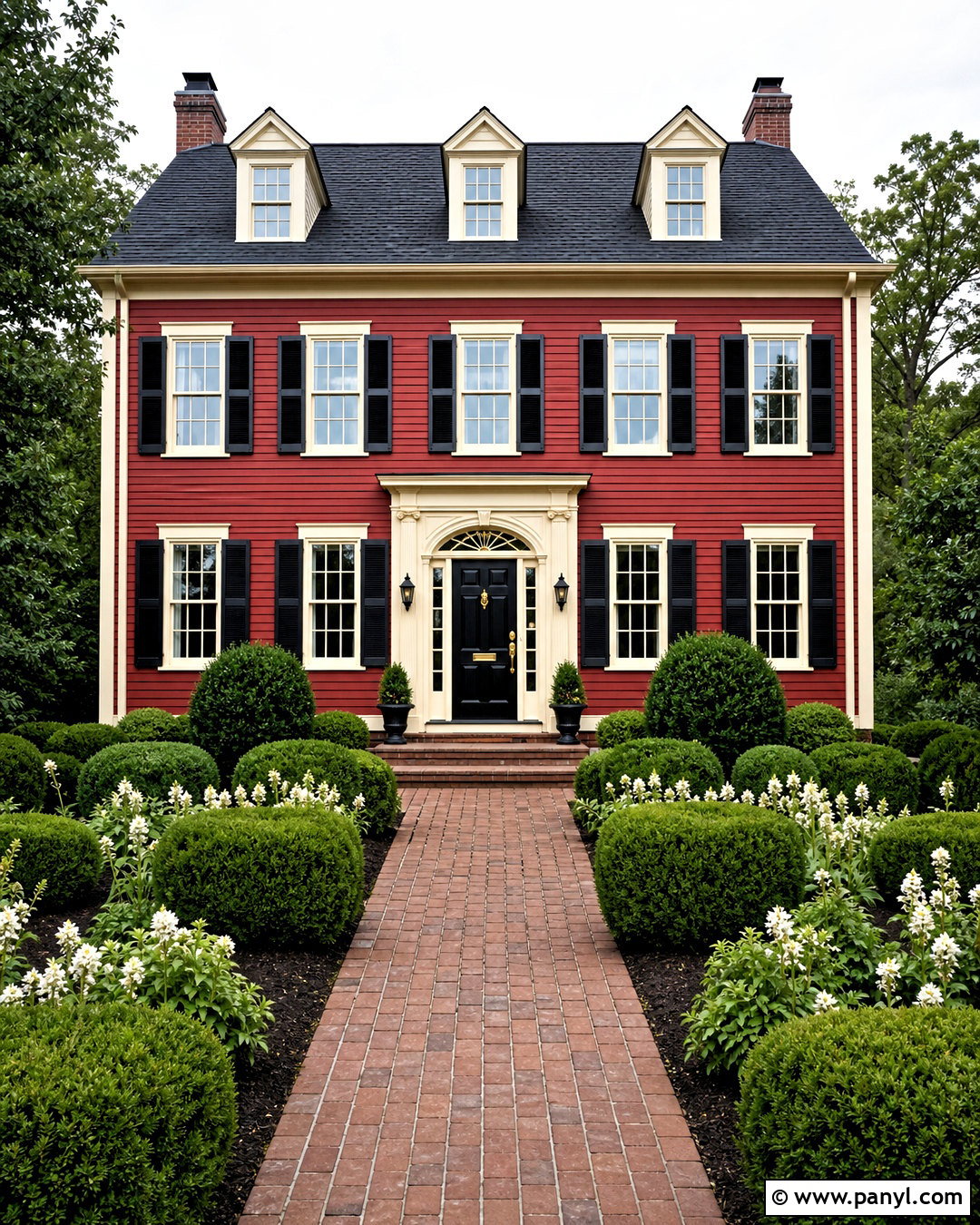
Brick red siding gives traditional homes a strong presence, especially when balanced with warm cream trim. Select a muted, earthy red rather than a bright primary shade. Use cream on the windows, fascia, porch columns, and architectural molding to soften the contrast. A glossy black front door adds formality, while black shutters can reinforce symmetry on Colonial or Georgian facades. Choose a charcoal roof to anchor the red body color and coordinate with the black accents. If the house already includes red brick, match the siding to a darker or quieter shade within the masonry rather than trying to duplicate it exactly. Brick walkways, clipped boxwoods, white flowering plants, and brass door hardware complete this structured exterior. The final look feels established, welcoming, and historically influenced.
17. White Brick And Taupe Exterior Color Scheme
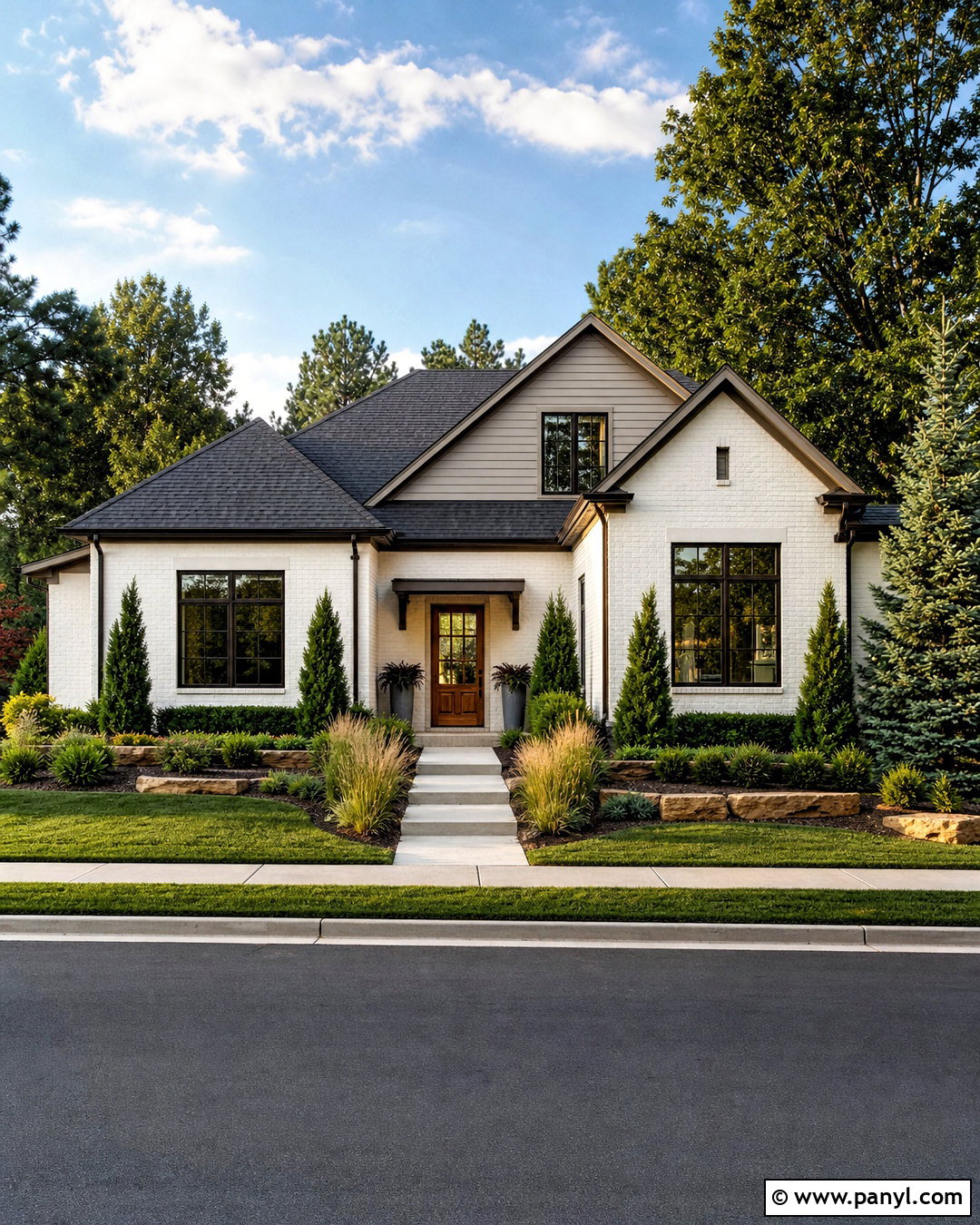
Painted white brick can appear flat unless the surrounding materials provide gentle contrast. Use a warm off-white on the brick, preserving its texture while reducing strong red or brown tones. Paint upper siding, gables, or dormers a medium-light taupe to create depth. Choose dark bronze for the windows, gutters, lighting, and railings. A stained wood front door introduces warmth and becomes a natural focal point. Keep the roof charcoal or deep brown, depending on the undertones in the taupe. For the garage door, repeat the taupe siding color so the broad surface does not compete with the entry. Layered evergreens, tan stone edging, ornamental grasses, and a simple concrete walkway finish this balanced scheme for ranch, Tudor-inspired, and transitional suburban homes.
18. Brown And Black Exterior Color Scheme
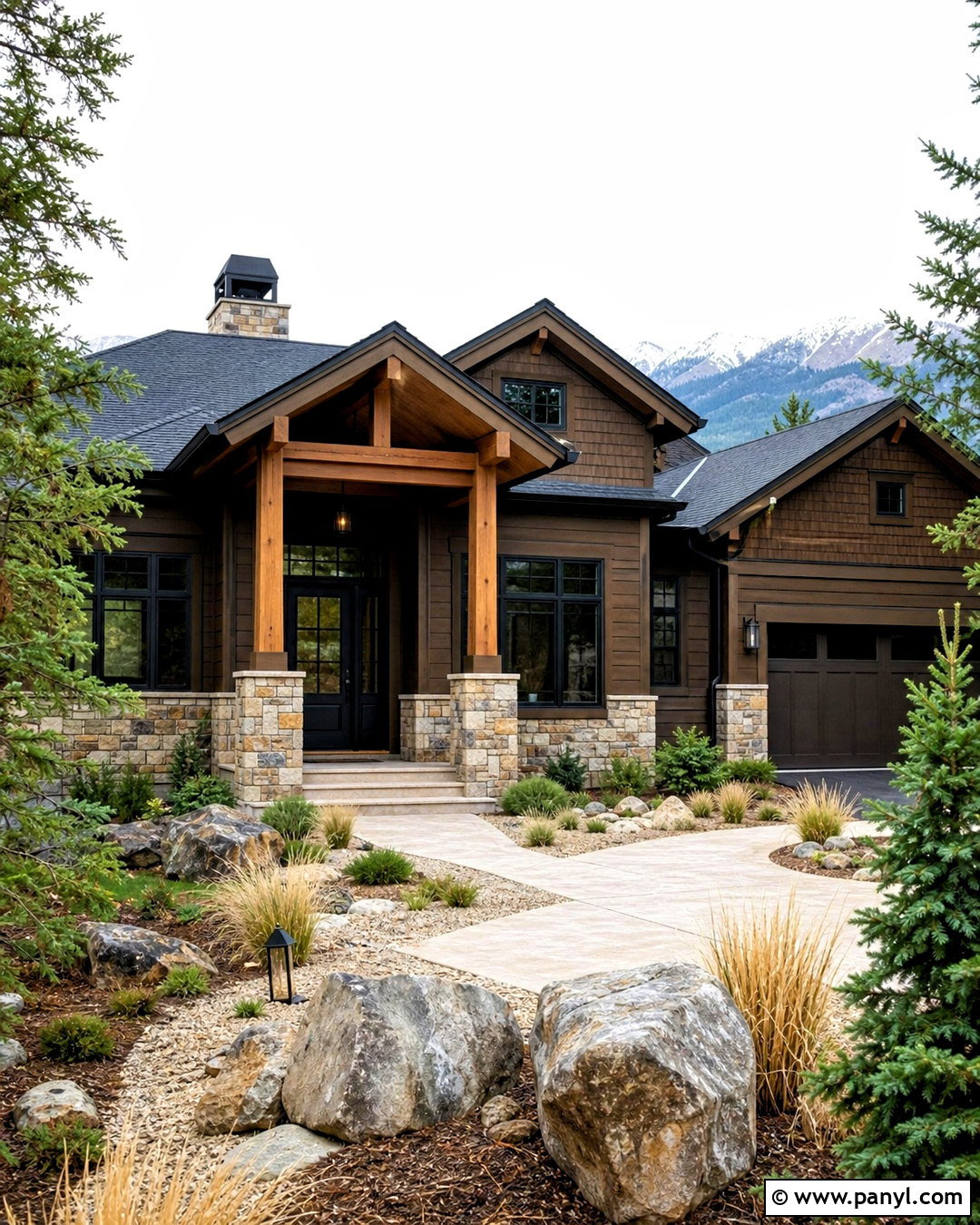
Rich brown siding can feel updated when combined with crisp black accents and lighter natural stone. Choose an earthy medium-dark brown for the main body, avoiding shades with strong orange undertones. Apply matte black to window frames, gutters, railings, and the front door. Use warm beige or mushroom-colored trim sparingly around the roofline and porch to prevent the exterior from looking too dark. A black roof creates a clean upper edge, while pale fieldstone around the foundation adds texture and contrast. If the home includes wood beams, stain them a slightly lighter cedar brown so they remain visible. Finish the look with gravel paths, native grasses, evergreen shrubs, and warm concrete. This grounded palette suits cabins, Craftsman homes, mountain houses, and wooded ranch properties.
19. Pale Blue Coastal Exterior Color Scheme
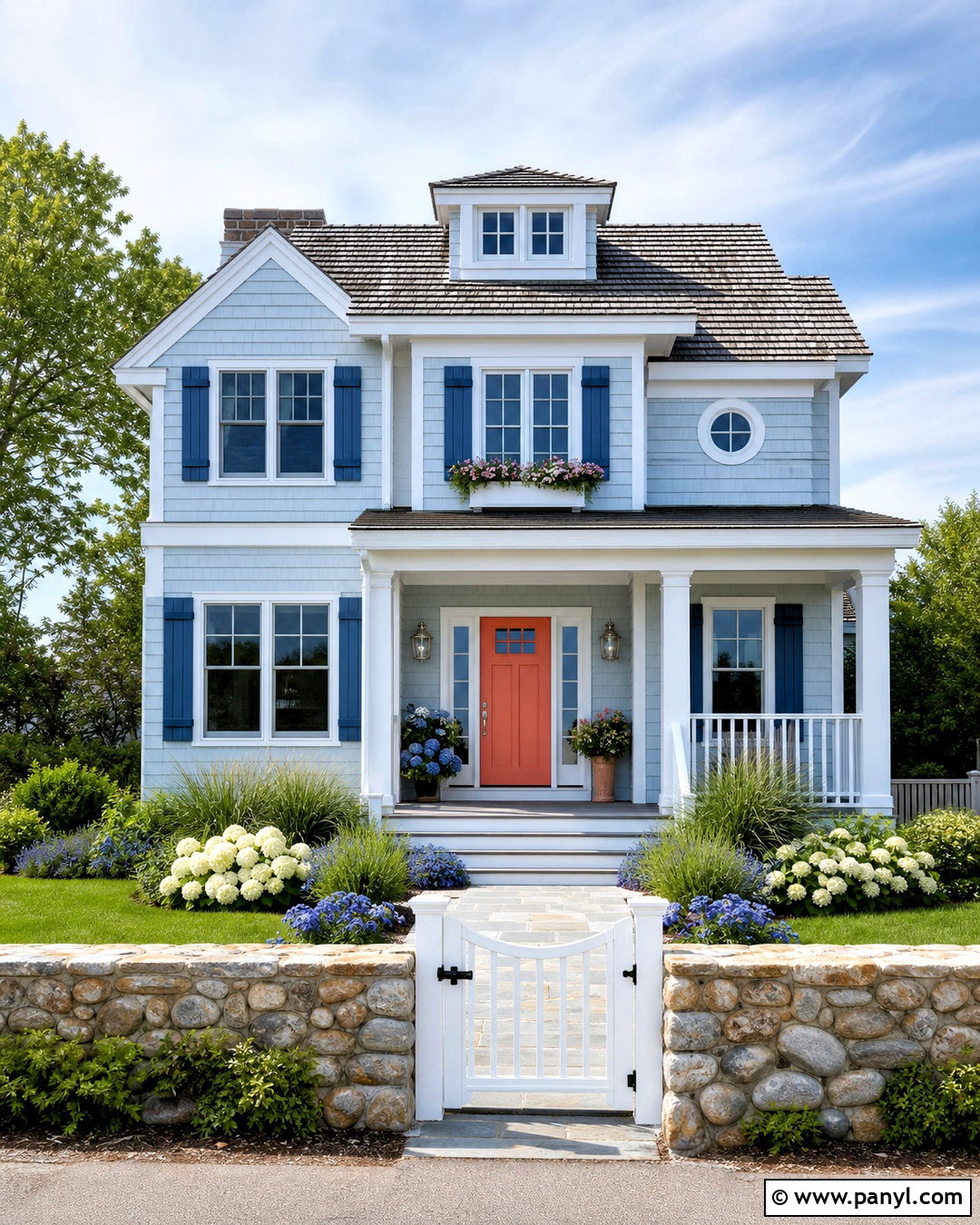
Pale blue siding creates an airy exterior that works beyond beach communities when the supporting colors remain sophisticated. Choose a soft sky blue with gray undertones, then use bright white on the trim, porch railings, and window frames. Paint the front door muted coral for a small, welcoming burst of warmth. A weathered gray roof and brushed nickel lighting maintain the light, relaxed character. If shutters suit the house, select a medium denim blue rather than matching the coral door. Use pale stone or gray decking around the porch to connect the home with the roof. White hydrangeas, wispy grasses, blue flowering plants, and a neat lawn complete the landscape. This full scheme works on coastal cottages, Cape Cod homes, bungalows, and compact suburban properties.
20. Blush Beige And Green Exterior Color Scheme
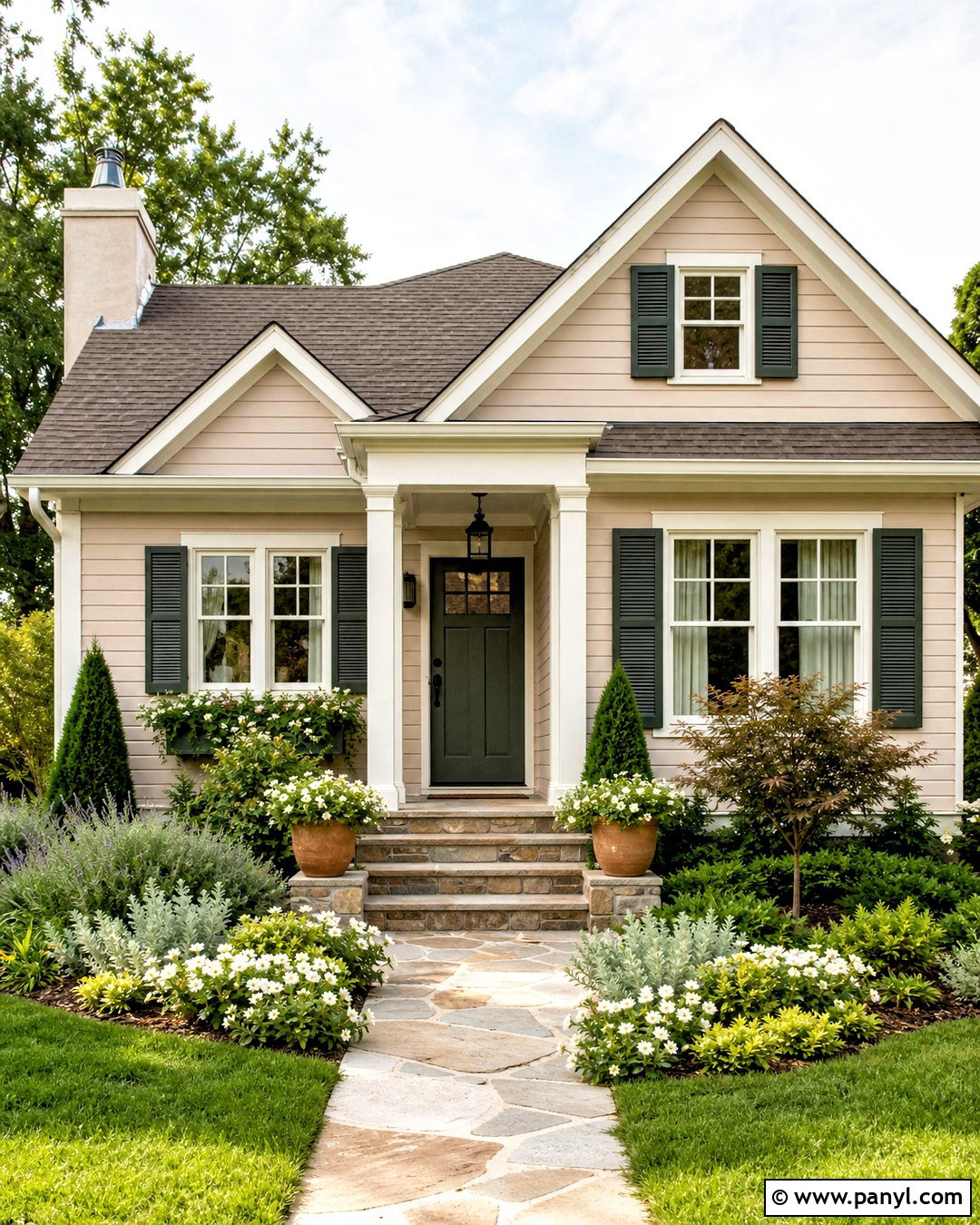
For a warm exterior that feels distinctive but not overly pink, select a muted blush beige with earthy undertones. Use creamy white trim around the windows, porch, and eaves to keep the facade bright. A deep green front door and matching shutters create a classic contrast inspired by garden colors. Choose dark bronze lights, hardware, gutters, and house numbers instead of stark black. A warm gray or brown shingle roof works best with the beige foundation. Add natural stone steps and terracotta planters to strengthen the subtle red undertones. Landscaping should include evergreen shrubs, white flowers, dusty green foliage, and a small ornamental tree. This complete palette gives cottages, stucco houses, traditional bungalows, and older suburban homes a soft yet memorable street presence.
Conclusion:
The strongest exterior palettes connect every visible surface rather than treating paint colors separately. Begin with permanent features such as the roof, brick, stone, windows, and driveway. Then select a siding color, complementary trim, and one controlled accent for the door or shutters. Consider how the garage door, gutters, lighting, and landscaping will support the finished look. Always examine large painted samples in morning sun, afternoon light, and shade before making a final commitment. Colors often appear brighter and cooler outdoors than expected. From warm white and sage green to navy, charcoal, or terracotta, these 20 house exterior colors schemes offer complete combinations that can be adjusted to suit your home’s architecture, setting, and existing materials.

Related Ideas and Inspiration:
Leave a Reply