
Choosing exterior paint is easier when you think in complete palettes rather than one color at a time. These 20 external house paint colors pair the main siding shade with trim, roofing, masonry, doors, and landscaping for a finished look. Warm whites, earthy greens, softened blues, taupes, charcoal tones, and clay-inspired hues are especially relevant in 2026. Neutrals remain popular, while deeper natural colors are giving traditional homes a richer appearance. Most successful exteriors also use three or four coordinated colors across siding, trim, shutters, railings, and doors. () Always test large samples beside permanent materials and view them throughout the day. Use the following 20 external house paint colors to create a balanced scheme that fits your architecture.
1. Warm White Exterior House Paint
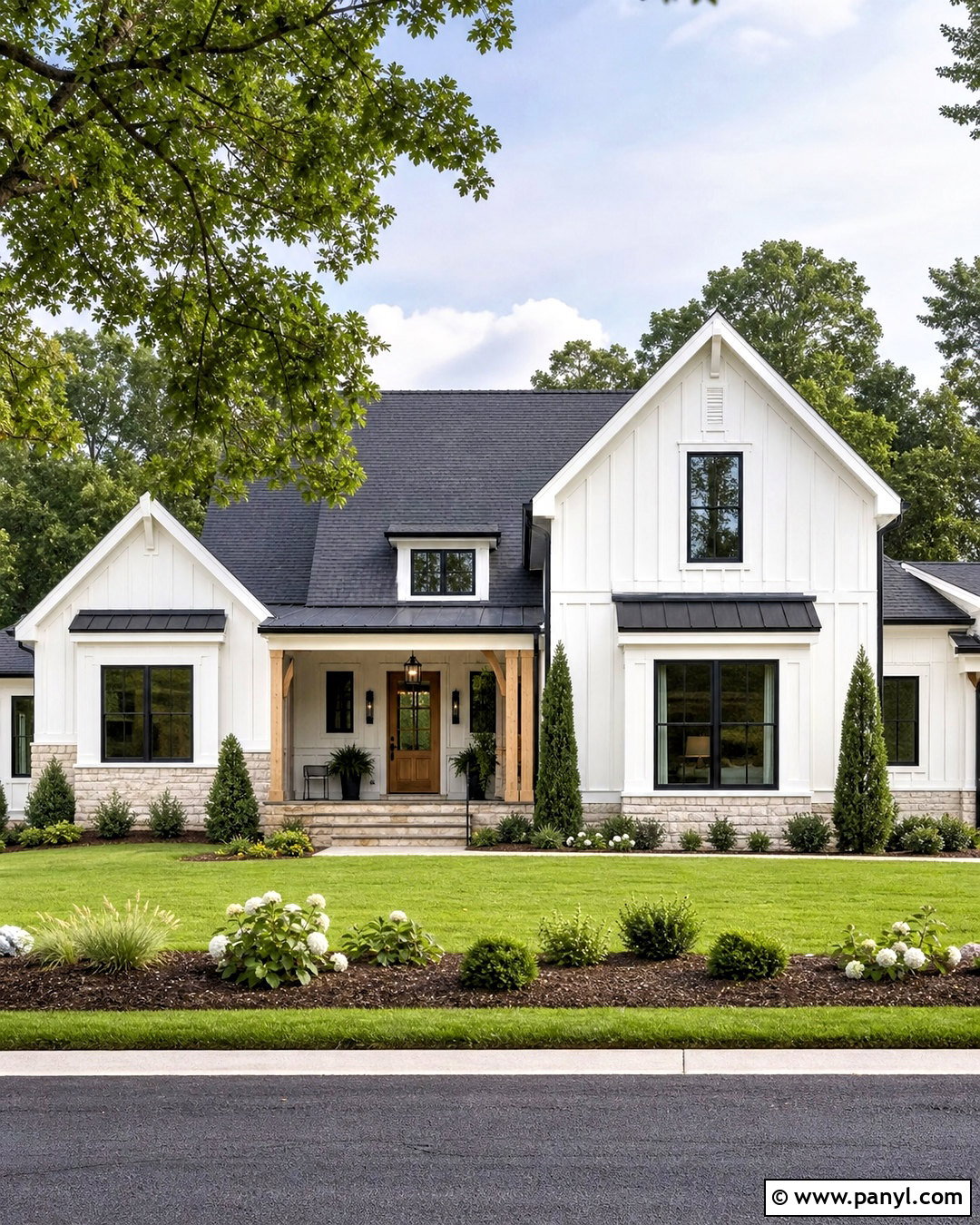
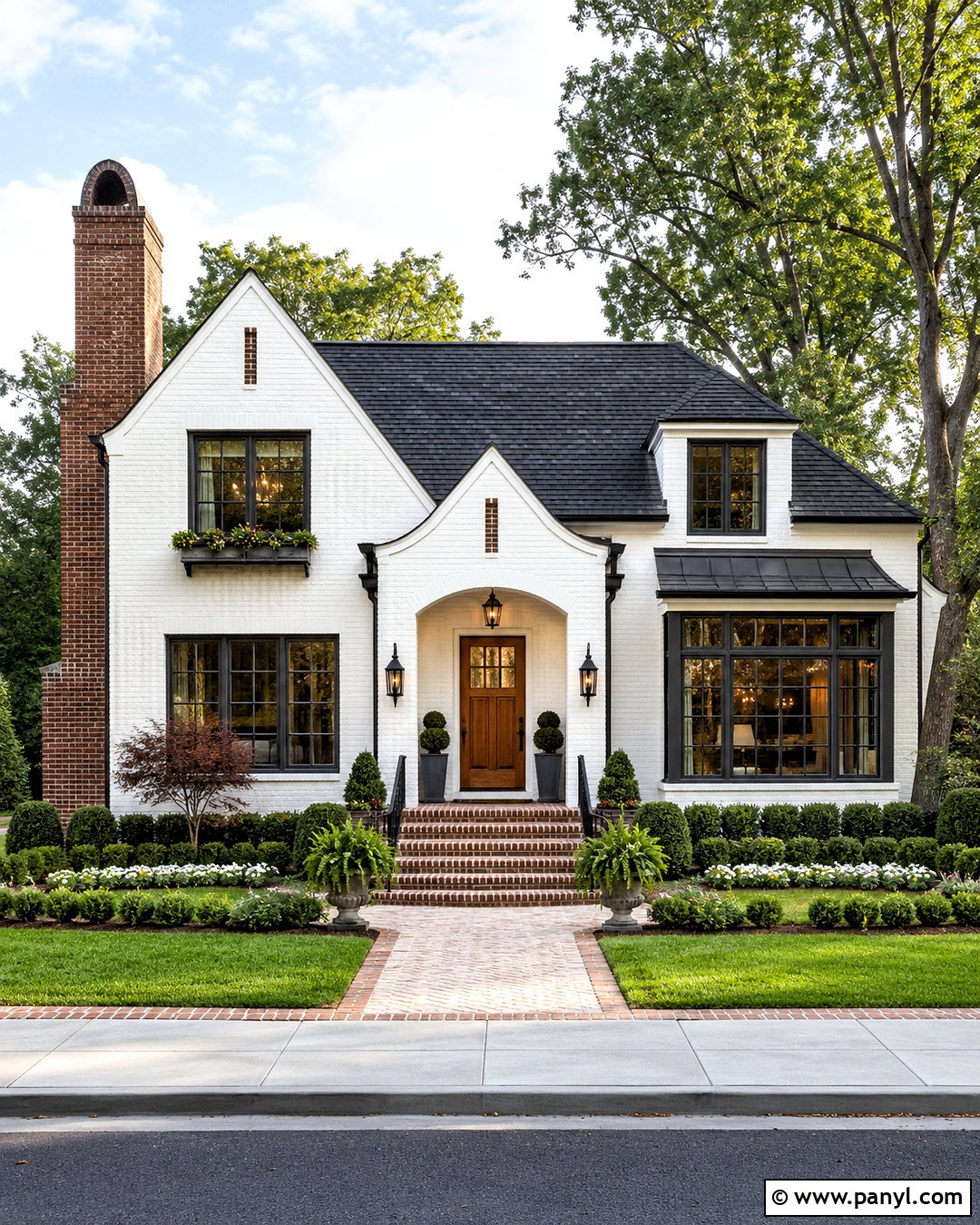
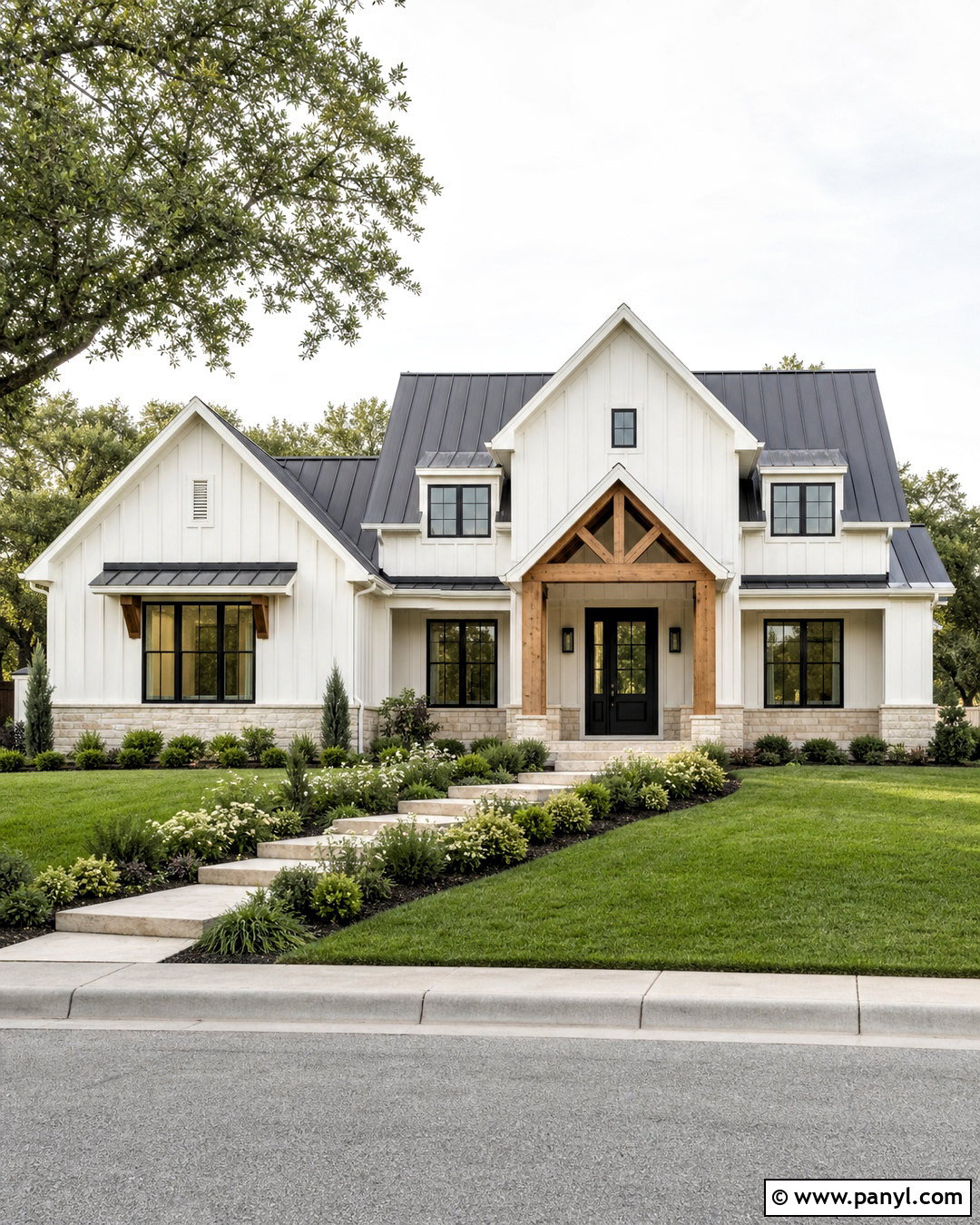
Warm white siding creates a clean exterior without the sharpness that can make pure white feel cold. Choose a creamy white with subtle beige undertones for the body, then use a slightly brighter white on window trim, fascia, and porch columns. Matte black lighting and gutters add definition, while a medium-tone cedar front door brings warmth to the entry. This palette looks especially attractive on farmhouse, Cape Cod, cottage, and transitional homes. Pair it with a charcoal roof, pale stone foundation, and simple evergreen landscaping. Avoid overly yellow whites, particularly beside orange brick or warm stone. Paint large sample boards and move them around the house because shaded walls may appear noticeably creamier than areas receiving direct sunlight.
2. Cream Exterior House Paint
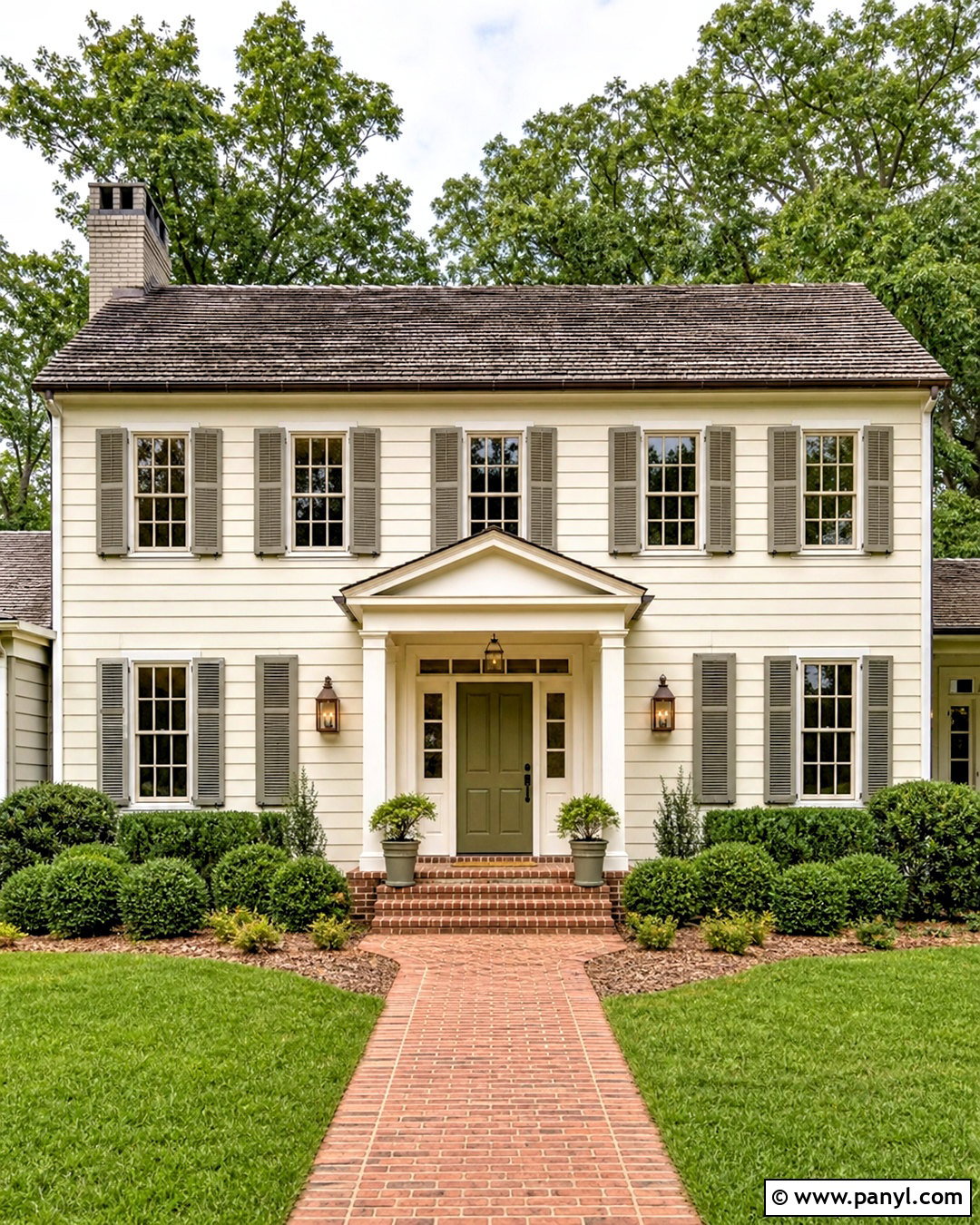
A soft cream exterior gives traditional homes a welcoming finish and works beautifully with brown, bronze, and muted green accents. Use light cream across the siding or stucco, warm white for the trim, and medium taupe on shutters or garage doors. An olive green front door adds gentle color without making the facade feel busy. Complete the scheme with aged bronze hardware, copper porch lights, and a weathered brown roof. Cream can also soften the strong orange tones found in brick steps or terracotta roofing. This full palette suits Colonial, Mediterranean, bungalow, and country architecture. Keep the landscaping relaxed with clipped shrubs, white flowering plants, and natural mulch. The result feels sunny and inviting while remaining more forgiving than bright white.
3. Light Greige Exterior House Paint
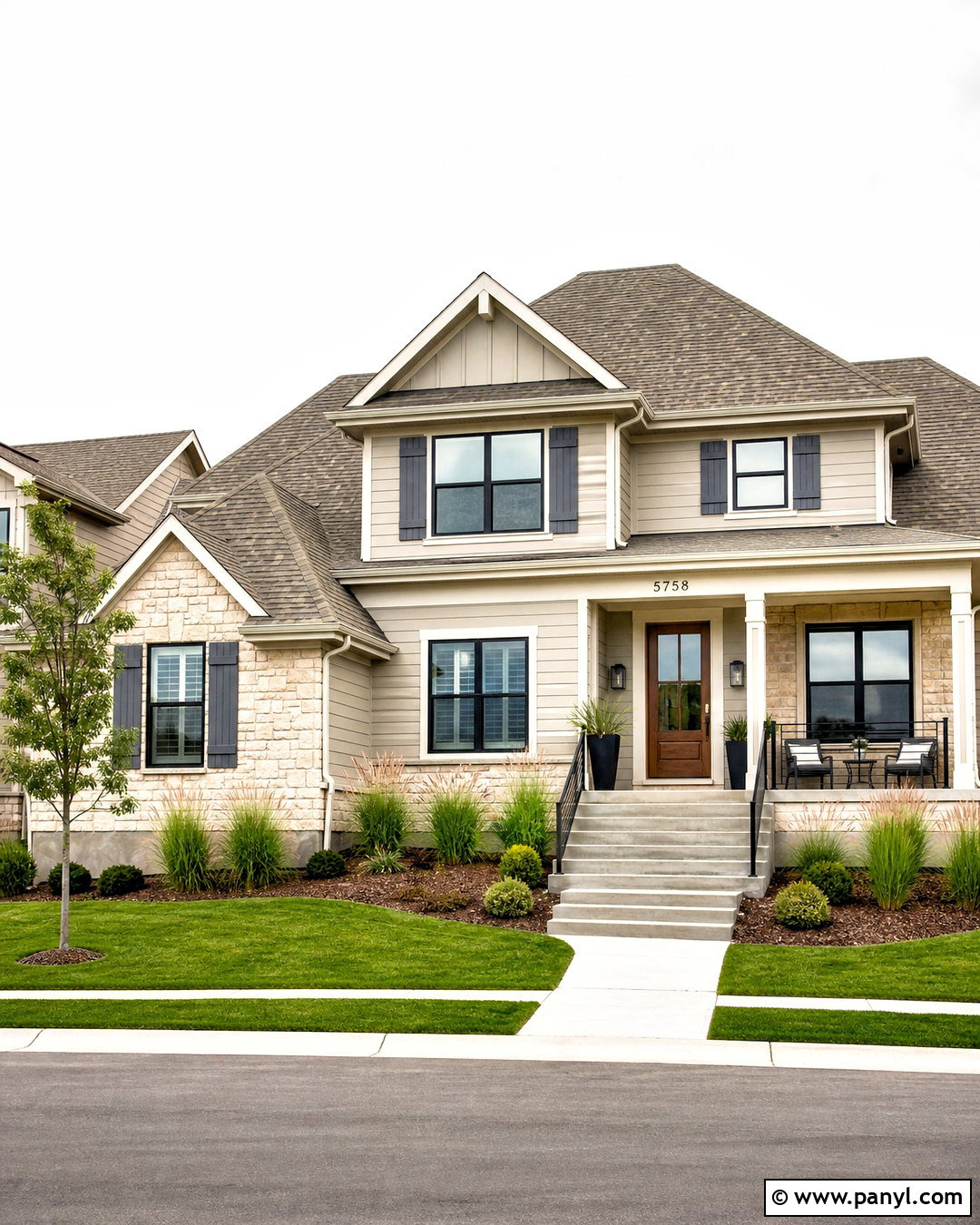
Light greige combines the softness of beige with the modern appearance of gray, making it a flexible choice for many neighborhoods. Apply a warm greige to the main siding, creamy white to the trim, and deep charcoal to shutters, gutters, and metal railings. A stained walnut door prevents the neutral combination from feeling flat. This scheme works especially well with gray-brown roofing, limestone, concrete walkways, and mixed beige stone. On a ranch home, painting the garage door in the body color creates a wider, calmer facade. On a two-story home, white trim can highlight windows and architectural molding. Choose a greige that relates to permanent masonry rather than fighting it. Green lawn, ornamental grasses, and dark planters complete the balanced exterior.
4. Soft Gray Exterior House Paint
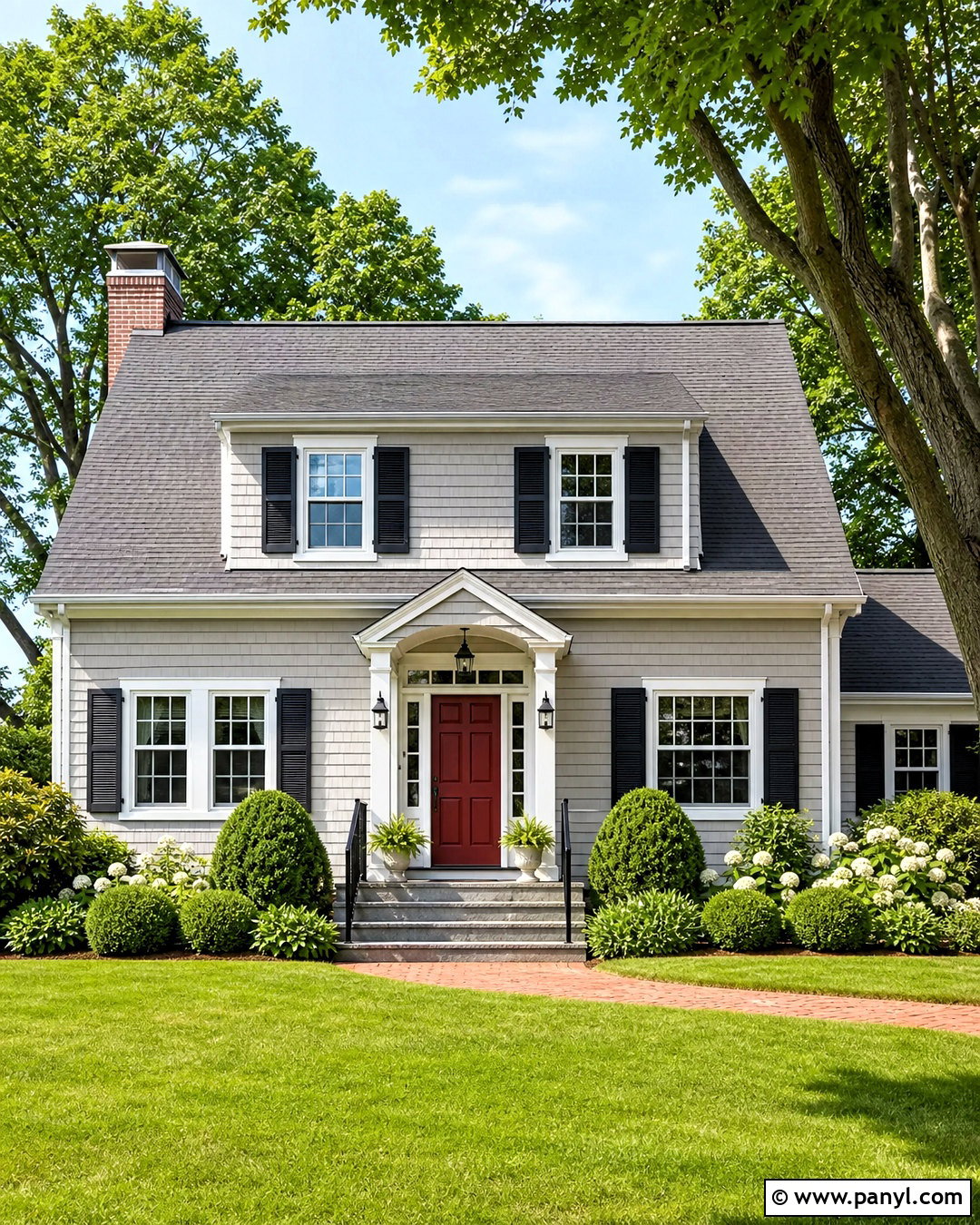
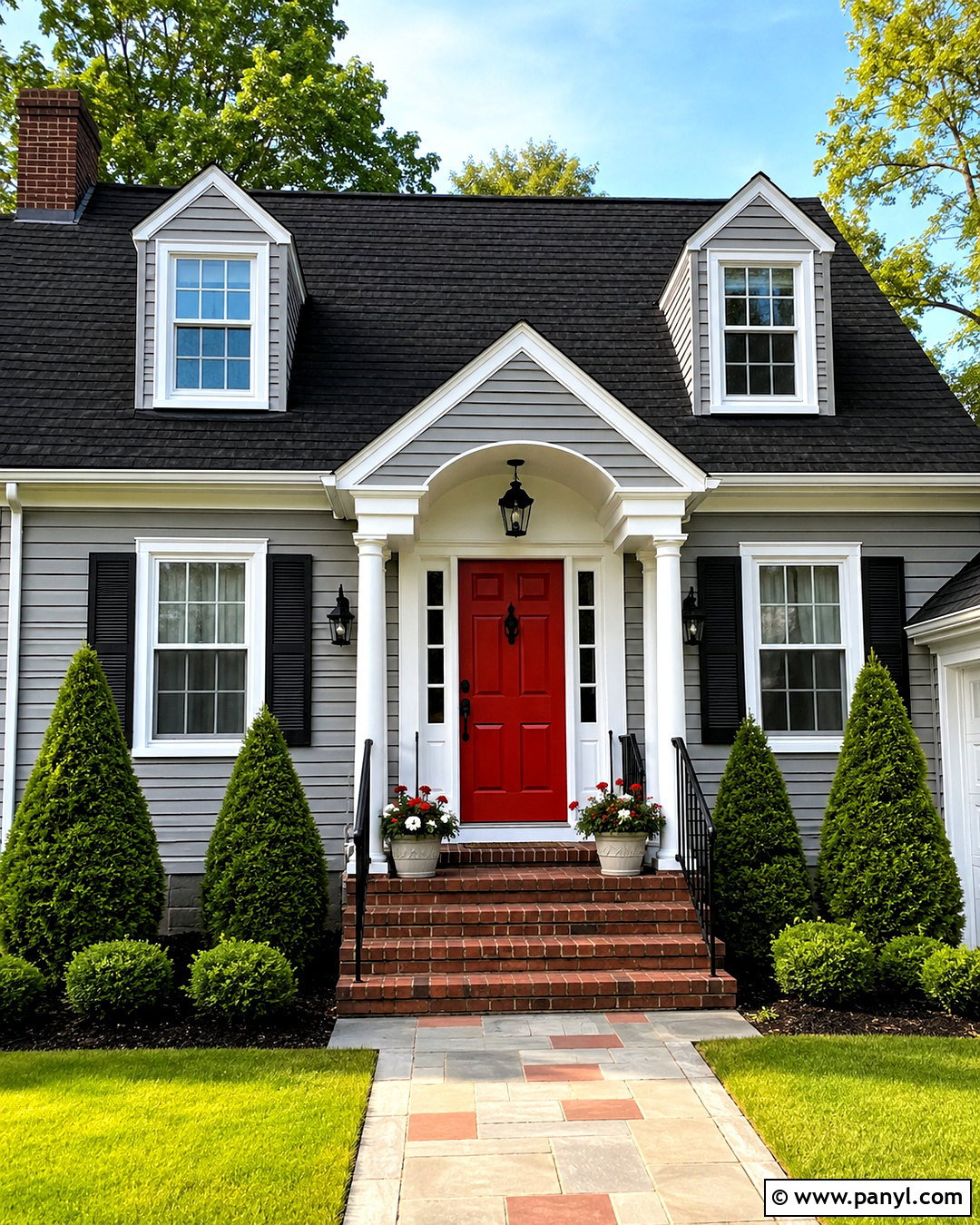
Soft gray delivers a fresh, tailored exterior when its undertone works with the roof and surrounding materials. Select a light gray with a slight warm or green undertone for the siding instead of a chilly blue-gray. Frame the house with crisp white trim, charcoal shutters, and a muted brick-red front door. The red accent adds personality while still complementing traditional architecture. Gray roofing, bluestone steps, and black metal lights connect the darker details across the facade. This complete look is suitable for Colonial, Cape Cod, cottage, and suburban homes. To keep the front yard from feeling too formal, add rounded evergreen shrubs and white flowering perennials. Test the gray beside the roof because an unsuitable undertone often becomes much more visible outdoors.
5. Charcoal Exterior House Paint
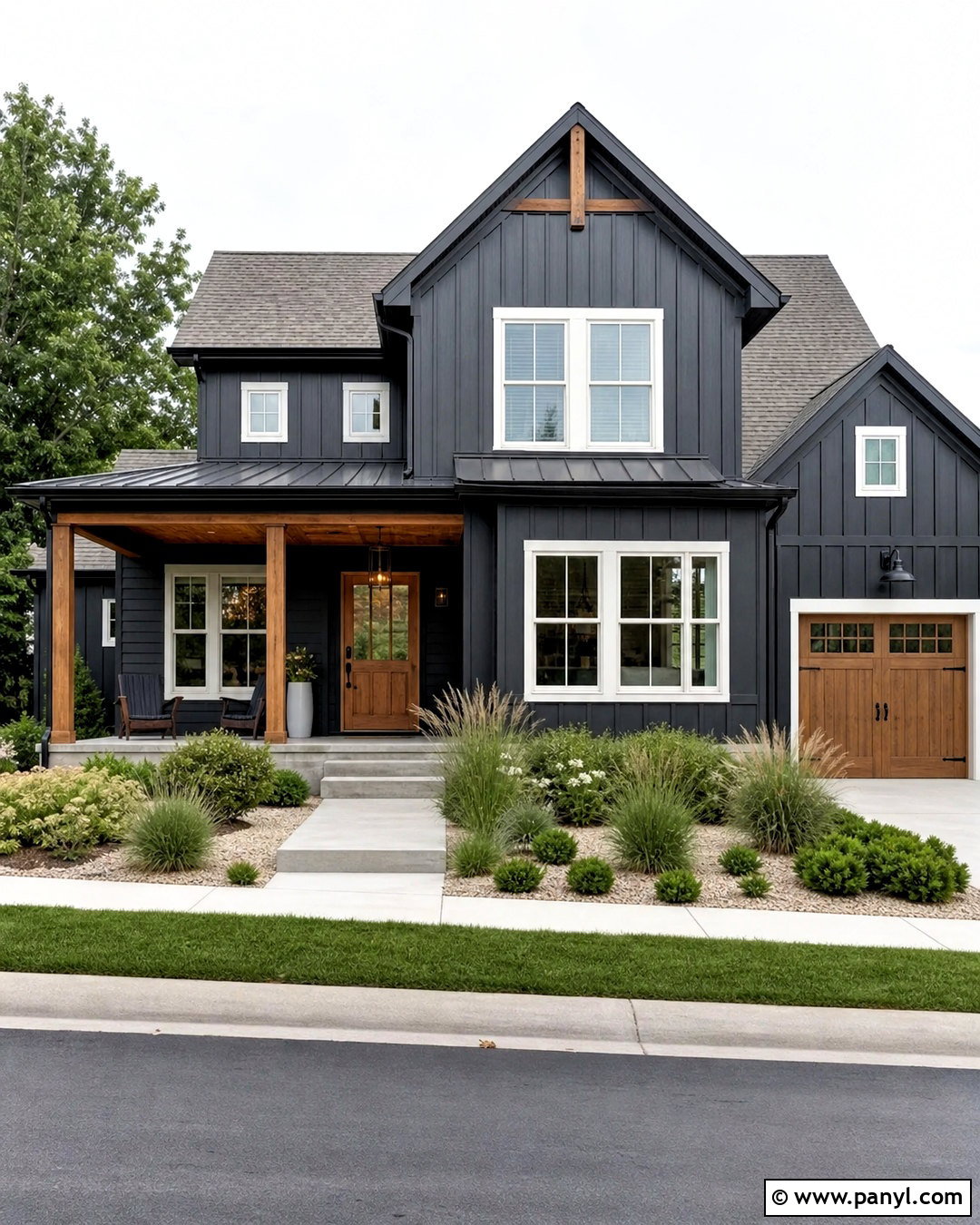
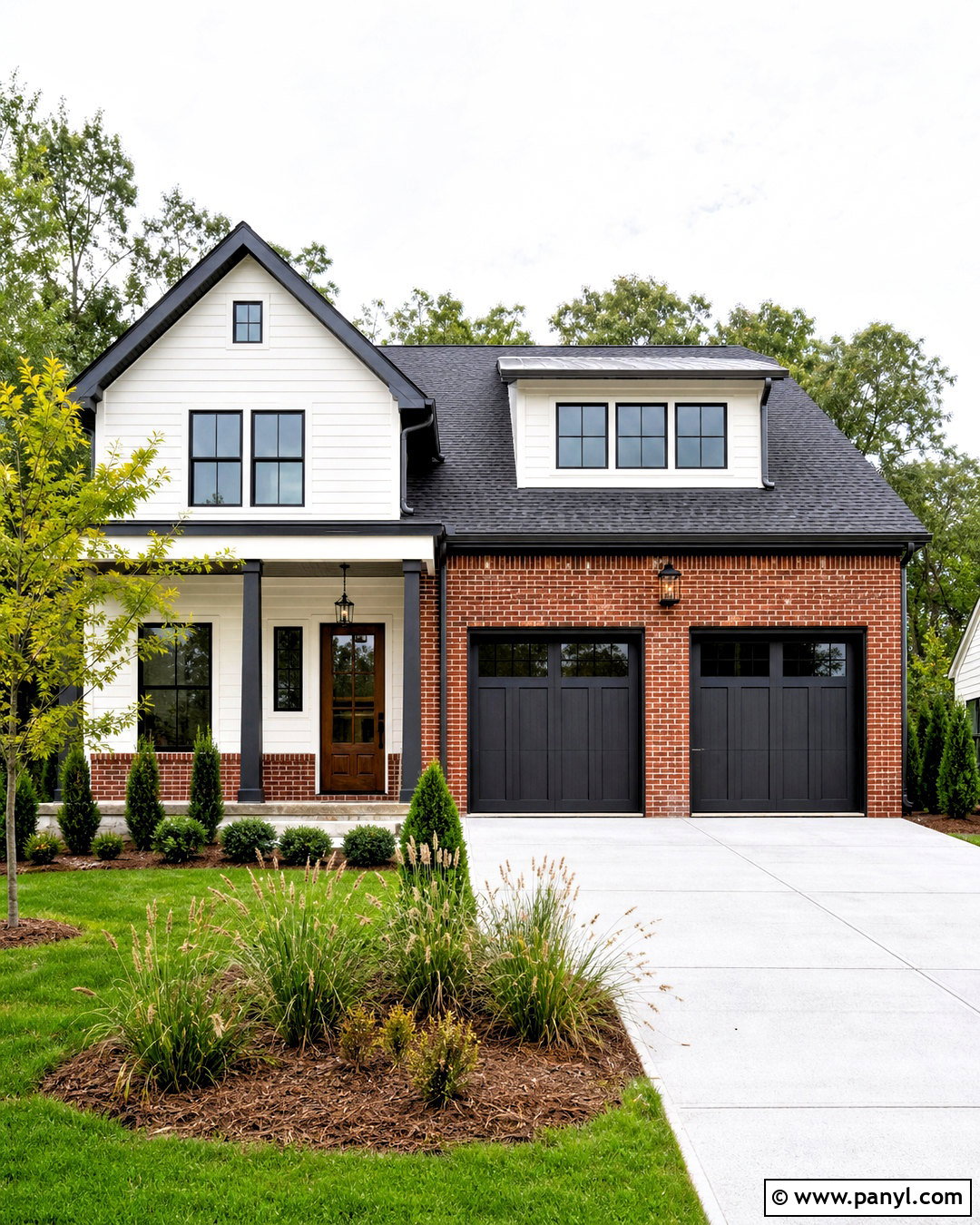
Charcoal siding gives an ordinary home a stronger architectural presence, yet it can still feel approachable when paired with warm materials. Use deep charcoal on the body and garage door, warm white around windows and eaves, and natural cedar on the front door, porch ceiling, or decorative gable. Matte black gutters blend quietly into the darker siding. A medium-gray roof maintains contrast without creating a harsh black-and-white effect. This scheme is particularly effective on modern farmhouses, contemporary cottages, and simple ranch homes with clean lines. Balance the dramatic color with light concrete, pale gravel, and layered green planting. Because dark paint can reveal dust and surface imperfections, prepare the siding carefully. Sampling is essential since direct sun can make charcoal appear much lighter than expected.
6. Soft Black Exterior House Paint
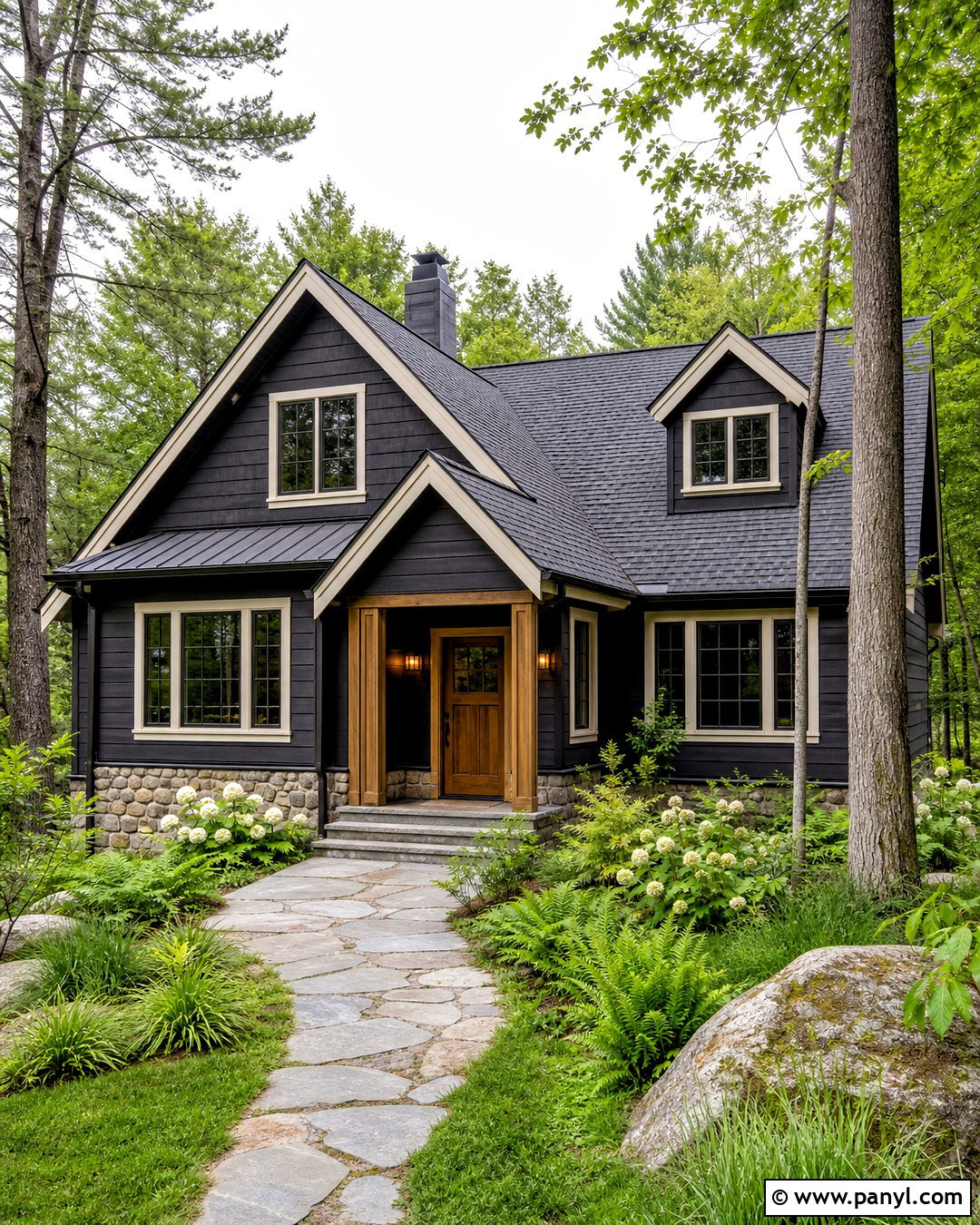
Would a black house feel too severe? A softened black with brown or green undertones can look surprisingly natural, especially in a wooded landscape. Cover the siding in soft black and continue the color onto the gutters and garage door for a unified facade. Add warm ivory window trim sparingly, then introduce a medium oak front door and bronze exterior lights. Fieldstone around the foundation grounds the dark walls and provides valuable texture. This full exterior treatment complements modern cabins, Scandinavian-inspired homes, cottages, and contemporary houses. Keep the walkway and porch surfaces light enough to create contrast. Loose grasses, ferns, and pale hydrangeas help the home settle into its surroundings. Before committing, check whether intense afternoon sun shifts the chosen black toward blue, purple, or brown.
7. Sage Green Exterior House Paint
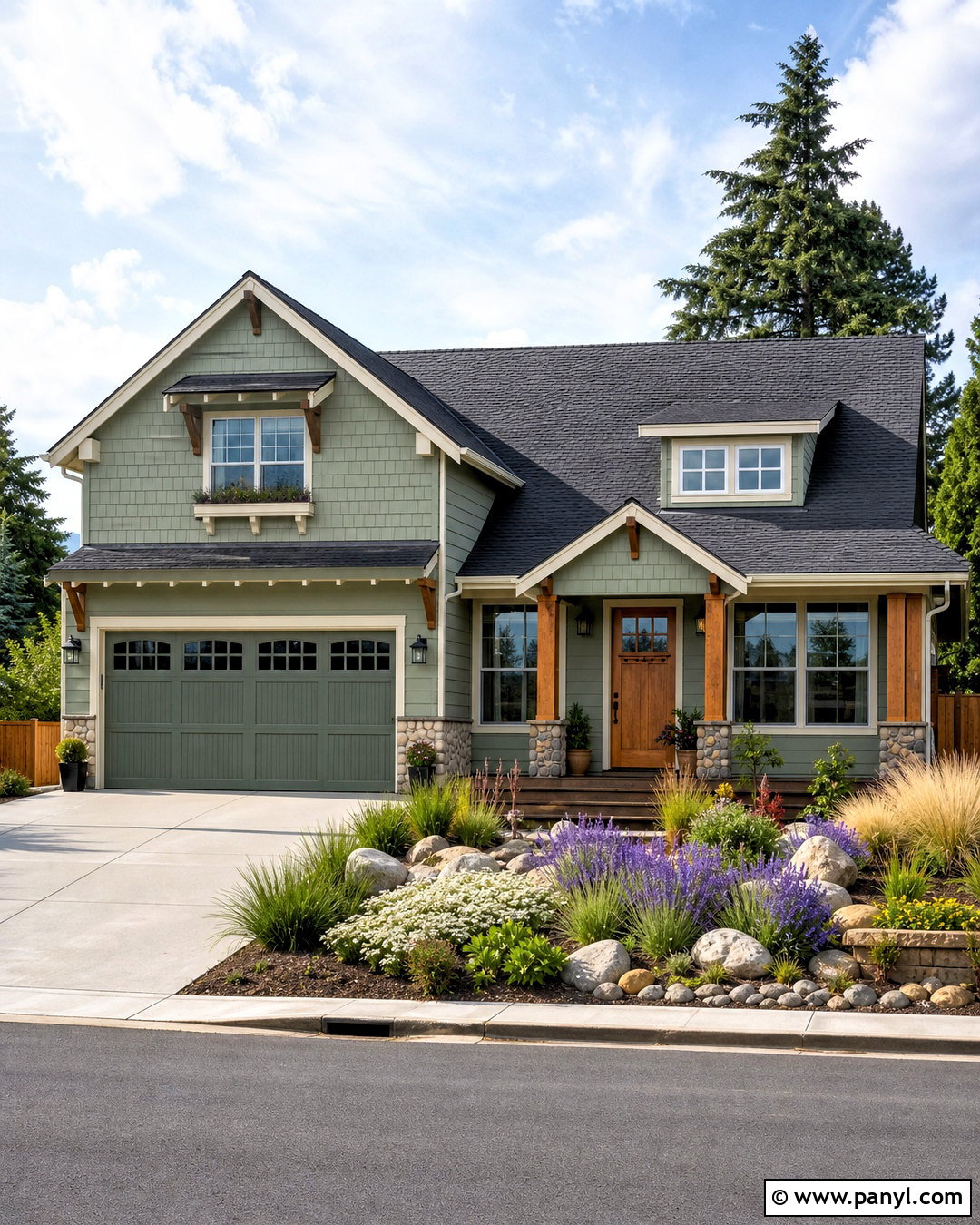
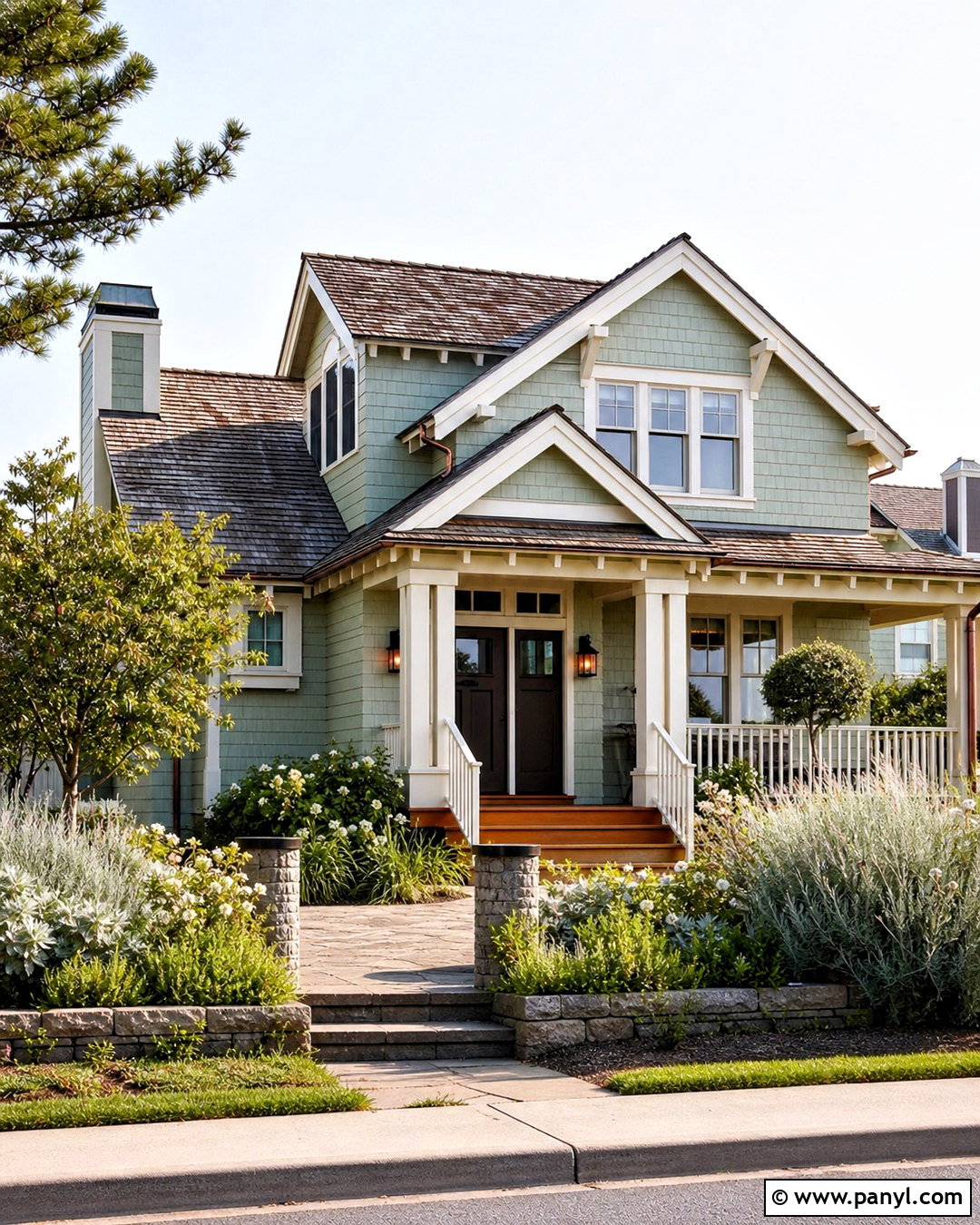
Sage green feels calm and connected to the landscape, making it a practical alternative to beige or gray. Choose a muted sage for siding, creamy white for trim, and a deeper green-gray for shutters or the garage door. A warm cedar entry door and matching porch posts add organic contrast. This palette works with brown, weathered gray, or dark charcoal roofing and pairs naturally with brick, river rock, and limestone. It is especially flattering on Craftsman, ranch, cottage, and farmhouse exteriors. Use black lighting in small amounts so the overall effect stays soft. Layer the front garden with lavender, ornamental grasses, white flowers, and evergreen shrubs. When testing sage paint, compare samples in sun and shade because some formulas can shift noticeably blue or silvery outdoors.
8. Olive Green Exterior House Paint
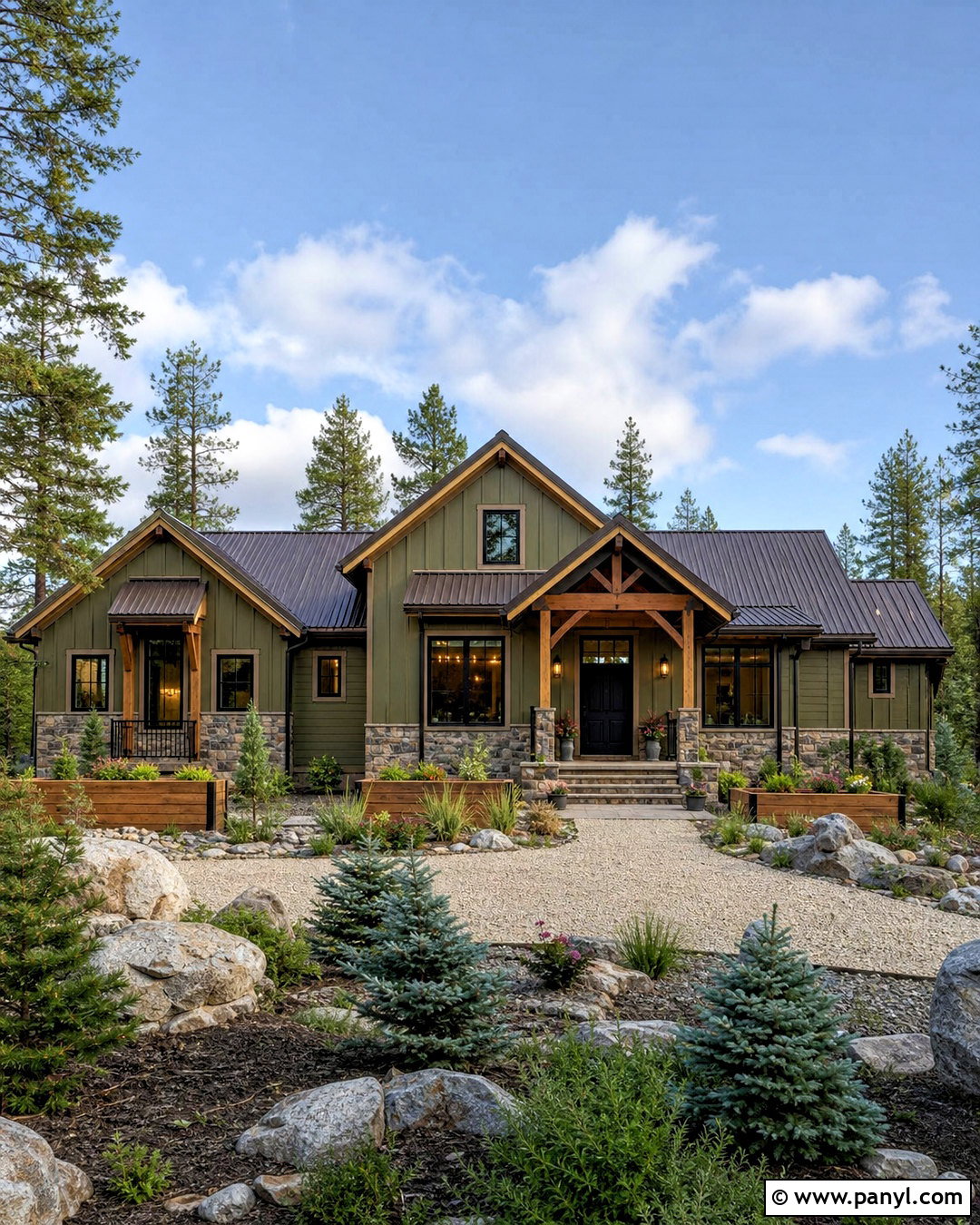
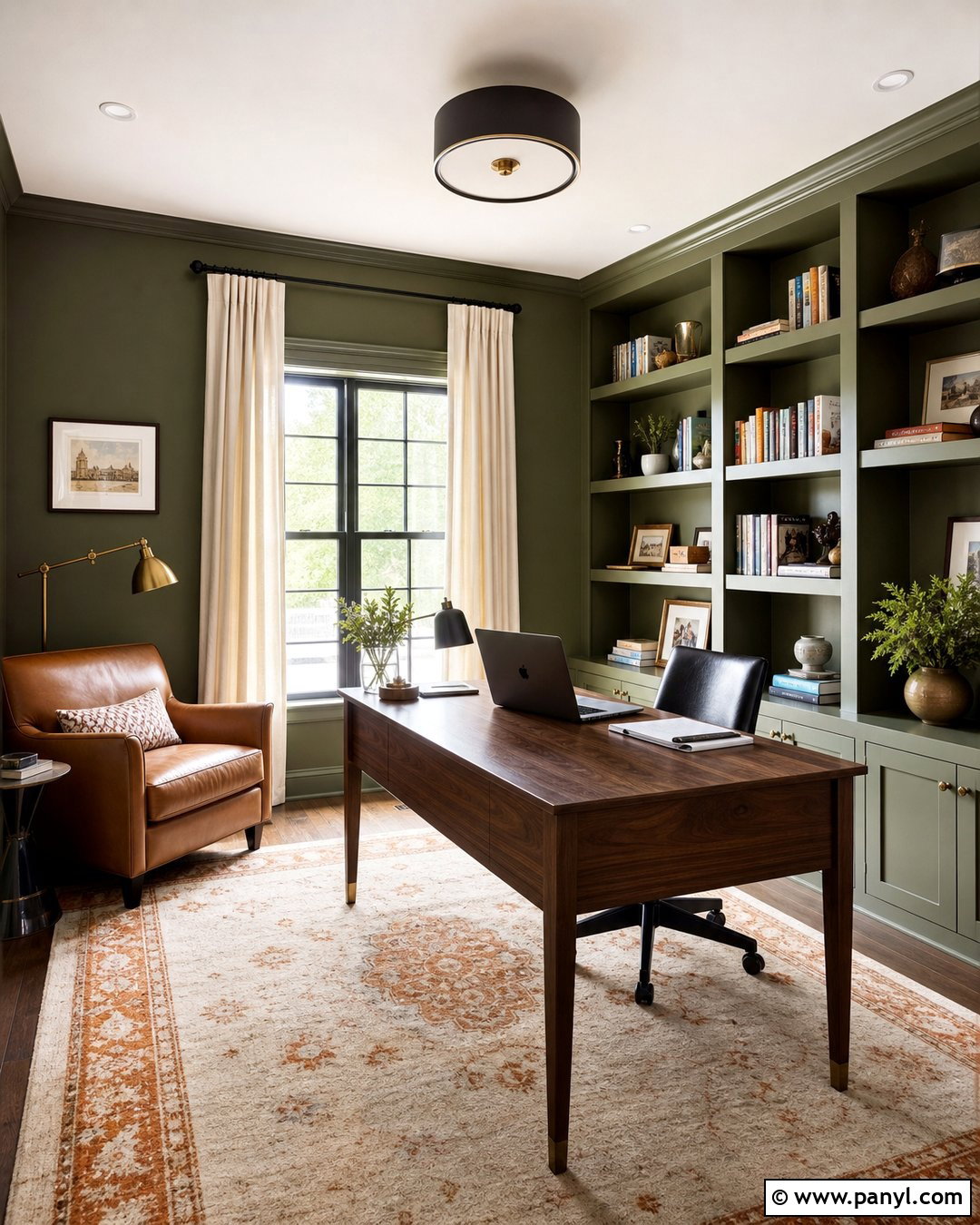
Rich olive green creates an earthy exterior with more depth than classic sage. Use olive across the siding or stucco, warm tan on the trim, and near-black on window frames, railings, and the front door. If the home has natural stone, choose an olive that repeats one of its quieter green or brown tones. A dark bronze or weathered brown roof completes the grounded palette. This combination suits Craftsman homes, mountain cottages, rustic ranches, and modern residences surrounded by mature trees. Keep decorative accents simple because olive already carries plenty of character. Large wood planters, gravel paths, and structured evergreen landscaping reinforce the natural mood. For better balance, paint a prominent garage door olive rather than black, allowing the entrance and windows to remain the strongest focal points.
9. Forest Green Exterior House Paint
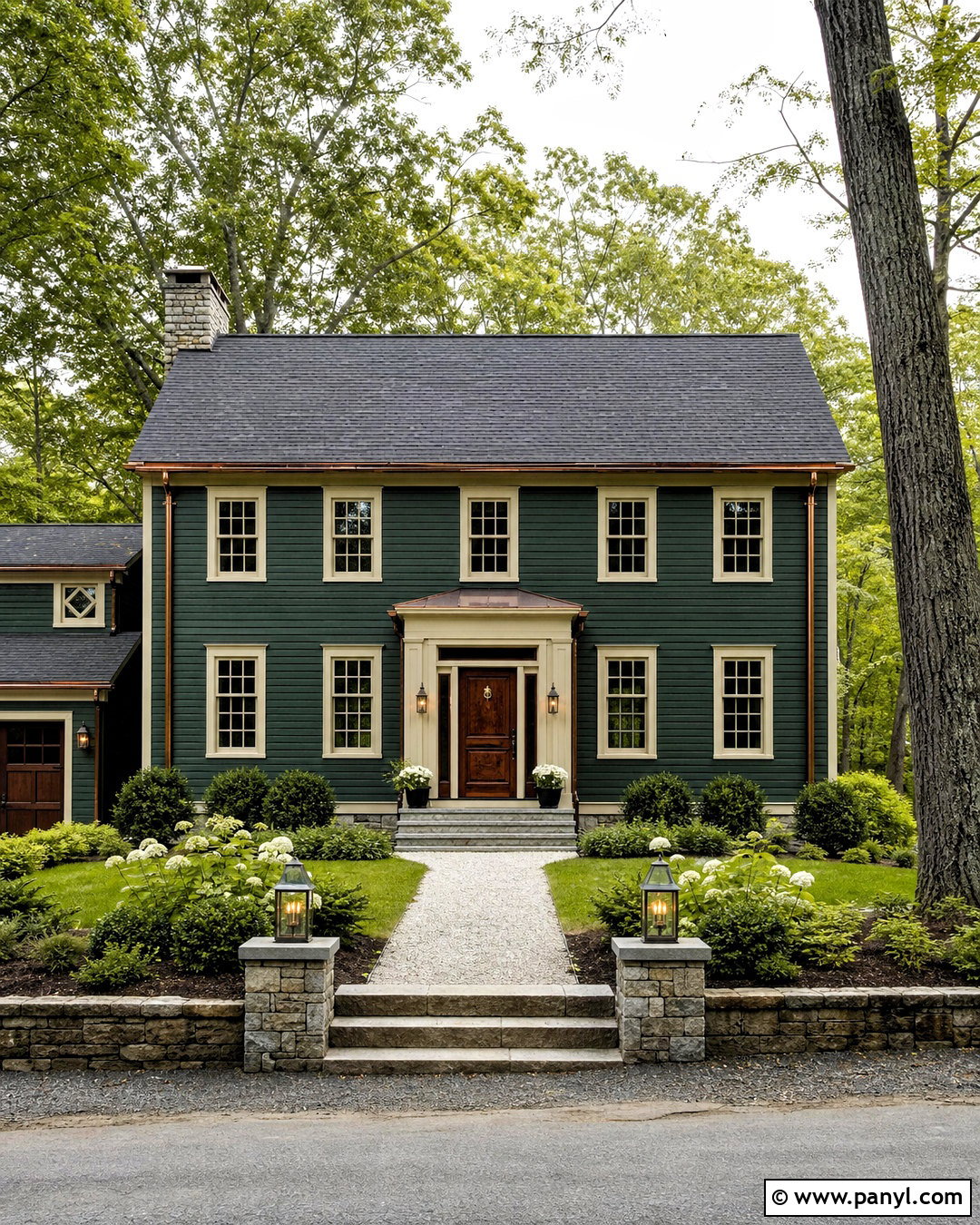
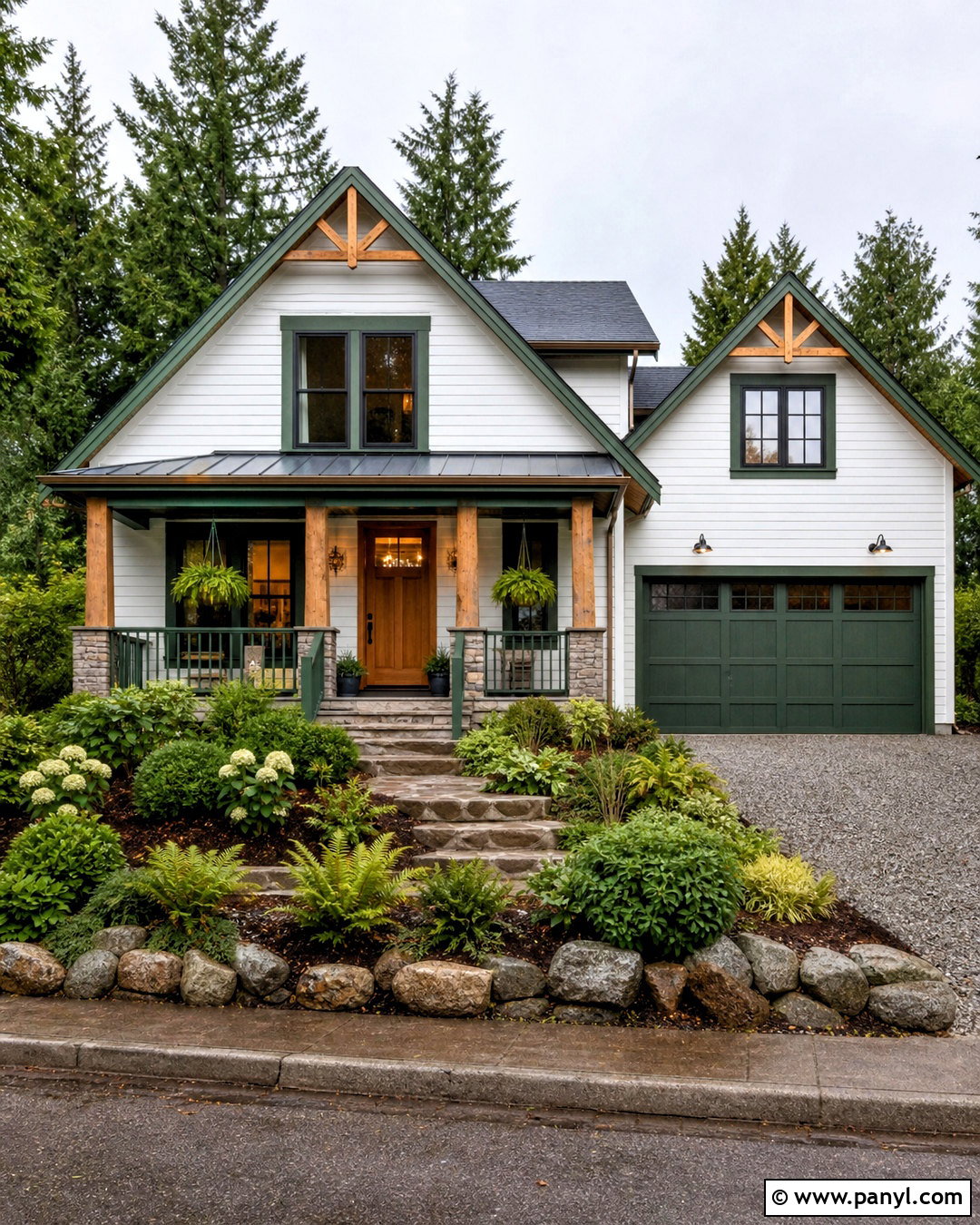
Deep forest green gives a home a classic, established appearance while blending beautifully with dense landscaping. Apply the green to the siding and garage door, then use soft ivory on window trim, porch columns, and fascia. A stained mahogany door adds red-brown contrast, while aged copper gutters or lights introduce a finish that develops character over time. This scheme is particularly effective on Tudor, Colonial, Craftsman, and woodland cottage exteriors. Choose a charcoal roof to prevent the palette from becoming overly brown. Pale stone steps and a light gravel walkway brighten the approach. Keep foundation planting slightly away from dark walls so the architecture remains visible. Forest green can look nearly black in shade, so select a sample with enough visible color for your property’s natural light.
10. Dusty Blue Exterior House Paint
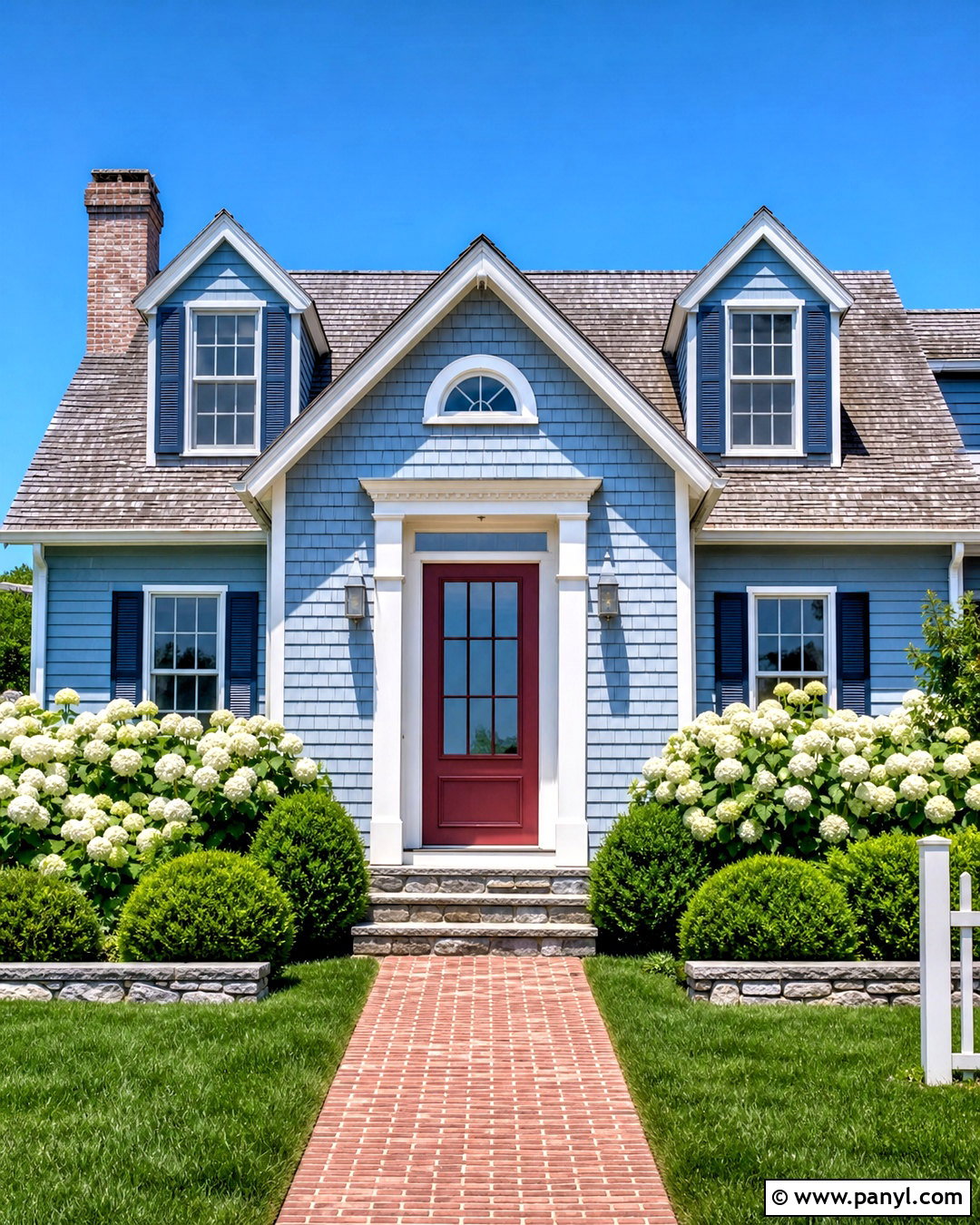
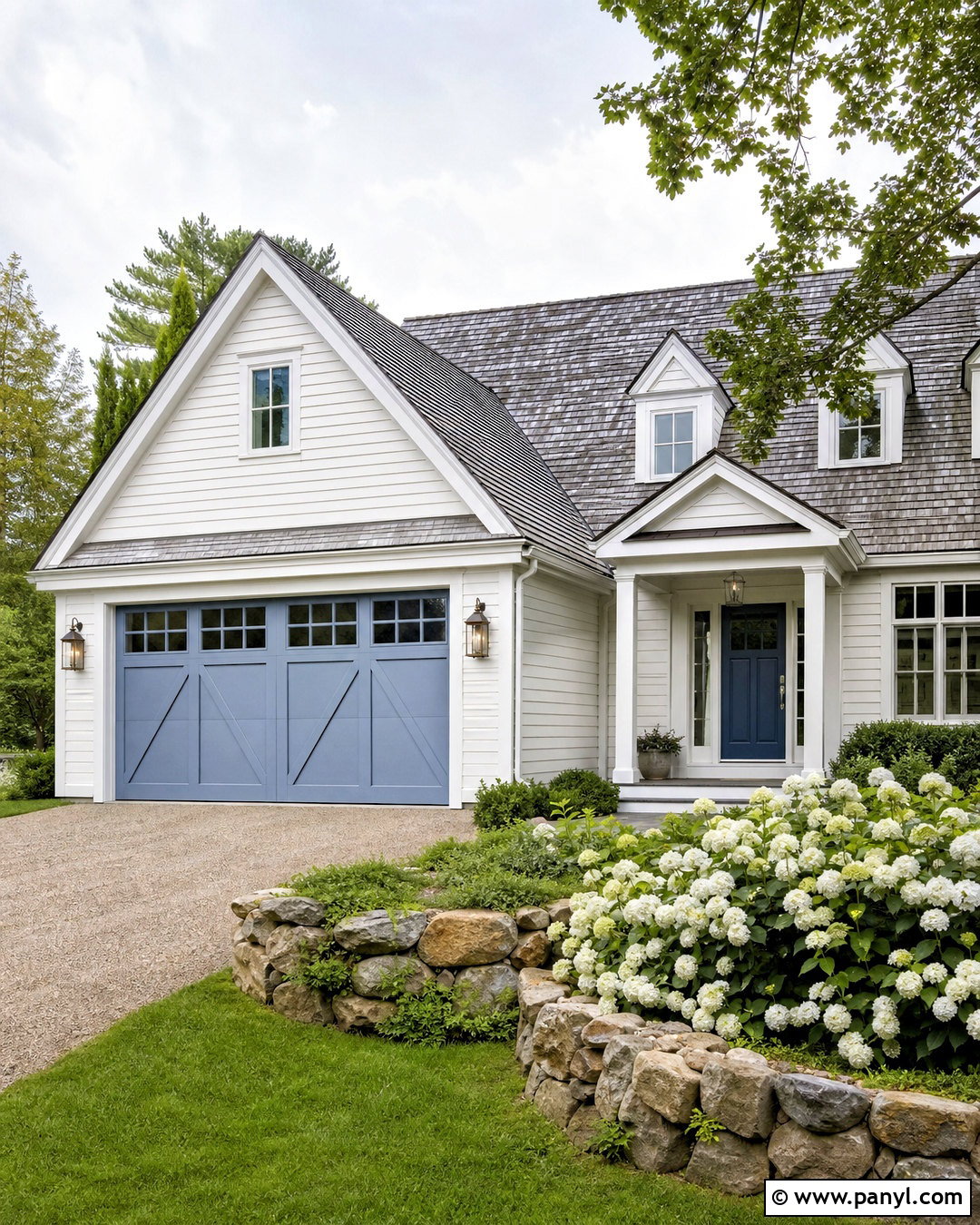
Dusty blue offers recognizable color without the brightness of sky blue or the heaviness of navy. Use a muted blue with gray undertones on the siding, soft white on the trim, and deep blue-gray on shutters or the garage door. A dark red or natural mahogany front door creates a traditional focal point. Complete the house with a weathered gray roof, brushed nickel hardware, and pale stone around the steps or foundation. This coordinated look is ideal for Cape Cod, coastal cottage, Colonial, and relaxed suburban architecture. White hydrangeas, clipped boxwoods, and a simple brick path support the crisp palette. Avoid pairing dusty blue with stark white if the home receives intense sun; a gentler white usually creates a more comfortable, cohesive contrast.
11. Navy Blue Exterior House Paint
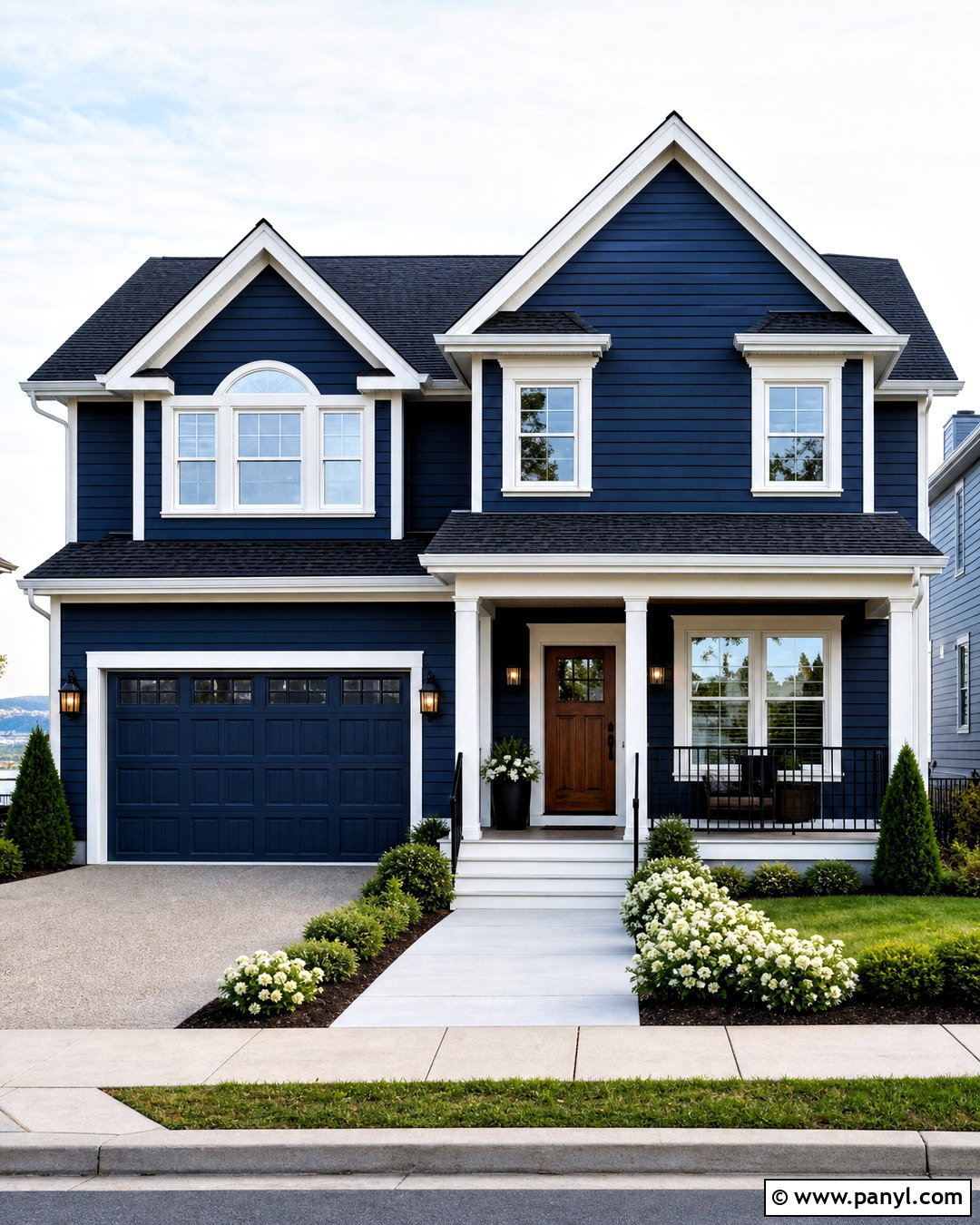
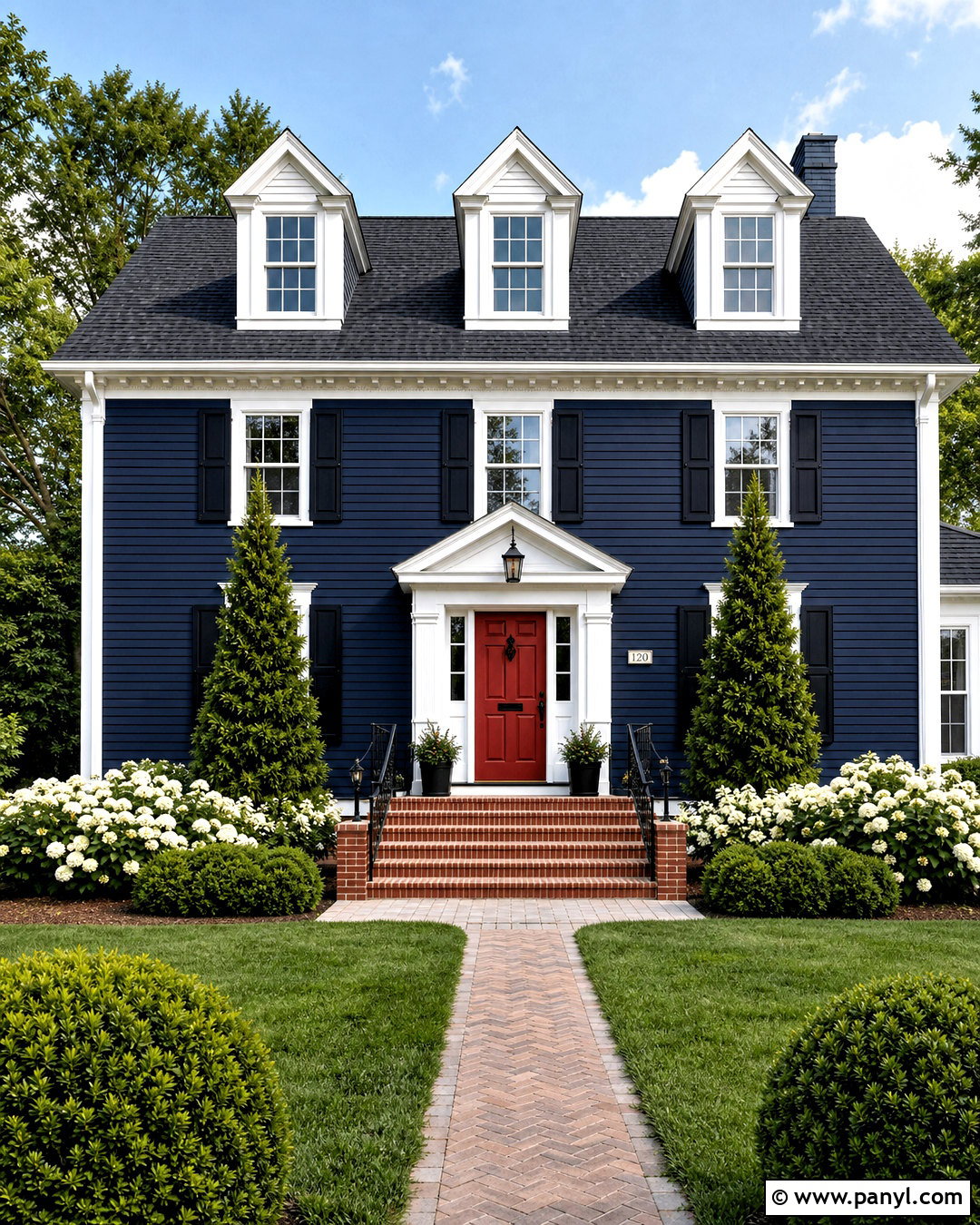
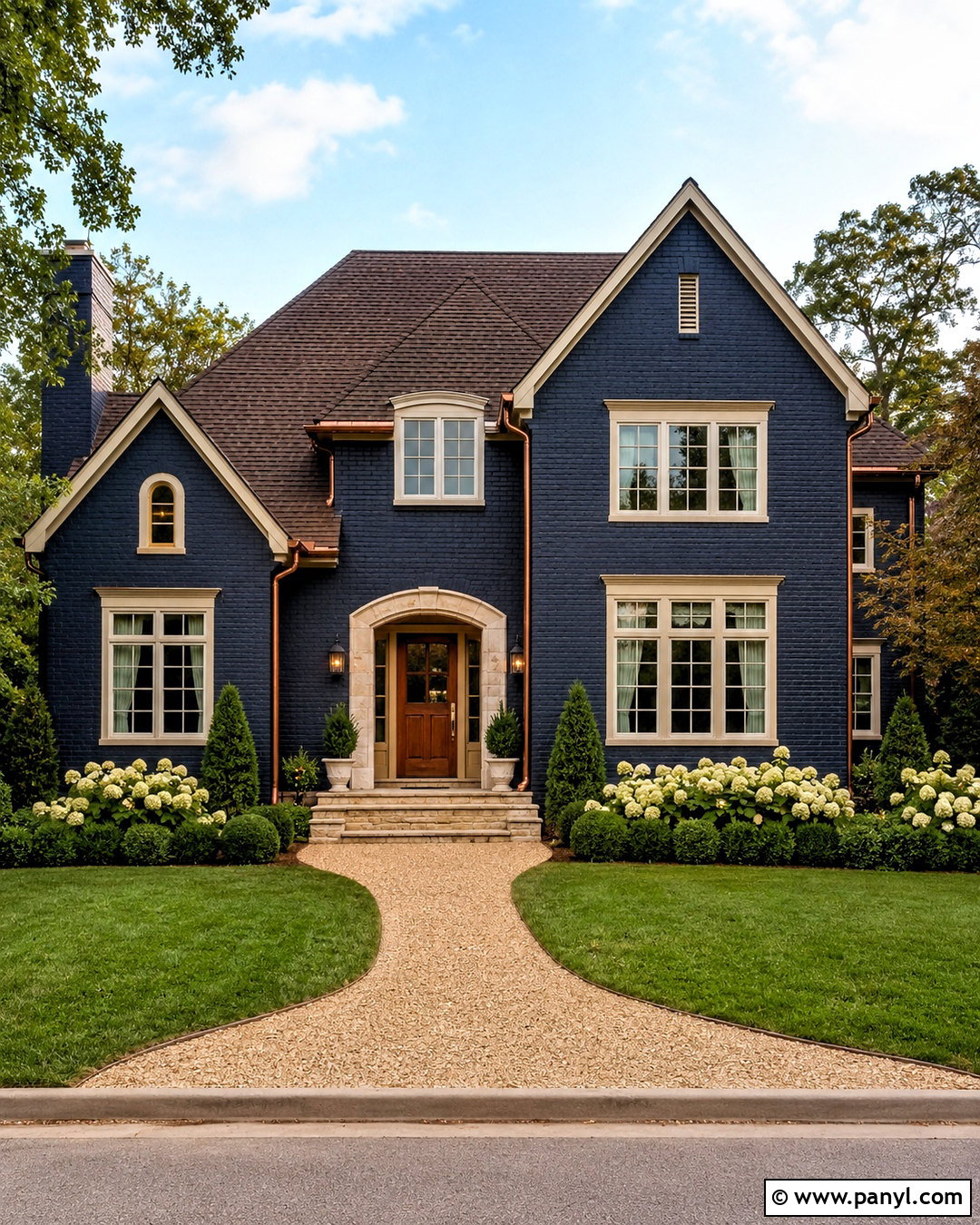
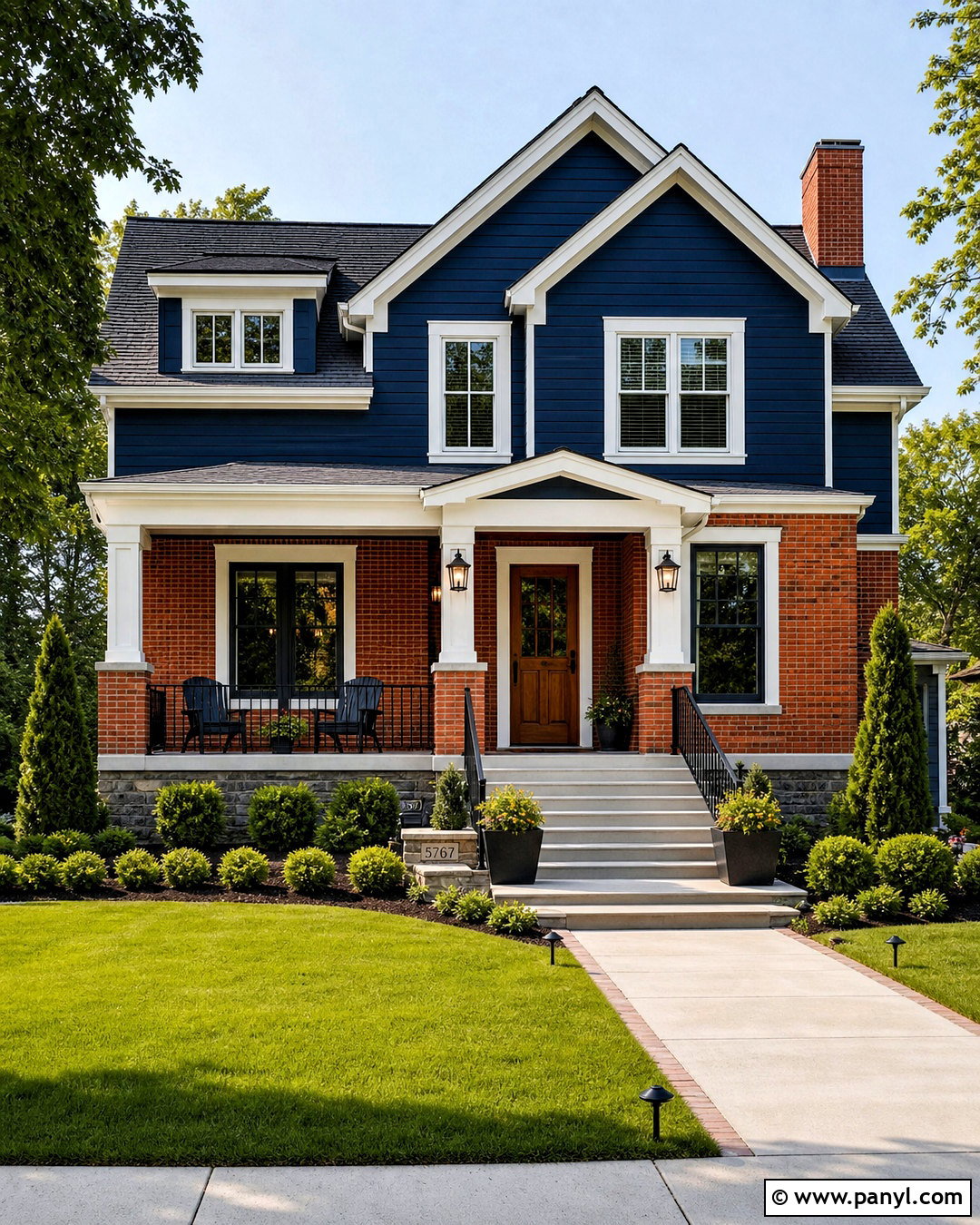
Navy siding can make simple architecture appear more substantial and polished. Select a deep navy that remains visibly blue in shade, then outline windows, eaves, and porch columns with clean warm white. Use natural wood for the front door and porch ceiling to balance the strong body color. Black lanterns, gutters, and railings create a neat transition between the navy walls and dark charcoal roof. This palette works especially well on coastal homes, Colonials, modern farmhouses, and compact cottages. If the house has a large garage door, painting it navy helps it recede rather than dominate the facade. Add pale concrete, white flowers, and fresh green shrubs for brightness. Test the color beside roofing because certain navy paints may develop unwanted violet undertones outdoors.
12. Slate Blue Exterior House Paint
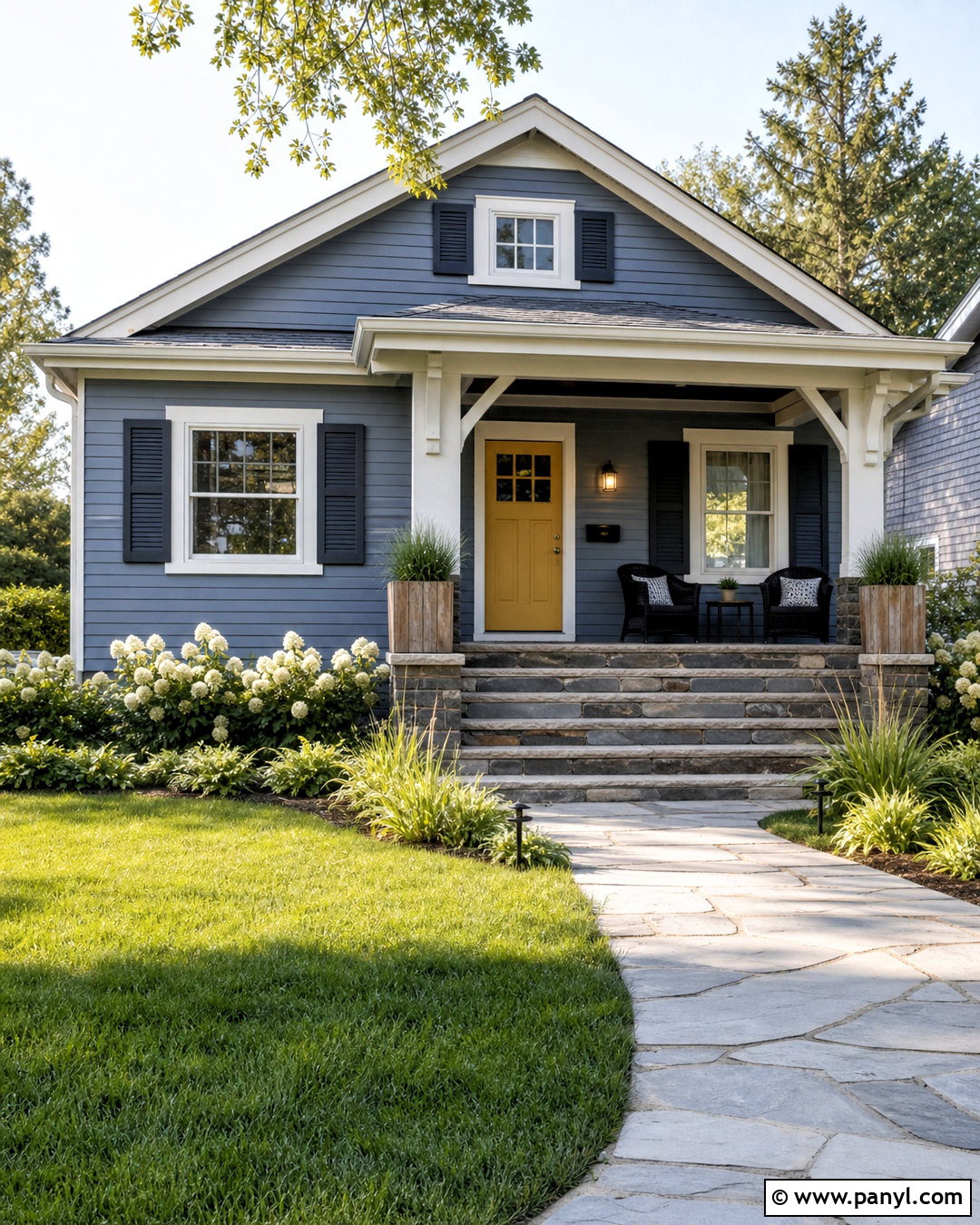
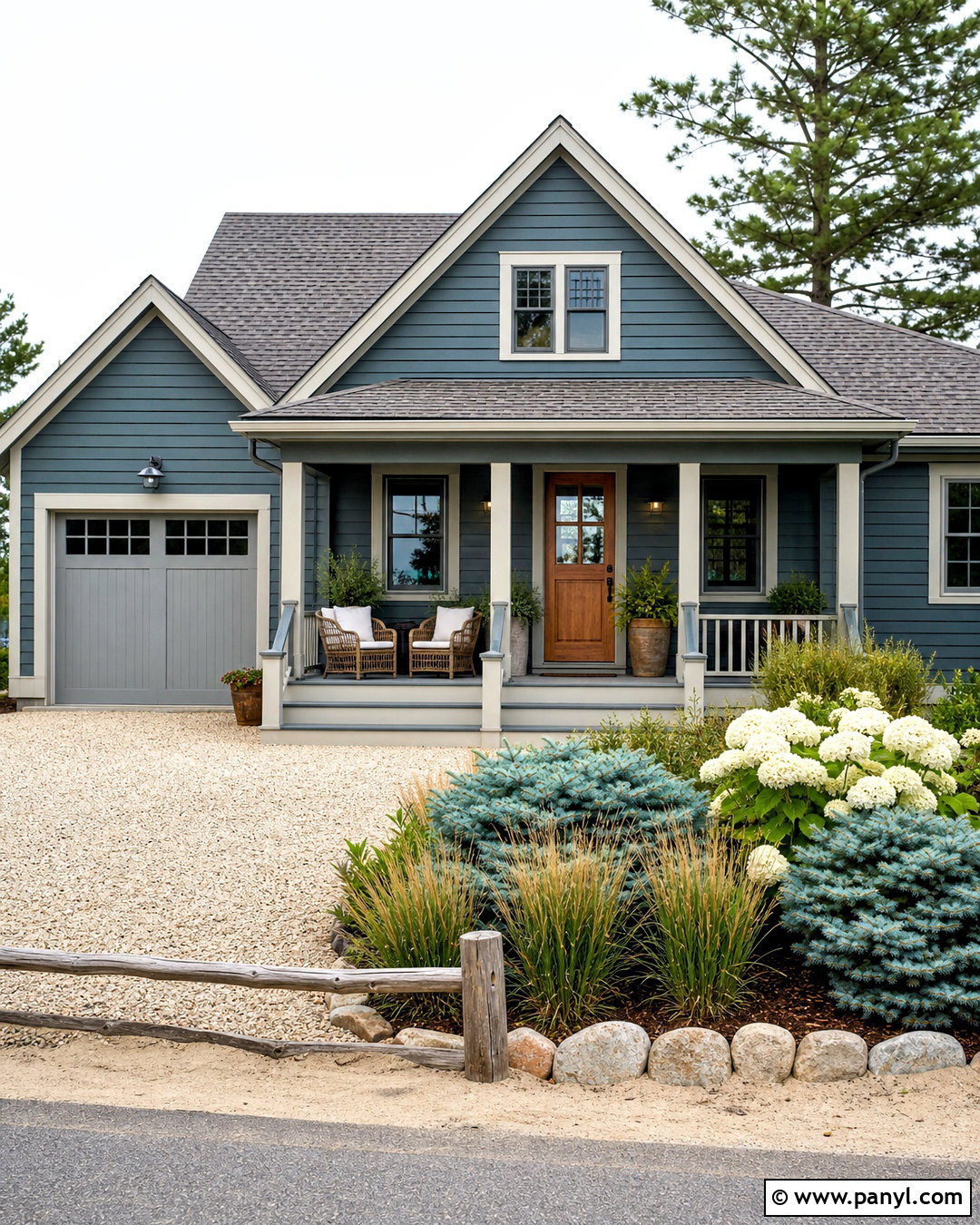
Slate blue sits comfortably between blue and gray, giving a home subtle color with a tailored finish. Cover the siding in medium slate blue, use light gray-white on trim, and paint shutters a deeper charcoal blue. For a cheerful but controlled accent, choose a muted mustard or ocher front door. A medium-gray roof and natural bluestone steps repeat the cool tones without making the palette feel monotonous. This complete scheme complements bungalow, Colonial, cottage, and traditional suburban homes. Keep porch furniture and planters in natural wood or matte black so they do not compete with the door. Soft grasses and white flowering shrubs lighten the foundation. View several slate samples outdoors since overcast light may emphasize blue, while warm afternoon sun can make the same color appear grayer.
13. Warm Taupe Exterior House Paint
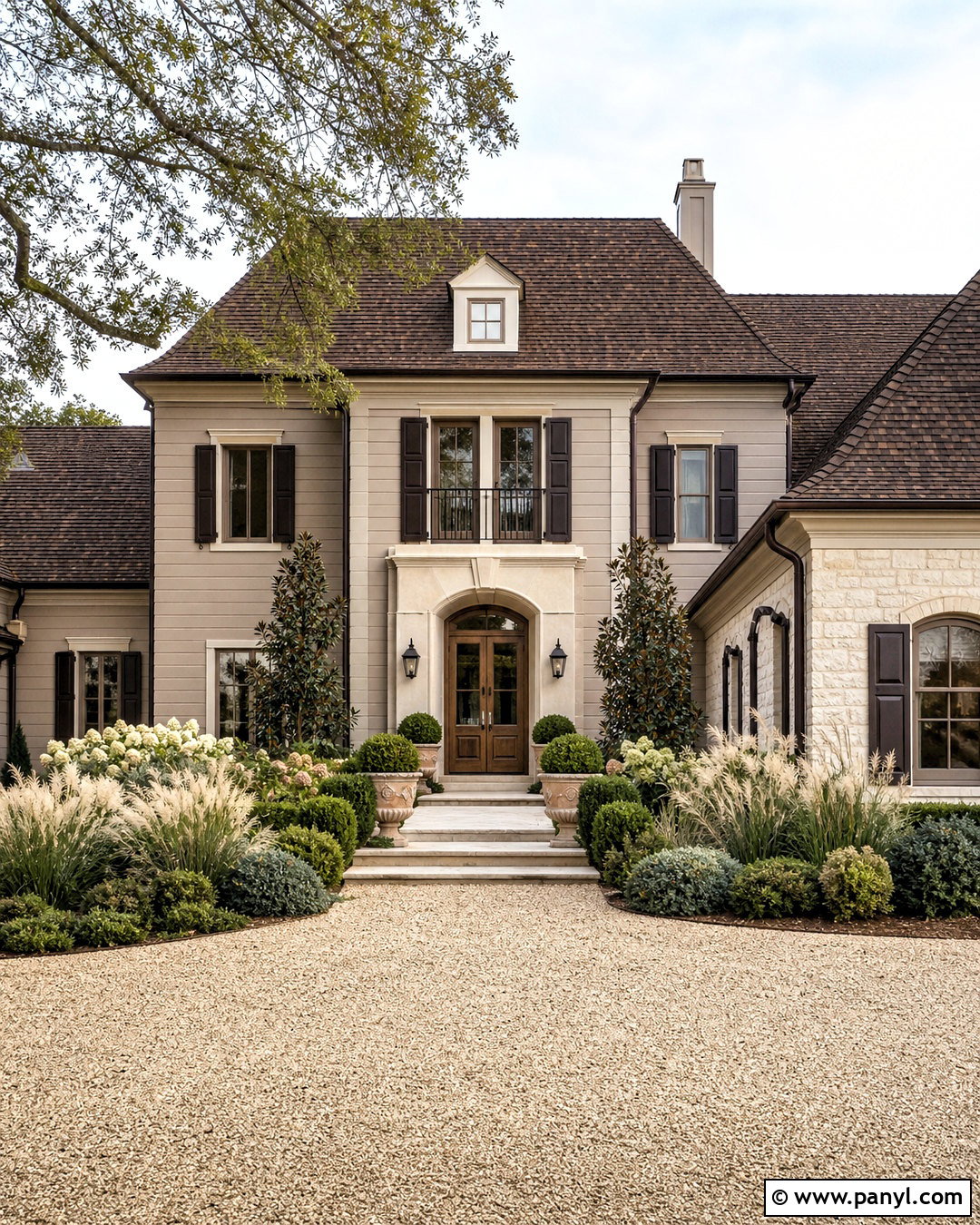
Warm taupe is a dependable choice for homeowners who want depth without an obviously colorful exterior. Use medium taupe on siding or stucco, ivory on trim and porch columns, and dark chocolate brown on shutters and gutters. A black-brown or stained oak front door creates a clear entrance while staying within the restrained palette. Taupe works particularly well with brown roofing, cream limestone, tan brick, and bronze window frames. The complete scheme suits traditional, transitional, French country, and ranch architecture. To modernize the facade, keep the garage door taupe and use streamlined dark lighting. Add layered shrubs, pale ornamental grasses, and warm gravel to strengthen the natural color story. Select the body shade from the undertones already visible in the home’s fixed stone or brick.
14. Mushroom Exterior House Paint
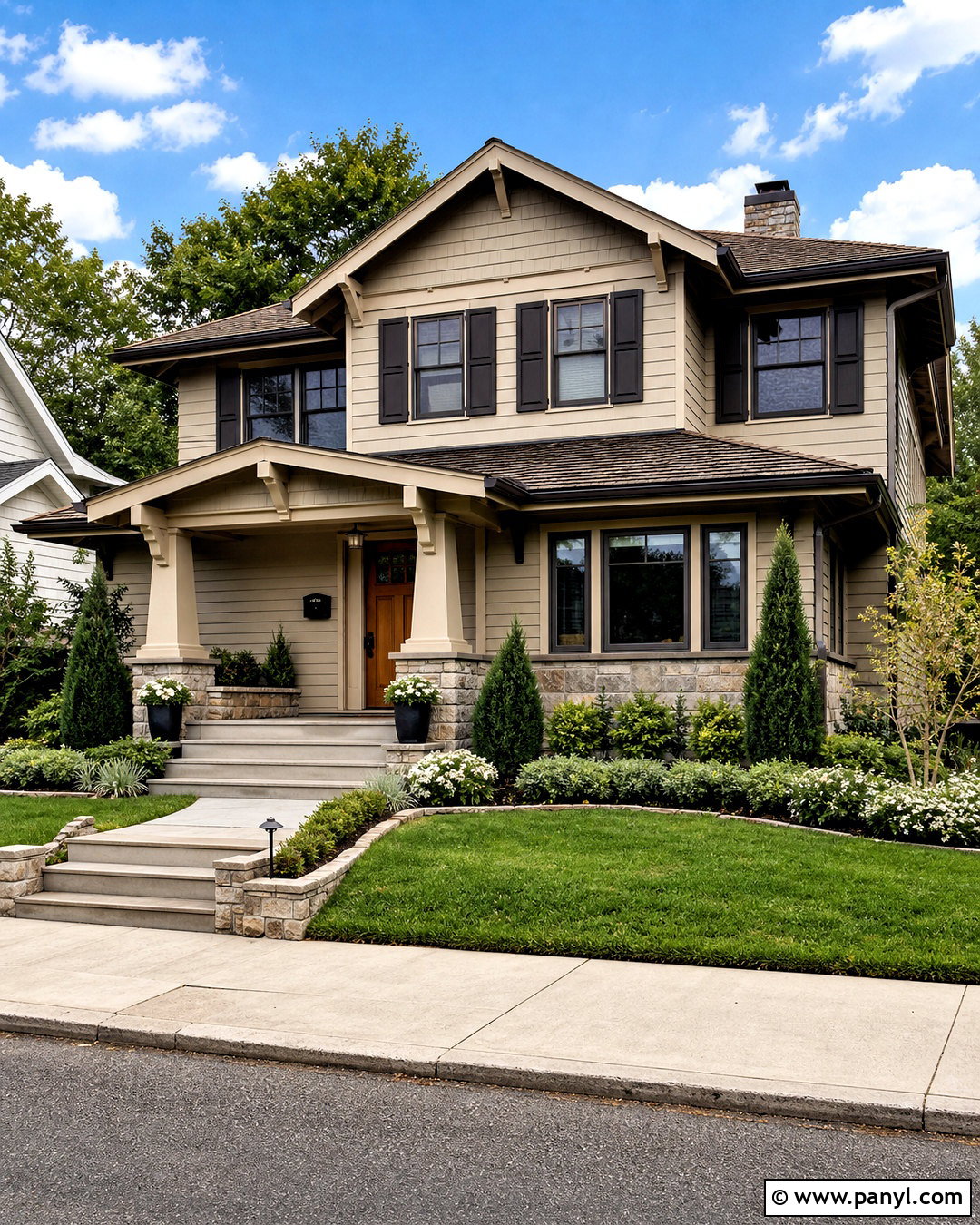
Mushroom paint has a balanced blend of beige, gray, and brown that creates a sophisticated but comfortable exterior. Apply it to the main siding, then use creamy off-white for trim and dark bronze for shutters, metalwork, and gutters. A medium oak door adds warmth without introducing another strong color. If the facade includes stone, select a mushroom shade that matches its mortar or lighter mineral tones. This palette looks at home on ranch, Tudor, Craftsman, and contemporary suburban houses. A weathered brown roof will feel softer than solid black and maintain the earthy character. Finish the property with limestone edging, dark planters, compact evergreens, and white flowers. Mushroom shades change considerably in different exposures, so test them against both sunny walls and deeply shaded areas.
15. Sandy Beige Exterior House Paint
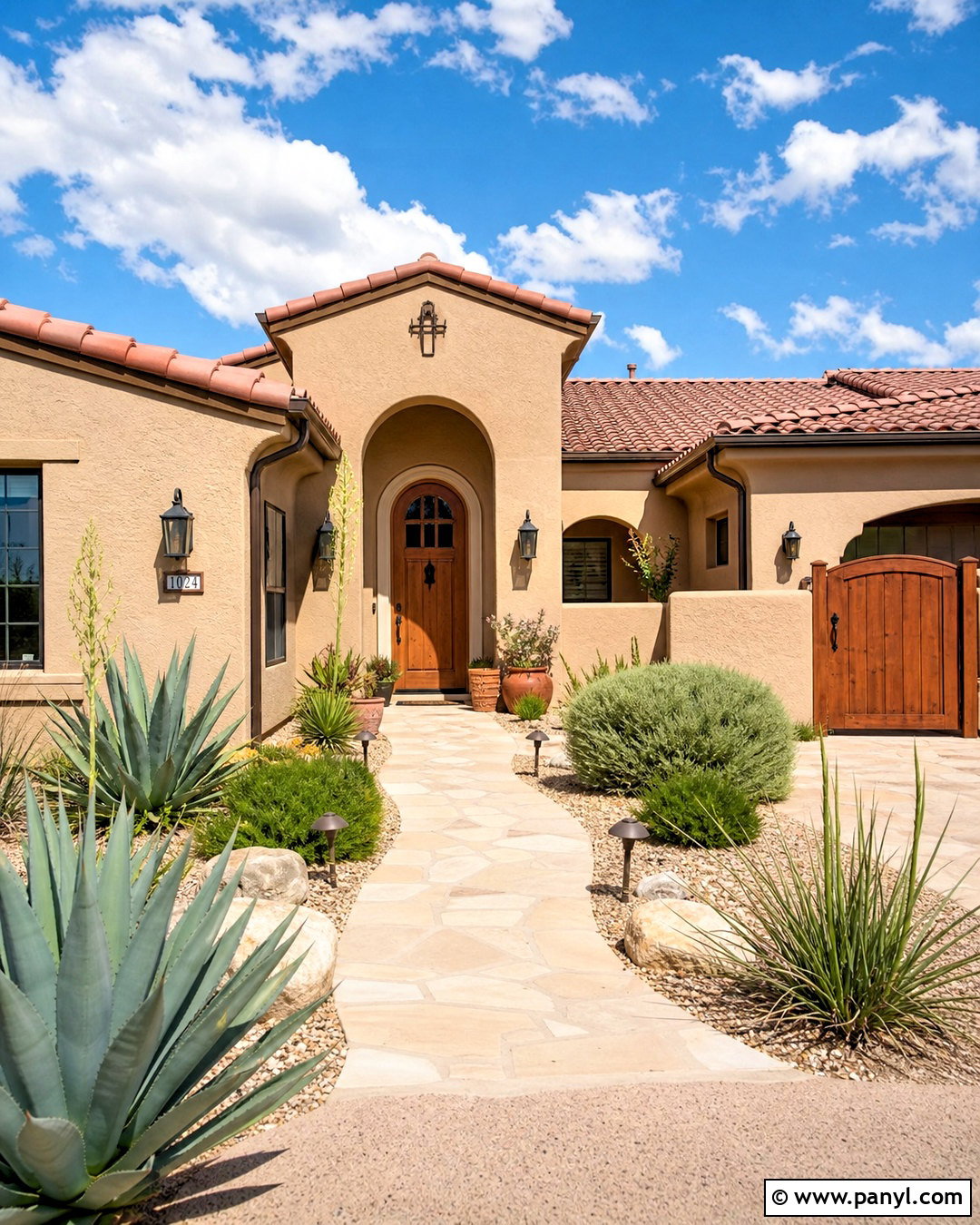
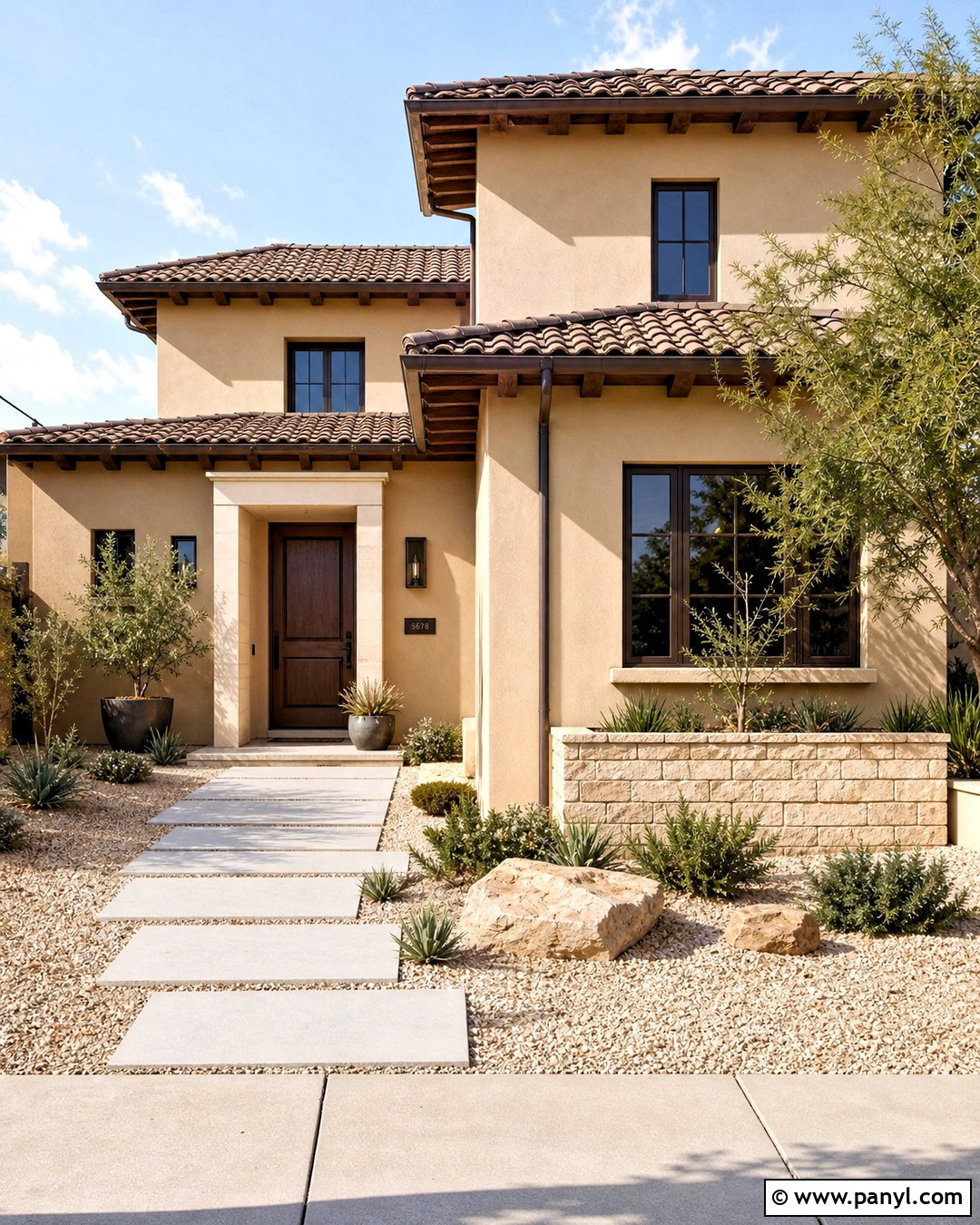
Sandy beige brings warmth to an exterior while remaining light enough for sunny climates and compact homes. Use a soft sand color on stucco or siding, creamy white around windows and rooflines, and warm terracotta on the front door. Medium bronze gutters and lighting connect the palette to a brown or red tile roof. This full scheme works especially well for Southwestern, Mediterranean, ranch, and coastal architecture. Natural wood gates, pale flagstone, and gravel landscaping further support the sun-washed colors. Choose drought-tolerant greenery with varied forms, such as ornamental grasses, agave, and compact shrubs, to frame the facade. Avoid beige with strong pink undertones unless it deliberately coordinates with masonry. Samples should be viewed at midday because bright sunlight can make light beige appear almost white.
16. Terracotta Exterior House Paint
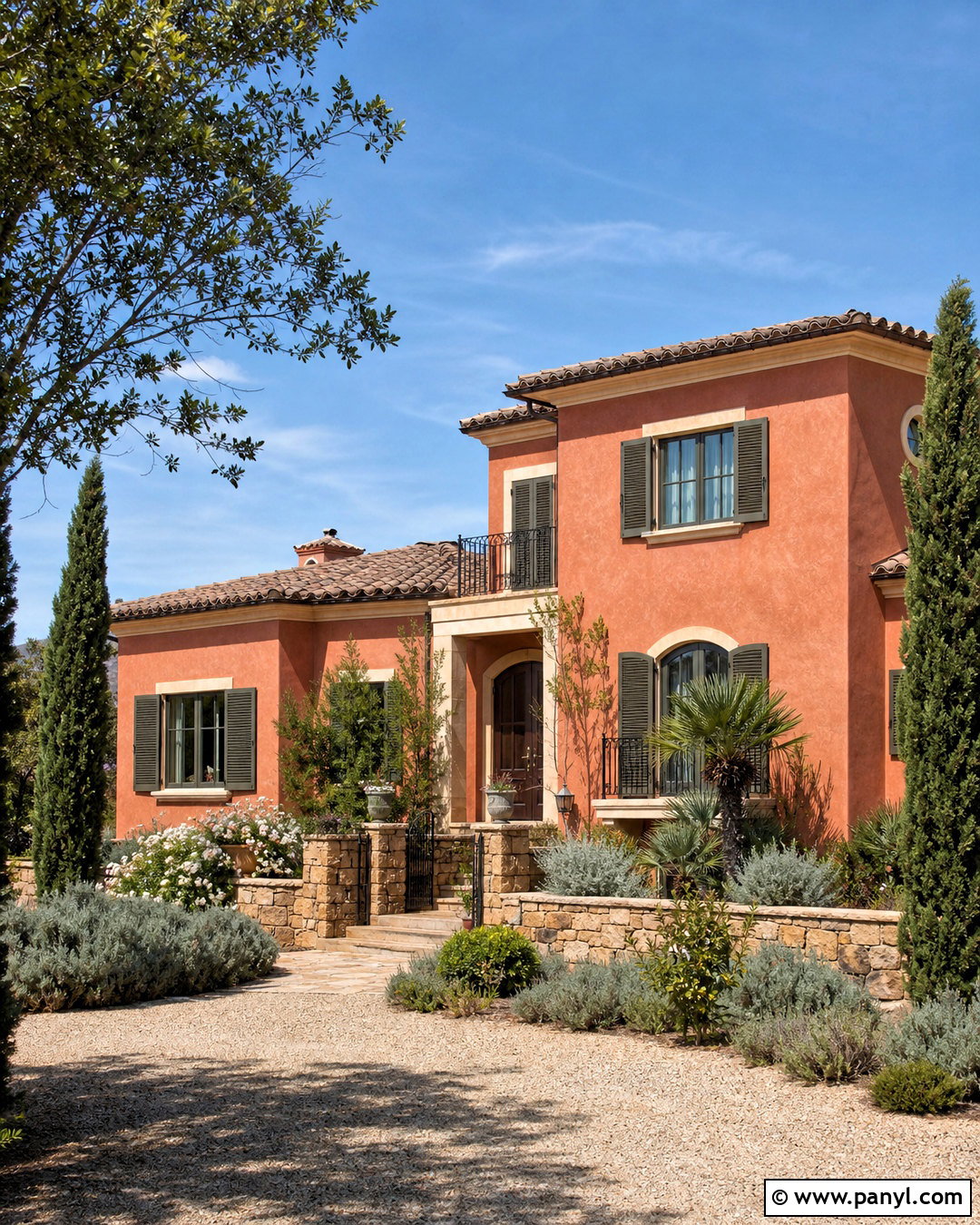
Terracotta creates a warm, distinctive house exterior inspired by clay, brick, and sunbaked landscapes. Choose a muted terracotta rather than a bright orange for the primary stucco or siding. Pair it with creamy ivory trim, deep olive shutters, and a dark stained wood front door. A brown tile roof, black iron railings, and natural stone paving complete the cohesive palette. This treatment is best suited to Spanish, Mediterranean, Southwestern, and adobe-inspired architecture, although a restrained clay shade can also refresh a bungalow. Keep landscaping drought-conscious with silvery foliage, sculptural plants, and gravel beds. Terracotta changes dramatically under strong sun, so test several toned-down samples. Painting small utility elements in the body color will also prevent visual clutter across the richly colored facade.
17. Muted Yellow Exterior House Paint
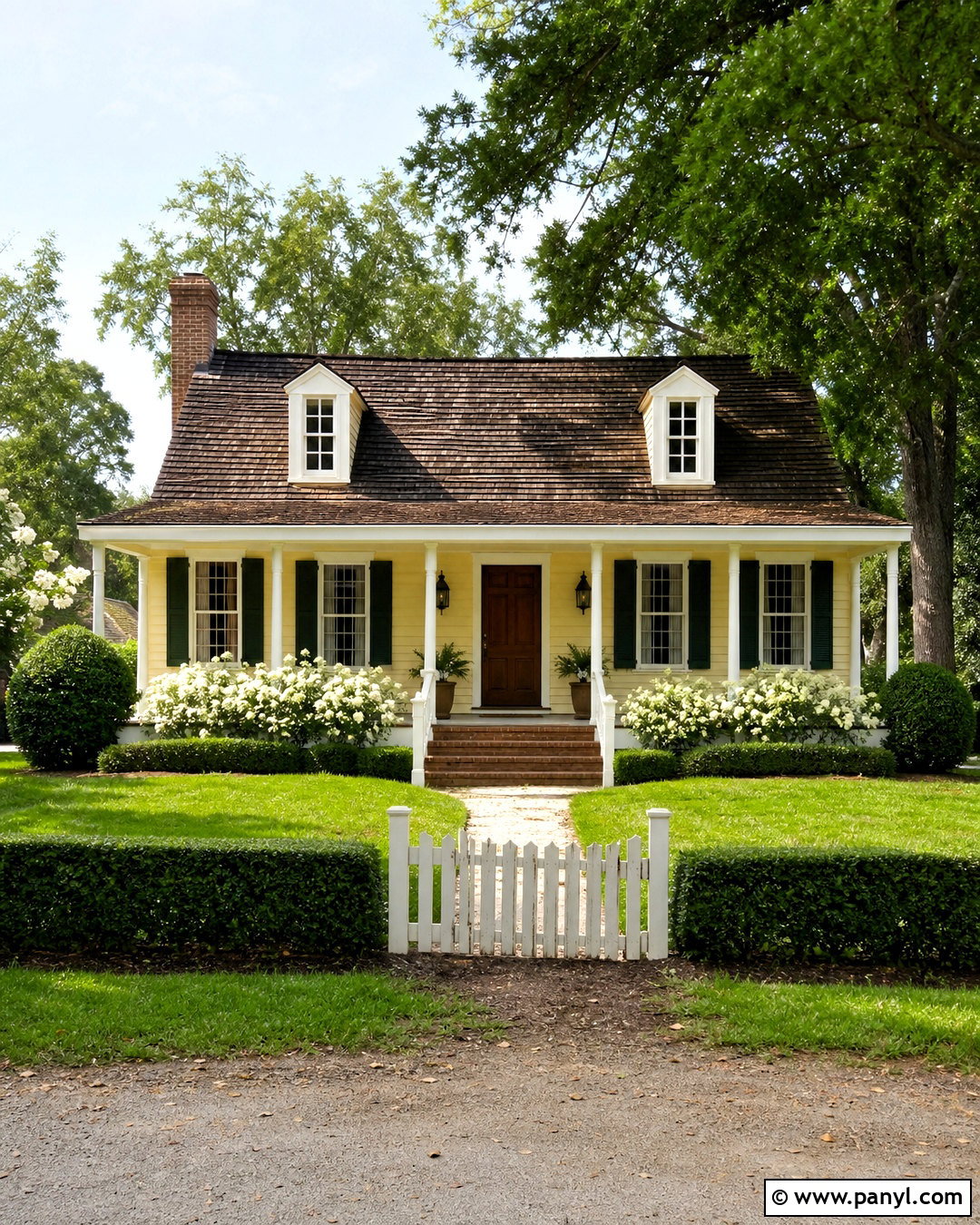
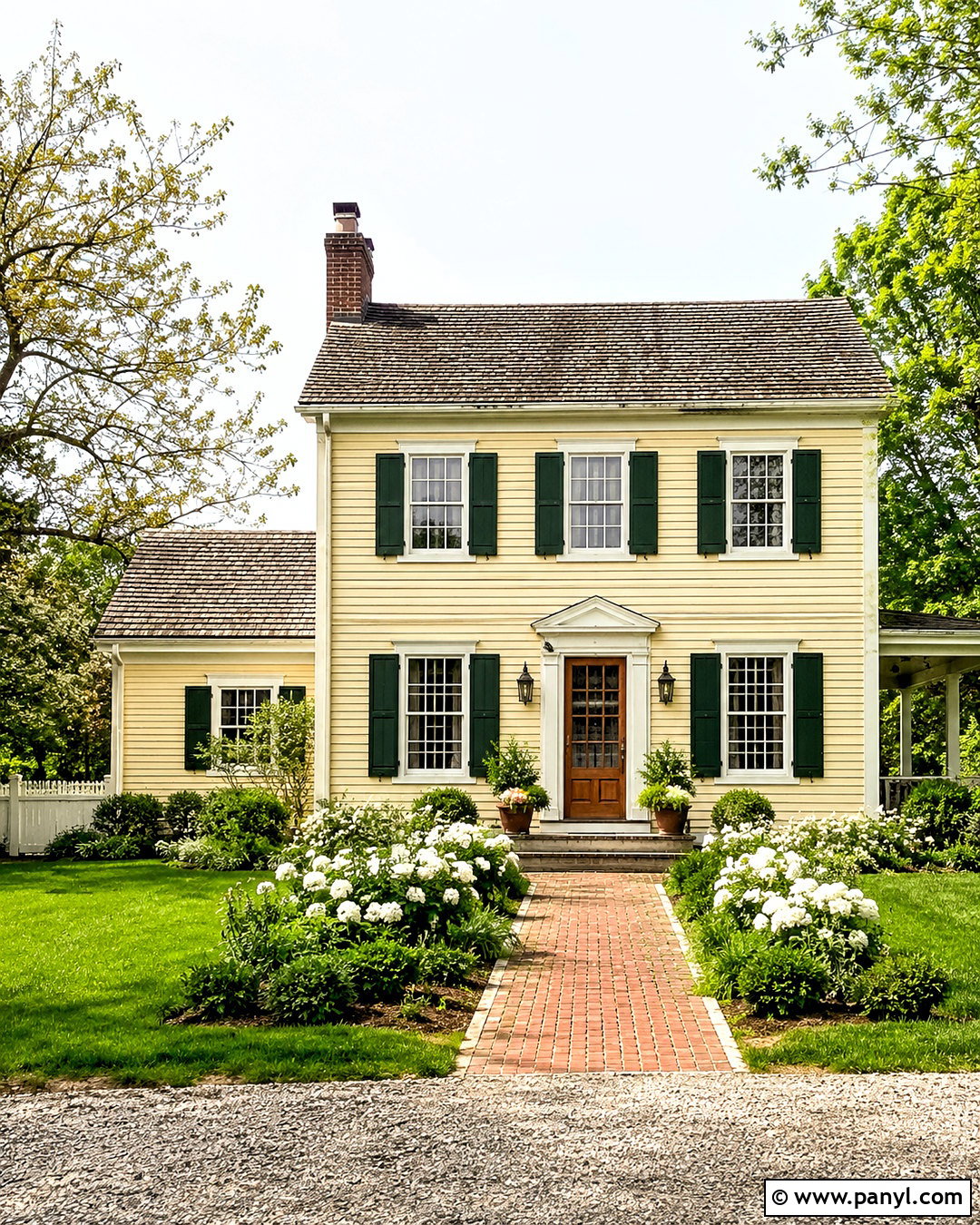
A soft, muted yellow can make a home feel sunny without creating an overly bright or dated appearance. Look for a pale ocher or wheat yellow with beige undertones for the siding. Add warm white trim, dark green shutters, and a stained wood or deep green front door. A weathered brown roof and traditional bronze lighting strengthen the established character of the palette. This complete look complements cottages, farmhouses, Colonials, and historic-inspired homes. Use brick steps, white flowering shrubs, and simple evergreen hedges to give the facade structure. Avoid vivid lemon yellow, especially on large two-story elevations, where color becomes much stronger. Sample the chosen shade next to white trim and view it in direct sun, cloud cover, and evening light before purchasing the full quantity.
18. Brick Red Exterior House Paint
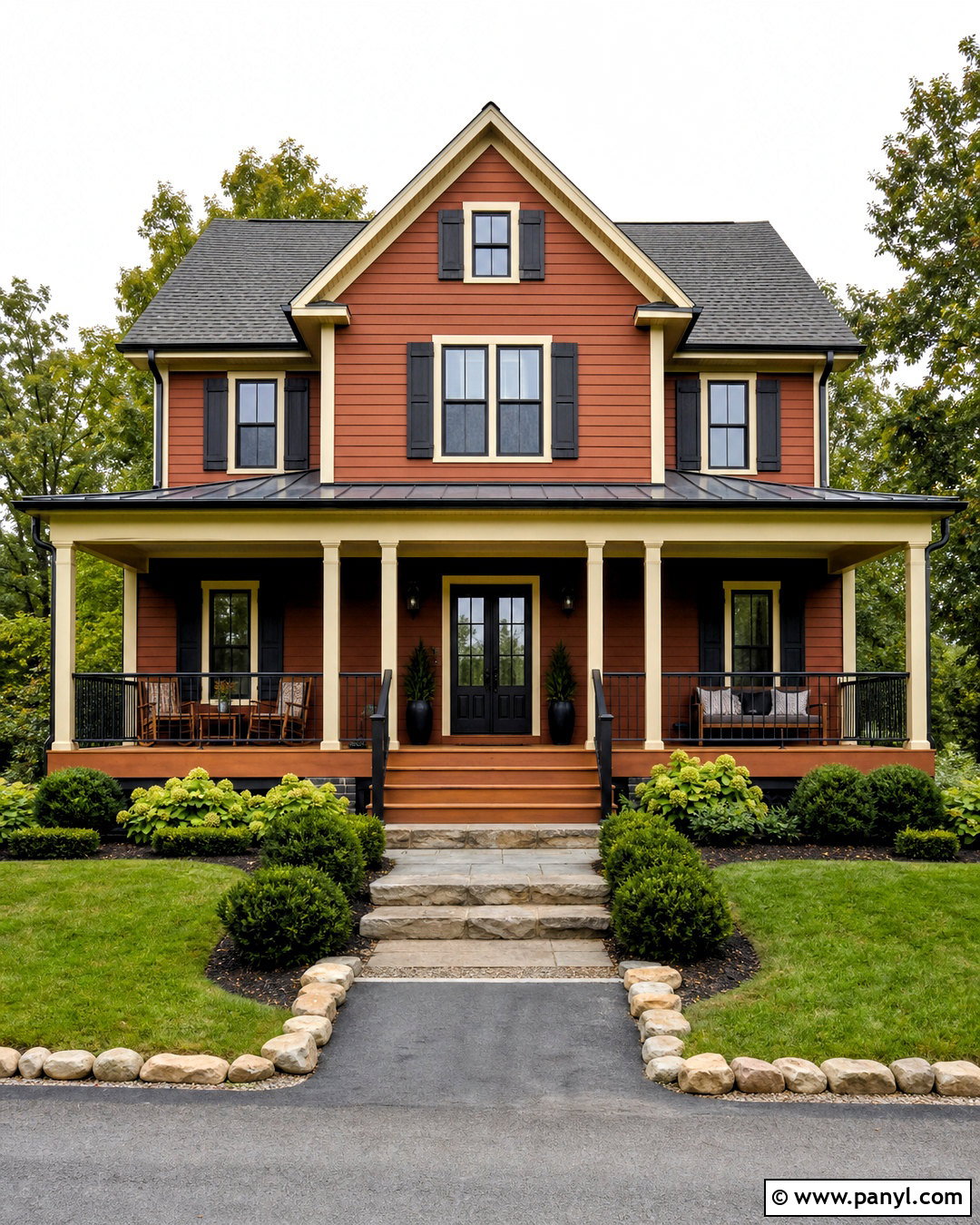
Brick red gives siding a confident, heritage-inspired finish and can highlight the character of a simple home. Choose a softened red with brown undertones for the body, creamy beige for trim, and charcoal black for shutters, railings, and the front door. A dark gray roof keeps the palette crisp, while natural stone steps and warm wood porch flooring add texture. This scheme works particularly well on farmhouse, Colonial, saltbox, cottage, and barn-inspired exteriors. Keep gutters close to the trim or roof color so they disappear into the architecture. Green landscaping provides natural complementary contrast, but the planting should remain controlled rather than overgrown. Test red carefully because colors that look subdued on a small sample may appear much brighter across an entire sunlit facade.
19. Clay Pink Exterior House Paint
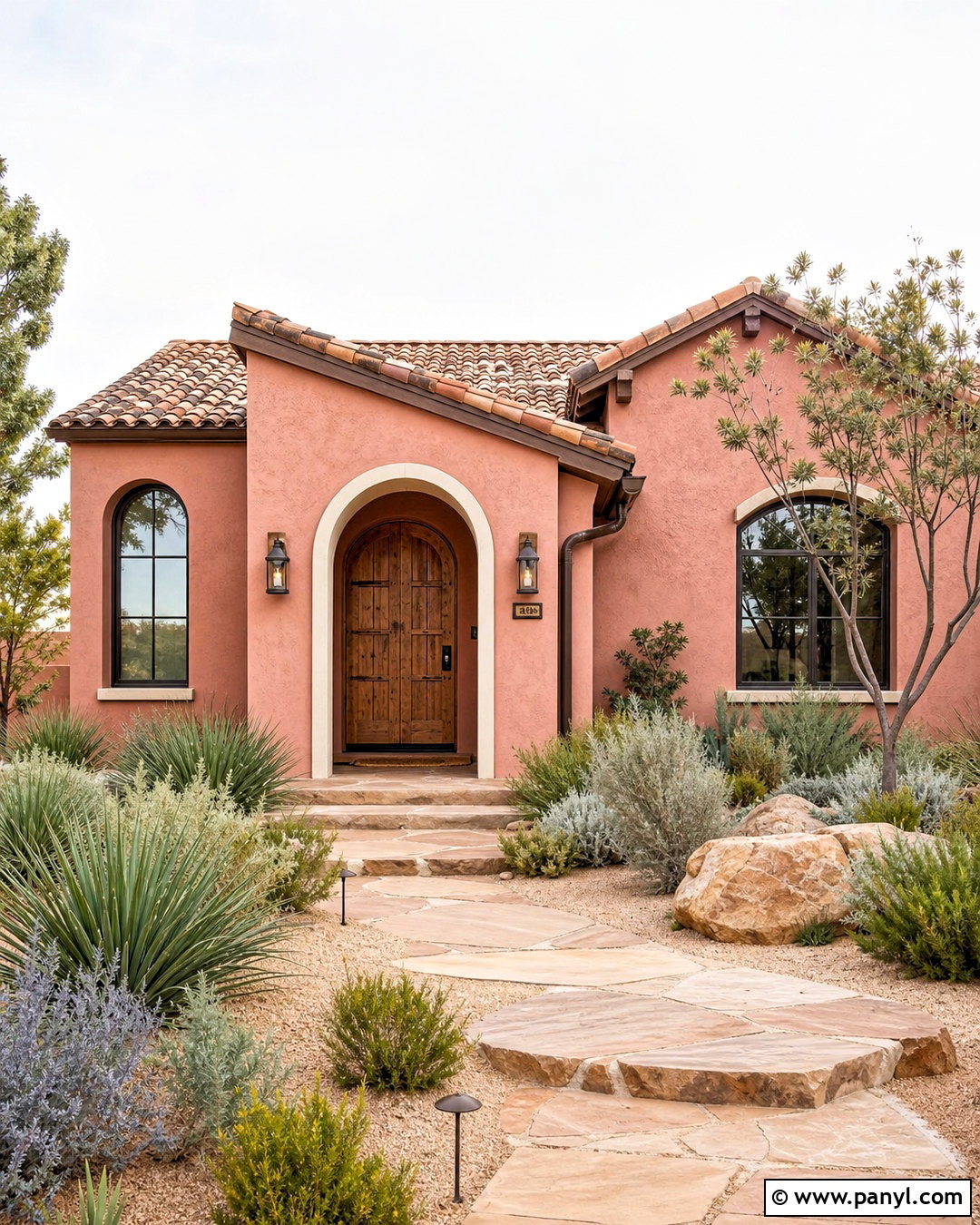
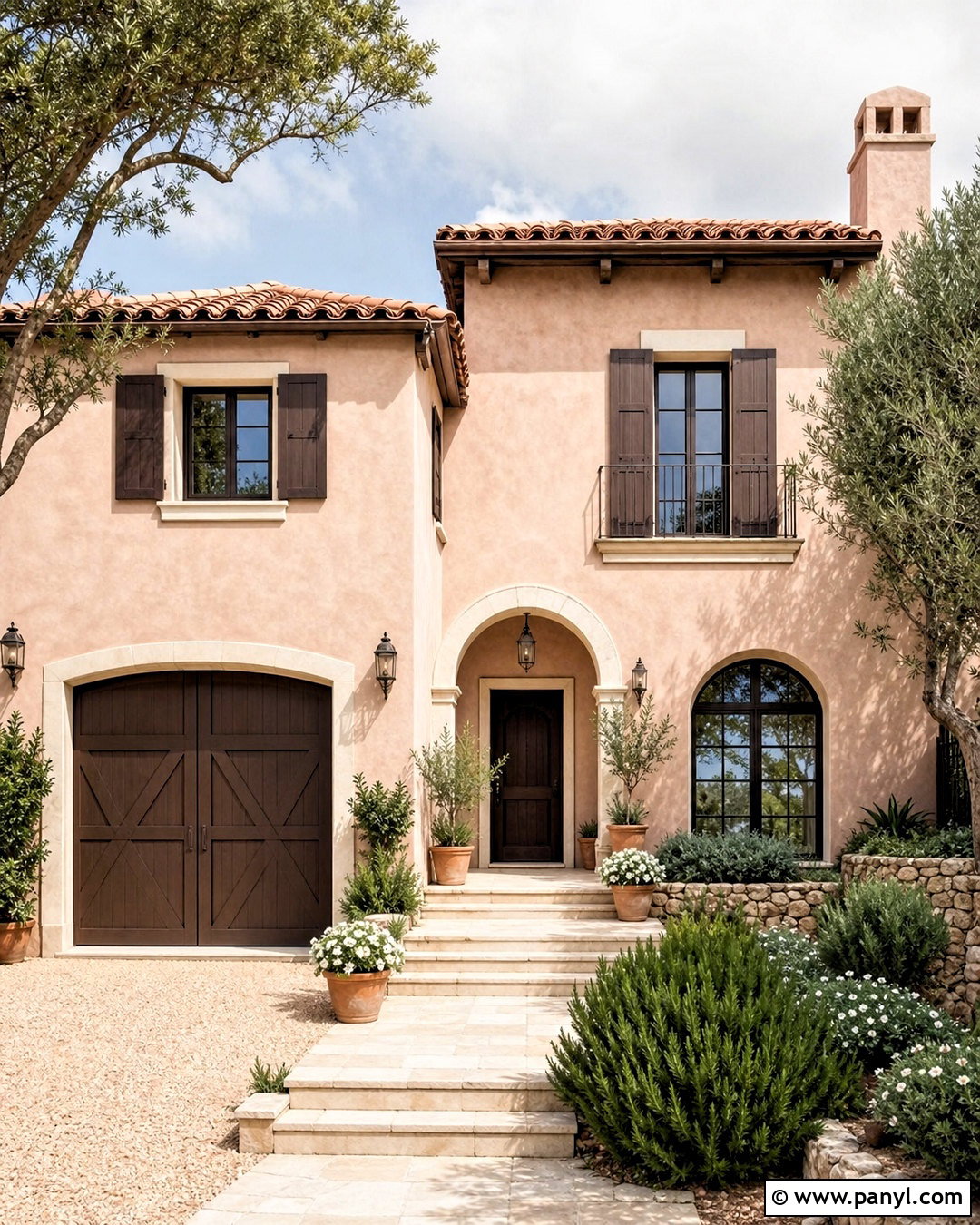
Clay pink offers a softer interpretation of terracotta, combining dusty rose, beige, and earthy mineral undertones. Use this muted color on stucco or simple siding, then add warm white trim and a medium natural wood front door. Bronze window frames, dark brown gutters, and a weathered clay or brown roof keep the palette grounded. This complete exterior looks especially attractive on desert homes, Mediterranean cottages, midcentury ranches, and small bungalows. Surround the house with pale gravel, sandstone pavers, silvery plants, and restrained green shrubs. The result feels distinctive without becoming sugary or overly feminine. Avoid cool pinks that conflict with warm roofing and stone. A large sample should be checked during sunrise and sunset, when reflected light can temporarily intensify pink and red undertones.
20. Chocolate Brown Exterior House Paint
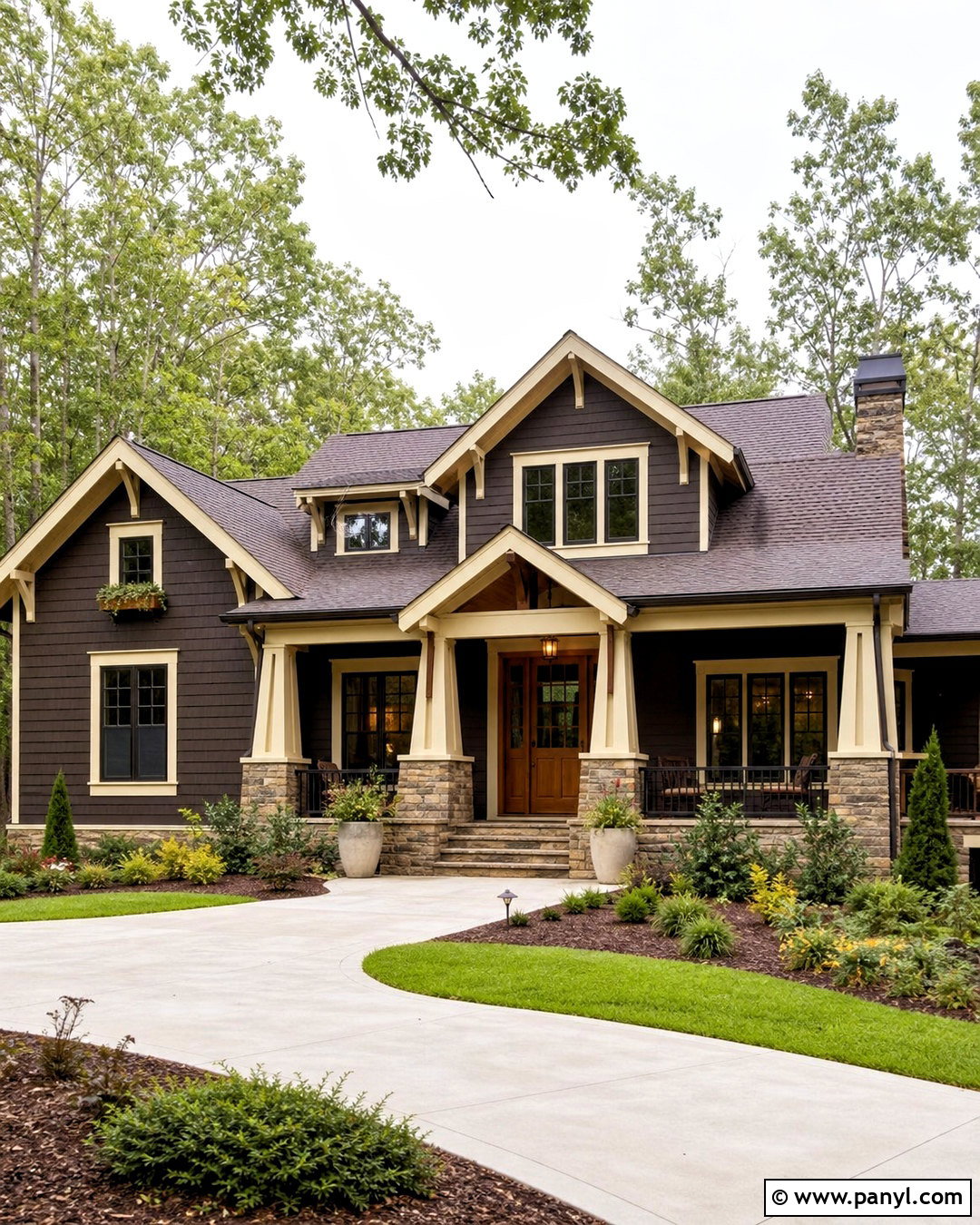
Chocolate brown creates a rich, natural facade that can feel modern or rustic depending on the supporting finishes. Select a deep brown with muted gray undertones for siding, then use warm cream on window trim and porch columns. A medium-tone wood door, dark bronze lighting, and matching gutters create subtle layers rather than sharp contrast. Pair the scheme with a charcoal-brown roof and light gray or cream stone at the foundation. It suits contemporary cabins, Craftsman homes, woodland ranches, and mountain-inspired properties. Introduce lighter surfaces through concrete paths, gravel, and pale planters so the exterior does not appear heavy. Layered green landscaping also helps the brown feel intentional. Sample carefully because heavily shaded walls may make a deep chocolate color look nearly black.
Conclusion:
The best exterior scheme responds to more than personal color preference. Roofing, brick, stone, sunlight, architecture, neighboring homes, and landscaping all influence the final result. These 20 external house paint colors range from adaptable warm whites and greiges to expressive forest green, terracotta, navy, and brick red. For a cohesive facade, choose one main body color, one trim shade, and one or two controlled accents. Repeat those colors through doors, shutters, gutters, lighting, and planters. Most importantly, apply large samples to different sides of the house and observe them for several days. Careful testing will reveal undertones and help you create an exterior that feels balanced, welcoming, and appropriate for the property.

Related Ideas and Inspiration:
Leave a Reply