
Choosing from **20 Modern House Wall Colors** is easier when each shade is viewed as part of a complete room rather than an isolated paint chip. Current palettes favor warm neutrals, grounded greens, softened blues, and earthy accent colors that feel expressive yet livable. () The right wall color should connect naturally with flooring, furniture, lighting, textiles, and architectural details. It should also suit the room’s daylight and the mood you want to create. Test large samples on several walls before deciding, since undertones can shift throughout the day. From creamy white living rooms to burgundy dining spaces, these coordinated looks offer practical inspiration for using **20 Modern House Wall Colors**.

1. Warm White Living Room Walls
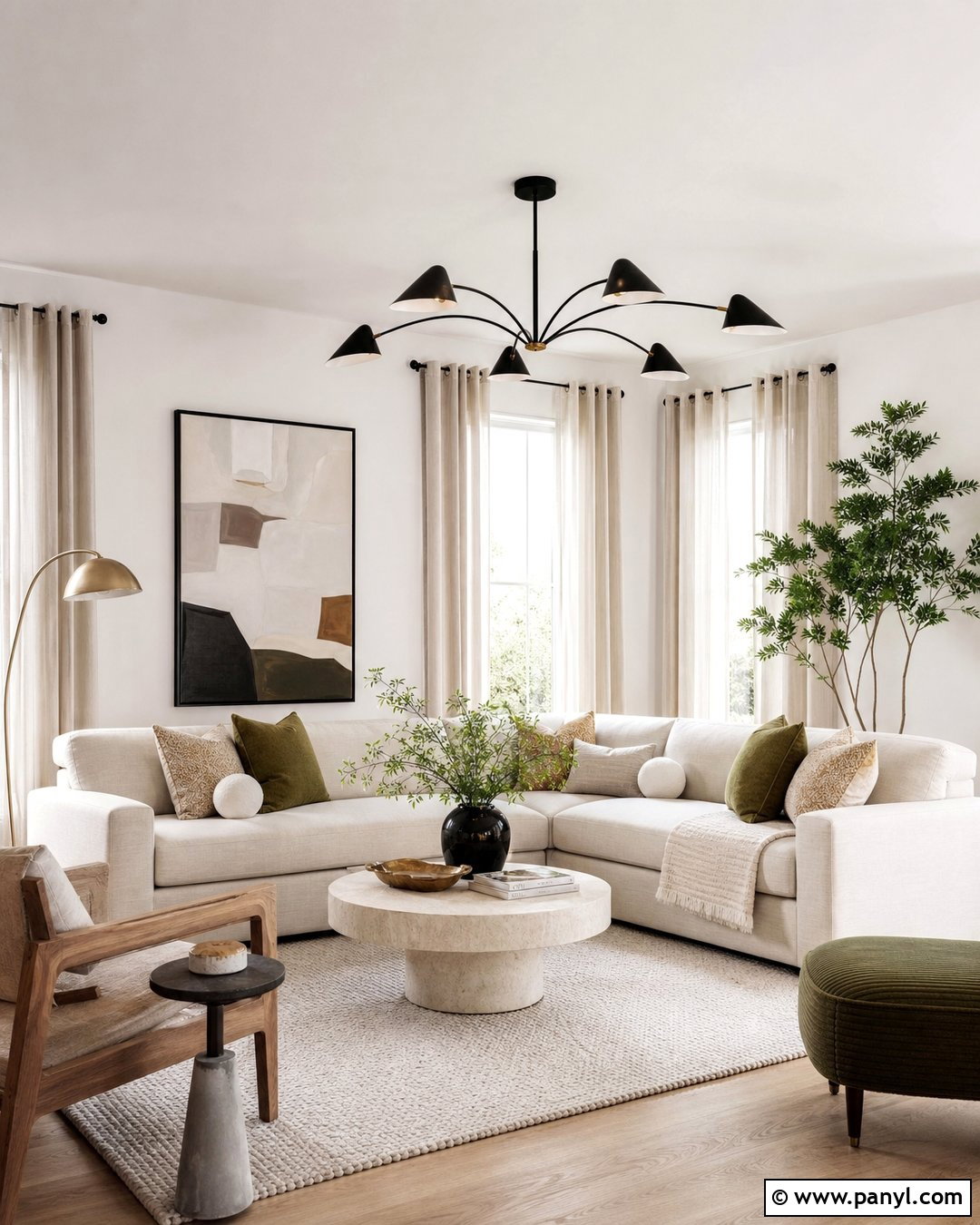
Warm white walls create a bright modern living room without the sharpness of pure white. Choose a creamy shade with subtle beige undertones, then repeat that warmth through light oak flooring and an oatmeal-colored sectional. A textured ivory rug, rounded travertine coffee table, and linen curtains keep the room soft but uncluttered. Add contrast with slim matte black window frames, a charcoal floor lamp, and one oversized abstract artwork. Brushed brass accents can introduce a gentle glow without making the room feel formal. Keep the ceiling and trim in the same warm white, using a slightly higher sheen for definition. This tonal approach visually expands the space while allowing natural materials, sculptural furniture, and greenery to provide depth.
2. Soft Greige Open-Plan Walls
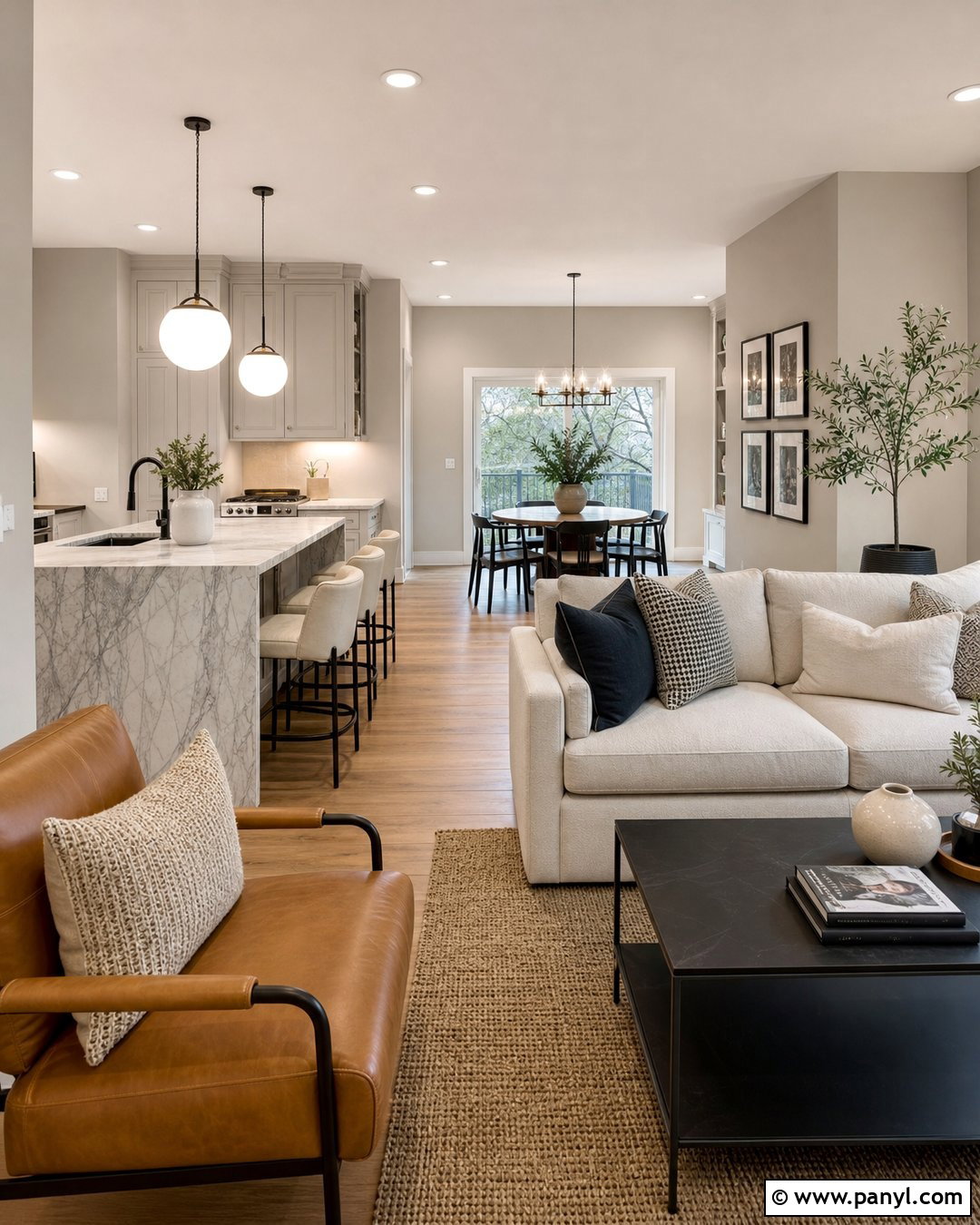
Soft greige offers a practical bridge between warm beige and cool gray, making it especially useful in an open-plan home. Carry the wall color through the living area, dining zone, hallway, and kitchen to create visual continuity. Pair it with medium oak floors, off-white cabinetry, and a stone kitchen island containing both gray and tan veining. In the seating area, use a camel leather chair, cream sofa, black metal tables, and woven textiles. The combination prevents greige from looking flat or overly cool. Choose warm white trim for gentle contrast, and install simple globe or cone-shaped lighting. A few rust, moss, or muted blue accents will add character while preserving the calm, connected appearance of the entire space.
3. Sand Beige Bedroom Walls
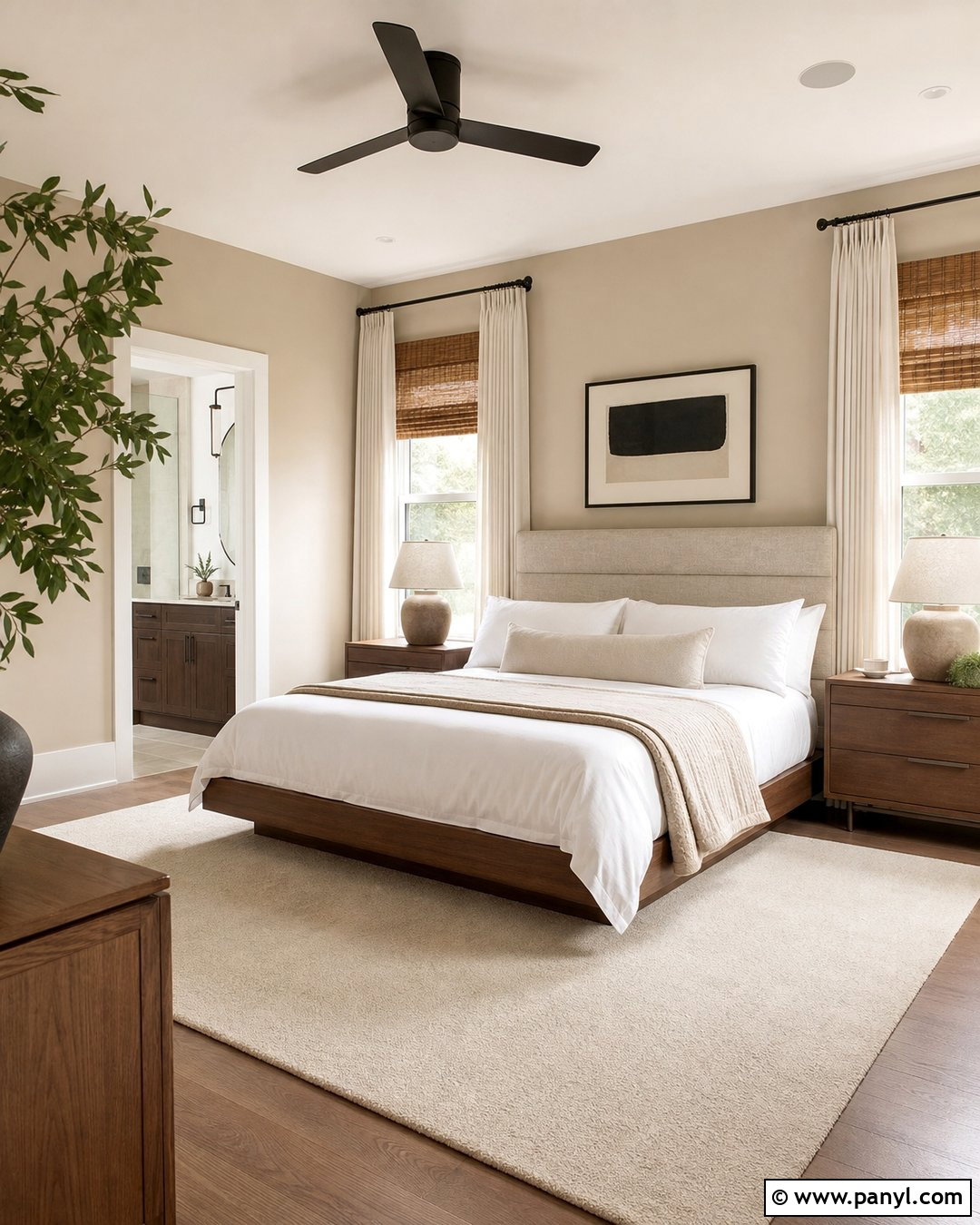
Sand beige walls can turn a modern bedroom into a restful retreat with the warmth of a quiet coastal landscape. Select a light beige with balanced golden undertones rather than a strongly yellow shade. Build the room around a low walnut bed, an upholstered oatmeal headboard, and layered white and flax-colored bedding. Natural woven shades can filter daylight, while full-length ivory curtains soften the windows. Place a pale wool rug beneath the bed and add ceramic lamps with simple linen shades. For contrast, introduce dark bronze hardware and one narrow black-framed artwork above the headboard. Keep decor minimal and tactile. Bouclé, washed cotton, wood, and handmade pottery give the neutral walls enough variation to feel intentional rather than plain.
4. Mushroom Taupe Dining Room Walls
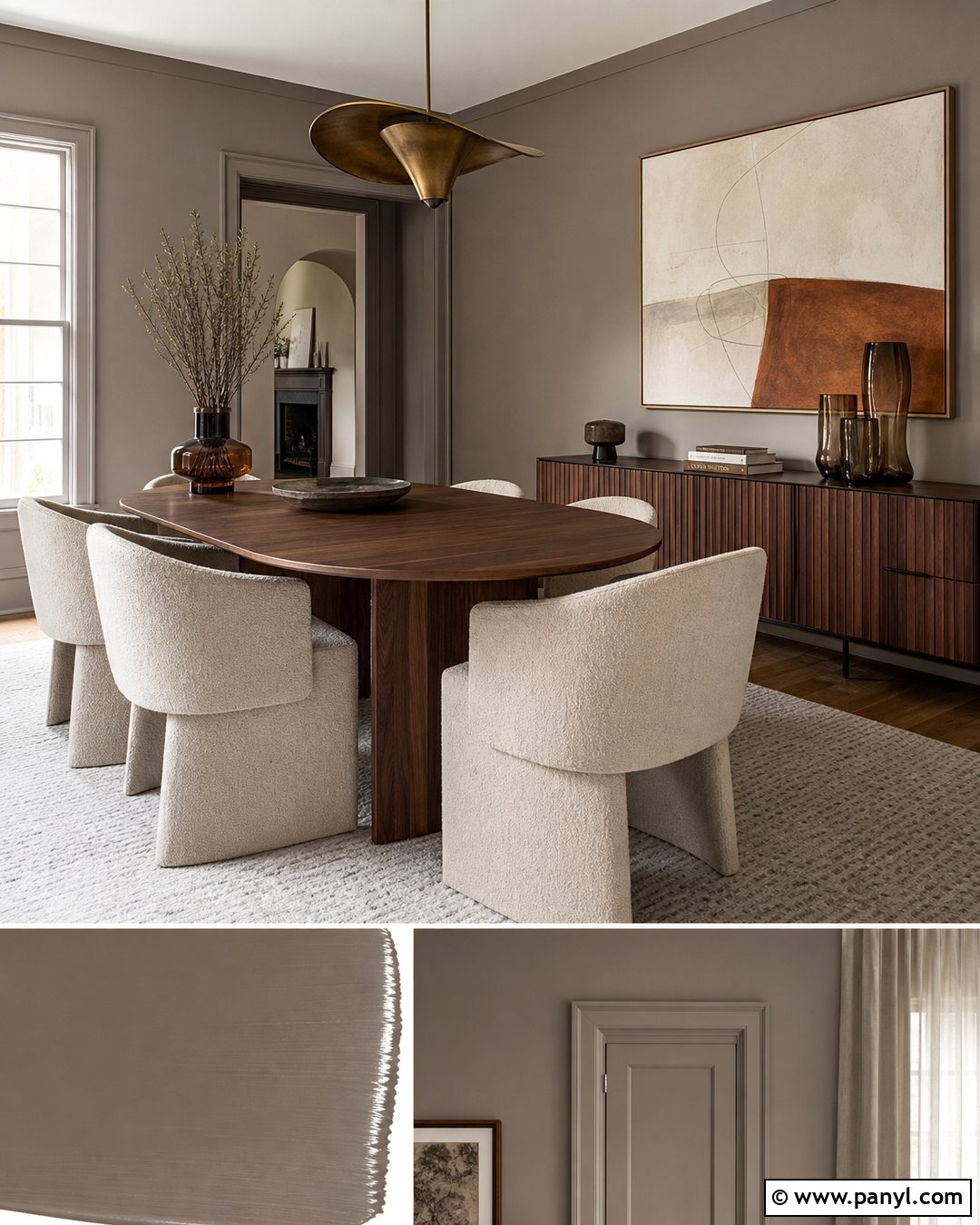
Mushroom taupe brings sophisticated warmth to a modern dining room while remaining flexible enough for everyday use. Its mix of brown, gray, and subtle violet undertones pairs beautifully with walnut furniture and pale natural stone. Center the room around an oval wood table with curved cream chairs, then suspend a sculptural black or aged brass pendant overhead. Use taupe on the walls and trim for a color-drenched effect, but choose a satin finish on the trim to create quiet definition. A large abstract canvas in ivory, rust, and charcoal can become the main decorative feature. Complete the look with a low sideboard, smoked glass accessories, and a textured neutral rug. Soft diffused lighting will make this deeper neutral feel comfortable instead of heavy.
5. Light Khaki Hallway Walls
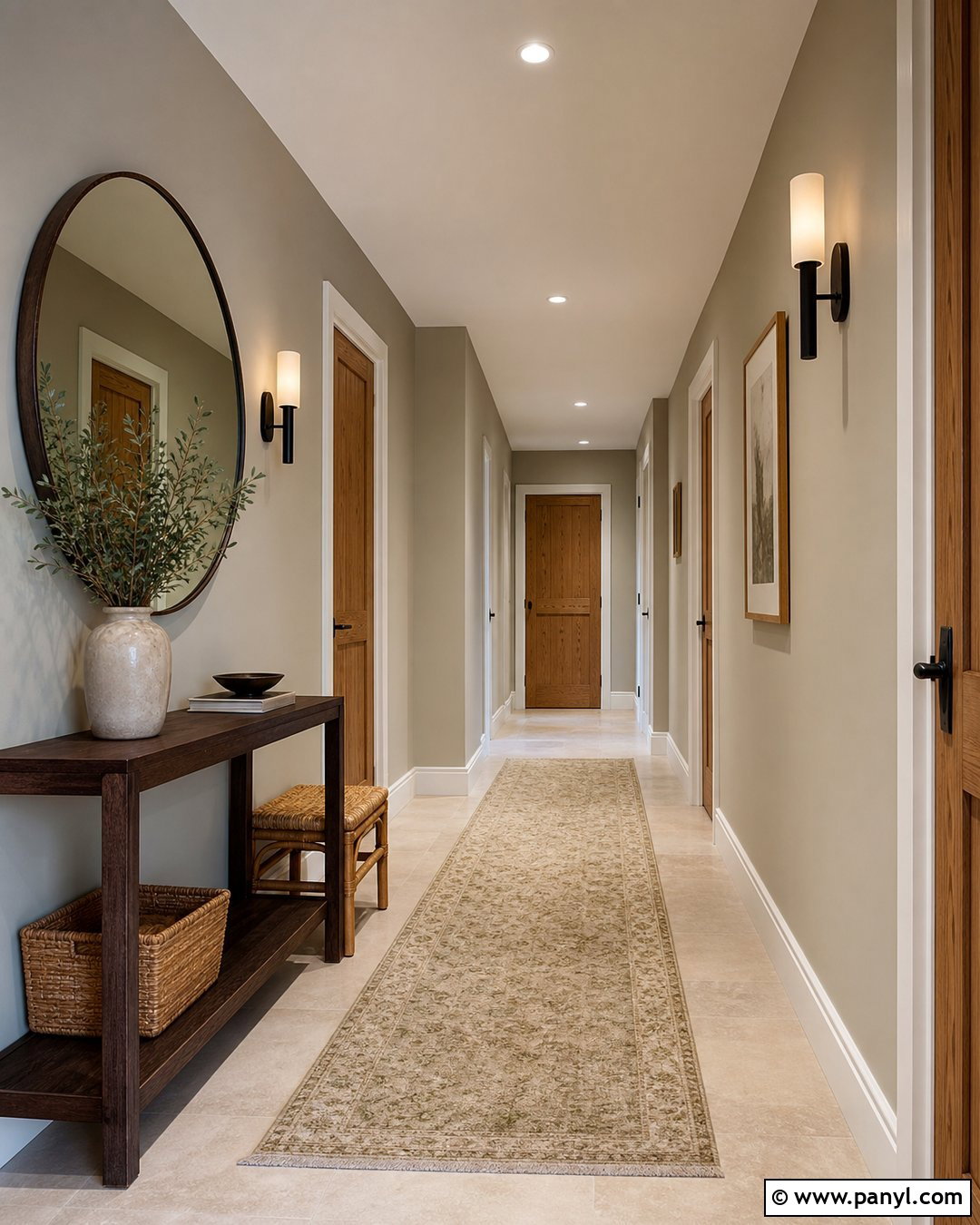
A light khaki wall color gives hallways and entry spaces more personality than standard beige while still functioning as a whole-house neutral. Look for a sandy shade with a restrained green-gray undertone. It will complement natural oak doors, limestone-look flooring, and black metal details without creating strong color contrast. Add a slim console in dark wood, a large round mirror, and a woven bench for a balanced entrance arrangement. Warm white ceilings and baseboards keep the passage feeling fresh. If the hallway is long, hang simple artwork in matching wood frames at consistent intervals. A flat-weave runner with cream, brown, and olive threads can reinforce the palette. Wall sconces or evenly spaced ceiling lights will prevent khaki from becoming dull in shadowed areas.
6. Clay Beige Kitchen Walls
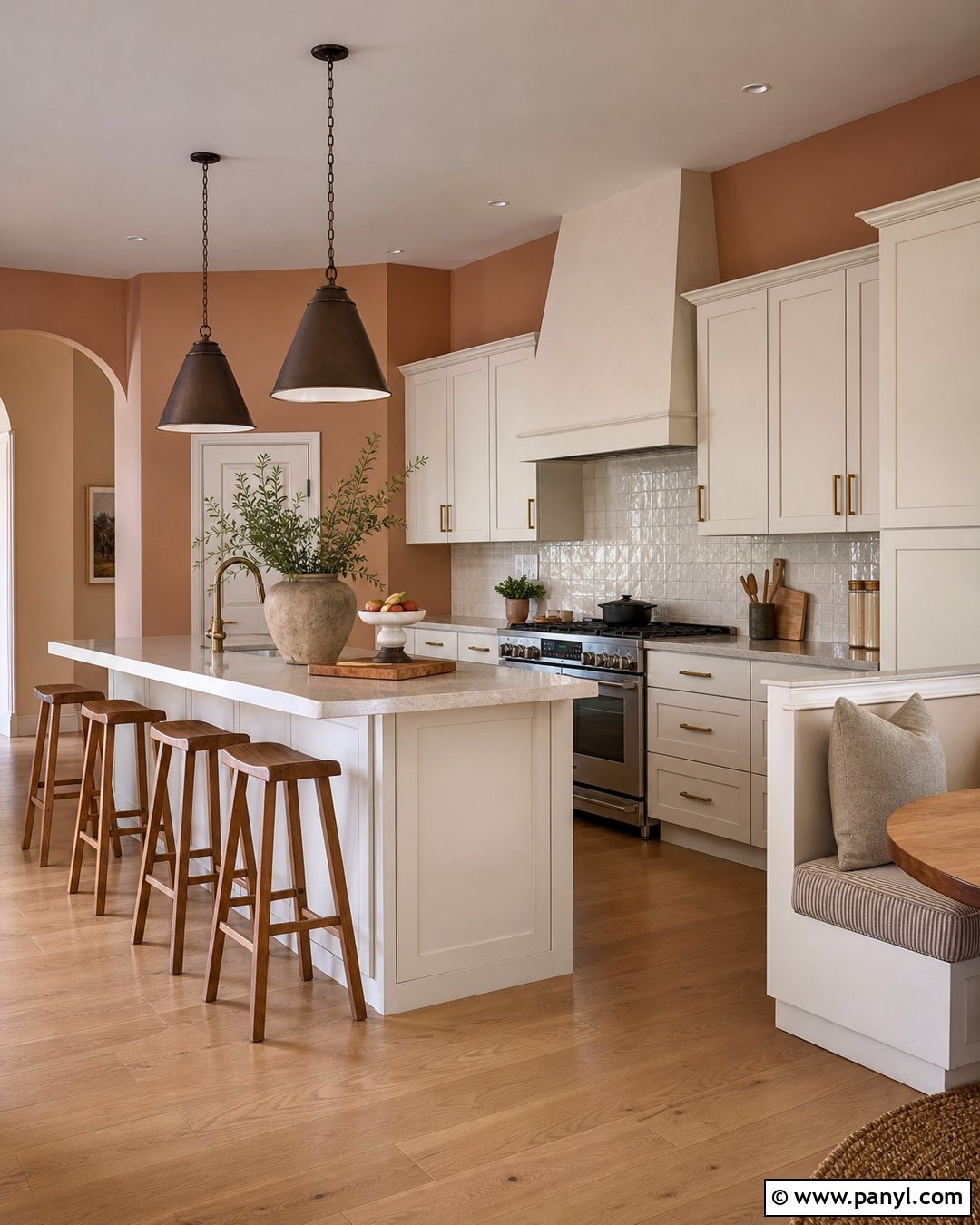
Clay beige walls introduce earthy color to a modern kitchen without competing with cabinetry or countertops. This shade works particularly well beside flat-panel cabinets in warm white or natural oak. Choose a muted beige with a faint terracotta base, then pair it with creamy quartz counters and a handmade off-white tile backsplash. Brushed brass hardware and warm wood stools continue the inviting palette. For contrast, install dark bronze pendant lights and use black accents sparingly around windows or appliances. The clay tone can extend into a breakfast nook, where a built-in bench, striped cushions, and a round pedestal table create a complete gathering area. Keep the ceiling light and neutral so the room remains open, clean, and practical despite the warmer wall color.
7. Sage Green Living Room Walls
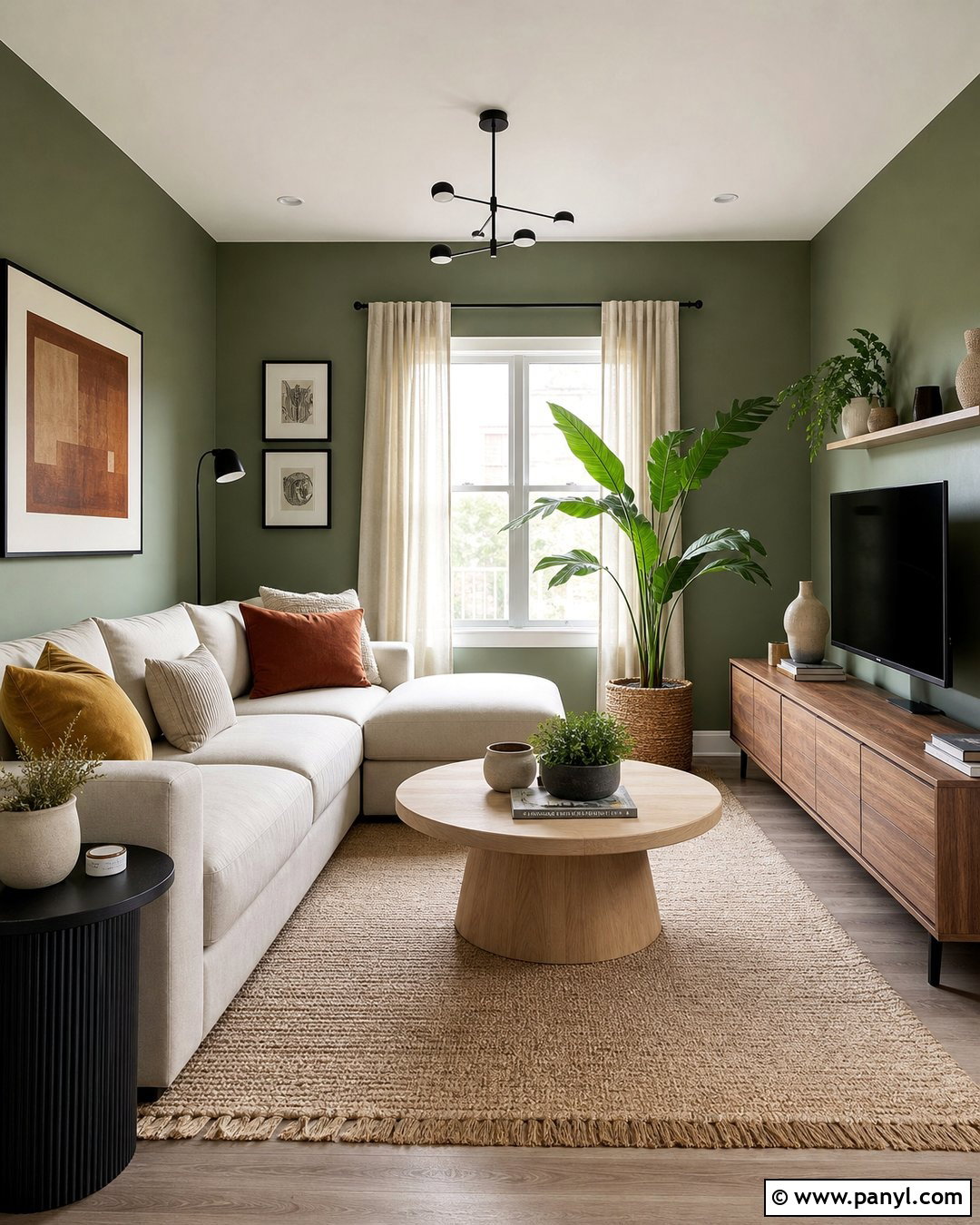
Sage green walls create a calming living room that feels connected to nature but still distinctly modern. Select a softened green with enough gray to prevent it from appearing overly pastel. Combine it with a cream modular sofa, a walnut media cabinet, and a light oak coffee table with rounded edges. Linen curtains, a jute-and-wool rug, and woven baskets contribute relaxed texture. Use warm white on the ceiling and trim to sharpen the room gently. Black picture frames and a slender black floor lamp add structure, while rust or muted ochre pillows provide a small amount of warm contrast. Finish the space with broad-leaf plants and simple ceramic vessels. The full palette should feel layered, organic, and balanced rather than heavily themed around green.
8. Olive Green Home Office Walls
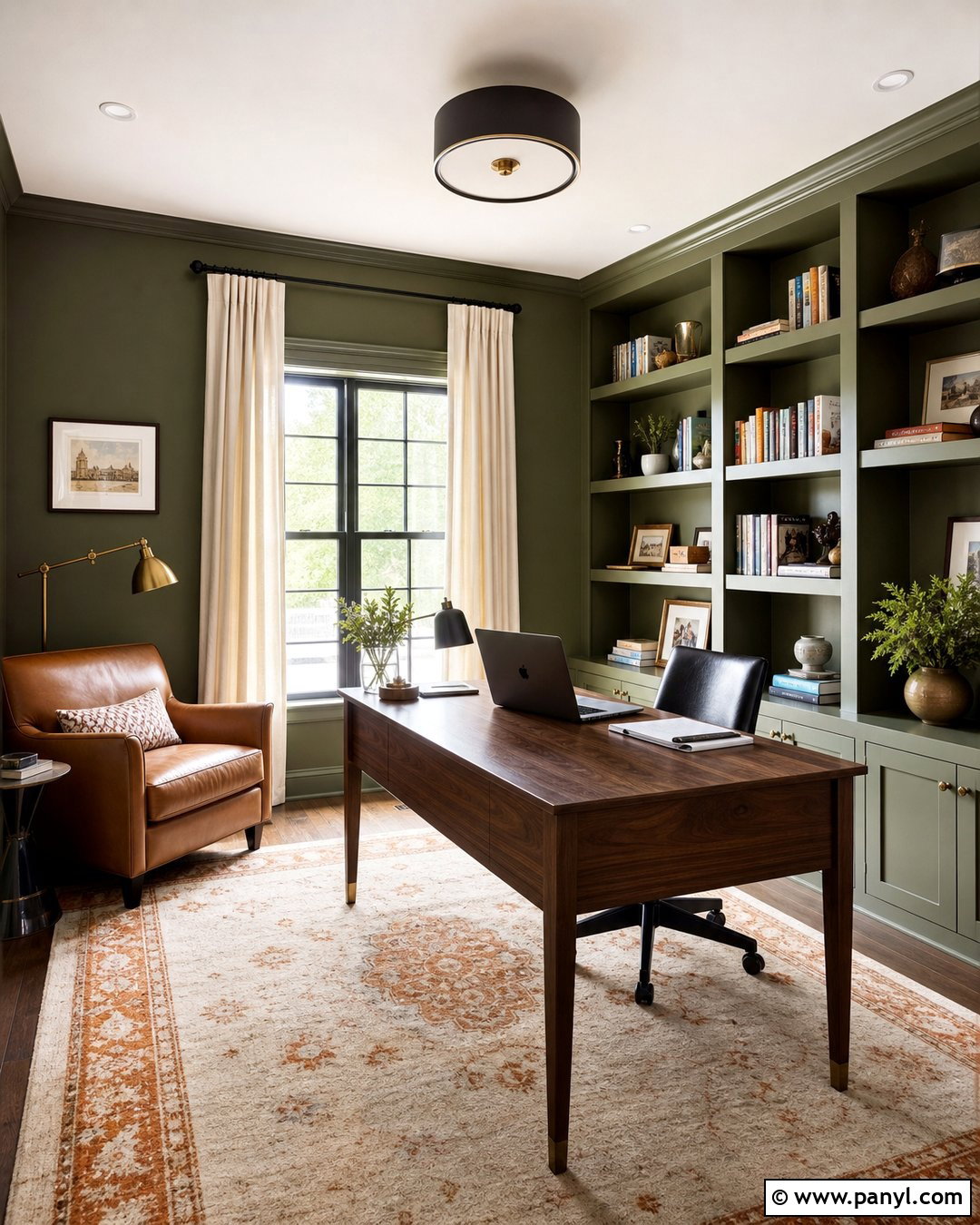
Olive green can transform a home office into a focused, polished space with more warmth than charcoal or navy. Choose a medium olive with brown undertones and use it across every wall for an enveloping effect. Place a substantial walnut desk near the window and add a streamlined black chair for contrast. Built-in shelves painted in the same olive will blend into the architecture, allowing books and objects to stand out. Include a cognac leather reading chair, an antique-style brass task lamp, and a patterned rug containing cream and rust. Natural linen curtains soften incoming light without weakening the rich wall color. Keep the ceiling warm white if the room is compact. This complete arrangement feels professional, comfortable, and suitable for both work and quiet reading.
9. Eucalyptus Green Bathroom Walls
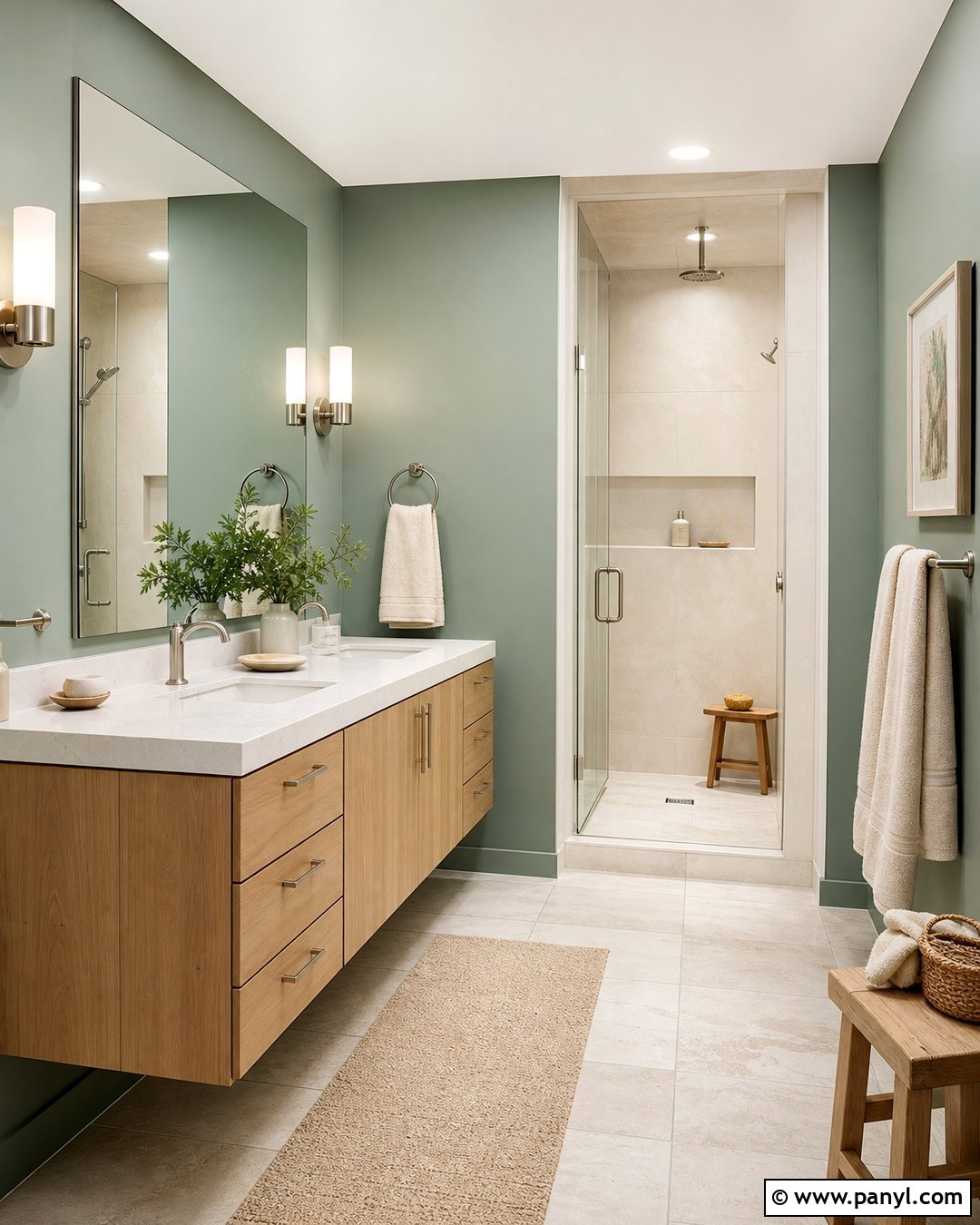
Eucalyptus green walls give a modern bathroom a restorative atmosphere while working naturally with stone, wood, and brushed metal. Choose a muted midtone green rather than a bright botanical shade. Pair it with a floating light oak vanity, a white quartz counter, and a wide frameless mirror. Large-format limestone-look floor tiles will ground the room, while an off-white shower surround keeps it bright. Use brushed nickel fixtures for a clean finish or aged brass for additional warmth. Towels in cream and pale gray can maintain the restrained palette. Add one wood stool, a simple wall sconce, and a small moisture-friendly plant near the window. Keeping accessories minimal allows the eucalyptus walls and natural materials to form a peaceful, unified bathroom design.
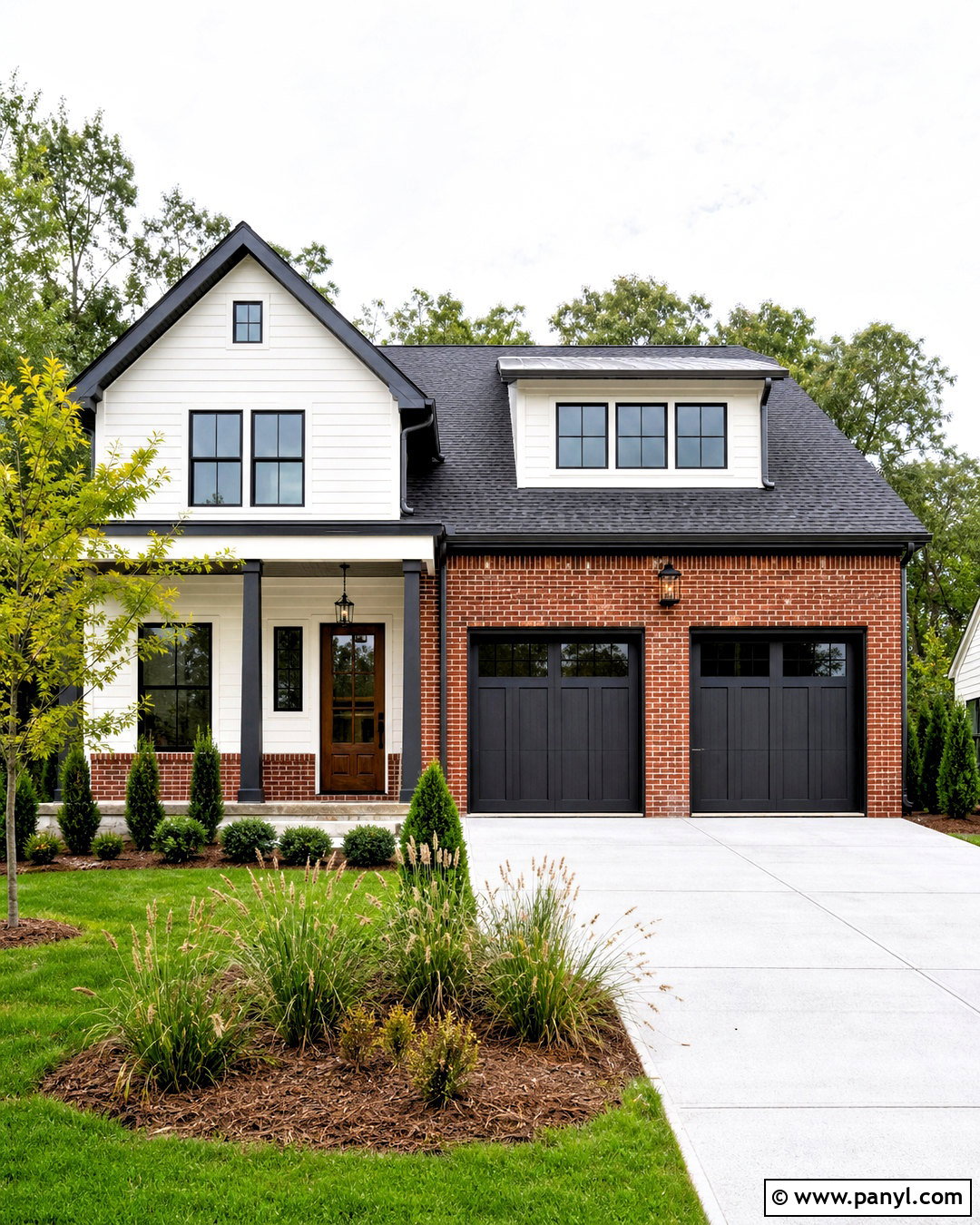
10. Smoky Blue-Green Kitchen Walls
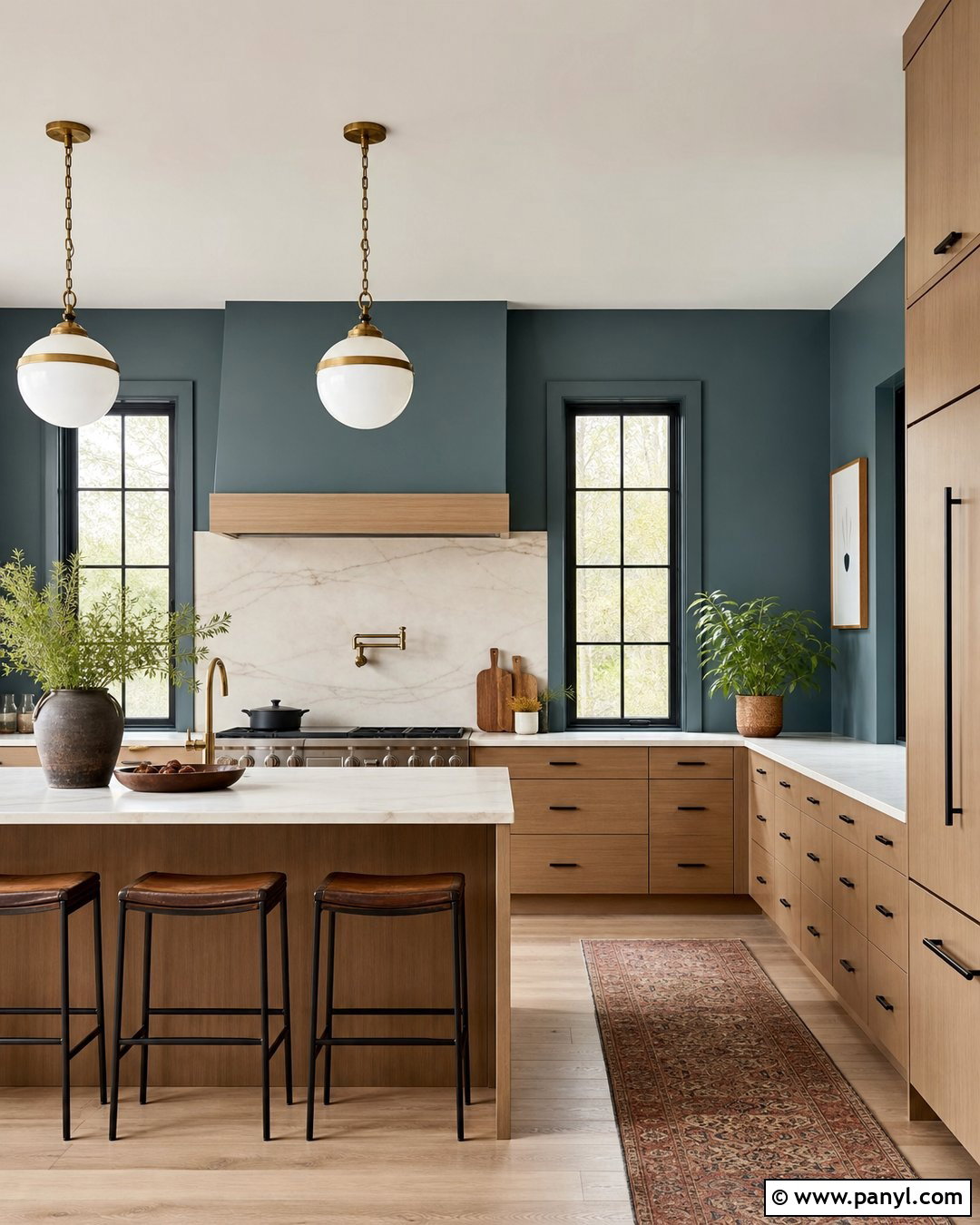
Smoky blue-green walls create a modern kitchen that feels colorful without becoming visually loud. A gray-based teal works best because it can connect cool stone surfaces with warm wood cabinetry. Use the color on the walls around natural oak cabinets, then select creamy counters and a softly veined marble backsplash. Matte black pulls, window frames, and barstool legs provide crisp definition. Over the island, hang opal glass pendants with aged brass fittings to warm the cooler wall color. A vintage-inspired runner in muted rust, beige, and blue-green can tie the materials together. Keep the ceiling and door trim soft white. This balanced scheme feels fresh and architectural, while the combination of wood, stone, metal, and layered color prevents the room from looking overly coastal.
11. Powder Blue Bedroom Walls
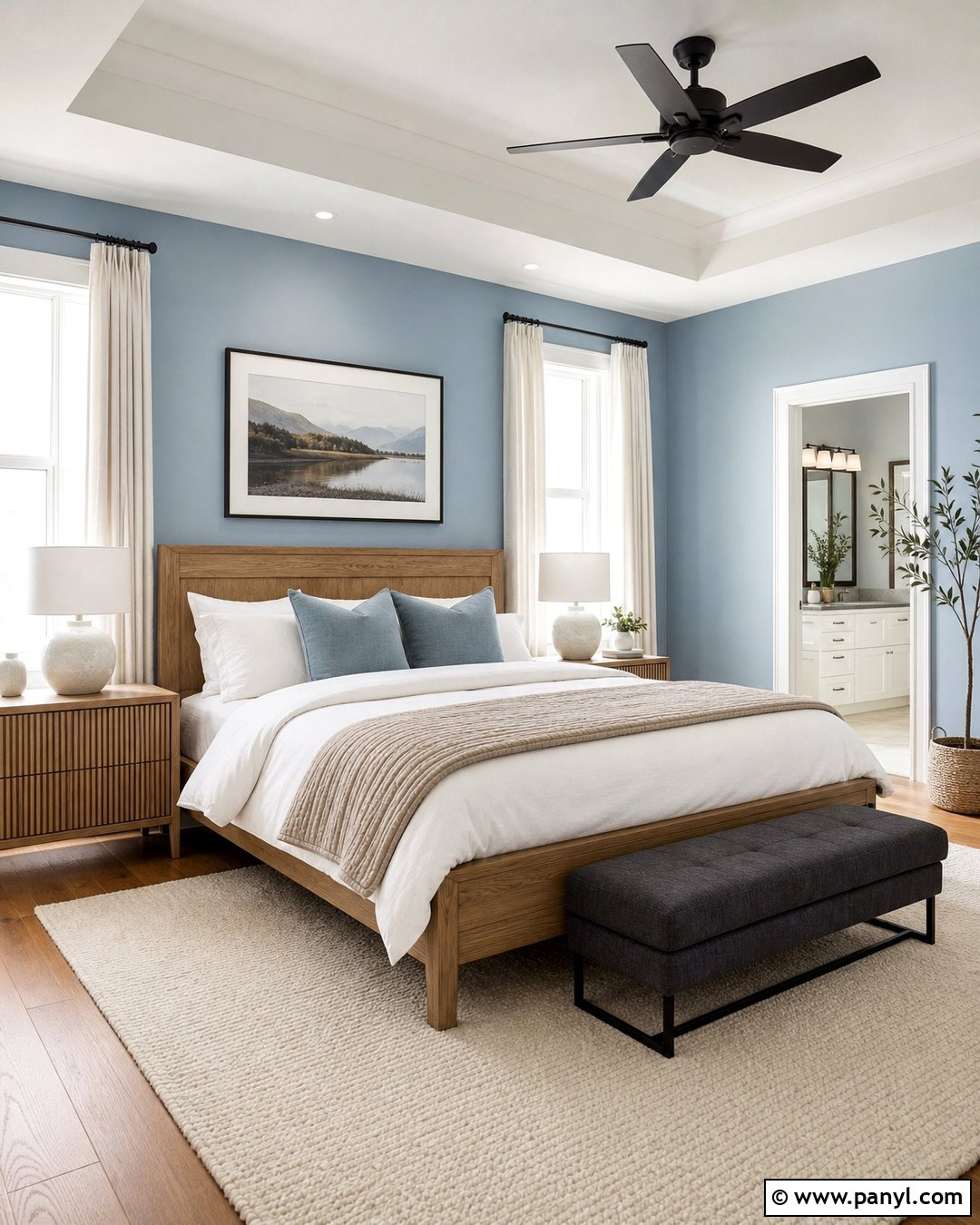
Powder blue walls offer a gentle alternative to white in a modern bedroom, especially when balanced with grounded materials. Choose a pale blue with soft gray undertones instead of a sugary pastel. Position a natural oak bed against the main wall and dress it with white sheets, a taupe quilt, and muted blue cushions. Fluted wood nightstands, ivory ceramic lamps, and light linen curtains add warmth and texture. A charcoal bench at the foot of the bed can provide a strong visual anchor. Continue the powder blue across all walls rather than creating a single accent surface, which produces a more intentional and immersive result. Warm white trim, a cream wool rug, and minimal landscape artwork complete the quiet, airy room without making it feel cold.
12. Slate Blue Media Room Walls
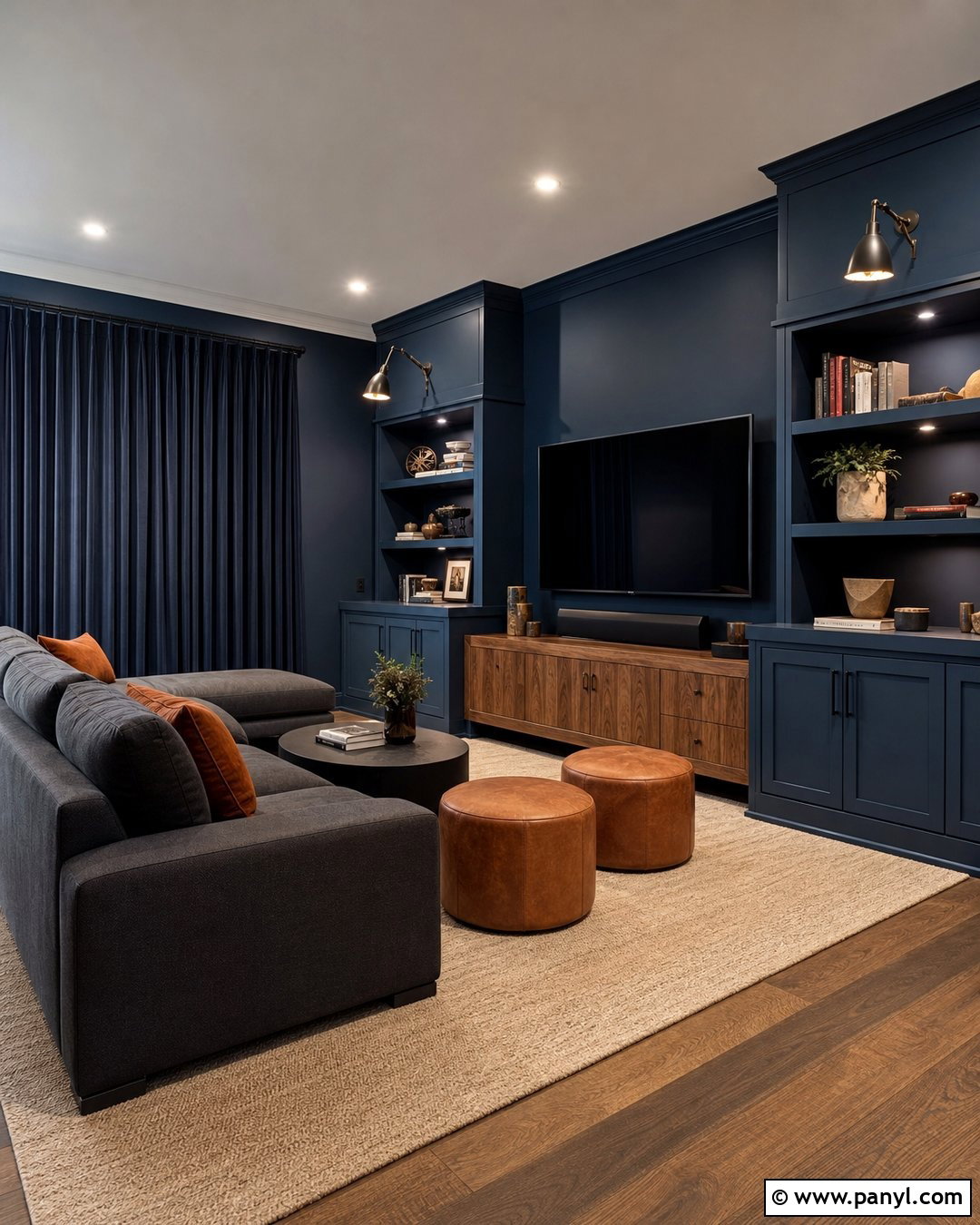
Slate blue walls provide the depth needed for a comfortable media room without making the space feel completely dark. Select a medium-to-deep blue containing noticeable gray undertones. Use it on every wall and paint built-in storage the same color for a seamless appearance. A low charcoal sectional, walnut media console, and large oatmeal rug will keep the room modern and grounded. Add cognac leather ottomans or rust-colored pillows to balance the cool blue. Blackout curtains in a similar slate tone can reduce glare while maintaining the cohesive palette. Install adjustable wall sconces with soft white illumination rather than relying on one harsh ceiling light. Matte black hardware and minimal framed artwork finish the look, producing a relaxed room designed for movies, games, and everyday lounging.
13. Deep Navy Dining Room Walls
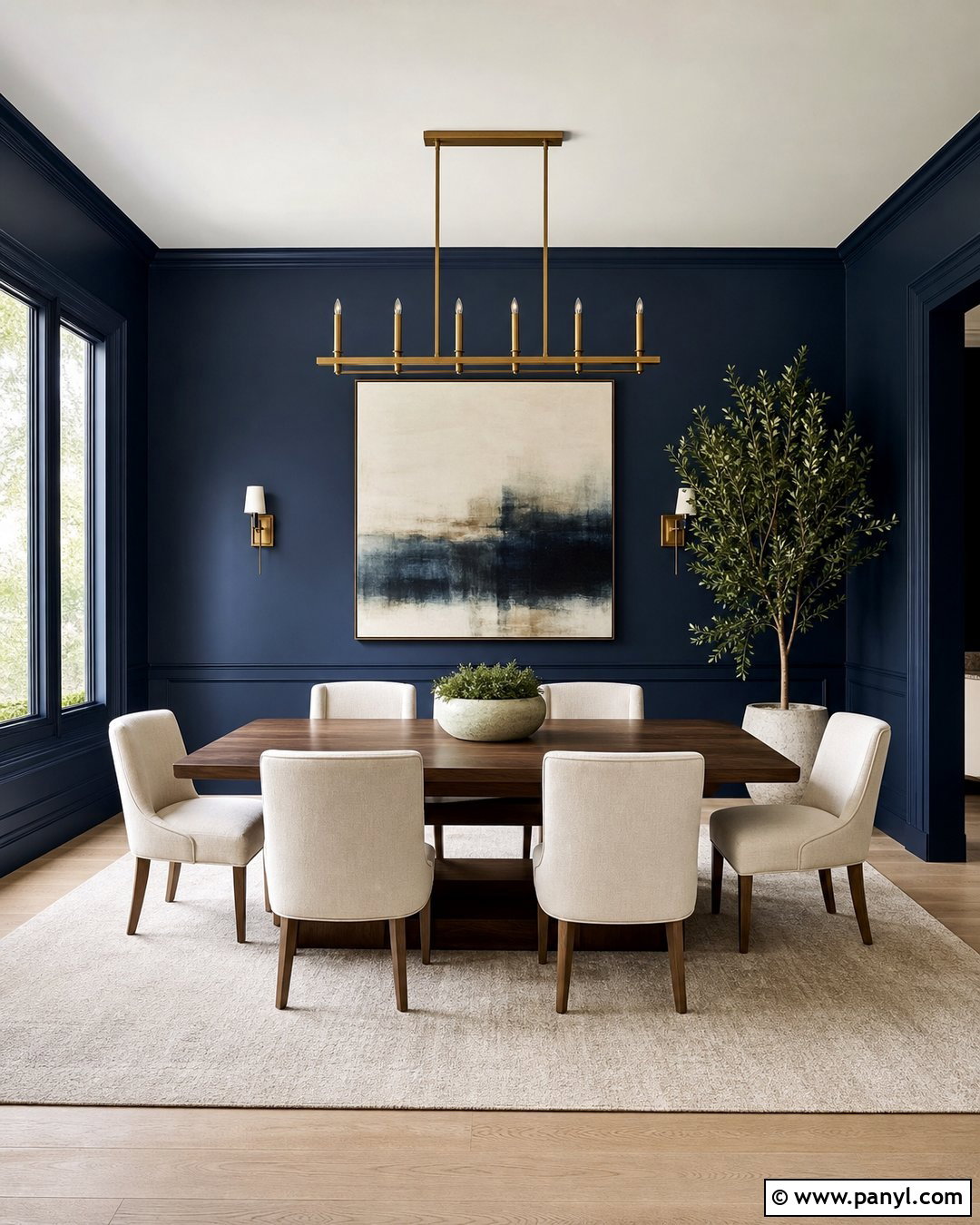
Deep navy walls can make a modern dining room feel intimate, structured, and memorable. Use a navy with a slightly softened or smoky base so it works well under both daylight and artificial light. Pair it with a rectangular walnut dining table and upholstered chairs in warm ivory. A linear aged brass chandelier will stand out clearly against the dark background while connecting with smaller metallic accents. Consider painting the baseboards and door casings navy for a unified, color-drenched look. Pale oak flooring or a large cream rug will prevent the lower half of the room from feeling too heavy. Add oversized contemporary artwork containing white, tan, and muted red. A tall indoor tree in a textured stone planter introduces a fresh organic element and softens the strong architecture.
14. Charcoal Gray Bedroom Walls
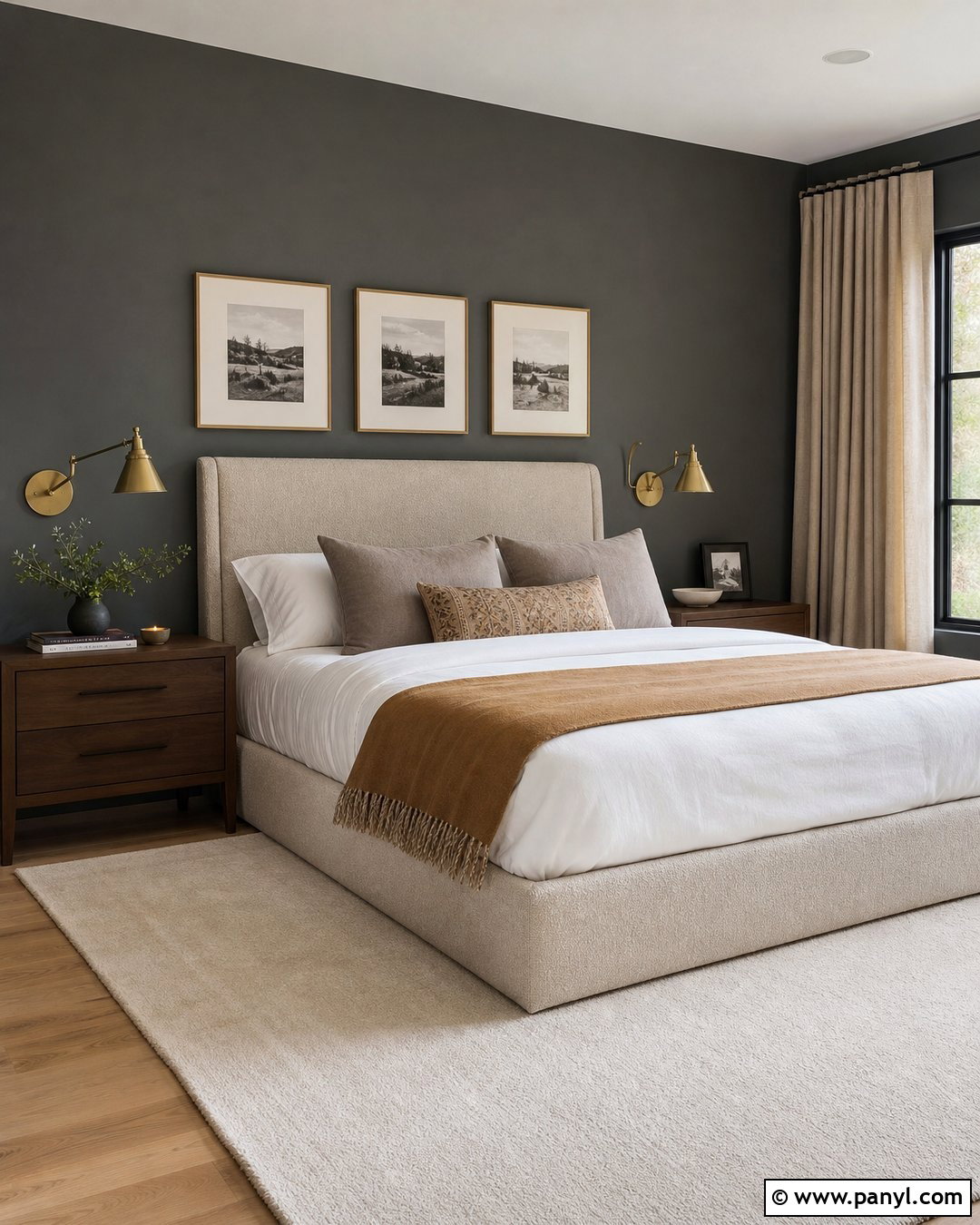
Charcoal gray walls create a sophisticated bedroom when paired with warm surfaces and plenty of tactile contrast. Avoid a cold blue-gray and choose charcoal with a subtle brown undertone. Use the shade on all four walls, then introduce a tall oatmeal upholstered bed to brighten the central focal point. Layer white sheets, a camel throw, and textured taupe pillows for a welcoming finish. Walnut nightstands and brass reading sconces add warmth, while black hardware keeps the design streamlined. Pale wood flooring and a large ivory rug are important for balancing the darker walls. Hang minimal artwork with broad cream matting, and use full-length linen curtains in soft beige. The finished room should feel restful and cocooning, not stark, industrial, or overly masculine.
15. Chocolate Brown Living Room Walls
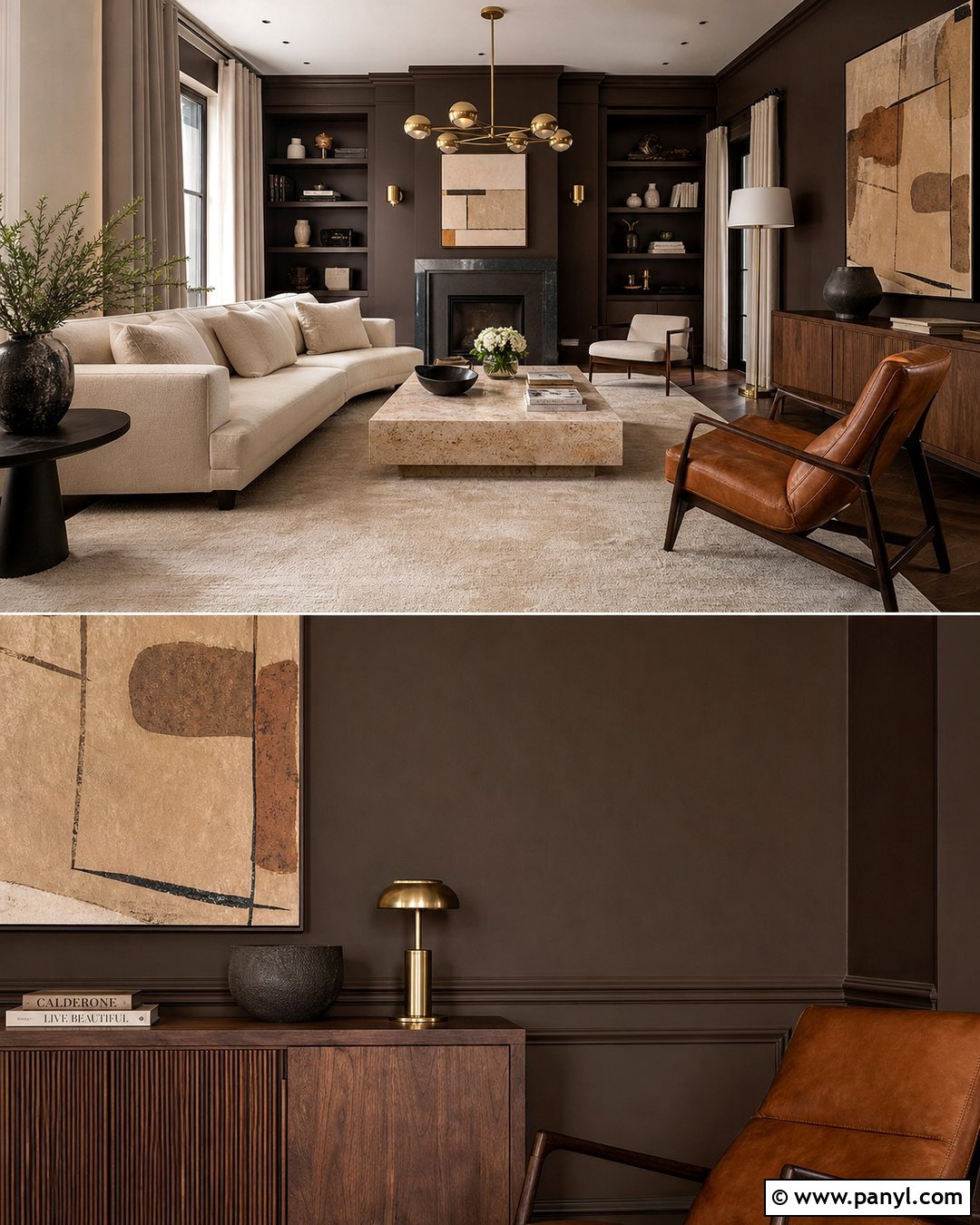
Chocolate brown walls bring richness and comfort to a modern living room, particularly when the shade has warm, earthy undertones. Create an enveloping backdrop by painting the walls, shelving, and trim in the same deep brown. Then lighten the center of the room with a generous cream sofa, pale wool rug, and travertine coffee table. A caramel leather lounge chair and walnut sideboard will build tonal depth without introducing unrelated colors. Use linen curtains in warm ivory to frame the windows and reflect daylight. Sculptural brass lighting can add brightness, while large abstract artwork in beige, clay, and black creates a clear focal point. Limit small accessories and emphasize strong shapes. This approach makes brown feel contemporary, polished, and intentionally luxurious rather than dated.
16. Terracotta Family Room Walls
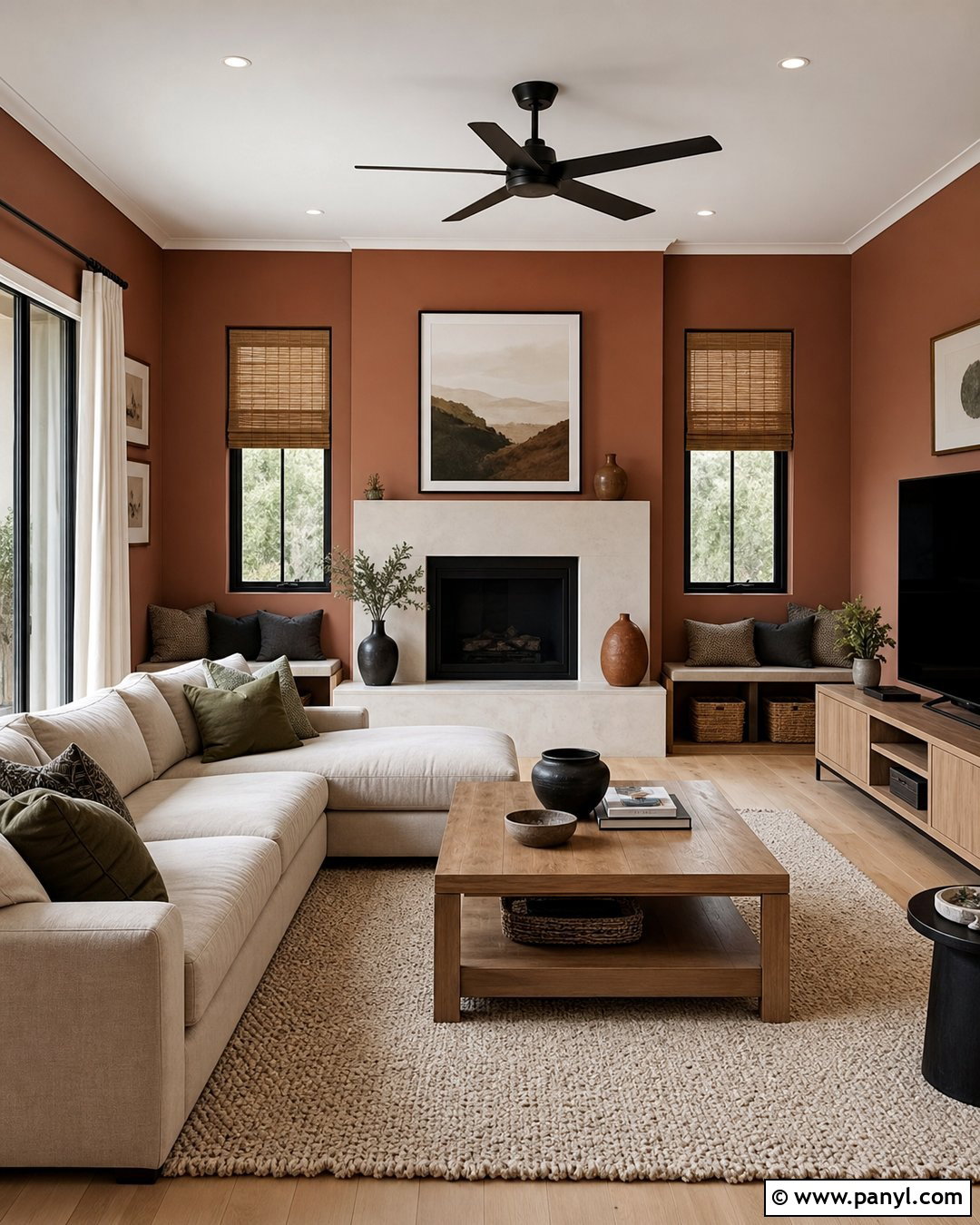
Terracotta walls make a family room feel welcoming, energetic, and connected to natural materials. Select a dusty clay shade with muted red and orange undertones rather than a bright Southwestern orange. Balance it with a large oatmeal sectional, a medium-tone oak coffee table, and a woven cream rug. Olive green cushions and a few charcoal accents will create depth while complementing the warm walls. Use off-white curtains and matching ceiling paint to keep the room light during the day. A low plaster or pale stone fireplace can become the main architectural feature, surrounded by simple built-in benches or shelving. Add handcrafted pottery, framed abstract prints, and durable woven baskets. The complete space should be practical for daily use while still appearing cohesive, fresh, and thoughtfully designed.
17. Dusty Rose Guest Room Walls
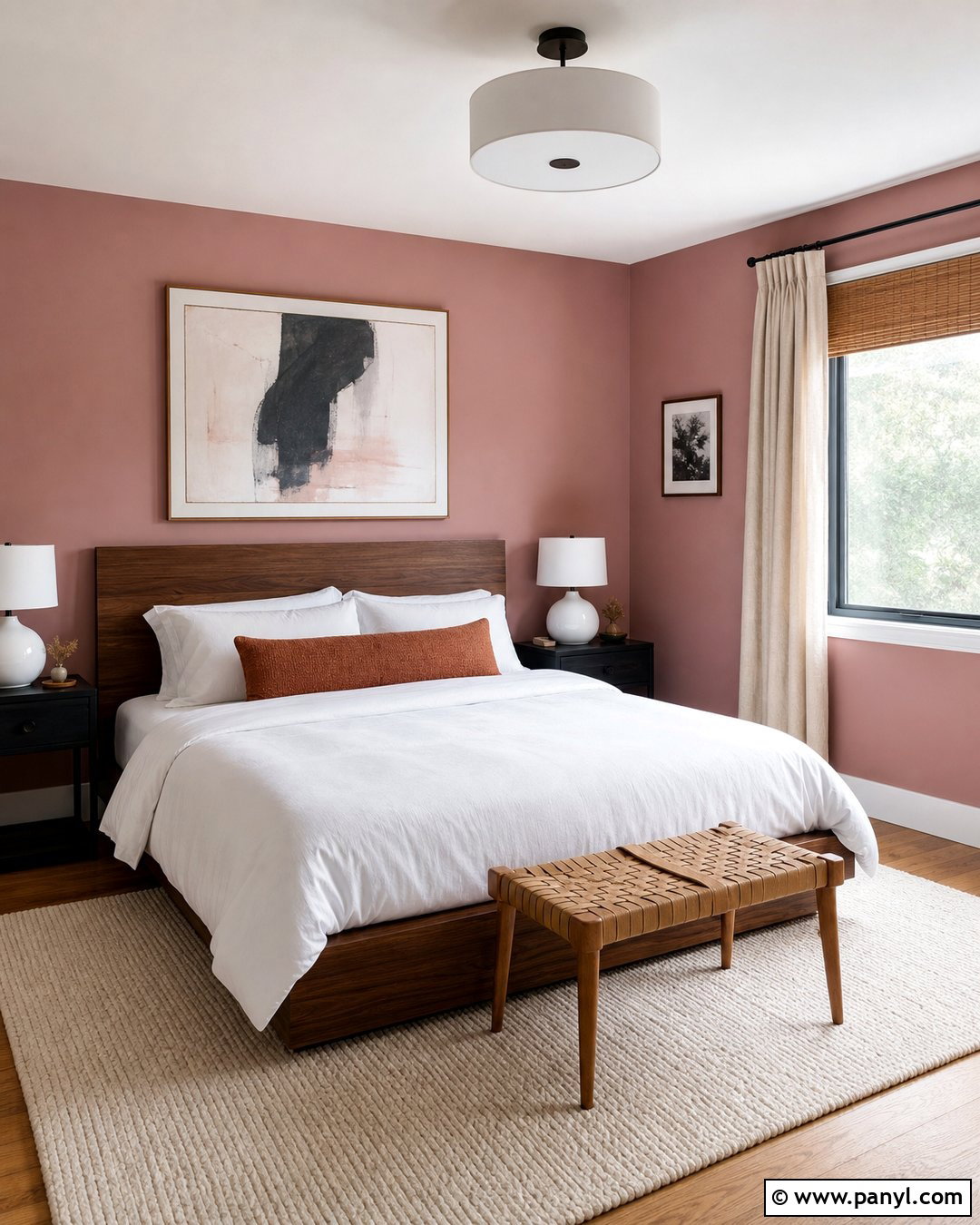
Dusty rose walls can give a modern guest room warmth and character without making it feel overly sweet. Look for a muted pink containing beige, brown, or gray undertones. Pair it with a low walnut bed, crisp white bedding, and a rust-colored lumbar pillow. Natural linen curtains and a woven wool rug in cream will soften the room, while black bedside tables add a clean contemporary edge. Use ceramic lamps with warm white shades and hang one large abstract print rather than several small decorations. A compact oak bench or luggage rack makes the room more functional for visitors. Keep trim in a creamy off-white to complement the warmth of the paint. The result feels calm, grown-up, and welcoming across different seasons without depending on delicate or highly decorative furnishings.
18. Muted Burgundy Dining Room Walls
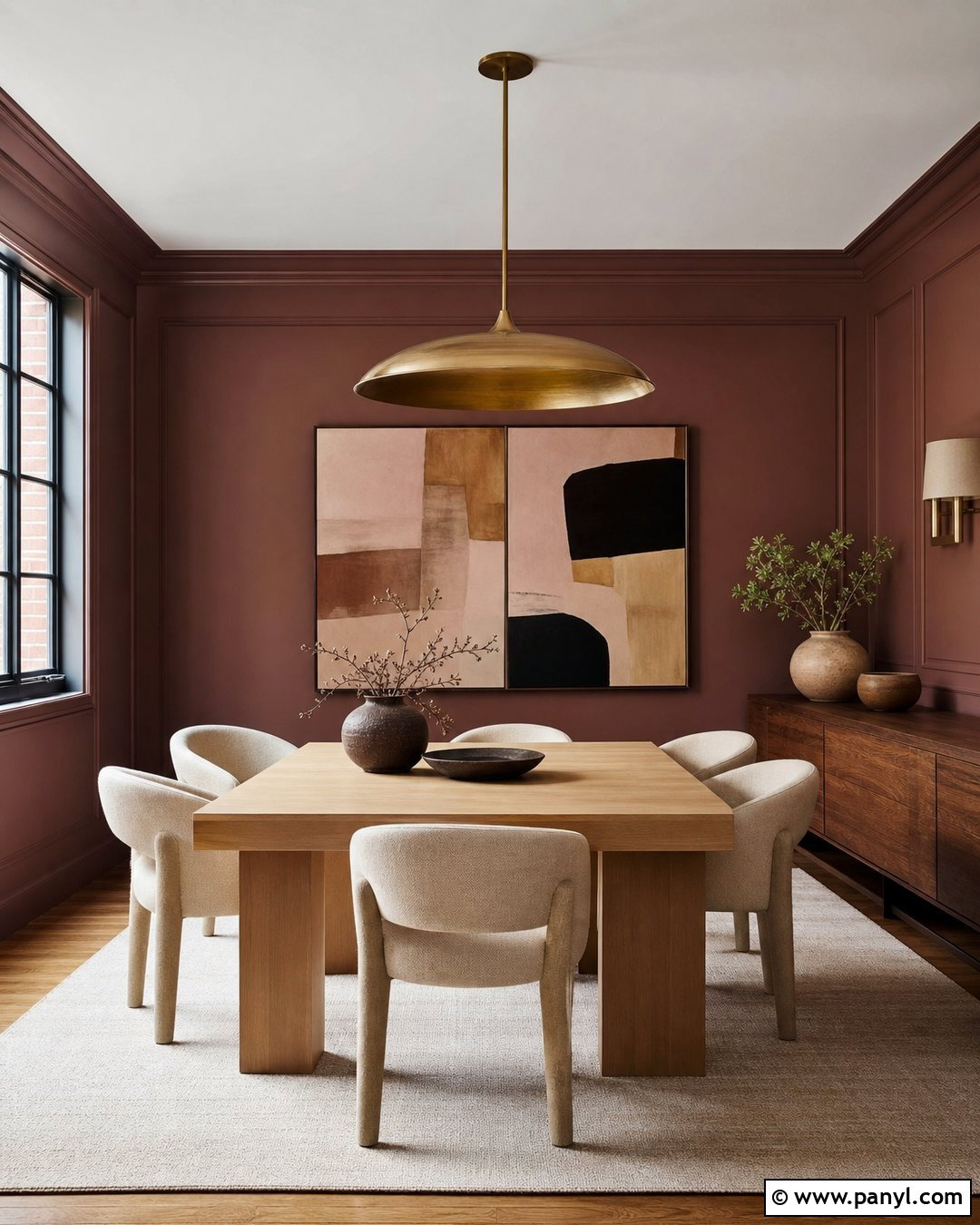
Muted burgundy walls create a dramatic modern dining room with more warmth than navy and more complexity than bright red. Choose a brown-based burgundy that appears rich rather than vivid. Cover all walls for a confident look, then balance them with a pale oak dining table and sculptural chairs upholstered in beige. A large cream rug will brighten the floor, while an aged brass pendant introduces a soft reflective finish. Use burgundy on the trim for a seamless effect, but keep the ceiling warm white. Abstract artwork containing blush, tan, and charcoal can connect the deep walls to the lighter furnishings. Add a streamlined walnut sideboard and simple ceramic vessels. The completed room feels intimate and distinctive while remaining comfortable enough for casual meals and everyday family gatherings.
19. Soft Lavender Dressing Room Walls
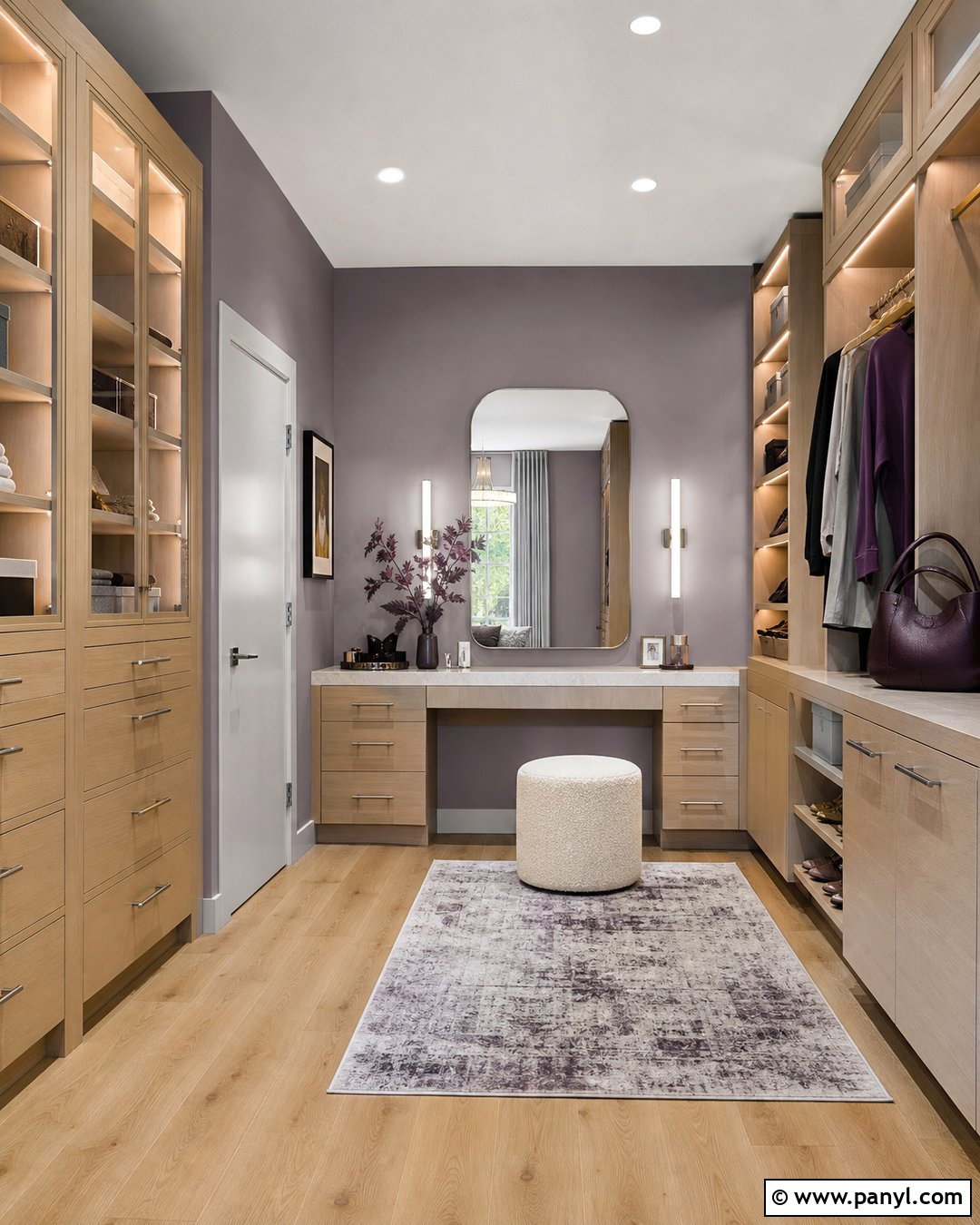
Soft lavender walls bring unexpected color to a modern dressing room, bedroom corner, or spacious walk-in closet. Choose a muted lavender with gray undertones so it reads as sophisticated rather than juvenile. Combine it with light oak cabinetry, brushed nickel hardware, and a cream boucle stool. A pale stone-topped vanity can provide a practical preparation area, while a large rounded mirror reflects light around the space. Keep the floor neutral with warm oak or a low-pile ivory carpet. Small accents in charcoal, dusty plum, and soft beige will give the room definition without overwhelming the gentle wall color. Install bright, diffused lighting around the mirror and inside cabinets. The coordinated result feels clean, calming, and personal while preserving the functional organization expected from a modern dressing area.
20. Butter Yellow Breakfast Nook Walls
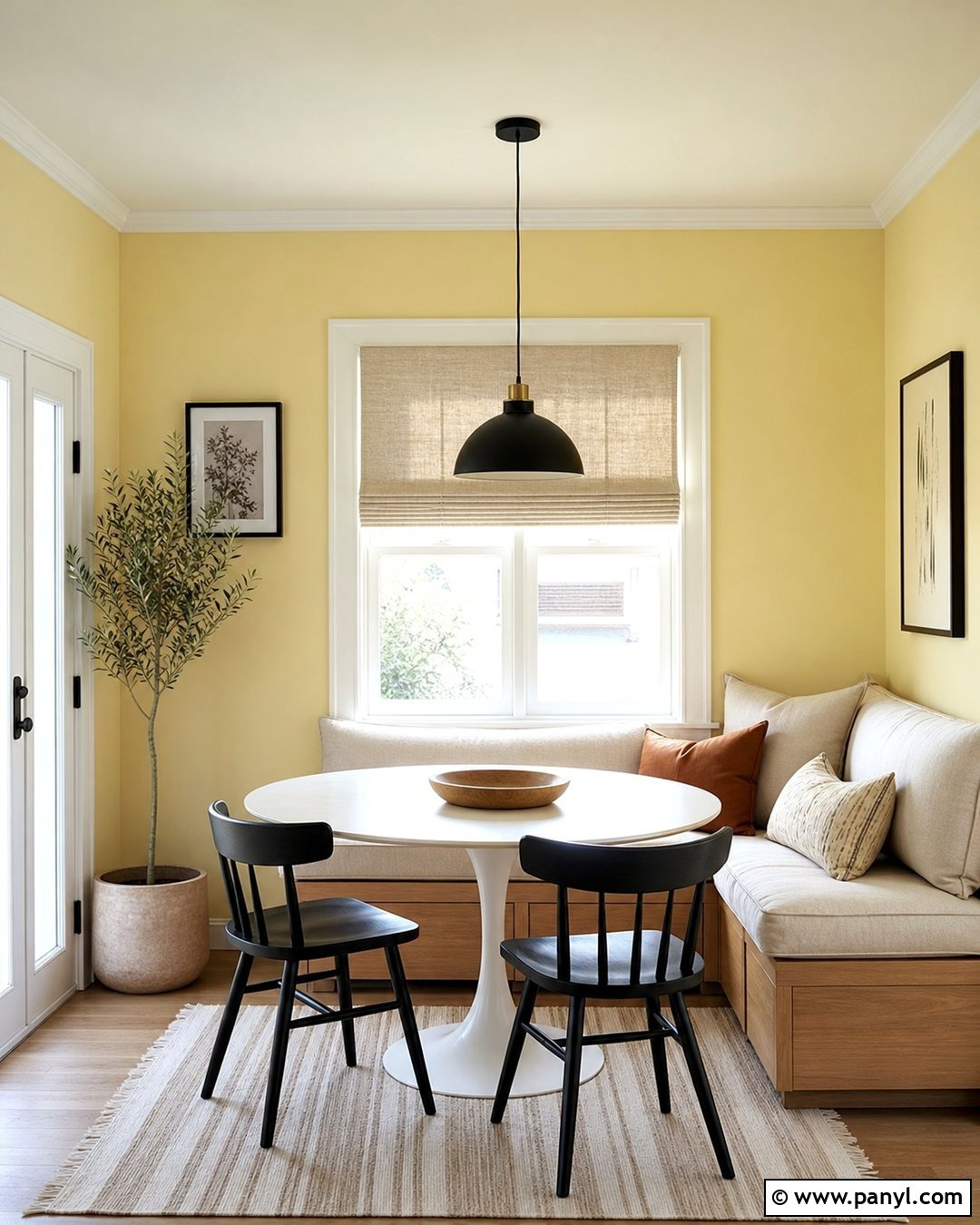
Butter yellow walls can brighten a modern breakfast nook without creating an intense or overly cheerful effect. Choose a soft, creamy yellow with restrained saturation. Pair it with a built-in oak bench, oatmeal cushions, and a small round white pedestal table. Black dining chairs and a simple black pendant will sharpen the pale palette and keep it contemporary. Use warm white trim and a light neutral ceiling so the yellow remains subtle. A roman shade in natural linen can soften the window, while a striped rug in cream and muted brown adds comfortable texture. Decorate with one framed print and a small ceramic planter rather than numerous accessories. This complete design feels sunny and welcoming even on cloudy mornings, yet remains coordinated with adjacent neutral kitchens and open living spaces.
Conclusion:
The best modern paint palette combines visual interest with colors that remain comfortable to live with every day. Warm whites, greige, khaki, and taupe create flexible foundations, while sage, blue-green, terracotta, burgundy, and lavender add more distinct personality. Before painting an entire room, compare large samples beside permanent materials such as flooring, counters, cabinets, and stone. Check each color in morning light, afternoon sun, and evening illumination. Once selected, repeat related tones through furniture, textiles, metal finishes, and artwork to create a complete design. These **20 Modern House Wall Colors** can help every room feel connected, contemporary, and thoughtfully planned instead of decorated around one isolated paint shade.

Related Ideas and Inspiration:

Leave a Reply