
Beige wall colors are back in a warmer, more layered form. Today’s best beiges move beyond flat builder neutrals, offering subtle gray, green, pink, gold, and brown undertones that respond beautifully to natural light. Current color trends also favor earthy neutrals paired with wood, stone, warm white, olive, charcoal, and muted terracotta. () The right shade can make a bright room feel grounded, warm up a north-facing space, or create a calm backdrop for colorful furniture. Before painting, test a large sample on several walls and check it during the morning, afternoon, and evening. The complete room schemes below make it easier to coordinate furniture, flooring, trim, lighting, and decor with 20 beige wall colors.

1. Warm Beige Living Room
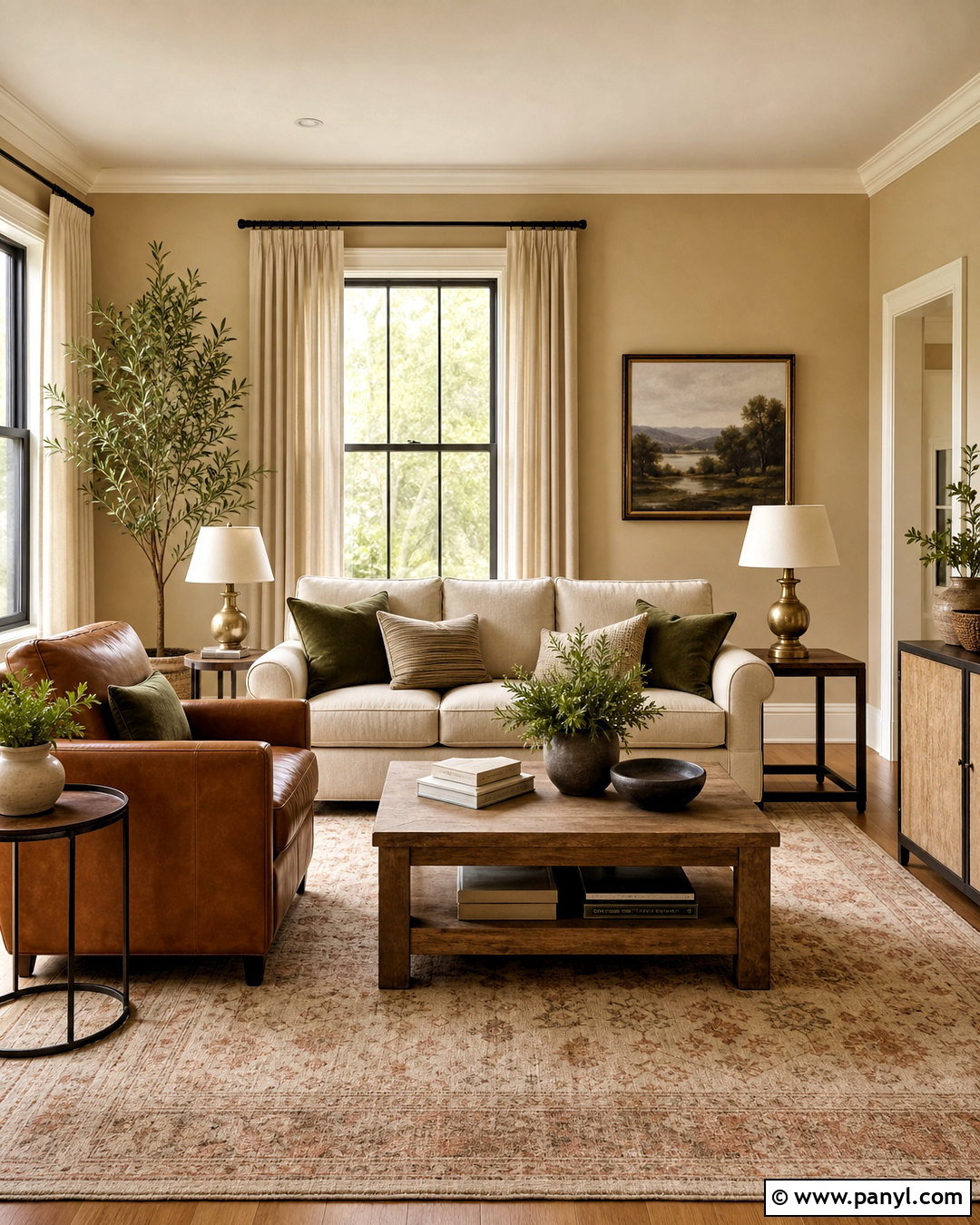
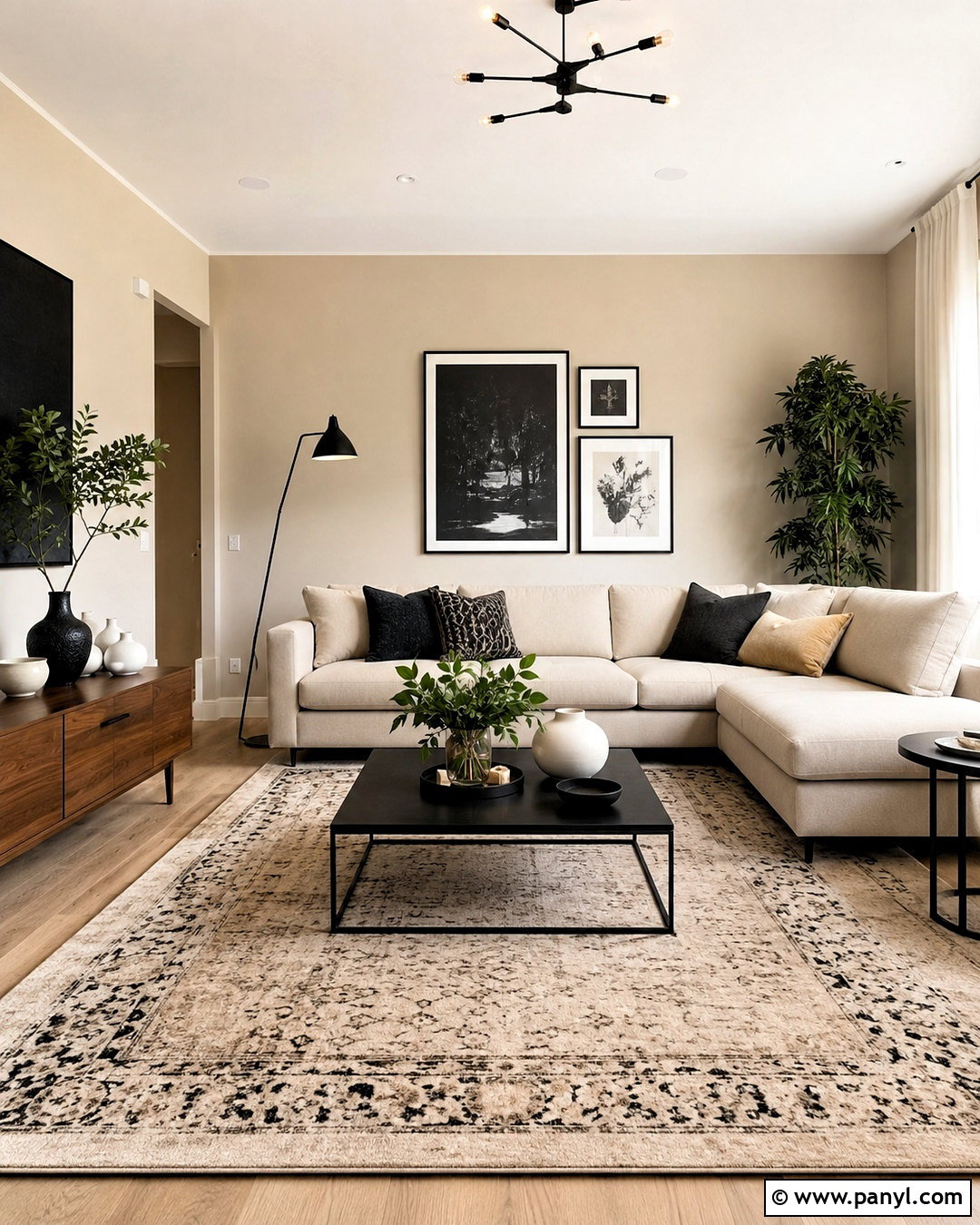
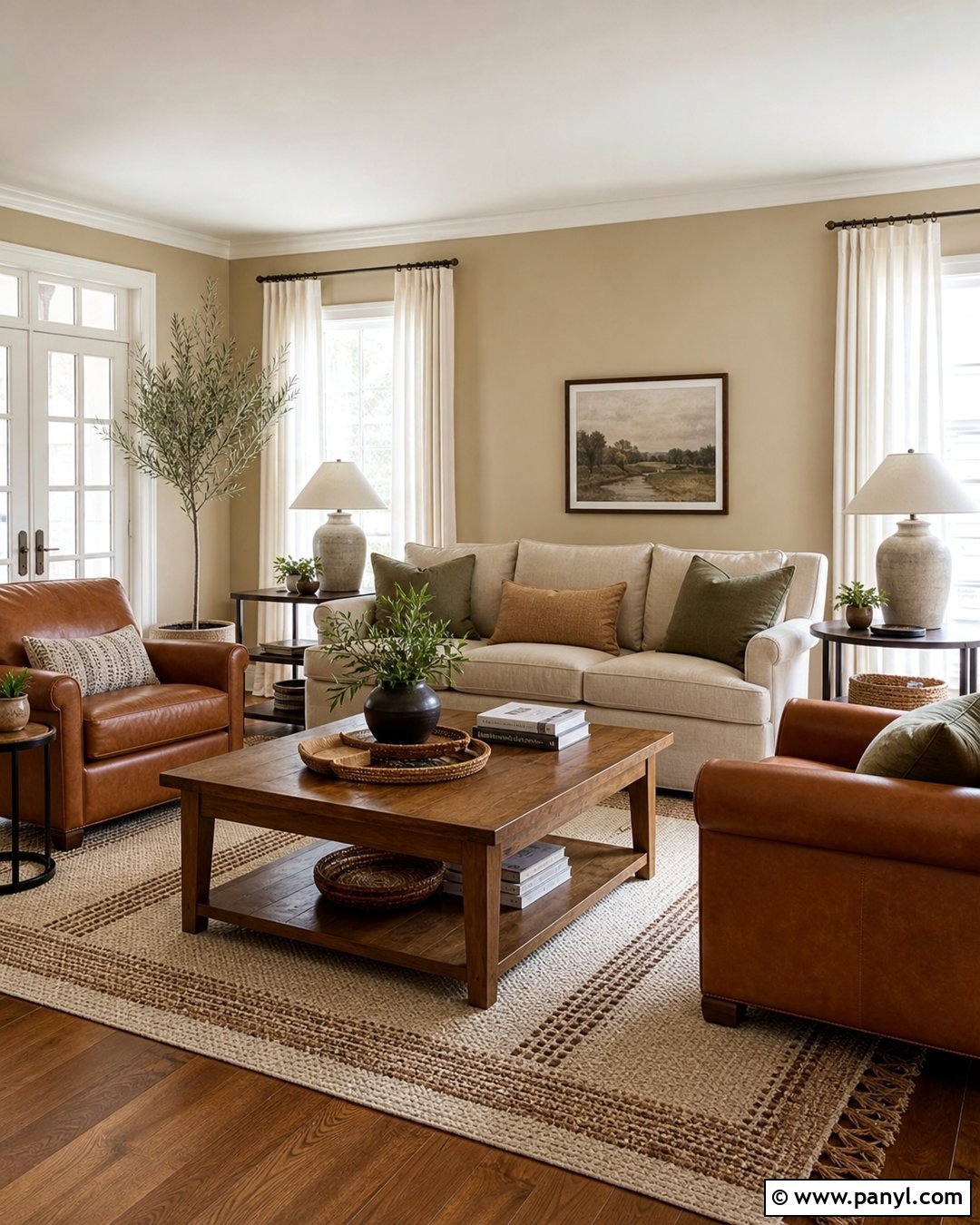
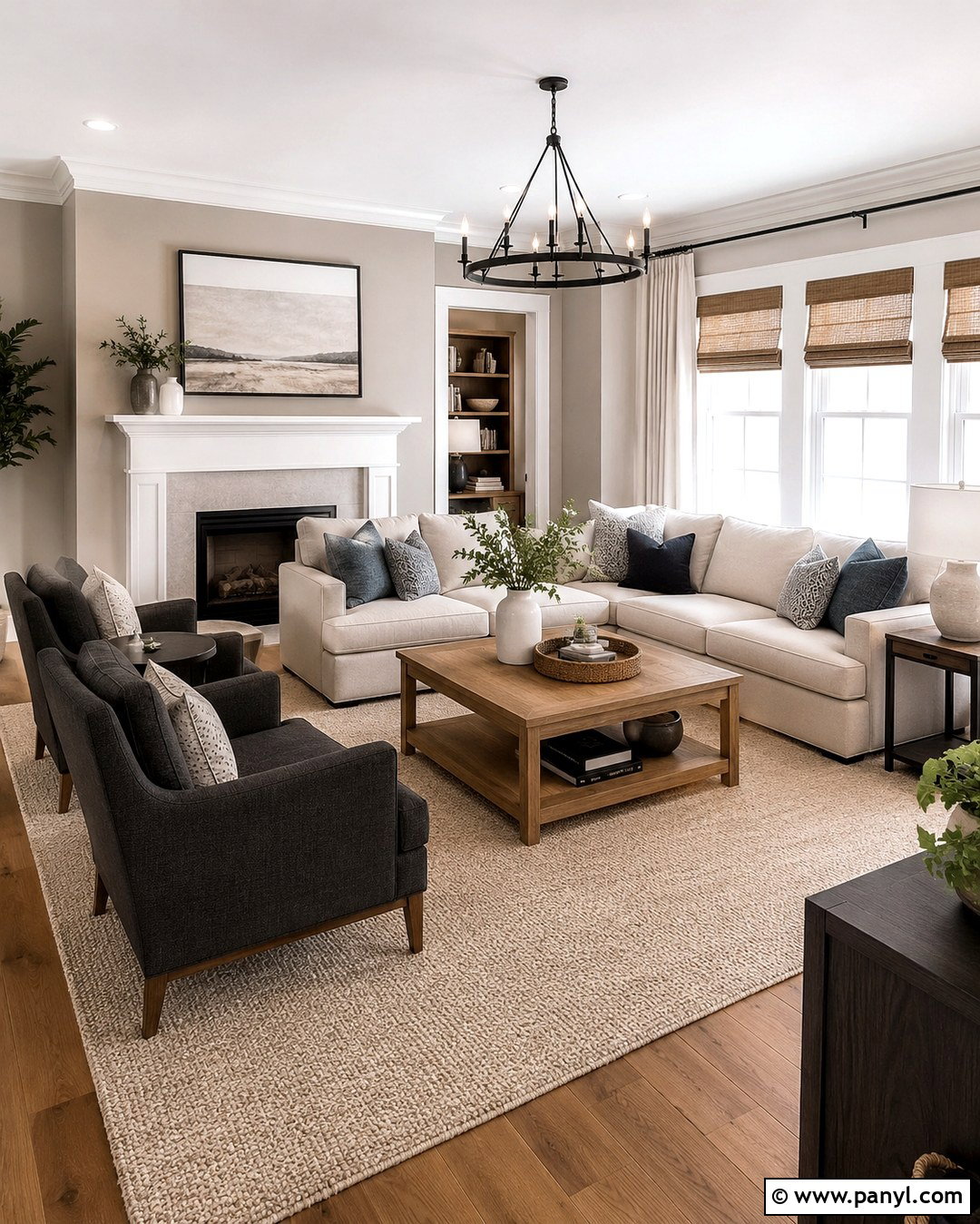
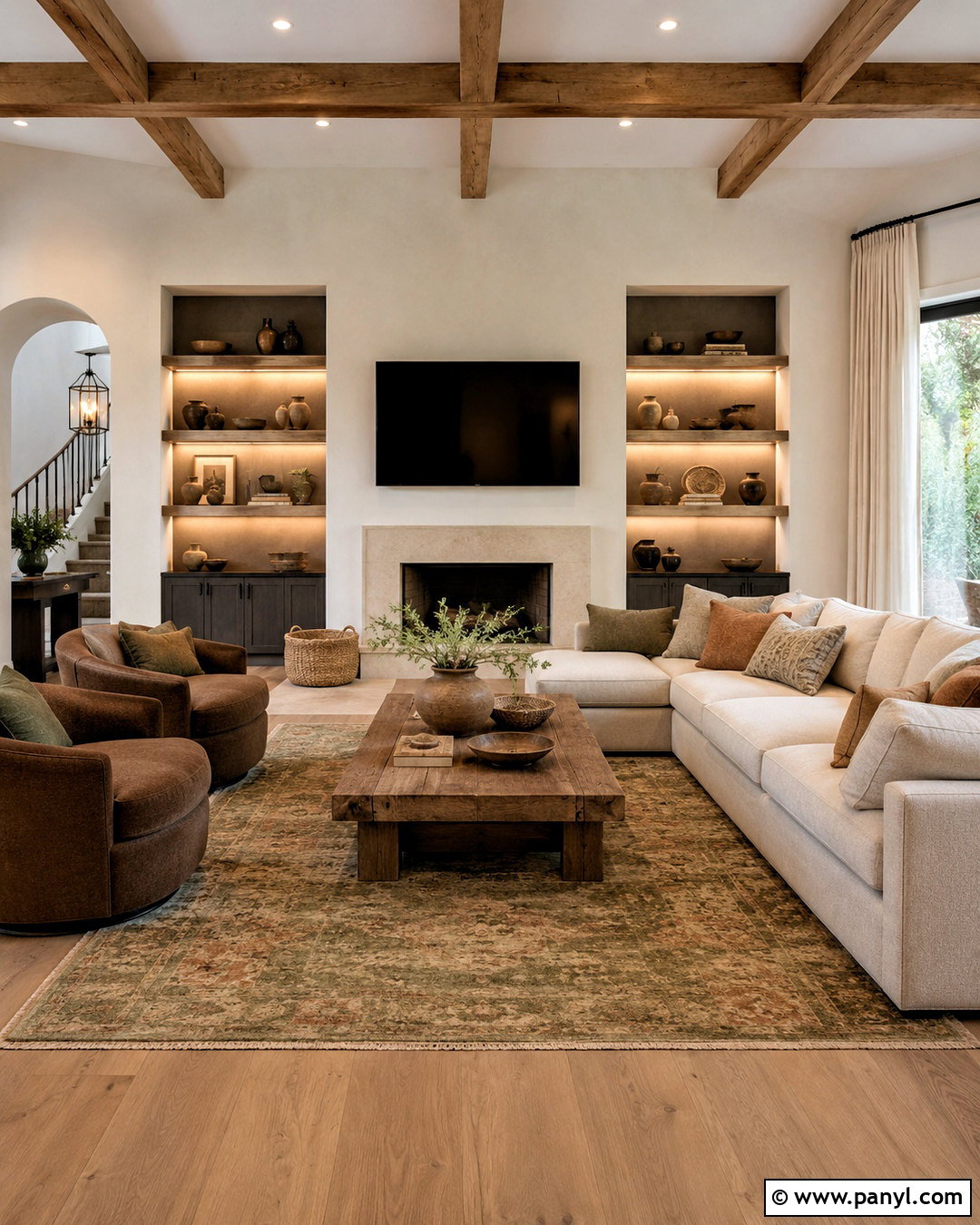
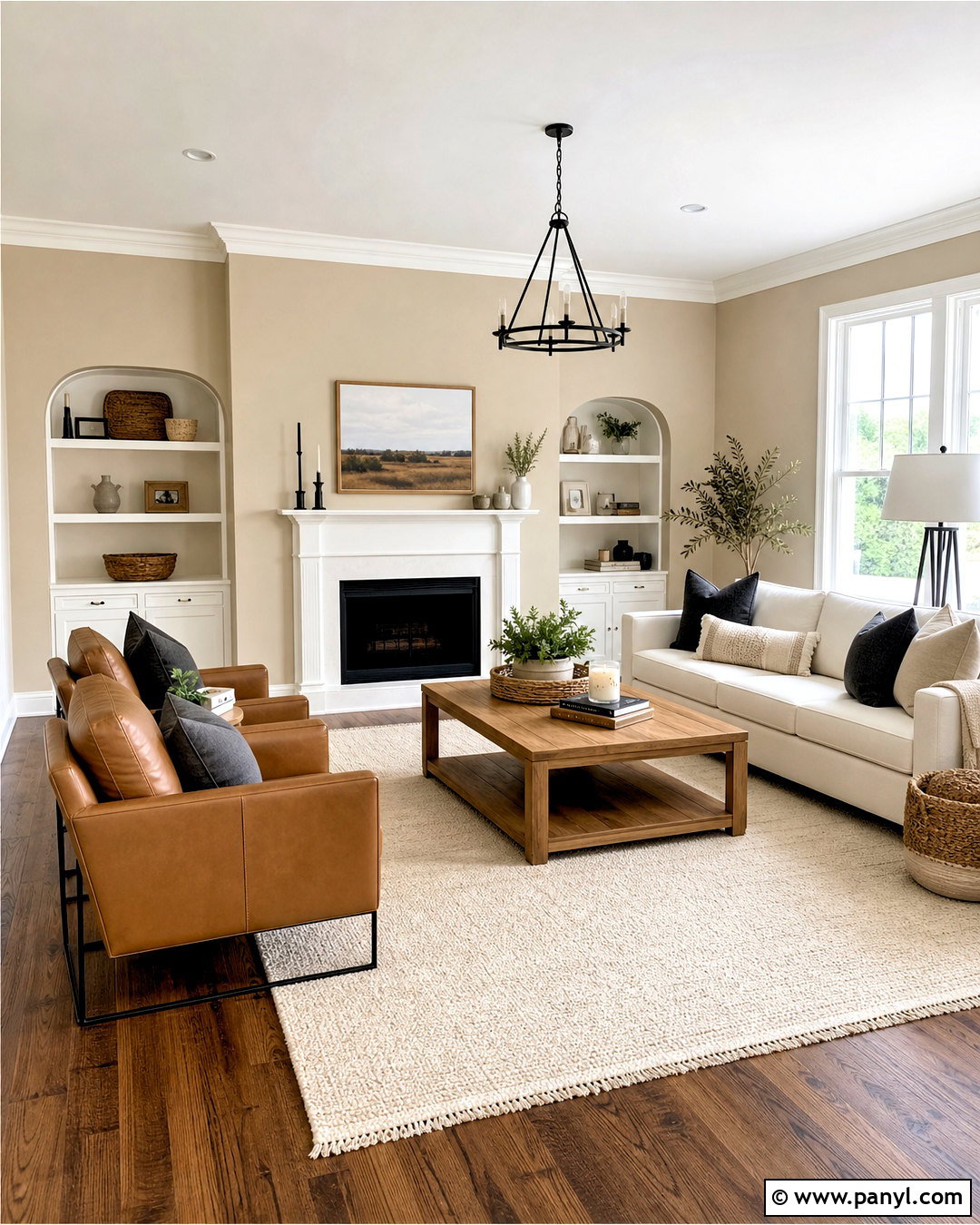
Warm beige walls create an inviting living room when they are balanced with fresh trim and natural texture. Choose a mid-light beige with soft golden undertones, then add warm white trim to keep the room crisp. A cream sofa, cognac leather chair, and medium-toned oak coffee table reinforce the comfortable palette without making everything match. Ground the seating area with an ivory and rust patterned rug. Olive pillows, charcoal picture frames, and aged brass lamps provide controlled contrast. Linen curtains should closely match the wall color so the windows feel taller and wider. Finish with a leafy plant, handmade pottery, and one large landscape print. This complete look works especially well in traditional, transitional, and relaxed modern homes.
2. Light Beige Bedroom
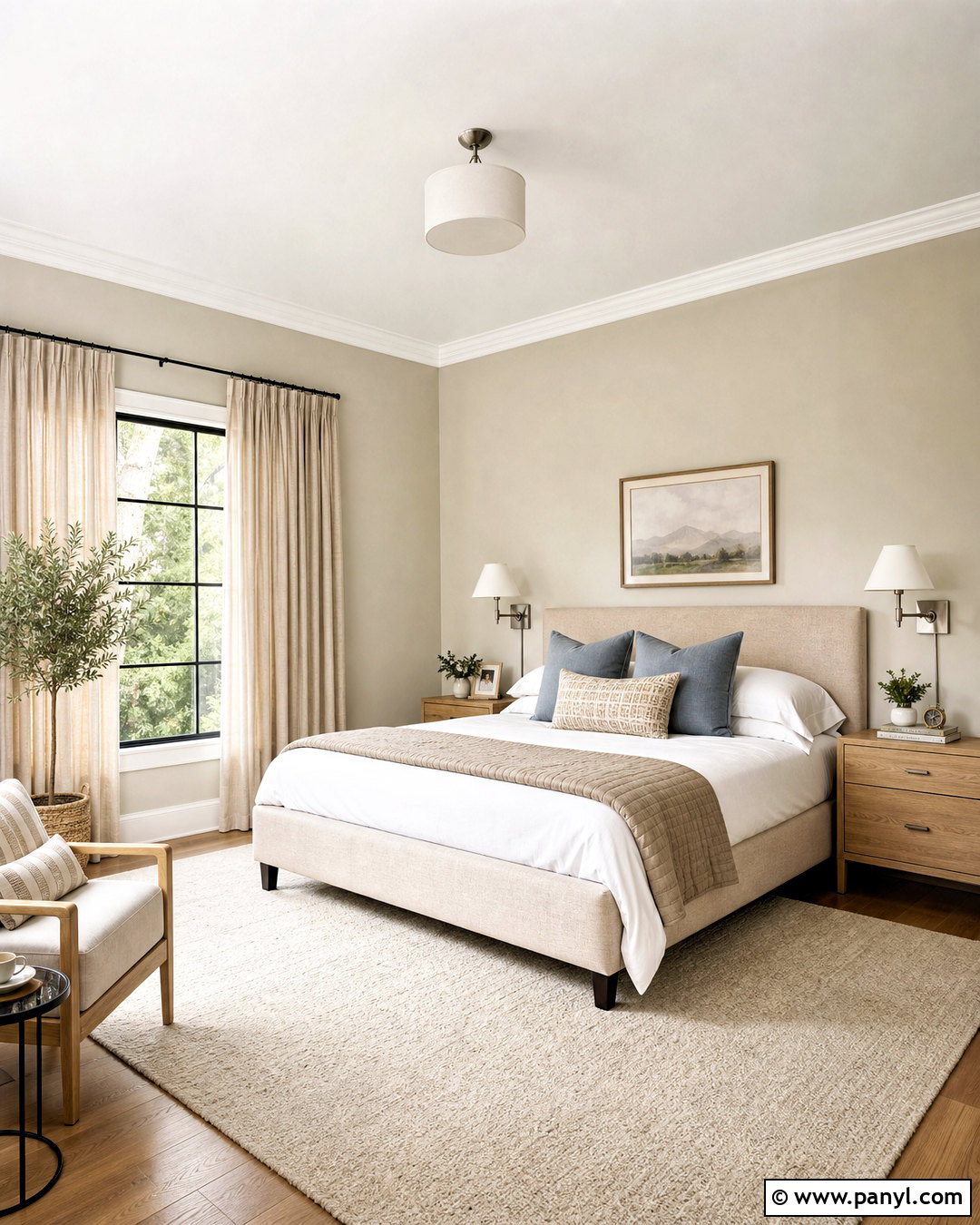
Soft light beige gives a bedroom more warmth than white while maintaining an open, restful appearance. Use a pale beige with a balanced cream-gray base across every wall, paired with warm white ceilings and simple trim. Center an upholstered oatmeal bed against the main wall and layer it with white sheets, a taupe quilt, and muted blue pillows. Light oak nightstands add natural definition without feeling heavy. Choose brushed nickel sconces for a subtle cooler note that keeps the palette from becoming overly yellow. A low-pile ivory rug softens the flooring, while flax linen curtains filter strong daylight. Complete the room with minimal black-framed artwork, a ceramic vase, and one comfortable reading chair in dusty blue fabric.
3. Greige Beige Open Floor Plan
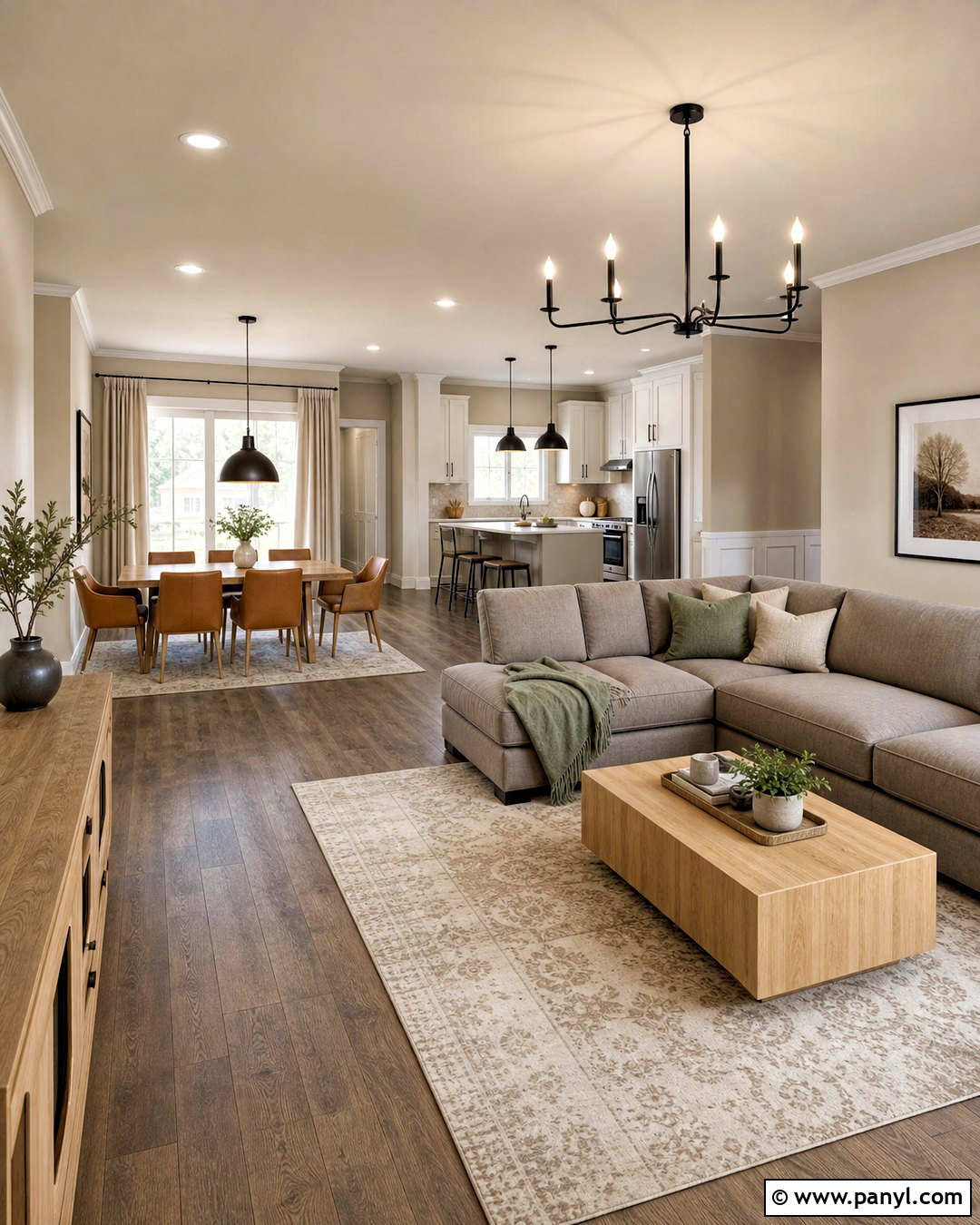
A beige with noticeable gray undertones can unify an open floor plan without looking cold. Carry the greige beige wall color through the living room, dining area, and connecting hallway to reduce visual breaks. Use soft white trim rather than stark blue-white, which may exaggerate the gray undertone. In the living area, combine a warm gray sectional with white oak tables and camel-colored pillows. Repeat camel leather on the dining chairs to connect both zones. Matte black lighting and window frames add definition, while sage green textiles introduce a natural accent. Keep larger rugs creamy and lightly patterned. This coordinated material palette allows the open space to feel consistent while each functional area remains easy to recognize.
4. Creamy Beige Kitchen
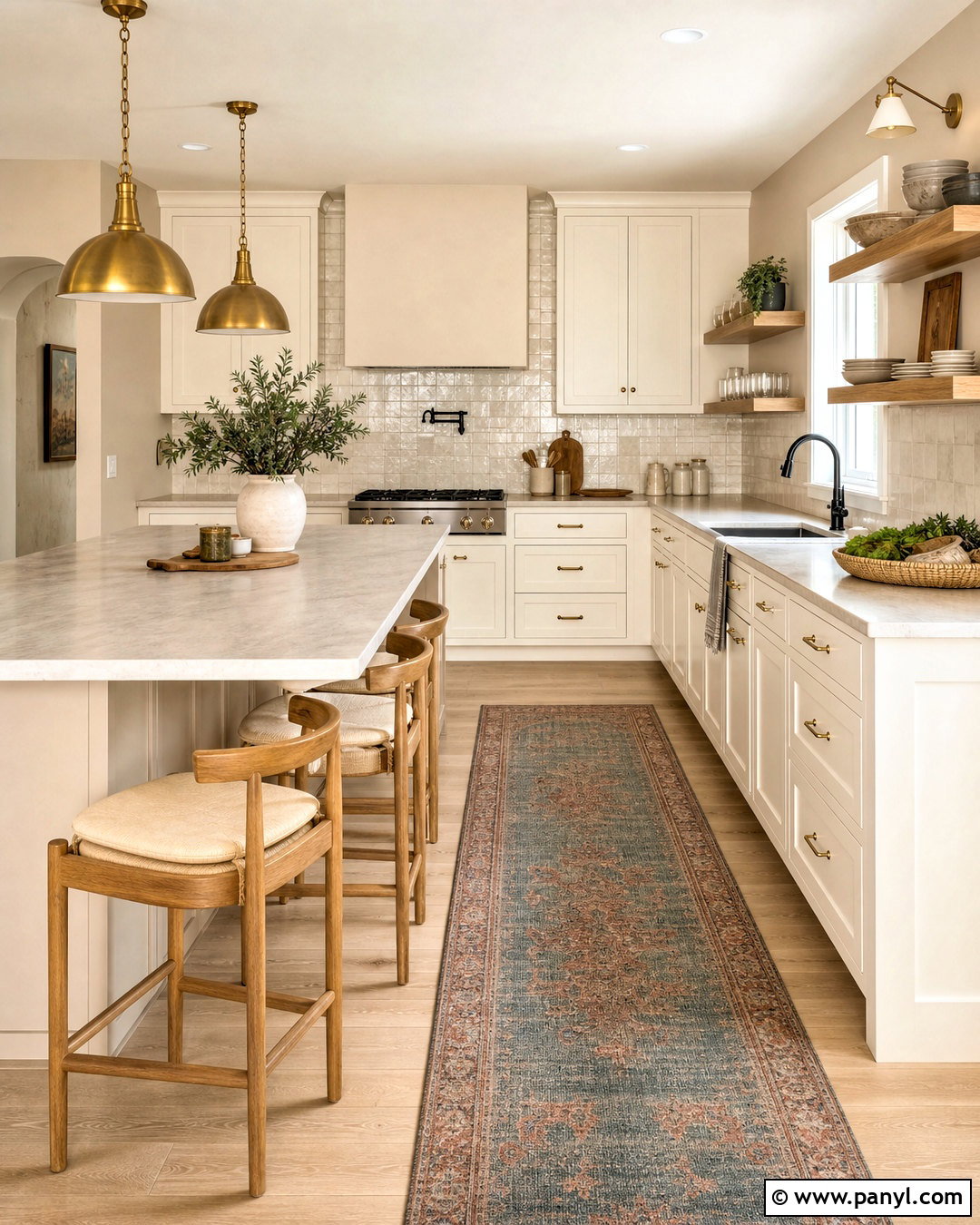
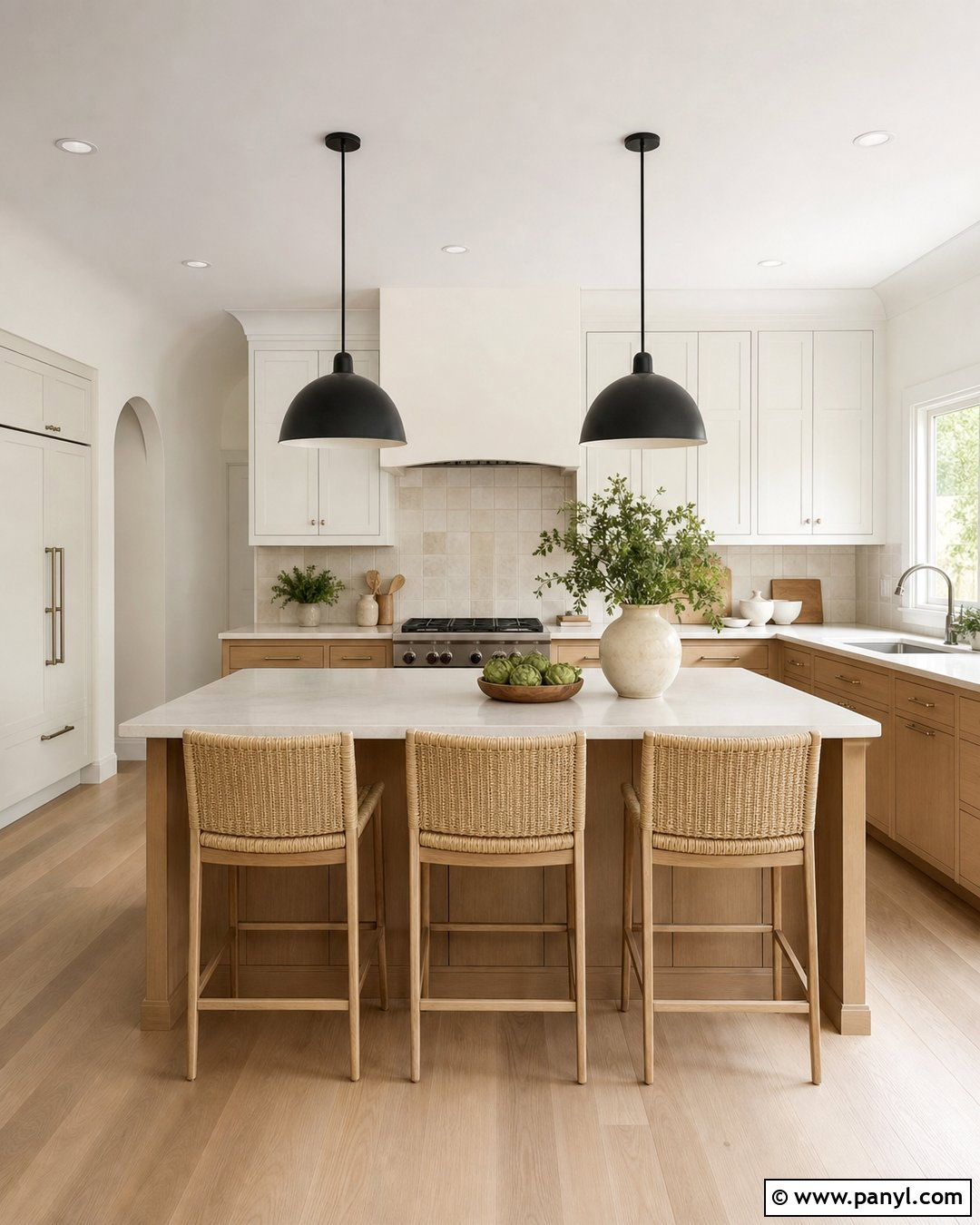
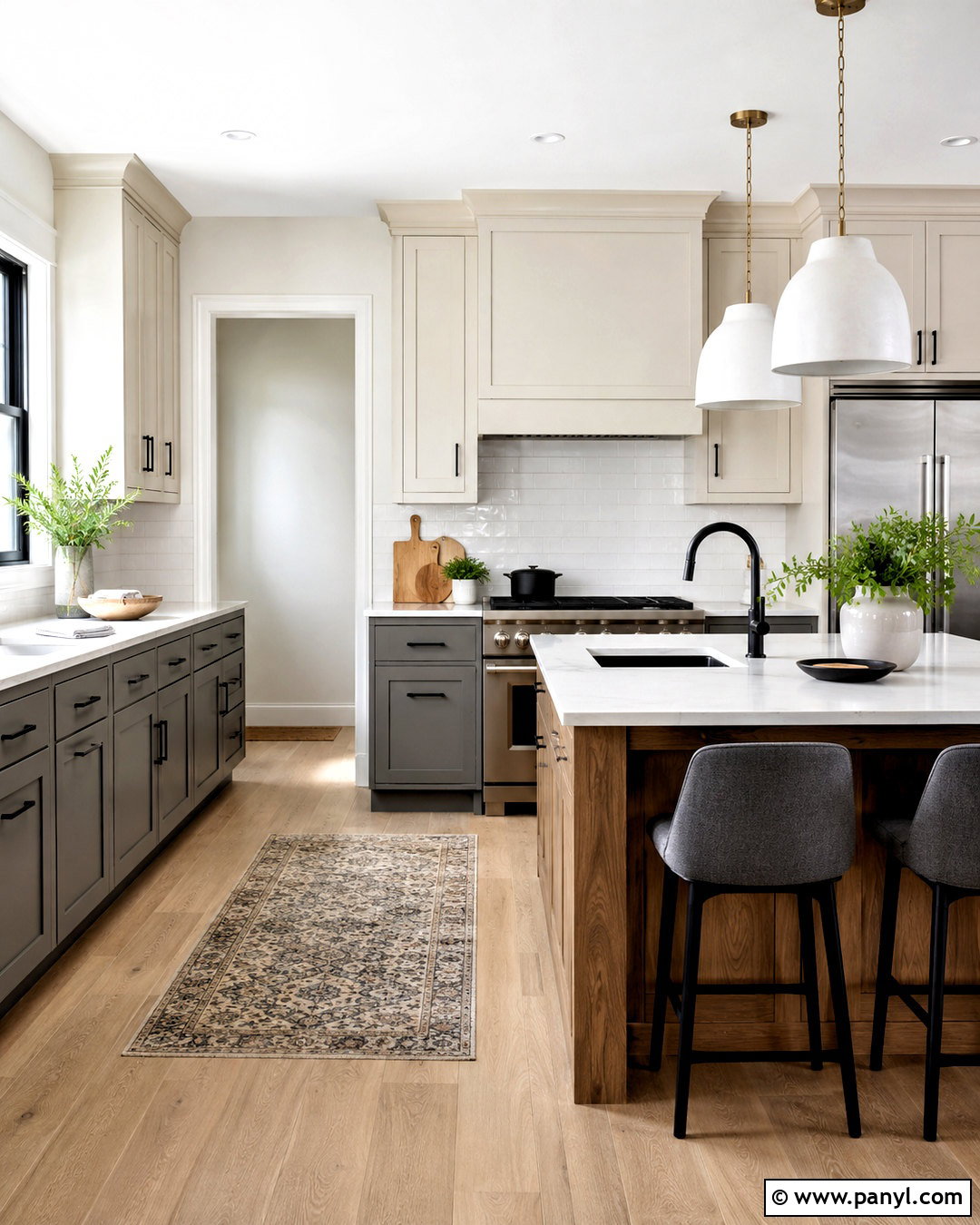
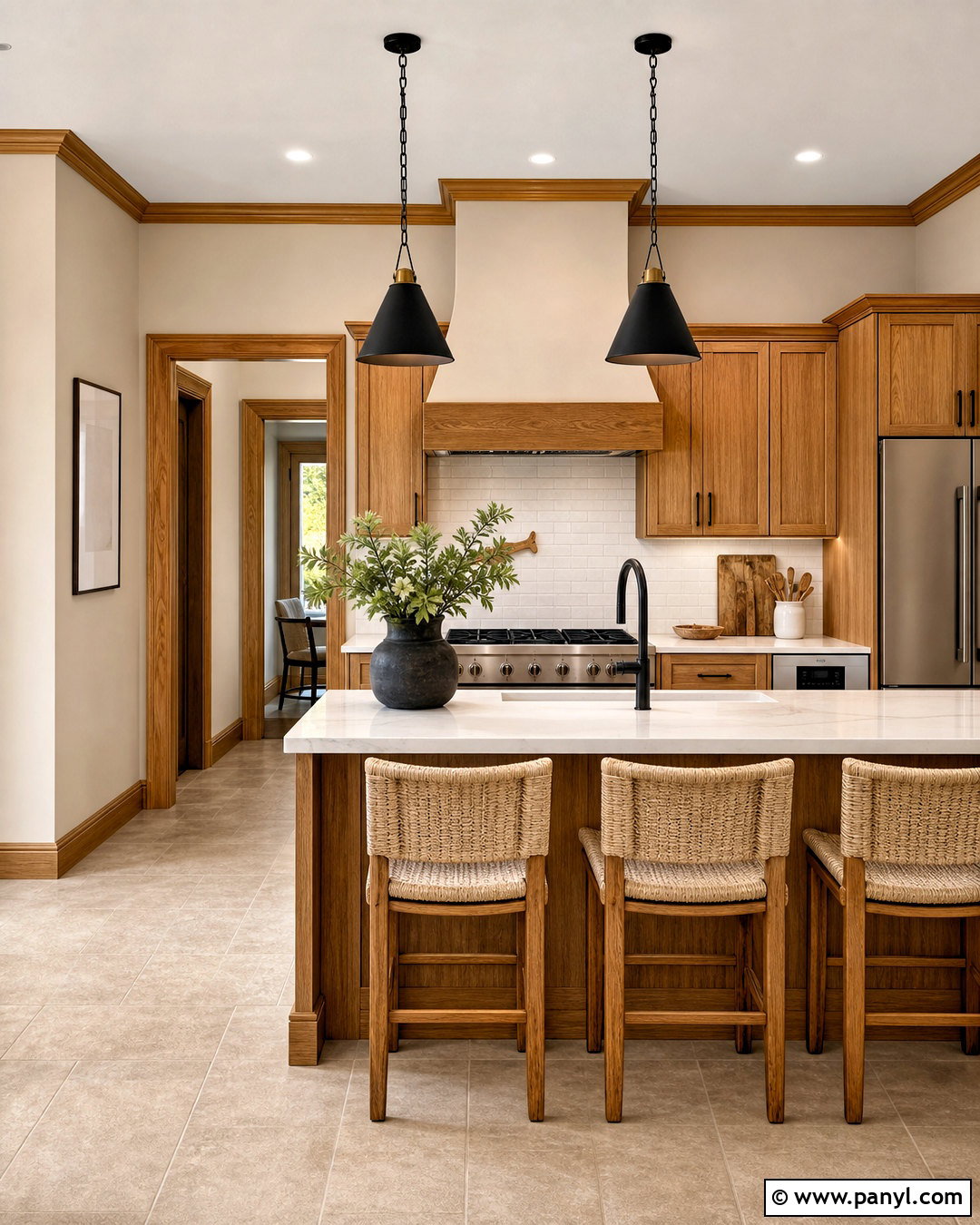
Creamy beige walls soften a kitchen filled with hard surfaces and straight architectural lines. Select a pale beige with a gentle buttery undertone, but avoid anything that appears distinctly yellow beside the cabinetry. Pair it with warm white cabinets, lightly veined quartz countertops, and a handmade ivory tile backsplash. White oak stools and floating shelves add depth while preserving the airy atmosphere. Use brushed brass cabinet hardware and pendants for a quiet glow, then introduce contrast through a dark bronze faucet and range hood accents. A washable runner with faded blue and rust details provides color at floor level. Finish the room with simple stoneware, wood cutting boards, and small herb pots instead of excessive countertop accessories.
5. Sandy Beige Dining Room
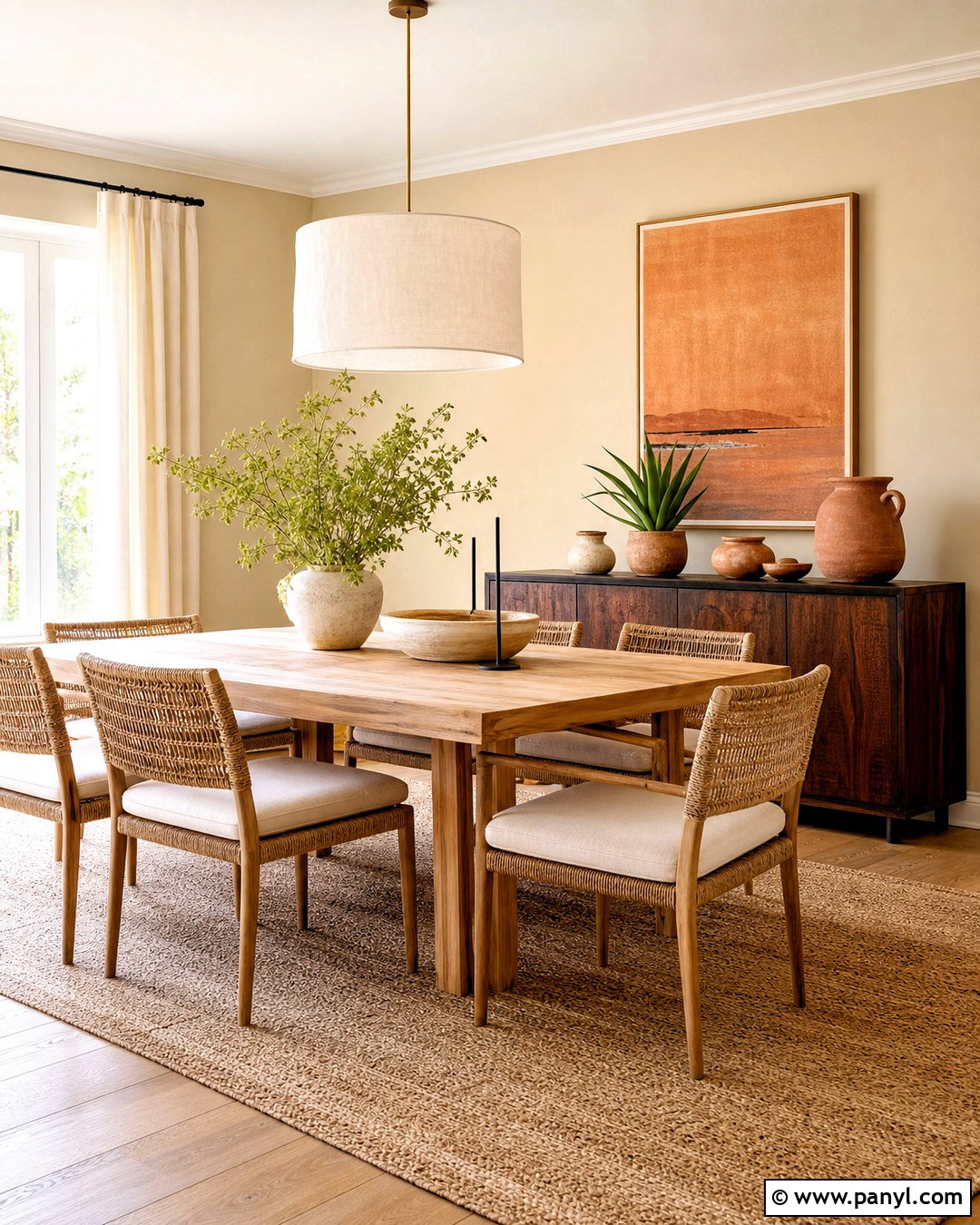
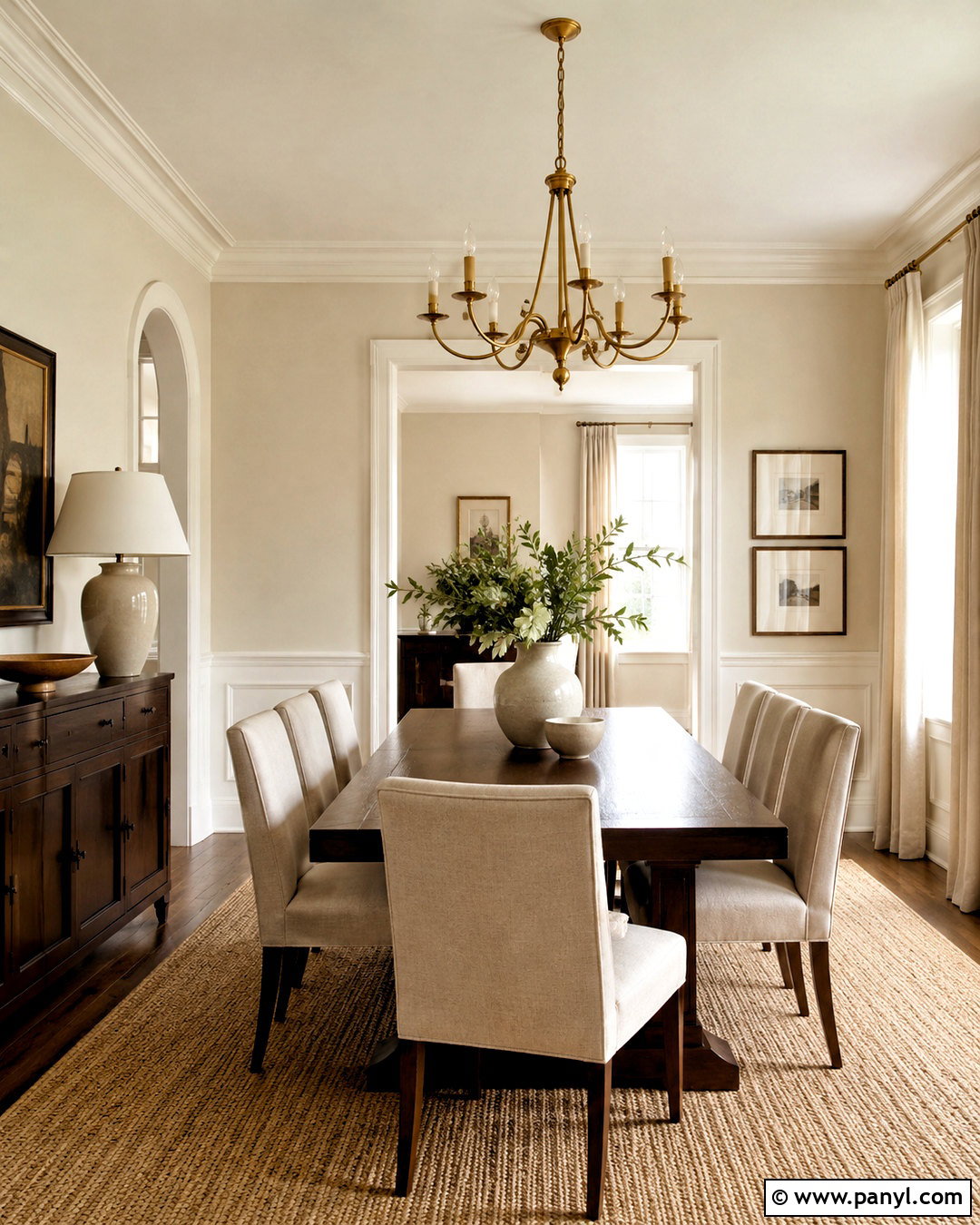
Sandy beige walls can make a dining room feel relaxed, sun-washed, and connected to nature. Choose a medium-light shade combining tan, cream, and a small amount of gray. Pair it with a substantial natural oak table and woven dining chairs featuring cream seat cushions. An oversized linen pendant establishes a focal point without overwhelming the quiet palette. Use off-white curtains, a flat-weave jute rug, and textured ceramic tableware to develop subtle layers. Muted terracotta artwork gives the room warmth, while a dark wood sideboard prevents the lighter materials from floating together. Add one large branch arrangement and a pair of sculptural lamps. The result feels casual enough for everyday meals but polished enough for special gatherings.
6. Taupe Beige Home Office
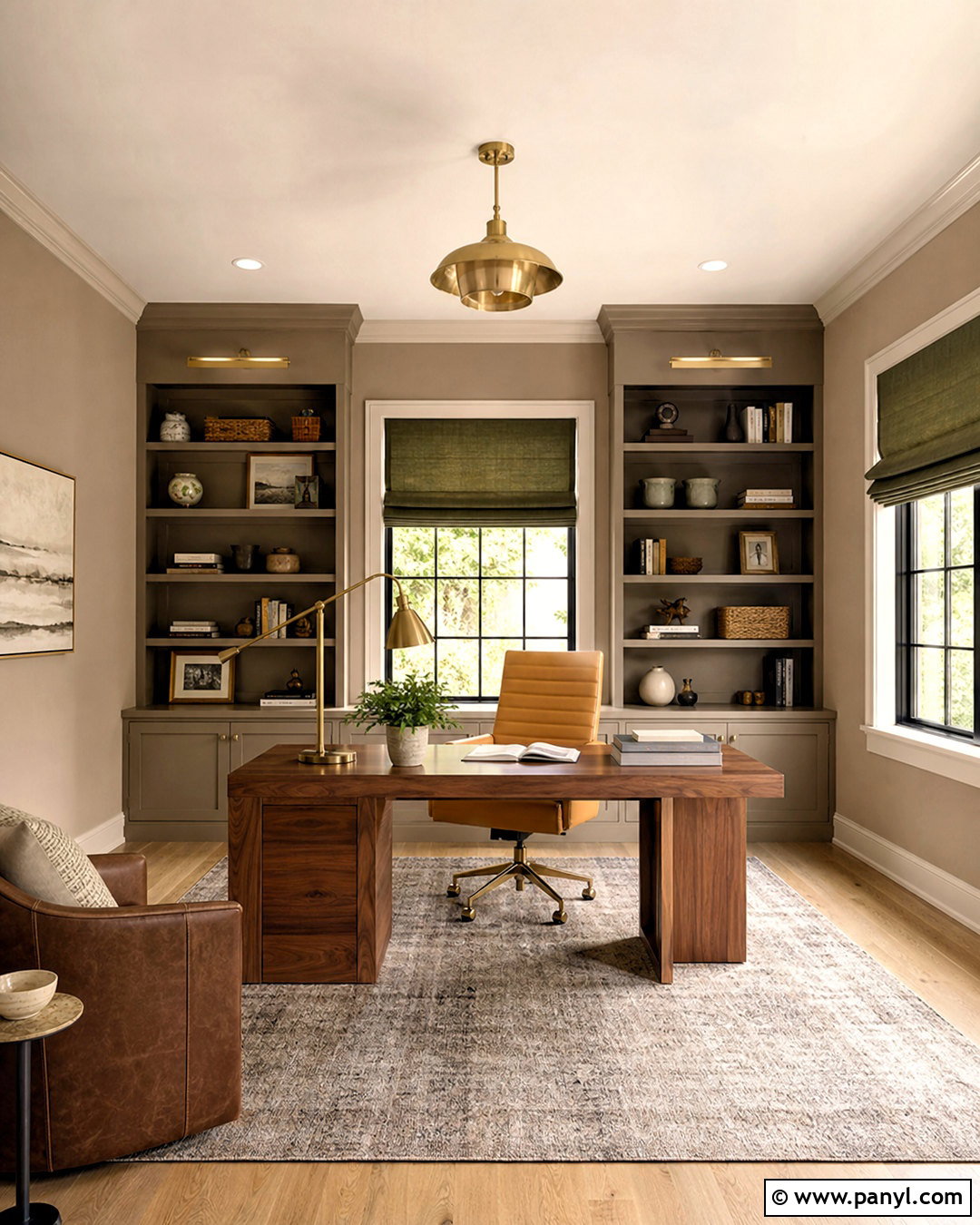
For a focused but comfortable workspace, choose a taupe beige that combines warm brown with a restrained gray undertone. Paint all four walls for visual continuity, then use creamy white on the ceiling and trim. Position a walnut desk where natural light reaches the work surface without creating screen glare. Add a supportive chair in camel leather and a low wool rug in oatmeal and charcoal. Built-in shelving painted in a slightly deeper taupe creates depth while keeping the room coordinated. Brass task lighting and dark bronze hardware add definition. Style the shelves with closed storage boxes, books, pottery, and only a few personal objects. A moss green Roman shade introduces color while maintaining the office’s calm, professional character.
7. Mushroom Beige Bedroom
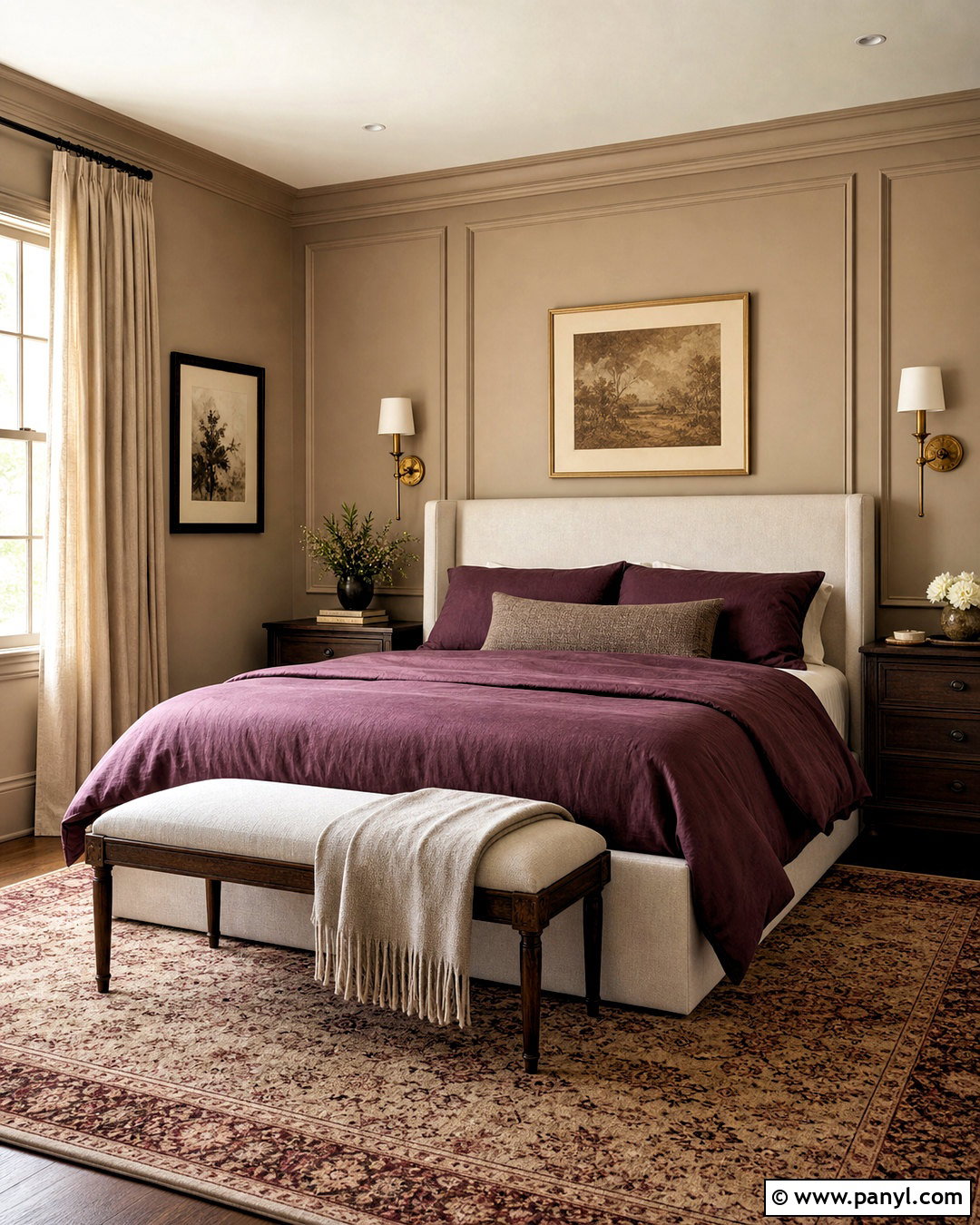
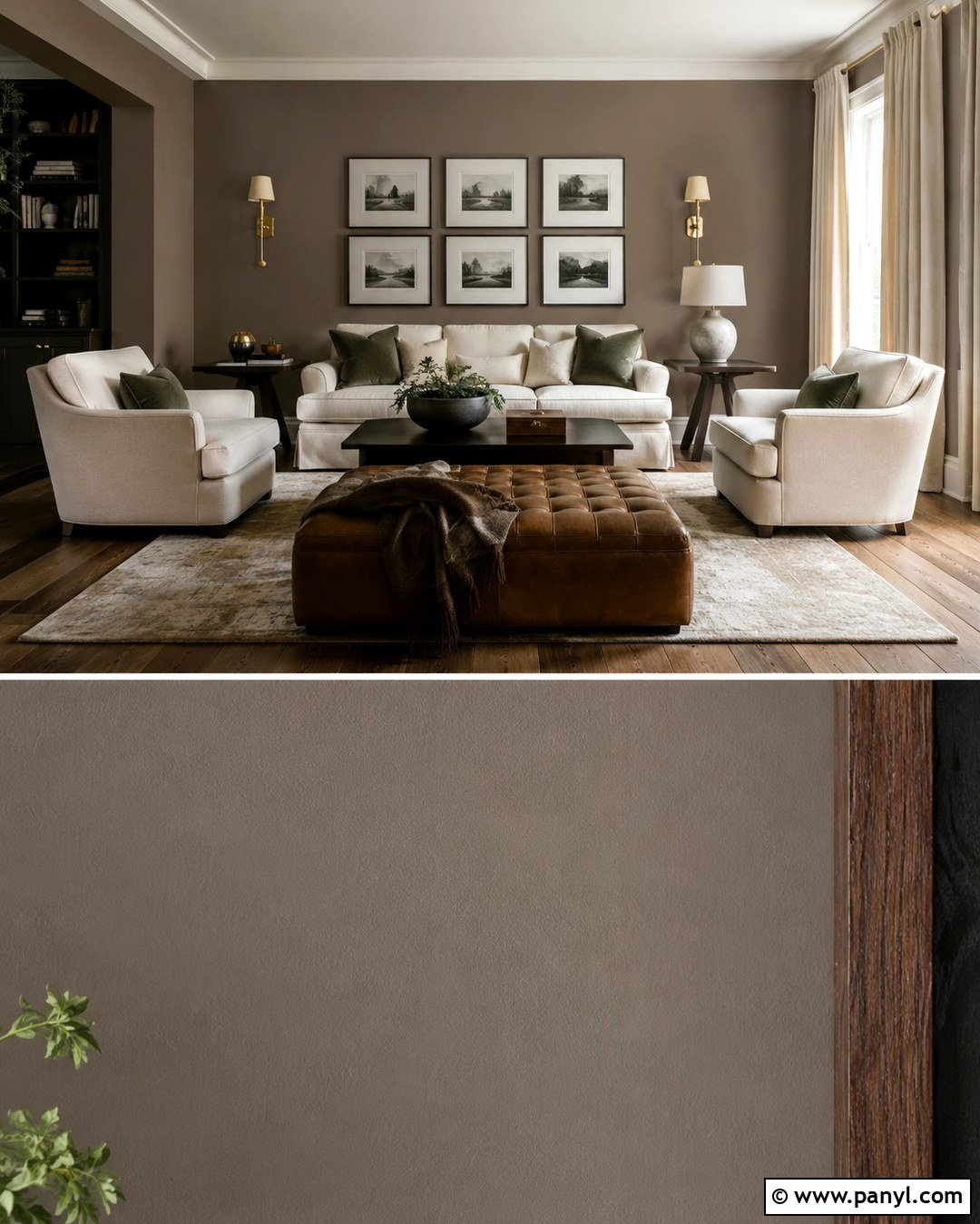
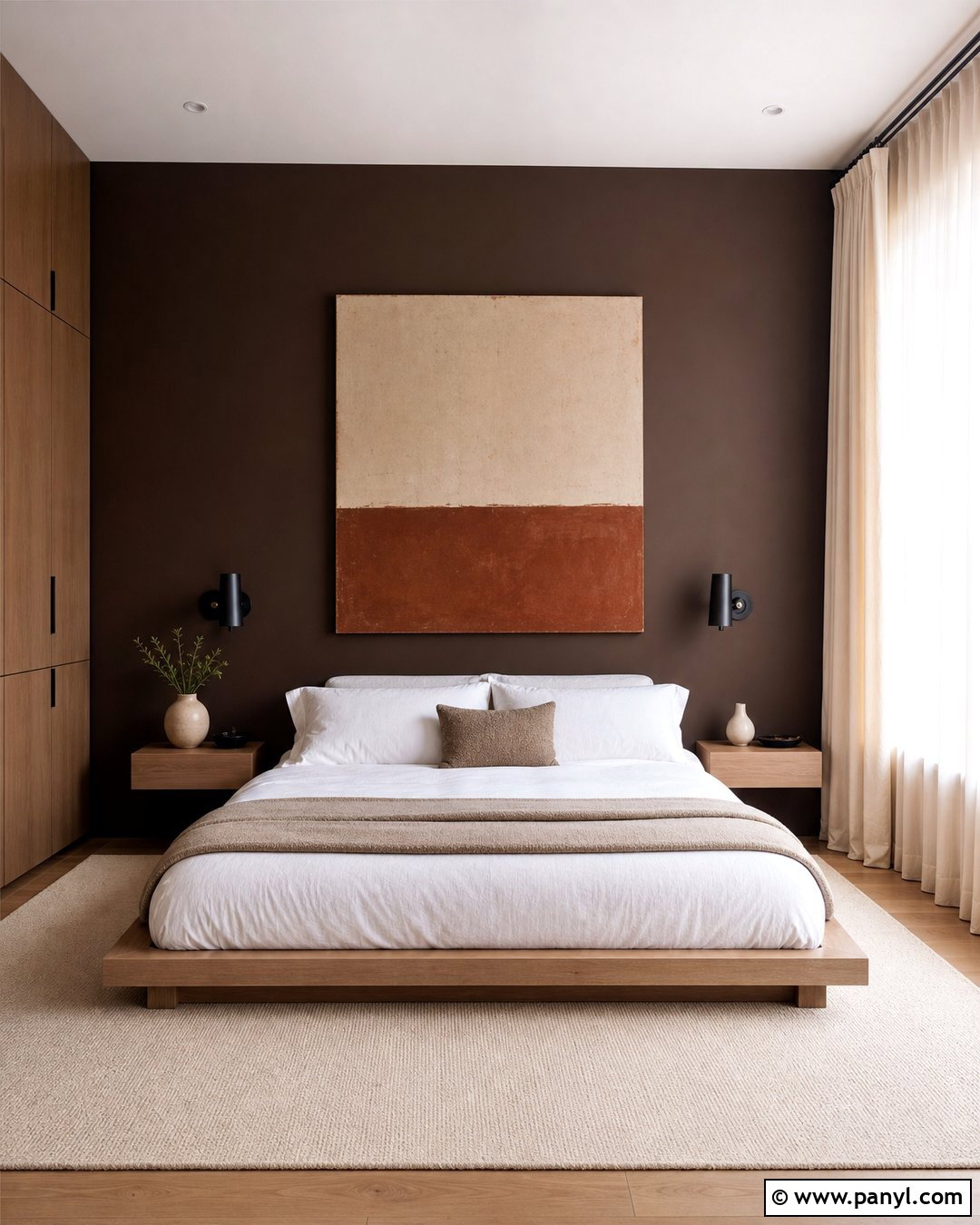
Mushroom beige has a soft brown-gray quality that creates a cocooning bedroom without the heaviness of dark paint. Use it across the walls and continue it onto simple wall molding for a more finished, architectural appearance. Choose an off-white upholstered bed, dark walnut nightstands, and aged brass sconces to build gentle contrast. Bedding in cream, mushroom, and muted plum gives the neutral color scheme greater dimension. Add a vintage-inspired wool rug containing faded beige, brown, and burgundy tones. Full-length natural linen curtains soften the windows and complement the earthy wall color. Keep artwork quiet and tonal, but use dark frames for structure. This palette is particularly effective in bedrooms with moderate or warm natural light.
8. Pink Beige Powder Room
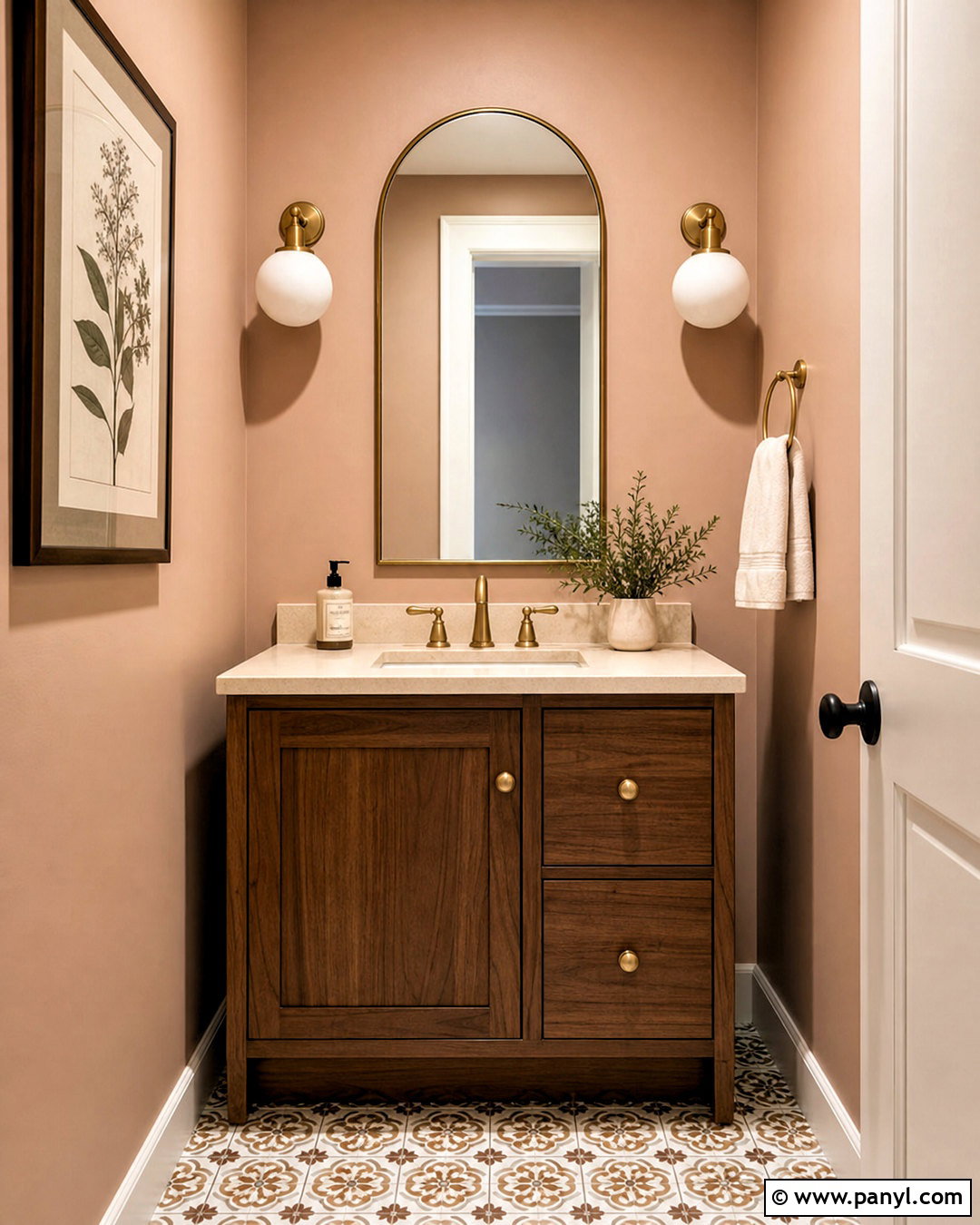
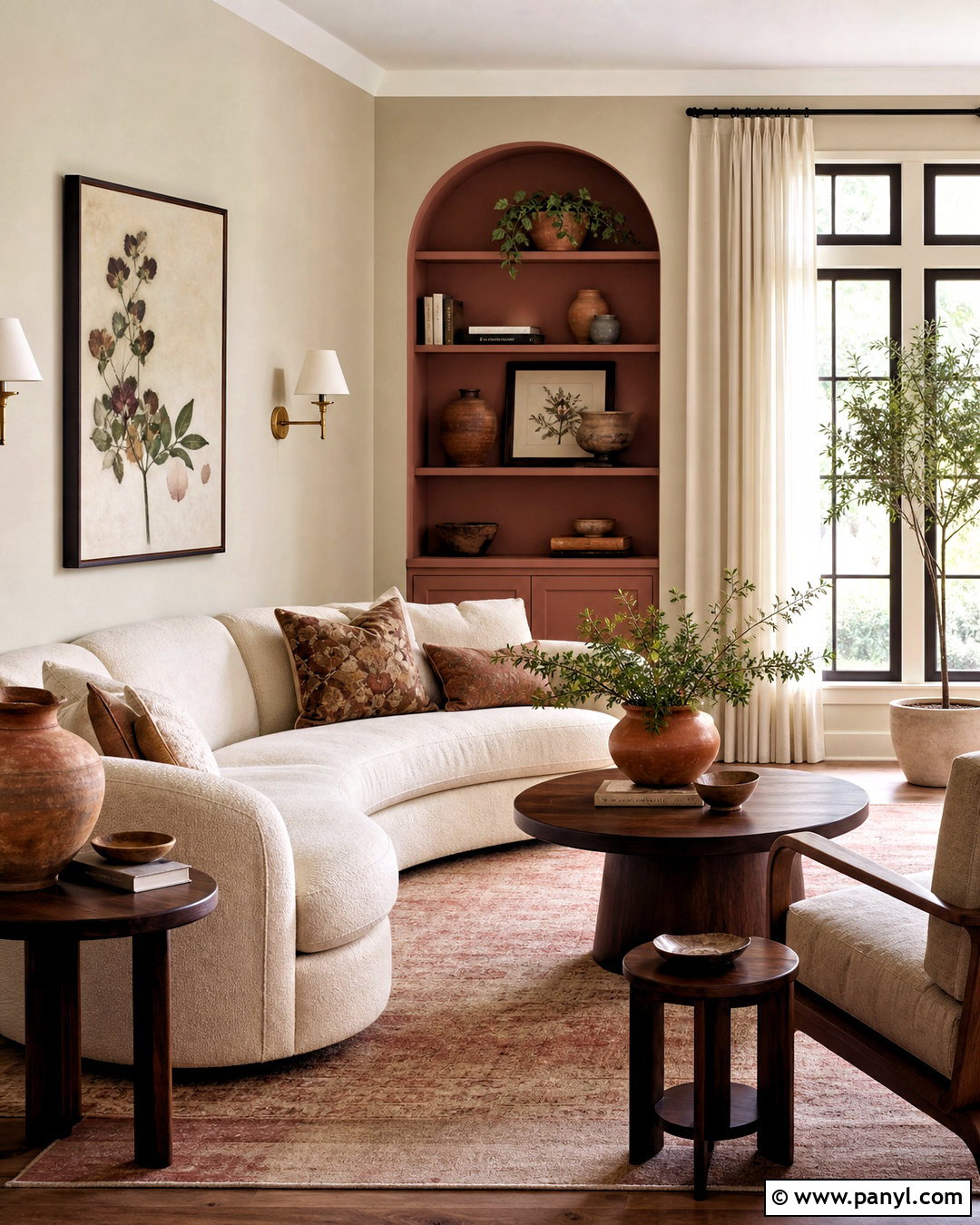
A pink beige wall color can make a small powder room feel flattering, warm, and intentionally decorated. Look for a dusty beige with a subtle blush or clay undertone rather than an obvious pastel pink. Pair it with a compact walnut vanity, creamy stone countertop, and unlacquered brass faucet. An arched mirror adds softness, while ivory wall sconces spread even light around the face. Use warm white for the ceiling and baseboards so the beige remains the defining color. A small patterned floor tile in cream, brown, and muted charcoal brings character to the limited space. Finish with a framed botanical print, woven hand towel, and simple ceramic soap dispenser. The complete room feels expressive without relying on bold color.
9. Yellow Beige North-Facing Room
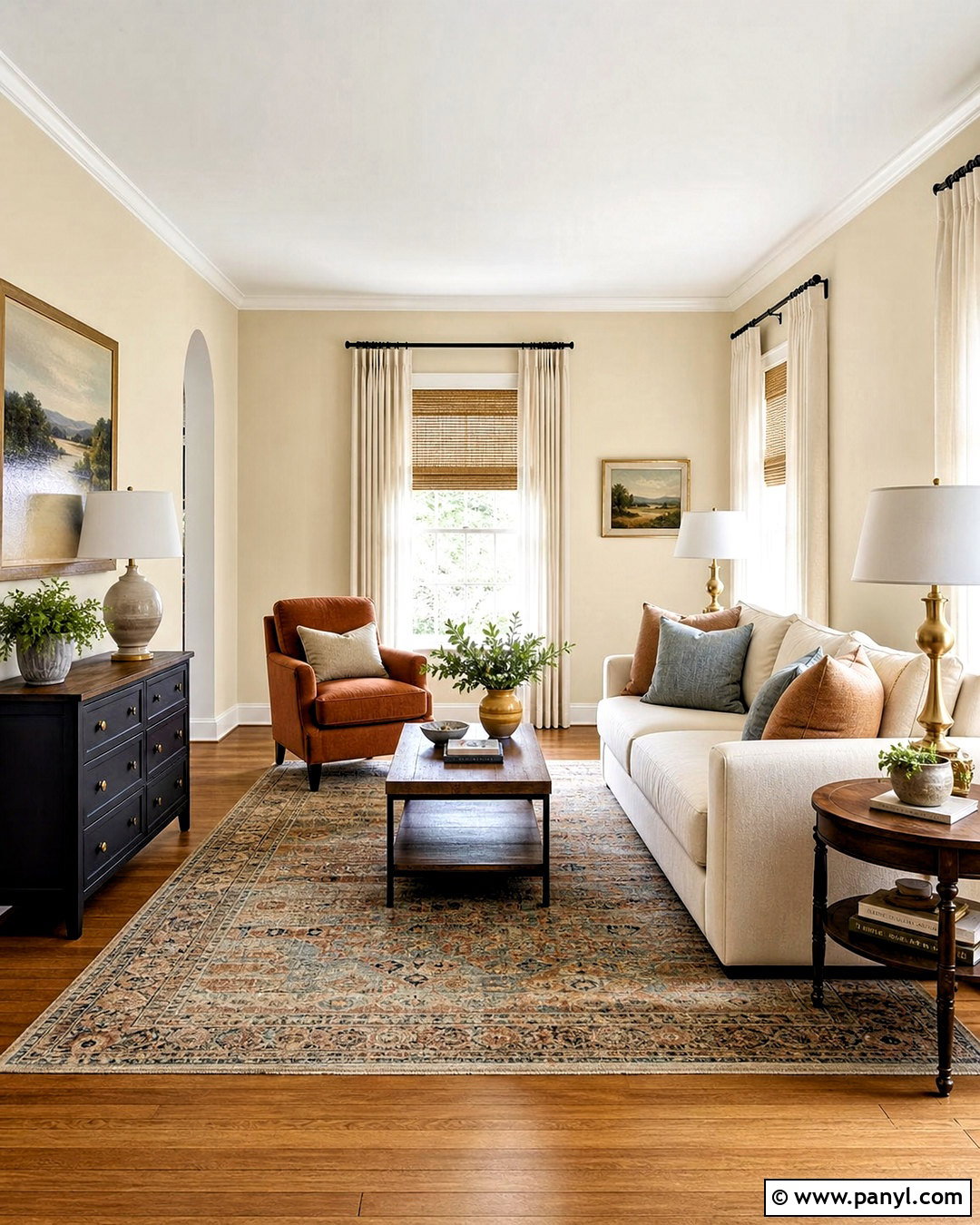
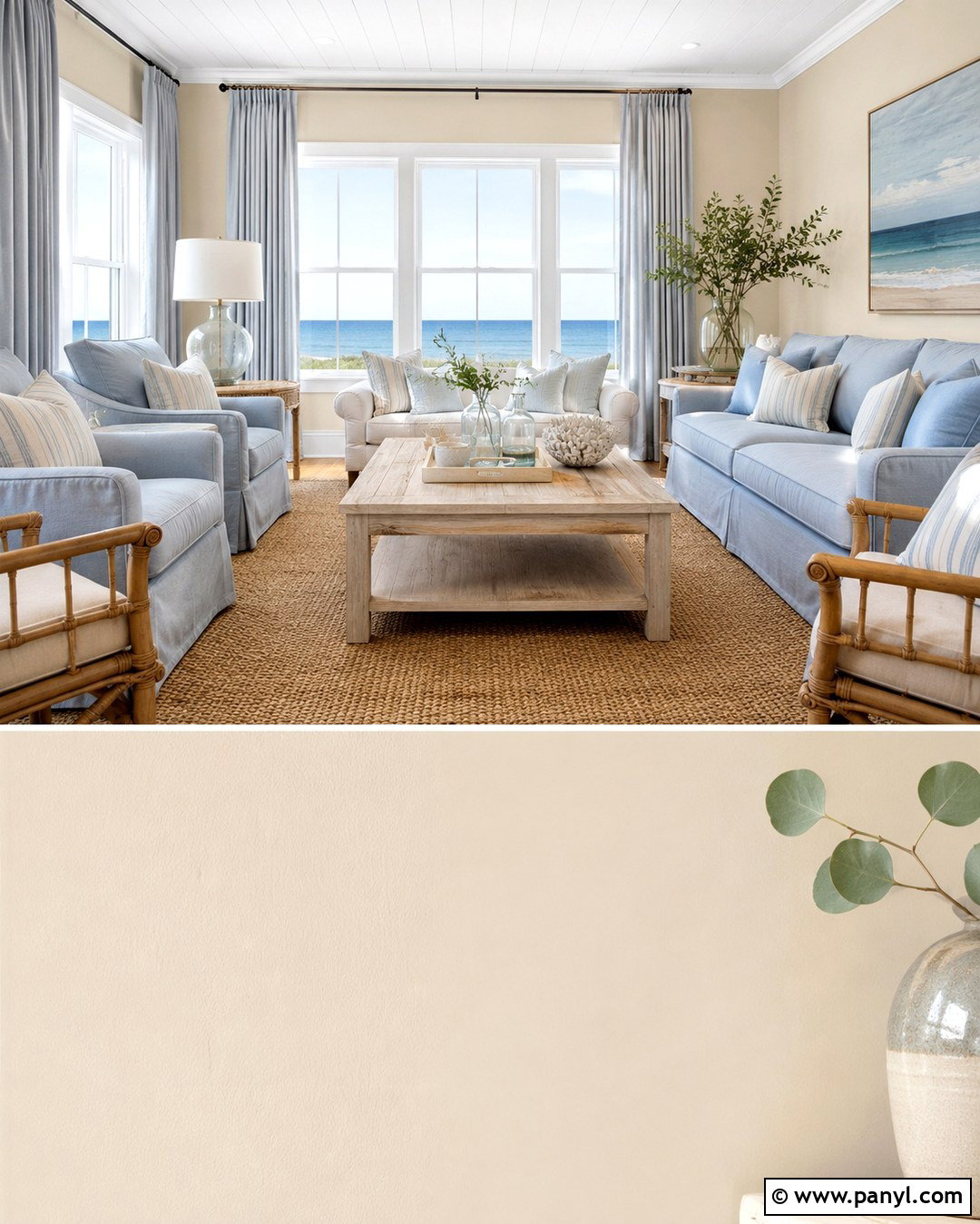
Cool northern light can make neutral walls look gray or flat, so a yellow beige provides welcome warmth. Select a softened wheat shade with enough cream to feel gentle rather than golden. Pair the walls with warm white trim and honey-toned oak flooring. A cream sofa, rust-colored armchair, and patterned rug containing tan and muted blue will create a balanced living room arrangement. Avoid cool gray furniture, which may look disconnected from the wall undertone. Instead, bring in medium brown wood, antique brass, and woven natural fibers. Layer the windows with ivory curtains and bamboo shades for extra warmth and texture. Table lamps with warm white shades help preserve the welcoming effect after daylight fades, especially during darker seasons.
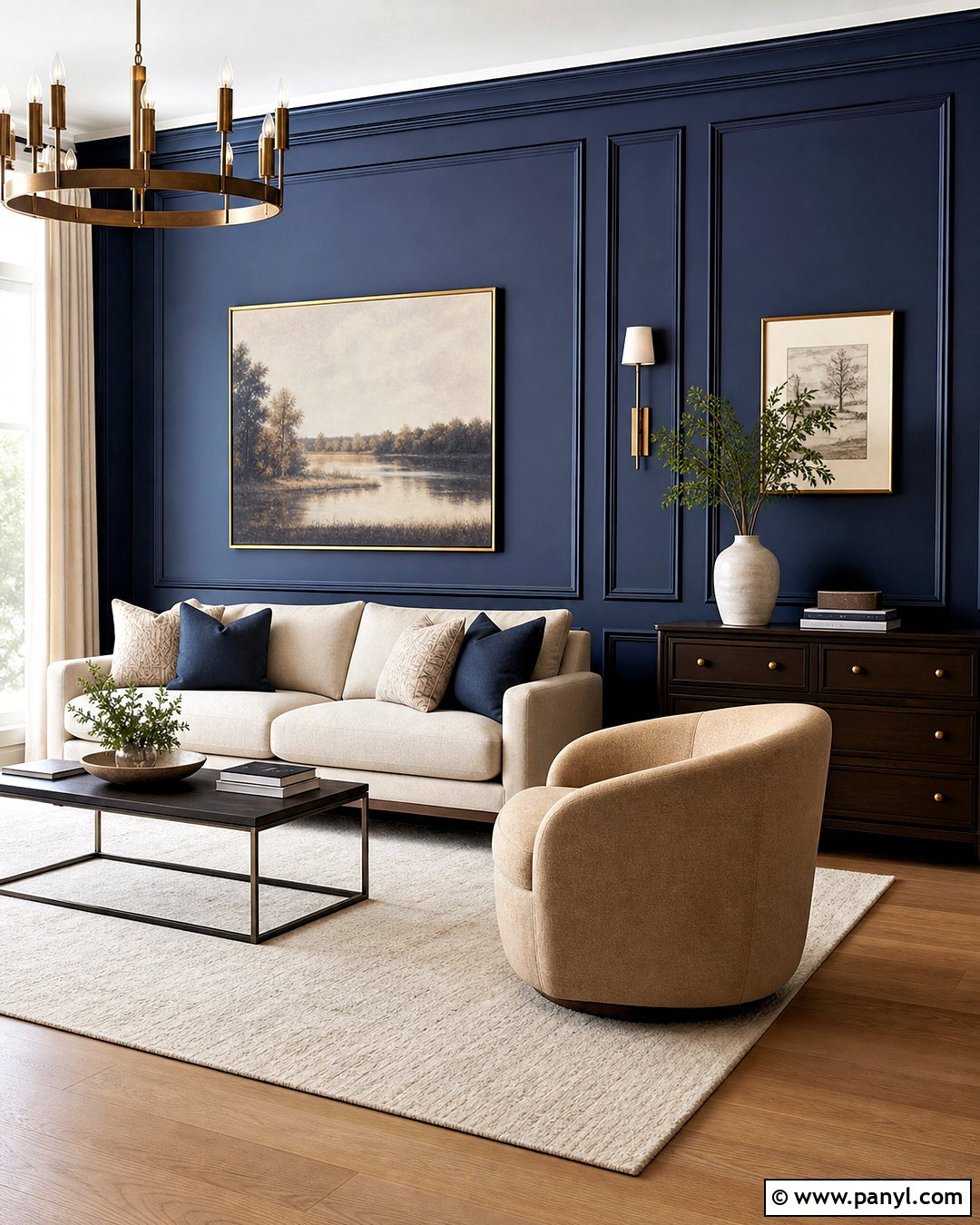
10. Green Beige Entryway
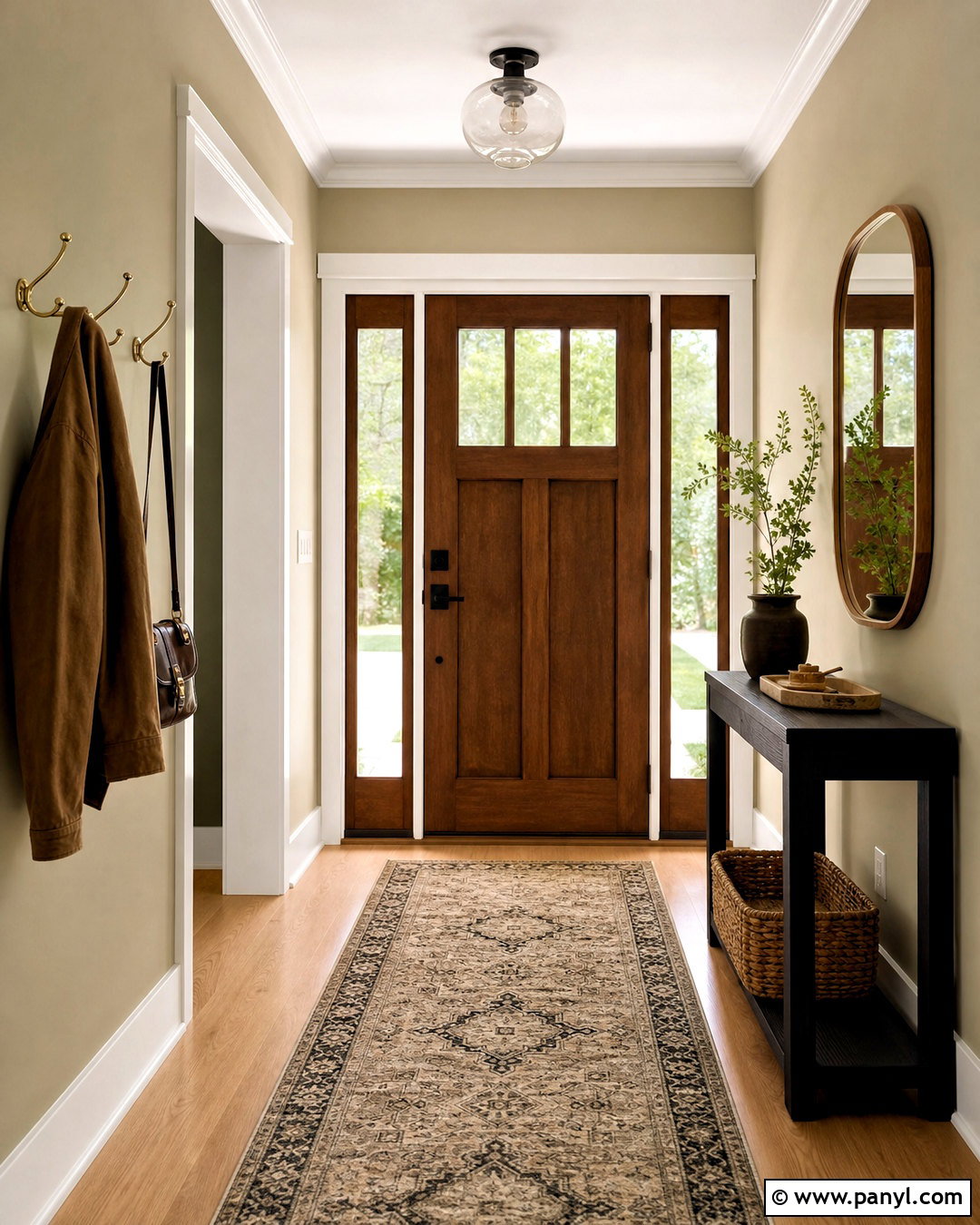
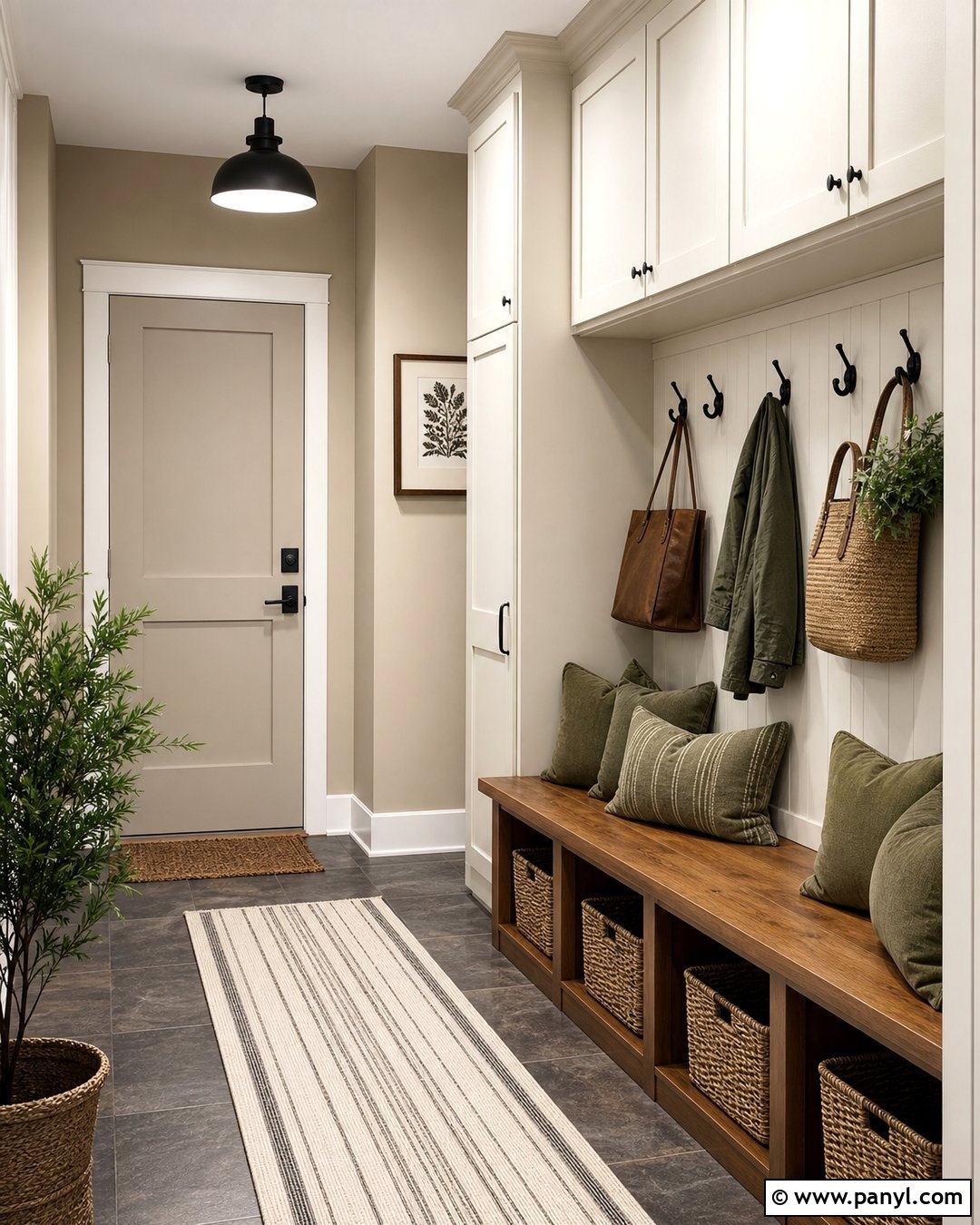
Green beige is an adaptable choice for an entryway because its earthy undertone works naturally with wood, stone, and outdoor views. Choose a light beige with a muted olive cast, then pair it with warm white trim and a stained oak front door. A narrow black console introduces contrast without taking up much floor space. Above it, hang a rounded wood-framed mirror to reflect light through the hall. Use a durable runner in cream, olive, tan, and charcoal to disguise everyday wear. A woven basket can hold shoes or accessories, while brass hooks offer practical storage. Complete the look with one ceramic lamp and a leafy branch arrangement. The finished entry feels organized, grounded, and connected to the surrounding rooms.
11. Golden Beige Traditional Living Room
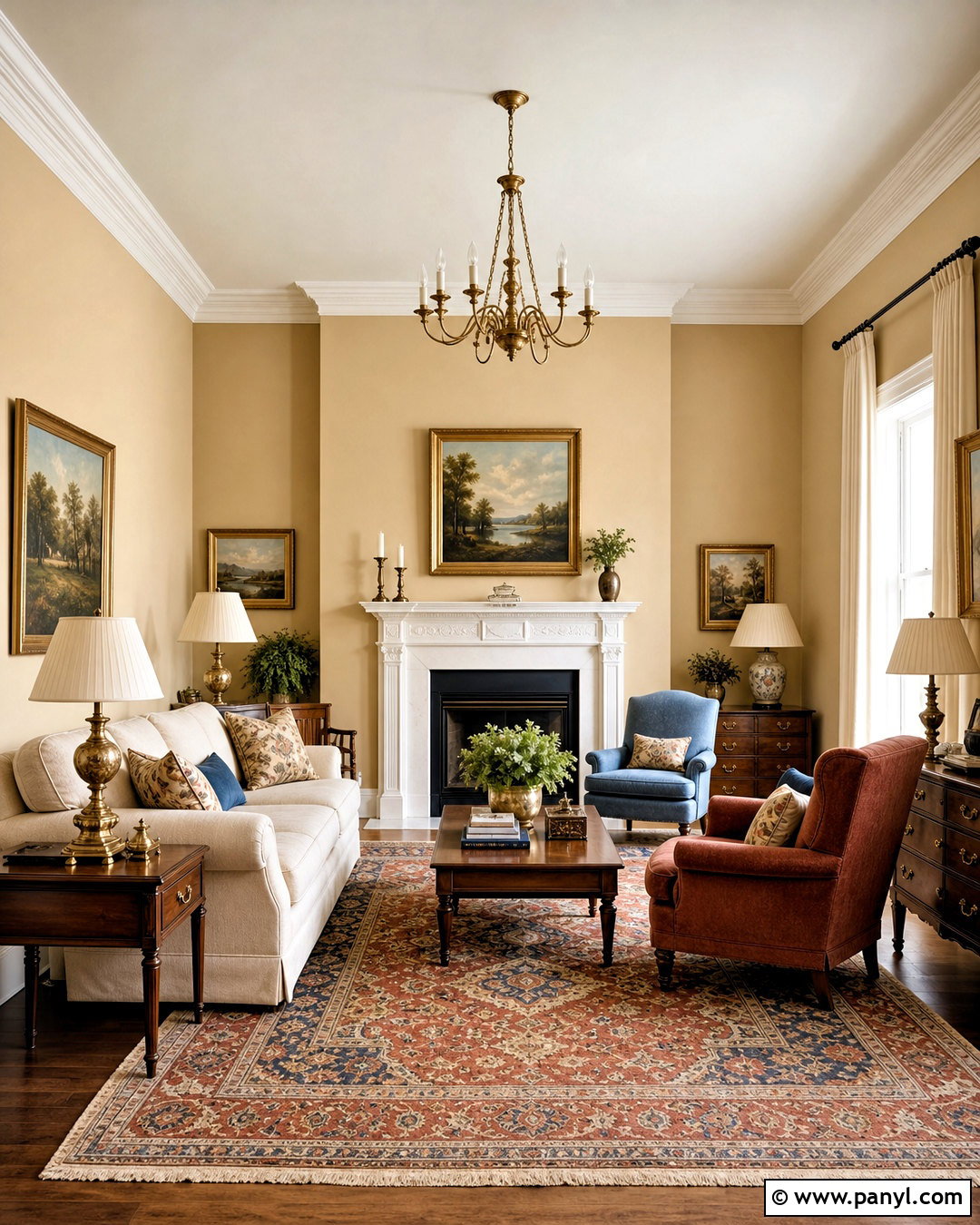
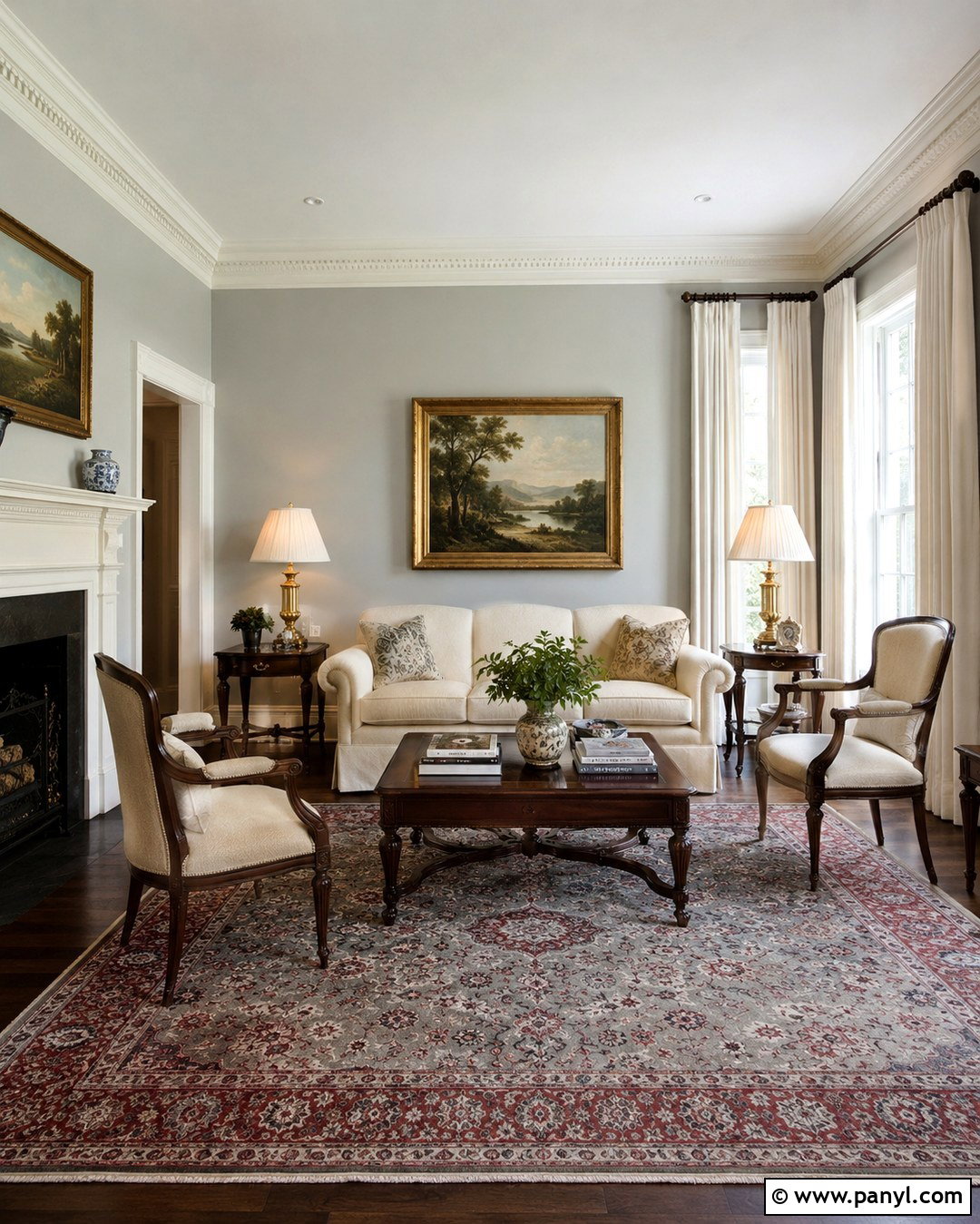
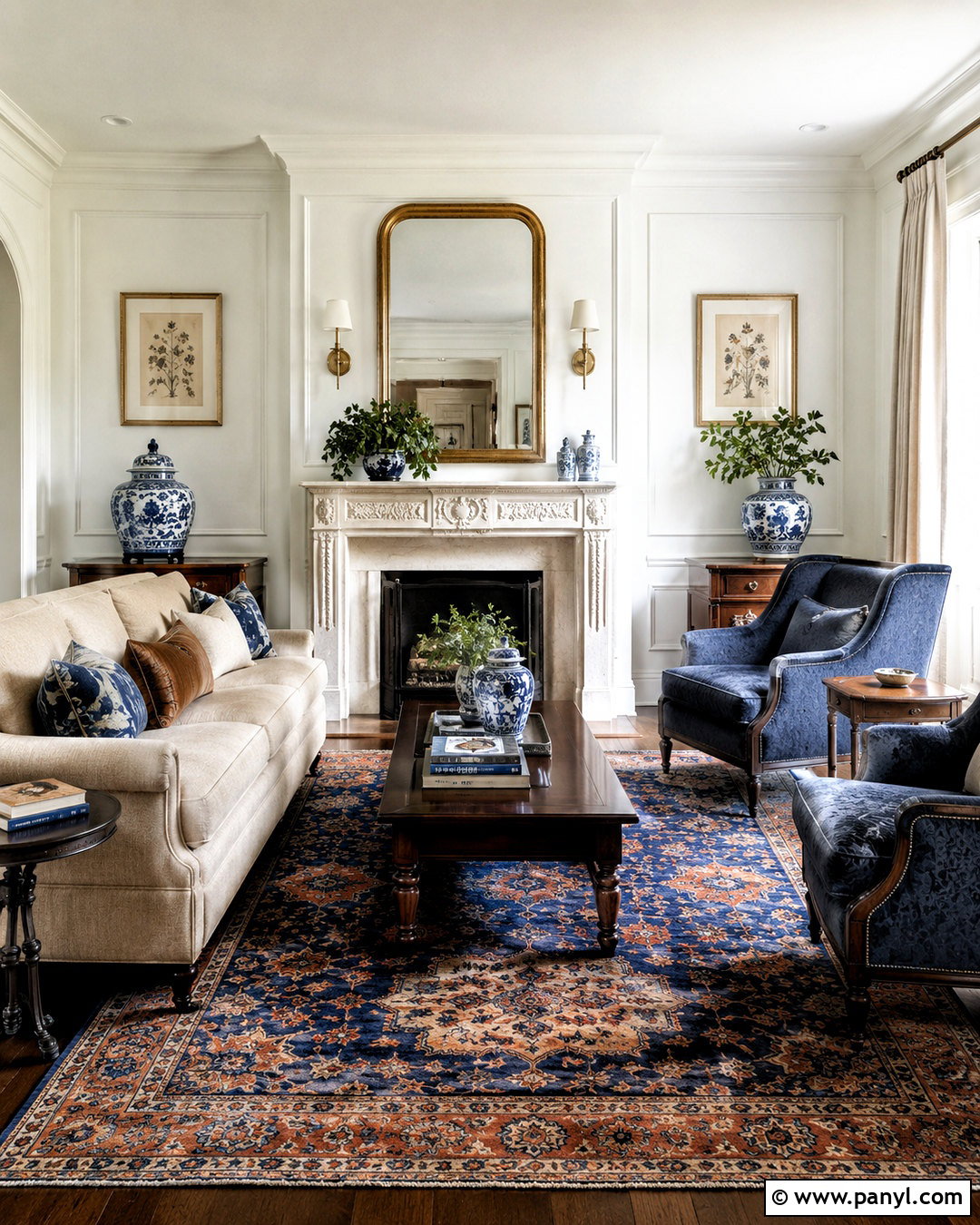
Golden beige walls suit a traditional living room when the surrounding finishes are rich but carefully edited. Choose a medium beige with honey undertones and pair it with creamy white crown molding, baseboards, and fireplace trim. Arrange a rolled-arm ivory sofa opposite two patterned chairs in muted blue and rust. A dark walnut coffee table anchors the seating group, while an Oriental-style rug connects every color. Use antique brass lamps, pleated shades, and framed landscape art to support the classic character. Avoid filling every surface with small accessories. Instead, display a few larger objects, such as blue-and-white pottery and stacked books. Full linen drapes in a soft oatmeal tone finish the room without competing with the decorative furniture.
12. Stone Beige Bathroom
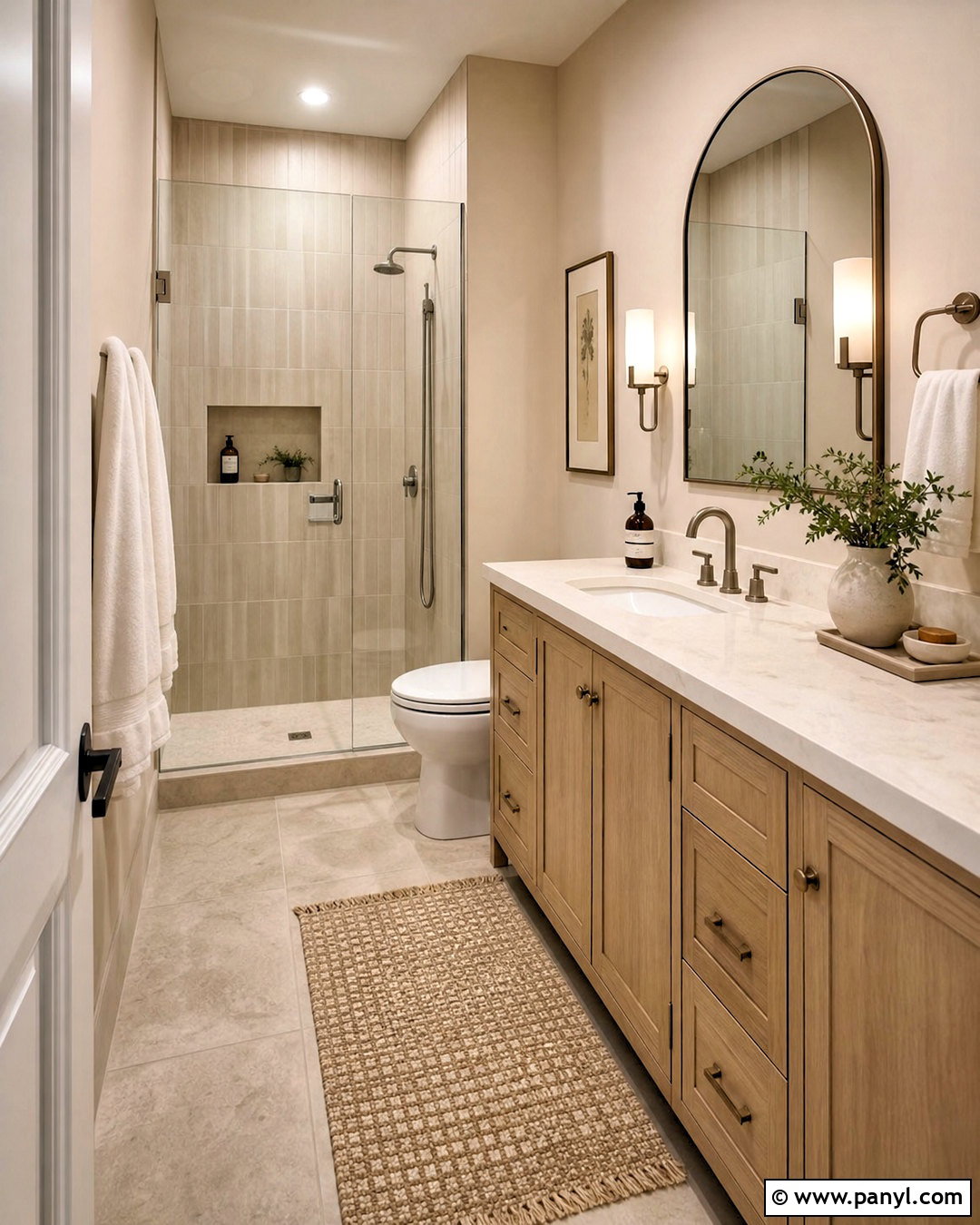
Stone beige walls create a calm bathroom when they are coordinated with finishes that share the same balanced undertone. Select a light gray-beige inspired by limestone, then combine it with a white oak vanity and creamy quartz countertop. Use large-format porcelain floor tile in a slightly deeper stone tone to ground the room. The shower can feature matte ivory tile with light beige grout for a clean, continuous appearance. Add brushed nickel fixtures if the beige leans cool, or soft brass if it appears warmer. A frameless glass enclosure keeps the compact layout open. Complete the room with an arched mirror, simple globe sconces, white towels, and one small wooden stool. The finished bathroom feels natural, bright, and easy to maintain.
13. Linen Beige Nursery
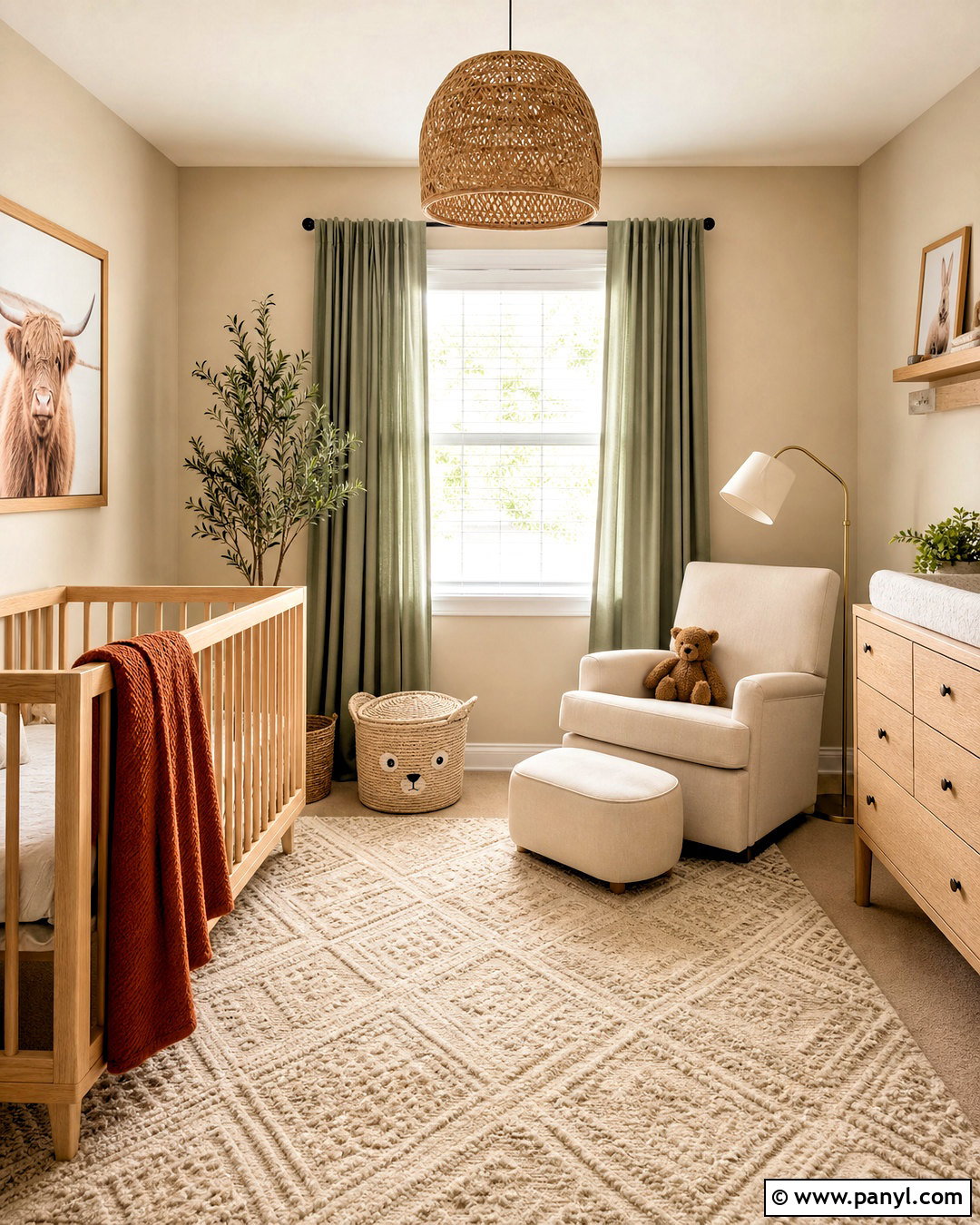
Linen beige provides a gentle nursery backdrop that can adapt as the child grows. Choose a pale, fabric-inspired beige with neutral undertones and use warm white on the ceiling, trim, and doors. Position a natural oak crib against the main wall, leaving clear walking space around it. Add a comfortable cream glider, light wood dresser, and washable ivory rug with a small-scale tan pattern. Muted sage curtains and a rust-colored throw introduce soft, earthy color without creating a strong theme. Use closed baskets and simple wall shelves to keep essentials organized. A woven ceiling fixture adds texture, while blackout lining supports better light control. Finish with understated animal artwork and a few wooden toys for a calm, practical room.
14. Khaki Beige Family Room
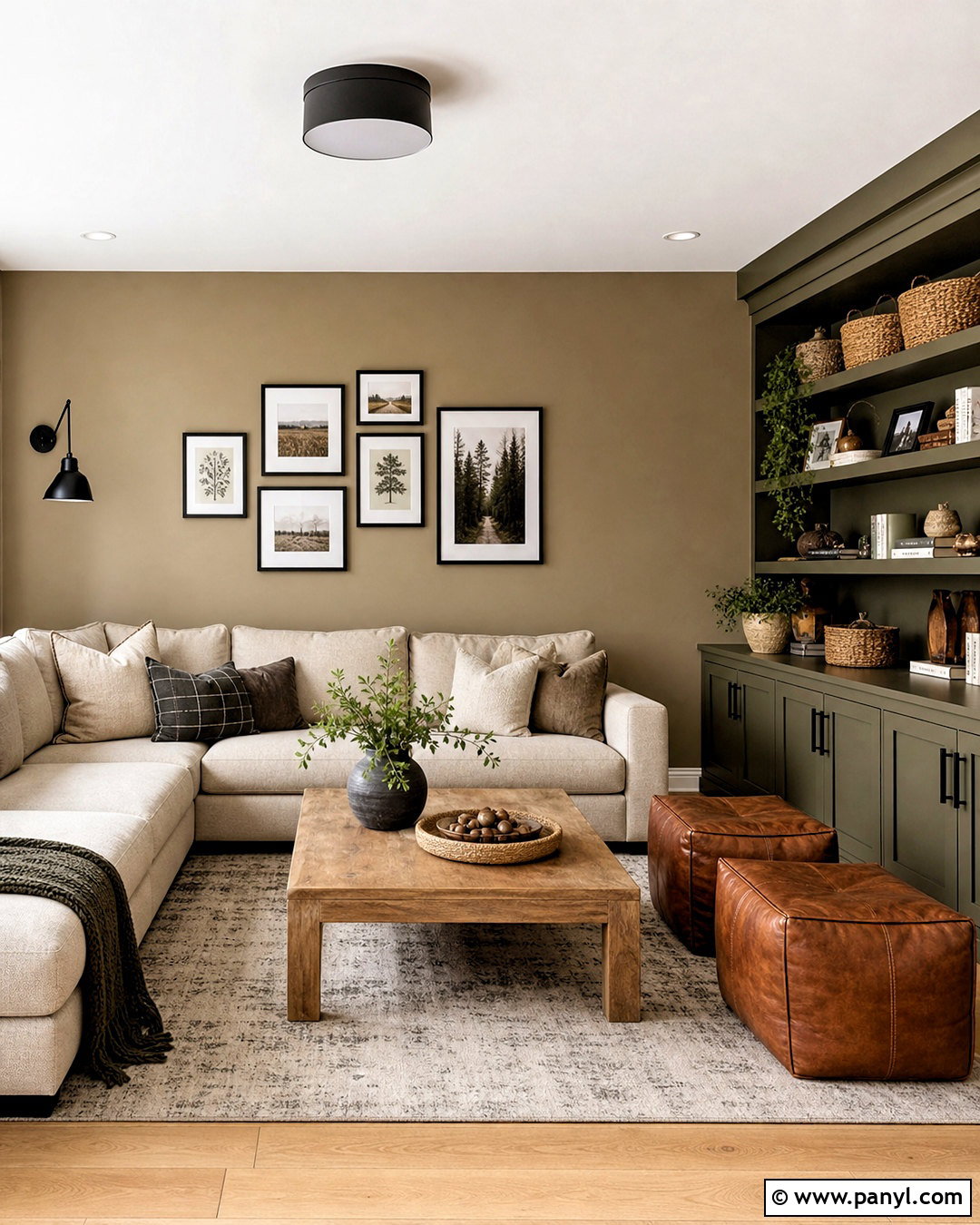
Khaki beige gives a busy family room a grounded appearance and hides minor scuffs better than very pale neutrals. Select a medium beige with earthy green-brown undertones. Pair it with a durable oatmeal sectional and a washable rug featuring cream, charcoal, and olive. A large oak coffee table provides space for games and everyday items, while built-in cabinets keep visual clutter contained. Paint the cabinetry a deep olive or warm charcoal to create a strong focal point around the television. Add cognac leather poufs that can function as extra seats. Black floor lamps and hardware sharpen the scheme. Finish with striped pillows, woven shades, family photographs in matching frames, and sturdy baskets that slide neatly into the lower shelving.
15. Caramel Beige Dining Room
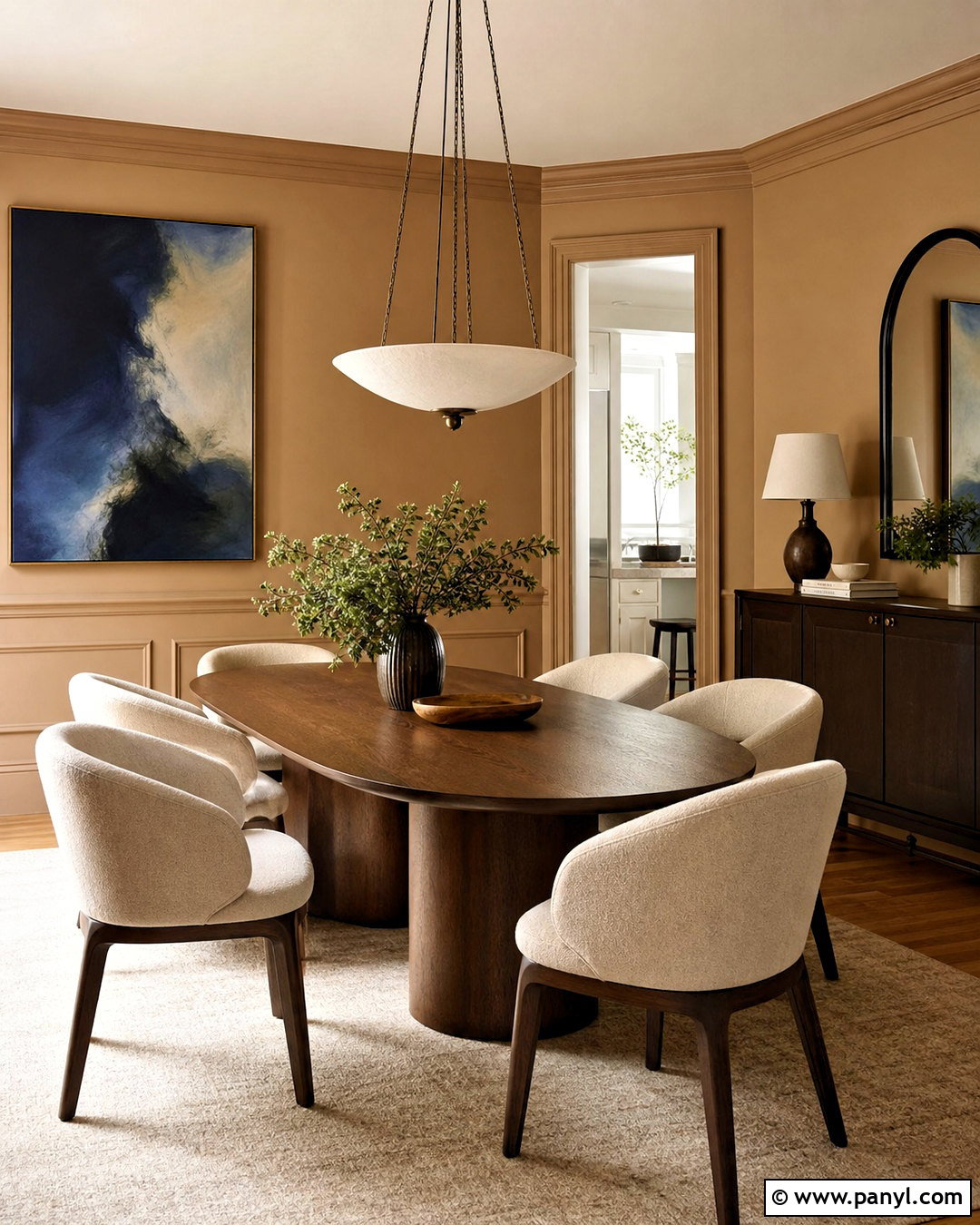
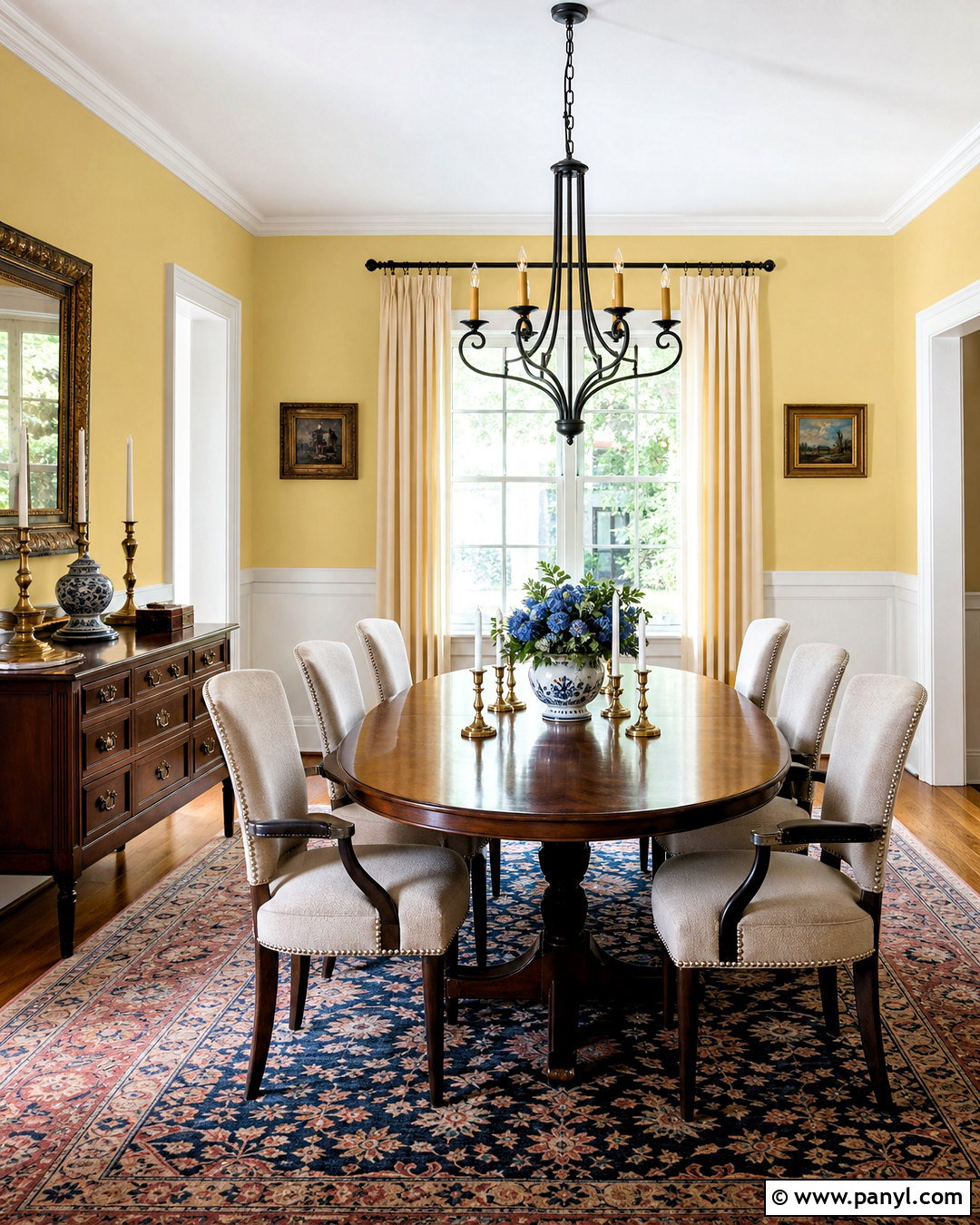
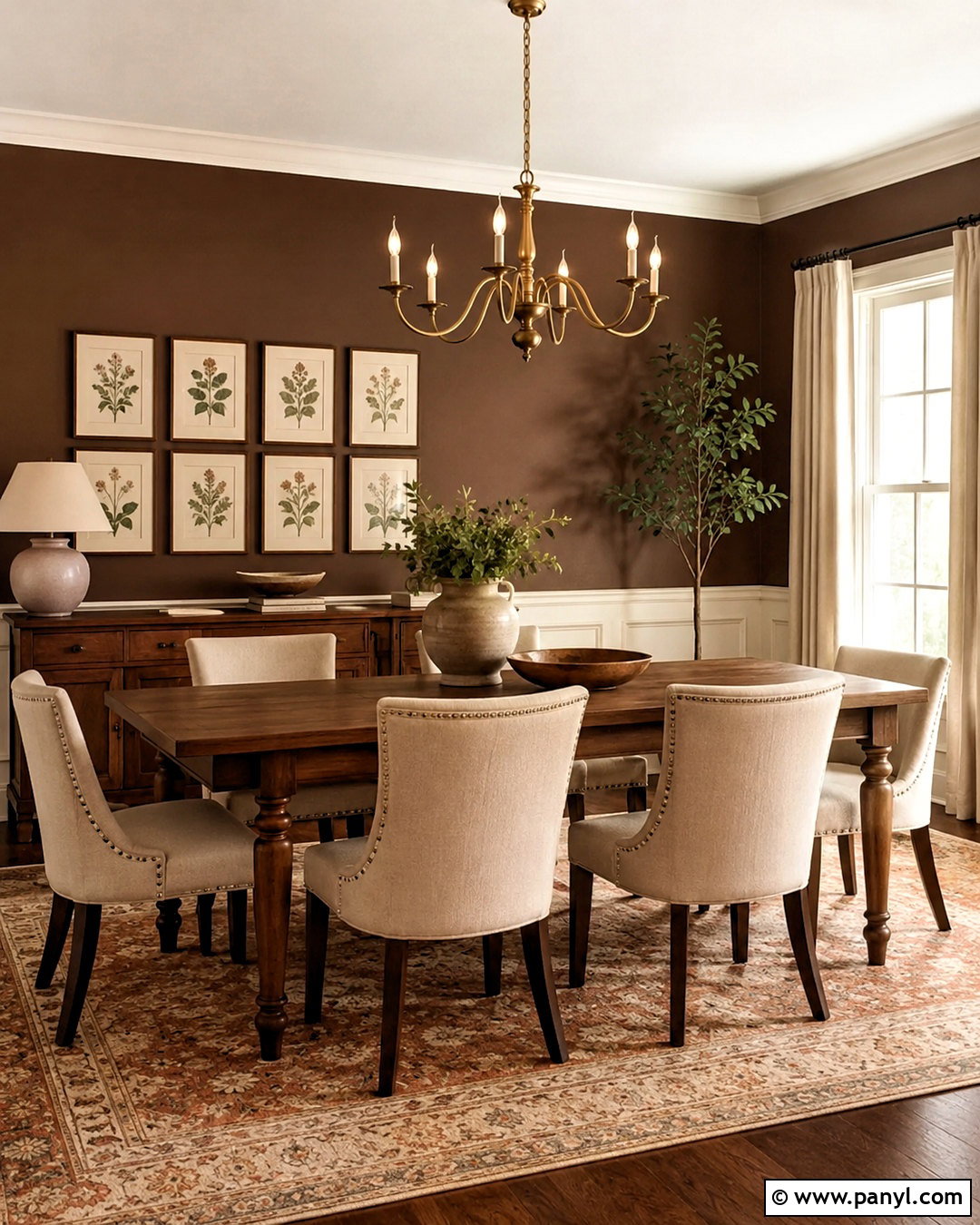
Caramel beige creates a rich dining room that feels intimate without requiring an extremely dark wall color. Use a medium-depth beige with warm brown and amber undertones, covering both the walls and molding for a seamless look. Balance the richness with an oval dining table in medium oak and chairs upholstered in cream performance fabric. A large off-white pendant brightens the center of the room, while a dark brown sideboard adds weight along one wall. Introduce deep blue through artwork or patterned curtains to cool the warm palette. A cream wool rug keeps the room from feeling too heavy. Brass candlesticks, sculptural pottery, and a leafy indoor tree provide the final layers without crowding the dining surface.
16. Clay Beige Guest Bedroom
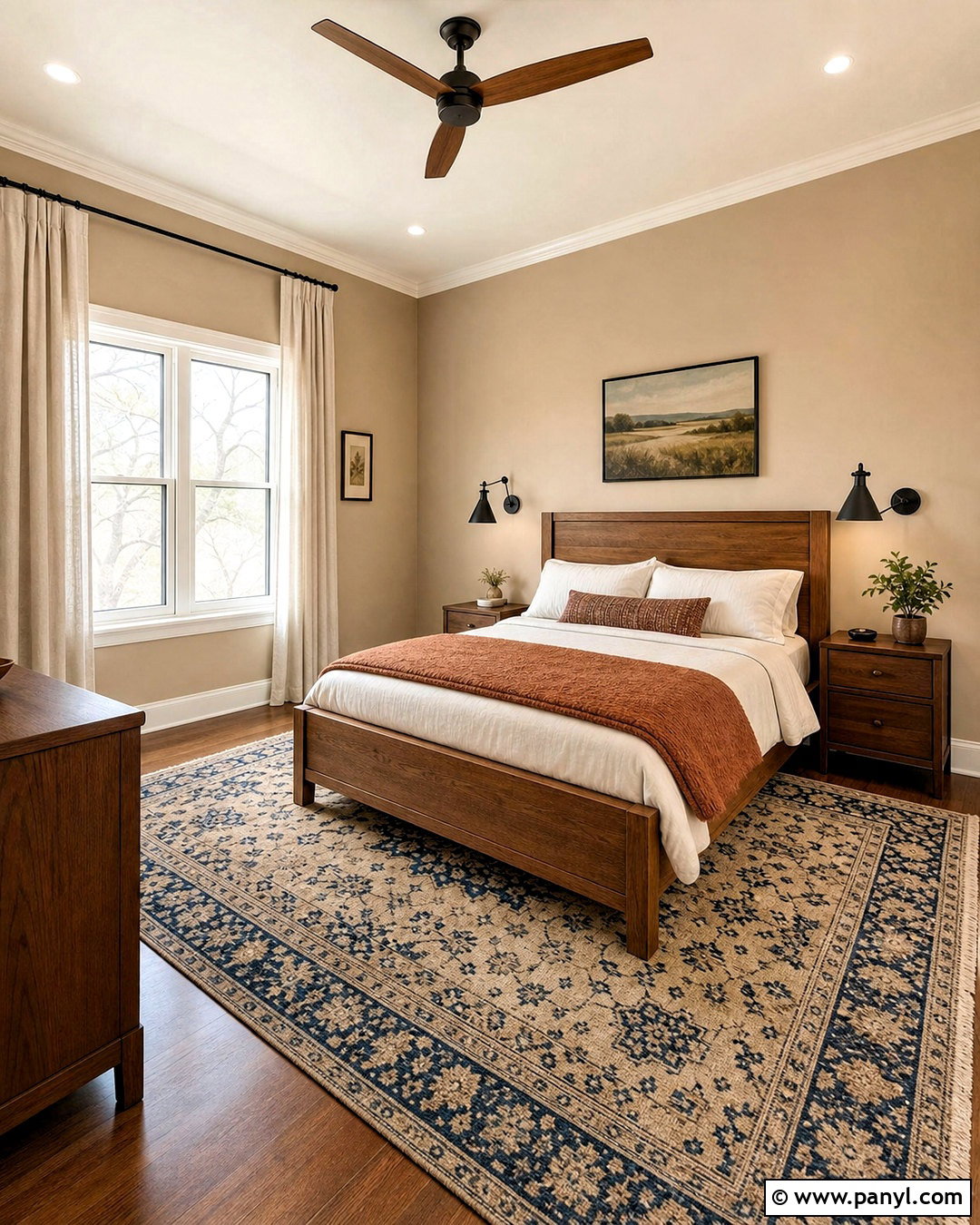
Clay beige offers a subtle earthy warmth that makes a guest bedroom feel welcoming and distinctive. Choose a muted beige containing soft peach or terracotta undertones, then pair it with warm white trim. Use a simple oak bed dressed in ivory bedding, a cinnamon-colored quilt, and striped taupe pillows. Place compact walnut nightstands on both sides to create symmetry and convenience. A woven rug with cream, clay, and faded navy details helps balance the warmth. Add black reading sconces for crisp contrast and hang one oversized abstract print above the bed. Natural linen curtains should skim the floor for a relaxed finish. Include a luggage bench and an empty drawer so the attractive room also functions comfortably for visitors.
17. Almond Beige Hallway
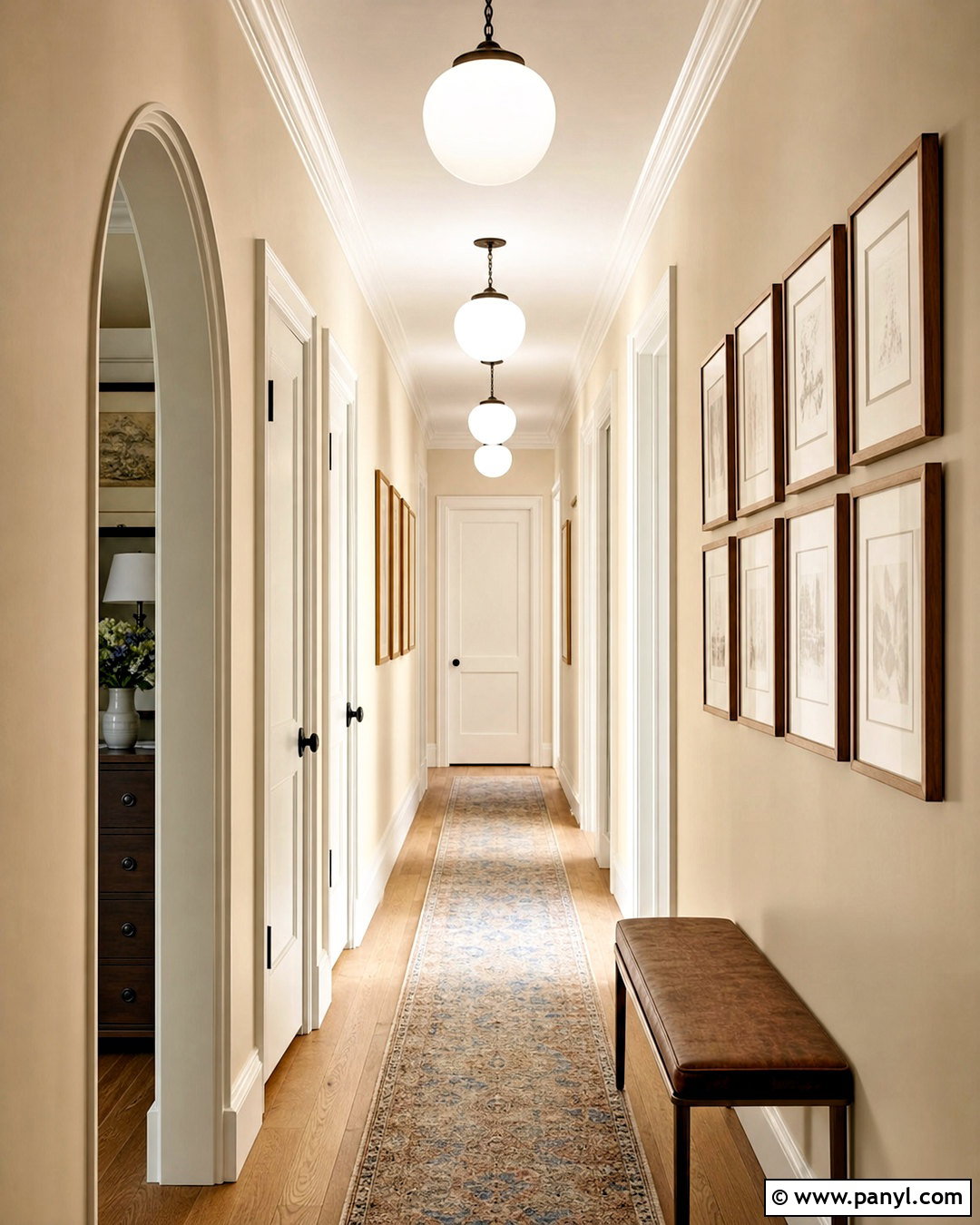
Almond beige can warm a narrow hallway while remaining light enough to prevent a closed-in feeling. Pick a pale beige with cream and restrained yellow undertones, then use satin warm white on doors, trim, and baseboards for gentle contrast. Keep the floor visible when possible, especially if it is natural oak or warm stone. A slim runner in faded blue, tan, and ivory will guide the eye through the space. Install simple brass or opal-glass ceiling lights at even intervals to eliminate gloomy areas. Create one organized gallery wall using matching walnut or black frames and generous spacing. A narrow bench or shallow console may be added at the widest point. Keep other surfaces clear so the hallway remains practical and visually calm.
18. Oatmeal Beige Basement
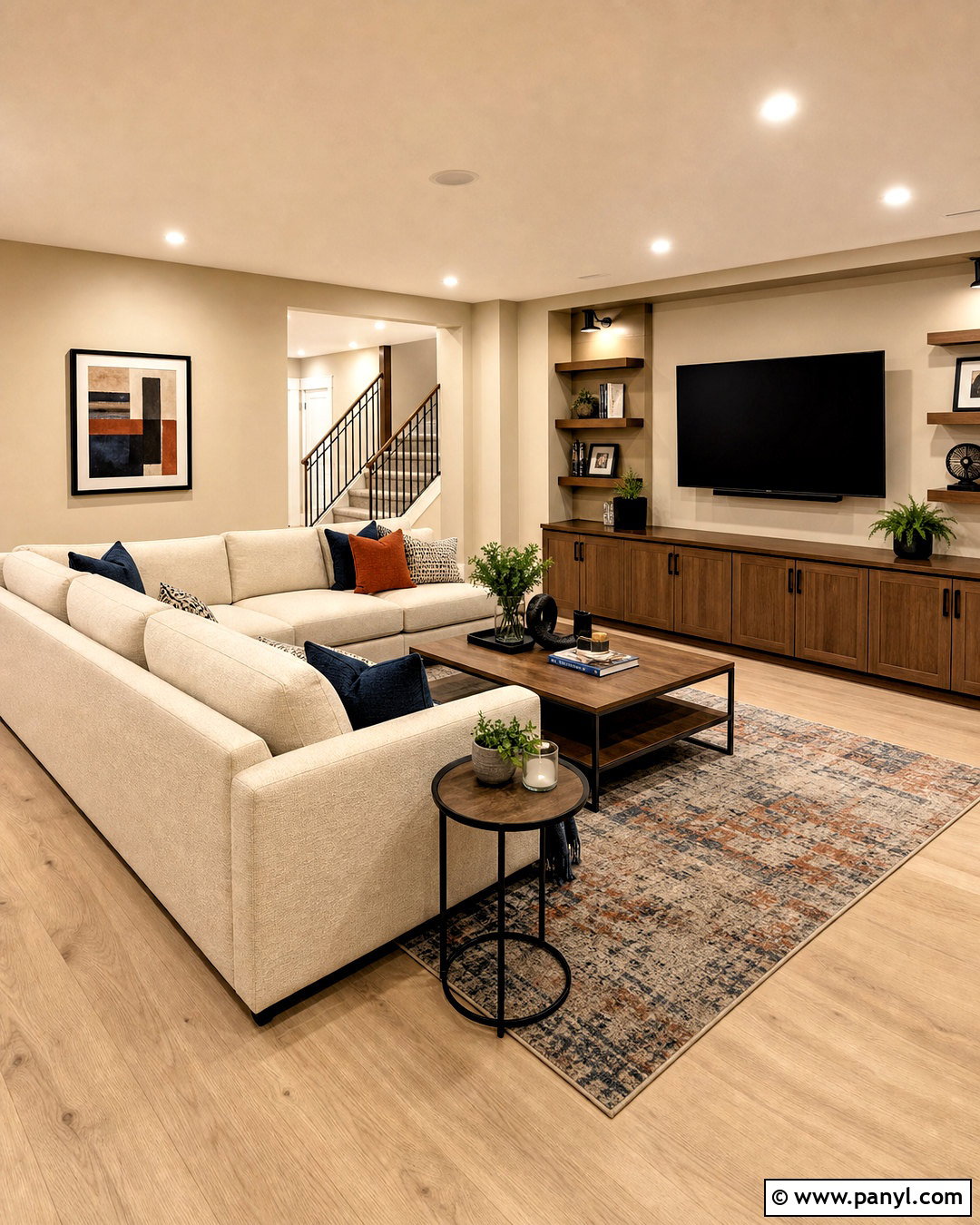
An oatmeal beige can give a basement the warmth that limited natural light often fails to provide. Choose a light, softly golden beige that remains creamy under artificial lighting. Test it with the exact bulbs you plan to use before painting the whole room. Pair the walls with warm white ceilings, pale oak-look flooring, and an ivory sectional. Add a large washable rug containing tan, denim blue, and rust for depth. Recessed lights should provide even general illumination, while table and floor lamps soften the seating area. Use walnut media storage and matte black hardware to add contrast. Light-filtering window treatments, textured pillows, and a few substantial pieces of art will make the basement feel like a finished living space.
19. Dark Beige Library
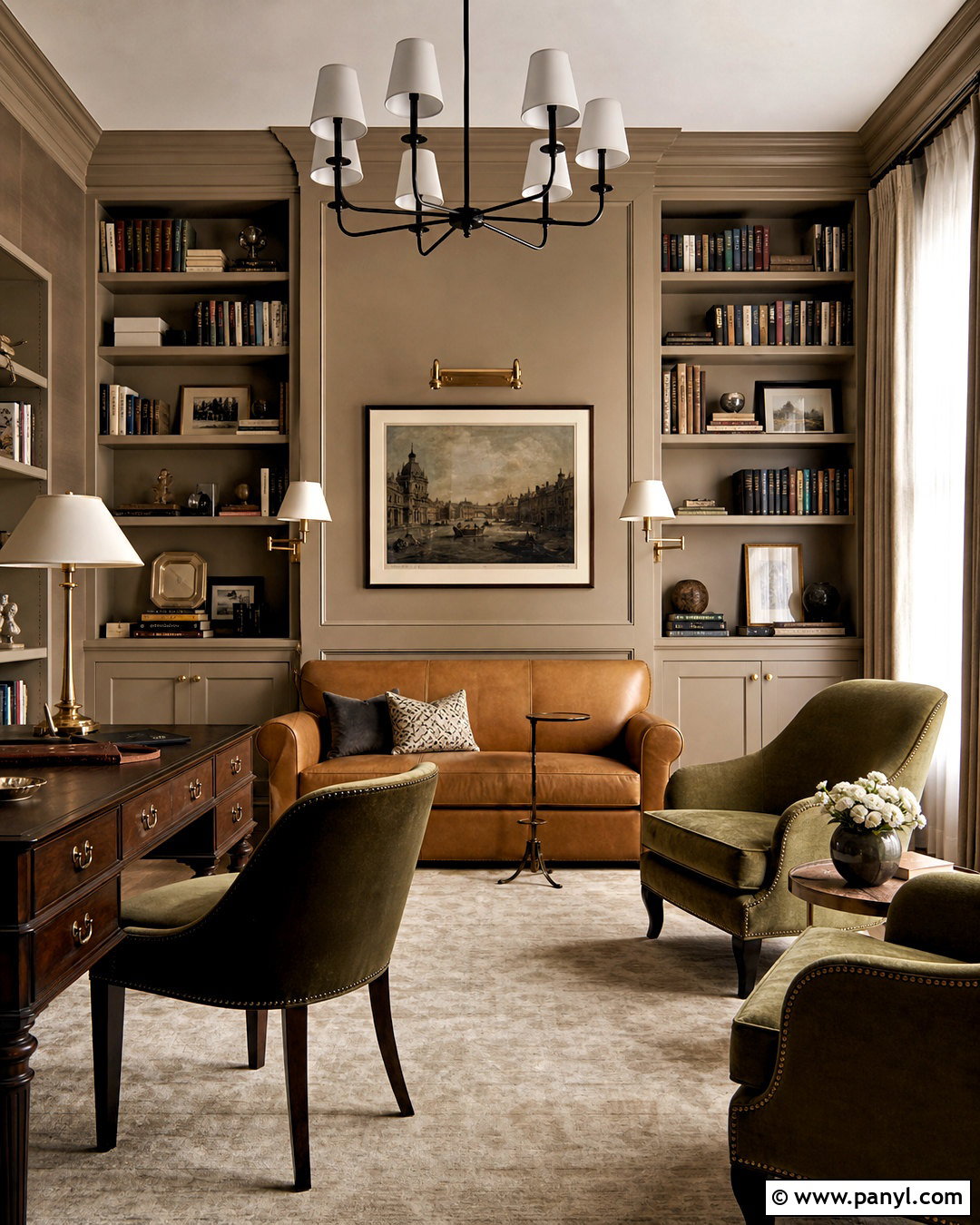
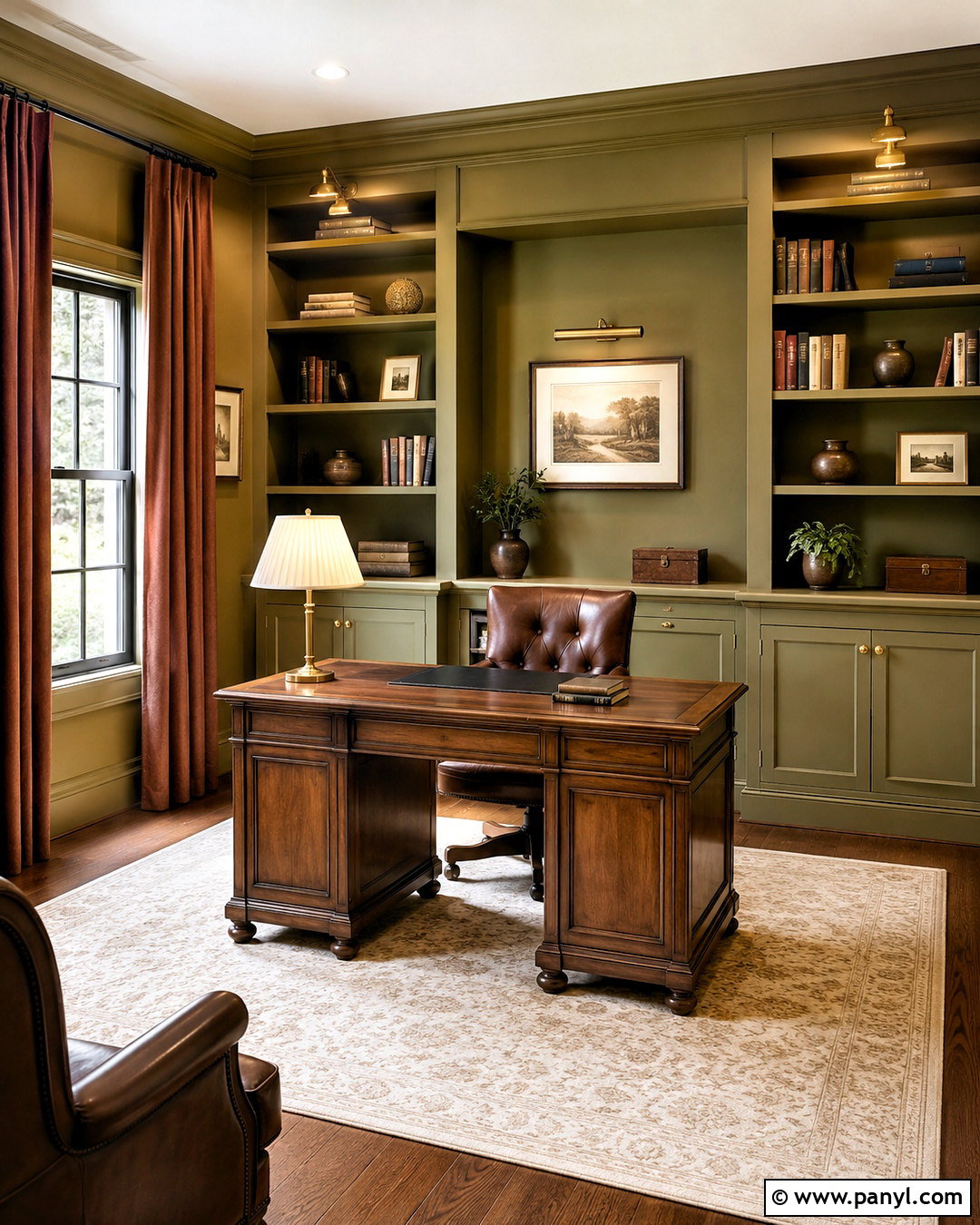
Deep beige walls can create a sophisticated home library while feeling softer than charcoal or dark brown. Select a saturated taupe-beige with warm earth undertones and apply it to the walls, shelving, and trim for a color-drenched effect. Fill the shelves thoughtfully, leaving some open space around pottery and framed objects. A camel leather sofa, dark wood writing desk, and cream wool rug provide both function and contrast. Use a pair of olive velvet chairs to introduce muted color. Antique brass picture lights and a shaded floor lamp make the reading areas comfortable. Hang substantial curtains in natural flax linen to soften the darker walls. The finished room should feel enveloping and refined, yet practical enough for regular reading and work.
20. Neutral Beige Whole House
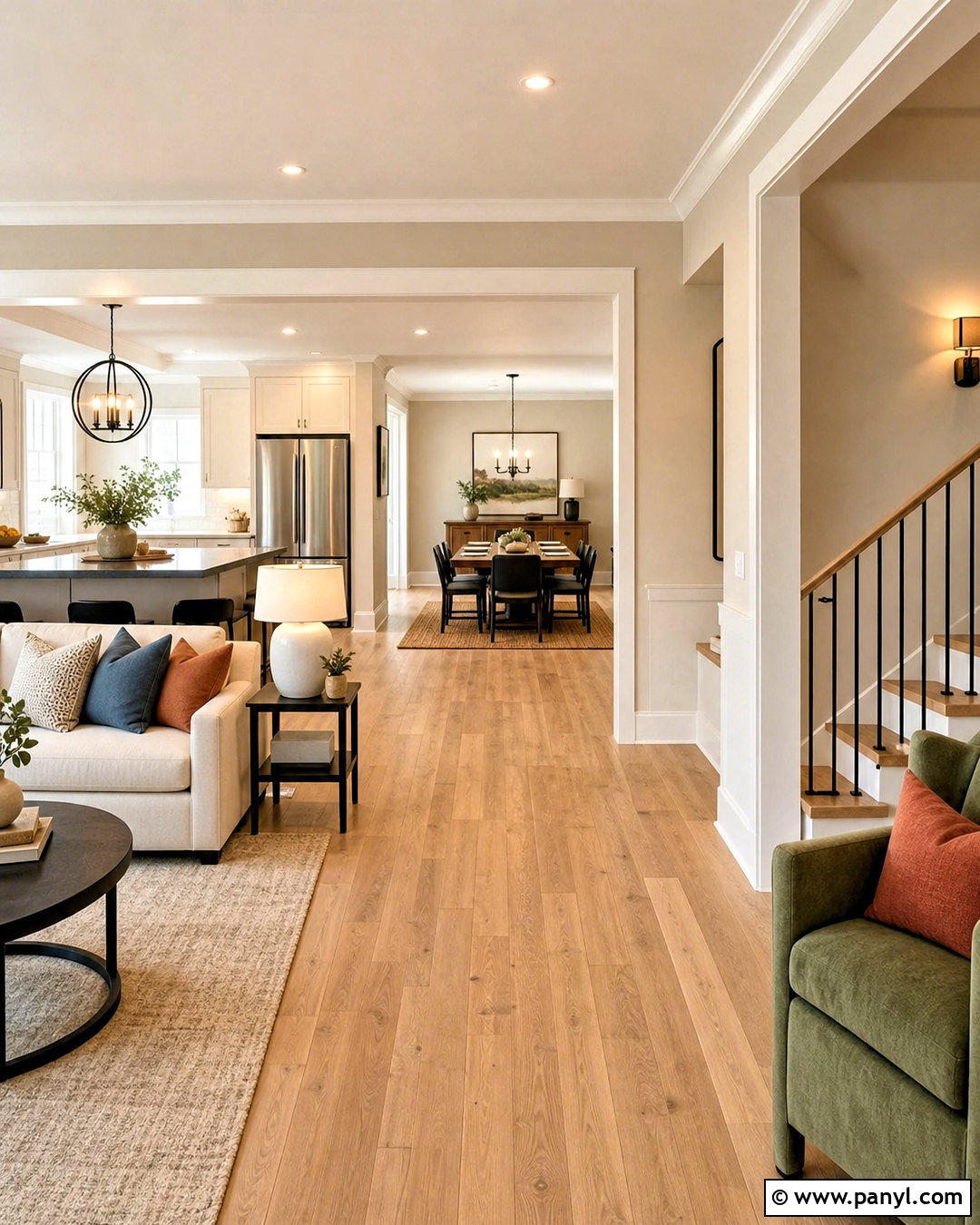
A balanced neutral beige can connect several rooms while allowing each space to develop its own personality. Choose a mid-light beige that sits between warm tan and soft greige, without a dominant pink or yellow cast. Continue it through the entry, living room, hallway, and open kitchen, using the same warm white trim throughout. Repeat a limited collection of materials, such as white oak, cream upholstery, matte black accents, and brushed brass hardware. Individual rooms can then feature distinct accent colors, including olive in the living room, dusty blue in the bedroom, and terracotta in the dining area. Consistent flooring and window treatments will strengthen the flow. Test the beige in every exposure before committing, since connected rooms can receive very different light.
Conclusion:
The most successful beige wall colors are chosen as part of a complete room, not viewed as isolated paint samples. Pay close attention to undertones, natural exposure, flooring, fixed finishes, and evening lighting. Warm beige works beautifully with cream, oak, rust, and olive, while greige and stone beige coordinate well with charcoal, muted blue, and cooler metals. Deeper mushroom, khaki, and caramel shades can make bedrooms, libraries, and dining rooms feel especially grounded. Always test large painted samples and move them around the room before buying several gallons. Whether you want a bright whole-house neutral or a cozy color-drenched retreat, these 20 beige wall colors offer practical starting points for a coordinated home.

Related Ideas and Inspiration:
Leave a Reply