
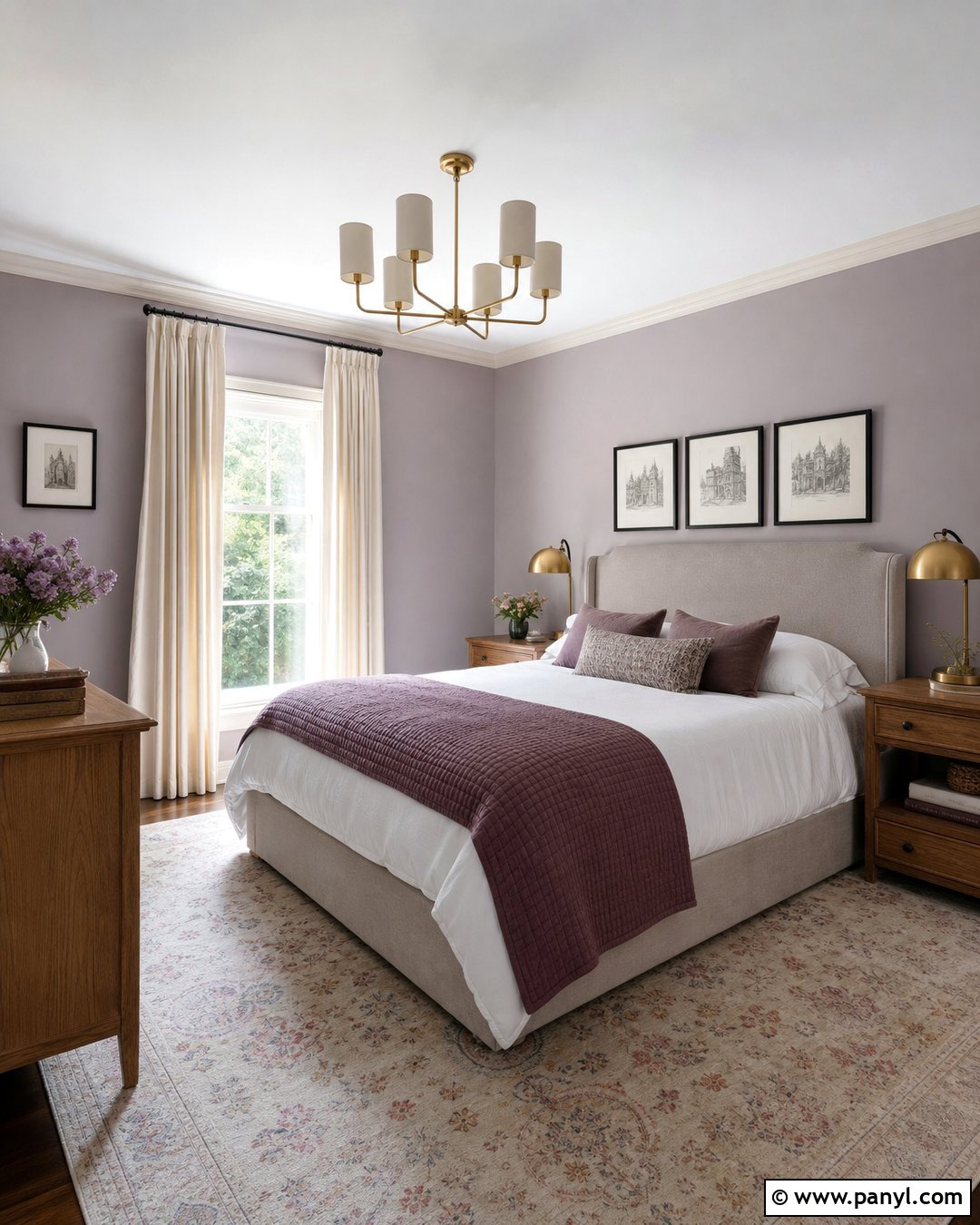
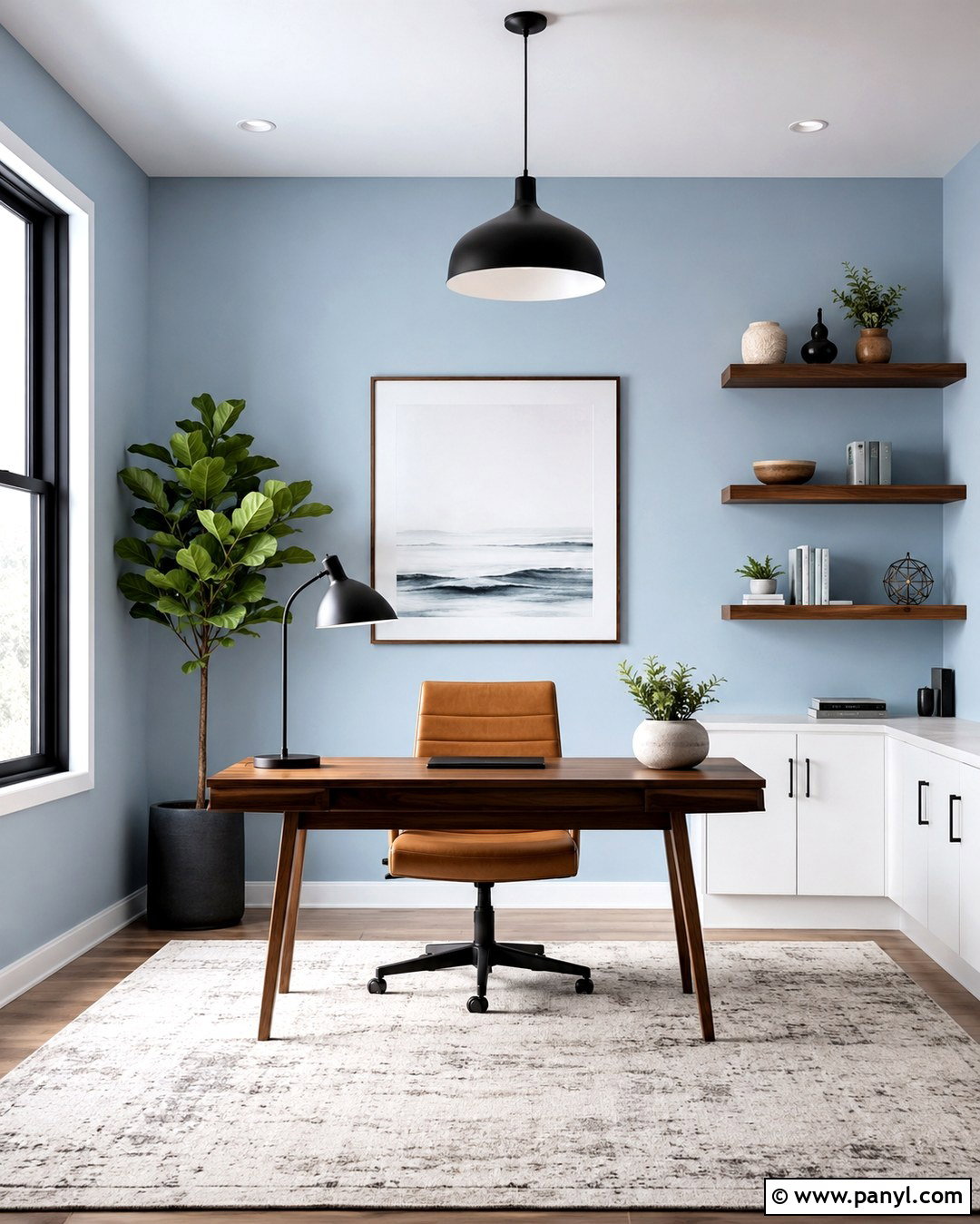
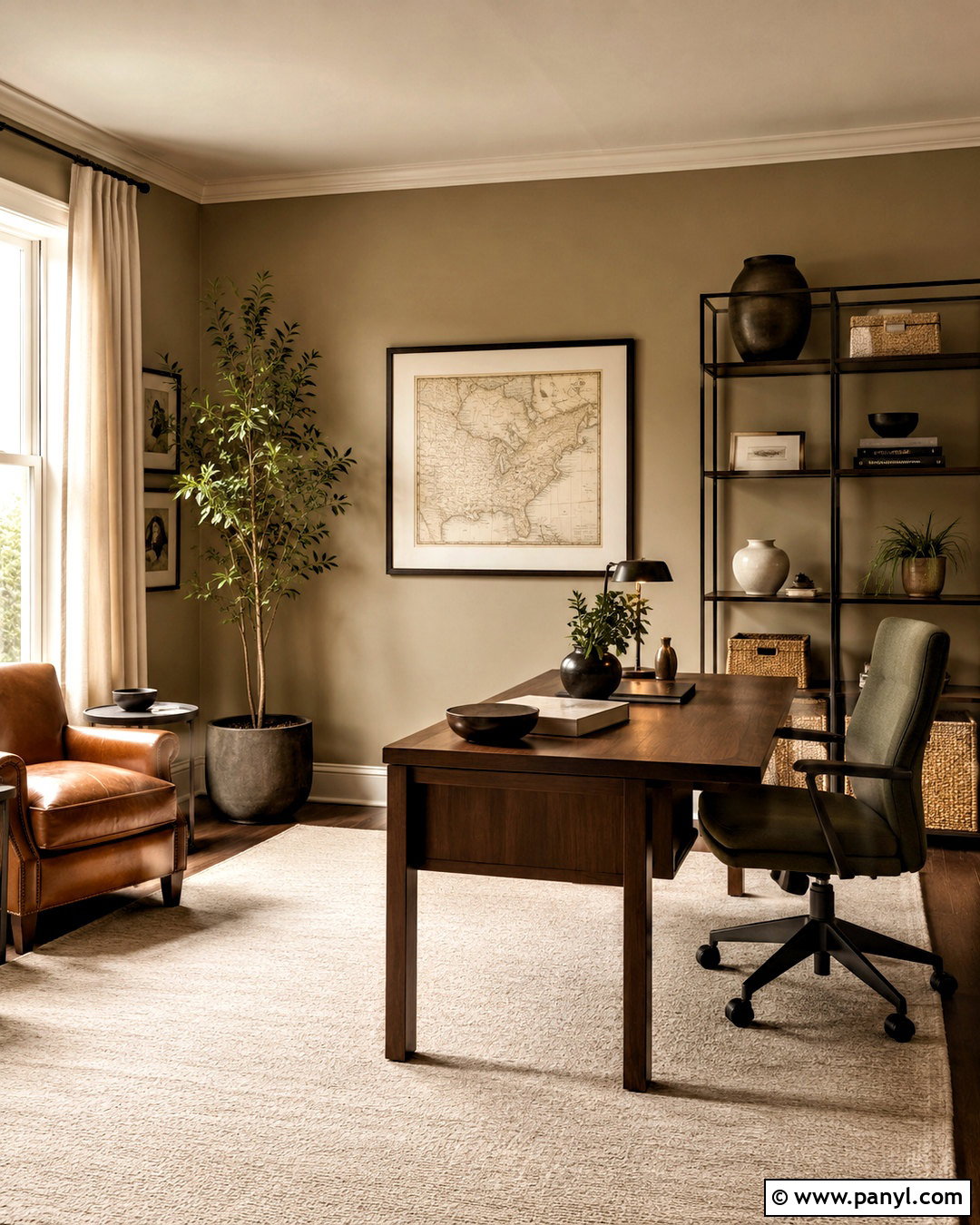
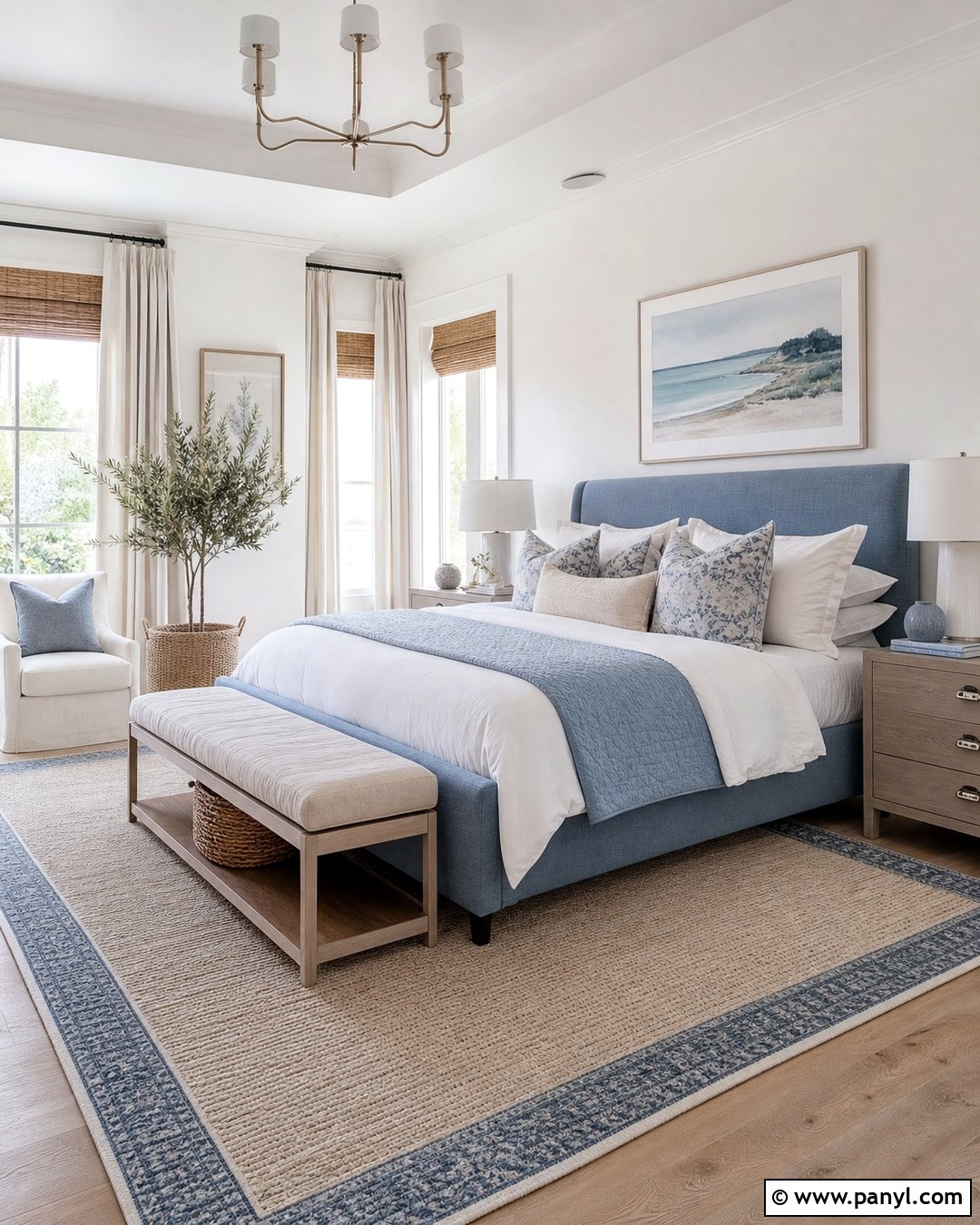
Choosing from 30 shades of beige wall colors reveals how varied this classic neutral can be. Beige may lean creamy, sandy, rosy, green, gray, or brown, and every undertone changes how a room feels. Current neutral palettes favor layered, nuanced beiges over flat yellow-based versions, often pairing them with natural wood, stone, warm metals, and earthy accent colors. () Before committing, compare the paint with flooring, cabinets, upholstery, and trim. Test a large sample on multiple walls, then view it during the morning, afternoon, and evening because changing light can shift beige significantly. The complete room schemes below make it easier to compare and confidently decorate with 30 shades of beige wall colors.

1. Creamy Ivory Beige Walls
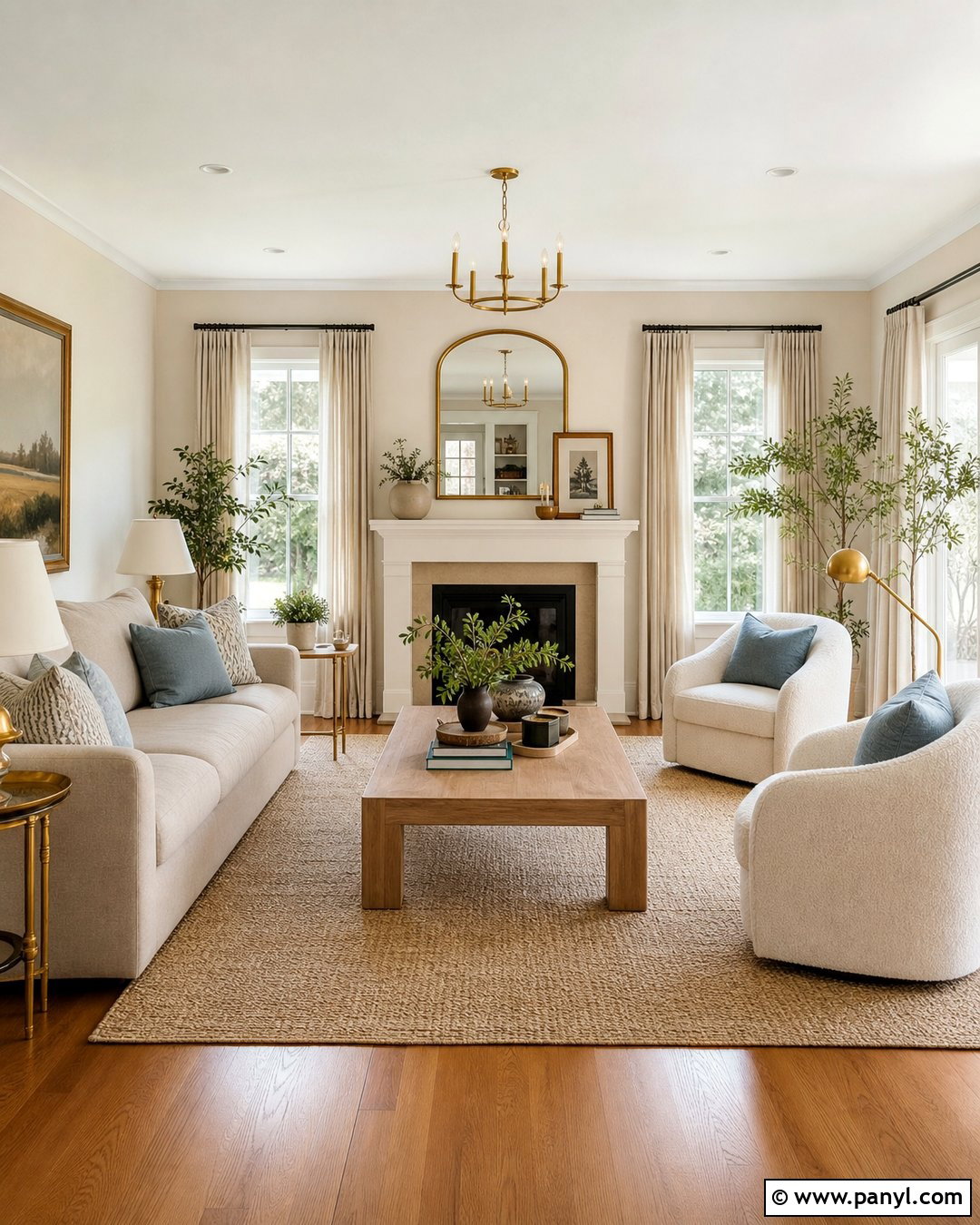
Creamy ivory beige walls give a living room the brightness of off-white without making it feel stark. Choose a pale beige with soft yellow undertones, then add warm white trim for gentle definition. A light oatmeal sofa, ivory boucle chairs, and a natural oak coffee table continue the airy palette. Use a woven wool rug with subtle tan lines to ground the seating area. Brushed brass lamps add warmth, while pale blue pillows prevent the room from becoming overly creamy. Hang one large landscape print instead of many small pieces. Linen curtains should closely match the walls so the windows feel taller. Medium oak flooring and a few leafy plants complete this comfortable, sunlit look.
2. Warm Linen Beige Walls
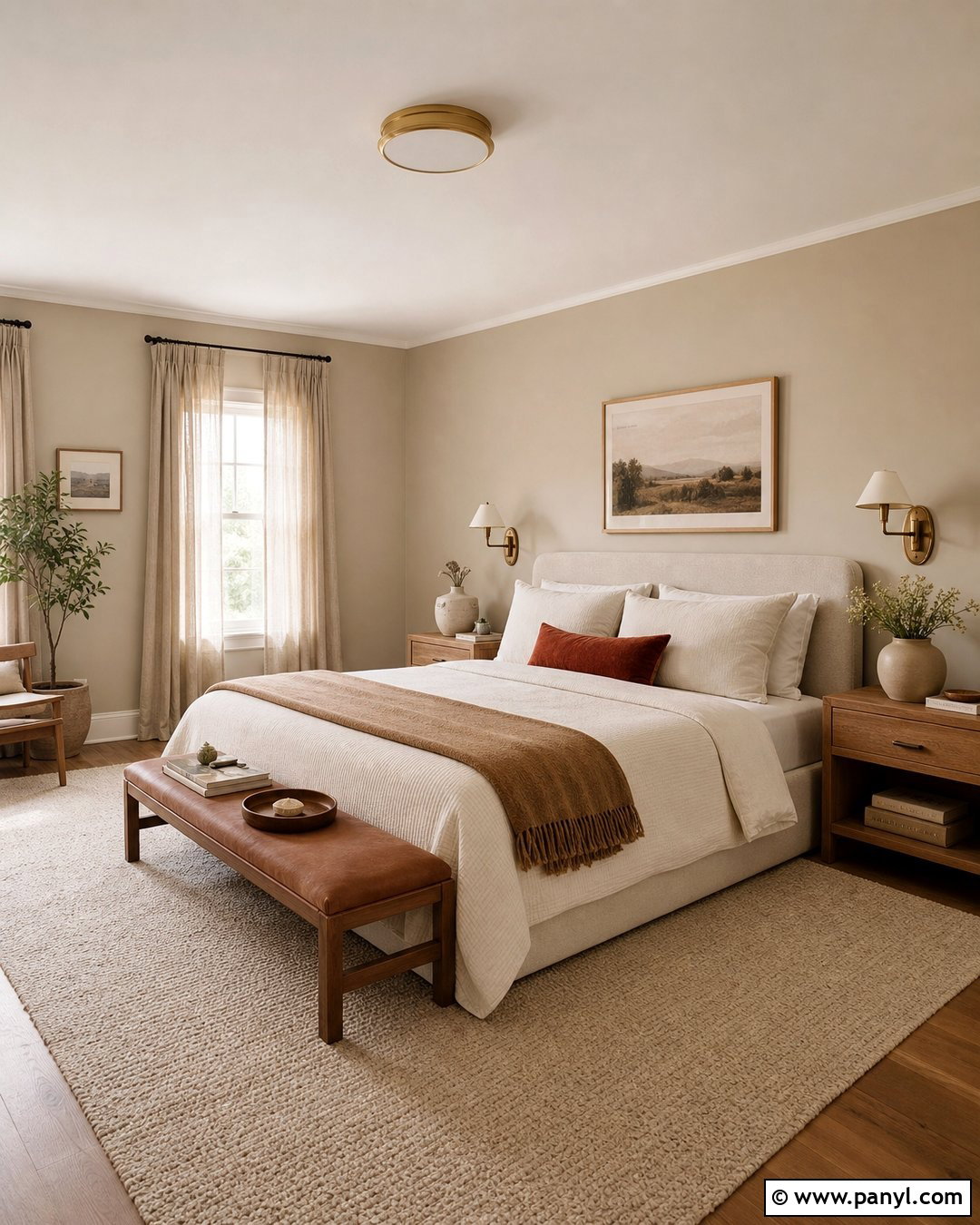
Warm linen beige creates a relaxed bedroom that feels soft without becoming overly yellow. Paint all four walls in a light flax-inspired beige and keep the ceiling warm white. Place a low upholstered bed against the main wall, using an oatmeal headboard, crisp ivory sheets, and a textured camel blanket. Medium-toned oak nightstands introduce natural contrast without looking heavy. Add aged brass sconces, simple ceramic lamps, and full-length natural linen curtains. A muted rust lumbar pillow provides one controlled accent color. Underfoot, choose a large cream wool rug with a subtle woven pattern. Black picture frames can add definition, but use them sparingly. The finished bedroom should feel layered, quiet, and naturally welcoming.
3. Soft Sand Beige Walls
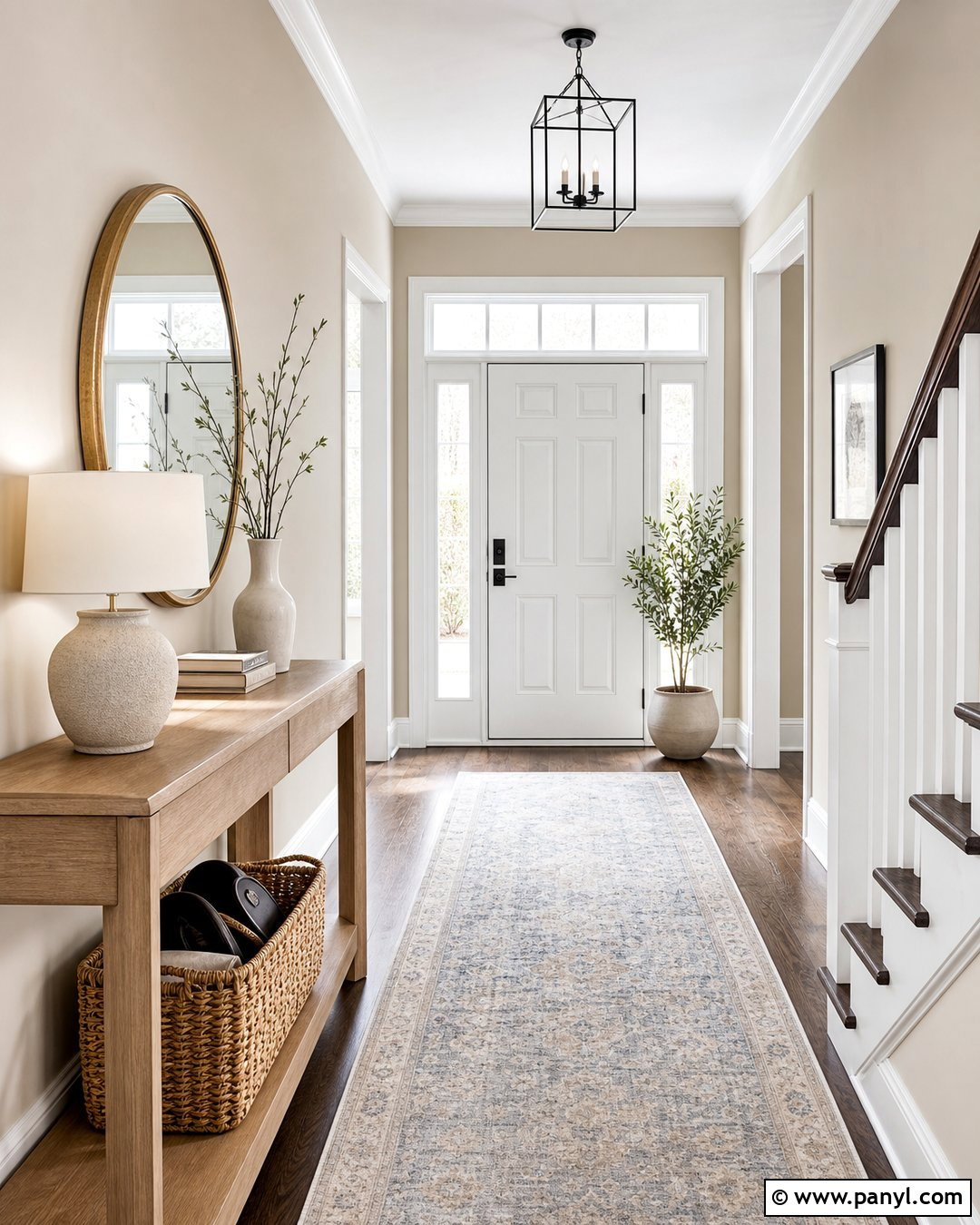
Soft sand beige walls bring gentle warmth to an entryway while remaining light enough for a narrow space. Pair the walls with clean white trim and a pale oak console that fits comfortably without restricting movement. Above it, hang a large round mirror with a thin antique brass frame. A flat-weave runner combining cream, tan, and faded blue creates practical pattern underfoot. Add a woven basket for shoes, a small ceramic lamp, and one substantial vase filled with branches. Matte black door hardware offers crisp contrast against the subdued palette. If the entry lacks natural light, use a simple milk-glass ceiling fixture. The complete design feels organized, welcoming, and connected to adjoining neutral rooms.
4. Light Greige Beige Walls
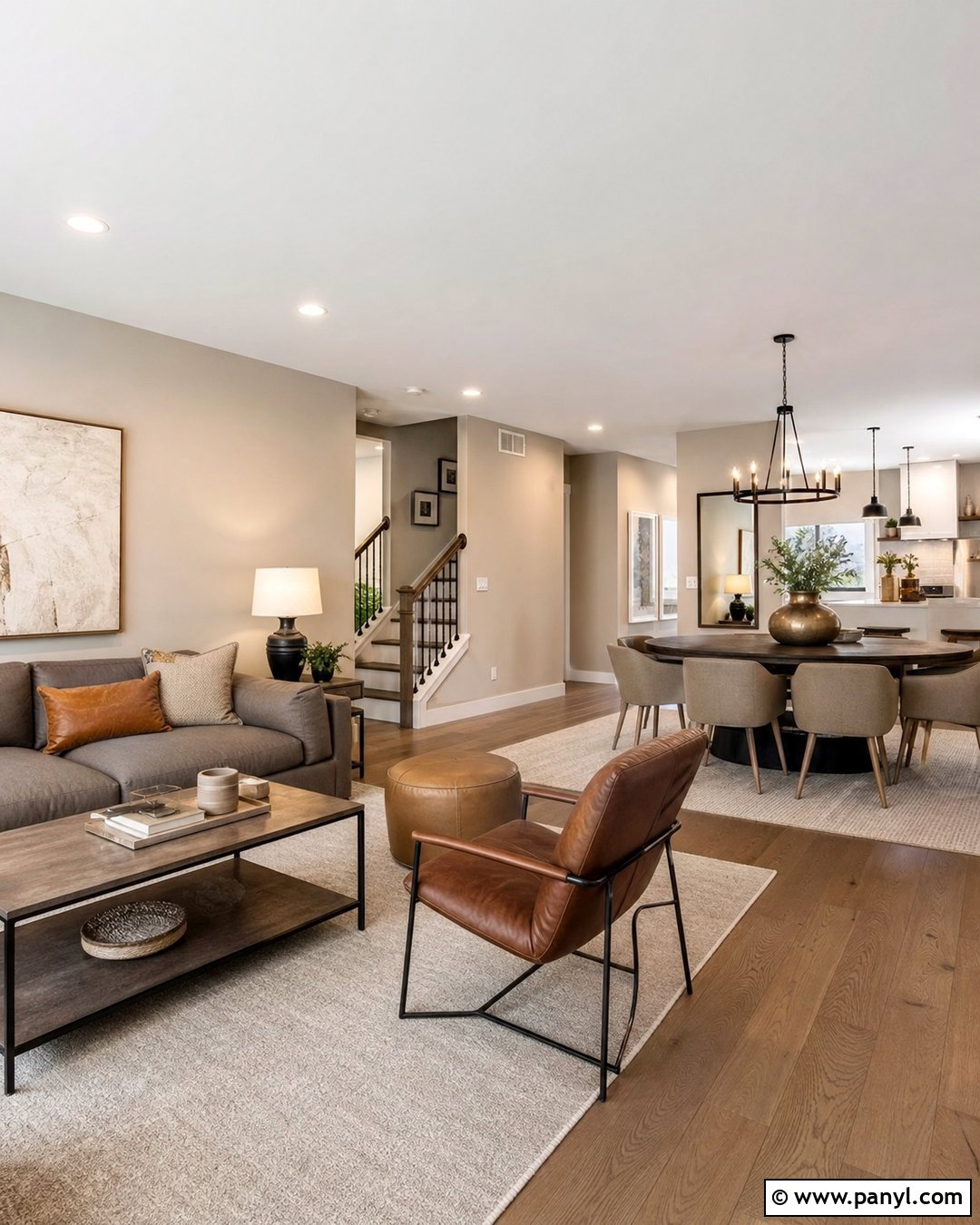
Light greige beige balances warm brown and cool gray, making it useful in an open-plan living and dining area. Apply the same wall color throughout to visually connect both zones. Define the living space with a charcoal-beige sofa, two light oak chairs, and a large cream rug. In the dining area, use an oval oak table with taupe upholstered chairs. Soft white trim keeps the shade looking clean rather than muddy. Add matte black lighting and hardware for structure, then introduce warmth through caramel leather, woven baskets, and brass details. Curtains in a slightly lighter greige create a smooth transition around the windows. This layered palette works especially well when flooring contains both warm and cool tones.
5. Mushroom Beige Walls
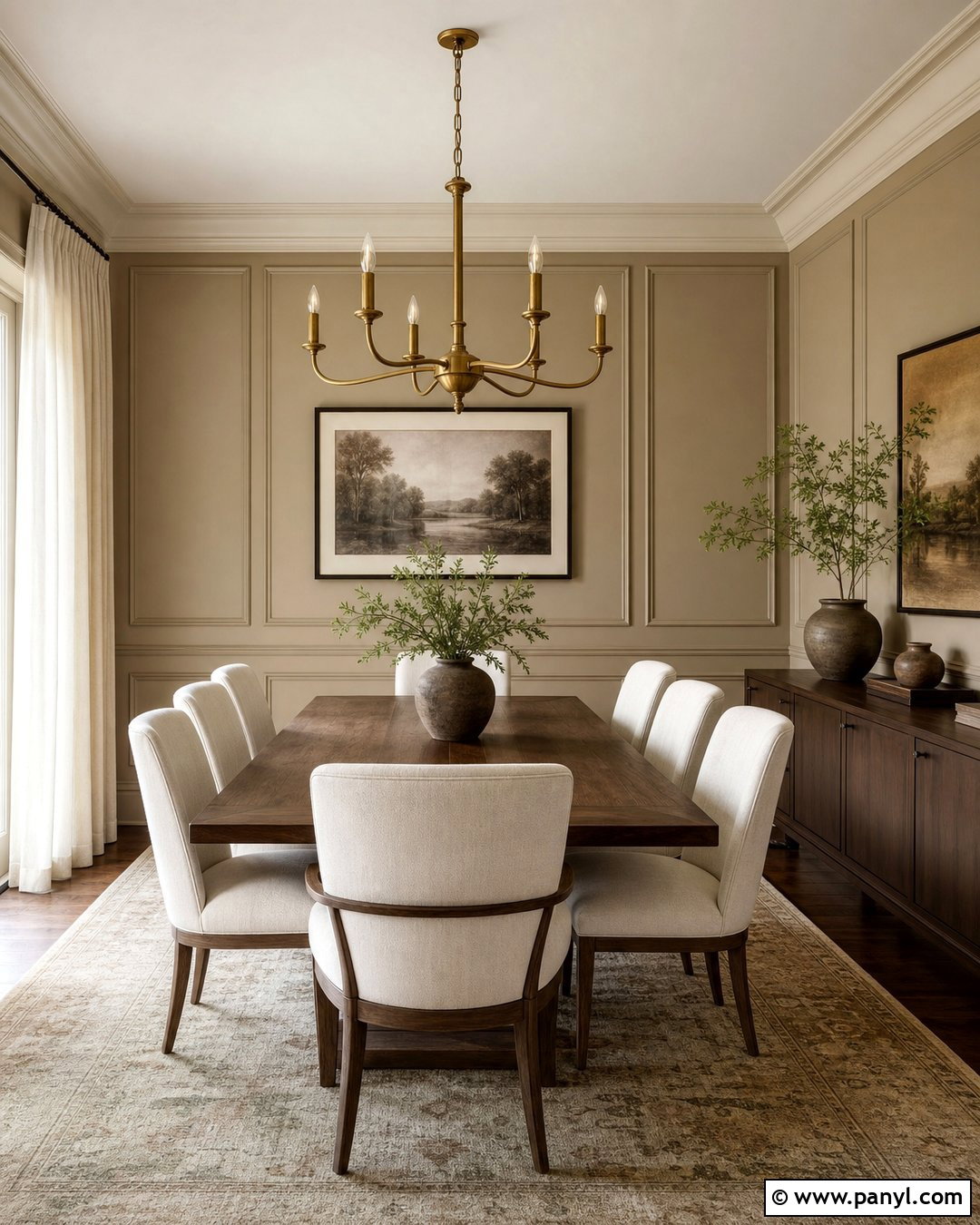
Mushroom beige walls give a dining room earthy depth through balanced gray-brown undertones. Use the color around the entire room, including simple wall paneling, for a cohesive finish. Center a dark walnut dining table beneath a sculptural aged brass chandelier. Upholstered chairs in creamy performance fabric soften the deeper wood. Choose an abstract rug combining mushroom, ivory, faded black, and muted olive. Warm white curtains prevent the room from feeling enclosed, while a black-framed landscape adds one strong focal point. On the sideboard, display matte ceramic vessels and a low bowl rather than numerous small accessories. The finished dining room feels sophisticated and grounded, yet comfortable enough for casual everyday meals.
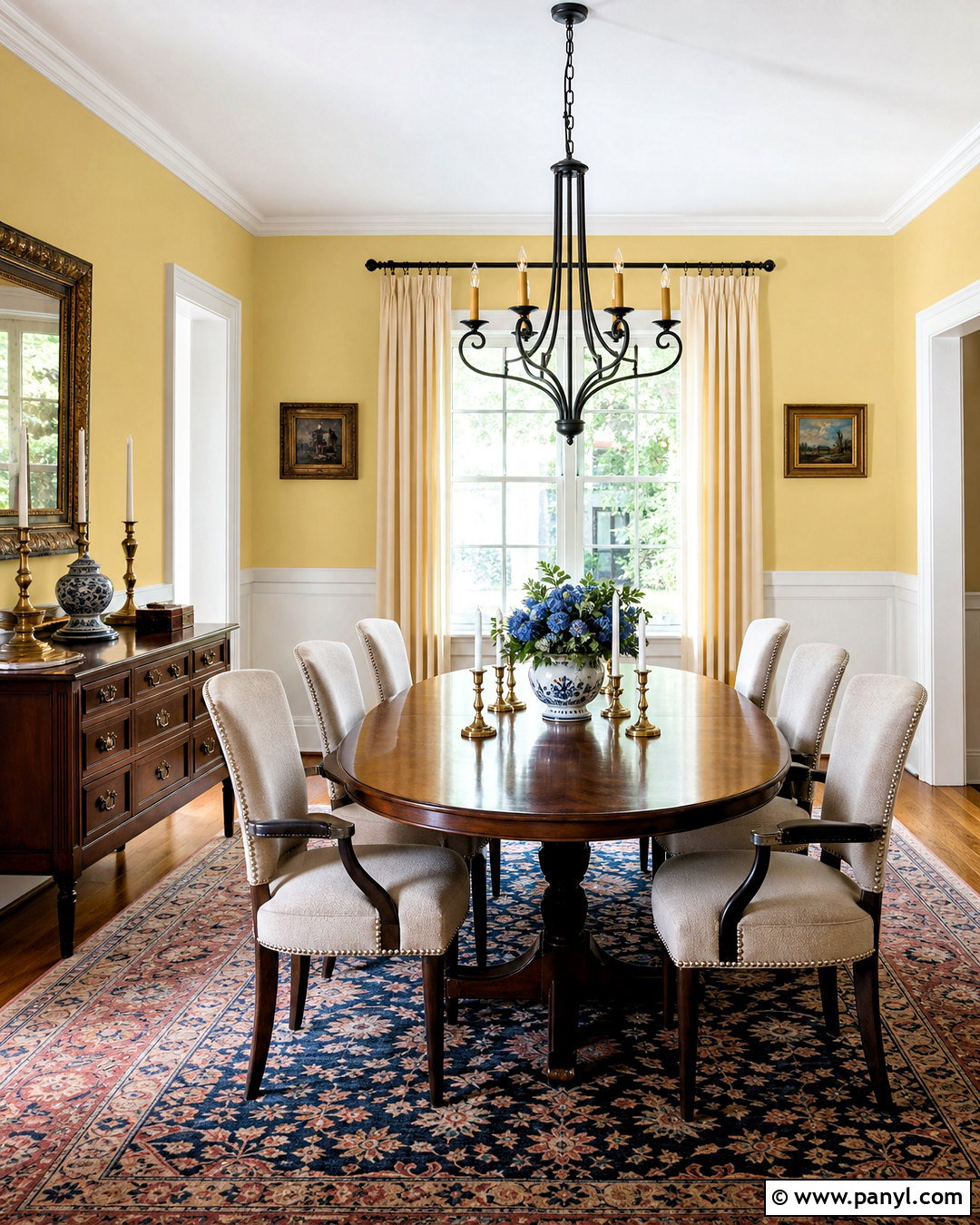
6. Oatmeal Beige Walls
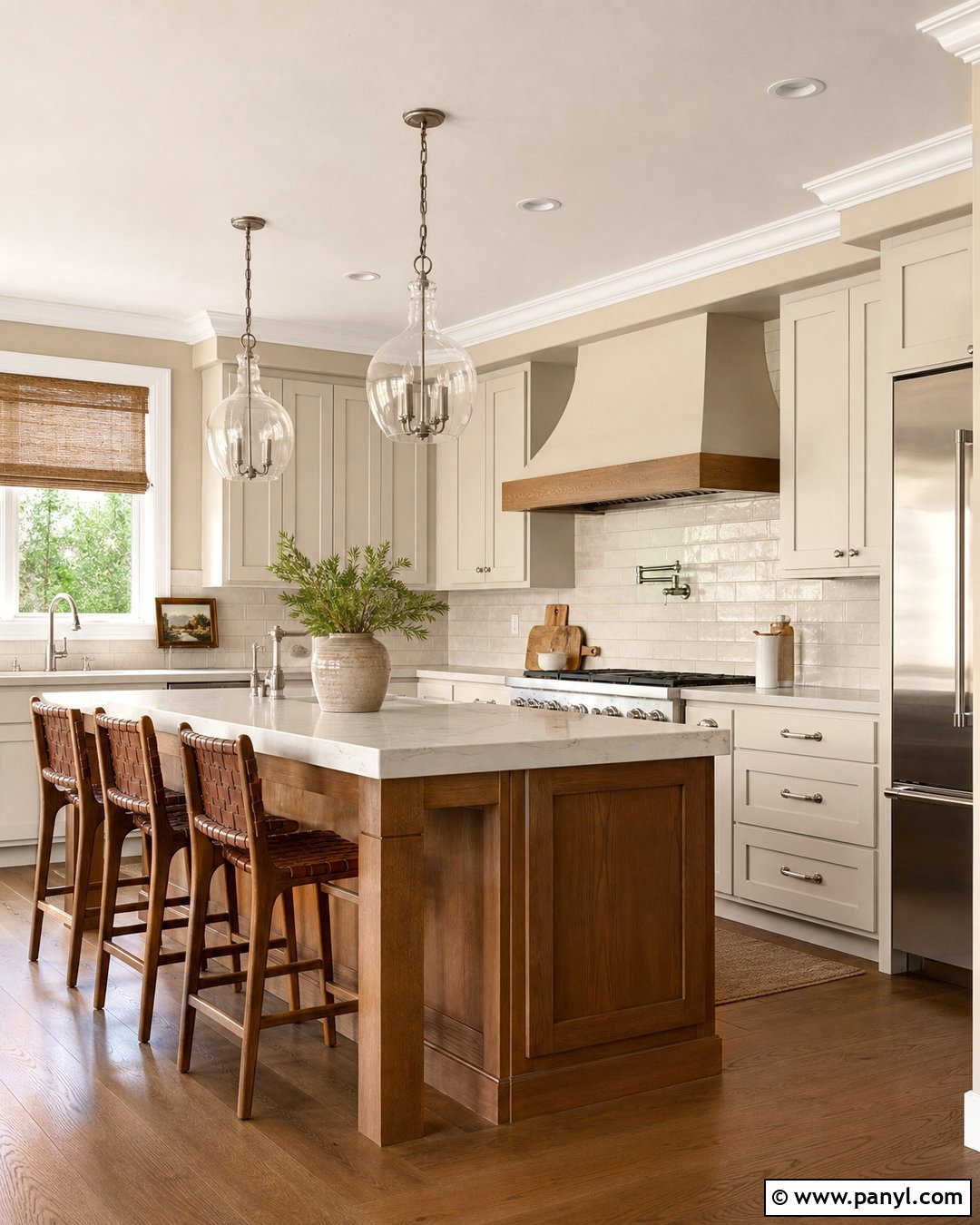
Oatmeal beige gives a kitchen warm character while remaining subtle beside cabinetry and stone. Use this soft, slightly grainy-looking neutral with creamy white shaker cabinets and a pale quartz countertop containing delicate tan veining. A medium oak island adds depth and keeps the palette from feeling washed out. Choose handmade-looking ivory backsplash tile, brushed nickel hardware, and simple glass pendants. Upholster counter stools in durable camel fabric or woven leather. Natural fiber shades introduce texture without blocking too much daylight. Keep small appliances and countertop decor minimal, using wooden boards, white ceramics, and one potted herb. The complete kitchen feels bright and approachable, with enough tonal variation to hide everyday wear gracefully.
7. Almond Beige Walls
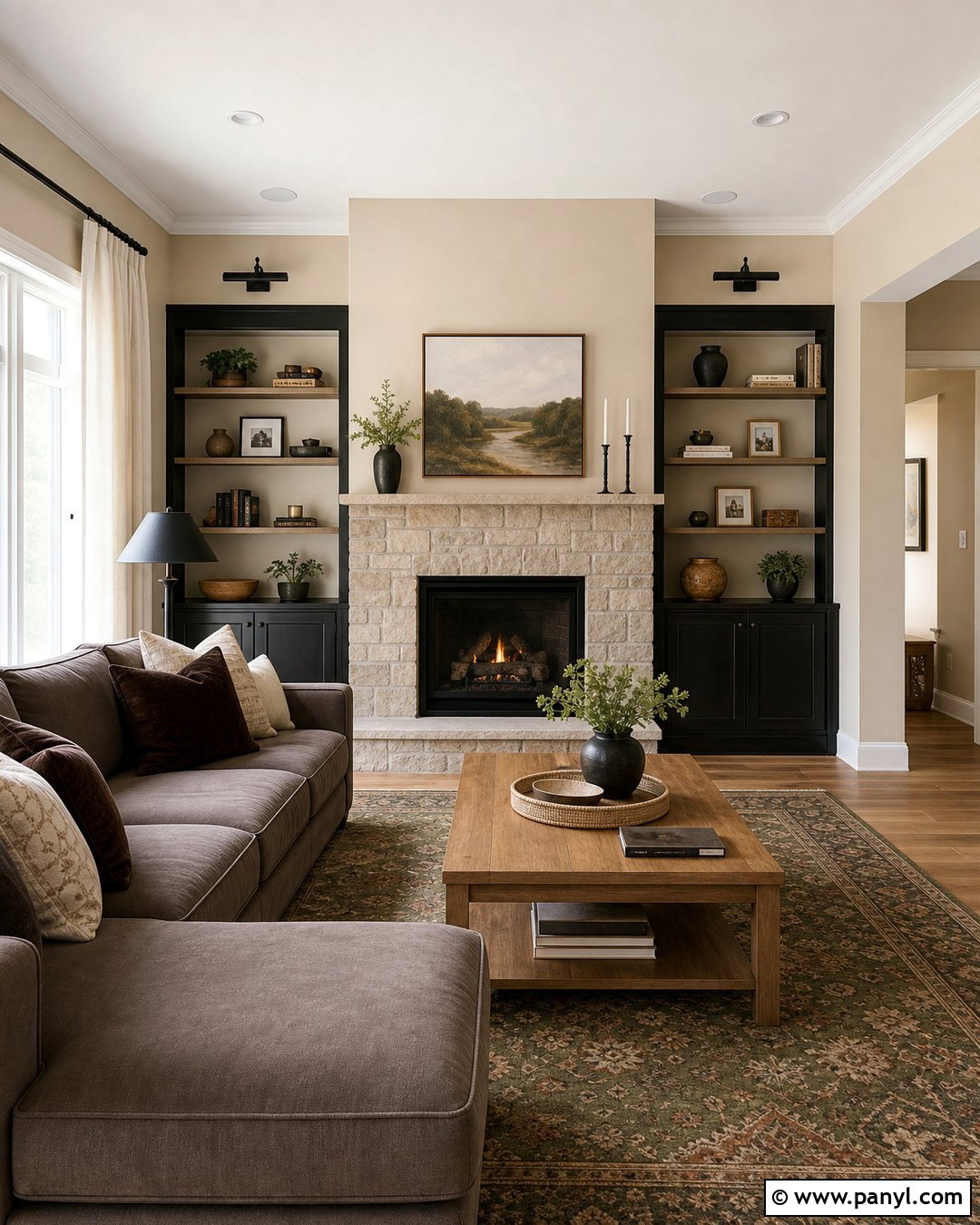
Almond beige walls create a family room that feels warm, familiar, and easy to live in. This shade has a gentle golden quality, so balance it with creamy trim rather than bright blue-white. Arrange a deep taupe sectional around a substantial oak coffee table and a low stone fireplace. Add ivory curtains, a soft patterned rug, and cushions in olive, rust, and chocolate brown. Black metal floor lamps provide necessary visual definition. Built-in shelves can match the wall color for a seamless appearance, with books and pottery arranged in small groups. Include closed storage for toys, games, and electronics. The final room combines durable materials with relaxed colors, making the almond walls look intentional rather than dated.
8. Camel Beige Walls
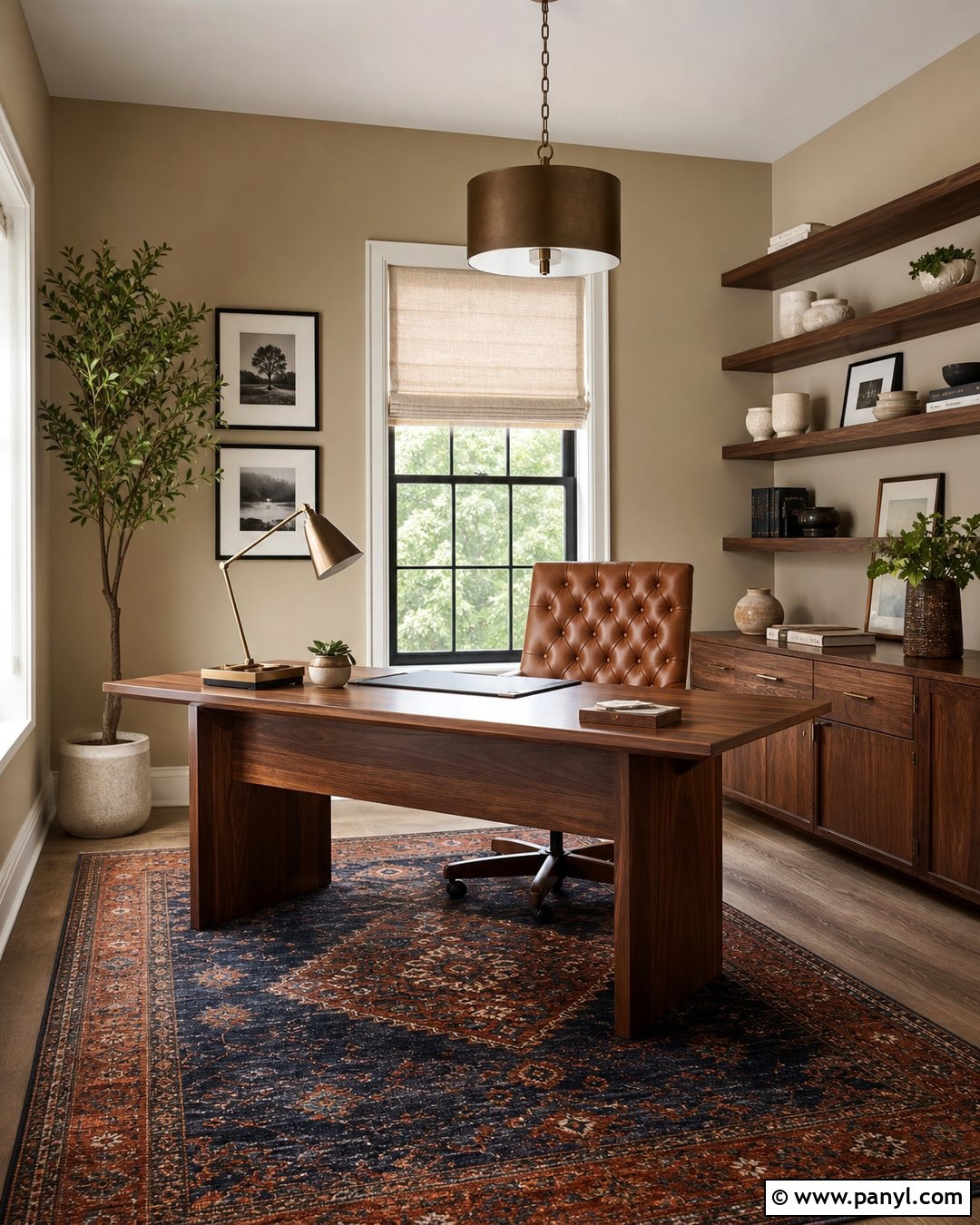
Camel beige delivers richer warmth in a home office and looks especially polished with dark wood furniture. Paint the main walls in a medium camel tone, then use warm white on the ceiling and trim. Position a walnut desk near the window and add a supportive chair upholstered in cognac leather. Behind the desk, install streamlined walnut shelves holding books, cream pottery, and covered storage boxes. A vintage-inspired rug with navy, rust, and tan creates contrast beneath the furniture. Choose bronze lighting and natural linen Roman shades. One large black-framed artwork gives the room a strong focal point. The finished office feels focused and professional while retaining the comfortable warmth needed for long working sessions.
9. Biscuit Beige Walls
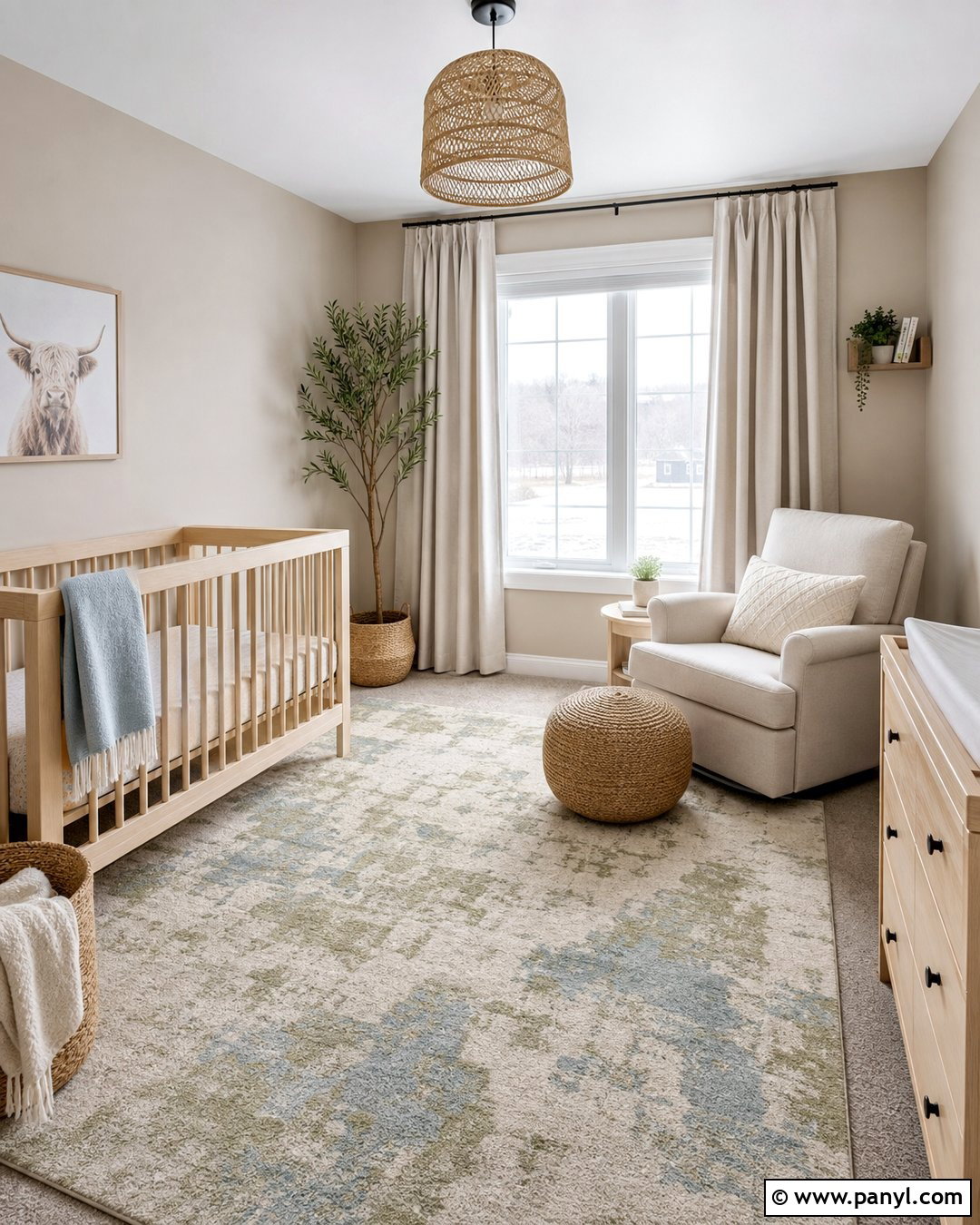
Biscuit beige walls make a nursery feel cozy, adaptable, and pleasantly warm. Select a light tan-beige with a creamy undertone, then pair it with soft white trim and pale maple furniture. Place the crib against an uncluttered wall and anchor the opposite corner with a comfortable ivory glider and small wooden table. A washable rug in cream, muted sage, and dusty blue adds gentle color. Use blackout linen curtains that closely match the wall shade for restful darkness when needed. A woven ceiling light and lidded baskets introduce practical texture. Keep artwork simple and securely mounted. This neutral foundation can transition easily as the child grows, accommodating changing bedding, storage, and decorative accents without requiring immediate repainting.
10. Taupe Beige Walls
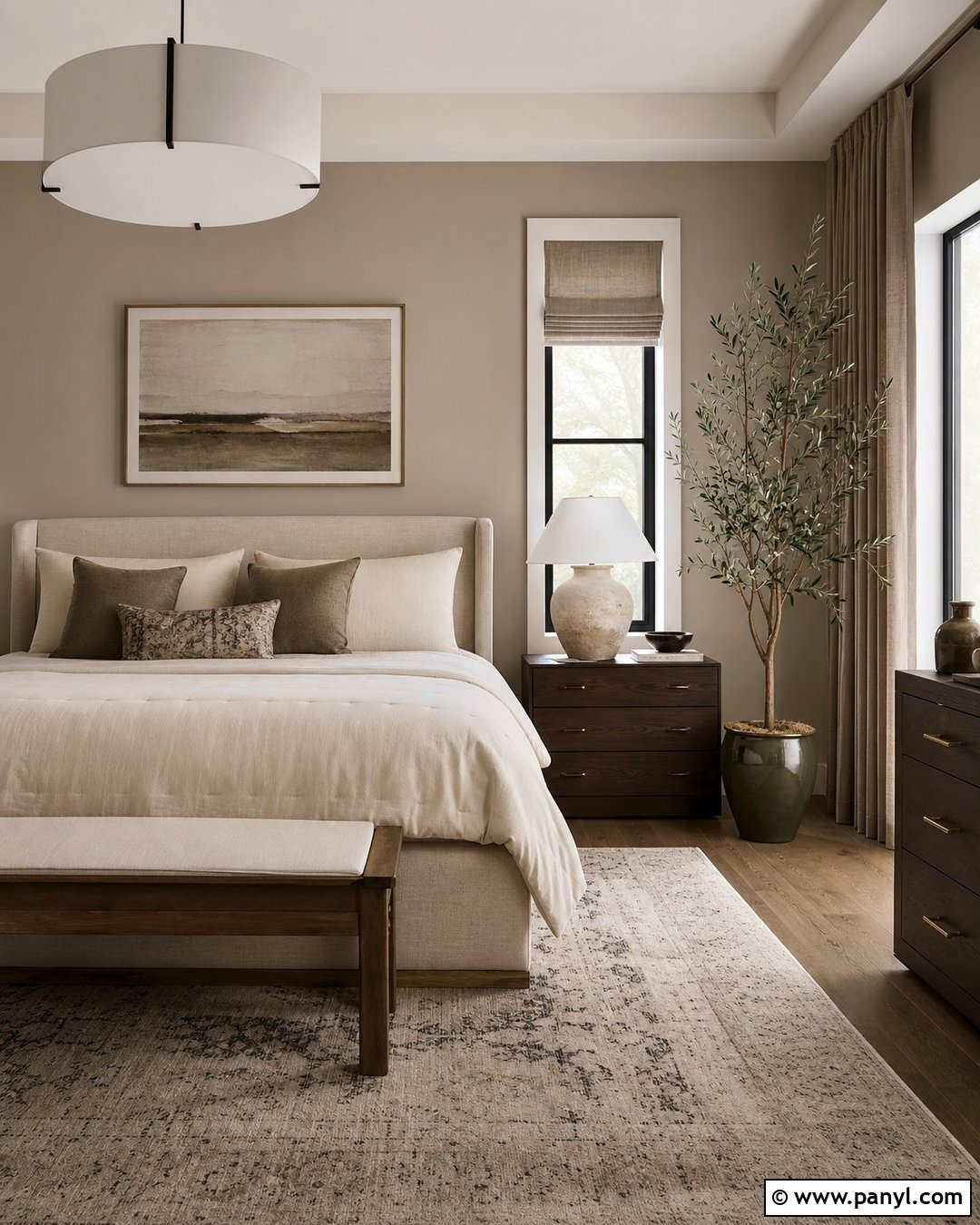
Taupe beige brings calm sophistication to a primary bedroom by combining brown warmth with a restrained gray cast. Use it on every wall and pair it with warm white ceilings for subtle contrast. An upholstered bed in pale stone fabric should anchor the room, layered with ivory sheets, taupe pillows, and a deep brown throw. Select dark oak nightstands and oversized ceramic lamps to give the light bedding more weight. Full-length curtains in warm gray-beige add softness around the windows. A broad wool rug featuring cream and faded charcoal creates definition beneath the bed. Finish with bronze hardware, minimal artwork, and one olive tree. The room feels restful, mature, and comfortably connected to nature.
11. Pink Beige Walls
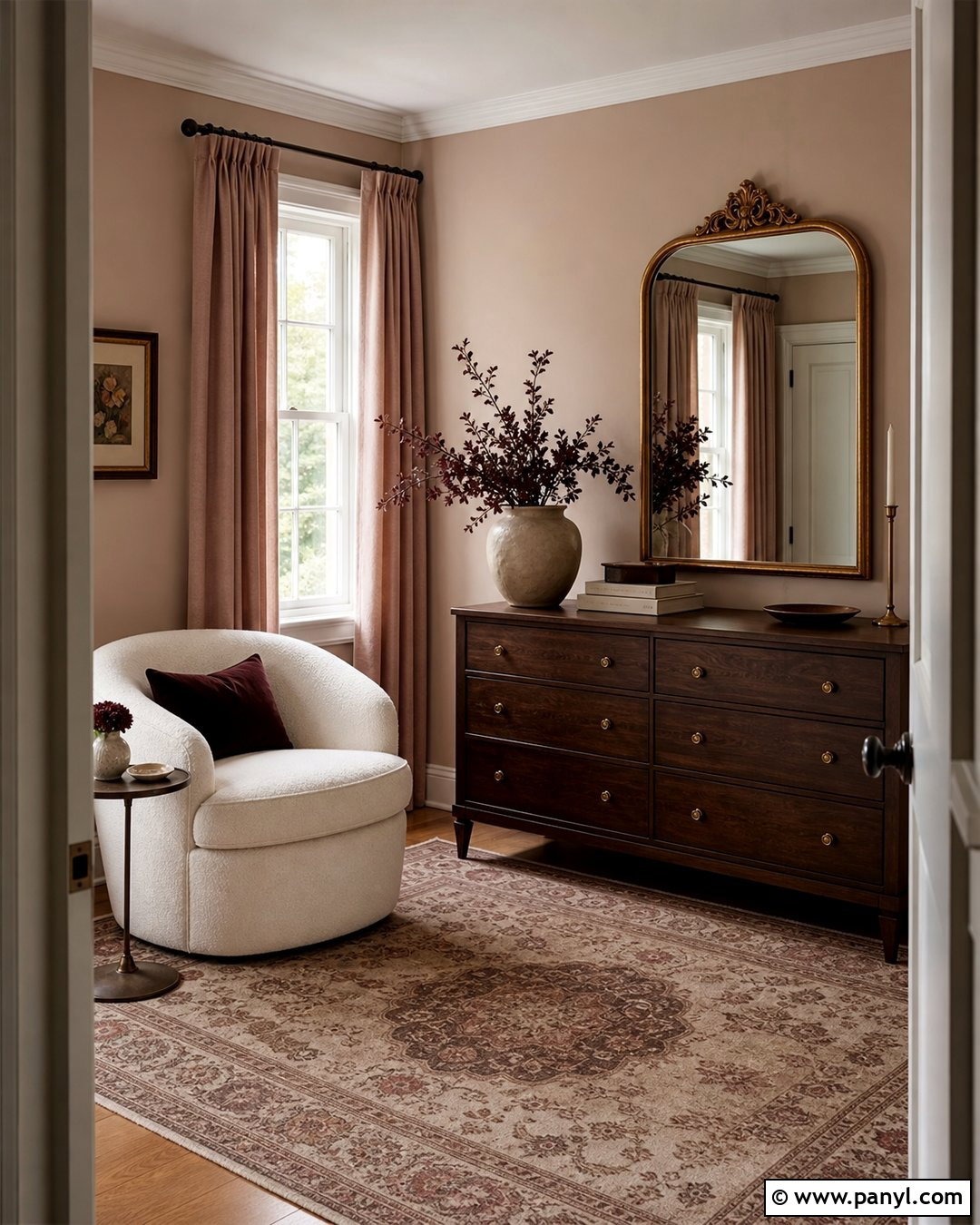
Pink beige walls can look refined when their rosy undertone is balanced with natural materials and restrained colors. Use this shade in a dressing room or quiet bedroom with ivory-painted trim and light oak flooring. Add a curved cream chair, a walnut dresser, and an antique brass mirror to emphasize the room’s softness. Choose curtains in a dusty rose-beige that sit only slightly deeper than the walls. Bedding or upholstery should include oatmeal, chocolate brown, and muted burgundy accents rather than bright pink. A vintage-style rug adds gentle pattern and keeps the palette from appearing overly sweet. Matte ceramic decor and simple framed sketches complete a warm, elegant space with an understated blush effect.
12. Peach Beige Walls
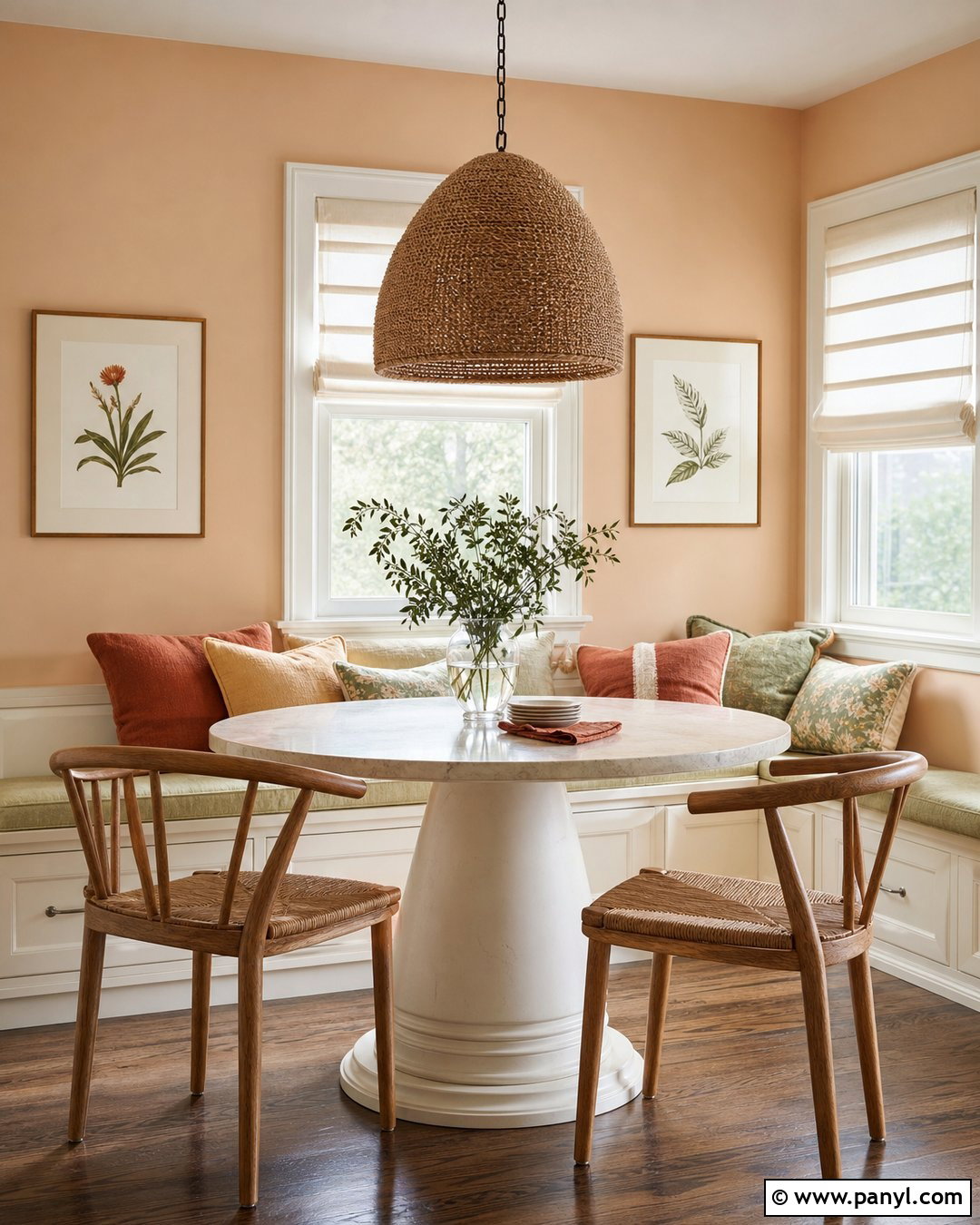
Peach beige creates a sunny breakfast nook that feels cheerful without relying on a strong orange color. Pair the walls with warm white trim, natural oak flooring, and a built-in banquette upholstered in durable cream fabric. Add a round pedestal table and curved wooden chairs to keep circulation open. Cushions in terracotta, pale yellow, and muted green bring out the wall color’s warmth. Hang a woven pendant centered above the table and use relaxed ivory Roman shades at the windows. A small gallery of botanical prints adds interest without overwhelming the compact area. Keep the nearby surfaces light and uncluttered. The complete nook feels bright, friendly, and ideal for relaxed breakfasts or afternoon coffee.
13. Golden Beige Walls
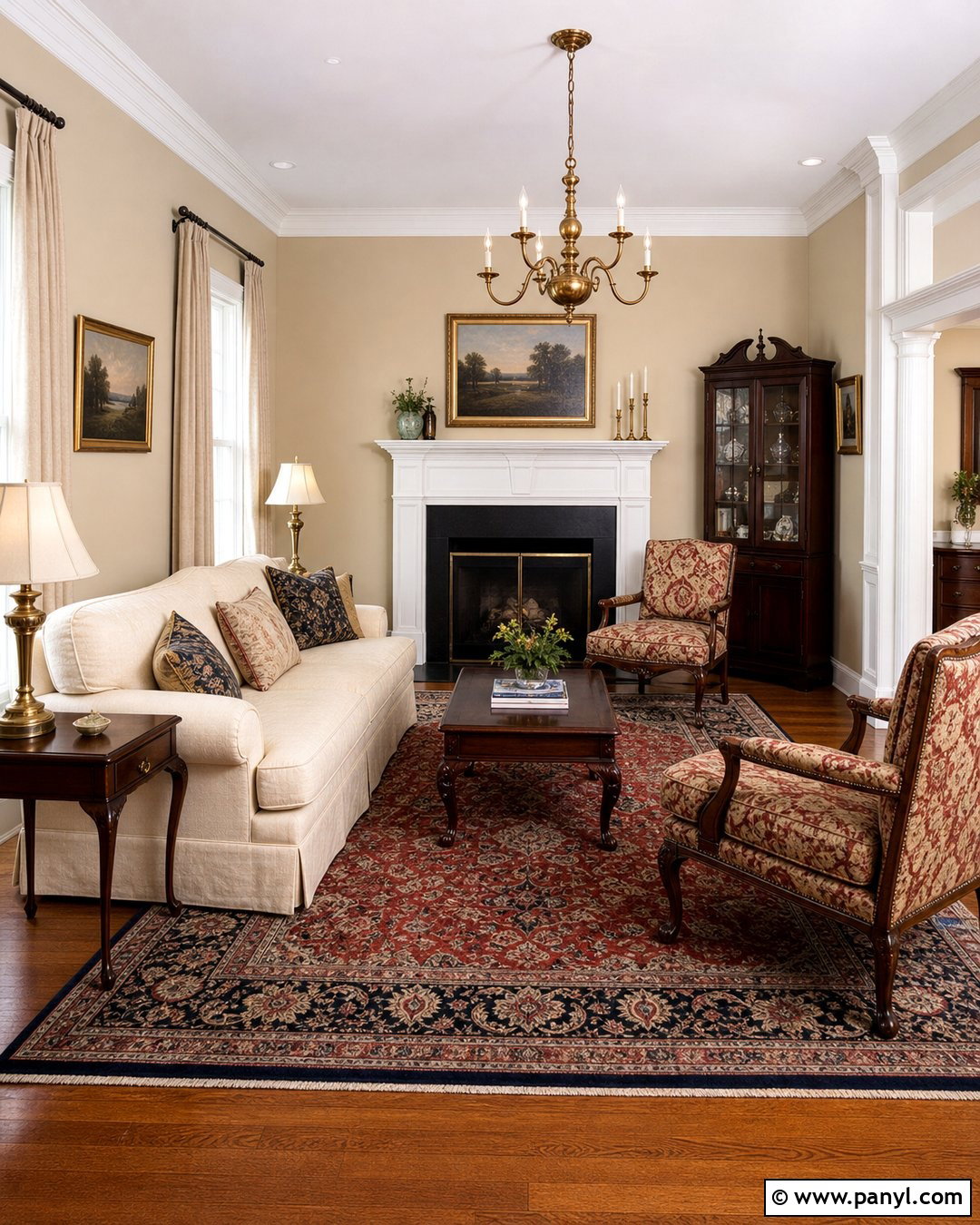
Golden beige walls suit a traditional living room with rich wood, tailored furniture, and classic architectural details. Choose a muted gold-beige rather than a strong yellow, then frame it with creamy crown molding and substantial baseboards. Arrange a warm ivory sofa with two patterned armchairs around a mahogany coffee table. A traditional rug in faded red, navy, tan, and cream grounds the furniture. Use antique brass lamps, pleated shades, and linen curtains for layered softness. Landscape paintings in aged gold frames reinforce the established character. Add a few modern solid-colored pillows to prevent the room from feeling too formal. The result is polished and timeless, with golden warmth carried evenly throughout the complete scheme.
14. Khaki Beige Walls
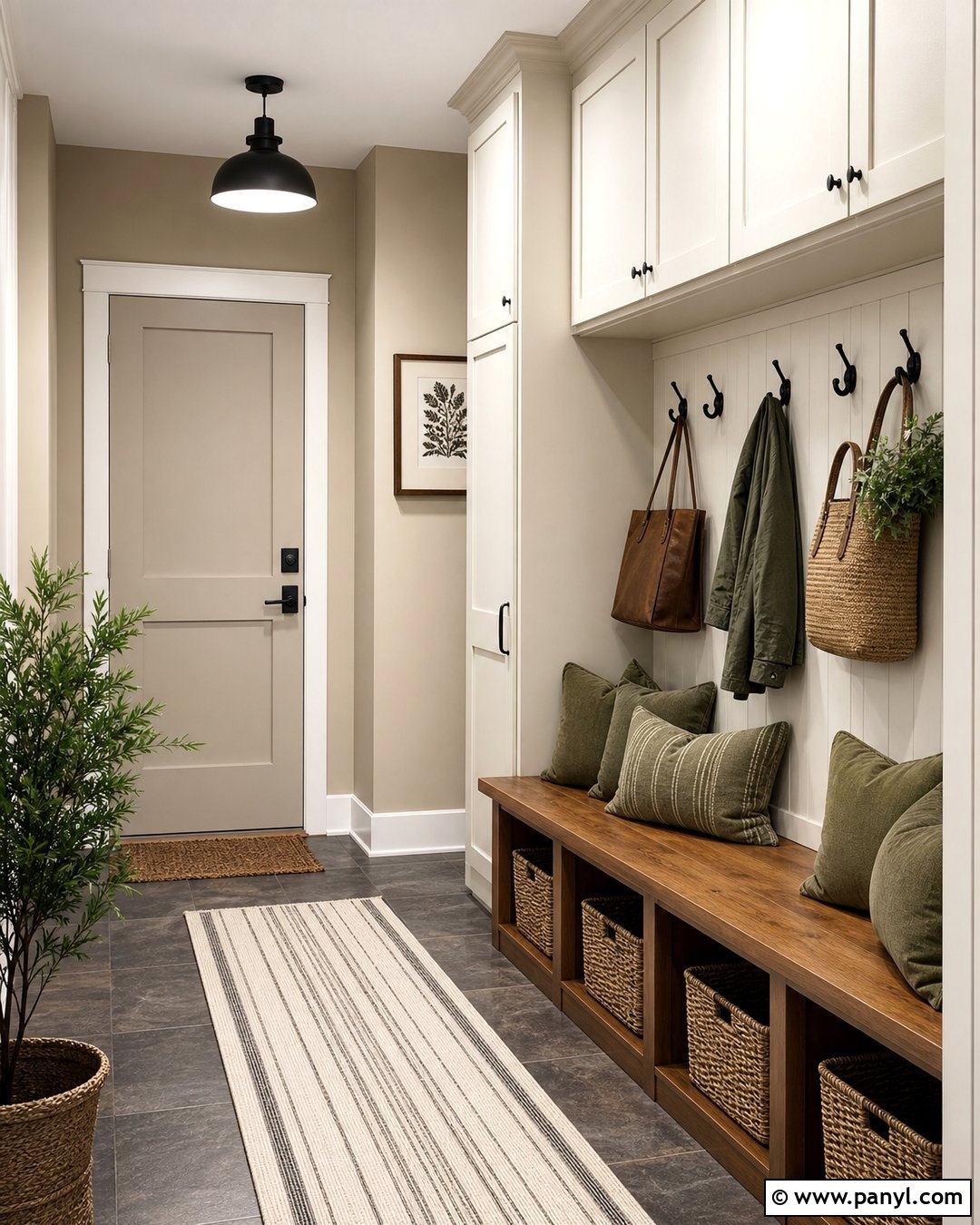
Khaki beige brings a practical, earthy quality to a mudroom and hides minor marks better than very pale neutrals. Paint the walls in a muted tan with subtle green undertones, then install warm white cabinets and oak bench seating. Use durable slate-look porcelain tile in a medium gray-brown tone. Black hooks, cabinet pulls, and a simple industrial ceiling fixture add crisp definition. Place washable olive and cream cushions on the bench and slide woven baskets into open cubbies below. A striped indoor-outdoor runner can handle busy daily traffic. Include closed upper cabinets to control visual clutter. This complete mudroom feels organized and durable, while the khaki beige walls connect naturally with wood, stone, and outdoor colors.
15. Green Beige Walls
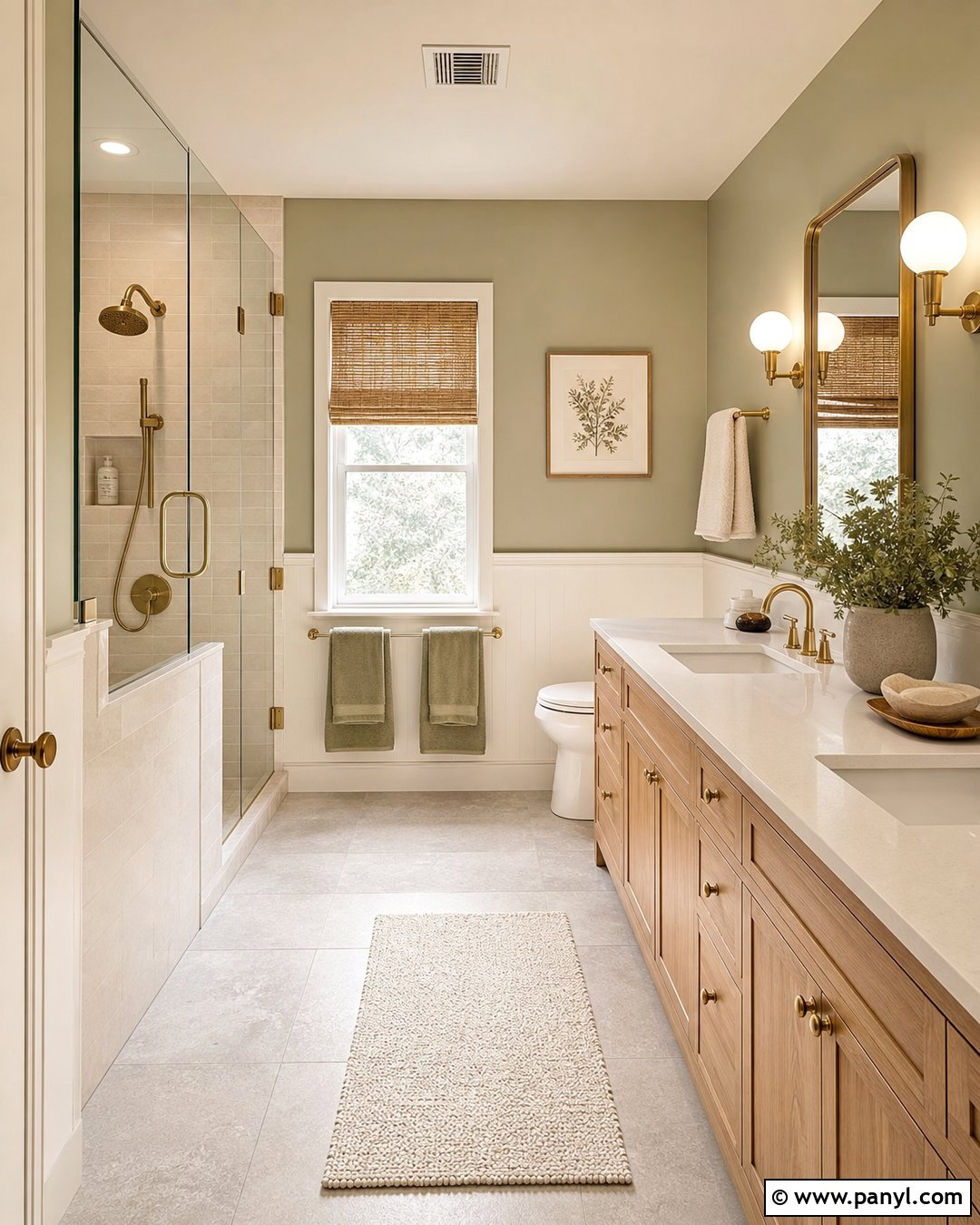
Green beige walls provide a quiet, organic backdrop for a bathroom filled with wood and stone finishes. Select a soft beige with an understated olive cast and use it above warm white wainscoting or tile. A natural oak vanity, creamy quartz counter, and brushed brass fixtures reinforce the gentle warmth. Choose a frameless glass shower with limestone-look tile and grout that matches closely. Towels in ivory and muted sage create a coordinated but not overly matched palette. Add a woven shade for privacy and a simple globe sconce on each side of the mirror. With restrained decor and a few leafy stems, the room feels fresh, balanced, and connected to natural materials.
16. Stone Beige Walls
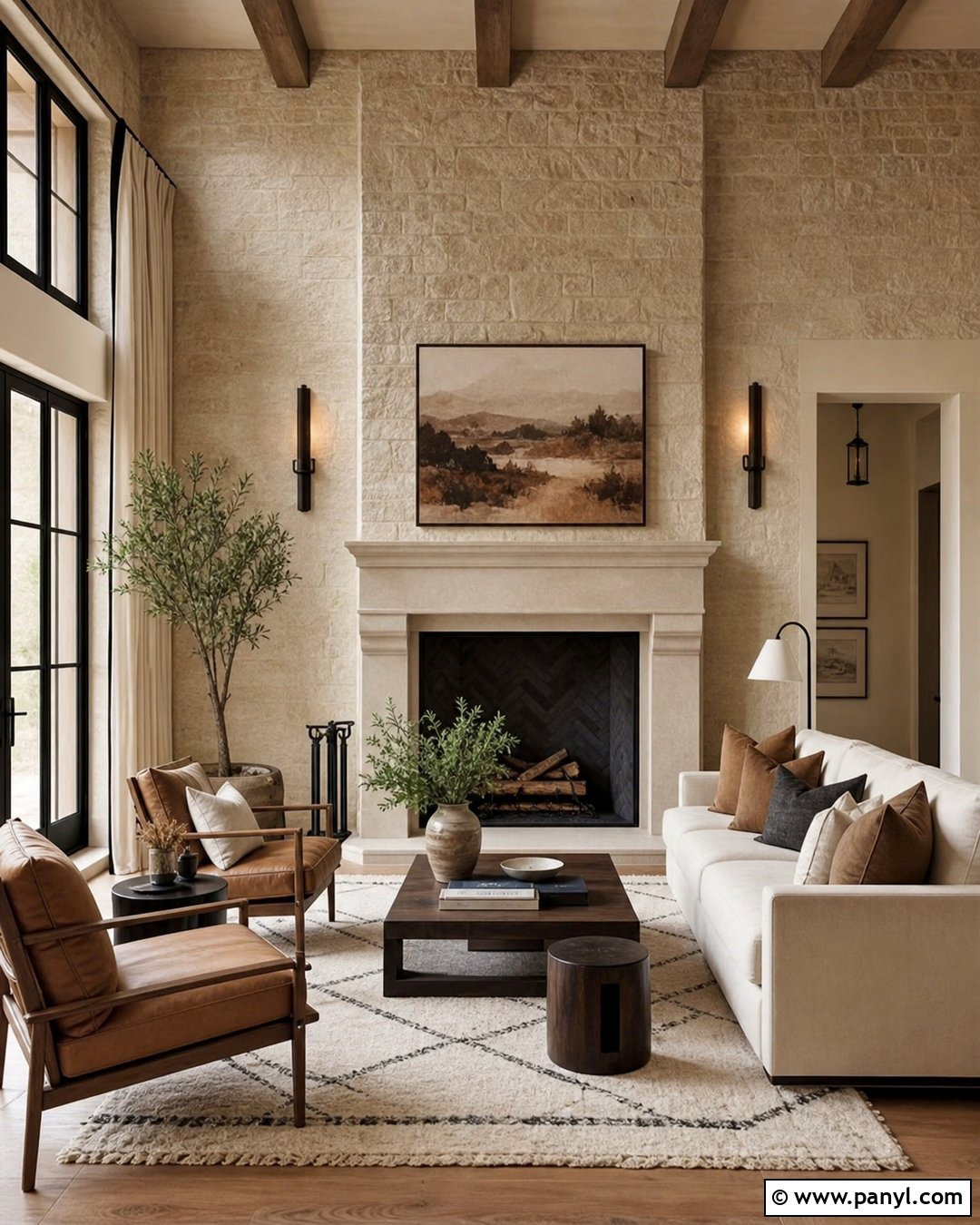
Stone beige walls create a strong foundation for a living room centered around a fireplace. Choose a balanced mineral beige with subtle gray undertones, then surround the firebox with honed limestone in a slightly deeper shade. A low cream sofa and two walnut-framed lounge chairs form an inviting conversation area. Ground the arrangement with a textured wool rug in ivory and soft charcoal. Black fireplace tools and slim bronze lighting provide clean contrast. Keep window treatments light and simple, using off-white linen panels mounted near the ceiling. Display one large abstract artwork above the mantel with restrained brown, black, and clay tones. The complete room feels architectural, calm, and naturally layered rather than plain.
17. Clay Beige Walls
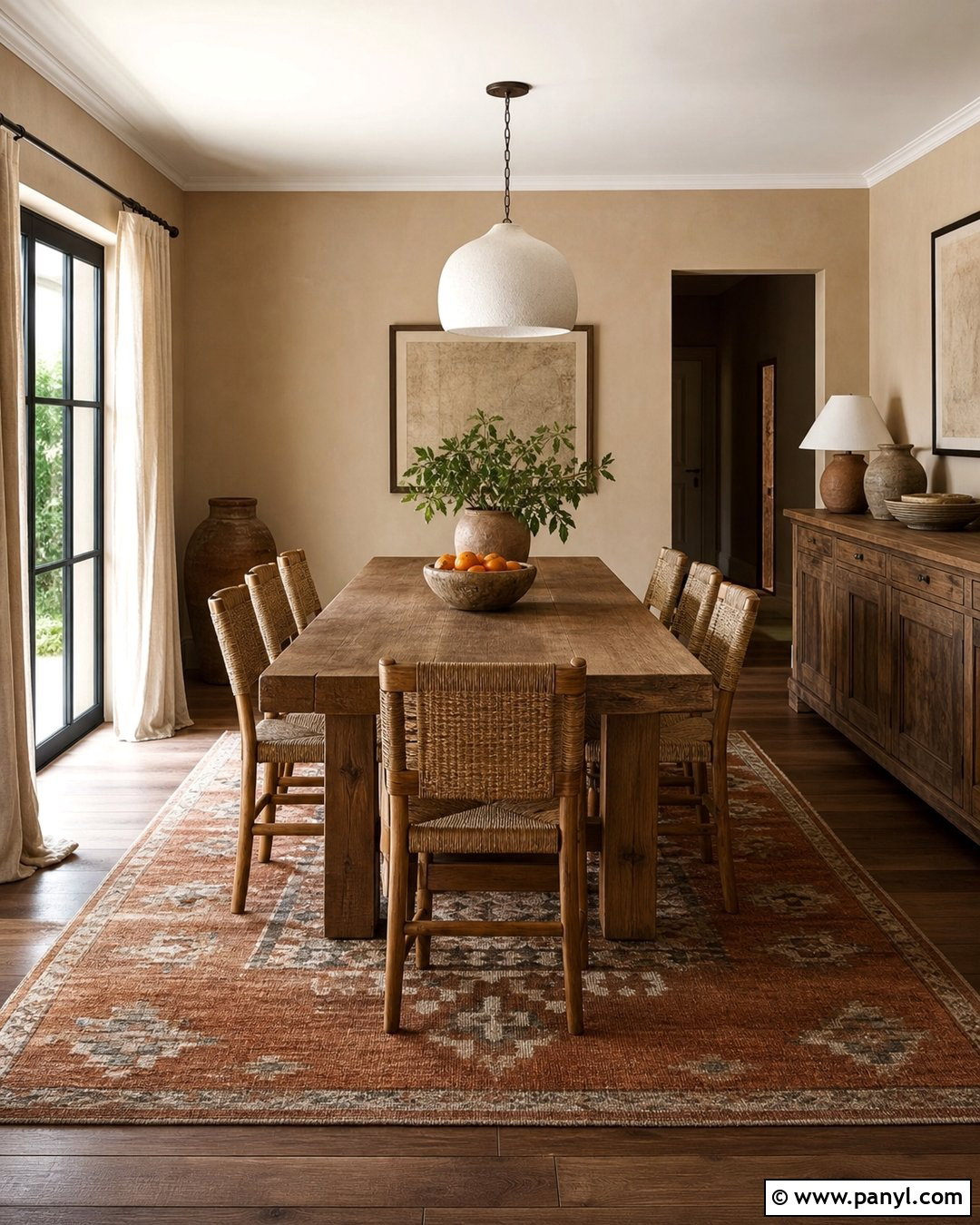
Clay beige introduces earthy red-brown warmth while remaining neutral enough for a comfortable dining space. Cover the walls in a muted clay-infused beige and paint the trim a soft cream. Choose a chunky oak dining table with woven rush chairs for a relaxed, tactile look. Above it, hang a wide plaster pendant in warm white. A flat-weave rug combining sand, rust, and dark brown anchors the table without appearing formal. Use linen curtains in pale oatmeal and a vintage wooden sideboard for additional storage. Handmade ceramics and a simple bowl of greenery provide finishing touches. The completed room feels grounded and sun-baked, with the clay beige acting as a subtle link between wood, textiles, and pottery.
18. Mocha Beige Walls
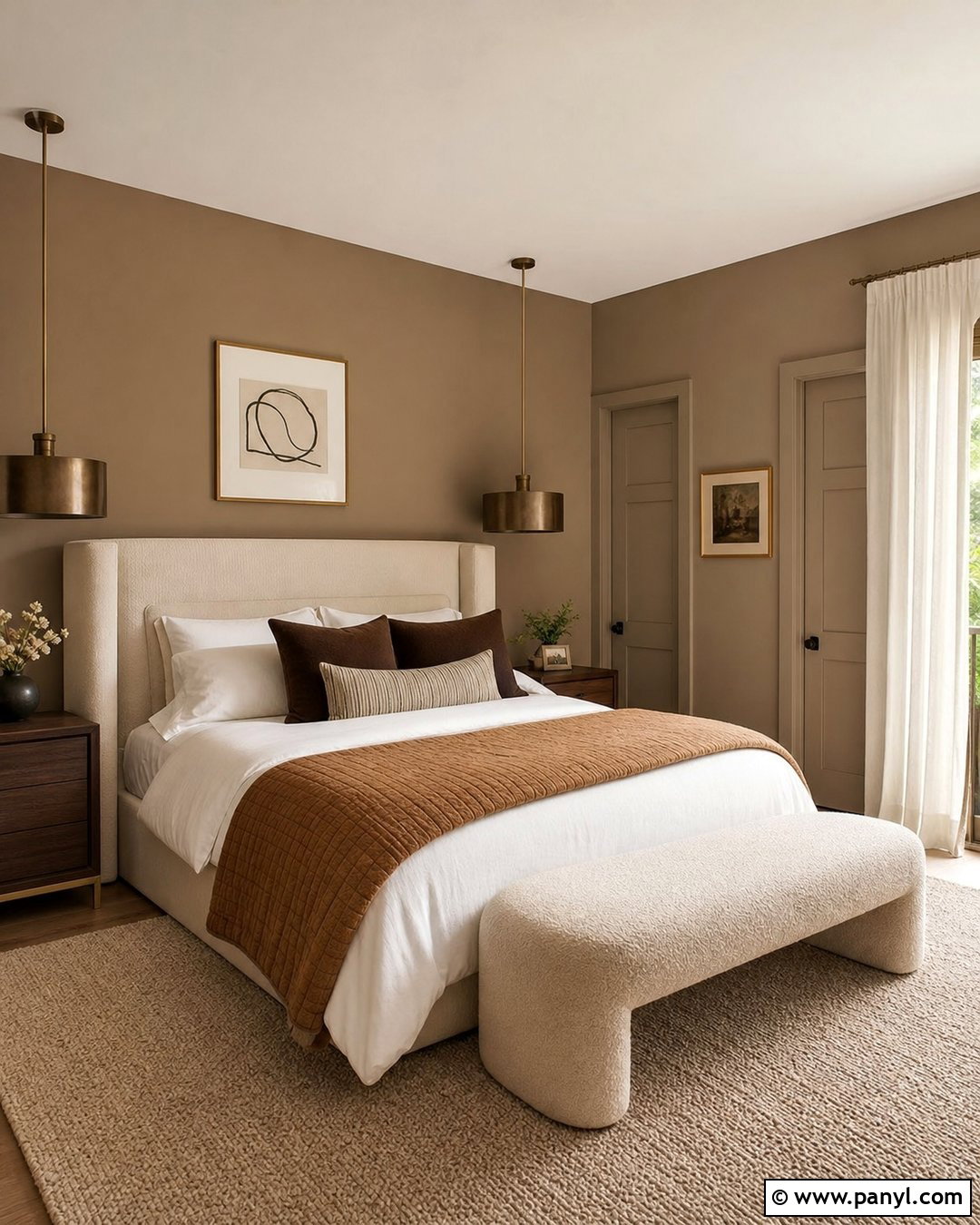
Mocha beige walls give a bedroom deeper warmth and create a cozy effect without requiring very dark paint. Select a medium brown-beige and carry it across the walls, doors, and trim for a smooth, enveloping finish. Use a tall cream upholstered bed to create contrast, then layer it with white sheets, chocolate pillows, and a caramel quilt. Dark walnut nightstands and bronze reading lights suit the richer background. Hang warm ivory curtains to brighten the windows and place a large oatmeal rug beneath the bed. Limit artwork to one oversized tonal piece. A curved boucle bench softens the foot of the bed. The complete design feels intimate and polished while remaining bright enough for everyday comfort.
19. Putty Beige Walls
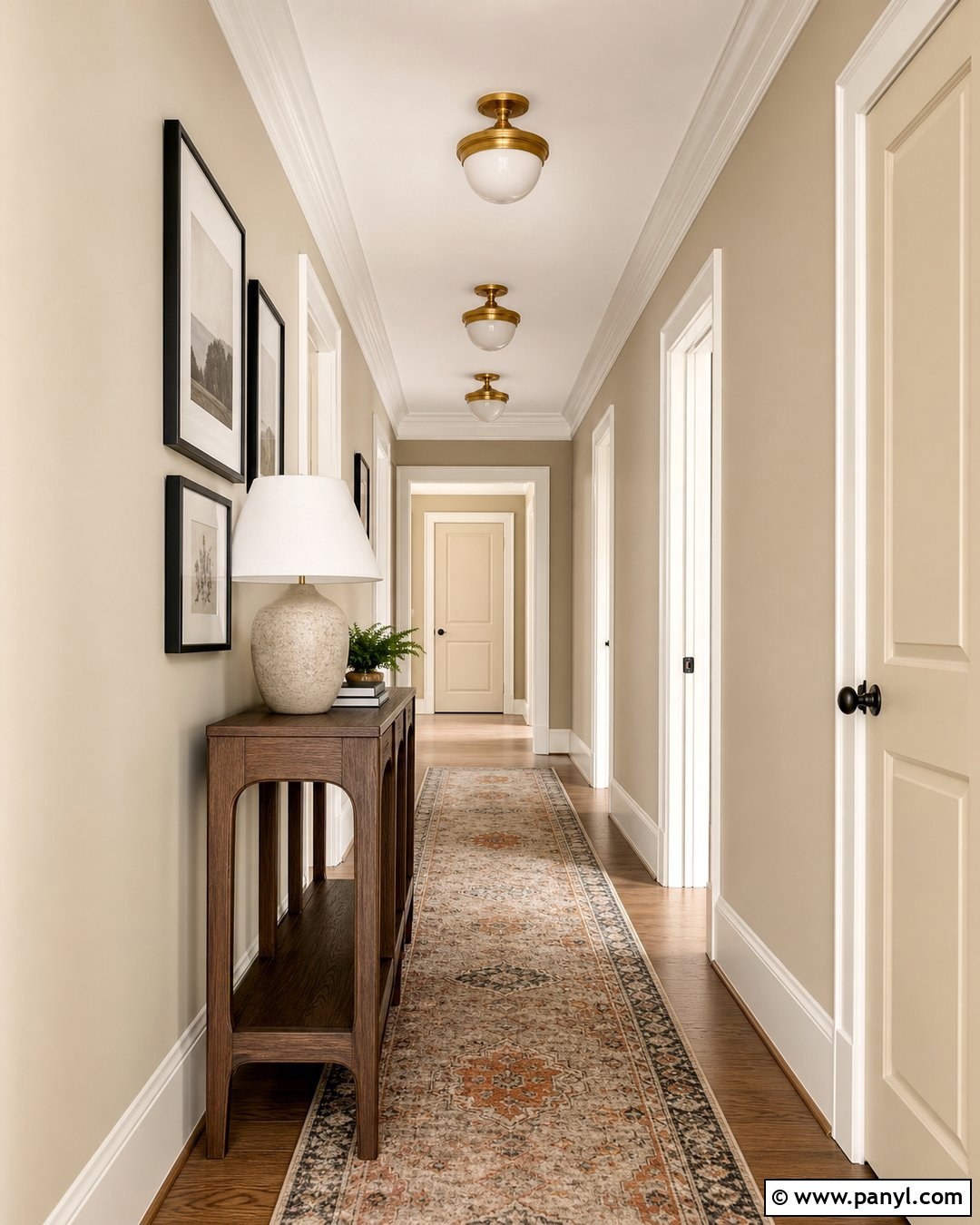
Putty beige is an adaptable choice for hallways because its balanced gray, brown, and green notes coordinate with many adjoining rooms. Paint the walls and interior doors in the same shade, using a satin finish on doors for practical durability. Keep the ceiling and baseboards soft white to maintain brightness. Add a narrow walnut console where space permits, topped with a ceramic lamp and one shallow tray. A long runner in cream, charcoal, and muted rust directs the eye through the passage. Use simple black-framed prints in an evenly spaced arrangement. Brass ceiling fixtures introduce warmth without taking up visual space. The finished hallway feels thoughtfully decorated and creates a calm transition between more colorful rooms.
20. Driftwood Beige Walls
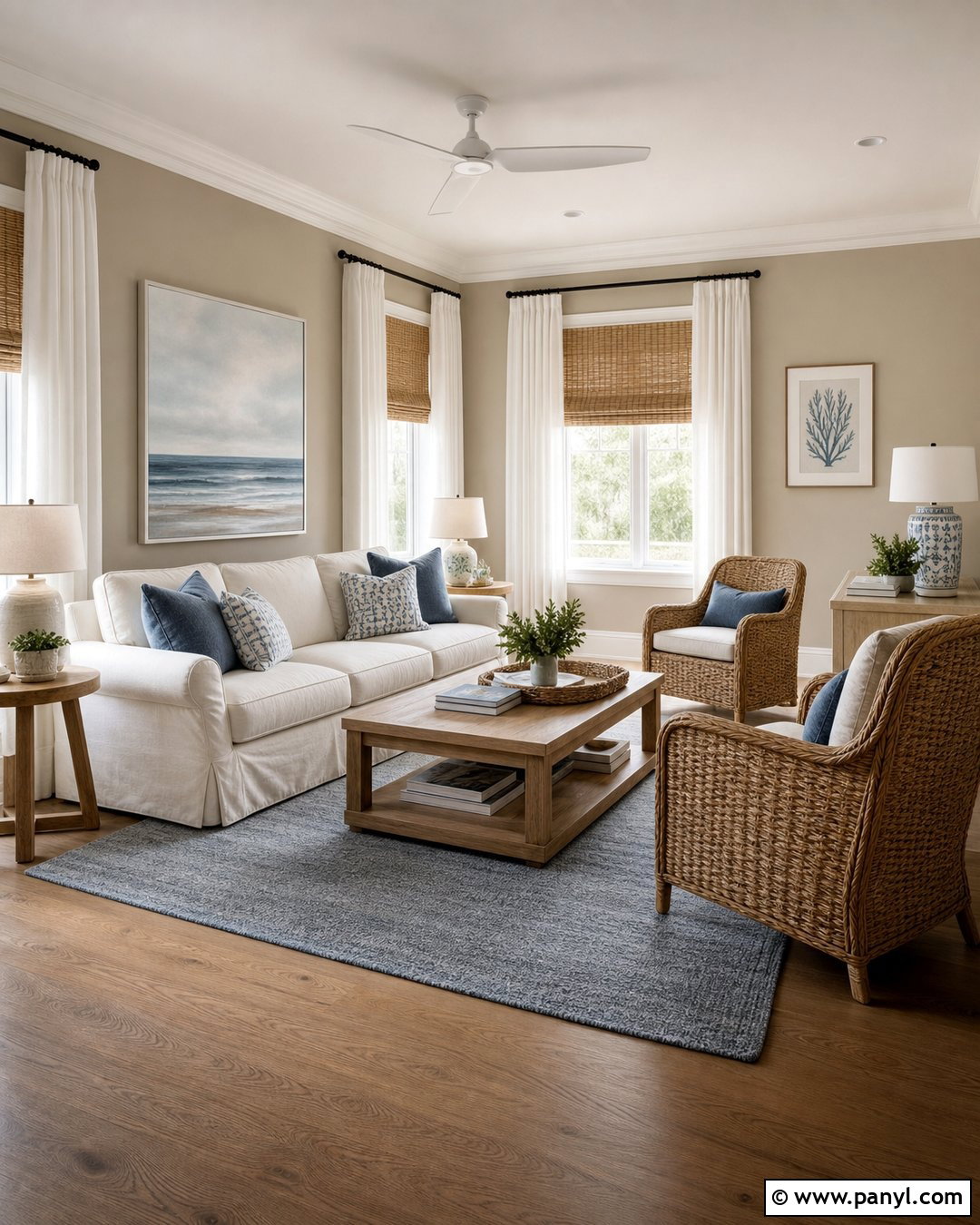
Driftwood beige walls support a relaxed coastal living room without relying on obvious nautical decorations. Choose a pale weathered beige containing restrained gray undertones. Pair it with a slipcovered ivory sofa, woven rattan chairs, and a light oak coffee table. A blue-gray wool rug adds cool contrast while maintaining the room’s quiet character. Dress the windows with loose white linen curtains and use woven bamboo shades for added texture. Accent pillows can combine faded denim blue, cream, and sandy tan. Select oversized coastal photography or abstract seascape art instead of themed signs and ornaments. With bleached woods, matte ceramics, and simple greenery, the complete room feels breezy, natural, and suitable for everyday living.
21. Parchment Beige Walls
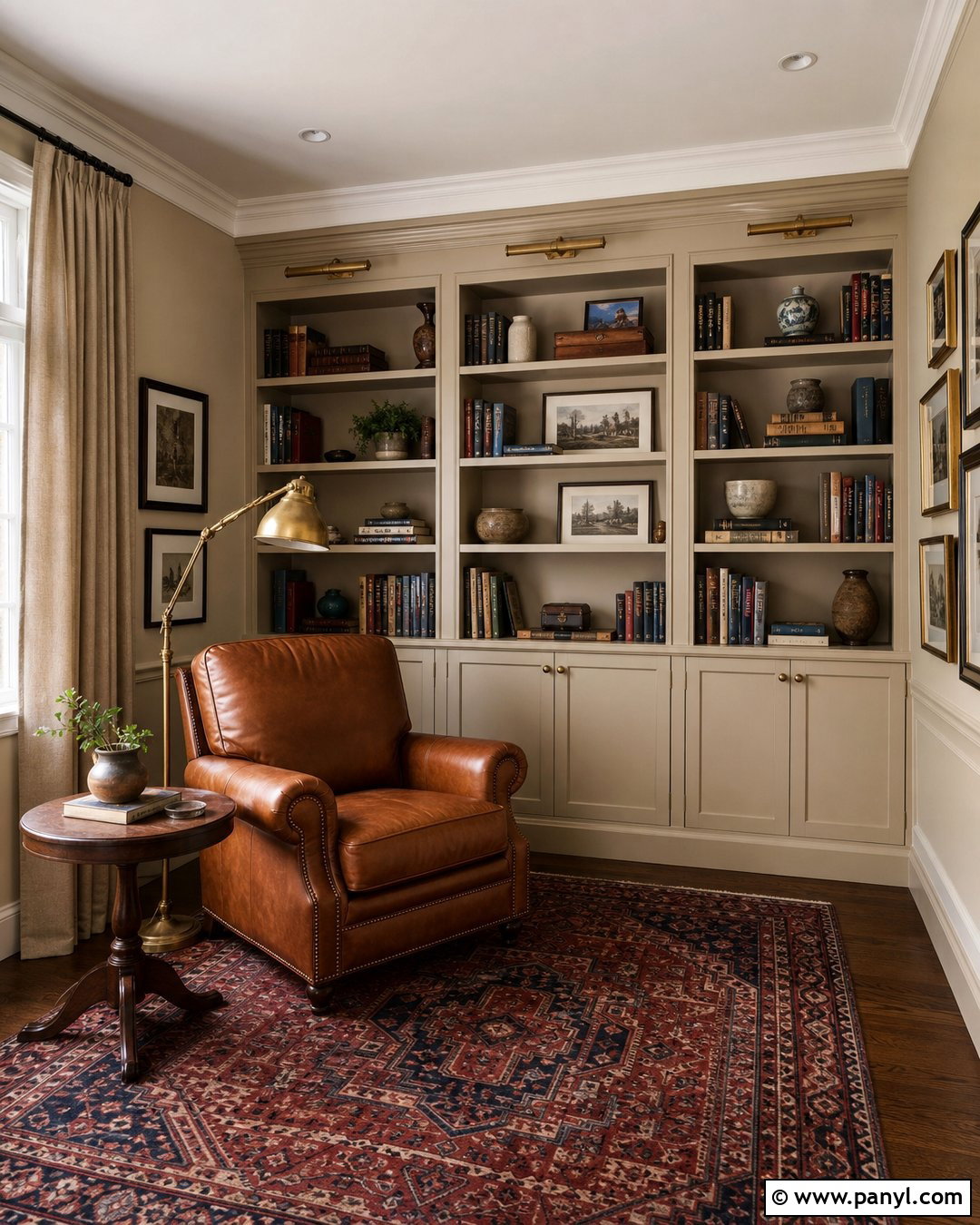
Parchment beige gives a home library or reading room a softly aged appearance that works beautifully with books and dark wood. Use this pale creamy beige on the walls and built-in shelving, creating a unified background with subtle depth. Furnish the room with a cognac leather chair, a small walnut side table, and an adjustable antique brass floor lamp. A faded Persian-inspired rug introduces burgundy, navy, and tan beneath the seating area. Hang full oatmeal curtains to soften the windows and improve the room’s intimate atmosphere. Arrange books vertically and horizontally, leaving space for framed art and ceramics. The overall look feels collected and personal, yet the consistent parchment color prevents the shelves from appearing visually chaotic.
22. Champagne Beige Walls
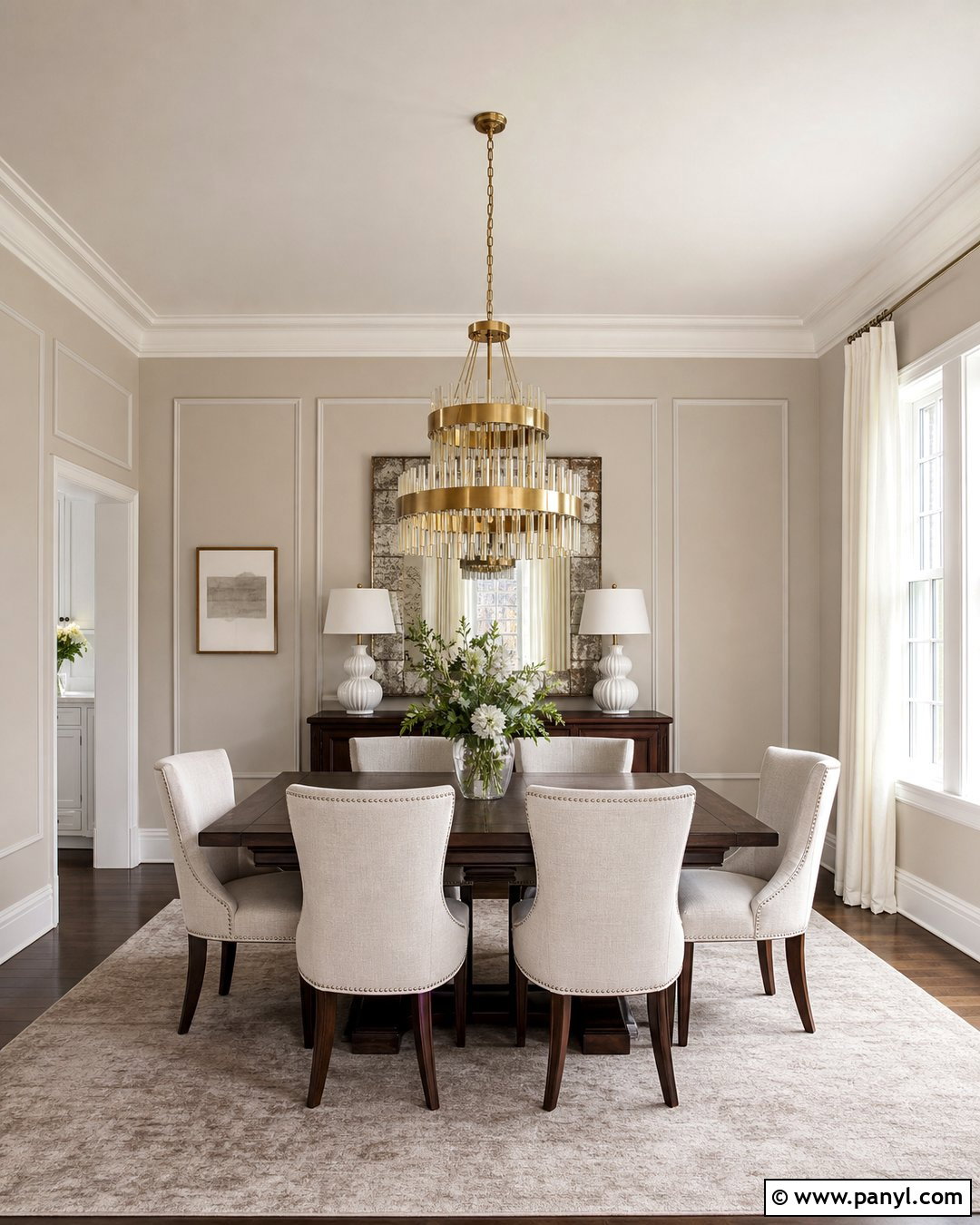
Champagne beige walls add a restrained glow to a formal dining room, especially when paired with warm metals and elegant fabrics. Choose a pale beige with subtle golden undertones and apply it to walls with simple picture-frame molding. Keep trim close in color for a low-contrast, expansive effect. Center a walnut dining table beneath a tiered brushed brass chandelier and surround it with cream upholstered chairs. Use a muted taupe rug to ground the glossy surfaces. Full ivory draperies should frame the windows from ceiling to floor. Add a dark wood sideboard, a large antiqued mirror, and minimal glass accessories. The room feels luminous and polished without becoming shiny, ornate, or excessively formal.
23. Café Au Lait Beige Walls
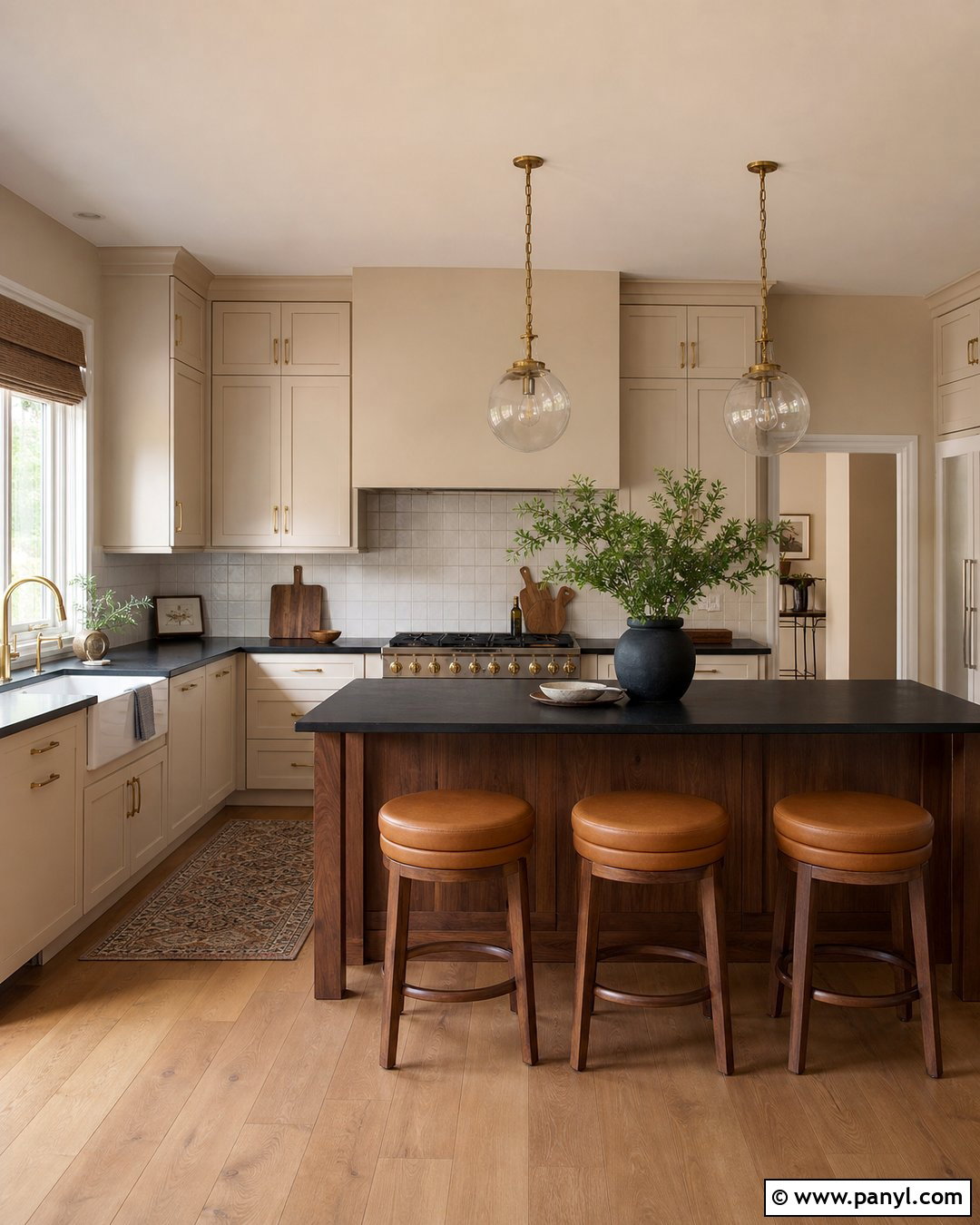
Café au lait beige provides a balanced coffee-and-cream warmth for a kitchen with light cabinets and darker accents. Paint the walls in a medium milky brown-beige, then pair them with creamy cabinetry and honed black countertops. A walnut island creates a rich focal point, while aged brass hardware links the warm surfaces. Use ivory square backsplash tile with slightly irregular edges for quiet texture. Counter stools upholstered in caramel leather continue the tonal palette. Add large glass pendants with bronze fittings above the island. Natural woven shades and medium oak flooring prevent the black counters from feeling harsh. The complete kitchen looks grounded, welcoming, and sophisticated while still handling the practical demands of everyday cooking.
24. Caramel Beige Walls
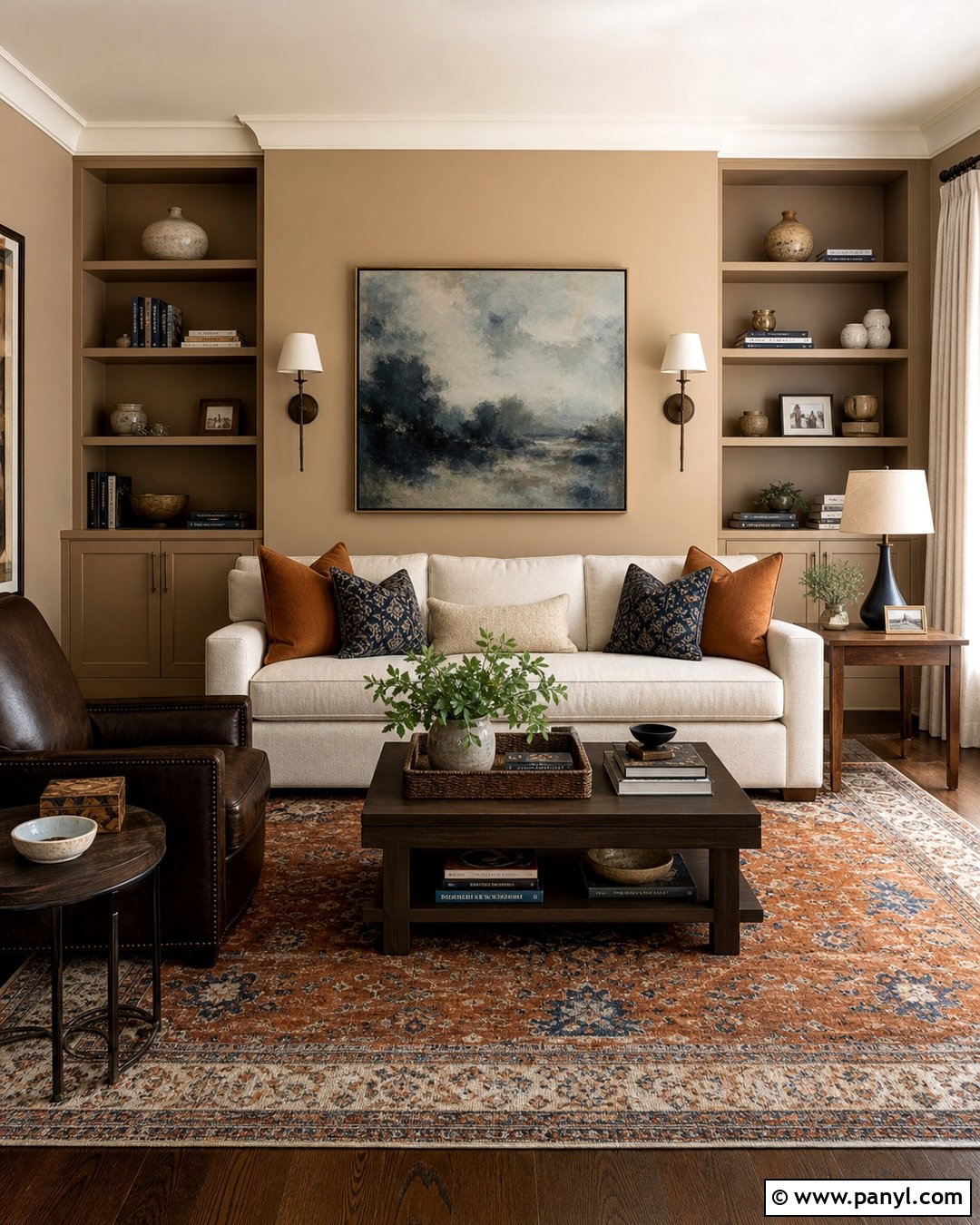
Caramel beige walls turn a small den into a warm, cocooning retreat. Use this richer golden-brown neutral on the walls, trim, and built-in shelving for a modern color-drenched effect. Place a deep cream sofa against the wall and add a chocolate leather lounge chair near a dark oak side table. A patterned rug in rust, beige, navy, and charcoal gives the compact room greater depth. Choose bronze sconces instead of floor lamps to conserve space. Heavy oatmeal curtains soften the windows, while one large abstract painting introduces muted blue. Fill the shelves selectively with books and ceramics. The completed den feels intimate and purposeful, with enough light upholstery to balance the deeper caramel background.
25. Fawn Beige Walls
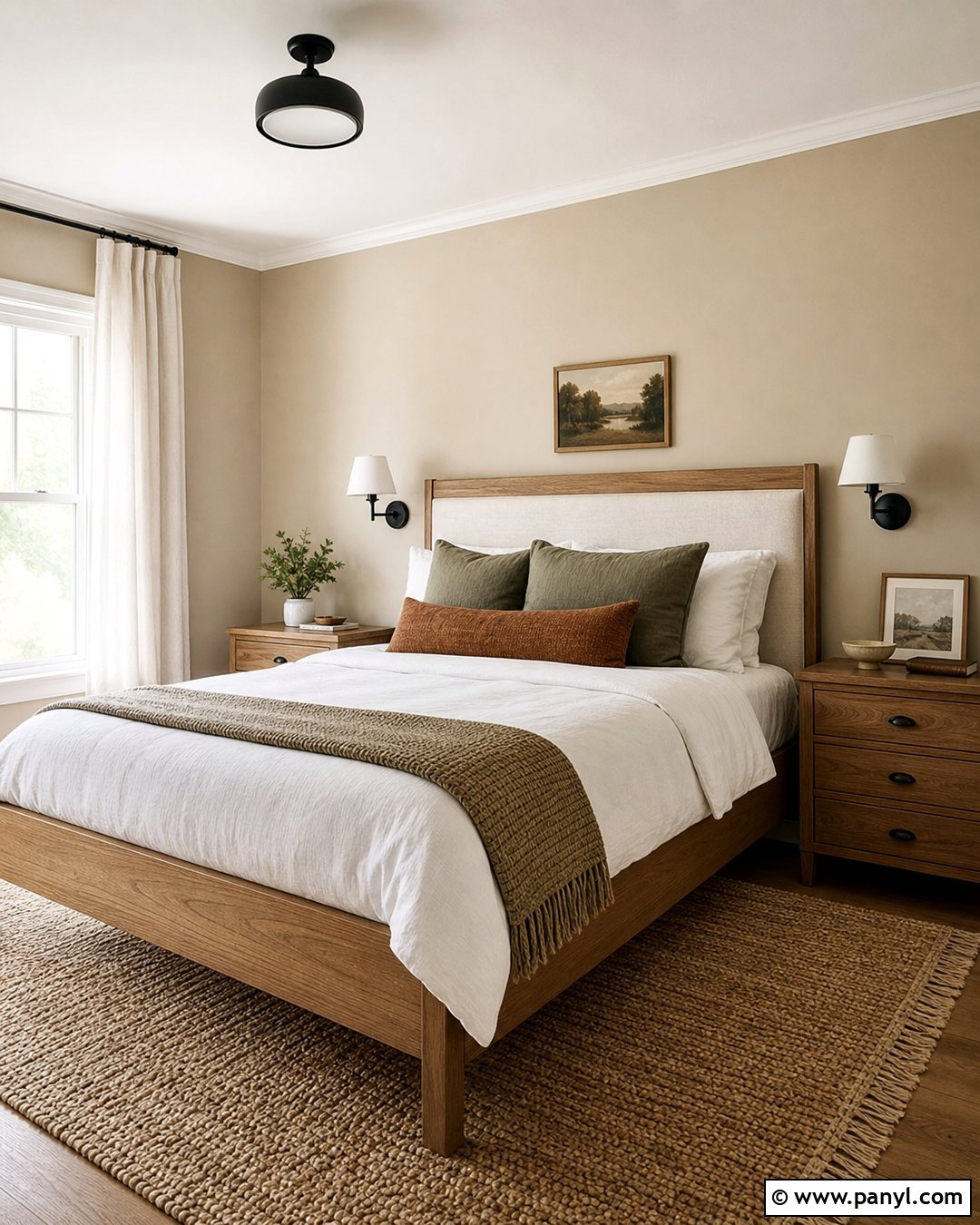
Fawn beige brings soft brown warmth to a guest bedroom while staying neutral enough for different visitors and seasons. Paint the walls in a light deer-brown beige and retain warm white trim around doors and windows. Use a simple oak bed with an upholstered oatmeal headboard, then layer white bedding with olive, camel, and rust accents. Matching wooden nightstands create symmetry, while matte black sconces add clean definition. A large woven wool rug makes the room comfortable underfoot. Hang landscape artwork featuring subdued greens and browns above the bed. Finish with linen curtains and a compact upholstered bench. This balanced design feels considered and welcoming without appearing overly personal, themed, or difficult to update.
26. Wheat Beige Walls
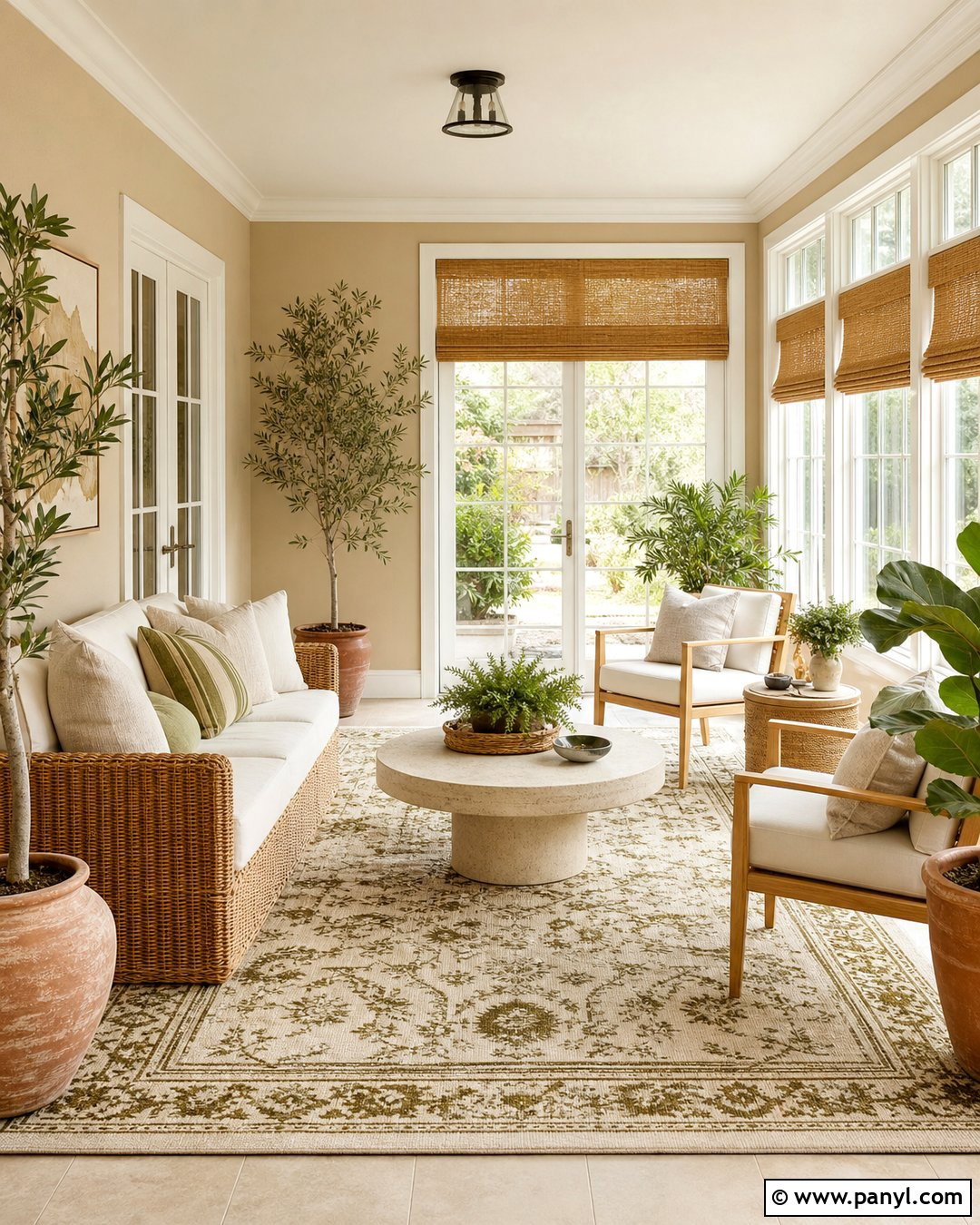
Wheat beige walls enhance the natural brightness of a sunroom and complement outdoor greenery throughout the year. Select a light golden beige with a dry, muted finish rather than a strong yellow cast. Furnish the space with a woven rattan sofa, cream cushions, and two light oak lounge chairs. Add a round stone-topped coffee table for cool contrast. A large indoor-outdoor rug in ivory and faded olive defines the seating area. Use simple woven shades that filter glare while preserving daylight. Terracotta planters, linen pillows, and leafy plants connect the interior with the garden. The resulting sunroom feels warm and casual, with wheat beige providing a sunny foundation even when the weather outside turns gray.
27. Burlap Beige Walls
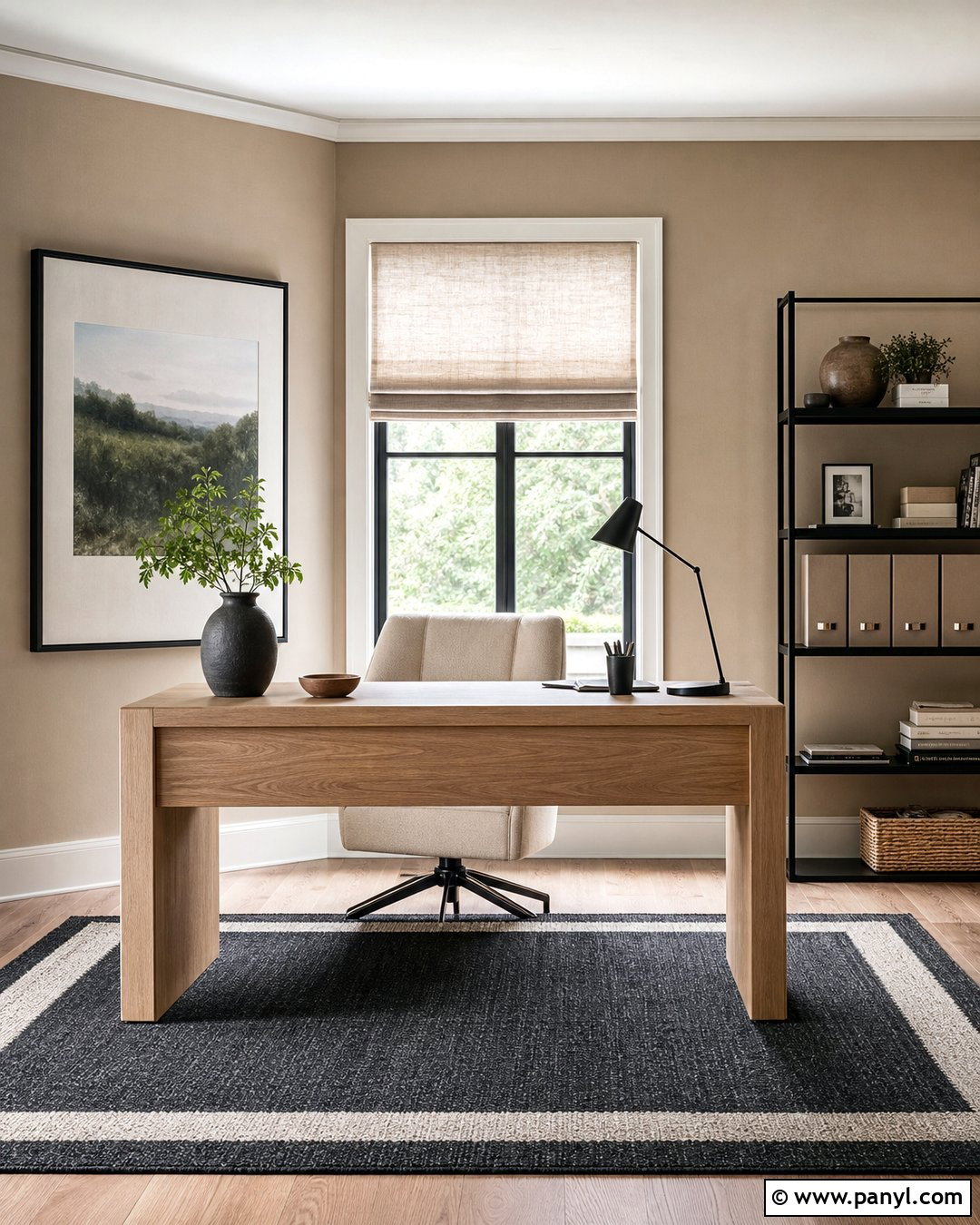
Burlap beige gives a home office textured, natural character without making the room feel rustic. Choose a medium beige with muted brown and gray undertones, then pair it with matte black shelving and a streamlined oak desk. A cream upholstered desk chair softens the harder lines. Use a flat-weave rug featuring charcoal, oatmeal, and tan to establish a practical work zone. Add linen Roman shades, an adjustable black task lamp, and concealed storage boxes in matching neutral tones. One large green artwork or landscape print provides controlled color. Keep cables and supplies hidden whenever possible. The complete office feels calm, organized, and substantial, with the burlap-inspired wall shade supporting both modern and traditional furnishings.
28. Warm Beige Color Drenched Room
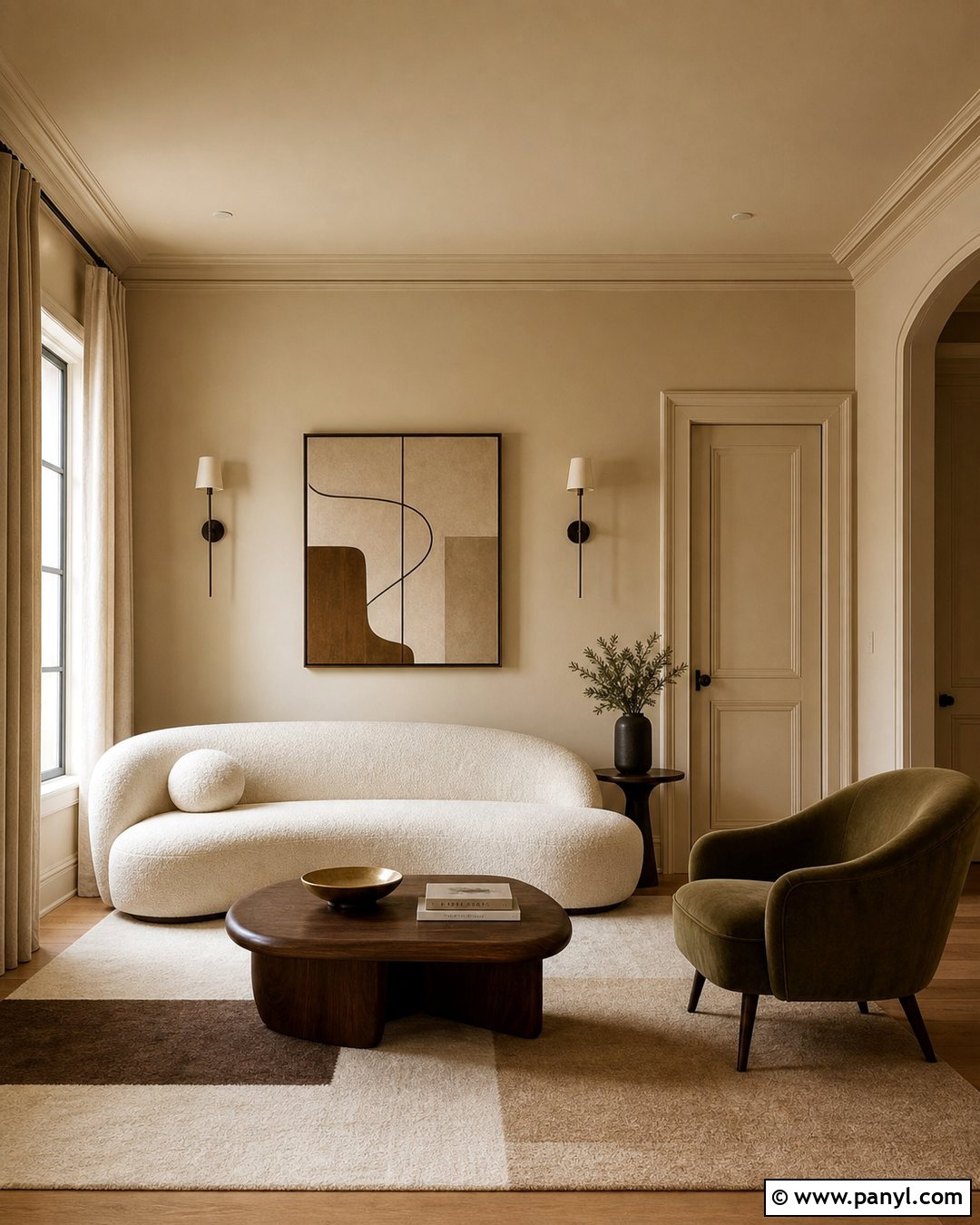
A warm beige color-drenched room feels seamless because the walls, trim, doors, and ceiling share one coordinated tone. This approach works well in a compact sitting room where strong contrasts could make boundaries feel choppy. Choose a medium warm beige and vary the paint sheen slightly between walls and woodwork. Add a sculptural ivory sofa, a walnut coffee table, and an olive velvet chair for clear visual layers. Use a tonal rug containing cream, tan, and chocolate. Bronze sconces and a large abstract artwork bring definition to the matching surfaces. Keep curtains close to the paint color. The finished space feels immersive and modern, while contrasting furniture prevents the monochromatic design from becoming flat.
29. Pale Beige Walls
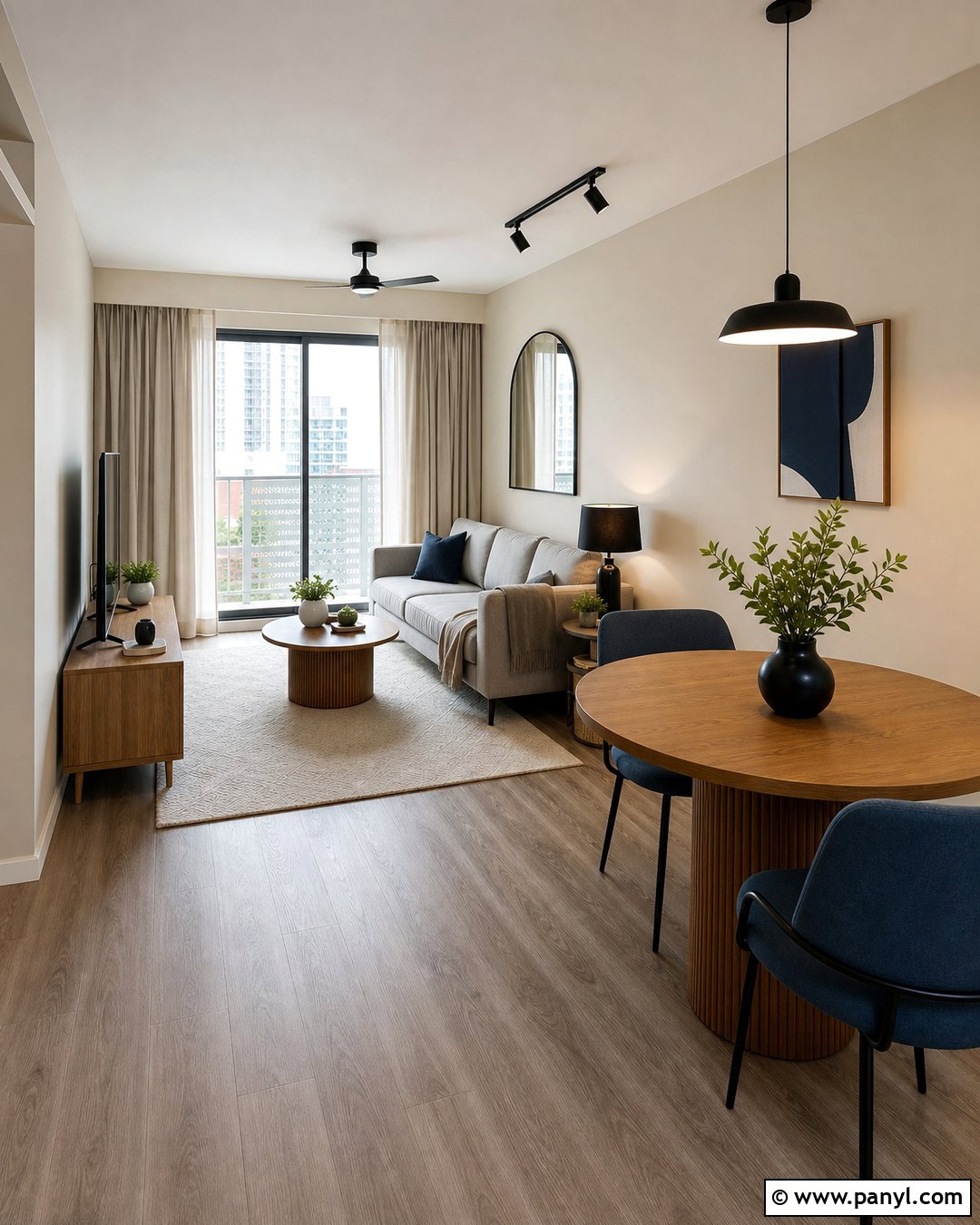
Pale beige walls can make a small apartment feel brighter while adding more warmth than plain white. Use one consistent beige throughout the living area, entry, and visible kitchen walls to reduce visual interruption. Choose compact furniture with raised legs, including a light gray-beige sofa, an oak media console, and a round pedestal dining table. A cream rug visually expands the seating zone, while black lighting adds focused contrast. Hang curtains close to the ceiling and match them to the walls. Use mirrors strategically to reflect windows rather than cluttered areas. Add accents in muted blue, olive, and cognac. This complete palette feels open and coordinated without sacrificing the comfort and personality a small home needs.
30. Deep Beige Walls
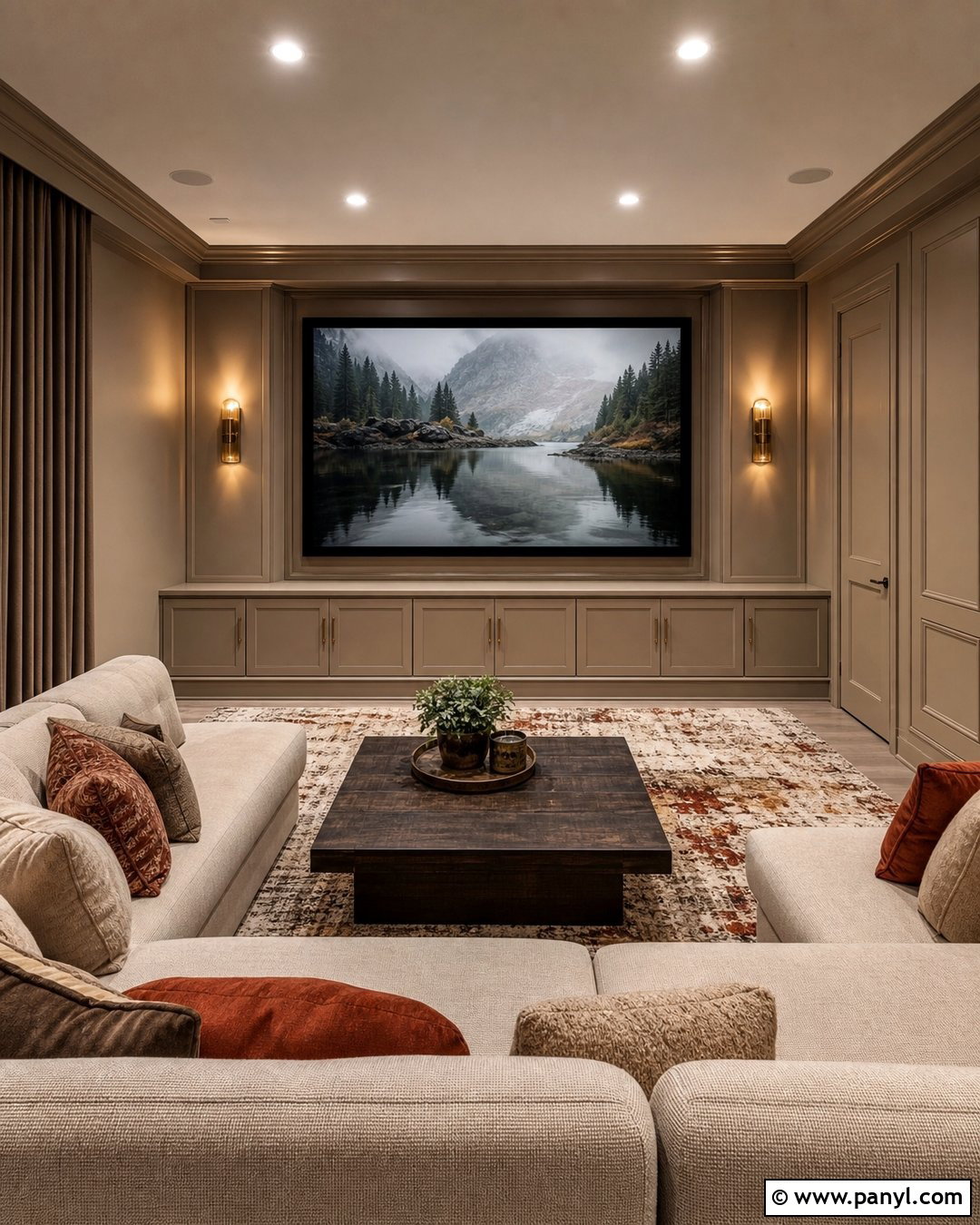
Deep beige walls create an inviting media room that feels cozy without using charcoal or black. Select a saturated brown-beige with subtle taupe undertones and paint the walls, trim, and media cabinetry in the same color. Arrange a large oatmeal sectional facing a streamlined built-in screen wall. Add a dark walnut coffee table and a thick patterned rug in cream, rust, and espresso. Use dimmable bronze sconces for practical layered illumination while keeping the overall scheme visually warm. Blackout curtains should closely match the wall color so they disappear when closed. Include closed cabinetry for equipment and games. The finished media room feels comfortable, uncluttered, and richly enveloping while maintaining clear contrast around the main furnishings.
Conclusion:
These 30 shades of beige wall colors show that beige can be bright, earthy, rosy, gray, golden, or deeply brown. The best choice depends on the room’s daylight, existing finishes, furniture, and desired atmosphere. Pale ivory and linen tones support open, airy spaces, while mushroom, mocha, and caramel create greater depth. Green, gray, or putty undertones work well with stone and cooler flooring. Golden shades complement warm wood and traditional details. Always test a large painted board beside permanent surfaces and examine it throughout the day. Once the undertones feel balanced, repeat them through textiles, wood, metal, and decor to build a complete room that looks intentional and comfortably layered.

Related Ideas and Inspiration:
Leave a Reply