
Blue can make a room feel airy, restful, tailored, dramatic, or playful depending on its undertone and depth. The best **blue shades wall paint ideas** consider more than the paint chip. Natural light, flooring, furniture, trim, and nearby rooms all affect how blue appears throughout the day. Pale powder blues are especially current, while timeless navy, softened teal, blue-gray, and indigo remain versatile choices for many interiors. () Before committing, sample your favorites on multiple walls and study them in morning and evening light. Then create a coordinated palette using warm wood, crisp white, aged brass, woven textures, or contrasting earthy colors. The complete room schemes below offer practical and stylish **20 Blue Shades Wall Paint Ideas**.

1. Powder Blue Bedroom Walls
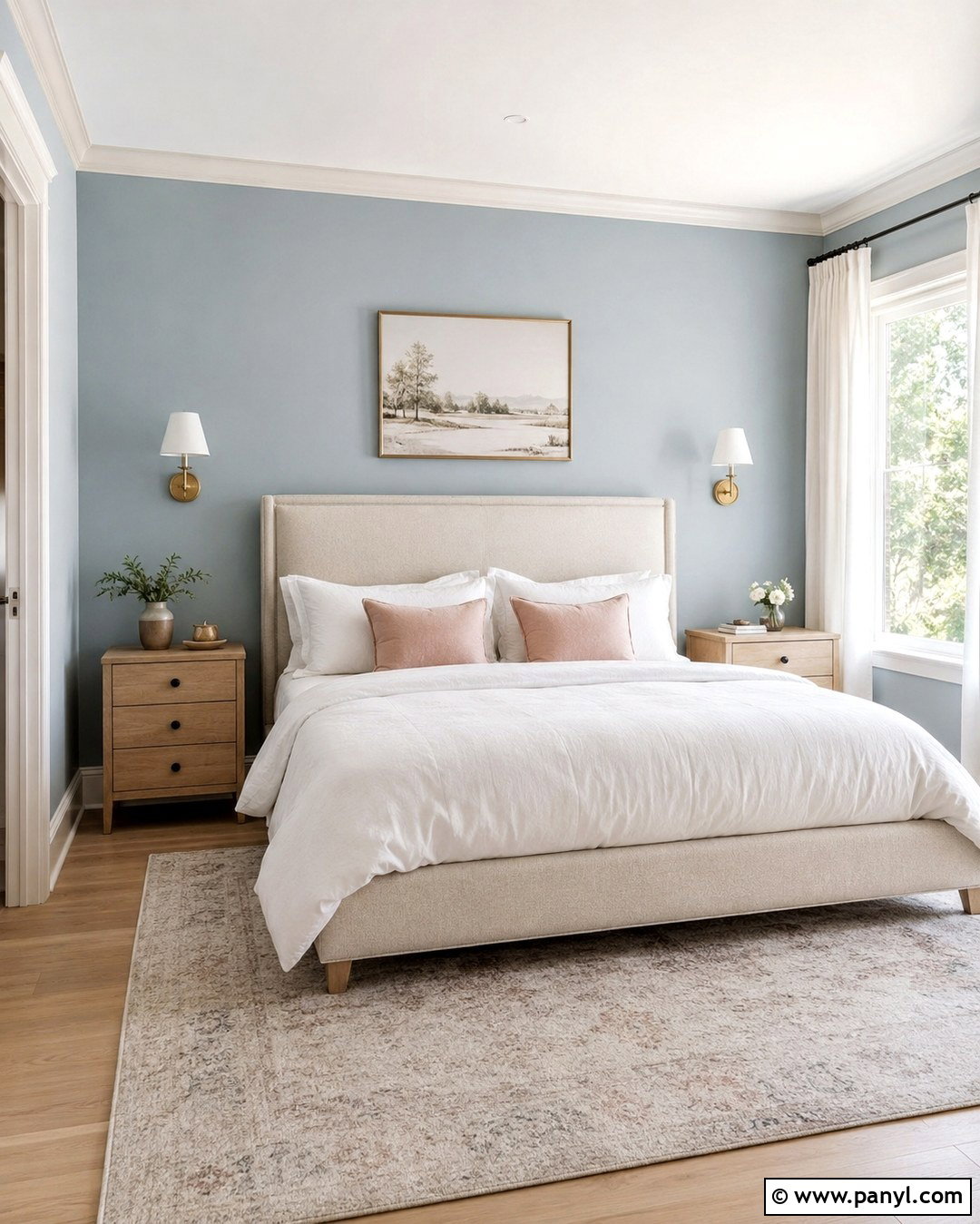
Powder blue walls create a bedroom that feels light, quiet, and comfortable without looking cold. Choose a softened shade with a subtle gray undertone, then pair it with a warm white ceiling and matching white trim. An oatmeal upholstered bed, light oak nightstands, and natural linen bedding keep the palette grounded. Add dusty rose pillows and a faded vintage-style rug for gentle warmth. Brushed brass sconces provide a refined finish without overpowering the room. Hang one large landscape print above the bed rather than several small pieces. Sheer white curtains can soften bright sunlight, while woven shades add privacy. This complete look works particularly well in small bedrooms because every material feels light, simple, and visually connected.
2. Sky Blue Living Room Walls
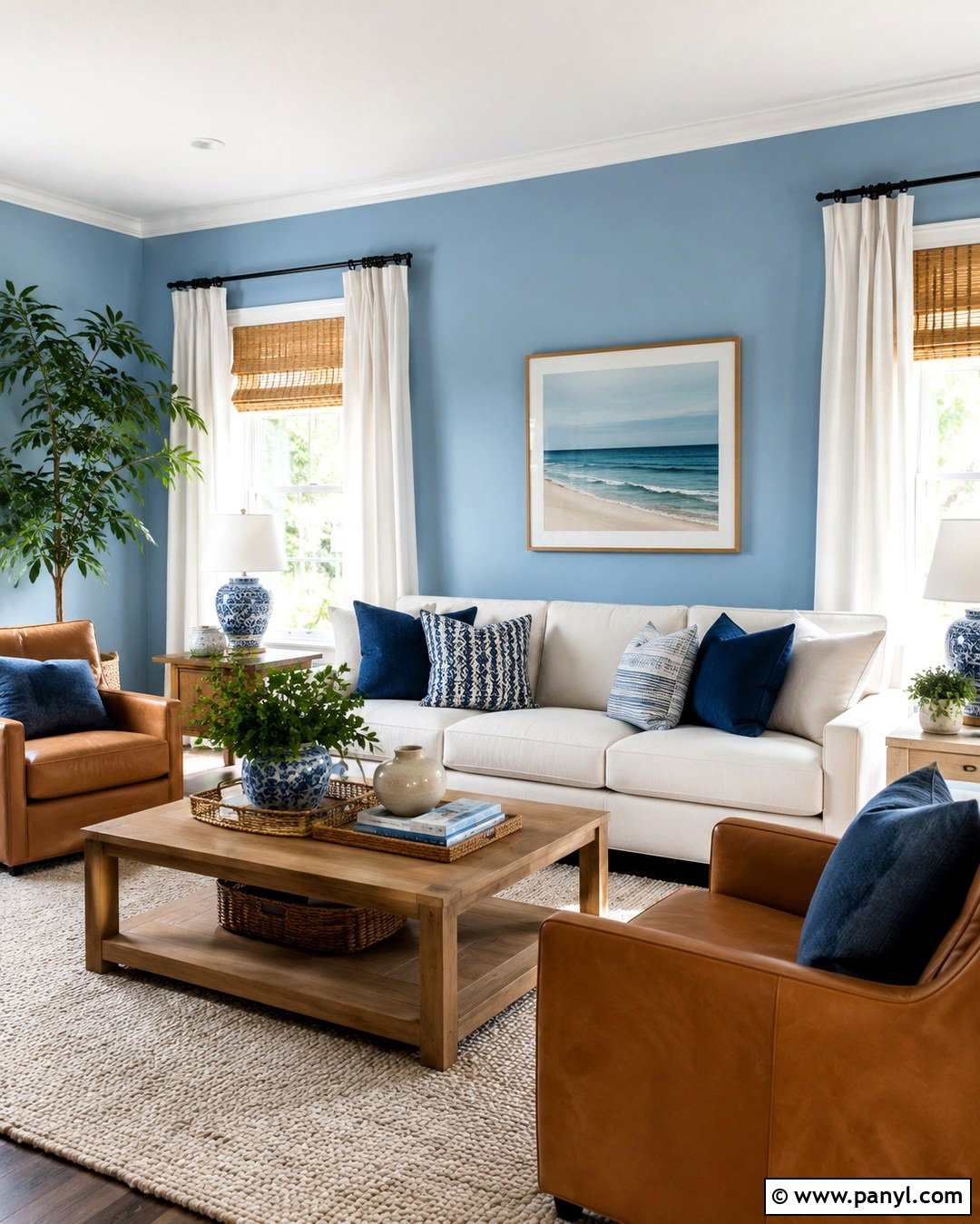
Imagine a sunny living room where clear sky blue walls make every corner feel fresh and welcoming. Balance the cheerful paint with a cream sofa, two cognac leather chairs, and a medium-tone oak coffee table. A textured ivory rug keeps the seating area bright, while navy pillows add enough contrast to define the softer blue. Use crisp white on the ceiling, baseboards, and window trim for a clean architectural frame. Natural bamboo shades and full-length white curtains create layers around the windows. Complete the space with blue-and-white pottery, leafy plants, and simple coastal artwork. Avoid filling the room with nautical accessories. The goal is an easy, everyday living space that references the sky and water without becoming overly themed.
3. Ice Blue Home Office Walls
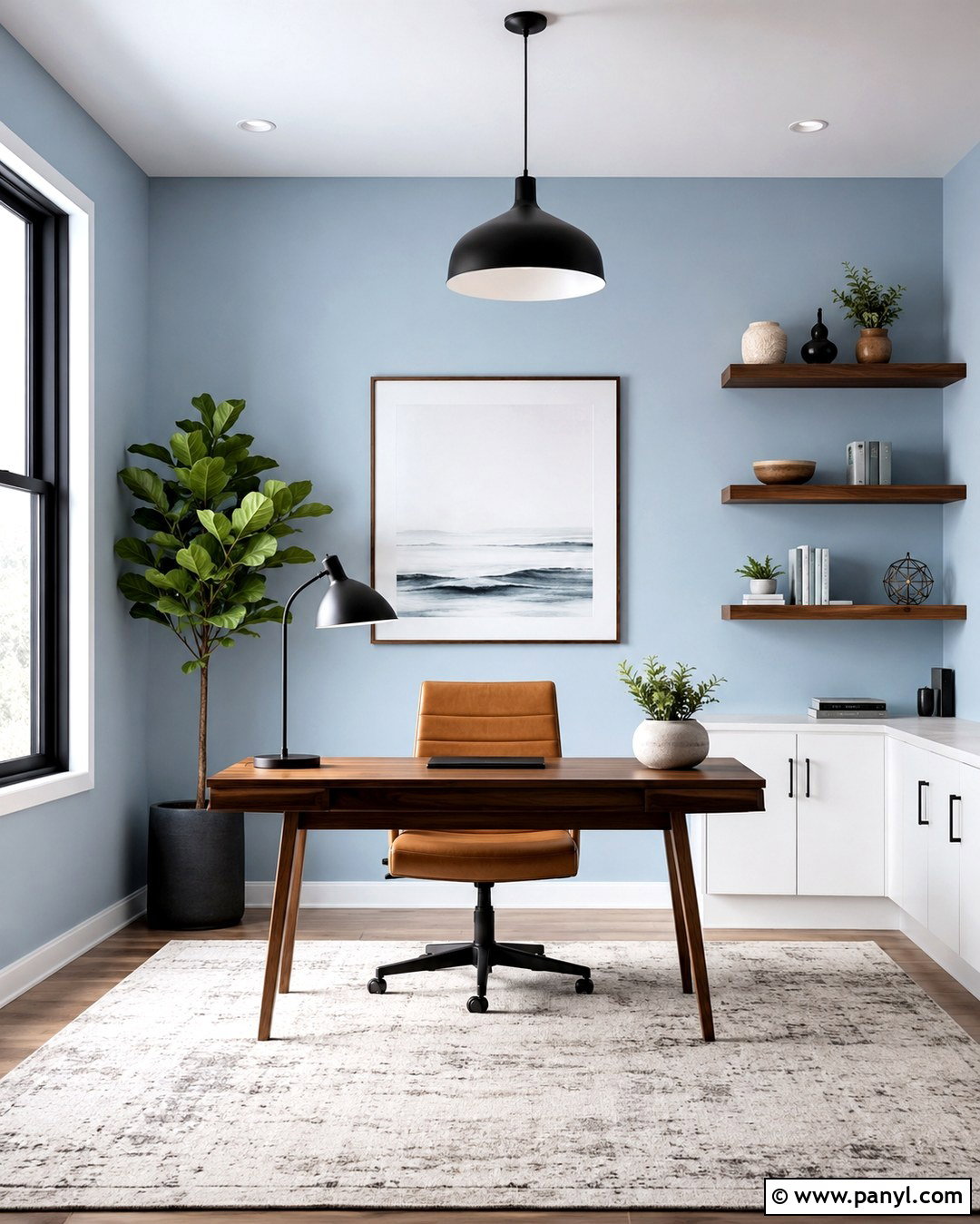
A pale ice blue office can feel focused and spacious when it is warmed with natural materials. Paint every wall in a cool, nearly white blue, but keep the ceiling and trim a soft warm white. Position a streamlined walnut desk near the window and add a supportive chair upholstered in camel-colored fabric. Closed white storage cabinets reduce visual clutter, while floating walnut shelves repeat the desk finish. A flat-woven rug in ivory and charcoal gives the room structure. Matte black task lighting and black picture frames provide crisp definition against the light walls. Finish the workspace with one large abstract print, a ceramic planter, and neatly arranged desk accessories. The result is calm and professional rather than sterile or overly corporate.
4. Duck Egg Blue Dining Room Walls
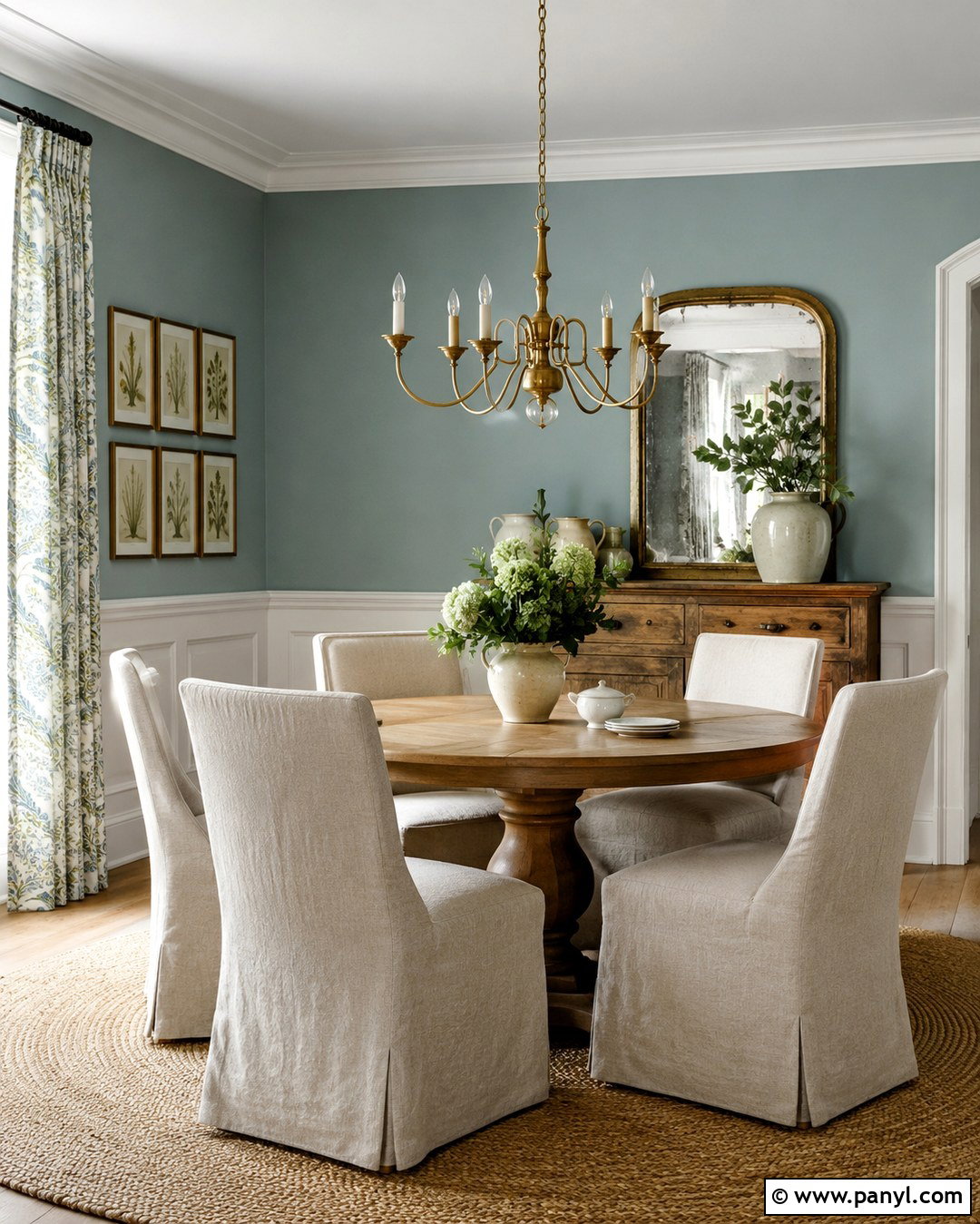
Duck egg blue has green and gray undertones that bring an understated, collected character to a dining room. Use it above warm white board-and-batten paneling for a balanced two-tone treatment. Center a round oak pedestal table beneath a simple aged brass chandelier, then surround it with linen-covered chairs. A natural jute rug adds texture and keeps the room relaxed. Display handmade cream ceramics in a painted white cabinet or on narrow wall shelves. Soft botanical curtains can introduce muted olive, beige, and deeper blue without competing with the walls. Add an antique-style mirror to reflect daylight around the room. This scheme feels appropriate for casual breakfasts and more formal dinners because it combines practical materials with traditional architectural detail.
5. Blue Gray Entryway Walls
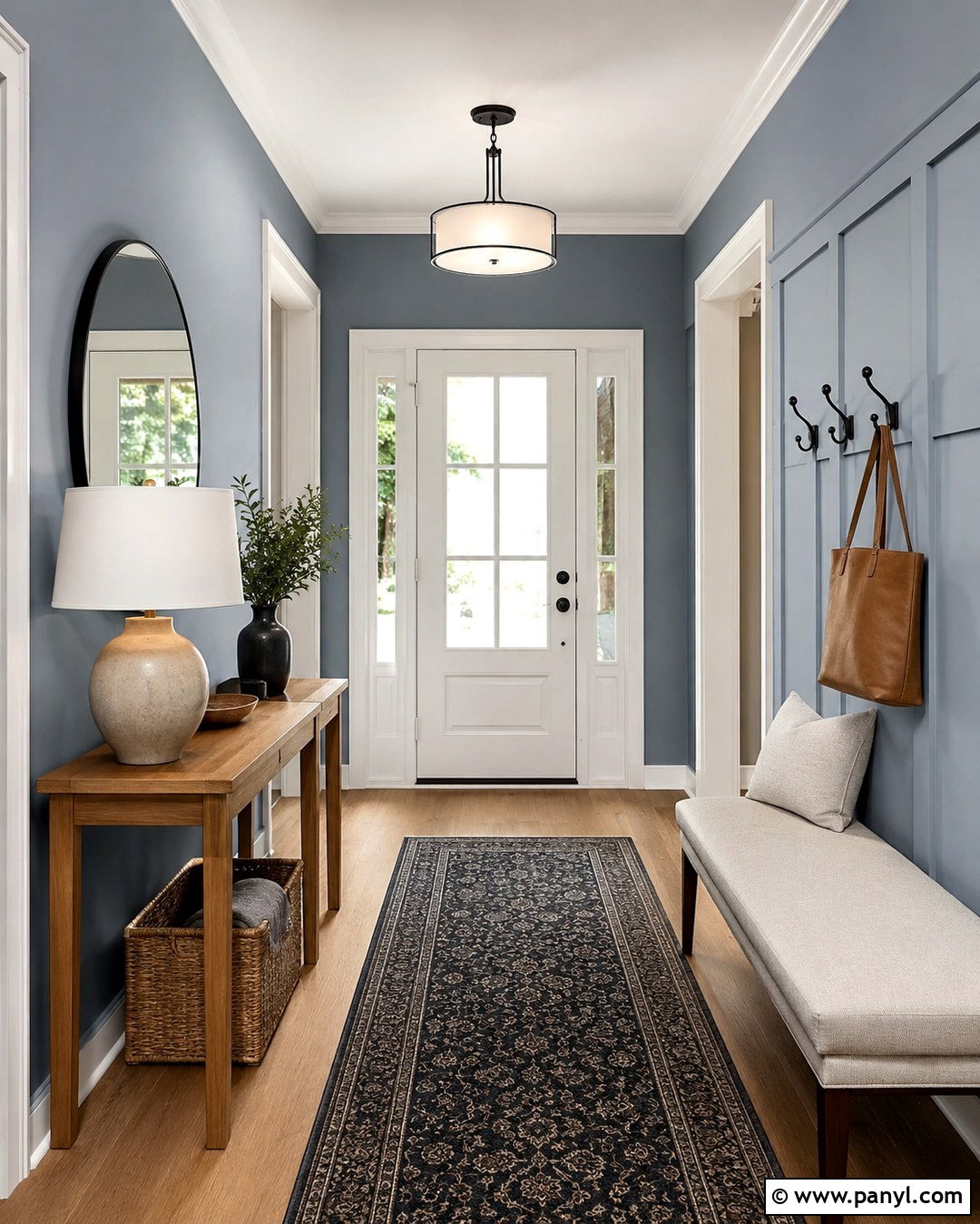
Blue-gray walls can turn an ordinary entryway into a polished transition between rooms. Select a medium-light shade that reads blue in daylight and slightly grayer under artificial lighting. Pair it with warm white trim, an oak console, and a narrow charcoal runner that can handle frequent foot traffic. A large round mirror makes the entry feel wider and reflects light from nearby windows. Add a ceramic lamp, a shallow bowl for keys, and one woven basket beneath the console. Matte black hooks provide convenient storage for everyday bags and jackets. If space allows, include a small upholstered bench in natural linen. Keeping the furniture simple lets the nuanced wall color create interest while maintaining a tidy, practical first impression.
6. Slate Blue Living Room Walls
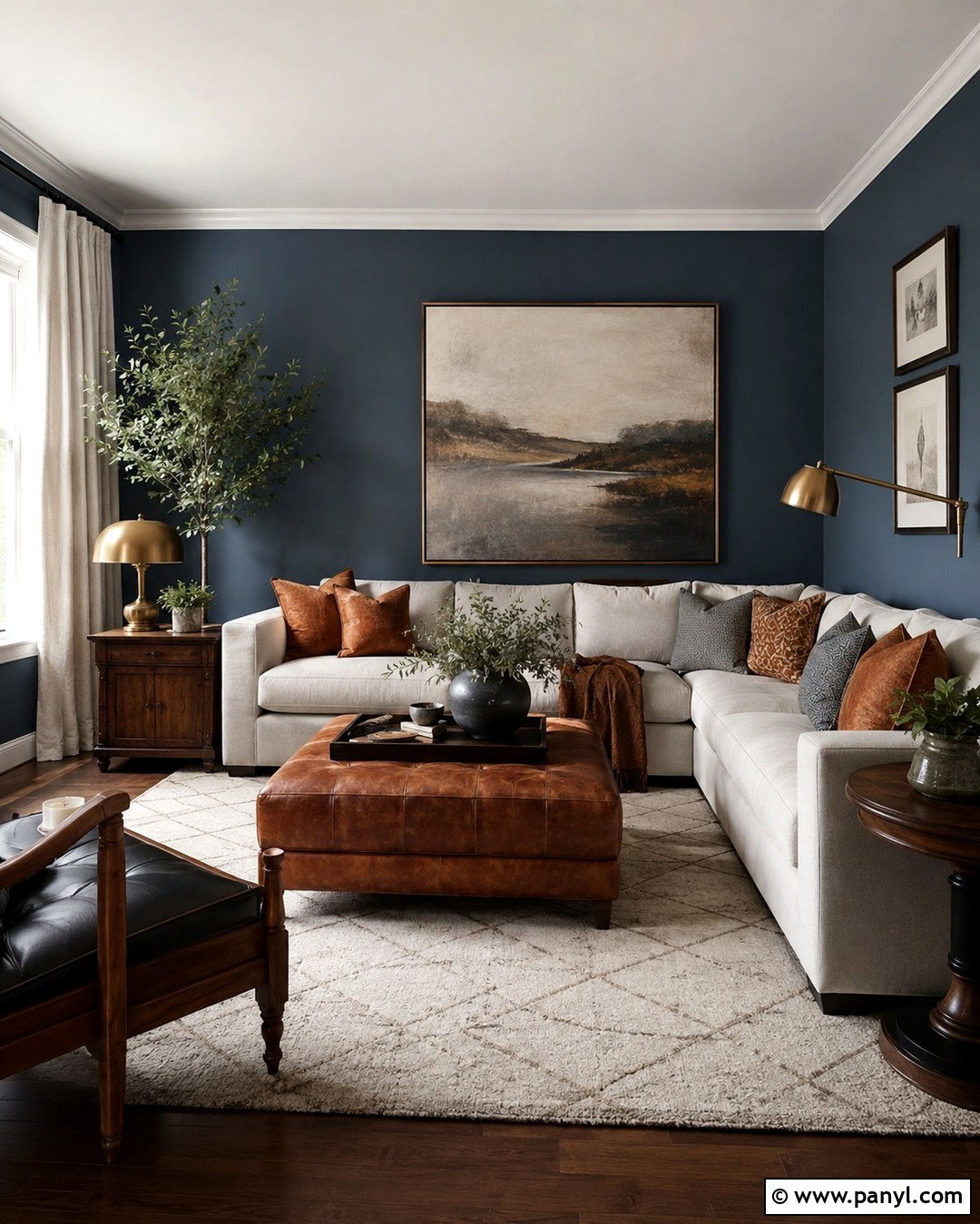
Slate blue brings depth to a living room while remaining softer and more flexible than dark navy. Cover all four walls for a cohesive backdrop, then use creamy white on the ceiling and trim. A light greige sectional prevents the room from becoming too dark, while rust-colored pillows and a caramel leather ottoman add warmth. Choose medium walnut tables to complement the paint’s gray undertone. An ivory rug with a subtle geometric pattern brightens the floor and defines the seating arrangement. Antique brass lamps create a warmer accent than chrome or silver. Complete the room with large neutral artwork and natural linen curtains. This balanced palette works especially well in living rooms with moderate or strong daylight, where slate blue can show its subtle tonal changes.
7. Denim Blue Bedroom Walls
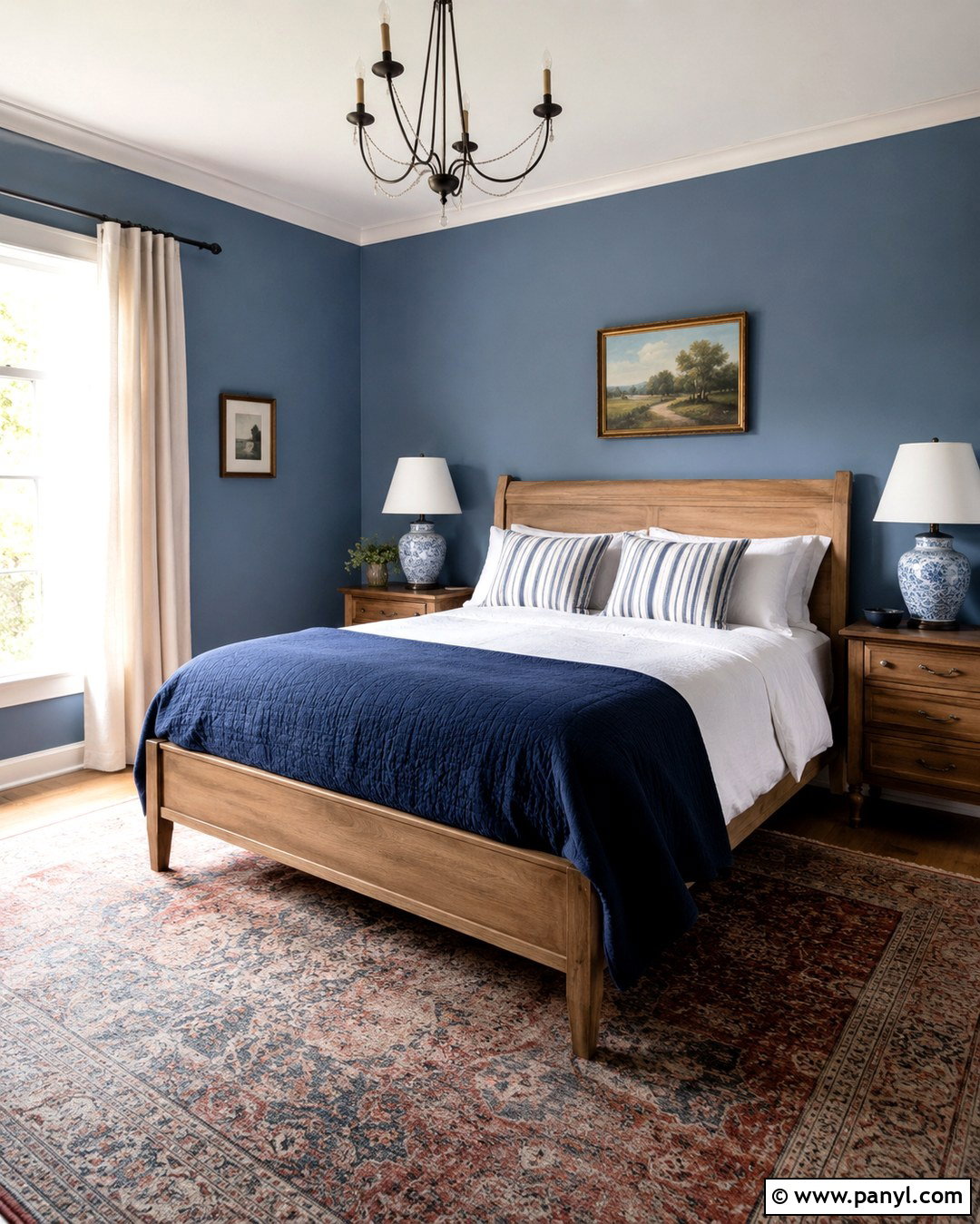
Denim blue gives a bedroom casual depth and pairs naturally with layered, familiar textiles. Choose a muted medium blue rather than a highly saturated primary shade. Paint the walls denim blue, leave the ceiling warm white, and repeat that white on simple window trim. Build the room around a medium oak bed with crisp white sheets, a navy quilt, and striped blue-and-cream pillows. Place vintage-inspired wooden chests beside the bed and use ceramic lamps with linen shades. A faded red and blue rug introduces quiet contrast underfoot. Framed sketches, woven baskets, and relaxed linen curtains complete the look. The finished room feels comfortable and timeless, with enough variation in the blue textiles to prevent the wall color from appearing flat.
8. Cornflower Blue Kitchen Walls
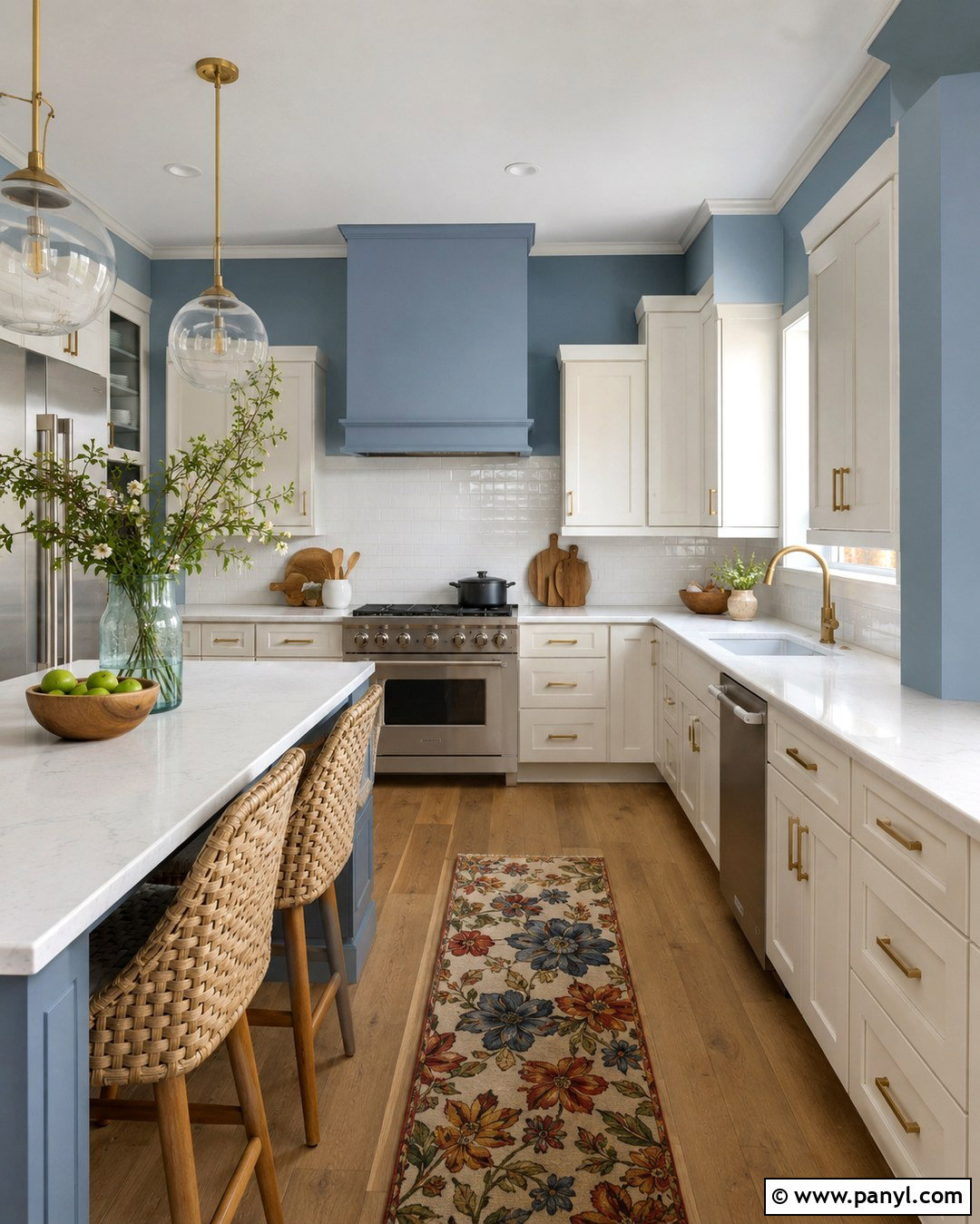
Cornflower blue walls can give a kitchen joyful color without requiring painted cabinets. Use the shade on open wall areas and pair it with warm white shaker cabinetry, white quartz counters, and a simple glazed tile backsplash. Medium oak flooring and woven counter stools soften the crisp surfaces. Choose brushed brass cabinet pulls and pendant lights to introduce warmth against the cool blue. A narrow runner with red, cream, and blue details can add personality along the sink area. Display wooden cutting boards and a few white ceramic pieces, but keep counters mostly clear. If the kitchen receives strong sunlight, a slightly grayed cornflower shade will look calmer. This complete scheme feels colorful, functional, and approachable rather than overly bright or childlike.
9. Coastal Blue Bathroom Walls
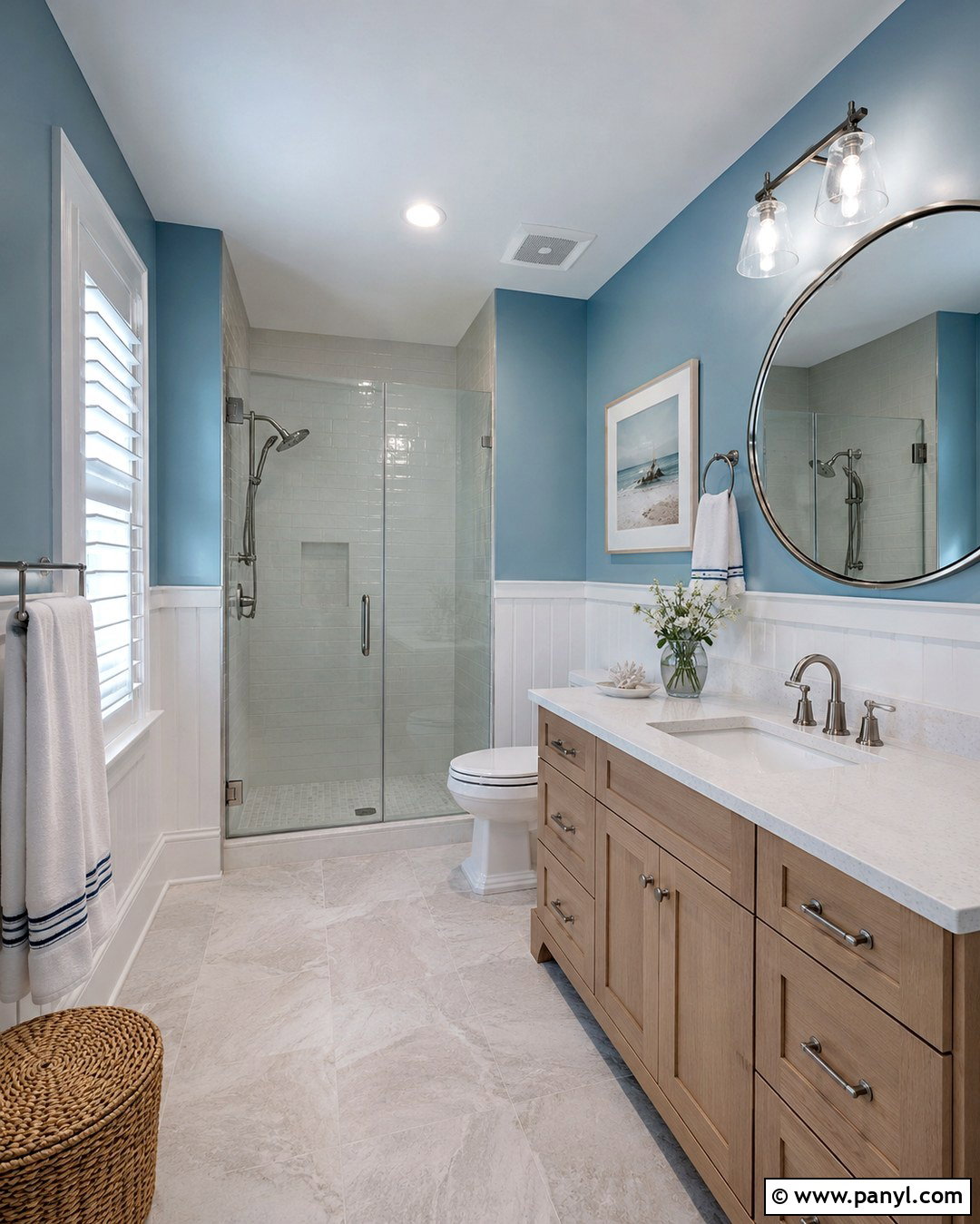
A softened coastal blue can make a bathroom feel clean and breezy without relying on obvious seaside decorations. Paint the upper walls a muted aqua-blue and cover the lower half with white vertical paneling or moisture-resistant tile. Choose a light oak vanity with a white quartz top, an undermount sink, and brushed nickel fixtures. A frameless glass shower keeps the space open, while pale stone floor tile provides practical texture. Use white towels with narrow navy borders and add a small woven hamper for warmth. One framed coastal landscape is enough to reinforce the palette. Finish with a rounded mirror and clear glass sconces. The blend of watery blue, fresh white, light wood, and stone creates a bright, relaxed bathroom.
10. Robin’s Egg Blue Laundry Room Walls
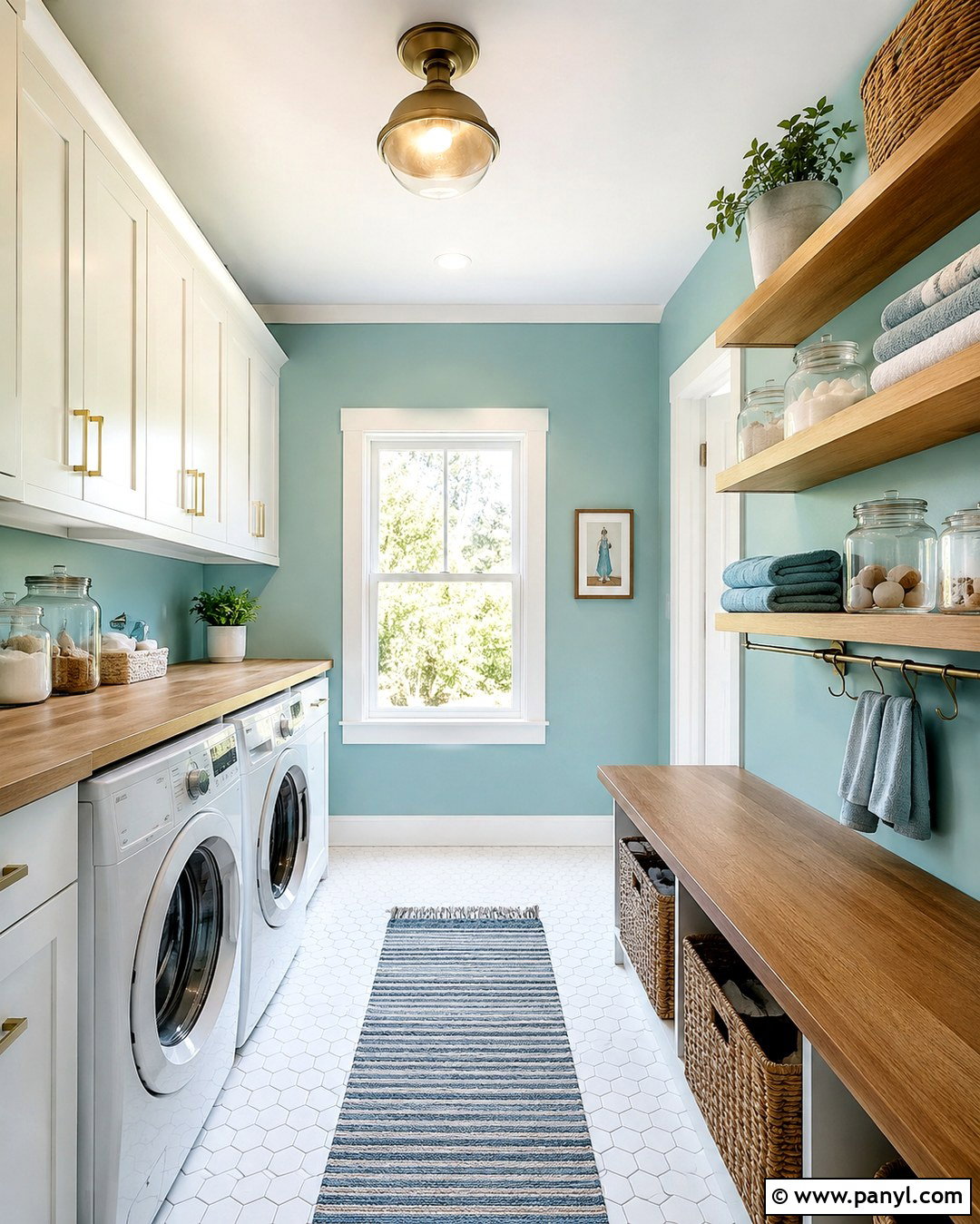
Why should a laundry room feel purely utilitarian? Robin’s egg blue walls can make everyday chores feel lighter while coordinating beautifully with simple storage. Paint the walls in a fresh blue-green shade and install warm white upper cabinets above a white front-loading washer and dryer. A butcher-block folding counter adds natural warmth and provides a practical work surface. Use small white hexagon floor tile with medium-gray grout for easy maintenance. Brushed brass cabinet pulls and a compact brass ceiling fixture give the room a polished finish. Add open oak shelves for glass containers, folded towels, and woven baskets. A striped washable runner completes the space. The overall design is cheerful and organized without sacrificing the durable finishes a busy laundry area requires.
11. Teal Blue Dining Room Walls
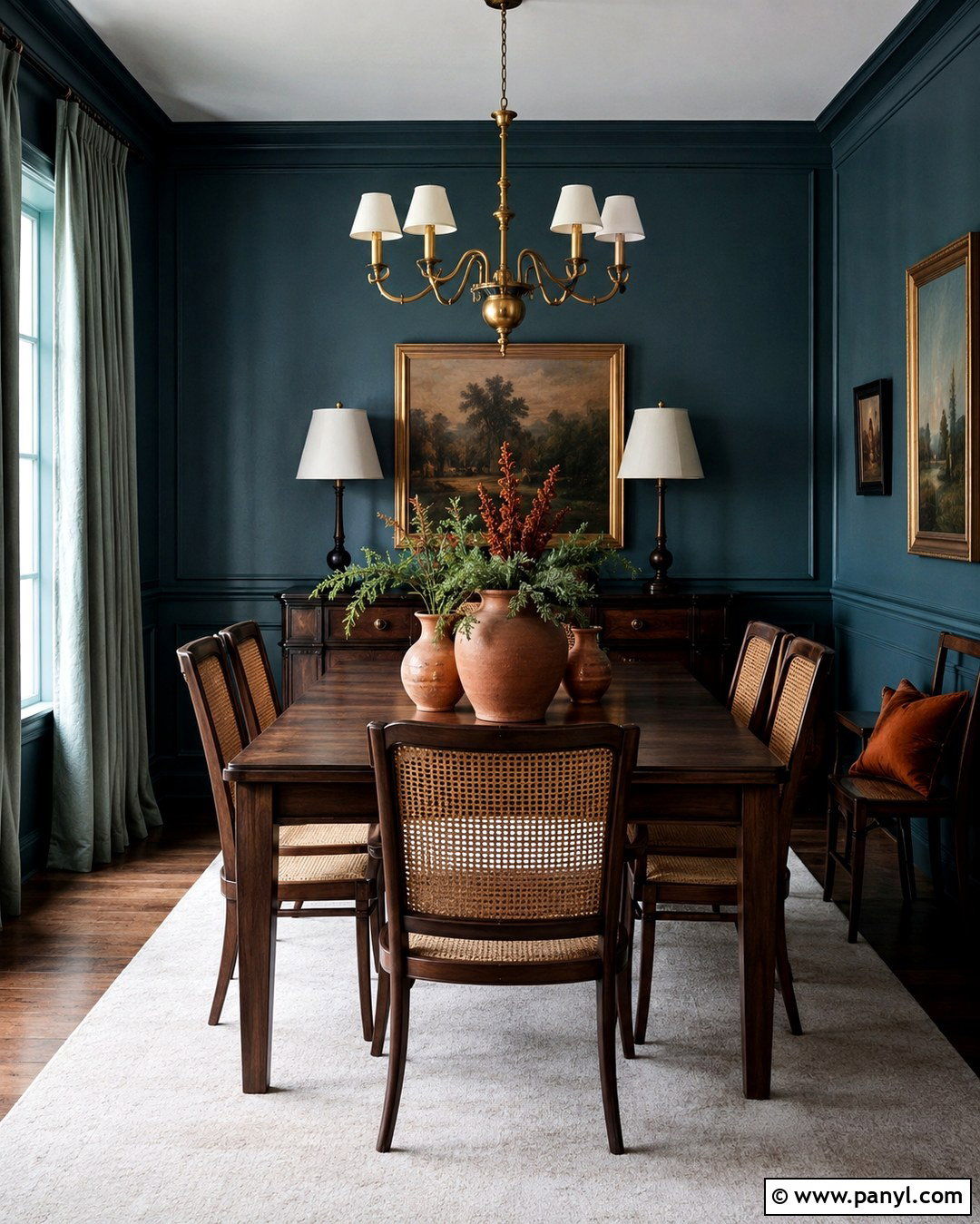
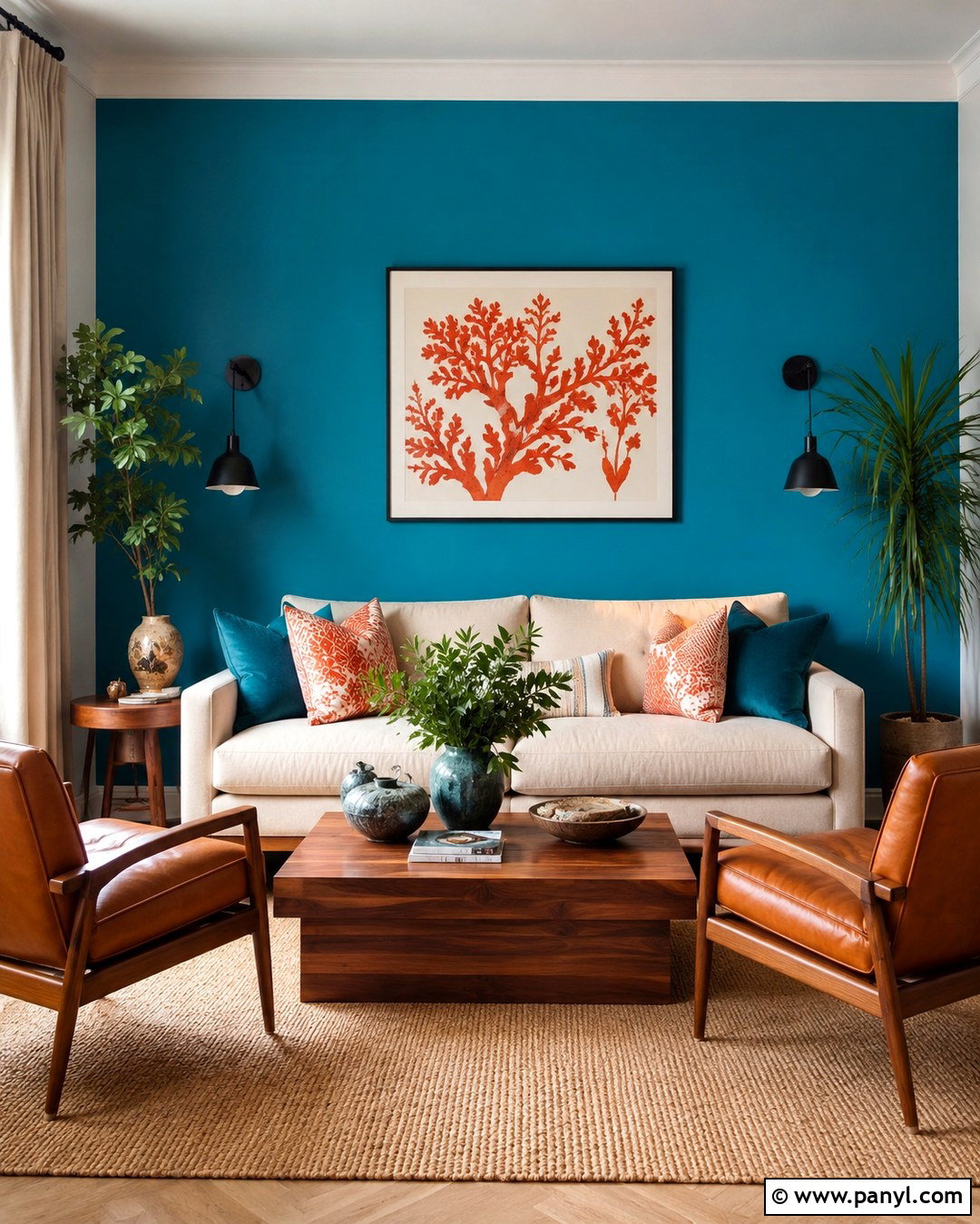
Deep teal blue walls create a dining room that feels rich, intimate, and inviting. To keep the shade sophisticated, select a muted teal with more blue than green and paint all four walls. A dark walnut dining table and cane-back chairs reinforce the room’s warmth. Hang a sculptural aged brass chandelier above the table and use an ivory wool rug to brighten the floor. Full-length curtains in a lighter blue-green fabric can soften the windows without disappearing against the walls. Introduce earthy contrast through terracotta pottery, warm white dishes, and rust-colored seat cushions. Traditional artwork in dark wood frames gives the space a collected quality. This full-room palette is dramatic, but every natural texture prevents the deep color from feeling heavy.
12. Cerulean Blue Family Room Walls
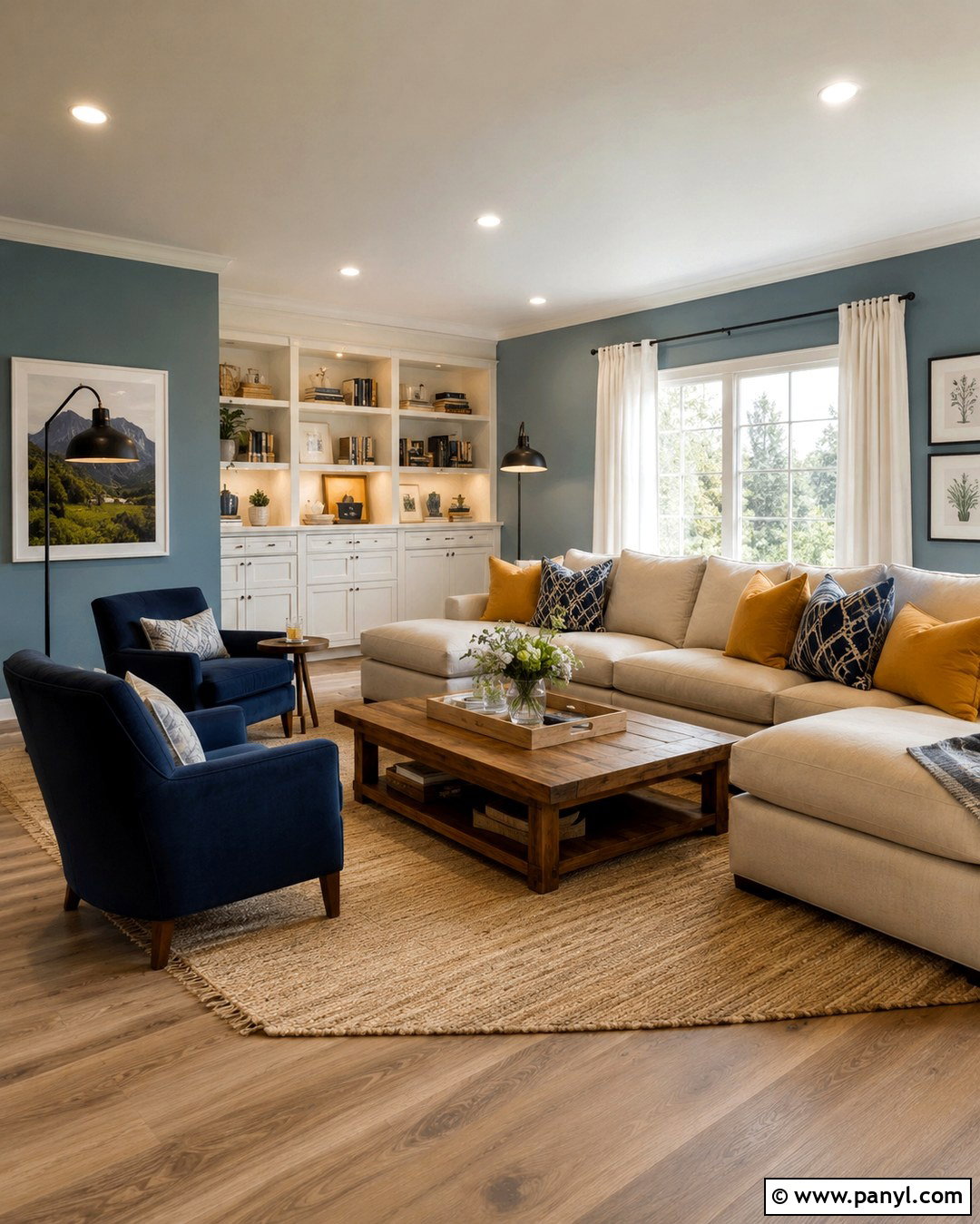
Cerulean blue can energize a family room when it is balanced with durable neutral furnishings. Use a slightly softened version of the shade on the walls, then select a comfortable oatmeal sectional with washable covers. Add a large natural-fiber rug, a solid oak coffee table, and two compact navy accent chairs. Mustard yellow pillows create a sunny contrast, while white curtains keep the windows light. Built-in cabinets painted warm white provide concealed storage for games, electronics, and everyday clutter. Repeat cerulean in small amounts through patterned pillows or artwork rather than matching every accessory. Black metal floor lamps add definition to the colorful room. The resulting space feels lively and family-friendly while maintaining a coordinated, grown-up appearance.
13. Cobalt Blue Powder Room Walls
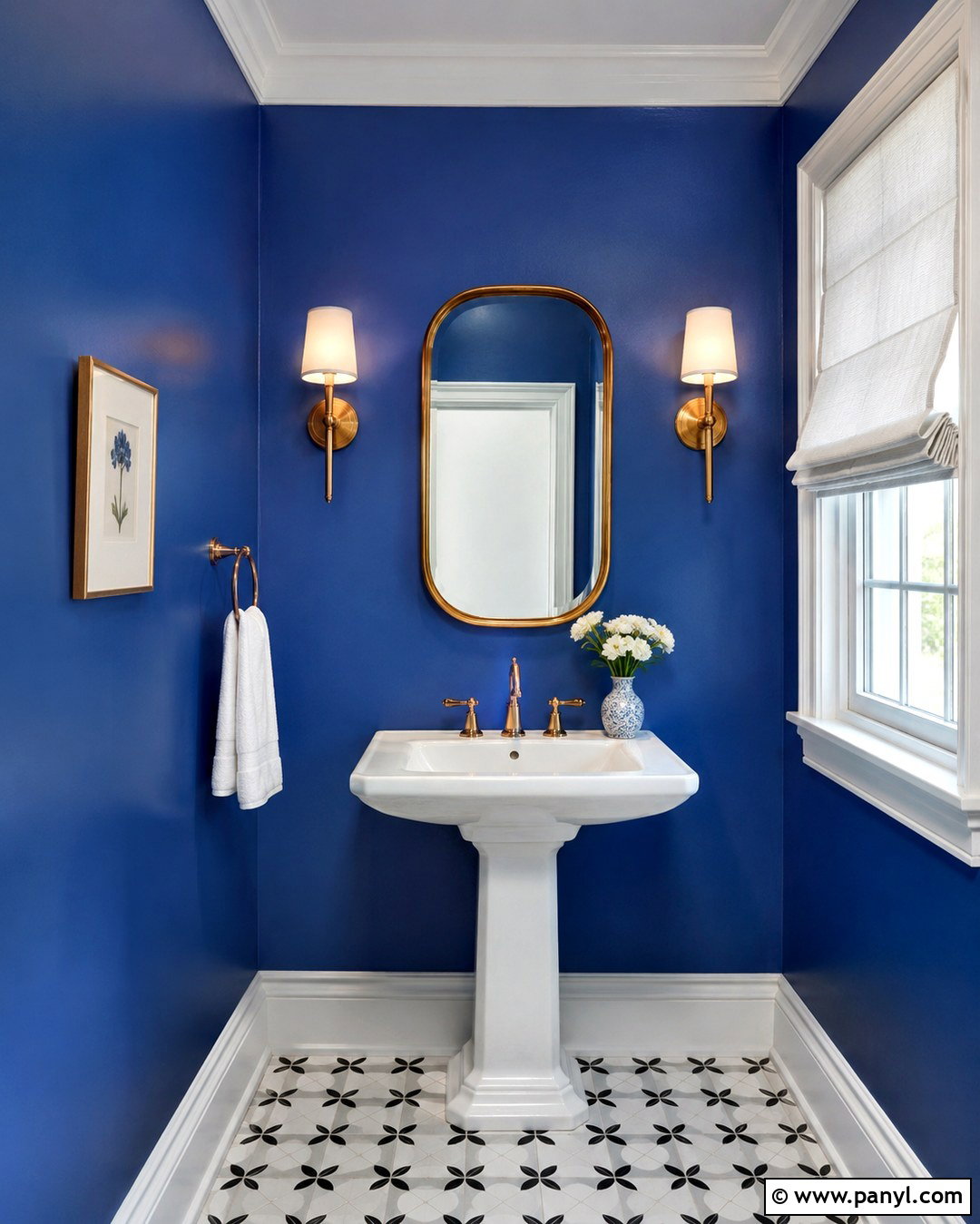
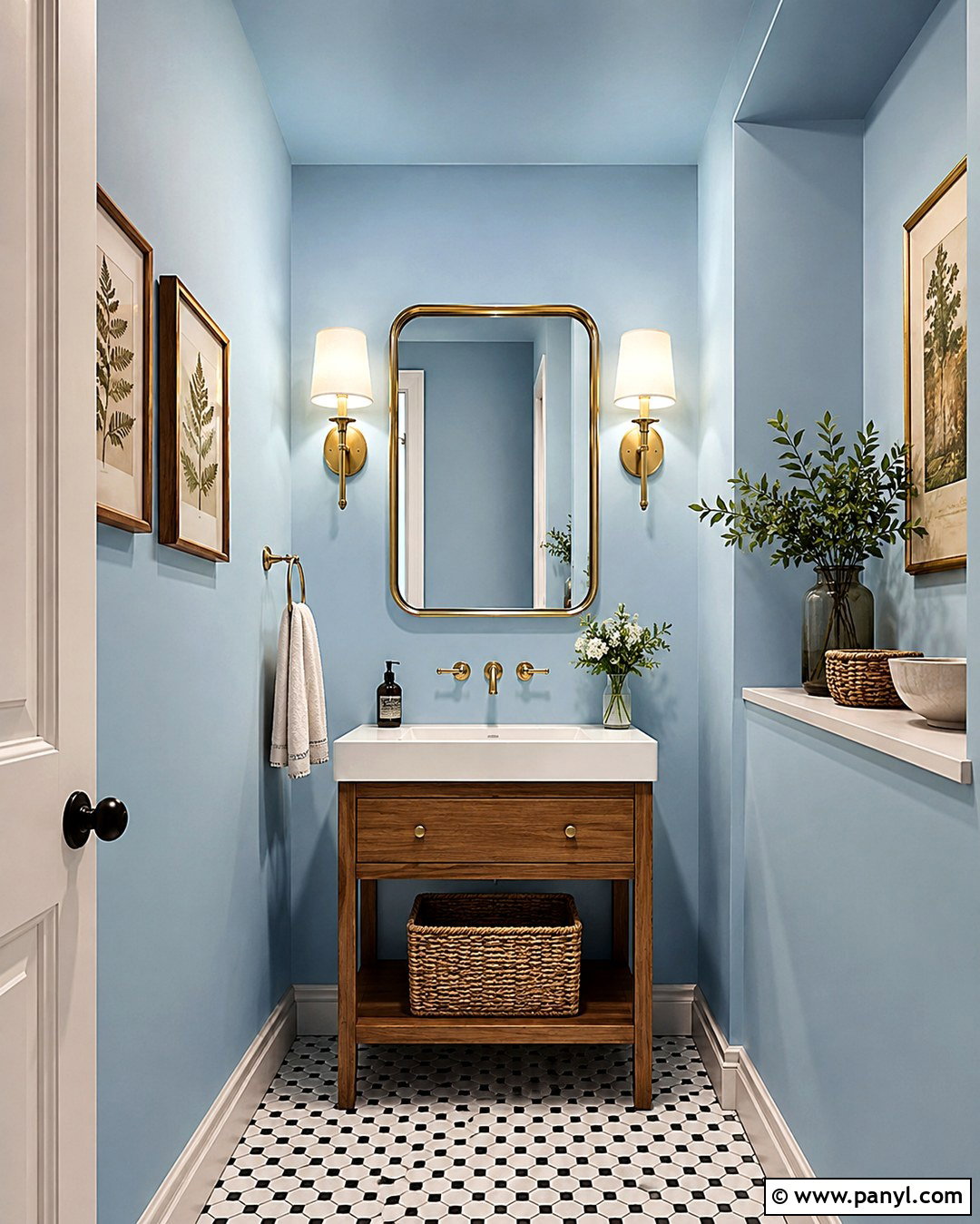
A compact powder room is an ideal place to use saturated cobalt blue on every wall. The bold color creates a memorable envelope, especially when paired with a white pedestal sink and crisp white ceiling. Install a patterned black-and-white tile floor to give the small room graphic structure. A rounded brass mirror and matching wall sconces bring warmth and reflect light across the rich blue surface. Keep the window treatment simple with a tailored white shade. One small framed artwork and a white hand towel provide enough decoration without crowding the room. Choose a satin or bathroom-appropriate finish for easier cleaning. Because the space is small and used briefly, cobalt can feel exciting and intentional rather than overwhelming, particularly under bright, neutral-white lighting.
14. Royal Blue Home Office Walls
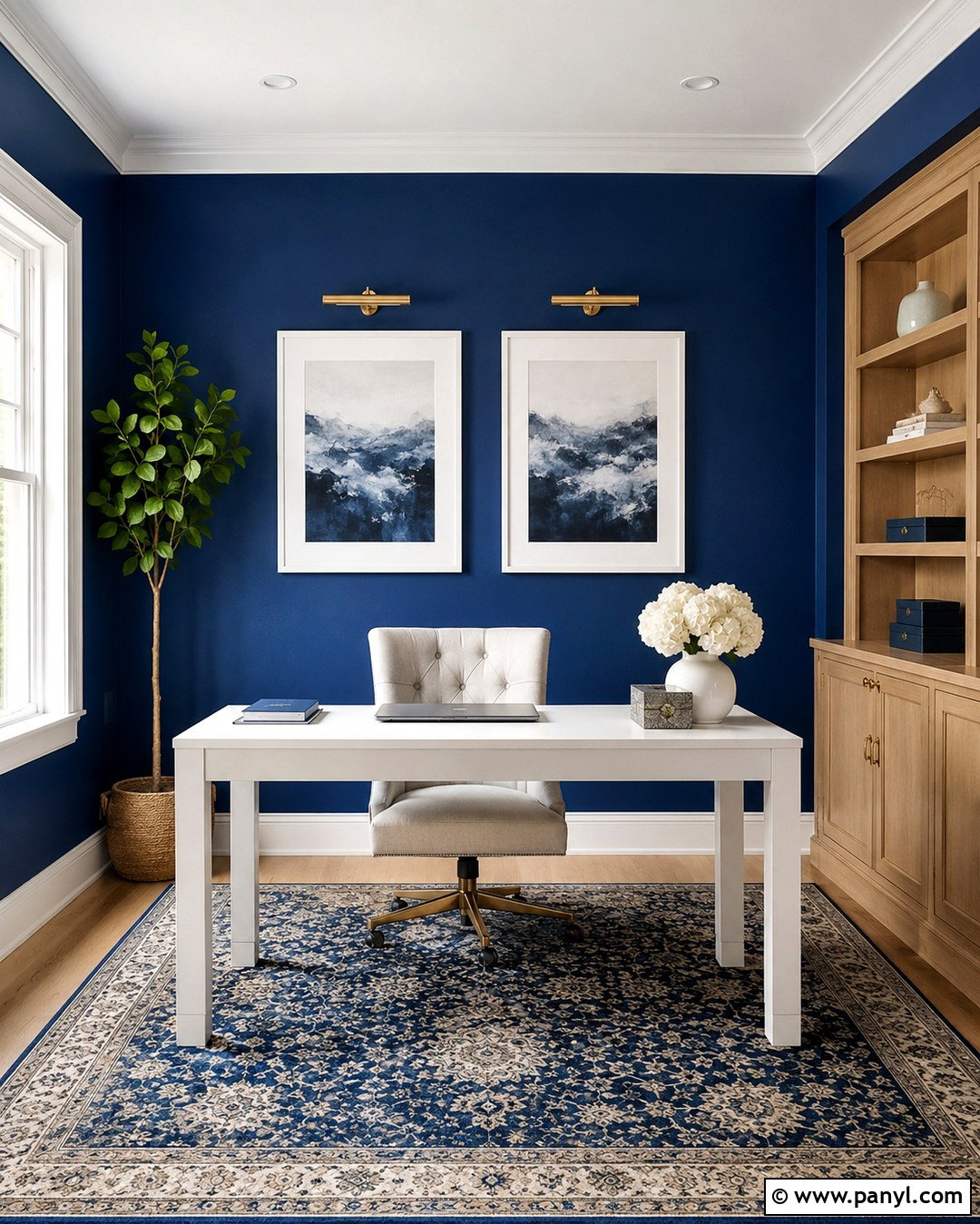
Royal blue walls create a confident office that feels more creative than conventional. Temper the saturated color with a large white desk, light oak storage, and an ivory upholstered chair. Paint the ceiling and detailed trim clean white so the architecture remains crisp. Place a navy-and-cream patterned rug beneath the desk to connect the strong wall color with the lighter furniture. Polished brass picture lights and desk accessories introduce warmth and refinement. A symmetrical arrangement of white-framed artwork keeps the room orderly, while closed cabinets prevent supplies from becoming distracting. Add one tall plant near the window for a natural accent. This room works best with generous daylight, which helps royal blue look vivid and dimensional instead of excessively dark.
15. Navy Blue Living Room Walls
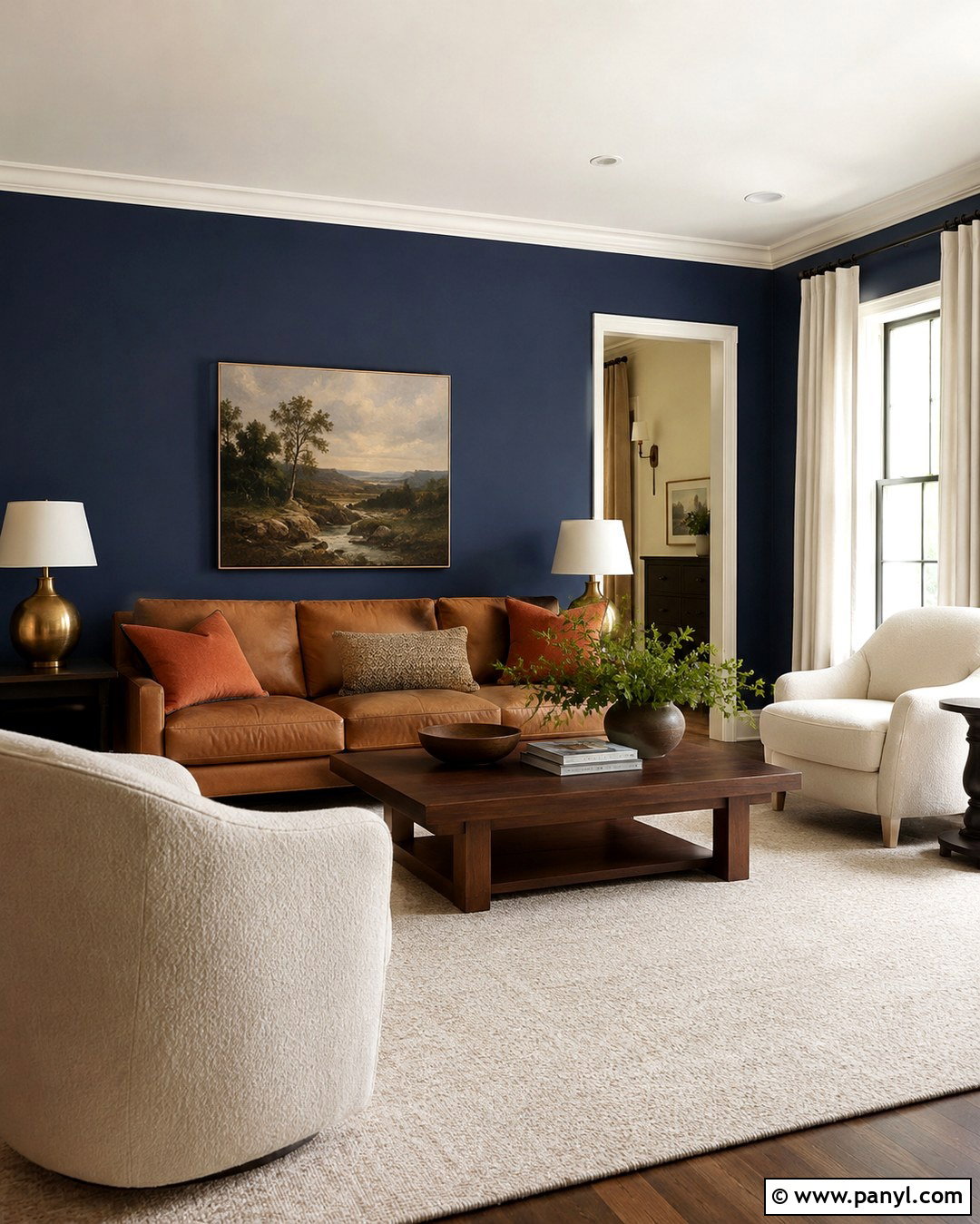
Navy blue walls can make a living room feel tailored and cozy when the furniture introduces enough lightness. Paint the walls in a deep, slightly softened navy, then continue warm white across the ceiling, crown molding, and window trim. Arrange a camel leather sofa opposite two ivory boucle chairs, with a walnut coffee table centered between them. A large cream rug brightens the floor and keeps the dark walls from dominating. Use antique brass floor lamps, warm landscape artwork, and rust-colored pillows to strengthen the inviting palette. Off-white linen curtains soften the windows while maintaining contrast. Rather than creating one navy accent wall, carrying the color around the room produces a more deliberate, enveloping finish that allows pale furnishings to stand out.
16. Midnight Blue Bedroom Walls
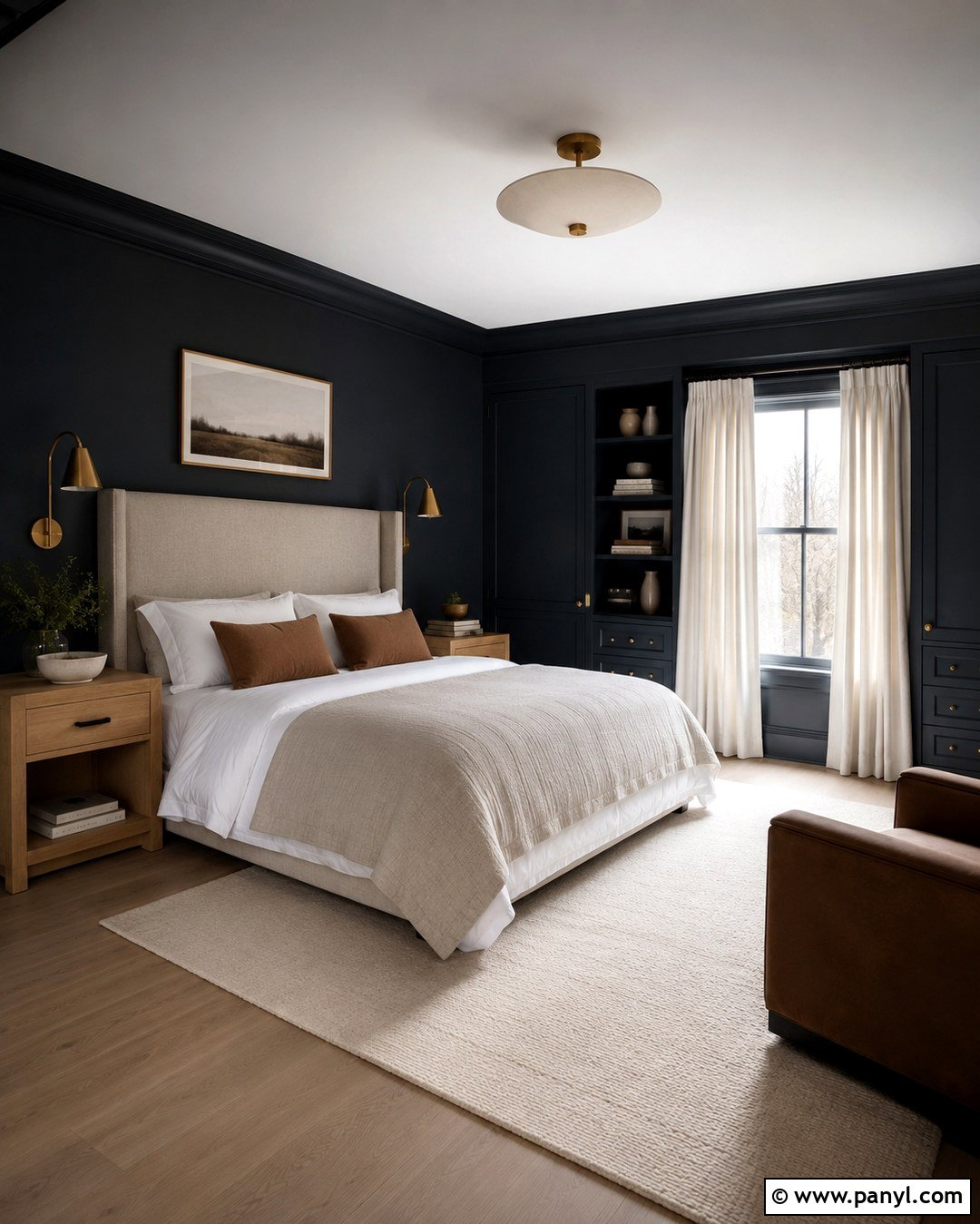
Midnight blue can turn a bedroom into a quiet retreat, especially when used across walls, trim, and built-in storage. Choose a blue that sits close to charcoal and apply it in a low-sheen finish for a smooth, cocooning effect. Place a tall oatmeal linen headboard against the darkest wall, then layer the bed with white sheets, a warm gray coverlet, and cinnamon-colored pillows. Light oak nightstands keep the furniture from disappearing into the background. Add aged brass sconces and a large cream rug for warmth and contrast. Simple ivory curtains should extend from near the ceiling to the floor. Minimal abstract artwork and uncluttered surfaces complete the space, allowing the deep blue envelope to remain restful rather than visually busy.
17. Indigo Blue Dining Room Walls
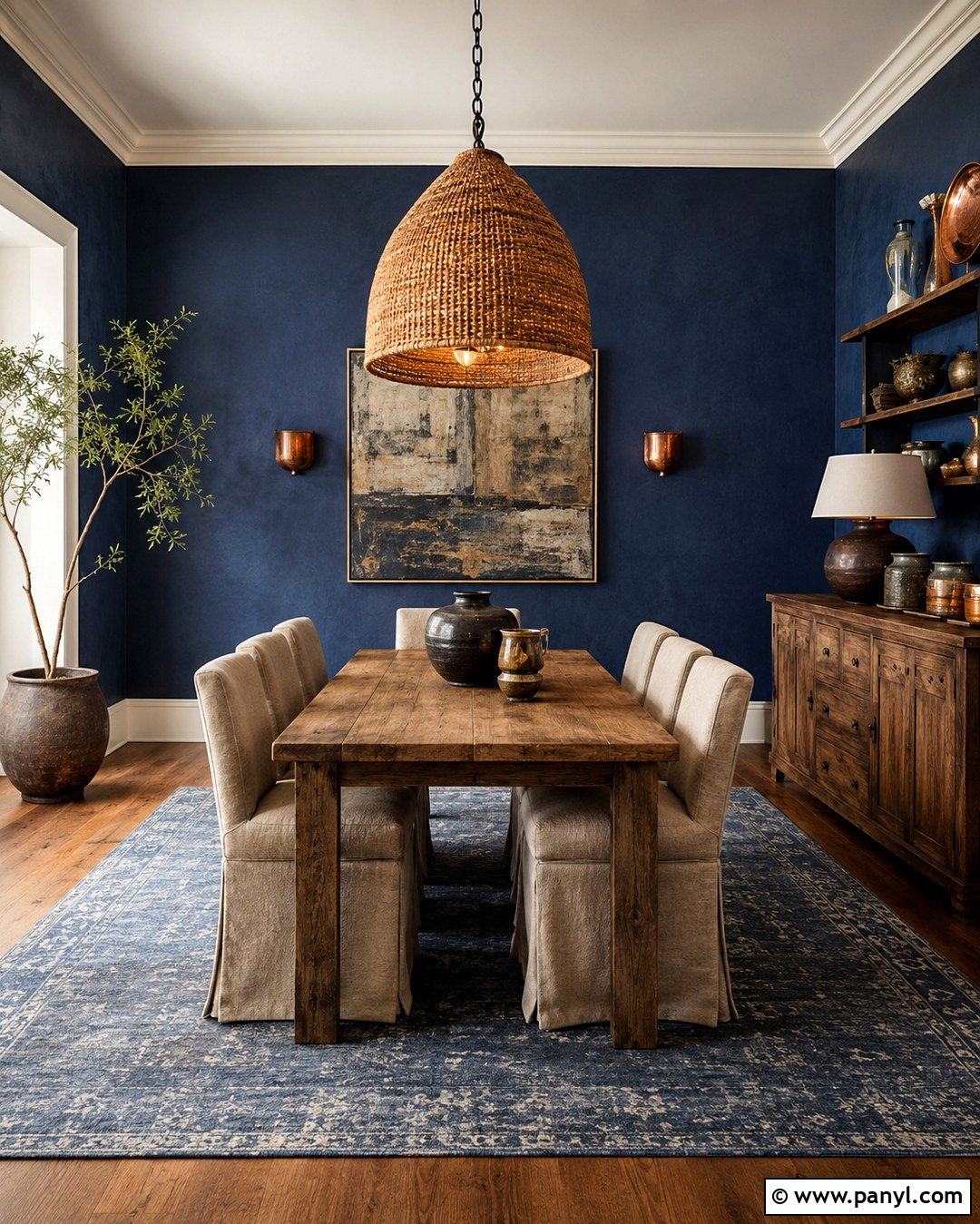
Indigo blue brings an artistic, global character to a dining room while still feeling classic. Paint the walls a deep blue with a subtle violet undertone, then add warm white trim and ceiling paint. Pair the walls with a long reclaimed oak table and simple upholstered chairs in natural flax linen. A woven pendant light creates texture above the table, while a patterned rug in faded indigo, clay, and cream adds softness below. Use a sideboard in medium-tone wood to store serving pieces and display handcrafted pottery. Copper or aged brass accents look warmer than bright silver against indigo. Complete the room with oversized abstract artwork containing earthy reds and blues. The finished design feels layered, personal, and comfortable enough for everyday meals.
18. Periwinkle Blue Nursery Walls
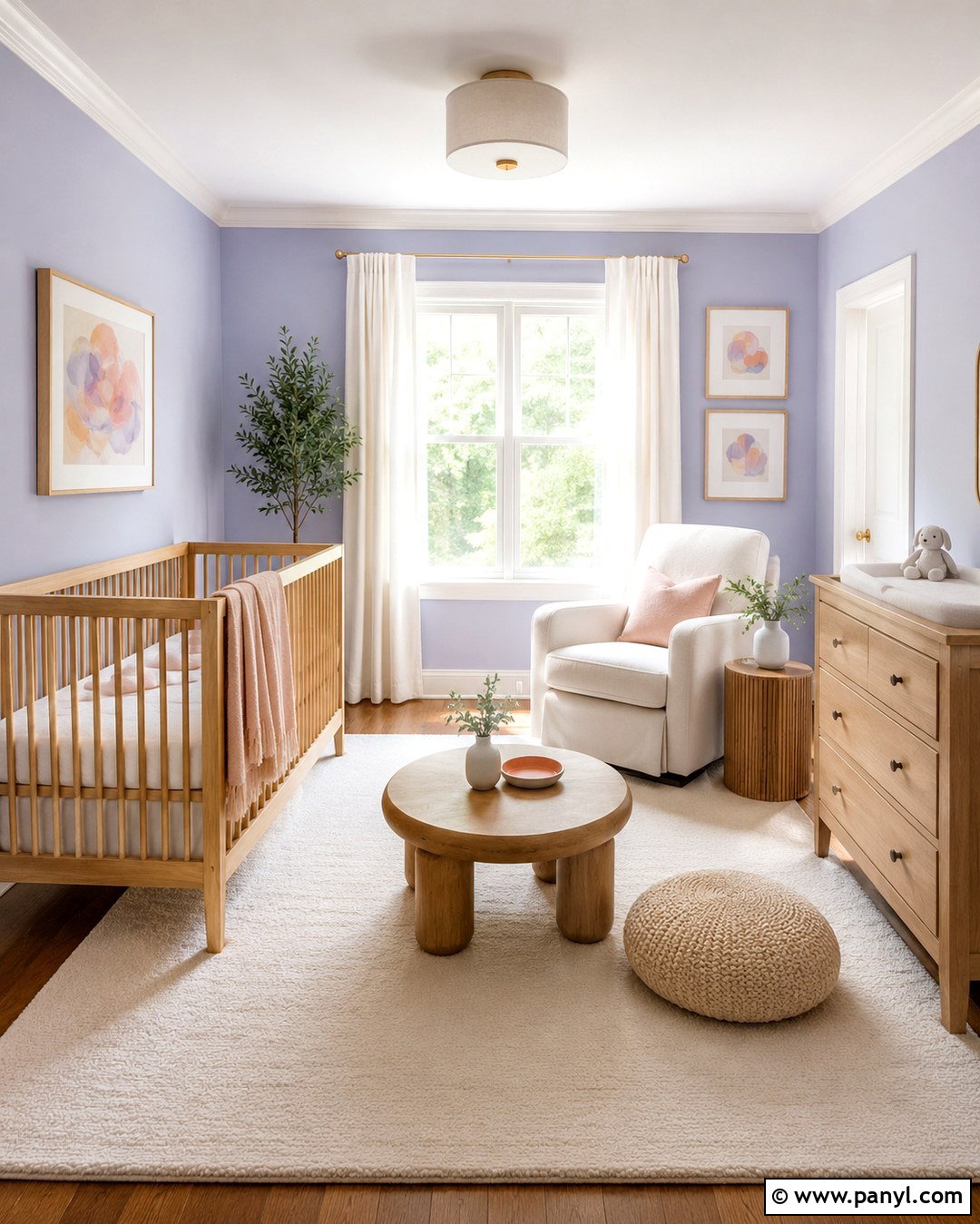
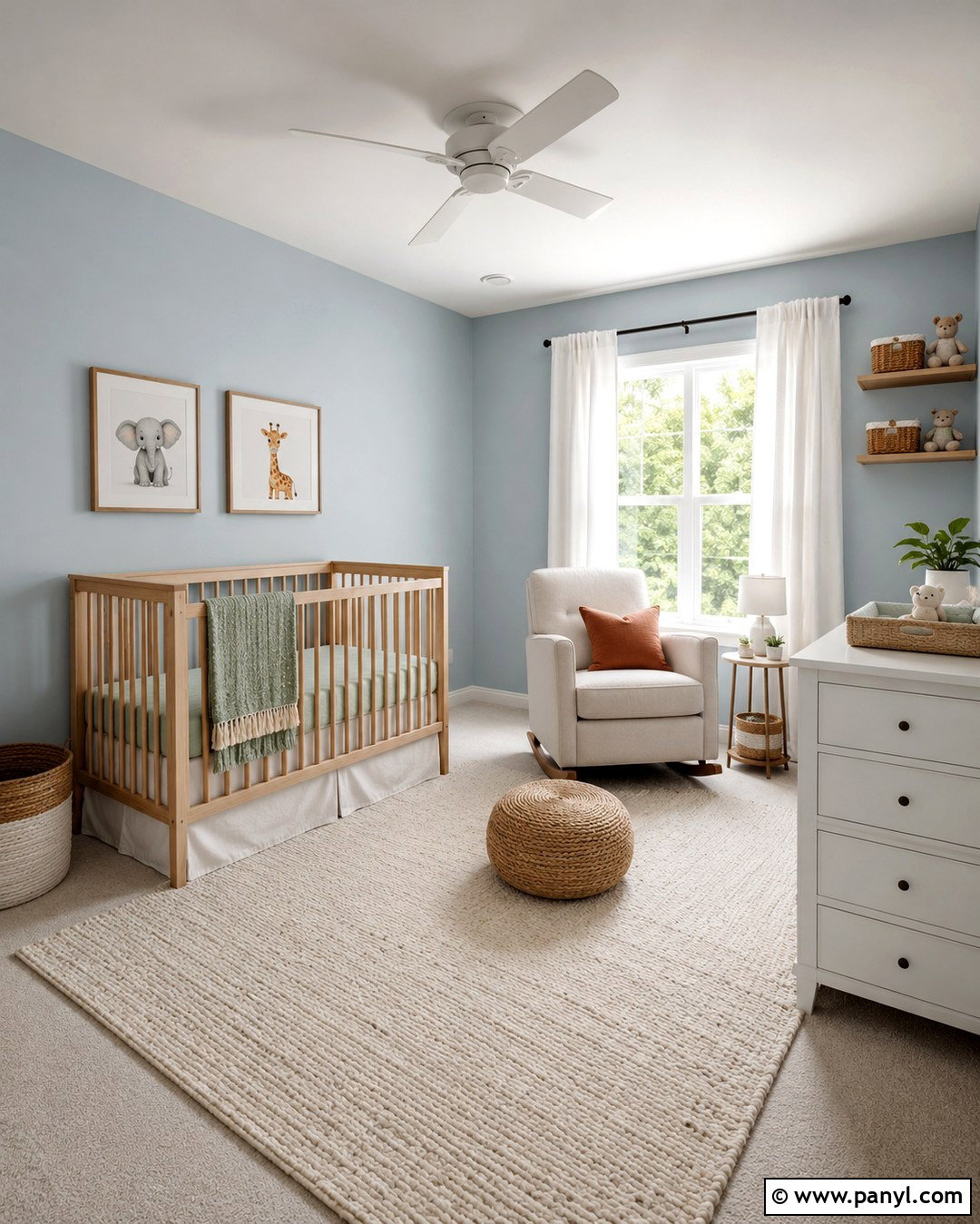
Periwinkle blue walls create a gentle nursery that feels colorful without following a strongly themed palette. Select a pale shade with balanced blue and lavender undertones, then pair it with warm white trim and a light natural-wood crib. An ivory upholstered glider, rounded oak side table, and soft cream rug keep the room comfortable and bright. Introduce muted peach through a throw blanket, storage baskets, and simple artwork. White blackout curtains provide practical light control while maintaining an airy appearance. Use a low oak dresser as a changing station and anchor it securely. A soft ceiling fixture and small wall-mounted reading light complete the room. The finished nursery can transition easily as the child grows because its furniture and colors remain versatile.
19. Dusty Blue Hallway Walls
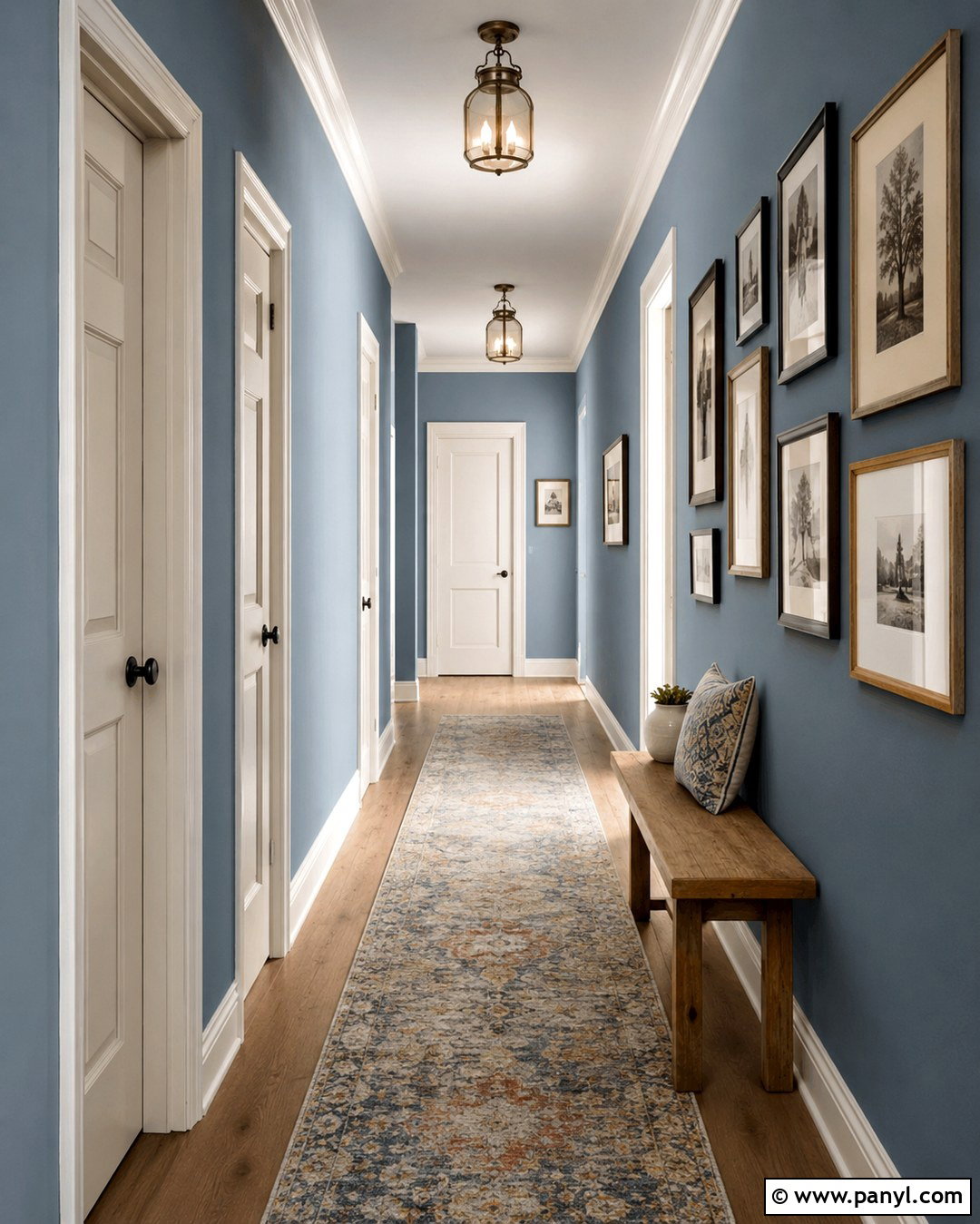
Dusty blue can give a narrow hallway definition while remaining soft enough to connect several adjoining rooms. Choose a grayed medium-light blue and paint the walls from baseboard to ceiling. Keep door casings, interior doors, and baseboards warm white to create rhythm along the passage. A slim vintage-style runner in cream, rust, and faded blue draws the eye forward. Install simple aged brass ceiling lights at even intervals for consistent brightness. Create a restrained gallery wall using black or oak frames with generous white mats. At the end of the hallway, place a narrow wooden bench or console beneath one larger artwork. These coordinated details transform a transitional area into a finished part of the home without introducing bulky furniture or unnecessary clutter.
20. Blue Color Drenched Library Walls
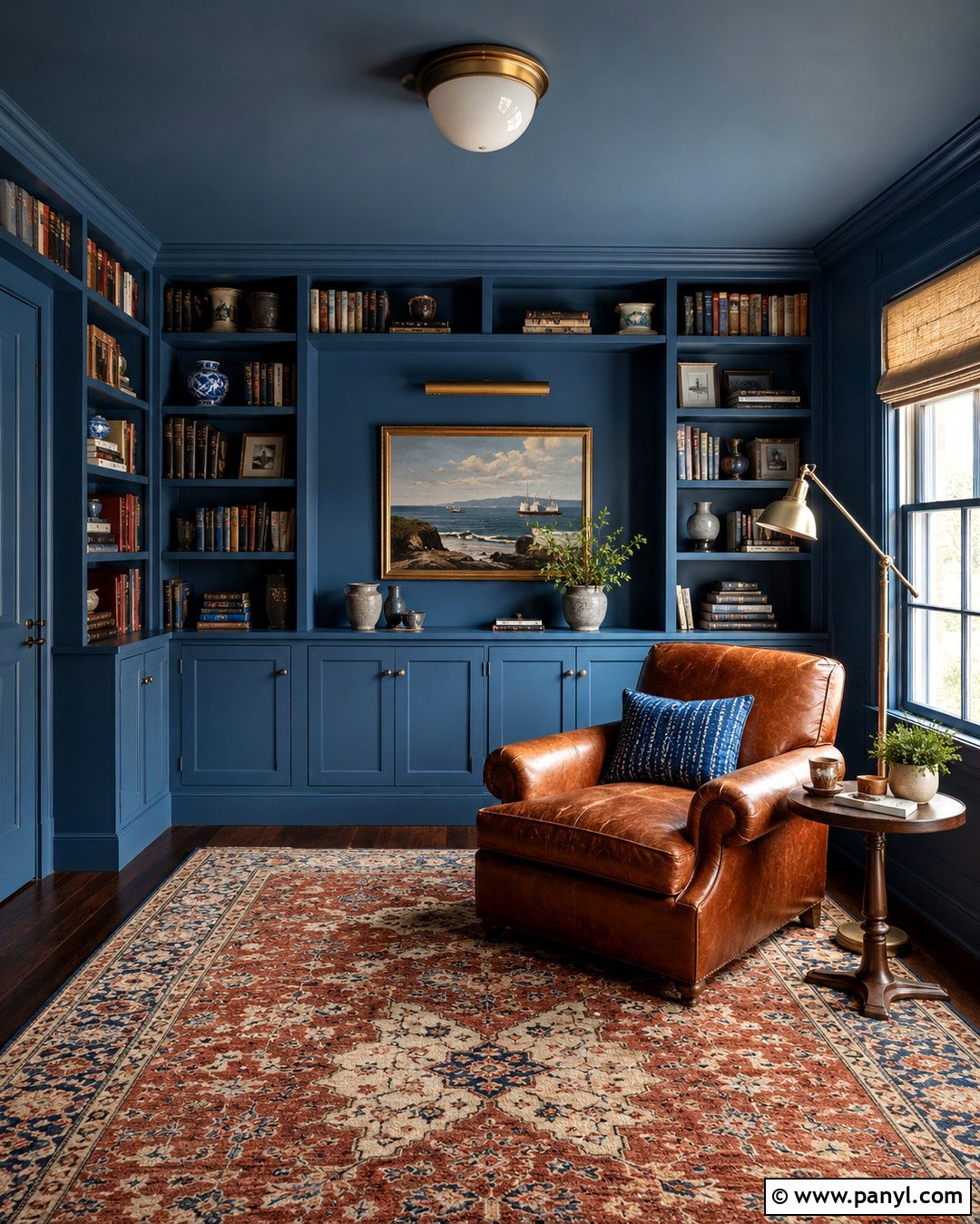
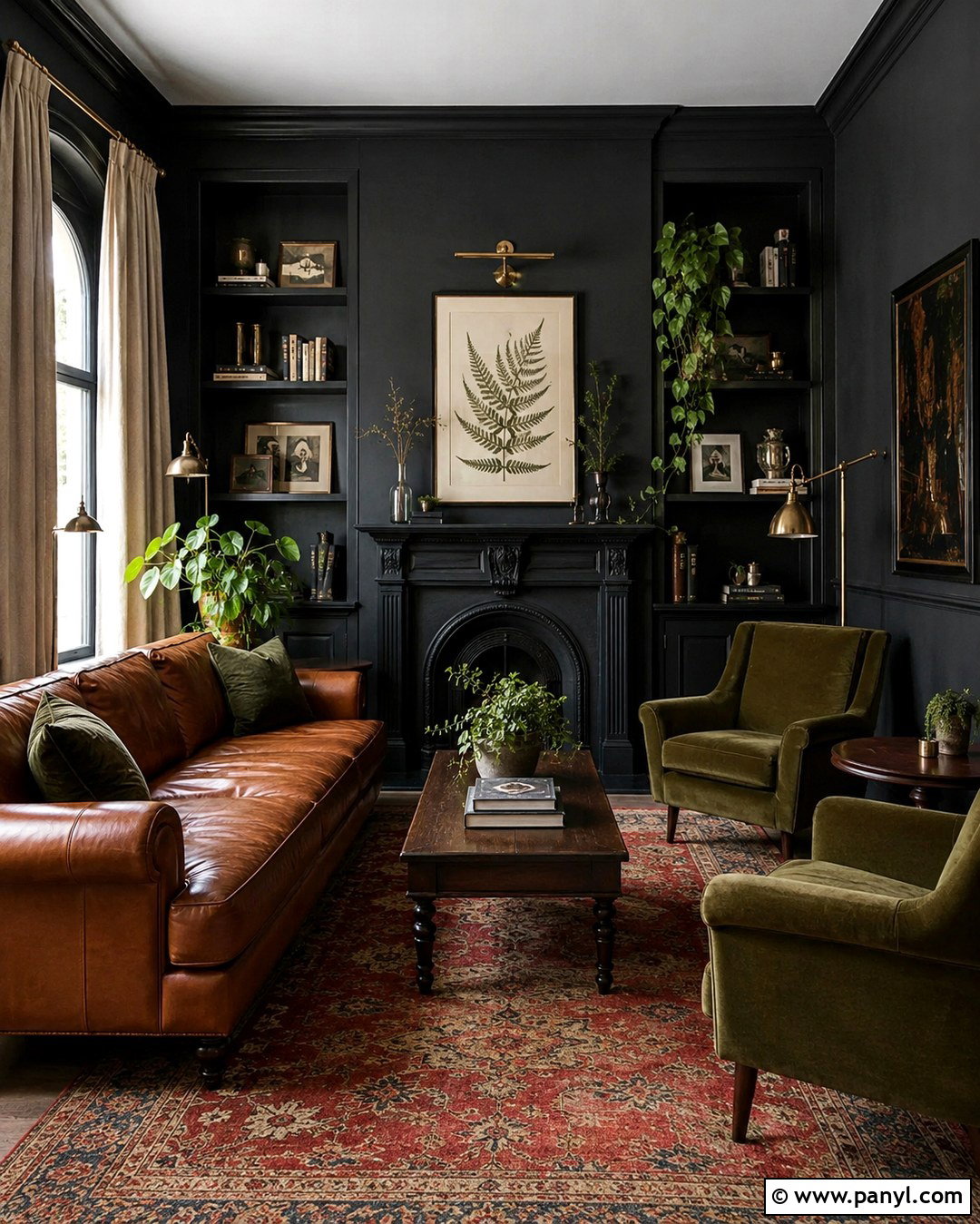
For a bold, immersive look, cover a small library’s walls, shelving, trim, and ceiling in the same medium-deep blue. Choose a softened marine blue that has enough gray to remain comfortable across large surfaces. Fill the built-in shelves with a balanced mix of books, ceramics, and open space so the room does not feel crowded. Add a cognac leather reading chair, a small brass floor lamp, and a round walnut side table. An antique-inspired rug in red, cream, and blue warms the floor. Use Roman shades in natural linen to soften daylight without interrupting the color-drenched effect. The consistent paint treatment makes the architecture feel unified, while warm leather, wood, brass, and textiles create a practical, inviting reading retreat.
Conclusion:
The most successful **20 Blue Shades Wall Paint Ideas** combine the right blue with furniture, flooring, trim, lighting, and accessories that support its undertone. Pale blues feel softer beside warm whites and light wood, while navy, teal, and indigo become more inviting with cream textiles, brown leather, brass, and earthy accents. Room size matters, but available light matters even more. Always test large painted samples on different walls and observe them throughout the day before buying the full amount. Use a finish appropriate for the room, and view the proposed shade beside permanent materials such as countertops and flooring. With thoughtful sampling and a coordinated palette, blue walls can look timeless, comfortable, and distinctly personal.

Related Ideas and Inspiration:
Leave a Reply