
Melon walls bring a warm blend of peach, coral, orange, and soft pink into the home. Depending on the shade, they can feel sunny and playful or earthy and sophisticated. Paint colors carrying the melon name vary noticeably, so sampling the exact shade in your room is essential before committing. Benjamin Moore also notes that digital color representations can differ from actual paint, making an in-room test especially useful. () The key is to design the entire room around this distinctive color. Natural wood, warm white, sage green, deep blue, and brushed metal can all create balanced results. The following complete room schemes offer practical ways to decorate with **20 Melon Walls**.

1. Melon Walls With Warm White Furniture
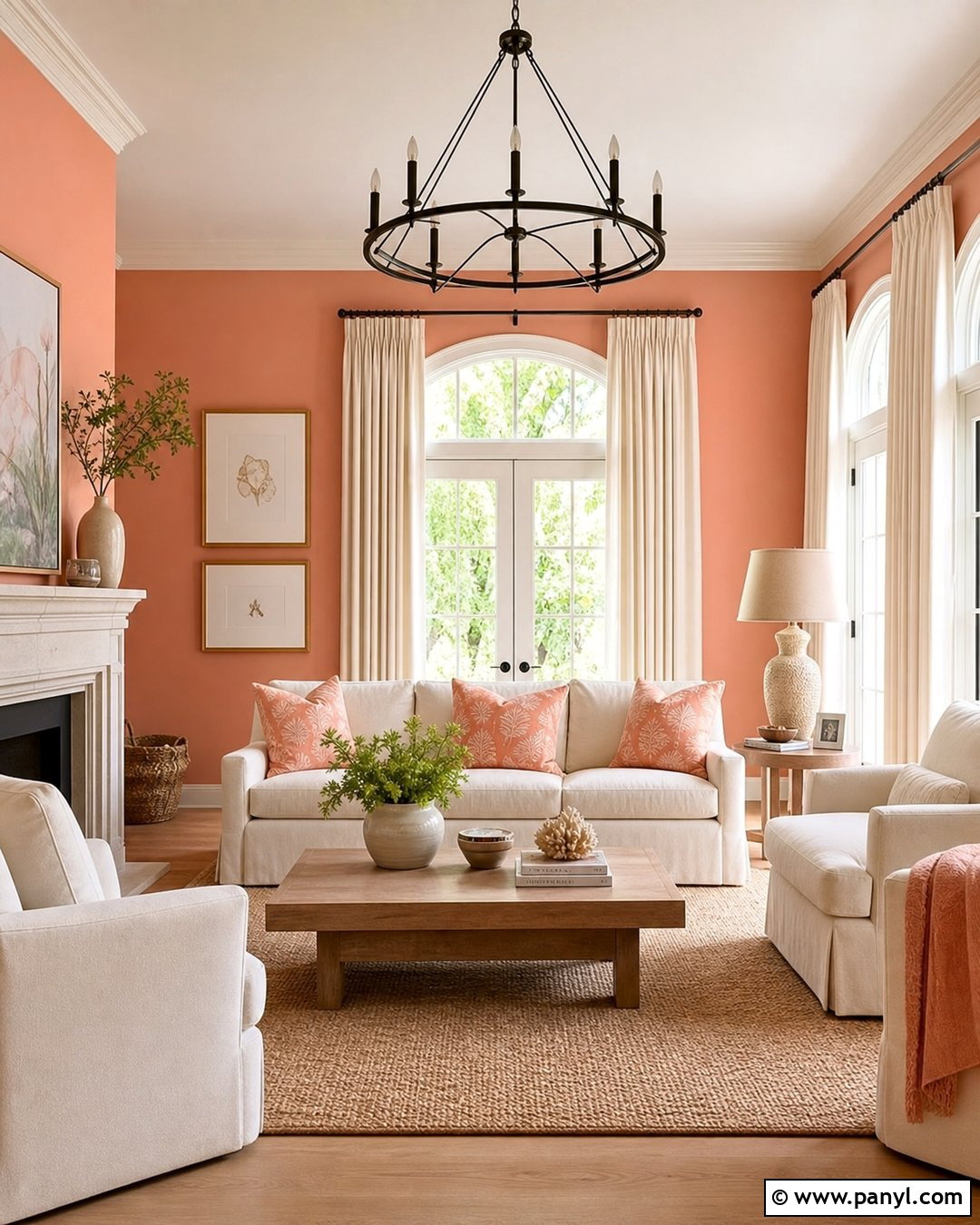
Create a light, welcoming living room by pairing melon walls with creamy white furniture and natural textures. Choose a simple linen sofa, two upholstered armchairs, and full-length ivory curtains to soften the warm wall color. A pale oak coffee table and woven jute rug keep the arrangement casual and grounded. Add ceramic table lamps, off-white pillows, and one or two muted coral accents rather than repeating melon everywhere. Hang artwork with generous white matting to give the walls breathing room. Warm white trim produces a gentler transition than stark white. This complete palette works especially well in a sunny room where the melon paint can appear fresh, peachy, and cheerful without overwhelming the furniture.
2. Melon Walls With Sage Green Decor
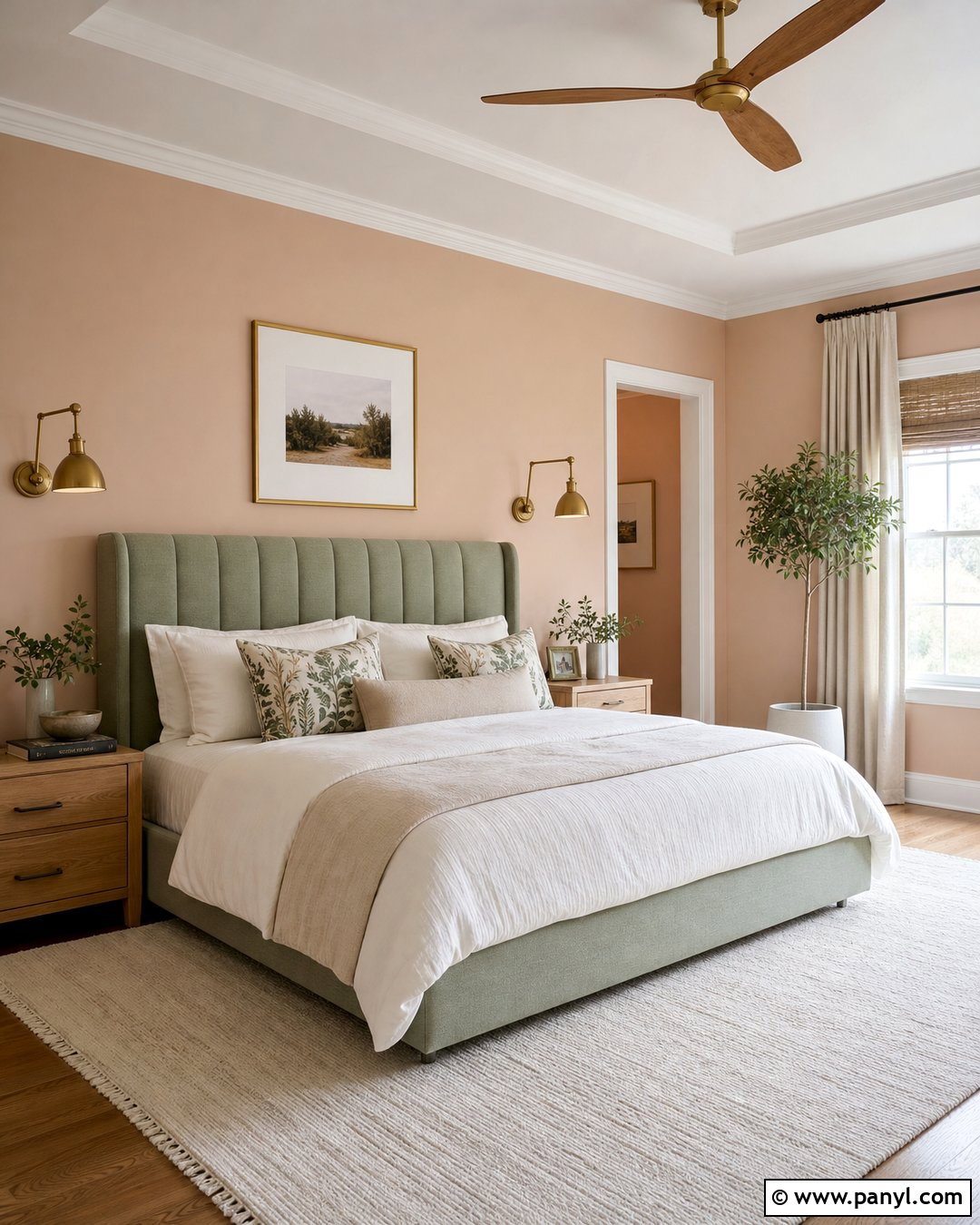
Sage green gives melon walls a calm, natural counterpoint that works beautifully in bedrooms and sitting rooms. Start with an upholstered sage headboard or streamlined green sofa, then bring in medium oak furniture for warmth. Choose oatmeal curtains, an ivory rug, and bedding or pillows patterned with soft green leaves. Antique brass lighting adds depth without introducing another dominant color. Keep the ceiling and trim creamy white so the room remains bright and balanced. A few potted plants can reinforce the green, but avoid filling every corner. The finished space should include broad areas of neutral fabric between the two main colors. This allows the melon walls to feel warm and expressive while the sage elements keep the overall design restful.
3. Melon Walls With Navy Blue Accents
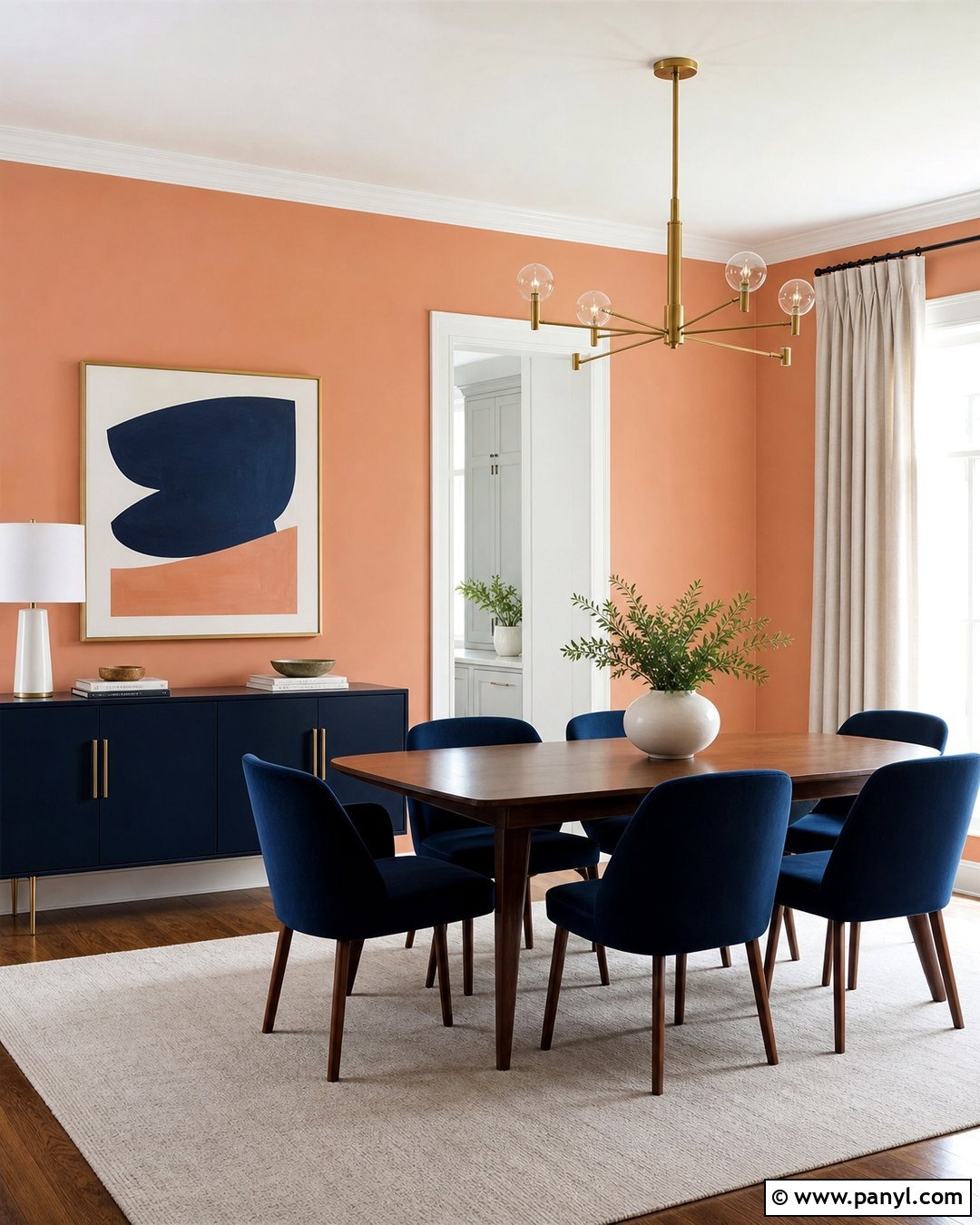
Deep navy creates a strong, polished contrast against soft melon walls. In a dining room, place a dark blue sideboard along the main wall and surround a walnut table with navy upholstered chairs. Use a cream rug beneath the table to prevent the deeper furnishings from making the room feel heavy. White or oatmeal curtains keep the windows bright, while brass sconces and a simple brass chandelier add a refined finish. Select artwork that combines navy, melon, and warm beige in controlled amounts. Matte navy works better than a glossy finish when used on large furniture because it looks softer beside the warm walls. The result is a complete dining space that feels colorful and sophisticated rather than overly sweet or playful.
4. Melon Walls With Natural Oak Furniture
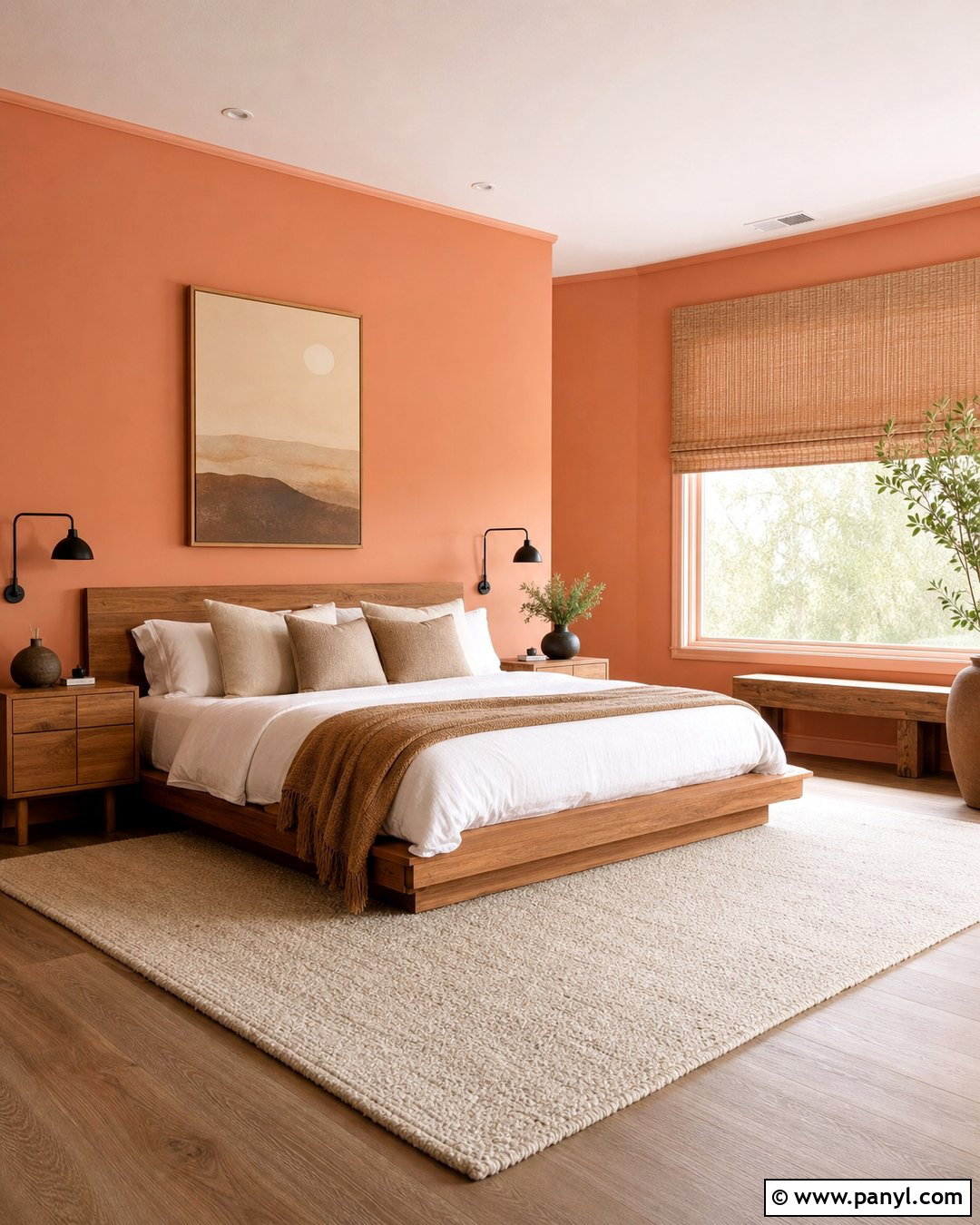
Can a warm wall color work in a simple, modern room? Melon walls and natural oak create an easy combination because both contain sunny undertones. Use a low oak platform bed, matching nightstands, and a clean-lined dresser to establish the bedroom layout. Dress the bed in white linen with camel, peach, and sand-colored layers. Add a large cream wool rug and woven window shades for texture. Black reading lights provide a small amount of contrast and keep the arrangement from looking too pale. Choose minimal artwork with earthy shapes and wide neutral borders. This design feels most balanced when the oak has a clear or matte finish rather than an orange stain, allowing the melon walls to remain the room’s warmest feature.
5. Melon Walls With Black Trim
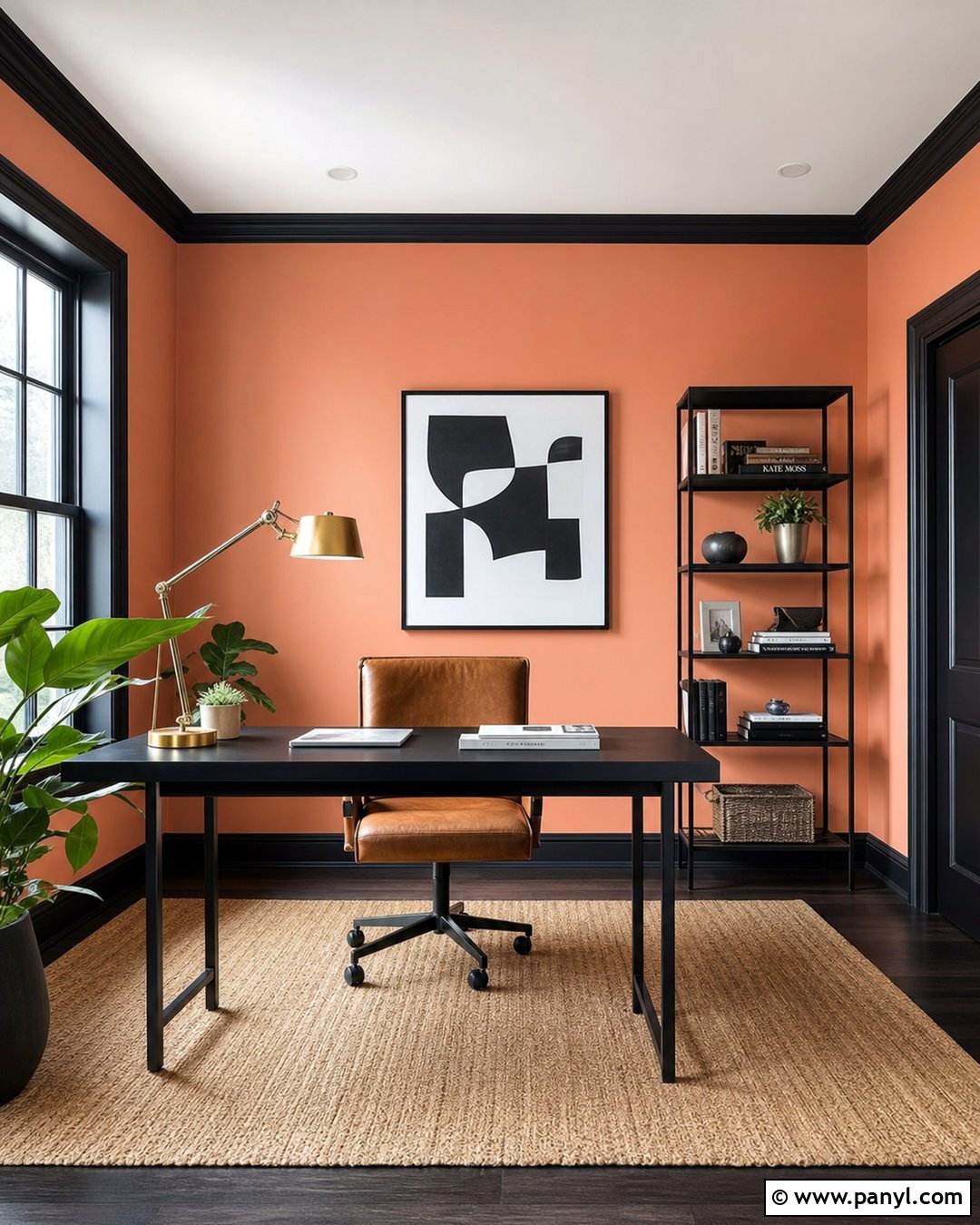
For a bold modern look, frame melon walls with matte black trim, doors, and carefully chosen furniture. This combination works well in a home office where strong lines can bring structure to the warm paint. Position a black desk against the main wall with a cognac leather chair and a slim black bookcase nearby. Use a natural fiber rug to lighten the floor and hang graphic black-and-white artwork above the desk. White ceiling paint prevents the contrast from closing in the room. Keep accessories limited to warm wood boxes, a brass task lamp, and a leafy plant. Crisp black details make the melon color appear cleaner and more architectural, while natural materials stop the office from feeling severe or overly coordinated.
6. Melon Walls With Light Blue Decor
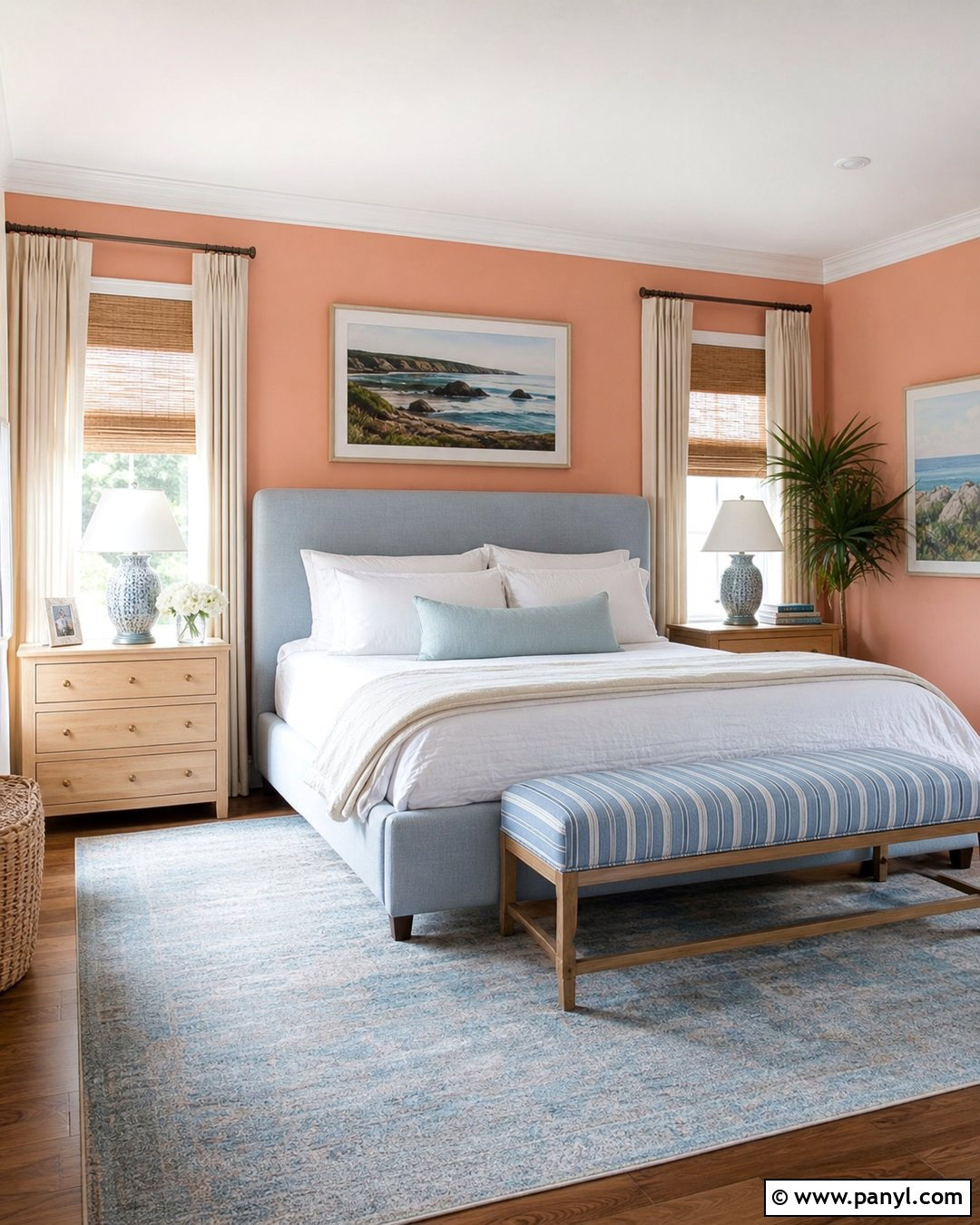
Soft blue accents can make melon walls feel breezy and relaxed instead of intensely warm. Build a guest bedroom around a pale blue upholstered bed, white cotton bedding, and a striped blue-and-cream bench. Choose light wood nightstands and ceramic lamps with simple white shades. A faded blue rug can anchor the furniture while maintaining the airy mood. Hang natural linen curtains rather than bright white ones, which may create too much contrast. Artwork featuring coastal landscapes or abstract sky tones supports the palette without turning the room into a literal theme. Small touches of tan through baskets and woven shades add needed warmth. The finished bedroom feels comfortable, fresh, and colorful while remaining easy for different guests to enjoy.
7. Melon Walls With Cream Wainscoting
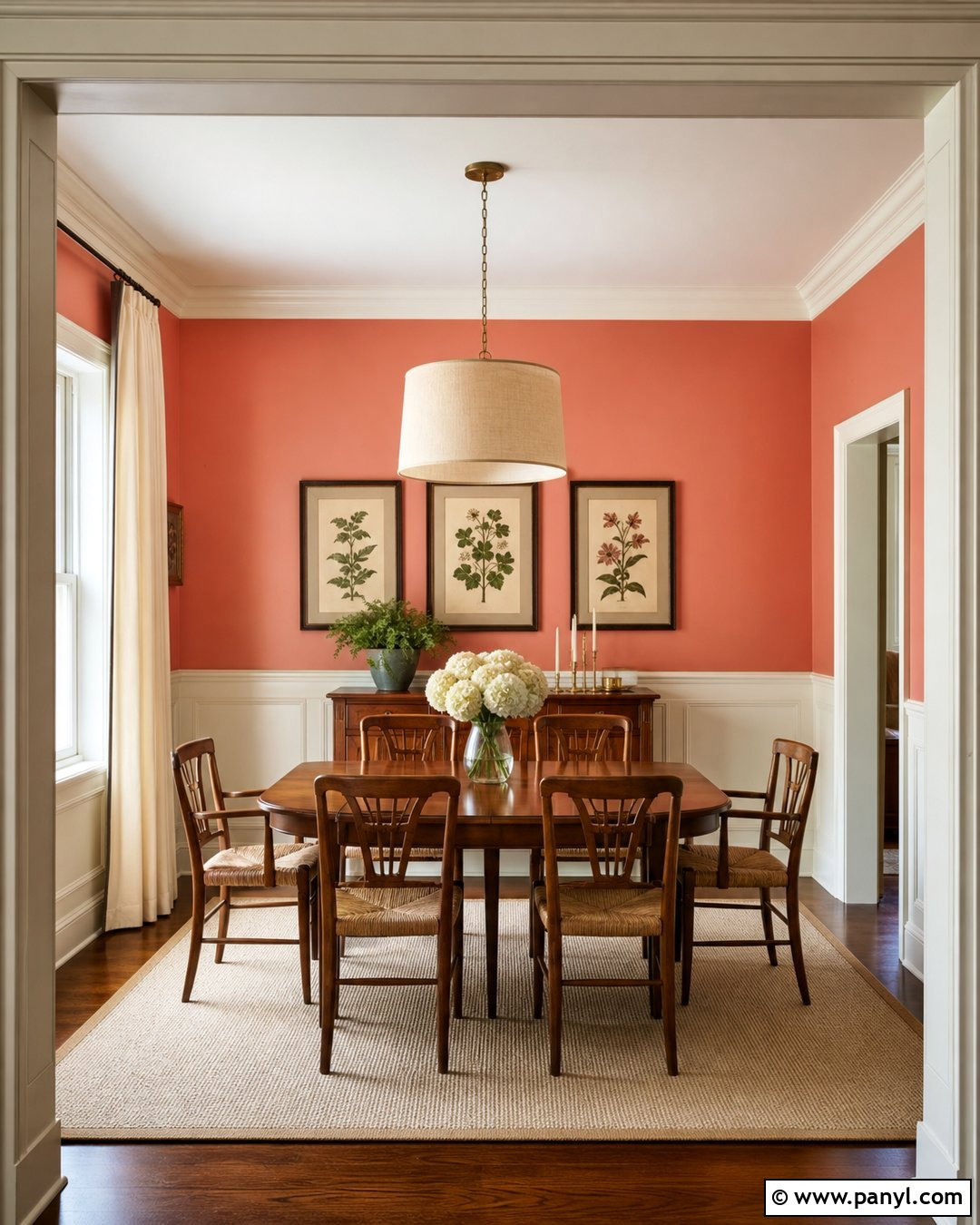
Melon paint above cream wainscoting creates a classic dining room with warmth and definition. Install simple paneled molding across the lower third of the walls, then paint the trim, baseboards, and window casings the same soft cream. Add a medium-toned wood dining table, woven-seat chairs, and a tailored neutral rug. A linen drum pendant or traditional shaded chandelier gives the room gentle light. Keep curtains close to the wainscoting color for a unified background. Botanical prints in dark wood frames provide decoration without hiding too much of the melon surface. This divided wall treatment is particularly effective when a full room of melon seems too strong. The cream panels break up the color while preserving its welcoming, sunny character.
8. Melon Walls With Rattan Furniture
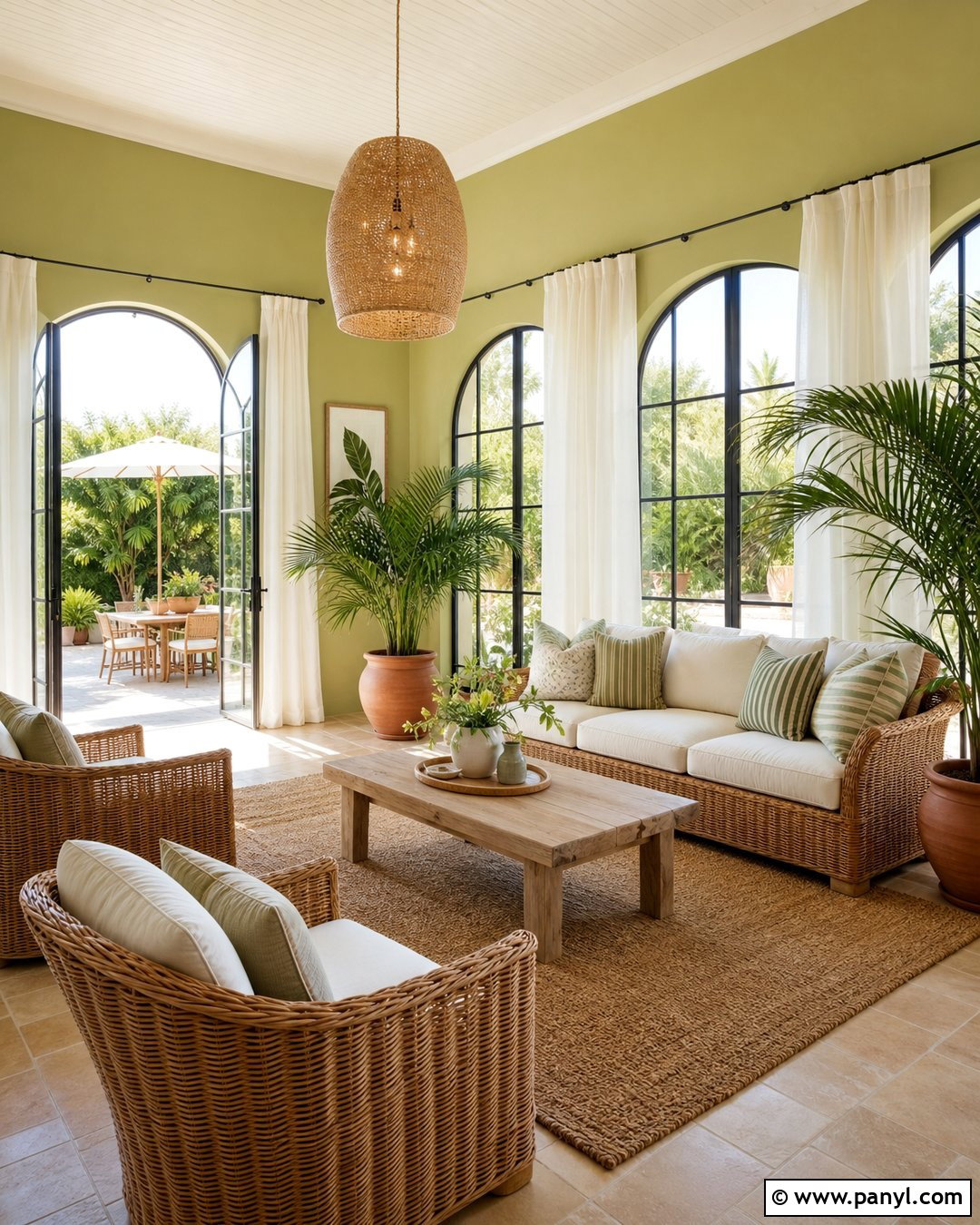
Warm melon walls can become the foundation of a relaxed sunroom filled with rattan and airy fabrics. Arrange a woven sofa and two matching lounge chairs around a light wood coffee table. Use thick cream cushions so the seating remains comfortable and visually quiet. Layer a natural jute rug over pale wood or neutral tile flooring, then add gauzy white curtains that filter bright daylight. A few striped pillows in melon, sand, and olive connect the furnishings to the walls. Include large leafy plants in terracotta planters, but leave open space around windows and walkways. The finished room should feel collected rather than tropical-themed. Simple baskets, handmade pottery, and a woven pendant complete the casual, sun-washed design.
9. Melon Walls With Midcentury Furniture
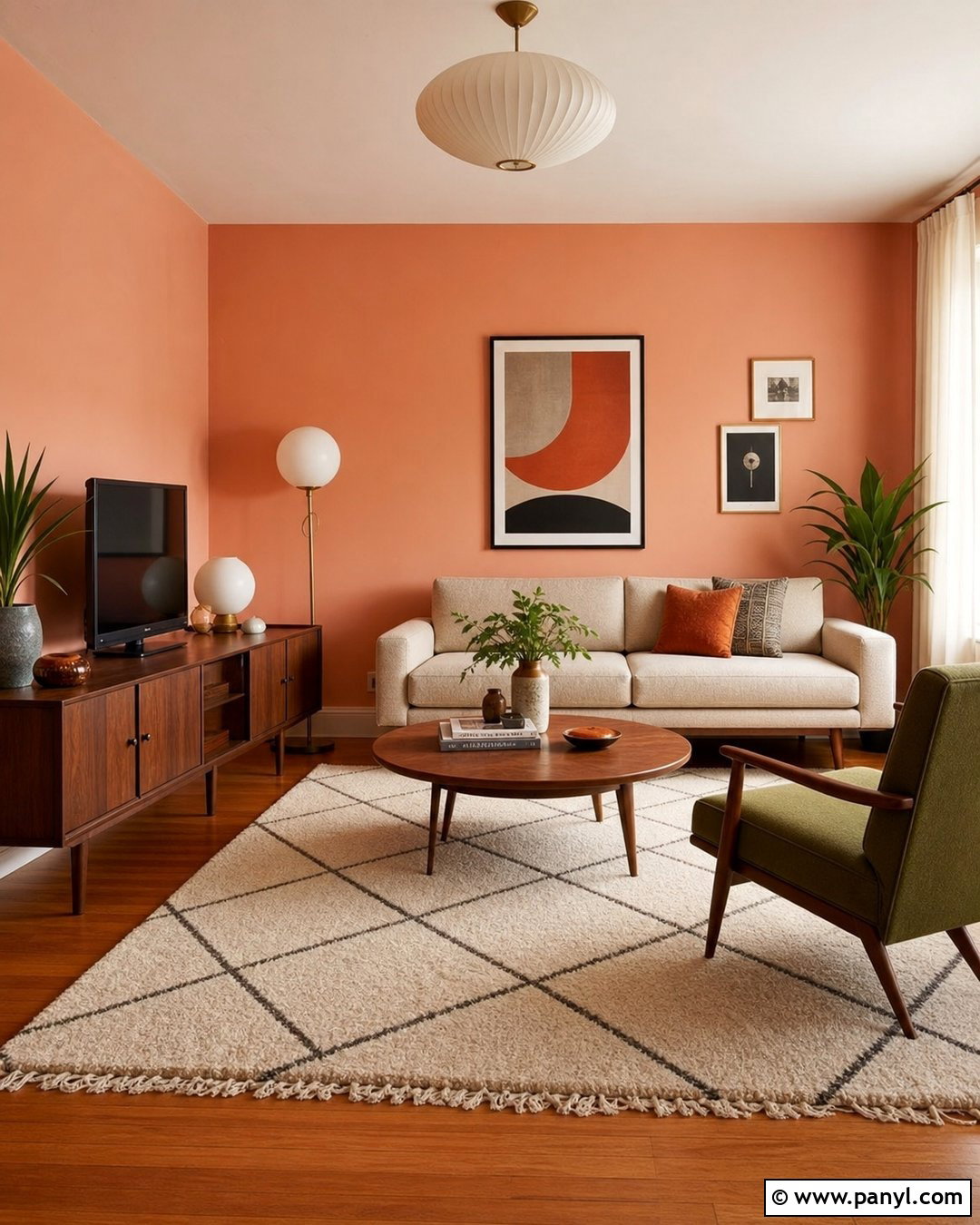
A slightly muted melon shade pairs naturally with the warm woods and clean shapes of a midcentury living room. Start with a walnut media console, a low-profile beige sofa, and one olive green lounge chair. Ground the seating area with a geometric rug in cream, rust, and charcoal. A sculptural floor lamp and round wood coffee table reinforce the period influence without making the room look staged. Choose abstract artwork with black, mustard, and pale coral details. Keep window treatments simple, using off-white curtains hung near the ceiling. The melon walls provide enough personality, so avoid crowding shelves with small accessories. This complete arrangement feels nostalgic yet current, with clear sightlines, functional furniture, and controlled bursts of contrasting color.

10. Melon Walls With Terracotta Floors
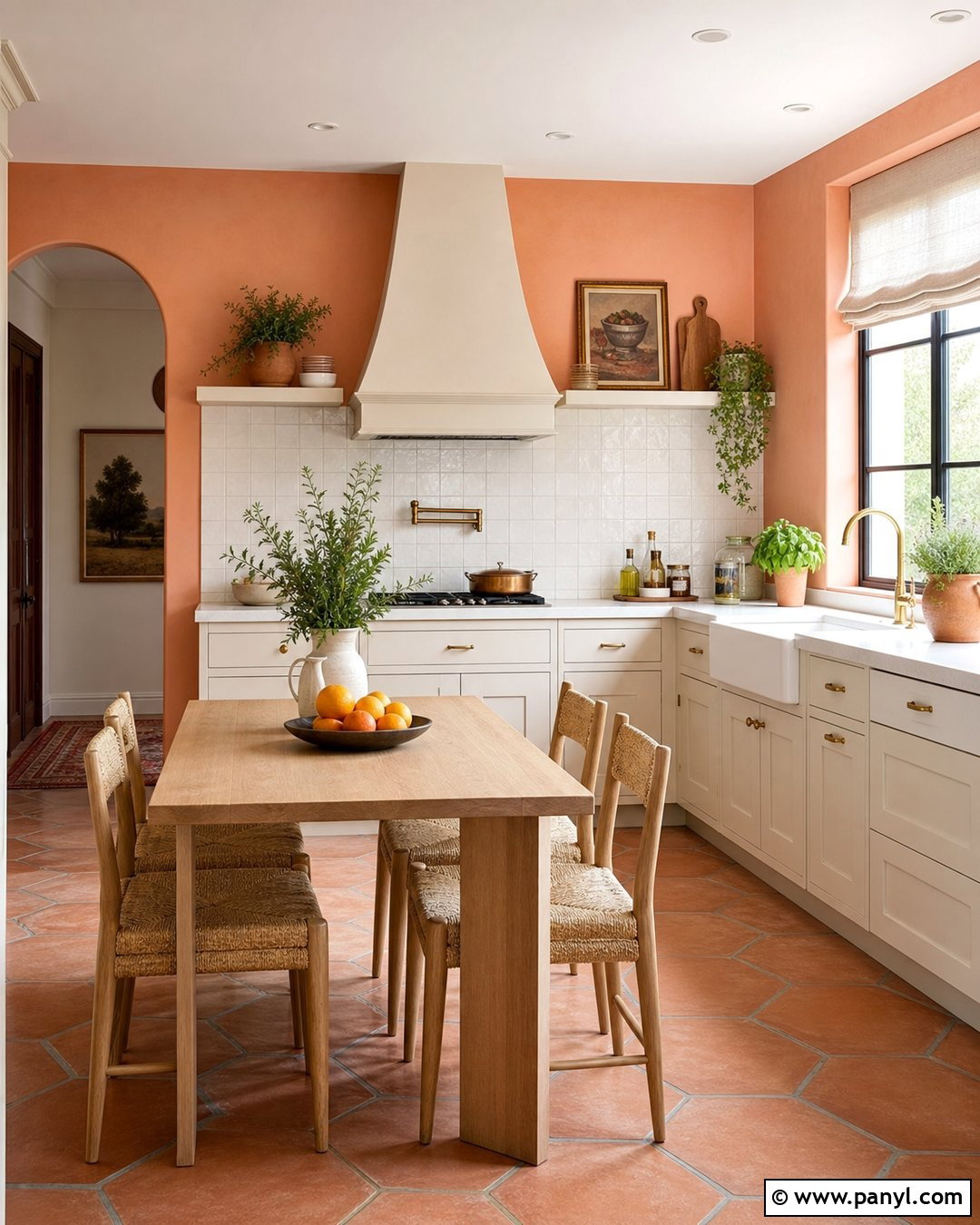
Melon walls and terracotta tile can create a cohesive kitchen or breakfast room when lighter surfaces are added for balance. Use creamy cabinets, warm white quartz counters, and a simple square tile backsplash in soft ivory. Let the terracotta flooring provide the deeper earthy tone. A pale wood table with woven chairs makes the dining area feel informal and practical. Add bronze or aged brass hardware rather than polished chrome, which may appear too cool beside the palette. Linen Roman shades and a few green herbs introduce softness and life. Because the walls and floor are both warm, keep countertops mostly uncluttered and select light-colored dishes. The final room feels sunny and grounded, with each material contributing to one connected Mediterranean-inspired scheme.
11. Melon Walls With White Kitchen Cabinets
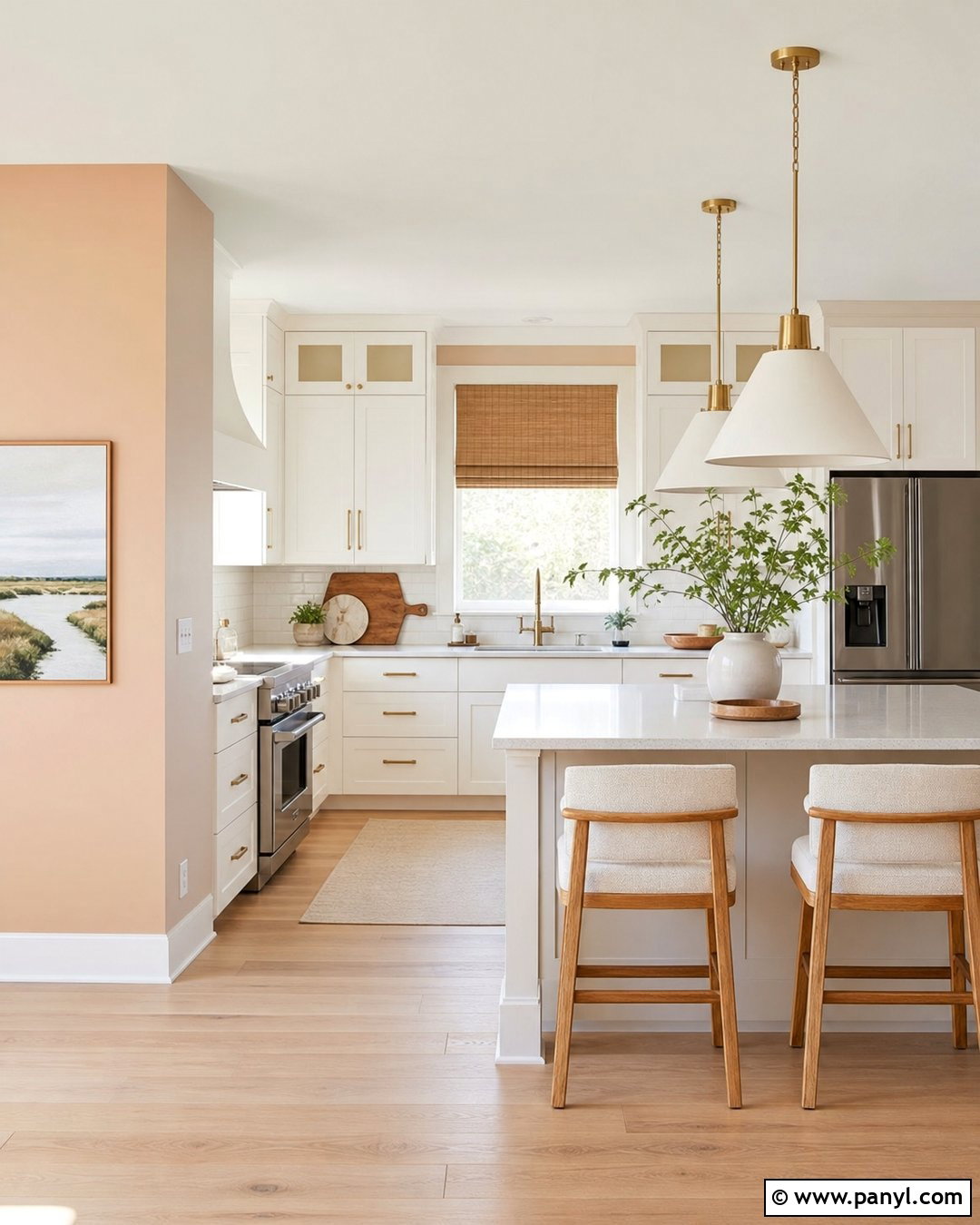
Soft melon walls can enliven a white kitchen without requiring colorful cabinetry or a major renovation. Use warm white cabinets with simple brushed brass pulls and pale quartz countertops. A glossy white subway tile backsplash reflects light and creates a clean break between the cabinets and walls. Bring in counter stools with oak frames and cream upholstered seats. Natural woven shades, wood cutting boards, and understated pottery prevent the kitchen from feeling sterile. For flooring, choose light oak or warm beige tile rather than cool gray. Keep small appliances mostly white, cream, or stainless steel so the melon paint remains the main color statement. This complete kitchen looks bright and approachable, combining practical neutral surfaces with a cheerful background that adds personality.
12. Melon Walls With Forest Green Cabinets
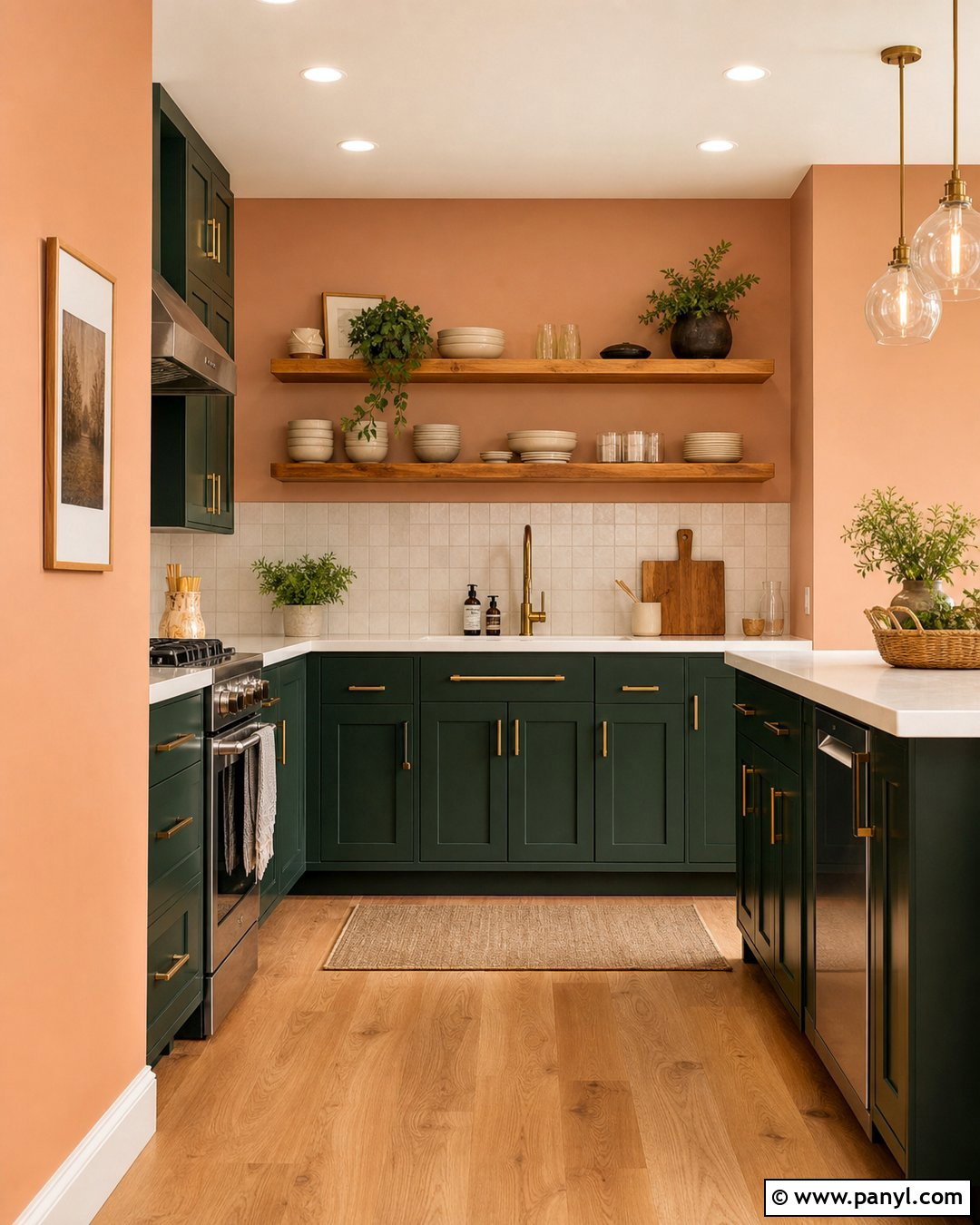
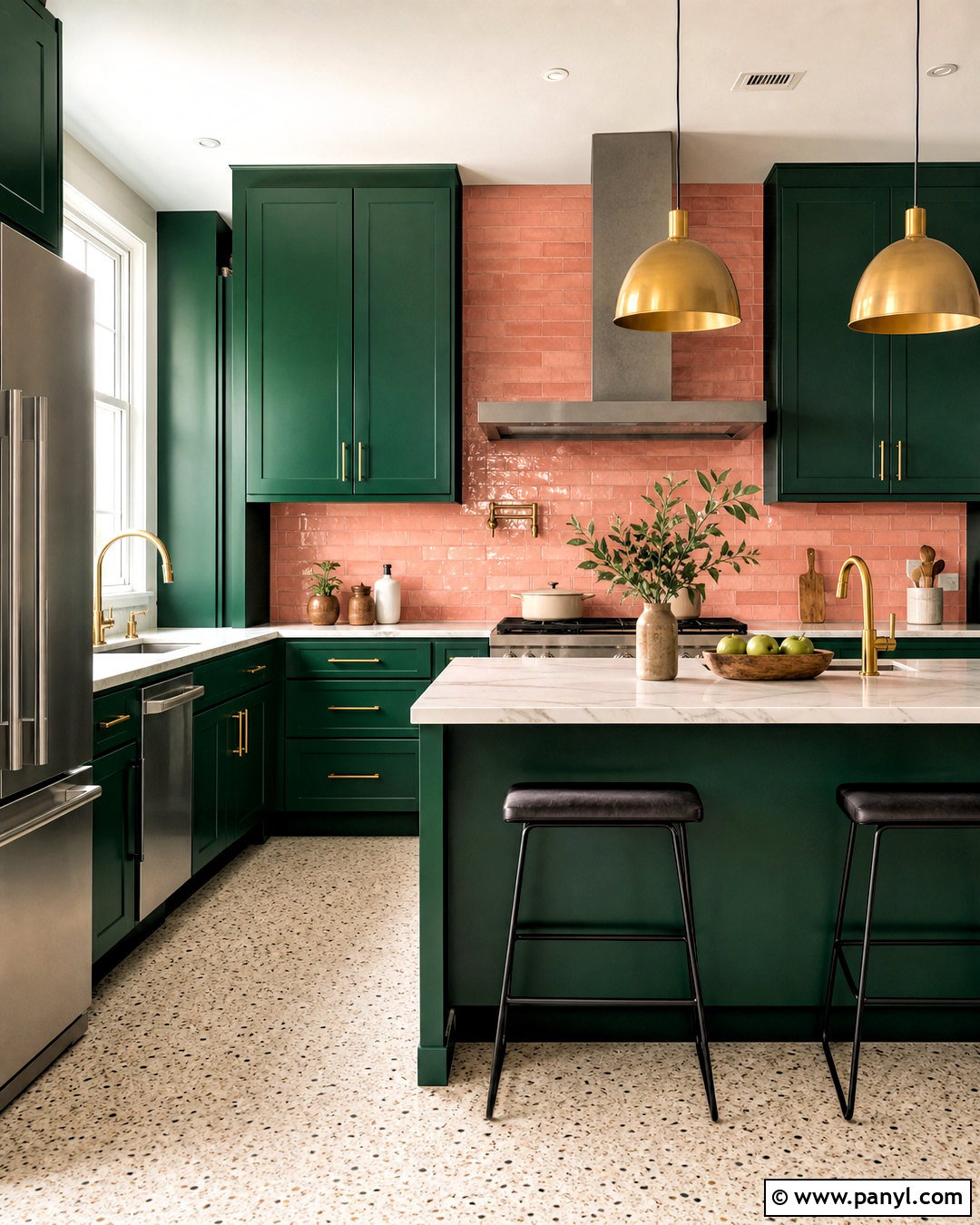
Rich forest green cabinetry gives melon walls an earthy, dramatic edge in a compact kitchen or pantry. Paint the lower and upper cabinets the same deep green, then add unlacquered brass hardware and warm white countertops. A handmade cream backsplash provides visual separation between the two colors. Use medium oak flooring and open wood shelving to soften the darker cabinets. Simple glass pendants keep the lighting clear and unobtrusive. Display only a few cream dishes, wood boards, and green plants so the shelves stay orderly. The melon should lean more muted than neon for this palette, helping it sit comfortably beside the saturated cabinetry. Together, the warm walls and botanical green create a complete space that feels distinctive, cozy, and carefully composed.
13. Melon Walls With Pink Bedding
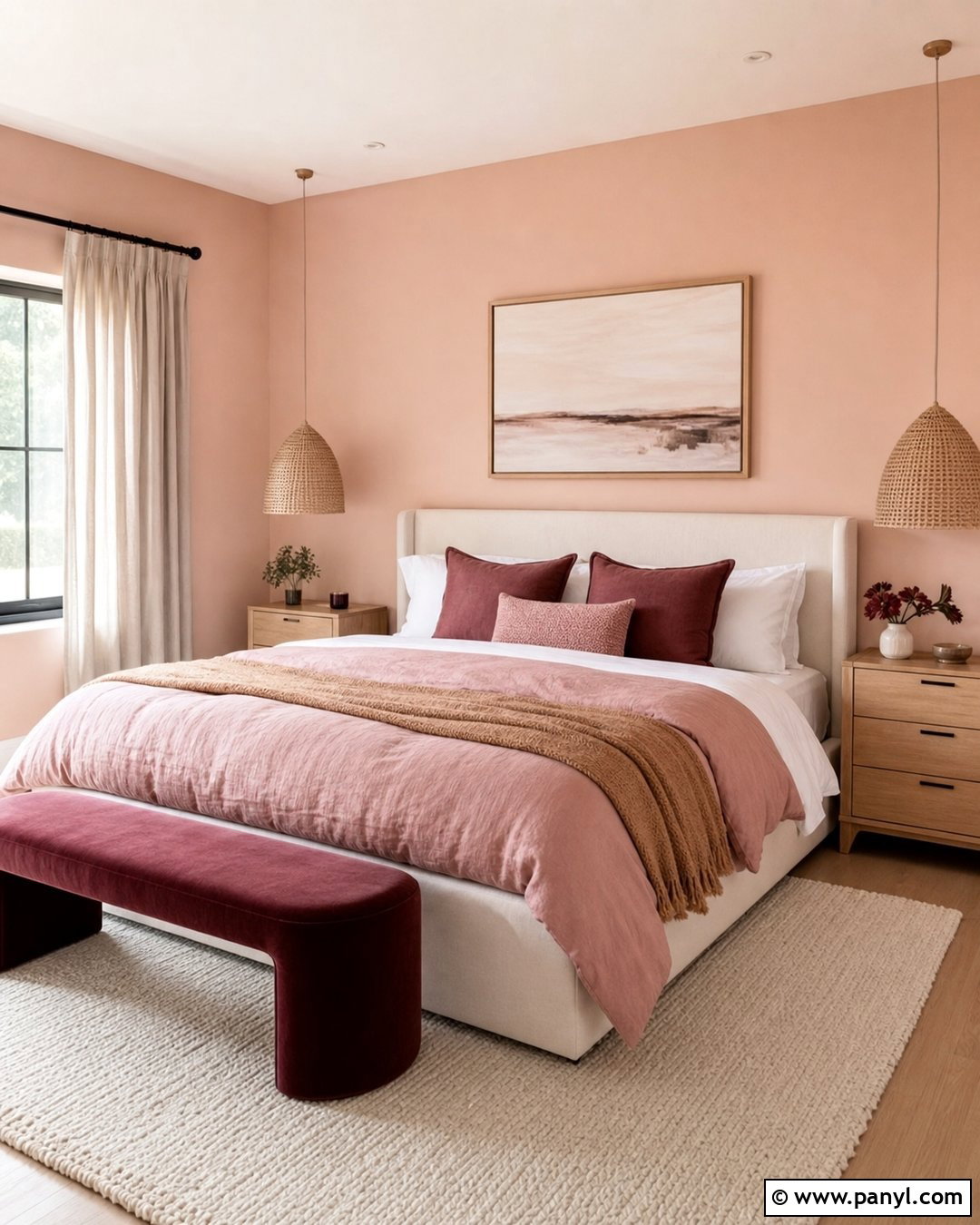
A tonal bedroom can combine melon walls with blush and dusty pink bedding without becoming overly sugary. Begin with a cream upholstered bed to create a neutral focal point. Layer white sheets, a muted blush duvet, and two deeper rose pillows, then add a camel-colored throw at the foot. Pale oak nightstands and woven lamps introduce natural texture. Choose a cream rug and linen curtains to separate the related pink tones. One burgundy accent, such as a small bench or framed print, can add depth. Keep decorative objects minimal and avoid bright bubblegum pink. By varying the shades from peachy melon to dusty rose and grounding them with beige, the finished bedroom feels warm, mature, and restful rather than overly matched.
14. Melon Walls With Gray Upholstery
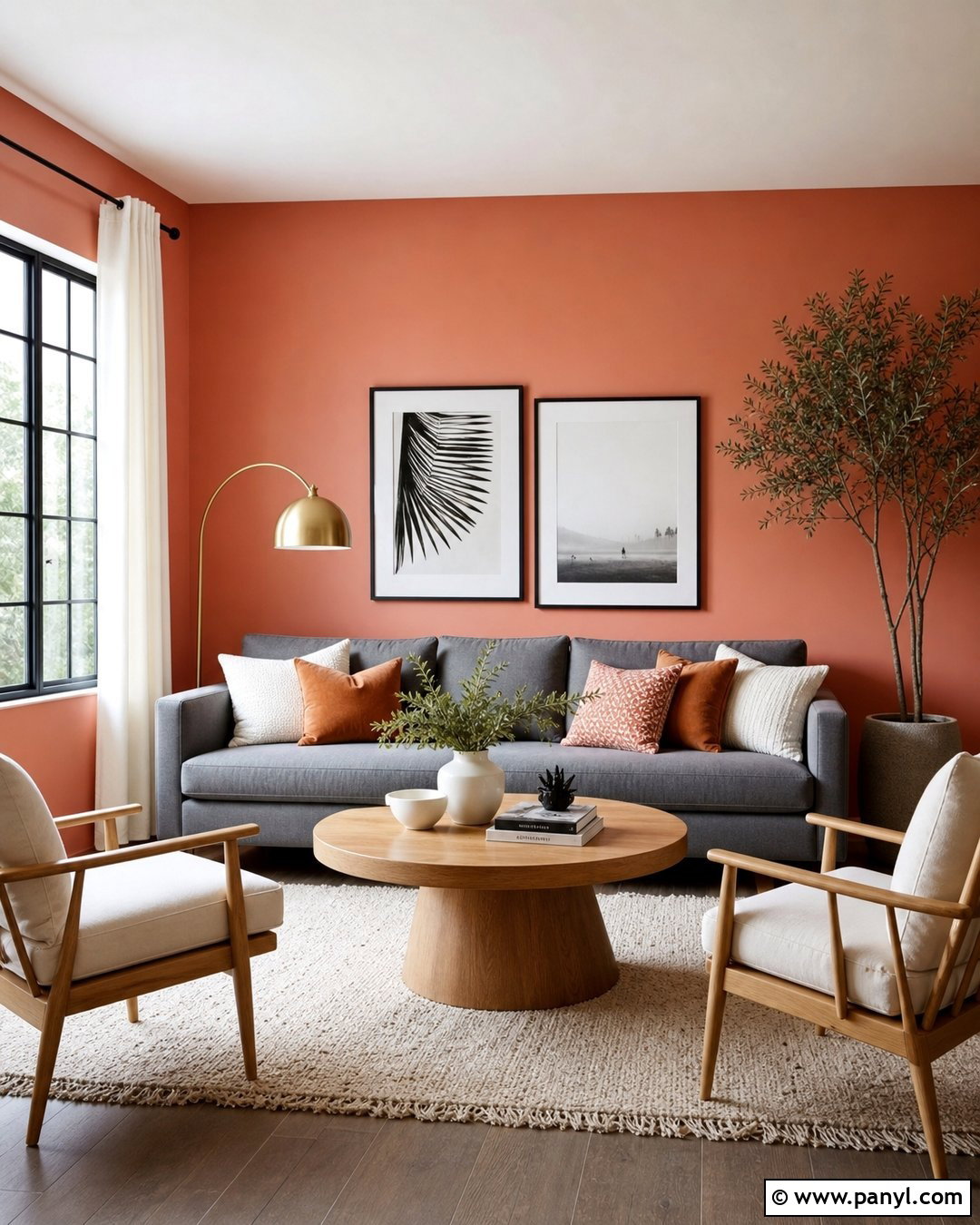
If you already own a gray sofa, melon walls can give it new warmth and energy. Select upholstery with a soft, warm gray undertone rather than icy blue-gray. Arrange the sofa with two light wood chairs, a round oak coffee table, and a cream textured rug. Pillows in ivory, camel, muted coral, and charcoal help connect the major colors. Add tall off-white curtains and warm brass lighting to soften the room further. A black-framed gallery wall can provide definition, but leave enough exposed paint for the melon color to remain visible. This scheme is practical for updating a neutral living room because most of the existing furniture can stay. The warm walls transform familiar gray pieces into a more inviting, layered composition.
15. Melon Walls With Teal Accents
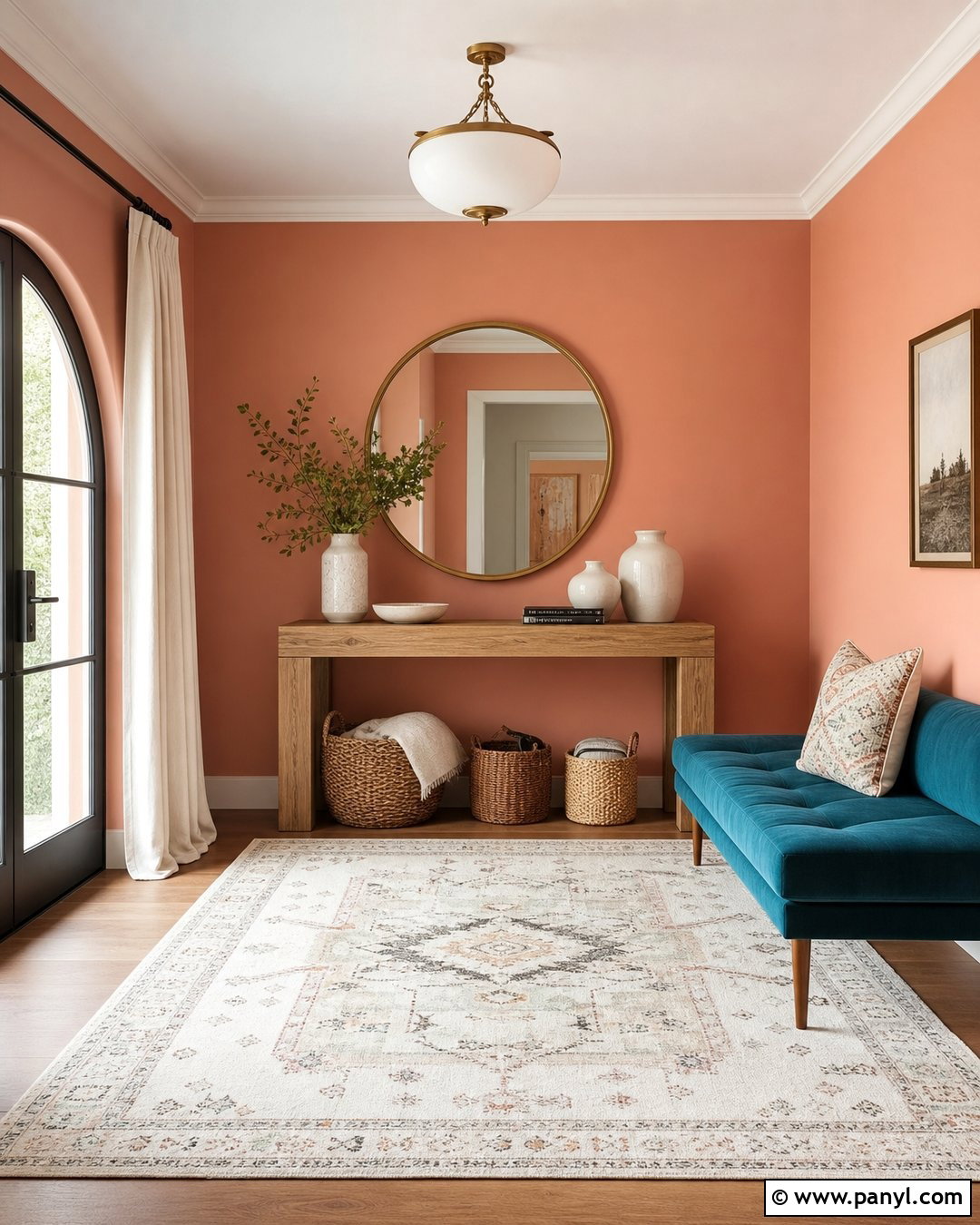
Teal and melon form a lively complementary pairing that suits an entryway or creative sitting room. Use melon across the walls, then introduce teal through one substantial piece, such as a velvet bench, compact loveseat, or painted console. Ground the palette with a natural wood floor and an ivory patterned rug. Add a round brass mirror, an opal glass ceiling fixture, and simple cream curtains if the space has windows. Keep smaller accessories neutral, using wood bowls, white ceramics, and woven baskets instead of repeating teal throughout the room. A few dark blue details can provide extra depth. The finished look feels energetic but controlled because the bright colors are assigned clear roles, with neutral materials creating space between them.
16. Melon Walls With Boho Decor
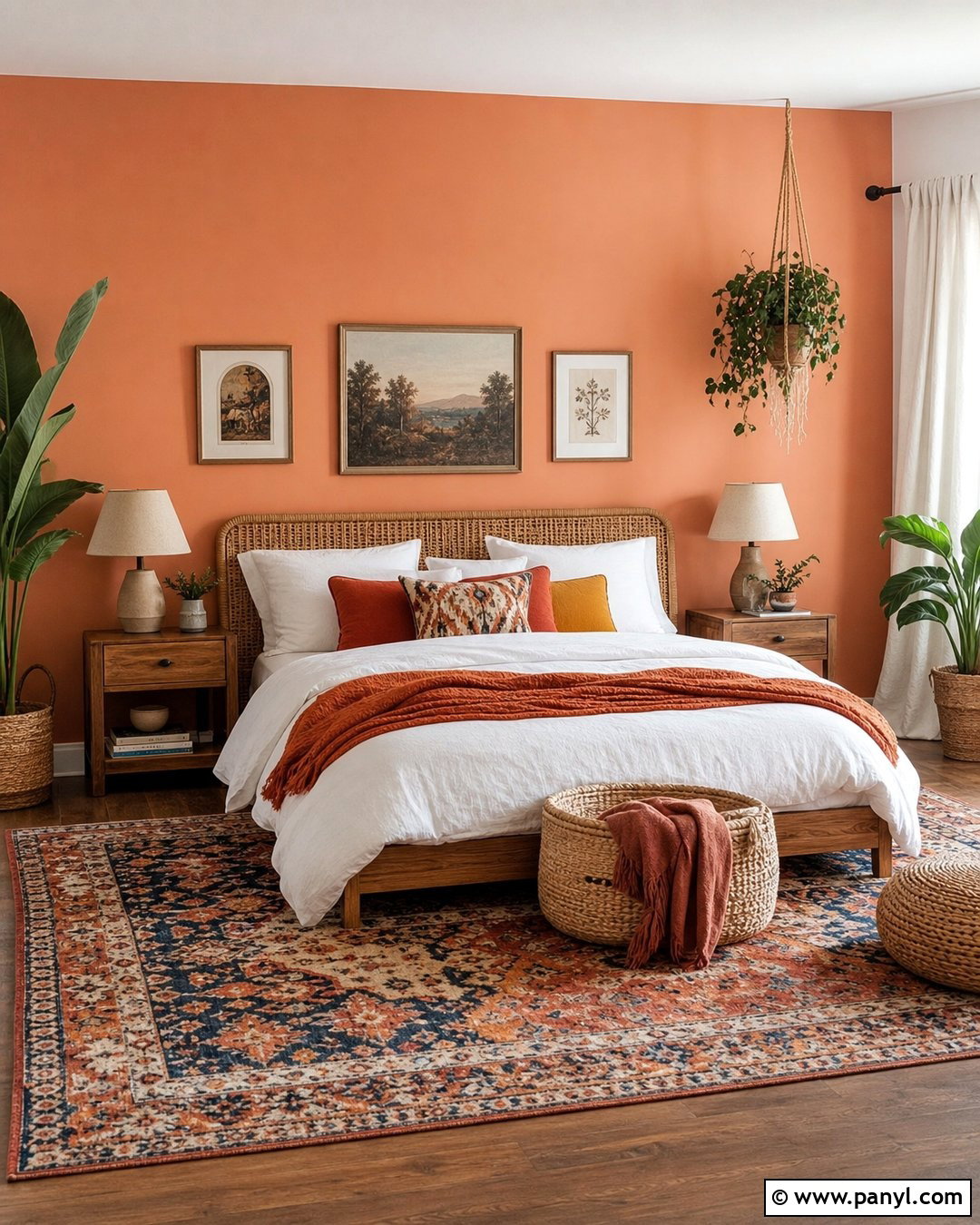
Texture takes center stage when melon walls are used in a relaxed boho bedroom. Choose a low wood bed with a woven cane headboard, then layer white bedding with rust, cream, and muted mustard textiles. A vintage-inspired rug should include several faded colors rather than one dominant shade. Add mismatched wood nightstands, ceramic lamps, and full linen curtains. One macramé wall hanging is enough; balance it with framed art so the room does not become overly themed. Place plants at different heights near the window and use baskets for practical storage. The melon background pulls the varied materials together, while creamy fabrics keep the design light. This complete room feels personal, comfortable, and collected without becoming cluttered or visually chaotic.
17. Melon Walls With Minimalist Decor
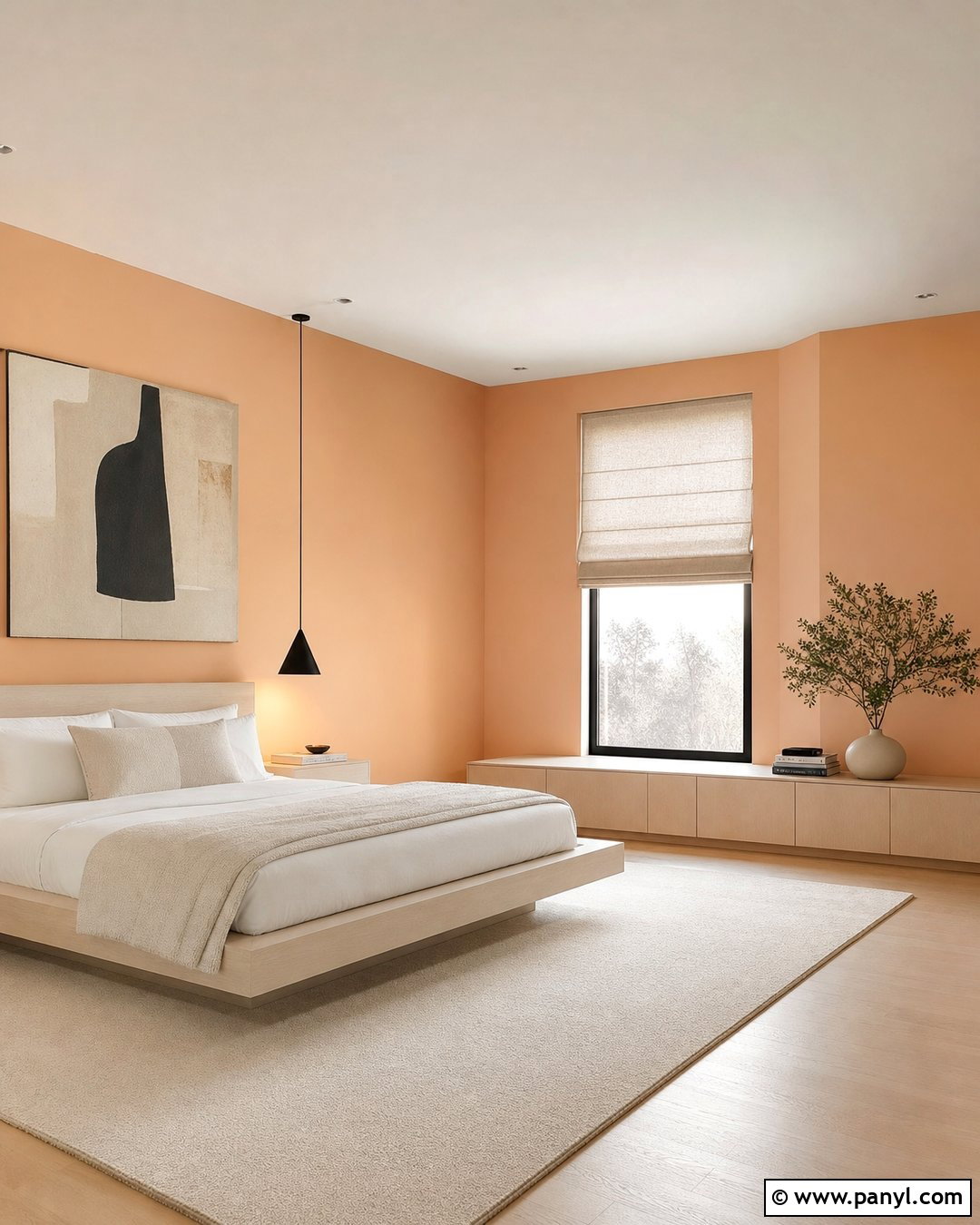
Melon walls can still suit a minimalist room when the furniture is simple and the palette remains restrained. In a small bedroom, pair the warm walls with a white oak platform bed, crisp ivory bedding, and two floating nightstands. Use concealed storage to keep everyday belongings out of view. A large cream rug softens the floor, while a single black pendant or wall lamp gives the room definition. Choose one oversized abstract artwork instead of several small pieces. Window coverings should be plain linen panels or streamlined Roman shades. Avoid adding many peach accessories because the painted walls already provide sufficient color. The resulting space feels calm rather than empty, proving that minimal interiors do not need to rely exclusively on white, beige, or gray.
18. Melon Walls With Vintage Furniture
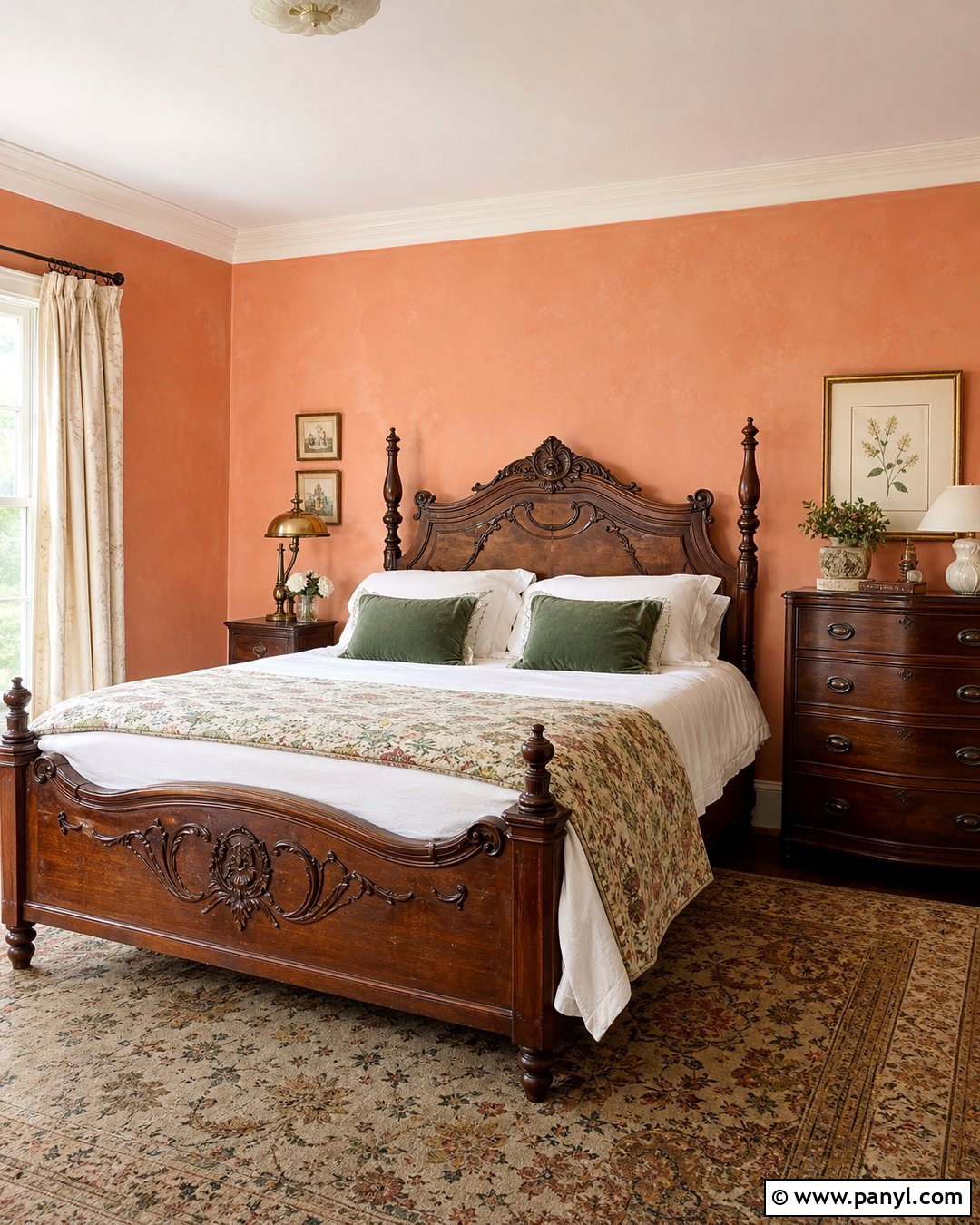
An older dresser or carved wood bed can look especially rich against dusty melon walls. Build a vintage-inspired bedroom using medium to dark wood furniture, but limit the set to a few meaningful pieces. Dress the bed with ivory linen, a small floral quilt, and muted green pillows. Add an aged brass lamp, a traditional wool rug, and lightweight cream curtains to balance the heavier furniture. Botanical or landscape artwork in antique-style frames can reinforce the room’s character. Avoid overly distressed finishes, which may make the space feel themed rather than authentic. The melon paint adds freshness to classic furnishings and highlights their warm wood tones. The completed design feels established and personal while still appearing bright, practical, and comfortable for everyday living.
19. Melon Walls With Coastal Decor
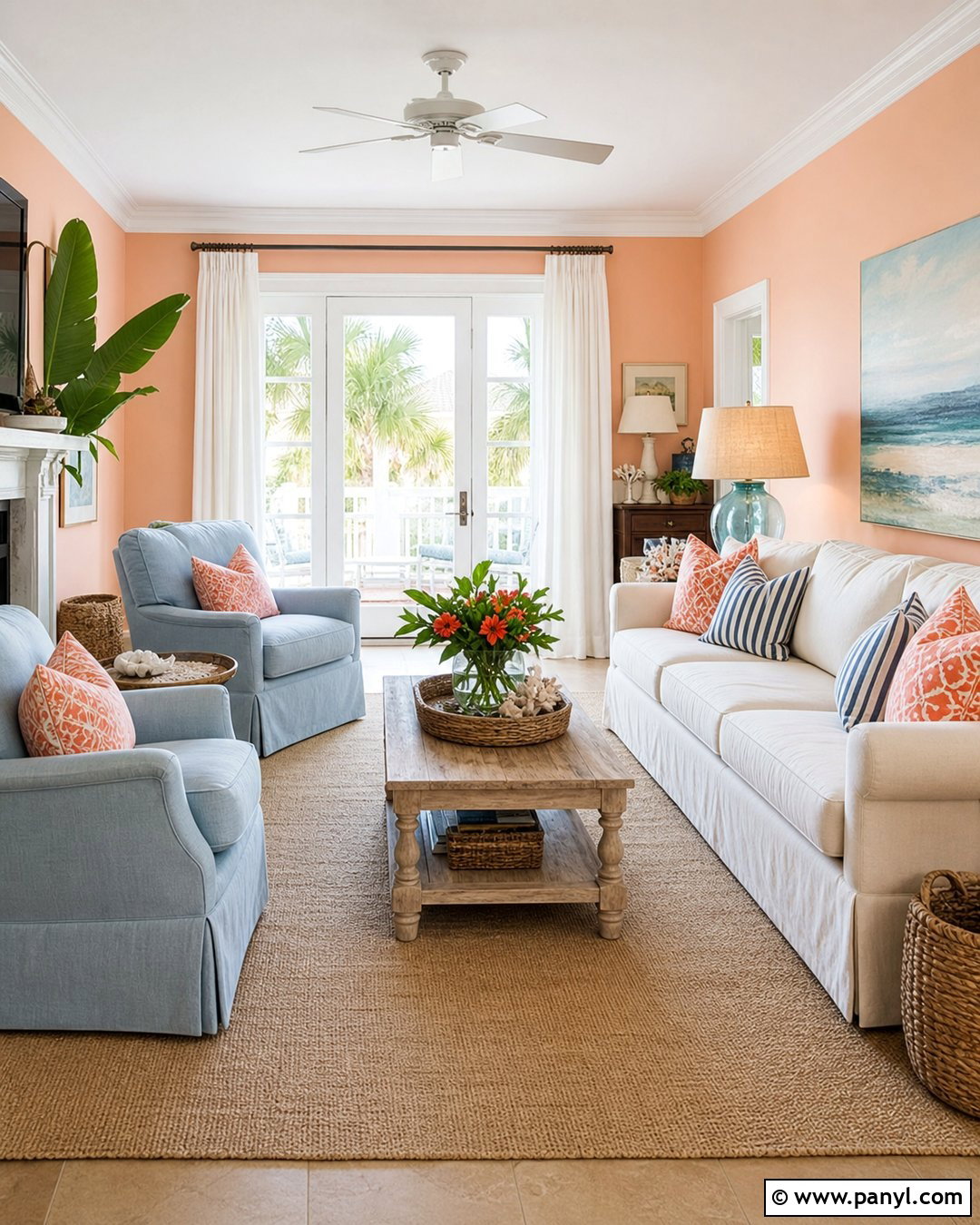
For a warm coastal room, combine pale melon walls with sandy neutrals, washed wood, and restrained ocean blue. Arrange a slipcovered cream sofa with light blue armchairs around a weathered oak coffee table. Choose a flat-weave rug in beige and ivory, then hang relaxed white curtains that move easily in natural light. Add pillows in faded blue, soft coral, and narrow stripes. Instead of obvious nautical decorations, use landscape artwork, clear glass lamps, woven baskets, and simple pottery. Light wood flooring supports the beach-inspired palette without competing with the walls. The finished living room feels breezy and casual, while the melon color introduces a sunset-like warmth that distinguishes it from more predictable blue-and-white coastal spaces.
20. Melon Walls With Color Drenched Trim
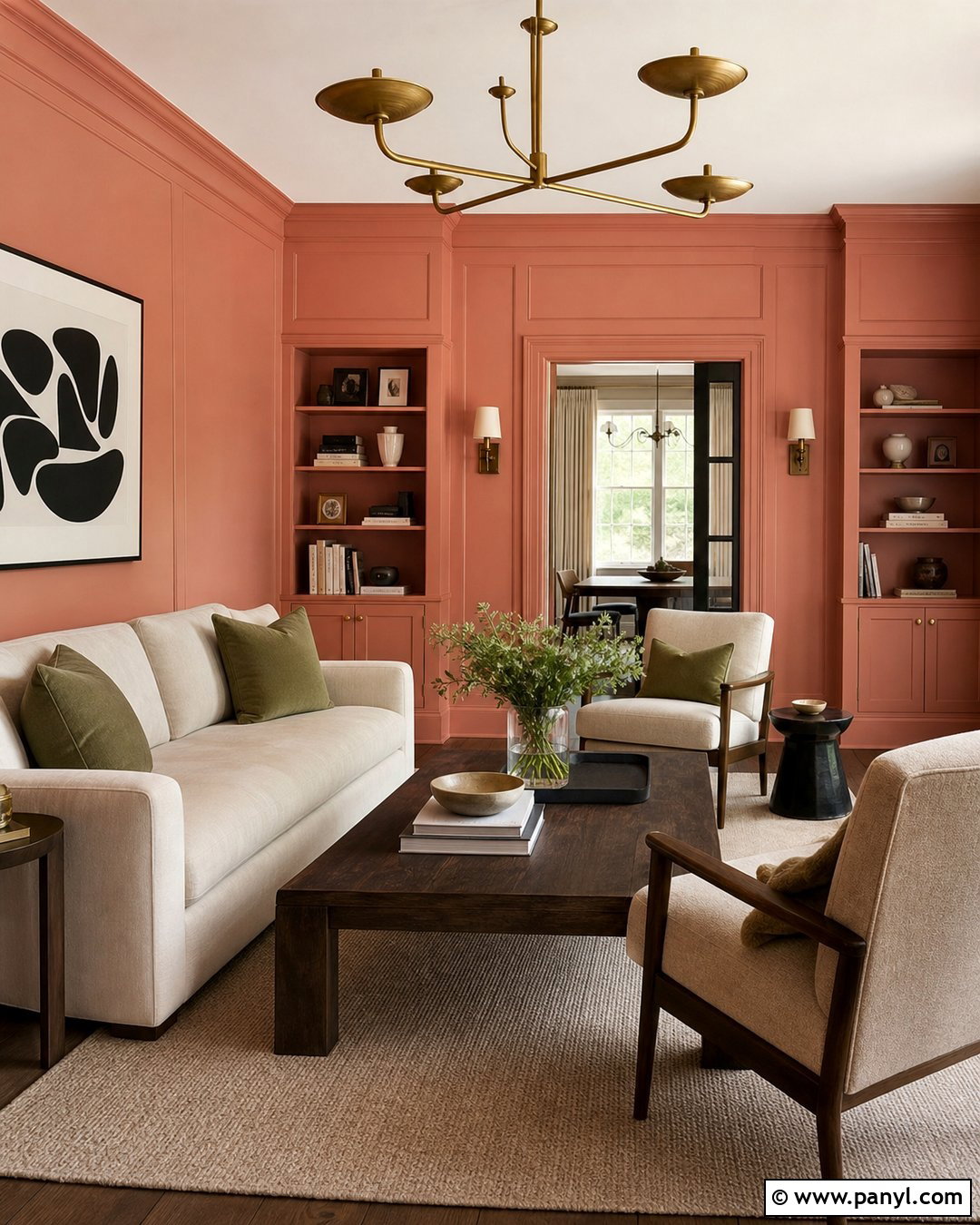
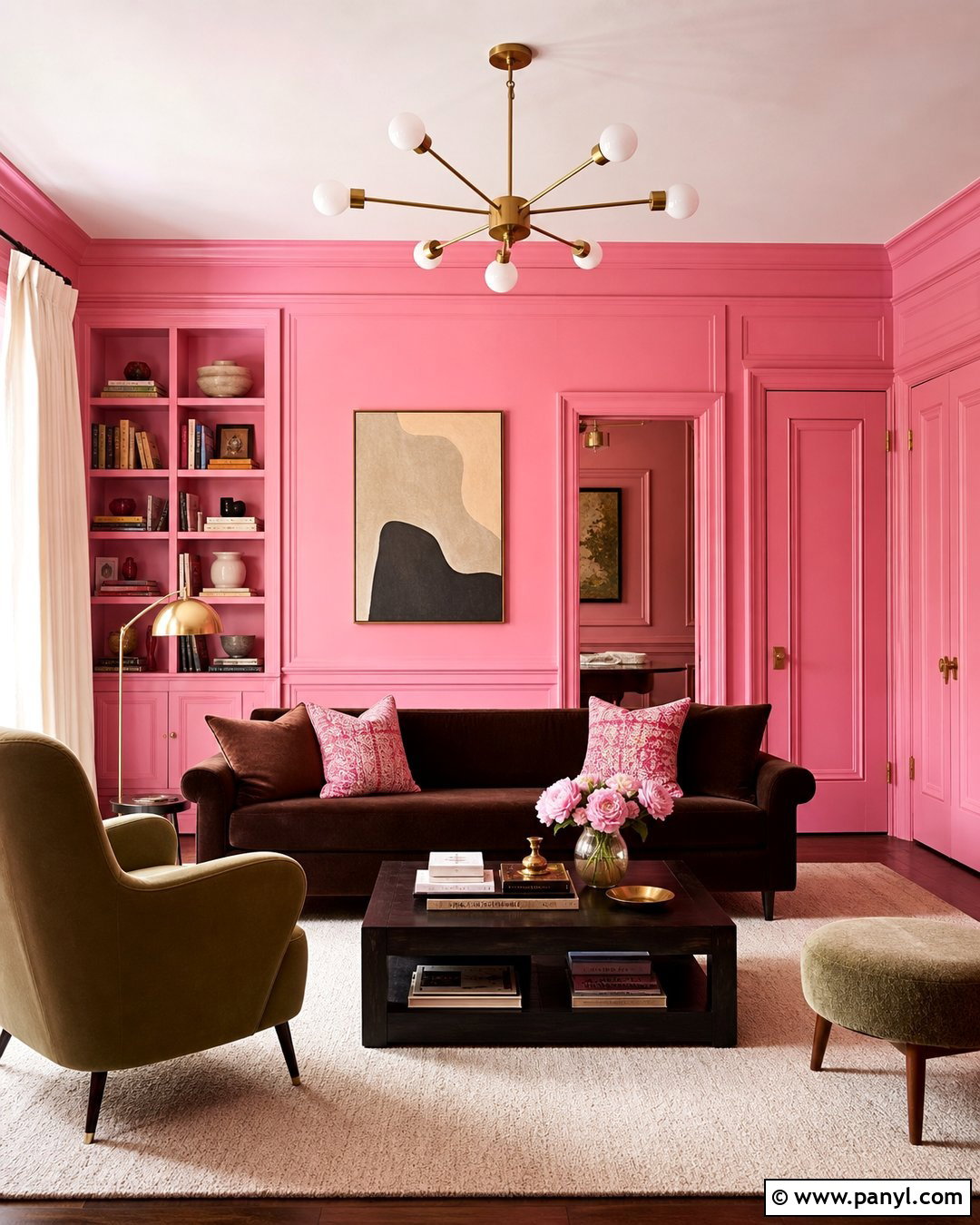
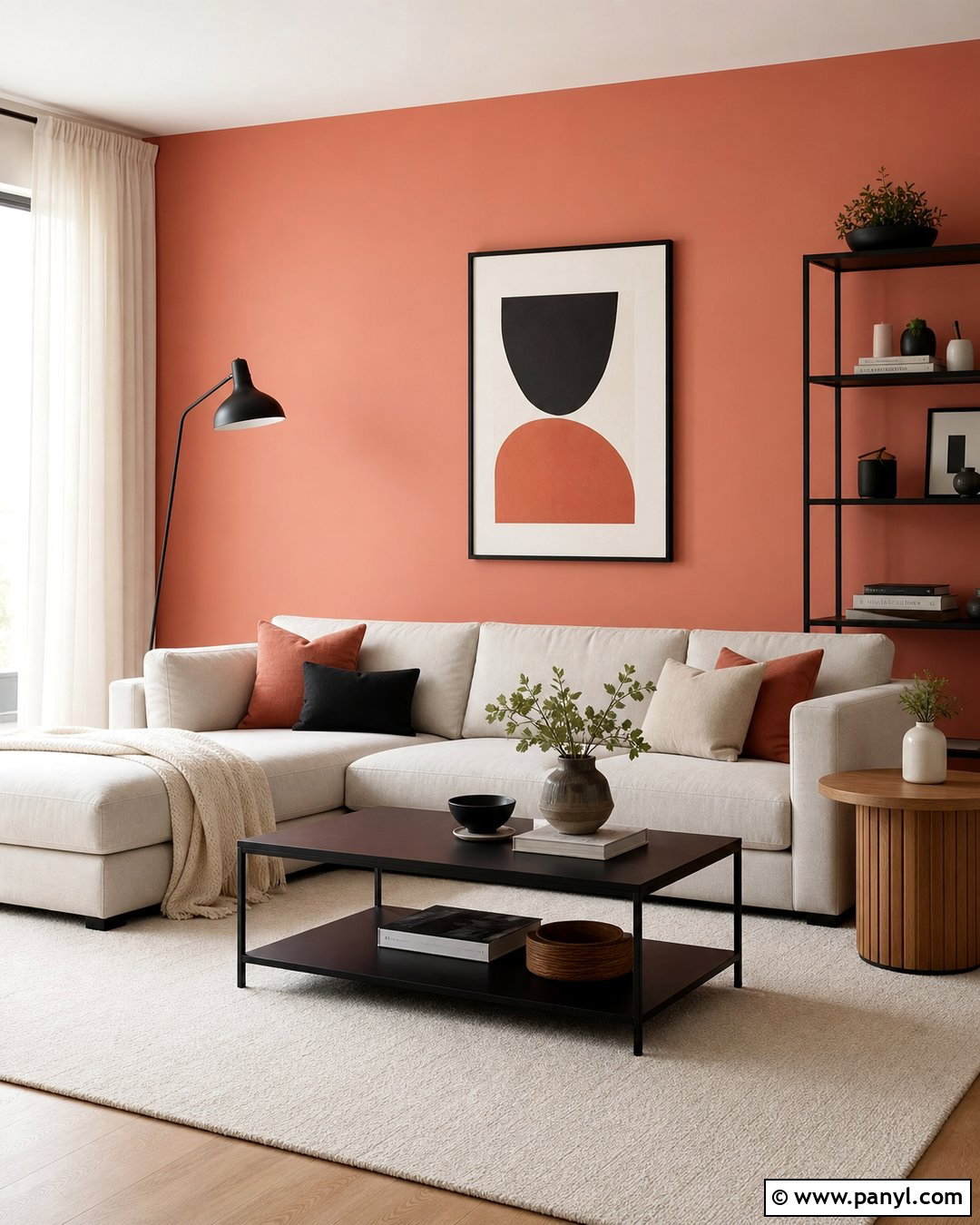
For maximum impact, carry melon paint across the walls, trim, doors, and built-in cabinetry. This color-drenched approach works best with a softened, medium melon rather than a highly saturated orange. Use a matte finish on walls and a satin finish on woodwork so subtle differences appear as light moves through the room. Furnish the space with a cream sofa, dark wood coffee table, and oatmeal wool rug. Keep curtains close to the wall color or choose simple ivory linen. Black-framed artwork and bronze lighting provide crisp contrast. Limit extra colors to muted olive or burgundy accents. Covering architectural surfaces in one hue creates a seamless background, while the neutral furniture ensures the completed living room remains comfortable, balanced, and usable.
Conclusion:
Melon paint can be soft, sunny, earthy, or bold depending on its undertone, lighting, and surrounding finishes. The most successful rooms treat it as part of a full palette rather than an isolated wall color. Cream and oak produce an airy foundation, while navy, teal, sage, or forest green provide stronger contrast. Natural fibers, warm metals, and restrained patterns help connect the room without competing with the walls. Before painting, test a large sample and view it during morning, afternoon, and evening light. Then select furniture and textiles that balance its warmth. These **20 Melon Walls** show how one expressive color can support many complete, practical, and highly personal interiors.

Related Ideas and Inspiration:
Leave a Reply