
Honey oak trim brings natural warmth, visible grain, and inviting character to a home, but its golden-orange undertones can make decorating feel challenging. The right wall colors, flooring, furniture, lighting, and finishes can transform this familiar woodwork without requiring you to paint or replace it. These honey oak trim ideas treat the existing wood as an intentional part of the room rather than an outdated feature. Some looks soften the oak with creamy neutrals, while others create fresh contrast through green, blue, charcoal, or black. You will also find complete designs for living rooms, kitchens, bedrooms, bathrooms, entryways, and staircases. Use these practical, coordinated spaces as inspiration for choosing finishes that balance warmth and keep every room connected with these 20 honey oak trim ideas.

1. Honey Oak Trim With Warm White Walls
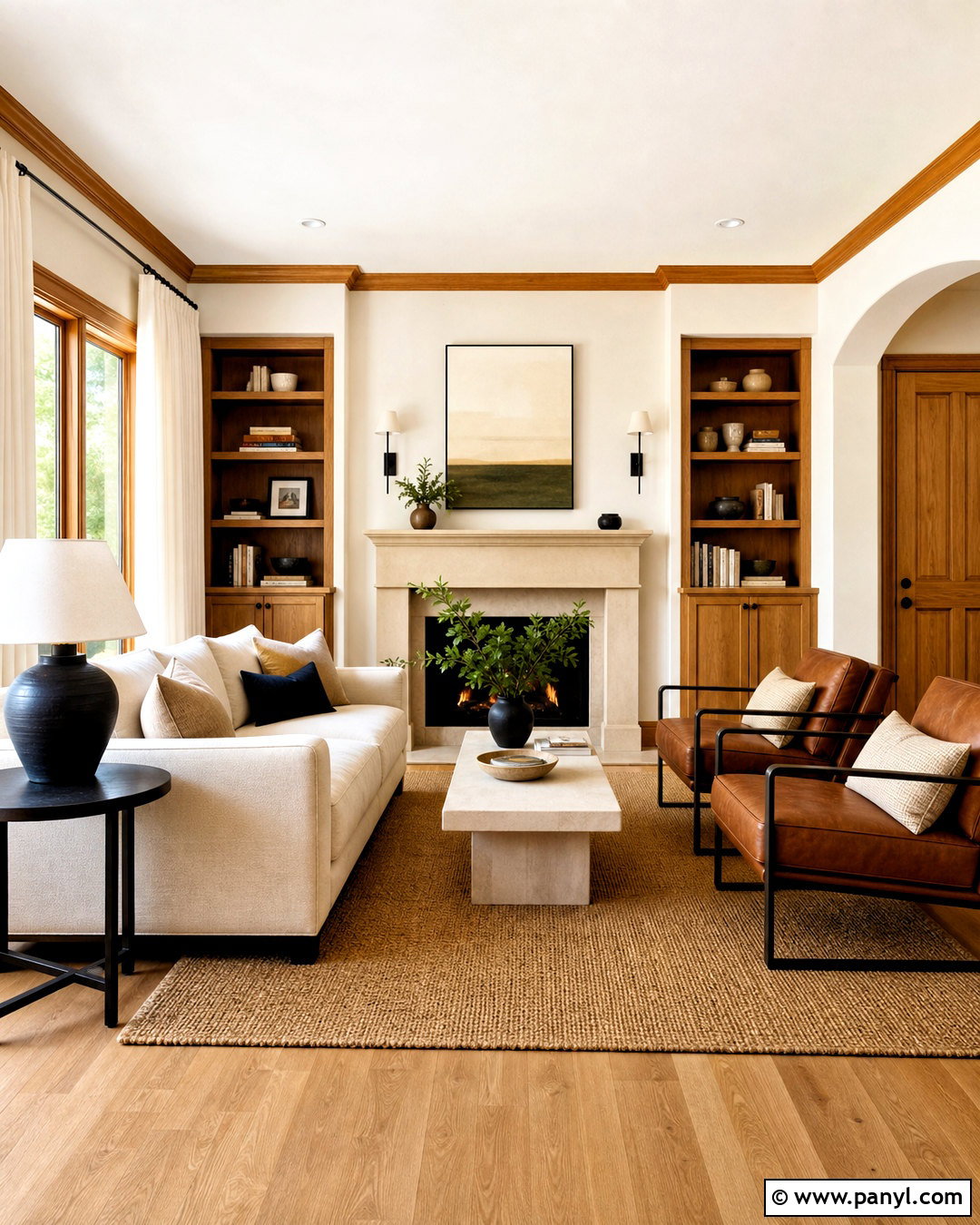
Warm white walls give honey oak trim a clean backdrop without creating the harsh contrast that can happen with icy, blue-based white. Choose a soft white with subtle cream or beige undertones, then repeat that warmth through an oatmeal sofa, ivory curtains, and a textured natural-fiber rug. Medium brown leather chairs add definition while connecting naturally with the wood grain. Use matte black lamps, picture frames, and cabinet hardware sparingly to sharpen the room. A simple globe pendant keeps the lighting fresh. Avoid filling the space with additional orange-toned wood furniture. Instead, mix in painted pieces, pale stone, and woven materials. The complete look feels bright and current while allowing the original trim to remain a warm architectural feature.
2. Honey Oak Trim With Soft Greige Walls
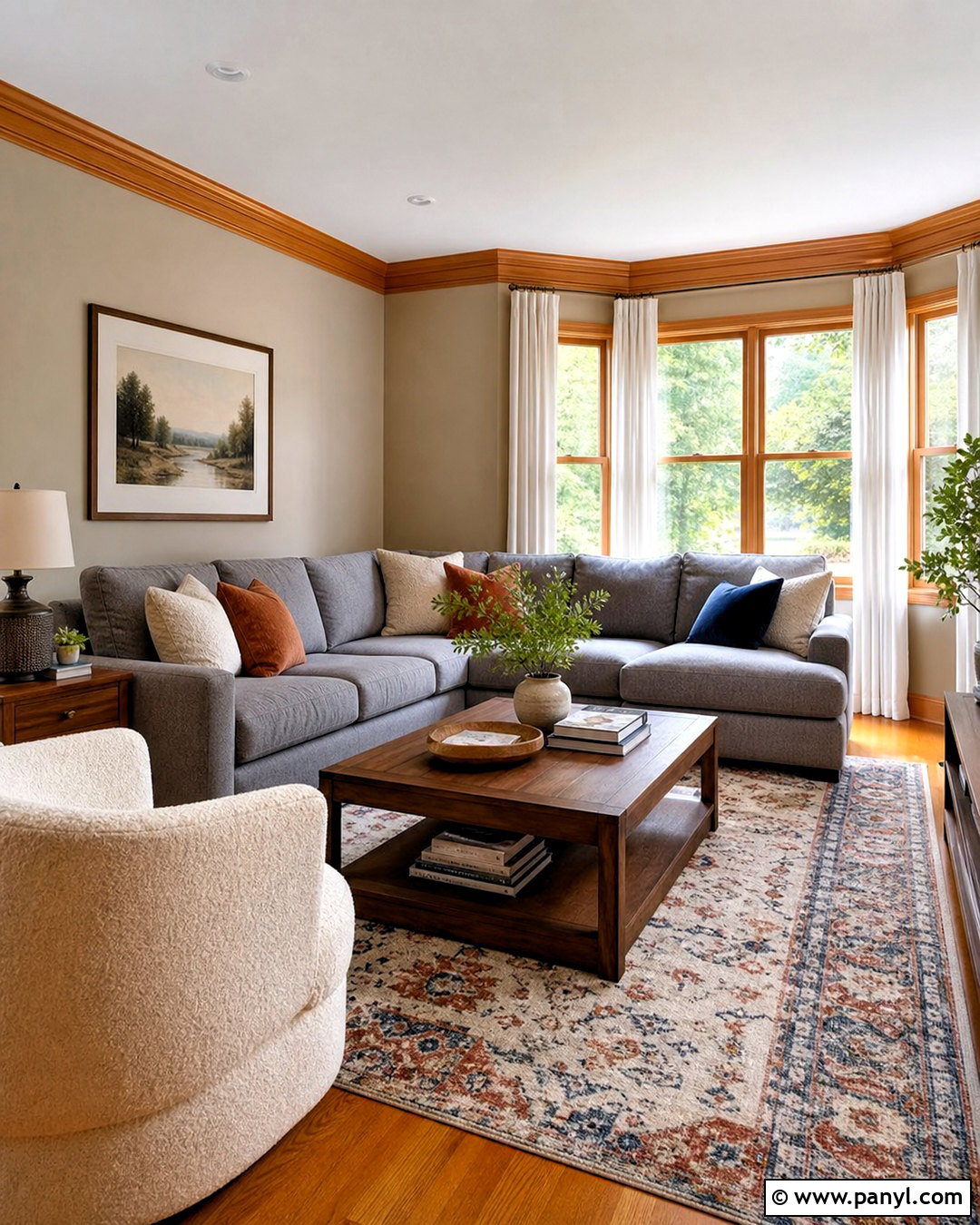
Soft greige walls can quietly balance golden oak when the paint has enough beige to prevent it from looking cold. Build a relaxed living room with a warm gray sectional, cream boucle chair, and low-profile coffee table in medium walnut. A patterned rug combining greige, ivory, muted blue, and small touches of rust helps connect the cooler furnishings to the honey oak trim. Hang full-length off-white curtains outside the window frames so the woodwork remains visible. Brushed nickel lighting offers a cleaner alternative to yellow-toned metal, while charcoal pillows create depth. Keep the ceiling warm white and repeat the greige in adjoining spaces. This coordinated palette softens orange undertones and creates an easy transition between traditional woodwork and modern furniture.
3. Honey Oak Trim With Sage Green Walls
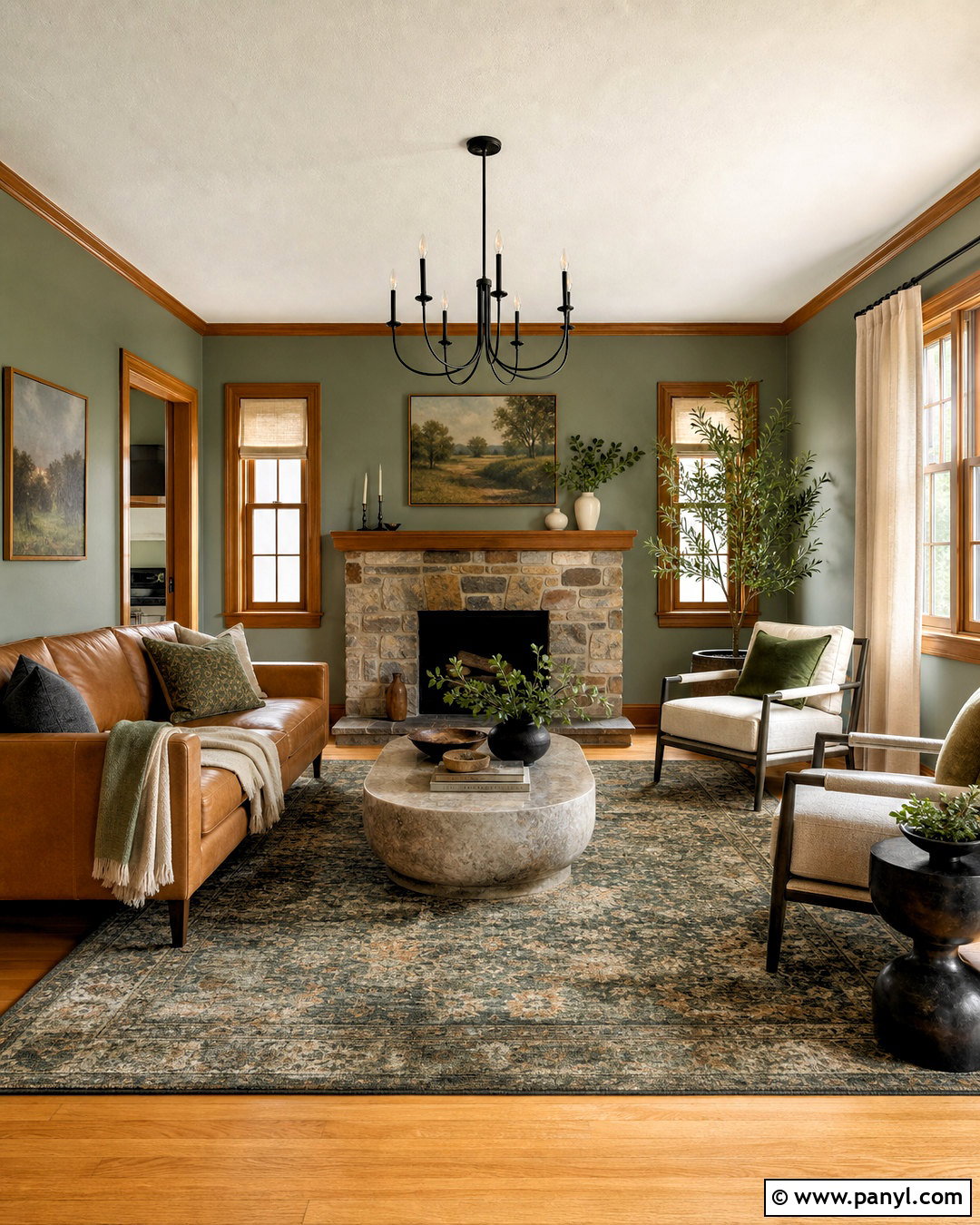
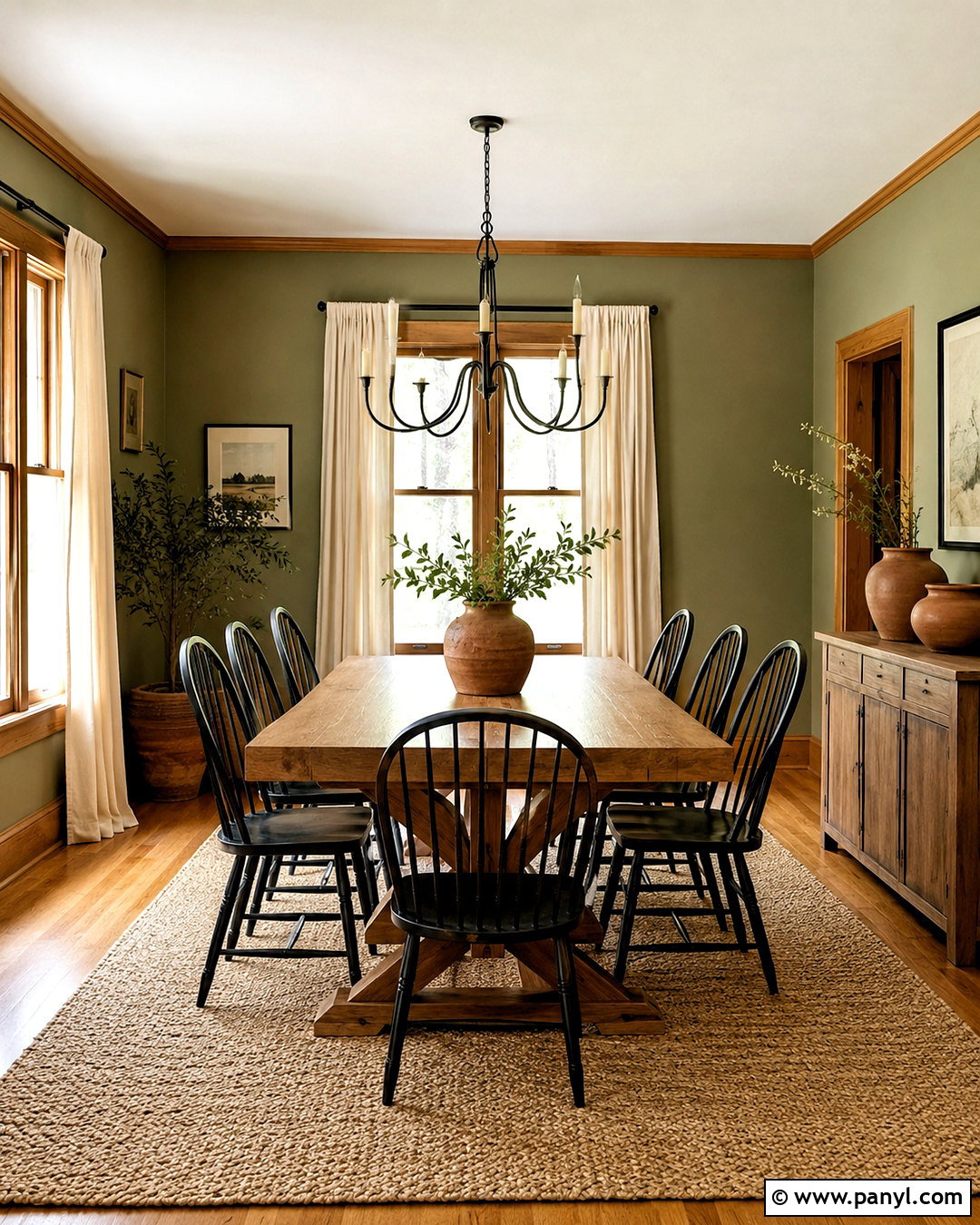
Imagine muted sage green surrounding honey oak windows and doorways in a comfortable, nature-inspired room. The green provides gentle contrast to the oak’s orange-gold coloring while maintaining an earthy atmosphere. Complete the design with a camel leather sofa, cream armchairs, and a wool rug featuring olive, tan, and faded charcoal. Linen curtains in warm ivory soften the windows without concealing the trim. Add a dark bronze floor lamp, black-framed landscape art, and a stone-topped coffee table for updated contrast. Plants can reinforce the green palette, but use a few substantial varieties instead of many small pots. Natural textures such as jute, wool, linen, and ceramics make the wood feel intentional. The result is calm, grounded, and comfortably modern.
4. Honey Oak Trim With Deep Navy Walls
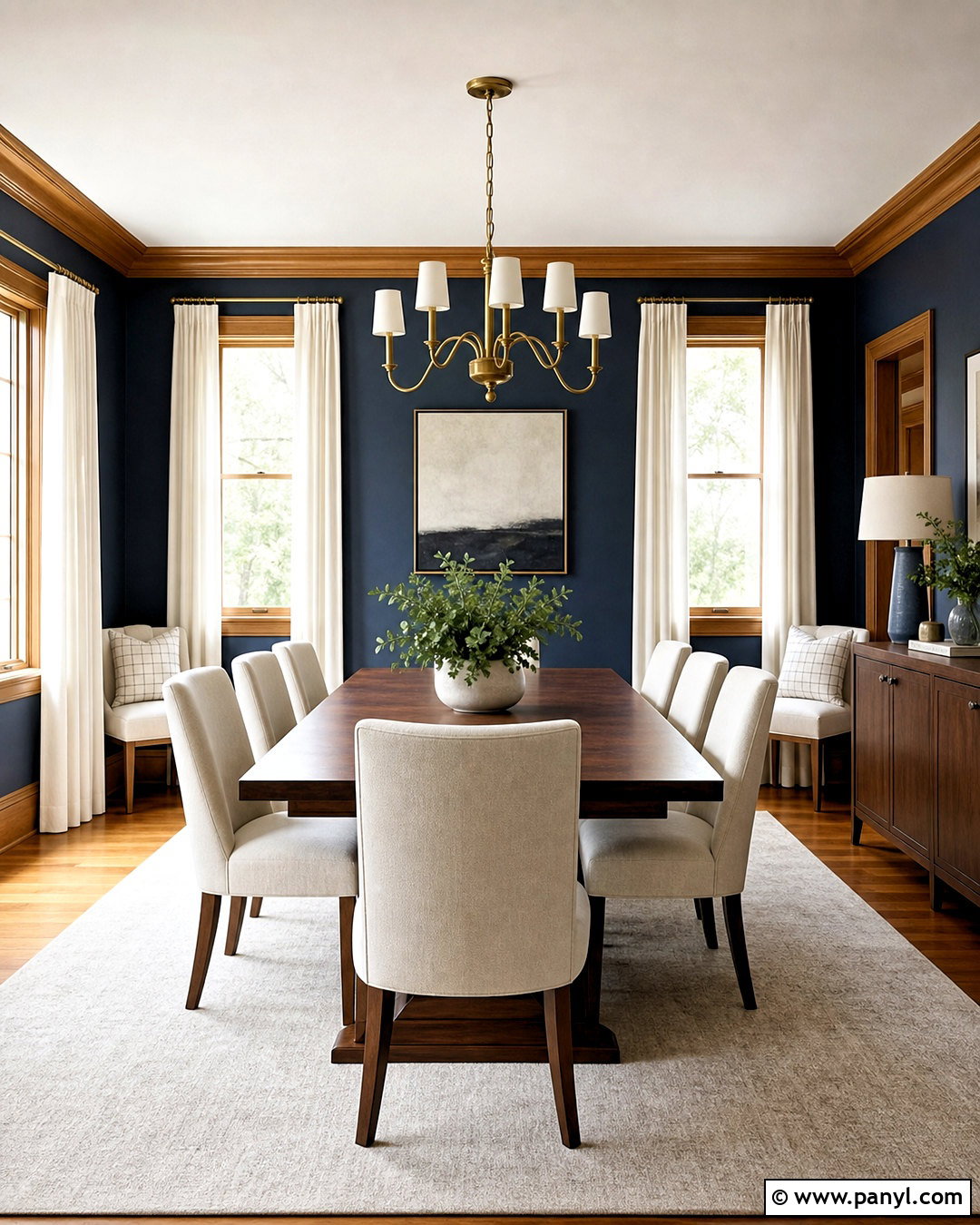
Deep navy walls turn honey oak trim into a striking architectural outline instead of letting it disappear into a neutral room. This high-contrast combination works especially well in a dining room with generous natural light. Use a rectangular walnut table, cream upholstered chairs, and a large ivory rug to keep the dark walls from feeling heavy. A streamlined aged-brass chandelier relates to the oak’s warmth while adding a more polished finish. Choose simple abstract artwork with navy, beige, and rust tones to connect the palette. White linen curtains can brighten the windows and frame the exposed wood casing. Keep accessories minimal and substantial. Navy cabinetry or a matching sideboard can continue the color, creating a complete dining space that feels confident, balanced, and thoughtfully updated.
5. Honey Oak Trim With Dusty Blue Walls
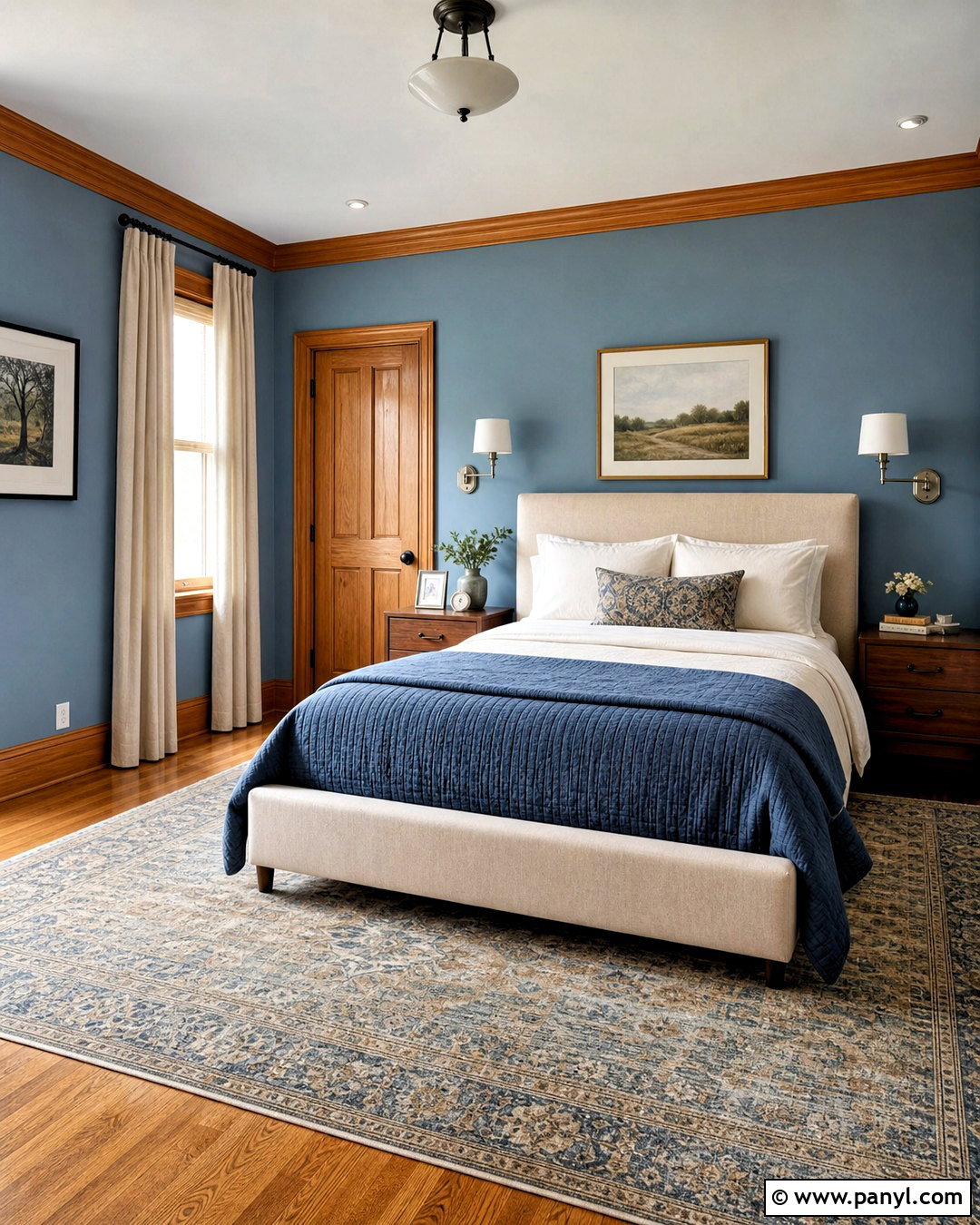
Dusty blue walls create a soft, welcoming contrast that makes honey oak trim appear warmer and more refined. For a bedroom, pair this muted wall color with an upholstered oatmeal bed, crisp ivory bedding, and a quilt in faded denim blue. Medium walnut nightstands provide enough difference from the oak without introducing an unrelated wood tone. Ground the room with a vintage-inspired rug containing blue, taupe, cream, and small copper accents. Brushed nickel sconces bring in a cooler finish that balances the golden wood. Hang natural linen curtains high and wide so the window trim remains part of the design. A simple oak bench can repeat the trim color once. Keeping the remaining furniture light and restrained produces a restful, cohesive bedroom rather than a wood-heavy space.
6. Honey Oak Trim With Charcoal Gray Walls
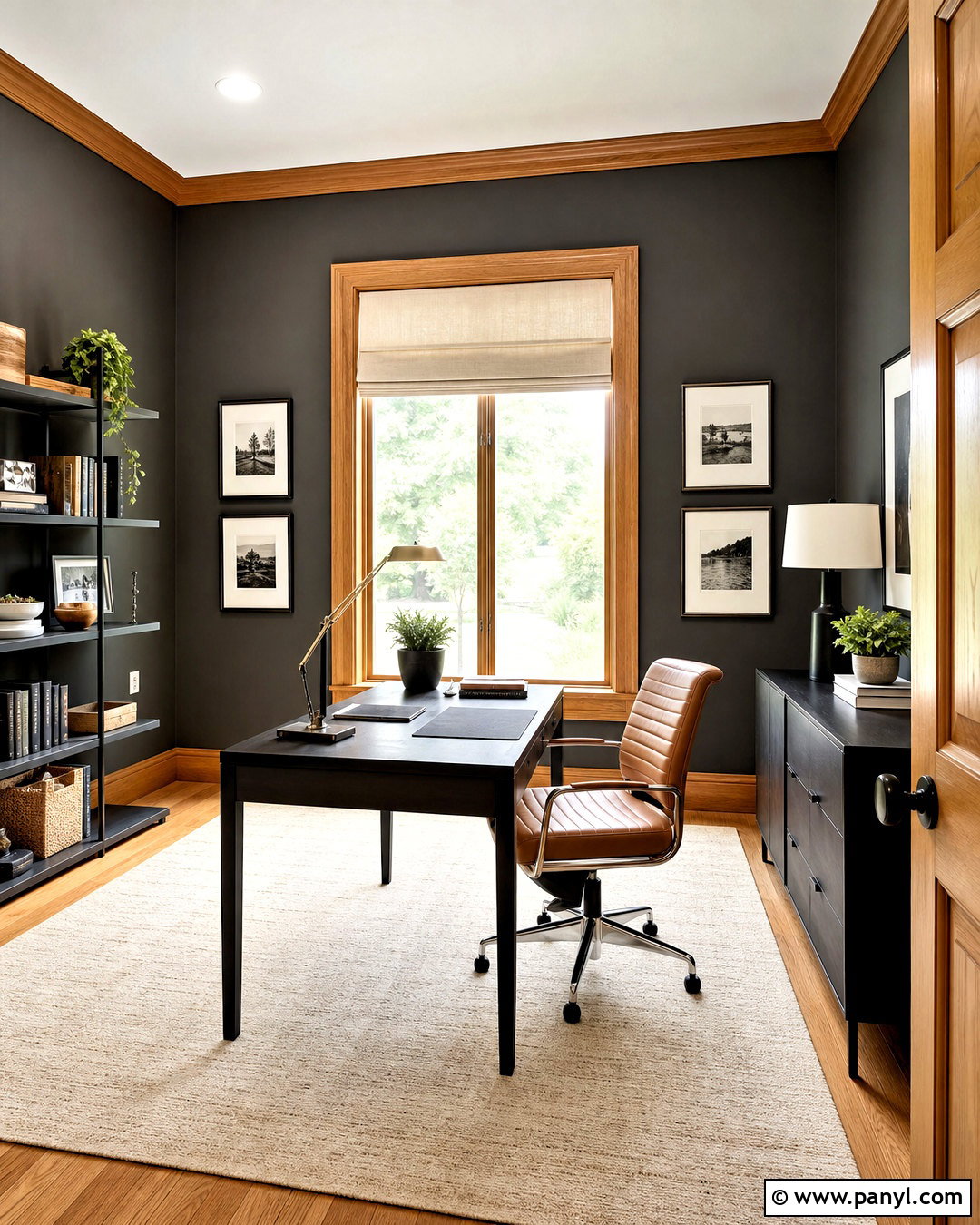
Can honey oak trim work with dark gray? A warm charcoal creates sophisticated contrast when the room also includes plenty of light surfaces. Design a home office with charcoal walls, a large cream rug, and a simple desk finished in black or medium walnut. Position the desk where natural light can illuminate the dark backdrop and highlight the oak window casing. Add a camel leather chair, ivory Roman shade, and black metal shelving for a tailored material mix. Artwork with cream mats prevents the walls from becoming visually flat. Use a bright white ceiling and a modern flush-mount fixture to lift the space. Because cool gray can emphasize orange, select charcoal with brown or green undertones. The finished office feels focused, contemporary, and intentionally layered.
7. Honey Oak Trim With Mushroom Taupe Walls
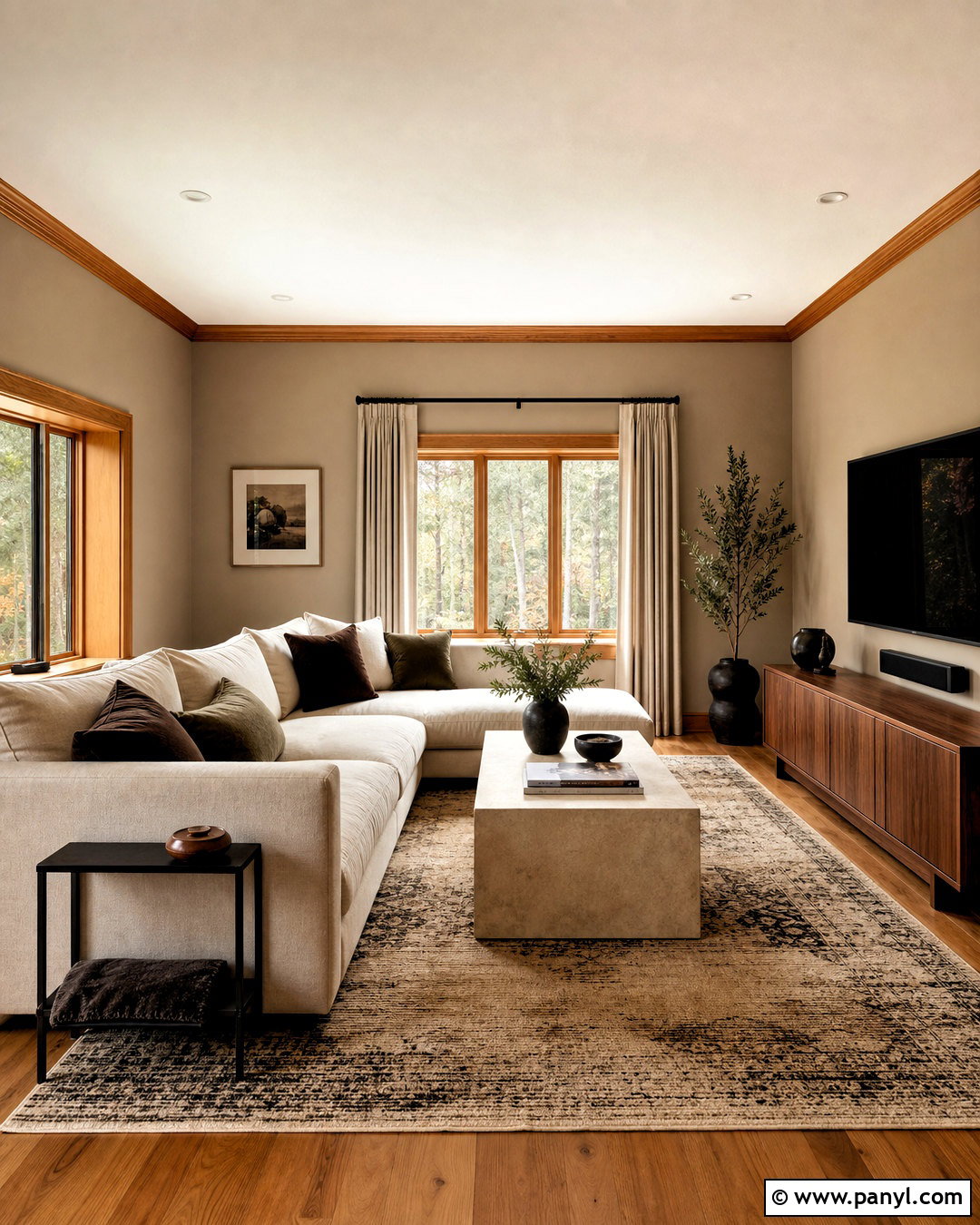
Mushroom taupe creates a quiet bridge between golden woodwork and contemporary neutral furnishings. This color works beautifully in a family room where comfort and easy coordination matter. Pair the taupe walls with a deep cream sectional, walnut media console, and large wool rug in beige, brown, and muted black. Add oversized pillows in chocolate, moss green, and ivory to give the neutral scheme enough depth. Woven shades can sit inside the windows while leaving the honey oak trim uncovered. Select black curtain rods and dark bronze lighting to introduce clean visual lines. A travertine or limestone coffee table brings a lighter mineral surface into the room. By combining warm gray-brown walls with varied textures, the oak looks integrated instead of overly yellow or visually dominant.
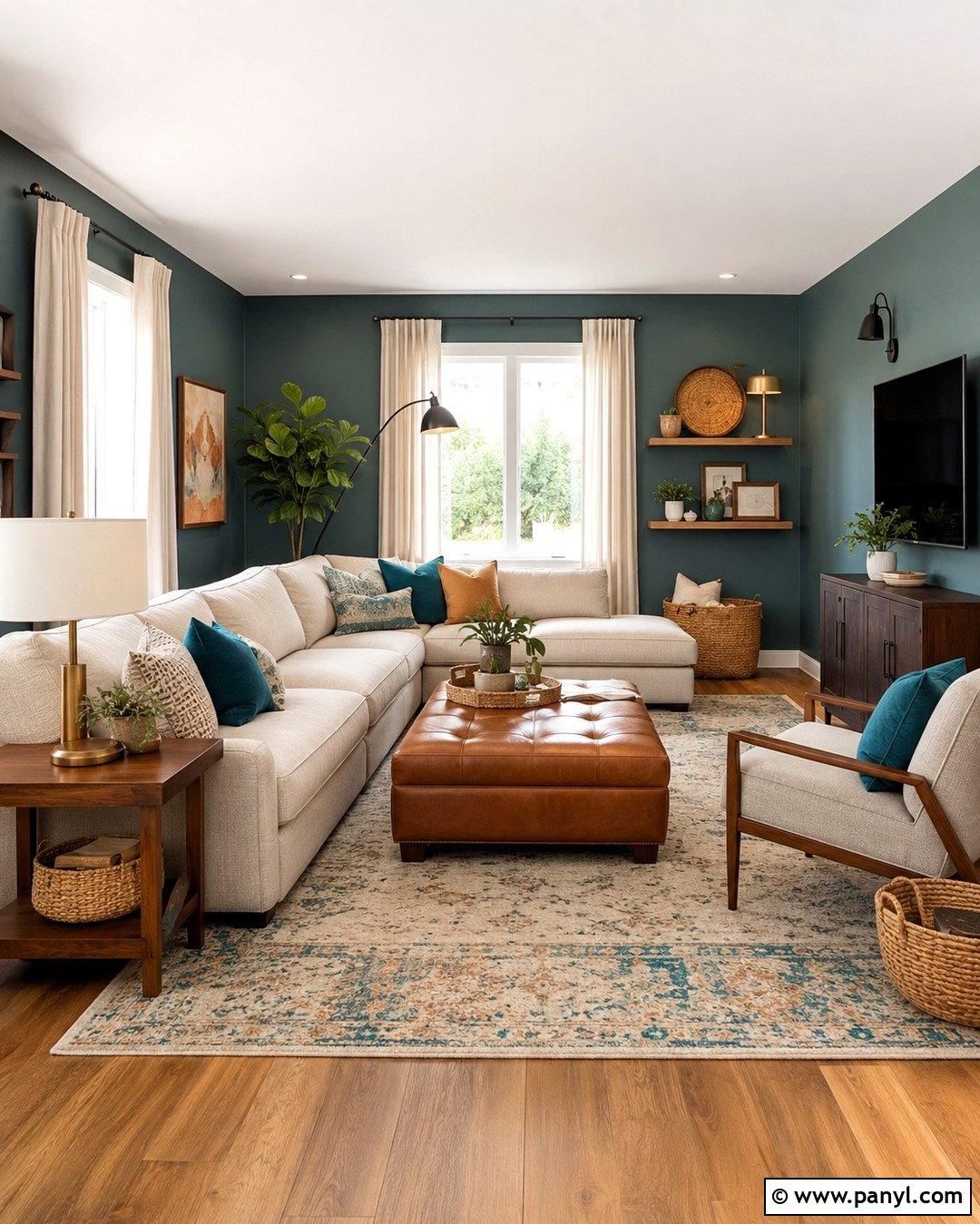
8. Honey Oak Trim With Cream Walls
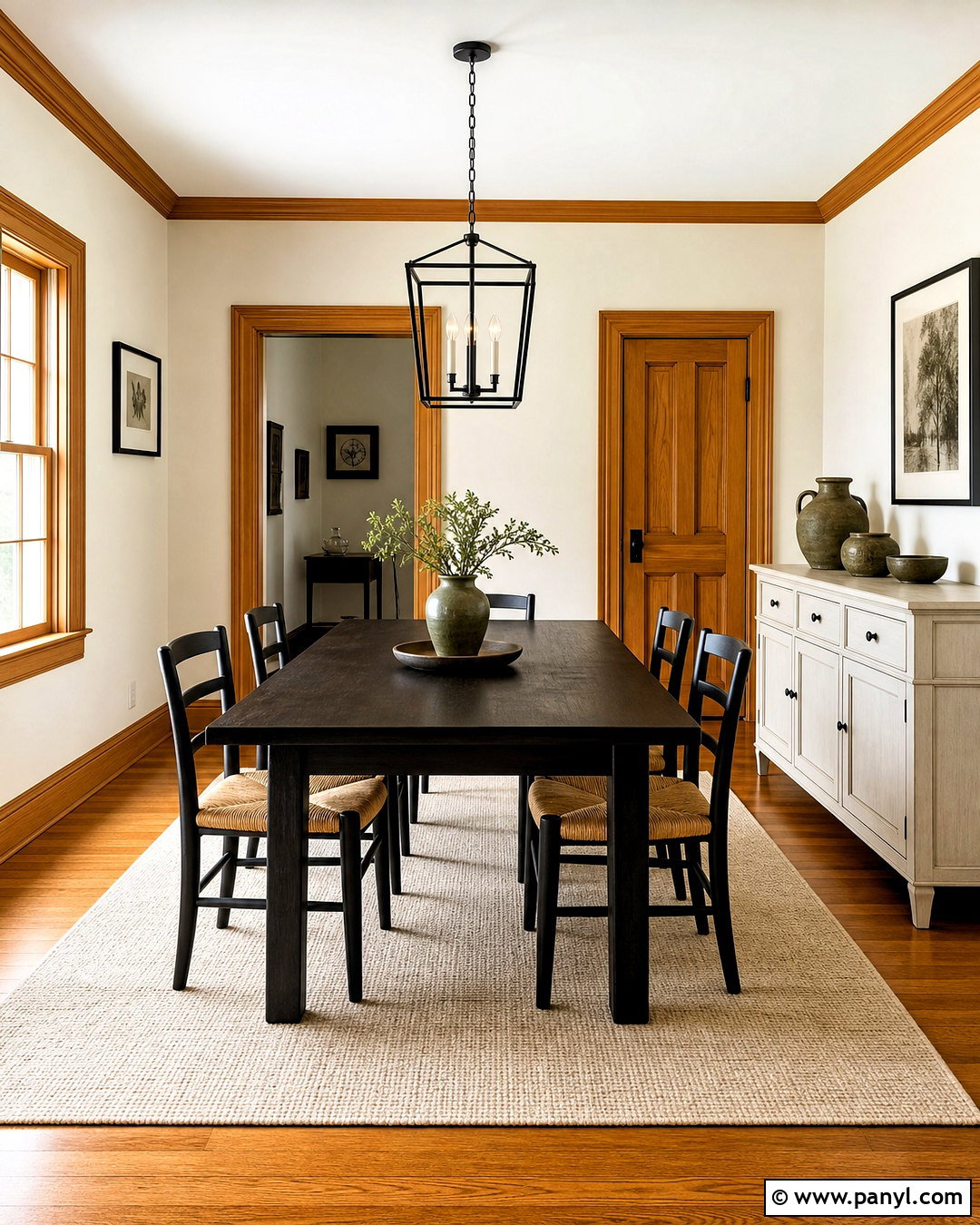
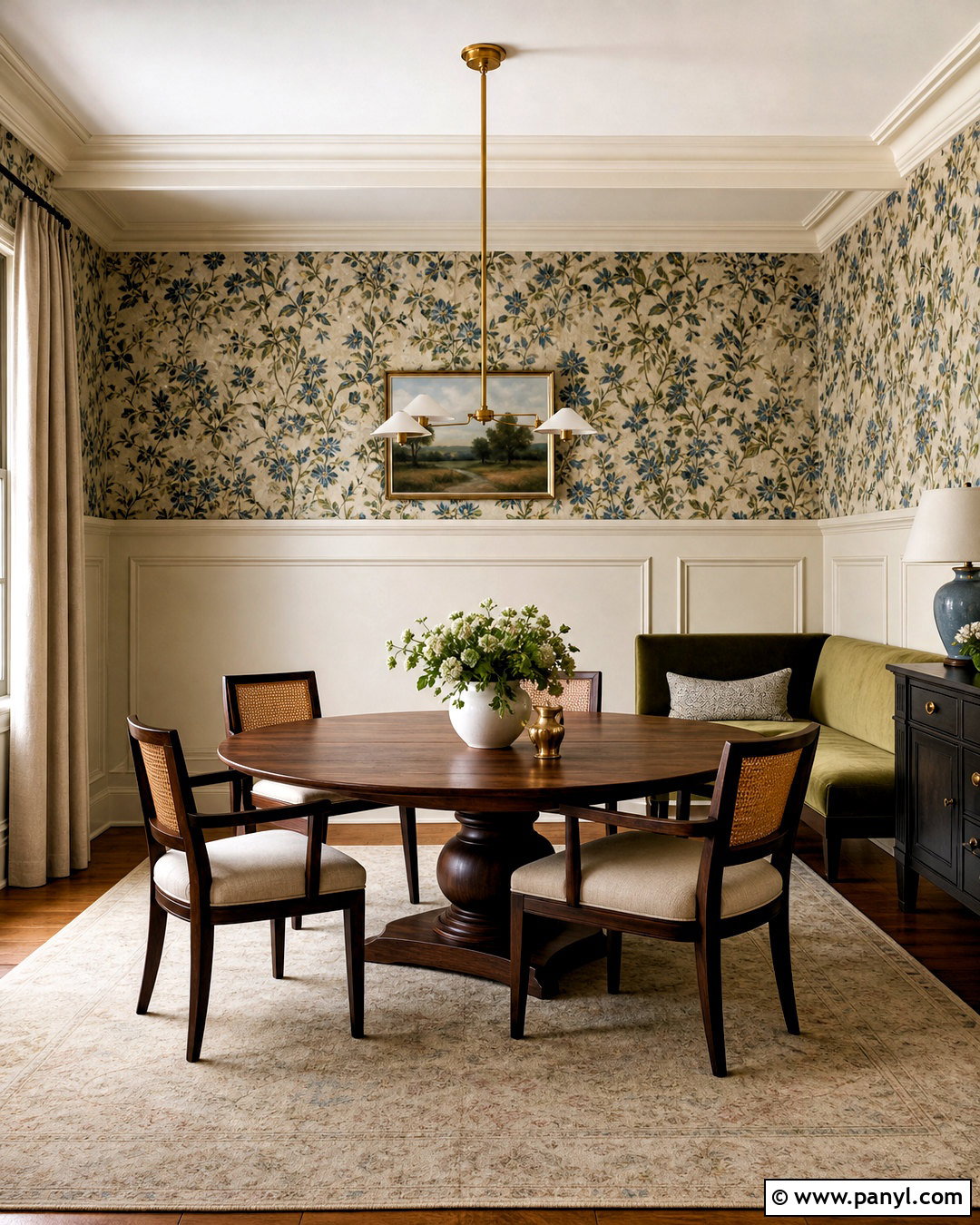
Cream walls lean into the warmth of honey oak trim and create a comfortable, layered interior rather than fighting the wood’s natural coloring. Prevent the room from becoming too yellow by choosing a pale cream with restrained undertones. Furnish a dining area with a dark espresso table, woven rush-seat chairs, and an ivory flat-weave rug. The darker table provides separation from the lighter oak trim, while the chair seats add relaxed texture. Use an oversized black lantern pendant and black-framed artwork to define the soft palette. Stoneware in off-white, olive, and brown can decorate a simple sideboard. Hang lightweight beige curtains for subtle softness. This approach feels especially cohesive in homes with traditional architecture because it respects the existing warmth while simplifying the surrounding colors and silhouettes.
9. Honey Oak Trim With Terracotta Walls
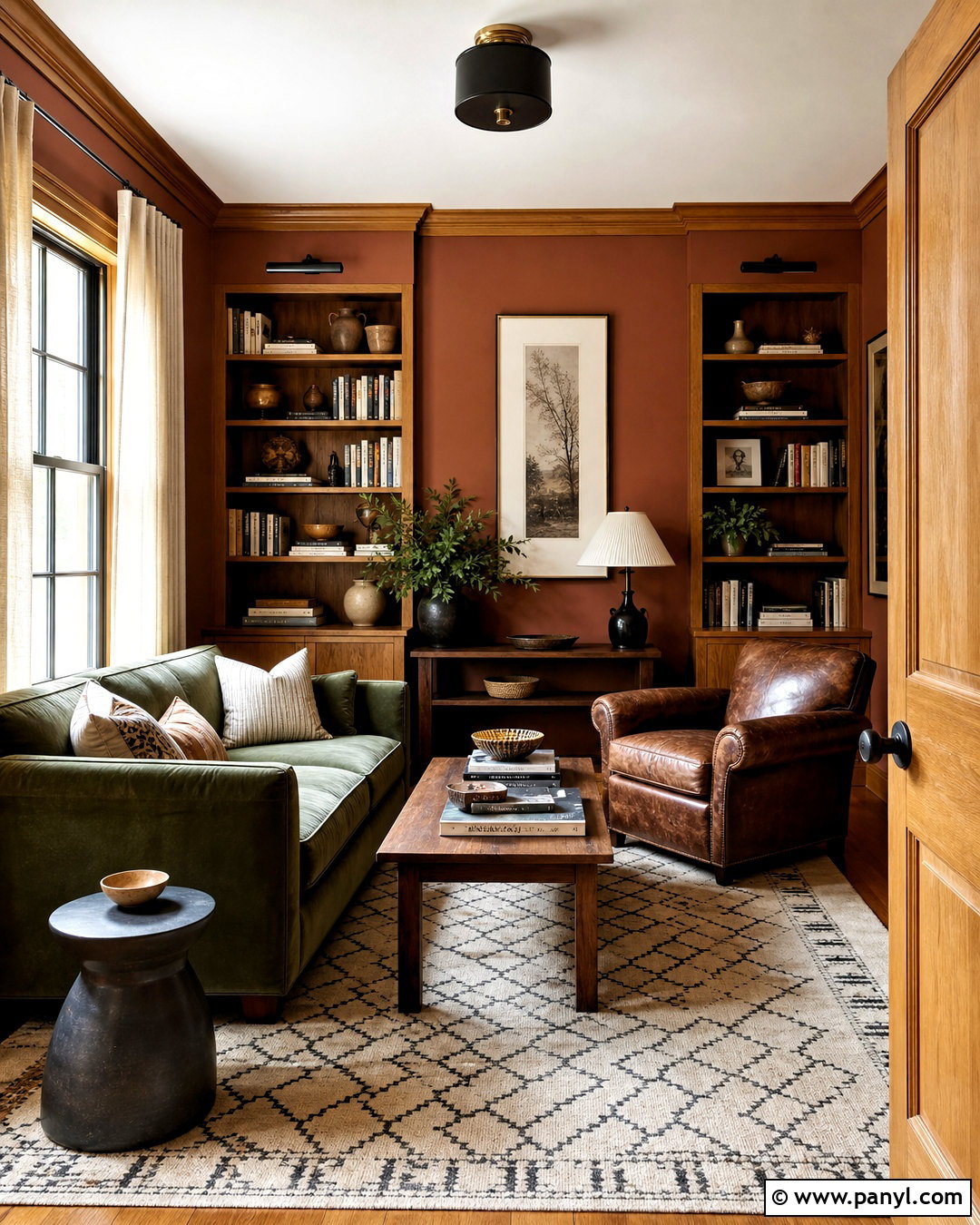
For a rich tonal approach, surround honey oak trim with muted terracotta walls rather than trying to neutralize every warm undertone. Choose a dusty clay shade instead of bright orange, then introduce contrasting olive green, cream, and dark brown furnishings. A cozy reading room could include an olive velvet sofa, aged leather chair, and large cream rug with a simple geometric pattern. Use dark walnut shelving to create depth and prevent the oak from becoming the darkest element. Natural linen curtains, handmade pottery, and woven baskets complete the earthy palette. Matte black picture lights add crisp detail above artwork. Since the walls and wood are both warm, cooler green textiles are essential for balance. The completed room feels enveloping, collected, and intentionally connected to the trim.
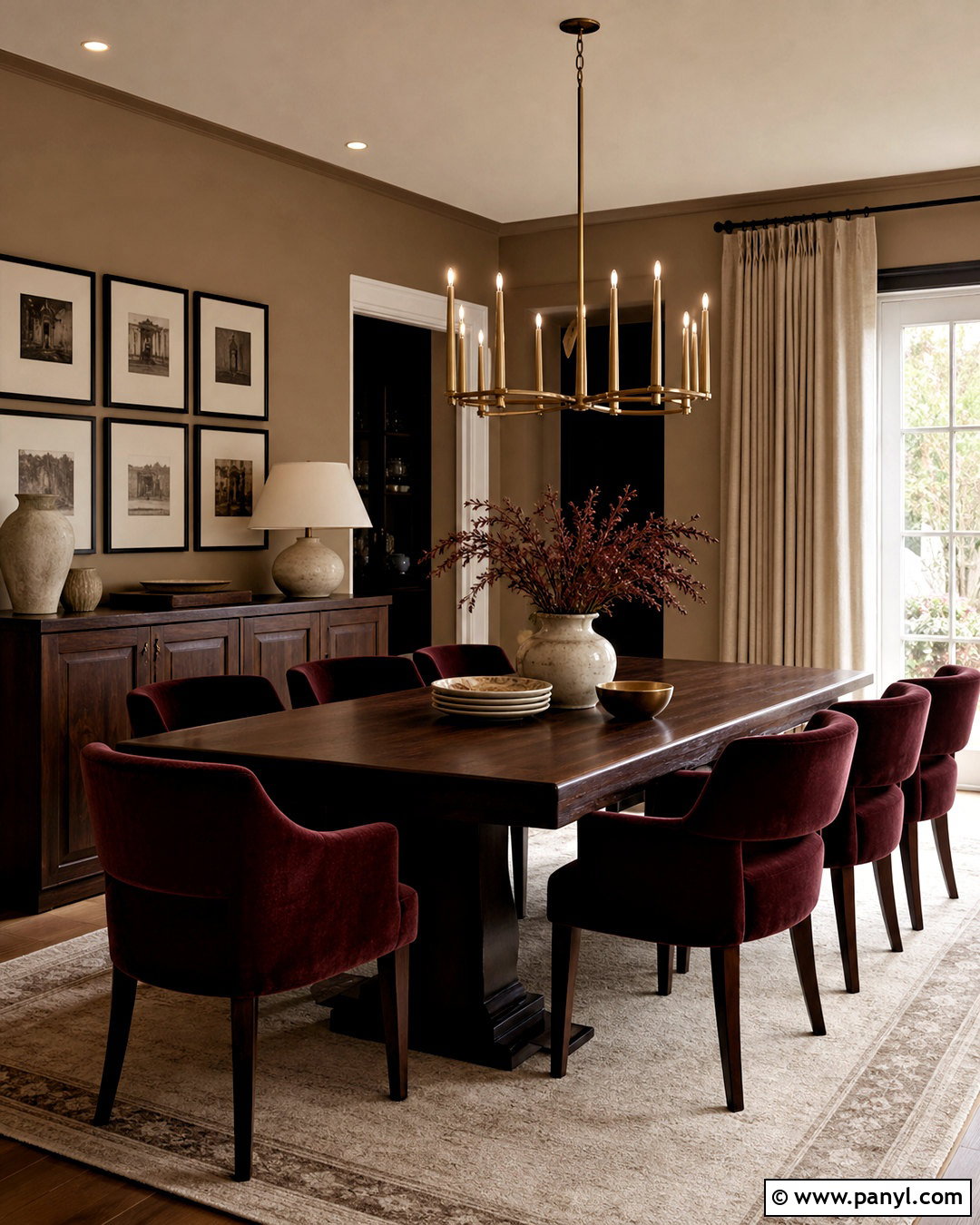
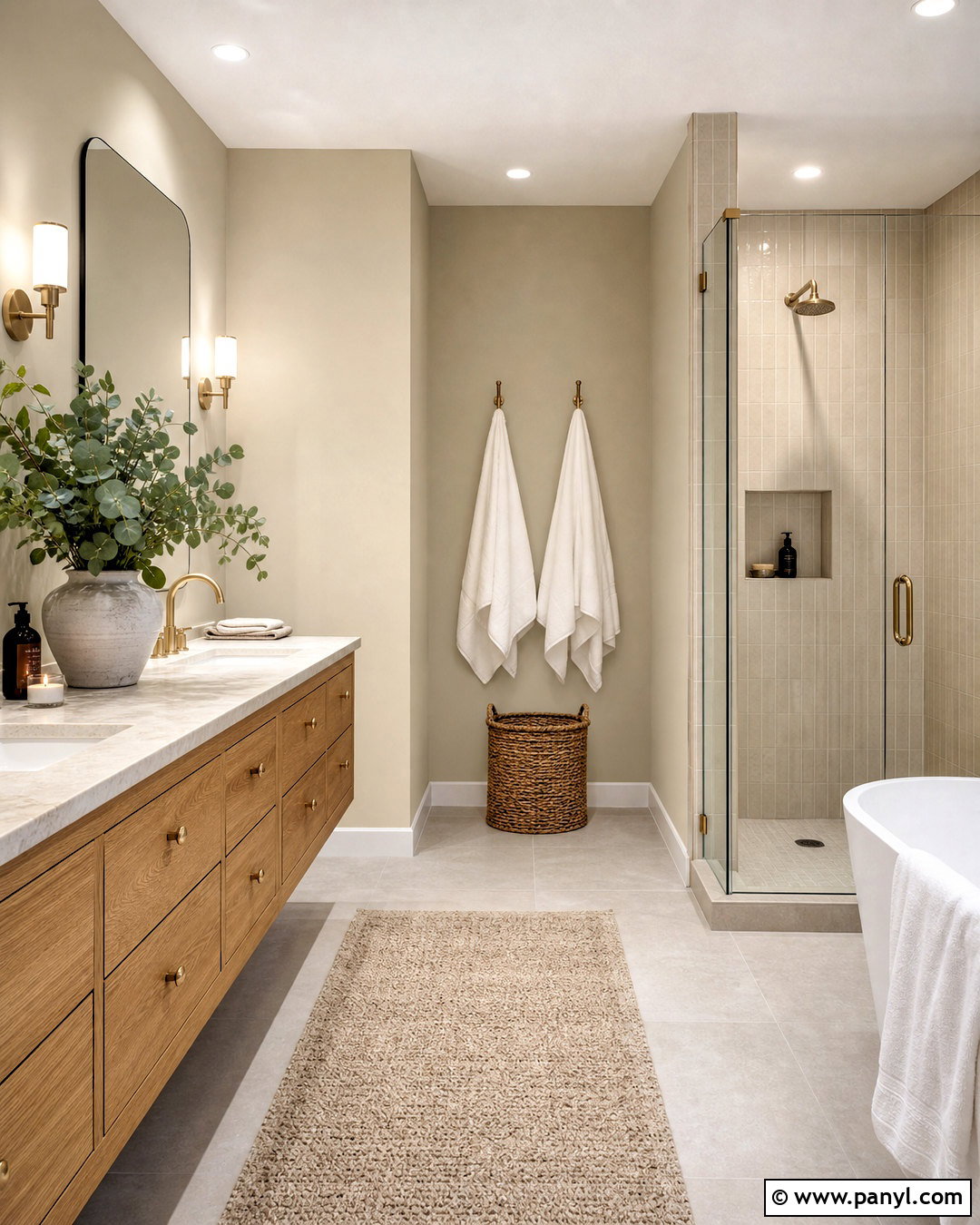
10. Honey Oak Trim With Black Interior Doors
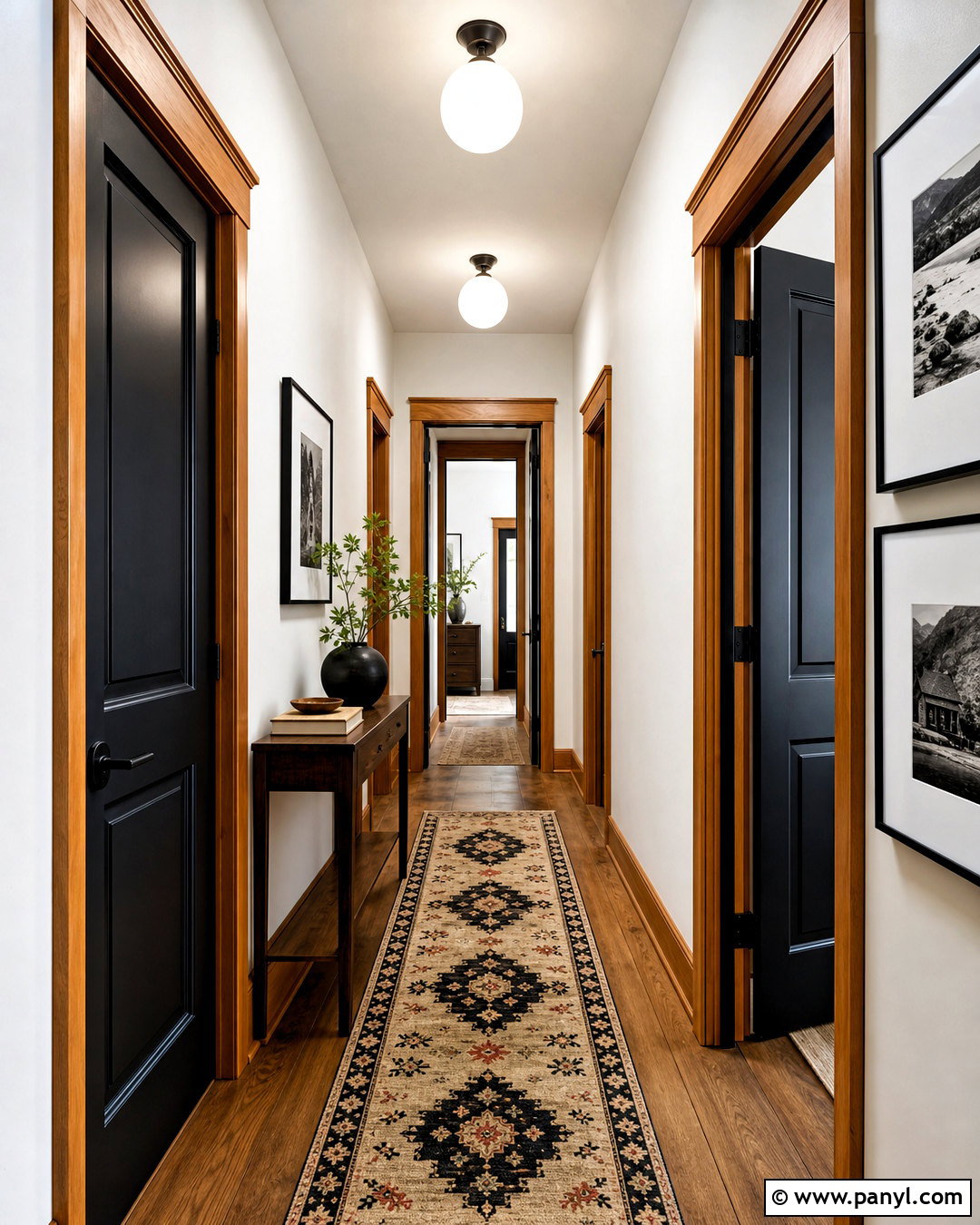
Painting interior doors black can modernize honey oak trim while preserving the original wood casing around each opening. The dark door surface creates a graphic focal point and separates the golden trim from light neutral walls. Use this treatment in a hallway with warm white paint, a narrow walnut console, and a washable runner combining beige, black, and muted rust. Choose simple matte black levers and hinges so the hardware blends into the doors. A row of black-framed photographs can repeat the contrast without making the hallway busy. Add a clean white ceiling and bright globe fixtures for even illumination. Test the combination on one door first, especially in a narrow space. When repeated consistently, black doors make the existing oak look purposeful and substantially more current.
11. Honey Oak Trim With White Interior Doors
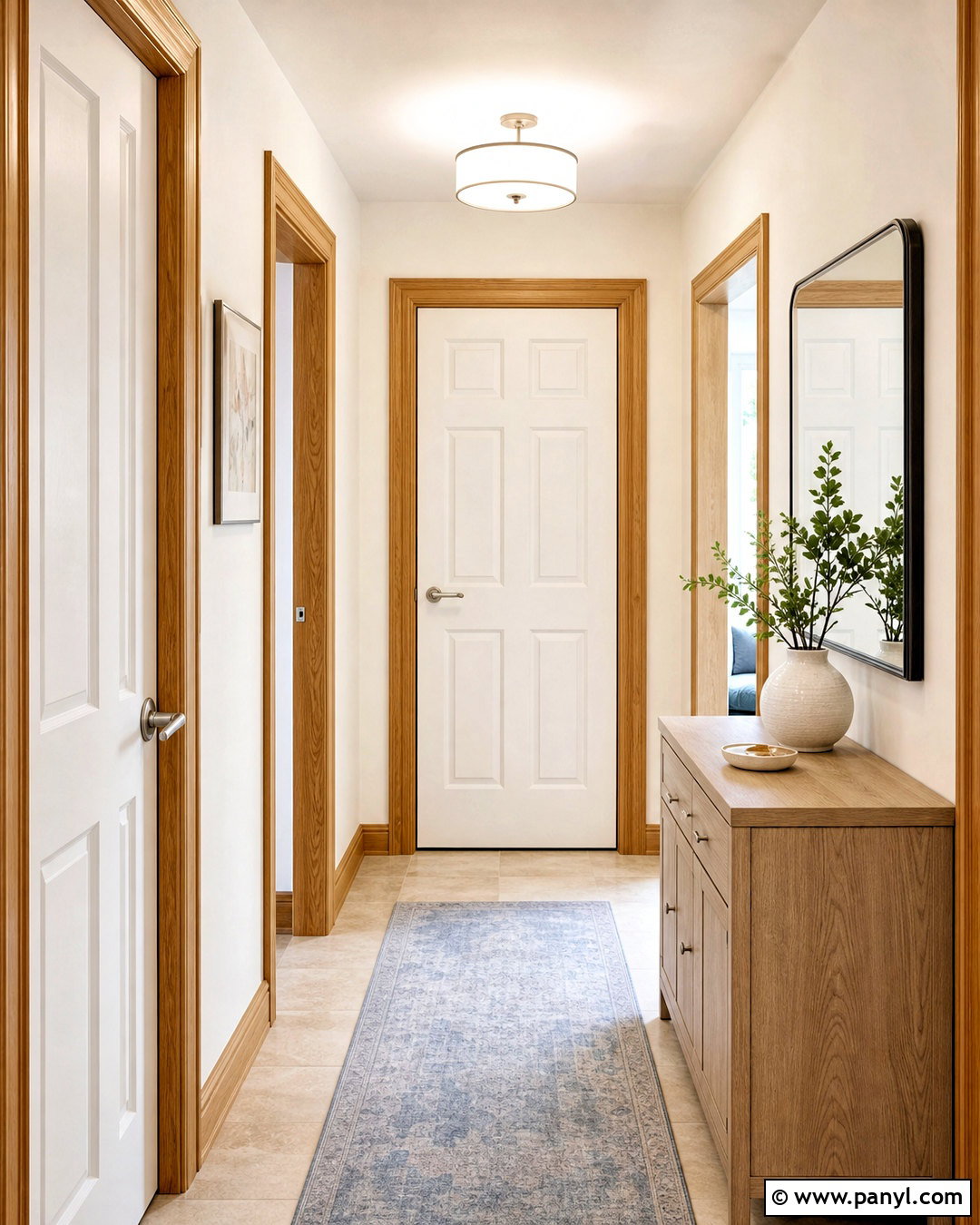
White interior doors can brighten a house with honey oak trim, provided the door color relates to the walls and does not look starkly blue. Select a warm white for both the doors and walls, using a slightly stronger sheen on the doors for durability and definition. Keep the oak casing natural so it frames each white panel clearly. Complete the space with light beige flooring, a pale wood console, and a soft blue-gray runner. Satin nickel door levers offer subtle contrast without adding more warmth. In nearby rooms, repeat warm white upholstery and a few blue or green accents to create flow. This combination reduces the amount of visible wood while respecting the original millwork. It feels airy, practical, and especially effective in smaller rooms or dim hallways.
12. Honey Oak Trim Living Room
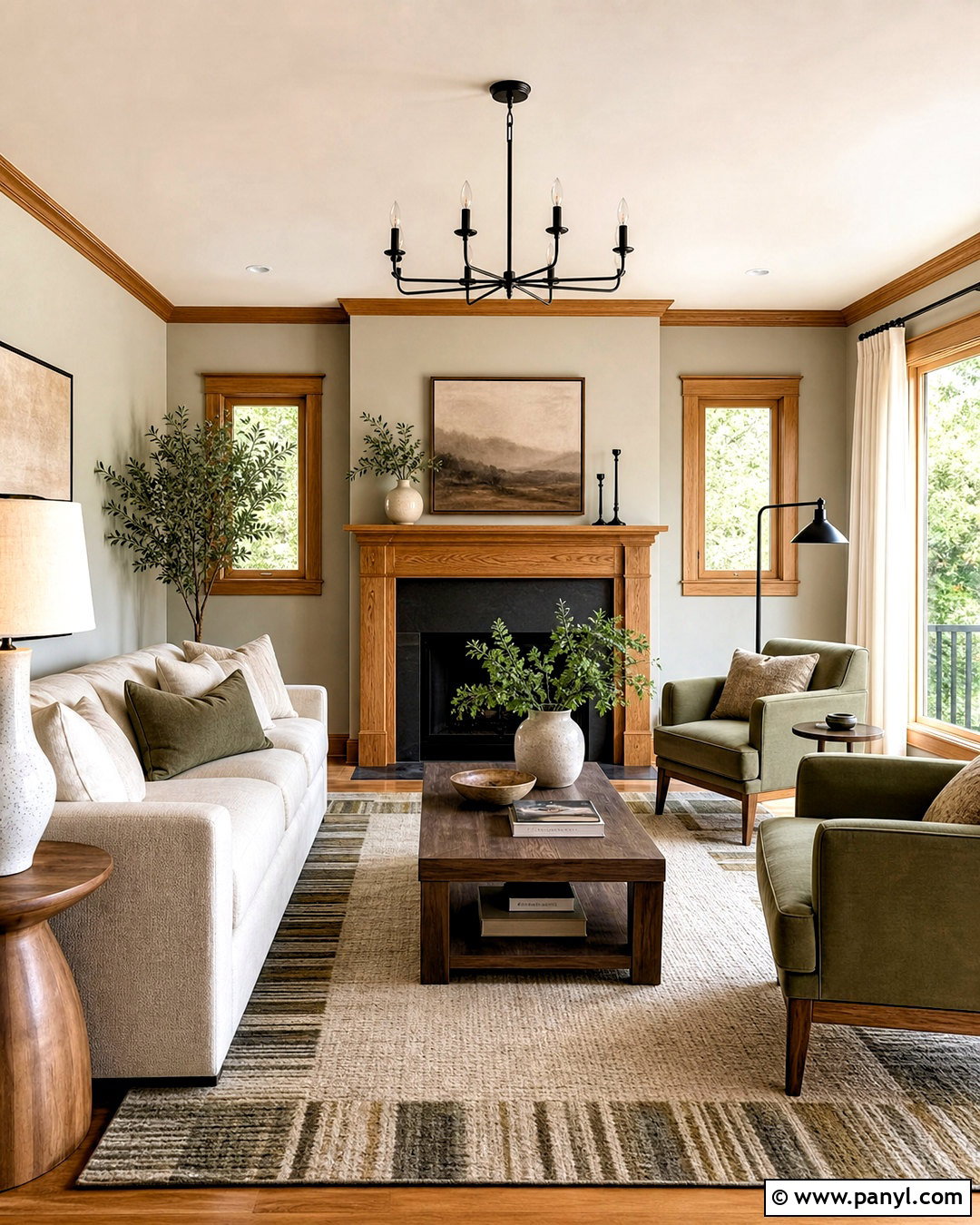
A balanced honey oak trim living room starts with controlling how many competing wood tones appear in one space. Keep the walls soft greige, then choose an ivory sofa and two structured accent chairs in muted green. A medium walnut coffee table complements the trim without matching it exactly. Place a large patterned rug beneath all front furniture legs to unite beige, green, brown, and charcoal throughout the seating area. Off-white curtains should frame the windows while exposing their oak casing. Add matte black lighting, a stone side table, and simple ceramic decor to interrupt the wood. One substantial plant brings in organic color. This complete layout lets the perimeter trim provide warmth while the lighter upholstery, modern shapes, and darker details give the room an updated identity.
13. Honey Oak Trim Dining Room
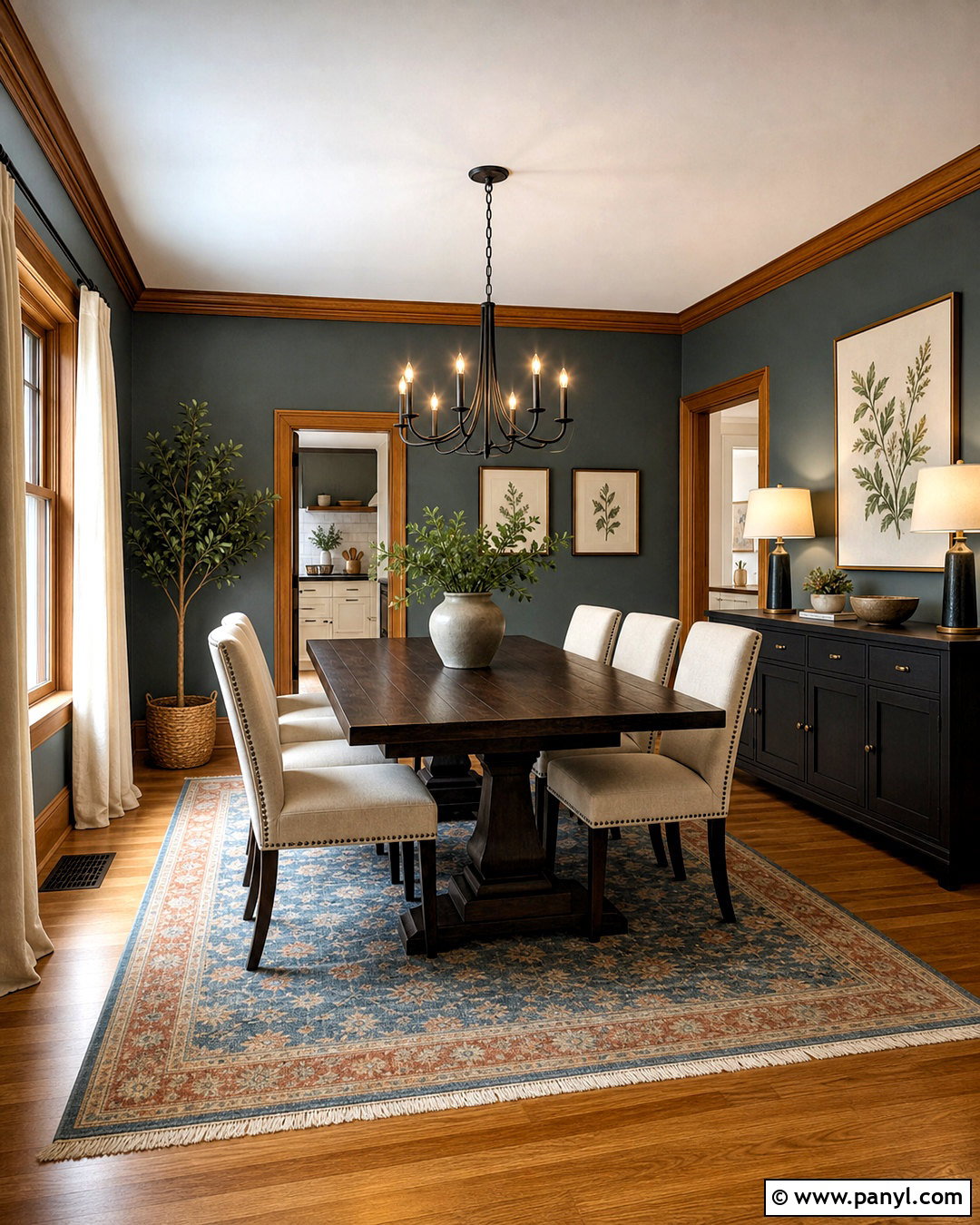
If your dining room has honey oak trim, build the design around a clear contrast between the perimeter woodwork and the central furniture. Paint the walls a muted blue-green, then use a dark brown dining table with cream upholstered chairs. The table anchors the room while the lighter chairs prevent it from feeling heavy. Add a low-pile rug featuring faded blue, beige, and rust, making sure it extends beyond the chairs when pulled out. A modern black chandelier introduces a crisp silhouette above the table. Keep window treatments simple with natural linen panels, and display oversized botanical artwork in thin black frames. A painted black sideboard can provide storage without adding another wood finish. The full room feels welcoming, established, and noticeably more current without changing the original trim.
14. Honey Oak Trim Bedroom
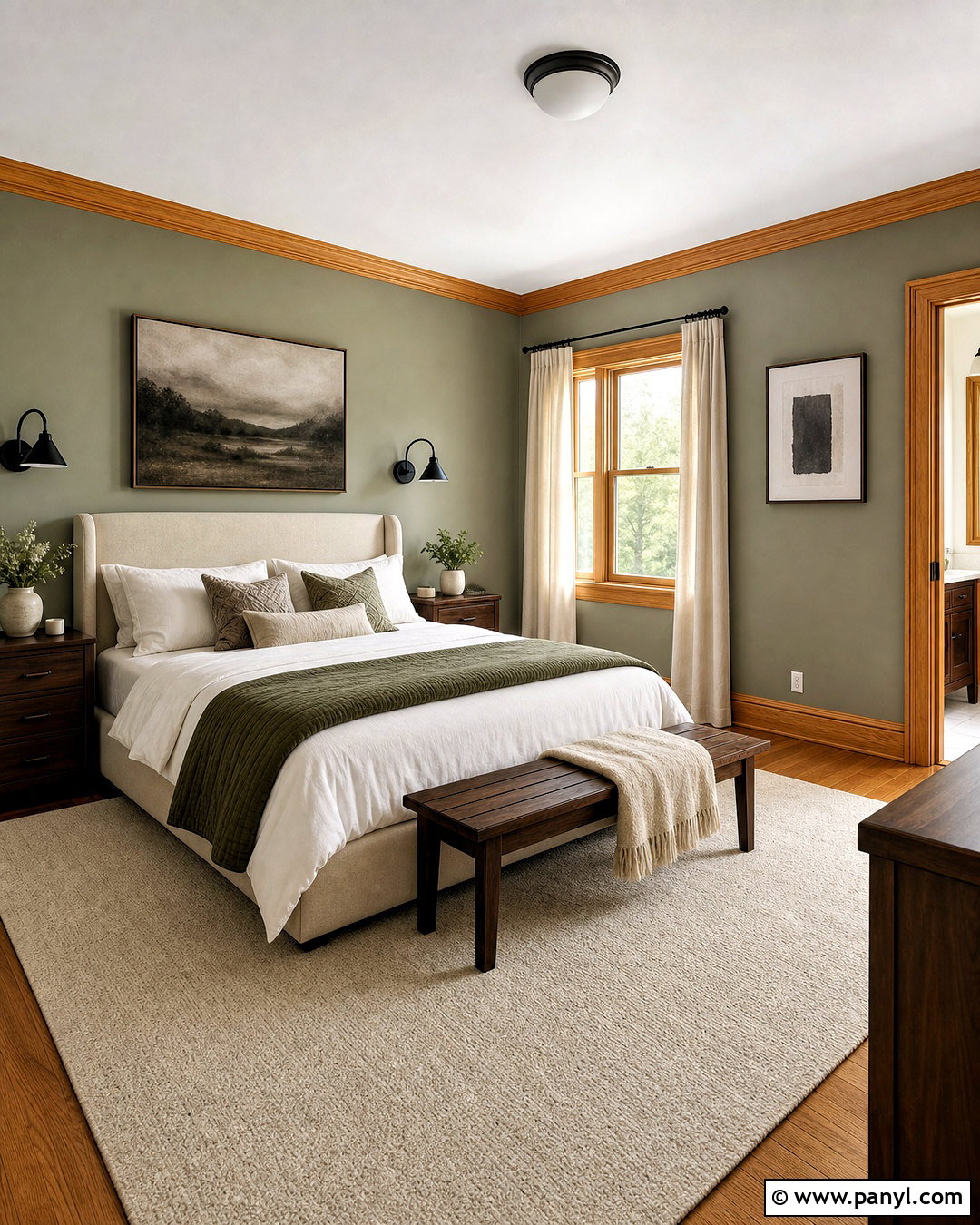
A peaceful bedroom can make honey oak trim feel softer by surrounding it with restful colors and plush materials. Paint the walls a muted gray-green and use an upholstered cream bed as the main focal point. Dress it with white sheets, a moss quilt, and layered beige pillows. Select dark walnut nightstands so they contrast clearly with the oak window and baseboard trim. An ivory wool rug lightens the floor, while natural linen curtains add privacy without hiding the casings. Install small black wall sconces to free the nightstands from bulky lamps. Limit additional wood furniture to one coordinating dresser. Abstract artwork in green, taupe, and charcoal completes the palette. The result feels calm and modern because each material has a clear role and no single wood tone overwhelms the room.
15. Honey Oak Trim Kitchen
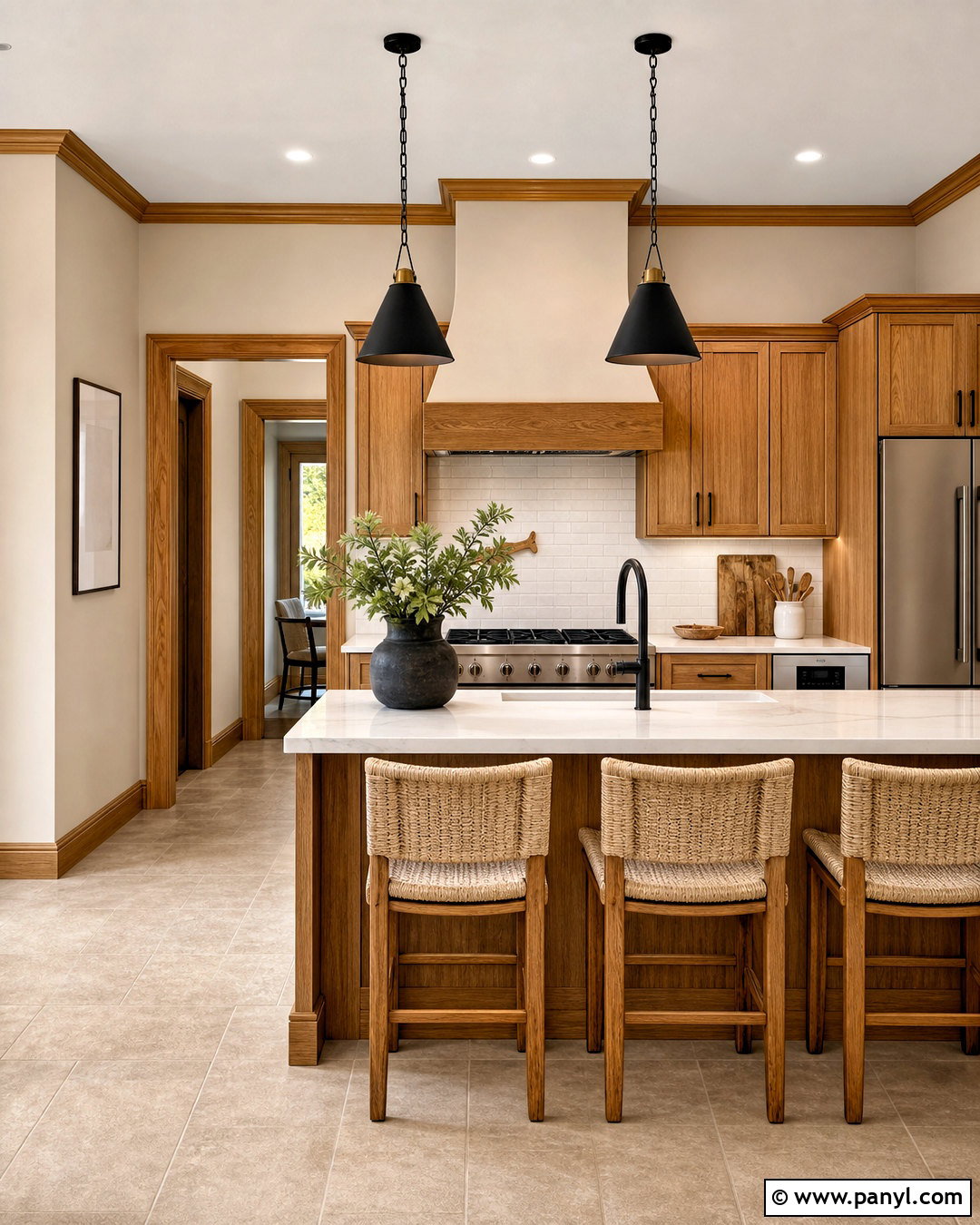
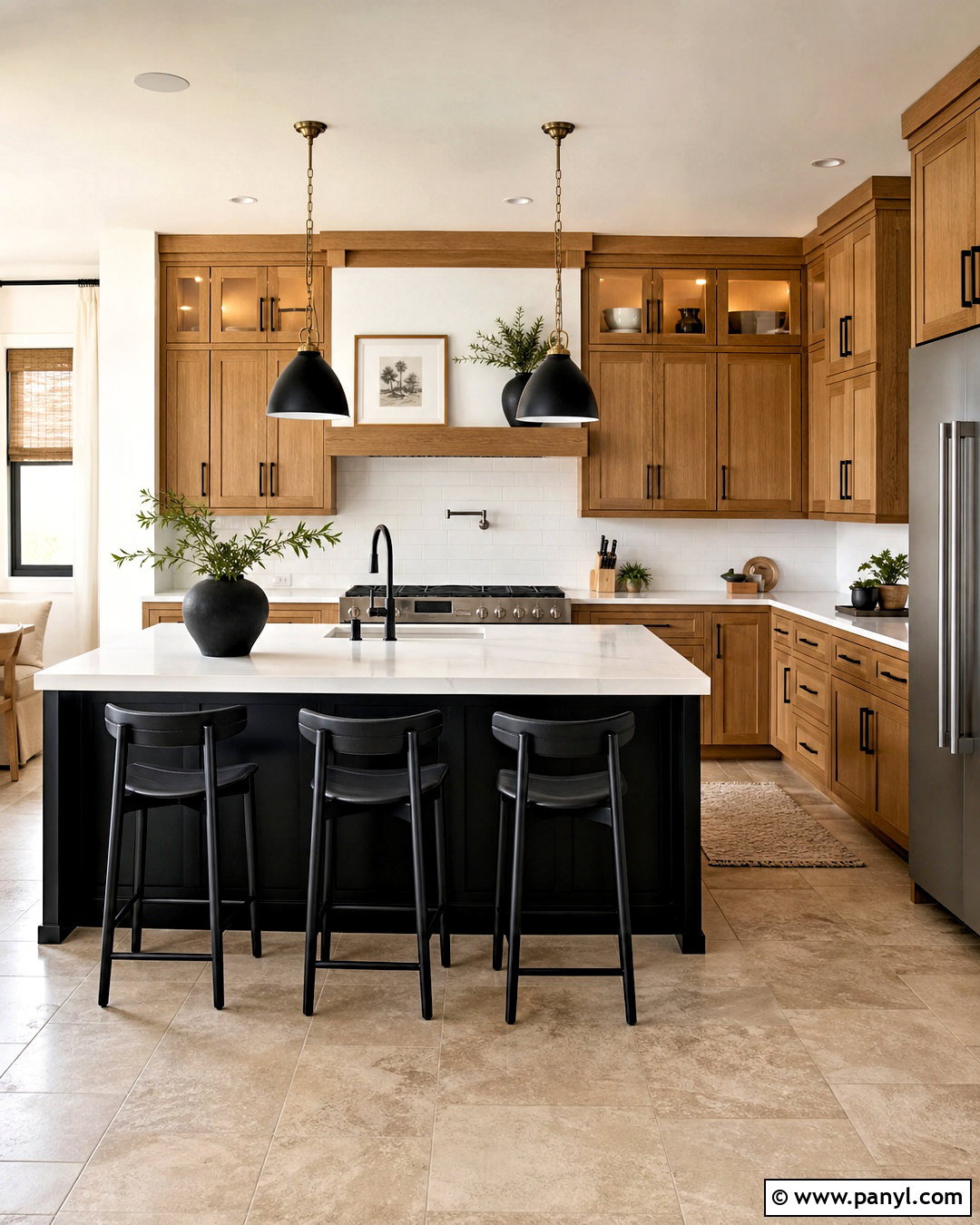
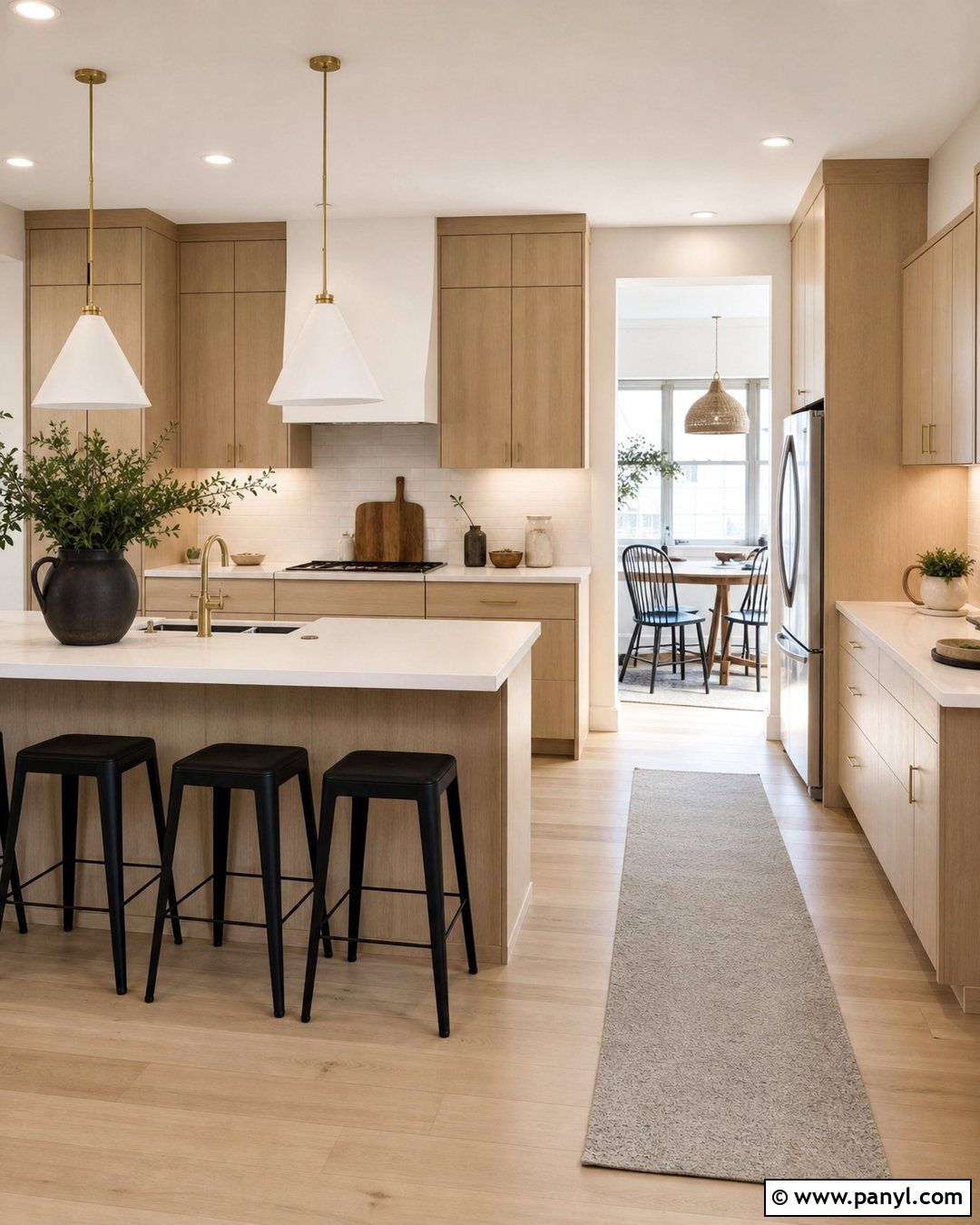
In a kitchen where honey oak trim meets oak cabinetry, light surfaces and simplified finishes can prevent the wood from dominating. Paint the walls a pale warm greige and use creamy white quartz counters with subtle beige veining. A handmade-look backsplash in soft off-white adds texture without creating a busy pattern. Replace ornate hardware with streamlined matte black pulls, then repeat black on the faucet and simple pendant lights. Choose light neutral flooring that differs clearly from the cabinetry, such as beige porcelain tile or natural stone-look luxury vinyl. Counter stools in black metal with woven seats connect modern lines to warm texture. Keep counters mostly clear. This complete kitchen design preserves the oak while using contrast, repetition, and lighter materials to create a cleaner visual balance.
16. Honey Oak Trim Entryway
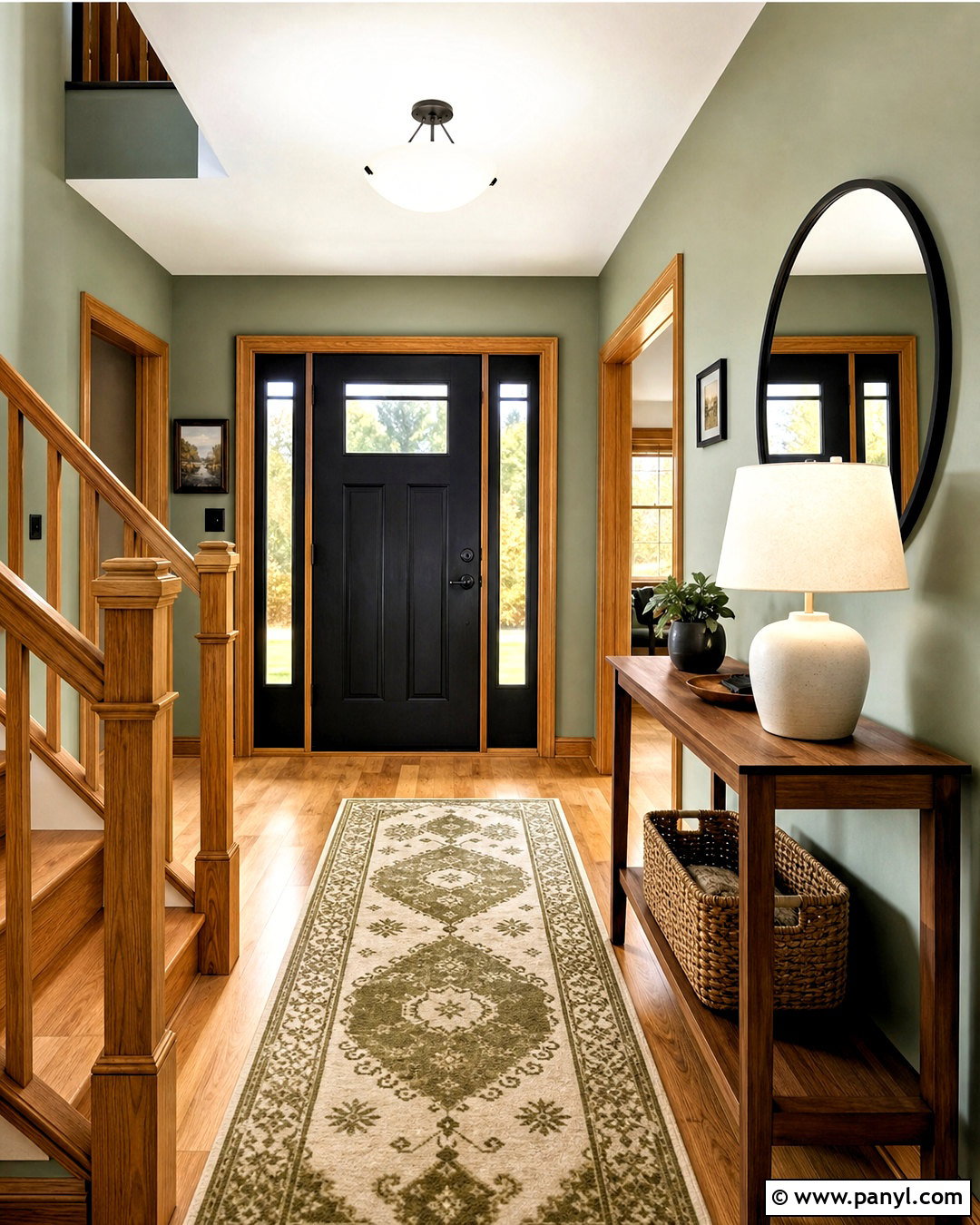
The entryway sets expectations for every room that follows, so make honey oak trim look intentional from the front door onward. Paint the walls a soft sage green and choose a black interior door for strong contrast. A slim walnut console provides a practical landing area without closely matching the trim. Ground the space with a patterned runner featuring cream, olive, charcoal, and faded brown. Above the console, hang one large round mirror with a thin black frame. Add a woven storage basket beneath and a simple ceramic lamp with a warm white shade. If the entry has an oak staircase, repeat black through the handrail or lighting instead of adding more golden accessories. This edited combination creates a welcoming entrance while establishing a consistent palette for the rest of the home.
17. Honey Oak Trim Staircase
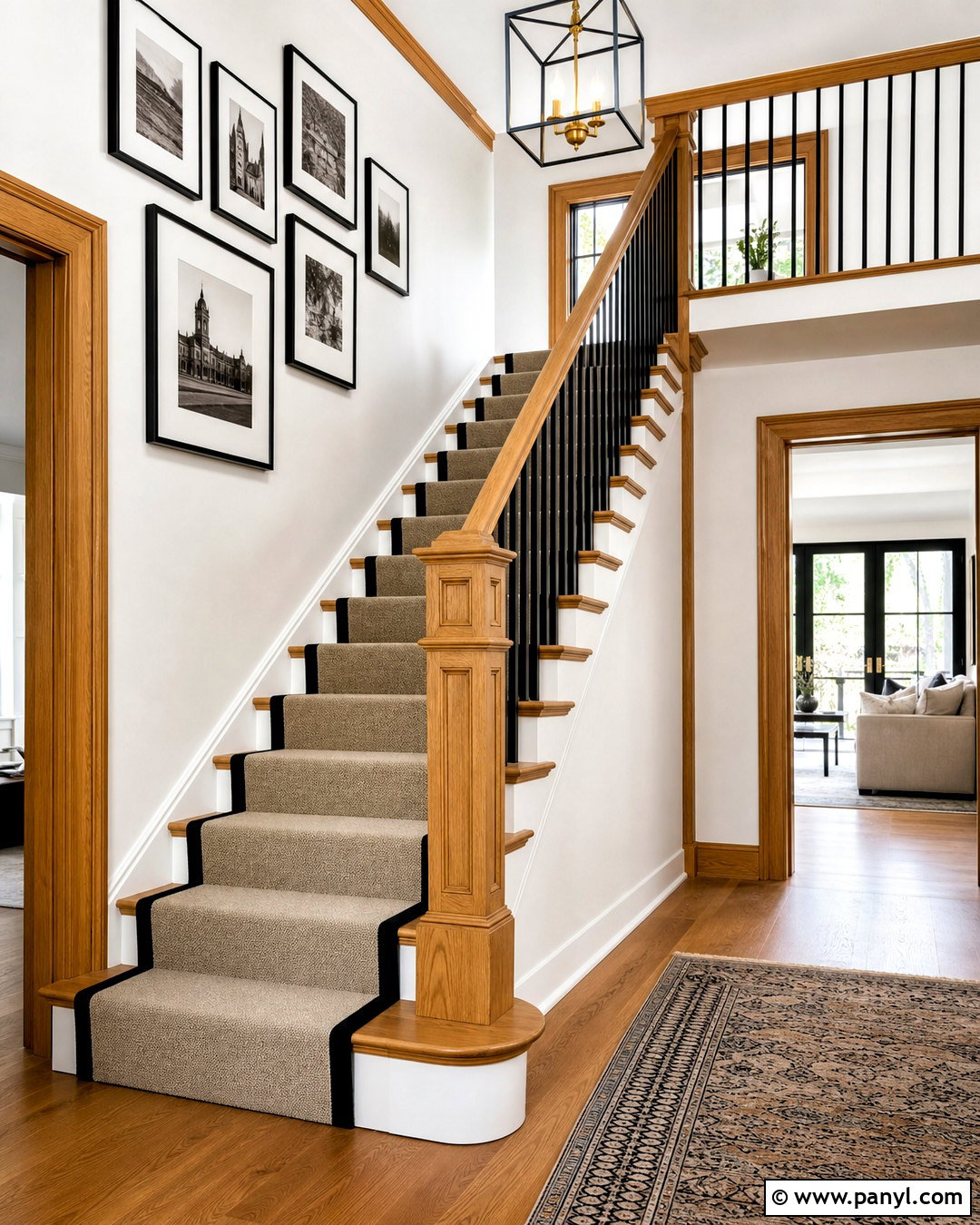
Honey oak trim around a staircase can become an attractive feature when the surrounding surfaces are simplified. Keep the oak baseboards, newel post, and handrail natural, but paint the stair risers and walls a warm white. Install a tailored runner in beige with a narrow charcoal border to add comfort and definition. If the existing balusters feel visually heavy, painting them soft black creates a cleaner rhythm while preserving the most character-rich oak components. Add a large modern pendant over the stairwell and a restrained gallery wall using black frames and wide ivory mats. Avoid small decorative signs or crowded ledges that compete with the wood grain. This balanced staircase combines light surfaces, natural oak, and dark accents, producing an updated transition area that still feels connected to the home’s original craftsmanship.
18. Honey Oak Trim Bathroom
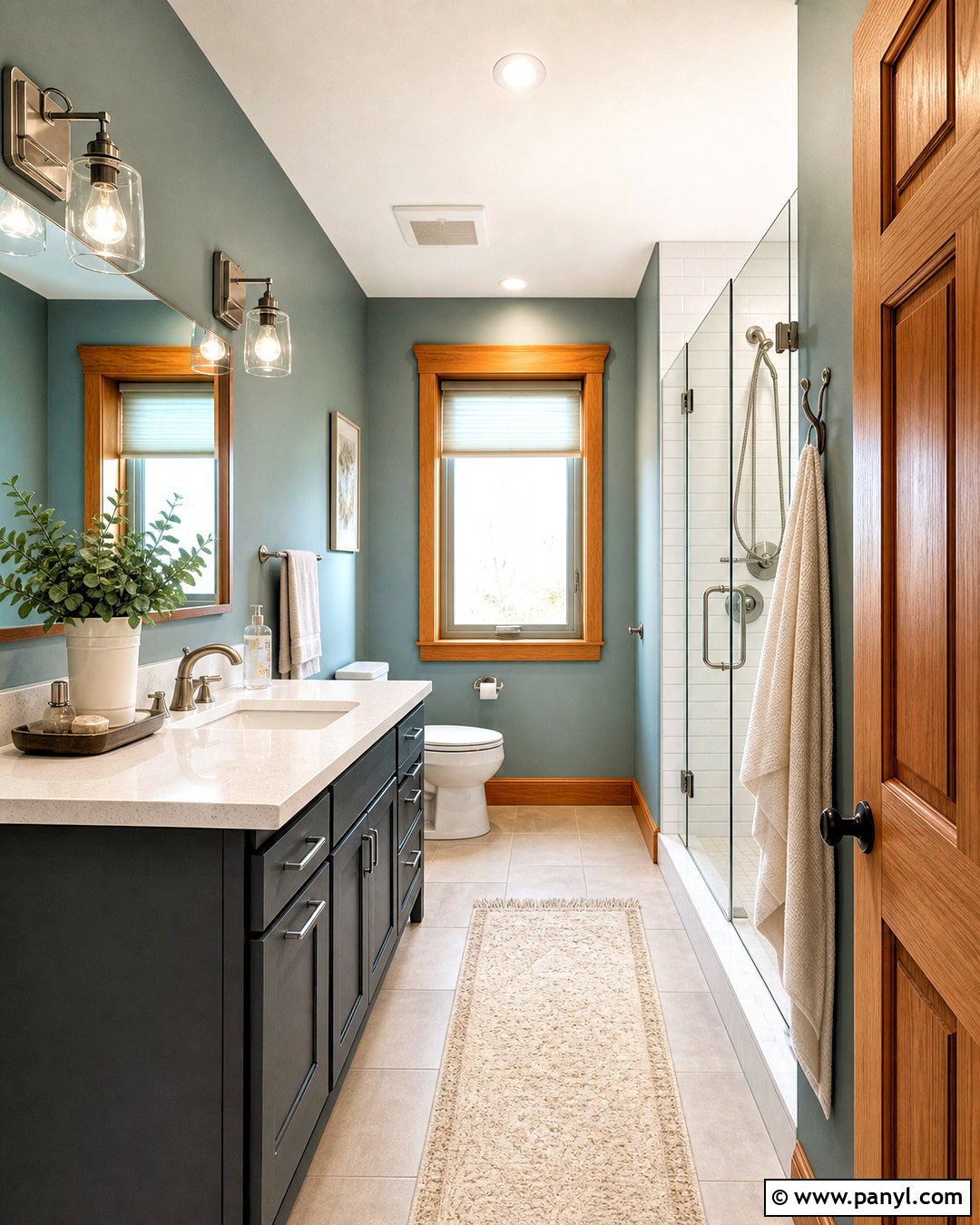
Honey oak trim can bring welcome warmth to a bathroom filled with hard, cool surfaces. Start with muted blue-green walls and a vanity painted deep charcoal or soft black. Top it with pale quartz, then use brushed nickel faucets and a frameless mirror to keep the sink area clean and reflective. White shower tile brightens the room, while light beige floor tile connects naturally to the oak door and window trim. Add a washable cream runner, white towels, and one woven basket for softness. A pair of simple glass sconces provides bright task lighting without adding visual weight. Keep decorative items limited to a ceramic tray and small plant. The finished bathroom feels fresh because the oak is balanced by crisp white, cool metal, and one strong dark focal point.
19. Honey Oak Trim With Dark Wood Floors
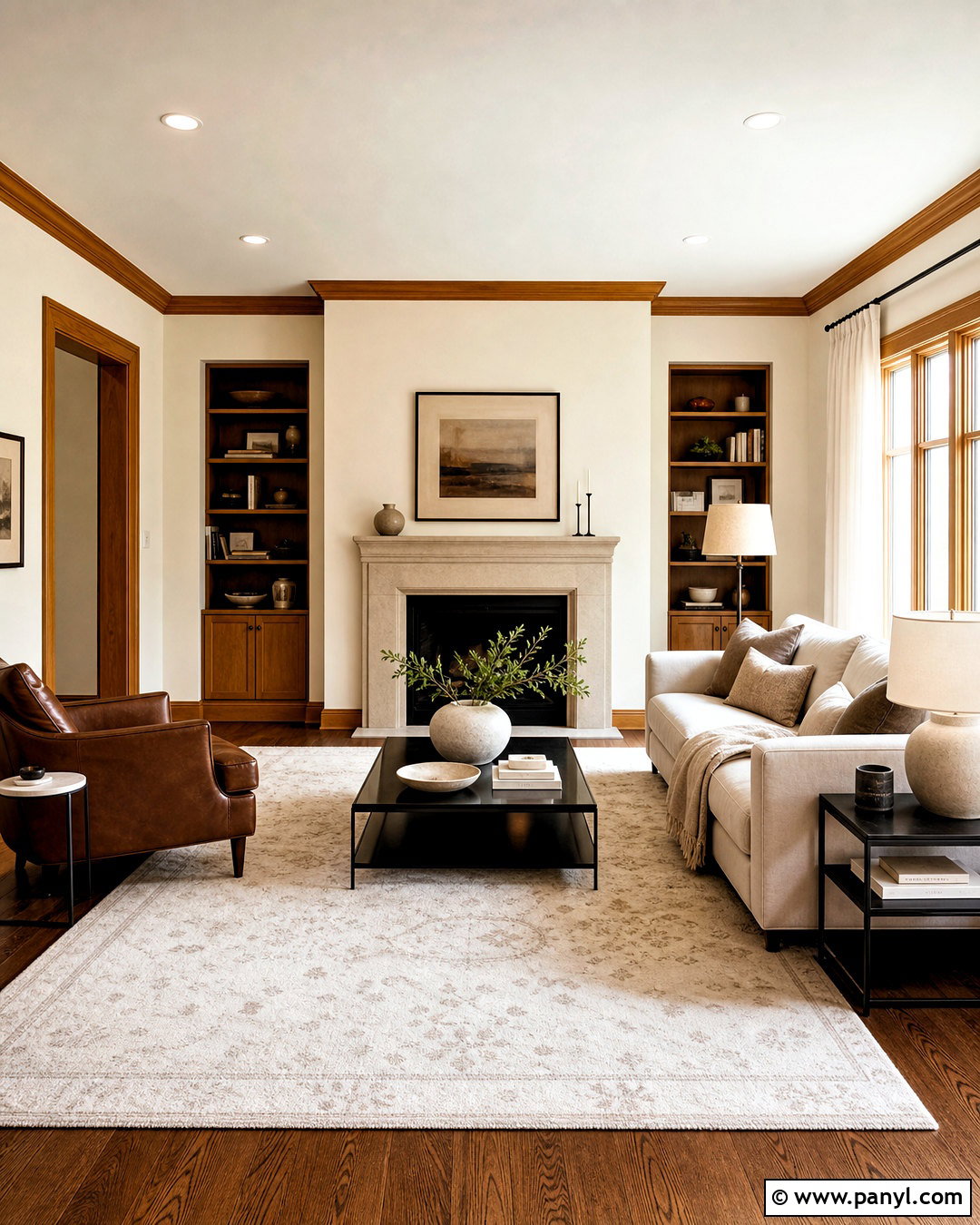
Dark wood floors can work with honey oak trim when the contrast appears deliberate rather than slightly mismatched. Choose deep brown flooring with neutral undertones and avoid planks that lean strongly red. Paint the walls warm white, then place a large ivory and taupe rug between the floor and main furniture. A cream sofa, cognac leather chair, and black metal coffee table create a layered living room without introducing another dominant wood color. Use linen curtains and pale stone accessories to lighten the arrangement. Repeating dark brown through one console or shelf helps connect the floor to the room. Keep the honey oak baseboards visible as a middle tone between the dark flooring and light walls. This controlled palette makes both wood finishes feel selected for contrast.
20. Honey Oak Trim With Light Neutral Floors
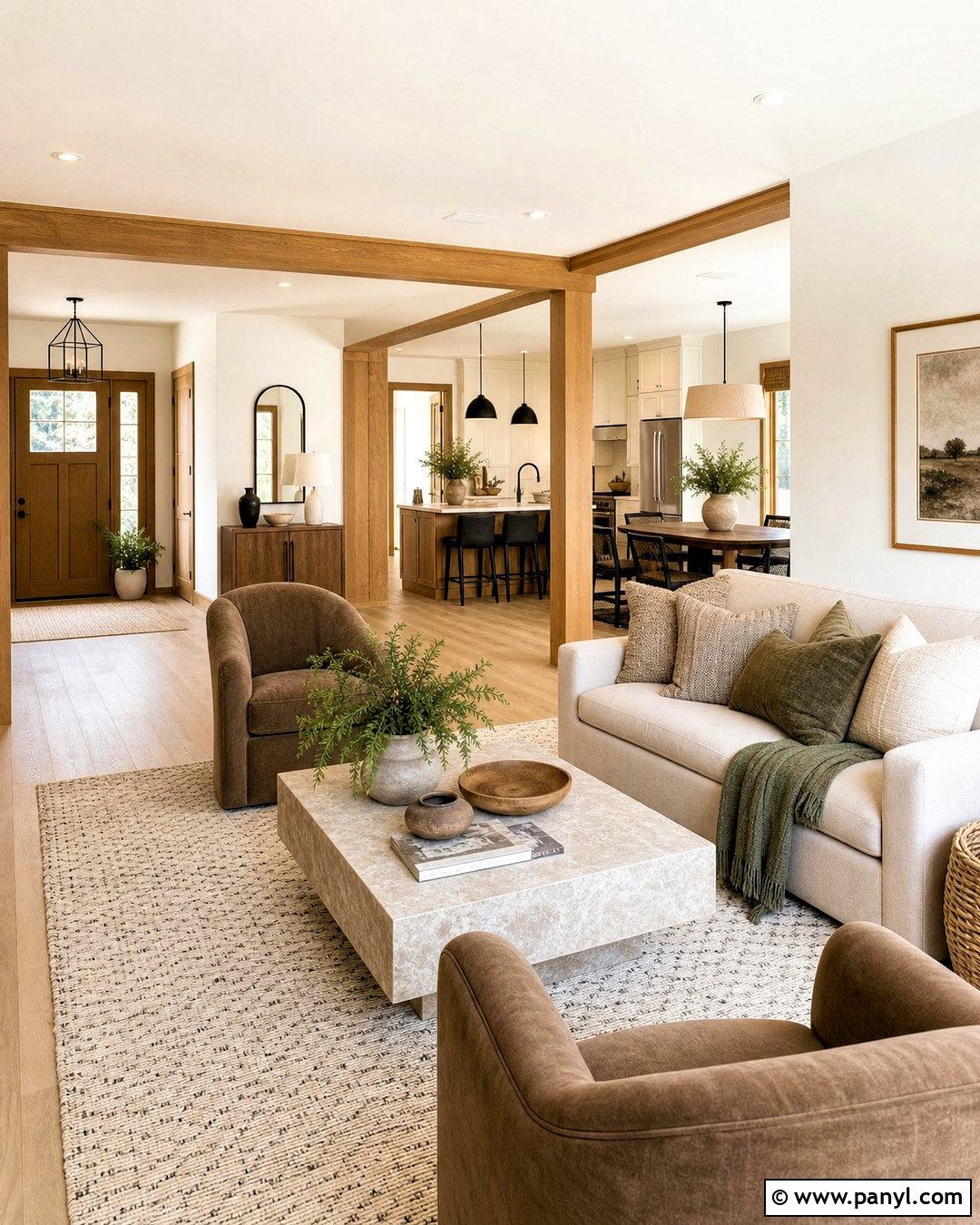
Light neutral flooring can reduce the visual weight of honey oak trim and make an entire home feel more open. Select beige limestone-look tile, warm greige luxury vinyl, or pale natural oak with quiet grain. Avoid gray flooring with strong blue undertones, which may make the trim appear brighter orange. Pair the floors with creamy white walls and streamlined furniture in oatmeal, mushroom, and muted olive. A textured rug can add subtle pattern while distinguishing the seating area from the floor. Use black lighting and small charcoal accents for definition, then bring in stone, linen, and woven fibers to diversify the materials. Keeping major surfaces light allows the honey oak baseboards and door casings to act as warm outlines. The finished space feels relaxed, cohesive, and naturally brighter.
Conclusion:
Updating a home with honey oak does not require covering every piece of natural wood with paint. A well-planned palette can make the existing trim feel warm, characterful, and current. Begin with wall colors that either soften the golden tones or create intentional contrast. Then coordinate flooring, furniture, textiles, lighting, and hardware across the whole room. Warm whites, greige, sage, dusty blue, navy, and charcoal can all succeed when their undertones are carefully tested in the actual space. Limit competing woods and repeat each accent finish several times for consistency. Whether you prefer a light neutral interior or a bolder room, these honey oak trim ideas offer practical ways to create a polished, cohesive home.

Related Ideas and Inspiration:
Leave a Reply