
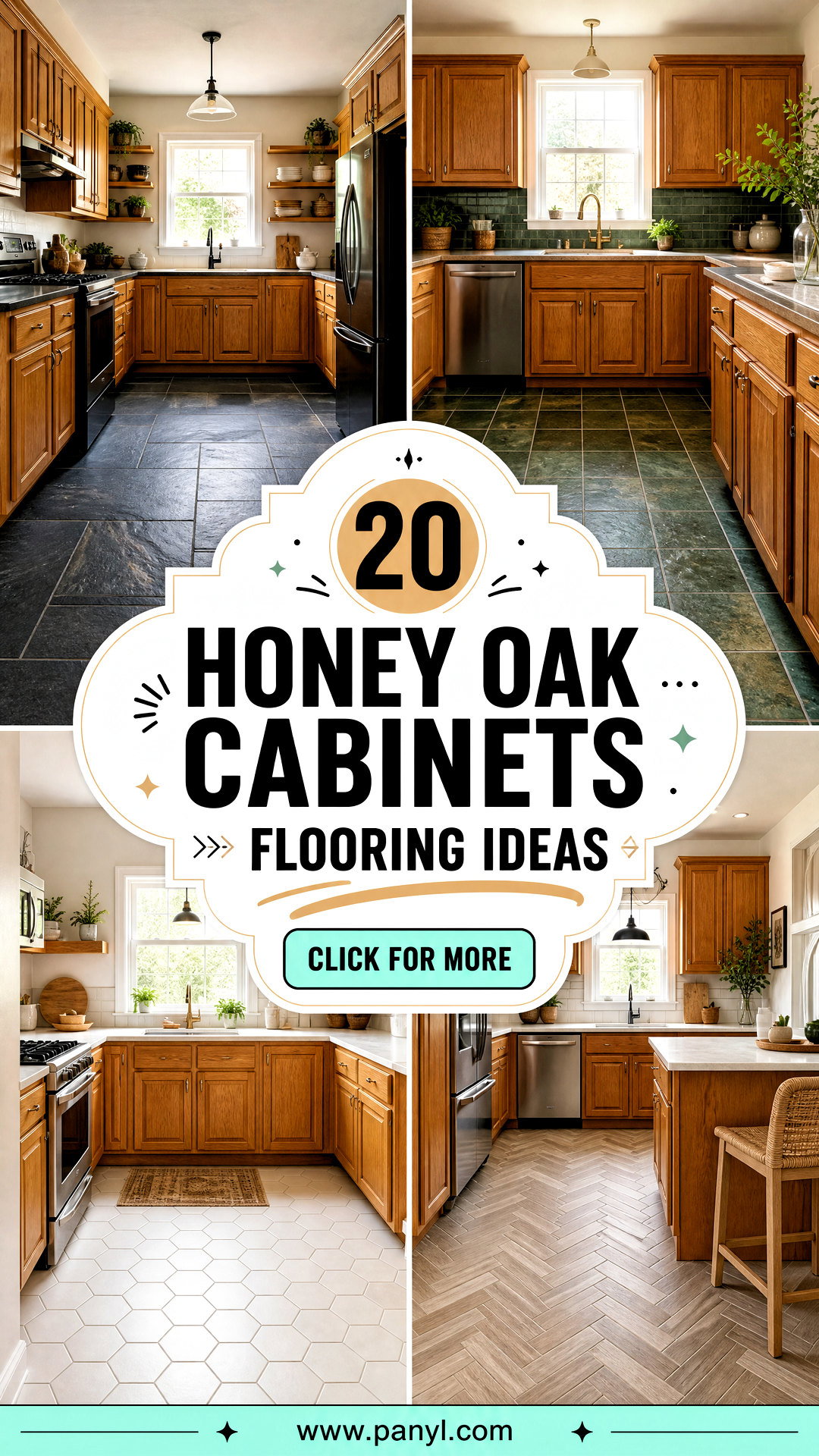
Choosing flooring for honey oak cabinets is easier when you treat the kitchen as one complete color story. Honey oak has noticeable golden, yellow, and orange undertones, so the floor should create gentle contrast rather than copy that warmth exactly. Light greige planks, cream tile, natural stone, muted brown wood, and charcoal surfaces can all work when the countertops, backsplash, walls, and hardware connect the palette. Large tiles and wider planks also create a calmer foundation because they reduce busy lines around prominent oak grain. () Whether you prefer modern, traditional, farmhouse, or colorful interiors, the following complete kitchen looks offer practical and visually balanced **honey oak cabinets flooring ideas**.
1. Light Greige Vinyl Plank Flooring
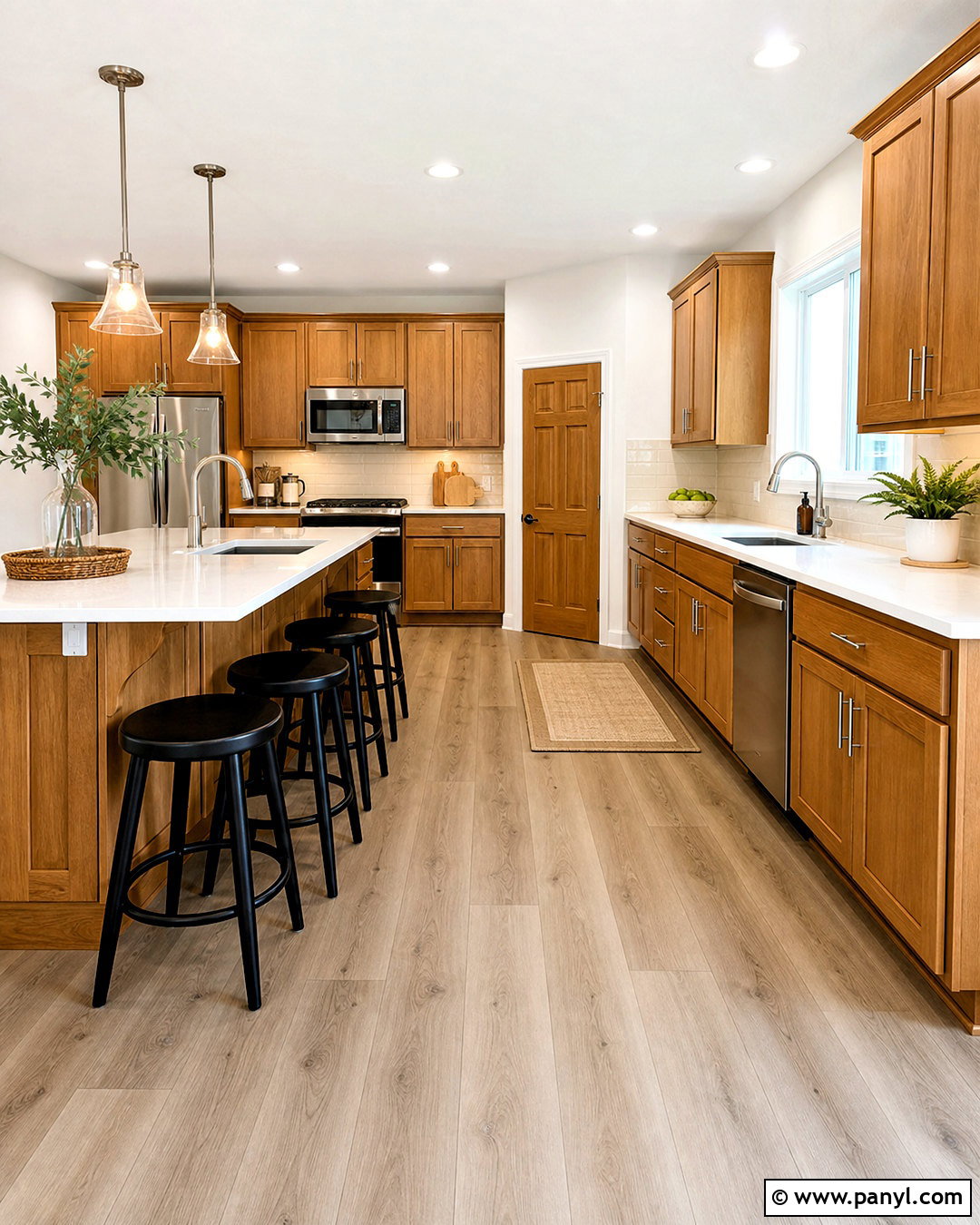
Light greige luxury vinyl plank gives honey oak cabinets a softer, more updated setting without making the kitchen feel cold. Choose wide planks with a matte finish, subtle oak grain, and very little yellow variation. Complete the room with creamy white quartz countertops, an ivory subway tile backsplash, and warm off-white walls. Brushed nickel hardware and simple glass pendants keep the design light, while black counter stools add a small amount of contrast. Run the flooring continuously into nearby dining or family areas to make the layout feel larger. This combination works especially well in busy homes because the gentle color variation can visually soften everyday dust and footprints without competing with the cabinet grain. ()
2. Cream Porcelain Tile Flooring
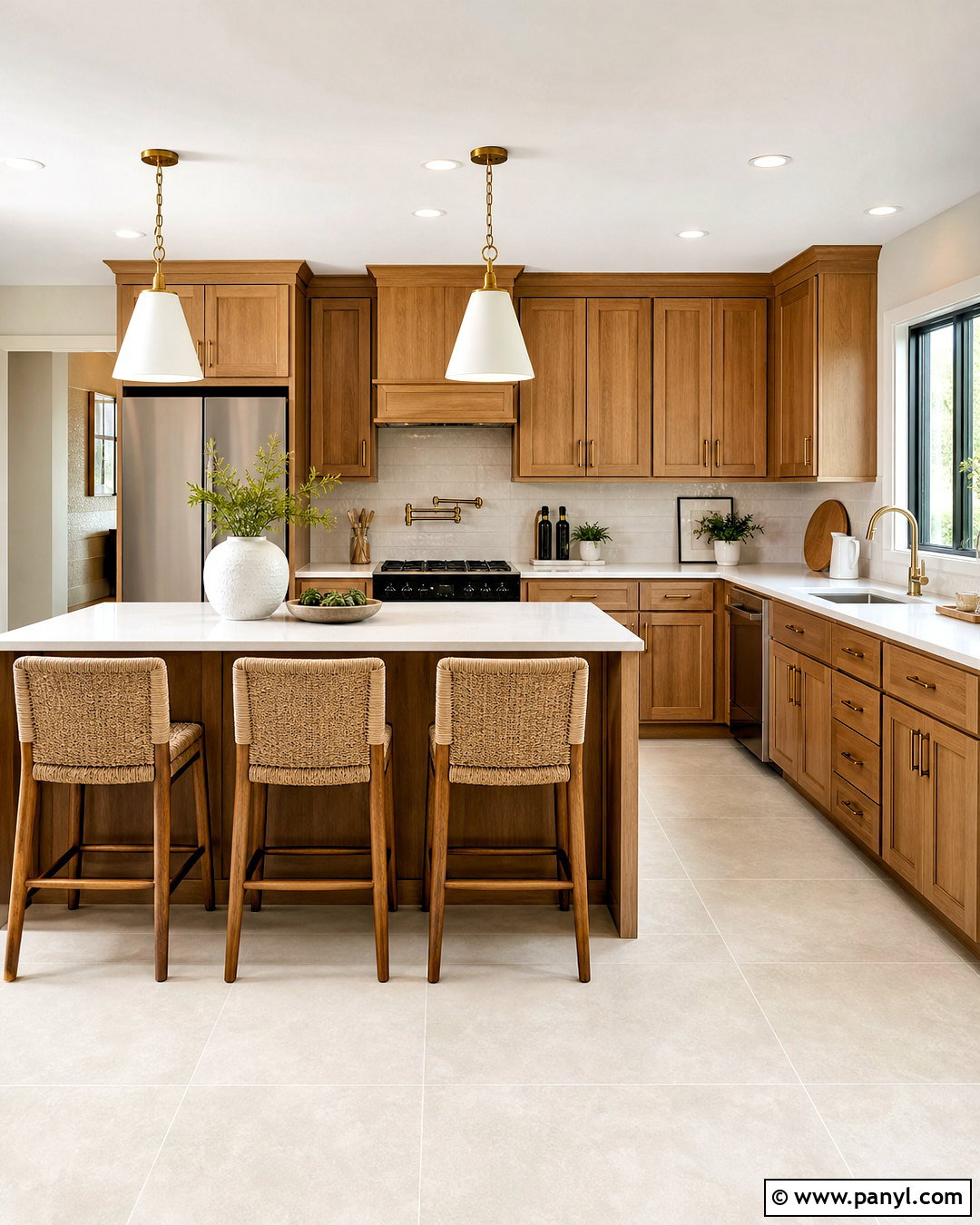
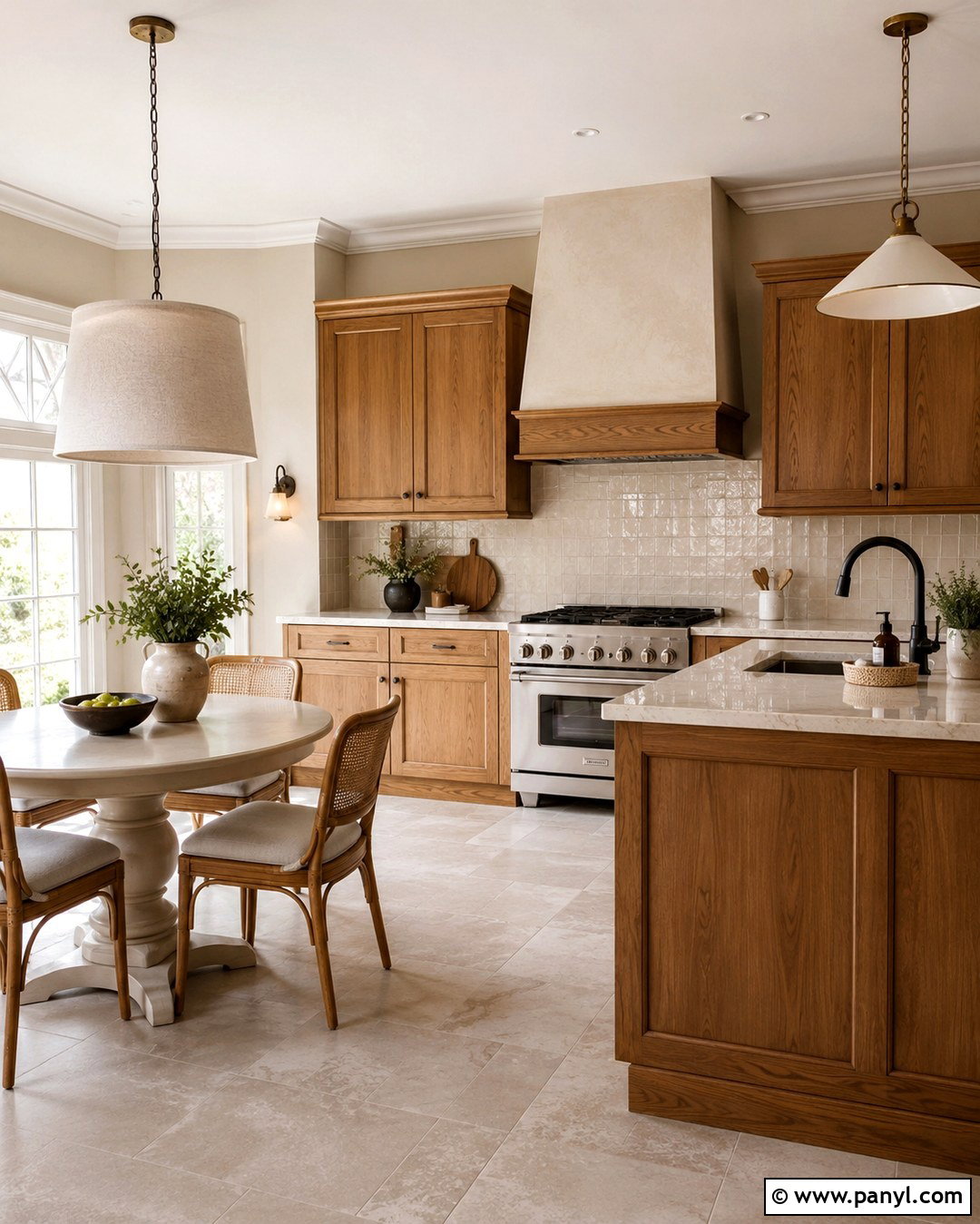
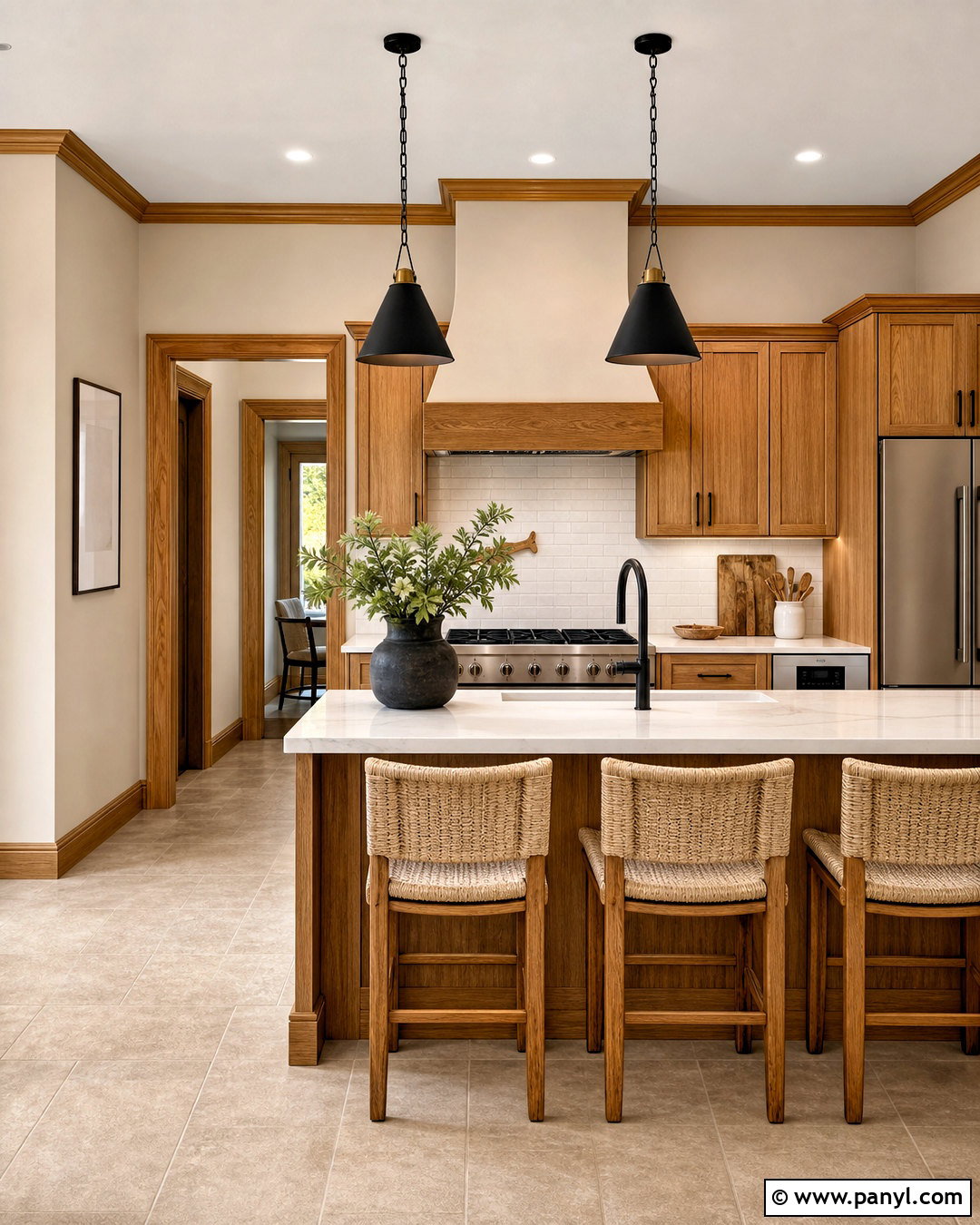
Imagine a bright kitchen where the golden cabinets stand out against a quiet, creamy floor. Large-format porcelain tile in warm ivory or pale beige creates that balanced foundation. Look for a matte or lightly textured surface with restrained stone-like movement instead of dramatic yellow veining. Use thin, color-matched grout lines for a seamless appearance. White quartz counters, a warm white backsplash, and soft taupe walls complete the neutral palette. Add aged brass cabinet pulls and woven counter stools to reinforce the warmth without making everything orange. This flooring works beautifully in smaller kitchens, where a light continuous surface can make the room appear more open. It also suits traditional and transitional homes with honey oak cabinetry. ()
3. Natural White Oak Flooring
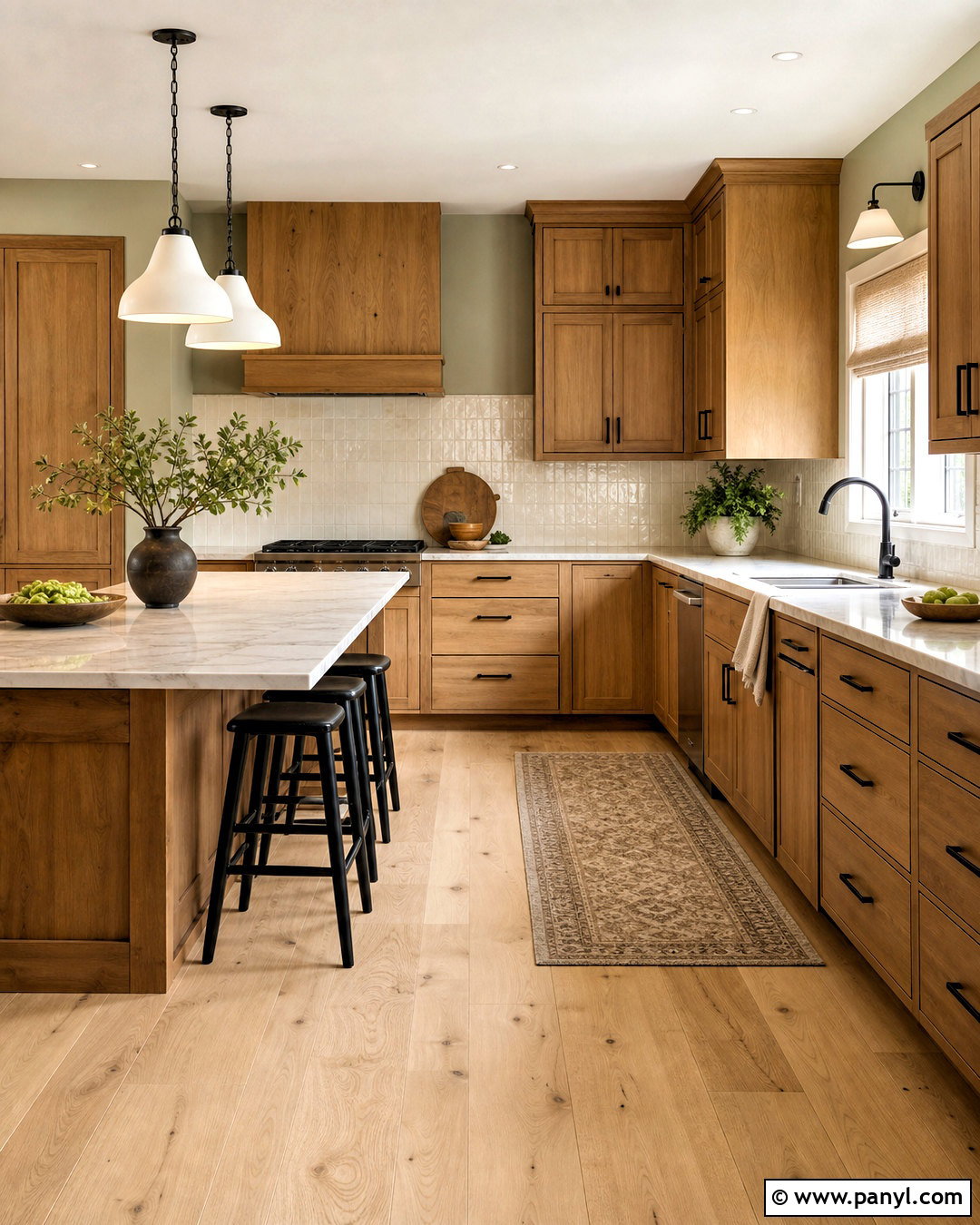
Can two different oak finishes share one kitchen successfully? Yes, as long as the floor is noticeably lighter and quieter than the cabinets. Select natural white oak flooring with beige undertones, minimal knots, wide boards, and a low-sheen finish. Avoid golden stains that make the floor look like an exact cabinet match. Bring the design together with off-white countertops that contain soft tan veining, handmade cream backsplash tile, and muted sage walls. Matte black hardware provides clean definition, while linen Roman shades and a pale wood dining table support the relaxed organic look. The visible contrast between the pale flooring and deeper honey cabinets makes each wood finish feel intentional rather than mismatched, creating a warm contemporary kitchen with lasting appeal. ()
4. Medium Walnut Wood Flooring
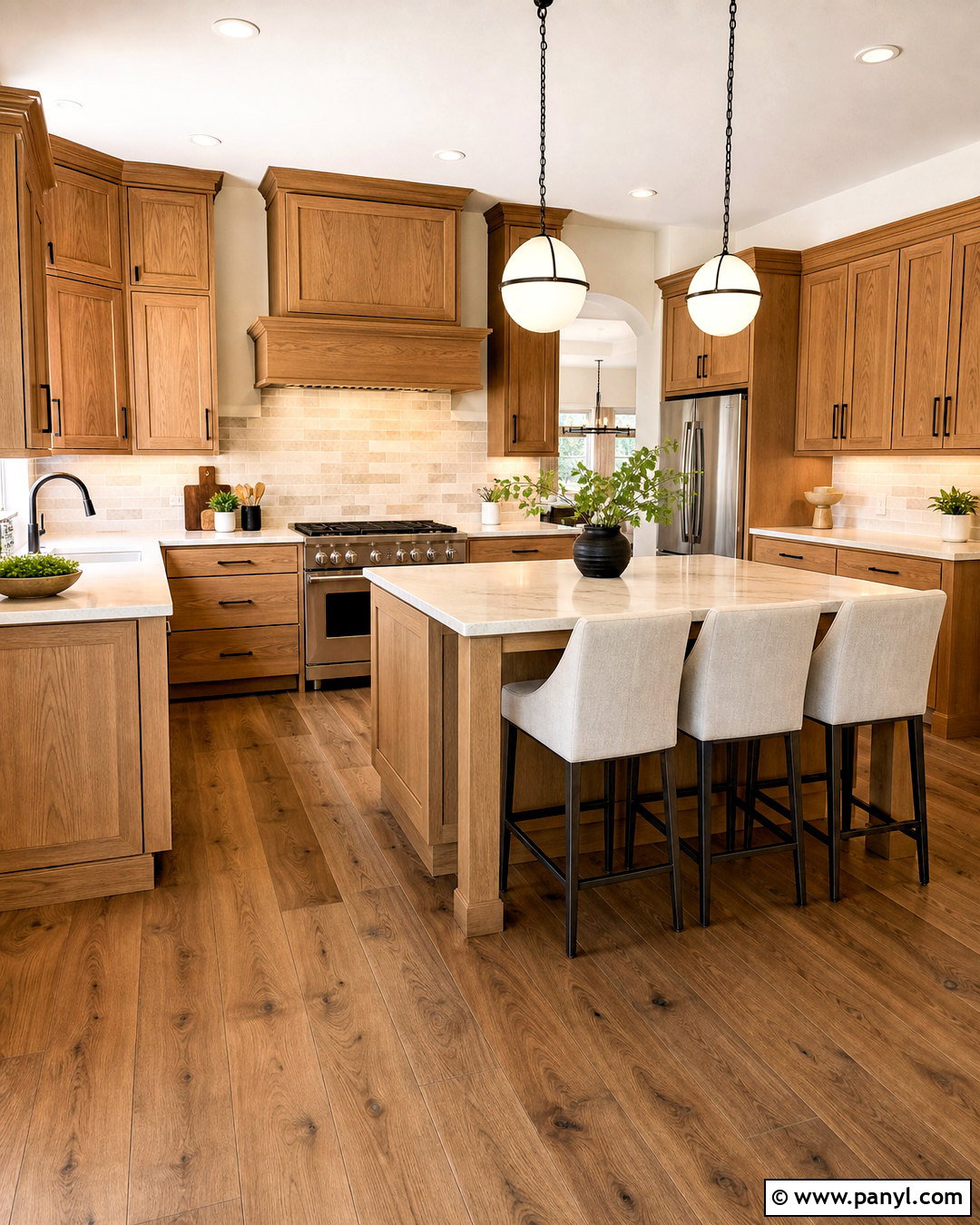
A rich walnut-colored floor can ground honey oak cabinets in a kitchen with generous natural light. Choose medium brown boards with neutral or slightly cool undertones rather than red mahogany coloring. The difference in depth separates the cabinets from the floor and creates a layered wood palette. Balance the darker surface with warm white walls, creamy quartz counters, and a light limestone backsplash. Black hardware, simple globe pendants, and upholstered oatmeal counter stools give the room a polished transitional character. Keep window treatments light so the kitchen does not become visually heavy. This combination works particularly well in open layouts, where the walnut flooring can continue through adjoining living spaces and provide a consistent base for both light and dark furniture. ()
5. Charcoal Slate Flooring
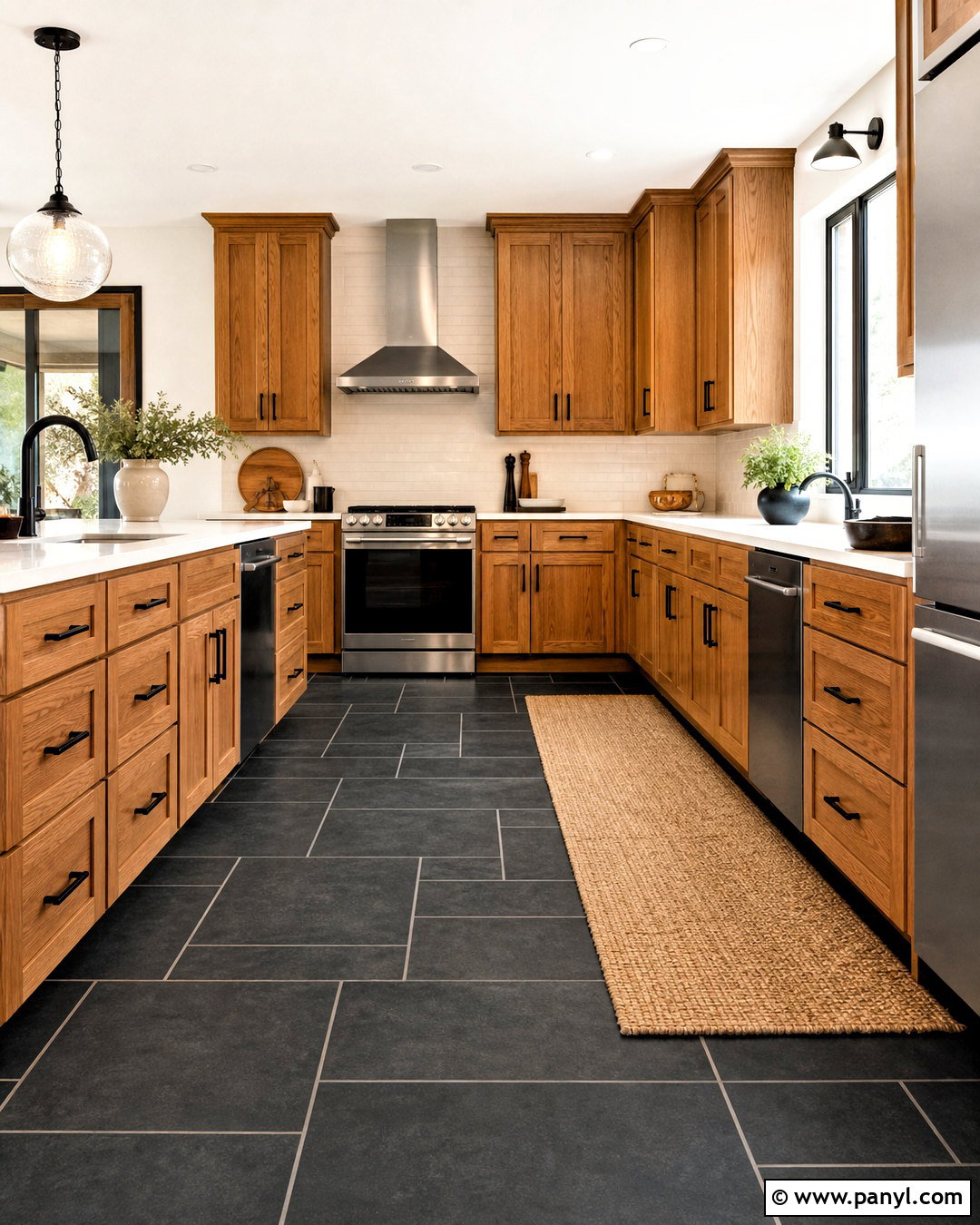
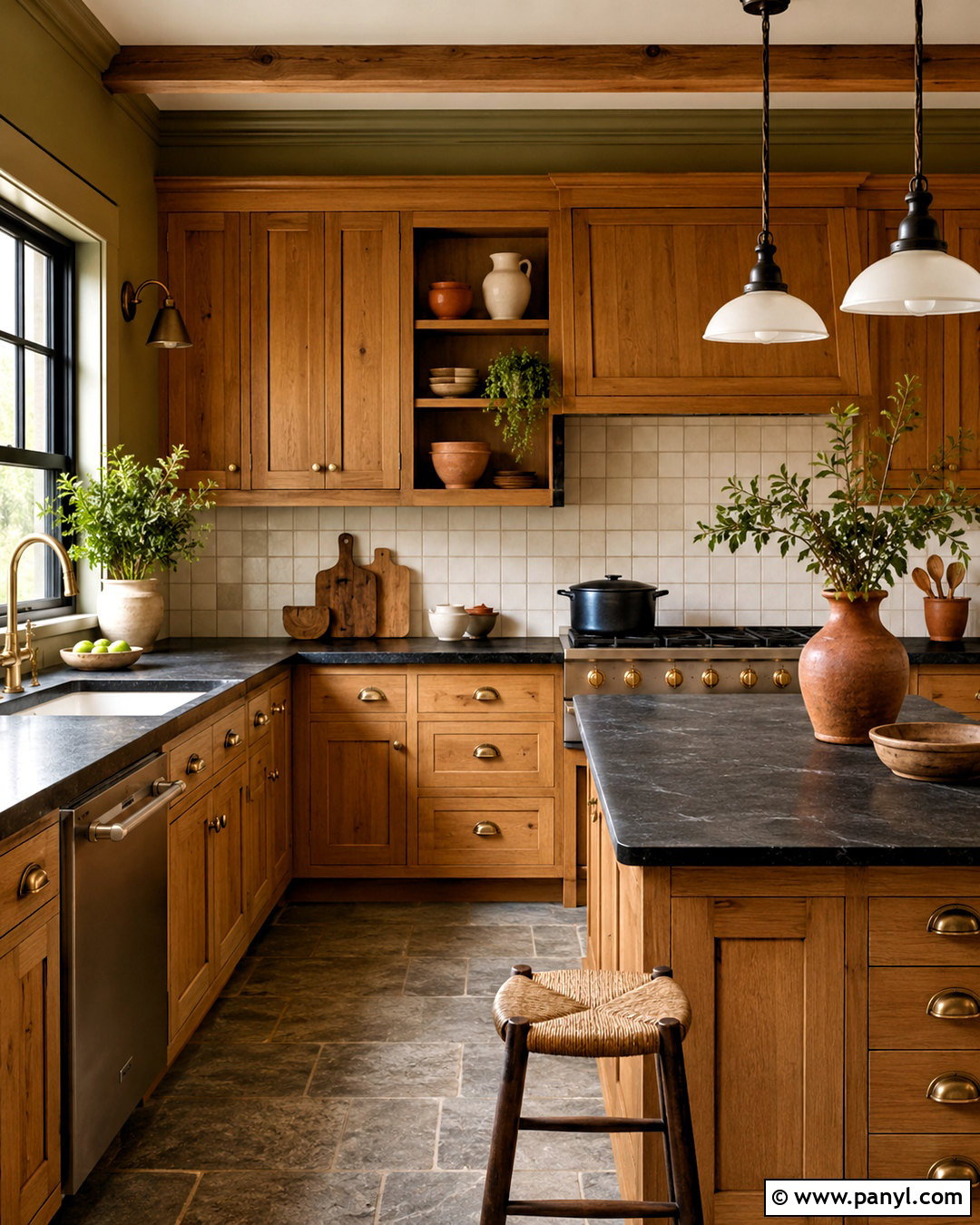
For stronger contrast, pair honey oak cabinets with large charcoal slate tiles. The deep gray color makes the cabinet warmth look deliberate while creating a practical, grounded kitchen. Choose tiles with limited rust or orange variation so the floor does not repeat the cabinetry too closely. Use pale greige grout and a simple stacked layout to keep the surface clean and modern. Soft white quartz countertops and an off-white backsplash prevent the darker floor from overwhelming the room. Add matte black pulls, stainless steel appliances, and warm white walls. A natural jute runner can soften the stone texture along the main work aisle. This complete scheme is especially successful in sunny kitchens where the dark flooring receives plenty of balanced daylight. ()
6. Warm Beige Limestone Flooring
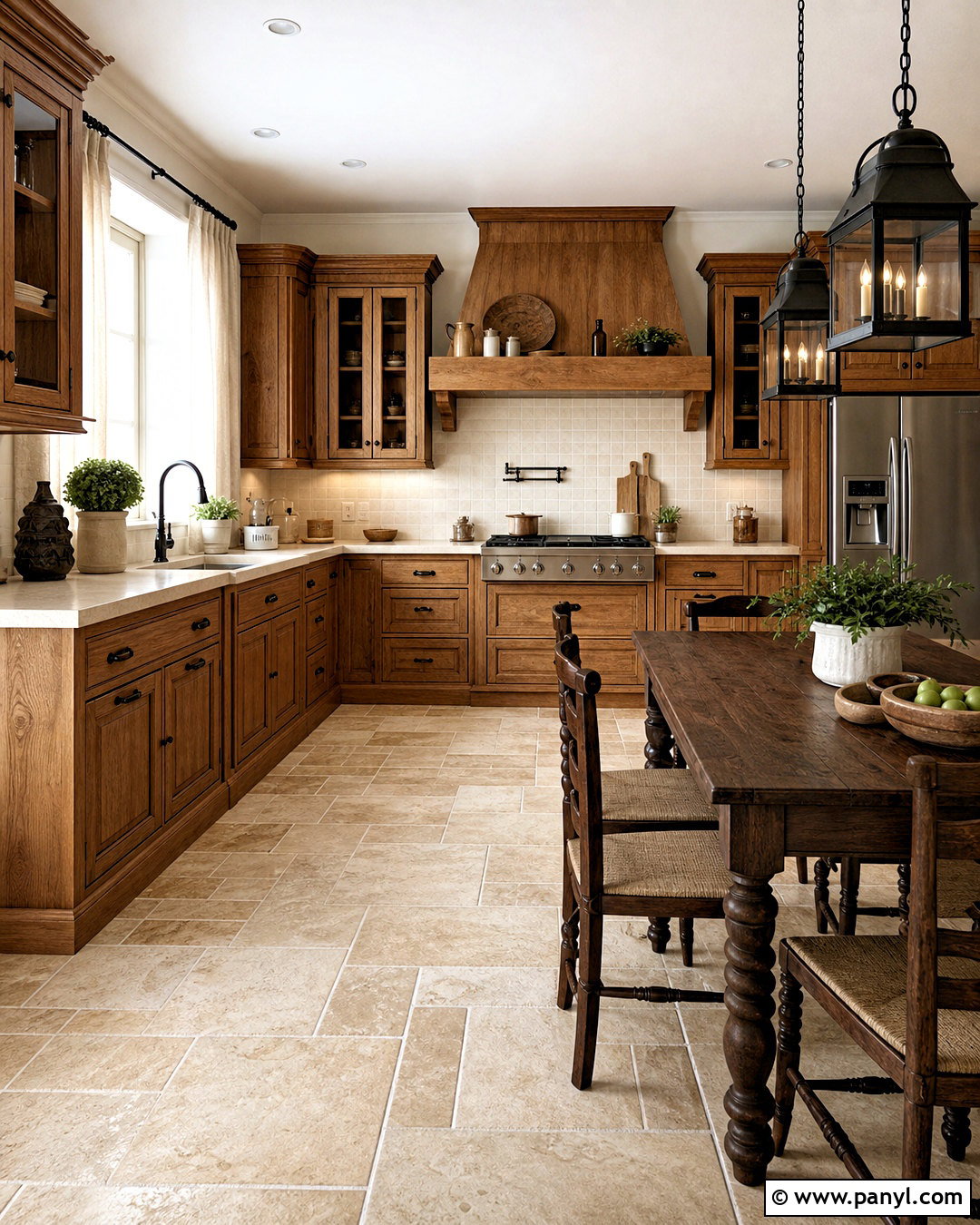
Warm beige limestone gives honey oak cabinetry an understated European character. Select large rectangular tiles containing cream, taupe, and muted gray variation rather than strongly golden stone. A brushed or honed finish feels relaxed and helps the natural pattern remain subtle. Pair the floor with creamy limestone-look counters, warm white plaster-style walls, and a backsplash made from simple ivory square tiles. Aged bronze hardware, linen café curtains, and antique-inspired pendant lights reinforce the inviting traditional look. Introduce a dark wood table or island stools to keep the palette from becoming too pale. Because the stone and cabinetry share some warmth without matching exactly, the room feels connected. The cooler taupe markings provide just enough separation around the cabinet bases. ()
7. Soft Gray Concrete Look Flooring
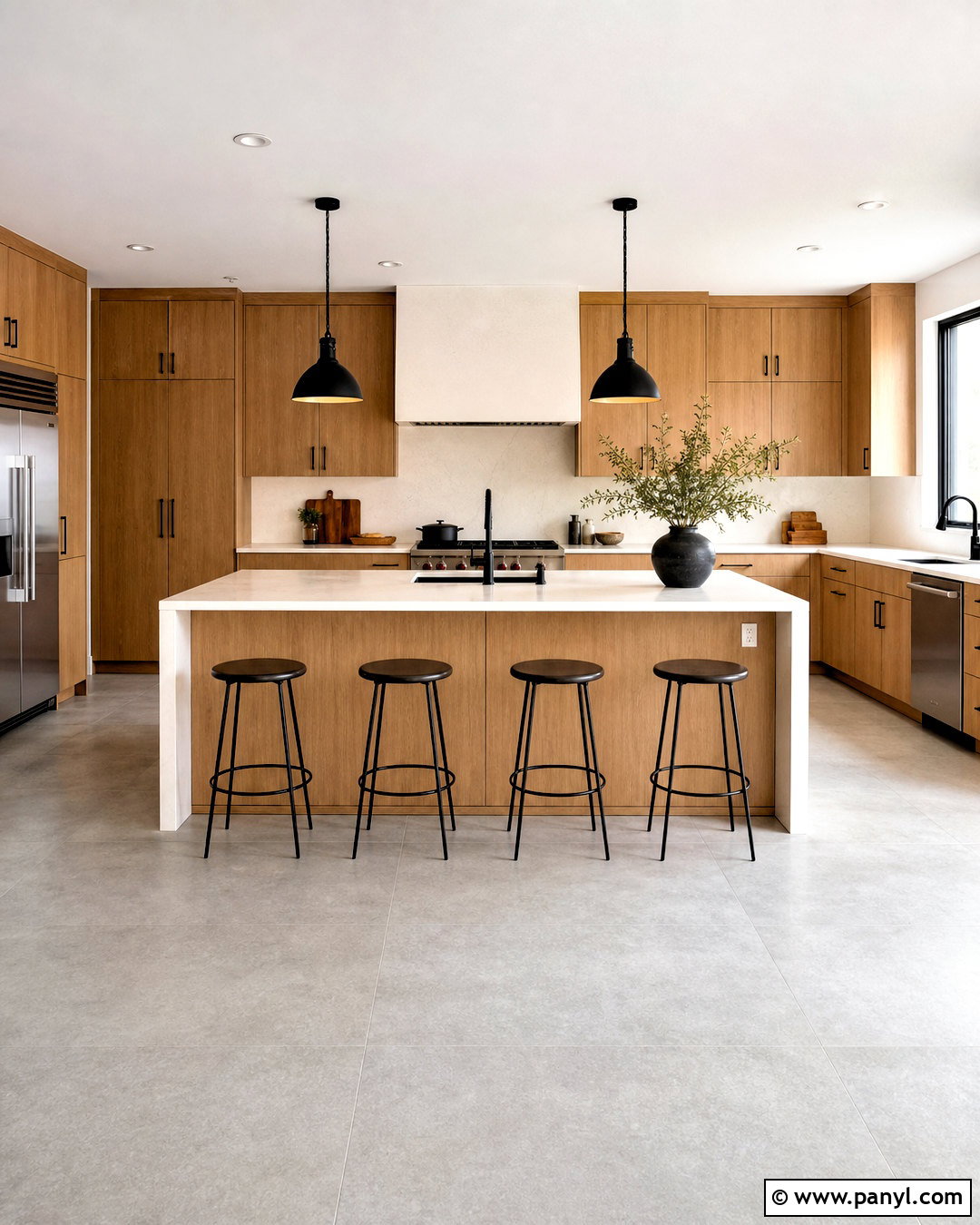
Clean lines can make traditional honey oak cabinets feel surprisingly current. Start with oversized concrete-look porcelain tiles in a soft warm gray, using narrow matching grout lines. The smooth visual field reduces competition with the oak grain and gives the kitchen a simple architectural foundation. Continue the contemporary approach with white quartz countertops, a full-height creamy slab backsplash, and brushed nickel hardware. Paint the walls a pale mushroom white rather than a stark blue-white. Black metal pendants and streamlined stools add definition, while a few green plants introduce natural color. Choose gray flooring that contains a trace of beige or taupe, since an icy blue-gray can look disconnected from golden oak. The finished space feels modern, practical, and comfortably warm instead of industrial. ()
8. White Terrazzo Flooring
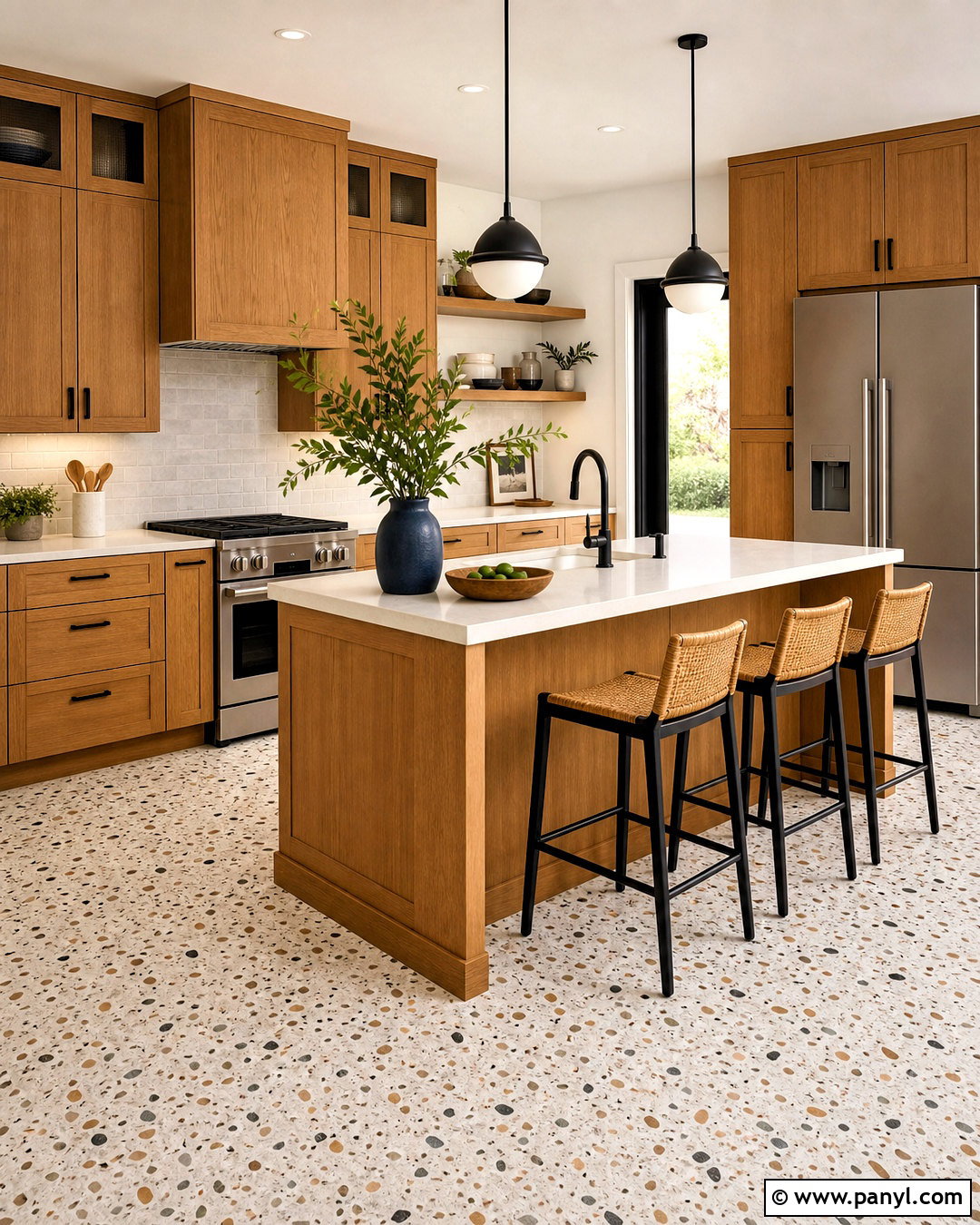
White terrazzo flooring can brighten a honey oak kitchen while adding playful texture. Select a warm white base scattered with small beige, gray, caramel, and muted black chips. The caramel pieces subtly acknowledge the cabinets, while the cooler flecks prevent the room from looking excessively golden. Keep the remaining finishes simple with creamy white quartz counters, a plain off-white backsplash, and soft white walls. Black cabinet pulls and slim black pendants repeat the darker terrazzo fragments. Add curved counter stools in natural cane or oatmeal upholstery for a friendly modern touch. Terrazzo is visually active, so avoid heavily patterned countertops or colorful mosaics. With restrained supporting finishes, the flooring becomes a lively but cohesive foundation that gives older oak cabinets a fresher personality. ()
9. Black And White Checkerboard Flooring
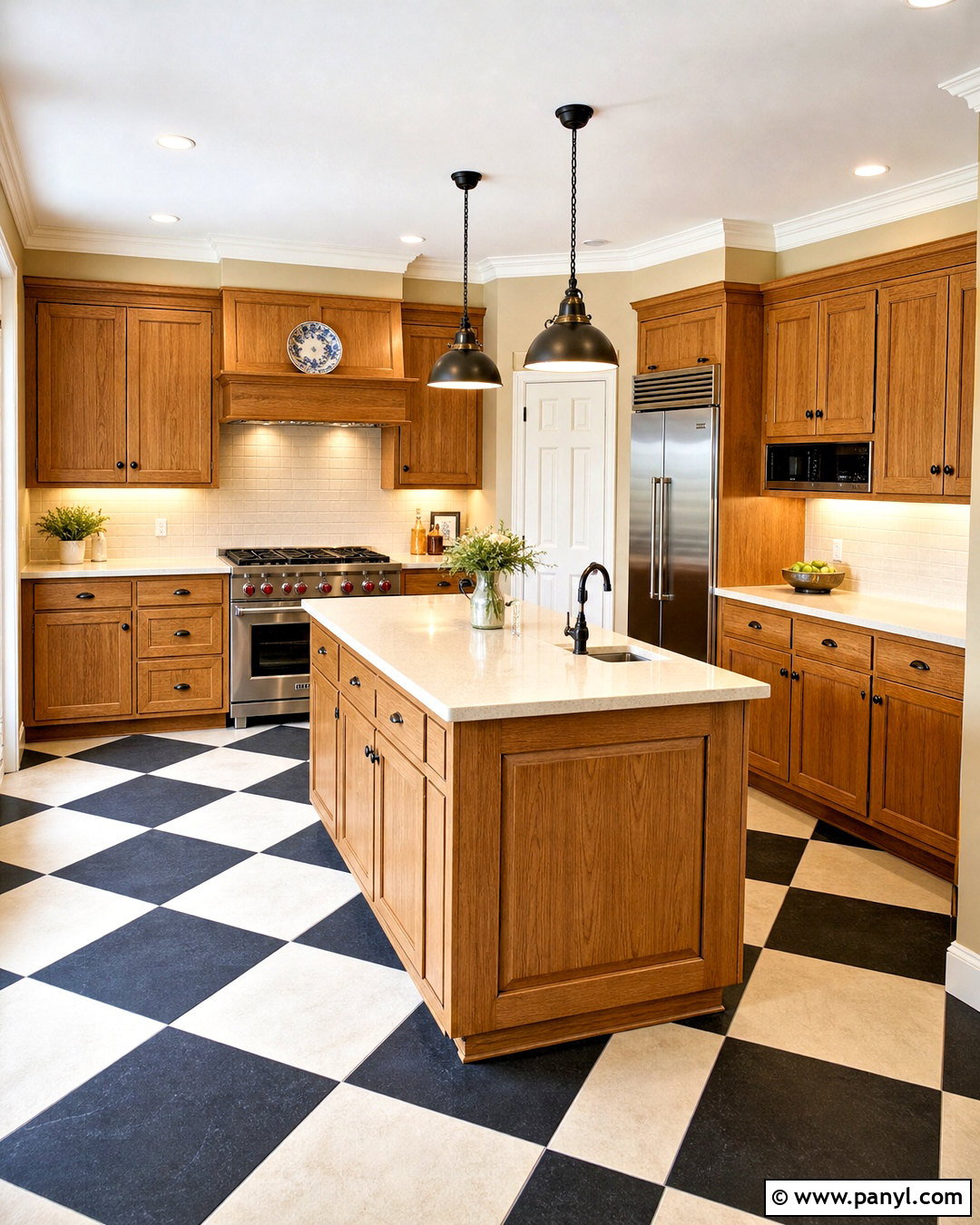
If you love traditional kitchens with personality, consider a black and warm white checkerboard floor. Use large matte porcelain tiles placed diagonally to create movement without overwhelming the oak cabinets. Choose creamy white rather than brilliant white so the light squares relate naturally to the wood. Repeat black through simple knobs, a dark faucet, and narrow metal pendant lights. Warm white quartz counters and a plain ivory backsplash keep attention on the floor. For the walls, try a muted cream or pale putty color. A small vintage-style runner can add softness near the sink without hiding the pattern. This complete look works best when decorative accessories remain restrained, allowing the classic geometry and golden cabinetry to form the room’s main visual story. ()
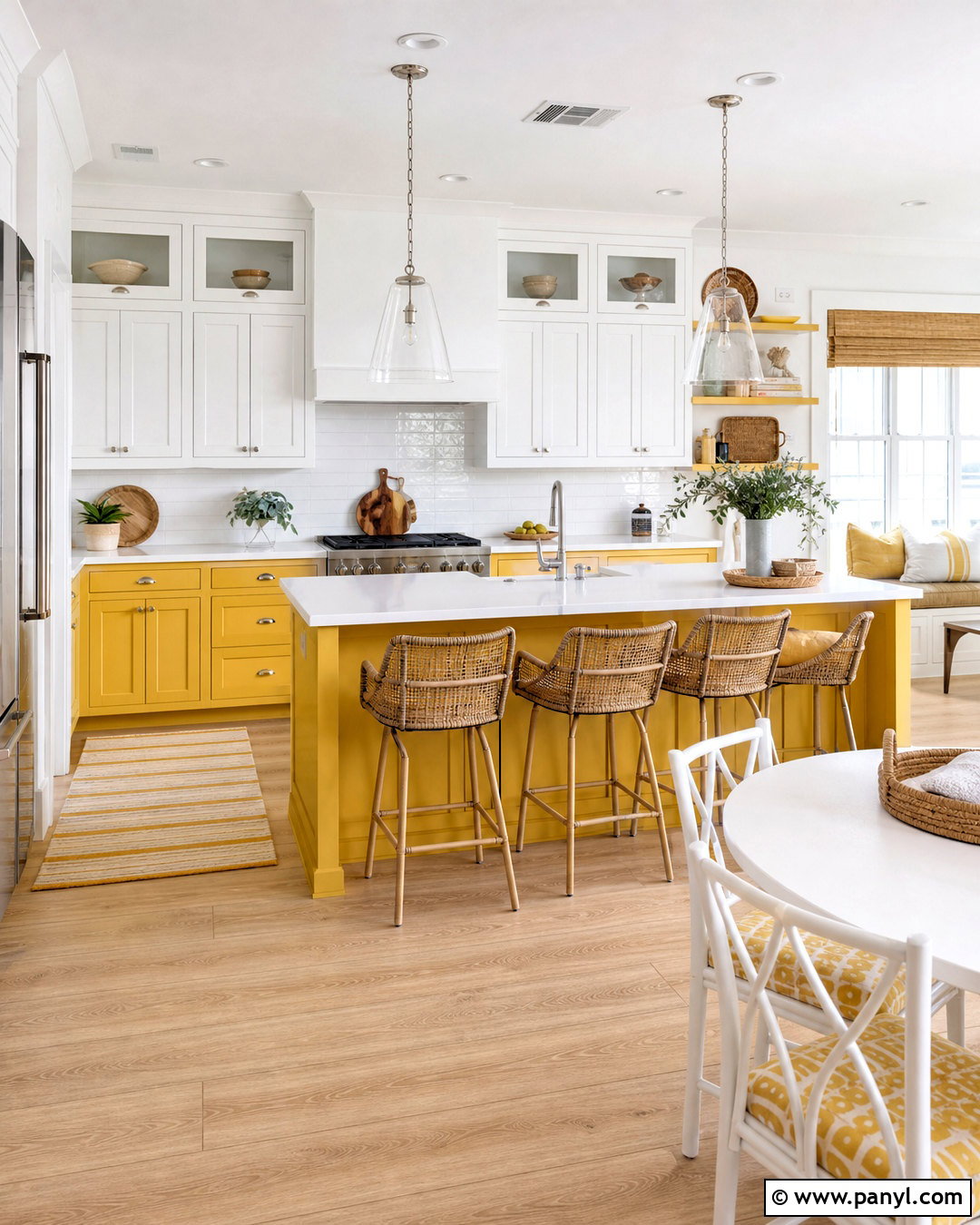
10. Taupe Travertine Look Flooring
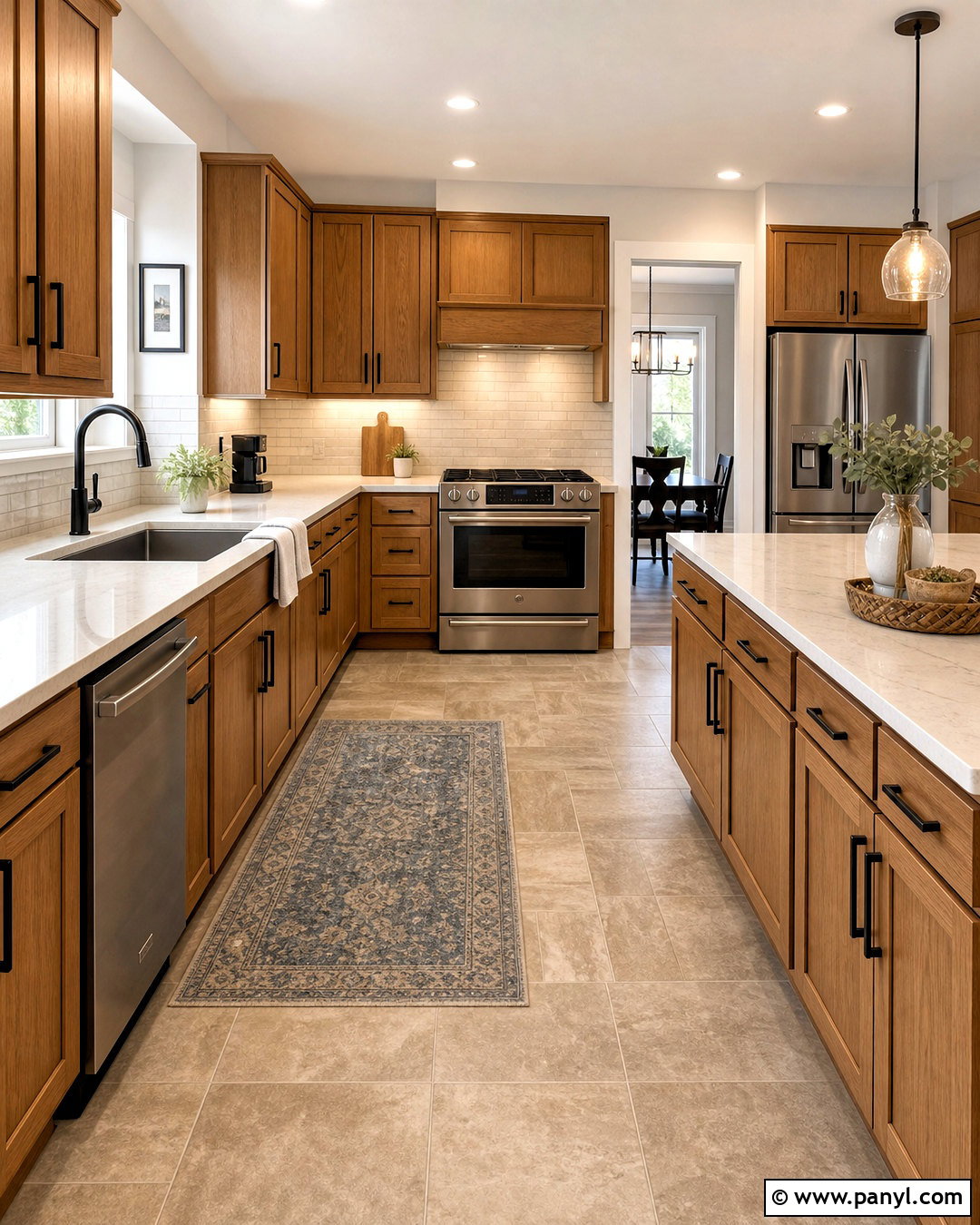
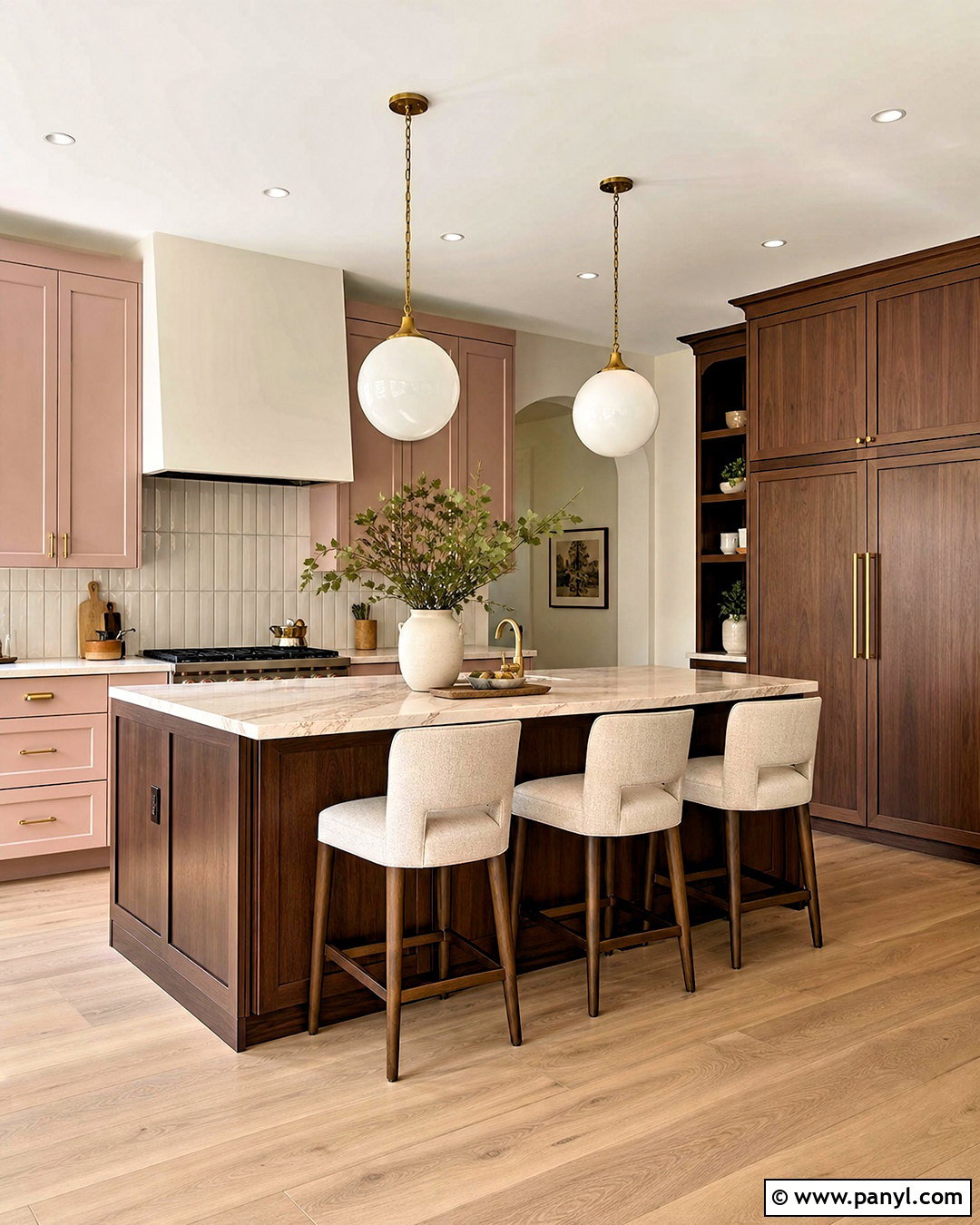
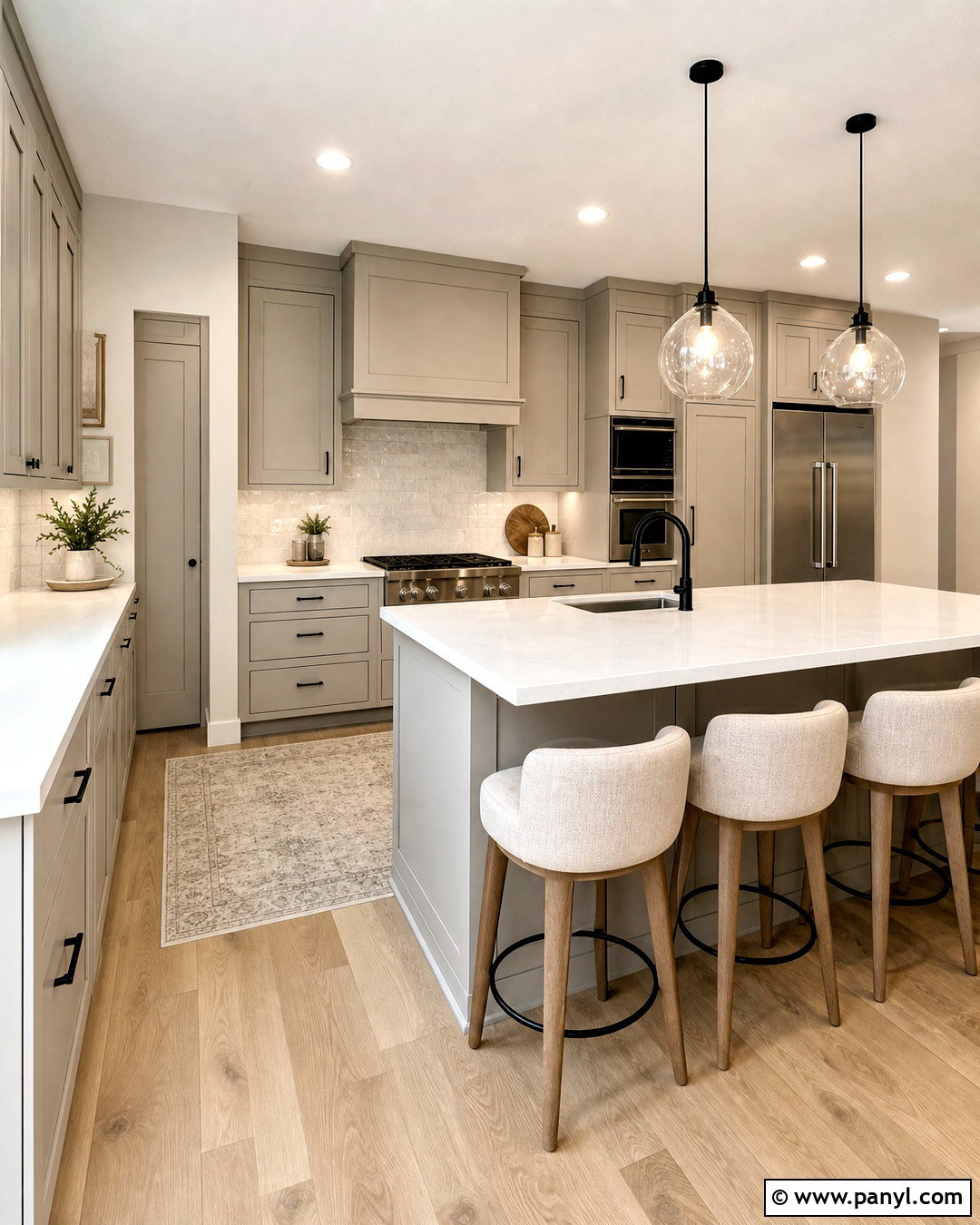
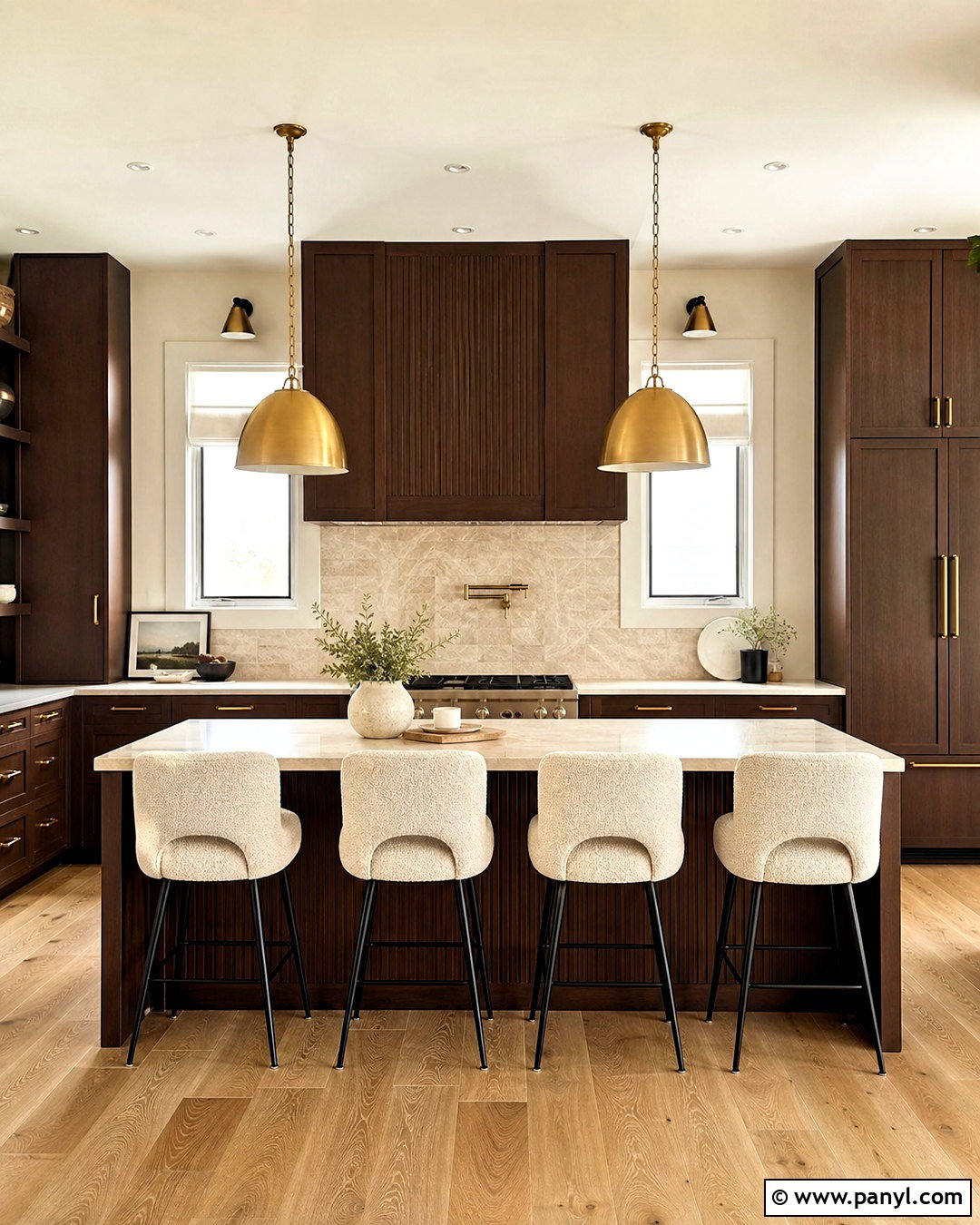
Soft taupe travertine-look porcelain offers the warmth of natural stone without doubling down on the yellow tones in honey oak. Choose tiles with gentle cream and gray-beige movement, minimal holes, and a matte finish. Install large rectangles in a straight pattern for a calm transitional appearance. Pair them with ivory quartz countertops containing thin taupe veining and a backsplash of elongated cream tiles. Oil-rubbed bronze hardware can deepen the scheme, while warm white walls maintain brightness. Add an island runner in faded blue, beige, and brown to bring in controlled color. This flooring is a smart bridge between traditional raised-panel cabinets and updated fixtures. Its blended neutral tones help the cabinets, counters, and appliances feel connected without requiring every finish to match. ()
11. Light Maple Flooring
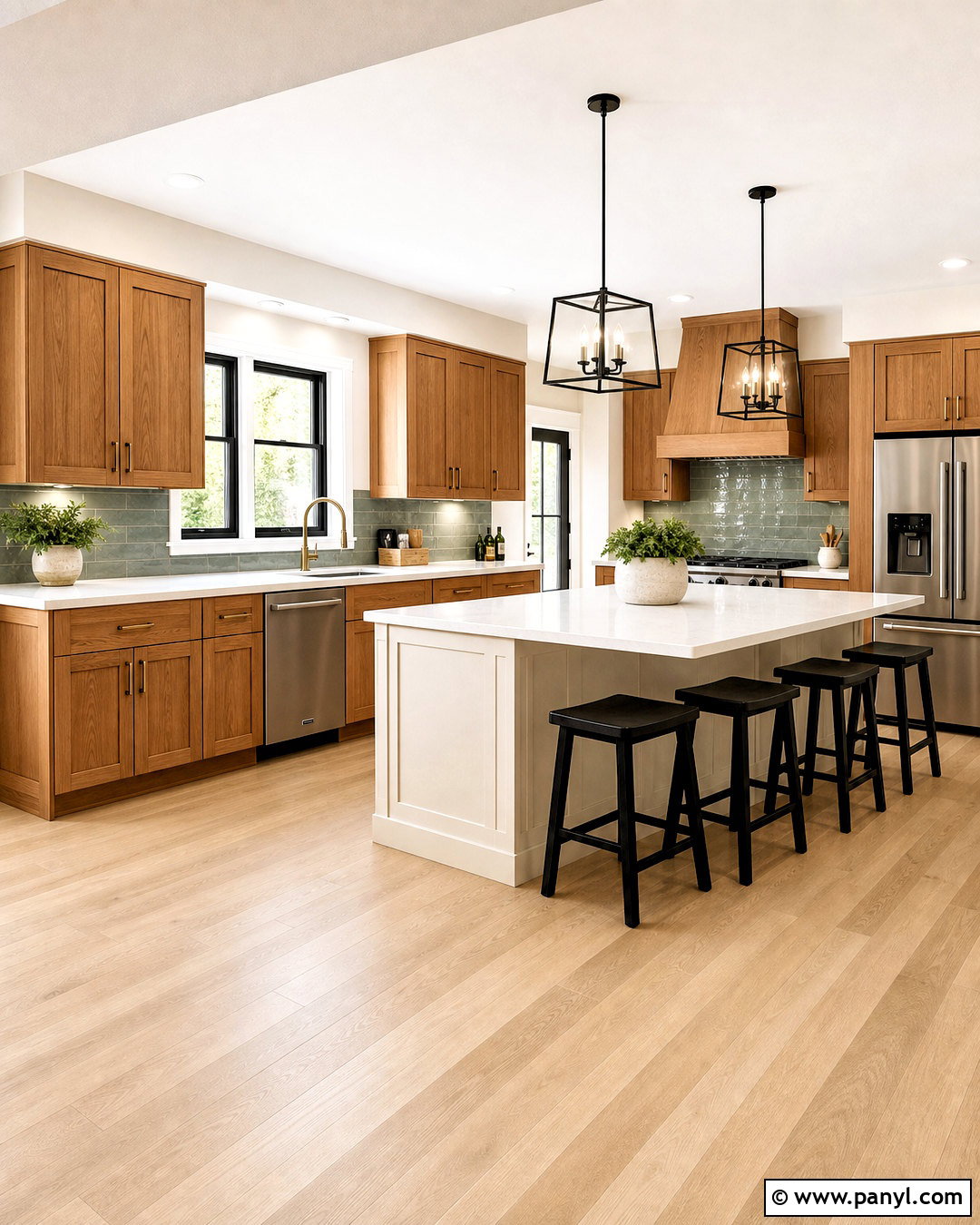
Light maple flooring creates a cheerful kitchen when you want wood underfoot without repeating the strong grain of oak. Maple typically has a smoother, quieter appearance, so select pale boards with creamy beige coloring and a natural matte finish. The floor should be several shades lighter than the honey oak cabinets. Add white quartz counters, a soft green-gray backsplash, and warm ivory walls for gentle contrast. Brushed brass hardware can connect with the cabinet warmth, while black-framed pendants keep the look crisp. Use a simple off-white island or dining table to introduce another light surface. Limiting the room to two clearly different wood tones keeps it orderly. The resulting kitchen feels casual, bright, and suitable for Scandinavian, transitional, or relaxed contemporary interiors. ()
12. Smoked Oak Flooring
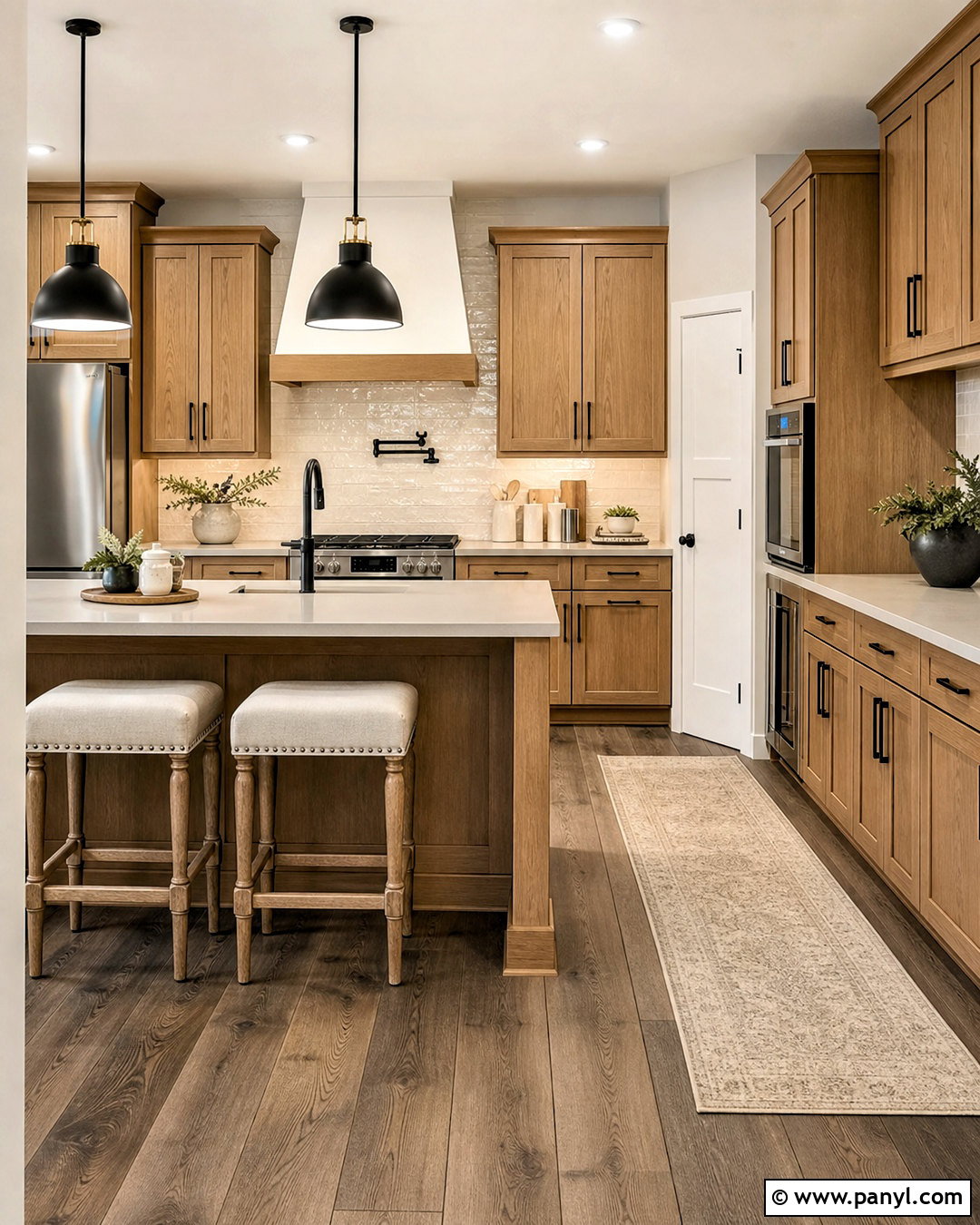
Smoked oak flooring brings depth to honey oak cabinets without the harshness of nearly black boards. Look for a medium-dark brown finish with muted gray undertones and moderate grain variation. Wide planks will create a quieter backdrop than narrow strips, allowing the cabinets to remain the warmer focal point. Complete the design with light greige quartz counters, an ivory zellige-style backsplash, and warm off-white walls. Use matte black pulls and dark-framed pendants to repeat the floor’s deeper value. Pale upholstered stools, a cream washable runner, and minimal countertop accessories keep the room approachable. Because both surfaces feature oak, the clear color difference is important. Avoid smoked floors with amber streaks, which can make the cabinets and flooring blend into one large golden surface. ()
13. Muted Blue Gray Tile Flooring
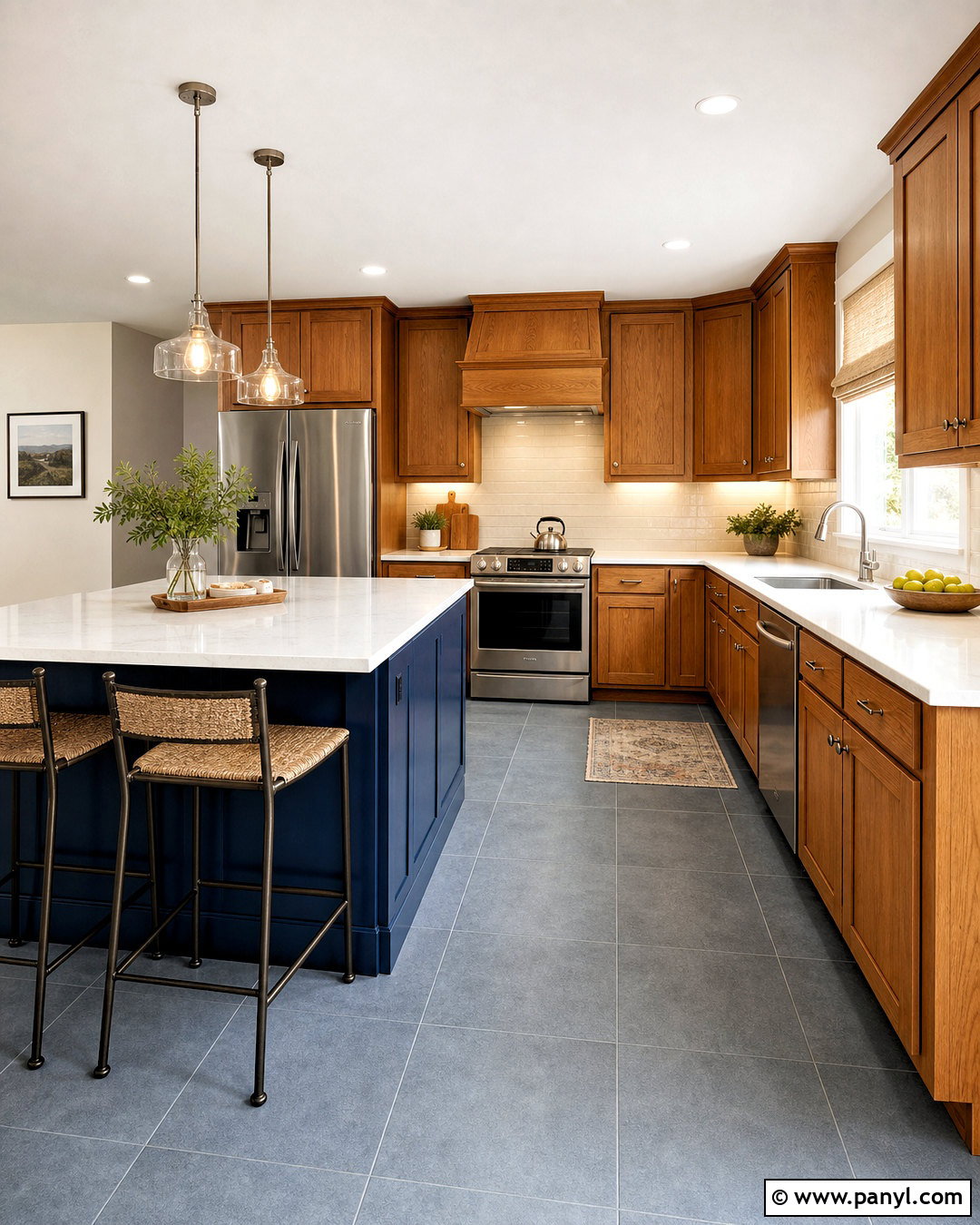
Muted blue-gray flooring offers a colorful contrast to the orange-gold notes in honey oak cabinets. Choose dusty slate-blue porcelain tile with a soft gray cast rather than a bright or icy blue. Large square or rectangular tiles will keep the palette sophisticated. Connect the floor to the rest of the room with creamy quartz counters, an off-white backsplash, and pale warm gray walls. A navy island or blue-gray pantry cabinet can repeat the floor color at eye level. Finish the space with brushed nickel hardware, natural linen shades, and light wood stools. Since blue and orange sit opposite each other on the color wheel, the contrast is noticeable. Keeping both colors muted produces a balanced kitchen instead of an overly colorful or themed interior. ()
14. Green Slate Tile Flooring
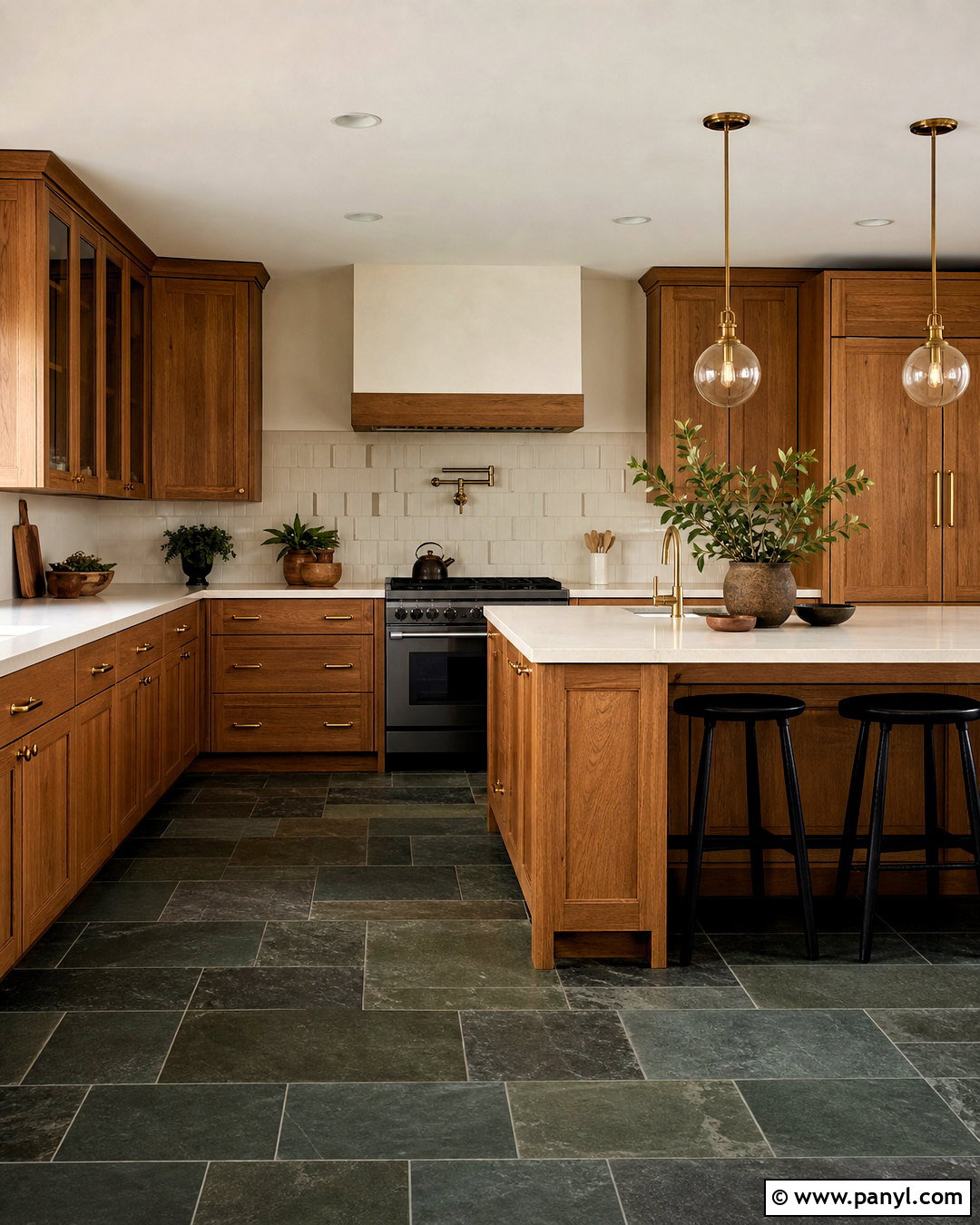
Deep green slate tile can transform honey oak cabinets into part of a rich, nature-inspired palette. Select matte tiles in forest green, charcoal, and muted olive, avoiding pieces with strong orange or rust markings. Lay them in a simple grid so the changing stone colors provide the interest. Cream quartz countertops, handmade ivory backsplash tile, and warm white walls brighten the darker foundation. Repeat green through a painted island or a small collection of ceramic accessories. Aged brass pulls and globe pendants highlight the cabinet warmth, while black stools give the arrangement structure. This scheme suits kitchens overlooking gardens or wooded yards because the green floor creates a natural indoor-outdoor connection. Plenty of daylight and light upper surfaces keep the final room welcoming rather than heavy. ()
15. Natural Cork Flooring
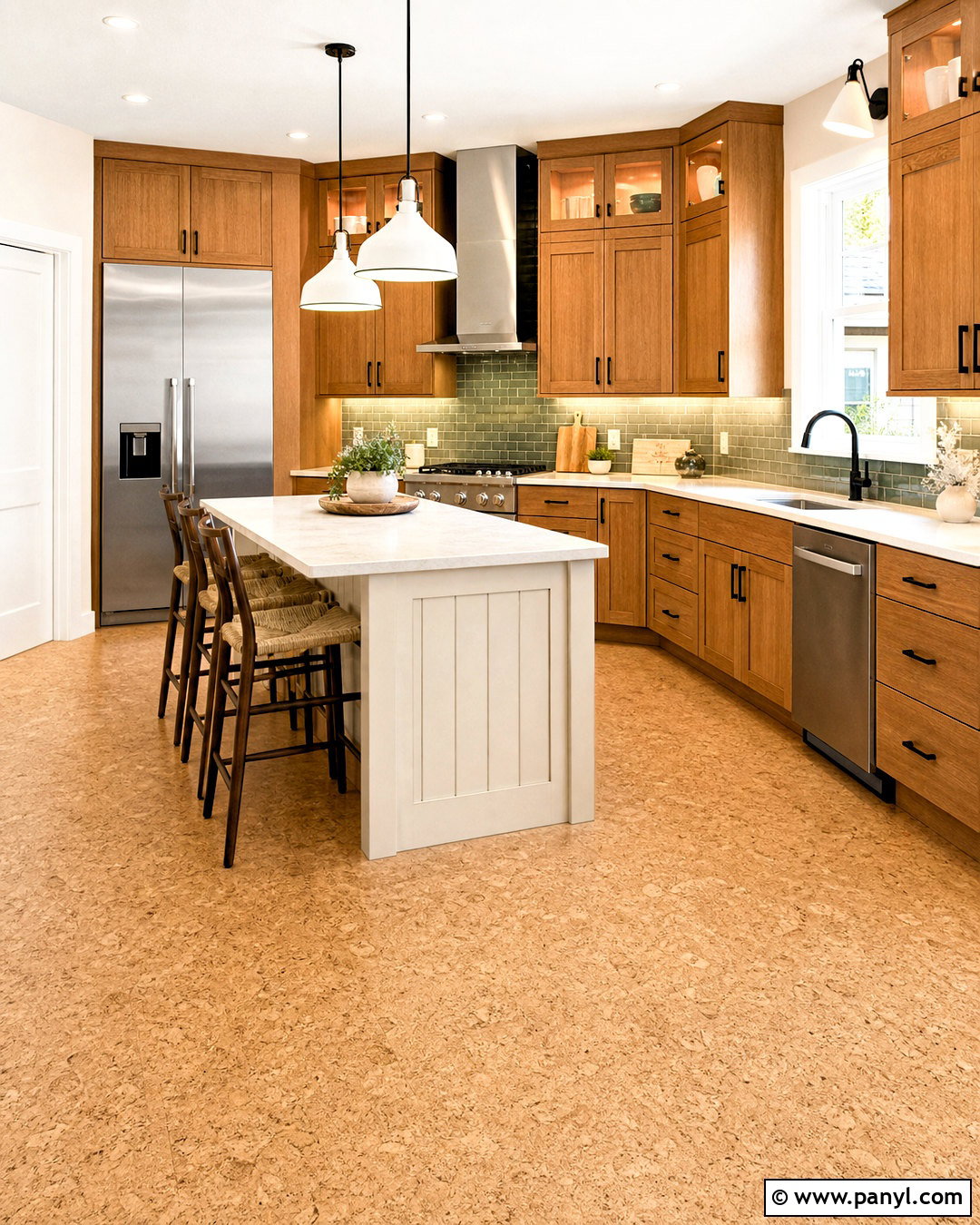
Natural cork flooring creates a warm, comfortable base for a casual honey oak kitchen. Choose a light-to-medium cork with softly mottled tan and brown coloring rather than a strong orange finish. Its organic pattern differs from wood grain, which helps prevent the cabinets and floor from visually blending together. Complete the room with creamy solid-surface countertops, sage green backsplash tile, and soft ivory walls. Matte black hardware and simple white pendant lights provide contemporary contrast. Include a painted cream island with oak stools to distribute light and wood tones across the layout. The finished kitchen feels relaxed and welcoming, making this combination especially appealing in family-centered spaces. Keep decorative patterns minimal because both cork and oak already contribute natural texture and visible movement.
16. Brick Look Porcelain Flooring
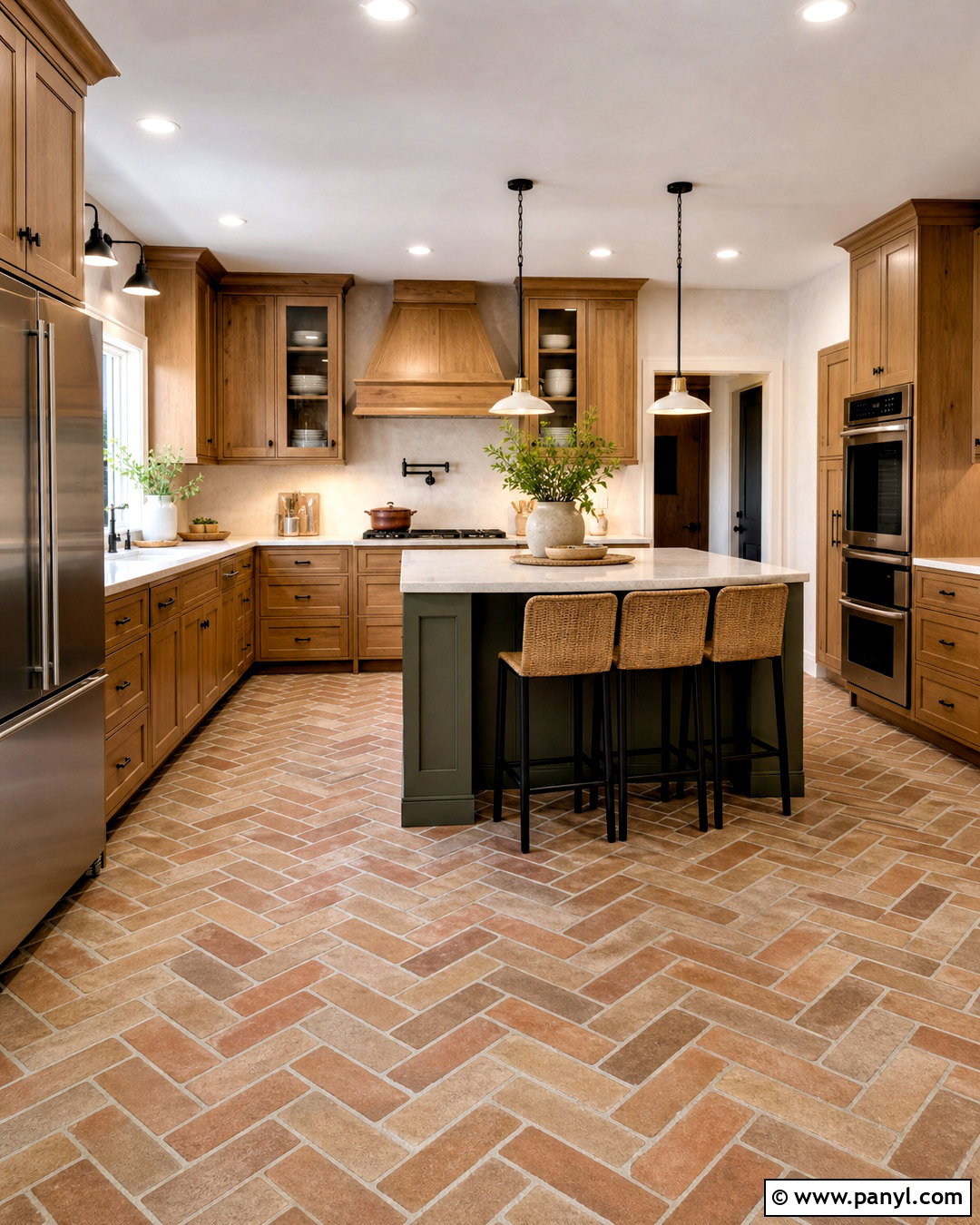
Brick-look porcelain flooring brings rustic character to honey oak cabinets while remaining visually distinct from the wood. Select slim tiles in muted terracotta, tan, brown, and dusty beige, then arrange them in a restrained herringbone pattern. Use warm gray grout to soften the red tones. Cream quartz counters and an ivory plaster-style backsplash will brighten the room, while olive green walls or an olive island add an earthy counterpoint. Black iron hardware, simple lantern pendants, and woven stools complete the farmhouse-inspired design. Avoid bright orange brick, since it can exaggerate the golden cabinet finish. A more weathered, subdued floor creates depth and makes the oak feel naturally connected to the kitchen’s rustic materials rather than trapped in an outdated color scheme.
17. Warm White Hex Tile Flooring
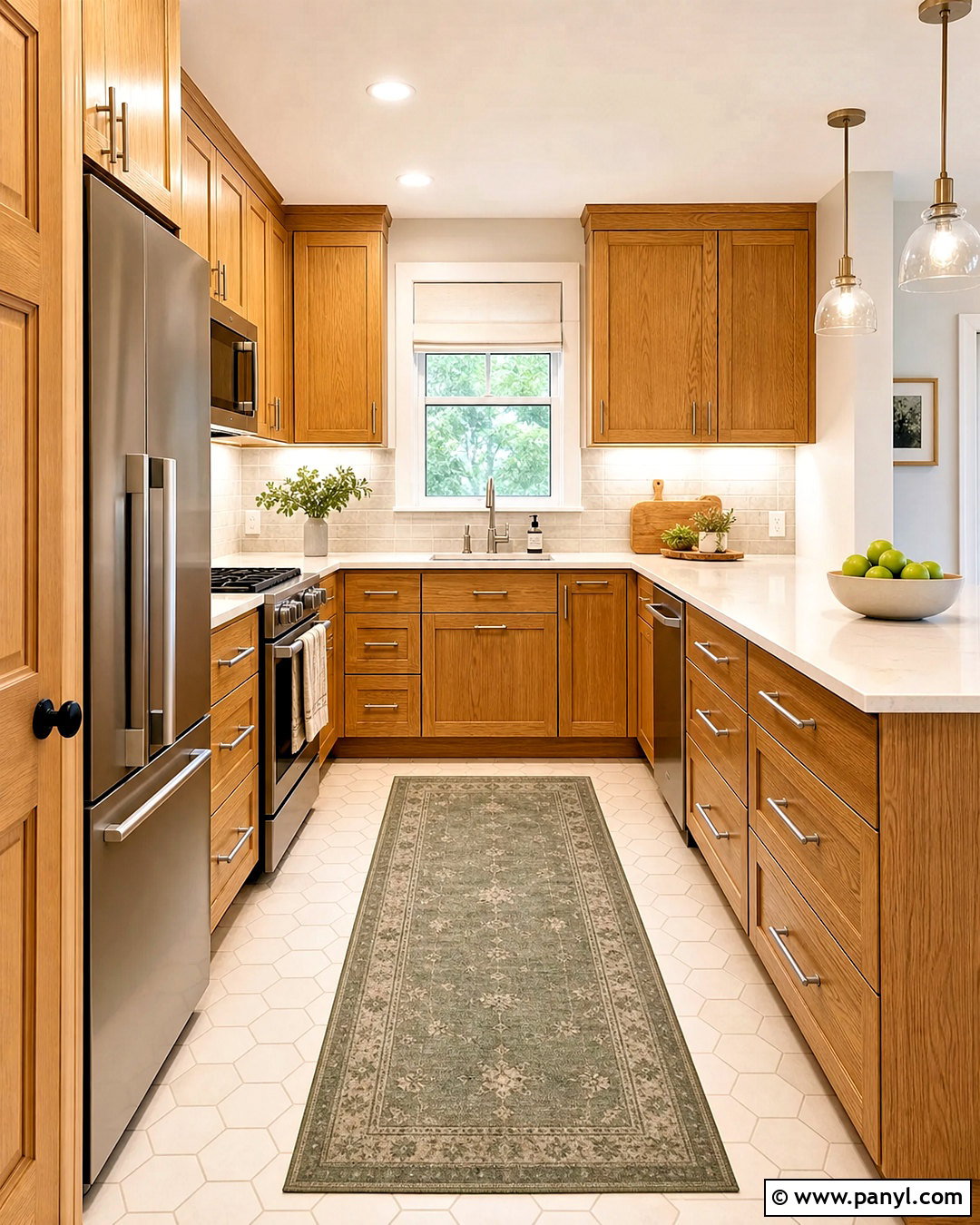
Small kitchens often benefit from a light floor with controlled pattern. Warm white hexagonal porcelain tile delivers subtle detail while keeping honey oak cabinets visually balanced. Choose matte tiles in creamy white and use light taupe grout to outline the shape without creating harsh contrast. Continue the bright palette with pale quartz countertops, a soft beige backsplash, and warm white walls. Add brushed nickel pulls and clear glass pendant lights to avoid introducing more yellow. A narrow washable runner in faded sage and gray can define the work aisle. Keep open shelves and countertops uncluttered because the floor already provides repeating geometry. This finished look feels clean and familiar, combining traditional tile with simple updated elements that allow the existing wood cabinets to appear intentional.
18. Greige Herringbone Flooring
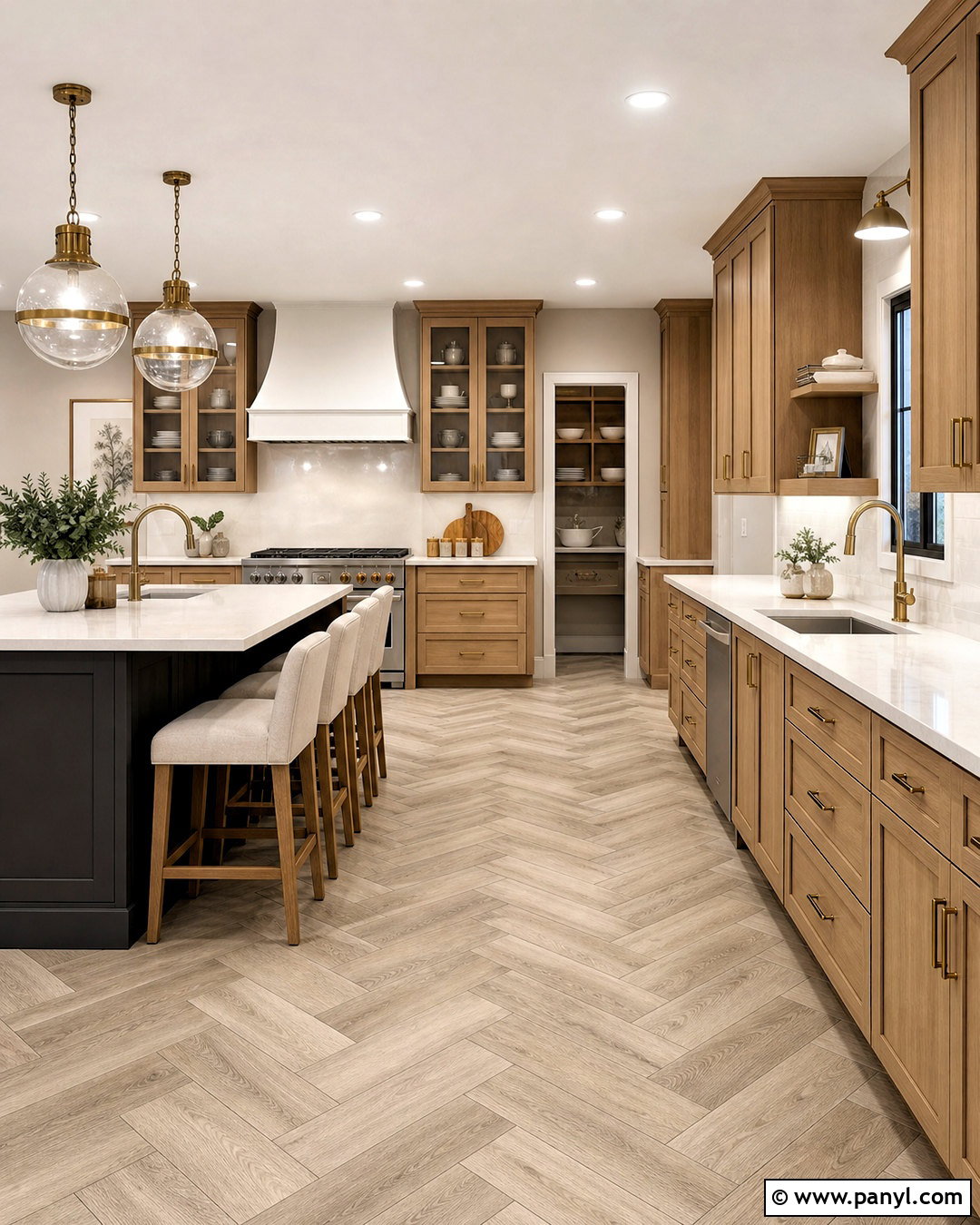
Herringbone flooring can give a basic honey oak kitchen a more tailored appearance. Select engineered wood, laminate, or luxury vinyl in a light greige finish with restrained grain and almost no orange variation. The directional pattern supplies enough visual interest, so use quiet materials elsewhere. Try creamy quartz countertops, a smooth off-white backsplash, and pale mushroom walls. A charcoal-painted island creates a grounding centerpiece, while brushed brass pulls gently reference the cabinet color. Use simple linen stools and understated globe pendants to complete the room. A slightly larger herringbone format works better than tiny pieces around prominent cabinet grain. The resulting design blends traditional geometry with an updated neutral palette, making it suitable for open kitchens where the flooring remains visible from several adjoining rooms. ()
19. Neutral Chestnut Laminate Flooring
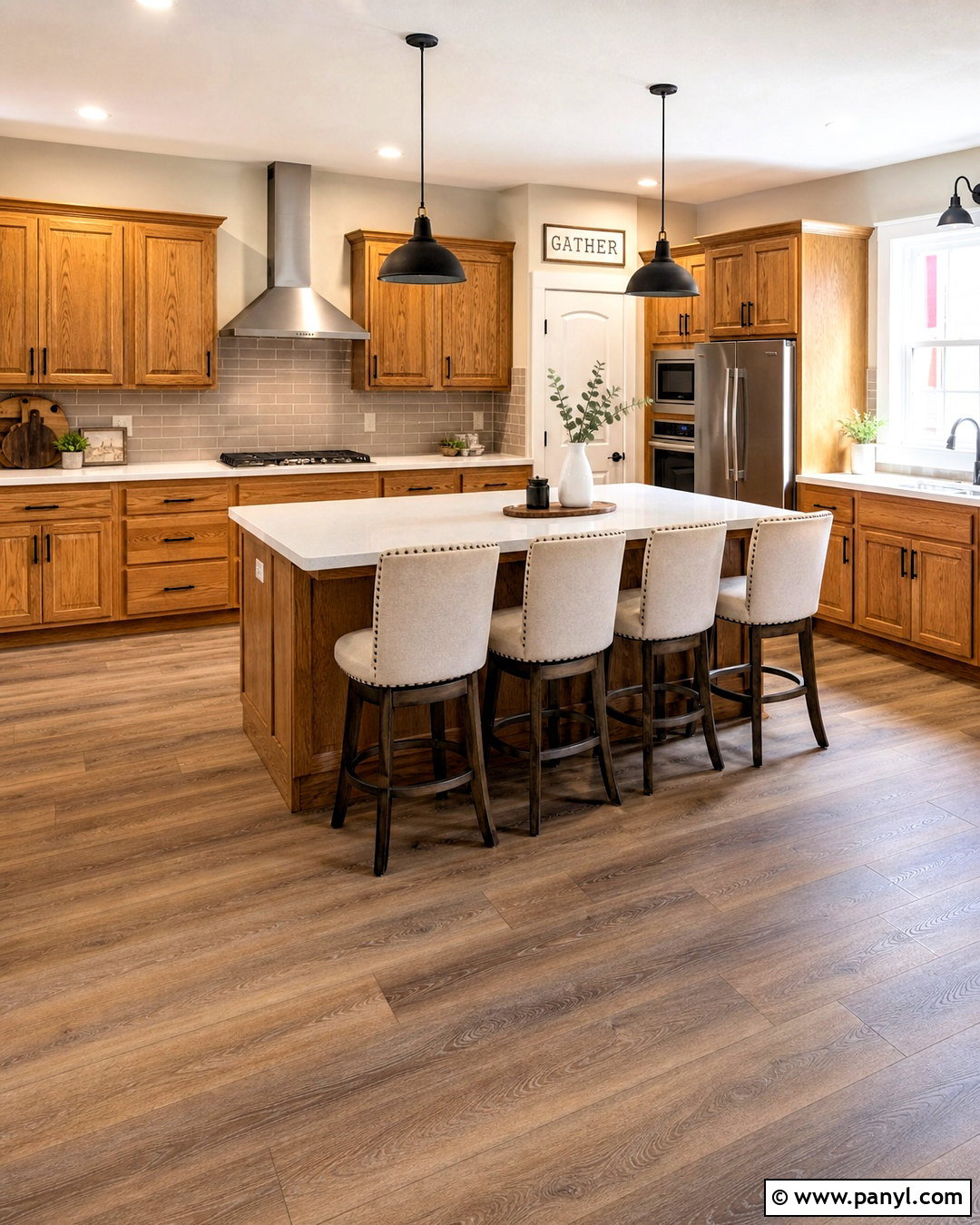
Chestnut laminate is a practical choice when you want a medium wood appearance with clear contrast from honey oak. Look for planks that combine neutral brown, taupe, and faint gray tones without red or golden streaks. A matte surface and moderate grain pattern will appear more natural and less busy beside the cabinets. Finish the kitchen with warm white counters, pale taupe subway tile, and creamy walls. Black hardware and dark pendant lights reinforce the deeper flooring, while oatmeal-colored stools soften the contrast. Continue the laminate into an adjacent dining area and use a light neutral rug to break up the brown surface. This coordinated approach creates a comfortable transitional kitchen on a more approachable budget while preserving the warmth and character of the existing cabinetry. ()
20. Neutral Patterned Tile Flooring
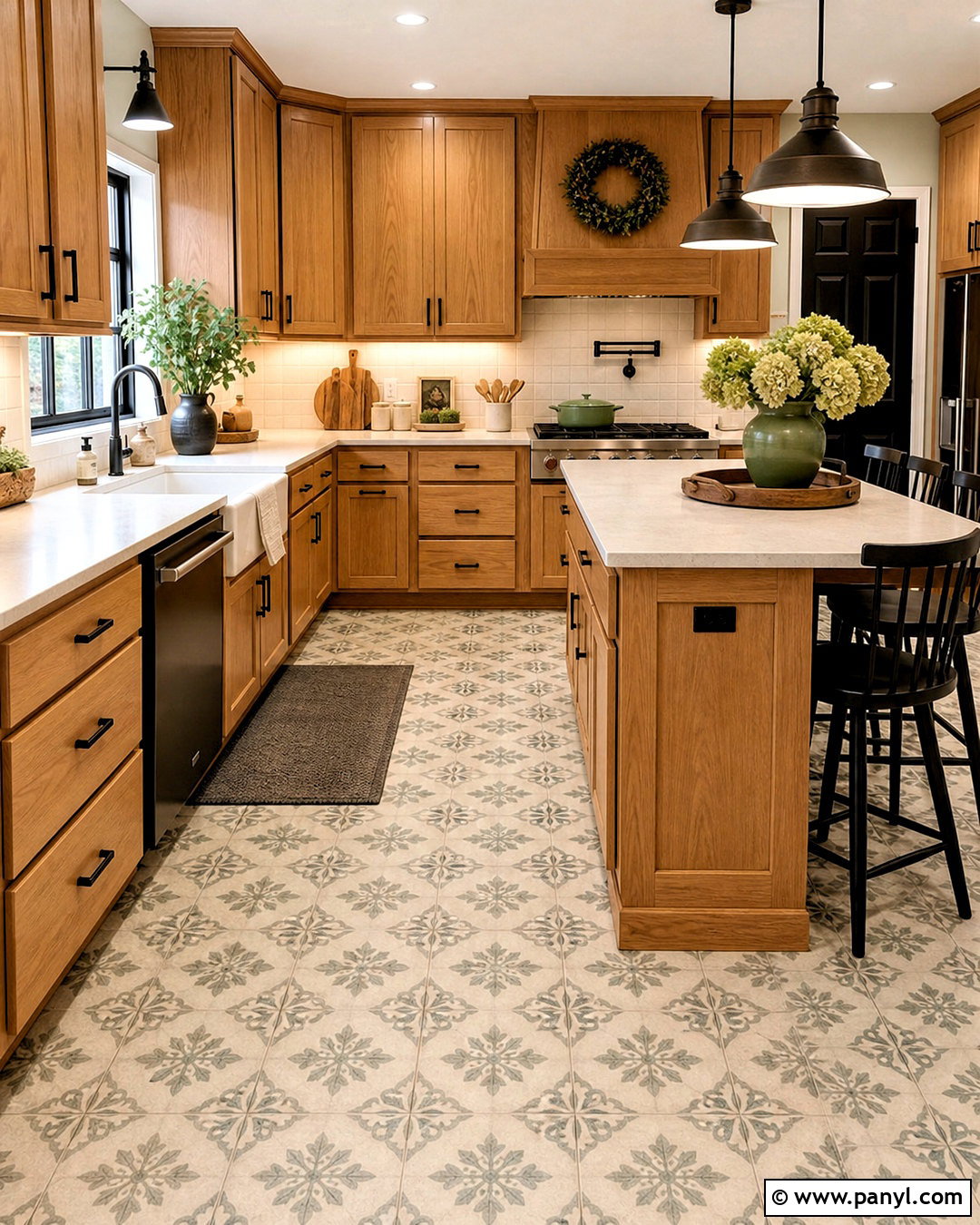
For a kitchen with personality, choose patterned porcelain tile in warm white, taupe, charcoal, and muted beige. A medium-scale geometric motif can enliven honey oak cabinets without clashing, provided it contains no dominant orange or bright yellow. Use the tile across the full kitchen floor and keep surrounding finishes deliberately simple. Cream quartz countertops, an ivory backsplash, and warm white walls give the pattern breathing room. Repeat charcoal through cabinet pulls, pendant lights, and counter stools. Add one small accent color, such as dusty green, through pottery or a Roman shade. This complete look works well in compact kitchens, where the floor can become a strong design feature without requiring structural changes. Balanced neutral coloring keeps the pattern lively but still connected to the cabinetry. ()
Conclusion:
The best **honey oak cabinets flooring ideas** balance the cabinets’ golden warmth instead of trying to hide or duplicate it. Light greige planks, cream porcelain, pale wood, and warm white tile can make a small kitchen feel brighter. Walnut, charcoal slate, smoked oak, and green stone create stronger contrast in larger, well-lit rooms. Whatever material you choose, compare samples beside the cabinets, countertops, and backsplash under both daylight and evening lighting. Look for restrained undertones, manageable pattern variation, and a finish that suits everyday maintenance. When every surface contributes to one clear palette, honey oak cabinets can feel warm, characterful, and completely at home in an updated kitchen.

Related Ideas and Inspiration:
Leave a Reply