
Choosing a kitchen palette is about more than finding two attractive paint colors. The best **20 kitchen colour combination ideas** coordinate cabinets, walls, countertops, backsplashes, flooring, hardware, and lighting into one complete look. Warm neutrals and natural wood can make a busy family kitchen feel comfortable, while deep green, navy, burgundy, or charcoal bring definition and character. Lighter pairings can also help a compact kitchen feel open without leaving it plain or clinical. Before committing, compare samples beside your flooring and counters at different times of day. This helps you see how undertones change in natural and artificial light. Whether you prefer timeless, earthy, coastal, or colorful interiors, the following complete schemes offer practical inspiration through these **20 kitchen colour combination ideas**.
1. Warm White And Walnut Kitchen Color Combination
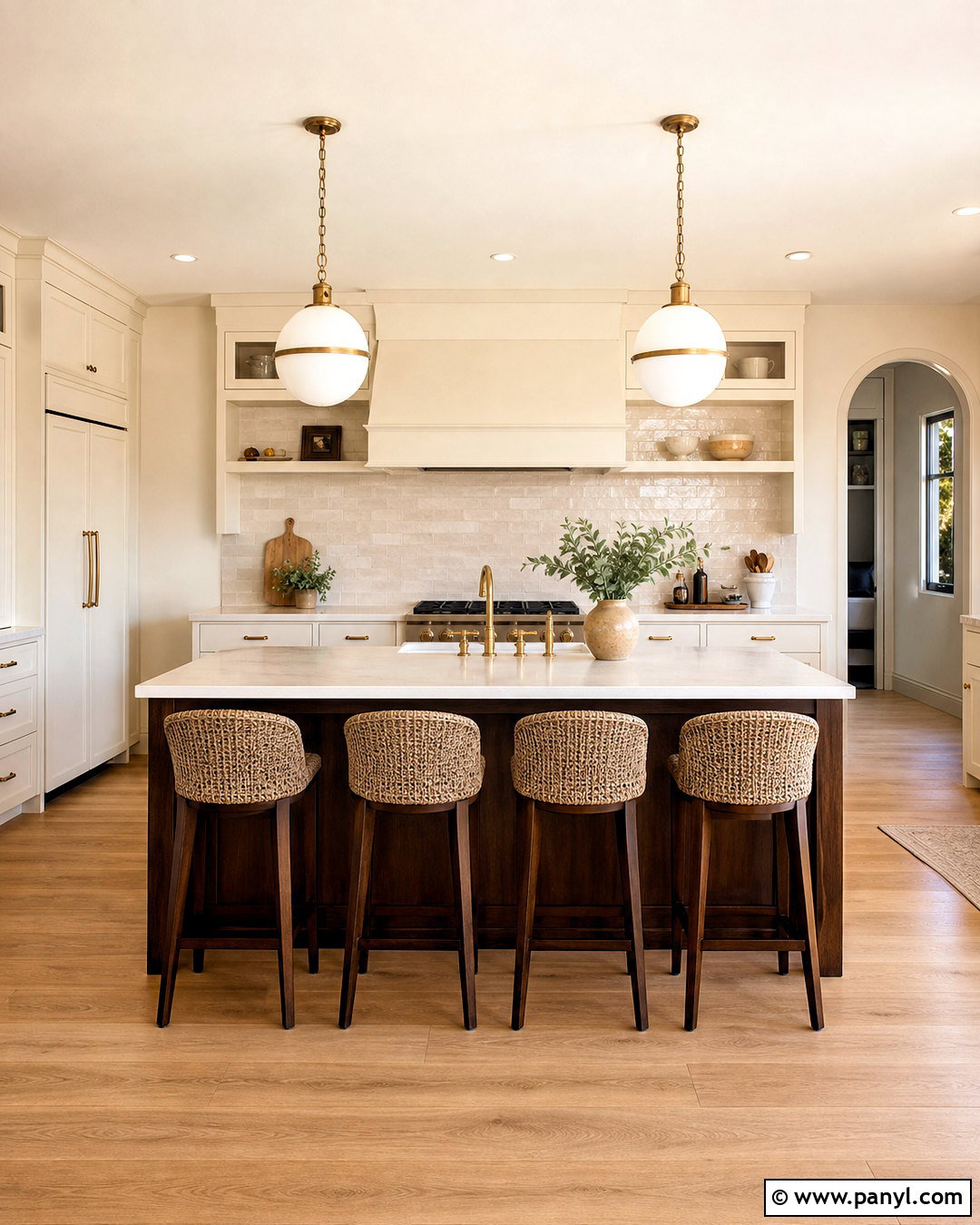
Warm white cabinetry paired with walnut creates a bright kitchen that still feels rich and inviting. Choose creamy white rather than a sharp blue-white for the perimeter cabinets and walls. Use medium or dark walnut on the island, open shelves, and a tall pantry unit to establish visual depth. A softly veined quartz countertop connects both finishes without introducing another strong color. Add an ivory zellige backsplash, brushed brass hardware, and warm oak or limestone-look flooring. Simple globe pendants keep the room light and approachable. For balance, repeat walnut through stools, cutting boards, or a dining table. This complete combination suits transitional, contemporary, and midcentury-inspired kitchens while remaining easy to update with new textiles and accessories.
2. Sage Green And Cream Kitchen Color Combination
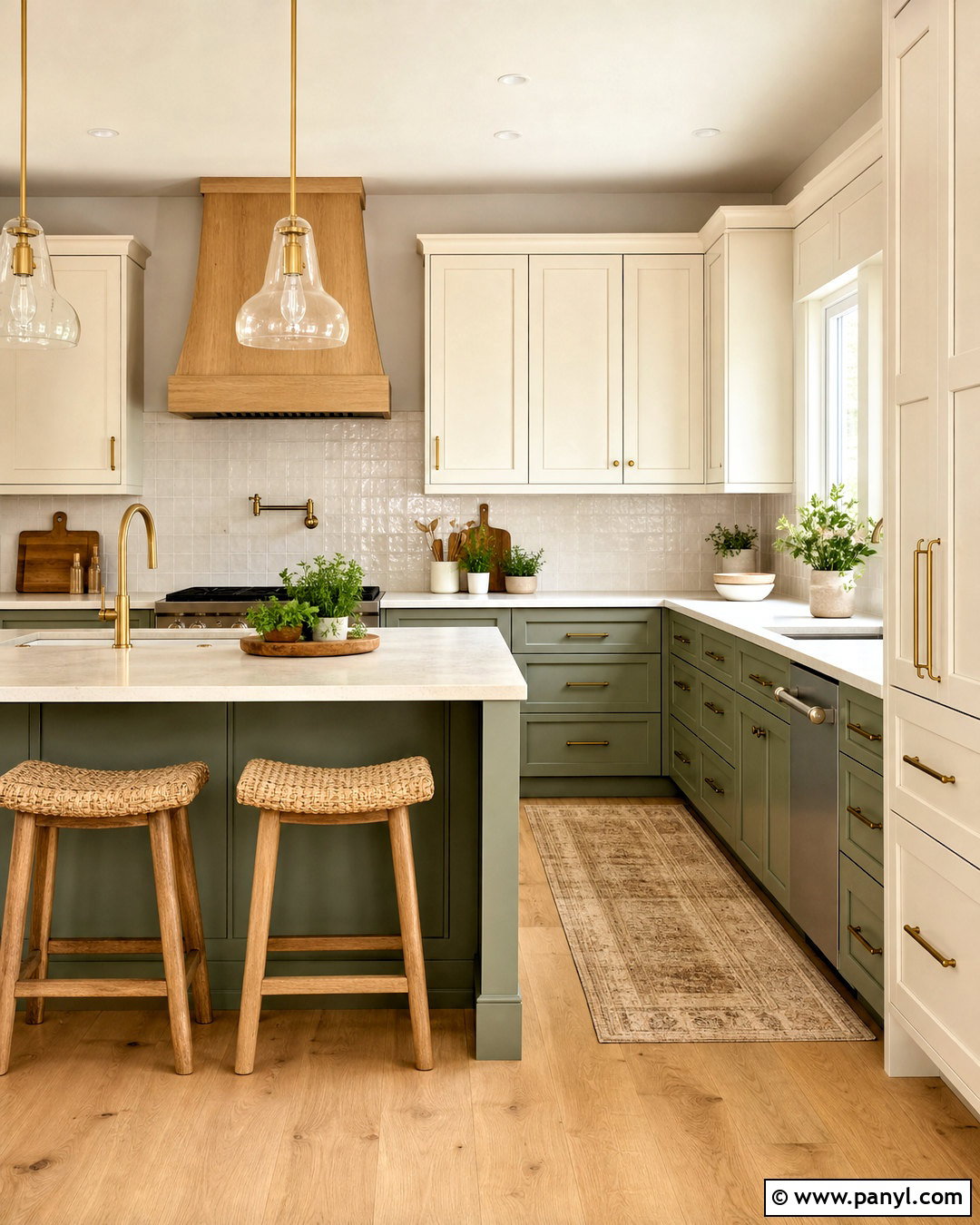
A sage green and cream kitchen feels calm, natural, and comfortable throughout the day. Paint the lower cabinets and island a muted sage with gray undertones, then use soft cream on upper cabinets and surrounding walls. The lighter finish prevents the green from overwhelming a small or moderately sized room. Choose creamy quartz countertops and a handmade off-white tile backsplash for gentle texture. White oak flooring, woven counter stools, and aged brass hardware add warmth without making the palette busy. A pale wood range hood can provide a relaxed focal point above the cooking area. Finish the room with linen shades, simple pottery, and a few potted herbs. The result works especially well in farmhouse, cottage, and organic modern kitchens.
3. Navy Blue And White Kitchen Color Combination
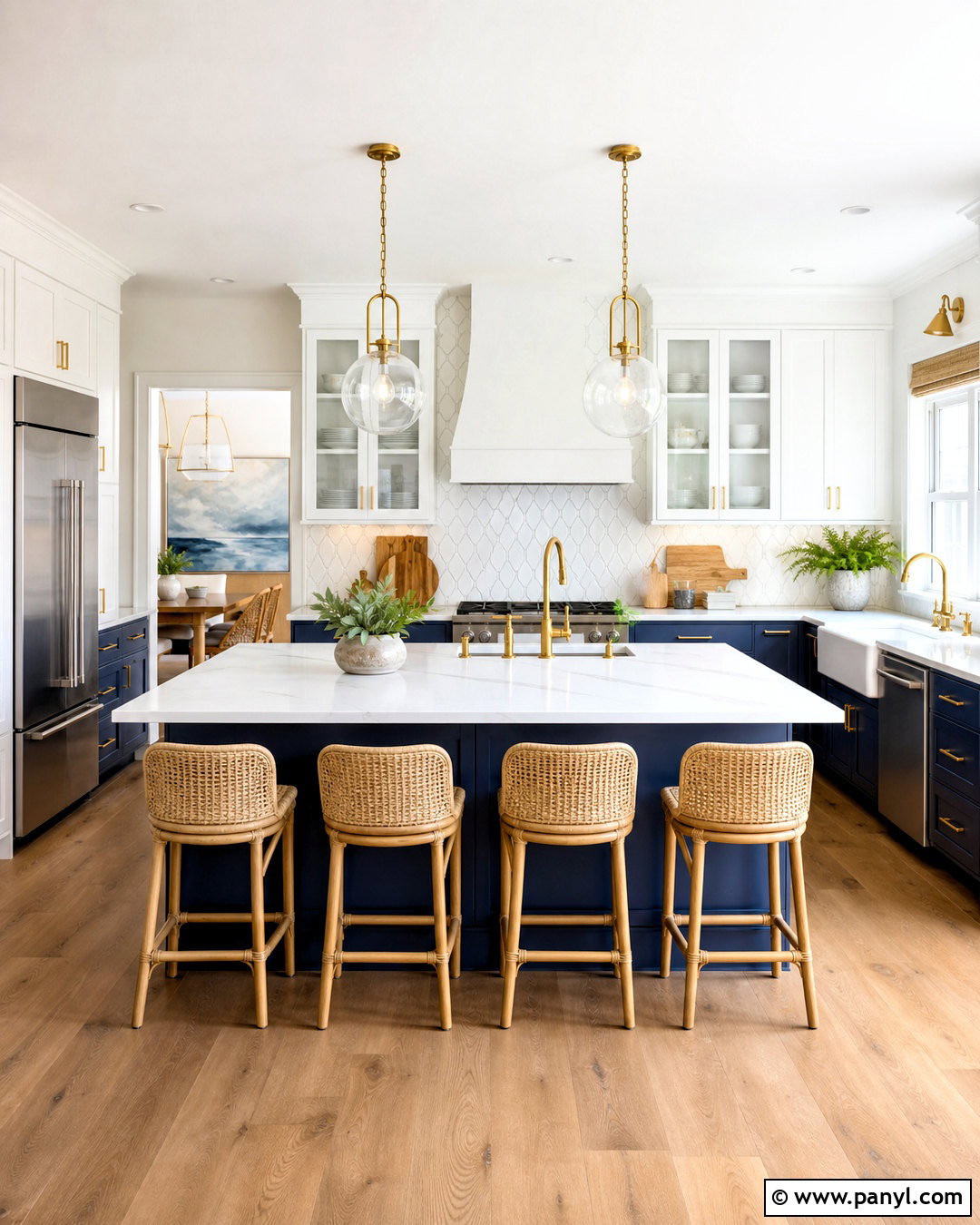
Crisp white and deep navy create a polished kitchen with strong contrast and clear definition. Use navy on the island and lower cabinets, where the darker shade can visually anchor the layout. Keep upper cabinets, walls, and trim a soft white to maintain an airy feeling. White quartz countertops with subtle gray veining bridge the two colors, while a white subway or geometric tile backsplash adds practical brightness. Incorporate warm brass handles, faucets, and pendant lights so the scheme does not feel overly cool. Medium-tone oak flooring and natural woven stools introduce another comfortable layer. For a cohesive finish, repeat navy in a window treatment or runner. This combination works for coastal, transitional, and modern kitchens without relying on themed decorations.
4. Olive Green And Natural Oak Kitchen Color Combination
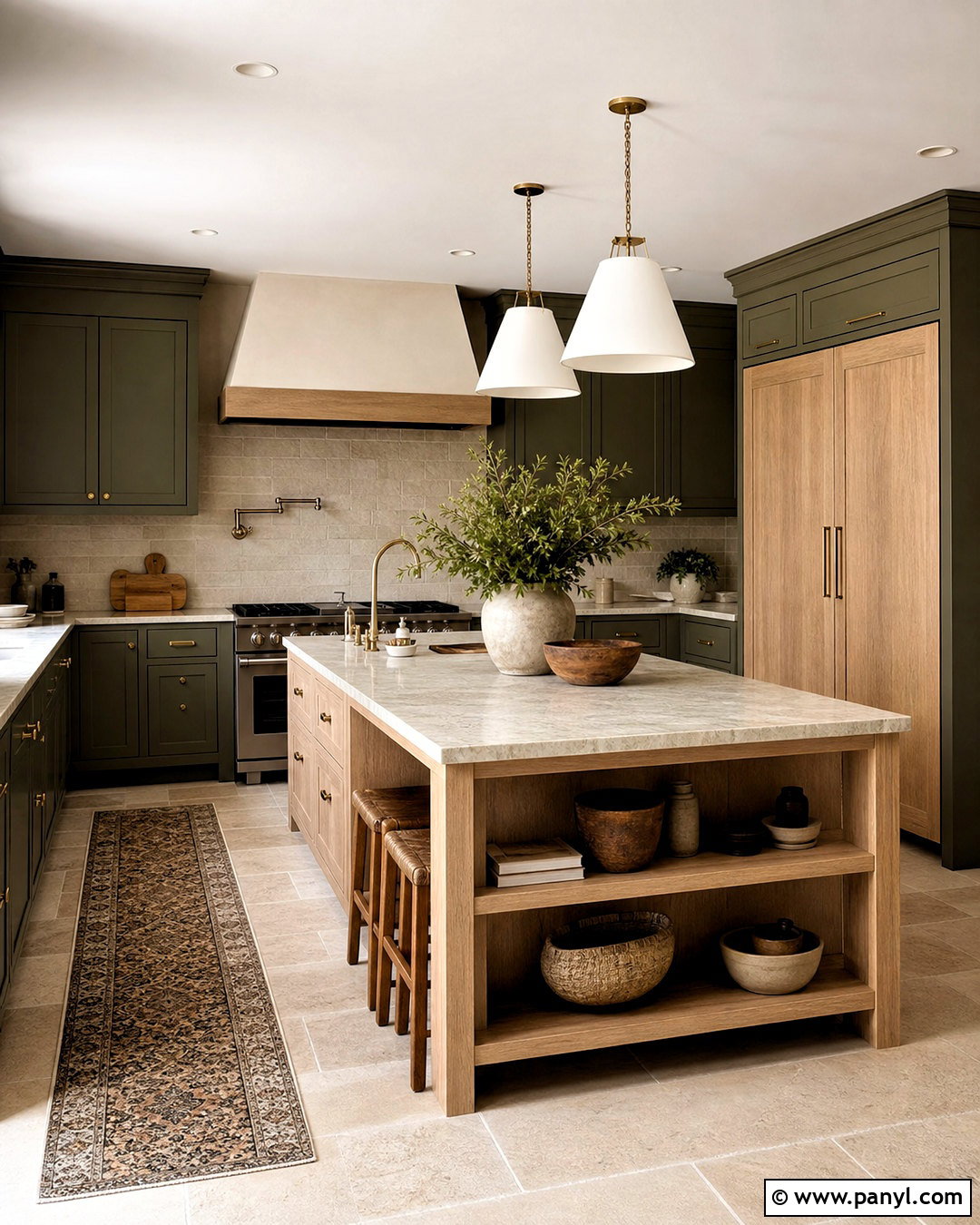
Deep olive cabinetry and natural oak produce an earthy kitchen with impressive depth. Cover the main cabinet run in a muddy olive green, then use white oak for the island, floating shelves, and integrated pantry doors. Select warm white walls to give both materials space to stand out. Cream quartz or lightly veined marble countertops will soften the darker cabinetry, while a beige stone backsplash reinforces the organic palette. Antique brass handles and bronze lighting complement olive’s warm undertones. Ground the room with pale limestone-look tile or matte oak flooring. Instead of adding numerous decorative colors, use off-white ceramics, linen towels, and greenery. This complete scheme feels sophisticated in a contemporary kitchen yet relaxed enough for a traditional or rustic home.
5. Charcoal Gray And Warm Wood Kitchen Color Combination
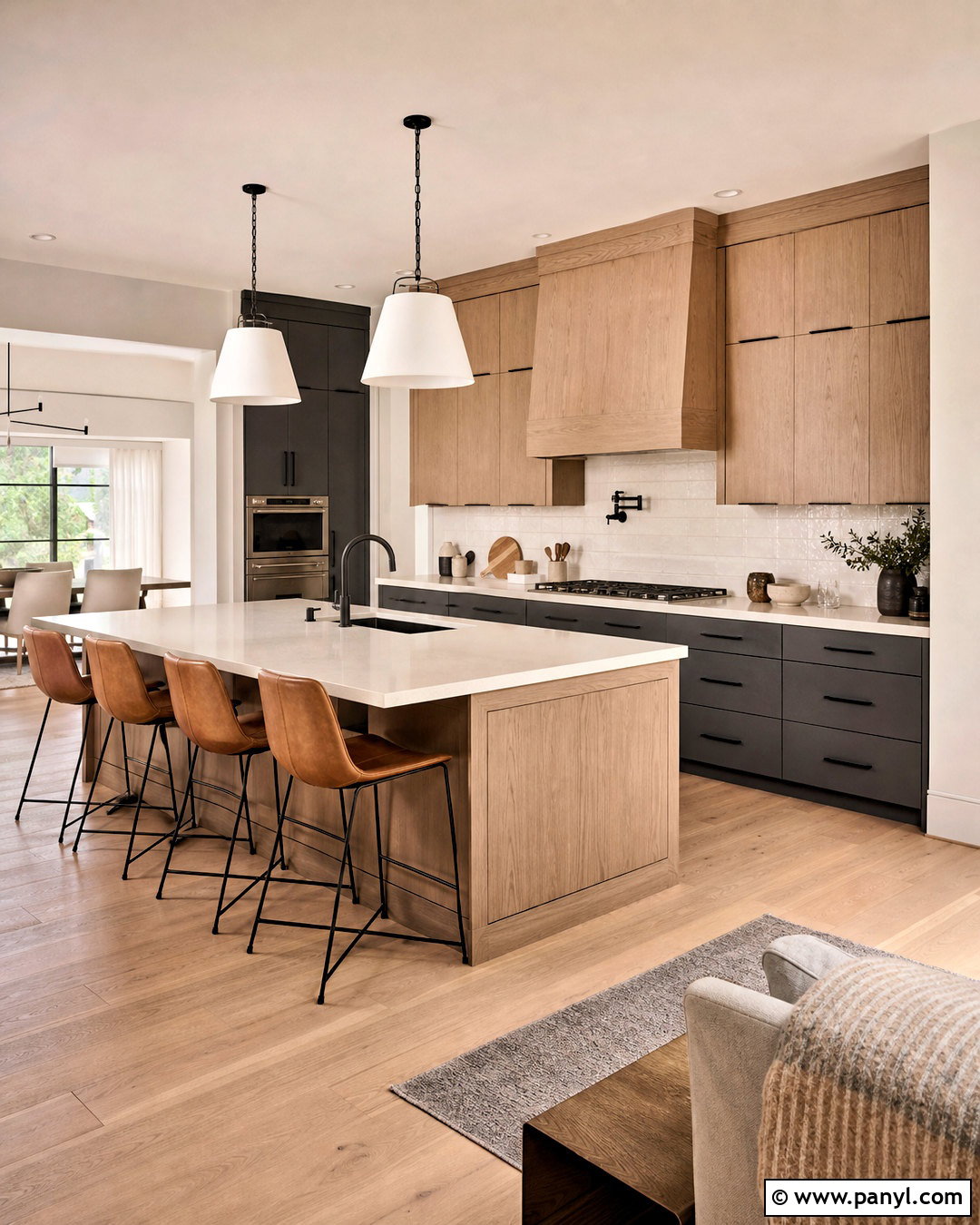
Charcoal gray becomes far more welcoming when it is balanced with warm, visible wood grain. Use matte charcoal on base cabinets and tall storage, then introduce white oak or ash on upper cabinets and the island. Pale greige walls keep the transition soft rather than creating harsh black-and-white contrast. Choose off-white quartz countertops and a matching slab backsplash to simplify the busier mix of finishes. Matte black hardware can blend quietly into the dark cabinets, while oversized white pendants brighten the island. Warm oak flooring, leather stools, and a textured neutral runner complete the space. This kitchen color combination is particularly effective in open layouts because charcoal defines the cooking zone and wood connects it naturally to nearby living and dining furniture.
6. Butter Yellow And Walnut Kitchen Color Combination
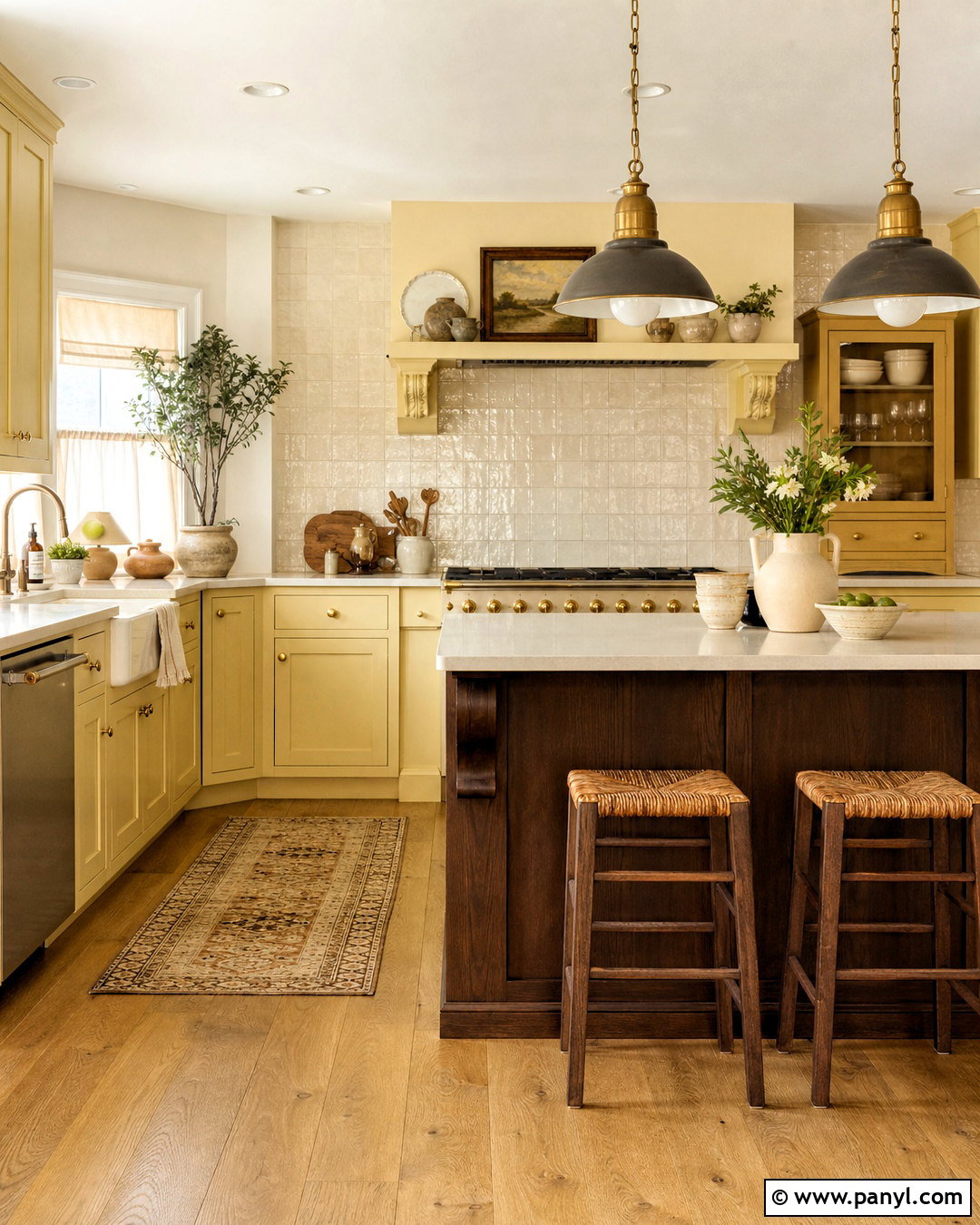
Butter yellow and walnut can make a kitchen feel sunny without becoming overly bright. Use the soft yellow on Shaker cabinets, allowing dark walnut to define the island, open shelving, or a freestanding pantry. Warm white walls and cream countertops give the colors breathing room. For the backsplash, consider glazed ivory tile with slight surface variation rather than a bold pattern. Aged brass knobs reinforce the yellow’s warmth, while dark bronze lighting relates to the walnut. Choose light oak flooring to prevent the lower half of the room from feeling heavy. Simple cafe curtains, cream ceramics, and brown woven stools complete the inviting design. This balanced palette works beautifully in vintage-inspired, cottage, and updated traditional kitchens with plenty of natural light.
7. Dusty Blue And Greige Kitchen Color Combination
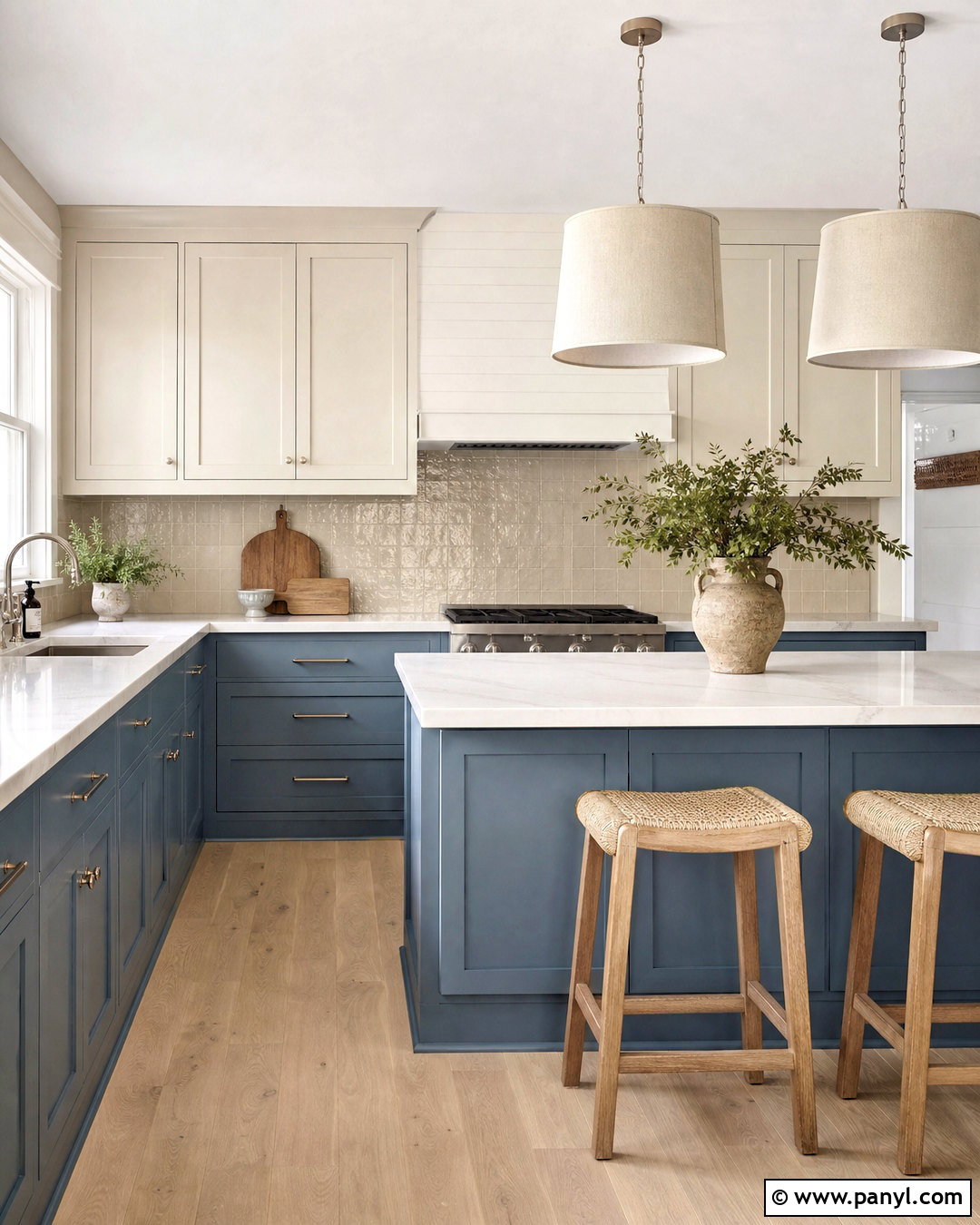
Dusty blue and greige form a gentle, versatile palette that brings color into the kitchen without dominating it. Use muted blue on the lower cabinets and island, then select pale greige for the upper cabinets and walls. The shared gray undertones help the colors flow together. Install warm white quartz countertops and a light taupe backsplash with a subtle handcrafted finish. Brushed nickel hardware creates a clean appearance, although aged brass can provide a warmer alternative. Pale oak flooring, oatmeal-colored stools, and linen pendants add softness and texture. Keep countertop decor limited to wood boards, white ceramics, and small plants. The finished kitchen feels open and restful, making this combination suitable for coastal, Scandinavian, transitional, or compact urban interiors.
8. Terracotta And Cream Kitchen Color Combination
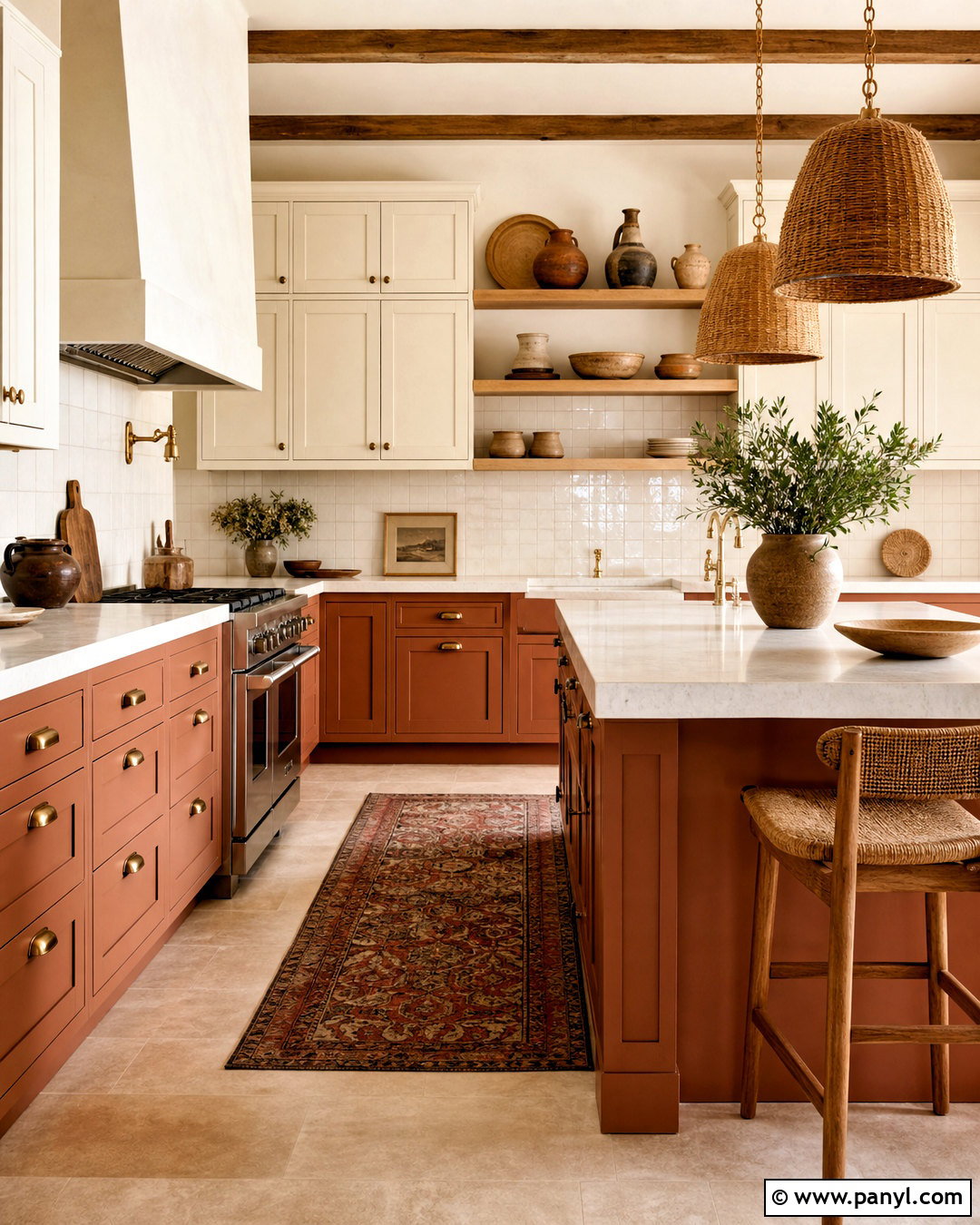
Terracotta brings warmth and personality to a cream kitchen while maintaining an earthy, livable atmosphere. Use muted clay-colored paint on the island and lower cabinets, then keep upper cabinetry and walls a rich cream. Select ivory quartz countertops to create a clean work surface that does not compete with the terracotta. A handmade cream backsplash, natural oak shelves, and warm beige flooring complete the foundation. Add aged brass hardware and woven rattan pendants for a softly rustic character. Terracotta can also be repeated through patterned Roman shades, pottery, or a narrow runner, but use it selectively. This complete kitchen scheme feels at home in Mediterranean, modern farmhouse, and Southwestern-inspired spaces, especially when balanced by simple cabinet lines and uncluttered surfaces.
9. Matte Black And White Oak Kitchen Color Combination
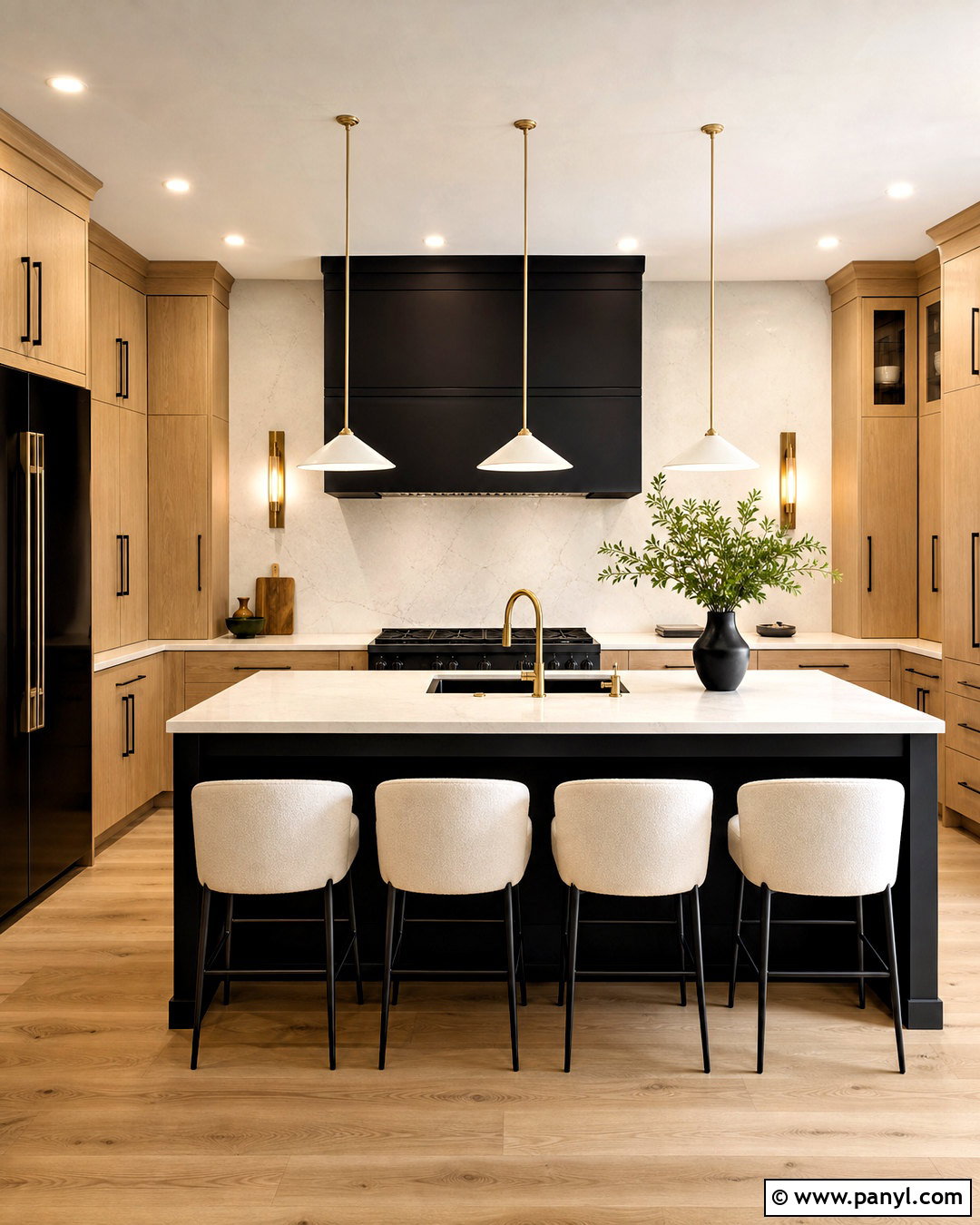
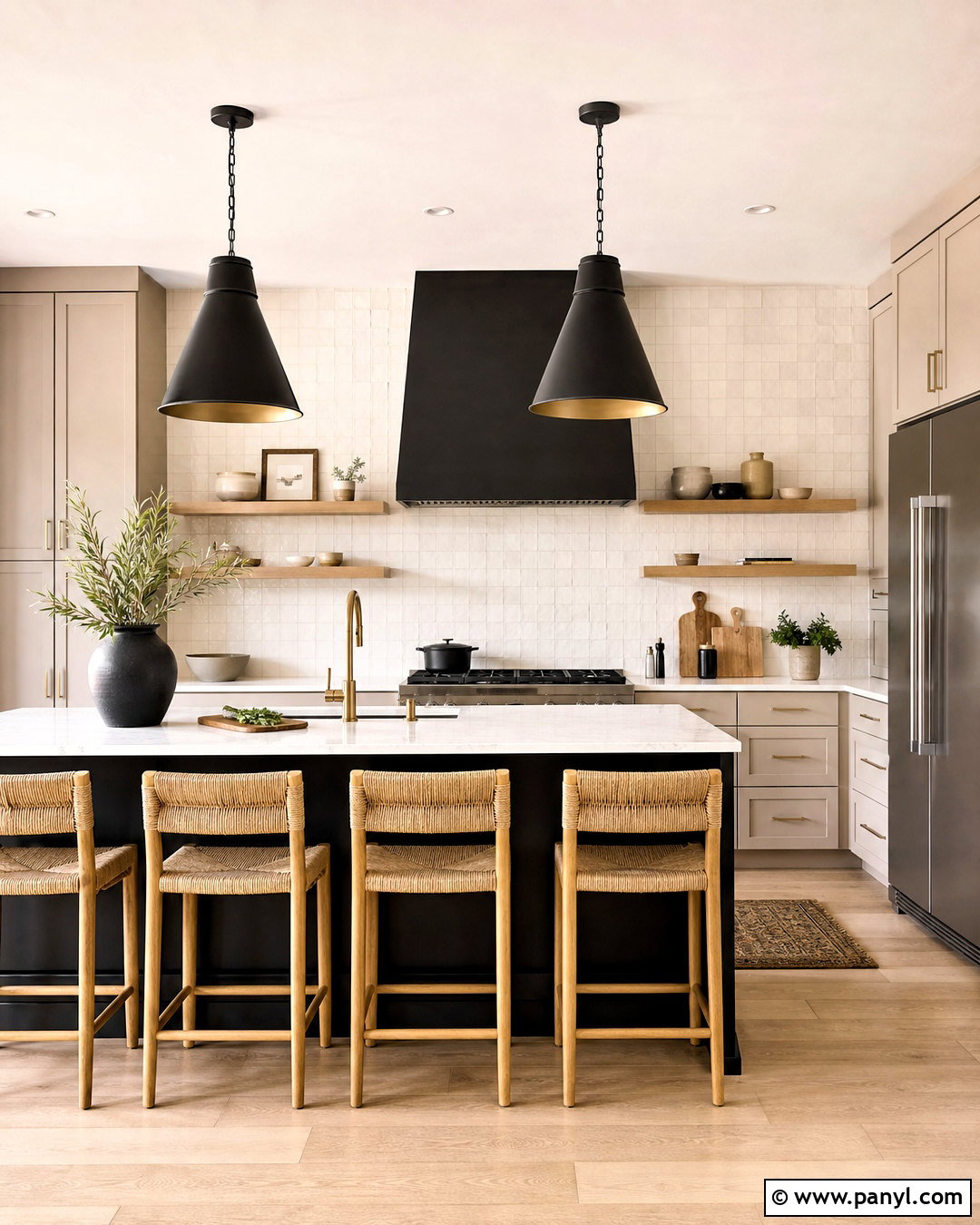
Matte black and white oak create a dramatic kitchen that remains natural and approachable. Use black on a central island, range wall, or bank of tall cabinets instead of covering every surface. Install white oak cabinetry along the brighter perimeter to reveal warm grain and soften the contrast. Light cream quartz countertops and a full-height matching backsplash will reflect light around the room. Choose minimal black hardware on the wood cabinets and brushed brass fixtures near the island for controlled variation. Wide-plank oak flooring, cream upholstered stools, and streamlined pendants complete the contemporary look. This combination is most successful when the kitchen has good natural or layered artificial lighting. It delivers bold definition without losing the warmth expected in an everyday family space.
10. Mushroom And Ivory Kitchen Color Combination
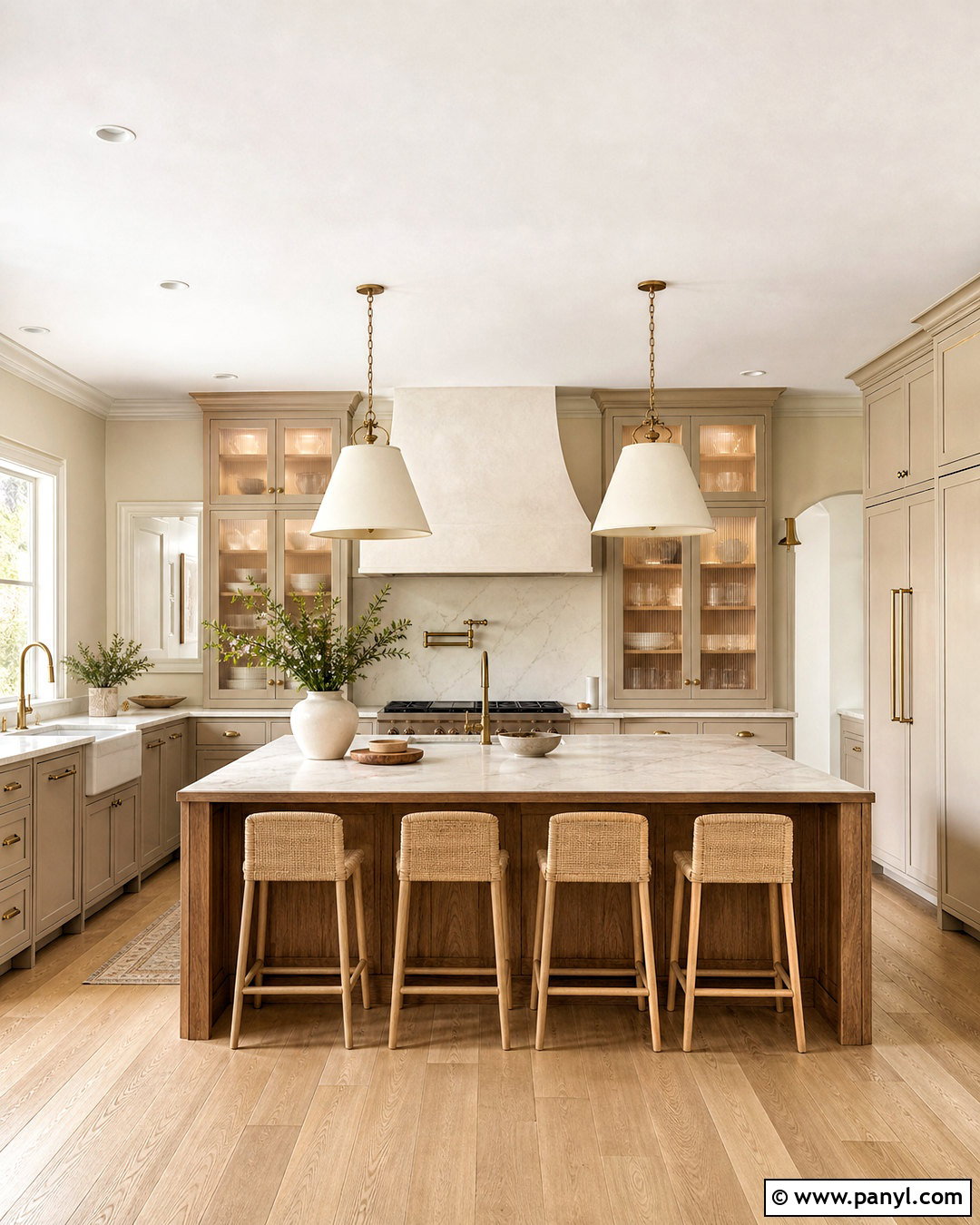
Mushroom and ivory offer a layered neutral kitchen that feels softer than conventional gray or stark white. Paint the main cabinetry a medium mushroom shade with brown undertones, then use warm ivory on walls, upper display cabinets, and trim. Choose creamy marble-look quartz for the counters and continue it onto the backsplash for a calm, seamless finish. A stained oak island adds subtle depth while remaining within the neutral palette. Use antique brass hardware, off-white pendants, and light oak flooring to reinforce the warm direction. Texture becomes important in such a restrained scheme, so include fluted glass doors, woven stools, and linen window treatments. The completed room looks refined and comfortable, fitting traditional, transitional, and quietly contemporary homes.
11. Forest Green And Warm White Kitchen Color Combination
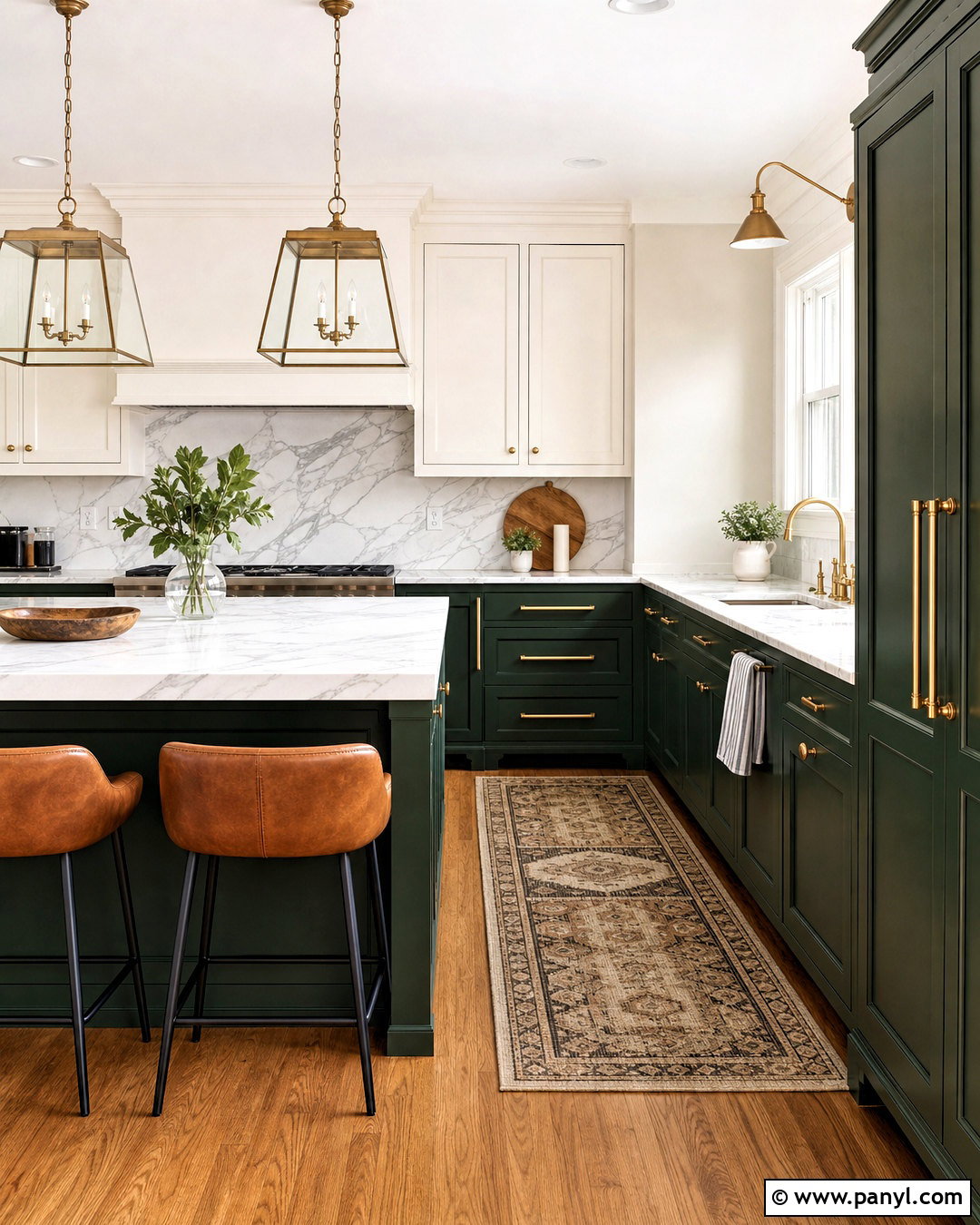
Forest green and warm white make a confident kitchen palette with a classic, grounded character. Apply the deep green to lower cabinets, the island, and a tall pantry wall. Keep upper cabinetry and surrounding walls warm white so the room does not feel closed in. Select white quartz or marble countertops with delicate green or gray veining. A warm white backsplash provides continuity, while brass hardware and lantern-style pendants introduce a traditional glow. Medium oak flooring and cognac leather stools prevent the scheme from feeling formal. In a smaller room, limit forest green to the island and base cabinets. Repeat it through a patterned shade or runner to tie everything together. This design suits traditional, English-inspired, and transitional kitchens particularly well.
12. Burgundy And Soft Pink Kitchen Color Combination
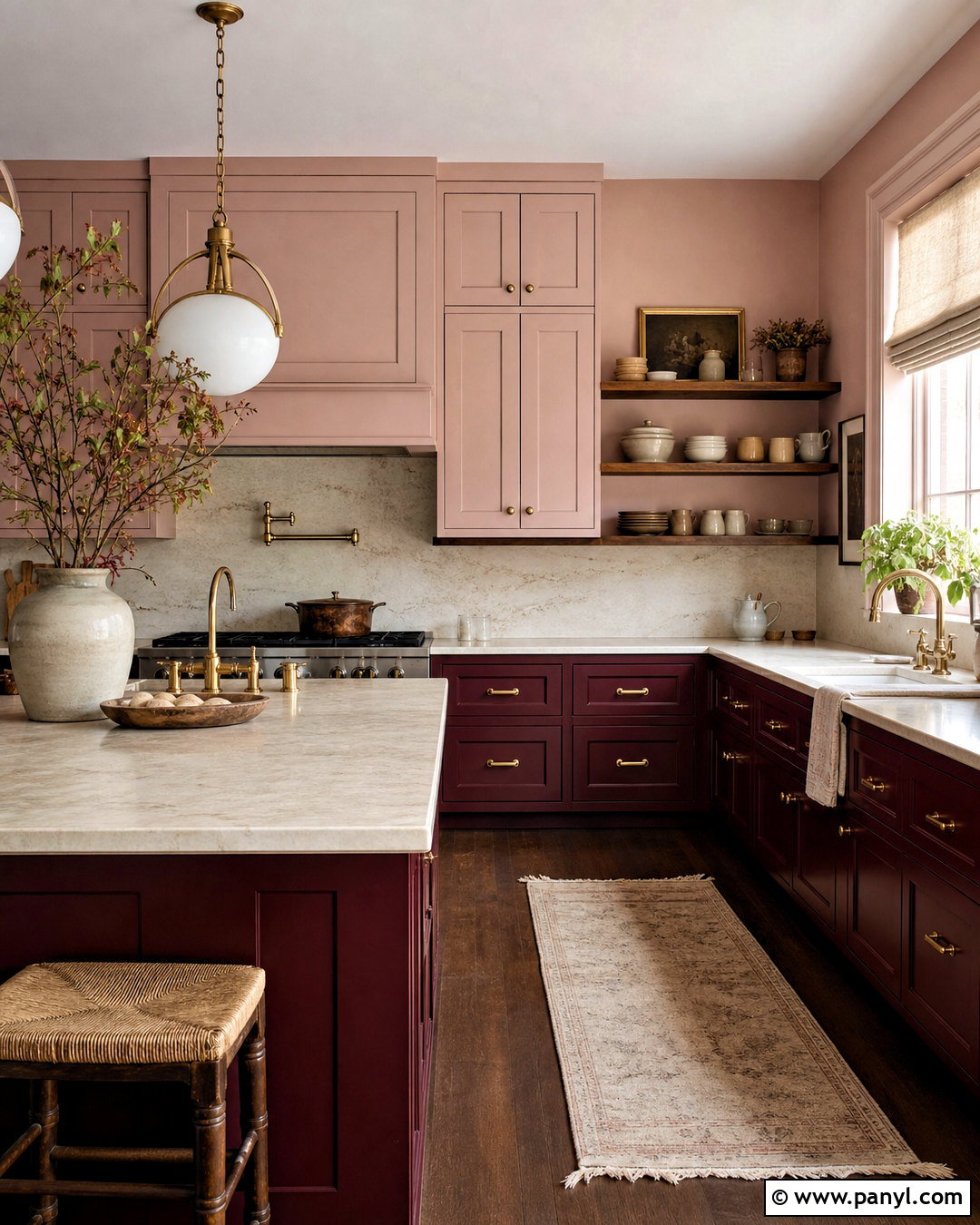
A burgundy and soft pink kitchen feels bold, layered, and surprisingly sophisticated when the shades share warm undertones. Use burgundy on the island and lower cabinets, then apply dusty blush to the walls or selected upper cabinetry. Cream countertops and a pale stone backsplash provide a quiet transition between the two colors. Walnut shelves, dark wood flooring, and antique brass hardware strengthen the palette’s rich character. Keep the lighting simple with opal glass pendants that spread clean, even illumination. Instead of adding more saturated colors, finish the room with ivory ceramics, natural linen, and muted red textiles. This complete combination works best with simple cabinet profiles and an organized layout, allowing the unusual colors to look intentional rather than overly decorative.
13. Teal And Warm White Kitchen Color Combination
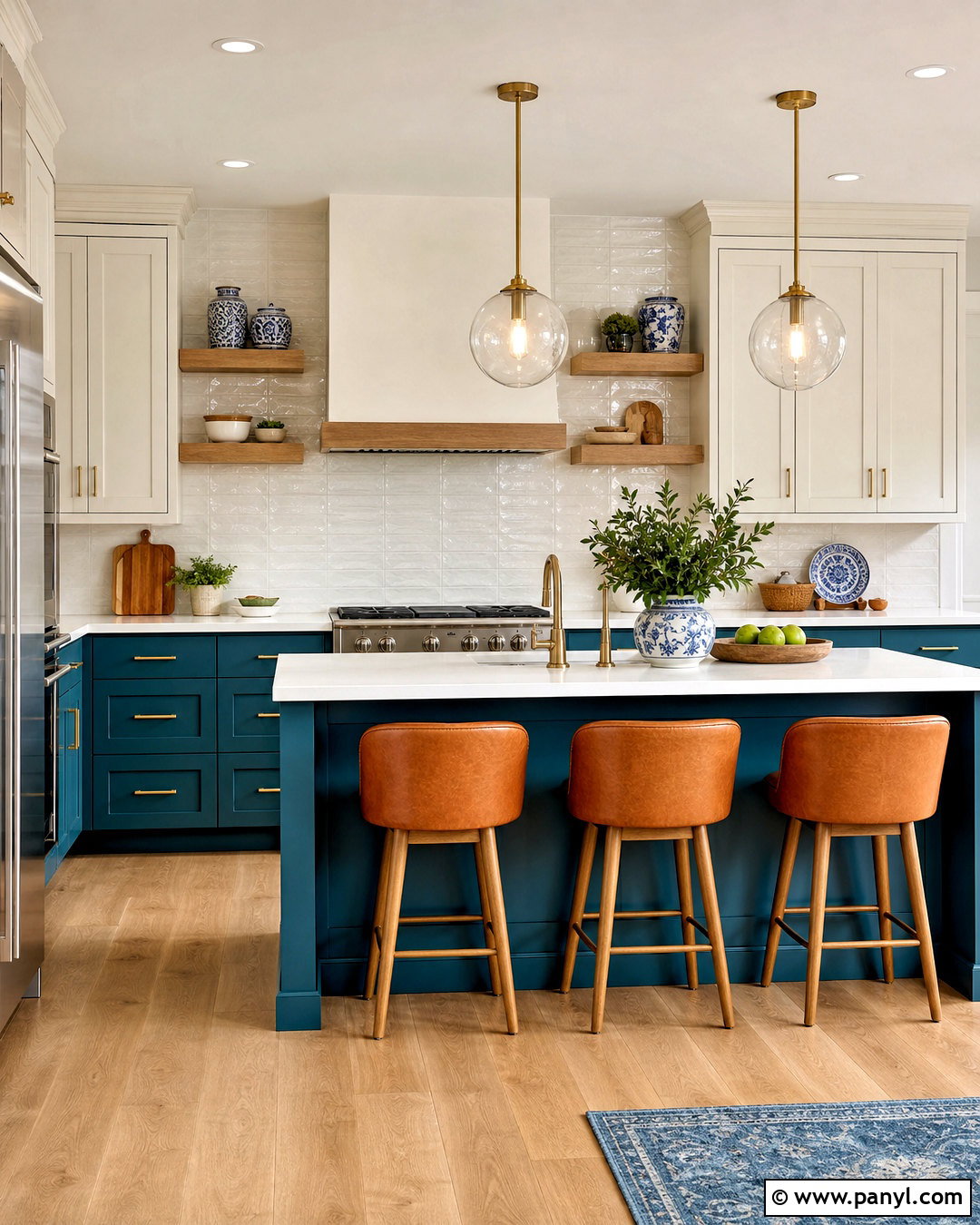
Teal cabinetry adds energy and depth, while warm white keeps the overall kitchen fresh and usable. Choose a blue-toned teal for the island and lower cabinets, then use creamy white on upper cabinets, walls, and trim. White quartz counters and a lightly textured backsplash brighten the work areas. Natural oak shelves and flooring soften teal’s cooler character, creating a balanced connection between bold color and organic material. Brushed brass hardware, globe pendants, and tan leather stools add warmth without clutter. If the kitchen is narrow, reserve teal for one full cabinet wall rather than breaking it into small accents. Complete the design with simple greenery and blue-and-white ceramics. The finished palette suits contemporary, coastal, eclectic, and updated midcentury kitchens.
14. Sky Blue And Sandy Beige Kitchen Color Combination
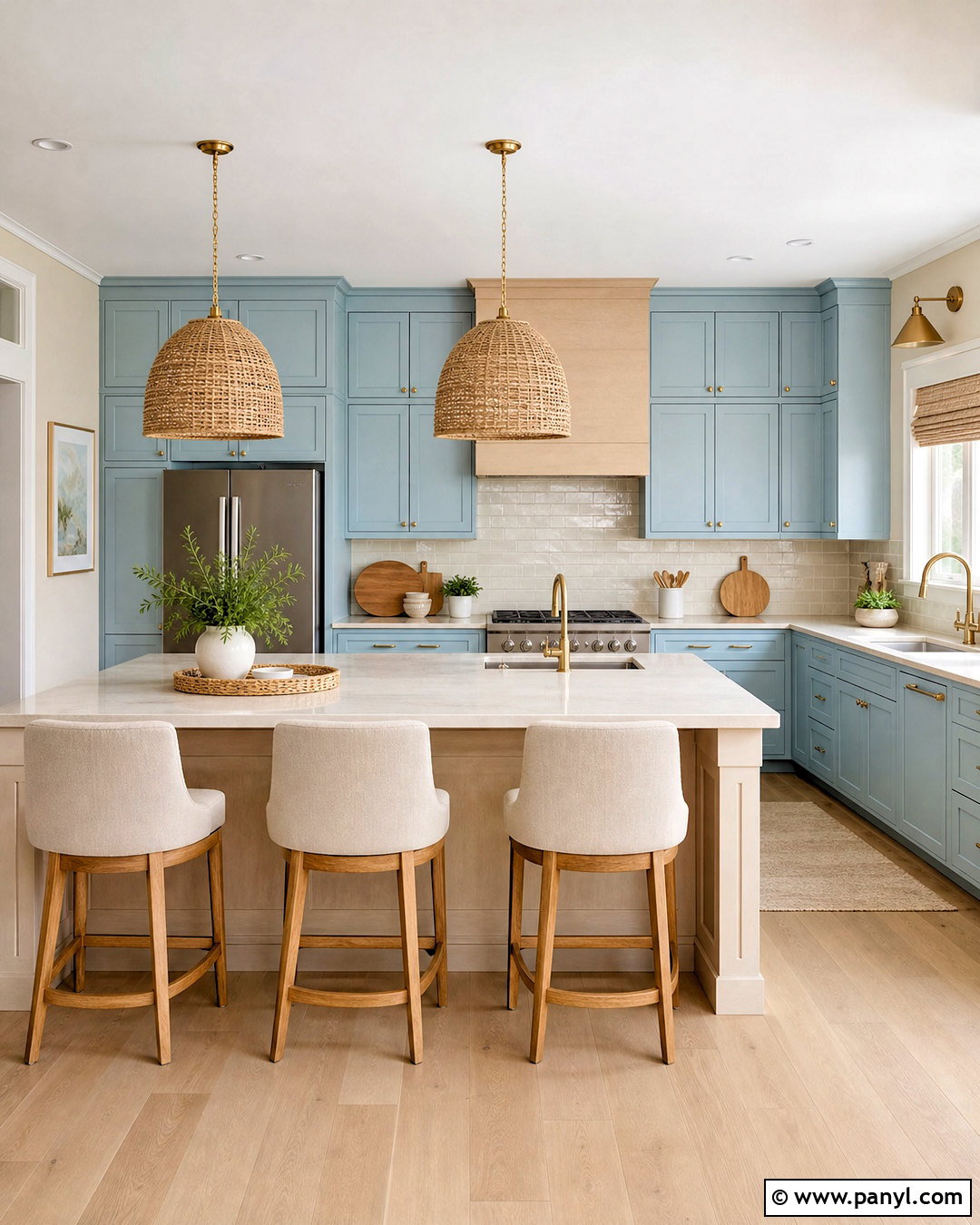
Sky blue and sandy beige create a light, relaxed kitchen inspired by natural coastal colors without looking overly themed. Use muted sky blue on the cabinets and a warm beige on the walls, plaster range hood, or island base. Cream quartz countertops maintain brightness, while a pale beige tile backsplash adds texture and gentle contrast. Choose light oak flooring, woven pendants, and brushed nickel or soft brass hardware. White appliances can blend quietly into this palette, although stainless steel also works well. Add simple linen shades and counter stools upholstered in oatmeal fabric. Avoid obvious nautical accessories; let the colors establish the atmosphere. This complete combination can visually open a small kitchen and also soften a larger room with abundant natural light.
15. Rust Orange And Deep Blue Kitchen Color Combination
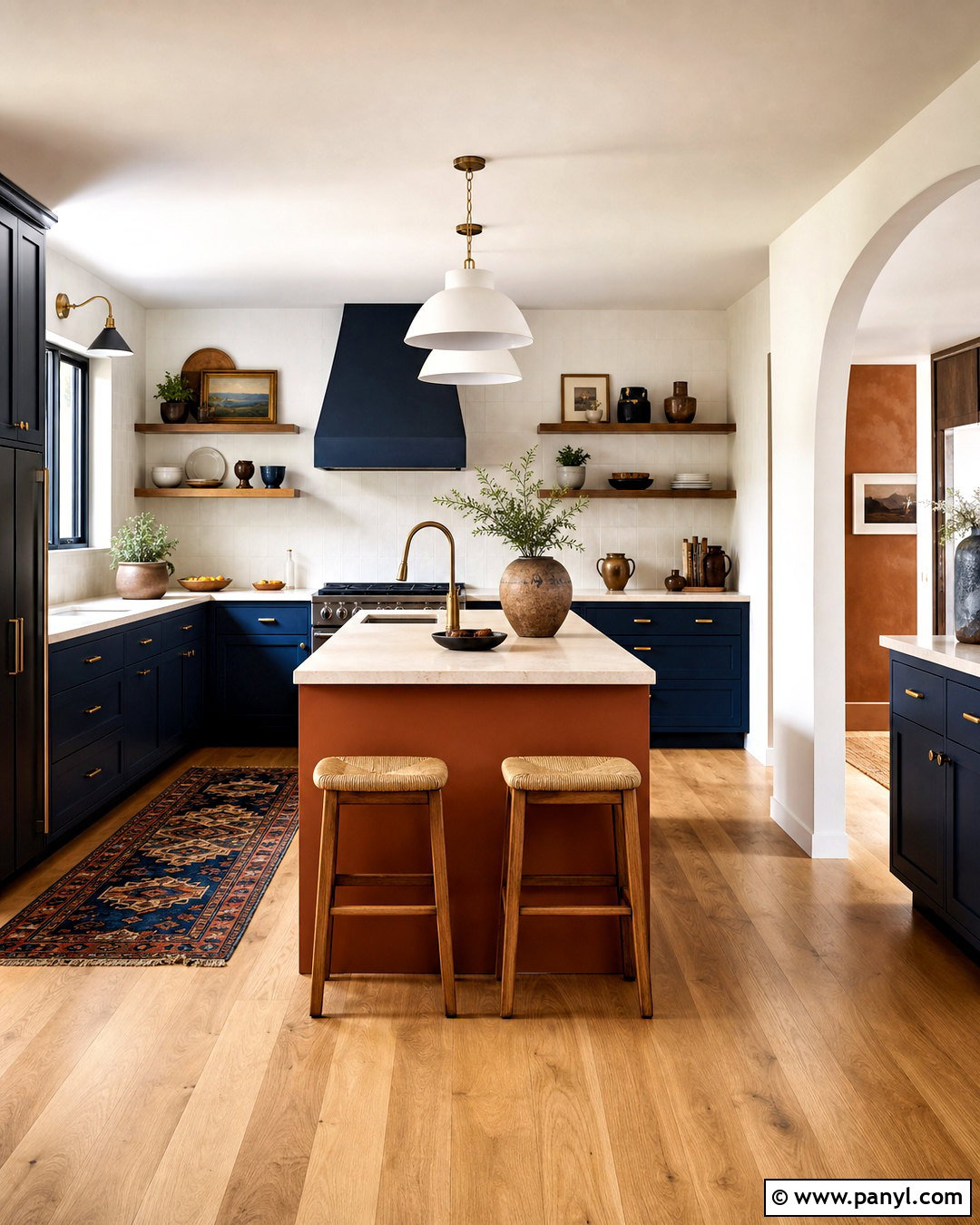
Rust orange and deep blue deliver strong contrast while remaining grounded by their muted, earthy undertones. Use deep blue on most cabinetry, then feature rust on the island, pantry doors, or a built-in breakfast area. Warm white walls and cream stone countertops prevent the saturated colors from becoming overwhelming. A simple ivory backsplash provides visual rest around cooking and preparation zones. Introduce walnut shelves, dark bronze hardware, and medium oak flooring to connect both shades. Sculptural white pendants can brighten the central island, while a patterned runner quietly repeats blue and rust. Keep the cabinet design streamlined and the decorative pieces minimal. This adventurous kitchen color combination works especially well in eclectic, contemporary, and midcentury interiors with an open, well-lit layout.
16. Plum And Warm Gray Kitchen Color Combination
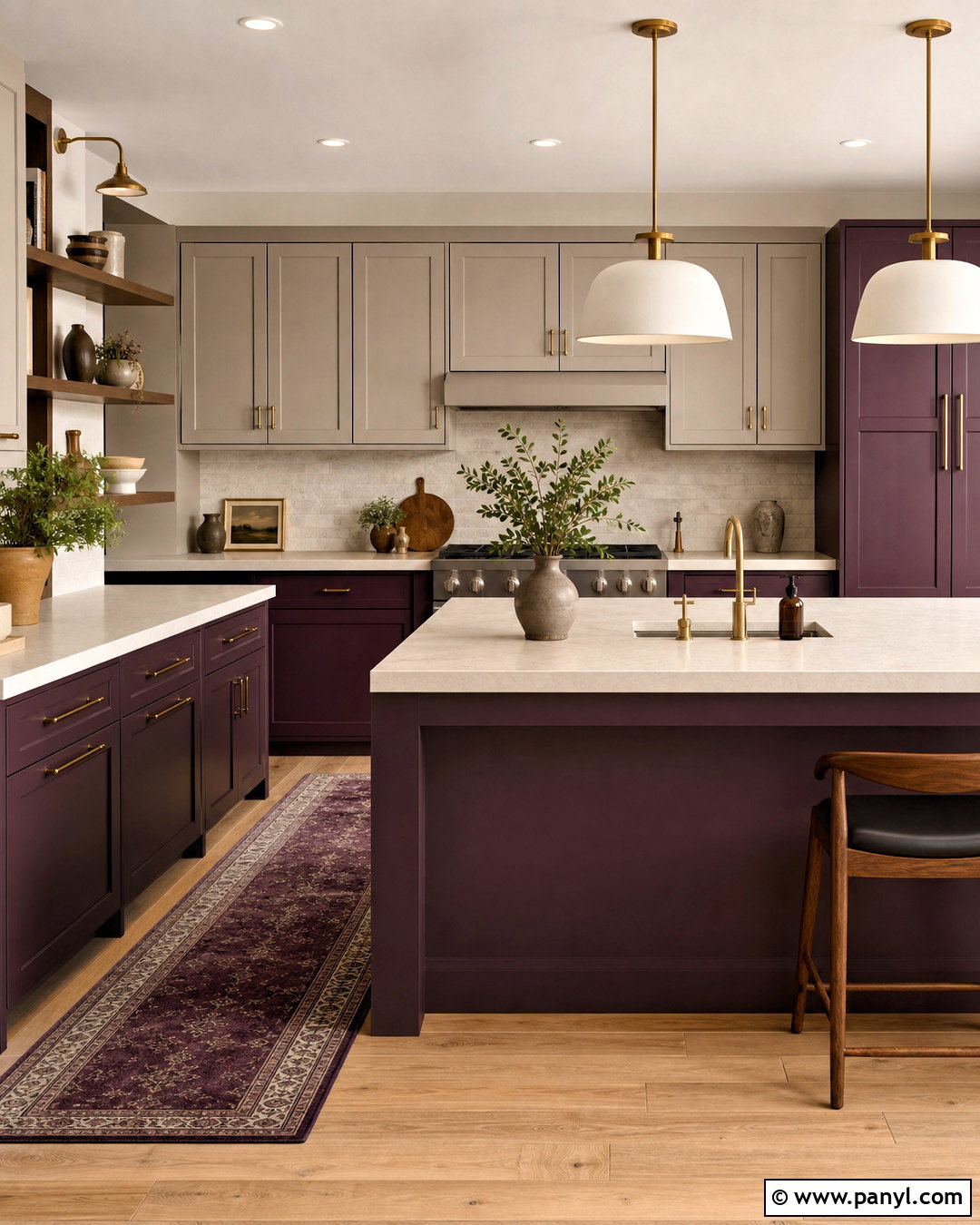
Plum and warm gray can create a distinctive kitchen that feels elegant rather than overly sweet. Apply a muted aubergine or deep plum to the island and lower cabinets. Use pale warm gray for upper cabinetry and walls, ensuring the gray has beige undertones instead of looking blue. Cream quartz counters and a light stone backsplash keep the work surfaces bright. Add walnut flooring or wood shelving to deepen the room’s warmth, then finish the cabinets with aged brass handles. Clear glass or off-white pendants will illuminate the richer colors without adding visual weight. Repeat plum sparingly through a runner or small pottery pieces. This cohesive design fits contemporary and traditional homes, offering an alternative to more familiar blue and green cabinet palettes.
17. Soft Gray And White Kitchen Color Combination
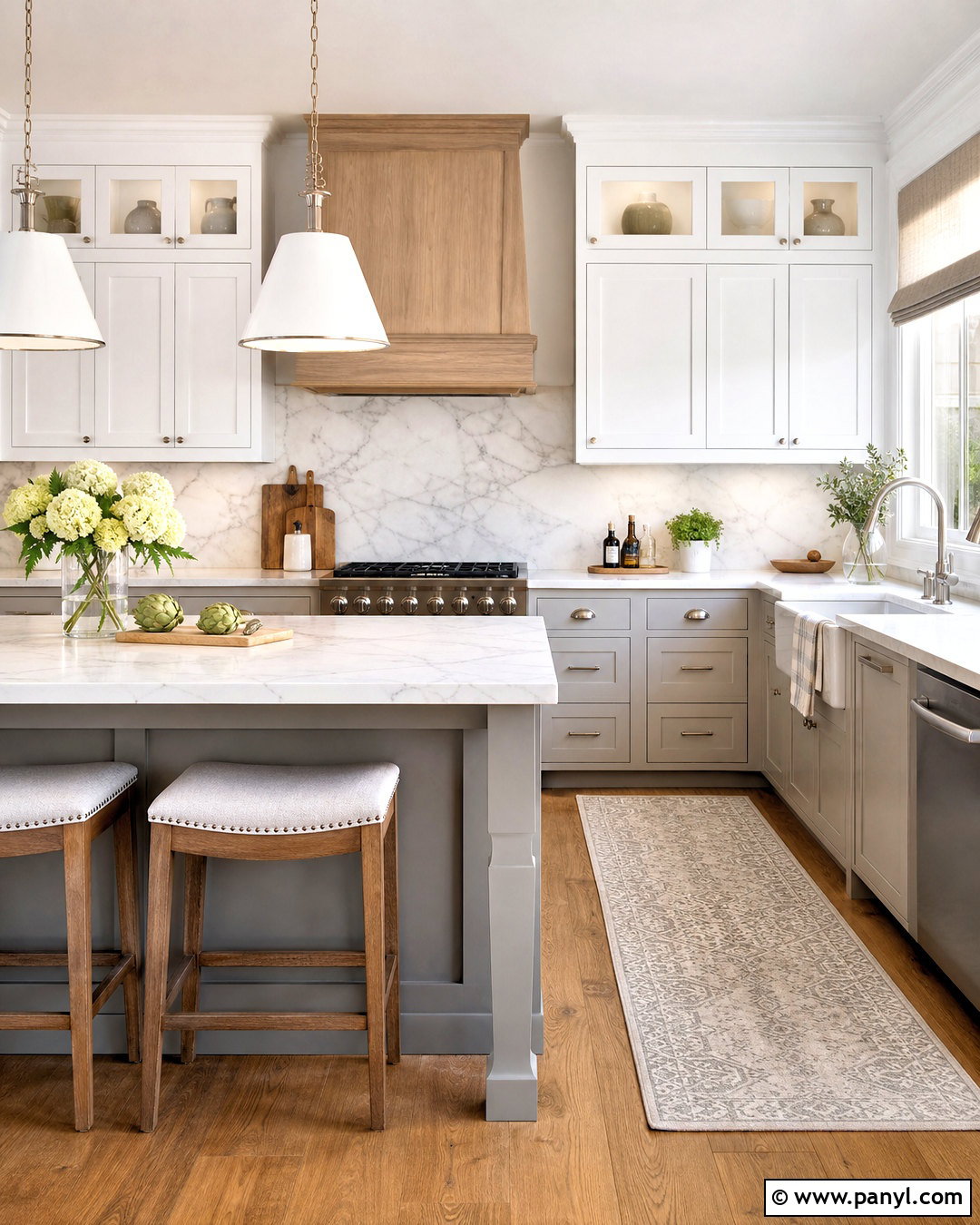
Soft gray and white remain practical when warmer materials are included throughout the complete room. Choose light gray for lower cabinets and the island, then use a gentle white on upper cabinetry, walls, and trim. Avoid icy gray by selecting a shade with subtle beige undertones. White quartz countertops and a marble-look backsplash make the kitchen feel clean and spacious. Bring in white oak through the flooring, shelves, stools, or range hood to prevent the palette from becoming flat. Satin nickel hardware creates a quiet transition between gray and white, while black accents can add sharper definition. Layer in linen shades and a textured runner. The resulting kitchen is timeless, bright, and flexible enough to support seasonal accessories or future color updates.
18. Coral And Mint Green Kitchen Color Combination
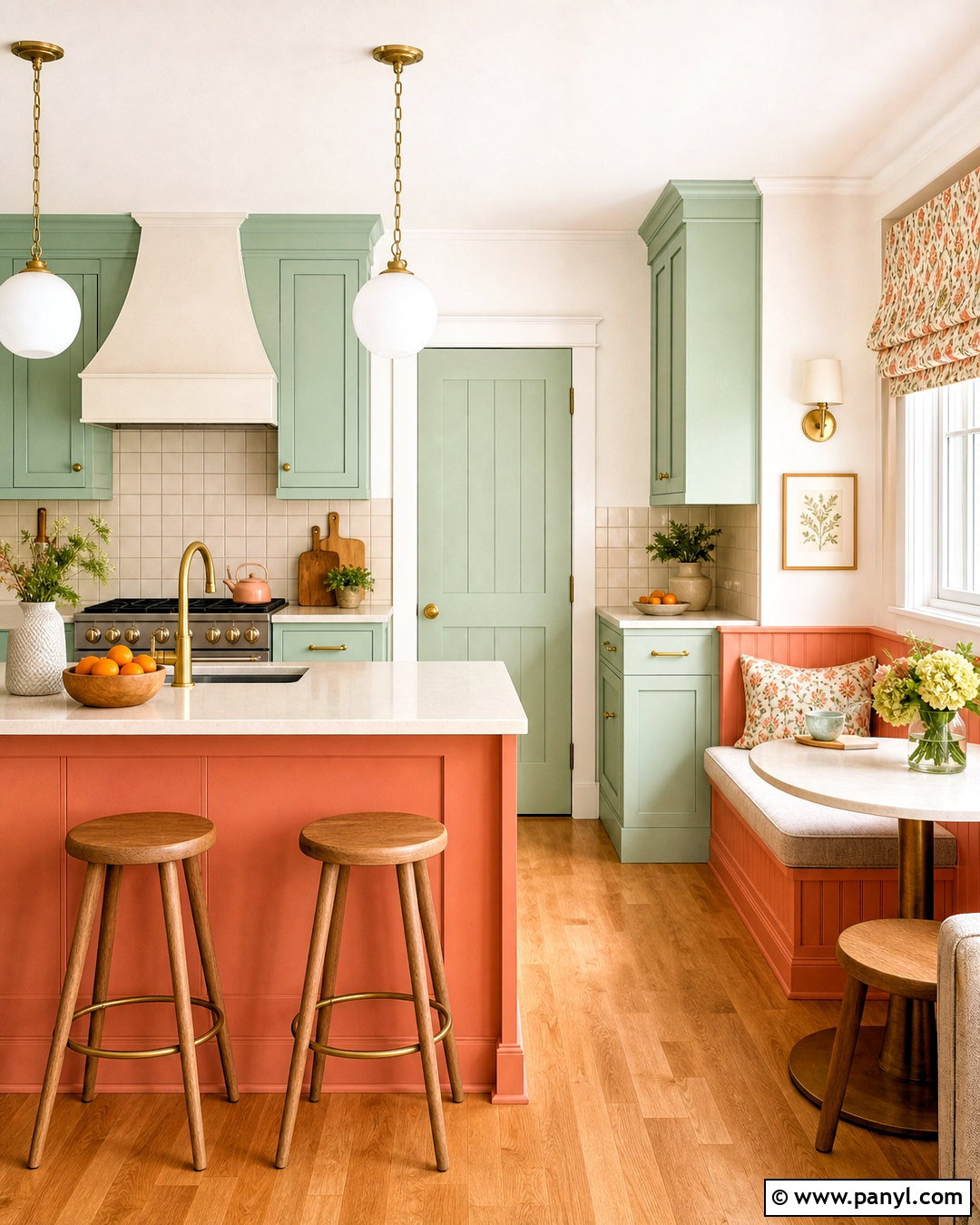
Coral and mint green create a cheerful kitchen when both colors are slightly muted. Use pale mint on the main cabinetry, then add dusty coral to the island, pantry interior, or breakfast nook. Warm white walls and counters keep the room from appearing overly colorful. A cream square-tile backsplash offers a simple background, while natural maple or pale oak flooring reinforces the bright, casual mood. Choose brass hardware and white globe pendants for a clean finish. A patterned Roman shade can repeat mint, coral, and cream in controlled amounts. Keep appliances and large fixtures neutral so the palette remains balanced. This complete combination works beautifully in retro-inspired, cottage, and eclectic kitchens, especially in homes where the kitchen serves as a lively gathering space.
19. Chocolate Brown And Pale Blue Kitchen Color Combination
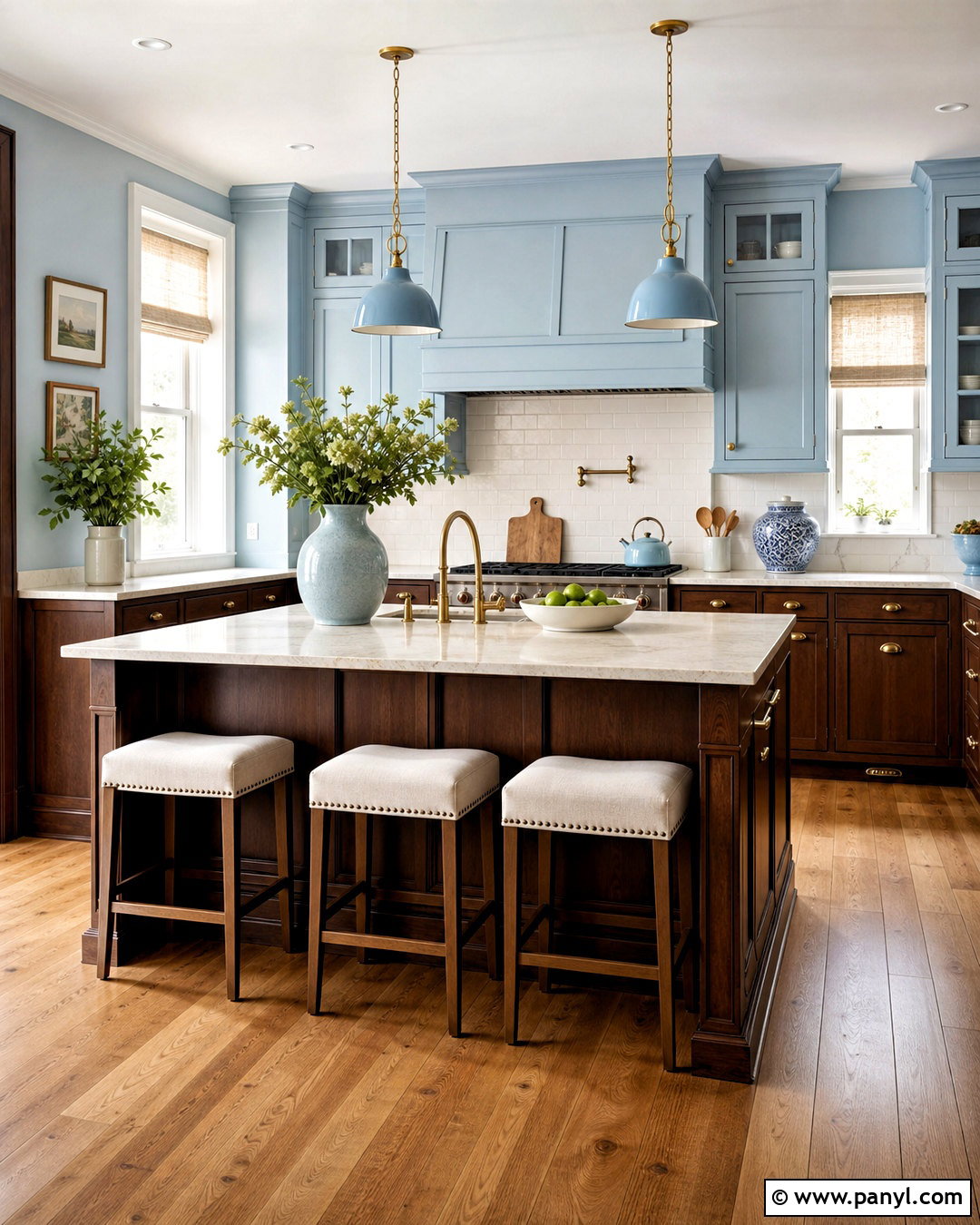
Chocolate brown and pale blue balance richness with an airy sense of calm. Use dark brown stained wood for lower cabinets, the island, and tall storage, allowing the natural grain to remain visible. Paint upper cabinets and walls a soft powder blue with muted gray undertones. Cream stone countertops and an ivory backsplash brighten the transition between dark and light finishes. Aged brass hardware adds warmth, while pale blue pendants can reinforce the upper portion of the scheme. Select medium oak flooring that is lighter than the cabinets to avoid a heavy effect. Finish with cream stools, linen shades, and restrained blue ceramics. This welcoming palette suits classic, transitional, and modern country kitchens without looking predictable or overly formal.
20. Brick Red And Cream Kitchen Color Combination
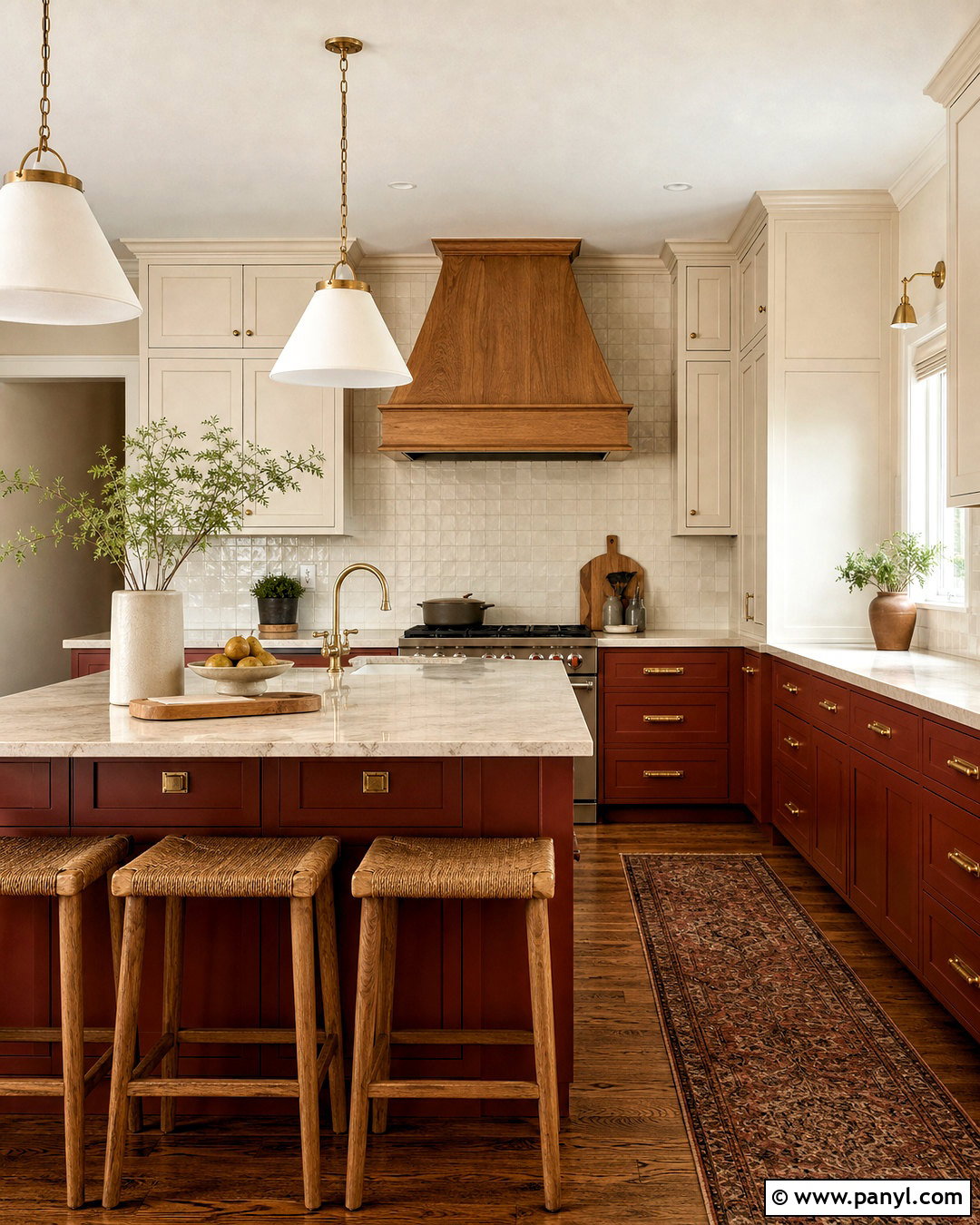
Brick red and cream give a kitchen a warm heritage character that can still feel clean and current. Use earthy red on the island and lower cabinetry, then balance it with cream upper cabinets, walls, and trim. Select lightly veined cream countertops and a simple ivory tile backsplash. Medium or dark oak flooring anchors the room, while antique brass hardware strengthens the traditional palette. A plaster or wood range hood can become a natural focal point without introducing another strong color. Include woven stools, off-white pendant lights, and a subtle patterned runner to soften the cabinetry. Because brick red carries substantial visual weight, maintain open surfaces and organized storage. This complete scheme suits farmhouse, colonial, cottage, and updated traditional homes.
Conclusion:
The most successful kitchen palettes connect every surface rather than treating cabinet color as a separate decision. Consider how your chosen shades interact with countertops, flooring, backsplashes, appliances, hardware, and nearby rooms. Warm white and wood offer lasting flexibility, while olive, burgundy, teal, or brick red can create a more personal focal point. Dark colors usually benefit from bright surfaces and layered lighting. Lighter combinations gain depth through natural grain, textured tile, and contrasting metal finishes. Always test large samples in the actual room before ordering cabinets or buying paint. With careful balancing and thoughtful repetition, these **20 kitchen colour combination ideas** can help you create a cohesive kitchen that feels both distinctive and comfortable.

Related Ideas and Inspiration:
Leave a Reply