
An updated kitchen with oak cabinets can feel warm, current, and highly personal without hiding the wood’s natural character. Oak cabinetry is gaining fresh attention as homeowners move toward organic materials, visible wood grain, practical layouts, and timeless color combinations. () The best updates balance oak’s warmth with cleaner surfaces, intentional contrast, modern lighting, and hardware that suits the cabinet tone. White quartz can brighten honey oak, while soapstone, green tile, or a painted island can create depth. Even modest changes, such as removing a dated valance or replacing busy finishes, can transform the entire room. Below, you will find practical, complete design plans for **20 updated kitchen with oak cabinets**.

1. Oak Cabinets With White Quartz Countertops
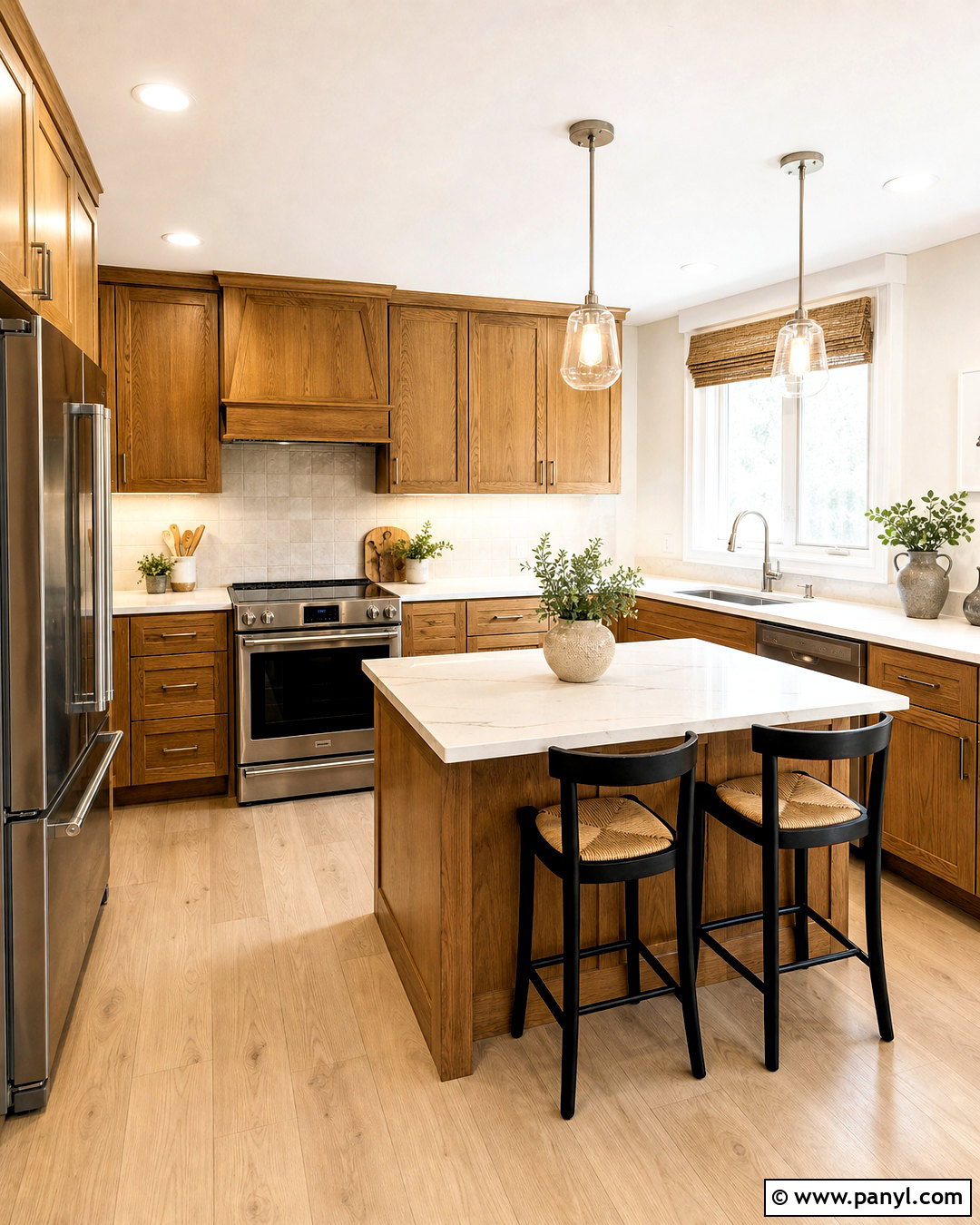
White quartz gives traditional oak cabinetry a cleaner and more contemporary setting. Choose a warm white surface with faint beige or gray veining rather than a stark blue-white finish. Continue the quartz a few inches up the wall or install a full-height slab backsplash for a seamless appearance. Simple brushed nickel pulls, a stainless steel faucet, and matching appliances keep the palette balanced. Paint the walls soft ivory and use wide-plank light oak or neutral stone-look flooring. A streamlined island with backless stools improves function without making the room feel crowded. Complete the design with clear glass pendants, under-cabinet lighting, and a few ceramic accessories in white, charcoal, and muted green.
2. Oak Cabinets With Sage Green Backsplash
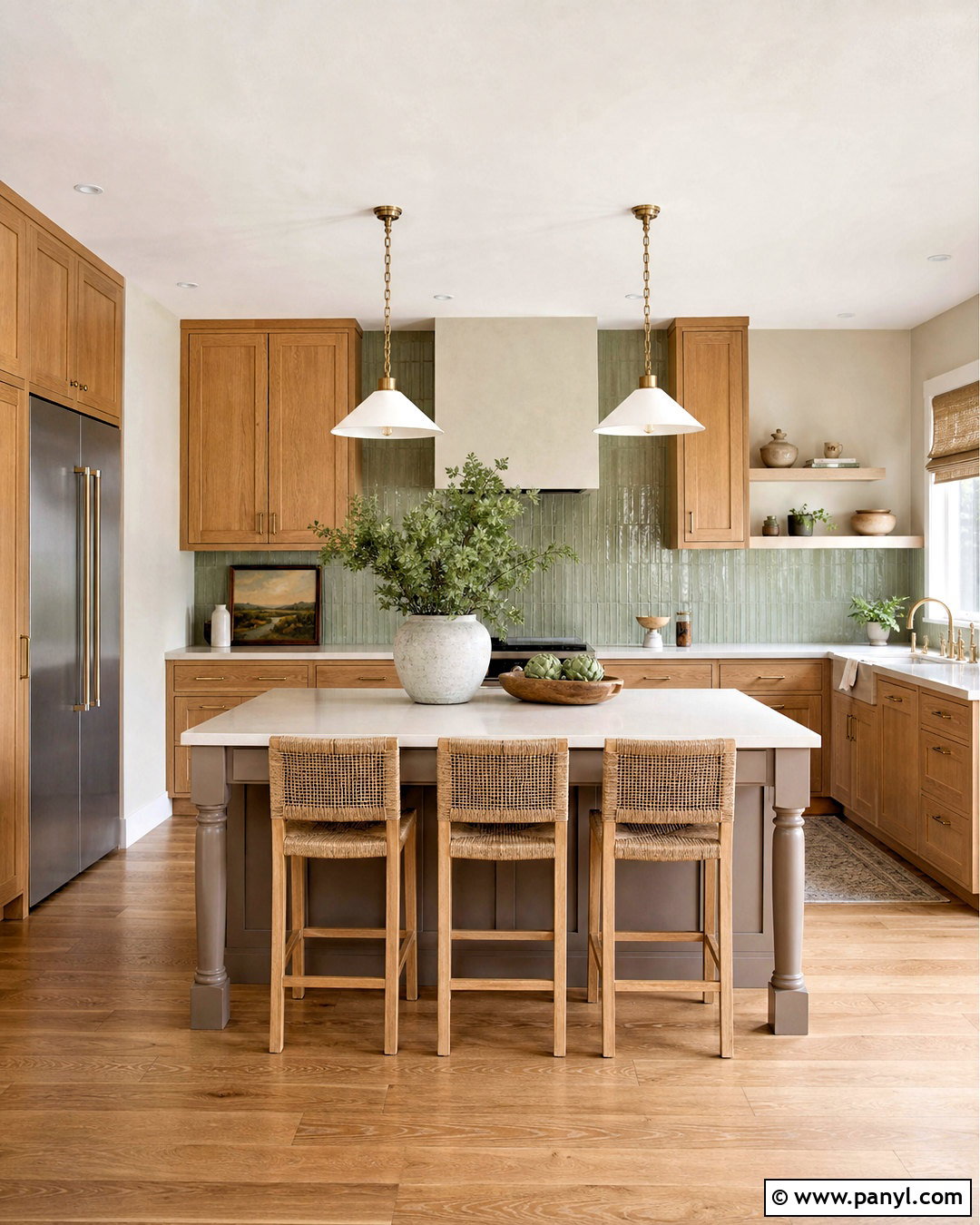
A sage green backsplash brings out the natural depth in oak while giving the kitchen a relaxed, updated personality. Select handmade-look rectangular tile with gentle color variation and install it vertically to make the walls appear taller. Keep the countertops quiet with creamy white quartz or honed off-white granite. Brushed brass hardware adds warmth without blending into the cabinet finish. Use pale greige walls, medium oak flooring, and a simple white range hood to prevent the room from becoming overly earthy. A narrow island painted soft mushroom can provide extra storage and seating. Finish the complete look with linen Roman shades, woven counter stools, ceramic planters, and warm white under-cabinet lights that highlight the textured green tile.
3. Oak Cabinets With Black Countertops
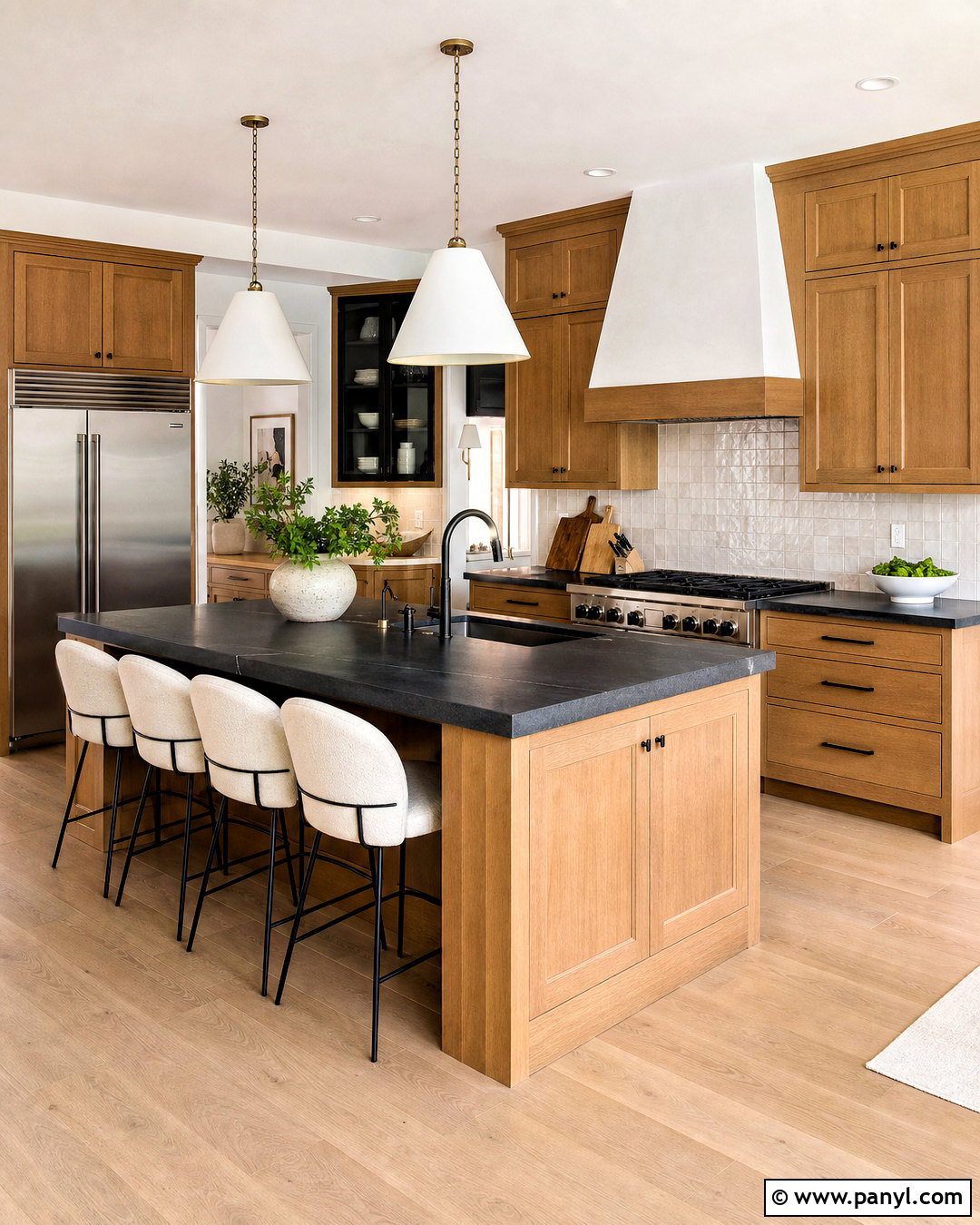
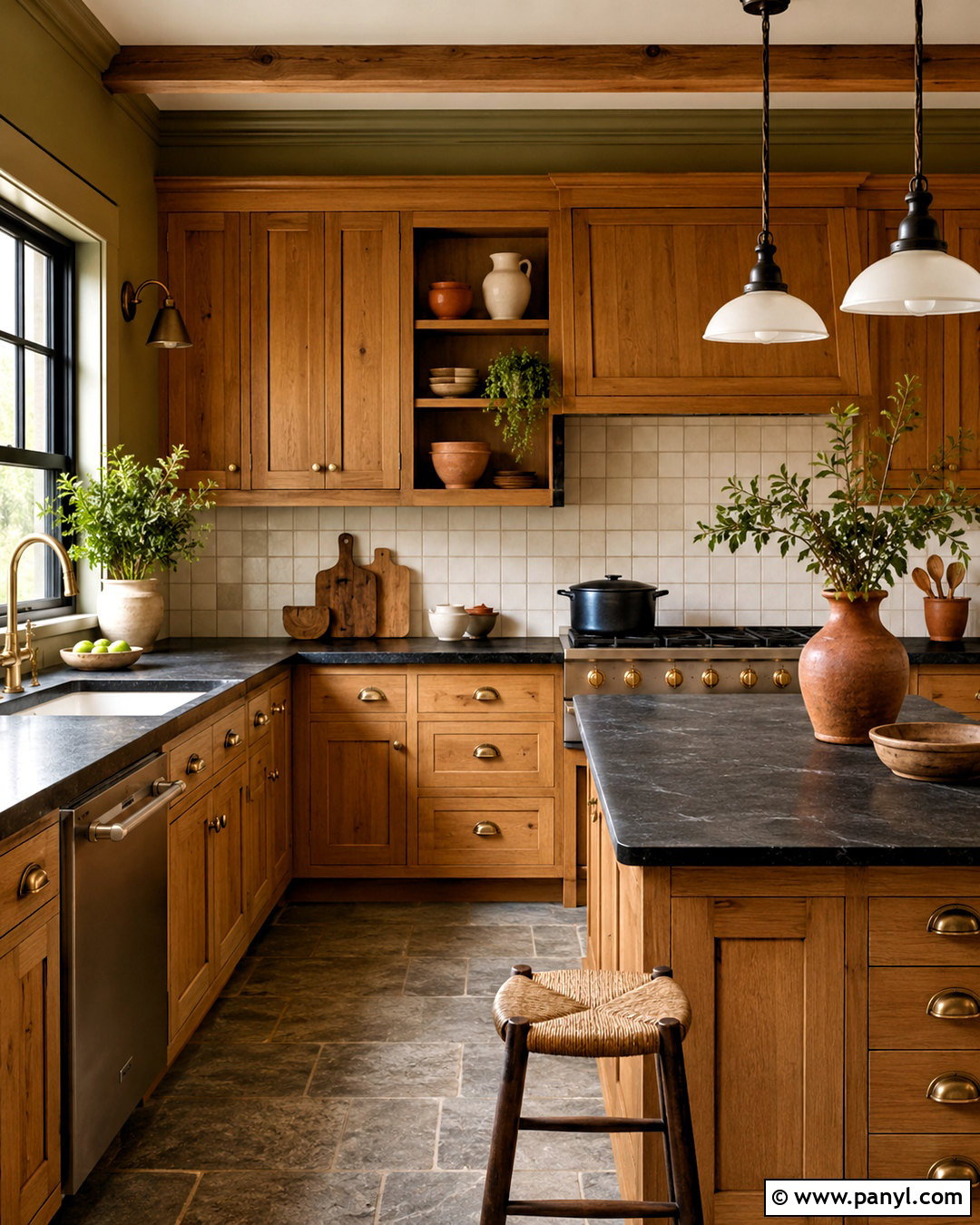
Black countertops can make oak cabinets feel intentional, graphic, and surprisingly modern. Choose honed black granite, soapstone, or charcoal quartz with minimal pattern so the wood grain remains the main feature. Balance the dark surface with an off-white backsplash, light walls, and bright ceiling lighting. Matte black cabinet pulls create continuity, while a stainless steel sink and appliances keep the room from looking overly coordinated. Use light natural flooring, such as pale oak planks or warm gray porcelain tile. If space allows, add an oak island with a black countertop and simple cream stools. White ceramic dishes, natural cutting boards, and one leafy plant soften the contrast while maintaining a polished, clutter-free kitchen.
4. Oak Cabinets With Cream Zellige Tile
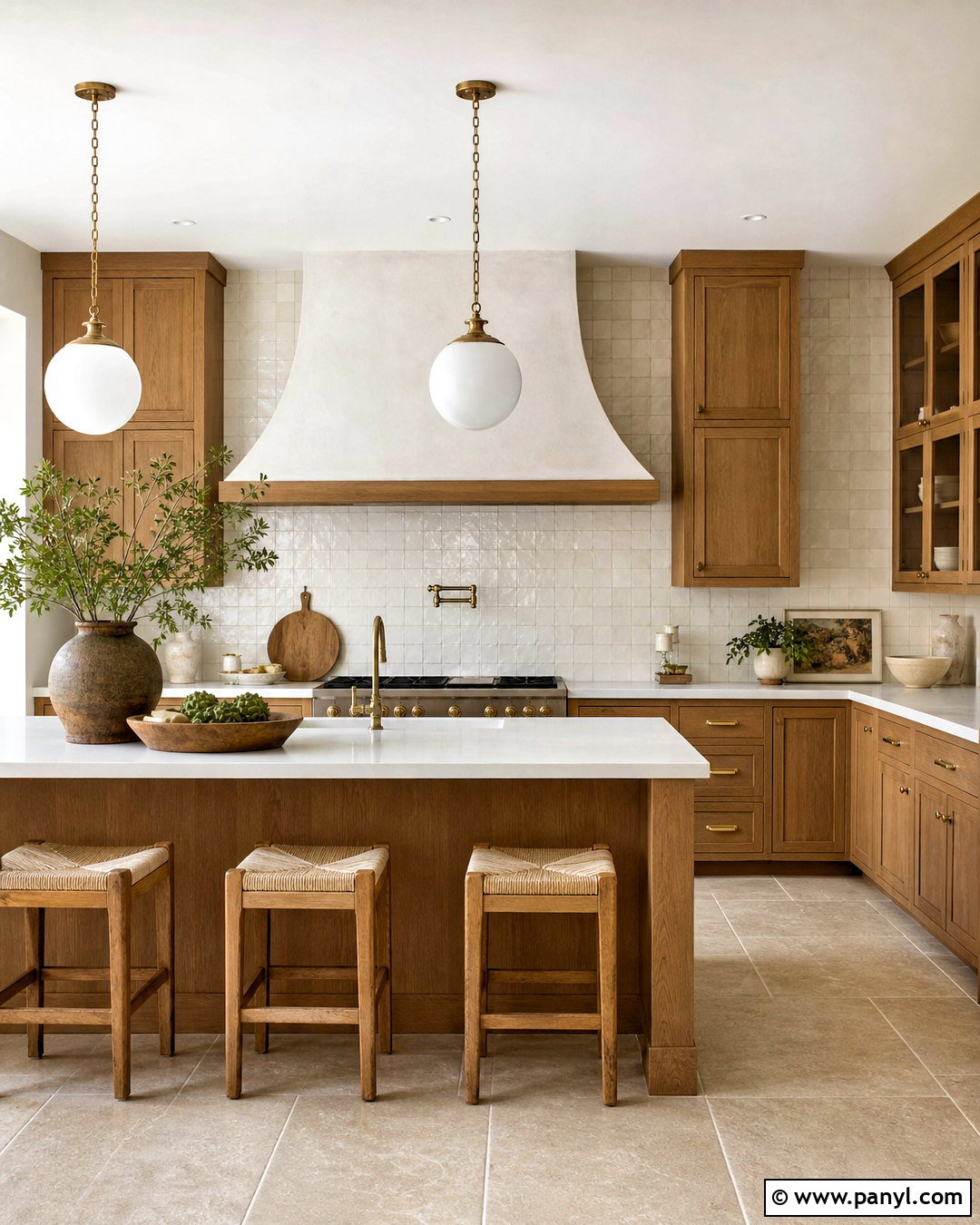
Cream zellige tile adds subtle texture to an oak kitchen without introducing a competing pattern. Its uneven surface reflects light differently across the backsplash, helping older cabinets look richer and more dimensional. Pair the tile with warm white quartz countertops and a creamy grout that keeps the installation visually calm. Use aged brass knobs, a matching bridge faucet, and simple globe pendants to create a soft transitional look. Warm white walls and natural limestone-look flooring support the palette. Replace a bulky cabinet above the range with a smooth plaster-style hood in ivory. A small oak island, woven stools, linen shades, and handmade pottery complete a kitchen that feels layered, bright, and comfortable rather than overly formal.
5. Oak Cabinets With Navy Blue Island
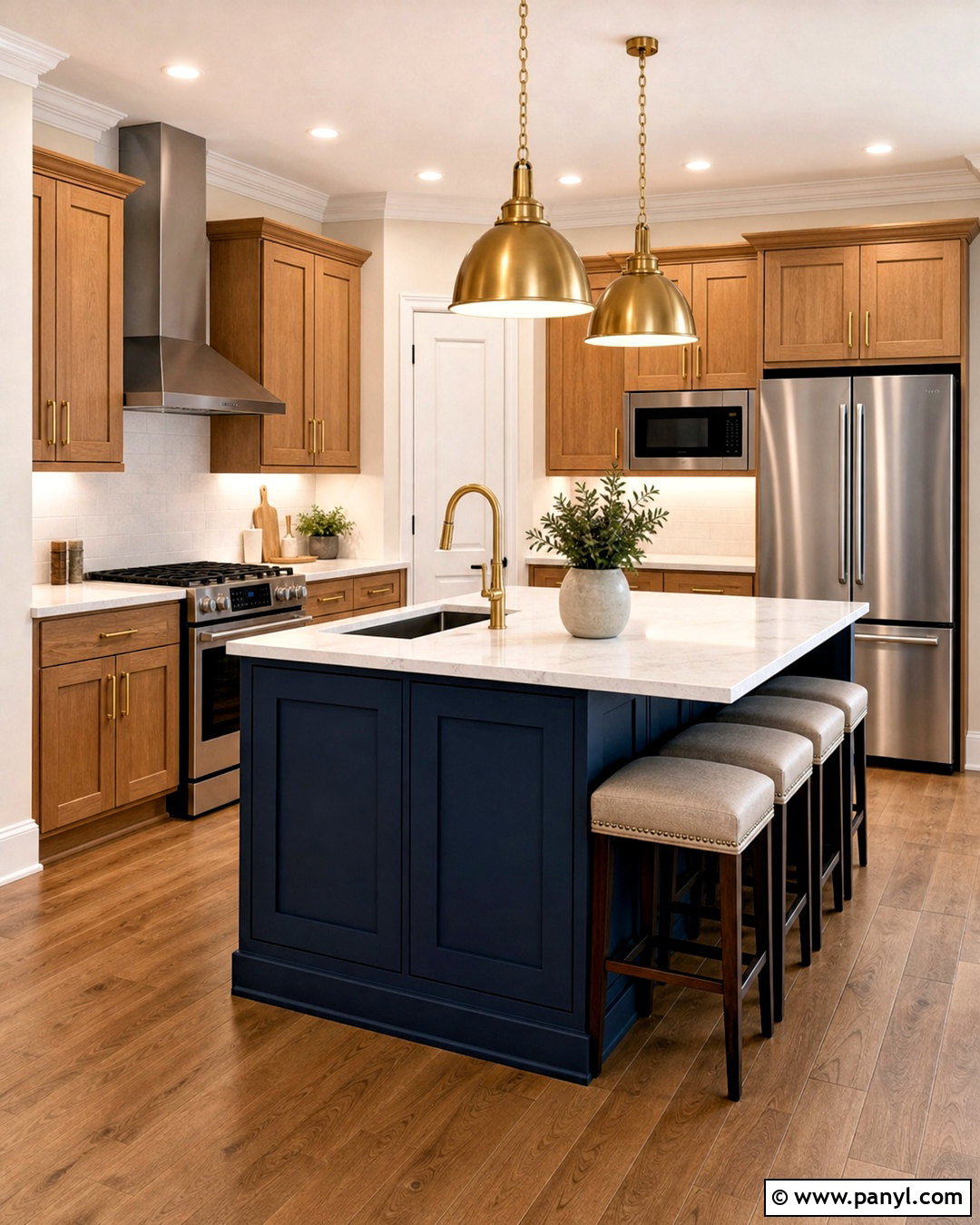
A navy blue island creates a strong focal point while allowing oak perimeter cabinets to retain their warmth. Select a deep, slightly muted navy rather than a bright royal blue. Top the island and surrounding cabinets with white marble-look quartz to connect both finishes. Brushed brass pulls and pendant lights provide a warm bridge between the blue paint and golden oak grain. Use a simple white backsplash, soft off-white walls, and medium-toned wood flooring. Upholstered counter stools in oatmeal fabric make the island comfortable for everyday meals. Keep appliances stainless steel and choose a clean-lined range hood. The completed kitchen feels balanced because the navy adds depth while the white surfaces prevent the wood cabinetry from appearing heavy.
6. Oak Cabinets With White Upper Cabinets
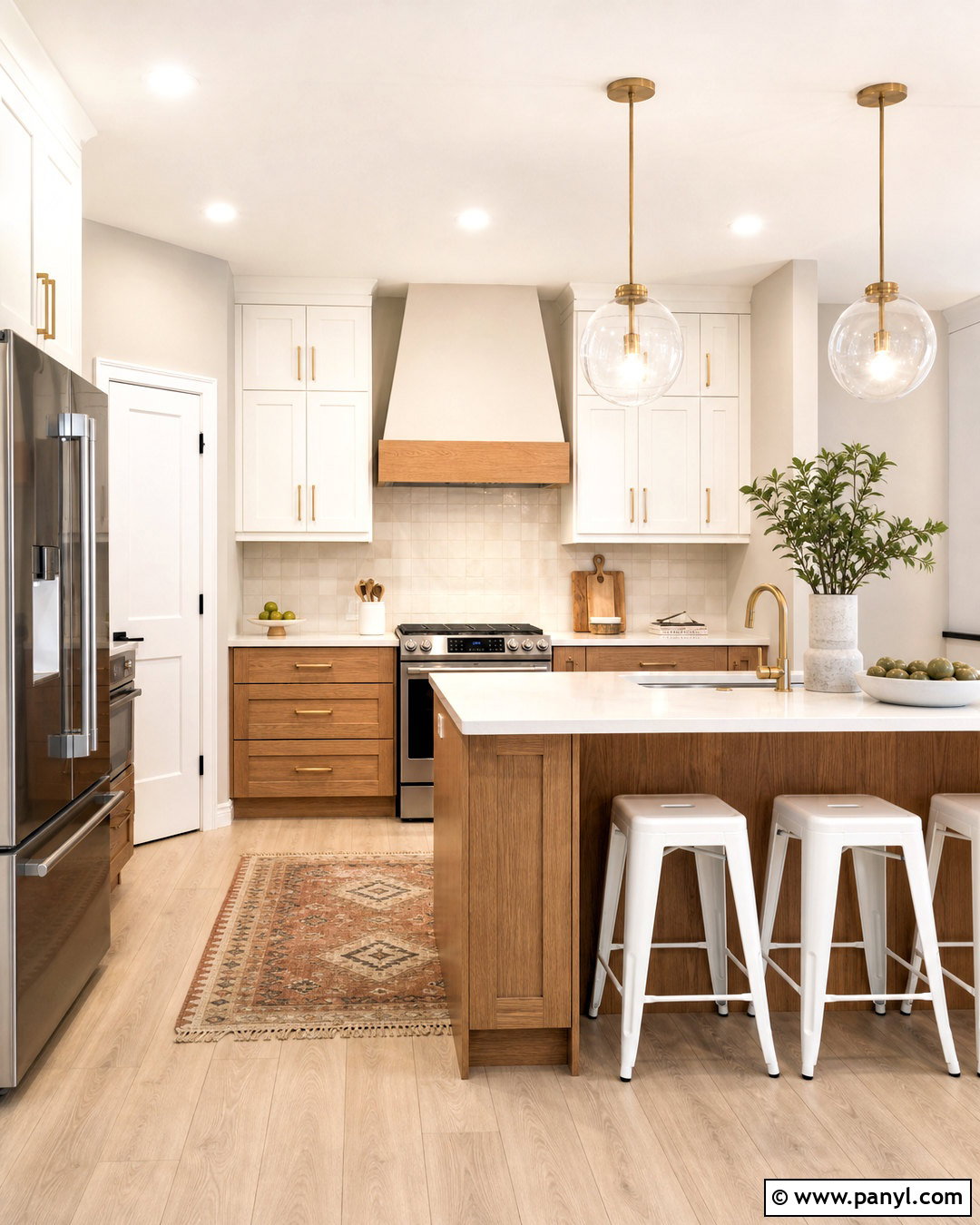
Mixing oak base cabinets with white upper cabinets can visually lighten a compact or low-ceilinged kitchen. Keep the existing oak below the countertops, then paint or replace the upper doors in a soft warm white. Select simple Shaker fronts if new doors are part of the update. White quartz counters and a matching backsplash create a continuous horizontal band between the two cabinet finishes. Use brushed nickel or satin brass hardware across every cabinet for consistency. Pale greige walls and light wood-look flooring keep the space open. Add a small oak breakfast peninsula, two white counter stools, and clear glass pendants. This two-tone arrangement preserves natural wood while moving visual weight toward the lower half of the room.
7. Oak Cabinets With Soapstone Countertops
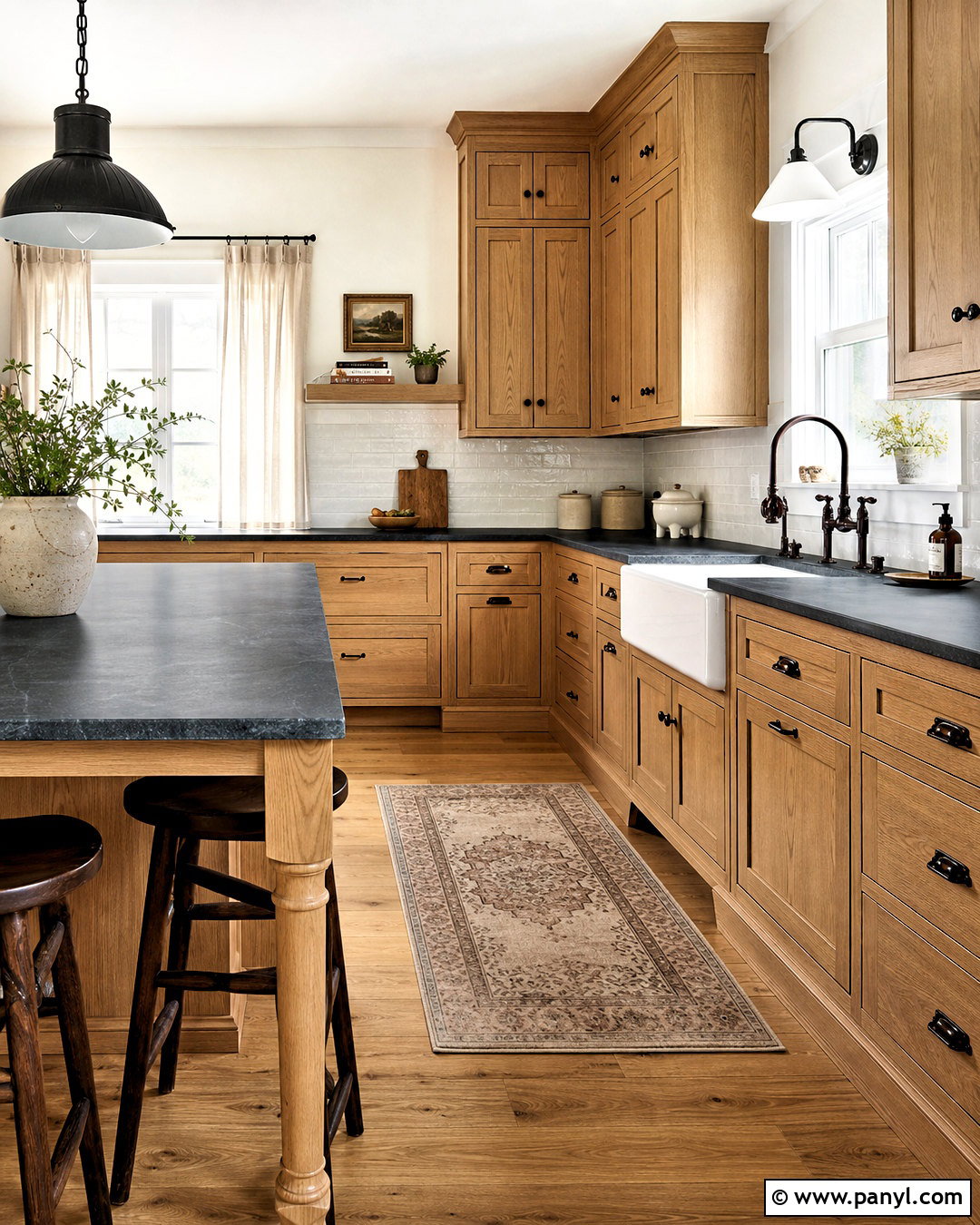
Soapstone introduces deep color and natural movement without making oak cabinetry feel overly traditional. Its soft charcoal surface works especially well with medium or golden oak because the contrast defines the cabinet shape. Continue the stone behind the range for a dramatic but cohesive backsplash, then use warm white tile elsewhere. Choose unlacquered brass or antique bronze hardware to complement the stone’s subtle veining. Cream walls, wide-plank oak flooring, and a painted off-white ceiling keep the room welcoming. A farmhouse-style sink can suit the material, but pair it with a simple faucet and streamlined lighting. Finish the kitchen with linen café curtains, dark wood stools, and practical pottery displayed sparingly on one open shelf.
8. Oak Cabinets With Marble Backsplash
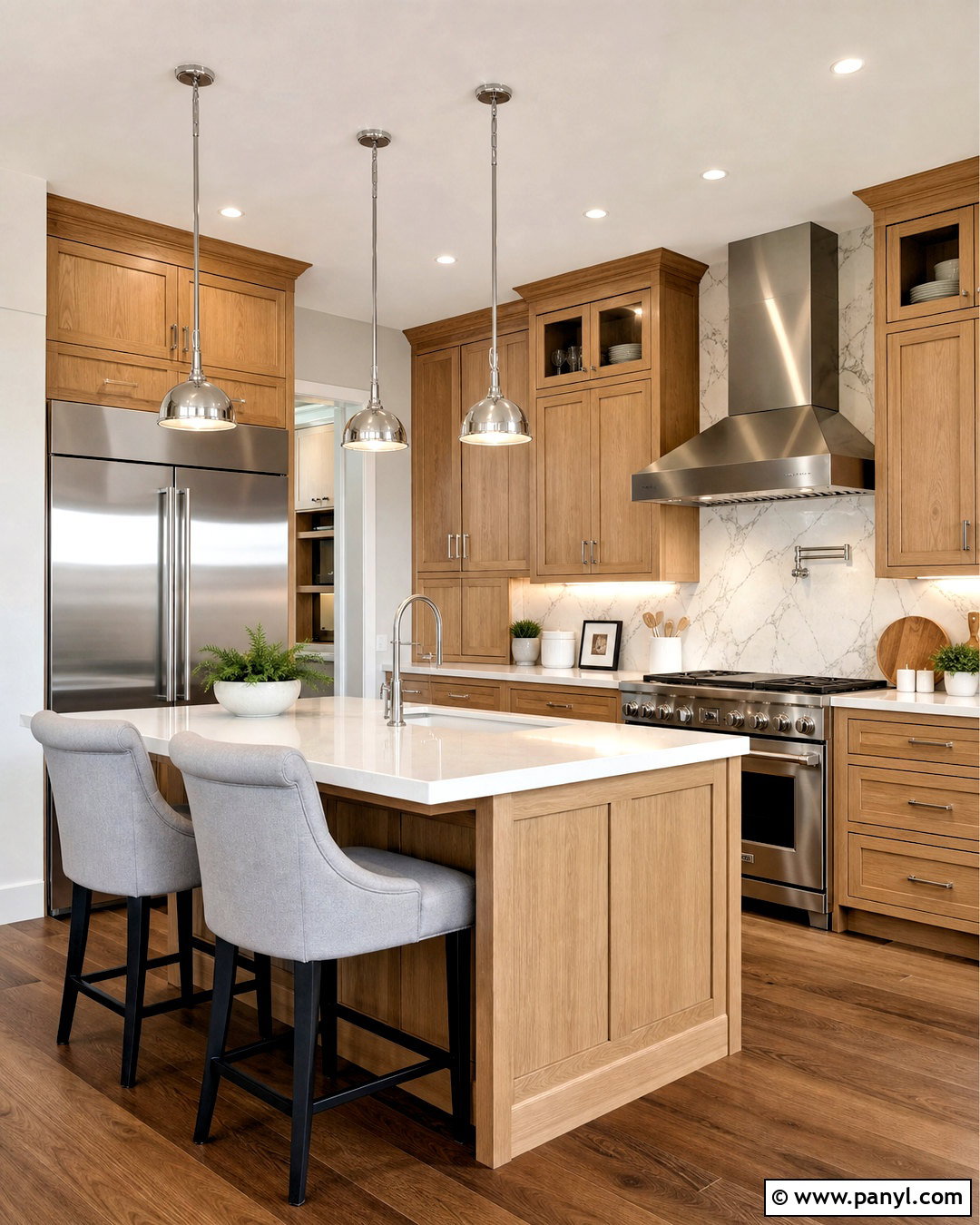
A marble backsplash can elevate oak cabinets while maintaining a natural, material-focused kitchen. Choose white or creamy marble with long, soft gray veining instead of a heavily patterned slab. Install it from the countertop to the upper cabinets for a clean architectural effect. Use quiet white quartz on the counters so the backsplash remains the feature. Polished nickel hardware, a stainless steel range, and simple metal pendants add a crisp finish. Paint the walls a pale warm gray and use medium brown flooring to ground the lighter surfaces. An oak island with comfortable upholstered seating reinforces the cabinetry. Keep accessories restrained with white stoneware, a wooden fruit bowl, and clear containers placed neatly near the preparation area.
9. Honey Oak Cabinets With Greige Walls
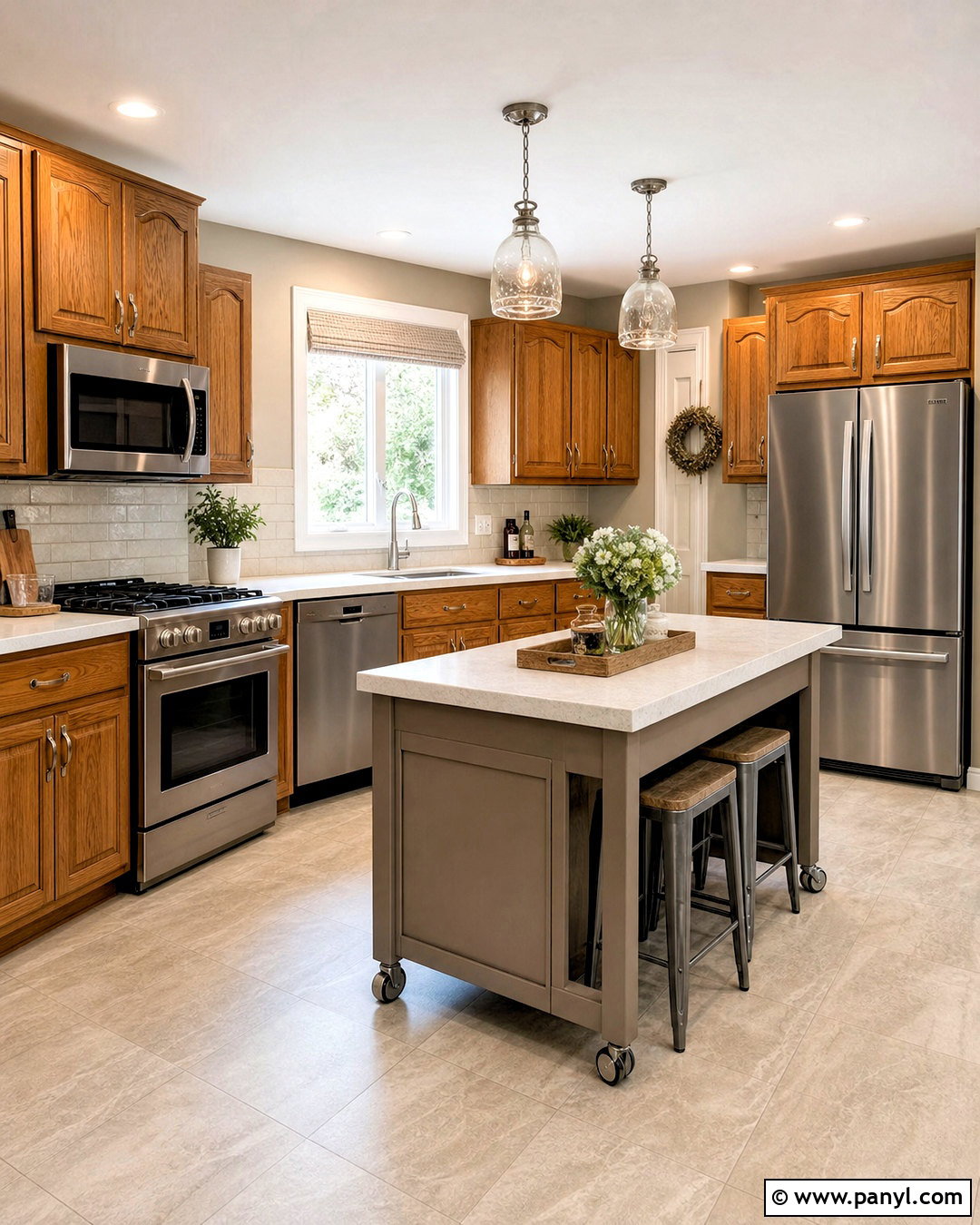
The right greige wall color can calm the orange cast of honey oak without making the kitchen feel cold. Look for a light greige with a subtle green or taupe undertone, then test it beside the cabinetry throughout the day. Pair it with warm white quartz, a simple off-white subway backsplash, and brushed nickel hardware. Replace yellowed flooring with pale neutral porcelain tile or light oak-look planks. Stainless steel appliances and a slim modern faucet sharpen the overall design. Remove heavy window treatments so daylight can reach the wood surfaces. A small movable island painted deeper taupe adds function and contrast. Finish with cream textiles, matte ceramic containers, and understated black accents for a balanced transitional kitchen.
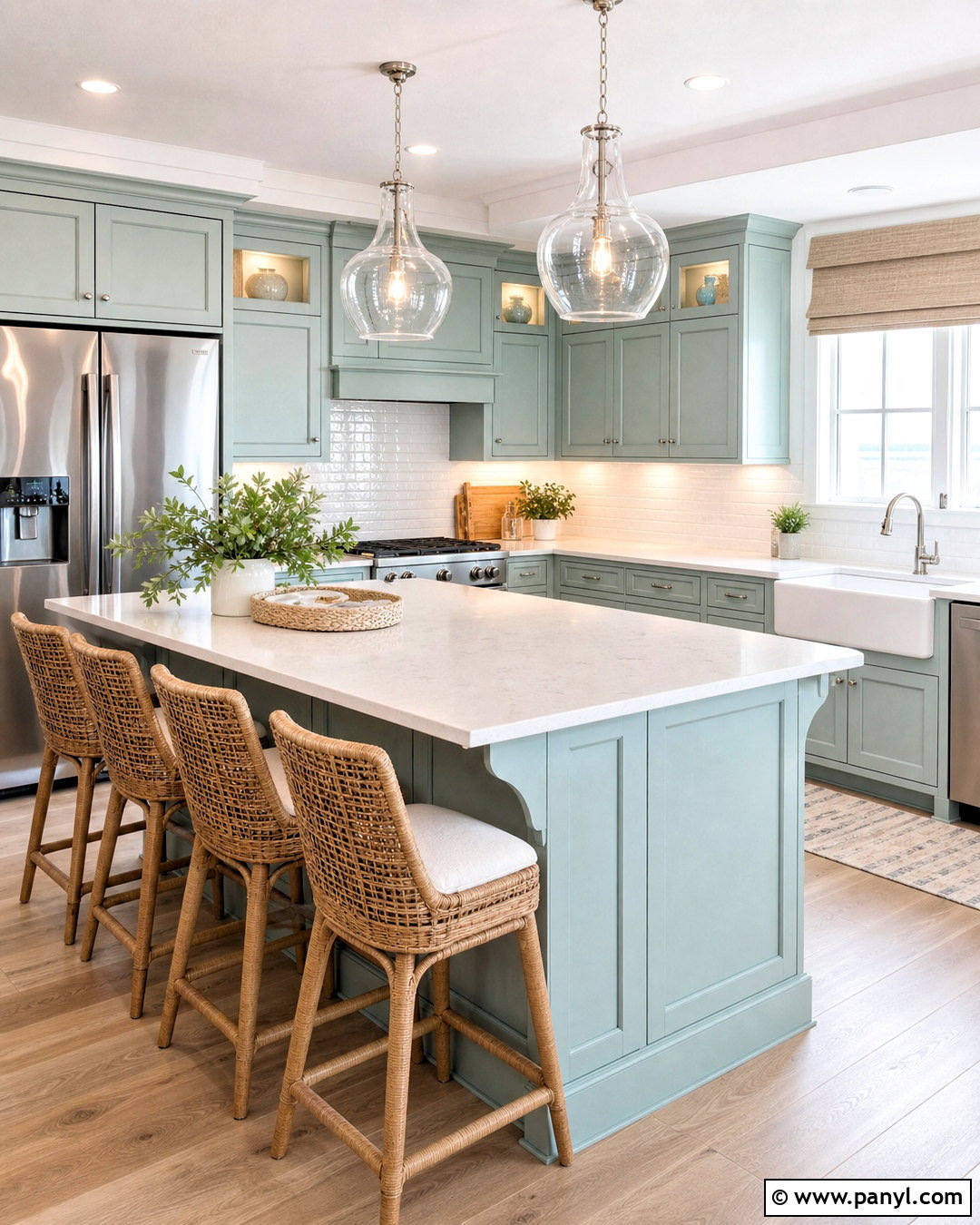
10. Light Oak Cabinets With Matte Black Accents
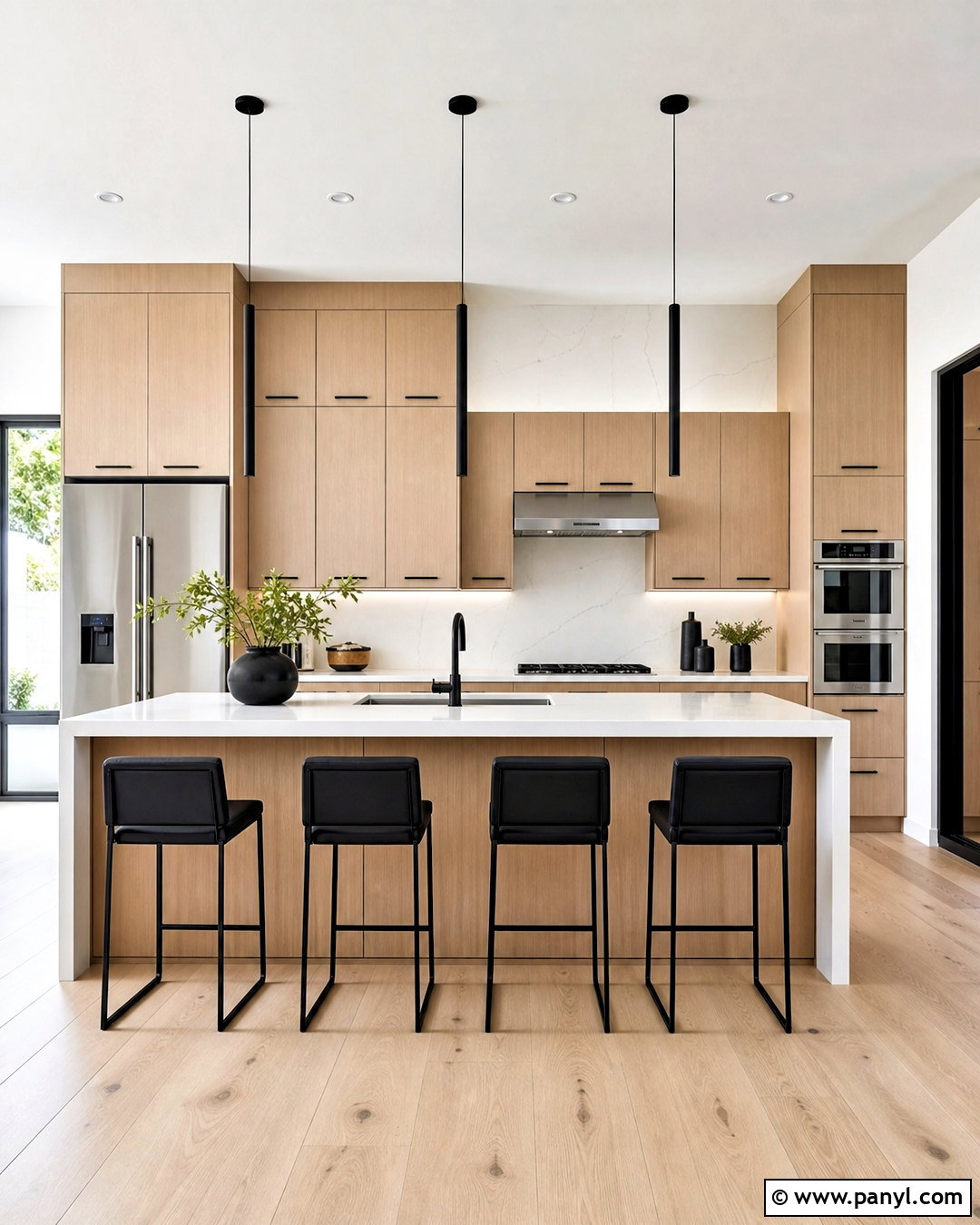
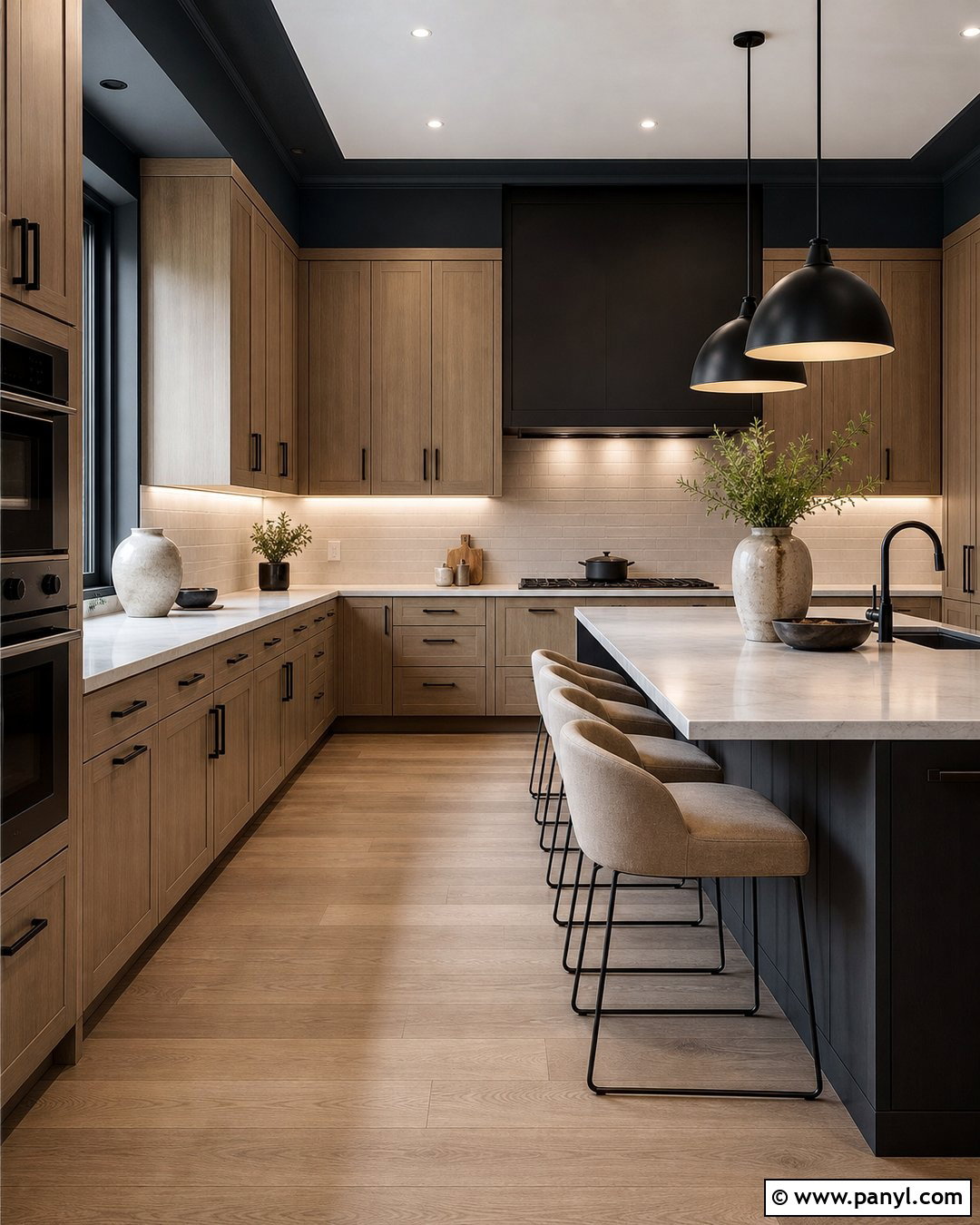
Light oak cabinets provide a bright foundation for crisp matte black details. Use thin black bar pulls, a black faucet, and narrow metal pendant lights rather than adding black to every surface. Warm white quartz counters and a matching slab backsplash preserve an airy appearance. Choose flat-panel or slim Shaker cabinet doors to emphasize clean lines. Pale oak flooring can work with the cabinets when the grain direction and tones remain distinct. Add an island in the same wood with black-framed stools and a lightly veined white countertop. Soft white walls and minimal window coverings maximize daylight. A few charcoal ceramics, wooden serving boards, and stainless steel appliances complete the design without distracting from the natural oak grain.
11. Oak Cabinets With Brushed Brass Hardware
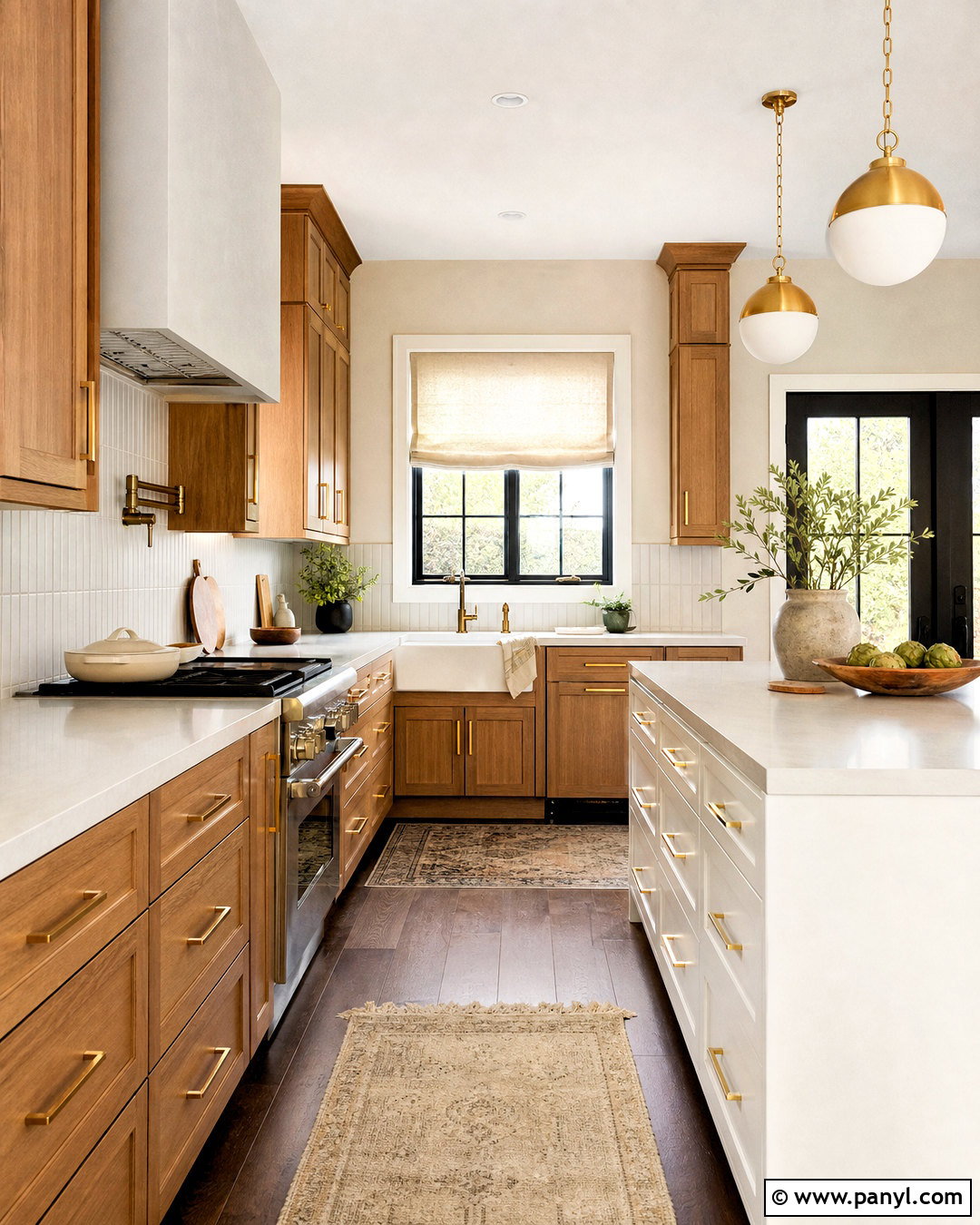
Brushed brass hardware can refresh oak cabinets when the metal finish is distinct enough to remain visible against the wood. Select streamlined pulls with simple rectangular shapes rather than ornate handles. Carry the brass into the faucet and pendant lighting, but use it sparingly so the kitchen does not feel overly matched. Pair the cabinets with creamy quartz countertops and vertical off-white tile. Paint the walls a soft putty color and use medium brown hardwood or neutral limestone-look flooring. A white island can break up a large amount of oak while providing seating and storage. Complete the room with linen shades, warm white bulbs, ceramic bowls, and a restrained mix of black and cream accessories for gentle contrast.
12. Oak Cabinets With Stainless Steel Appliances
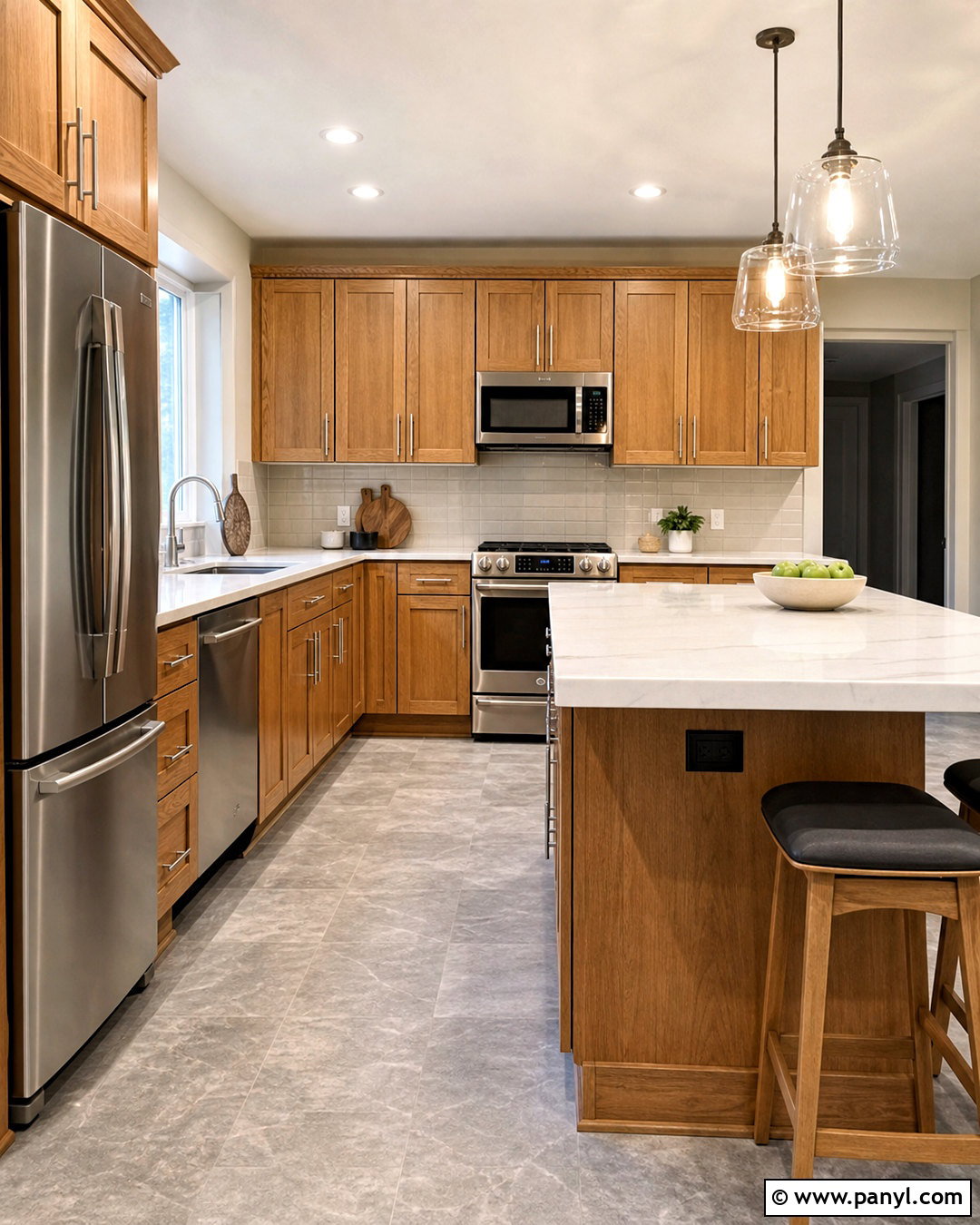
Stainless steel appliances bring a clean, practical edge to oak cabinetry, especially when every visible appliance uses the same finish. Choose a counter-depth refrigerator and streamlined range to reduce visual bulk. Add satin nickel pulls and a stainless steel faucet so the metal details feel connected. White quartz counters and pale gray rectangular backsplash tile create a bright transition between the wood and appliances. Paint the walls a clean warm white and install medium gray stone-look flooring for contrast. A compact oak island with a quartz top can improve preparation space while repeating the cabinetry. Finish with glass pendant lights, hidden under-cabinet illumination, and a few black accessories that visually outline the softer oak and silver surfaces.
13. Oak Cabinets With Open Shelving
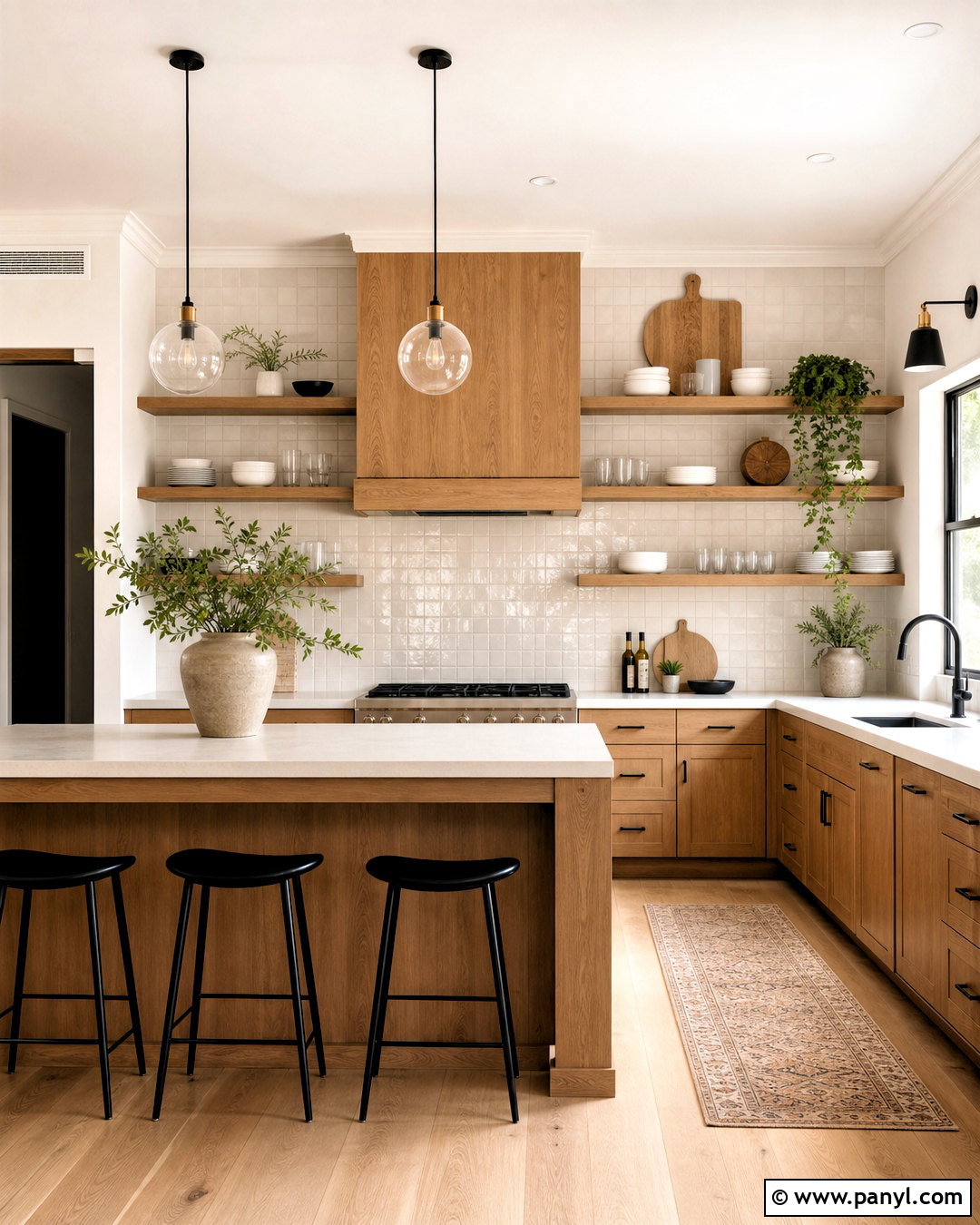
Replacing one crowded upper cabinet with oak open shelving can make the entire kitchen feel lighter. Position two substantial shelves near a window, coffee station, or preparation area rather than removing every upper cabinet. Match the shelf tone to the existing oak for a unified result. Use warm white quartz counters and pale square backsplash tile as a quiet background. Matte black brackets, cabinet pulls, and a coordinating faucet add definition. Paint the walls soft cream and select light neutral flooring. Keep the shelves functional with stacked white dishes, clear glasses, a small plant, and matching storage containers. An oak island with simple black stools completes the room while providing concealed storage to compensate for the removed cabinet.
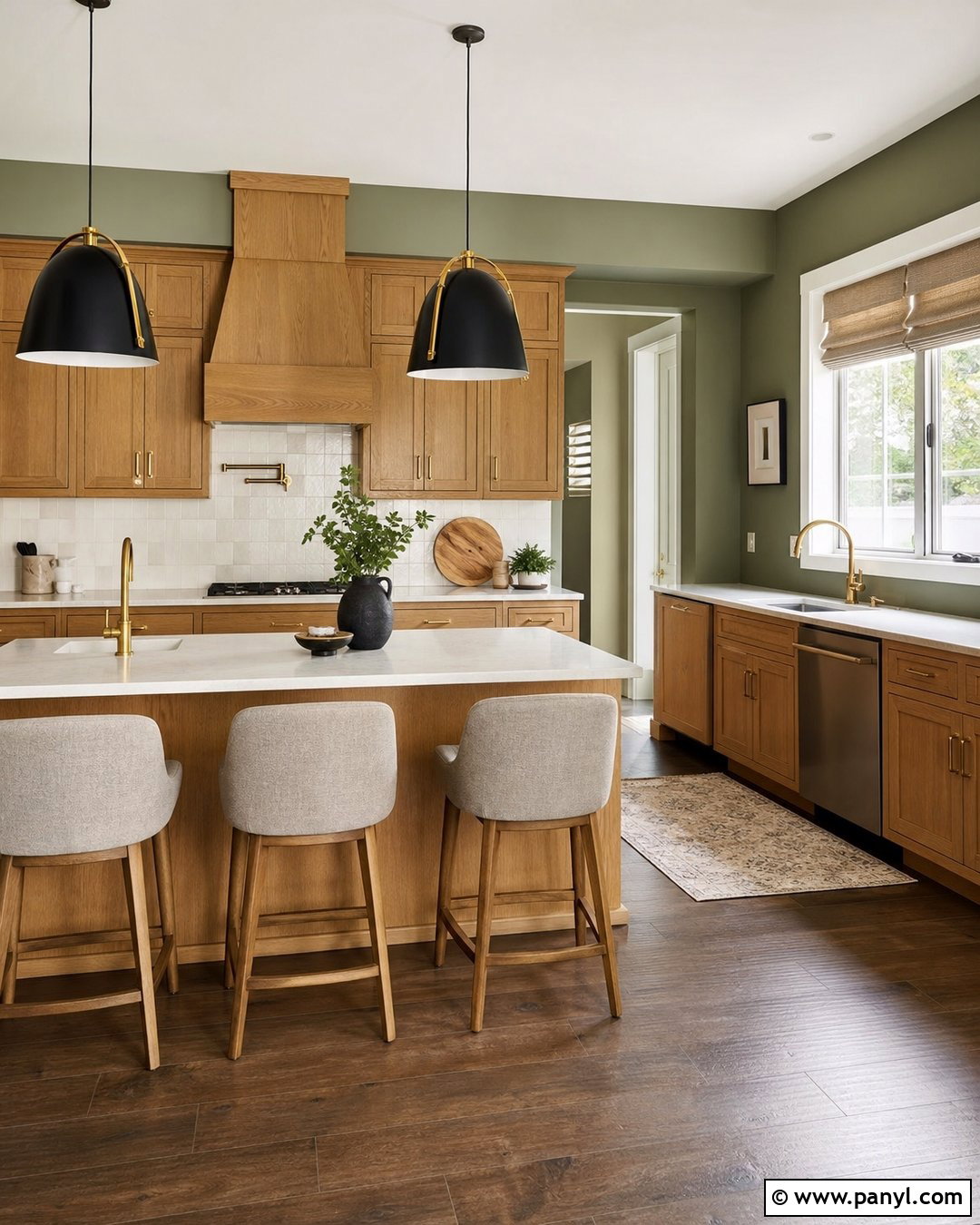
14. Oak Cabinets With Dark Green Island
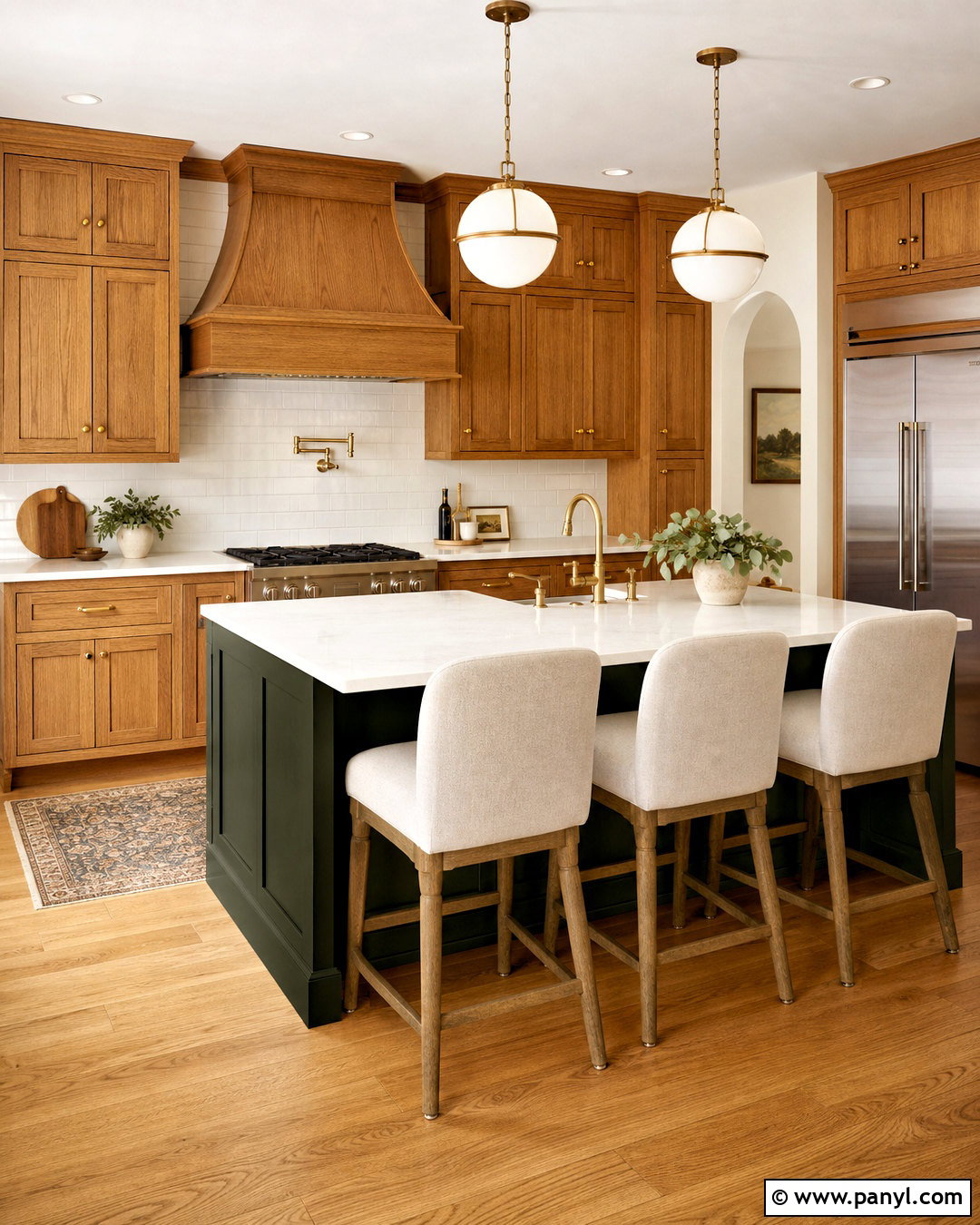
Deep forest green can give an oak kitchen a grounded, furniture-inspired focal point. Paint the island a rich green with muted gray undertones, then top it with creamy white quartz or lightly veined quartzite. Use the same countertop on the oak perimeter cabinets to unite the room. A soft white backsplash and warm ivory walls keep the dark island from overpowering the space. Choose aged brass pulls, globe pendants, and a simple brass faucet for a cohesive finish. Medium oak flooring works when it is slightly darker than the cabinets. Add oatmeal-colored counter stools and natural linen window shades. Minimal botanical artwork, ceramic crocks, and wooden serving pieces reinforce the organic palette without turning the kitchen into a themed space.
15. Oak Cabinets With Terracotta Flooring
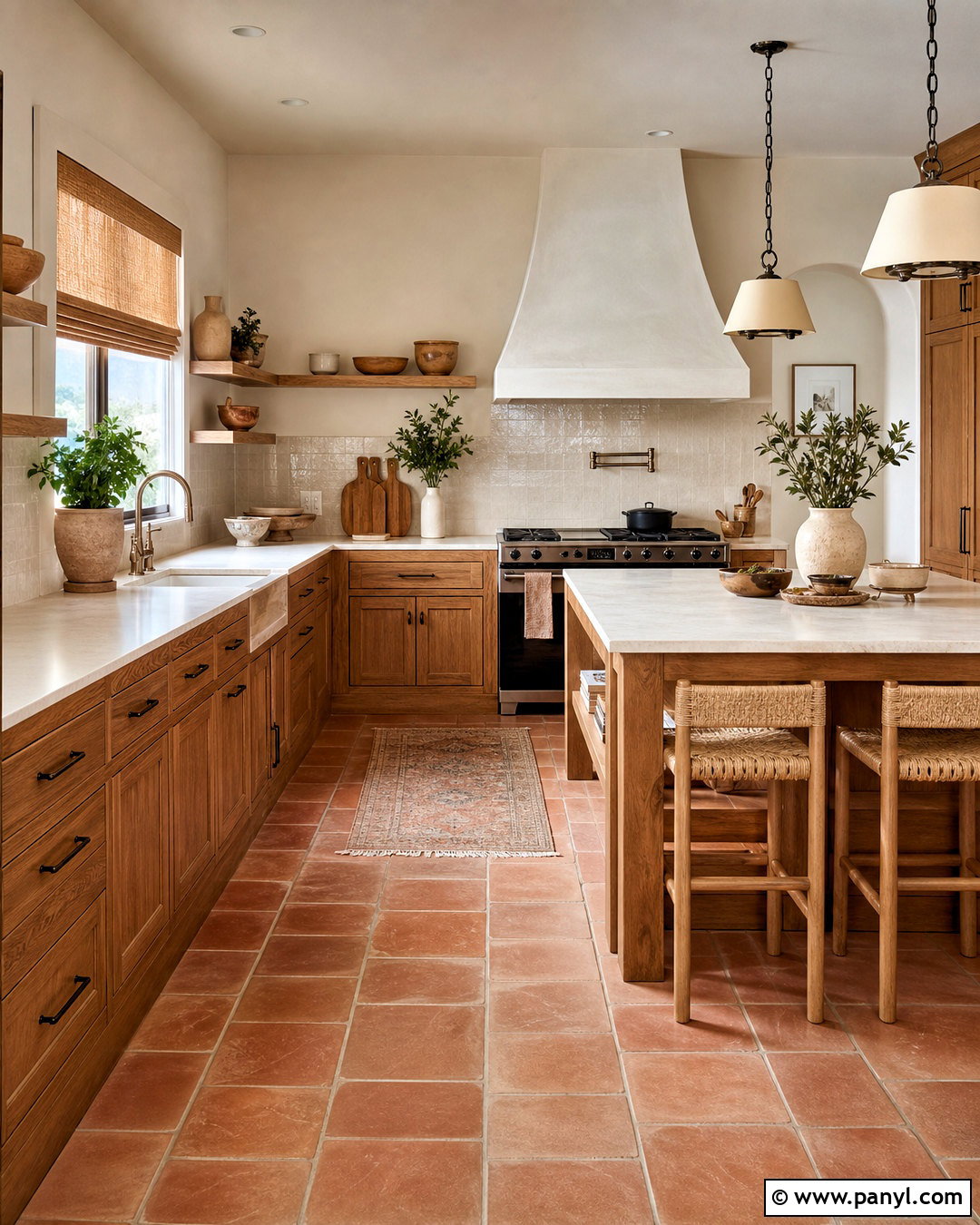
Terracotta flooring creates a warm, relaxed kitchen when it is balanced with light surfaces and simple details. Choose muted clay tiles with dusty red, peach, and brown variation rather than bright orange flooring. Pair the oak cabinets with creamy quartz counters and a soft white plaster-look backsplash. Dark bronze hardware and a matching faucet provide subtle contrast. Keep the walls pale ivory and use a white range hood to break up the wood cabinetry. An oak worktable-style island can add preparation space while maintaining the casual character of the room. Complete the look with woven stools, linen shades, a neutral runner, and handmade ceramic pieces. Bright lighting is essential for keeping the layered warm palette fresh and open.
16. Oak Cabinets With Light Wood Flooring
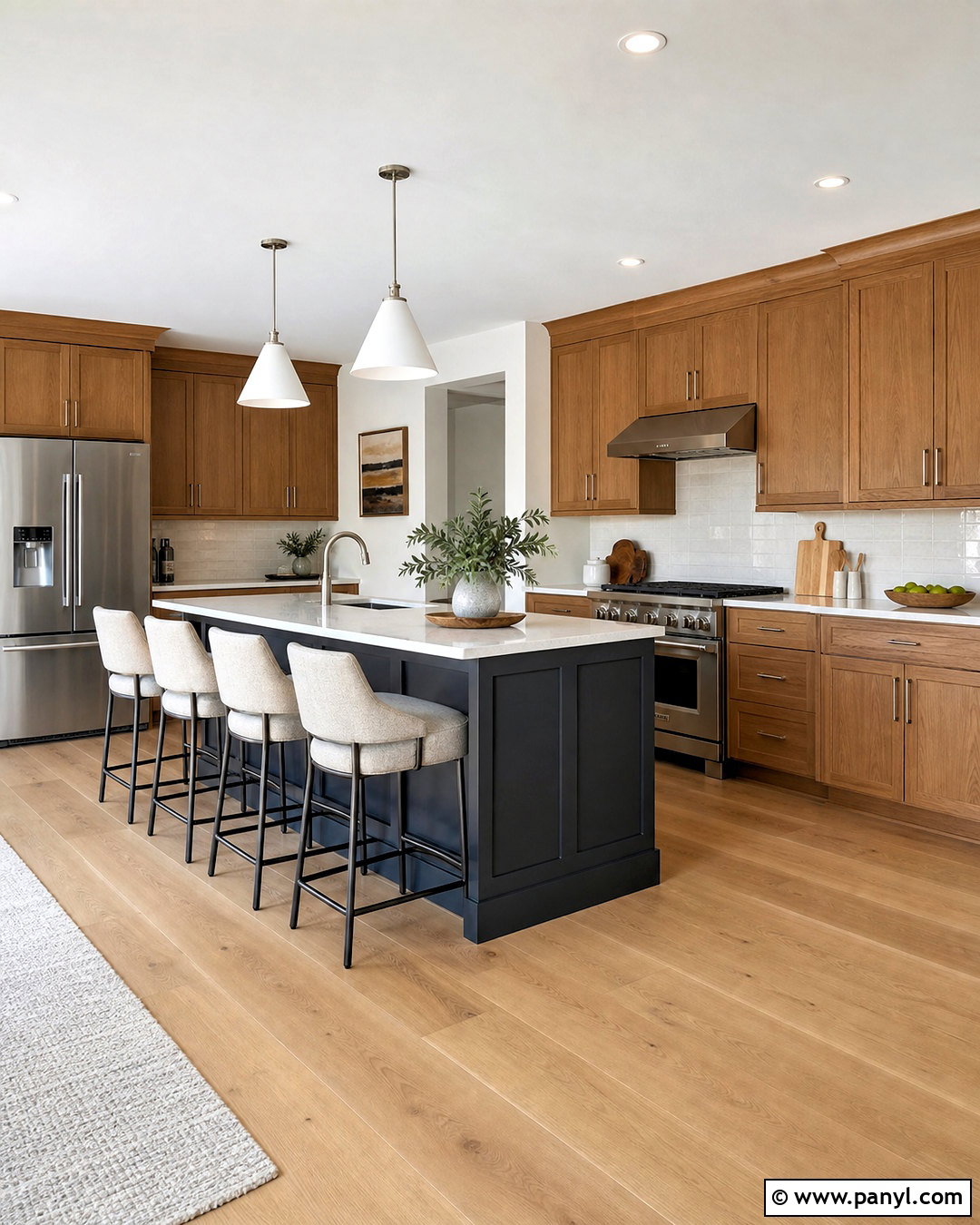
Oak cabinets and light wood flooring can work together when their colors are intentionally separated. Choose flooring with a pale neutral or slightly gray undertone instead of matching the cabinets exactly. Wider planks and a low-sheen finish create a clean foundation. Add white quartz counters, an off-white tile backsplash, and soft mushroom walls to provide visual breaks between the wood surfaces. Brushed nickel hardware and stainless steel appliances introduce cooler details. Use a painted charcoal island if the room needs a stronger anchor, then add light upholstered stools. Simple white pendants, under-cabinet lighting, and uncluttered counters keep the kitchen feeling spacious. Natural textiles and a small amount of greenery soften the final design without adding unnecessary color.
17. Oak Cabinets With Modern Pendant Lighting
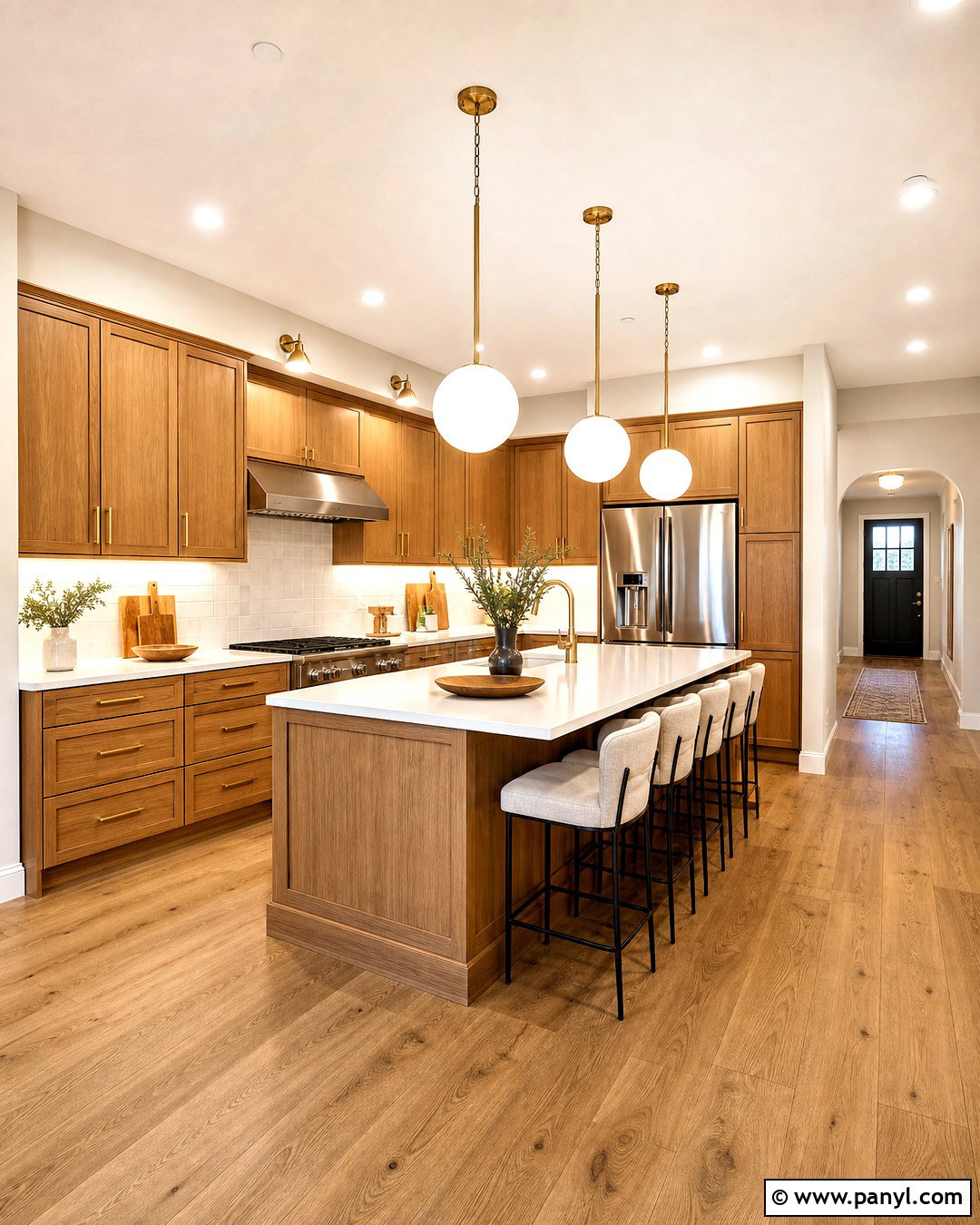
New pendant lighting can reset the style of an oak kitchen, but it should be part of a complete update. Choose two or three clean-lined fixtures sized appropriately for the island rather than small decorative pendants that disappear visually. Milk-glass globes with brushed brass stems create warmth, while black metal cones offer stronger contrast. Coordinate the fixtures with new cabinet hardware and a modern faucet. Use warm white quartz counters, creamy tile, and pale greige walls to brighten the wood. A medium oak island and upholstered stools make the lighting feel purposeful. Add recessed ceiling lights and under-cabinet strips for practical illumination. The layered lighting plan gives the room dimension while allowing the oak grain and work surfaces to remain clearly visible.
18. Oak Cabinets With Glass Front Doors
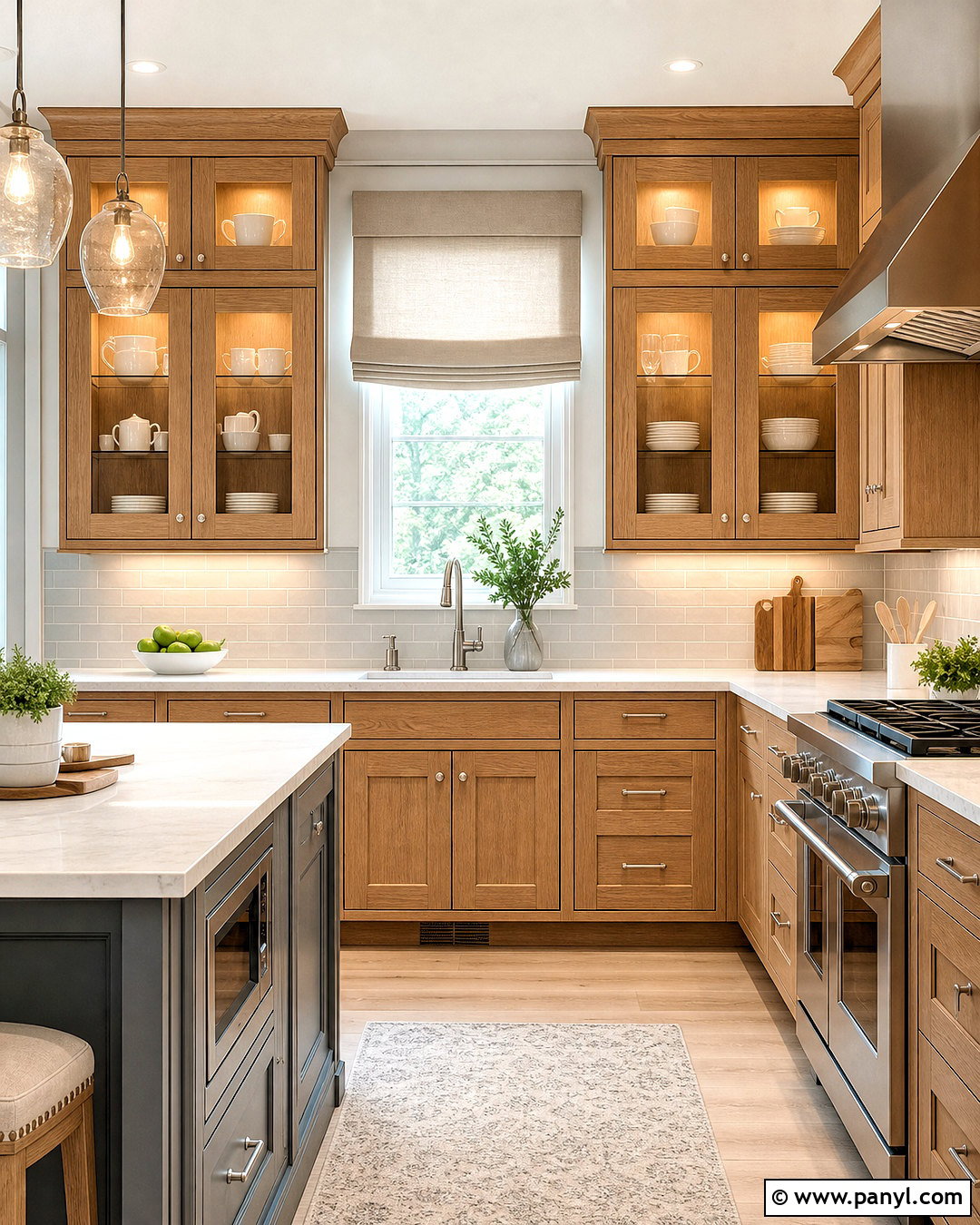
Glass-front doors can break up a long wall of oak cabinets and introduce a lighter, more customized appearance. Convert two symmetrical upper cabinets near the sink or range rather than scattering glass doors throughout the room. Use clear or lightly reeded glass with warm interior lighting. Display coordinated white dishes and clear glassware to avoid visual clutter. Pair the oak with off-white quartz counters, pale gray backsplash tile, and polished nickel hardware. Warm white walls and medium-tone flooring support the transitional design. Add a simple island painted soft gray, topped with matching quartz. A stainless steel range, tailored window shade, and two understated pendants complete a polished kitchen that feels open while retaining ample enclosed storage.
19. Oak Cabinets With Built In Pantry
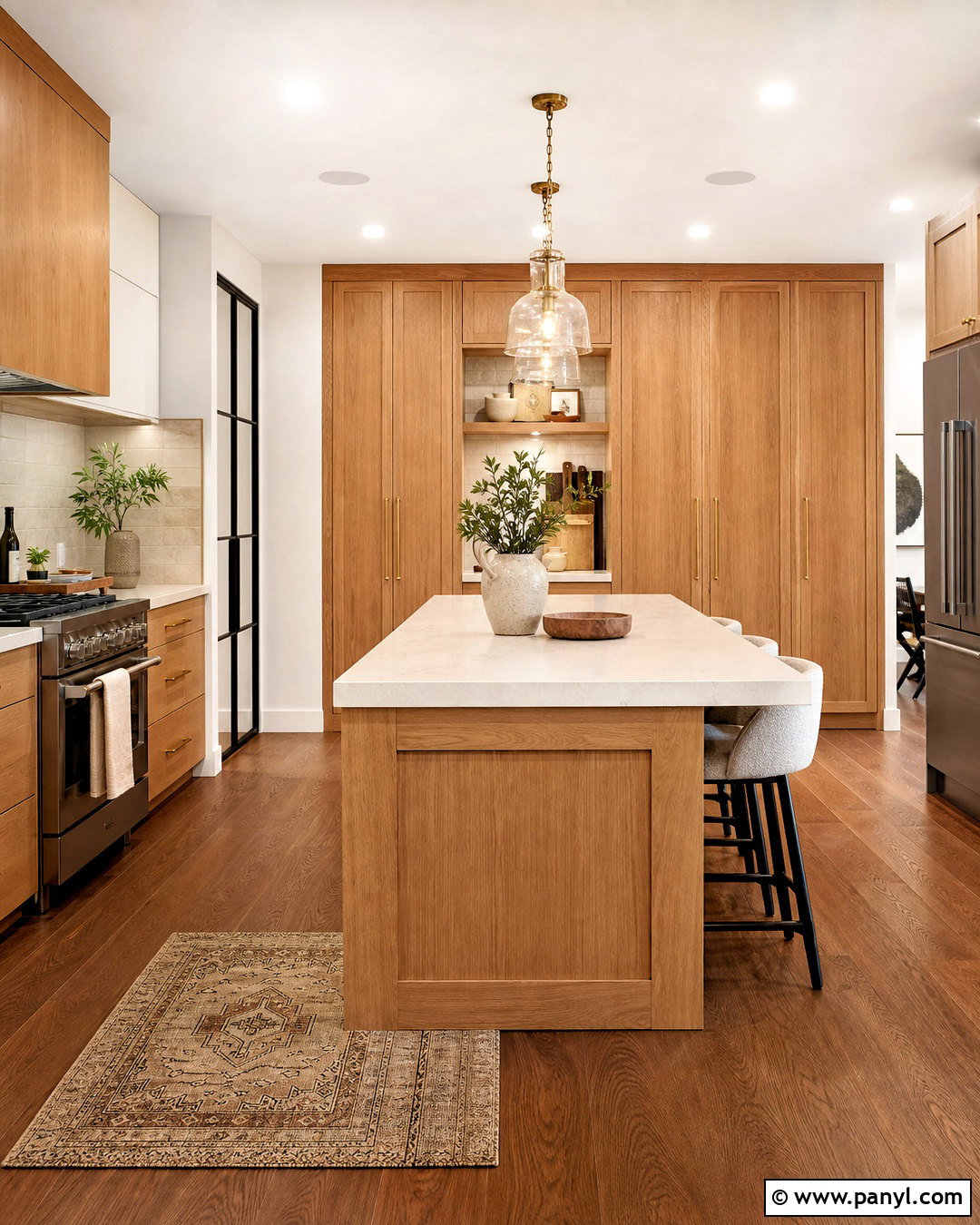
A built-in pantry can make an oak kitchen look more intentional while improving everyday organization. Match tall pantry doors to the existing cabinets or use flat-panel oak fronts for a cleaner transition. Extend the cabinetry to the ceiling and add simple crown trim or a narrow filler panel to eliminate dusty gaps. Use deep drawers below, adjustable shelves inside, and a small appliance station hidden behind retractable doors. White quartz counters, creamy backsplash tile, and warm white walls keep the taller wood feature from feeling heavy. Choose long brushed brass pulls to emphasize the pantry’s vertical lines. Add a compact island, comfortable stools, and bright ceiling lighting. Clear counters and concealed storage give the finished room a calm, updated appearance.
20. Small Kitchen With Oak Cabinets
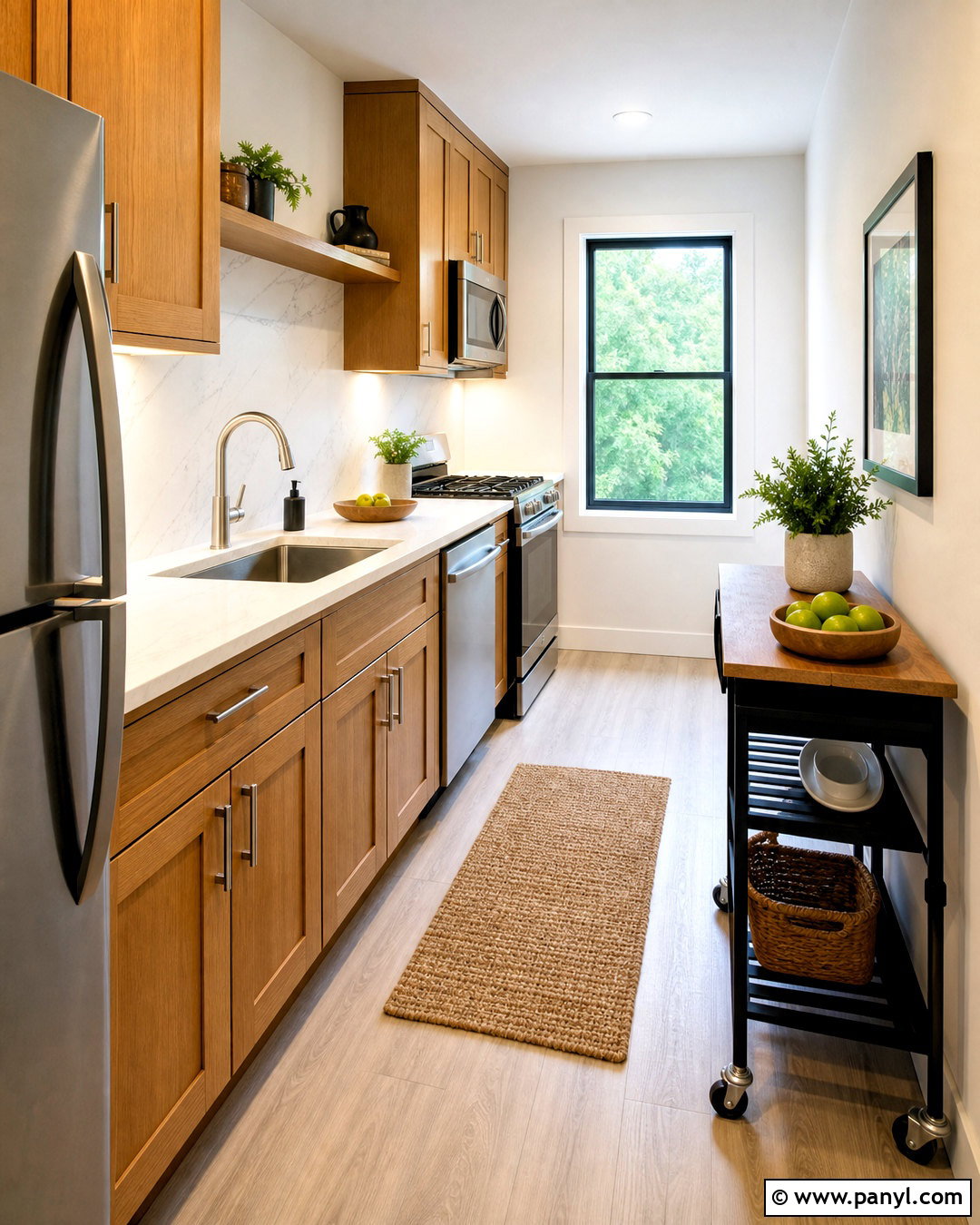
A small oak kitchen benefits from a limited palette, efficient storage, and uninterrupted sightlines. Keep the oak cabinets, but remove decorative valances and oversized crown details that make the room feel crowded. Install warm white quartz counters and continue the same material up the wall for a simple backsplash. Use compact stainless steel appliances, brushed nickel hardware, and a single-handle faucet. Paint the walls and ceiling the same soft white to visually expand the space. Light wood-look flooring laid lengthwise can make a narrow layout feel longer. Add under-cabinet lighting and replace bulky fixtures with flush-mount ceiling lights. A slim rolling cart, one open shelf, and carefully edited countertop accessories provide function without sacrificing valuable walking space.
Conclusion:
Creating an updated kitchen does not require covering every oak surface with paint or replacing well-built cabinetry. A successful design treats the wood as part of a complete palette. Light countertops can brighten it, dark stone can sharpen it, and colors such as sage, navy, or forest green can give it a new direction. Updated lighting, coordinated hardware, practical storage, and simpler decorative choices also make a noticeable difference. Before selecting finishes, compare samples directly against the cabinets in morning and evening light. This helps reveal undertones and prevents costly color mistakes. Use these **20 updated kitchen with oak cabinets** as flexible plans for creating a warm, functional, and current space.

Related Ideas and Inspiration:
Leave a Reply