
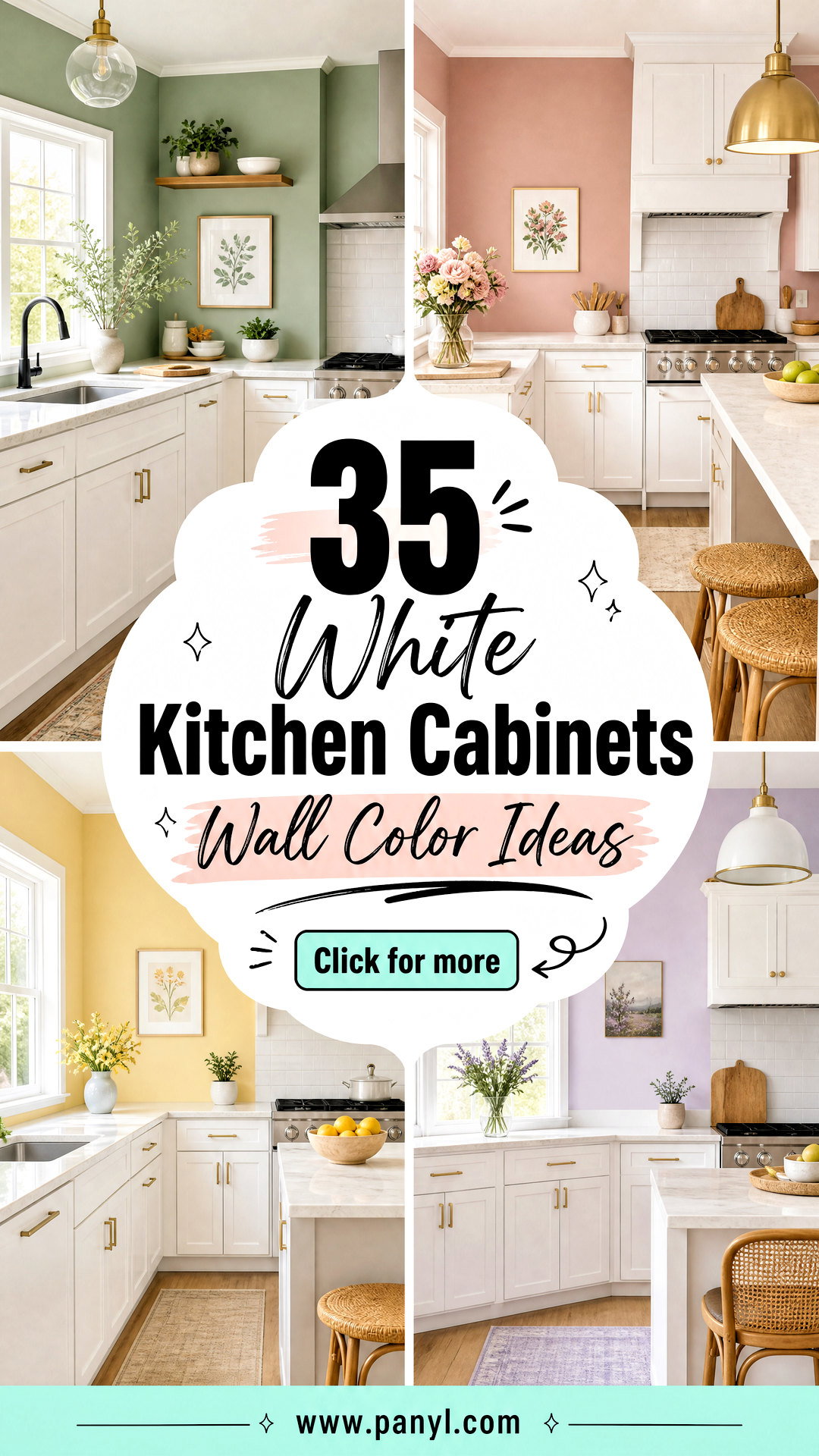
Choosing wall paint for white cabinetry sounds simple, but the right shade can completely change the room’s warmth, depth, and personality. These **35 white kitchen cabinets wall color ideas** cover airy neutrals, nature-inspired greens, calming blues, earthy shades, and bold dark colors. Each look includes coordinating countertops, hardware, flooring, lighting, and decor, so you can create a complete kitchen rather than select paint in isolation. Cabinet undertones, daylight, artificial lighting, and nearby finishes can influence how a wall color appears, so always test large samples before committing. () Whether your kitchen is farmhouse, coastal, traditional, or modern, there is a practical palette here to inspire your project. Explore these complete and approachable **35 white kitchen cabinets wall color ideas**.
1. Warm White Kitchen Walls
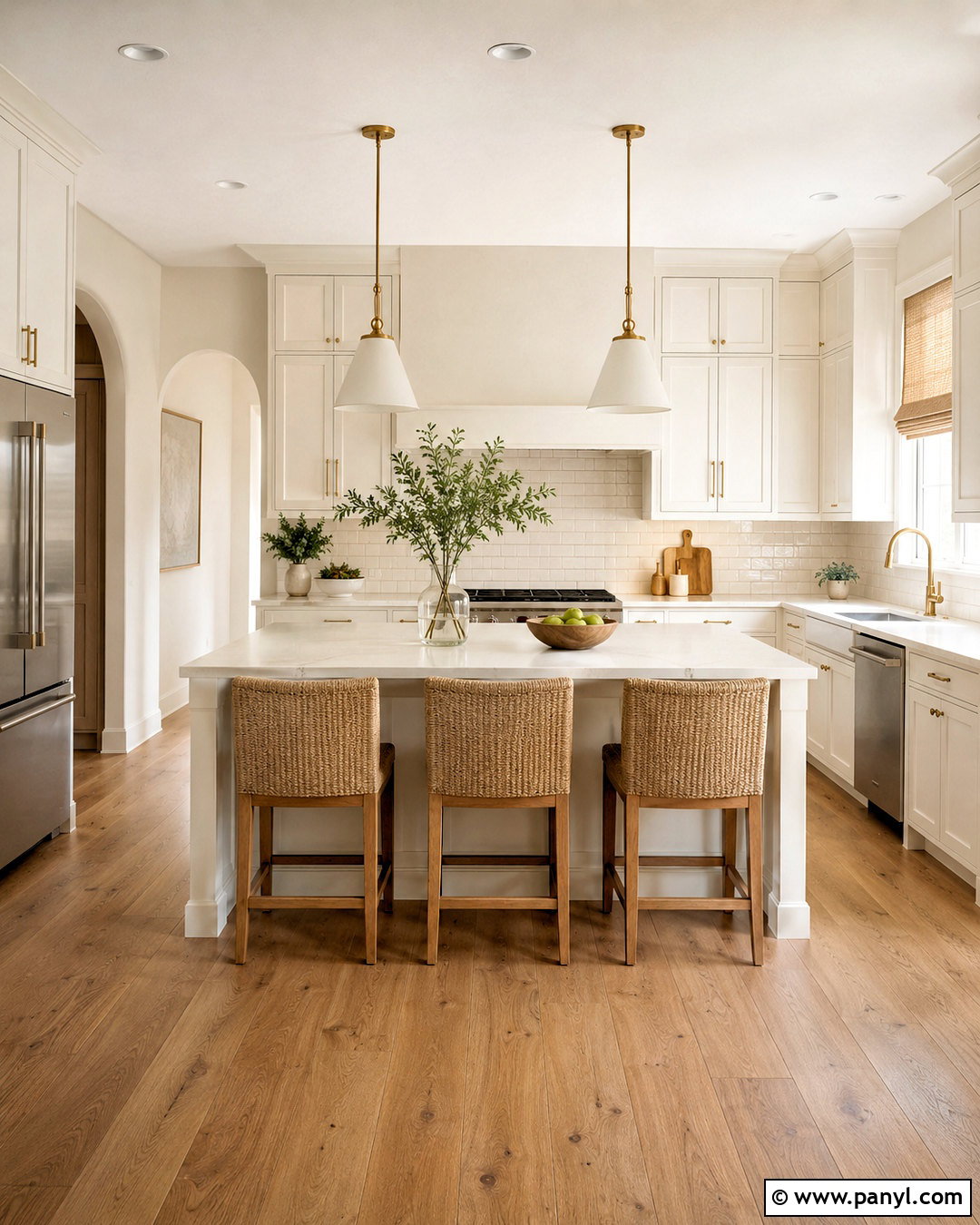
Warm white walls create a soft, seamless background without making white cabinets disappear completely. Select a wall paint with gentle cream or beige undertones, then make sure it is noticeably warmer than the cabinet finish. Add light oak flooring and matching open shelves to give the room natural texture. White quartz countertops with subtle tan veining continue the bright palette, while brushed brass hardware provides quiet contrast. A handmade ivory subway tile backsplash keeps the surfaces layered rather than flat. Finish the kitchen with woven counter stools, linen window shades, and simple ceramic accessories. This complete look works especially well in a smaller kitchen because it feels open and connected. Warm LED lighting will preserve the inviting undertones after sunset.
2. Cream Kitchen Walls
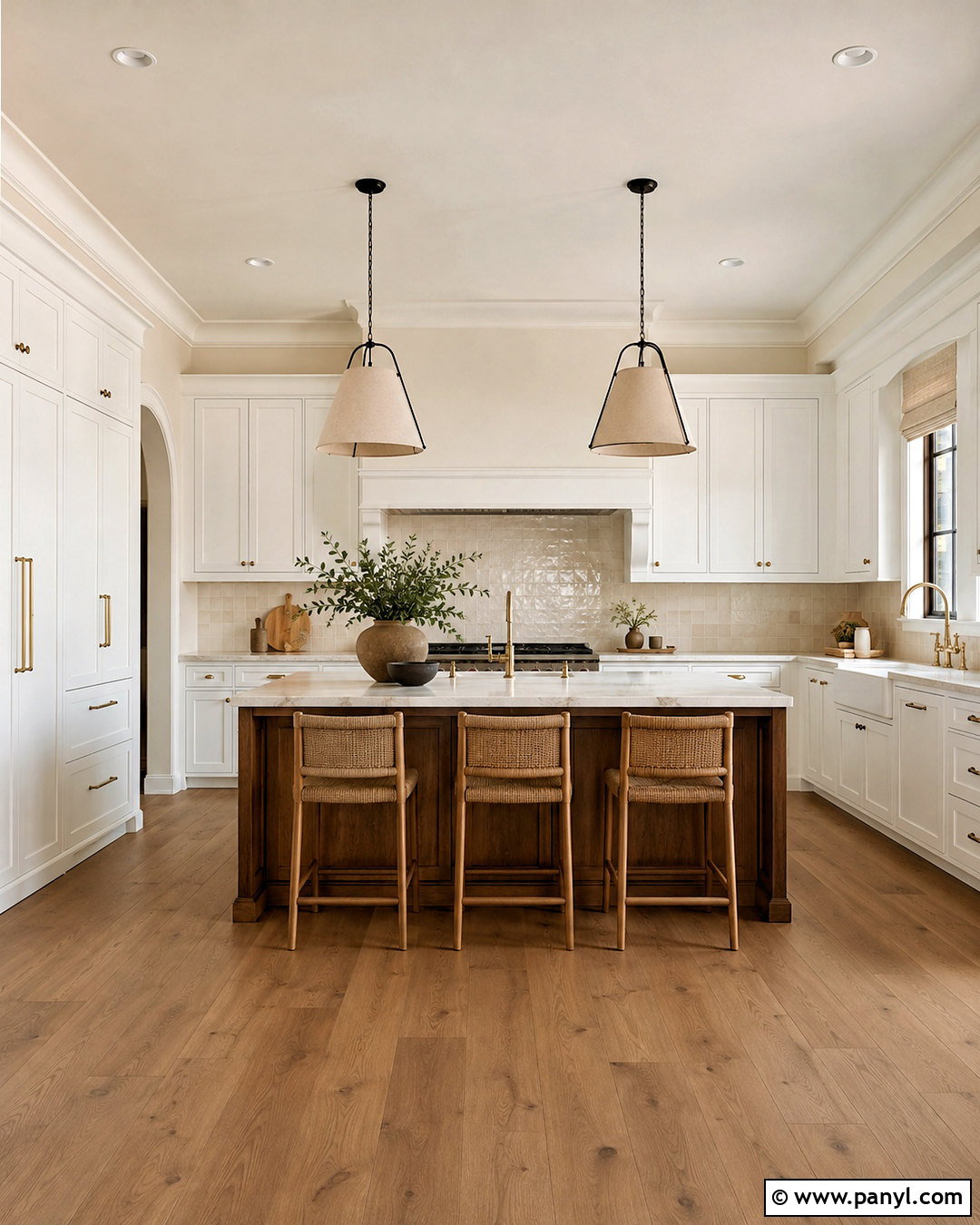
Cream walls can make bright white cabinets feel softer and more welcoming. Choose a light cream that has enough depth to create intentional contrast without looking yellow. This palette looks beautiful with medium oak floors, warm marble countertops, and an ivory zellige tile backsplash. Use aged brass knobs and bridge-style faucets for a traditional touch. A walnut island or dining table can anchor the lighter colors and introduce richness. Keep fabrics relaxed with oatmeal linen shades and tan striped seat cushions. Black pendant lights provide definition, but use them sparingly so the kitchen remains airy. Cream kitchen walls are particularly useful in north-facing rooms where cooler daylight can make pure white surfaces appear sharp. The finished design feels comfortable, classic, and pleasantly layered.
3. Ivory Kitchen Walls
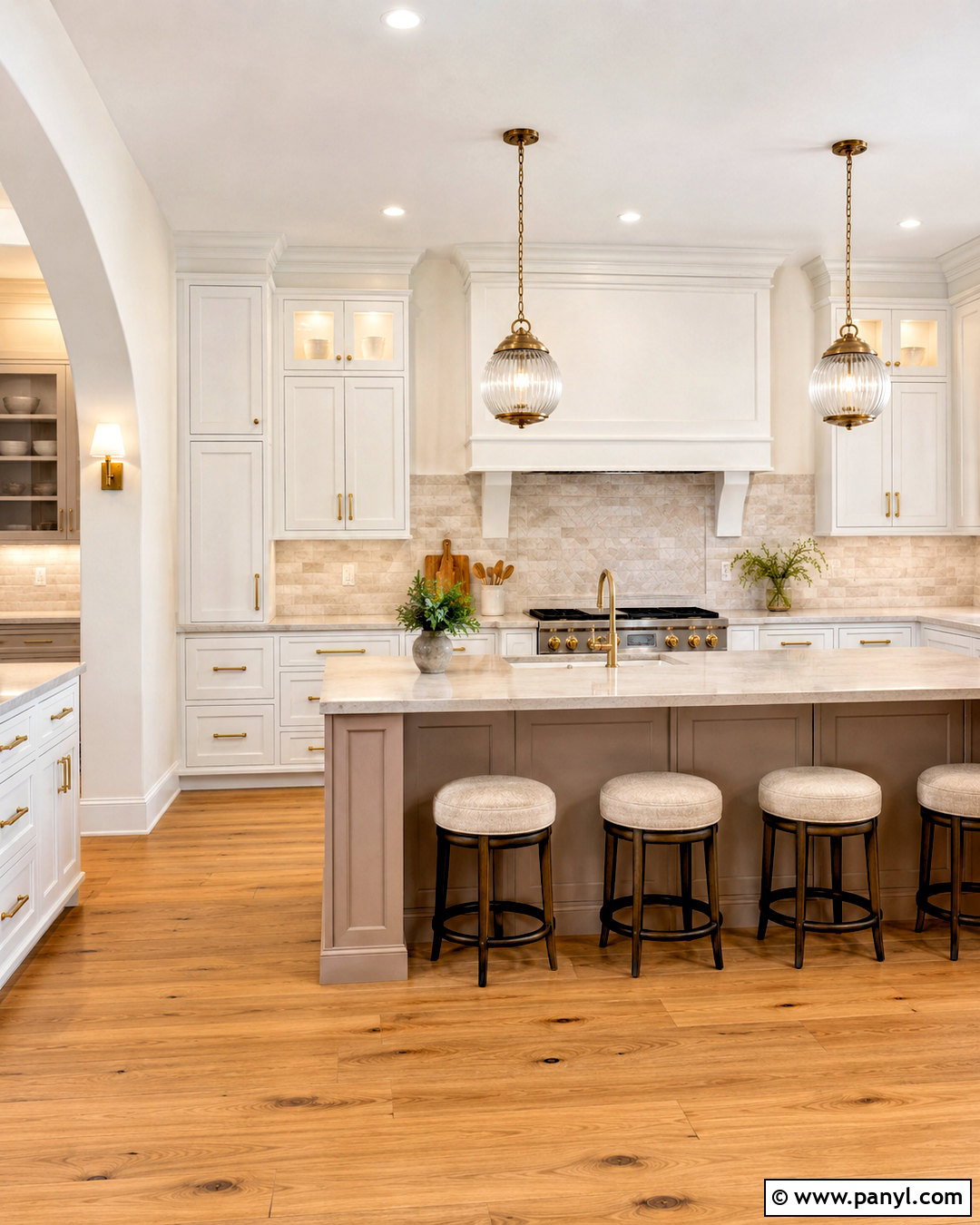
Ivory walls provide gentle contrast while maintaining the clean character of white kitchen cabinets. The color is slightly deeper than warm white, making it a good partner for crisp cabinet finishes and traditional millwork. Pair the walls with creamy quartz countertops, a pale travertine backsplash, and honey-toned oak flooring. Antique brass pulls and fluted glass pendants reinforce the refined warmth. For additional depth, introduce a muted taupe island with a butcher-block top. Display white stoneware and wood cutting boards on one open shelf, keeping the arrangement simple. Natural linen Roman shades help filter harsh sunlight and support the soft neutral palette. This full kitchen scheme feels polished but not formal, making it suitable for transitional homes where classic details meet practical, comfortable materials.
4. Soft Greige Kitchen Walls
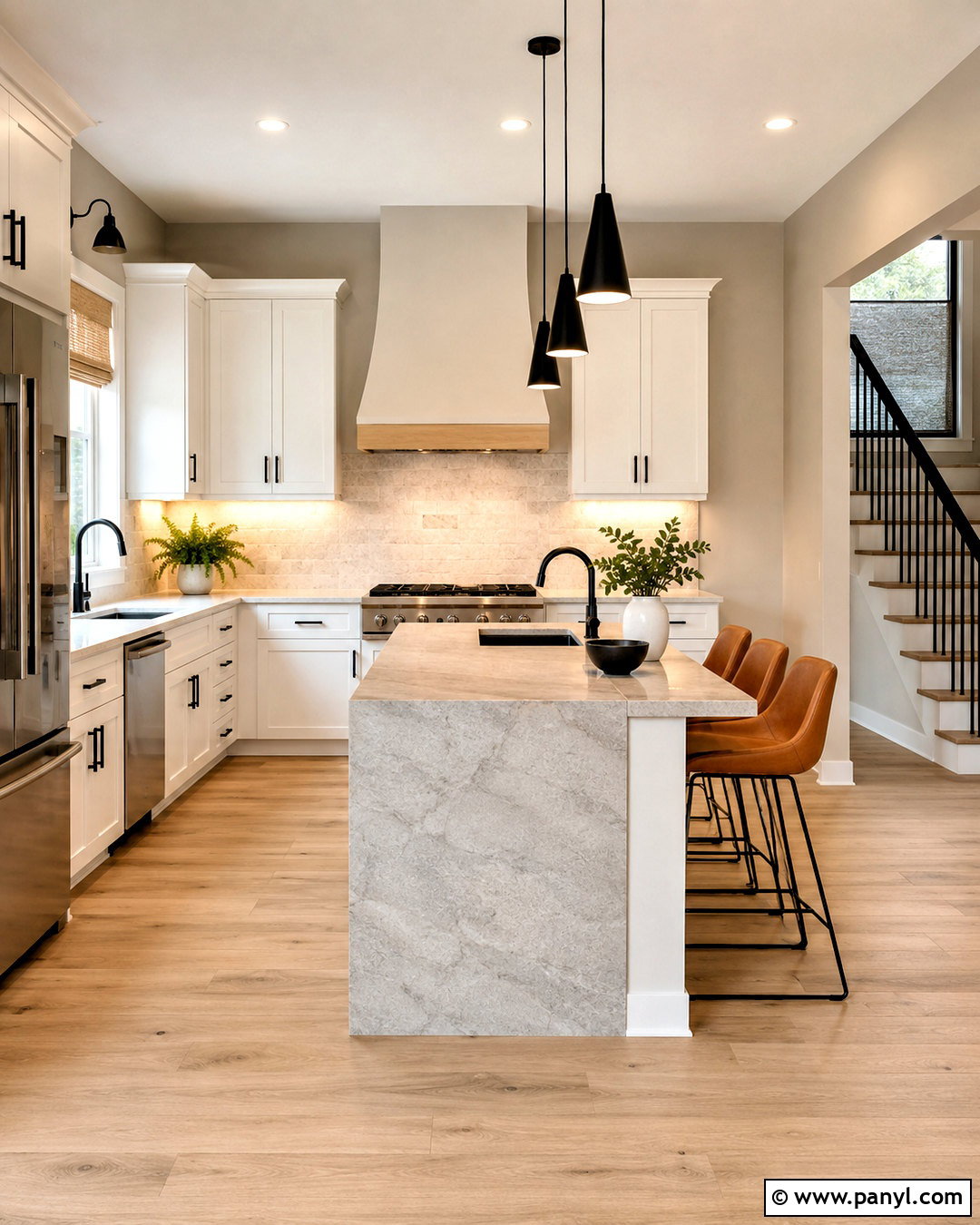
Soft greige kitchen walls balance the warmth of beige with the quiet structure of gray. This adaptable color gives white cabinets visible definition without making the room feel busy. Choose a greige that shares the same warm or cool undertone as the cabinetry. Complete the look with pale oak flooring, white quartz counters, and a backsplash featuring delicate gray-beige veining. Matte black cabinet pulls and slim black pendants add modern contrast. Warm the scheme with camel leather stools, natural woven shades, and a few wooden serving pieces. If the kitchen opens into a living area, repeat the greige on connecting walls for a smooth transition. The finished room feels calm, current, and practical, with enough contrast to highlight the cabinet doors and architectural details.
5. Light Gray Kitchen Walls
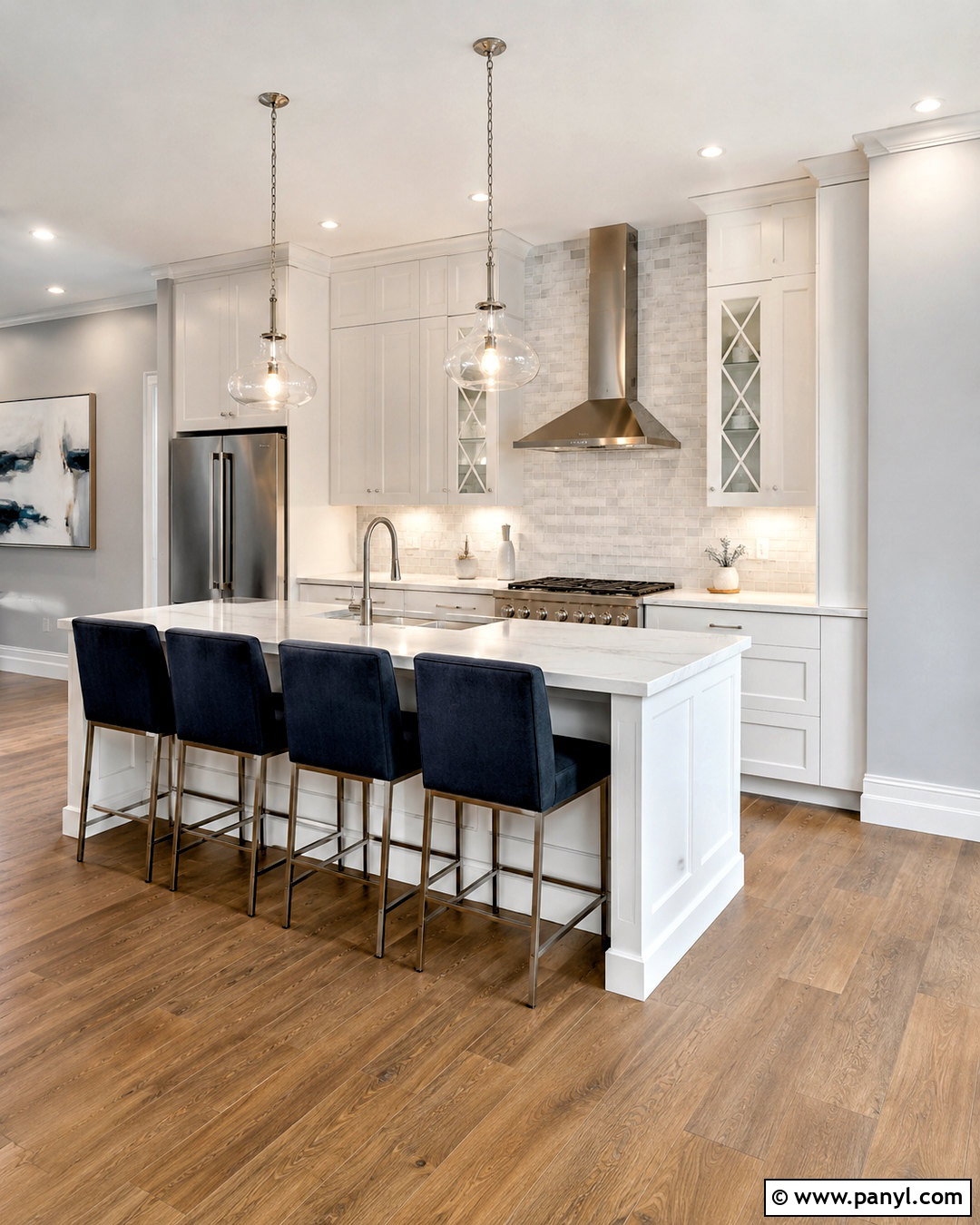
Light gray walls offer a crisp, understated background for white kitchen cabinets. Avoid icy gray if the cabinetry has creamy undertones; instead, use a balanced shade that looks soft in both daylight and artificial light. Pair it with white-and-gray quartz counters, polished nickel fixtures, and a classic marble subway tile backsplash. Medium-toned wood flooring prevents the cooler palette from feeling sterile. Add navy counter stools or a washable blue runner for controlled color. Clear glass pendants maintain an open sightline, while stainless steel appliances blend naturally with the gray walls. This kitchen works well in contemporary and transitional homes because the contrast is clean but not dramatic. A few leafy plants and light wood accessories bring warmth and movement to the finished space.
6. Dove Gray Kitchen Walls
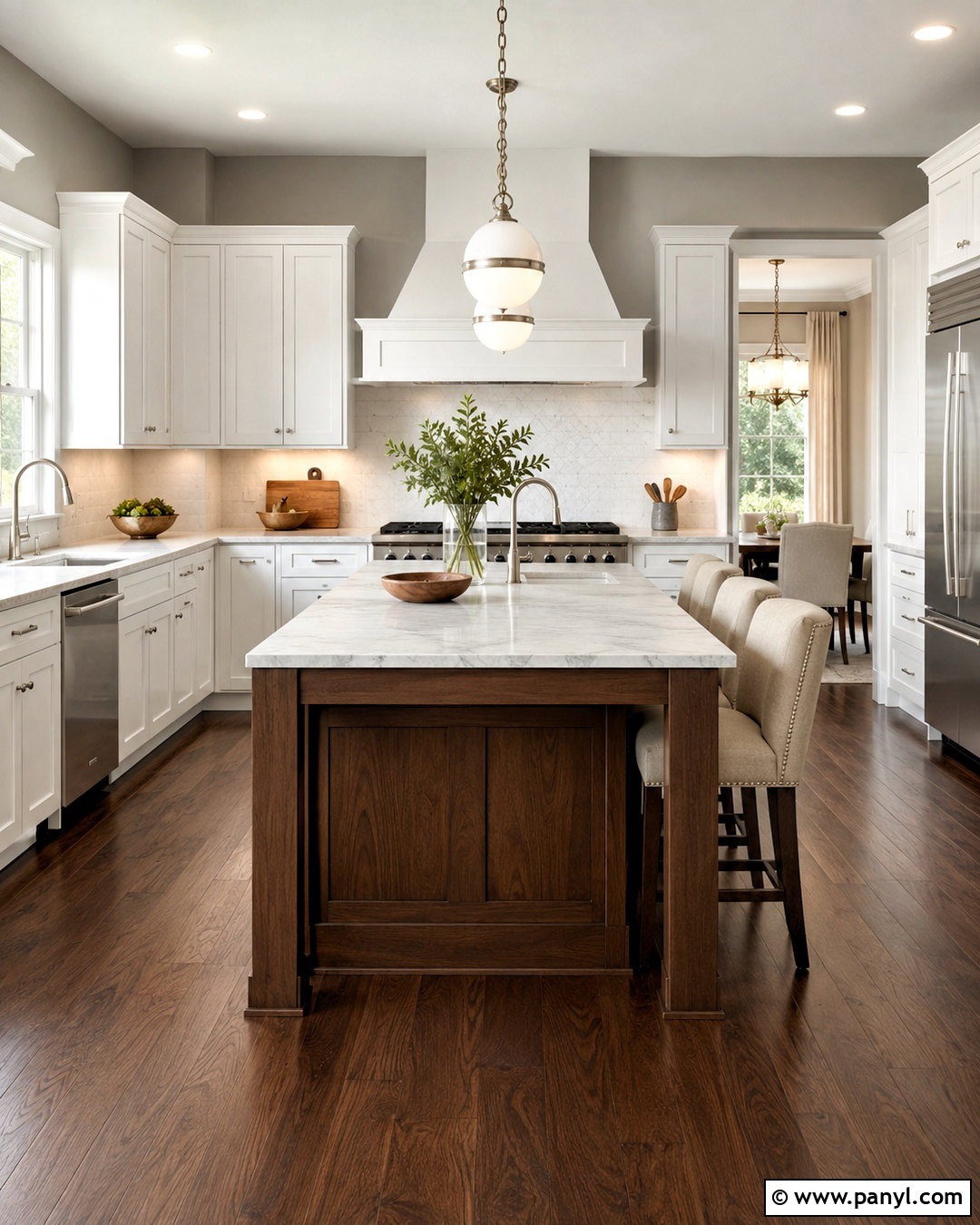
Dove gray has subtle warmth that gives a white-cabinet kitchen a sophisticated, settled appearance. Its gentle depth works particularly well with detailed Shaker doors and traditional crown molding. Continue the refined palette with honed marble countertops, a soft white backsplash, and brushed nickel hardware. Choose medium walnut flooring or a walnut island to bring in deeper natural color. Upholstered counter stools in oatmeal fabric soften the hard surfaces, while simple globe pendants keep the room bright. Consider painting the adjoining breakfast nook in the same dove gray for visual continuity. Blue-gray pottery and framed botanical artwork can supply restrained decoration. The resulting kitchen feels elegant without becoming formal, and the warm gray walls allow crisp cabinetry, natural wood, and polished metal to share the spotlight.
7. Mushroom Taupe Kitchen Walls
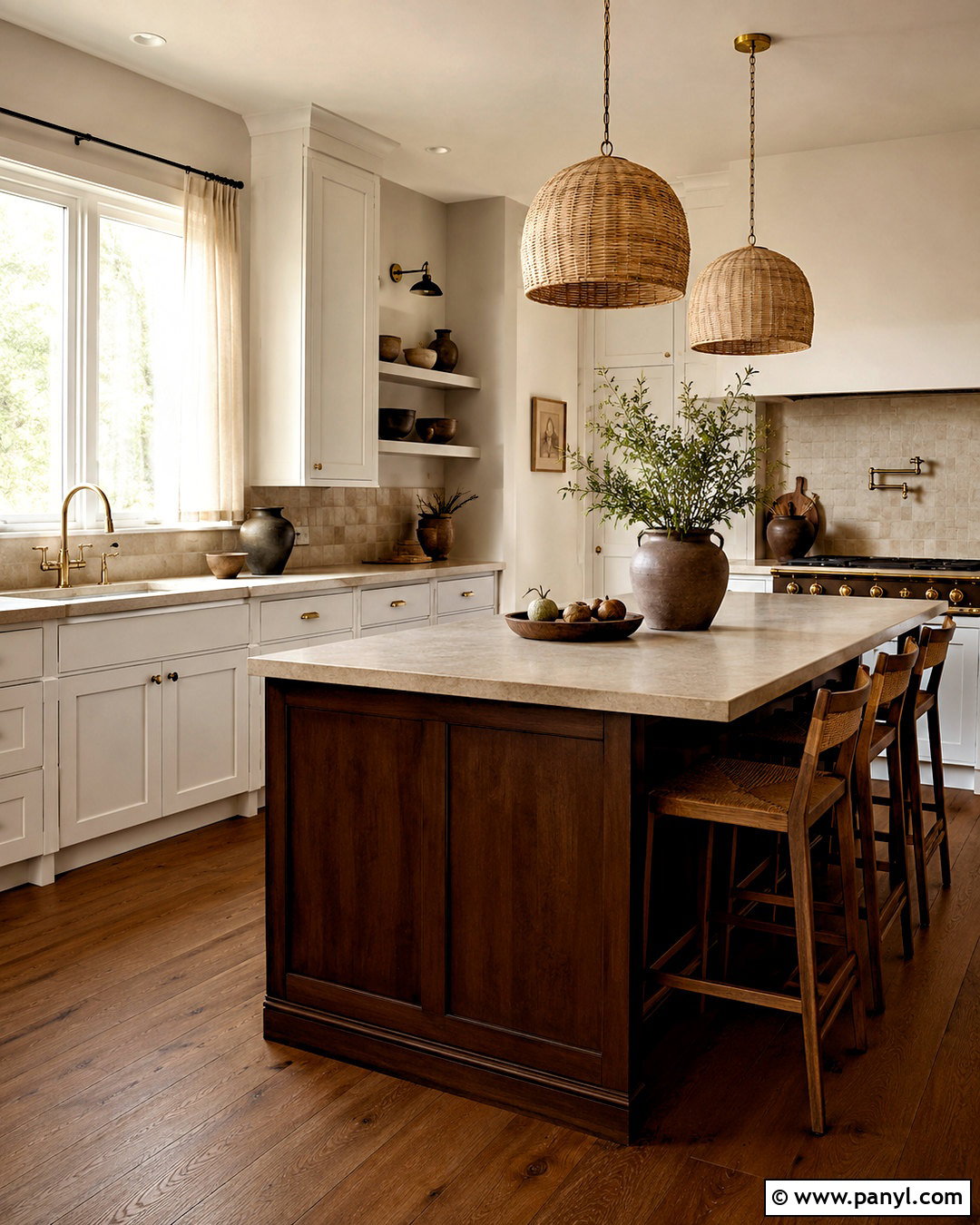
Mushroom taupe introduces earthy depth while remaining quiet enough for an everyday kitchen. This brown-gray wall color looks especially balanced beside creamy white cabinets, warm stone countertops, and unlacquered brass hardware. Install a handmade taupe backsplash or continue the countertop material up the wall for a smooth, tailored finish. Wide-plank oak flooring and a dark wood island deepen the natural palette. Add woven pendants above the island and linen cafe curtains at the window for softness. Instead of bright accent colors, decorate with olive branches, brown ceramics, and textured neutral textiles. Mushroom walls can make a large white kitchen feel more intimate and grounded. The complete room reads as warm and collected, with white cabinets providing freshness against the richer, organic background.
8. Oatmeal Beige Kitchen Walls
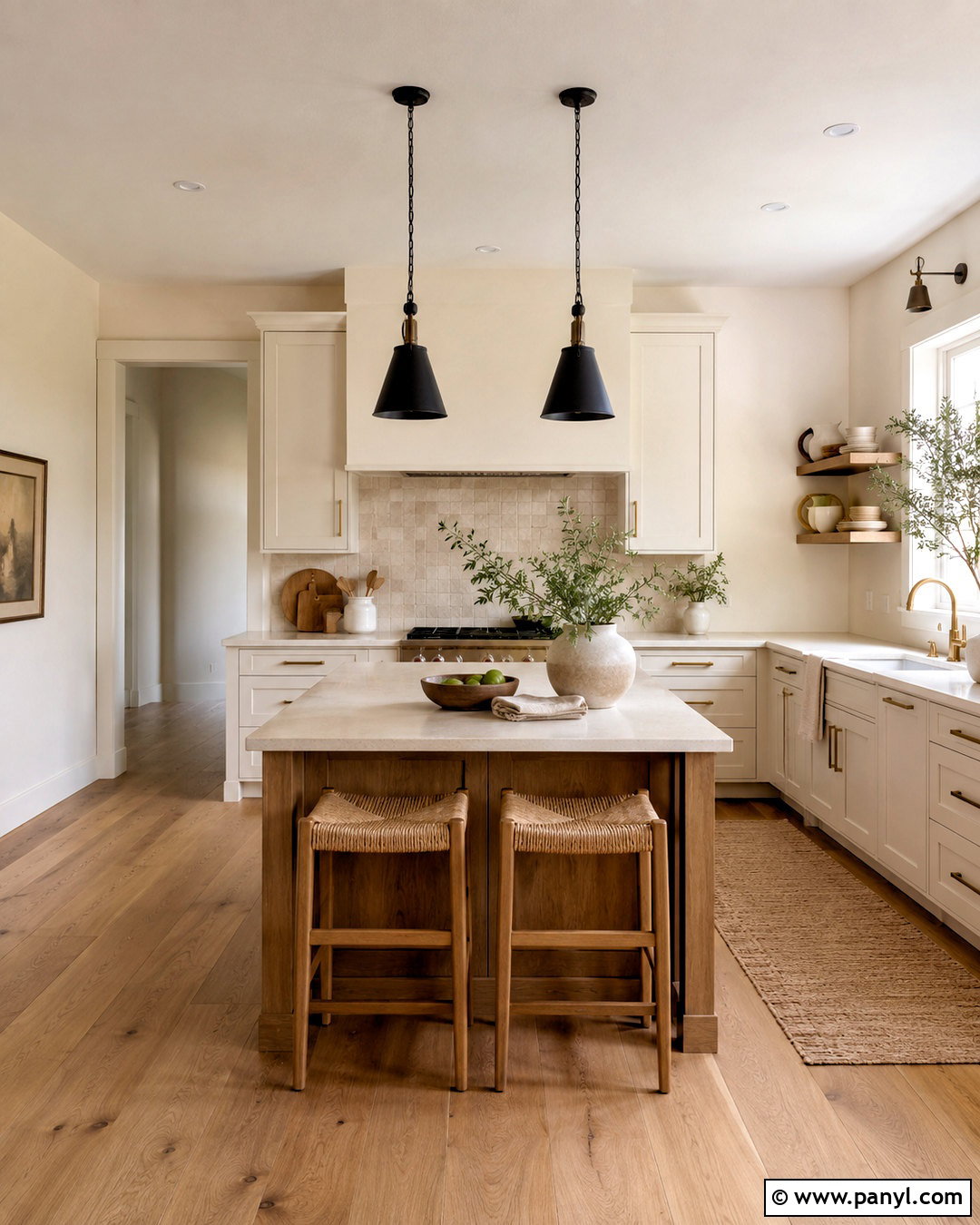
Oatmeal beige walls create a relaxed neutral kitchen that feels warmer than gray but lighter than traditional tan. Pair this gentle shade with warm white cabinets, creamy quartz counters, and an off-white backsplash with subtle texture. Light oak floors support the natural palette, while bronze or aged brass hardware adds definition. An oak island with rounded corners can provide a contemporary focal point without introducing another paint color. Choose woven counter stools, a neutral vintage-style runner, and simple linen window treatments. Soft black pendants add just enough contrast above the island. Oatmeal beige works beautifully in open-plan homes because it connects easily with wood furniture and neutral upholstery nearby. The finished kitchen feels bright, comfortable, and thoughtfully layered rather than plain or overly coordinated.
9. Sand Beige Kitchen Walls
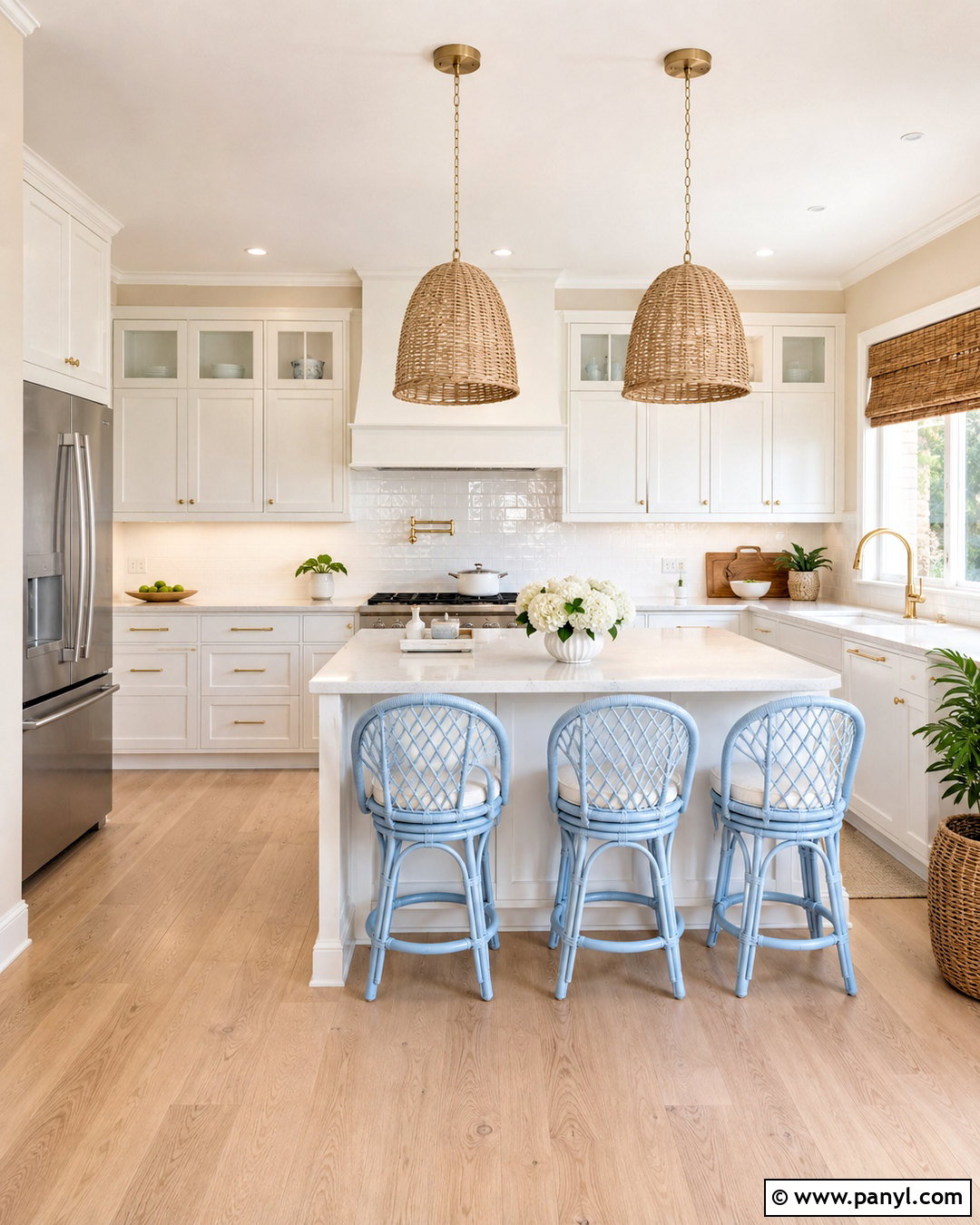
Sand beige walls bring a sun-washed quality to white kitchen cabinets and suit homes with coastal or casual interiors. Use a pale, muted beige rather than a strong golden tan. Pair it with bleached oak flooring, creamy stone counters, and a glossy white subway backsplash. Brushed brass fixtures reinforce the warmth, while pale blue counter stools provide a gentle coastal accent. Natural rattan pendants and woven shades introduce texture without cluttering the room. Display a few sandy ceramics, glass jars, and wooden boards on open shelving. For a balanced layout, keep large appliances stainless steel or panel-ready. The finished kitchen feels light and easygoing, with enough warm contrast to stop white cabinetry from appearing stark. It also transitions naturally into beige, blue, or neutral living spaces.
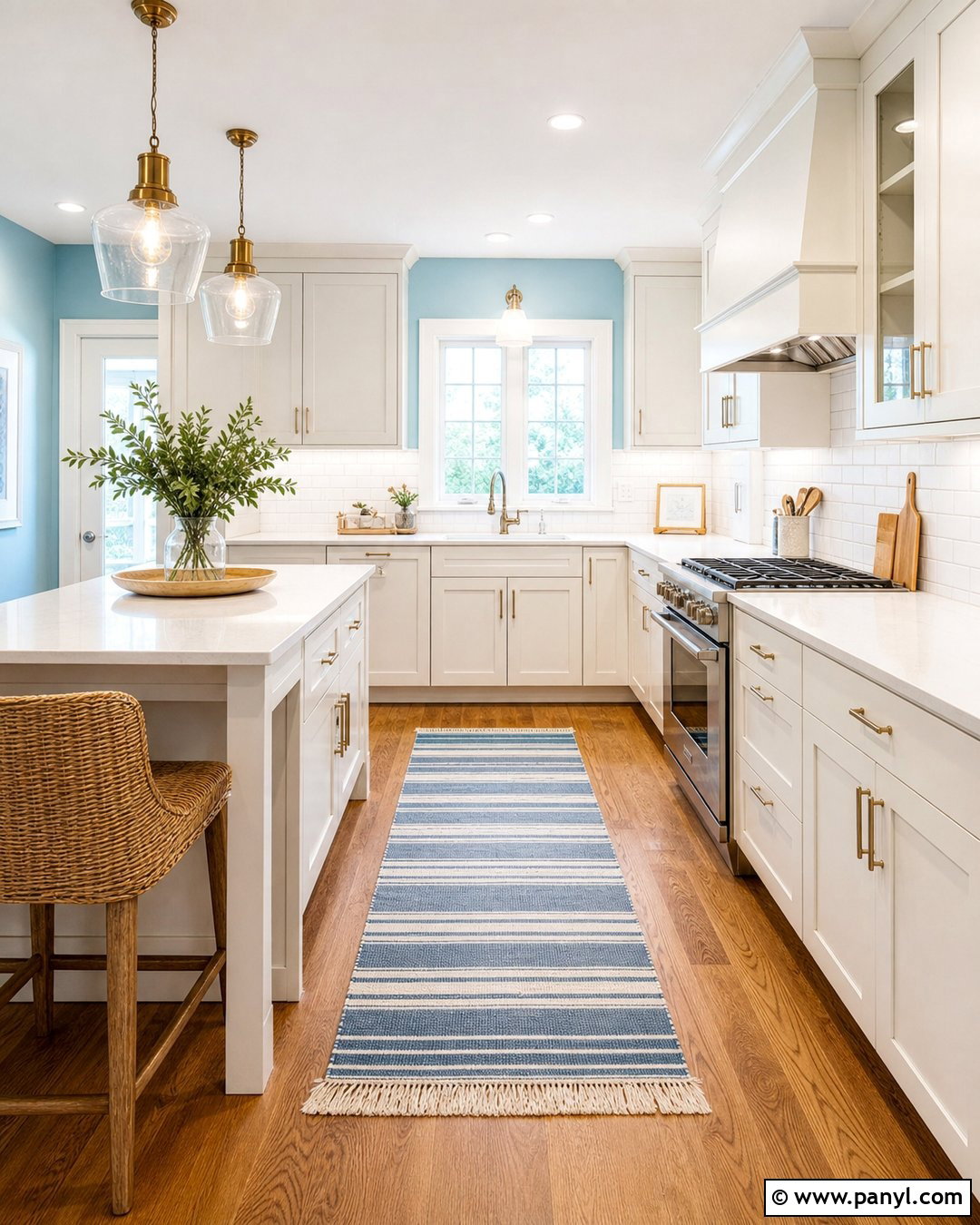
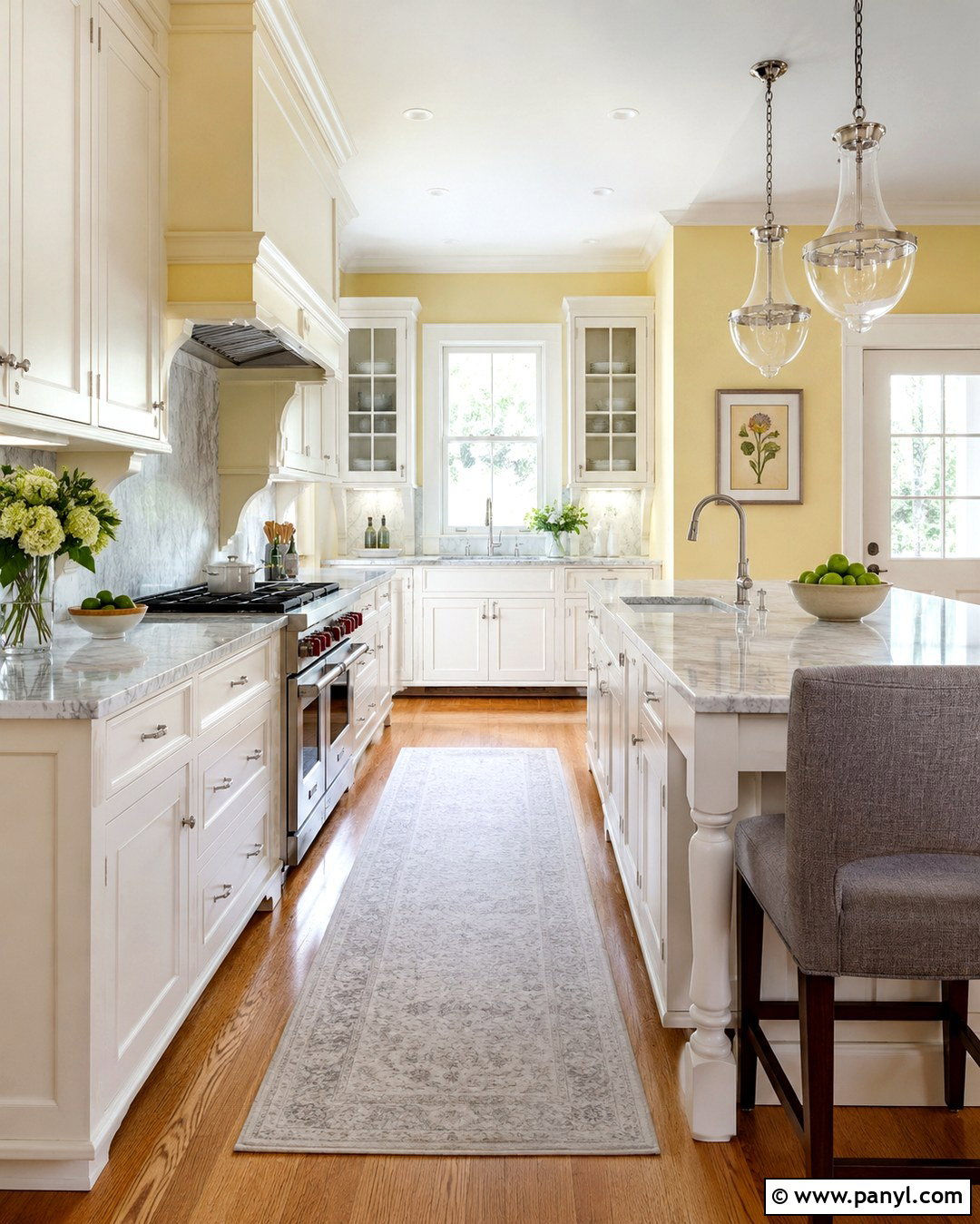
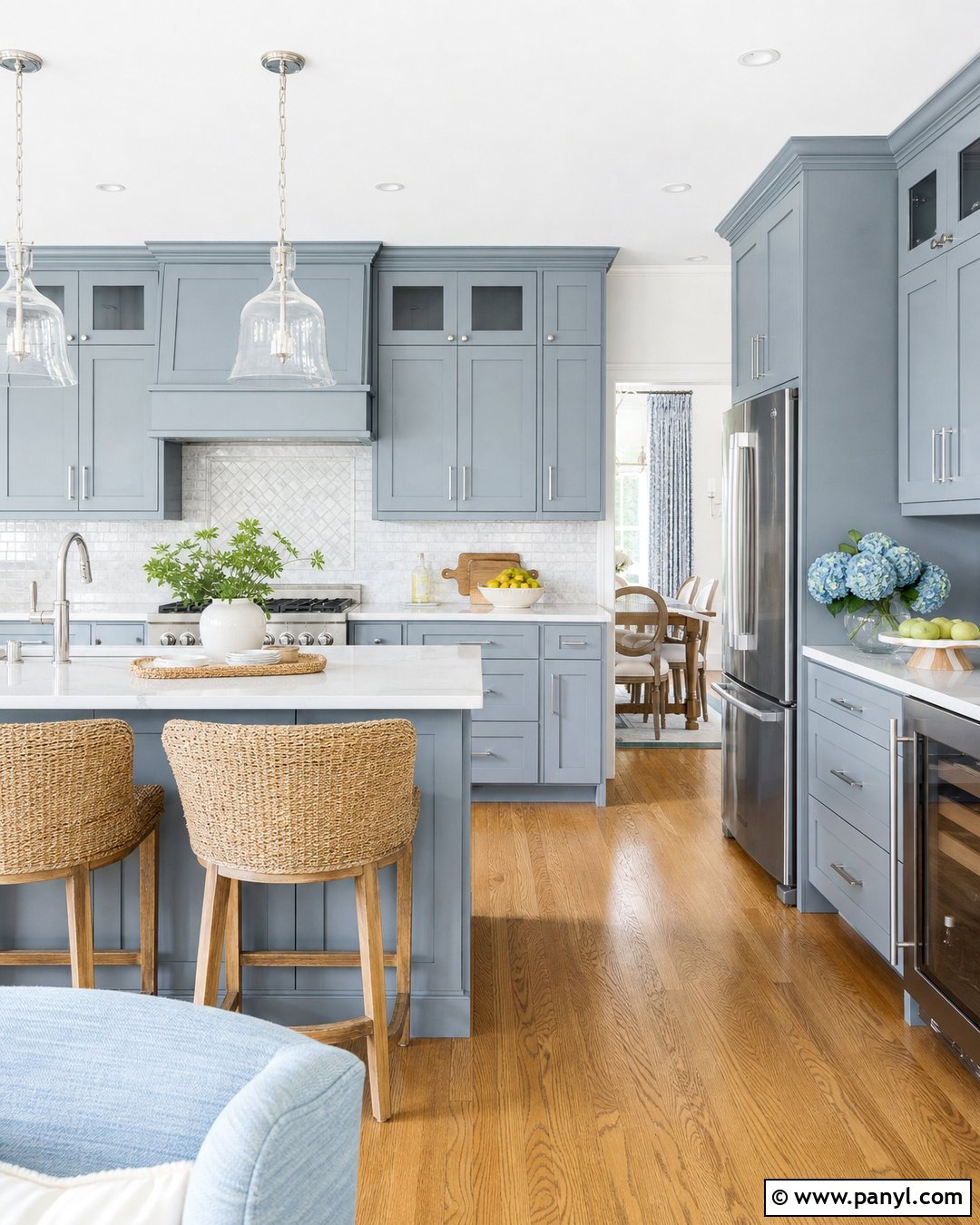
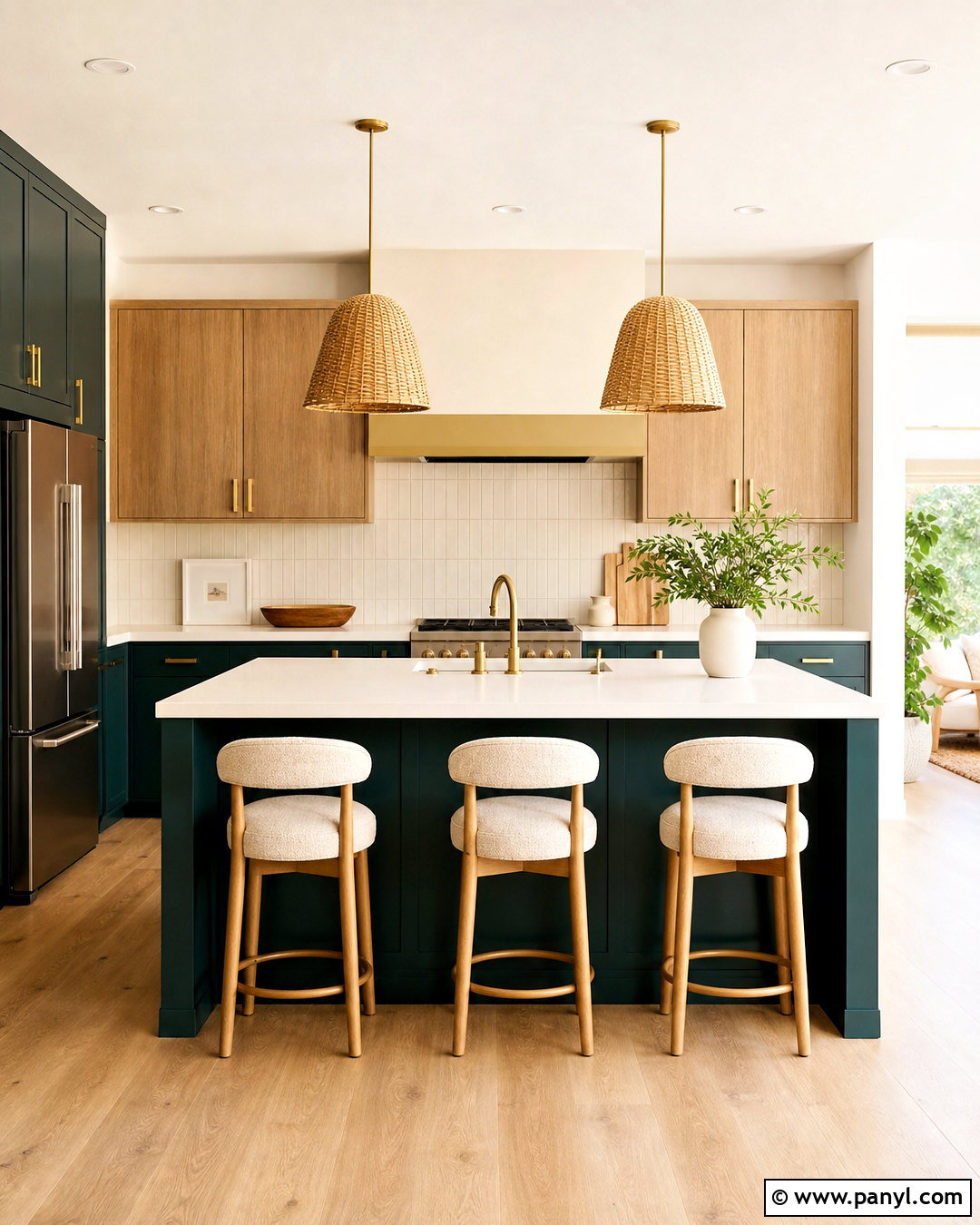
10. Pale Putty Kitchen Walls
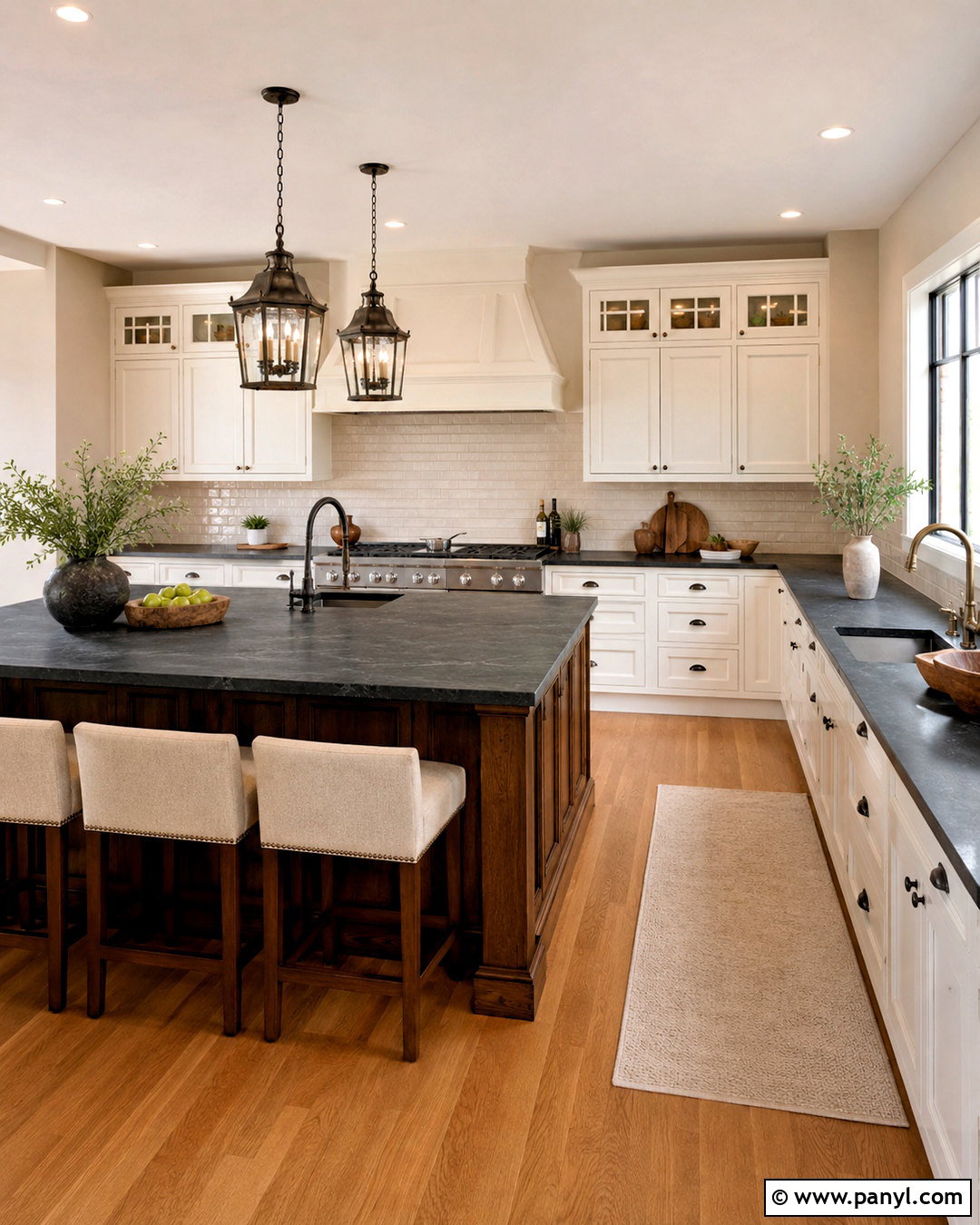
Pale putty is a muted beige-gray that creates subtle architectural contrast around white cabinetry. It works particularly well in traditional kitchens with inset cabinet doors, detailed trim, and stone surfaces. Pair the wall color with soapstone-look quartz counters, a creamy rectangular tile backsplash, and warm oak flooring. Use antique bronze hardware to give the room definition and a slightly aged character. A dark walnut island adds weight at the center, while upholstered stools in beige linen keep it comfortable. Select simple metal lanterns rather than delicate pendants to support the traditional look. Finish with earthenware crocks, framed landscape art, and woven window shades. Pale putty kitchen walls feel timeless and grounded, allowing white cabinets to stay bright while connecting them to richer wood and stone elements.
11. Sage Green Kitchen Walls
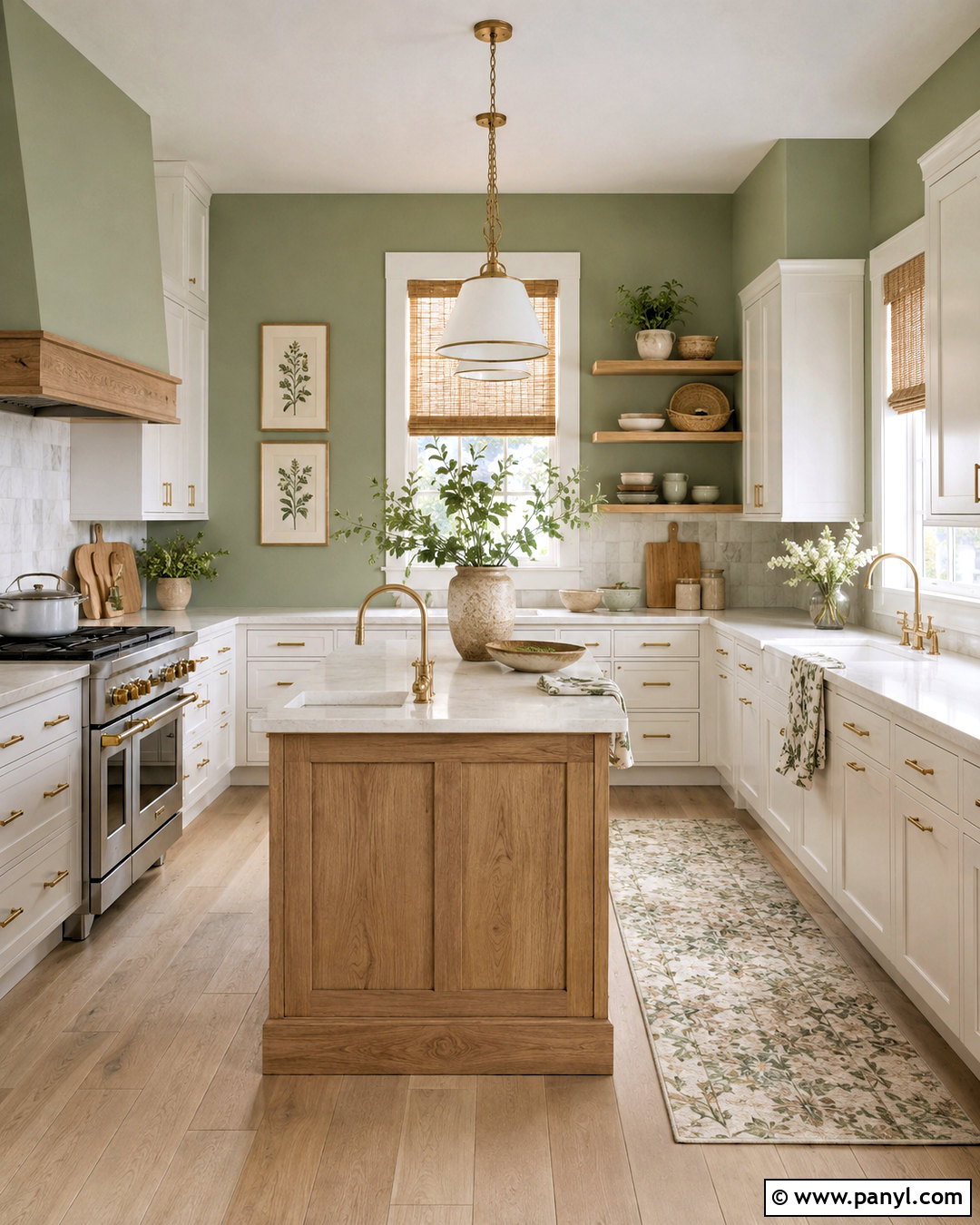
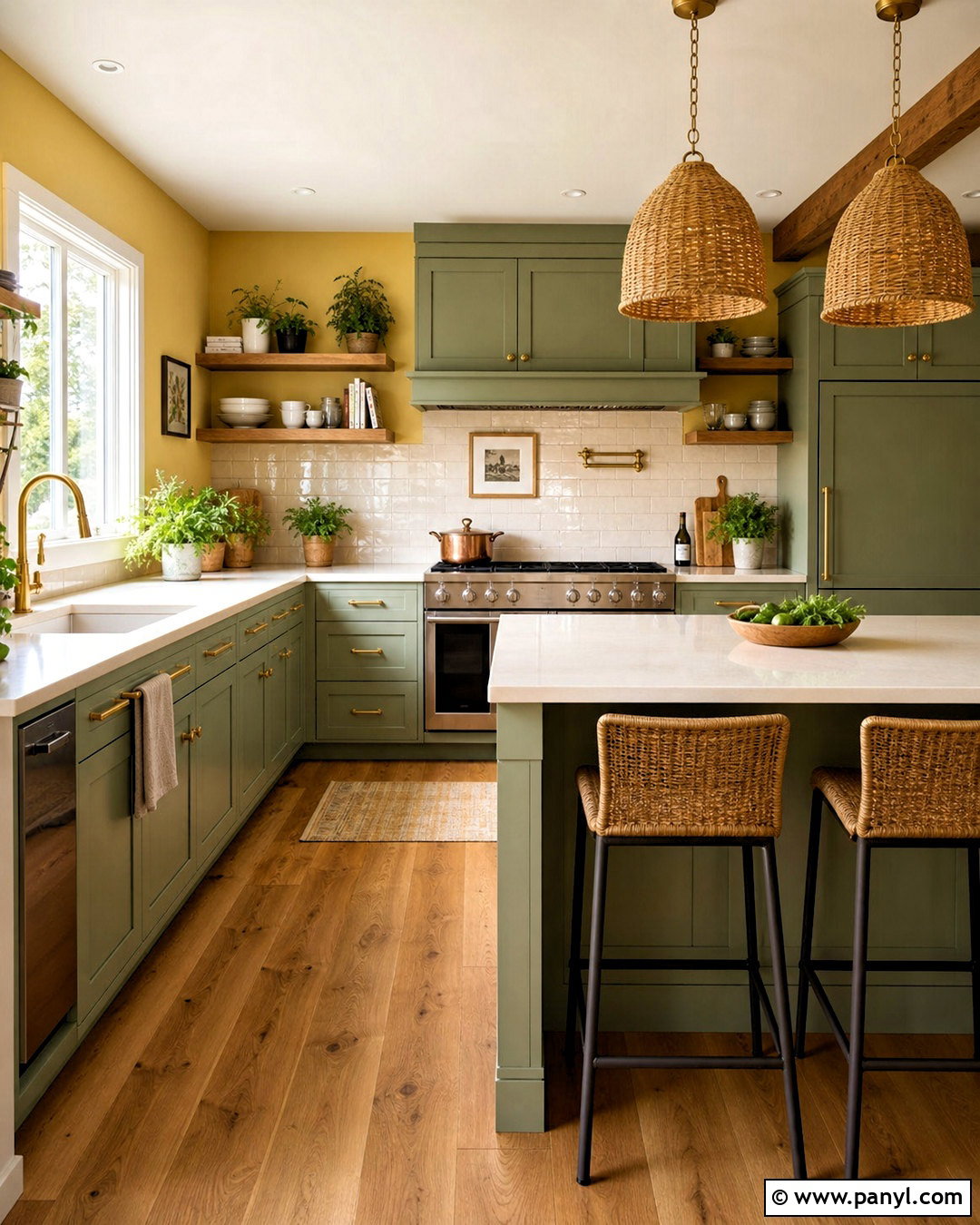
Sage green walls give white cabinets a calm, natural background that feels colorful without becoming overwhelming. Choose a muted sage with gray undertones and repeat it subtly through striped textiles or ceramic accessories. Light oak flooring, creamy quartz countertops, and a white zellige backsplash keep the design fresh. Add aged brass pulls and cone-shaped brass pendants for warmth. A medium oak island or breakfast table strengthens the connection to nature. Woven Roman shades and a washable botanical runner complete the comfortable look. Sage works equally well in farmhouse, cottage, and transitional kitchens because it pairs easily with warm woods and off-white materials. Keep the ceiling and trim close to the cabinet white so the green walls appear crisp, intentional, and beautifully framed throughout the room.
12. Eucalyptus Green Kitchen Walls
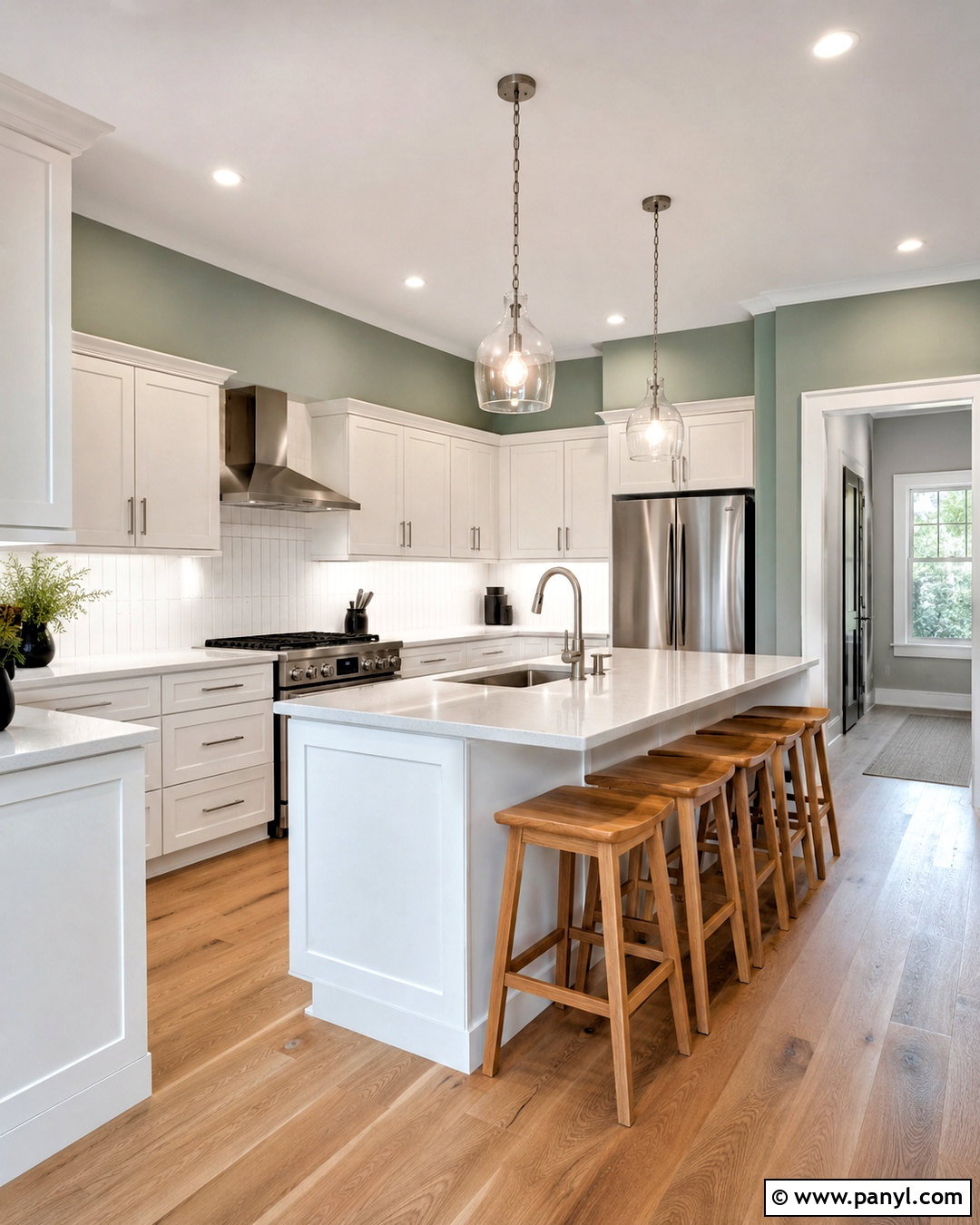
Eucalyptus green offers a cool, silvery alternative to classic sage. Its blue-gray undertone looks especially clean next to crisp white cabinets and stainless steel appliances. Build the complete kitchen with pale gray quartz counters, a white vertical tile backsplash, and light natural maple flooring. Brushed nickel hardware supports the cooler palette, while warm oak stools prevent the space from feeling cold. Choose streamlined glass pendants and simple linen shades for a bright modern look. A few charcoal accessories, such as a fruit bowl or framed print, can sharpen the color combination. Eucalyptus walls are a practical option for a sunny kitchen because their muted character remains soothing in strong light. The completed room feels fresh, uncluttered, and connected to natural colors without leaning heavily rustic.
13. Olive Green Kitchen Walls
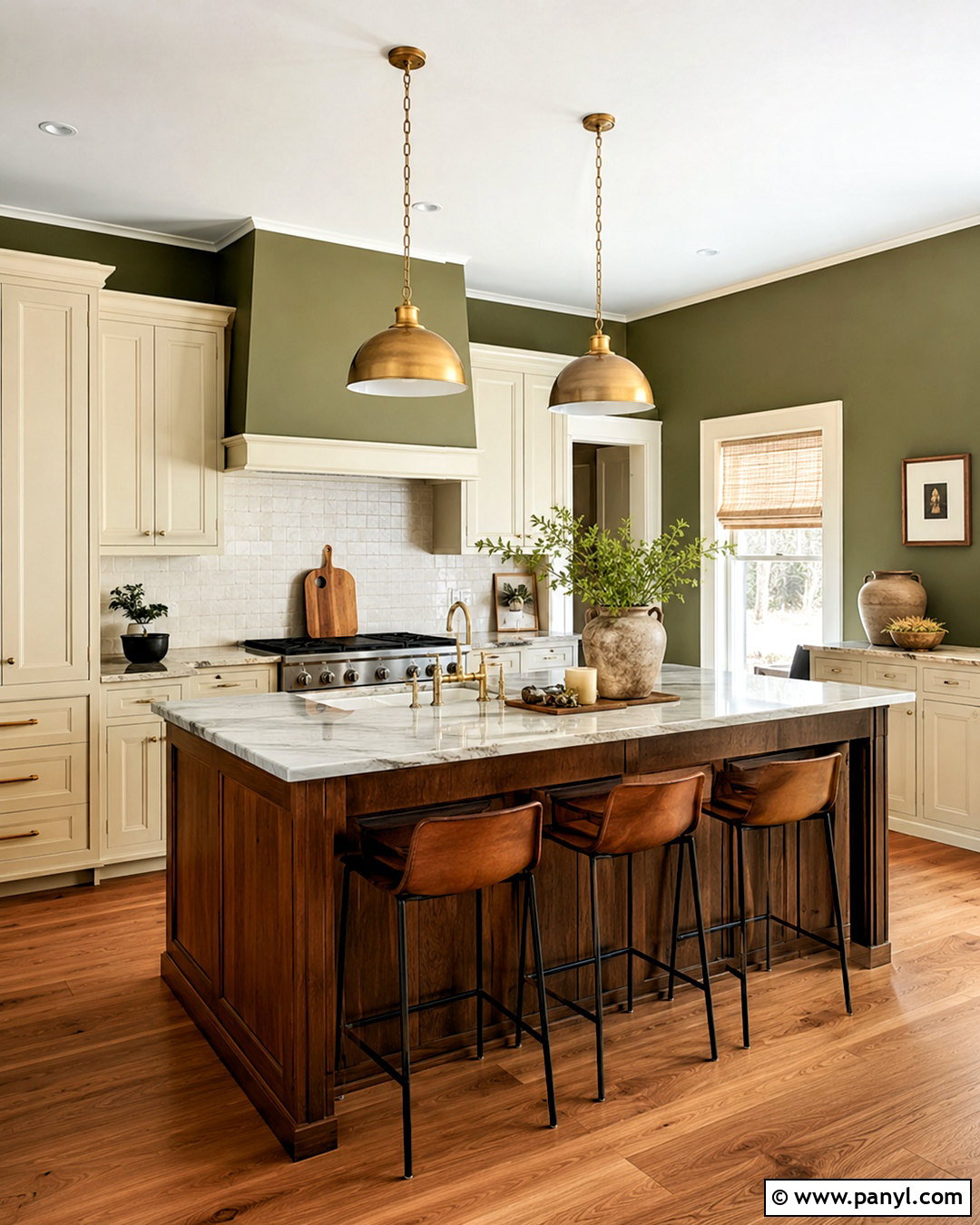
Olive green walls bring richness and an earthy mood to white kitchen cabinets. Select a muted olive rather than a bright yellow-green, then balance its depth with generous white surfaces. Cream marble counters and a simple white backsplash keep the work area luminous. Introduce walnut flooring or a walnut island to complement the warm green undertones. Aged brass hardware and dome pendants add a polished glow, while saddle leather stools provide another grounded accent. Keep window coverings light with natural linen or woven bamboo. Decorative pieces can include brown stoneware, framed herbs, and simple wood boards. This palette works best when the room receives moderate or strong natural light. The completed kitchen feels warm, established, and distinctive, yet the white cabinetry prevents the deeper walls from becoming visually heavy.
14. Mint Green Kitchen Walls
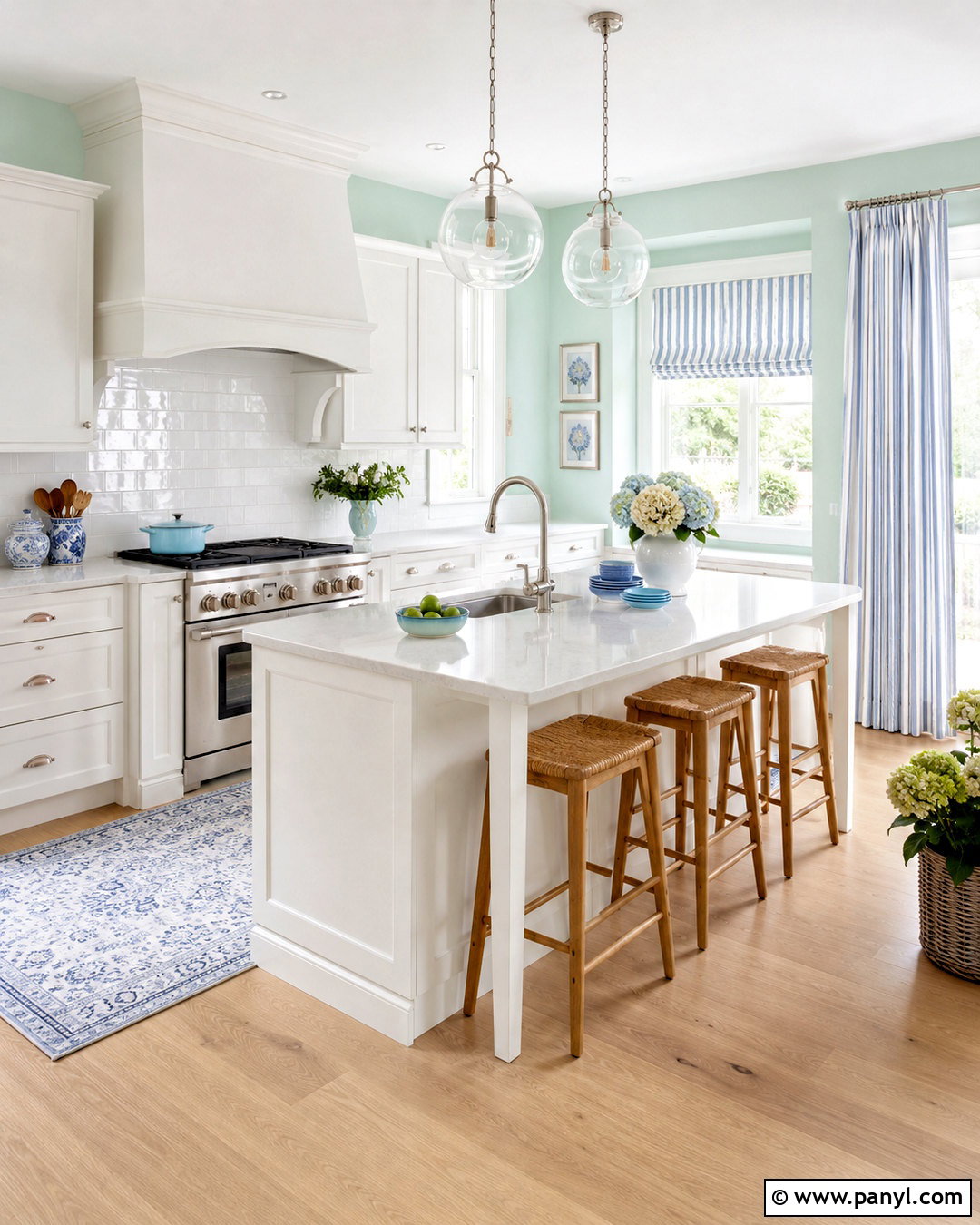
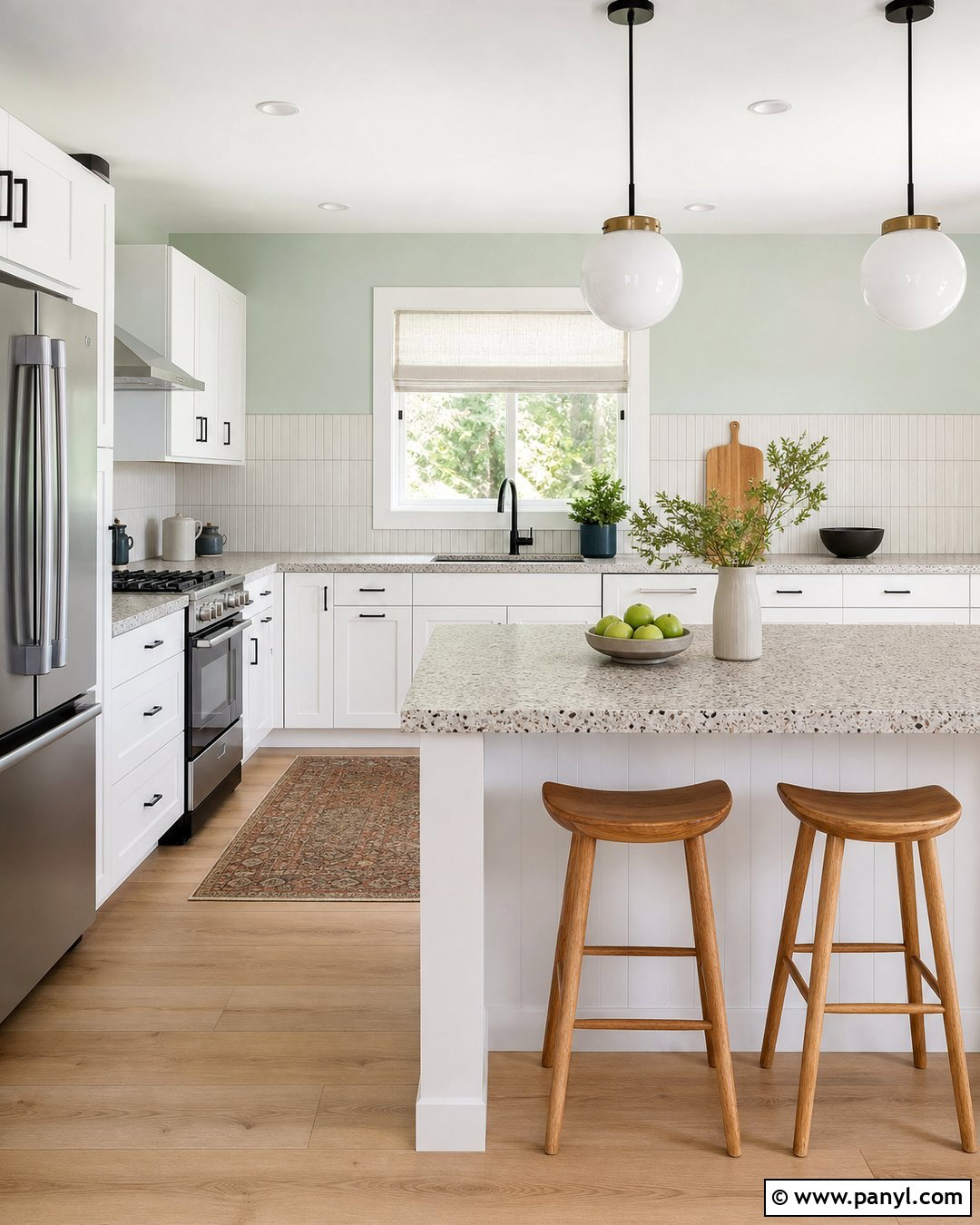
Pale mint walls create a cheerful, clean setting for white kitchen cabinets. Choose a softened mint with a hint of gray so the finished room feels fresh rather than overly sweet. Pair it with white quartz countertops, glossy white square tile, and light maple or white oak flooring. Polished nickel hardware enhances the crisp effect, while natural wood counter stools add necessary warmth. Clear globe pendants keep the palette bright and uncomplicated. Add subtle accents through pale blue dishware, striped cafe curtains, and a small washable runner. Mint is particularly effective in compact kitchens or breakfast spaces because it reflects light while offering more personality than a neutral. The complete design feels playful but grown-up, with balanced materials that keep the pastel wall color from dominating the room.
15. Forest Green Kitchen Walls
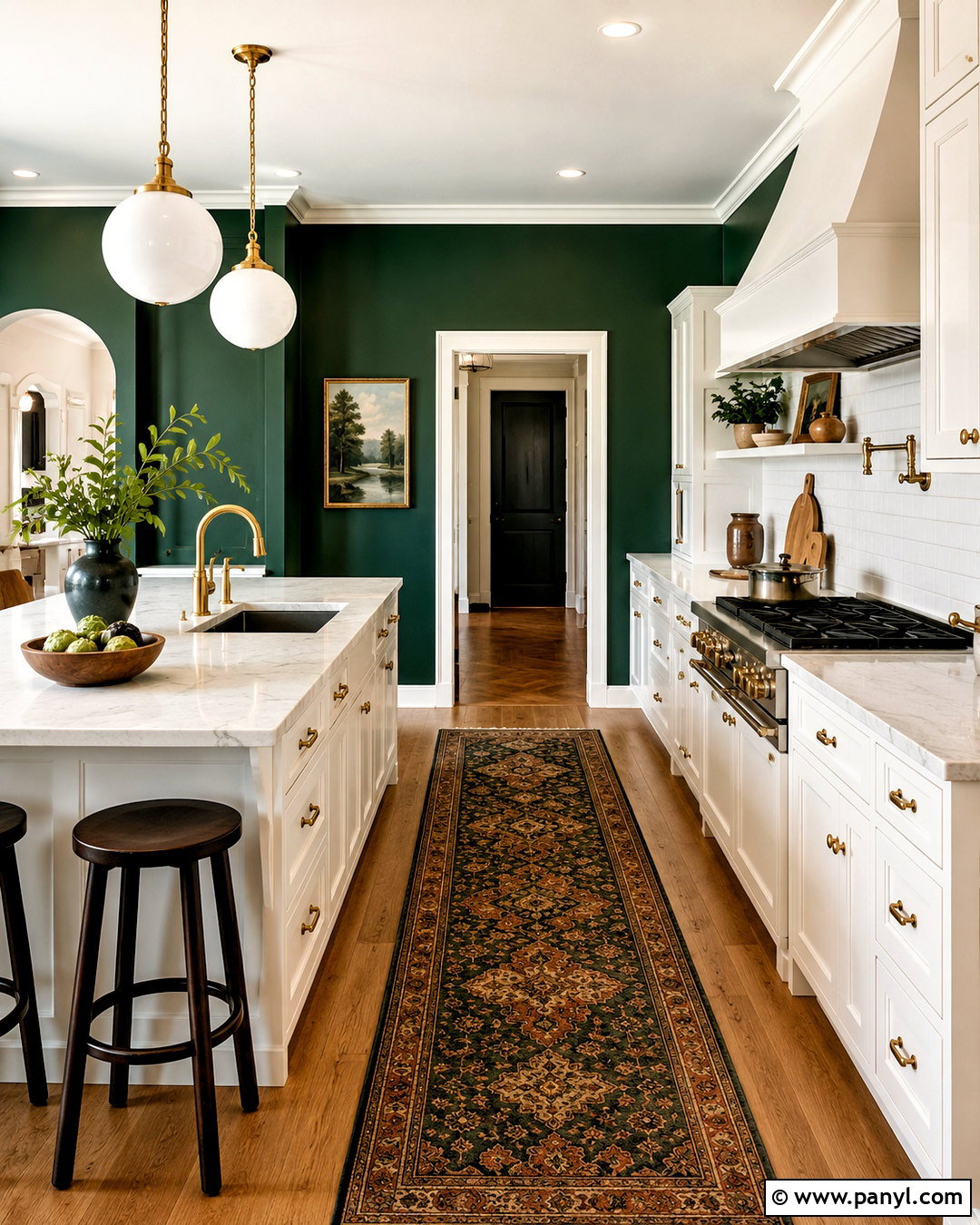
Forest green walls produce dramatic contrast against white cabinets while maintaining a connection to natural materials. Use the deep color on walls with open space, then keep the ceiling, trim, and backsplash bright white. White marble counters help reflect light across the room. Add warm oak flooring, walnut stools, and antique brass hardware to soften the dark backdrop. Large opal glass pendants provide visual brightness without competing with the color. A patterned runner containing green, cream, and rust can tie the entire palette together. Forest green works best in a kitchen with good windows or layered overhead lighting. The finished design feels bold and tailored rather than gloomy because every dark surface is balanced by pale cabinetry, reflective stone, warm wood, and carefully placed lighting.
16. Powder Blue Kitchen Walls
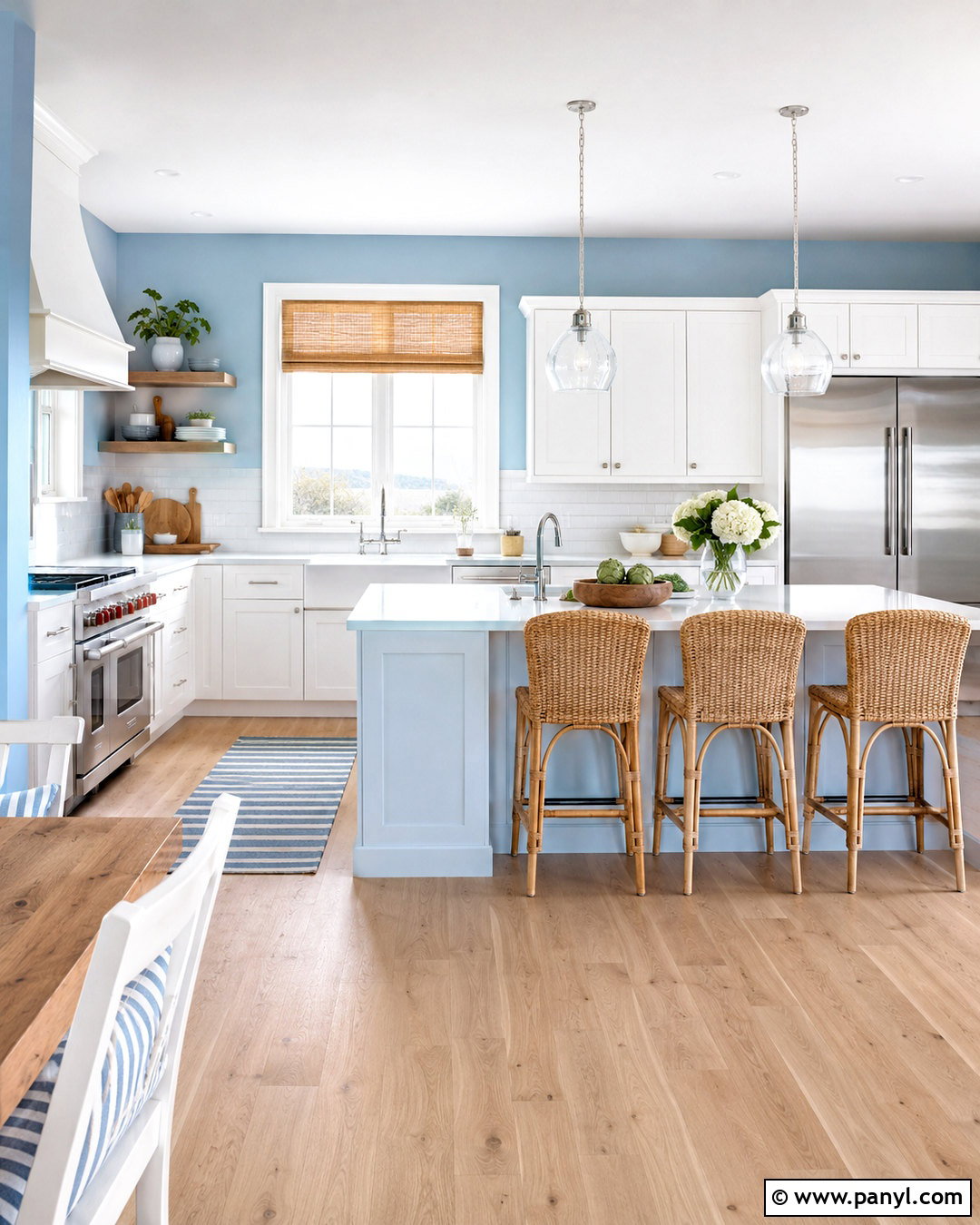
Powder blue walls give white cabinets a soft, airy quality that suits coastal, cottage, and traditional kitchens. Select a restrained blue with enough gray to remain calm throughout the day. Complete the room with white quartz counters, a pearly subway backsplash, and pale oak floors. Polished nickel hardware and glass pendants reinforce the fresh palette. Introduce warm accents through woven counter stools, bamboo shades, and a light wood breakfast table. Blue-and-white striped cushions or a patterned runner can repeat the wall color without making the scheme feel themed. Keep countertop decor minimal and practical, using white ceramics and clear glass. The resulting kitchen feels open, bright, and relaxing. Powder blue adds visible color while allowing the white cabinets to remain the clean focal point.
17. Dusty Blue Kitchen Walls
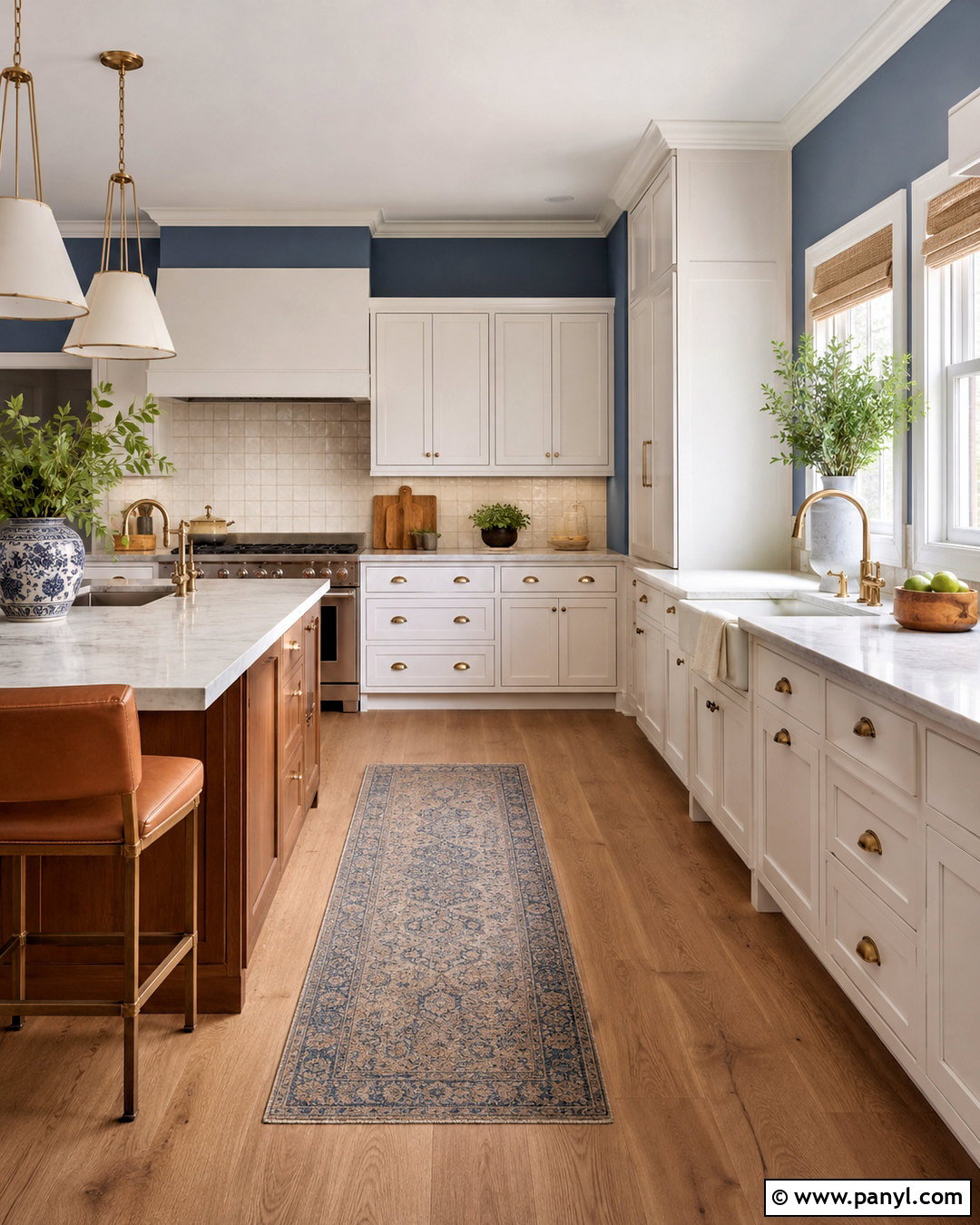
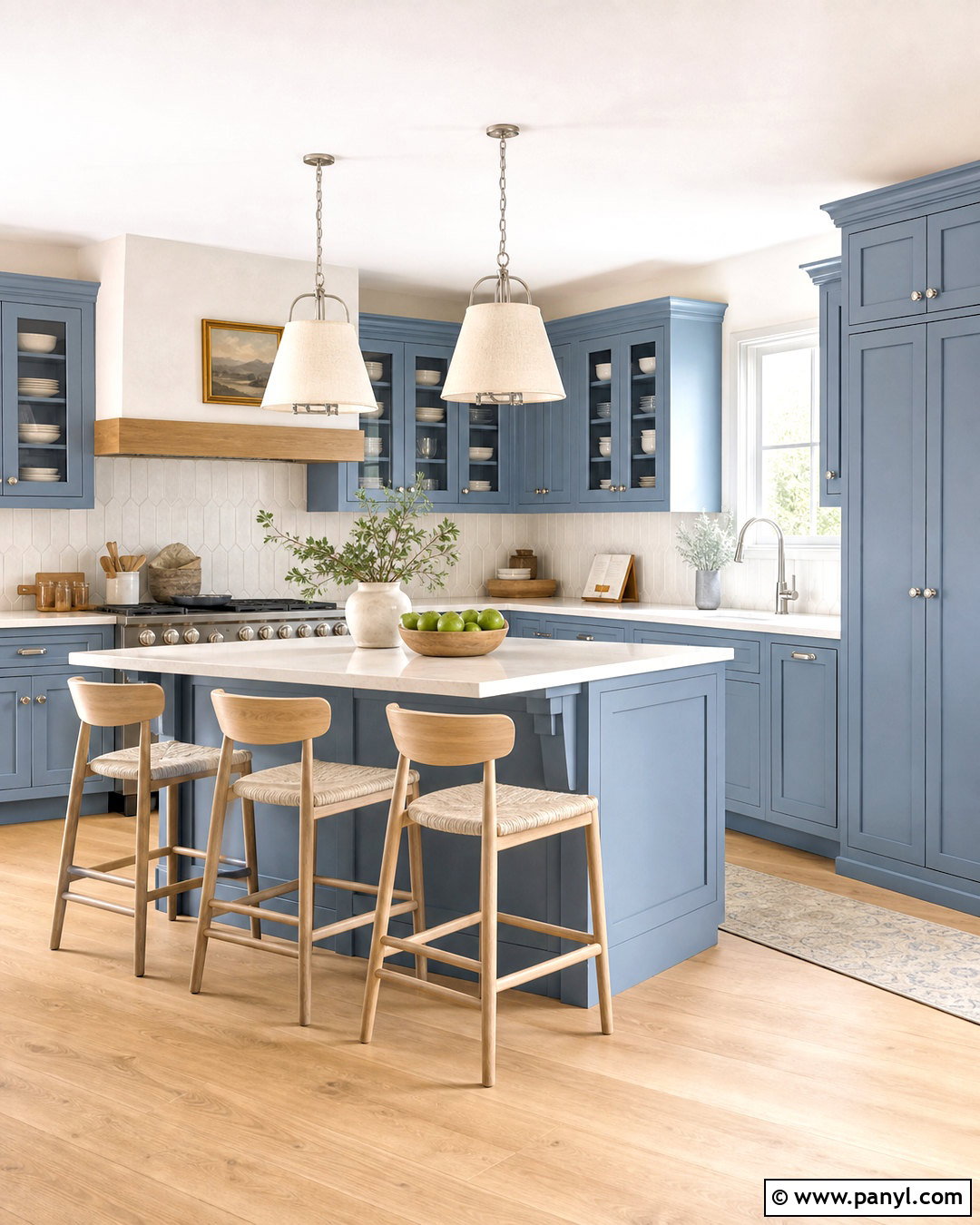
Dusty blue walls create more depth than powder blue while retaining a quiet, livable appearance. Their muted gray undertones pair smoothly with both crisp and slightly warm white cabinets. Use honed white marble countertops and a handmade ivory backsplash to add gentle surface variation. Medium oak flooring and a wood island warm the cooler wall color. Brushed brass hardware creates a refined contrast, while cream linen pendants soften the overall design. Add tan leather stools and a faded blue runner to connect the walls with the furnishings. Dusty blue works particularly well in a transitional kitchen where traditional cabinet profiles meet clean contemporary lighting. The completed space feels composed and comfortable, with enough color to create character but not so much that it limits future decor changes.
18. Blue Gray Kitchen Walls
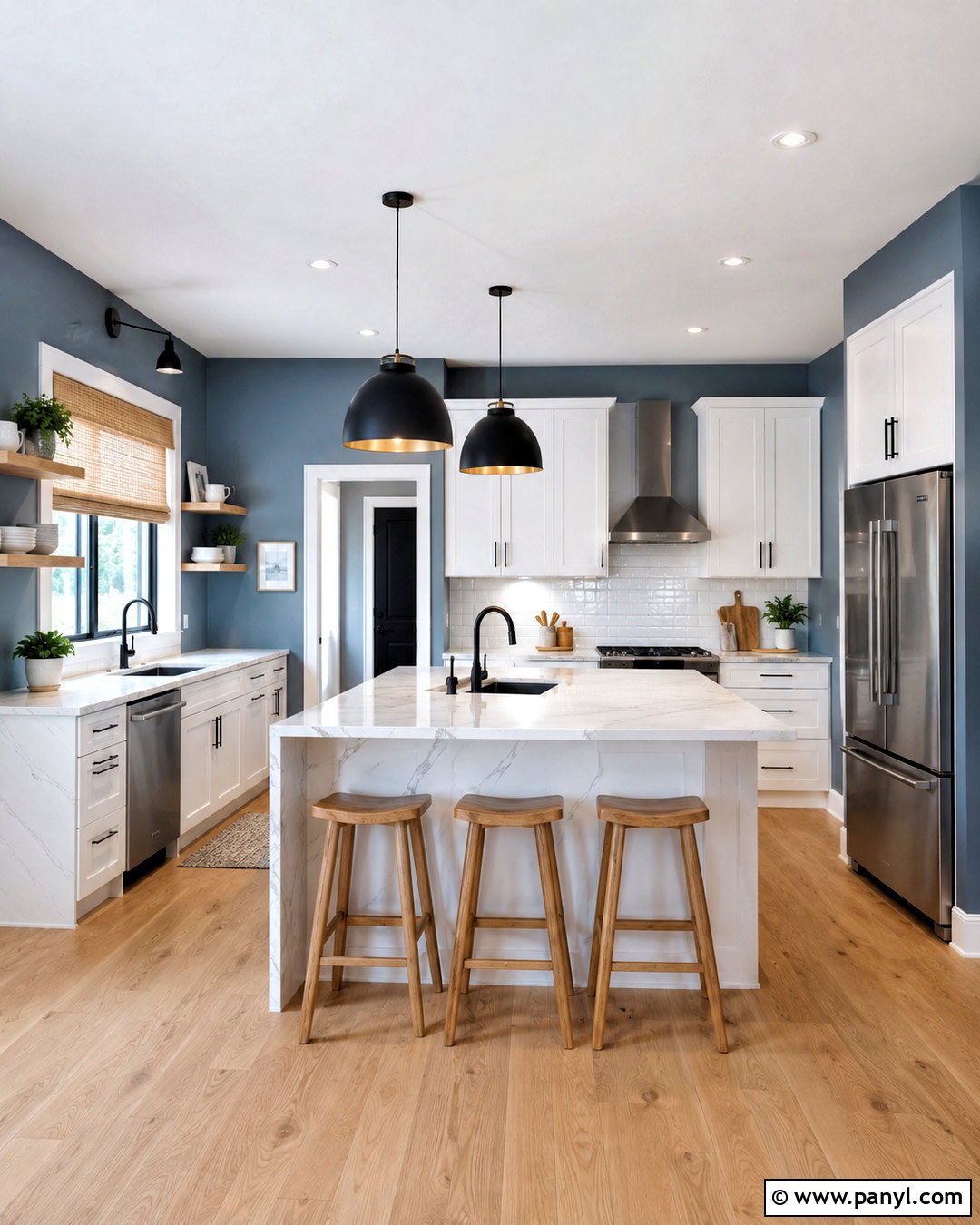
Blue-gray walls provide cool definition around white kitchen cabinets and coordinate naturally with stainless steel appliances. Choose a medium-light shade that reads clearly blue rather than plain gray. Pair it with white quartz counters featuring fine gray veining and a glossy white backsplash that reflects light. Pale wood flooring keeps the palette from becoming too cold. Use matte black pulls, black-framed pendants, and a charcoal runner for crisp contemporary accents. Natural oak stools and woven window shades introduce warmth where it is needed. This complete design works well in a modern family kitchen because the wall color hides minor marks better than white while still feeling open. Finish with simple greenery and white ceramics, allowing the structured blue, black, wood, and white palette to remain uncluttered.
19. Slate Blue Kitchen Walls
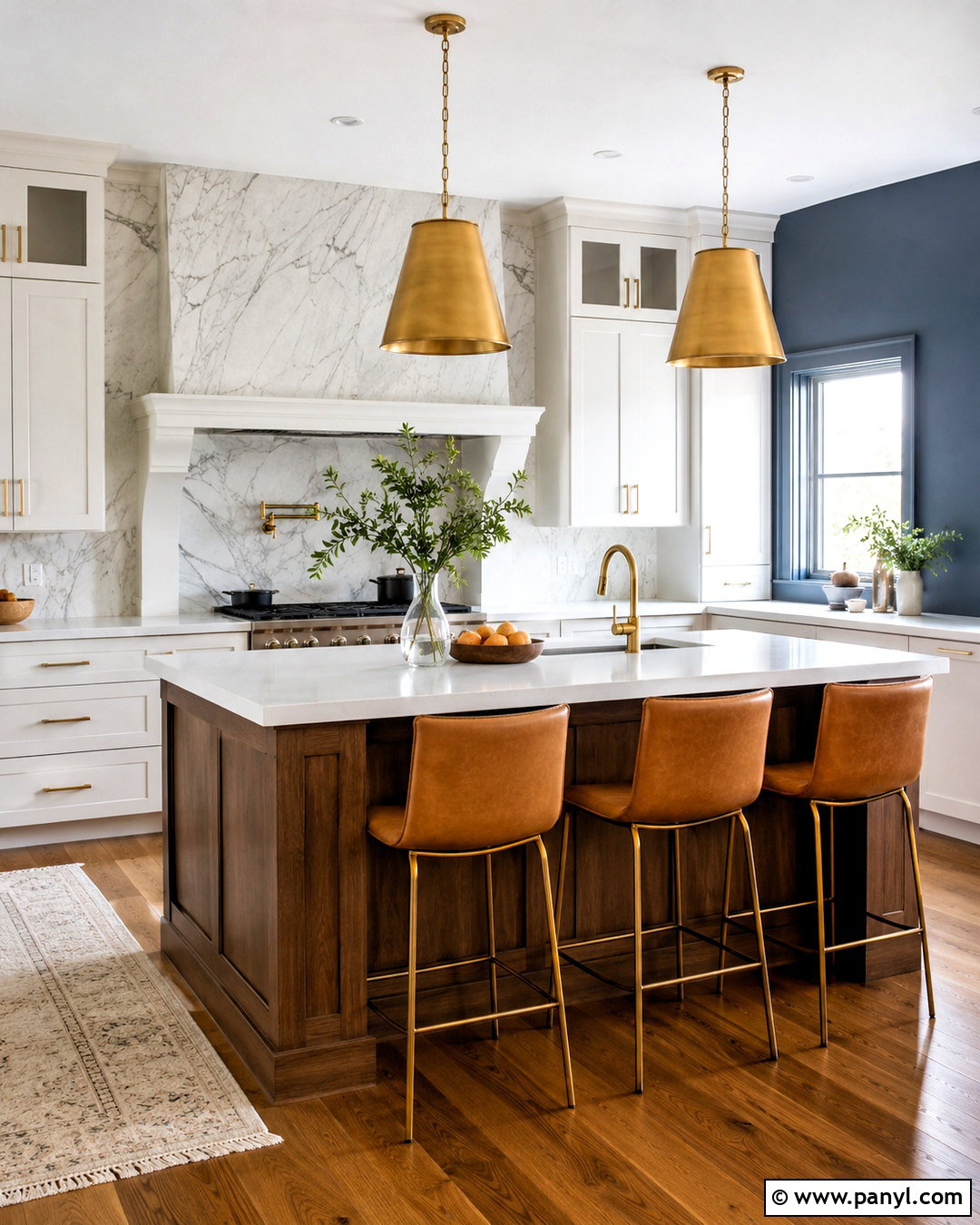
Slate blue gives a white kitchen greater depth and a tailored, architectural character. This medium blue contains enough gray to feel sophisticated instead of bright. Balance it with crisp white cabinetry, thick white quartz counters, and a full-height marble backsplash. Medium walnut flooring and a matching island provide warmth beneath the cooler upper surfaces. Choose brushed brass pulls and linear brass pendants for polished contrast. Camel leather counter stools and a cream runner help connect the wood, metal, and blue walls. Keep window trim white so each wall section looks cleanly framed. Slate blue is particularly attractive in larger kitchens where there is enough visible wall area to establish the color. The final room feels confident, balanced, and elegant without depending on decorative clutter.
20. Navy Blue Kitchen Walls
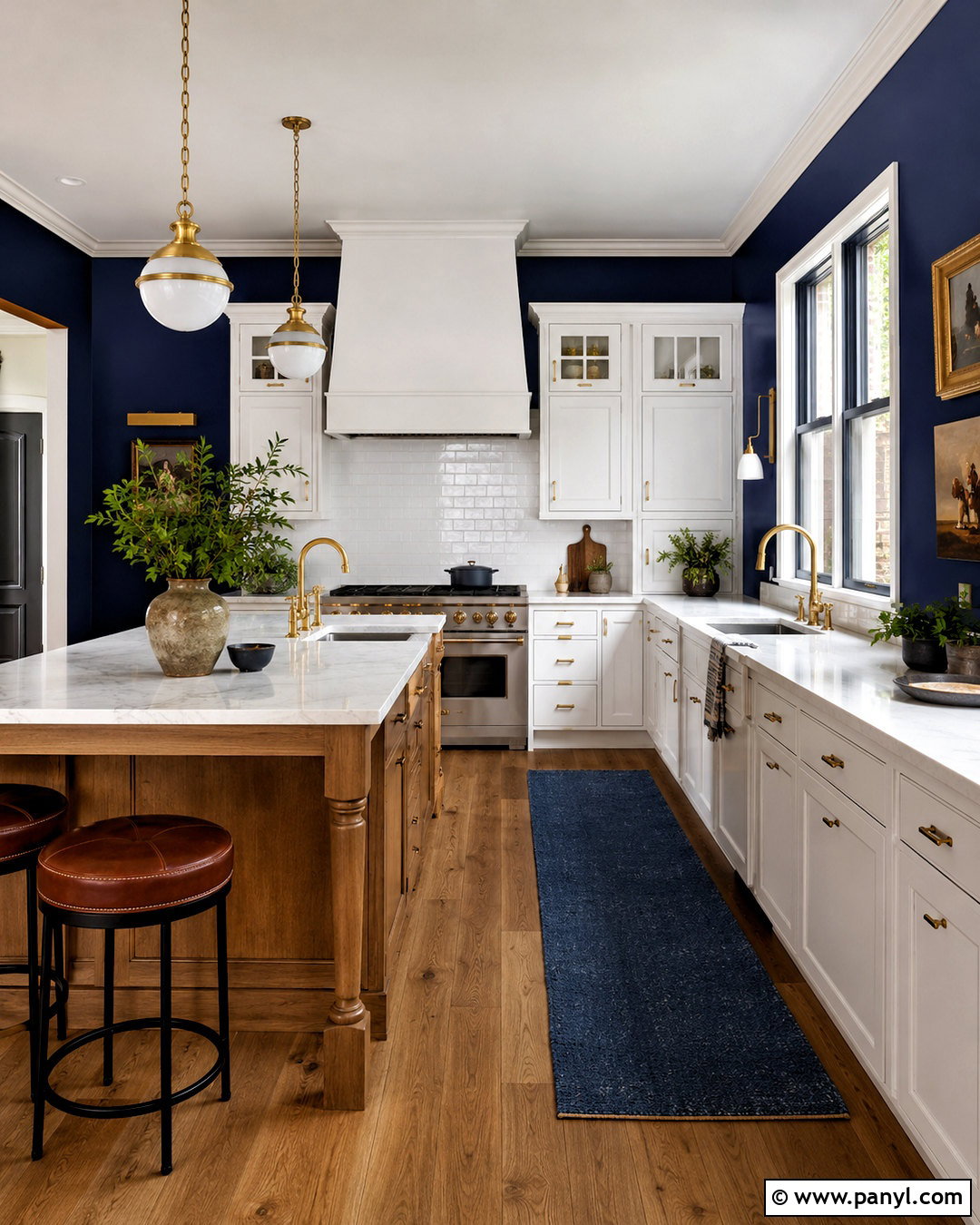
Navy walls turn white kitchen cabinets into a strong graphic feature. Use navy in a room with ample daylight, or limit it to the main wall and adjoining dining area if the kitchen is small. Pair the deep color with white marble counters and a glossy white backsplash to return light to the workspace. Warm oak flooring and a natural wood island keep the design inviting. Add aged brass cabinet pulls, a brass faucet, and oversized milk-glass pendants. Saddle leather stools introduce another rich but practical material. A navy-and-cream runner can connect the floor to the walls without looking overly matched. The complete kitchen feels classic and dramatic, with white cabinetry providing enough brightness to balance the bold wall color and clearly define the room’s structure.
21. Pale Aqua Kitchen Walls
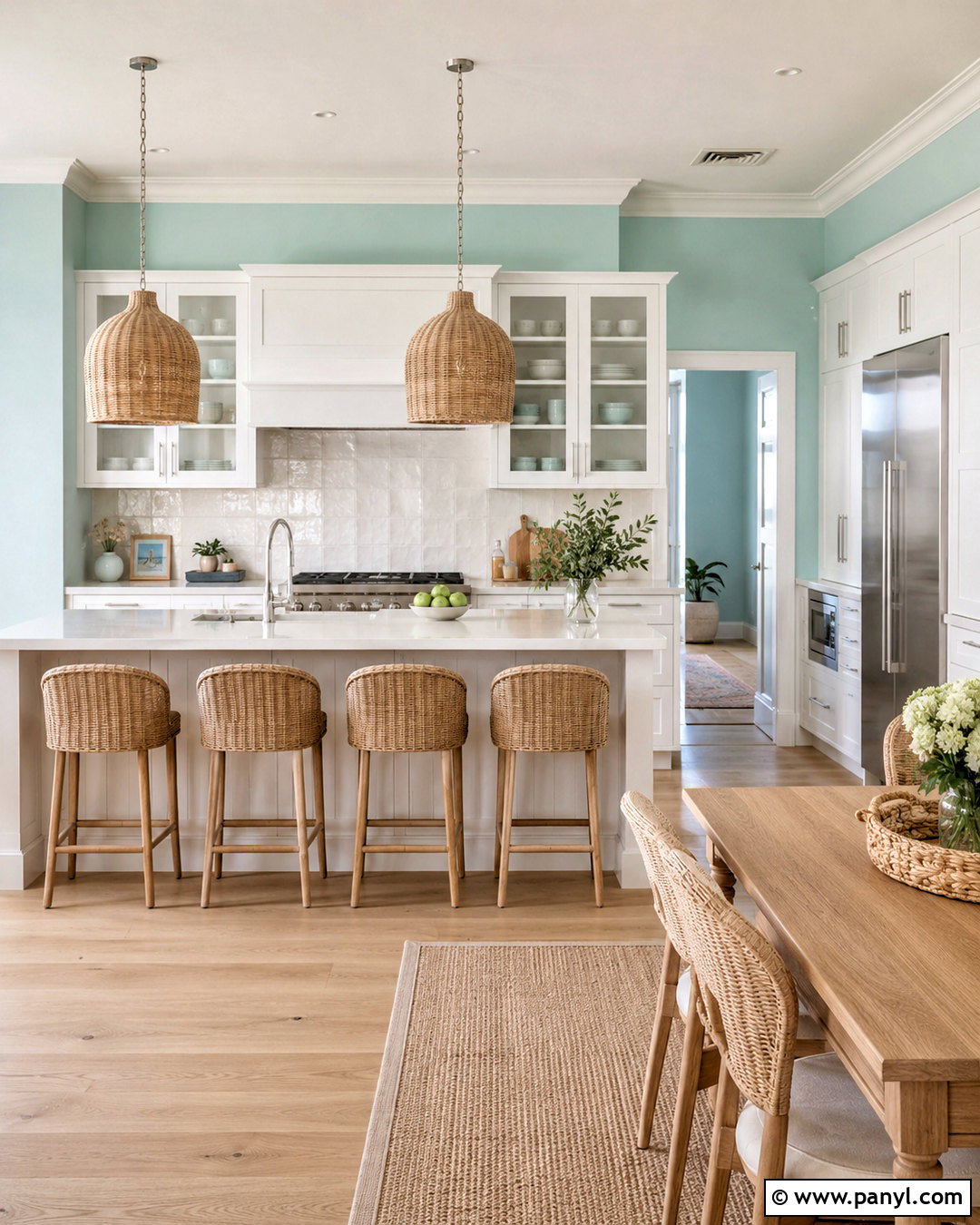
Pale aqua walls blend gentle blue and green for a refreshing kitchen atmosphere. Choose a muted shade that resembles sea glass rather than a bright tropical color. White cabinets, pale quartz countertops, and a creamy handmade backsplash create a clean foundation. Light oak floors, woven pendants, and rattan-backed stools add warmth and casual texture. Use polished nickel hardware for a crisp finish, then repeat the aqua through a subtle striped shade or small ceramic pieces. An oak breakfast table can make the room feel relaxed and family-friendly. This complete palette suits coastal homes, but it can also brighten an ordinary suburban kitchen without looking themed. Keep decorative objects simple so the airy wall color, natural wood, and white cabinetry remain the dominant visual elements.
22. Soft Teal Kitchen Walls
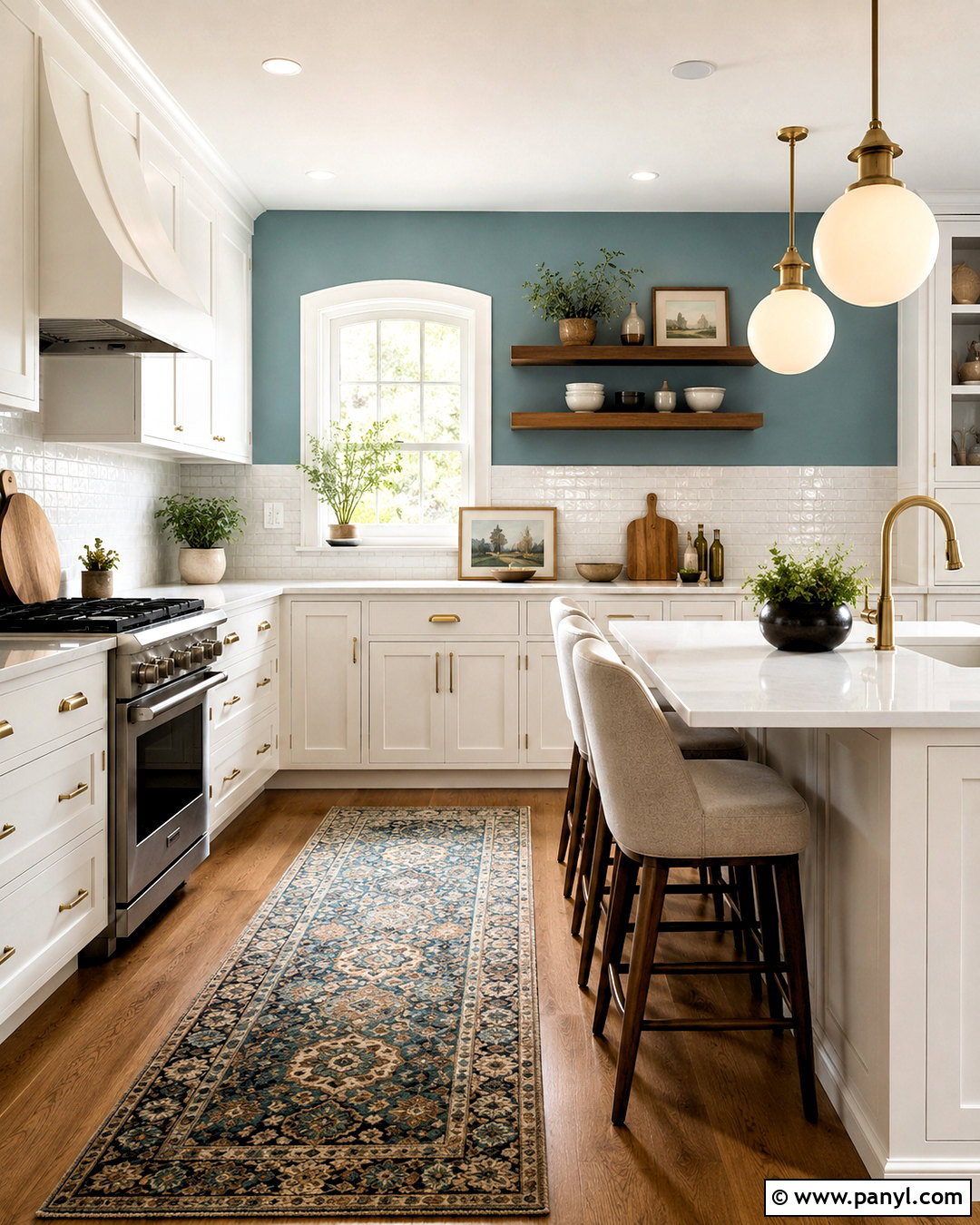
Soft teal walls bring noticeable color to white cabinets while remaining calmer than vivid turquoise. Look for a medium shade with gray undertones, then combine it with white quartz countertops and a simple ivory backsplash. Warm walnut flooring and matching shelves balance the cooler blue-green color. Brass pulls and globe pendants add warmth and a subtle reflective finish. Choose cream upholstered stools or light wood seating to avoid introducing too many dark surfaces. A patterned runner containing teal, tan, and off-white can unite the palette. Soft teal works especially well in an eclectic or transitional kitchen with clean cabinet lines and a few handcrafted accessories. The finished design feels colorful and personal, yet every component remains coordinated enough to look polished rather than overly playful.
23. Blush Pink Kitchen Walls
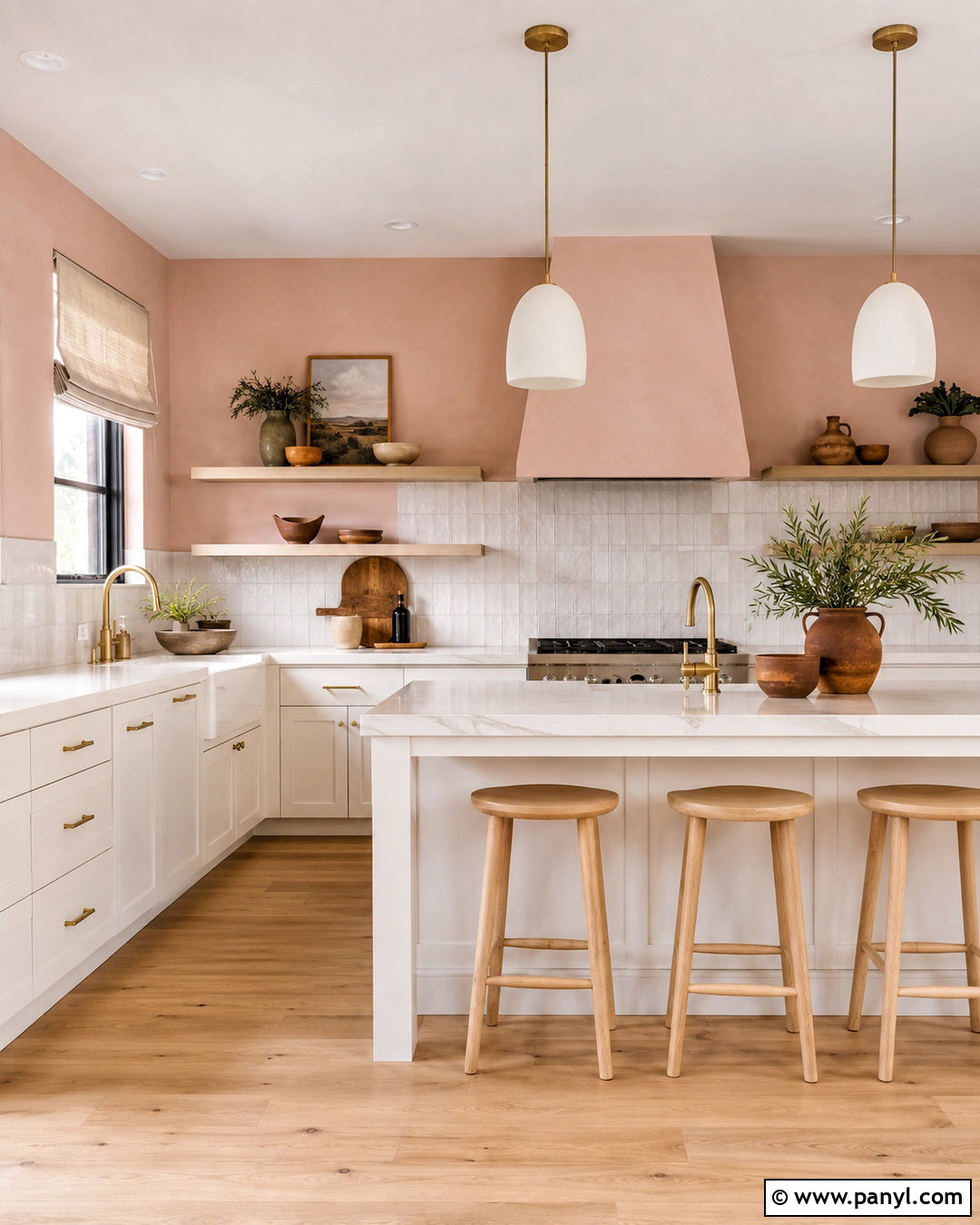
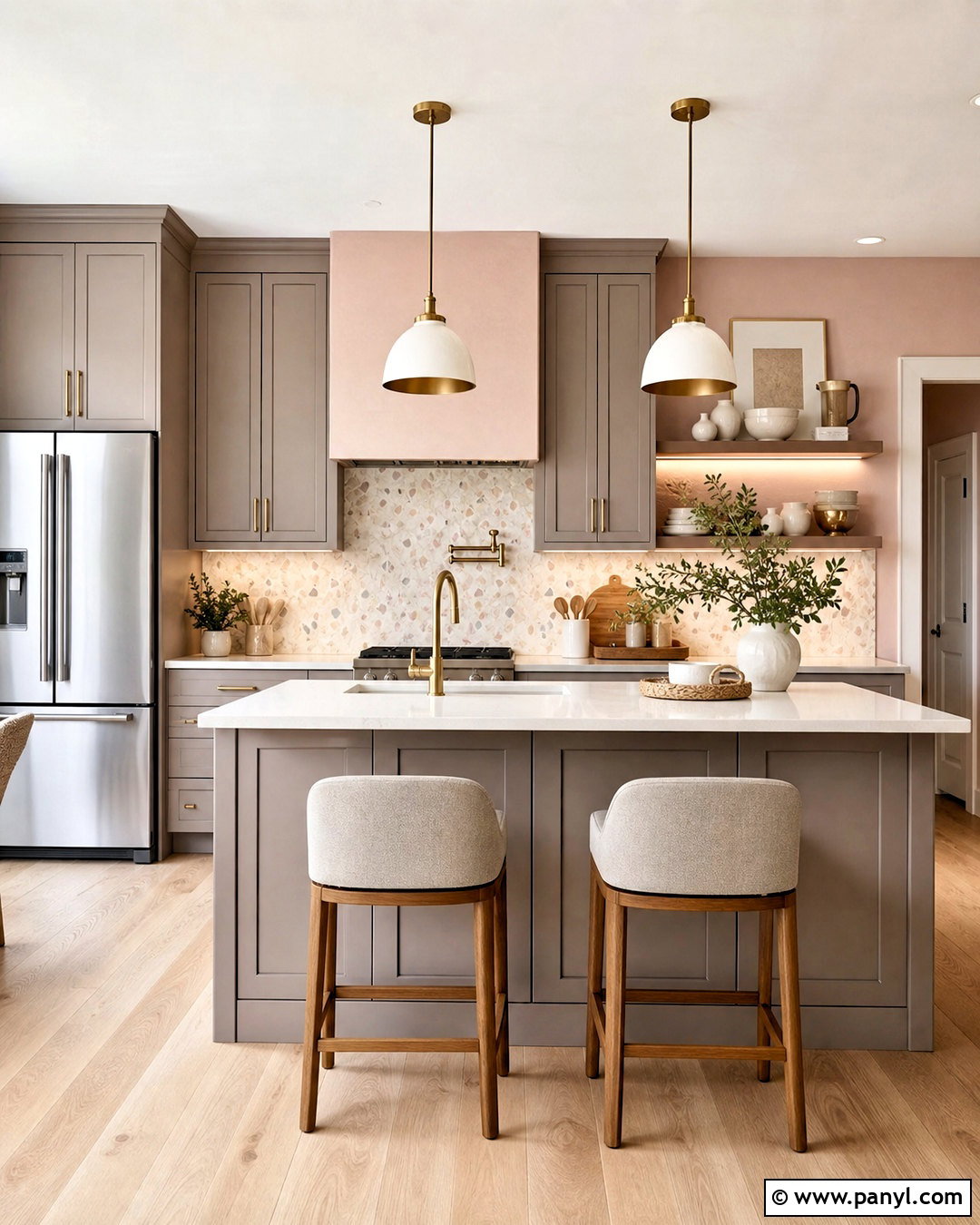
Blush pink walls can warm white cabinets without making the kitchen feel childish or overly decorative. Select a pale, dusty pink with beige or gray undertones. Pair it with creamy quartz counters, a white zellige backsplash, and natural oak flooring. Aged brass hardware and softly rounded pendants complement the warmth of the paint. Add light wood stools, oatmeal linen shades, and terracotta ceramics for an earthy finish. Matte black accents can be introduced through window frames or a small pendant detail to give the palette structure. Blush works beautifully in kitchens with limited sunlight because it creates a gentle glow. The complete room feels welcoming, modern, and subtly colorful, with white cabinetry keeping the pink walls fresh and balanced rather than overly sweet.
24. Dusty Rose Kitchen Walls
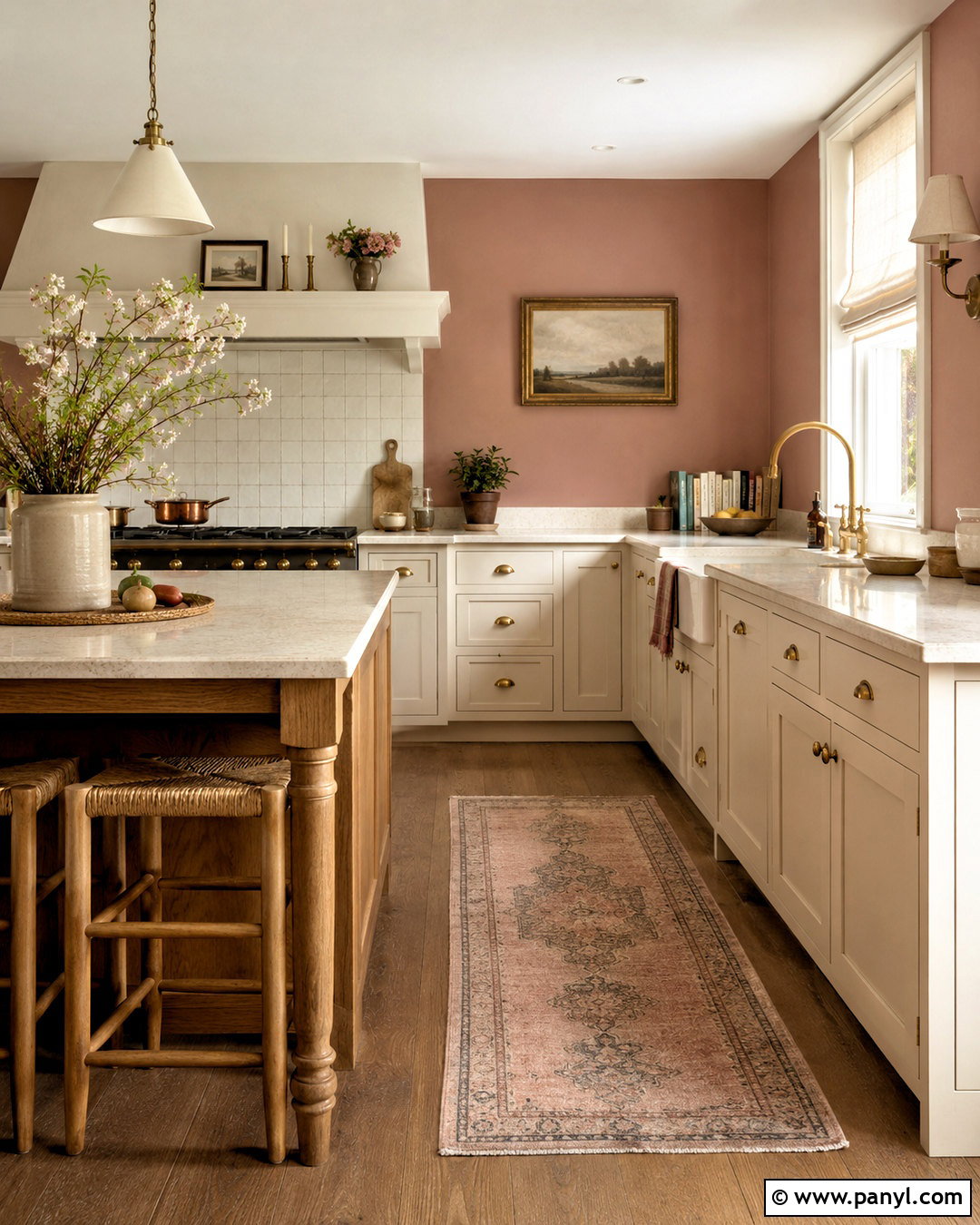
Dusty rose creates a richer, more grounded backdrop than pale blush. Its muted brown undertones pair naturally with creamy white cabinets, warm stone counters, and walnut flooring. Use a simple ivory tile backsplash so the walls remain the main color statement. Antique brass knobs and a traditional brass faucet strengthen the warm palette. Add an oak island, woven stools, and oatmeal-colored linen shades for softness. A faded runner with rose, tan, and olive details can connect the surfaces without repeating the wall color too literally. Dusty rose is particularly effective in vintage-inspired or English cottage kitchens, but streamlined fixtures can make it feel contemporary. The finished space feels warm and collected, with enough earthy depth to give bright white cabinetry a more comfortable, lived-in presence.
25. Soft Peach Kitchen Walls
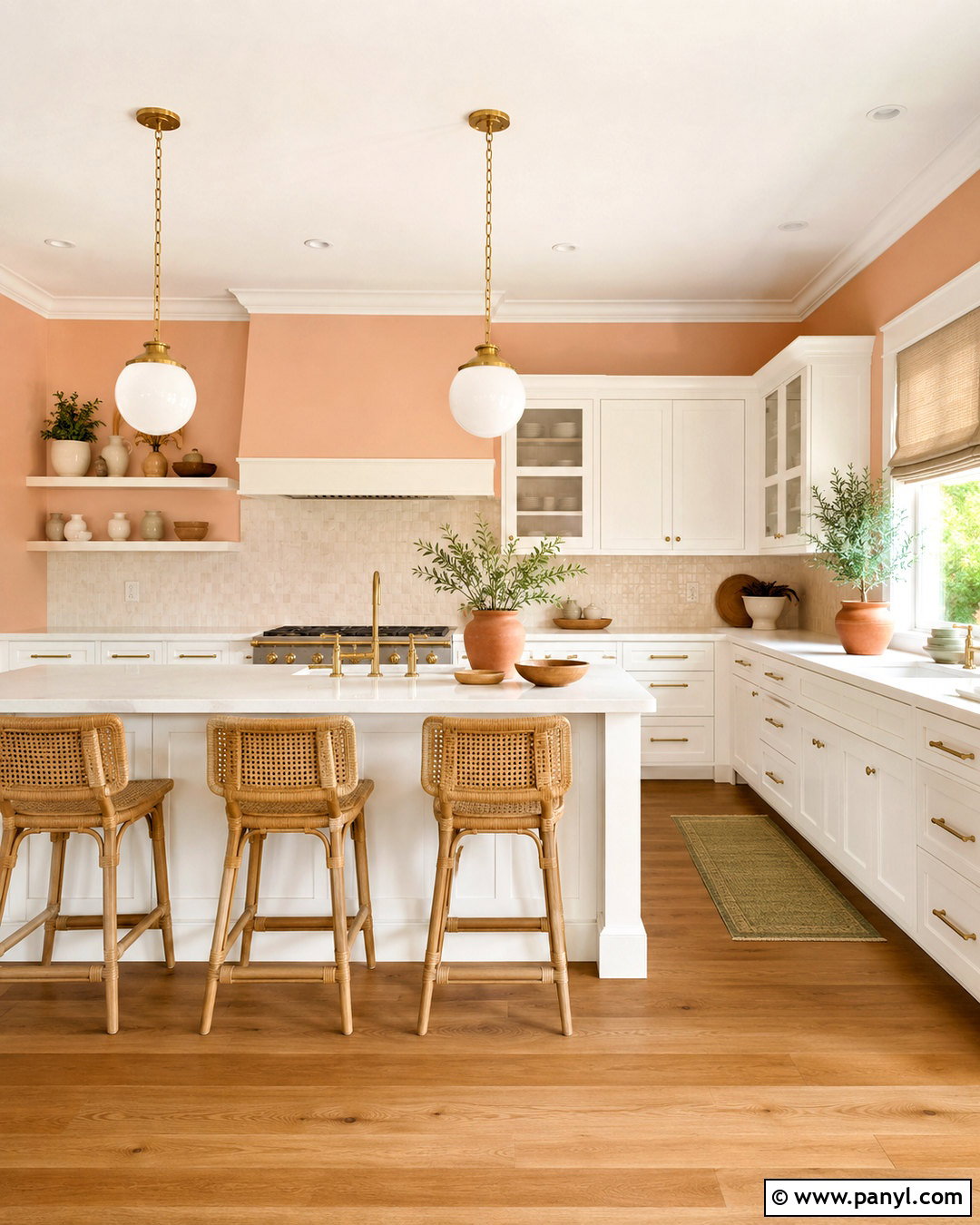
Soft peach walls add warmth and energy to white cabinetry while preserving a light, open appearance. Choose a pale clay-peach rather than a bright orange shade. Combine it with warm white quartz countertops, handmade cream backsplash tile, and honey-toned oak flooring. Brushed brass hardware supports the sunny undertones, while simple white globe pendants keep the design crisp. Natural cane stools, linen window shades, and terracotta planters complete the relaxed palette. Introduce muted green through a runner or small accessories for a balanced complementary accent. Soft peach works well in kitchens that receive cool northern light because it brings visual warmth to the room. The full design feels cheerful and welcoming, but restrained materials prevent it from appearing overly colorful or tied to a passing theme.
26. Terracotta Kitchen Walls
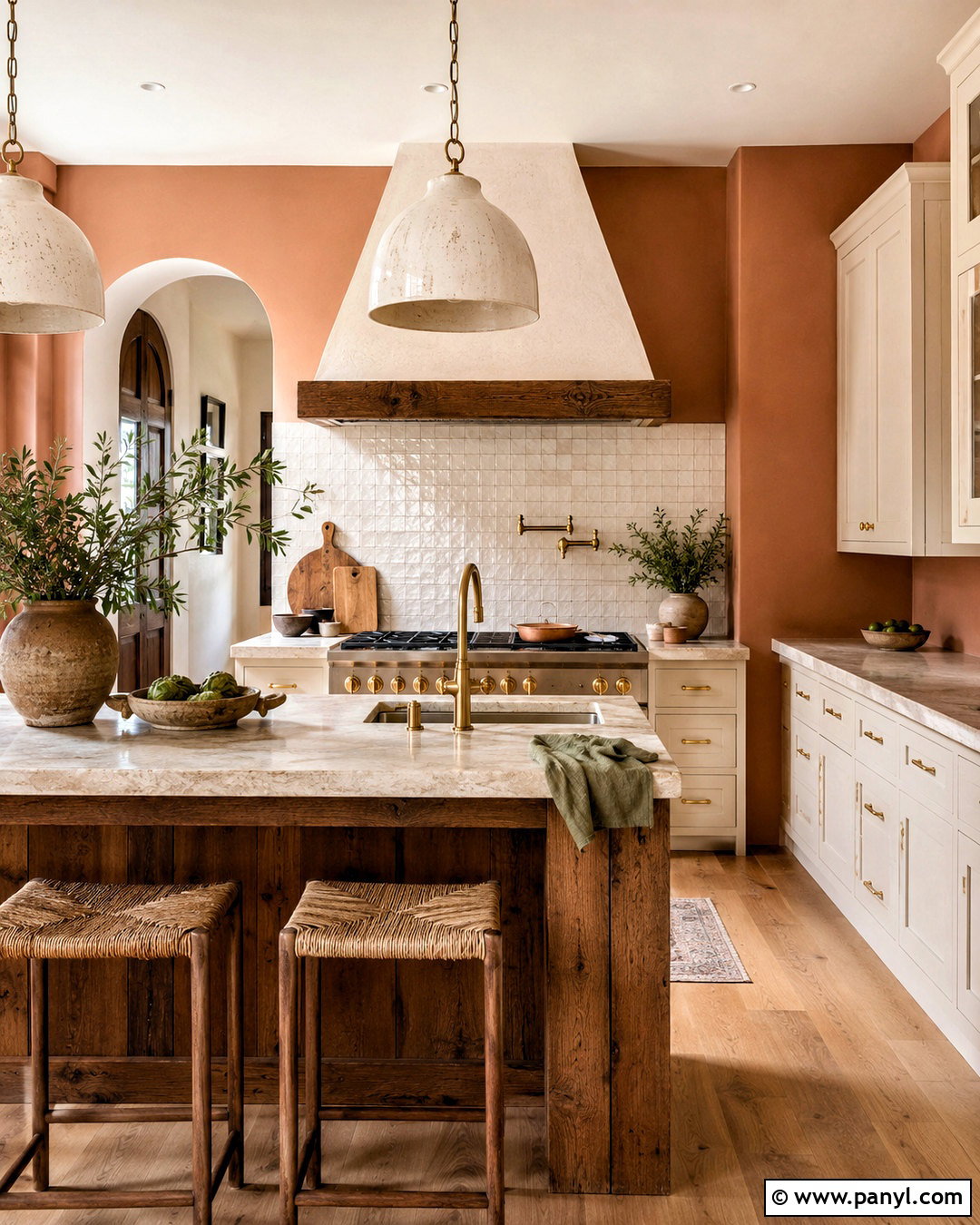
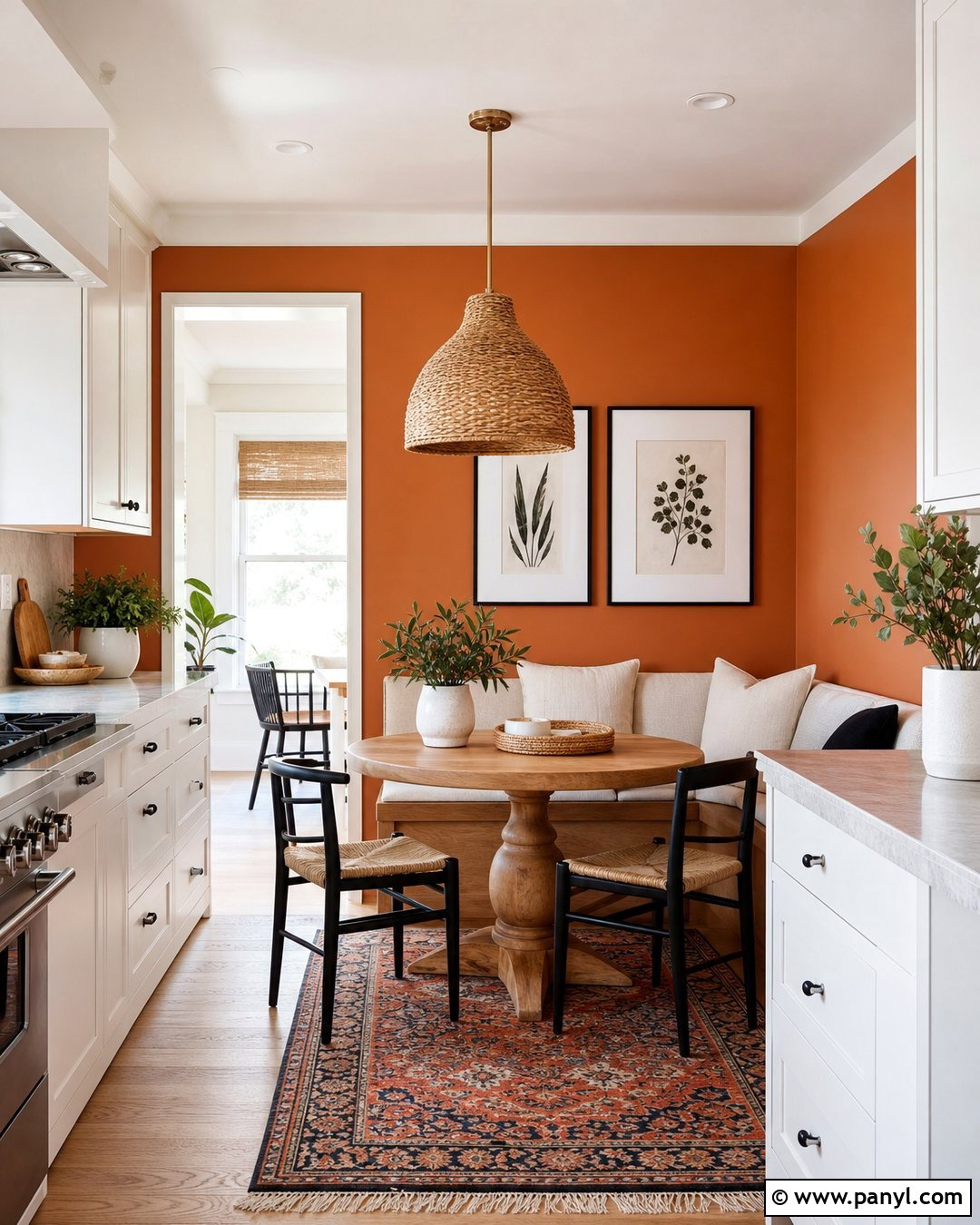
Terracotta walls create an earthy, Mediterranean-inspired kitchen around clean white cabinets. Choose a softened baked-clay shade instead of a highly saturated orange. Balance the walls with creamy stone counters and a white plaster-look or handmade tile backsplash. Medium oak flooring, a reclaimed wood island, and woven seating reinforce the natural character. Use aged brass hardware and simple ceramic pendants for warm detail. Add olive green textiles, brown pottery, and linen cafe curtains to complete the layered palette. Because terracotta absorbs more light than pale neutrals, keep the ceiling white and use generous under-cabinet lighting. The finished kitchen feels sunny, grounded, and full of texture. Bright cabinetry ensures that the richer wall color remains inviting rather than making the room feel enclosed.
27. Butter Yellow Kitchen Walls
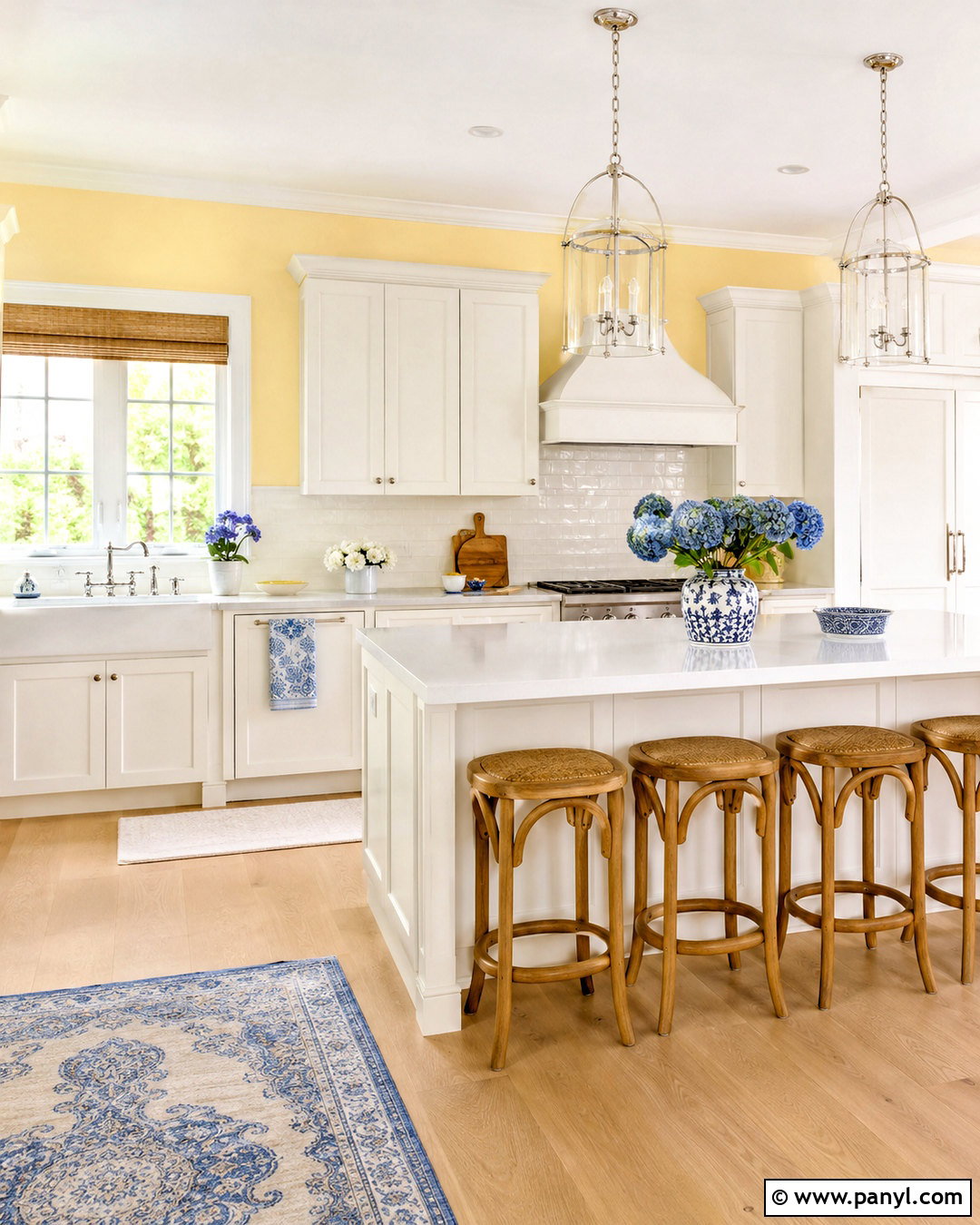
Butter yellow walls bring soft sunshine to white kitchen cabinets without the intensity of a bright primary yellow. Select a creamy, muted shade that remains gentle under artificial light. Pair it with pale oak floors, white quartz counters, and a glossy ivory backsplash. Polished nickel fixtures provide a clean contrast, while wood stools and woven shades add comfortable warmth. Use powder blue or sage green accents through a runner, Roman shade, or small countertop pieces. Clear glass pendants allow the cheerful walls to remain visible and keep the kitchen feeling open. Butter yellow is a natural choice for cottage kitchens and breakfast areas, especially when natural light is limited. The complete design feels optimistic and familiar, with restrained finishes giving the traditional color a fresh, updated appearance.
28. Muted Ochre Kitchen Walls
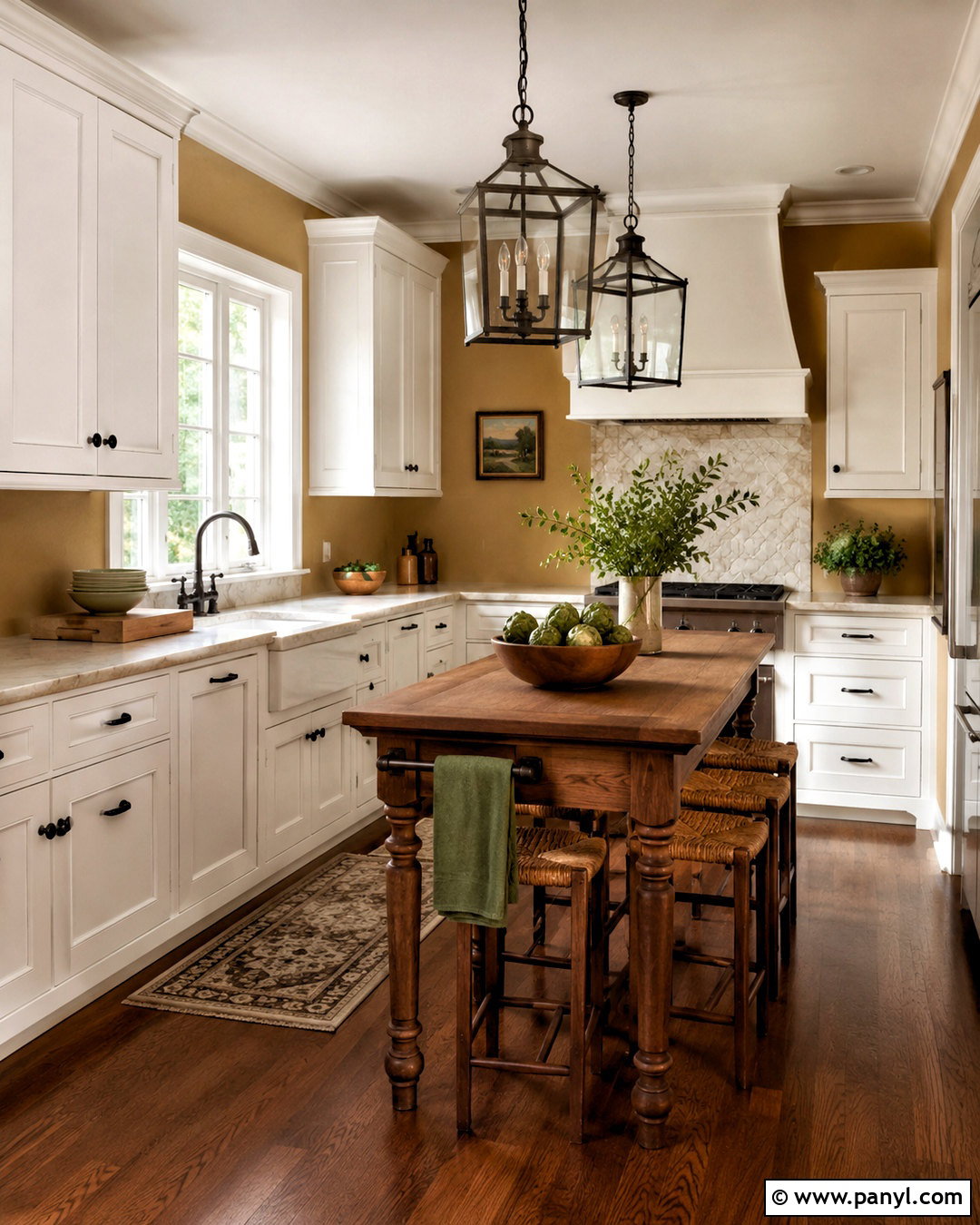
Muted ochre walls create a warm, heritage-inspired setting for white cabinets. This golden earth tone has more depth than butter yellow and looks especially effective in a kitchen with high ceilings or generous windows. Pair it with creamy marble counters, ivory tile, and medium walnut floors. Use aged bronze hardware and dark metal lanterns to give the bright cabinetry stronger definition. An oak worktable-style island and woven counter stools keep the design relaxed. Add olive textiles, brown ceramics, and simple framed prints for a layered but practical finish. Leave the ceiling and trim crisp white to frame the ochre clearly. The completed kitchen feels warm, distinctive, and established, combining traditional color with fresh white cabinetry and uncomplicated natural materials that can age gracefully.
29. Pale Lavender Kitchen Walls
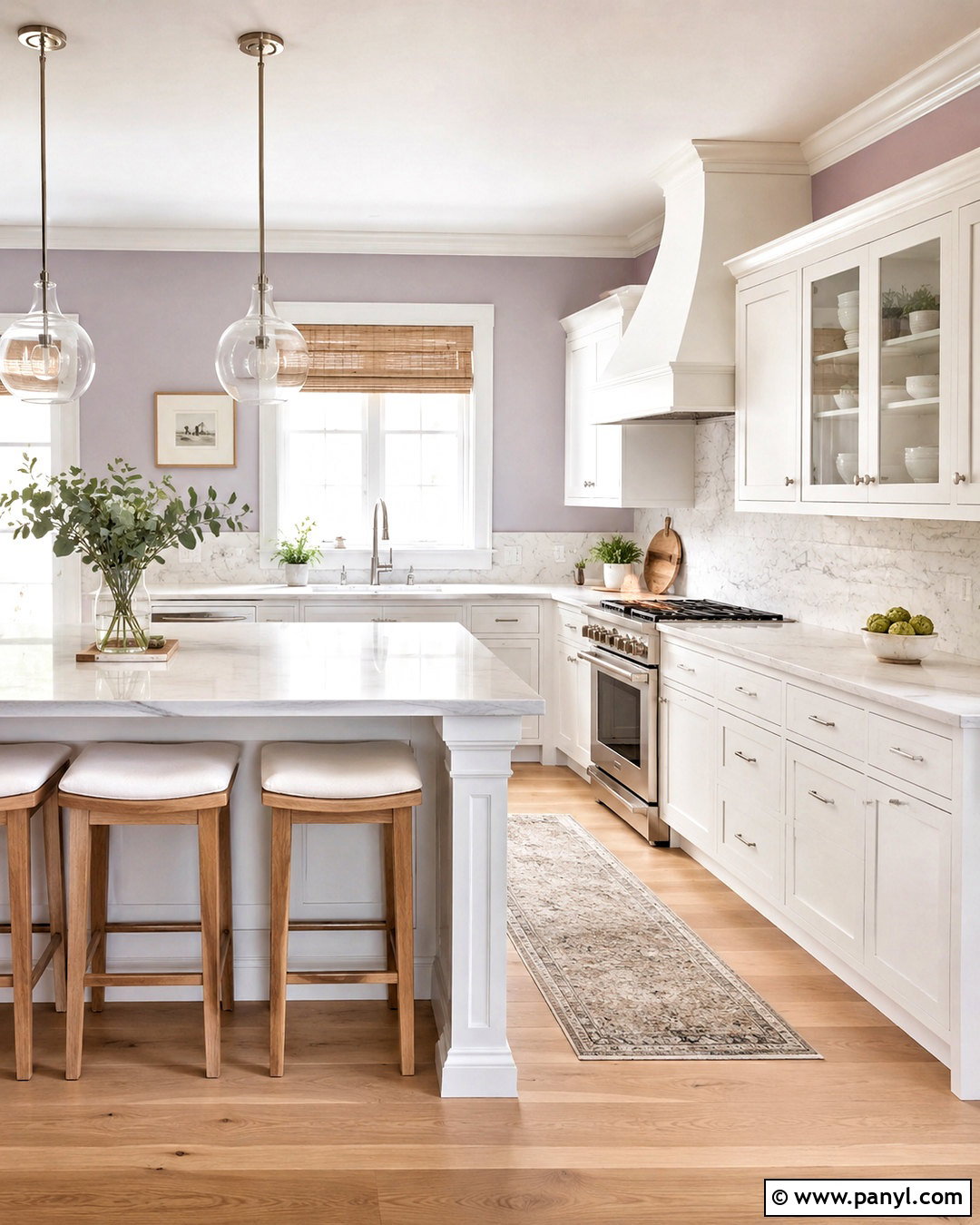
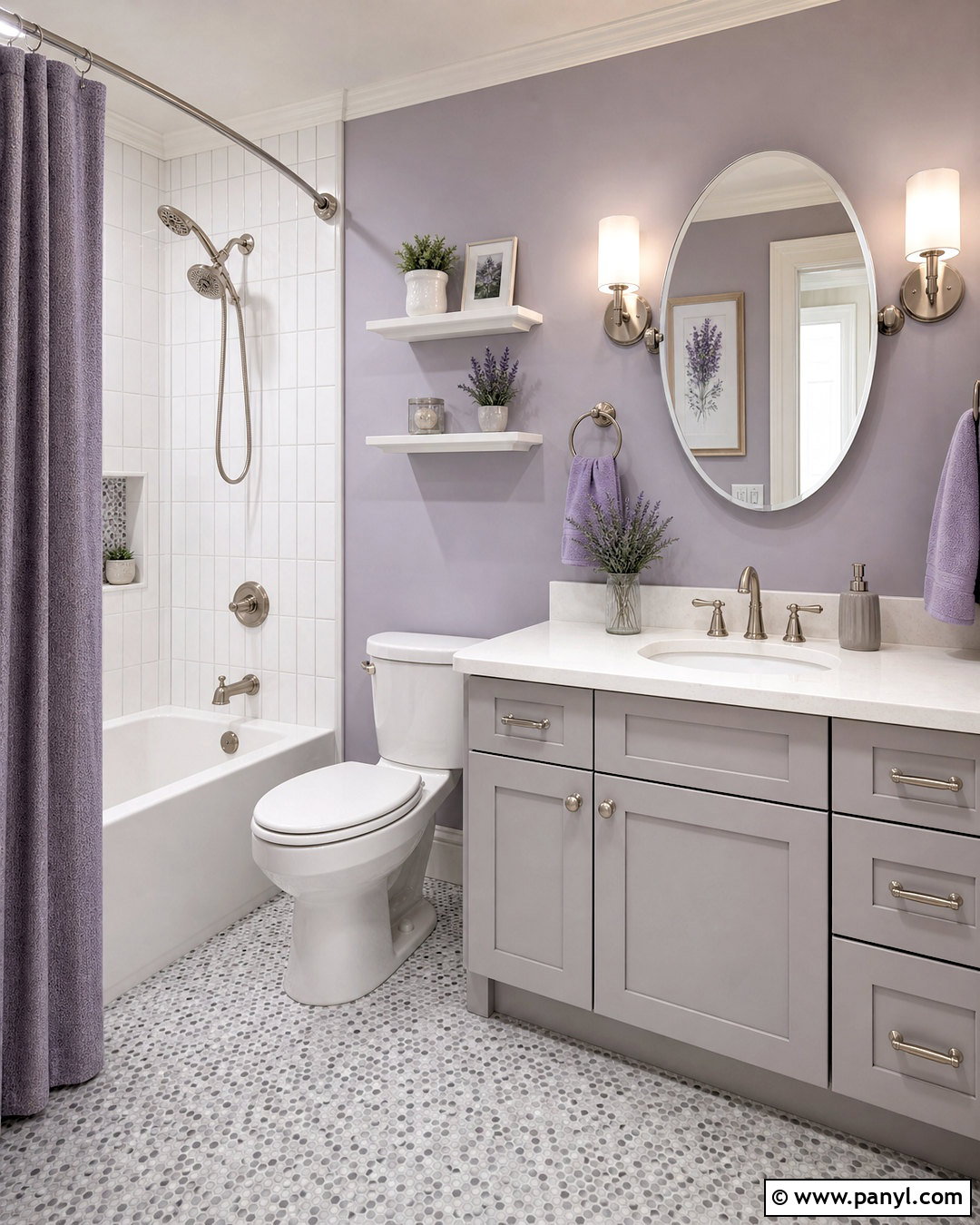
Pale lavender walls offer an unexpected but gentle partner for white kitchen cabinets. Choose a smoky lavender with noticeable gray undertones rather than a sugary purple. Complete the room with white quartz counters, a softly veined marble backsplash, and pale oak flooring. Polished nickel pulls and glass pendants suit the cool, airy palette. Introduce warmth through natural wood stools, woven shades, and cream linen textiles. Small accents in muted green or charcoal can prevent the room from feeling overly pastel. Pale lavender works particularly well in a bright kitchen where daylight reveals its subtle color changes. The finished design feels calm, individual, and surprisingly versatile, while white cabinetry keeps the unusual wall shade grounded and provides a clean visual framework around the room.
30. Muted Plum Kitchen Walls
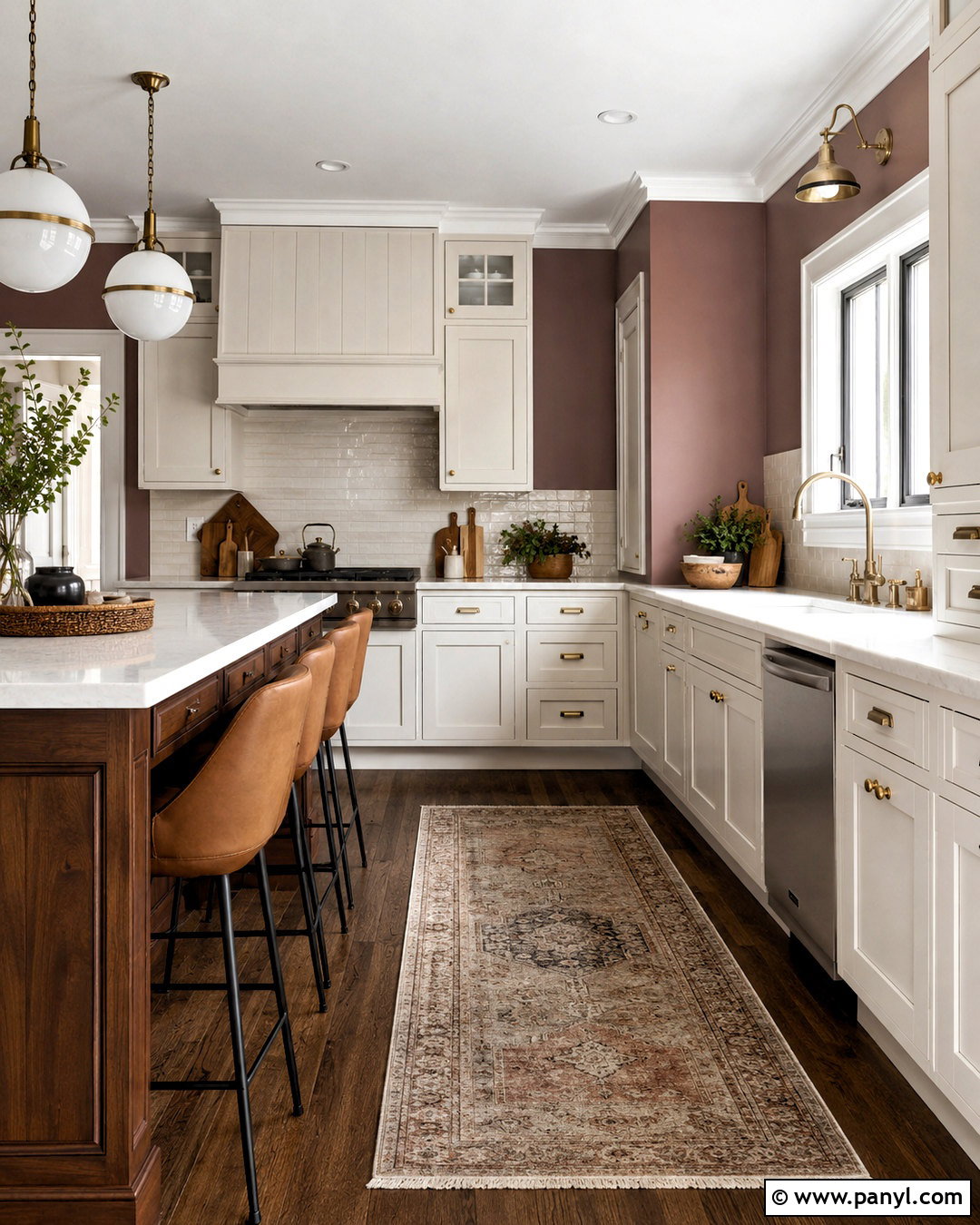
Muted plum walls create a rich and sophisticated contrast with white cabinetry. Choose a brown-based plum that feels earthy rather than jewel-toned. Use it in a kitchen with good natural light, balancing the color with white marble counters and a glossy cream backsplash. Dark walnut floors and a walnut island reinforce the wall’s warm depth. Add aged brass hardware and oversized opal glass pendants to brighten the composition. Counter stools in camel leather or oatmeal fabric prevent the room from becoming too dark. Keep window trim, ceilings, and doors white for clean separation. A faded runner featuring plum, rust, and beige can unite the palette. The completed kitchen feels dramatic but comfortable, combining bold walls with familiar materials and bright cabinetry for a well-controlled, livable result.
31. Charcoal Gray Kitchen Walls
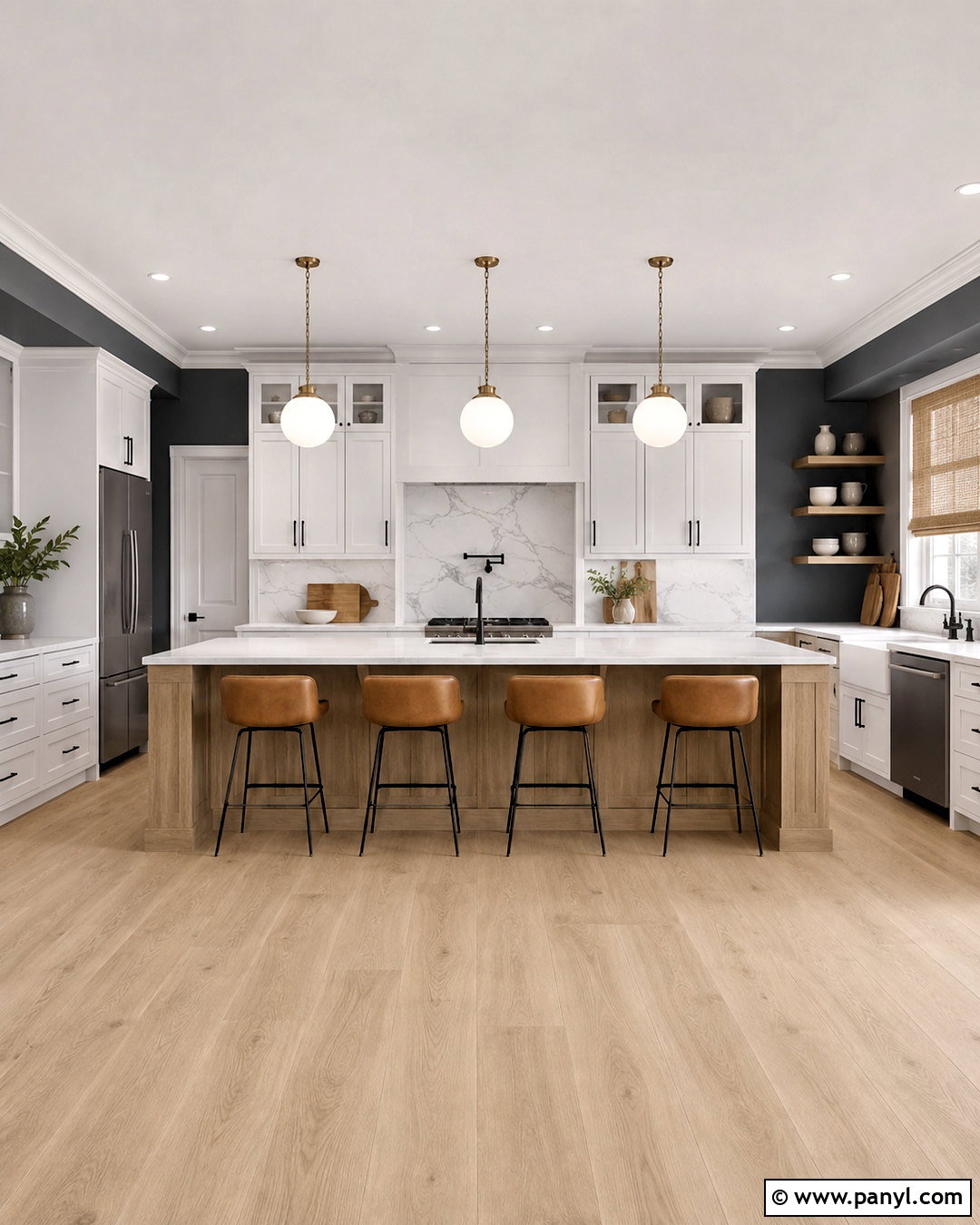
Charcoal gray walls provide bold contrast and a streamlined background for white kitchen cabinets. Select a softened charcoal rather than flat black, allowing its subtle undertones to show in daylight. Pair it with white quartz counters and a full-height white marble backsplash to reflect light throughout the workspace. Pale oak flooring and a matching island introduce warmth against the dark perimeter. Matte black hardware creates a modern tone-on-tone detail, while large white globe pendants break up the deeper colors. Add tan leather stools, natural woven shades, and a cream runner for softness. Charcoal works especially well in open or brightly lit kitchens. The finished space feels sharp and contemporary, but wood, leather, and textured textiles prevent the high-contrast palette from looking cold or severe.
32. Soft Black Kitchen Walls
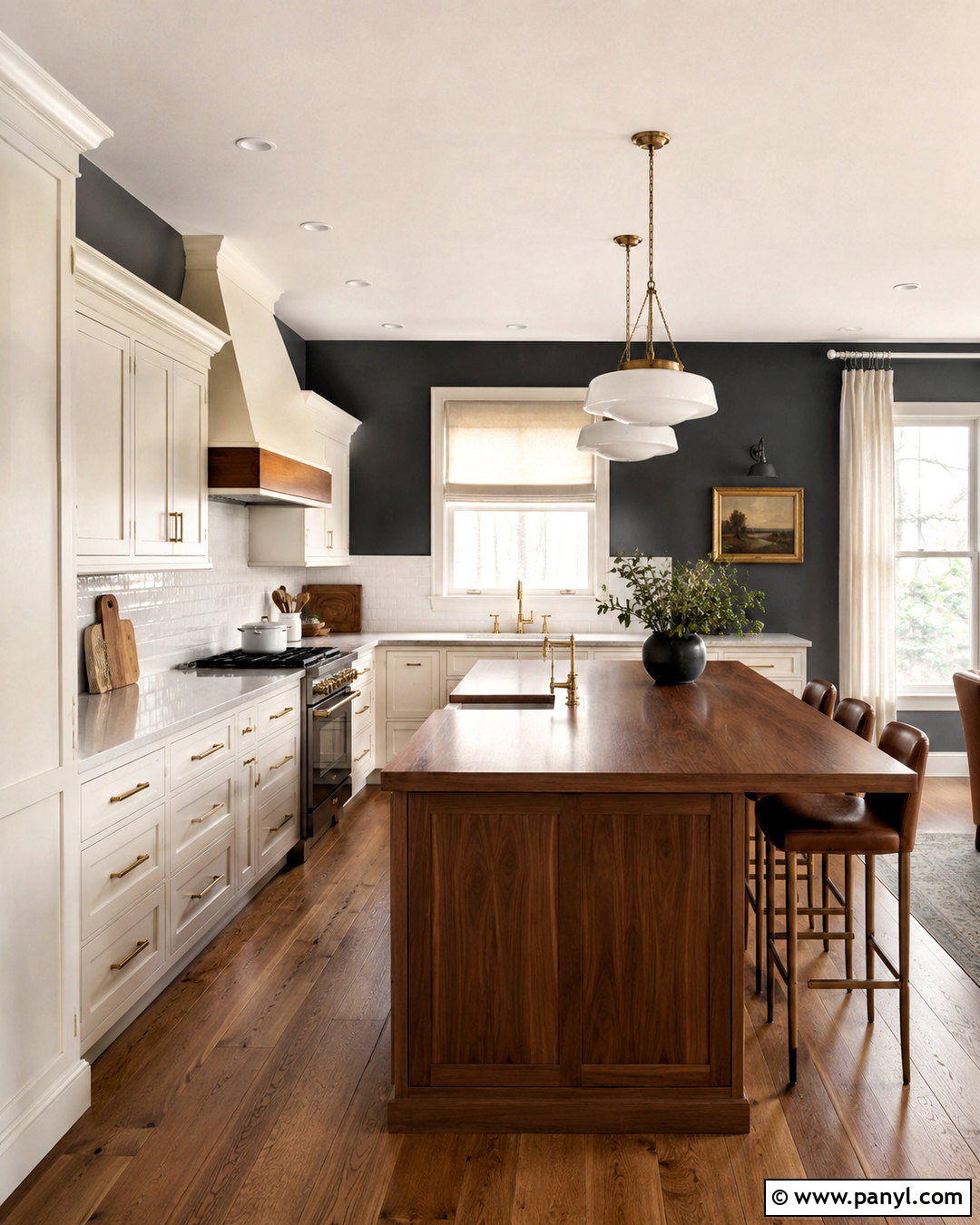
Soft black walls can make white cabinets look crisp, architectural, and intentionally framed. Use a black with brown or charcoal undertones so it feels more forgiving than a pure jet black. Balance the walls with generous white cabinetry, pale stone counters, and a glossy white backsplash. Warm walnut flooring and a substantial wood island keep the room grounded. Choose antique brass pulls and milk-glass pendants to add brightness and warmth. Camel leather stools, cream linen shades, and a light patterned runner soften the bold contrast. Paint the ceiling white and incorporate strong task lighting beneath the cabinets. This complete scheme works best when the room has windows or an open layout. The result is dramatic and modern, yet warm materials make it comfortable enough for everyday family use.
33. Chocolate Brown Kitchen Walls
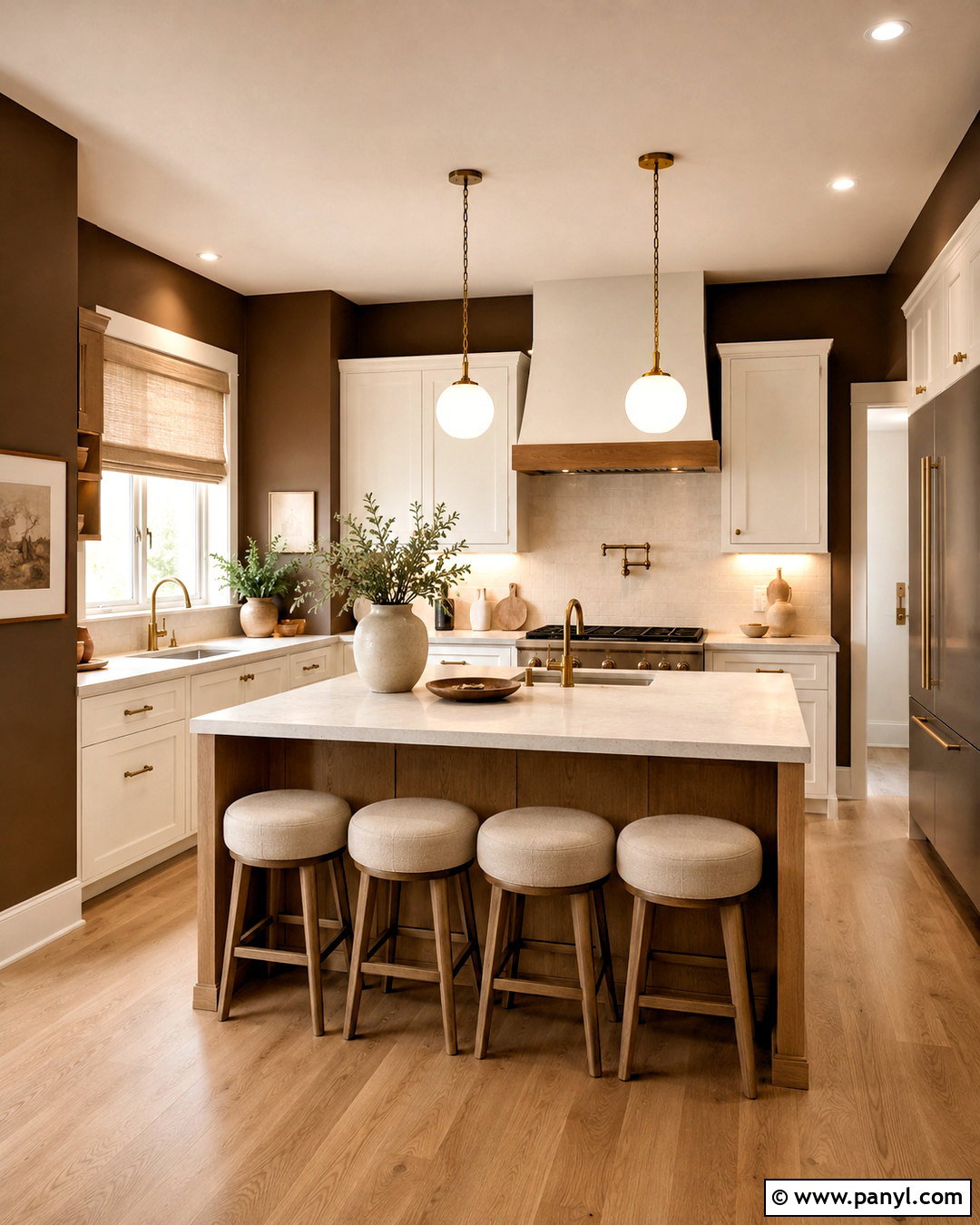
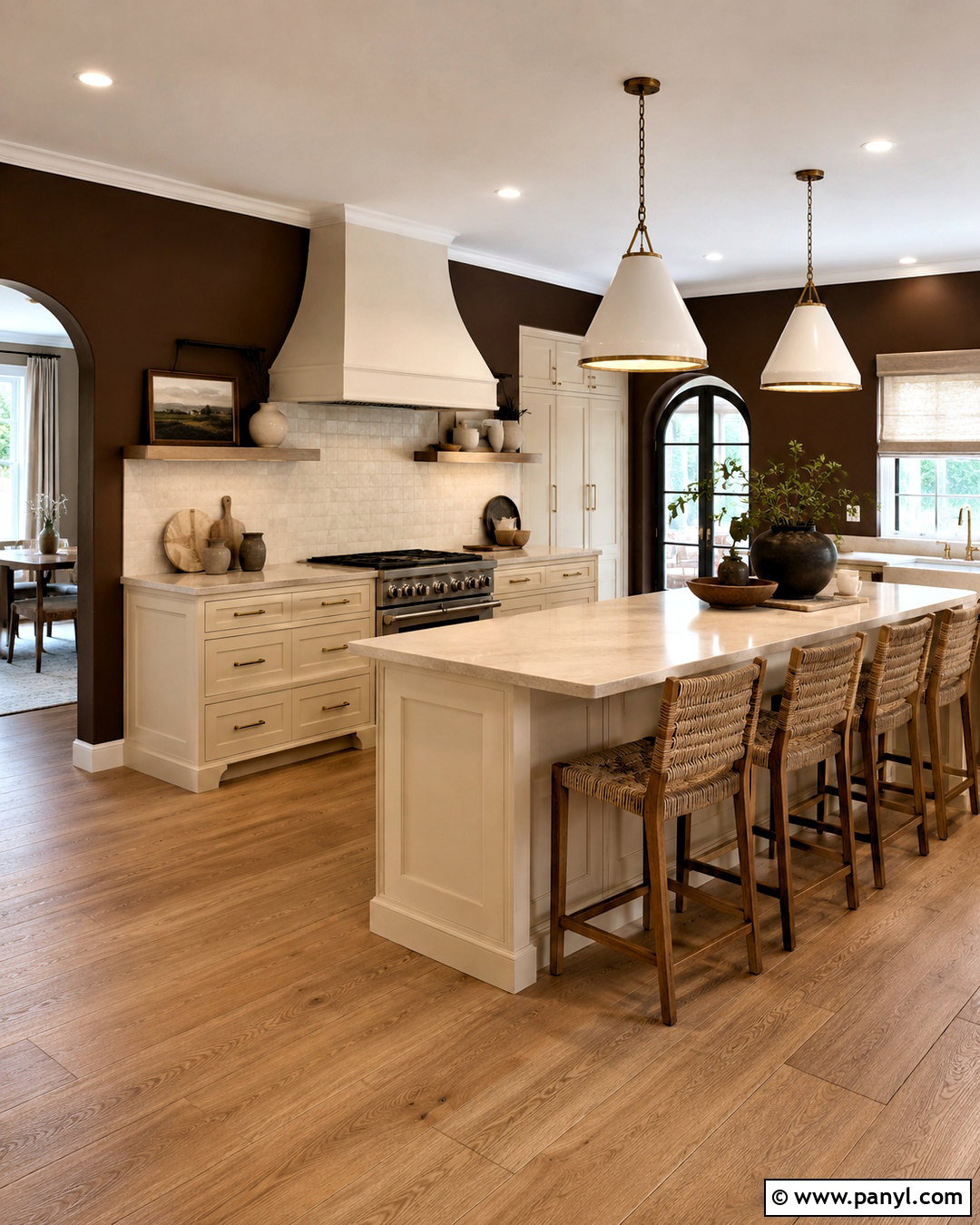
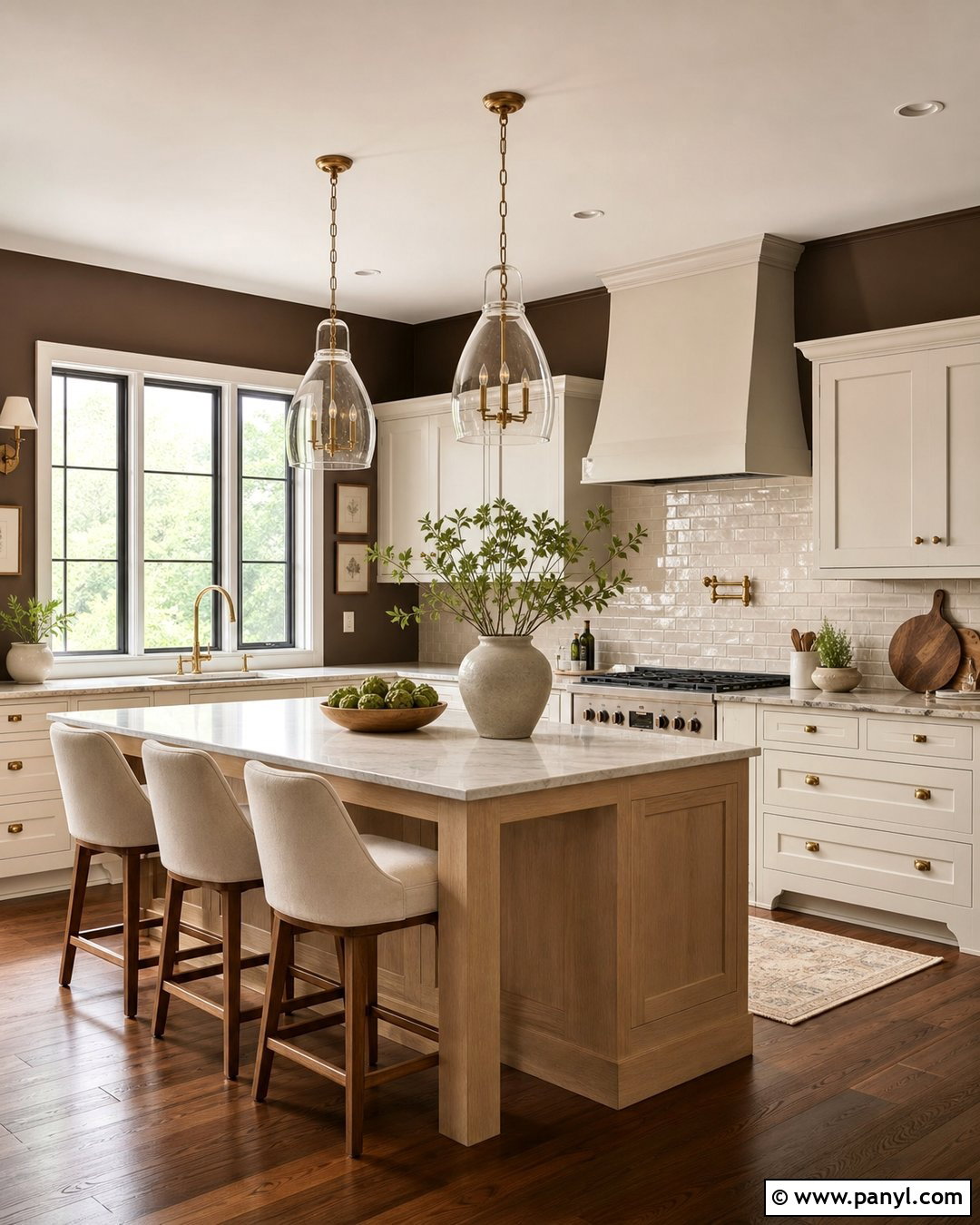
Chocolate brown walls create a cozy, enveloping background that makes white cabinetry appear especially bright. Choose a deep brown with warm, earthy undertones and use plenty of pale surfaces to balance it. Cream quartz counters, a warm white backsplash, and crisp ceiling paint keep the room from becoming heavy. Light oak flooring and an oak island add contrast while maintaining the natural palette. Aged brass hardware and ivory globe pendants provide soft highlights. Use oatmeal upholstered stools, linen shades, and cream ceramics to repeat the lighter colors. Chocolate walls suit traditional, midcentury, and organic modern kitchens depending on the furniture and lighting selected. The finished space feels grounded and intimate, with white cabinets acting as a luminous framework against the rich, comfortable wall color.
34. Warm Clay Kitchen Walls
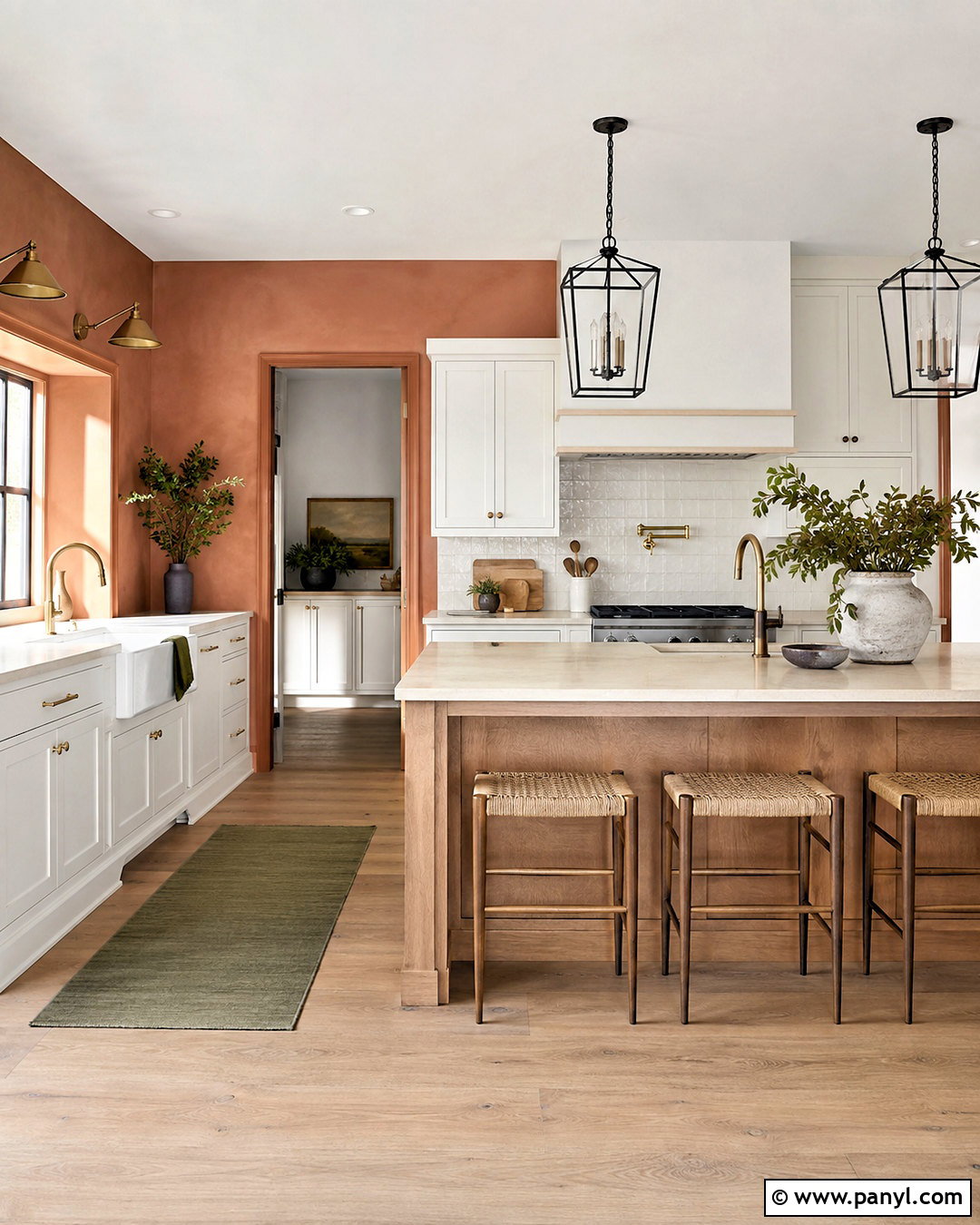
Warm clay walls sit between beige, pink, and terracotta, offering earthy color without overwhelming white cabinetry. Pair this muted shade with creamy quartz counters, off-white handcrafted tile, and light oak flooring. Brushed brass hardware complements the clay undertones, while black-framed glass pendants add definition. Choose woven stools and a pale wood island to create a casual organic modern look. Soft olive accents can appear in a washable runner, pottery, or linen Roman shade. Keep appliances stainless steel or panel-ready so the palette remains cohesive. Warm clay is useful when plain beige feels too safe but full terracotta seems too strong. The completed kitchen feels natural, current, and inviting, with enough pigment on the walls to give white cabinets clear shape and presence.
35. Soft Coral Kitchen Walls
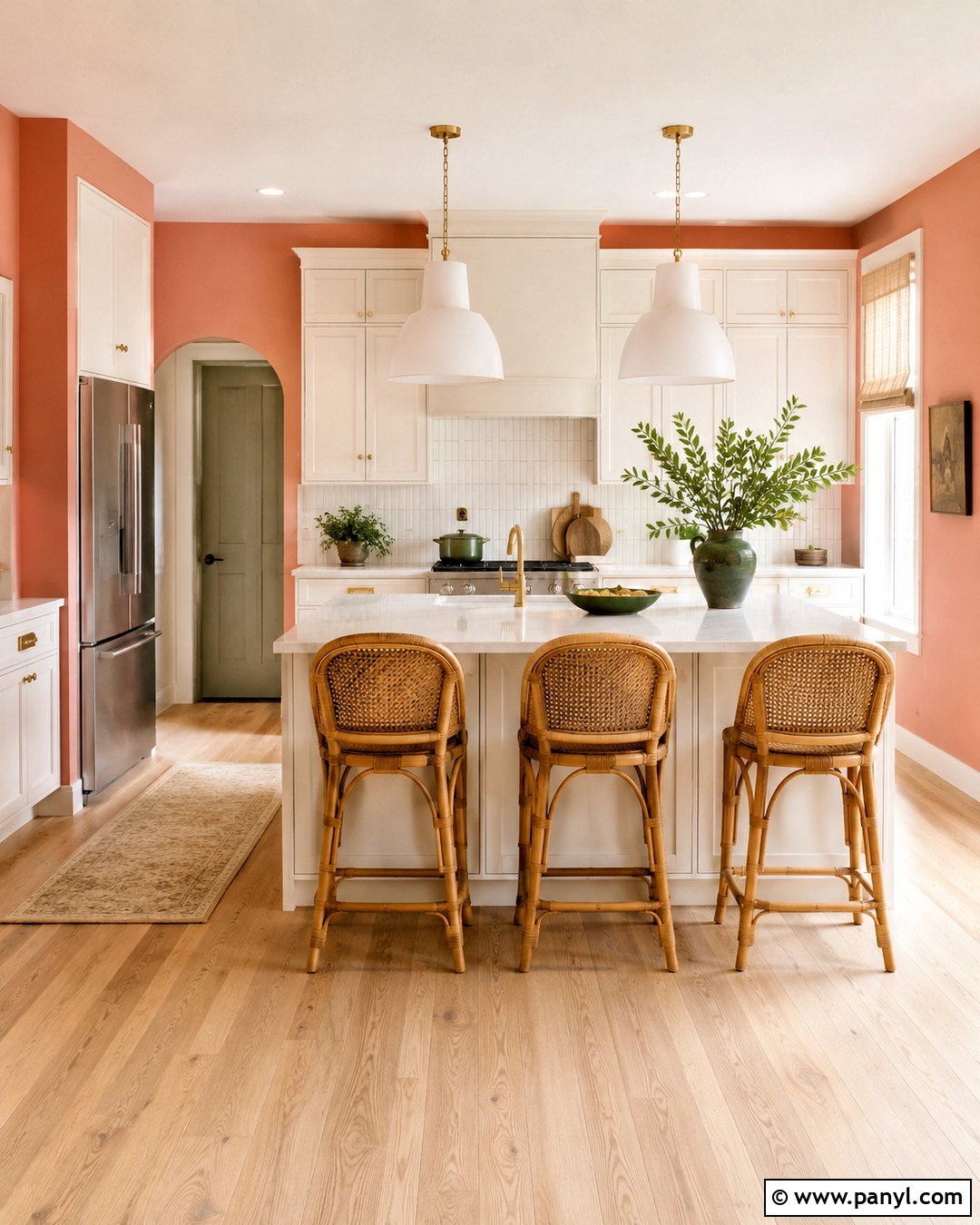
Soft coral walls create a lively kitchen without overpowering white cabinetry when the color is muted with beige or pink undertones. Pair them with white quartz countertops, an ivory vertical tile backsplash, and pale oak floors. Use brushed brass hardware and simple white pendants to keep the overall look bright. Natural cane stools, linen shades, and a cream runner bring calm texture to the energetic wall color. Add small touches of sage green through pottery or a striped window treatment for balance. Soft coral works particularly well in a breakfast kitchen or cheerful family space where warmth is welcome. The complete design feels fresh and sociable, while restrained materials and generous white surfaces keep the color sophisticated, approachable, and easy to live with.
Conclusion:
The best wall color should make your white cabinets, countertops, flooring, backsplash, and lighting feel like parts of one thoughtful design. Warm whites and layered beiges create quiet continuity, while sage, dusty blue, blush, and clay introduce gentle personality. Navy, forest green, charcoal, and chocolate brown offer stronger contrast for bright kitchens that can support deeper color. Before choosing from these **35 white kitchen cabinets wall color ideas**, compare every sample directly against a cabinet door and observe it during the morning, afternoon, and evening. Lighting and surrounding finishes can noticeably alter its appearance. () Once the undertones connect, your white cabinetry will look intentional, balanced, and beautifully integrated into the entire room.

Related Ideas and Inspiration:
Leave a Reply