
Gray can still create a warm, current kitchen when every finish supports the cabinet undertone. These 20 gray kitchen ideas color combos pair soft dove, greige, pewter, and charcoal cabinetry with complementary wall colors, countertops, backsplashes, metals, flooring, and wood tones. The key is avoiding a flat, all-gray room. Natural texture, layered neutrals, and carefully placed color give this versatile shade more depth and personality. Warm woods and earthy accents soften cool gray, while white, black, blue, and polished stone create a cleaner contrast. Always compare samples inside your kitchen because daylight and artificial lighting can change how gray appears. Use the complete schemes below to find practical, cohesive, and easy-to-personalize 20 gray kitchen ideas color combos.

1. Light Gray Kitchen With Warm White
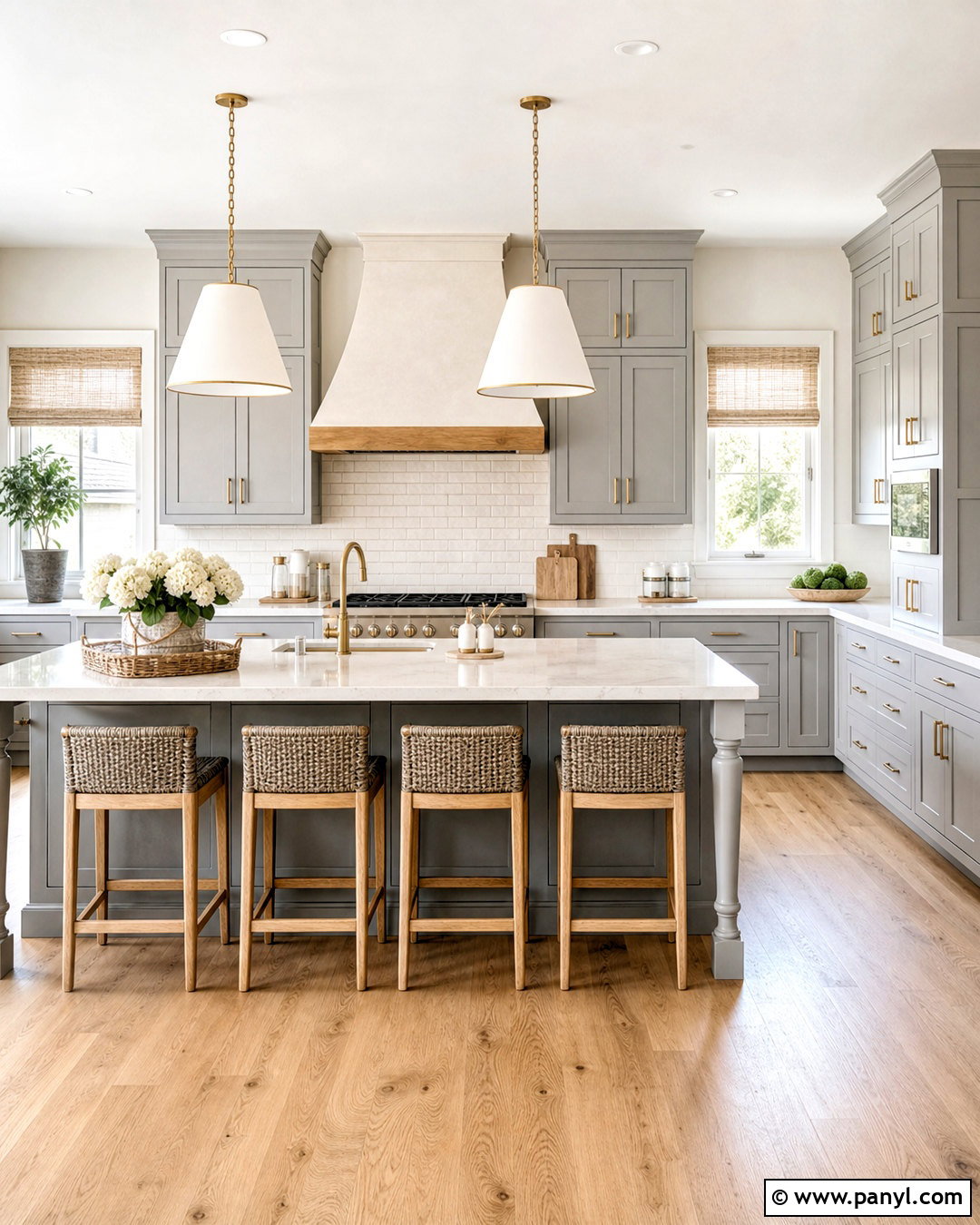
A light gray and warm white palette makes a compact kitchen feel open without looking stark. Choose pale dove-gray Shaker cabinets with a gentle warm undertone. Pair them with creamy white walls, white quartz counters, and handmade ivory subway tile. Warm white grout keeps the backsplash soft and seamless. Natural white oak flooring introduces enough color to prevent the room from feeling washed out. Complete the cabinetry with brushed brass knobs and a matching faucet. Woven counter stools and a simple linen Roman shade add casual texture around the island. Keep small appliances white or stainless steel so they disappear into the scheme. This combination works especially well in kitchens with limited daylight because every surface helps reflect available light.
2. Gray Kitchen With Natural Oak
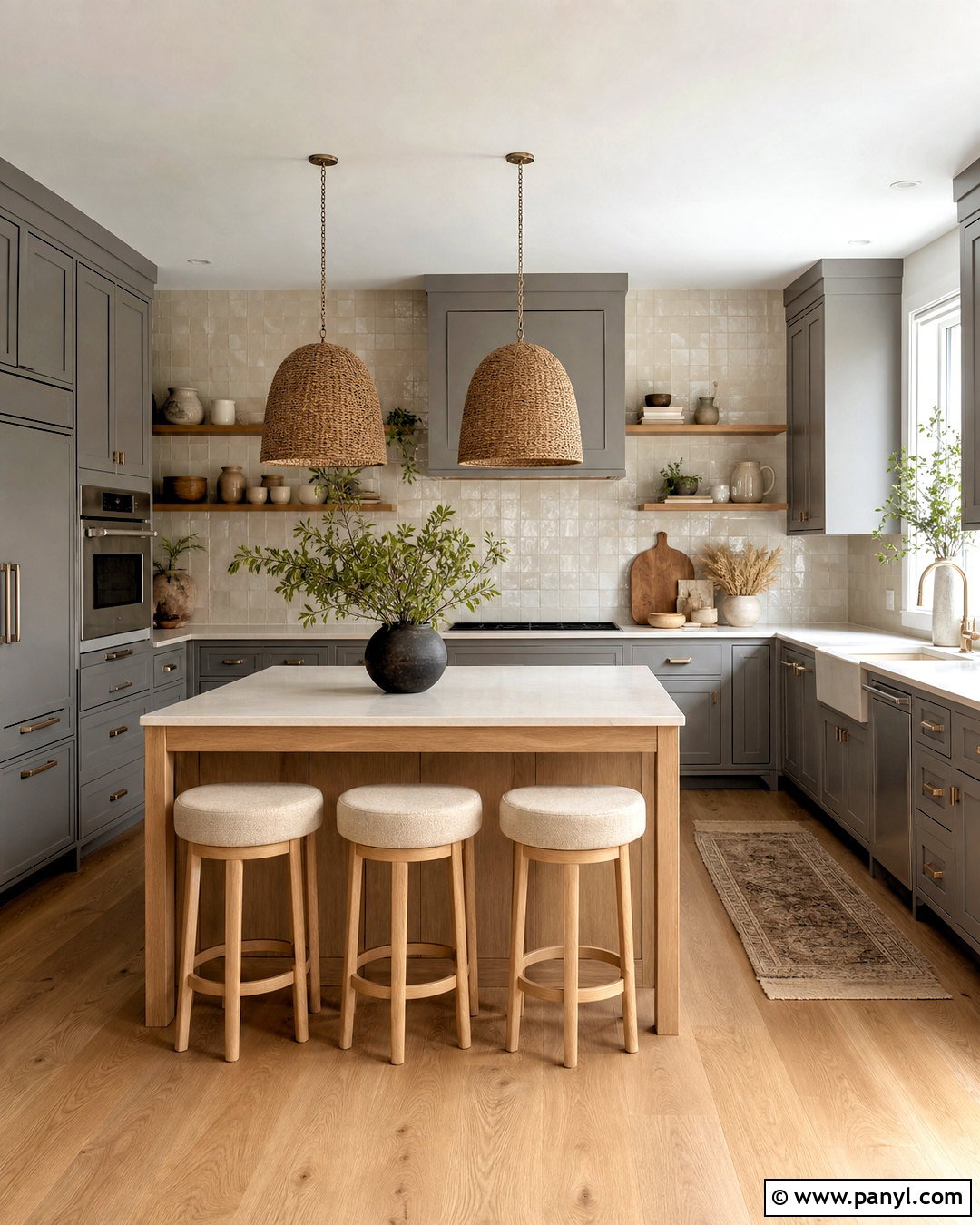
Natural oak can instantly warm gray cabinetry and give the kitchen a relaxed, organic character. Use medium warm-gray cabinets around the perimeter, then introduce white oak on the island, open shelves, and flooring. A creamy quartz countertop with subtle beige veining connects the cool paint and golden wood tones. For the backsplash, choose off-white zellige tile with slight variation rather than a perfectly smooth surface. Finish the cabinets with muted bronze pulls and add woven pendant lights above the island. Upholstered oatmeal counter stools soften the straight cabinet lines. Keep the walls a warm off-white and display a few ceramic bowls in cream, rust, and olive. The finished kitchen feels balanced, natural, and welcoming instead of overly gray or industrial.
3. Charcoal Gray Kitchen With Crisp White
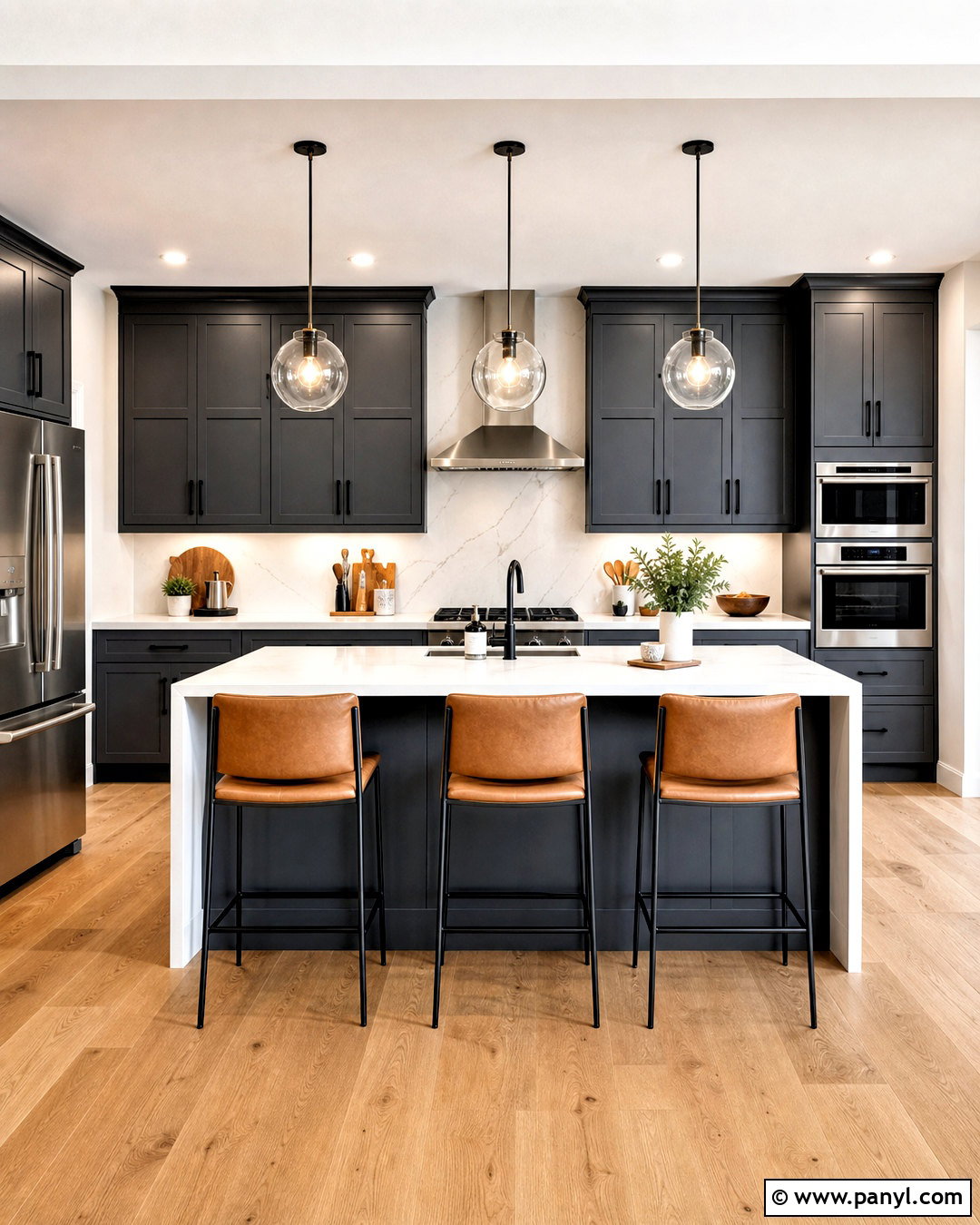
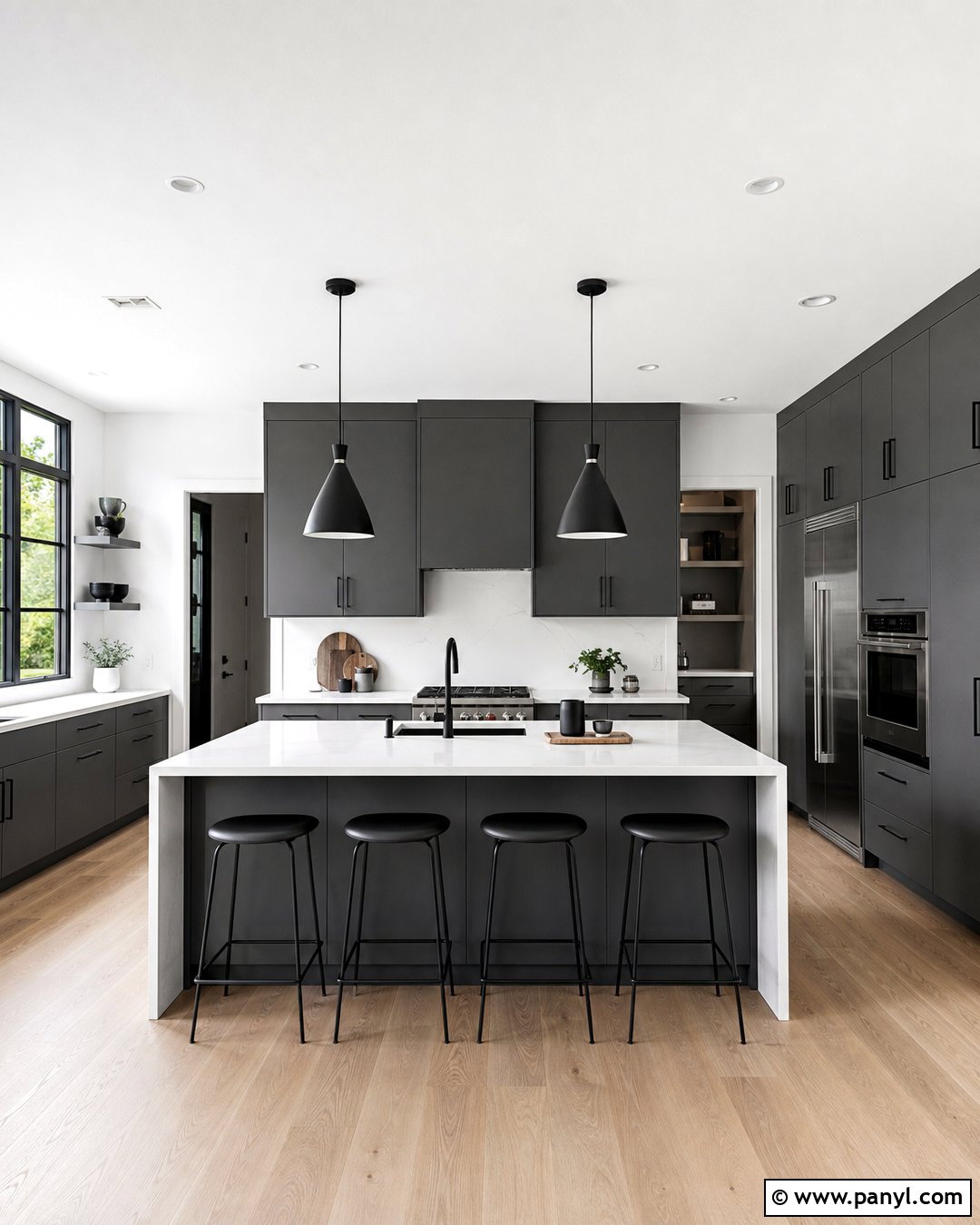
Charcoal cabinets look sharp and architectural when surrounded by clean white surfaces. Use deep charcoal gray on the lower and full-height cabinets, while keeping the ceiling and walls a crisp but balanced white. White quartz countertops and a matching slab backsplash create a bright break between dark cabinet sections. A large white island can make the center of the room feel lighter, especially in a kitchen with generous floor space. Add matte black hardware for a streamlined effect, then introduce warmth through medium oak flooring and tan leather counter stools. Clear glass pendants provide illumination without adding visual weight. Stainless steel appliances suit this high-contrast scheme. The overall design feels bold and modern while remaining practical for an active household kitchen.
4. Gray Kitchen With Black Accents
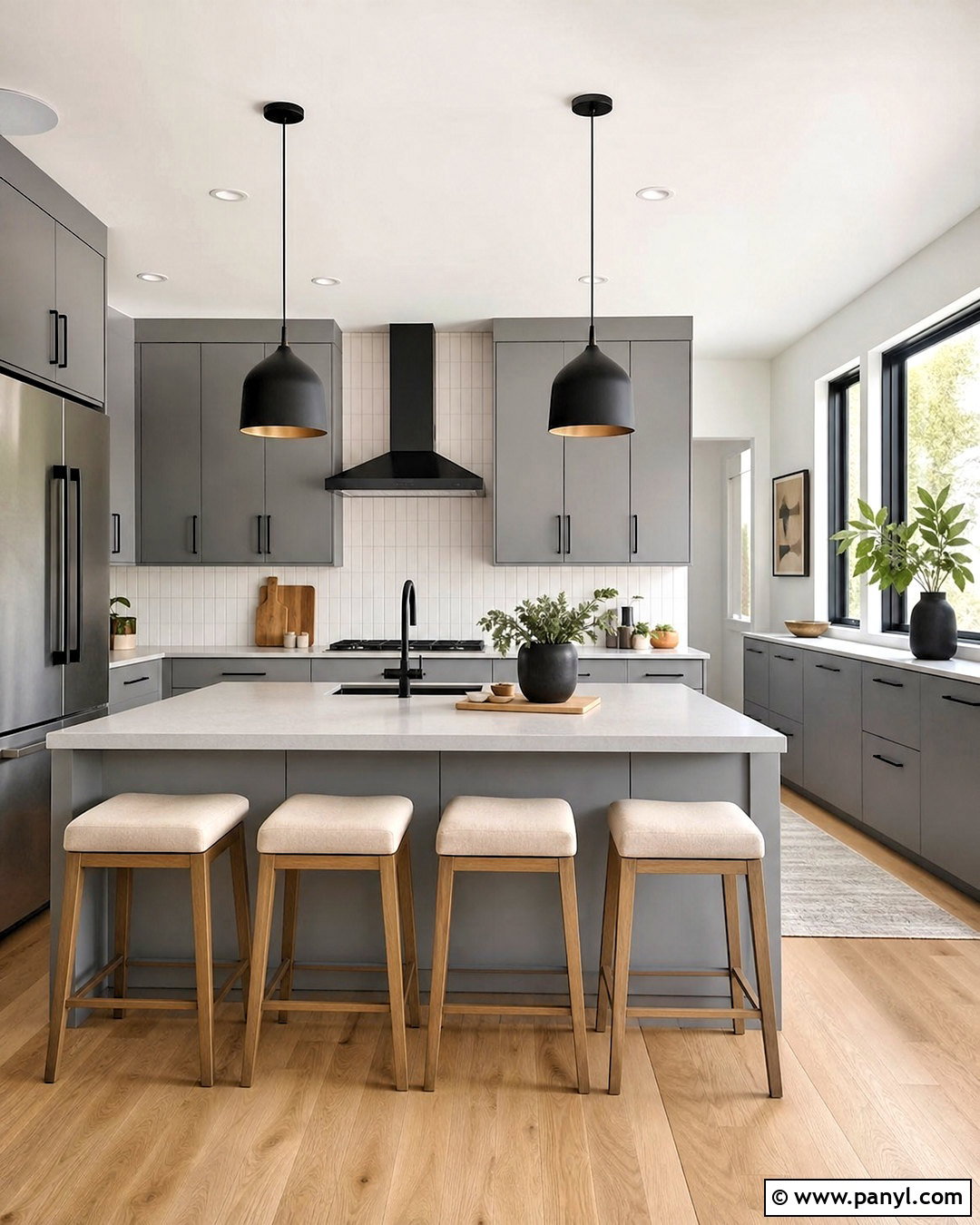
Black details give a gray kitchen stronger definition without requiring another major cabinet color. Begin with midtone gray flat-panel cabinets and pale gray quartz countertops. Install a white vertical subway tile backsplash to add brightness and make a low ceiling appear taller. Repeat matte black on slim cabinet pulls, the faucet, window frames, pendant lights, and counter stool legs. A black range hood can become the central focal point, particularly when surrounded by simple gray cabinetry. Choose pale oak flooring and warm white walls to soften the contrast. Keep the island gray so the black remains an accent rather than the dominant color. Add light linen upholstery and a few wood cutting boards for warmth. This palette creates a clean, graphic kitchen with a coordinated appearance.
5. Gray Kitchen With Navy Blue Island
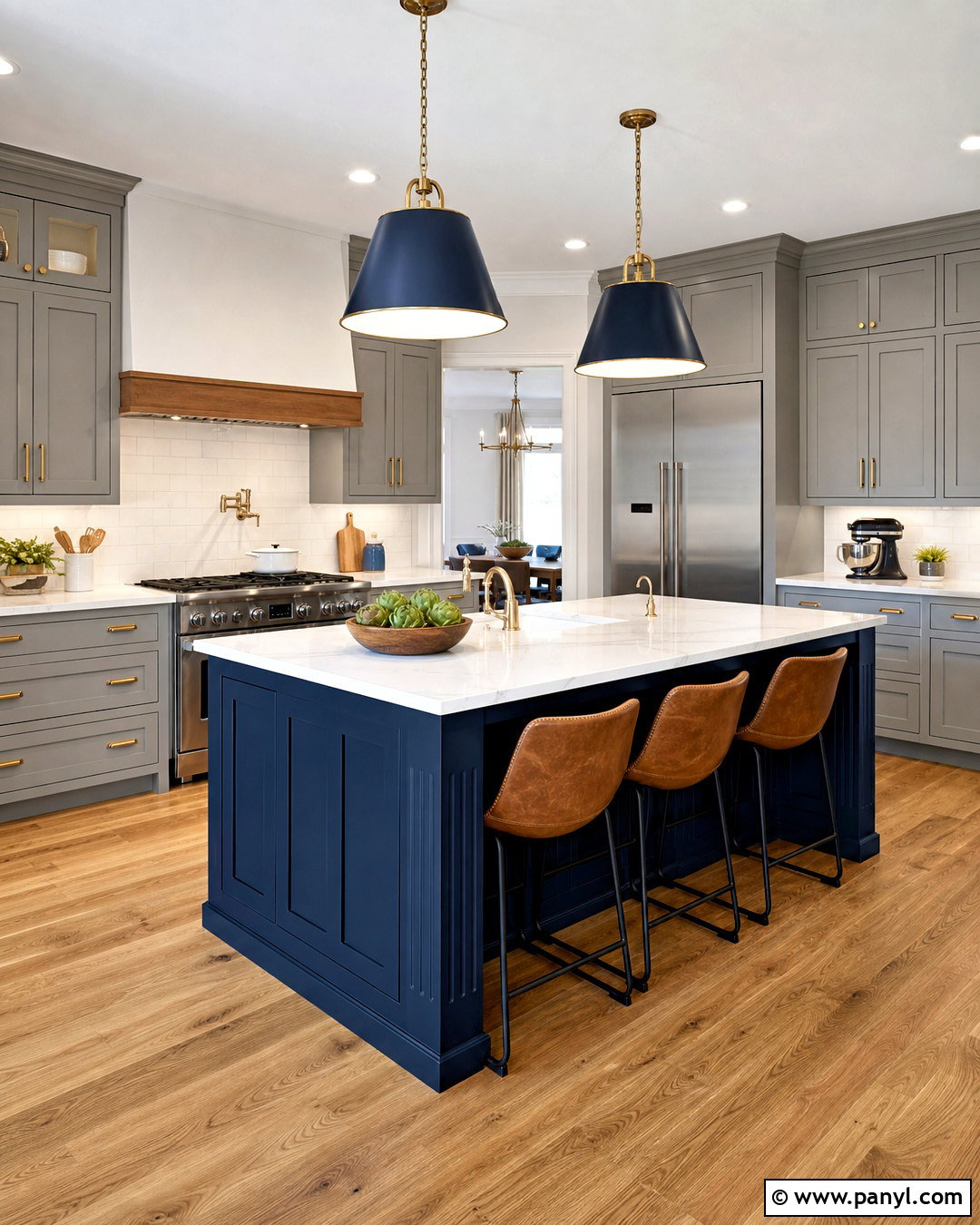
A navy island brings rich color into a gray kitchen while preserving a calm, classic foundation. Paint the perimeter cabinets soft pewter gray and use deep navy blue on a generously sized island. Connect both colors with white marble-look quartz featuring delicate blue-gray veining. White backsplash tile and warm white walls keep the darker island from making the room feel heavy. Brushed brass hardware highlights both cabinet colors and adds a refined glow. Choose medium-tone oak flooring and saddle-brown leather stools to introduce natural warmth. Navy pendant shades can repeat the island color without overwhelming the room. This complete combination works in traditional and transitional kitchens, especially when the island is clearly visible from an adjoining living or dining area.
6. Gray Kitchen With Sage Green
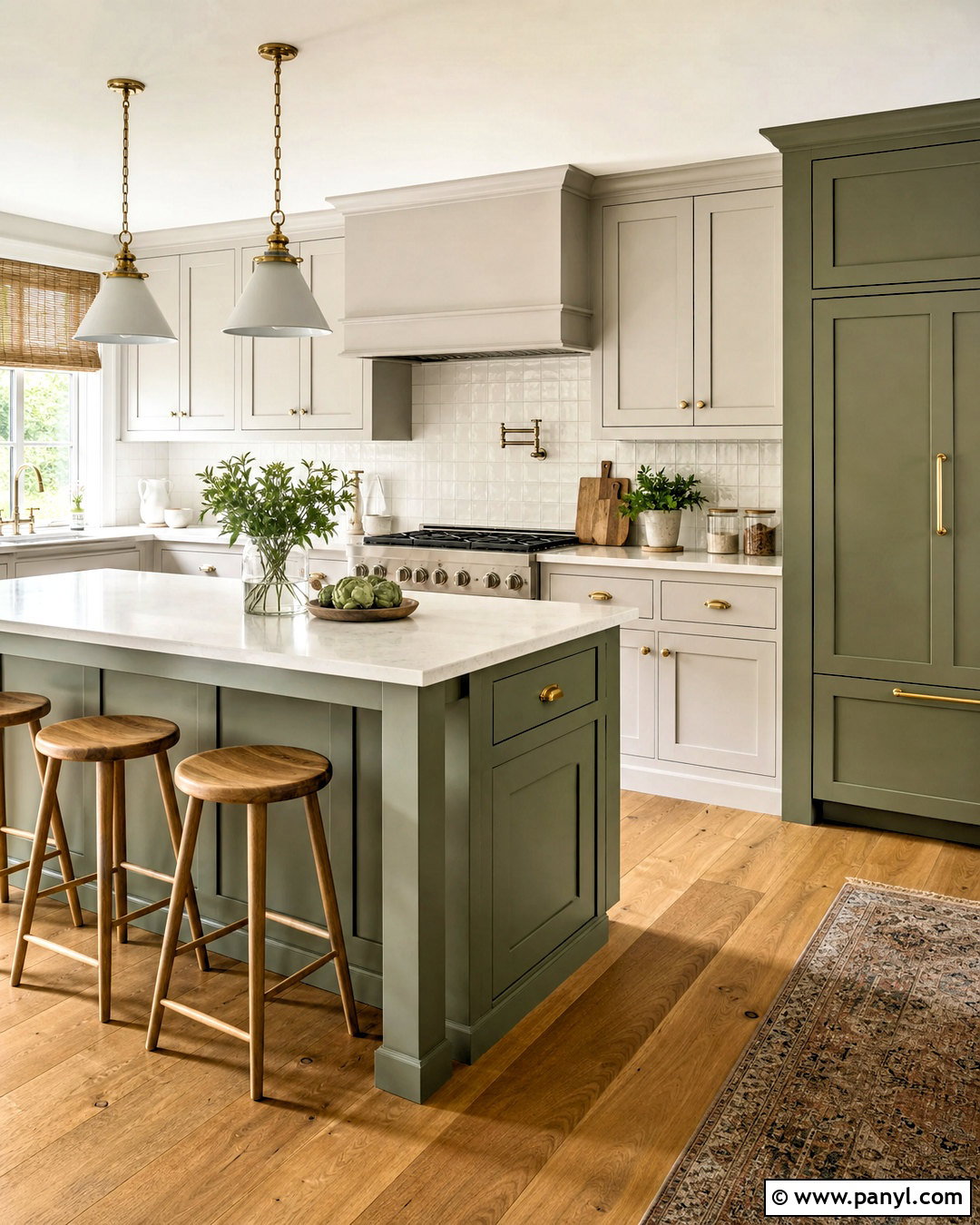
Soft sage green makes gray cabinetry feel calmer and more connected to nature. Select a warm light gray for the main cabinets and use muted sage on the island or a tall pantry wall. Cream quartz counters and an ivory square-tile backsplash provide a gentle transition between the two painted finishes. Choose aged brass hardware rather than bright chrome to reinforce the warmer mood. Natural oak floors, woven shades, and simple wood counter stools complete the organic palette. Paint the remaining walls a warm white with a subtle green undertone. Potted herbs and handmade cream ceramics add life without cluttering the counters. The finished kitchen feels fresh but not overly colorful, making it a comfortable option for homeowners who want a subtle departure from an all-neutral room.
7. Gray Kitchen With Forest Green
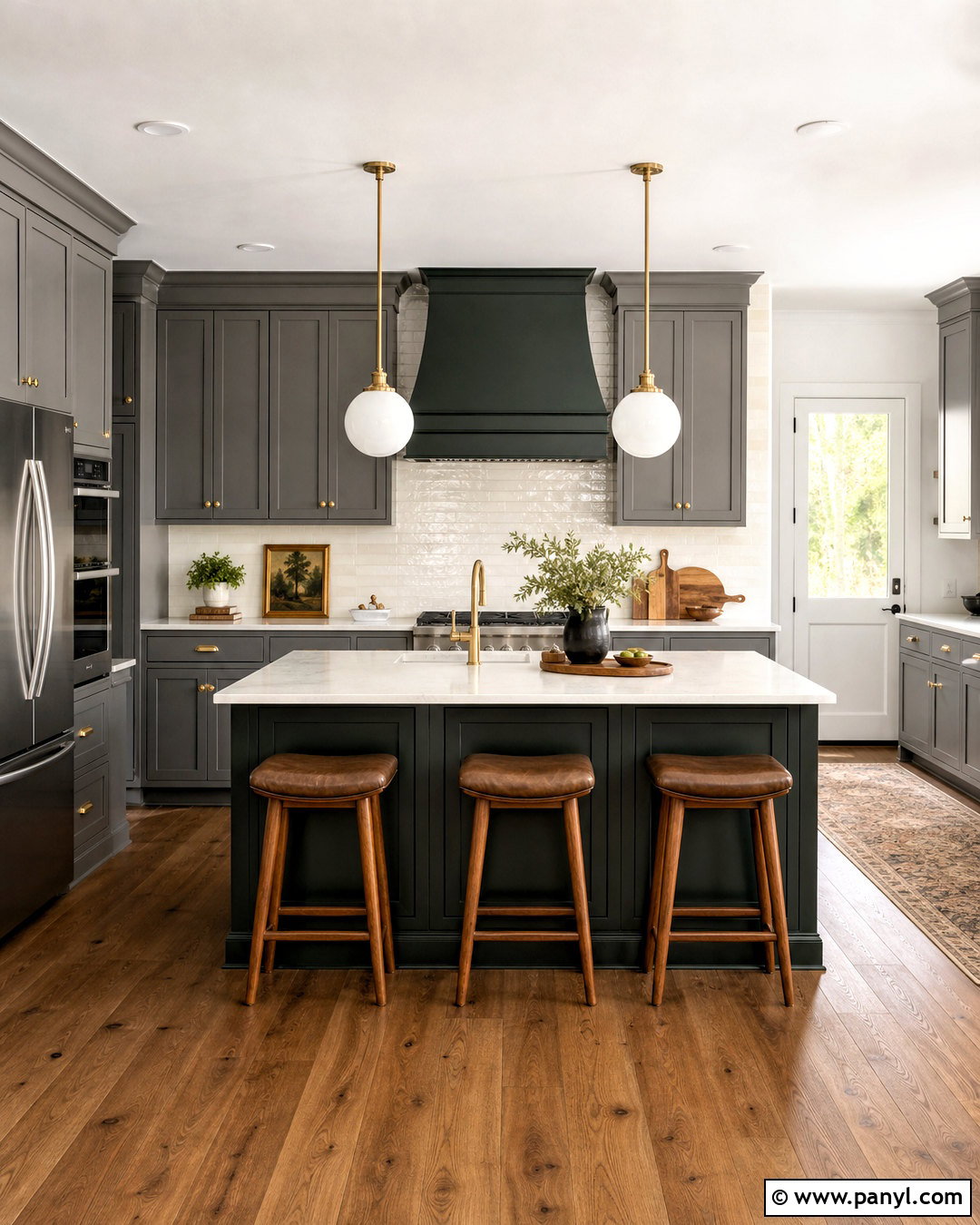
Forest green creates a deeper, more dramatic partner for gray, particularly in a large kitchen with good natural light. Use smoky medium-gray cabinets around the perimeter and reserve dark forest green for the island and range hood. Select warm white quartz countertops so the two cabinet colors remain clear and distinct. A glossy ivory tile backsplash reflects light and prevents the dark green from appearing dull. Add antique brass pulls, globe pendants, and a bridge-style faucet for warmth. Walnut counter stools and medium brown wood flooring deepen the natural character of the room. Keep walls creamy white and use minimal countertop decor. This full palette feels grounded and sophisticated, with gray acting as the quiet neutral that allows the green features to command attention.
8. Gray Kitchen With Powder Blue
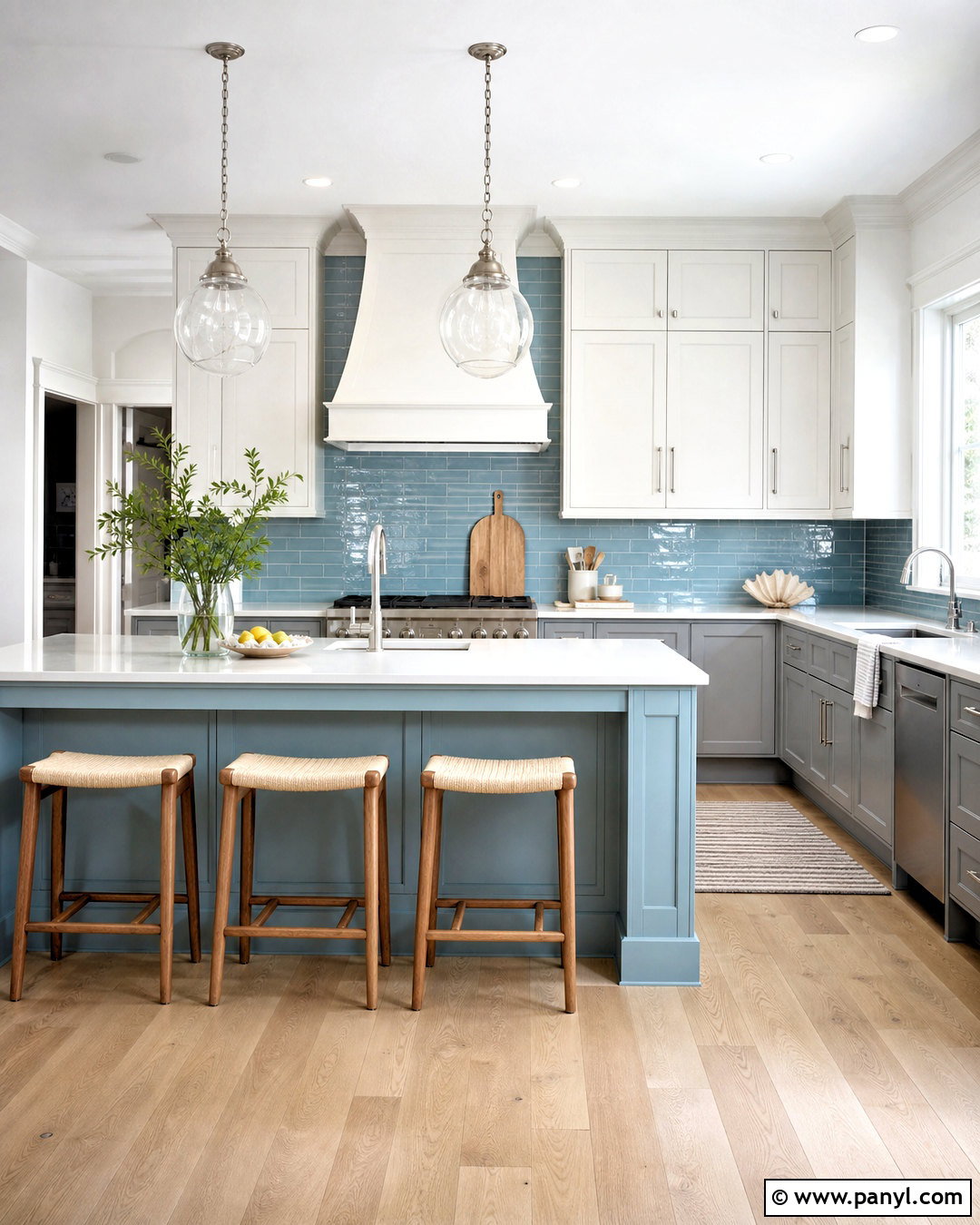
Powder blue adds an airy quality to a light gray kitchen and works beautifully in rooms that receive soft natural light. Choose pale gray lower cabinets, creamy white upper cabinets, and a powder-blue island for a balanced three-color layout. White quartz countertops with faint gray movement keep the palette cohesive. Use glossy pale blue subway tile behind the range to repeat the island color without covering every wall. Brushed nickel hardware supports the cool tones, while white oak flooring prevents the room from feeling cold. Add light wood stools, white linen shades, and clear glass pendant lights. The combination feels cheerful and restful at the same time. It is particularly effective in cottage, coastal, and casual transitional kitchens with modest dimensions.
9. Gray Kitchen With Blush Pink
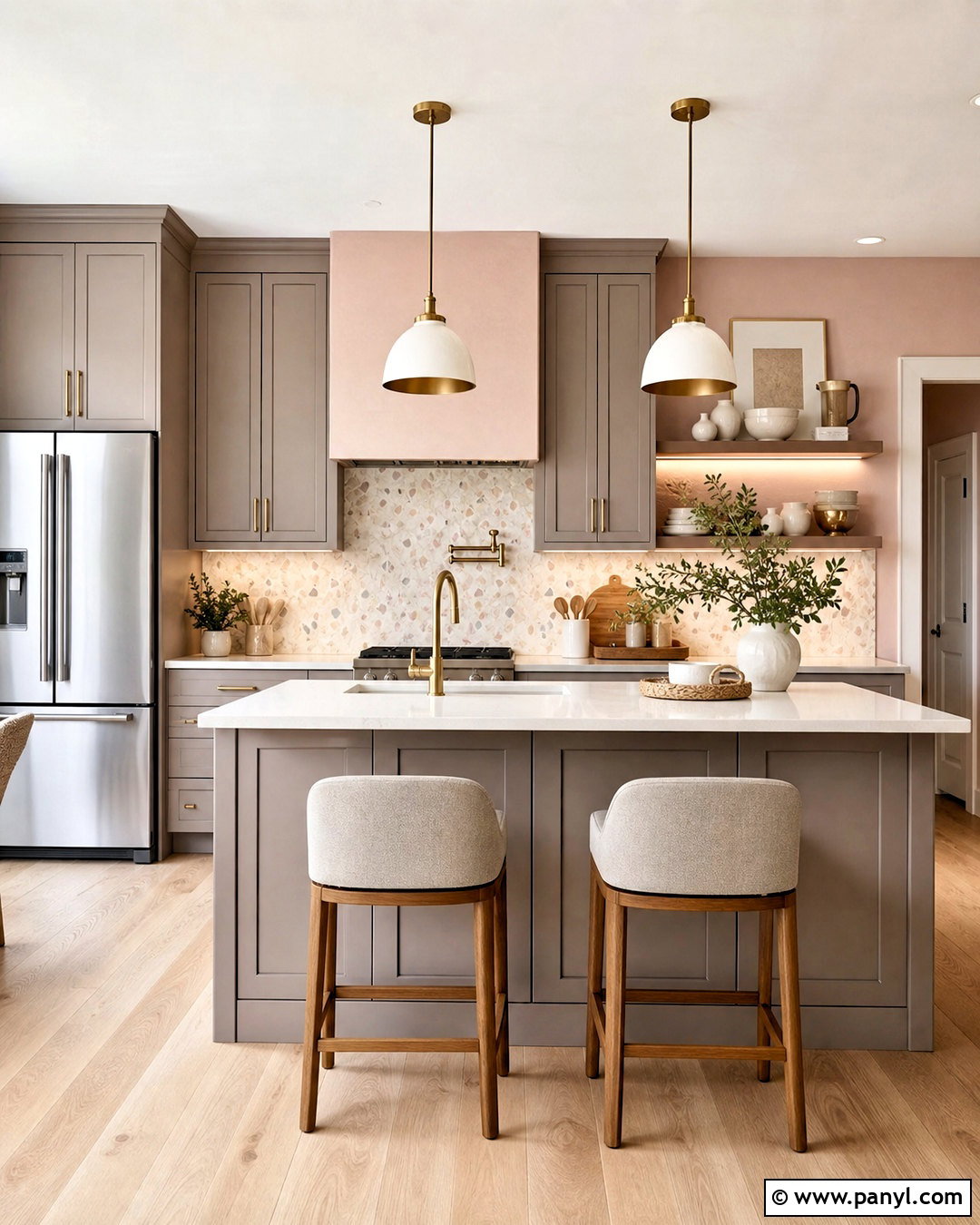
Blush pink can soften gray cabinetry without making the kitchen look overly sweet. Start with warm greige-gray cabinets and use dusty blush on the walls or a tiled range alcove. Creamy white quartz countertops provide a clean work surface, while a pale terrazzo backsplash with gray and muted pink chips subtly repeats both main colors. Choose brushed brass handles and warm globe pendants to emphasize the welcoming undertones. Light oak flooring and oatmeal upholstered stools keep the room grounded in neutral materials. Limit pink to one or two broad surfaces rather than scattering small decorative accents everywhere. Add off-white ceramics and natural linen textiles to finish the room. This combination creates a warm, personal kitchen that feels contemporary, relaxed, and thoughtfully coordinated.
10. Gray Kitchen With Mustard Yellow
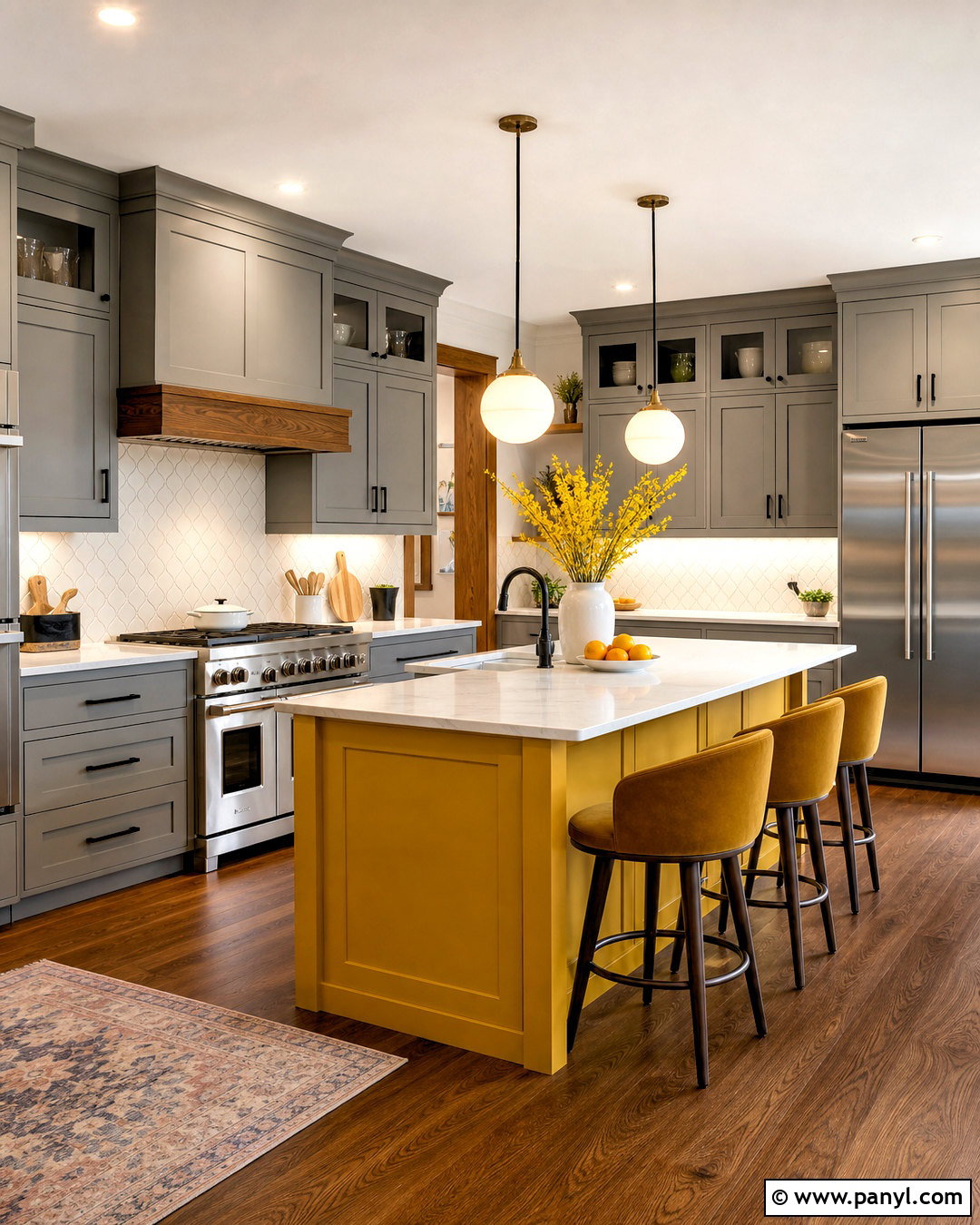
Mustard yellow brings cheerful warmth to cool gray and can energize a kitchen that otherwise feels plain. Use medium-gray Shaker cabinets, white quartz counters, and an ivory backsplash as the neutral foundation. Introduce mustard on the island, upholstered counter stools, or a painted breakfast nook. A patterned backsplash containing gray, cream, and small yellow details can tie the palette together without becoming visually busy. Select walnut flooring or medium oak planks to reinforce the warmth. Matte black hardware gives the bright color a crisp outline, while simple opal glass pendants keep the lighting understated. Repeat mustard only a few times through a Roman shade or ceramic planter. The finished look feels lively and intentional, with gray providing enough balance for the stronger accent.
11. Gray Kitchen With Terracotta
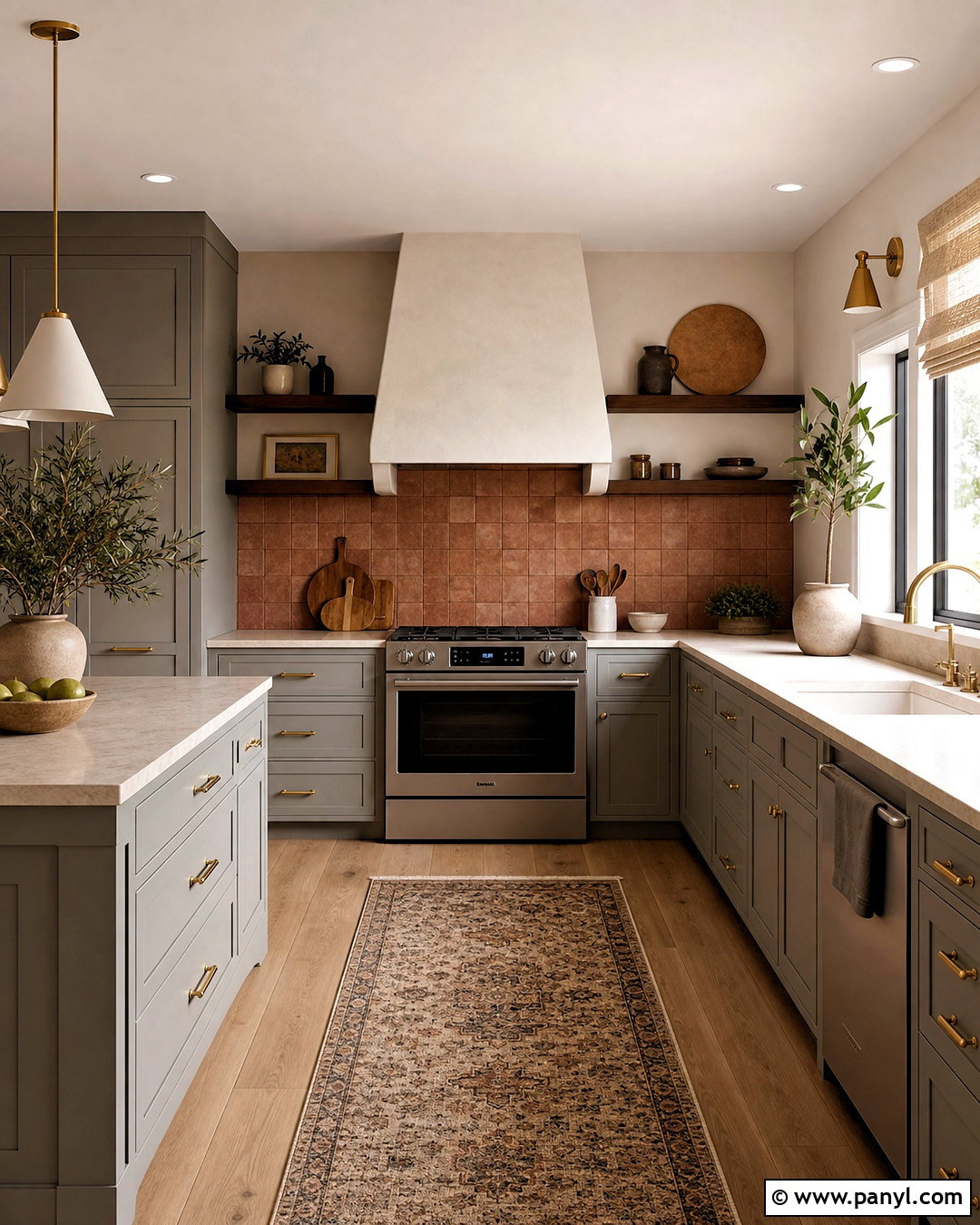
Terracotta gives gray cabinets an earthy warmth that suits modern Mediterranean and relaxed transitional kitchens. Choose a warm putty-gray cabinet color, then introduce terracotta through handmade backsplash tile or durable clay-look flooring. Cream limestone-look quartz counters connect the red-brown tile to the softer cabinetry. Use antique brass hardware and a plaster-style range hood in warm white for an aged, textural effect. A walnut island or thick wood shelves add another natural layer. Keep the walls creamy and the window treatments simple, using unbleached linen or woven shades. Avoid bright white finishes, which may look disconnected from the earthy materials. With a few olive-green plants and rustic cream ceramics, the complete kitchen feels sun-warmed, inviting, and rich in texture.
12. Gray Kitchen With Cream And Beige
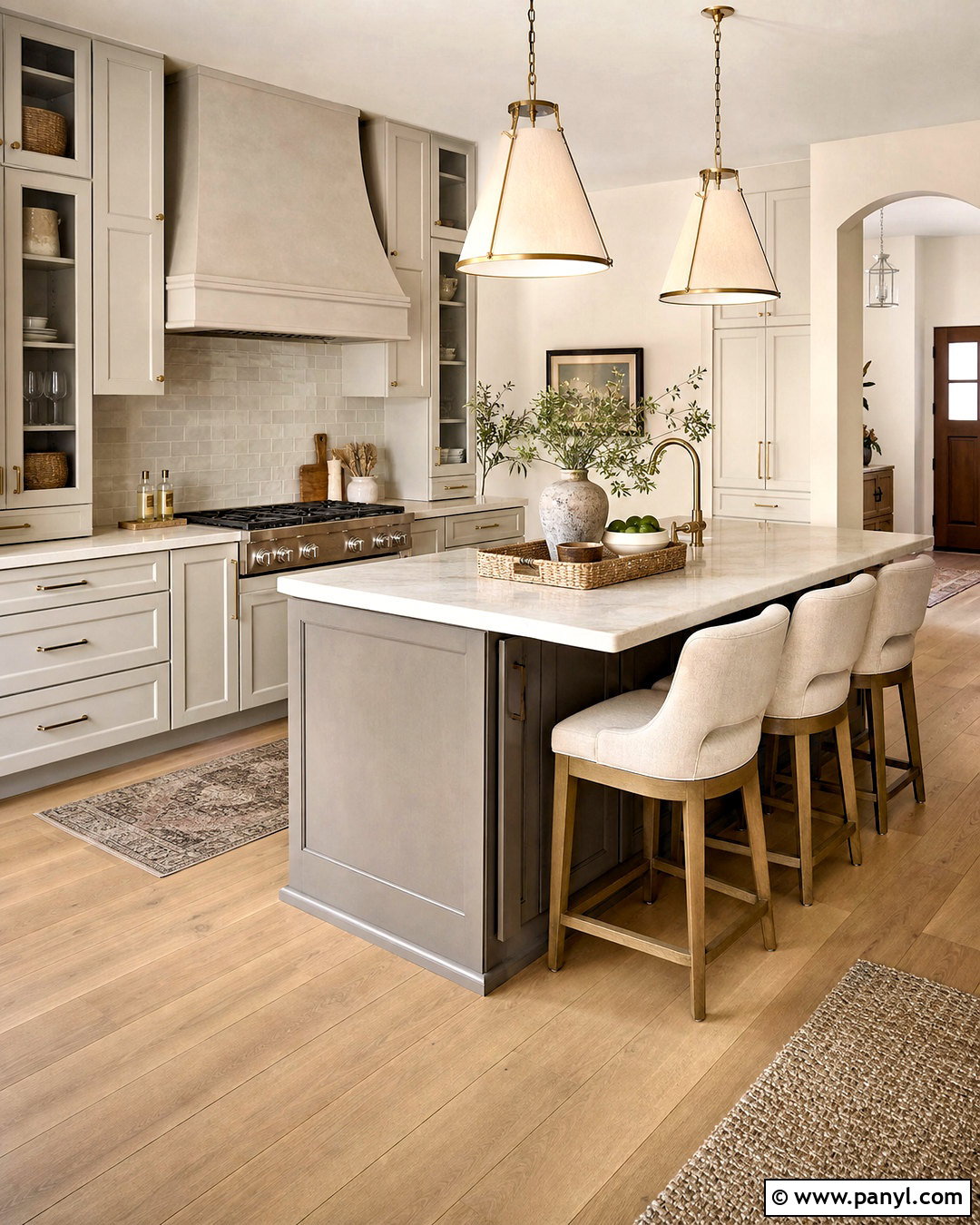
Layering gray with cream and beige produces a neutral kitchen that feels warmer than a standard gray-and-white design. Begin with pale greige cabinets that sit comfortably between gray and taupe. Add cream quartz countertops, a beige limestone backsplash, and warm ivory walls. Use a medium oak floor with visible grain to strengthen the natural palette. Champagne bronze hardware offers subtle contrast without looking too bright or formal. For the island, select a slightly deeper mushroom-gray finish and pair it with oatmeal fabric stools. Linen pendant shades and woven baskets introduce soft texture around the harder surfaces. Keep appliances integrated where possible to preserve the quiet color flow. This complete scheme is ideal for an open-plan home because it transitions smoothly into beige, cream, and wood furnishings.
13. Gray Kitchen With Greige Layers
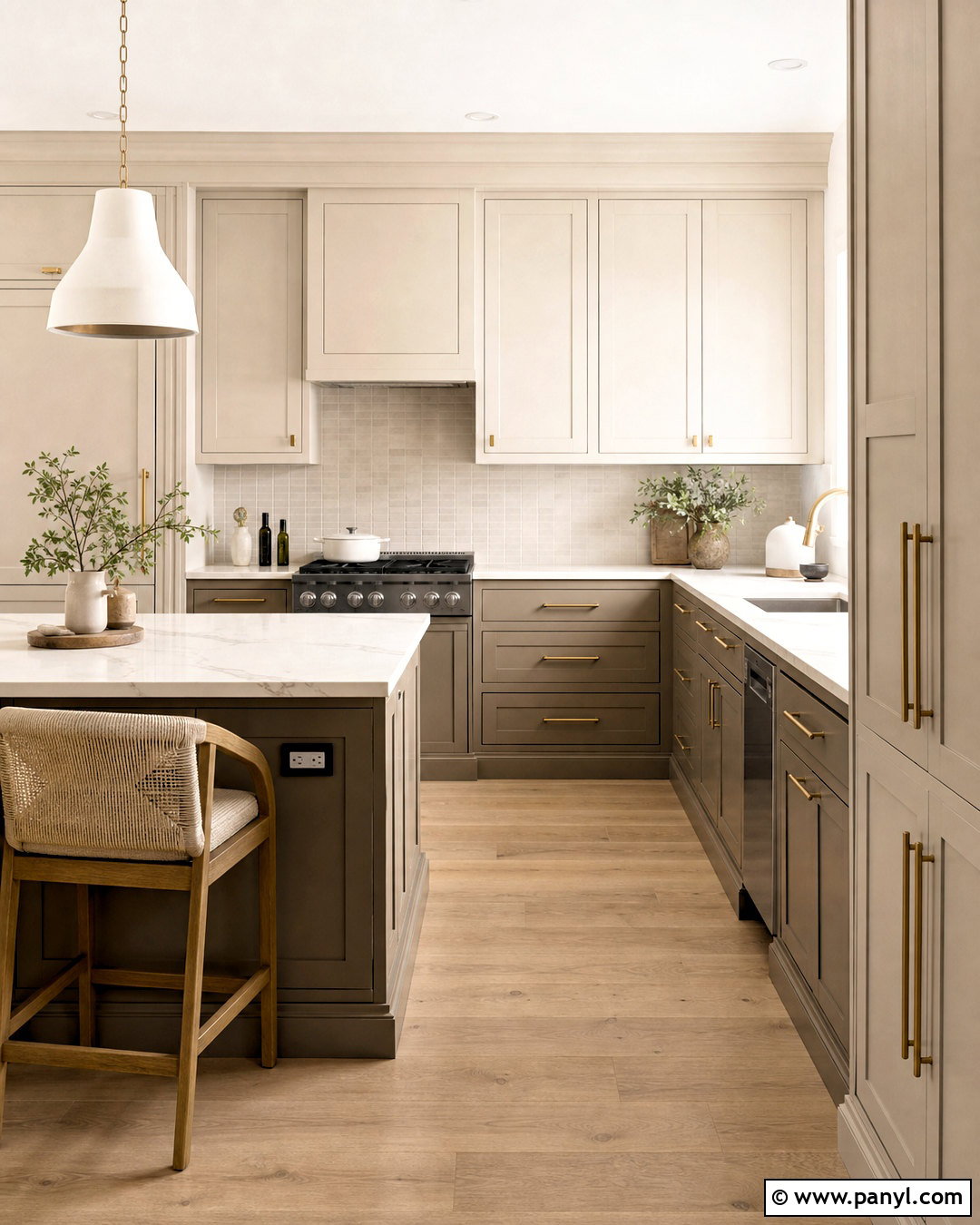
A layered greige kitchen offers the depth of gray with the warmth of beige. Select a medium greige for lower cabinets and a lighter version of the same undertone for upper cabinets. Use creamy quartz counters with taupe veining and install a softly textured greige tile backsplash. The close colors create a color-washed effect, while changes in finish prevent the room from looking flat. Choose satin cabinet paint, lightly reflective tile, and honed counters for subtle variation. Pale oak flooring, aged brass hardware, and natural linen stools make the room feel comfortable rather than formal. Paint the walls a warm off-white so the cabinet layers remain visible. This restrained palette works particularly well in small kitchens where strong color changes could visually interrupt the available space.
14. Gray Kitchen With Walnut Wood
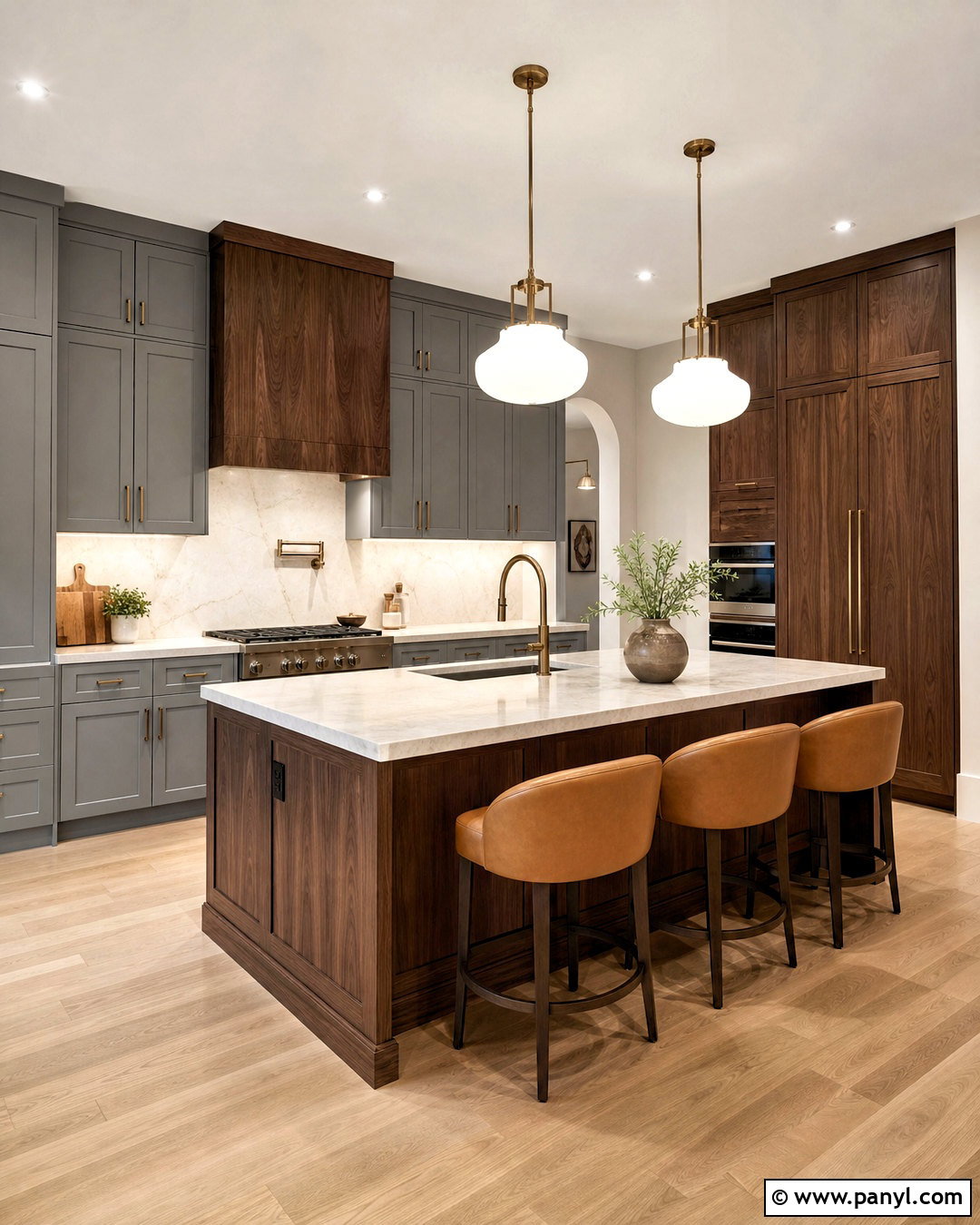
Rich walnut gives gray cabinetry depth and a polished midcentury influence. Use smooth warm-gray cabinets on the perimeter and natural walnut veneer on the island and tall appliance wall. A pale cream quartz countertop brightens both finishes, while a simple off-white slab backsplash keeps attention on the wood grain. Add brushed brass or bronze hardware to echo walnut’s golden undertones. Wide-plank light oak flooring prevents the darker wood from making the room too heavy. Choose sculptural counter stools with black frames and caramel seats, then hang streamlined opal pendants above the island. Warm white walls complete the setting. This combination is especially effective in open contemporary kitchens where the walnut island can function as a furniture-like centerpiece rather than another bank of cabinetry.
15. Gray Kitchen With Brass Accents
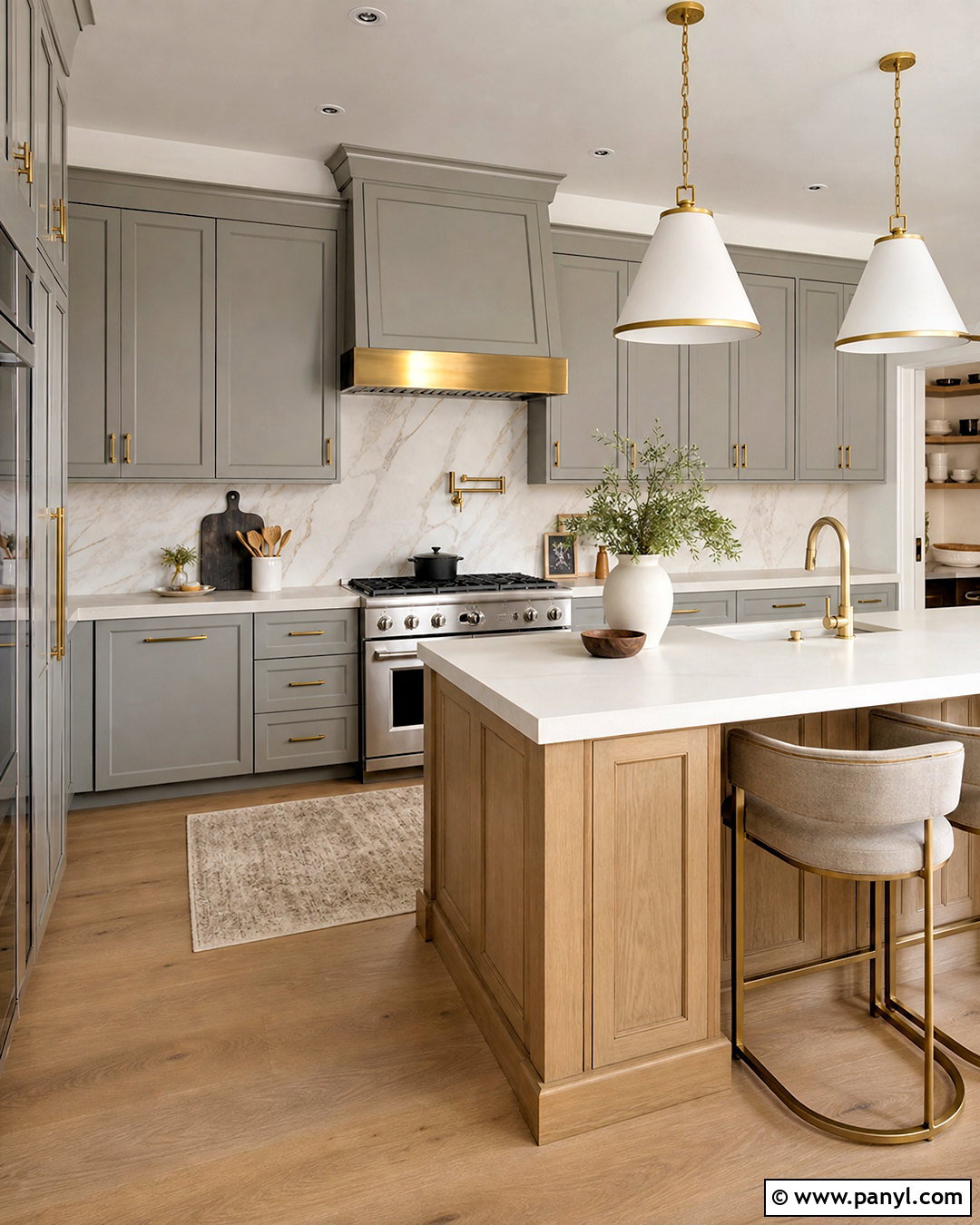
Brass accents can lift a gray kitchen by adding warmth, contrast, and gentle shine. Choose soft medium-gray Shaker cabinets with white quartz countertops and a creamy marble backsplash. Repeat brushed or aged brass on cabinet handles, the faucet, pendant lights, and the range hood trim. Keeping every metal finish similar gives the room a deliberate, connected appearance. Add natural oak flooring and a matching oak island base to balance the metallic surfaces. Warm white walls and ivory linen stools prevent the palette from becoming too formal. Use brass sparingly on larger features so it remains an accent rather than dominating the room. The finished kitchen feels bright and polished, yet the natural wood and quiet textiles make it comfortable enough for casual everyday cooking and dining.
16. Gray Kitchen With Copper Accents
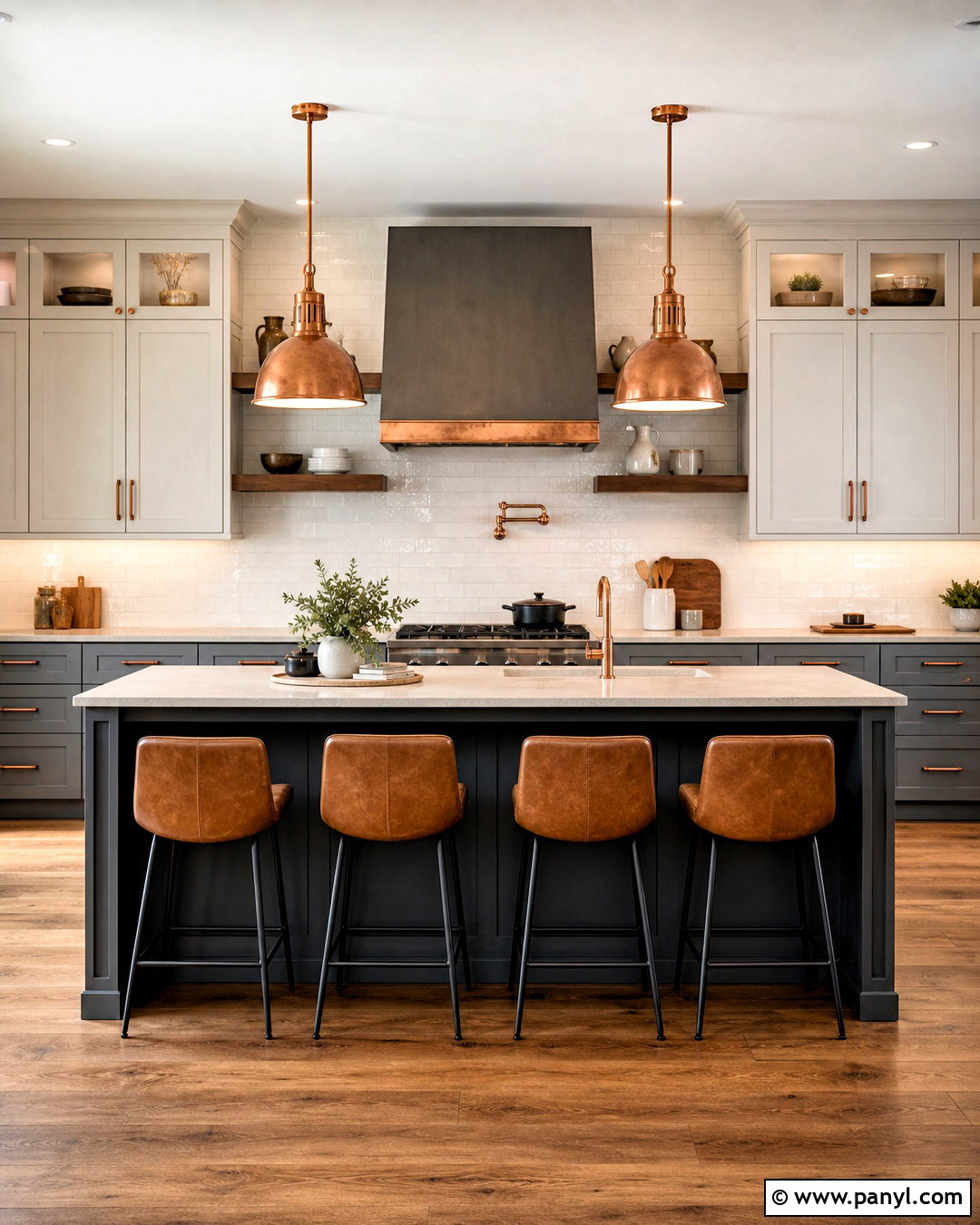
Copper brings a richer, redder warmth to gray than brass and looks especially attractive beside deep pewter cabinetry. Use pewter-gray lower cabinets and warm white upper cabinets to keep the room balanced. Install creamy quartz counters and a handmade ivory backsplash with irregular edges. Introduce copper through pendant lights, cabinet handles, cookware rails, and a carefully placed range hood detail. Medium walnut shelves and flooring repeat copper’s warm brown notes. Choose a matte finish for the cabinets so the metal has room to stand out. A dark charcoal island can anchor the layout, while tan leather stools soften it. Keep accessories minimal and functional. This complete combination creates a welcoming kitchen with subtle industrial character rather than a cold, commercial appearance.
17. Gray Kitchen With Teal Tile
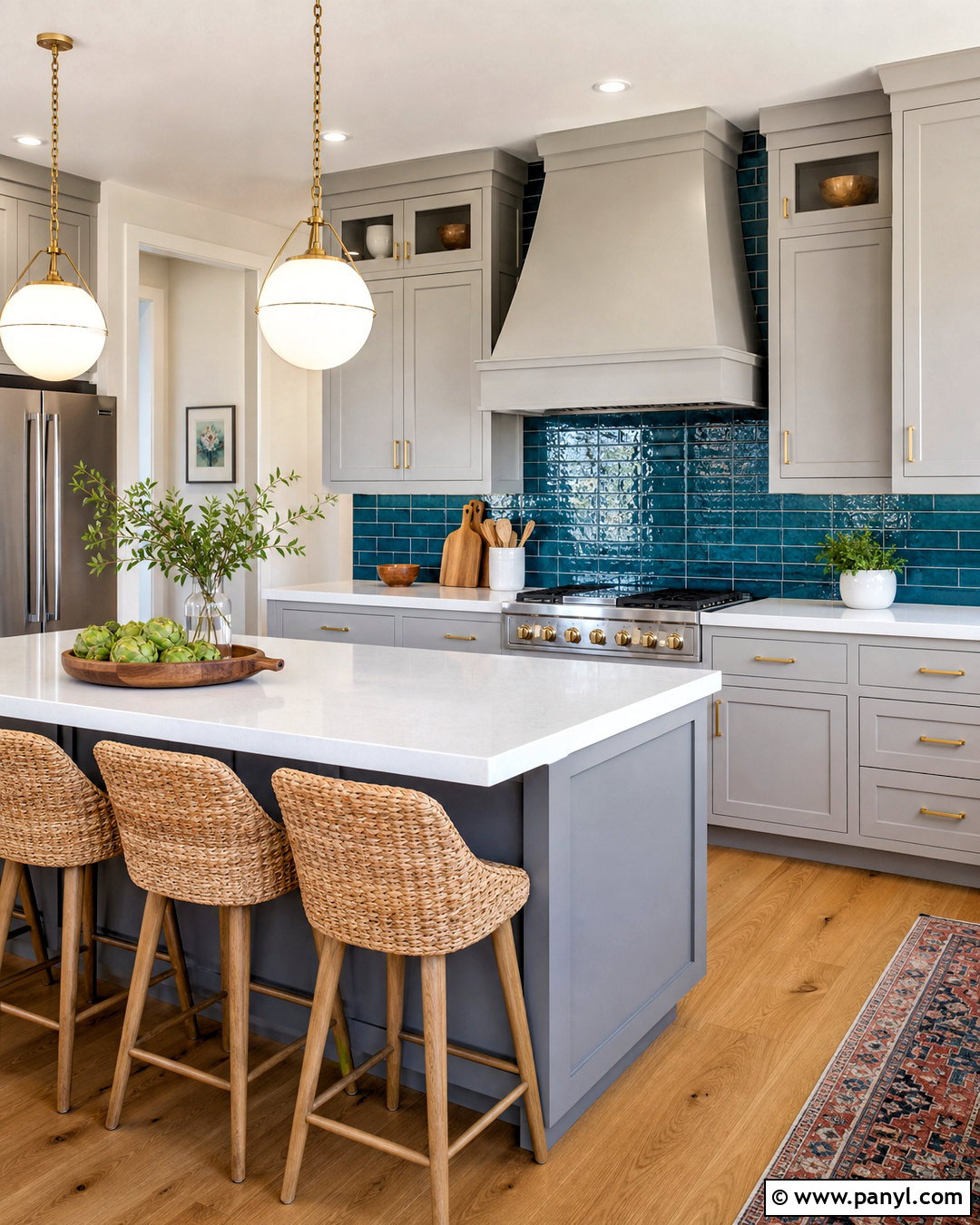
Teal tile can turn a basic gray kitchen into a memorable, colorful space. Select simple light-gray cabinets and white quartz countertops so the backsplash becomes the clear focal point. Use glossy deep teal tile from the counter to the upper cabinets, extending it behind the range for a seamless statement wall. Dark grout creates a graphic effect, while pale grout produces a softer look. Add brushed brass hardware to complement teal’s green undertones and bring warmth to the gray cabinetry. Natural oak flooring and woven counter stools keep the scheme casual. Paint the walls warm white and choose clear or opal glass pendants. By limiting teal to the backsplash, the finished kitchen gains personality while remaining flexible enough for future updates to lighting, hardware, and decor.
18. Gray Kitchen With Burgundy Accents
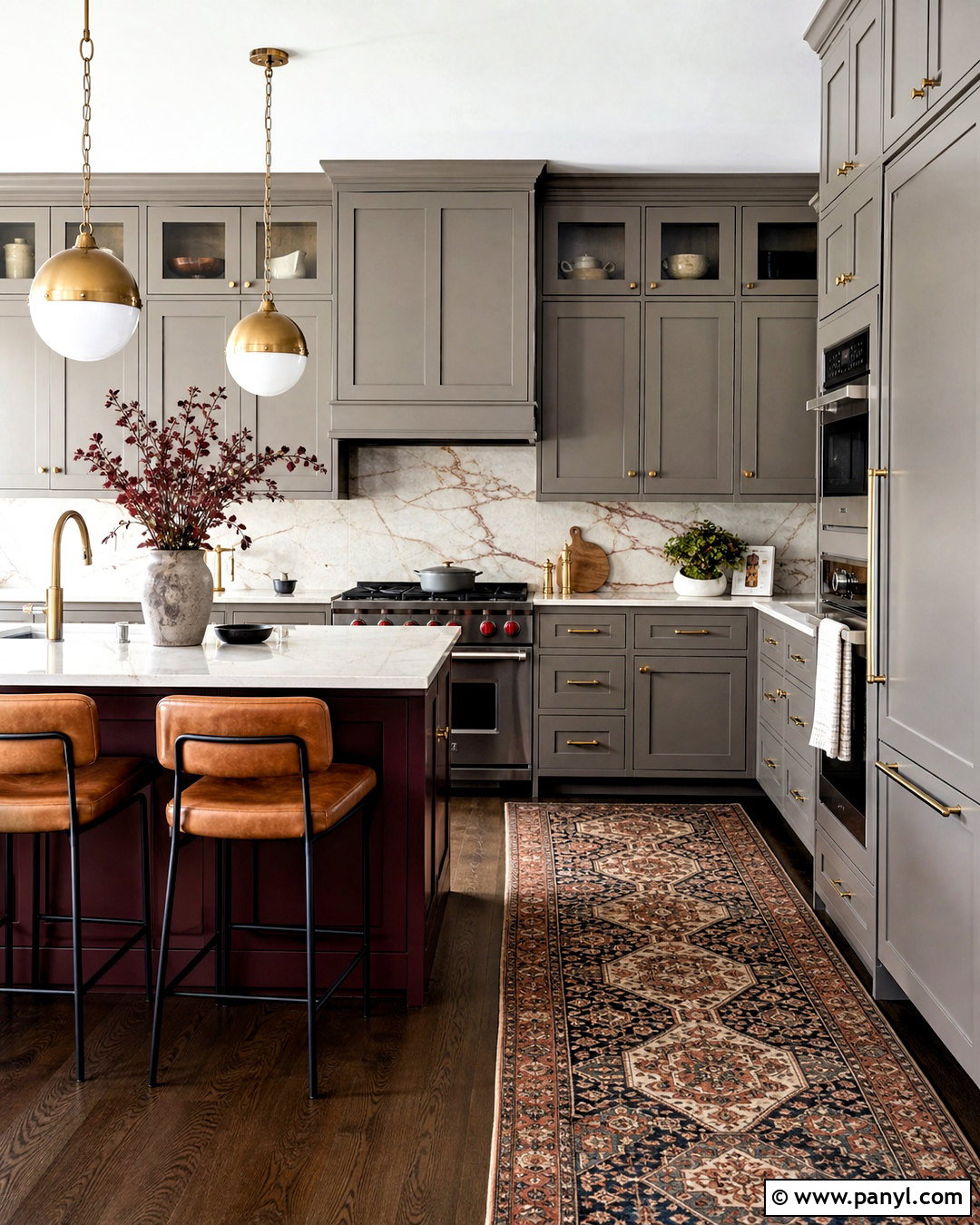
Burgundy gives gray a rich, sophisticated contrast that feels warmer and less expected than black or navy. Use medium warm-gray perimeter cabinets, then paint the island a muted burgundy with brown undertones. Add creamy quartz countertops and a marble backsplash with soft gray and reddish-brown veining. Aged brass handles and globe pendants enhance the warmth without competing with the island. Choose dark oak flooring and camel leather stools for a grounded, layered appearance. Keep walls warm white so the deeper colors remain balanced. A small patterned runner can repeat burgundy, cream, and gray along the main work aisle. This complete scheme suits traditional and transitional kitchens, creating a distinctive focal point while allowing the surrounding gray cabinetry to stay quiet and versatile.
19. Gray Kitchen With White Marble
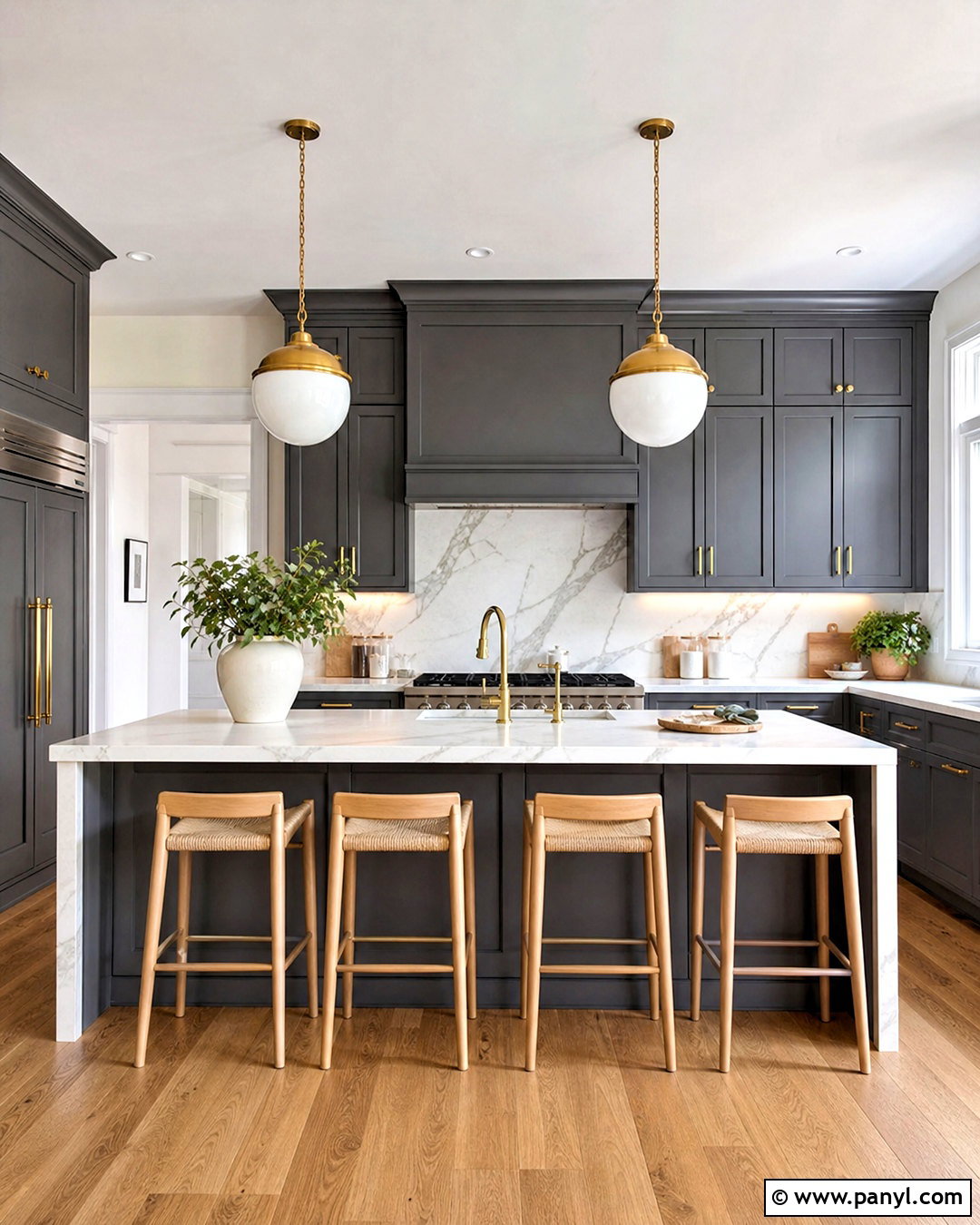
White marble and gray cabinetry form a classic combination, but natural warmth keeps the finished kitchen from feeling formal or cold. Choose soft charcoal-gray cabinets and install white marble or durable marble-look quartz with flowing gray veining. Continue the same material up the backsplash for a clean, uninterrupted surface. Add warm brass hardware, a matching faucet, and cream globe pendants above the island. Medium oak flooring and light wood stools soften the strong stone pattern. Paint walls a gentle warm white rather than a blue-white. Keep the island gray for a cohesive cabinet layout, but use a thicker countertop edge to emphasize it. The finished room feels elegant and substantial while remaining suitable for a normal family home and everyday routines.
20. Gray Kitchen With Colorful Terrazzo
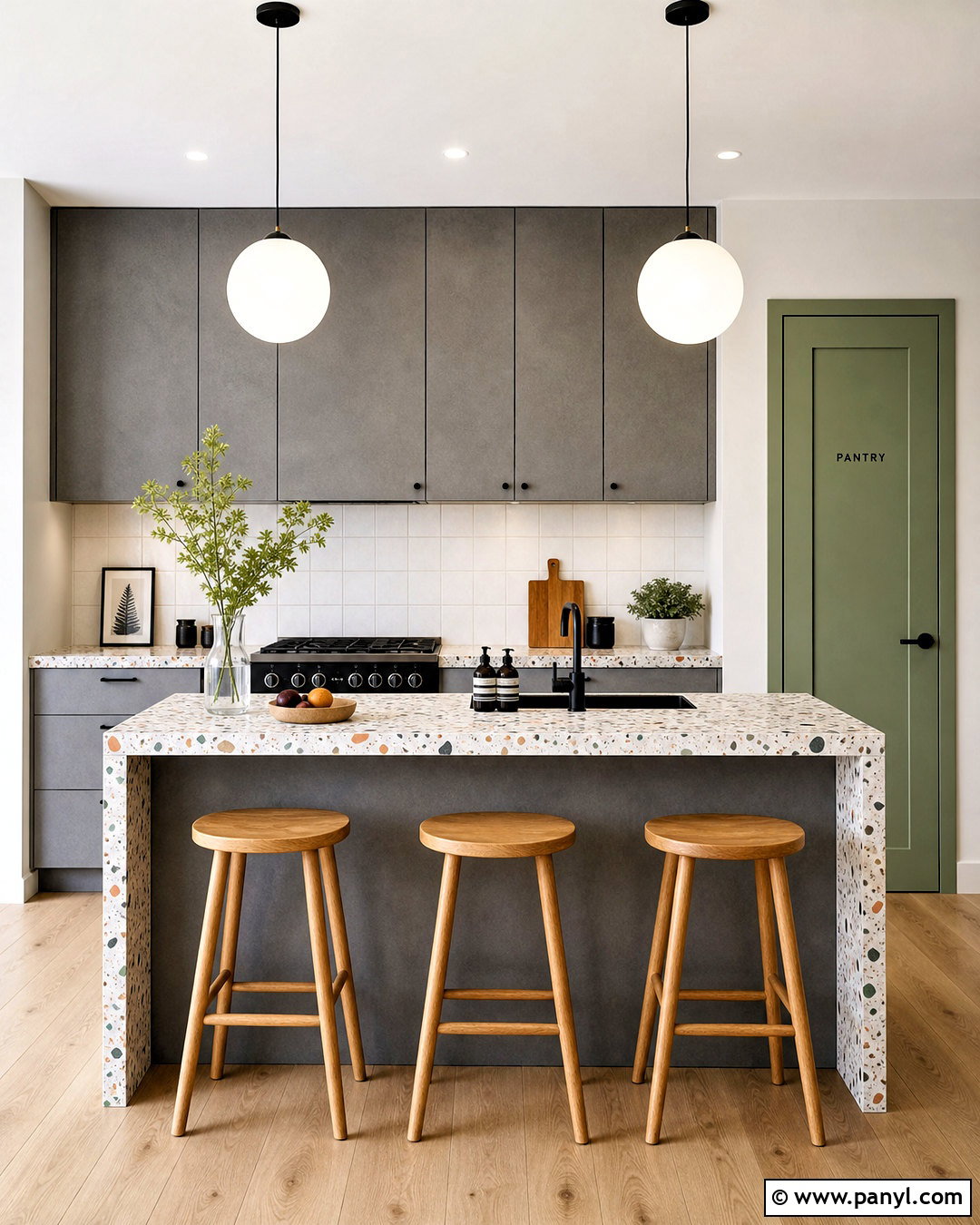
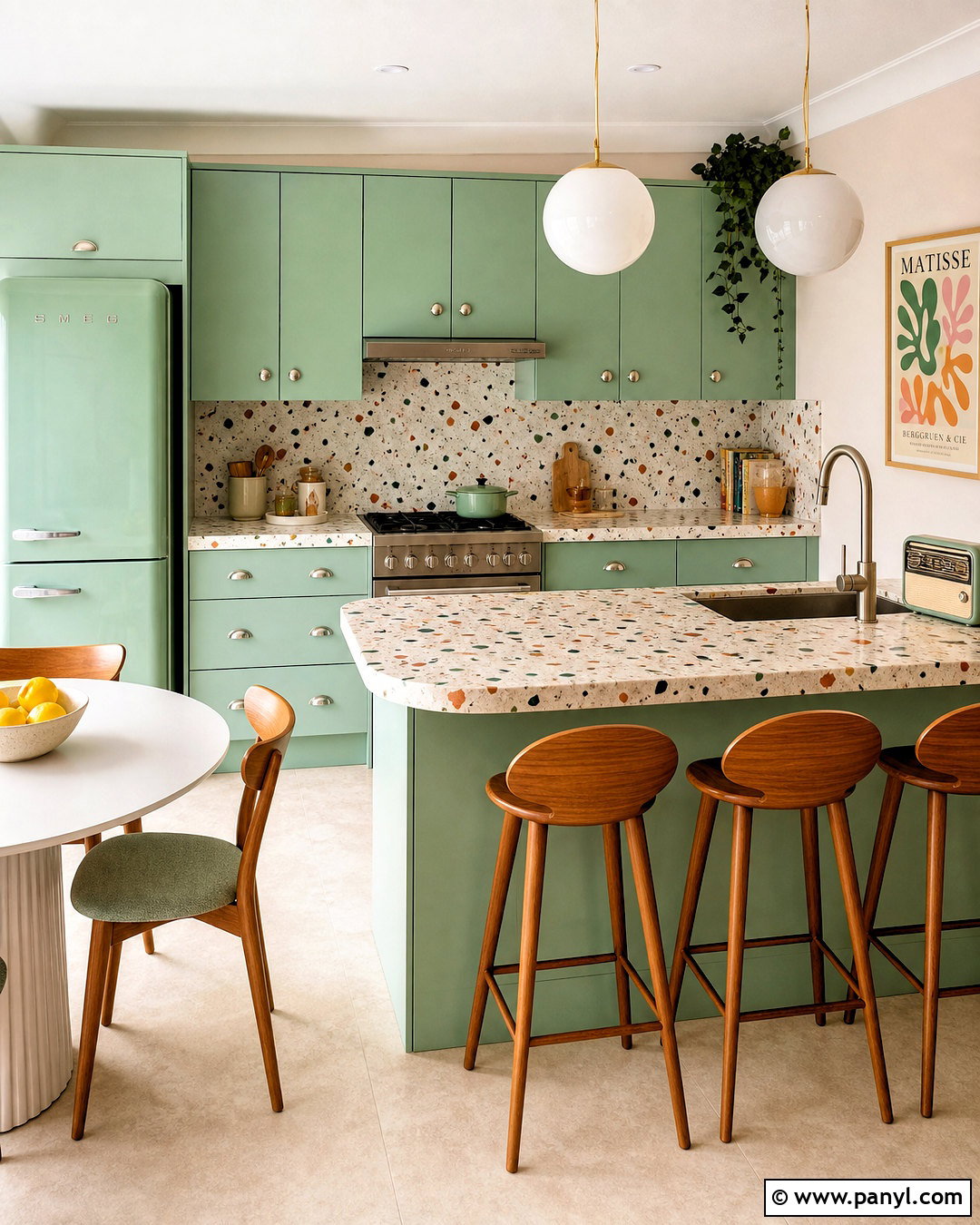
Colorful terrazzo adds pattern and personality to understated gray cabinetry. Use flat-panel cabinets in a soft concrete gray and select a pale terrazzo countertop containing muted chips of rust, ocher, sage, blue, and charcoal. Continue the material onto a short backsplash, then use warm white tile above it to prevent the pattern from becoming overwhelming. Choose matte black hardware and simple globe pendants for modern definition. Light oak flooring and natural wood stools introduce an organic counterpoint to the terrazzo. Pull one quiet chip color, such as sage or dusty blue, onto a nearby pantry door or breakfast nook wall. This full kitchen combination feels playful but controlled, offering an effective way to update gray with several colors in one coordinated surface.
Conclusion:
The most successful gray kitchen does more than match cabinets with a countertop. It coordinates undertones, lighting, flooring, backsplash materials, hardware, and accent colors across the entire room. Warm white, cream, oak, walnut, terracotta, and brass can make gray feel inviting. Navy, black, forest green, teal, and burgundy create stronger contrast, while blush, powder blue, and mustard add personality. Before committing, place samples together and observe them during the morning, afternoon, and evening. This step helps reveal unexpected blue, green, or purple undertones. Whether you prefer quiet neutrals or confident color, these 20 gray kitchen ideas color combos offer complete looks that can be adjusted for your room, budget, and lifestyle.

Related Ideas and Inspiration:
Leave a Reply