
Green kitchen cabinets bring natural color, warmth, and personality into the hardest-working room in the home. Their versatility makes them suitable for cozy farmhouse kitchens, streamlined modern spaces, and traditional layouts alike. Soft sage can brighten a compact room, while forest, olive, and emerald create a richer atmosphere in larger kitchens. The most successful designs consider the entire space, including countertops, backsplash tile, hardware, flooring, lighting, and nearby wall colors. Warm greens generally pair well with wood, cream, and brass, while cooler greens look polished beside white stone, nickel, and charcoal accents. () Whether you want a subtle refresh or a dramatic remodel, the complete looks below offer practical inspiration for choosing and styling green kitchen cabinets.
1. Sage Green Kitchen Cabinets With White Quartz
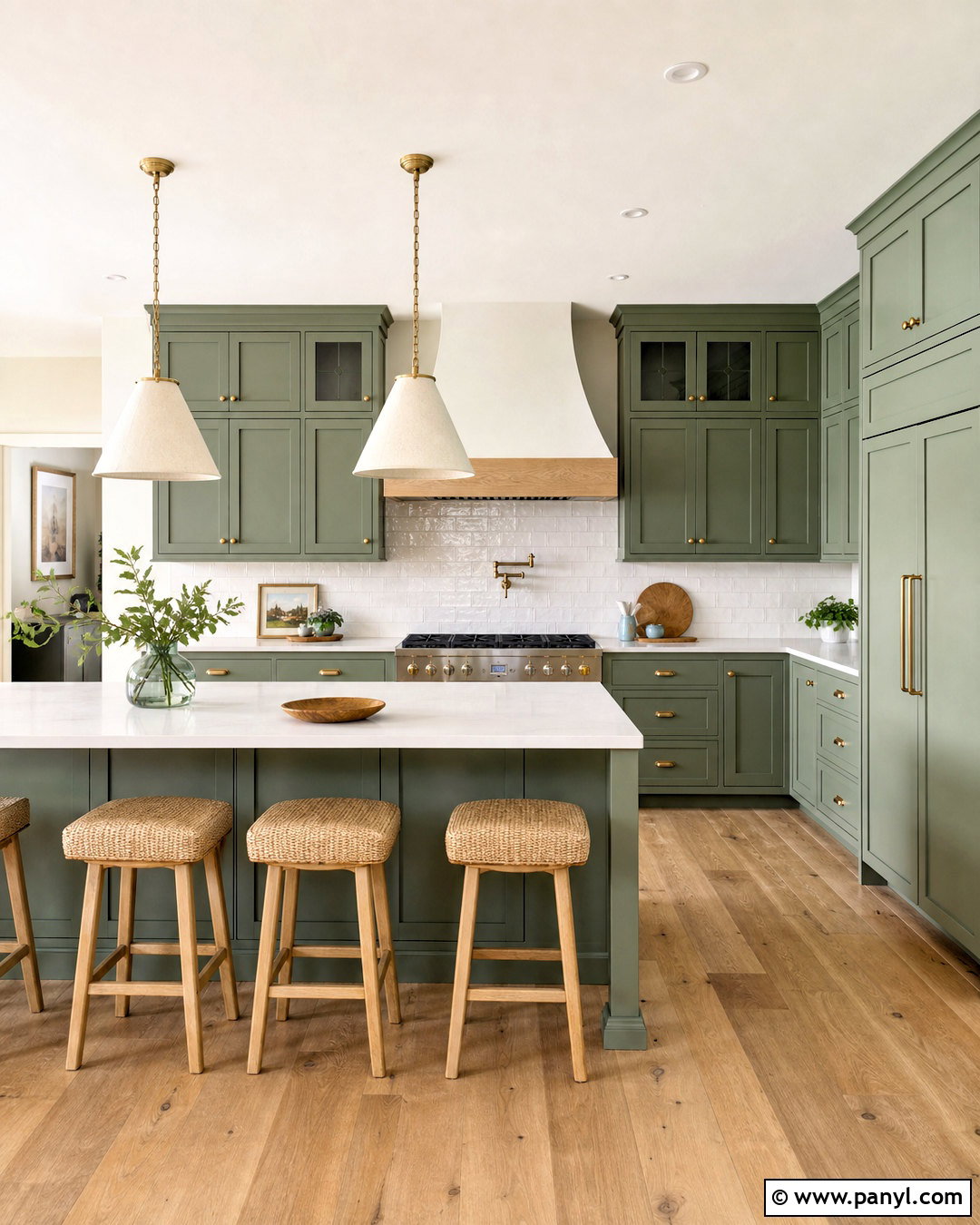
Soft sage cabinetry creates a light, restful kitchen that still has more character than an all-white space. Use simple Shaker doors throughout the perimeter and island for a consistent, approachable look. White quartz countertops with faint warm-gray veining keep the room bright without competing with the green. Add a glossy white subway-tile backsplash, brushed brass pulls, and a matching brass bridge faucet. Natural white oak flooring brings gentle warmth underfoot, while linen pendant shades soften the island area. Finish the room with creamy walls, woven counter stools, and a few pale ceramic accessories. This complete scheme works especially well in medium-size kitchens because every surface reflects light while the sage cabinets supply calm, noticeable color.
2. Dark Green Kitchen Cabinets With Marble Countertops
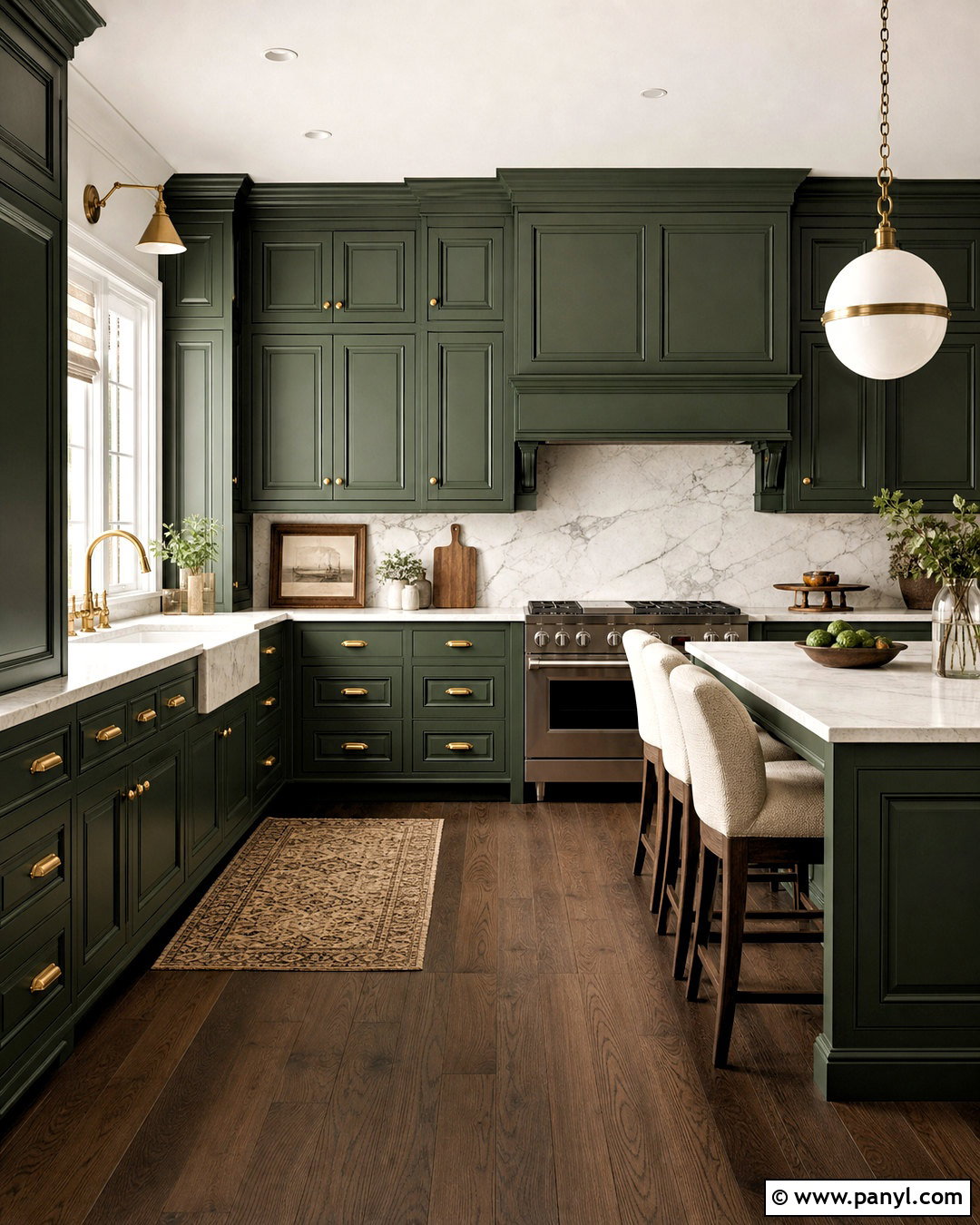
Deep green cabinets can make a spacious kitchen feel grounded, elegant, and inviting. Choose inset cabinetry with a satin finish so the dark color looks refined rather than overly glossy. White marble countertops and a matching full-height backsplash provide movement and prevent the room from feeling heavy. Select marble with soft gray or warm taupe veining for an easier transition to natural wood flooring. A large island in the same green creates a strong focal point, especially when paired with aged brass hardware and globe pendant lights. Keep the walls warm white and use paneled appliances to preserve the seamless cabinetry. Upholstered counter stools in oatmeal fabric and a vintage-style runner introduce softness, creating a balanced kitchen that feels luxurious but comfortable.
3. Olive Green Kitchen Cabinets With Wood Countertops
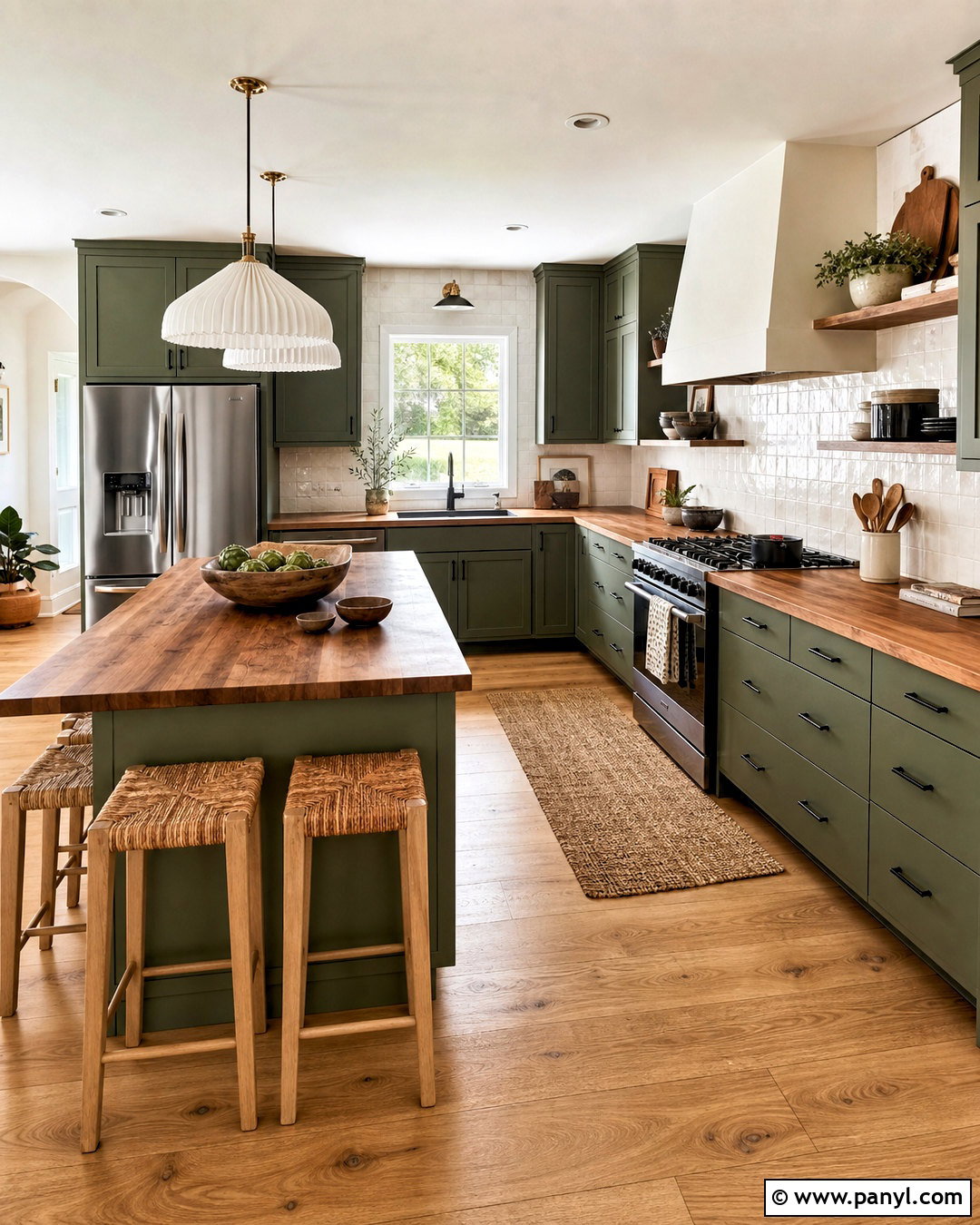
Earthy olive cabinets and warm wood surfaces create a relaxed kitchen inspired by natural materials. Use slab-front lower cabinets and narrow Shaker uppers to combine clean lines with a little traditional detail. Butcher-block countertops made from sealed white oak or walnut add visible grain and prevent the green from appearing flat. Continue the organic palette with handmade cream backsplash tiles and medium-tone oak flooring. Matte black knobs, a black gooseneck faucet, and simple black pendants add definition without making the room formal. Open shelves can replace several upper cabinets near the window, keeping everyday dishes easy to reach. Complete the space with off-white walls, woven stools, potted herbs, and understated stoneware for a practical, welcoming kitchen with plenty of texture.
4. Forest Green Kitchen Cabinets With Brass Hardware
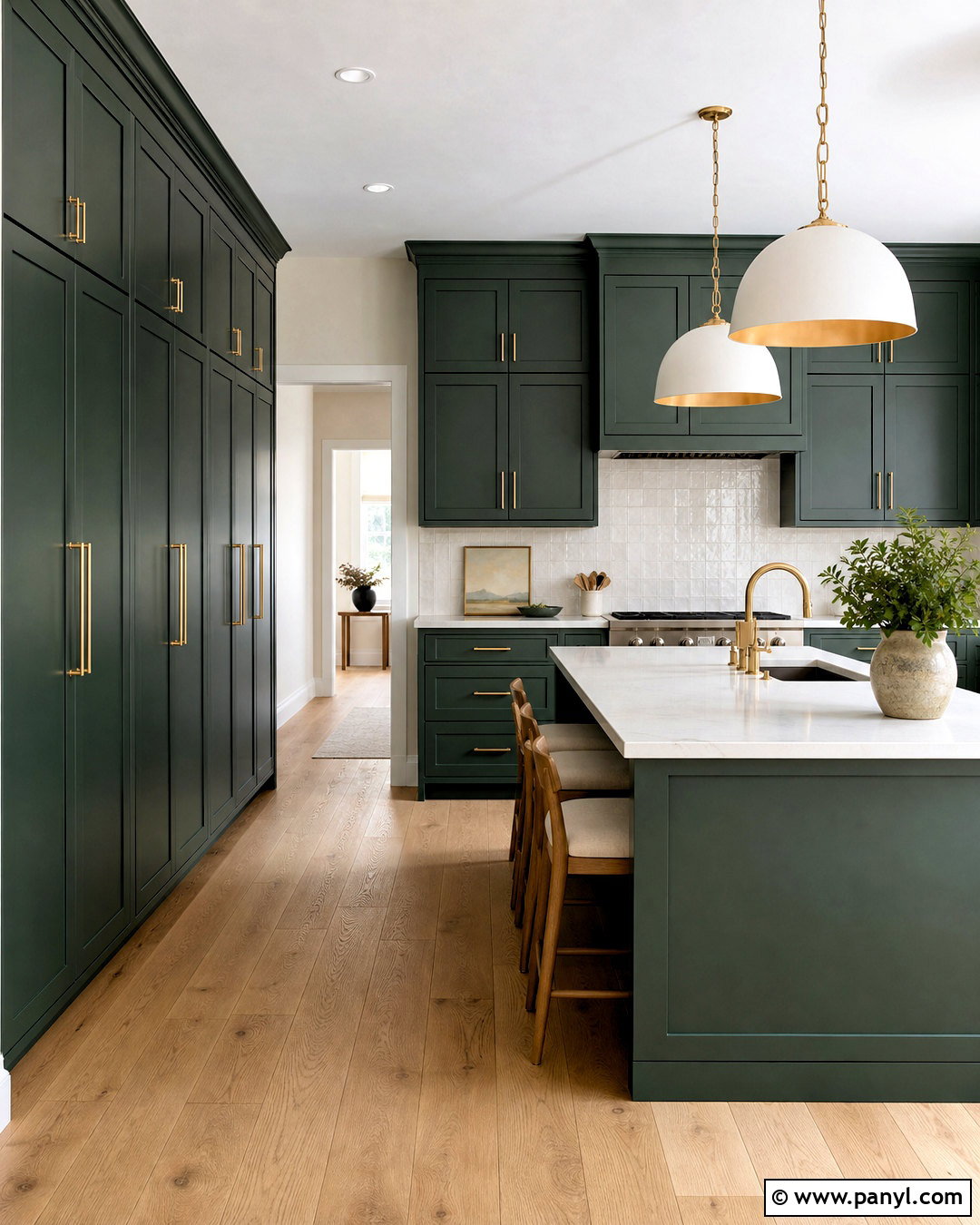
A forest green kitchen feels dramatic, but thoughtful finishes can keep it bright and highly livable. Run floor-to-ceiling cabinetry along one wall for pantry storage, then balance it with an open island and generous windows. Warm white quartz countertops offer durability and crisp contrast, while a cream zellige backsplash adds subtle variation. Use elongated brass pulls on drawers, smaller brass knobs on doors, and a brass faucet to distribute warmth evenly. Wide-plank oak flooring keeps the design connected to nature. Over the island, hang large white dome pendants with brass details for useful task lighting. Paint the walls a soft ivory rather than stark white. The finished room will feel tailored and bold, with enough pale surfaces to support the saturated cabinetry.
5. Light Green Kitchen Cabinets With Black Hardware
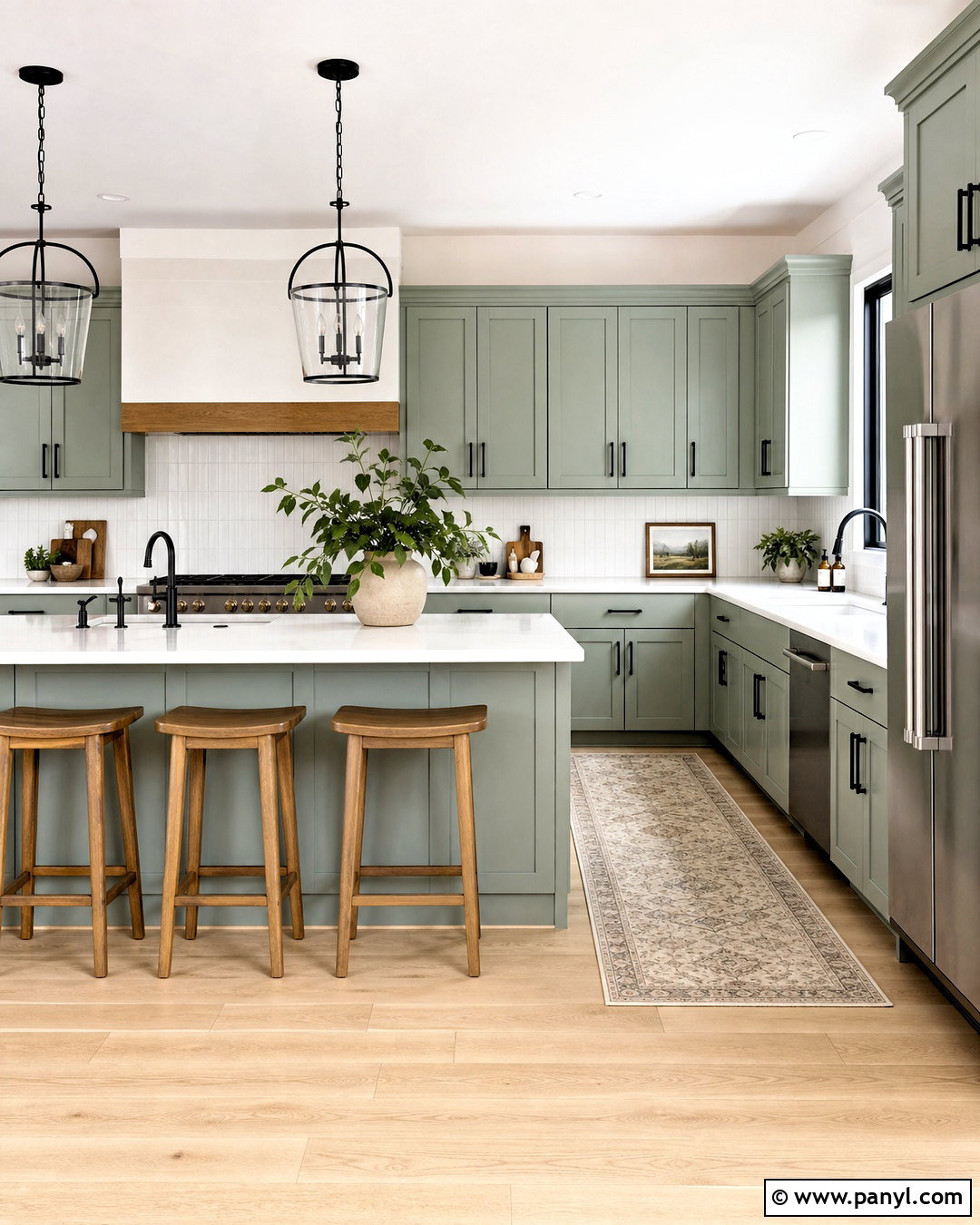
Pale green cabinetry offers a fresh backdrop for crisp black accents in a casual contemporary kitchen. Choose flat-panel doors or narrow Shaker fronts in a muted green with gray undertones. Pair them with off-white quartz counters and vertically stacked white backsplash tile for a clean, taller-looking wall. Matte black bar pulls, a black faucet, and black-framed pendant lights create a clear visual rhythm. Carry that contrast into a slim black window frame or range hood trim, but avoid filling the room with too many dark features. Light oak flooring and backless wood stools warm the streamlined scheme. Finish with white walls, simple glass canisters, and one or two leafy plants. The result feels bright, functional, and modern without becoming cold or overly minimal.
6. Emerald Green Kitchen Cabinets With Gold Hardware
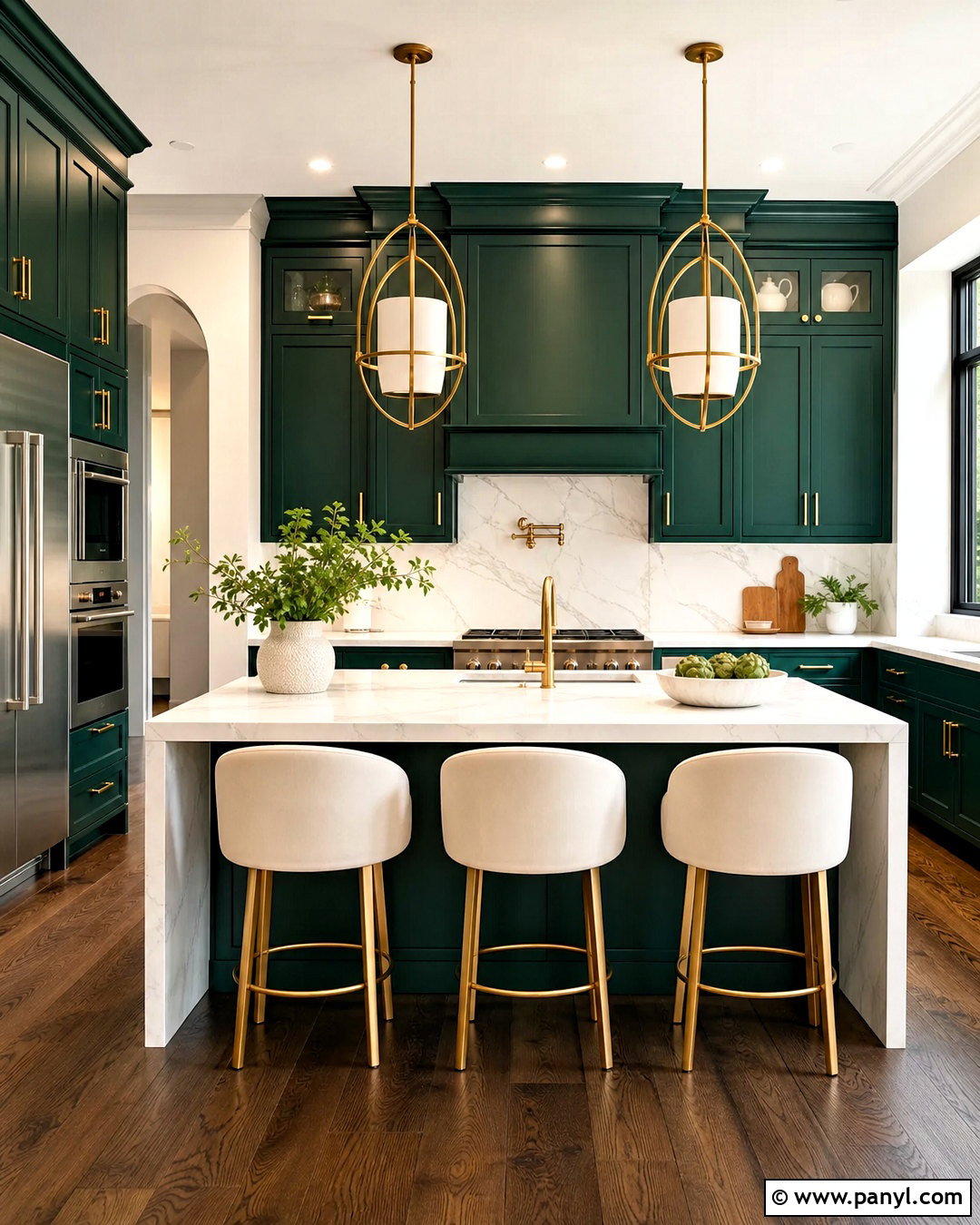
Rich emerald cabinetry turns an ordinary kitchen into a confident, jewel-toned space. Use the color on both the perimeter cabinets and island to create an immersive appearance, then introduce generous white surfaces for balance. White marble-look quartz countertops provide practical durability, while a matching slab backsplash keeps the background visually quiet. Polished gold pulls, a gold faucet, and sculptural gold pendant lights emphasize the luxurious character of the green. Choose dark-stained oak flooring to anchor the saturated color and add upholstered stools in cream performance fabric. Warm white walls and ceiling paint will soften the contrast. Keep countertop decor limited to clear glass, white ceramics, and a wooden cutting board, allowing the emerald green kitchen cabinets to remain the unmistakable centerpiece.
7. Green Kitchen Cabinets With Butcher Block Countertops
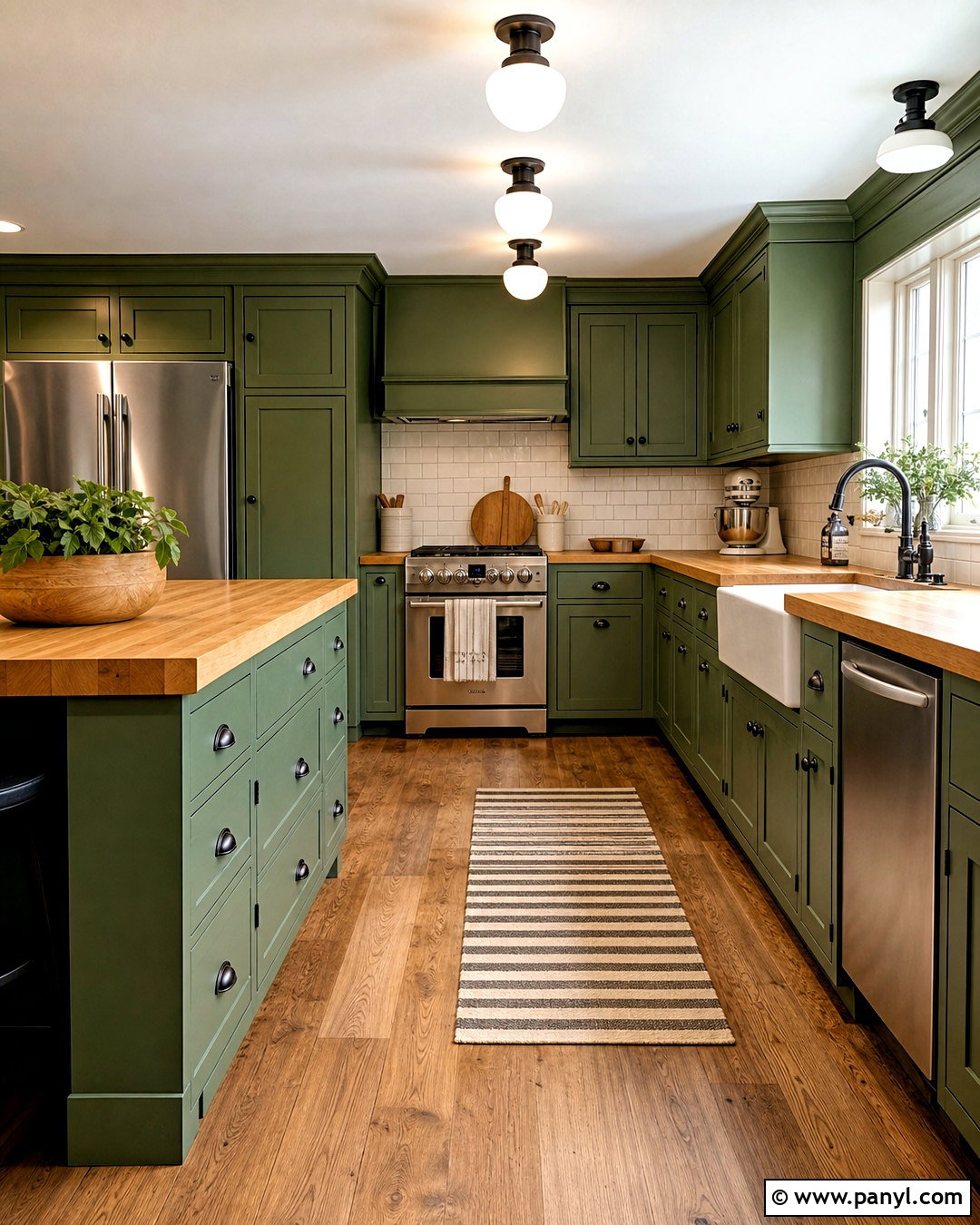
A green-and-wood kitchen can feel cheerful, affordable, and easy to update over time. Paint classic Shaker cabinets a medium leafy green and top them with thick butcher-block counters in warm maple. Protect the wood near the sink with a durable finish and use a stone remnant on the island if extra water resistance is needed. Install simple cream subway tile with matching grout to create a quiet backsplash. Oil-rubbed bronze cup pulls, a farmhouse sink, and schoolhouse pendants strengthen the traditional character. Medium oak floors coordinate with the counters without needing to match perfectly. Add warm white walls, a freestanding wood table, and checked or striped textiles. Together, these elements create a complete family kitchen that feels practical, collected, and naturally welcoming.
8. Green Kitchen Cabinets With White Backsplash
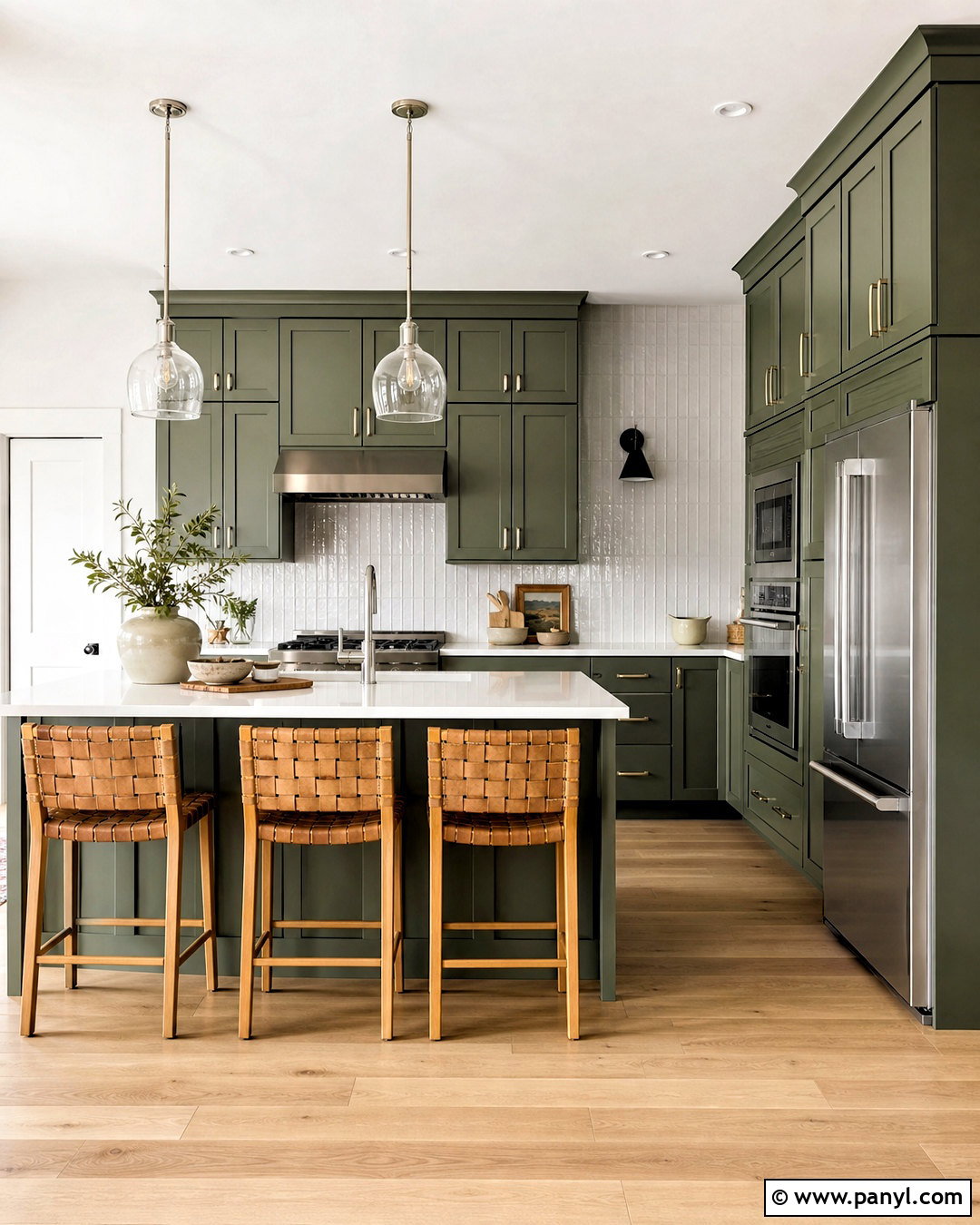
A crisp white backsplash allows green cabinetry to provide color while keeping the kitchen open and adaptable. Select a balanced medium green that is neither too yellow nor too blue, then use it on simple Shaker cabinets around the room. Cover the backsplash with glossy white rectangular tile laid in a vertical pattern to add height and reflect light. Warm white quartz counters create a smooth transition between the green and tile. Brushed nickel hardware, a stainless steel range, and a chrome faucet give the design a clean, understated finish. Add pale oak flooring and natural woven counter stools to soften the cooler metal. White walls, clear glass pendants, and minimal countertop accessories complete a bright everyday kitchen that can suit both newer homes and traditional layouts.
9. Green Kitchen Cabinets With Brick Backsplash
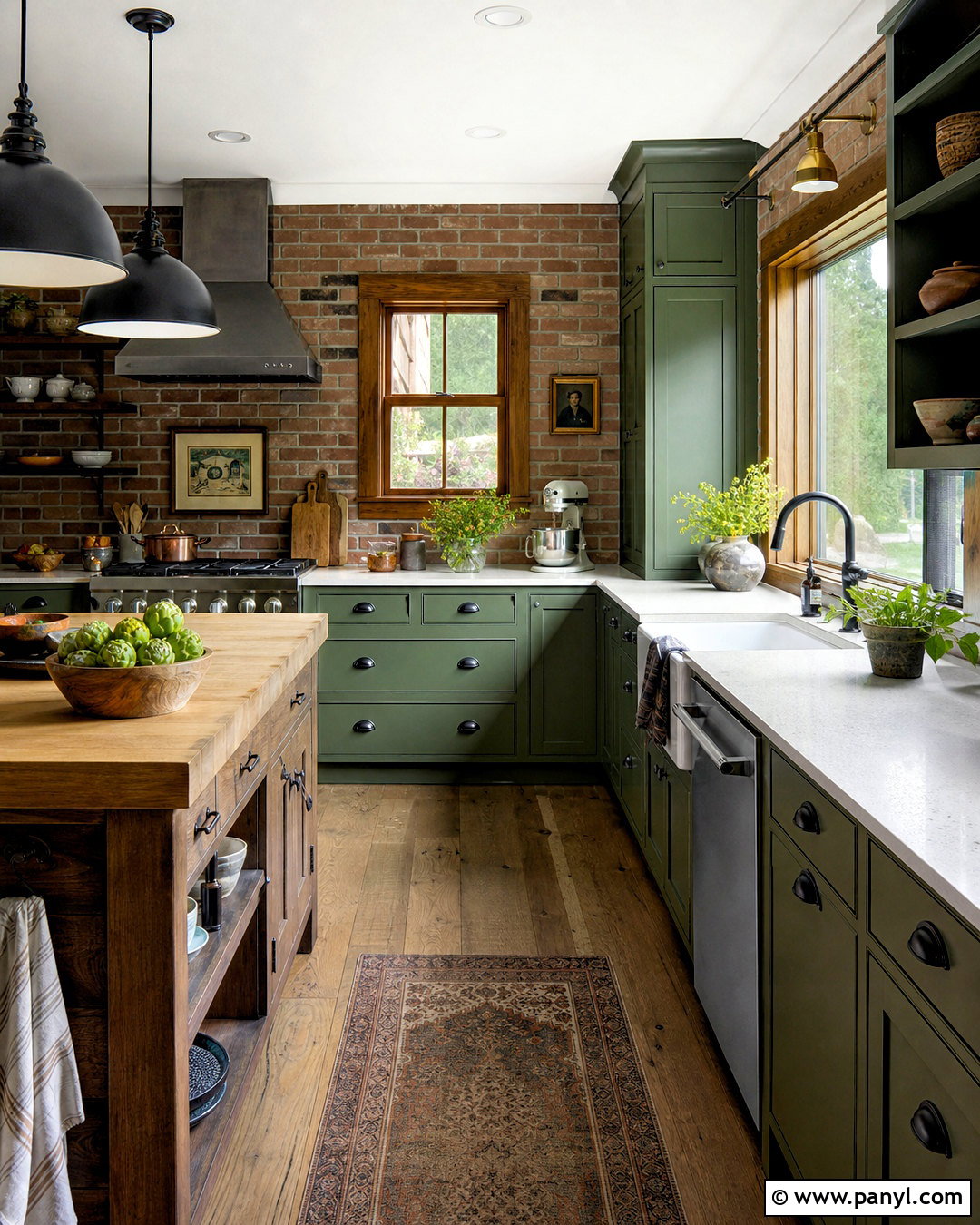
Exposed brick gives green cabinetry warmth, age, and architectural character. Choose a muted pine green for the lower and upper cabinets, using inset or Shaker doors to complement the textured wall. A red and brown brick backsplash works best when the surrounding finishes remain simple. Install honed cream quartz or pale limestone-look counters to provide a calm visual break. Black iron cabinet latches, a matte black faucet, and industrial pendants connect naturally with the brick. Use reclaimed-look oak flooring and a substantial wood island with green drawer bases for additional workspace. Keep walls soft white and display only a few practical pieces, such as pottery and wooden boards. This cohesive look suits cottages, renovated bungalows, and kitchens with rustic architectural features.
10. Green Kitchen Cabinets With Black Countertops
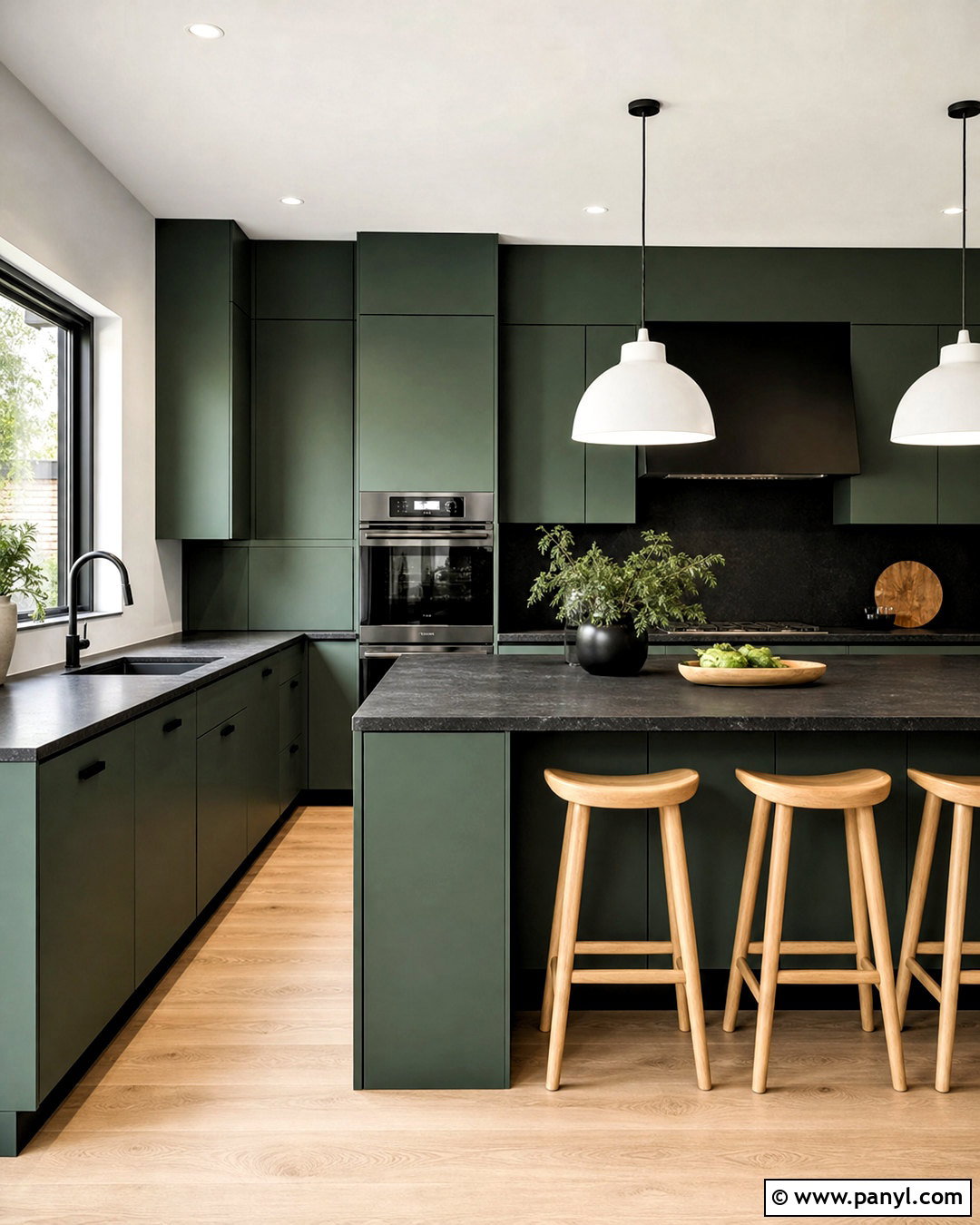
Black countertops give green cabinets a sharp, grounded appearance that works particularly well in modern kitchens. Use a smoky green on flat-panel cabinetry and select honed black granite or matte black quartz for the counters. Continue the same material several inches up the wall or across the full backsplash for a streamlined finish. Choose discreet black edge pulls so the hardware blends into the cabinet lines. Pale oak flooring, warm white walls, and a light wood ceiling detail will prevent the dark surfaces from overwhelming the room. Install bright under-cabinet lighting and oversized white pendants above the island. Finish with oak stools and minimal stoneware. The resulting kitchen feels bold and contemporary, yet the natural green and wood tones keep it approachable.
11. Two Tone Green And White Kitchen Cabinets
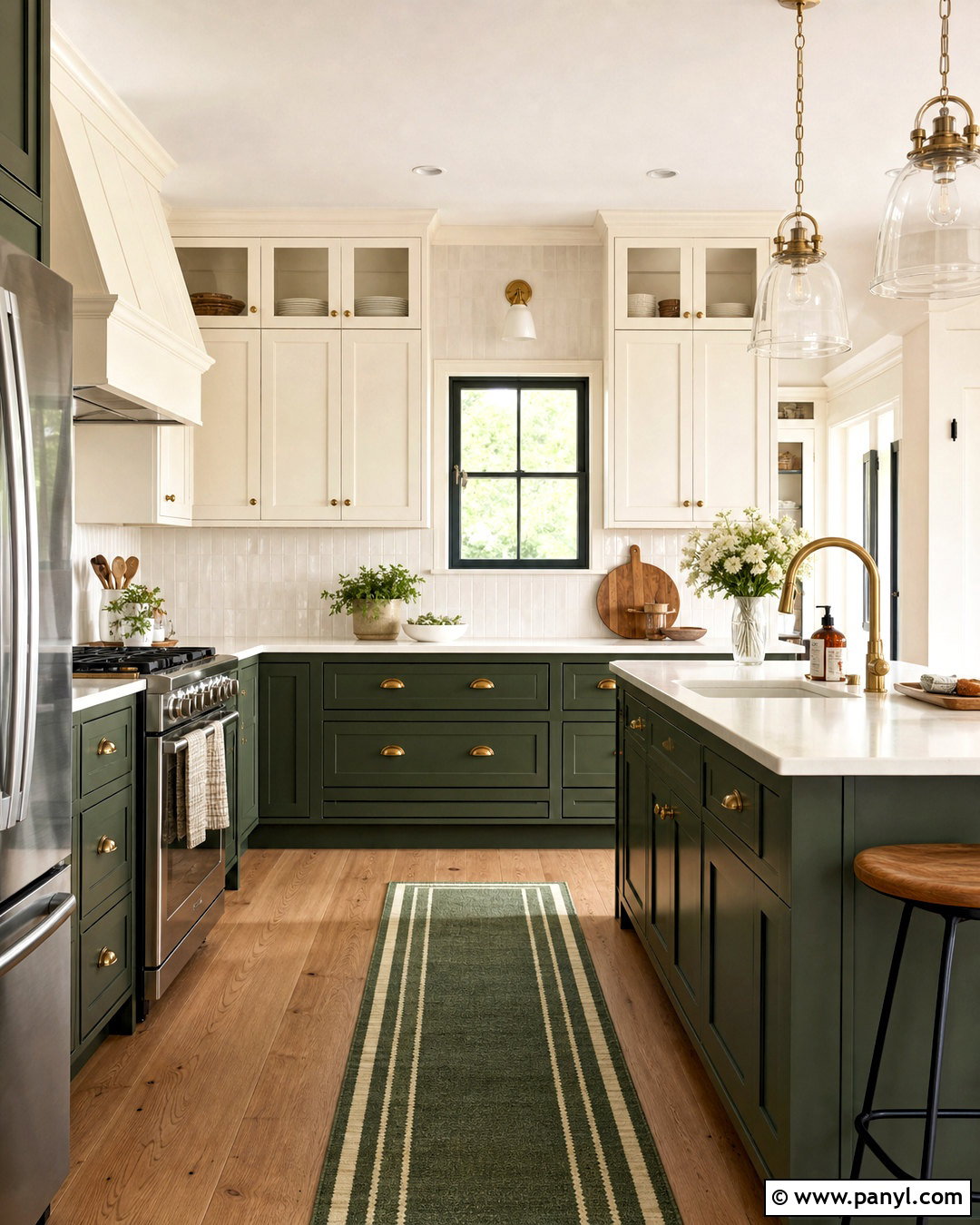
Two-tone cabinetry is an effective way to introduce green without committing every storage surface to a strong color. Paint the lower cabinets and island a medium sage or moss green, then keep the upper cabinets warm white. Use matching Shaker doors so the color division looks planned and cohesive. White quartz countertops and a lightly textured white backsplash connect the upper and lower sections. Add antique brass knobs, a brass faucet, and simple glass pendants for warmth. Natural oak flooring helps both cabinet colors feel at home in the same room. Repeat the green through a striped runner or small ceramic pieces rather than adding another major color. This balanced design is especially helpful in compact kitchens where dark upper cabinetry could reduce the sense of openness.
12. Green Kitchen Island With Wood Cabinets
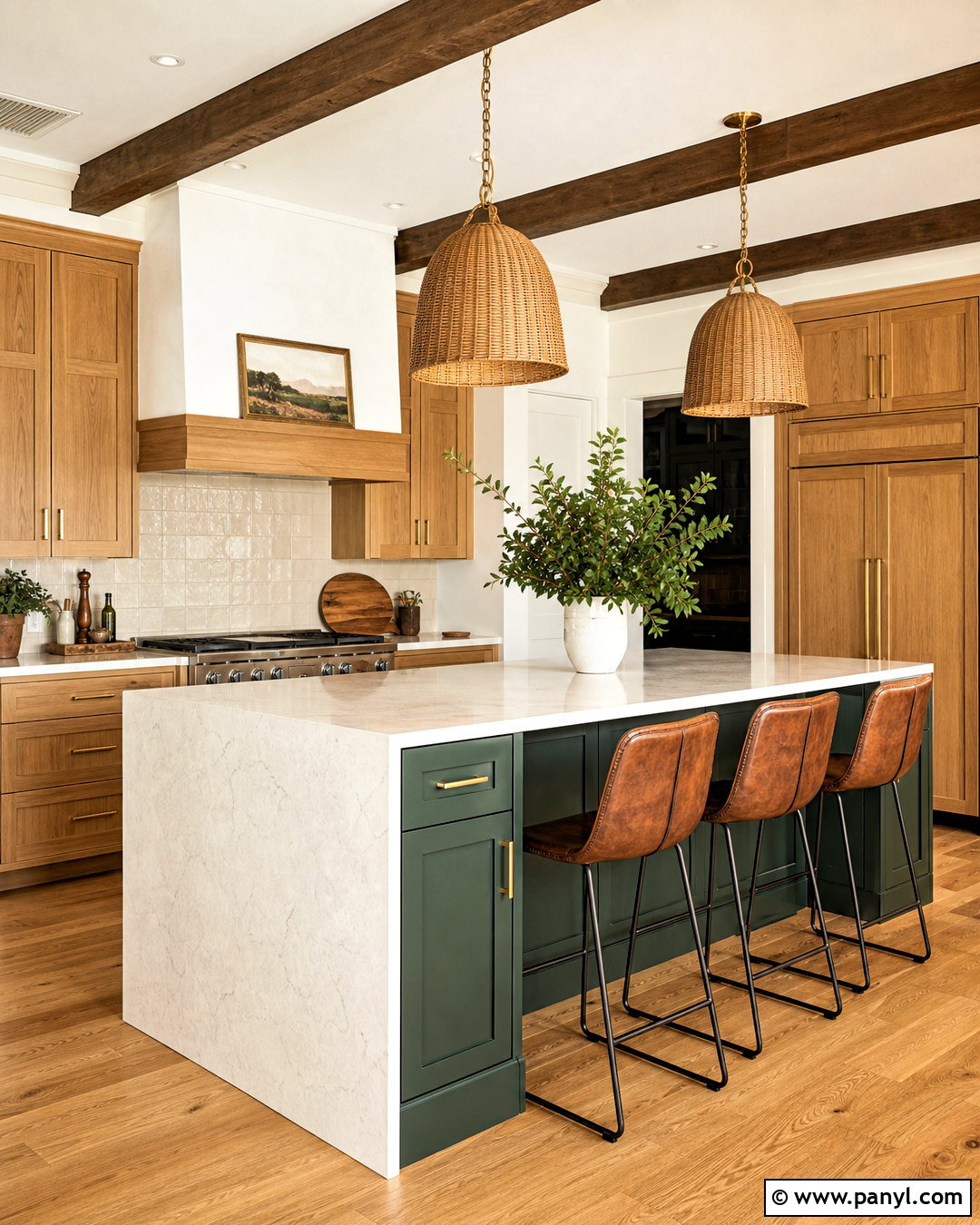
A green island can become the center of a warm wood kitchen without dominating the entire room. Use natural white oak cabinetry around the perimeter and paint the island a deep moss or forest green. Top all cabinets with creamy quartz, adding a waterfall edge to the island for a clean contemporary detail. A pale handmade tile backsplash complements the wood grain and keeps the cooking wall bright. Choose aged brass pulls for both cabinet finishes so the room feels unified. Above the island, install two large woven pendants that introduce texture and comfortable light. Medium oak flooring, cream walls, and leather counter stools complete the earthy palette. This design offers noticeable green color while preserving the timeless warmth and flexibility of natural wood cabinetry.
13. Green Shaker Kitchen Cabinets With Farmhouse Sink
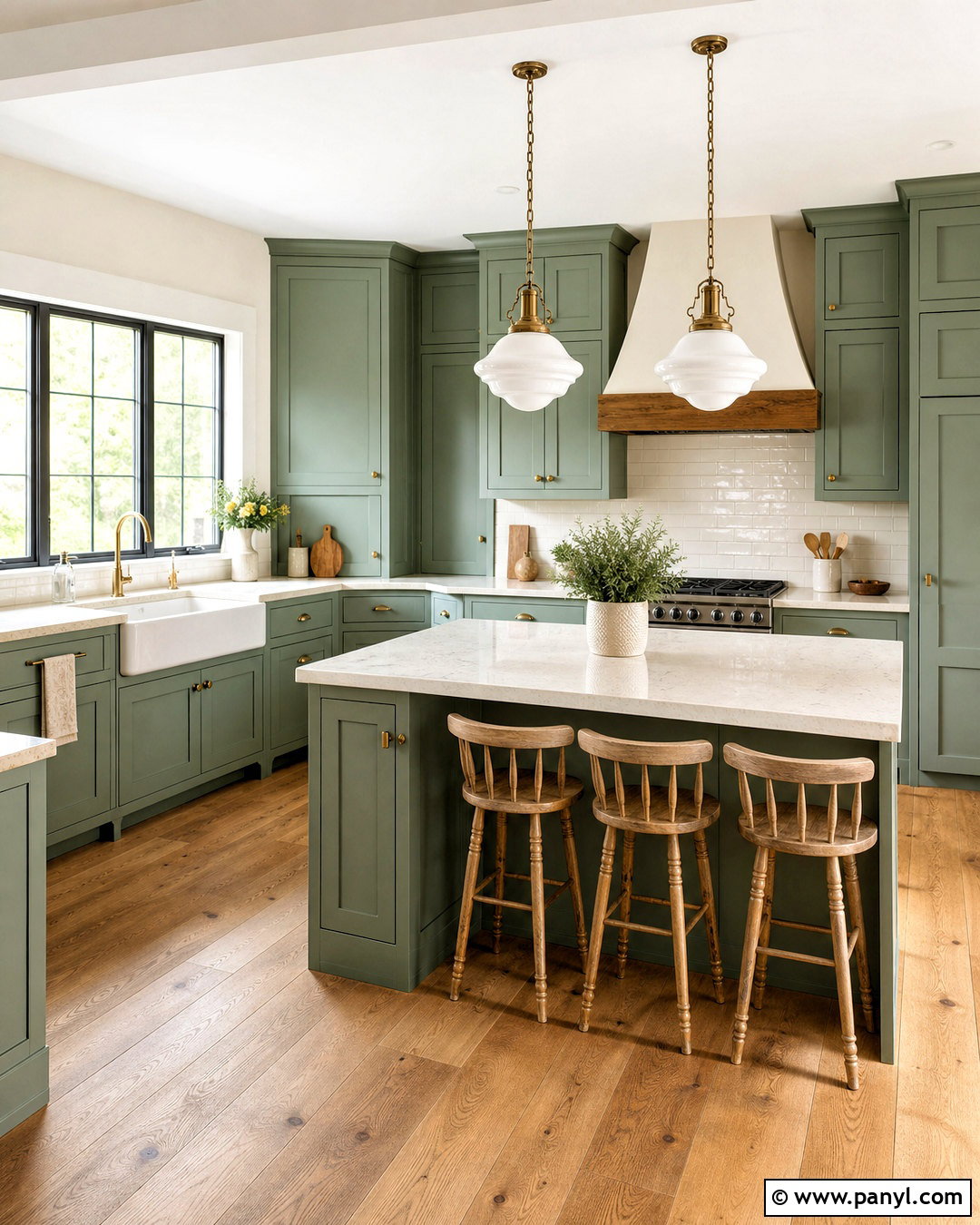
Classic green Shaker cabinets pair naturally with a deep apron-front sink and practical farmhouse details. Select a dusty eucalyptus green rather than a highly saturated shade, then use it across the perimeter and island. Cream quartz countertops provide a forgiving work surface, while handmade ivory subway tile adds gentle texture behind the range. Install an enameled white farmhouse sink beneath a window and complement it with an aged brass bridge faucet. Cup pulls on drawers and round knobs on doors maintain the traditional look. Wide-plank oak floors, spindle-back stools, and milk-glass pendants add familiar warmth. Keep the room from looking overly themed by using simple walls and limited rustic accessories. The complete kitchen will feel comfortable, durable, and suited to everyday family life.
14. Modern Green Kitchen Cabinets With Concrete Countertops
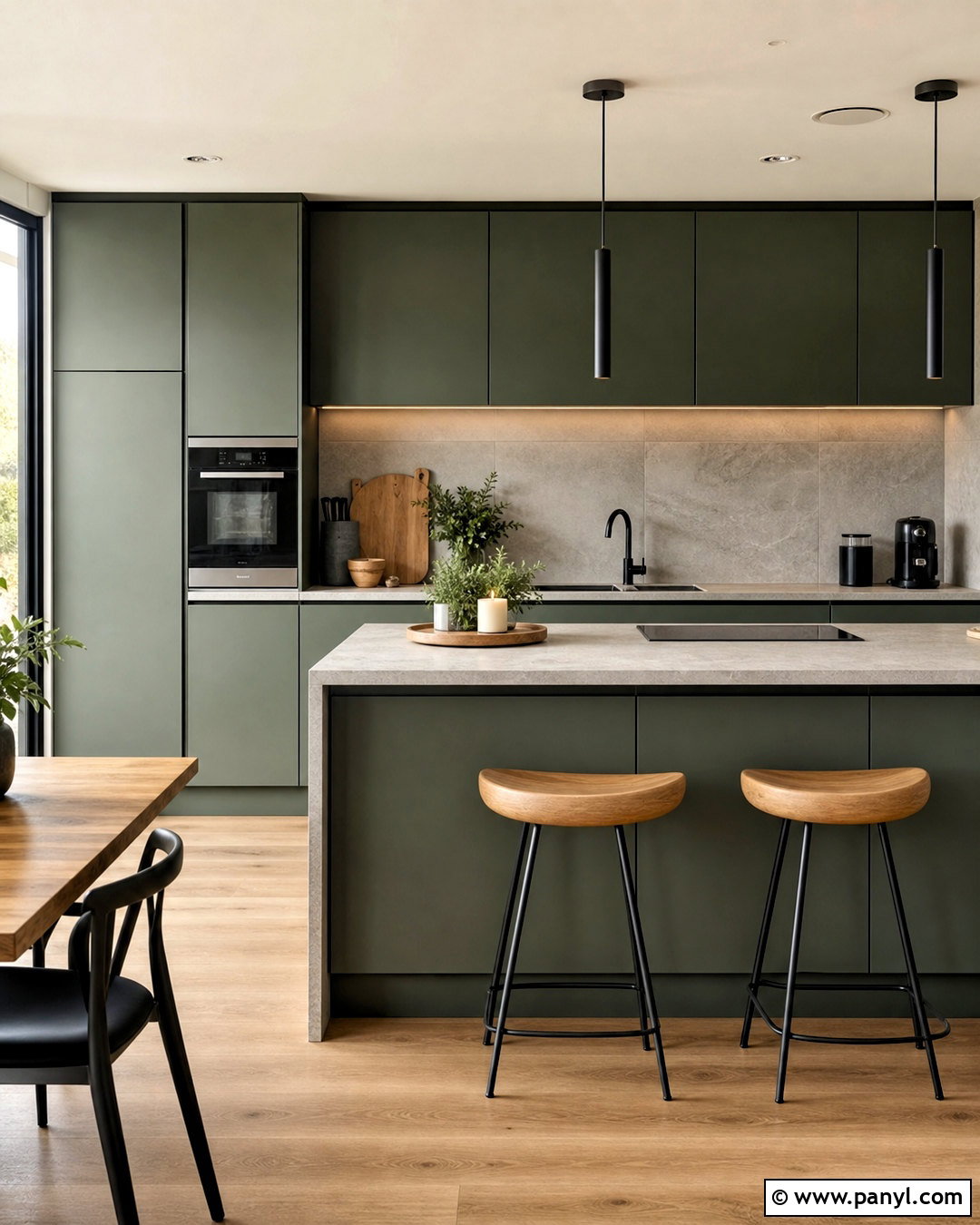
Muted green cabinets and concrete surfaces create a clean modern kitchen with an earthy edge. Choose handle-free, flat-panel cabinetry in a gray-green finish, using full-height doors to conceal pantry storage and appliances. Pale concrete countertops provide subtle texture and an understated industrial influence. Continue concrete up the backsplash or use large-format warm-gray porcelain tile for easier maintenance. Black recessed pulls, a slim black faucet, and linear pendant lights preserve the streamlined profile. Balance the hard surfaces with light oak flooring, a wood dining table, and curved counter stools. Soft white walls keep the architecture bright, while a few matte ceramic vessels add quiet decoration. This complete design feels contemporary and practical, with enough natural color and wood to avoid an overly stark appearance.
15. Mint Green Kitchen Cabinets With Terrazzo Counters
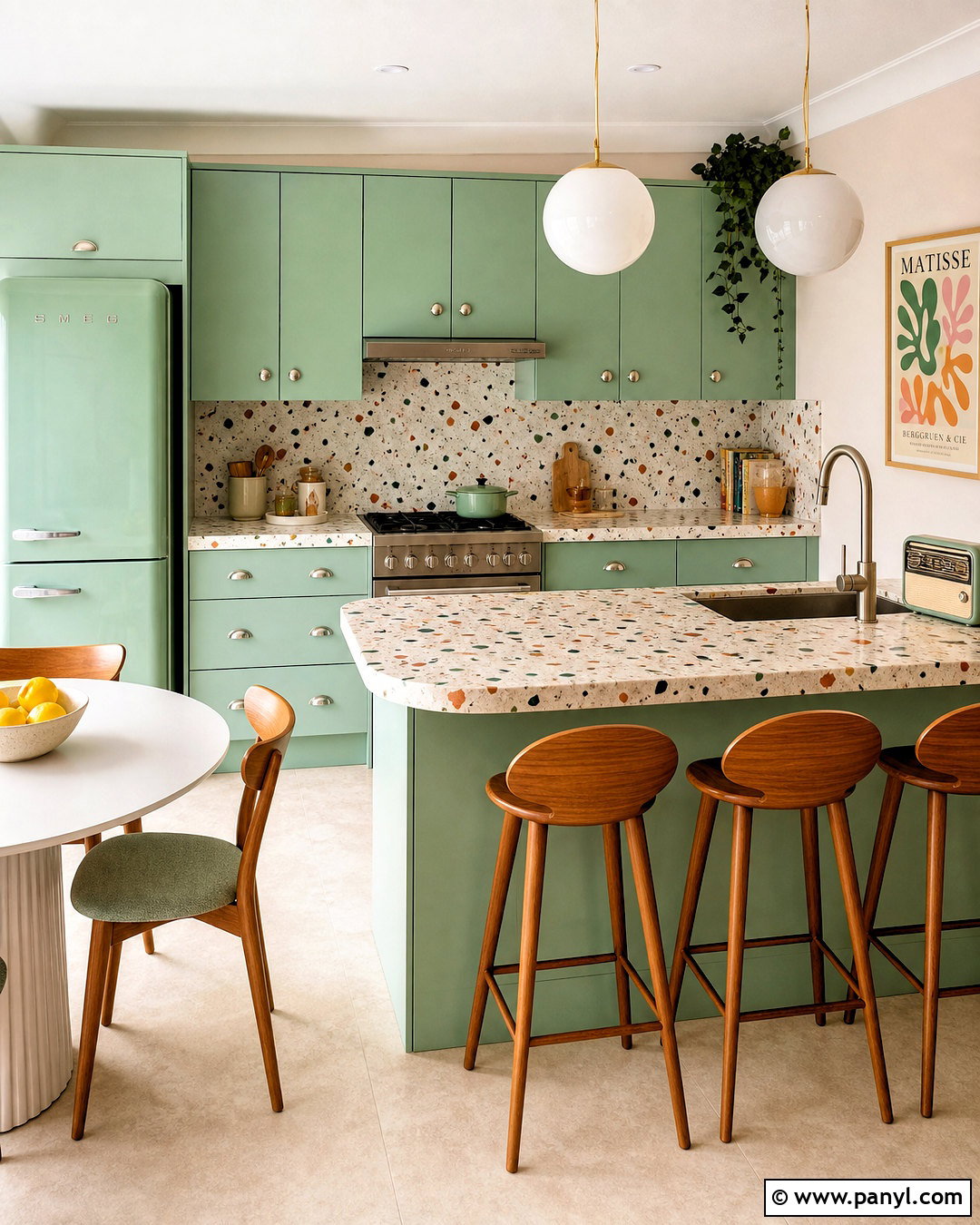
Mint green cabinetry can create an upbeat kitchen when it is paired with playful but controlled finishes. Select a soft, chalky mint for simple slab doors and combine it with pale terrazzo counters containing small green, peach, beige, and charcoal chips. Use the same terrazzo for a short backsplash, then paint the wall above it warm white to prevent visual overload. Rounded brushed nickel pulls and a streamlined stainless faucet support the light retro influence. Pale oak or cream tile flooring keeps the room bright. Add globe pendant lights, curved wood stools, and a compact breakfast table with simple chairs. By repeating only a few terrazzo colors in the accessories, the finished kitchen feels coordinated, youthful, and distinctive rather than busy or overly themed.
16. Hunter Green Kitchen Cabinets With Copper Accents
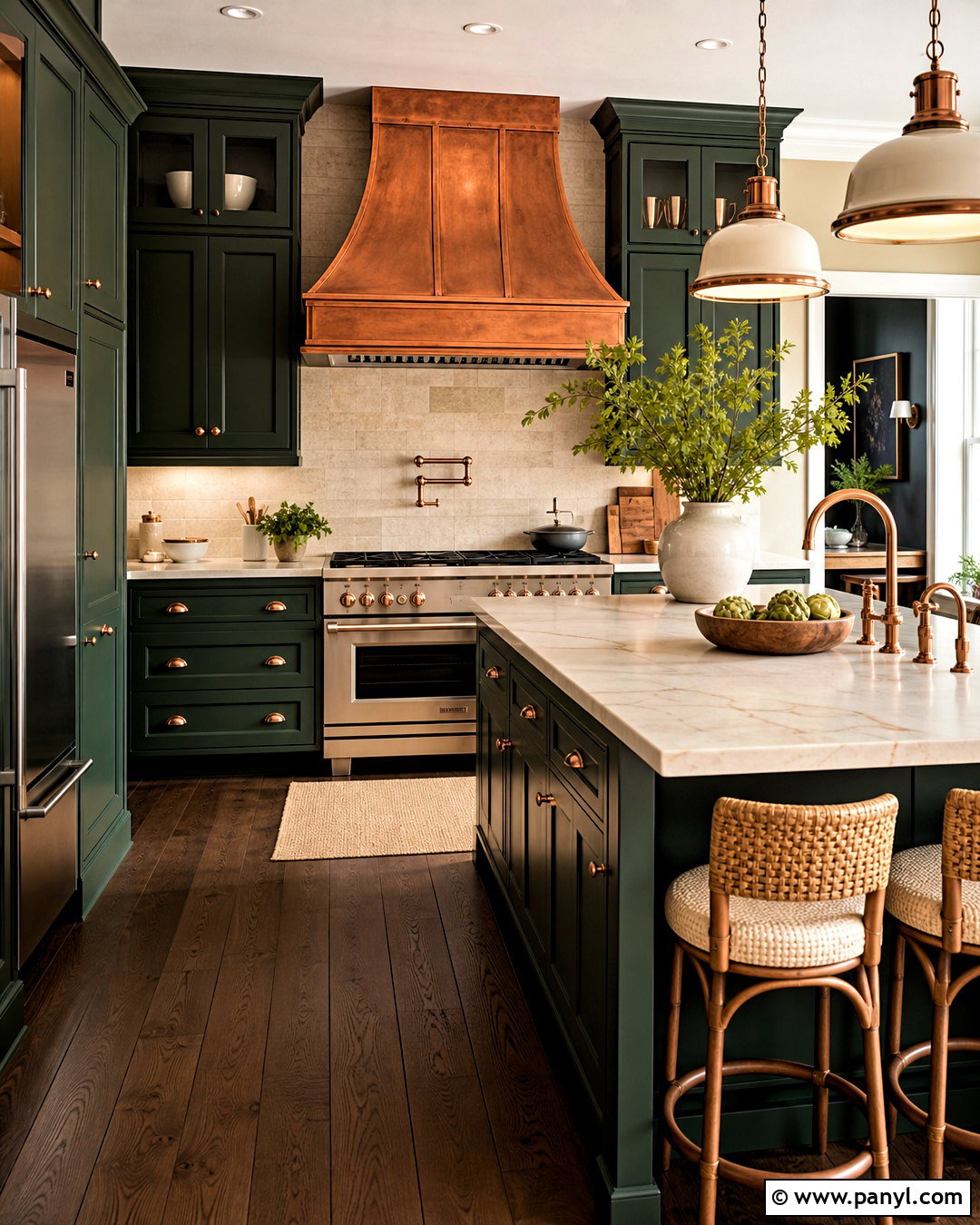
Hunter green and copper create a warm, richly layered kitchen suited to traditional or transitional homes. Use deep green inset cabinets with restrained molding, then introduce copper through a statement range hood, faucet, and a few cabinet knobs. Avoid using copper on every surface; concentrated accents look more intentional. Cream marble-look quartz countertops brighten the cabinetry, while a warm beige stone backsplash supports the metal’s reddish undertones. Dark oak flooring adds depth, and an island with turned legs provides a classic furniture-like element. Hang simple cream pendants rather than additional metallic fixtures. Warm ivory walls, woven stools, and understated pottery complete the scheme. The final room feels established and sophisticated, with green, stone, wood, and copper working in balanced proportions.
17. Pistachio Green Kitchen Cabinets With Cream Tile
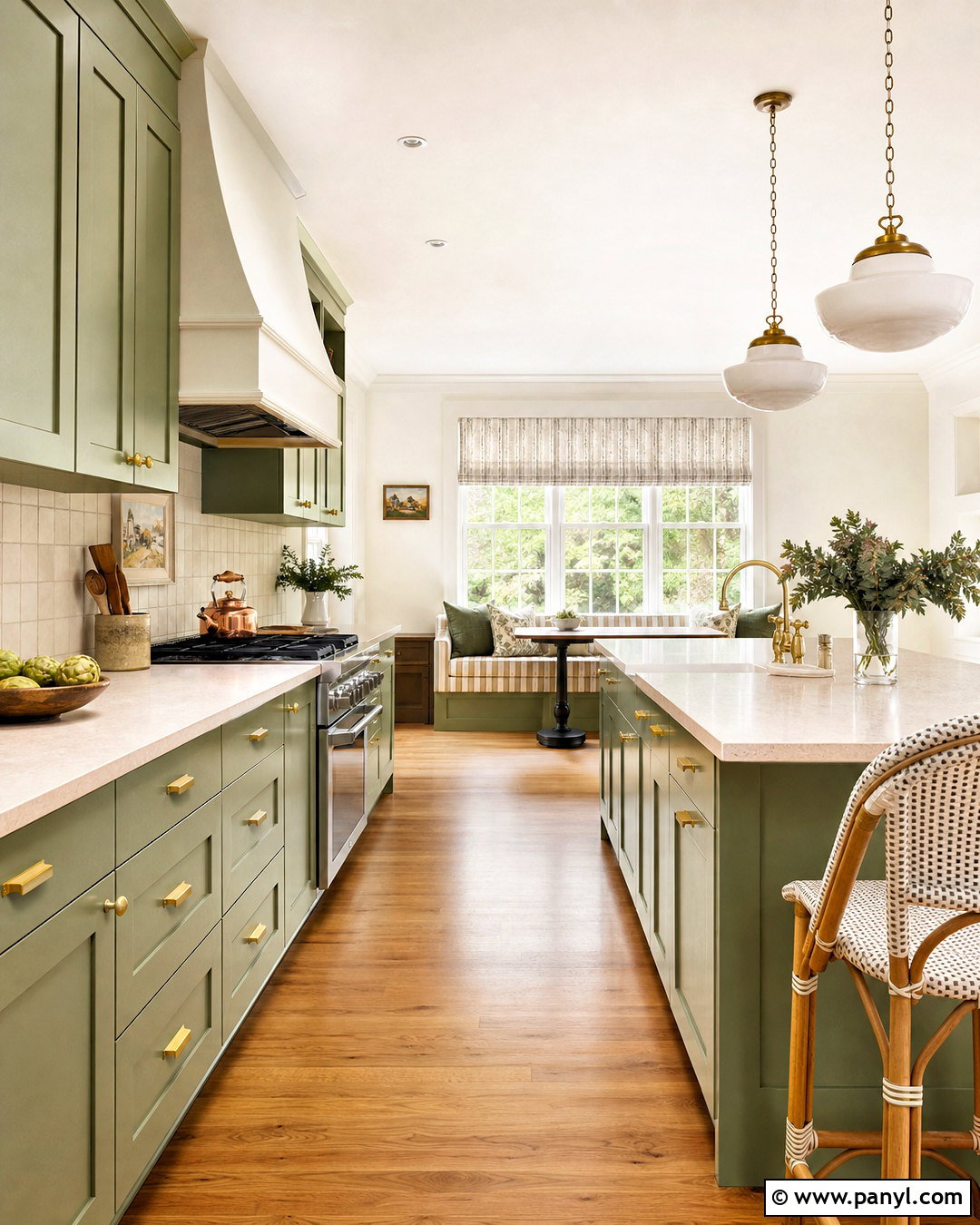
Pistachio cabinets introduce gentle color and vintage charm without making the kitchen feel dark. Choose a muted version with warm undertones and apply it to slim Shaker doors throughout the room. Cream square backsplash tiles with slightly uneven edges reinforce the softness of the palette. Use light beige quartz countertops rather than bright white, creating a low-contrast transition between surfaces. Unlacquered brass knobs, a brass faucet, and small opal-glass pendants bring subtle warmth. Honey-toned oak flooring and cane counter stools add natural texture. Paint the walls a creamy off-white and include a small built-in breakfast nook with neutral striped cushions. This complete arrangement feels sunny and relaxed, making it especially suitable for smaller kitchens, cottages, and rooms with limited direct sunlight.
18. Blue Green Kitchen Cabinets With Nickel Hardware
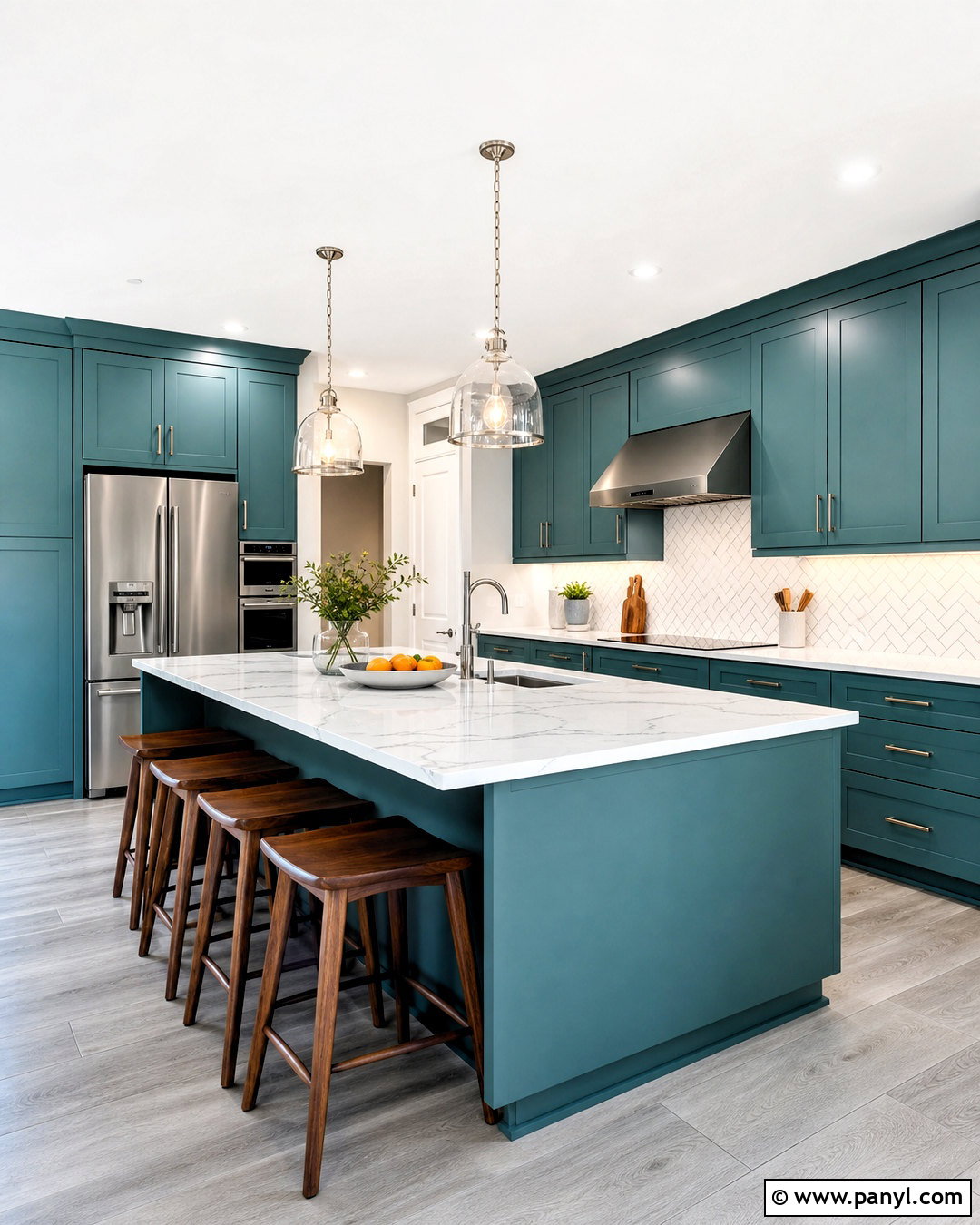
Blue-green cabinets offer a cooler interpretation of green that feels crisp and sophisticated. Choose a muted teal with enough gray to keep it usable across a full kitchen. Pair it with white quartz countertops containing subtle blue-gray veining and a glossy white herringbone backsplash. Polished nickel pulls, a nickel faucet, and stainless appliances complement the cabinet undertones without introducing an unrelated warm metal. Light gray porcelain flooring provides a durable foundation, while warm white walls stop the palette from becoming chilly. Add a walnut island top or walnut counter stools to supply essential warmth. Clear glass pendants and bright under-cabinet lighting finish the room. The completed kitchen feels clean, colorful, and polished, with carefully balanced cool finishes and natural wood accents.
19. Green Kitchen Cabinets With Open Shelving
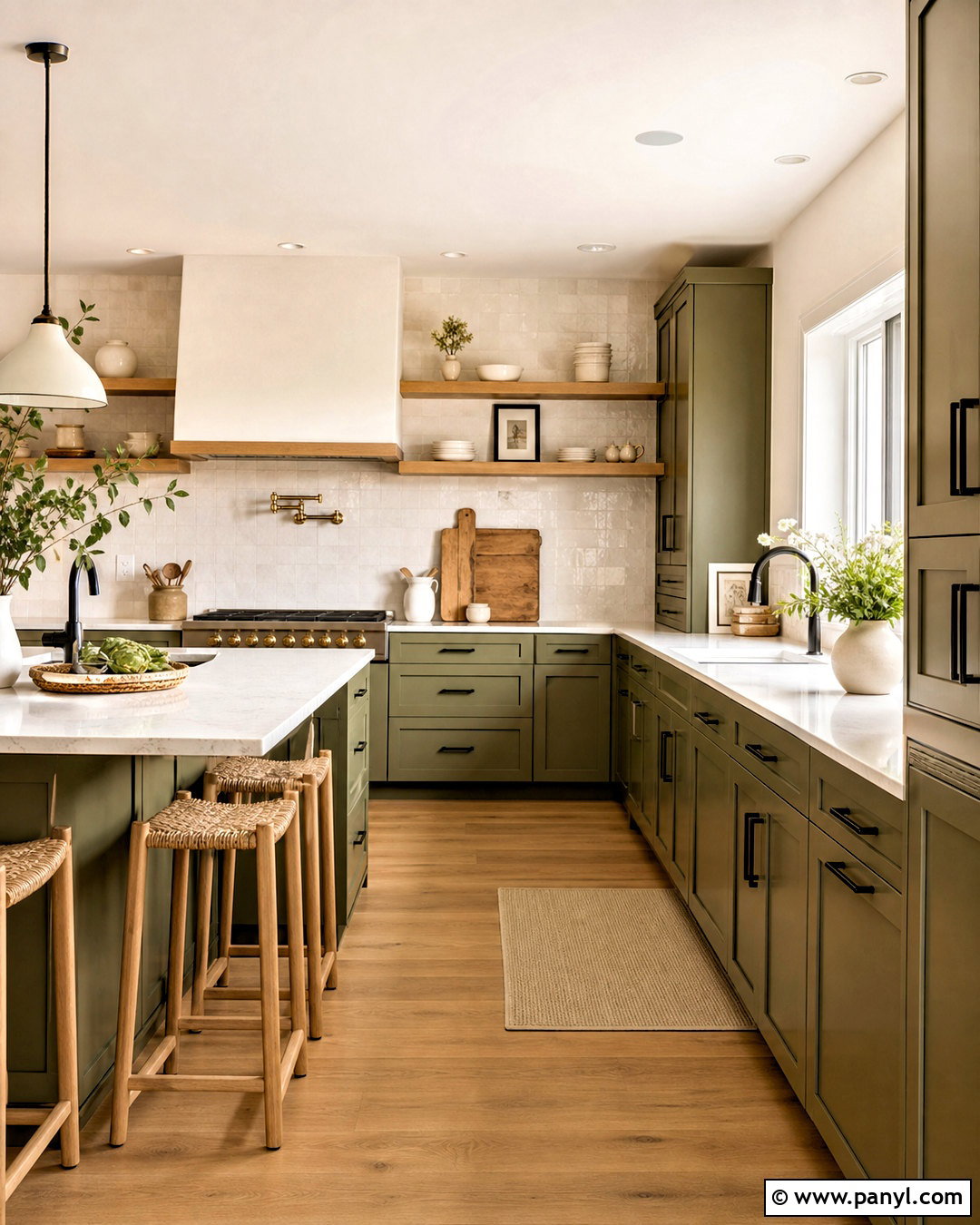
Open shelving can make a green kitchen feel lighter while creating convenient storage for attractive everyday pieces. Use muted olive lower cabinets and a limited number of matching uppers around the refrigerator. Replace the remaining wall cabinets with thick white oak shelves mounted against a cream zellige backsplash. Warm white quartz countertops give the work area a durable, uncluttered surface. Add matte black hardware and a black faucet for definition, then repeat black through narrow pendant frames. Oak flooring and woven stools connect naturally with the shelving. Arrange white dishes, clear glasses, wooden bowls, and neutral pottery in small groups, leaving visible breathing room. This complete design combines concealed storage with open display, producing an organized kitchen that feels casual rather than crowded.
20. Green Kitchen Cabinets With Matching Walls
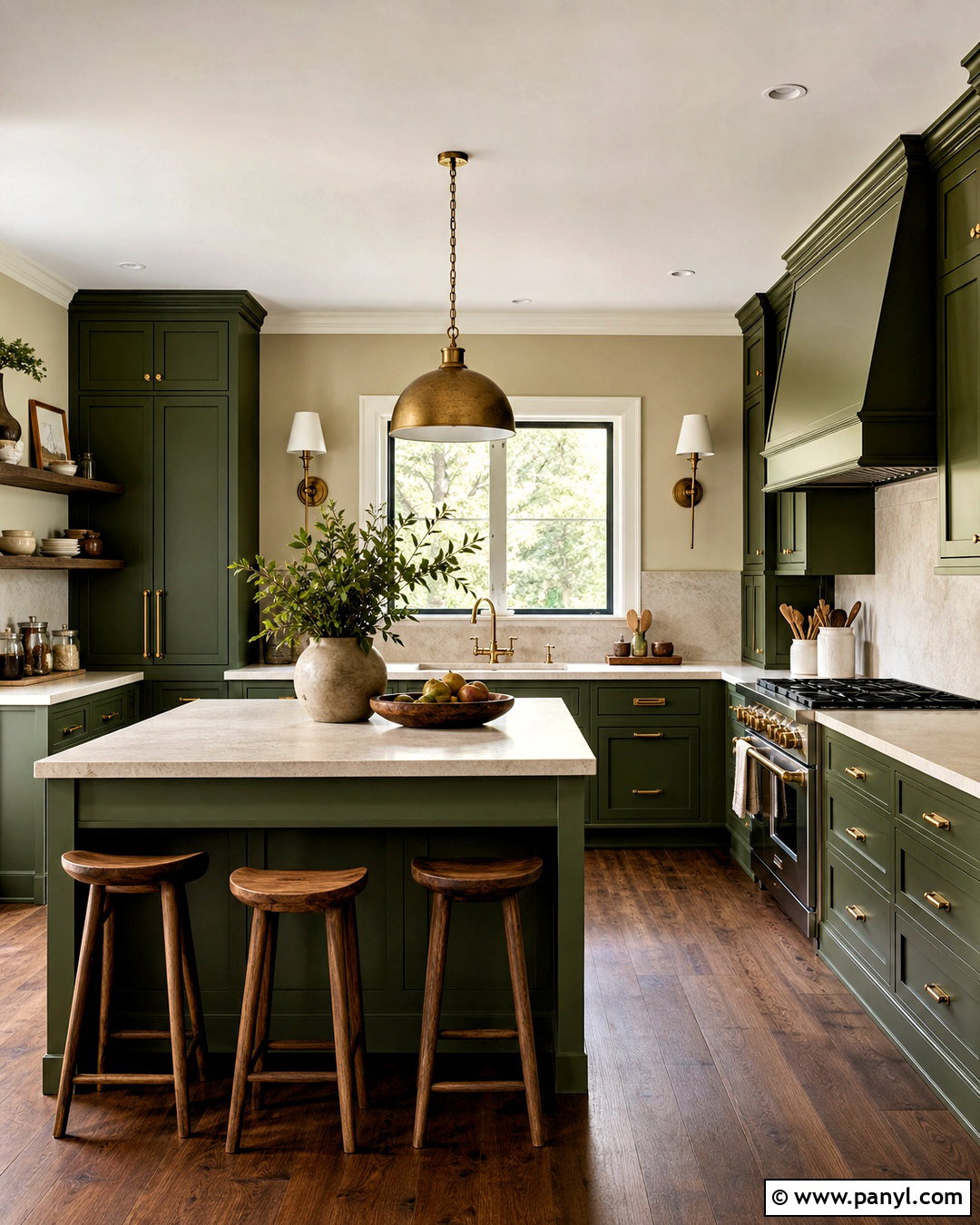
Painting the cabinets and walls in related green tones creates an enveloping kitchen with a seamless, custom appearance. Use deep olive-green cabinetry and choose a wall color one or two shades lighter from the same warm color family. A pale cream ceiling prevents the room from feeling enclosed. Select light limestone-look countertops and a short matching backsplash to introduce a quiet natural surface without interrupting the color-drenched effect. Aged brass hardware, a brass faucet, and simple brass sconces add warmth. Medium walnut flooring and counter stools provide rich wood contrast. Keep window treatments light and use bright task lighting throughout. With consistent undertones and enough pale stone, this complete green kitchen feels cozy and intentional rather than visually overwhelming.
Conclusion:
Green kitchen cabinets can support nearly any design direction, from airy farmhouse rooms to bold modern kitchens. The key is treating the cabinetry as part of a complete palette rather than choosing the paint color in isolation. Consider the green’s undertone, the amount of natural light, and how countertops, tile, flooring, hardware, and wall colors interact throughout the day. Light sage and pistachio can open a smaller room, while emerald, forest, and hunter green create depth in larger layouts. Wood adds warmth, pale stone supplies contrast, and carefully repeated metal finishes bring the design together. With balanced materials and practical lighting, green kitchen cabinets can feel personal, functional, and enduring for years.

Related Ideas and Inspiration:
Leave a Reply