
Green can make a room feel restful, lively, refined, or dramatic, depending on its undertone and surrounding palette. Current interiors are moving beyond basic sage to include olive, moss, emerald, seafoam, chartreuse, and deep forest shades. The most successful rooms treat green as part of a complete scheme rather than an isolated wall color. Flooring, furniture, trim, lighting, and textiles should all support the chosen hue. Green also works across traditional, modern, farmhouse, coastal, and vintage-inspired spaces, making it one of today’s most flexible color families. () Whether you prefer pale and airy or rich and enveloping, the complete looks below offer practical inspiration through **20 green room colors**.
1. Sage Green Living Room
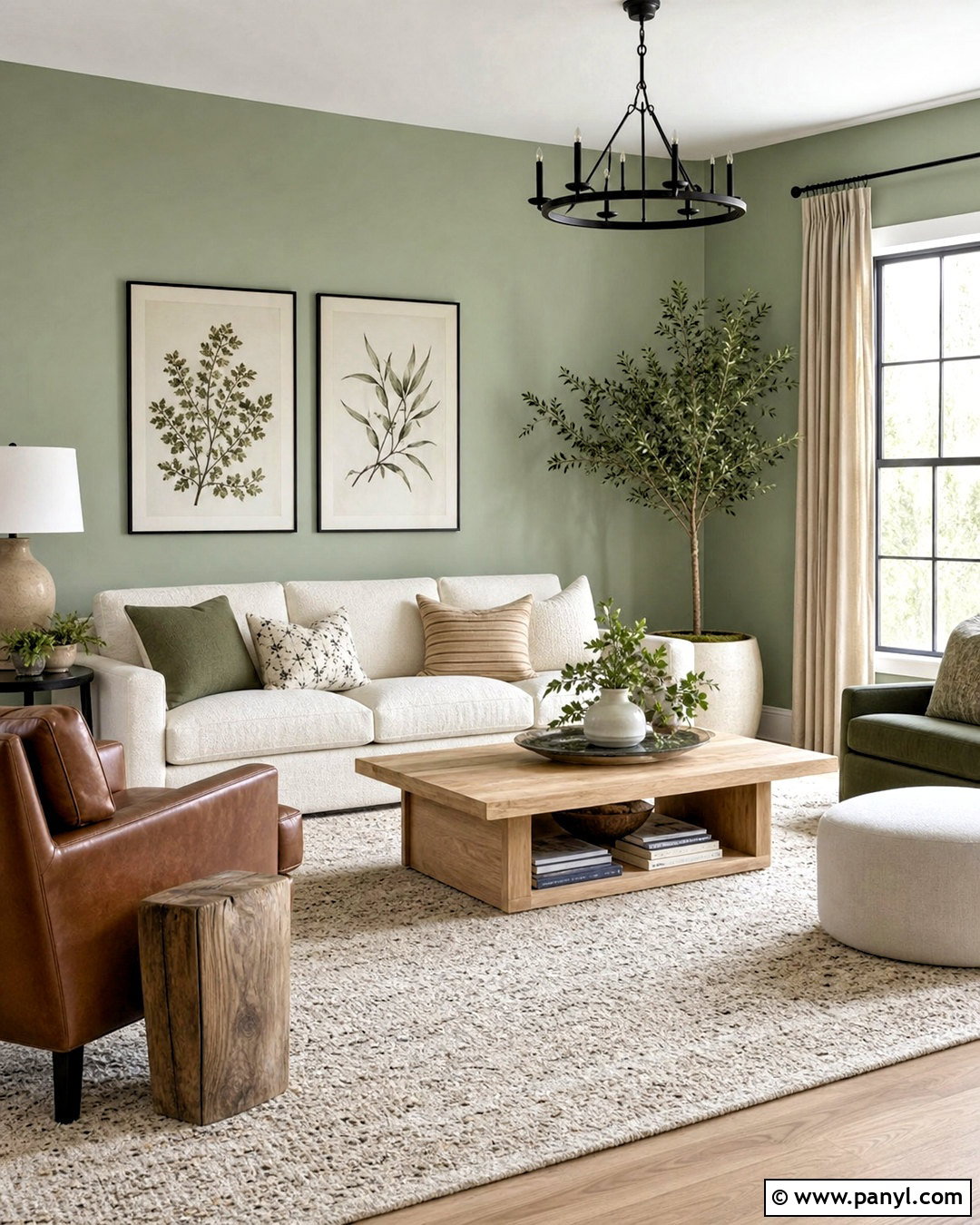
Soft sage walls create a relaxed living room that feels warm without looking heavy. Pair this muted green with a cream sofa, light oak coffee table, and oatmeal-colored curtains for a bright, balanced foundation. A textured ivory rug keeps the seating area comfortable, while black metal lighting adds a crisp modern edge. Bring in medium brown leather through a lounge chair or small ottoman to prevent the pale palette from feeling washed out. Botanical artwork, handmade pottery, and a few leafy plants reinforce the natural character without becoming overly themed. Paint the trim warm white rather than stark white. This complete combination works especially well in casual homes where comfort, simplicity, and easy-to-coordinate colors matter most.
2. Olive Green Bedroom
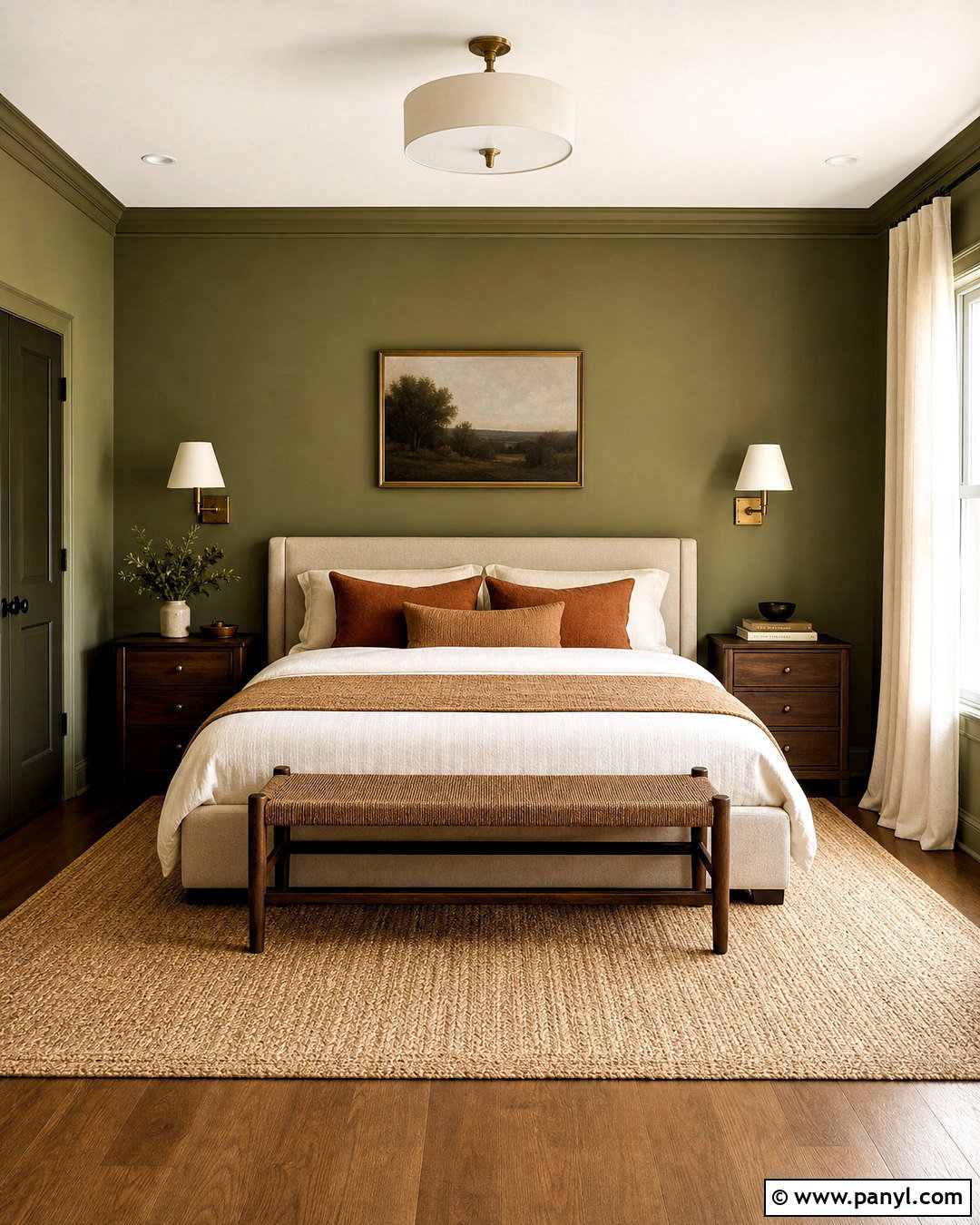
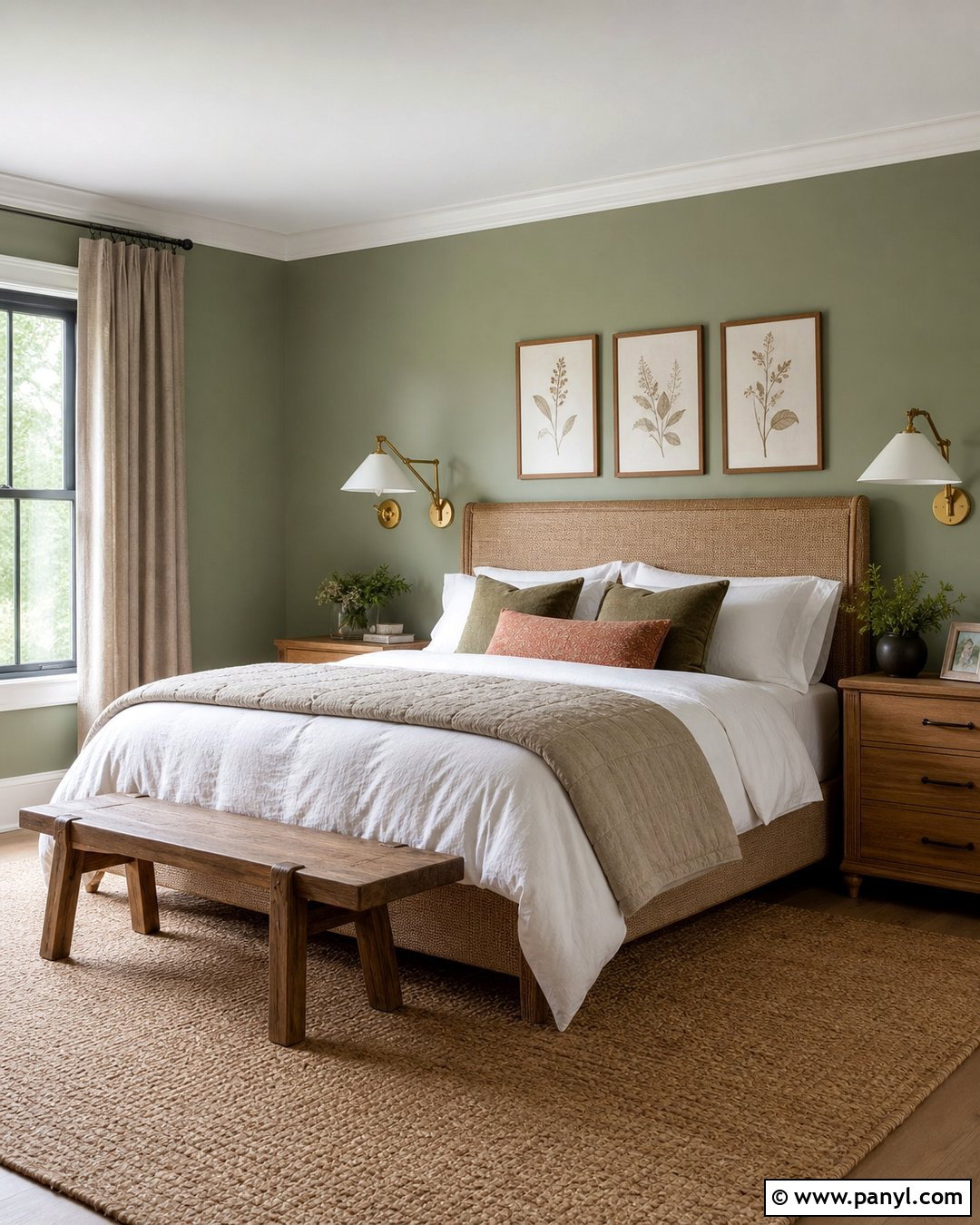
Olive green gives a bedroom an earthy, cocooning quality that feels especially inviting with natural materials. Use olive on the walls and balance its warmth with an upholstered linen bed in soft beige. Walnut nightstands, antique brass sconces, and a woven jute rug build depth without adding too many competing colors. Dress the bed with ivory sheets, a camel coverlet, and rust-colored accent pillows for a layered look. Warm white curtains soften incoming daylight and keep the room from becoming too dark. A framed landscape or simple textile artwork can complete the wall above the bed. Choose low, warm-toned furniture and keep accessories limited so the olive walls remain the defining feature of this comfortable bedroom.
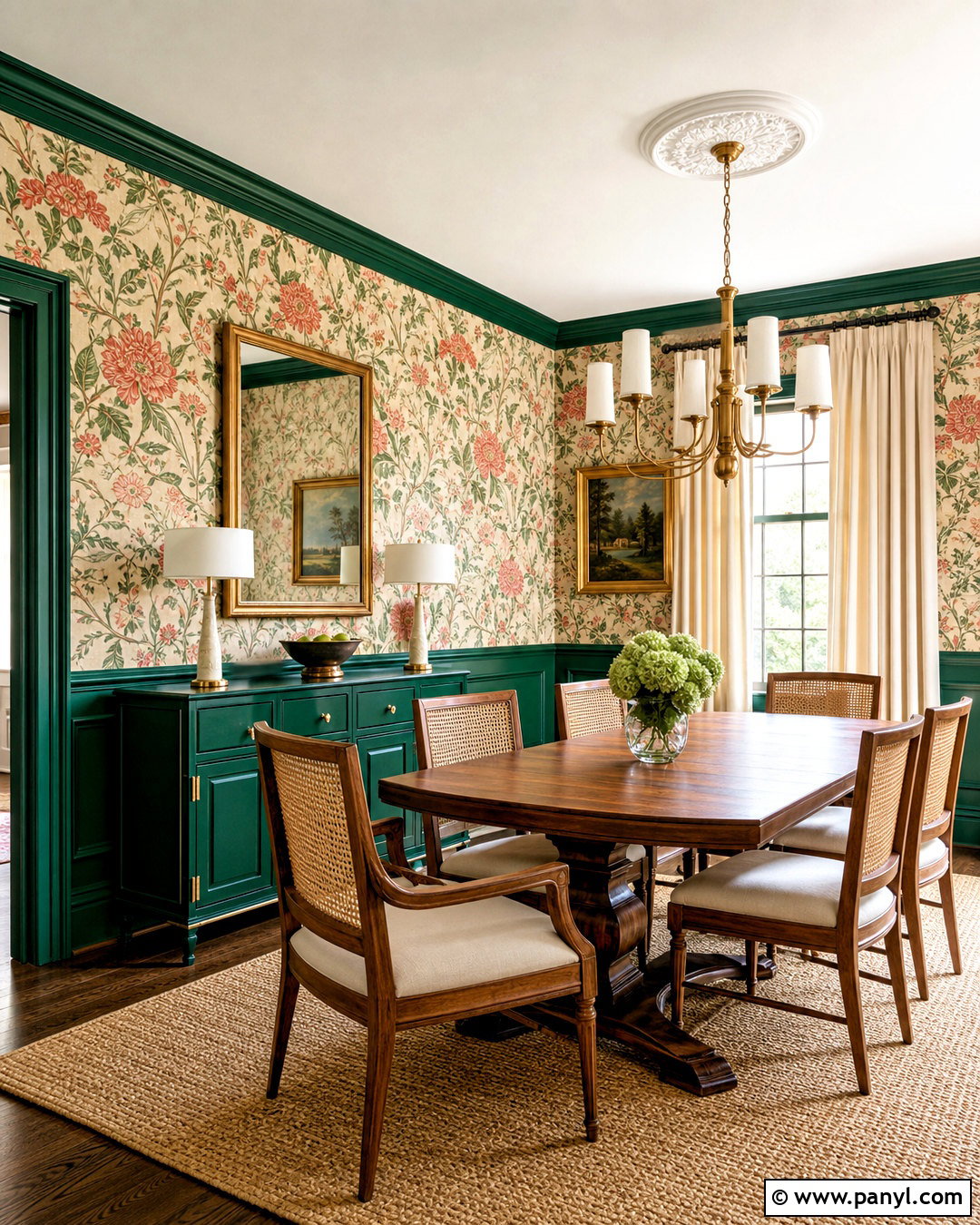
3. Forest Green Dining Room
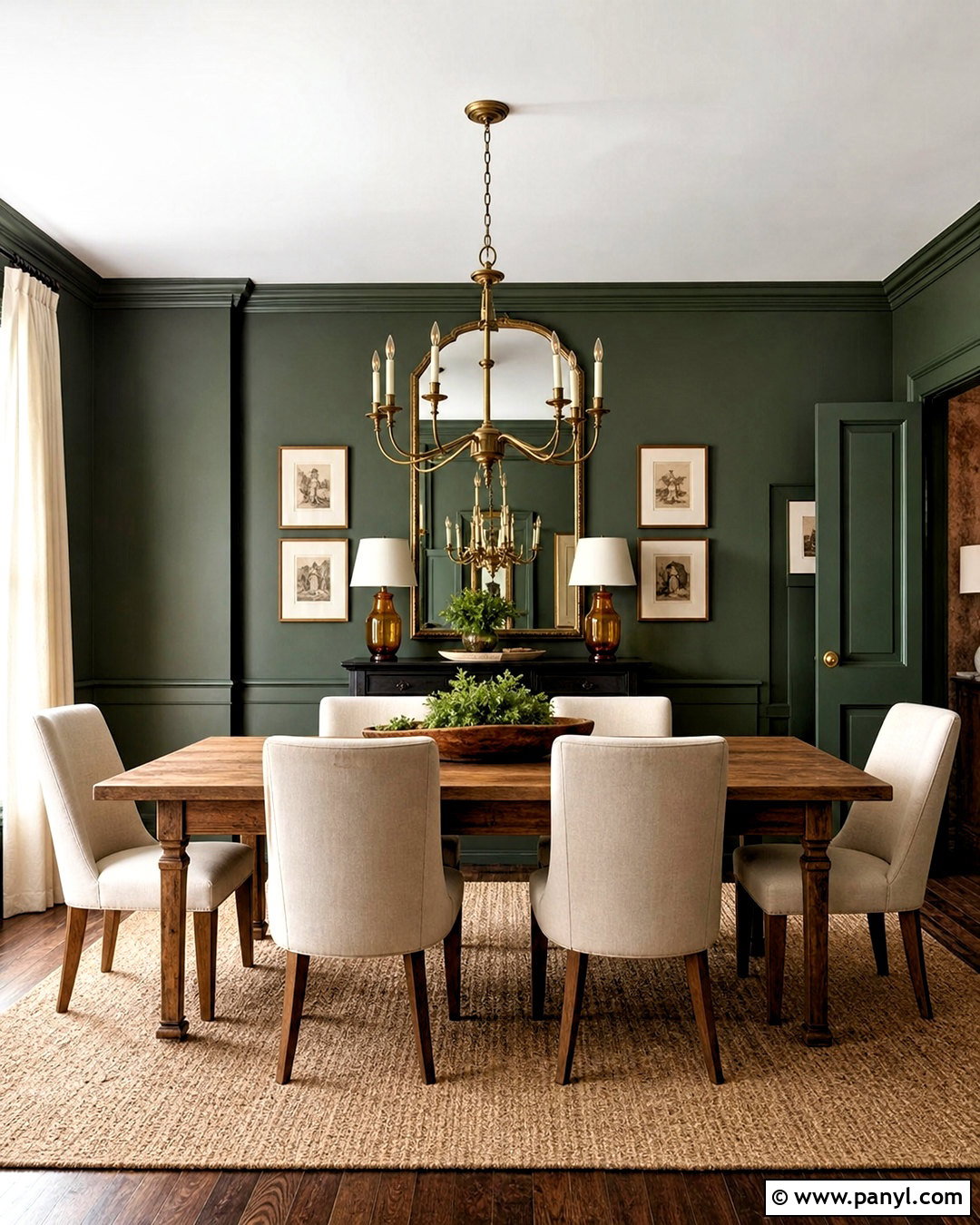
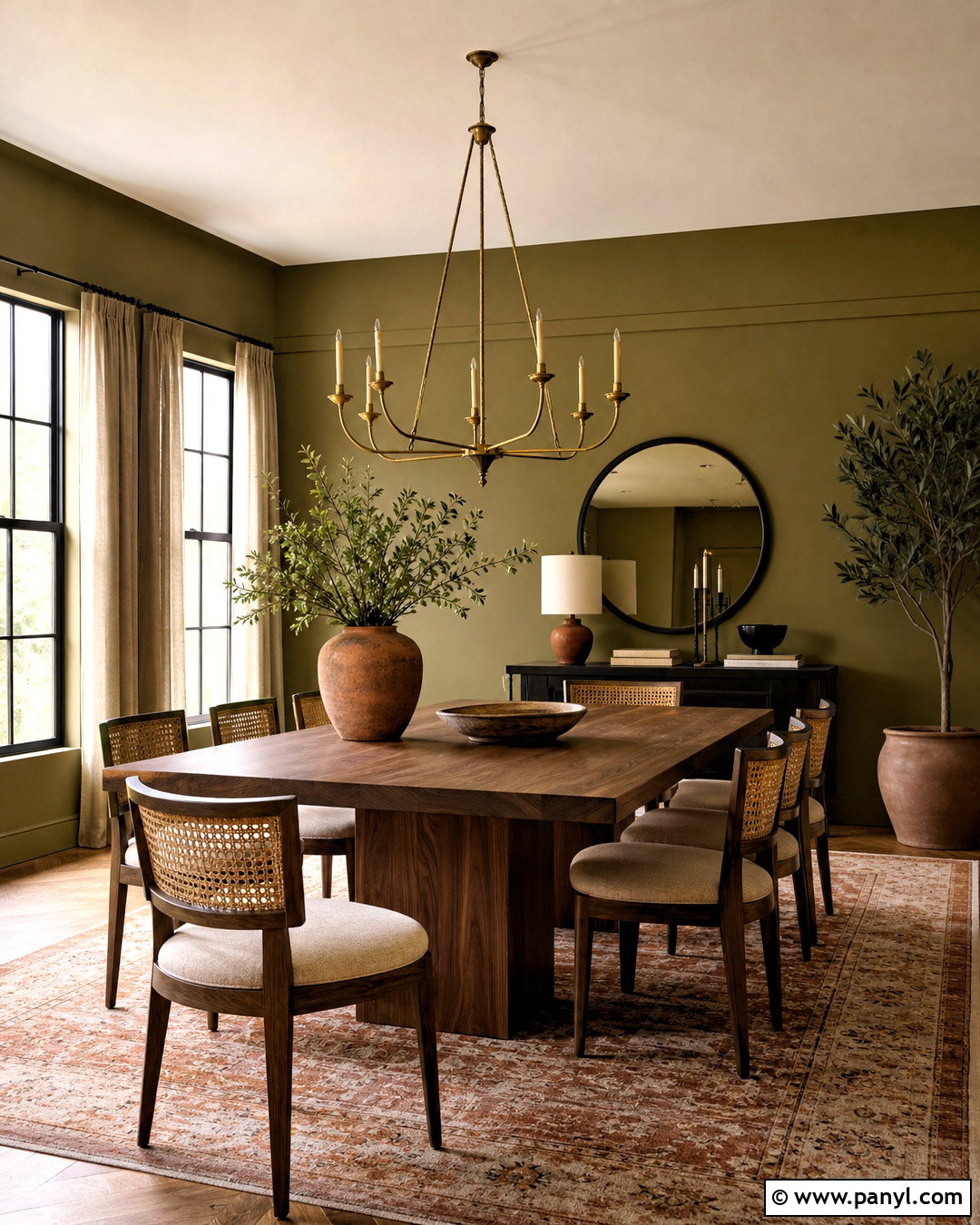
Deep forest green can turn an ordinary dining room into a polished space for everyday meals and special gatherings. Cover the walls and trim in the same rich green for a continuous, tailored background. Add a medium-tone oak dining table with cream upholstered chairs to brighten the center of the room. A large natural-fiber rug visually anchors the arrangement and introduces casual texture. Overhead, use an aged brass chandelier with simple shades rather than an ornate fixture. Warm white drapery, amber glass accessories, and framed vintage prints prevent the dark paint from feeling severe. If the room receives limited daylight, include a large mirror opposite the window. It will break up the green walls and help distribute available light throughout the space.
4. Mint Green Kitchen
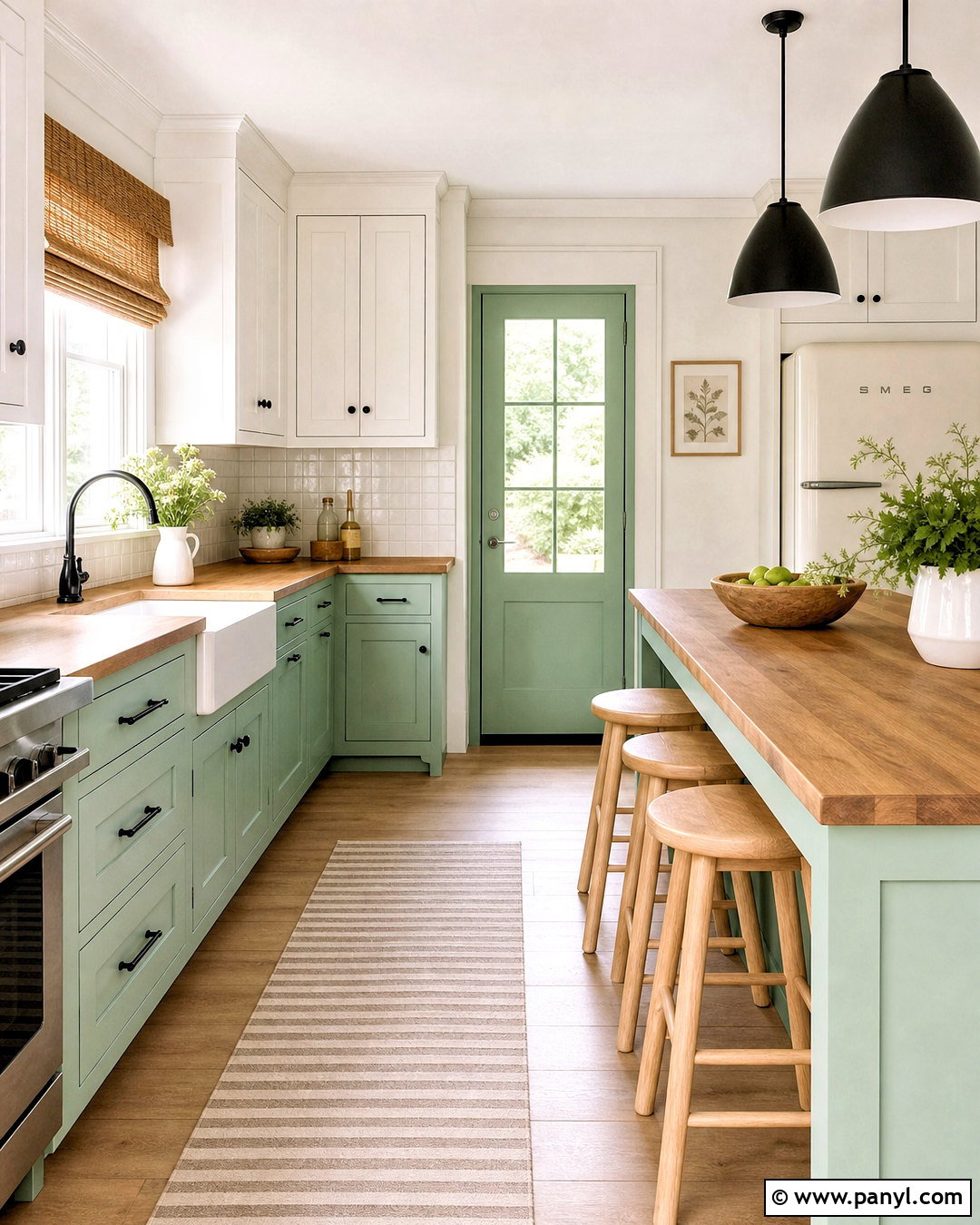
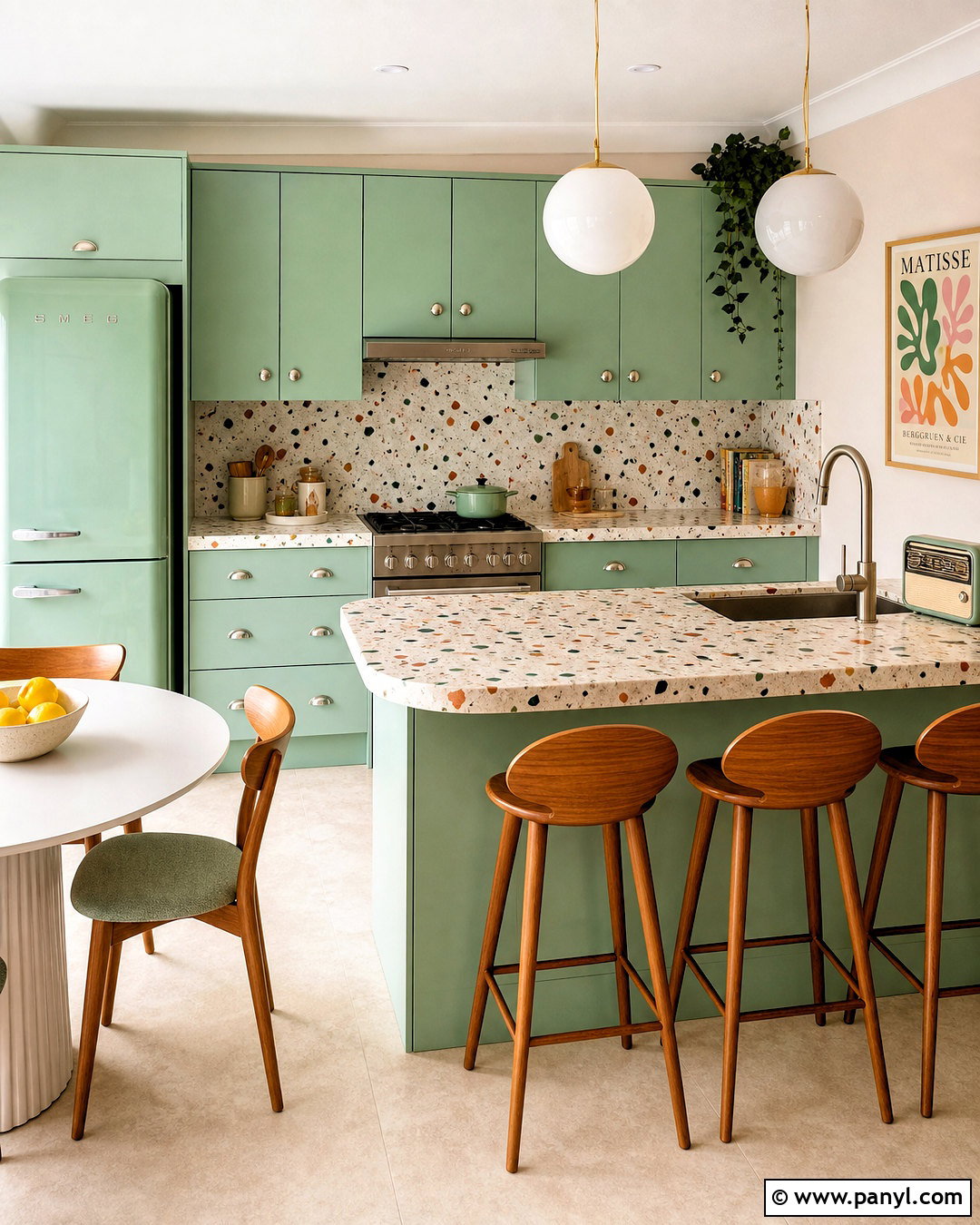
Fresh mint green produces a cheerful kitchen when it is grounded with warm wood and uncomplicated finishes. Paint the lower cabinets mint while keeping the upper cabinets and walls creamy white. Butcher-block counters or light oak shelving add enough warmth to keep the pastel color from feeling cold. Use a white square-tile backsplash with matching grout for a clean, understated surface. Matte black cabinet pulls, a black bridge faucet, and simple black pendant lights create definition. Complete the room with pale wood stools, natural woven shades, and a washable striped runner. Instead of adding several bright accent colors, display white ceramics and clear glassware. The finished kitchen feels light, practical, and welcoming, with mint green acting as a gentle focal point rather than a novelty color.
5. Emerald Green Home Office
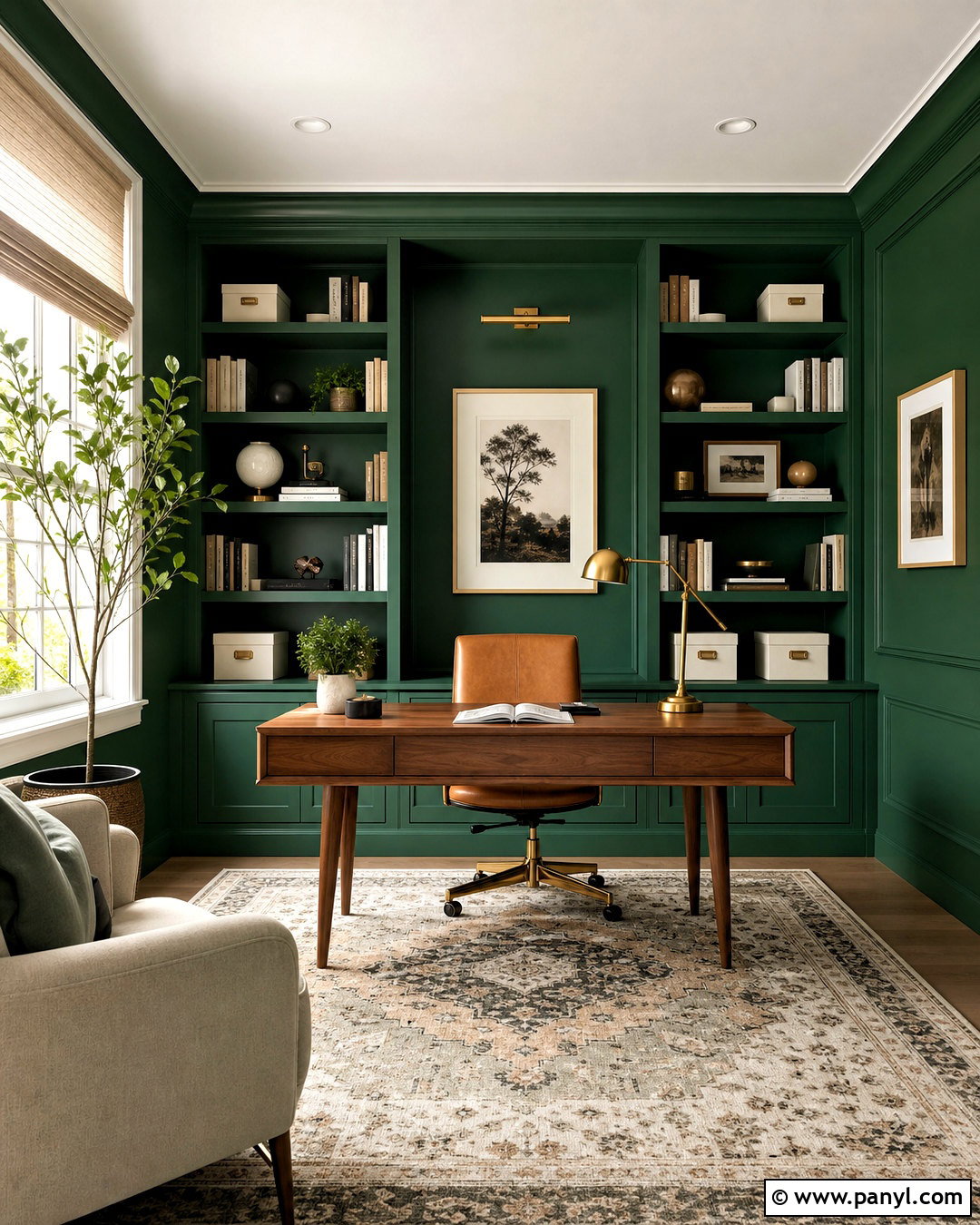
Would a richer color help your workspace feel more intentional? Emerald green walls provide an energetic background for a home office while still looking sophisticated. Position a streamlined walnut desk near the window and pair it with a camel leather chair for warmth and contrast. Built-in shelves painted the same emerald shade can create a seamless, color-drenched effect. Style them sparingly with neutral books, cream storage boxes, and brass objects. A patterned wool rug containing green, navy, and beige connects the darker walls with the furniture. Add an adjustable brass desk lamp and warm white Roman shade for useful lighting. Keeping the ceiling soft white will preserve openness, while emerald-painted trim gives the room a finished, architectural appearance that feels both productive and personal.
6. Moss Green Reading Room
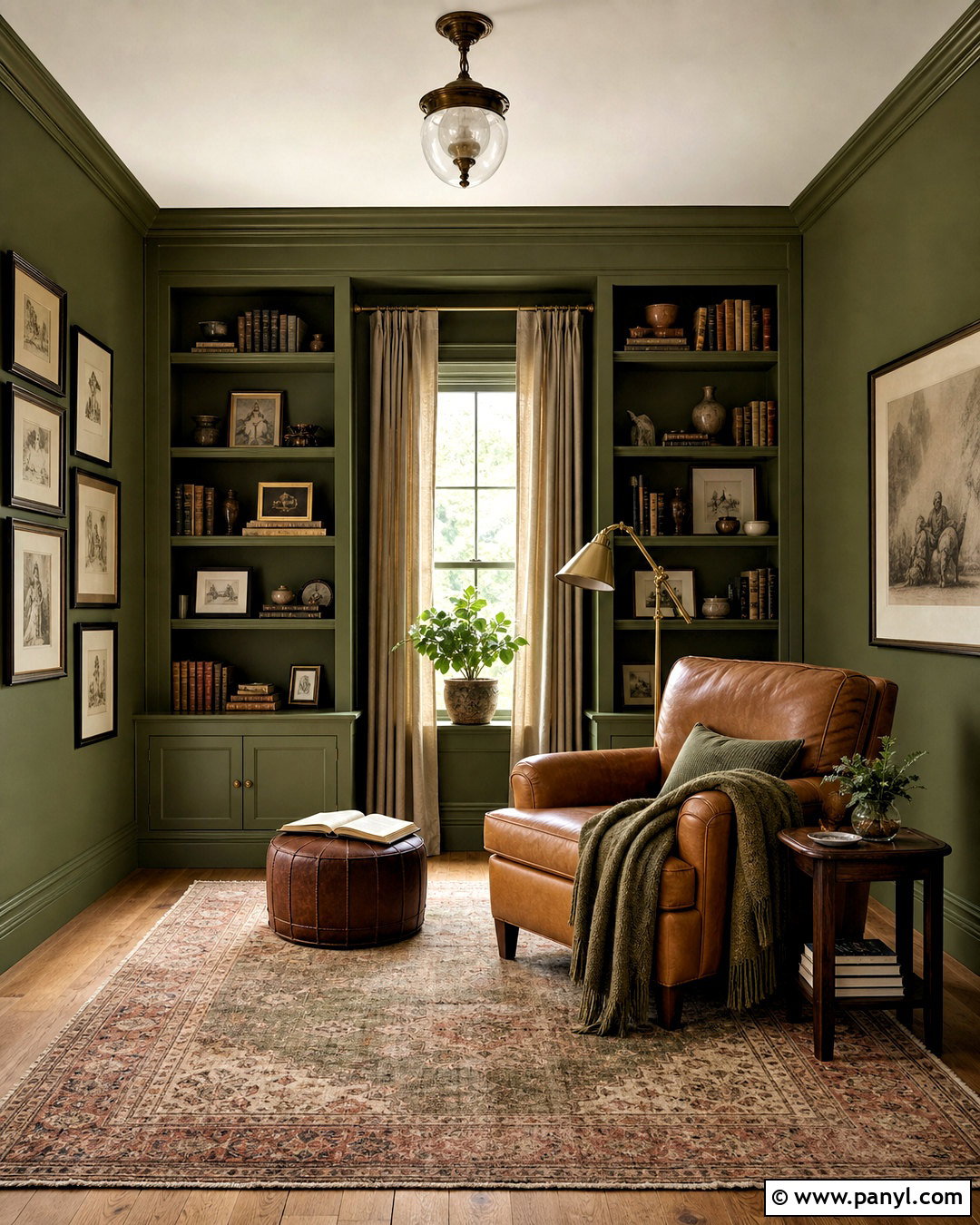
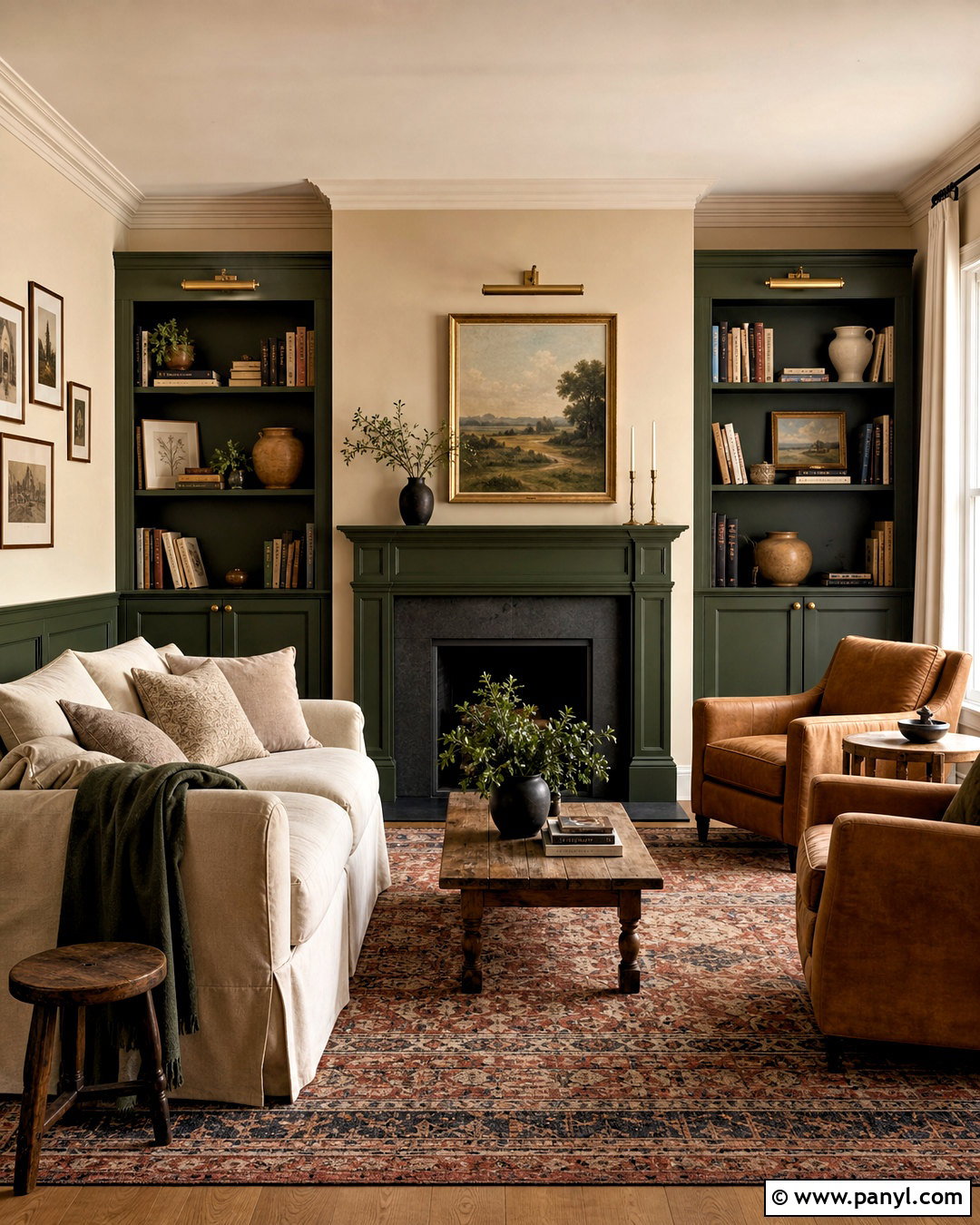
Moss green is ideal for a quiet reading room because it sits comfortably between muted and colorful. Use the shade across the walls, trim, and built-in bookcases for an enveloping design. Place a deep camel leather armchair near the shelves with an adjustable aged brass floor lamp beside it. A small round walnut table provides room for books and a ceramic mug without crowding the chair. Choose a faded Persian-style rug containing olive, rust, cream, and navy to bring pattern into the lower half of the room. Natural linen curtains soften the windows and contrast gently with the painted woodwork. Finish with framed sketches, a wool throw, and several pottery pieces. The full design should feel collected, comfortable, and functional rather than overly formal.
7. Seafoam Green Bathroom
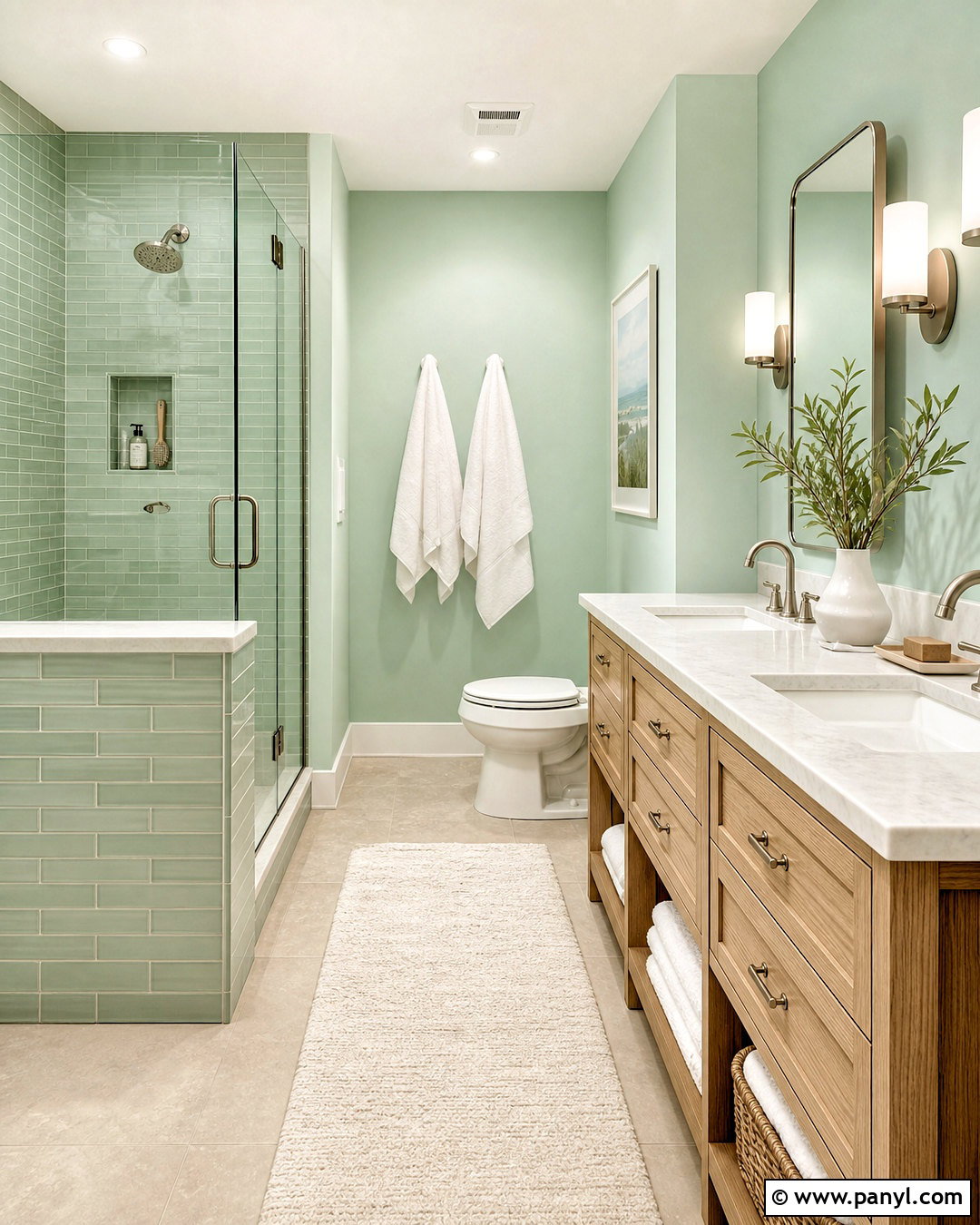
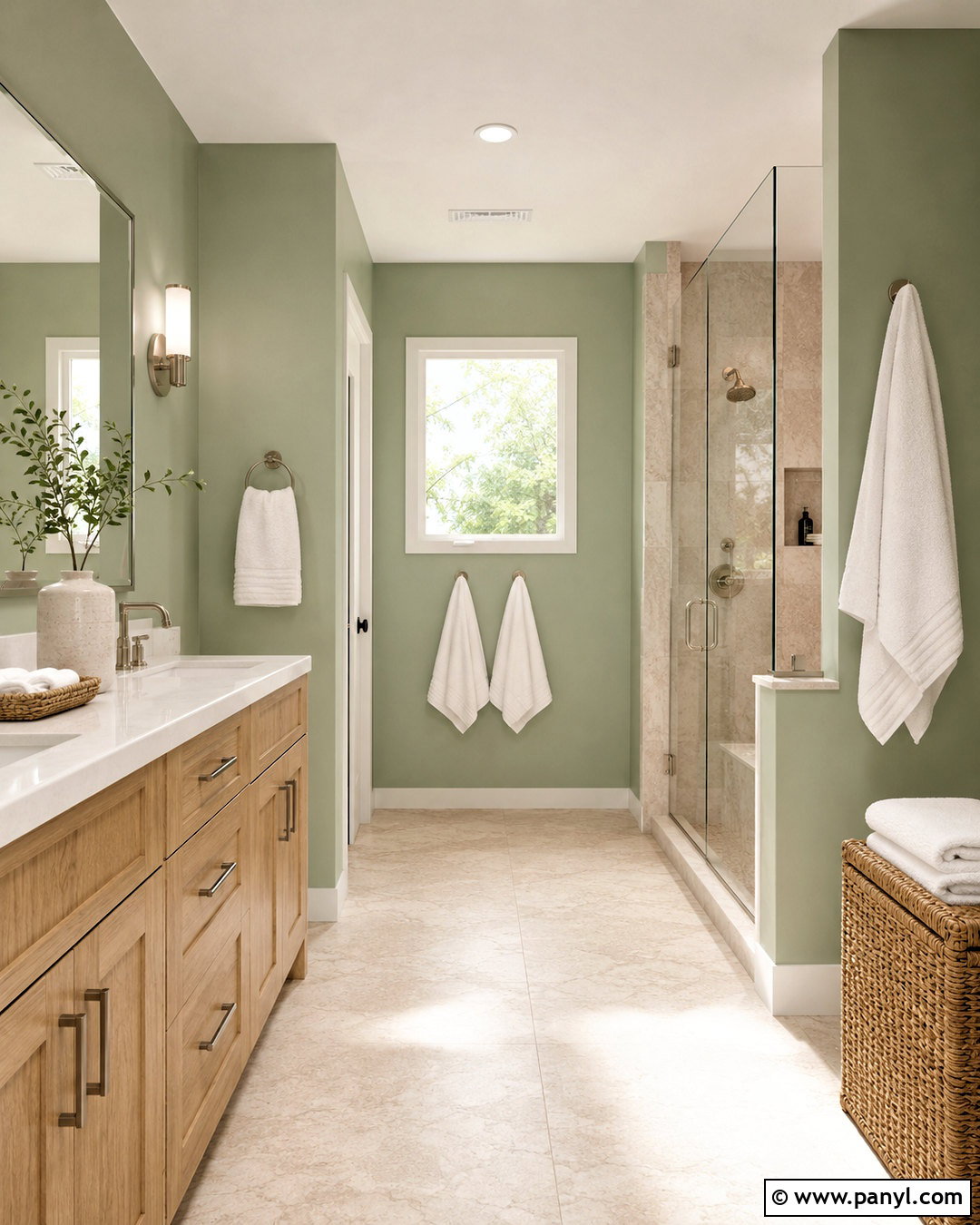
Seafoam green brings a clean coastal note to a bathroom without relying on obvious nautical decorations. Use seafoam ceramic tile around the tub or shower, then paint the remaining walls a closely matched pale green. A white oak vanity with a white quartz top keeps the room light and introduces natural warmth. Select brushed nickel faucets, slim metal-framed mirrors, and frosted glass sconces for a simple finish. White towels and a cream cotton bath mat maintain the airy palette, while a small blue-gray accent can add quiet contrast. If additional storage is needed, install an oak wall shelf with matching baskets. The combination of soft green, white, pale wood, and subtle silver creates a complete bathroom that feels fresh, organized, and easy to maintain.
8. Hunter Green Entryway
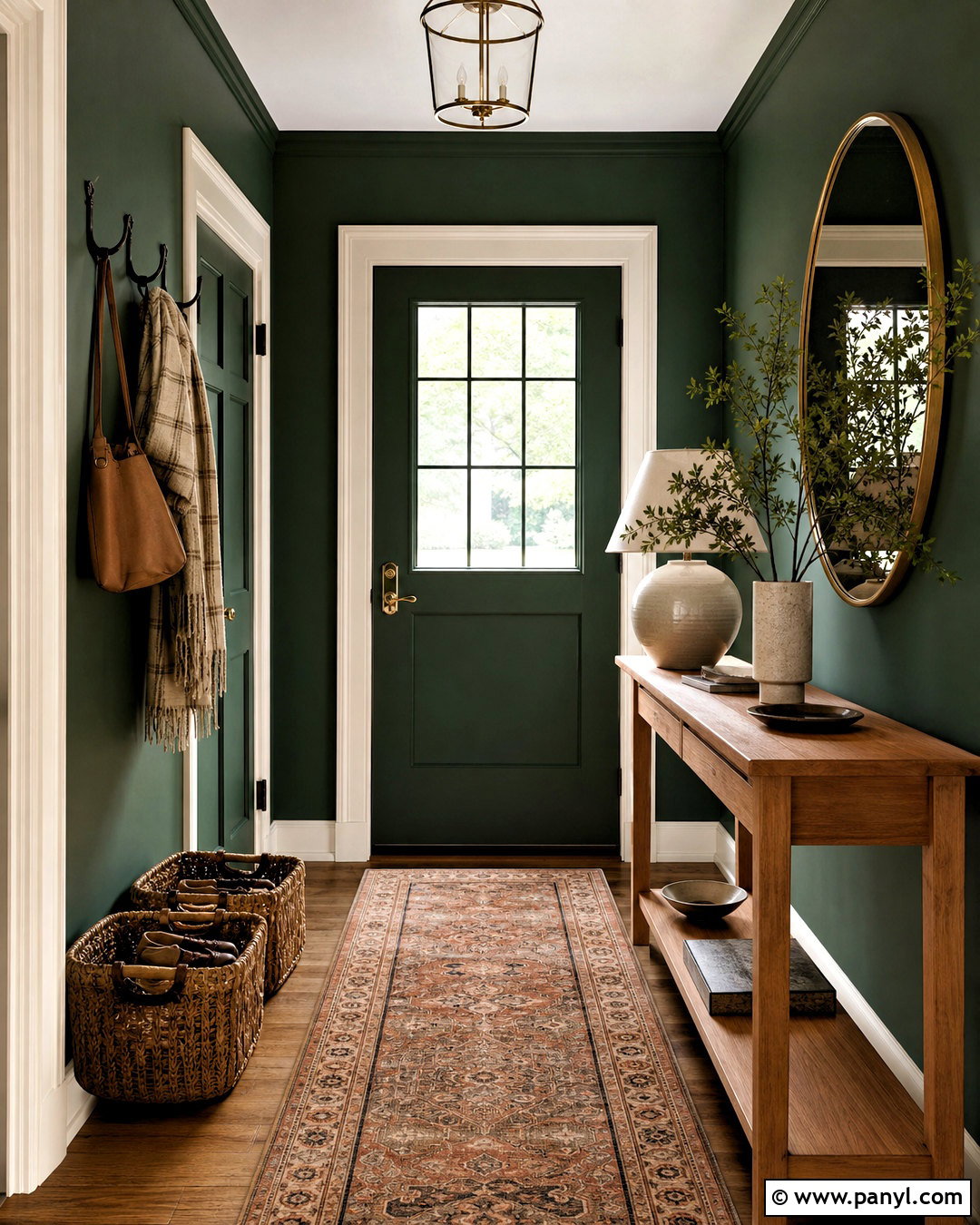
A hunter green entryway creates an immediate sense of character, even in a small home. Paint the walls and interior side of the front door in the same deep green, but retain warm white trim to outline the architecture. Place a narrow medium-oak console along one wall with a round brass-framed mirror above it. A vintage-style runner containing faded red, tan, and green introduces pattern while hiding everyday dirt. Include a black metal coat rack or simple wall hooks for practical storage. Woven baskets beneath the console can hold shoes and outdoor accessories. Finish the arrangement with a ceramic lamp, a small tray, and one leafy branch. This layered scheme makes the entrance useful and memorable without filling the limited floor space with unnecessary furniture.
9. Pistachio Green Breakfast Room
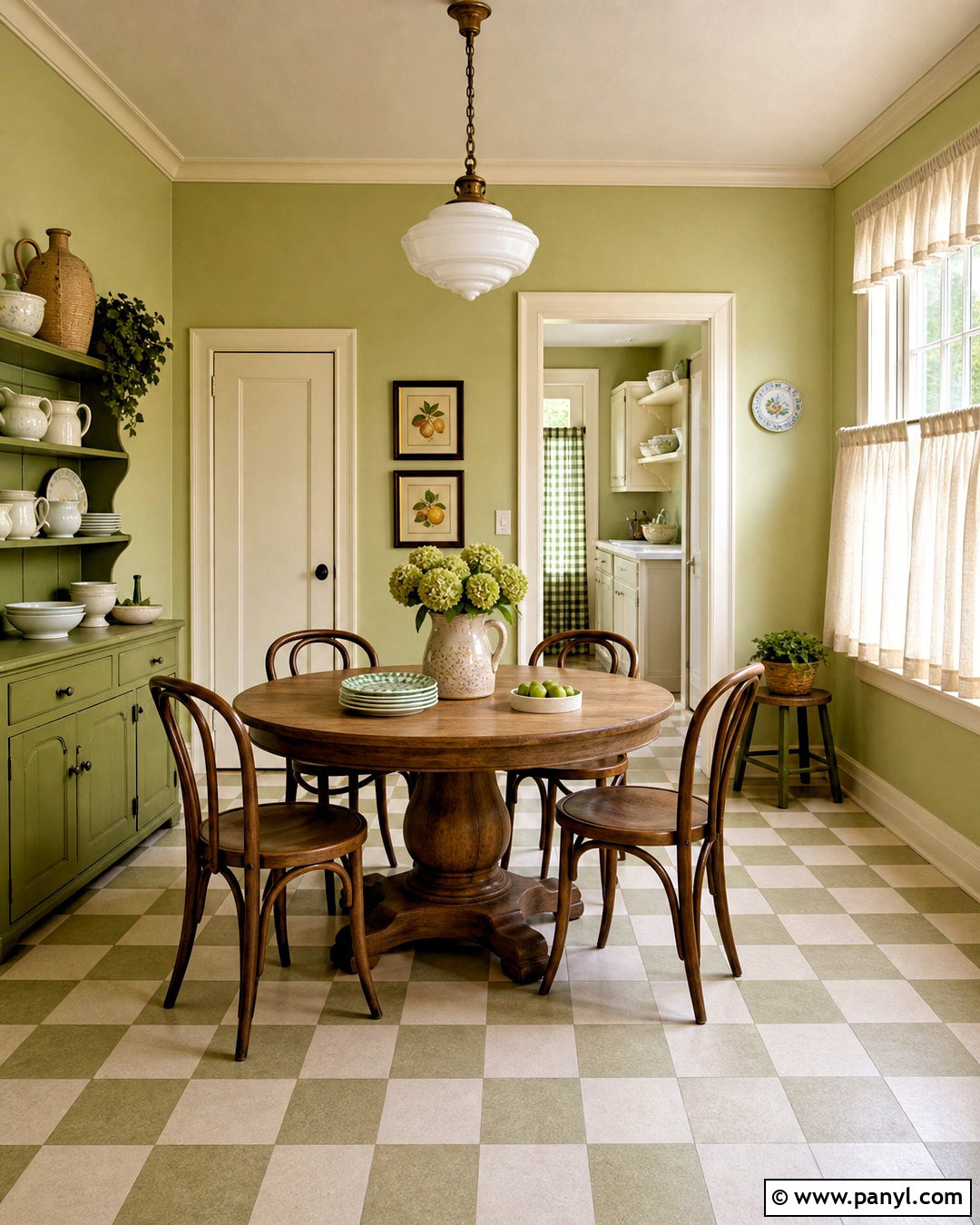
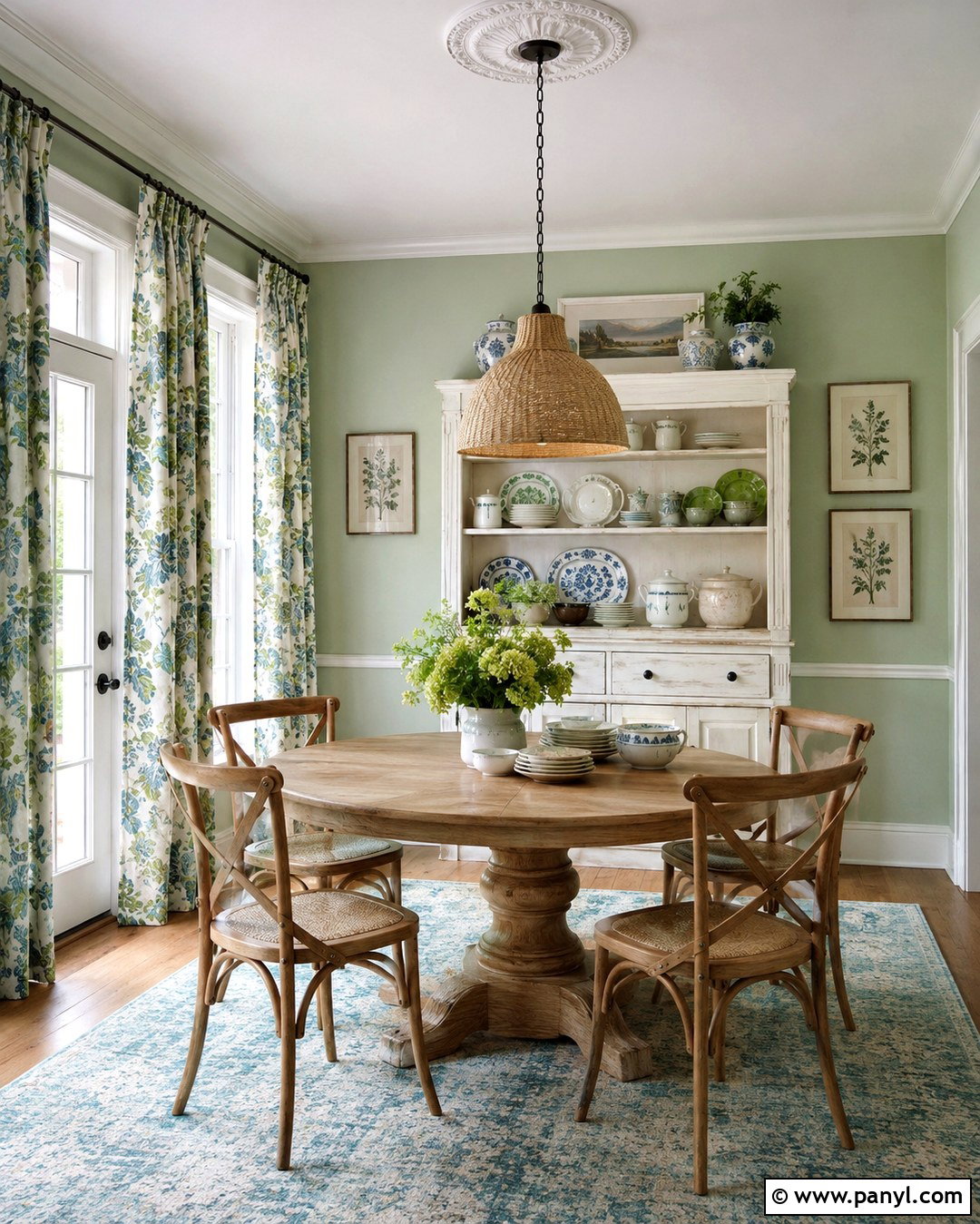
Pistachio green has a soft yellow undertone that can make a breakfast room feel sunny and welcoming. Cover the walls in this light green, then use warm white on the ceiling and window trim for a gentle transition. Center a round pedestal table in natural oak beneath a simple milk-glass pendant. Bentwood chairs with woven seats add casual texture and suit the color’s vintage character. Hang relaxed café curtains in ivory linen to provide privacy without blocking the window. A small checkerboard floor in cream and muted tan can give the space extra personality. Finish with framed fruit prints, white dishes, and a ceramic vase. The overall room feels bright and nostalgic but remains practical enough for daily coffee, homework, and informal family meals.
10. Blue Green Guest Bedroom
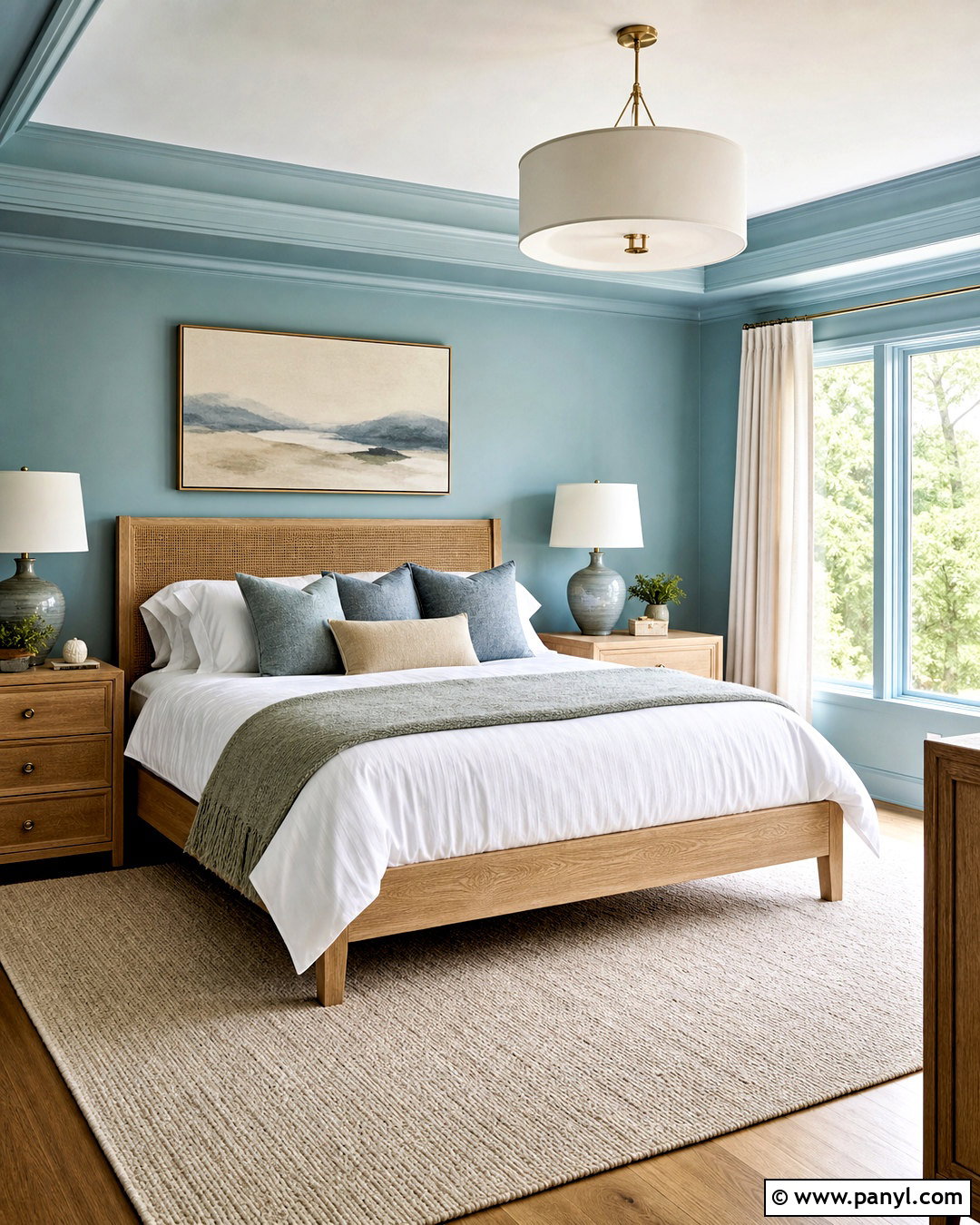
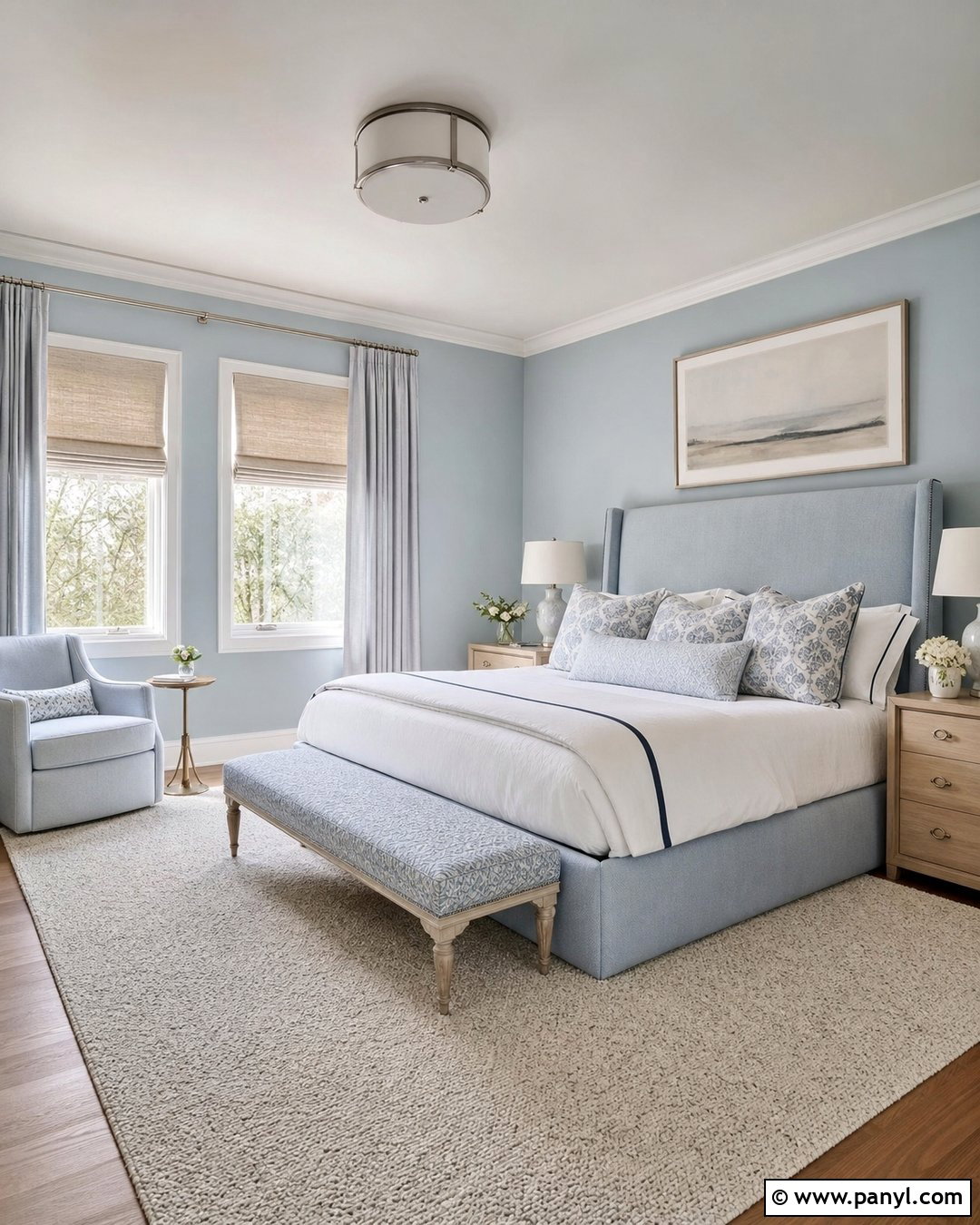
A muted blue green gives a guest bedroom a calm, finished appearance that appeals to many decorating preferences. Use the color on all four walls and repeat it on the trim for a softly wrapped effect. Choose a light oak bed with a simple woven headboard, then layer white bedding with pale gray-blue and sand-colored pillows. Matching oak nightstands and ceramic table lamps create symmetry without making the room feel rigid. Add an ivory wool rug under the bed and full-length neutral curtains around the windows. A single abstract artwork containing green, blue, cream, and brown can connect the complete palette. Keep extra furniture modest, such as a narrow bench or small luggage rack, so visitors have useful space without encountering unnecessary clutter.
11. Celadon Green Dining Nook
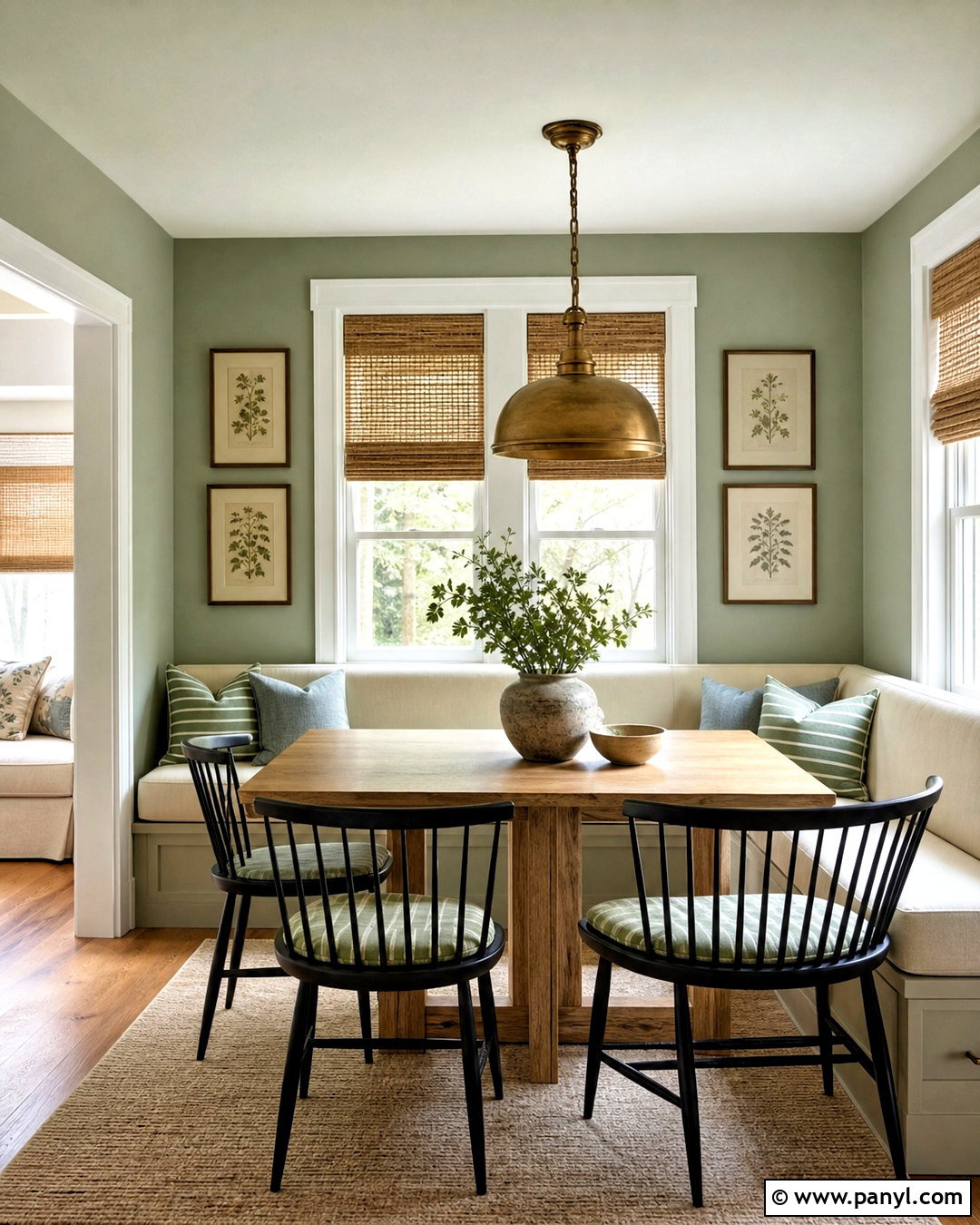
Celadon green offers a quiet, gray-leaning color that suits a compact dining nook or open kitchen corner. Paint the walls celadon and install a built-in bench upholstered in durable cream fabric. Add a rectangular oak table with two spindle-back chairs on the open side, creating enough seating without overwhelming the area. Soft striped pillows in green, beige, and dusty blue make the bench comfortable and connect the palette. A small bronze pendant centered over the table provides visual focus. Use natural woven shades at nearby windows and place a washable neutral rug underfoot. Simple framed botanical drawings reinforce the understated green without making the nook look overly coordinated. The resulting space feels efficient, polished, and distinct from the surrounding kitchen.
12. Fern Green Sunroom
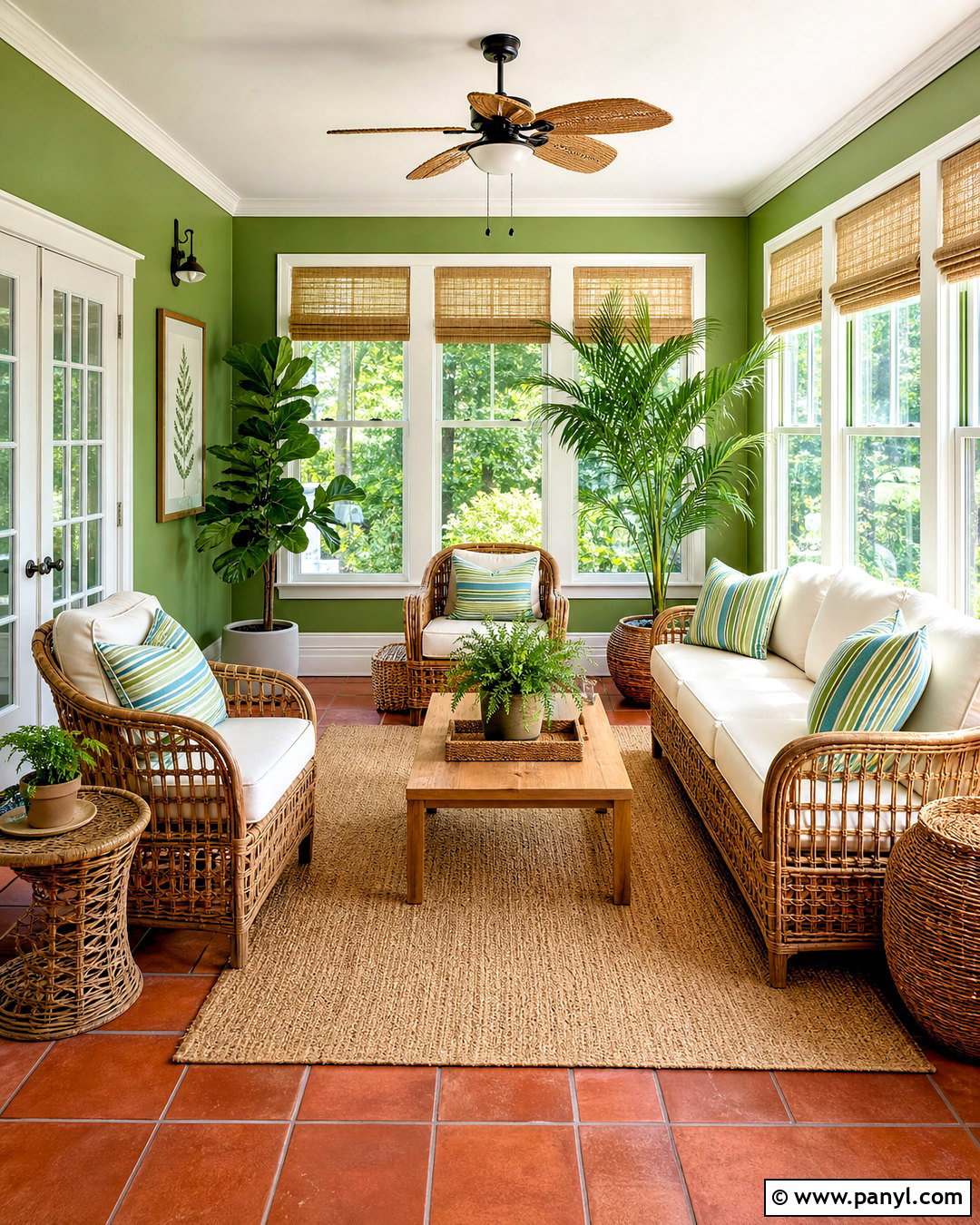
Fern green walls connect a sunroom visually with the plants and landscape beyond its windows. Choose a fresh mid-tone green and balance it with white-painted window frames and a pale wood or terracotta floor. Arrange a woven rattan sofa and two matching lounge chairs around a simple oak coffee table. Cream seat cushions keep the furniture comfortable, while striped green and blue pillows add an easy indoor-outdoor character. Layer in potted plants with different leaf shapes, but leave open areas around the windows so the room does not become crowded. A natural jute rug, wicker baskets, and linen shades complete the texture-rich scheme. The full sunroom should feel bright and usable, with enough seating for conversation, reading, or morning coffee.
13. Pewter Green Kitchen
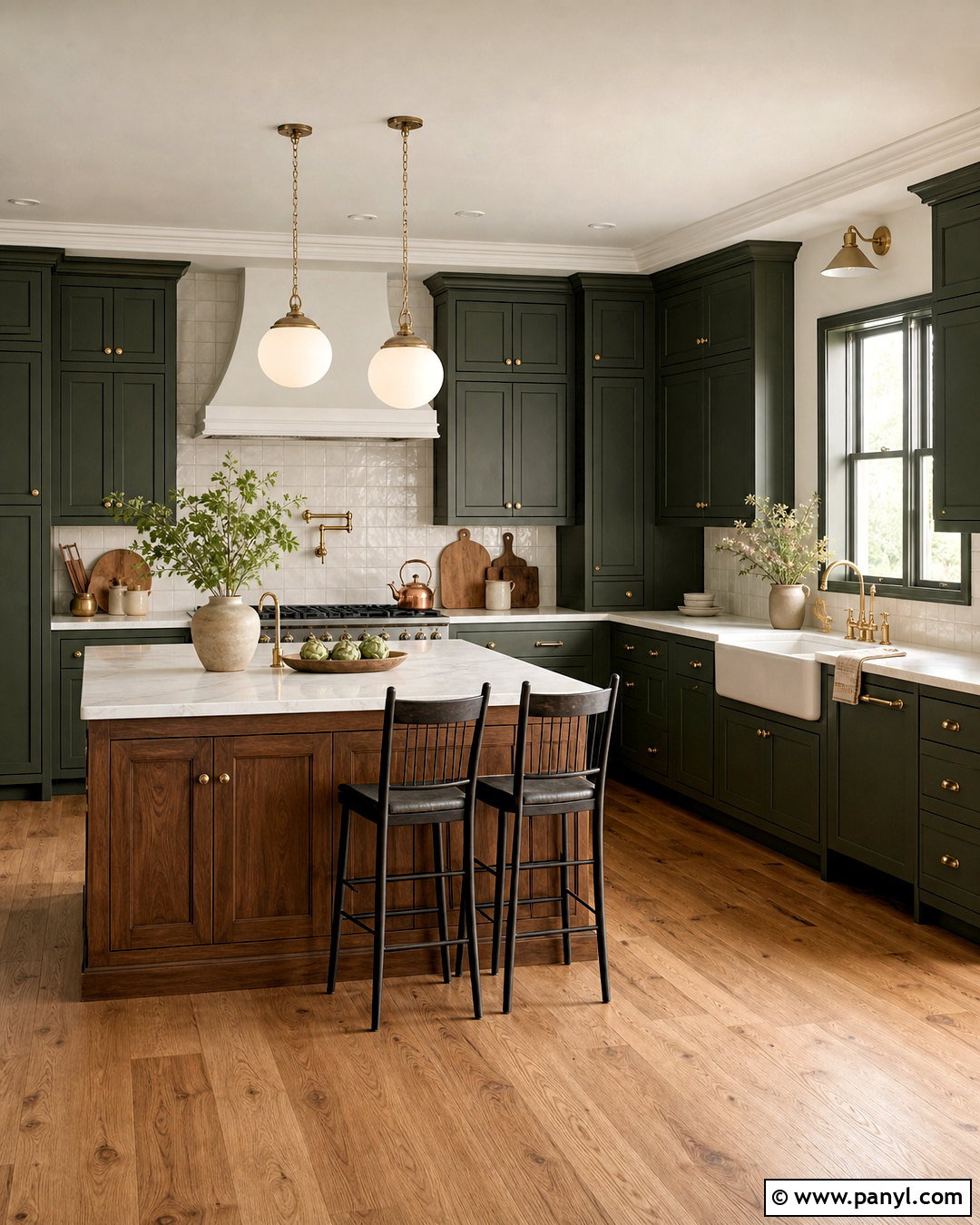
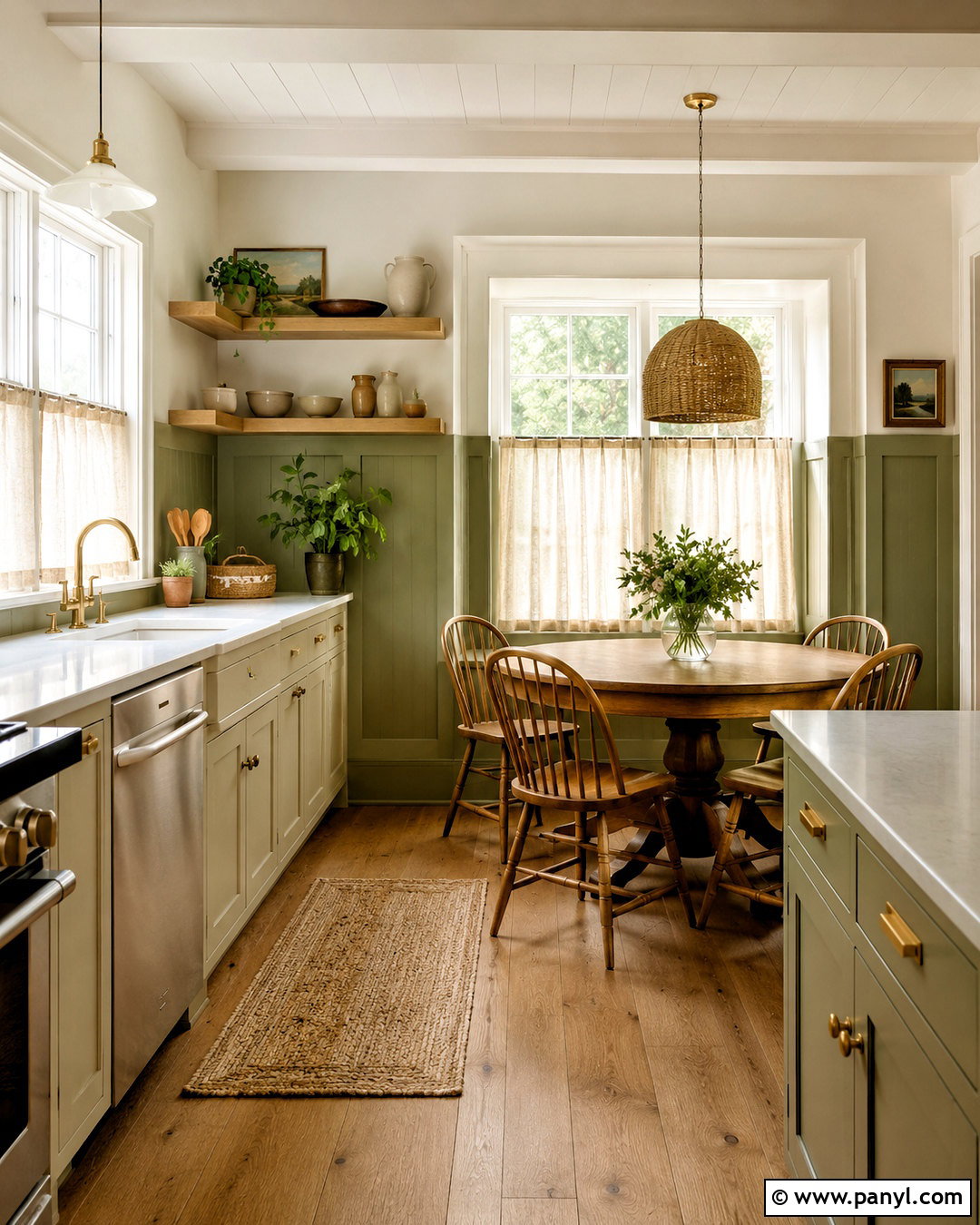
Pewter green combines deep green with smoky gray, producing kitchen cabinetry that feels substantial and refined. Use it on both lower and upper cabinets for a cohesive look, then install creamy quartz counters and a handmade off-white tile backsplash. A medium walnut island or dining table adds warmth and prevents the gray undertone from dominating. Choose aged brass knobs, a matching faucet, and simple globe pendants to soften the dark cabinetry. Wide-plank oak flooring further balances the scheme. Keep the walls warm white if the kitchen is small, allowing the cabinets to remain the main color statement. Display wooden cutting boards, neutral pottery, and a few copper accents rather than bright accessories. The complete palette feels layered, practical, and suitable for both traditional and transitional homes.
14. Lime Green Playroom
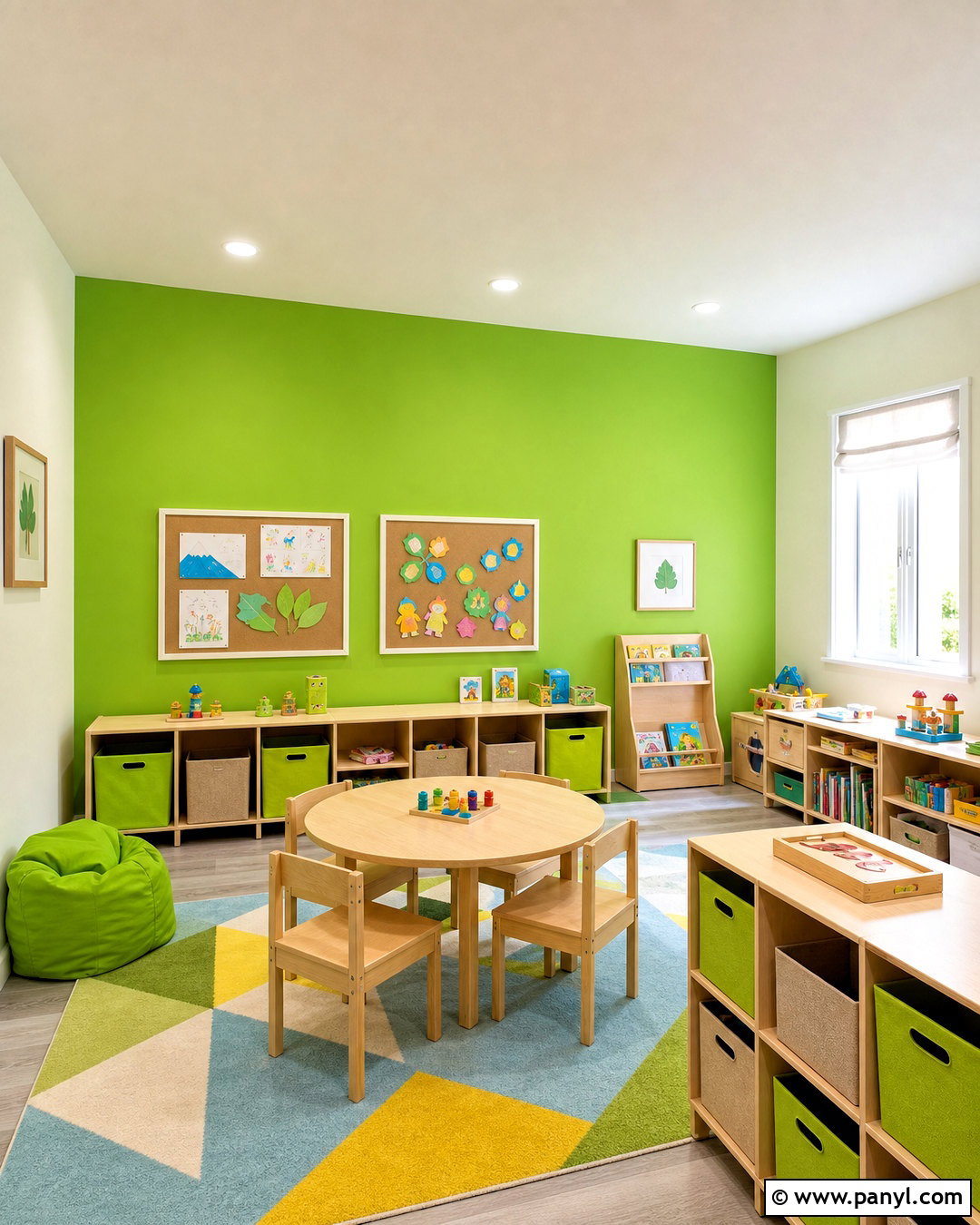
Lime green can work in a playroom when it is softened with white, pale wood, and carefully controlled accents. Use a fresh lime shade on one main wall and a much lighter green-white on the remaining walls. Install low birch storage units with labeled fabric bins to keep toys accessible and the floor open. A washable geometric rug in green, blue, yellow, and cream creates a defined activity zone. Add a small round table with sturdy wooden chairs for crafts and games. White roller shades, simple flush-mount lighting, and cork display boards support everyday use. Avoid filling every surface with primary colors. Repeating the lime in a few cushions and storage bins will make the entire room feel coordinated, cheerful, and visually organized.
15. Eucalyptus Green Laundry Room
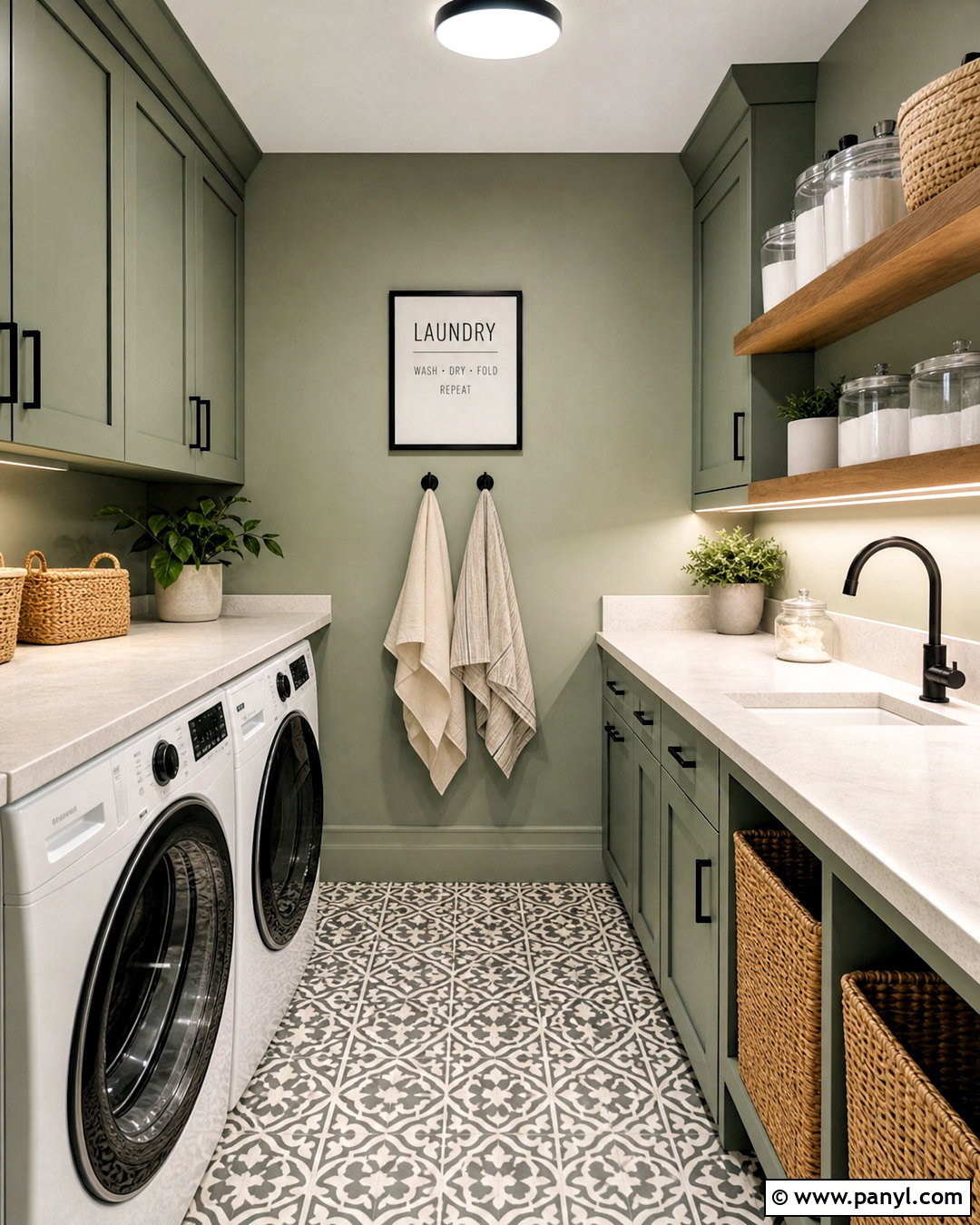
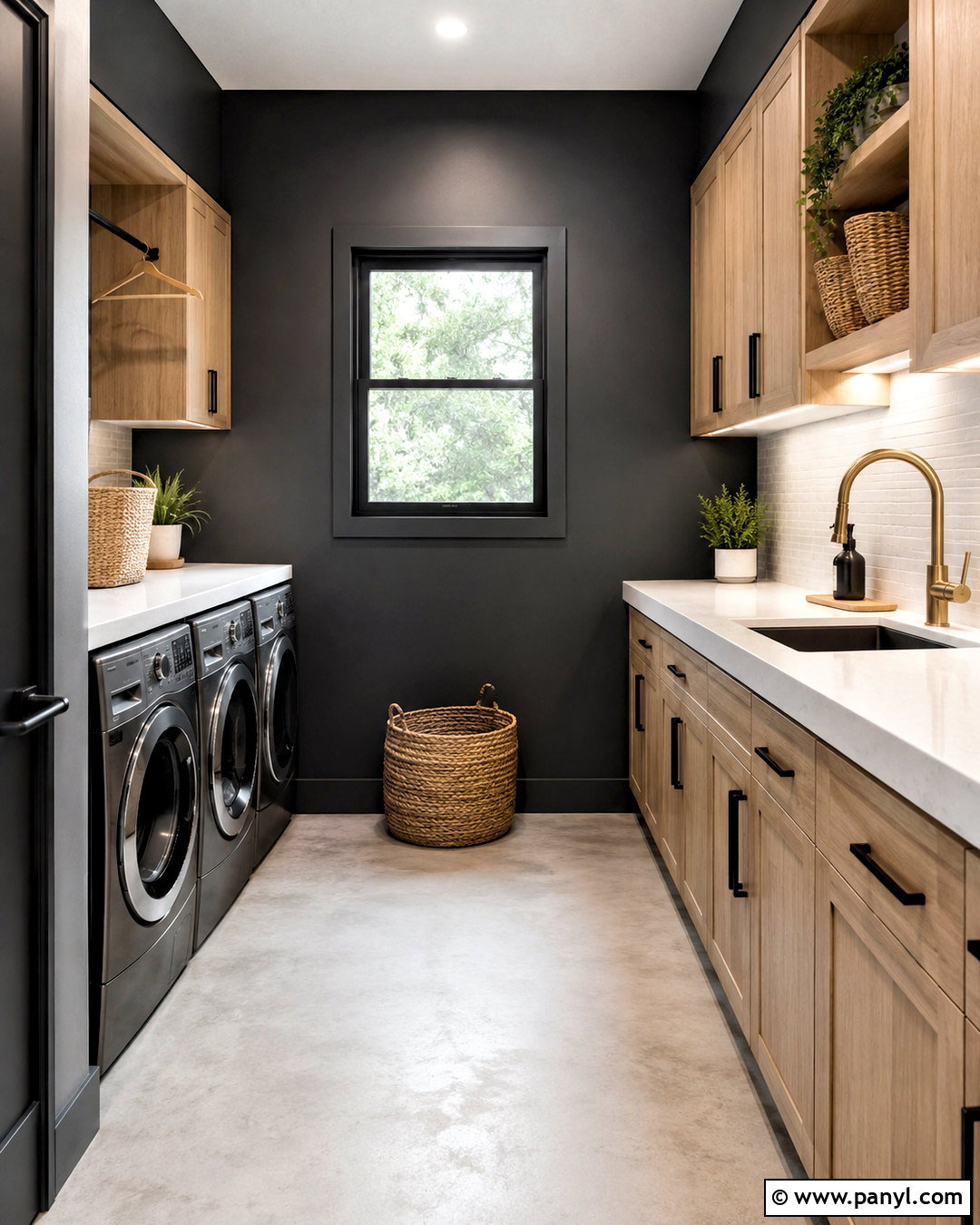
Eucalyptus green gives a laundry room a clean, calming look while concealing more wear than pure white. Paint the cabinets and surrounding walls in the same dusty green, creating a unified backdrop around white appliances. Install a light quartz folding counter and a warm oak floating shelf for baskets and supplies. Matte black cabinet pulls, a black faucet, and black-framed utility labels add definition. Use a durable patterned floor tile in cream, tan, and charcoal to introduce character without competing with the cabinetry. Woven hampers and clear storage containers keep necessities orderly. Under-cabinet lighting will brighten the work surface, while a simple ceiling fixture handles general illumination. This complete scheme turns a practical utility room into a polished space that still supports daily routines.
16. Jade Green Powder Room
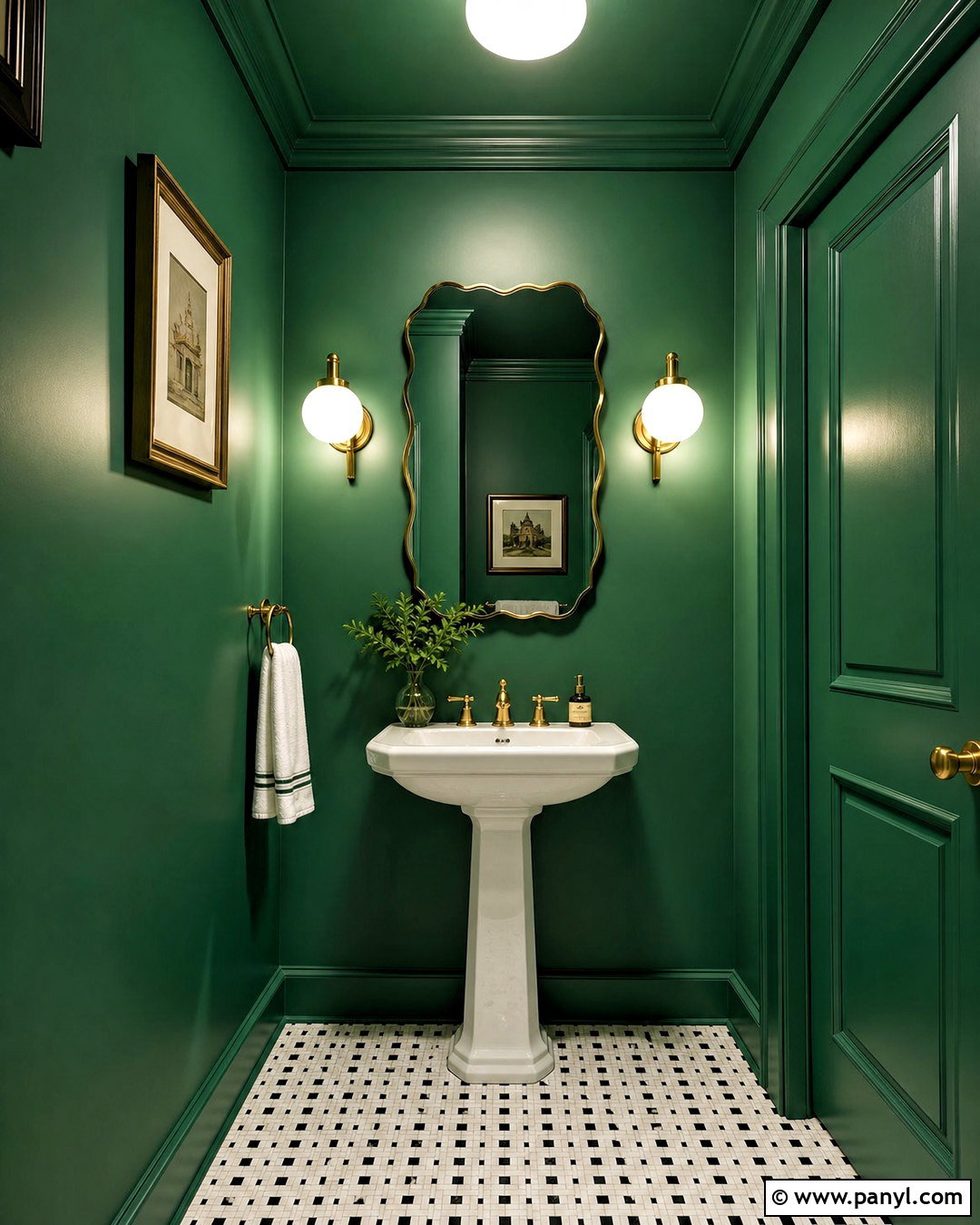
A powder room is an excellent place to use saturated jade green because the small footprint can support a confident color treatment. Paint the walls, ceiling, trim, and door in one glossy or satin jade finish for a jewel-box effect. Balance the strong green with a compact white pedestal sink or pale marble-topped vanity. Polished brass faucets, a scalloped mirror, and two opal glass sconces bring warmth and reflection. Use black-and-white mosaic floor tile to establish a crisp foundation. A small framed artwork and neatly folded white hand towels are enough decoration. Avoid adding several patterned surfaces, since the vivid walls already provide impact. The finished room feels bold and memorable, yet the restrained fixtures keep the overall design controlled rather than overwhelming.
17. Grass Green Mudroom
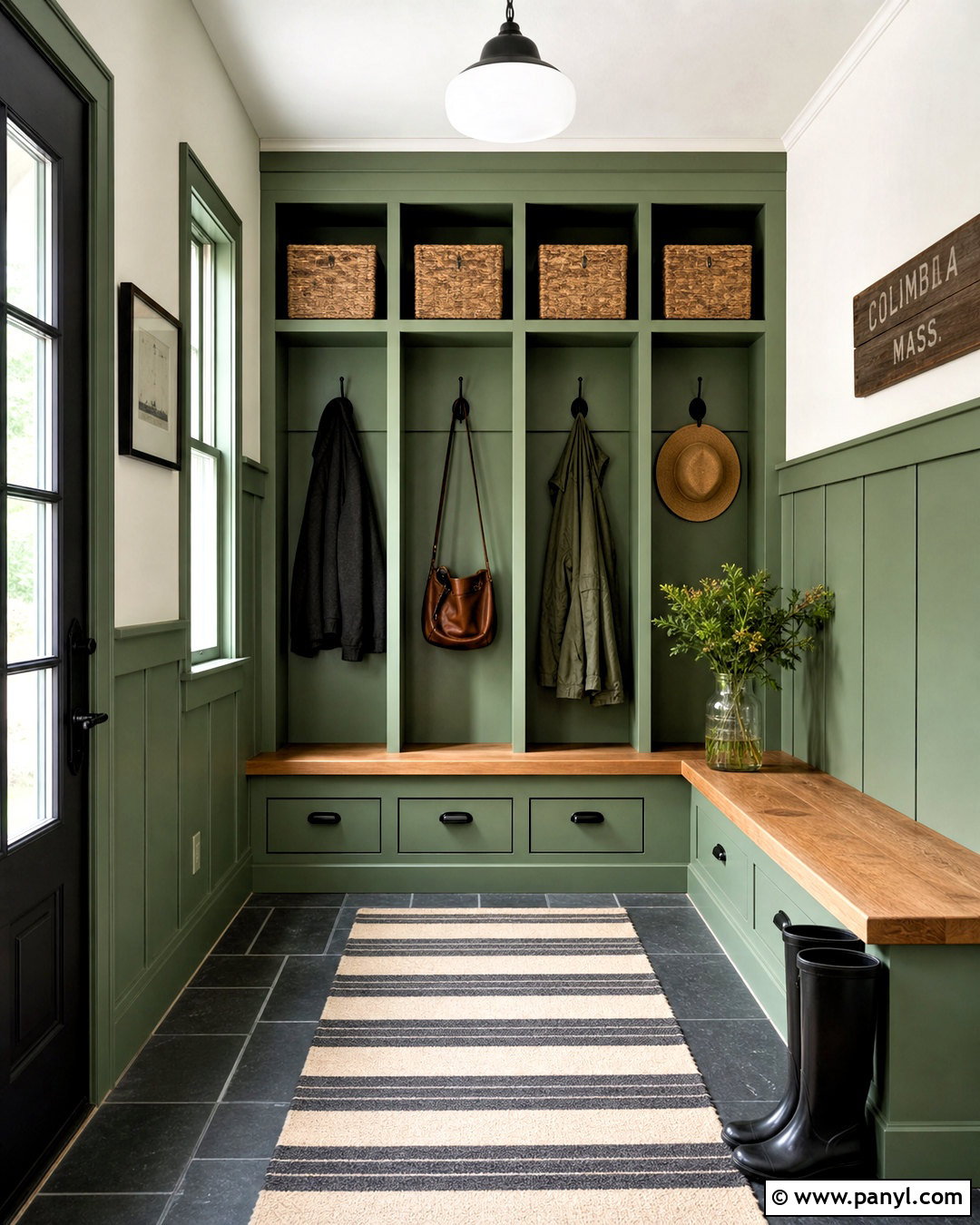
Grass green creates a friendly, durable-looking mudroom when paired with practical storage and warm neutral materials. Paint built-in lockers, wall paneling, and the bench base in a clear mid-tone green. Leave the upper walls warm white so the room stays open and bright. Add a thick oak bench seat, black iron hooks, and woven baskets in the overhead cubbies. A charcoal slate or stone-look porcelain floor provides contrast and handles everyday traffic visually. Place a long striped runner in green, cream, and tan through the center walkway. Closed drawers beneath the bench can store shoes, while tall cabinets hide larger equipment. The complete arrangement feels colorful but orderly, giving coats, bags, and outdoor essentials a dedicated home near the entrance.
18. Avocado Green Family Room
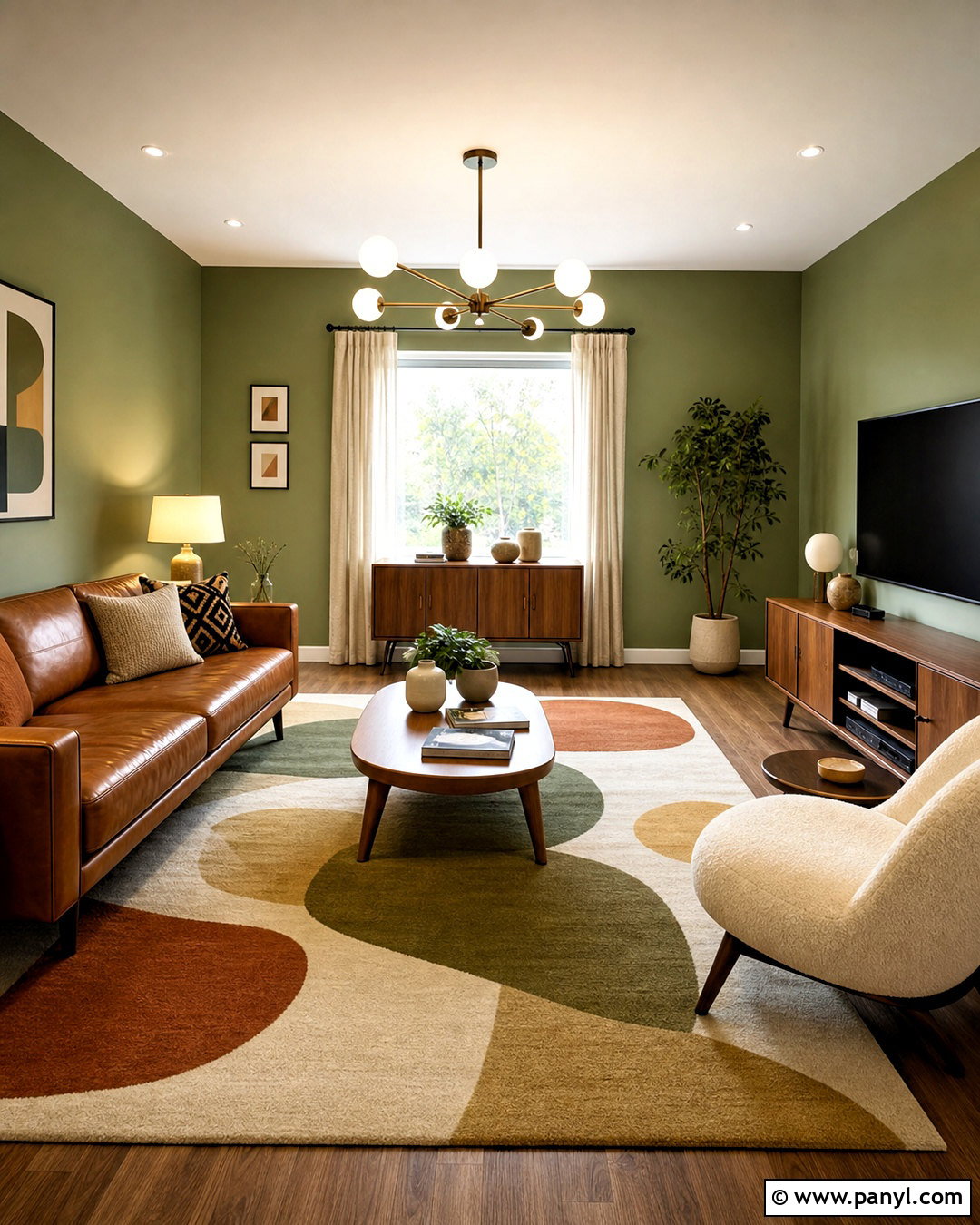
Avocado green brings a warm retro influence to a family room without requiring a fully vintage theme. Use it on the walls and pair it with a low-profile caramel leather sofa, walnut media console, and cream boucle lounge chair. An abstract rug containing avocado, rust, mustard, and ivory can unify the main seating area. Add globe-shaped floor lighting and simple black-framed artwork for a subtle midcentury reference. Natural linen curtains will filter daylight and soften the stronger wall color. Keep the ceiling and baseboards creamy white to create breathing room around the green. Finish with textured pillows, a wooden coffee table, and a few handcrafted ceramic pieces. The result feels relaxed and nostalgic, but the uncluttered layout keeps it suitable for a modern household.
19. Chartreuse Green Sitting Room
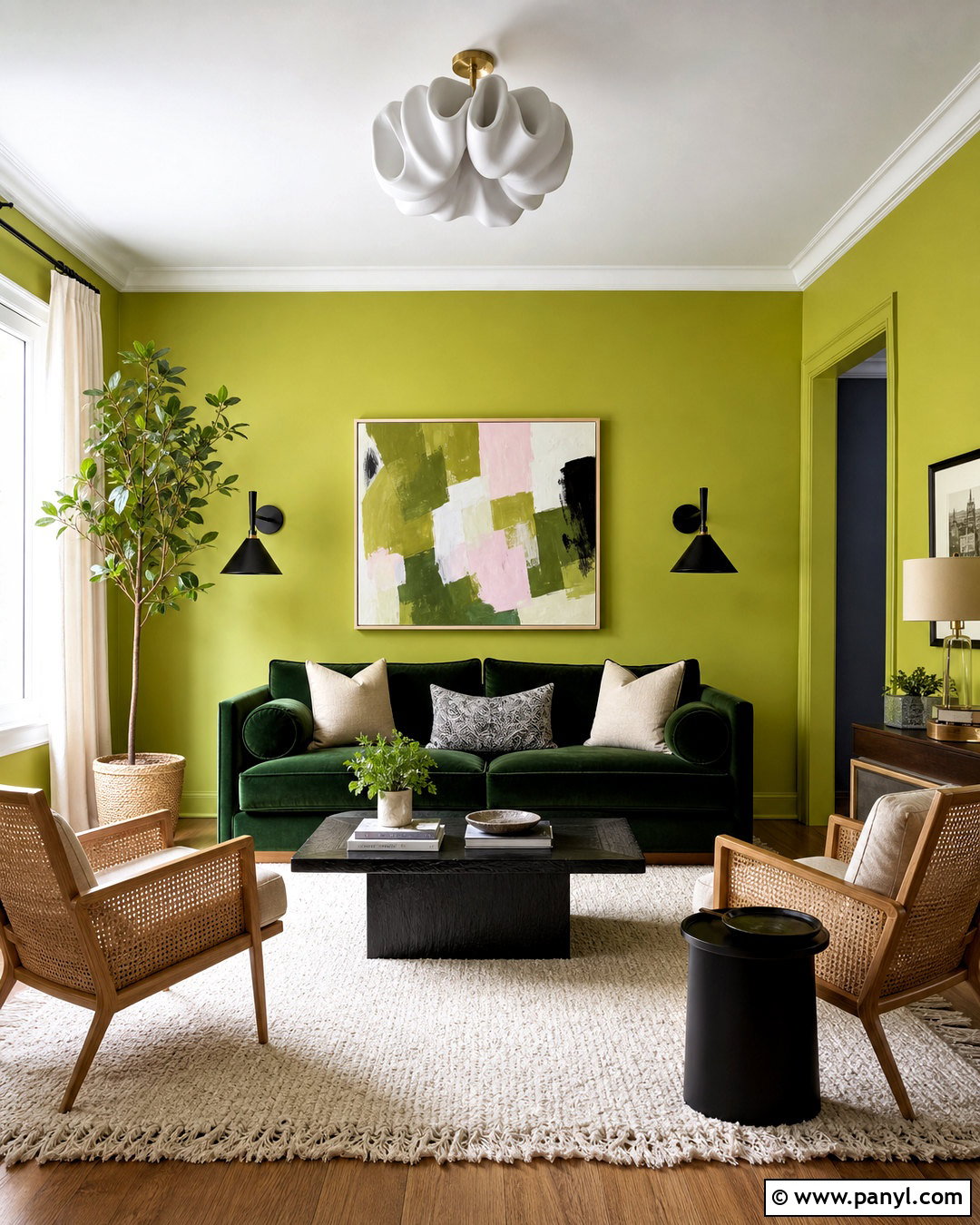
Chartreuse green is bold, but it becomes surprisingly livable when balanced with darker greens and quiet neutrals. Use chartreuse on the walls of a small sitting room, then add a deep forest green velvet sofa as the visual anchor. A blackened wood coffee table, cream wool rug, and off-white curtains calm the brighter background. Introduce a pair of natural cane chairs to lighten the furniture arrangement and add texture. Abstract artwork with black, green, and pale pink details can connect the contrasting tones. Choose matte black sconces or a sculptural white ceiling fixture instead of bright metallic finishes. This high-energy green is receiving renewed attention in contemporary interiors, especially when used within a controlled, layered palette. ()
20. Dark Green Library
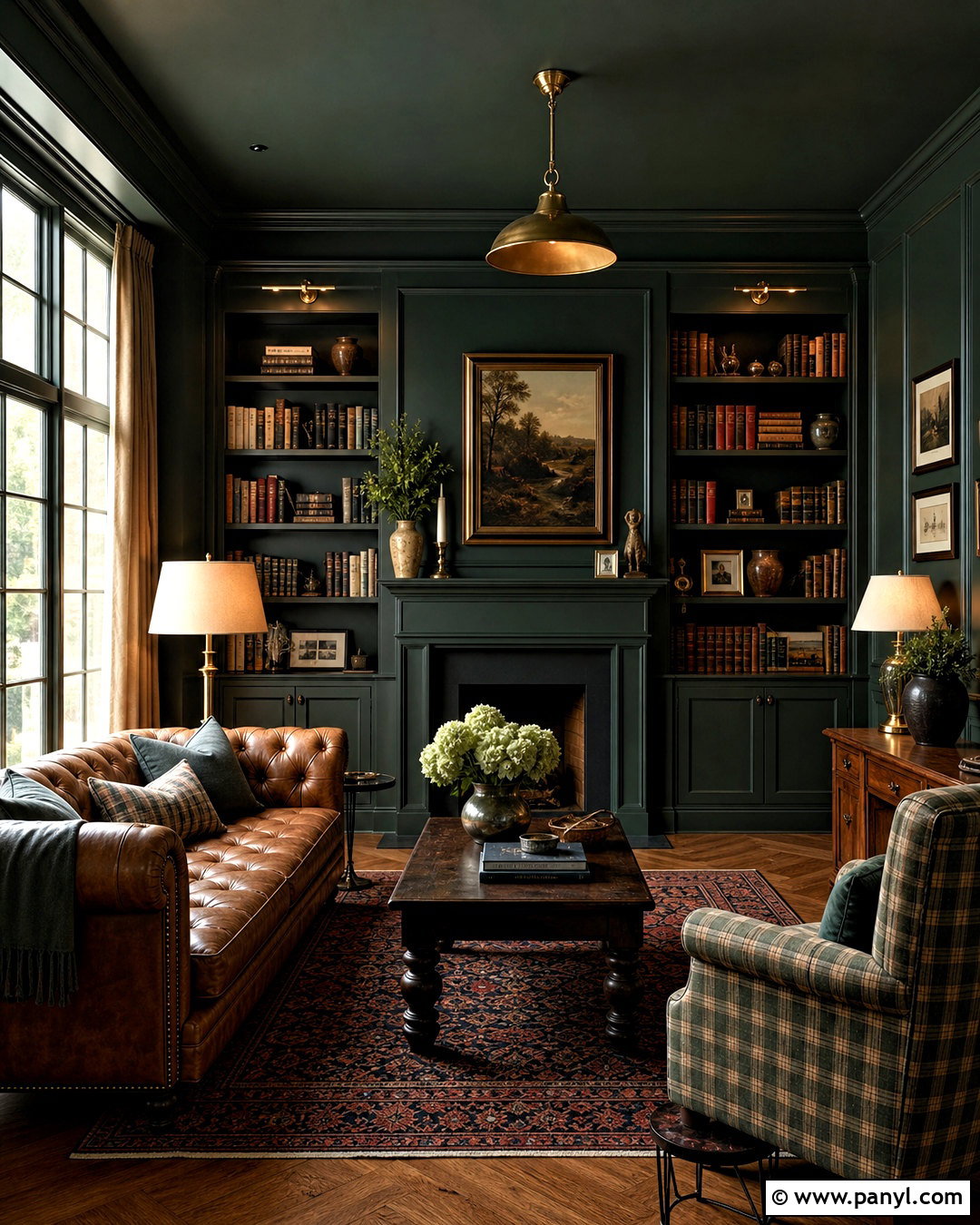
Dark green creates a convincing home library when every surface contributes to the intimate atmosphere. Paint the walls, ceiling, shelves, and trim in the same near-black green, using a satin finish on the woodwork for subtle contrast. Fill the shelving with books while leaving some open space for framed photographs and pottery. Center a tufted cognac leather sofa on a faded red and navy rug, then add a plaid wool armchair near a brass floor lamp. Dark oak side tables and cream lampshades provide warm, functional lighting. Hang heavy linen curtains in a muted tan shade to soften the windows. The finished library feels traditional and enveloping, but balanced placement and lighter textiles keep the dark color from making the room appear cramped.
Conclusion:
Choosing among **20 green room colors** becomes easier when you consider the entire space rather than selecting paint in isolation. Pale sage, mint, seafoam, and celadon support airy rooms, while olive, moss, forest, and hunter green create greater depth. Brighter choices such as lime, grass, and chartreuse work best with controlled accents and plenty of visual breathing room. Whatever shade you prefer, connect it to flooring, furniture, trim, lighting, and textiles before making a final decision. Test samples on several walls and view them throughout the day, since surrounding light and existing finishes influence the result. A complete, coordinated palette will make green feel intentional, comfortable, and suited to your home.

Related Ideas and Inspiration:
Leave a Reply