
Dark paint can make an interior feel warm, polished, and surprisingly comfortable when every element supports the palette. These 20 dark room colors cover rich blues, earthy greens, dramatic reds, warm browns, and sophisticated near-blacks. Each look includes furniture, flooring, lighting, textiles, and accents, so you can create a complete room rather than simply choosing a wall color. Pale upholstery, reflective finishes, layered lamps, and natural materials keep deeper shades from feeling flat or heavy. Before painting, sample your chosen color on several walls and view it throughout the day. Whether you are updating a bedroom, kitchen, office, or living space, these complete schemes offer practical ways to decorate confidently with 20 dark room colors.
1. Dark Navy Blue Living Room
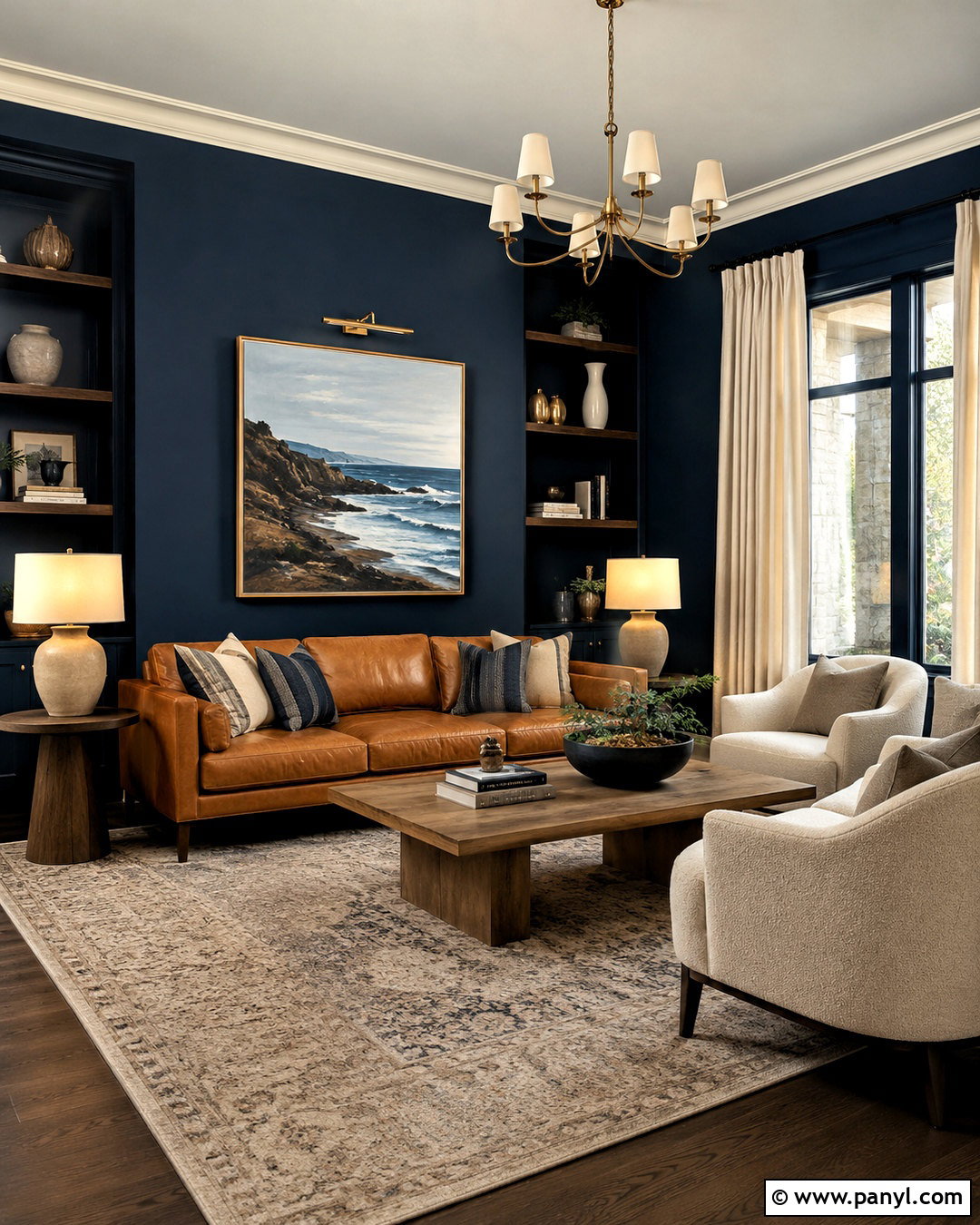
Dark navy blue gives a living room a tailored appearance without the severity of pure black. Cover the walls in a velvety navy, then keep the ceiling soft white to preserve visual height. A camel leather sofa adds warmth, while two cream boucle chairs brighten the seating arrangement. Center everything around a medium-tone oak coffee table and a beige patterned rug. Brass floor lamps, linen curtains, and framed coastal photography introduce light without making the room feel themed. Choose walnut shelves for books and pottery, then repeat navy through a few patterned pillows. Warm white lamp bulbs and adjustable picture lights help the room remain welcoming during the evening. The finished space feels balanced, comfortable, and suitable for everyday use.
2. Charcoal Gray Dining Room
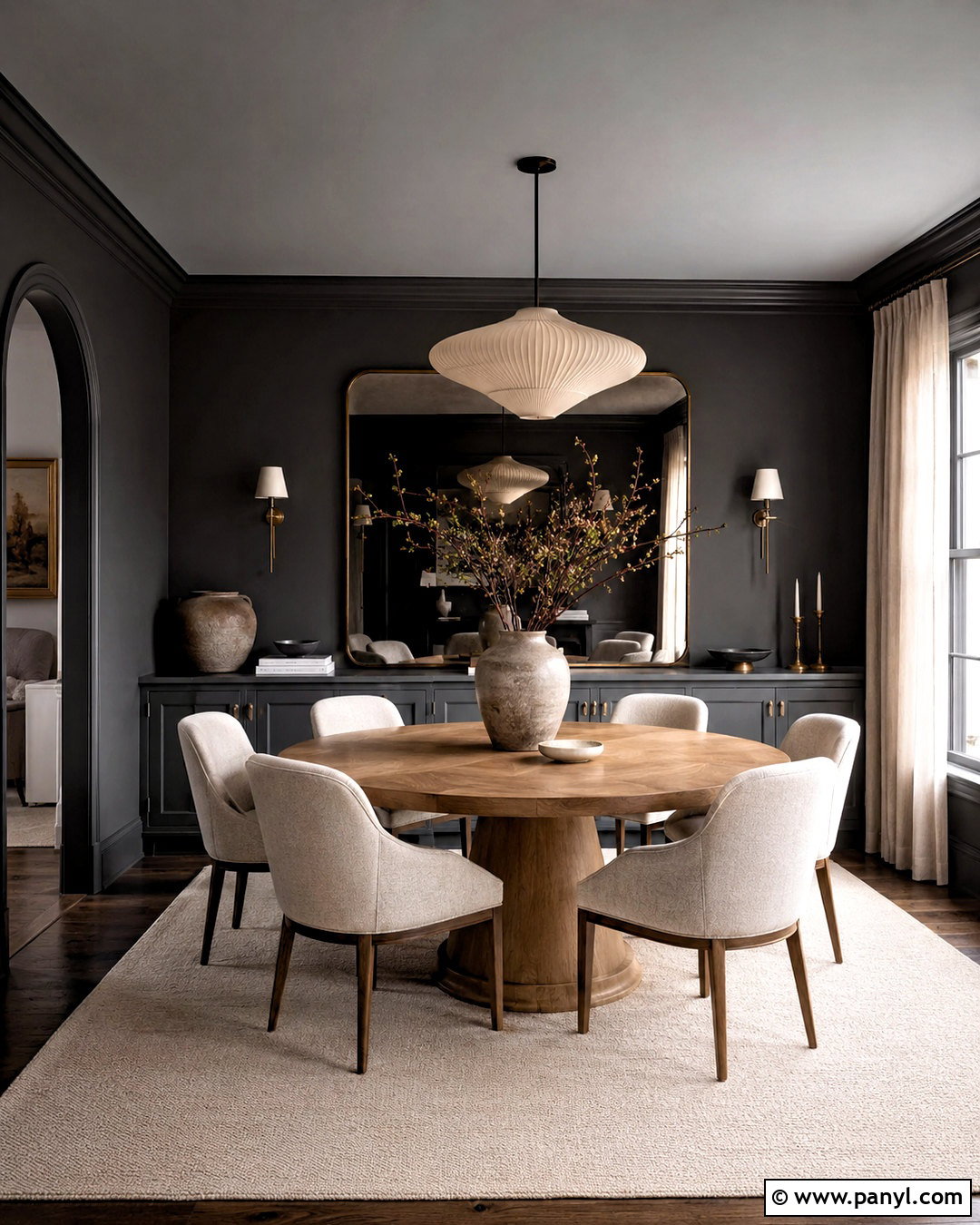
Imagine a charcoal gray dining room that feels intimate but never gloomy. Use a warm charcoal with subtle brown undertones across the walls, molding, and built-in cabinetry for a seamless envelope of color. Place a round natural oak table in the center, surrounded by oatmeal upholstered chairs with black legs. A large cream rug softens the floor and visually separates the furniture from the dark background. Install a sculptural white pendant above the table and add slim brass sconces beside an oversized mirror. Pale linen curtains provide gentle contrast around the windows. Finish the room with off-white ceramics, simple greenery, and framed neutral artwork. The mixture of dark paint and light natural materials produces a polished setting for both casual meals and special gatherings.
3. Forest Green Bedroom
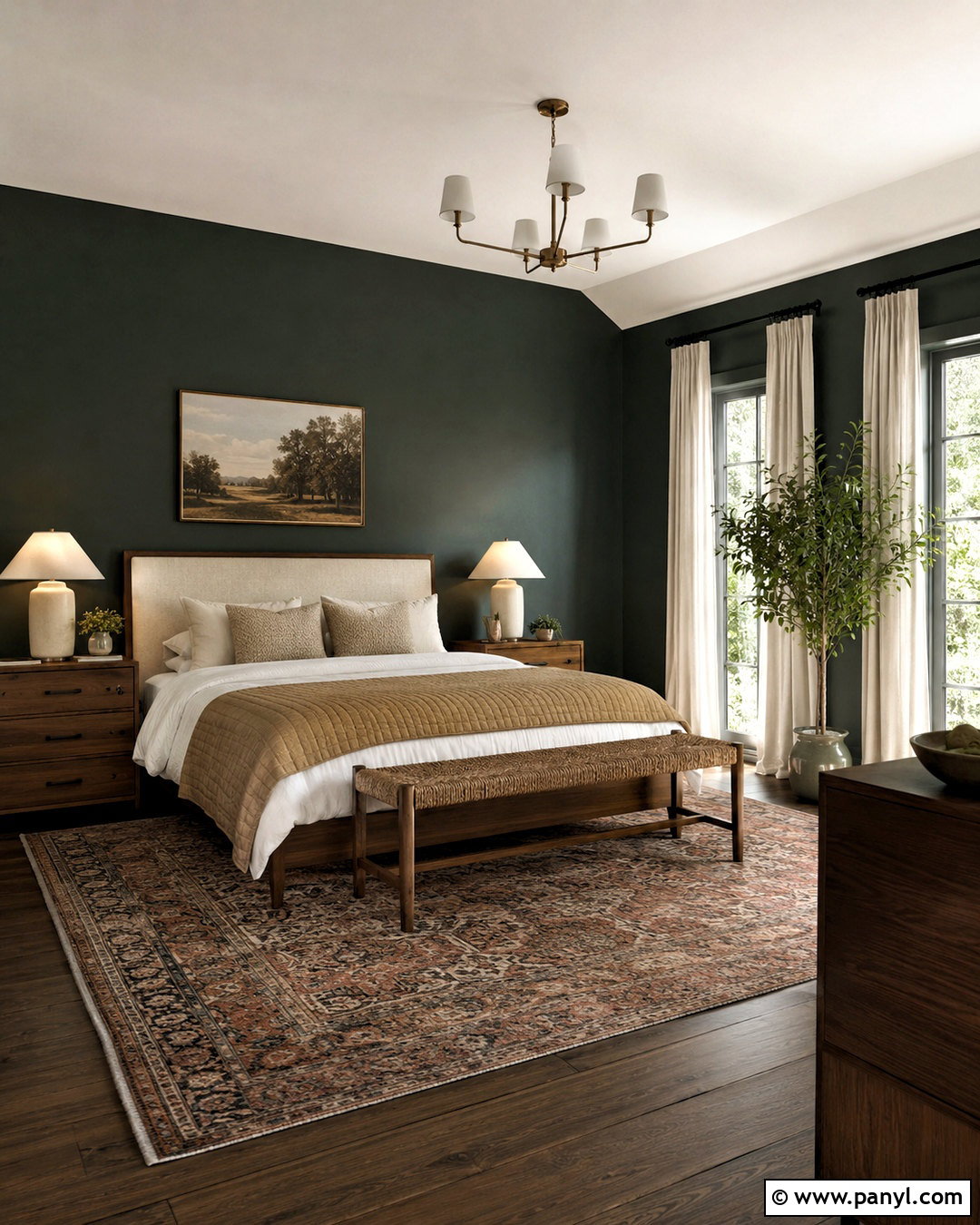
Forest green creates a restful bedroom when it is balanced with warm wood and breathable fabrics. Paint the walls a deep botanical green, including the wall behind the bed, but leave the ceiling warm white. Choose a low walnut bed with an upholstered oatmeal headboard and layer it with ivory sheets, a camel quilt, and patterned green pillows. Matching walnut nightstands provide symmetry, while ceramic lamps cast soft light across the walls. Add full-length natural linen curtains and a large vintage-style rug containing faded rust, beige, and green. A woven bench at the foot of the bed introduces useful seating. Keep artwork simple with botanical sketches in antique brass frames. This complete palette feels grounded, natural, and comfortably cocooning without becoming overly formal.
4. Chocolate Brown Bedroom
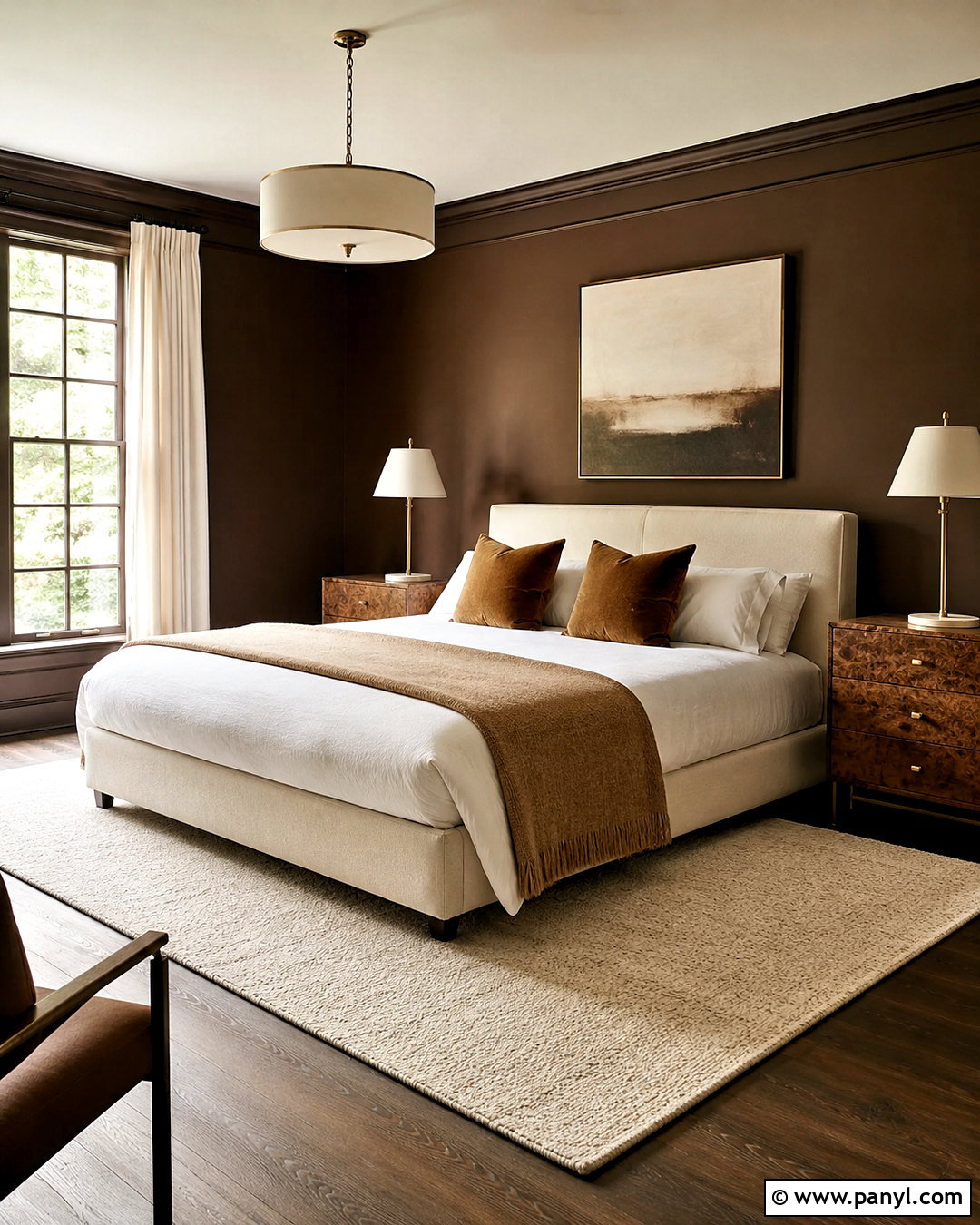
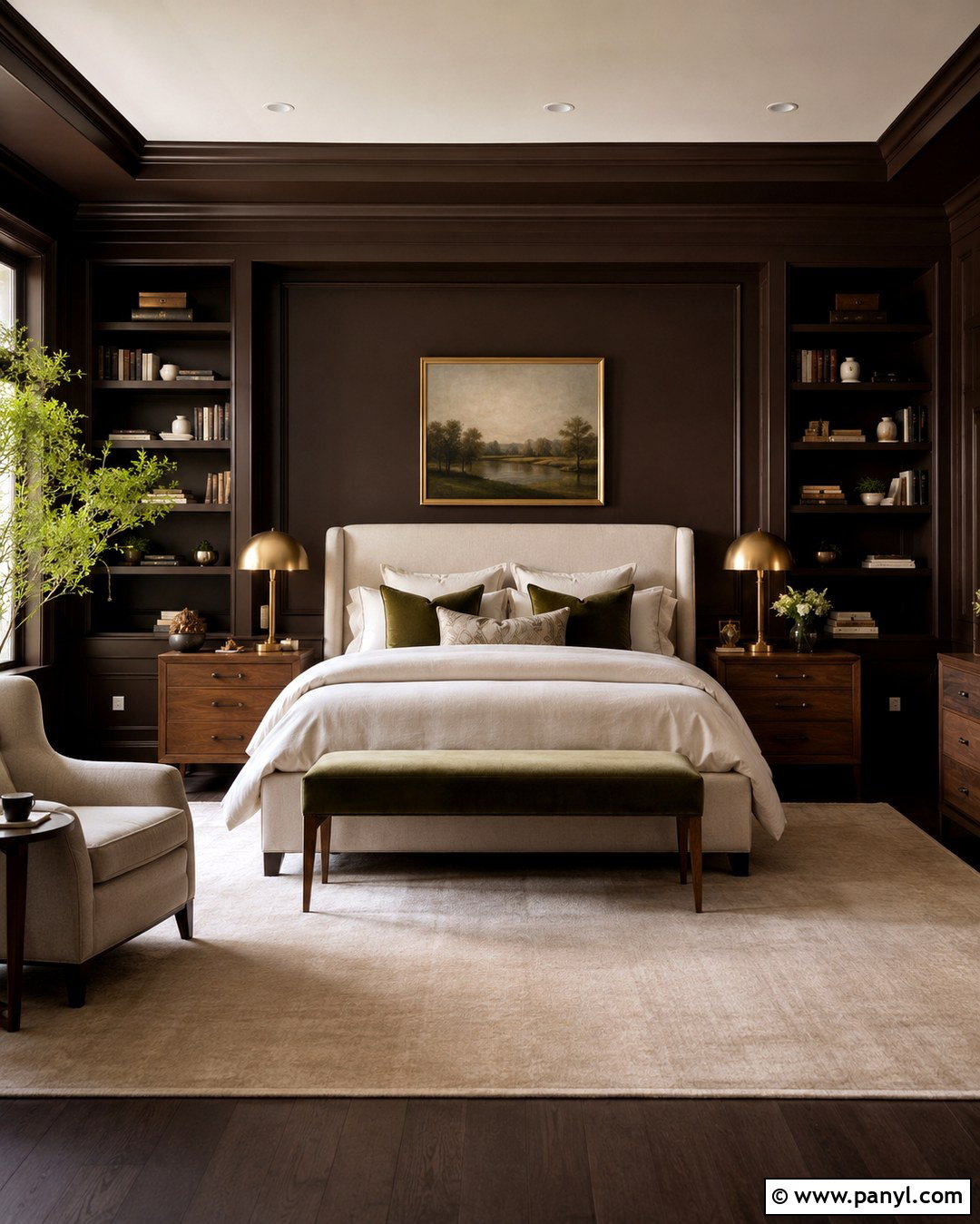
Chocolate brown can make a bedroom feel deeply comforting, especially when the shade has warm rather than gray undertones. Color-drench the walls, trim, and interior door in a rich cocoa brown, then use an ivory ceiling for gentle relief. A cream upholstered bed becomes the bright focal point, layered with white bedding, caramel velvet pillows, and a textured tan blanket. Add burled wood nightstands, pleated fabric lampshades, and a light wool rug beneath the bed. Sheer ivory curtains filter daylight, while heavier taupe panels create privacy. A curved bench and one brass-framed mirror soften the strong wall color. The finished bedroom feels enveloping and luxurious, yet its straightforward furniture arrangement keeps the design practical for a normal-sized home.
5. Deep Cranberry Red Dining Room
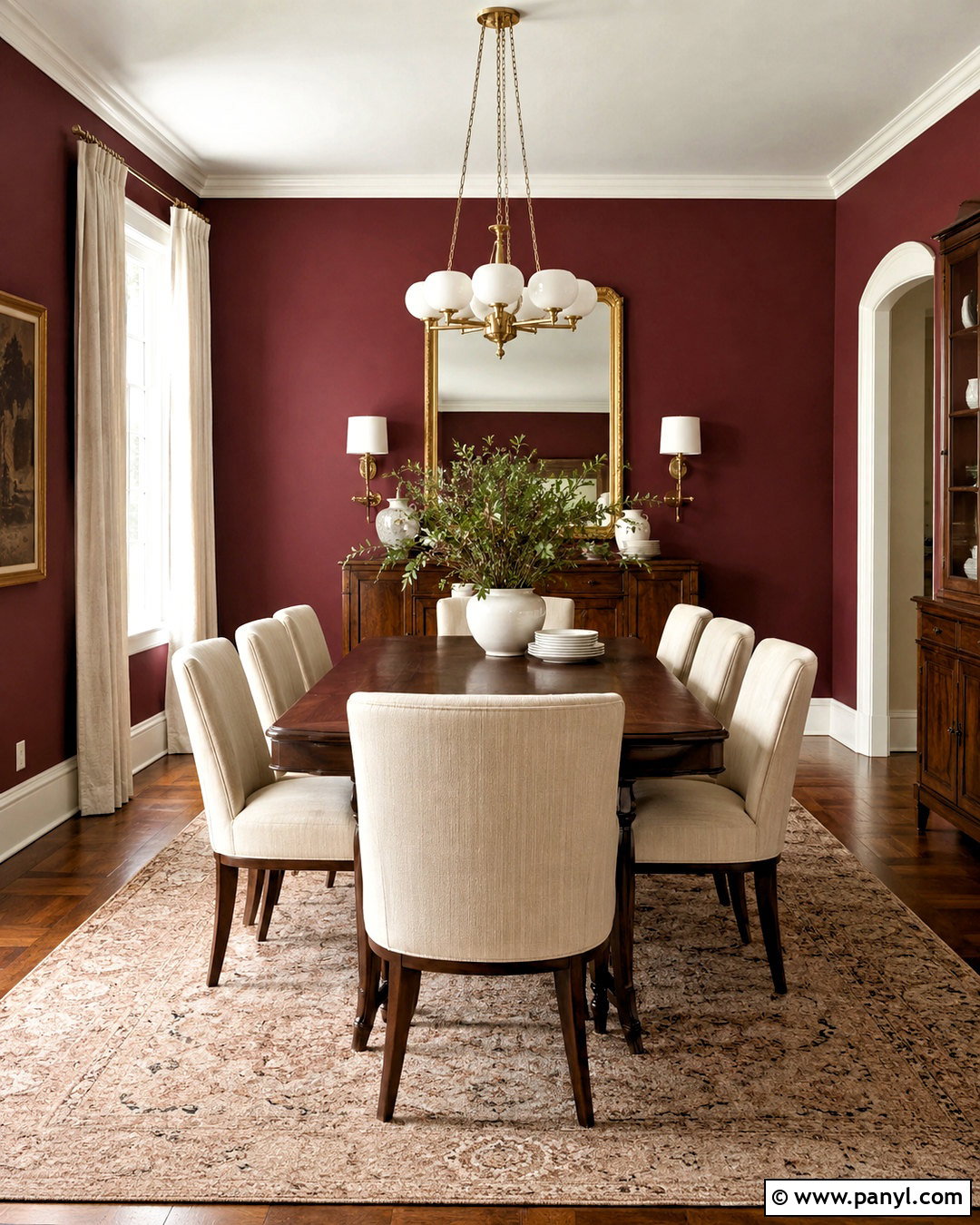
A deep cranberry red dining room feels lively, warm, and sophisticated when the surrounding materials remain restrained. Paint the walls and trim in a muted red with earthy brown undertones rather than a bright primary shade. Pair it with a rectangular walnut dining table and simple cream upholstered chairs. A faded beige rug grounds the layout, while a milk-glass chandelier creates a bright focal point overhead. Hang an antique brass mirror opposite the window to distribute available light. Natural linen curtains, white ceramic serving pieces, and a few dark wood frames provide calm contrast. Keep the flooring medium oak instead of very dark brown. This coordinated scheme makes the cranberry walls feel intentional and inviting, creating a memorable dining space that still works for relaxed weekday meals.
6. Matte Black Powder Room
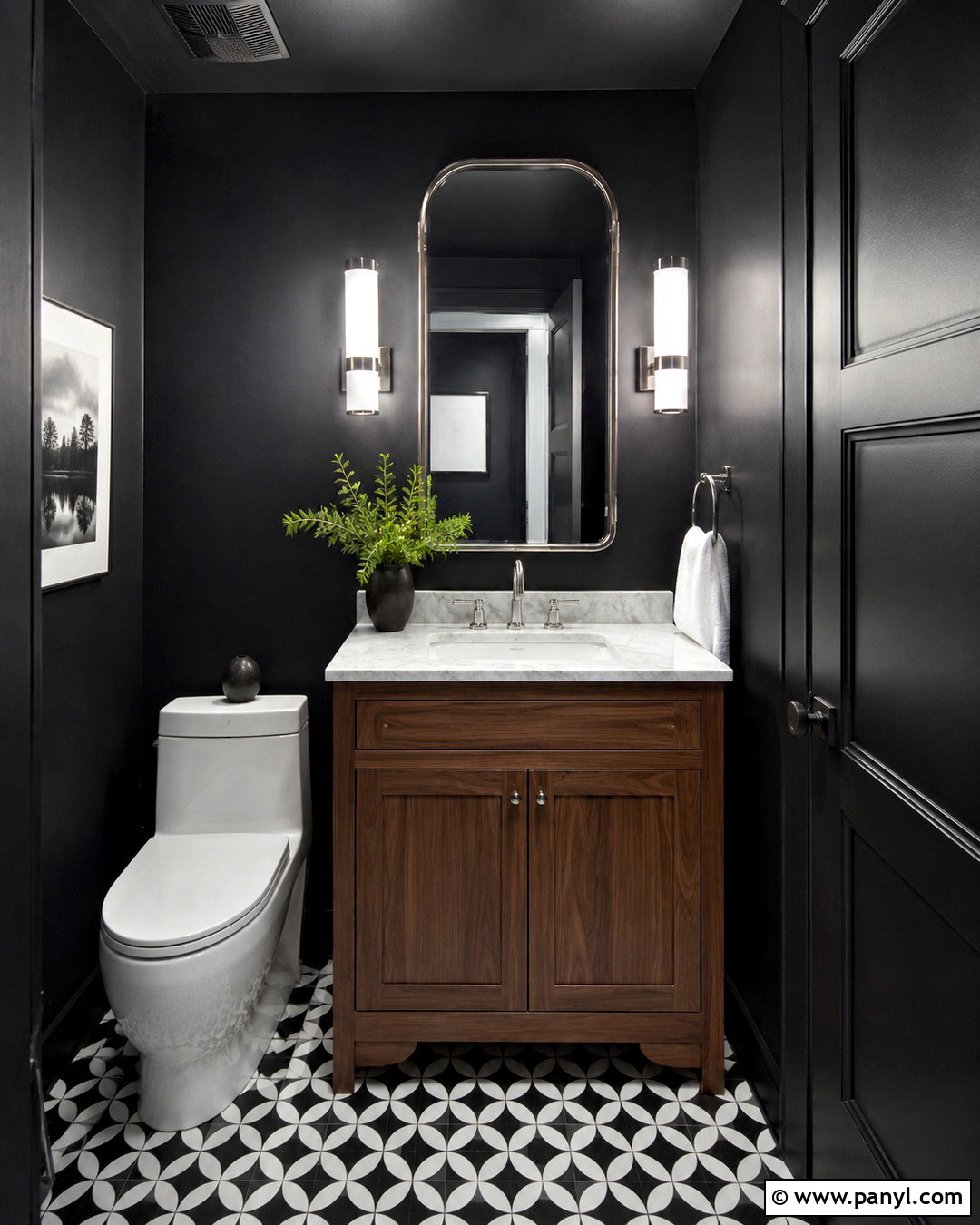
A small powder room offers the perfect setting for matte black walls because the limited footprint can support a bold, immersive finish. Paint the walls and ceiling black, then install a white marble-topped walnut vanity to create crisp contrast. Use a polished nickel faucet, matching wall sconces, and an arched metal mirror to reflect light around the room. Graphic black-and-white floor tile adds movement while maintaining the limited palette. Include white hand towels, a simple ceramic soap dispenser, and one leafy plant in a pale stone pot. Avoid filling the walls with small accessories. One framed artwork is enough. With bright layered lighting and reflective fixtures, the room feels dramatic and carefully designed rather than cramped, making an ordinary powder room look distinctive.
7. Dark Olive Green Kitchen
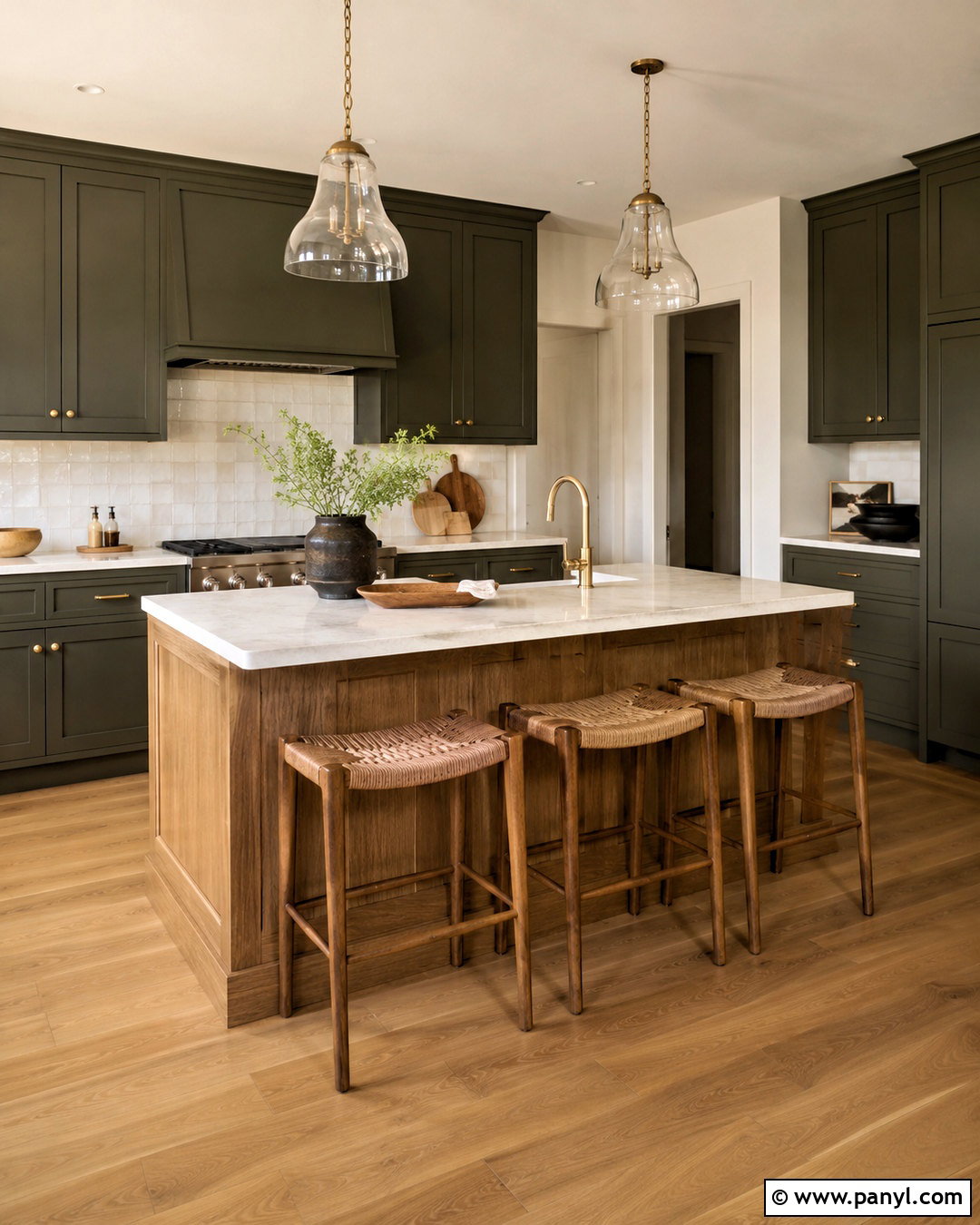
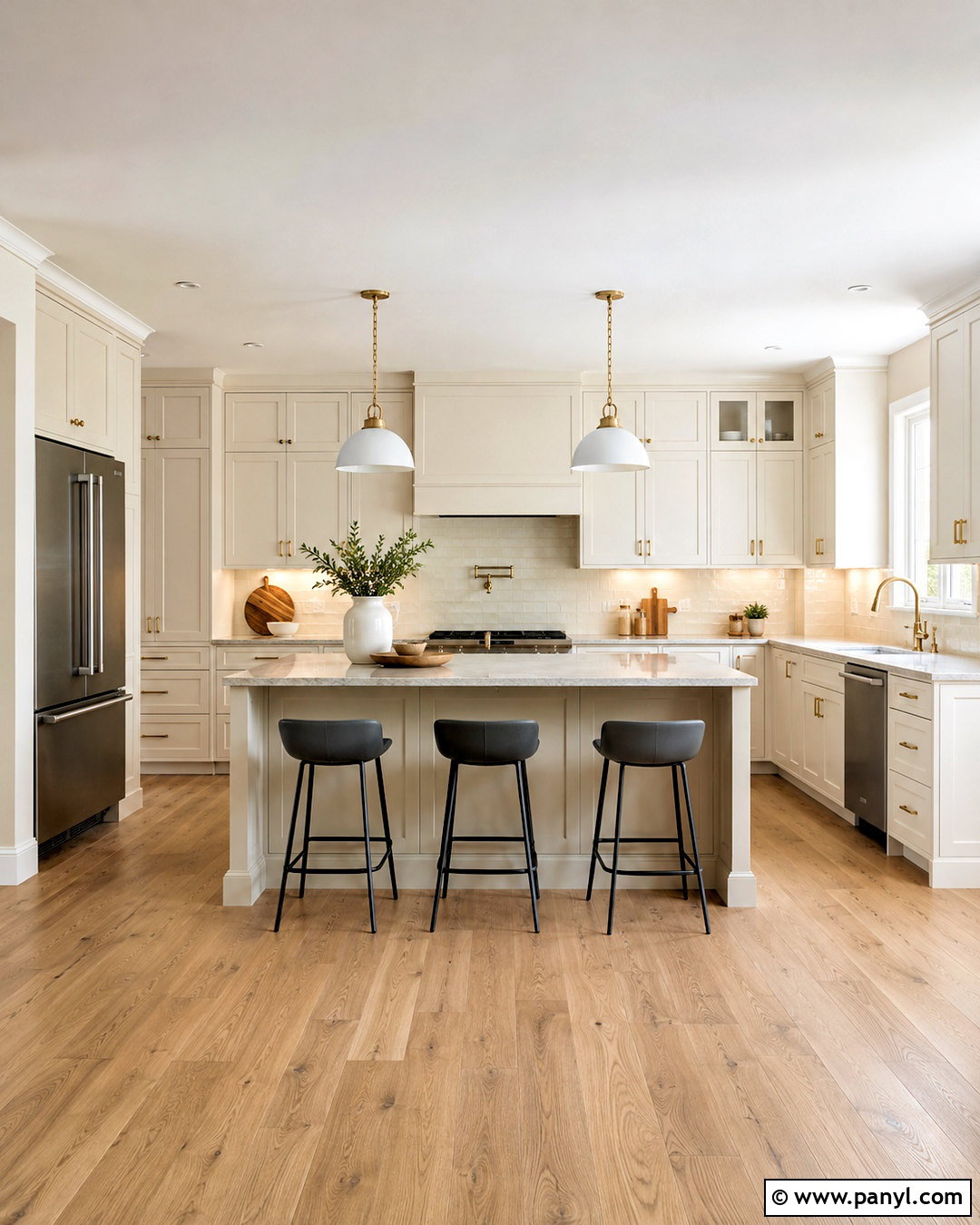
Dark olive green brings an earthy richness to a kitchen and pairs naturally with wood, stone, and aged metal. Paint the lower and upper cabinets in a deep olive shade, then soften the effect with warm cream walls and a matching ceiling. Choose lightly veined quartz countertops and an off-white handmade tile backsplash. An oak island adds visual warmth and prevents the cabinetry from dominating the room. Complete the scheme with brushed brass hardware, woven counter stools, and medium oak flooring. Clear glass pendants keep the island area open and bright. Display only a few cream dishes, wood cutting boards, and small herb pots on the counters. The overall kitchen feels grounded and current while remaining practical, welcoming, and easy to coordinate with surrounding rooms.
8. Deep Teal Home Office
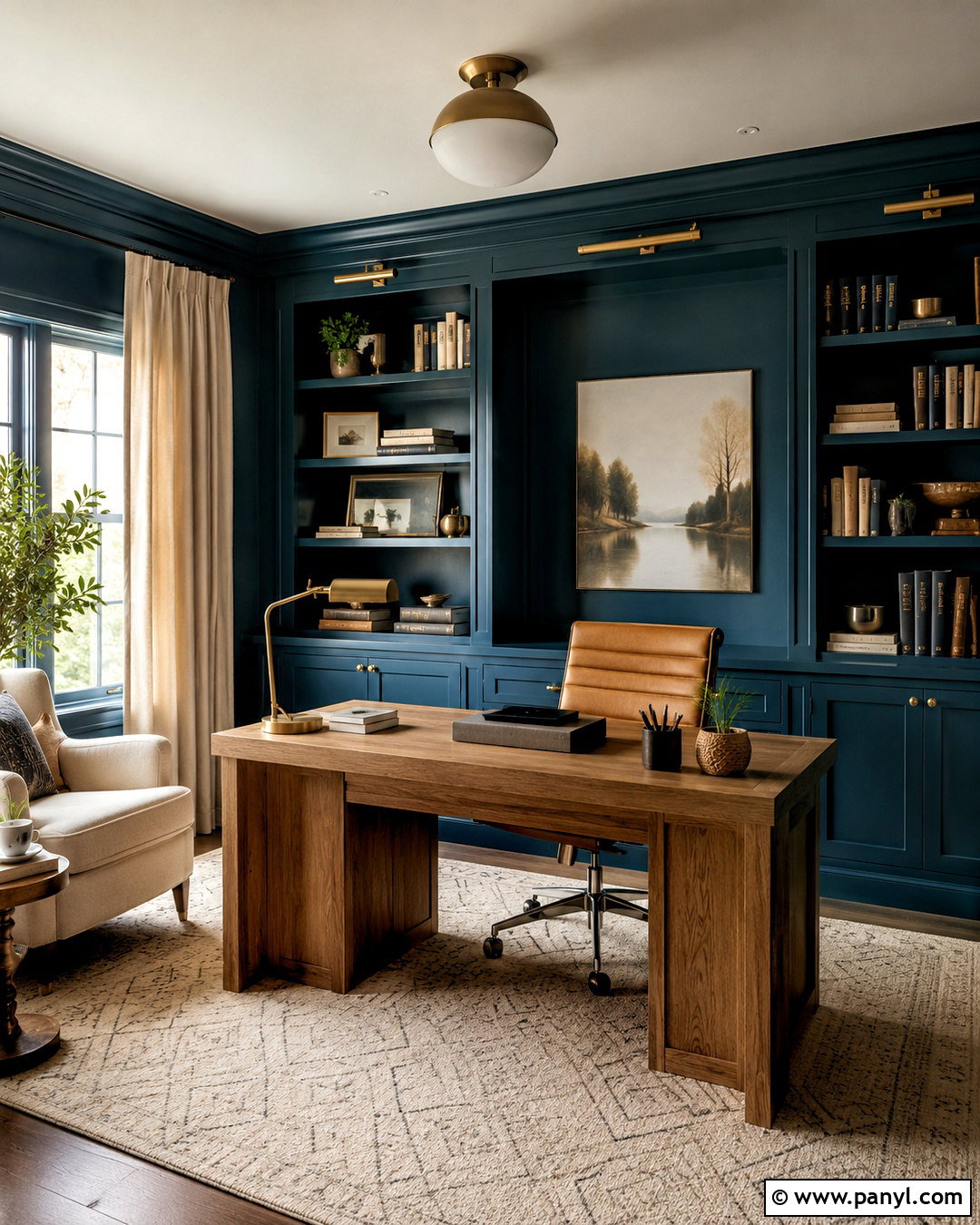
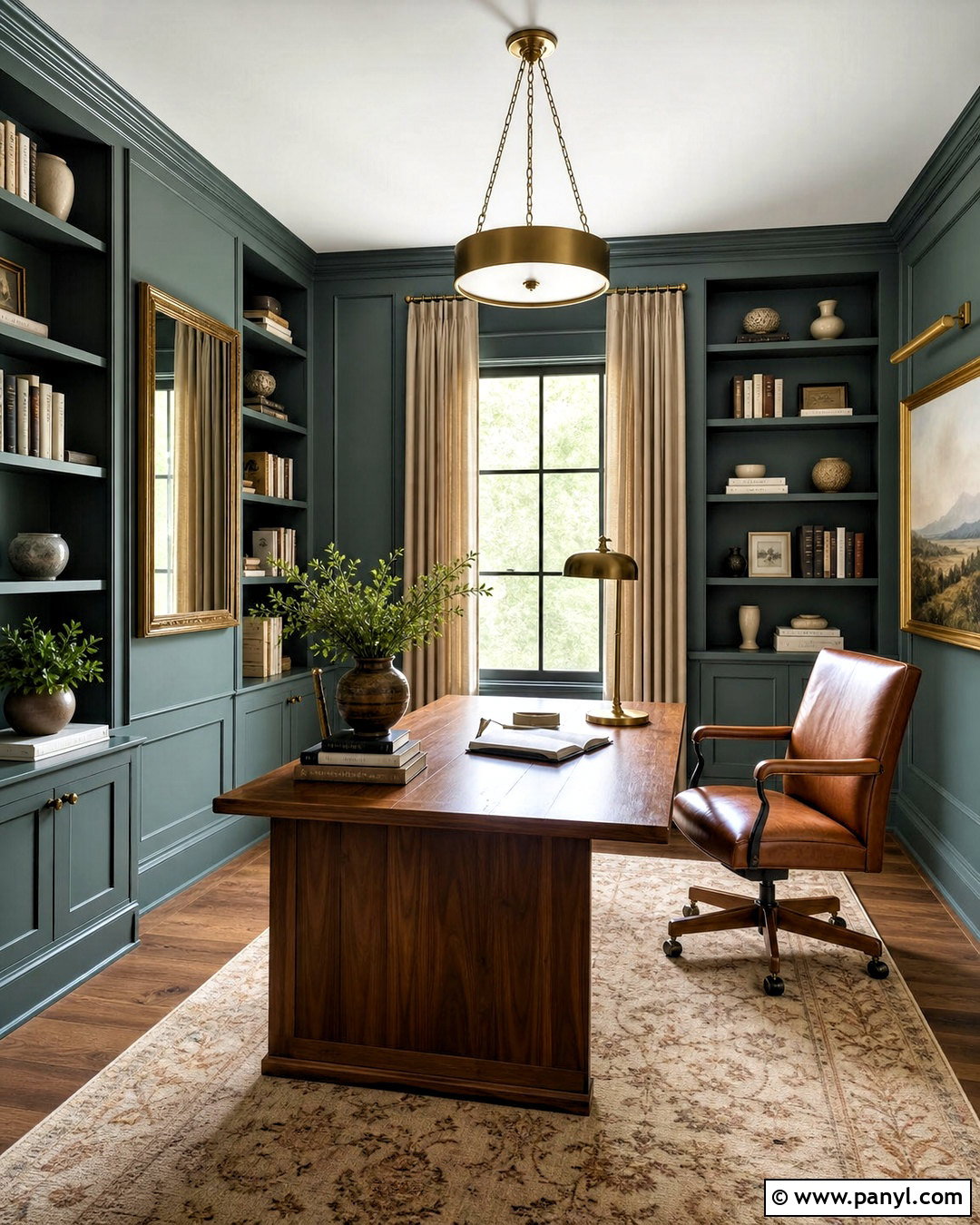
Deep teal can transform a basic home office into a focused workspace with character. Apply the color to the walls, shelving, and cabinet fronts for a built-in appearance. Position a clean-lined oak desk near the window, paired with a tan leather office chair that adds warmth against the blue-green backdrop. Use a pale geometric rug to define the work area and soften sound. Brass picture lights above the shelves illuminate books, storage boxes, and simple ceramics. Natural linen curtains maintain privacy without blocking too much daylight. Include a small cream reading chair and floor lamp if space allows. By combining practical closed storage with open display shelves, the room stays organized. The resulting office feels calm, productive, and visually separate from the rest of the home.
9. Dark Eggplant Guest Bedroom
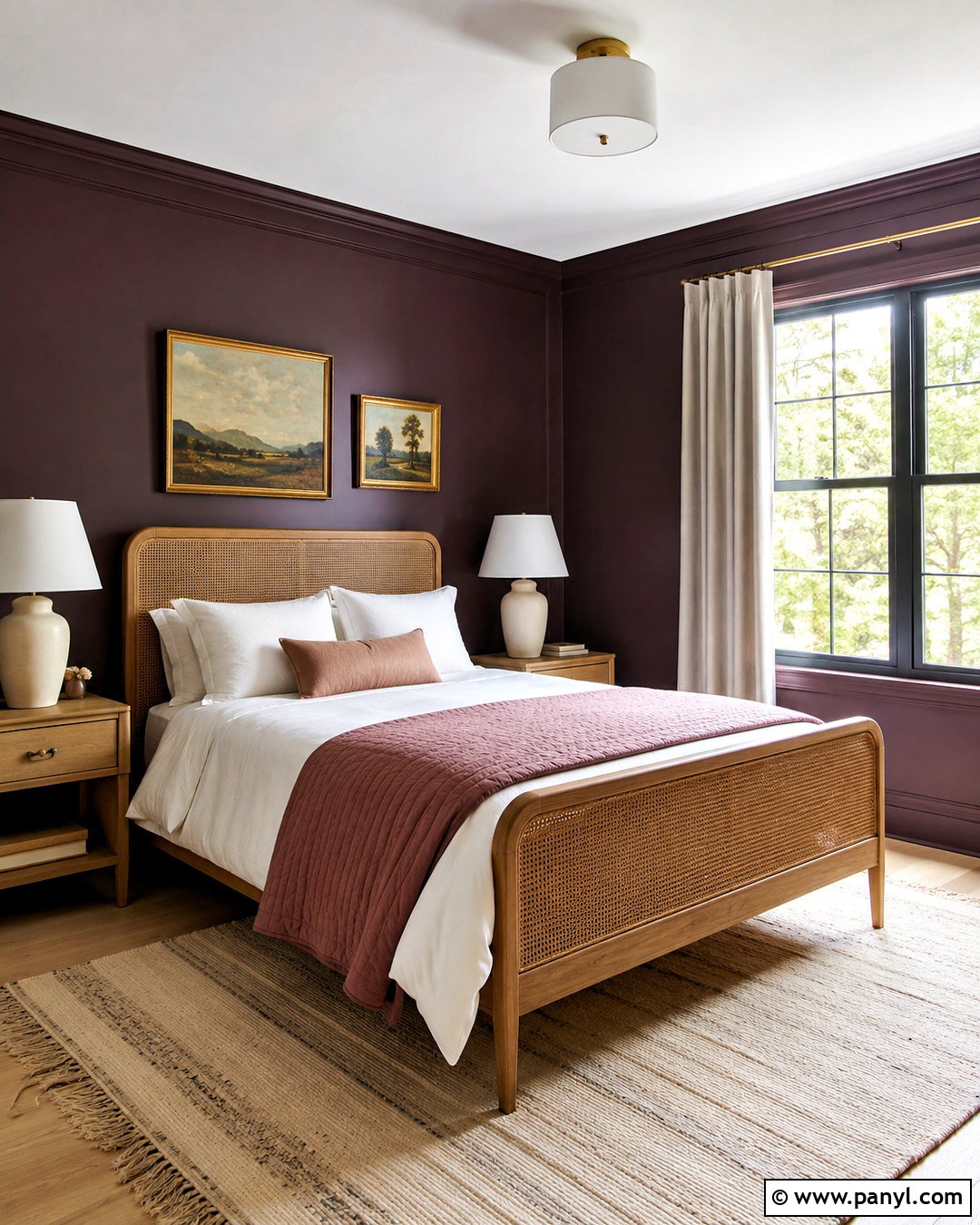
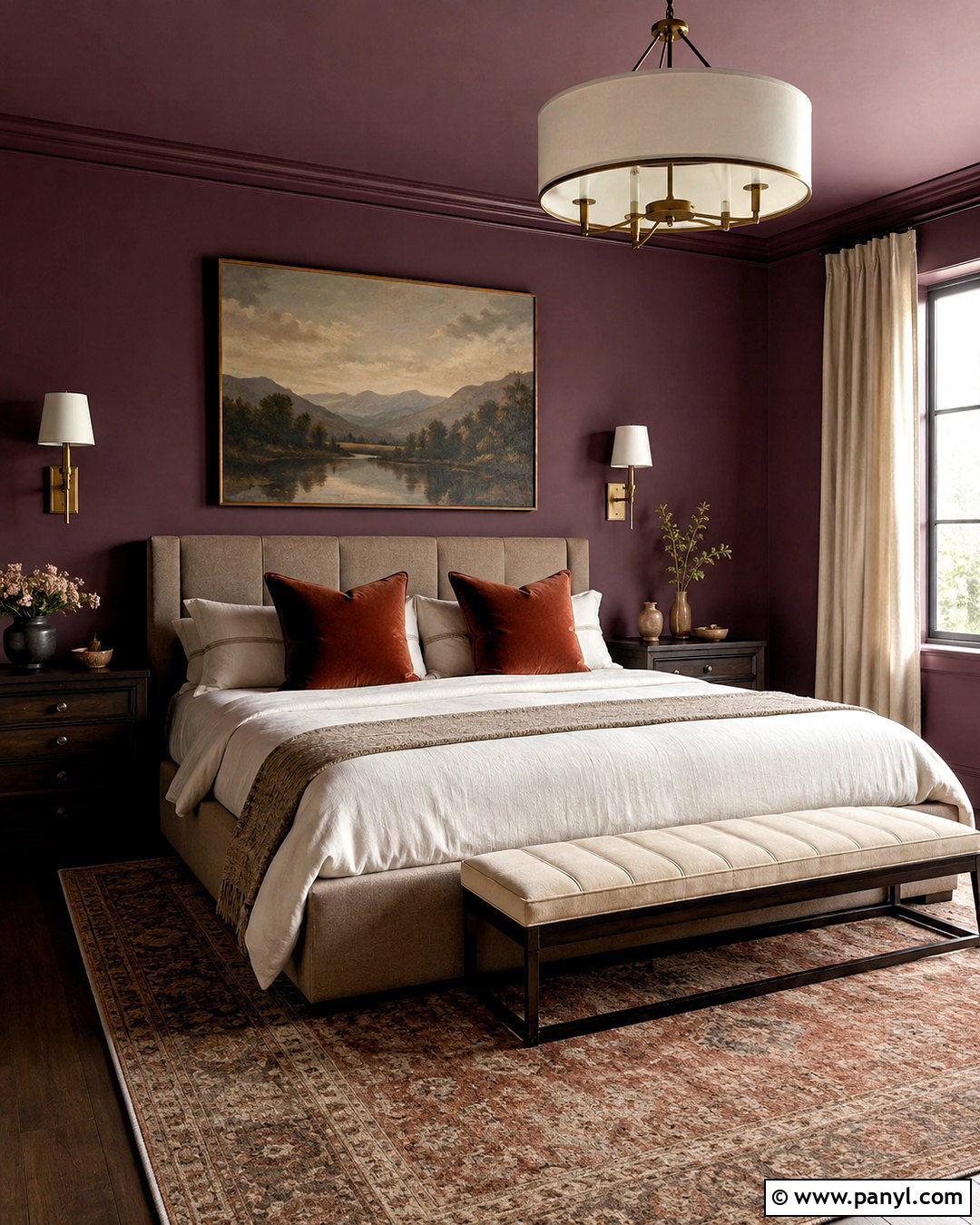
Dark eggplant walls give a guest bedroom an elegant personality while providing a softer alternative to black. Choose a muted purple with warm red undertones and continue it across the trim for a cohesive backdrop. Place a natural cane bed against the main wall and dress it with crisp white bedding, a dusty rose quilt, and beige patterned pillows. Pale oak nightstands and ivory ceramic lamps keep the arrangement light. Add oatmeal curtains, a cream wool rug, and a small upholstered bench beneath the window. Antique brass frames and one landscape painting complement the warmth in the wall color. Keep accessories limited so visitors have room for personal belongings. This complete guest room feels thoughtful, relaxing, and memorable without relying on expensive or overly ornate furnishings.
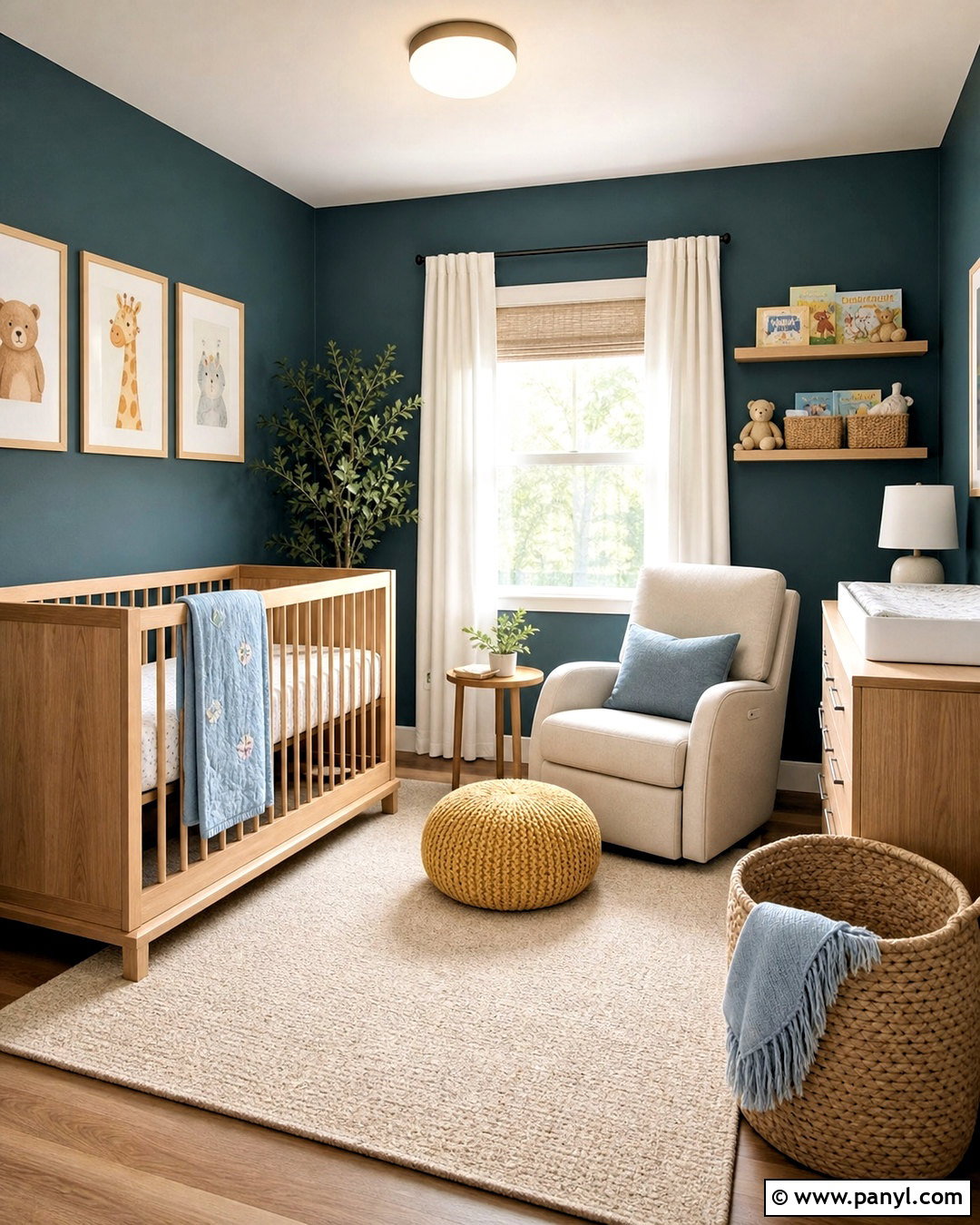
10. Midnight Blue Media Room
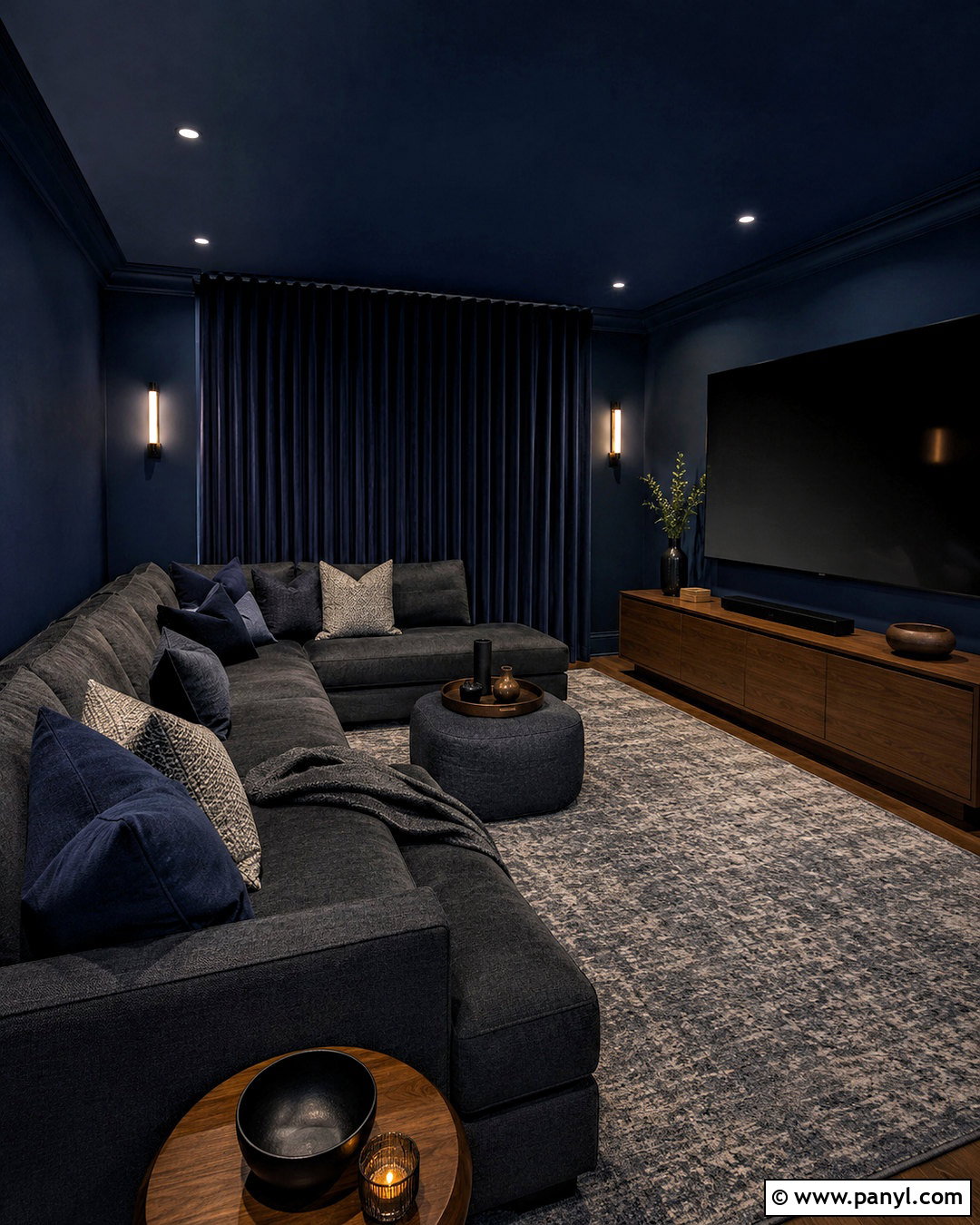
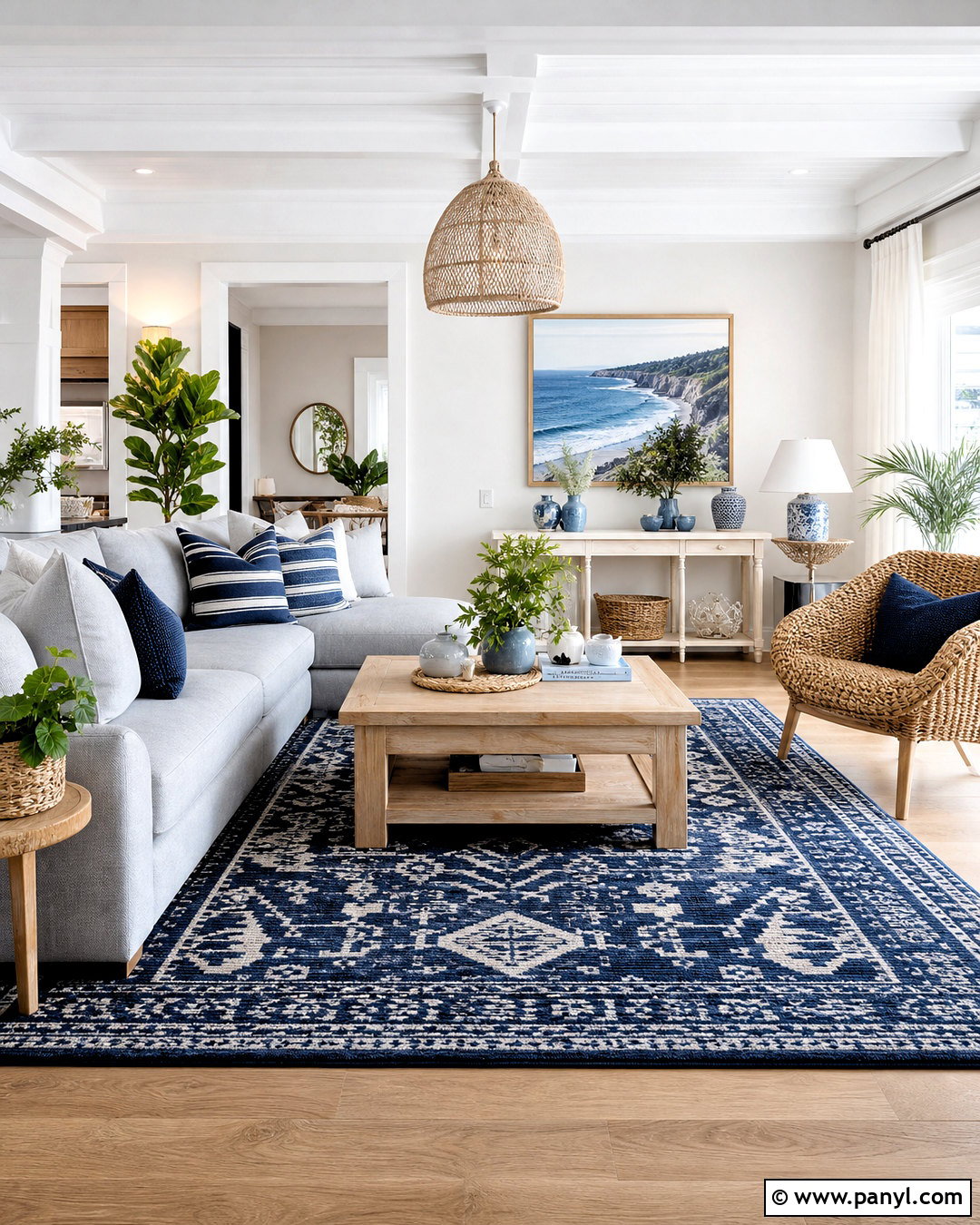
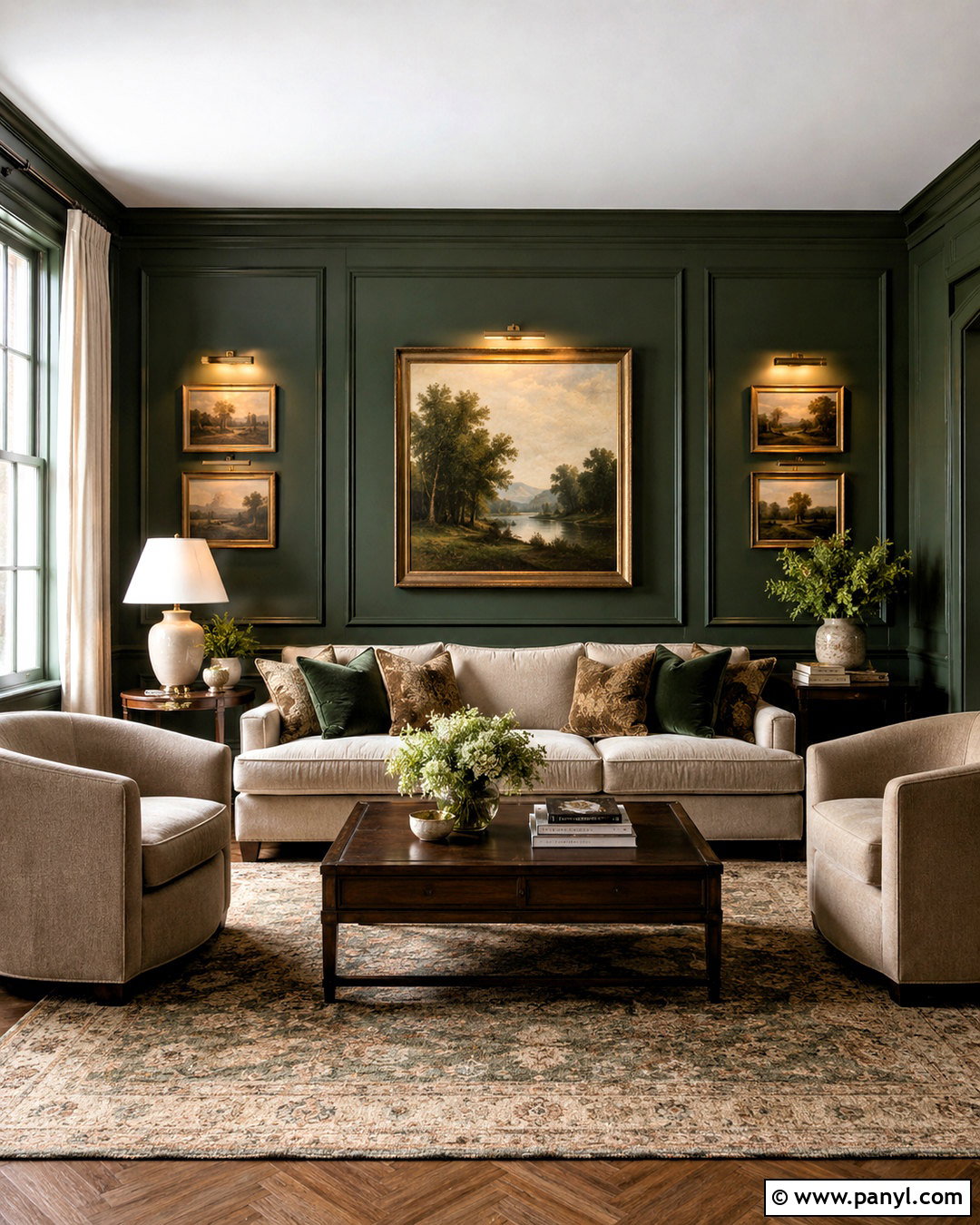
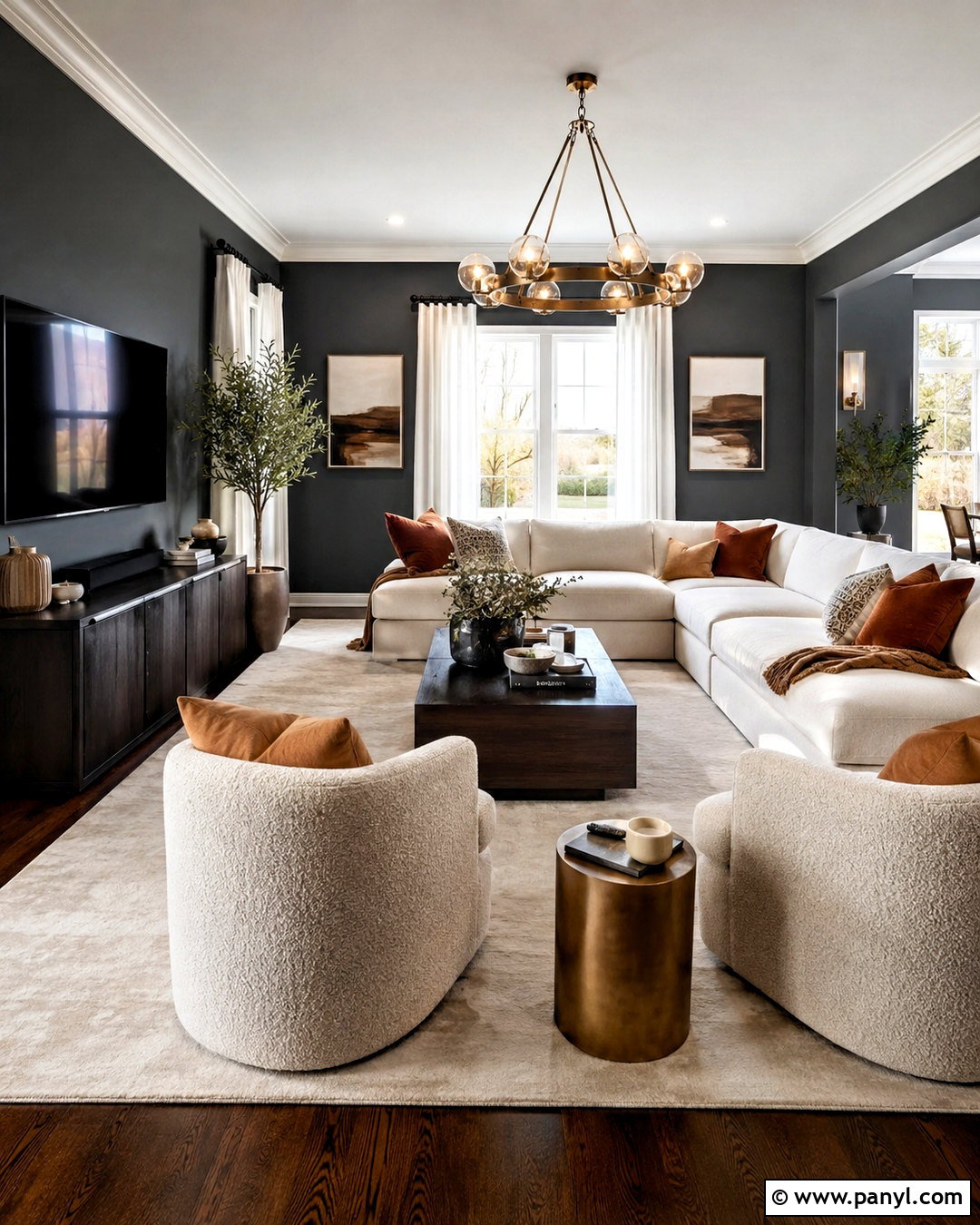
Midnight blue works beautifully in a media room because it reduces visual distraction while still showing more color than black. Paint the walls, ceiling, and trim in the same deep blue for a smooth, immersive finish. Arrange a large charcoal sectional toward a low walnut media console, leaving clear walking space behind the seating. Add a thick gray-blue rug, blackout curtains, and several textured pillows for comfort and sound control. Use dimmable wall sconces instead of relying only on ceiling fixtures. Conceal electronics and cables inside ventilated cabinetry to keep the room orderly. A narrow console table behind the sectional can hold lamps and storage baskets. The completed room feels cozy for movies, games, and family evenings while maintaining a clean, grown-up appearance.
11. Dark Terracotta Family Room
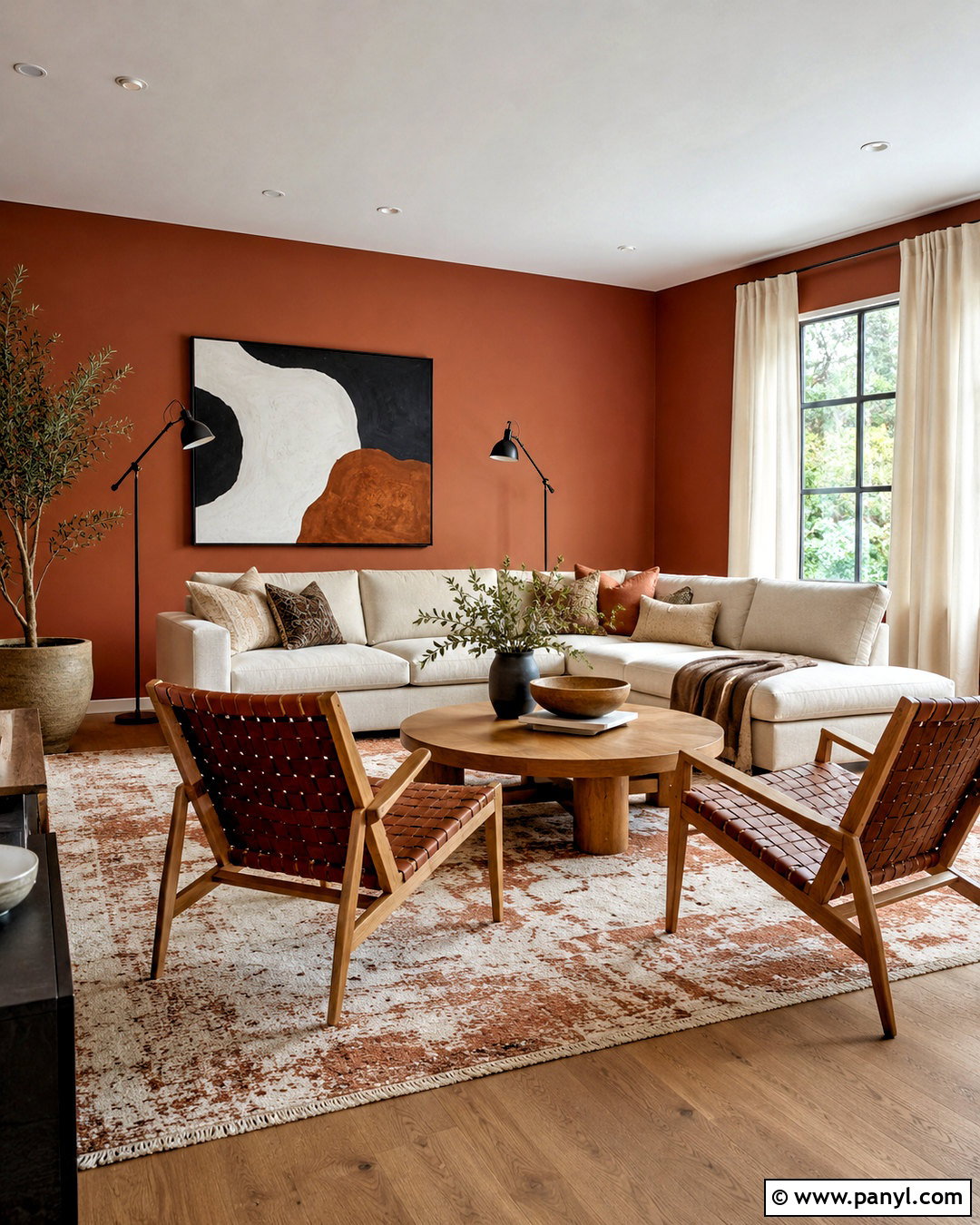
Dark terracotta introduces warmth and depth without making a family room feel overly formal. Select a muted clay color with brown undertones for the walls, then pair it with an oatmeal sectional and a pair of woven leather chairs. A large cream-and-rust patterned rug anchors the conversation area over medium oak flooring. Choose a substantial wood coffee table with rounded edges for everyday durability. Off-white linen curtains and a pale ceiling help balance the earthy walls. Add black metal floor lamps, handmade pottery, and framed abstract prints containing cream, rust, and charcoal. Built-in cabinets painted the same terracotta create hidden storage for games and electronics. This room feels relaxed, layered, and practical, with colors and materials that can withstand active family life.
12. Espresso Brown Home Library
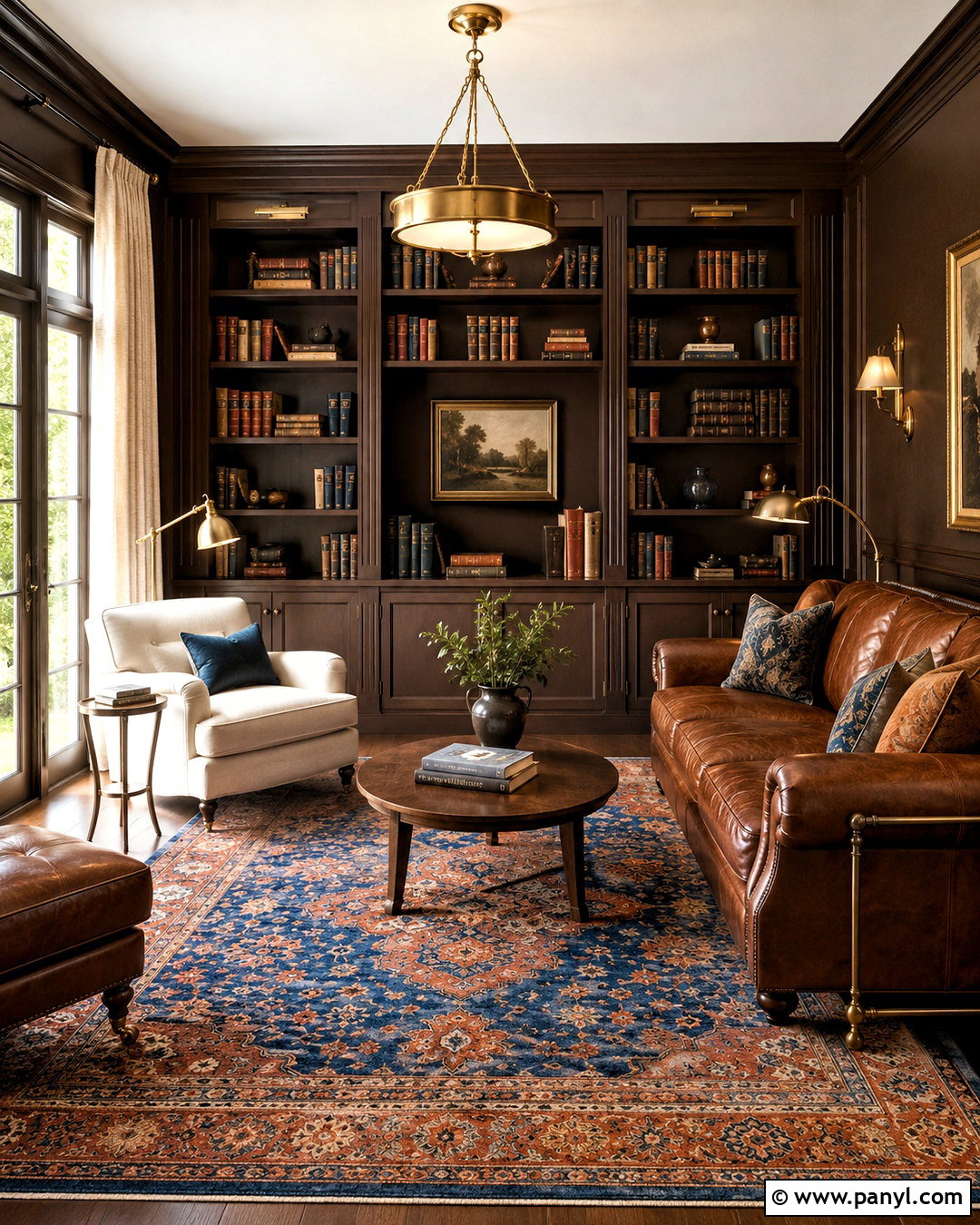
Could an unused sitting room become a welcoming home library? Espresso brown walls and matching bookcases create a strong foundation for reading, collecting, and quiet conversation. Use a brown with a subtle warmth, then introduce a cognac leather sofa and one cream upholstered armchair. A vintage-style rug in faded blue, tan, and rust lightens the dark wood tones. Place a round oak table between the seats and add brass reading lamps at different heights. Books provide natural color across the shelving, while closed lower cabinets conceal household storage. Hang oatmeal curtains and include a large landscape painting for an open visual moment. The finished library feels established and comfortable, combining classic materials with a simple furniture layout that suits an average residential room.
13. Dark Slate Blue Bathroom
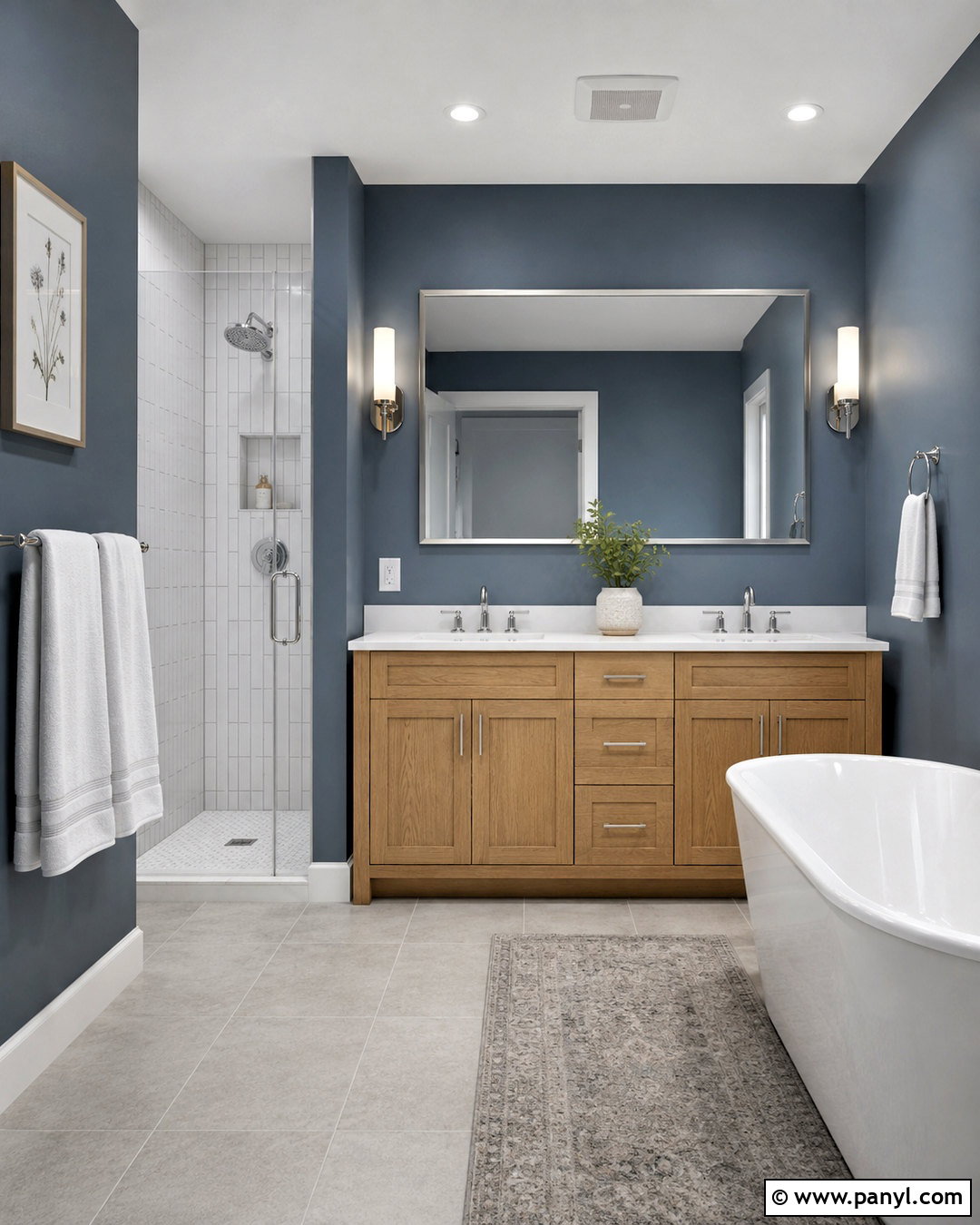
Dark slate blue gives a bathroom depth while remaining softer and more versatile than charcoal. Paint the upper walls in a smoky blue-gray and use white vertical tile around the shower and lower half of the room. A light oak vanity topped with white quartz adds warmth and practical storage. Choose polished chrome fixtures for a clean reflective finish, then install a wide framed mirror with bright sconces on both sides. Pale gray floor tile provides a durable neutral base. Complete the space with white towels, a simple cotton shower curtain, and one small wood stool. Avoid darkening every surface, especially in a bathroom with a small window. The resulting design feels crisp and calming, with enough contrast to show the slate blue clearly throughout the day.
14. Deep Plum Dressing Room
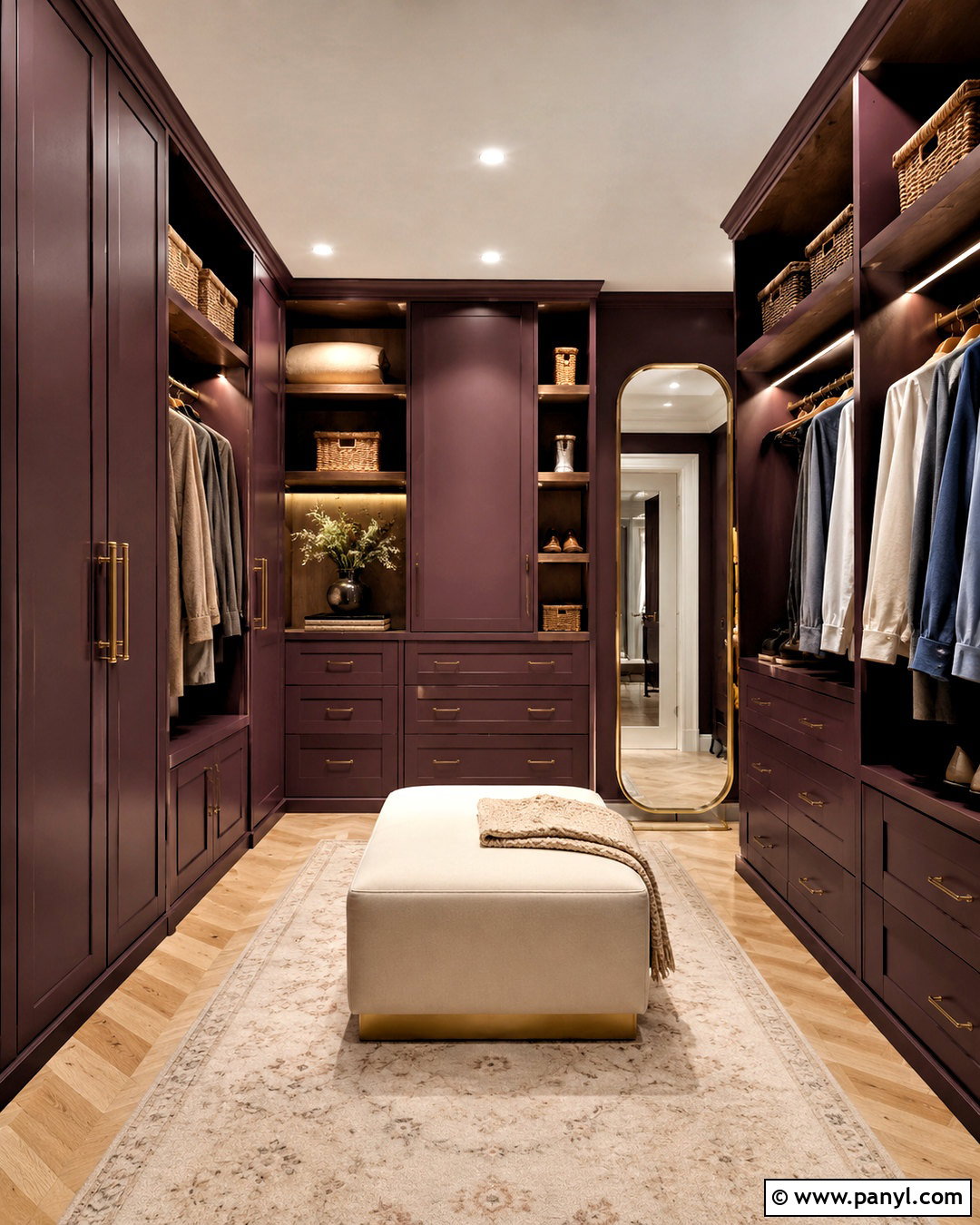
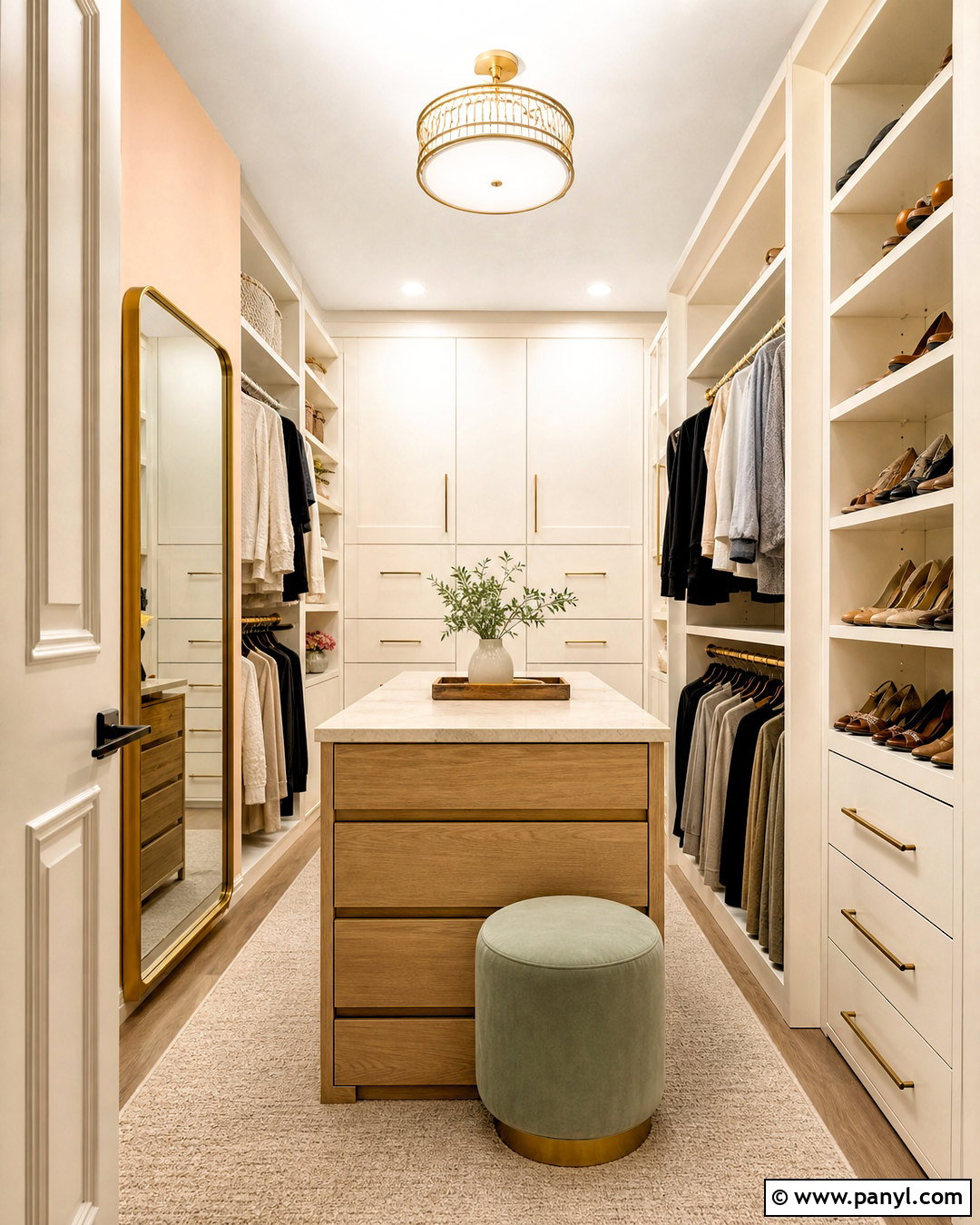
Deep plum can turn a dressing room or walk-in closet into a polished extension of the bedroom. Paint the walls and built-in cabinetry in a rich, muted purple, using a satin finish on doors for easy cleaning. Add brass handles and warm LED lighting inside the storage sections so clothing remains easy to see. A small cream upholstered ottoman provides seating without crowding the floor. Choose a pale patterned runner and a full-length brass-framed mirror to reflect the room and create contrast. Store everyday items in matching woven baskets, while glass-front drawers keep accessories organized. Ivory trim around the doorway creates a clean transition into the adjoining space. The final room feels luxurious, but every decorative choice also supports efficient storage and daily dressing routines.
15. Dark Sage Green Mudroom
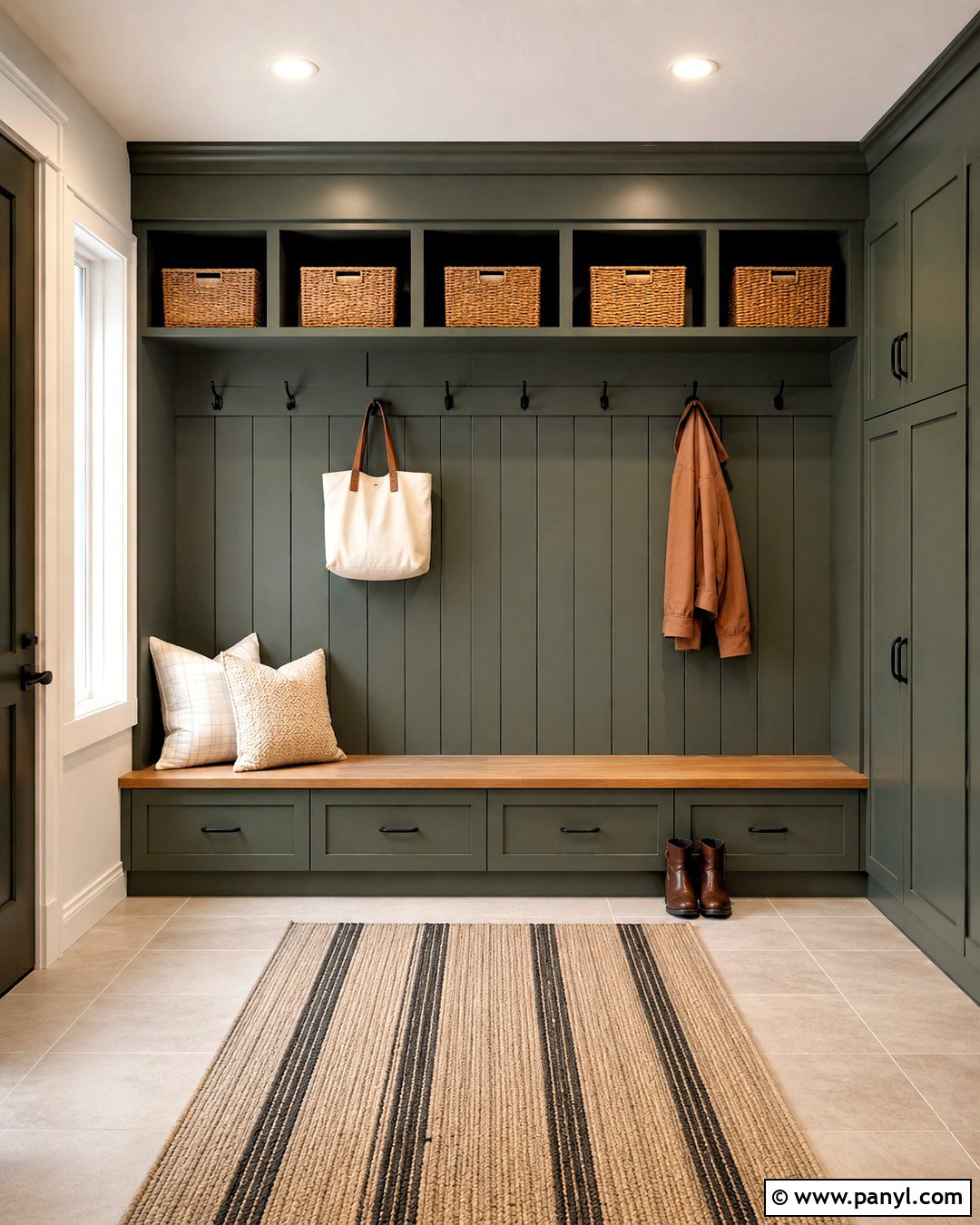
A hardworking mudroom feels calmer and more organized when dark sage green unifies its storage. Paint tall cabinets, wall paneling, and the built-in bench in a deep gray-green with a durable washable finish. Use warm white above the paneling if the room has limited daylight. Add a natural oak bench seat, black metal hooks, and woven baskets labeled only inside to keep the visible design uncluttered. Beige porcelain floor tile handles dirt while brightening the lower half of the space. Include a striped washable runner and cream seat cushions for softness. Closed cabinets should hold seasonal gear, while open cubbies provide quick access to daily shoes and bags. This coordinated arrangement makes the entry functional, tidy, and welcoming even during busy mornings.
16. Black Green Entryway
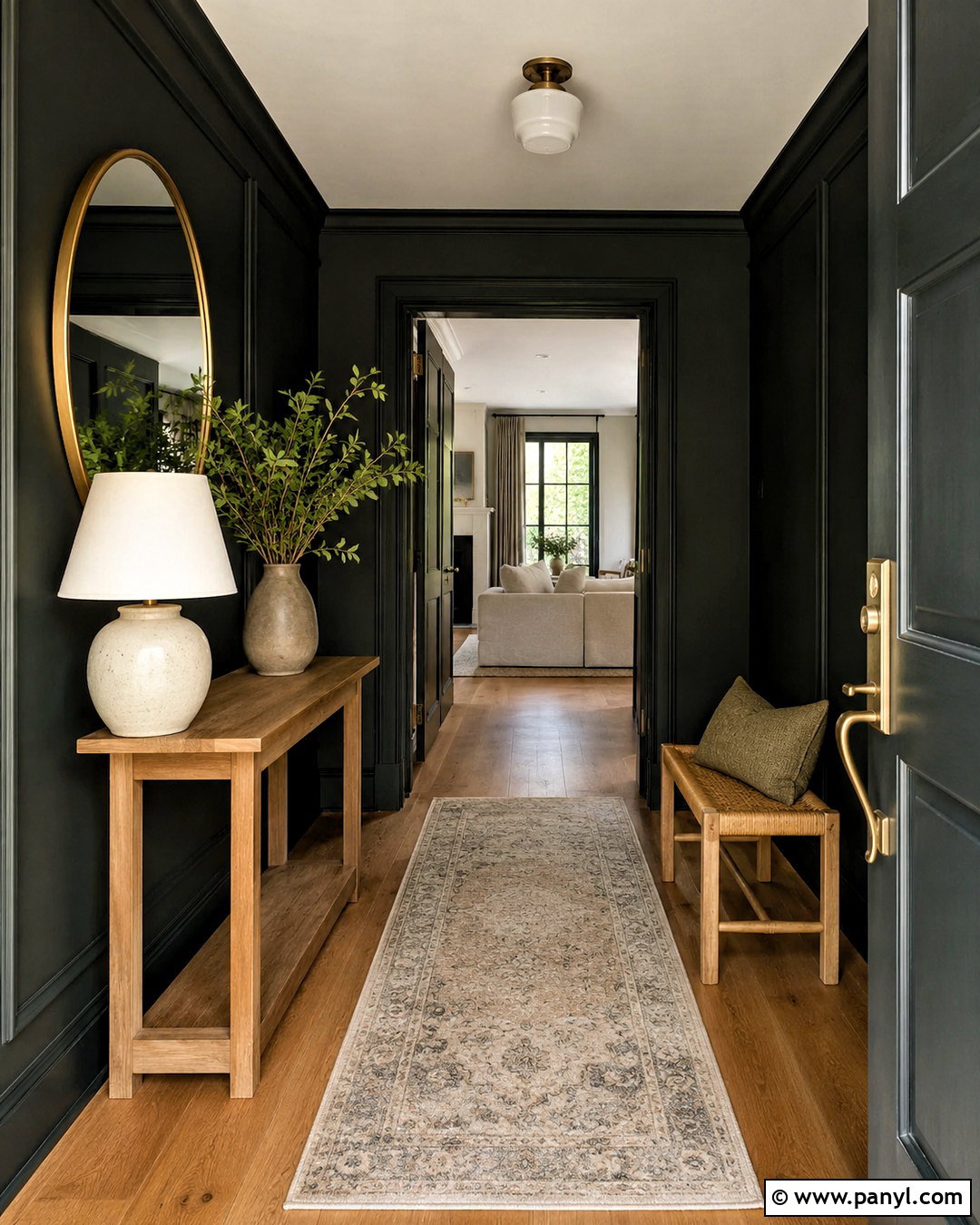
Black green is a nearly neutral color that gives an entryway drama while connecting beautifully with outdoor landscaping. Paint the walls and trim in a very deep green that appears almost black in shadow. Place a narrow light oak console against one wall and hang a large round brass mirror above it. A pale vintage-style runner leads visitors through the space and protects the flooring. Add a cream ceramic lamp, a shallow tray for keys, and one leafy branch in a tall stoneware vase. If room permits, include a simple cane bench near the door. Keep the ceiling warm white and choose a clear glass pendant to maintain brightness. The completed entry feels distinctive and composed, giving guests a strong first impression without sacrificing everyday function.
17. Dark Taupe Family Room
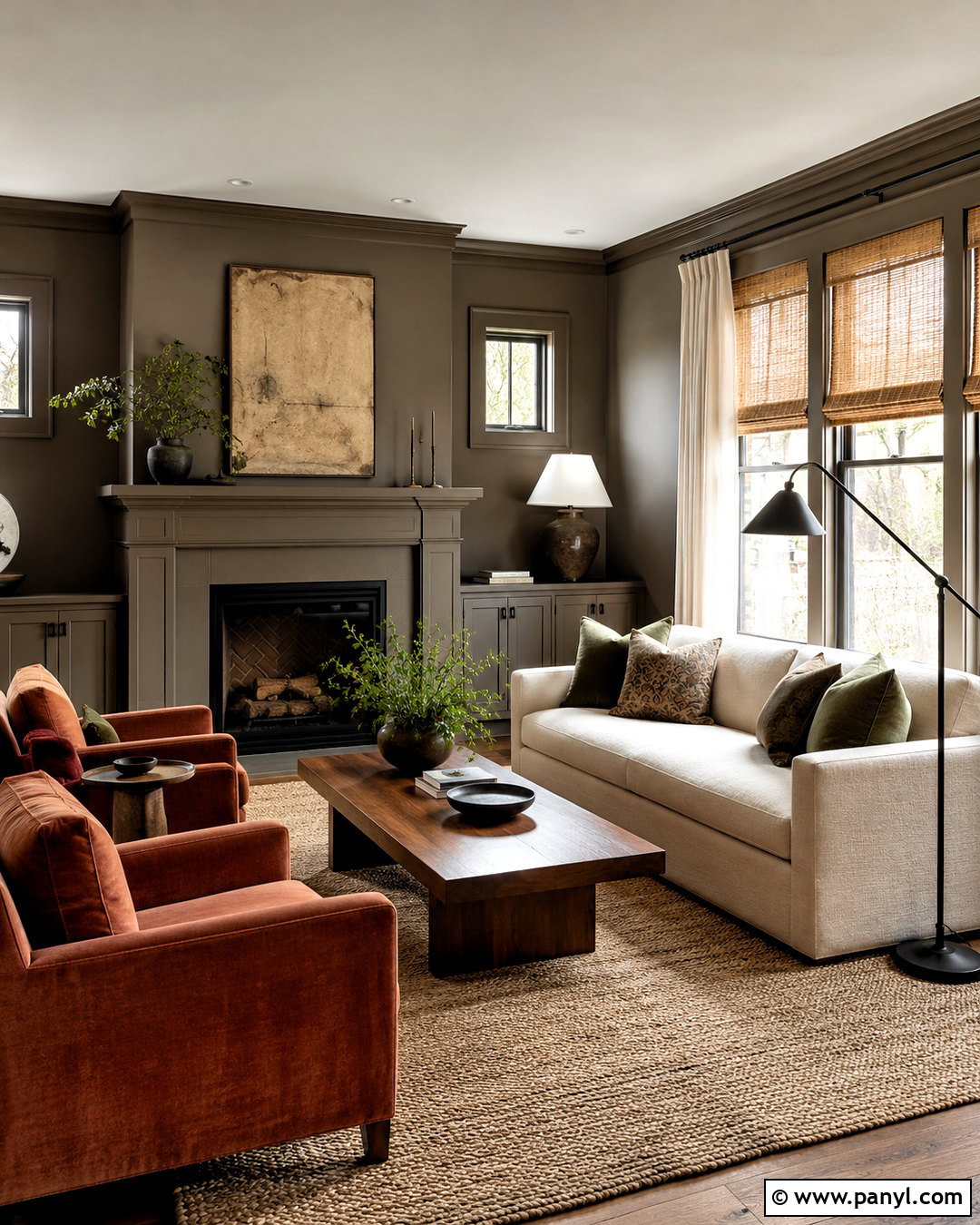
Dark taupe offers a warm, flexible background for a family room that needs to feel comfortable in every season. Choose a deep mushroom shade with balanced gray and brown undertones, then paint the walls and fireplace surround for continuity. Arrange a soft cream sofa with two rust-colored armchairs around a walnut coffee table. A textured beige rug keeps the palette light underfoot, while olive and charcoal pillows add controlled contrast. Install woven shades beneath full-length ivory curtains for practical light control. Black metal lamps and simple oak shelving bring structure to the neutral scheme. Family photographs can be grouped in matching wood frames rather than scattered around the room. The final result is cozy and grounded, with enough color variation to prevent the dark taupe from appearing dull.
18. Rust Red Primary Bedroom
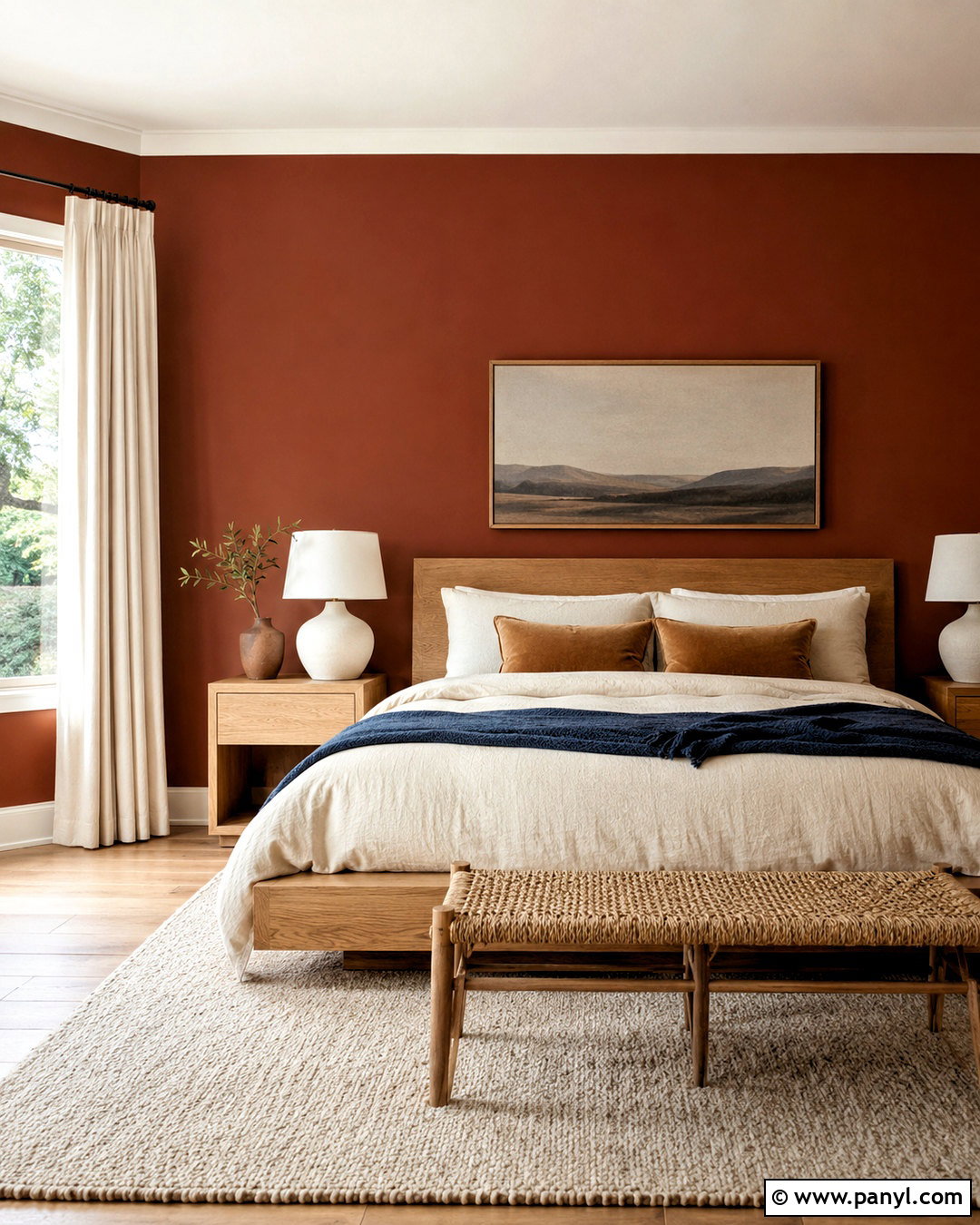
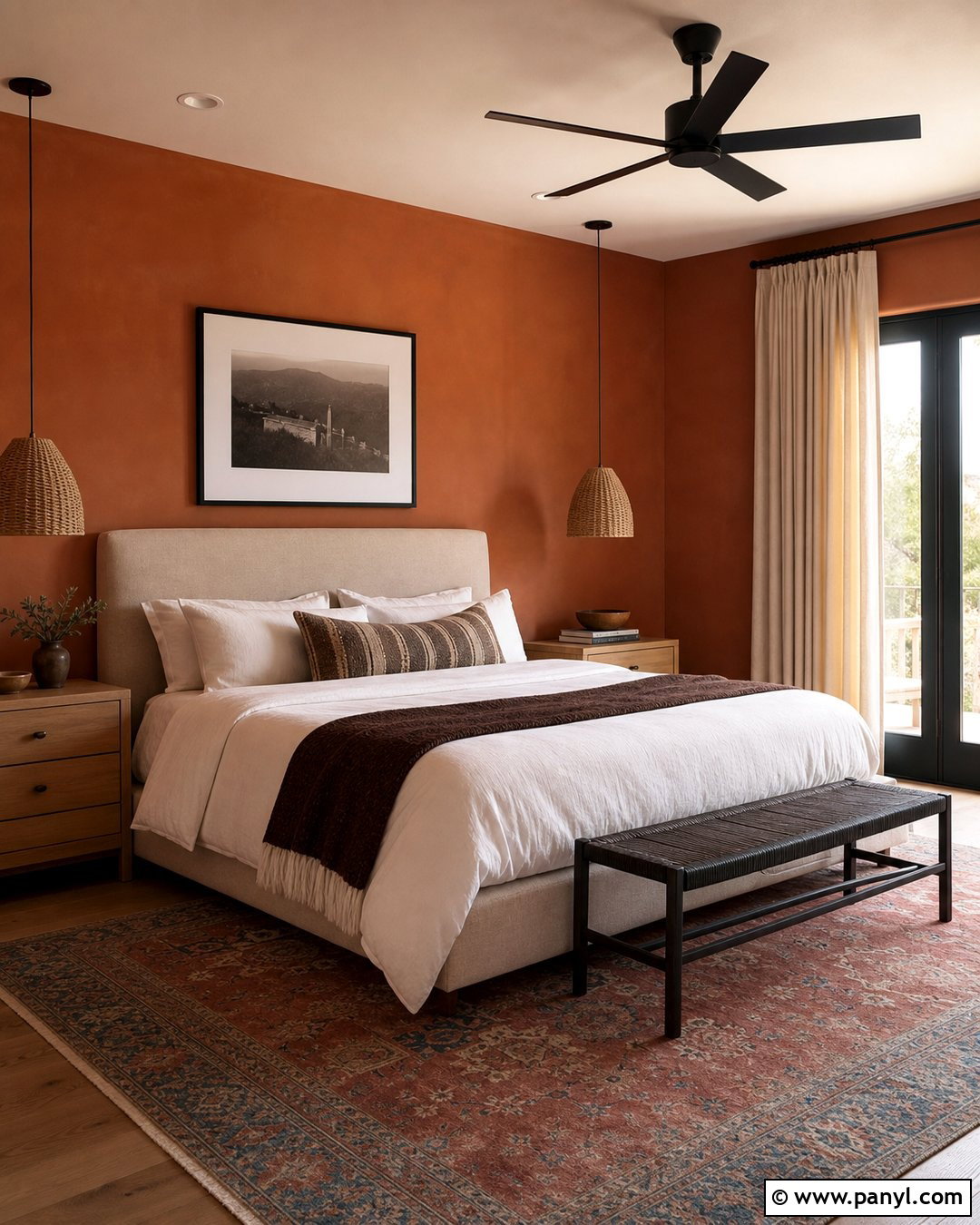
Rust red creates a warm primary bedroom that feels energetic during the day and cocooning at night. Select a dark, earthy red with strong clay undertones, avoiding anything too bright. Paint the wall behind the bed and the remaining walls in the same shade for a complete effect. Choose a low oak bed dressed in cream linen, caramel pillows, and a muted blue throw. Pale wood nightstands and sculptural white lamps provide visual breathing room. Add a beige wool rug, full-length oatmeal curtains, and a woven bench. Artwork featuring soft landscapes can introduce blue, tan, and green accents. With natural materials and a limited palette, the room feels layered and restful rather than intense, creating a distinctive retreat that remains easy to live with.
19. Ink Blue Kitchen
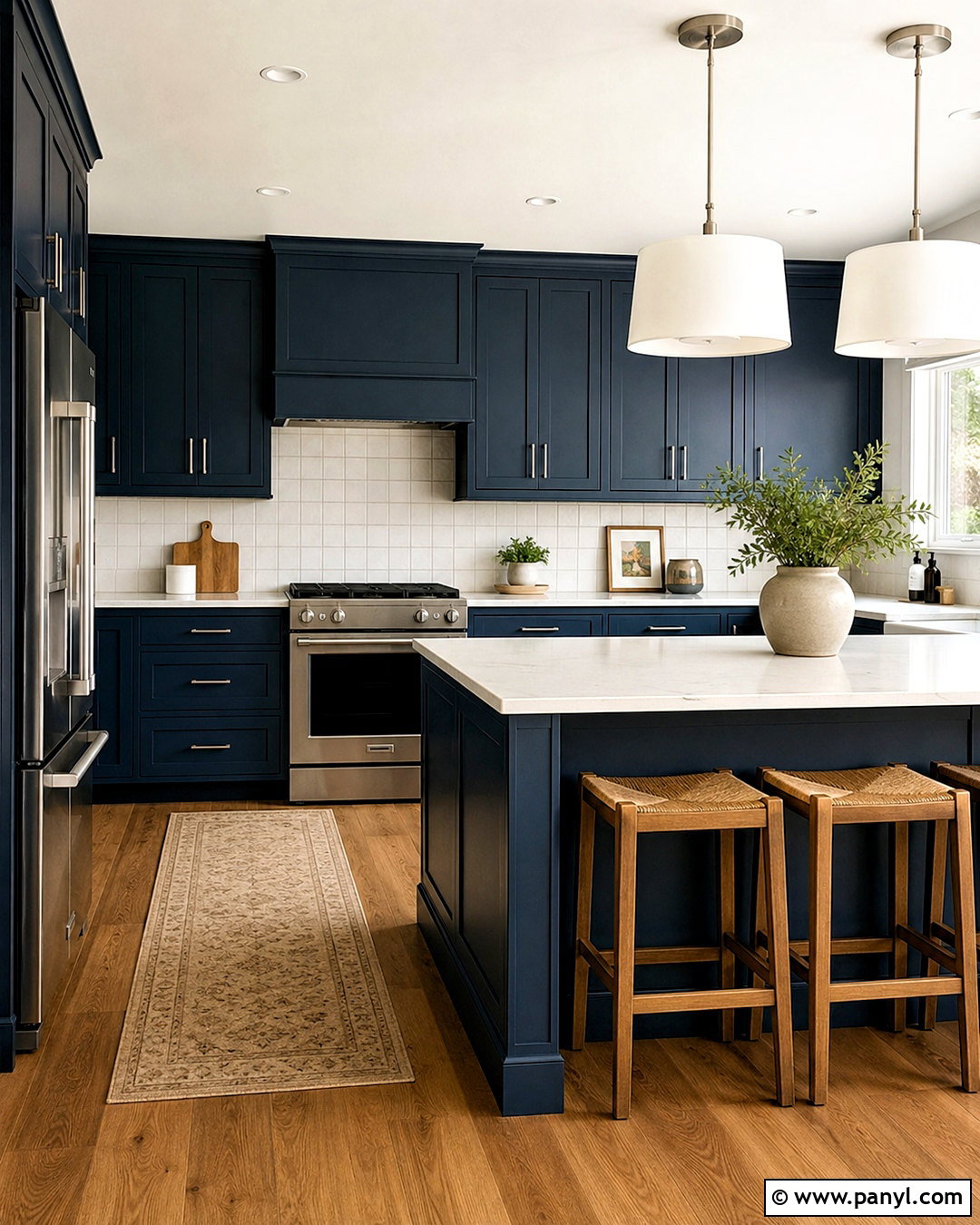
Ink blue cabinetry gives a kitchen a refined focal point while retaining the versatility of a classic neutral. Use the blue on both the perimeter cabinets and island, then surround it with warm white walls and a light ceiling. Select creamy quartz countertops, a white square-tile backsplash, and medium oak flooring to lift the darker millwork. Brushed nickel hardware offers a crisp finish, while natural wood counter stools add warmth. Install oversized white pendants above the island and under-cabinet lighting along work surfaces. Keep appliances in stainless steel for a smooth transition between cool and warm tones. A washable beige runner and a few pale ceramic accessories complete the room. This full palette feels bold but approachable, supporting both traditional and modern kitchen details.
20. Smoky Purple Reading Room
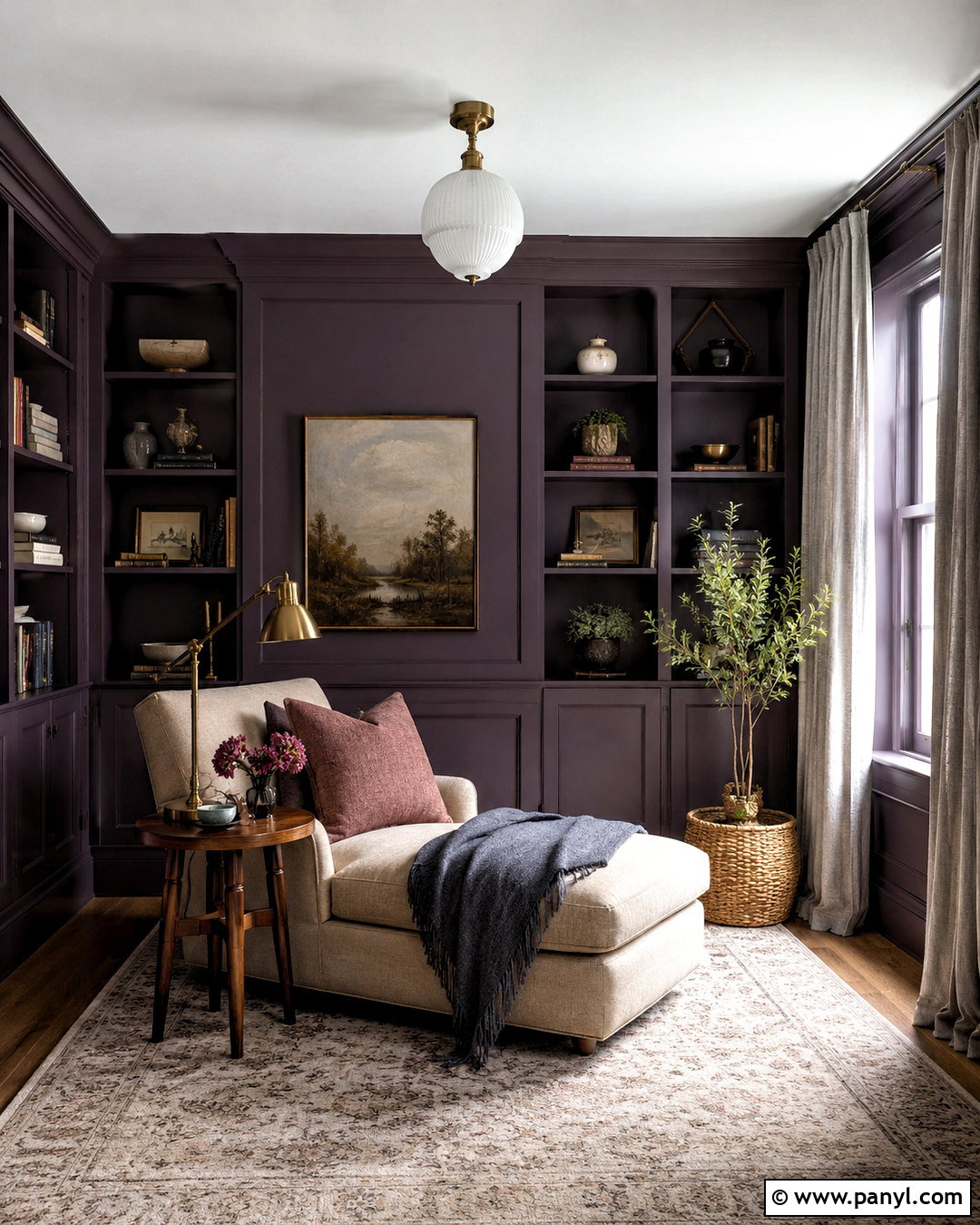
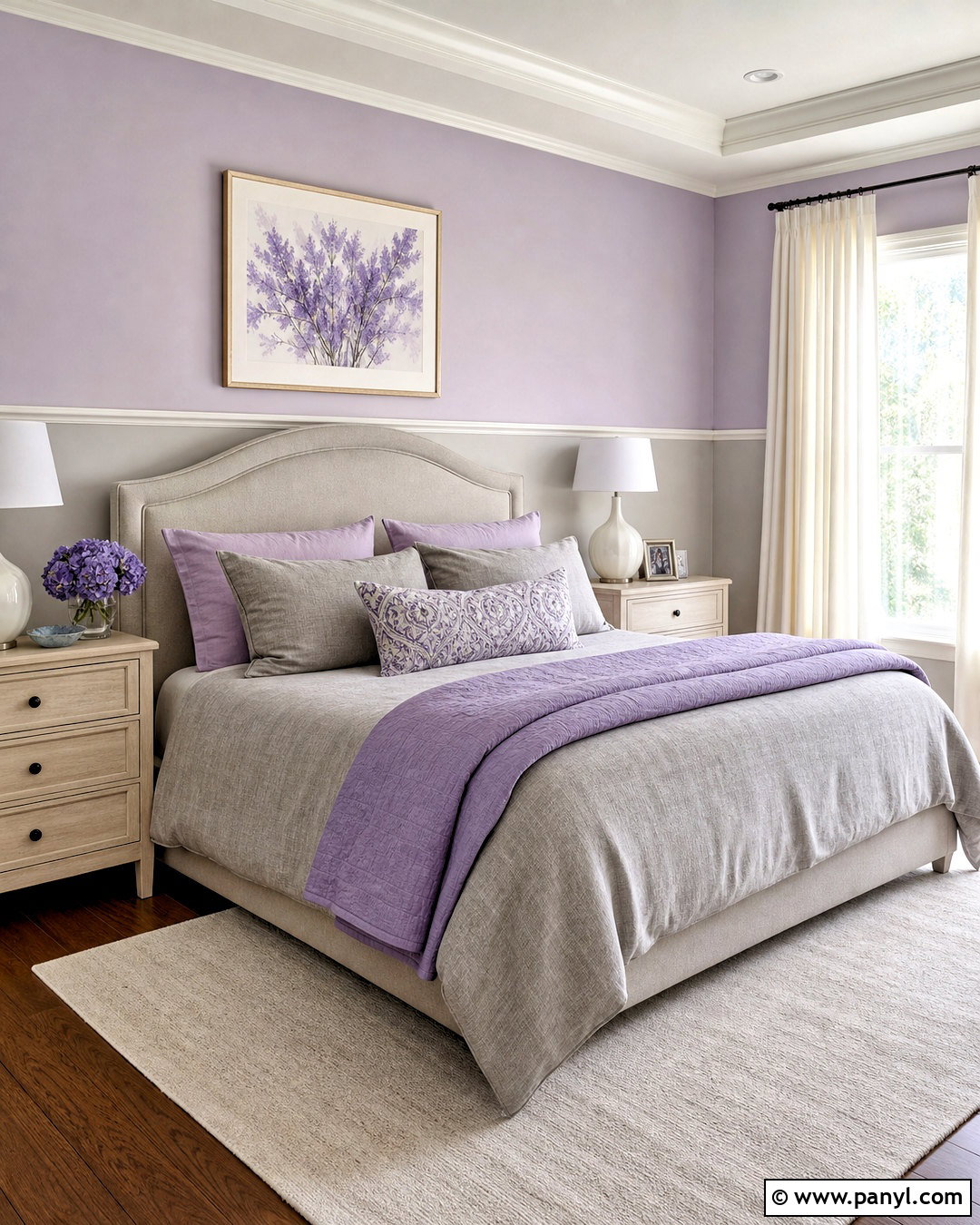
Smoky purple creates a peaceful reading room when paired with muted neutrals and gently aged finishes. Cover the walls in a deep gray-purple, then add built-in shelves in the same color for a seamless effect. Position a comfortable oatmeal chaise near the window with a small walnut side table and adjustable brass reading lamp. A faded cream rug softens the floor, while dusty rose and slate blue pillows introduce quiet color variation. Use natural linen curtains and a warm white ceiling to keep the compact room open. Fill the shelves with books, closed storage boxes, and a few simple ceramics rather than excessive decor. The finished retreat feels personal and calming, offering a practical place for reading, journaling, or enjoying a quiet break.
Conclusion:
Choosing among these 20 dark room colors becomes easier when you plan the entire space instead of focusing only on the paint. Consider how the walls will interact with flooring, furniture, window treatments, metals, and artificial lighting. Warm wood, cream textiles, reflective fixtures, and pale rugs can balance even the deepest blue, green, brown, or purple. For a more immersive result, continue the color across trim, cabinetry, or the ceiling. For lighter contrast, keep the ceiling and largest furniture pieces neutral. Always test large samples beside existing finishes before making a final decision. With thoughtful layering and adequate lighting, dark colors can make rooms feel comfortable, distinctive, and beautifully connected.

Related Ideas and Inspiration:
Leave a Reply