
Two-tone paint can make a bedroom feel more layered, balanced, and personal without requiring complicated remodeling. This collection of **20 two color bedroom walls** explores calming neutrals, earthy combinations, fresh pastels, and dramatic contrasts. Each look covers more than paint alone. You will also find practical suggestions for furniture, bedding, lighting, flooring, and decorative accents that bring the entire room together. Before committing, sample both colors beside the windows, behind the bed, and in darker corners. Check them during the morning and evening because natural and artificial light can shift their appearance. Whether you prefer a simple half-painted wall or a bold focal wall, these complete designs offer an approachable starting point. Keep reading to discover 20 two color bedroom walls you can recreate.

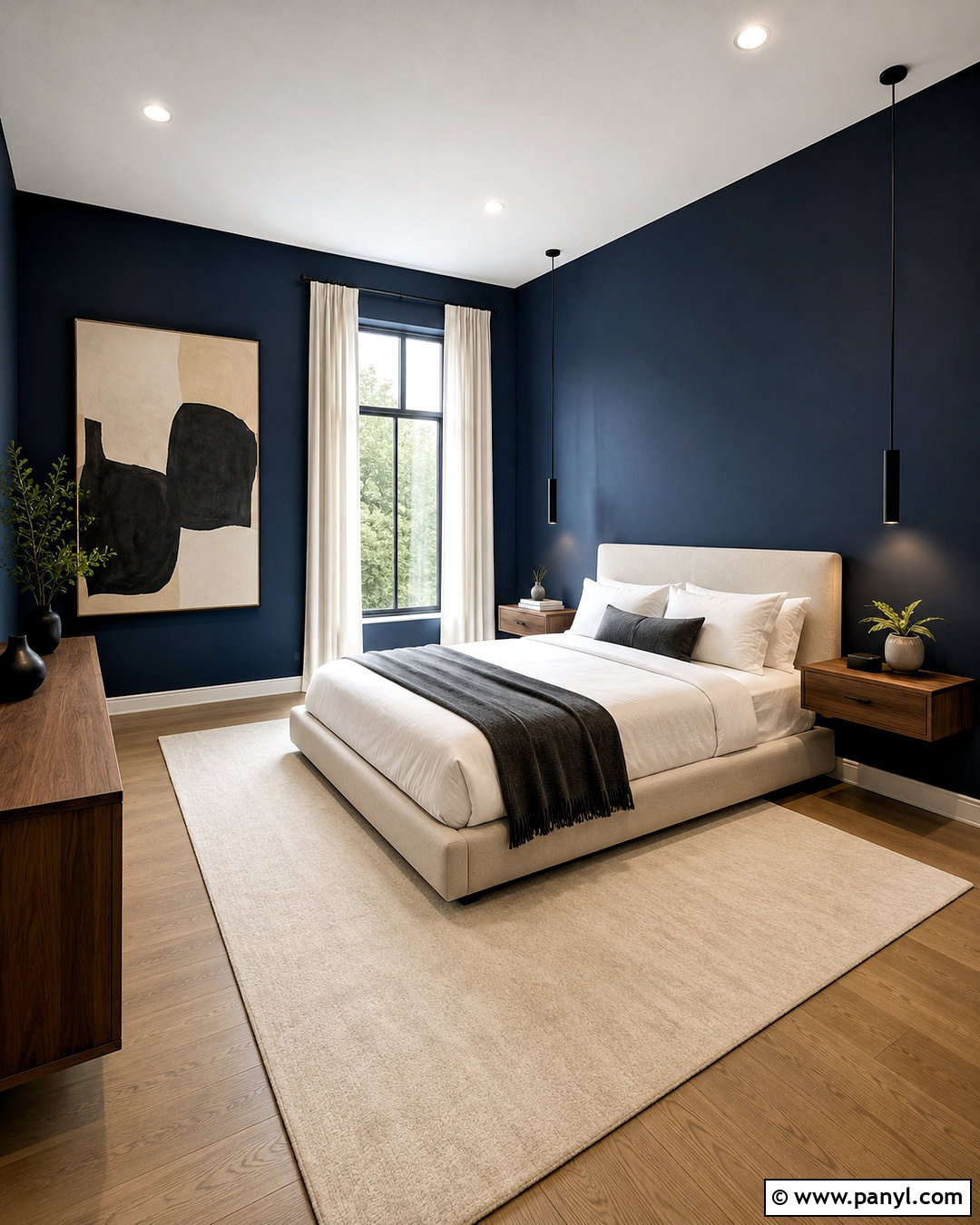
1. Navy Blue And White Bedroom Walls

Navy blue and white create a crisp bedroom that feels dramatic without becoming overwhelming. Paint the wall behind the bed deep navy, then keep the remaining walls clean, warm white. A medium oak bed softens the contrast, while white linen bedding maintains an airy appearance. Add navy pillows, a striped throw, and brushed brass reading sconces to repeat the wall colors around the room. Natural woven shades and a light jute rug bring warmth to the cooler palette. Keep artwork simple, using white mats and slim oak frames. This scheme works especially well in a bright bedroom because sunlight reveals the blue undertones. In a smaller space, choose a slightly softened navy rather than an almost-black shade.
2. Sage Green And Cream Bedroom Walls

Imagine waking up in a bedroom filled with quiet, garden-inspired color. Paint the lower two-thirds of each wall warm sage green and finish the upper portion in soft cream. A narrow cream chair rail can create a clean transition while adding subtle architectural detail. Choose an upholstered oatmeal bed, light oak nightstands, and relaxed ivory bedding with muted green accents. Linen curtains should closely match the cream walls so the windows feel taller and brighter. Complete the space with ceramic lamps, botanical artwork, and a natural wool rug. Matte black hardware introduces definition without disrupting the calm palette. This balanced design suits traditional, farmhouse, and modern bedrooms, depending on the shapes of the furniture and accessories you select.
3. Blush Pink And Warm Gray Bedroom Walls

Blush pink becomes sophisticated when it is balanced with a soft, warm gray. Use gray on three walls and place dusty blush behind the bed as a gentle focal point. A charcoal upholstered headboard gives the pastel color more structure, while pale gray bedding keeps the overall look restful. Layer in blush pillows, an ivory throw, and a warm white rug for a comfortable finish. Walnut nightstands and antique brass lamps add richness without making the room overly formal. Choose abstract artwork that combines pink, gray, cream, and touches of brown. Avoid icy silver accessories, which can make the blush appear colder. This complete scheme feels polished enough for a primary bedroom yet welcoming enough for a stylish guest room.
4. Terracotta And Beige Bedroom Walls

Warm terracotta and sandy beige can turn an ordinary bedroom into a relaxed, earthy retreat. Apply muted terracotta to the headboard wall and use light beige across the remaining walls and ceiling. Anchor the room with a low oak platform bed, cream cotton bedding, and a rust-colored quilt folded neatly across the foot. Woven pendant lights, clay pottery, and linen curtains reinforce the natural character of the palette. Introduce contrast through dark bronze hardware and one or two black-framed prints. A faded geometric rug can combine beige, rust, and brown beneath the bed. Keep decorative objects limited so the rich wall color remains the main feature. This scheme looks particularly inviting alongside warm wood flooring and abundant daylight.
5. Charcoal Gray And Soft White Bedroom Walls

Want a darker bedroom without sacrificing brightness? Paint the lower half of the walls charcoal gray and use soft white above, placing the dividing line slightly higher than the headboard. This arrangement grounds the room while preserving an open feeling near the ceiling. Select a simple black metal bed or a pale wood frame that stands clearly against both colors. Dress the bed in white, gray, and muted camel textiles for warmth. Black swing-arm sconces save nightstand space and connect visually with the charcoal paint. Add white curtains, an oatmeal rug, and natural wood furniture to prevent the design from looking stark. Minimal artwork and streamlined accessories will keep this two-tone bedroom clean, comfortable, and intentionally modern.
6. Dusty Blue And Taupe Bedroom Walls

Dusty blue and taupe offer a gentle alternative to stronger blue-and-white combinations. Paint the wall behind the bed muted blue and continue taupe across the side walls, window wall, and ceiling. The colors should share soft gray undertones so the transition feels smooth rather than abrupt. Choose a warm beige upholstered bed, walnut nightstands, and layered bedding in ivory, blue-gray, and mushroom brown. Textured linen curtains add softness, while aged brass lamps provide a small amount of warmth and shine. Hang landscape artwork containing both wall colors to visually connect the room. A patterned wool rug can introduce deeper blue and brown notes. The finished bedroom feels calm, collected, and suitable for either classic or contemporary furniture.
7. Forest Green And Ivory Bedroom Walls
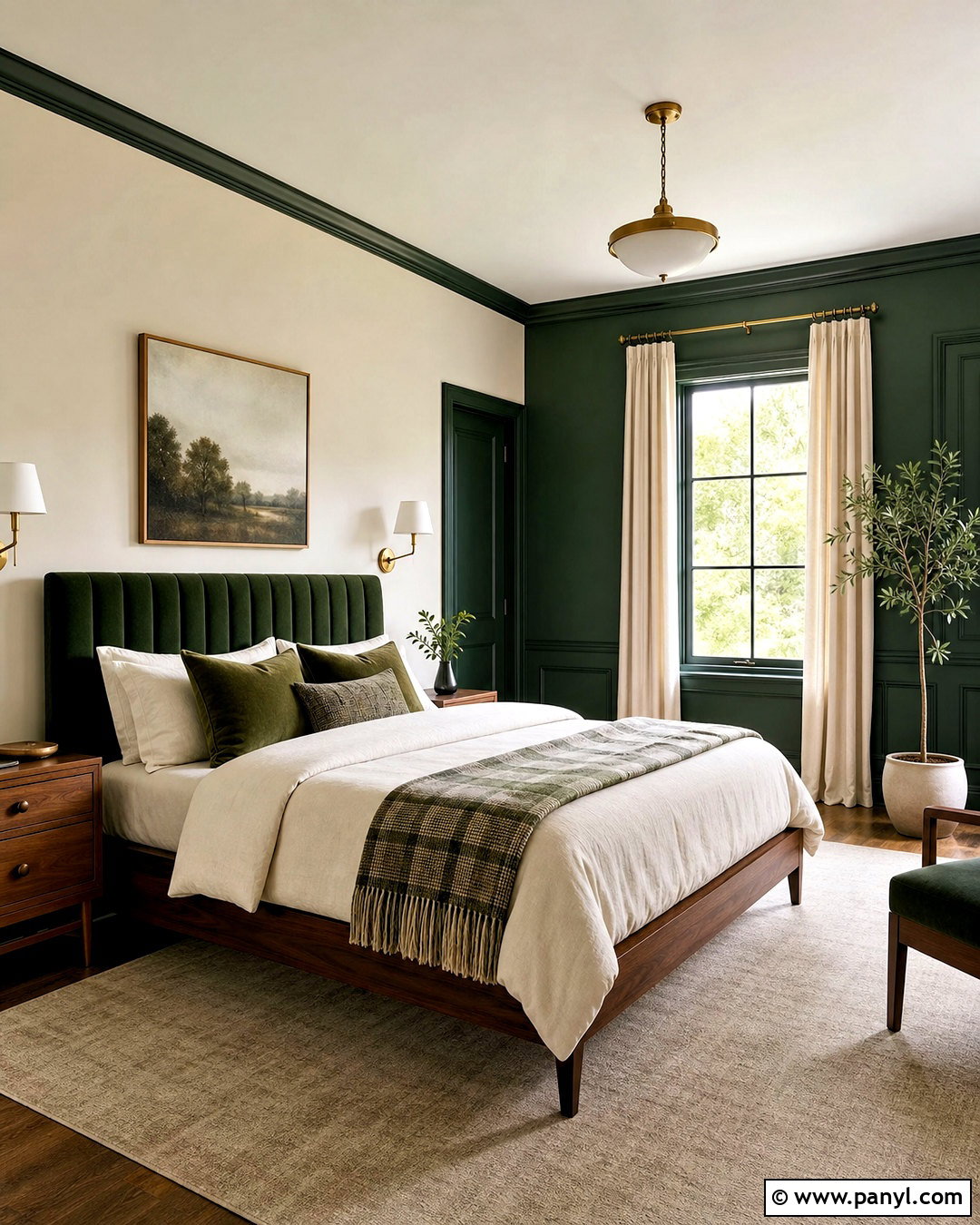
Forest green creates an enveloping backdrop when paired with creamy ivory rather than brilliant white. Cover the headboard wall and the adjoining window wall in deep green, then use ivory on the opposite walls and ceiling. This corner treatment visually defines the sleeping zone without closing in the whole room. Add a walnut bed, ivory bedding, moss-green pillows, and a checked wool throw for a layered appearance. Brass sconces and warm wood furniture complement the richness of the green. Choose full-length ivory curtains and a large neutral rug to balance the darker surfaces. Botanical prints or quiet landscapes work naturally with this palette. Keep the room uncluttered, allowing the strong color, substantial furniture, and tactile fabrics to create the atmosphere.



8. Lavender And Dove Gray Bedroom Walls
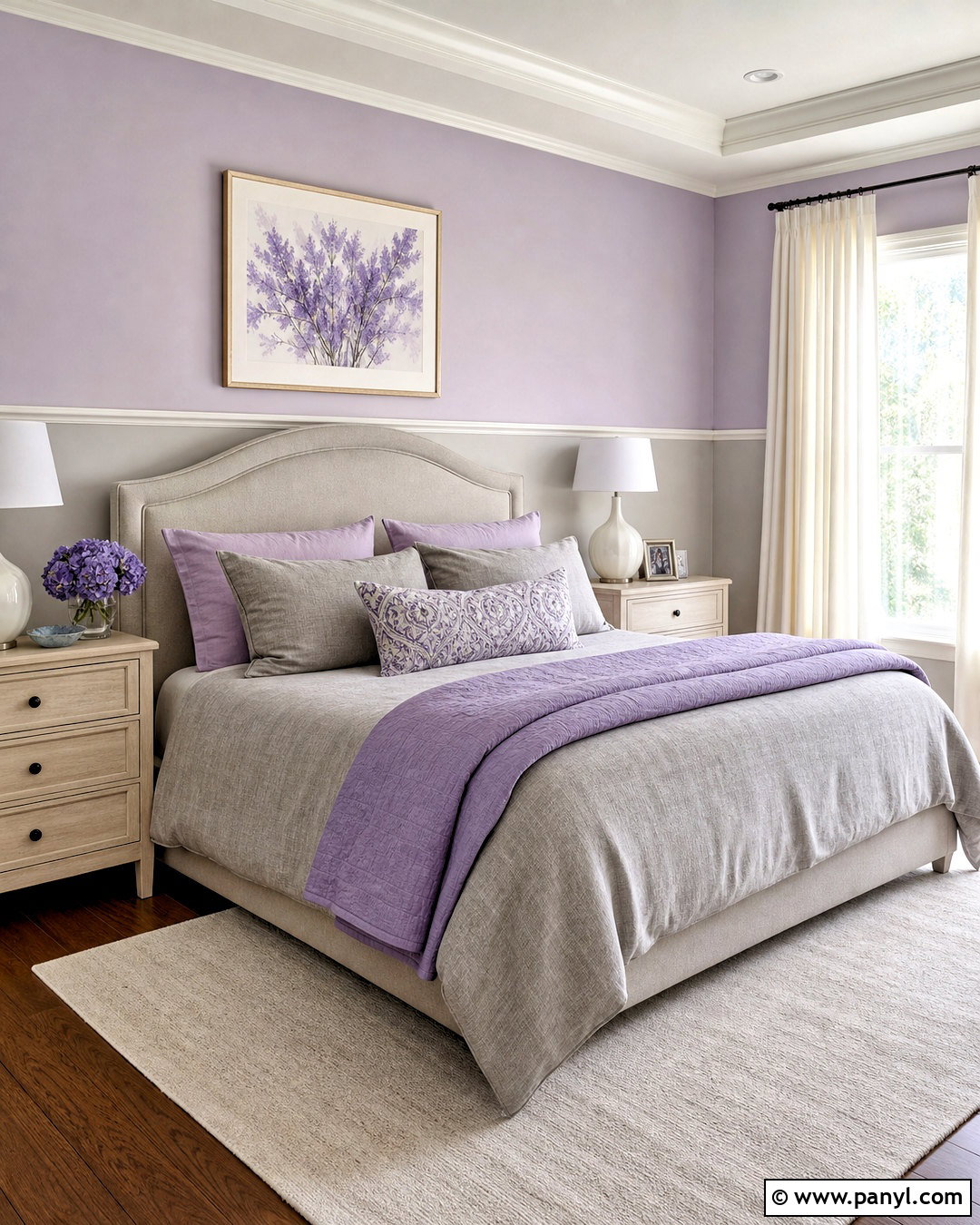
Lavender and dove gray can feel serene and grown-up when both shades are muted. Use pale lavender on the upper wall and soft gray below, separating them with a narrow white molding. Position the split behind a curved upholstered headboard so the horizontal line frames the bed instead of cutting through it awkwardly. Select white oak nightstands, gray linen bedding, and lavender accent pillows in varied textures. A cream area rug and sheer white curtains keep the room light. Add polished nickel lamps sparingly for a clean finish, then warm the arrangement with natural wood picture frames. Abstract prints featuring gray, lilac, and beige complete the palette. The result is gentle and elegant without looking overly sweet or themed.
9. Teal And Sand Bedroom Walls

Deep teal and warm sand bring together cool coastal color and earthy comfort. Paint a wide teal rectangle behind the bed, extending beyond both nightstands to create a painted headboard effect. Cover the rest of the walls in a sandy beige that echoes natural linen. Place a light oak bed within the color block and layer it with white sheets, tan bedding, and restrained teal accents. Woven shades, a jute rug, and ceramic table lamps continue the relaxed material palette. Use matte black frames and hardware to provide crisp definition. Rather than filling the teal block with multiple decorations, center one large neutral artwork over the bed. This design gives the bedroom a strong focal point while leaving the surrounding surfaces calm and spacious.
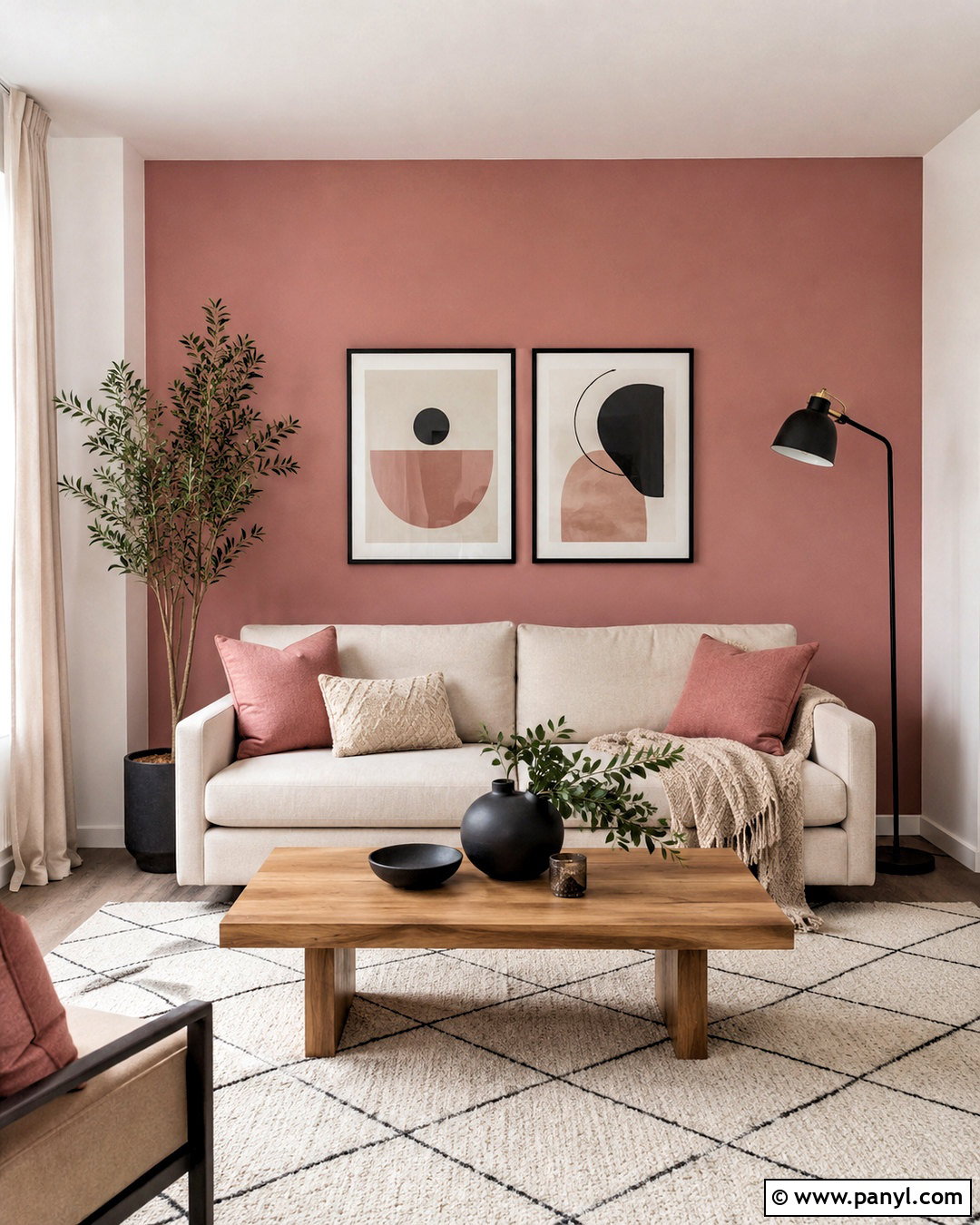


10. Olive Green And Warm White Bedroom Walls
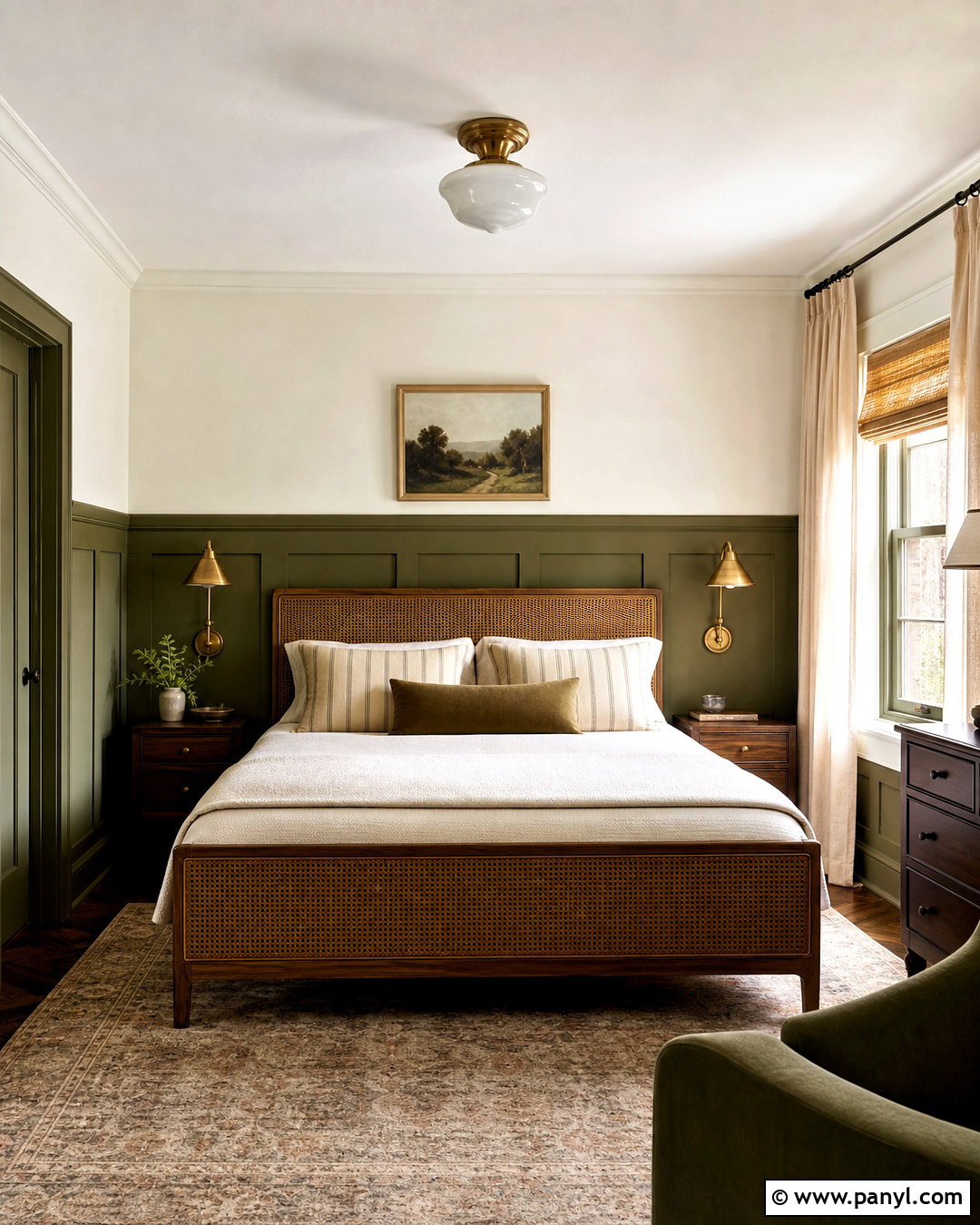
Olive green feels especially comfortable when used as the grounding color in a half-painted bedroom. Cover the lower portion of every wall in muted olive and apply warm white above it, including the ceiling. Set the dividing line just above the top of the headboard for a balanced proportion. A cane bed, cream bedding, and walnut nightstands enhance the earthy quality of the green. Add striped pillows, an oatmeal blanket, and linen curtains for subtle pattern and texture. Antique brass lighting fits the warm undertones, while black accents should remain minimal. Finish with framed sketches, handmade pottery, and a faded neutral rug. The coordinated room has a natural, collected appearance that works with modern, vintage, or transitional furnishings.
11. Black And Greige Bedroom Walls
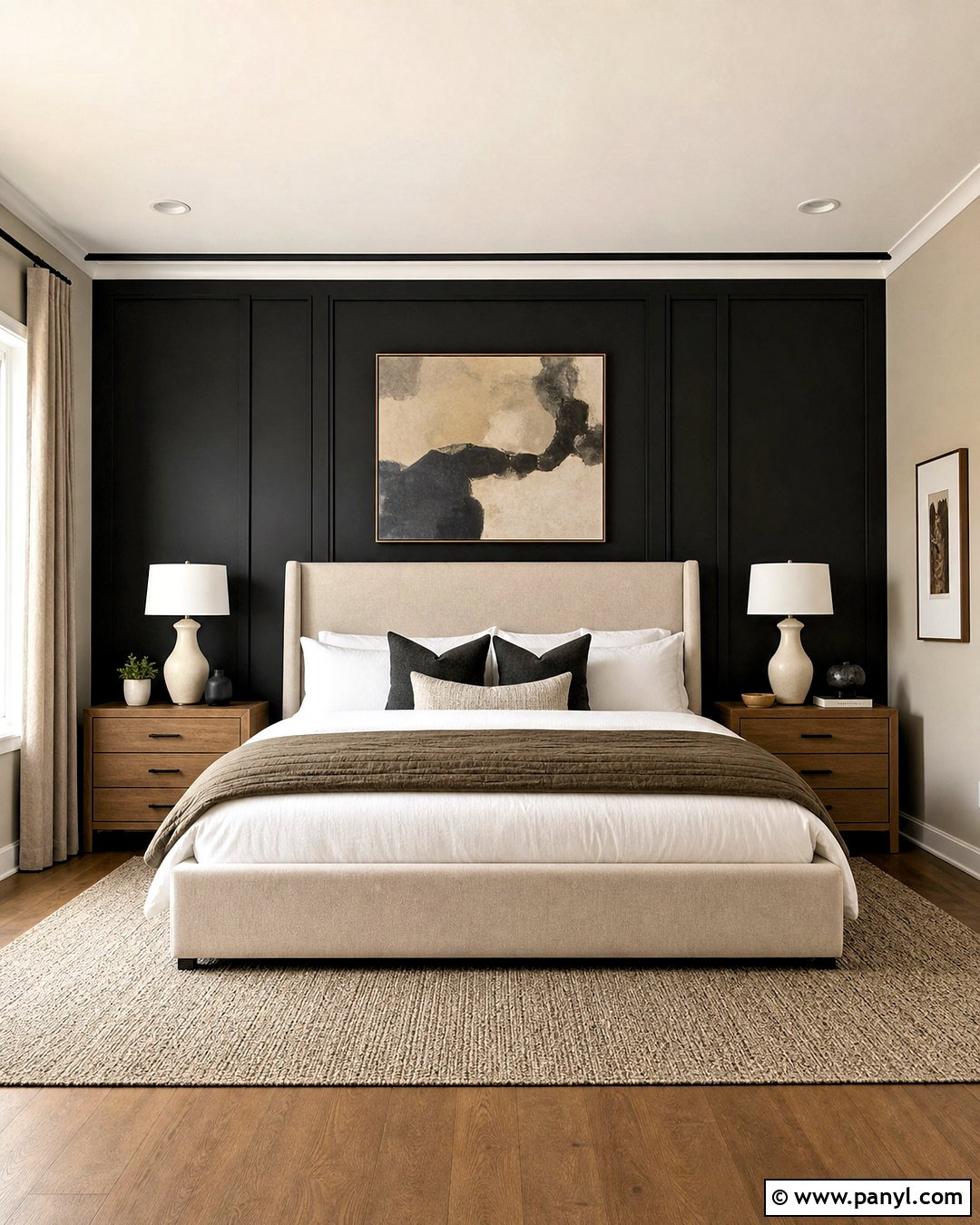
Black paint can work beautifully in a bedroom when it is limited and supported by a soft neutral. Use matte black behind the bed, including the baseboards on that wall, and paint everything else light greige. Choose a tall oatmeal headboard to break up the dark surface and make the bed feel inviting. White bedding, a taupe quilt, and black piping create a controlled connection between both wall colors. Add medium-tone oak nightstands and sculptural cream lamps to introduce warmth and softer shapes. A large abstract artwork can combine black, beige, and off-white without competing with the focal wall. Finish with full greige curtains and a textured wool rug. The completed space feels dramatic, balanced, and highly polished rather than dark or severe.
12. Peach And Mint Green Bedroom Walls

For a cheerful bedroom that still feels restful, pair softened peach with pale mint green. Paint the headboard wall peach and use mint on the other three walls, ensuring both colors have muted, slightly dusty undertones. An ivory upholstered bed provides a neutral resting point between the hues. Choose white bedding with peach and green accent pillows, then add light wood nightstands and simple ceramic lamps. Cream curtains and a natural fiber rug prevent the palette from becoming overly colorful. Small botanical prints can repeat the mint, while terracotta pottery strengthens the peach side of the design. Keep patterns small and restrained. This complete look works particularly well in a guest bedroom, teenager’s room, or sunny space that benefits from playful but balanced color.
13. Burgundy And Pale Pink Bedroom Walls
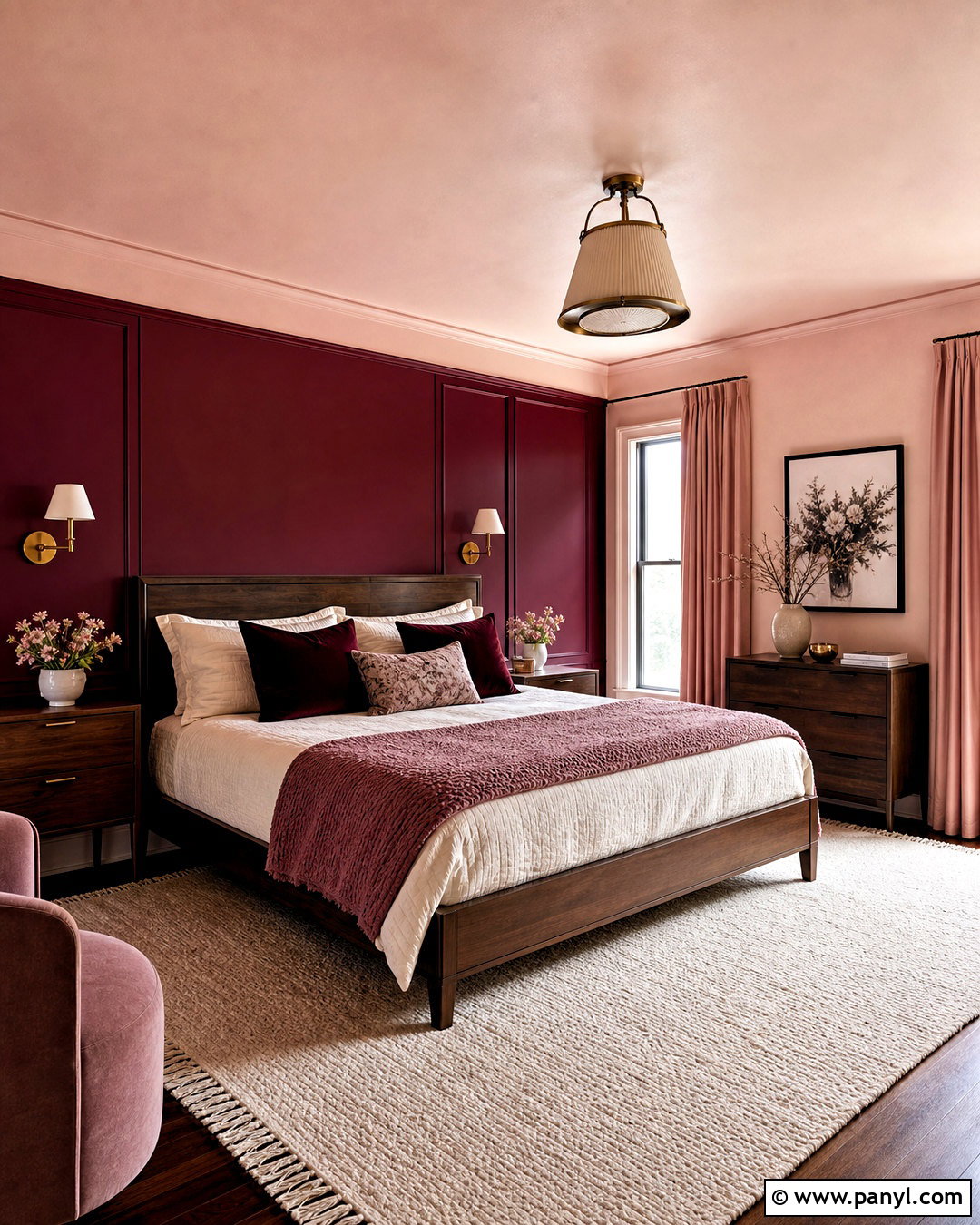
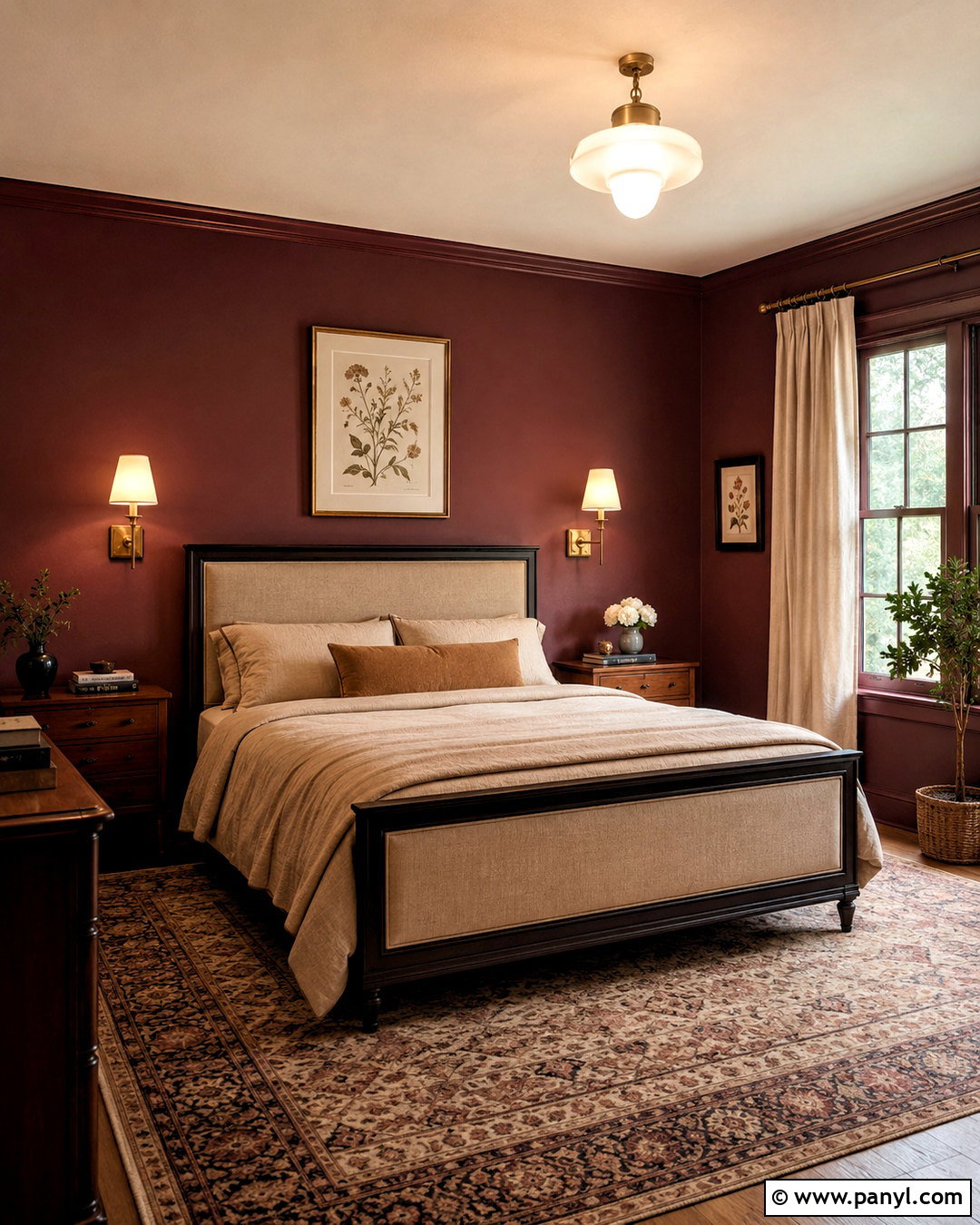
Rich burgundy becomes softer and more approachable when paired with pale, earthy pink. Paint the wall behind the bed burgundy and continue the pink across the remaining walls and ceiling for a gently wrapped effect. Choose a walnut or dark oak bed to support the depth of the focal color. Layer cream bedding with burgundy velvet pillows and a dusty rose coverlet. Aged brass sconces, warm wood nightstands, and an ivory wool rug add comfort and light. Artwork should include muted florals or abstract shapes rather than bright red accents. Full-length blush curtains can blend into the pink walls and make the windows appear larger. The resulting bedroom feels warm, romantic, and refined without depending on fussy furniture or excessive decoration.
14. Chocolate Brown And Powder Blue Bedroom Walls

Chocolate brown and powder blue form an unexpected combination that feels grounded and refreshing. Use deep brown on the lower wall and quiet blue above, with a slim wood picture rail marking the transition. A cream upholstered bed lightens the center of the room, while dark walnut nightstands repeat the deeper wall shade. Dress the bed in ivory linen, pale blue pillows, and a chocolate throw. Bronze lamps and woven window shades reinforce the warm side of the palette. A traditional rug containing faded blue, beige, and brown can tie the entire design together. Keep the ceiling warm white to avoid adding another dominant color. This bedroom has a tailored, timeless character that works well with classic furniture, vintage pieces, and natural materials.
15. Mustard Yellow And Slate Gray Bedroom Walls
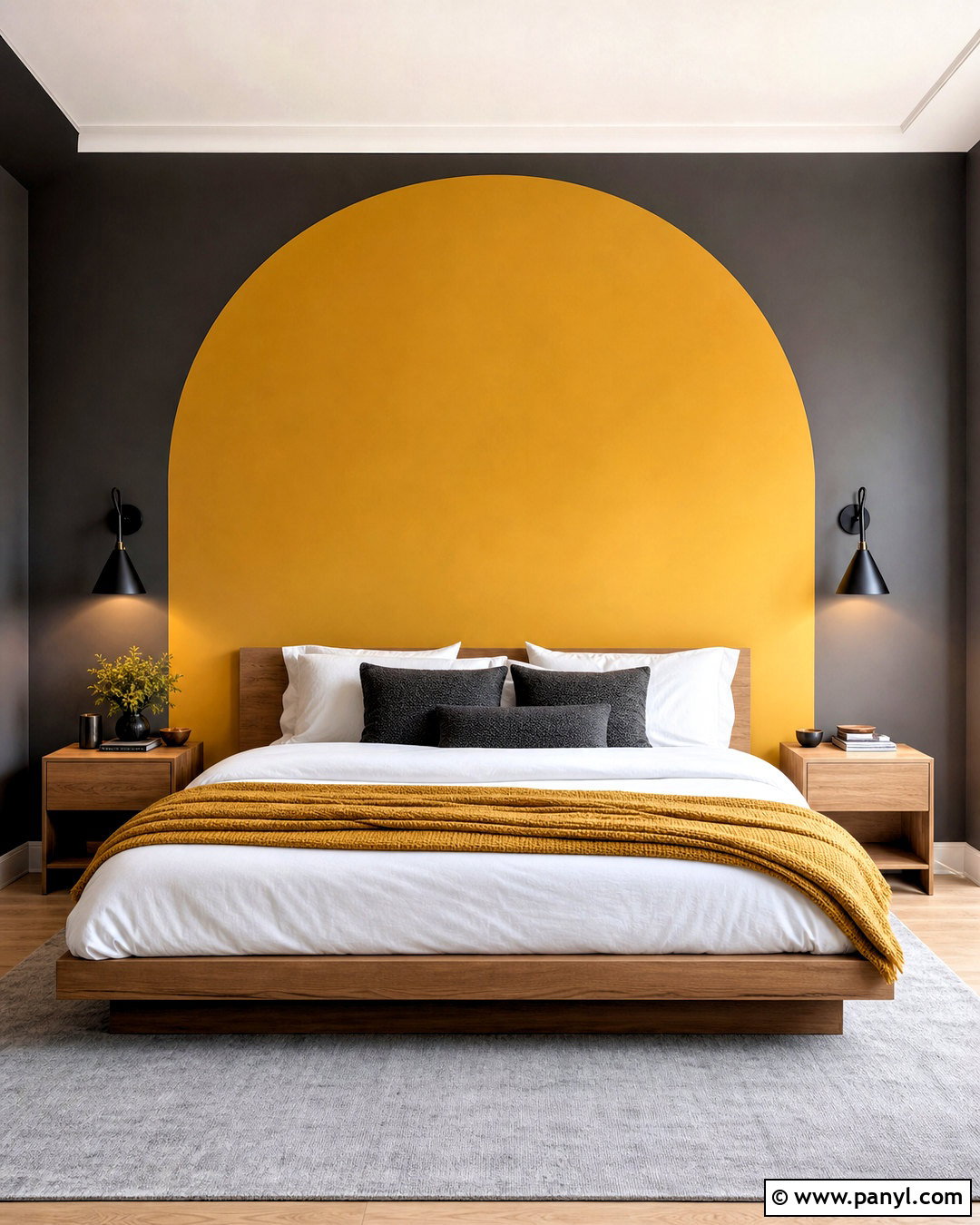
Mustard yellow brings energy to slate gray while the darker neutral keeps the room visually balanced. Paint a large mustard arch behind the bed and use slate gray across the rest of the wall surfaces. The curved color block creates a clear focal point without requiring a bulky headboard. Choose a simple oak platform bed, white bedding, charcoal pillows, and a mustard throw. Add matte black sconces inside the painted arch and place compact wood nightstands on either side. A light gray rug will soften the darker walls, while white curtains preserve brightness around the windows. Keep artwork minimal because the arch already provides strong visual interest. The finished bedroom feels modern, creative, and warm without becoming busy or overly playful.
16. Sky Blue And Cream Bedroom Walls
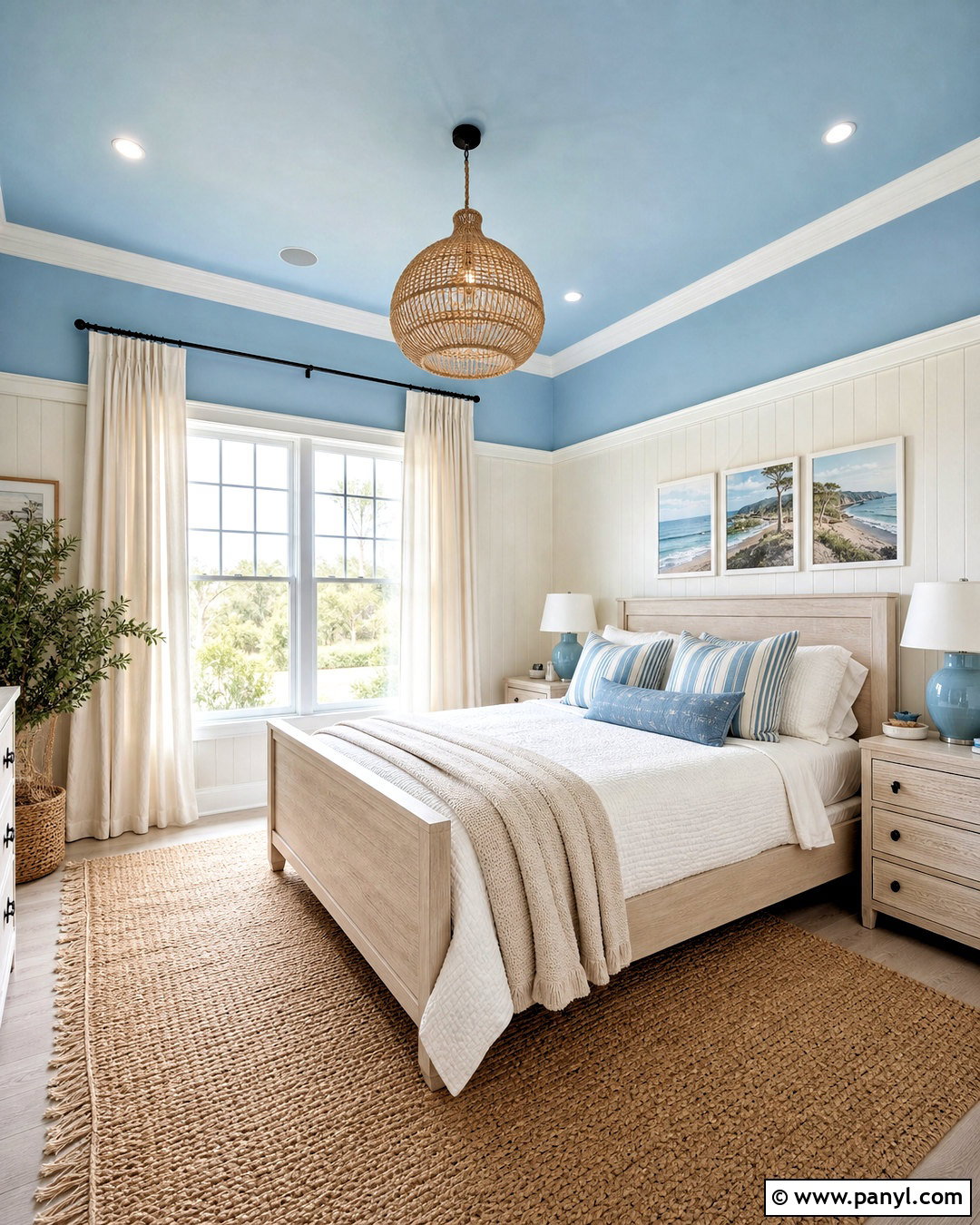
Sky blue and cream make a small bedroom feel gentle, bright, and open. Apply the blue to the ceiling and the upper quarter of the walls, creating a soft color cap above creamy lower walls. This placement draws attention upward while keeping the main surfaces neutral. Choose a white oak bed, ivory quilt, blue-striped pillows, and a pale beige throw. Cream curtains should hang close to the ceiling to emphasize height. Add woven pendant lights, light wood nightstands, and simple coastal landscape prints without relying on themed accessories. A natural jute or wool rug introduces needed texture beneath the bed. The complete palette works best with warm, softened blues rather than icy tones, ensuring the bedroom remains comfortable in both natural and artificial light.
17. Plum And Soft Beige Bedroom Walls

Plum walls can feel luxurious, but soft beige prevents the color from overpowering the bedroom. Cover the bed wall in muted plum and paint the other surfaces a warm, creamy beige. Select a channel-tufted beige headboard that creates texture against the saturated background. Layer the bed with ivory sheets, a taupe coverlet, and plum pillows in linen and velvet. Dark wood nightstands support the rich palette, while brushed brass lamps provide warm highlights. Hang one oversized abstract print containing burgundy, beige, and smoky purple above the bed. Full beige curtains and a pale wool rug will reflect more light around the room. Keep smaller accessories neutral so the wall remains the central statement. The overall effect is comfortable, polished, and quietly dramatic.
18. Rust Orange And Blue Gray Bedroom Walls

Rust orange and blue-gray balance warmth and coolness in a bedroom with strong personality. Paint two adjoining walls muted rust, including the bed wall, and use blue-gray on the opposite pair. This arrangement creates distinct zones while maintaining a cohesive envelope of color. Choose a medium oak bed and neutral bedding in cream, tan, and faded blue. Add rust pillows, a blue-gray blanket, and textured beige curtains to distribute the palette evenly. Black metal sconces and slim nightstands sharpen the relaxed earth tones. Select artwork that includes landscapes, geometric forms, or both colors in softened variations. A vintage-style rug with blue, rust, and ivory details completes the room. The design feels warm and collected without leaning too heavily rustic or industrial.
19. Emerald Green And Blush Bedroom Walls
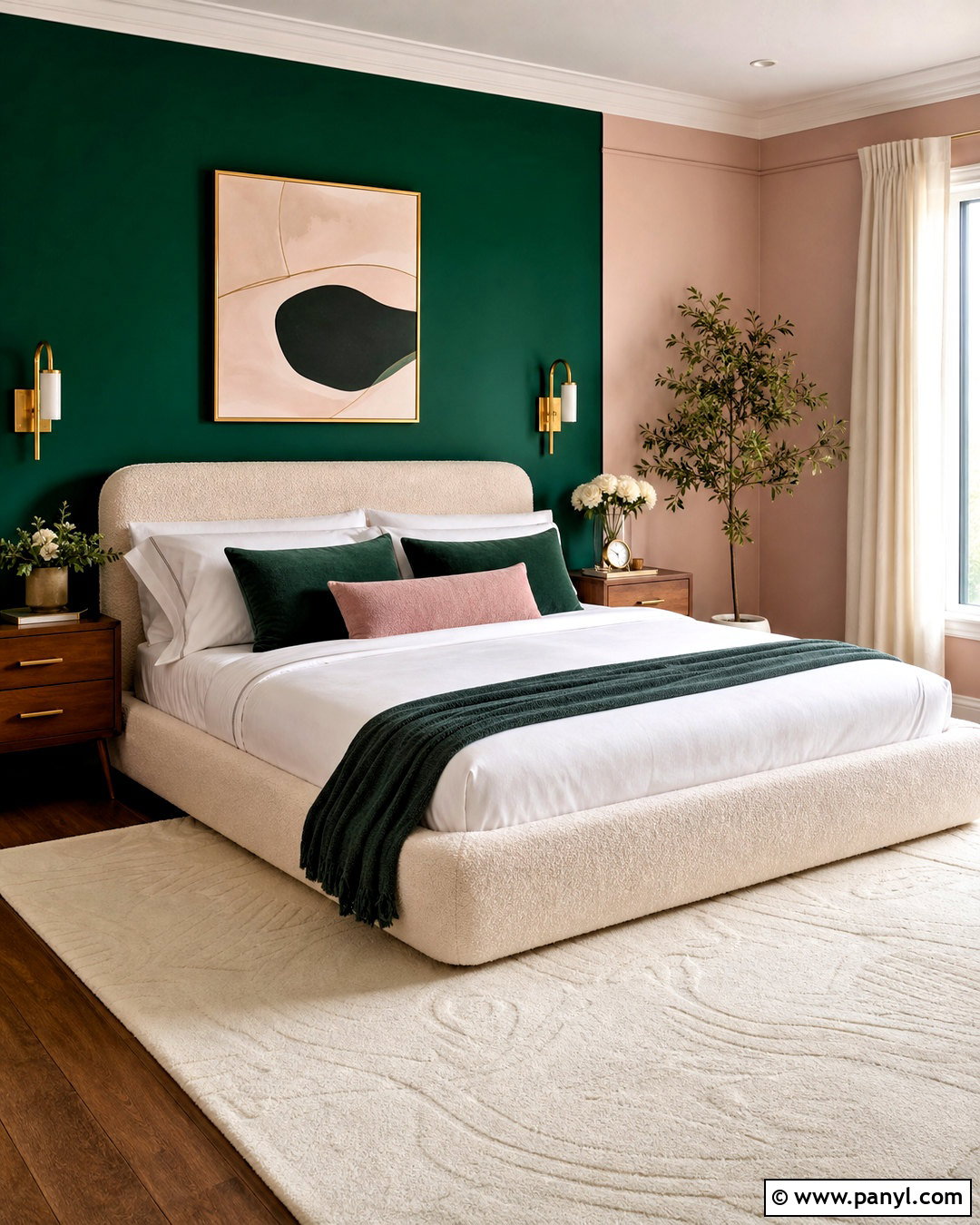
Emerald green and blush create a bold bedroom that can still look elegant and balanced. Use emerald on the entire headboard wall, then paint the remaining walls a muted, beige-based blush. A cream boucle bed softens the contrast and provides a bright centerpiece. Dress it with white bedding, forest-green pillows, and one dusty pink lumbar cushion. Walnut nightstands, brass wall lights, and an ivory rug add warmth and refinement. Keep curtains close to the blush wall color so they blend naturally rather than creating another contrast. Above the bed, choose one large piece of abstract art with cream, green, and restrained pink details. This complete arrangement allows the jewel tone to feel intentional while the softer surrounding color maintains a relaxing bedroom atmosphere.
20. Cobalt Blue And Warm White Bedroom Walls

Cobalt blue offers a lively finish for anyone who wants two-color walls with noticeable impact. Paint the lower half of the room cobalt and the upper half warm white, continuing the white across the ceiling. Use a narrow oak ledge along the dividing line to display a few framed prints and small ceramics. A natural wood bed, white bedding, and a blue patterned quilt connect the strong paint color to the room without adding visual weight. Choose white curtains, a cream rug, and simple oak nightstands to brighten the design. Matte black reading lamps create precise contrast, while small touches of terracotta add warmth. The completed room feels fresh and expressive, yet the consistent horizontal division keeps the powerful blue organized and easy to live with.
Conclusion:
Choosing two paint colors gives you more control over a bedroom’s mood, proportions, and focal points. Darker shades can ground the bed wall or lower portion of the room, while lighter colors preserve brightness around windows and ceilings. The most successful combinations also connect with the furniture, bedding, flooring, and lighting rather than standing alone. Use sample boards to compare undertones, and view them throughout the day before buying all your paint. Whether you prefer calm sage and cream, bold cobalt and white, or rich burgundy and pink, this guide to **20 two color bedroom walls** offers a complete look for many tastes. Start with the palette that complements your existing furniture and feels comfortable in your bedroom’s light.

Related Ideas and Inspiration:






Leave a Reply