
Choosing from these 20 room color ideas bedroom paint ideas can help you create a space that feels restful, personal, and beautifully coordinated. The best bedroom palette goes beyond the walls. Paint should work with the flooring, furniture, bedding, window treatments, lighting, and decorative accents. Before committing, consider the room’s natural light and compare samples beside the materials that will remain. A movable sample board also lets you view each shade at different times of day, when undertones can become more noticeable. () Whether you prefer quiet neutrals, earthy greens, airy blues, or cocooning dark tones, these complete schemes offer practical inspiration. Explore the coordinated spaces below with 20 room color ideas bedroom paint ideas.

1. Warm White Bedroom Paint
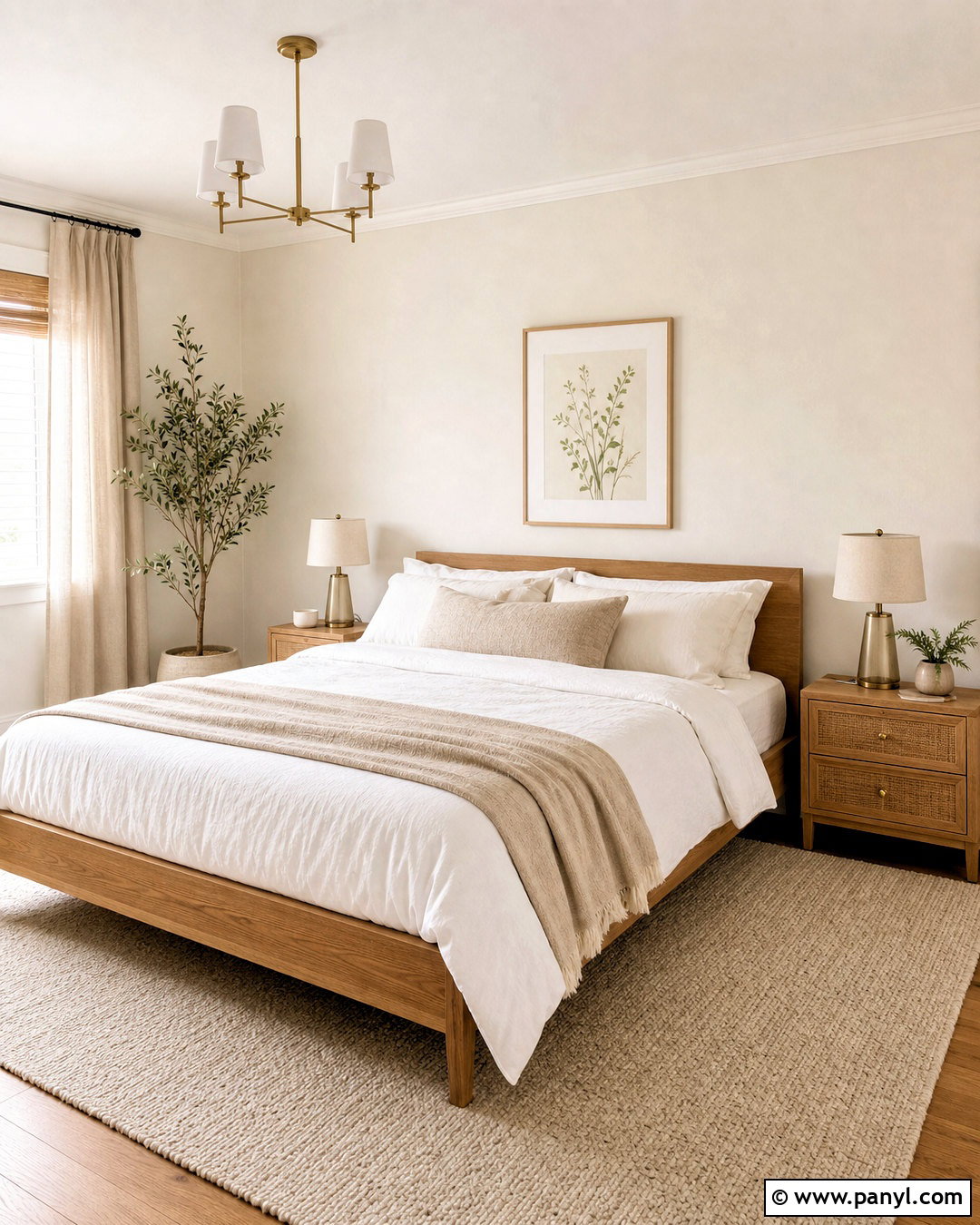
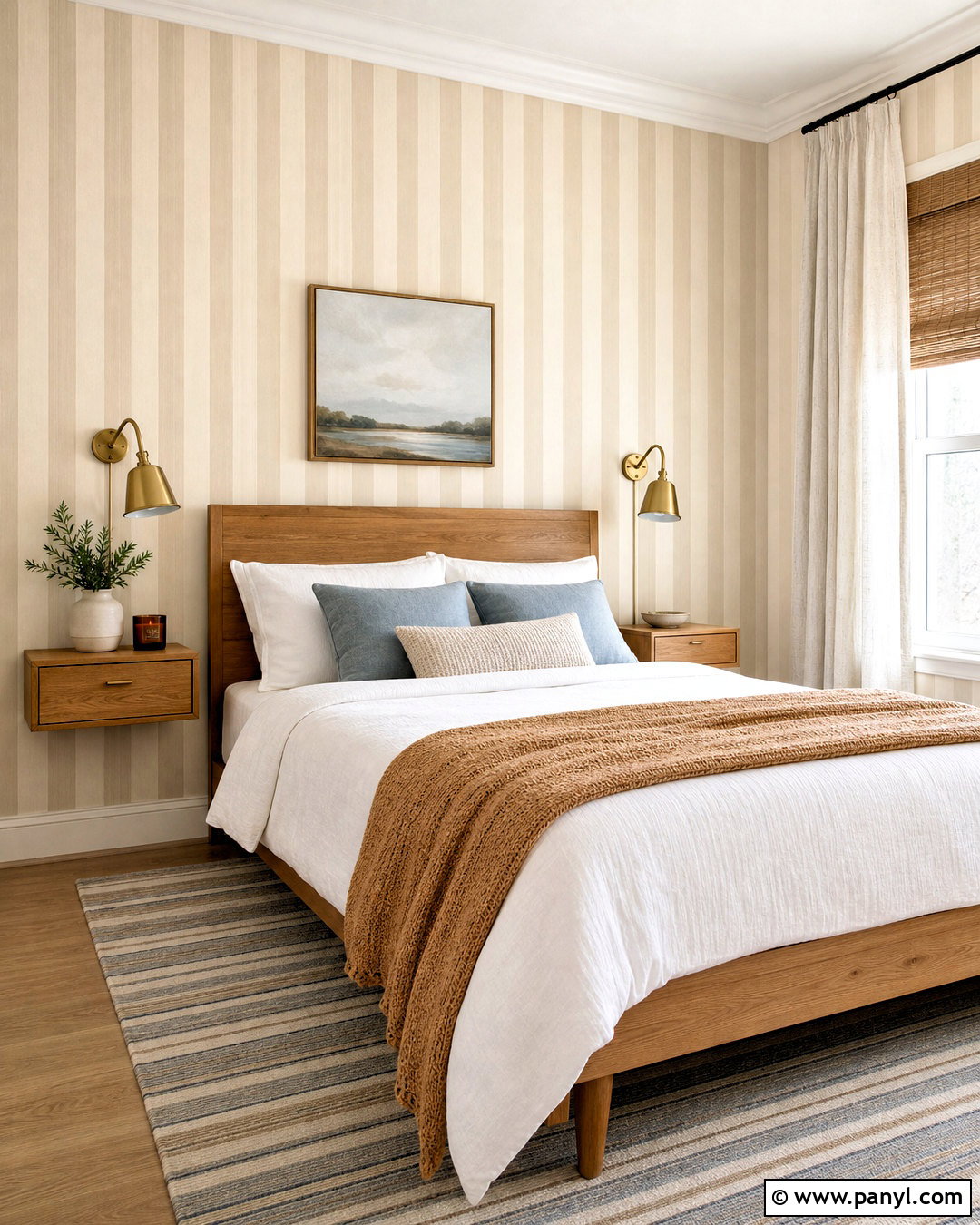
Warm white walls create a clean bedroom without making the space feel cold or unfinished. Choose a creamy white with subtle beige undertones, then continue it across the ceiling for a soft, seamless effect. Build warmth with a natural oak bed, woven cane nightstands, and light beige linen curtains. Layer white bedding with oatmeal, camel, and muted brown textiles so the palette has visible depth. A wool area rug can soften pale wood flooring, while brushed brass lamps add a gentle glow. Complete the room with simple botanical artwork, handmade ceramic decor, and one leafy plant. This balanced combination suits small bedrooms, guest rooms, and bright primary bedrooms where an open, relaxed atmosphere is the priority.
2. Creamy Beige Bedroom Paint

Creamy beige paint makes a bedroom feel welcoming while providing more warmth than standard white. Select a light beige with yellow or tan undertones, and pair it with crisp ivory trim to keep the edges defined. An upholstered oatmeal bed creates a comfortable focal point, while medium-tone walnut nightstands add needed contrast. Dress the bed with ivory sheets, a camel quilt, and patterned pillows in faded rust and brown. Use full-length natural linen curtains to soften incoming light without making the room heavy. A vintage-style rug can introduce muted blue and terracotta details underfoot. Finish the look with ceramic lamps, black-framed artwork, and a woven bench. The result feels layered, timeless, and easy to maintain.
3. Soft Greige Bedroom Paint
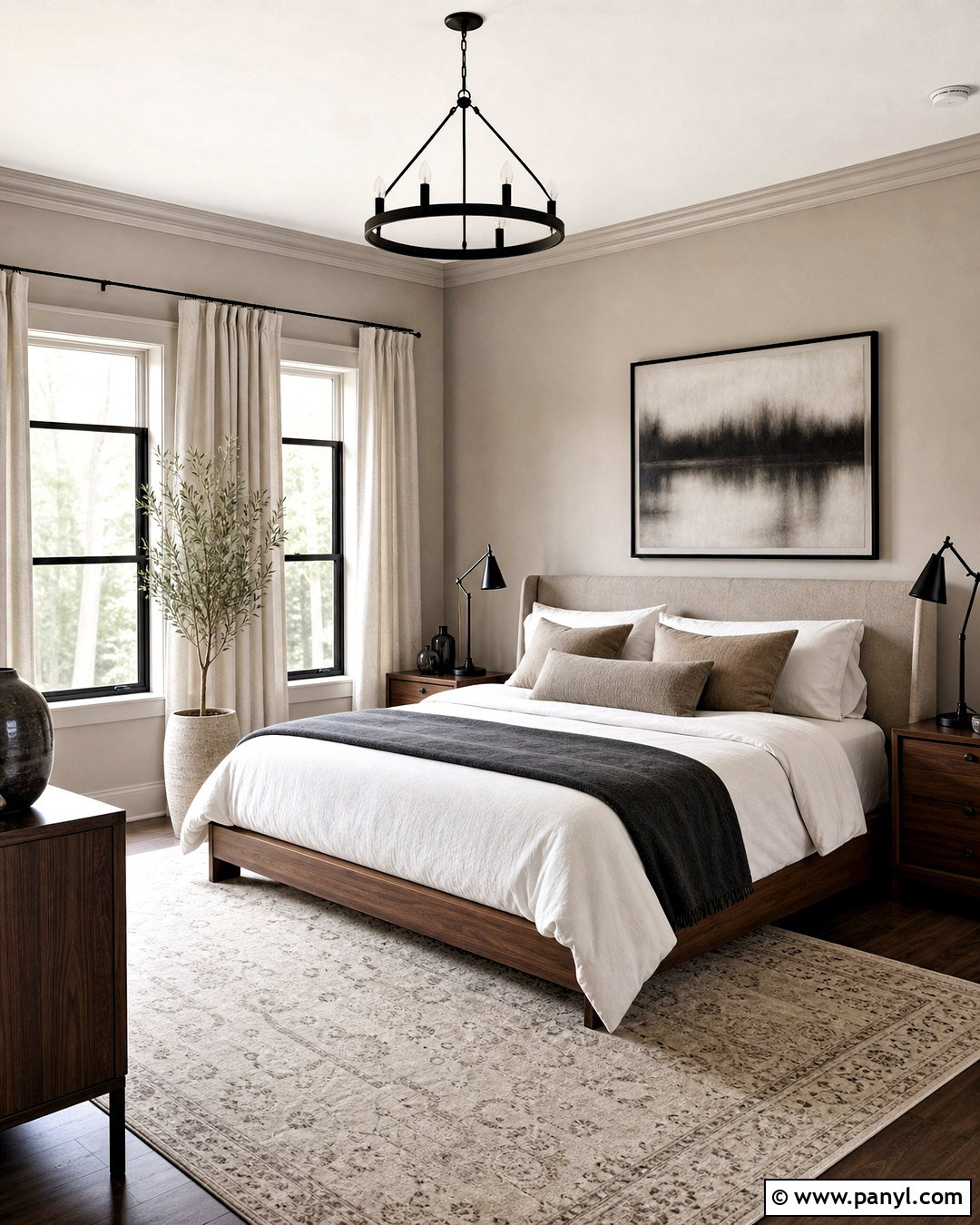
If gray seems too cool and beige feels too yellow, soft greige offers a practical middle ground. Paint the walls and baseboards in the same balanced greige, using eggshell on the walls and satin on the trim for subtle definition. Choose a low-profile walnut bed with an upholstered headboard to introduce both softness and natural warmth. White bedding keeps the palette fresh, while taupe pillows and a charcoal throw create gentle contrast. Add black metal bedside lamps, streamlined nightstands, and cream curtains with a substantial woven texture. A pale patterned rug connects the furniture to the wall color. Minimal abstract artwork, smoked glass accessories, and one sculptural branch arrangement complete a calm contemporary bedroom that still feels comfortable and approachable.
4. Warm Taupe Bedroom Paint
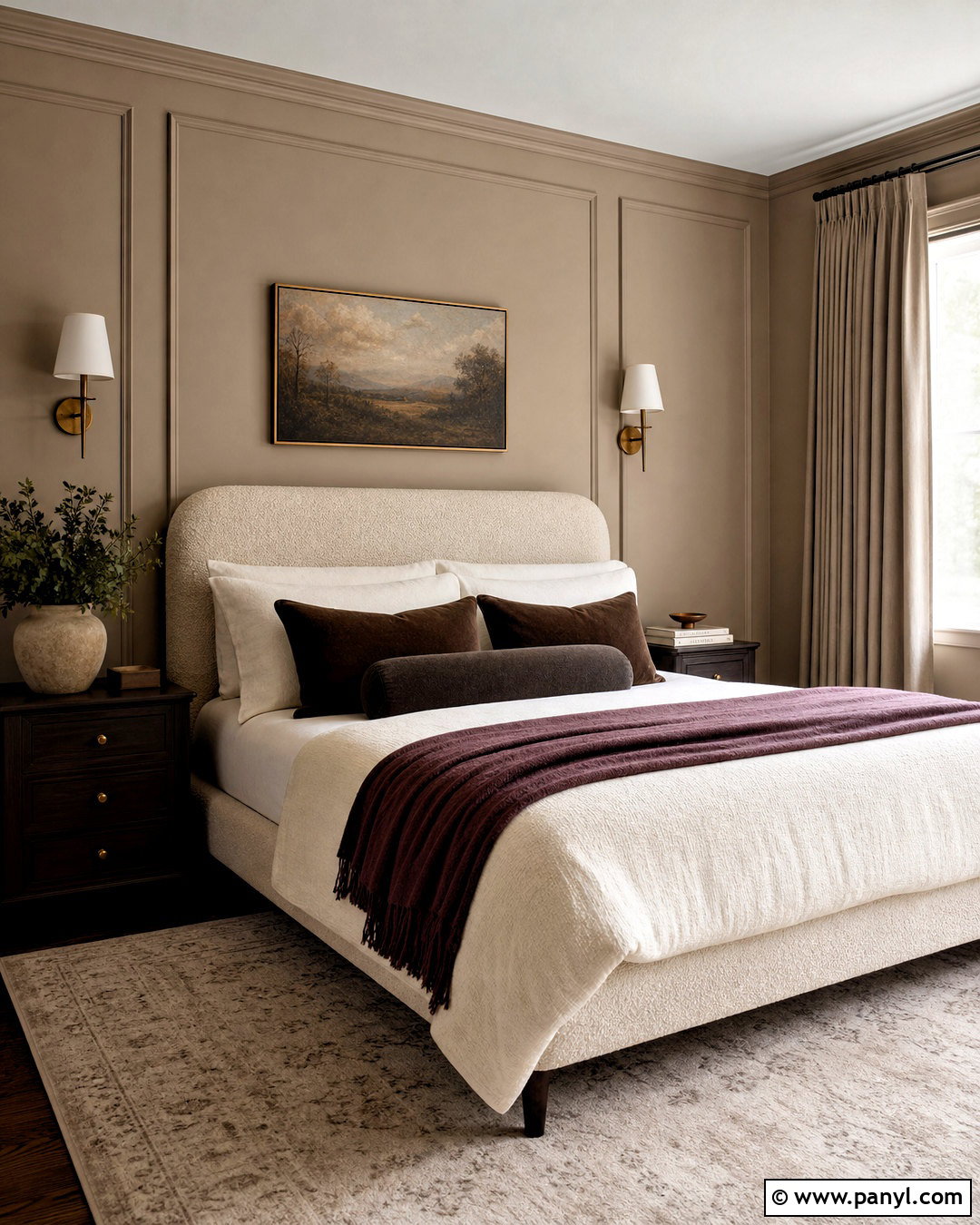
Warm taupe walls can turn a large bedroom into a more intimate and polished retreat. Look for a medium taupe containing brown or rosy undertones rather than a flat gray base. Continue the color onto simple wall molding behind the bed, creating dimension without introducing another shade. A tall cream bouclé headboard lightens the darker backdrop, while dark walnut nightstands ground both sides. Layer the bedding with ivory linen, chocolate brown cushions, and a muted plum throw. Bronze sconces and a warm neutral rug reinforce the earthy palette. Add floor-length mushroom-colored curtains and restrained landscape artwork. This complete combination works especially well in bedrooms with strong daylight, where the richer wall color can appear dimensional instead of overly dark.
5. Soft Gray Bedroom Paint
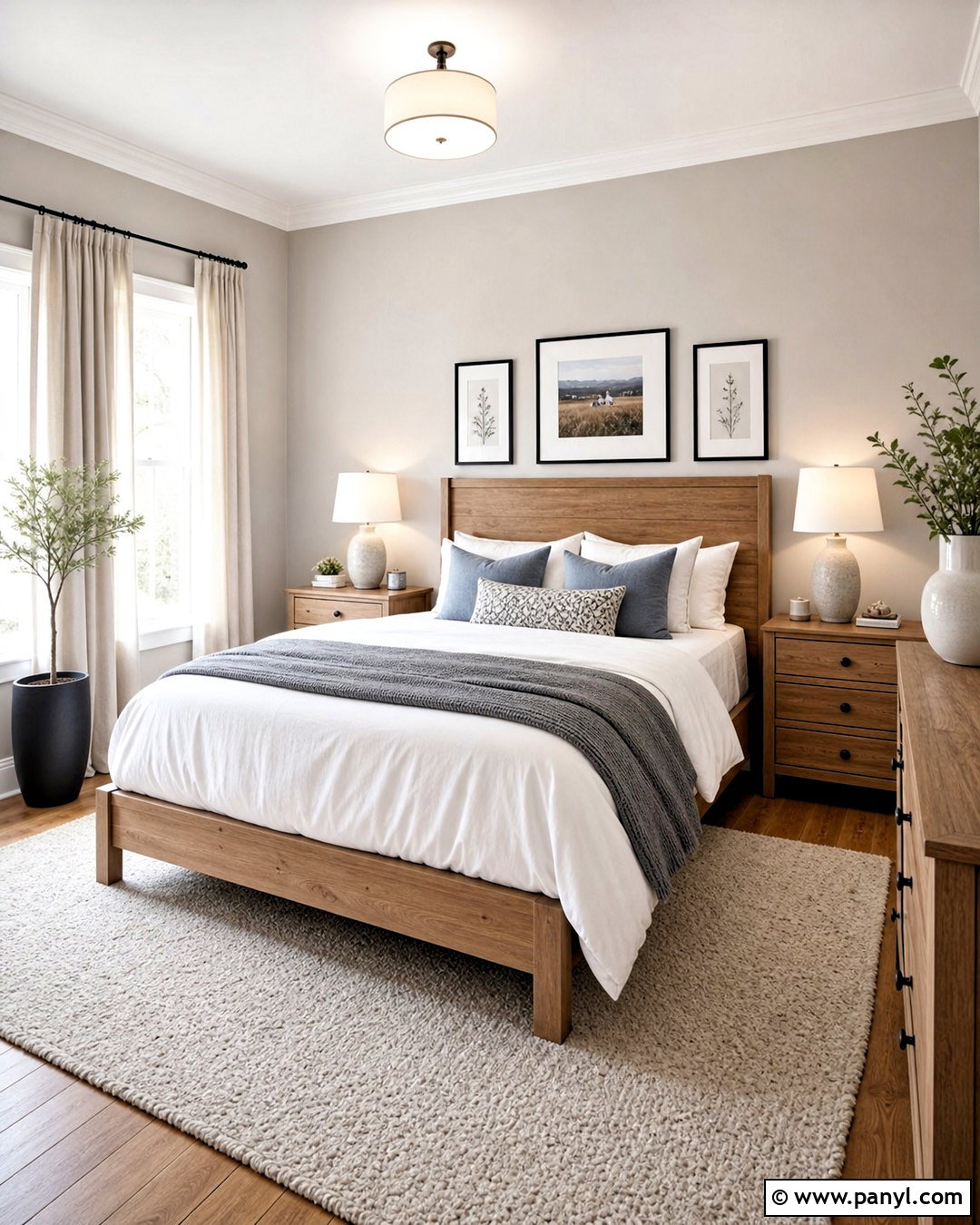
Soft gray bedroom paint can feel peaceful and refined when it is balanced with warm materials. Choose a pale gray with a slight beige undertone, avoiding icy blue-gray shades if the room receives limited sunlight. Keep the ceiling and trim soft white for a crisp frame. Introduce a natural oak bed, warm white bedding, and a textured gray blanket to connect the furnishings with the walls. Dusty blue pillows add quiet color without disrupting the restful scheme. Use light-filtering linen curtains, a cream wool rug, and ceramic bedside lamps with warm white shades. Black picture frames and slim hardware provide small points of definition. The finished bedroom feels light and organized, with enough texture and contrast to prevent the neutral palette from appearing flat.
6. Sage Green Bedroom Paint

Sage green bedroom paint brings a gentle natural quality to the entire space. Select a muted sage with visible gray undertones and use it on all four walls rather than limiting it to one accent surface. Pair the color with an oak spindle bed, warm white bedding, and a quilt in a slightly deeper green. Natural linen curtains and a jute-blend rug reinforce the organic direction. Choose cream ceramic lamps, woven nightstands, and aged brass hardware for warmth. Small accents in dusty terracotta can appear through pillows, artwork, or a bedside vase. Keep the ceiling soft white so the room remains open. This complete palette creates a relaxed bedroom that works with modern farmhouse, cottage, transitional, and nature-inspired furniture.
7. Olive Green Bedroom Paint
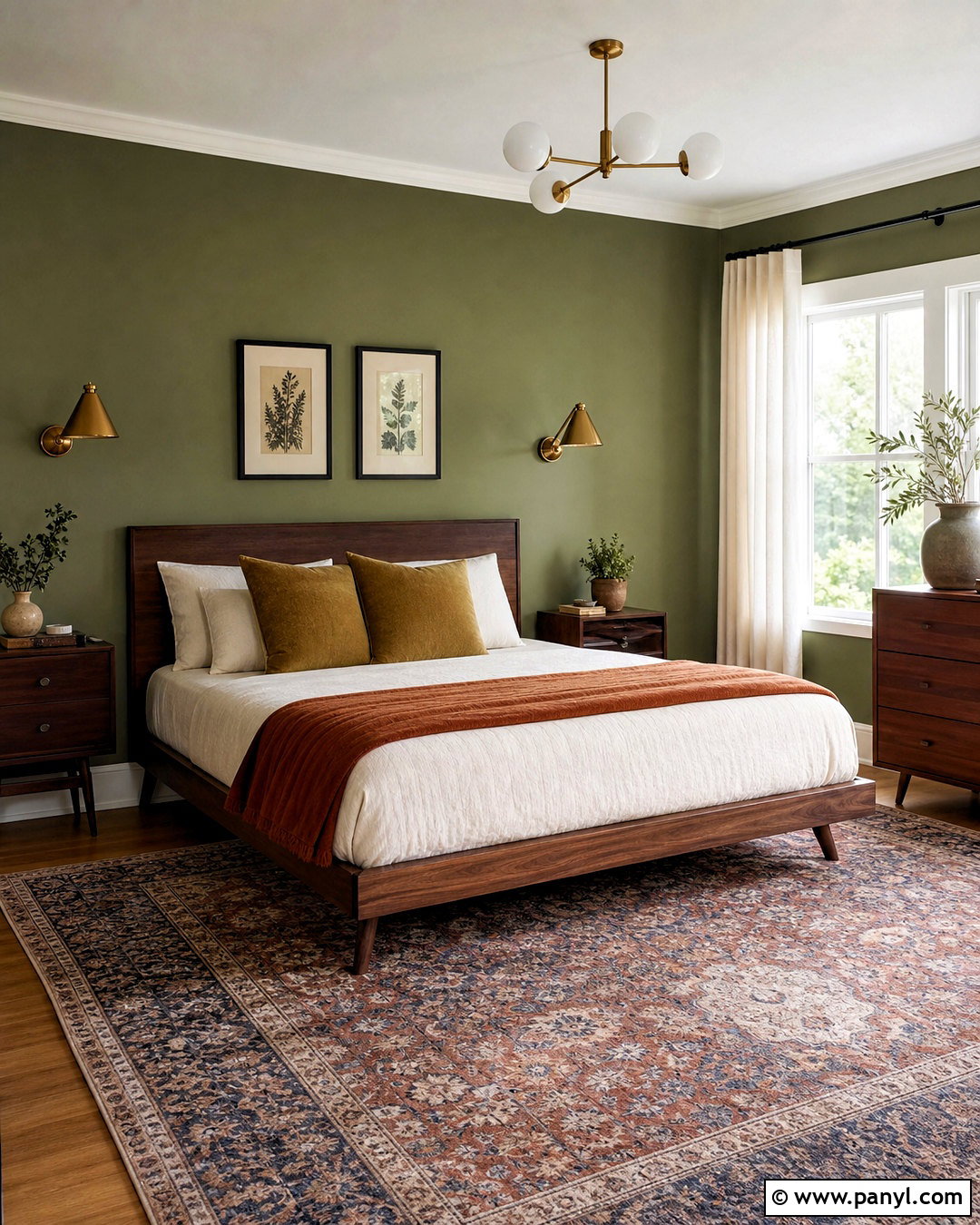
Rich olive green gives a bedroom a grounded, enveloping appearance without relying on black or charcoal. Paint the walls in a medium olive with warm brown undertones, then use creamy white on the ceiling and trim for balance. A walnut platform bed looks especially handsome against this earthy background. Add natural linen bedding, a rust-colored blanket, and pillows in tan, olive, and muted gold. Choose antique brass sconces and dark wood nightstands to continue the warm character. A faded Persian-style rug introduces red, cream, and brown pattern beneath the bed. Finish with off-white curtains and vintage botanical prints. This layered scheme feels collected and comfortable, making it suitable for a primary bedroom with traditional or midcentury-inspired furniture.

8. Eucalyptus Green Bedroom Paint
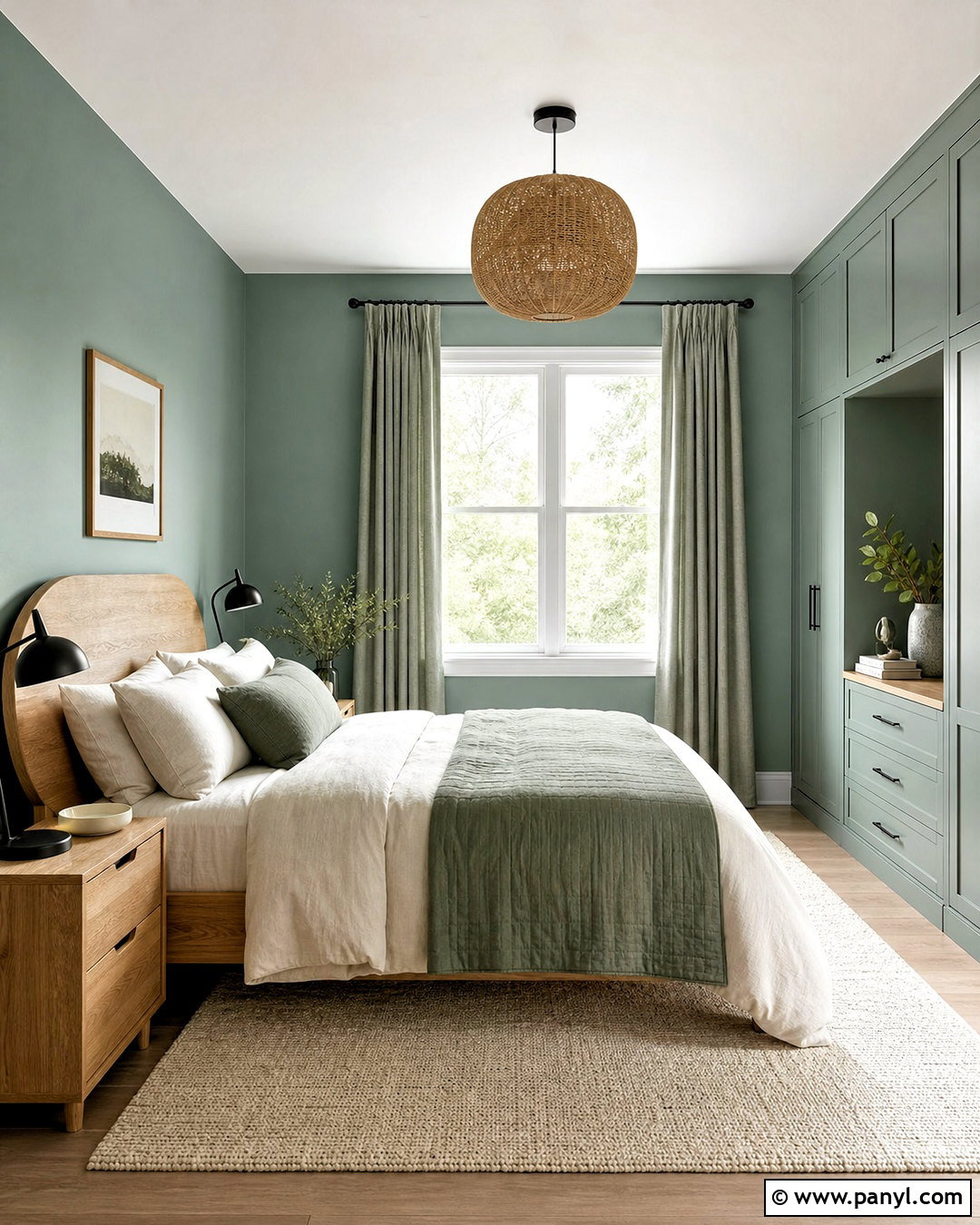
Eucalyptus green offers a fresher alternative to deep olive while remaining softer than bright mint. Apply this muted blue-green paint across the walls, built-in storage, and closet doors for a cohesive color-drenched effect. Keep the ceiling a pale warm white if the bedroom is compact. Choose a light oak bed with rounded edges, then layer it with ivory bedding, a eucalyptus quilt, and subtle striped cushions. Pale gray-green curtains can continue the color story without matching the walls exactly. Add a cream rug, woven pendant light, and simple white oak nightstands. Matte black reading lamps provide clean contrast. Minimal landscape artwork and small ceramic pieces complete a serene, modern bedroom inspired by natural colors and uncluttered Scandinavian interiors.
9. Powder Blue Bedroom Paint

Powder blue bedroom paint creates an airy background that feels calm without looking colorless. Choose a pale blue with softened gray undertones, and pair it with bright white trim for a neat, tailored finish. A white oak bed keeps the room light, while navy piping on an upholstered headboard adds controlled contrast. Dress the bed with crisp white sheets, a pale blue coverlet, and striped pillows in blue and warm beige. Use natural woven shades beneath full-length ivory curtains to provide texture and flexible light control. A sand-colored rug warms the floor, preventing the palette from becoming too cool. Polished nickel lamps, coastal landscape art, and a light wood bench complete a fresh bedroom that feels relaxed rather than overly themed.
10. Dusty Blue Bedroom Paint
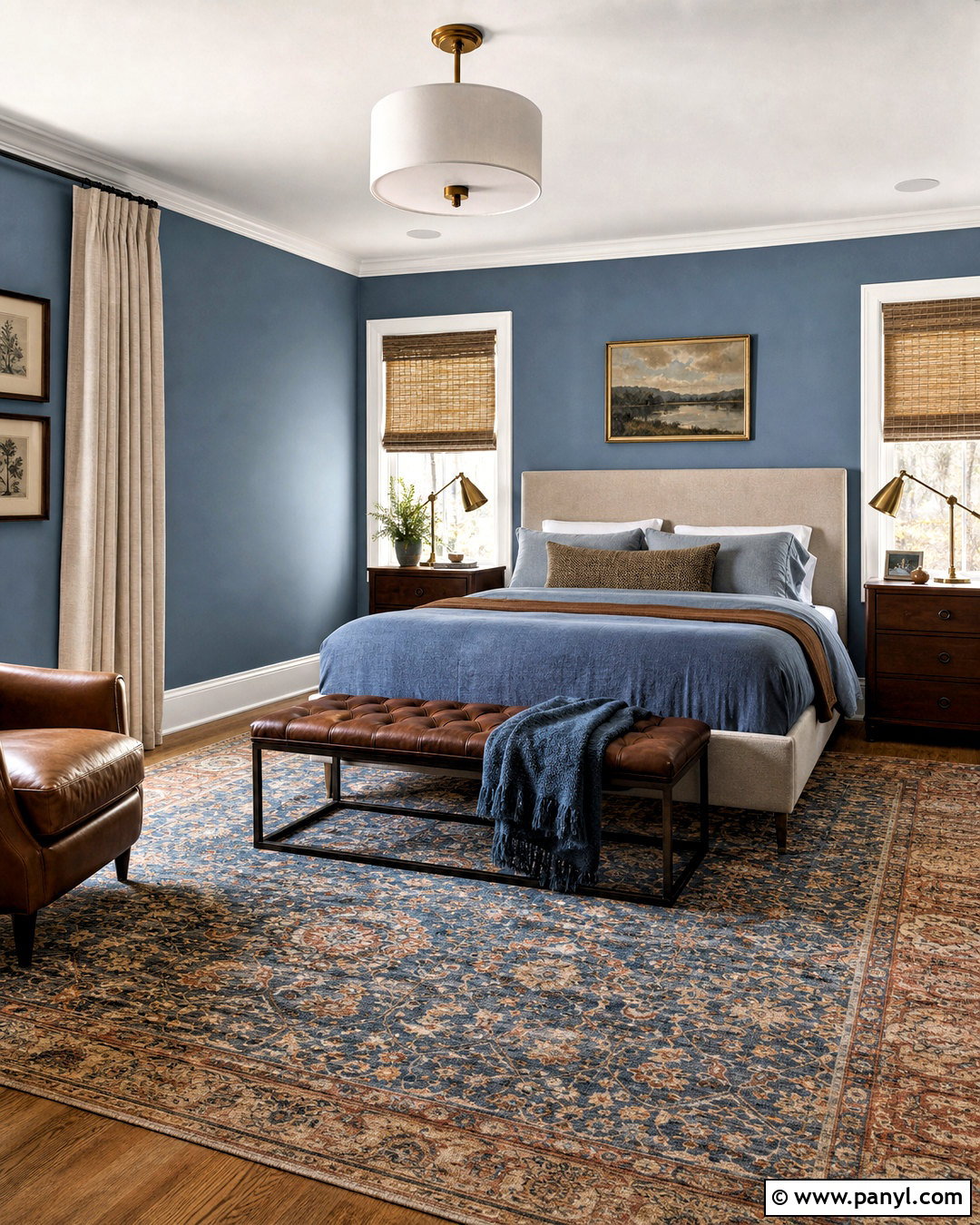
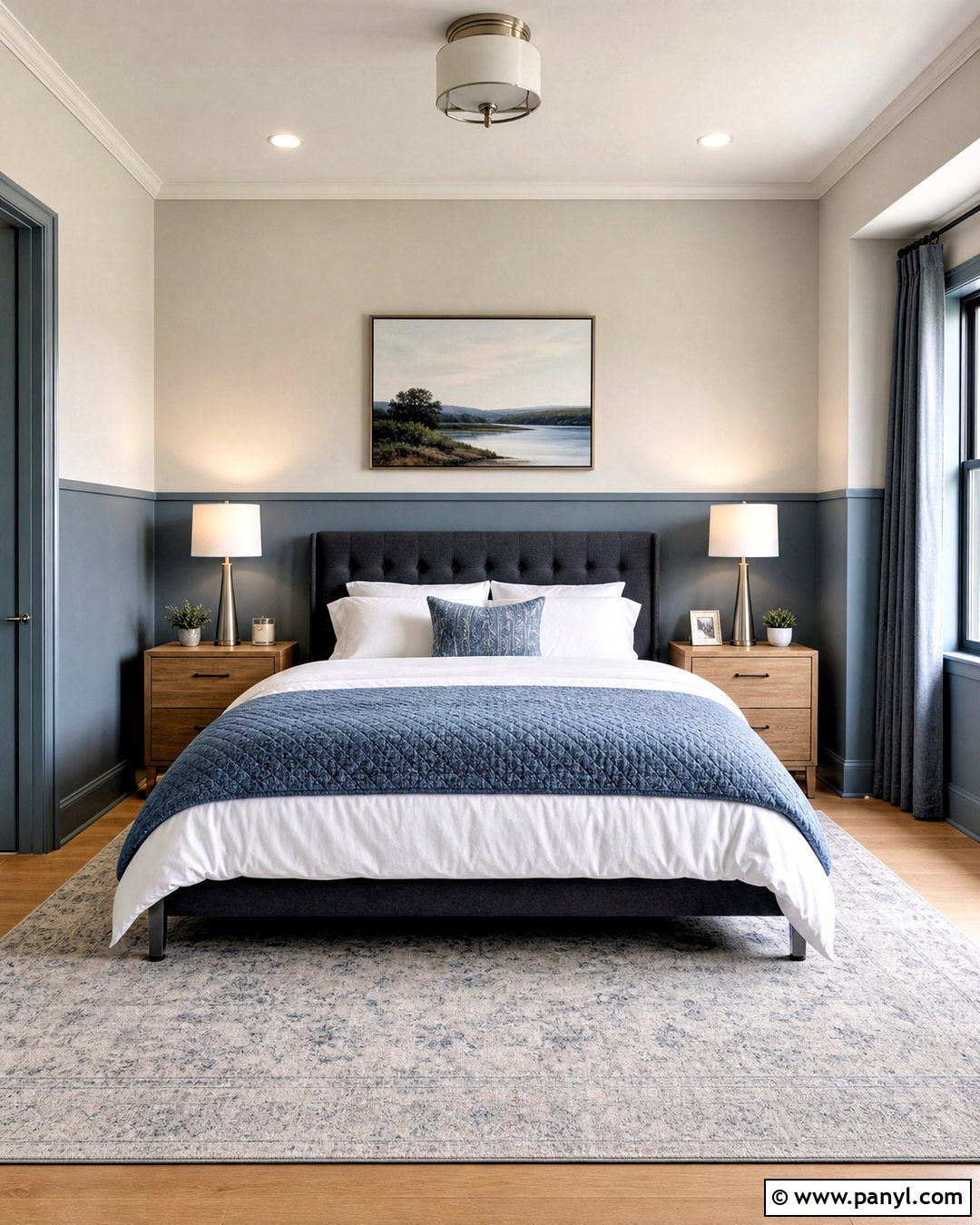
Dusty blue provides more depth than powder blue while preserving a restful bedroom atmosphere. Wrap all four walls in a muted mid-tone blue with noticeable gray undertones, then paint the trim in a warm off-white. Anchor the scheme with a beige upholstered bed and medium walnut nightstands. Layer the bedding in white, faded denim, and tobacco brown to balance cool and warm notes. Hang oatmeal linen curtains close to the ceiling, allowing the fabric to frame the windows generously. A vintage-patterned rug in blue, rust, and cream creates a natural bridge between the walls and wood furniture. Add antique brass lamps, simple landscape prints, and a leather bench. The completed room feels tailored, cozy, and suitable for year-round decorating.
11. Navy Blue Bedroom Paint

Navy blue bedroom paint can create a dramatic retreat when every supporting element is thoughtfully balanced. Use deep navy on the walls and simple panel molding, then keep the ceiling warm white to preserve visual height. Place a tall camel-colored upholstered bed against the darkest wall, creating a strong central contrast. White bedding brightens the composition, while navy pillows and a rust throw repeat the room’s key colors. Choose medium wood nightstands, brass sconces, and a large cream rug to add warmth around the darker surfaces. Full-length beige curtains soften the windows without competing with the walls. Finish with oversized abstract artwork containing white, tan, and blue. This complete scheme feels cocooning, sophisticated, and comfortable instead of heavy or formal.
12. Deep Teal Bedroom Paint
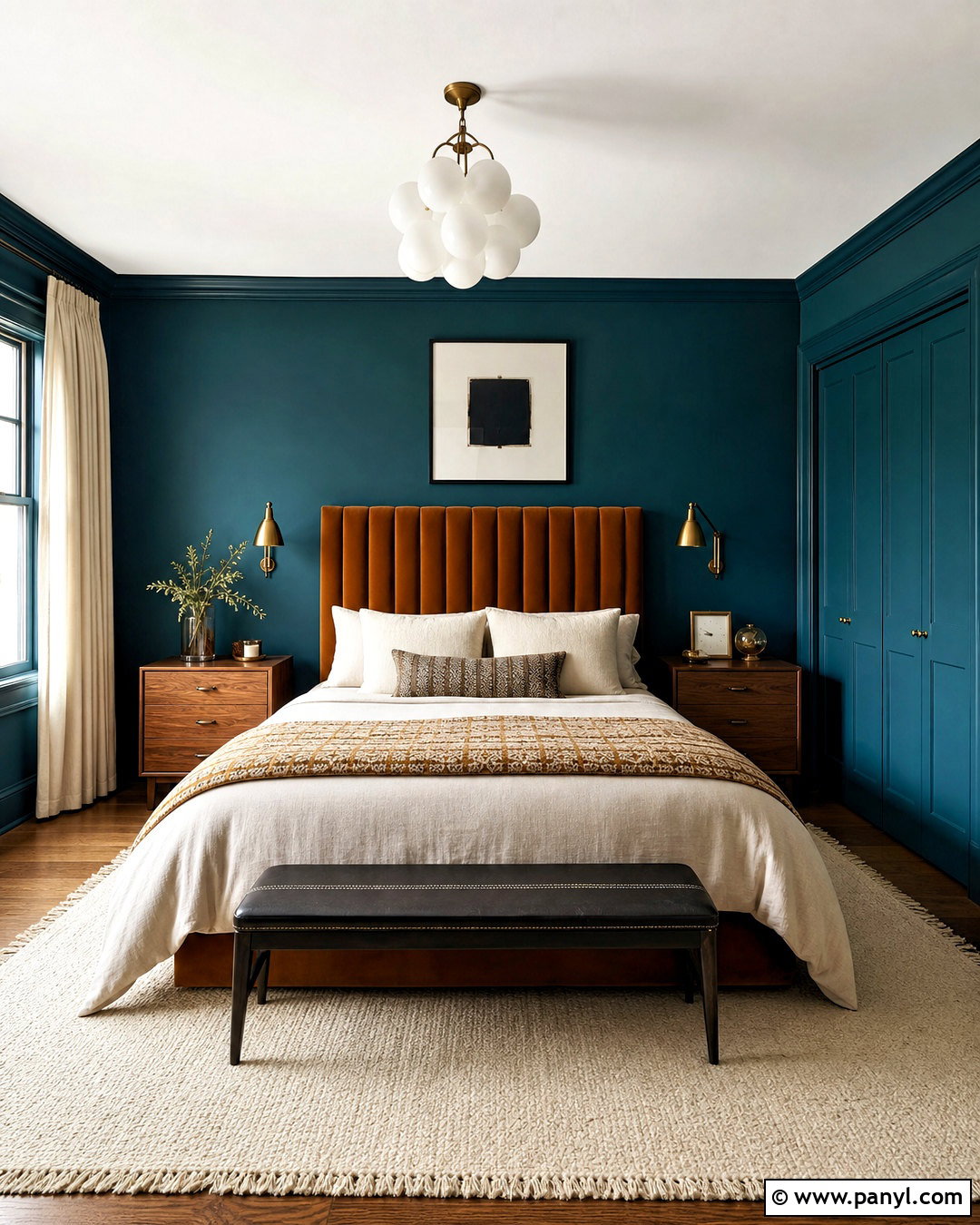
Deep teal combines the restful character of blue with the earthy energy of green. Paint the walls, trim, and closet doors in the same saturated teal for a unified, enveloping finish. Use a lighter ceiling if the bedroom has low natural light. A channel-tufted headboard in warm caramel velvet creates a striking focal point against the cool walls. Layer the bed with ivory sheets, teal cushions, and a patterned blanket containing ochre, cream, and blue. Walnut nightstands and aged brass sconces strengthen the rich palette. Add a cream wool rug and neutral linen curtains to provide visual breathing room. Framed modern artwork and smoked glass accessories finish this bold bedroom, making the color feel intentional, balanced, and suitable for everyday living.
13. Blush Pink Bedroom Paint
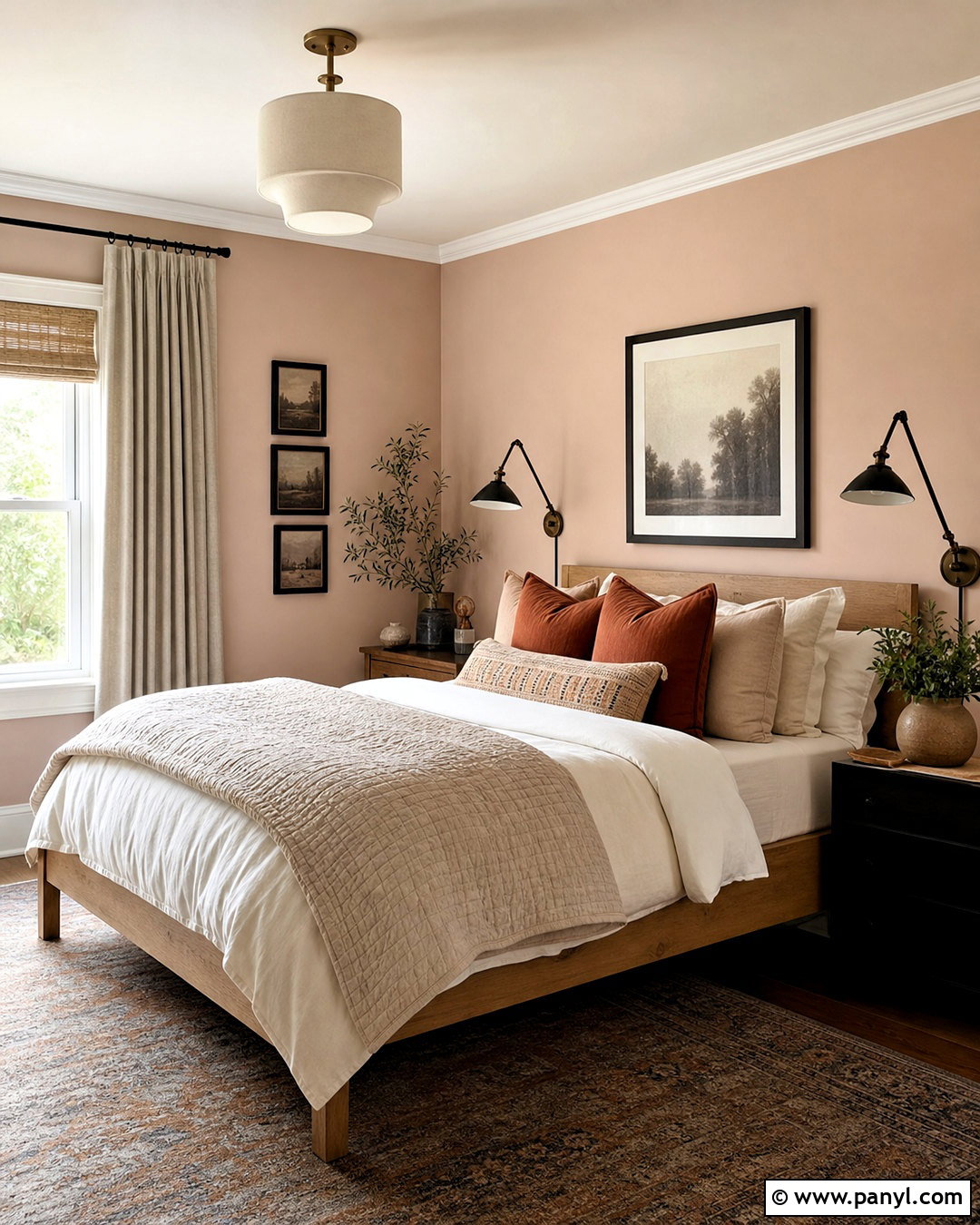
Blush pink can create a sophisticated bedroom when it is paired with earthy neutrals and clean-lined furniture. Choose a pale, dusty pink with beige undertones rather than a sugary pastel. Carry it across all four walls, then use warm white on the ceiling and trim. A natural oak bed introduces structure, while ivory bedding and a taupe quilt keep the scheme grounded. Add pillows in rust, cream, and muted burgundy for richer contrast. Woven shades and oatmeal curtains soften the windows, and a faded neutral rug adds subtle pattern. Use black metal lamps and simple dark frames to prevent the room from becoming overly delicate. The finished look feels warm, adult, and flexible enough for modern, bohemian, or transitional bedroom decor.
14. Dusty Rose Bedroom Paint
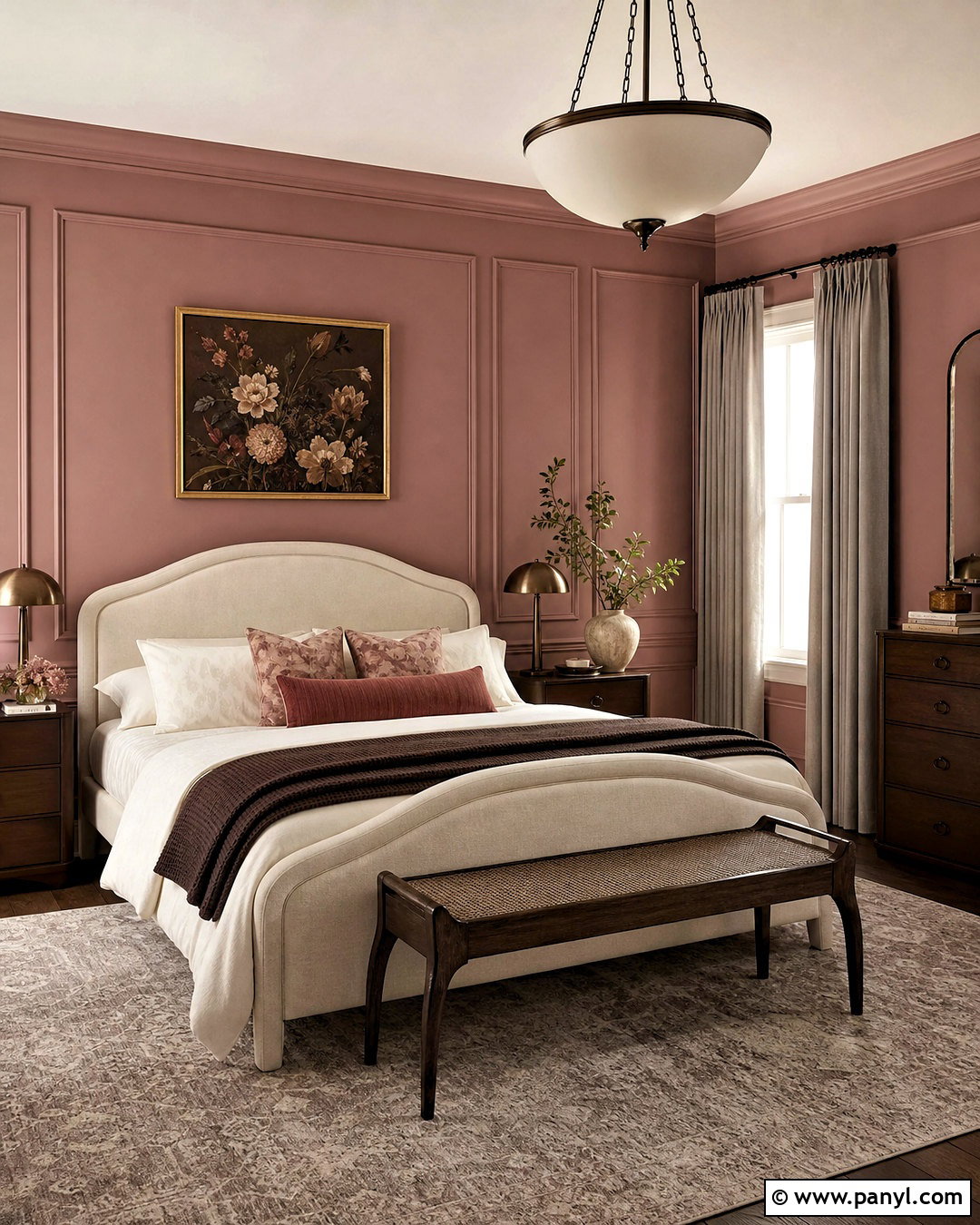
Dusty rose bedroom paint offers greater richness than pale blush while remaining softer than burgundy. Apply the muted rose color to the walls and decorative molding, allowing shadows to emphasize the room’s architectural details. Choose a cream upholstered bed with a curved headboard to create a light focal point. Walnut nightstands, bronze lamps, and a warm taupe rug add earthy contrast. Layer the bedding with ivory linen, rose-colored pillows, and a deep brown throw. Hang mushroom-gray curtains to balance the pink undertones and make the palette feel more neutral. Complete the room with vintage floral artwork and a dark wood bench. This coordinated design feels romantic without becoming overly ornate, making it a practical option for a polished primary bedroom.
15. Soft Lavender Bedroom Paint
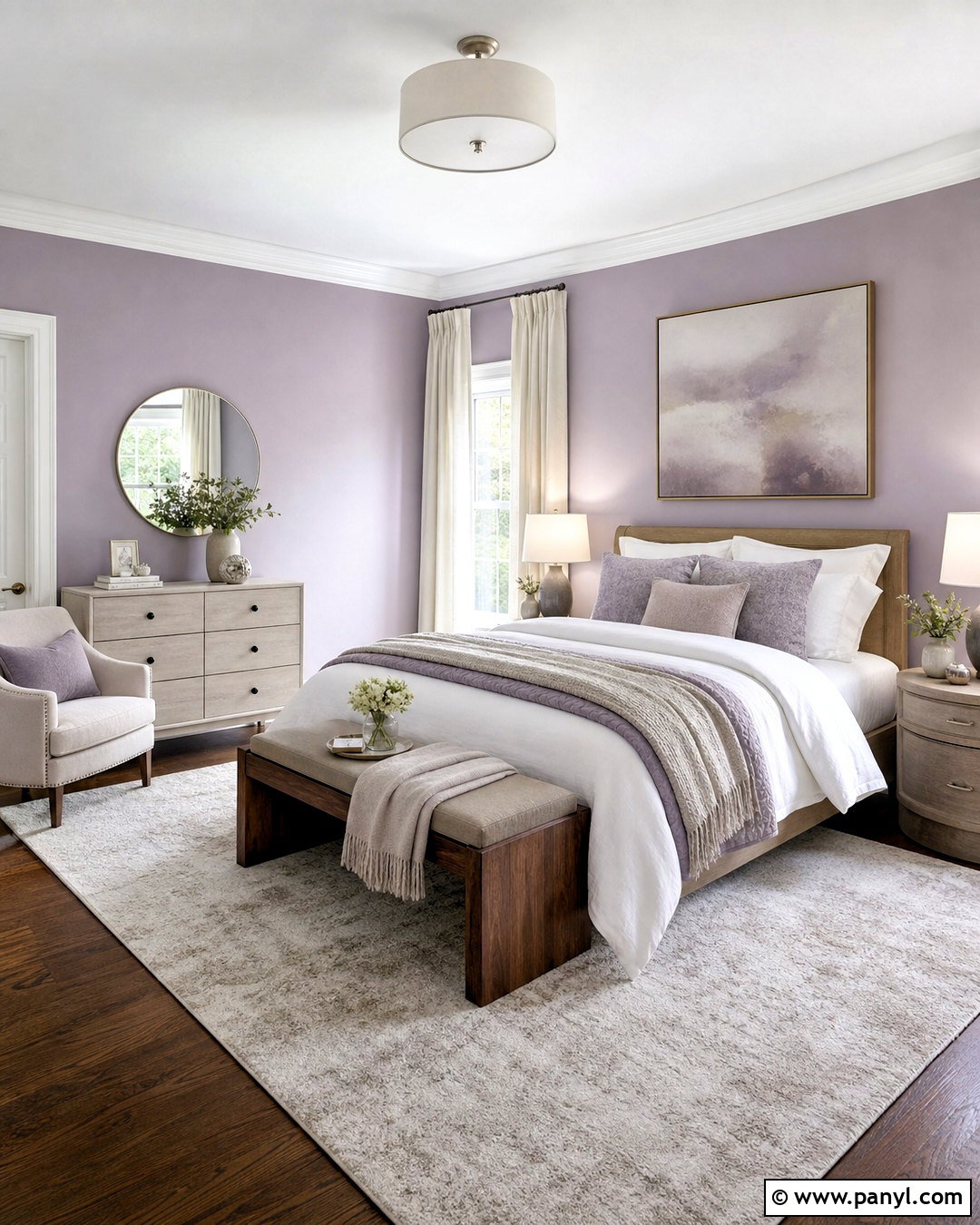
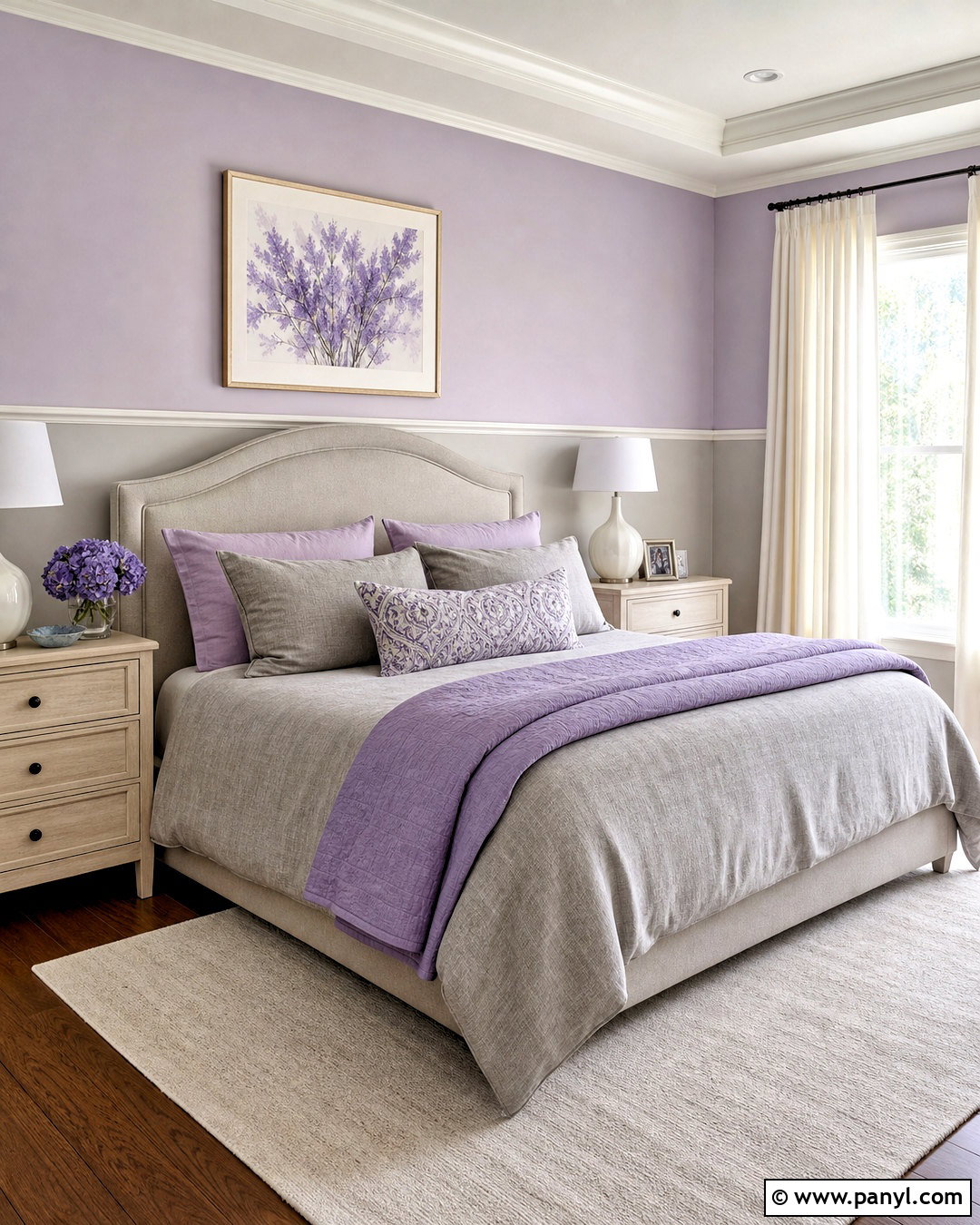
Soft lavender gives a bedroom gentle color while maintaining a light, restful feeling. Choose a muted lavender with gray undertones, which is easier to coordinate than a bright purple. Pair the walls with warm white trim and a simple light oak bed. Layer white bedding with lilac, mushroom, and pale gray textiles for a subtle tonal effect. Use ivory curtains and a soft cream rug to reflect light around the room. Brushed nickel lamps and glass accessories keep the palette fresh, while a small walnut bench provides needed warmth. Add abstract artwork containing lavender, beige, and charcoal instead of strongly floral decorations. The full scheme feels calm and contemporary, offering a distinctive alternative to familiar blue, green, or neutral bedroom palettes.
16. Terracotta Bedroom Paint
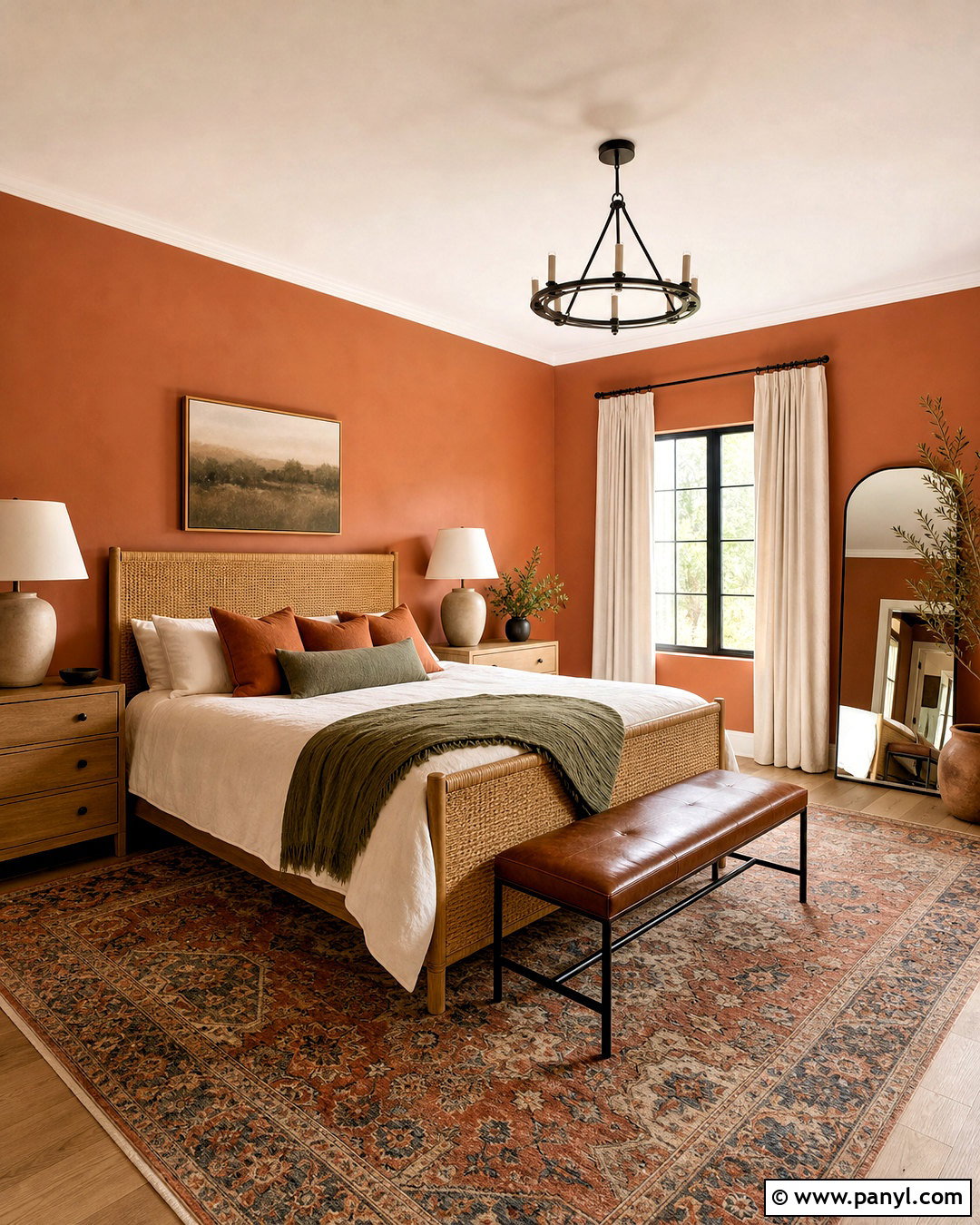
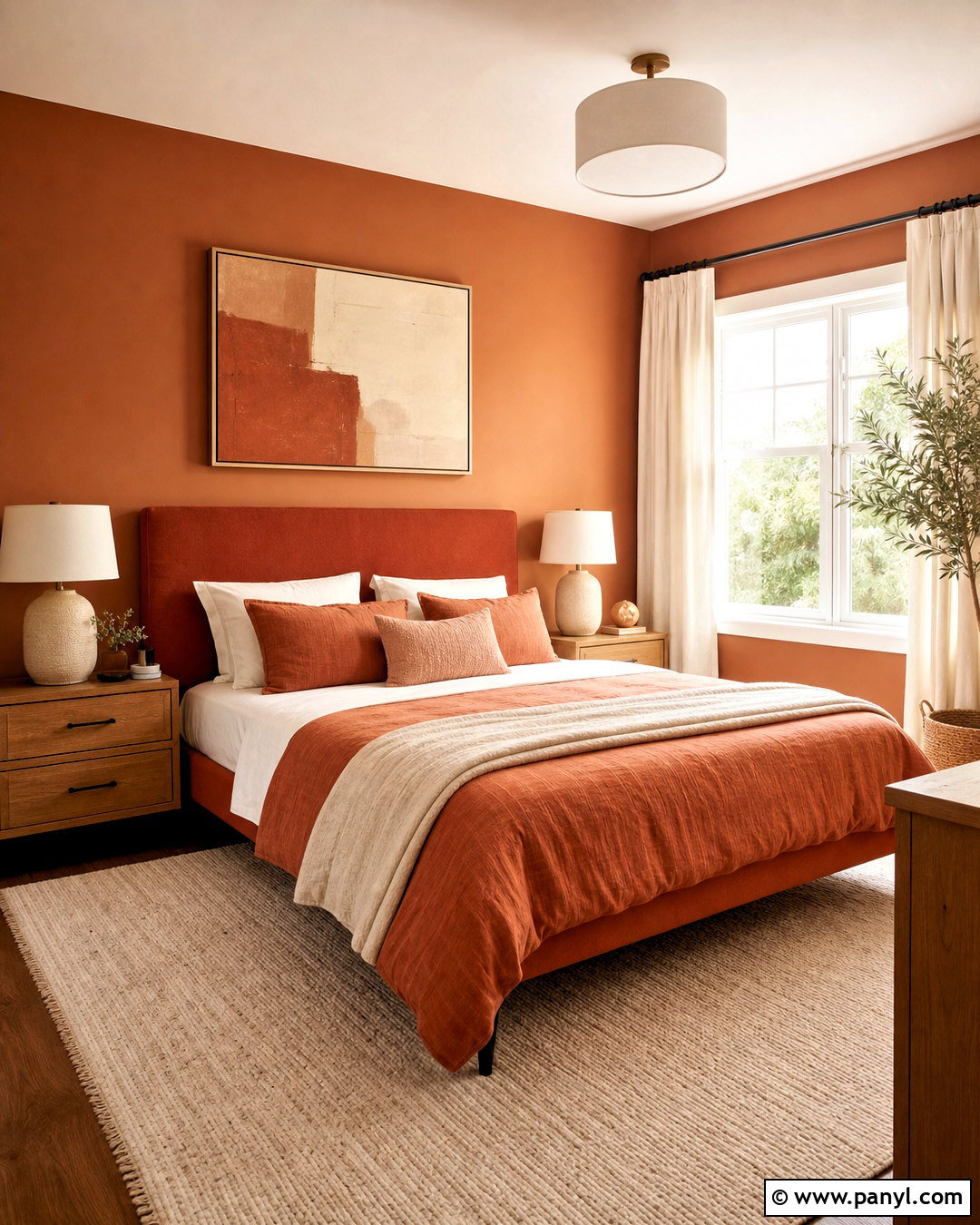
Terracotta bedroom paint surrounds the space with warm, sunbaked color and works beautifully with natural materials. Choose a softened clay-orange shade rather than a highly saturated red-orange. Use it on the walls while keeping the ceiling creamy white. A woven cane bed or pale oak headboard provides an airy counterpoint to the warm background. Dress the bed in ivory linen, rust-colored cushions, and an olive green throw. Add light wood nightstands, handmade ceramic lamps, and natural flax curtains. A vintage rug with faded red, blue, and tan details creates depth underfoot. Finish with black-framed landscape artwork and a small leather bench. This complete bedroom feels earthy, inviting, and expressive without depending on busy patterns or excessive decoration.
17. Muted Clay Bedroom Paint
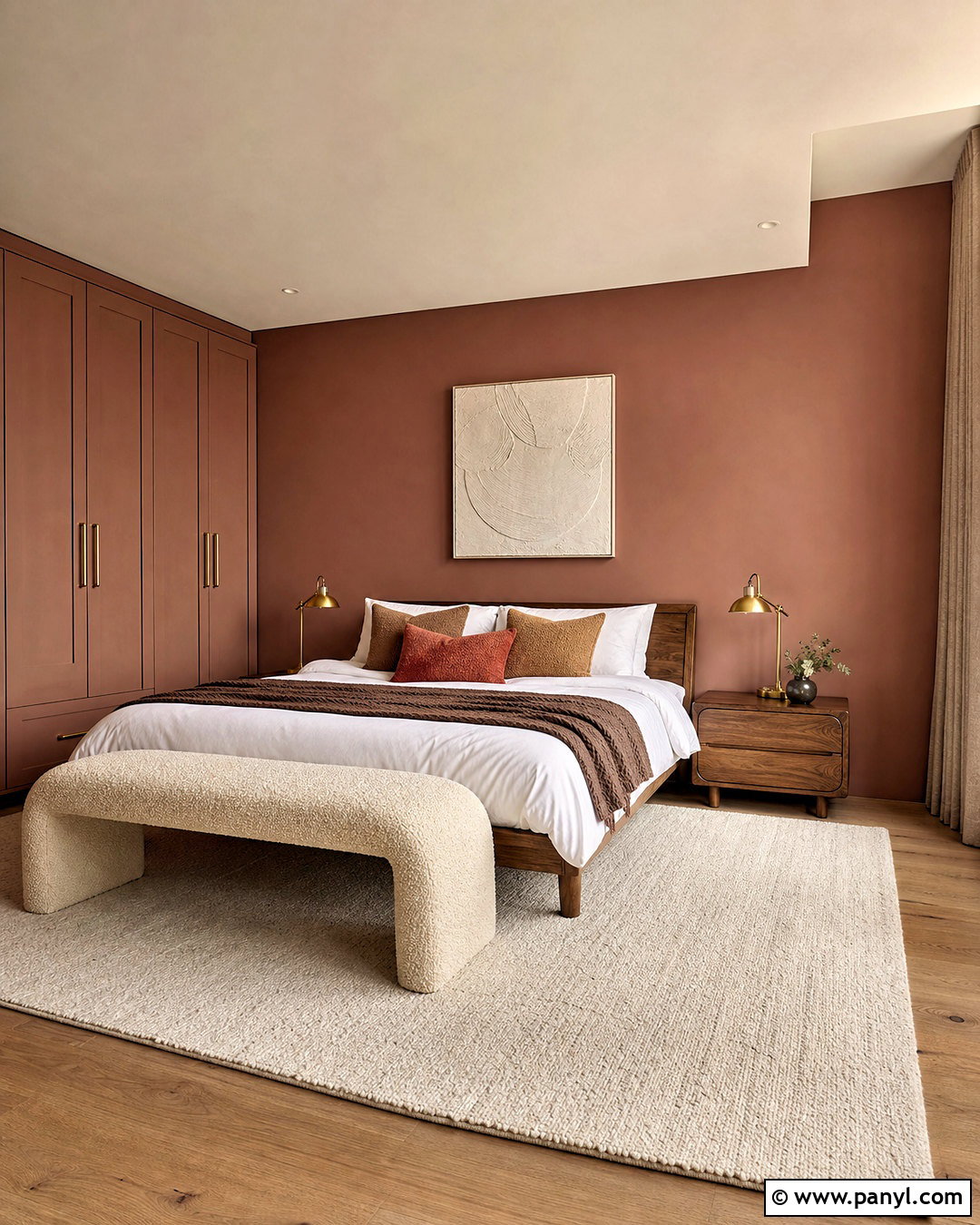
Muted clay creates a softer bedroom than classic terracotta because its pink, brown, and beige undertones feel naturally subdued. Paint the walls and built-in wardrobes in the same clay color for a smooth, cohesive backdrop. Keep the ceiling pale cream to prevent the space from feeling closed in. Pair the walls with a low walnut bed, warm white bedding, and cushions in cocoa, sand, and faded coral. Linen curtains in a light mushroom tone offer gentle contrast. Add a cream bouclé bench, aged brass lamps, and an ivory wool rug to introduce tactile variety. Simple plaster artwork and matte ceramic vessels complement the mineral-inspired palette. The resulting bedroom feels warm and modern, with enough neutral detail to remain restful and easy to personalize.
18. Butter Yellow Bedroom Paint
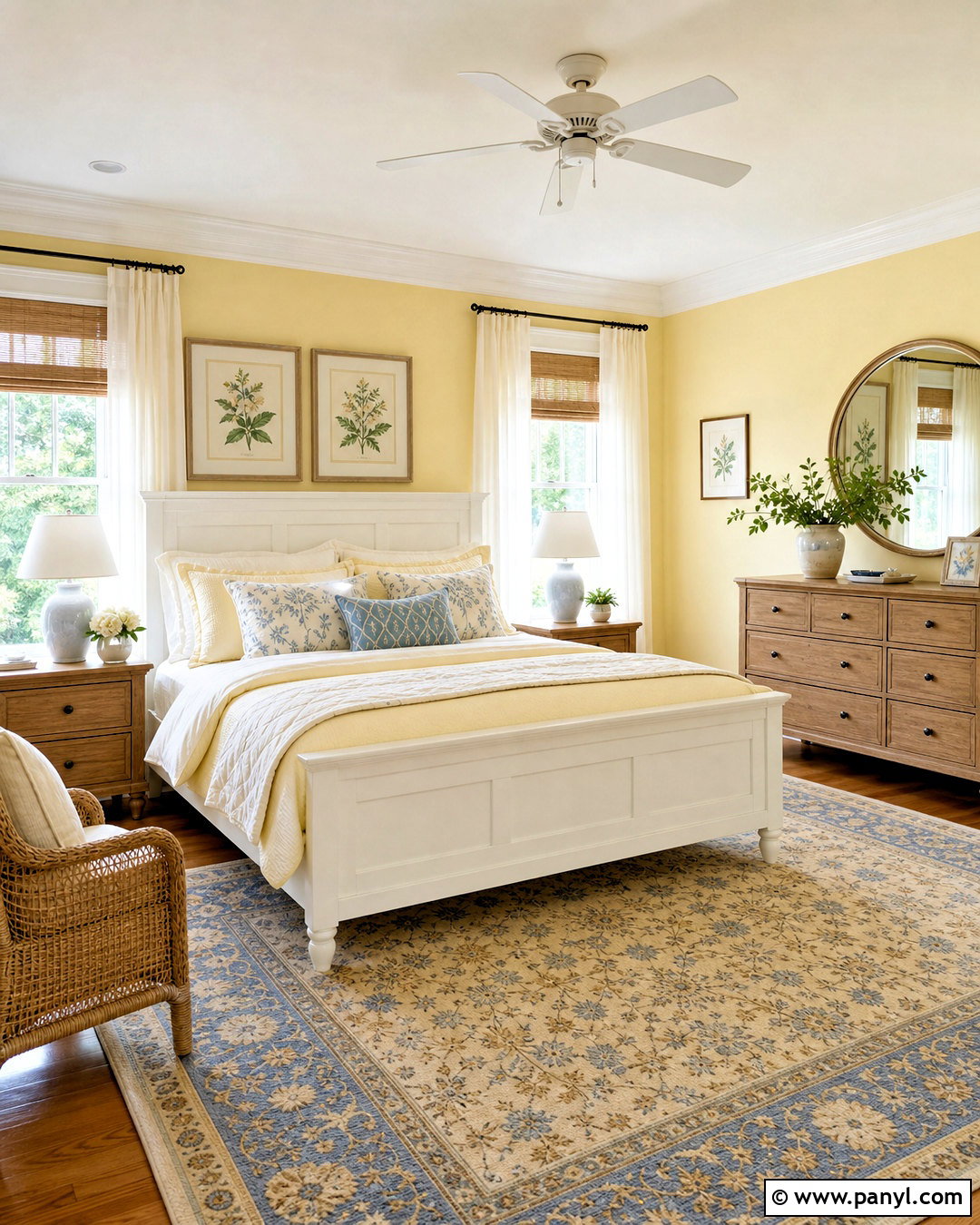
Butter yellow bedroom paint can brighten the room while remaining softer and more livable than lemon yellow. Select a pale, creamy shade and pair it with clean white trim to keep the design fresh. A white-painted wood bed supports the cheerful palette, while natural oak nightstands introduce warmth and contrast. Layer the bedding in ivory, soft yellow, dusty blue, and a small amount of gingham or stripe. Use woven bamboo shades with lightweight white curtains for an airy window treatment. A blue-and-cream rug balances the warmth of the walls. Add ceramic lamps, simple botanical prints, and a small upholstered bench in faded blue. This complete scheme feels sunny, relaxed, and especially welcoming in a guest bedroom or cottage-inspired space.
19. Burgundy Bedroom Paint
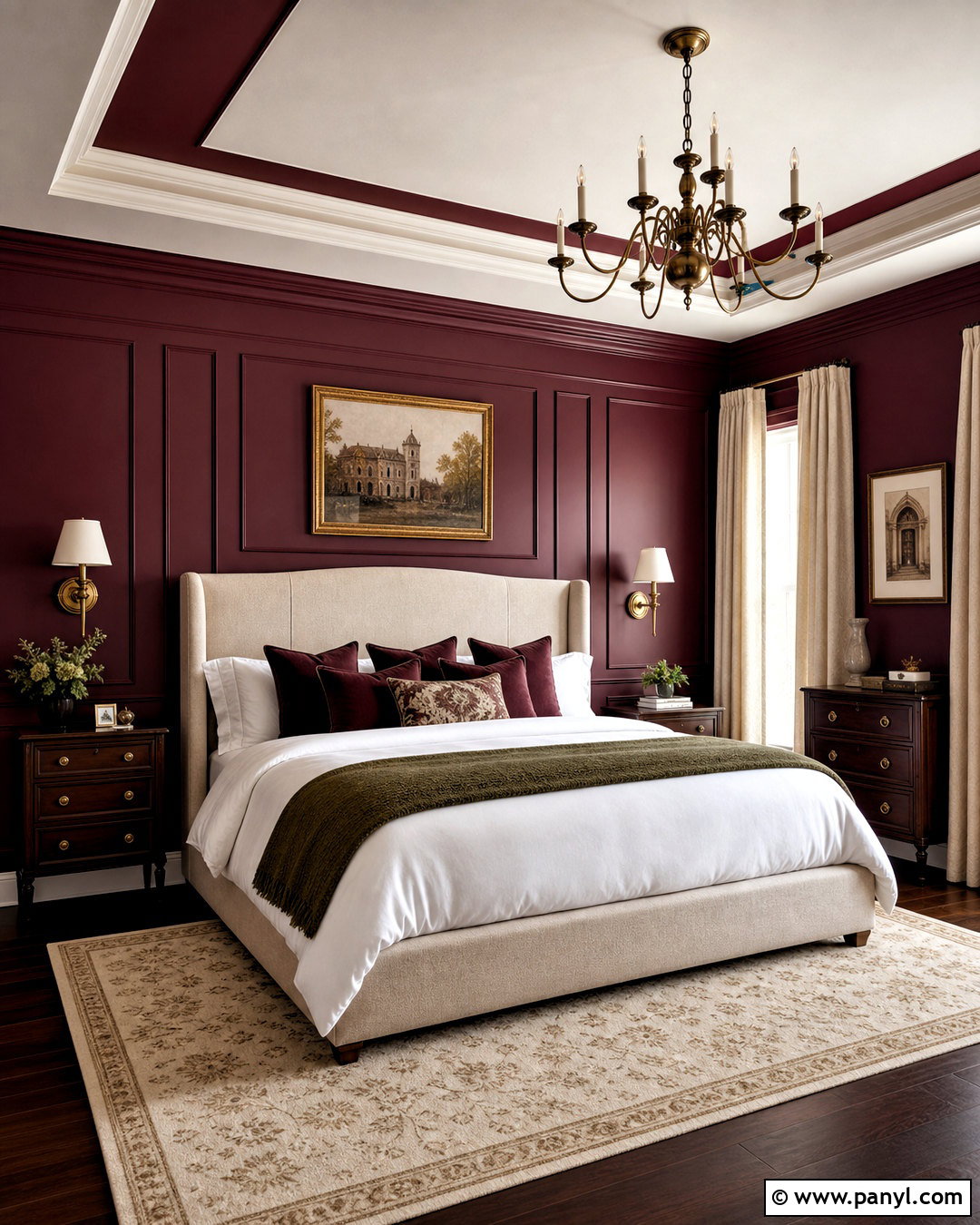
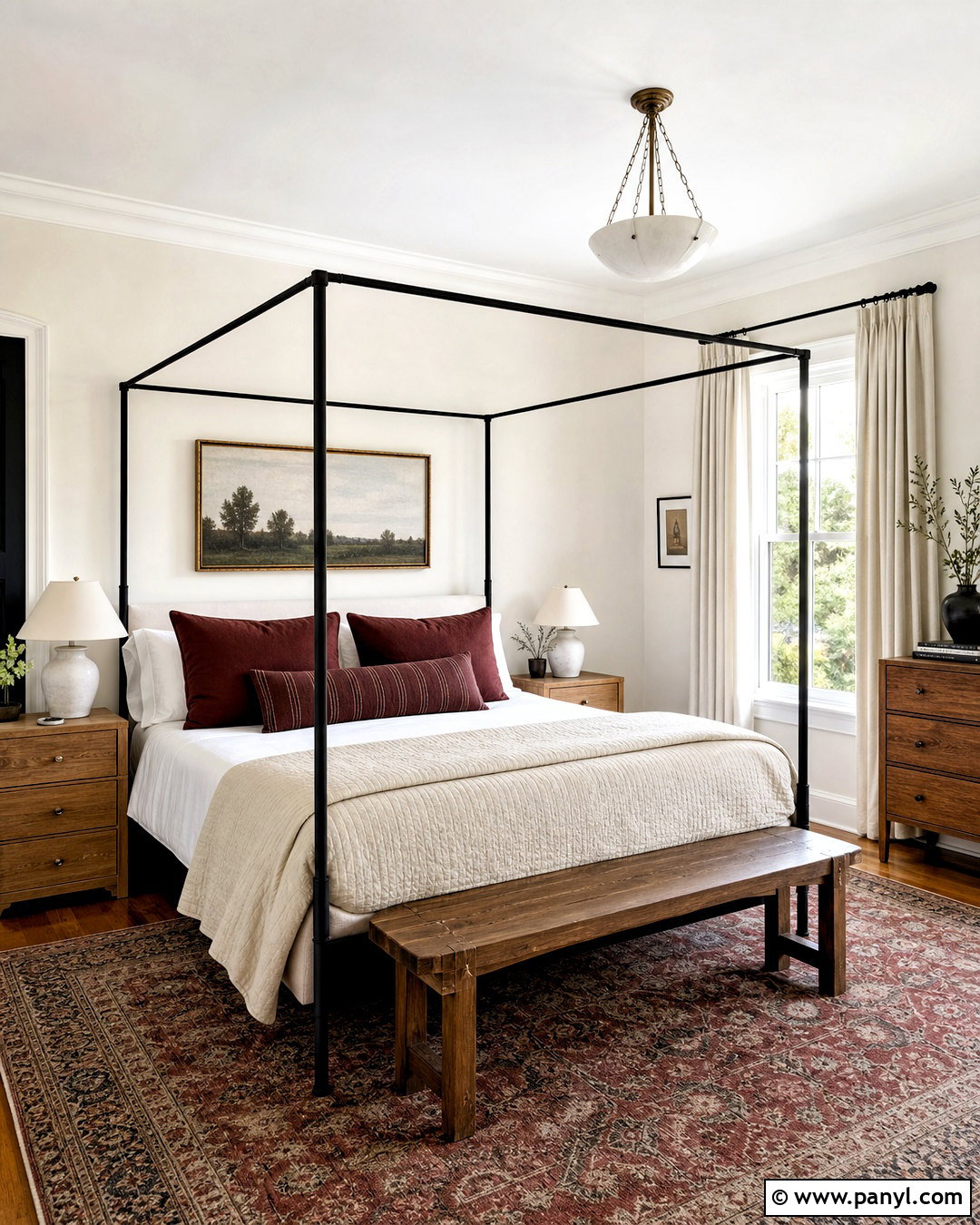
Burgundy bedroom paint creates a deep, luxurious atmosphere that feels strongest when balanced by pale textiles and warm wood. Use the color across the walls and paneled headboard wall for an intentional, cocooning effect. A tall oatmeal upholstered bed provides a light central anchor. Choose white bedding, burgundy accent pillows, and a muted olive throw to add controlled color variation. Dark walnut nightstands and antique brass sconces complement the red undertones. Ground the room with a large cream rug and soften the windows with beige linen curtains. Traditional artwork in gold-toned frames can reinforce the richness without creating clutter. This complete palette suits a spacious primary bedroom and offers a warmer alternative to commonly used navy or charcoal walls.
20. Charcoal Bedroom Paint
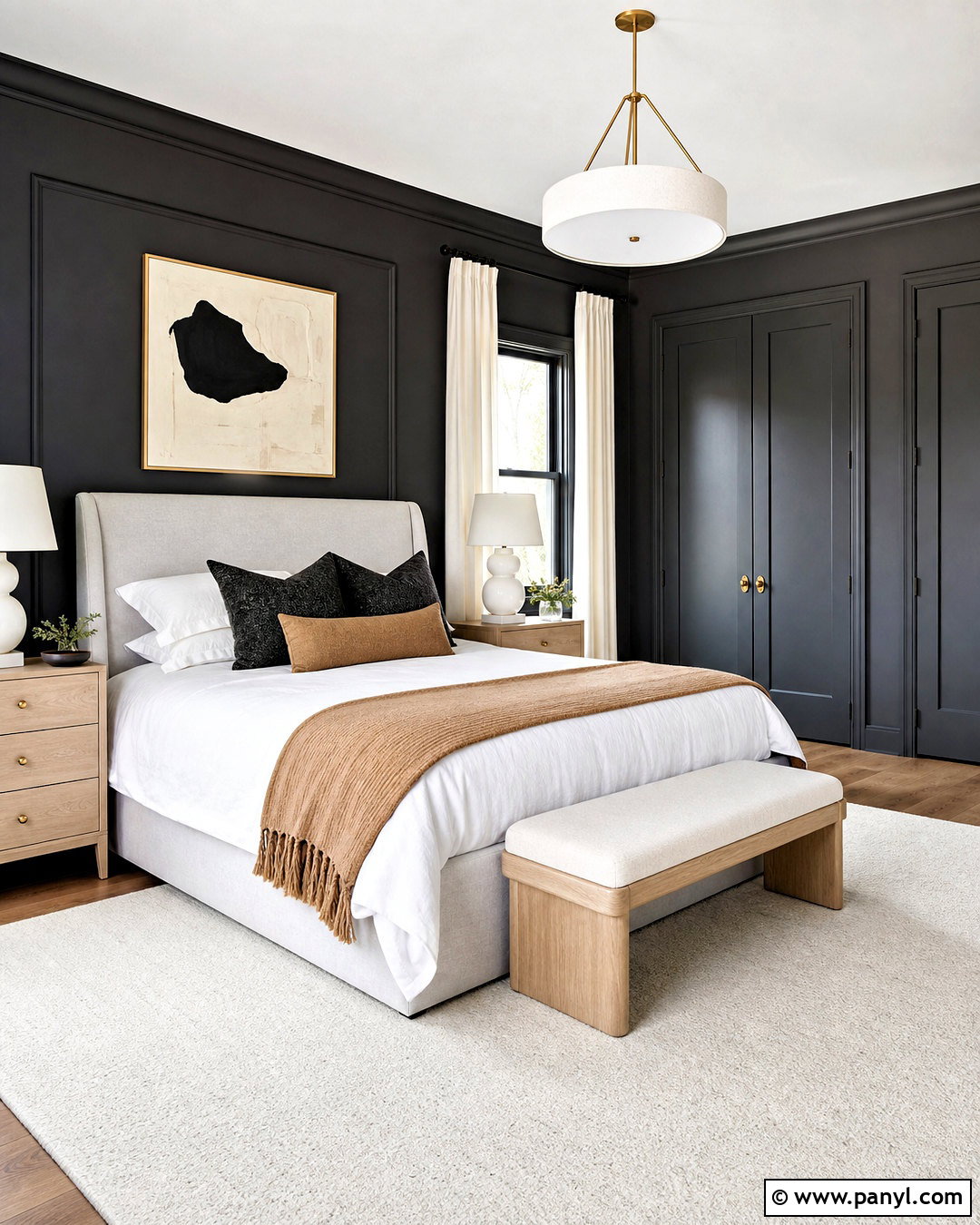
Charcoal bedroom paint delivers a bold, modern look while giving lighter furnishings sharper definition. Choose a deep charcoal with slightly warm undertones and apply it to the walls, trim, and closet doors for a streamlined finish. Keep the ceiling soft white unless the room has high ceilings and abundant daylight. Place a light gray upholstered bed against the dark background, then add crisp white bedding, black accents, and a camel-colored throw. Pale oak nightstands and a matching bench introduce warmth. Use ivory curtains and a large cream rug to brighten the lower half of the room. Sculptural white lamps, monochrome artwork, and brushed brass hardware finish the scheme. The completed bedroom feels dramatic, uncluttered, and comfortable rather than stark.
Conclusion:
The most successful bedroom palette connects the wall color with every major surface and furnishing in the room. Start by identifying the mood you want, then consider the flooring, natural light, furniture finish, bedding, and window treatments. Pale neutrals and softened colors create an airy foundation, while navy, burgundy, teal, and charcoal can produce a more enveloping retreat. Always sample your finalists and examine them during the morning, afternoon, and evening before purchasing all the paint you need. () With thoughtful layering and balanced contrast, these 20 room color ideas bedroom paint ideas can help you design a cohesive space that feels comfortable, attractive, and personal.

Related Ideas and Inspiration:


Leave a Reply