
Farmhouse living room paint colors work best when they feel warm, grounded, and easy to live with. Today’s farmhouse palette goes beyond plain white, bringing in creamy neutrals, earthy greens, faded blues, rich browns, and a few deeper heritage shades. These colors create a natural backdrop for wood beams, linen upholstery, vintage furniture, woven textures, and black metal accents. Warm whites and greiges remain practical choices, while muted nature-inspired colors add more character without losing the relaxed farmhouse mood. () Before choosing, test large samples throughout the day because flooring, sunlight, and surrounding finishes can change how a color appears. Use the following complete room schemes to find farmhouse living room paint colors that suit your space.

1. Warm White Farmhouse Living Room Paint
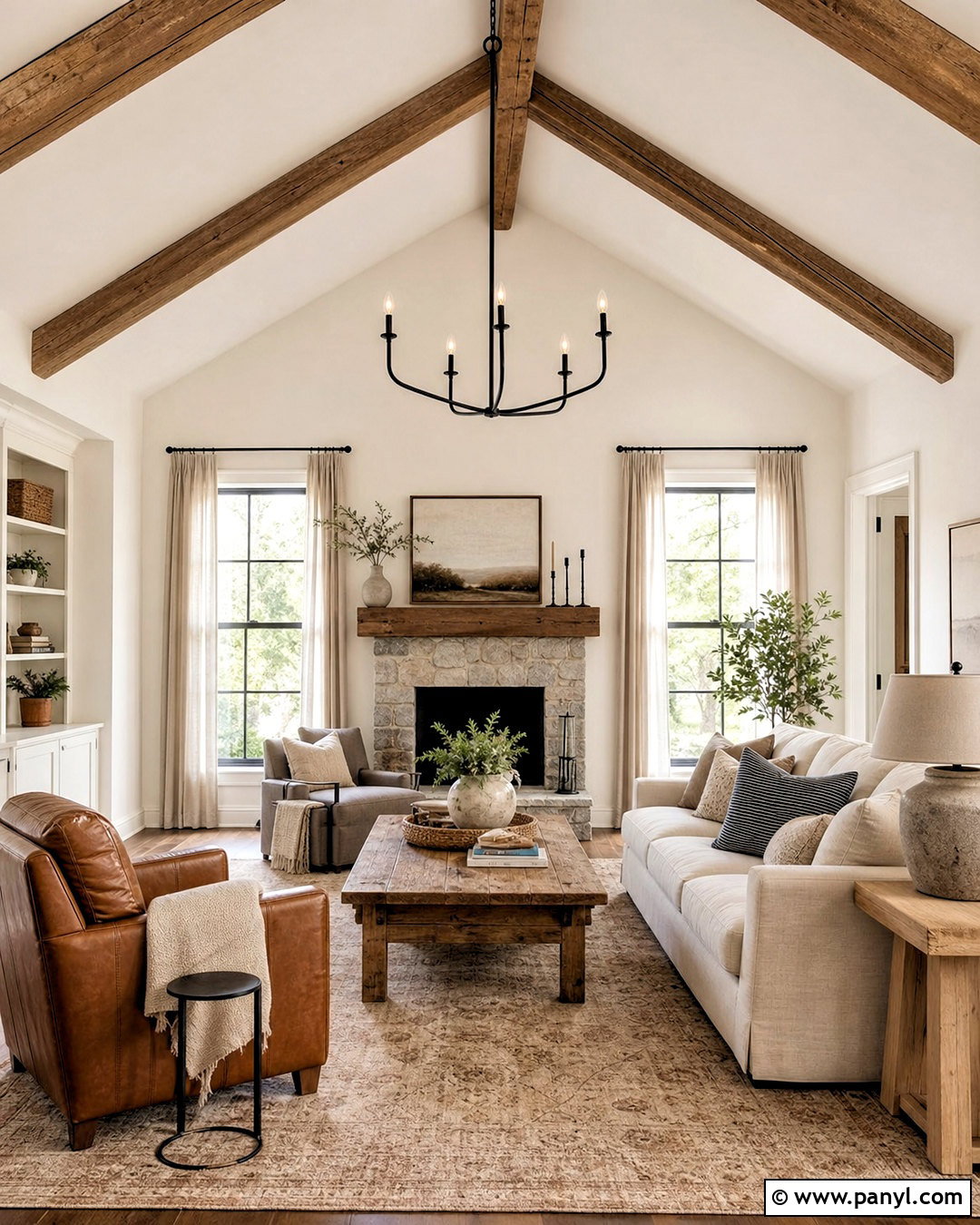
Warm white walls give a farmhouse living room a bright foundation without creating the cold feeling associated with crisp, blue-based white. Choose a soft white with creamy or subtle beige undertones, then repeat it across the walls and ceiling for a seamless effect. Add slightly brighter white trim to define windows, doors, and built-in shelves. A relaxed oatmeal sofa, caramel leather chair, and reclaimed oak coffee table bring warmth into the open palette. Ground the seating area with a faded beige rug and simple linen curtains. Matte black curtain rods and iron lighting provide controlled contrast. This combination works especially well in rooms with exposed beams, stone fireplaces, or darker floors because the warm white balances those heavier architectural finishes.
2. Creamy Ivory Farmhouse Living Room Paint

Creamy ivory creates a softer, more traditional farmhouse living room with gentle warmth around every surface. Paint the walls ivory and use a clean warm white on the trim so the room remains fresh rather than overly yellow. Build the furniture arrangement around a slipcovered cream sofa, two weathered wood armchairs, and a substantial pine coffee table. Dusty blue pillows and a muted blue-gray rug cool the palette slightly. A brick fireplace can remain natural, while the mantel is painted to match the trim for balance. Finish the look with woven baskets, antique brass lamps, and lightweight flax curtains. This scheme is particularly helpful in north-facing living rooms, where a cold wall color may look flat and natural light needs a warmer visual boost.
3. Soft Greige Farmhouse Living Room Paint

Can’t decide between gray and beige? Soft greige offers the structure of gray with enough beige warmth to complement farmhouse materials. Cover all four walls in a light greige and choose warm white for the trim, ceiling, and fireplace surround. Pair the walls with a natural linen sectional, white oak side tables, and a charcoal metal chandelier. A cream-and-taupe patterned rug creates subtle movement beneath the furniture. Bring in medium brown leather through an accent chair or ottoman, then add black-framed landscape prints above the sofa. Green branches in an aged ceramic vase keep the room feeling natural. This balanced palette is useful in open floor plans because it connects easily with white kitchens, wood dining tables, and neutral entryways without looking overly matched.
4. Warm Beige Farmhouse Living Room Paint
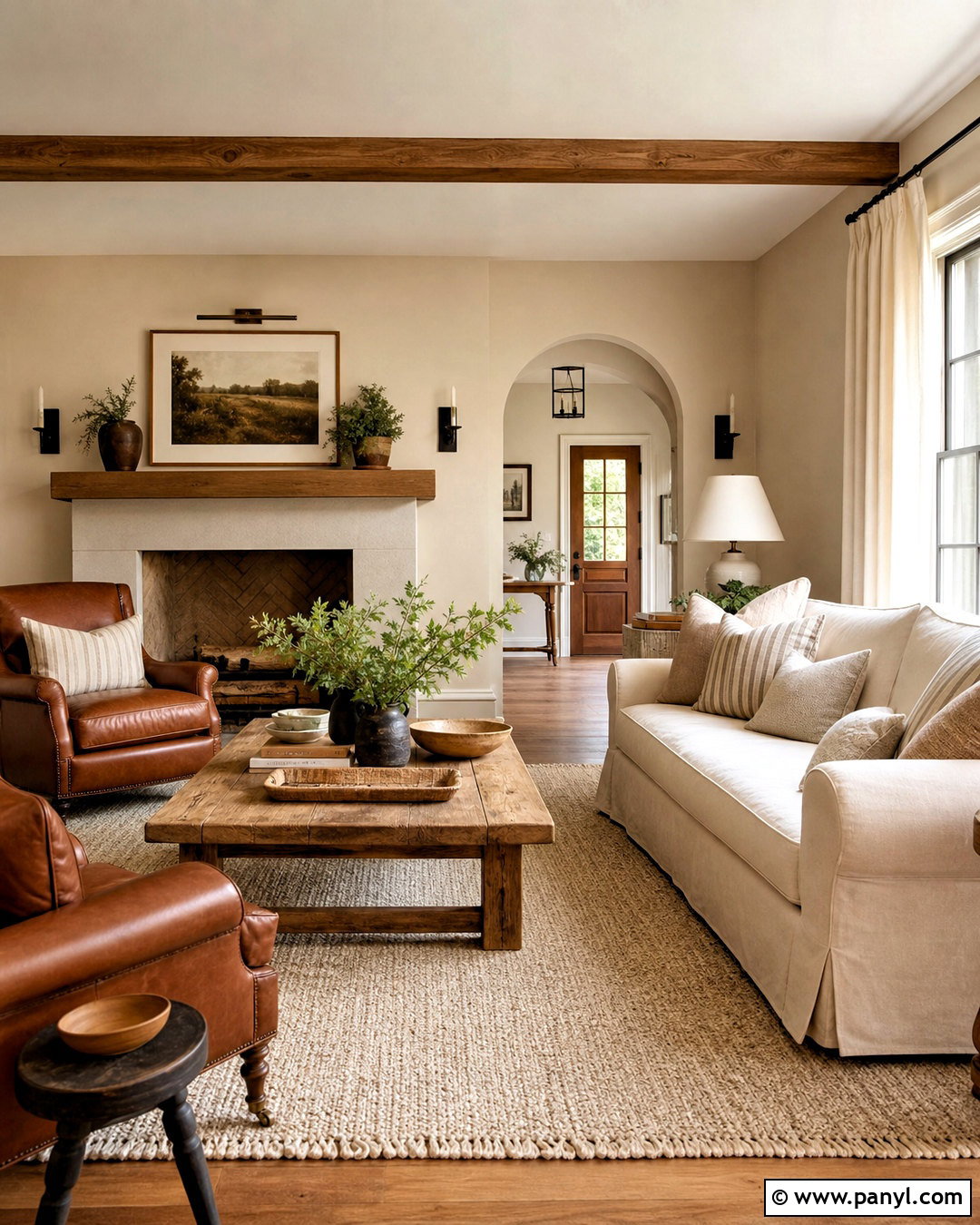
Warm beige creates an inviting farmhouse living room that feels calm, familiar, and comfortable through every season. Look for a balanced beige with subtle tan undertones instead of a strongly yellow shade. Paint the walls beige, keep the ceiling warm white, and use the same white on wide baseboards and window trim. A deep cream sofa and cognac leather chairs form a cozy conversation area around a rustic rectangular coffee table. Add an ivory wool rug, striped flax pillows, and cotton curtains in a shade close to the walls. Black iron sconces and a simple chandelier sharpen the otherwise soft palette. For depth, style the room with dark brown pottery, aged wood frames, and olive branches. The finished space feels layered without relying on busy patterns.
5. Mushroom Taupe Farmhouse Living Room Paint
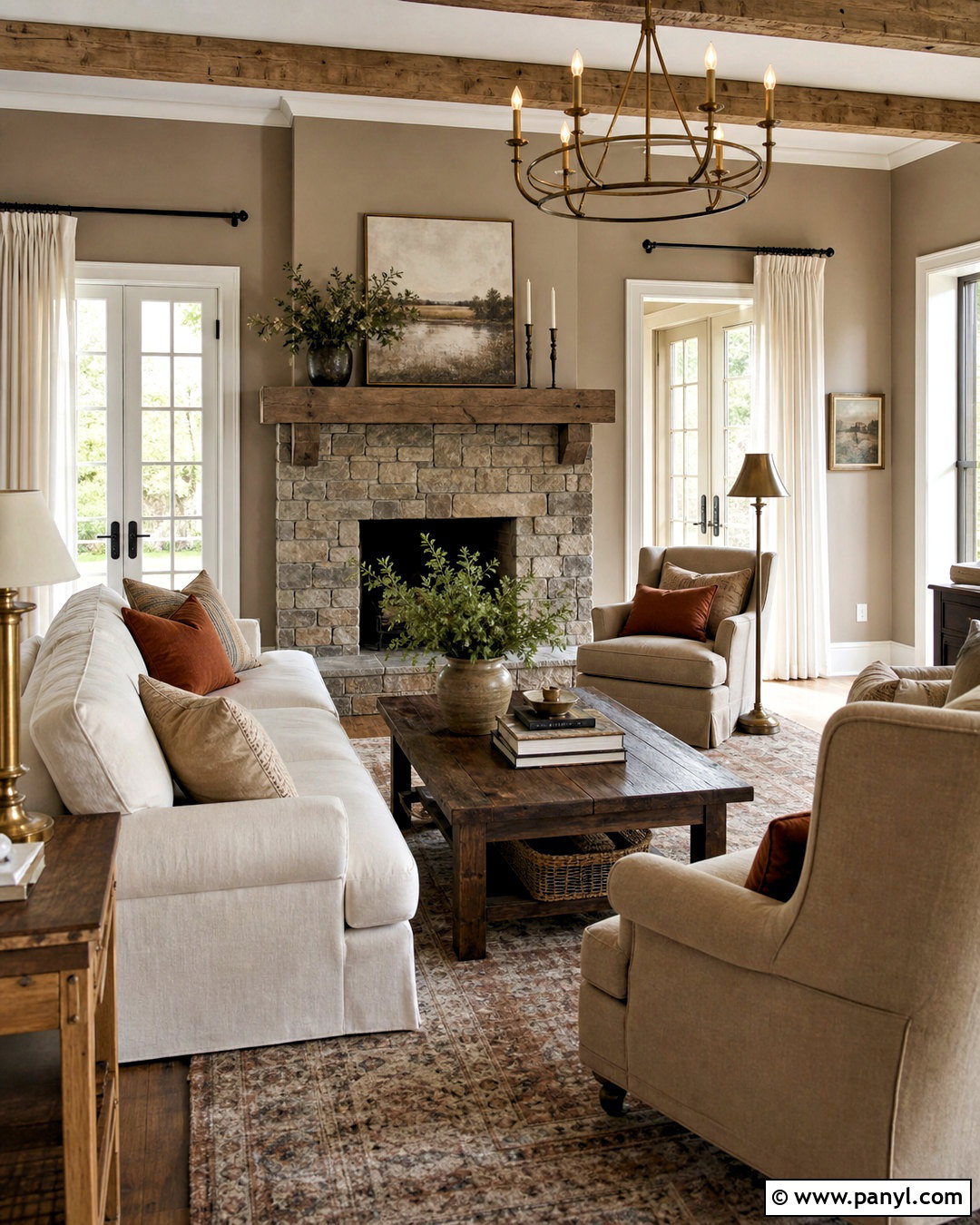
Mushroom taupe brings a richer, earthier quality to farmhouse interiors while remaining versatile enough for an entire living room. This shade usually sits between brown, beige, and gray, creating a sophisticated background for pale upholstery and timeworn wood. Paint the walls mushroom taupe and use creamy white across the ceiling, trim, and fireplace mantel. Arrange an off-white sofa opposite two oatmeal club chairs, with a dark reclaimed wood table in the center. Soft rust, charcoal, and tan pillows deepen the scheme without overwhelming it. Choose a vintage-style rug containing faded brown and gray tones. Linen curtains, antique brass floor lamps, and handmade ceramic accessories complete the room. This paint color looks especially cohesive alongside fieldstone, aged brick, and medium-toned oak flooring.
6. Light Oatmeal Farmhouse Living Room Paint
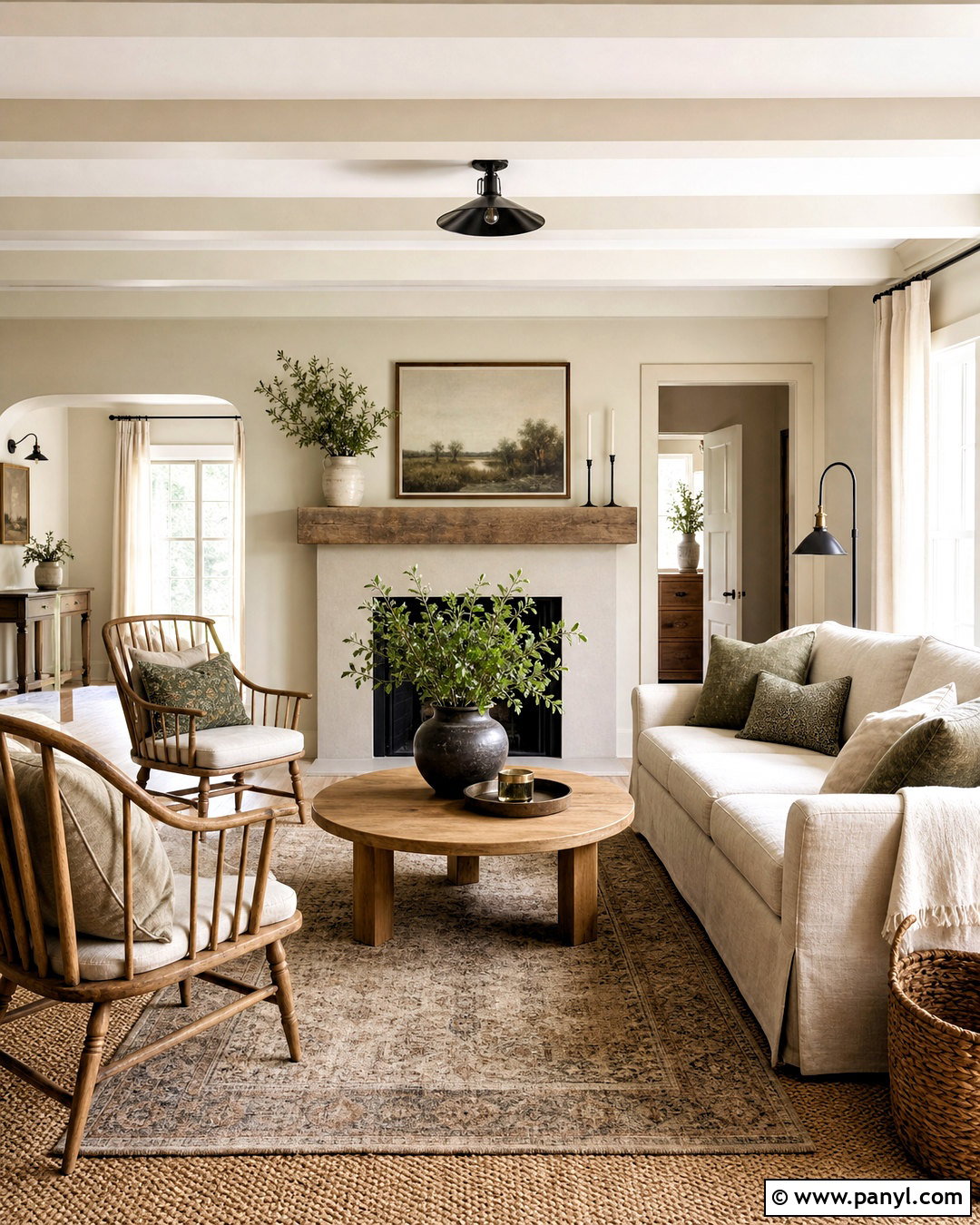
Light oatmeal paint wraps a farmhouse living room in understated warmth while keeping the space airy and flexible. It is softer than standard beige and more colorful than off-white, making it an excellent background for natural textures. Continue the oatmeal paint across the walls, but leave the ceiling and substantial trim a gentle creamy white. Choose a flax-colored sofa, spindle-back wood chairs, and a round white oak coffee table to maintain the relaxed tone. A woven jute rug layered beneath a smaller vintage-patterned rug gives the floor extra dimension. Incorporate muted green pillows, black iron lamps, and a simple landscape painting for contrast. Pale linen curtains should blend closely with the walls. The resulting space feels casual, collected, and suitable for both traditional and modern farmhouse homes.
7. Pale Putty Farmhouse Living Room Paint
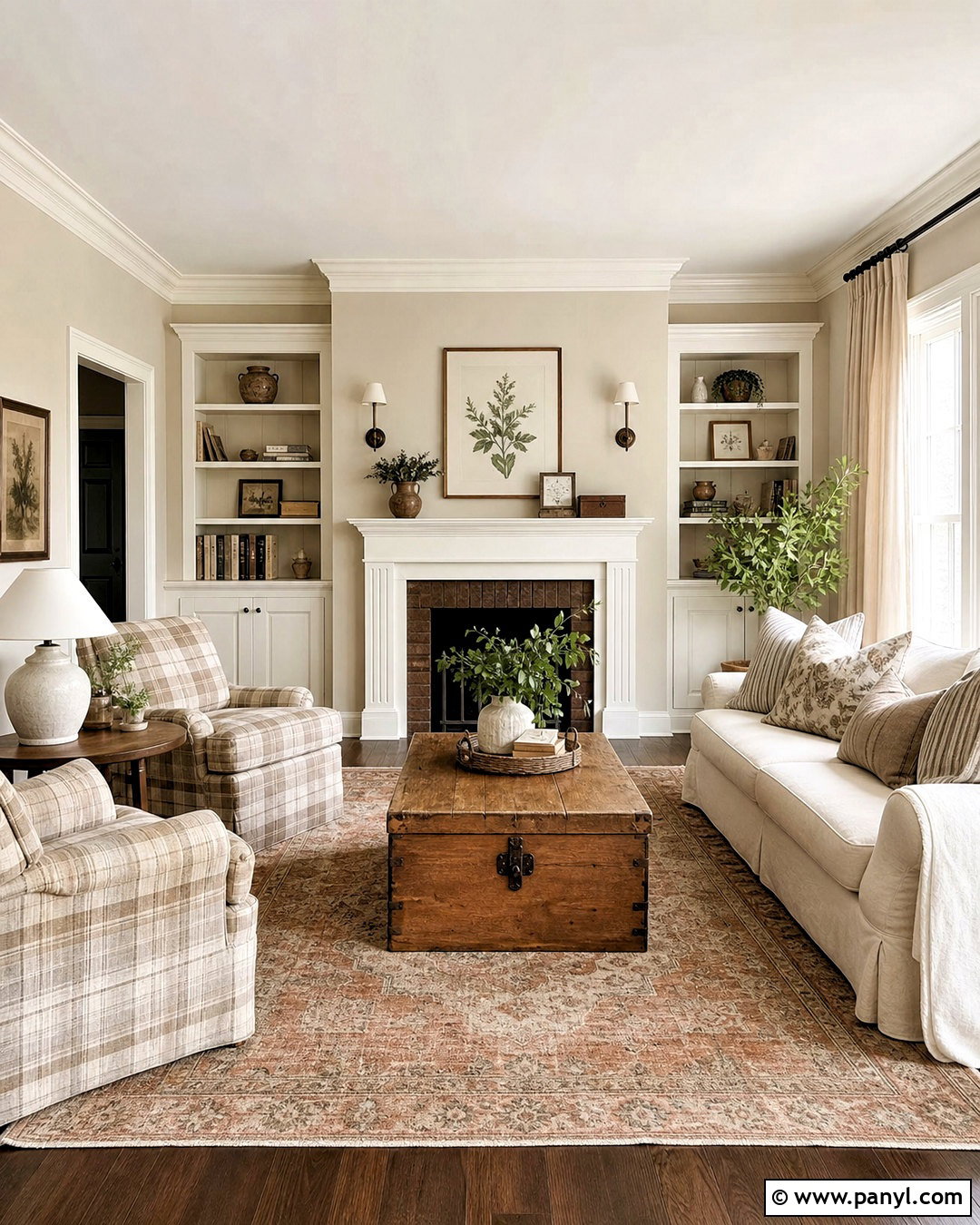
Pale putty is a quiet neutral with enough depth to make white architectural features stand out. Use it on the living room walls alongside warm white crown molding, window casings, and built-in cabinets. The combination creates gentle definition without the hard contrast of dark gray. Furnish the room with a cream sofa, vintage oak chest used as a coffee table, and a pair of muted plaid armchairs. A faded rust and beige rug introduces heritage character beneath the seating arrangement. Add bronze wall sconces, turned wood lamps, and framed botanical prints to reinforce the farmhouse setting. Natural flax curtains keep the windows light. Because pale putty bridges warm and cool tones, it can help connect gray stone, red brick, brown wood, and black metal within one cohesive living room.


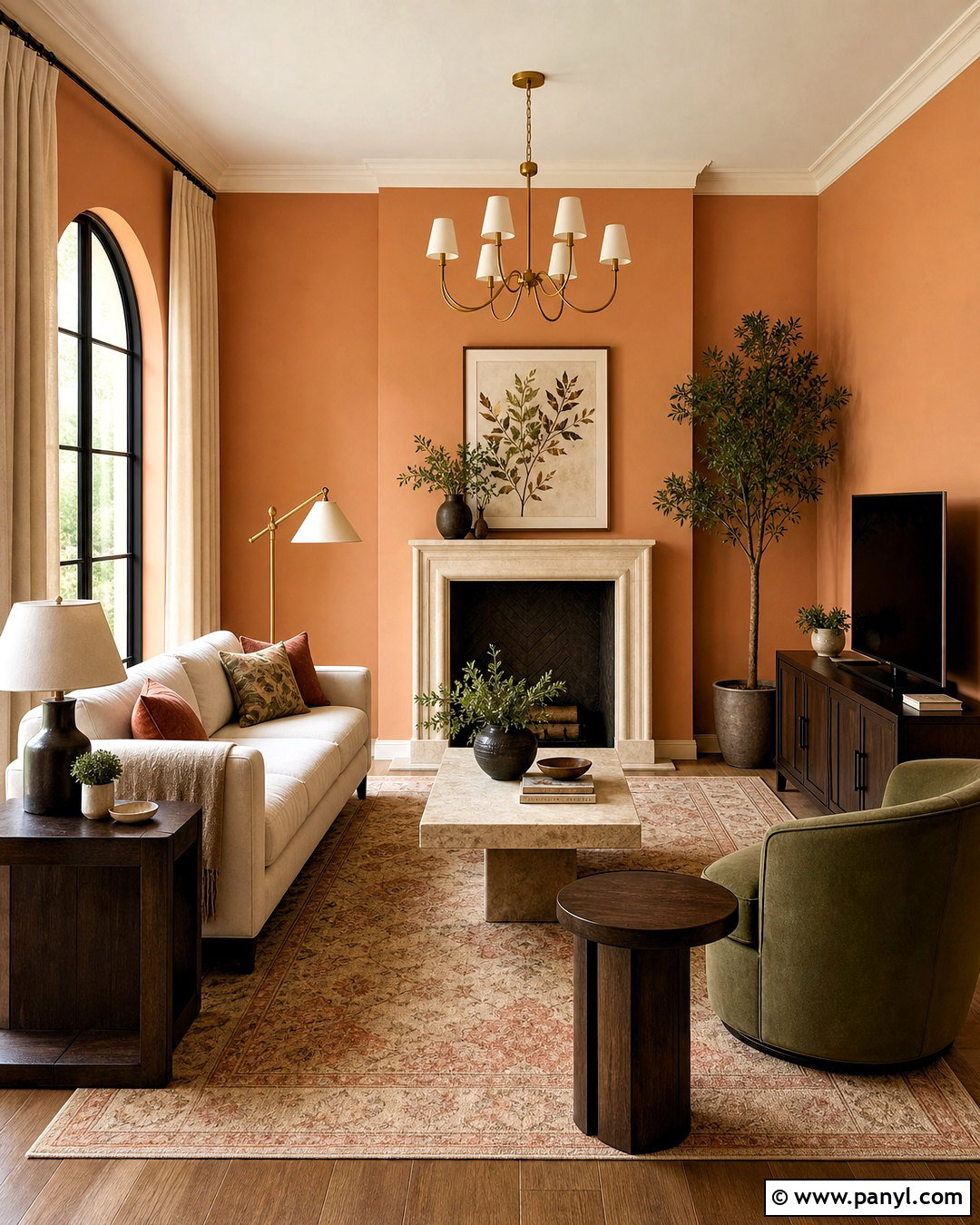
8. Soft Sage Green Farmhouse Living Room Paint
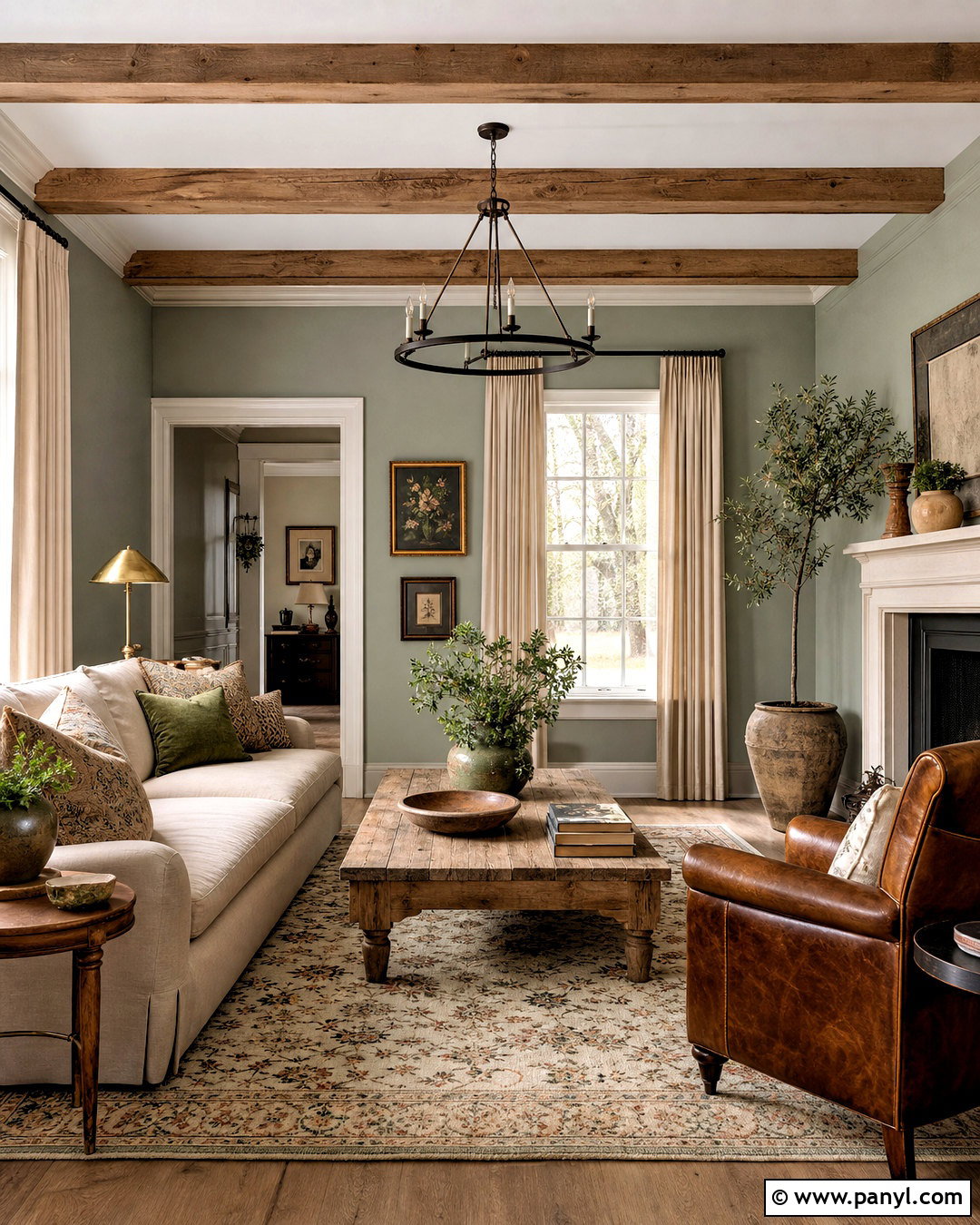
Soft sage green brings the calm character of the outdoors into a farmhouse living room. Select a muted sage containing gray undertones rather than a bright botanical green. Paint every wall sage and pair it with creamy white trim to create a clean but gentle contrast. A warm beige sofa, cognac leather chair, and weathered oak coffee table balance the cooler wall color. Use an ivory rug with a faded green pattern to connect the seating area to the walls. Natural linen curtains, black iron curtain rods, and aged brass lamps add practical layers. Display simple pottery, vintage books, and landscape art instead of filling every surface. This complete palette looks especially natural with exposed ceiling beams, wide-plank floors, stone fireplaces, and views of surrounding greenery.
9. Muted Olive Farmhouse Living Room Paint

Muted olive walls create a grounded farmhouse living room with more depth than pale sage. Choose an olive that has earthy gray or brown undertones, helping it coordinate with aged wood and natural stone. Keep the ceiling and trim creamy white so the room remains bright. A camel leather sofa can anchor the space, while two ivory linen chairs prevent the darker paint from becoming heavy. Add a chunky oak coffee table and a large faded rug in tan, moss, and rust. Antique brass lighting warms the green walls, and black metal window hardware adds definition. Finish with unglazed pottery, woven baskets, and restrained botanical artwork. This palette suits a room with strong natural light and creates a cozy setting that feels connected to a rural landscape.



10. Dusty Blue Farmhouse Living Room Paint

Dusty blue gives a farmhouse living room a fresh, relaxed character without making it feel coastal or overly colorful. The best version is muted with gray undertones and has enough depth to remain visible in bright daylight. Use dusty blue on every wall and balance it with soft white trim, a white-painted fireplace, and pale linen window treatments. Arrange a warm cream sofa with weathered oak side tables and a pair of medium brown leather chairs. A beige rug with faded blue patterning connects the room’s warm and cool elements. Add black iron lighting, woven baskets, and simple blue-and-white pottery. Natural wood ceiling beams provide a strong finishing detail. The overall look is light and approachable, with a subtle historic quality that complements farmhouse architecture.
11. Blue-Gray Farmhouse Living Room Paint

Blue-gray paint provides a cooler farmhouse palette while still looking soft and livable. Choose a shade that reads as faded blue in daylight rather than plain industrial gray. Cover the walls in blue-gray, then introduce warm white trim and a natural stone fireplace to keep the color grounded. A creamy sectional, tobacco leather ottoman, and reclaimed pine console add warmth throughout the room. Layer a vintage rug with muted blue, beige, and brown details under the main furniture group. Warm oak frames and antique brass lamps further balance the cool walls. Use white cotton curtains to maintain a clear, uncomplicated window treatment. This design works well in sunny living rooms, where abundant natural light reveals the blue undertone and prevents the walls from feeling dull or overly shadowed.
12. Smoky Teal Farmhouse Living Room Paint
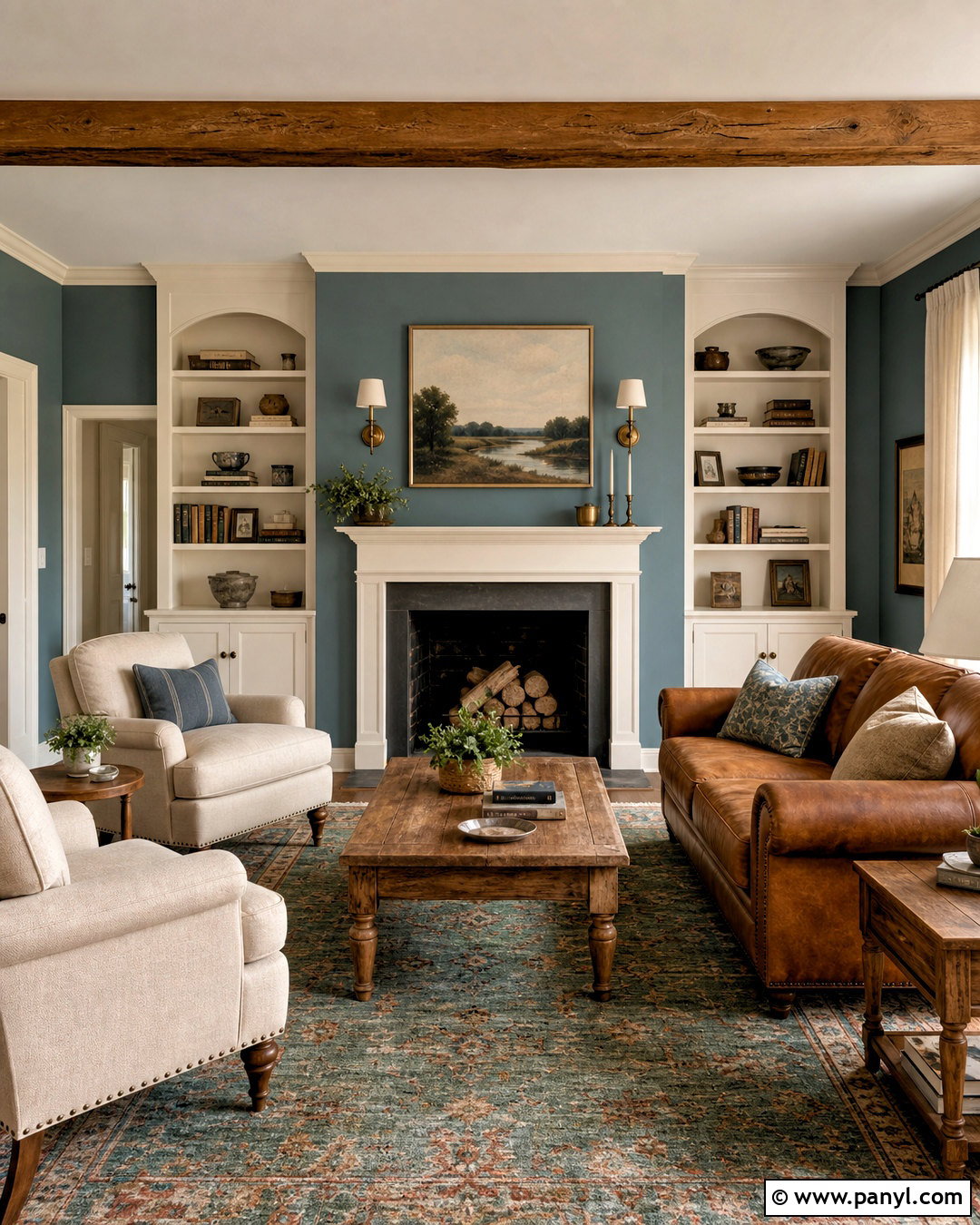
Smoky teal can give a farmhouse living room memorable color while preserving a mature, heritage-inspired atmosphere. Use a subdued blue-green with plenty of gray rather than a saturated jewel tone. Paint the walls teal, but keep the ceiling, trim, and built-in shelving creamy white to frame the deeper color. A camel leather sofa becomes the warm centerpiece, supported by two oatmeal chairs and a reclaimed oak coffee table. Choose a faded Persian-style rug containing teal, rust, and beige to unify the palette. Antique brass sconces and dark bronze curtain rods add warmth and definition. Keep curtains natural and uncomplicated. A large traditional landscape painting above the sofa completes the design. The room feels bold yet comfortable, making this color especially effective in a defined living room.
13. Warm Charcoal Farmhouse Living Room Paint

A warm charcoal farmhouse living room feels dramatic, cocooning, and surprisingly comfortable when lighter materials are used throughout the space. Select charcoal with brown undertones instead of a cold blue-black. Paint all four walls, then repeat the shade on built-in shelving for a cohesive, color-drenched effect. Keep the ceiling warm white to prevent the room from feeling enclosed. An ivory slipcovered sofa, cream boucle chairs, and a pale oak coffee table provide strong contrast. Use a large beige wool rug to brighten the floor and soften acoustics. Add cognac leather pillows, antique brass lamps, and natural linen curtains. A white or pale stone fireplace becomes a striking focal point. This complete scheme works best in rooms with generous windows and balanced layered lighting.
14. Soft Black Farmhouse Living Room Paint
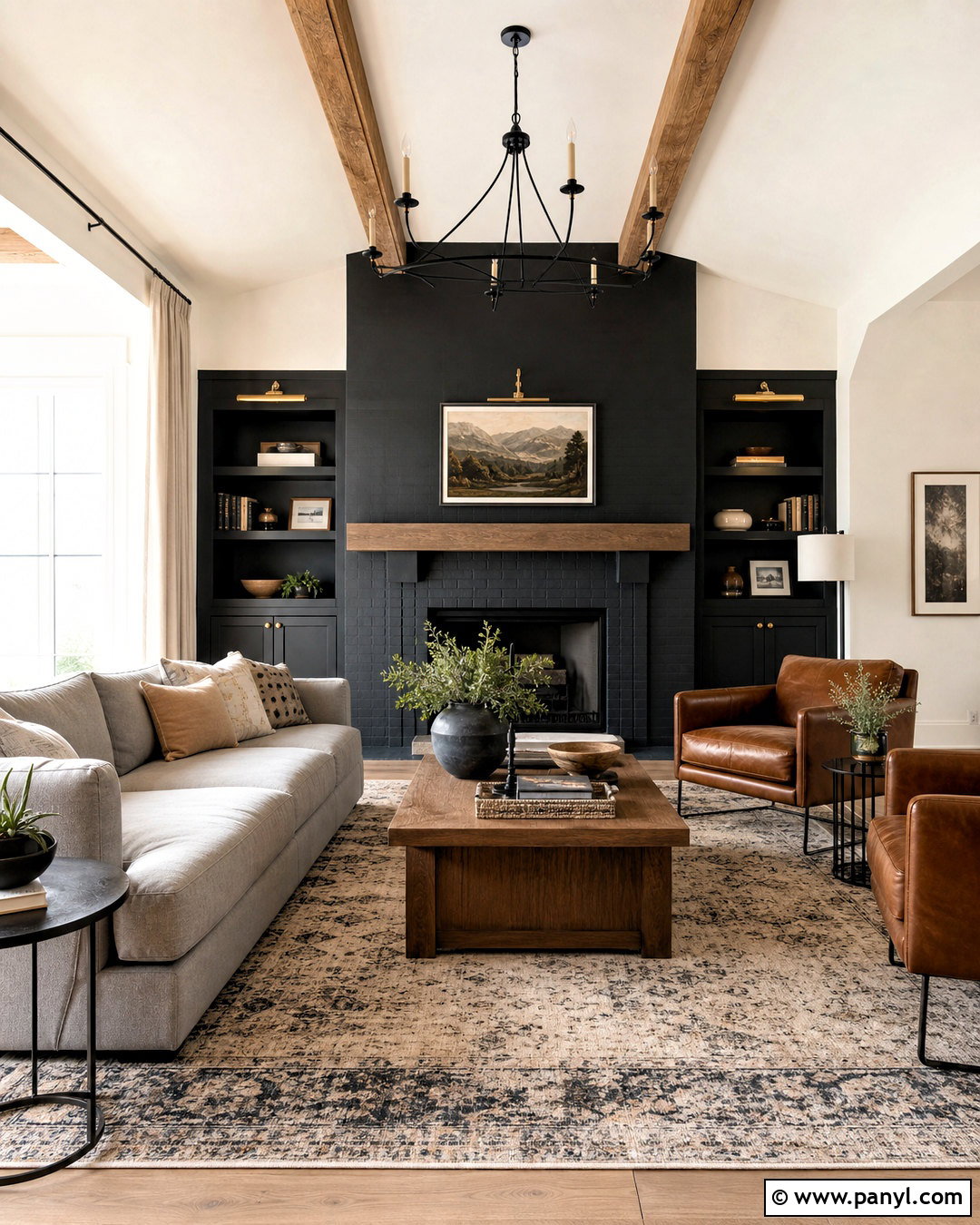
Soft black paint highlights farmhouse architecture with a graphic, modern edge. Instead of covering every wall, use the color across the fireplace, built-in cabinets, and the main focal wall while keeping surrounding walls a creamy off-white. This broader painted composition feels more intentional than a small accent area. Position a warm gray sectional facing the fireplace and add two cognac leather chairs around a solid oak coffee table. A faded cream-and-black rug repeats the contrast at floor level. Use natural linen curtains, aged brass picture lights, and simple pottery to soften the black surfaces. Exposed wood beams prevent the room from appearing overly contemporary. The final design balances old and new, giving a standard farmhouse living room stronger structure without sacrificing comfort or warmth.
15. Clay Beige Farmhouse Living Room Paint
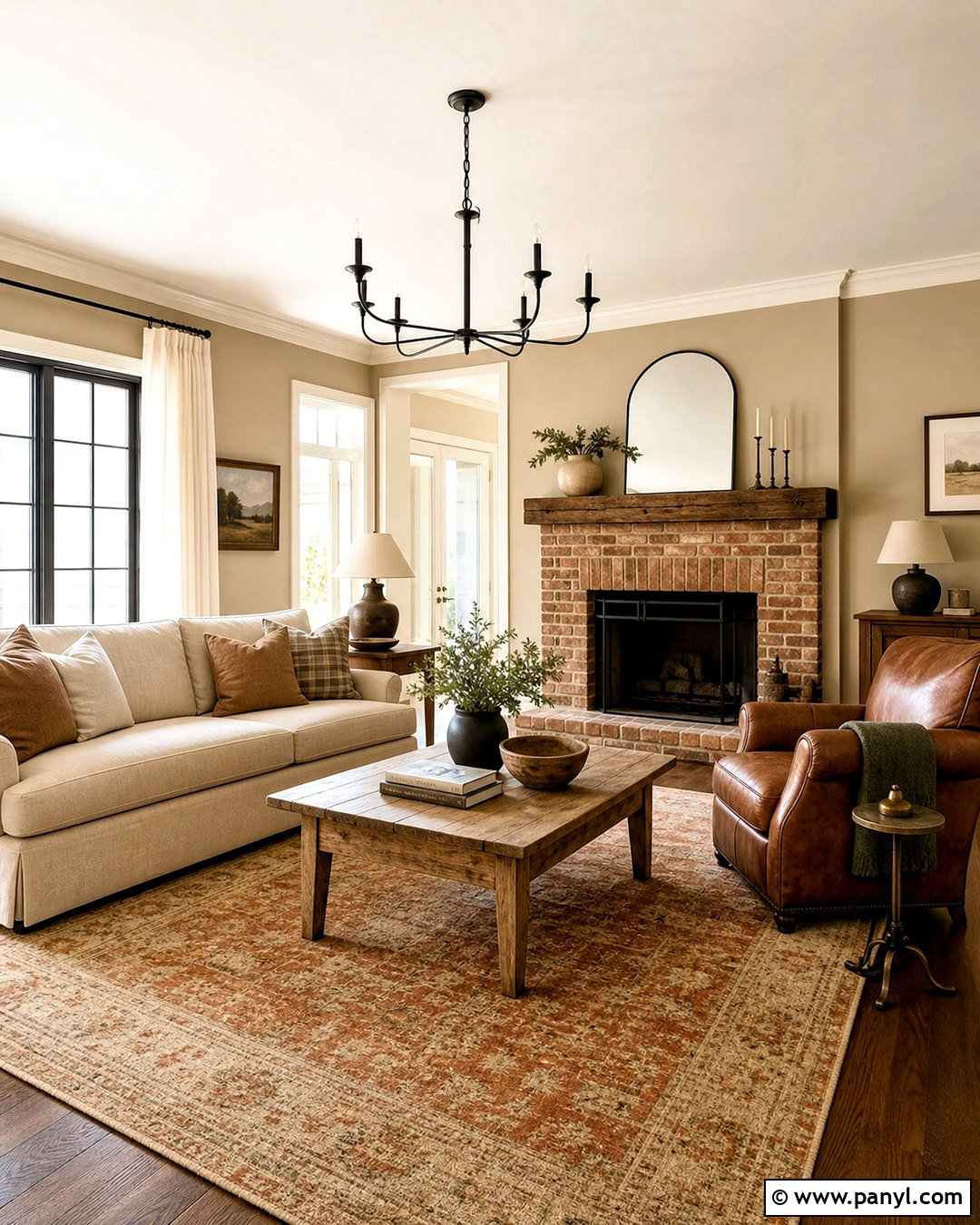
Clay beige introduces earthy warmth that falls between traditional tan and muted terracotta. It works beautifully in a farmhouse living room filled with wood, linen, and handcrafted details. Paint the walls a light clay beige and use creamy white on the trim and ceiling. Choose an oatmeal sofa, warm brown leather chair, and distressed pine coffee table for a naturally layered arrangement. A faded rug containing rust, sand, and charcoal grounds the furniture while echoing the wall color. Add black iron lighting and aged brass accessories in small amounts. Off-white curtains keep the room bright, and landscape artwork with green fields offers a cooler counterpoint. This palette is particularly welcoming beside a red brick fireplace because the related undertones create flow without making everything look overly coordinated.
16. Faded Blush Farmhouse Living Room Paint
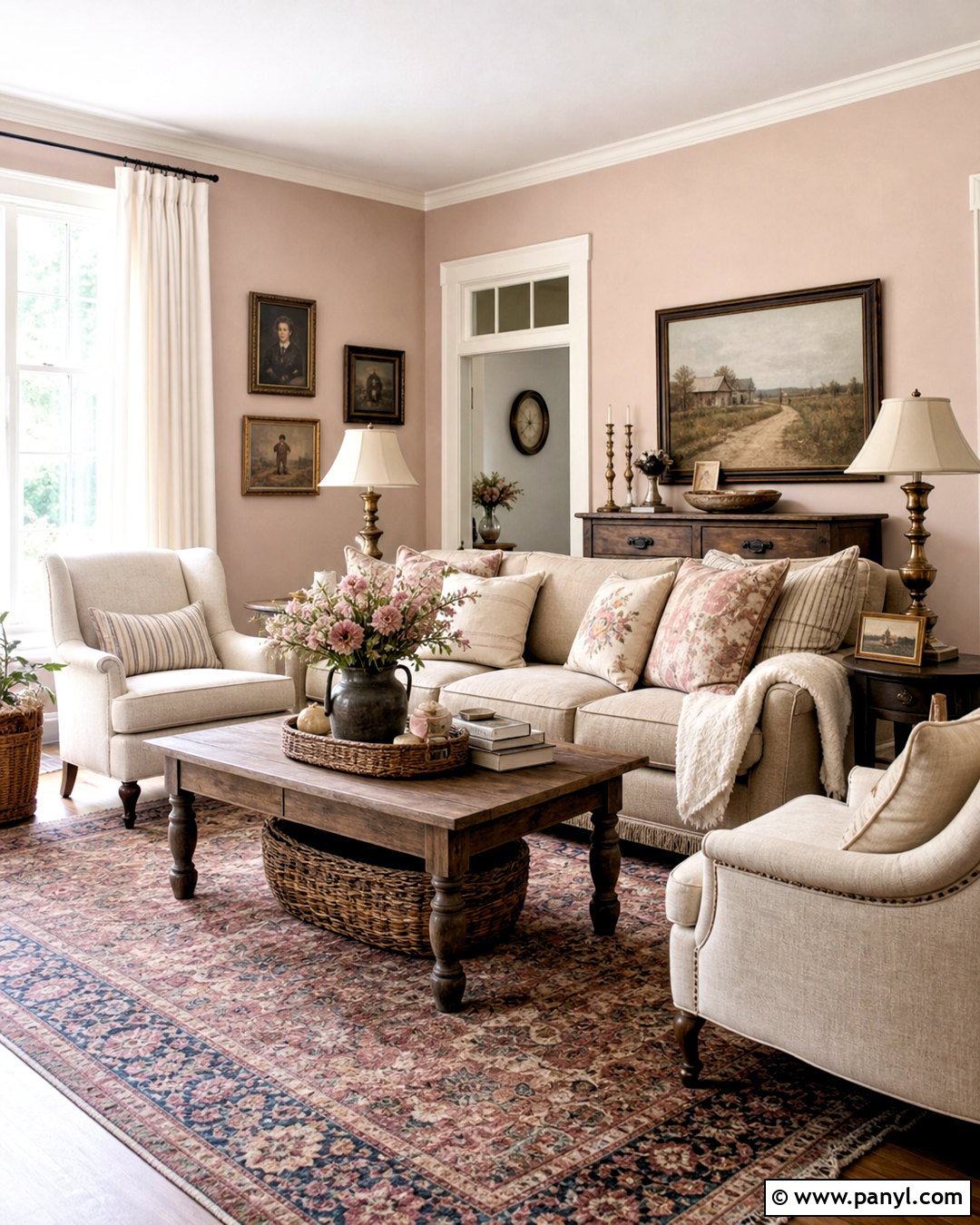
Faded blush offers a softer farmhouse living room palette that feels warm and collected rather than sugary. Look for a dusty pink mixed with beige, taupe, or gray so it behaves almost like a neutral. Paint the walls blush and keep the ceiling and trim a gentle warm white. A flax linen sofa, walnut coffee table, and two cream upholstered chairs create an understated furniture arrangement. Add a vintage rug with faded rose, brown, and muted blue details to strengthen the timeworn character. Antique brass lamps and dark wood picture frames give the pale walls needed structure. Use simple cotton curtains and woven baskets for relaxed texture. A brown leather ottoman can add practical durability. The completed room feels distinctive while remaining compatible with classic farmhouse furnishings.
17. Buttery Cream Farmhouse Living Room Paint
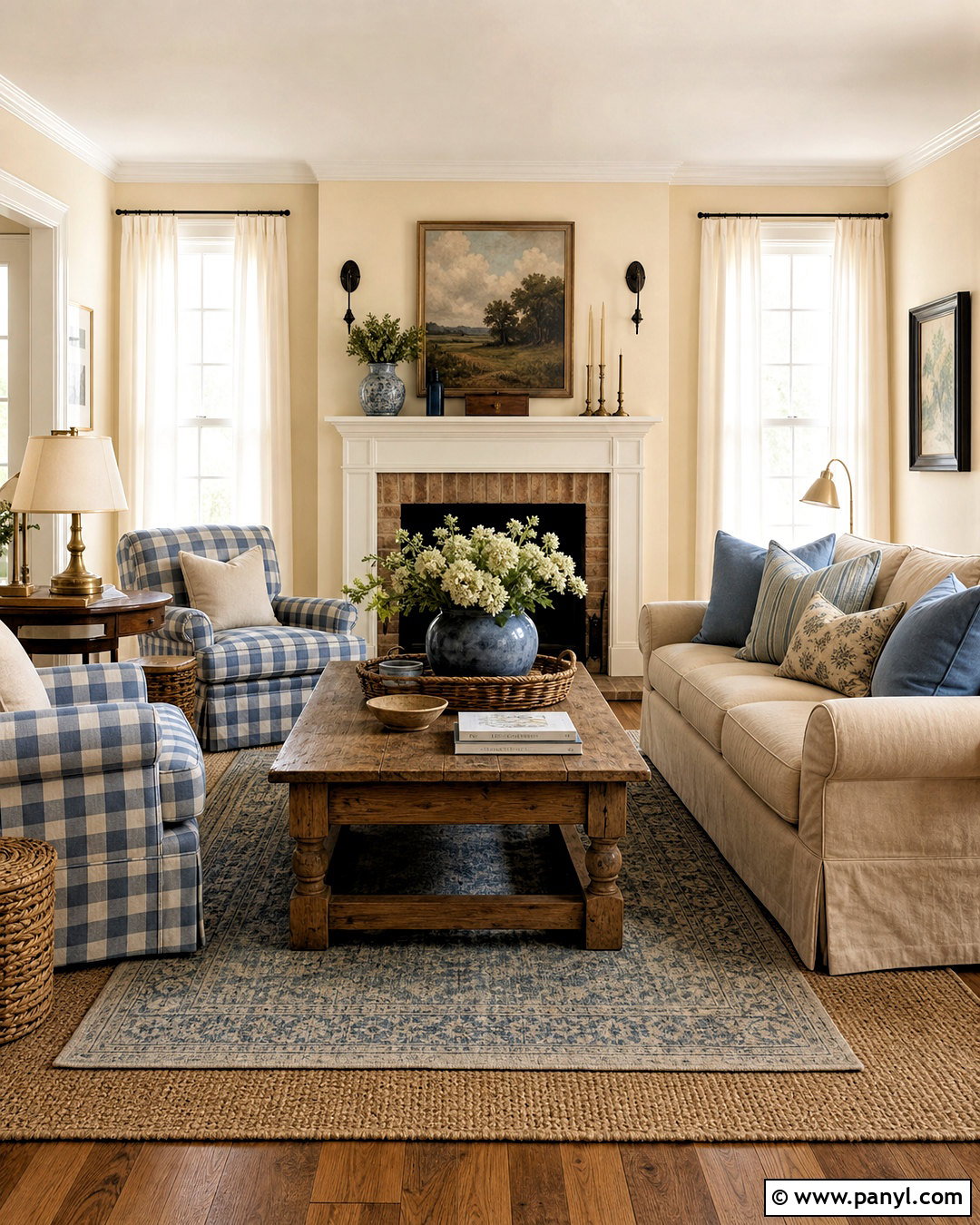
Buttery cream creates a cheerful farmhouse living room, especially in spaces that receive limited daylight. Choose a restrained cream that looks softly golden rather than bright yellow. Apply it to the walls, then paint the ceiling and trim a lighter warm white for clear separation. Furnish the room with a beige slipcovered sofa, blue-gray checked chairs, and a weathered pine coffee table. A natural jute rug adds texture, while a smaller faded blue rug can be layered over it for comfort and color. Use white linen curtains to reflect available light. Black metal sconces, aged brass lamps, and dark wood frames keep the sweetness under control. Finish with blue pottery and simple greenery. This balanced scheme feels sunny, welcoming, and closely connected to traditional country interiors.
18. Warm Stone Gray Farmhouse Living Room Paint
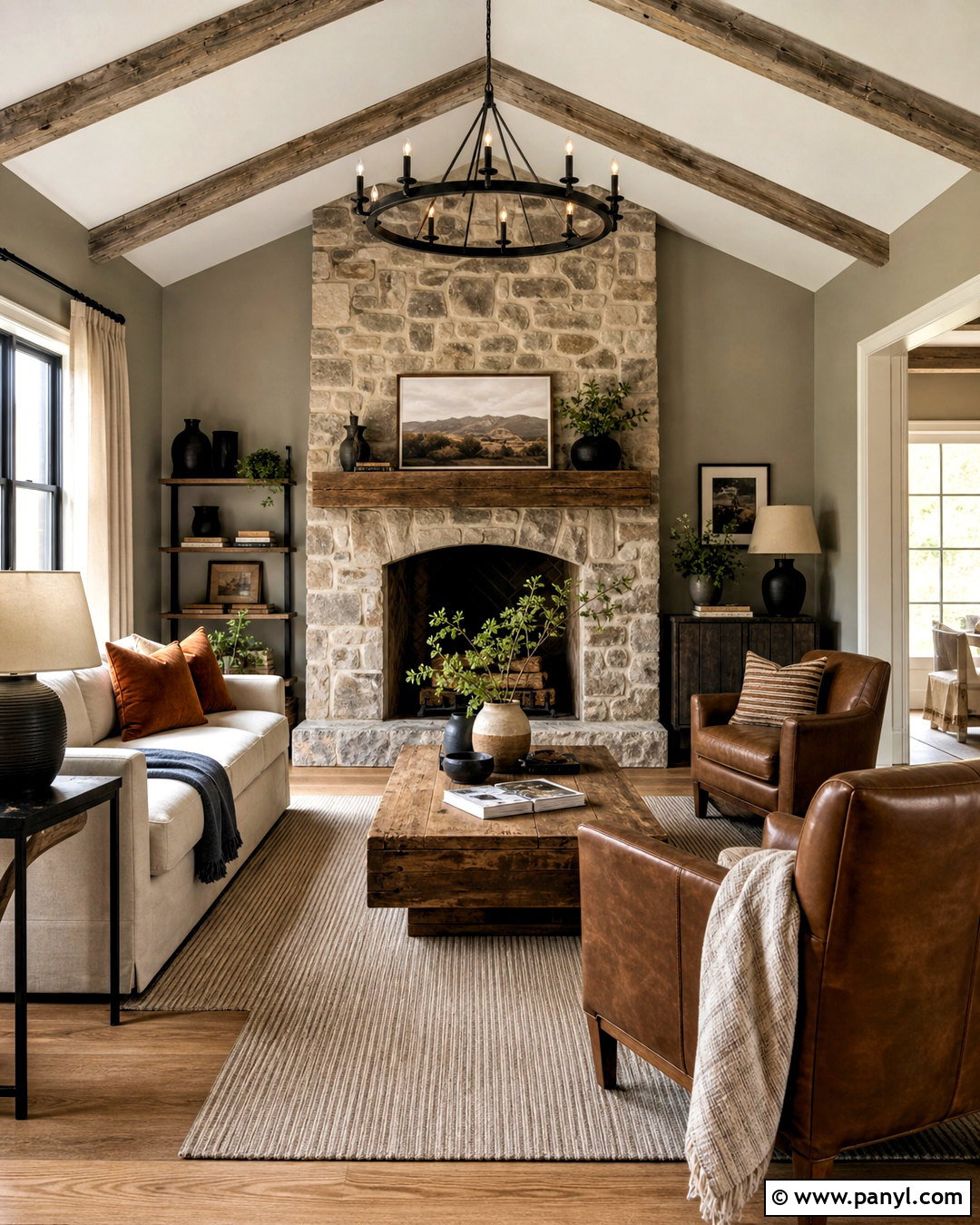
Warm stone gray provides a timeless background for a farmhouse living room with existing stone, metal, or weathered wood features. Avoid flat cement gray and choose a shade softened with taupe or beige undertones. Paint the walls stone gray, while keeping trim and ceilings a warm off-white. Place a cream sofa and brown leather chairs around a sturdy reclaimed wood coffee table. A large beige rug with subtle charcoal stripes reinforces the neutral palette without making the space look busy. Add flax curtains, black iron lamps, and antique wood frames for visual weight. Green branches and rust-colored pillows bring organic color into the room. This design feels especially cohesive around a fieldstone fireplace because the paint repeats the stone’s softer variations rather than competing with its natural texture.
19. Deep Navy Farmhouse Living Room Paint

Deep navy turns a farmhouse living room into an intimate gathering space with classic character. Select a slightly muted navy rather than a vivid royal blue, then use it across all walls or around built-in bookcases for a confident finish. Warm white trim and a white-painted ceiling create sharp, useful contrast. Balance the dark walls with a large cream sofa, natural oak coffee table, and camel leather armchairs. An oversized ivory rug brightens the floor, while faded red and blue pillows introduce subtle heritage pattern. Choose antique brass sconces and table lamps because their warm finish stands out against navy. Unlined flax curtains keep the windows relaxed. A stone fireplace or exposed wood mantel prevents the completed design from feeling formal and maintains the practical farmhouse atmosphere.
20. Muted Barn Red Farmhouse Living Room Paint
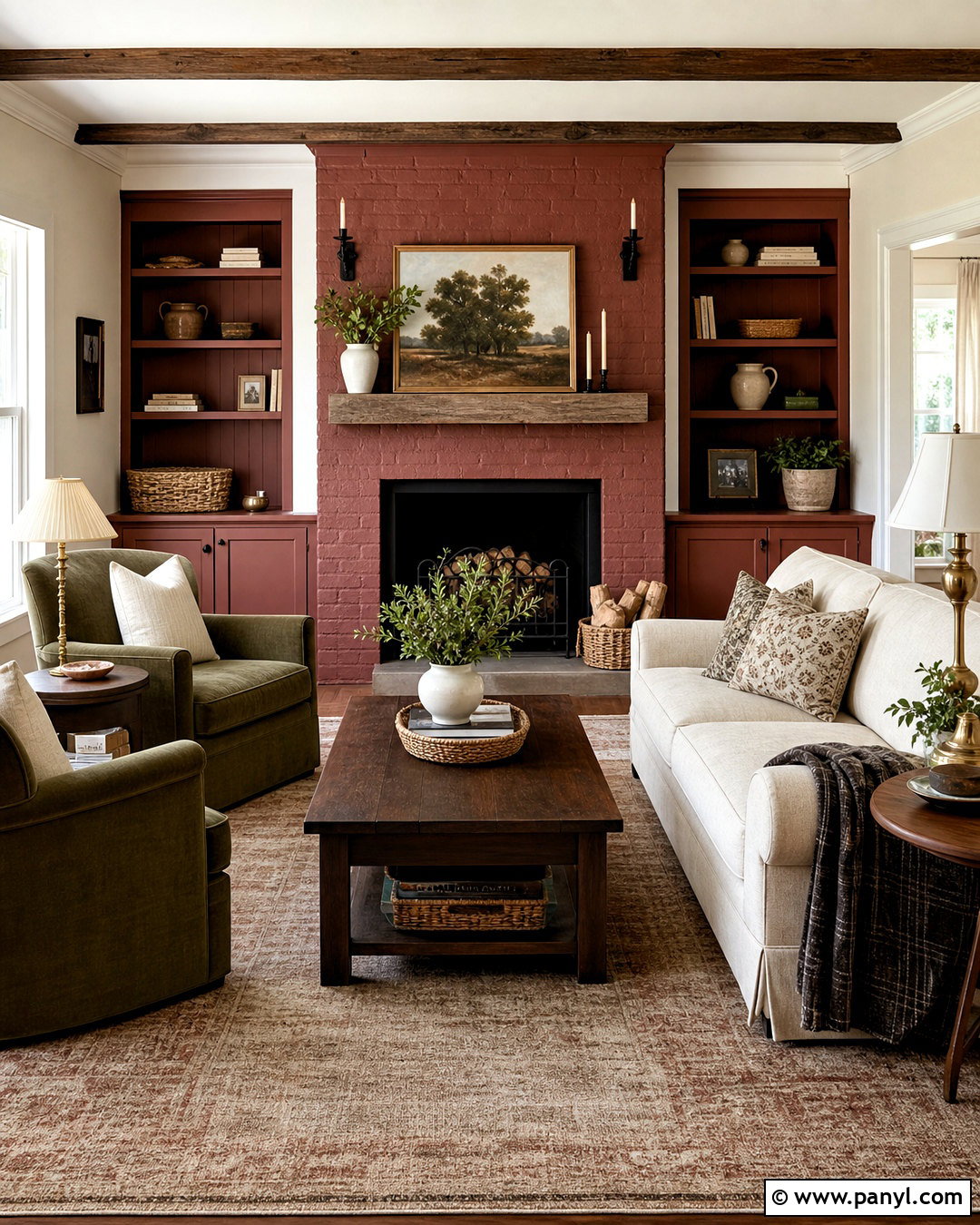
Muted barn red can create a warm, historic farmhouse living room when its intensity is carefully controlled. Choose a weathered brick red with brown or gray undertones rather than a bright primary red. Use it on the fireplace wall and connected built-in cabinets, then paint the remaining walls a soft oatmeal neutral. This creates a complete focal zone instead of a random block of color. Arrange a cream sofa, olive-green chairs, and a dark oak coffee table around a faded beige and rust rug. Warm white trim keeps the palette crisp. Add black iron sconces, aged brass lamps, woven baskets, and simple landscape artwork. The room feels rich and familiar, with enough neutral space to make the deeper red comfortable for everyday living.
Conclusion:
The best farmhouse living room paint colors create a complete background for relaxed furniture, natural materials, and meaningful decor. Warm white, oatmeal, greige, and beige offer flexibility, while sage, dusty blue, olive, and clay bring gentle color. Charcoal, navy, smoky teal, and barn red can produce a richer room when balanced with creamy upholstery and pale trim. Always compare samples against your flooring, fireplace, furniture, and daylight before making a final choice. Paint a large movable sample and view it during the morning, afternoon, and evening. Once the undertones work with the room’s fixed elements, build a layered palette using wood, linen, leather, metal, and faded patterns for a farmhouse living room that feels welcoming and cohesive.

Related Ideas and Inspiration:






Leave a Reply