
The best cozy living room paint colors create warmth without making the room feel closed in or dated. Warm neutrals offer an easy foundation, while earthy greens, muted blues, and rich brown tones add more character. The key is building a complete palette around the wall color. Flooring, upholstery, trim, lighting, and natural materials should all support the same inviting mood. Before committing, sample each shade on multiple walls and observe it throughout the day. Natural light, lamps, and nearby finishes can change how a color appears. Whether you prefer an airy cream room or a dramatic burgundy retreat, these complete decorating schemes will help you confidently use **20 cozy living room paint colors**.

1. Warm Cream Living Room Paint Color
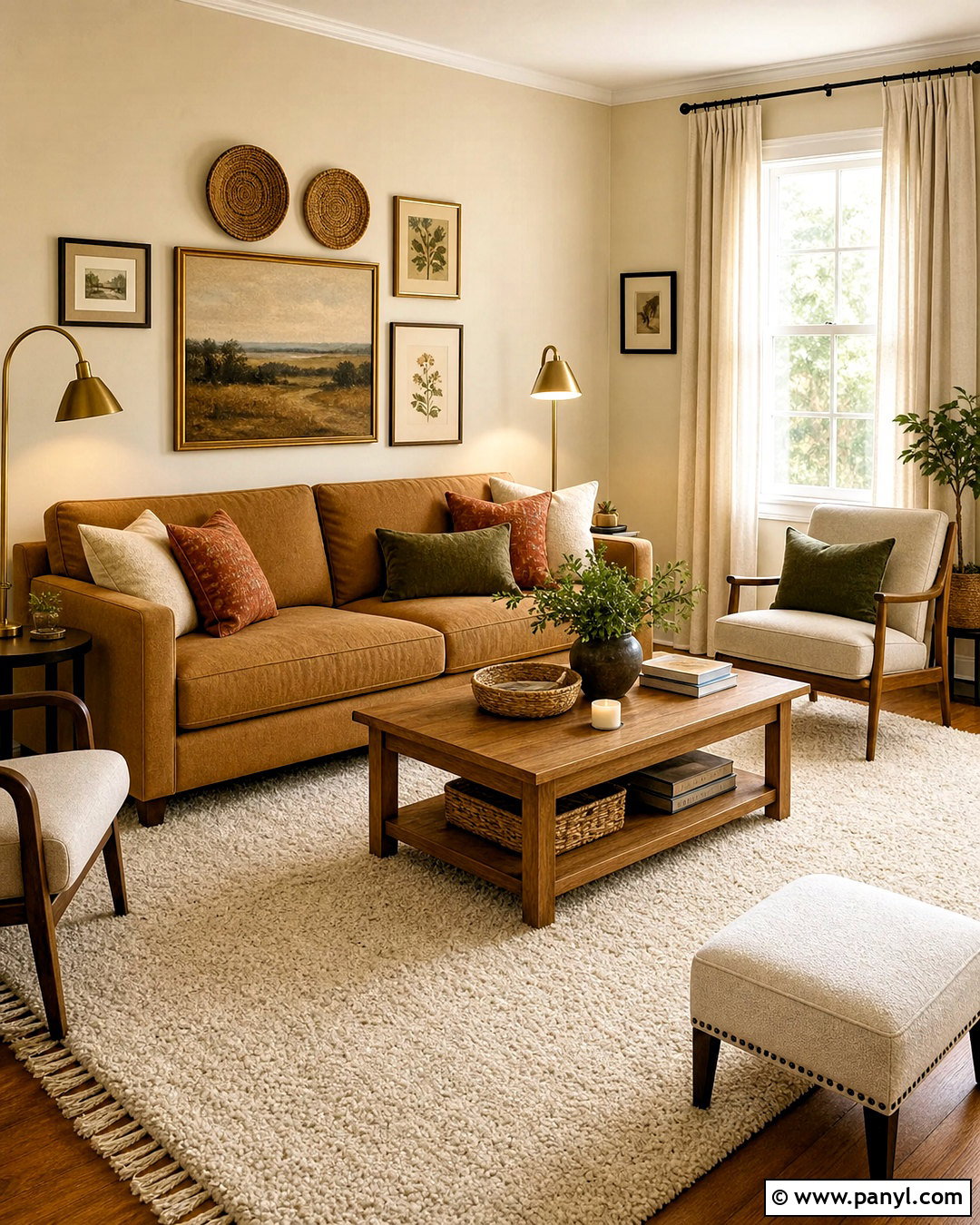
Warm cream creates a bright living room that still feels soft and welcoming. Choose a creamy paint with subtle beige or yellow undertones rather than a sharp, gallery-like white. Continue the color across the walls and use a slightly lighter cream on the ceiling and trim. Anchor the room with a camel-colored sofa, an ivory wool rug, and a medium-tone oak coffee table. Linen curtains allow daylight to filter through without making the space feel bare. Add rust, olive, and chocolate accents through pillows, pottery, and framed artwork. A woven floor lamp and brushed brass fixtures bring extra warmth. This complete palette works especially well in traditional, modern farmhouse, and relaxed transitional living rooms.
2. Soft Beige Living Room Paint Color
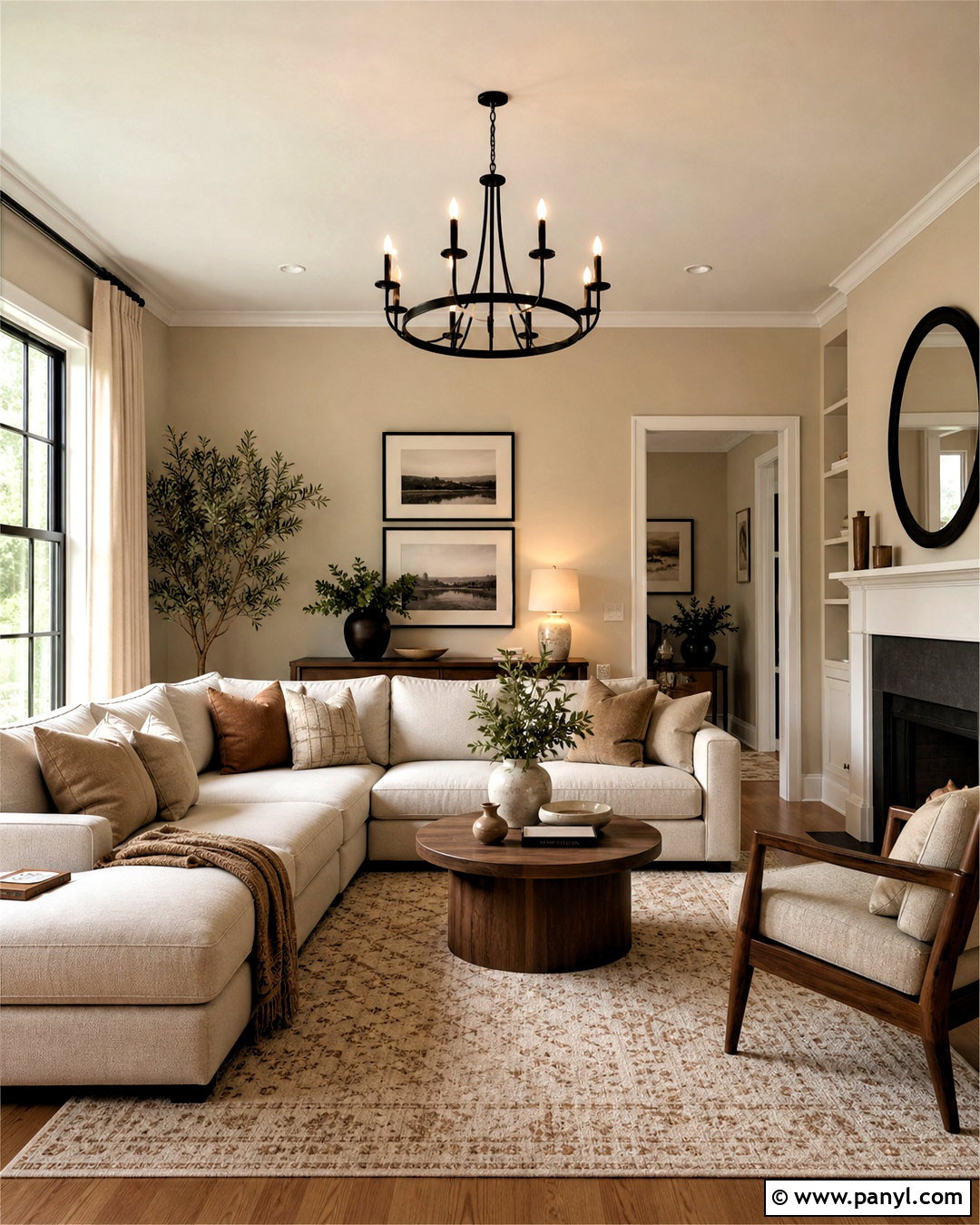
Soft beige is a dependable choice when you want a neutral room with visible warmth. Select a balanced beige that does not look overly yellow or pink beside your flooring. Pair the walls with warm white trim, a flax linen sectional, and walnut or oak furniture. A cream-and-tan patterned rug gives the seating area definition while maintaining a peaceful palette. Introduce deeper contrast through espresso side tables, matte black frames, and a few tobacco-brown cushions. Full-length oatmeal curtains make the room feel finished and comfortably layered. Greenery, handcrafted ceramics, and baskets prevent the neutral scheme from appearing flat. Use warm white bulbs in table and floor lamps to reinforce the calm, inviting effect after sunset.
3. Light Greige Living Room Paint Color
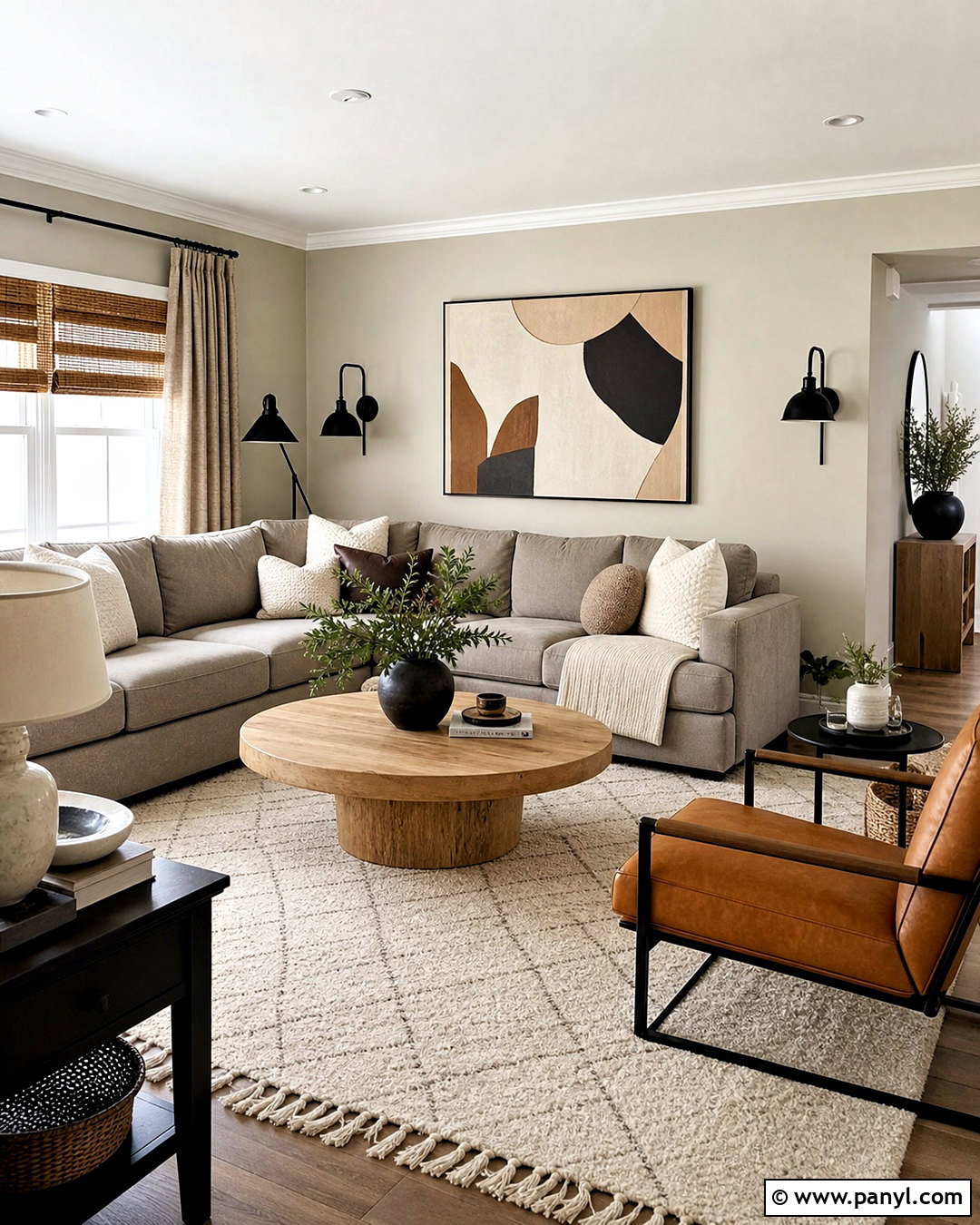
Can gray still feel cozy? A light greige with clear beige undertones offers the calmness of gray without its colder appearance. Use it on the walls with soft white trim and a pale oak floor. Furnish the room with a warm gray sectional, a cognac leather chair, and a rounded wood coffee table. An ivory rug with subtle charcoal lines connects the neutral wall color to darker accessories. Bring in softness with woven curtains, boucle pillows, and a chunky oatmeal throw. A black metal floor lamp and simple abstract art provide clean contrast. This color scheme suits modern and transitional homes because it feels polished but approachable. Avoid icy blue-gray fabrics, which may pull the walls in a cooler direction.
4. Mushroom Taupe Living Room Paint Color
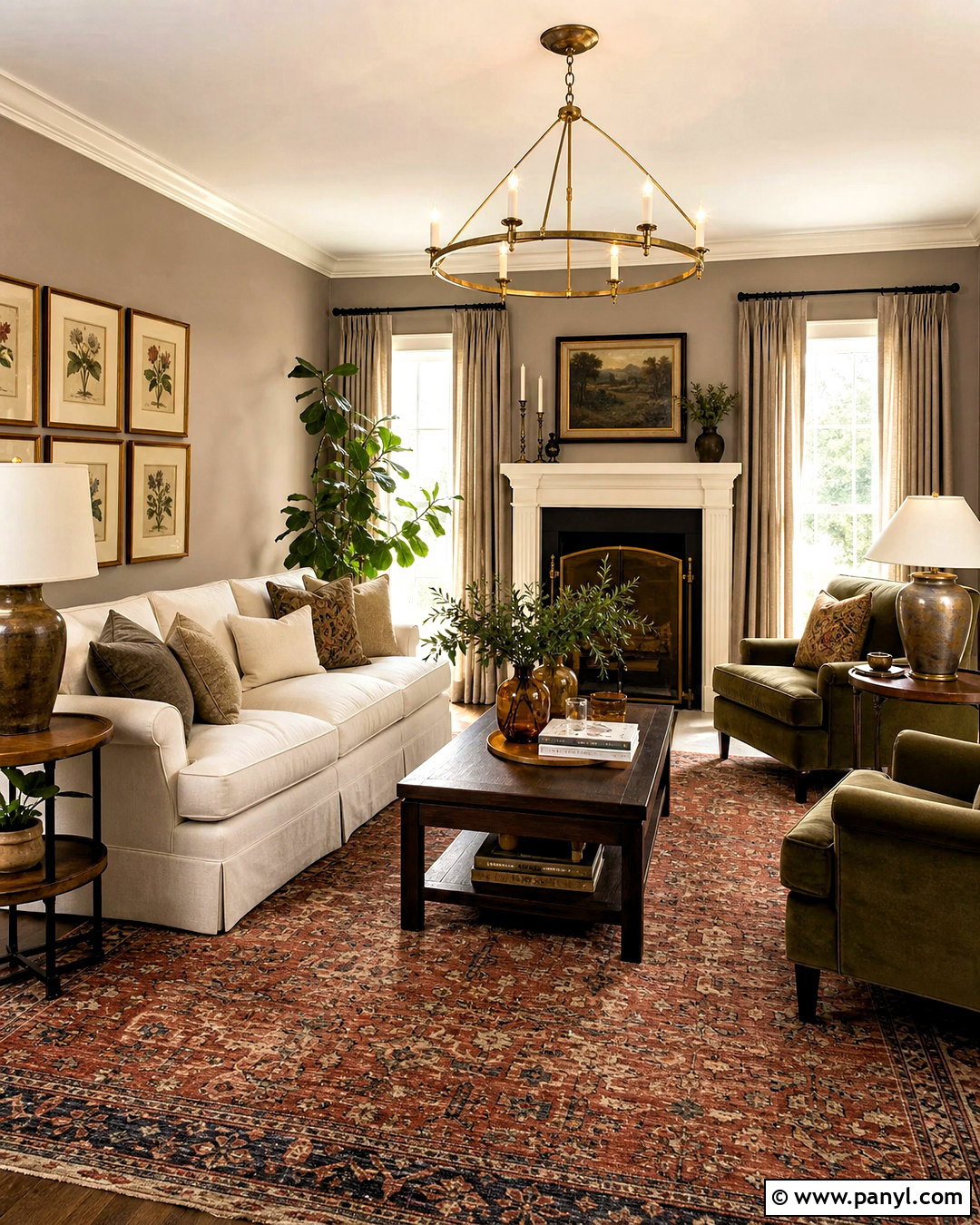
Mushroom taupe wraps a living room in quiet, earthy warmth. This complex neutral falls between beige, brown, and gray, making it useful around stone fireplaces and mixed wood finishes. Paint the walls mushroom taupe and keep the trim a muted ivory rather than brilliant white. Arrange a cream sofa opposite two olive velvet chairs, then center the layout with a dark walnut coffee table. A vintage-inspired rug in faded brown, rust, and beige adds character without overwhelming the room. Use linen drapes close to the wall color for a continuous, cocooning effect. Aged brass lighting, amber glass, and botanical artwork complete the look. The result feels collected, comfortable, and suitable for both casual gatherings and formal entertaining.
5. Caramel Living Room Paint Color
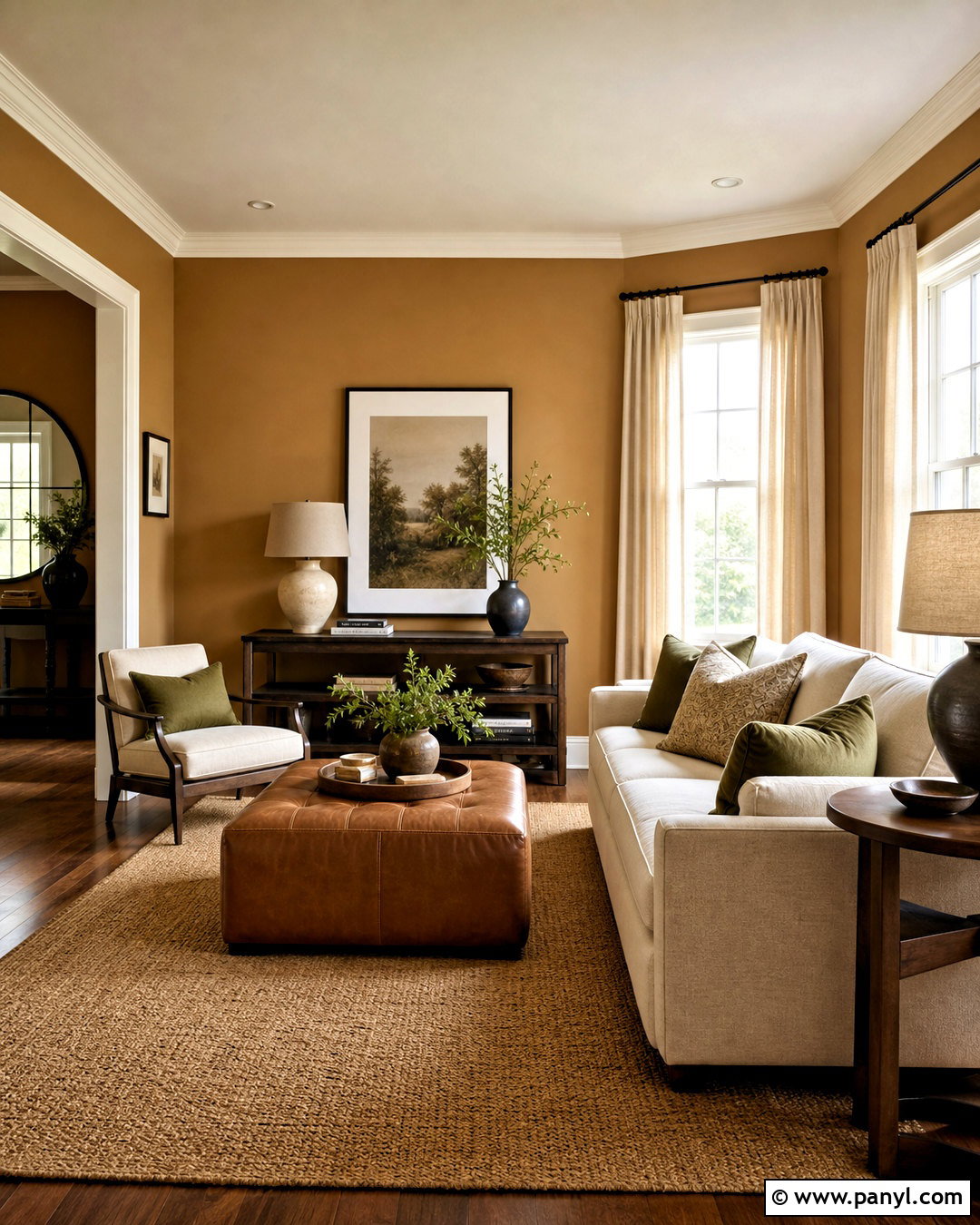
Caramel walls bring the comforting color of toasted sugar into a living room. Choose a muted midtone shade rather than a bright golden orange. Balance its richness with creamy trim, an oatmeal sofa, and pale linen curtains. Dark walnut tables and a cognac leather ottoman reinforce the warm palette while giving the room visual weight. Add a large natural-fiber rug underneath the entire seating arrangement to soften the floor. Deep teal or moss green pillows provide a restrained contrast that keeps the scheme interesting. Black accents can appear in curtain rods, picture frames, and a streamlined floor lamp. Caramel works particularly well in rooms with northern exposure because it creates a warmer impression even when the daylight appears cool.
6. Chocolate Brown Living Room Paint Color
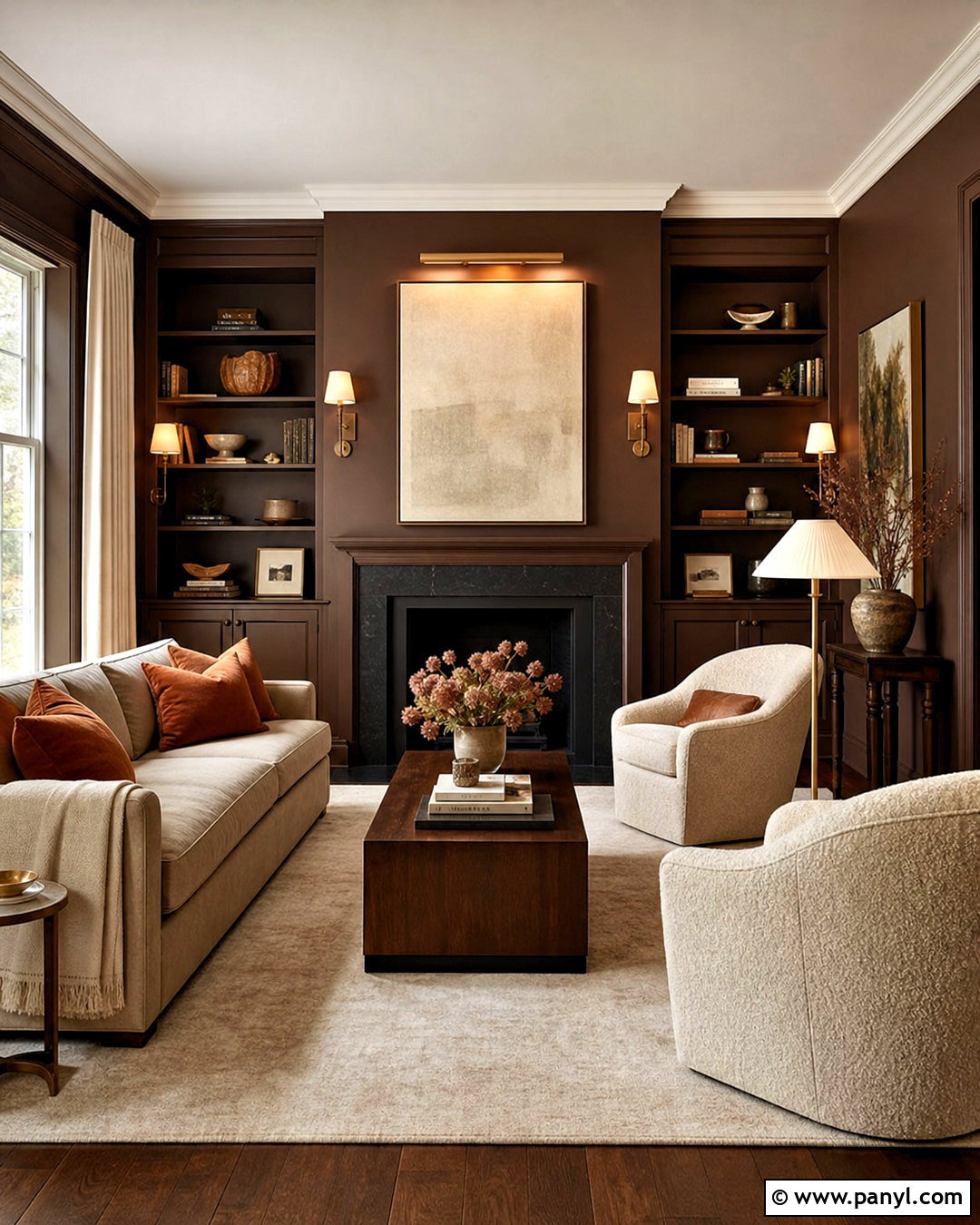
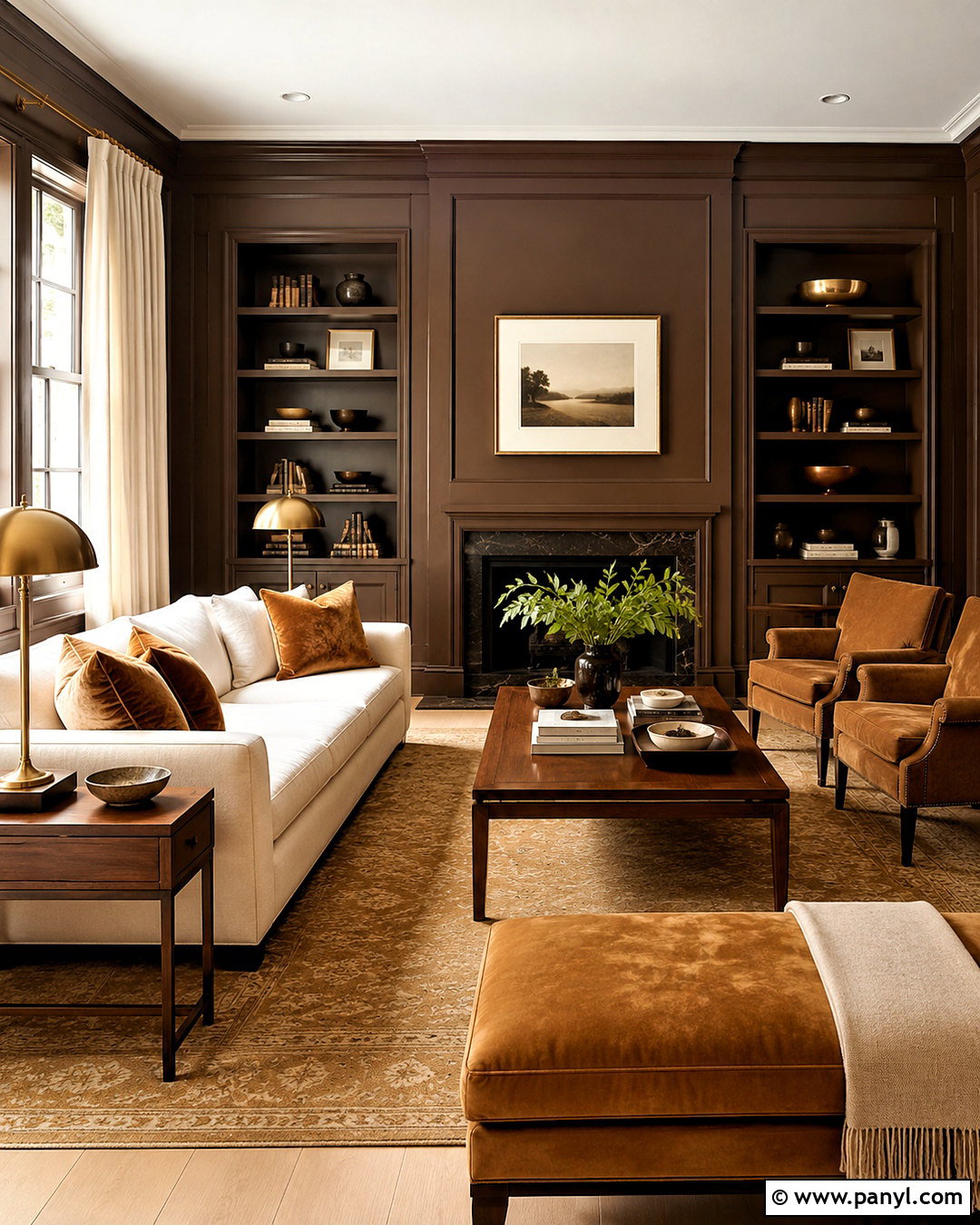
Chocolate brown turns an ordinary living room into an intimate retreat. Use a deep brown with warm undertones on every wall, or extend it onto built-ins and trim for an enveloping color-drenched look. Keep the ceiling warm white if the room has limited natural light. A flax-colored sofa, cream boucle chairs, and an ivory rug stand out beautifully against the dark background. Choose walnut furniture and aged brass lighting to continue the rich, grounded palette. Burnt orange pillows and patterned curtains introduce controlled color. Place mirrors or pale artwork where they can reflect light around the room. Layer table lamps, sconces, and a floor lamp so the brown remains dimensional instead of looking heavy after dark.
7. Terracotta Living Room Paint Color
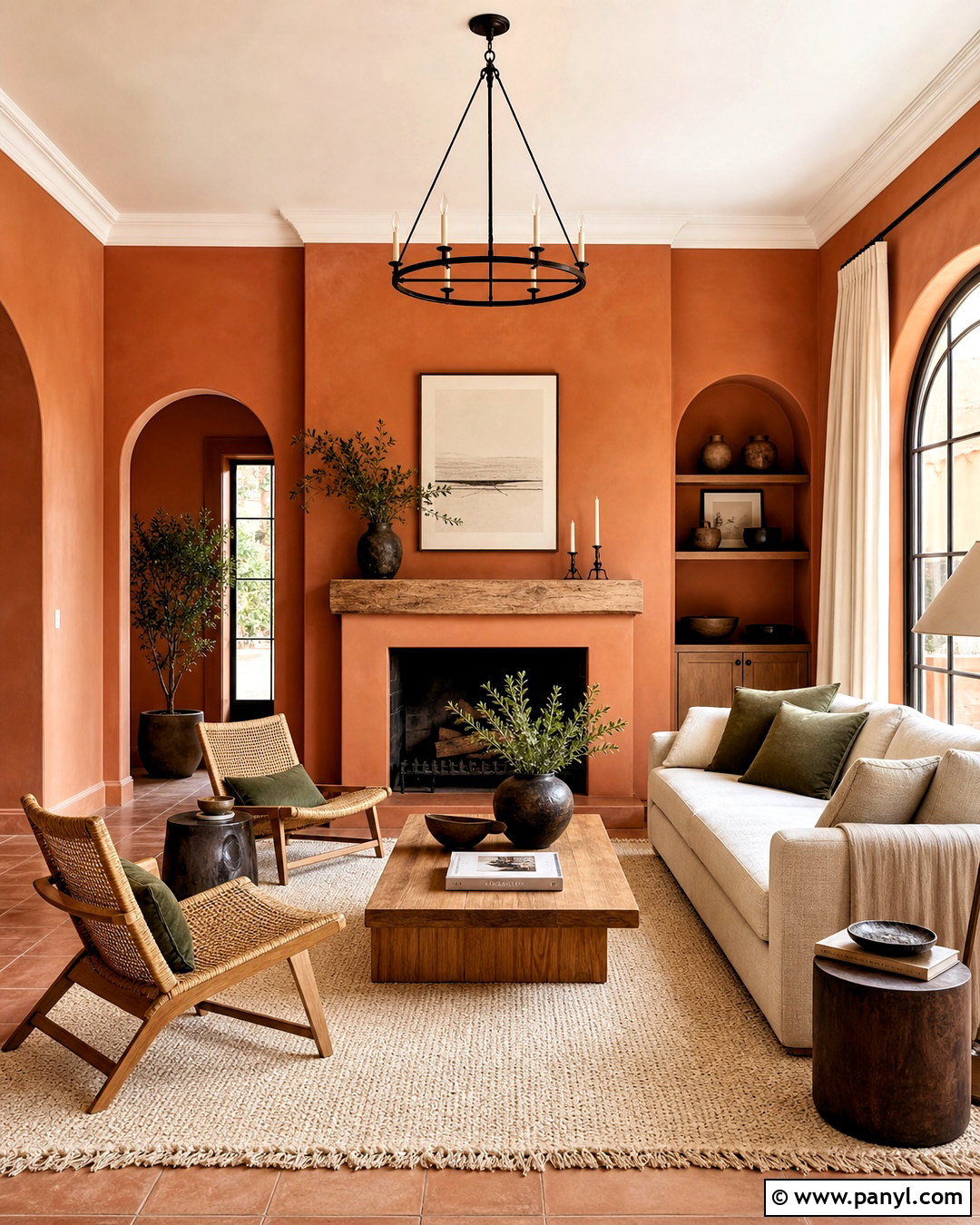
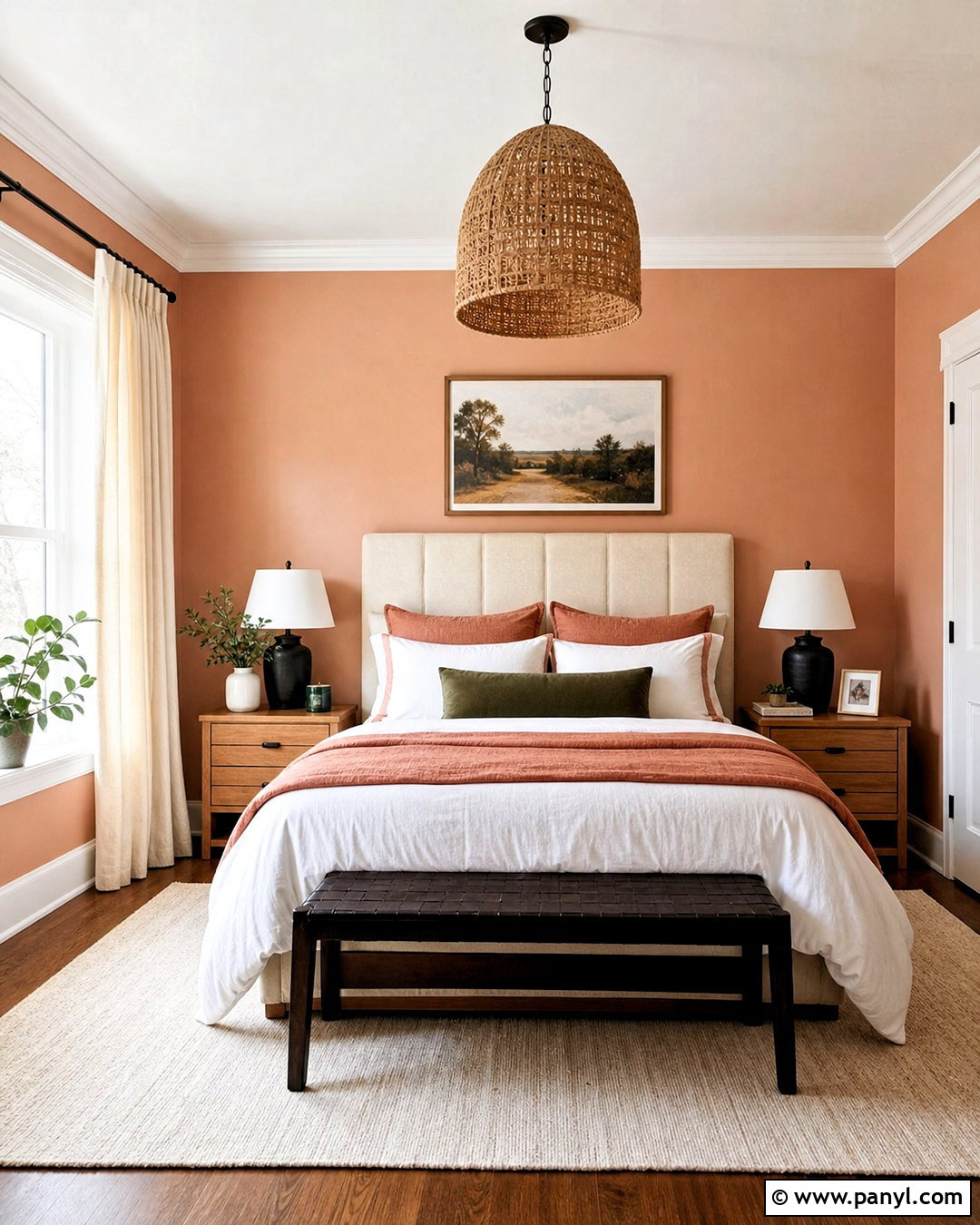
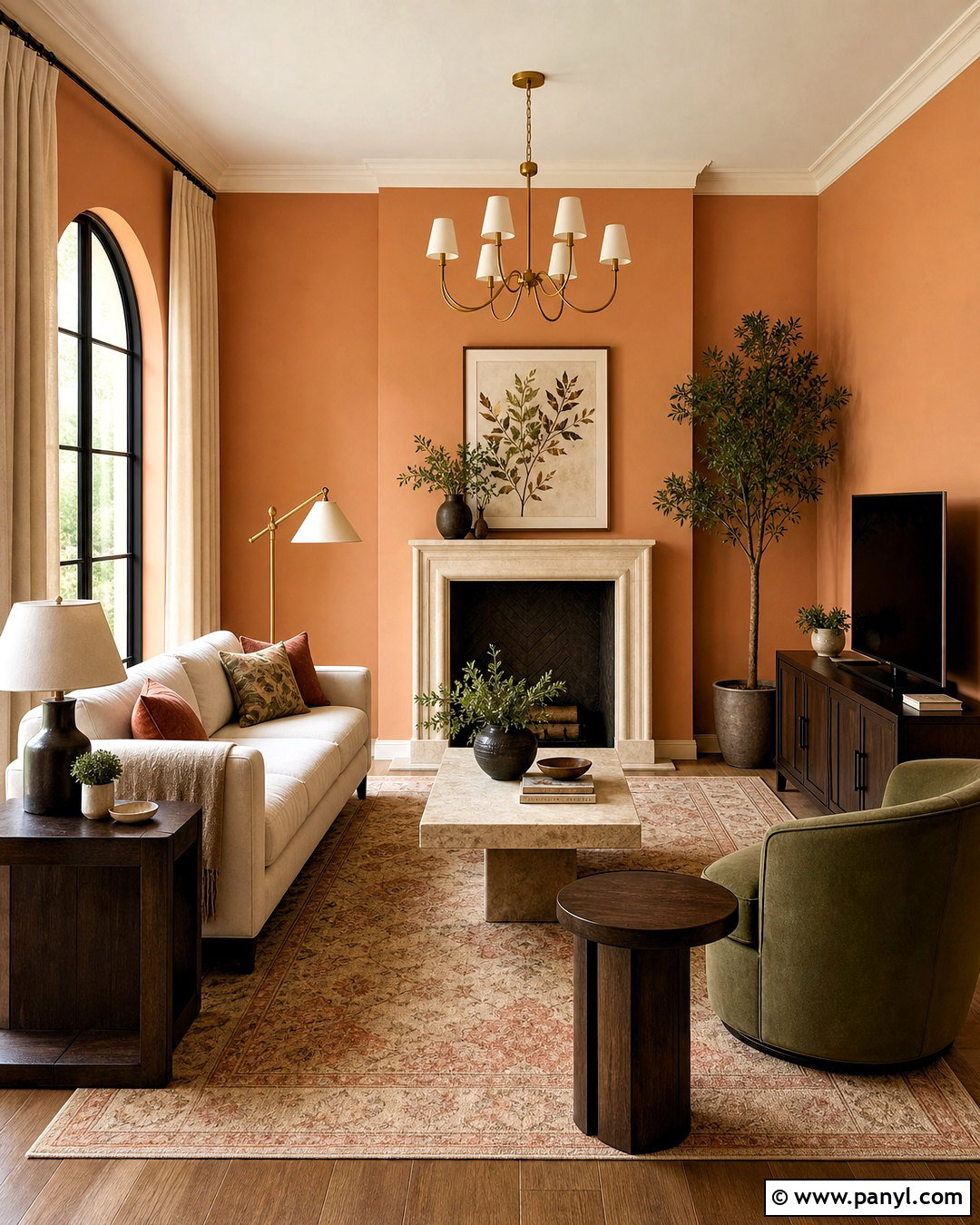
Terracotta creates a sunbaked, welcoming atmosphere that works with rustic, Mediterranean, and modern organic interiors. Choose a softened clay shade with brown undertones instead of a highly saturated orange. Pair it with warm white trim and a natural linen sofa. Add an oak coffee table, woven lounge chairs, and a cream wool rug to balance the wall color. Olive green cushions and dark brown pottery connect the room to an earthy palette. Off-white curtains keep the windows light while allowing the terracotta walls to remain the main feature. Black iron lighting adds crisp definition. For a unified finish, repeat the wall color in small rug details or artwork, but avoid matching every accessory to the paint.
8. Dusty Rose Living Room Paint Color
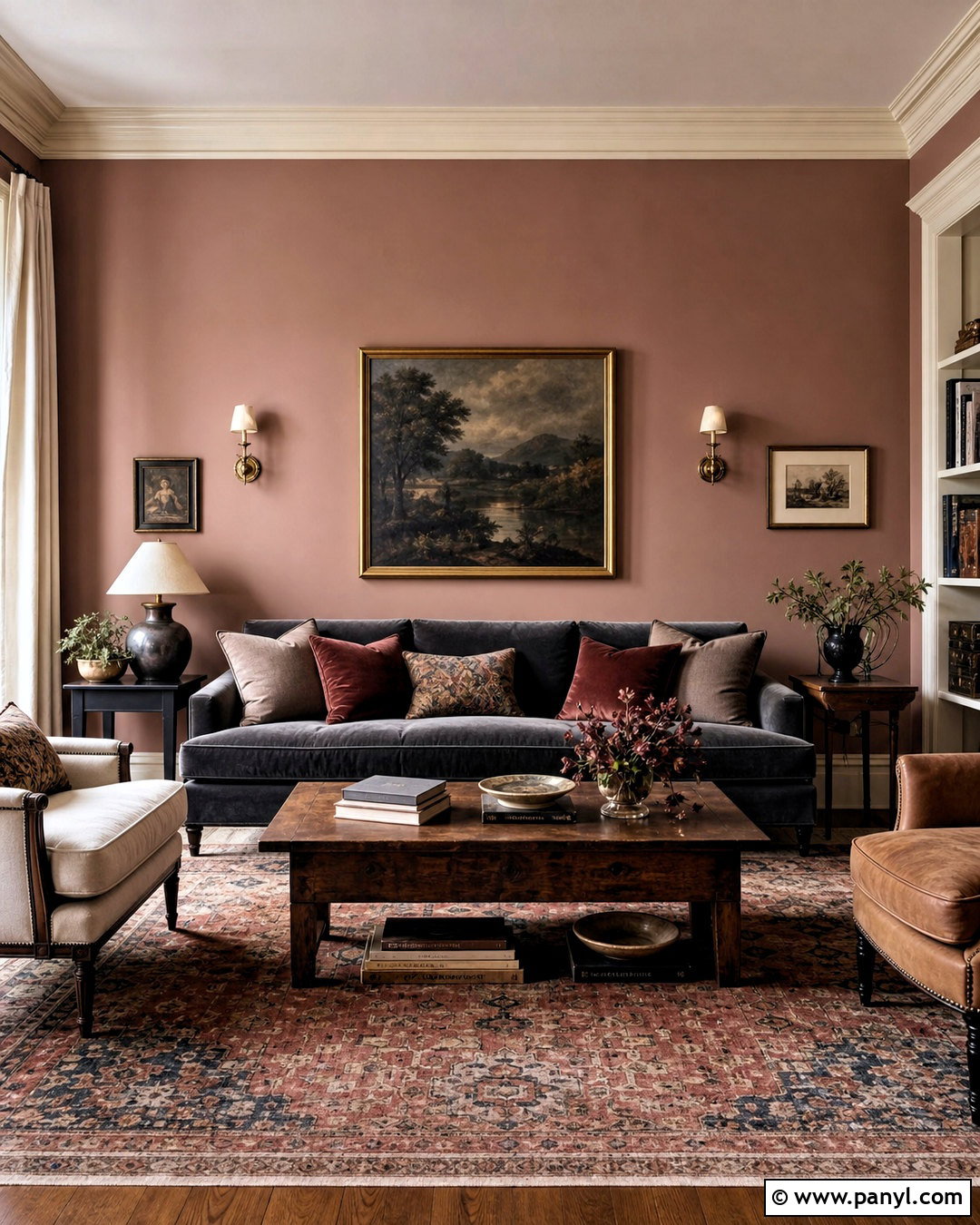
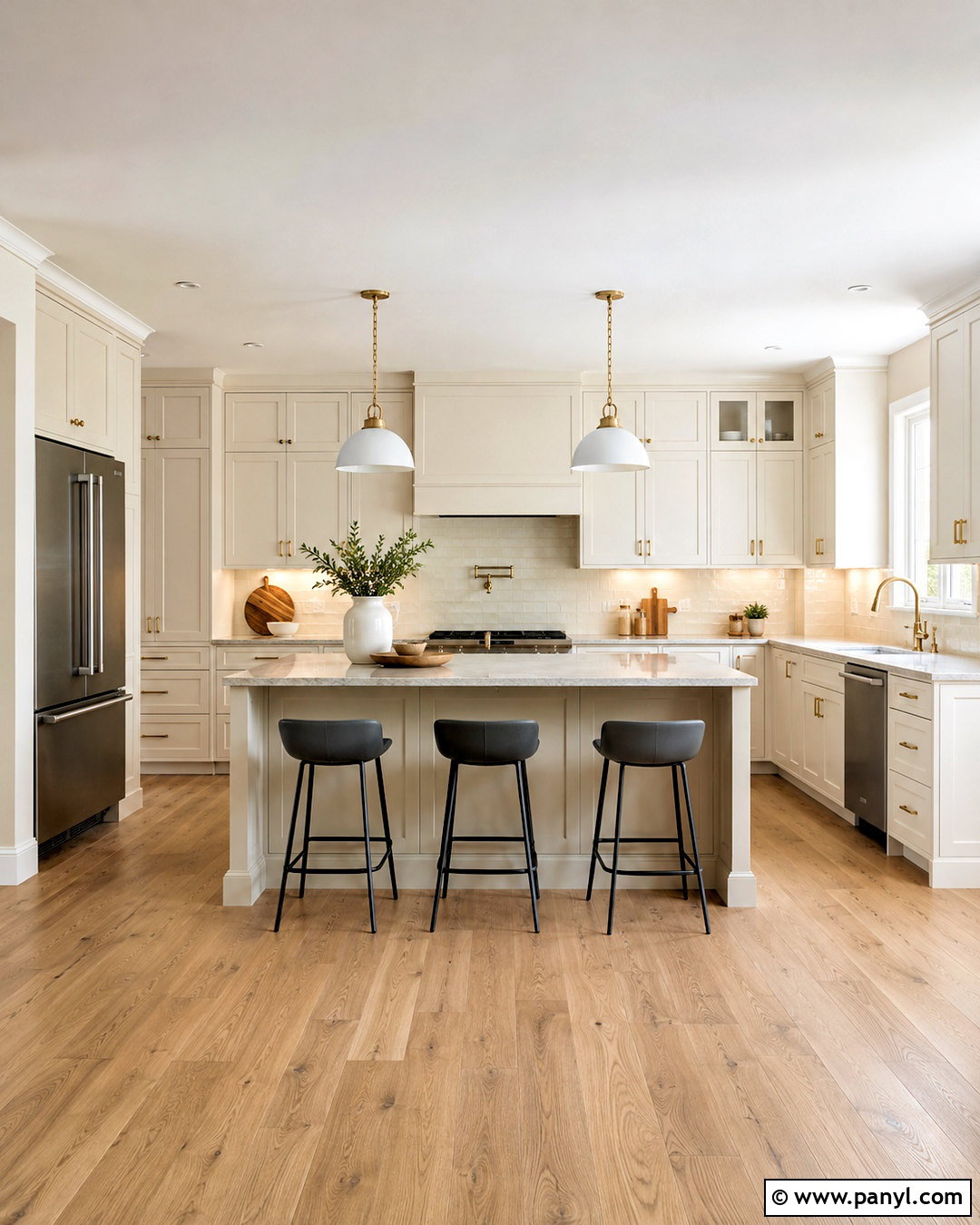
Dusty rose feels sophisticated when its pink undertones are balanced with brown, gray, or clay. Paint all four walls for a gentle enveloping effect, then use warm ivory on the ceiling and trim. A charcoal velvet sofa gives the pale walls depth, while an antique wood coffee table keeps the room grounded. Add cream curtains, a muted Persian-style rug, and burgundy or plum pillows for a layered palette. Brass sconces and softly curved furniture enhance the comfortable character without making the room overly delicate. Natural linen and aged wood provide enough texture to keep the pink relaxed. This scheme is especially effective in traditional or eclectic living rooms filled with books, framed art, and meaningful decorative objects.
9. Muted Peach Living Room Paint Color
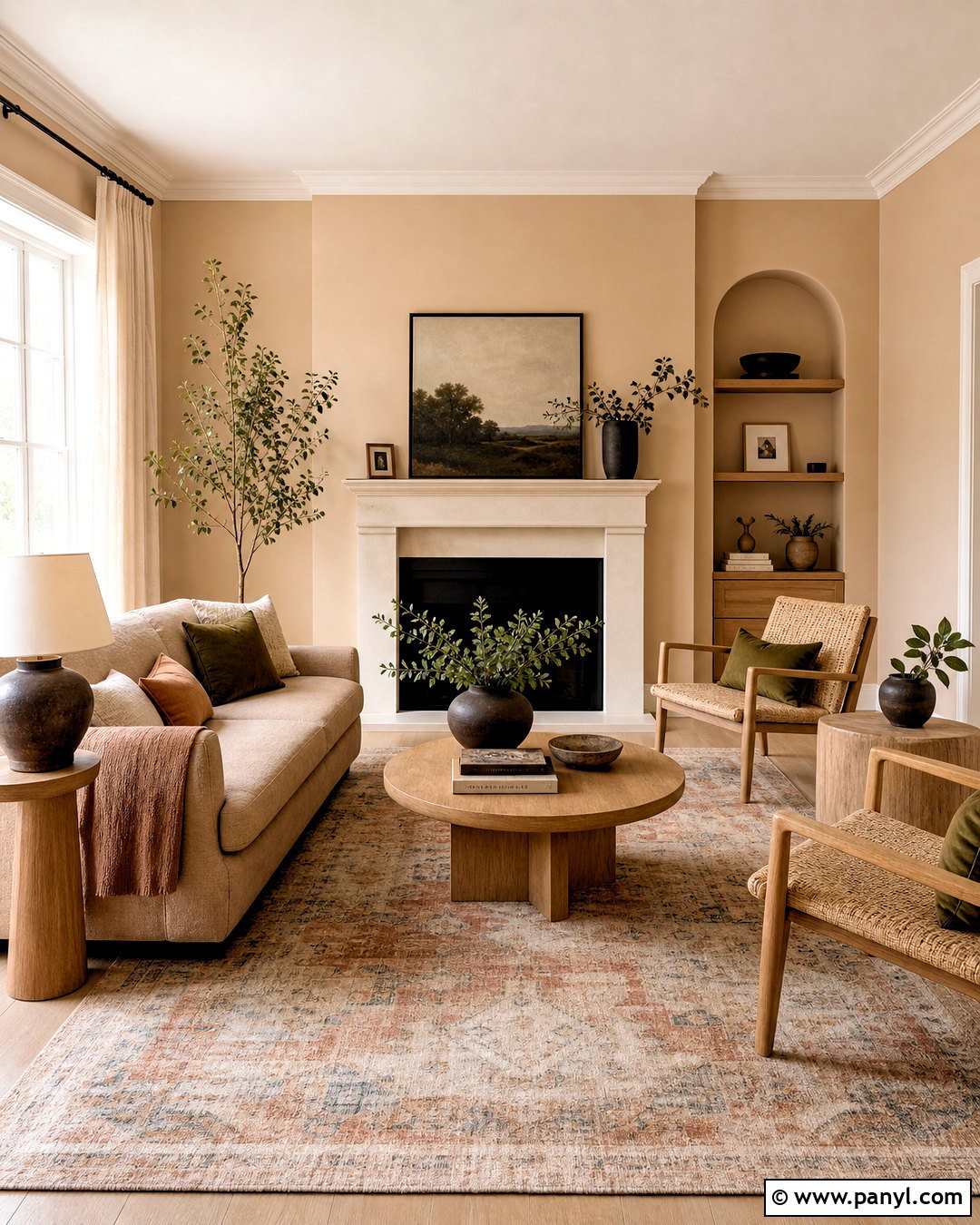
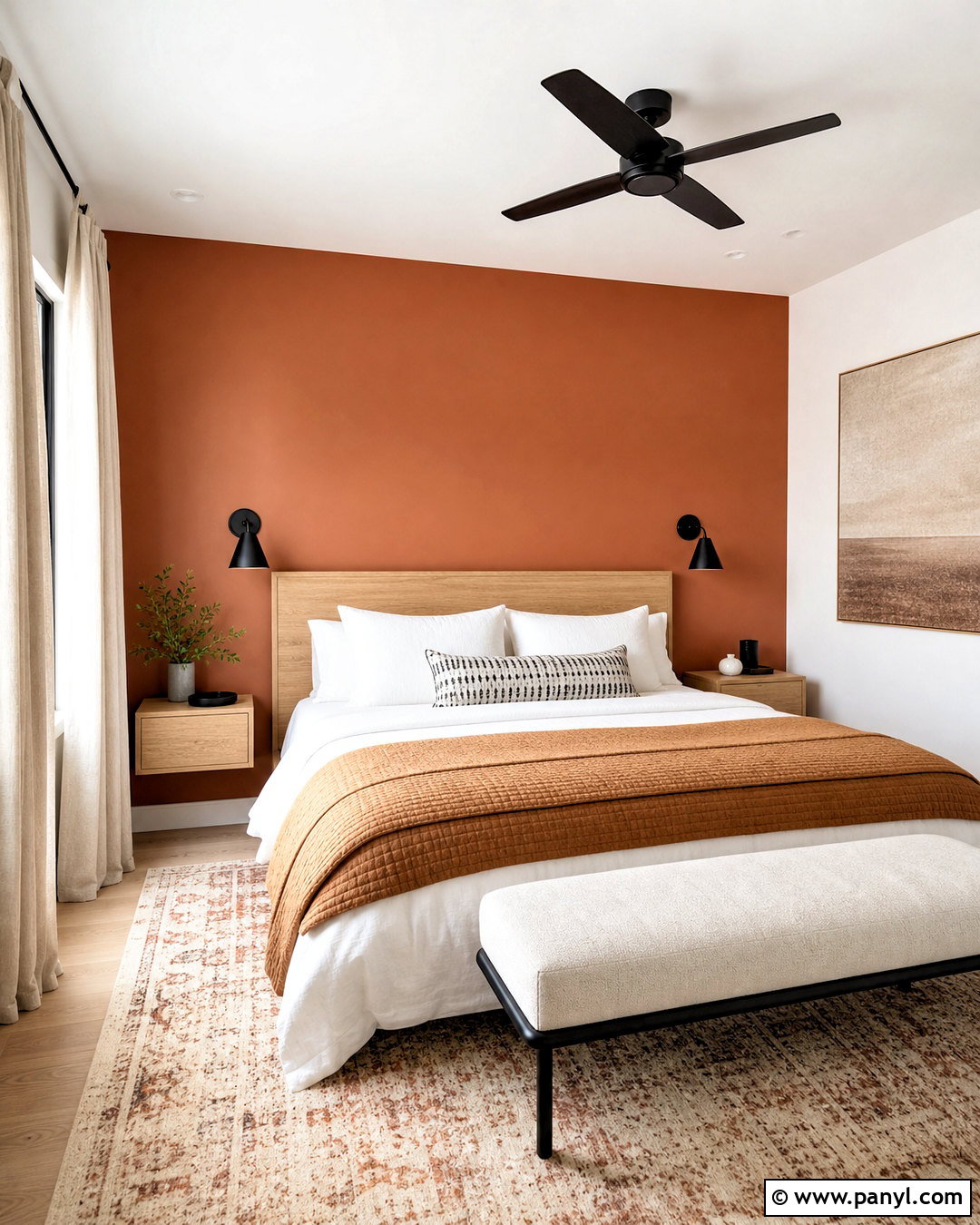
A muted peach paint color can make a living room feel cheerful, warm, and gently illuminated. Look for a pale shade with beige or clay undertones rather than a bright coral finish. Use creamy white on the trim and ceiling, then build the room around a light camel sofa and two natural cane chairs. A faded rust-and-blue rug introduces pattern and keeps the peach from feeling overly sweet. Add pale oak tables, linen curtains, and simple ceramic lamps with off-white shades. Small accents of muted blue, olive, or chocolate brown create balance. This complete palette works nicely in rooms with modest windows because the walls retain a soft glow without requiring a highly saturated or dramatic color.
10. Butter Yellow Living Room Paint Color
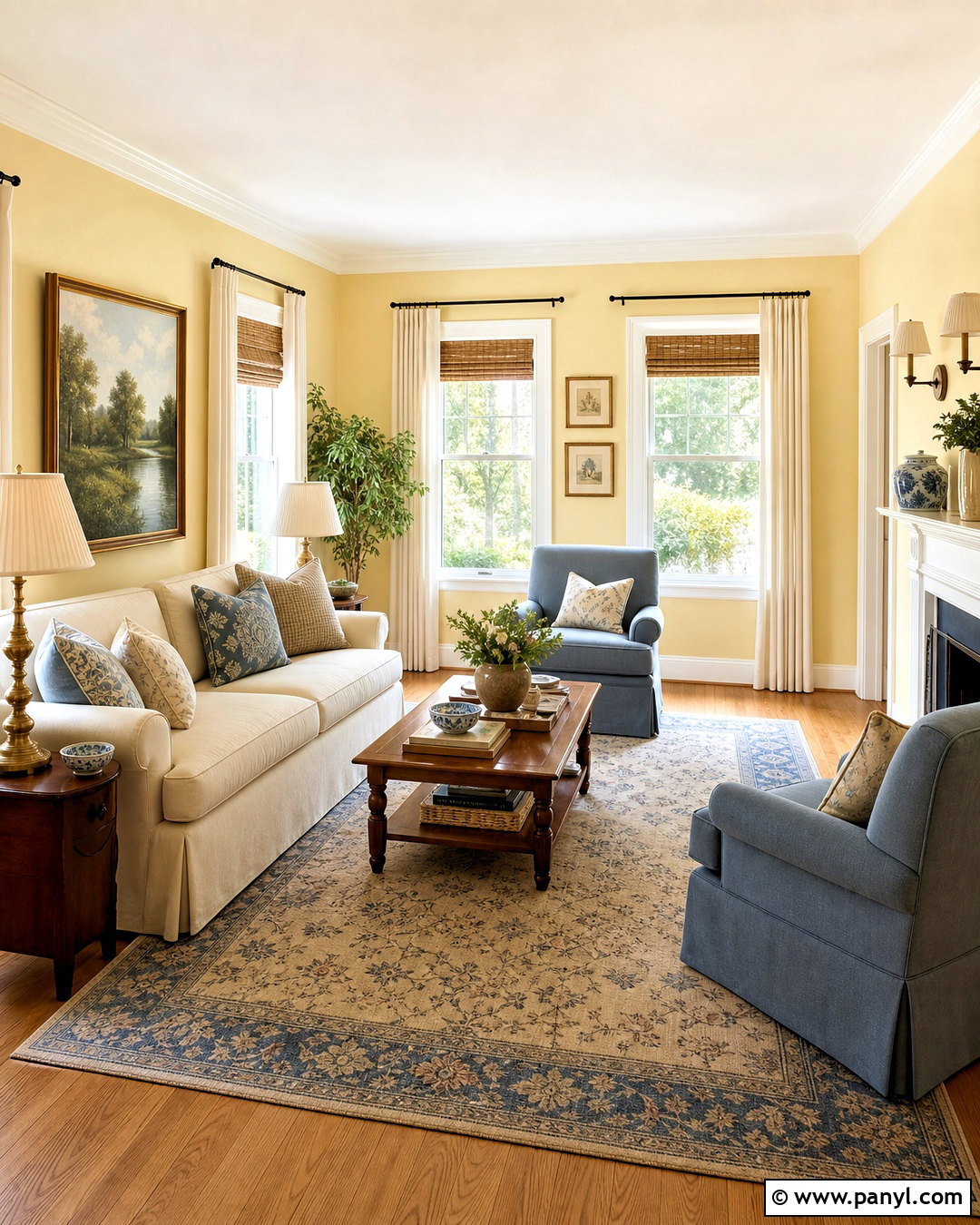
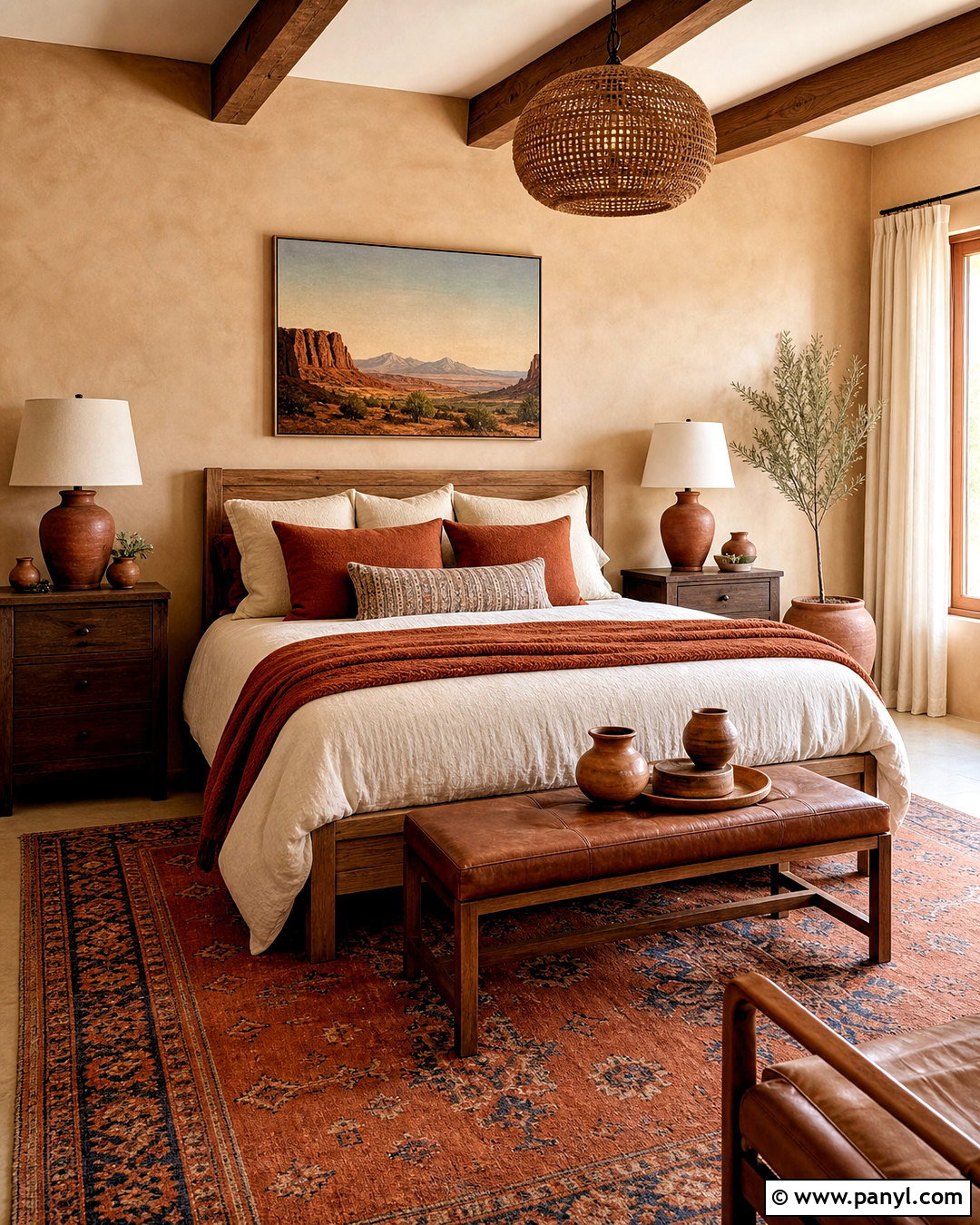
Imagine morning light spreading across a room painted in gentle butter yellow. This warm shade feels happiest when it is pale, creamy, and slightly muted. Combine it with warm white trim, honey-toned wood flooring, and an ivory sofa. A pair of blue-gray armchairs introduces cool contrast without disrupting the cozy atmosphere. Ground the seating area with a patterned rug containing beige, gold, and faded blue. Use natural linen curtains and woven bamboo shades to control sunlight while adding texture. Antique brass lamps, landscape artwork, and handmade pottery give the space a lived-in quality. Avoid sharp lemon yellow or stark white furnishings. Softer neighboring tones make butter yellow feel comfortable, classic, and easy to enjoy throughout the year.
11. Warm Sage Green Living Room Paint Color
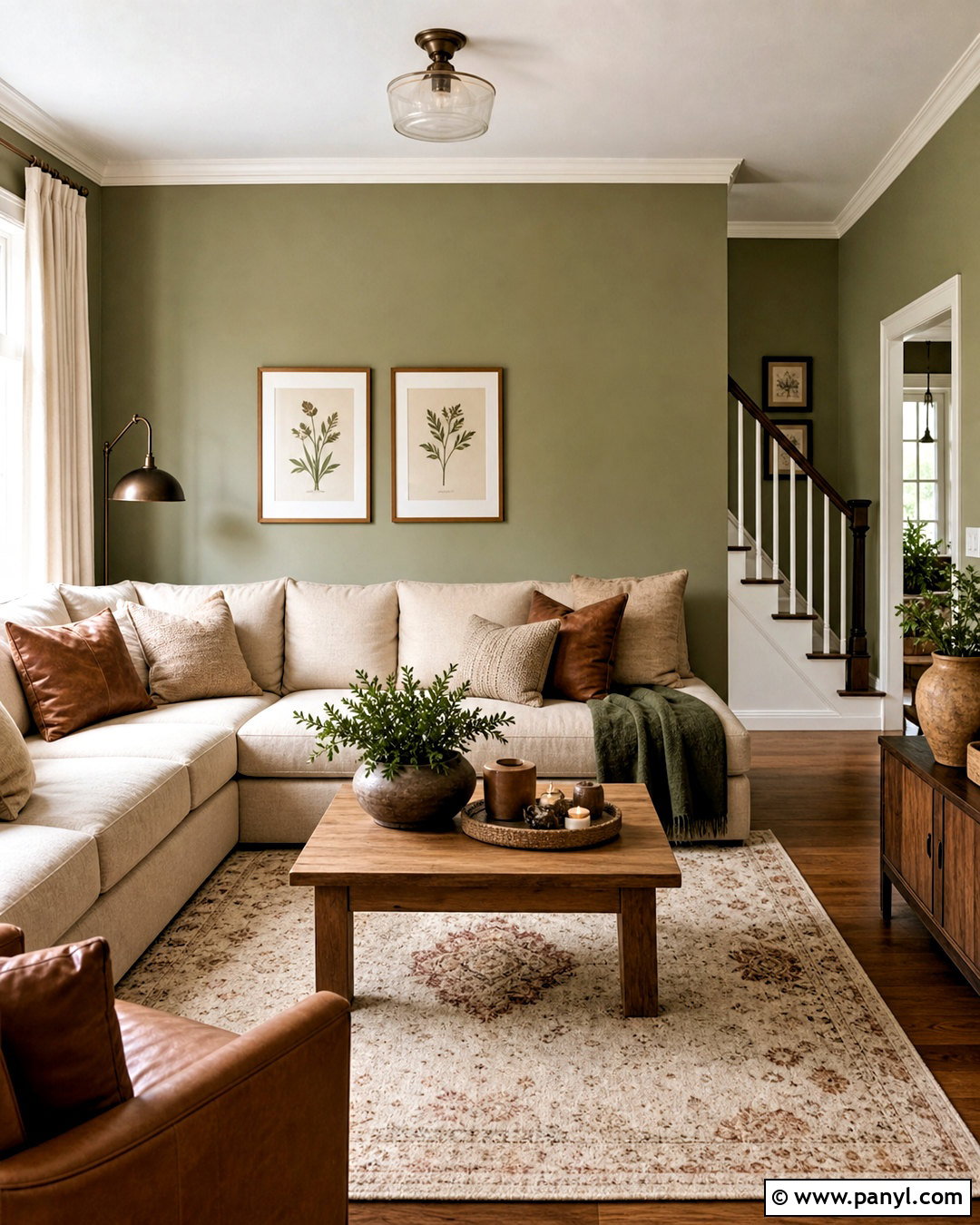
Warm sage green brings gentle color into the living room while remaining easy to decorate around. Choose a sage with olive or gray-brown undertones rather than a cool mint cast. Pair the walls with creamy trim and a soft beige sectional. Introduce medium oak through the coffee table, console, and exposed shelving. A wool rug in ivory and muted rust adds warmth underfoot, while brown leather and dark bronze accents give the pale green more structure. Hang flax-colored curtains close to the ceiling to make the room appear taller. Botanical prints, textured pottery, and a few healthy plants complete the natural palette. The final room feels calm and comfortable without relying entirely on standard beige or white walls.
12. Olive Green Living Room Paint Color
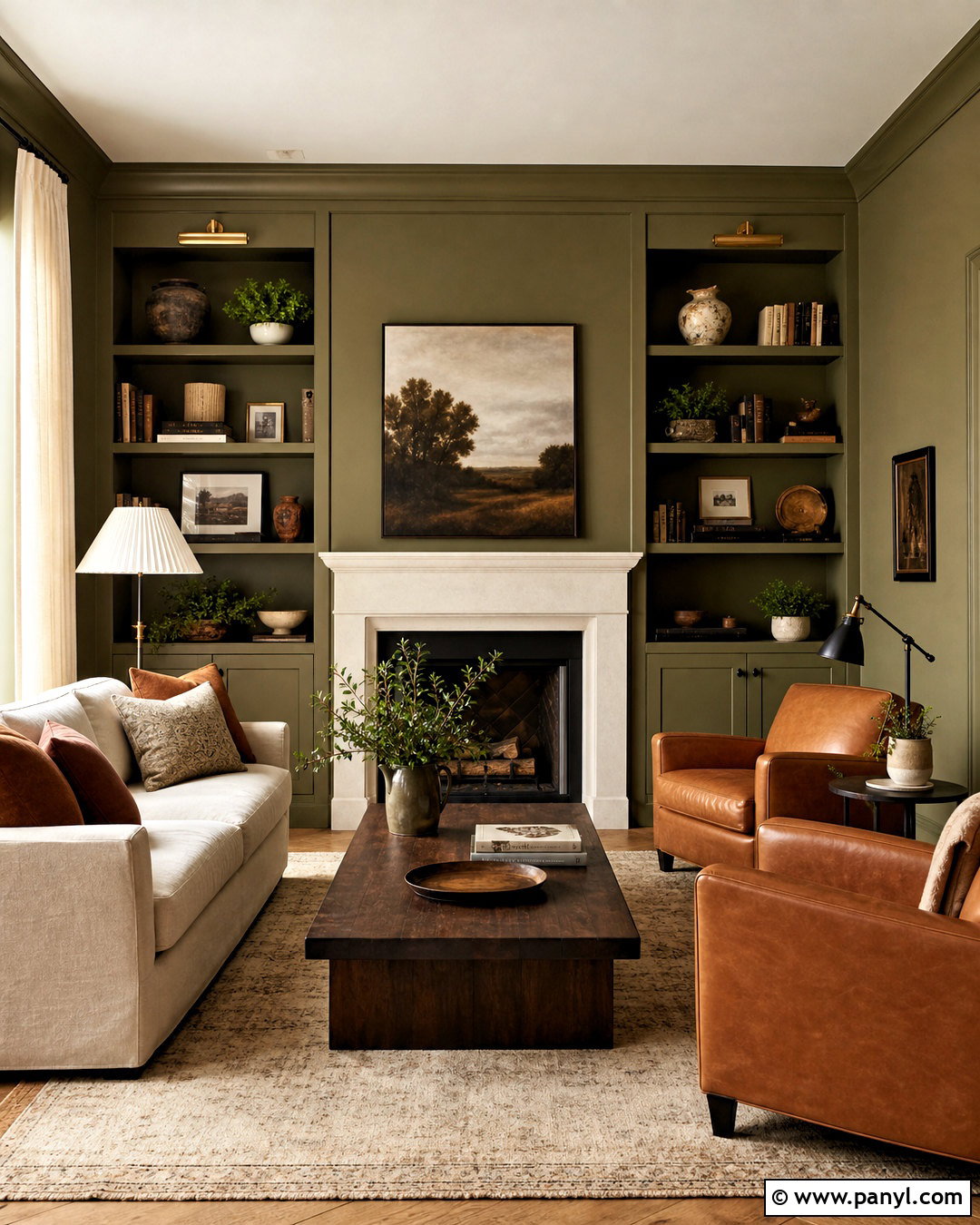
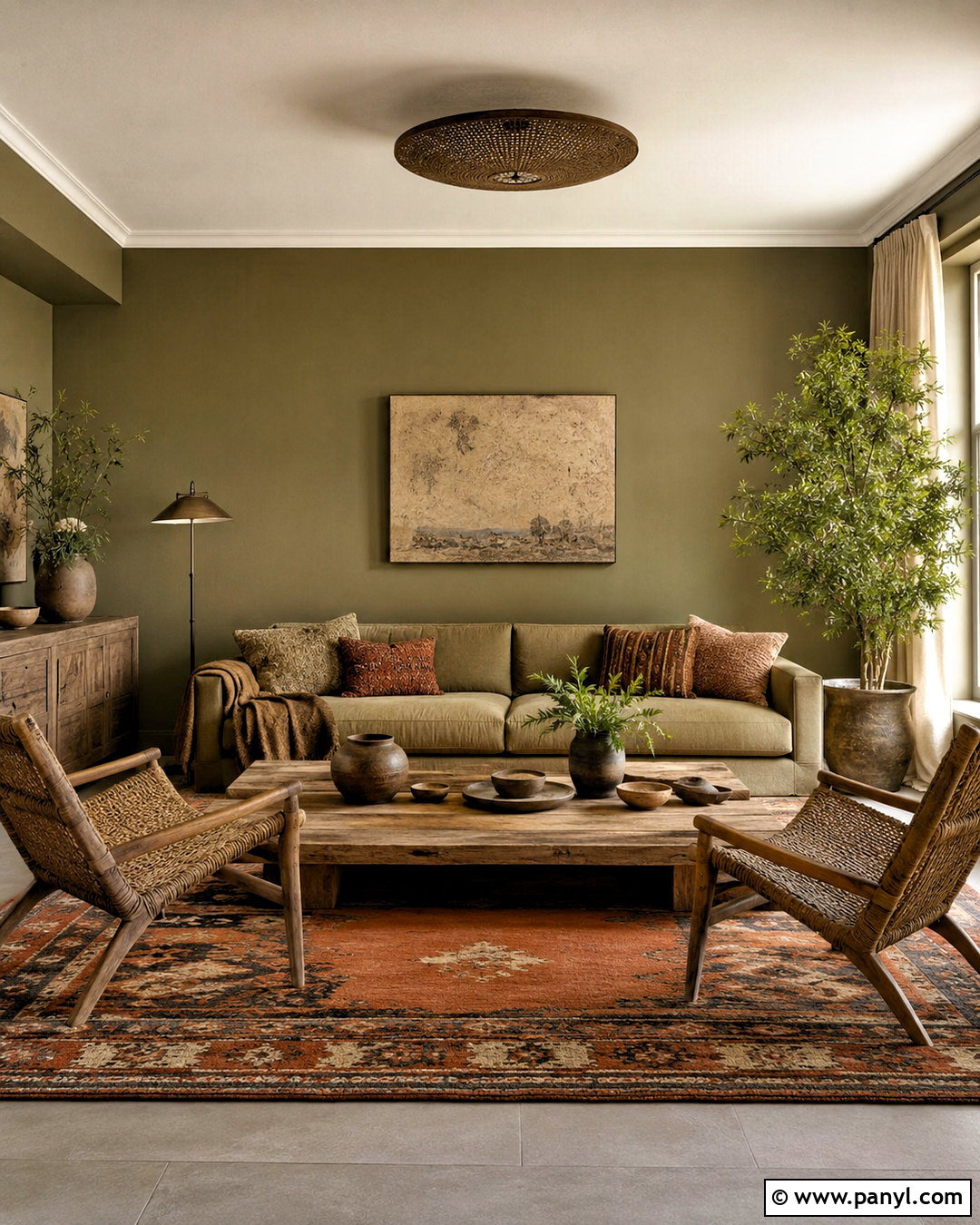
Olive green creates a grounded living room with more depth than pale sage. Use a muted midtone olive on the walls and repeat it on built-in shelves for a cohesive finish. Pair the paint with an oatmeal sofa, caramel leather chairs, and a substantial dark wood coffee table. A cream rug prevents the room from becoming visually heavy. Terracotta pillows, aged brass lamps, and earthy landscape art bring out the warm undertones in the green. Choose simple linen curtains in ivory or flax to soften the windows. If the living room includes a fireplace, natural stone or warm white plaster makes an ideal companion. Layer several lamps around the seating area so the olive remains rich, warm, and welcoming at night.
13. Moss Green Living Room Paint Color
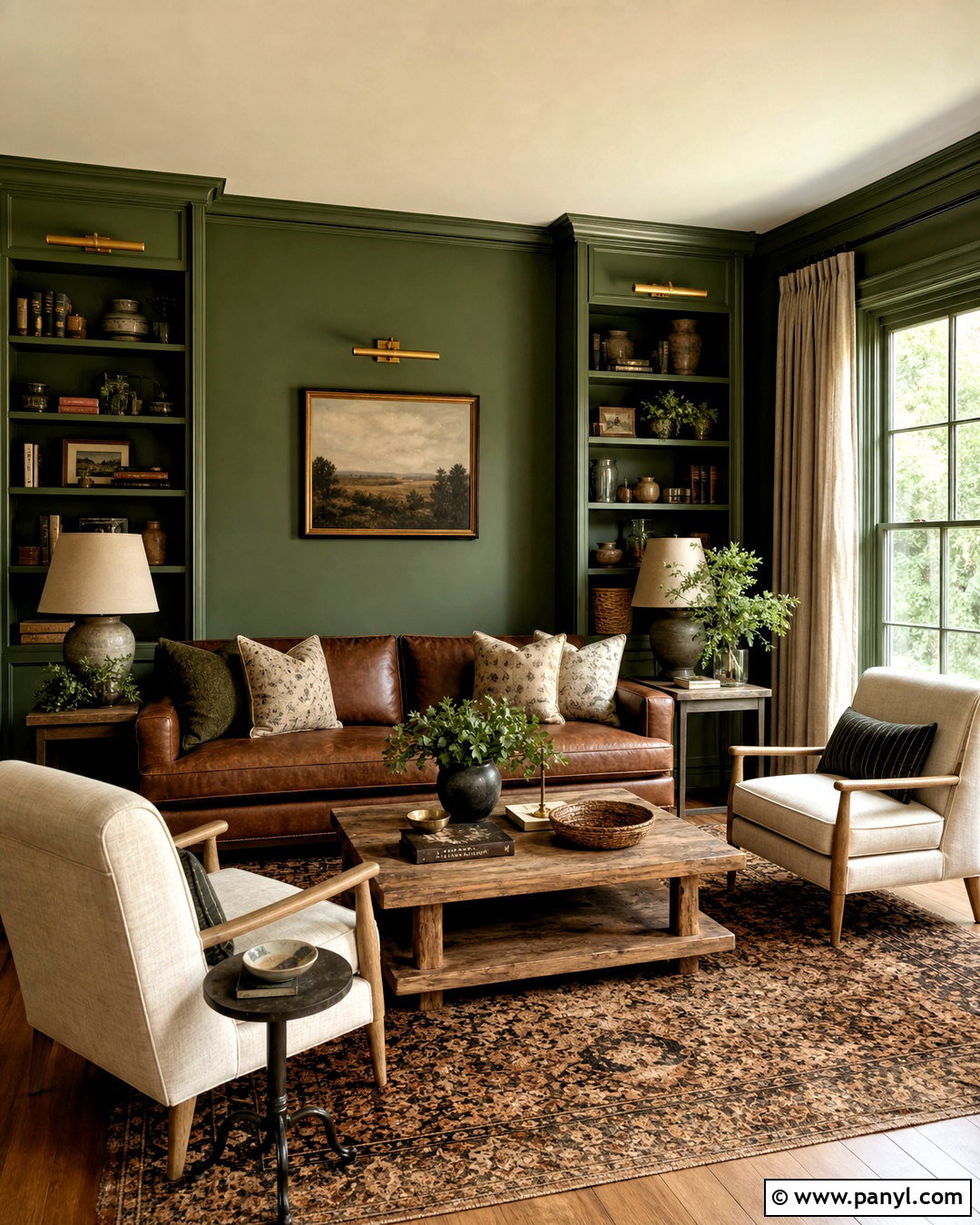
Moss green can transform a living room into a snug, nature-inspired gathering space. Select a softened forest shade that feels deep but not blue. Paint the walls and bookcases the same green, then use a warm ivory ceiling to provide breathing room. Arrange a tobacco leather sofa with two cream upholstered chairs around a rustic oak coffee table. A patterned rug in brown, beige, and faded red adds warmth and hides everyday wear. Use antique brass picture lights, ceramic table lamps, and woven shades to create multiple layers of illumination. Linen curtains in a warm neutral keep the windows from competing with the walls. This palette looks especially convincing when paired with books, wood-framed artwork, pottery, and natural greenery.
14. Deep Teal Living Room Paint Color
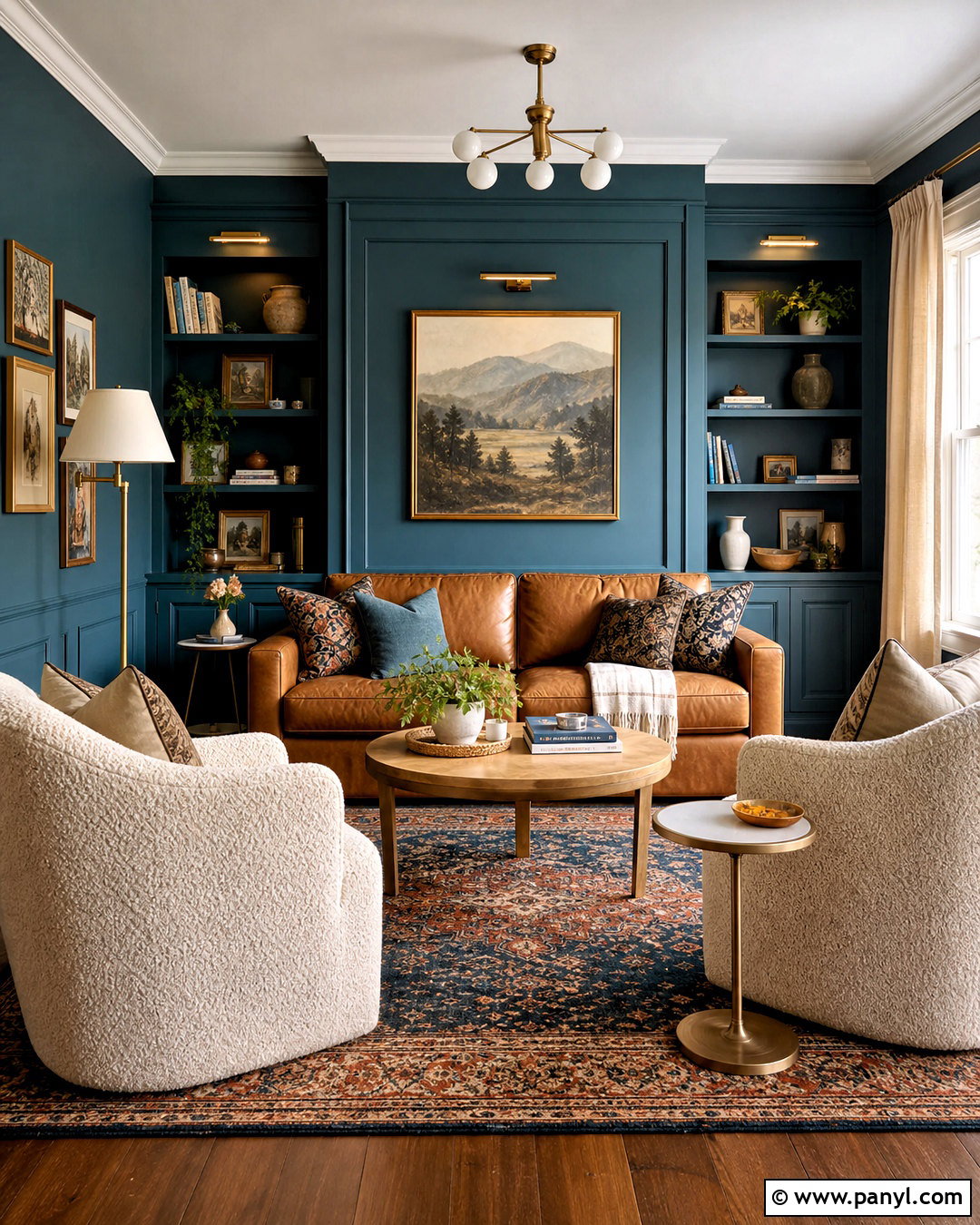
Deep teal combines the calming quality of blue with the earthy character of green. It is a strong option for creating a cozy living room that still feels colorful and refined. Use teal on the walls and built-ins, then balance it with creamy trim and a pale ceiling. A camel leather sofa becomes a warm focal point against the saturated background. Add ivory boucle chairs, a medium oak coffee table, and a vintage rug containing rust, navy, and beige. Brass lighting highlights the richness of the walls, while natural linen curtains soften the windows. Repeat teal sparingly in artwork or patterned pillows. Keeping the larger upholstery light prevents the room from feeling closed in, especially when natural light is limited.
15. Smoky Blue Living Room Paint Color
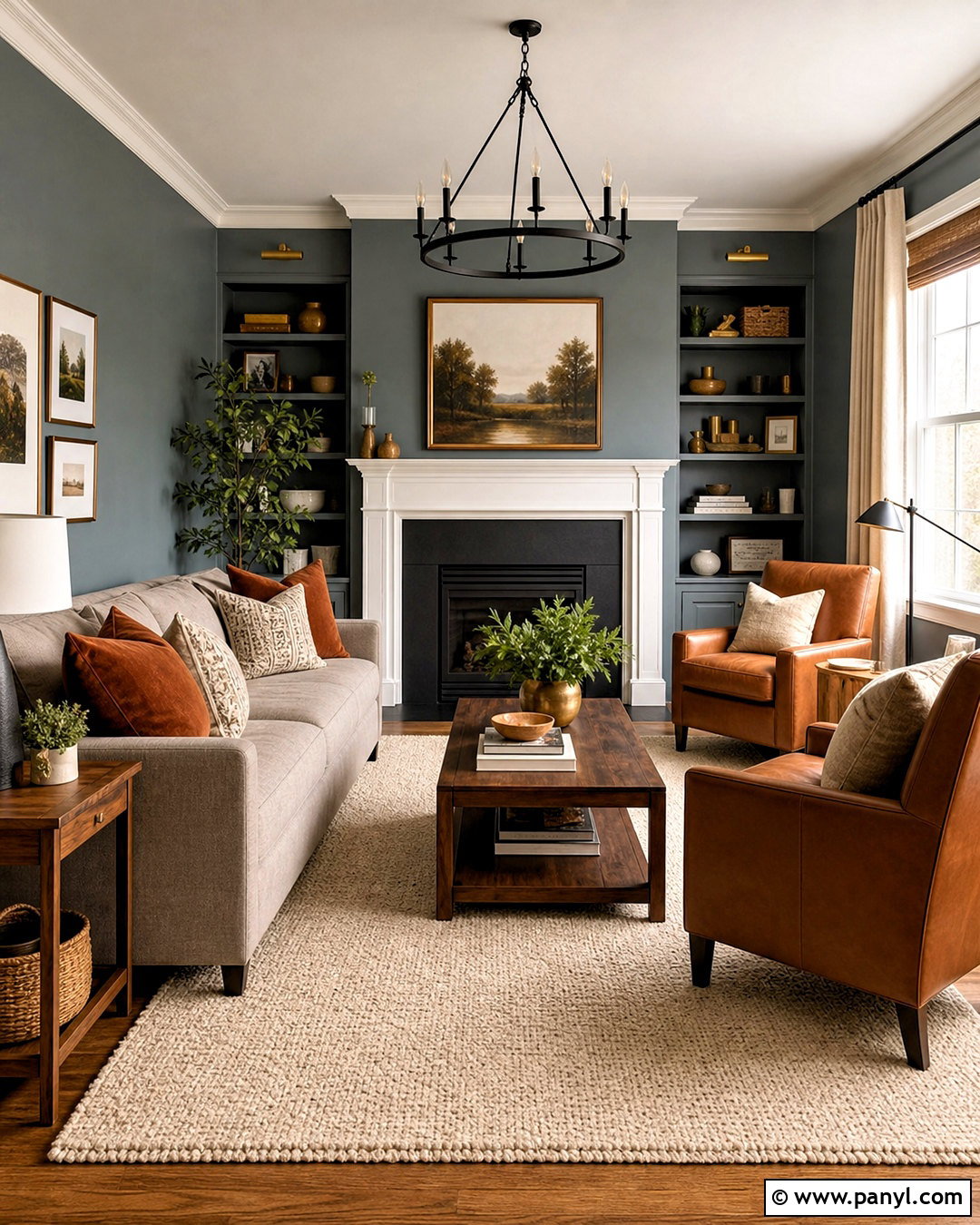
Smoky blue offers a restful alternative to neutral paint while maintaining an inviting atmosphere. Choose a muted blue with gray and green undertones rather than a crisp coastal shade. Combine it with warm white trim, a greige sofa, and caramel leather chairs. A walnut coffee table and medium-tone wood flooring help offset the cooler qualities of the walls. Layer an ivory wool rug, oatmeal curtains, and rust-colored pillows to introduce softness and warmth. Matte black lighting gives the room definition, while brass accessories can add a subtle glow. This palette works well in transitional and casual traditional spaces. Sample the color beside your upholstery first, since nearby gray, green, and brown finishes can noticeably influence its appearance.
16. Slate Blue Living Room Paint Color
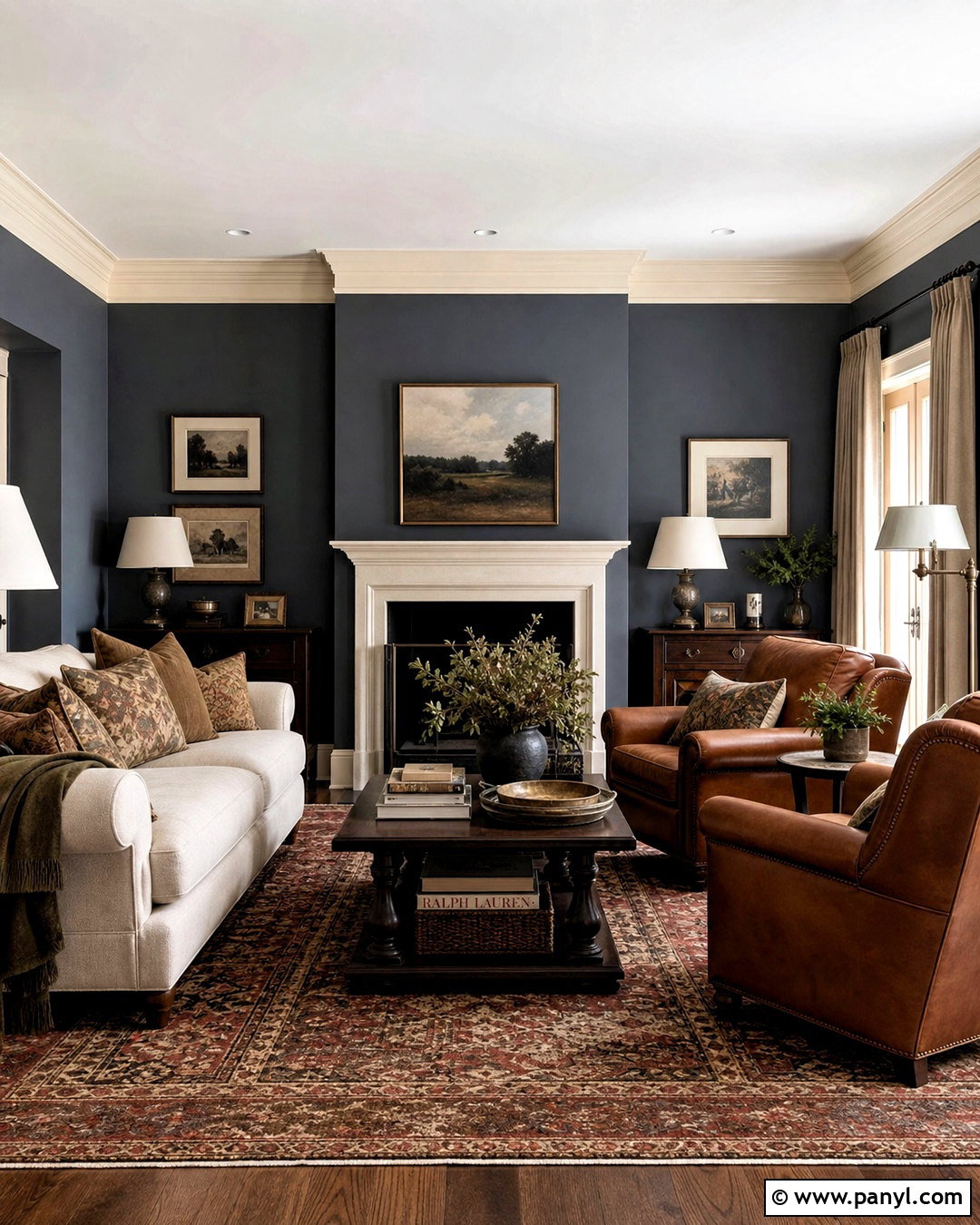
Slate blue creates a cozy, tailored living room with enough depth to frame lighter furniture. Paint the walls a dark, grayed blue and use soft ivory for the trim, ceiling, and fireplace surround. Center the room around a cream sofa and two cognac leather armchairs. A large vintage rug with muted red and tan details bridges the warm furnishings and cool walls. Choose dark wood tables, brass lamps, and substantial linen curtains in oatmeal. Framed landscapes or abstract artwork with touches of cream and ochre will brighten the deeper background. Rather than relying on one overhead fixture, distribute table lamps and sconces throughout the room. This makes the slate blue look layered and comfortable during evening hours.
17. Warm Charcoal Living Room Paint Color
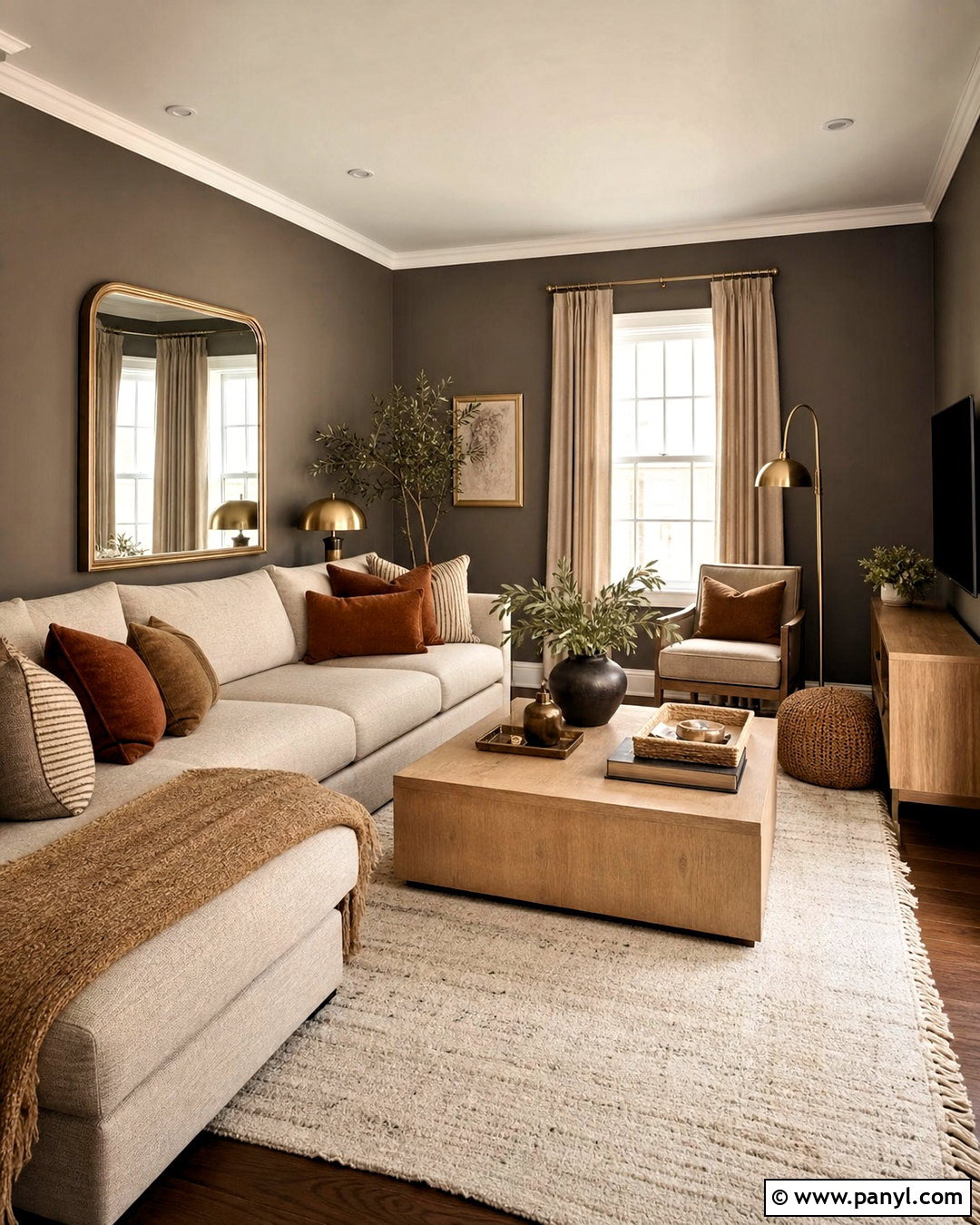
Warm charcoal delivers drama without the harshness of pure black. Look for a deep gray with brown or taupe undertones, then use it across the walls for a comfortable cocooning effect. Keep the ceiling and trim warm white unless you want a fully color-drenched room. A light oatmeal sectional, ivory rug, and pale oak coffee table create clear contrast. Add rust velvet pillows, a camel-colored throw, and warm wood frames to draw out the paint’s softer undertones. Brushed brass lamps and a large mirror prevent the room from appearing flat. Full-length beige curtains provide another pale vertical element. This balanced scheme is ideal for television rooms because the dark wall color visually reduces the prominence of a large black screen.
18. Soft Burgundy Living Room Paint Color
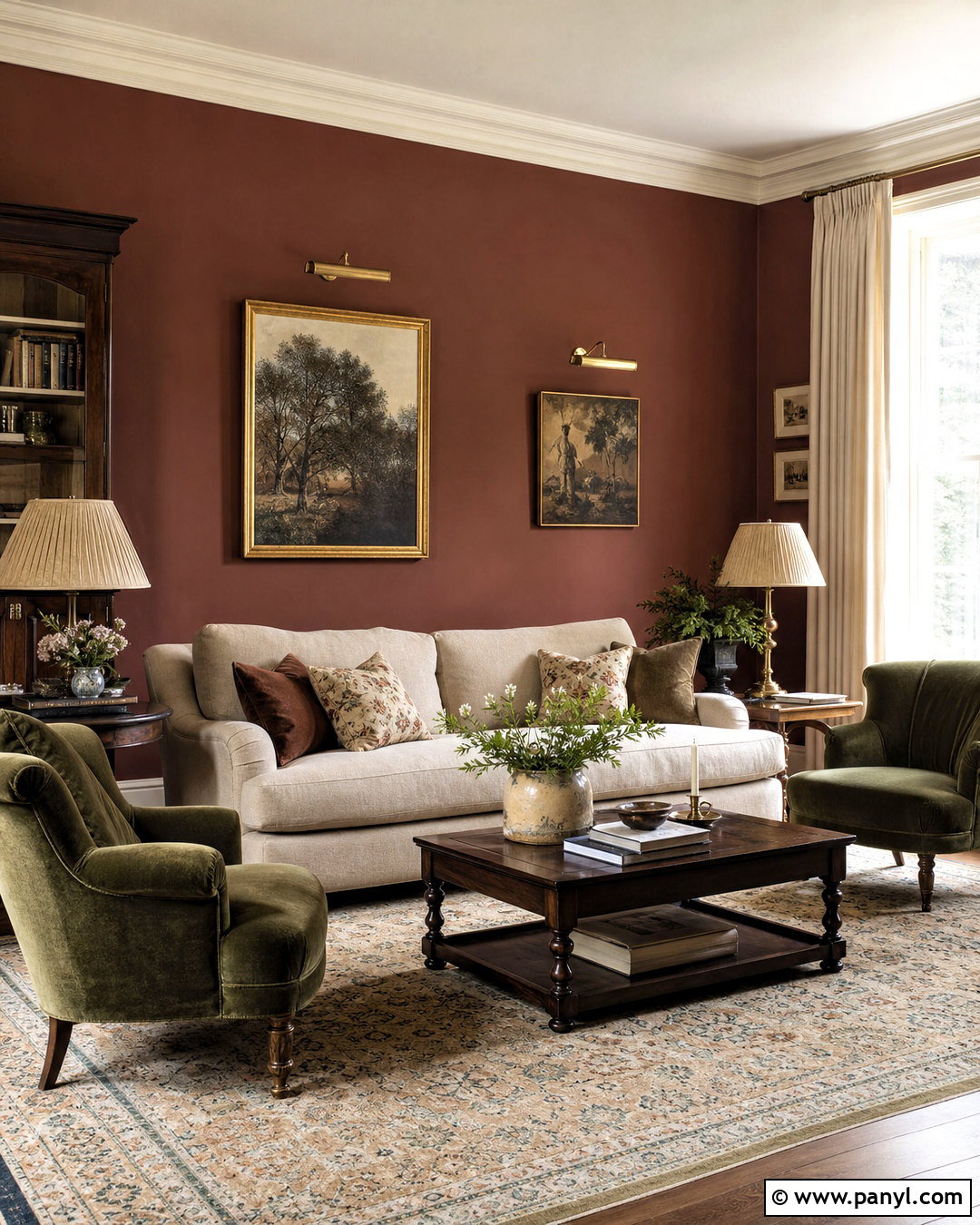
Soft burgundy surrounds a living room with rich color while feeling warmer and more approachable than bright red. Select a brown-based burgundy with a muted finish. Pair it with creamy trim, a neutral linen sofa, and dark walnut furniture. An aged rug featuring beige, muted blue, and faded red ties the room together without creating a matching set. Use olive velvet chairs or cushions to add an earthy complementary note. Brass picture lights, pleated lampshades, and framed vintage-style art reinforce the collected atmosphere. Natural linen curtains prevent the dark walls from dominating the windows. Burgundy is particularly effective in rooms used mainly during the evening, but balanced pale upholstery and layered lighting keep it welcoming throughout the day.
19. Cinnamon Brown Living Room Paint Color

Cinnamon brown offers the warmth of terracotta with a deeper, more grounded finish. Use this reddish brown on the walls and pair it with creamy white trim to sharpen the architecture. Furnish the room with a sand-colored sofa, two dark olive chairs, and a chunky oak coffee table. A textured ivory rug lightens the floor, while rust, tan, and chocolate pillows connect the furniture to the wall color. Choose natural woven shades under full-length linen curtains for a finished window treatment. Matte black hardware and lighting add a clean modern edge. Handmade ceramics, baskets, and simple landscape artwork complete the scheme. The finished space feels warm and substantial without becoming overly dark, themed, or visually busy.
20. Warm Off-White Living Room Paint Color
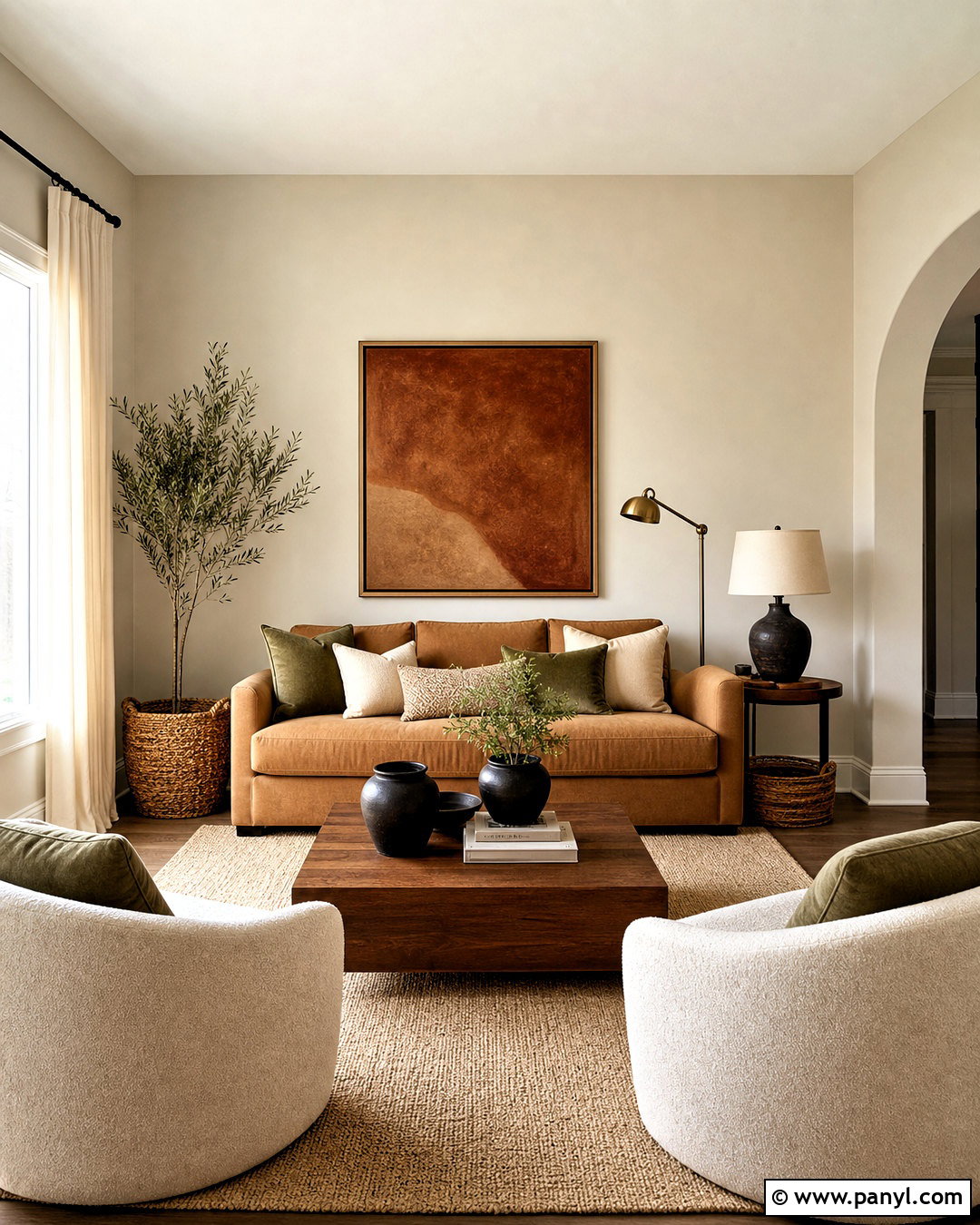
Warm off-white is ideal when you want an airy room that still feels relaxed and comfortable. Choose a shade with subtle cream, beige, or greige undertones, and avoid a brilliant blue-white finish. Paint the walls, trim, and ceiling in closely related tones for a soft, seamless background. Bring in warmth through a camel sofa, walnut tables, and a large oatmeal rug. Layer boucle chairs, linen curtains, and woven baskets to create depth within the pale palette. Olive, rust, and dark brown accents add controlled contrast through pillows, artwork, and ceramics. Include several wood or brass lamps instead of relying only on ceiling lighting. This thoughtful layering prevents an off-white living room from looking empty, cold, or unfinished.
Conclusion:
Choosing among these **20 cozy living room paint colors** becomes easier when you consider the entire room rather than the walls alone. Start with the natural light, fixed flooring, fireplace materials, and largest furniture pieces. Then select a paint color with undertones that support those finishes. Warm whites, beige, and greige create flexible foundations, while olive, teal, burgundy, and brown produce a more enveloping result. Sample promising colors on several walls and view them during the morning, afternoon, and evening. Once the paint is chosen, repeat its warmth through wood, textiles, rugs, and lighting. A connected palette will make the living room feel comfortable, intentional, and genuinely welcoming.

Related Ideas and Inspiration:
Leave a Reply