
Searching for **20 purple paint colors bedroom ideas** opens the door to much more than a basic lavender room. Purple can feel airy, earthy, romantic, playful, or dramatically sophisticated, depending on its undertone and depth. Light lavender and gray-purple shades often create a softer atmosphere, while saturated plum and aubergine deliver stronger contrast and visual warmth. Lighting also changes how purple appears, so a shade may look cooler in daylight and warmer under bedside lamps. () The most successful bedrooms treat paint as part of a complete palette, pairing it thoughtfully with flooring, furniture, bedding, trim, and metal finishes. From subtle lilac walls to immersive eggplant color, the following rooms offer practical and polished **20 purple paint colors bedroom ideas**.

1. Soft Lavender Purple Bedroom
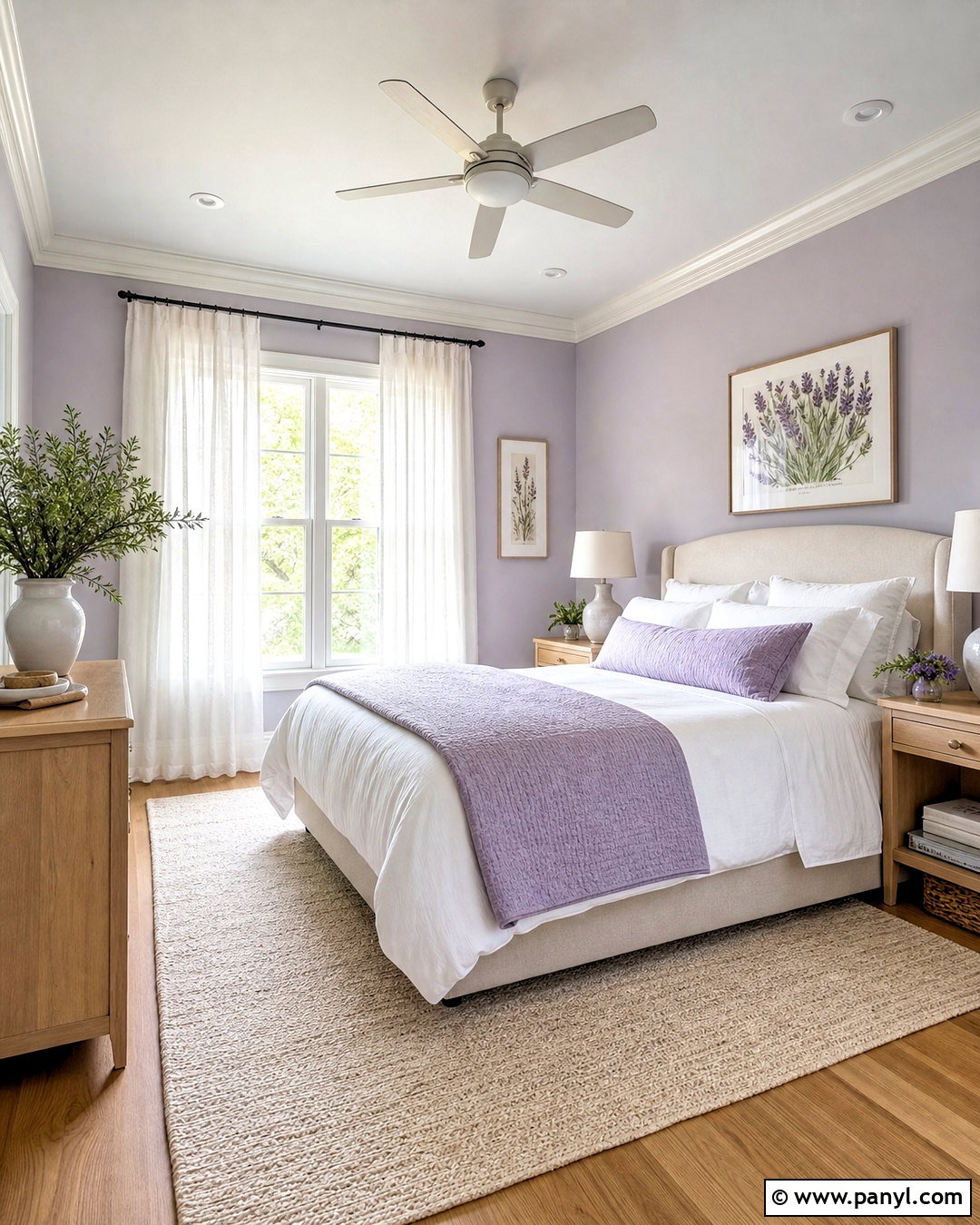
Soft lavender walls create a light, restful foundation without making the bedroom feel overly colorful. Choose a lavender with gray undertones, then pair it with warm white trim and a natural oak floor. An oatmeal upholstered bed keeps the palette grounded, while white cotton bedding and a pale lavender quilt repeat the wall color gently. Add light oak nightstands, ceramic lamps, and simple botanical artwork in thin brass frames. Sheer white curtains help daylight move through the room without introducing another strong color. For contrast, place one muted sage pillow on the bed and a woven cream rug underneath. This complete combination feels fresh and comfortable, making soft lavender especially useful in smaller bedrooms or spaces with limited natural light.
2. Gray Lavender Purple Bedroom
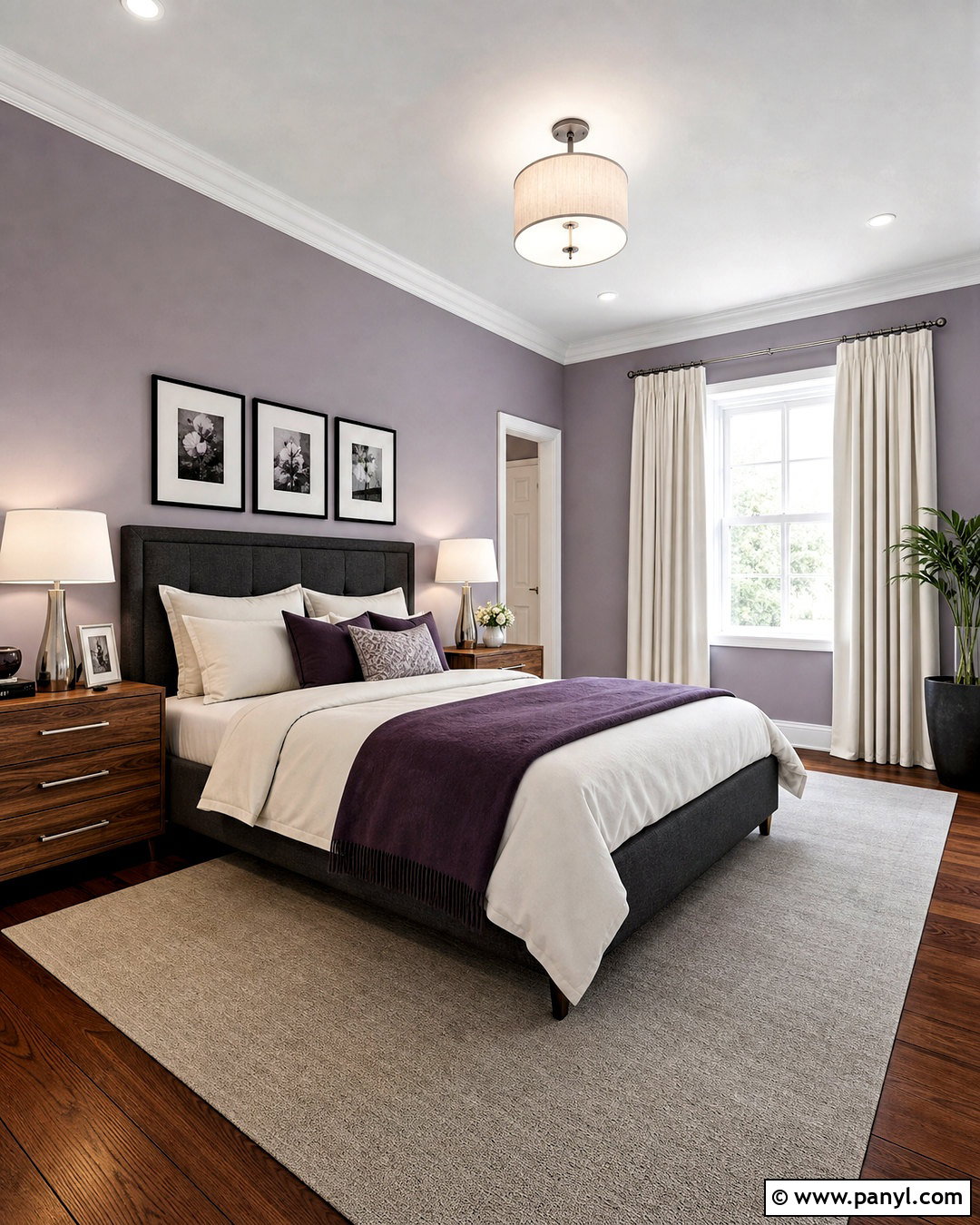
If standard lavender seems too sweet, gray lavender offers a quieter and more neutral alternative. Cover all four walls in a medium-light purple-gray and finish the trim in a clean, soft white. Build the room around a charcoal upholstered bed, walnut nightstands, and crisp ivory bedding. A folded plum blanket can deepen the palette without overwhelming it. Choose brushed nickel lamps and black-framed abstract prints for a modern edge. Medium-toned wood flooring prevents the cool wall color from feeling cold, while a large greige rug softens the overall contrast. Keep window treatments simple with full-length ivory panels. The result is a mature purple bedroom that coordinates easily with existing gray, black, cream, and natural wood furniture.
3. Dusty Mauve Purple Bedroom
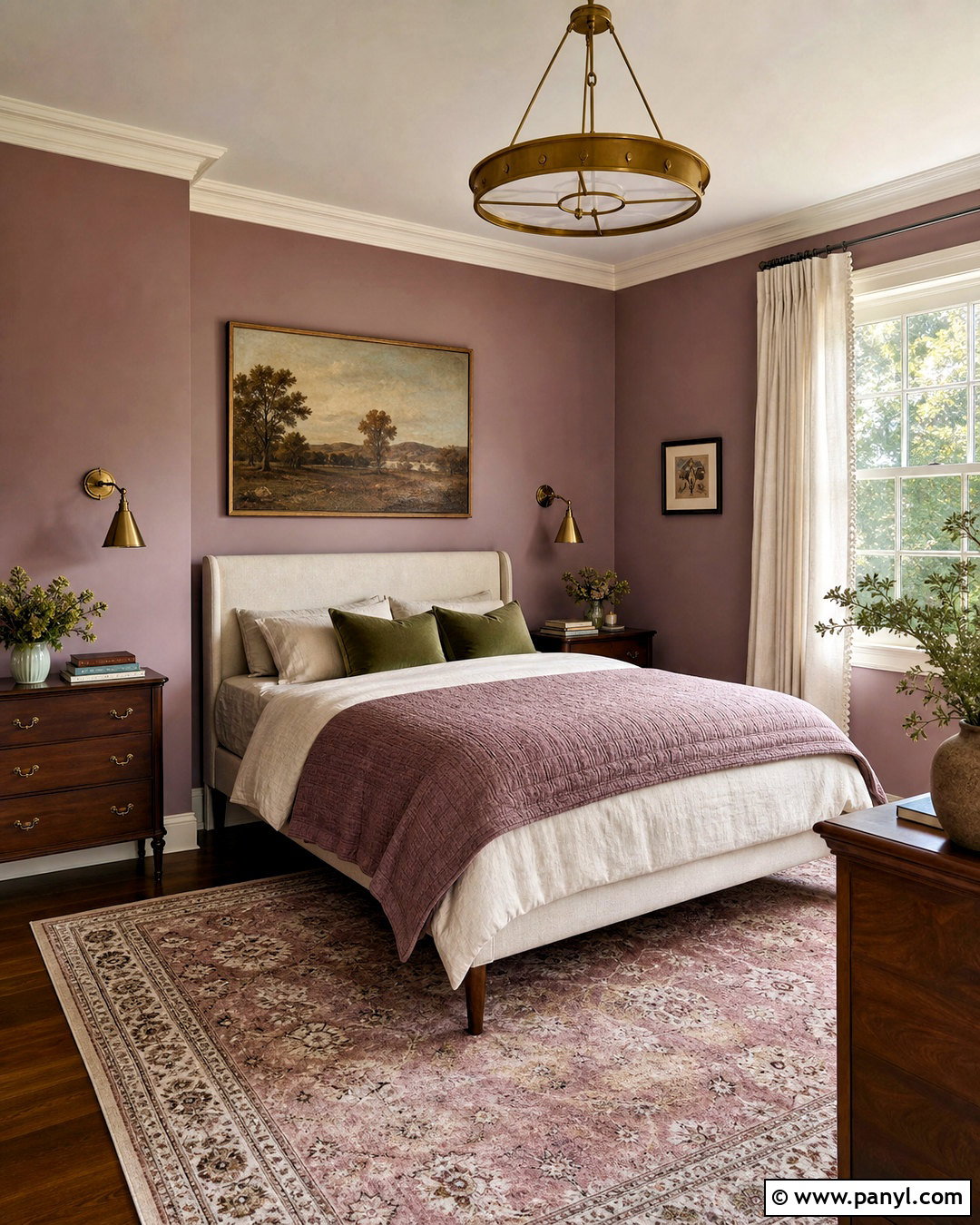
Dusty mauve brings warmth to a bedroom because it balances muted purple with soft rosy and brown undertones. Use it across the walls with creamy white trim, then introduce an ivory linen bed and medium walnut furniture. Layer the bed with natural flax sheets, a mauve coverlet, and one patterned lumbar pillow containing plum, beige, and olive. Antique brass sconces add warmth without making the room feel flashy. A vintage-inspired rug in faded rose, taupe, and violet connects the walls to the furniture. Complete the design with linen curtains, pottery lamps, and restrained landscape artwork. This palette works particularly well in rooms receiving cooler natural light, where its warmer undertones can create a welcoming, gently enveloping atmosphere.
4. Blush Mauve Purple Bedroom
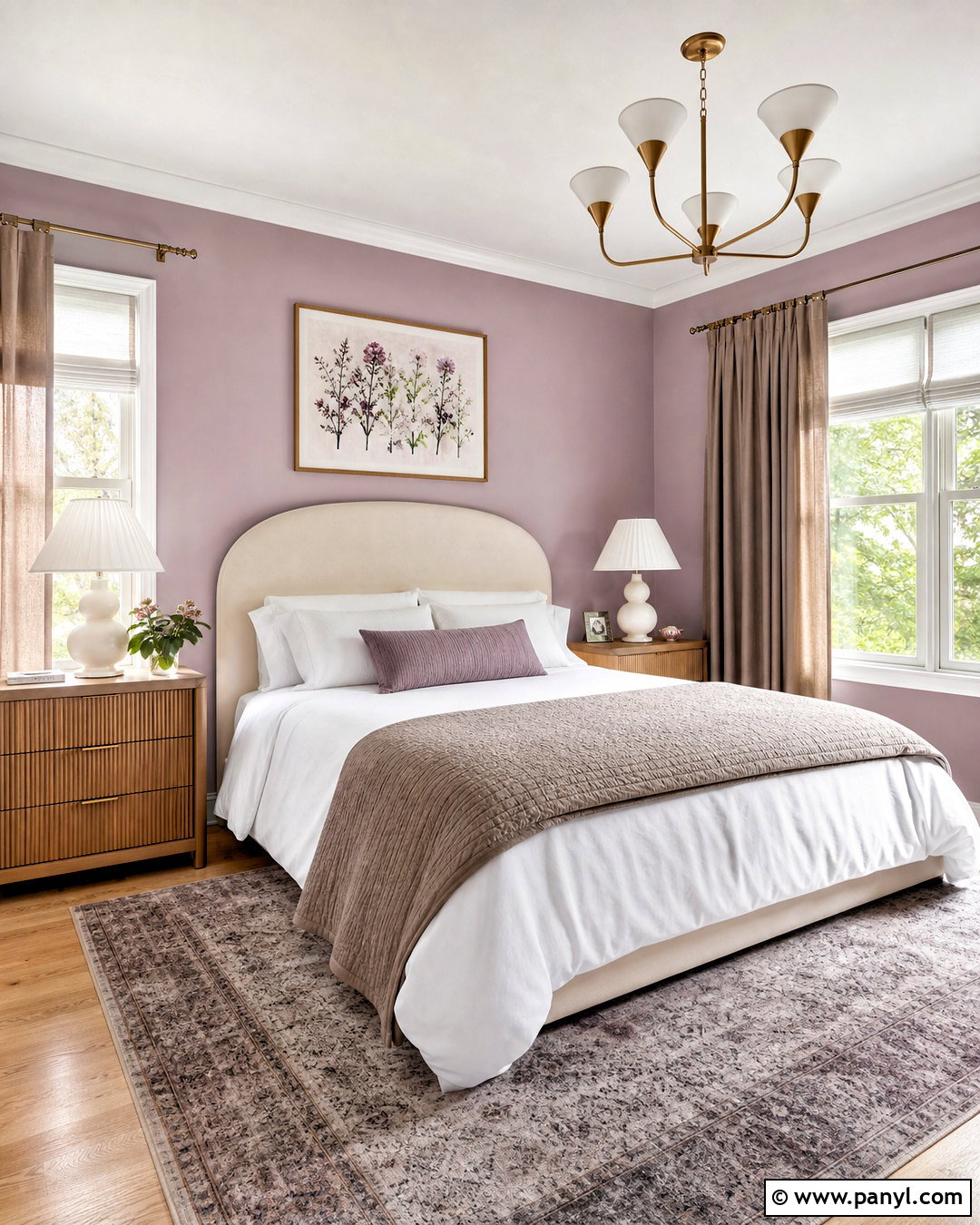
A pale blush mauve gives purple walls a warm, romantic character while remaining understated. Pair this delicate color with soft white trim and a light beige carpet or pale oak flooring. Select a curved cream headboard to soften the room further, then add white bedding, a mushroom-colored quilt, and muted purple pillows. Fluted oak nightstands bring contemporary texture, while milk-glass lamps keep the bedside areas bright. Use brushed brass sparingly through drawer pulls, picture frames, and a small ceiling fixture. Full-length taupe curtains will balance the rosy undertones and create a more grown-up finish. A simple cream rug and understated floral artwork complete the room without pushing it toward a heavily themed or overly decorative appearance.
5. Pale Lilac Purple Bedroom
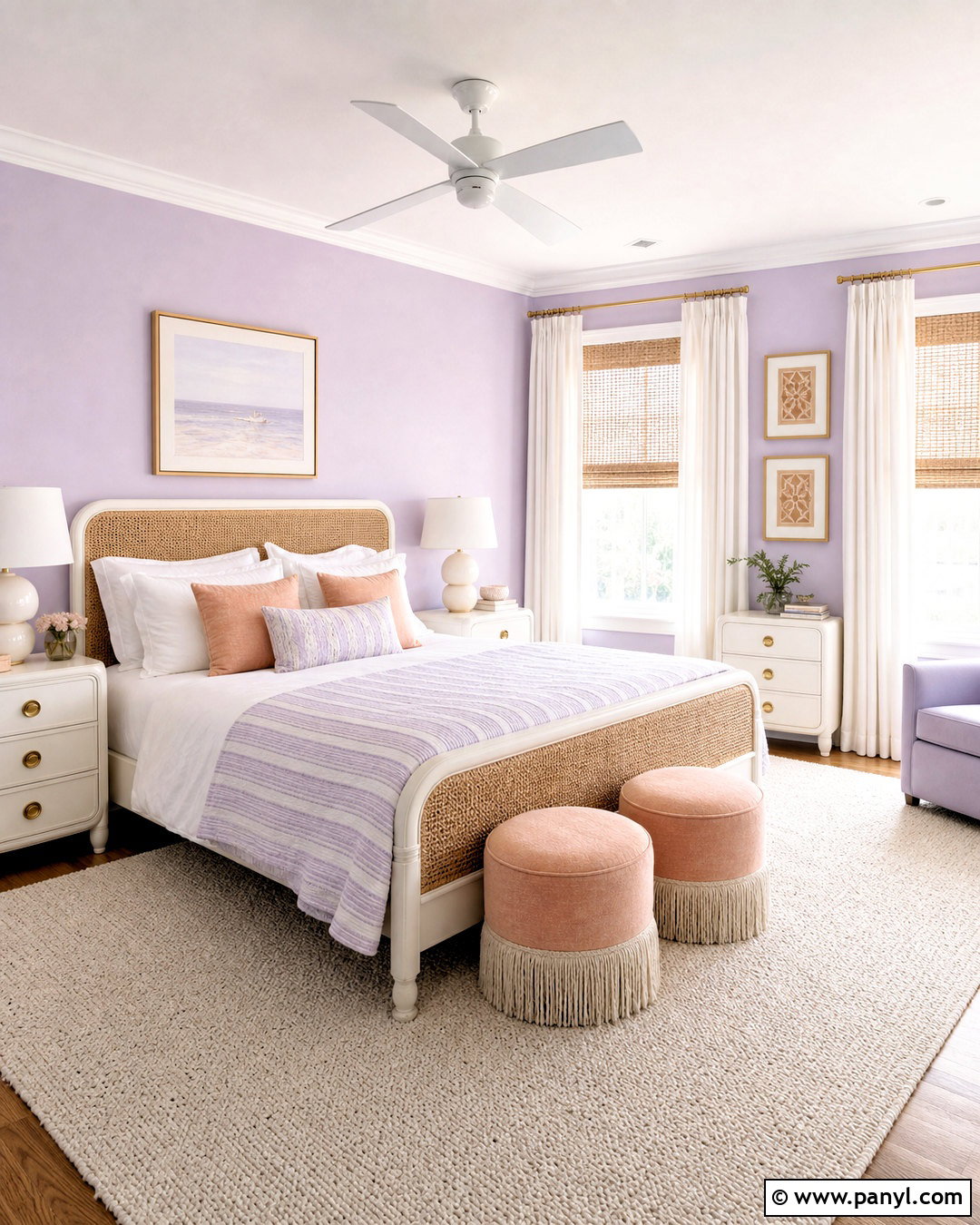
Pale lilac can make a bedroom feel cheerful, open, and clean when it is balanced with unfussy furniture. Paint the walls a clear but gentle lilac and use bright white on the baseboards, doors, and window casing. Center the room around a white oak bed with a woven cane headboard. Add white bedding, a lilac-striped blanket, and small accents in muted apricot for warmth. Natural woven shades and ivory curtain panels provide layered privacy without blocking too much daylight. Place a cream wool rug over the wood floor and use rounded white nightstands to keep the layout light. Minimal line drawings and a few ceramic pieces finish this relaxed bedroom while allowing the lilac paint to remain the main decorative feature.
6. Blue Violet Purple Bedroom
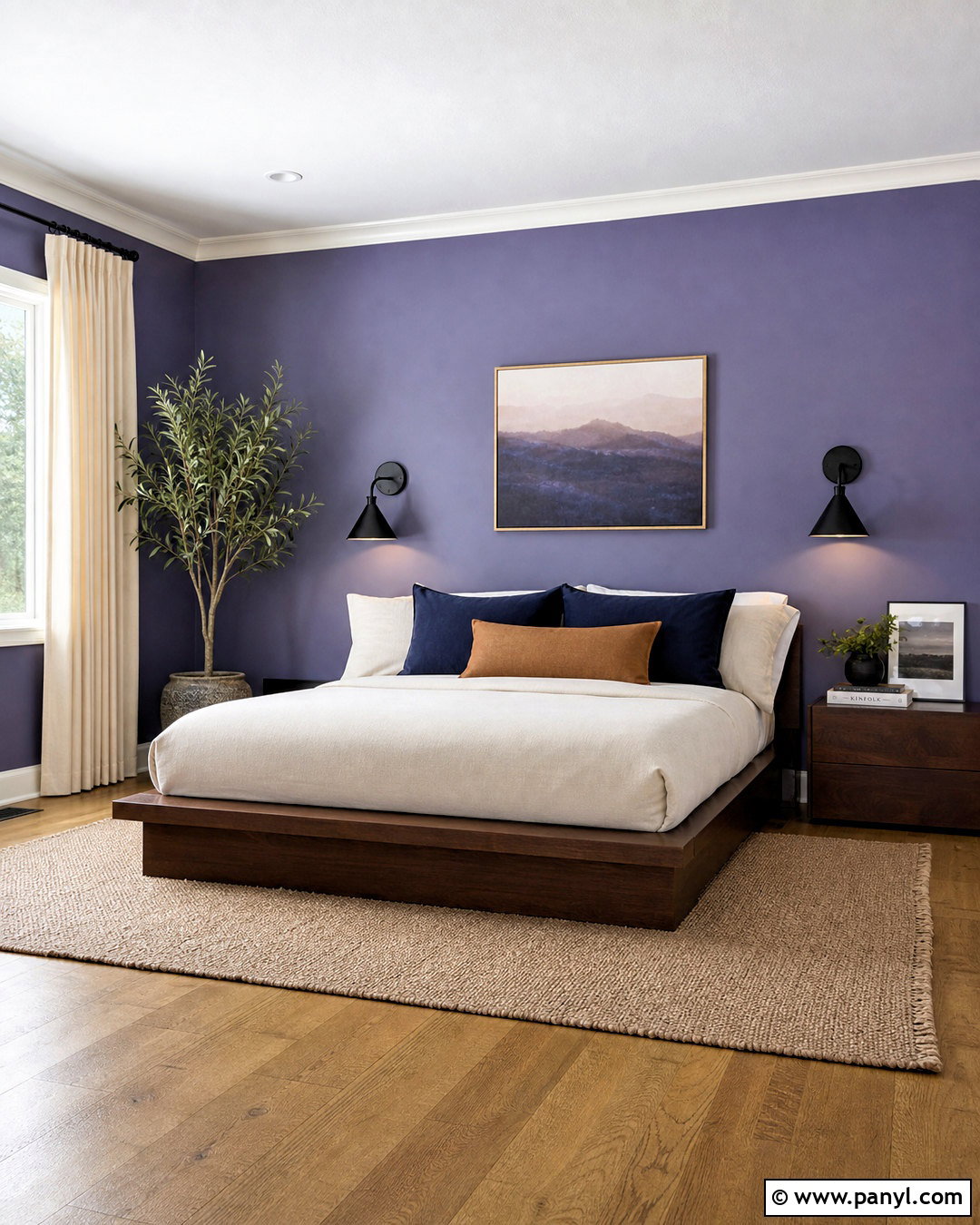
Blue-violet walls deliver a cool, crisp version of purple that suits streamlined modern bedrooms. Choose a medium shade with noticeable blue undertones and balance it with warm white trim. A low walnut platform bed creates rich contrast, while ivory bedding prevents the darker wall color from dominating. Introduce navy pillows, a light gray blanket, and one warm camel accent cushion. Matte black sconces and a black-framed mirror sharpen the arrangement. For the floor, select natural oak or a neutral beige carpet rather than cool gray. Hang simple curtains in warm off-white and add a textured cream rug beneath the bed. The final space feels colorful yet controlled, with enough warm materials to balance the cooler violet backdrop.
7. Periwinkle Purple Bedroom
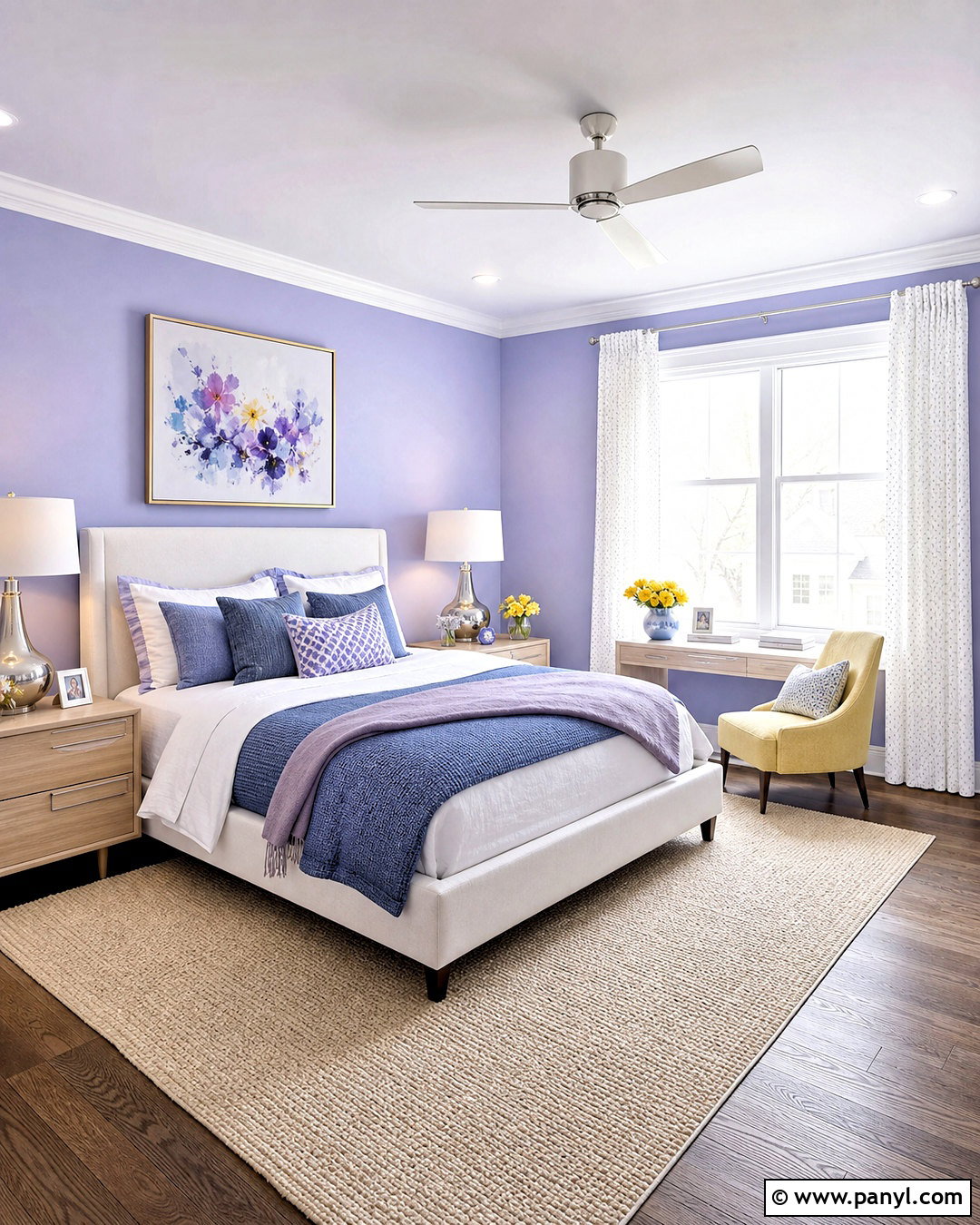
Periwinkle sits between purple and blue, creating an upbeat wall color that still feels suitable for rest. Paint every wall in a soft, medium-light periwinkle, then use crisp white trim to clarify the color. Bring in a white upholstered bed, pale wood nightstands, and bedding layered in white, denim blue, and lavender. A small amount of butter yellow in a pillow or artwork provides a warm counterpoint. Choose polished nickel lamps and a white ceiling fixture for a clean finish. A light beige rug will soften wood flooring and prevent the room from becoming too cool. Complete the bedroom with simple white curtains and framed watercolor prints that repeat the blue, violet, and yellow palette in a subtle way.
8. Heather Purple Bedroom
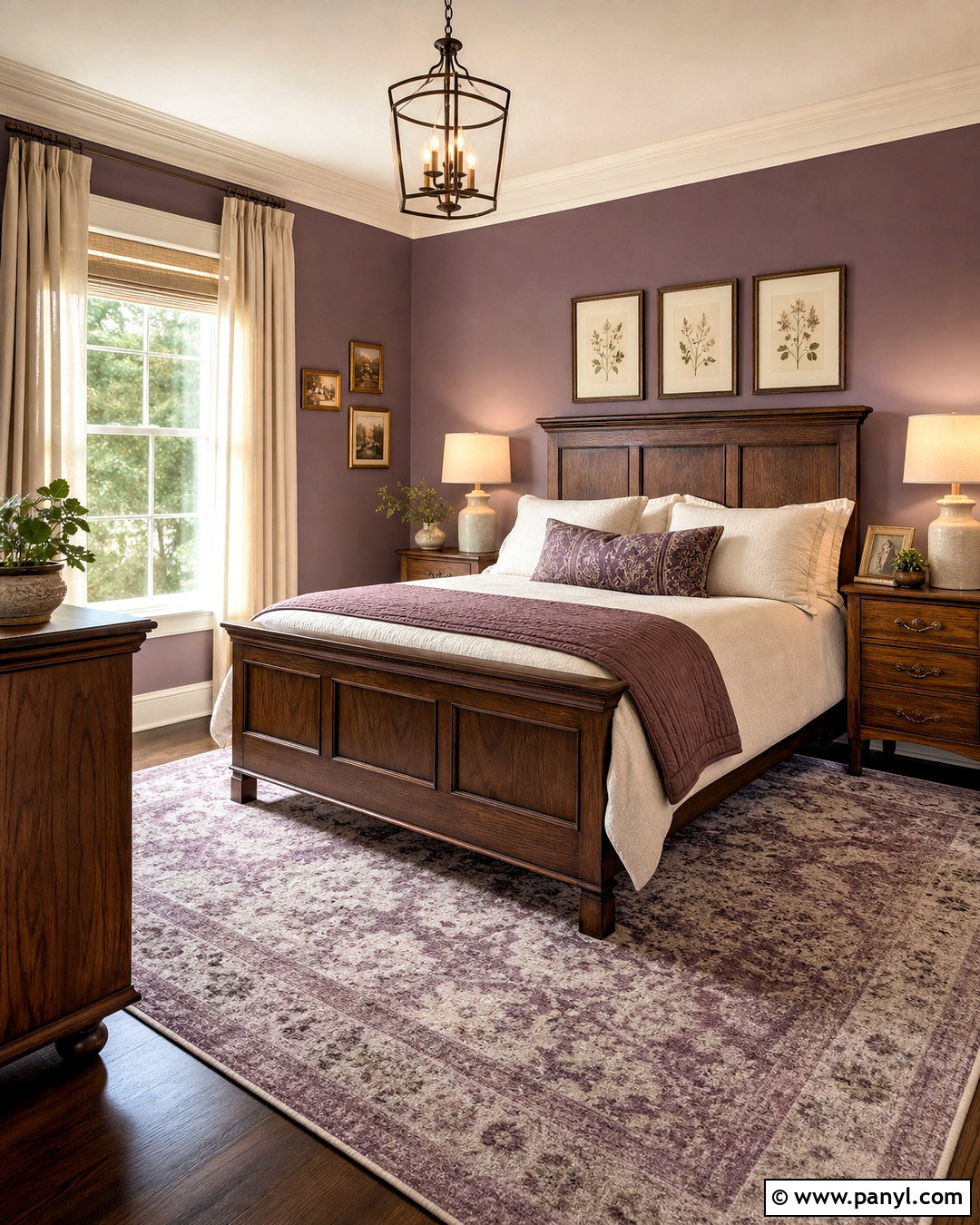
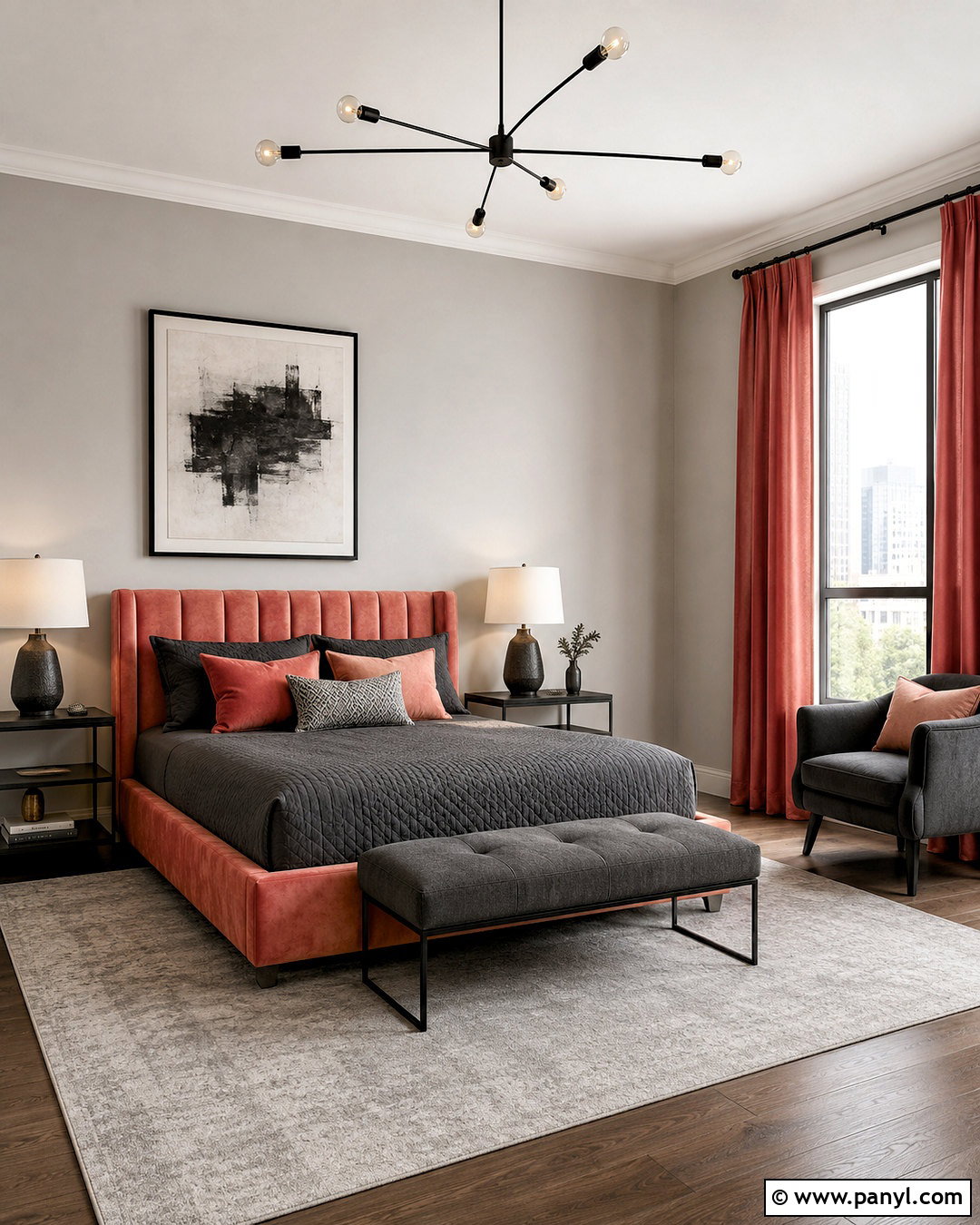
Muted heather purple creates a cozy bedroom that feels colorful without appearing bright. Its soft gray and reddish undertones pair naturally with oatmeal, brown, and aged wood. Paint the walls heather purple, retain warm white trim, and choose a dark oak bed with a simple paneled headboard. Dress it with ivory linen bedding, a brownish mauve quilt, and charcoal accent pillows. Beside the bed, use compact wooden tables with ceramic lamps in a warm cream glaze. A faded traditional rug can combine taupe, dusty purple, and soft blue underfoot. Linen curtains in natural beige filter daylight gently. Finish with pressed botanical artwork and a woven storage bench, creating a practical bedroom with a comfortable, collected appearance.
9. Orchid Purple Bedroom
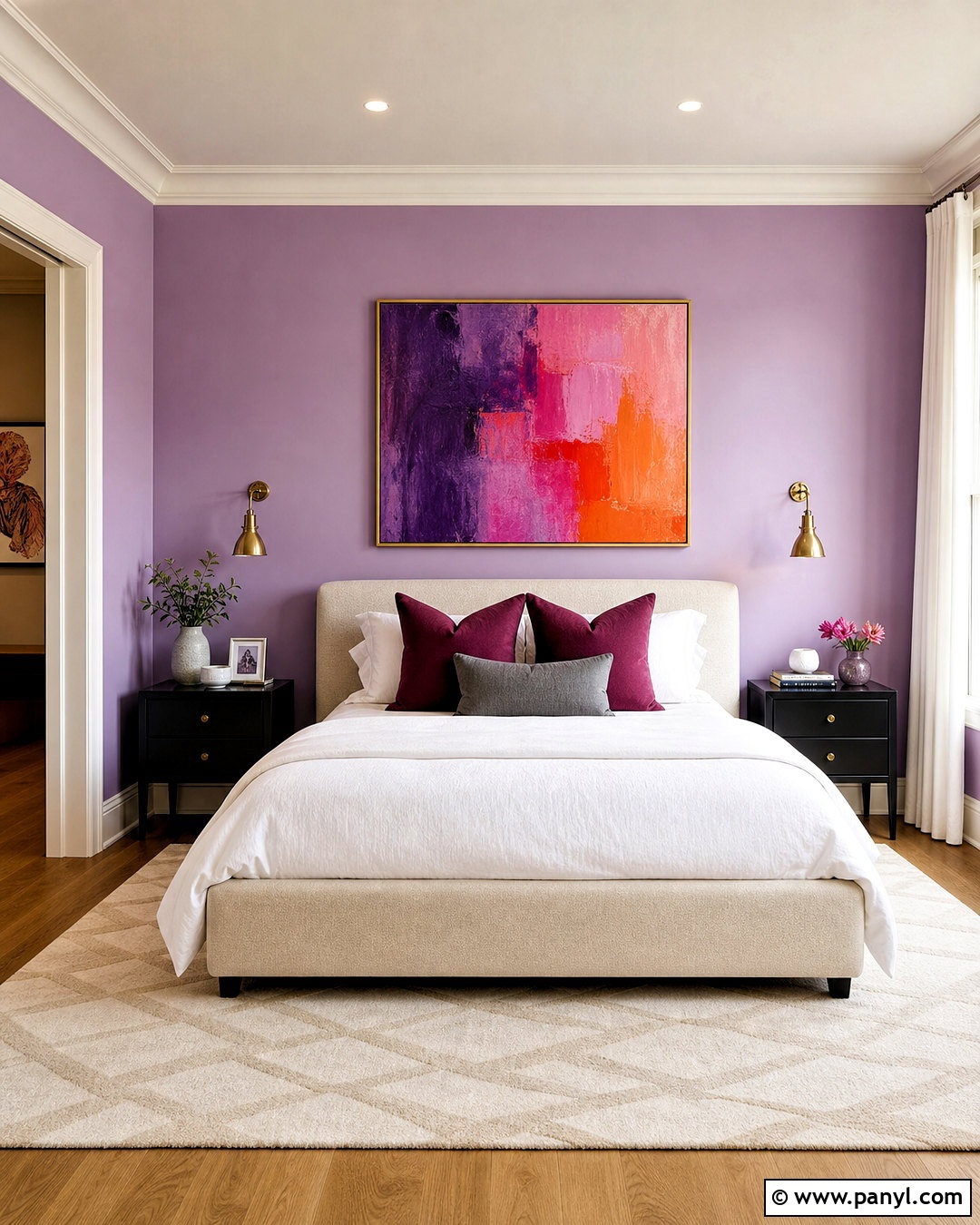
Orchid purple brings more energy into the bedroom than lavender, so it benefits from a balanced, modern layout. Use a softened orchid shade on the walls rather than a highly saturated version. Pair it with white trim, light oak floors, and a tailored oatmeal bed. White bedding provides visual breathing room, while orchid, berry, and pale gray pillows connect the furnishings to the walls. Add black nightstands with simple silhouettes and warm brass reading lights for contrast. A geometric cream rug introduces pattern without competing with the paint. Keep artwork large but limited, such as one abstract piece above the bed containing white, purple, and muted coral. Neutral curtains and uncluttered surfaces help the finished room remain restful.
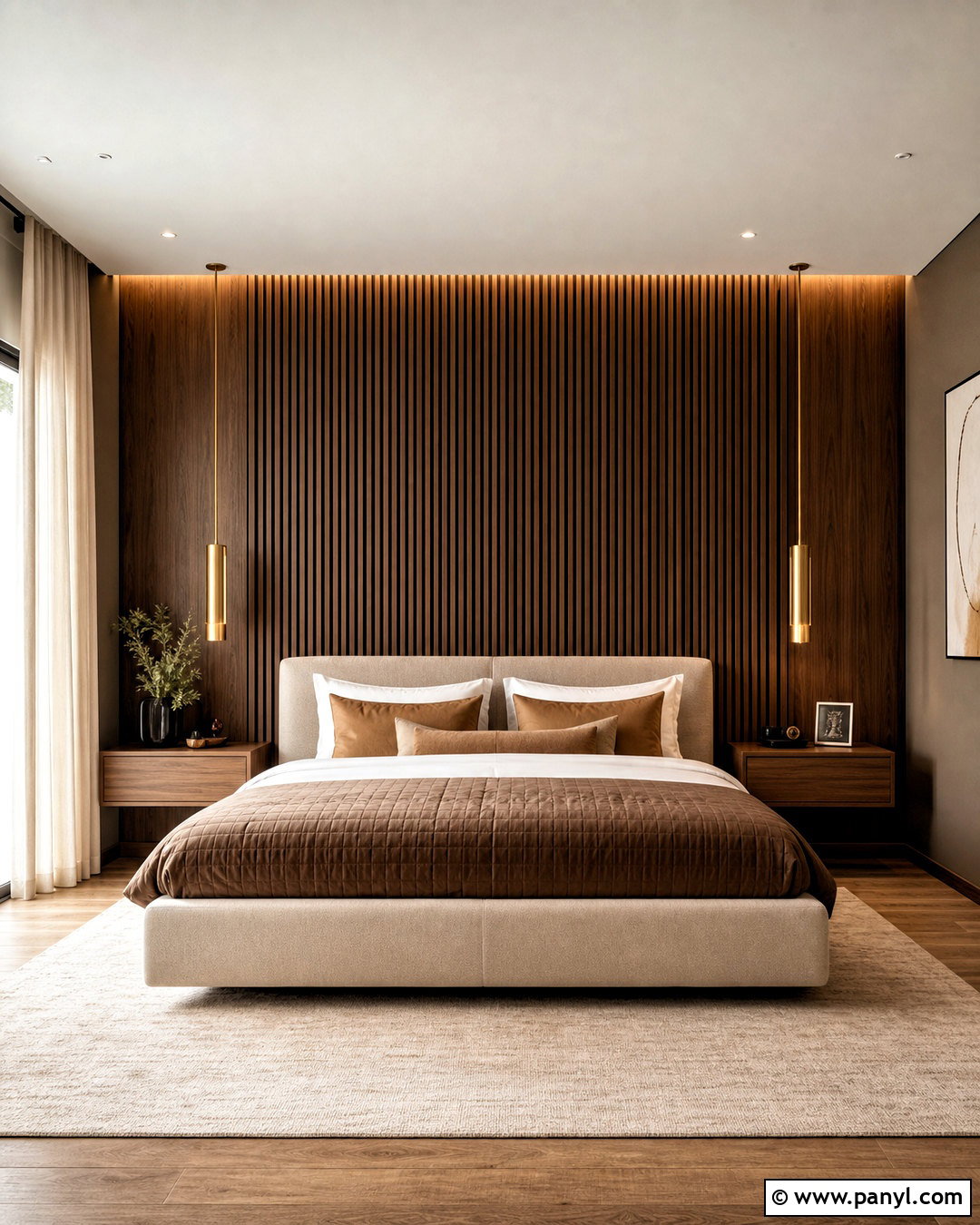
10. Wisteria Purple Bedroom
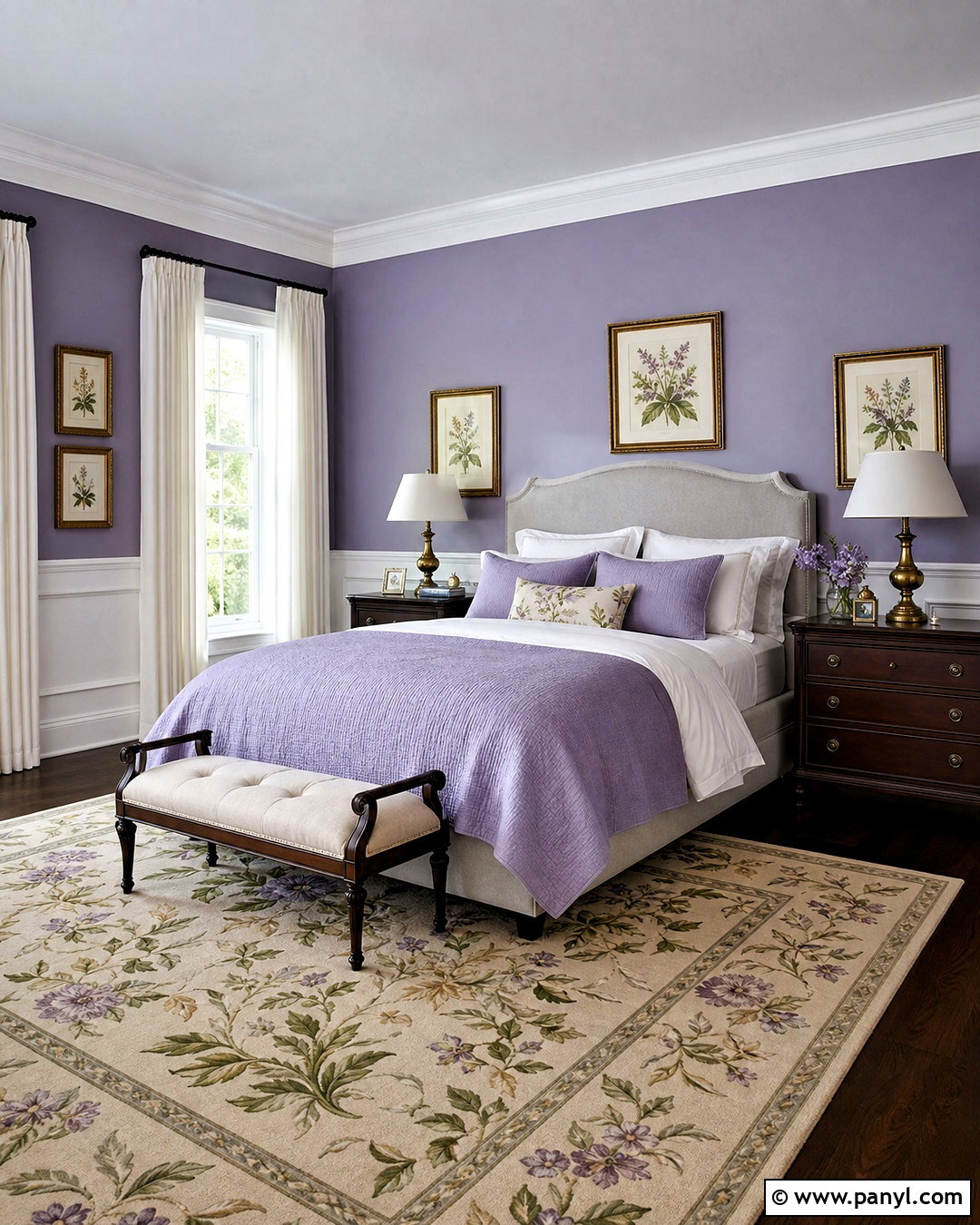
Wisteria purple has a gentle blue-gray quality that looks especially elegant with traditional bedroom details. Apply it to the walls above white-painted panel molding or simple wainscoting. An upholstered bed in pale gray linen bridges the purple upper walls and white lower walls. Add crisp white sheets, a quilted lavender coverlet, and small floral pillows in sage and violet. Dark wood nightstands provide needed visual weight, while antique brass lamps introduce a warm glow. Choose a faded botanical rug with cream, green, and dusty purple notes. Full-length ivory curtains make the windows appear taller. A small bench at the foot of the bed and framed vintage plant prints complete this polished look without making the traditional elements feel formal or heavy.
11. Smoky Purple Bedroom
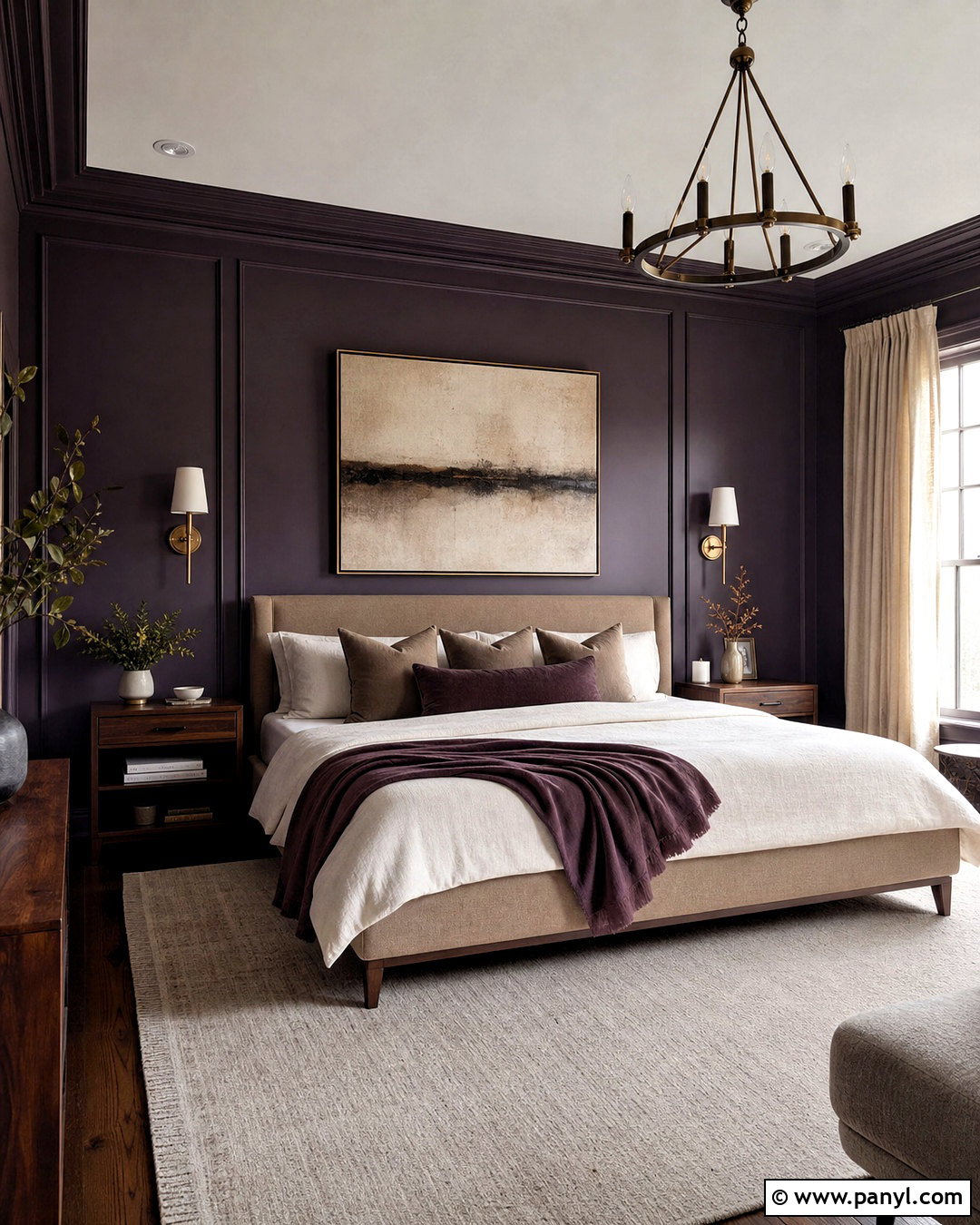
Smoky purple delivers depth while behaving much like a dark neutral. Select a muted shade containing charcoal or brown undertones and use it on every wall. Paint the trim the same color in a slightly glossier finish for a seamless, contemporary effect. A warm beige upholstered bed will stand out clearly against the darker background. Layer it with ivory bedding, taupe pillows, and a deep plum throw. Walnut nightstands and aged brass sconces add warmth, while a large cream rug brightens the floor area. Choose natural linen curtains rather than gray fabric, which could make the palette feel flat. Oversized abstract artwork in cream, tan, and black completes the room, producing a dramatic but comfortable retreat.
12. Warm Plum Purple Bedroom
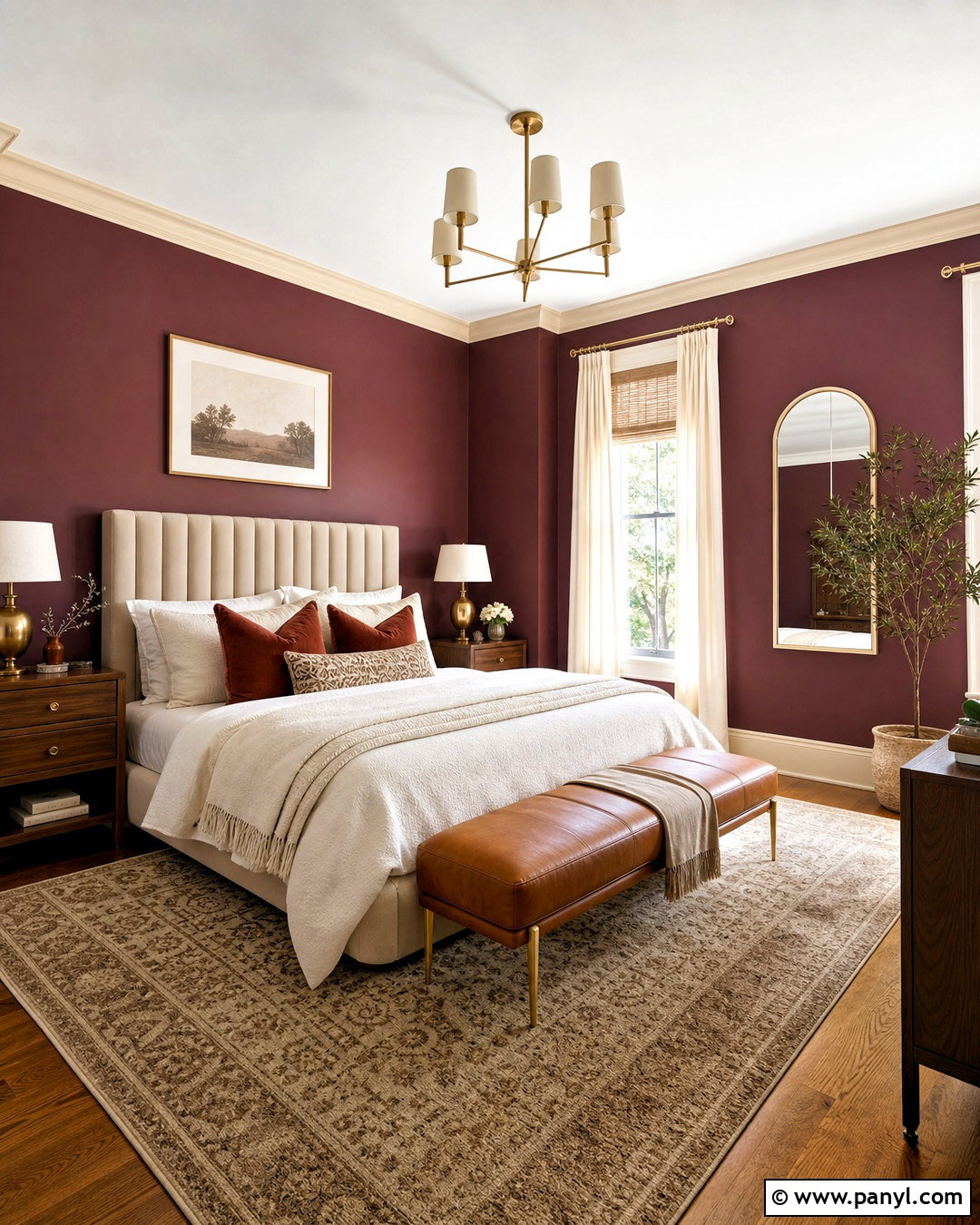
Warm plum walls create a rich bedroom that feels cozy rather than cold. Choose a medium-dark plum with red or brown undertones, then combine it with creamy trim and honey-toned wood flooring. A beige channel-tufted bed provides a soft focal point. Dress the bed with warm white linens, rust-colored pillows, and a plum velvet blanket. Walnut nightstands and brass lamps reinforce the warm direction of the palette. Add a large neutral rug with a subtle burgundy pattern to connect the wall and bedding colors. Heavy ivory curtains provide contrast around the windows and help frame the room. Finish with dark botanical artwork and a caramel leather bench, keeping decorative accessories limited so the strong paint color remains sophisticated.
13. Deep Aubergine Purple Bedroom
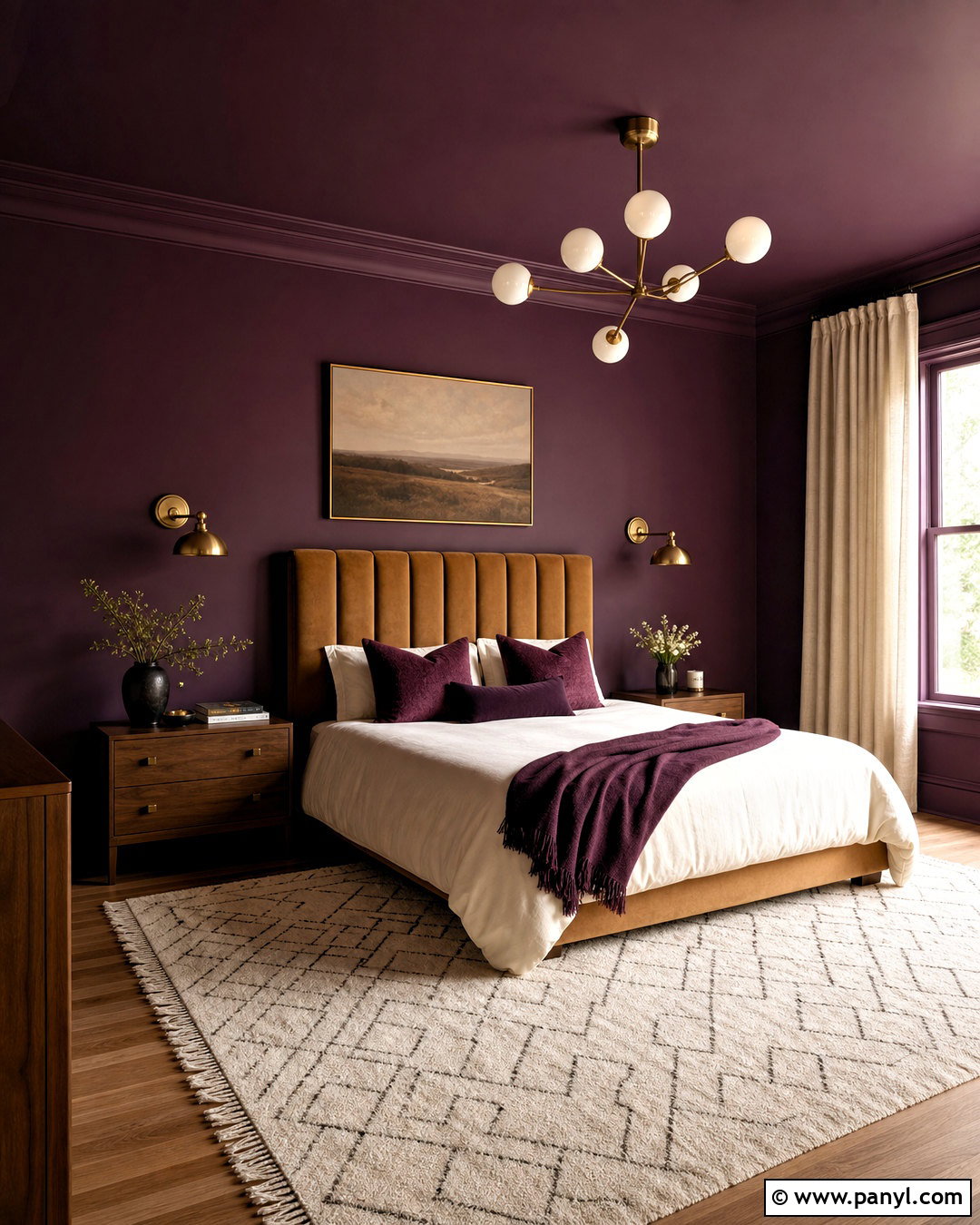
Deep aubergine creates an immersive bedroom with a luxurious, enveloping appearance. Use the color across the walls and ceiling, then paint the trim in matching aubergine for a continuous finish. Prevent the room from becoming too dark with a tall camel velvet headboard and layers of crisp ivory bedding. Add plum pillows, a patterned beige throw, and walnut nightstands with drawers for practical storage. Aged brass sconces stand out beautifully against the purple background. Under the bed, place a generously sized cream rug with a low-contrast geometric pattern. Use full-length flax curtains and one large landscape print containing warm brown and muted green. This arrangement makes the bold paint feel intentional, comfortable, and cohesive rather than overpowering.
14. Blackberry Purple Bedroom
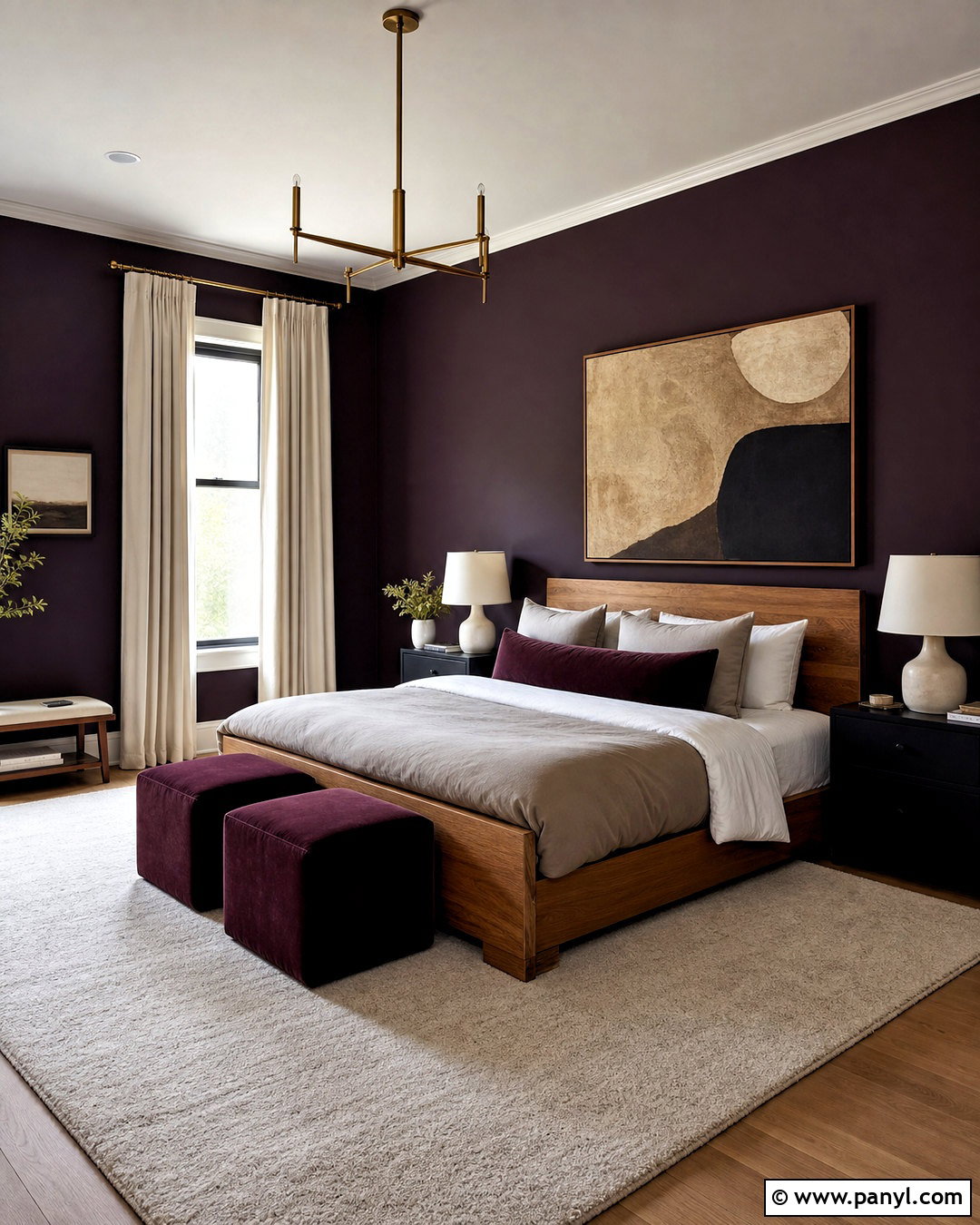
Blackberry purple offers a near-black depth with berry undertones that become more visible in natural light. Use it on the wall behind the bed and continue it onto the remaining walls for a cocooning effect. Soft white trim will outline the architecture and keep the color crisp. Choose a natural oak bed to introduce warmth, then layer white sheets, a gray-beige duvet, and blackberry velvet pillows. Matte black nightstands create subtle definition, while alabaster lamps brighten the bedside areas. A pale wool rug and ivory curtains reduce the visual weight of the walls. Add one oversized artwork featuring earthy pink, cream, and brown. The completed bedroom feels bold and modern but still includes enough pale surfaces for everyday comfort.
15. Eggplant Purple Bedroom
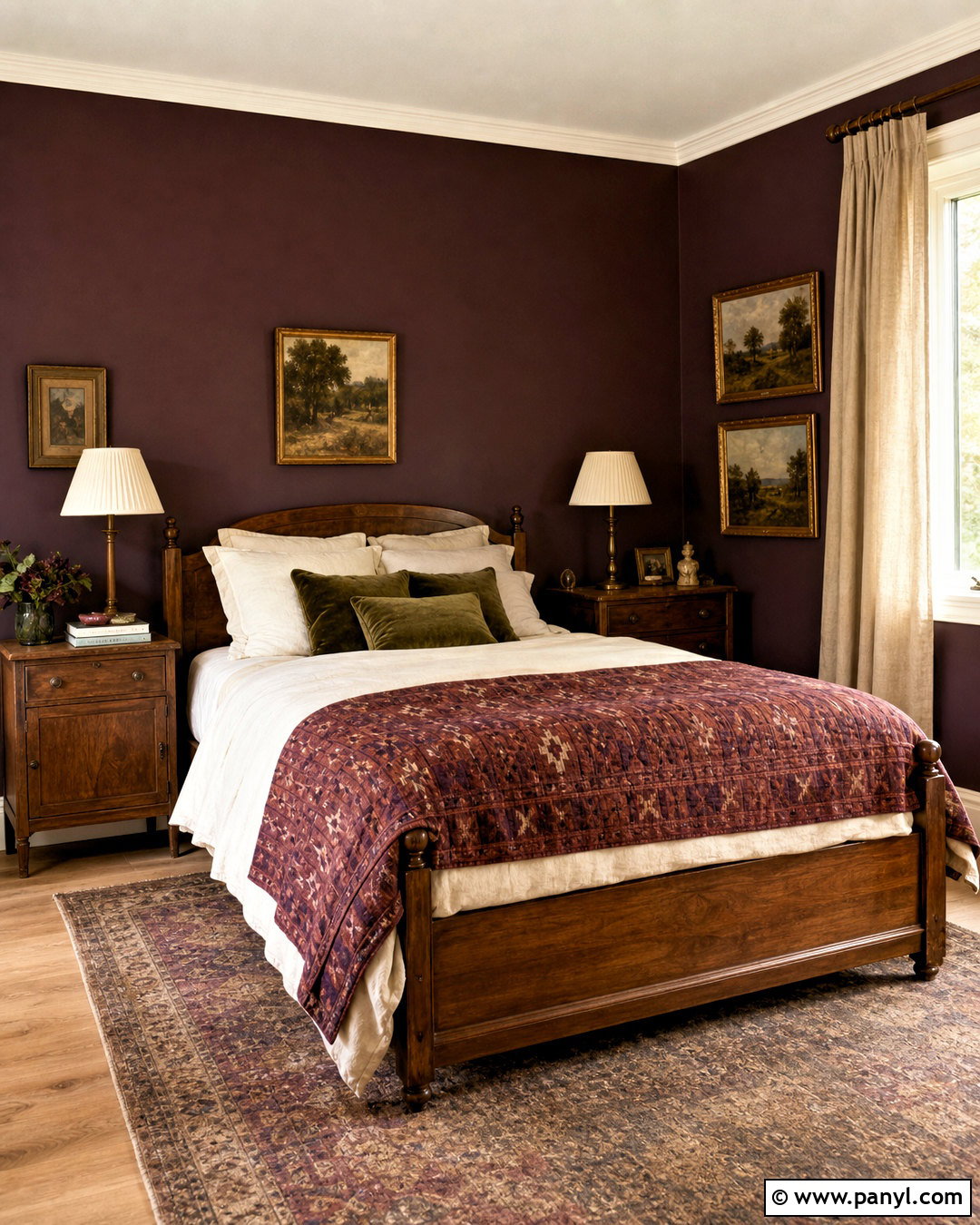
A true eggplant wall color works beautifully in an eclectic bedroom filled with warm woods and tactile fabrics. Paint the walls a deep brown-purple and use warm white for the doors and trim. Place a vintage-inspired walnut bed against the longest wall, accompanied by mismatched wooden nightstands in similar tones. Layer the bedding with ivory linen, a patterned rust-and-purple quilt, and olive green cushions. Use pleated cream lampshades, an antique brass ceiling fixture, and a large faded rug to soften the saturated paint. Linen curtains in sandy beige keep the windows bright. Complete the room with framed landscapes, pottery, and a simple wooden bench. Every element should appear collected but coordinated through repeating earthy colors and natural materials.
16. Amethyst Purple Bedroom
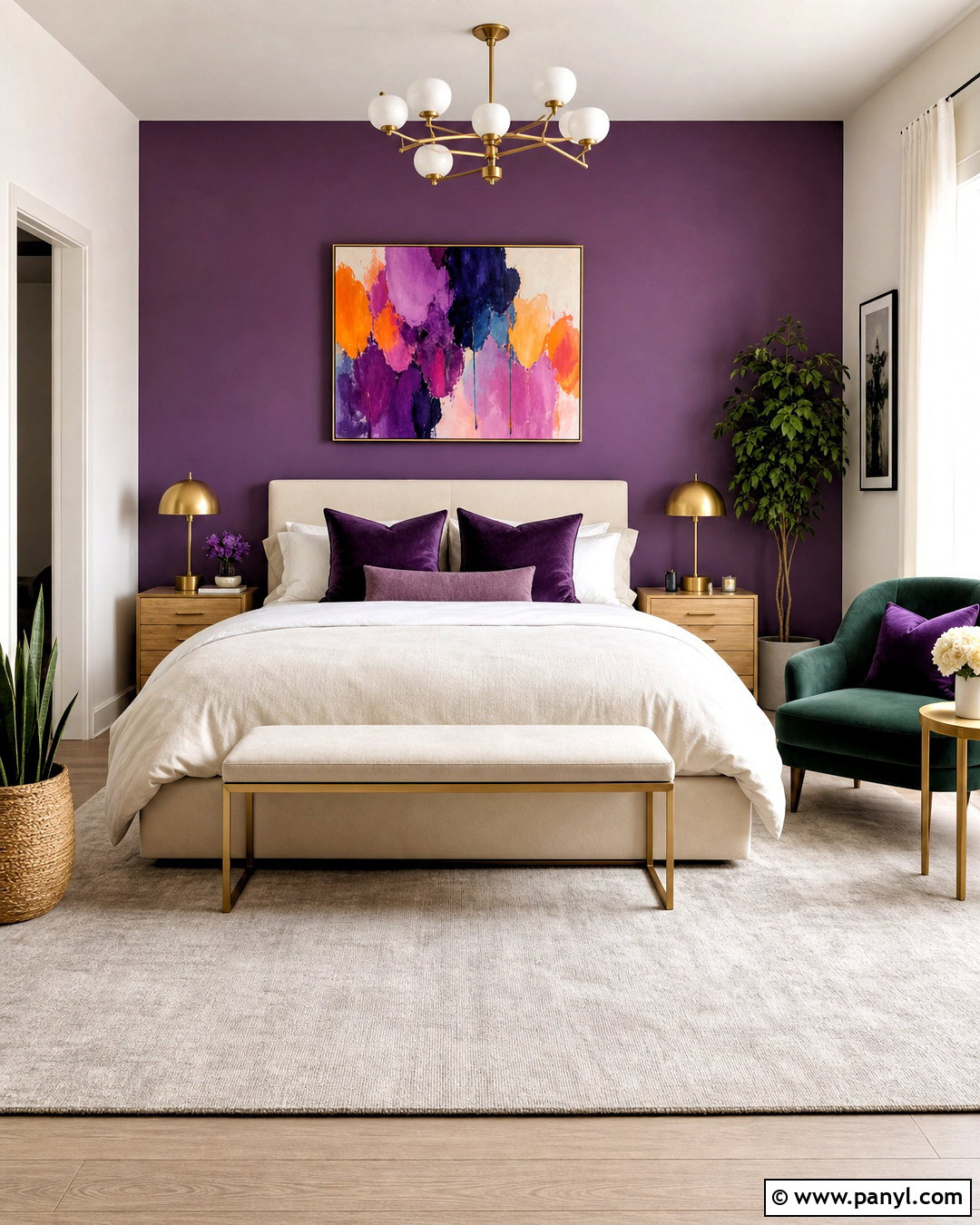
Amethyst purple introduces a jewel-toned brightness that can become an expressive bedroom centerpiece. Rather than covering every surface, paint the wall behind the bed in medium amethyst and keep the other walls soft warm white. Choose a streamlined cream bed so the accent wall remains visible around it. Repeat the purple through a velvet lumbar pillow and patterned throw, then add emerald green sparingly through a small chair or cushion. Light oak nightstands prevent the jewel tones from feeling heavy. Brushed brass lamps add warmth and polish. Finish the layout with white curtains, a large cream rug, and modern abstract artwork featuring purple, green, blush, and beige. The neutral foundation keeps this colorful bedroom energetic but organized.
17. Muted Grape Purple Bedroom
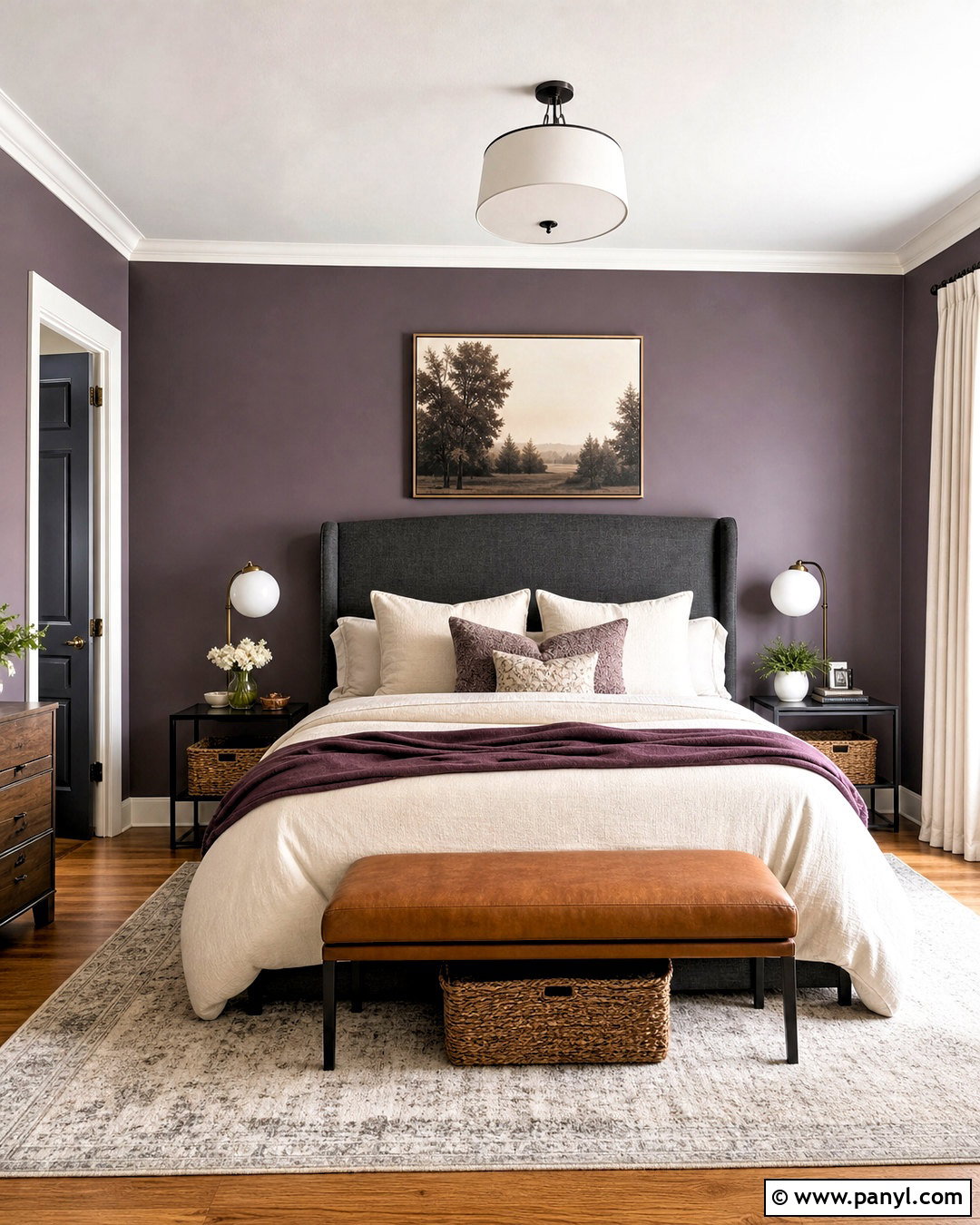
Muted grape provides clear purple color while its gray undertones keep the bedroom relaxed. Apply it across all four walls, pairing it with creamy white trim and medium oak flooring. A charcoal linen headboard gives the room a strong central anchor without competing with the paint. Use ivory bedding, a textured grape blanket, and pillows in mushroom, soft black, and pale lavender. Black metal nightstands and simple globe lamps create a contemporary finish. Bring warmth through a cognac leather bench and woven baskets used for extra blankets. A cream-and-gray rug connects the furniture and floor. Finish with full-length off-white curtains and graphic artwork in black, beige, and purple for a balanced room that feels modern, comfortable, and distinctly colorful.
18. Red Violet Purple Bedroom
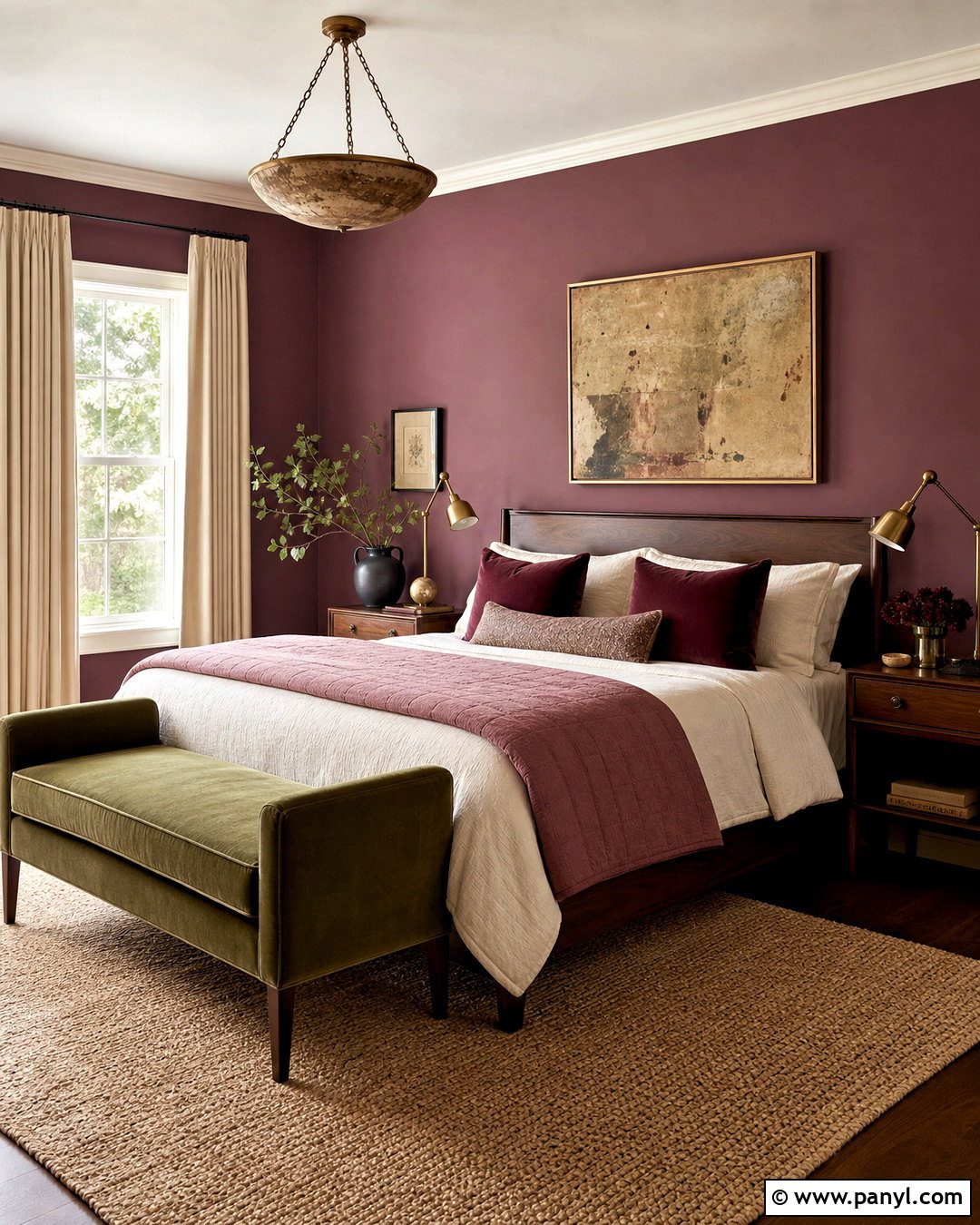
Red-violet paint creates a warm, confident bedroom that sits between berry, purple, and muted magenta. Select a subdued shade and apply it to the walls while leaving the ceiling and trim soft white. Ground the color with a dark walnut bed and matching nightstands. Cream bedding provides contrast, while burgundy pillows and a dusty pink quilt create a tonal transition. Use aged brass lamps, a neutral woven rug, and flax curtains to warm the overall scheme. A small olive green chair or bench offers complementary contrast without distracting from the walls. Keep artwork simple, choosing one landscape or abstract canvas containing cream, brown, olive, and violet. The result feels expressive and welcoming without becoming excessively bright or overly feminine.
19. Pale Purple Two Tone Bedroom
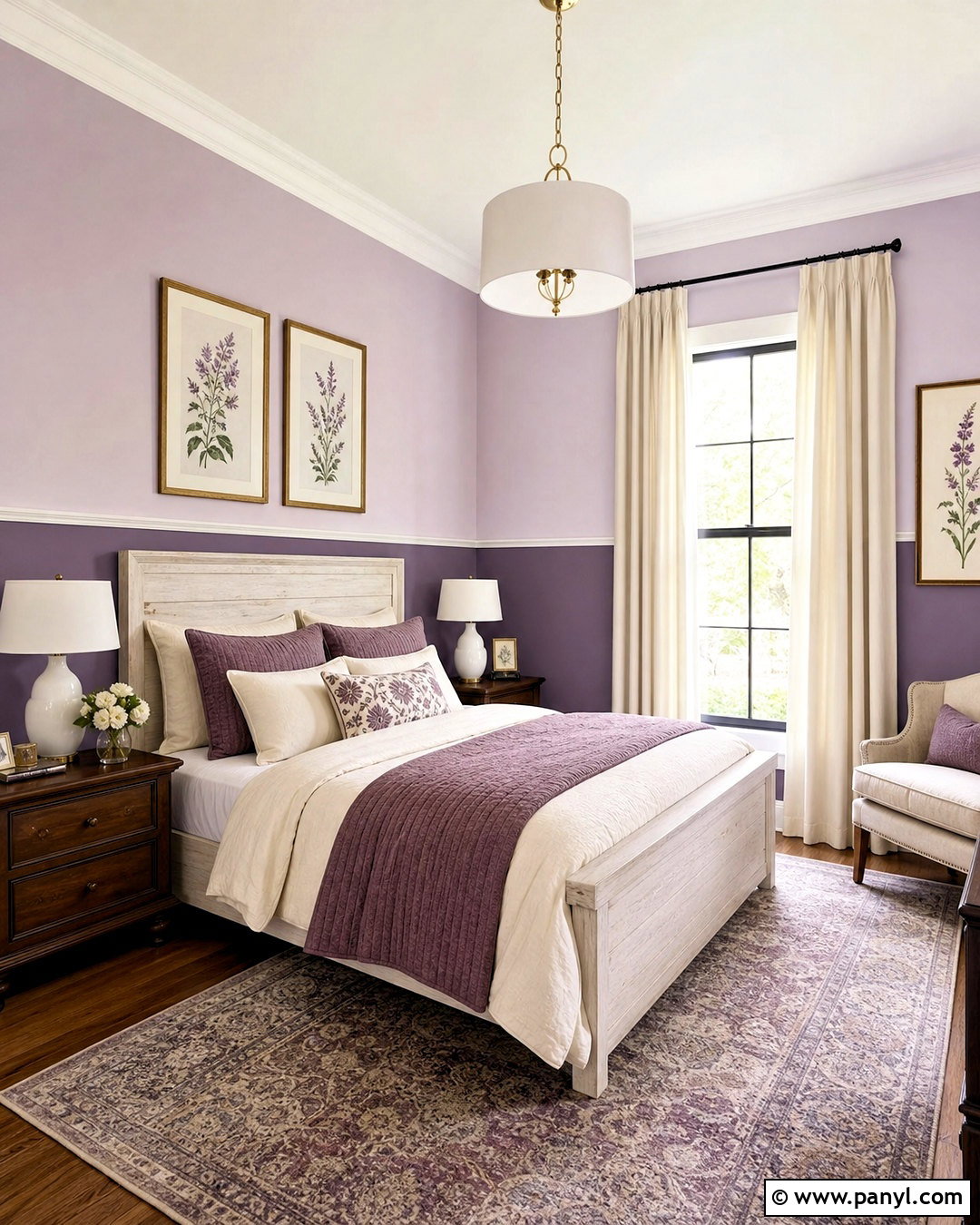
Two-tone walls are a practical way to use pale purple while adding architectural character. Paint the lower third of the walls a medium dusty violet and the upper section a very light lavender. Separate the colors with a slim white chair rail for a clean transition. Use a white oak bed, creamy bedding, and a mauve quilt to connect both shades. Rounded walnut nightstands add warmth, while white ceramic lamps repeat the trim color. Select a light beige rug and natural linen curtains to keep the palette balanced. Minimal botanical prints can introduce muted green accents. This complete arrangement makes the bedroom feel layered and visually taller while offering more dimension than a single wall color or basic purple accent wall.
20. Purple Ceiling Bedroom
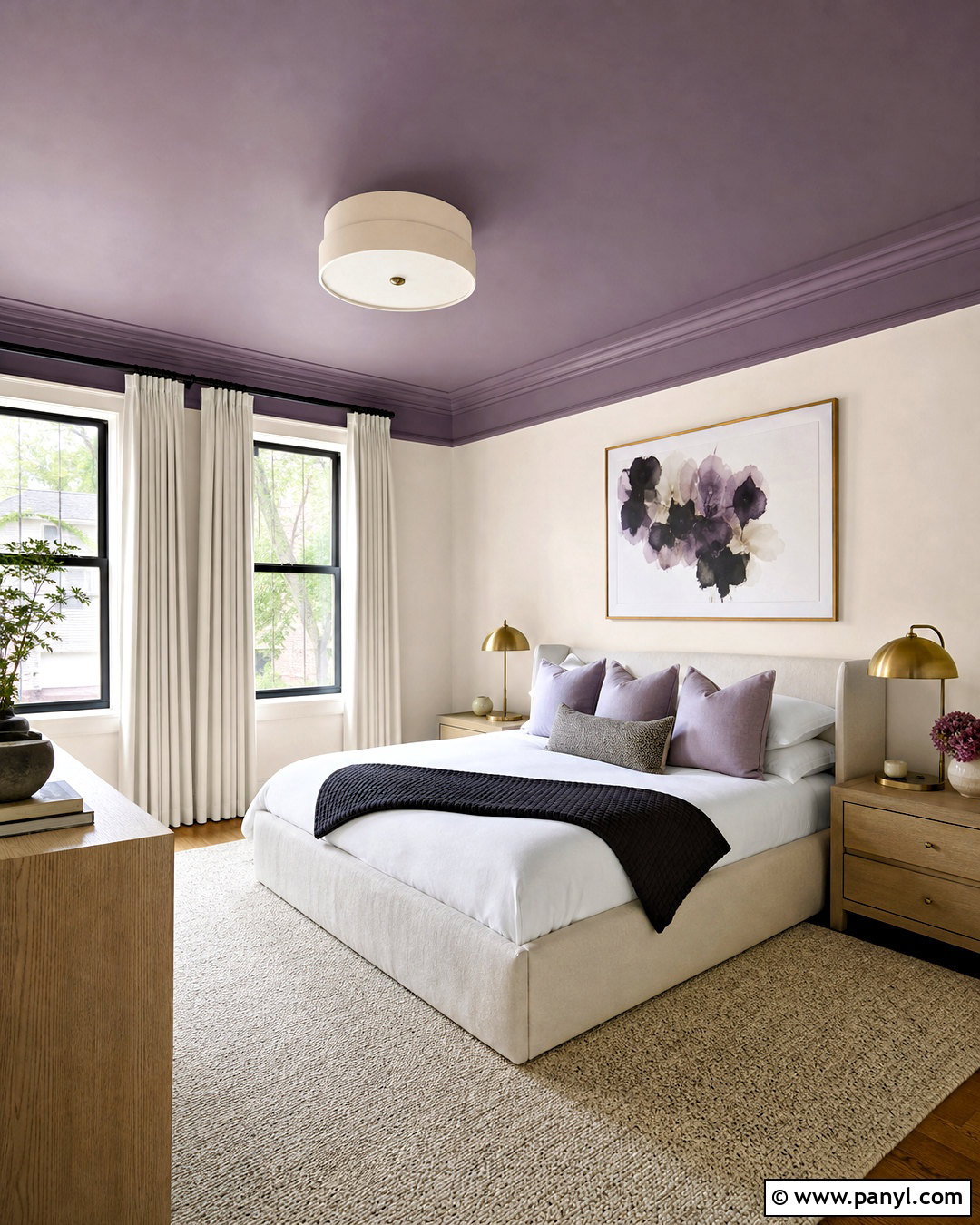
Painting the ceiling purple introduces color in an unexpected but controlled way. Keep the walls warm white and apply a medium smoky lavender to the ceiling, carrying it down through a wide crown molding for a finished appearance. Choose a low cream upholstered bed so the eye can travel upward without obstruction. Add white bedding, lavender pillows, and a charcoal throw to repeat the ceiling color at lower levels. Light oak nightstands, brass lamps, and a neutral wool rug create warmth throughout the room. Hang full-length ivory curtains close to the ceiling to emphasize height. Before committing, evaluate painted samples at different times because natural and artificial lighting can shift purple’s appearance. ()
Conclusion:
The best purple bedroom is not built around paint alone. Its success comes from coordinating the wall color with trim, furniture, flooring, textiles, lighting, and decorative accents. Pale lilac and gray lavender can make a room feel airy, while mauve, plum, blackberry, and aubergine create progressively deeper atmospheres. Warm wood, cream textiles, and thoughtful lighting help almost every purple shade feel more natural and livable. Always test large paint samples beside the bed, curtains, and flooring before choosing the final finish. Whether you prefer subtle color or dramatic walls, these **20 purple paint colors bedroom ideas** provide complete palettes that can be adjusted for modern, traditional, cozy, or eclectic homes.

Related Ideas and Inspiration:
Leave a Reply