
Terracotta brings the warmth of sunbaked clay into a room, making it an inviting choice for bedrooms that need more color and character. The best terracotta bedroom ideas balance this rich orange-red tone with restful neutrals, natural materials, and cooler accents. Cream creates softness, sage adds freshness, and navy offers sophisticated contrast. Terracotta also works across many decorating directions, including minimalist, bohemian, Mediterranean, rustic, and modern spaces. () You can make a dramatic commitment with color-drenched walls or introduce the shade gradually through bedding, curtains, rugs, and artwork. Whether you are decorating a spacious primary suite, a compact guest room, or a rental, the following complete looks offer practical and stylish **terracotta bedroom ideas**.

1. Terracotta Bedroom Accent Wall
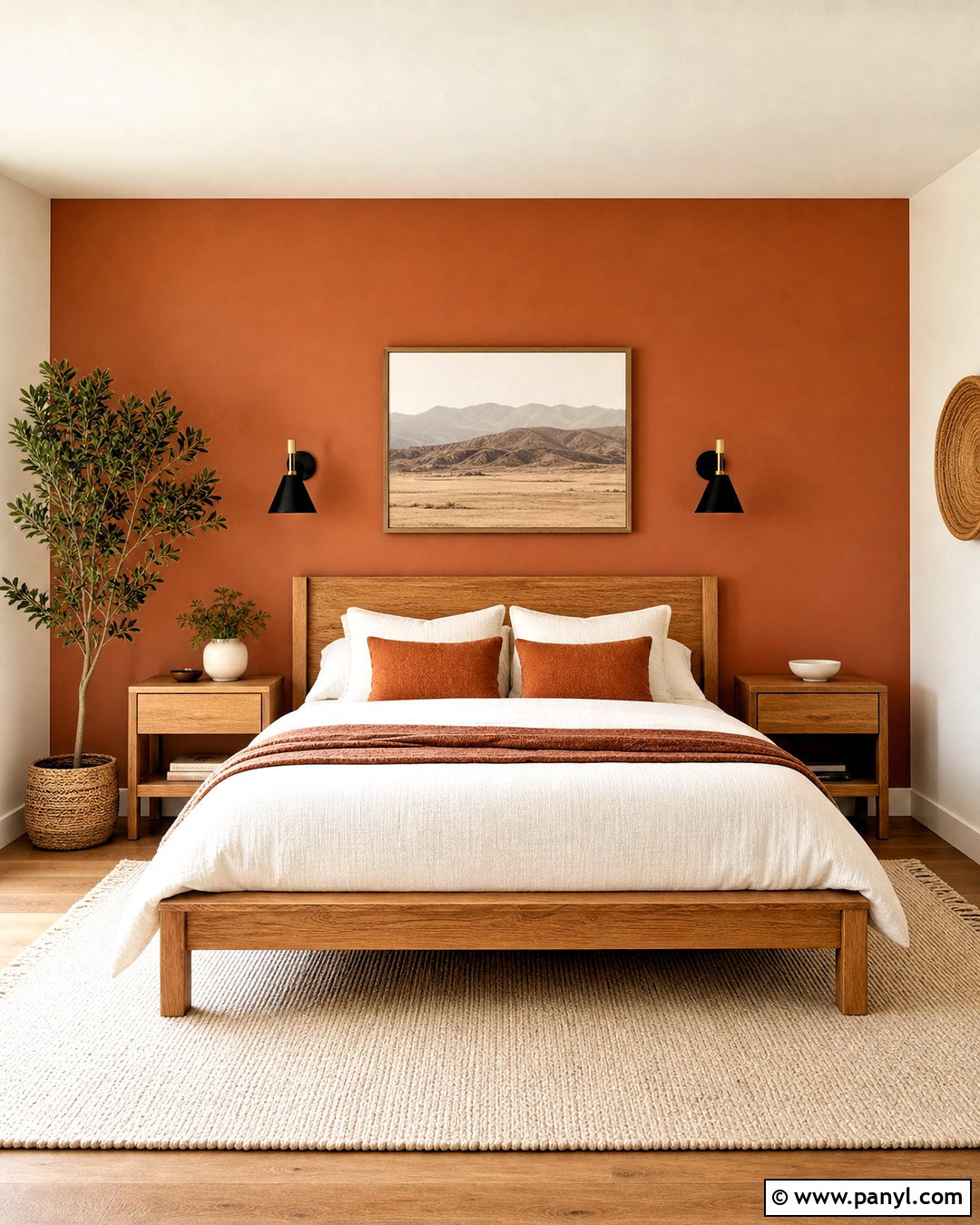
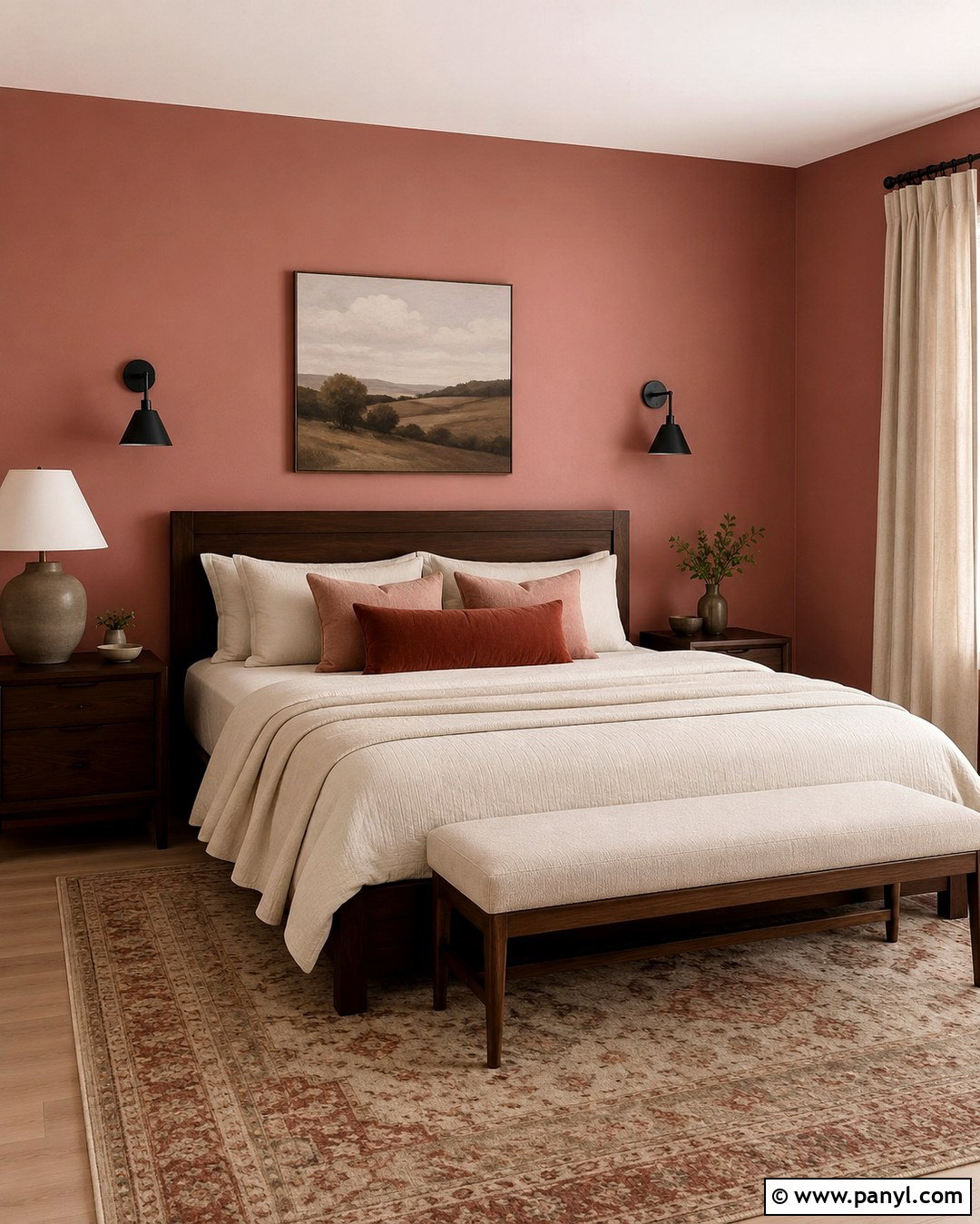
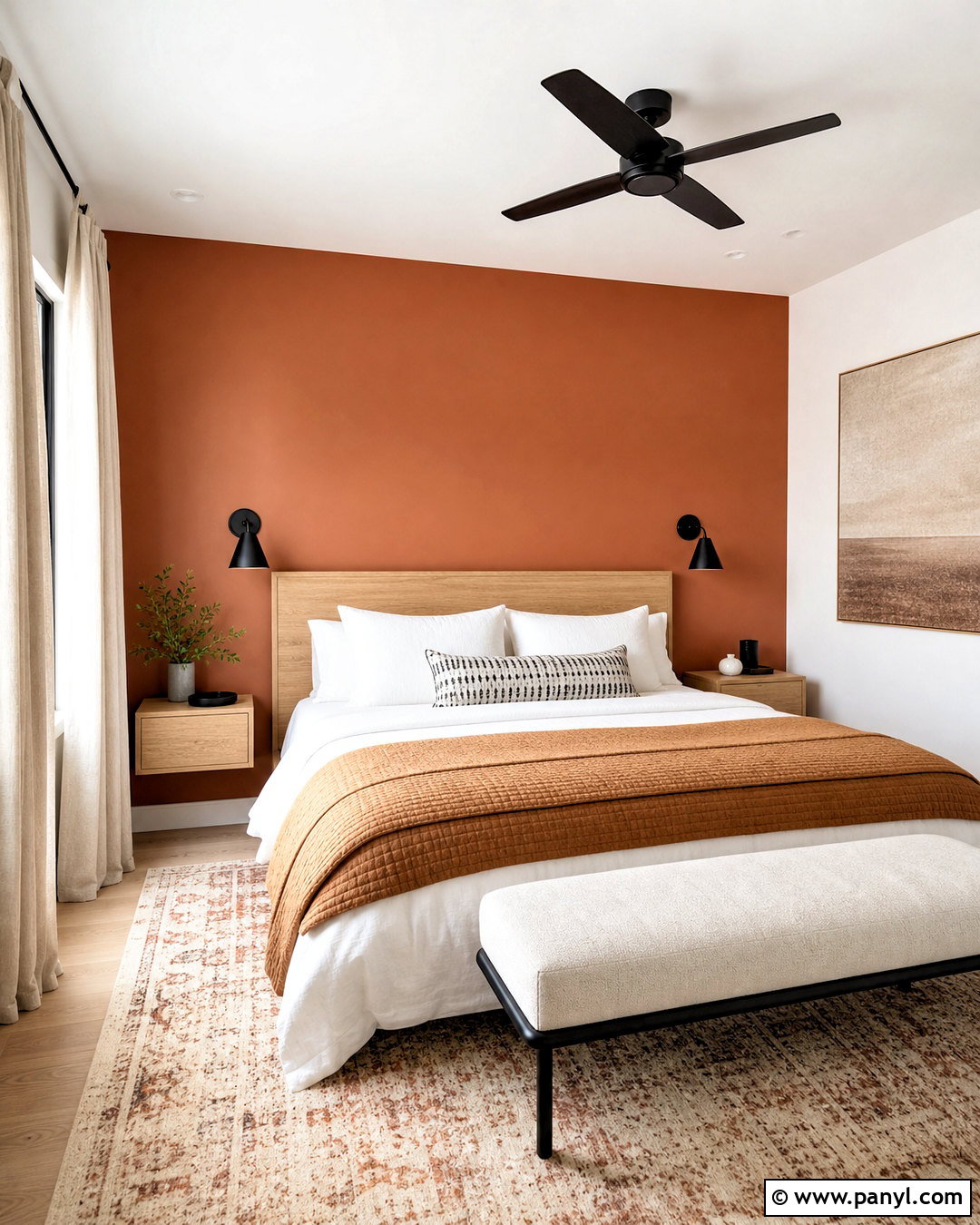
A terracotta accent wall creates a strong focal point without making the entire bedroom feel saturated. Paint the wall behind the bed in a medium clay shade, then keep the remaining walls warm white or soft cream. Center a simple oak bed against the painted surface and dress it with ivory linen, rust-colored pillows, and a light beige throw. Matching wooden nightstands provide balance, while black sconces give the warm palette a crisp outline. Ground the room with a large woven rug in cream and tan. Finish the look with one oversized landscape print, a ceramic vase, and a leafy plant. Keeping the decor restrained allows the terracotta wall to remain prominent while the complete room feels relaxed, polished, and easy to live with.
2. Color-Drenched Terracotta Bedroom
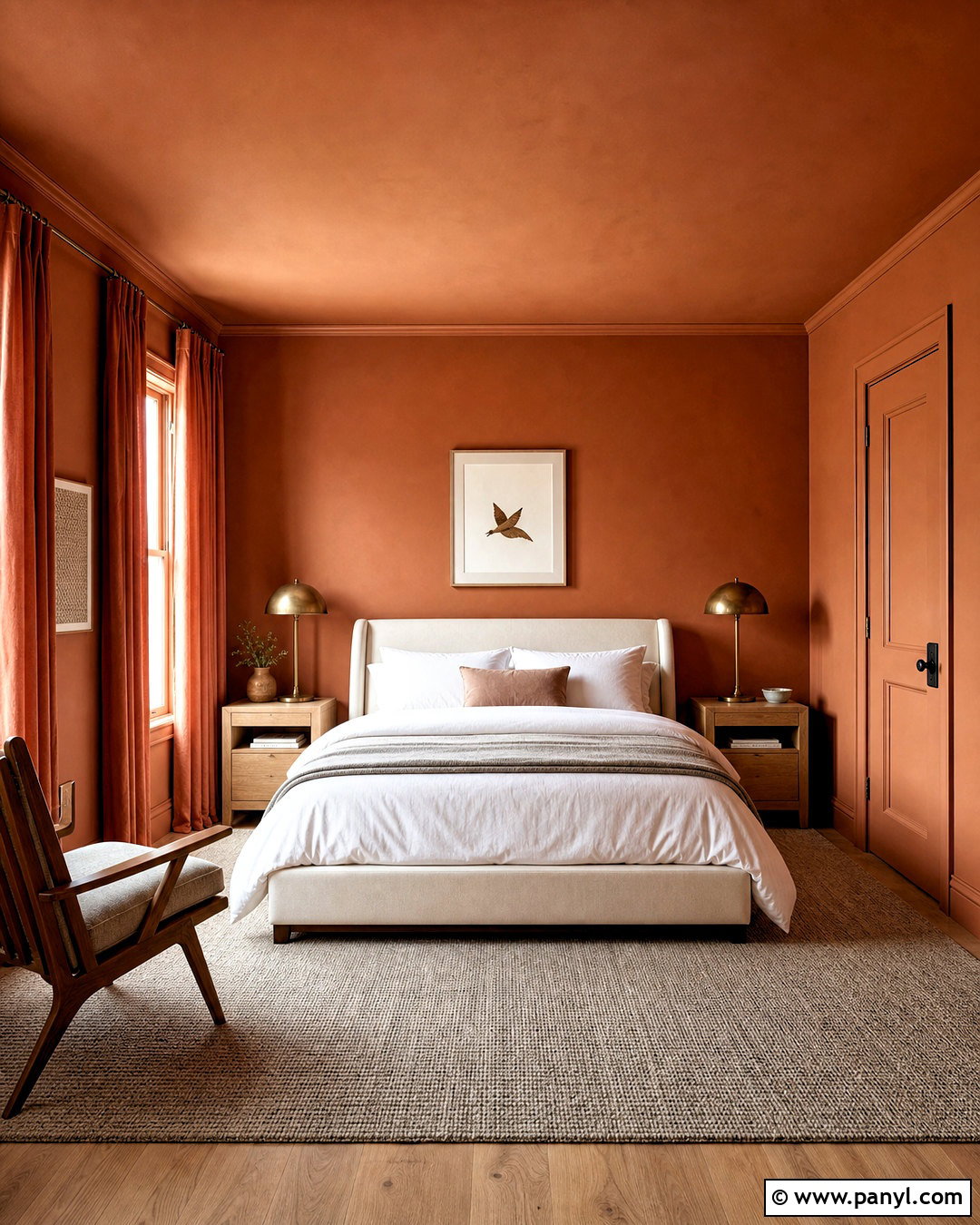
For a cozy, enveloping room, carry terracotta across the walls, trim, doors, and ceiling. Choose a muted, brown-based clay color rather than a bright orange shade, especially if the bedroom receives strong sunlight. Break up the continuous color with an upholstered cream bed, white bedding, and pale oak nightstands. A taupe wool rug softens the floor and creates a calm transition between the furniture and painted surfaces. Add aged brass lamps and a few dark wood accents for definition. Curtains in a slightly lighter terracotta linen will maintain the immersive effect without looking too matched. This approach works especially well in a larger bedroom or a room with architectural details because the single-color treatment creates visual flow and makes uneven lines feel intentional.
3. Terracotta And Sage Green Bedroom
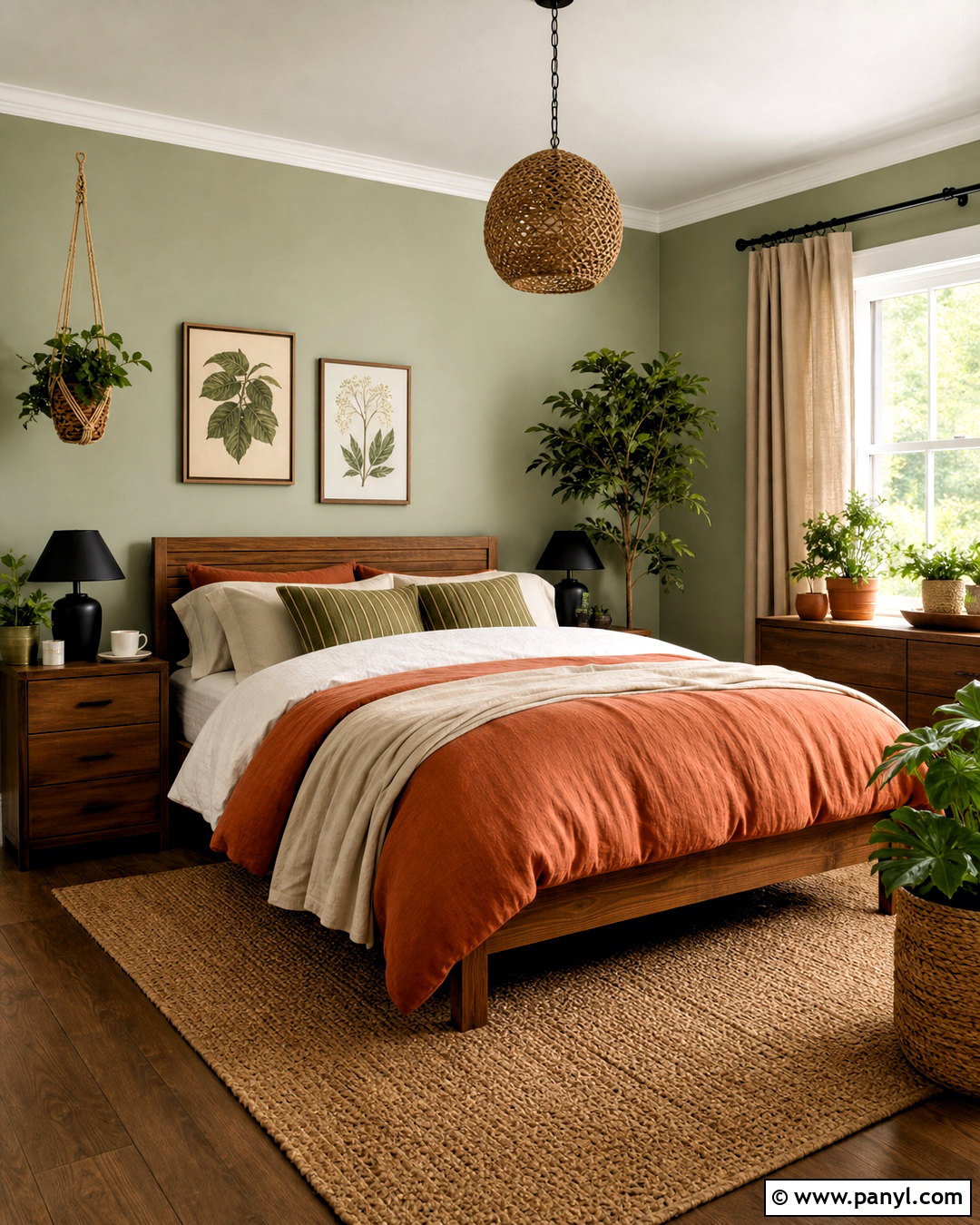
Terracotta and sage green create a balanced palette that feels warm, fresh, and connected to nature. Start with pale sage walls, then make the bed the center of the color scheme with a terracotta duvet, cream sheets, and olive-striped pillows. Choose a medium-tone wooden bed frame and matching nightstands to bridge the two earthy colors. A natural jute rug provides texture, while oatmeal curtains keep the windows light. Repeat sage through a painted dresser or upholstered bench, but avoid using both colors equally everywhere. Terracotta should provide concentrated warmth, while sage acts as the softer background. Complete the room with matte black lamps, botanical artwork, woven baskets, and two or three healthy plants. The result feels layered and restful rather than overly themed.
4. Terracotta And Cream Bedroom
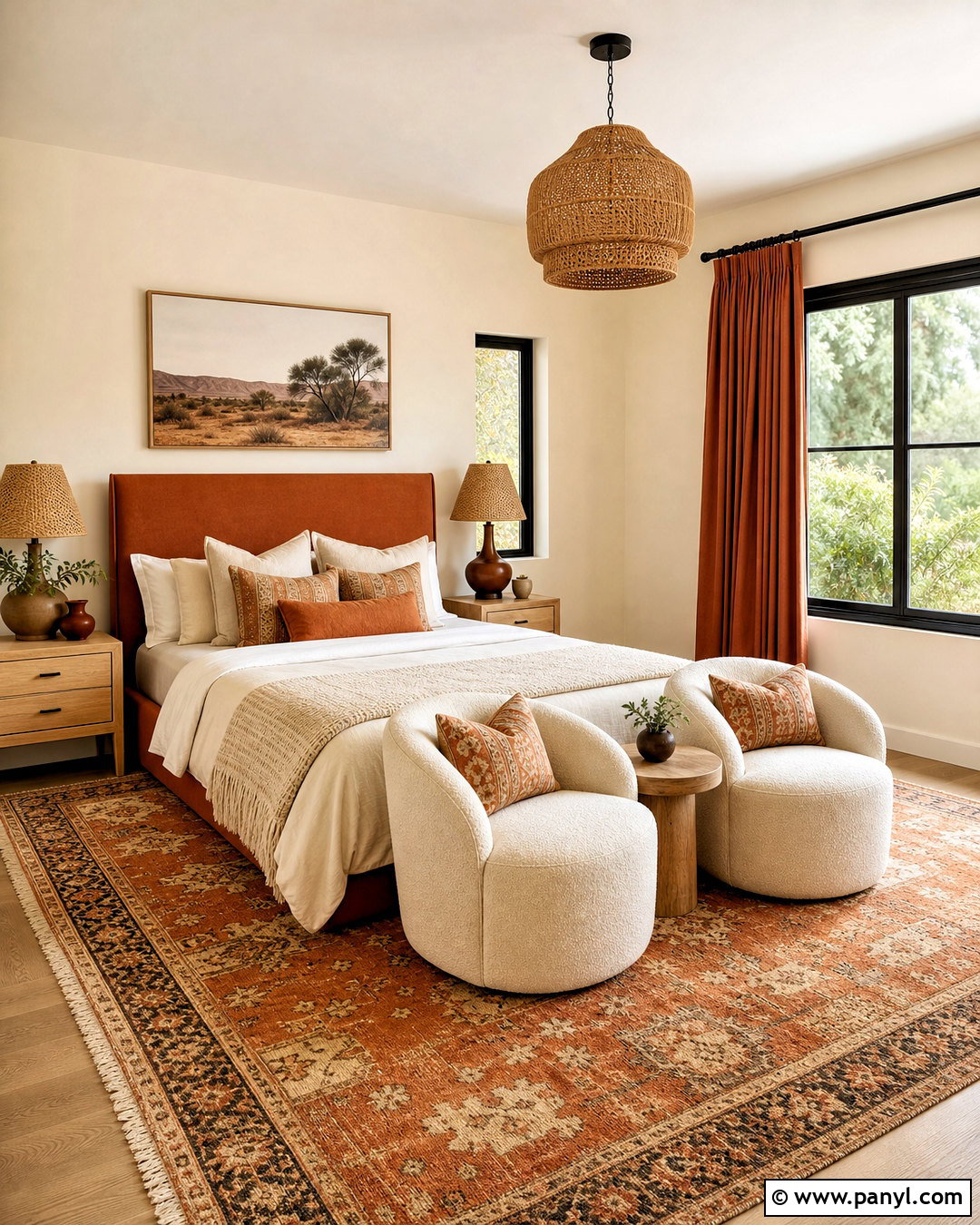
Soft cream is one of the easiest colors to pair with terracotta because it brightens the room without creating a harsh contrast. Paint the walls a warm creamy white and introduce terracotta through an upholstered headboard, full-length curtains, and a patterned area rug. Keep the bedding mostly ivory, adding clay-colored lumbar pillows and a lightweight rust throw across the foot. Light oak nightstands and a matching dresser support the gentle palette. For additional texture, use woven lampshades, boucle seating, and handmade ceramic accessories. Small touches of antique brass can add polish without overpowering the earthy look. This complete scheme suits bedrooms with limited natural light because cream reflects brightness, while carefully placed terracotta accents provide depth and warmth in a controlled, comfortable way.
5. Terracotta And Navy Bedroom
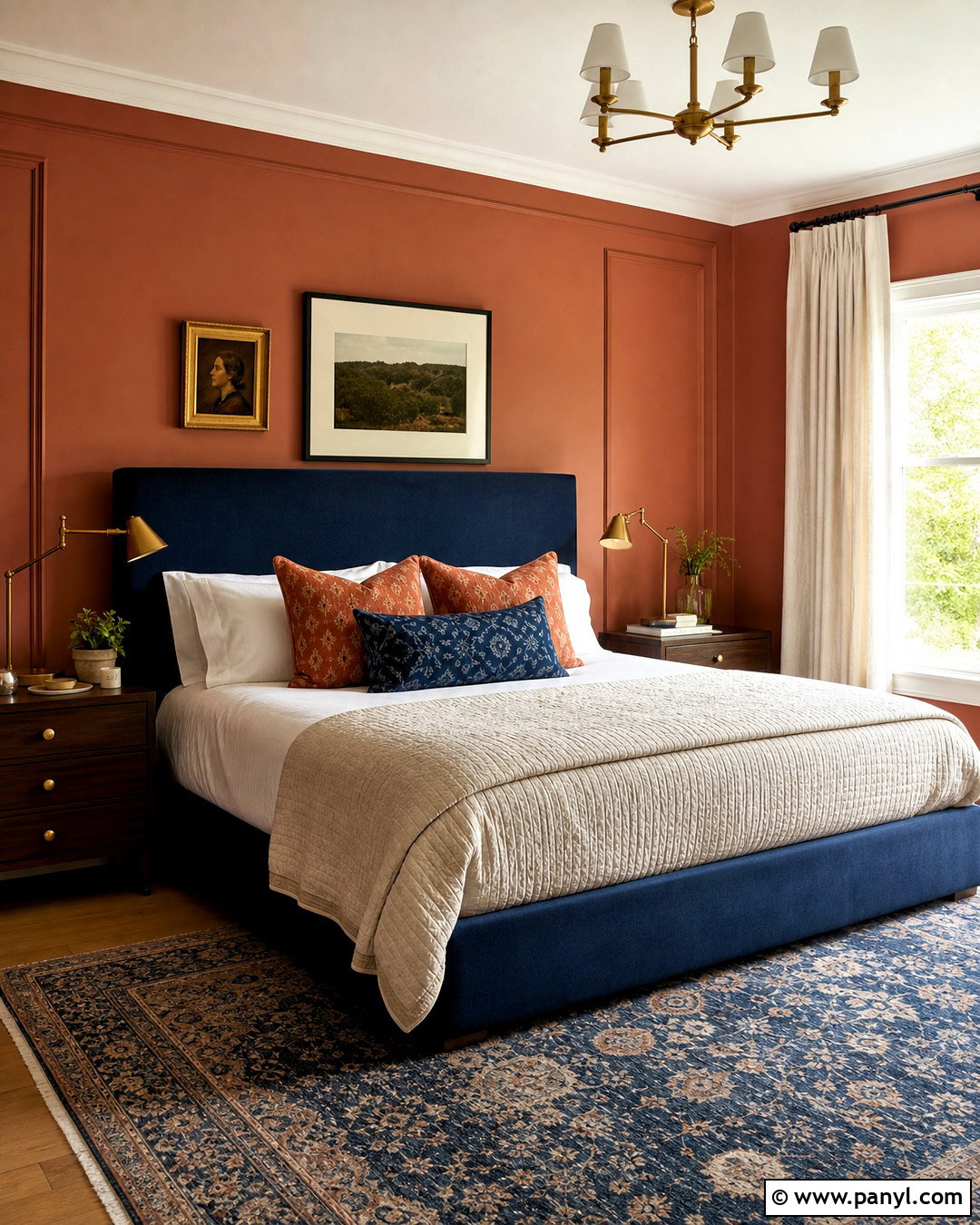
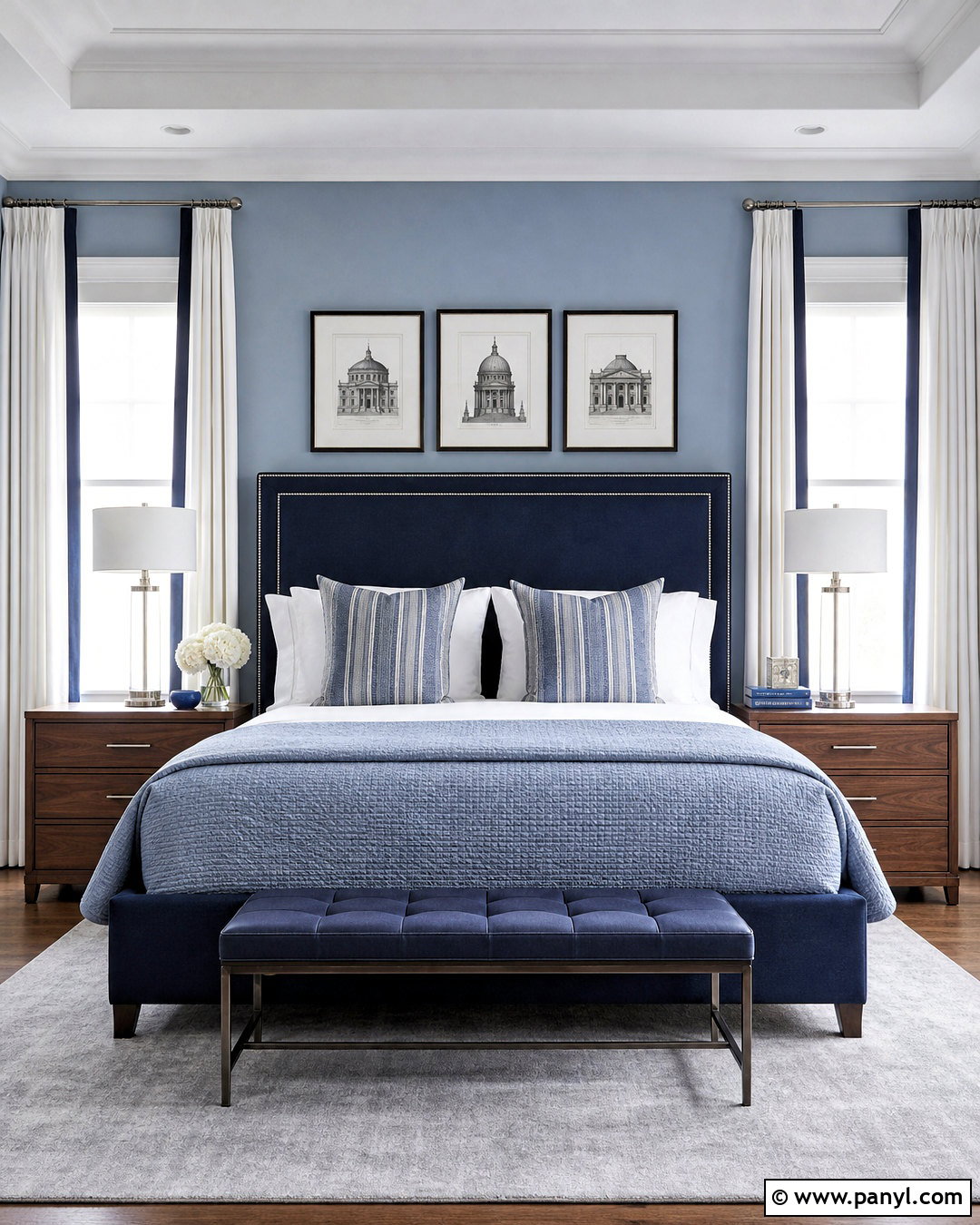
Would you prefer a terracotta bedroom that feels deeper and more tailored? Pair muted clay walls with a navy upholstered bed to create a rich contrast. Crisp white sheets and a cream quilt prevent the combination from becoming heavy, while terracotta and blue patterned pillows connect the two dominant colors. Choose dark walnut nightstands and brass reading lamps for a polished finish. A large rug containing faded navy, beige, and rust will anchor the layout and make the palette feel intentional. Keep window treatments simple with natural linen panels. Artwork can feature abstract shapes in blue, sand, and reddish brown. Use navy in a few strong areas rather than scattering small accents everywhere. This gives the bedroom structure while preserving terracotta’s welcoming, earthy character.
6. Terracotta And Blush Bedroom
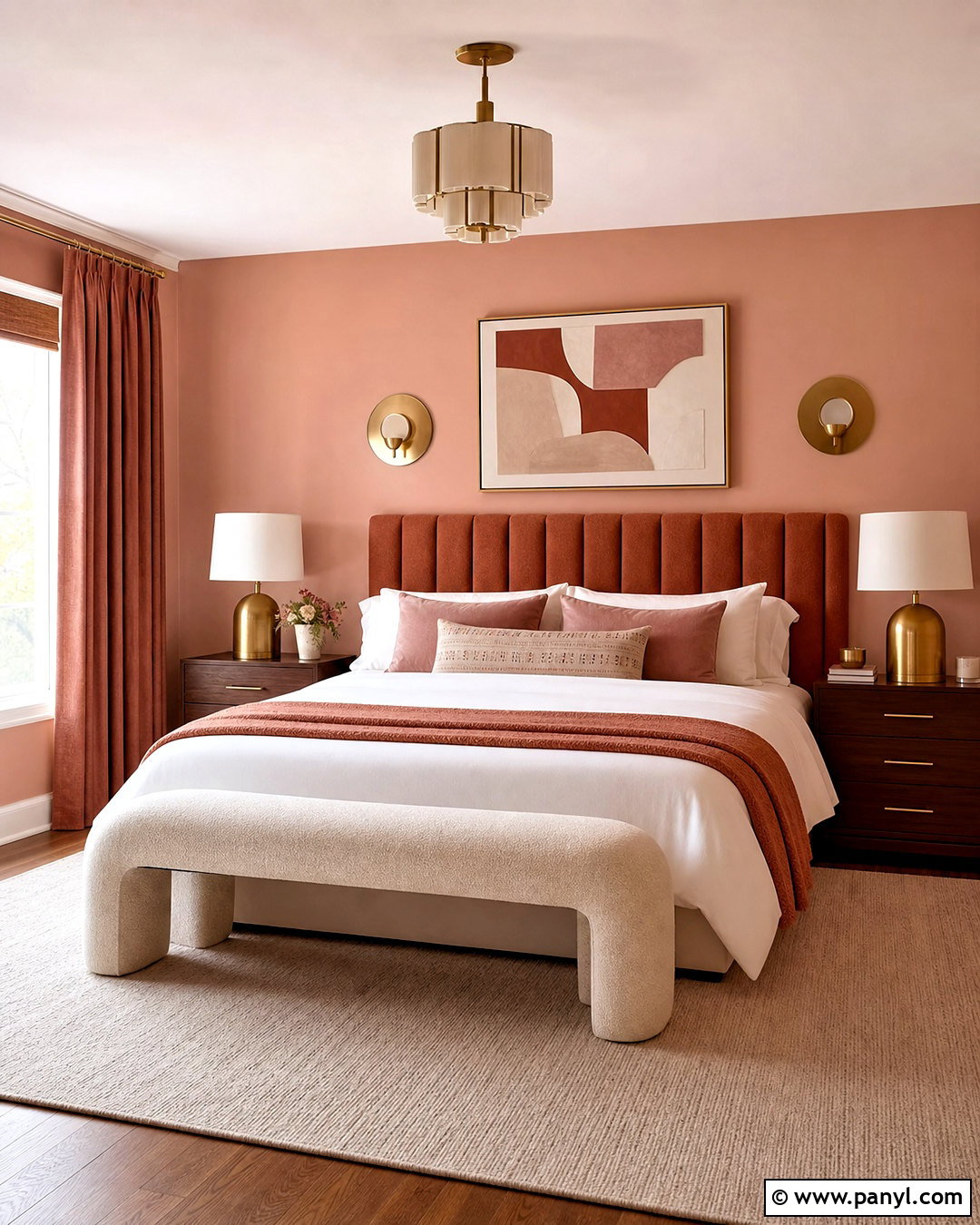
Blush and terracotta can create a soft bedroom without making the design feel overly sweet. Paint the walls in a pale dusty pink, then use a deeper terracotta shade for the headboard, curtains, and one folded blanket. Choose bedding in warm white and muted rose, varying the fabrics to create subtle dimension. A walnut bed frame or dark wood nightstands will ground the lighter colors and prevent them from blending together. Add an oatmeal rug and simple brass lamps for warmth. Instead of floral decor, select modern abstract artwork and rounded ceramic pieces in cream, clay, and burgundy. A small bench upholstered in neutral boucle can complete the bed area. The finished room feels gentle and romantic while maintaining enough contrast for a mature, contemporary appearance.
7. Terracotta And Olive Green Bedroom
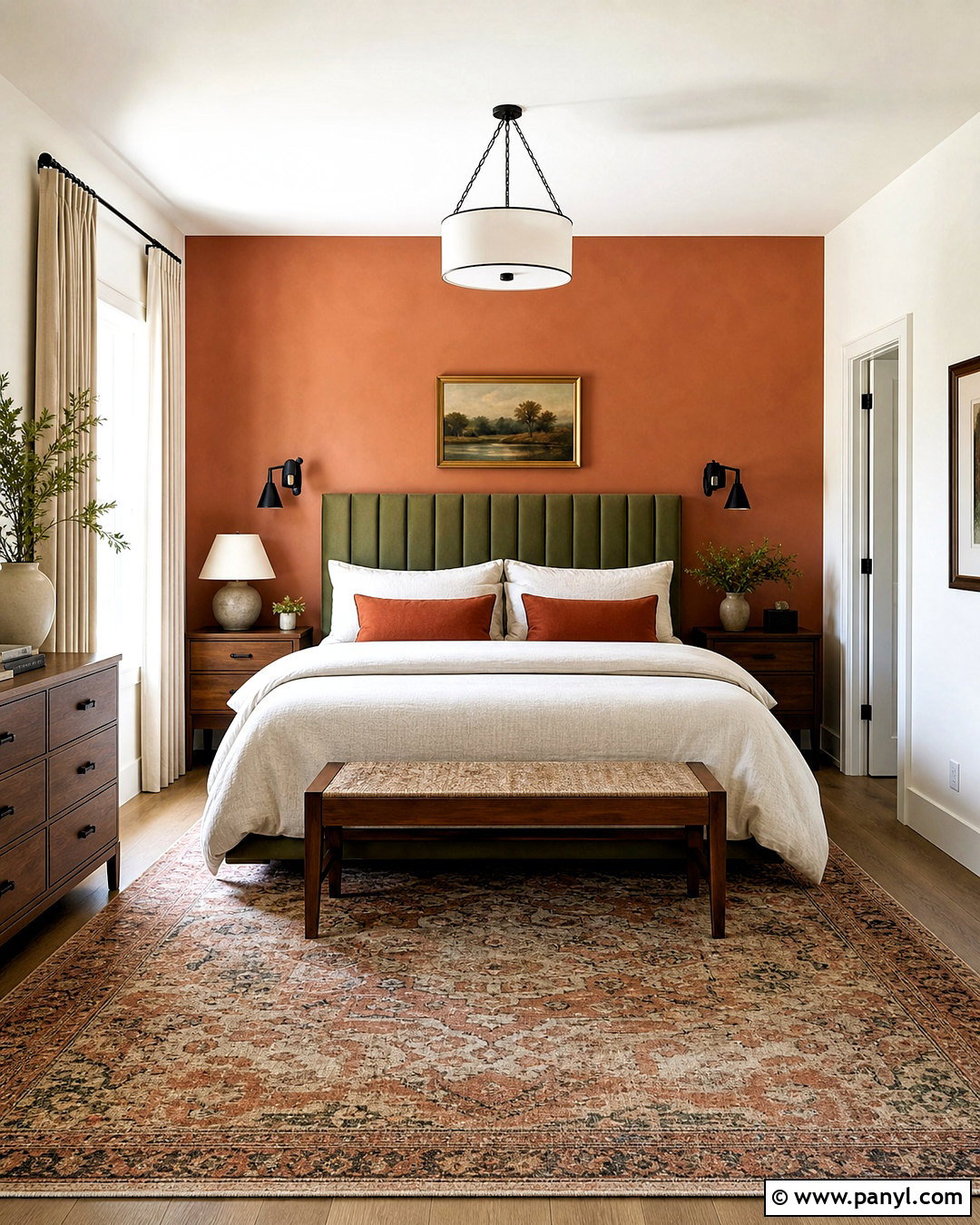
Olive green brings a darker, more dramatic quality to a terracotta bedroom. Use terracotta paint behind the bed and cover the remaining walls in a warm off-white. An olive velvet headboard becomes the main contrasting feature, supported by white linen bedding, rust pillows, and a patterned olive throw. Choose substantial walnut furniture to complement the depth of both colors. Black metal sconces and curtain rods will sharpen the room’s edges, while a faded Persian-style rug introduces cream, brown, green, and clay tones underfoot. Keep accessories natural and sculptural, such as stoneware lamps, wooden bowls, and simple branches in a tall vase. This palette looks most cohesive when the terracotta is muted and the olive leans earthy rather than bright, creating a grounded and comfortable retreat.
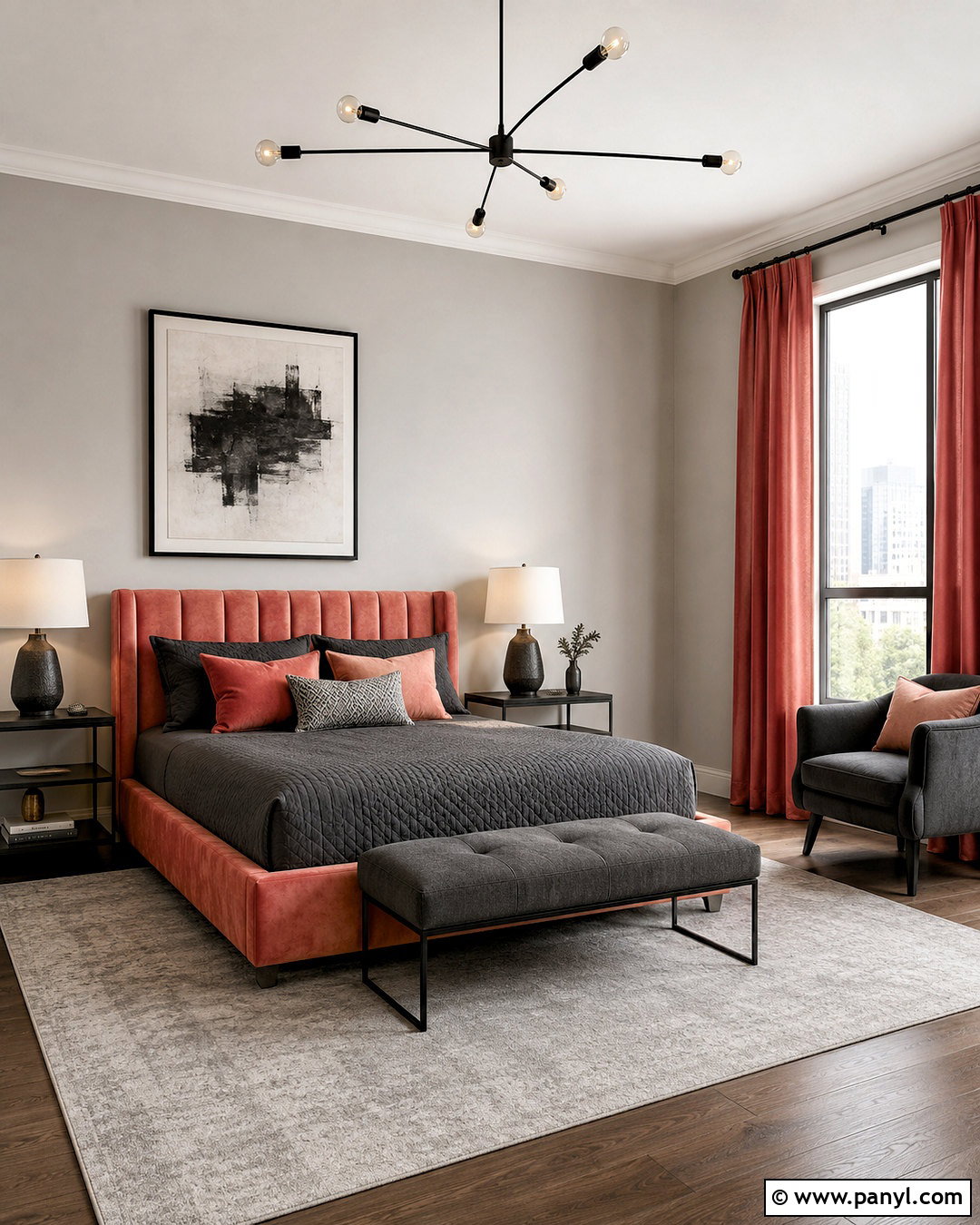
8. Terracotta And Dusty Blue Bedroom

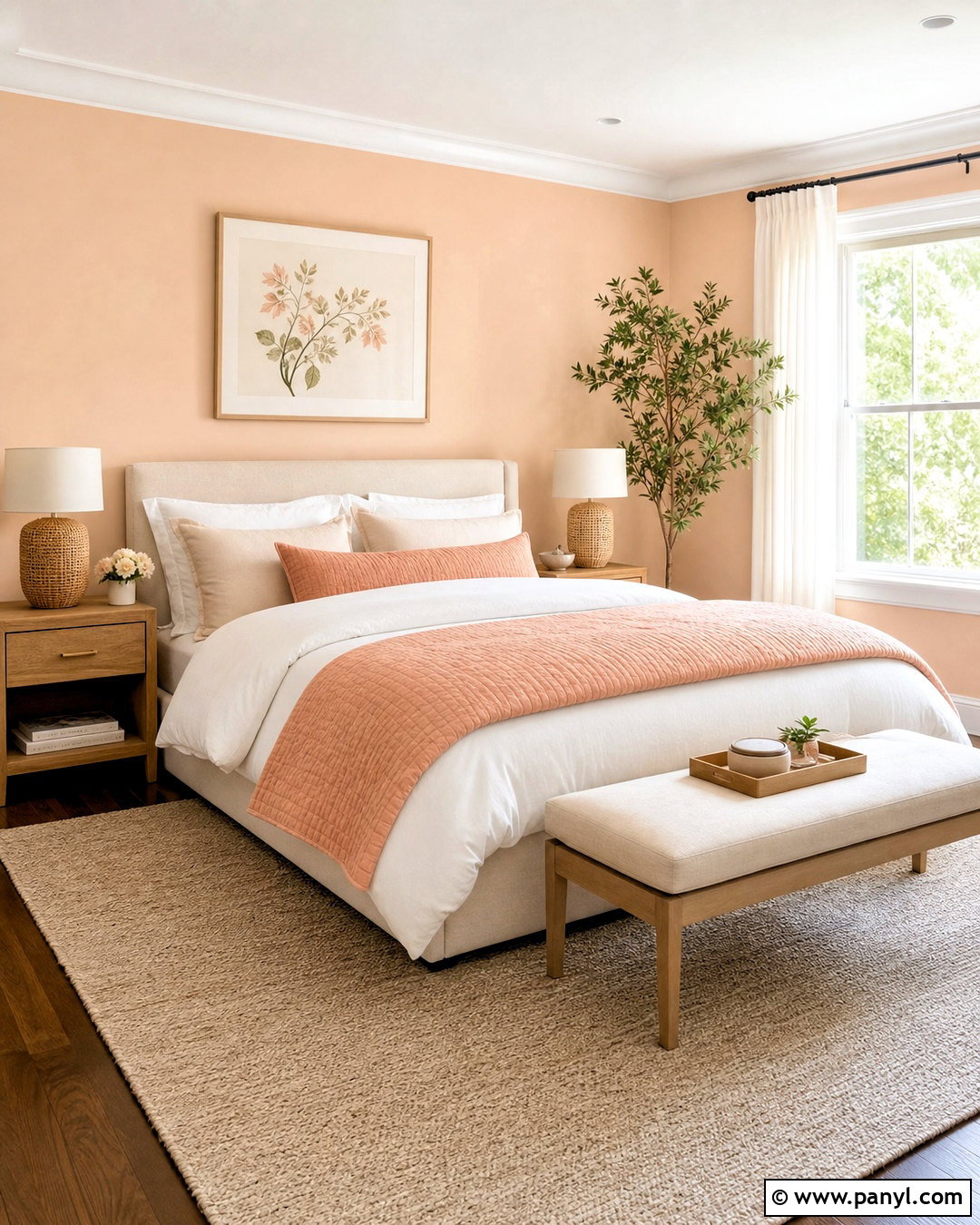
Dusty blue cools the visual temperature of terracotta while maintaining a soft, restful atmosphere. Begin with light blue-gray walls and place a warm wooden bed at the center of the room. Layer it with a terracotta quilt, white sheets, faded blue pillows, and a striped beige blanket. Hang floor-length clay-colored curtains to frame the windows and repeat the bedding color vertically. A pale natural-fiber rug keeps the floor bright, while weathered oak nightstands support the relaxed palette. Add aged brass lamps and artwork featuring soft blue skies or abstract desert shapes. Avoid highly saturated turquoise, which can make the contrast feel abrupt. A muted blue with gray undertones creates a more natural transition, giving the bedroom freshness without losing the cozy warmth terracotta provides.
9. Terracotta Bedroom With Black Accents
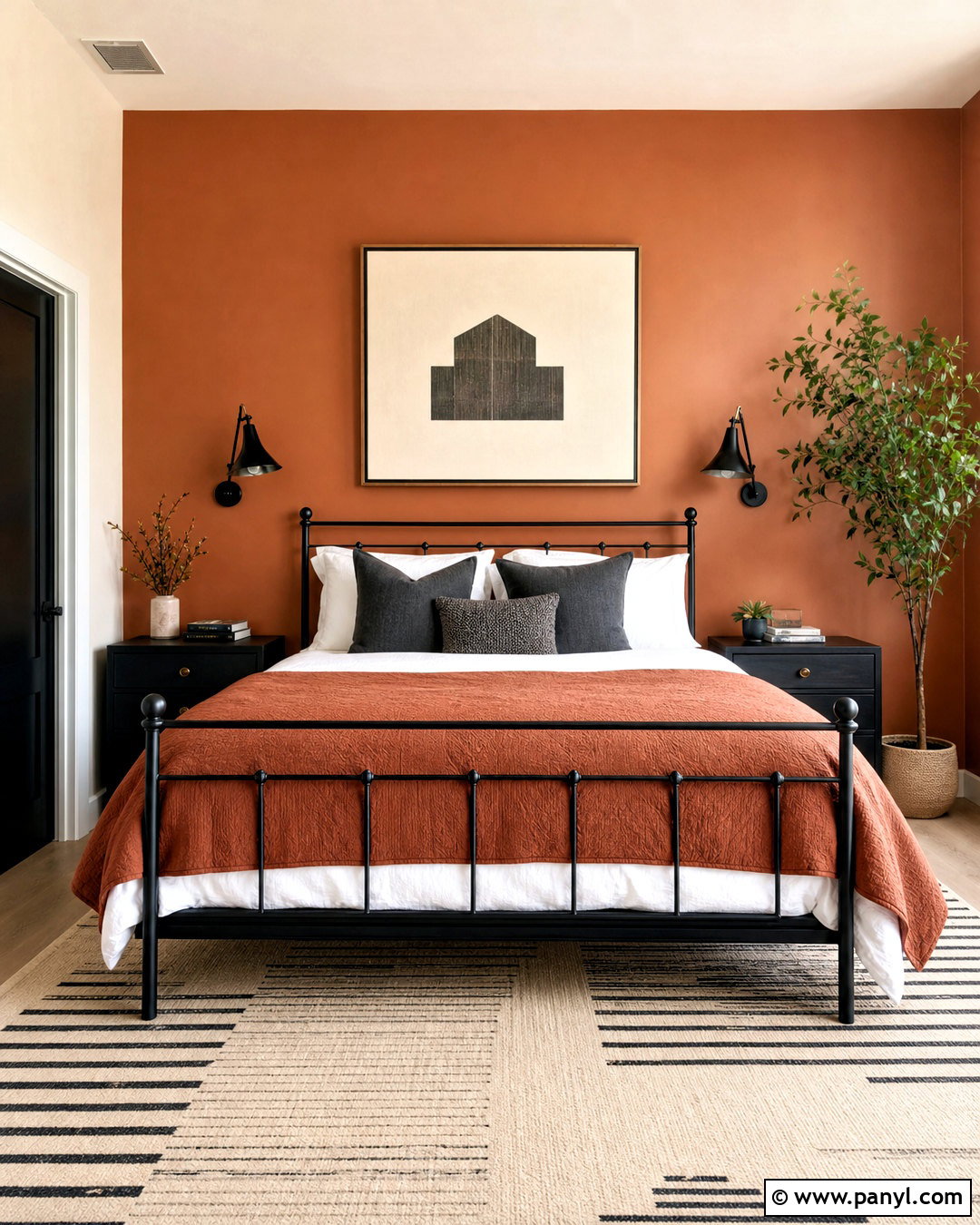
Black details give terracotta a clean, modern edge and stop an earthy bedroom from looking overly rustic. Paint all four walls in a soft clay tone, then introduce a slim black metal bed with simple lines. Use white bedding as a bright break between the dark frame and warm walls. Add a terracotta coverlet, charcoal pillows, and a beige woven throw for layered contrast. Select black nightstands or natural wood tables with black hardware, and install matching wall-mounted reading lights. A graphic cream-and-black rug can define the bed area without competing with the walls. Keep artwork minimal, using thin black frames and neutral prints. One large plant and a few clay vessels will soften the sharper elements, creating a balanced bedroom that feels current, comfortable, and uncluttered.
10. Boho Terracotta Bedroom
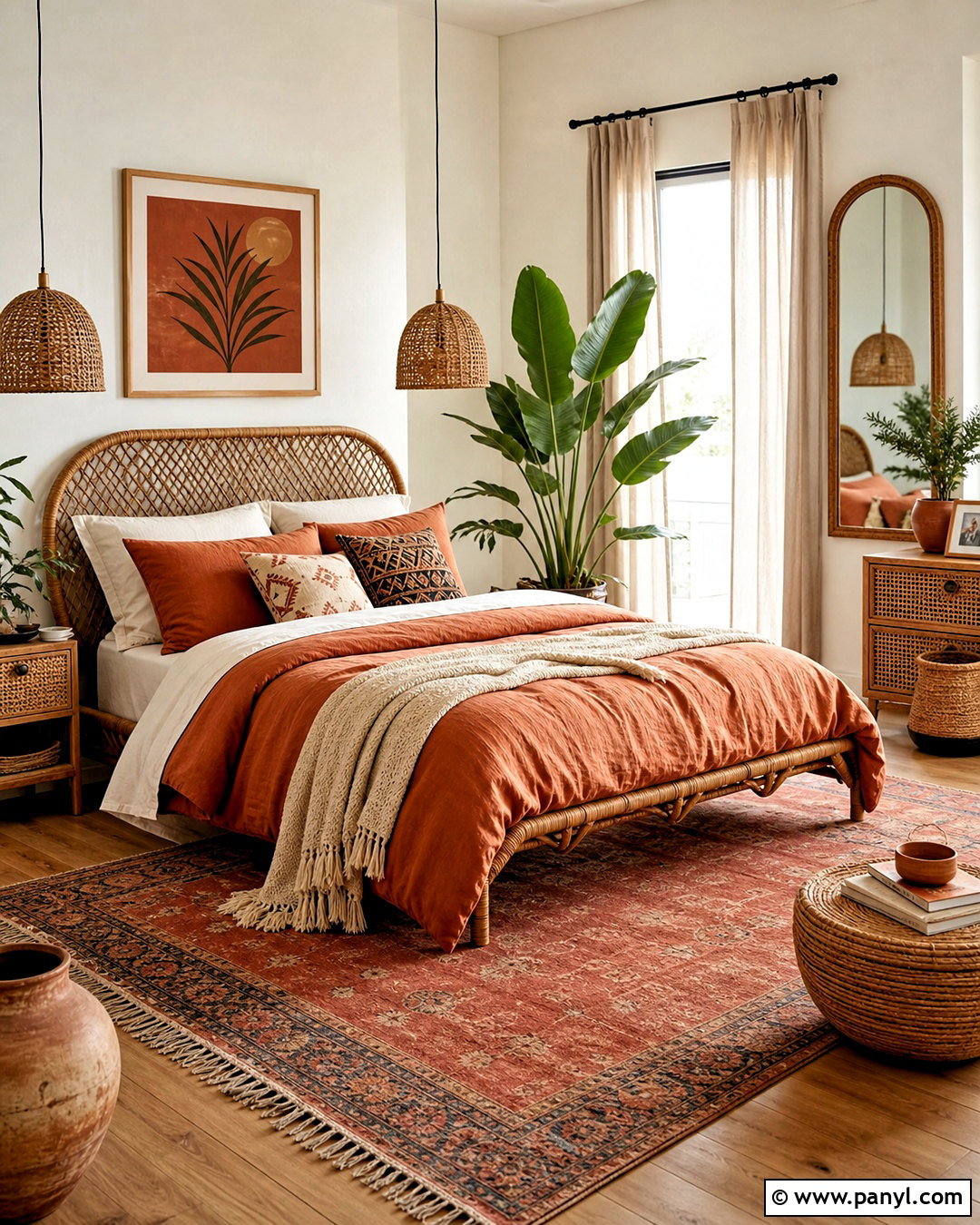
A boho terracotta bedroom should feel layered and personal while still having a clear visual structure. Use warm white walls and anchor the room with a low rattan bed or simple wooden platform frame. Dress the bed in a terracotta duvet, cream sheets, patterned pillows, and a textured cotton throw. Place a large vintage-inspired rug beneath the bed in faded rust, tan, and dark brown. Woven pendant lighting, cane nightstands, and long neutral curtains add natural texture at different heights. Instead of filling every surface, choose a few larger decorative pieces, such as an arched mirror, macramé wall hanging, and oversized plant. Handmade ceramics and baskets reinforce the earthy color story. The finished space feels relaxed and collected without becoming visually crowded or difficult to maintain.
11. Modern Terracotta Bedroom
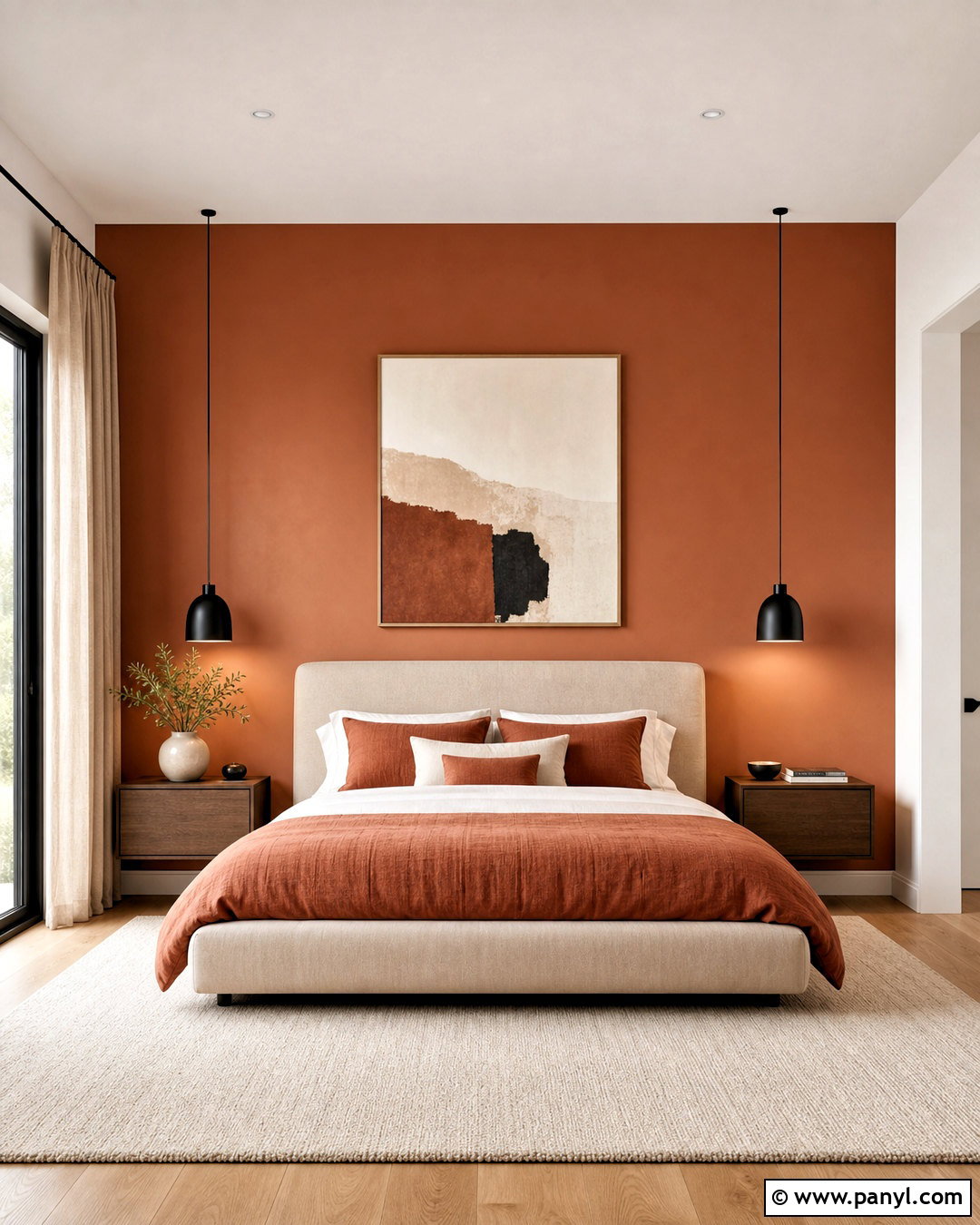
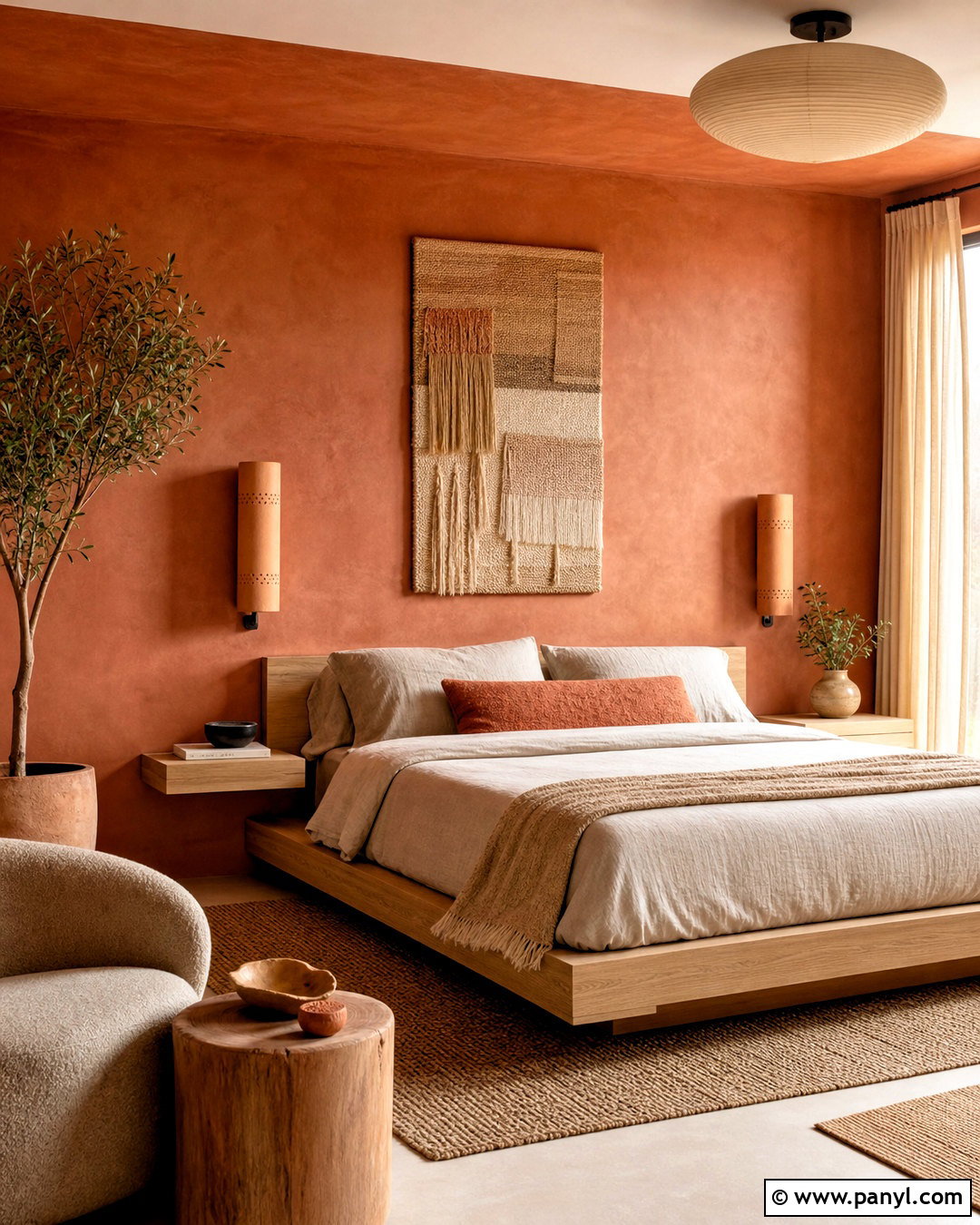
Clean lines allow terracotta to look contemporary rather than rustic. Paint the wall behind the bed in a smooth, medium terracotta finish and leave the other walls a soft warm white. Choose a low-profile upholstered bed in light beige, paired with floating walnut nightstands to preserve open floor space. Keep the bedding simple with white sheets, a clay-colored duvet, and two structured taupe pillows. A large cream rug should extend beyond both sides of the bed and visually connect the furniture. Add streamlined black pendant lights, one oversized abstract print, and floor-length beige curtains. Avoid clusters of small accessories. Instead, display one sculptural vase and a carefully placed branch. This restrained layout highlights the color while making the bedroom feel spacious, organized, and intentionally designed.
12. Mediterranean Terracotta Bedroom
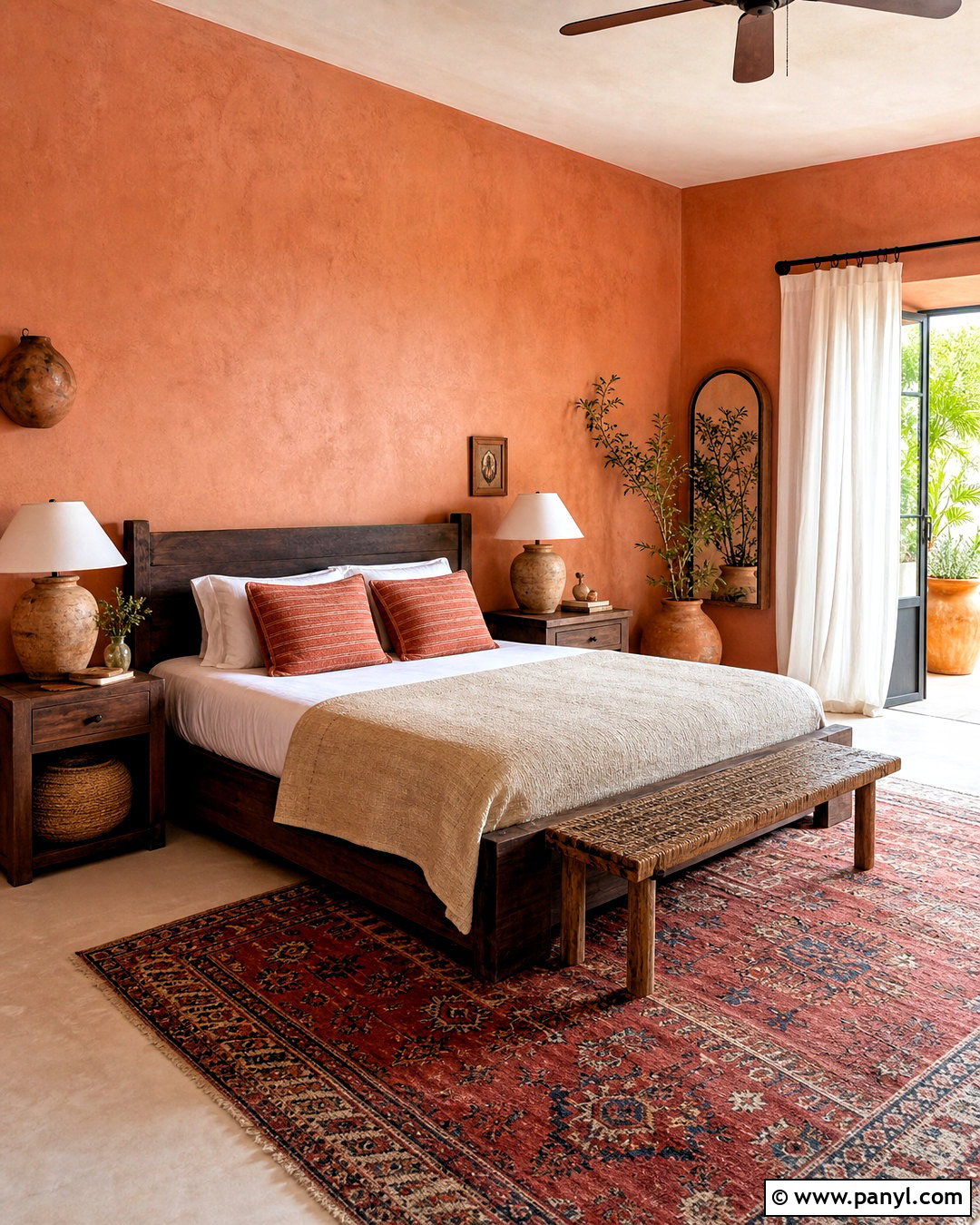
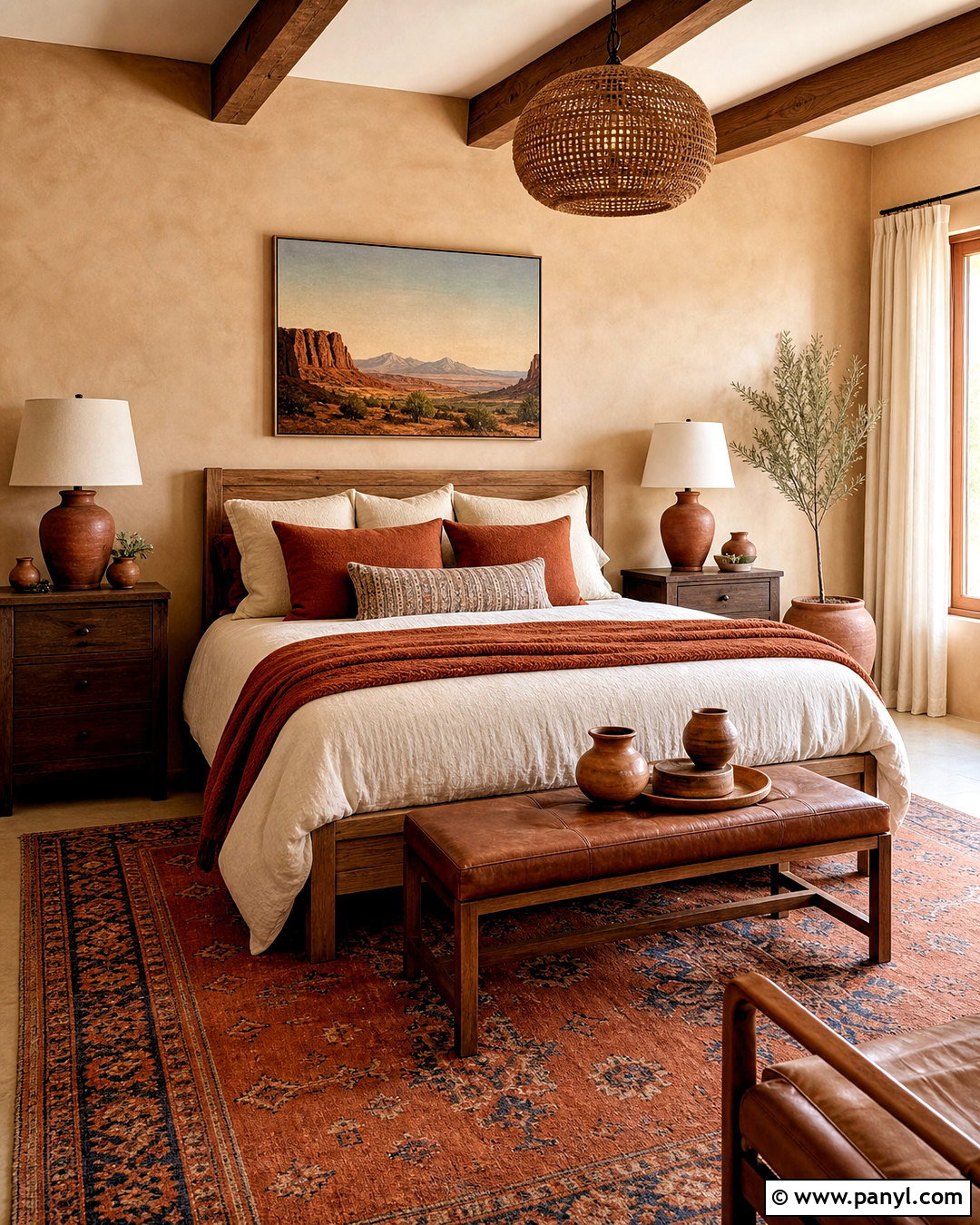
Bring Mediterranean character into the bedroom with chalky terracotta walls, textured plaster, and sun-washed natural materials. Choose a carved or simple dark wood bed and dress it with relaxed white linen, striped rust pillows, and a lightweight sandy beige coverlet. Place handmade wooden nightstands on both sides and add ceramic table lamps with warm white shades. A flat-woven rug in faded red, cream, and blue will give the floor subtle pattern. Use airy linen curtains rather than heavy drapes, allowing the room to remain bright. Arched mirrors, clay vessels, and woven baskets can reinforce the theme without becoming decorative clichés. Finish with olive branches or a small potted tree. The complete look should feel casual, aged, and inviting rather than ornate or overly coordinated.
13. Rustic Terracotta Bedroom
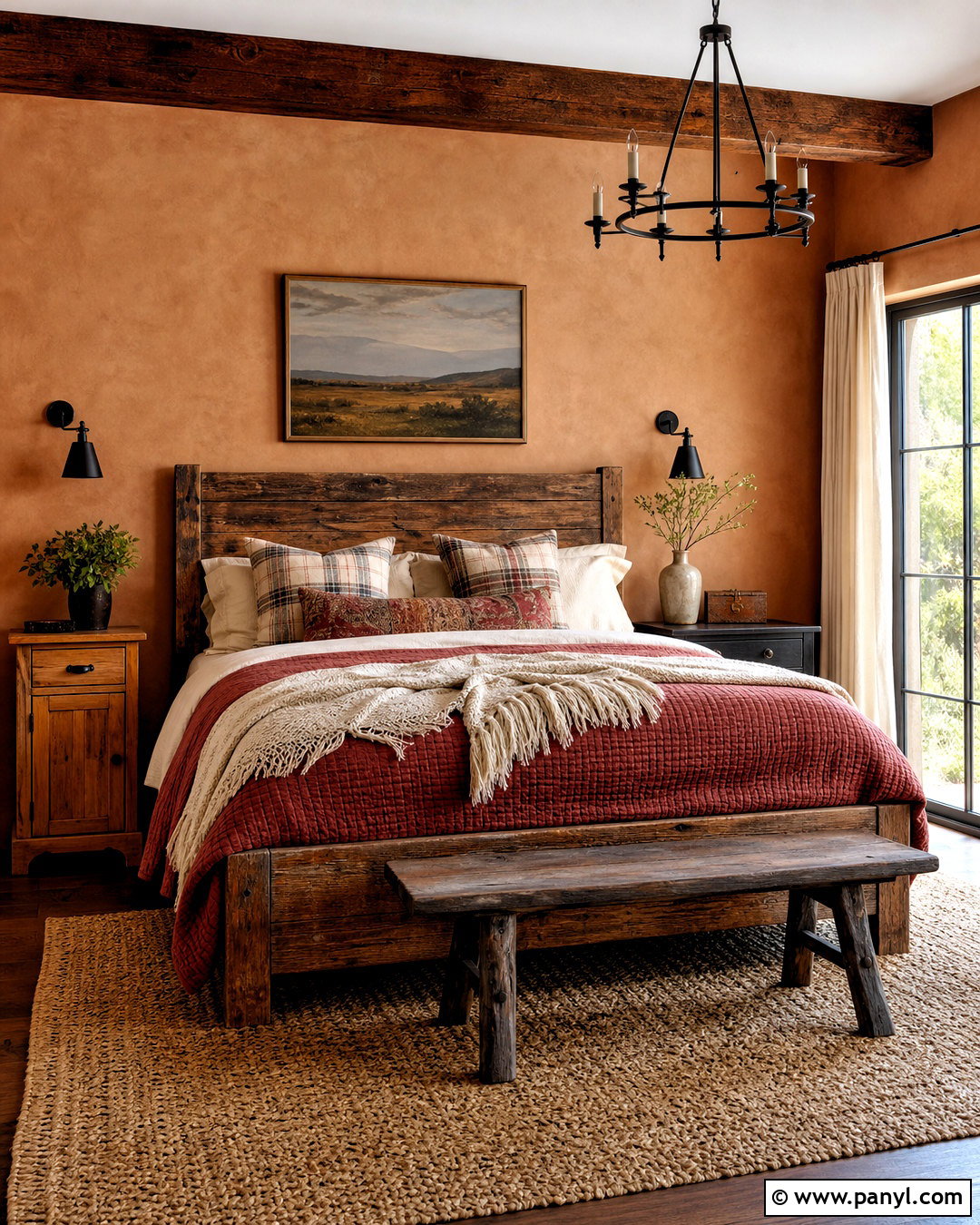
Natural wood and muted terracotta form a rustic bedroom that feels welcoming rather than rough. Paint the walls a light clay shade and introduce a substantial reclaimed wood bed with visible grain. Layer cream cotton sheets, a rust quilt, plaid pillows, and a chunky oatmeal throw for warmth. Use mismatched wooden nightstands in similar finishes to create relaxed symmetry. A braided wool rug in tan and brown will soften the floor, while matte black sconces provide practical bedside lighting. Keep the window treatments plain with off-white linen curtains. Finish the room with a wooden bench, framed landscape artwork, and simple stoneware pottery. Avoid distressed signs or excessive themed accessories. Let authentic materials, practical furniture, and a restrained earthy palette produce the rustic character naturally.
14. Midcentury Terracotta Bedroom
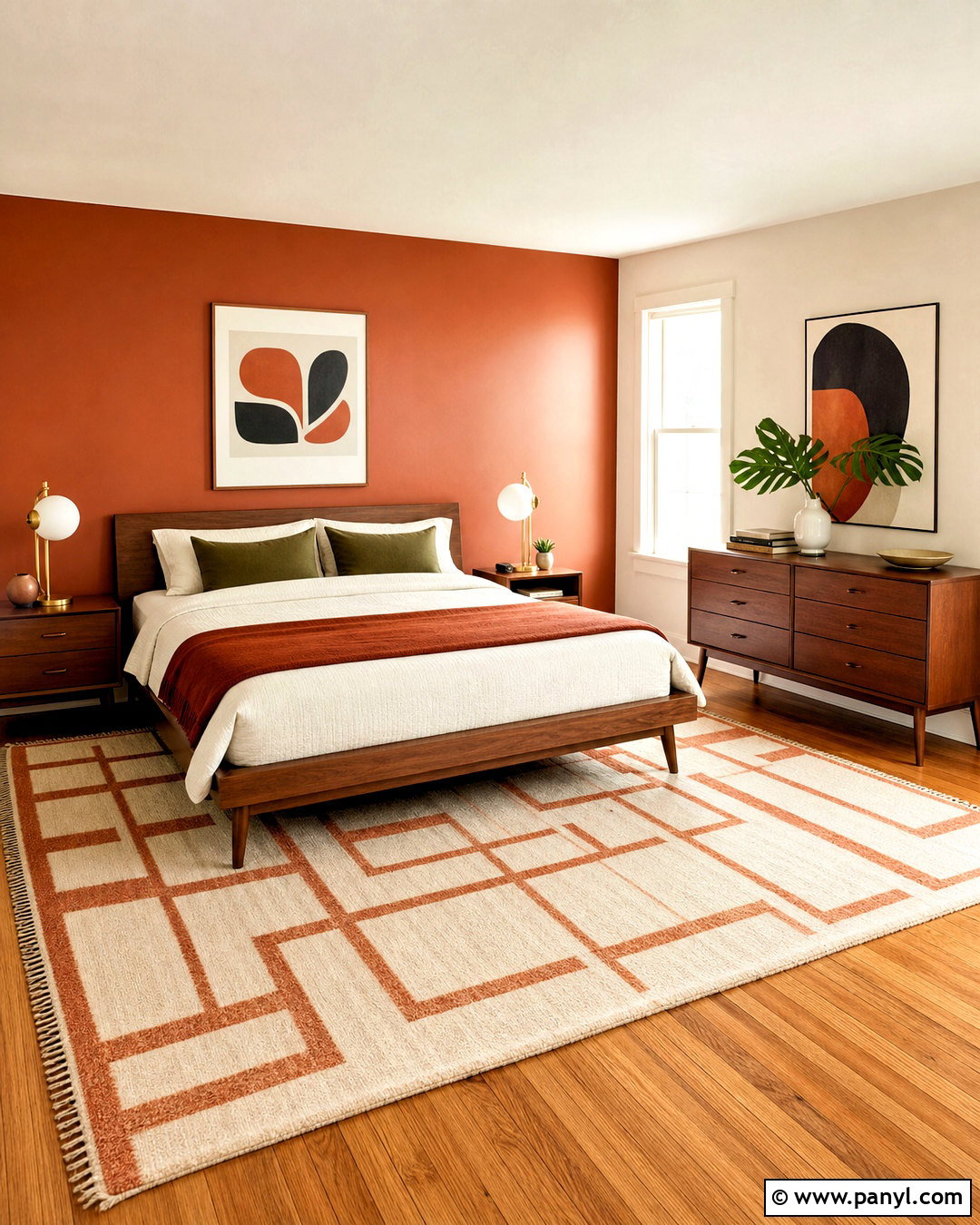
Terracotta fits naturally into a midcentury bedroom when it is paired with walnut, olive, and simple geometric forms. Paint the wall behind the bed in a burnt clay color and choose a walnut platform bed with tapered legs. Dress it with ivory bedding, a rust blanket, and olive green accent pillows. Matching nightstands and globe-shaped brass lamps reinforce the period influence without making the room feel like a set. Ground the arrangement with a low-pile geometric rug in cream, brown, and muted orange. Add a streamlined dresser, one sculptural chair, and abstract artwork in a thin wooden frame. Keep surfaces mostly clear and use accessories with strong silhouettes. The warm colors and vintage-inspired furniture create character, while the uncluttered layout keeps the bedroom practical and current.
15. Small Terracotta Bedroom
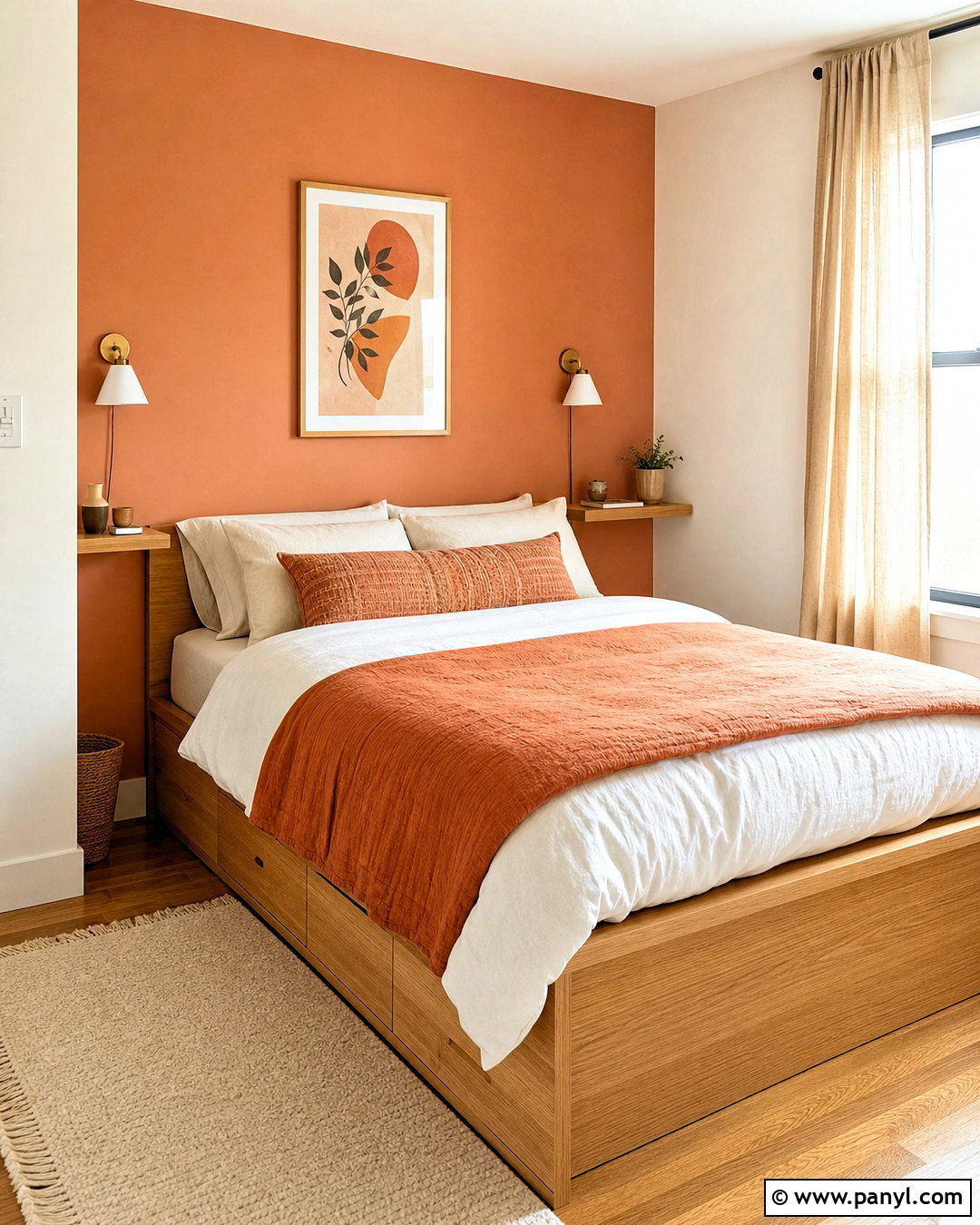
In a small bedroom, use a lighter terracotta shade and maintain plenty of visual breathing room. Paint the wall behind the bed in pale peachy clay, leaving the ceiling and remaining walls warm white. Choose a storage bed in light oak and use narrow floating shelves instead of bulky nightstands. White bedding with a terracotta coverlet keeps the bed bright while repeating the accent wall. Install compact sconces to free the bedside surfaces, and hang curtains close to the ceiling to emphasize height. A light cream rug will soften the floor without creating a heavy boundary. Limit decor to one framed print, a small plant, and two ceramic objects. This focused approach gives the room warmth and personality while preserving clear pathways, useful storage, and an open appearance.
16. Renter-Friendly Terracotta Bedroom
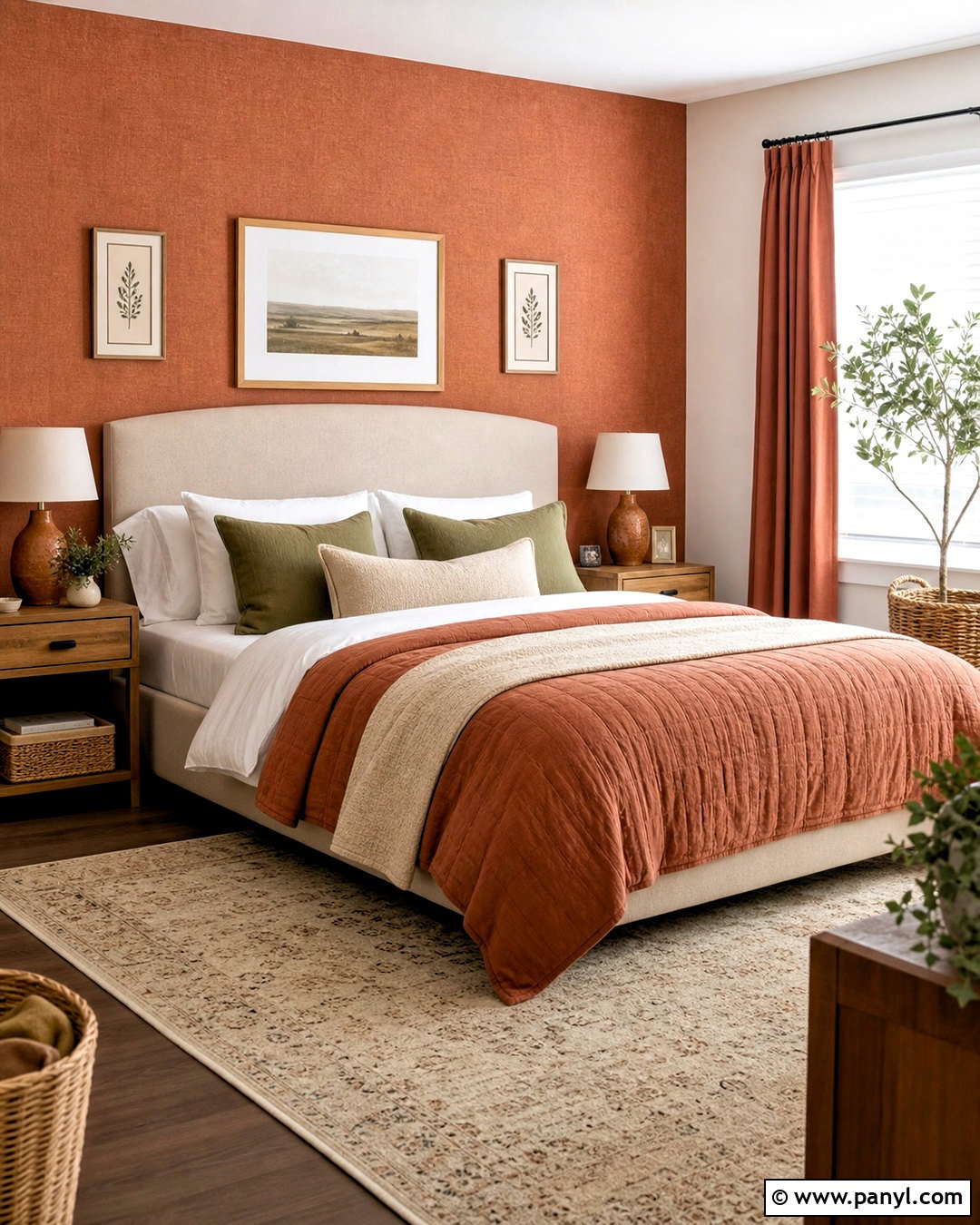
Painting is not necessary to create a convincing terracotta bedroom. Begin with removable clay-colored curtains or temporary wallpaper behind the bed to establish a strong backdrop. Add a neutral upholstered bed, crisp white sheets, a terracotta duvet, and patterned pillows in cream and olive. A large washable rug containing rust and beige will spread the color through the room without changing permanent surfaces. Use lightweight plug-in sconces or table lamps with ceramic bases, avoiding complicated electrical work. Wooden nightstands, woven baskets, and removable framed prints complete the earthy scheme. If the existing walls are cool white, include warm beige textiles to soften the transition. Every major element can move to a future home, making this complete design flexible, affordable, and easy to reverse.
17. Terracotta Ceiling Bedroom
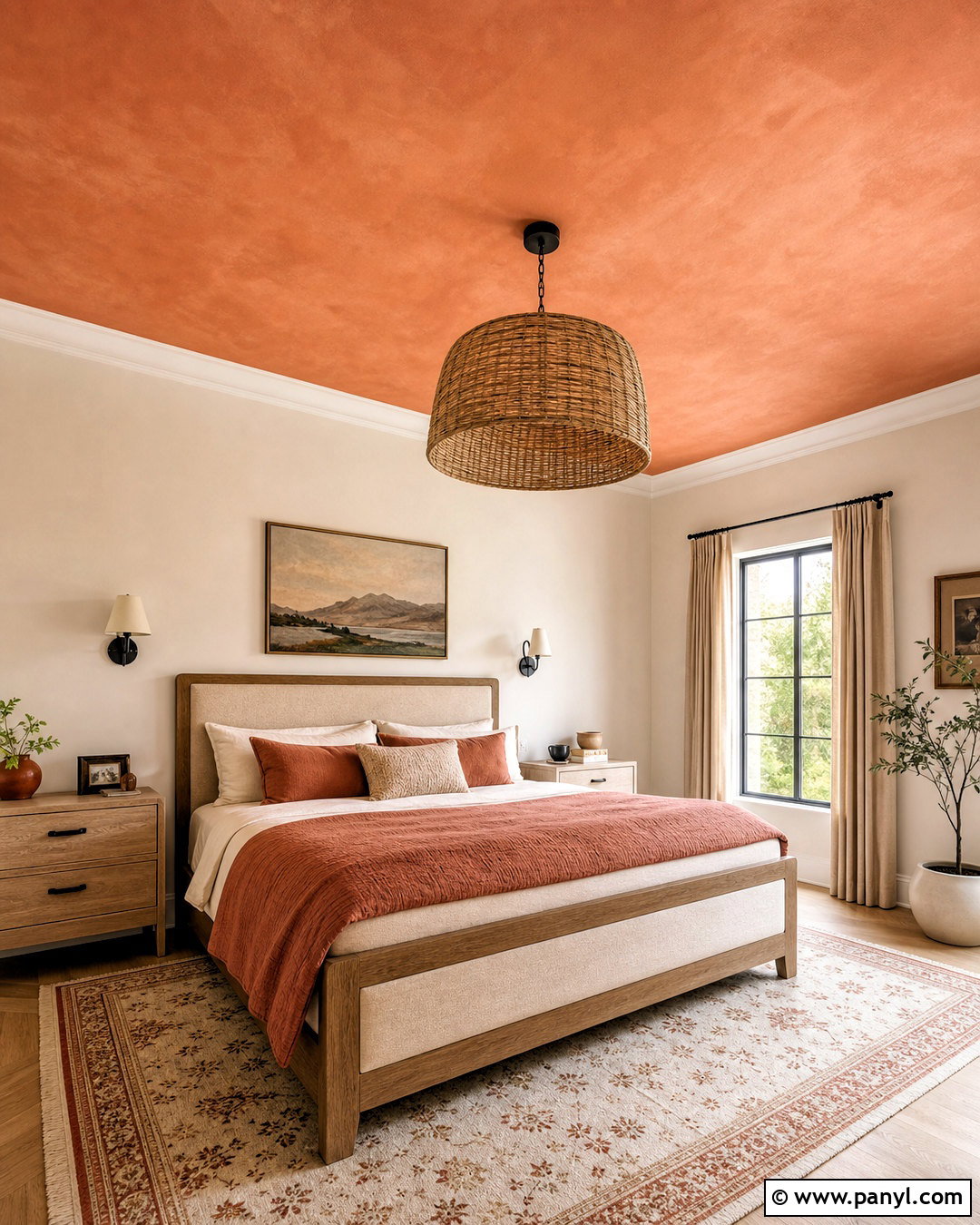
Painting the ceiling terracotta introduces unexpected warmth while keeping the walls lighter and more open. Select a soft, dusty clay color rather than a deep rust, then use warm white on the walls and trim. A simple oak bed with an ivory upholstered headboard will draw attention upward without competing with the ceiling. Repeat the overhead color through a terracotta quilt, two accent pillows, and a small pattern in the area rug. Hang a wide woven pendant near the ceiling to emphasize the painted surface. Beige curtains and pale wood furniture maintain brightness around eye level. Keep wall decor minimal, choosing one horizontal print above the headboard. The finished room feels distinctive and cozy, yet the pale vertical surfaces prevent the overhead color from visually shrinking the space.
18. Terracotta Wallpaper Bedroom
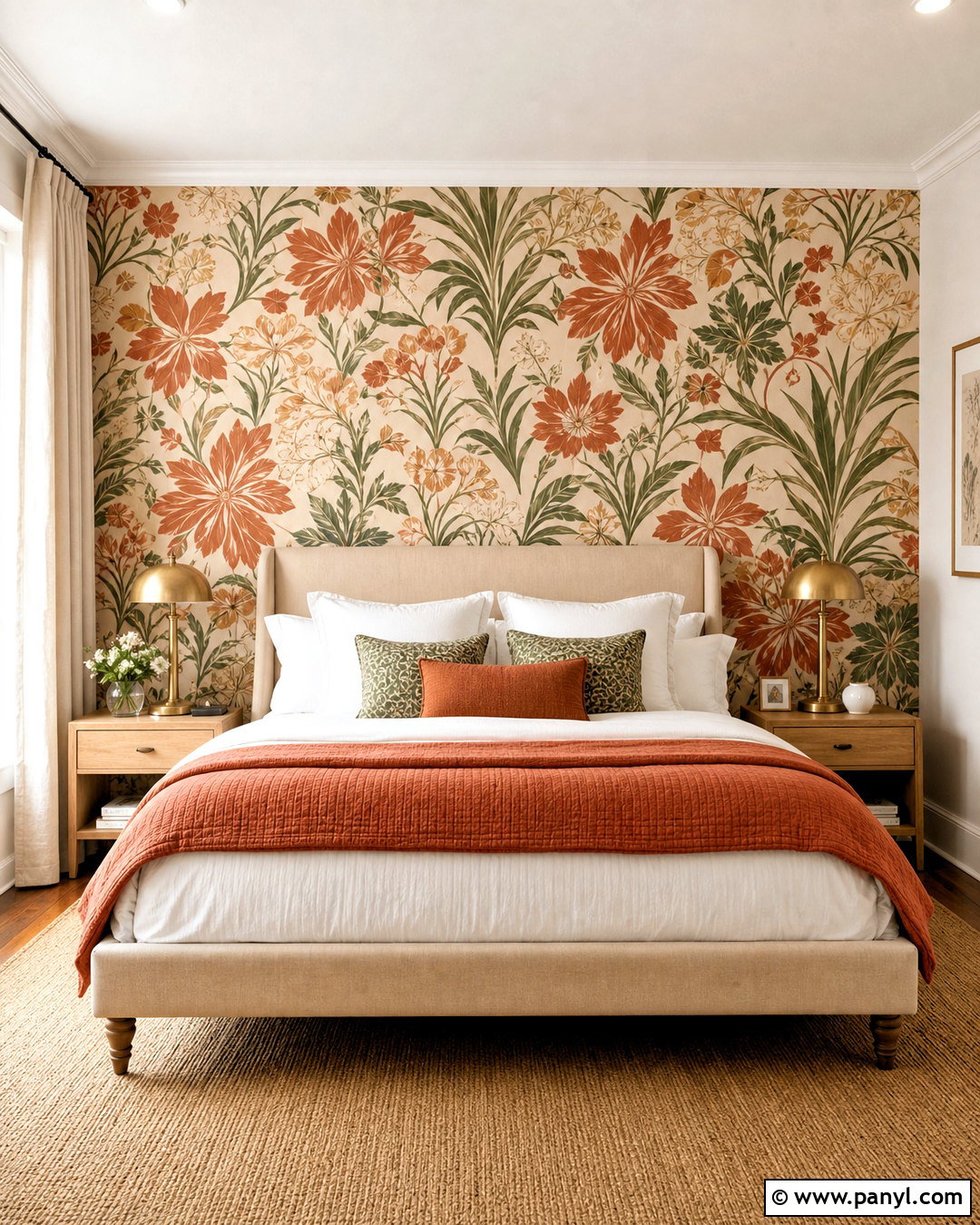
Patterned wallpaper offers a detailed way to use terracotta without covering the bedroom in solid orange-red paint. Select a print with terracotta, cream, and muted green arranged in small botanical or geometric shapes. Apply it behind the bed, then paint the surrounding walls in the wallpaper’s warm cream background color. Choose a simple olive or beige upholstered headboard so the pattern remains visible but not overwhelming. Layer white bedding with a rust quilt and neutral pillows. Natural wood nightstands, brass lamps, and a plain jute rug will balance the busier surface. Use solid curtains rather than another print. Repeat only one or two wallpaper colors in the accessories. This approach creates a complete, cohesive room while giving the focal wall depth, movement, and a custom appearance.
19. Terracotta Bedroom With Natural Wood
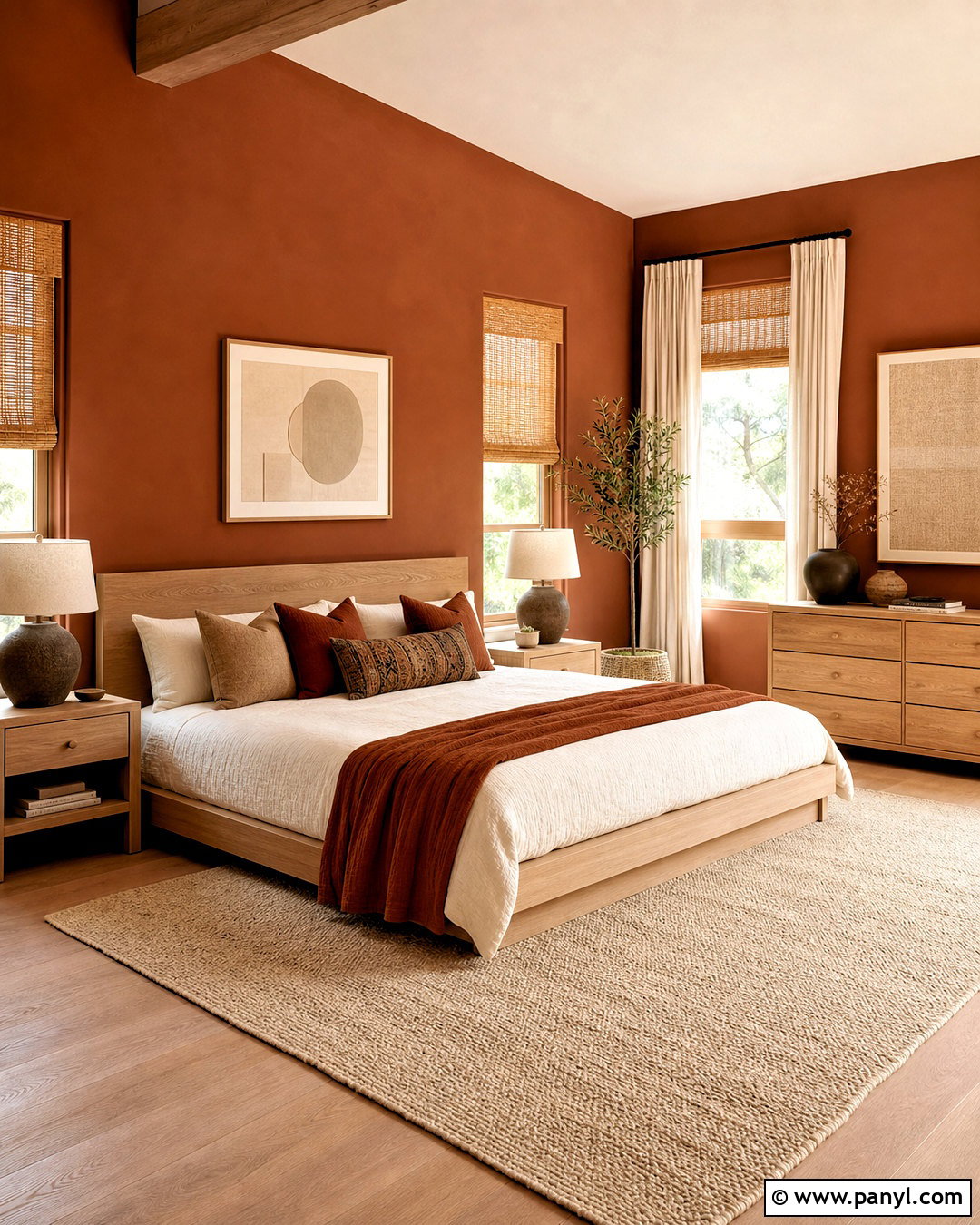
Natural wood emphasizes the earthy foundation of terracotta and gives the bedroom lasting warmth. Use a medium terracotta shade on the walls, then introduce a pale oak bed, matching nightstands, and a low wooden dresser. Keep the wood finish consistent so the room feels calm rather than pieced together. Dress the bed with cream linen, a caramel blanket, and pillows in rust, beige, and soft brown. A large wool rug in oatmeal will separate the warm furniture from the floor. Add woven shades and full-length ivory curtains to create layered window coverage. Black or aged bronze lighting provides necessary contrast. Finish with simple landscape art, ceramic vessels, and a leafy plant. The combination feels organic and inviting without relying on elaborate decoration or short-lived trends.
20. Dark Terracotta Bedroom
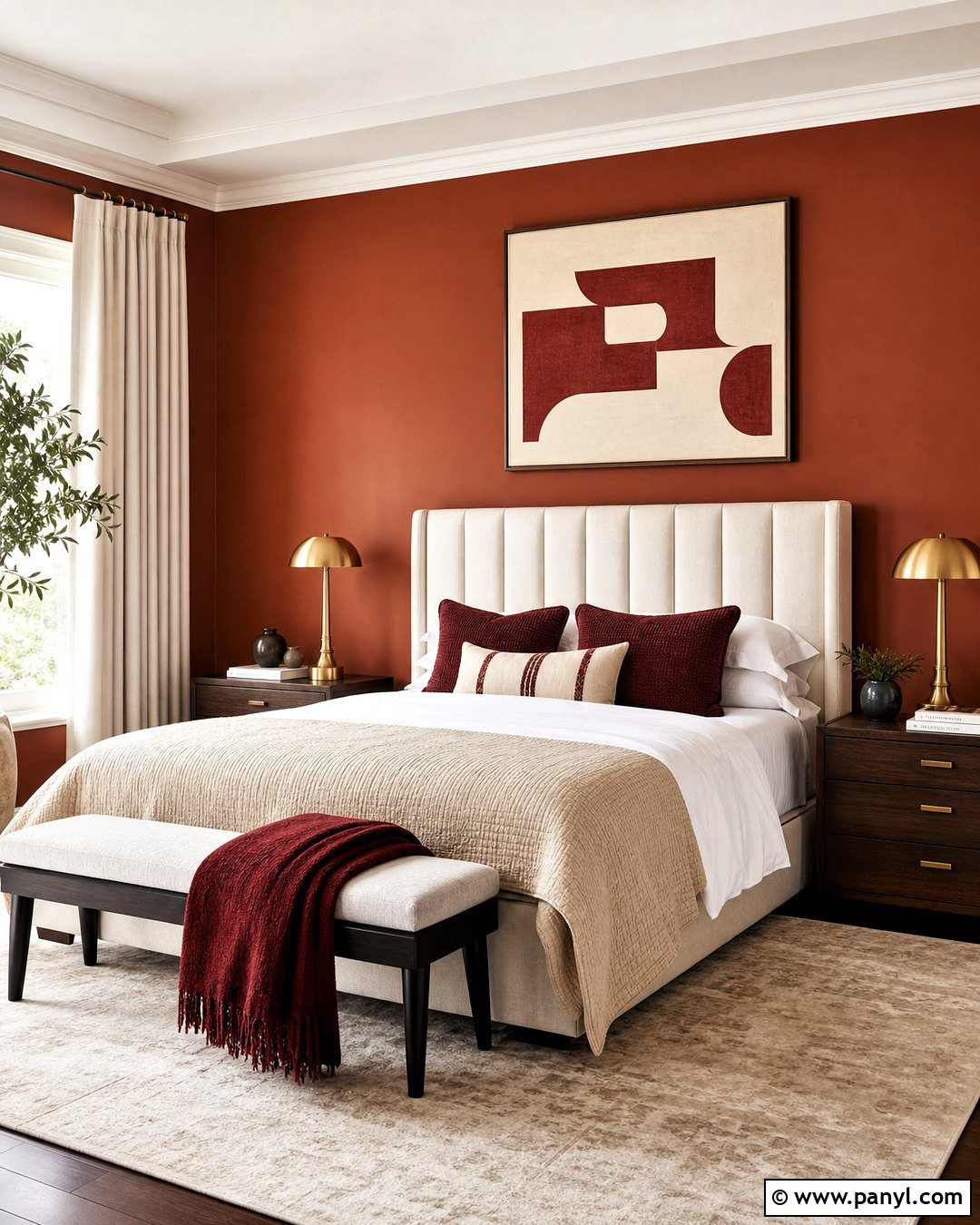
Deep terracotta can create an intimate bedroom when it is balanced with lighter textiles and strong contrast. Paint the walls in a dark rust-clay shade, leaving the ceiling warm white unless the room is especially large and bright. Place a tall cream upholstered bed against the darkest wall and layer it with white sheets, a beige quilt, and burgundy accent pillows. Choose dark walnut nightstands and polished brass lamps for a refined effect. A generous ivory rug will brighten the lower half of the space, while neutral curtains soften the windows. Add one large piece of artwork containing cream and muted red rather than several small frames. With restrained accessories, reflective metal, and plenty of pale fabric, the dark palette feels sophisticated and restful instead of enclosed or visually heavy.
Conclusion:
The most successful terracotta bedroom ideas treat this distinctive shade as part of a complete palette rather than an isolated pop of color. Terracotta can cover every wall, define one focal area, or appear through flexible textiles and decor. Its warmth becomes softer beside cream and blush, fresher with sage or olive, and more dramatic when paired with navy, black, or dark wood. Before painting, compare samples during the day and under your bedroom lighting so you can judge the undertones accurately. Then repeat the selected clay tone in two or three areas to connect the room. Thoughtful furniture, comfortable fabrics, practical lighting, and controlled contrast will turn the color into a cohesive, relaxing bedroom.

Related Ideas and Inspiration:
Leave a Reply